


Padres Video
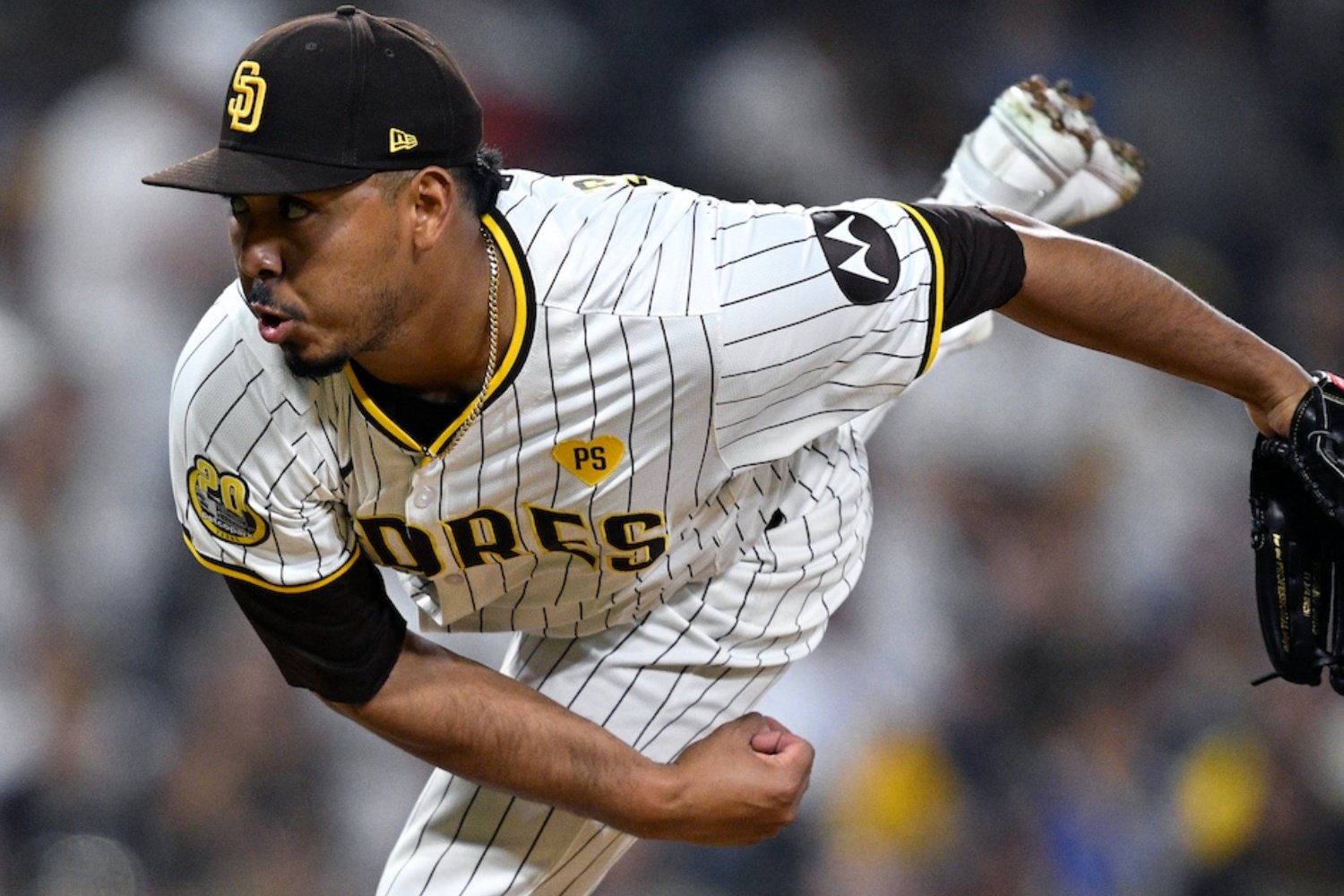
Two months ago, Jeremiah Estrada looked like one of the best bullpen arms in baseball.
After the Padres claimed him off waivers in November 2023, Estrada burst onto the scene last year and kept the hype going in April and May with dominant stuff, an elite strikeout rate, and the electricity that made fans believe San Diego had found its next late-inning weapon. By the end of May, his ERA sat at 2.49 and his K/BB ratio, a key stat for any high-leverage reliever, had climbed to an elite 6.67.
Then came June.
Through 9 2/3 innings this month (stats through June 24), Estrada’s K/BB ratio has cratered to 1.29. He’s walked seven and struck out just nine, with two particularly brutal outings against the Dodgers skewing his stat line, raising major concerns.
It’s tempting to look at two games and chalk it all up to bad luck. On June 11, Estrada gave up a homer and two runs in just 2/3 of an inning. A week later, on June 17, he had one of, if not the worst, outings of his big-league career: five hits, five earned runs, and another homer, without recording a single out.
Those two appearances alone accounted for all seven earned runs he’s allowed this month, spiking his ERA from 2.49 at the end of May to 3.60 currently. But, while it’s true that a couple of blowups can skew a reliever’s ERA, Estrada’s June struggles haven’t been limited to two bad nights. The deeper numbers tell a broader story: command issues, diminished pitch shape, and concerning mechanical trends have all played a role in his recent regression.
Through June 24, Estrada’s fastball is still averaging about 98 mph, right around where it’s been all year. But while the velocity hasn’t changed much, the effectiveness of the pitch has. His four-seamer is getting less rise, down to 19.1 inches of induced vertical break in June, compared to 19.8 in May and 20.4 in April. That drop in vertical movement has made it easier for hitters to track the pitch, particularly at the top of the zone, where Estrada had previously lived.
The spin rate on his fastball is also at its lowest point of the season, further limiting its life and deception. Hitters are seeing the ball earlier and making more contact. The whiff rate on the fastball has dropped accordingly, and the decline isn't limited to just one pitch. Estrada’s whiff rate has dropped across all three of his offerings from last month, with his four-seamer dropping from 30.1% to 20.3%, split finger from 71.4% to 35.7%, and his slider from 30% to 0%.
And his pitch usage has changed, too. His fastball is up from 57.8% in May to 68.9% in June, the split finger is down from 23.3% to 15.2%, and his slider is down slightly from 18.9% to 15.9%. That shift toward a fastball-heavy approach may be a sign he’s lost feel for his off-speed pitches, or simply a reaction to falling behind in counts more often. But either way, the increased predictability hasn’t helped.
Perhaps the most revealing trends aren’t in the pitch results but in Estrada’s mechanics. His arm angle has risen every month, and in June, it’s the highest it’s been all season. At the same time, his release point is getting lower and lower, creating a more drastic vertical difference between where he starts and finishes his motion. That combination can lead to timing issues and inconsistent command, both of which have been factors in his June slide. Estrada has struggled to consistently hit his spots, particularly to his glove side, often yanking fastballs arm-side or spiking sliders out of the zone.
It’s no coincidence that his walk rate has climbed this month, while strikeouts have dipped. He’s not fooling hitters as often, and when he falls behind in the count, he’s either missing too far off the edges or catching too much of the plate. After his disastrous June 17 outing, Estrada bounced back with a couple of solid appearances on June 21 and June 24, tossing 2.0 scoreless innings with four strikeouts and no walks combined. These were his first truly clean outings since early June, and the kind of performances that offer a glimpse of the pitcher he was in April and May.
It also nudged his K/BB ratio for the month up slightly to 1.29, which is still not good, but at least trending upward. The Padres will be hoping that’s a sign of a turnaround, not just a momentary pause in a rough stretch. Relievers go through slumps all the time. That’s part of the job. But when a pitcher goes from overpowering to erratic in the span of a few weeks, it’s worth digging deeper, and in Estrada’s case, there are real warning signs.
He’s not injured, at least not officially. His velocity isn’t down dramatically. But the shape of his pitches, the consistency of his release, and the results all point to a pitcher either battling fatigue, fighting his mechanics, or both. Estrada is already at 35.0 innings pitched, quickly approaching his career high in innings pitched in a season. The Padres need a reliable setup arm to bridge the gap from the starters to Robert Suarez. Estrada was one of the main reliable guys. Right now, he isn’t.
Still, the fix may not be far off. If he can regain the feel for his pitches, establish them as weapons, and smooth out his arm slot and release point, the stuff is still there. But the leash will get shorter. And though still early, the NL West and NL Wild Card race is crowded, and every inning matters. For the Padres, figuring out which version of Jeremiah Estrada they’re getting the rest of the way could be the difference between bullpen stability and a bullpen scramble.





Recommended Comments
There are no comments to display.
Create an account or sign in to comment
You need to be a member in order to leave a comment
Create an account
Sign up for a new account in our community. It's easy!
Register a new accountSign in
Already have an account? Sign in here.
Sign In Now