



Alex Carl
-
Posts
34 -
Joined
-
Last visited
Content Type
Profiles
San Diego Padres Videos
2026 San Diego Padres Top Prospects Ranking
San Diego Padres Free Agent & Trade Rumors, Notes, & Tidbits
Guides & Resources
2025 San Diego Padres Draft Pick Tracker
News
2026 San Diego Padres Draft Tracker: Picks & Bonuses
Forums
Blogs
Events
Store
Downloads
Gallery
Everything posted by Alex Carl
-
There have been plenty of big-time bats doing damage in the Padres’ system to start 2025. Honestly, trying to narrow it down to just five was challenging, so we also included a few honorable mentions. From rising prospects to veteran depth pieces making noise, here are the most impressive May stats of the minor-league season for San Diego’s position players. Let’s start with a few honorable mentions and work our way to the top dog. Honorable Mention: Ryan Jackson – 28 H, 2 HR, 5 2B, 12 RBI, 16 R, 5 SB, .308/.438/.451, 22:19 K:BB Jackson doesn’t show up on any top prospect lists. He’s not someone fans are tweeting about. But he’s been quietly excellent for Single-A Lake Elsinore, getting on base at a .438 clip in May and walking nearly as much as he strikes out. The on-base ability is real, the contact is improving, and he keeps the Storm lineup moving. He may not be a future Padre, but he’s doing everything asked of him, and then some. Honorable Mention: Marcos Castañon – 27 H, 5 HR, 8 2B, 16 RBI, 13 R, .297/.330/.549, 21:4 K:BB Castañon brought some thump to the Missions’ lineup in May, slugging .529 with four home runs and 15 RBIs in 24 games. The 26-year-old shortstop made pitchers pay for mistakes, consistently delivering big hits despite drawing just four walks. His power potential is clear, and if he can improve his plate discipline, he could take another step forward this season. Honorable Mention: Braedon Karpathios – 13 H, 3 HR, 3 2B, 15 RBI, 12 R, .206/.390/.397, 24:20 K:BB Karpathios didn’t light up the box score with his batting average (.206), but his advanced approach kept his production strong. He walked 20 times in 21 games, helping him post a .390 OBP and .787 OPS. Add in 15 RBI and three doubles, and it’s clear the 2023 undrafted free agent signee knows how to contribute even when the hits aren’t falling, a trait that could serve the 21-year-old well as he climbs the ladder. 5) Kavares Tears – 29 H, 4 HR, 8 2B, 25 RBI, 15 R, .302/.373/.510, 28:12 K:BB The man can hit. Drafted in the fourth round last year out of Tennessee, Tears has stepped into his first full pro season at Single-A Lake Elsinore like he owns it. He’s driving in runs (25 RBIs in 24 games) and flashing lots of power. Yes, the strikeouts are a little high, but if this is the early version of Tears, Padres fans should be intrigued. 4) Tirso Ornelas – 28 H, 2 HR, 9 2B, 19 RBI, 14 R, .322/.362/.494, 16:6 K:BB A blast from the past. Ornelas was signed by the Padres way back in 2017 and finally made his MLB debut this April. Since heading back to Triple-A El Paso, he’s done nothing but hit. The 25-year-old outfielder has been scorching at the plate, with 28 hits in 21 games and a .322 average in May. He doesn’t walk much, and he doesn’t strike out much; he just puts the ball in play with authority. Not flashy, but effective, and he’s firmly on the call-up radar again. 3) Brandon Valenzuela – 29 H, 4 HR, 6 2B, 12 RBI, 15 R, .319/.392/.549, 26:10 K:BB Signed to a minor league deal in 2017, Valenzuela has spent years developing quietly in the system. Now, at 24 and playing every day in Double-A San Antonio, he might be having his breakout. He’s always been a switch-hitting catcher with good defensive instincts, but now he’s hitting like a legit bat-first threat. Four home runs, an almost .400 OBP, and an OPS just shy of .950 in May? That’ll play. The catching depth chart is crowded, but Valenzuela is forcing his name into the mix. 2) Luis Campusano – 14 H, 4 HR, 3 2B, 13 RBI, 7 R, .304/.429/.630, 8:10 K:BB Whether he’s been rotating between the MLB and Triple A, Campusano was ridiculous in May. The 26-year-old former 2nd-round pick (2017) looked more like a fully-formed big leaguer than a guy getting his timing back. In 13 games at Triple-A El Paso, he hit .304 with a 1.059 OPS, and yes, you read that right, he walked more than he struck out. Campusano has been in and out of the big-league catching rotation since debuting in 2020, but performances like this should put him back in the Padres’ rotation in a hurry. Image courtesy of Artur Ivanov & Lake Elsinore Storm 1) Victor Figueroa – 33 H, 8 HR, 6 2B, 3 3B, 25 RBI, 18 R, .429/.500/.896, 14:11 K:BB Let’s not get too ahead of ourselves… but the Padres might have struck absolute gold here. Figueroa was drafted in the 18th round by the Padres last summer out of Florida SouthWestern State JC. The 21-year-old tore the cover off the ball in the Arizona Complex League (five home runs in 11 games, .605 AVG), then got promoted to Single-A Lake Elsinore on May 20, and just kept hitting. Another three bombs in 10 games, eight more RBI, and a combined 1.396 OPS for the month. This isn’t just hot, it’s elite. Figueroa has demonstrated exceptional plate discipline, remarkable barrel control, and impressive power. He only struck out 14 times across 21 games while walking 11 times. That’s nuts for a young player adjusting to full-season ball. He wasn’t on many draft radars last year, but if he keeps this up, he’ll be on everyone’s radar soon. He has had a breakout month and start to his young career, becoming one of the most exciting young hitters in the entire minor league landscape right now and the clear choice for Padres Minor League Hitter of the Month. View full article
-
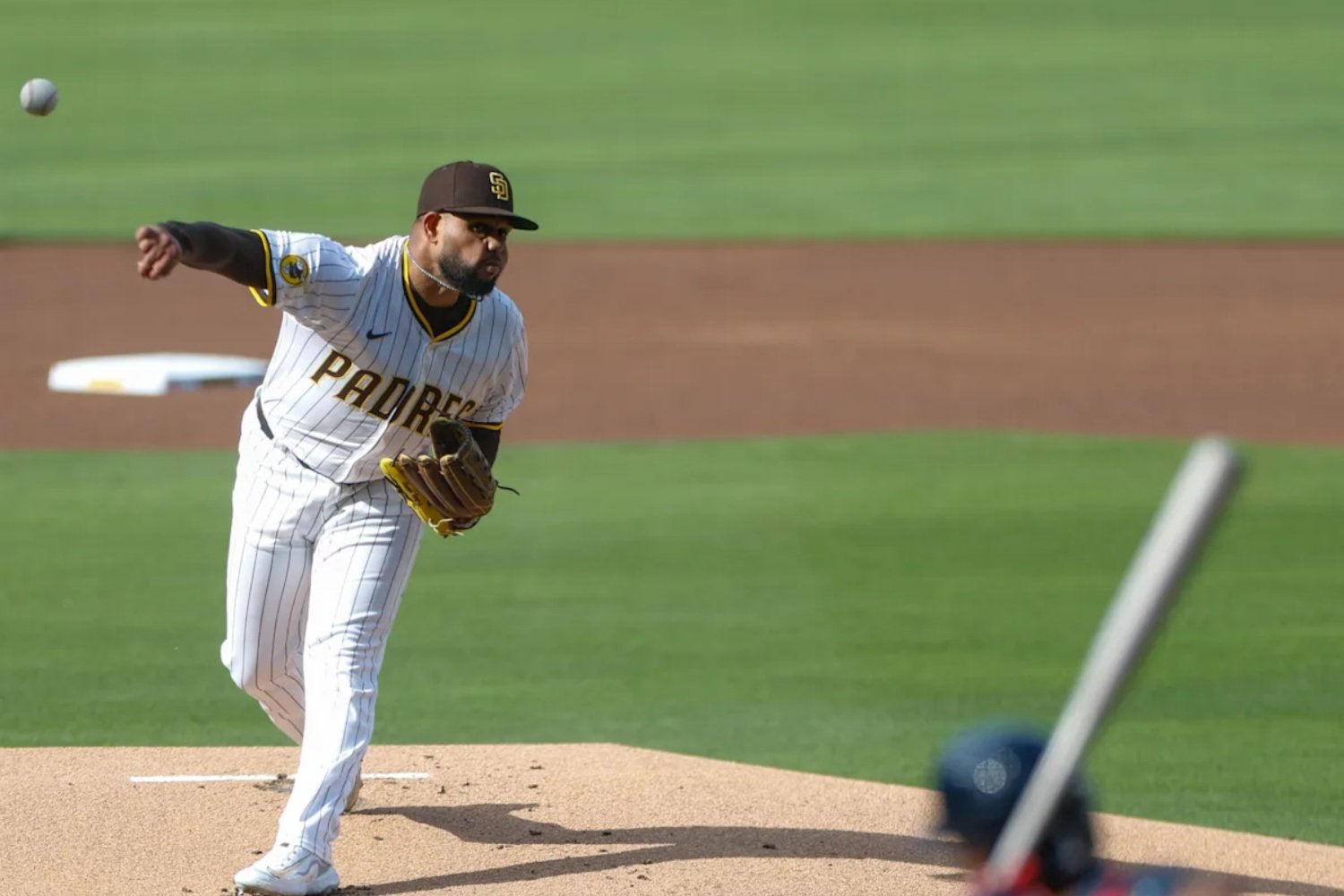 In baseball, run value is supposed to tell the truth. It’s a stat that attempts to boil every pitch down to its bottom-line effect on run expectancy. When a pitch gains nine runs in value over just 140 throws, it screams dominance. When that pitch posted a minus-eight run value over nearly twice as many throws as the year before, it screams confusion. Welcome to the mystery of Randy Vasquez’s 2025 sinker. Vasquez’s sinker has transformed from one of the worst pitches in the league in 2024 to one of the most valuable in 2025, despite virtually no change in how he throws it. The usage is about the same, the movement is about the same, and the average location is about the same. Even his velocity has dropped, from 94.2 mph to 92.9 mph. And yet, opponents are hitting just .111 against it this year, and slugging the same percentage. Last year, they hit .434 with a .592 slugging percentage against the offering. His putaway rate, the percentage of two-strike counts that end in a strikeout, has jumped from 13.5% to 22.2%. So, how does a pitch that’s slower, generates fewer whiffs, and gives up harder contact suddenly become one of the most valuable in baseball? Let’s start with the similarities. Vasquez’s sinker usage is nearly identical to 2024: 15.6% this year compared to 16% last year. The movement profile is also similar to last year, but with slightly more vertical drop of 0.6 inches and slightly less arm-side horizontal run of -0.4 inches. That alone should raise eyebrows. Pitchers typically see dramatic swings in run value when they change something, whether it's grip, velocity, usage, or movement. Vasquez changed almost nothing. In fact, some of the peripheral numbers look worse. His whiff rate on the sinker is down from 11.2% to 4.2%, and his strikeout rate is down from 8.3% to 7.8%. His sinker "stuff+," a blend of velocity, movement, and deception, is also graded as the lowest of his young career at 91. The pitch is still getting hit hard when contact is made, as the average exit velocity off his sinker has risen from 87.4 mph to 89.3 mph. But, that contact is happening a lot less frequently, and when it does, it’s often straight into the ground. His ground ball rate on the pitch has ticked up, and hitters have been pounding it into the dirt more frequently. One possible explanation for the turnaround of the pitch is better sequencing. Even though Vasquez’s sinker hasn’t changed much in isolation, the way he’s using it and what he’s pairing it with has shifted. He’s throwing more four-seam fastballs early in counts, setting hitters up with elevated heat before dropping the sinker in late. That tunnel effect, where pitches look similar out of the hand but break in different directions, may be helping the sinker play up without needing more movement or velocity. Here’s the thing: Vasquez’s sinker location is still middle-of-the-pack. He’s not painting edges or dotting corners. Sometimes, though, average location works if hitters don’t know what’s coming. Baseball is a game of inches. That Vasquez is throwing a very similar pitch to last year but getting drastically different results might say less about the pitch itself and more about the situations it appears in. In 2024, Vasquez often leaned on the sinker in hitter’s counts, where it got punished. This year, he’s been more surgical, using it as a finisher or as a surprise offering in counts where hitters are expecting something else. His 22.2% putaway rate on the sinker is proof that he’s closing out at-bats with it more efficiently than ever. It’s tempting to write this all off as noise, a statistical fluke caused by a small sample size or a lucky string of matchups. Maybe it is. Vasquez has only thrown the sinker 140 times this year. A few extra hits, or one bad outing, could swing the numbers in the other direction. However, it’s hard to argue with the results so far. A plus-nine run value is elite territory. Even if it’s not sustainable over the long haul, it’s enough to shift perceptions of the pitch. Vasquez, still finding his footing in the league, has leaned on his sinker to get big outs in 2025. It’s become his safety net, even though, statistically, it shouldn’t be. That’s what makes the story of his sinker so compelling. Not all pitch success is cleanly measurable. Maybe Vasquez just believes in the pitch more. Maybe he’s found a rhythm in how and when to deploy it. Maybe it’s just baseball being weird. But, right now, Randy Vasquez’s sinker is one of the most valuable pitches in baseball. And there doesn’t seem to be a clear reason why.
 -
In baseball, run value is supposed to tell the truth. It’s a stat that attempts to boil every pitch down to its bottom-line effect on run expectancy. When a pitch gains nine runs in value over just 140 throws, it screams dominance. When that pitch posted a minus-eight run value over nearly twice as many throws as the year before, it screams confusion. Welcome to the mystery of Randy Vasquez’s 2025 sinker. Vasquez’s sinker has transformed from one of the worst pitches in the league in 2024 to one of the most valuable in 2025, despite virtually no change in how he throws it. The usage is about the same, the movement is about the same, and the average location is about the same. Even his velocity has dropped, from 94.2 mph to 92.9 mph. And yet, opponents are hitting just .111 against it this year, and slugging the same percentage. Last year, they hit .434 with a .592 slugging percentage against the offering. His putaway rate, the percentage of two-strike counts that end in a strikeout, has jumped from 13.5% to 22.2%. So, how does a pitch that’s slower, generates fewer whiffs, and gives up harder contact suddenly become one of the most valuable in baseball? Let’s start with the similarities. Vasquez’s sinker usage is nearly identical to 2024: 15.6% this year compared to 16% last year. The movement profile is also similar to last year, but with slightly more vertical drop of 0.6 inches and slightly less arm-side horizontal run of -0.4 inches. That alone should raise eyebrows. Pitchers typically see dramatic swings in run value when they change something, whether it's grip, velocity, usage, or movement. Vasquez changed almost nothing. In fact, some of the peripheral numbers look worse. His whiff rate on the sinker is down from 11.2% to 4.2%, and his strikeout rate is down from 8.3% to 7.8%. His sinker "stuff+," a blend of velocity, movement, and deception, is also graded as the lowest of his young career at 91. The pitch is still getting hit hard when contact is made, as the average exit velocity off his sinker has risen from 87.4 mph to 89.3 mph. But, that contact is happening a lot less frequently, and when it does, it’s often straight into the ground. His ground ball rate on the pitch has ticked up, and hitters have been pounding it into the dirt more frequently. One possible explanation for the turnaround of the pitch is better sequencing. Even though Vasquez’s sinker hasn’t changed much in isolation, the way he’s using it and what he’s pairing it with has shifted. He’s throwing more four-seam fastballs early in counts, setting hitters up with elevated heat before dropping the sinker in late. That tunnel effect, where pitches look similar out of the hand but break in different directions, may be helping the sinker play up without needing more movement or velocity. Here’s the thing: Vasquez’s sinker location is still middle-of-the-pack. He’s not painting edges or dotting corners. Sometimes, though, average location works if hitters don’t know what’s coming. Baseball is a game of inches. That Vasquez is throwing a very similar pitch to last year but getting drastically different results might say less about the pitch itself and more about the situations it appears in. In 2024, Vasquez often leaned on the sinker in hitter’s counts, where it got punished. This year, he’s been more surgical, using it as a finisher or as a surprise offering in counts where hitters are expecting something else. His 22.2% putaway rate on the sinker is proof that he’s closing out at-bats with it more efficiently than ever. It’s tempting to write this all off as noise, a statistical fluke caused by a small sample size or a lucky string of matchups. Maybe it is. Vasquez has only thrown the sinker 140 times this year. A few extra hits, or one bad outing, could swing the numbers in the other direction. However, it’s hard to argue with the results so far. A plus-nine run value is elite territory. Even if it’s not sustainable over the long haul, it’s enough to shift perceptions of the pitch. Vasquez, still finding his footing in the league, has leaned on his sinker to get big outs in 2025. It’s become his safety net, even though, statistically, it shouldn’t be. That’s what makes the story of his sinker so compelling. Not all pitch success is cleanly measurable. Maybe Vasquez just believes in the pitch more. Maybe he’s found a rhythm in how and when to deploy it. Maybe it’s just baseball being weird. But, right now, Randy Vasquez’s sinker is one of the most valuable pitches in baseball. And there doesn’t seem to be a clear reason why. View full article
-
 Weekly Snapshot: Weekly Snapshot: Record Last Week: 2-4 (Overall: 29-22) Run Scored Last Week: 14 Runs Surrendered Last Week: 37 Standing: 3rd in NL West (2.5 GB 1st place LAD) *** Game 46 (5/20) | TOR 3, SD 0 Game 47 (5/21) | TOR 14, SD 0 Game 48 (5/22) | TOR 7, SD 6 Game 49 (5/23) | SD 2, ATL 1 Game 50 (5/24) | ATL 7, SD 1 Game 51 (5/25) | SD 5, ATL 3 *** Transactions: 05/25/25 - Recalled RHP David Morgan from AAA El Paso. 05/25/25 - Placed RHP Michael King on the 15-day injured list. (Right shoulder inflammation) 05/25/25 - Recalled LHP Omar Cruz from AAA El Paso. 05/25/25 - Optioned RHP Alek Jacob to AAA El Paso. 05/24/25 - Recalled C Luis Campusano from AAA El Paso. 05/24/25 - Placed OF Jason Heyward on the 10-day injured list. (Left oblique strain) 05/20/25 - Sent INF Mason McCoy on a rehab assignment to AAA El Paso. 05/19/25 - Released OF Oscar Gonzalez. Breakdown/Highlights: The Padres experienced a rollercoaster of a week, starting with a frustrating sweep by the Blue Jays that extended their losing streak to six games, but finishing strong with a hard-fought series win in Atlanta. Gavin Sheets was a bright spot at the plate, launching four home runs over the final four games, including a two-homer, five-RBI effort in a tough loss to Toronto on Thursday. Manny Machado continues to deliver consistently at the plate, having a good series in Atlanta with two home runs. Meanwhile, Jason Adam continues to dominate out of the bullpen, consistently shutting down opponents in late-inning situations with precision. Outside of those standouts, the offense was largely quiet, and the starting pitching was spotty. The lone bright spot on the mound came Friday night, when Nick Pivetta delivered a gem, tossing six strong innings against the Braves, allowing just four hits and striking out seven. His only blemish came on his first pitch of the game, a solo shot by Ronald Acuña Jr. Lastly, the Padres took a hit to their rotation depth as one of their top starters, Michael King, was placed on the injured list with right shoulder inflammation. Stephen Kolek and Yu Darvish, who is nearing a return from the injured list, are likely to fill the hole in the starting rotation until King is ready to return. Looking Ahead: May 26, 2025 – Marlins at Padres – 5:40 PM PT May 27, 2025 – Marlins at Padres – 6:40 PM PT May 28, 2025 – Marlins at Padres – 1:10 PM PT May 30, 2025 – Pirates at Padres – 6:40 PM PT May 31, 2025 – Pirates at Padres – 6:40 PM PT June 1, 2025 – Pirates at Padres – 2:10 PM PT
 -
Weekly Snapshot: Weekly Snapshot: Record Last Week: 2-4 (Overall: 29-22) Run Scored Last Week: 14 Runs Surrendered Last Week: 37 Standing: 3rd in NL West (2.5 GB 1st place LAD) *** Game 46 (5/20) | TOR 3, SD 0 Game 47 (5/21) | TOR 14, SD 0 Game 48 (5/22) | TOR 7, SD 6 Game 49 (5/23) | SD 2, ATL 1 Game 50 (5/24) | ATL 7, SD 1 Game 51 (5/25) | SD 5, ATL 3 *** Transactions: 05/25/25 - Recalled RHP David Morgan from AAA El Paso. 05/25/25 - Placed RHP Michael King on the 15-day injured list. (Right shoulder inflammation) 05/25/25 - Recalled LHP Omar Cruz from AAA El Paso. 05/25/25 - Optioned RHP Alek Jacob to AAA El Paso. 05/24/25 - Recalled C Luis Campusano from AAA El Paso. 05/24/25 - Placed OF Jason Heyward on the 10-day injured list. (Left oblique strain) 05/20/25 - Sent INF Mason McCoy on a rehab assignment to AAA El Paso. 05/19/25 - Released OF Oscar Gonzalez. Breakdown/Highlights: The Padres experienced a rollercoaster of a week, starting with a frustrating sweep by the Blue Jays that extended their losing streak to six games, but finishing strong with a hard-fought series win in Atlanta. Gavin Sheets was a bright spot at the plate, launching four home runs over the final four games, including a two-homer, five-RBI effort in a tough loss to Toronto on Thursday. Manny Machado continues to deliver consistently at the plate, having a good series in Atlanta with two home runs. Meanwhile, Jason Adam continues to dominate out of the bullpen, consistently shutting down opponents in late-inning situations with precision. Outside of those standouts, the offense was largely quiet, and the starting pitching was spotty. The lone bright spot on the mound came Friday night, when Nick Pivetta delivered a gem, tossing six strong innings against the Braves, allowing just four hits and striking out seven. His only blemish came on his first pitch of the game, a solo shot by Ronald Acuña Jr. Lastly, the Padres took a hit to their rotation depth as one of their top starters, Michael King, was placed on the injured list with right shoulder inflammation. Stephen Kolek and Yu Darvish, who is nearing a return from the injured list, are likely to fill the hole in the starting rotation until King is ready to return. Looking Ahead: May 26, 2025 – Marlins at Padres – 5:40 PM PT May 27, 2025 – Marlins at Padres – 6:40 PM PT May 28, 2025 – Marlins at Padres – 1:10 PM PT May 30, 2025 – Pirates at Padres – 6:40 PM PT May 31, 2025 – Pirates at Padres – 6:40 PM PT June 1, 2025 – Pirates at Padres – 2:10 PM PT View full article
-
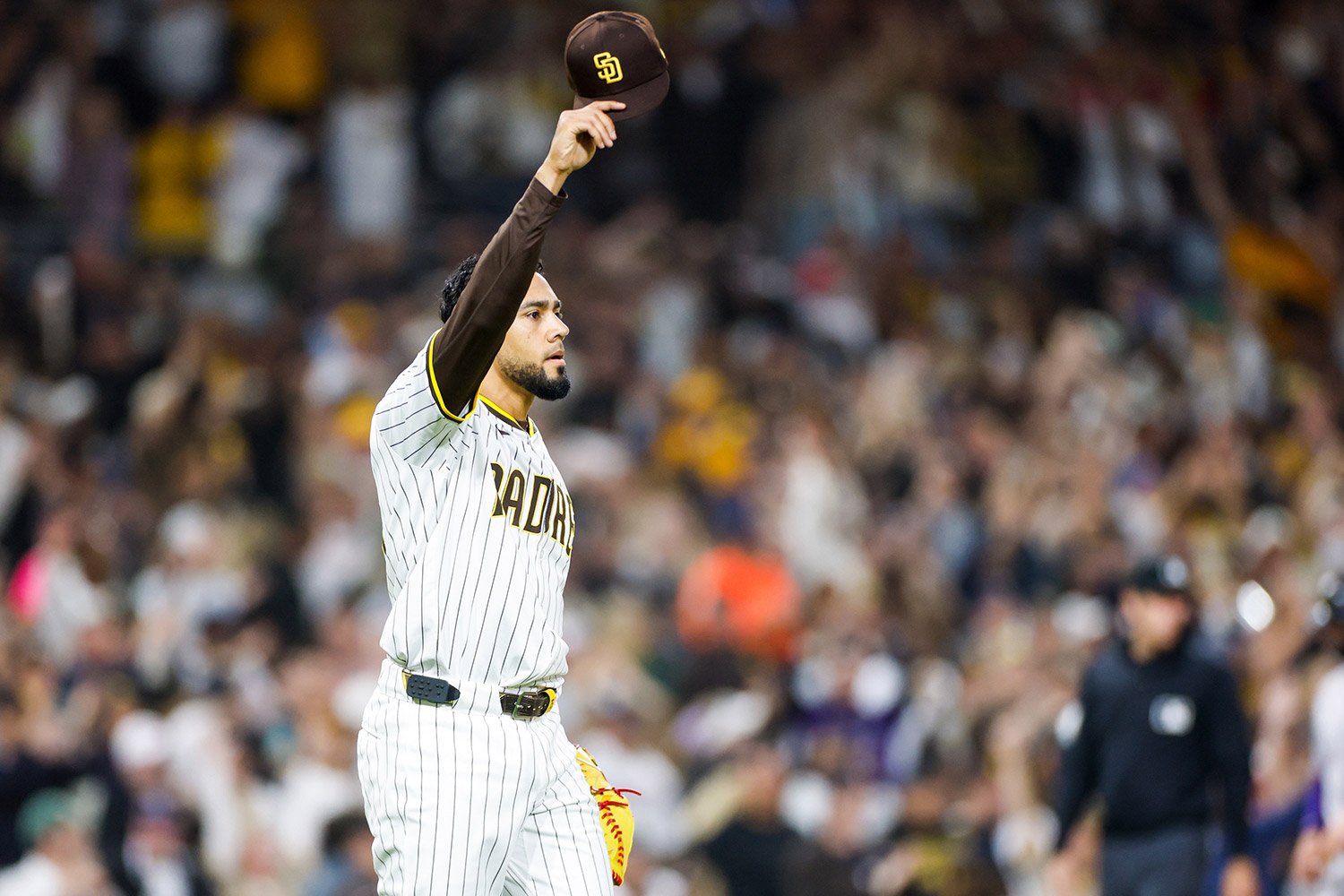 The San Diego Padres' strong start to the 2025 season owes a significant debt to a bullpen that has been far more effective than it is dominant. Through the first two months of the season, the Padres' relievers rank just 11th in FIP (Fielding Independent Pitching), a metric that takes away defense and luck to focus on what pitchers control: strikeouts, walks, and home runs. In theory, it’s one of the most accurate measures of how well a pitcher should be performing. But when you look at Win Probability Added (WPA), which tracks how much a player increases (or decreases) his team’s chances of winning based on game context, the Padres' bullpen ranks third. That gap tells a revealing story of clutch execution, and it's a big reason the Padres are off to one of their best starts in years. This is not a group overwhelming opponents inning after inning. It’s a group coming through in the biggest moments. WPA doesn’t care about style points. It rewards pitchers for preserving leads and escaping jams when games hang in the balance. In that regard, San Diego’s bullpen has excelled. The team is 8-4 in one-run games, and many of those wins have come courtesy of shutdown innings from the relief corps under pressure. They’re also fourth in the league in Clutch, a stat that captures exactly what it sounds like: performance when the game is on the line. The numbers show that Padres relievers are not dominating by pure efficiency, but rather by rising to the moment. Their strikeout rates are solid, ranked 15th out of 30 teams. Their walk rates are inconsistent. But when the pressure is highest, they’ve delivered. Three arms in particular have powered the bullpen’s strong showing: Jason Adam, Jeremiah Estrada, and Robert Suarez. Jason Adam has quietly been one of the most valuable relievers in baseball. In 22 appearances, he holds a 4–0 record, a 1.54 ERA, and has racked up 12 holds over 23.1 innings. His 1.20 WPA reflects his frequent success in leverage spots. His bright red Baseball Savant metrics back it up: he ranks in the 98th percentile in expected ERA, 100th percentile in expected batting average, and above the 89th percentile in chase, whiff, and strikeout rates. The one blemish is his walk rate, which sits at the 22nd percentile, which helps explain his modest 3.22 FIP. Jeremiah Estrada, a savvy waiver pickup before last season, has added a different dimension. Through 22 games, he’s posted a 2.66 ERA and struck out 31 batters in just 20.1 innings. With only four walks, his 2.70 FIP is one of the best in the bullpen, and his Baseball Savant metrics suggest it's no fluke. Estrada pairs excellent command of a 5% walk rate with elite swing-and-miss stuff, ranking highly in the 92nd percentile of whiff rate, 100th percentile in chase rate, and 99th percentile in strikeout rate. Then there’s Robert Suarez, the team’s closer and arguably its most critical reliever. Suarez is 15-for-16 in save chances, with a 2.84 ERA across 19 innings. He has walked eight and struck out 21; decent numbers that look even better when considering his role in high-leverage spots. His individual 2.14 FIP is the best among Padres relievers, and his 1.31 WPA leads the staff. Suarez has posted elite numbers in expected BA at .198 and strikeout rate at 30%, but remains vulnerable to occasional lapses in command, with a walk rate of 11.6%, nearing the bottom of the league. What makes this bullpen so interesting isn’t that it’s dominating statistically, but rather that it’s delivering situationally. A team can have elite strikeout and walk rates and still lose close games. The Padres are doing the opposite: overcoming flaws by winning the innings that count the most. That may not be a sustainable formula over a full 162-game season. WPA is not predictive. Bullpens that post elite WPA numbers in the first half often regress if their underlying command or strikeout metrics don’t support it. But for now, that’s not the Padres’ concern. They’re playing with a lead more often than not, and when the late innings arrive, their bullpen is holding up. Not perfectly. Not always cleanly. But enough to win. And in a division as competitive as the National League West, that’s all that matters, for now.
 -
The San Diego Padres' strong start to the 2025 season owes a significant debt to a bullpen that has been far more effective than it is dominant. Through the first two months of the season, the Padres' relievers rank just 11th in FIP (Fielding Independent Pitching), a metric that takes away defense and luck to focus on what pitchers control: strikeouts, walks, and home runs. In theory, it’s one of the most accurate measures of how well a pitcher should be performing. But when you look at Win Probability Added (WPA), which tracks how much a player increases (or decreases) his team’s chances of winning based on game context, the Padres' bullpen ranks third. That gap tells a revealing story of clutch execution, and it's a big reason the Padres are off to one of their best starts in years. This is not a group overwhelming opponents inning after inning. It’s a group coming through in the biggest moments. WPA doesn’t care about style points. It rewards pitchers for preserving leads and escaping jams when games hang in the balance. In that regard, San Diego’s bullpen has excelled. The team is 8-4 in one-run games, and many of those wins have come courtesy of shutdown innings from the relief corps under pressure. They’re also fourth in the league in Clutch, a stat that captures exactly what it sounds like: performance when the game is on the line. The numbers show that Padres relievers are not dominating by pure efficiency, but rather by rising to the moment. Their strikeout rates are solid, ranked 15th out of 30 teams. Their walk rates are inconsistent. But when the pressure is highest, they’ve delivered. Three arms in particular have powered the bullpen’s strong showing: Jason Adam, Jeremiah Estrada, and Robert Suarez. Jason Adam has quietly been one of the most valuable relievers in baseball. In 22 appearances, he holds a 4–0 record, a 1.54 ERA, and has racked up 12 holds over 23.1 innings. His 1.20 WPA reflects his frequent success in leverage spots. His bright red Baseball Savant metrics back it up: he ranks in the 98th percentile in expected ERA, 100th percentile in expected batting average, and above the 89th percentile in chase, whiff, and strikeout rates. The one blemish is his walk rate, which sits at the 22nd percentile, which helps explain his modest 3.22 FIP. Jeremiah Estrada, a savvy waiver pickup before last season, has added a different dimension. Through 22 games, he’s posted a 2.66 ERA and struck out 31 batters in just 20.1 innings. With only four walks, his 2.70 FIP is one of the best in the bullpen, and his Baseball Savant metrics suggest it's no fluke. Estrada pairs excellent command of a 5% walk rate with elite swing-and-miss stuff, ranking highly in the 92nd percentile of whiff rate, 100th percentile in chase rate, and 99th percentile in strikeout rate. Then there’s Robert Suarez, the team’s closer and arguably its most critical reliever. Suarez is 15-for-16 in save chances, with a 2.84 ERA across 19 innings. He has walked eight and struck out 21; decent numbers that look even better when considering his role in high-leverage spots. His individual 2.14 FIP is the best among Padres relievers, and his 1.31 WPA leads the staff. Suarez has posted elite numbers in expected BA at .198 and strikeout rate at 30%, but remains vulnerable to occasional lapses in command, with a walk rate of 11.6%, nearing the bottom of the league. What makes this bullpen so interesting isn’t that it’s dominating statistically, but rather that it’s delivering situationally. A team can have elite strikeout and walk rates and still lose close games. The Padres are doing the opposite: overcoming flaws by winning the innings that count the most. That may not be a sustainable formula over a full 162-game season. WPA is not predictive. Bullpens that post elite WPA numbers in the first half often regress if their underlying command or strikeout metrics don’t support it. But for now, that’s not the Padres’ concern. They’re playing with a lead more often than not, and when the late innings arrive, their bullpen is holding up. Not perfectly. Not always cleanly. But enough to win. And in a division as competitive as the National League West, that’s all that matters, for now. View full article
-
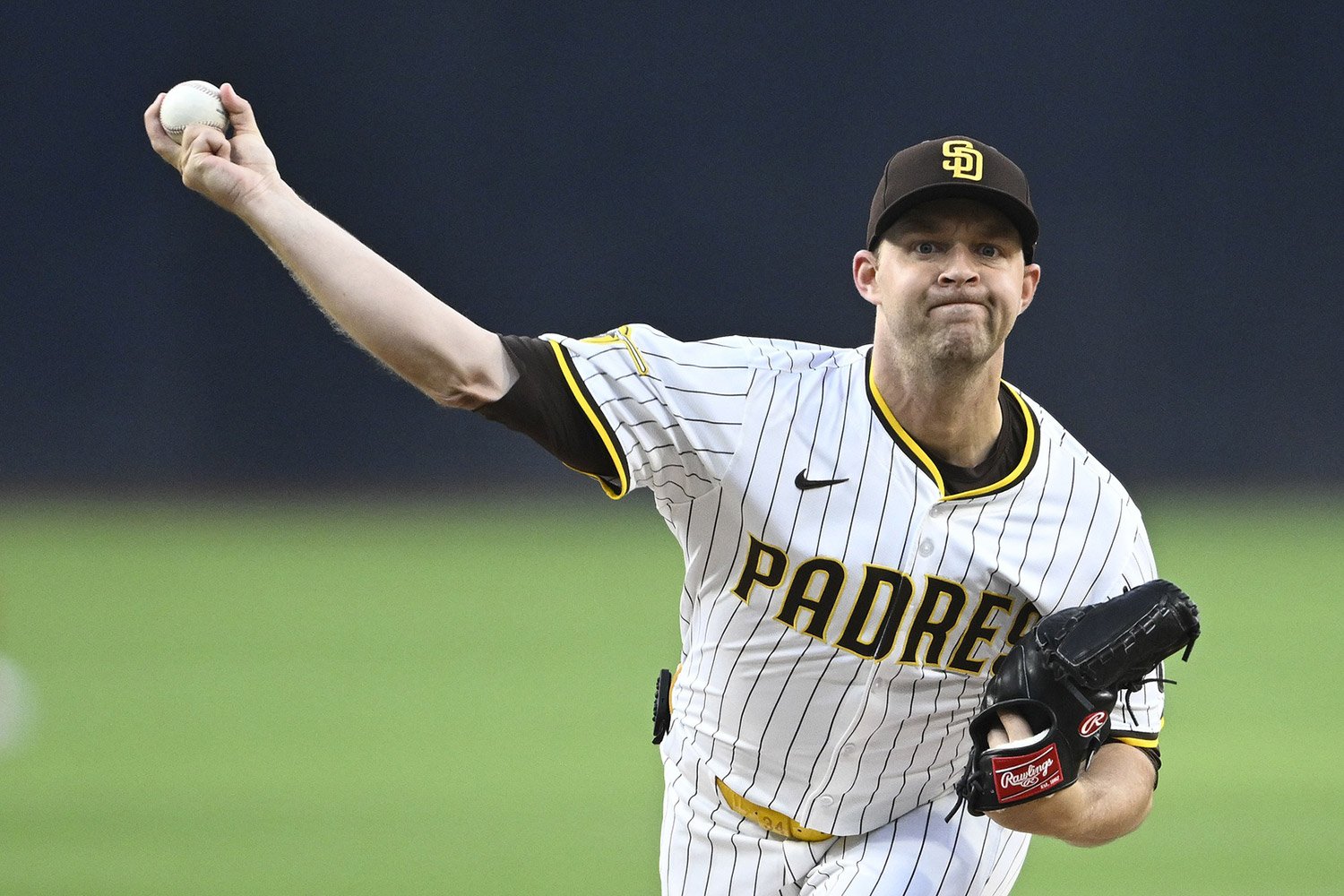 Michael King’s transition from reliever to full-time starting pitcher in 2024 was a success, but his 2025 campaign has elevated him to new heights. Through nine starts, King boasts a 4-1 record with a 2.32 ERA and a sub-1.00 WHIP, both of which currently rank third in the National League, along with a 3.24 FIP. He also has yet to allow more than three earned runs in any outing this season, while already throwing a complete-game shutout. But this isn’t some early-season hot streak. It’s the product of small, deliberate changes that have transformed King from a flexible bullpen piece into one of the most consistent arms in the National League. With a five-pitch mix, good command, and a new lower arm slot that’s adding movement across the board, King has quietly become one of, if not the Padres’ most dependable starters. What makes King effective isn’t one overpowering pitch, but the way he mixes five differing pitches seamlessly. His 2025 pitch mix highlights just how balanced and unpredictable he’s become: throwing his sinker 27.3% of the time, his four-seam fastball 26.1%, the changeup 20.8%, the sweeper 19.1%, and the slider 6.7%. Compared to 2024, the shifts are subtle but meaningful. His changeup usage has dropped slightly (from 24.6% to 20.8%), while the four-seamer has ticked up (from 24.2% to 26.1%). The sweeper and slider have each gotten a small bump in usage, too. What’s more important than the slight shifts in usage, though, is how he’s getting more out of every pitch. According to his impressive Baseball Savant page, the total movement on all five of his pitches is up from last season. King is getting more horizontal break on his sweeper and slider, more arm-side run on the sinker and changeup, and more ride on the four-seamer. As a result, his arsenal has become both more deceptive and more dangerous. His velocity hasn’t jumped, and that can be a good thing. The velocity on all his pitches is nearly identical to 2024, except his slider, which has gone down almost two mph. This suggests that his breakout isn’t the result of a temporary velocity spike, but rather a mechanical shift. King is currently throwing from the lowest arm angle of his career, around 27 degrees, and that tweak is proving transformative. The lower slot has added deception to his pitches, making it challenging for hitters to square up the ball. That adjustment is allowing his already-solid stuff to play up. His K% is up from last year (27.9% from 27.7%), and his BB% is down (8.0% from 8.7%). Because he commands his pitches so well, particularly to both edges of the plate, hitters can’t sit on any one shape or velocity. So while his command might not be elite, as his Location+ on FanGraphs is 104, just above league average, it’s solid enough to support his success. There were fair questions heading into 2025 about whether King’s transition to the rotation full-time last season was sustainable. After all, despite a good 2024 season, it was his first true year in the role. But so far in 2025, durability has not been an issue. Aside from his season debut, King has completed five or more innings in every start and continues to show poise deep into outings. Perhaps even more impressive is that he hasn't had a single disaster game—nine starts in, zero outings with more than three earned runs allowed. Being able to keep the Padres in games consistently is exactly what makes King look like a true rotation anchor. In a rotation that is constantly searching for stability after the Yu Darvish and Joe Musgrove injuries, King has quietly become the Padres’ most reliable starter. Unlike many breakout starters who lean on overpowering stuff that can fade over a long season, King’s foundation is built on deception and adaptability. He doesn’t need to throw 98 to win; he just needs to do what he has done every time he’s taken the mound this year. Whether he ends the season with a sub-3.00 ERA is anyone’s guess, as that kind of number is hard to maintain over 30-plus starts. But if he stays healthy, there’s no reason he can’t. Michael King’s rise isn’t flashy, but it’s overly impressive. He’s gone from an intriguing long reliever to a smart, five-pitch starter whose ceiling and floor both look to be trending up. The Padres believed in his ability to take on more. Now, he’s proving they were right — and he’s making a compelling case to be a fixture in San Diego’s rotation for years to come. And at only age 29, King looks ready to be the ace of the Padres’ pitching staff, which looks to be a contender through the year and beyond.
 -
Michael King’s transition from reliever to full-time starting pitcher in 2024 was a success, but his 2025 campaign has elevated him to new heights. Through nine starts, King boasts a 4-1 record with a 2.32 ERA and a sub-1.00 WHIP, both of which currently rank third in the National League, along with a 3.24 FIP. He also has yet to allow more than three earned runs in any outing this season, while already throwing a complete-game shutout. But this isn’t some early-season hot streak. It’s the product of small, deliberate changes that have transformed King from a flexible bullpen piece into one of the most consistent arms in the National League. With a five-pitch mix, good command, and a new lower arm slot that’s adding movement across the board, King has quietly become one of, if not the Padres’ most dependable starters. What makes King effective isn’t one overpowering pitch, but the way he mixes five differing pitches seamlessly. His 2025 pitch mix highlights just how balanced and unpredictable he’s become: throwing his sinker 27.3% of the time, his four-seam fastball 26.1%, the changeup 20.8%, the sweeper 19.1%, and the slider 6.7%. Compared to 2024, the shifts are subtle but meaningful. His changeup usage has dropped slightly (from 24.6% to 20.8%), while the four-seamer has ticked up (from 24.2% to 26.1%). The sweeper and slider have each gotten a small bump in usage, too. What’s more important than the slight shifts in usage, though, is how he’s getting more out of every pitch. According to his impressive Baseball Savant page, the total movement on all five of his pitches is up from last season. King is getting more horizontal break on his sweeper and slider, more arm-side run on the sinker and changeup, and more ride on the four-seamer. As a result, his arsenal has become both more deceptive and more dangerous. His velocity hasn’t jumped, and that can be a good thing. The velocity on all his pitches is nearly identical to 2024, except his slider, which has gone down almost two mph. This suggests that his breakout isn’t the result of a temporary velocity spike, but rather a mechanical shift. King is currently throwing from the lowest arm angle of his career, around 27 degrees, and that tweak is proving transformative. The lower slot has added deception to his pitches, making it challenging for hitters to square up the ball. That adjustment is allowing his already-solid stuff to play up. His K% is up from last year (27.9% from 27.7%), and his BB% is down (8.0% from 8.7%). Because he commands his pitches so well, particularly to both edges of the plate, hitters can’t sit on any one shape or velocity. So while his command might not be elite, as his Location+ on FanGraphs is 104, just above league average, it’s solid enough to support his success. There were fair questions heading into 2025 about whether King’s transition to the rotation full-time last season was sustainable. After all, despite a good 2024 season, it was his first true year in the role. But so far in 2025, durability has not been an issue. Aside from his season debut, King has completed five or more innings in every start and continues to show poise deep into outings. Perhaps even more impressive is that he hasn't had a single disaster game—nine starts in, zero outings with more than three earned runs allowed. Being able to keep the Padres in games consistently is exactly what makes King look like a true rotation anchor. In a rotation that is constantly searching for stability after the Yu Darvish and Joe Musgrove injuries, King has quietly become the Padres’ most reliable starter. Unlike many breakout starters who lean on overpowering stuff that can fade over a long season, King’s foundation is built on deception and adaptability. He doesn’t need to throw 98 to win; he just needs to do what he has done every time he’s taken the mound this year. Whether he ends the season with a sub-3.00 ERA is anyone’s guess, as that kind of number is hard to maintain over 30-plus starts. But if he stays healthy, there’s no reason he can’t. Michael King’s rise isn’t flashy, but it’s overly impressive. He’s gone from an intriguing long reliever to a smart, five-pitch starter whose ceiling and floor both look to be trending up. The Padres believed in his ability to take on more. Now, he’s proving they were right — and he’s making a compelling case to be a fixture in San Diego’s rotation for years to come. And at only age 29, King looks ready to be the ace of the Padres’ pitching staff, which looks to be a contender through the year and beyond. View full article

