


Alex Carl
-
Posts
34 -
Joined
-
Last visited
Content Type
Profiles
San Diego Padres Videos
2026 San Diego Padres Top Prospects Ranking
San Diego Padres Free Agent & Trade Rumors, Notes, & Tidbits
Guides & Resources
2025 San Diego Padres Draft Pick Tracker
News
2026 San Diego Padres Draft Tracker: Picks & Bonuses
Forums
Blogs
Events
Store
Downloads
Gallery
Everything posted by Alex Carl
-
While the Padres’ offense didn’t always fire on all cylinders in 2025, several key contributors helped keep the team competitive from start to finish. Veterans like Manny Machado and Fernando Tatis Jr. provided leadership and stability, while younger players such as Jackson Merrill continued to develop into reliable everyday bats. The mix of proven stars and emerging talent made for one of the more balanced lineups the Padres have had in recent years. Here’s how the top hitters stacked up this season. Honorable Mention: Gavin Sheets – 145 G, 19 HR, 71 RBI, 57 R, .252/.317/.429, 19.6 K%, 8.1 BB%, 1.3 WAR Sheets quietly became one of the Padres’ more reliable depth bats, posting a .252/.317/.429 slash line with 19 home runs and 71 RBIs over 145 games. While his overall WAR (1.3) didn’t jump off the page, Sheets provided valuable left-handed power and held his own against righties. His knack for delivering timely hits made him a steady contributor in the Padres’ streaky lineup. Honorable Mention: Luis Arráez – 154 G, 8 HR, 61 RBI, 66 R, 11 SB, .292/.327/.392, 3.1 K%, 5.0 BB%, 0.9 WAR As always, Arráez brought elite bat-to-ball skills and a consistent contact approach that balanced the team’s power-heavy lineup. In 154 games, he hit .292 with just a 3.1% strikeout rate, nearly unheard of in today’s game. Though he finished with modest power numbers, Arráez's ability to put the ball in play and spark rallies was crucial, especially during the summer months when the Padres’ offense sputtered. 5. Jake Cronenworth – 135 G, 11 HR, 61 RBI, 59 R, .246/.367/.377, 20.8 K%, 13.4 BB%, 2.9 WAR While he didn’t light up the stat sheet, Jake Cronenworth quietly turned in another solid season, doing a little bit of everything for the Padres. He batted .246/.367/.377 with 11 home runs, 61 RBIs, and an impressive 13.4% walk rate. His plate discipline and on-base skills helped lengthen the lineup and set the table for other bats. Cronenworth’s versatility in the field and steady approach at the plate made him an underappreciated but essential contributor to San Diego’s offense. 4. Jackson Merrill – 115 G, 16 HR, 67 RBI, 59 R, .264/.317/.457, 22.4 K%, 6.8 BB%, 3.0 WAR In his second major league season, Jackson Merrill continued to prove he’s a key part of the Padres’ future. Merrill played in only 115 games due to injuries in April and at the end of August. While the missed time kept him from building on to an already good Sophomore year, Merrill’s production when healthy showed a clear step forward from the 22-year-old. He looked increasingly comfortable in key moments and defensively continued to be a positive fielder. While not as statistically good as last year, Merrill’s combination of offensive upside and defensive dependability made him one of the most promising young pieces on the Padres’ roster and a player poised to take another leap next season. 3. Xander Bogaerts – 136 G, 11 HR, 53 RBI, 63 R, 20 SB, .263/.328/.391, 17.0 K%, 8.7 BB%, 3.2 WAR After a rocky start to his Padres tenure, Xander Bogaerts looked more comfortable in 2025. He hit .263/.328/.391 across 136 games with 11 home runs, 53 RBIs, and 20 stolen bases, with improved mobility and steady plate discipline. His offensive numbers didn’t fully rebound to Boston levels, but Bogaerts brought much-needed steadiness to the infield and lineup. While injuries limited him late in the year, his versatility and veteran presence were key in keeping the offense afloat during tough stretches. 2. Fernando Tatis Jr. – 155 G, 25 HR, 71 RBI, 111 R, 32 SB, .268/.368/.446, 18.7 K%, 12.9 BB%, 6.1 WAR In his first full season back from suspension, Fernando Tatis Jr. reestablished himself as one of the game’s elite two-way players. While his bat went cold in stretches during the middle of the season, his early production and elite defense carried tremendous value. Over 155 games, Tatis hit .268/.368/.446 with 25 home runs, 71 RBIs, and 32 stolen bases. The numbers might not scream MVP-level, but his all-around impact, especially his defense in right field, which could earn him a Gold Glove, was undeniable. Even when his power dipped, Tatis remained an on-base machine and a constant threat on the bases. Tatis was the most well-rounded player for the Padres this season, but not the best when it mattered. 1. Manny Machado – 159 G, 27 HR, 95 RBI, 91 R, 14 SB, .275/.335/.460, 19.3 K%, 8.1 BB%, 3.8 WAR Manny Machado in 2025 reminded everyone why he’s still one of the Padres’ cornerstones. Playing in 159 games, Machado slashed .275/.335/.460 with 27 home runs, 95 RBIs, and 91 runs scored. He may not have posted the flashy WAR totals of years past (3.8), but his steady production and ability to anchor the lineup gave San Diego’s offense a consistent bat through an otherwise streaky year. What stood out most about Machado’s season was his reliability. While the lineup around him went through hot and cold stretches, he rarely disappeared for long. He mixed in just enough power to threaten pitchers, maintained a reasonable strikeout rate at 19.3%, and came through repeatedly in high-leverage spots. His ability to keep the ball in play and produce quality at-bats helped stabilize the middle of the order, especially when others slumped. Defensively, Machado wasn’t quite as sharp as in previous years, as reflected in his lower WAR, but his leadership and presence were invaluable. Even without elite metrics or highlight-reel defense, Machado’s balance of production, consistency, and dependability made him the Padres’ 2025 Hitter of the Year. View full article
-
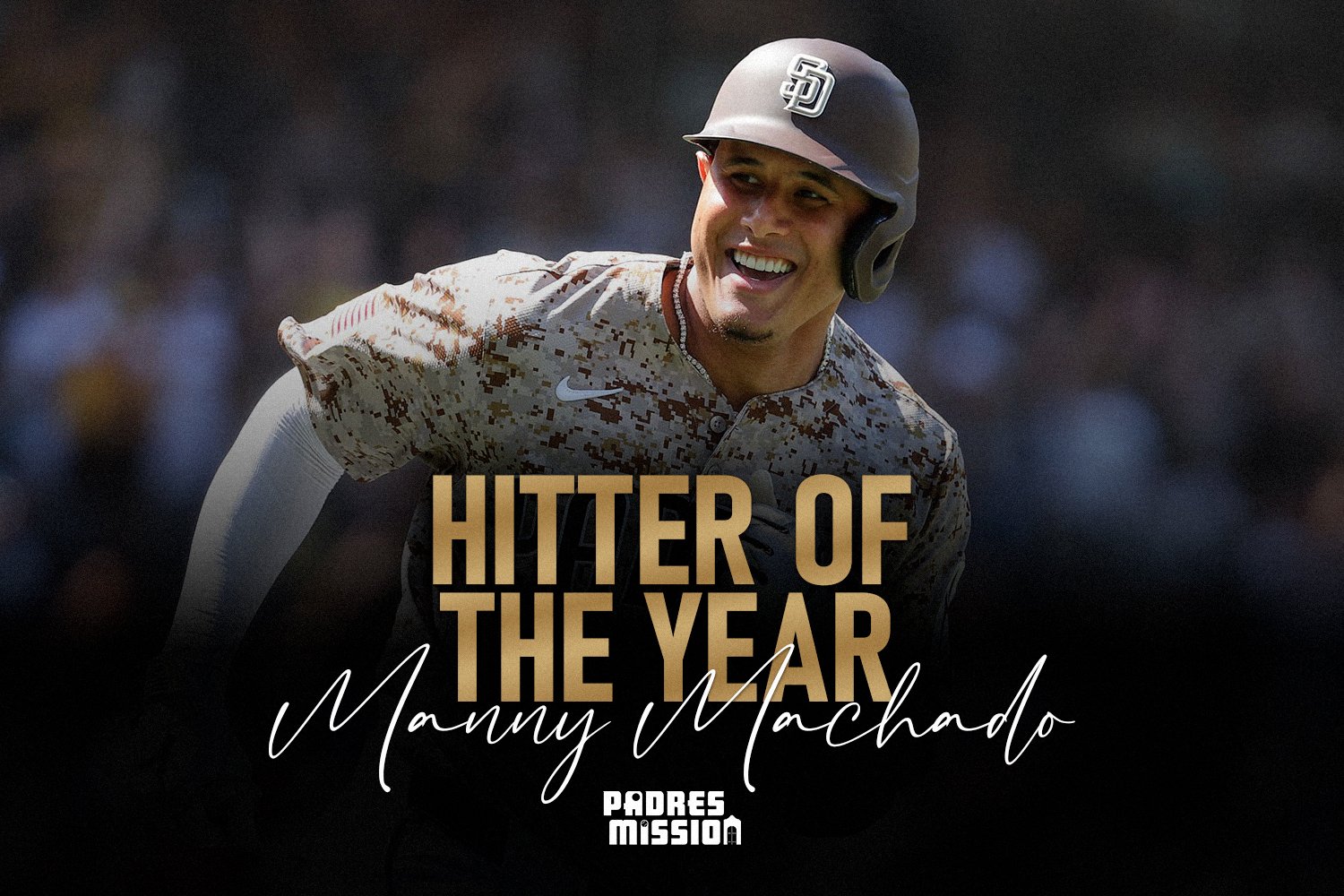 While the Padres’ offense didn’t always fire on all cylinders in 2025, several key contributors helped keep the team competitive from start to finish. Veterans like Manny Machado and Fernando Tatis Jr. provided leadership and stability, while younger players such as Jackson Merrill continued to develop into reliable everyday bats. The mix of proven stars and emerging talent made for one of the more balanced lineups the Padres have had in recent years. Here’s how the top hitters stacked up this season. Honorable Mention: Gavin Sheets – 145 G, 19 HR, 71 RBI, 57 R, .252/.317/.429, 19.6 K%, 8.1 BB%, 1.3 WAR Sheets quietly became one of the Padres’ more reliable depth bats, posting a .252/.317/.429 slash line with 19 home runs and 71 RBIs over 145 games. While his overall WAR (1.3) didn’t jump off the page, Sheets provided valuable left-handed power and held his own against righties. His knack for delivering timely hits made him a steady contributor in the Padres’ streaky lineup. Honorable Mention: Luis Arráez – 154 G, 8 HR, 61 RBI, 66 R, 11 SB, .292/.327/.392, 3.1 K%, 5.0 BB%, 0.9 WAR As always, Arráez brought elite bat-to-ball skills and a consistent contact approach that balanced the team’s power-heavy lineup. In 154 games, he hit .292 with just a 3.1% strikeout rate, nearly unheard of in today’s game. Though he finished with modest power numbers, Arráez's ability to put the ball in play and spark rallies was crucial, especially during the summer months when the Padres’ offense sputtered. 5. Jake Cronenworth – 135 G, 11 HR, 61 RBI, 59 R, .246/.367/.377, 20.8 K%, 13.4 BB%, 2.9 WAR While he didn’t light up the stat sheet, Jake Cronenworth quietly turned in another solid season, doing a little bit of everything for the Padres. He batted .246/.367/.377 with 11 home runs, 61 RBIs, and an impressive 13.4% walk rate. His plate discipline and on-base skills helped lengthen the lineup and set the table for other bats. Cronenworth’s versatility in the field and steady approach at the plate made him an underappreciated but essential contributor to San Diego’s offense. 4. Jackson Merrill – 115 G, 16 HR, 67 RBI, 59 R, .264/.317/.457, 22.4 K%, 6.8 BB%, 3.0 WAR In his second major league season, Jackson Merrill continued to prove he’s a key part of the Padres’ future. Merrill played in only 115 games due to injuries in April and at the end of August. While the missed time kept him from building on to an already good Sophomore year, Merrill’s production when healthy showed a clear step forward from the 22-year-old. He looked increasingly comfortable in key moments and defensively continued to be a positive fielder. While not as statistically good as last year, Merrill’s combination of offensive upside and defensive dependability made him one of the most promising young pieces on the Padres’ roster and a player poised to take another leap next season. 3. Xander Bogaerts – 136 G, 11 HR, 53 RBI, 63 R, 20 SB, .263/.328/.391, 17.0 K%, 8.7 BB%, 3.2 WAR After a rocky start to his Padres tenure, Xander Bogaerts looked more comfortable in 2025. He hit .263/.328/.391 across 136 games with 11 home runs, 53 RBIs, and 20 stolen bases, with improved mobility and steady plate discipline. His offensive numbers didn’t fully rebound to Boston levels, but Bogaerts brought much-needed steadiness to the infield and lineup. While injuries limited him late in the year, his versatility and veteran presence were key in keeping the offense afloat during tough stretches. 2. Fernando Tatis Jr. – 155 G, 25 HR, 71 RBI, 111 R, 32 SB, .268/.368/.446, 18.7 K%, 12.9 BB%, 6.1 WAR In his first full season back from suspension, Fernando Tatis Jr. reestablished himself as one of the game’s elite two-way players. While his bat went cold in stretches during the middle of the season, his early production and elite defense carried tremendous value. Over 155 games, Tatis hit .268/.368/.446 with 25 home runs, 71 RBIs, and 32 stolen bases. The numbers might not scream MVP-level, but his all-around impact, especially his defense in right field, which could earn him a Gold Glove, was undeniable. Even when his power dipped, Tatis remained an on-base machine and a constant threat on the bases. Tatis was the most well-rounded player for the Padres this season, but not the best when it mattered. 1. Manny Machado – 159 G, 27 HR, 95 RBI, 91 R, 14 SB, .275/.335/.460, 19.3 K%, 8.1 BB%, 3.8 WAR Manny Machado in 2025 reminded everyone why he’s still one of the Padres’ cornerstones. Playing in 159 games, Machado slashed .275/.335/.460 with 27 home runs, 95 RBIs, and 91 runs scored. He may not have posted the flashy WAR totals of years past (3.8), but his steady production and ability to anchor the lineup gave San Diego’s offense a consistent bat through an otherwise streaky year. What stood out most about Machado’s season was his reliability. While the lineup around him went through hot and cold stretches, he rarely disappeared for long. He mixed in just enough power to threaten pitchers, maintained a reasonable strikeout rate at 19.3%, and came through repeatedly in high-leverage spots. His ability to keep the ball in play and produce quality at-bats helped stabilize the middle of the order, especially when others slumped. Defensively, Machado wasn’t quite as sharp as in previous years, as reflected in his lower WAR, but his leadership and presence were invaluable. Even without elite metrics or highlight-reel defense, Machado’s balance of production, consistency, and dependability made him the Padres’ 2025 Hitter of the Year.
 -
The Padres’ 2025 season was built on the strength of their bullpen. Whether it was closing out tight games, bridging shaky starts, or racking up strikeouts in high-leverage moments, San Diego leaned heavily on its relief corps. Several arms turned in All-Star caliber performances, and the group as a whole ranked among the most reliable in baseball. With so many standouts, picking a Reliever of the Year isn’t easy, but these five pitchers (plus two honorable mentions) rose above the rest. Honorable Mention: Wandy Peralta – 71 G, 6-1, 71.2 IP, 3.14 ERA, 3.69 FIP, 0.4 WAR, .238 AVG, 7.81 K/9, 3.84 BB/9 Peralta provided steady depth with 71 appearances and 71 2/3 innings. His 3.14 ERA and .238 opponent average weren’t eye-popping compared to the top arms, but his ability to eat innings and deliver quality outings kept the bullpen from being overworked. Honorable Mention: David Morgan – 41 G, 1-2, 47.1 IP, 2.66 ERA, 3.82 FIP, 0.2 WAR, .208 AVG, 9.61 K/9, 4.50 BB/9 Despite being called up and making his major league debut in late May, the rookie Morgan quietly put together a strong season in 41 games, posting a 2.66 ERA over 47 1/3 innings. He struck out more than a batter per inning and limited opponents to a .208 average. His concerningly high walk rate might be holding him back from a bigger role, but he was another useful piece in San Diego’s deep bullpen. 5. Jeremiah Estrada – 77 G, 4-5, 73.0 IP, 3.45 ERA, 3.55 FIP, 1.0 WAR, .216 AVG, 13.32 K/9, 3.33 BB/9, 3-6 SVO, 30 HLD If strikeouts are your thing, Estrada was a must-watch all year long. The righty piled up punchouts at a 13.32 K/9 clip, tying for the MLB lead in strikeouts by a reliever at 108. His 77 appearances led the team, and his 30 holds underline how heavily the Padres leaned on him in setup duty. He was more prone to the long ball than others, giving up 12 home runs, but his swing-and-miss stuff often bailed him out of jams. When the Padres needed a big strikeout with runners on, Estrada was the arm they called. 4. Mason Miller – 22 G, 0-0, 23.1 IP, 0.77 ERA, 1.12 FIP, 1.1 WAR, .096 AVG, 17.36 K/9, 3.86 BB/9, 2-3 SVO, 10 HLD Miller came over to the Padres in a big splash at the deadline and has been virtually untouchable since. In just 22 appearances, he struck out an absurd 17.36 batters per nine while posting a 0.77 ERA and 1.12 FIP. Hitters looked overmatched, batting just .096 against him. With 10 holds and two saves, Miller excelled in every opportunity given. The only thing holding him back in this race is his being the newest piece to this bullpen, but his second-half dominance was as electric as any reliever in baseball. 3. Jason Adam – 65 G, 8-4, 65.1 IP, 1.93 ERA, 3.07 FIP, 1.2 WAR, .210 AVG, 9.64 K/9, 3.44 BB/9, 29 HLD Before his season was cut short by a torn left quadriceps tendon in early September, Adam was one of baseball’s most dominant setup men. In 65 appearances, he allowed just a 1.93 ERA across 65 1/3 innings, striking out nearly 10 per nine while holding opponents to a .210 average. He racked up 29 holds, showing just how often he was the go-to arm in late innings ahead of Suarez. Though his injury ended his season prematurely, Adam’s reliability over five months helped stabilize the bullpen and set the table for many Padres wins. 2. Robert Suarez – 70 G, 4-6, 69.2 IP, 2.97 ERA, 2.88 FIP, 1.9 WAR, .189 AVG, 9.69 K/9, 2.07 BB/9, 40-45 SVO The Padres’ closer was as steady as they come, finishing second in the majors with 40 saves in 45 opportunities. Suarez paired his dominant fastball with precise command, striking out nearly 10 batters per nine while walking just 2.07 per nine. Opponents hit a mere .189 against him, and he delivered 69.2 innings across 70 appearances with a 2.97 ERA. His reliability in the ninth made him the bullpen’s heartbeat, and like fellow relievers Morejon and Adam, he earned All-Star honors. Suarez shouldered the pressure of protecting slim leads night after night and excelled while doing so. 1. Adrián Morejon – 75 G, 13-6, 73.2 IP, 2.08 ERA, 2.28 FIP, 2.2 WAR, .186 AVG, 8.55 K/9, 2.08 BB/9, 3-7 SVO, 20 HLD No Padres reliever shouldered a bigger workload in 2025 than Adrián Morejon. The 26-year-old southpaw quietly became the Padres’ most dependable bullpen weapon. Appearing in a team-high 75 games and logging 73 2/3 innings, he posted a sparkling 2.08 ERA and 2.28 FIP while limiting hitters to a .186 average. His 20 holds highlight how often manager Mike Shildt trusted him in high-leverage spots, and he responded with consistency. Morejon’s control stood out, and while he converted just three saves, his ability to bridge innings and pitch in virtually any situation made him invaluable. An All-Star nod capped off a breakout year that firmly established him as a bullpen anchor. The consistency earned Morejon his first All-Star selection, a recognition of just how vital he was to San Diego’s success. While Suarez locked down the ninth inning and Estrada racked up strikeouts, it was Morejon who quietly logged the most appearances, protected countless leads, and gave the Padres flexibility whenever the bullpen was stretched thin. In a year full of bullpen stars, Morejon’s mix of reliability, versatility, and production put him at the center of San Diego’s relief corps. By advanced metrics, Morejon’s value stood out even more. His 2.2 WAR led all San Diego relievers, reflecting not just the quality of his innings but also the volume. Morejon’s workload and efficiency demonstrated how vital middle and setup arms can be to a winning team. Perhaps most importantly, this season felt like a turning point in Morejon’s career. Despite being in the league for six years, this was Morejon’s first full season. For the Padres, that consistency meant they had someone they could lean on three or four times a week without hesitation. For Morejon, it meant being recognized as one of the best multipurpose relievers in the game. In a bullpen full of stars, he was the glue that held everything together. View full article
-
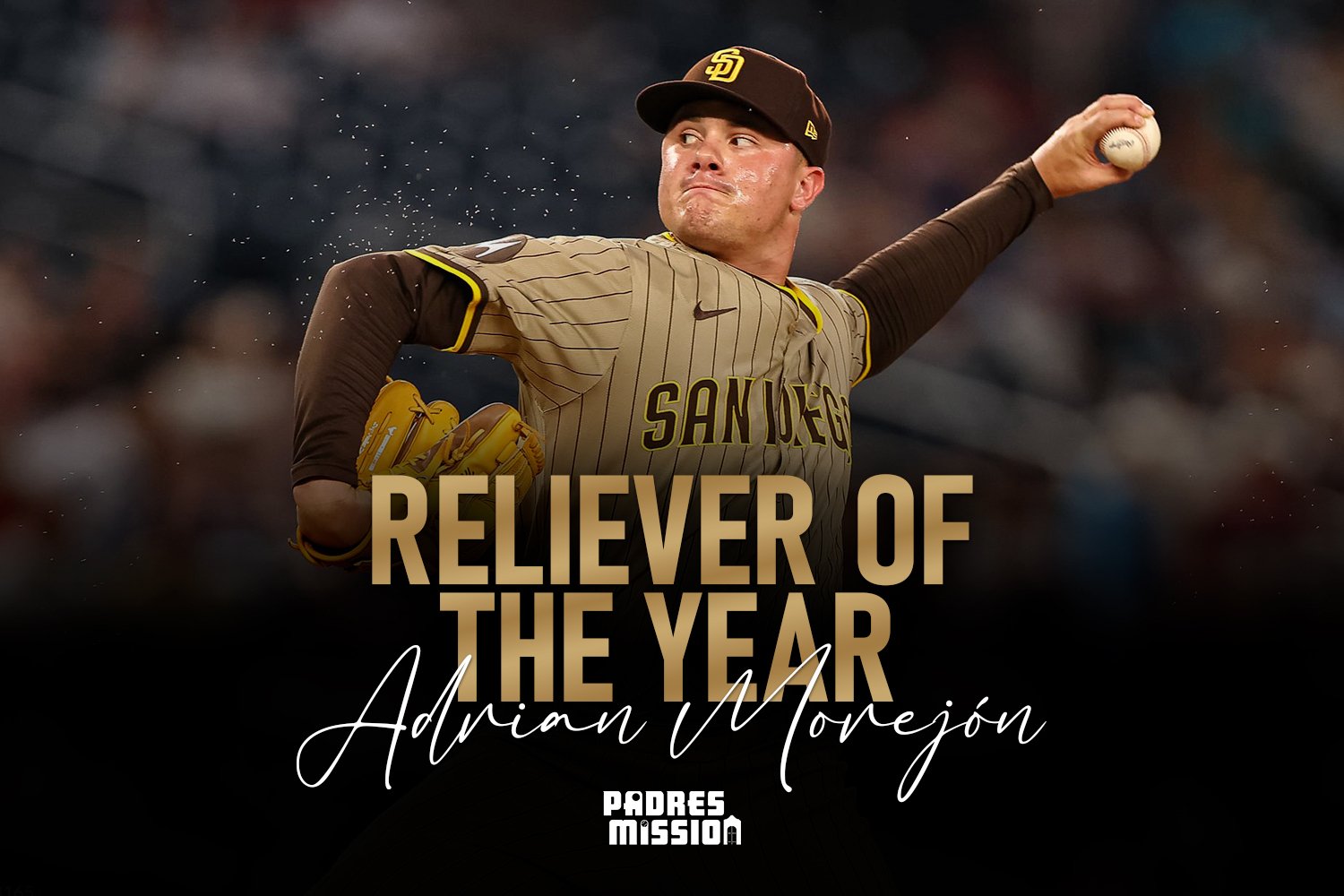 The Padres’ 2025 season was built on the strength of their bullpen. Whether it was closing out tight games, bridging shaky starts, or racking up strikeouts in high-leverage moments, San Diego leaned heavily on its relief corps. Several arms turned in All-Star caliber performances, and the group as a whole ranked among the most reliable in baseball. With so many standouts, picking a Reliever of the Year isn’t easy, but these five pitchers (plus two honorable mentions) rose above the rest. Honorable Mention: Wandy Peralta – 71 G, 6-1, 71.2 IP, 3.14 ERA, 3.69 FIP, 0.4 WAR, .238 AVG, 7.81 K/9, 3.84 BB/9 Peralta provided steady depth with 71 appearances and 71 2/3 innings. His 3.14 ERA and .238 opponent average weren’t eye-popping compared to the top arms, but his ability to eat innings and deliver quality outings kept the bullpen from being overworked. Honorable Mention: David Morgan – 41 G, 1-2, 47.1 IP, 2.66 ERA, 3.82 FIP, 0.2 WAR, .208 AVG, 9.61 K/9, 4.50 BB/9 Despite being called up and making his major league debut in late May, the rookie Morgan quietly put together a strong season in 41 games, posting a 2.66 ERA over 47 1/3 innings. He struck out more than a batter per inning and limited opponents to a .208 average. His concerningly high walk rate might be holding him back from a bigger role, but he was another useful piece in San Diego’s deep bullpen. 5. Jeremiah Estrada – 77 G, 4-5, 73.0 IP, 3.45 ERA, 3.55 FIP, 1.0 WAR, .216 AVG, 13.32 K/9, 3.33 BB/9, 3-6 SVO, 30 HLD If strikeouts are your thing, Estrada was a must-watch all year long. The righty piled up punchouts at a 13.32 K/9 clip, tying for the MLB lead in strikeouts by a reliever at 108. His 77 appearances led the team, and his 30 holds underline how heavily the Padres leaned on him in setup duty. He was more prone to the long ball than others, giving up 12 home runs, but his swing-and-miss stuff often bailed him out of jams. When the Padres needed a big strikeout with runners on, Estrada was the arm they called. 4. Mason Miller – 22 G, 0-0, 23.1 IP, 0.77 ERA, 1.12 FIP, 1.1 WAR, .096 AVG, 17.36 K/9, 3.86 BB/9, 2-3 SVO, 10 HLD Miller came over to the Padres in a big splash at the deadline and has been virtually untouchable since. In just 22 appearances, he struck out an absurd 17.36 batters per nine while posting a 0.77 ERA and 1.12 FIP. Hitters looked overmatched, batting just .096 against him. With 10 holds and two saves, Miller excelled in every opportunity given. The only thing holding him back in this race is his being the newest piece to this bullpen, but his second-half dominance was as electric as any reliever in baseball. 3. Jason Adam – 65 G, 8-4, 65.1 IP, 1.93 ERA, 3.07 FIP, 1.2 WAR, .210 AVG, 9.64 K/9, 3.44 BB/9, 29 HLD Before his season was cut short by a torn left quadriceps tendon in early September, Adam was one of baseball’s most dominant setup men. In 65 appearances, he allowed just a 1.93 ERA across 65 1/3 innings, striking out nearly 10 per nine while holding opponents to a .210 average. He racked up 29 holds, showing just how often he was the go-to arm in late innings ahead of Suarez. Though his injury ended his season prematurely, Adam’s reliability over five months helped stabilize the bullpen and set the table for many Padres wins. 2. Robert Suarez – 70 G, 4-6, 69.2 IP, 2.97 ERA, 2.88 FIP, 1.9 WAR, .189 AVG, 9.69 K/9, 2.07 BB/9, 40-45 SVO The Padres’ closer was as steady as they come, finishing second in the majors with 40 saves in 45 opportunities. Suarez paired his dominant fastball with precise command, striking out nearly 10 batters per nine while walking just 2.07 per nine. Opponents hit a mere .189 against him, and he delivered 69.2 innings across 70 appearances with a 2.97 ERA. His reliability in the ninth made him the bullpen’s heartbeat, and like fellow relievers Morejon and Adam, he earned All-Star honors. Suarez shouldered the pressure of protecting slim leads night after night and excelled while doing so. 1. Adrián Morejon – 75 G, 13-6, 73.2 IP, 2.08 ERA, 2.28 FIP, 2.2 WAR, .186 AVG, 8.55 K/9, 2.08 BB/9, 3-7 SVO, 20 HLD No Padres reliever shouldered a bigger workload in 2025 than Adrián Morejon. The 26-year-old southpaw quietly became the Padres’ most dependable bullpen weapon. Appearing in a team-high 75 games and logging 73 2/3 innings, he posted a sparkling 2.08 ERA and 2.28 FIP while limiting hitters to a .186 average. His 20 holds highlight how often manager Mike Shildt trusted him in high-leverage spots, and he responded with consistency. Morejon’s control stood out, and while he converted just three saves, his ability to bridge innings and pitch in virtually any situation made him invaluable. An All-Star nod capped off a breakout year that firmly established him as a bullpen anchor. The consistency earned Morejon his first All-Star selection, a recognition of just how vital he was to San Diego’s success. While Suarez locked down the ninth inning and Estrada racked up strikeouts, it was Morejon who quietly logged the most appearances, protected countless leads, and gave the Padres flexibility whenever the bullpen was stretched thin. In a year full of bullpen stars, Morejon’s mix of reliability, versatility, and production put him at the center of San Diego’s relief corps. By advanced metrics, Morejon’s value stood out even more. His 2.2 WAR led all San Diego relievers, reflecting not just the quality of his innings but also the volume. Morejon’s workload and efficiency demonstrated how vital middle and setup arms can be to a winning team. Perhaps most importantly, this season felt like a turning point in Morejon’s career. Despite being in the league for six years, this was Morejon’s first full season. For the Padres, that consistency meant they had someone they could lean on three or four times a week without hesitation. For Morejon, it meant being recognized as one of the best multipurpose relievers in the game. In a bullpen full of stars, he was the glue that held everything together.
 -
From high-contact table-setters to power-hitting outfielders, several prospects and organizational depth pieces made strong cases for recognition this month. Before we get into the top five, here are two players who just missed the cut but still deserve recognition for their July performances. Honorable Mention: Zach Evans (Lake Elsinore Storm) – 32 H, 5 2B, 12 RBI, 11 R, 7 SB, .320/.398/.370, 14:13 K:BB Evans wasn’t flashy with power, but he was a consistent presence at the top of the order. He notched 32 hits and swiped seven bags while walking nearly as often as he struck out. His .320 average and .398 OBP helped drive a steady July for the Storm offense. Honorable Mention: Albert Fabian (San Antonio Missions) – 17 H, 2 HR, 4 2B, 9 RBI, 8 R, .333/.386/.529, 11:4 K:BB Despite playing in just 15 games, Fabian made an impression. He posted a .333 average and slugged .529, with 6 of his 17 hits going for extra bases. If he’d had more at-bats, he might’ve cracked the top five. 5. Brandon Lockridge (El Paso Chihuahuas) – 23 H, 2 HR, 4 2B, 6 RBI, 19 R, 7 SB, .291/.402/.468, 17:15 K:BB Lockridge gave the Chihuahuas a jolt at the top of the order. He hit .291, drew 15 walks, and stole seven bases, showcasing speed and plate discipline. While his power numbers were modest, he was a consistent run scorer with 19 runs. His standout July helped boost his trade value, and at the deadline, the Padres sent Lockridge to the Milwaukee Brewers in a deal that netted lefty Nestor Cortes and infield prospect Jorge Quintana. 4. Forrest Wall (El Paso Chihuahuas) – 28 H, 1 HR, 6 2B, 16 RBI, 14 R, 7 SB, .346/.382/.506, 16:4 K:BB Wall continued to show why he's one of the more versatile and valuable bats in the system. He hit .346 with six doubles and added seven stolen bases, showing his disruptive potential on the bases. His 16 RBI and 14 runs scored helped fuel a productive El Paso lineup, and his ability to impact games in multiple ways stood out once again. 3. Brandon Butterworth (San Antonio Missions) – 30 H, 6 HR, 3 2B, 14 RBI, 16 R, .313/.347/.552, 18:5 K:BB Butterworth brought the thump in July. He mashed six home runs and slugged .552, giving the Missions power from the infield. While his walk rate dipped a bit, he still managed a strong .313 average and drove in 14 runs. Known earlier in the year for his contact skills, Butterworth’s power breakout turned heads, and it didn’t go unnoticed at the big-league level. At the trade deadline, Butterworth was dealt to the Baltimore Orioles as part of the package that brought Ryan O’Hearn and Ramón Laureano to San Diego. For the Padres, it was a win-now move. For Butterworth, it’s a fresh opportunity in a new organization after a breakout month. 2. Nate Mondou (El Paso Chihuahuas) – 32 H, 4 2B, 14 RBI, 12 R, .364/.434/.432, 16:10 K:BB Mondou was the model of consistency throughout July. He led the group in hits and hit an impressive .364 with a .434 OBP. Though he only had five extra-base hits, his ability to put the ball in play and work counts (16:10 K:BB) gave the Chihuahuas a reliable presence in the lineup. His steady production in the middle of the order helped anchor the hot offense in July. 1. Yonathan Perlaza (El Paso Chihuahuas) – 26 H, 5 HR, 7 2B, 22 RBI, 20 R, .306/.429/.565, 20:19 K:BB Perlaza did it all in July. He hit for power, got on base at a high clip, and drove in runs at a remarkable pace. His .306/.429/.565 slash line led all qualified Padres minor leaguers in OPS, and he added five home runs and seven doubles to that production. With 22 RBI and 20 runs scored, both tops among this group, Perlaza was El Paso’s offensive engine. One of the most impressive aspects of Perlaza’s month was his plate discipline. He walked 19 times and struck out just 20, making him one of only two players in the system with a near 1:1 K:BB ratio while maintaining elite slugging numbers. That balance of patience and power made him a nightmare for opposing pitchers. Perlaza’s bat stayed hot all month long, never going more than one game without a hit. Whether he was working deep counts or jumping on mistake pitches early, his at-bats were consistently competitive. His ability to adjust to different arm angles and pitch types stood out, and he seemed to find barrels with ease. If Perlaza continues this stretch into August, he’ll start forcing conversations about a potential look in San Diego. At the very least, he’s positioning himself for a key role down the stretch at Triple-A. View full article
-
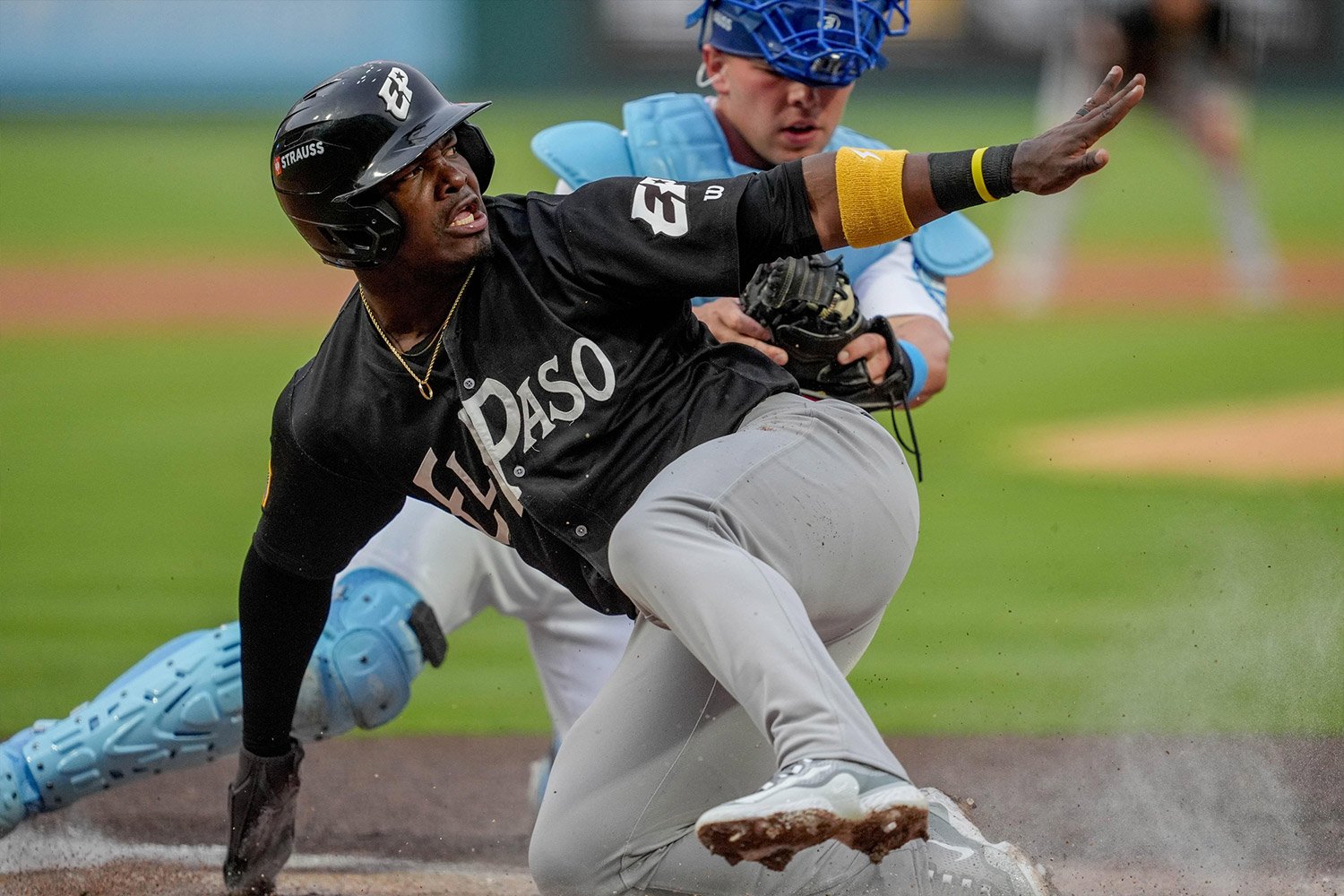 From high-contact table-setters to power-hitting outfielders, several prospects and organizational depth pieces made strong cases for recognition this month. Before we get into the top five, here are two players who just missed the cut but still deserve recognition for their July performances. Honorable Mention: Zach Evans (Lake Elsinore Storm) – 32 H, 5 2B, 12 RBI, 11 R, 7 SB, .320/.398/.370, 14:13 K:BB Evans wasn’t flashy with power, but he was a consistent presence at the top of the order. He notched 32 hits and swiped seven bags while walking nearly as often as he struck out. His .320 average and .398 OBP helped drive a steady July for the Storm offense. Honorable Mention: Albert Fabian (San Antonio Missions) – 17 H, 2 HR, 4 2B, 9 RBI, 8 R, .333/.386/.529, 11:4 K:BB Despite playing in just 15 games, Fabian made an impression. He posted a .333 average and slugged .529, with 6 of his 17 hits going for extra bases. If he’d had more at-bats, he might’ve cracked the top five. 5. Brandon Lockridge (El Paso Chihuahuas) – 23 H, 2 HR, 4 2B, 6 RBI, 19 R, 7 SB, .291/.402/.468, 17:15 K:BB Lockridge gave the Chihuahuas a jolt at the top of the order. He hit .291, drew 15 walks, and stole seven bases, showcasing speed and plate discipline. While his power numbers were modest, he was a consistent run scorer with 19 runs. His standout July helped boost his trade value, and at the deadline, the Padres sent Lockridge to the Milwaukee Brewers in a deal that netted lefty Nestor Cortes and infield prospect Jorge Quintana. 4. Forrest Wall (El Paso Chihuahuas) – 28 H, 1 HR, 6 2B, 16 RBI, 14 R, 7 SB, .346/.382/.506, 16:4 K:BB Wall continued to show why he's one of the more versatile and valuable bats in the system. He hit .346 with six doubles and added seven stolen bases, showing his disruptive potential on the bases. His 16 RBI and 14 runs scored helped fuel a productive El Paso lineup, and his ability to impact games in multiple ways stood out once again. 3. Brandon Butterworth (San Antonio Missions) – 30 H, 6 HR, 3 2B, 14 RBI, 16 R, .313/.347/.552, 18:5 K:BB Butterworth brought the thump in July. He mashed six home runs and slugged .552, giving the Missions power from the infield. While his walk rate dipped a bit, he still managed a strong .313 average and drove in 14 runs. Known earlier in the year for his contact skills, Butterworth’s power breakout turned heads, and it didn’t go unnoticed at the big-league level. At the trade deadline, Butterworth was dealt to the Baltimore Orioles as part of the package that brought Ryan O’Hearn and Ramón Laureano to San Diego. For the Padres, it was a win-now move. For Butterworth, it’s a fresh opportunity in a new organization after a breakout month. 2. Nate Mondou (El Paso Chihuahuas) – 32 H, 4 2B, 14 RBI, 12 R, .364/.434/.432, 16:10 K:BB Mondou was the model of consistency throughout July. He led the group in hits and hit an impressive .364 with a .434 OBP. Though he only had five extra-base hits, his ability to put the ball in play and work counts (16:10 K:BB) gave the Chihuahuas a reliable presence in the lineup. His steady production in the middle of the order helped anchor the hot offense in July. 1. Yonathan Perlaza (El Paso Chihuahuas) – 26 H, 5 HR, 7 2B, 22 RBI, 20 R, .306/.429/.565, 20:19 K:BB Perlaza did it all in July. He hit for power, got on base at a high clip, and drove in runs at a remarkable pace. His .306/.429/.565 slash line led all qualified Padres minor leaguers in OPS, and he added five home runs and seven doubles to that production. With 22 RBI and 20 runs scored, both tops among this group, Perlaza was El Paso’s offensive engine. One of the most impressive aspects of Perlaza’s month was his plate discipline. He walked 19 times and struck out just 20, making him one of only two players in the system with a near 1:1 K:BB ratio while maintaining elite slugging numbers. That balance of patience and power made him a nightmare for opposing pitchers. Perlaza’s bat stayed hot all month long, never going more than one game without a hit. Whether he was working deep counts or jumping on mistake pitches early, his at-bats were consistently competitive. His ability to adjust to different arm angles and pitch types stood out, and he seemed to find barrels with ease. If Perlaza continues this stretch into August, he’ll start forcing conversations about a potential look in San Diego. At the very least, he’s positioning himself for a key role down the stretch at Triple-A.
 -
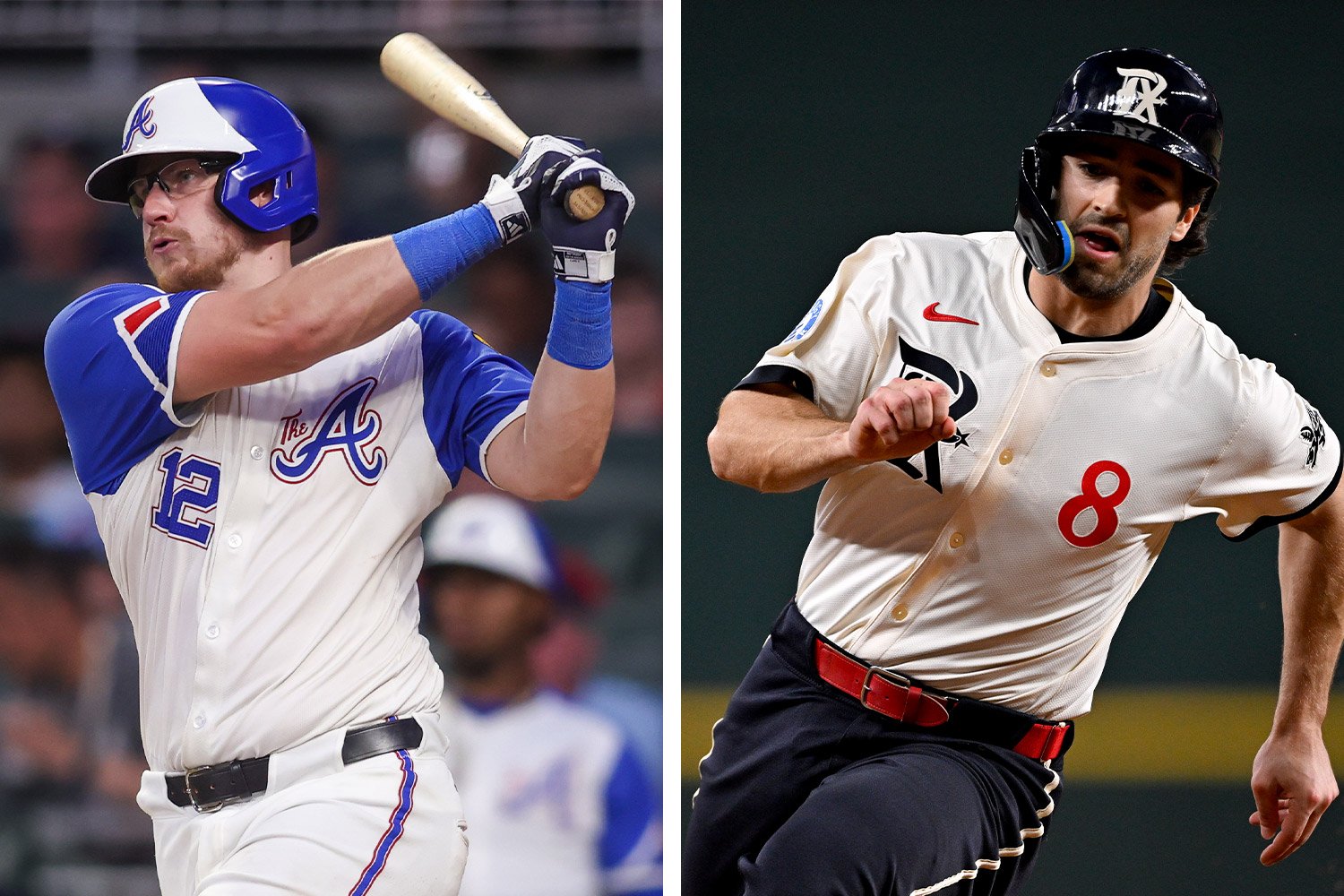 The Padres are a team built to win now. With a top-heavy roster of star power and a legitimate shot at October, San Diego is staring down one of the biggest weaknesses in its lineup at catcher. Offensively and defensively, the current duo of Elias Díaz and Martín Maldonado has dragged down the Padres’ production behind the plate, and the numbers aren’t pretty. As of now, Padres catchers have combined for a .193 batting average (second-worst in MLB), a league-worst .253 on-base percentage, and a .310 slugging percentage (3rd worst). Their 61 wRC+ ranks 29th out of 30 teams, and their -1.1 WAR makes them the second-least valuable catching unit in the league. They’re walking just 6.9% of the time and striking out at a staggering 30.3% clip, which is also second-worst in the league. Additionally, Padres catchers have combined for a –10 Fielding Run Value (FRV) this season, one of the worst marks in baseball. The Padres need help. The question is: how aggressive are they willing to be? Two names have emerged as realistic targets ahead of the trade deadline: Kyle Higashioka and Sean Murphy. Each represents a very different approach. One is familiar and affordable. The other is a star-level upgrade, but it will come at a premium price. Sean Murphy is the dream target, as he checks every box. Murphy boasts elite defense, above-average power, and team control through 2030. But prying him away from Atlanta won’t be easy, or cheap. At 30 years old, Murphy is in his prime and producing like one of the top catchers in baseball. He’s already hit 16 home runs, fifth-most among all MLB catchers, while slashing .240/.331/.514. While the batting average might not jump off the page, it’s a massive upgrade compared to what the Padres currently get from their catchers. Murphy’s .274 ISO (second-best among catchers) and 133 wRC+ (seventh-best) signal legitimate offensive impact. His 2.4 WAR ranks sixth among all catchers, and he does it while still excelling defensively. Behind the plate, Murphy is as steady as they come. He has thrown out 17 baserunners, fifth-most in the league. He’s posted a +5 Defensive Runs Saved (DRS) and an average pop time of 1.94 seconds, which ranks in the 61st percentile. Murphy sits at +4 FRV, showcasing his all-around defense with good pitch framing, strong arm, blocking, and game management. Of course, none of that comes cheap. Murphy is making $15 million this year and is under contract through 2030, meaning the Braves don’t need to move him. But with 24-year-old catcher Drake Baldwin crushing it at the major league level, Atlanta may be open to retooling for the right price. The cost would almost certainly require the Padres to dip into their high-end prospect pool. But with Petco Park favoring right-handed pull hitters, with Murphy pulling the ball 47.8% of the time, it’s easy for the Padres to dream of the fit. Then there’s Kyle Higashioka, a more realistic and practical option. Higashioka, 35, is in the final stretch of his career, but he’s no stranger to San Diego. He played for the Padres in 2024 and made a strong impression, especially down the stretch. Fans took to his steady presence and timely hits, and the veteran seemed to find comfort in Petco Park. Now with the Rangers, Higashioka is struggling to find his groove offensively. Despite hitting .240, one of the highest marks of his career, the power that defined his past seasons has evaporated. His four home runs and .363 slugging percentage are both career lows, as is his .117 ISO. He walks at just a 5.7% clip and owns a below-average 85 wRC+. Still, he’s making contact (only an 18.7% strikeout rate), and his familiarity with the Padres’ pitching staff and clubhouse would make the transition seamless. Defensively, Higashioka remains solid, but not elite. His 1.0 framing runs (FRM) match Murphy’s, but he’s thrown out fewer runners and only has 1 DRS. His pop time of 2.04 seconds puts him in just the 2nd percentile, among the slowest in baseball. Higashioka owns a –3 FRV, indicating that while he’s serviceable, his defense has taken a step back this year. That said, he’s still a capable catcher or platoon option, and his 50.7% pull rate makes him a nice match for Petco Park. Importantly, Higashioka is also far more affordable. He’s making just $5.75 million this season and is under team control through 2026. That contract, paired with his age and diminished production, means he wouldn’t cost more than a mid-tier prospect, an appealing option for a Padres team that has dealt from the farm heavily in recent years. If the Padres want to truly address their catching woes, Sean Murphy is the ideal solution. He’s a long-term answer with elite two-way impact and fits the park and lineup construction perfectly. But adding Murphy would take a bold swing both financially and prospect-wise, which comes at a time when San Diego’s front office has been operating a bit more cautiously. Kyle Higashioka, on the other hand, offers a more conservative play with a known clubhouse presence who won’t cost much and could at least stabilize the position down the stretch. Either move would be an upgrade over the current state of things. Díaz and Maldonado have combined to provide bottom-tier production offensively and defensively. The Padres simply can’t afford that black hole as they fight for a playoff spot in a crowded National League. The question is whether A.J. Preller and the front office are content with a slight upgrade or ready to go all in on a long-term solution. Because if they are, Sean Murphy might just be the missing piece.
 -
The Padres are a team built to win now. With a top-heavy roster of star power and a legitimate shot at October, San Diego is staring down one of the biggest weaknesses in its lineup at catcher. Offensively and defensively, the current duo of Elias Díaz and Martín Maldonado has dragged down the Padres’ production behind the plate, and the numbers aren’t pretty. As of now, Padres catchers have combined for a .193 batting average (second-worst in MLB), a league-worst .253 on-base percentage, and a .310 slugging percentage (3rd worst). Their 61 wRC+ ranks 29th out of 30 teams, and their -1.1 WAR makes them the second-least valuable catching unit in the league. They’re walking just 6.9% of the time and striking out at a staggering 30.3% clip, which is also second-worst in the league. Additionally, Padres catchers have combined for a –10 Fielding Run Value (FRV) this season, one of the worst marks in baseball. The Padres need help. The question is: how aggressive are they willing to be? Two names have emerged as realistic targets ahead of the trade deadline: Kyle Higashioka and Sean Murphy. Each represents a very different approach. One is familiar and affordable. The other is a star-level upgrade, but it will come at a premium price. Sean Murphy is the dream target, as he checks every box. Murphy boasts elite defense, above-average power, and team control through 2030. But prying him away from Atlanta won’t be easy, or cheap. At 30 years old, Murphy is in his prime and producing like one of the top catchers in baseball. He’s already hit 16 home runs, fifth-most among all MLB catchers, while slashing .240/.331/.514. While the batting average might not jump off the page, it’s a massive upgrade compared to what the Padres currently get from their catchers. Murphy’s .274 ISO (second-best among catchers) and 133 wRC+ (seventh-best) signal legitimate offensive impact. His 2.4 WAR ranks sixth among all catchers, and he does it while still excelling defensively. Behind the plate, Murphy is as steady as they come. He has thrown out 17 baserunners, fifth-most in the league. He’s posted a +5 Defensive Runs Saved (DRS) and an average pop time of 1.94 seconds, which ranks in the 61st percentile. Murphy sits at +4 FRV, showcasing his all-around defense with good pitch framing, strong arm, blocking, and game management. Of course, none of that comes cheap. Murphy is making $15 million this year and is under contract through 2030, meaning the Braves don’t need to move him. But with 24-year-old catcher Drake Baldwin crushing it at the major league level, Atlanta may be open to retooling for the right price. The cost would almost certainly require the Padres to dip into their high-end prospect pool. But with Petco Park favoring right-handed pull hitters, with Murphy pulling the ball 47.8% of the time, it’s easy for the Padres to dream of the fit. Then there’s Kyle Higashioka, a more realistic and practical option. Higashioka, 35, is in the final stretch of his career, but he’s no stranger to San Diego. He played for the Padres in 2024 and made a strong impression, especially down the stretch. Fans took to his steady presence and timely hits, and the veteran seemed to find comfort in Petco Park. Now with the Rangers, Higashioka is struggling to find his groove offensively. Despite hitting .240, one of the highest marks of his career, the power that defined his past seasons has evaporated. His four home runs and .363 slugging percentage are both career lows, as is his .117 ISO. He walks at just a 5.7% clip and owns a below-average 85 wRC+. Still, he’s making contact (only an 18.7% strikeout rate), and his familiarity with the Padres’ pitching staff and clubhouse would make the transition seamless. Defensively, Higashioka remains solid, but not elite. His 1.0 framing runs (FRM) match Murphy’s, but he’s thrown out fewer runners and only has 1 DRS. His pop time of 2.04 seconds puts him in just the 2nd percentile, among the slowest in baseball. Higashioka owns a –3 FRV, indicating that while he’s serviceable, his defense has taken a step back this year. That said, he’s still a capable catcher or platoon option, and his 50.7% pull rate makes him a nice match for Petco Park. Importantly, Higashioka is also far more affordable. He’s making just $5.75 million this season and is under team control through 2026. That contract, paired with his age and diminished production, means he wouldn’t cost more than a mid-tier prospect, an appealing option for a Padres team that has dealt from the farm heavily in recent years. If the Padres want to truly address their catching woes, Sean Murphy is the ideal solution. He’s a long-term answer with elite two-way impact and fits the park and lineup construction perfectly. But adding Murphy would take a bold swing both financially and prospect-wise, which comes at a time when San Diego’s front office has been operating a bit more cautiously. Kyle Higashioka, on the other hand, offers a more conservative play with a known clubhouse presence who won’t cost much and could at least stabilize the position down the stretch. Either move would be an upgrade over the current state of things. Díaz and Maldonado have combined to provide bottom-tier production offensively and defensively. The Padres simply can’t afford that black hole as they fight for a playoff spot in a crowded National League. The question is whether A.J. Preller and the front office are content with a slight upgrade or ready to go all in on a long-term solution. Because if they are, Sean Murphy might just be the missing piece. View full article
-
It may not have an eye-popping vertical break or a huge sweeping tilt, but David Morgan’s curveball is getting the job done in 2025, and doing it relatively quietly. At first glance, it’s not the most intimidating pitch in his arsenal. Averaging 82.4 mph with modest spin and a few statistical blemishes, including a 55.6% hard-hit rate and a .238 batting average against, Morgan’s breaking ball doesn’t scream dominance. But dig a little deeper, and you’ll find one of the sneakiest weapons in the Padres' bullpen. So far this season, Morgan has leaned on the curve 23.4% of the time, good for 83 of his total pitches. He’s used it against lefties and righties, but slightly more against left-handers (48 curveballs to LHB, 35 to RHB). Interestingly, all five hits against the pitch have come off the bats of lefties, and all of them were hangers that caught too much of the plate. Despite that, the expected batting average (xBA) on the pitch is a tidy .186, much better than the actual .238 average hitters have posted against it. That discrepancy speaks to the core of what makes the pitch effective. When Morgan executes, the pitch is nearly unhittable. Morgan has racked up 12 strikeouts with his curveball, by far his best punch-out pitch. He’s generated 17 total swings-and-misses with the pitch, and 12 of those came in strikeout situations. In other words, when hitters miss Morgan’s curveball, they’re usually walking back to the dugout right after. That’s no accident. Morgan trusts the pitch with two strikes. Of the 83 curves he’s thrown, 39 have come with two strikes, nearly half. His usage also tells a clear story; he’ll mix the curve in throughout the at-bat, but it’s especially potent as a wipeout pitch. He’s thrown it 29 times when ahead in the count, 13 times when behind, and 41 times in even counts. Morgan’s curveball has an outstanding whiff rate of 37.8% and a putaway rate of 30.8%. For context, the league average whiff rate for curveballs typically hovers around 30%, and a putaway rate above 20% is considered strong. Morgan is exceeding both marks, and that’s a big reason the expected numbers on the pitch are so encouraging. Yet, perhaps one of the most fascinating stats tied to Morgan’s curveball is its run value: 0. That might not sound great, but in the world of pitch analytics, that’s a quiet win. A pitch with a neutral run value means it’s essentially holding its own, not giving up damage, not giving up momentum. It acts as a stabilizer. And when is that your best strikeout pitch? That’s usually a pretty good combination. As with most curveballs, location is everything. Morgan has been burned when he’s left it over the middle, as all five hits have come in the heart of the strike zone. But when he keeps it down or buries it late in counts, the pitch becomes lethal. Against lefties, the curve has functioned well as a freeze pitch early in the count or a back-foot breaker. Against righties, he uses it more as a chase pitch, starting it in the zone and letting it dip below the knees. That approach has helped him neutralize hitters when he lands it, but as those five hits show, any misfire up and over can get punished. Still, the underlying numbers indicate that the pitch is succeeding far more often than not. Hitters may have put a few loud swings on the curveball this season, but overall, they’re not barreling it up consistently. And when they do make contact, they’re usually not seeing it again later in the count. Morgan’s pitch mix has evolved since his call-up, and the curveball’s rise in usage reflects a growing confidence. While he still mixes in a sinker and a slider along with the fastball, the curve has emerged as his go-to secondary offering. It’s the pitch he trusts when the game’s on the line, and it’s the pitch that’s helped him carve out a role in the middle innings for San Diego. Morgan's curveball isn’t perfect. The high, hard-hit rate suggests it can still get hit, and hit hard when it misses. But the pitch’s expected results, strikeout ability, and growing role in his arsenal all point toward a sustainable weapon moving forward. If he continues to execute it with precision, burying it in two-strike counts and keeping it out of the middle third, it might remain one of the most underrated breaking balls in the Padres' bullpen. So yes, the expected batting average of .186 is fun. But what’s even more fun is knowing that Morgan’s curveball isn’t a gimmick. It’s a legitimate out pitch. It’s earned his trust. And if he keeps throwing it like this, it’s going to keep earning outs. View full article
-
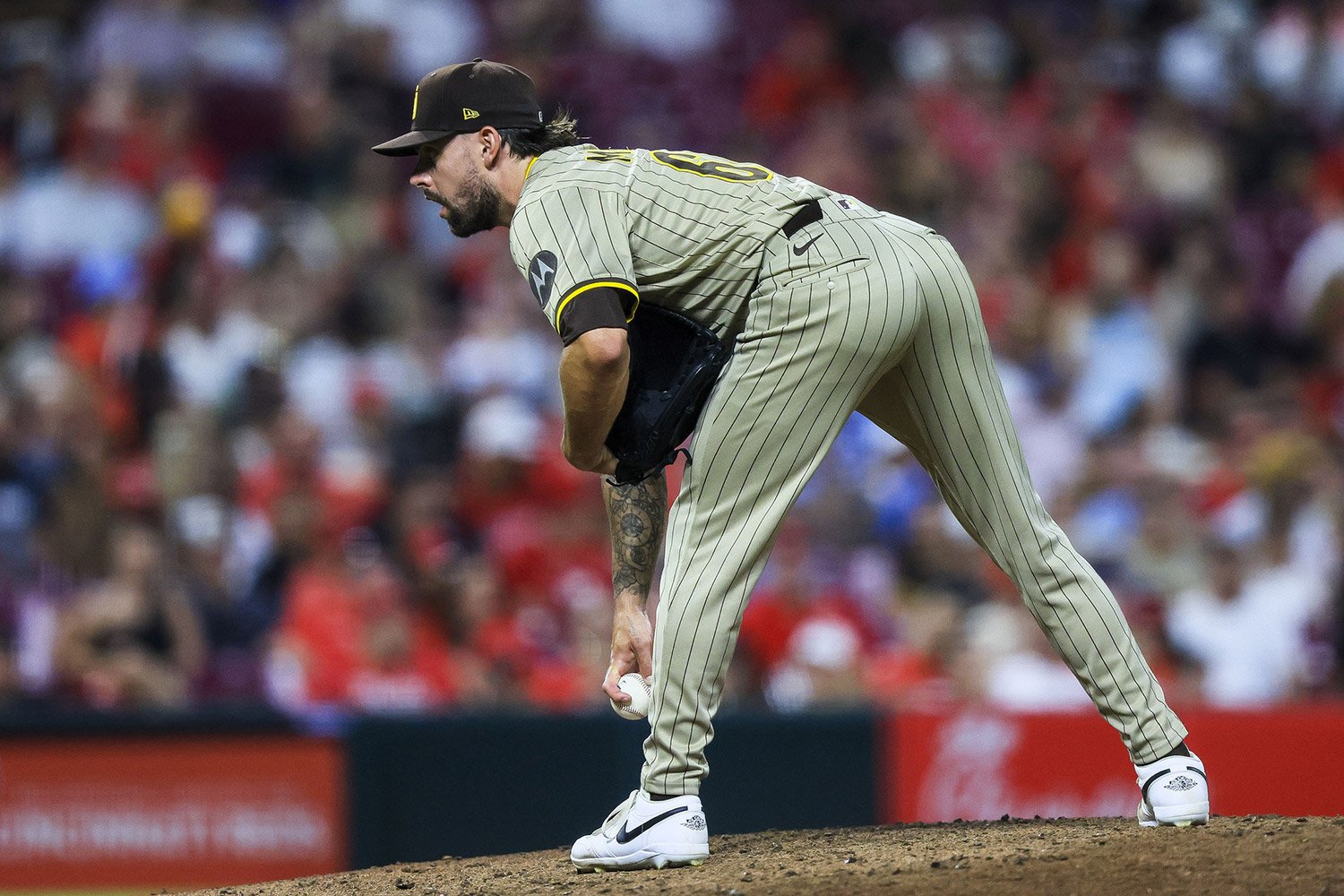 It may not have an eye-popping vertical break or a huge sweeping tilt, but David Morgan’s curveball is getting the job done in 2025, and doing it relatively quietly. At first glance, it’s not the most intimidating pitch in his arsenal. Averaging 82.4 mph with modest spin and a few statistical blemishes, including a 55.6% hard-hit rate and a .238 batting average against, Morgan’s breaking ball doesn’t scream dominance. But dig a little deeper, and you’ll find one of the sneakiest weapons in the Padres' bullpen. So far this season, Morgan has leaned on the curve 23.4% of the time, good for 83 of his total pitches. He’s used it against lefties and righties, but slightly more against left-handers (48 curveballs to LHB, 35 to RHB). Interestingly, all five hits against the pitch have come off the bats of lefties, and all of them were hangers that caught too much of the plate. Despite that, the expected batting average (xBA) on the pitch is a tidy .186, much better than the actual .238 average hitters have posted against it. That discrepancy speaks to the core of what makes the pitch effective. When Morgan executes, the pitch is nearly unhittable. Morgan has racked up 12 strikeouts with his curveball, by far his best punch-out pitch. He’s generated 17 total swings-and-misses with the pitch, and 12 of those came in strikeout situations. In other words, when hitters miss Morgan’s curveball, they’re usually walking back to the dugout right after. That’s no accident. Morgan trusts the pitch with two strikes. Of the 83 curves he’s thrown, 39 have come with two strikes, nearly half. His usage also tells a clear story; he’ll mix the curve in throughout the at-bat, but it’s especially potent as a wipeout pitch. He’s thrown it 29 times when ahead in the count, 13 times when behind, and 41 times in even counts. Morgan’s curveball has an outstanding whiff rate of 37.8% and a putaway rate of 30.8%. For context, the league average whiff rate for curveballs typically hovers around 30%, and a putaway rate above 20% is considered strong. Morgan is exceeding both marks, and that’s a big reason the expected numbers on the pitch are so encouraging. Yet, perhaps one of the most fascinating stats tied to Morgan’s curveball is its run value: 0. That might not sound great, but in the world of pitch analytics, that’s a quiet win. A pitch with a neutral run value means it’s essentially holding its own, not giving up damage, not giving up momentum. It acts as a stabilizer. And when is that your best strikeout pitch? That’s usually a pretty good combination. As with most curveballs, location is everything. Morgan has been burned when he’s left it over the middle, as all five hits have come in the heart of the strike zone. But when he keeps it down or buries it late in counts, the pitch becomes lethal. Against lefties, the curve has functioned well as a freeze pitch early in the count or a back-foot breaker. Against righties, he uses it more as a chase pitch, starting it in the zone and letting it dip below the knees. That approach has helped him neutralize hitters when he lands it, but as those five hits show, any misfire up and over can get punished. Still, the underlying numbers indicate that the pitch is succeeding far more often than not. Hitters may have put a few loud swings on the curveball this season, but overall, they’re not barreling it up consistently. And when they do make contact, they’re usually not seeing it again later in the count. Morgan’s pitch mix has evolved since his call-up, and the curveball’s rise in usage reflects a growing confidence. While he still mixes in a sinker and a slider along with the fastball, the curve has emerged as his go-to secondary offering. It’s the pitch he trusts when the game’s on the line, and it’s the pitch that’s helped him carve out a role in the middle innings for San Diego. Morgan's curveball isn’t perfect. The high, hard-hit rate suggests it can still get hit, and hit hard when it misses. But the pitch’s expected results, strikeout ability, and growing role in his arsenal all point toward a sustainable weapon moving forward. If he continues to execute it with precision, burying it in two-strike counts and keeping it out of the middle third, it might remain one of the most underrated breaking balls in the Padres' bullpen. So yes, the expected batting average of .186 is fun. But what’s even more fun is knowing that Morgan’s curveball isn’t a gimmick. It’s a legitimate out pitch. It’s earned his trust. And if he keeps throwing it like this, it’s going to keep earning outs.
 -
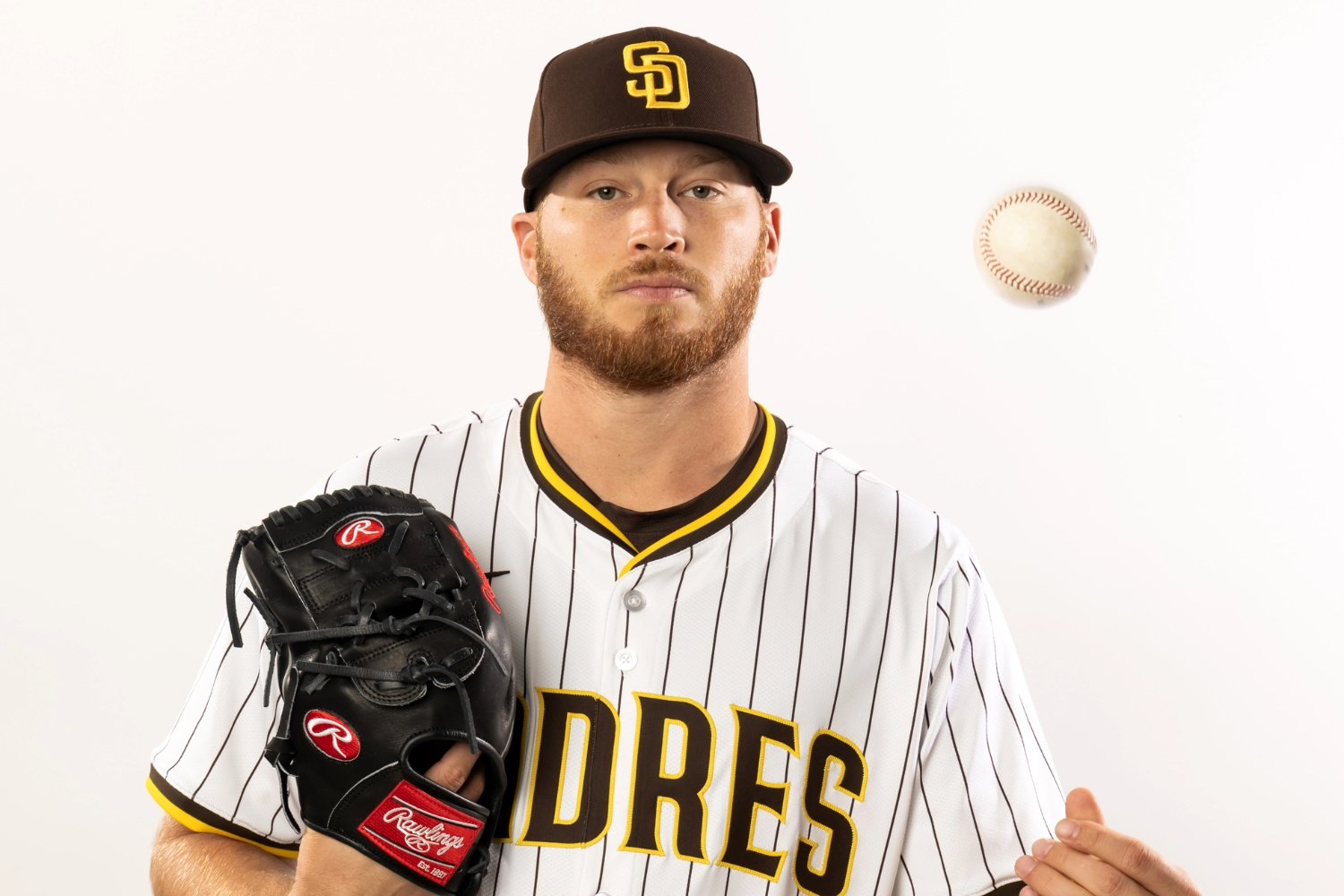 June was a strong month for relief arms throughout the Padres' minor league system, with multiple relievers posting zeros and locking down wins in high-leverage spots. A couple of arms just missed the cut, but the following five relievers stood out with either dominant strike-throwing, volume, or both. But first, let’s start with a couple of honorable mentions who were just left off the list. Honorable Mention: Andrew Moore (San Antonio Missions) – 8 G, 1.17 ERA, 1.30 WHIP, 7.2 IP, 4 H, 6 BB, 12 K Moore quietly turned in another strong month for San Antonio, allowing just one earned run over 7 2/3 innings while striking out 12. The righty posted a 1.17 ERA across eight appearances, and while he issued six walks, he worked around traffic effectively and continued to show promise as a high-leverage reliever at the Double-A level. Honorable Mention: Vicarte Domingo (Lake Elsinore Storm) 7 G, 2.25 ERA, 1.00 WHIP, 12.0 IP, 9 H, 3 BB, 12 K Domingo gave the Storm a steady and efficient bullpen presence throughout June. The 22-year-old right-hander threw 12.0 innings over seven appearances, finishing with a 2.25 ERA and 12 strikeouts to just three walks. His ability to limit free passes and keep the ball in the park has made him a dependable late-inning option in Lake Elsinore’s relief corps. 5. Enmanuel Pinales (San Antonio Missions) – 4 G, 1.76 ERA, 1.37 WHIP, 15.1 IP, 14 H, 7 BB, 15 K Pinales had a rough May after being promoted to Double-A, struggling mightily as a starter. Luckily, the move to the bullpen in June has unlocked a different version of the 24-year-old. In just four outings this month, Pinales tossed 15.1 innings with a 1.76 ERA and 15 strikeouts, picking up three wins and a save. His 1.37 WHIP shows there’s still some refinement needed, but he’s settled in nicely as a long relief weapon, often saving the Missions’ bullpen by handling multiple innings at a time. 4. Nick Wissman (Fort Wayne TinCaps) – 6 G, 0.00 ERA, 1.15 WHIP, 8.2 IP, 4 H, 6 BB, 7 K After a brutal 15.75 ERA in May, Wissman flipped the script in June. He didn’t allow a single run across six appearances (8 2/3 IP), posted a 0.00 ERA, and held opposing hitters to a respectable .138 batting average. The only thing holding back his WHIP (1.15) was six walks, but opposing batters managed just four total hits against him. For the 25-year-old righty, it was an emphatic rebound month and a reminder of his swing-and-miss potential when he’s in the zone. 3. Jake Higginbotham (San Antonio Missions) – 7 G, 1.80 ERA, 1.30 WHIP, 10.0 IP, 9 H, 4 BB, 16 K Veteran lefty Jake Higginbotham quietly put together one of the most effective strikeout performances in the system this month. In 10 innings for Triple-A El Paso, the 29-year-old fanned 16 batters while walking just four, good for a 4:1 K-BB ratio. He notched two wins, posted a 1.80 ERA, and allowed only nine hits, a solid feat considering the hitter-friendly conditions in the PCL. While Higginbotham isn’t a high-profile prospect, he continues to offer valuable experience and efficiency from the left side. 2. Eduarnial Nunez (El Paso Chihuahuas) – 7 G, 0.00 ERA, 0.55 WHIP, 7.1 IP, 1 H, 3 BB, 11 K (2 SV) Nunez was electric in June, flashing premium stuff and overpowering hitters in the Storm bullpen. Over 7 1/3 innings, he struck out 11, allowed just one hit, and didn’t give up a run. His 0.55 WHIP and .045 opponent batting average speak to how dominant he was, particularly in the closer role, where he picked up two saves. The 26-year-old's fastball is now brushing triple digits, but his improved feel for the slider has been the real breakthrough. If he keeps locating like this, Nunez could see a bump to the major leagues soon. 1. Garrett Hawkins (Fort Wayne TinCaps) – 8 G, 0.00 ERA, 0.43 WHIP, 9.1 IP, 2 H, 2 BB, 9 K (2-0, 2 SV) The top spot goes to Garrett Hawkins, who, for the second straight month, didn’t allow a run, and this time, he looked even sharper. The 6-foot-5 right-hander made eight appearances for San Antonio in June, tossing 9 1/3 scoreless innings while allowing just two hits and two walks. Opponents hit a minuscule .067 against him, and he posted an incredible 0.43 WHIP with nine strikeouts, two wins, and two saves. What makes Hawkins so effective is how cleanly he works. He’s not a strikeout machine, but he rarely puts runners on, doesn’t nibble, and forces weak contact. His long frame creates uncomfortable angles for hitters, and he’s showing growing command of both his fastball and slider. June marked his second consecutive month with a 0.00 ERA, and it’s clear he’s emerging as one of the system’s most reliable bullpen arms. Whether in closing spots or middle-inning fireman roles, Hawkins has delivered with poise and consistency. If he continues to keep the walks down and miss just enough bats, the 24-year-old could soon find himself quickly rising up the farm system.
 -
June was a strong month for relief arms throughout the Padres' minor league system, with multiple relievers posting zeros and locking down wins in high-leverage spots. A couple of arms just missed the cut, but the following five relievers stood out with either dominant strike-throwing, volume, or both. But first, let’s start with a couple of honorable mentions who were just left off the list. Honorable Mention: Andrew Moore (San Antonio Missions) – 8 G, 1.17 ERA, 1.30 WHIP, 7.2 IP, 4 H, 6 BB, 12 K Moore quietly turned in another strong month for San Antonio, allowing just one earned run over 7 2/3 innings while striking out 12. The righty posted a 1.17 ERA across eight appearances, and while he issued six walks, he worked around traffic effectively and continued to show promise as a high-leverage reliever at the Double-A level. Honorable Mention: Vicarte Domingo (Lake Elsinore Storm) 7 G, 2.25 ERA, 1.00 WHIP, 12.0 IP, 9 H, 3 BB, 12 K Domingo gave the Storm a steady and efficient bullpen presence throughout June. The 22-year-old right-hander threw 12.0 innings over seven appearances, finishing with a 2.25 ERA and 12 strikeouts to just three walks. His ability to limit free passes and keep the ball in the park has made him a dependable late-inning option in Lake Elsinore’s relief corps. 5. Enmanuel Pinales (San Antonio Missions) – 4 G, 1.76 ERA, 1.37 WHIP, 15.1 IP, 14 H, 7 BB, 15 K Pinales had a rough May after being promoted to Double-A, struggling mightily as a starter. Luckily, the move to the bullpen in June has unlocked a different version of the 24-year-old. In just four outings this month, Pinales tossed 15.1 innings with a 1.76 ERA and 15 strikeouts, picking up three wins and a save. His 1.37 WHIP shows there’s still some refinement needed, but he’s settled in nicely as a long relief weapon, often saving the Missions’ bullpen by handling multiple innings at a time. 4. Nick Wissman (Fort Wayne TinCaps) – 6 G, 0.00 ERA, 1.15 WHIP, 8.2 IP, 4 H, 6 BB, 7 K After a brutal 15.75 ERA in May, Wissman flipped the script in June. He didn’t allow a single run across six appearances (8 2/3 IP), posted a 0.00 ERA, and held opposing hitters to a respectable .138 batting average. The only thing holding back his WHIP (1.15) was six walks, but opposing batters managed just four total hits against him. For the 25-year-old righty, it was an emphatic rebound month and a reminder of his swing-and-miss potential when he’s in the zone. 3. Jake Higginbotham (San Antonio Missions) – 7 G, 1.80 ERA, 1.30 WHIP, 10.0 IP, 9 H, 4 BB, 16 K Veteran lefty Jake Higginbotham quietly put together one of the most effective strikeout performances in the system this month. In 10 innings for Triple-A El Paso, the 29-year-old fanned 16 batters while walking just four, good for a 4:1 K-BB ratio. He notched two wins, posted a 1.80 ERA, and allowed only nine hits, a solid feat considering the hitter-friendly conditions in the PCL. While Higginbotham isn’t a high-profile prospect, he continues to offer valuable experience and efficiency from the left side. 2. Eduarnial Nunez (El Paso Chihuahuas) – 7 G, 0.00 ERA, 0.55 WHIP, 7.1 IP, 1 H, 3 BB, 11 K (2 SV) Nunez was electric in June, flashing premium stuff and overpowering hitters in the Storm bullpen. Over 7 1/3 innings, he struck out 11, allowed just one hit, and didn’t give up a run. His 0.55 WHIP and .045 opponent batting average speak to how dominant he was, particularly in the closer role, where he picked up two saves. The 26-year-old's fastball is now brushing triple digits, but his improved feel for the slider has been the real breakthrough. If he keeps locating like this, Nunez could see a bump to the major leagues soon. 1. Garrett Hawkins (Fort Wayne TinCaps) – 8 G, 0.00 ERA, 0.43 WHIP, 9.1 IP, 2 H, 2 BB, 9 K (2-0, 2 SV) The top spot goes to Garrett Hawkins, who, for the second straight month, didn’t allow a run, and this time, he looked even sharper. The 6-foot-5 right-hander made eight appearances for San Antonio in June, tossing 9 1/3 scoreless innings while allowing just two hits and two walks. Opponents hit a minuscule .067 against him, and he posted an incredible 0.43 WHIP with nine strikeouts, two wins, and two saves. What makes Hawkins so effective is how cleanly he works. He’s not a strikeout machine, but he rarely puts runners on, doesn’t nibble, and forces weak contact. His long frame creates uncomfortable angles for hitters, and he’s showing growing command of both his fastball and slider. June marked his second consecutive month with a 0.00 ERA, and it’s clear he’s emerging as one of the system’s most reliable bullpen arms. Whether in closing spots or middle-inning fireman roles, Hawkins has delivered with poise and consistency. If he continues to keep the walks down and miss just enough bats, the 24-year-old could soon find himself quickly rising up the farm system. View full article
-
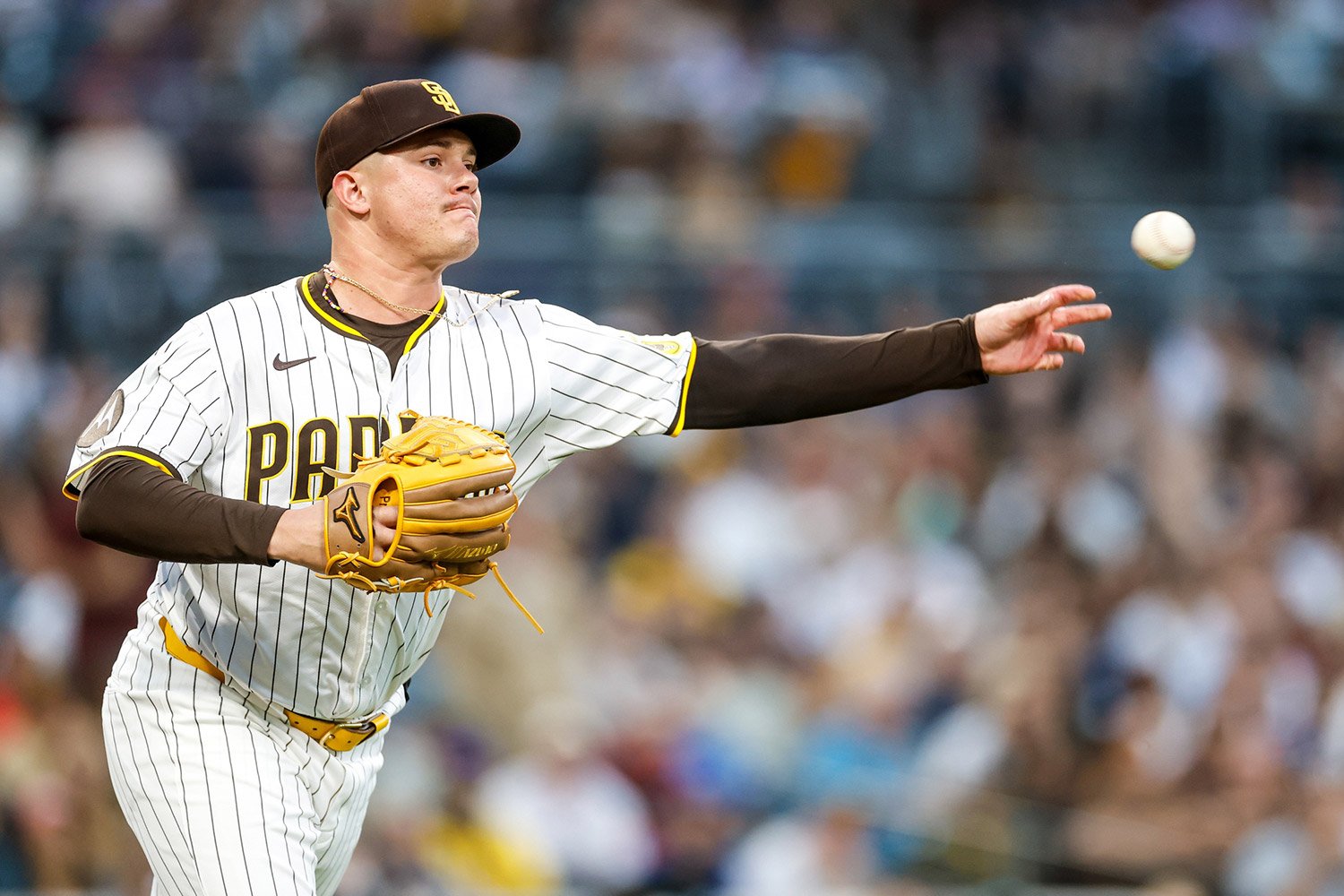 Weekly Snapshot: Record Last Week: 3-3 (Overall: 45-38) Run Scored Last Week: 20 Runs Surrendered Last Week: 28 Standing: 2nd in NL West (7.0 GB 1st place LAD) *** Game 78 (6/23) | WAS 10, SD 6 Game 79 (6/24) | SD 4, WAS 3 Game 80 (6/25) | SD 1, WAS 0 Game 81 (6/27) | CIN 8, SD 1 Game 82 (6/28) | SD 6, CIN 4 Game 83 (6/29) | CIN 3, SD 2 *** Transactions: 06/27/25 - RHP Robert Suarez reinstated from league suspension. 06/25/25 - RHP Robert Suarez starting to serve suspension. 06/24/25 - Placed RHP Ryan Bergert on 15-day injured list. (Right forearm contusion) 06/24/25 - Recalled RHP Sean Reynolds from AAA El Paso. 06/23/25 - Released OF Jason Heyward. Breakdown/Highlights: The Padres split a six-game week and were two outs away from claiming their third straight series win before a walk-off loss on Sunday ended things on a bitter note. While the offense continued to sputter at times and the starting pitching was uneven, the bullpen largely delivered, highlighted by bounce-back outings and timely relief work. With starters struggling to go deep into games, the Padres leaned heavily on their relievers, and for the most part, they delivered. Adrian Morejon was lights out again, tossing four shutout innings across three appearances and dropping his ERA to 1.98. Bryan Hoeing returned from the IL and contributed three scoreless frames across two games, earning a win in the process. Yuki Matsui, however, mightily struggles this week. The lefty was hit hard in two outings, giving up seven runs in 2 1/3 innings and seeing his ERA balloon to 4.73. After a tough couple of outings earlier this month, Jeremiah Estrada found his footing again with three hitless outings, striking out five over 4 1/3 innings and not allowing a baserunner. Jason Adam chipped in 3 2/3 scoreless innings of his own across three outings. But the week ended with another gut punch. Closer Robert Suarez, who had pitched two clean save situations on Tuesday and Saturday, including one after returning from suspension, blew a save Sunday by allowing four hits and a walk in the ninth as the Reds walked it off, 3-2. He still leads the league with 23 saves. The Padres got a gem from Nick Pivetta on Wednesday, who dominated with seven shutout innings and 10 strikeouts in a 1–0 win. But the rest of the rotation stumbled. Stephen Kolek got knocked out early on Monday but rebounded with a strong 5 2/3-inning, one-run outing on Sunday. Dylan Cease was shelled for four runs in four innings on Friday, while Randy Vásquez allowed four runs in 4 1/3 innings Saturday, though many came on bloops. The bullpen again cleaned up behind him. Ryan Bergert exited early Tuesday after being struck by a comebacker and was later placed on the injured list. The offense had trouble stringing hits together most of the week, scoring just 20 runs over six games. Luis Arraez remained the Padres’ most reliable bat, collecting eight hits, including a solo homer Saturday, and driving in the game’s only run on Wednesday. Gavin Sheets delivered the biggest swing of the week: a go-ahead three-run homer Saturday that lifted the Padres to a 6-4 win. Jake Cronenworth also homered twice, including a key two-run shot in that same game. Fernando Tatis Jr. and Manny Machado both homered Monday but were quiet otherwise. Jackson Merrill had a quietly strong week, reaching base nine times (5 hits, 4 walks) while striking out only three times. After a scorching stretch, Xander Bogaerts went cold with one hit in five games before breaking out on Sunday with a home run and two doubles. The Padres have gone 13–14 in June with only one game left, surviving a stretch of injuries and pitching instability, thanks in large part to bullpen depth and various offensive flashes. But this week has been a microcosm of their season, being good enough to stay competitive, but not sharp enough to pull away. The Padres now head into a tough stretch, opening a three-game road set in Philadelphia before returning home to host the Texas Rangers for a Fourth of July weekend series. Looking Ahead: June 30, 2025 – Padres at Phillies – 3:35 PM PT July 1, 2025 – Padres at Phillies – 3:35 PM PT July 2, 2025 – Padres at Phillies – 10:05 AM PT July 4, 2025 – Rangers at Padres – 3:40 PM PT July 5, 2025 – Rangers at Padres – 6:40 PM PT July 6, 2025 – Rangers at Padres – 6:10 PM PT
 -
Padres Week In Review: A Step Forward, A Step Back
Alex Carl posted a topic in San Diego Padres Talk
Weekly Snapshot: Record Last Week: 3-3 (Overall: 45-38) Run Scored Last Week: 20 Runs Surrendered Last Week: 28 Standing: 2nd in NL West (7.0 GB 1st place LAD) *** Game 78 (6/23) | WAS 10, SD 6 Game 79 (6/24) | SD 4, WAS 3 Game 80 (6/25) | SD 1, WAS 0 Game 81 (6/27) | CIN 8, SD 1 Game 82 (6/28) | SD 6, CIN 4 Game 83 (6/29) | CIN 3, SD 2 *** Transactions: 06/27/25 - RHP Robert Suarez reinstated from league suspension. 06/25/25 - RHP Robert Suarez starting to serve suspension. 06/24/25 - Placed RHP Ryan Bergert on 15-day injured list. (Right forearm contusion) 06/24/25 - Recalled RHP Sean Reynolds from AAA El Paso. 06/23/25 - Released OF Jason Heyward. Breakdown/Highlights: The Padres split a six-game week and were two outs away from claiming their third straight series win before a walk-off loss on Sunday ended things on a bitter note. While the offense continued to sputter at times and the starting pitching was uneven, the bullpen largely delivered, highlighted by bounce-back outings and timely relief work. With starters struggling to go deep into games, the Padres leaned heavily on their relievers, and for the most part, they delivered. Adrian Morejon was lights out again, tossing four shutout innings across three appearances and dropping his ERA to 1.98. Bryan Hoeing returned from the IL and contributed three scoreless frames across two games, earning a win in the process. Yuki Matsui, however, mightily struggles this week. The lefty was hit hard in two outings, giving up seven runs in 2 1/3 innings and seeing his ERA balloon to 4.73. After a tough couple of outings earlier this month, Jeremiah Estrada found his footing again with three hitless outings, striking out five over 4 1/3 innings and not allowing a baserunner. Jason Adam chipped in 3 2/3 scoreless innings of his own across three outings. But the week ended with another gut punch. Closer Robert Suarez, who had pitched two clean save situations on Tuesday and Saturday, including one after returning from suspension, blew a save Sunday by allowing four hits and a walk in the ninth as the Reds walked it off, 3-2. He still leads the league with 23 saves. The Padres got a gem from Nick Pivetta on Wednesday, who dominated with seven shutout innings and 10 strikeouts in a 1–0 win. But the rest of the rotation stumbled. Stephen Kolek got knocked out early on Monday but rebounded with a strong 5 2/3-inning, one-run outing on Sunday. Dylan Cease was shelled for four runs in four innings on Friday, while Randy Vásquez allowed four runs in 4 1/3 innings Saturday, though many came on bloops. The bullpen again cleaned up behind him. Ryan Bergert exited early Tuesday after being struck by a comebacker and was later placed on the injured list. The offense had trouble stringing hits together most of the week, scoring just 20 runs over six games. Luis Arraez remained the Padres’ most reliable bat, collecting eight hits, including a solo homer Saturday, and driving in the game’s only run on Wednesday. Gavin Sheets delivered the biggest swing of the week: a go-ahead three-run homer Saturday that lifted the Padres to a 6-4 win. Jake Cronenworth also homered twice, including a key two-run shot in that same game. Fernando Tatis Jr. and Manny Machado both homered Monday but were quiet otherwise. Jackson Merrill had a quietly strong week, reaching base nine times (5 hits, 4 walks) while striking out only three times. After a scorching stretch, Xander Bogaerts went cold with one hit in five games before breaking out on Sunday with a home run and two doubles. The Padres have gone 13–14 in June with only one game left, surviving a stretch of injuries and pitching instability, thanks in large part to bullpen depth and various offensive flashes. But this week has been a microcosm of their season, being good enough to stay competitive, but not sharp enough to pull away. The Padres now head into a tough stretch, opening a three-game road set in Philadelphia before returning home to host the Texas Rangers for a Fourth of July weekend series. Looking Ahead: June 30, 2025 – Padres at Phillies – 3:35 PM PT July 1, 2025 – Padres at Phillies – 3:35 PM PT July 2, 2025 – Padres at Phillies – 10:05 AM PT July 4, 2025 – Rangers at Padres – 3:40 PM PT July 5, 2025 – Rangers at Padres – 6:40 PM PT July 6, 2025 – Rangers at Padres – 6:10 PM PT View full article -
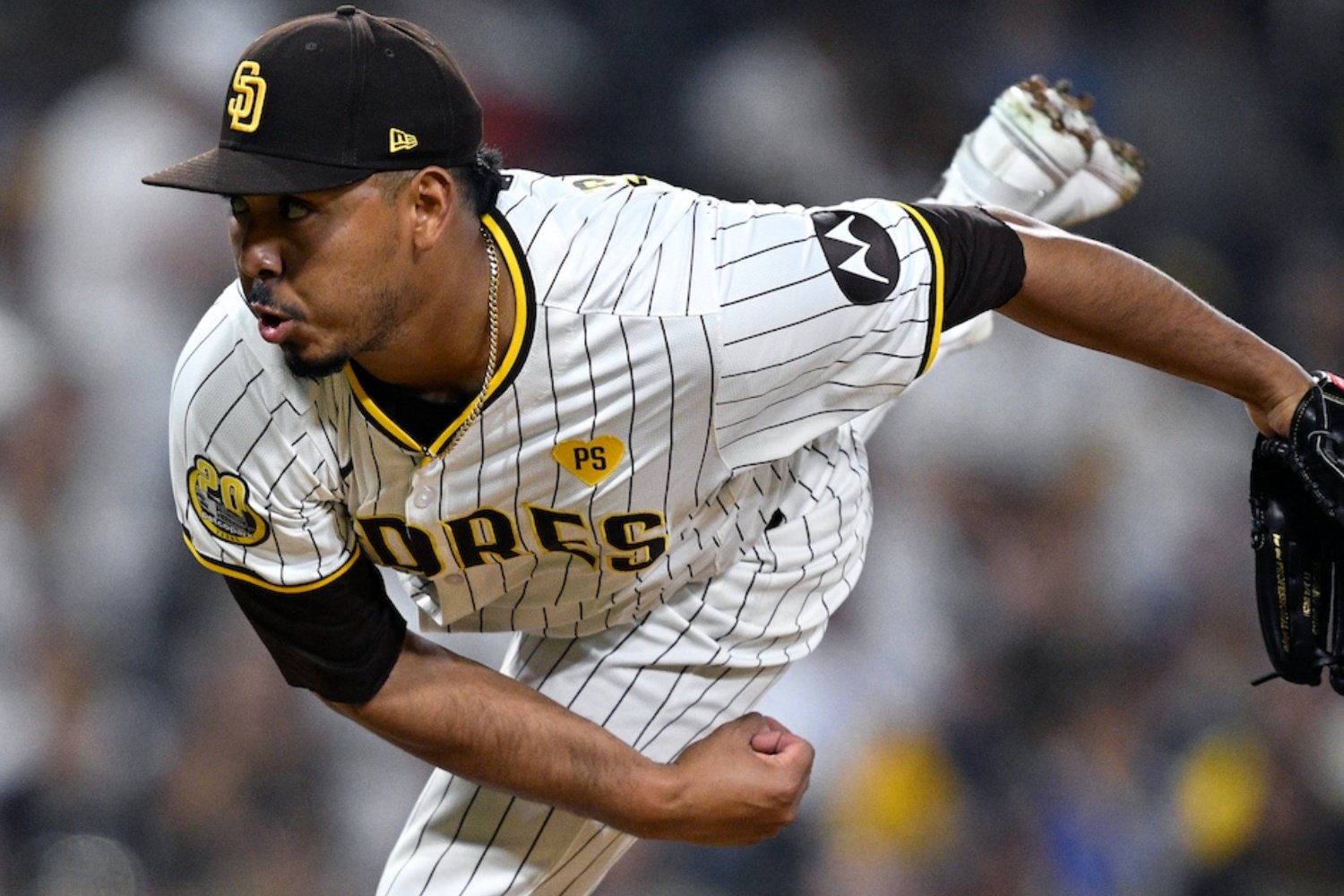 Two months ago, Jeremiah Estrada looked like one of the best bullpen arms in baseball. After the Padres claimed him off waivers in November 2023, Estrada burst onto the scene last year and kept the hype going in April and May with dominant stuff, an elite strikeout rate, and the electricity that made fans believe San Diego had found its next late-inning weapon. By the end of May, his ERA sat at 2.49 and his K/BB ratio, a key stat for any high-leverage reliever, had climbed to an elite 6.67. Then came June. Through 9 2/3 innings this month (stats through June 24), Estrada’s K/BB ratio has cratered to 1.29. He’s walked seven and struck out just nine, with two particularly brutal outings against the Dodgers skewing his stat line, raising major concerns. It’s tempting to look at two games and chalk it all up to bad luck. On June 11, Estrada gave up a homer and two runs in just 2/3 of an inning. A week later, on June 17, he had one of, if not the worst, outings of his big-league career: five hits, five earned runs, and another homer, without recording a single out. Those two appearances alone accounted for all seven earned runs he’s allowed this month, spiking his ERA from 2.49 at the end of May to 3.60 currently. But, while it’s true that a couple of blowups can skew a reliever’s ERA, Estrada’s June struggles haven’t been limited to two bad nights. The deeper numbers tell a broader story: command issues, diminished pitch shape, and concerning mechanical trends have all played a role in his recent regression. Through June 24, Estrada’s fastball is still averaging about 98 mph, right around where it’s been all year. But while the velocity hasn’t changed much, the effectiveness of the pitch has. His four-seamer is getting less rise, down to 19.1 inches of induced vertical break in June, compared to 19.8 in May and 20.4 in April. That drop in vertical movement has made it easier for hitters to track the pitch, particularly at the top of the zone, where Estrada had previously lived. The spin rate on his fastball is also at its lowest point of the season, further limiting its life and deception. Hitters are seeing the ball earlier and making more contact. The whiff rate on the fastball has dropped accordingly, and the decline isn't limited to just one pitch. Estrada’s whiff rate has dropped across all three of his offerings from last month, with his four-seamer dropping from 30.1% to 20.3%, split finger from 71.4% to 35.7%, and his slider from 30% to 0%. And his pitch usage has changed, too. His fastball is up from 57.8% in May to 68.9% in June, the split finger is down from 23.3% to 15.2%, and his slider is down slightly from 18.9% to 15.9%. That shift toward a fastball-heavy approach may be a sign he’s lost feel for his off-speed pitches, or simply a reaction to falling behind in counts more often. But either way, the increased predictability hasn’t helped. Perhaps the most revealing trends aren’t in the pitch results but in Estrada’s mechanics. His arm angle has risen every month, and in June, it’s the highest it’s been all season. At the same time, his release point is getting lower and lower, creating a more drastic vertical difference between where he starts and finishes his motion. That combination can lead to timing issues and inconsistent command, both of which have been factors in his June slide. Estrada has struggled to consistently hit his spots, particularly to his glove side, often yanking fastballs arm-side or spiking sliders out of the zone. It’s no coincidence that his walk rate has climbed this month, while strikeouts have dipped. He’s not fooling hitters as often, and when he falls behind in the count, he’s either missing too far off the edges or catching too much of the plate. After his disastrous June 17 outing, Estrada bounced back with a couple of solid appearances on June 21 and June 24, tossing 2.0 scoreless innings with four strikeouts and no walks combined. These were his first truly clean outings since early June, and the kind of performances that offer a glimpse of the pitcher he was in April and May. It also nudged his K/BB ratio for the month up slightly to 1.29, which is still not good, but at least trending upward. The Padres will be hoping that’s a sign of a turnaround, not just a momentary pause in a rough stretch. Relievers go through slumps all the time. That’s part of the job. But when a pitcher goes from overpowering to erratic in the span of a few weeks, it’s worth digging deeper, and in Estrada’s case, there are real warning signs. He’s not injured, at least not officially. His velocity isn’t down dramatically. But the shape of his pitches, the consistency of his release, and the results all point to a pitcher either battling fatigue, fighting his mechanics, or both. Estrada is already at 35.0 innings pitched, quickly approaching his career high in innings pitched in a season. The Padres need a reliable setup arm to bridge the gap from the starters to Robert Suarez. Estrada was one of the main reliable guys. Right now, he isn’t. Still, the fix may not be far off. If he can regain the feel for his pitches, establish them as weapons, and smooth out his arm slot and release point, the stuff is still there. But the leash will get shorter. And though still early, the NL West and NL Wild Card race is crowded, and every inning matters. For the Padres, figuring out which version of Jeremiah Estrada they’re getting the rest of the way could be the difference between bullpen stability and a bullpen scramble.
 -
Two months ago, Jeremiah Estrada looked like one of the best bullpen arms in baseball. After the Padres claimed him off waivers in November 2023, Estrada burst onto the scene last year and kept the hype going in April and May with dominant stuff, an elite strikeout rate, and the electricity that made fans believe San Diego had found its next late-inning weapon. By the end of May, his ERA sat at 2.49 and his K/BB ratio, a key stat for any high-leverage reliever, had climbed to an elite 6.67. Then came June. Through 9 2/3 innings this month (stats through June 24), Estrada’s K/BB ratio has cratered to 1.29. He’s walked seven and struck out just nine, with two particularly brutal outings against the Dodgers skewing his stat line, raising major concerns. It’s tempting to look at two games and chalk it all up to bad luck. On June 11, Estrada gave up a homer and two runs in just 2/3 of an inning. A week later, on June 17, he had one of, if not the worst, outings of his big-league career: five hits, five earned runs, and another homer, without recording a single out. Those two appearances alone accounted for all seven earned runs he’s allowed this month, spiking his ERA from 2.49 at the end of May to 3.60 currently. But, while it’s true that a couple of blowups can skew a reliever’s ERA, Estrada’s June struggles haven’t been limited to two bad nights. The deeper numbers tell a broader story: command issues, diminished pitch shape, and concerning mechanical trends have all played a role in his recent regression. Through June 24, Estrada’s fastball is still averaging about 98 mph, right around where it’s been all year. But while the velocity hasn’t changed much, the effectiveness of the pitch has. His four-seamer is getting less rise, down to 19.1 inches of induced vertical break in June, compared to 19.8 in May and 20.4 in April. That drop in vertical movement has made it easier for hitters to track the pitch, particularly at the top of the zone, where Estrada had previously lived. The spin rate on his fastball is also at its lowest point of the season, further limiting its life and deception. Hitters are seeing the ball earlier and making more contact. The whiff rate on the fastball has dropped accordingly, and the decline isn't limited to just one pitch. Estrada’s whiff rate has dropped across all three of his offerings from last month, with his four-seamer dropping from 30.1% to 20.3%, split finger from 71.4% to 35.7%, and his slider from 30% to 0%. And his pitch usage has changed, too. His fastball is up from 57.8% in May to 68.9% in June, the split finger is down from 23.3% to 15.2%, and his slider is down slightly from 18.9% to 15.9%. That shift toward a fastball-heavy approach may be a sign he’s lost feel for his off-speed pitches, or simply a reaction to falling behind in counts more often. But either way, the increased predictability hasn’t helped. Perhaps the most revealing trends aren’t in the pitch results but in Estrada’s mechanics. His arm angle has risen every month, and in June, it’s the highest it’s been all season. At the same time, his release point is getting lower and lower, creating a more drastic vertical difference between where he starts and finishes his motion. That combination can lead to timing issues and inconsistent command, both of which have been factors in his June slide. Estrada has struggled to consistently hit his spots, particularly to his glove side, often yanking fastballs arm-side or spiking sliders out of the zone. It’s no coincidence that his walk rate has climbed this month, while strikeouts have dipped. He’s not fooling hitters as often, and when he falls behind in the count, he’s either missing too far off the edges or catching too much of the plate. After his disastrous June 17 outing, Estrada bounced back with a couple of solid appearances on June 21 and June 24, tossing 2.0 scoreless innings with four strikeouts and no walks combined. These were his first truly clean outings since early June, and the kind of performances that offer a glimpse of the pitcher he was in April and May. It also nudged his K/BB ratio for the month up slightly to 1.29, which is still not good, but at least trending upward. The Padres will be hoping that’s a sign of a turnaround, not just a momentary pause in a rough stretch. Relievers go through slumps all the time. That’s part of the job. But when a pitcher goes from overpowering to erratic in the span of a few weeks, it’s worth digging deeper, and in Estrada’s case, there are real warning signs. He’s not injured, at least not officially. His velocity isn’t down dramatically. But the shape of his pitches, the consistency of his release, and the results all point to a pitcher either battling fatigue, fighting his mechanics, or both. Estrada is already at 35.0 innings pitched, quickly approaching his career high in innings pitched in a season. The Padres need a reliable setup arm to bridge the gap from the starters to Robert Suarez. Estrada was one of the main reliable guys. Right now, he isn’t. Still, the fix may not be far off. If he can regain the feel for his pitches, establish them as weapons, and smooth out his arm slot and release point, the stuff is still there. But the leash will get shorter. And though still early, the NL West and NL Wild Card race is crowded, and every inning matters. For the Padres, figuring out which version of Jeremiah Estrada they’re getting the rest of the way could be the difference between bullpen stability and a bullpen scramble. View full article
-
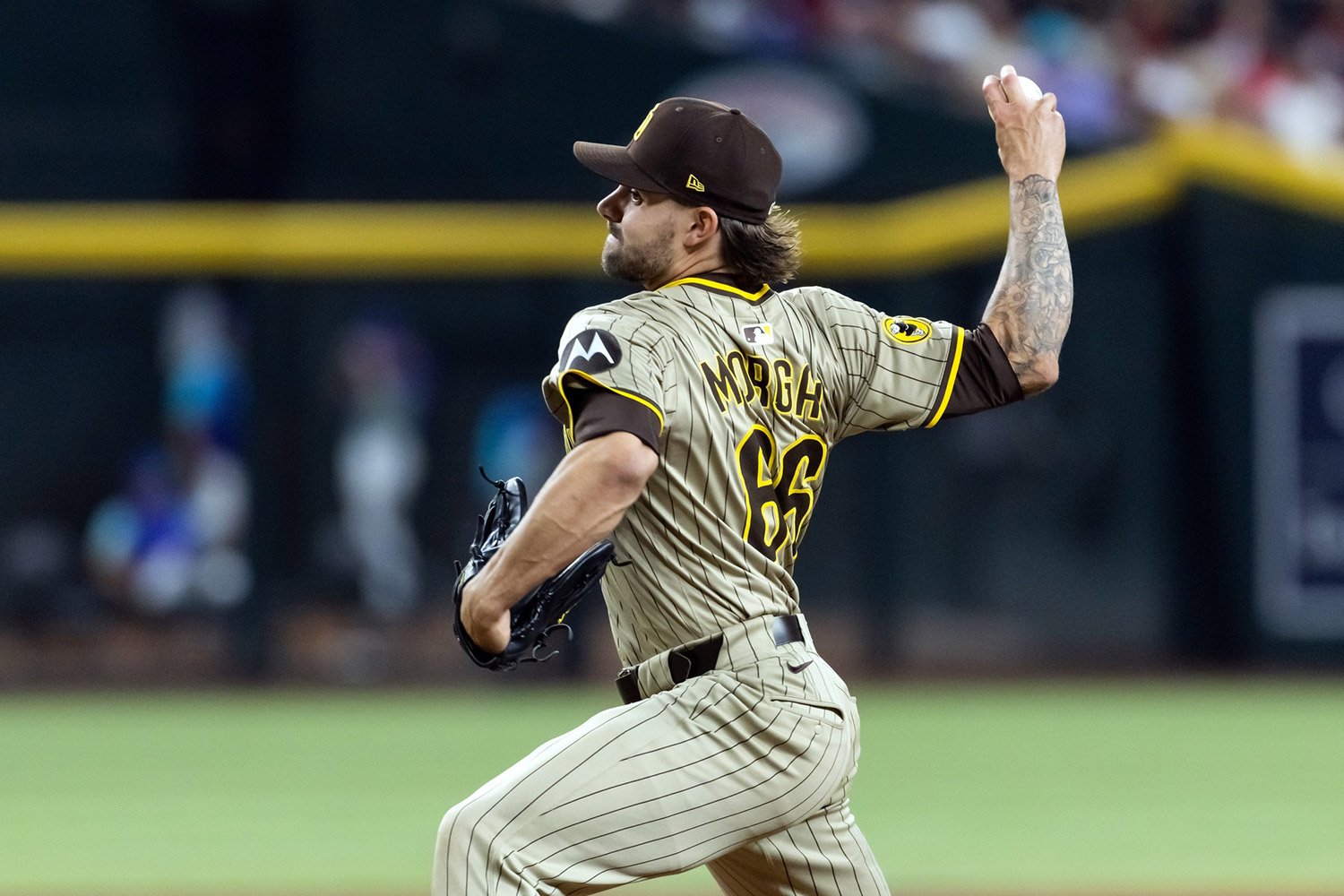 David Morgan has been proving people wrong for most of his baseball life. Overlooked by scouts out of high school. Undrafted out of college. And now? He’s pitching on a big-league mound for the San Diego Padres, the team that gave him a shot before anyone else. Born in Mission Viejo, the 25-year-old right-hander’s baseball journey has been anything but linear. He played high school ball at Mission Viejo High before making stops at Orange Coast College and Hope International University. After going undrafted in 2022, Morgan signed with the Padres as a free agent, a low-risk addition that has returned unexpected value in the majors. Morgan debuted that summer in the Arizona Complex League, posting a 3.00 ERA in three appearances. In 2023, he worked across two levels, Low-A Lake Elsinore and High-A Fort Wayne, logging a 3.83 ERA with 46 strikeouts in 28 games. The numbers were solid, but nothing special. But the Padres saw something. By 2024, Morgan had reached Double-A San Antonio, where he ran into tougher competition and finished the year with a 5.04 ERA in 40 outings. Still, he entered 2025 back in San Antonio with improved command and confidence, and the results followed with a 3.12 ERA and 19 strikeouts in seven April appearances. That earned him a surprise call-up to the Padres’ 40-man roster on April 27. However, he didn’t appear in a game before being optioned to Triple-A. But on May 25, Morgan was recalled to San Diego, a move prompted by a vacated roster spot after Michael King was placed on the injured list. The very next day, he made his MLB debut against the Miami Marlins, coming into the game in the eighth inning and retiring the two batters he faced. Since arriving in the bigs, Morgan has done more than just fill a roster spot. Through his first ten appearances, he’s pitched 11 2/3 innings with a 2.31 ERA, striking out 15 and walking seven. Opponents are hitting just .190 against him, and he’s quickly earning trust in middle-inning situations. The ERA is strong, but some underlying metrics suggest caution. His Fielding Independent Pitching (FIP) sits at 4.52, over two full runs higher than his ERA, pointing to a bit of batted-ball luck and strong defense behind him. His 14.3 BB% walk rate is on the high side, though it’s offset by an impressive 30.6 K%. Morgan is primarily a three-pitch guy, utilizing a Four-seam fastball (45.5%), a curveball (29%), and a slider (20.5%). He also sparingly uses a sinker (5%). The pitch that’s driving his early success? The curveball. It’s been his go-to weapon, effective against hitters on both sides of the plate. Opponents are batting just .200 against it, and it accounts for 11 of his 15 strikeouts. The curve boasts a 48.3 whiff% and a 42.3 putaway%, elite marks that show how effective it is at finishing hitters. His slider, while less flashy, has also been quietly effective. He’s thrown it 41 times without allowing a single hit, though it hasn’t generated many whiffs (just two) or strikeouts (none). It may function more as a change-of-pace pitch than a true out pitch, keeping hitters off the fastball-curve combination. The Padres' bullpen has been one of the more reliable units in baseball this season, despite some recent struggles. Though anchored by high-leverage arms like Robert Suarez and Jason Adam, a contending team needs more than just a few trusted names. That’s where Morgan can come in. He’s shown he can get outs in the middle innings. The curveball is real. The slider has potential. If he can tighten his command and maintain his confidence, there’s a path to a long-term role, especially in a bullpen that values versatility and strike-throwing. If Morgan continues to miss bats and limit damage, he could carve out a long-term role in San Diego, especially with the team often dealing with rotation and bullpen shuffling and injuries. For a club with October ambitions, having fresh, reliable arms like Morgan could make a difference come playoff time. But with Michael King, Yu Darvish, and other potential roster spots expected back in the coming weeks and months, Morgan could find himself in a roster crunch. However, if he continues to deliver, the Padres may not want to send him back down. In a bullpen where roles constantly evolve, flexibility and reliability can be enough to earn a permanent seat. For now, Morgan’s story is one of perseverance. A Southern California kid who never heard his name called on draft day, now wearing a Padres uniform and recording outs in meaningful games. Morgan may not have arrived with top-prospect hype, but he’s here, and he’s earning every bit of it.
 -
David Morgan has been proving people wrong for most of his baseball life. Overlooked by scouts out of high school. Undrafted out of college. And now? He’s pitching on a big-league mound for the San Diego Padres, the team that gave him a shot before anyone else. Born in Mission Viejo, the 25-year-old right-hander’s baseball journey has been anything but linear. He played high school ball at Mission Viejo High before making stops at Orange Coast College and Hope International University. After going undrafted in 2022, Morgan signed with the Padres as a free agent, a low-risk addition that has returned unexpected value in the majors. Morgan debuted that summer in the Arizona Complex League, posting a 3.00 ERA in three appearances. In 2023, he worked across two levels, Low-A Lake Elsinore and High-A Fort Wayne, logging a 3.83 ERA with 46 strikeouts in 28 games. The numbers were solid, but nothing special. But the Padres saw something. By 2024, Morgan had reached Double-A San Antonio, where he ran into tougher competition and finished the year with a 5.04 ERA in 40 outings. Still, he entered 2025 back in San Antonio with improved command and confidence, and the results followed with a 3.12 ERA and 19 strikeouts in seven April appearances. That earned him a surprise call-up to the Padres’ 40-man roster on April 27. However, he didn’t appear in a game before being optioned to Triple-A. But on May 25, Morgan was recalled to San Diego, a move prompted by a vacated roster spot after Michael King was placed on the injured list. The very next day, he made his MLB debut against the Miami Marlins, coming into the game in the eighth inning and retiring the two batters he faced. Since arriving in the bigs, Morgan has done more than just fill a roster spot. Through his first ten appearances, he’s pitched 11 2/3 innings with a 2.31 ERA, striking out 15 and walking seven. Opponents are hitting just .190 against him, and he’s quickly earning trust in middle-inning situations. The ERA is strong, but some underlying metrics suggest caution. His Fielding Independent Pitching (FIP) sits at 4.52, over two full runs higher than his ERA, pointing to a bit of batted-ball luck and strong defense behind him. His 14.3 BB% walk rate is on the high side, though it’s offset by an impressive 30.6 K%. Morgan is primarily a three-pitch guy, utilizing a Four-seam fastball (45.5%), a curveball (29%), and a slider (20.5%). He also sparingly uses a sinker (5%). The pitch that’s driving his early success? The curveball. It’s been his go-to weapon, effective against hitters on both sides of the plate. Opponents are batting just .200 against it, and it accounts for 11 of his 15 strikeouts. The curve boasts a 48.3 whiff% and a 42.3 putaway%, elite marks that show how effective it is at finishing hitters. His slider, while less flashy, has also been quietly effective. He’s thrown it 41 times without allowing a single hit, though it hasn’t generated many whiffs (just two) or strikeouts (none). It may function more as a change-of-pace pitch than a true out pitch, keeping hitters off the fastball-curve combination. The Padres' bullpen has been one of the more reliable units in baseball this season, despite some recent struggles. Though anchored by high-leverage arms like Robert Suarez and Jason Adam, a contending team needs more than just a few trusted names. That’s where Morgan can come in. He’s shown he can get outs in the middle innings. The curveball is real. The slider has potential. If he can tighten his command and maintain his confidence, there’s a path to a long-term role, especially in a bullpen that values versatility and strike-throwing. If Morgan continues to miss bats and limit damage, he could carve out a long-term role in San Diego, especially with the team often dealing with rotation and bullpen shuffling and injuries. For a club with October ambitions, having fresh, reliable arms like Morgan could make a difference come playoff time. But with Michael King, Yu Darvish, and other potential roster spots expected back in the coming weeks and months, Morgan could find himself in a roster crunch. However, if he continues to deliver, the Padres may not want to send him back down. In a bullpen where roles constantly evolve, flexibility and reliability can be enough to earn a permanent seat. For now, Morgan’s story is one of perseverance. A Southern California kid who never heard his name called on draft day, now wearing a Padres uniform and recording outs in meaningful games. Morgan may not have arrived with top-prospect hype, but he’s here, and he’s earning every bit of it. View full article
-
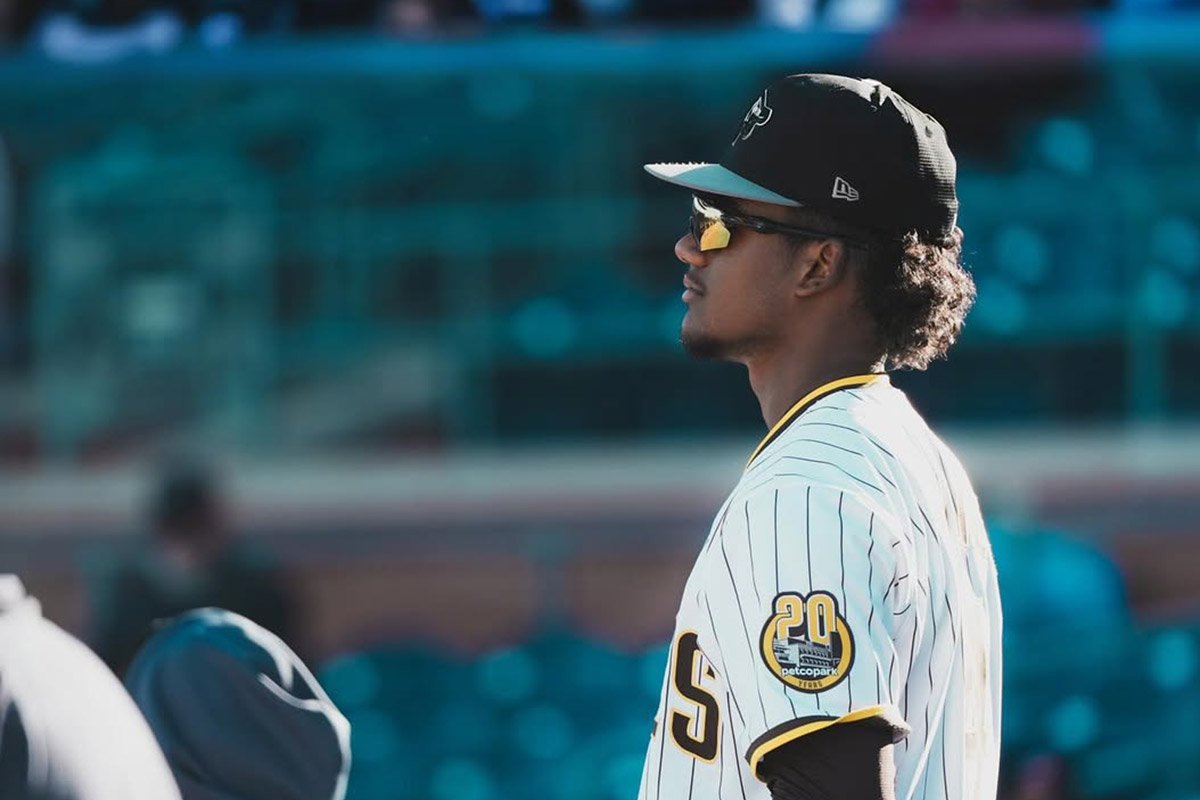 In January 2024, the Padres handed $4.2 million to a dynamic 17-year-old switch-hitting shortstop out of the Dominican Republic named Leo De Vries. A year and a half later, that investment looks like a bargain. De Vries, now 18, has become one of the brightest young stars in the minor leagues. He’s the Padres’ No. 1 prospect. In MLB Pipeline’s latest Top 100 update, he rocketed up to No. 3 overall, ahead of a long list of former top picks, college stars, and highly-touted Latin American signees. The buzz has officially gone national. But in San Diego’s farm system, De Vries has been the talk of the town for months. While most players his age are just breaking into full-season ball, De Vries is already raking at High-A Fort Wayne, where he’s the youngest player at the High-A level. And he’s not just surviving, he’s thriving. Through his first stretch of 2025, De Vries has slashed .253/.347/.425 with a .772 OPS. His numbers have taken a hit due to a recent slump, but even so, that’s not just good for his age; it’s elite, even among some older prospects. His strikeout rate has dropped from 23.3% in Low-A last year to just 19.8%, while maintaining an above-average walk rate at 12.4% and consistent power. And just in case scouts needed a reminder of his dynamic skill set, he hit for the cycle on April 22 against Lansing. Not bad for an 18-year-old. De Vries checks just about every box you could want from a modern shortstop. He’s a true switch-hitter, with consistent power from both sides of the plate. Seven of his 11 home runs last year came as a righty, despite far fewer plate appearances. However, this year, his left-handed swing has developed as he faces a lot more right-handed pitchers, with four of his five home runs so far this year coming from the left side. Scouts describe De Vries as a true five-tool player, the rare kind who can impact the game in every facet. Whether it’s squaring up fastballs, flashing leather up the middle, or taking the extra base on a single to right, De Vries shows the instincts and athleticism that often separate stars from everyday players. While his stolen base totals aren’t eye-popping yet, his efficient reads and quick first step suggest he could swipe 15–20 bags per season, furthering his all-around game. At 6’1”, 183 pounds, he’s still maturing physically, but already showcases a smooth swing, quick hands, and an excellent feel for the strike zone. His 60-grade hit tool is paired with 55 power, and both have already translated in games. His bat-to-ball ability and pitch recognition are especially advanced for his age, as he consistently lives in the zone while waiting for his pitch to do damage. Defensively, De Vries is equally impressive. He grades out at 55 across the board in fielding, arm, and run. He’s a fluid, athletic shortstop with above-average range and enough arm strength to stay on the left side long-term. The errors have spiked this year, with 13 already reported, but are improving with more experience in every game. Last season, De Vries got his first taste of full-season ball at just 17 years old. He hit .237/.361/.441 with 11 home runs. Those are solid numbers, but even more impressive given the age and level of the players. He took off in the second half of last season, where he hit all of his 11 home runs and posted a .921 OPS after a sluggish start. Despite the accelerated assignments, the Padres have taken a generally patient approach with De Vries. Their history with international stars like Fernando Tatis Jr. and, more recently, Ethan Salas shows a balance between challenging top prospects and not rushing their development. However, if De Vries continues this pace, the front office may not be able to hold him back much longer. His estimated ETA is early 2027, but a 2026 debut doesn’t feel completely out of the question. De Vries joins elite company as a switch-hitting shortstop with power, speed, and polish. Names like Marcelo Mayer and Sebastian Walcott are often mentioned in prospect comparison discussions, but neither is ranked higher. He’s not just a top Padres prospect. He’s a national name now. He’s drawing comparisons to stars like Jose Ramirez and Ozzie Albies. And while that’s lofty company, his production, poise, and tools make the dream seem very possible. Leo De Vries is the type of player who inspires fans' dreams and convinces front offices to believe. He’s young, he’s electric, and he’s already showing flashes of superstar upside at one of the game’s toughest positions. If you're not already on the bandwagon, now's the time to hop on because everything about Leo De Vries is pointing up.
 -
In January 2024, the Padres handed $4.2 million to a dynamic 17-year-old switch-hitting shortstop out of the Dominican Republic named Leo De Vries. A year and a half later, that investment looks like a bargain. De Vries, now 18, has become one of the brightest young stars in the minor leagues. He’s the Padres’ No. 1 prospect. In MLB Pipeline’s latest Top 100 update, he rocketed up to No. 3 overall, ahead of a long list of former top picks, college stars, and highly-touted Latin American signees. The buzz has officially gone national. But in San Diego’s farm system, De Vries has been the talk of the town for months. While most players his age are just breaking into full-season ball, De Vries is already raking at High-A Fort Wayne, where he’s the youngest player at the High-A level. And he’s not just surviving, he’s thriving. Through his first stretch of 2025, De Vries has slashed .253/.347/.425 with a .772 OPS. His numbers have taken a hit due to a recent slump, but even so, that’s not just good for his age; it’s elite, even among some older prospects. His strikeout rate has dropped from 23.3% in Low-A last year to just 19.8%, while maintaining an above-average walk rate at 12.4% and consistent power. And just in case scouts needed a reminder of his dynamic skill set, he hit for the cycle on April 22 against Lansing. Not bad for an 18-year-old. De Vries checks just about every box you could want from a modern shortstop. He’s a true switch-hitter, with consistent power from both sides of the plate. Seven of his 11 home runs last year came as a righty, despite far fewer plate appearances. However, this year, his left-handed swing has developed as he faces a lot more right-handed pitchers, with four of his five home runs so far this year coming from the left side. Scouts describe De Vries as a true five-tool player, the rare kind who can impact the game in every facet. Whether it’s squaring up fastballs, flashing leather up the middle, or taking the extra base on a single to right, De Vries shows the instincts and athleticism that often separate stars from everyday players. While his stolen base totals aren’t eye-popping yet, his efficient reads and quick first step suggest he could swipe 15–20 bags per season, furthering his all-around game. At 6’1”, 183 pounds, he’s still maturing physically, but already showcases a smooth swing, quick hands, and an excellent feel for the strike zone. His 60-grade hit tool is paired with 55 power, and both have already translated in games. His bat-to-ball ability and pitch recognition are especially advanced for his age, as he consistently lives in the zone while waiting for his pitch to do damage. Defensively, De Vries is equally impressive. He grades out at 55 across the board in fielding, arm, and run. He’s a fluid, athletic shortstop with above-average range and enough arm strength to stay on the left side long-term. The errors have spiked this year, with 13 already reported, but are improving with more experience in every game. Last season, De Vries got his first taste of full-season ball at just 17 years old. He hit .237/.361/.441 with 11 home runs. Those are solid numbers, but even more impressive given the age and level of the players. He took off in the second half of last season, where he hit all of his 11 home runs and posted a .921 OPS after a sluggish start. Despite the accelerated assignments, the Padres have taken a generally patient approach with De Vries. Their history with international stars like Fernando Tatis Jr. and, more recently, Ethan Salas shows a balance between challenging top prospects and not rushing their development. However, if De Vries continues this pace, the front office may not be able to hold him back much longer. His estimated ETA is early 2027, but a 2026 debut doesn’t feel completely out of the question. De Vries joins elite company as a switch-hitting shortstop with power, speed, and polish. Names like Marcelo Mayer and Sebastian Walcott are often mentioned in prospect comparison discussions, but neither is ranked higher. He’s not just a top Padres prospect. He’s a national name now. He’s drawing comparisons to stars like Jose Ramirez and Ozzie Albies. And while that’s lofty company, his production, poise, and tools make the dream seem very possible. Leo De Vries is the type of player who inspires fans' dreams and convinces front offices to believe. He’s young, he’s electric, and he’s already showing flashes of superstar upside at one of the game’s toughest positions. If you're not already on the bandwagon, now's the time to hop on because everything about Leo De Vries is pointing up. View full article
-
 Weekly Snapshot: Record Last Week: 2-4 (Overall: 39-31) Run Scored Last Week: 36 Runs Surrendered Last Week: 29 Standing: 3rd in NL West (3.0 GB 1st place LAD) *** Game 65 (6/09) | LAD 8, SD 7 Game 66 (6/10) | SD 11, LAD 1 Game 67 (6/11) | LAD 5, SD 2 Game 68 (6/13) | ARI 5, SD 1 Game 69 (6/14) | ARI 8, SD 7 Game 70 (6/15) | SD 8, ARI 2 *** Transactions: 06/15/25 - Recalled INF Trenton Brooks from AAA El Paso. 06/15/25 - Placed OF Jackson Merrill on the 7-day injured list. (Concussion) 06/13/25 - Sent OF Jason Heyward on a rehab assignment to AAA El Paso. Breakdown/Highlights: It was a frustrating week for the Padres, who dropped four of six games to the Dodgers and Diamondbacks, two key rivals in the NL West. At the same time, the bats showed flashes, but late-inning meltdowns and inconsistent starting pitching cost San Diego in winnable games. The Padres did manage to finish on a high note, thanks to a strong outing and timely offense on Sunday in Arizona. The bullpen’s worst moment came Saturday, when the Padres let a 7–3 lead slip away in the bottom of the ninth against Arizona, capped by a walk-off hit from the D-backs. It was the second game this week they let slip in the late innings after also falling in extras to the Dodgers on Monday. Manny Machado continues to swing a hot bat, driving in ten runs this week with a couple of multi-hit games. His consistency has been a rare steadying force for a lineup that’s been otherwise uneven. Fernando Tatis Jr. added his stamp on the week with a four-hit game on Sunday, helping to fuel an 8–2 win that prevented a sweep in Arizona. Earlier in the week, Dylan Cease delivered his best outing of the season, throwing seven shutout innings and 11 strikeouts against the Dodgers in a win that briefly steadied the ship. Rookie Ryan Bergert provided a glimmer of hope on the mound with a solid outing Saturday night, tossing five innings of two-run ball and showing poise in a hostile environment. But Stephen Kolek and Nick Pivetta both struggled in their starts, putting more pressure on a taxed bullpen. Nick Pivetta closed out the week with authority, rebounding from a poor start earlier in the week to throw seven strong innings with nine strikeouts on Sunday. It was the kind of bounce-back effort San Diego needed after another rough bullpen performance the night before. Health is becoming a concern again as Jackson Merrill left Saturday’s game after taking a tag to the head on a caught stealing attempt. He was held out of Sunday’s lineup to be monitored for a possible concussion. The Padres ultimately placed Merrill on the 7-day injured list on Sunday with a concussion, indicating he will be out for at least the following week. Despite the frustrations, Sunday’s win was a reminder of this team’s ceiling when things click: efficient starting pitching, top-of-the-lineup firepower, and bullpen stability. That formula will be tested again in a tough four-game set in Los Angeles against the division-leading Dodgers. Looking Ahead: June 16, 2025 – Padres at Dodgers – 7:10 PM PT June 17, 2025 – Padres at Dodgers – 7:10 PM PT June 18, 2025 – Padres at Dodgers – 7:10 PM PT June 19, 2025 – Padres at Dodgers – 7:10 PM PT June 20, 2025 – Royals at Padres – 6:40 PM PT June 21, 2025 – Royals at Padres– 4:15 PM PT June 22, 2025 – Royals at Padres – 1:10 PM PT
 -
Weekly Snapshot: Record Last Week: 2-4 (Overall: 39-31) Run Scored Last Week: 36 Runs Surrendered Last Week: 29 Standing: 3rd in NL West (3.0 GB 1st place LAD) *** Game 65 (6/09) | LAD 8, SD 7 Game 66 (6/10) | SD 11, LAD 1 Game 67 (6/11) | LAD 5, SD 2 Game 68 (6/13) | ARI 5, SD 1 Game 69 (6/14) | ARI 8, SD 7 Game 70 (6/15) | SD 8, ARI 2 *** Transactions: 06/15/25 - Recalled INF Trenton Brooks from AAA El Paso. 06/15/25 - Placed OF Jackson Merrill on the 7-day injured list. (Concussion) 06/13/25 - Sent OF Jason Heyward on a rehab assignment to AAA El Paso. Breakdown/Highlights: It was a frustrating week for the Padres, who dropped four of six games to the Dodgers and Diamondbacks, two key rivals in the NL West. At the same time, the bats showed flashes, but late-inning meltdowns and inconsistent starting pitching cost San Diego in winnable games. The Padres did manage to finish on a high note, thanks to a strong outing and timely offense on Sunday in Arizona. The bullpen’s worst moment came Saturday, when the Padres let a 7–3 lead slip away in the bottom of the ninth against Arizona, capped by a walk-off hit from the D-backs. It was the second game this week they let slip in the late innings after also falling in extras to the Dodgers on Monday. Manny Machado continues to swing a hot bat, driving in ten runs this week with a couple of multi-hit games. His consistency has been a rare steadying force for a lineup that’s been otherwise uneven. Fernando Tatis Jr. added his stamp on the week with a four-hit game on Sunday, helping to fuel an 8–2 win that prevented a sweep in Arizona. Earlier in the week, Dylan Cease delivered his best outing of the season, throwing seven shutout innings and 11 strikeouts against the Dodgers in a win that briefly steadied the ship. Rookie Ryan Bergert provided a glimmer of hope on the mound with a solid outing Saturday night, tossing five innings of two-run ball and showing poise in a hostile environment. But Stephen Kolek and Nick Pivetta both struggled in their starts, putting more pressure on a taxed bullpen. Nick Pivetta closed out the week with authority, rebounding from a poor start earlier in the week to throw seven strong innings with nine strikeouts on Sunday. It was the kind of bounce-back effort San Diego needed after another rough bullpen performance the night before. Health is becoming a concern again as Jackson Merrill left Saturday’s game after taking a tag to the head on a caught stealing attempt. He was held out of Sunday’s lineup to be monitored for a possible concussion. The Padres ultimately placed Merrill on the 7-day injured list on Sunday with a concussion, indicating he will be out for at least the following week. Despite the frustrations, Sunday’s win was a reminder of this team’s ceiling when things click: efficient starting pitching, top-of-the-lineup firepower, and bullpen stability. That formula will be tested again in a tough four-game set in Los Angeles against the division-leading Dodgers. Looking Ahead: June 16, 2025 – Padres at Dodgers – 7:10 PM PT June 17, 2025 – Padres at Dodgers – 7:10 PM PT June 18, 2025 – Padres at Dodgers – 7:10 PM PT June 19, 2025 – Padres at Dodgers – 7:10 PM PT June 20, 2025 – Royals at Padres – 6:40 PM PT June 21, 2025 – Royals at Padres– 4:15 PM PT June 22, 2025 – Royals at Padres – 1:10 PM PT View full article
-
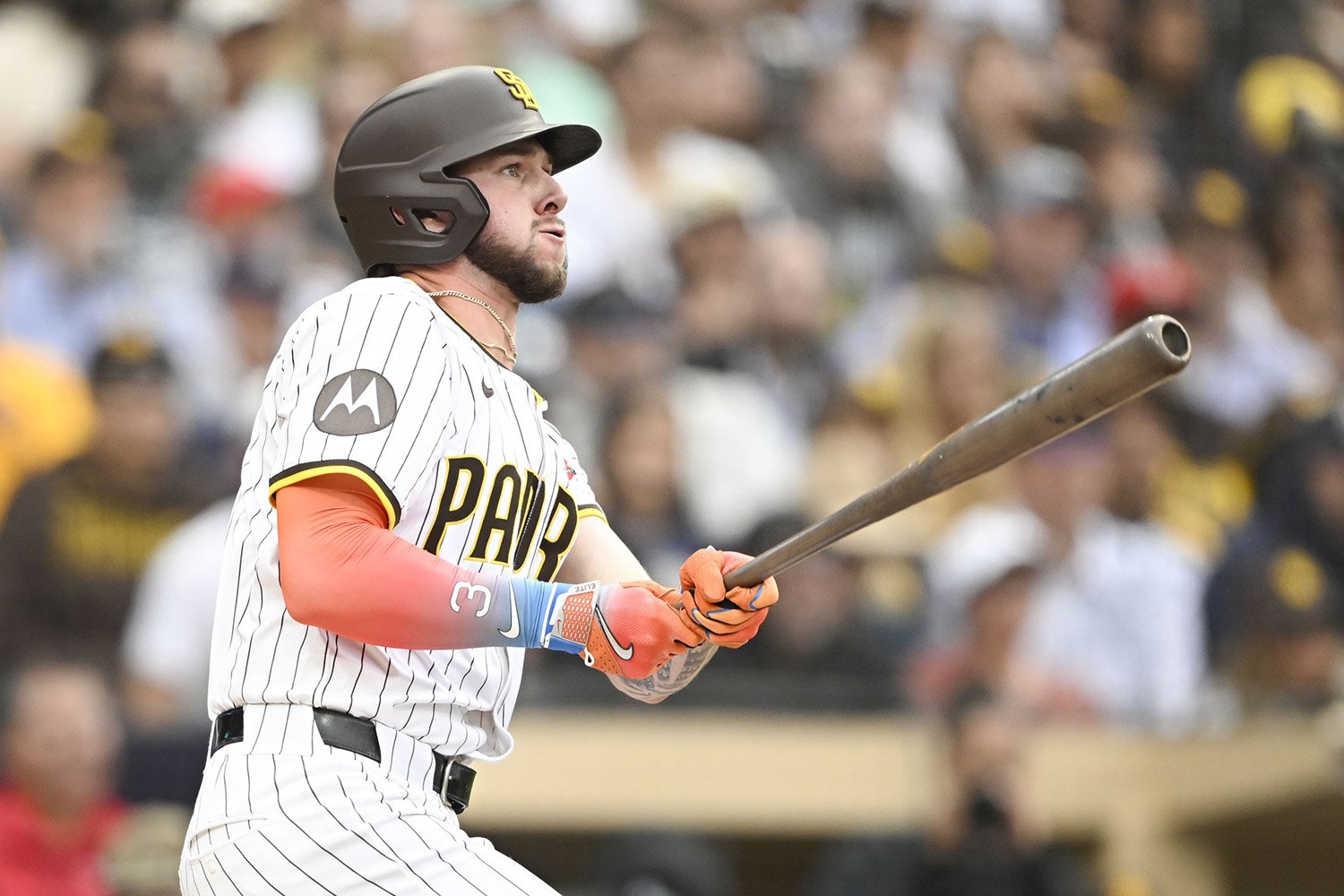 The Padres are a winning team playing losing-team baseball, at least when it comes to their swing profile. As of early June, San Diego boasts some of the strangest plate discipline numbers in baseball. They have the second-highest chase rate in the league at 30.2% O-Swing%, meaning they swing at pitches outside the strike zone more than all but one team, the Colorado Rockies. Yet they also have the fourth-lowest Z-Swing% at 62.9%, meaning they’re letting more strikes go by than nearly anyone. That alone is unusual, but the quirks don’t end there. Despite those swing decisions, the Padres remain one of the league’s most contact-oriented teams. They are tied for the second-highest O-Contact% at 59.2% and rank sixth in the league in Z-Contact% at 87.2%. That gives the Padres the sixth-highest Overall Contact% at 78.7%, with the team also having one of the lowest strikeout rates in the league at 19.1%, the third-lowest in MLB. So what happens when a team swings at bad pitches, takes good ones, and still manages to put the bat on the ball? In the Padres’ case: a lot of soft contact, opposite-field singles, and missed opportunities. The Padres have been very good at putting the ball in play, but not very good at doing much with it. They have the second-lowest Hard-Hit% (36.6%), second-lowest Barrel% (6.7%), second-highest Groundball% (46.3%), second-lowest Flyball% (34.1%), and the highest Opposite-Field% (27.6%) in the league. That paints the picture of a lineup that isn’t exactly hunting damage. While the contact rates are impressive on paper, most of that contact is weak, on the ground, and going the other way. For some hitters, such as Luis Arraez, that’s a feature. But for a lineup that includes Fernando Tatis Jr., Manny Machado, Jackson Merrill, et al, it feels more like a bug. In theory, a contact-heavy offense can be effective, but it typically requires being paired with quality swings in hitters’ counts, gap power, or elite baserunning. The Padres also aren’t making up for the lack of pop with patience, as their 8.3% walk rate ranks just 20th in MLB, suggesting they’re not exactly grinding out at-bats, either. In addition, the team isn’t hitting the ball hard, which means they’re putting a lot of pressure on sequencing and timing to score runs. And it’s not that they can’t score, but they’re doing it in a way that leaves little margin for error. This combination of high contact, low walks, and soft contact is something you might expect from a rebuilding team like the Rockies or White Sox. Not a contender built around stars and veteran bats. To their credit, the Padres have stayed afloat in the playoff race. They’ve held their own in a top-heavy NL West, and their rotation has given them a chance most nights. But the offense feels like it's constantly walking a tightrope. They're succeeding in ways that aren't typically sustainable, those being chasing bad pitches but still making contact, making contact but not hitting the ball hard, and putting balls in play, but not walking or slugging. To be fair, there’s value in avoiding strikeouts, and San Diego ranks near the top of the league in that department. It’s also true that opposite-field contact can work well if it's intentional and well-executed. But when over a quarter of your batted balls go the other way, and your groundball rate is almost 50%, it suggests a team that isn’t consistently getting the swings they want. Baseball has shown that chasing and grounding out isn’t a recipe for October. Eventually, pitchers will attack the zone more aggressively, knowing the Padres aren’t pulling the trigger on strikes, and when they do swing, they’re not doing much damage. The bottom line is that the Padres' offense isn’t broken. But it’s undeniably strange. They make a ton of contact, but much of it is on the pitcher’s terms. They're swinging at the wrong pitches, and taking the right ones, yet still putting the bat on the ball better than most. Whether it's a clever new approach or just a weird statistical fluke, it’s one of the most confusing storylines of the 2025 season. And sooner or later, something may have to give if the Padres want to compete in the second half, as we’ll find out whether this contact-first chaos can hold up, or whether the Padres are just making a lot of noise without saying much at all.
 -
The Padres are a winning team playing losing-team baseball, at least when it comes to their swing profile. As of early June, San Diego boasts some of the strangest plate discipline numbers in baseball. They have the second-highest chase rate in the league at 30.2% O-Swing%, meaning they swing at pitches outside the strike zone more than all but one team, the Colorado Rockies. Yet they also have the fourth-lowest Z-Swing% at 62.9%, meaning they’re letting more strikes go by than nearly anyone. That alone is unusual, but the quirks don’t end there. Despite those swing decisions, the Padres remain one of the league’s most contact-oriented teams. They are tied for the second-highest O-Contact% at 59.2% and rank sixth in the league in Z-Contact% at 87.2%. That gives the Padres the sixth-highest Overall Contact% at 78.7%, with the team also having one of the lowest strikeout rates in the league at 19.1%, the third-lowest in MLB. So what happens when a team swings at bad pitches, takes good ones, and still manages to put the bat on the ball? In the Padres’ case: a lot of soft contact, opposite-field singles, and missed opportunities. The Padres have been very good at putting the ball in play, but not very good at doing much with it. They have the second-lowest Hard-Hit% (36.6%), second-lowest Barrel% (6.7%), second-highest Groundball% (46.3%), second-lowest Flyball% (34.1%), and the highest Opposite-Field% (27.6%) in the league. That paints the picture of a lineup that isn’t exactly hunting damage. While the contact rates are impressive on paper, most of that contact is weak, on the ground, and going the other way. For some hitters, such as Luis Arraez, that’s a feature. But for a lineup that includes Fernando Tatis Jr., Manny Machado, Jackson Merrill, et al, it feels more like a bug. In theory, a contact-heavy offense can be effective, but it typically requires being paired with quality swings in hitters’ counts, gap power, or elite baserunning. The Padres also aren’t making up for the lack of pop with patience, as their 8.3% walk rate ranks just 20th in MLB, suggesting they’re not exactly grinding out at-bats, either. In addition, the team isn’t hitting the ball hard, which means they’re putting a lot of pressure on sequencing and timing to score runs. And it’s not that they can’t score, but they’re doing it in a way that leaves little margin for error. This combination of high contact, low walks, and soft contact is something you might expect from a rebuilding team like the Rockies or White Sox. Not a contender built around stars and veteran bats. To their credit, the Padres have stayed afloat in the playoff race. They’ve held their own in a top-heavy NL West, and their rotation has given them a chance most nights. But the offense feels like it's constantly walking a tightrope. They're succeeding in ways that aren't typically sustainable, those being chasing bad pitches but still making contact, making contact but not hitting the ball hard, and putting balls in play, but not walking or slugging. To be fair, there’s value in avoiding strikeouts, and San Diego ranks near the top of the league in that department. It’s also true that opposite-field contact can work well if it's intentional and well-executed. But when over a quarter of your batted balls go the other way, and your groundball rate is almost 50%, it suggests a team that isn’t consistently getting the swings they want. Baseball has shown that chasing and grounding out isn’t a recipe for October. Eventually, pitchers will attack the zone more aggressively, knowing the Padres aren’t pulling the trigger on strikes, and when they do swing, they’re not doing much damage. The bottom line is that the Padres' offense isn’t broken. But it’s undeniably strange. They make a ton of contact, but much of it is on the pitcher’s terms. They're swinging at the wrong pitches, and taking the right ones, yet still putting the bat on the ball better than most. Whether it's a clever new approach or just a weird statistical fluke, it’s one of the most confusing storylines of the 2025 season. And sooner or later, something may have to give if the Padres want to compete in the second half, as we’ll find out whether this contact-first chaos can hold up, or whether the Padres are just making a lot of noise without saying much at all. View full article
-
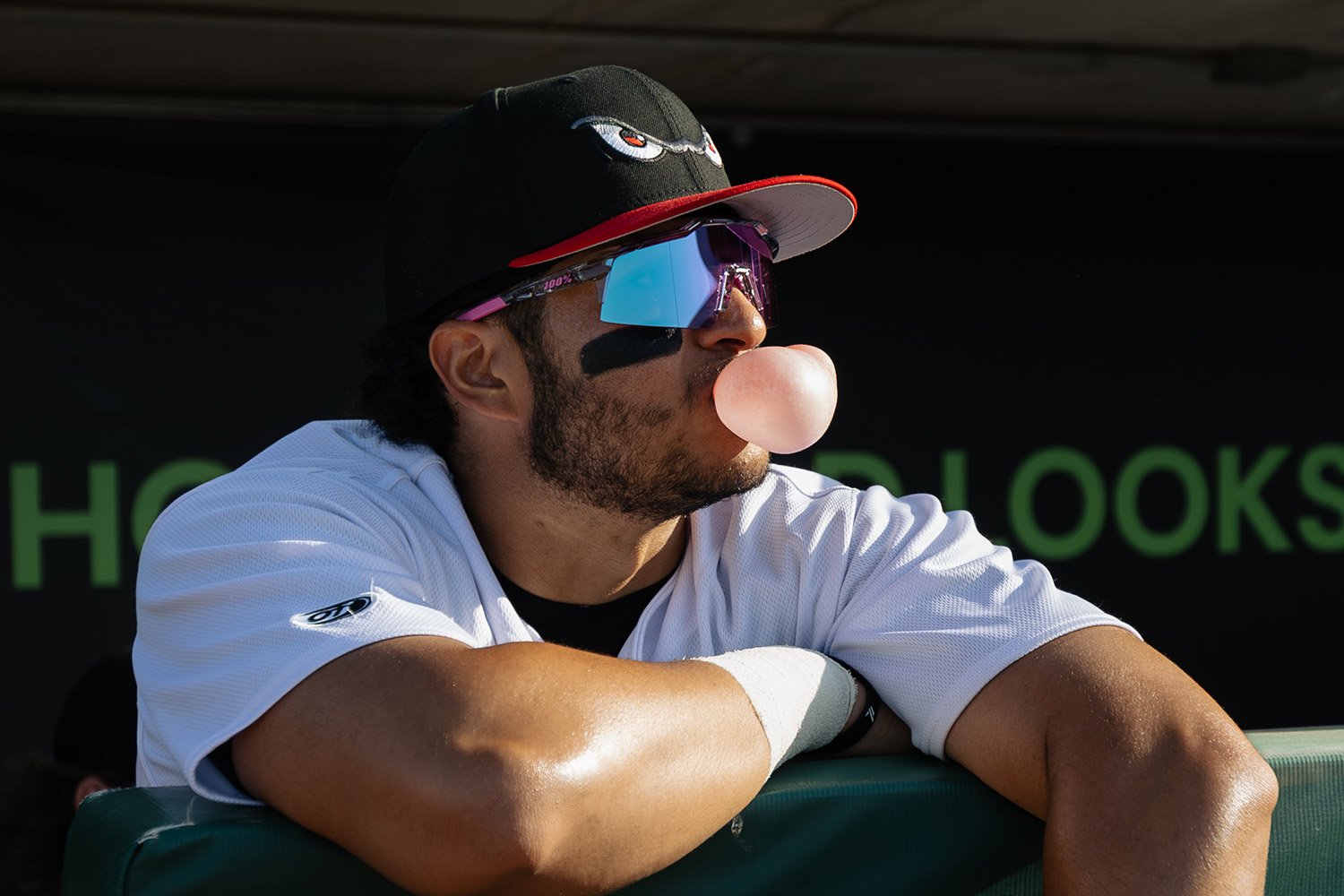 There have been plenty of big-time bats doing damage in the Padres’ system to start 2025. Honestly, trying to narrow it down to just five was challenging, so we also included a few honorable mentions. From rising prospects to veteran depth pieces making noise, here are the most impressive May stats of the minor-league season for San Diego’s position players. Let’s start with a few honorable mentions and work our way to the top dog. Honorable Mention: Ryan Jackson – 28 H, 2 HR, 5 2B, 12 RBI, 16 R, 5 SB, .308/.438/.451, 22:19 K:BB Jackson doesn’t show up on any top prospect lists. He’s not someone fans are tweeting about. But he’s been quietly excellent for Single-A Lake Elsinore, getting on base at a .438 clip in May and walking nearly as much as he strikes out. The on-base ability is real, the contact is improving, and he keeps the Storm lineup moving. He may not be a future Padre, but he’s doing everything asked of him, and then some. Honorable Mention: Marcos Castañon – 27 H, 5 HR, 8 2B, 16 RBI, 13 R, .297/.330/.549, 21:4 K:BB Castañon brought some thump to the Missions’ lineup in May, slugging .529 with four home runs and 15 RBIs in 24 games. The 26-year-old shortstop made pitchers pay for mistakes, consistently delivering big hits despite drawing just four walks. His power potential is clear, and if he can improve his plate discipline, he could take another step forward this season. Honorable Mention: Braedon Karpathios – 13 H, 3 HR, 3 2B, 15 RBI, 12 R, .206/.390/.397, 24:20 K:BB Karpathios didn’t light up the box score with his batting average (.206), but his advanced approach kept his production strong. He walked 20 times in 21 games, helping him post a .390 OBP and .787 OPS. Add in 15 RBI and three doubles, and it’s clear the 2023 undrafted free agent signee knows how to contribute even when the hits aren’t falling, a trait that could serve the 21-year-old well as he climbs the ladder. 5) Kavares Tears – 29 H, 4 HR, 8 2B, 25 RBI, 15 R, .302/.373/.510, 28:12 K:BB The man can hit. Drafted in the fourth round last year out of Tennessee, Tears has stepped into his first full pro season at Single-A Lake Elsinore like he owns it. He’s driving in runs (25 RBIs in 24 games) and flashing lots of power. Yes, the strikeouts are a little high, but if this is the early version of Tears, Padres fans should be intrigued. 4) Tirso Ornelas – 28 H, 2 HR, 9 2B, 19 RBI, 14 R, .322/.362/.494, 16:6 K:BB A blast from the past. Ornelas was signed by the Padres way back in 2017 and finally made his MLB debut this April. Since heading back to Triple-A El Paso, he’s done nothing but hit. The 25-year-old outfielder has been scorching at the plate, with 28 hits in 21 games and a .322 average in May. He doesn’t walk much, and he doesn’t strike out much; he just puts the ball in play with authority. Not flashy, but effective, and he’s firmly on the call-up radar again. 3) Brandon Valenzuela – 29 H, 4 HR, 6 2B, 12 RBI, 15 R, .319/.392/.549, 26:10 K:BB Signed to a minor league deal in 2017, Valenzuela has spent years developing quietly in the system. Now, at 24 and playing every day in Double-A San Antonio, he might be having his breakout. He’s always been a switch-hitting catcher with good defensive instincts, but now he’s hitting like a legit bat-first threat. Four home runs, an almost .400 OBP, and an OPS just shy of .950 in May? That’ll play. The catching depth chart is crowded, but Valenzuela is forcing his name into the mix. 2) Luis Campusano – 14 H, 4 HR, 3 2B, 13 RBI, 7 R, .304/.429/.630, 8:10 K:BB Whether he’s been rotating between the MLB and Triple A, Campusano was ridiculous in May. The 26-year-old former 2nd-round pick (2017) looked more like a fully-formed big leaguer than a guy getting his timing back. In 13 games at Triple-A El Paso, he hit .304 with a 1.059 OPS, and yes, you read that right, he walked more than he struck out. Campusano has been in and out of the big-league catching rotation since debuting in 2020, but performances like this should put him back in the Padres’ rotation in a hurry. Image courtesy of Artur Ivanov & Lake Elsinore Storm 1) Victor Figueroa – 33 H, 8 HR, 6 2B, 3 3B, 25 RBI, 18 R, .429/.500/.896, 14:11 K:BB Let’s not get too ahead of ourselves… but the Padres might have struck absolute gold here. Figueroa was drafted in the 18th round by the Padres last summer out of Florida SouthWestern State JC. The 21-year-old tore the cover off the ball in the Arizona Complex League (five home runs in 11 games, .605 AVG), then got promoted to Single-A Lake Elsinore on May 20, and just kept hitting. Another three bombs in 10 games, eight more RBI, and a combined 1.396 OPS for the month. This isn’t just hot, it’s elite. Figueroa has demonstrated exceptional plate discipline, remarkable barrel control, and impressive power. He only struck out 14 times across 21 games while walking 11 times. That’s nuts for a young player adjusting to full-season ball. He wasn’t on many draft radars last year, but if he keeps this up, he’ll be on everyone’s radar soon. He has had a breakout month and start to his young career, becoming one of the most exciting young hitters in the entire minor league landscape right now and the clear choice for Padres Minor League Hitter of the Month.

