


Jason Wang
-
Posts
3 -
Joined
-
Last visited
Jason Wang's Achievements

Prep Ball (1/14)
0
Reputation
-
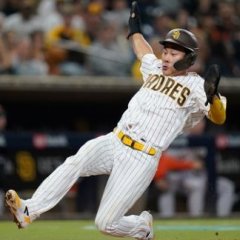
 Changes To Padres Television & Streaming In 2026 In May 2023, the Padres became the first team to have their broadcast taken over by MLB Local Media after Bally Sports San Diego was unable to make a payment for the broadcast rights. It began a wider trend of MLB bringing broadcast rights for several teams under its own banner and offering team-specific streaming packages. This allowed the Padres to roll out their own exclusive streaming package known as Padres.TV, which will continue to operate in 2026. What is Padres.TV? Padres.TV is still the simplest way for in-market fans to stream Padres games during the regular season. At the cost of $99.99 for the entire season, you’ll no longer need to deal with all of the complexities of blackouts, a cable subscription, or a regional sports network. For out-of-market fans, the standard option is an MLB.TV subscription remains the same. If you’re a first-time subscriber, it’s important to note that MLB.TV will include a free trial of ESPN+ that will automatically renew unless canceled. The subscription is currently priced at $29.99 per month or $149.99 for the whole season. While there was some uncertainty on how much revenue the Padres would gain (or lose) from this new broadcasting structure, it seems things are going well. They reportedly had 70,000 Padres.TV subscribers, which would’ve translated to roughly $70 million in broadcasting revenue, already a significant gain over their last RSN deal with Diamond Sports Group, which paid them $47 million in 2022. The Difference Between MLB.TV & Padres.TV An MLB.TV subscription will work for anyone outside the Padres' blackout region. The blackout region covers San Diego and the surrounding area. To check whether your region is blacked out, you can use this MLB blackout tool. Over-The-Air Padres Games The Padres will be partnering with CBS 8 and CW San Diego to broadcast ten games for free over the air. The schedule for these games is as follows: Saturday, April 11th vs. Colorado Rockies, 5:15 PM PT (CBS 8) Saturday, May 2nd vs. Chicago White Sox, 5:15 PM PT (CBS 8) Saturday, May 23rd vs. Athletics, 6:15 PM PT (CBS 8) Saturday, June 27th vs. Los Angeles Dodgers, 5:15 PM PT (CBS 8) Saturday, July 4th vs. Los Angeles Dodgers, 7:10 PM PT (CBS 8) Saturday, July 11th vs. Toronto Blue Jays, 5:15 PM PT (CBS 8) Friday, July 17th vs. Kansas City Royals, 5:15 PM PT (CW San Diego) Saturday, August 1st vs. San Francisco Giants, 5:15 PM PT (CBS 8) Saturday, August 22nd vs. Minnesota Twins, 5:15 PM PT (CBS 8) Saturday, September 5th vs. New York Yankees, 5:15 PM PT (CBS 8) Padres Television Cable/Satellite Providers Padres.TV will be available on the same channels through the same cable and satellite providers as in 2025. You can find the channel based on your zip code and cable/satellite provider using this channel finder.
 -
The Padres are by no means a bad team, but being in MLB’s most competitive division means being good often isn’t enough. If San Diego wants a chance at surpassing Los Angeles, they has quite a bit of ground to cover. One position that needs a complete overhaul is undoubtedly first base. The team produced 1.5 fWAR and a 109 wRC+ at the position, which is perfectly average. This stat line is largely thanks to Luis Arraez, who made 500 plate appearances at first base, and it goes without saying that he hardly fits the profile of the position. Now that he has hit free agency, the Padres will want someone with more pop and on-base ability in the role. Unfortunately, the free agent climate isn’t exactly one that benefits San Diego. Given the organization’s unfortunate ownership situation, they’re probably out of the running for Pete Alonso, who is by far the most appealing candidate. The team had mixed results with Ryan O’Hearn after acquiring him at the trade deadline, and other options are either too old or ineffective. However, Rhys Hoskins could be just cheap and productive enough for the Padres to be interested. Unfortunately, he might not be much better than his peers. He most recently completed a two-year stint with the Brewers, which, despite being a highly anticipated signing at the time, was immensely underwhelming on all fronts. For a total of $30 million ($34 million if you count the $4 million buyout of his mutual option), Milwaukee received a first baseman with a 102 OPS+ and 0.7 rWAR, hardly a strong return on investment. There was inherent risk following a long injury layoff in 2023, but even with 221 games under his belt, he never seemed to return to the hitter he was with the Phillies. The most drastic drop was undoubtedly in his ability to hit for power. Across six seasons in Philadelphia, he had a slugging percentage of .492, while he managed a slugging percentage of just .418 while with Milwaukee. Although this is a steep decline, one might note that by 2025, both his average and maximum exit velocities were back in the same ballpark (teehee) as in his best years in Philadelphia. This means that he hadn’t really lost the raw power he's had his whole career, but it points to something more insidious. Instead, it seems the reason for this apparent discrepancy is that his quality of contact varied depending on the pitches he was seeing. In 2025, he pummeled fastballs but struggled immensely against breaking balls. Here are some of his batted ball metrics when separated by pitch type. # of pitches Average Exit Velocity BA SLG wOBA Fastball 715 92.7 mph 0.281 0.556 0.402 Breaking 545 85.5 mph 0.179 0.253 0.209 Offspeed 169 88.5 mph 0.194 0.226 0.254 As you can see, there’s a huge spread between the average exit velocity on fastballs and breaking balls. An average exit velocity of 92.7 mph is on par with Corey Seager’s season numbers, whereas an average exit velocity of 85.5 mph would be on par with Sal Frelick’s season numbers. This crucial vulnerability, along with returning injury issues, is what caused his OPS to decline from .877 in May to just .532 in June as opposing pitchers began to exploit his shortcomings. Unless he makes major adjustments, expect this steady diet of breaking balls and offensive slump to continue, especially as a more varied pitch mix is becoming vogue. Another symptom to check is his bat speed. Unfortunately, we only have bat-tracking data starting in 2024, which doesn’t provide enough data to definitively say whether he’s in the midst of a gradual decline. At 32 years old, his bat speed isn’t going to get any faster. In the two seasons for which we do have data, he was around the 40th percentile. It isn’t the reason for his diminished production at the plate, but it sure isn’t helping either. Offensively, he still does some things well. His plate discipline is as good as ever, and he has yet to post a walk rate below 10% for any season in his career. He still makes excellent swing decisions, posting an elite chase rate of just 19.9% last year. Finally, his batted-ball profile was still elite last season, with 34.5% of his batted balls pulled in the air, more than double the MLB average of 16.7%. But again, these positive batted ball results come almost exclusively against fastballs. Of the 25 total extra base hits he had, 19 of them came against fastballs, including all but one of his home runs. Based on the way that things have been going for him recently, Rhys Hoskins should be seen as more of a depth piece or placeholder than a starting option capable of moving the needle. Sure, the Padres don’t exactly have the most appealing options at either position, but does it really make sense to spend additional money on a player who could be at most a sidegrade? Of course, it remains to be seen what direction the Padres will take in 2026. They’ve been surprisingly dormant thus far despite a laundry list of needs this winter. Does this mean they’ll begin tearing down the expensive roster they built just a few years ago, or are they just biding their time to reload? Maybe they do need a placeholder like Hoskins just to have somebody’s name to pencil into the lineup every day. Amidst the uncertainty surrounding the construction of next year’s roster, bolstering their depth at first base may not be close to the top of their list of priorities. Still, spending any of what might be a contracted payroll in 2026 on a player with more risk than reward is never a good move. At this point, signing anyone may be enough cause for excitement, but recent data suggests that a Rhys Hoskins contract could hurt more than it would help. View full article
-
Why The Padres Shouldn’t Sign First Base Slugger Rhys Hoskins
Jason Wang posted an article in Padres
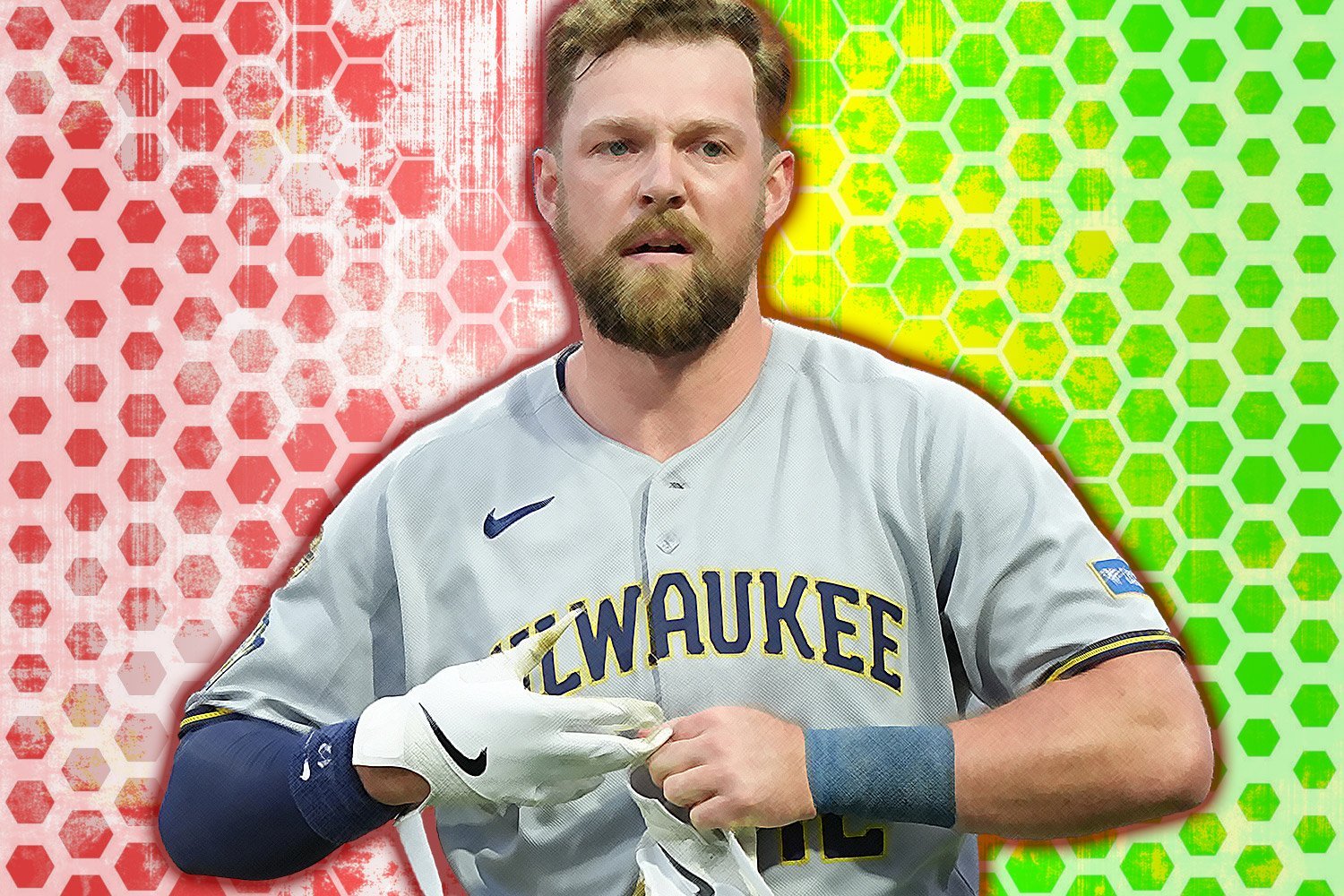 The Padres are by no means a bad team, but being in MLB’s most competitive division means being good often isn’t enough. If San Diego wants a chance at surpassing Los Angeles, they has quite a bit of ground to cover. One position that needs a complete overhaul is undoubtedly first base. The team produced 1.5 fWAR and a 109 wRC+ at the position, which is perfectly average. This stat line is largely thanks to Luis Arraez, who made 500 plate appearances at first base, and it goes without saying that he hardly fits the profile of the position. Now that he has hit free agency, the Padres will want someone with more pop and on-base ability in the role. Unfortunately, the free agent climate isn’t exactly one that benefits San Diego. Given the organization’s unfortunate ownership situation, they’re probably out of the running for Pete Alonso, who is by far the most appealing candidate. The team had mixed results with Ryan O’Hearn after acquiring him at the trade deadline, and other options are either too old or ineffective. However, Rhys Hoskins could be just cheap and productive enough for the Padres to be interested. Unfortunately, he might not be much better than his peers. He most recently completed a two-year stint with the Brewers, which, despite being a highly anticipated signing at the time, was immensely underwhelming on all fronts. For a total of $30 million ($34 million if you count the $4 million buyout of his mutual option), Milwaukee received a first baseman with a 102 OPS+ and 0.7 rWAR, hardly a strong return on investment. There was inherent risk following a long injury layoff in 2023, but even with 221 games under his belt, he never seemed to return to the hitter he was with the Phillies. The most drastic drop was undoubtedly in his ability to hit for power. Across six seasons in Philadelphia, he had a slugging percentage of .492, while he managed a slugging percentage of just .418 while with Milwaukee. Although this is a steep decline, one might note that by 2025, both his average and maximum exit velocities were back in the same ballpark (teehee) as in his best years in Philadelphia. This means that he hadn’t really lost the raw power he's had his whole career, but it points to something more insidious. Instead, it seems the reason for this apparent discrepancy is that his quality of contact varied depending on the pitches he was seeing. In 2025, he pummeled fastballs but struggled immensely against breaking balls. Here are some of his batted ball metrics when separated by pitch type. # of pitches Average Exit Velocity BA SLG wOBA Fastball 715 92.7 mph 0.281 0.556 0.402 Breaking 545 85.5 mph 0.179 0.253 0.209 Offspeed 169 88.5 mph 0.194 0.226 0.254 As you can see, there’s a huge spread between the average exit velocity on fastballs and breaking balls. An average exit velocity of 92.7 mph is on par with Corey Seager’s season numbers, whereas an average exit velocity of 85.5 mph would be on par with Sal Frelick’s season numbers. This crucial vulnerability, along with returning injury issues, is what caused his OPS to decline from .877 in May to just .532 in June as opposing pitchers began to exploit his shortcomings. Unless he makes major adjustments, expect this steady diet of breaking balls and offensive slump to continue, especially as a more varied pitch mix is becoming vogue. Another symptom to check is his bat speed. Unfortunately, we only have bat-tracking data starting in 2024, which doesn’t provide enough data to definitively say whether he’s in the midst of a gradual decline. At 32 years old, his bat speed isn’t going to get any faster. In the two seasons for which we do have data, he was around the 40th percentile. It isn’t the reason for his diminished production at the plate, but it sure isn’t helping either. Offensively, he still does some things well. His plate discipline is as good as ever, and he has yet to post a walk rate below 10% for any season in his career. He still makes excellent swing decisions, posting an elite chase rate of just 19.9% last year. Finally, his batted-ball profile was still elite last season, with 34.5% of his batted balls pulled in the air, more than double the MLB average of 16.7%. But again, these positive batted ball results come almost exclusively against fastballs. Of the 25 total extra base hits he had, 19 of them came against fastballs, including all but one of his home runs. Based on the way that things have been going for him recently, Rhys Hoskins should be seen as more of a depth piece or placeholder than a starting option capable of moving the needle. Sure, the Padres don’t exactly have the most appealing options at either position, but does it really make sense to spend additional money on a player who could be at most a sidegrade? Of course, it remains to be seen what direction the Padres will take in 2026. They’ve been surprisingly dormant thus far despite a laundry list of needs this winter. Does this mean they’ll begin tearing down the expensive roster they built just a few years ago, or are they just biding their time to reload? Maybe they do need a placeholder like Hoskins just to have somebody’s name to pencil into the lineup every day. Amidst the uncertainty surrounding the construction of next year’s roster, bolstering their depth at first base may not be close to the top of their list of priorities. Still, spending any of what might be a contracted payroll in 2026 on a player with more risk than reward is never a good move. At this point, signing anyone may be enough cause for excitement, but recent data suggests that a Rhys Hoskins contract could hurt more than it would help.
