


Steve Drumwright
-
Posts
999 -
Joined
-
Last visited
-
Days Won
3
Content Type
Profiles
San Diego Padres Videos
2026 San Diego Padres Top Prospect Rankings
San Diego Padres Trade & Free Agent Rumors
San Diego Padres Fan Guides & Resources
2025 San Diego Padres Draft Picks & Signing Bonuses
San Diego Padres News, Rumors & Analysis
2026 San Diego Padres Draft Picks & Signing Bonuses
Forums
Blogs
Events
Store
Downloads
Gallery
Everything posted by Steve Drumwright
-
With the clock ticking on the signing window for international free agents, the San Diego Padres are busy picking up late signees. The Padres have signed six young internationals in recent days. Four of those were reported by Francys Romero, who has the pulse of the international scene, while two are listed on the Padres' minor-league transactions. Most of the signings coincided with an under-18 tournament currently being held in the Dominican Republic, where Romero reports that new owners Jose E. Feliciano and Kwanza Jones met with A.J. Preller, president of baseball operations, and Chris Kemp, vice president of amateur and international scouting. The four players at the Dominican tournament are 18-year-old Venezuelan right-hander Moises Alcade, 17-year-old Panamanian left-hander Yeremy De Leon, 17-year-old Venezuelan left-hander Raymer Moreno and 17-year-old Cuban infielder Omar Guerra. The other two 20-year-old Venezuelan outfielder Lenyert Rios and 17-year-old right-hander Alexis Medina. Romero reported bonuses of $20,000 for Alcade, $30,000 for De Leon, $50,000 for Moreno and $25,000 for Guerra. Alcade is the ace of the Venezuela team with a 91-93 mph fastball and a projected plus slider. Moreno currently sits 86-90 mph with his fastball, which is projected to develop into the mid-90s. Guerra is a contact-oriented hitter who can play anywhere on the infield. These six join 20-year-old Japanese right-hander Tatsuya Nogami, who signed a couple weeks ago. Combined, the Padres have signed more than 50 internationals, the most of any MLB team. The current international signing period ends Dec. 15, with a dead period and next year's signings able to begin Jan. 15. However, that could all change in the collective-bargaining agreement as a potential international draft could be installed. View full rumor
-
 Is there a direct correlation to the San Diego Padres making three consecutive trips to the postseason (a franchise record) to the trade of a certain enigmatic right fielder? Maybe. One thing that you can certainly say is that right-handed starter Michael King has been a big part of however you view the Padres’ success in this recent stretch. Since being one of five players the Padres acquired in the Juan Soto deal on Dec. 7, 2023, King has been a vital member of the rotation, with all but one of his 78 regular-season games coming as a starter. For the Yankees, King made just 19 starts in 114 appearances. Now, the Padres appear on the verge of losing that stabilizing force. That's not their fault—this is how baseball works. He isn’t the only member of the team with an uncertain future, after all. King is likely to opt out of his contract, a three-year, $75 million deal that would pay him $28 million in 2027 and $30 million in 2028. He received a qualifying offer last offseason, meaning he can't be given one again. Michael King's 2026 Season At A Glance First, let’s address those 2025 injuries, the most significant of which was a long thoracic nerve injury in his right shoulder, sidelining him from late May to early August. Before he could make his second start back, he went on the injured list again with inflammation in his left knee. He came back a month later to make four starts. As for his 2026 campaign, let’s separate the regular season from the postseason first. King was supposed to be the Padres’ No. 3 starter entering spring training. Joe Musgrove’s spring training setback from Tommy John surgery moved King up a rung on the ladder. just behind Nick Pivetta. Then Pivetta went down with an injury in his fourth regular-season start. Suddenly, King was the No. 1. After a little bumpiness in the first half, King turned it up a notch in the second half. While not dominant, he was very good. King put up a 2.93 ERA over his final 13 starts, including a stretch of eight straight quality starts. That put his final regular-season numbers at a 4.13 FIP (3.21 ERA) with a 9.2% walk rate and 21% strikeout rate, the latter two of which were career worsts over a full season. However, he did log 185 innings and made all 32 starts he was scheduled for. Then came what he did in the postseason. In Game 1 of the NL Wild Card Series vs. the Chicago Cubs, King had a no-hitter for 6⅓ innings, ultimately striking out eight over seven innings in an 8-0 victory. Then against the Milwaukee Brewers in Game 1 of the NL Division Series, he turned in five standout innings, striking out six and allowing a run in what would be a 4-3 loss. With the bullpen short its two biggest arms in Game 3, King came out of the bullpen to pick up a two-inning save on minimal rest. It was just about everything you could have asked for out of a No. 1 pitcher. Why the Padres Should Re-sign Michael King As it stands at the moment, you can definitely count Musgrove and Randy Vasquez in the starting rotation, relying on Musgrove to figure out why his arm didn’t bounce back in a starting role at the end of the season. Pivetta is likely coming back, too, if the Padres feel he can hold up for a full season in 2027. But with questions about the health of Musgrove and Pivetta, the Padres need an ace who they can count on. With his questions from 2025 behind him, King is that guy. There is no other reason that would outweigh what he would mean to the starting rotation. Why the Padres Should Not Re-sign Michael King King is going to be the second- or third-most coveted starting pitching on the free-agent market this offseason. After the obvious choice of Tarik Skubal, King is in the next group of starters that includes Freddy Peralta and Taylor Rogers. Older starters Sonny Gray and Kevin Gausman would be part of the next tier. That also means there will be plenty of suitors for the 31-year-old King. That will drive up his price. Of course, how that all plays out with the lockout looming is another thing. Will there be a rush for some of the top free agents to find a new home? Will owners across MLB be willing to fork out big-time contracts before crying poor in negotiations? The Padres would have to be comfortable signing King to a term of at least five years (and perhaps a six- or seven-year deal) at around $25 million to $28 million per year. Already with long-term commitments to Manny Machado and Xander Bogaerts through 2033 and Fernando Tatis Jr. and Jackson Merrill through 2034, another singular big-money deal could be too much for the budget that owners Jose E. Feliciano and Kwanza Jones give to president of baseball operations A.J. Preller. Perhaps that money is better spent on two (or more) players over a shorter term. The Bottom Line Without knowing about how Feliciano and Jones will approach their first offseason as owners, It feels like King will opt-out of his contract and hit free agency. If he does hit the market, the chances are slim that he returns. Could Preller, given that authority by ownership, pull out a surprise for the second straight year and lock up King? That would open up a whole new playbook for the Padres entering this offseason, especially if a new deal for the right-hander doesn't prevent the front office from making other high-octane pursuits. View full article
-
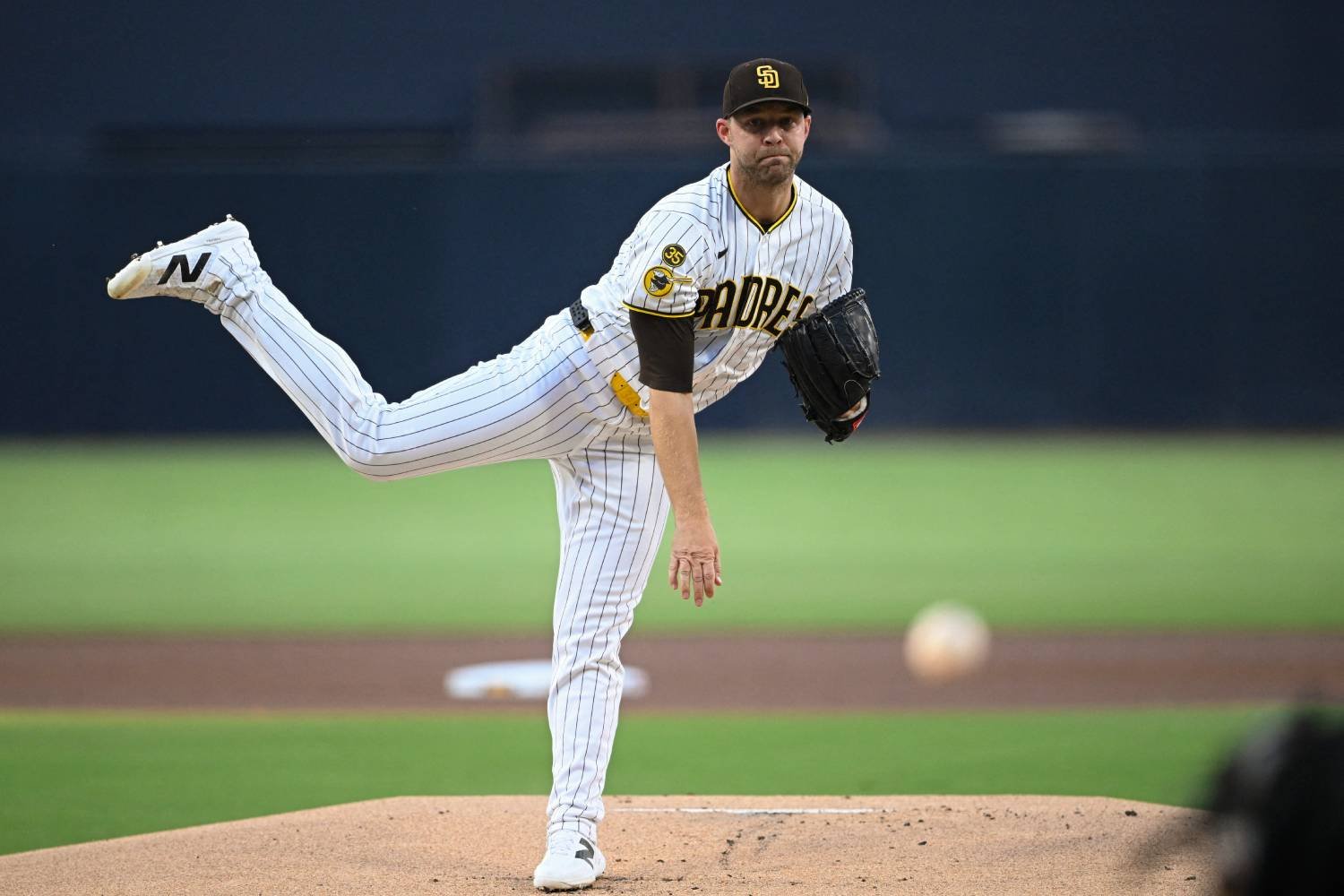 Is there a direct correlation to the San Diego Padres making three consecutive trips to the postseason (a franchise record) to the trade of a certain enigmatic right fielder? Maybe. One thing that you can certainly say is that right-handed starter Michael King has been a big part of however you view the Padres’ success in this recent stretch. Since being one of five players the Padres acquired in the Juan Soto deal on Dec. 7, 2023, King has been a vital member of the rotation, with all but one of his 78 regular-season games coming as a starter. For the Yankees, King made just 19 starts in 114 appearances. Now, the Padres appear on the verge of losing that stabilizing force. That's not their fault—this is how baseball works. He isn’t the only member of the team with an uncertain future, after all. King is likely to opt out of his contract, a three-year, $75 million deal that would pay him $28 million in 2027 and $30 million in 2028. He received a qualifying offer last offseason, meaning he can't be given one again. Michael King's 2026 Season At A Glance First, let’s address those 2025 injuries, the most significant of which was a long thoracic nerve injury in his right shoulder, sidelining him from late May to early August. Before he could make his second start back, he went on the injured list again with inflammation in his left knee. He came back a month later to make four starts. As for his 2026 campaign, let’s separate the regular season from the postseason first. King was supposed to be the Padres’ No. 3 starter entering spring training. Joe Musgrove’s spring training setback from Tommy John surgery moved King up a rung on the ladder. just behind Nick Pivetta. Then Pivetta went down with an injury in his fourth regular-season start. Suddenly, King was the No. 1. After a little bumpiness in the first half, King turned it up a notch in the second half. While not dominant, he was very good. King put up a 2.93 ERA over his final 13 starts, including a stretch of eight straight quality starts. That put his final regular-season numbers at a 4.13 FIP (3.21 ERA) with a 9.2% walk rate and 21% strikeout rate, the latter two of which were career worsts over a full season. However, he did log 185 innings and made all 32 starts he was scheduled for. Then came what he did in the postseason. In Game 1 of the NL Wild Card Series vs. the Chicago Cubs, King had a no-hitter for 6⅓ innings, ultimately striking out eight over seven innings in an 8-0 victory. Then against the Milwaukee Brewers in Game 1 of the NL Division Series, he turned in five standout innings, striking out six and allowing a run in what would be a 4-3 loss. With the bullpen short its two biggest arms in Game 3, King came out of the bullpen to pick up a two-inning save on minimal rest. It was just about everything you could have asked for out of a No. 1 pitcher. Why the Padres Should Re-sign Michael King As it stands at the moment, you can definitely count Musgrove and Randy Vasquez in the starting rotation, relying on Musgrove to figure out why his arm didn’t bounce back in a starting role at the end of the season. Pivetta is likely coming back, too, if the Padres feel he can hold up for a full season in 2027. But with questions about the health of Musgrove and Pivetta, the Padres need an ace who they can count on. With his questions from 2025 behind him, King is that guy. There is no other reason that would outweigh what he would mean to the starting rotation. Why the Padres Should Not Re-sign Michael King King is going to be the second- or third-most coveted starting pitching on the free-agent market this offseason. After the obvious choice of Tarik Skubal, King is in the next group of starters that includes Freddy Peralta and Taylor Rogers. Older starters Sonny Gray and Kevin Gausman would be part of the next tier. That also means there will be plenty of suitors for the 31-year-old King. That will drive up his price. Of course, how that all plays out with the lockout looming is another thing. Will there be a rush for some of the top free agents to find a new home? Will owners across MLB be willing to fork out big-time contracts before crying poor in negotiations? The Padres would have to be comfortable signing King to a term of at least five years (and perhaps a six- or seven-year deal) at around $25 million to $28 million per year. Already with long-term commitments to Manny Machado and Xander Bogaerts through 2033 and Fernando Tatis Jr. and Jackson Merrill through 2034, another singular big-money deal could be too much for the budget that owners Jose E. Feliciano and Kwanza Jones give to president of baseball operations A.J. Preller. Perhaps that money is better spent on two (or more) players over a shorter term. The Bottom Line Without knowing about how Feliciano and Jones will approach their first offseason as owners, It feels like King will opt-out of his contract and hit free agency. If he does hit the market, the chances are slim that he returns. Could Preller, given that authority by ownership, pull out a surprise for the second straight year and lock up King? That would open up a whole new playbook for the Padres entering this offseason, especially if a new deal for the right-hander doesn't prevent the front office from making other high-octane pursuits.
-
Week 3 of the Arizona Fall League is in the books, with San Diego Padres prospects playing for the Peoria Javelinas in the showcase event. Each week, we will take a look back at how the Padres' prospects fared. With an extra day off last week, the Javelinas played five games. There are another two-plus weeks left in the regular season, which includes the Fall Stars Game, then the playoffs. For last week's recap, check here. For Week 1, check here. Ty Harvey, C The catcher, Padres Mission's No. 5 prospect, had a nice 3-for-9 week in three games. He was behind the plate for two of them and the designated hitter in between, continuing the pattern of alternating between the two roles. Harvey had two more stolen bases, giving him nine in the Arizona Fall League, just one off the league lead. The 20-year-old had an especially nice game Thursday, going 2-for-4, including a two-run single in a five-run eighth inning of a 12-11 win over Surprise. He also had a successful automated ball-strike challenge behind the plate. He has had a tough time at the plate with a .182/.325/.182 slash line featuring 14 strikeouts in 33 at-bats. Justin DeCriscio, SS It is pretty telling that, in a group of All-Stars, DeCriscio seems to be settling in defensively at shortstop, which is where he played in the three games he was in last week. While he also hasn't been that good at the plate overall (.212/.366/.333), he had a pair of two-hit games as part of a 4-for-9 week. The 2025 10th-round draft pick had his best offensive game Tuesday vs. Salt River, going 2-for-4 and smacking his first homer in the AFL, a three-run shot. He hit 13 homers in 121 games between three levels in his first full season of pro ball. DeCriscio also walked twice, but was nabbed trying to steal twice as well. Winyer Chourio, RHP The right-handed starter had another choppy outing in his lone start of the week. On Tuesday against Salt River, Padres Mission's No. 17 prospect tossed three innings, allowing three runs on two homers (the only hits he surrendered), walking one and striking out three. The homers he gave up were to Dax Kilby, one of the New York Yankees' top prospects, and Jack O'Dowd, who leads the AFL with five homers. Chourio, who turns 23 on Nov. 4, has allowed five runs over 8⅔ innings for a 5.19 ERA with seven walks and six strikeouts. Igor Gil, LHP The left-handed reliever hadn't pitched in just over a week, then appeared in Saturday's game, going one inning, allowing a run on a hit with two walks, no strikeouts and a wild pitch. He has been an early innings option in his four AFL appearances. In those games, he has five walks and four strikeouts while allowing three runs in 4⅓ innings for a 6.23 ERA. Kannon Kemp, RHP The right-hander started Saturday's game against Mesa and was followed by Gil. Kemp struggled with his control, walking three and giving up three hits and three runs in 2⅓ innings, striking out three. Of his 54 pitches, 29 were strikes. Kemp has struck out 14 over 11 innings in his four starts, but also allowed eight runs on 12 hits and six walks for a 6.55 ERA. Francis Pena, RHP Another bright spot for the Padres in the AFL is this right-handed reliever. Although he will be 26 in January, Pena is putting himself in position to possibly make his MLB debut in 2027. Still, in his lone game last week, Pena needed to get just one out and allowed a hit, while also seeing two inherited runners score. While just one game shy of the most appearances in the AFL at five, Pena has yet to allow an earned run (yes, he gave up an unearned run) over 5⅓ innings, allowing four hits and two walks with four strikeouts. He was at Double-A San Antonio all of 2026, so a trip to Triple-A El Paso is likely in the cards for him next season. Jordan Valenzuela, RHP The 21-year-old, who only pitched in 21 games at Low-A Lake Elsinore in full-season ball this year, pitched a scoreless inning in his only game this week. He allowed a hit, but no walks and struck out one. It was the first scoreless outing in his four appearances in the AFL. View full article
-
 Week 3 of the Arizona Fall League is in the books, with San Diego Padres prospects playing for the Peoria Javelinas in the showcase event. Each week, we will take a look back at how the Padres' prospects fared. With an extra day off last week, the Javelinas played five games. There are another two-plus weeks left in the regular season, which includes the Fall Stars Game, then the playoffs. For last week's recap, check here. For Week 1, check here. Ty Harvey, C The catcher, Padres Mission's No. 5 prospect, had a nice 3-for-9 week in three games. He was behind the plate for two of them and the designated hitter in between, continuing the pattern of alternating between the two roles. Harvey had two more stolen bases, giving him nine in the Arizona Fall League, just one off the league lead. The 20-year-old had an especially nice game Thursday, going 2-for-4, including a two-run single in a five-run eighth inning of a 12-11 win over Surprise. He also had a successful automated ball-strike challenge behind the plate. He has had a tough time at the plate with a .182/.325/.182 slash line featuring 14 strikeouts in 33 at-bats. Justin DeCriscio, SS It is pretty telling that, in a group of All-Stars, DeCriscio seems to be settling in defensively at shortstop, which is where he played in the three games he was in last week. While he also hasn't been that good at the plate overall (.212/.366/.333), he had a pair of two-hit games as part of a 4-for-9 week. The 2025 10th-round draft pick had his best offensive game Tuesday vs. Salt River, going 2-for-4 and smacking his first homer in the AFL, a three-run shot. He hit 13 homers in 121 games between three levels in his first full season of pro ball. DeCriscio also walked twice, but was nabbed trying to steal twice as well. Winyer Chourio, RHP The right-handed starter had another choppy outing in his lone start of the week. On Tuesday against Salt River, Padres Mission's No. 17 prospect tossed three innings, allowing three runs on two homers (the only hits he surrendered), walking one and striking out three. The homers he gave up were to Dax Kilby, one of the New York Yankees' top prospects, and Jack O'Dowd, who leads the AFL with five homers. Chourio, who turns 23 on Nov. 4, has allowed five runs over 8⅔ innings for a 5.19 ERA with seven walks and six strikeouts. Igor Gil, LHP The left-handed reliever hadn't pitched in just over a week, then appeared in Saturday's game, going one inning, allowing a run on a hit with two walks, no strikeouts and a wild pitch. He has been an early innings option in his four AFL appearances. In those games, he has five walks and four strikeouts while allowing three runs in 4⅓ innings for a 6.23 ERA. Kannon Kemp, RHP The right-hander started Saturday's game against Mesa and was followed by Gil. Kemp struggled with his control, walking three and giving up three hits and three runs in 2⅓ innings, striking out three. Of his 54 pitches, 29 were strikes. Kemp has struck out 14 over 11 innings in his four starts, but also allowed eight runs on 12 hits and six walks for a 6.55 ERA. Francis Pena, RHP Another bright spot for the Padres in the AFL is this right-handed reliever. Although he will be 26 in January, Pena is putting himself in position to possibly make his MLB debut in 2027. Still, in his lone game last week, Pena needed to get just one out and allowed a hit, while also seeing two inherited runners score. While just one game shy of the most appearances in the AFL at five, Pena has yet to allow an earned run (yes, he gave up an unearned run) over 5⅓ innings, allowing four hits and two walks with four strikeouts. He was at Double-A San Antonio all of 2026, so a trip to Triple-A El Paso is likely in the cards for him next season. Jordan Valenzuela, RHP The 21-year-old, who only pitched in 21 games at Low-A Lake Elsinore in full-season ball this year, pitched a scoreless inning in his only game this week. He allowed a hit, but no walks and struck out one. It was the first scoreless outing in his four appearances in the AFL.
-
There are three major questions for the San Diego Padres entering the offseason after their elimination from the NL Division Series by the pennant-winning Milwaukee Brewers. Each of Michael King, Ty France and Adrian Morejon have different scenarios regarding their future with the Friars. King, the right-handed starter who blossomed into a staff leader if not an ace, can opt-out of his contract. France, signed to a minor-league deal, emerged as the Padres’ everyday first baseman after nearly being cut in spring training and feels like a lock to return. Then there is Morejon. The left-handed reliever is hitting the open market for the first time as a free agent. While he would love to return to the Padres, he is already a coveted late-inning bullpen arm that other contenders will pursue heavily if allowed. Adrian Morejon's 2026 Season At A Glance To understand how we got here, we need to take a look at Morejon’s 2026. Depending on how you like to look at things, he has been one of the top left-handed setup relievers over the past three seasons. While many of his metrics were at elite levels in 2026, his 2025 was statistically better. He had a 2.37 FIP (2.83 ERA) this year compared to a 2.28 FIP (2.08 ERA) in 2025. His appearances were nearly identical (76 in 2026 to 75 last year), both times finishing nine games and notching three saves. Where the statistical differences came was in his innings total, jumping from 73⅔ in 2025 to 86 this year, with a dramatic increase in strikeouts from 70 to 107 and strikeout rate from 24.5% to 30.4%. His walks increased nearly 50% from 17 to 28 and his walk rate spiked in tandem from 5.9% to 8%. He also hit five batters this year after plunking none in 2025 and only two previously in his career. Metrically, Morejon was in the red in 13 of the 16 Statcast categories for pitchers, all at the 90th percentile or better and six in at least the 97th percentile. That included a chase rate of 38.4% that was in the 99th percentile. Last year, only Morejon was in the 90th percentile or higher in eight categories and four at the 97th percentile or better. That year saw Morejon rank in the 99th percentile for hard-hit rate (30.7%) and 98th for average exit velocity (85.9 mph). His chase rate in 2025 was at 32.1%, which was in the 87th percentile. Most notably, his four-seam fastball velocity jumped from 96.5 mph to 99.3 mph and his sinker from 97.7 to 99.5 mph. Why the Padres Should Re-sign Adrian Morejon There is no question that the Padres should re-sign Morejon. It will come down to whether they can. Morejon has been with the Padres since the Cuban signed as an international free agent in 2016. He is a rare homegrown Friar at the MLB level. Bringing back Morejon is a no-brainer from the point of view of keeping the dynamic pairing of him with superstar closer Mason Miller intact, not to mention young right-hander Bradgley Rodriguez, who was a rookie this year. Being a left-hander probably elevates his value a bit as well. Morejon will be pursued as a closer by some teams and as a set-up guy by most others. While you can never count out the Los Angeles Dodgers, other contenders will be more motivated, which will increase his cost. Spotrac has Morejon with a projected value next season of just under $8.7 million, though that's far lighter than the actual terms he'll receive in free agency (Spotrac tends to undervalue non-closers). Is that something new owners Jose E. Feliciano and Kwanza Jones can afford? Most definitely. Morejon’s return will give the Padres three major weapons at the back end of the bullpen, a unit that was most responsible for holding the team together and getting them to the postseason. Why the Padres Should Not Re-sign Adrian Morejon This will all come down to a financial decision. Miller is projected to make $8.1 million in arbitration. Players don’t really get jealous of another’s contract, it is more of whether the Padres would fork out at least $17 million for two relievers, a position that is underpaid due to its volatility. Again, Morejon. who turns 28 in February, won’t get $8.7 million, as the Spotrac projection states. He will get more. Consider what the big-name closers get. Former Padres left-hander Josh Hader got five years, $95 million from the Houston Astros. Right-hander Edwin Diaz has two of the top deals for a closer. First, he got a five-year, $102 million deal from the New York Mets, then a three-year, $69 million contract from the Dodgers last offseason. Hader’s deal came as a 29-year-old, while Diaz’s Mets deal was when he was 28 and, after opting out, his Dodgers pact came at 32. Those are the top three average annual values for a closer contract ($19M, $20.2M, $23M). Without any semblance of a track record as a closer, Morejon would be hard-pressed to reach that level. The top-paid setup guy in 2026 was another former Friar, Robert Suarez, who inked a three-year, $39 million contract with Atlanta last offseason. But the question comes back around to whether the Padres will commit at least $21 million to their top two relievers, a number that will grow as Miller’s salary increases in 2028 and 2029 through arbitration. The Bottom Line Could the collective-bargaining agreement negotiations work in the Padres’ favor? Most certainly. The fact also is that Padres president of baseball operations A.J. Preller has already certainly at least gauged what Morejon’s agent is feeling from a marketplace perspective. This is the time of year where agents show their value to their clients. Morejon’s agent may already know of which teams are interested in his client through whatever back channels are tapped. Along with that comes parameters for salary numbers. But the only team that can negotiate with Morejon at the moment is the Padres. They hold that right through five days following the World Series. After that, it is a free-agent free-for-all. Preller also has a nuclear option available to him: the qualifying offer. Preller giving Morejon the qualifying offer would lock the reliever in at a reported $23.15 million for 2027 and allow Morejon to hit free agency again after next year. With as much volatility as is expected with the shortened negotiating window due to the lockout, Preller should have the advantage in contract talks. If Preller feels that Morejon could be hitting the market, he might hit the qualifying offer button and take all the drama out of the situation. Only a handful of relievers have received a qualifying offer: Hader, Diaz and Raisel Iglesias among the recent ones. While all three of those relievers rejected the qualifying offer and found homes elsewhere, Morejon isn’t getting a $23.15 million payday elsewhere and would return in a heartbeat to the Padres, trying again next offseason when more is known about the financial landscape under a new CBA. Otherwise, Preller can use the Suarez deal and the four-year, $72 million deal the Dodgers gave Tanner Scott as templates. Four years feels right, which would mean something in the neighborhood of a $60 million package. This will be the first test of the financial commitment Feliciano and Jones have for the Padres. Without signing a single free agent, the Padres are projected to have a 2027 payroll of $220 million. That includes all the arbitration projections. Even with a tight budget facing them, the smart bet is that Morejon returns one way or another. View full article
-
Padres Free-Agent Case: Adrian Morejon Is Due For A Big Payday
Steve Drumwright posted an article in Padres
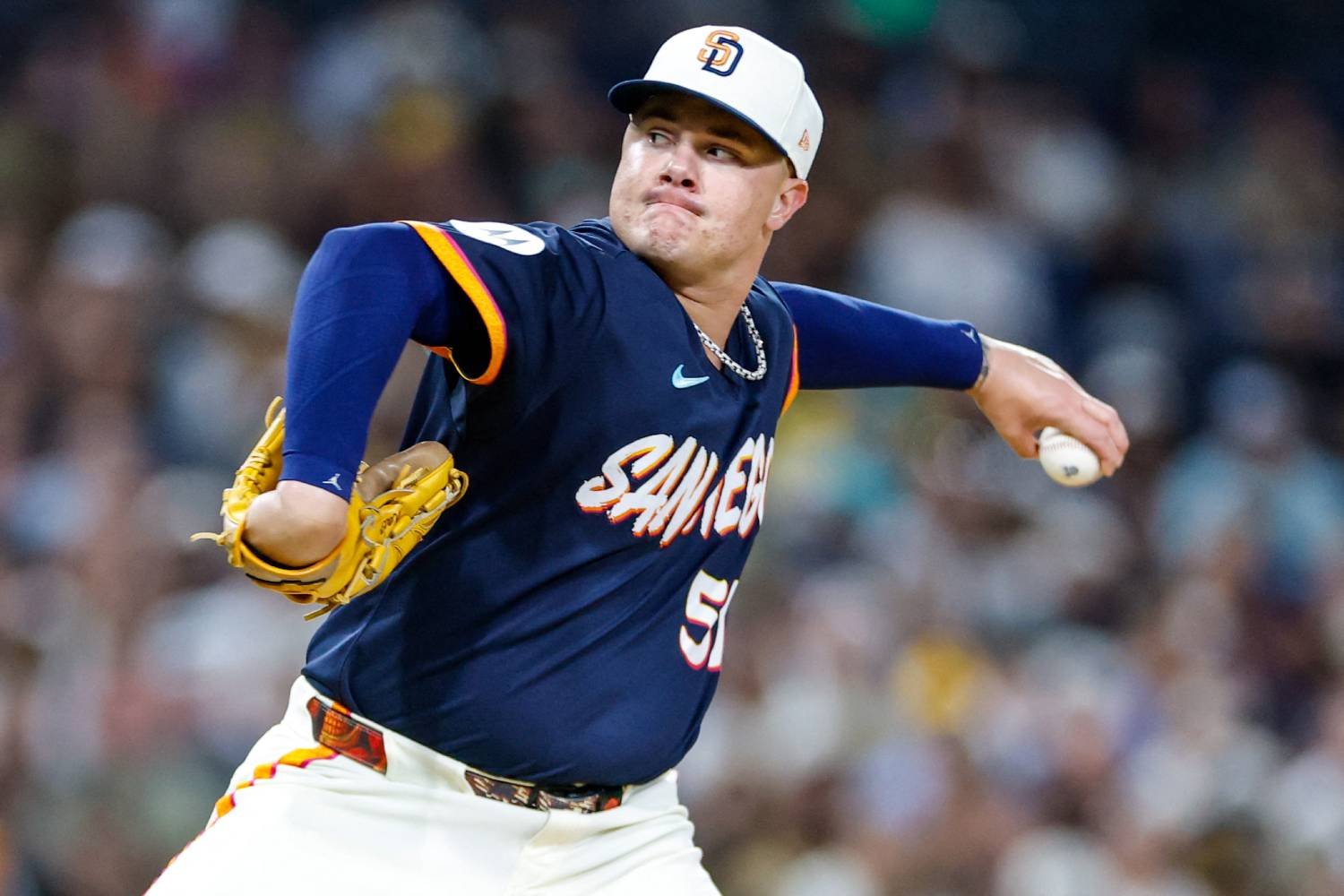 There are three major questions for the San Diego Padres entering the offseason after their elimination from the NL Division Series by the pennant-winning Milwaukee Brewers. Each of Michael King, Ty France and Adrian Morejon have different scenarios regarding their future with the Friars. King, the right-handed starter who blossomed into a staff leader if not an ace, can opt-out of his contract. France, signed to a minor-league deal, emerged as the Padres’ everyday first baseman after nearly being cut in spring training and feels like a lock to return. Then there is Morejon. The left-handed reliever is hitting the open market for the first time as a free agent. While he would love to return to the Padres, he is already a coveted late-inning bullpen arm that other contenders will pursue heavily if allowed. Adrian Morejon's 2026 Season At A Glance To understand how we got here, we need to take a look at Morejon’s 2026. Depending on how you like to look at things, he has been one of the top left-handed setup relievers over the past three seasons. While many of his metrics were at elite levels in 2026, his 2025 was statistically better. He had a 2.37 FIP (2.83 ERA) this year compared to a 2.28 FIP (2.08 ERA) in 2025. His appearances were nearly identical (76 in 2026 to 75 last year), both times finishing nine games and notching three saves. Where the statistical differences came was in his innings total, jumping from 73⅔ in 2025 to 86 this year, with a dramatic increase in strikeouts from 70 to 107 and strikeout rate from 24.5% to 30.4%. His walks increased nearly 50% from 17 to 28 and his walk rate spiked in tandem from 5.9% to 8%. He also hit five batters this year after plunking none in 2025 and only two previously in his career. Metrically, Morejon was in the red in 13 of the 16 Statcast categories for pitchers, all at the 90th percentile or better and six in at least the 97th percentile. That included a chase rate of 38.4% that was in the 99th percentile. Last year, only Morejon was in the 90th percentile or higher in eight categories and four at the 97th percentile or better. That year saw Morejon rank in the 99th percentile for hard-hit rate (30.7%) and 98th for average exit velocity (85.9 mph). His chase rate in 2025 was at 32.1%, which was in the 87th percentile. Most notably, his four-seam fastball velocity jumped from 96.5 mph to 99.3 mph and his sinker from 97.7 to 99.5 mph. Why the Padres Should Re-sign Adrian Morejon There is no question that the Padres should re-sign Morejon. It will come down to whether they can. Morejon has been with the Padres since the Cuban signed as an international free agent in 2016. He is a rare homegrown Friar at the MLB level. Bringing back Morejon is a no-brainer from the point of view of keeping the dynamic pairing of him with superstar closer Mason Miller intact, not to mention young right-hander Bradgley Rodriguez, who was a rookie this year. Being a left-hander probably elevates his value a bit as well. Morejon will be pursued as a closer by some teams and as a set-up guy by most others. While you can never count out the Los Angeles Dodgers, other contenders will be more motivated, which will increase his cost. Spotrac has Morejon with a projected value next season of just under $8.7 million, though that's far lighter than the actual terms he'll receive in free agency (Spotrac tends to undervalue non-closers). Is that something new owners Jose E. Feliciano and Kwanza Jones can afford? Most definitely. Morejon’s return will give the Padres three major weapons at the back end of the bullpen, a unit that was most responsible for holding the team together and getting them to the postseason. Why the Padres Should Not Re-sign Adrian Morejon This will all come down to a financial decision. Miller is projected to make $8.1 million in arbitration. Players don’t really get jealous of another’s contract, it is more of whether the Padres would fork out at least $17 million for two relievers, a position that is underpaid due to its volatility. Again, Morejon. who turns 28 in February, won’t get $8.7 million, as the Spotrac projection states. He will get more. Consider what the big-name closers get. Former Padres left-hander Josh Hader got five years, $95 million from the Houston Astros. Right-hander Edwin Diaz has two of the top deals for a closer. First, he got a five-year, $102 million deal from the New York Mets, then a three-year, $69 million contract from the Dodgers last offseason. Hader’s deal came as a 29-year-old, while Diaz’s Mets deal was when he was 28 and, after opting out, his Dodgers pact came at 32. Those are the top three average annual values for a closer contract ($19M, $20.2M, $23M). Without any semblance of a track record as a closer, Morejon would be hard-pressed to reach that level. The top-paid setup guy in 2026 was another former Friar, Robert Suarez, who inked a three-year, $39 million contract with Atlanta last offseason. But the question comes back around to whether the Padres will commit at least $21 million to their top two relievers, a number that will grow as Miller’s salary increases in 2028 and 2029 through arbitration. The Bottom Line Could the collective-bargaining agreement negotiations work in the Padres’ favor? Most certainly. The fact also is that Padres president of baseball operations A.J. Preller has already certainly at least gauged what Morejon’s agent is feeling from a marketplace perspective. This is the time of year where agents show their value to their clients. Morejon’s agent may already know of which teams are interested in his client through whatever back channels are tapped. Along with that comes parameters for salary numbers. But the only team that can negotiate with Morejon at the moment is the Padres. They hold that right through five days following the World Series. After that, it is a free-agent free-for-all. Preller also has a nuclear option available to him: the qualifying offer. Preller giving Morejon the qualifying offer would lock the reliever in at a reported $23.15 million for 2027 and allow Morejon to hit free agency again after next year. With as much volatility as is expected with the shortened negotiating window due to the lockout, Preller should have the advantage in contract talks. If Preller feels that Morejon could be hitting the market, he might hit the qualifying offer button and take all the drama out of the situation. Only a handful of relievers have received a qualifying offer: Hader, Diaz and Raisel Iglesias among the recent ones. While all three of those relievers rejected the qualifying offer and found homes elsewhere, Morejon isn’t getting a $23.15 million payday elsewhere and would return in a heartbeat to the Padres, trying again next offseason when more is known about the financial landscape under a new CBA. Otherwise, Preller can use the Suarez deal and the four-year, $72 million deal the Dodgers gave Tanner Scott as templates. Four years feels right, which would mean something in the neighborhood of a $60 million package. This will be the first test of the financial commitment Feliciano and Jones have for the Padres. Without signing a single free agent, the Padres are projected to have a 2027 payroll of $220 million. That includes all the arbitration projections. Even with a tight budget facing them, the smart bet is that Morejon returns one way or another.
-
While the arbitration process could change a bit in the negotiations for a new collective-bargaining agreement, the system will be the same this offseason. For the San Diego Padres, that means eight (and possibly nine) players will go through arbitration. There aren't too many tough decisions to be made, thankfully, though that can't be said for the rest of the Friars' roster. Here is who is up for arbitration and what they are projected to make, courtesy of MLB Trade Rumors. Decisions on non-tendering players aren't due until Nov. 20, with some players cutting deals before then to return. 1B Gavin Sheets, $6.5 million The 30-year-old is going through arbitration for the final time. His season finished on the downside as he dealt with a painful left foot injury and with Ty France taking over the starting role at first base. Sheets had a .212/.313/.397 slash line with 17 homers and 48 RBIs over 125 games (419 plate appearances). The left-handed slugger was a big part of the Padres' early season success, including the two-homer game April 10 vs. the Colorado Rockies in which he hit a three-run walk-off homer. He also hit five homers each in May and June. But then the power disappeared, as Sheets didn't hit a homer in July and only three the rest of the season. He entered 2026 coming off his most productive season, his first with the Padres, putting up a .252/.317/.429 slash line and career highs of 19 homers and 71 RBIs. He did go deep in the NL Wild Card Series, but started just one of six postseason games. Prediction: It is expected that France will return to be the primary first baseman in 2027. That deal could actually be done already with president of baseball operations A.J. Preller just waiting for the World Series to conclude to announce it. Sheets can also play left field and is perhaps best-suited as a regular designated hitter. The question for the Padres is do they want to invest $6.5 million into bringing Sheets back? There could be another team out there that would take on Sheets and his relatively big price tag based on his production, which could net a wild-card prospect or another useful player. The Padres can spend this money elsewhere. If not traded, Sheets will be non-tendered. C Luis Campusano, $1.7 million C Freddy Fermin, $2.6 million These two have related cases, so I will combine them. Campusano just turned 28 and is entering his final year of club control. He proved himself worthy of time behind the plate and was good at the plate, slashing .265/.363/.433 with eight homers and 30 RBIs in 125 games (419 plate appearances). He had a tremendous July with a .326/.456/.413 slash line in just 46 plate appearances with a homer and five RBIs. His defensive highlight was in the September series against the New York Yankees where he threw out three runners in a single game. Fermin is 31 years old and was acquired at the 2025 trade deadline to bolster the Friars' offense at the position. But he has produced a .217/.276/.323 slash line with six homers and 38 RBIs in 138 games (404 plate appearances), including .203/.274/.315 this year with four homers and 24 RBIs. Fermin is known for his defense and he lived up to that standard by becoming a candidate to win his first Gold Glove this year. Campusano started 51 games at catcher and Fermin 74. Both missed a good chunk of time with injuries, Campusano with a fractured left big toe and Fermin with a concussion and then a bruised head. Prediction: I don't think the Padres would have run it back with this duo next season, but it was certainly possible. Following the promotion of No. 1 prospect Ethan Salas to begin September, though, the handwriting is now on the wall that the 20-year-old will be the primary catcher entering 2027 (justifiably so based on what he flashed in September and then in the postseason). There is no way the Padres carry three catchers next year as they did following Salas' promotion with the extra roster spots available. You can do rock-paper-scissors to figure out who of Campusano and Fermin will stay. The other will have a trade market and that could be what decides who is a Padre in 2027. The preference is probably to for Campusano, the Padres' second-round pick in 2017, to stick around, but his hitting could be a lure for another team that can live with the defense he plays. Fermin is fine when paired with a catcher who can hit, which is what Salas is expected to do. Salas can also pick up defensive pointers from Fermin. It really is a tossup as to who is traded, but my guess is Fermin is shipped out. RHP Mason Miller, $8.1 million The 28-year-old was already one of the best closers in MLB, then he put up numbers you might only see in a video game this season. He tied for third in MLB in saves with 38 while finishing an NL-high 57 games. He had a 1.17 FIP (1.67 ERA). He had by far the most strikeouts of any reliever with 129, especially when you consider No. 2 on the list was 17 behind and threw 17 more innings. That made for a fantastic 47.4% strikeout rate, which was somehow below the 54.2% rate he had with the Padres in 2025. Miller is in arbitration for the second time as a Super 2 player (more on that at the end) and has three years remaining of club control. Prediction: There are already rumors of other teams wanting to pursue Miller via trade. That shouldn't happen, at least not yet. Miller is elite and the value he brings even at $8.1 million is more of a bargain than any other closer who has signed a big free-agent contract. RHP Bryan Hoeing, $800,000 The 30-year-old right-handed reliever missed the entire season after having surgery to repair the flexor tendon in his right elbow in spring training. That followed a right shoulder issue that limited him to 18 games in 2025 after coming over from the Miami Marlins at the 2024 trade deadline. He is likely to be ready for Opening Day. This will be Hoeing's first foray into arbitration. When healthy in 2024-25, he was very good, notching a 3.28 FIP (2.34 ERA) with a 6.5% walk rate and 19.5% strikeout rate. Prediction: Coming back at what is basically a league-minimum deal is optimal for the Padres, regardless of his major injuries the last two years. Unless there is something in his medical report the Friars don't like, Hoeing is worth keeping, especially with three years of control remaining. LHP JP Sears, $2.8 million We will make this simple. The 30-year-old left-handed starter has made just 13 appearances for the Padres since coming over with Miller from the A's at the 2025 trade deadline. While he had a couple good starts this year, it was nothing to sway the front office into keeping him, even at this relatively low price. Prediction: Freeing up $2.8 million to spend on players who will actually be on the MLB roster is the way to go here. Sorry, JP, but you will have to find a new home. Perhaps Preller can deal him to a team that will actually use Sears with regularity. RHP Jeremiah Estrada, $1.3 million The newly turned 28-year-old right-handed reliever, in arbitration for the first time, became an afterthought this season due to three stints on the injured list due to right elbow, right knee and right shoulder ailments that limited him to 33 appearances and 31 innings. He had a 3.04 FIP (3.48 ERA) with a high 12.7% walk rate and a nice 30.2% strikeout rate. Prediction: There's no reason to think that Estrada won't be back. He was on track in his recovery from his right shoulder injury, to the point that he would have been in consideration to join the roster for the NL Championship Series had the Padres advanced. That means he should be good to go for spring training. RHP Jhony Brito, $800,000 The 29-year-old right-hander returned from an internal brace procedure and flexor tendon surgery on his right elbow in May for a rehab assignment. He got three call-ups, but all were brief stays, logging nine innings over five relief appearances. In the minors, he had a 2.97 ERA in 19 games, all but one as a starter. He walked 16 and struck out 46 in 69⅔ innings. This is Brito's first year in arbitration. Prediction: Brito will be a bullpen candidate next year and borderline rotation option, perhaps a right-handed version of Kyle Hart. The price is a smidge above the MLB minimum, so that isn't a concern for a team that needs every ounce of pitching depth it can muster. RHP Randy Vasquez, TBD The soon-to-be 28-year-old is a borderline candidate to be a Super 2 player. What is a Super 2? That is any player that ranks in the top 22% of service time between their second and third year. Super 2 players get an extra year of arbitration eligibility in their six years of club control. For most, club control is three years of suppressed salaries near the MLB minimum and then three years of the arbitration process. Super 2s become eligible for arbitration before their third MLB season instead of their fourth. For Vasquez, he sits at two years, 129 days of service time. MLB Trade Rumors projected that the cutoff for Super 2 this year would be two years, 130 days. That projection was also done with numbers through the end of July, so its likely to vary based on how many players came up to make their MLB debut after that. A year ago, the Super 2 cutoff was two years, 140 days and it has been as low as two years, 115 days in a recent season (2019). Vasquez is not on most arbitration projections because of that. Vasquez was a key part of the Padres' pitching staff this season, primarily as a starter, but also later in the season in relief. He made 23 starts and nine relief appearances, posting a career-high 140⅔ innings. Vasquez had a 4.24 FIP (3.90 ERA) with a good 6.3% walk rate and substandard 14.8% strikeout rate. Prediction: Vasquez will enter the offseason as a back-end rotation candidate, so there is no worry about being non-tendered or traded away just to save money. His salary won't jump much this year whether or not he reaches arbitration, but it will represent a nice increase for him. View full article
-
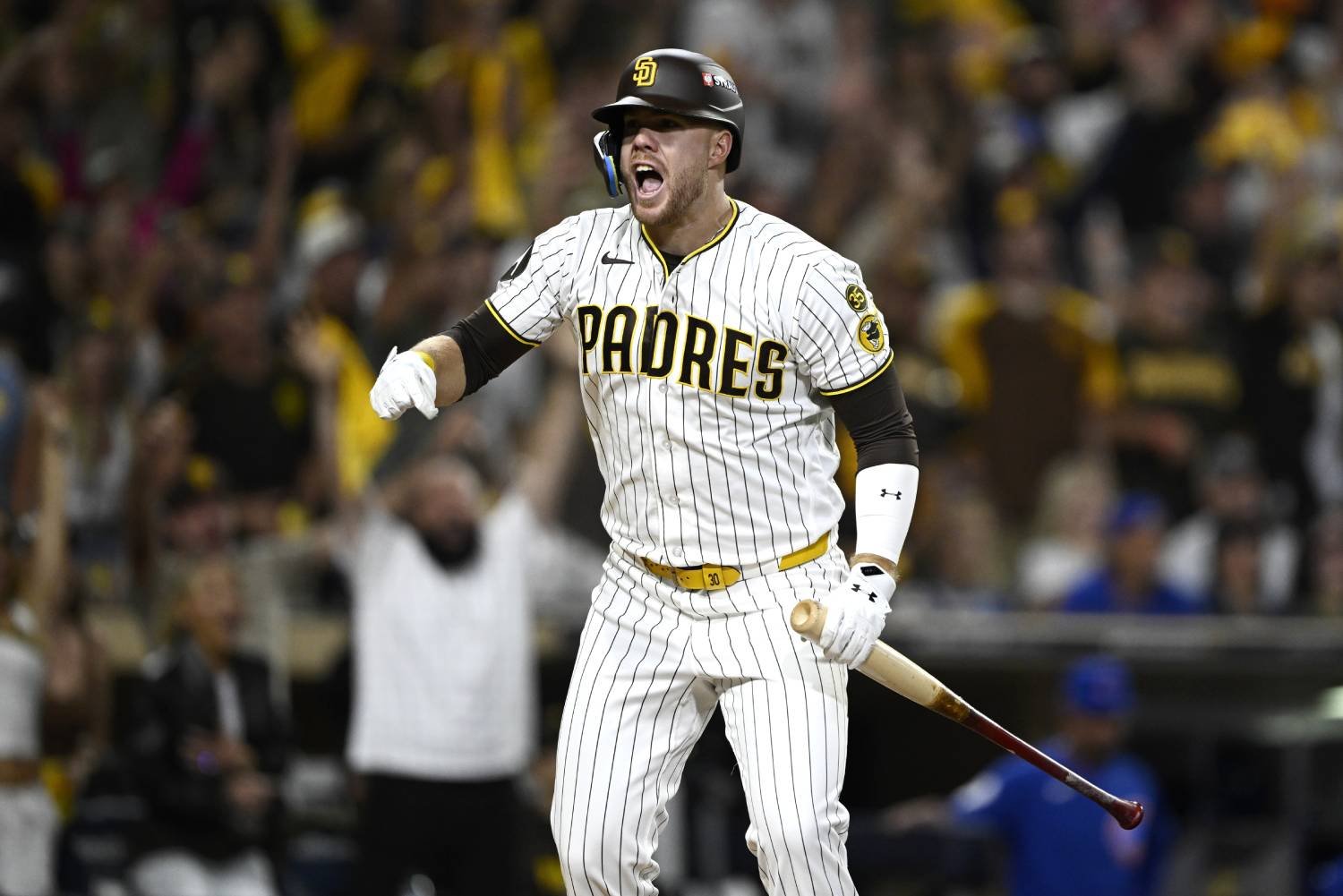 While the arbitration process could change a bit in the negotiations for a new collective-bargaining agreement, the system will be the same this offseason. For the San Diego Padres, that means eight (and possibly nine) players will go through arbitration. There aren't too many tough decisions to be made, thankfully, though that can't be said for the rest of the Friars' roster. Here is who is up for arbitration and what they are projected to make, courtesy of MLB Trade Rumors. Decisions on non-tendering players aren't due until Nov. 20, with some players cutting deals before then to return. 1B Gavin Sheets, $6.5 million The 30-year-old is going through arbitration for the final time. His season finished on the downside as he dealt with a painful left foot injury and with Ty France taking over the starting role at first base. Sheets had a .212/.313/.397 slash line with 17 homers and 48 RBIs over 125 games (419 plate appearances). The left-handed slugger was a big part of the Padres' early season success, including the two-homer game April 10 vs. the Colorado Rockies in which he hit a three-run walk-off homer. He also hit five homers each in May and June. But then the power disappeared, as Sheets didn't hit a homer in July and only three the rest of the season. He entered 2026 coming off his most productive season, his first with the Padres, putting up a .252/.317/.429 slash line and career highs of 19 homers and 71 RBIs. He did go deep in the NL Wild Card Series, but started just one of six postseason games. Prediction: It is expected that France will return to be the primary first baseman in 2027. That deal could actually be done already with president of baseball operations A.J. Preller just waiting for the World Series to conclude to announce it. Sheets can also play left field and is perhaps best-suited as a regular designated hitter. The question for the Padres is do they want to invest $6.5 million into bringing Sheets back? There could be another team out there that would take on Sheets and his relatively big price tag based on his production, which could net a wild-card prospect or another useful player. The Padres can spend this money elsewhere. If not traded, Sheets will be non-tendered. C Luis Campusano, $1.7 million C Freddy Fermin, $2.6 million These two have related cases, so I will combine them. Campusano just turned 28 and is entering his final year of club control. He proved himself worthy of time behind the plate and was good at the plate, slashing .265/.363/.433 with eight homers and 30 RBIs in 125 games (419 plate appearances). He had a tremendous July with a .326/.456/.413 slash line in just 46 plate appearances with a homer and five RBIs. His defensive highlight was in the September series against the New York Yankees where he threw out three runners in a single game. Fermin is 31 years old and was acquired at the 2025 trade deadline to bolster the Friars' offense at the position. But he has produced a .217/.276/.323 slash line with six homers and 38 RBIs in 138 games (404 plate appearances), including .203/.274/.315 this year with four homers and 24 RBIs. Fermin is known for his defense and he lived up to that standard by becoming a candidate to win his first Gold Glove this year. Campusano started 51 games at catcher and Fermin 74. Both missed a good chunk of time with injuries, Campusano with a fractured left big toe and Fermin with a concussion and then a bruised head. Prediction: I don't think the Padres would have run it back with this duo next season, but it was certainly possible. Following the promotion of No. 1 prospect Ethan Salas to begin September, though, the handwriting is now on the wall that the 20-year-old will be the primary catcher entering 2027 (justifiably so based on what he flashed in September and then in the postseason). There is no way the Padres carry three catchers next year as they did following Salas' promotion with the extra roster spots available. You can do rock-paper-scissors to figure out who of Campusano and Fermin will stay. The other will have a trade market and that could be what decides who is a Padre in 2027. The preference is probably to for Campusano, the Padres' second-round pick in 2017, to stick around, but his hitting could be a lure for another team that can live with the defense he plays. Fermin is fine when paired with a catcher who can hit, which is what Salas is expected to do. Salas can also pick up defensive pointers from Fermin. It really is a tossup as to who is traded, but my guess is Fermin is shipped out. RHP Mason Miller, $8.1 million The 28-year-old was already one of the best closers in MLB, then he put up numbers you might only see in a video game this season. He tied for third in MLB in saves with 38 while finishing an NL-high 57 games. He had a 1.17 FIP (1.67 ERA). He had by far the most strikeouts of any reliever with 129, especially when you consider No. 2 on the list was 17 behind and threw 17 more innings. That made for a fantastic 47.4% strikeout rate, which was somehow below the 54.2% rate he had with the Padres in 2025. Miller is in arbitration for the second time as a Super 2 player (more on that at the end) and has three years remaining of club control. Prediction: There are already rumors of other teams wanting to pursue Miller via trade. That shouldn't happen, at least not yet. Miller is elite and the value he brings even at $8.1 million is more of a bargain than any other closer who has signed a big free-agent contract. RHP Bryan Hoeing, $800,000 The 30-year-old right-handed reliever missed the entire season after having surgery to repair the flexor tendon in his right elbow in spring training. That followed a right shoulder issue that limited him to 18 games in 2025 after coming over from the Miami Marlins at the 2024 trade deadline. He is likely to be ready for Opening Day. This will be Hoeing's first foray into arbitration. When healthy in 2024-25, he was very good, notching a 3.28 FIP (2.34 ERA) with a 6.5% walk rate and 19.5% strikeout rate. Prediction: Coming back at what is basically a league-minimum deal is optimal for the Padres, regardless of his major injuries the last two years. Unless there is something in his medical report the Friars don't like, Hoeing is worth keeping, especially with three years of control remaining. LHP JP Sears, $2.8 million We will make this simple. The 30-year-old left-handed starter has made just 13 appearances for the Padres since coming over with Miller from the A's at the 2025 trade deadline. While he had a couple good starts this year, it was nothing to sway the front office into keeping him, even at this relatively low price. Prediction: Freeing up $2.8 million to spend on players who will actually be on the MLB roster is the way to go here. Sorry, JP, but you will have to find a new home. Perhaps Preller can deal him to a team that will actually use Sears with regularity. RHP Jeremiah Estrada, $1.3 million The newly turned 28-year-old right-handed reliever, in arbitration for the first time, became an afterthought this season due to three stints on the injured list due to right elbow, right knee and right shoulder ailments that limited him to 33 appearances and 31 innings. He had a 3.04 FIP (3.48 ERA) with a high 12.7% walk rate and a nice 30.2% strikeout rate. Prediction: There's no reason to think that Estrada won't be back. He was on track in his recovery from his right shoulder injury, to the point that he would have been in consideration to join the roster for the NL Championship Series had the Padres advanced. That means he should be good to go for spring training. RHP Jhony Brito, $800,000 The 29-year-old right-hander returned from an internal brace procedure and flexor tendon surgery on his right elbow in May for a rehab assignment. He got three call-ups, but all were brief stays, logging nine innings over five relief appearances. In the minors, he had a 2.97 ERA in 19 games, all but one as a starter. He walked 16 and struck out 46 in 69⅔ innings. This is Brito's first year in arbitration. Prediction: Brito will be a bullpen candidate next year and borderline rotation option, perhaps a right-handed version of Kyle Hart. The price is a smidge above the MLB minimum, so that isn't a concern for a team that needs every ounce of pitching depth it can muster. RHP Randy Vasquez, TBD The soon-to-be 28-year-old is a borderline candidate to be a Super 2 player. What is a Super 2? That is any player that ranks in the top 22% of service time between their second and third year. Super 2 players get an extra year of arbitration eligibility in their six years of club control. For most, club control is three years of suppressed salaries near the MLB minimum and then three years of the arbitration process. Super 2s become eligible for arbitration before their third MLB season instead of their fourth. For Vasquez, he sits at two years, 129 days of service time. MLB Trade Rumors projected that the cutoff for Super 2 this year would be two years, 130 days. That projection was also done with numbers through the end of July, so its likely to vary based on how many players came up to make their MLB debut after that. A year ago, the Super 2 cutoff was two years, 140 days and it has been as low as two years, 115 days in a recent season (2019). Vasquez is not on most arbitration projections because of that. Vasquez was a key part of the Padres' pitching staff this season, primarily as a starter, but also later in the season in relief. He made 23 starts and nine relief appearances, posting a career-high 140⅔ innings. Vasquez had a 4.24 FIP (3.90 ERA) with a good 6.3% walk rate and substandard 14.8% strikeout rate. Prediction: Vasquez will enter the offseason as a back-end rotation candidate, so there is no worry about being non-tendered or traded away just to save money. His salary won't jump much this year whether or not he reaches arbitration, but it will represent a nice increase for him.
-
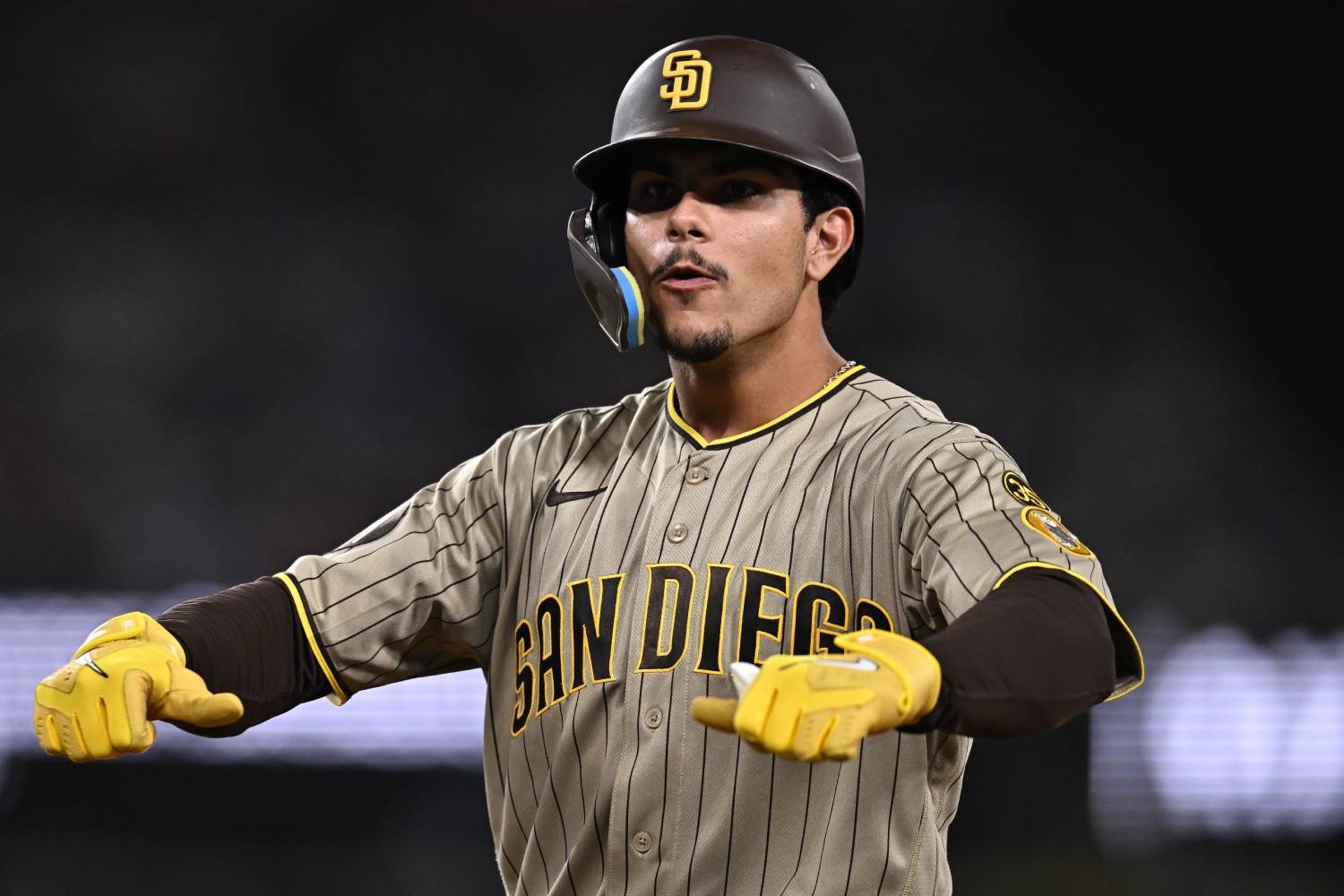
To think about where Ethan Salas was a year ago to where he is now is almost impossible to imagine. But that only speaks to the special talent that is the 20-year-old catcher for the San Diego Padres. Entering last offseason, Salas had missed all but 10 games of the season for the Double-A San Antonio Missions due to a stress reaction in his low back. Missing all of that time, combined with struggles his previous year offensively with the High-A Fort Wayne TinCaps, caused him to tumble out of most top-100 prospect lists. Salas had been the No. 1 international prospect to sign in the 2023 class and made his pro debut in full-season ball as a 16-year-old (he turned 17 just two days later). He was as high as the No. 8 prospect in baseball entering the 2024 season. But the back injury in 2025 had some questioning whether he was rushed by the Padres or just overwhelmed by pro ball. In 2026, he answered that—resoundingly. Salas turned in a season to remember in the minors, first at Double-A San Antonio, then with the Triple-A El Paso Chihuahuas. Between the two stops, Salas put up a .296/.374/.448 slash line with 10 homers and 63 RBIs, all personal bests in his young career. He had a brief stint on the injured list with a minor oblique strain, then represented the Friars in the Futures Game for the second time. The Padres, in the midst of an intense battle for a postseason spot, ultimately called up Salas when rosters expanded on Sept. 1. From his first at-bat, when he flew out to the warning track in Cincinnati, through the Padres’ postseason run, Salas never looked overmatched. Sure, some of his at-bats didn’t look good, but he handled things extremely well. Catcher is a tough position to make a living at as a young player. Salas is the youngest big-league catcher since Ivan Rodriguez was 19 years, 309 days when he debuted in 1991 (Salas was 20 years, 93 days old for his first game). He was also the youngest catcher to play in MLB postseason history. Salas, known for his terrific defense, was named MLB Pipeline’s minor-league Defensive Player of the Year. Most of that was on display upon his call-up. While he didn’t have the playing time with the Padres to rank on Statcast, his pop time of 1.86 seconds was tremendous. However, that didn’t translate into cutting down baserunners. Opponents were 6-for-6 in stealing bases in the regular season and 2-for-2 in the postseason. But that only comprises a 12-game sample from the 20-year-old. Offensively, Salas was rather average, which is just fine considering his role and age. The left-handed hitter had a .256/.275/.462 slash line in 16 games during the regular season, including a two-homer game at Coors Field. He had an OPS+ of 101 (100 is considered average). He had an average exit velocity of 90.1 mph in the majors, maxing out at 108.3. His high at Triple-A this year was 108.4 mph. He shared time behind the plate with Freddy Fermin and Luis Campusano after his call-up. Fermin is a defensive specialist who is up for an NL Gold Glove but struggles hitting (.203/.274/.315, 65 OPS+), while Campusano made strides defensively but is more offense-first (.265/.363/.433, 122 OPS+). What makes Salas so enticing is that he should be excellent at the plate as well as behind it. There were glimpses of his offensive potential in September and even the postseason. The defense needs a little fine-tuning, which feels more like tightening the bolts instead of replacing the brakes. Salas, at least initially, won’t be a big home run hitter, but he will sting the ball to the gaps; he seemed to use more of the field as he moved up the ladder. His speed is also an asset and will be until his knees start to give out due to catching. His offensive production will already deepen the Padres' lineup entering 2027. Despite his age—or perhaps because of it—he was embraced by his teammates and he handled veteran pitchers in key games, including becoming Nick Pivetta's personal catcher. Salas is a lock for the Opening Day roster in 2027 and the No. 1 catcher moving forward. How the Padres decide to shake out their catching situation—they're certainly unlikely to go with three backstops for an entire regular season—will happen over the offseason. The guess here is that Campusano sticks and Fermin is traded. Because at this point, Salas is the real deal and deserves to be built around. At least, that's what he proved in 2026. View full article
-
 To think about where Ethan Salas was a year ago to where he is now is almost impossible to imagine. But that only speaks to the special talent that is the 20-year-old catcher for the San Diego Padres. Entering last offseason, Salas had missed all but 10 games of the season for the Double-A San Antonio Missions due to a stress reaction in his low back. Missing all of that time, combined with struggles his previous year offensively with the High-A Fort Wayne TinCaps, caused him to tumble out of most top-100 prospect lists. Salas had been the No. 1 international prospect to sign in the 2023 class and made his pro debut in full-season ball as a 16-year-old (he turned 17 just two days later). He was as high as the No. 8 prospect in baseball entering the 2024 season. But the back injury in 2025 had some questioning whether he was rushed by the Padres or just overwhelmed by pro ball. In 2026, he answered that—resoundingly. Salas turned in a season to remember in the minors, first at Double-A San Antonio, then with the Triple-A El Paso Chihuahuas. Between the two stops, Salas put up a .296/.374/.448 slash line with 10 homers and 63 RBIs, all personal bests in his young career. He had a brief stint on the injured list with a minor oblique strain, then represented the Friars in the Futures Game for the second time. The Padres, in the midst of an intense battle for a postseason spot, ultimately called up Salas when rosters expanded on Sept. 1. From his first at-bat, when he flew out to the warning track in Cincinnati, through the Padres’ postseason run, Salas never looked overmatched. Sure, some of his at-bats didn’t look good, but he handled things extremely well. Catcher is a tough position to make a living at as a young player. Salas is the youngest big-league catcher since Ivan Rodriguez was 19 years, 309 days when he debuted in 1991 (Salas was 20 years, 93 days old for his first game). He was also the youngest catcher to play in MLB postseason history. Salas, known for his terrific defense, was named MLB Pipeline’s minor-league Defensive Player of the Year. Most of that was on display upon his call-up. While he didn’t have the playing time with the Padres to rank on Statcast, his pop time of 1.86 seconds was tremendous. However, that didn’t translate into cutting down baserunners. Opponents were 6-for-6 in stealing bases in the regular season and 2-for-2 in the postseason. But that only comprises a 12-game sample from the 20-year-old. Offensively, Salas was rather average, which is just fine considering his role and age. The left-handed hitter had a .256/.275/.462 slash line in 16 games during the regular season, including a two-homer game at Coors Field. He had an OPS+ of 101 (100 is considered average). He had an average exit velocity of 90.1 mph in the majors, maxing out at 108.3. His high at Triple-A this year was 108.4 mph. He shared time behind the plate with Freddy Fermin and Luis Campusano after his call-up. Fermin is a defensive specialist who is up for an NL Gold Glove but struggles hitting (.203/.274/.315, 65 OPS+), while Campusano made strides defensively but is more offense-first (.265/.363/.433, 122 OPS+). What makes Salas so enticing is that he should be excellent at the plate as well as behind it. There were glimpses of his offensive potential in September and even the postseason. The defense needs a little fine-tuning, which feels more like tightening the bolts instead of replacing the brakes. Salas, at least initially, won’t be a big home run hitter, but he will sting the ball to the gaps; he seemed to use more of the field as he moved up the ladder. His speed is also an asset and will be until his knees start to give out due to catching. His offensive production will already deepen the Padres' lineup entering 2027. Despite his age—or perhaps because of it—he was embraced by his teammates and he handled veteran pitchers in key games, including becoming Nick Pivetta's personal catcher. Salas is a lock for the Opening Day roster in 2027 and the No. 1 catcher moving forward. How the Padres decide to shake out their catching situation—they're certainly unlikely to go with three backstops for an entire regular season—will happen over the offseason. The guess here is that Campusano sticks and Fermin is traded. Because at this point, Salas is the real deal and deserves to be built around. At least, that's what he proved in 2026.
-
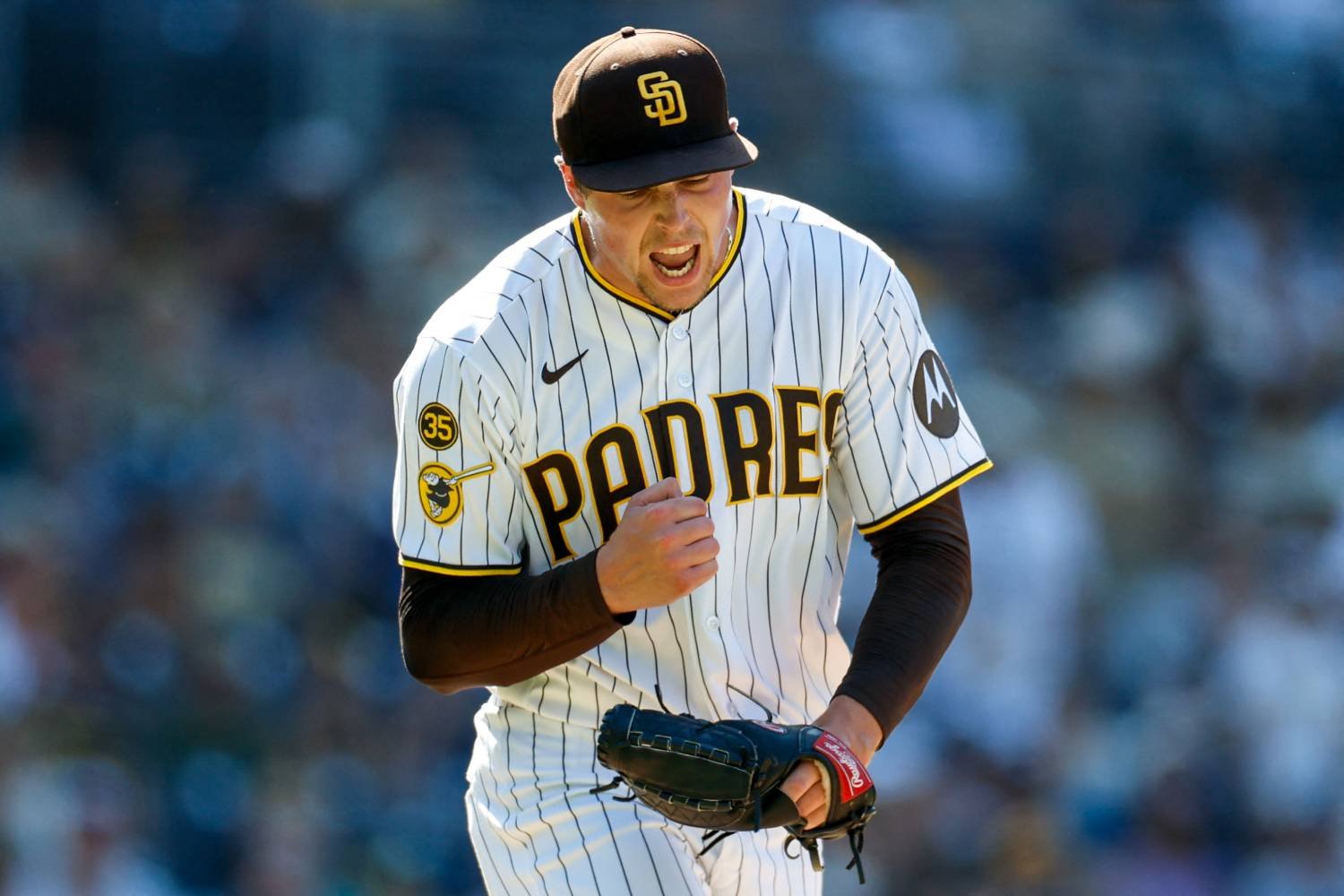
The most dominant part of the San Diego Padres during the regular season, the bullpen was called upon a lot to bail out the starters in 2026. So much so that the Friars went with a "chaos pitching plan" just before the trade deadline to take advantage of the talent of their relief pitchers. Of course, there were some missteps in the postseason that contributed to the Padres' season ending, but we won't dwell on that. Today, we hand out grades to those durable relievers, who rarely let the team down throughout the regular season. Not included here is Rodolfo Duran, the rookie catcher who made his MLB debut after 11 minor-league seasons. Duran pitched twice, allowing nine runs over three innings. He would get an A just for the experience. Previous entries: Grading Every Padres Position Player (2026) | Grading Every Padres Starting Pitcher (2026) Regular-season innings pitched in parentheses. Adrian Morejon (86 IP): B+ The Padres' bullpen leader in appearances (76), innings, and holds (28), all career highs, drastically improved his profile to become the top left-handed setup man in MLB and perhaps the best regardless of what hand he throws with. The most remarkable thing about his performance is he increased the velocity of his four-seam fastball from 97.6 mph to 99.4 miles per hour, which led to a career-high 107 strikeouts, 36 more than his previous best (in an extra 12⅓ innings). He will be a very coveted free agent this offseason. Wandy Peralta (77⅓ IP): B- You could probably stump a lot of folks with this fact: Peralta was second among Padres relievers in innings pitched. He is no longer a leverage reliever, notching just four holds, the same as last year. That doesn't mean he didn't have value; Peralta was a key middle reliever that mostly kept games in the situation he inherited. Bradgley Rodriguez (74 IP): A Everyone knew that Rodriguez, who turned 21 in May, was going to be a key part of the bullpen. But the right-hander turned out to be very valuable, moving into a leverage role as the season progressed. Rodriguez finished third on the team in holds with 17, posting a 2.78 FIP (2.19 ERA). He will be a huge part of the bullpen moving forward, especially if Morejon leaves in free agency. Mason Miller (70 IP): A+ Miller just turned in one of the better seasons by a reliever in MLB history with his utter dominance. While fans will remember the postseason walk-off hit he gave up, don't forget about his season-opening 34⅔-inning scoreless streak, a club record. He was so dominant that his FIP (1.17) was lower than his ERA (1.37), while leading the NL in games finished (57) and saves (38). His slider was missed by hitters by an average of 9.4 inches, the second season in a row that pitch was the best in MLB in that regard. He also led MLB relievers with 518 pitches at 100 mph or better (he threw 1,149 total pitches). Yuki Matsui (64 IP): B+ One of the more underrated stories in the Padres' bullpen, the left-hander had a terrific season. While he finished with a 1.83 ERA, Matsui had a 4.18 FIP, perhaps indicating a little good fortune. He walked too many (13.8% walk rate) and had a slightly above-average 26.2% strikeout rate. Matsui was really good down the stretch, allowing just one run in his final 23⅔ innings, including the postseason. He has the ability to opt-out of his contract, but is due $13.5 million over the next two seasons. Kyle Hart (64 IP): B- Hart had the difficult role of being the early long-man in case the starter had to be yanked, and the left-hander was pretty good overall despite his 4.92 ERA (3.63 FIP). He gave up 14 runs over 4⅔ innings in three outings, which will inflate a reliever's ERA quickly. But there was a 17-game stretch in which he had a 1.88 FIP (1.82 ERA) with 27 strikeouts over 24⅔ innings, including three runs in one-third of an inning in one outing. Ron Marinaccio (47 IP): D The right-hander was designated for assignment after 33 games and a 5.31 FIP (4.79 ERA). He provided little value to the league's best bullpen. Jason Adam (34⅓ IP): B His season started about two weeks late due to his recovery from a quad injury from last season. But he was the primary right-handed setup man until a strained right shoulder sidelined him at the beginning of July until returning during the last week of the regular season. He posted a 4.85 FIP (2.62 ERA) and is also due to become a free agent. David Morgan (33⅓ IP): C+ Coming off a strong and surprising 2025 in his MLB debut season, the right-hander had a topsy-turvy 2026 that included early struggles, a knee injury and an August demotion. He was very good when he came back up, allowing three earned runs in 11⅓ innings, striking out 13 but walking nine. Walks remain a problem, which could be the reason he did not pitch in any of the six postseason games. Jeremiah Estrada (31 IP): B- This feels like a lost season for Estrada. The right-hander went on the injured list three times (right elbow tendinitis, right knee inflammation, right shoulder impingement), which limited him to 33 appearances. Still, he was good as usual when available, with a 3.04 FIP (3.48 ERA). Jhony Brito (9 IP): C The right-hander came back from an internal brace procedure and flexor tendon surgery on his right elbow in the second half of the season. Brito was a backup option stashed at Triple-A El Paso as he appeared in five games and allowed three runs in nine innings. Alek Jacob (5 IP): C- Jacob came up three times and appeared in just three games, allowing three runs in five innings. The right-hander was DFA'd after the season and went unclaimed, ultimately getting outrighted to the minors. Bryan Hoeing (0 IP): N/A After missing most of 2025 with a right shoulder injury, Hoeing was diagnosed with a flexor tendon injury in his right elbow that required season-ending surgery. View full article
-
 The most dominant part of the San Diego Padres during the regular season, the bullpen was called upon a lot to bail out the starters in 2026. So much so that the Friars went with a "chaos pitching plan" just before the trade deadline to take advantage of the talent of their relief pitchers. Of course, there were some missteps in the postseason that contributed to the Padres' season ending, but we won't dwell on that. Today, we hand out grades to those durable relievers, who rarely let the team down throughout the regular season. Not included here is Rodolfo Duran, the rookie catcher who made his MLB debut after 11 minor-league seasons. Duran pitched twice, allowing nine runs over three innings. He would get an A just for the experience. Previous entries: Grading Every Padres Position Player (2026) | Grading Every Padres Starting Pitcher (2026) Regular-season innings pitched in parentheses. Adrian Morejon (86 IP): B+ The Padres' bullpen leader in appearances (76), innings, and holds (28), all career highs, drastically improved his profile to become the top left-handed setup man in MLB and perhaps the best regardless of what hand he throws with. The most remarkable thing about his performance is he increased the velocity of his four-seam fastball from 97.6 mph to 99.4 miles per hour, which led to a career-high 107 strikeouts, 36 more than his previous best (in an extra 12⅓ innings). He will be a very coveted free agent this offseason. Wandy Peralta (77⅓ IP): B- You could probably stump a lot of folks with this fact: Peralta was second among Padres relievers in innings pitched. He is no longer a leverage reliever, notching just four holds, the same as last year. That doesn't mean he didn't have value; Peralta was a key middle reliever that mostly kept games in the situation he inherited. Bradgley Rodriguez (74 IP): A Everyone knew that Rodriguez, who turned 21 in May, was going to be a key part of the bullpen. But the right-hander turned out to be very valuable, moving into a leverage role as the season progressed. Rodriguez finished third on the team in holds with 17, posting a 2.78 FIP (2.19 ERA). He will be a huge part of the bullpen moving forward, especially if Morejon leaves in free agency. Mason Miller (70 IP): A+ Miller just turned in one of the better seasons by a reliever in MLB history with his utter dominance. While fans will remember the postseason walk-off hit he gave up, don't forget about his season-opening 34⅔-inning scoreless streak, a club record. He was so dominant that his FIP (1.17) was lower than his ERA (1.37), while leading the NL in games finished (57) and saves (38). His slider was missed by hitters by an average of 9.4 inches, the second season in a row that pitch was the best in MLB in that regard. He also led MLB relievers with 518 pitches at 100 mph or better (he threw 1,149 total pitches). Yuki Matsui (64 IP): B+ One of the more underrated stories in the Padres' bullpen, the left-hander had a terrific season. While he finished with a 1.83 ERA, Matsui had a 4.18 FIP, perhaps indicating a little good fortune. He walked too many (13.8% walk rate) and had a slightly above-average 26.2% strikeout rate. Matsui was really good down the stretch, allowing just one run in his final 23⅔ innings, including the postseason. He has the ability to opt-out of his contract, but is due $13.5 million over the next two seasons. Kyle Hart (64 IP): B- Hart had the difficult role of being the early long-man in case the starter had to be yanked, and the left-hander was pretty good overall despite his 4.92 ERA (3.63 FIP). He gave up 14 runs over 4⅔ innings in three outings, which will inflate a reliever's ERA quickly. But there was a 17-game stretch in which he had a 1.88 FIP (1.82 ERA) with 27 strikeouts over 24⅔ innings, including three runs in one-third of an inning in one outing. Ron Marinaccio (47 IP): D The right-hander was designated for assignment after 33 games and a 5.31 FIP (4.79 ERA). He provided little value to the league's best bullpen. Jason Adam (34⅓ IP): B His season started about two weeks late due to his recovery from a quad injury from last season. But he was the primary right-handed setup man until a strained right shoulder sidelined him at the beginning of July until returning during the last week of the regular season. He posted a 4.85 FIP (2.62 ERA) and is also due to become a free agent. David Morgan (33⅓ IP): C+ Coming off a strong and surprising 2025 in his MLB debut season, the right-hander had a topsy-turvy 2026 that included early struggles, a knee injury and an August demotion. He was very good when he came back up, allowing three earned runs in 11⅓ innings, striking out 13 but walking nine. Walks remain a problem, which could be the reason he did not pitch in any of the six postseason games. Jeremiah Estrada (31 IP): B- This feels like a lost season for Estrada. The right-hander went on the injured list three times (right elbow tendinitis, right knee inflammation, right shoulder impingement), which limited him to 33 appearances. Still, he was good as usual when available, with a 3.04 FIP (3.48 ERA). Jhony Brito (9 IP): C The right-hander came back from an internal brace procedure and flexor tendon surgery on his right elbow in the second half of the season. Brito was a backup option stashed at Triple-A El Paso as he appeared in five games and allowed three runs in nine innings. Alek Jacob (5 IP): C- Jacob came up three times and appeared in just three games, allowing three runs in five innings. The right-hander was DFA'd after the season and went unclaimed, ultimately getting outrighted to the minors. Bryan Hoeing (0 IP): N/A After missing most of 2025 with a right shoulder injury, Hoeing was diagnosed with a flexor tendon injury in his right elbow that required season-ending surgery.
-
For as much as anyone wants to criticize the season Manny Machado had for the San Diego Padres this season, there are three things you could count on the superstar third baseman for in 2026: being in the lineup every day. home runs, and tremendous defense. There is a fourth that also needs to be included, but it has nothing to do with statistics. The seven-time All-Star is the unquestioned leader of this group. Sure, you can count Fernando Tatis Jr. as a big part of what makes the Padres tick, but it is Machado's presence that helps give the Friars their daily bearings and edge. Just look at the role he played when he stood up at a team dinner in his hometown of Miami in late July and implored his teammates to step up in the remainder of the season, which is exactly what they did. As far as what he did on the field, Machado hit 30 homers, the fourth time in eight seasons as a Padre he has reached that mark (make it seven if you take away the pandemic-shortened 2020), to reach 399 for his career, the 62nd player in MLB history to hit that many. His four 30-homer campaigns as a Friar tied Adrian Gonzalez for the most in club history and gave him eight in his career, the third active player to do that (Nolan Arenado and Kyle Schwarber). He also hit some round-number career milestones with his 1,200th RBI, 400th double and 2,000th game. Machado also moved past Garry Templeton (1,135) for second in Padres history in career hits. Machado was only out of the lineup four times, continuing a trend of always being available. Putting aside the 2023 season in which he sustained a fractured hand and played in 138 of 162 games, Machado has only missed 44 other games for the Padres, with his 159 games last year and 158 this year his highest totals in the brown and gold and most since playing all 162 in 2018. Always known as a very good defender, Machado's play slipped in 2025, but rebounded with a force this year. Machado led the NL third basemen with 16 errors last year, but committed just three in 2026 as he led the hot corner with an MLB-best .990 fielding percentage. Two of those errors came within the Friars' first 26 games of the season, which gave way to a stretch of 62 games without an error before finishing with 63 errorless games. He also led all third baseman with +12 Outs Above Average. His range was in the 96th percentile after being in the eighth in 2025 and 40th in 2024. He also has a remarkable accuracy with his throws. As for what he didn't do well, that showed up in his ability to simply get hits, not that hitting a baseball is easy. For the first time since his rookie season, Machado was considered a below-average hitter. That is based on OPS+, where he had a mark of 97 this season (100 is average). That is as a result of his slash line of .217/.303/.407. That .217 batting average sticks out like a sore thumb on Machado's ledger. His previous low-water mark was .256 in 2019, his first season with the Padres. Even that year, Machado finished with a 110 OPS+. He struck a career-worst 144 times this year, but did draw a career-best 76 walks. He also had 22 doubles after reaching 30 in four of the previous five years. And he hit into an NL-worst 22 double plays, tied with Freddie Freeman of the Los Angeles Dodgers, a category he has led MLB in twice with the Padres (but not this year, as that title went to Junior Caminero of the Tampa Bay Rays with 26). All of this is to say... what exactly? Chalk this season from a batting average perspective as a one-off. He showed up in the postseason, going 7-for-20 with a pair doubles and a homer (nearly another in his final at-bat), including 4-for-13 vs. the Milwaukee Brewers in the NL Division Series. Just like he did for this season on defense, Machado will figure out what went wrong at the plate and have it sorted out in 2027. View full article
-
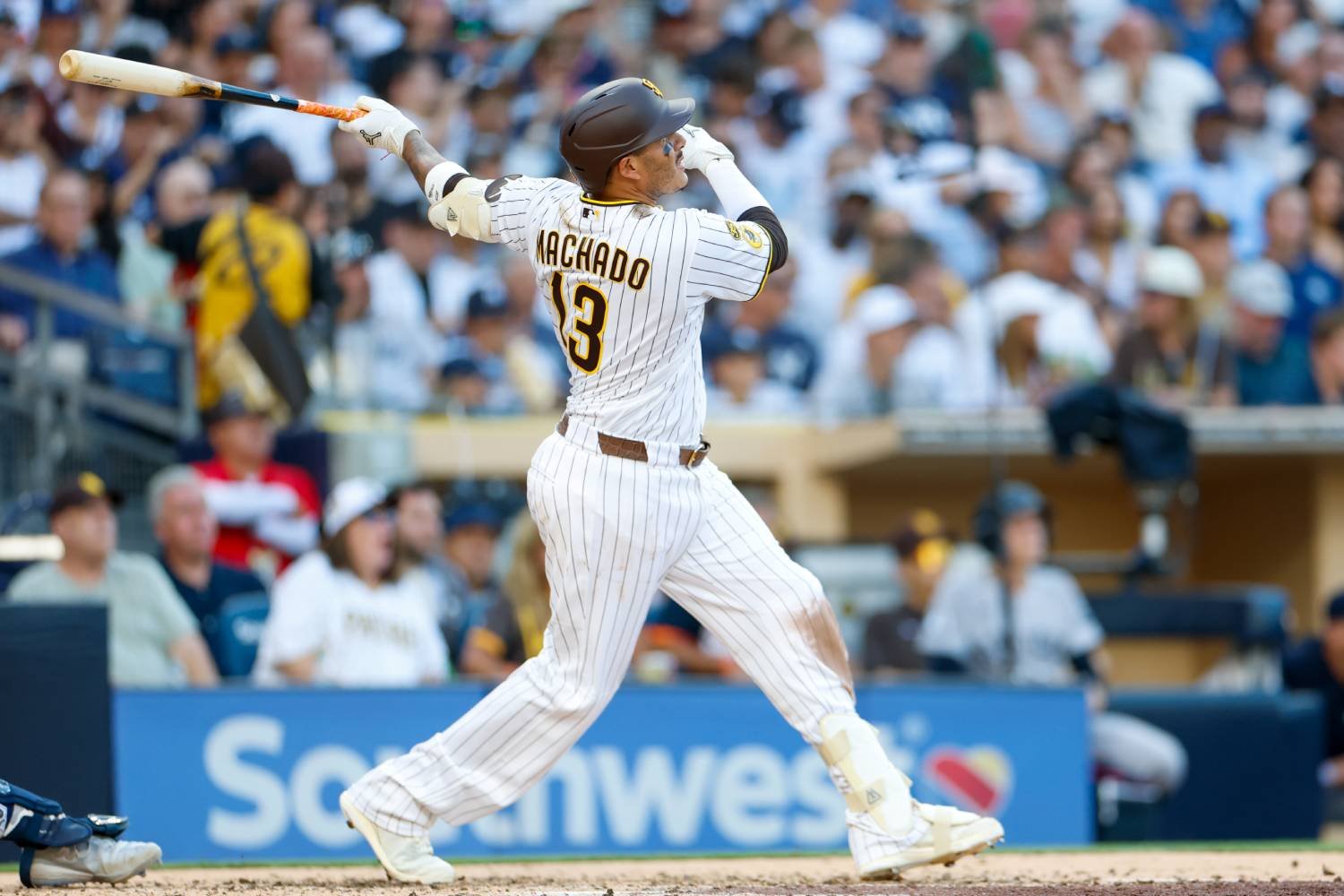 For as much as anyone wants to criticize the season Manny Machado had for the San Diego Padres this season, there are three things you could count on the superstar third baseman for in 2026: being in the lineup every day. home runs, and tremendous defense. There is a fourth that also needs to be included, but it has nothing to do with statistics. The seven-time All-Star is the unquestioned leader of this group. Sure, you can count Fernando Tatis Jr. as a big part of what makes the Padres tick, but it is Machado's presence that helps give the Friars their daily bearings and edge. Just look at the role he played when he stood up at a team dinner in his hometown of Miami in late July and implored his teammates to step up in the remainder of the season, which is exactly what they did. As far as what he did on the field, Machado hit 30 homers, the fourth time in eight seasons as a Padre he has reached that mark (make it seven if you take away the pandemic-shortened 2020), to reach 399 for his career, the 62nd player in MLB history to hit that many. His four 30-homer campaigns as a Friar tied Adrian Gonzalez for the most in club history and gave him eight in his career, the third active player to do that (Nolan Arenado and Kyle Schwarber). He also hit some round-number career milestones with his 1,200th RBI, 400th double and 2,000th game. Machado also moved past Garry Templeton (1,135) for second in Padres history in career hits. Machado was only out of the lineup four times, continuing a trend of always being available. Putting aside the 2023 season in which he sustained a fractured hand and played in 138 of 162 games, Machado has only missed 44 other games for the Padres, with his 159 games last year and 158 this year his highest totals in the brown and gold and most since playing all 162 in 2018. Always known as a very good defender, Machado's play slipped in 2025, but rebounded with a force this year. Machado led the NL third basemen with 16 errors last year, but committed just three in 2026 as he led the hot corner with an MLB-best .990 fielding percentage. Two of those errors came within the Friars' first 26 games of the season, which gave way to a stretch of 62 games without an error before finishing with 63 errorless games. He also led all third baseman with +12 Outs Above Average. His range was in the 96th percentile after being in the eighth in 2025 and 40th in 2024. He also has a remarkable accuracy with his throws. As for what he didn't do well, that showed up in his ability to simply get hits, not that hitting a baseball is easy. For the first time since his rookie season, Machado was considered a below-average hitter. That is based on OPS+, where he had a mark of 97 this season (100 is average). That is as a result of his slash line of .217/.303/.407. That .217 batting average sticks out like a sore thumb on Machado's ledger. His previous low-water mark was .256 in 2019, his first season with the Padres. Even that year, Machado finished with a 110 OPS+. He struck a career-worst 144 times this year, but did draw a career-best 76 walks. He also had 22 doubles after reaching 30 in four of the previous five years. And he hit into an NL-worst 22 double plays, tied with Freddie Freeman of the Los Angeles Dodgers, a category he has led MLB in twice with the Padres (but not this year, as that title went to Junior Caminero of the Tampa Bay Rays with 26). All of this is to say... what exactly? Chalk this season from a batting average perspective as a one-off. He showed up in the postseason, going 7-for-20 with a pair doubles and a homer (nearly another in his final at-bat), including 4-for-13 vs. the Milwaukee Brewers in the NL Division Series. Just like he did for this season on defense, Machado will figure out what went wrong at the plate and have it sorted out in 2027.
-
Week 2 of the Arizona Fall League is in the books, with San Diego Padres prospects playing for the Peoria Javelinas in the showcase event. Each week, we will take a look back at how the Padres' prospects fared. One of the Javelinas' games this week was rained out. For last week's recap, check here. Ty Harvey, C After an opening week highlighted by five stolen bases, the catcher has yet to find his rhythm at the plate. Padres Mission's No. 5 prospect went 2-for-11 this week with a pair of RBIs and a stolen base in the three games he played in. Two of those games were at the designated hitter spot, the other behind the plate. Justin DeCriscio, SS DeCriscio continued to show versatility by playing three spots in three games: second base, shortstop and third base. He went just 1-for-10 at the plate, but did have an impact Thursday vs. Scottsdale. DeCriscio had a leadoff six-pitch walk in the third inning, then stole a pair of bases and scored on Harvey's infield single to third. He then had a bases-loaded RBI single in the fourth. Alex McCoy, OF Padres Mission's No. 8 prospect made jaws drop with a homer in Thursday's game against Scottsdale. Leading off the top of the fourth inning, McCoy crushed an 89.3 mph first-pitch sinker middle in from right-hander Marcus Johnson (Tampa Bay Rays, Double-A) out to deep left. The 436-foot shot had an amazing exit velocity of 118.2 mph. For comparison, only two balls had a better exit velocity in all of MLB this season: 119 mph by Oneil Cruz of the Pittsburgh Pirates and 118.5 mph by Yordan Alvarez of the Houston Astros. It was the second homer of the AFL for McCoy, who hit 19 between High-A Fort Wayne and Double-A San Antonio this year. That was part of a 3-for-12 week for McCoy, who also had an opposite-field double with a bit of an awkward slide. View this post on Instagram A post shared by MLB’s Arizona Fall League (@mlbazfallleague) Jordan Valenzuela, RHP Valenzuela also pitched Tuesday against Scottsdale. He allowed a run on one hit and a hit batter in the five hitters he faced. It was his third appearance in the AFL. The 21-year-old is in his first full season in the U.S. and made 21 appearances at Low-A Lake Elsinore during the regular season. View full article
-
Padres Arizona Fall League Update: Alex McCoy Mashes Again
Steve Drumwright posted an article in Minor Leagues
 Week 2 of the Arizona Fall League is in the books, with San Diego Padres prospects playing for the Peoria Javelinas in the showcase event. Each week, we will take a look back at how the Padres' prospects fared. One of the Javelinas' games this week was rained out. For last week's recap, check here. Ty Harvey, C After an opening week highlighted by five stolen bases, the catcher has yet to find his rhythm at the plate. Padres Mission's No. 5 prospect went 2-for-11 this week with a pair of RBIs and a stolen base in the three games he played in. Two of those games were at the designated hitter spot, the other behind the plate. Justin DeCriscio, SS DeCriscio continued to show versatility by playing three spots in three games: second base, shortstop and third base. He went just 1-for-10 at the plate, but did have an impact Thursday vs. Scottsdale. DeCriscio had a leadoff six-pitch walk in the third inning, then stole a pair of bases and scored on Harvey's infield single to third. He then had a bases-loaded RBI single in the fourth. Alex McCoy, OF Padres Mission's No. 8 prospect made jaws drop with a homer in Thursday's game against Scottsdale. Leading off the top of the fourth inning, McCoy crushed an 89.3 mph first-pitch sinker middle in from right-hander Marcus Johnson (Tampa Bay Rays, Double-A) out to deep left. The 436-foot shot had an amazing exit velocity of 118.2 mph. For comparison, only two balls had a better exit velocity in all of MLB this season: 119 mph by Oneil Cruz of the Pittsburgh Pirates and 118.5 mph by Yordan Alvarez of the Houston Astros. It was the second homer of the AFL for McCoy, who hit 19 between High-A Fort Wayne and Double-A San Antonio this year. That was part of a 3-for-12 week for McCoy, who also had an opposite-field double with a bit of an awkward slide. View this post on Instagram A post shared by MLB’s Arizona Fall League (@mlbazfallleague) Jordan Valenzuela, RHP Valenzuela also pitched Tuesday against Scottsdale. He allowed a run on one hit and a hit batter in the five hitters he faced. It was his third appearance in the AFL. The 21-year-old is in his first full season in the U.S. and made 21 appearances at Low-A Lake Elsinore during the regular season.
-
With the San Diego Padres' season over, attention turns to roster moves for the 2027 season. That means knowing who you need to focus on from a free-agent and arbitration perspective. All options—player, club, or mutual—must be exercised within five days of the end of the World Series. Mutual options are almost universally declined. Players eligible for a qualifying offer must receive one with that same five-day period, then have another seven days to decide whether to accept, which puts the player under contract for the 2027 season. This year's qualifying offer is reportedly $23.15 million, although that could change when formally announced by MLB. Players who are eligible for arbitration must be tendered a contract by the end of November. This is different from exchanging figures for a hearing, but it guarantees a player will be under contract. Those who are non-tendered become free agents. Players who are pre-arbitration or on minor-league contracts also must be tendered a contract by this same deadline. Minor-league contracts are generally one-year deals. All arbitration projections are courtesy of MLB Trade Rumors. Pre-arbitration players basically make a version of the MLB minimum salary, which was $780,000 for 2026 (slight raises for second and third years). The minimum is expected to be $1 million in the new collective-bargaining agreement. Super 2 players become eligible for arbitration a year early and have four years of arb. This article is a reference list to know the contract status of every play on the 40-man roster. If you do some rudimentary math, you'll see that there are more than 40 players listed (there are 46). Players on the 60-day injured list do not count toward the 40-man. All players come off the injured list after the World Series as a matter or procedure, regardless of their health status. Any player, whether eligible for arbitration or a free agent, can re-sign with the Padres at any time. Negotiations with other teams can't begin until five days after the World Series ends. Unless otherwise noted, any free agent can be given a qualifying offer. Contract info courtesy of Cot's and Spotrac. Pitchers (24) Jason Adam: Free agent. Jhony Brito: First year eligible for arbitration. Projection: $800,000. Walker Buehler: Free agent. Yu Darvish: On restricted list (was not paid $15 million salary in 2026). Due $15 million in 2027 as part of a six-year, $108 million contract that runs through 2028. Griffin Canning: Mutual option for $5 million in 2027 with a $1.5 million buyout. Jeremiah Estrada: First year eligible for arbitration. Projection: $1.3 million. Lucas Giolito: On 60-day IL (right elbow inflammation). Mutual option for $8 million in 2027 with a $1.5 million buyout. Kyle Hart: Club option for $2.5 million in 2027 with a $200,000 buyout. Garrett Hawkins: Minor-league contract. Yet to make MLB debut. Bryan Hoeing: On 60-day IL (right flexor tendon surgery). First year eligible for arbitration. Projection: $800,000. Michael King: Player option for 2027 at $28 million and player option for 2028 at $30 million. Not eligible for qualifying offer after receiving one last year (he declined). Yuki Matsui: Player option for 2027 at $6.5 million and player option for 2028 at $7 million. Mason Miller: Second year eligible for arbitration as Super 2. Projection: $8.1 million. Casey Mize: Free agent. Not eligible for qualifying offer by virtue of being traded during the season. Adrian Morejon: Free agent. David Morgan: Pre-arbitration. Joe Musgrove: Due $20 million in final year of five-year, $100 million contract. Wandy Peralta: Player option for 2027 at $4.45 million. Final year of contract. Nick Pivetta: Club option for 2027 at $14 million and player option for 2028 at $18 million as part of four-year, $55 million contract. Robbie Ray: Free agent. Not eligible for qualifying offer by virtue of being traded during the season. Bradgley Rodriguez: Pre-arbitration. JP Sears: Second year eligible for arbitration. Projection: $2.8 million. Hunter Stratton: Pre-arbitration. Randy Vasquez: Borderline Super 2 status, to be announced by MLB soon. Super 2 would make him eligible for the first of four years of arbitration. Otherwise, he will be in the third and final pre-arb year. Catchers (4) Luis Campusano: Third year eligible for arbitration as Super 2. Projection: $1.7 million. Rodolfo Duran: On 60-day IL (strained right forearm). Pre-arbitration. Freddy Fermin: Second year eligible for arbitration as Super 2. Projection: $2.6 million. Ethan Salas: Pre-arbitration. Infielders (8) Xander Bogaerts: Due $25,454,545 in 2027 as part of an 11-year, $280 million contract that runs through 2033. Jake Cronenworth: Due $12,285,714 in 2027 as part of a seven-year, $80 million contract that runs through 2030. Ty France: Free agent. Manny Machado: Due $39,090,909 in 2027 as part of an 11-year, $350,000 contract that runs through 2033. Mason McCoy: Pre-arbitration. Gavin Sheets: Final year eligible for arbitration. Projection: $6.5 million. Sung-Mun Song: Due $3,333,333 as part of a four-year, $15 million contract that runs through 2029. Gage Workman: Pre-arbitration. Outfielders (7) Jase Bowen: Pre-arbitration. Dustin Harris: Pre-arbitration. Ramon Laureano: 60-day IL (right hip surgery). Free agent. Jackson Merrill: Due $8,111,000 in 2027 as part of a nine-year, $135 million contract that runs through 2034. Luis Rengifo: On 60-day IL (left knee surgery). Free agent. Fernando Tatis Jr.: Due $20,784,286 in 2027 as part of a 14-year, $340 million contract that runs through 2034. Samad Taylor: Pre-arbitration. Designated hitters (3) Miguel Andujar: Mutual option for $8 million in 2027 with a $2.5 million buyout. Austin Hays: Free agent. Will Wagner: Pre-arbitration. View full article
-
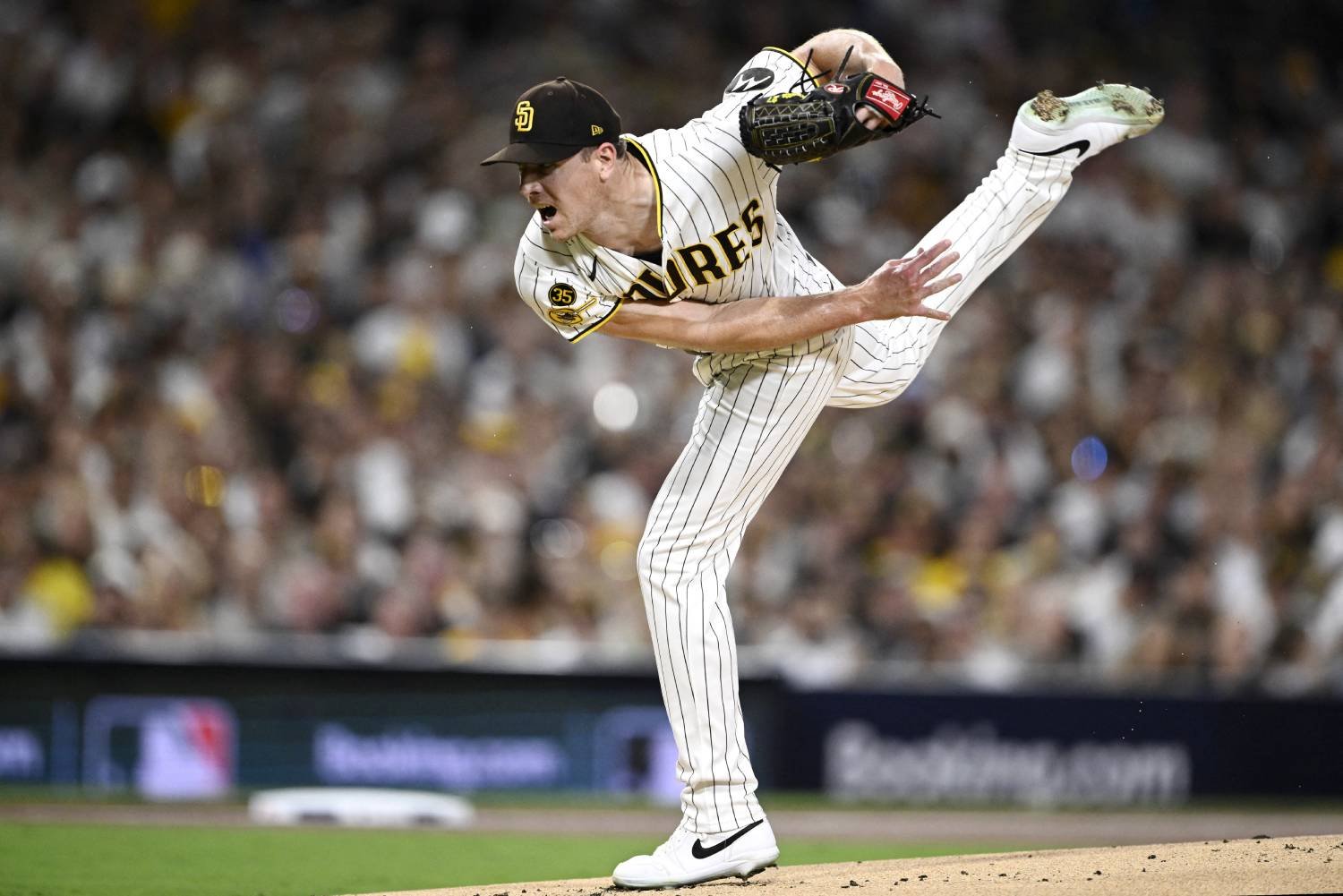 With the San Diego Padres' season over, attention turns to roster moves for the 2027 season. That means knowing who you need to focus on from a free-agent and arbitration perspective. All options—player, club, or mutual—must be exercised within five days of the end of the World Series. Mutual options are almost universally declined. Players eligible for a qualifying offer must receive one with that same five-day period, then have another seven days to decide whether to accept, which puts the player under contract for the 2027 season. This year's qualifying offer is reportedly $23.15 million, although that could change when formally announced by MLB. Players who are eligible for arbitration must be tendered a contract by the end of November. This is different from exchanging figures for a hearing, but it guarantees a player will be under contract. Those who are non-tendered become free agents. Players who are pre-arbitration or on minor-league contracts also must be tendered a contract by this same deadline. Minor-league contracts are generally one-year deals. All arbitration projections are courtesy of MLB Trade Rumors. Pre-arbitration players basically make a version of the MLB minimum salary, which was $780,000 for 2026 (slight raises for second and third years). The minimum is expected to be $1 million in the new collective-bargaining agreement. Super 2 players become eligible for arbitration a year early and have four years of arb. This article is a reference list to know the contract status of every play on the 40-man roster. If you do some rudimentary math, you'll see that there are more than 40 players listed (there are 46). Players on the 60-day injured list do not count toward the 40-man. All players come off the injured list after the World Series as a matter or procedure, regardless of their health status. Any player, whether eligible for arbitration or a free agent, can re-sign with the Padres at any time. Negotiations with other teams can't begin until five days after the World Series ends. Unless otherwise noted, any free agent can be given a qualifying offer. Contract info courtesy of Cot's and Spotrac. Pitchers (24) Jason Adam: Free agent. Jhony Brito: First year eligible for arbitration. Projection: $800,000. Walker Buehler: Free agent. Yu Darvish: On restricted list (was not paid $15 million salary in 2026). Due $15 million in 2027 as part of a six-year, $108 million contract that runs through 2028. Griffin Canning: Mutual option for $5 million in 2027 with a $1.5 million buyout. Jeremiah Estrada: First year eligible for arbitration. Projection: $1.3 million. Lucas Giolito: On 60-day IL (right elbow inflammation). Mutual option for $8 million in 2027 with a $1.5 million buyout. Kyle Hart: Club option for $2.5 million in 2027 with a $200,000 buyout. Garrett Hawkins: Minor-league contract. Yet to make MLB debut. Bryan Hoeing: On 60-day IL (right flexor tendon surgery). First year eligible for arbitration. Projection: $800,000. Michael King: Player option for 2027 at $28 million and player option for 2028 at $30 million. Not eligible for qualifying offer after receiving one last year (he declined). Yuki Matsui: Player option for 2027 at $6.5 million and player option for 2028 at $7 million. Mason Miller: Second year eligible for arbitration as Super 2. Projection: $8.1 million. Casey Mize: Free agent. Not eligible for qualifying offer by virtue of being traded during the season. Adrian Morejon: Free agent. David Morgan: Pre-arbitration. Joe Musgrove: Due $20 million in final year of five-year, $100 million contract. Wandy Peralta: Player option for 2027 at $4.45 million. Final year of contract. Nick Pivetta: Club option for 2027 at $14 million and player option for 2028 at $18 million as part of four-year, $55 million contract. Robbie Ray: Free agent. Not eligible for qualifying offer by virtue of being traded during the season. Bradgley Rodriguez: Pre-arbitration. JP Sears: Second year eligible for arbitration. Projection: $2.8 million. Hunter Stratton: Pre-arbitration. Randy Vasquez: Borderline Super 2 status, to be announced by MLB soon. Super 2 would make him eligible for the first of four years of arbitration. Otherwise, he will be in the third and final pre-arb year. Catchers (4) Luis Campusano: Third year eligible for arbitration as Super 2. Projection: $1.7 million. Rodolfo Duran: On 60-day IL (strained right forearm). Pre-arbitration. Freddy Fermin: Second year eligible for arbitration as Super 2. Projection: $2.6 million. Ethan Salas: Pre-arbitration. Infielders (8) Xander Bogaerts: Due $25,454,545 in 2027 as part of an 11-year, $280 million contract that runs through 2033. Jake Cronenworth: Due $12,285,714 in 2027 as part of a seven-year, $80 million contract that runs through 2030. Ty France: Free agent. Manny Machado: Due $39,090,909 in 2027 as part of an 11-year, $350,000 contract that runs through 2033. Mason McCoy: Pre-arbitration. Gavin Sheets: Final year eligible for arbitration. Projection: $6.5 million. Sung-Mun Song: Due $3,333,333 as part of a four-year, $15 million contract that runs through 2029. Gage Workman: Pre-arbitration. Outfielders (7) Jase Bowen: Pre-arbitration. Dustin Harris: Pre-arbitration. Ramon Laureano: 60-day IL (right hip surgery). Free agent. Jackson Merrill: Due $8,111,000 in 2027 as part of a nine-year, $135 million contract that runs through 2034. Luis Rengifo: On 60-day IL (left knee surgery). Free agent. Fernando Tatis Jr.: Due $20,784,286 in 2027 as part of a 14-year, $340 million contract that runs through 2034. Samad Taylor: Pre-arbitration. Designated hitters (3) Miguel Andujar: Mutual option for $8 million in 2027 with a $2.5 million buyout. Austin Hays: Free agent. Will Wagner: Pre-arbitration.
-
We all know the starting rotation was a trouble spot for the 2026 San Diego Padres. Yes, there were some outstanding performances, but mostly it was a worrisome group throughout the season. Fortunately, the rotation gave the Friars just enough to be able to make a franchise-record third straight postseason appearance. Now, it is time to hand out grades. For this unit, we are only including true starters, not players who started a game or two and then took up shelter in the bullpen. In other words, players need to have been classified as a starter on the roster (or at least were) at some point this season. Previous entries: Grading Every Padres Position Player (2026) Regular-season innings pitched in parentheses. Michael King (185 IP): A- Originally penciled in to be the No. 3 starter entering spring training, the right-hander's role grew in importance with injuries. He eventually stepped up to become the ace of the staff. King tied for the team lead in starts (32) and was far and away No. 1 in innings pitched (career high of 185). His rate stats were down from 2025 (9.2% walk rate from 8.4%, 21% strikeout rate from 24.7%), but he compensated for that with a much higher groundball rate at 44% (up from 38.6%). He also stepped up big-time in the postseason, probably leading him to opt-out of his contract. Walker Buehler (154⅔ IP): B- Padres fans were skeptical of bringing in a former enemy with the Los Angeles Dodgers. But the right-hander changed minds with a solid performance. For a bit, Buehler was the most consistent starter on the team, but that said more of the state of the rotation than it did Buehler. He wasn't spectacular, but he did pretty much what was expected. Randy Vasquez (140⅔ IP): B The right-hander proved a valuable member of the staff, mainly as a starter but then later as a reliever. He had a nice start to the season, then a swoon as the team struggled in June. He seemed to pitch better with a chip on his shoulder, which could come in handy after he was snubbed from the postseason roster when it was clear the Padres needed another effective arm. Barring a crazy offseason, Vasquez should be the team's No. 4 starter next year. Griffin Canning (88⅔ IP): C- As you can see, after the top three, the level of quality drops off precipitously here. The right-hander never got going as a member of the rotation once he returned in May from the Achilles injury sustained last year. Canning made just 11 starts, eventually being relegated to the bullpen. For what it's worth, he did step up his performance in September. German Marquez (53 IP): F Signing the right-hander at the beginning of spring training felt like a good gamble. It turned out not to be. After spending his first 10 seasons with the Colorado Rockies, Marquez made six starts before hitting the injured list with forearm irritation, then came back in July and was better, but then was cut loose in early August. Casey Mize (44⅔ IP): F A curious case that may never be explained. After a really nice start to his season with the Detroit Tigers, Mize came over at the trade deadline and was ineffective with the Padres. A weird ankle injury stumbling down the dugout steps that never truly healed was just one of many bad ingredients in this recipe. Robbie Ray (43 IP): C- The other pitcher the Friars got at the deadline, Ray also didn't live up to his billing, though he wasn't outright terrible like Mize. The left-hander walked nearly as many as he struck out (27, 33) while also giving up his share of hits (39). The 2020 AL Cy Young Award winner didn't feel like a risky proposition when acquired, though he also didn't rise to the occasion. Nick Pivetta (34⅔ IP): B Many wondered if the right-hander's season was over when he left an April start with a flexor strain in his right elbow. Even after having a setback in his first rehab outing, things looked bleak. But the Opening Day starter bounced back and made a surprising return for four September starts, then two more in the postseason. He should be a key part of the team next year if the Padres hold onto him (his player option converted to a club option due to his injury). JP Sears (32⅔ IP): C The other piece the Padres picked up in the Mason Miller trade from 2025, the left-hander was a non-factor except for a couple of emergency starts when the rotation was at a crossroads. The Padres need to figure out if Sears is part of their 2027 plan after he spent most of the season at Triple-A El Paso. Matt Waldron (32⅔ IP): D The knuckleballer's tenure with the Padres came to an end in late July after a couple of injuries, one of which he didn't disclose until his roster spot was on the line. Even when active, he was ineffective. Lucas Giolito (29⅔ IP): D Signed in late April, the right-hander only made five starts and two relief appearances before going on the injured list and never being heard from again. Joe Musgrove (0 IP): C The fan favorite, who was on the mend from Tommy John surgery, appeared on track to be on the Opening Day roster when his arm didn't recover from a 60-pitch debut in an exhibition game. Musgrove was nearing another return when his arm again didn't bounce back. That scuttled his entire regular season, but Java Joe made his triumphant return in the NL Wild Card Series clincher, then two innings in the NL Division Series finale. He has the offseason to figure out how to get his arm in condition to handle a full-season workload again. View full article
-
Grading Every Padres Player From 2026: Starting Pitchers
Steve Drumwright posted an article in Padres
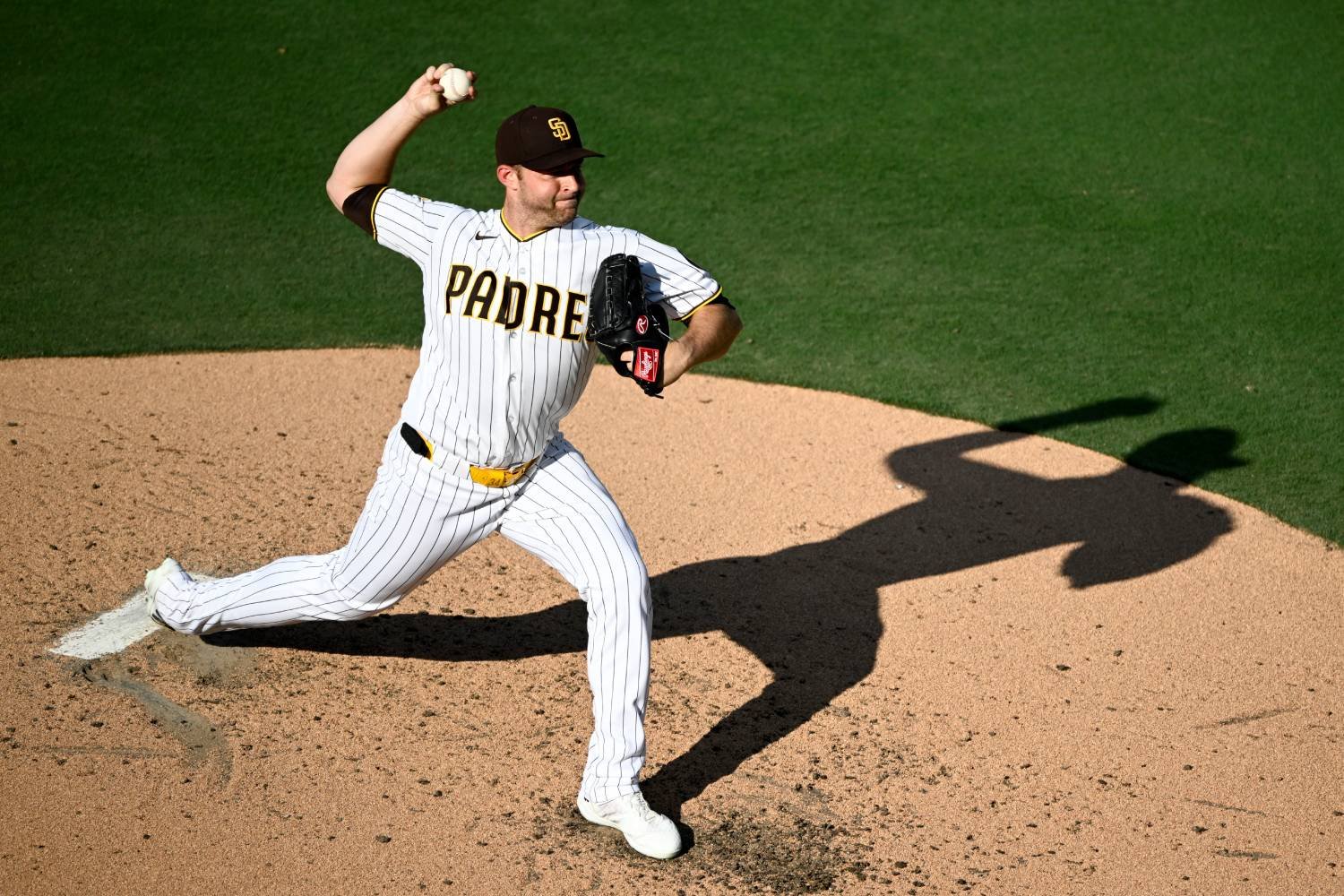 We all know the starting rotation was a trouble spot for the 2026 San Diego Padres. Yes, there were some outstanding performances, but mostly it was a worrisome group throughout the season. Fortunately, the rotation gave the Friars just enough to be able to make a franchise-record third straight postseason appearance. Now, it is time to hand out grades. For this unit, we are only including true starters, not players who started a game or two and then took up shelter in the bullpen. In other words, players need to have been classified as a starter on the roster (or at least were) at some point this season. Previous entries: Grading Every Padres Position Player (2026) Regular-season innings pitched in parentheses. Michael King (185 IP): A- Originally penciled in to be the No. 3 starter entering spring training, the right-hander's role grew in importance with injuries. He eventually stepped up to become the ace of the staff. King tied for the team lead in starts (32) and was far and away No. 1 in innings pitched (career high of 185). His rate stats were down from 2025 (9.2% walk rate from 8.4%, 21% strikeout rate from 24.7%), but he compensated for that with a much higher groundball rate at 44% (up from 38.6%). He also stepped up big-time in the postseason, probably leading him to opt-out of his contract. Walker Buehler (154⅔ IP): B- Padres fans were skeptical of bringing in a former enemy with the Los Angeles Dodgers. But the right-hander changed minds with a solid performance. For a bit, Buehler was the most consistent starter on the team, but that said more of the state of the rotation than it did Buehler. He wasn't spectacular, but he did pretty much what was expected. Randy Vasquez (140⅔ IP): B The right-hander proved a valuable member of the staff, mainly as a starter but then later as a reliever. He had a nice start to the season, then a swoon as the team struggled in June. He seemed to pitch better with a chip on his shoulder, which could come in handy after he was snubbed from the postseason roster when it was clear the Padres needed another effective arm. Barring a crazy offseason, Vasquez should be the team's No. 4 starter next year. Griffin Canning (88⅔ IP): C- As you can see, after the top three, the level of quality drops off precipitously here. The right-hander never got going as a member of the rotation once he returned in May from the Achilles injury sustained last year. Canning made just 11 starts, eventually being relegated to the bullpen. For what it's worth, he did step up his performance in September. German Marquez (53 IP): F Signing the right-hander at the beginning of spring training felt like a good gamble. It turned out not to be. After spending his first 10 seasons with the Colorado Rockies, Marquez made six starts before hitting the injured list with forearm irritation, then came back in July and was better, but then was cut loose in early August. Casey Mize (44⅔ IP): F A curious case that may never be explained. After a really nice start to his season with the Detroit Tigers, Mize came over at the trade deadline and was ineffective with the Padres. A weird ankle injury stumbling down the dugout steps that never truly healed was just one of many bad ingredients in this recipe. Robbie Ray (43 IP): C- The other pitcher the Friars got at the deadline, Ray also didn't live up to his billing, though he wasn't outright terrible like Mize. The left-hander walked nearly as many as he struck out (27, 33) while also giving up his share of hits (39). The 2020 AL Cy Young Award winner didn't feel like a risky proposition when acquired, though he also didn't rise to the occasion. Nick Pivetta (34⅔ IP): B Many wondered if the right-hander's season was over when he left an April start with a flexor strain in his right elbow. Even after having a setback in his first rehab outing, things looked bleak. But the Opening Day starter bounced back and made a surprising return for four September starts, then two more in the postseason. He should be a key part of the team next year if the Padres hold onto him (his player option converted to a club option due to his injury). JP Sears (32⅔ IP): C The other piece the Padres picked up in the Mason Miller trade from 2025, the left-hander was a non-factor except for a couple of emergency starts when the rotation was at a crossroads. The Padres need to figure out if Sears is part of their 2027 plan after he spent most of the season at Triple-A El Paso. Matt Waldron (32⅔ IP): D The knuckleballer's tenure with the Padres came to an end in late July after a couple of injuries, one of which he didn't disclose until his roster spot was on the line. Even when active, he was ineffective. Lucas Giolito (29⅔ IP): D Signed in late April, the right-hander only made five starts and two relief appearances before going on the injured list and never being heard from again. Joe Musgrove (0 IP): C The fan favorite, who was on the mend from Tommy John surgery, appeared on track to be on the Opening Day roster when his arm didn't recover from a 60-pitch debut in an exhibition game. Musgrove was nearing another return when his arm again didn't bounce back. That scuttled his entire regular season, but Java Joe made his triumphant return in the NL Wild Card Series clincher, then two innings in the NL Division Series finale. He has the offseason to figure out how to get his arm in condition to handle a full-season workload again.
-
When I think about grades, I shudder. My own report cards were not good. Yet here I am, handing out my own grades following the 2026 San Diego Padres season. First up are the position players, to be followed by the starting pitchers and relievers. The hitters overcame a rough start in May and June to turn into one of the most dangerous offenses in MLB over the final two months of the regular season. A mix of expectations and production, with a dose of sentimentality for a good story, went into these grades. Getting a C means you were average (what was expected). You get an A if you were phenomenal and an F if... well, you know. Number of regular-season plate appearances in parentheses. Fernando Tatis Jr. (704 PA): A- The superstar right fielder, after jockeying around in the top couple spots in the lineup to begin the season, then famously didn't hit a homer in the Padres' first 55 games. After that, he was phenomenal, particularly at the end of the regular season. He finished with 25 homers and a .289/.358/.470 slash line to be named one of the 10 finalists for the NL's Hank Aaron Award. Tatis had a career-high 38 steals, but was also caught an NL-worst 13 times. He is likely to get down-ballot NL MVP votes. Leading off the first playoff game with a homer and then going deep again in Game 4 of the NL Division Series were electric moments, just like that two-homer, homer-robbing game against the New York Mets. Manny Machado (677 PA): C The Friars' unofficial captain certainly had mixed results. The power was there, hitting 30 homers and driving in 91, but the rest of it was not. His slash line was .217/.303/.407, producing a .711 OPS that was 28 points lower than his previous career worst and gave him an OPS+ of under 100 (97) for the first time since his debut season of 2012 (98). His average was at .166 on June 8 and finally got above .200 on July 12, peaking at .226 on Sept. 8. The power still made him a presence that pitchers had to be wary of, but he also grounded into an NL-worst 22 double plays. Jackson Merrill (664 PA): B The 23-year-old center fielder was one of the best players in MLB following the All-Star break, with the seventh-most hits (77, one less than Tatis) for a .304/.339/.569 line. He also had the fourth-most RBIs in the second half with 49. But that performance was needed to pull his final slash line up to .254/.303/.440; his average was at .198 on June 8. He had a career-high 26 homers and three RBIs shy of the 90 he had as a rookie in 2024. He bounced back nicely after a sophomore slump in 2025 and a rough first half. Xander Bogaerts (606 PA): C- This was the shortstop's worst offensive season of his 14 MLB years. He had a .231/.332/.344 slash line and a 90 OPS+, the lowest mark since his first two MLB seasons (2013-14). His average was the worst of his career. But his 13 homers and 57 RBIs were the second-most of his four years with the Padres. Defensive metrics don't really like Bogaerts that much, but it never felt like he was a detriment. He just turned 34 on Oct. 1. Ty France (500 PA): A+ Considering the first baseman signed a minor-league contract at the beginning of spring training and it felt like he was on the verge of being released before an injury created a roster spot, what the former San Diego State star did this season was incredible. To wit, there was a little chatter of him winning a batting title. He had a .295/.363/.502 line with a career-high 21 homers and 72 RBIs, his third-most, allowing him to post a career-best 139 OPS+. And that's all while playing Gold Glove-caliber defense. He has earned a good contract next season after arguably being the team's MVP. Will it be with the Padres? Jake Cronenworth (425 PA): D The second baseman missed nearly two months with a concussion that didn't show symptoms immediately, affecting his play for another three weeks. He had a .225/.308/.321 slash line this year for a career-worst 77 OPS+, 12 points below than his previous low. He also hit just seven homers in 109 games, his fewest since his 54-game rookie season of 2020. Cronenworth, who has his share of highlights but has never been a metrics darling, is capable enough to play shortstop and first base. His contract ($12.3 million a year through 2030) means he is going to be run out there daily, but the production isn't matching his paycheck. Gavin Sheets (419 PA): C- A nasty injury to his left foot affected the slugging first baseman and occasional left fielder's offense in the second half. After some clutch homers in April, the left-handed hitter had an OPS of just .579 in the second half, including a .181 average with only three homers and eight RBIs. France's emergence hid Sheets' flaws. Freddy Fermin (265 PA): C The Padres had hoped they were getting a little bit of the offense they saw the catcher produce with the Kansas City Royals when they acquired him at the 2025 trade deadline (.268/.314/.383). But that never came to fruition. He has played tremendous defense, but also was sidelined twice with head injuries, one being a concussion. Fermin may very well be the odd man out in the Padres' catching situation for 2027 after generating a slash line of .203/.274/.315. Miguel Andujar (254 PA): C+ When healthy, the designated hitter provided some of what the Padres were expecting. He was a doubles machine, although he didn't mash lefties as he had in the past (.262/.301/.445 vs. righties, .253/.309/.373 vs. lefties this year; .292/.329/.461 vs. lefties in his career). He missed a brief period in June with a hamstring injury, then the rest of the regular season after fracturing his right wrist July 20. He made only four token postseason plate appearances. Luis Campusano (248 PA): B- One of the fun stories of the season was the catcher's progress behind the plate after finally getting regular playing time at the major-league level after being banished to Triple-A in 2025. He had a .265/.363/.433 slash line with eight homers and 30 RBIs, helping to not make the catching position an offensive black hole. A fractured left toe in early May cost him nearly two months, though. Ramon Laureano (206 PA): D Before going down with a right hip injury for the rest of the regular season at the beginning of June, the left fielder had been struggling (.203/.286/.374), although he did have seven homers. Speculation had been that he may have been available for the NL Championship Series had the Padres advanced. Samad Taylor (175 PA): B+ The outfielder-second baseman was another of those great stories from this season. He came up from Triple-A El Paso and was certainly a spark plug when he replaced Nick Castellanos on the roster on June 3. Taylor's combination of speed and defense as well as his overall energy allowed him to become a key part of the offense until he went down with an injury a month later. He more than doubled his MLB career of plate appearances entering this year (83) and probably earned an MLB job with the Padres or elsewhere in 2027. Sung-Mun Song (154 PA): D+ It was a disjointed start to his MLB career. The former Korea Baseball Organization star (45 homers, 46 steals combined in 2024-25) sustained an oblique injury in the offseason, then again during spring training, leading him to begin the season on a rehab assignment at Triple-A El Paso. While showing excellent defensive skill and positional versatility, he never got untracked offensively and had a .191/.291/.244 slash line. Luis Rengifo (145 PA): B Picked up off the scrap heap after a terrible start to his season with the Milwaukee Brewers, he took over as the left fielder when Taylor went down in early July, then proceeded to hit in eight straight games. He was a different version of Taylor, showing a little more pop. A fateful start at second base, his third of the season, resulted in a season-ending knee injury that will keep him out through the first half of 2027. Nick Castellanos (122 PA): F The Padres were hoping to catch lightning in a bottle by picking up Castellanos for the league minimum after being released from his $20 million contract by the Philadelphia Phillies. That lightning never materialized and he didn't play with anyone else in 2026. He was cut loose by the Padres on June 3. Jase Bowen (103 PA): C- The speedy outfielder came up to replace Laureano and made his MLB debut. While speed and defense were his forte, the bat never showed up (.146/.188/.250). Still, he made a handful of highlight-worthy catches. Dustin Harris (100 PA): B+ Another keen pickup, this one during the season. The outfielder was released by the Chicago White Sox (twice) and the Houston Astros before latching on with the Padres on a minor-league deal on July 8. The Friars released him, too, but only for a day in early August, then he was called up less than three weeks later and followed the production trend of Taylor and Rengifo in left field. Rodolfo Duran (91 PA): B+ Having made his pro debut at age 17 in the Philadelphia Phillies' organization, the catcher was called up to make his MLB debut in May as a 28-year-old when Campusano was injured. There wasn't much there offensively, but pitchers raved over his defense and game-calling. He remains on the 40-man roster as valuable catching depth. Austin Hays (61 PA): C+ Added in early August after he was released by the White Sox, the outfielder homered in his first game with the Padres, but that was one of the lone highlights even though he had a .316/.344/.456 slash line in 26 games. Hays disappeared in the postseason. Bryce Johnson (49 PA): F The toolsy center fielder was surprisingly released in June following a .178/.229/.222 start to his season. He was sent to Triple-A El Paso, but never got another chance with the Padres after a breakthrough 2025. Will Wagner (45 PA): C- The infielder, acquired from the Toronto Blue Jays at the 2025 trade deadline for catcher Brandon Valenzuela, had one stint with the Padres and slashed .257/.422/.286 in 16 games, mainly as a DH. Ethan Salas (40 PA): B+ The 20-year-old (and Padres Mission No. 1 prospect) was called up to make his MLB debut when rosters expanded Sept. 1. The Padres slowly built up his playing time over the final month and he showed the promise (.256/.275/.462, two homers, five RBIs) that will make him the Friars' No. 1 catcher to begin 2027. Nick Solak (10 PA): F Frankly a surprising call-up from Triple-A El Paso when Andujar was injured in June with his hamstring injury. The 31-year-old was designated for assignment when Andujar came back and wound up back at El Paso. Blake Hunt (3 PA): C Just like his Triple-A catching mate Duran, Hunt came up to make his MLB debut when Fermin went down with a concussion. The nine-year minor-leaguer appeared in just two games and went 0-for-3 in his lone start. He was DFA'd and released late in the Triple-A season. Gage Workman (3 PA): C Acquired in the Casey Mize deal with the Detroit Tigers, the third baseman who can also play in the outfield saw action in just two games, with a double in three at-bats, after the trade before being sent down to Triple-A El Paso. The former Rule 5 pick still has minor-league options left. Mason McCoy (0 PA): C Came up for a weekend in September when France went on the paternity list, but didn't play. View full article
-
Grading Every Padres Player From 2026: Position Players
Steve Drumwright posted an article in Padres
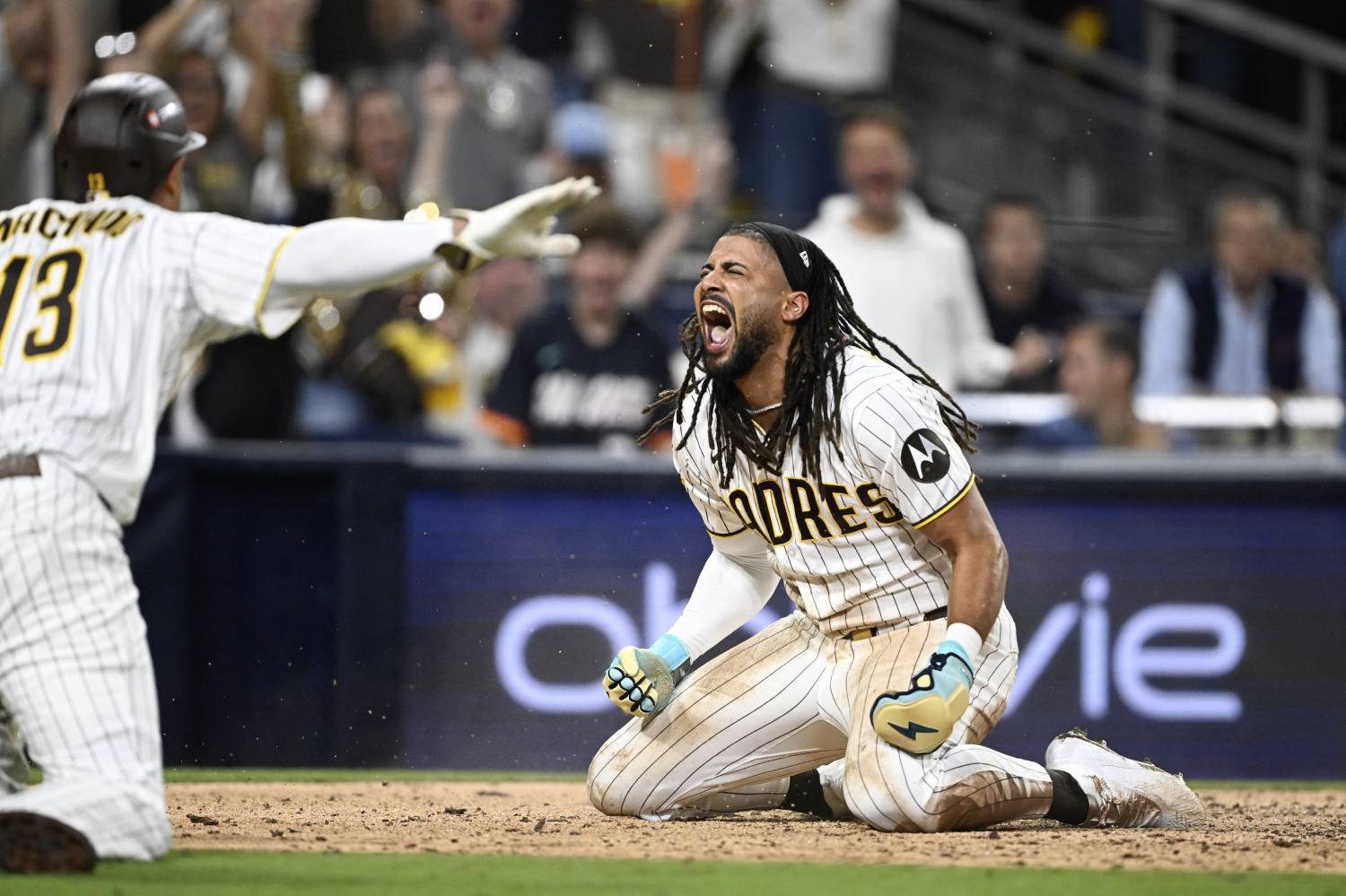 When I think about grades, I shudder. My own report cards were not good. Yet here I am, handing out my own grades following the 2026 San Diego Padres season. First up are the position players, to be followed by the starting pitchers and relievers. The hitters overcame a rough start in May and June to turn into one of the most dangerous offenses in MLB over the final two months of the regular season. A mix of expectations and production, with a dose of sentimentality for a good story, went into these grades. Getting a C means you were average (what was expected). You get an A if you were phenomenal and an F if... well, you know. Number of regular-season plate appearances in parentheses. Fernando Tatis Jr. (704 PA): A- The superstar right fielder, after jockeying around in the top couple spots in the lineup to begin the season, then famously didn't hit a homer in the Padres' first 55 games. After that, he was phenomenal, particularly at the end of the regular season. He finished with 25 homers and a .289/.358/.470 slash line to be named one of the 10 finalists for the NL's Hank Aaron Award. Tatis had a career-high 38 steals, but was also caught an NL-worst 13 times. He is likely to get down-ballot NL MVP votes. Leading off the first playoff game with a homer and then going deep again in Game 4 of the NL Division Series were electric moments, just like that two-homer, homer-robbing game against the New York Mets. Manny Machado (677 PA): C The Friars' unofficial captain certainly had mixed results. The power was there, hitting 30 homers and driving in 91, but the rest of it was not. His slash line was .217/.303/.407, producing a .711 OPS that was 28 points lower than his previous career worst and gave him an OPS+ of under 100 (97) for the first time since his debut season of 2012 (98). His average was at .166 on June 8 and finally got above .200 on July 12, peaking at .226 on Sept. 8. The power still made him a presence that pitchers had to be wary of, but he also grounded into an NL-worst 22 double plays. Jackson Merrill (664 PA): B The 23-year-old center fielder was one of the best players in MLB following the All-Star break, with the seventh-most hits (77, one less than Tatis) for a .304/.339/.569 line. He also had the fourth-most RBIs in the second half with 49. But that performance was needed to pull his final slash line up to .254/.303/.440; his average was at .198 on June 8. He had a career-high 26 homers and three RBIs shy of the 90 he had as a rookie in 2024. He bounced back nicely after a sophomore slump in 2025 and a rough first half. Xander Bogaerts (606 PA): C- This was the shortstop's worst offensive season of his 14 MLB years. He had a .231/.332/.344 slash line and a 90 OPS+, the lowest mark since his first two MLB seasons (2013-14). His average was the worst of his career. But his 13 homers and 57 RBIs were the second-most of his four years with the Padres. Defensive metrics don't really like Bogaerts that much, but it never felt like he was a detriment. He just turned 34 on Oct. 1. Ty France (500 PA): A+ Considering the first baseman signed a minor-league contract at the beginning of spring training and it felt like he was on the verge of being released before an injury created a roster spot, what the former San Diego State star did this season was incredible. To wit, there was a little chatter of him winning a batting title. He had a .295/.363/.502 line with a career-high 21 homers and 72 RBIs, his third-most, allowing him to post a career-best 139 OPS+. And that's all while playing Gold Glove-caliber defense. He has earned a good contract next season after arguably being the team's MVP. Will it be with the Padres? Jake Cronenworth (425 PA): D The second baseman missed nearly two months with a concussion that didn't show symptoms immediately, affecting his play for another three weeks. He had a .225/.308/.321 slash line this year for a career-worst 77 OPS+, 12 points below than his previous low. He also hit just seven homers in 109 games, his fewest since his 54-game rookie season of 2020. Cronenworth, who has his share of highlights but has never been a metrics darling, is capable enough to play shortstop and first base. His contract ($12.3 million a year through 2030) means he is going to be run out there daily, but the production isn't matching his paycheck. Gavin Sheets (419 PA): C- A nasty injury to his left foot affected the slugging first baseman and occasional left fielder's offense in the second half. After some clutch homers in April, the left-handed hitter had an OPS of just .579 in the second half, including a .181 average with only three homers and eight RBIs. France's emergence hid Sheets' flaws. Freddy Fermin (265 PA): C The Padres had hoped they were getting a little bit of the offense they saw the catcher produce with the Kansas City Royals when they acquired him at the 2025 trade deadline (.268/.314/.383). But that never came to fruition. He has played tremendous defense, but also was sidelined twice with head injuries, one being a concussion. Fermin may very well be the odd man out in the Padres' catching situation for 2027 after generating a slash line of .203/.274/.315. Miguel Andujar (254 PA): C+ When healthy, the designated hitter provided some of what the Padres were expecting. He was a doubles machine, although he didn't mash lefties as he had in the past (.262/.301/.445 vs. righties, .253/.309/.373 vs. lefties this year; .292/.329/.461 vs. lefties in his career). He missed a brief period in June with a hamstring injury, then the rest of the regular season after fracturing his right wrist July 20. He made only four token postseason plate appearances. Luis Campusano (248 PA): B- One of the fun stories of the season was the catcher's progress behind the plate after finally getting regular playing time at the major-league level after being banished to Triple-A in 2025. He had a .265/.363/.433 slash line with eight homers and 30 RBIs, helping to not make the catching position an offensive black hole. A fractured left toe in early May cost him nearly two months, though. Ramon Laureano (206 PA): D Before going down with a right hip injury for the rest of the regular season at the beginning of June, the left fielder had been struggling (.203/.286/.374), although he did have seven homers. Speculation had been that he may have been available for the NL Championship Series had the Padres advanced. Samad Taylor (175 PA): B+ The outfielder-second baseman was another of those great stories from this season. He came up from Triple-A El Paso and was certainly a spark plug when he replaced Nick Castellanos on the roster on June 3. Taylor's combination of speed and defense as well as his overall energy allowed him to become a key part of the offense until he went down with an injury a month later. He more than doubled his MLB career of plate appearances entering this year (83) and probably earned an MLB job with the Padres or elsewhere in 2027. Sung-Mun Song (154 PA): D+ It was a disjointed start to his MLB career. The former Korea Baseball Organization star (45 homers, 46 steals combined in 2024-25) sustained an oblique injury in the offseason, then again during spring training, leading him to begin the season on a rehab assignment at Triple-A El Paso. While showing excellent defensive skill and positional versatility, he never got untracked offensively and had a .191/.291/.244 slash line. Luis Rengifo (145 PA): B Picked up off the scrap heap after a terrible start to his season with the Milwaukee Brewers, he took over as the left fielder when Taylor went down in early July, then proceeded to hit in eight straight games. He was a different version of Taylor, showing a little more pop. A fateful start at second base, his third of the season, resulted in a season-ending knee injury that will keep him out through the first half of 2027. Nick Castellanos (122 PA): F The Padres were hoping to catch lightning in a bottle by picking up Castellanos for the league minimum after being released from his $20 million contract by the Philadelphia Phillies. That lightning never materialized and he didn't play with anyone else in 2026. He was cut loose by the Padres on June 3. Jase Bowen (103 PA): C- The speedy outfielder came up to replace Laureano and made his MLB debut. While speed and defense were his forte, the bat never showed up (.146/.188/.250). Still, he made a handful of highlight-worthy catches. Dustin Harris (100 PA): B+ Another keen pickup, this one during the season. The outfielder was released by the Chicago White Sox (twice) and the Houston Astros before latching on with the Padres on a minor-league deal on July 8. The Friars released him, too, but only for a day in early August, then he was called up less than three weeks later and followed the production trend of Taylor and Rengifo in left field. Rodolfo Duran (91 PA): B+ Having made his pro debut at age 17 in the Philadelphia Phillies' organization, the catcher was called up to make his MLB debut in May as a 28-year-old when Campusano was injured. There wasn't much there offensively, but pitchers raved over his defense and game-calling. He remains on the 40-man roster as valuable catching depth. Austin Hays (61 PA): C+ Added in early August after he was released by the White Sox, the outfielder homered in his first game with the Padres, but that was one of the lone highlights even though he had a .316/.344/.456 slash line in 26 games. Hays disappeared in the postseason. Bryce Johnson (49 PA): F The toolsy center fielder was surprisingly released in June following a .178/.229/.222 start to his season. He was sent to Triple-A El Paso, but never got another chance with the Padres after a breakthrough 2025. Will Wagner (45 PA): C- The infielder, acquired from the Toronto Blue Jays at the 2025 trade deadline for catcher Brandon Valenzuela, had one stint with the Padres and slashed .257/.422/.286 in 16 games, mainly as a DH. Ethan Salas (40 PA): B+ The 20-year-old (and Padres Mission No. 1 prospect) was called up to make his MLB debut when rosters expanded Sept. 1. The Padres slowly built up his playing time over the final month and he showed the promise (.256/.275/.462, two homers, five RBIs) that will make him the Friars' No. 1 catcher to begin 2027. Nick Solak (10 PA): F Frankly a surprising call-up from Triple-A El Paso when Andujar was injured in June with his hamstring injury. The 31-year-old was designated for assignment when Andujar came back and wound up back at El Paso. Blake Hunt (3 PA): C Just like his Triple-A catching mate Duran, Hunt came up to make his MLB debut when Fermin went down with a concussion. The nine-year minor-leaguer appeared in just two games and went 0-for-3 in his lone start. He was DFA'd and released late in the Triple-A season. Gage Workman (3 PA): C Acquired in the Casey Mize deal with the Detroit Tigers, the third baseman who can also play in the outfield saw action in just two games, with a double in three at-bats, after the trade before being sent down to Triple-A El Paso. The former Rule 5 pick still has minor-league options left. Mason McCoy (0 PA): C Came up for a weekend in September when France went on the paternity list, but didn't play.
-
 The San Diego Padres have tapped the international market once again. Right-hander Tatsuya Nogami has signed a minor-league contract with the Padres, according to his transactions page. Nogami is a 20-year-old from Japan. The Padres still have money in their international budget for 2026. Not much is known about Nogami. There is some info about a player of the same name that seems to line up with Nogami on this page, which has been translated. Nogami is 6-foot-2 and 175 pounds who was up to 90 mph in high school. He throws a four-seamer, cutter, slider, curve and splitter. Certainly a player who will need some development. The signing period runs through Dec. 15. Next year's signing period begins Jan. 15, although there is a possibility that is affected by the collective-bargaining agreement negotiations as an international draft is possible.
-
The San Diego Padres have tapped the international market once again. Right-hander Tatsuya Nogami has signed a minor-league contract with the Padres, according to his transactions page. Nogami is a 20-year-old from Japan. The Padres still have money in their international budget for 2026. Not much is known about Nogami. There is some info about a player of the same name that seems to line up with Nogami on this page, which has been translated. Nogami is 6-foot-2 and 175 pounds who was up to 90 mph in high school. He throws a four-seamer, cutter, slider, curve and splitter. Certainly a player who will need some development. The signing period runs through Dec. 15. Next year's signing period begins Jan. 15, although there is a possibility that is affected by the collective-bargaining agreement negotiations as an international draft is possible. View full rumor

