


Joe Naiman
-
Posts
20 -
Joined
-
Last visited
Content Type
Profiles
San Diego Padres Videos
2026 San Diego Padres Top Prospects Ranking
San Diego Padres Free Agent & Trade Rumors, Notes, & Tidbits
Guides & Resources
2025 San Diego Padres Draft Pick Tracker
News
2026 San Diego Padres Draft Tracker: Picks & Bonuses
Forums
Blogs
Events
Store
Downloads
Gallery
Everything posted by Joe Naiman
-
My appreciation of Mason Miller goes beyond his activity as the San Diego Padres’ closer. I am writing this in the first person because this is based on my own experience rather than on following baseball or studying baseball history. My son is now 35. When I was 35 and my son, Cliff, was eight, he was diagnosed with diabetes. Mason Miller is the latest athletic role model for diabetics and their families. When I received the phone call in August 1999 that Cliff was diabetic and would be for the rest of his life, it was pretty scary. During his time in the hospital I learned more about juvenile diabetes, and I was relieved that if he took his insulin shots and otherwise took care of himself, he could live a normal life. Cliff didn’t settle for normal, but he hasn’t had diabetes-related health problems and his condition hasn’t limited his activities. By the time Cliff was released from the hospital, I considered myself fortunate that he didn’t have anything terminal or debilitating, but I still needed inspirations. I knew that Eddie Williams, who had been an infielder with the Padres, was an insulin-dependent diabetic, and during Cliff’s stay in the hospital, Eddie Williams was one of my inspirations. The Padres played their home games at Qualcomm Stadium at the time, and the suburban weekly papers were given season press credentials. I also knew that Chicago Cubs announcer Ron Santo was diabetic. The Cubs had a midweek series in San Diego which began the day Cliff was released from the hospital. The timing was ideal to obtain some assurances from Ron Santo. Ron Santo was on the field prior to the game, and there turned out to be an added bonus. I began following the Padres in 1972 when I was eight years old and Nate Colbert was the team’s star. I had never previously met Nate Colbert, even though 1999 was my fifth year with a season press credential. Ron was talking to Nate on the field, so after 27 years I finally was able to meet my first baseball hero. Ron and I had chatted in the press box during previous seasons. I mentioned the situation with my son to Ron, and he was very encouraging. Nate noted that one of the children in his baseball camp was diabetic. Nate also said that diabetes saved his 95‑year-old father’s life, as his father eliminated many of his unhealthy habits. Since the Cubs were in town for a three-game series, the following day I had my son and I sign a thank-you card for Ron Santo, and I gave it to Ron on the final day of the series. When the Cubs were in town the following year Ron and I spoke about my son and about the progress of curing diabetes. Catfish Hunter, who was diagnosed with diabetes late in his playing career, passed away about a month after my son was initially diagnosed. Hockey star Bobby Clarke was diagnosed with diabetes in his childhood and was in inspiration to diabetics before my son was born. Football quarterback Wade Wilson was diagnosed with diabetes early in his professional career but played his final game before my son was diagnosed. Basketball player Chris Dudley—who played for a San Diego County high school—was the diabetic athletic role model in 1999. By the time Chris Dudley retired, Luke Branquinho was qualifying for the National Finals Rodeo. Ron Santo passed away in December 2010. A year later, the Veterans Committee elected him to the Baseball Hall of Fame. On the same day he was elected, Luke Branquinho, who competed with an insulin pump during his rodeo career, won the Steer Wrestling go-round at the National Finals Rodeo and it can thus be said that December 5, 2011 was a highlight for families coping with diabetes. Denver Broncos quarterback Jay Cutler was diagnosed with diabetes after his second National Football League season, which added Cutler to the list of diabetic role models. Cutler was with the Chicago Bears in 2011 but did not play in the Bears’ game the day before Ron Santo’s election and Luke Branquinho’s go-round win, as two weeks earlier he broke his thumb in the Bears’ win over the San Diego Chargers and was out for the remainder of the season. That win gave the Bears a 7-3 record, but they lost their next five games before a victory in their season finale gave the team an 8-8 record. Branquinho finished that year’s National Finals Rodeo as the Steer Wrestling world champion, giving him his third world championship. He added a fourth world championship the following year. Branquinho and Cutler, along with singer Bret Michaels, were inspirations to diabetics and their families in those years. In July 2014, Branquinho underwent surgery and was out of competition until November. That made Cutler the premier diabetic athlete and role model for that part of the year. The 15 cowboys in each event with the highest earnings as of the regular season ending September 30 qualify for the National Finals Rodeo, and despite missing two months Branquinho still qualified for NFR in 2014. He had been leading the world standings prior to his injury that year. Earnings from placing in NFR go-rounds and the average (aggregate) are added to regular-season earnings to determine the world champion. By the fourth go-round of 2014 Branquinho had regained the lead in the standings. Although Branquinho did not win a go-round outright (he split first and second in one) he won the average and his fifth world championship. I was at the Thomas and Mack Center in Las Vegas the Saturday night Branquinho sealed his 2014 championship. I returned to San Diego the following night, and the day after that the Bears were on Monday Night Football and I was at the bar where I watched those games. After an interception Jay Cutler threw I remarked that it was a good thing Luke Branquinho won NFR because Jay Cutler wasn’t a very inspirational role model for diabetics that night. Cutler still had a career high completion percentage in 2014, and by the time he retired in 2017 his NFL passes had gained more than 35,000 yards. Branquinho would win his final world championship in 2014 and would make his final NFR appearance the following year. Another diabetic steer wrestler, Matt Reeves, finished second in the world standings in both 2013 and 2016. In 2019 Reeves, who was 41 at the time, won the average at NFR and finished sixth in the standings. Reeves has not competed in rodeo since last year’s Texas circuit finals. Michaels has not released a studio album either with Poison or as a solo artist since 2013. So, where does that leave us? Obviously, Mason Miller is the current inspiration and role model for diabetics and their families. Diagnosed with Type 1 diabetes at 20 years old, he's now the best closer in baseball just eight years later. As long as he continues to dominate for the Padres, this community will always have someone to look up to. View full article
-
Mason Miller's Inspiration Goes Far Beyond His Work on the Mound
Joe Naiman posted an article in Padres
 My appreciation of Mason Miller goes beyond his activity as the San Diego Padres’ closer. I am writing this in the first person because this is based on my own experience rather than on following baseball or studying baseball history. My son is now 35. When I was 35 and my son, Cliff, was eight, he was diagnosed with diabetes. Mason Miller is the latest athletic role model for diabetics and their families. When I received the phone call in August 1999 that Cliff was diabetic and would be for the rest of his life, it was pretty scary. During his time in the hospital I learned more about juvenile diabetes, and I was relieved that if he took his insulin shots and otherwise took care of himself, he could live a normal life. Cliff didn’t settle for normal, but he hasn’t had diabetes-related health problems and his condition hasn’t limited his activities. By the time Cliff was released from the hospital, I considered myself fortunate that he didn’t have anything terminal or debilitating, but I still needed inspirations. I knew that Eddie Williams, who had been an infielder with the Padres, was an insulin-dependent diabetic, and during Cliff’s stay in the hospital, Eddie Williams was one of my inspirations. The Padres played their home games at Qualcomm Stadium at the time, and the suburban weekly papers were given season press credentials. I also knew that Chicago Cubs announcer Ron Santo was diabetic. The Cubs had a midweek series in San Diego which began the day Cliff was released from the hospital. The timing was ideal to obtain some assurances from Ron Santo. Ron Santo was on the field prior to the game, and there turned out to be an added bonus. I began following the Padres in 1972 when I was eight years old and Nate Colbert was the team’s star. I had never previously met Nate Colbert, even though 1999 was my fifth year with a season press credential. Ron was talking to Nate on the field, so after 27 years I finally was able to meet my first baseball hero. Ron and I had chatted in the press box during previous seasons. I mentioned the situation with my son to Ron, and he was very encouraging. Nate noted that one of the children in his baseball camp was diabetic. Nate also said that diabetes saved his 95‑year-old father’s life, as his father eliminated many of his unhealthy habits. Since the Cubs were in town for a three-game series, the following day I had my son and I sign a thank-you card for Ron Santo, and I gave it to Ron on the final day of the series. When the Cubs were in town the following year Ron and I spoke about my son and about the progress of curing diabetes. Catfish Hunter, who was diagnosed with diabetes late in his playing career, passed away about a month after my son was initially diagnosed. Hockey star Bobby Clarke was diagnosed with diabetes in his childhood and was in inspiration to diabetics before my son was born. Football quarterback Wade Wilson was diagnosed with diabetes early in his professional career but played his final game before my son was diagnosed. Basketball player Chris Dudley—who played for a San Diego County high school—was the diabetic athletic role model in 1999. By the time Chris Dudley retired, Luke Branquinho was qualifying for the National Finals Rodeo. Ron Santo passed away in December 2010. A year later, the Veterans Committee elected him to the Baseball Hall of Fame. On the same day he was elected, Luke Branquinho, who competed with an insulin pump during his rodeo career, won the Steer Wrestling go-round at the National Finals Rodeo and it can thus be said that December 5, 2011 was a highlight for families coping with diabetes. Denver Broncos quarterback Jay Cutler was diagnosed with diabetes after his second National Football League season, which added Cutler to the list of diabetic role models. Cutler was with the Chicago Bears in 2011 but did not play in the Bears’ game the day before Ron Santo’s election and Luke Branquinho’s go-round win, as two weeks earlier he broke his thumb in the Bears’ win over the San Diego Chargers and was out for the remainder of the season. That win gave the Bears a 7-3 record, but they lost their next five games before a victory in their season finale gave the team an 8-8 record. Branquinho finished that year’s National Finals Rodeo as the Steer Wrestling world champion, giving him his third world championship. He added a fourth world championship the following year. Branquinho and Cutler, along with singer Bret Michaels, were inspirations to diabetics and their families in those years. In July 2014, Branquinho underwent surgery and was out of competition until November. That made Cutler the premier diabetic athlete and role model for that part of the year. The 15 cowboys in each event with the highest earnings as of the regular season ending September 30 qualify for the National Finals Rodeo, and despite missing two months Branquinho still qualified for NFR in 2014. He had been leading the world standings prior to his injury that year. Earnings from placing in NFR go-rounds and the average (aggregate) are added to regular-season earnings to determine the world champion. By the fourth go-round of 2014 Branquinho had regained the lead in the standings. Although Branquinho did not win a go-round outright (he split first and second in one) he won the average and his fifth world championship. I was at the Thomas and Mack Center in Las Vegas the Saturday night Branquinho sealed his 2014 championship. I returned to San Diego the following night, and the day after that the Bears were on Monday Night Football and I was at the bar where I watched those games. After an interception Jay Cutler threw I remarked that it was a good thing Luke Branquinho won NFR because Jay Cutler wasn’t a very inspirational role model for diabetics that night. Cutler still had a career high completion percentage in 2014, and by the time he retired in 2017 his NFL passes had gained more than 35,000 yards. Branquinho would win his final world championship in 2014 and would make his final NFR appearance the following year. Another diabetic steer wrestler, Matt Reeves, finished second in the world standings in both 2013 and 2016. In 2019 Reeves, who was 41 at the time, won the average at NFR and finished sixth in the standings. Reeves has not competed in rodeo since last year’s Texas circuit finals. Michaels has not released a studio album either with Poison or as a solo artist since 2013. So, where does that leave us? Obviously, Mason Miller is the current inspiration and role model for diabetics and their families. Diagnosed with Type 1 diabetes at 20 years old, he's now the best closer in baseball just eight years later. As long as he continues to dominate for the Padres, this community will always have someone to look up to.
 -
Currently, the San Diego Padres’ top pitching prospect is Kruz Schoolcraft, who was taken as the team’s first pick in the 2025 draft. It is theoretically possible that Schoolcraft will join others in playing for the Padres the year after he was drafted, although recent trends have limited the quantity of those players in the past 40 years. The 40-year timeframe is not arbitrary. Some players who reached the Padres the year after being drafted were taken in the January draft and had a full year in the minors before being on the Friars’ roster in their second professional season, but the January draft has not occurred since 1986. A reduction in the number of allowed September call-ups may also work against Schoolcraft making a September roster, and even the 1976 precedent of not calling up outfielder Gene Richards so that the Padres wouldn’t have to utilize an option year creates the possibility that the franchise will save an option year rather than call up Schoolcraft this year. Three draft picks who played for the Padres either that year or the following year are now in the Baseball Hall of Fame. Dave Winfield was the first of those followed by Ozzie Smith and Tony Gwynn. Only four players since Gwynn have played for the Padres by the end of the season after they were drafted. The National League granted San Diego and Montreal expansion franchises in May 1968. The teams participated in the June 1968 draft but did not have choices during the first three rounds. The only 1968 Padres draft pick who subsequently played for San Diego, Dave Robinson, made his major league debut in September 1970. The Padres’ final pick in the June 1968 draft, third baseman Earl Altshuler, opted to play at UCLA instead of signing with the Padres. He was not drafted out of college even though he set the UCLA single-season hits record, and Altshuler did not play professional baseball. However, in 1999 he became the Padres’ batting practice pitcher, creating a three-decade gap between when he was drafted and when he joined the Padres. Randy Elliott, the Padres’ only 1969 draft pick to play for San Diego, joined the team in 1972. San Diego had the first overall pick of the June 1970 draft and chose catcher Mike Ivie. He joined the Padres in September 1971 but did not subsequently return to the major league team until 1974. In 1971 the Padres selected third baseman Dave Hilton in the regular phase of the January draft, outfielder Johnny Grubb in the supplemental phase of the January draft, and pitcher Jay Franklin in the first round of the June draft. During the June draft, the team also picked pitcher Dave Friesleben in the fifth round, catcher Joe Goddard in the eighth round, and pitcher Mike Caldwell in the 12th round. Franklin and Caldwell were both September 1971 call-ups. Franklin pitched three games for the Padres that season and never returned to the majors. Caldwell never played in the minors again, staying with the Padres through the 1973 season before being traded to the Giants for two players including Willie McCovey and remaining in the majors until 1984. Catcher injuries in 1972 caused the Padres to call up Goddard at the end of July, and he returned to the major league club during the September roster expansion. He had a .200 batting average in 12 games. He did not return to the majors, concluded his Padres organization minor league career in 1976, and became a successful high school coach in West Virginia. Friesleben was one of the 1972 September callups, but in the era of starters expected to pitch complete games and relief pitchers hurling multiple innings he did not appear in any games with the big league club that year. After a 40-20 record in his first three minor league seasons and a 2-1 record with Hawaii in 1974 Friesleben made his major league debut in April 1974 and stayed with the Padres through the end of 1975. He had 16 Pacific Coast League starts in 1976 and 1977 while spending the rest of the time with San Diego, and he began 1978 with the Padres before being traded that June. Hilton and Grubb both made their debuts in September 1972. Hilton would play in a total of 161 games with the Padres. Grubb, who batted .308 in Class A in 1971 and .296 in Class AA in 1972, would remain with the Padres until a trade after the 1976 season. His career .286 Padres batting average at the time of the trade was the highest in Padres history at the time. Grubb closed out his major league career with the 1987 Detroit Tigers and appeared in 1,424 major league games including 513 with San Diego. The Padres have had three players named Dave Roberts. The second of those, an infielder who played collegiate baseball at Oregon, was the first overall pick of the June 1972 draft. Roberts went directly to the Padres, batted .244 in 100 Padres games, split multiple subsequent seasons between the Padres and Hawaii, and batted .240 in 509 Padres games through 1978 before playing for three other teams from 1979 to 1982. Pitcher Rich Troedson was the Padres’ first pick in the January 1972 supplemental draft. He had an 8-5 record in Class A that year but began 1973 on the major league roster. Troedson pitched 65 games for the Padres in 1973 and 1974 including 19 starts. He had an 8-10 record with a 4.74 earned run average. In the fifth round of the June 1972 draft the Padres selected pitcher Randy Jones. He was 4-5 in his minor league outings during 1972 although with a 2.71 ERA. After an 8-1 start with a 2.01 ERA in the Class AA portion of his 1973 season Jones was brought up to the Padres that June. He remained with the Padres until being traded after the 1980 season. In 1975 Jones won 20 games and led the National League with a 2.24 ERA. He won the Cy Young Award in 1976 when his 22 wins (not including his victory in the All-Star Game), 25 complete games, and 315 1/3 innings pitched all led the National League. When he was traded his 92 career victories were the Padres’ best total in history. Winfield was taken in the first round of the June 1973 draft and joined the Padres after signing. He remained with the Padres until becoming a free agent after the 1980 season. He hit 154 home runs in his 1,117 games with San Diego, batted .284 with two seasons above .300, led the National League with 118 runs batted in during 1979 (while also leading the league with 24 intentional walks), won two Gold Glove awards, and was selected to the All-Star Game four times. Winfield concluded his 2,973-game major league career in 1995. In the 13th round of the June 1973 draft the Padres selected pitcher Joe McIntosh. He was 8-6 with a 2.44 ERA in Class A that year. McIntosh began 1974 on the Padres’ roster but spent most of the season at Hawaii. He was with San Diego for all of 1975 and was traded after that season so that the Padres could acquire Doug Rader. McIntosh was 8-15 with a 3.69 ERA in his 33 starts and 14 relief appearances with the Padres. The Padres had the first overall pick in the 1974 draft and selected University of Rhode Island shortstop Bill Almon. He played in 39 Class AA and Class AAA games that year before joining the Padres as a September callup. He was also a 1975 and 1976 September callup before becoming the Padres’ regular shortstop in 1977. Smith’s ascension to the majors moved Almon to other infield positions for 1978 and 1979 before a trade sent Almon to the Montreal Expos. Almon played in the majors through 1988, and his 1,236 career games included 429 with the Padres. Richards was the first overall choice in the January 1975 draft. He spent that year with the Padres’ Class A team in Reno and led the California League with a .381 batting average, 148 runs scored, 191 hits, 85 stolen bases, a .499 on-base percentage (his 116 walks ranked second), and a .551 slugging average (he ranked third with 29 doubles, shared second with ten triples, and homered 12 times). In 1976 Richards led the Pacific Coast League with 173 hits while also batting .331 for Hawaii and scoring 102 times. Although the Padres decided not to waste an option on him by calling him up in late 1976, he was the 1977 Opening Day starter in left field. Richards would would spend seven seasons with the Padres and batted .291 in 939 games with 994 hits including 63 triples, 484 runs scored, and 242 stolen bases. The September 1976 call-ups included pitcher Bob Owchinko, who was taken in the first round of the June 1976 draft. He was 6-2 in 13 Class AA starts with Amarillo before starting two games for the Padres. Owchinko began 1977 in the Pacific Coast League before a 5-1 record and a 1.43 ERA with Hawaii led to another call-up to San Diego, where he remained until being traded to Cleveland for Jerry Mumphrey in February 1980. Owchinko pitched 526 innings for the Padres and had a 25-39 record with a 4.00 ERA in 83 starts and 27 relief outings. In the first round of the January 1976 draft the Padres selected pitcher Bob Shirley. He was 14-10 in 29 minor league starts that year. Shirley made the Padres’ 1977 Opening Day roster and was 12-18 with a 3.70 ERA that year. His wins, ERA, 35 starts, 214 innings pitched, and 146 strikeouts all led the team while Owchinko was second with nine wins, a 4.45 ERA, and 170 innings and Owchinko led the team with three complete games while posting the Padres’ only two shutouts that year. Before being sent to the St. Louis Cardinals in an 11-player December 1980 trade Shirley pitched in 197 Padres games, starting 92 of them, and had a 39-57 record with a 3.58 ERA in 722 innings pitched. In the June 1977 draft the Padres chose outfielder Brian Greer in the first round, infielder Barry Evans in the second round, and Smith in the fourth round. Although Greer batted only .188 in 50 games with Class A Walla Walla that year, he joined the Padres that September. In his only 1977 major league appearance he struck out as a pinch-hitter September 13. Greer returned to the Padres for four September 1979 games, going hitless in three September 4 plate appearances while playing defense only in the other three contests. Evans batted .358 with Walla Walla in 1977, which ranked third among Northwest League leaders, while leading the circuit with 97 hits. He spent most of 1978 with Amarillo and batted .305 in Class AA. Evans joined the Padres that September and batted .267 in 24 games. Before being sold to the New York Yankees in February 1982 Evans played in 207 games for the Padres, batted .251, and played all four infield positions. Smith batted .303 for Walla Walla in 1977 while leading the Northwest League with 69 runs and with 30 stolen bases. His 87 league hits trailed only Evans. The performance earned Smith a non-roster invitation to spring training for 1978, and that performance made him the Padres’ Opening Day shortstop that year as well as for his other three seasons with the Padres. Although Smith only batted .258 in 1978 he stole 40 bases and led the National League with 28 sacrifice hits. He was second in the league with 548 assists but would lead the league in assists his other three years with the Padres. In 1980 he set a major league record with 621 assists while also leading the league with 288 putouts and 113 double plays. Before being traded to the Cardinals in December 1981 Smith won two Gold Glove awards and stole 147 bases in his 583 games with the Padres. He spent another 15 seasons with St. Louis. In the sixth round of the June 1978 draft the Padres picked infielder Tim Flannery. He batted .350 in 84 games with Reno that year. In 1979 Flannery batted .345 for Amarillo while sharing the Texas League lead with 181 hits. That led to a September callup with the Padres. He batted .154 in 22 games, leading to a 1980 start with Hawaii prior to a mid-season callup. He split 1981 between Hawaii and San Diego but returned to the minors again only for a 1988 rehabilitation assignment. When Flannery retired after the 1989 season his 11 seasons with the Padres were a team record. During 972 regular-season Padres games Flannery batted .255 with 631 hits. He may be best known for another at-bat which didn’t produce a hit. Flannery pinch-hit in the seventh inning of the fifth game of the 1984 National League playoffs and hit the ground ball Leon Durham was unable to handle. The play was ruled an error and Flannery was not credited with a run batted in, but the tying run scored and Flannery subsequently became the go-ahead run in the 6-3 victory which sent the Padres to their first World Series. In the June 1981 draft the Padres selected outfielder Kevin McReynolds in the first round, pitcher Bill Long in the second round, and Gwynn in the third round. A seven-player trade in December 1984 sent Long to the Chicago White Sox, and he made his debut the following year. McReynolds did not play professionally in 1981, batted .368 with Reno and Amarillo in 1982, and started 1983 with Las Vegas in the Pacific Coast League before a June promotion to the Padres. Gwynn batted .375 with Walla Walla and Amarillo in 1981 and started 1982 with Las Vegas. He first played for the Padres on July 19, 1982, broke Flannery’s team record for seasons played in 1993, and retired after the 2001 season with 3,141 hits, a .338 batting average, eight National League batting championships, and several other distinctions in his 20-year Padres career. Ivie, Roberts, and Almon were first overall picks, and team improvement kept the Padres from having that dubious distinction until 1988 when the team selected pitcher Andy Benes to start the draft. Benes pitched in the Olympic Games and elsewhere for Team USA rather than in the minors following the 1988 college season. Wichita was the Padres’ Texas League affiliate in 1989, and Benes was 8-4 with a 2.16 ERA there before joining the Las Vegas rotation. After five Pacific Coast League starts he joined the Padres in August 1989 and had a 6-3 record with a 3.51 ERA in ten Padres starts that year. He had double-digit wins the next four seasons. The 1995 trade deadline ended his Padres career although not his 14-year major league career. He was 69-75 with a 3.57 ERA in 186 Padres starts and a relief appearance, and his 1,036 strikeouts stood as the team record until broken by Jake Peavy. San Diego had the third pick of the 1994 draft and chose pitcher Dustin Hermanson. His 23 relief appearances with Wichita and Las Vegas in 1994 resulted in 11 saves, 36 strikeouts in 28 1/3 innings pitched, and a 1.91 ERA. Hermanson started 1995 with Las Vegas but was called up to the Padres two weeks after the major league season began. He pitched in 26 Padres games and 31 Las Vegas games that year. He also split 1996 between the Padres and Las Vegas. In November 1996 he was traded to the Florida Marlins for infielder Quilvio Veras, and Hermanson pitched in the majors through 2006. He was 4-1 in his 34 games with the Padres. Roberts, Winfield, and outfielder Xavier Nady are the only players who were drafted by the Padres and went directly to the majors. Nady was taken in the second round of the 2000 draft. After reaching a contract agreement with the Padres that September he was added to the major league roster. In his only 2000 professional game September 30 he had a pinch-hit single and later scored. Nady spent all of 2001 and 2002 in the minors before returning to the Padres during the 2003 season. He was also with the Padres during 2004 and in 2005 before being traded to the New York Mets for Mike Cameron. Eventually Nady returned to the Padres as a free agent in 2014 and closed out his major league career with 22 Padres games that year. His 961 major league games included 291 with San Diego. Khalil Greene is the most recent Padre to have played for San Diego by the end of the year after he was drafted. The shortstop was the 13th overall pick in the 2002 draft. Greene batted .309 with two Class A teams in 2002. He played in 135 minor league games in 2003 before the major league rosters expanded. Greene played in 20 games with the Padres in 2003. In 2004 he batted .273 with 15 home runs and placed second in the Rookie of the Year balloting. Greene was traded to the Cardinals in December 2008 after playing 659 regular-season games with the Padres. He batted .248 with 84 home runs and 328 runs batted in while wearing a San Diego uniform during the regular season. No Padres player drafted since 2023 reached the majors prior to the conclusion of the 2025 season. The 2024 season included Padres games for 2022 draft picks Graham Pauley and Adam Mazur. View full article
-
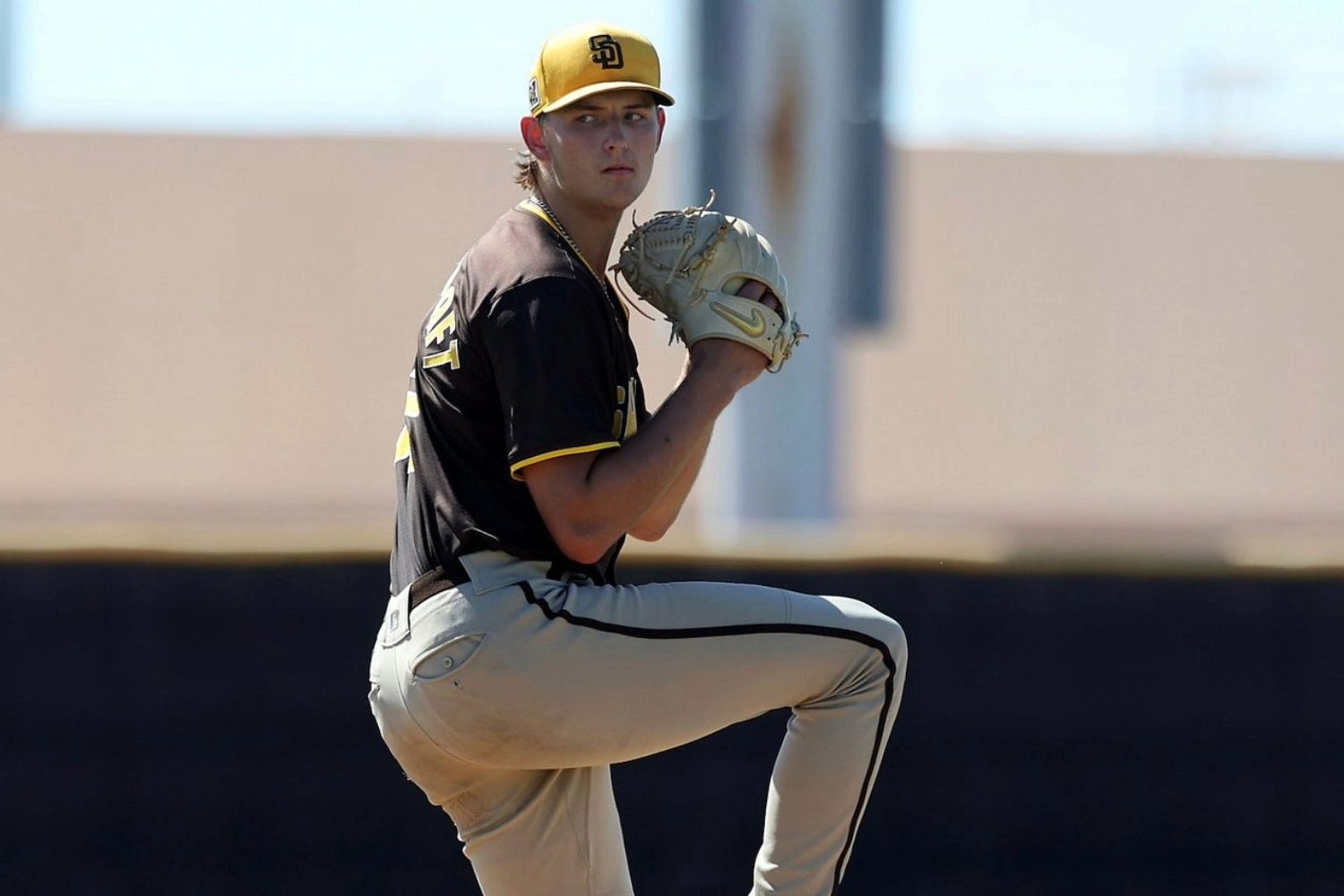 Currently, the San Diego Padres’ top pitching prospect is Kruz Schoolcraft, who was taken as the team’s first pick in the 2025 draft. It is theoretically possible that Schoolcraft will join others in playing for the Padres the year after he was drafted, although recent trends have limited the quantity of those players in the past 40 years. The 40-year timeframe is not arbitrary. Some players who reached the Padres the year after being drafted were taken in the January draft and had a full year in the minors before being on the Friars’ roster in their second professional season, but the January draft has not occurred since 1986. A reduction in the number of allowed September call-ups may also work against Schoolcraft making a September roster, and even the 1976 precedent of not calling up outfielder Gene Richards so that the Padres wouldn’t have to utilize an option year creates the possibility that the franchise will save an option year rather than call up Schoolcraft this year. Three draft picks who played for the Padres either that year or the following year are now in the Baseball Hall of Fame. Dave Winfield was the first of those followed by Ozzie Smith and Tony Gwynn. Only four players since Gwynn have played for the Padres by the end of the season after they were drafted. The National League granted San Diego and Montreal expansion franchises in May 1968. The teams participated in the June 1968 draft but did not have choices during the first three rounds. The only 1968 Padres draft pick who subsequently played for San Diego, Dave Robinson, made his major league debut in September 1970. The Padres’ final pick in the June 1968 draft, third baseman Earl Altshuler, opted to play at UCLA instead of signing with the Padres. He was not drafted out of college even though he set the UCLA single-season hits record, and Altshuler did not play professional baseball. However, in 1999 he became the Padres’ batting practice pitcher, creating a three-decade gap between when he was drafted and when he joined the Padres. Randy Elliott, the Padres’ only 1969 draft pick to play for San Diego, joined the team in 1972. San Diego had the first overall pick of the June 1970 draft and chose catcher Mike Ivie. He joined the Padres in September 1971 but did not subsequently return to the major league team until 1974. In 1971 the Padres selected third baseman Dave Hilton in the regular phase of the January draft, outfielder Johnny Grubb in the supplemental phase of the January draft, and pitcher Jay Franklin in the first round of the June draft. During the June draft, the team also picked pitcher Dave Friesleben in the fifth round, catcher Joe Goddard in the eighth round, and pitcher Mike Caldwell in the 12th round. Franklin and Caldwell were both September 1971 call-ups. Franklin pitched three games for the Padres that season and never returned to the majors. Caldwell never played in the minors again, staying with the Padres through the 1973 season before being traded to the Giants for two players including Willie McCovey and remaining in the majors until 1984. Catcher injuries in 1972 caused the Padres to call up Goddard at the end of July, and he returned to the major league club during the September roster expansion. He had a .200 batting average in 12 games. He did not return to the majors, concluded his Padres organization minor league career in 1976, and became a successful high school coach in West Virginia. Friesleben was one of the 1972 September callups, but in the era of starters expected to pitch complete games and relief pitchers hurling multiple innings he did not appear in any games with the big league club that year. After a 40-20 record in his first three minor league seasons and a 2-1 record with Hawaii in 1974 Friesleben made his major league debut in April 1974 and stayed with the Padres through the end of 1975. He had 16 Pacific Coast League starts in 1976 and 1977 while spending the rest of the time with San Diego, and he began 1978 with the Padres before being traded that June. Hilton and Grubb both made their debuts in September 1972. Hilton would play in a total of 161 games with the Padres. Grubb, who batted .308 in Class A in 1971 and .296 in Class AA in 1972, would remain with the Padres until a trade after the 1976 season. His career .286 Padres batting average at the time of the trade was the highest in Padres history at the time. Grubb closed out his major league career with the 1987 Detroit Tigers and appeared in 1,424 major league games including 513 with San Diego. The Padres have had three players named Dave Roberts. The second of those, an infielder who played collegiate baseball at Oregon, was the first overall pick of the June 1972 draft. Roberts went directly to the Padres, batted .244 in 100 Padres games, split multiple subsequent seasons between the Padres and Hawaii, and batted .240 in 509 Padres games through 1978 before playing for three other teams from 1979 to 1982. Pitcher Rich Troedson was the Padres’ first pick in the January 1972 supplemental draft. He had an 8-5 record in Class A that year but began 1973 on the major league roster. Troedson pitched 65 games for the Padres in 1973 and 1974 including 19 starts. He had an 8-10 record with a 4.74 earned run average. In the fifth round of the June 1972 draft the Padres selected pitcher Randy Jones. He was 4-5 in his minor league outings during 1972 although with a 2.71 ERA. After an 8-1 start with a 2.01 ERA in the Class AA portion of his 1973 season Jones was brought up to the Padres that June. He remained with the Padres until being traded after the 1980 season. In 1975 Jones won 20 games and led the National League with a 2.24 ERA. He won the Cy Young Award in 1976 when his 22 wins (not including his victory in the All-Star Game), 25 complete games, and 315 1/3 innings pitched all led the National League. When he was traded his 92 career victories were the Padres’ best total in history. Winfield was taken in the first round of the June 1973 draft and joined the Padres after signing. He remained with the Padres until becoming a free agent after the 1980 season. He hit 154 home runs in his 1,117 games with San Diego, batted .284 with two seasons above .300, led the National League with 118 runs batted in during 1979 (while also leading the league with 24 intentional walks), won two Gold Glove awards, and was selected to the All-Star Game four times. Winfield concluded his 2,973-game major league career in 1995. In the 13th round of the June 1973 draft the Padres selected pitcher Joe McIntosh. He was 8-6 with a 2.44 ERA in Class A that year. McIntosh began 1974 on the Padres’ roster but spent most of the season at Hawaii. He was with San Diego for all of 1975 and was traded after that season so that the Padres could acquire Doug Rader. McIntosh was 8-15 with a 3.69 ERA in his 33 starts and 14 relief appearances with the Padres. The Padres had the first overall pick in the 1974 draft and selected University of Rhode Island shortstop Bill Almon. He played in 39 Class AA and Class AAA games that year before joining the Padres as a September callup. He was also a 1975 and 1976 September callup before becoming the Padres’ regular shortstop in 1977. Smith’s ascension to the majors moved Almon to other infield positions for 1978 and 1979 before a trade sent Almon to the Montreal Expos. Almon played in the majors through 1988, and his 1,236 career games included 429 with the Padres. Richards was the first overall choice in the January 1975 draft. He spent that year with the Padres’ Class A team in Reno and led the California League with a .381 batting average, 148 runs scored, 191 hits, 85 stolen bases, a .499 on-base percentage (his 116 walks ranked second), and a .551 slugging average (he ranked third with 29 doubles, shared second with ten triples, and homered 12 times). In 1976 Richards led the Pacific Coast League with 173 hits while also batting .331 for Hawaii and scoring 102 times. Although the Padres decided not to waste an option on him by calling him up in late 1976, he was the 1977 Opening Day starter in left field. Richards would would spend seven seasons with the Padres and batted .291 in 939 games with 994 hits including 63 triples, 484 runs scored, and 242 stolen bases. The September 1976 call-ups included pitcher Bob Owchinko, who was taken in the first round of the June 1976 draft. He was 6-2 in 13 Class AA starts with Amarillo before starting two games for the Padres. Owchinko began 1977 in the Pacific Coast League before a 5-1 record and a 1.43 ERA with Hawaii led to another call-up to San Diego, where he remained until being traded to Cleveland for Jerry Mumphrey in February 1980. Owchinko pitched 526 innings for the Padres and had a 25-39 record with a 4.00 ERA in 83 starts and 27 relief outings. In the first round of the January 1976 draft the Padres selected pitcher Bob Shirley. He was 14-10 in 29 minor league starts that year. Shirley made the Padres’ 1977 Opening Day roster and was 12-18 with a 3.70 ERA that year. His wins, ERA, 35 starts, 214 innings pitched, and 146 strikeouts all led the team while Owchinko was second with nine wins, a 4.45 ERA, and 170 innings and Owchinko led the team with three complete games while posting the Padres’ only two shutouts that year. Before being sent to the St. Louis Cardinals in an 11-player December 1980 trade Shirley pitched in 197 Padres games, starting 92 of them, and had a 39-57 record with a 3.58 ERA in 722 innings pitched. In the June 1977 draft the Padres chose outfielder Brian Greer in the first round, infielder Barry Evans in the second round, and Smith in the fourth round. Although Greer batted only .188 in 50 games with Class A Walla Walla that year, he joined the Padres that September. In his only 1977 major league appearance he struck out as a pinch-hitter September 13. Greer returned to the Padres for four September 1979 games, going hitless in three September 4 plate appearances while playing defense only in the other three contests. Evans batted .358 with Walla Walla in 1977, which ranked third among Northwest League leaders, while leading the circuit with 97 hits. He spent most of 1978 with Amarillo and batted .305 in Class AA. Evans joined the Padres that September and batted .267 in 24 games. Before being sold to the New York Yankees in February 1982 Evans played in 207 games for the Padres, batted .251, and played all four infield positions. Smith batted .303 for Walla Walla in 1977 while leading the Northwest League with 69 runs and with 30 stolen bases. His 87 league hits trailed only Evans. The performance earned Smith a non-roster invitation to spring training for 1978, and that performance made him the Padres’ Opening Day shortstop that year as well as for his other three seasons with the Padres. Although Smith only batted .258 in 1978 he stole 40 bases and led the National League with 28 sacrifice hits. He was second in the league with 548 assists but would lead the league in assists his other three years with the Padres. In 1980 he set a major league record with 621 assists while also leading the league with 288 putouts and 113 double plays. Before being traded to the Cardinals in December 1981 Smith won two Gold Glove awards and stole 147 bases in his 583 games with the Padres. He spent another 15 seasons with St. Louis. In the sixth round of the June 1978 draft the Padres picked infielder Tim Flannery. He batted .350 in 84 games with Reno that year. In 1979 Flannery batted .345 for Amarillo while sharing the Texas League lead with 181 hits. That led to a September callup with the Padres. He batted .154 in 22 games, leading to a 1980 start with Hawaii prior to a mid-season callup. He split 1981 between Hawaii and San Diego but returned to the minors again only for a 1988 rehabilitation assignment. When Flannery retired after the 1989 season his 11 seasons with the Padres were a team record. During 972 regular-season Padres games Flannery batted .255 with 631 hits. He may be best known for another at-bat which didn’t produce a hit. Flannery pinch-hit in the seventh inning of the fifth game of the 1984 National League playoffs and hit the ground ball Leon Durham was unable to handle. The play was ruled an error and Flannery was not credited with a run batted in, but the tying run scored and Flannery subsequently became the go-ahead run in the 6-3 victory which sent the Padres to their first World Series. In the June 1981 draft the Padres selected outfielder Kevin McReynolds in the first round, pitcher Bill Long in the second round, and Gwynn in the third round. A seven-player trade in December 1984 sent Long to the Chicago White Sox, and he made his debut the following year. McReynolds did not play professionally in 1981, batted .368 with Reno and Amarillo in 1982, and started 1983 with Las Vegas in the Pacific Coast League before a June promotion to the Padres. Gwynn batted .375 with Walla Walla and Amarillo in 1981 and started 1982 with Las Vegas. He first played for the Padres on July 19, 1982, broke Flannery’s team record for seasons played in 1993, and retired after the 2001 season with 3,141 hits, a .338 batting average, eight National League batting championships, and several other distinctions in his 20-year Padres career. Ivie, Roberts, and Almon were first overall picks, and team improvement kept the Padres from having that dubious distinction until 1988 when the team selected pitcher Andy Benes to start the draft. Benes pitched in the Olympic Games and elsewhere for Team USA rather than in the minors following the 1988 college season. Wichita was the Padres’ Texas League affiliate in 1989, and Benes was 8-4 with a 2.16 ERA there before joining the Las Vegas rotation. After five Pacific Coast League starts he joined the Padres in August 1989 and had a 6-3 record with a 3.51 ERA in ten Padres starts that year. He had double-digit wins the next four seasons. The 1995 trade deadline ended his Padres career although not his 14-year major league career. He was 69-75 with a 3.57 ERA in 186 Padres starts and a relief appearance, and his 1,036 strikeouts stood as the team record until broken by Jake Peavy. San Diego had the third pick of the 1994 draft and chose pitcher Dustin Hermanson. His 23 relief appearances with Wichita and Las Vegas in 1994 resulted in 11 saves, 36 strikeouts in 28 1/3 innings pitched, and a 1.91 ERA. Hermanson started 1995 with Las Vegas but was called up to the Padres two weeks after the major league season began. He pitched in 26 Padres games and 31 Las Vegas games that year. He also split 1996 between the Padres and Las Vegas. In November 1996 he was traded to the Florida Marlins for infielder Quilvio Veras, and Hermanson pitched in the majors through 2006. He was 4-1 in his 34 games with the Padres. Roberts, Winfield, and outfielder Xavier Nady are the only players who were drafted by the Padres and went directly to the majors. Nady was taken in the second round of the 2000 draft. After reaching a contract agreement with the Padres that September he was added to the major league roster. In his only 2000 professional game September 30 he had a pinch-hit single and later scored. Nady spent all of 2001 and 2002 in the minors before returning to the Padres during the 2003 season. He was also with the Padres during 2004 and in 2005 before being traded to the New York Mets for Mike Cameron. Eventually Nady returned to the Padres as a free agent in 2014 and closed out his major league career with 22 Padres games that year. His 961 major league games included 291 with San Diego. Khalil Greene is the most recent Padre to have played for San Diego by the end of the year after he was drafted. The shortstop was the 13th overall pick in the 2002 draft. Greene batted .309 with two Class A teams in 2002. He played in 135 minor league games in 2003 before the major league rosters expanded. Greene played in 20 games with the Padres in 2003. In 2004 he batted .273 with 15 home runs and placed second in the Rookie of the Year balloting. Greene was traded to the Cardinals in December 2008 after playing 659 regular-season games with the Padres. He batted .248 with 84 home runs and 328 runs batted in while wearing a San Diego uniform during the regular season. No Padres player drafted since 2023 reached the majors prior to the conclusion of the 2025 season. The 2024 season included Padres games for 2022 draft picks Graham Pauley and Adam Mazur.
 -
Jackson Merrill had a disappointing 2025 season by his standards, even when his reduced plate appearances last year are taken into account. Those higher expectations come from a brilliant 2024 campaign that nearly ended in awards glory. However, being the fourth player in Padres history to place second in the Rookie of the Year balloting may have been a blessing for Merrill, who won’t have the burden Benito Santiago did of matching his 1987 Rookie of the Year season. The 2024 Rookie of the Year voters had to balance the pitching accomplishments of Paul Skenes against Merrill’s batting, baserunning, and fielding activity. Skenes was the first-place choice for 23 of the 30 voters, while Merrill obtained the other seven first-place votes. Merrill thus joined Ozzie Smith in 1978, Khalil Greene in 2004, and Jake Cronenworth in 2020 (Cronenworth actually tied for second in the balloting) as Padres who were beaten out for the Rookie of the Year award by only one player. Three trips to the injured list in 2025 limited Merrill’s activity in general as well as his offensive output. He still led all National League center fielders with nine assists even though he only played 114 games in the outfield last year, and his .997 fielding percentage in 2025 actually exceeded his .993 mark in 2024 when he led the league with 155 games in center field and with four double plays while sharing first place with eight assists. Merrill’s 2025 production at the plate declined to a noticeable degree, though. In 2024, his 593 plate appearances resulted in a .292 batting average, 162 hits, 31 doubles, six triples, 24 home runs, and 90 runs batted in. That earned Merrill a Silver Slugger award for National League outfielders. He also scored 77 times and stole 16 bases. In 2025, Merrill had 483 plate appearances. He matched his six triples from the previous year and drew 33 walks, more than the 29 he had in 2024, but his offensive performance otherwise declined from his rookie year. When his 2024 statistics are multiplied by 0.8145 to reflect his plate appearance differential (and rounded to the lower integer) that equates to 131 hits, 25 doubles, 19 home runs, 73 RBI, and 62 runs. He had 25 actual doubles in 2025, but a .264 average, 116 hits, 16 home runs, and 67 RBI while scoring only 59 times and stealing only one base. Had Benito Santiago not had a 34-game hitting streak at the end of 1987 and ended his season with a .300 batting average, his expectations for subsequent years might not have been as high. Santiago never matched that batting average later in his career other than when he batted .310 in 30 plate appearances for the 1998 Toronto Blue Jays. He did not exceed his 18 home runs after 1987 until homering 30 times for the 1996 Philadelphia Phillies. Santiago never subsequently matched or exceeded the 164 hits or the 21 stolen bases he had in 1987. The only other Rookie of the Year in Padres history, Butch Metzger, shared the 1976 award. Metzger didn’t match his wins, saves, earned run average, innings pitched, or strikeouts total in any of his future seasons. The Rookie of the Year ballots only included first-place votes and not position points through 1979. On three other occasions during that era did a Padres player received Rookie of the Year votes. The first of those was in 1973, when Johnny Grubb received one vote. Gary Matthews received 11 votes as well as the award. One voter split his vote between Steve Rogers and Richie Zisk while Rogers received three full votes to place second. Elias Sosa, Bob Boone, and Dan Driessen each obtained two votes. Grubb, Davey Lopes, and Ron Cey received one vote apiece. Zisk, the only player on the list with a higher batting average than Grubb, did not receive a full vote. Neither Zisk nor Grubb had the minimum 502 plate appearances to qualify for the batting championship, but Zisk’s .324 average trailed only the .338 of Pete Rose. Grubb batted .311 in 432 plate appearances, which including Zisk would have placed him seventh. Grubb compiled a batting average of .286 during the Padres portion of his career, which currently ranks ninth in team history. When he was traded to the Cleveland Indians after the 1976 season it was the highest batting average in Padres history. Grubb, a September 1972 call-up, concluded his 16-season major league career with a .278 average. Since he only played four full seasons with the Padres, he is no longer in the top ten for any other statistic, but he had 513 hits in his 513 Padres games while scoring 235 runs, hitting 101 doubles, 11 triples, and 25 home runs, and driving in 145 runs. Two other 1973 Padres rookies joined the major league team in June and didn’t have sufficient activity to merit any Rookie of the Year votes, but too much activity to be qualified as rookies for 1974. An 8-1 record in Class AA convinced the Padres to call up Randy Jones, who threw 139 2/3 innings with the big league club in 1973 while compiling a 7-6 record and a 3.16 ERA. The modest expectations allowed Jones to recover from an 8-22 season in 1974. He posted 20-win seasons in both 1975 and 1976, leading the National League in ERA for 1975 and in wins for 1976. The Padres had the fourth overall pick in the June 1973 draft and chose University of Minnesota player Dave Winfield. Winfield was placed on the major-league roster immediately. He saw action in 56 Padres games and accumulated 154 plate appearances while batting .277 with three home runs. Winfield would bat .284 in his eight seasons with the Padres while hitting 154 home runs and winning two Gold Glove awards. In 1979 Winfield batted .308 for the second consecutive year and led the National League with 118 runs batted in. Andre Dawson edged Steve Henderson to win the 1977 Rookie of the Year Award while Gene Richards received four votes to place third. Richards batted .290 and set a major league rookie record with 56 stolen bases. Richards improved his batting average to .308 in 1978 while increasing his best stolen bases total to 61 in 1980. In the strike-shortened 1981 season he shared the National League lead with 12 triples. Richards would spend seven seasons with the Padres. His .291 average with the team currently shares fifth in Padres history. His 994 hits with the Padres is the outright fifth-place total in team history and stood fourth until Manny Machado exceeded that last year. Richards’ 484 runs scored is the fourth-highest Padres total. His 782 singles constitute the third most in Padres history. His 242 stolen bases and 63 triples are exceeded only by Tony Gwynn. Horner and Smith shared one Rookie of the Year vote in 1978. Horner received 12 others, Smith had eight full votes, and Don Robinson was the choice on the other three ballots. Horner had a .266 batting average compared to the .258 for Smith, although Horner didn’t join the Atlanta Braves until being drafted that June and wouldn’t have qualified for the batting championship. Horner hit 23 home runs compared to one for Smith, and in his partial season Horner drove in 63 runs while Smith batted in 46. Smith stole 40 bases while Horner had no swipes in his rookie year. Over his career, Horner would bat .277 while Smith had a career batting average of .262. Horner only played ten seasons while Smith played 19 and joined the Baseball Hall of Fame after he retired. Although Smith didn’t exceed his 1978 batting average until after being traded to the St. Louis Cardinals, he stole 57 bases in 1980, when he also set a major league record with 621 assists. Smith led National League shortstops in assists eight times including in his final three seasons with the Padres, and he was a Gold Glove winner in 1980 and 1981. The first Padres player to receive position points but no first-place votes in the Rookie of the Year balloting, Juan Bonilla, shared fourth place in 1981. An injury in 1982 and subsequent cocaine use kept Bonilla from matching his 1981 performance. In 1982 pitcher Luis DeLeon was fifth in the Rookie of the Year voting while pitcher Eric Show shared eighth. Tony Gwynn had 209 plate appearances that year, and it could be considered his worst year since his .289 batting average was the only sub-.300 season of his career. That average was still higher than four of the five field players receiving Rookie of the Year votes that year including recipient Steve Sax and future Hall of Fame member Ryne Sandberg. (Willie McGee, who placed third, batted .296.) Gwynn would conclude his 20-year career with a .338 batting average, eight National League batting championships, 3,141 hits, 1,383 runs, 543 doubles, 85 triples, 319 stolen bases, 1,138 runs batted in, seven Silver Slugger awards, and five Gold Glove awards. Gwynn was selected to the Baseball Hall of Fame in his first year of eligibility. A 7-3 record with a 2.65 ERA in 115 1/3 innings led to Mark Thurmond sharing ninth in the 1983 Rookie of the Year balloting. Thurmond posted a 14-8 record in 1984 but had no other winning seasons. Kevin McReynolds was the Pacific Coast League’s Most Valuable Player in 1983 but struggled in his games with the Padres. He batted .221 with four home runs in 155 plate appearances which made him ineligible for the 1984 Rookie of the Year award. McReynolds improved his batting average to .278 in 1984 while hitting 20 home runs. Before being traded to the Mets after the 1986 season McReynolds batted .263 for the Padres with 65 home runs, 260 runs batted in, and 233 runs scored. In his final Padres season he batted .288 with 26 home runs. In 1984 McReynolds led National League center fielders with a .991 fielding percentage and with 422 putouts, and in 1985 his 430 putouts and 13 assists led the league’s center fielders. A .250 batting average with 13 home runs and 66 runs batted in was worth sixth place for Carmelo Martinez in the 1984 Rookie of the Year voting. Martinez exceeded that batting average in each of the next three years, homered 21 times in 1985, and drove in at least 70 runs in two subsequent Padres seasons. John Kruk batted .309 in 327 plate appearances during 1986. That allowed him to share seventh in the Rookie of the Year voting. In 1987, Kruk batted .313 in 527 plate appearances with 20 homers and 91 runs batted in. Although Kruk was traded during the 1989 season, he concluded his major league career with a .300 batting average and 100 home runs. A trade also limited the Padres career of Roberto Alomar, who was fifth in the 1988 Rookie of the Year voting, though Alomar would eventually be voted into the Baseball Hall of Fame. He batted .266 for the 1988 Padres while increasing his average to .295 in 1989 and concluding his overall 17-year major league career with a .300 average. Alomar stole 24 bases in 1988 and 42 in 1989. Greg Harris threw 135 innings for the 1989 Padres, compiling an 8-9 record with a 2.60 ERA, and was seventh in that year’s voting. He was 8-8 with a 2.30 ERA in 1990 and 9-5 with a 2.23 ERA in 1991. Although subsequent Padres seasons inflated his team career ERA to 2.95 that still ranks second all-time while his 7.9 hits per nine innings allowed ranks seventh. Andy Benes began the 1989 season in Class AA but earned a berth on the major league roster in August. His 66 2/3 innings with the Padres made him ineligible for 1990 Rookie of the Year consideration, but his 6-3 record and 3.51 ERA resulted in sharing fifth in the 1989 voting. In each of the next four seasons Benes won at least ten games including 15 both in 1991 and in 1993. He won 69 games before being traded in July 1995. He had exactly 2,000 career strikeouts including 1,036 with the Padres to set a team record subsequently surpassed by Jake Peavy. Frank Seminara didn’t subsequently match his 1992 win-loss record of 9‑4 with a 3.68 ERA which gave him a Rookie of the Year position vote to share seventh. A .251 batting average in 495 plate appearances gave Ricky Gutierrez a 1993 vote and a share of 11th although the 1994 players’ strike limited Gutierrez’ statistics and the trade which brought Ken Caminiti and Steve Finley to the Padres caused Gutierrez to exceed that .251 average nine times but with the Houston Astros and two other teams. The 1994 strike also limited Joey Hamilton to 108 2/3 innings after he was called up to the Padres in late May. Hamilton was 9-6 with a 2.98 ERA and shared fifth in the Rookie of the Year voting. Hamilton would win 40 games between 1996 and 1998 before the Padres traded him to the Toronto Blue Jays. The next Padres to receive Rookie of the Year votes, Khalil Greene and Akinori Otsuka, placed second and third in 2004. Although Greene never matched or exceeded the .273 he hit in 2004 he matched his 15 home runs that year both in 2005 and 2006 before homering 27 times in 2007. He concluded his Padres career with 84 home runs in 659 games. Otsuka wasn’t able to match the 7-2 record and 1.75 ERA he compiled in 73 relief appearances in 2004, but he was a 32-year-old rookie with seven previous Japanese league seasons. In 2009, Everth Cabrera batted .255 and stole 25 bases, earning him a position vote and a share of eighth place in the Rookie of the Year balloting. Cabrera led the National League with 44 stolen bases in 2012. He stole 37 bases in 2013 and batted .283. He ranks sixth with 136 stolen bases during his Padres career. Yonder Alonso received a position vote and a share of sixth place in 2012 when he batted .273 with 39 doubles. He batted .281 in 2013 and .282 in 2015. A trade to the Cardinals limited Jedd Gyorko, who was sixth in the 2013 balloting, to three years with the Padres. Gyorko batted .249 in 2013 and exceeded that twice with St. Louis. He homered 23 times in 2013 and improved his personal best to 30 homers with the 2016 Cardinals. A .263 average with 13 home runs and 17 stolen bases contributed to Manuel Margot placing sixth in the 2017 balloting. A trade limited Margot to three full Padres seasons along with 37 plate appearances in 2016, but he exceeded his rookie batting average three times with the Tampa Bay Rays. Margot stole 20 bases with the Padres in 2019. Although he never matched his 13 home runs in subsequent seasons he had 42 extra-base hits in 2018 compared to 38 in 2017. Yonder Alonso and Pete Alonso are not related. Pete Alonso was the 2019 Rookie of the Year while Fernando Tatis Jr. was third. Tatis has not matched the .317 he hit in 2019 but has exceeded the 22 home runs he hit as a rookie three times including in 2021 when his 42 homers led the National League. Tatis stole 16 bases as a rookie and has stolen more in three of his subsequent seasons. He has homered 152 times and stole 124 bases during his first seven years with the Padres. After making the transition from shortstop to right field, Tatis won the Gold Glove award both in 2023 and in 2025. The coronavirus-shortened 2020 season limited Jake Cronenworth to 192 plate appearances, although he batted .285 and shared second place in the Rookie of the Year voting with Alec Bohm. To date, Cronenworth has homered 80 times for the Padres while scoring 395 runs and driving in 365. The utility role Cronenworth has had with the Padres may give Sung‑Mun Song sufficient playing time for Rookie of the Year consideration, and it is also possible that a rookie will earn a position unexpectedly. Merrill is the most recent Padres player to receive Rookie of the Year votes. The voters’ selection of Paul Skenes eliminated Rookie of the Year expectations for Merrill, and Merrill may be able to raise expectations with subsequent seasons. View full article
-
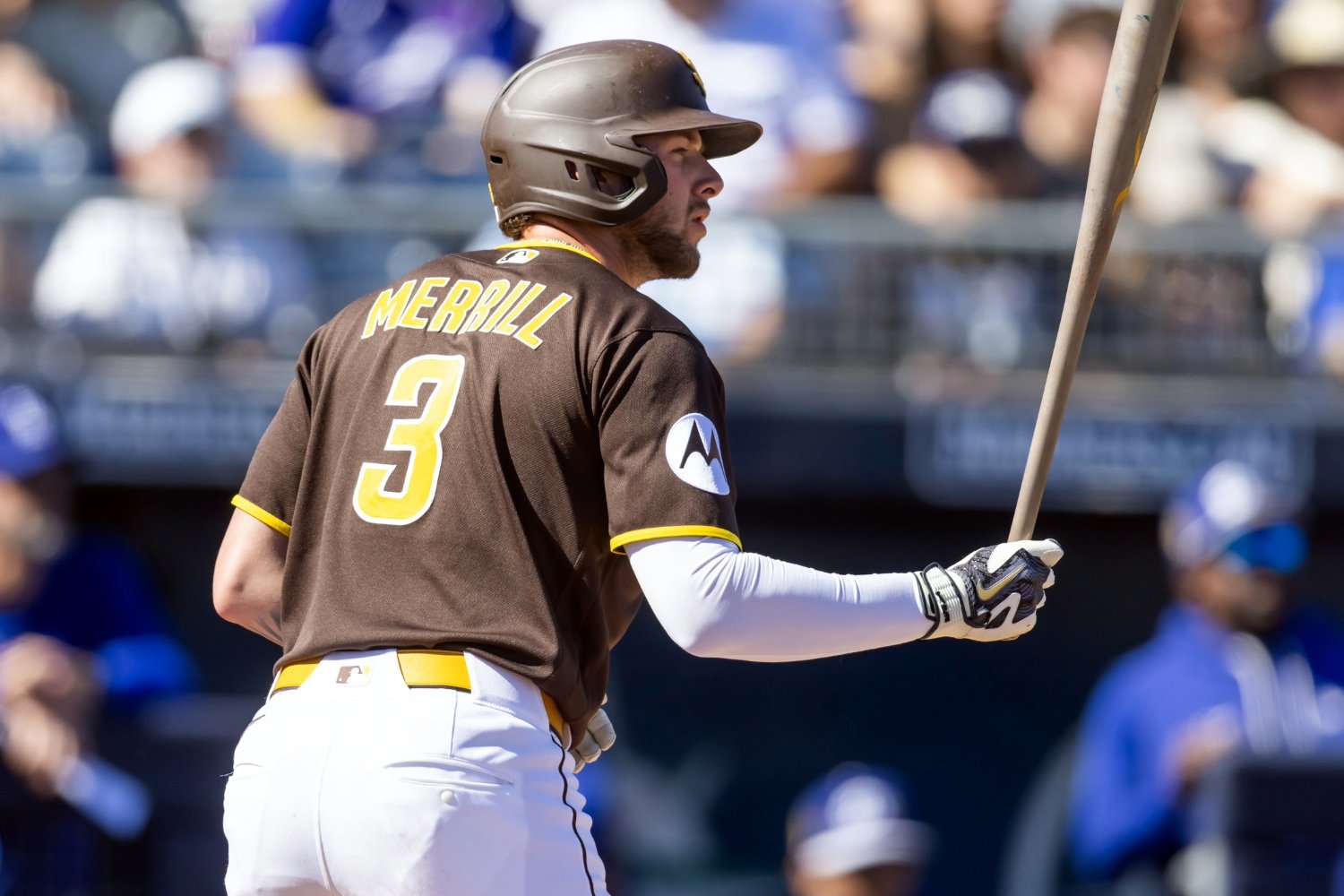 Jackson Merrill had a disappointing 2025 season by his standards, even when his reduced plate appearances last year are taken into account. Those higher expectations come from a brilliant 2024 campaign that nearly ended in awards glory. However, being the fourth player in Padres history to place second in the Rookie of the Year balloting may have been a blessing for Merrill, who won’t have the burden Benito Santiago did of matching his 1987 Rookie of the Year season. The 2024 Rookie of the Year voters had to balance the pitching accomplishments of Paul Skenes against Merrill’s batting, baserunning, and fielding activity. Skenes was the first-place choice for 23 of the 30 voters, while Merrill obtained the other seven first-place votes. Merrill thus joined Ozzie Smith in 1978, Khalil Greene in 2004, and Jake Cronenworth in 2020 (Cronenworth actually tied for second in the balloting) as Padres who were beaten out for the Rookie of the Year award by only one player. Three trips to the injured list in 2025 limited Merrill’s activity in general as well as his offensive output. He still led all National League center fielders with nine assists even though he only played 114 games in the outfield last year, and his .997 fielding percentage in 2025 actually exceeded his .993 mark in 2024 when he led the league with 155 games in center field and with four double plays while sharing first place with eight assists. Merrill’s 2025 production at the plate declined to a noticeable degree, though. In 2024, his 593 plate appearances resulted in a .292 batting average, 162 hits, 31 doubles, six triples, 24 home runs, and 90 runs batted in. That earned Merrill a Silver Slugger award for National League outfielders. He also scored 77 times and stole 16 bases. In 2025, Merrill had 483 plate appearances. He matched his six triples from the previous year and drew 33 walks, more than the 29 he had in 2024, but his offensive performance otherwise declined from his rookie year. When his 2024 statistics are multiplied by 0.8145 to reflect his plate appearance differential (and rounded to the lower integer) that equates to 131 hits, 25 doubles, 19 home runs, 73 RBI, and 62 runs. He had 25 actual doubles in 2025, but a .264 average, 116 hits, 16 home runs, and 67 RBI while scoring only 59 times and stealing only one base. Had Benito Santiago not had a 34-game hitting streak at the end of 1987 and ended his season with a .300 batting average, his expectations for subsequent years might not have been as high. Santiago never matched that batting average later in his career other than when he batted .310 in 30 plate appearances for the 1998 Toronto Blue Jays. He did not exceed his 18 home runs after 1987 until homering 30 times for the 1996 Philadelphia Phillies. Santiago never subsequently matched or exceeded the 164 hits or the 21 stolen bases he had in 1987. The only other Rookie of the Year in Padres history, Butch Metzger, shared the 1976 award. Metzger didn’t match his wins, saves, earned run average, innings pitched, or strikeouts total in any of his future seasons. The Rookie of the Year ballots only included first-place votes and not position points through 1979. On three other occasions during that era did a Padres player received Rookie of the Year votes. The first of those was in 1973, when Johnny Grubb received one vote. Gary Matthews received 11 votes as well as the award. One voter split his vote between Steve Rogers and Richie Zisk while Rogers received three full votes to place second. Elias Sosa, Bob Boone, and Dan Driessen each obtained two votes. Grubb, Davey Lopes, and Ron Cey received one vote apiece. Zisk, the only player on the list with a higher batting average than Grubb, did not receive a full vote. Neither Zisk nor Grubb had the minimum 502 plate appearances to qualify for the batting championship, but Zisk’s .324 average trailed only the .338 of Pete Rose. Grubb batted .311 in 432 plate appearances, which including Zisk would have placed him seventh. Grubb compiled a batting average of .286 during the Padres portion of his career, which currently ranks ninth in team history. When he was traded to the Cleveland Indians after the 1976 season it was the highest batting average in Padres history. Grubb, a September 1972 call-up, concluded his 16-season major league career with a .278 average. Since he only played four full seasons with the Padres, he is no longer in the top ten for any other statistic, but he had 513 hits in his 513 Padres games while scoring 235 runs, hitting 101 doubles, 11 triples, and 25 home runs, and driving in 145 runs. Two other 1973 Padres rookies joined the major league team in June and didn’t have sufficient activity to merit any Rookie of the Year votes, but too much activity to be qualified as rookies for 1974. An 8-1 record in Class AA convinced the Padres to call up Randy Jones, who threw 139 2/3 innings with the big league club in 1973 while compiling a 7-6 record and a 3.16 ERA. The modest expectations allowed Jones to recover from an 8-22 season in 1974. He posted 20-win seasons in both 1975 and 1976, leading the National League in ERA for 1975 and in wins for 1976. The Padres had the fourth overall pick in the June 1973 draft and chose University of Minnesota player Dave Winfield. Winfield was placed on the major-league roster immediately. He saw action in 56 Padres games and accumulated 154 plate appearances while batting .277 with three home runs. Winfield would bat .284 in his eight seasons with the Padres while hitting 154 home runs and winning two Gold Glove awards. In 1979 Winfield batted .308 for the second consecutive year and led the National League with 118 runs batted in. Andre Dawson edged Steve Henderson to win the 1977 Rookie of the Year Award while Gene Richards received four votes to place third. Richards batted .290 and set a major league rookie record with 56 stolen bases. Richards improved his batting average to .308 in 1978 while increasing his best stolen bases total to 61 in 1980. In the strike-shortened 1981 season he shared the National League lead with 12 triples. Richards would spend seven seasons with the Padres. His .291 average with the team currently shares fifth in Padres history. His 994 hits with the Padres is the outright fifth-place total in team history and stood fourth until Manny Machado exceeded that last year. Richards’ 484 runs scored is the fourth-highest Padres total. His 782 singles constitute the third most in Padres history. His 242 stolen bases and 63 triples are exceeded only by Tony Gwynn. Horner and Smith shared one Rookie of the Year vote in 1978. Horner received 12 others, Smith had eight full votes, and Don Robinson was the choice on the other three ballots. Horner had a .266 batting average compared to the .258 for Smith, although Horner didn’t join the Atlanta Braves until being drafted that June and wouldn’t have qualified for the batting championship. Horner hit 23 home runs compared to one for Smith, and in his partial season Horner drove in 63 runs while Smith batted in 46. Smith stole 40 bases while Horner had no swipes in his rookie year. Over his career, Horner would bat .277 while Smith had a career batting average of .262. Horner only played ten seasons while Smith played 19 and joined the Baseball Hall of Fame after he retired. Although Smith didn’t exceed his 1978 batting average until after being traded to the St. Louis Cardinals, he stole 57 bases in 1980, when he also set a major league record with 621 assists. Smith led National League shortstops in assists eight times including in his final three seasons with the Padres, and he was a Gold Glove winner in 1980 and 1981. The first Padres player to receive position points but no first-place votes in the Rookie of the Year balloting, Juan Bonilla, shared fourth place in 1981. An injury in 1982 and subsequent cocaine use kept Bonilla from matching his 1981 performance. In 1982 pitcher Luis DeLeon was fifth in the Rookie of the Year voting while pitcher Eric Show shared eighth. Tony Gwynn had 209 plate appearances that year, and it could be considered his worst year since his .289 batting average was the only sub-.300 season of his career. That average was still higher than four of the five field players receiving Rookie of the Year votes that year including recipient Steve Sax and future Hall of Fame member Ryne Sandberg. (Willie McGee, who placed third, batted .296.) Gwynn would conclude his 20-year career with a .338 batting average, eight National League batting championships, 3,141 hits, 1,383 runs, 543 doubles, 85 triples, 319 stolen bases, 1,138 runs batted in, seven Silver Slugger awards, and five Gold Glove awards. Gwynn was selected to the Baseball Hall of Fame in his first year of eligibility. A 7-3 record with a 2.65 ERA in 115 1/3 innings led to Mark Thurmond sharing ninth in the 1983 Rookie of the Year balloting. Thurmond posted a 14-8 record in 1984 but had no other winning seasons. Kevin McReynolds was the Pacific Coast League’s Most Valuable Player in 1983 but struggled in his games with the Padres. He batted .221 with four home runs in 155 plate appearances which made him ineligible for the 1984 Rookie of the Year award. McReynolds improved his batting average to .278 in 1984 while hitting 20 home runs. Before being traded to the Mets after the 1986 season McReynolds batted .263 for the Padres with 65 home runs, 260 runs batted in, and 233 runs scored. In his final Padres season he batted .288 with 26 home runs. In 1984 McReynolds led National League center fielders with a .991 fielding percentage and with 422 putouts, and in 1985 his 430 putouts and 13 assists led the league’s center fielders. A .250 batting average with 13 home runs and 66 runs batted in was worth sixth place for Carmelo Martinez in the 1984 Rookie of the Year voting. Martinez exceeded that batting average in each of the next three years, homered 21 times in 1985, and drove in at least 70 runs in two subsequent Padres seasons. John Kruk batted .309 in 327 plate appearances during 1986. That allowed him to share seventh in the Rookie of the Year voting. In 1987, Kruk batted .313 in 527 plate appearances with 20 homers and 91 runs batted in. Although Kruk was traded during the 1989 season, he concluded his major league career with a .300 batting average and 100 home runs. A trade also limited the Padres career of Roberto Alomar, who was fifth in the 1988 Rookie of the Year voting, though Alomar would eventually be voted into the Baseball Hall of Fame. He batted .266 for the 1988 Padres while increasing his average to .295 in 1989 and concluding his overall 17-year major league career with a .300 average. Alomar stole 24 bases in 1988 and 42 in 1989. Greg Harris threw 135 innings for the 1989 Padres, compiling an 8-9 record with a 2.60 ERA, and was seventh in that year’s voting. He was 8-8 with a 2.30 ERA in 1990 and 9-5 with a 2.23 ERA in 1991. Although subsequent Padres seasons inflated his team career ERA to 2.95 that still ranks second all-time while his 7.9 hits per nine innings allowed ranks seventh. Andy Benes began the 1989 season in Class AA but earned a berth on the major league roster in August. His 66 2/3 innings with the Padres made him ineligible for 1990 Rookie of the Year consideration, but his 6-3 record and 3.51 ERA resulted in sharing fifth in the 1989 voting. In each of the next four seasons Benes won at least ten games including 15 both in 1991 and in 1993. He won 69 games before being traded in July 1995. He had exactly 2,000 career strikeouts including 1,036 with the Padres to set a team record subsequently surpassed by Jake Peavy. Frank Seminara didn’t subsequently match his 1992 win-loss record of 9‑4 with a 3.68 ERA which gave him a Rookie of the Year position vote to share seventh. A .251 batting average in 495 plate appearances gave Ricky Gutierrez a 1993 vote and a share of 11th although the 1994 players’ strike limited Gutierrez’ statistics and the trade which brought Ken Caminiti and Steve Finley to the Padres caused Gutierrez to exceed that .251 average nine times but with the Houston Astros and two other teams. The 1994 strike also limited Joey Hamilton to 108 2/3 innings after he was called up to the Padres in late May. Hamilton was 9-6 with a 2.98 ERA and shared fifth in the Rookie of the Year voting. Hamilton would win 40 games between 1996 and 1998 before the Padres traded him to the Toronto Blue Jays. The next Padres to receive Rookie of the Year votes, Khalil Greene and Akinori Otsuka, placed second and third in 2004. Although Greene never matched or exceeded the .273 he hit in 2004 he matched his 15 home runs that year both in 2005 and 2006 before homering 27 times in 2007. He concluded his Padres career with 84 home runs in 659 games. Otsuka wasn’t able to match the 7-2 record and 1.75 ERA he compiled in 73 relief appearances in 2004, but he was a 32-year-old rookie with seven previous Japanese league seasons. In 2009, Everth Cabrera batted .255 and stole 25 bases, earning him a position vote and a share of eighth place in the Rookie of the Year balloting. Cabrera led the National League with 44 stolen bases in 2012. He stole 37 bases in 2013 and batted .283. He ranks sixth with 136 stolen bases during his Padres career. Yonder Alonso received a position vote and a share of sixth place in 2012 when he batted .273 with 39 doubles. He batted .281 in 2013 and .282 in 2015. A trade to the Cardinals limited Jedd Gyorko, who was sixth in the 2013 balloting, to three years with the Padres. Gyorko batted .249 in 2013 and exceeded that twice with St. Louis. He homered 23 times in 2013 and improved his personal best to 30 homers with the 2016 Cardinals. A .263 average with 13 home runs and 17 stolen bases contributed to Manuel Margot placing sixth in the 2017 balloting. A trade limited Margot to three full Padres seasons along with 37 plate appearances in 2016, but he exceeded his rookie batting average three times with the Tampa Bay Rays. Margot stole 20 bases with the Padres in 2019. Although he never matched his 13 home runs in subsequent seasons he had 42 extra-base hits in 2018 compared to 38 in 2017. Yonder Alonso and Pete Alonso are not related. Pete Alonso was the 2019 Rookie of the Year while Fernando Tatis Jr. was third. Tatis has not matched the .317 he hit in 2019 but has exceeded the 22 home runs he hit as a rookie three times including in 2021 when his 42 homers led the National League. Tatis stole 16 bases as a rookie and has stolen more in three of his subsequent seasons. He has homered 152 times and stole 124 bases during his first seven years with the Padres. After making the transition from shortstop to right field, Tatis won the Gold Glove award both in 2023 and in 2025. The coronavirus-shortened 2020 season limited Jake Cronenworth to 192 plate appearances, although he batted .285 and shared second place in the Rookie of the Year voting with Alec Bohm. To date, Cronenworth has homered 80 times for the Padres while scoring 395 runs and driving in 365. The utility role Cronenworth has had with the Padres may give Sung‑Mun Song sufficient playing time for Rookie of the Year consideration, and it is also possible that a rookie will earn a position unexpectedly. Merrill is the most recent Padres player to receive Rookie of the Year votes. The voters’ selection of Paul Skenes eliminated Rookie of the Year expectations for Merrill, and Merrill may be able to raise expectations with subsequent seasons.
 -
The San Diego Padres have tried to ensure decent fourth and fifth starters will fill out their 2026 rotation by signing the likes of German Marquez, Walker Buehler, and Griffin Canning. The low salaries on each of their contracts limit the risk of those pitchers not working out — and the Ruben Niebla factor could turn the risk into an actual benefit. Padres pitching coach Ruben Niebla has no control over pitchers incurring additional injuries, but he can address inconsistencies of some of the pitchers not retained by their previous teams. Overcoming those inconsistencies also allows additional recovery time for those pitchers who are injured since the additional depth will negate the need to hasten the return of injured pitchers. A pitching coach who can address inconsistencies and turn around a struggling pitcher is not unprecedented in Padres history. A good pitching coach can also help a young pitcher develop early in his career. Norm Sherry was the Padres’ pitching coach in 1984 when the team reached the World Series for the first time in team history. Sherry was also the team’s pitching coach in 1982 and 1983. Between trades for young pitchers and a farm system which developed young arms, the Padres had a pleasant problem during spring training prior to the start of the 1984 season: more than five pitchers were qualified to be starters. In August 1983, the Padres traded veteran pitcher John Montefusco to the New York Yankees for a two players to be named later. Left-handed pitcher Dennis Rasmussen was one of those players. Rasmussen joined the major-league team immediately, started one game while relieving in three in September 1983, and posted a 1.98 earned run average in 13 2/3 innings. By the end of spring training in 1984, the Padres had to figure out what to do with six potential starting pitchers. Rasmussen was traded back to the Yankees for veteran third baseman Graig Nettles, who had played for San Diego High School and San Diego State College before his professional activity. Rasmussen joined the Yankees’ rotation, and in 1986 he posted an 18-6 record for the Bronx Bombers. The Yankees traded Rasmussen to the Cincinnati Reds in August 1987, and between the two teams he posted a 13-8 record that year. Rasmussen struggled at the start of the 1988 season. In 11 starts with the Reds. he was 2-6 with a 5.75 ERA. Jack McKeon, who was the Padres’ general manager when Rasmussen was first acquired, was still the team’s general manager in 1988. On June 8 of that year, McKeon traded rookie middle relief pitcher Candy Sierra, who had a 5.70 ERA in 15 games with the Padres, to the Reds for Rasmussen. Sierra would pitch in only one major-league game with the Reds. Rasmussen completed his season with a 14-4 record for the Padres, posting a 2.55 ERA in his 20 starts which included six complete games. McKeon would later remark that he knew Rasmussen had the potential he showed during his Padres portion of the 1988 season. McKeon added that the task was acquiring Rasmussen when he was 2-6. The Padres had a new pitching coach for 1988. Pat Dobson would also have that role in 1989 and 1990. Although Rasmussen didn’t match his 1988 season in either of those two years, he won 10 games in 1989 and 11 games in 1990. Due to the Padres’ 1987 finish, they had the first overall pick in the June 1988 draft. They chose University of Evansville pitcher Andy Benes. The Padres let Benes pitch the remainder of 1988 for the United States in the Olympic Games, so he did not see minor-league activity until 1989. He was assigned to the Padres’ Class AA team in Wichita to start the 1989 season. In his 16 Wichita starts, Benes was 8-4 with a 2.16 ERA. He was promoted to the Padres’ Triple-A affiliate in Las Vegas and had a 2-1 record in five starts, albeit with an 8.10 ERA. In August 1989, the Padres chose to promote Benes to the major-league roster. The decision was, in par,t due to the ability of Dobson to coach Benes. The strategy worked; in ten Padres starts during 1989, Benes posted a 6-3 record and a 3.51 ERA. The team's history is littered with even more examples. In July 1987, a seven-player trade brought San Francisco Giants pitcher Mark Davis to the Padres. Davis, who had been both a starter and a reliever with the Giants, was converted into a full-time reliever with the Padres. His ERA for the Padres’ portion of his 1987 season was 3.18. Dobson helped turn Davis into the Padres’ closer. Davis had an ERA of 2.01 for the 1988 Padres along with 28 saves, and he made the All‑Star team that year. In 1989, Davis had 44 saves and a 1.85 ERA. Davis not only made the 1989 All-Star team but also received the Cy Young Award. The Padres were unable to sign Davis after the 1989 season, and the free agent joined the Kansas City Royals. The Padres were able to sign Craig Lefferts to be the team’s new closer, and with Dobson’s assistance. Lefferts was 7-5 with 23 saves and a 2.52 ERA. Davis didn’t fare as well in Kansas City that year, completing the season with a 2-7 record, six saves, and a 5.11 ERA. A good pitching coach can work with a pitcher to help him overcome inconsistencies. That creates the problem of having to assign some pitchers to the minor leagues, but it assures that the major league club will have sufficient pitching including if one or more pitchers is injured and needs to be replaced. The availability of the pitchers the Padres signed near the end of the offseason may indicate warnings about those pitchers, but if the issue is inconsistency rather than health, the coaching skills of Ruben Niebla may make those low-cost signings beneficial for the Padres. View full article
-
 The San Diego Padres have tried to ensure decent fourth and fifth starters will fill out their 2026 rotation by signing the likes of German Marquez, Walker Buehler, and Griffin Canning. The low salaries on each of their contracts limit the risk of those pitchers not working out — and the Ruben Niebla factor could turn the risk into an actual benefit. Padres pitching coach Ruben Niebla has no control over pitchers incurring additional injuries, but he can address inconsistencies of some of the pitchers not retained by their previous teams. Overcoming those inconsistencies also allows additional recovery time for those pitchers who are injured since the additional depth will negate the need to hasten the return of injured pitchers. A pitching coach who can address inconsistencies and turn around a struggling pitcher is not unprecedented in Padres history. A good pitching coach can also help a young pitcher develop early in his career. Norm Sherry was the Padres’ pitching coach in 1984 when the team reached the World Series for the first time in team history. Sherry was also the team’s pitching coach in 1982 and 1983. Between trades for young pitchers and a farm system which developed young arms, the Padres had a pleasant problem during spring training prior to the start of the 1984 season: more than five pitchers were qualified to be starters. In August 1983, the Padres traded veteran pitcher John Montefusco to the New York Yankees for a two players to be named later. Left-handed pitcher Dennis Rasmussen was one of those players. Rasmussen joined the major-league team immediately, started one game while relieving in three in September 1983, and posted a 1.98 earned run average in 13 2/3 innings. By the end of spring training in 1984, the Padres had to figure out what to do with six potential starting pitchers. Rasmussen was traded back to the Yankees for veteran third baseman Graig Nettles, who had played for San Diego High School and San Diego State College before his professional activity. Rasmussen joined the Yankees’ rotation, and in 1986 he posted an 18-6 record for the Bronx Bombers. The Yankees traded Rasmussen to the Cincinnati Reds in August 1987, and between the two teams he posted a 13-8 record that year. Rasmussen struggled at the start of the 1988 season. In 11 starts with the Reds. he was 2-6 with a 5.75 ERA. Jack McKeon, who was the Padres’ general manager when Rasmussen was first acquired, was still the team’s general manager in 1988. On June 8 of that year, McKeon traded rookie middle relief pitcher Candy Sierra, who had a 5.70 ERA in 15 games with the Padres, to the Reds for Rasmussen. Sierra would pitch in only one major-league game with the Reds. Rasmussen completed his season with a 14-4 record for the Padres, posting a 2.55 ERA in his 20 starts which included six complete games. McKeon would later remark that he knew Rasmussen had the potential he showed during his Padres portion of the 1988 season. McKeon added that the task was acquiring Rasmussen when he was 2-6. The Padres had a new pitching coach for 1988. Pat Dobson would also have that role in 1989 and 1990. Although Rasmussen didn’t match his 1988 season in either of those two years, he won 10 games in 1989 and 11 games in 1990. Due to the Padres’ 1987 finish, they had the first overall pick in the June 1988 draft. They chose University of Evansville pitcher Andy Benes. The Padres let Benes pitch the remainder of 1988 for the United States in the Olympic Games, so he did not see minor-league activity until 1989. He was assigned to the Padres’ Class AA team in Wichita to start the 1989 season. In his 16 Wichita starts, Benes was 8-4 with a 2.16 ERA. He was promoted to the Padres’ Triple-A affiliate in Las Vegas and had a 2-1 record in five starts, albeit with an 8.10 ERA. In August 1989, the Padres chose to promote Benes to the major-league roster. The decision was, in par,t due to the ability of Dobson to coach Benes. The strategy worked; in ten Padres starts during 1989, Benes posted a 6-3 record and a 3.51 ERA. The team's history is littered with even more examples. In July 1987, a seven-player trade brought San Francisco Giants pitcher Mark Davis to the Padres. Davis, who had been both a starter and a reliever with the Giants, was converted into a full-time reliever with the Padres. His ERA for the Padres’ portion of his 1987 season was 3.18. Dobson helped turn Davis into the Padres’ closer. Davis had an ERA of 2.01 for the 1988 Padres along with 28 saves, and he made the All‑Star team that year. In 1989, Davis had 44 saves and a 1.85 ERA. Davis not only made the 1989 All-Star team but also received the Cy Young Award. The Padres were unable to sign Davis after the 1989 season, and the free agent joined the Kansas City Royals. The Padres were able to sign Craig Lefferts to be the team’s new closer, and with Dobson’s assistance. Lefferts was 7-5 with 23 saves and a 2.52 ERA. Davis didn’t fare as well in Kansas City that year, completing the season with a 2-7 record, six saves, and a 5.11 ERA. A good pitching coach can work with a pitcher to help him overcome inconsistencies. That creates the problem of having to assign some pitchers to the minor leagues, but it assures that the major league club will have sufficient pitching including if one or more pitchers is injured and needs to be replaced. The availability of the pitchers the Padres signed near the end of the offseason may indicate warnings about those pitchers, but if the issue is inconsistency rather than health, the coaching skills of Ruben Niebla may make those low-cost signings beneficial for the Padres.
 -
Part one of the San Diego Padres’ top 10 free-agent signings over the 50 off-seasons of free agency addressed five free agents signed while the Kroc family owned the Padres. The other five free agents among the top ten were signed during the John Moores, Ron Fowler, and Peter Seidler ownership years. None of the free agents signed when Tom Werner was the Padres’ primary owner rank among the top ten. Kurt Stilwell was signed in February 1992, prior to the fire sale, but his .224 batting average during his two seasons with the Padres eliminates him from top-10 consideration. Bip Roberts, who rejoined the Padres as a free agent after signing in January 1994, was edged out for a top ten spot by two other 1990s signees who are the only two on the top ten list with fewer than four Padres seasons. Roberts originally joined the Padres after the December 1985 Rule 5 draft and had to spend 1986 in the majors. He batted .253 with 14 stolen bases that year and spent 1987 and 1988 in the Pacific Coast League before being called up in September 1988. He batted .301, .309, and .281 in his next three major league seasons while stealing 93 bases between 1989 and 1991, including 46 in 1990. Roberts was sent to the Cincinnati Reds in exchange for pitcher Randy Myers in December 1991. Roberts stole 41 bases during his third stint with the Padres while batting .320 in 1994 and .304 in 1995. A December 1995 trade sent Roberts to the Kansas City Royals and Wally Joyner to the Padres. Although the two 1990s signees on the top ten list played only three seasons and neither finished 1997 with San Diego, both were on the 1996 team, which won the National League’s Western Division. That was the deciding factor in selecting Fernando Valenzuela and Rickey Henderson over Roberts. Valenzuela joined the Padres in 1995, the year his original Dodgers team signed free agent Hideo Nomo to pitch for Los Angeles. The era of signing international free agents allowed two of those to be among the top 10 signings in Padres history. The other free agent on the top ten list completed his seventh Padres season in 2025, making him the only free agent to spend more than five years in a San Diego uniform. Although none of the top 10 free agents were with the Padres during their 1998 National League championship season, two were signed during the Moores ownership years. Fernando Valenzuela In his 11 seasons with the Dodgers (including as a September callup in 1980), Valenzuela won 140 games and struck out 1,759 batters. He threw 107 complete games, including 29 shutouts, in 320 starts. He signed as a free agent with the California Angels in 1991, the Detroit Tigers in 1992 before being sold to the Mexican League’s Jalisco team, the Baltimore Orioles in 1993, and the Philadelphia Phillies in 1994. A players’ strike ended the 1994 season early, and the 1995 season began late due to the settlement. Valenzuela signed a one-year contract with the Padres on April 5, 1995. The 1995 season was Bruce Bochy’s first as the Padres’ manager. Other than five days in late April and early May, the team was no higher than third in the National League West standings, but the Padres were only 2 1/2 games behind the division leader on September 2 and finished the season with a 70-74 record and eight games back of the division champion Dodgers. Valenzuela posted an 8-3 record in 15 starts and 14 relief appearances while striking out 57 batters in 90 1/3 innings. In his 35 batting plate appearances consisting of 32 at-bats and three sacrifice hits, he had eight hits, including a double and two home runs, for a .250 batting average while driving in eight runs and only striking out six times. At the plate, Valenzuela’s batting average fell to .143 in 1996 with nine hits, including two doubles, in 63 at-bats, but as a pitcher, his 13 wins ranked second on the team. Valenzuela threw 171 2/3 regular-season innings in 31 starts and two relief outings, compiling an earned run average of 3.62 and striking out 95 opponents. The Padres were swept in the first round of the 1996 playoffs; Valenzuela hurled two-thirds of an inning in relief and allowed two walks but no hits or runs. Valenzuela signed a third one-year contract with the Padres in January 1997. Before he was sent to the St. Louis Cardinals in a six-player June trade he had a 2-8 record with San Diego. One of those losses was shortened due to rain in Atlanta, and Valenzuela threw the final complete game of his career. In his 13 Padres starts during 1997, Valenzuela struck out 51 batters in 66 1/3 innings. During his three Padres seasons, Valenzuela was 23-19 in 59 starts and 16 relief appearances. He threw 328 1/3 innings for San Diego and struck out 203 batters. His ERA with the Padres was 4.22. Rickey Henderson Rickey Henderson set the all-time major league career stolen bases record with the Oakland A’s in 1991, while setting the all-time career walks and runs records with the San Diego Padres in 2001. He signed as a free agent with the Padres on two different occasions. The first of those signings was on December 29, 1995, when Henderson signed a two‑year contract. Statistics can be misleading regarding Henderson. His significant walks drawn make his on-base percentage more relevant than his batting average. When Henderson reached base, he was a threat to steal, which meant that pitchers often had to throw fastballs and from the stretch rather than from a windup while diverting some of their focus from the batter to observe Henderson. If everyone were healthy and otherwise in the lineup, Henderson would be the leadoff hitter in 1996 games, Steve Finley would bat second, Tony Gwynn would be third, and Ken Caminiti would be the cleanup hitter. Henderson himself only hit .241 for the regular season, although with a .410 on-base percentage. Finley batted .298 and had a .531 slugging percentage, which reflected 45 doubles, nine triples, and 30 home runs; Finley also drove in 95 runs and had an on-base percentage of .354. Gwynn won his seventh National League batting title with a .353 average while obtaining an on-base percentage of .400. Caminiti set a team record with 40 home runs, added 37 doubles, drove in 130 runs, complemented his .326 batting average with a .621 slugging percentage, and was a unanimous selection for the National League’s Most Valuable Player award. The threat of Henderson stealing a base was thus more potent than his actual total of 37 steals in 1996. Sometimes Henderson didn’t end up on first base. He had 17 doubles, two triples, and nine home runs. During the regular season, Henderson scored 110 times. His 125 walks exceeded his 112 hits, and he was also hit by a pitch ten times. Henderson only struck out 90 times in 602 plate appearances. Henderson came to the plate 14 times during the playoff series against the Cardinals. He had four hits, including a home run in the first game, and two walks for a batting average of .333 and an on-base percentage of .429. The Padres’ participation in the division championship race caused them to acquire outfielder Greg Vaughn from the Milwaukee Brewers at the trade deadline. That gave the Padres four starting-quality outfielders if Henderson, Finley, Gwynn, and Vaughn were all healthy. During Henderson’s first three full major league seasons, Billy Martin was the Oakland A’s manager. During spring training, Martin would make the comment: “I don’t mind errors. That’s why pencils have erasers. But the first son of a bitch who doesn’t run out a ground ball is out of here.” The intent of that quote was to ensure that players hitting what looked like a routine out would still run to first base in case a fielding miscue allowed the batter to reach base. The application could also include a player who injures himself during the swing or the run to first base and is placed on the disabled list. In May 1997, Henderson became one of those players who went slowly towards first base after hitting a ground ball and was placed on the 15-day disabled list. Although he did not strike out excessively, fanning only 62 times in his 365 Padres plate appearances during 1997, his strikeout to open the June 12 game in Anaheim was notable because it was the Padres’ first regular-season plate appearance against an American League opponent. The attempt to solve the outfielder surplus included a planned trade of Vaughn to the Yankees for pitcher Kenny Rogers, but Vaughn failed his Yankees physical, and the trade was called off. Vaughn set out to prove the Padres right in keeping him. On August 15, he became the first player to hit two career home runs into the second deck of the stadium. Vaughn lifted his batting average to .216 by the end of the season and gave the Padres 18 home runs in 361 at-bats for 1997. Henderson wasn’t around for that. On August 12, Henderson hit his 250th career home run. After the game, reporters in the Padres' locker room sought to ask him questions. He asked them to wait and walked into Bochy's office. The door was closed for several minutes. The following day, Henderson was traded to California for third baseman George Arias and two minor league pitchers. The Padres concluded the season with a 76-86 record, 14 games behind the first-place Giants. During his Padres portion of the 1997 season, Henderson batted .274 with a .422 on-base percentage in 88 games. He stole 29 bases and hit six homers. The two-year contract expired at the end of 1997, and Henderson returned to the A’s for 1998 and 1999. He played for both the New York Mets and the Seattle Mariners in 2000 before his contract expired. Henderson signed a minor league contract with the Padres in March 2001. He began the season at Portland, the Padres' new Triple-A affiliate. On April 17, outfielder Mark Kotsay was placed on the disabled list. Henderson was called up to fill the roster spot. On April 21, Gwynn and Henderson became the first pair of teammates over 40 to appear in the same outfield since Doc Cramer and Chuck Hostetler of the 1945 Detroit Tigers. On April 24, Henderson drew a pinch-hit walk from Chris Brock, tying Babe Ruth for the record of 2,062 career walks. On April 25, Henderson drew a ninth-inning walk-off from Jose Mesa to break Ruth's record with 2,063 career walks, although the Phillies earned a 3-1 victory. The 8-2 win against Cincinnati on May 7 was Bochy's 500th career win as a manager in 985 games and also saw Henderson hit a leadoff double to reach base for the 5,000th time in his career. The Padres began their final road trip of the year with four games in Colorado. Henderson scored three times in the first game September 24 and twice in the second game September 25, but he sat out the final two games in order to break the all-time record for runs scored in the Bay Area or in San Diego. Henderson didn't score in the Padres' 5-2 home loss to Los Angeles October 2, but the following day he led off the third inning with a walk and scored his 2,245th career run on Ryan Klesko's double, tying Ty Cobb's record for runs scored. The Dodgers took a 12-5 victory as Bobby Jones suffered his 19th loss of the year and gave up his 37th home run of the season, setting a new club record. The October 4 game was tied 1-1 in the bottom of the third inning. With one out and a 1-0 count, Henderson swung at a 93 mph fastball offered by Luke Prokopec. The drive hit the top of the left-field fence before bouncing off the back wall for a home run. As Henderson had previously promised, he slid across the plate when he scored his 2,246th career run, which set the all-time record. The run also proved to be the winning tally as the Padres earned a 6-3 victory. The Padres' final win of 2001, a 10-4 victory over Colorado October 6, saw Henderson double for his 2,999th career hit. The game also saw Phil Nevin become the first Padre ever to hit three home runs at home in one game. Klesko's homer, his 30th of the year, was the second in team history to reach the second deck in right field. In the bottom of the sixth Gwynn pinch-hit for starting pitcher Brian Tollberg. The double turned out to be Gwynn's final major league hit, and Kevin Witt then replaced Gwynn on the basepaths. Henderson had said that he would sit out the season's final game, October 7, so that he wouldn't upstage Gwynn. But Gwynn requested that Henderson participate in the game. Henderson led off the bottom of the first by swinging at John Thomson's first pitch. The blooper evaded Colorado's fielders and fell five feet inside the right-field foul line. Henderson stretched his 3,000th career hit into a double and scored the game's first run on Nevin's single. Henderson was removed from the game in the top of the second inning, but he and Gwynn had become the first National League teammates ever to have 3,000 hits apiece. Henderson played 123 games for the Padres in 2001, batting .227 with a .366 on-base percentage. He stole 25 bases and homered eight times. During his three seasons in a Padres uniform, Henderson played in 359 games. He batted .245 with a .399 on-base percentage. Henderson’s 277 hits with the Padres included 45 doubles, five triples, and 23 home runs. He drew 277 walks while reaching base as a hit batter 17 times. Henderson scored 243 runs with the Padres while driving in 98. He stole 91 bases for San Diego. Although Henderson closed out his major league career with the 2003 Dodgers, the original Golden Baseball League teams in 2005 included the San Diego Surf Dawgs, who played at Tony Gwynn Stadium on the San Diego State University campus. The Surf Dawgs played 90 games in 2005, and Henderson was in 77 of those. In what would be his final professional playing season, the 46-year-old batted .270 with a .456 on-base percentage, hit five home runs, and stole 16 bases. His 73 walks tied for the league lead while his on-base percentage ranked second. Manny Machado For more than 50 years, Nate Colbert held the Padres’ team career home run record. When he was traded from the Padres after the 1974 season he had 163 career home runs with the team. That record stood until late 2024, when Manny Machado surpassed it. In February 2019, the Padres signed Machado to a 10-year contract worth $300 million. The contract was the largest in major league history at the time. It included an opt-out after the 2023 season, although before that season began, the Padres and Machado negotiated an 11-year extension for $350 million. During Machado’s first season with the Padres, he batted .256 with an on-base percentage of .334 and a slugging percentage of .462. That batting average has been his worst during his initial seven seasons with the Padres. His 150 hits in 2019 included 21 doubles, two triples, and 32 home runs. He scored 81 runs while driving in 85. The coronavirus outbreak limited the Padres to 60 regular-season games in 2020, and Machado played in all of them. He homered 16 times while driving in 47 runs and scoring 44. Machado batted .304 with a .580 slugging percentage. In 2020, he also led National League third basemen with a .987 fielding percentage. Machado was held to a .154 batting average during the 2020 playoffs, although he hit two solo home runs in six games. In 2021 Machado batted .278 with 28 homers while scoring 92 times and driving in 106 runs. Machado also shared the National League lead with 11 sacrifice flies in 2021. The adoption of the universal designated hitter in 2022 increased Machado’s designated hitter activity to 15 games, although he still played 134 games at third base. At the plate, he batted .298 with a .531 slugging percentage, which reflected 37 doubles and 32 home runs. Machado scored 100 runs while driving in 102. During the 2022 playoffs, Machado homered four times, and his 13 hits also included three doubles. Machado drove in seven runs in 12 playoff games. Machado’s 138 games in 2023 consisted of 105 at third base and 33 as a designated hitter. He batted .258, hit 30 home runs, scored 75 times, and had 91 runs batted in. Colbert’s career home run record was broken in September 2024. Altogether, Machado hit 29 regular-season home runs that year. He also doubled 30 times, batted .275, scored 77 runs, and drove in 105 runs. He added a home run in the playoffs along with a double and three singles. During 2025, Machado hit his 350th career home run and also obtained his 2,000th hit. His 27 home runs gave him 194 in his seven years with the Padres, while his 169 hits gave him 1,019 in a San Diego uniform. Machado batted .275, matching both his 2024 average and his overall seven-year average with the Padres. His .460 slugging percentage lowered his Padres career figure to .485. Machado scored 91 runs in 2025 to bring his San Diego total to 560, while his 95 runs batted in gave him a Padres career total of 631. His 117 putouts and 34 double plays led National League third basemen; Machado played 145 of his 159 games at the hot corner in 2025. Machado added a home run in the 2025 playoffs. Ha-Seong Kim In seven Korean Baseball Organization seasons, Ha-Seong Kim batted .294 with 133 home runs and 134 stolen bases. He was primarily a shortstop in Korea while also playing games at the other three infield positions. At the end of 2020, the Padres signed him to play in North America’s major leagues. Kim started slow, batting .202 with eight home runs and six stolen bases in 2021. He played shortstop, third base, and second base for the Padres that year. He did not play second base during 2022 but appeared in 145 games in the field and 150 overall, and his batting average improved to .251 while he homered 11 times and stole 12 bases. In 2023, Kim played in 152 games and often switched defensive positions during games. He played 106 games as a second baseman, 32 at third base, and 20 as a shortstop while also being the Padres’ designated hitter once. He received the Gold Glove Award for the National League’s utility player with fielding percentages of .991 in 439 total chances at second, .986 in his 73 total chances at third base, and .966 for his 59 total chances at shortstop. At the plate, Kim batted .260 in 2023 with 20 doubles, 17 home runs, 38 stolen bases, 84 runs scored, and 60 runs batted in. A labrum tear ended Kim’s 2024 season in early August and limited him to a .233 batting average. He hit 16 doubles and 11 home runs in 2024 while stealing 22 bases. Kim scored 60 runs in his 121 games while driving in 47. He became a free agent after the 2024 season, and should he not return to the Padres in the future his San Diego career will conclude with a .242 average and his 417 hits including 80 doubles, eight triples, and 47 home runs. During his four years with the Padres, he had 78 stolen bases, scored 229 times, and drove in 200 runs. Robert Suarez The Padres’ top ten free agents also include international signee Robert Suarez, who played in the Mexican and Japanese leagues between 2015 and 2021 before the Padres signed him in December 2021. Suarez had 25 saves in 2020 and 42 saves in 2021 with the Hanshin Tigers before joining the Padres’ bullpen. Taylor Rogers was the Padres’ primary closer in 2022 before being sent to Milwaukee in a trade for Josh Hader, who was the Padres’ closer for the rest of 2022 and for 2023. Suarez obtained one save in 2022 while posting a 5-1 record in his 45 appearances and striking out 61 batters. His 47 2/3 innings resulted in an earned run average of 2.27. Suarez posted a 3.00 ERA with nine strikeouts in his seven playoff outings that year. Arm stiffness and an elbow inflammation kept Suarez on the disabled list during the first part of 2023. He returned to the major league mound in July and had a 4-3 record with a 4.23 ERA in 26 games totaling 27 2/3 innings. Suarez had 24 strikeouts during 2023. Hader became a free agent after the 2023 season and signed with the Houston Astros. Suarez took over as the Padres’ closer for 2024. He had 36 saves in 65 outings, a 2.77 ERA in 65 innings, 59 strikeouts, and a 9‑3 record for the regular season. Suarez had two saves in the 2024 playoffs, throwing 3 1/3 innings in three games and allowing a hit but no runs or walks while striking out two batters. Suarez also pitched in the 2024 All-Star Game. Suarez appeared in 70 regular-season games during 2025 and threw 69 2/3 innings. His 40 saves led the National League, and he struck out 75 batters. Although his win-loss record was only 4-6, he posted a 2.97 ERA. He had a save in the Padres’ only 2025 playoff win, along with two postseason strikeouts. Suarez also returned to the All‑Star Game. In December 2025, Suarez signed a free-agent contract with the Braves. During his four regular seasons with the Padres, he threw 210 innings in 206 appearances, saved 77 games, posted a 22-13 record with a 2.91 ERA, and struck out 219 batters. View full article
-
 Part one of the San Diego Padres’ top 10 free-agent signings over the 50 off-seasons of free agency addressed five free agents signed while the Kroc family owned the Padres. The other five free agents among the top ten were signed during the John Moores, Ron Fowler, and Peter Seidler ownership years. None of the free agents signed when Tom Werner was the Padres’ primary owner rank among the top ten. Kurt Stilwell was signed in February 1992, prior to the fire sale, but his .224 batting average during his two seasons with the Padres eliminates him from top-10 consideration. Bip Roberts, who rejoined the Padres as a free agent after signing in January 1994, was edged out for a top ten spot by two other 1990s signees who are the only two on the top ten list with fewer than four Padres seasons. Roberts originally joined the Padres after the December 1985 Rule 5 draft and had to spend 1986 in the majors. He batted .253 with 14 stolen bases that year and spent 1987 and 1988 in the Pacific Coast League before being called up in September 1988. He batted .301, .309, and .281 in his next three major league seasons while stealing 93 bases between 1989 and 1991, including 46 in 1990. Roberts was sent to the Cincinnati Reds in exchange for pitcher Randy Myers in December 1991. Roberts stole 41 bases during his third stint with the Padres while batting .320 in 1994 and .304 in 1995. A December 1995 trade sent Roberts to the Kansas City Royals and Wally Joyner to the Padres. Although the two 1990s signees on the top ten list played only three seasons and neither finished 1997 with San Diego, both were on the 1996 team, which won the National League’s Western Division. That was the deciding factor in selecting Fernando Valenzuela and Rickey Henderson over Roberts. Valenzuela joined the Padres in 1995, the year his original Dodgers team signed free agent Hideo Nomo to pitch for Los Angeles. The era of signing international free agents allowed two of those to be among the top 10 signings in Padres history. The other free agent on the top ten list completed his seventh Padres season in 2025, making him the only free agent to spend more than five years in a San Diego uniform. Although none of the top 10 free agents were with the Padres during their 1998 National League championship season, two were signed during the Moores ownership years. Fernando Valenzuela In his 11 seasons with the Dodgers (including as a September callup in 1980), Valenzuela won 140 games and struck out 1,759 batters. He threw 107 complete games, including 29 shutouts, in 320 starts. He signed as a free agent with the California Angels in 1991, the Detroit Tigers in 1992 before being sold to the Mexican League’s Jalisco team, the Baltimore Orioles in 1993, and the Philadelphia Phillies in 1994. A players’ strike ended the 1994 season early, and the 1995 season began late due to the settlement. Valenzuela signed a one-year contract with the Padres on April 5, 1995. The 1995 season was Bruce Bochy’s first as the Padres’ manager. Other than five days in late April and early May, the team was no higher than third in the National League West standings, but the Padres were only 2 1/2 games behind the division leader on September 2 and finished the season with a 70-74 record and eight games back of the division champion Dodgers. Valenzuela posted an 8-3 record in 15 starts and 14 relief appearances while striking out 57 batters in 90 1/3 innings. In his 35 batting plate appearances consisting of 32 at-bats and three sacrifice hits, he had eight hits, including a double and two home runs, for a .250 batting average while driving in eight runs and only striking out six times. At the plate, Valenzuela’s batting average fell to .143 in 1996 with nine hits, including two doubles, in 63 at-bats, but as a pitcher, his 13 wins ranked second on the team. Valenzuela threw 171 2/3 regular-season innings in 31 starts and two relief outings, compiling an earned run average of 3.62 and striking out 95 opponents. The Padres were swept in the first round of the 1996 playoffs; Valenzuela hurled two-thirds of an inning in relief and allowed two walks but no hits or runs. Valenzuela signed a third one-year contract with the Padres in January 1997. Before he was sent to the St. Louis Cardinals in a six-player June trade he had a 2-8 record with San Diego. One of those losses was shortened due to rain in Atlanta, and Valenzuela threw the final complete game of his career. In his 13 Padres starts during 1997, Valenzuela struck out 51 batters in 66 1/3 innings. During his three Padres seasons, Valenzuela was 23-19 in 59 starts and 16 relief appearances. He threw 328 1/3 innings for San Diego and struck out 203 batters. His ERA with the Padres was 4.22. Rickey Henderson Rickey Henderson set the all-time major league career stolen bases record with the Oakland A’s in 1991, while setting the all-time career walks and runs records with the San Diego Padres in 2001. He signed as a free agent with the Padres on two different occasions. The first of those signings was on December 29, 1995, when Henderson signed a two‑year contract. Statistics can be misleading regarding Henderson. His significant walks drawn make his on-base percentage more relevant than his batting average. When Henderson reached base, he was a threat to steal, which meant that pitchers often had to throw fastballs and from the stretch rather than from a windup while diverting some of their focus from the batter to observe Henderson. If everyone were healthy and otherwise in the lineup, Henderson would be the leadoff hitter in 1996 games, Steve Finley would bat second, Tony Gwynn would be third, and Ken Caminiti would be the cleanup hitter. Henderson himself only hit .241 for the regular season, although with a .410 on-base percentage. Finley batted .298 and had a .531 slugging percentage, which reflected 45 doubles, nine triples, and 30 home runs; Finley also drove in 95 runs and had an on-base percentage of .354. Gwynn won his seventh National League batting title with a .353 average while obtaining an on-base percentage of .400. Caminiti set a team record with 40 home runs, added 37 doubles, drove in 130 runs, complemented his .326 batting average with a .621 slugging percentage, and was a unanimous selection for the National League’s Most Valuable Player award. The threat of Henderson stealing a base was thus more potent than his actual total of 37 steals in 1996. Sometimes Henderson didn’t end up on first base. He had 17 doubles, two triples, and nine home runs. During the regular season, Henderson scored 110 times. His 125 walks exceeded his 112 hits, and he was also hit by a pitch ten times. Henderson only struck out 90 times in 602 plate appearances. Henderson came to the plate 14 times during the playoff series against the Cardinals. He had four hits, including a home run in the first game, and two walks for a batting average of .333 and an on-base percentage of .429. The Padres’ participation in the division championship race caused them to acquire outfielder Greg Vaughn from the Milwaukee Brewers at the trade deadline. That gave the Padres four starting-quality outfielders if Henderson, Finley, Gwynn, and Vaughn were all healthy. During Henderson’s first three full major league seasons, Billy Martin was the Oakland A’s manager. During spring training, Martin would make the comment: “I don’t mind errors. That’s why pencils have erasers. But the first son of a bitch who doesn’t run out a ground ball is out of here.” The intent of that quote was to ensure that players hitting what looked like a routine out would still run to first base in case a fielding miscue allowed the batter to reach base. The application could also include a player who injures himself during the swing or the run to first base and is placed on the disabled list. In May 1997, Henderson became one of those players who went slowly towards first base after hitting a ground ball and was placed on the 15-day disabled list. Although he did not strike out excessively, fanning only 62 times in his 365 Padres plate appearances during 1997, his strikeout to open the June 12 game in Anaheim was notable because it was the Padres’ first regular-season plate appearance against an American League opponent. The attempt to solve the outfielder surplus included a planned trade of Vaughn to the Yankees for pitcher Kenny Rogers, but Vaughn failed his Yankees physical, and the trade was called off. Vaughn set out to prove the Padres right in keeping him. On August 15, he became the first player to hit two career home runs into the second deck of the stadium. Vaughn lifted his batting average to .216 by the end of the season and gave the Padres 18 home runs in 361 at-bats for 1997. Henderson wasn’t around for that. On August 12, Henderson hit his 250th career home run. After the game, reporters in the Padres' locker room sought to ask him questions. He asked them to wait and walked into Bochy's office. The door was closed for several minutes. The following day, Henderson was traded to California for third baseman George Arias and two minor league pitchers. The Padres concluded the season with a 76-86 record, 14 games behind the first-place Giants. During his Padres portion of the 1997 season, Henderson batted .274 with a .422 on-base percentage in 88 games. He stole 29 bases and hit six homers. The two-year contract expired at the end of 1997, and Henderson returned to the A’s for 1998 and 1999. He played for both the New York Mets and the Seattle Mariners in 2000 before his contract expired. Henderson signed a minor league contract with the Padres in March 2001. He began the season at Portland, the Padres' new Triple-A affiliate. On April 17, outfielder Mark Kotsay was placed on the disabled list. Henderson was called up to fill the roster spot. On April 21, Gwynn and Henderson became the first pair of teammates over 40 to appear in the same outfield since Doc Cramer and Chuck Hostetler of the 1945 Detroit Tigers. On April 24, Henderson drew a pinch-hit walk from Chris Brock, tying Babe Ruth for the record of 2,062 career walks. On April 25, Henderson drew a ninth-inning walk-off from Jose Mesa to break Ruth's record with 2,063 career walks, although the Phillies earned a 3-1 victory. The 8-2 win against Cincinnati on May 7 was Bochy's 500th career win as a manager in 985 games and also saw Henderson hit a leadoff double to reach base for the 5,000th time in his career. The Padres began their final road trip of the year with four games in Colorado. Henderson scored three times in the first game September 24 and twice in the second game September 25, but he sat out the final two games in order to break the all-time record for runs scored in the Bay Area or in San Diego. Henderson didn't score in the Padres' 5-2 home loss to Los Angeles October 2, but the following day he led off the third inning with a walk and scored his 2,245th career run on Ryan Klesko's double, tying Ty Cobb's record for runs scored. The Dodgers took a 12-5 victory as Bobby Jones suffered his 19th loss of the year and gave up his 37th home run of the season, setting a new club record. The October 4 game was tied 1-1 in the bottom of the third inning. With one out and a 1-0 count, Henderson swung at a 93 mph fastball offered by Luke Prokopec. The drive hit the top of the left-field fence before bouncing off the back wall for a home run. As Henderson had previously promised, he slid across the plate when he scored his 2,246th career run, which set the all-time record. The run also proved to be the winning tally as the Padres earned a 6-3 victory. The Padres' final win of 2001, a 10-4 victory over Colorado October 6, saw Henderson double for his 2,999th career hit. The game also saw Phil Nevin become the first Padre ever to hit three home runs at home in one game. Klesko's homer, his 30th of the year, was the second in team history to reach the second deck in right field. In the bottom of the sixth Gwynn pinch-hit for starting pitcher Brian Tollberg. The double turned out to be Gwynn's final major league hit, and Kevin Witt then replaced Gwynn on the basepaths. Henderson had said that he would sit out the season's final game, October 7, so that he wouldn't upstage Gwynn. But Gwynn requested that Henderson participate in the game. Henderson led off the bottom of the first by swinging at John Thomson's first pitch. The blooper evaded Colorado's fielders and fell five feet inside the right-field foul line. Henderson stretched his 3,000th career hit into a double and scored the game's first run on Nevin's single. Henderson was removed from the game in the top of the second inning, but he and Gwynn had become the first National League teammates ever to have 3,000 hits apiece. Henderson played 123 games for the Padres in 2001, batting .227 with a .366 on-base percentage. He stole 25 bases and homered eight times. During his three seasons in a Padres uniform, Henderson played in 359 games. He batted .245 with a .399 on-base percentage. Henderson’s 277 hits with the Padres included 45 doubles, five triples, and 23 home runs. He drew 277 walks while reaching base as a hit batter 17 times. Henderson scored 243 runs with the Padres while driving in 98. He stole 91 bases for San Diego. Although Henderson closed out his major league career with the 2003 Dodgers, the original Golden Baseball League teams in 2005 included the San Diego Surf Dawgs, who played at Tony Gwynn Stadium on the San Diego State University campus. The Surf Dawgs played 90 games in 2005, and Henderson was in 77 of those. In what would be his final professional playing season, the 46-year-old batted .270 with a .456 on-base percentage, hit five home runs, and stole 16 bases. His 73 walks tied for the league lead while his on-base percentage ranked second. Manny Machado For more than 50 years, Nate Colbert held the Padres’ team career home run record. When he was traded from the Padres after the 1974 season he had 163 career home runs with the team. That record stood until late 2024, when Manny Machado surpassed it. In February 2019, the Padres signed Machado to a 10-year contract worth $300 million. The contract was the largest in major league history at the time. It included an opt-out after the 2023 season, although before that season began, the Padres and Machado negotiated an 11-year extension for $350 million. During Machado’s first season with the Padres, he batted .256 with an on-base percentage of .334 and a slugging percentage of .462. That batting average has been his worst during his initial seven seasons with the Padres. His 150 hits in 2019 included 21 doubles, two triples, and 32 home runs. He scored 81 runs while driving in 85. The coronavirus outbreak limited the Padres to 60 regular-season games in 2020, and Machado played in all of them. He homered 16 times while driving in 47 runs and scoring 44. Machado batted .304 with a .580 slugging percentage. In 2020, he also led National League third basemen with a .987 fielding percentage. Machado was held to a .154 batting average during the 2020 playoffs, although he hit two solo home runs in six games. In 2021 Machado batted .278 with 28 homers while scoring 92 times and driving in 106 runs. Machado also shared the National League lead with 11 sacrifice flies in 2021. The adoption of the universal designated hitter in 2022 increased Machado’s designated hitter activity to 15 games, although he still played 134 games at third base. At the plate, he batted .298 with a .531 slugging percentage, which reflected 37 doubles and 32 home runs. Machado scored 100 runs while driving in 102. During the 2022 playoffs, Machado homered four times, and his 13 hits also included three doubles. Machado drove in seven runs in 12 playoff games. Machado’s 138 games in 2023 consisted of 105 at third base and 33 as a designated hitter. He batted .258, hit 30 home runs, scored 75 times, and had 91 runs batted in. Colbert’s career home run record was broken in September 2024. Altogether, Machado hit 29 regular-season home runs that year. He also doubled 30 times, batted .275, scored 77 runs, and drove in 105 runs. He added a home run in the playoffs along with a double and three singles. During 2025, Machado hit his 350th career home run and also obtained his 2,000th hit. His 27 home runs gave him 194 in his seven years with the Padres, while his 169 hits gave him 1,019 in a San Diego uniform. Machado batted .275, matching both his 2024 average and his overall seven-year average with the Padres. His .460 slugging percentage lowered his Padres career figure to .485. Machado scored 91 runs in 2025 to bring his San Diego total to 560, while his 95 runs batted in gave him a Padres career total of 631. His 117 putouts and 34 double plays led National League third basemen; Machado played 145 of his 159 games at the hot corner in 2025. Machado added a home run in the 2025 playoffs. Ha-Seong Kim In seven Korean Baseball Organization seasons, Ha-Seong Kim batted .294 with 133 home runs and 134 stolen bases. He was primarily a shortstop in Korea while also playing games at the other three infield positions. At the end of 2020, the Padres signed him to play in North America’s major leagues. Kim started slow, batting .202 with eight home runs and six stolen bases in 2021. He played shortstop, third base, and second base for the Padres that year. He did not play second base during 2022 but appeared in 145 games in the field and 150 overall, and his batting average improved to .251 while he homered 11 times and stole 12 bases. In 2023, Kim played in 152 games and often switched defensive positions during games. He played 106 games as a second baseman, 32 at third base, and 20 as a shortstop while also being the Padres’ designated hitter once. He received the Gold Glove Award for the National League’s utility player with fielding percentages of .991 in 439 total chances at second, .986 in his 73 total chances at third base, and .966 for his 59 total chances at shortstop. At the plate, Kim batted .260 in 2023 with 20 doubles, 17 home runs, 38 stolen bases, 84 runs scored, and 60 runs batted in. A labrum tear ended Kim’s 2024 season in early August and limited him to a .233 batting average. He hit 16 doubles and 11 home runs in 2024 while stealing 22 bases. Kim scored 60 runs in his 121 games while driving in 47. He became a free agent after the 2024 season, and should he not return to the Padres in the future his San Diego career will conclude with a .242 average and his 417 hits including 80 doubles, eight triples, and 47 home runs. During his four years with the Padres, he had 78 stolen bases, scored 229 times, and drove in 200 runs. Robert Suarez The Padres’ top ten free agents also include international signee Robert Suarez, who played in the Mexican and Japanese leagues between 2015 and 2021 before the Padres signed him in December 2021. Suarez had 25 saves in 2020 and 42 saves in 2021 with the Hanshin Tigers before joining the Padres’ bullpen. Taylor Rogers was the Padres’ primary closer in 2022 before being sent to Milwaukee in a trade for Josh Hader, who was the Padres’ closer for the rest of 2022 and for 2023. Suarez obtained one save in 2022 while posting a 5-1 record in his 45 appearances and striking out 61 batters. His 47 2/3 innings resulted in an earned run average of 2.27. Suarez posted a 3.00 ERA with nine strikeouts in his seven playoff outings that year. Arm stiffness and an elbow inflammation kept Suarez on the disabled list during the first part of 2023. He returned to the major league mound in July and had a 4-3 record with a 4.23 ERA in 26 games totaling 27 2/3 innings. Suarez had 24 strikeouts during 2023. Hader became a free agent after the 2023 season and signed with the Houston Astros. Suarez took over as the Padres’ closer for 2024. He had 36 saves in 65 outings, a 2.77 ERA in 65 innings, 59 strikeouts, and a 9‑3 record for the regular season. Suarez had two saves in the 2024 playoffs, throwing 3 1/3 innings in three games and allowing a hit but no runs or walks while striking out two batters. Suarez also pitched in the 2024 All-Star Game. Suarez appeared in 70 regular-season games during 2025 and threw 69 2/3 innings. His 40 saves led the National League, and he struck out 75 batters. Although his win-loss record was only 4-6, he posted a 2.97 ERA. He had a save in the Padres’ only 2025 playoff win, along with two postseason strikeouts. Suarez also returned to the All‑Star Game. In December 2025, Suarez signed a free-agent contract with the Braves. During his four regular seasons with the Padres, he threw 210 innings in 206 appearances, saved 77 games, posted a 22-13 record with a 2.91 ERA, and struck out 219 batters.
 -
Baseball free agency, as we know it, began in 1976, so the 2025-26 offseason is the 50th season of free agent signings. The San Diego Padres have been both on the signing end and the losing end of free agent signings, but many of the free agents the Padres signed would make an impact. The admittedly subjective top ten free agent signings in Padres history consist of five from the era of the Kroc family ownership and five from the Moores, Fowler, and Seidler ownerships. It should be noted that Nick Pivetta, who to date has played with the Padres only in 2025, is omitted from the list since his contributions to the Padres cannot be judged on a single season. James Shields, who was a bust with the Padres and was unloaded in a trade that included Fernando Tatis Jr., was excluded due to Shields’ lack of direct contributions to the Padres, even though his signing indirectly provided the team with Tatis. For some years, a lack of financial resources prevented the Padres from signing desired free agents. Currently, the Padres’ free-agent struggles stem from penalties for violating the luxury tax. It could also be said that free agency hurt the Padres in the beginning, since in 1976 all four of their minor league affiliates won league championships, and the ability of other teams to sign free agents offset the Padres’ player development advantage. The first two free agents the Padres signed, both of whom are on the top ten list, displaced an incumbent catcher who caught Cy Young Award winner Randy Jones in 1976, as well as Rookie of the Year award co-winner Butch Metzger, who was himself displaced by the other initial free agent. Given the displacement factor, it may have been beneficial to the Padres that Reggie Jackson chose the New York Yankees’ offer instead. The Padres’ 1976 outfield included Dave Winfield, Johnny Grubb, and Willie Davis, while the 1977 Padres outfielder Gene Richards would set a rookie record for stolen bases. Richards himself was allowed to become a free agent after the 1983 season when 1981 Padres draft picks Kevin McReynolds and Tony Gwynn had established themselves as major league outfielders. Instead of signing Jackson, the Padres obtained two of his Oakland Athletics teammates on the same day for the Padres’ first two free agent signings. Four years later, those two free agents would be sent to the St. Louis Cardinals in the same trade. Both players remain among the Padres’ top ten free agent signings half a century later. Gene Tenace and Rollie Fingers both signed with the Padres on December 14, 1976. Gene Tenace Gene Tenace first came into prominence in 1972 when he became the first player to hit home runs in both of his first two World Series at-bats. By the time the World Series ended, he had tied the record of four home runs in a single World Series. Between 1973 and 1976, Tenace hit 101 regular-season home runs with the A’s. A dropoff in that home run total with the Padres could have been expected. At the time, the San Diego Stadium outfield fence was 17 feet high, 330 feet away from home plate at the foul lines, 375 feet from the plate to the power alleys, and 420 feet from the batter’s box to center field. Tenace still accumulated 68 home runs during his four years with the Padres, and his 69 doubles from 1977 to 1980 nearly matched his 71 two-baggers during his previous four years in an Oakland uniform. Tenace had 465 hits from 1973 to 1976 and 384 hits with the Padres. He walked 398 times during his final four seasons with the A’s and 423 times as a Padre, which currently ranks fifth all-time among Padres players. His on-base percentage with San Diego was .403, which remains the best figure of all qualifying Padres hitters (Tony Gwynn and Fred McGriff share second at .388) with two seasons above .400 and no season below .392. In 1977, he led the National League with 125 walks and 13 times being hit by a pitch, and his 35 plunkings over four years now rank fourth in team history. The only other time during his Padres career when Tenace would lead the National League in a category was in 1979, when his .998 fielding percentage was the best among the league’s catchers. Tenace played only 94 games behind the plate that year, but also 72 as a first baseman. In 1978, Tenace played more games as a first baseman than as a catcher, and in 1977, he played 14 games at third base, 36 at first base, and 99 behind the plate. Tenace and Fingers were sent to St. Louis in an 11-player trade, which brought Terry Kennedy, who would be the team’s starting catcher from 1981 through 1986, to the Padres, while also giving the Padres backup catcher Steve Swisher. Tenace played two seasons with the Cardinals and one with the Pittsburgh Pirates before concluding his major league regular-season career with 201 home runs and a .388 on-base percentage. The signing of Tenace allowed the Padres to include catcher Fred Kendall, along with Johnny Grubb and infielder Hector Torres, in a trade to the Cleveland Indians for outfielder George Hendrick. Kendall would return to the Padres in 1979 and 1980, and his career batting average was .233 with the Padres and .234 when his seasons with the Indians and Boston Red Sox are included. Tenace had a .237 batting average with the Padres, which, even without the walks, was an offensive improvement over Kendall. Rollie Fingers The exclusion of Nick Pivetta from this list - because a player’s first season doesn’t guarantee long-term success - explains why the Padres signed Rollie Fingers even though Butch Metzger shared Rookie of the Year honors for 1976. Metzger was a September callup both in 1974 with the Giants and in 1975 with the Padres and had 1‑0 records each year. He won his first ten decisions in 1976, matching the record Hooks Wiltse set in 1904 of winning his first 12 career decisions. Metzger finished 1976 with an 11-4 record, 16 saves, and a 2.92 earned run average. His 77 appearances in 1976 broke both the team record and the major league rookie record of 76 appearances in 1974 by Larry Hardy. The 1976 Padres had the distinction of having both the National League’s complete games leader, with Randy Jones finishing 25 of his starts, and the league’s games finished leader, with Metzger closing 62 times. Metzger’s 16 saves in 1976 also set a team single‑season record. Fingers also finished 62 games in 1976 and had 20 saves and a 2.47 ERA in his 70 appearances. Relief pitching was needed even more for the 1977 Padres. Jones had torn a nerve late in the 1976 season and had only one complete game in 1977, which set a still-standing major league record for the shortest night game, which took Jones and Philadelphia Phillies pitcher Jim Kaat 1:29 to complete. The 1977 Padres set a major league record for fewest complete games in a season with six. Fingers made 78 pitching appearances in 1977 to lead the league, while Dan Spillner and Dave Tomlin made 76 apiece to share second. Metzger, who was traded during the season, had 75 appearances with the Padres and Cardinals for fourth in that statistic that year. Fingers also led the National League with 69 games finished and 35 saves. After the 1977 season, Tomlin was traded for Gaylord Perry, who gave the Padres their second Cy Young Award winner in three years and is the most recent Padres pitcher to win at least 20 games in a season. The 1978 Padres posted the first winning record in franchise history and had 21 complete games, so Fingers only appeared in 67 games and finished 62. The additional Padres leads in 1978 allowed Fingers to tie the National League record of 37 saves in one season. San Diego native John D’Acquisto, whom the Padres acquired when they traded Metzger, was second on the team with 10 saves. Fingers himself was 6-13 in decisions but posted a 2.52 ERA. The 1979 Padres had 29 complete games and 68 wins. Fingers was 9-9 with 13 saves in 54 games, including 41 he finished. Despite not starting a game in 1980, Fingers shared the team lead with 11 pitching victories. His 11-9 record was complemented by 23 saves and a 2.80 ERA. He appeared in 66 games and concluded 46. In his four Padres seasons, Fingers pitched in 265 games and finished 218 of them. He had a 34-40 record with 108 saves and a 3.12 ERA. The seven players the Padres acquired for Fingers, Tenace, pitcher Bob Shirley, and minor league catcher Bob Geren included two relief pitchers who combined for 80 appearances in the strike-shortened 1981 season. Gary Lucas (who was not part of that trade) became thePadres's closer, leading the National League with 57 appearances and the team with 13 saves. Fingers never pitched for the Cardinals; he was sent to Milwaukee in a seven-player trade. Fingers won both the Cy Young Award and the American League’s Most Valuable Player award in 1981 after saving 28 games and posting a 1.04 ERA. A torn muscle kept Fingers out of the 1982 World Series, and he retired in 1985 with 341 regular-season saves in 944 career games. Fingers was elected to the Baseball Hall of Fame in 1992. Steve Garvey Before the Dodgers moved to Los Angeles, general manager and team president Branch Rickey said it was better to trade a player a year too early than a year too late. That philosophy would continue under subsequent Dodgers general managers. The 1970s Dodgers had the consistency of Steve Garvey at first base, Davey Lopes at second base, Bill Russell at shortstop, and Ron Cey at third base. In the 1970s, the Dodgers’ backups included Bill Buckner and Tom Paciorek at first, Lee Lacy at second, Ivan DeJesus at shortstop, and Jerry Royster at third. By 1982, first basemen Mike Marshall and Greg Brock were ready to play for the Dodgers, so the team made little attempt to keep Garvey from leaving as a free agent. Padres general manager Jack McKeon had a philosophy of paying top dollar for a free agent who could take a team from third or second to first but not from sixth to fifth or fourth. A rebuilding effort was beginning to pay off in 1982, when the Padres were competitive for part of the season. On December 21, 1982, the Padres signed Garvey to a five-year contract. Garvey holds the National League record for consecutive games played. During his first month as a Padres player, he tied Billy Williams’ record of 1,117 consecutive games played. Eventually, he played in 1,207 consecutive games before an injury sidelined him for the rest of 1983. Garvey played in exactly 100 games in 1983 and batted .294 with 76 runs scored, 59 runs batted in, 22 doubles, and 14 home runs. The Padres won their first division championship in 1984, and the regulars were rested the day after the team clinched. Still, Garvey played in the other 161 regular-season games as well as the National League playoffs and the World Series. Although he had only eight home runs in the regular season, he batted .284 with 175 hits, 27 doubles, 72 runs scored, and 86 runs batted in. He shared the National League lead with ten sacrifice flies. Garvey also led the National League first basemen with a 1.000 fielding percentage, having made 1,232 putouts and 87 assists without an error (the three Padres who also had innings at first base in 1984 handled a cumulative 130 chances without an error). The Padres faced the Chicago Cubs in the 1984 National League Championship Series. The Cubs won the first two games at Wrigley Field with Garvey batting in a run with a single during Game Two. A 7-1 Padres victory at San Diego Jack Murphy Stadium staved off elimination. In the fourth game, the Padres took a 2-0 lead on Garvey’s double in the third inning. The Cubs scored three runs in the fourth. In the bottom of the fifth, Garvey drove in the tying run with a single. Garvey singled in a run during the seventh inning, and a subsequent run gave the Padres a 5-3 lead. The Cubs tied the game with two runs in the top of the eighth. In the bottom of the ninth, Garvey came to the plate with Tony Gwynn on first and one out. Garvey’s walk-off home run gave the Padres a 7-5 victory. The following day, Garvey singled in the final run of the Padres’ 6-3 triumph. He batted .400 during the playoffs with seven runs batted in, and he was named the Most Valuable Player for the playoffs. During the 1984 World Series, Garvey batted .200 with four hits, including two doubles, in 20 at-bats and scored two runs. Garvey played in all 162 of the Padres’ games in 1985, batting .281 with his 184 hits, including 34 doubles, six triples, and 17 homers. He scored 80 runs and drove in 81. Although he made five fielding errors, Garvey led National League first basemen with 1,442 putouts and 138 double plays. Garvey batted .255 in 1986, although his 21 home runs were his most since 1980. A shoulder injury in May 1987 ended his season and his playing career. In his five Padres seasons, Garvey batted .275 with his 631 regular-season hits, including 107 doubles and 61 home runs. He scored 291 regular-season runs with the Padres while driving in 316. In his 19 total major league seasons, including three games in 1969, Garvey batted .294 with 2,599 hits, 440 doubles, 272 home runs, 1,143 runs scored, and 1,308 runs batted in. Goose Gossage After the Padres traded Rollie Fingers, the closer role was given to Gary Lucas in 1981. Fingers was traded to the Milwaukee Brewers in a multi-player deal, which sent outfielder Sixto Lezcano to the St. Louis Cardinals. In December 1981, the Padres and Cardinals executed a six-player trade that sent shortstop Ozzie Smith to St. Louis while sending shortstop Garry Templeton, Lezcano, and pitcher Luis DeLeon to San Diego. Lucas and DeLeon shared closer duties in 1982 and 1983. In December 1983, Lucas was sent to the Montreal Expos as part of a three-way trade that brought outfielder Carmelo Martinez and pitcher Craig Lefferts to the Padres. Three-time American League save leader Goose Gossage became a free agent after the 1983 season, and on January 6, 1984, the Padres signed Gossage. Although Gossage never led the National League in saves while with the Padres, in 1984, his 10 relief wins ranked second in the league. His 10-6 record was complemented by 25 saves in his 62 appearances, including 51 games finished. He posted a 2.90 ERA in 102 1/3 innings pitched. He had one save in his three playoff appearances and pitched twice in the 1984 World Series. Gossage threw 79 2/3 innings in 1985 and had a 1.82 ERA, 26 saves, and a 5-3 record in 50 appearances. He took the mound 45 times in 1986 and was 5-7 with 21 saves. Lance McCullers took over the closer role from Gossage during the 1987 season, when Gossage had 11 saves in 40 appearances, a 5-4 record, and a 3.12 ERA. A four-player trade in February 1988 sent Gossage to the Chicago Cubs. He concluded his four Padres regular seasons with a 25-20 record, 83 saves, and a 2.99 ERA in 197 outings. Gossage retired after the 1994 season with 310 saves in 1,002 games and a 3.01 ERA, and in 200,8 he was elected to the Hall of Fame. Bruce Hurst In 1988, Roger Clemens and Bruce Hurst shared the Boston Red Sox team lead with 18 pitching victories apiece. Hurst was 18-6, and his .750 winning percentage ranked second among American League pitchers. The Cy Young Award voters placed Hurst ahead of Clemens, with Hurst taking fifth in the voting and Clemens placing sixth. Hurst was unable to reach a contract agreement with the Red Sox after the 1988 season. The Padres, whose third-place finish in 1988 was their best since 1984, pursued Hurst. He signed a three‑year agreement with San Diego on December 8, 1988. Although Hurst lost his first start with the Padres, his second start was a one-hit complete game victory. Hurst finished 1989 with a 15‑11 record, shared the National League lead with ten complete games, shared third in the league with 244 2/3 innings pitched, and placed fifth in the league with a 2.69 ERA and with 179 strikeouts. The Padres were 89-73 in 1989 but fell to 75-87 in 1990. Hurst was 11-9 in his second San Diego year, shared the National League lead with four shutouts, and shared second in the league with nine complete games. He was eighth in the league with 162 strikeouts and tenth both with 223 2/3 innings pitched and his 3.14 ERA. An 84-78 team record in 1991 included Hurst’s 15-8 record with the .652 winning percentage ranking fifth in the league. He struck out 141 batters in 221 2/3 innings and posted a 3.29 ERA. Hurst threw four shutouts for the 1992 Padres, who were 82-80. The shutouts included a one-hitter against the New York Mets, and Hurst was 14-9 overall with a 3.85 ERA in 217 1/3 innings. He struck out 131 opponents in 1992. The torn rotator cuff, which hindered Hurst near the end of the 1992 season, limited him to two games with the Padres in 1993. On July 26, 1993, Hurst was traded to the Colorado Rockies. The trade brought pitcher Andy Ashby and catcher Brad Ausmus to the Padres. Hurst started a total of 131 games for the Padres, posted a cumulative 55-38 record, completed 29 games, 10 of which were shutouts, struck out 616 batters in 911 2/3 innings, and had a 3.27 ERA, lower than the 4.23 ERA of his Red Sox years. He retired after the 1994 season with a career record of 145-113, a 3.92 ERA, and 23 shutouts. View full article
-
The Padres' Top Ten Free Agent Signings, Part 1: The Kroc Ownership Era
Joe Naiman posted an article in History
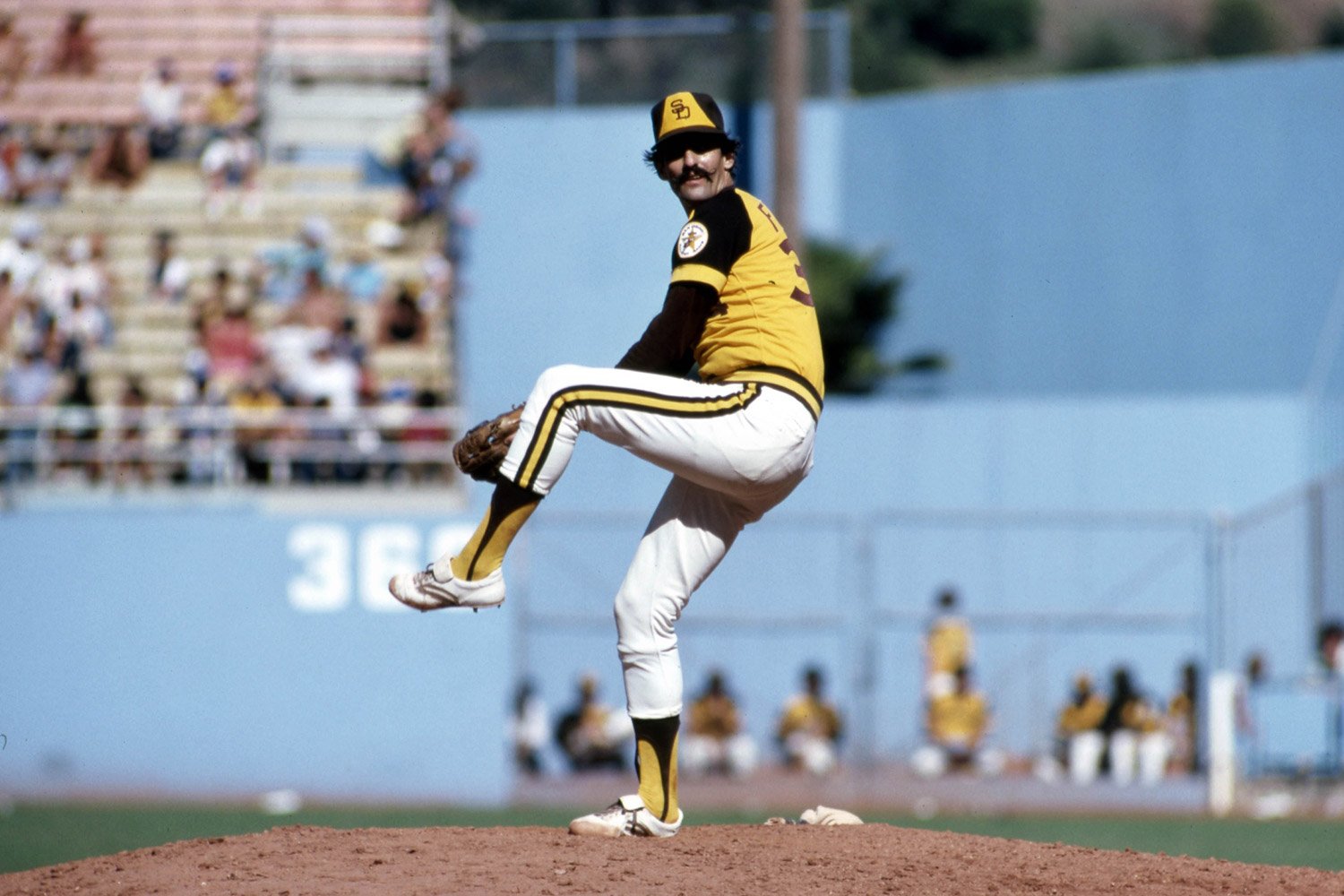 Baseball free agency, as we know it, began in 1976, so the 2025-26 offseason is the 50th season of free agent signings. The San Diego Padres have been both on the signing end and the losing end of free agent signings, but many of the free agents the Padres signed would make an impact. The admittedly subjective top ten free agent signings in Padres history consist of five from the era of the Kroc family ownership and five from the Moores, Fowler, and Seidler ownerships. It should be noted that Nick Pivetta, who to date has played with the Padres only in 2025, is omitted from the list since his contributions to the Padres cannot be judged on a single season. James Shields, who was a bust with the Padres and was unloaded in a trade that included Fernando Tatis Jr., was excluded due to Shields’ lack of direct contributions to the Padres, even though his signing indirectly provided the team with Tatis. For some years, a lack of financial resources prevented the Padres from signing desired free agents. Currently, the Padres’ free-agent struggles stem from penalties for violating the luxury tax. It could also be said that free agency hurt the Padres in the beginning, since in 1976 all four of their minor league affiliates won league championships, and the ability of other teams to sign free agents offset the Padres’ player development advantage. The first two free agents the Padres signed, both of whom are on the top ten list, displaced an incumbent catcher who caught Cy Young Award winner Randy Jones in 1976, as well as Rookie of the Year award co-winner Butch Metzger, who was himself displaced by the other initial free agent. Given the displacement factor, it may have been beneficial to the Padres that Reggie Jackson chose the New York Yankees’ offer instead. The Padres’ 1976 outfield included Dave Winfield, Johnny Grubb, and Willie Davis, while the 1977 Padres outfielder Gene Richards would set a rookie record for stolen bases. Richards himself was allowed to become a free agent after the 1983 season when 1981 Padres draft picks Kevin McReynolds and Tony Gwynn had established themselves as major league outfielders. Instead of signing Jackson, the Padres obtained two of his Oakland Athletics teammates on the same day for the Padres’ first two free agent signings. Four years later, those two free agents would be sent to the St. Louis Cardinals in the same trade. Both players remain among the Padres’ top ten free agent signings half a century later. Gene Tenace and Rollie Fingers both signed with the Padres on December 14, 1976. Gene Tenace Gene Tenace first came into prominence in 1972 when he became the first player to hit home runs in both of his first two World Series at-bats. By the time the World Series ended, he had tied the record of four home runs in a single World Series. Between 1973 and 1976, Tenace hit 101 regular-season home runs with the A’s. A dropoff in that home run total with the Padres could have been expected. At the time, the San Diego Stadium outfield fence was 17 feet high, 330 feet away from home plate at the foul lines, 375 feet from the plate to the power alleys, and 420 feet from the batter’s box to center field. Tenace still accumulated 68 home runs during his four years with the Padres, and his 69 doubles from 1977 to 1980 nearly matched his 71 two-baggers during his previous four years in an Oakland uniform. Tenace had 465 hits from 1973 to 1976 and 384 hits with the Padres. He walked 398 times during his final four seasons with the A’s and 423 times as a Padre, which currently ranks fifth all-time among Padres players. His on-base percentage with San Diego was .403, which remains the best figure of all qualifying Padres hitters (Tony Gwynn and Fred McGriff share second at .388) with two seasons above .400 and no season below .392. In 1977, he led the National League with 125 walks and 13 times being hit by a pitch, and his 35 plunkings over four years now rank fourth in team history. The only other time during his Padres career when Tenace would lead the National League in a category was in 1979, when his .998 fielding percentage was the best among the league’s catchers. Tenace played only 94 games behind the plate that year, but also 72 as a first baseman. In 1978, Tenace played more games as a first baseman than as a catcher, and in 1977, he played 14 games at third base, 36 at first base, and 99 behind the plate. Tenace and Fingers were sent to St. Louis in an 11-player trade, which brought Terry Kennedy, who would be the team’s starting catcher from 1981 through 1986, to the Padres, while also giving the Padres backup catcher Steve Swisher. Tenace played two seasons with the Cardinals and one with the Pittsburgh Pirates before concluding his major league regular-season career with 201 home runs and a .388 on-base percentage. The signing of Tenace allowed the Padres to include catcher Fred Kendall, along with Johnny Grubb and infielder Hector Torres, in a trade to the Cleveland Indians for outfielder George Hendrick. Kendall would return to the Padres in 1979 and 1980, and his career batting average was .233 with the Padres and .234 when his seasons with the Indians and Boston Red Sox are included. Tenace had a .237 batting average with the Padres, which, even without the walks, was an offensive improvement over Kendall. Rollie Fingers The exclusion of Nick Pivetta from this list - because a player’s first season doesn’t guarantee long-term success - explains why the Padres signed Rollie Fingers even though Butch Metzger shared Rookie of the Year honors for 1976. Metzger was a September callup both in 1974 with the Giants and in 1975 with the Padres and had 1‑0 records each year. He won his first ten decisions in 1976, matching the record Hooks Wiltse set in 1904 of winning his first 12 career decisions. Metzger finished 1976 with an 11-4 record, 16 saves, and a 2.92 earned run average. His 77 appearances in 1976 broke both the team record and the major league rookie record of 76 appearances in 1974 by Larry Hardy. The 1976 Padres had the distinction of having both the National League’s complete games leader, with Randy Jones finishing 25 of his starts, and the league’s games finished leader, with Metzger closing 62 times. Metzger’s 16 saves in 1976 also set a team single‑season record. Fingers also finished 62 games in 1976 and had 20 saves and a 2.47 ERA in his 70 appearances. Relief pitching was needed even more for the 1977 Padres. Jones had torn a nerve late in the 1976 season and had only one complete game in 1977, which set a still-standing major league record for the shortest night game, which took Jones and Philadelphia Phillies pitcher Jim Kaat 1:29 to complete. The 1977 Padres set a major league record for fewest complete games in a season with six. Fingers made 78 pitching appearances in 1977 to lead the league, while Dan Spillner and Dave Tomlin made 76 apiece to share second. Metzger, who was traded during the season, had 75 appearances with the Padres and Cardinals for fourth in that statistic that year. Fingers also led the National League with 69 games finished and 35 saves. After the 1977 season, Tomlin was traded for Gaylord Perry, who gave the Padres their second Cy Young Award winner in three years and is the most recent Padres pitcher to win at least 20 games in a season. The 1978 Padres posted the first winning record in franchise history and had 21 complete games, so Fingers only appeared in 67 games and finished 62. The additional Padres leads in 1978 allowed Fingers to tie the National League record of 37 saves in one season. San Diego native John D’Acquisto, whom the Padres acquired when they traded Metzger, was second on the team with 10 saves. Fingers himself was 6-13 in decisions but posted a 2.52 ERA. The 1979 Padres had 29 complete games and 68 wins. Fingers was 9-9 with 13 saves in 54 games, including 41 he finished. Despite not starting a game in 1980, Fingers shared the team lead with 11 pitching victories. His 11-9 record was complemented by 23 saves and a 2.80 ERA. He appeared in 66 games and concluded 46. In his four Padres seasons, Fingers pitched in 265 games and finished 218 of them. He had a 34-40 record with 108 saves and a 3.12 ERA. The seven players the Padres acquired for Fingers, Tenace, pitcher Bob Shirley, and minor league catcher Bob Geren included two relief pitchers who combined for 80 appearances in the strike-shortened 1981 season. Gary Lucas (who was not part of that trade) became thePadres's closer, leading the National League with 57 appearances and the team with 13 saves. Fingers never pitched for the Cardinals; he was sent to Milwaukee in a seven-player trade. Fingers won both the Cy Young Award and the American League’s Most Valuable Player award in 1981 after saving 28 games and posting a 1.04 ERA. A torn muscle kept Fingers out of the 1982 World Series, and he retired in 1985 with 341 regular-season saves in 944 career games. Fingers was elected to the Baseball Hall of Fame in 1992. Steve Garvey Before the Dodgers moved to Los Angeles, general manager and team president Branch Rickey said it was better to trade a player a year too early than a year too late. That philosophy would continue under subsequent Dodgers general managers. The 1970s Dodgers had the consistency of Steve Garvey at first base, Davey Lopes at second base, Bill Russell at shortstop, and Ron Cey at third base. In the 1970s, the Dodgers’ backups included Bill Buckner and Tom Paciorek at first, Lee Lacy at second, Ivan DeJesus at shortstop, and Jerry Royster at third. By 1982, first basemen Mike Marshall and Greg Brock were ready to play for the Dodgers, so the team made little attempt to keep Garvey from leaving as a free agent. Padres general manager Jack McKeon had a philosophy of paying top dollar for a free agent who could take a team from third or second to first but not from sixth to fifth or fourth. A rebuilding effort was beginning to pay off in 1982, when the Padres were competitive for part of the season. On December 21, 1982, the Padres signed Garvey to a five-year contract. Garvey holds the National League record for consecutive games played. During his first month as a Padres player, he tied Billy Williams’ record of 1,117 consecutive games played. Eventually, he played in 1,207 consecutive games before an injury sidelined him for the rest of 1983. Garvey played in exactly 100 games in 1983 and batted .294 with 76 runs scored, 59 runs batted in, 22 doubles, and 14 home runs. The Padres won their first division championship in 1984, and the regulars were rested the day after the team clinched. Still, Garvey played in the other 161 regular-season games as well as the National League playoffs and the World Series. Although he had only eight home runs in the regular season, he batted .284 with 175 hits, 27 doubles, 72 runs scored, and 86 runs batted in. He shared the National League lead with ten sacrifice flies. Garvey also led the National League first basemen with a 1.000 fielding percentage, having made 1,232 putouts and 87 assists without an error (the three Padres who also had innings at first base in 1984 handled a cumulative 130 chances without an error). The Padres faced the Chicago Cubs in the 1984 National League Championship Series. The Cubs won the first two games at Wrigley Field with Garvey batting in a run with a single during Game Two. A 7-1 Padres victory at San Diego Jack Murphy Stadium staved off elimination. In the fourth game, the Padres took a 2-0 lead on Garvey’s double in the third inning. The Cubs scored three runs in the fourth. In the bottom of the fifth, Garvey drove in the tying run with a single. Garvey singled in a run during the seventh inning, and a subsequent run gave the Padres a 5-3 lead. The Cubs tied the game with two runs in the top of the eighth. In the bottom of the ninth, Garvey came to the plate with Tony Gwynn on first and one out. Garvey’s walk-off home run gave the Padres a 7-5 victory. The following day, Garvey singled in the final run of the Padres’ 6-3 triumph. He batted .400 during the playoffs with seven runs batted in, and he was named the Most Valuable Player for the playoffs. During the 1984 World Series, Garvey batted .200 with four hits, including two doubles, in 20 at-bats and scored two runs. Garvey played in all 162 of the Padres’ games in 1985, batting .281 with his 184 hits, including 34 doubles, six triples, and 17 homers. He scored 80 runs and drove in 81. Although he made five fielding errors, Garvey led National League first basemen with 1,442 putouts and 138 double plays. Garvey batted .255 in 1986, although his 21 home runs were his most since 1980. A shoulder injury in May 1987 ended his season and his playing career. In his five Padres seasons, Garvey batted .275 with his 631 regular-season hits, including 107 doubles and 61 home runs. He scored 291 regular-season runs with the Padres while driving in 316. In his 19 total major league seasons, including three games in 1969, Garvey batted .294 with 2,599 hits, 440 doubles, 272 home runs, 1,143 runs scored, and 1,308 runs batted in. Goose Gossage After the Padres traded Rollie Fingers, the closer role was given to Gary Lucas in 1981. Fingers was traded to the Milwaukee Brewers in a multi-player deal, which sent outfielder Sixto Lezcano to the St. Louis Cardinals. In December 1981, the Padres and Cardinals executed a six-player trade that sent shortstop Ozzie Smith to St. Louis while sending shortstop Garry Templeton, Lezcano, and pitcher Luis DeLeon to San Diego. Lucas and DeLeon shared closer duties in 1982 and 1983. In December 1983, Lucas was sent to the Montreal Expos as part of a three-way trade that brought outfielder Carmelo Martinez and pitcher Craig Lefferts to the Padres. Three-time American League save leader Goose Gossage became a free agent after the 1983 season, and on January 6, 1984, the Padres signed Gossage. Although Gossage never led the National League in saves while with the Padres, in 1984, his 10 relief wins ranked second in the league. His 10-6 record was complemented by 25 saves in his 62 appearances, including 51 games finished. He posted a 2.90 ERA in 102 1/3 innings pitched. He had one save in his three playoff appearances and pitched twice in the 1984 World Series. Gossage threw 79 2/3 innings in 1985 and had a 1.82 ERA, 26 saves, and a 5-3 record in 50 appearances. He took the mound 45 times in 1986 and was 5-7 with 21 saves. Lance McCullers took over the closer role from Gossage during the 1987 season, when Gossage had 11 saves in 40 appearances, a 5-4 record, and a 3.12 ERA. A four-player trade in February 1988 sent Gossage to the Chicago Cubs. He concluded his four Padres regular seasons with a 25-20 record, 83 saves, and a 2.99 ERA in 197 outings. Gossage retired after the 1994 season with 310 saves in 1,002 games and a 3.01 ERA, and in 200,8 he was elected to the Hall of Fame. Bruce Hurst In 1988, Roger Clemens and Bruce Hurst shared the Boston Red Sox team lead with 18 pitching victories apiece. Hurst was 18-6, and his .750 winning percentage ranked second among American League pitchers. The Cy Young Award voters placed Hurst ahead of Clemens, with Hurst taking fifth in the voting and Clemens placing sixth. Hurst was unable to reach a contract agreement with the Red Sox after the 1988 season. The Padres, whose third-place finish in 1988 was their best since 1984, pursued Hurst. He signed a three‑year agreement with San Diego on December 8, 1988. Although Hurst lost his first start with the Padres, his second start was a one-hit complete game victory. Hurst finished 1989 with a 15‑11 record, shared the National League lead with ten complete games, shared third in the league with 244 2/3 innings pitched, and placed fifth in the league with a 2.69 ERA and with 179 strikeouts. The Padres were 89-73 in 1989 but fell to 75-87 in 1990. Hurst was 11-9 in his second San Diego year, shared the National League lead with four shutouts, and shared second in the league with nine complete games. He was eighth in the league with 162 strikeouts and tenth both with 223 2/3 innings pitched and his 3.14 ERA. An 84-78 team record in 1991 included Hurst’s 15-8 record with the .652 winning percentage ranking fifth in the league. He struck out 141 batters in 221 2/3 innings and posted a 3.29 ERA. Hurst threw four shutouts for the 1992 Padres, who were 82-80. The shutouts included a one-hitter against the New York Mets, and Hurst was 14-9 overall with a 3.85 ERA in 217 1/3 innings. He struck out 131 opponents in 1992. The torn rotator cuff, which hindered Hurst near the end of the 1992 season, limited him to two games with the Padres in 1993. On July 26, 1993, Hurst was traded to the Colorado Rockies. The trade brought pitcher Andy Ashby and catcher Brad Ausmus to the Padres. Hurst started a total of 131 games for the Padres, posted a cumulative 55-38 record, completed 29 games, 10 of which were shutouts, struck out 616 batters in 911 2/3 innings, and had a 3.27 ERA, lower than the 4.23 ERA of his Red Sox years. He retired after the 1994 season with a career record of 145-113, a 3.92 ERA, and 23 shutouts.
 -
In 1969, the San Diego Padres and the Montreal Expos both joined the National League. Both teams posted records of 52-110 in the first season of divisional play, and those stood as the worst season records in the divisional era until the 2003 Detroit Tigers finished 43-119 and the 2004 Arizona Diamondbacks set the new National League record at 51‑111. Ironically, another last-place Padres team may be responsible for teams losing more than 110 games in a season. During the 12 seasons Bruce Bochy was the Padres’ manager, the team won four division championships and finished last four times. The Padres went from first place in 1996 to last in 1997 back to first in 1998. The often-injured Tony Gwynn was the Padres’ only primary starting position player in 1997 not to spend time on the disabled list, and starting pitcher Andy Ashby also spent part of the season on the disabled list. During the season, 18 different players would go on the disabled list, and the list would be used 20 times including 19 after the regular season began. At one time in 2000, the Padres had more salary on the disabled list than on the active roster. That same year, the Padres once had ten pitchers on the DL at the same time. That means some of the Padres’ pitchers that year weren’t truly ready for the major leagues but were promoted to the San Diego roster. The 2000 Padres who weren’t yet ready for major-league play also included outfielder Kory DeHaan. In 1998, DeHaan was in the Pittsburgh Pirates’ affiliate in the Class A South Atlantic League and batted .314 with 33 stolen bases. DeHaan split 1999 between two minor league teams and batted .303 with 46 stolen bases. The promise was enough for the Padres to select him in the Rule 5 draft, which required DeHaan to stay on the major-league roster for all of 2000. He batted .204 in 110 plate appearances while stealing four bases in 2000. The Padres were allowed to send DeHaan to the minors for 2001, and he batted .268 with 24 stolen bases. Prior to the September call-up period, he was with the Padres’ Triple-A affiliate in Portland during 2002, and he batted .283 with 23 stolen bases. That year, the final 66-96 record not only gave the Padres last place but was 32 games behind the first-place Arizona Diamondbacks. The San Francisco Giants, who would reach the World Series that year, finished second and the Los Angeles Dodgers finished six games behind the Diamondbacks. The 2002 Padres played their final 19 games of the season against the Diamondbacks, Giants, or Dodgers. The first of those was six days after DeHaan was recalled to the expanded major-league roster. Major League Baseball has an unwritten rule that September call-ups shouldn't play against contenders. The Padres 2002 outfielders prior to the September call-ups included Ron Gant, Trenidad Hubbard, Gene Kingsale, Ray Lankford, and Bubba Trammell. Although none of them played for the Padres in 2003, they, rather than DeHaan, saw action against the contenders. DeHaan also was not with the Padres in 2003. He was limited to 11 plate appearances with the Friars in 2002 and had only a single. That did not provide the sufficient major league experience DeHaan needed to make the 2003 roster. He played 54 games with Portland in 2003 before retiring. The Padres themselves were in last place from the end of April to the end of the season and finished 36 1/2 games out of first place. In effect, the inability to get the team’s 2002 September call-ups plate appearances cost the Padres the following year. Baseball’s wild card playoff entrants make sense if there aren’t too many. When there are two or four or eight divisions, or leagues in the case of high school sports, a certain number of playoff teams from each division makes sense. Otherwise, wild card or at-large teams are needed to round out the brackets. The San Diego County section for high school sports was formed in 1960, and initially there were four 2A large school leagues and the top two teams from each league made the playoffs. The playoffs were expanded not so that a third-place team in a tough league could make the playoffs, but because enrollment growth merited a fifth 2A league. When the American Football League and National Football League merged, two 13-team conferences with three divisions apiece made sense and a wild card team was needed to round out the playoffs. So, after Major League Baseball expanded to 14 teams in each league. a format with three divisions with a wild card team was justified. High school baseball teams do not have roster limits. Coaches will assign a player to the junior varsity if he won't see much action on the varsity. The functional roster expansion is actually for the playoffs, since there are no further JV games and the JV players might fulfill some roles (often as a pinch-runner). Also, a contending high school team can't trade junior varsity or feeder middle school players to a non-contending team for varsity starters. At the major league level, the non-contending teams weren't able to use prospects after the wild card created more contenders. That led to two options: don't give the prospects needed experience and sacrifice future seasons, or unload the veterans before September so that the prospects wouldn't be September call-ups. What happened with Kory DeHaan sent a lesson to other teams, who began unloading veterans before the roster expansion period. More contending teams due to the wild card also means more teams seeking veterans for prospects, so non-contending teams are willing to increase the current season's losses given the right offer. Pro football playoffs were expanded from four teams to five in each conference to give division champions a bye while the two wild card teams played in the first round, so baseball playoff expansion to five teams in each league created that same benefit. The six-team playoff only meant more dumping by non-contending teams. The 2013 Houston Astros matched the 2004 Diamondbacks’ National League record for most losses in divisional play. The next major-league team to lose more than 110 games was the 2018 Baltimore Orioles, who had a 47-115 finish. Two other changes to Major League Baseball are likely responsible for dumping veterans earlier in the season and sacrificing the current season for a brighter future. The original trade deadline was implemented for the right reasons. In 1922, interleague trading didn’t exist, a rift between American League owners created factions, and the suspension of White Sox players involved in the Black Sox Scandal meant that the New York Yankees traded almost exclusively with the Boston Red Sox. The acquisition of Red Sox third baseman Joe Dugan in late July allowed the Yankees to win the 1922 American League championship by one game. Although the non-waiver trade deadline was eventually moved from June 15 to July 31 in 1986, trades could still be made later in the season if the player cleared waivers. In 2019, waiver trades in August were eliminated. That forced teams to declare early whether they were buyers or sellers. In 2019, the Tigers lost 114 games. Also in 2019, rosters prior to September 1 were expanded to 26 active players effective for the 2020 season, although due to the shortened 2020 season teams were allowed 28 players that year before having a maximum of 26 since 2021. That change also limited active rosters after September 1 to 28 players, and that took effect in 2021. When teams were allowed 40 active players after September 1, the additional roster positions went to both prospects and players returning from what was known as the disabled list. The reduction in additional players has limited the number of prospects who can be called up, thus turning those September prospects into earlier-season call-ups. With fewer September call-ups allowed, more veterans are jettisoned early to allow for the prospects to see playing time. In 2021, both the Diamondbacks and the Orioles had 110-loss seasons. The 2023, Oakland A’s had 114 losses. In 2024, the Chicago White Sox set an all-time record with 121 losses. The 2025 Colorado Rockies lost 119 games. Non-contending teams are now better off sacrificing their current seasons earlier than when two-team or even four-team playoffs, 40-man September rosters, and August waiver trades were the standard. The playoff expansion, September call-up limits, and August trade elimination changes were done for understandable reasons, but the increased discrepancies between the top teams and the worst teams may show that those changes have had some adverse consequences on parity. Kory DeHaan himself didn’t lose very many games. He had 27 hits and walks in his 121 major league plate appearances. A star he was not. But the inability of the Padres to develop players like Kory DeHaan likely led to changes throughout Major League Baseball which increased the quantity of losses by last-place teams. View full article
-
How Padres & Kory DeHaan Are Partly Responsible For MLB's Tanking Era
Joe Naiman posted an article in Padres
 In 1969, the San Diego Padres and the Montreal Expos both joined the National League. Both teams posted records of 52-110 in the first season of divisional play, and those stood as the worst season records in the divisional era until the 2003 Detroit Tigers finished 43-119 and the 2004 Arizona Diamondbacks set the new National League record at 51‑111. Ironically, another last-place Padres team may be responsible for teams losing more than 110 games in a season. During the 12 seasons Bruce Bochy was the Padres’ manager, the team won four division championships and finished last four times. The Padres went from first place in 1996 to last in 1997 back to first in 1998. The often-injured Tony Gwynn was the Padres’ only primary starting position player in 1997 not to spend time on the disabled list, and starting pitcher Andy Ashby also spent part of the season on the disabled list. During the season, 18 different players would go on the disabled list, and the list would be used 20 times including 19 after the regular season began. At one time in 2000, the Padres had more salary on the disabled list than on the active roster. That same year, the Padres once had ten pitchers on the DL at the same time. That means some of the Padres’ pitchers that year weren’t truly ready for the major leagues but were promoted to the San Diego roster. The 2000 Padres who weren’t yet ready for major-league play also included outfielder Kory DeHaan. In 1998, DeHaan was in the Pittsburgh Pirates’ affiliate in the Class A South Atlantic League and batted .314 with 33 stolen bases. DeHaan split 1999 between two minor league teams and batted .303 with 46 stolen bases. The promise was enough for the Padres to select him in the Rule 5 draft, which required DeHaan to stay on the major-league roster for all of 2000. He batted .204 in 110 plate appearances while stealing four bases in 2000. The Padres were allowed to send DeHaan to the minors for 2001, and he batted .268 with 24 stolen bases. Prior to the September call-up period, he was with the Padres’ Triple-A affiliate in Portland during 2002, and he batted .283 with 23 stolen bases. That year, the final 66-96 record not only gave the Padres last place but was 32 games behind the first-place Arizona Diamondbacks. The San Francisco Giants, who would reach the World Series that year, finished second and the Los Angeles Dodgers finished six games behind the Diamondbacks. The 2002 Padres played their final 19 games of the season against the Diamondbacks, Giants, or Dodgers. The first of those was six days after DeHaan was recalled to the expanded major-league roster. Major League Baseball has an unwritten rule that September call-ups shouldn't play against contenders. The Padres 2002 outfielders prior to the September call-ups included Ron Gant, Trenidad Hubbard, Gene Kingsale, Ray Lankford, and Bubba Trammell. Although none of them played for the Padres in 2003, they, rather than DeHaan, saw action against the contenders. DeHaan also was not with the Padres in 2003. He was limited to 11 plate appearances with the Friars in 2002 and had only a single. That did not provide the sufficient major league experience DeHaan needed to make the 2003 roster. He played 54 games with Portland in 2003 before retiring. The Padres themselves were in last place from the end of April to the end of the season and finished 36 1/2 games out of first place. In effect, the inability to get the team’s 2002 September call-ups plate appearances cost the Padres the following year. Baseball’s wild card playoff entrants make sense if there aren’t too many. When there are two or four or eight divisions, or leagues in the case of high school sports, a certain number of playoff teams from each division makes sense. Otherwise, wild card or at-large teams are needed to round out the brackets. The San Diego County section for high school sports was formed in 1960, and initially there were four 2A large school leagues and the top two teams from each league made the playoffs. The playoffs were expanded not so that a third-place team in a tough league could make the playoffs, but because enrollment growth merited a fifth 2A league. When the American Football League and National Football League merged, two 13-team conferences with three divisions apiece made sense and a wild card team was needed to round out the playoffs. So, after Major League Baseball expanded to 14 teams in each league. a format with three divisions with a wild card team was justified. High school baseball teams do not have roster limits. Coaches will assign a player to the junior varsity if he won't see much action on the varsity. The functional roster expansion is actually for the playoffs, since there are no further JV games and the JV players might fulfill some roles (often as a pinch-runner). Also, a contending high school team can't trade junior varsity or feeder middle school players to a non-contending team for varsity starters. At the major league level, the non-contending teams weren't able to use prospects after the wild card created more contenders. That led to two options: don't give the prospects needed experience and sacrifice future seasons, or unload the veterans before September so that the prospects wouldn't be September call-ups. What happened with Kory DeHaan sent a lesson to other teams, who began unloading veterans before the roster expansion period. More contending teams due to the wild card also means more teams seeking veterans for prospects, so non-contending teams are willing to increase the current season's losses given the right offer. Pro football playoffs were expanded from four teams to five in each conference to give division champions a bye while the two wild card teams played in the first round, so baseball playoff expansion to five teams in each league created that same benefit. The six-team playoff only meant more dumping by non-contending teams. The 2013 Houston Astros matched the 2004 Diamondbacks’ National League record for most losses in divisional play. The next major-league team to lose more than 110 games was the 2018 Baltimore Orioles, who had a 47-115 finish. Two other changes to Major League Baseball are likely responsible for dumping veterans earlier in the season and sacrificing the current season for a brighter future. The original trade deadline was implemented for the right reasons. In 1922, interleague trading didn’t exist, a rift between American League owners created factions, and the suspension of White Sox players involved in the Black Sox Scandal meant that the New York Yankees traded almost exclusively with the Boston Red Sox. The acquisition of Red Sox third baseman Joe Dugan in late July allowed the Yankees to win the 1922 American League championship by one game. Although the non-waiver trade deadline was eventually moved from June 15 to July 31 in 1986, trades could still be made later in the season if the player cleared waivers. In 2019, waiver trades in August were eliminated. That forced teams to declare early whether they were buyers or sellers. In 2019, the Tigers lost 114 games. Also in 2019, rosters prior to September 1 were expanded to 26 active players effective for the 2020 season, although due to the shortened 2020 season teams were allowed 28 players that year before having a maximum of 26 since 2021. That change also limited active rosters after September 1 to 28 players, and that took effect in 2021. When teams were allowed 40 active players after September 1, the additional roster positions went to both prospects and players returning from what was known as the disabled list. The reduction in additional players has limited the number of prospects who can be called up, thus turning those September prospects into earlier-season call-ups. With fewer September call-ups allowed, more veterans are jettisoned early to allow for the prospects to see playing time. In 2021, both the Diamondbacks and the Orioles had 110-loss seasons. The 2023, Oakland A’s had 114 losses. In 2024, the Chicago White Sox set an all-time record with 121 losses. The 2025 Colorado Rockies lost 119 games. Non-contending teams are now better off sacrificing their current seasons earlier than when two-team or even four-team playoffs, 40-man September rosters, and August waiver trades were the standard. The playoff expansion, September call-up limits, and August trade elimination changes were done for understandable reasons, but the increased discrepancies between the top teams and the worst teams may show that those changes have had some adverse consequences on parity. Kory DeHaan himself didn’t lose very many games. He had 27 hits and walks in his 121 major league plate appearances. A star he was not. But the inability of the Padres to develop players like Kory DeHaan likely led to changes throughout Major League Baseball which increased the quantity of losses by last-place teams.
 -
Matt Waldron is in contention to be the San Diego Padres’ fifth starter for the 2026 season. He will need to be consistent during spring training to earn that spot, and the Padres’ catchers will need to learn how to handle a knuckleball pitcher. That may be a lot to ask in what's become a suddenly crowded competition, but that knuckleball is Waldron's key back to San Diego. Waldron and Padres manager Craig Stammen were never on the same pitching staff. Waldron spent the entire 2021 season in the minor leagues during his first year in the Padres organization. Stammen was on the major league roster and had 63 relief appearances and four starts. For reference, Stammen didn’t pitch poorly in his 2021 starts. Padres manager Jayce Tingler utilized multiple “bullpen days” and Stammen was the formal starter while Tingler had no intent of having Stammen pitch more than once through the order. Those bullpen days, along with Tingler's habit of removing effective starters before the sixth inning resulted in eventual bullpen fatigue, and Maxwell’s silver hammer came down on the Padres’ head late in the season. Had the Padres’ rotation in 2021 included a knuckleball pitcher who could last into the sixth or seventh inning, the Padres might have obtained a wild card berth in the National League playoffs. The success of the 2026 Padres will be based in part on whether the team’s fourth and fifth starters can last long enough into the game to give the bullpen sufficient rest for subsequent outings. In 2021, Waldron made 20 starts for the Padres’ Class AA and High-A farm teams. He threw 103 2/3 innings in those outings, an average of more than five innings per start. Waldron’s 25 Triple-A and Double-A starts during 2022 totaled 113 2/3 innings, which still created an average of lasting into the fifth inning. Waldron pitched in 20 Class AAA games in 2023, starting 18 of those. On multiple occasions, he was briefly called up to the Padres, and on August 28 of that year, he was recalled by the Friars and stayed with the major-league team after the roster limit expansion took effect in September. In his first major league start, he was removed after 4 2/3 innings, but his other five starts that year were between five and six innings. He came to the mound from the bullpen twice in 2023, pitching five innings in his first relief appearance and 4 2/3 frames in the other one. Waldron began 2024 on the Padres and stayed with the major-league club until being sent to El Paso on August 22. His 26 starts totaled 142 2/3 innings for an average of more than five once again. In his worst 2024 outing, he allowed eight runs in three innings. On two other occasions he was removed after four innings. On seven occasions he pitched at least five innings; there was also a streak in there where he allowed three or fewer hits including three consecutive starts in which he allowed two hits in 6 1/3 innings, three hits in six innings, and three hits in seven innings. The two starts sandwiched around those three games were both seven-inning outings. Waldron had streaks of six and four starts in which he pitched at least six innings. In seven of his 26 starts during 2024, Waldron lasted less than five innings. The final one of those, a 4 1/3-inning outing on August 21, was the 32nd career start for the second knuckleball pitcher in Padres history and broke Joe Niekro’s team record for most starts by a knuckleball pitcher. An oblique muscle strain delayed Waldron’s 2025 debut to the second half of May, when he pitched in three rehabilitation assignments. Waldron was activated from the 60-day disabled list June 1 and sent to El Paso. His 18 starts with the Chihuahuas totaled 82 1/3 innings for an average of, you guessed it, more than five frames. He was called up to the Padres for a June 30 start in which he allowed four runs in 4 2/3 innings before being returned to El Paso. Martin Maldonado, who is no longer with the club, was Waldron’s catcher during his one major-league appearance last year. Waldron’s career major league totals of 179 innings in 33 starts average out to him pitching into the sixth inning. Stammen, who experienced first-hand the Padres 12-34 finish in 2021, recognizes the value of a pitcher who can avoid overtaxing the bullpen. If Waldron can regain his consistency and if the Padres’ catchers can figure out how to handle a knuckleball, there may be a dark horse yet for that fifth starter job in camp. View full article
-
Matt Waldron's Longevity Is An Important Factor In Padres' Rotation Battle
Joe Naiman posted an article in Padres
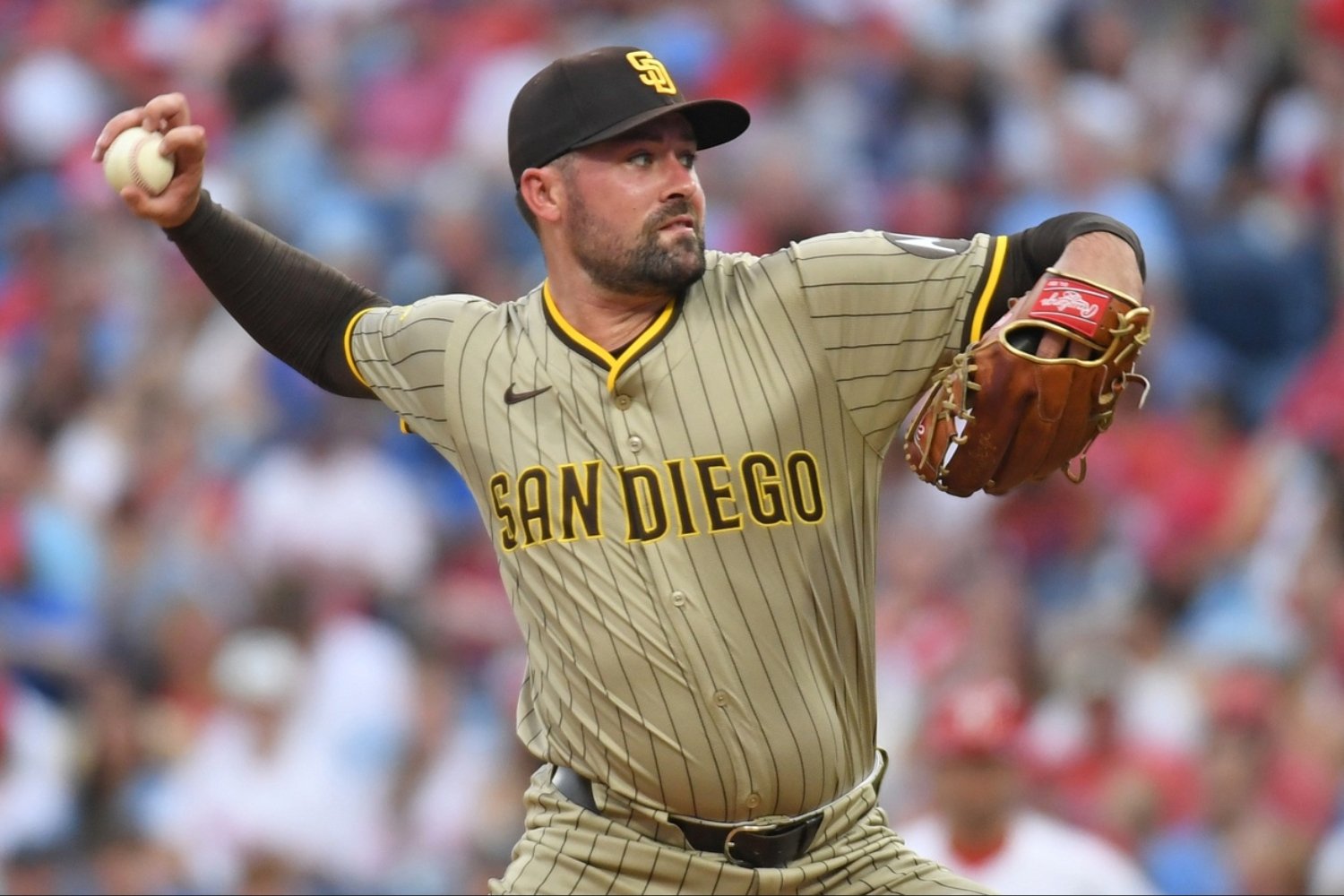 Matt Waldron is in contention to be the San Diego Padres’ fifth starter for the 2026 season. He will need to be consistent during spring training to earn that spot, and the Padres’ catchers will need to learn how to handle a knuckleball pitcher. That may be a lot to ask in what's become a suddenly crowded competition, but that knuckleball is Waldron's key back to San Diego. Waldron and Padres manager Craig Stammen were never on the same pitching staff. Waldron spent the entire 2021 season in the minor leagues during his first year in the Padres organization. Stammen was on the major league roster and had 63 relief appearances and four starts. For reference, Stammen didn’t pitch poorly in his 2021 starts. Padres manager Jayce Tingler utilized multiple “bullpen days” and Stammen was the formal starter while Tingler had no intent of having Stammen pitch more than once through the order. Those bullpen days, along with Tingler's habit of removing effective starters before the sixth inning resulted in eventual bullpen fatigue, and Maxwell’s silver hammer came down on the Padres’ head late in the season. Had the Padres’ rotation in 2021 included a knuckleball pitcher who could last into the sixth or seventh inning, the Padres might have obtained a wild card berth in the National League playoffs. The success of the 2026 Padres will be based in part on whether the team’s fourth and fifth starters can last long enough into the game to give the bullpen sufficient rest for subsequent outings. In 2021, Waldron made 20 starts for the Padres’ Class AA and High-A farm teams. He threw 103 2/3 innings in those outings, an average of more than five innings per start. Waldron’s 25 Triple-A and Double-A starts during 2022 totaled 113 2/3 innings, which still created an average of lasting into the fifth inning. Waldron pitched in 20 Class AAA games in 2023, starting 18 of those. On multiple occasions, he was briefly called up to the Padres, and on August 28 of that year, he was recalled by the Friars and stayed with the major-league team after the roster limit expansion took effect in September. In his first major league start, he was removed after 4 2/3 innings, but his other five starts that year were between five and six innings. He came to the mound from the bullpen twice in 2023, pitching five innings in his first relief appearance and 4 2/3 frames in the other one. Waldron began 2024 on the Padres and stayed with the major-league club until being sent to El Paso on August 22. His 26 starts totaled 142 2/3 innings for an average of more than five once again. In his worst 2024 outing, he allowed eight runs in three innings. On two other occasions he was removed after four innings. On seven occasions he pitched at least five innings; there was also a streak in there where he allowed three or fewer hits including three consecutive starts in which he allowed two hits in 6 1/3 innings, three hits in six innings, and three hits in seven innings. The two starts sandwiched around those three games were both seven-inning outings. Waldron had streaks of six and four starts in which he pitched at least six innings. In seven of his 26 starts during 2024, Waldron lasted less than five innings. The final one of those, a 4 1/3-inning outing on August 21, was the 32nd career start for the second knuckleball pitcher in Padres history and broke Joe Niekro’s team record for most starts by a knuckleball pitcher. An oblique muscle strain delayed Waldron’s 2025 debut to the second half of May, when he pitched in three rehabilitation assignments. Waldron was activated from the 60-day disabled list June 1 and sent to El Paso. His 18 starts with the Chihuahuas totaled 82 1/3 innings for an average of, you guessed it, more than five frames. He was called up to the Padres for a June 30 start in which he allowed four runs in 4 2/3 innings before being returned to El Paso. Martin Maldonado, who is no longer with the club, was Waldron’s catcher during his one major-league appearance last year. Waldron’s career major league totals of 179 innings in 33 starts average out to him pitching into the sixth inning. Stammen, who experienced first-hand the Padres 12-34 finish in 2021, recognizes the value of a pitcher who can avoid overtaxing the bullpen. If Waldron can regain his consistency and if the Padres’ catchers can figure out how to handle a knuckleball, there may be a dark horse yet for that fifth starter job in camp.
 -
During the 2025-26 offseason, the San Diego Padres lost both Ryan O’Hearn and Luis Arraez to free agency. Since both are left-handed batters, the Fenton Curse merits being revisited. What was originally San Diego Stadium was the newest of the three major league ballparks in Southern California. Dodger Stadium opened in 1962, what was originally Anaheim Stadium opened in 1966, and San Diego Stadium opened with football in August 1967 before first hosting baseball in 1968. San Diego Stadium was also renovated in the early 1980s when the success of the Chargers football team warranted a seating expansion. The first Padres owner to express a desire for a new stadium was Tom Werner after attendance dropped during the fire sale years and Werner wanted a smaller stadium with fewer empty seats. After Werner’s ownership group sold the Padres, new owner John Moores originally didn’t ask for a new stadium. The 1990s renovations based on the Chargers’ demands included lease terms more favorable to the Chargers than to the Padres. The Friars actually needed a new lease rather than a new stadium, but the factors necessitated a new ballpark. The Fenton quarry just west of the stadium had been mined out by that time. Fenton offered the city the land for the new baseball stadium, which also would have allowed sharing of the old stadium’s parking lot. The city wanted the new baseball stadium to be part of Downtown redevelopment and turned down the Fenton offer. That was probably beneficial to city sales tax revenue since the land became the Fenton Marketplace mall which includes a Costco, an Ikea, and several restaurants with the city itself obtaining a presence with the Mission Valley library branch. Petco Park was built in the East Village area of Downtown San Diego. The allegedly blighted area razed to build the stadium wasn’t primarily the likes of bars and tattoo parlors but rather the Produce District where local growers sold their produce for resale to grocery stores and restaurants. Home plate is traditionally the southwest corner of the diamond for a reason: if the batter is facing east the sun will not be in his eyes. In order to have a skyline view of Downtown San Diego rather than Barrio Logan, home plate at Petco Park is due south. That means left-handed batters are looking into the sun during certain hours. The configuration seems to have been adverse for left-handed hitters. Ryan Klesko was the Padres’ top left-handed hitter when the team moved to Petco Park. In his four seasons with the Padres prior to the stadium change he batted .282. Klesko batted .270 for the Padres during the years they played home games at Petco Park. Adrian Gonzalez, who played for the Padres from 2006 to 2010, holds the club record for most career home runs by a left-handed batter. He hit 104 of those 161 home runs on the road. In all five of his seasons, he hit more home runs on the road than at home, and in all five of those years he also had a higher batting average in away games. His highest Petco Park batting average of .296 in 2006 gave him his only .300 overall season with the Padres and was slightly better than his worst road batting average of .295 in 2007, which was the only year he didn’t hit over .300 on the road. Wil Myers was a right-handed batter for the Padres from 2015 to 2022 and batted .254 with 134 home runs during those years. The 2016 All‑Star Game was held at Petco Park, and Myers was the host team representative in the Home Run Derby the day before. He lost in the first round as did all three of the Home Run Derby contestants who batted left-handed. That should have sent a message to free agents who batted left-handed that Petco Park will have adverse effects on production. A left-handed hitter who was offered a large salary for a significant number of years had the luxury of taking the money rather than the advice. In February 2018, Eric Hosmer signed an eight-year contract in which the Padres would pay him $144 million. Hosmer, who batted .284 with 127 home runs during his seven regular seasons with the Kansas City Royals, batted .265 with 69 home runs in just under five seasons with the Padres. In August 2022, the Padres sent Hosmer, two minor-league players, and cash to the Boston Red Sox for one minor-league player. Jackson Merrill was the runner-up for the National League’s Rookie of the Year award in 2024, so that season wasn’t a bust for him. He hit 24 home runs consisting of 12 in 79 home games and 12 in 77 away games. He batted .256 at home and .326 on the road. In 2025, Merrill had more home runs in Petco Park than on the road but batted .243 in home games and .284 in road at-bats. In 2025, O’Hearn batted .283 with 13 home runs in 94 games with the Baltimore Orioles while hitting .276 with four home runs during his 50 games with the Padres. Even his overall Padres batting average exceeds the .270 he hit at Petco Park. Arraez may be an exception to the Fenton Curse. During 2025, he batted .315 with six home runs at home and .270 with two home runs in away games. However, his only full season with the Padres produced a .292 overall batting average, which was the worst of his major-league career. His 2024 season consisted of 33 games with the Miami Marlins and 117 contests with the Padres, and he batted .268 at home and .359 in road games. Gavin Sheets played 72 home games and 73 road games with the Padres in 2025. His first year with the team included a .229 average with eight home runs at Petco Park and a .273 road average with 11 homers elsewhere. Excluding pitchers and players with fewer than 15 games with the Padres, the only other left-handed batter on the Padres’ 40-man roster as of Arraez’s signing with the San Francisco Giants is Jake Cronenworth. His 2025 season saw a .218 average with four homers in 67 Petco Park games and a .270 average with seven homers in 68 road contests. The loss of O’Hearn and Arraez indicates that free agents may be taking the Fenton Curse seriously. View full article
-
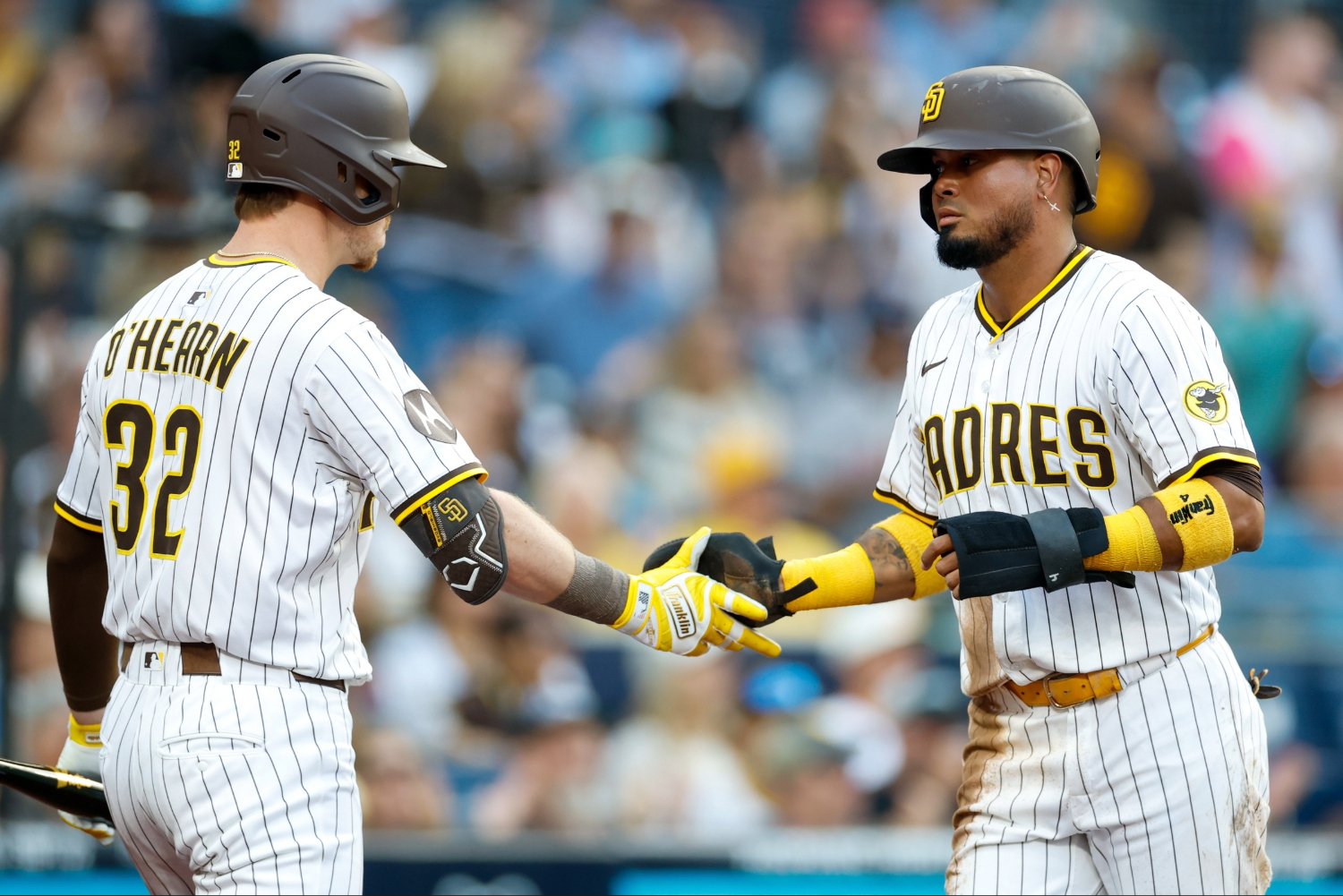 During the 2025-26 offseason, the San Diego Padres lost both Ryan O’Hearn and Luis Arraez to free agency. Since both are left-handed batters, the Fenton Curse merits being revisited. What was originally San Diego Stadium was the newest of the three major league ballparks in Southern California. Dodger Stadium opened in 1962, what was originally Anaheim Stadium opened in 1966, and San Diego Stadium opened with football in August 1967 before first hosting baseball in 1968. San Diego Stadium was also renovated in the early 1980s when the success of the Chargers football team warranted a seating expansion. The first Padres owner to express a desire for a new stadium was Tom Werner after attendance dropped during the fire sale years and Werner wanted a smaller stadium with fewer empty seats. After Werner’s ownership group sold the Padres, new owner John Moores originally didn’t ask for a new stadium. The 1990s renovations based on the Chargers’ demands included lease terms more favorable to the Chargers than to the Padres. The Friars actually needed a new lease rather than a new stadium, but the factors necessitated a new ballpark. The Fenton quarry just west of the stadium had been mined out by that time. Fenton offered the city the land for the new baseball stadium, which also would have allowed sharing of the old stadium’s parking lot. The city wanted the new baseball stadium to be part of Downtown redevelopment and turned down the Fenton offer. That was probably beneficial to city sales tax revenue since the land became the Fenton Marketplace mall which includes a Costco, an Ikea, and several restaurants with the city itself obtaining a presence with the Mission Valley library branch. Petco Park was built in the East Village area of Downtown San Diego. The allegedly blighted area razed to build the stadium wasn’t primarily the likes of bars and tattoo parlors but rather the Produce District where local growers sold their produce for resale to grocery stores and restaurants. Home plate is traditionally the southwest corner of the diamond for a reason: if the batter is facing east the sun will not be in his eyes. In order to have a skyline view of Downtown San Diego rather than Barrio Logan, home plate at Petco Park is due south. That means left-handed batters are looking into the sun during certain hours. The configuration seems to have been adverse for left-handed hitters. Ryan Klesko was the Padres’ top left-handed hitter when the team moved to Petco Park. In his four seasons with the Padres prior to the stadium change he batted .282. Klesko batted .270 for the Padres during the years they played home games at Petco Park. Adrian Gonzalez, who played for the Padres from 2006 to 2010, holds the club record for most career home runs by a left-handed batter. He hit 104 of those 161 home runs on the road. In all five of his seasons, he hit more home runs on the road than at home, and in all five of those years he also had a higher batting average in away games. His highest Petco Park batting average of .296 in 2006 gave him his only .300 overall season with the Padres and was slightly better than his worst road batting average of .295 in 2007, which was the only year he didn’t hit over .300 on the road. Wil Myers was a right-handed batter for the Padres from 2015 to 2022 and batted .254 with 134 home runs during those years. The 2016 All‑Star Game was held at Petco Park, and Myers was the host team representative in the Home Run Derby the day before. He lost in the first round as did all three of the Home Run Derby contestants who batted left-handed. That should have sent a message to free agents who batted left-handed that Petco Park will have adverse effects on production. A left-handed hitter who was offered a large salary for a significant number of years had the luxury of taking the money rather than the advice. In February 2018, Eric Hosmer signed an eight-year contract in which the Padres would pay him $144 million. Hosmer, who batted .284 with 127 home runs during his seven regular seasons with the Kansas City Royals, batted .265 with 69 home runs in just under five seasons with the Padres. In August 2022, the Padres sent Hosmer, two minor-league players, and cash to the Boston Red Sox for one minor-league player. Jackson Merrill was the runner-up for the National League’s Rookie of the Year award in 2024, so that season wasn’t a bust for him. He hit 24 home runs consisting of 12 in 79 home games and 12 in 77 away games. He batted .256 at home and .326 on the road. In 2025, Merrill had more home runs in Petco Park than on the road but batted .243 in home games and .284 in road at-bats. In 2025, O’Hearn batted .283 with 13 home runs in 94 games with the Baltimore Orioles while hitting .276 with four home runs during his 50 games with the Padres. Even his overall Padres batting average exceeds the .270 he hit at Petco Park. Arraez may be an exception to the Fenton Curse. During 2025, he batted .315 with six home runs at home and .270 with two home runs in away games. However, his only full season with the Padres produced a .292 overall batting average, which was the worst of his major-league career. His 2024 season consisted of 33 games with the Miami Marlins and 117 contests with the Padres, and he batted .268 at home and .359 in road games. Gavin Sheets played 72 home games and 73 road games with the Padres in 2025. His first year with the team included a .229 average with eight home runs at Petco Park and a .273 road average with 11 homers elsewhere. Excluding pitchers and players with fewer than 15 games with the Padres, the only other left-handed batter on the Padres’ 40-man roster as of Arraez’s signing with the San Francisco Giants is Jake Cronenworth. His 2025 season saw a .218 average with four homers in 67 Petco Park games and a .270 average with seven homers in 68 road contests. The loss of O’Hearn and Arraez indicates that free agents may be taking the Fenton Curse seriously.
 -
The Colorado Rockies avoided last-place finishes during their first two years of existence because the Padres had undergone a “fire sale” during the final two years of the Werner ownership group. The Padres’ previous last-place season, which was in 1987 and included a 12-42 start for the first third of the season, should send both a caution and some encouragement to current Rockies fans. Calls for the Monfort brothers to sell the Rockies might be unwise, since the potential buyer might not be any better. Ray Kroc was a hero for buying the Padres and keeping them in San Diego after a planned sale would have moved the team to Washington. He was not afraid to spend money on free agents or star players acquired in trades, although his final general manager initiated periodic housecleaning when those older players weren’t providing the desired success, and the 1987 season was the first year of the second cycle of such housecleaning. After Ray Kroc died in January 1984, his widow took over the Padres as well as McDonald’s, but Joan Kroc was more interested in humanitarian pursuits than in baseball or fast-food restaurants. In 1987, she planned to sell the Padres to Seattle Mariners owner George Argyros (prompting a local Greek restaurant to create a sign reading, “It’s no Kroc; try our gyros”), whose lack of spending on the Mariners led fans to urge Joan Kroc not to sell the team. That planned sale encountered obstacles and did not occur. In 1990, Joan Kroc sold the team to a group led by Tom Werner, who would clean house for financial reasons before selling it to John Moores at the end of 1994 for less than what they had paid for the Padres. The failure of the 1980 Padres veterans to succeed led to the mid-season firing of the general manager, and Jack McKeon became the new general manager. The Padres were in last place at the time and stayed there for the rest of the season in part due to McKeon’s philosophy. Before the Rockies and Marlins joined the National League in 1993, the league had two divisions of six teams apiece. McKeon’s philosophy was that the team should spend top dollar for a free agent who could take the Padres from third or second to first but not from sixth place to fifth or fourth. Dave Winfield became a free agent after the 1980 season and signed with the Yankees for an average of $1.5 million a year. McKeon felt that such money was better spent on the Padres’ farm system and scouting; he added minor-league affiliates and scouts. Many of the older 1980 players were traded or released by 1981. The mid-season players’ strike in 1981 created a split season, and the Padres finished last both times. During 1982 and 1983, the Padres were competitive for part of the season but eventually fell out of contention. The 1982 showing caused the Padres to sign Steve Garvey as a free agent after the season. After the 1983 season, the Padres signed Rich Gossage as a free agent. The Padres had enough young pitchers during Spring Training in 1984 that they traded one of them to the Yankees for third baseman Graig Nettles. Other than Bruce Bochy, who was the backup catcher for the 1980 Houston Astros, Garvey, Gossage, and Nettles were the only Padres with postseason experience prior to 1984. The Padres won their first division championship in 1984 – in fact, it was the first time the Padres had ever finished in the top half of the division – and then defeated the Cubs in the National League playoffs before losing to the Tigers in the 1984 World Series. The Padres were competitive for much of 1985 but barely avoided last place in 1986. Another housecleaning was in order. Nettles and Jerry Royster, who played third base as well as second base, were not offered new contracts and became free agents. The Padres traded outfielder Kevin McReynolds, along with a relief pitcher and a minor league player, to the Mets for third baseman Kevin Mitchell, two outfielders who turned out to be busts, and two minor league players who never made the majors. Starting catcher Terry Kennedy was traded to the Orioles for a pitcher who wouldn’t last the entire 1987 season with the Padres. (It should be noted that one of the outfielder busts, Shawn Abner, had been an overall first draft pick. The 2025 Rockies fared better with Mickey Moniak, who was the overall first draft pick in 2016 and who attended high school in San Diego County.) The 1986 Padres who were not with the team in 1987 also included second baseman Bip Roberts, a Rule 5 draft pick who had to spend 1986 with the major league team. He returned to the minor leagues for 1987, and rookie Joey Cora was the Padres’ second baseman that year. Starting pitcher LaMarr Hoyt, who had two drug arrests prior to the 1986 season, had a third after that season and never played professional baseball again. An arbiter ruled that the Padres were still required to pay Hoyt’s salary for 1987, so he was one of the four Padres that year receiving at least $1,000,000. Tony Gwynn, who had three previous full seasons along with two partial seasons with the Padres prior to 1987 and had only one previous batting championship, was not one of those players. Garvey, who had a season-ending injury in May 1987, which became a career-ending injury, was one of the players receiving $1,000,000. The other two, Gossage and Garry Templeton, had poor seasons in 1987. Mitchell was raised in San Diego, and being so close to his childhood friends wasn’t the best situation for him. In July, he was part of a seven-player trade with the Giants. Ironically, the two key players didn’t pan out, though in Dave Dravecky's case, it was due to his injury and tumor. The third baseman the Padres acquired, Chris Brown, would earn the reputation of being a malingerer. Two years after the trade, Mitchell would become the league’s most valuable player, while Padres acquisition Mark Davis would win the Cy Young Award. The trade also brought the Padres pitcher Mark Grant, who is now one of the team’s television broadcasters. After a Montreal Expos sweep gave the Padres a 12-42 record, the team won its next two games against Atlanta. In late June, a three-game winning streak moved the Padres to above .333. The team was 64-87 before a nine-game losing streak, which was followed by a win in the second-to-last game of the season, and the Padres’ final record was 65‑97. That final win also ended the 34-game hitting streak of Benito Santiago, which was the longest in Major League Baseball history by a catcher, by a rookie, or by a Latin American player (that one was later broken by Luis Castillo). Santiago was the unanimous Rookie of the Year, and Gwynn won his second batting championship. The Padres finished in third place and above .500 in 1988. The 1989 Padres were in contention until the final week of the season and finished second, three games behind the Giants. Success is built gradually, not magically. What developed from the Padres’ 1987 start could be replicated in the near future with the Rockies or other teams. View full article
-
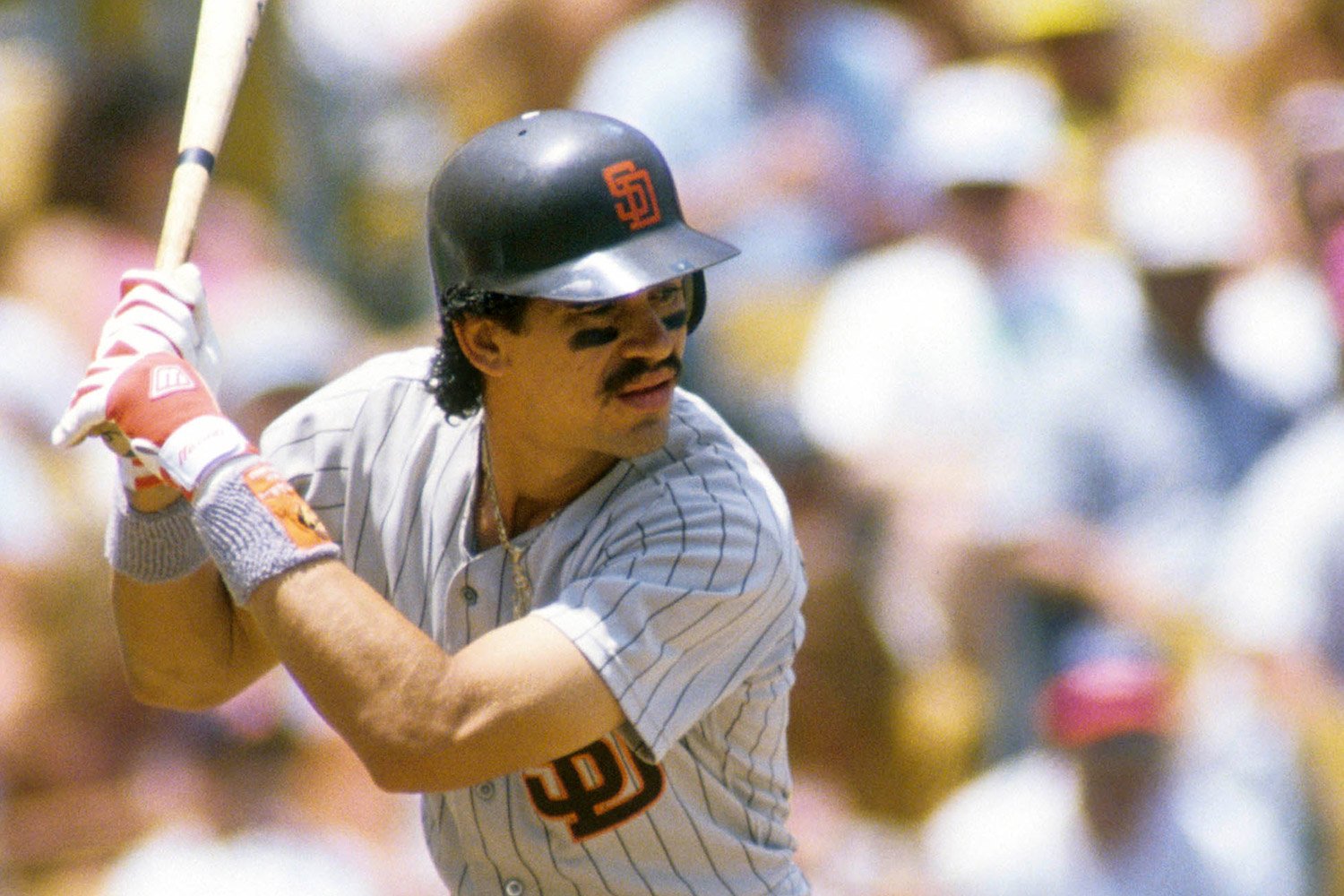 The Colorado Rockies avoided last-place finishes during their first two years of existence because the Padres had undergone a “fire sale” during the final two years of the Werner ownership group. The Padres’ previous last-place season, which was in 1987 and included a 12-42 start for the first third of the season, should send both a caution and some encouragement to current Rockies fans. Calls for the Monfort brothers to sell the Rockies might be unwise, since the potential buyer might not be any better. Ray Kroc was a hero for buying the Padres and keeping them in San Diego after a planned sale would have moved the team to Washington. He was not afraid to spend money on free agents or star players acquired in trades, although his final general manager initiated periodic housecleaning when those older players weren’t providing the desired success, and the 1987 season was the first year of the second cycle of such housecleaning. After Ray Kroc died in January 1984, his widow took over the Padres as well as McDonald’s, but Joan Kroc was more interested in humanitarian pursuits than in baseball or fast-food restaurants. In 1987, she planned to sell the Padres to Seattle Mariners owner George Argyros (prompting a local Greek restaurant to create a sign reading, “It’s no Kroc; try our gyros”), whose lack of spending on the Mariners led fans to urge Joan Kroc not to sell the team. That planned sale encountered obstacles and did not occur. In 1990, Joan Kroc sold the team to a group led by Tom Werner, who would clean house for financial reasons before selling it to John Moores at the end of 1994 for less than what they had paid for the Padres. The failure of the 1980 Padres veterans to succeed led to the mid-season firing of the general manager, and Jack McKeon became the new general manager. The Padres were in last place at the time and stayed there for the rest of the season in part due to McKeon’s philosophy. Before the Rockies and Marlins joined the National League in 1993, the league had two divisions of six teams apiece. McKeon’s philosophy was that the team should spend top dollar for a free agent who could take the Padres from third or second to first but not from sixth place to fifth or fourth. Dave Winfield became a free agent after the 1980 season and signed with the Yankees for an average of $1.5 million a year. McKeon felt that such money was better spent on the Padres’ farm system and scouting; he added minor-league affiliates and scouts. Many of the older 1980 players were traded or released by 1981. The mid-season players’ strike in 1981 created a split season, and the Padres finished last both times. During 1982 and 1983, the Padres were competitive for part of the season but eventually fell out of contention. The 1982 showing caused the Padres to sign Steve Garvey as a free agent after the season. After the 1983 season, the Padres signed Rich Gossage as a free agent. The Padres had enough young pitchers during Spring Training in 1984 that they traded one of them to the Yankees for third baseman Graig Nettles. Other than Bruce Bochy, who was the backup catcher for the 1980 Houston Astros, Garvey, Gossage, and Nettles were the only Padres with postseason experience prior to 1984. The Padres won their first division championship in 1984 – in fact, it was the first time the Padres had ever finished in the top half of the division – and then defeated the Cubs in the National League playoffs before losing to the Tigers in the 1984 World Series. The Padres were competitive for much of 1985 but barely avoided last place in 1986. Another housecleaning was in order. Nettles and Jerry Royster, who played third base as well as second base, were not offered new contracts and became free agents. The Padres traded outfielder Kevin McReynolds, along with a relief pitcher and a minor league player, to the Mets for third baseman Kevin Mitchell, two outfielders who turned out to be busts, and two minor league players who never made the majors. Starting catcher Terry Kennedy was traded to the Orioles for a pitcher who wouldn’t last the entire 1987 season with the Padres. (It should be noted that one of the outfielder busts, Shawn Abner, had been an overall first draft pick. The 2025 Rockies fared better with Mickey Moniak, who was the overall first draft pick in 2016 and who attended high school in San Diego County.) The 1986 Padres who were not with the team in 1987 also included second baseman Bip Roberts, a Rule 5 draft pick who had to spend 1986 with the major league team. He returned to the minor leagues for 1987, and rookie Joey Cora was the Padres’ second baseman that year. Starting pitcher LaMarr Hoyt, who had two drug arrests prior to the 1986 season, had a third after that season and never played professional baseball again. An arbiter ruled that the Padres were still required to pay Hoyt’s salary for 1987, so he was one of the four Padres that year receiving at least $1,000,000. Tony Gwynn, who had three previous full seasons along with two partial seasons with the Padres prior to 1987 and had only one previous batting championship, was not one of those players. Garvey, who had a season-ending injury in May 1987, which became a career-ending injury, was one of the players receiving $1,000,000. The other two, Gossage and Garry Templeton, had poor seasons in 1987. Mitchell was raised in San Diego, and being so close to his childhood friends wasn’t the best situation for him. In July, he was part of a seven-player trade with the Giants. Ironically, the two key players didn’t pan out, though in Dave Dravecky's case, it was due to his injury and tumor. The third baseman the Padres acquired, Chris Brown, would earn the reputation of being a malingerer. Two years after the trade, Mitchell would become the league’s most valuable player, while Padres acquisition Mark Davis would win the Cy Young Award. The trade also brought the Padres pitcher Mark Grant, who is now one of the team’s television broadcasters. After a Montreal Expos sweep gave the Padres a 12-42 record, the team won its next two games against Atlanta. In late June, a three-game winning streak moved the Padres to above .333. The team was 64-87 before a nine-game losing streak, which was followed by a win in the second-to-last game of the season, and the Padres’ final record was 65‑97. That final win also ended the 34-game hitting streak of Benito Santiago, which was the longest in Major League Baseball history by a catcher, by a rookie, or by a Latin American player (that one was later broken by Luis Castillo). Santiago was the unanimous Rookie of the Year, and Gwynn won his second batting championship. The Padres finished in third place and above .500 in 1988. The 1989 Padres were in contention until the final week of the season and finished second, three games behind the Giants. Success is built gradually, not magically. What developed from the Padres’ 1987 start could be replicated in the near future with the Rockies or other teams.

