


Ben Walker
-
Posts
6 -
Joined
-
Last visited
Content Type
Profiles
San Diego Padres Videos
2026 San Diego Padres Top Prospects Ranking
San Diego Padres Free Agent & Trade Rumors, Notes, & Tidbits
Guides & Resources
2025 San Diego Padres Draft Pick Tracker
News
2026 San Diego Padres Draft Tracker: Picks & Bonuses
Forums
Blogs
Events
Store
Downloads
Gallery
Everything posted by Ben Walker
-
The Science of Mr. Padre: The Impossible Standard of Tony Gwynn
Ben Walker posted an article in Padres
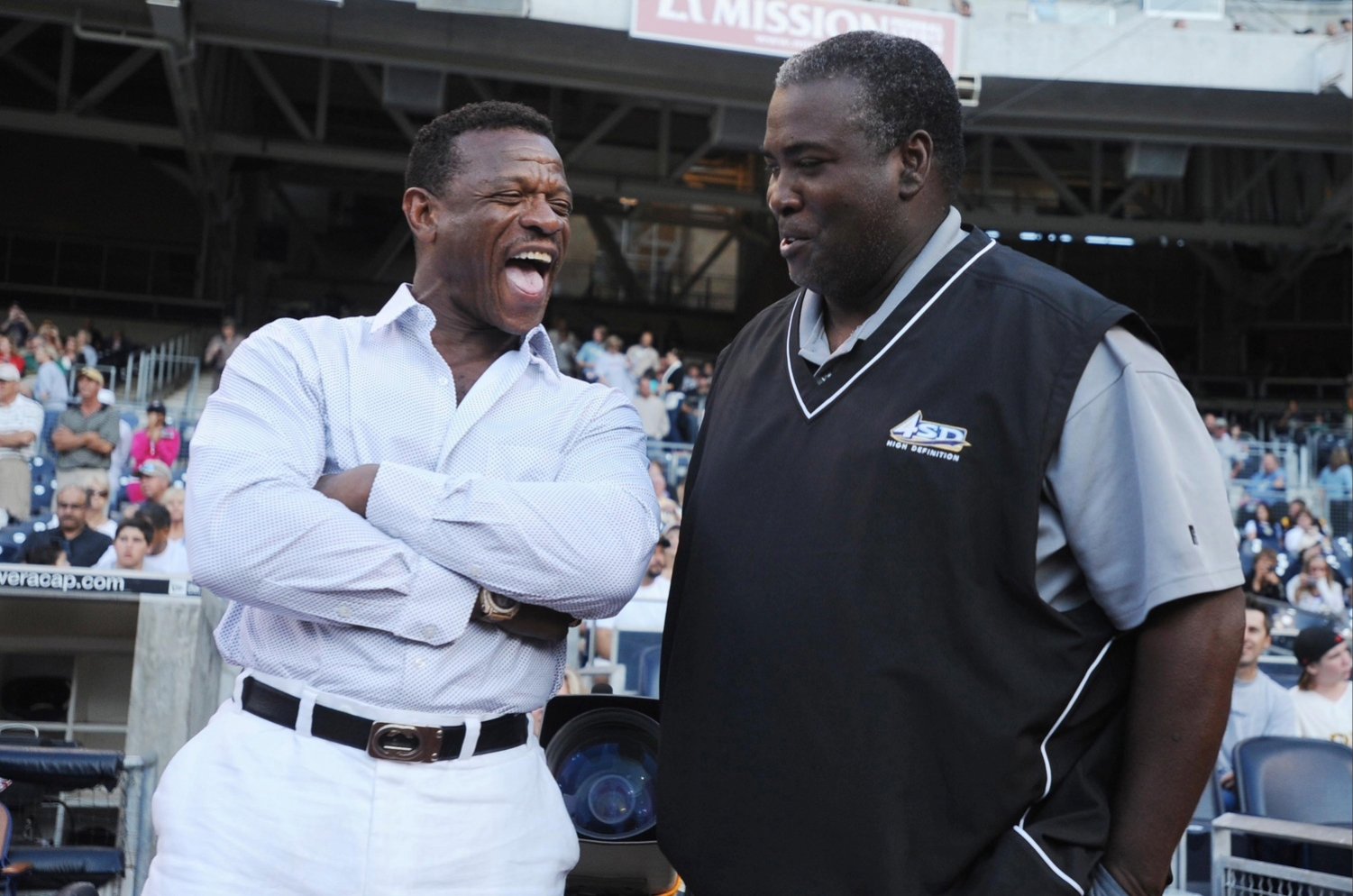 In the modern era of baseball, the "Three True Outcomes"—home runs, walks, and strikeouts—have turned the game into a series of mountain peaks and deep valleys. We’ve grown accustomed to seeing superstars fan the breeze 200 times a year in exchange for 40 long balls. But to understand Tony Gwynn is to step into a different dimension of physics entirely. Tony Gwynn didn’t just play baseball; he solved it. Over a 20-year career spent entirely with the San Diego Padres, he treated the batter’s box like a laboratory. While his peers were swinging for the fences, "Mr. Padre" was busy mastering the "5.5 hole"—the space between third base and shortstop—with the precision of a diamond cutter. The 0.04% Anomaly The most staggering metric of Gwynn’s career isn't his 3,141 hits or even his eight batting titles. It is his refusal to fail. In 20 seasons, Gwynn struck out only 434 times. To put that in perspective, consider that he stepped to the plate 10,232 times. That means Gwynn struck out a mere 0.04% of the time over the course of 2,440 games. In today’s game, a leading slugger might reach that 434-strikeout mark in just two and a half seasons. Gwynn stretched it across two decades. He famously went 20 consecutive years without ever striking out more than 40 times in a single season. In 1995, he struck out only 15 times in 535 plate appearances. For Gwynn, a strikeout wasn’t just an out; it was a statistical clerical error he spent hours of film study trying to prevent. "Captain Video" and the Craft of Hitting Long before every MLB dugout was equipped with iPads and high-speed motion sensors, Gwynn was a pioneer of video analysis. He earned the clubhouse nickname of "Captain Video" because he traveled with a portable VCR and stacks of VHS tapes, obsessively breaking down his swing and the tendencies of opposing pitchers. This wasn't vanity; it was a quest for an elite level of consistency. Gwynn believed that if he could keep his mechanics identical regardless of the pitcher, the results would be inevitable. This scientific approach made him a nightmare for the greatest arms of his generation. Greg Maddux, arguably the most cerebral pitcher in history, once lamented that no matter how much you changed speeds, you couldn't fool Gwynn. "Except for that [expletive] Tony Gwynn”, Maddux famously said. The stats back him up: in 107 plate appearances against Maddux, Gwynn hit .415 and never struck out once. The Mathematical Safety Net Perhaps the most "broken" statistic in the Gwynn canon is the sheer distance between him and mediocrity. Most players battle their entire careers just to keep their average at a respectable mark, avoiding the Mendoza Line of under .200, while pushing to get as close as possible to the .300 mark. Gwynn’s career average of .338 was so inflated by his consistency that he possessed a mathematical safety net unlike any other. If Tony Gwynn had decided to keep playing ball his last few seasons, but suddenly lost his ability to hit entirely—going 0-for-his-next-1,183 at-bats—he still would have finished his career with a lifetime average above .300. He effectively built a two-season-long cushion of pure excellence. Beyond the Box Score While the numbers suggest a cold, calculating machine, the nuance of Gwynn’s career was found in his joy. He was a 15-time All-Star who played with a smile that felt as permanent as his batting stance. He turned down bigger contracts in larger markets to stay in San Diego, a rarity that cemented him as a civic icon. He was also an exceptional dual-sport athlete, still holding the San Diego State University record for career assists in basketball. That "point guard vision"—the ability to see the entire floor and find the open man—translated perfectly to the diamond. He didn't see a defense; he saw lanes. The Legacy of the Lost .400 We will always wonder about the season of 1994. When the player's strike halted the season, Gwynn was hitting .394. He was arguably the only player in the last 80 years with the hand-eye coordination and the mental discipline to actually catch Ted Williams and hit .400 over a full season. In the end, Gwynn didn't need the .400 mark to prove his point. His career stands as a testament to the sometimes forgotten art of contact—a reminder that in a game of inches, no one ever owned those inches quite like Mr. Padre sporting his #19 jersey.
 -
In the modern era of baseball, the "Three True Outcomes"—home runs, walks, and strikeouts—have turned the game into a series of mountain peaks and deep valleys. We’ve grown accustomed to seeing superstars fan the breeze 200 times a year in exchange for 40 long balls. But to understand Tony Gwynn is to step into a different dimension of physics entirely. Tony Gwynn didn’t just play baseball; he solved it. Over a 20-year career spent entirely with the San Diego Padres, he treated the batter’s box like a laboratory. While his peers were swinging for the fences, "Mr. Padre" was busy mastering the "5.5 hole"—the space between third base and shortstop—with the precision of a diamond cutter. The 0.04% Anomaly The most staggering metric of Gwynn’s career isn't his 3,141 hits or even his eight batting titles. It is his refusal to fail. In 20 seasons, Gwynn struck out only 434 times. To put that in perspective, consider that he stepped to the plate 10,232 times. That means Gwynn struck out a mere 0.04% of the time over the course of 2,440 games. In today’s game, a leading slugger might reach that 434-strikeout mark in just two and a half seasons. Gwynn stretched it across two decades. He famously went 20 consecutive years without ever striking out more than 40 times in a single season. In 1995, he struck out only 15 times in 535 plate appearances. For Gwynn, a strikeout wasn’t just an out; it was a statistical clerical error he spent hours of film study trying to prevent. "Captain Video" and the Craft of Hitting Long before every MLB dugout was equipped with iPads and high-speed motion sensors, Gwynn was a pioneer of video analysis. He earned the clubhouse nickname of "Captain Video" because he traveled with a portable VCR and stacks of VHS tapes, obsessively breaking down his swing and the tendencies of opposing pitchers. This wasn't vanity; it was a quest for an elite level of consistency. Gwynn believed that if he could keep his mechanics identical regardless of the pitcher, the results would be inevitable. This scientific approach made him a nightmare for the greatest arms of his generation. Greg Maddux, arguably the most cerebral pitcher in history, once lamented that no matter how much you changed speeds, you couldn't fool Gwynn. "Except for that [expletive] Tony Gwynn”, Maddux famously said. The stats back him up: in 107 plate appearances against Maddux, Gwynn hit .415 and never struck out once. The Mathematical Safety Net Perhaps the most "broken" statistic in the Gwynn canon is the sheer distance between him and mediocrity. Most players battle their entire careers just to keep their average at a respectable mark, avoiding the Mendoza Line of under .200, while pushing to get as close as possible to the .300 mark. Gwynn’s career average of .338 was so inflated by his consistency that he possessed a mathematical safety net unlike any other. If Tony Gwynn had decided to keep playing ball his last few seasons, but suddenly lost his ability to hit entirely—going 0-for-his-next-1,183 at-bats—he still would have finished his career with a lifetime average above .300. He effectively built a two-season-long cushion of pure excellence. Beyond the Box Score While the numbers suggest a cold, calculating machine, the nuance of Gwynn’s career was found in his joy. He was a 15-time All-Star who played with a smile that felt as permanent as his batting stance. He turned down bigger contracts in larger markets to stay in San Diego, a rarity that cemented him as a civic icon. He was also an exceptional dual-sport athlete, still holding the San Diego State University record for career assists in basketball. That "point guard vision"—the ability to see the entire floor and find the open man—translated perfectly to the diamond. He didn't see a defense; he saw lanes. The Legacy of the Lost .400 We will always wonder about the season of 1994. When the player's strike halted the season, Gwynn was hitting .394. He was arguably the only player in the last 80 years with the hand-eye coordination and the mental discipline to actually catch Ted Williams and hit .400 over a full season. In the end, Gwynn didn't need the .400 mark to prove his point. His career stands as a testament to the sometimes forgotten art of contact—a reminder that in a game of inches, no one ever owned those inches quite like Mr. Padre sporting his #19 jersey. View full article
