


Brendan Dentino
-
Posts
24 -
Joined
-
Last visited
Brendan Dentino's Achievements


-
After a hot start to the season, the San Diego Padres fell to earth in May. In June, they went 11-15, and now entering July, the Friars sit at 43-41. This is probably who they are, a .500-ish team that, with a few moves at the deadline and some luck, will qualify for the postseason for the fifth time in six seasons as a Wild Card. Despite the overall mediocrity, the bullpen remained one of the best in baseball in June, and the rotation has at least one glimmer of hope. Below are Padres pitchers of the month for June 2026. Ranking Padres' Best Pitchers in May #3. Walker Buehler, Starting Pitcher It didn’t feel right watching Walker Buehler throw 5.1 innings of one-run ball on June 26, not with him wearing a Padres uniform facing his old team in the Los Angeles Dodgers. The Padres are happy to let bygones be bygones, though, with Buehler having his best month in years. He averaged more than 5 IP per start in June, and pitched to 1.71 ERA. It was a badly needed performance, as the Padres’ starting rotation is basically a temp agency. It’s just over the halfway mark in the season and the Padres have used 12 different starters. #2. Mason Miller, Relief Pitcher Much has been said about Mason Miller’s historically dominant season, and he continued that in June with a 0.93 ERA across 9.2 innings and an absurd 17 strikeouts. Not even one of Miller’s flawed performances dents his statistics significantly. On June 29 against the Cubs, he entered the 9th inning with two runners on. He was able to get two outs—which explains the 0.2 innings as part of his monthly total—but he hung a slider to Seiya Suzuki, who sent it into the Wrigley Field ivy for a walk-off single. It was a run credited to Jason Adam, but it was a hung slider and a run allowed from Miller. It's a small chink in his armor, and that’s enough to keep him top two on this list yet again. #1. Wandy Peralta, Relief Pitcher Another month, another Padres reliever who pitched to an 0.00 ERA. Last month, it was Jason Adam. This month, its lefty Wandy Peralta. It’s no fluke. In May, Peralta pitched to a 1.38 ERA across 13 innings, and Statcast data indicates his off-speed stuff is some of the best in the league. This results in him having elite barrel and hard-hit percentages. That performance carried over in June; across 14 games and 18 innings, Peralta allowed just 11 hits, struck out nine batters, and registered a WHIP under 0.9. Those stats are hard to believe for pitchers not named Mason Miller, but they've been fact-checked by a human multiple times. Peralta really was that dominant last month, hence his placement atop our list here. View full article
-
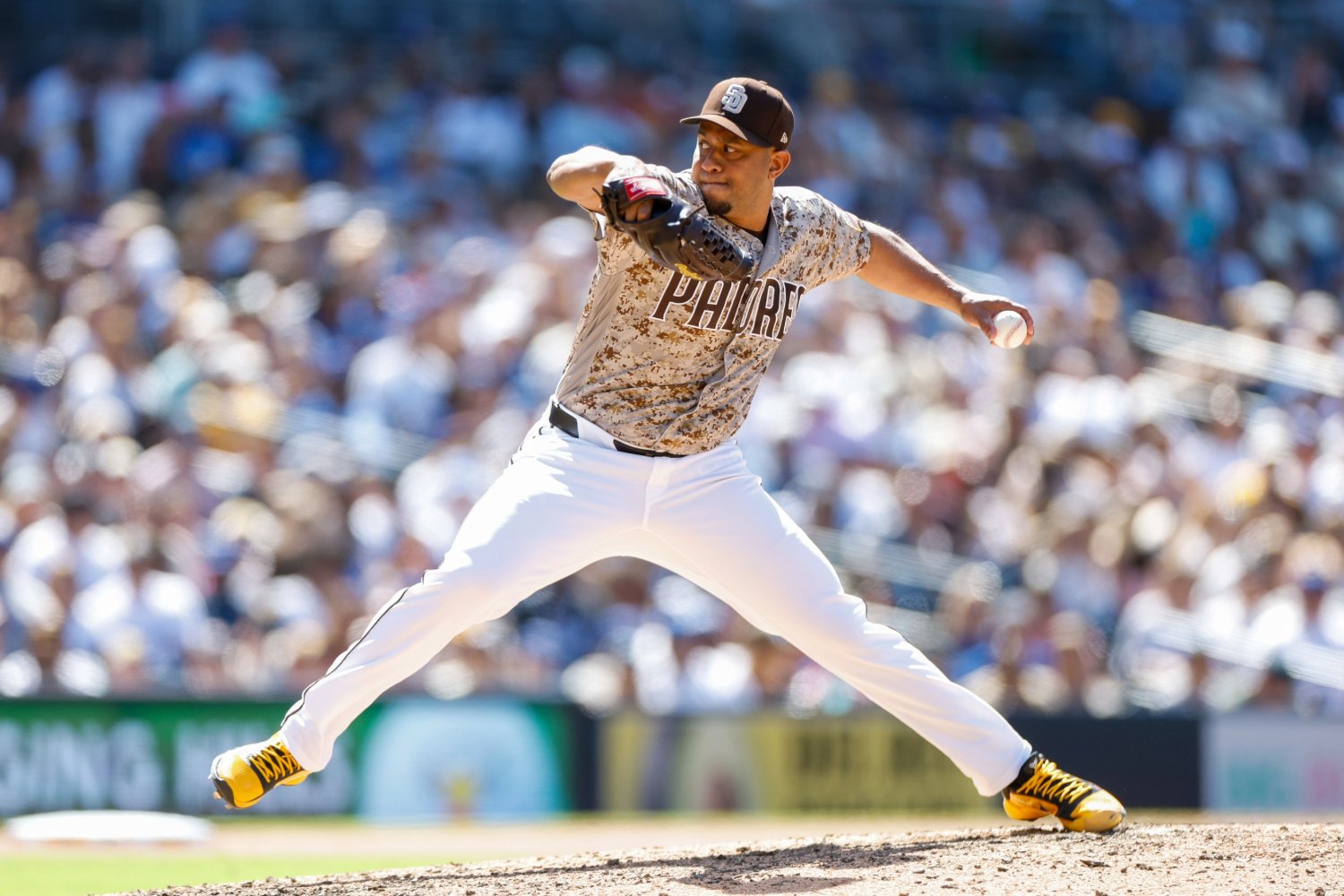 After a hot start to the season, the San Diego Padres fell to earth in May. In June, they went 11-15, and now entering July, the Friars sit at 43-41. This is probably who they are, a .500-ish team that, with a few moves at the deadline and some luck, will qualify for the postseason for the fifth time in six seasons as a Wild Card. Despite the overall mediocrity, the bullpen remained one of the best in baseball in June, and the rotation has at least one glimmer of hope. Below are Padres pitchers of the month for June 2026. Ranking Padres' Best Pitchers in May #3. Walker Buehler, Starting Pitcher It didn’t feel right watching Walker Buehler throw 5.1 innings of one-run ball on June 26, not with him wearing a Padres uniform facing his old team in the Los Angeles Dodgers. The Padres are happy to let bygones be bygones, though, with Buehler having his best month in years. He averaged more than 5 IP per start in June, and pitched to 1.71 ERA. It was a badly needed performance, as the Padres’ starting rotation is basically a temp agency. It’s just over the halfway mark in the season and the Padres have used 12 different starters. #2. Mason Miller, Relief Pitcher Much has been said about Mason Miller’s historically dominant season, and he continued that in June with a 0.93 ERA across 9.2 innings and an absurd 17 strikeouts. Not even one of Miller’s flawed performances dents his statistics significantly. On June 29 against the Cubs, he entered the 9th inning with two runners on. He was able to get two outs—which explains the 0.2 innings as part of his monthly total—but he hung a slider to Seiya Suzuki, who sent it into the Wrigley Field ivy for a walk-off single. It was a run credited to Jason Adam, but it was a hung slider and a run allowed from Miller. It's a small chink in his armor, and that’s enough to keep him top two on this list yet again. #1. Wandy Peralta, Relief Pitcher Another month, another Padres reliever who pitched to an 0.00 ERA. Last month, it was Jason Adam. This month, its lefty Wandy Peralta. It’s no fluke. In May, Peralta pitched to a 1.38 ERA across 13 innings, and Statcast data indicates his off-speed stuff is some of the best in the league. This results in him having elite barrel and hard-hit percentages. That performance carried over in June; across 14 games and 18 innings, Peralta allowed just 11 hits, struck out nine batters, and registered a WHIP under 0.9. Those stats are hard to believe for pitchers not named Mason Miller, but they've been fact-checked by a human multiple times. Peralta really was that dominant last month, hence his placement atop our list here.
 -
A.J. Preller isn’t a mad scientist, at least not technically. His role as San Diego Padres’ president of baseball operations and general manager doesn’t require a STEM degree. But his roster machinations and the construction of his contract offers can only be cooked up in a lab. Exhibit A: The 2025 trade deadline. On July 31, 2025, the day of the deadline, the Padres sat 11 games over .500 and were strong Wild Card contenders. That was thanks in large part to one the best pitching staffs in baseball, patched together in a typically Preller-ian fashion. Robert Suarez, the team’s erstwhile closer, was signed in 2021 from Japan. Starting pitcher Nick Pivetta, the team’s most valuable pitcher by bWAR, was signed on a bizarre four-year contract that paid him just $2.5 million in that first year. Various trades had brought in Dylan Cease, Randy Vasquez, and Michael King. That did not stop Preller from swinging five trades at the deadline, two of them major and one of them franchise-altering. The 2026 Padres are a worse team than last year's, but they’re again in the Wild Card hunt. No one really knows what Preller will do, but we know one thing: Preller will not sit on his hands. Below is a ranking and assessment of the 2025 deadline trades with the benefit of a year's worth of hindsight. 5. Milwaukee Brewers trade LHP Nestor Cortes, SS Jorge Quintana and cash to San Diego Padres for LF Brandon Lockridge Preller has made many successful trades, and his acquiring a minor-league Fernando Tatis Jr. in 2016 is at the top of the list. But for a GM as active as Preller, it is impossible to avoid some clunkers. This trade is one of them. Outfielder Brandon Lockridge was a useful bench player for a couple seasons, offering defensive versatility and speed on the basepaths. In 2025, he stole eight bags in 47 games for the Padres. But the Padres needed starting pitching in light of injuries to King and Yu Darvish, so they shipped Lockridge to Milwaukee for starter Nestor Cortes and prospect Jorge Quintana. Cortes started six games and pitched to a 5.47 ERA. He’s currently a free agent rehabbing from arm surgery. Quintana is 19-years old and playing in Single-A. Lockridge, for his part, is having a solid season as a bench player for a great Brewers team. As with most teams, the Padres are desperate for right-handed outfield depth. Lockridge would look quite nice in the brown and gold right now. 4. Kansas City Royals trade C Freddy Fermin to San Diego Padres for RHP Ryan Bergert and RHP Stephen Kolek The Friars are cursed at the catcher position, so it makes sense why Preller targeted Freddy Fermin. In 2023 and 2024, he had solid seasons at the plate, and throughout his career he has displayed excellent defense. There are not many all-around catchers in MLB. Fermin was one of them. Key word: was. Fermin was productive for the Padres last season in 47 games, but his slash line this season warrants a trigger warning. Brace yourself: It’s .145/.245/.258. Granted, his defense still makes him a valuable player—just barely—but the Padres’ anemic offense can’t afford the black hole in the lineup when he starts. Consequently, the Padres’ catcher carousel continues. They’ve started four different players at the position this year. Meanwhile, Stephen Kolek is for the Royals what he was for the Padres: an adequate number four or five in the rotation. In 14 starts for Kansas City, Kolek has a 3.28 ERA. (Ryan Bergert, a swingman, is rehabbing from Tommy John surgery.) 3. Toronto Blue Jays trade 3B Will Wagner to San Diego Padres for C Brandon Valenzuela The media pays attention to the blockbuster trades and fans dwell on the lopsided calamities, but most trades don’t change much about either team. One side may get payroll flexibility, while the other side may open up a roster spot. Prospects are exchanged and fade into the minor-league abyss. Replacement-level players on expiring contracts disappear as quickly as they came. This is one of those deals. Will Wagner has been fine for the Padres. Brandon Valenzuela has been fine, if not quite good, for the Blue Jays. This trade is fine. 2. Baltimore Orioles trade 1B Ryan O'Hearn, RF Ramón Laureano and cash to San Diego Padres for LHP Boston Bateman, RHP Tyson Neighbors, RHP Tanner Smith, SS Brandon Butterworth, SS Cobb Hightower and 1B Victor Figueroa This is one of two major trades Preller swung at the 2025 deadline, and, until Ramón Laureano went down with a season-ending injury this month, Preller crushed it. In the stretch run last year, Laureano was one of the Pads’ best players, registering an .812 OPS. That performance earned Laureano a starting outfielder spot in 2026, though his lingering hip issue ultimately turned this season into a wash. Ryan O’Hearn also contributed to the Padres’ postseason berth last season, accruing 0.5 bWAR in just 50 games. The other side of the ledger is still an open question. Boston Bateman, Tanner Smith, Cobb Hightower, and Victor Figueroa are all figuring things out in A-ball. Tyson Neighbors has an ERA over 10 at Double-A this season. Brandon Butterworth is the closest to the majors. Some or all of these players may become quality major leaguers, but if I was presented with that list of names before researching this piece, then I wouldn’t be sure if any of them were real minor-league players or extras in Bull Durham. This trade was the kind of win-now, low-cost move that Preller specializes in. The book’s not closed on the deal, not with so many young players sent to the Baltimore Orioles, but with Laureano and O’Hearn in tow, the Padres made the playoffs for the fourth time in five seasons. 1. Athletics trade RHP Mason Miller and LHP JP Sears to San Diego Padres for RHP Henry Baez, RHP Eduarniel Núñez, SS Leo De Vries and RHP Braden Nett Cue “Blind” by Korn. Closer Mason Miller hardly needs introduction. He is one of the most dominant pitchers in baseball, and he is under team control through 2029. That’d be case-closed on this trade, except Leo De Vries, the Padres’ former top prospect, might hit 150 home runs per season once he and his major=league team move to the thin, hot air of Las Vegas. In Double-A this season, the 19-year-old (!) has an OPS just a shade under .800, though he’s gotten better as he gains experience. In June, his OPS is .880. In the last week, it's over .904. With all due respect to the other players involved, this trade was essentially a one-for-one swap between Miller and De Vries. It was the Athletics making a bet that De Vries would develop into a generational shortstop and the Padres making a bet that Miller would continue being unhittable. So far, both bets are hitting. In any case, this is a veritable blockbuster, a trade that will reverberate for years, if not decades, to come. View full article
-
Reranking Padres' 2025 Trade Deadline Deals One Year Later
Brendan Dentino posted an article in Padres
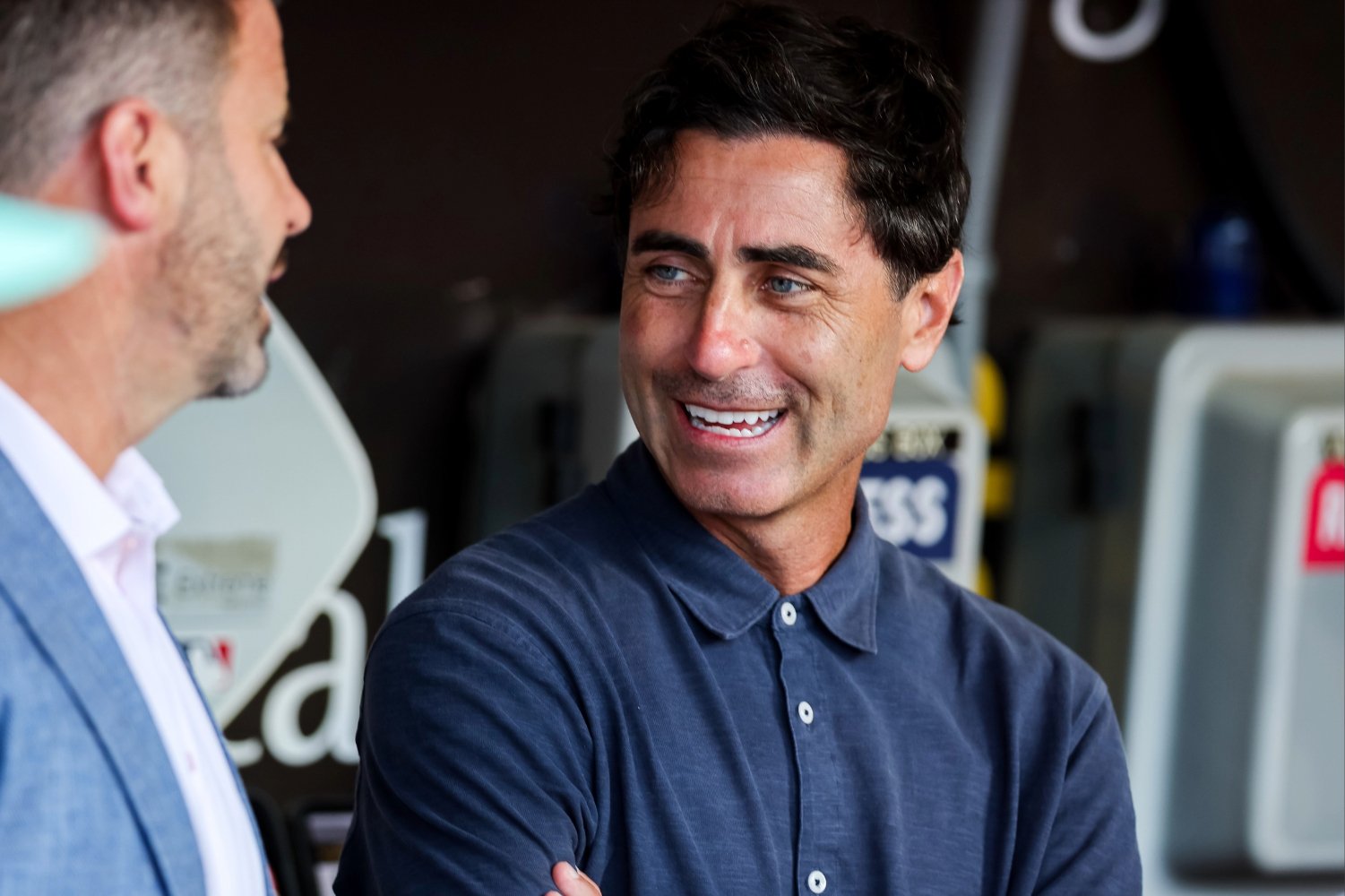 A.J. Preller isn’t a mad scientist, at least not technically. His role as San Diego Padres’ president of baseball operations and general manager doesn’t require a STEM degree. But his roster machinations and the construction of his contract offers can only be cooked up in a lab. Exhibit A: The 2025 trade deadline. On July 31, 2025, the day of the deadline, the Padres sat 11 games over .500 and were strong Wild Card contenders. That was thanks in large part to one the best pitching staffs in baseball, patched together in a typically Preller-ian fashion. Robert Suarez, the team’s erstwhile closer, was signed in 2021 from Japan. Starting pitcher Nick Pivetta, the team’s most valuable pitcher by bWAR, was signed on a bizarre four-year contract that paid him just $2.5 million in that first year. Various trades had brought in Dylan Cease, Randy Vasquez, and Michael King. That did not stop Preller from swinging five trades at the deadline, two of them major and one of them franchise-altering. The 2026 Padres are a worse team than last year's, but they’re again in the Wild Card hunt. No one really knows what Preller will do, but we know one thing: Preller will not sit on his hands. Below is a ranking and assessment of the 2025 deadline trades with the benefit of a year's worth of hindsight. 5. Milwaukee Brewers trade LHP Nestor Cortes, SS Jorge Quintana and cash to San Diego Padres for LF Brandon Lockridge Preller has made many successful trades, and his acquiring a minor-league Fernando Tatis Jr. in 2016 is at the top of the list. But for a GM as active as Preller, it is impossible to avoid some clunkers. This trade is one of them. Outfielder Brandon Lockridge was a useful bench player for a couple seasons, offering defensive versatility and speed on the basepaths. In 2025, he stole eight bags in 47 games for the Padres. But the Padres needed starting pitching in light of injuries to King and Yu Darvish, so they shipped Lockridge to Milwaukee for starter Nestor Cortes and prospect Jorge Quintana. Cortes started six games and pitched to a 5.47 ERA. He’s currently a free agent rehabbing from arm surgery. Quintana is 19-years old and playing in Single-A. Lockridge, for his part, is having a solid season as a bench player for a great Brewers team. As with most teams, the Padres are desperate for right-handed outfield depth. Lockridge would look quite nice in the brown and gold right now. 4. Kansas City Royals trade C Freddy Fermin to San Diego Padres for RHP Ryan Bergert and RHP Stephen Kolek The Friars are cursed at the catcher position, so it makes sense why Preller targeted Freddy Fermin. In 2023 and 2024, he had solid seasons at the plate, and throughout his career he has displayed excellent defense. There are not many all-around catchers in MLB. Fermin was one of them. Key word: was. Fermin was productive for the Padres last season in 47 games, but his slash line this season warrants a trigger warning. Brace yourself: It’s .145/.245/.258. Granted, his defense still makes him a valuable player—just barely—but the Padres’ anemic offense can’t afford the black hole in the lineup when he starts. Consequently, the Padres’ catcher carousel continues. They’ve started four different players at the position this year. Meanwhile, Stephen Kolek is for the Royals what he was for the Padres: an adequate number four or five in the rotation. In 14 starts for Kansas City, Kolek has a 3.28 ERA. (Ryan Bergert, a swingman, is rehabbing from Tommy John surgery.) 3. Toronto Blue Jays trade 3B Will Wagner to San Diego Padres for C Brandon Valenzuela The media pays attention to the blockbuster trades and fans dwell on the lopsided calamities, but most trades don’t change much about either team. One side may get payroll flexibility, while the other side may open up a roster spot. Prospects are exchanged and fade into the minor-league abyss. Replacement-level players on expiring contracts disappear as quickly as they came. This is one of those deals. Will Wagner has been fine for the Padres. Brandon Valenzuela has been fine, if not quite good, for the Blue Jays. This trade is fine. 2. Baltimore Orioles trade 1B Ryan O'Hearn, RF Ramón Laureano and cash to San Diego Padres for LHP Boston Bateman, RHP Tyson Neighbors, RHP Tanner Smith, SS Brandon Butterworth, SS Cobb Hightower and 1B Victor Figueroa This is one of two major trades Preller swung at the 2025 deadline, and, until Ramón Laureano went down with a season-ending injury this month, Preller crushed it. In the stretch run last year, Laureano was one of the Pads’ best players, registering an .812 OPS. That performance earned Laureano a starting outfielder spot in 2026, though his lingering hip issue ultimately turned this season into a wash. Ryan O’Hearn also contributed to the Padres’ postseason berth last season, accruing 0.5 bWAR in just 50 games. The other side of the ledger is still an open question. Boston Bateman, Tanner Smith, Cobb Hightower, and Victor Figueroa are all figuring things out in A-ball. Tyson Neighbors has an ERA over 10 at Double-A this season. Brandon Butterworth is the closest to the majors. Some or all of these players may become quality major leaguers, but if I was presented with that list of names before researching this piece, then I wouldn’t be sure if any of them were real minor-league players or extras in Bull Durham. This trade was the kind of win-now, low-cost move that Preller specializes in. The book’s not closed on the deal, not with so many young players sent to the Baltimore Orioles, but with Laureano and O’Hearn in tow, the Padres made the playoffs for the fourth time in five seasons. 1. Athletics trade RHP Mason Miller and LHP JP Sears to San Diego Padres for RHP Henry Baez, RHP Eduarniel Núñez, SS Leo De Vries and RHP Braden Nett Cue “Blind” by Korn. Closer Mason Miller hardly needs introduction. He is one of the most dominant pitchers in baseball, and he is under team control through 2029. That’d be case-closed on this trade, except Leo De Vries, the Padres’ former top prospect, might hit 150 home runs per season once he and his major=league team move to the thin, hot air of Las Vegas. In Double-A this season, the 19-year-old (!) has an OPS just a shade under .800, though he’s gotten better as he gains experience. In June, his OPS is .880. In the last week, it's over .904. With all due respect to the other players involved, this trade was essentially a one-for-one swap between Miller and De Vries. It was the Athletics making a bet that De Vries would develop into a generational shortstop and the Padres making a bet that Miller would continue being unhittable. So far, both bets are hitting. In any case, this is a veritable blockbuster, a trade that will reverberate for years, if not decades, to come.
 -
In a season in which Manny Machado, Jackson Merrill, and Fernando Tatis Jr. are performing far below expectations, the San Diego Padres have had to rely on a motley crew of journeymen. Miguel Andujar was the Padres’ best hitter in March and April (just don’t ask about May and June). Gavin Sheets and his career -1.4 bWAR has the best OPS among the team’s regulars. Now, the latest savior is designated hitter Will Wagner. Wagner, the son of Hall of Fame reliever Billy Wagner, has an .828 OPS in ten games for the Pads and more walks (six) than strikeouts (five). Can it last? Wagner spent four years at Liberty University, then was a mid-round selection by the Houston Astros in 2021. He made his major-league debut in 2024 with the Toronto Blue Jays, and last year he played 40 appearances for the eventual American League champions before being traded to the Padres. Only now, in his age-27 season, is he getting regular playing time, and that’s only because shortstop Xander Bogaerts' brief absence created a roster spot on the underperforming, injury-riddled big league squad. Wagner does have an .827 lifetime OPS in the minors, but his last double-digit home run season came in 2022. He hit ten that year. It’s his on-base percentage that boosts his production, and that’s driven by a high batting average; he’s a career .291 hitter in the minors. With just 27 stolen bases in the minors and one in the majors, Wagner leaves little doubt about what he is: a solid contact hitter. The questions are if that profile has a place in the major leagues today, and if he can sustain that profile in the bigs. To the latter, some underlying statistics look encouraging. It’s a small sample size, but his chase rate and walk percentage are elite. His whiff and strikeout rates are also good. That means he swings at good pitches and lays off bad pitches, which in turn means he’s more likely to get on base. Conversely, he doesn’t swing hard and doesn't hit the ball hard—he hasn’t pulled the ball in the air all season. Naturally, he's not going to produce much power. He needs to walk and hit for contact to be a valuable major leaguer, a difficult proposition in a game full of Skubals and Misiorowskis. But so far for the Padres, he’s done just that. He’s batting .318 on the season, and he has gotten on base in all but two of his starts. His high walk percentage has made him a high on-base gem for the Friars. There are warning signs in those numbers, though. His expected batting average is just .287, and he quite literally can’t hit lefties (he’s batting .000 against them). His walk rate is also more than double his career average, putting into question its sustainability. Considering all this, Wagner profiles, at best, as a useful platoon bat, and like all platoon hitters, they get exposed when they play everyday. The Padres have been able to hide him against lefties—his .000 average against them is from just two plate appearances—but since being called up from Triple-A on June 9, Wagner has played basically every day. The Padres are smart to wield the hot bat, but the stats indicate that it won’t be long before they’re looking for their next offensive savior. View full article
-
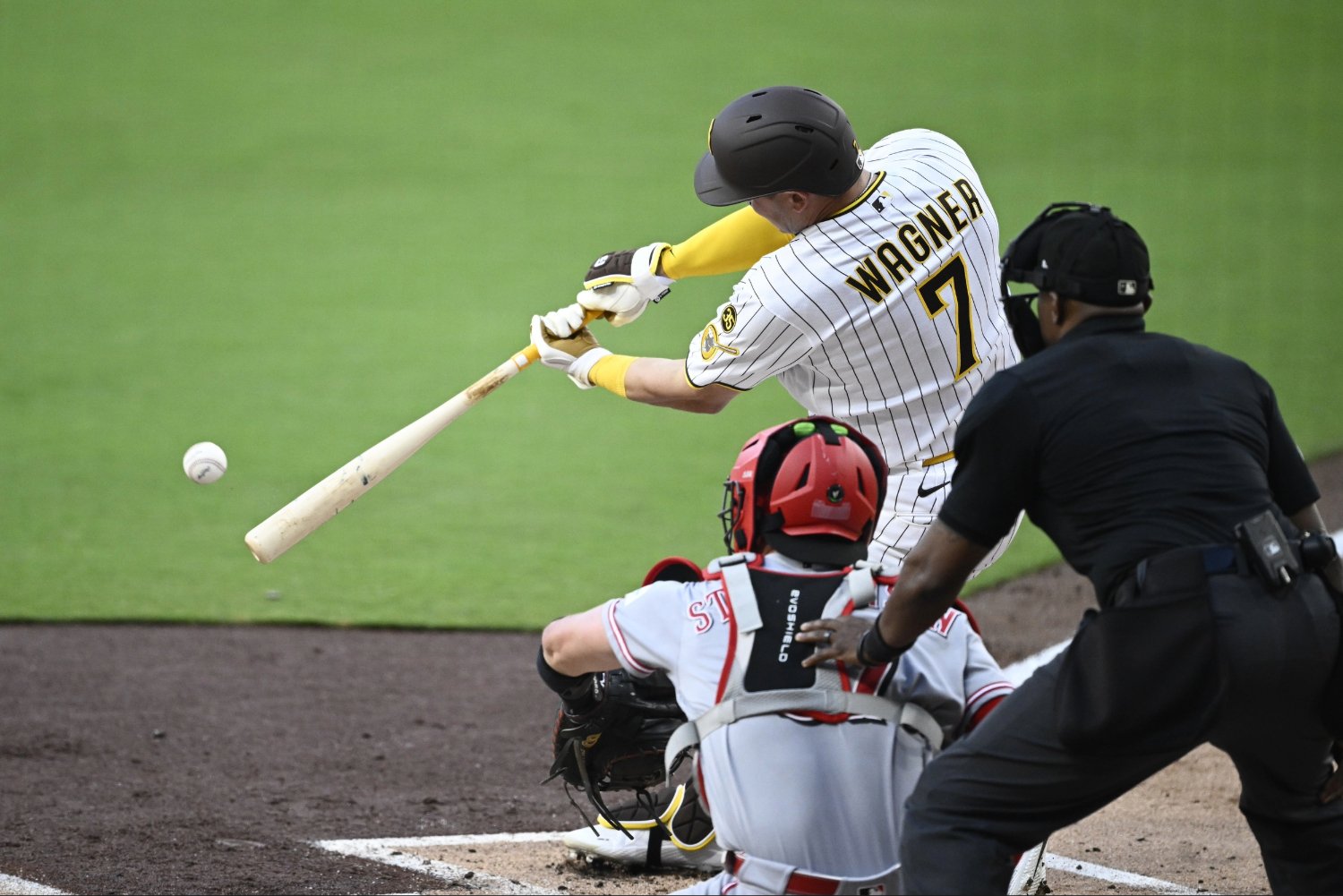 In a season in which Manny Machado, Jackson Merrill, and Fernando Tatis Jr. are performing far below expectations, the San Diego Padres have had to rely on a motley crew of journeymen. Miguel Andujar was the Padres’ best hitter in March and April (just don’t ask about May and June). Gavin Sheets and his career -1.4 bWAR has the best OPS among the team’s regulars. Now, the latest savior is designated hitter Will Wagner. Wagner, the son of Hall of Fame reliever Billy Wagner, has an .828 OPS in ten games for the Pads and more walks (six) than strikeouts (five). Can it last? Wagner spent four years at Liberty University, then was a mid-round selection by the Houston Astros in 2021. He made his major-league debut in 2024 with the Toronto Blue Jays, and last year he played 40 appearances for the eventual American League champions before being traded to the Padres. Only now, in his age-27 season, is he getting regular playing time, and that’s only because shortstop Xander Bogaerts' brief absence created a roster spot on the underperforming, injury-riddled big league squad. Wagner does have an .827 lifetime OPS in the minors, but his last double-digit home run season came in 2022. He hit ten that year. It’s his on-base percentage that boosts his production, and that’s driven by a high batting average; he’s a career .291 hitter in the minors. With just 27 stolen bases in the minors and one in the majors, Wagner leaves little doubt about what he is: a solid contact hitter. The questions are if that profile has a place in the major leagues today, and if he can sustain that profile in the bigs. To the latter, some underlying statistics look encouraging. It’s a small sample size, but his chase rate and walk percentage are elite. His whiff and strikeout rates are also good. That means he swings at good pitches and lays off bad pitches, which in turn means he’s more likely to get on base. Conversely, he doesn’t swing hard and doesn't hit the ball hard—he hasn’t pulled the ball in the air all season. Naturally, he's not going to produce much power. He needs to walk and hit for contact to be a valuable major leaguer, a difficult proposition in a game full of Skubals and Misiorowskis. But so far for the Padres, he’s done just that. He’s batting .318 on the season, and he has gotten on base in all but two of his starts. His high walk percentage has made him a high on-base gem for the Friars. There are warning signs in those numbers, though. His expected batting average is just .287, and he quite literally can’t hit lefties (he’s batting .000 against them). His walk rate is also more than double his career average, putting into question its sustainability. Considering all this, Wagner profiles, at best, as a useful platoon bat, and like all platoon hitters, they get exposed when they play everyday. The Padres have been able to hide him against lefties—his .000 average against them is from just two plate appearances—but since being called up from Triple-A on June 9, Wagner has played basically every day. The Padres are smart to wield the hot bat, but the stats indicate that it won’t be long before they’re looking for their next offensive savior.
 -
Miguel Andujar seemed like a classic pickup for the San Diego Padres in the A.J. Preller era: an affordable journeyman who was brought in to lend the team one, specific skill. In this case, it was to hit left-handed pitching, and that’s exactly what he did in March and April. But like the rest of the team, Andjuar’s performance cratered in May and June. Now, he’s on the injured list with a hamstring strain, creating more uncertainty for an underperforming lineup. It wasn’t supposed to be like this. The Padres signed Andujar to a one-year deal to be a part-time DH, splitting time with Gavin Sheets' left-handed power bat, as well as to be a key contributor off the bench. The DH is “probably a spot that we’re going to keep open throughout the season, be able to give Manny [Machado] a day DH-ing, Xander [Bogaerts] a day DH-ing, Fernando [Tatis Jr.], [Ramón] Laureano, [Jackson] Merrill,” manager Craig Stammen said after Andujar’s signing was announced in February. “I think it’s a strategic way to keep those guys a little fresher during the season.” The Padres’ offensive woes and injury problems dashed that wishful preseason thinking. Infielder Jake Cronenworth has been sidelined for weeks due to lingering concussion symptoms, which has forced Sheets to become an everyday first baseman. That’d be fine if Sheets wasn’t a terrible defender and could hit lefties. The Nick Castellanos experiment lasted all of 110 days. Laureano played with a hip injury until he simply couldn’t anymore. And regularly resting the star players is out of the question with such a thin lineup and worsening record. All of this has resulted in Andujar becoming the de facto everyday designated hitter, and for a while that was working out. During the Padres 67 games before he went on the IL, Andujar appeared in 45 of them as the DH. In March and April, his OPS stood at .830 and he routinely batted in the two-hole. It was a continuation of a resurgent career year in 2025, when he had .822 OPS and accrued 1.1 fWAR. Against lefties, he nearly had an 1.000 OPS. In the first month of this season, he was easily one of the team's best hitters, and dating back to last season, which he spent with the Athletics and Cincinnati Reds, he had been one of the better platoon bats in baseball. A decent OPS in May of .670 and a woeful OPS in June of .461 quieted that feel-good story. Before his hamstring injury, he was playing like one of the worst hitters in baseball, though his is a weird profile. He has hit the ball hard all season, and his barrel rates, exit velocities, and strikeout rate aren’t out of line with career averages. Still, his slash line and expected outcomes have fallen off a cliff. If there's one culprit, then it’s his chase rate. Andujar has a lifetime 37.1% chase rate, and in 2018 and 2025, his two best seasons, he had chase rates no more than 36.2%. His strong performance this past March and April aligns with that precedent. His chase rate was 35.6%, but then it leapt up to 43.9% in May and an intolerable 46.2% in June. Over the course of a season, that would be, by far, his worst chase rate. It makes sense, then, why in June he has been batting, by far, the worst in his career. Concurrently, his swing rate is up from 50.5% in March and April to 56.9% in June. Why is Andujar swinging more, especially at pitches outside of the zone? Maybe weighing on his shoulders is an anemic offense. He could be pressing to make up for the lineup’s deficiencies. Maybe he has devolved into bad habits as the season grinds on. Refocusing on the basics—stop swinging at bad pitches—wouldn’t hurt. In any case, the Padres simply cannot afford June Andujar to return from the IL. They need April Andujar. But the biggest problem with Andujar doesn’t rest with the man himself. It’s with Tatis and Machado and Cronenworth and all the other regulars who, because of their lack of performance, made Andujar’s output essential. He was signed by the Padres to play a supporting role, but thus far, he’s had to do so much more. View full article
-
Miguel Andujar's Injury Offers Padres A Chance to Reset Expectations
Brendan Dentino posted an article in Padres
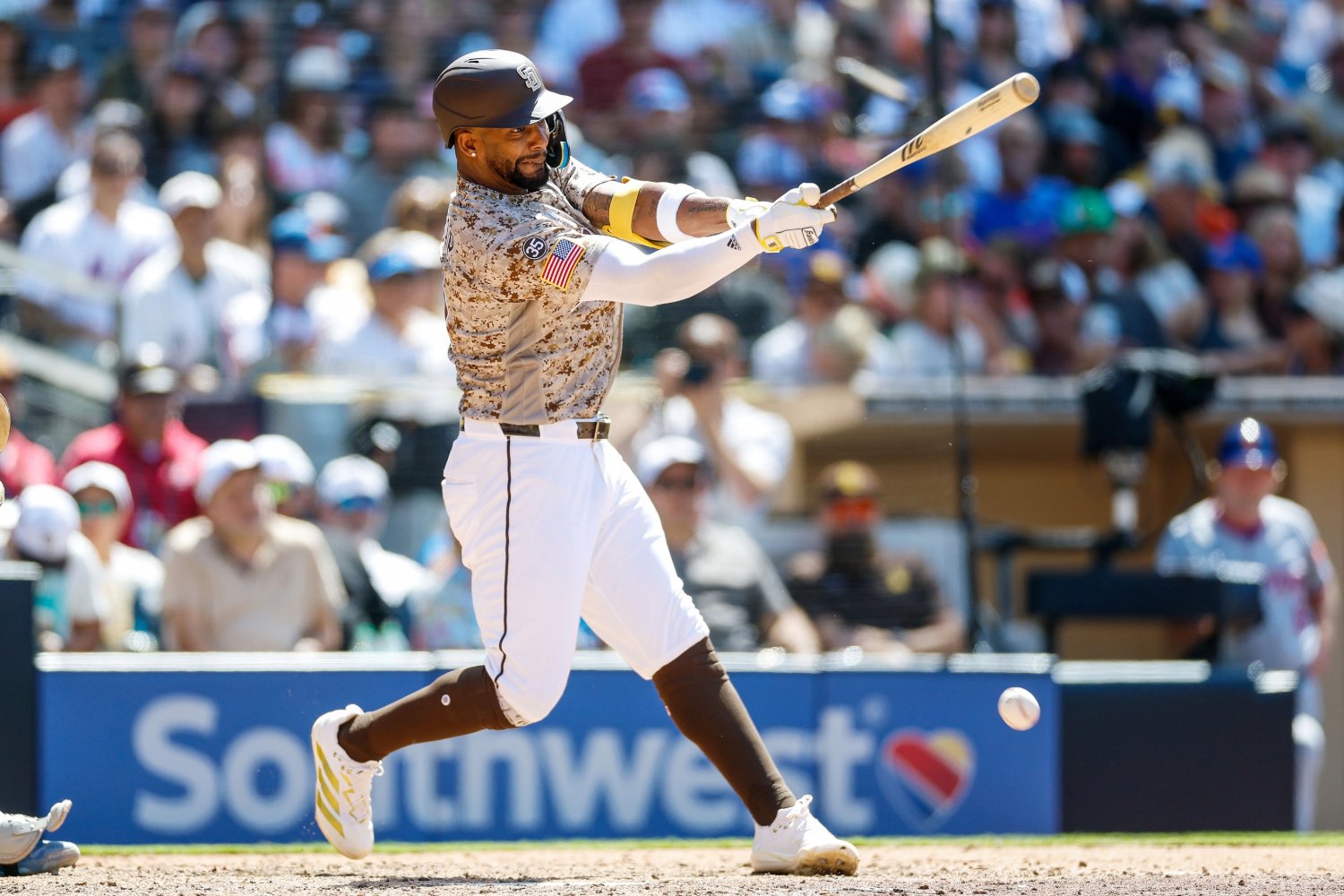 Miguel Andujar seemed like a classic pickup for the San Diego Padres in the A.J. Preller era: an affordable journeyman who was brought in to lend the team one, specific skill. In this case, it was to hit left-handed pitching, and that’s exactly what he did in March and April. But like the rest of the team, Andjuar’s performance cratered in May and June. Now, he’s on the injured list with a hamstring strain, creating more uncertainty for an underperforming lineup. It wasn’t supposed to be like this. The Padres signed Andujar to a one-year deal to be a part-time DH, splitting time with Gavin Sheets' left-handed power bat, as well as to be a key contributor off the bench. The DH is “probably a spot that we’re going to keep open throughout the season, be able to give Manny [Machado] a day DH-ing, Xander [Bogaerts] a day DH-ing, Fernando [Tatis Jr.], [Ramón] Laureano, [Jackson] Merrill,” manager Craig Stammen said after Andujar’s signing was announced in February. “I think it’s a strategic way to keep those guys a little fresher during the season.” The Padres’ offensive woes and injury problems dashed that wishful preseason thinking. Infielder Jake Cronenworth has been sidelined for weeks due to lingering concussion symptoms, which has forced Sheets to become an everyday first baseman. That’d be fine if Sheets wasn’t a terrible defender and could hit lefties. The Nick Castellanos experiment lasted all of 110 days. Laureano played with a hip injury until he simply couldn’t anymore. And regularly resting the star players is out of the question with such a thin lineup and worsening record. All of this has resulted in Andujar becoming the de facto everyday designated hitter, and for a while that was working out. During the Padres 67 games before he went on the IL, Andujar appeared in 45 of them as the DH. In March and April, his OPS stood at .830 and he routinely batted in the two-hole. It was a continuation of a resurgent career year in 2025, when he had .822 OPS and accrued 1.1 fWAR. Against lefties, he nearly had an 1.000 OPS. In the first month of this season, he was easily one of the team's best hitters, and dating back to last season, which he spent with the Athletics and Cincinnati Reds, he had been one of the better platoon bats in baseball. A decent OPS in May of .670 and a woeful OPS in June of .461 quieted that feel-good story. Before his hamstring injury, he was playing like one of the worst hitters in baseball, though his is a weird profile. He has hit the ball hard all season, and his barrel rates, exit velocities, and strikeout rate aren’t out of line with career averages. Still, his slash line and expected outcomes have fallen off a cliff. If there's one culprit, then it’s his chase rate. Andujar has a lifetime 37.1% chase rate, and in 2018 and 2025, his two best seasons, he had chase rates no more than 36.2%. His strong performance this past March and April aligns with that precedent. His chase rate was 35.6%, but then it leapt up to 43.9% in May and an intolerable 46.2% in June. Over the course of a season, that would be, by far, his worst chase rate. It makes sense, then, why in June he has been batting, by far, the worst in his career. Concurrently, his swing rate is up from 50.5% in March and April to 56.9% in June. Why is Andujar swinging more, especially at pitches outside of the zone? Maybe weighing on his shoulders is an anemic offense. He could be pressing to make up for the lineup’s deficiencies. Maybe he has devolved into bad habits as the season grinds on. Refocusing on the basics—stop swinging at bad pitches—wouldn’t hurt. In any case, the Padres simply cannot afford June Andujar to return from the IL. They need April Andujar. But the biggest problem with Andujar doesn’t rest with the man himself. It’s with Tatis and Machado and Cronenworth and all the other regulars who, because of their lack of performance, made Andujar’s output essential. He was signed by the Padres to play a supporting role, but thus far, he’s had to do so much more.
 -
The San Diego Padres played to an 18-7 record in April, but it was probably inevitable that the Friars would fall to earth in May. Their starting rotation was ravaged by injuries and the offensive production was downright anemic, as they went 13-15 during the month and limped into June 5.5 games behind the Los Angeles Dodgers in the National League West. There was one aspect of the team that remained great, though, and that was the bullpen. Last year, the Padres became the first team ever to send three relievers to an All-Star Game. They could easily match that feat or even exceed it this year. Mason Miller, Jason Adam, Bradgley Rodriguez, Adrian Morejon, and Yuki Matsui all have stat lines that could send them to Philadelphia this summer for the Midsummer Classic. Among the five-headed monster, who were the Padres three best pitchers in May? Spoiler alert: Number one isn't Mason Miller. Ranking Padres' Best Pitchers in May #3. Yuki Matsui, RP “Dad, what’s a LOOGY?” my future child will ask. “Lefty one-out guy,” I’ll say, lifting my chain contemplatively, then nodding with tears in my eyes. “They got paid a lot of money to do one specific thing. And they were the weirdest people on the planet.” I have no idea if Yuki Matsui is weird behind the scenes, but I do know that he is a dyed-in-the-wool LOOGY, even if he does have to occasionally face a righty thanks to rule changes instituted in 2020 that require pitchers to have a minimum number of batters. Matsui's average pitch velocity is 86.8 miles per hour, and yet lefties are batting .111 against him this year. Their OPS is .398. Matsui came back from injury on May 8, so his 0.60 ERA in last month tells the story of the season so far. The LOOGY is not extinct, for Yuki Matsui exists. #2. Mason Miller, RP Much has been said about Mason Miller’s historically dominant season, although in May he came down from his lofty heights. This is to say he allowed one unearned run and his FIP on the season is no longer negative. It’s true Miller is probably reverting to the mean. His strikeouts dropped and his walks went up, as did his batting average, on-base percentage, and slugging percentage against. But the mean he’s reverting to is so obscenely great it almost doesn’t matter. He pitched worse in May and had a 0.00 ERA in 9.2 innings, and he went 7-for-7 in save opportunities. He’s not our top option here, but only because there’s another Padres reliever with a 0.00 ERA in the last month. #1. Jason Adam, RP In July 2024, the Padres traded highly-rated prospects in pitcher Dylan Lesko, outfielder Homer Bush Jr., and catcher J.D. Gonzalez to the Tampa Rays for reliever Jason Adam. Lesko pitched to a 6.96 ERA in the minors in 2024 and a 10.50 ERA in 2025. He is in Single-A this season. Bush Jr. is approaching his 25th birthday and he’s still in the minors. Gonzalez has a .482 OPS in three minor league seasons. Adam, on the other hand, has accrued 4.8 bWAR as a Padre and was an All-Star last year. This year, he’s been even better, and May was the best month of his career. In 12 innings pitched across 13 games, Adam allowed zero runs. Miller has all those saves because Adam held leads. The only blemish was Adam’s WHIP, which reached 1.08. He gets the edge over Miller in this list because he faced more batters and had the same ultimate outcome as Miller: no one scored on either pitcher. Acquiring Adam should go down as one of A.J. Preller’s best trades ever. It’s just a shame Adam can’t hit. View full article
-
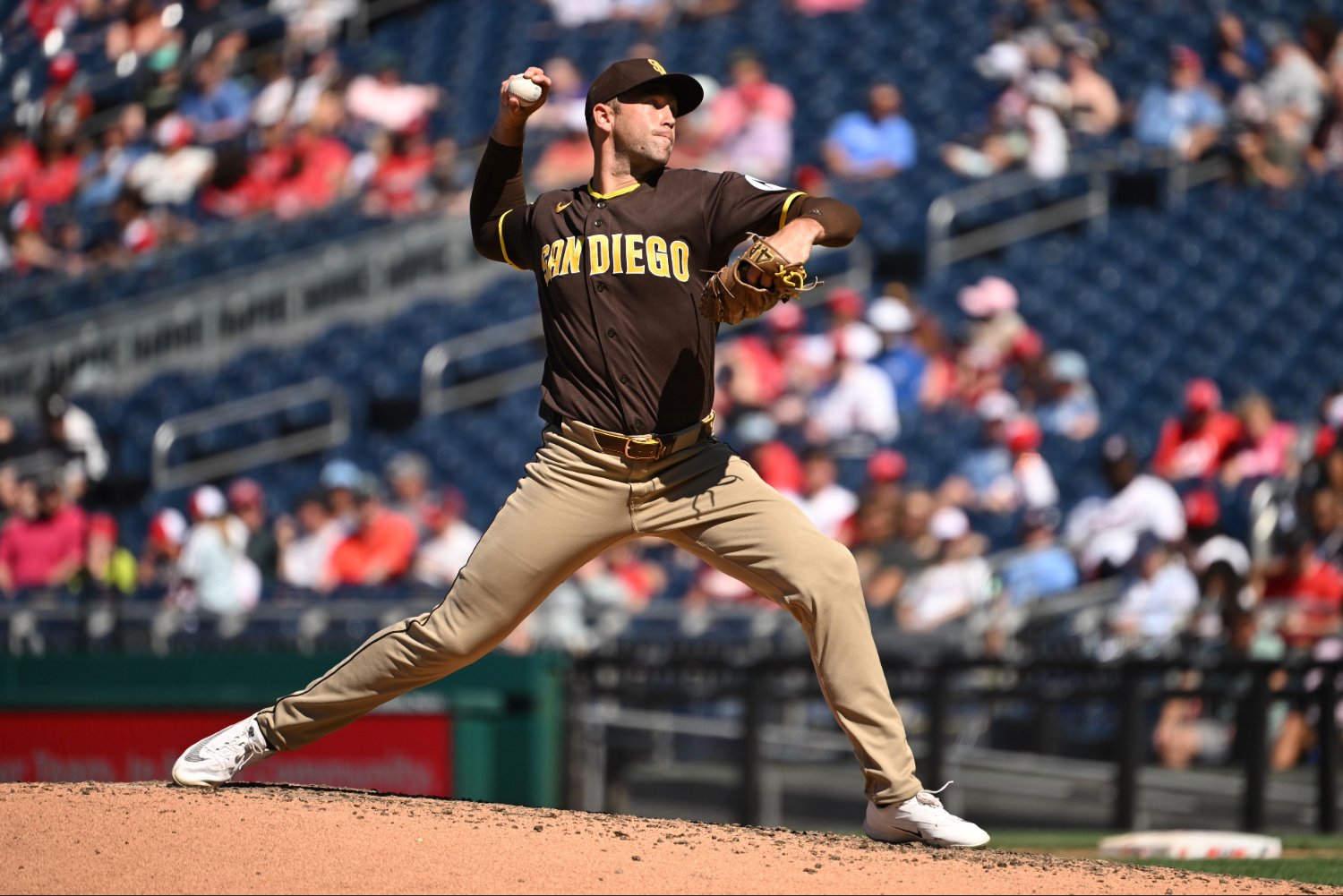 The San Diego Padres played to an 18-7 record in April, but it was probably inevitable that the Friars would fall to earth in May. Their starting rotation was ravaged by injuries and the offensive production was downright anemic, as they went 13-15 during the month and limped into June 5.5 games behind the Los Angeles Dodgers in the National League West. There was one aspect of the team that remained great, though, and that was the bullpen. Last year, the Padres became the first team ever to send three relievers to an All-Star Game. They could easily match that feat or even exceed it this year. Mason Miller, Jason Adam, Bradgley Rodriguez, Adrian Morejon, and Yuki Matsui all have stat lines that could send them to Philadelphia this summer for the Midsummer Classic. Among the five-headed monster, who were the Padres three best pitchers in May? Spoiler alert: Number one isn't Mason Miller. Ranking Padres' Best Pitchers in May #3. Yuki Matsui, RP “Dad, what’s a LOOGY?” my future child will ask. “Lefty one-out guy,” I’ll say, lifting my chain contemplatively, then nodding with tears in my eyes. “They got paid a lot of money to do one specific thing. And they were the weirdest people on the planet.” I have no idea if Yuki Matsui is weird behind the scenes, but I do know that he is a dyed-in-the-wool LOOGY, even if he does have to occasionally face a righty thanks to rule changes instituted in 2020 that require pitchers to have a minimum number of batters. Matsui's average pitch velocity is 86.8 miles per hour, and yet lefties are batting .111 against him this year. Their OPS is .398. Matsui came back from injury on May 8, so his 0.60 ERA in last month tells the story of the season so far. The LOOGY is not extinct, for Yuki Matsui exists. #2. Mason Miller, RP Much has been said about Mason Miller’s historically dominant season, although in May he came down from his lofty heights. This is to say he allowed one unearned run and his FIP on the season is no longer negative. It’s true Miller is probably reverting to the mean. His strikeouts dropped and his walks went up, as did his batting average, on-base percentage, and slugging percentage against. But the mean he’s reverting to is so obscenely great it almost doesn’t matter. He pitched worse in May and had a 0.00 ERA in 9.2 innings, and he went 7-for-7 in save opportunities. He’s not our top option here, but only because there’s another Padres reliever with a 0.00 ERA in the last month. #1. Jason Adam, RP In July 2024, the Padres traded highly-rated prospects in pitcher Dylan Lesko, outfielder Homer Bush Jr., and catcher J.D. Gonzalez to the Tampa Rays for reliever Jason Adam. Lesko pitched to a 6.96 ERA in the minors in 2024 and a 10.50 ERA in 2025. He is in Single-A this season. Bush Jr. is approaching his 25th birthday and he’s still in the minors. Gonzalez has a .482 OPS in three minor league seasons. Adam, on the other hand, has accrued 4.8 bWAR as a Padre and was an All-Star last year. This year, he’s been even better, and May was the best month of his career. In 12 innings pitched across 13 games, Adam allowed zero runs. Miller has all those saves because Adam held leads. The only blemish was Adam’s WHIP, which reached 1.08. He gets the edge over Miller in this list because he faced more batters and had the same ultimate outcome as Miller: no one scored on either pitcher. Acquiring Adam should go down as one of A.J. Preller’s best trades ever. It’s just a shame Adam can’t hit.
 -
The May 18 victory over the Los Angeles Dodgers is indicative of the 2026 Padres. Designated hitter Miguel Andujar hit a first-inning solo home run. Michael King, a potential first-time All-Star, pitched seven shutout innings, allowing just four hits and striking out nine. All-world reliever Jason Adam set up all-world closer Mason Miller and: ballgame. Friars win 1-0. It’s another instance of elite pitching and unsung veterans carrying the team, with the Padres “Big 3” of Fernando Tatis Jr., Manny Machado, and Jackson Merrill contributing little. They went a combined 1-9 with one walk. It’s another instance of wondering what’s going on with the Padres trio of stars. As of that win, their combined OPS this season was .592—an OPS lower than .700, let alone .600, is considered below average—and between them they’ve hit all of ten home runs. Tatis accounts for none of them. The explanation of “It’s early” becomes less convincing and satisfactory the closer we get to June, so it’s worth diving into what, exactly, is the problem. Looming over their performances, with nearly $700 million owed to them over the course of their contracts, is a disheartening question. Are they having down seasons, or is this who they are? More importantly, it’s hard to see how the Padres keep pace in a stacked National League without their best players producing a combined -0.1 bWAR. But there's hope. Fernando Tatis JR., RF Of the Padres' underperforming stars, Tatis' case is the most perplexing. How can someone in the top 1% in all of baseball in hard-hit percentage not have a home run? How does someone with elite exit velocity, good barrel rate, and consistent bat speed have only six extra-base hits? How does someone who batted .400 with two home runs and 11 RBI in March’s World Baseball Classic forget how to hit in April and May? The internet abounds with swing and stats analyses, hot takes, and conspiracy theories, with the more incisive commentators pointing to his batted ball profile and his chase rate. The latter is straightforward. He’s chasing more balls out of the zone and he’s hitting those pitches less, meaning his power goes untapped. I’m sure many a San Diegan have yelled at Tatis through their TVs this season to stop swinging at everything. It’s far easier said than done, but for a hitter as talented as Tatis this should be a relatively simple in-season adjustment. His batted ball profile is the true head-scratcher. His pull-air percentage is almost half of what it was last year and nearly a fourth of what it was in 2021, when he hit 42 home runs and was arguably the best young player in baseball. Concomitantly, his groundball rates are way up and his average launch angle is way down. It’s a bizarre profile. This year, Tatis may be the most powerful slap hitter in baseball history. The YouTube channel Made the Cut attributes this to a drastic change in Tatis’ batting stance. Beginning the season, his feet were are wider apart, and he also closed his stance, which made pulling the ball much more difficult. It appears that Tatis used this new, closed stance in the WBC, when he launched a dramatic grand slam to left field against Venezuela, but perhaps the lower quality of pitching in that tournament didn’t expose this weakness. Interestingly and encouragingly, Tatis used his old, open stance against the Dodgers on Monday night. In his first at-bat against Dodgers ace Yoshinobu Yamamoto, Tatis smoked a 111.3-mph line drive to the pull side, albeit right at shortstop Mookie Betts. He was also the only one of the Big 3 with a hit. Tatis remains one of, if not the best defensive right fielder in baseball. With his reverting to a familiar stance, the dynamic and elite Tatis might be right around the corner. Manny Machado, 3B Tatis is in his age-27 season, typically a player’s peak, which makes his fall off so frustrating. Machado, on the other hand, turns 34 this summer and has played in the bigs since he was 19 years old. There are a lot of miles on his odometer, although it’d be unfair to say at this point that Machado is suffering age-related regression. Last year, he played 159 games and produced 4.1 bWAR. It was his best season since 2022. The intervening years weren’t bad, either. The last time Machado produced less than 2.7 bWAR was in 2018. In a piece for Padres Mission last month, N.B. Lindberg pinpointed Machado’s shortcomings this season. "Machado is walking at an incredible clip to start the season. His 15.5% BB% is almost double his career figure of 8.2% and ranks 19th in the league. The spike in walks isn’t a fluke either. He is currently sporting a 22.9% out-of-zone swing rate and a 66.8% in-zone swing rate. For a player whose career figures in those categories are 29.1% and 66.9%, respectively, Machado’s newfound patience suggests an overhaul in approach. In a vacuum, swinging at fewer balls is almost always a good thing. Walks are good. As are favorable counts. And it’s much easier to drive a strike past an outfielder than a pitch a few inches off the plate. However, baseball is not played in a vacuum, and what is usually a good development may be robbing Machado of what made him a special hitter in the first place." Unlike with Tatis, though, Machado’s defensive prowess has degraded, and there aren't many recent glimmers of hope offensively. In the last five games up that 1-0 victory over the Dodgers, Machado recorded just two hits, one of them a double. As Lindberg summarized, “it appears that Machado’s decision to rein in chase has inadvertently reined in his power stroke.” Like Tatis, Machado may want and the Padres may need him to return to a familiar approach. Jackson Merrill, CF Last year, a family filed into the row in front of me at a San Diego Wave game. Even though we were at a women’s soccer game, the little boy in the family wore a Jackson Merrill jersey. I got chatting with his parents, and at some point I asked the boy what he wants to be when he grows up. “Jackson Merrill!” he said, jumping up and down. Such was the effect of Merrill's revelatory 2024 rookie season, when he improbably won down-ballot MVP votes at a demanding position he had never played before. Injuries diminished his sophomore campaign, though his struggles persist this season. On the surface, it’s hard to pinpoint exactly why. “The issue with Merrill's early performance this year isn't even in the performance itself,” writes Randy Holt in a recent piece for Padres Mission. “It's the absence of an obvious explanation for why he's underperforming. Generally, one can look at a player's underlying trends and find a catalyst that speaks to the origins of the struggle. Matters of the approach are a particularly notable factor in performance variance. Merrill's case isn't so apparent, however.” Holt goes on to explain that Merrill is both swinging harder and attacking pitches at a steeper angle, which may explain why his quantity and quality contact have diminished. It reminds me of Michael Scott's description of himself as a manager: "I work too hard, I care too much, and sometimes I can be too invested in my job." Merrill is still a good player. After all, he is the most valuable of the Big 3 right now. But there's an even better player waiting to be unlocked with the right adjustments. Following the conclusion of their series with the Dodgers, the Padres now sit 1.5 games back in the NL West. Considering the Big 3's combined performance, that is an astonishing accomplishment, and it shows that the Pads aren't going anywhere in the playoff race. But the Atlanta Braves are on pace for 108 wins, the Philadelphia Phillies have woken up, the NL Central doesn't have a team under .500, and the Dodgers are the Dodgers. In Monday night's win, the Padres batted Miguel Andujar in the two-hole. He's on his fifth team in his career and has accumulated a career 2.8 bWAR. A big chuck of it has come this season. Behind him batted Gavin Sheets and his -1.7 career bWAR. The Padres have excellent pitching, particularly in the bullpen, but that's not the lineup that will get the Padres through the National League and back to the World Series. To do so, they'll need their most recognizable stars to live up their billing. View full article
-
Padres Are Somehow Surviving the Failures of Their "Big 3"
Brendan Dentino posted an article in Padres
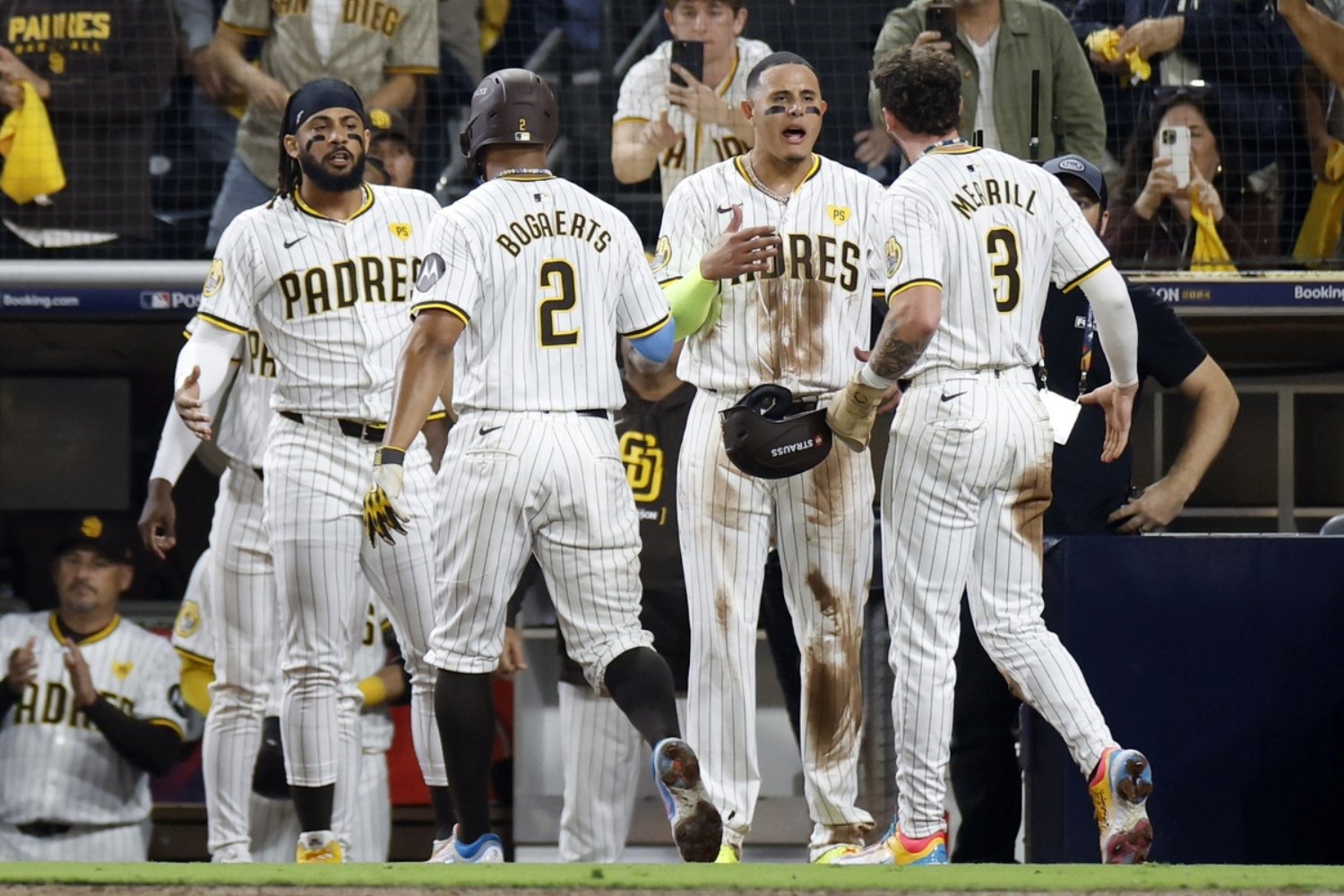 The May 18 victory over the Los Angeles Dodgers is indicative of the 2026 Padres. Designated hitter Miguel Andujar hit a first-inning solo home run. Michael King, a potential first-time All-Star, pitched seven shutout innings, allowing just four hits and striking out nine. All-world reliever Jason Adam set up all-world closer Mason Miller and: ballgame. Friars win 1-0. It’s another instance of elite pitching and unsung veterans carrying the team, with the Padres “Big 3” of Fernando Tatis Jr., Manny Machado, and Jackson Merrill contributing little. They went a combined 1-9 with one walk. It’s another instance of wondering what’s going on with the Padres trio of stars. As of that win, their combined OPS this season was .592—an OPS lower than .700, let alone .600, is considered below average—and between them they’ve hit all of ten home runs. Tatis accounts for none of them. The explanation of “It’s early” becomes less convincing and satisfactory the closer we get to June, so it’s worth diving into what, exactly, is the problem. Looming over their performances, with nearly $700 million owed to them over the course of their contracts, is a disheartening question. Are they having down seasons, or is this who they are? More importantly, it’s hard to see how the Padres keep pace in a stacked National League without their best players producing a combined -0.1 bWAR. But there's hope. Fernando Tatis JR., RF Of the Padres' underperforming stars, Tatis' case is the most perplexing. How can someone in the top 1% in all of baseball in hard-hit percentage not have a home run? How does someone with elite exit velocity, good barrel rate, and consistent bat speed have only six extra-base hits? How does someone who batted .400 with two home runs and 11 RBI in March’s World Baseball Classic forget how to hit in April and May? The internet abounds with swing and stats analyses, hot takes, and conspiracy theories, with the more incisive commentators pointing to his batted ball profile and his chase rate. The latter is straightforward. He’s chasing more balls out of the zone and he’s hitting those pitches less, meaning his power goes untapped. I’m sure many a San Diegan have yelled at Tatis through their TVs this season to stop swinging at everything. It’s far easier said than done, but for a hitter as talented as Tatis this should be a relatively simple in-season adjustment. His batted ball profile is the true head-scratcher. His pull-air percentage is almost half of what it was last year and nearly a fourth of what it was in 2021, when he hit 42 home runs and was arguably the best young player in baseball. Concomitantly, his groundball rates are way up and his average launch angle is way down. It’s a bizarre profile. This year, Tatis may be the most powerful slap hitter in baseball history. The YouTube channel Made the Cut attributes this to a drastic change in Tatis’ batting stance. Beginning the season, his feet were are wider apart, and he also closed his stance, which made pulling the ball much more difficult. It appears that Tatis used this new, closed stance in the WBC, when he launched a dramatic grand slam to left field against Venezuela, but perhaps the lower quality of pitching in that tournament didn’t expose this weakness. Interestingly and encouragingly, Tatis used his old, open stance against the Dodgers on Monday night. In his first at-bat against Dodgers ace Yoshinobu Yamamoto, Tatis smoked a 111.3-mph line drive to the pull side, albeit right at shortstop Mookie Betts. He was also the only one of the Big 3 with a hit. Tatis remains one of, if not the best defensive right fielder in baseball. With his reverting to a familiar stance, the dynamic and elite Tatis might be right around the corner. Manny Machado, 3B Tatis is in his age-27 season, typically a player’s peak, which makes his fall off so frustrating. Machado, on the other hand, turns 34 this summer and has played in the bigs since he was 19 years old. There are a lot of miles on his odometer, although it’d be unfair to say at this point that Machado is suffering age-related regression. Last year, he played 159 games and produced 4.1 bWAR. It was his best season since 2022. The intervening years weren’t bad, either. The last time Machado produced less than 2.7 bWAR was in 2018. In a piece for Padres Mission last month, N.B. Lindberg pinpointed Machado’s shortcomings this season. "Machado is walking at an incredible clip to start the season. His 15.5% BB% is almost double his career figure of 8.2% and ranks 19th in the league. The spike in walks isn’t a fluke either. He is currently sporting a 22.9% out-of-zone swing rate and a 66.8% in-zone swing rate. For a player whose career figures in those categories are 29.1% and 66.9%, respectively, Machado’s newfound patience suggests an overhaul in approach. In a vacuum, swinging at fewer balls is almost always a good thing. Walks are good. As are favorable counts. And it’s much easier to drive a strike past an outfielder than a pitch a few inches off the plate. However, baseball is not played in a vacuum, and what is usually a good development may be robbing Machado of what made him a special hitter in the first place." Unlike with Tatis, though, Machado’s defensive prowess has degraded, and there aren't many recent glimmers of hope offensively. In the last five games up that 1-0 victory over the Dodgers, Machado recorded just two hits, one of them a double. As Lindberg summarized, “it appears that Machado’s decision to rein in chase has inadvertently reined in his power stroke.” Like Tatis, Machado may want and the Padres may need him to return to a familiar approach. Jackson Merrill, CF Last year, a family filed into the row in front of me at a San Diego Wave game. Even though we were at a women’s soccer game, the little boy in the family wore a Jackson Merrill jersey. I got chatting with his parents, and at some point I asked the boy what he wants to be when he grows up. “Jackson Merrill!” he said, jumping up and down. Such was the effect of Merrill's revelatory 2024 rookie season, when he improbably won down-ballot MVP votes at a demanding position he had never played before. Injuries diminished his sophomore campaign, though his struggles persist this season. On the surface, it’s hard to pinpoint exactly why. “The issue with Merrill's early performance this year isn't even in the performance itself,” writes Randy Holt in a recent piece for Padres Mission. “It's the absence of an obvious explanation for why he's underperforming. Generally, one can look at a player's underlying trends and find a catalyst that speaks to the origins of the struggle. Matters of the approach are a particularly notable factor in performance variance. Merrill's case isn't so apparent, however.” Holt goes on to explain that Merrill is both swinging harder and attacking pitches at a steeper angle, which may explain why his quantity and quality contact have diminished. It reminds me of Michael Scott's description of himself as a manager: "I work too hard, I care too much, and sometimes I can be too invested in my job." Merrill is still a good player. After all, he is the most valuable of the Big 3 right now. But there's an even better player waiting to be unlocked with the right adjustments. Following the conclusion of their series with the Dodgers, the Padres now sit 1.5 games back in the NL West. Considering the Big 3's combined performance, that is an astonishing accomplishment, and it shows that the Pads aren't going anywhere in the playoff race. But the Atlanta Braves are on pace for 108 wins, the Philadelphia Phillies have woken up, the NL Central doesn't have a team under .500, and the Dodgers are the Dodgers. In Monday night's win, the Padres batted Miguel Andujar in the two-hole. He's on his fifth team in his career and has accumulated a career 2.8 bWAR. A big chuck of it has come this season. Behind him batted Gavin Sheets and his -1.7 career bWAR. The Padres have excellent pitching, particularly in the bullpen, but that's not the lineup that will get the Padres through the National League and back to the World Series. To do so, they'll need their most recognizable stars to live up their billing.
 -
Even though he’s a closer, San Diego Padres' Mason Miller has a case to be the National League’s starting pitcher in the 2026 MLB All-Star Game in Philadelphia. His 1.4 fWAR this season is better than all but five starters, and his 0.86 ERA is worse than only Shohei Ohtani’s. Years from now, baseball nerds will ask their friends, “Remember when Mason Miller had a negative FIP?” They’ll referring to the halcyon days of May 2026. But Miller should not be the Padres' lone pitching representative at the All-Star Game, not when the staff is the reason the team is keeping pace with the Dodgers in the NL West. Below are three Padres pitchers who, so far this season, are worthy of their first All-Star nod. Michael King, SP The Padres have no less than five starting pitchers on the injured list, including Nick Pivetta and Joe Musgrove. It’s why the team took a flier on free agent starting pitcher Lucas Giolito, and it’s why they’re considering bringing Jake Peavy out of retirement. (Just kidding. I think.) Michael King has always been good, pitching to a career 3.18 ERA, but this year he has been a savior. Through nine starts, King has posted a 2.63 ERA, a 155 ERA+, and 0.9 fWAR, making him one of twenty most valuable pitchers in the National League. By any metric, he is on pace to have a career year, and as a just-short-of-elite veteran on a reasonable contract, he’s emblematic of the post-Peter Seidler era. The predictive stats indicate he’s been a little lucky this season. His expected batting average against is higher than the actual number, and his FIP is a full point higher than his ERA. Not everyone can be Mason Miller. But luck hardly explains King’s performance this season. He has an elite off-speed repertoire, which keeps hitters off balance, allowing him to avoid getting hit hard. Despite an average fastball velocity of 93.2 mph, just 13.3% of batted balls off King are pulled in the air, and his hard-hit percentage is in the 86th percentile, according to Baseball Savant. King is simply a great pitcher, and he’s worthy of his first All-Star selection. Randy Vásquez, SP Along with King, starting pitcher Randy Vásquez was one of the key pieces in the trade that sent Juan Soto from the Padres to the New York Yankees after the 2023 season. Back then, he was the Yankees' No. 13 prospect, a 24-year-old with promise. After a pretty poor 2024 season and a merely decent season last year, Vásquez’s career began indicating more hope than anything else. Heading into 2026, Vásquez was the question mark of the rotation behind King, Pivetta, and Musgrove. “With a lack of better options at this point, Vasquez is pretty well set to be part of the rotation this year, whether it be at the No. 4 or 5 spot,” Padres Mission’s Steve Drumwright wrote in February. Fast forward to May, and he’s indisputably the Padres' second-best starting pitcher. In fact, Vásquez has produced 1.0 fWAR, practically aligning him in value with King, and the two share nearly identical stat lines. If King is deserving of an All-Star nod, then so is Vásquez. Bradgley Rodriguez, RP Purely on historical precedent, Bradgley Rodriguez is unlikely to make the All-Star Game. No more than a couple non-closer relievers get selected every year. It’s rarer still for non-setup guys to get recognition. The fact that, last year, the Padres became the first team ever to send three relievers to the All-Star Game—Robert Suarez, Jason Adam, and Adrian Morejon—speaks to the difficulty for relievers to get their just due. Although, it wouldn’t be a surprise to see the Padres repeat that feat, what with Miller, Morejon, Adam, and now Rodriguez in the fold. It’s difficult to know where to start with Rodriguez, for he has been a revelation across the board. Traditional stats? Sure: 22.2 inning pitched, a 1.59 ERA, no home runs allowed, and just five walks. Advanced stats? Why not: An expected ERA in the 99th-percentile, to go along with 0.5 fWAR. Statcast? He throws hard, his off-speed pitches are elite, and nothing he throws is hit hard. It's not a stretch to say the right-hander is one of the best middle relievers in baseball, which may just get him some love as a potential injury replacement around the Midsummer Classic. View full article
-
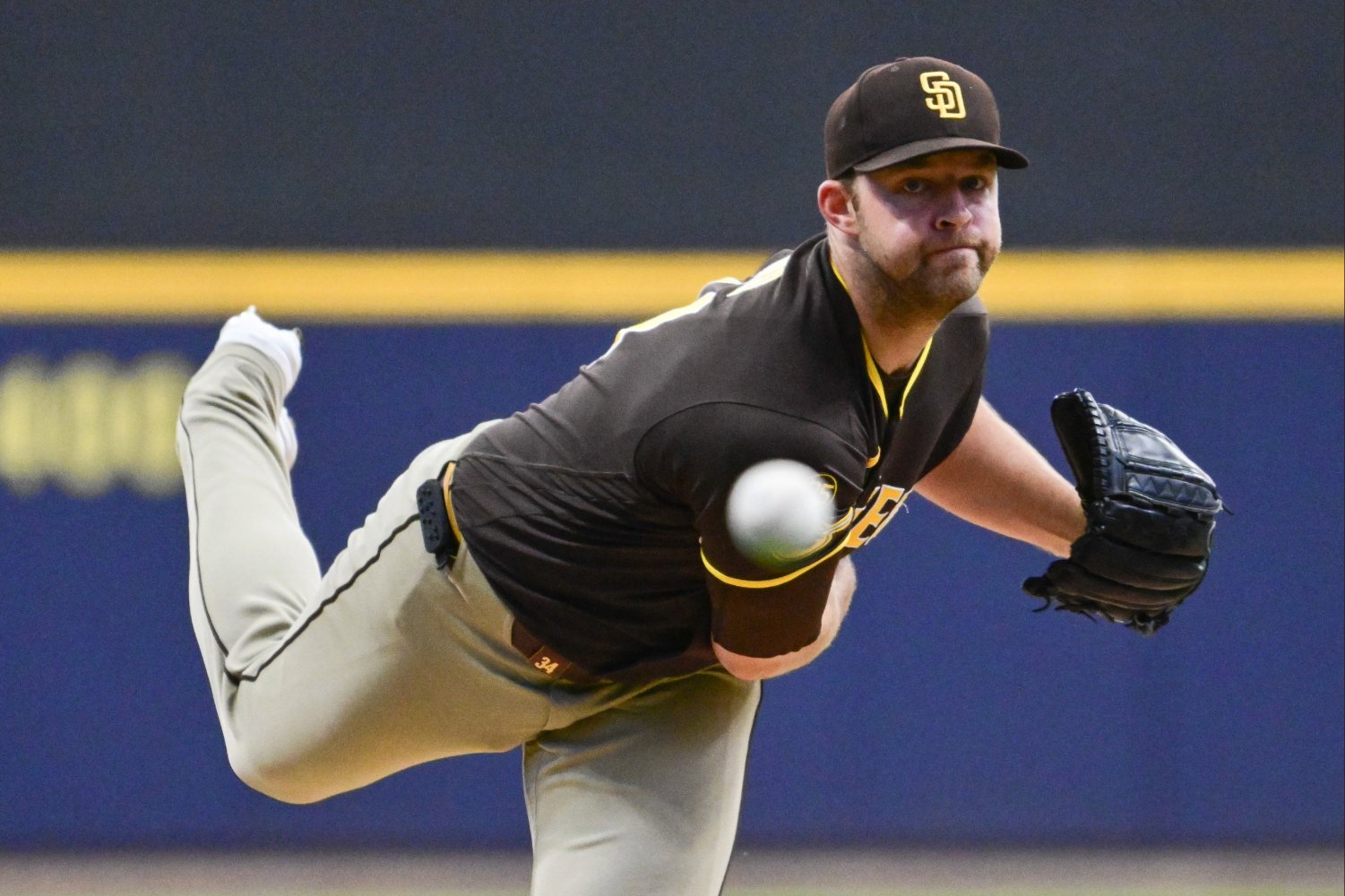 Even though he’s a closer, San Diego Padres' Mason Miller has a case to be the National League’s starting pitcher in the 2026 MLB All-Star Game in Philadelphia. His 1.4 fWAR this season is better than all but five starters, and his 0.86 ERA is worse than only Shohei Ohtani’s. Years from now, baseball nerds will ask their friends, “Remember when Mason Miller had a negative FIP?” They’ll referring to the halcyon days of May 2026. But Miller should not be the Padres' lone pitching representative at the All-Star Game, not when the staff is the reason the team is keeping pace with the Dodgers in the NL West. Below are three Padres pitchers who, so far this season, are worthy of their first All-Star nod. Michael King, SP The Padres have no less than five starting pitchers on the injured list, including Nick Pivetta and Joe Musgrove. It’s why the team took a flier on free agent starting pitcher Lucas Giolito, and it’s why they’re considering bringing Jake Peavy out of retirement. (Just kidding. I think.) Michael King has always been good, pitching to a career 3.18 ERA, but this year he has been a savior. Through nine starts, King has posted a 2.63 ERA, a 155 ERA+, and 0.9 fWAR, making him one of twenty most valuable pitchers in the National League. By any metric, he is on pace to have a career year, and as a just-short-of-elite veteran on a reasonable contract, he’s emblematic of the post-Peter Seidler era. The predictive stats indicate he’s been a little lucky this season. His expected batting average against is higher than the actual number, and his FIP is a full point higher than his ERA. Not everyone can be Mason Miller. But luck hardly explains King’s performance this season. He has an elite off-speed repertoire, which keeps hitters off balance, allowing him to avoid getting hit hard. Despite an average fastball velocity of 93.2 mph, just 13.3% of batted balls off King are pulled in the air, and his hard-hit percentage is in the 86th percentile, according to Baseball Savant. King is simply a great pitcher, and he’s worthy of his first All-Star selection. Randy Vásquez, SP Along with King, starting pitcher Randy Vásquez was one of the key pieces in the trade that sent Juan Soto from the Padres to the New York Yankees after the 2023 season. Back then, he was the Yankees' No. 13 prospect, a 24-year-old with promise. After a pretty poor 2024 season and a merely decent season last year, Vásquez’s career began indicating more hope than anything else. Heading into 2026, Vásquez was the question mark of the rotation behind King, Pivetta, and Musgrove. “With a lack of better options at this point, Vasquez is pretty well set to be part of the rotation this year, whether it be at the No. 4 or 5 spot,” Padres Mission’s Steve Drumwright wrote in February. Fast forward to May, and he’s indisputably the Padres' second-best starting pitcher. In fact, Vásquez has produced 1.0 fWAR, practically aligning him in value with King, and the two share nearly identical stat lines. If King is deserving of an All-Star nod, then so is Vásquez. Bradgley Rodriguez, RP Purely on historical precedent, Bradgley Rodriguez is unlikely to make the All-Star Game. No more than a couple non-closer relievers get selected every year. It’s rarer still for non-setup guys to get recognition. The fact that, last year, the Padres became the first team ever to send three relievers to the All-Star Game—Robert Suarez, Jason Adam, and Adrian Morejon—speaks to the difficulty for relievers to get their just due. Although, it wouldn’t be a surprise to see the Padres repeat that feat, what with Miller, Morejon, Adam, and now Rodriguez in the fold. It’s difficult to know where to start with Rodriguez, for he has been a revelation across the board. Traditional stats? Sure: 22.2 inning pitched, a 1.59 ERA, no home runs allowed, and just five walks. Advanced stats? Why not: An expected ERA in the 99th-percentile, to go along with 0.5 fWAR. Statcast? He throws hard, his off-speed pitches are elite, and nothing he throws is hit hard. It's not a stretch to say the right-hander is one of the best middle relievers in baseball, which may just get him some love as a potential injury replacement around the Midsummer Classic.
 -
Despite a very good career, Nick Castellanos will be remembered for a drive into deep left field and for cracking a beer mid-game in his manager’s face. The 2026 San Diego Padres don’t care about that. They just need their unlikely utility man to hit for power. By one metric, he’s doing exactly that. An astounding 39.6% of his batted balls are lifted in the air. If he had enough at-bats, then Castellanos would comfortably be the leader in all of baseball in air pull rate. This is significant because, according to data by MLB Data Warehouse, batted balls pulled in the air are the most likely to be home runs, and it’s not particularly close. Nearly 38% of pulled fly balls are home runs. The percentages are in the single digits to center and to the opposite field. Colorado Rockies outfielder Mickey Moniak, for example, is ninth in baseball in air pull rate and is tied for sixth, with none other than Byron Buxton, Kyle Schwarber, and Mike Trout, in home runs. Castellanos’ air pull rate is a salve for the Padres’ offense, which ranks among the worst in team OPS. Or rather, it should be a salve. Castellanos has but one home run on the season, and he is, by almost any other metric, one of the least productive players in baseball. Over just 69 plate appearances, he has accrued -0.9 bWAR. His .172/.217/.281 slash line is brutal. His 35 wRC+ even more so. The extent of Castellanos' value so far this season has been that another team, the Philadelphia Phillies, is paying almost all of his salary. Castellanos' stat line this season continues his decline in production. From 2016-2021, hes was one of the best, most consistent hitters in baseball. Only in the Covid-shortened 2020 season did he post an OPS+ lower than 112, and even then it was a bang-on average 100. After a 2021 season with the Cincinnati Reds, in which he slashed an incredible .309/.362/.576, Castellanos signed a five-year, $100 million deal with the Phillies. He was disappointing in 2022 and solid in 2023. Factoring in his defense, he has since been more or less unplayable. That is what makes his air pull rate so fascinating and so tantalizing. Castellanos’ career-high air pull rate is accompanied by groundball rates to left and center and air rates to center that are consistent with his career. His K% is slightly down, his BB% slightly up. Castellanos, who never saw a down-and-away slider he didn’t like, even has a lower Chase % than three of his latter seasons. What has changed is his batted balls to the opposite field, which on the ground literally don’t exist. His opposite-field groundball rate is 0.0%. (His career rate is 3.3%.) The air rate to the opposite field is nearly 16 points off his career average. All the while, his average exit velocity is highest since 2023. It feels like Castellanos is an uncle at a backyard whiffle ball game trying to put every pitch onto the roof of the garage. The veteran's stat line is tantalizing because, statistically, it's inevitable that the outcomes will turn around. For the first time since 2019, his expected home runs exceed his actual home run total. After all, the Padres don’t play every game in Petco Park, one of the hardest ballparks in which to hit. And like teammate Jake Cronenworth, Castellanos’ expected batting average is almost 100 points better than his actual batting average. When it comes to Castellanos, the Padres desperately need the law of averages to win out, because their punchless offense is weighing on the club. After an 18-8 start, the Friars are 4-6 since April 26. Of course, baseball doesn’t always comply with theory and it isn’t played on computers. It’s played on the grass, where Castellanos has done little good besides swing for the fences. Like an uncle at a barbecue, he can only keep swinging, hoping past glories are around the corner. View full article
