


Padres Video
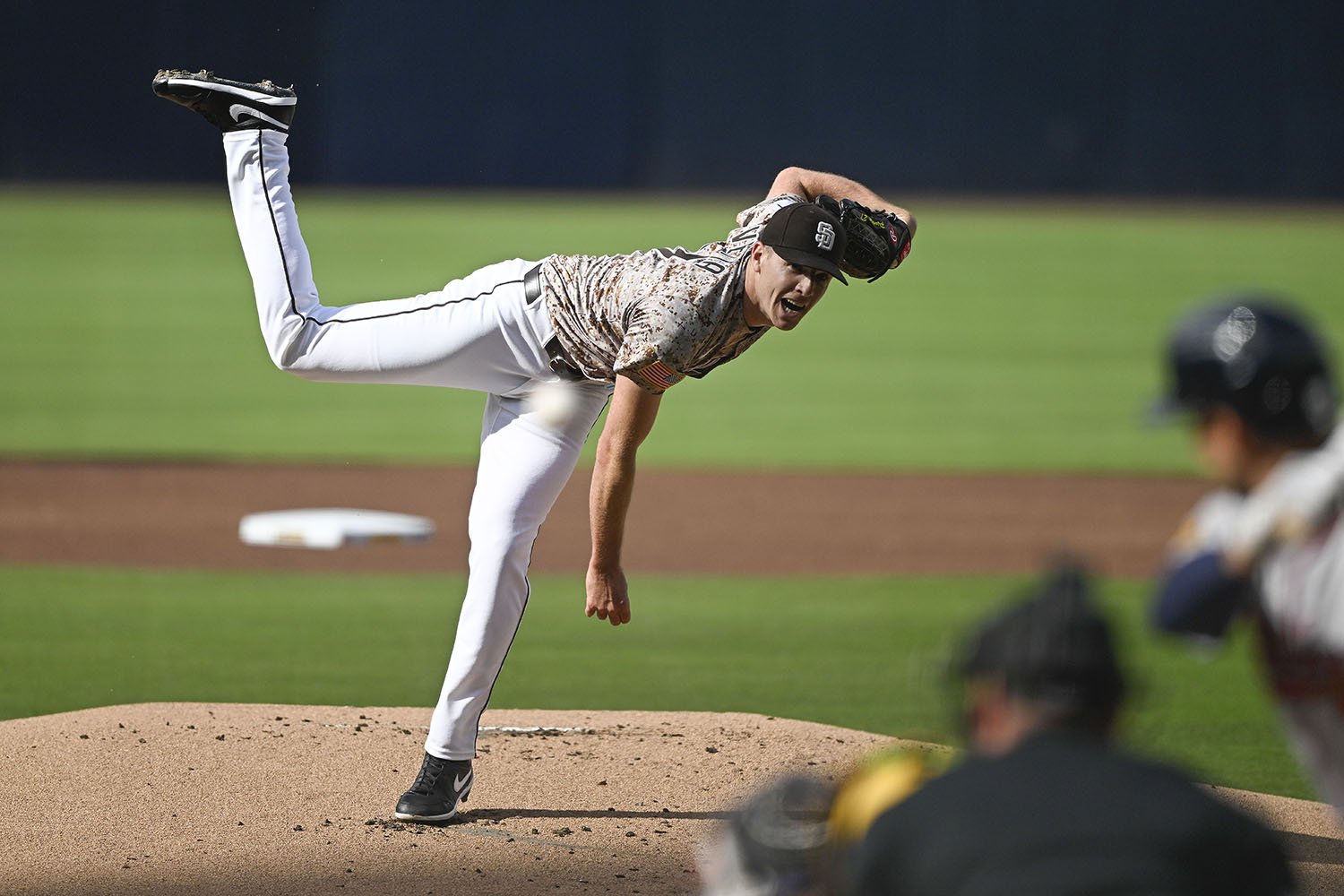
Maybe you’ve heard someone call Nick Pivetta a stuff monster. It’s an apt description. Over nine seasons in the majors, he has a 4.69 ERA and 4.31, but the Padres were happy to sign him for four years and $55 million because of the stuff. It's such good stuff! Pivetta’s got a four-seamer with a huge amount of rise, a curveball that falls off the table, the occasional cutter, and a sweeper that stuff models are in love with. He’s even added a sinker this season. It doesn’t sink, but it’s a whole new fastball for batters to worry about. Results be damned, some front office was bound to decide that maybe they could be the ones to help Pivetta figure it all out primo stuff, and the Padres won that particular sweepstakes. So far, they seem to be doing a pretty good job helping him locate his best self. Over his first four starts, Pivetta has a 3-1 record and with a 1.57 ERA and 2.13 FIP. Here's what’s got me worried.
Do you know what a blast is? A blast is a term from Statcast’s new bat tracking data. The technical definition is here, but it combines a bat speed of at least 75 mph and a squared-up percentage of 80%. Basically, when a batter swings the bat really hard and barrels the ball up really well, it’s a blast, and blasts have a .562 batting average and 1.182 slugging percentage. In short, they’re what every batter is trying to accomplish (except for Luis Arráez and Steven Kwan, who are playing their own wondrous game).
Last year, Pivetta allowed 92 blasts, 23.8% of his balls in play. Those blasts had a .620 batting average and a .914 wOBA. Basically, they looked like everybody else’s blasts: terrible. This year, Pivetta has allowed 15 blasts for a rate of 26.3%, more or less the same as last year. And the expected stats say that the performance on those blasts should be about the same as last year too. They’ve got an expected batting average of .612 and an expected wOBA of .808. Want to know what the actual values are on those 15 blasts? How about a .400 batting average and .488 wOBA? Pivetta is giving up just about the same amount of brutally hard contact as last year, and the numbers say that he should be paying for it, but he’s not – like at all. When batters make the best possible contact against his pitches, they’ve somehow got a worse batting average than Carson Kelly. Here’s what that looks like.
That’s not going to last forever. The home run ball has always been Pivetta’s kryptonite. He’s got a huge four-seamer that needs to be located up in the zone, because it can get lots of whiffs up there. But when batters catch up to four-seamers up in the zone, they tend to hit them 400 feet. That’s just how it works. Over the course of Pivetta’s career, 15.3% of his fly balls have gone for home runs. His lowest mark in any season was 12.4%. So far this season, he’s at 4.2%. He’s stranding every baserunner in sight and he’s running a .232 BABIP. Right now, he’s on a magical run of good fortune.
That’s not to say that Pivetta is doomed. He’s doing plenty of things well. He’s still striking out more than one batter per inning, and he’s running a career-low walk rate. He’s running a career-low in exit velocity and a career-high in whiff rate inside the strike zone. That’s great! He deserves to pitch well, and maybe he will even after the magic runs out. But he's probably not going to keep avoiding home runs forever.





Recommended Comments
There are no comments to display.
Create an account or sign in to comment
You need to be a member in order to leave a comment
Create an account
Sign up for a new account in our community. It's easy!
Register a new accountSign in
Already have an account? Sign in here.
Sign In Now