


Davy Andrews
-
Posts
24 -
Joined
-
Last visited
-
Days Won
1
1 Follower

Davy Andrews's Achievements



-
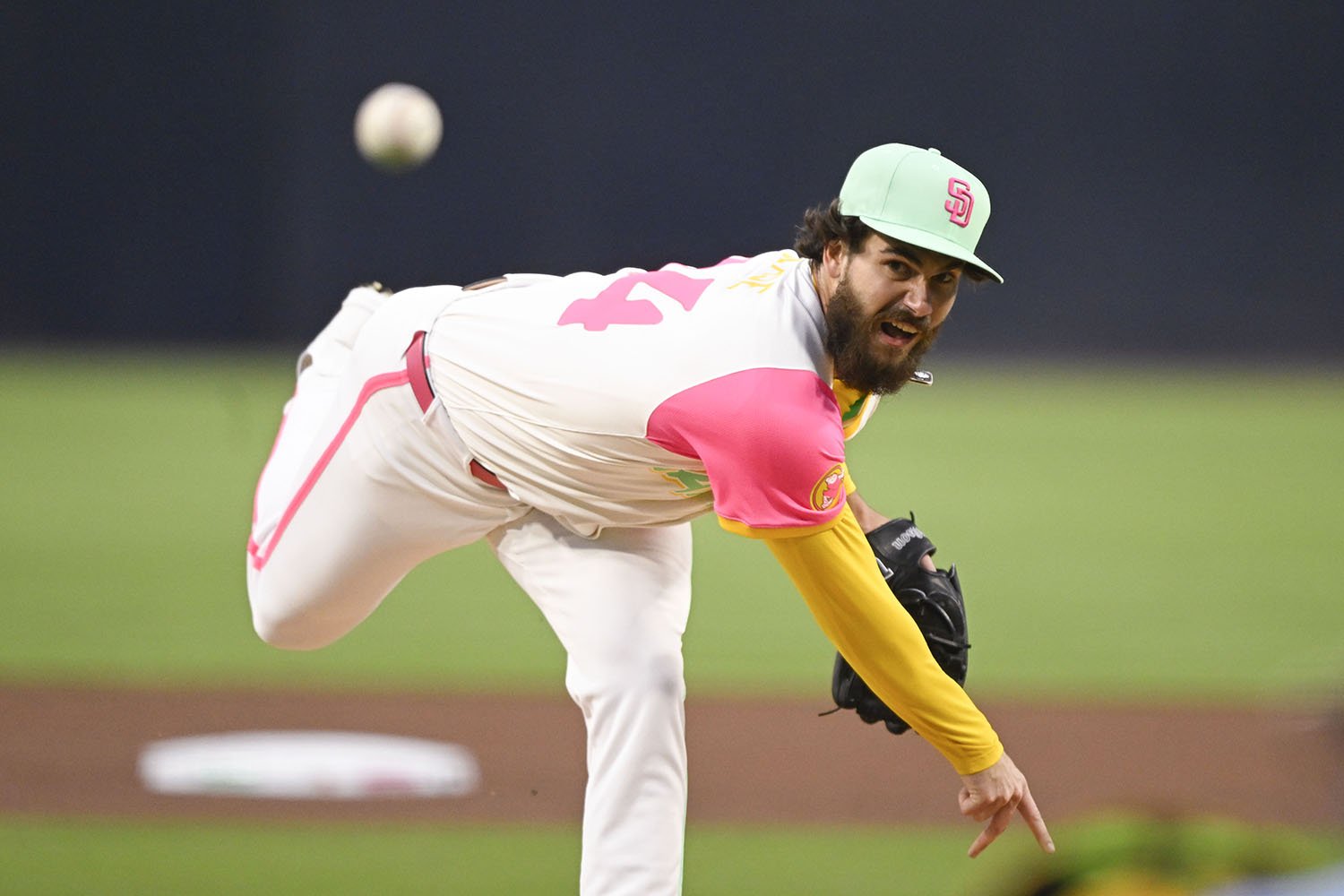
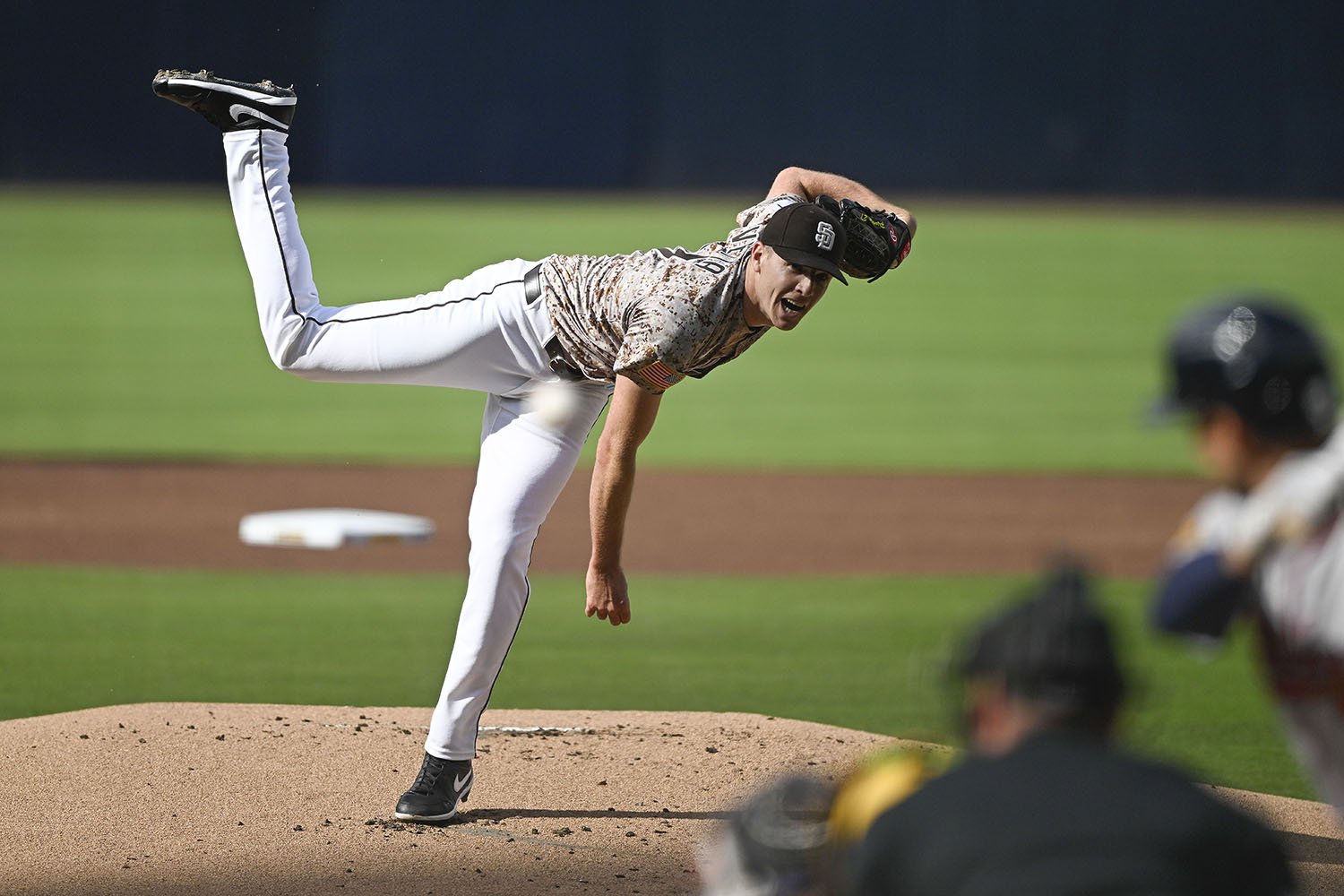 Maybe you’ve heard someone call Nick Pivetta a stuff monster. It’s an apt description. Over nine seasons in the majors, he has a 4.69 ERA and 4.31, but the Padres were happy to sign him for four years and $55 million because of the stuff. It's such good stuff! Pivetta’s got a four-seamer with a huge amount of rise, a curveball that falls off the table, the occasional cutter, and a sweeper that stuff models are in love with. He’s even added a sinker this season. It doesn’t sink, but it’s a whole new fastball for batters to worry about. Results be damned, some front office was bound to decide that maybe they could be the ones to help Pivetta figure it all out primo stuff, and the Padres won that particular sweepstakes. So far, they seem to be doing a pretty good job helping him locate his best self. Over his first four starts, Pivetta has a 3-1 record and with a 1.57 ERA and 2.13 FIP. Here's what’s got me worried. Do you know what a blast is? A blast is a term from Statcast’s new bat tracking data. The technical definition is here, but it combines a bat speed of at least 75 mph and a squared-up percentage of 80%. Basically, when a batter swings the bat really hard and barrels the ball up really well, it’s a blast, and blasts have a .562 batting average and 1.182 slugging percentage. In short, they’re what every batter is trying to accomplish (except for Luis Arráez and Steven Kwan, who are playing their own wondrous game). Last year, Pivetta allowed 92 blasts, 23.8% of his balls in play. Those blasts had a .620 batting average and a .914 wOBA. Basically, they looked like everybody else’s blasts: terrible. This year, Pivetta has allowed 15 blasts for a rate of 26.3%, more or less the same as last year. And the expected stats say that the performance on those blasts should be about the same as last year too. They’ve got an expected batting average of .612 and an expected wOBA of .808. Want to know what the actual values are on those 15 blasts? How about a .400 batting average and .488 wOBA? Pivetta is giving up just about the same amount of brutally hard contact as last year, and the numbers say that he should be paying for it, but he’s not – like at all. When batters make the best possible contact against his pitches, they’ve somehow got a worse batting average than Carson Kelly. Here’s what that looks like. That’s not going to last forever. The home run ball has always been Pivetta’s kryptonite. He’s got a huge four-seamer that needs to be located up in the zone, because it can get lots of whiffs up there. But when batters catch up to four-seamers up in the zone, they tend to hit them 400 feet. That’s just how it works. Over the course of Pivetta’s career, 15.3% of his fly balls have gone for home runs. His lowest mark in any season was 12.4%. So far this season, he’s at 4.2%. He’s stranding every baserunner in sight and he’s running a .232 BABIP. Right now, he’s on a magical run of good fortune. That’s not to say that Pivetta is doomed. He’s doing plenty of things well. He’s still striking out more than one batter per inning, and he’s running a career-low walk rate. He’s running a career-low in exit velocity and a career-high in whiff rate inside the strike zone. That’s great! He deserves to pitch well, and maybe he will even after the magic runs out. But he's probably not going to keep avoiding home runs forever.
 -
Do you know what a blast is? Maybe you don't want to know. Maybe you’ve heard someone call Nick Pivetta a stuff monster. It’s an apt description. Over nine seasons in the majors, he has a 4.69 ERA and 4.31, but the Padres were happy to sign him for four years and $55 million because of the stuff. It's such good stuff! Pivetta’s got a four-seamer with a huge amount of rise, a curveball that falls off the table, the occasional cutter, and a sweeper that stuff models are in love with. He’s even added a sinker this season. It doesn’t sink, but it’s a whole new fastball for batters to worry about. Results be damned, some front office was bound to decide that maybe they could be the ones to help Pivetta figure it all out primo stuff, and the Padres won that particular sweepstakes. So far, they seem to be doing a pretty good job helping him locate his best self. Over his first four starts, Pivetta has a 3-1 record and with a 1.57 ERA and 2.13 FIP. Here's what’s got me worried. Do you know what a blast is? A blast is a term from Statcast’s new bat tracking data. The technical definition is here, but it combines a bat speed of at least 75 mph and a squared-up percentage of 80%. Basically, when a batter swings the bat really hard and barrels the ball up really well, it’s a blast, and blasts have a .562 batting average and 1.182 slugging percentage. In short, they’re what every batter is trying to accomplish (except for Luis Arráez and Steven Kwan, who are playing their own wondrous game). Last year, Pivetta allowed 92 blasts, 23.8% of his balls in play. Those blasts had a .620 batting average and a .914 wOBA. Basically, they looked like everybody else’s blasts: terrible. This year, Pivetta has allowed 15 blasts for a rate of 26.3%, more or less the same as last year. And the expected stats say that the performance on those blasts should be about the same as last year too. They’ve got an expected batting average of .612 and an expected wOBA of .808. Want to know what the actual values are on those 15 blasts? How about a .400 batting average and .488 wOBA? Pivetta is giving up just about the same amount of brutally hard contact as last year, and the numbers say that he should be paying for it, but he’s not – like at all. When batters make the best possible contact against his pitches, they’ve somehow got a worse batting average than Carson Kelly. Here’s what that looks like. That’s not going to last forever. The home run ball has always been Pivetta’s kryptonite. He’s got a huge four-seamer that needs to be located up in the zone, because it can get lots of whiffs up there. But when batters catch up to four-seamers up in the zone, they tend to hit them 400 feet. That’s just how it works. Over the course of Pivetta’s career, 15.3% of his fly balls have gone for home runs. His lowest mark in any season was 12.4%. So far this season, he’s at 4.2%. He’s stranding every baserunner in sight and he’s running a .232 BABIP. Right now, he’s on a magical run of good fortune. That’s not to say that Pivetta is doomed. He’s doing plenty of things well. He’s still striking out more than one batter per inning, and he’s running a career-low walk rate. He’s running a career-low in exit velocity and a career-high in whiff rate inside the strike zone. That’s great! He deserves to pitch well, and maybe he will even after the magic runs out. But he's probably not going to keep avoiding home runs forever. View full article
-
 The good news is that after today's game, the Padres won't have to play the Cubs again all season. On Tuesday, the Padres fell to the Cubs, 2-1, in 10 innings. The Padres are now 2-3 against the Cubs and 12-1 against all teams that aren't the Cubs. The good news was that Randy Vásquez made his fourth start of the season and continued run of his dominance, allowing just earned run over five innings and change. However, it was not exactly breezy. Vásquez allowed seven hits and two walks, striking out just two batters and notching just one clean inning, the first. So far, Vásquez has largely succeeded by way of stranding runners and limiting hard contact, and both of those tricks can be difficult to sustain over a full season. Chicago ace Shota Imanaga was not his usual dominant self. He got out of the first cleanly, but walked a batter in the second, then allowed two singles and a walk in the third to load the bases with one out. However, the left-hander worked out of the trouble, striking out Manny Machado and inducing a foul popup from Xander Bogaerts. The Dads finally got on the scoreboard in the fifth inning. In an absurd series of events, the Cubs dropped two straight foul popups off the bat of Manny Machado, and Machado made them pay for it with a no-doubt, 400-foot home run to left field. The Cubs would equalize quickly. Vásquez pitched into the sixth inning, but was pulled after allowing two straight singles to start the frame. Adrián Morejón took the ball, and the Cubs immediately got on the board. Pete Crow-Armstrong executed a safety squeeze and the charging Luis Arráez was unable to get the ball out of his glove cleanly. The bullpens would go on to trade scoreless frames until the top of the 10th. Yuki Matsui came in to pitch and finally allowed his first run of the season, with a little help from the Manfred Man. Leadoff batter Nico Hoerner knocked in the zombie runner with a triple into the right field gap. Matsui would recover beautifully, inducing a weak fly out and two swinging strikeouts to end the frame, but the damage was done. Caleb Thielbar came in to earn the save for the Cubs in the 10th. After leadoff batter Connor Joe struck out, zombie runner Jose Iglesias stole third. Pinch-hitter Elias Díaz grounded out to the pitcher, which didn't allow Iglesias to score the tying run. The Cubs decided to walk Fernando Tatis Jr. to get to Arráez, which turned out to be a good call. He flied out to left to end the game. “We’re obviously there until the end,” Machado told reporters after the game. “We just couldn’t capitalize on that one hit. We created some opportunities … couldn’t deliver. Yeah, sometimes it goes that way.” In the 56-year history of the Padres, two clubs have played each other a total of 523 times, 528 if you count the playoffs. The Cubs hold a commanding 285-238 lead. However, the Padres lead 87-80 since 2000. More importantly, they hold the edge in the playoffs, taking the heavily favored Cubs down, three games to two, in the 1984 National League Championship season. Maybe the Padres shold be hoping to get one more series against Chicago.
 -
 One more game against the Cubs. Just one more. The good news is that after today's game, the Padres won't have to play the Cubs again all season. On Tuesday, the Padres fell to the Cubs, 2-1, in 10 innings. The Padres are now 2-3 against the Cubs and 12-1 against all teams that aren't the Cubs. The good news was that Randy Vásquez made his fourth start of the season and continued run of his dominance, allowing just earned run over five innings and change. However, it was not exactly breezy. Vásquez allowed seven hits and two walks, striking out just two batters and notching just one clean inning, the first. So far, Vásquez has largely succeeded by way of stranding runners and limiting hard contact, and both of those tricks can be difficult to sustain over a full season. Chicago ace Shota Imanaga was not his usual dominant self. He got out of the first cleanly, but walked a batter in the second, then allowed two singles and a walk in the third to load the bases with one out. However, the left-hander worked out of the trouble, striking out Manny Machado and inducing a foul popup from Xander Bogaerts. The Dads finally got on the scoreboard in the fifth inning. In an absurd series of events, the Cubs dropped two straight foul popups off the bat of Manny Machado, and Machado made them pay for it with a no-doubt, 400-foot home run to left field. The Cubs would equalize quickly. Vásquez pitched into the sixth inning, but was pulled after allowing two straight singles to start the frame. Adrián Morejón took the ball, and the Cubs immediately got on the board. Pete Crow-Armstrong executed a safety squeeze and the charging Luis Arráez was unable to get the ball out of his glove cleanly. The bullpens would go on to trade scoreless frames until the top of the 10th. Yuki Matsui came in to pitch and finally allowed his first run of the season, with a little help from the Manfred Man. Leadoff batter Nico Hoerner knocked in the zombie runner with a triple into the right field gap. Matsui would recover beautifully, inducing a weak fly out and two swinging strikeouts to end the frame, but the damage was done. Caleb Thielbar came in to earn the save for the Cubs in the 10th. After leadoff batter Connor Joe struck out, zombie runner Jose Iglesias stole third. Pinch-hitter Elias Díaz grounded out to the pitcher, which didn't allow Iglesias to score the tying run. The Cubs decided to walk Fernando Tatis Jr. to get to Arráez, which turned out to be a good call. He flied out to left to end the game. “We’re obviously there until the end,” Machado told reporters after the game. “We just couldn’t capitalize on that one hit. We created some opportunities … couldn’t deliver. Yeah, sometimes it goes that way.” In the 56-year history of the Padres, two clubs have played each other a total of 523 times, 528 if you count the playoffs. The Cubs hold a commanding 285-238 lead. However, the Padres lead 87-80 since 2000. More importantly, they hold the edge in the playoffs, taking the heavily favored Cubs down, three games to two, in the 1984 National League Championship season. Maybe the Padres shold be hoping to get one more series against Chicago. View full article
 -
It's extremely rare to find a player who's as prolific as Bogaerts at both hitting the ball over the fence and hitting it straight down into the dirt. Maybe you already knew this about Xander Bogaerts, but I didn’t. When I think of Xander Bogaerts, I think of a power hitter with 186 career home runs. The guy with one 30-homer season, three 20-homer seasons, and double-digit homers in every season stretching back to 2014. Bogaerts is more than that, obviously. He’s slowing down now, but he’s always been an excellent baserunner and he turned himself into an great defensive shortstop over the years. He’s always hit for average too, boasting a career batting average of .289, five different .300 seasons and four more above .280. What I didn’t think about was infield hits. It turns out that was an oversight. Entering Monday's games, Bogaerts had five infield hits, tied for third-most in baseball. And that's nothing new. Since his debut in 2013, Xander Bogaerts has 227 infield hits. That’s third most in baseball, trailing only Jose Altuve with 251 and Jean Segura with 227. If we start our counter in 2015, when Bogaerts figured things out at the major league level, his 210 infield hits are the most in baseball. He’s finished in the top 10 in infield hits five times in the past 10 seasons, and led all of baseball with 30 in 2023. Year IFH Rank 2014 16 T-41 2015 30 T-5 2016 23 T-7 2017 26 T-3 2018 16 T-30 2019 21 9 2020 8 T-30 2021 15 T-36 2022 20 T-11 2023 30 1 2024 16 T-34 2025 5 T-3 In a way, this shouldn’t be surprising. Even though it took him a while to figure things out on defense, and despite his imposing 6-foot-2 frame, Bogaerts has always had speed. While he was never in the elite range, his sprint speed stayed above 28 feet per second until his age-27 season, and even as a 32-year-old, he’s currently at 27.8, well above average, even for a shortstop. Bogaerts also hits the ball on the ground kind of a lot. Since the beginning of the Statcast era in 2015, Baseball Savant credits him with 2,022 groundballs. That’s third-most in the game, trailing DL LeMaheiu with 2,193 and Altuve with 2,074. Those are the only three players above 2,000. FanGraphs credits Bogaerts with a 45.6% career groundball rate, and while that’s definitely on the higher side, it’s not enormous. He’s really hit so many groundballs because he’s excellent at putting the ball in play. Bogaerts has 20% strikeout rate this season, putting him in the 61st percentile, the lowest percentile ranking of his entire career. Hitting a groundball may not be the most valuable thing a batter can do, but it’s still preferable to striking out. Here are the five infield hits Bogaerts has registered so far this season. As you can see, there of them turned into hits because his launch angle was so extreme that he chopped the ball straight into the ground, giving him enough time to beat out the throw. So it’s not just his high groundball rate, it’s the volume and the fact that the high groundball rate comes because of an extremely low launch angle. Bogaerts also has an extremely high success rate on groundballs. He has a .295 career batting average on them. Among the 724 players who have hit at least 250 groundballs since 2013, that ranks 42. That puts him in the 94th percentile, and he mostly trails absolute speedsters like Billy Hamilton, Michael A. Taylor, Byron Buxton, Trea Turner, and Bobby Witt Jr. So why did I find this so surprising? It’s because of the power. The graph below starts in 2015, and it shows every batter’s home runs and infield hits. Bogaerts is the red dot at the very top. Not only does he have the most infield hits, but he’s also farther away from the trendline than anyone else. In today’s game, there’s just no one who hits both home runs and infield hits the way that Bogaerts does. View full article
-
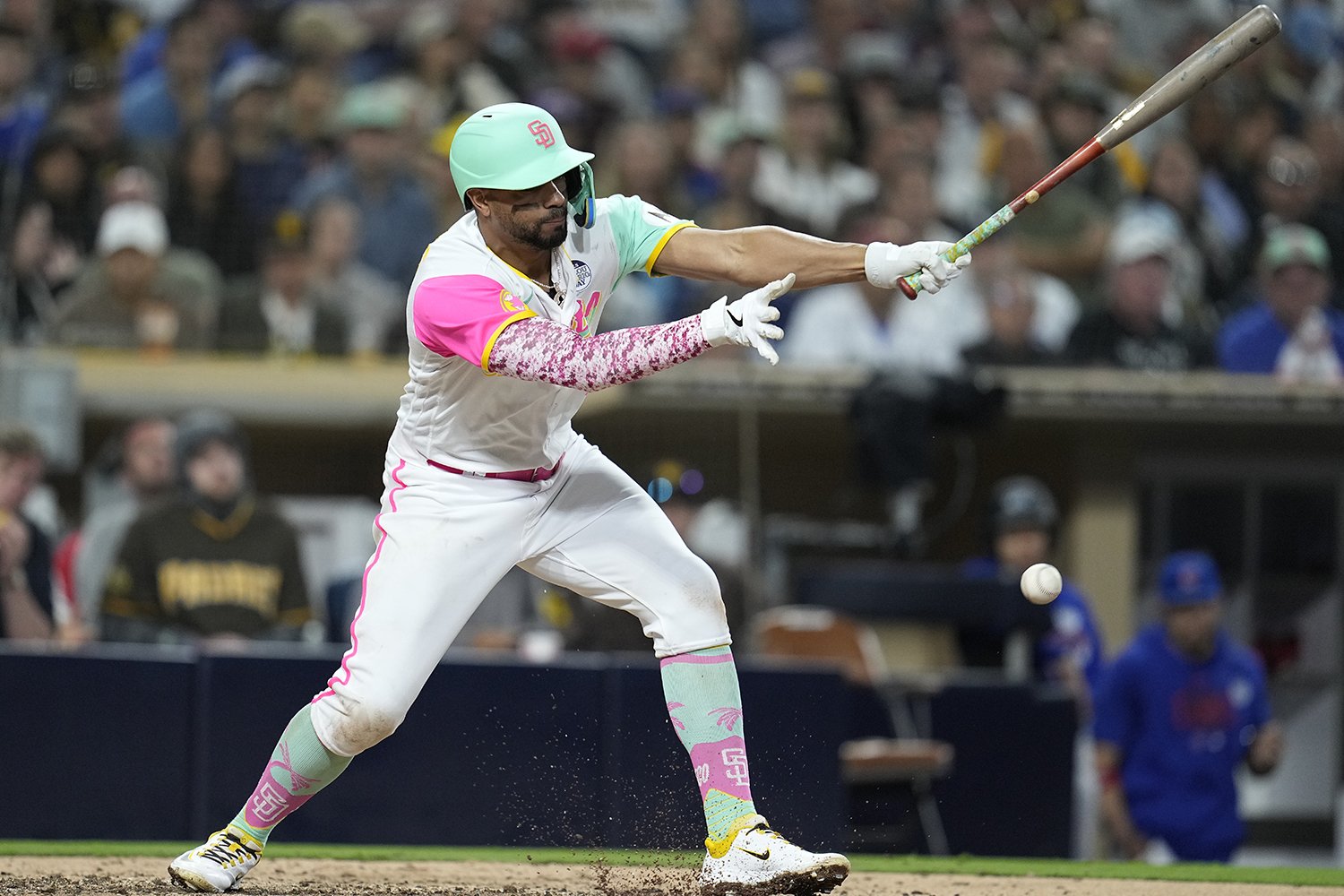 Maybe you already knew this about Xander Bogaerts, but I didn’t. When I think of Xander Bogaerts, I think of a power hitter with 186 career home runs. The guy with one 30-homer season, three 20-homer seasons, and double-digit homers in every season stretching back to 2014. Bogaerts is more than that, obviously. He’s slowing down now, but he’s always been an excellent baserunner and he turned himself into an great defensive shortstop over the years. He’s always hit for average too, boasting a career batting average of .289, five different .300 seasons and four more above .280. What I didn’t think about was infield hits. It turns out that was an oversight. Entering Monday's games, Bogaerts had five infield hits, tied for third-most in baseball. And that's nothing new. Since his debut in 2013, Xander Bogaerts has 227 infield hits. That’s third most in baseball, trailing only Jose Altuve with 251 and Jean Segura with 227. If we start our counter in 2015, when Bogaerts figured things out at the major league level, his 210 infield hits are the most in baseball. He’s finished in the top 10 in infield hits five times in the past 10 seasons, and led all of baseball with 30 in 2023. Year IFH Rank 2014 16 T-41 2015 30 T-5 2016 23 T-7 2017 26 T-3 2018 16 T-30 2019 21 9 2020 8 T-30 2021 15 T-36 2022 20 T-11 2023 30 1 2024 16 T-34 2025 5 T-3 In a way, this shouldn’t be surprising. Even though it took him a while to figure things out on defense, and despite his imposing 6-foot-2 frame, Bogaerts has always had speed. While he was never in the elite range, his sprint speed stayed above 28 feet per second until his age-27 season, and even as a 32-year-old, he’s currently at 27.8, well above average, even for a shortstop. Bogaerts also hits the ball on the ground kind of a lot. Since the beginning of the Statcast era in 2015, Baseball Savant credits him with 2,022 groundballs. That’s third-most in the game, trailing DL LeMaheiu with 2,193 and Altuve with 2,074. Those are the only three players above 2,000. FanGraphs credits Bogaerts with a 45.6% career groundball rate, and while that’s definitely on the higher side, it’s not enormous. He’s really hit so many groundballs because he’s excellent at putting the ball in play. Bogaerts has 20% strikeout rate this season, putting him in the 61st percentile, the lowest percentile ranking of his entire career. Hitting a groundball may not be the most valuable thing a batter can do, but it’s still preferable to striking out. Here are the five infield hits Bogaerts has registered so far this season. As you can see, there of them turned into hits because his launch angle was so extreme that he chopped the ball straight into the ground, giving him enough time to beat out the throw. So it’s not just his high groundball rate, it’s the volume and the fact that the high groundball rate comes because of an extremely low launch angle. Bogaerts also has an extremely high success rate on groundballs. He has a .295 career batting average on them. Among the 724 players who have hit at least 250 groundballs since 2013, that ranks 42. That puts him in the 94th percentile, and he mostly trails absolute speedsters like Billy Hamilton, Michael A. Taylor, Byron Buxton, Trea Turner, and Bobby Witt Jr. So why did I find this so surprising? It’s because of the power. The graph below starts in 2015, and it shows every batter’s home runs and infield hits. Bogaerts is the red dot at the very top. Not only does he have the most infield hits, but he’s also farther away from the trendline than anyone else. In today’s game, there’s just no one who hits both home runs and infield hits the way that Bogaerts does.
 -
Trio of Padres Stars Dealing With (Reportedly) Minor Injuries
Davy Andrews posted an article in Padres
 If you tuned in to watch the Padres beat the Athletics in Wednesday's series finale, you might have noticed a conspicuous lack of star power. That’s because Tuesday was particularly rough, physically. (It was also rough emotionally, as Dylan Cease soldiered through the worst start of his decorated career, but that’s another story.) In a matter of hours, three of the team’s linchpins went down with various injuries of various severity to various body parts. Let’s break down their various breakdowns and discuss the backup plans they’ll implement in the meantime. It started with Jackson Merrill, who was put on the 10-day injured list with a right hamstring strain on Tuesday morning. The team has made it clear that the injury isn’t severe, and that they expect Merrill back at 100% when he’s eligible to return on April 18 against the Astros. “The good news is, at the moment, it doesn’t appear to be anything overly serious,” manager Mike Shildt told reporters. “There wasn’t a traumatic event that caused it. There was some tightness that clearly is real. He’s working really diligently, as you would expect, to get treatment. We just felt like it was going to be close to the 10 days, right at that mark.” In the meantime, the Padres have called up Oscar Gonzalez to take Merrill’s roster spot. Gonzalez arrived in Sacramento in the middle of Tuesday’s game, immediately made a costly error in left field, and ripped a hard-hit ball that found a glove. Cronenworth’s early exit from Tuesday’s game seemed to stem from a hit-by-pitch he suffered in Chicago on Sunday at the hands of Ben Brown. His exit was chalked up to a contusion on his right side. That certainly bears all the hallmarks of a contusion in the making. In the third inning on Tuesday, Cronenworth grounded out to second and immediately bent over in obvious pain. At first glance, it was reminiscent of when a player fouls a ball directly off their foot. He didn’t even attempt to take a head toward first. Cronenworth left the game, but told reporters “I think I should be good to go for Friday.” That leaves Tatis, who also injured himself on a swing, and whose injury was by far the scariest of the bunch. Tatis has a long history of injuries, especially to his left shoulder, which required surgery in 2022. In the top of the second, he swung and missed at a 1-0 pitch and immediately winced, as the follow-through clearly hurt his left shoulder. He was able to take another swing during the at-bat, but it appeared to be a very careful one. Tatis came up twice more, walking and lifting a fly ball to right field, but he exited the game after the top of the fourth inning. After the game, a team spokesman said that Tatis was dealing with “soreness and irritation,” and Tatis made it clear that he wasn’t concerned that it would amount to anything long-term. “I have felt this before,” he told reporters. “I have dealt with this before, multiple times, different ways. So it’s something that we can definitely handle… For me, it’s just let’s see how we wake up tomorrow. I’m not going on the IL or nothing like that. So, day to day so far.” Shildt chimed in with his own reassurances, saying, “[He’s] checking out medically. Everything seems to be intact, in good shape, strength good. He’s not overly concerned. So we erred on the side of caution tonight, and we’ll evaluate.” Obviously, it’s easier to feel optimistic about Merrill and Cronenworth. While it’s not great that Merrill is experiencing hamstring tightness out of the blue – hamstring injuries have a nasty habit of resurfacing – he doesn’t have a long injury history and it’s encouraging that the team isn’t taking any chances with it. If, as it seems, Cronenworth’s injury stems from the hit-by-pitch on Sunday, then sitting on Wednesday and the day off today really should do him a world of good. We’ll just have to hold our breath when it comes to Tatis. It’s hard to imagine the Padres taking any chances if they think there could be something wrong with his left shoulder. His injury history is too long and too much of the team’s success, both in the short- and long-term, depend upon his shoulders for them to risk further injury. After Thursday's game, Shildt offered an update on both Cronenworth and Tatis “We’re optimistic for Friday,” he told reporters. “But again, we’ve got some time between now and then to evaluate it.” In the meantime, Oscar Gonzalez can hold down an outfield spot with replacement-level performance during Merrill’s absence, and Brandon Lockridge will see his playing time increase. If Cronenworth’s injury should turn out to need more time, well, this is why you go out and sign a utility player like Jose Iglesias, who was a major contributor on the field and a beloved glue guy off the field during the Mets’ 2024 playoff run, putting up 2.5 fWAR in just 85 games. Iglesias can play all over the infield and even got his first ever shot at left field on Tuesday. He made some awkward catches but avoided big mistakes. When healthy, Tatis is an MVP candidate and pretty much irreplaceable. Losing him for any stretch of time would hurt, and a long-term absence would be a major blow to the team’s playoff hopes. By now, we’re all familiar with the cliché of the team telling reporters that an injury is minor, only keep pushing their return date further and further into the future. There’s also the matter of the future. In the wake of his 2022 shoulder injury, it took a couple of years for Tatis's exit velocities to tick back up to his 2022 levels. He has never been anything less than great, but that put a serious limit on his ceiling. This year, he finally, finally looks like the player he used to be, and it would be devastating for him to take a step backward now. Even if Tatis can play through whatever happened on Tuesday night, if he can’t get off his A-swing, he won’t be the same player. For now, there’s not much to do besides hoping that the optimism the team has expressed for all three injuries isn’t misplaced.
 -
In the war of attrition that is a 162-game baseball season, the Padres suffered some hopefully not-too-serious casualties during Tuesday's battle. If you tuned in to watch the Padres beat the Athletics in Wednesday's series finale, you might have noticed a conspicuous lack of star power. That’s because Tuesday was particularly rough, physically. (It was also rough emotionally, as Dylan Cease soldiered through the worst start of his decorated career, but that’s another story.) In a matter of hours, three of the team’s linchpins went down with various injuries of various severity to various body parts. Let’s break down their various breakdowns and discuss the backup plans they’ll implement in the meantime. It started with Jackson Merrill, who was put on the 10-day injured list with a right hamstring strain on Tuesday morning. The team has made it clear that the injury isn’t severe, and that they expect Merrill back at 100% when he’s eligible to return on April 18 against the Astros. “The good news is, at the moment, it doesn’t appear to be anything overly serious,” manager Mike Shildt told reporters. “There wasn’t a traumatic event that caused it. There was some tightness that clearly is real. He’s working really diligently, as you would expect, to get treatment. We just felt like it was going to be close to the 10 days, right at that mark.” In the meantime, the Padres have called up Oscar Gonzalez to take Merrill’s roster spot. Gonzalez arrived in Sacramento in the middle of Tuesday’s game, immediately made a costly error in left field, and ripped a hard-hit ball that found a glove. Cronenworth’s early exit from Tuesday’s game seemed to stem from a hit-by-pitch he suffered in Chicago on Sunday at the hands of Ben Brown. His exit was chalked up to a contusion on his right side. That certainly bears all the hallmarks of a contusion in the making. In the third inning on Tuesday, Cronenworth grounded out to second and immediately bent over in obvious pain. At first glance, it was reminiscent of when a player fouls a ball directly off their foot. He didn’t even attempt to take a head toward first. Cronenworth left the game, but told reporters “I think I should be good to go for Friday.” That leaves Tatis, who also injured himself on a swing, and whose injury was by far the scariest of the bunch. Tatis has a long history of injuries, especially to his left shoulder, which required surgery in 2022. In the top of the second, he swung and missed at a 1-0 pitch and immediately winced, as the follow-through clearly hurt his left shoulder. He was able to take another swing during the at-bat, but it appeared to be a very careful one. Tatis came up twice more, walking and lifting a fly ball to right field, but he exited the game after the top of the fourth inning. After the game, a team spokesman said that Tatis was dealing with “soreness and irritation,” and Tatis made it clear that he wasn’t concerned that it would amount to anything long-term. “I have felt this before,” he told reporters. “I have dealt with this before, multiple times, different ways. So it’s something that we can definitely handle… For me, it’s just let’s see how we wake up tomorrow. I’m not going on the IL or nothing like that. So, day to day so far.” Shildt chimed in with his own reassurances, saying, “[He’s] checking out medically. Everything seems to be intact, in good shape, strength good. He’s not overly concerned. So we erred on the side of caution tonight, and we’ll evaluate.” Obviously, it’s easier to feel optimistic about Merrill and Cronenworth. While it’s not great that Merrill is experiencing hamstring tightness out of the blue – hamstring injuries have a nasty habit of resurfacing – he doesn’t have a long injury history and it’s encouraging that the team isn’t taking any chances with it. If, as it seems, Cronenworth’s injury stems from the hit-by-pitch on Sunday, then sitting on Wednesday and the day off today really should do him a world of good. We’ll just have to hold our breath when it comes to Tatis. It’s hard to imagine the Padres taking any chances if they think there could be something wrong with his left shoulder. His injury history is too long and too much of the team’s success, both in the short- and long-term, depend upon his shoulders for them to risk further injury. After Thursday's game, Shildt offered an update on both Cronenworth and Tatis “We’re optimistic for Friday,” he told reporters. “But again, we’ve got some time between now and then to evaluate it.” In the meantime, Oscar Gonzalez can hold down an outfield spot with replacement-level performance during Merrill’s absence, and Brandon Lockridge will see his playing time increase. If Cronenworth’s injury should turn out to need more time, well, this is why you go out and sign a utility player like Jose Iglesias, who was a major contributor on the field and a beloved glue guy off the field during the Mets’ 2024 playoff run, putting up 2.5 fWAR in just 85 games. Iglesias can play all over the infield and even got his first ever shot at left field on Tuesday. He made some awkward catches but avoided big mistakes. When healthy, Tatis is an MVP candidate and pretty much irreplaceable. Losing him for any stretch of time would hurt, and a long-term absence would be a major blow to the team’s playoff hopes. By now, we’re all familiar with the cliché of the team telling reporters that an injury is minor, only keep pushing their return date further and further into the future. There’s also the matter of the future. In the wake of his 2022 shoulder injury, it took a couple of years for Tatis's exit velocities to tick back up to his 2022 levels. He has never been anything less than great, but that put a serious limit on his ceiling. This year, he finally, finally looks like the player he used to be, and it would be devastating for him to take a step backward now. Even if Tatis can play through whatever happened on Tuesday night, if he can’t get off his A-swing, he won’t be the same player. For now, there’s not much to do besides hoping that the optimism the team has expressed for all three injuries isn’t misplaced. View full article
-
 On Friday, April 4, the good times finally stopped rolling. The Padres lost their first game in Chicago and their first game of the 2025 season, putting an end to the seven-game winning streak that kicked off the season. In order to commemorate all the fun we had during that glorious week of furious winning, I’ve combed through the stats and pulled out my favorites. How do you kick off your season with four games against one of the best teams in baseball, three games against another playoff team, and still manage to win your first seven? You need to be good and you need to be lucky, and the Padres were both. Let’s dig into it. On each team’s schedule page at FanGraphs, the win probability is listed. I don’t know exactly how this number is calculated, but over the Padres’ winning streak, their lowest win probability was 44.7% and highest was 63.4%. That included an Opening Day win against reigning National League Cy Young winner Chris Sale. If you combine all those win probabilities, you’ll find that the chance of the Padres winning all seven of them was 1.3%. If you’re keeping score at home, that’s low. Here’s a fluky one that helps explain why the Padres were able to make such an improbable run. Through April 2, the Padres ran a league-best 92.5% strand rate. Strand rate is a pitcher’s best friend. Over the long-term nobody manages to be magically better at pitching when runners are on base. But over the short-term, stranding a bunch of runners is the best way to look like a golden god. That’s not to say that the Padres only got lucky. They ran a 1.57 ERA over that period, best in baseball by a huge margin, and their 3.07 FIP ranked third-best. You know how you rack up a great FIP? You strike out a lot of batters. The only team with more strikeouts than the Padres’ 69 was the Dodgers, who had an extra game under their belts thanks to the Tokyo Series. Statcast also loved the San Diego pitching staff. Through April 2, their .234 wOBA and .264 xwOBA were both the best in baseball. Through April 2, San Diego’s 15.9% strikeout rate was the lowest in baseball. Only one other team was even below 18.5%. Amazingly, that was the only major stat I could find in which the Padres offense led the league. How were the Padres able to avoid the strikeout so well? It helps that their 22.2% whiff rate was tied with the Cardinals for the best in baseball. The Padres still have the lowest strikeout rate in baseball right now, but it’s up to 17.1%. Over that period, three different Padres had a batting average of .400 or better. Fernando Tatis Jr. was at .423, Jackson Merrill was at .417, and Manny Machado was at an even 400. Amazingly, Luis Arráez was batting just .148 at that point, but because he’s Luis Arráez, he had yet to strike out. Just three games later, his batting average would be up more than 100 points, because, once again, he’s Luis Arráez. Let’s close with a really fun one. Until this season, no Padres team had ever won more than four games in a row to start the season. The Padres became just the 30th AL/NL team since 1901 to win their first seven games. Of course, they weren’t alone. The Dodgers won their first seven game too, starting in Tokyo. The really fun thing is that of the 28 teams that had achieved this feat in previous years, 13 made the playoffs, seven made it to the World Series, and five won it all. In other words, 17.9% of teams that started out with a seven-game win streak went on to win the World Series. I’d take those odds.
 -
Let's not gloss over what the Padres accomplished in the first week of the regular season. The numbers tell the tale. On Friday, April 4, the good times finally stopped rolling. The Padres lost their first game in Chicago and their first game of the 2025 season, putting an end to the seven-game winning streak that kicked off the season. In order to commemorate all the fun we had during that glorious week of furious winning, I’ve combed through the stats and pulled out my favorites. How do you kick off your season with four games against one of the best teams in baseball, three games against another playoff team, and still manage to win your first seven? You need to be good and you need to be lucky, and the Padres were both. Let’s dig into it. On each team’s schedule page at FanGraphs, the win probability is listed. I don’t know exactly how this number is calculated, but over the Padres’ winning streak, their lowest win probability was 44.7% and highest was 63.4%. That included an Opening Day win against reigning National League Cy Young winner Chris Sale. If you combine all those win probabilities, you’ll find that the chance of the Padres winning all seven of them was 1.3%. If you’re keeping score at home, that’s low. Here’s a fluky one that helps explain why the Padres were able to make such an improbable run. Through April 2, the Padres ran a league-best 92.5% strand rate. Strand rate is a pitcher’s best friend. Over the long-term nobody manages to be magically better at pitching when runners are on base. But over the short-term, stranding a bunch of runners is the best way to look like a golden god. That’s not to say that the Padres only got lucky. They ran a 1.57 ERA over that period, best in baseball by a huge margin, and their 3.07 FIP ranked third-best. You know how you rack up a great FIP? You strike out a lot of batters. The only team with more strikeouts than the Padres’ 69 was the Dodgers, who had an extra game under their belts thanks to the Tokyo Series. Statcast also loved the San Diego pitching staff. Through April 2, their .234 wOBA and .264 xwOBA were both the best in baseball. Through April 2, San Diego’s 15.9% strikeout rate was the lowest in baseball. Only one other team was even below 18.5%. Amazingly, that was the only major stat I could find in which the Padres offense led the league. How were the Padres able to avoid the strikeout so well? It helps that their 22.2% whiff rate was tied with the Cardinals for the best in baseball. The Padres still have the lowest strikeout rate in baseball right now, but it’s up to 17.1%. Over that period, three different Padres had a batting average of .400 or better. Fernando Tatis Jr. was at .423, Jackson Merrill was at .417, and Manny Machado was at an even 400. Amazingly, Luis Arráez was batting just .148 at that point, but because he’s Luis Arráez, he had yet to strike out. Just three games later, his batting average would be up more than 100 points, because, once again, he’s Luis Arráez. Let’s close with a really fun one. Until this season, no Padres team had ever won more than four games in a row to start the season. The Padres became just the 30th AL/NL team since 1901 to win their first seven games. Of course, they weren’t alone. The Dodgers won their first seven game too, starting in Tokyo. The really fun thing is that of the 28 teams that had achieved this feat in previous years, 13 made the playoffs, seven made it to the World Series, and five won it all. In other words, 17.9% of teams that started out with a seven-game win streak went on to win the World Series. I’d take those odds. View full article
-
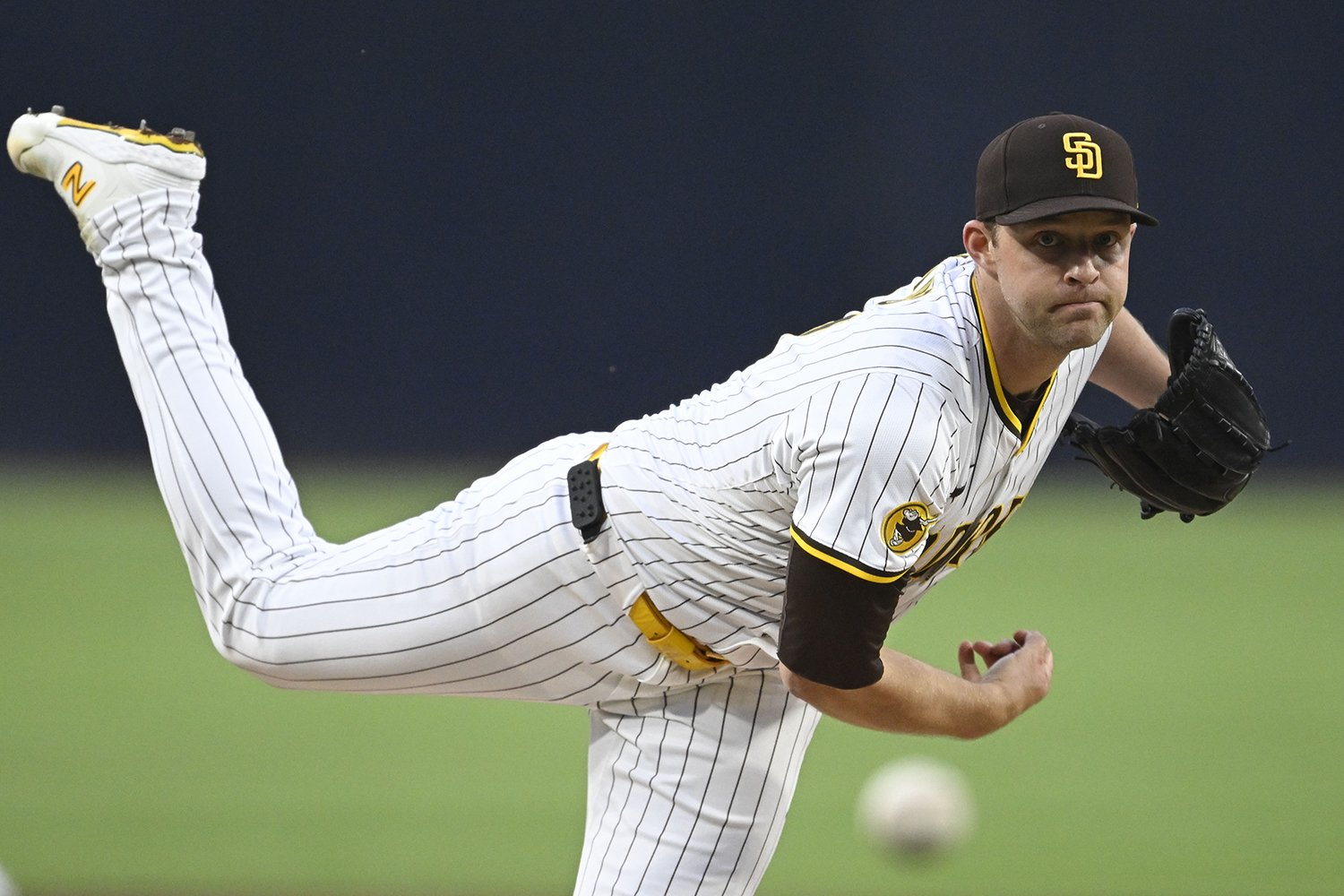 Michael King makes his third start of the season tonight against the Sacramento Athletics. King’s Opening Day start against an excellent Braves lineup didn’t go quite to plan, as he lasted just 2 2/3 innings, giving up three earned runs on four walks and four hits. However, he bounced back in a big way last Tuesday, striking out 11 of the 19 Guardians he faced and allowing just one walk and one hit over five scoreless innings. The dominant outing was an encouraging sign that King’s 2024 season, his first as a full-time starter, was no mirage. In fact, there are several indications he might even be better this year. In 2024, King went 13-9 with a 2.95 ERA and 3.33 FIP. His 28% strikeout rate dropped by fewer than two points from 2023, when he worked mostly out of the Yankees bullpen. It’s hard to imagine a conversion from reliever to starter going better than that. Here's why I say King might be even better. As both Thomas Nestico and Lance Brozdowski have noted, King’s pitches have added a bunch of new movement while maintaining their velocity. The four-seam fastball is the big story. I’ll break down all the numbers in the table below, so feel free to skip them if you want, or to just glance at the bottom row. Season Velo H-Break V-Break Arm Angle Perceived Velo 2024 93.7 6 15 36.3 93.3 2025 93.7 8.7 18.8 34.8 92.2 Difference 0 +2.7 +3.8 -1.5 -1.1 The big story here is the break. King’s arm angle is a little bit lower. Normally, that would cause a pitcher to lose vertical break and add horizontal break. The reason is simple: pitches move in the direction of their spin, and most pitches have backspin on them. So if your arm angle is more vertical, you’ll get more rise, and if your arm angle is more horizontal, you’ll get more run. King’s delivery is now a bit more horizontal, but he’s added more spin (specifically more active spin), and the ball is getting both more rise and more break. You might also notice the perceived velocity column on the far right. King’s extension is a little lower, which means he’s releasing the ball a couple inches farther from home plate. That means that although the pitch has the same velocity, the longer distance that it has to travel means its effective velocity is actually a bit slower. Lucky, that doesn’t seem to be hurting it too much. Last year, the stuff metric Stuff+ put a 101 grade on King’s four-seamer, meaning it was basically an average four-seamer. This year, it’s at 123, meaning it’s one of the better four-seamers in the game. The four-seamer is the headliner, but nearly all of King’s pitches have changed their movement profiles some, as you can see in the image below, courtesy of Baseball Savant. King’s sinker and four-seamer have added multiple inches of horizontal break, while his sweeper has lost a bit. Things aren’t always as simple as the more movement, the better, but it does happen to be true in this case. The sinker and changeup are grading out better according to the stuff metrics, while the sweeper has, according to some, taken a slight hit. I’m hopeful that he’ll keep these new pitch shapes over the course of the season, simply because he’s never really showed anything like them before. It’s not like he’s hit these numbers every once in a while. They’re something new. Still, it’s possible that they’ll regress some. It’s very early. King has struggled against an Atlanta lineup that should be one of the league’s best and excelled against a Cleveland lineup that should be somewhere in the middle. And while he’s racked up whiffs and strikeouts, he hasn’t induced a ton of weak contact or groundballs. He could be lights-out tonight. he could struggle. But right now, all the signs are very encouraging.
 -
Michael King Is Moving up (And to the Arm-Side)
Davy Andrews posted a topic in San Diego Padres Talk
After a spectacular first year with the Padres and first year as a full-time starter, King is showing signs that he could be even better in 2025. Michael King makes his third start of the season tonight against the Sacramento Athletics. King’s Opening Day start against an excellent Braves lineup didn’t go quite to plan, as he lasted just 2 2/3 innings, giving up three earned runs on four walks and four hits. However, he bounced back in a big way last Tuesday, striking out 11 of the 19 Guardians he faced and allowing just one walk and one hit over five scoreless innings. The dominant outing was an encouraging sign that King’s 2024 season, his first as a full-time starter, was no mirage. In fact, there are several indications he might even be better this year. In 2024, King went 13-9 with a 2.95 ERA and 3.33 FIP. His 28% strikeout rate dropped by fewer than two points from 2023, when he worked mostly out of the Yankees bullpen. It’s hard to imagine a conversion from reliever to starter going better than that. Here's why I say King might be even better. As both Thomas Nestico and Lance Brozdowski have noted, King’s pitches have added a bunch of new movement while maintaining their velocity. The four-seam fastball is the big story. I’ll break down all the numbers in the table below, so feel free to skip them if you want, or to just glance at the bottom row. Season Velo H-Break V-Break Arm Angle Perceived Velo 2024 93.7 6 15 36.3 93.3 2025 93.7 8.7 18.8 34.8 92.2 Difference 0 +2.7 +3.8 -1.5 -1.1 The big story here is the break. King’s arm angle is a little bit lower. Normally, that would cause a pitcher to lose vertical break and add horizontal break. The reason is simple: pitches move in the direction of their spin, and most pitches have backspin on them. So if your arm angle is more vertical, you’ll get more rise, and if your arm angle is more horizontal, you’ll get more run. King’s delivery is now a bit more horizontal, but he’s added more spin (specifically more active spin), and the ball is getting both more rise and more break. You might also notice the perceived velocity column on the far right. King’s extension is a little lower, which means he’s releasing the ball a couple inches farther from home plate. That means that although the pitch has the same velocity, the longer distance that it has to travel means its effective velocity is actually a bit slower. Lucky, that doesn’t seem to be hurting it too much. Last year, the stuff metric Stuff+ put a 101 grade on King’s four-seamer, meaning it was basically an average four-seamer. This year, it’s at 123, meaning it’s one of the better four-seamers in the game. The four-seamer is the headliner, but nearly all of King’s pitches have changed their movement profiles some, as you can see in the image below, courtesy of Baseball Savant. King’s sinker and four-seamer have added multiple inches of horizontal break, while his sweeper has lost a bit. Things aren’t always as simple as the more movement, the better, but it does happen to be true in this case. The sinker and changeup are grading out better according to the stuff metrics, while the sweeper has, according to some, taken a slight hit. I’m hopeful that he’ll keep these new pitch shapes over the course of the season, simply because he’s never really showed anything like them before. It’s not like he’s hit these numbers every once in a while. They’re something new. Still, it’s possible that they’ll regress some. It’s very early. King has struggled against an Atlanta lineup that should be one of the league’s best and excelled against a Cleveland lineup that should be somewhere in the middle. And while he’s racked up whiffs and strikeouts, he hasn’t induced a ton of weak contact or groundballs. He could be lights-out tonight. he could struggle. But right now, all the signs are very encouraging. View full article -
No, it's not just the beard. Cease is bringing in two new pitches and doing some different things on the mound. Over at FanGraphs, David Laurila recently ran an interview with Dylan Cease. It was a particular style of interview that Laurila has conducted quite a bit lately: he read Cease several lines from an amateur scouting report and asked Cease to repsond to them. I found it really fun; there were some parts Cease agreed with and some parts he didn’t. The best part came at the end, when Laurila revealed that the scouting report predicted Cease as a mid-rotation arm, or maybe just a bullpen piece. “I do remember seeing that a lot as a young player, the bullpen aspect,” Cease said. “But yeah, pretty much it was, am I going to develop a third pitch, or get one or two pitches that are swing-and-miss, that can buy me multiple times through the order? I added a slider, which I didn’t have at that point. So I added my best pitch. I always had the velo, and if you have two good pitches you can kind of sprinkle in everything else and have them essentially play off each other. That’s worked out for me.” As Cease indicated, that’s how things tend to work. Relievers can get by with a good pitch or two, but starters need a full repertoire. By the time he made it to the majors in 2019, Cease had added his world-class slider as well as a changeup, and he even threw the occasional sinker, though he abandoned he pitch in 2020. As a result, Cease has been a four-pitch pitcher for most of his career, relying on a four-seam fastball, slider, knuckle curve, and the changeup. However, he has toyed with other pitches. The sinker made a brief comeback in 2022 and 2024, and he threw a few sweepers in both 2021 and 2024. Moreover, Cease has relied on his changeup less and less. He threw it just 1% of the time in 2024. If Cease’s first start on Friday was any indication, he's going to look very different this year, and not just because of the increased bushiness of his beard. On Friday, Cease brought back the changeup and the sinker. As Lance Brozdowski noted, the changeup looks different than it used to. In 2024, the pitch averaged just under 70 mph. On Friday, it was nearly 80 mph, where the pitch sat from 2019 to 2021. It also appears that Cease has been tinkering with the movement profile as well. The pitch averaged a career-high 8.5 inches of arm-side run, as well as 17 inches of rise, also very nearly a career-high. I put a graph of the year-by -year movement below, but in short, the pitch has never featured as much movement as it did on Friday. We’re only talking about 10 changeups here, so maybe these numbers will come back down to earth, but for now, it seems like Cease has clearly been working on the pitch. He’s going for more velocity and more movement, presumably in an attempt to earn more swings and misses against lefties. Cease has pretty much never thrown the changeup to righties, and that looks unlikely to change any time soon. For righties, he’s got the new sinker. It doesn’t really sink much – Cease excels at getting rise on his pitches but struggles to get drop, except with his changeup – but it does rise a bit less than his four-seamer and feature a few more inches of arm-side run. He threw it 20% of the time against righties, and it will be interesting to see if he sticks with it throughout the season. Cease has always been very nearly a two-pitch pitcher against righties, shelving his changeup entirely and keeping the curveball usage down around 10%. Even though the sinker isn’t all that different from the four-seamer, flashing this other look could be enough to throw righties off balance just a little bit and give some depth to Cease’s arsenal. There’s one other trend that we should be looking for this season. Cease has always run one of the game’s higher arm angles, coming from straight over the top, which helps him generate so much vertical break on his pitches. However, Cease dropped his arm angle a bit on Friday. He actually throws all of his pitches from fairly different arm angles – he releases the slider the lowest and the changeup the highest – but on Friday, all of his pitches came out at a slightly lower arm angle than they had in recent years. Generally speaking, when you lower your arm angle, throwing the ball from a wider release point, you give up some vertical break for some horizontal break, and that was the case for Cease on Friday. Once again, we’ll see if that was just a one-off, or whether he really will be modifying his normal over-the-top delivery to get a bit more East-West movement. As for how Cease actually did on Friday, the top-line results weren’t fantastic. He went 4 1/3 innings and allowed three earned runs on four hits, two walks, and one homer. However, the underlying numbers were encouraging. He racked up seven strikeouts and his fastball velocity ticked up to 97.4 mph. That’s really something keep an eye on. Cease hasn’t averaged 97 mph on the pitch since 2020. The two walks weren’t great, but with more velocity and an expanded repertoire, Cease should be fun to watch this season. View full article
-
 Over at FanGraphs, David Laurila recently ran an interview with Dylan Cease. It was a particular style of interview that Laurila has conducted quite a bit lately: he read Cease several lines from an amateur scouting report and asked Cease to repsond to them. I found it really fun; there were some parts Cease agreed with and some parts he didn’t. The best part came at the end, when Laurila revealed that the scouting report predicted Cease as a mid-rotation arm, or maybe just a bullpen piece. “I do remember seeing that a lot as a young player, the bullpen aspect,” Cease said. “But yeah, pretty much it was, am I going to develop a third pitch, or get one or two pitches that are swing-and-miss, that can buy me multiple times through the order? I added a slider, which I didn’t have at that point. So I added my best pitch. I always had the velo, and if you have two good pitches you can kind of sprinkle in everything else and have them essentially play off each other. That’s worked out for me.” As Cease indicated, that’s how things tend to work. Relievers can get by with a good pitch or two, but starters need a full repertoire. By the time he made it to the majors in 2019, Cease had added his world-class slider as well as a changeup, and he even threw the occasional sinker, though he abandoned he pitch in 2020. As a result, Cease has been a four-pitch pitcher for most of his career, relying on a four-seam fastball, slider, knuckle curve, and the changeup. However, he has toyed with other pitches. The sinker made a brief comeback in 2022 and 2024, and he threw a few sweepers in both 2021 and 2024. Moreover, Cease has relied on his changeup less and less. He threw it just 1% of the time in 2024. If Cease’s first start on Friday was any indication, he's going to look very different this year, and not just because of the increased bushiness of his beard. On Friday, Cease brought back the changeup and the sinker. As Lance Brozdowski noted, the changeup looks different than it used to. In 2024, the pitch averaged just under 70 mph. On Friday, it was nearly 80 mph, where the pitch sat from 2019 to 2021. It also appears that Cease has been tinkering with the movement profile as well. The pitch averaged a career-high 8.5 inches of arm-side run, as well as 17 inches of rise, also very nearly a career-high. I put a graph of the year-by -year movement below, but in short, the pitch has never featured as much movement as it did on Friday. We’re only talking about 10 changeups here, so maybe these numbers will come back down to earth, but for now, it seems like Cease has clearly been working on the pitch. He’s going for more velocity and more movement, presumably in an attempt to earn more swings and misses against lefties. Cease has pretty much never thrown the changeup to righties, and that looks unlikely to change any time soon. For righties, he’s got the new sinker. It doesn’t really sink much – Cease excels at getting rise on his pitches but struggles to get drop, except with his changeup – but it does rise a bit less than his four-seamer and feature a few more inches of arm-side run. He threw it 20% of the time against righties, and it will be interesting to see if he sticks with it throughout the season. Cease has always been very nearly a two-pitch pitcher against righties, shelving his changeup entirely and keeping the curveball usage down around 10%. Even though the sinker isn’t all that different from the four-seamer, flashing this other look could be enough to throw righties off balance just a little bit and give some depth to Cease’s arsenal. There’s one other trend that we should be looking for this season. Cease has always run one of the game’s higher arm angles, coming from straight over the top, which helps him generate so much vertical break on his pitches. However, Cease dropped his arm angle a bit on Friday. He actually throws all of his pitches from fairly different arm angles – he releases the slider the lowest and the changeup the highest – but on Friday, all of his pitches came out at a slightly lower arm angle than they had in recent years. Generally speaking, when you lower your arm angle, throwing the ball from a wider release point, you give up some vertical break for some horizontal break, and that was the case for Cease on Friday. Once again, we’ll see if that was just a one-off, or whether he really will be modifying his normal over-the-top delivery to get a bit more East-West movement. As for how Cease actually did on Friday, the top-line results weren’t fantastic. He went 4 1/3 innings and allowed three earned runs on four hits, two walks, and one homer. However, the underlying numbers were encouraging. He racked up seven strikeouts and his fastball velocity ticked up to 97.4 mph. That’s really something keep an eye on. Cease hasn’t averaged 97 mph on the pitch since 2020. The two walks weren’t great, but with more velocity and an expanded repertoire, Cease should be fun to watch this season.
 -
 Brandon Glick reacted to an article:
BREAKING: Jackson Merrill Agrees To Nine-Year Extension With Padres
Brandon Glick reacted to an article:
BREAKING: Jackson Merrill Agrees To Nine-Year Extension With Padres
-
The young star will be patrolling center field in San Diego for quite a while. It's officially extension season across baseball. The Red Sox have locked down Garrett Crochet and the Blue Jays have locked down Alejandro Kirk. Now it's San Diego's turn. On Wednesday morning, Robert Murray of FanSided reported that Jackson Merrill has agreed to a nine-year, $135-million contract extension with the Padres. The deal is not particularly straightforward. It includes a $10 million signing bonus, but it starts in 2026, meaning that it stretches until 2034. The Padres also have a team option for a 10th year at $30 million. If the team declines the option, it converts into a player option. The deal is also full of incentives, pushing the possible value all the way up to $204 million should Merrill continue playing like one of the best players in the game. He'll get a $1 million bonus for each season in which he hits 500 plate appearances, and top-10 finishes in MVP voting (which Merill achieved in his rookie season) would also trigger incentive clauses. Lastly, a top-5 finish would turn the 10th year of the deal from a team option into a player option. Complications aside, this is a huge move, locking up the team's center fielder, who put up a remarkable 5.3-fWAR rookie campaign in 2024, for the long haul. Around this time last year, the Padres announced that they would be breaking camp with Merrill as the starting center fielder despite the fact that he was just 20 years old with no big-league experience and no experience in center at all. He didn't disappoint, bashing 24 home runs, putting up a 130 wRC+, providing excellent defense in center, and even stealing 16 bases. The 5.3 fWAR he put up made him the 18th-most valuable player in all of baseball, and he's off to a hot start again this year. Merrill is batting .400 with a home run. Merrill's speed, defense, and power give him an enviable floor. Even if his hitting should fall off some — and the projections naturally expect it to do just that; people don't normally just keep hitting after rookie seasons like Merrill's — his elite center field defense and excellent baserunning should still allow him to be an All-Star caliber player. You have to imagine that his defense could improve even more after just his first full season as an outfielder. Just yesterday, Randy Holt broke down the one big concern about Merrill's game, and over at FanGraphs, Michael Baumann recently addressed the same topic. Merrill's plate discipline leaves a lot to be desired. In 2024, he ran a 34.4% chase rate and a 4.9% walk rate. Both of those numbers were among the worst of any qualified player. Worse, plate discipline numbers tend to be both very predictive of overall performance and very sticky year-over-year. So plate discipline is something that Merrill will really need to work on. The good news is that Merrill is still extremely young and has plenty of room to grow as a hitter. Plate discipline stats might be sticky, but as good as he's been at the plate, Merrill's probably not a finished product just yet. Moreover, as Randy noted, Merrill was excellent on driving the ball hard even when he swung at pitches off the plate. If he can continue making contact and being an excellent bad-ball hitter, he may not ever walk much, but he'll still be a good hitter. There's a lot to like from both sides of this deal, which, in its incentive-laden structure is reminiscent of the deal Julio Rodríguez signed with the Mariners. Merrill, who otherwise wouldn't have reached arbitration for another two years and wouldn't have had the chance to get paid anything close to what he was worth until 2030, has just guaranteed himself life-changing money. He gave up some money, but he also gained a lot of security, and if he performs well, that money could increase by as much as 50%. Moreover, he'll be hitting free agency when he's just 30 or 31, meaning that he'll still have the chance to sign another long-term deal that includes the tail end of his prime. The Padres just locked down a franchise cornerstone well into the next decade, and the performance bonuses allow them to mitigate the risk of such a big swing. If Merrill stays healthy and plays well, the Padres will be more than happy to pay him every penny of those incentive clauses. View full article

