


Matt Trueblood
-
Posts
6 -
Joined
-
Last visited
-
Days Won
1
Matt Trueblood's Achievements



-
When Walker Buehler takes the ball and climbs the hill to start Game 4 of the NLDS Wednesday night, the clocks will already be ticking, metaphorically. There will be an actual clock marking the time of day, somewhere in Craig Stammen's field of vision, and there will be another counting down the seconds until Buehler must deliver his next pitch, but Stammen won't pay any attention to those. He'll be keeping time, though, in three ways, updating his clocks and syncing them to one another as he tries to stay ahead of the swing of a metaphorical second hand that will chase him around like a sword until it either stops short, or cuts the Padres' season so. One clock will be pitch count. Buehler hasn't pitched since September 26, so he's fresh, but he's not as ready to work deep into a game as another pitcher might be. He had to prepare differently over the intervening days than he normally would, first in deference to the team's Wild Card Series needs, then to work around being away briefly for the birth of his child. He threw 73 pitches on the penultimate day of the regular season; it's safe to say that he won't go past 75 in this one. That's likely to be the easiest clock to manage, at least for Buehler. The next clock will be batters faced. Some bad matchups for Buehler lurk in the bottom half of the Brewers' likely batting order, so whereas the initial plan might ordinarily be to get through the order twice before turning to the pen in an elimination game, Stammen is likely to look for a good way to get Buehler out after 14 batters in Game 4. Fourteen batters faced would mean lifting him after he faces the No. 5 hitter the second time. In each of the two games started by righty hurlers in this series for the Padres, Milwaukee has answered with a lineup that slots lefty batters (Christian Yelich and Garrett Mitchell) into the No. 5 and No. 6 spots, and they're likely to have either Sal Frelick or Luis Lara (a switch-hitter) at the bottom of the order, too. Thus, the clock might really run out on Buehler after 13 batters. That's when Robbie Ray should enter the fray. A new clock starts then, but Ray's pitch count won't matter much, either. Nor will he work to 13 or 14 batters; he's likely to face no more than 11. In fact, in a perfect world, Stammen would probably avoid having any Brewers batter see Ray a second time. If he can bring him in to face that lefty pocket right away, however, he buys himself some wiggle room. That way, should a Brewers batter face him twice, it's one over whom he holds a platoon-based matchup edge. Ray is an important part of the gameplan. Although this marks just the fourth day since his Game 1 start, he's firmly in play, with all hands needing to be ready for a potential Game 5 after another day off. Because Yuki Matsui has pitched three times (all for relatively significant stretches, as short reliever workloads go) in the first three games of this series, Stammen needs to stay away from him in Game 4. He's likely to be fatigued and make a mistake, but there's also matchup exhaustion at work. The Brewers' lefty bats have already seen plenty of him. The mystery is beginning to wear off. Name Matsui Morejon Ray Adam King Miller Morgan Musgrove Pivetta Rodriguez Vasquez Buehler Peralta Contreras XX X XX X XXX X XX X Sanchez X Vaughn X X Bauers XX X XX X XXX X XX X Turang XXX X XX XXX X XX X Pratt X X X XXX XX XX Ortiz X X XX XX Hamilton XXX X Chourio X XX X XXX X XX XXX Mitchell XX X X XX X XX XX Lara X X X Frelick XX XXX X XX Yelich XXX XX XXX X XX X If things break right, Stammen can probably get through 25 batters with the combination of Buehler and Ray. That could mean getting all the way through six innings, but it's likely to leave Ray out of runway somewhere in the middle of the sixth. That's where a third clock that Stammen will need to be tracking becomes the dominant one. It runs backward. It's counting down outs until it's safe for him to turn to Adrian Morejon and Mason Miller. Morejon was unavailable in Game 3, and obviously, there's no ironclad guarantee that he'll be usable in Game 4. It seems safe to guess so, though. The team has been careful with him, but the way they had to use their staff to survive Game 3 only sharpened their desperation to get him back in the mix. Meanwhile, Miller is back from a one-day absence for paternity leave. He hasn't pitched since Game 2, so though he threw 40 pitches that day, he's had time enough to recover. He'll be available—no, he will pitch, is a better way to put it. Someday soon, in a situation like this, we'll see a team simply start the game with their Miller-like relief ace. Until then, suffice it to say that Stammen won't let the season end without Miller at least holding the Brewers where they are at the end of the game. Between Morejon's balky shoulder and Miller's difficult outing in Game 2, though, Stammen must know he can't ask either for two full innings again. He'll have to wait until the seventh if he wants to close the game out with just his two relief aces. Morejon can get four or five outs, but shouldn't be asked for more. Ditto for Miller. That leaves a tiny hole, perhaps, in the sixth. It's there that the game might be decided. The Brewers sent 36 batters to the plate (in eight turns) in Game 1, and 37 (ending in a walkoff, so they never made their 27th out) in Game 2. In Game 3, it was 41. The Padres' plan for Game 4 has to center on the number 42. If they have a flexible set of plans that gets them from Batter No. 1 to Batter No. 42, they have a chance to win. Buehler and Ray cover 25 of the 42. Morejon and Miller can combine for 12. That leaves five batters to account for. It might turn out to be just one or two; it might turn out to be six. But let's say it's four or five. Who fits into that hole, facing the bottom of the order the third time and the top of the order the fourth? David Morgan is a candidate. He's on the roster, but has yet to appear. By now, even though Stammen plainly (and rightfully) trusts Bradgley Rodriguez far more, Morgan has to be a real option. Like Matsui, Rodriguez has appeared in each of the first three games of the series. There hasn't been as much overlap in which batters he's faced, so there's a bit less accumulated familiarity for individual hitters against him, but Rodriguez should be down for Game 4, too. If Game 5 happens, he and Matsui can be heroes again. For now, they have to count on the rest of the squad to get them there. The other name is the fun name—but also the dangerous one. Joe Musgrove's return to the mound in the Wild Card Series was emotional and triumphant. It was also easy. There was no pressure; just love. San Diego had a huge lead in that game, and knew they were going to win it. Musgrove's appearance was practically a cherry on top of the sundae. That's not the kind of appearance the team is likely to need in Game 4. Even if the margin is the same on the scoreboard (which is unlikely), the series is very different. Musgrove has to be ready to attack and to beat hitters, if he's to get a look at (among others) Jackson Chourio with the Padres' season on the line. Still, that's the right move. If Stammen trusted Morgan, we'd have seen him already. His walk rate is scary; Stammen is right to be wary. A bout of wildness could set off a crooked-number rally that puts the game out of reach, in the tiny crease between the bulk pitchers the team trusts and its relief aces. They need someone who has a history of throwing strikes under playoff pressure. They need to trust Musgrove in that little lacuna where this game is likely to be decided. The Road to 42 (batters faced) is also the Road to 27 (outs), and that road leads back to Milwaukee and Game 5. To traverse it safely, Stammen will need a deft touch and some flexibility in his mindset, but this should be his roadmap. Buehler, Ray, Musgrove, Morejon and Miller can replicate what Nick Pivetta, Jason Adam, Matsui, Rodriguez and Michael King did in Game 3. The rest of the burden will fall on the offense, as the Brewers try to sketch their own roadmap to victory. View full article
-
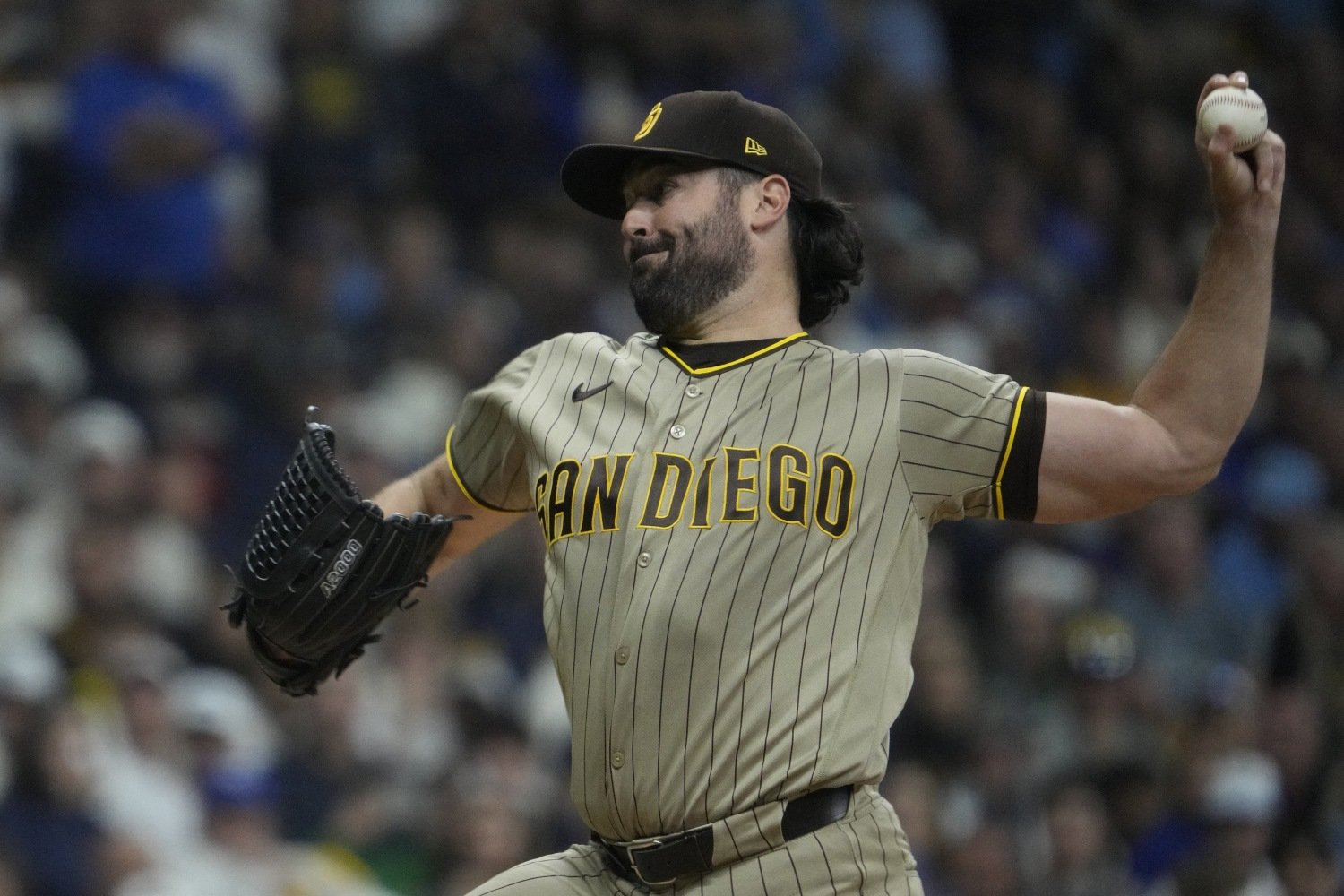 When Walker Buehler takes the ball and climbs the hill to start Game 4 of the NLDS Wednesday night, the clocks will already be ticking, metaphorically. There will be an actual clock marking the time of day, somewhere in Craig Stammen's field of vision, and there will be another counting down the seconds until Buehler must deliver his next pitch, but Stammen won't pay any attention to those. He'll be keeping time, though, in three ways, updating his clocks and syncing them to one another as he tries to stay ahead of the swing of a metaphorical second hand that will chase him around like a sword until it either stops short, or cuts the Padres' season so. One clock will be pitch count. Buehler hasn't pitched since September 26, so he's fresh, but he's not as ready to work deep into a game as another pitcher might be. He had to prepare differently over the intervening days than he normally would, first in deference to the team's Wild Card Series needs, then to work around being away briefly for the birth of his child. He threw 73 pitches on the penultimate day of the regular season; it's safe to say that he won't go past 75 in this one. That's likely to be the easiest clock to manage, at least for Buehler. The next clock will be batters faced. Some bad matchups for Buehler lurk in the bottom half of the Brewers' likely batting order, so whereas the initial plan might ordinarily be to get through the order twice before turning to the pen in an elimination game, Stammen is likely to look for a good way to get Buehler out after 14 batters in Game 4. Fourteen batters faced would mean lifting him after he faces the No. 5 hitter the second time. In each of the two games started by righty hurlers in this series for the Padres, Milwaukee has answered with a lineup that slots lefty batters (Christian Yelich and Garrett Mitchell) into the No. 5 and No. 6 spots, and they're likely to have either Sal Frelick or Luis Lara (a switch-hitter) at the bottom of the order, too. Thus, the clock might really run out on Buehler after 13 batters. That's when Robbie Ray should enter the fray. A new clock starts then, but Ray's pitch count won't matter much, either. Nor will he work to 13 or 14 batters; he's likely to face no more than 11. In fact, in a perfect world, Stammen would probably avoid having any Brewers batter see Ray a second time. If he can bring him in to face that lefty pocket right away, however, he buys himself some wiggle room. That way, should a Brewers batter face him twice, it's one over whom he holds a platoon-based matchup edge. Ray is an important part of the gameplan. Although this marks just the fourth day since his Game 1 start, he's firmly in play, with all hands needing to be ready for a potential Game 5 after another day off. Because Yuki Matsui has pitched three times (all for relatively significant stretches, as short reliever workloads go) in the first three games of this series, Stammen needs to stay away from him in Game 4. He's likely to be fatigued and make a mistake, but there's also matchup exhaustion at work. The Brewers' lefty bats have already seen plenty of him. The mystery is beginning to wear off. Name Matsui Morejon Ray Adam King Miller Morgan Musgrove Pivetta Rodriguez Vasquez Buehler Peralta Contreras XX X XX X XXX X XX X Sanchez X Vaughn X X Bauers XX X XX X XXX X XX X Turang XXX X XX XXX X XX X Pratt X X X XXX XX XX Ortiz X X XX XX Hamilton XXX X Chourio X XX X XXX X XX XXX Mitchell XX X X XX X XX XX Lara X X X Frelick XX XXX X XX Yelich XXX XX XXX X XX X If things break right, Stammen can probably get through 25 batters with the combination of Buehler and Ray. That could mean getting all the way through six innings, but it's likely to leave Ray out of runway somewhere in the middle of the sixth. That's where a third clock that Stammen will need to be tracking becomes the dominant one. It runs backward. It's counting down outs until it's safe for him to turn to Adrian Morejon and Mason Miller. Morejon was unavailable in Game 3, and obviously, there's no ironclad guarantee that he'll be usable in Game 4. It seems safe to guess so, though. The team has been careful with him, but the way they had to use their staff to survive Game 3 only sharpened their desperation to get him back in the mix. Meanwhile, Miller is back from a one-day absence for paternity leave. He hasn't pitched since Game 2, so though he threw 40 pitches that day, he's had time enough to recover. He'll be available—no, he will pitch, is a better way to put it. Someday soon, in a situation like this, we'll see a team simply start the game with their Miller-like relief ace. Until then, suffice it to say that Stammen won't let the season end without Miller at least holding the Brewers where they are at the end of the game. Between Morejon's balky shoulder and Miller's difficult outing in Game 2, though, Stammen must know he can't ask either for two full innings again. He'll have to wait until the seventh if he wants to close the game out with just his two relief aces. Morejon can get four or five outs, but shouldn't be asked for more. Ditto for Miller. That leaves a tiny hole, perhaps, in the sixth. It's there that the game might be decided. The Brewers sent 36 batters to the plate (in eight turns) in Game 1, and 37 (ending in a walkoff, so they never made their 27th out) in Game 2. In Game 3, it was 41. The Padres' plan for Game 4 has to center on the number 42. If they have a flexible set of plans that gets them from Batter No. 1 to Batter No. 42, they have a chance to win. Buehler and Ray cover 25 of the 42. Morejon and Miller can combine for 12. That leaves five batters to account for. It might turn out to be just one or two; it might turn out to be six. But let's say it's four or five. Who fits into that hole, facing the bottom of the order the third time and the top of the order the fourth? David Morgan is a candidate. He's on the roster, but has yet to appear. By now, even though Stammen plainly (and rightfully) trusts Bradgley Rodriguez far more, Morgan has to be a real option. Like Matsui, Rodriguez has appeared in each of the first three games of the series. There hasn't been as much overlap in which batters he's faced, so there's a bit less accumulated familiarity for individual hitters against him, but Rodriguez should be down for Game 4, too. If Game 5 happens, he and Matsui can be heroes again. For now, they have to count on the rest of the squad to get them there. The other name is the fun name—but also the dangerous one. Joe Musgrove's return to the mound in the Wild Card Series was emotional and triumphant. It was also easy. There was no pressure; just love. San Diego had a huge lead in that game, and knew they were going to win it. Musgrove's appearance was practically a cherry on top of the sundae. That's not the kind of appearance the team is likely to need in Game 4. Even if the margin is the same on the scoreboard (which is unlikely), the series is very different. Musgrove has to be ready to attack and to beat hitters, if he's to get a look at (among others) Jackson Chourio with the Padres' season on the line. Still, that's the right move. If Stammen trusted Morgan, we'd have seen him already. His walk rate is scary; Stammen is right to be wary. A bout of wildness could set off a crooked-number rally that puts the game out of reach, in the tiny crease between the bulk pitchers the team trusts and its relief aces. They need someone who has a history of throwing strikes under playoff pressure. They need to trust Musgrove in that little lacuna where this game is likely to be decided. The Road to 42 (batters faced) is also the Road to 27 (outs), and that road leads back to Milwaukee and Game 5. To traverse it safely, Stammen will need a deft touch and some flexibility in his mindset, but this should be his roadmap. Buehler, Ray, Musgrove, Morejon and Miller can replicate what Nick Pivetta, Jason Adam, Matsui, Rodriguez and Michael King did in Game 3. The rest of the burden will fall on the offense, as the Brewers try to sketch their own roadmap to victory.
-
- 1
-

-
- walker buehler
- joe musgove
- (and 3 more)
-
If you're going to lose a playoff game, you'd just as soon it be a blowout. There's a bit less of a mental hurdle to clear after that kind of (no-)contest; players and coaches are used to flushing crummy games and moving on. Besides, when you get your doors blown off, you always learn something valuable (who you can and can't trust with the ball the next time their spot in the rotation swings around; what defensive weakness you can no longer afford to accept in the name of finding more offense; who's so hot on the other side that you should gameplan around not letting them beat you)—and you hardly ever have to use your top relievers. That one is especially key. If you're going to lose a close playoff game, you want it to be one where you were chasing the game the whole time. Again, good odds say you didn't use your very best relievers to get to that point, but even if you did, you probably didn't push them especially hard. Meanwhile, the other side probably used everyone, if you kept the pressure on properly. You probably weakened them. You probably drew blood, even though you weren't able to complete the kill. Ok. That's a shame, but unless that game sent you home, there's a tomorrow to which to look forward. There's a new hunt on which to embark, and you feel like you'll bag your quarry this time. If you're going to lose a close playoff game wherein you had the lead most of the way, you want it to be one where your starter went deep and you got beat by a lightning strike—a fast sequence that flipped the scoreboard but didn't wear down your relief ace(s), or give the other side many looks at them. The more arrows you fire when you sense the opportunity, the fewer you'll have left if your belly is still empty the next day. The Padres head back to San Diego at DEFCON 1, because they just lost two games in a row in the very worst way possible: after holding the lead, and using their 'A' bullpen (not that they have a 'B' bullpen right now, anyway), and letting their opponents see everything those guys will try to do. It's as dire a situation as a team can encounter, except in that the series now shifts to Petco Park, where the fans will be ready to try to keep the team's season alive by being rowdier than ever. Unfortunately, it might not matter. Despite two low-scoring games in a row, it suddenly feels like the Padres don't have the pitching to go any further this fall. To the surprise of some, the team elected to roster only 11 pitchers for this series. Even in placing Walker Buehler on the postseason version of the paternity list, they designated Randy Vásquez as the player replacing him, so when Buehler is (presumably) reinstated Tuesday, they'll stay at 11 hurlers and 15 position players. In a best-of-5 series with two off days, that should be enough arms, but the unusual roster construction caught the attention of many fans and pundits. Was it a bold, innovative strategy? Not really. It was just an admission: the Padres don't have 12 pitchers they'd have any idea how to use. In his first season as a big-league manager, Craig Stammen was an activist. Down the stretch, he had a fairly stable starting rotation, but he only ever trusted Michael King and Nick Pivetta. In starts made by Buehler, Vásquez, Robbie Ray, Casey Mize, Griffin Canning, Germán Márquez, JP Sears and others, he was downright antsy—and with good reason. Of that group, only Ray ever gave him anything to trust. Even fellow trade acquisition Mize became (literally) wobbly after the ankle sprain he suffered in August, which he ill-advisedly tried to pitch through for five more weeks. Stammen also didn't show a great deal of imagination, though, or a deft touch when it came to playing matchups. He had a push-button bullpen at his disposal, and he mostly pushed the right buttons, but when it wasn't clear what he should do, it seemed like he rarely did the right thing. The front office's uneasiness with Stammen's bullpen management (however unspoken) became one factor in shaping the team's roster for this series. The lack of really good options available to them became another. Of the pitchers left off the NLDS roster, the only one who had a (superficially) strong case to be there is Wandy Peralta. The lefty pitched 65 times this year for Stammen, compiling 77 1/3 innings. His appearances were spangled across games like stars across the sky: Eight appearances in the fourth inning or earlier, including five "starts" as an opener Eight more appearances in the fifth 12 in the sixth 14 in the seventh 17 in the eighth 6 in the ninth His ERA (3.61) suggests he performed that versatile duty well. But Peralta lost Stammen's trust early, and never really reclaimed it. He had two poor outings in late-game, high-leverage relief within the first fortnight of the season and never returned to regular work in that role. The mistrust was not entirely misplaced, either; Peralta's 16% strikeout rate is too low for a reliever without elite control or a sky-high ground-ball rate. Peralta remained Stammen's handy emergency arm for most of the year, but in the playoffs, the team seems to have reasoned, you're going to turn to your top guys in those early and mid-game emergencies, so why bother? Unfortunately, the last two games have given some examples of why. Here's a table showing how many times each Padres pitcher has faced each Brewers batter, through two games of the series. Name Matsui Morejon Ray Adam King Miller Morgan Musgrove Pivetta Rodriguez Vasquez Contreras XX X XX XX X Sanchez X Vaughn X X Bauers XX X XX XX X Turang XX X XX XX X Pratt X X XX XX Ortiz X X X Hamilton XX X Chourio X XX XXX X XX Mitchell X X X XX X X Lara X X X Frelick X XX X Managing a playoff series is a balancing act. You want to exploit matchups you've identified as favorable, but you don't want to overexpose them. A good rule of thumb is to avoid letting any opposing batter see a pitcher for a third time in a best-of-5, unless the pitcher is so good or the leverage is so low that familiarity truly becomes a minor consideration. Because of the way Stammen ran each game and the roster A.J. Preller gave him, the Brewers' top left-handed bats (Jake Bauers and Brice Turang) have each already seen Yuki Matsui twice. Garrett Mitchell and Sal Frelick have already seen him once, and William Contreras (a righty bat who's liable to light up a lefty like Matsui, as he proved against the other key lefty in the San Diego pen in Game 1) has seen him twice, too. Meanwhile, the entire Brewers lineup got their first look at Adrian Morejon in Game 1, including three (Luis Lara, Mitchell and Joey Ortiz) in the eighth inning, after Morejon had given up the go-ahead run on a Contreras homer in the seventh. Unnecessary exposure kills you in series like this. Stammen should have turned to David Morgan or Joe Musgrove for the eighth inning of that game, because if the Padres are to come back and win now, they'll almost certainly need Morejon for two more huge appearances, and a second or third look at him might make the difference between an out and a hit for an otherwise overmatched Milwaukee batter. Morgan and Musgrove don't have much of the skipper's trust, either, though, because of wildness (Morgan) and the inherent uncertainty of a very recent return after a long, long injury layoff (Musgrove). Peralta would have fit perfectly into that spot in Game 1. Worse than any of that, of course, is that the Padres not only lost Game 1 because Morejon ran into Contreras's barrel, but lost Game 2 in a way that could compromise Mason Miller even for Game 3. Miller threw 40 pitches in a grueling two-inning appearance, trying to gut out a save that would have shifted the momentum of the series. The momentum shifted, all right, but in Milwaukee's favor. Miller has a day to recover, but he's surely only available for one inning in Game 3, and he might not be his best self, even then. Morejon will be fully rested and ready, but again, San Diego has to win three games in a row now. They probably can't afford for Morejon to go multiple innings in the first of the three. Bradgley Rodríguez has also been used twice already, though given the way each of the Padres' starters' appearances went, that was probably unavoidable. He's worked mostly against the bottom of the Milwaukee lineup, so he could be in line to face the heart of the order the next time he's needed. He's already faced Jackson Chourio twice, though, which is a problem. He'll need to be shielded from a third matchup with Milwaukee's postseason Superman. If he isn't, it's likely to end badly. Having your backs to the wall after two road games in a best-of-5 isn't an unusual position. Lots of teams get here. Few of them take as much psychological damage as the Padres did over the weekend, though, and fewer still face the logistical problems the team's roster construction has introduced. If they come back and win this series, it will be the latest and greatest chapter of the team's current Golden Age. If they don't, there will be legitimate questions both about Stammen's management of the pitching staff and about the front office's failure to amass enough reliable depth for the manager to have done things any better. View full article
-
The Padres Bet the House on Their Bullpen Superstars—and Lost Big
Matt Trueblood posted an article in Padres
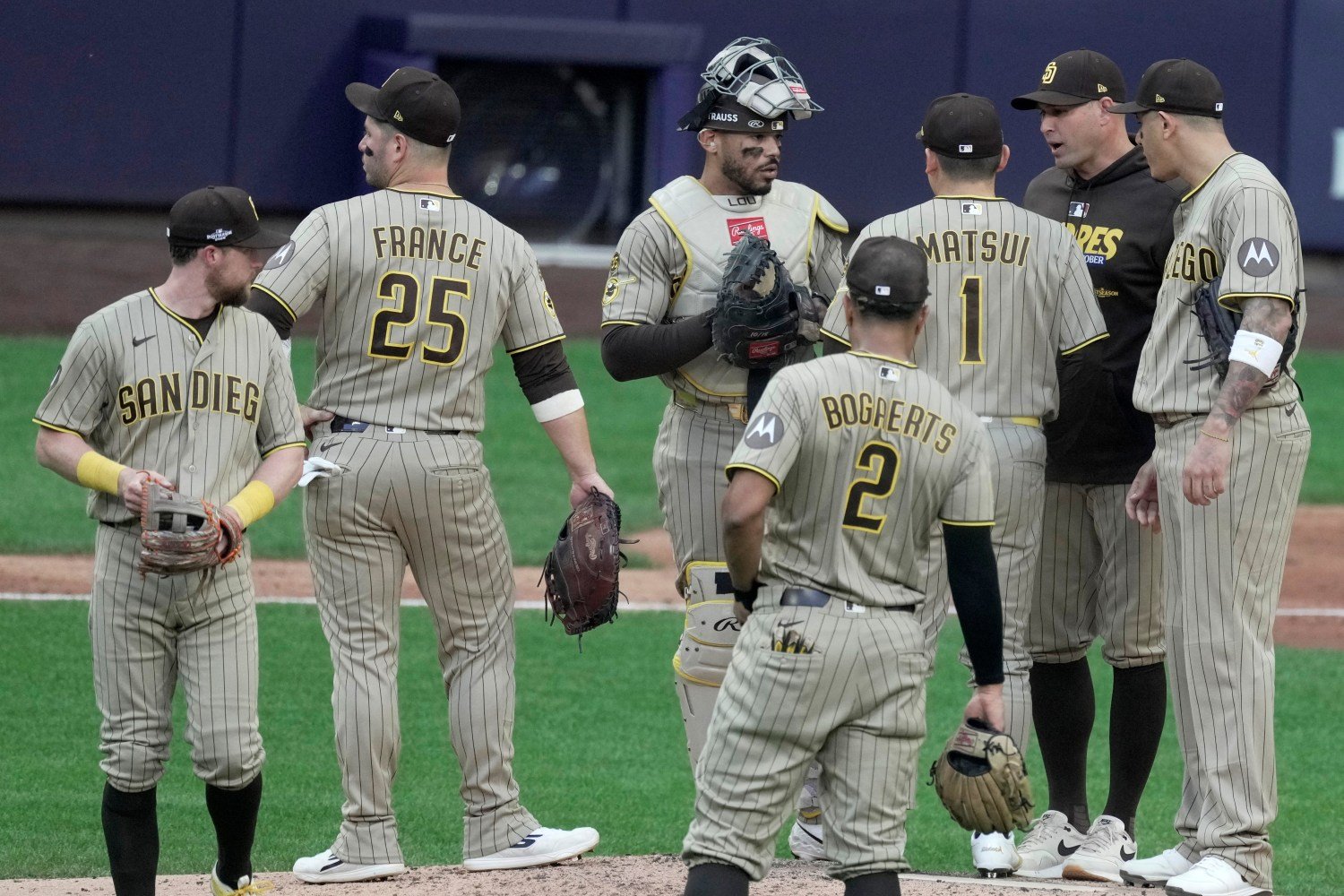 If you're going to lose a playoff game, you'd just as soon it be a blowout. There's a bit less of a mental hurdle to clear after that kind of (no-)contest; players and coaches are used to flushing crummy games and moving on. Besides, when you get your doors blown off, you always learn something valuable (who you can and can't trust with the ball the next time their spot in the rotation swings around; what defensive weakness you can no longer afford to accept in the name of finding more offense; who's so hot on the other side that you should gameplan around not letting them beat you)—and you hardly ever have to use your top relievers. That one is especially key. If you're going to lose a close playoff game, you want it to be one where you were chasing the game the whole time. Again, good odds say you didn't use your very best relievers to get to that point, but even if you did, you probably didn't push them especially hard. Meanwhile, the other side probably used everyone, if you kept the pressure on properly. You probably weakened them. You probably drew blood, even though you weren't able to complete the kill. Ok. That's a shame, but unless that game sent you home, there's a tomorrow to which to look forward. There's a new hunt on which to embark, and you feel like you'll bag your quarry this time. If you're going to lose a close playoff game wherein you had the lead most of the way, you want it to be one where your starter went deep and you got beat by a lightning strike—a fast sequence that flipped the scoreboard but didn't wear down your relief ace(s), or give the other side many looks at them. The more arrows you fire when you sense the opportunity, the fewer you'll have left if your belly is still empty the next day. The Padres head back to San Diego at DEFCON 1, because they just lost two games in a row in the very worst way possible: after holding the lead, and using their 'A' bullpen (not that they have a 'B' bullpen right now, anyway), and letting their opponents see everything those guys will try to do. It's as dire a situation as a team can encounter, except in that the series now shifts to Petco Park, where the fans will be ready to try to keep the team's season alive by being rowdier than ever. Unfortunately, it might not matter. Despite two low-scoring games in a row, it suddenly feels like the Padres don't have the pitching to go any further this fall. To the surprise of some, the team elected to roster only 11 pitchers for this series. Even in placing Walker Buehler on the postseason version of the paternity list, they designated Randy Vásquez as the player replacing him, so when Buehler is (presumably) reinstated Tuesday, they'll stay at 11 hurlers and 15 position players. In a best-of-5 series with two off days, that should be enough arms, but the unusual roster construction caught the attention of many fans and pundits. Was it a bold, innovative strategy? Not really. It was just an admission: the Padres don't have 12 pitchers they'd have any idea how to use. In his first season as a big-league manager, Craig Stammen was an activist. Down the stretch, he had a fairly stable starting rotation, but he only ever trusted Michael King and Nick Pivetta. In starts made by Buehler, Vásquez, Robbie Ray, Casey Mize, Griffin Canning, Germán Márquez, JP Sears and others, he was downright antsy—and with good reason. Of that group, only Ray ever gave him anything to trust. Even fellow trade acquisition Mize became (literally) wobbly after the ankle sprain he suffered in August, which he ill-advisedly tried to pitch through for five more weeks. Stammen also didn't show a great deal of imagination, though, or a deft touch when it came to playing matchups. He had a push-button bullpen at his disposal, and he mostly pushed the right buttons, but when it wasn't clear what he should do, it seemed like he rarely did the right thing. The front office's uneasiness with Stammen's bullpen management (however unspoken) became one factor in shaping the team's roster for this series. The lack of really good options available to them became another. Of the pitchers left off the NLDS roster, the only one who had a (superficially) strong case to be there is Wandy Peralta. The lefty pitched 65 times this year for Stammen, compiling 77 1/3 innings. His appearances were spangled across games like stars across the sky: Eight appearances in the fourth inning or earlier, including five "starts" as an opener Eight more appearances in the fifth 12 in the sixth 14 in the seventh 17 in the eighth 6 in the ninth His ERA (3.61) suggests he performed that versatile duty well. But Peralta lost Stammen's trust early, and never really reclaimed it. He had two poor outings in late-game, high-leverage relief within the first fortnight of the season and never returned to regular work in that role. The mistrust was not entirely misplaced, either; Peralta's 16% strikeout rate is too low for a reliever without elite control or a sky-high ground-ball rate. Peralta remained Stammen's handy emergency arm for most of the year, but in the playoffs, the team seems to have reasoned, you're going to turn to your top guys in those early and mid-game emergencies, so why bother? Unfortunately, the last two games have given some examples of why. Here's a table showing how many times each Padres pitcher has faced each Brewers batter, through two games of the series. Name Matsui Morejon Ray Adam King Miller Morgan Musgrove Pivetta Rodriguez Vasquez Contreras XX X XX XX X Sanchez X Vaughn X X Bauers XX X XX XX X Turang XX X XX XX X Pratt X X XX XX Ortiz X X X Hamilton XX X Chourio X XX XXX X XX Mitchell X X X XX X X Lara X X X Frelick X XX X Managing a playoff series is a balancing act. You want to exploit matchups you've identified as favorable, but you don't want to overexpose them. A good rule of thumb is to avoid letting any opposing batter see a pitcher for a third time in a best-of-5, unless the pitcher is so good or the leverage is so low that familiarity truly becomes a minor consideration. Because of the way Stammen ran each game and the roster A.J. Preller gave him, the Brewers' top left-handed bats (Jake Bauers and Brice Turang) have each already seen Yuki Matsui twice. Garrett Mitchell and Sal Frelick have already seen him once, and William Contreras (a righty bat who's liable to light up a lefty like Matsui, as he proved against the other key lefty in the San Diego pen in Game 1) has seen him twice, too. Meanwhile, the entire Brewers lineup got their first look at Adrian Morejon in Game 1, including three (Luis Lara, Mitchell and Joey Ortiz) in the eighth inning, after Morejon had given up the go-ahead run on a Contreras homer in the seventh. Unnecessary exposure kills you in series like this. Stammen should have turned to David Morgan or Joe Musgrove for the eighth inning of that game, because if the Padres are to come back and win now, they'll almost certainly need Morejon for two more huge appearances, and a second or third look at him might make the difference between an out and a hit for an otherwise overmatched Milwaukee batter. Morgan and Musgrove don't have much of the skipper's trust, either, though, because of wildness (Morgan) and the inherent uncertainty of a very recent return after a long, long injury layoff (Musgrove). Peralta would have fit perfectly into that spot in Game 1. Worse than any of that, of course, is that the Padres not only lost Game 1 because Morejon ran into Contreras's barrel, but lost Game 2 in a way that could compromise Mason Miller even for Game 3. Miller threw 40 pitches in a grueling two-inning appearance, trying to gut out a save that would have shifted the momentum of the series. The momentum shifted, all right, but in Milwaukee's favor. Miller has a day to recover, but he's surely only available for one inning in Game 3, and he might not be his best self, even then. Morejon will be fully rested and ready, but again, San Diego has to win three games in a row now. They probably can't afford for Morejon to go multiple innings in the first of the three. Bradgley Rodríguez has also been used twice already, though given the way each of the Padres' starters' appearances went, that was probably unavoidable. He's worked mostly against the bottom of the Milwaukee lineup, so he could be in line to face the heart of the order the next time he's needed. He's already faced Jackson Chourio twice, though, which is a problem. He'll need to be shielded from a third matchup with Milwaukee's postseason Superman. If he isn't, it's likely to end badly. Having your backs to the wall after two road games in a best-of-5 isn't an unusual position. Lots of teams get here. Few of them take as much psychological damage as the Padres did over the weekend, though, and fewer still face the logistical problems the team's roster construction has introduced. If they come back and win this series, it will be the latest and greatest chapter of the team's current Golden Age. If they don't, there will be legitimate questions both about Stammen's management of the pitching staff and about the front office's failure to amass enough reliable depth for the manager to have done things any better.
-
If Ramón Laureano stays healthy, we might never even see Samad Taylor get a legitimate chance to play for the Padres. As of early June, he was what he's been for his entire decade of professional experience: a fringe guy, barely catching anyone's notice and barely hanging onto Triple-A rosters. He signed a minor-league deal with the Padres in late January, after being outrighted for the second time in a year by the offense-needy Mariners and electing free agency, but he didn't crack San Diego's roster until the beginning of June. He's a former 10th-round pick who didn't debut in the big leagues until six years after being selected, and he's still never batted more than 175 times in the majors in any season. When Laureano suffered what's turned out to be a season-ending hip injury, though, Taylor was suddenly thrust into the fray. If Luis Rengifo stays healthy, we might never even see Dustin Harris get a legitimate chance to play for the Padres. When he signed his first minor-league deal for the team, they became his third organization of the season. That was in early July, though, and a month later, he'd yet to crack the big-league roster. The team released him just after the trade deadline, but the opportunities for him were so sparse that Harris turned right around and signed a new minor-league deal. This is the life he's used to, too. He was an 11th-round pick in 2019 and didn't debut until 2024. and then only excruciatingly briefly. He's belonged to the Oakland, Texas, Houston and White Sox organizations, but never found much of a foothold in any of them. He got the call to the majors on August 24, though, and when Rengifo hit the injured list for good a few days later, Harris became an emergency platoon starter in left field. Neither guy offers upside the way the game likes it served, these days. Each has 30-grade bat speed, by big-league standards. Neither is exceptional defensively, though both are fast and athletic enough to make up for the occasional misread. Since Harris made his Padres debut, though, this duo is hitting an aggregate .312/.363/.422. They're far from the sexiest part of the Padres' dramatic late-season offensive upswing, but they've been superb at the plate. They keep the line moving. They make things happen. And they do it in interesting, unusual ways. Taylor's is capable of filling up the big part of the field, with a swing geared for line drives back through the box. His signature move, though, is the bunt hit—and not even a typical one. Of his seven bunt singles this season, Taylor has pushed almost all of them toward first base. Normally, a righty trying to bunt for a hit will drag the ball up the third-base line, forcing the pitcher to pounce and make a play moving away from his target or a third baseman to charge quickly and make a clean pick and throw. That maneuver requires some skill, but it's as much about maximizing the space the defense has to cover and the length of the throw as anything else; the runner's speed is the most important element of the tactic. Not so with Taylor. He's developed a devilish skill of pushing the ball almost straight down, but managing the spin of it with his lumber. The ball hits the dirt in front of the plate and bounces high (but not far) toward first base, making a hard read for a pitcher coming off the mound and for a first baseman who might need to charge. Meanwhile. Taylor himself screens the catcher momentarily as he breaks from the box, and he drops his bat right in the path the catcher might take to the ball. It's difficult to do, but even harder to defend—and Taylor seems to have mastered getting it down. NnlNQXZfWGw0TUFRPT1fQkFkVlVRY0NWQW9BV1ZNQ0JRQUhCZ2RXQUFBRVcxRUFCMVpUVlZJTVZGVlZBd05Y.mp4 This skill is especially valuable when Taylor is in a platoon role, too. A lefty pitcher who falls off the mound toward third base is in even worse position to field that dribbler up the first-base line than a righty would be; the spatial puzzle becomes almost unsolvable for the defense. TDY1bG5fWGw0TUFRPT1fQmdaUlVBWlFYd01BQVZwWEJRQUhBMUpmQUZnTVd3QUFDbEJVVTFjRVZRY0VCRllF.mp4 Taylor's speed and bunting skills create chaos. So does Harris's management of space, in a different way. Like Taylor, he has a slow but short and direct swing. Unlike Taylor, he also stands as close to the front of the batter's box as just about any hitter in the league. His swing is not geared to generate any meaningful chance of extra-base hits. It's no coincidence that Harris has no home runs this year. However, he's also striking out at a 13.2% clip, and a healthy share of the balls he puts in play so relentlessly are line drives that feel indefensible, even if they never have a hope of being more than a single. WU9WeXJfWGw0TUFRPT1fVXdoVFVBQldVUWNBQ2dRQVVRQUhWUTVWQUZnR1YxVUFDbFpVQWdSUVV3TmNBZ2RR.mp4 For a pretty big guy to have so little power feels wrong. Again, Harris doesn't play great defense, despite his speed. It's easy to see why teams have been reluctant to give either Harris or Taylor significant playing time. As a tandem, though, they're part of a dynamic team that can beat you in a wide variety of ways. They're not just hitting for average. They move runners over. They've stolen 19 bases in 23 combined tries. It's tempting to say that a team like the Padres will go as far as its stars take it. Fernando Tatis Jr. and Manny Machado are the heart of the lineup and the roster, and Mason Miller, Adrian Morejon and the rest of that game-shortening bullpen make this team intimidating in a short series. October is beguiling, though. The game's history is chock-full of unlikely postseason heroes. Entering this postseason, it feels just possible that the X-factor for the Padres will be a left-field platoon cobbled together in response to injuries, comprising two guys several other teams didn't want and who have ridden a lot more buses than first-class flights. View full article
-
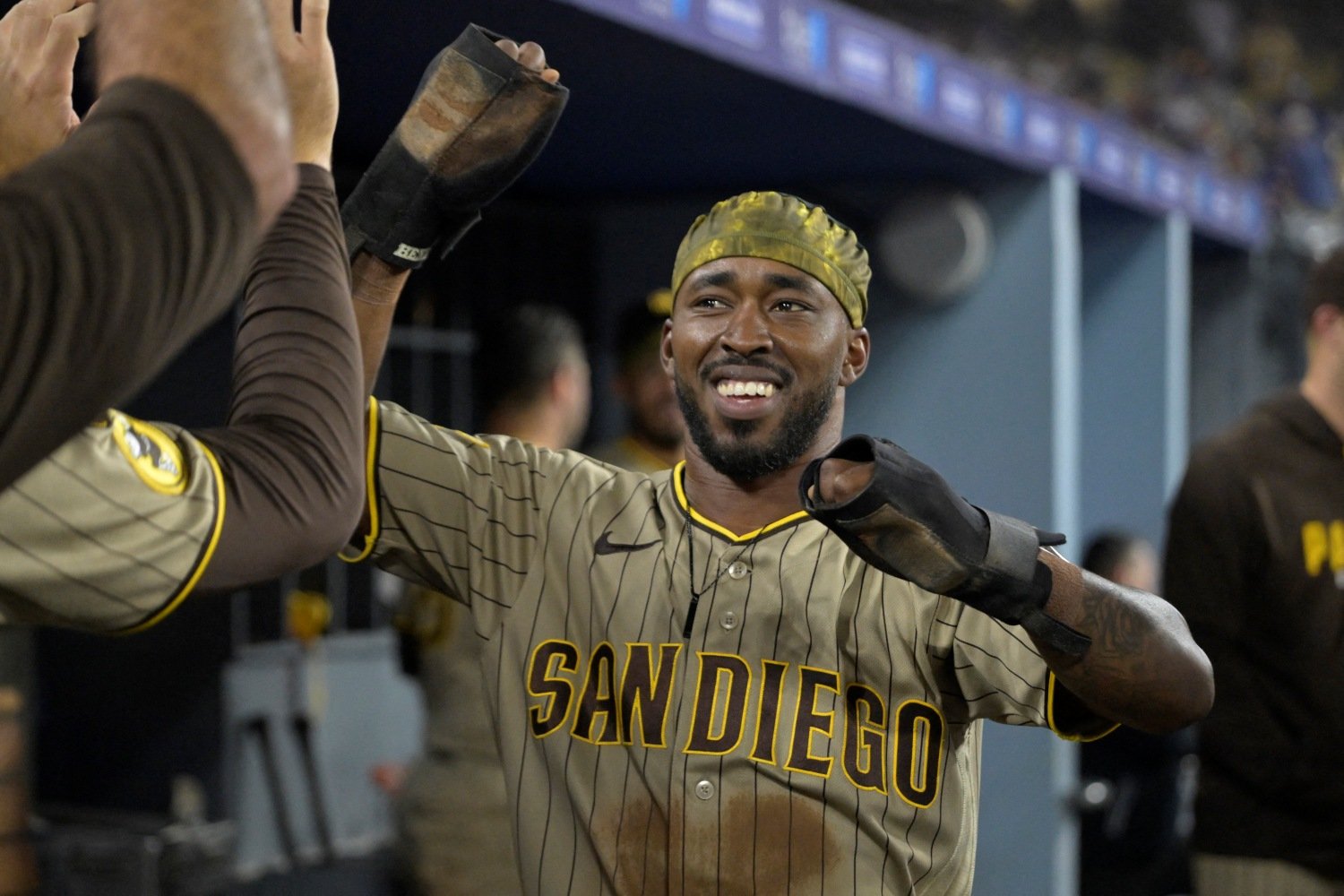 If Ramón Laureano stays healthy, we might never even see Samad Taylor get a legitimate chance to play for the Padres. As of early June, he was what he's been for his entire decade of professional experience: a fringe guy, barely catching anyone's notice and barely hanging onto Triple-A rosters. He signed a minor-league deal with the Padres in late January, after being outrighted for the second time in a year by the offense-needy Mariners and electing free agency, but he didn't crack San Diego's roster until the beginning of June. He's a former 10th-round pick who didn't debut in the big leagues until six years after being selected, and he's still never batted more than 175 times in the majors in any season. When Laureano suffered what's turned out to be a season-ending hip injury, though, Taylor was suddenly thrust into the fray. If Luis Rengifo stays healthy, we might never even see Dustin Harris get a legitimate chance to play for the Padres. When he signed his first minor-league deal for the team, they became his third organization of the season. That was in early July, though, and a month later, he'd yet to crack the big-league roster. The team released him just after the trade deadline, but the opportunities for him were so sparse that Harris turned right around and signed a new minor-league deal. This is the life he's used to, too. He was an 11th-round pick in 2019 and didn't debut until 2024. and then only excruciatingly briefly. He's belonged to the Oakland, Texas, Houston and White Sox organizations, but never found much of a foothold in any of them. He got the call to the majors on August 24, though, and when Rengifo hit the injured list for good a few days later, Harris became an emergency platoon starter in left field. Neither guy offers upside the way the game likes it served, these days. Each has 30-grade bat speed, by big-league standards. Neither is exceptional defensively, though both are fast and athletic enough to make up for the occasional misread. Since Harris made his Padres debut, though, this duo is hitting an aggregate .312/.363/.422. They're far from the sexiest part of the Padres' dramatic late-season offensive upswing, but they've been superb at the plate. They keep the line moving. They make things happen. And they do it in interesting, unusual ways. Taylor's is capable of filling up the big part of the field, with a swing geared for line drives back through the box. His signature move, though, is the bunt hit—and not even a typical one. Of his seven bunt singles this season, Taylor has pushed almost all of them toward first base. Normally, a righty trying to bunt for a hit will drag the ball up the third-base line, forcing the pitcher to pounce and make a play moving away from his target or a third baseman to charge quickly and make a clean pick and throw. That maneuver requires some skill, but it's as much about maximizing the space the defense has to cover and the length of the throw as anything else; the runner's speed is the most important element of the tactic. Not so with Taylor. He's developed a devilish skill of pushing the ball almost straight down, but managing the spin of it with his lumber. The ball hits the dirt in front of the plate and bounces high (but not far) toward first base, making a hard read for a pitcher coming off the mound and for a first baseman who might need to charge. Meanwhile. Taylor himself screens the catcher momentarily as he breaks from the box, and he drops his bat right in the path the catcher might take to the ball. It's difficult to do, but even harder to defend—and Taylor seems to have mastered getting it down. NnlNQXZfWGw0TUFRPT1fQkFkVlVRY0NWQW9BV1ZNQ0JRQUhCZ2RXQUFBRVcxRUFCMVpUVlZJTVZGVlZBd05Y.mp4 This skill is especially valuable when Taylor is in a platoon role, too. A lefty pitcher who falls off the mound toward third base is in even worse position to field that dribbler up the first-base line than a righty would be; the spatial puzzle becomes almost unsolvable for the defense. TDY1bG5fWGw0TUFRPT1fQmdaUlVBWlFYd01BQVZwWEJRQUhBMUpmQUZnTVd3QUFDbEJVVTFjRVZRY0VCRllF.mp4 Taylor's speed and bunting skills create chaos. So does Harris's management of space, in a different way. Like Taylor, he has a slow but short and direct swing. Unlike Taylor, he also stands as close to the front of the batter's box as just about any hitter in the league. His swing is not geared to generate any meaningful chance of extra-base hits. It's no coincidence that Harris has no home runs this year. However, he's also striking out at a 13.2% clip, and a healthy share of the balls he puts in play so relentlessly are line drives that feel indefensible, even if they never have a hope of being more than a single. WU9WeXJfWGw0TUFRPT1fVXdoVFVBQldVUWNBQ2dRQVVRQUhWUTVWQUZnR1YxVUFDbFpVQWdSUVV3TmNBZ2RR.mp4 For a pretty big guy to have so little power feels wrong. Again, Harris doesn't play great defense, despite his speed. It's easy to see why teams have been reluctant to give either Harris or Taylor significant playing time. As a tandem, though, they're part of a dynamic team that can beat you in a wide variety of ways. They're not just hitting for average. They move runners over. They've stolen 19 bases in 23 combined tries. It's tempting to say that a team like the Padres will go as far as its stars take it. Fernando Tatis Jr. and Manny Machado are the heart of the lineup and the roster, and Mason Miller, Adrian Morejon and the rest of that game-shortening bullpen make this team intimidating in a short series. October is beguiling, though. The game's history is chock-full of unlikely postseason heroes. Entering this postseason, it feels just possible that the X-factor for the Padres will be a left-field platoon cobbled together in response to injuries, comprising two guys several other teams didn't want and who have ridden a lot more buses than first-class flights.
