



Connor Richards
-
Posts
8 -
Joined
-
Last visited
Content Type
Profiles
San Diego Padres Videos
2026 San Diego Padres Top Prospects Ranking
San Diego Padres Free Agent & Trade Rumors, Notes, & Tidbits
Guides & Resources
2025 San Diego Padres Draft Pick Tracker
News
2026 San Diego Padres Draft Tracker: Picks & Bonuses
Forums
Blogs
Events
Store
Downloads
Gallery
Everything posted by Connor Richards
-
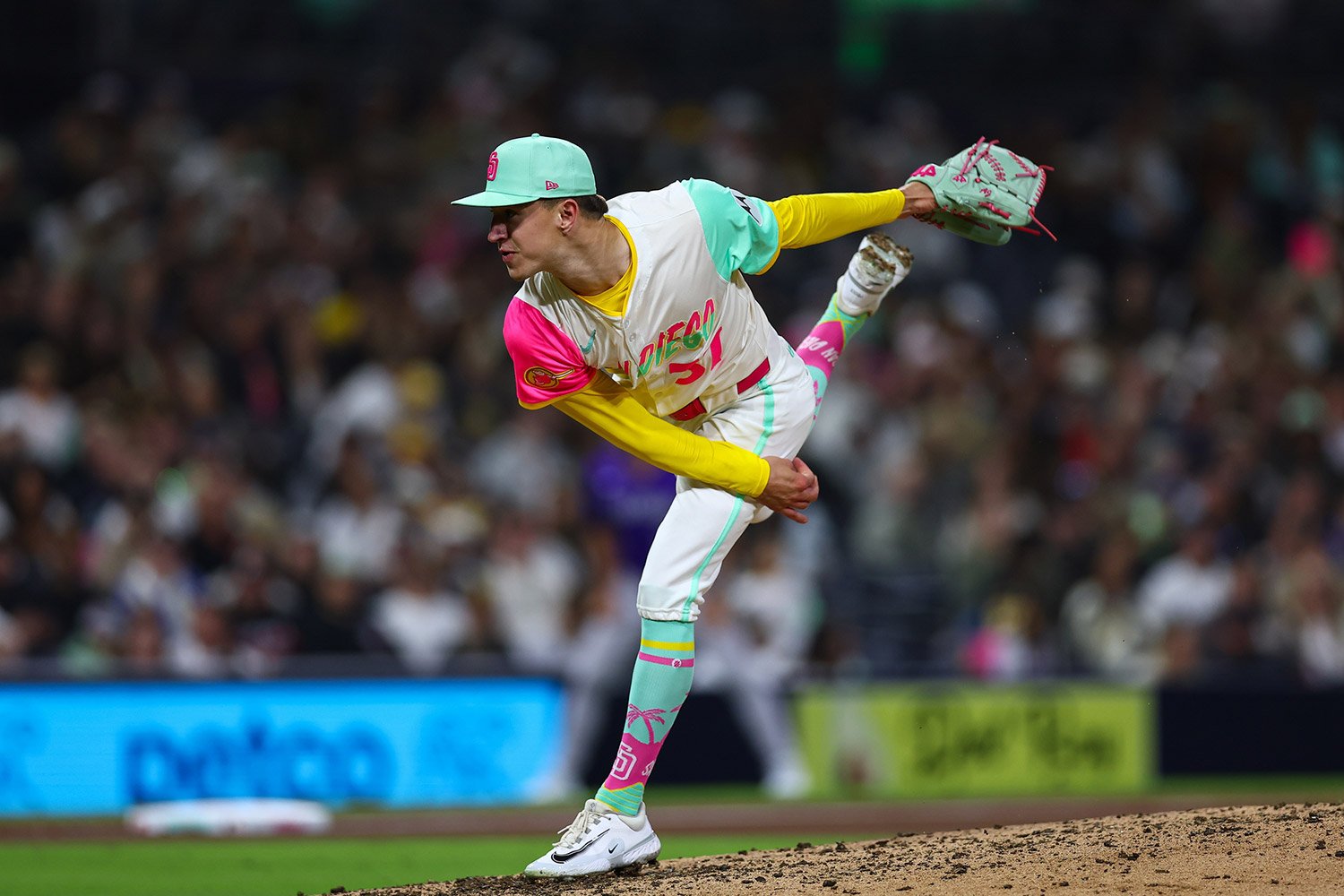 Relievers are often known for having a small arsenal. As Padres fans will well know, the great Trevor Hoffman relied on his changeup. For Mariano Rivera, it was the cutter. Even in today's game, high-leverage relievers can be elite with a single pitch, just ask Robert Suarez, who rode his fastball to great success, and the nickname "Bobby Fastballs", in 2024 as the Padres' closer. It isn't uncommon for relievers to rely on their one or two dominant pitches to great success, like Jeremiah Estrada, who leans heavily on a fastball (121 Stuff+, 64% usage) and splitter (129 Stuff+, 19% usage). Some relievers throw a starter-like repertoire including sizable usage of less stuff-y pitches, like Twins starter-turned-reliever Louis Varland, who throws five pitches, including a slider (98 Stuff+, 12% usage) and changeup (77 Stuff+, 10% usage), which grade out less favorably. For those unfamiliar with Stuff+, it is a model-based measure of pitch shapes produced by Eno Sarris, available on FanGraphs, and calibrated such that a Stuff+ of 100 is league-average and 10 is one standard deviation (note: for simplicity and because of ongoing tweaks to Stuff+, we won't dive deeper into pitch-level averages, which are not identically 100 but end up currently as 98 for a fastball, 101 for a sinker, 94 for a changeup, etc.). This means that Estrada throws a fastball with two standard deviations better than average and a splitter with three standard deviations better than average. At the same time, Varland's changeup, at 77 Stuff+, is two standard deviations worse than average. Despite relying on very different arsenals, both Varland (28.9% K-BB%, 1.97 SIERA) and Estrada (30.6% K-BB%, 2.18 SIERA) are both effective relievers, in large part because Varland works in a total of five pitches including a 129 Stuff+ knuckle-curve and a 113 Stuff+ fastball to complement his less stellar changeup and slider. Varland relies on a broader mix of pitches to be effective, while Estrada relies on elite stuff on two pitches. But what if you had a pitcher with a wide arsenal of "plus" secondary pitches and elite stuff on their fastball? Enter Padres reliever Alek Jacob and some of the off-season improvements that got him there, for an answer to that question. Alek Jacob throws four pitches, in order of usage: a fastball (121 Stuff+, 37% usage), changeup (109 Stuff+, 34% usage), sweeper (110 Stuff+, 15% usage), and sinker (100 Stuff+, 14% usage). Jacob has added 2.8 inches of rise (induced vertical break or iVB) on his fastball, 3.6 inches of arm-side run on his changeup, 1.4 inches of arm-side run on his sinker, and 6.5 inches of iVB on his sweeper. The differences in these shapes are apparent in his Movement Profile graphics from Baseball Savant. Jacob has added arm-side run to his seam-shifted wake pitches (sinker and changeup), increased the vert on his fastball, and completely reworked his sweeper. The shaded dots above represent league-average movement for that pitch, while the solid dots show Jacob's pitches and have sizes scaled to usage. In addition to adding iVB to his fastball, it has a bit less arm-side run and has jumped up in usage. The changes to his fastball, sinker, and changeup shapes help give Jacob more shape separation between the fastball and sinker, while maintaining a nine mph velocity separation between the sinker and change. His sweeper looks like an entirely new pitch, sacrificing a bit of glove-side break for a massive 6.5 inches of iVB, and he uses that extra vert to spot the opposite corner of the zone from his changeup. Jacob's changeup (arm-side + dive) and sweeper (glove-side + rise) have complementary shapes, which are reflected in their usage heatmaps. In 2024, Jacob filled the zone with the sinker and threw the fastball at the top of the zone for a change of pace. In 2025, he now features the fastball as his go-to pitch, filling up the zone with that pitch and tunneling his sinker, changeup, and sweeper off of that pitch to complement it. Those spots are down and arm-side with the changeup, up and glove-side with the sweeper, and arm-side with the sinker. In short, he has made his best pitch better, now throws it more than any other pitch, and plays his secondaries off it more effectively. Jacob's heatmaps for: 2024 fastball (top left), 2025 fastball (top right), 2024 sinker (bottom left), 2025 sinker (bottom right). Jacob's offseason adjustments have paid off, allowing him to contribute quality innings to a talented Padres bullpen full of existing stars and other promising 26-year-olds (Alek Jacob, Jeremiah Estrada, Adrian Morejon, and Omar Cruz, who made his debut at Petco earlier this season, are all just 26). While Morejon and Estrada jump off the page for reasons of their own, Jacob also finds himself among some elite company. He throws four pitches of at least 100 Stuff+ and with at least 10% usage, which only four other relievers in the league can say: Yimi Garcia (TOR), Hoby Milner (TEX), Reed Garrett (NYM), and Seranthony Dominguez (BAL). Unlike these relievers, who are all in their 30s and mostly pitching high-leverage innings, Jacob is young, team-controlled, and figures to continue to build on these arsenal tweaks in the coming years. Padres fans should not be surprised if he begins to take on higher-profile spots in 2026 and beyond, either moving to a higher-leverage role or potentially trying to stretch out as a starter.
 -
Why Dylan Cease Is Actually Fine and Everyone Can Calm Down
Connor Richards posted an article in Padres
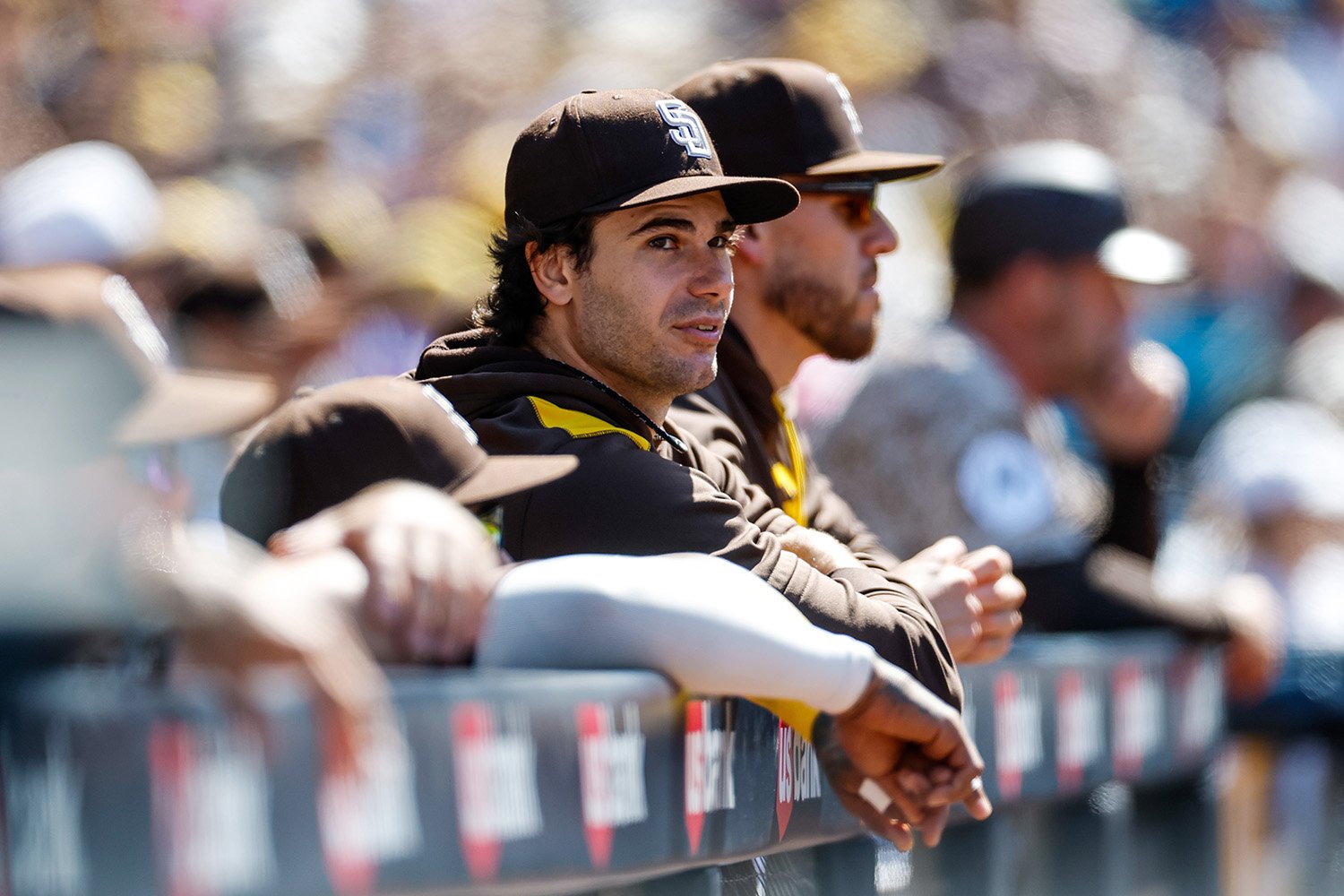 Acquired from the White Sox in early 2024 for a haul that included major pieces of the Juan Soto trade, Dylan Cease was dominant for the Padres last year. Alongside Michael King, who headlined the Padres' return in the Soto trade, Cease anchored the Padres rotation in a year marked by injuries. King and Cease threw 359 2/3 innings for the Friars, making them the only pitchers besides knuckleballer (or perhaps knuckleball-throwing is more appropriate?) Matt Waldron to eclipse 100 for the Padres. Cease finished the year with a 3.47 ERA, while King ended up posting a sub-3.00 ERA at 2.85. King ended up fifth in baseball in ERA among qualified starters, while by K-BB% and SIERA, both pitchers ranked as Top 20 starters. This season, King took the ball on Opening Day and has already turned in his first career complete game shutout against the Rockies. Cease has struggled. This tale of two aces may leave people concerned about Cease, whose 6.64 ERA is the third highest among qualified pitchers, spared the top spot by Aaron Nola's 6.65 and Charlie Morton's 8.84. Early-season struggles for a high-profile player in a contract year are bound to inspire buzz. It could involve anything and everything from how it impacts potential contract or trade value to whether they are broken. These discussions are often bereft of nuance, as panic and clickbait rule the day, so allow me to throw my hat into the ring with a take: everyone is overreacting and Cease is fine. Cease's ERA is eye-watering, courtesy of an Opening Series matchup against the Braves and, principally, a nine-run drubbing in the home of the Sacramento River Cats at the hands of the team formerly from Oakland. Cease surrendered nine hits and three walks over four innings (20.25 ERA) in the hitters' paradise that is Sutter Health. He has allowed six earned runs over 16 1/3 innings across his other three starts this season, for a 3.30 ERA. While it is true that an early-season start in Sutter Health is as good a candidate as one will ever encounter for tossing out a start as an outlier, that explanation is a bit unsatisfactory. That feels a bit like a hitter saying "if you ignore all the games where I went 0-for at the plate...". We can try to do better. When trying to judge pitchers and identify those who may be getting lucky, or unlucky, stats like strand rate (LOB%), batting average on balls in play (BABIP), and home runs per fly ball (HR/FB) are reliable bellwethers that can very quickly help give a sense of how sustainable someone's numbers are. Potential exceptions (such as strikeout rate helping to sustain elevated strand rates and the debate about pitchers' ability to control BABIP and hard contact) notwithstanding, strand rate, BABIP, and HR/FB tend to regress towards league average pretty reliably as the sample size grows. Currently, 2024 averages among starters are .280 BABIP, 73.2% LOB%, and 11.7% HR/FB, which are all marginally "luckier", relative to the pitchers, than the 2025 season-long averages of .290 BABIP, 72.5% LOB%, and 12.0% HR/FB. That difference is likely that it's still April, meaning we have yet to play summer baseball in the hot and humid air whose reduced density creates a hitters' paradise, but the agreement between those sets of numbers should help drive home the point that these are essentially fundamental constants of our game. Any given pitcher, in the long run, can count on their LOB%, BABIP, and HR/FB to tend towards these league averages. Lower LOB% means the pitcher is getting less luck and more runners who reach base are being allowed to score, just as higher BABIP and HR/FB indicate less luck for the pitcher, as more balls in play wind up as hits and more fly balls end up as HR. With the preliminaries about our luck stats out of the way, we can ask: who is getting lucky this year, and who is getting unlucky? FanGraphs leaderboard showing league-low BABIP among qualified starting pitchers. FanGraphs leaderboard showing league-high BABIP among qualified starting pitchers. On the low end of BABIP, someone like Kevin Gausman stands out for his .172 BABIP, a full .102 below his career best single-season BABIP. At the high end, we have a smattering of high-profile starters, including Cease, running unsustainably unlucky BABIP numbers. Cease's .379 BABIP, for example, is even further from his 2024 BABIP (.263) than Gausman's current BABIP is from his prior career high. The story is similar when we look at league leaders in LOB%, with a few pitchers standing apart with unsustainably high strand rates which will find their way into runs soon, compared to pitchers who are getting extremely unfortunate as seemingly all of their runners come in to score. FanGraphs leaderboard showing league-high LOB% among qualified starting pitchers. Shane Baz, Brandon Pfaadt, Yoshinobu Yamamoto, and Chris Bassitt are all stranding more than 90% of the runners they allow to reach base, an entirely unsustainable rate that's due for regression. In 2024, the qualified starter with the highest LOB% in baseball was Houston's Ronel Blanco, who posted a season-long mark of 83.6%. Even this number is likely unsustainable, though, as regression seems to have come for him a season late, given his 6.48 ERA and 63.5% LOB% to start 2024. FanGraphs leaderboard showing league-low LOB% among qualified starting pitchers. On the other end, we again find our friend Dylan Cease, who trails only Paul Skenes on the list of pitchers with the most unsustainably low LOB%. Cease stranded 69.4% of runners in 2024, a far cry from his current 53.2%. By both LOB% and BABIP, Cease is getting terribly unlucky, a standout league-wide by both metrics. His HR/FB is the only of the three by which he is actually at a reasonable, or perhaps a bit lucky, value. His 8.3% HR/FB is consistent with his 9.1% HR/FB in 2024, and should remain roughly stable other than a slight increase as the weather warms. So, if we believe that Cease is getting extremely unlucky, what can we expect him to do once the ball starts bouncing his way? Based on projections and ERA estimators, Cease figures to be a low- to mid-threes ERA pitcher, just like the workhorse that anchored the rotation last year. Projection systems have him right around 3.50, while in-season ERA estimators range from a 2.95 FIP on the low end to a 3.80 xERA on the high end, with a 3.36 SIERA and 3.37 xFIP in the middle. Put differently, among all qualified starting pitchers, based on his rocky 2025 start, Dylan Cease ranks: Eighth in Pitching+ (117) 24th in FIP (2.95) 29th in xFIP (3.37) 29th in K-BB% (18.7%) 30th in SIERA (3.36) 43rd in xERA (3.80) 90th in ERA (6.64) If there were a single metric to point to as a legitimate point of concern for Cease, it would be his whiff rate, which is sitting at 25.6%, down from 32.4% in 2024. His chase rate has remained stable, so assuming that this whiff rate movement is small sample variation and Cease is able to continue to recover upwards towards his 30% marks from the past four seasons, there's no reason to fret. Padres fans should sit back and enjoy the show. The Team is team trotting out three legitimate Cy Young candidates in Cease, King, and Nick Pivetta.
 -
The Padres' ace has the third-highest ERA among qualified starters. That doesn't actually affect his rest-of-season outlook. Acquired from the White Sox in early 2024 for a haul that included major pieces of the Juan Soto trade, Dylan Cease was dominant for the Padres last year. Alongside Michael King, who headlined the Padres' return in the Soto trade, Cease anchored the Padres rotation in a year marked by injuries. King and Cease threw 359 2/3 innings for the Friars, making them the only pitchers besides knuckleballer (or perhaps knuckleball-throwing is more appropriate?) Matt Waldron to eclipse 100 for the Padres. Cease finished the year with a 3.47 ERA, while King ended up posting a sub-3.00 ERA at 2.85. King ended up fifth in baseball in ERA among qualified starters, while by K-BB% and SIERA, both pitchers ranked as Top 20 starters. This season, King took the ball on Opening Day and has already turned in his first career complete game shutout against the Rockies. Cease has struggled. This tale of two aces may leave people concerned about Cease, whose 6.64 ERA is the third highest among qualified pitchers, spared the top spot by Aaron Nola's 6.65 and Charlie Morton's 8.84. Early-season struggles for a high-profile player in a contract year are bound to inspire buzz. It could involve anything and everything from how it impacts potential contract or trade value to whether they are broken. These discussions are often bereft of nuance, as panic and clickbait rule the day, so allow me to throw my hat into the ring with a take: everyone is overreacting and Cease is fine. Cease's ERA is eye-watering, courtesy of an Opening Series matchup against the Braves and, principally, a nine-run drubbing in the home of the Sacramento River Cats at the hands of the team formerly from Oakland. Cease surrendered nine hits and three walks over four innings (20.25 ERA) in the hitters' paradise that is Sutter Health. He has allowed six earned runs over 16 1/3 innings across his other three starts this season, for a 3.30 ERA. While it is true that an early-season start in Sutter Health is as good a candidate as one will ever encounter for tossing out a start as an outlier, that explanation is a bit unsatisfactory. That feels a bit like a hitter saying "if you ignore all the games where I went 0-for at the plate...". We can try to do better. When trying to judge pitchers and identify those who may be getting lucky, or unlucky, stats like strand rate (LOB%), batting average on balls in play (BABIP), and home runs per fly ball (HR/FB) are reliable bellwethers that can very quickly help give a sense of how sustainable someone's numbers are. Potential exceptions (such as strikeout rate helping to sustain elevated strand rates and the debate about pitchers' ability to control BABIP and hard contact) notwithstanding, strand rate, BABIP, and HR/FB tend to regress towards league average pretty reliably as the sample size grows. Currently, 2024 averages among starters are .280 BABIP, 73.2% LOB%, and 11.7% HR/FB, which are all marginally "luckier", relative to the pitchers, than the 2025 season-long averages of .290 BABIP, 72.5% LOB%, and 12.0% HR/FB. That difference is likely that it's still April, meaning we have yet to play summer baseball in the hot and humid air whose reduced density creates a hitters' paradise, but the agreement between those sets of numbers should help drive home the point that these are essentially fundamental constants of our game. Any given pitcher, in the long run, can count on their LOB%, BABIP, and HR/FB to tend towards these league averages. Lower LOB% means the pitcher is getting less luck and more runners who reach base are being allowed to score, just as higher BABIP and HR/FB indicate less luck for the pitcher, as more balls in play wind up as hits and more fly balls end up as HR. With the preliminaries about our luck stats out of the way, we can ask: who is getting lucky this year, and who is getting unlucky? FanGraphs leaderboard showing league-low BABIP among qualified starting pitchers. FanGraphs leaderboard showing league-high BABIP among qualified starting pitchers. On the low end of BABIP, someone like Kevin Gausman stands out for his .172 BABIP, a full .102 below his career best single-season BABIP. At the high end, we have a smattering of high-profile starters, including Cease, running unsustainably unlucky BABIP numbers. Cease's .379 BABIP, for example, is even further from his 2024 BABIP (.263) than Gausman's current BABIP is from his prior career high. The story is similar when we look at league leaders in LOB%, with a few pitchers standing apart with unsustainably high strand rates which will find their way into runs soon, compared to pitchers who are getting extremely unfortunate as seemingly all of their runners come in to score. FanGraphs leaderboard showing league-high LOB% among qualified starting pitchers. Shane Baz, Brandon Pfaadt, Yoshinobu Yamamoto, and Chris Bassitt are all stranding more than 90% of the runners they allow to reach base, an entirely unsustainable rate that's due for regression. In 2024, the qualified starter with the highest LOB% in baseball was Houston's Ronel Blanco, who posted a season-long mark of 83.6%. Even this number is likely unsustainable, though, as regression seems to have come for him a season late, given his 6.48 ERA and 63.5% LOB% to start 2024. FanGraphs leaderboard showing league-low LOB% among qualified starting pitchers. On the other end, we again find our friend Dylan Cease, who trails only Paul Skenes on the list of pitchers with the most unsustainably low LOB%. Cease stranded 69.4% of runners in 2024, a far cry from his current 53.2%. By both LOB% and BABIP, Cease is getting terribly unlucky, a standout league-wide by both metrics. His HR/FB is the only of the three by which he is actually at a reasonable, or perhaps a bit lucky, value. His 8.3% HR/FB is consistent with his 9.1% HR/FB in 2024, and should remain roughly stable other than a slight increase as the weather warms. So, if we believe that Cease is getting extremely unlucky, what can we expect him to do once the ball starts bouncing his way? Based on projections and ERA estimators, Cease figures to be a low- to mid-threes ERA pitcher, just like the workhorse that anchored the rotation last year. Projection systems have him right around 3.50, while in-season ERA estimators range from a 2.95 FIP on the low end to a 3.80 xERA on the high end, with a 3.36 SIERA and 3.37 xFIP in the middle. Put differently, among all qualified starting pitchers, based on his rocky 2025 start, Dylan Cease ranks: Eighth in Pitching+ (117) 24th in FIP (2.95) 29th in xFIP (3.37) 29th in K-BB% (18.7%) 30th in SIERA (3.36) 43rd in xERA (3.80) 90th in ERA (6.64) If there were a single metric to point to as a legitimate point of concern for Cease, it would be his whiff rate, which is sitting at 25.6%, down from 32.4% in 2024. His chase rate has remained stable, so assuming that this whiff rate movement is small sample variation and Cease is able to continue to recover upwards towards his 30% marks from the past four seasons, there's no reason to fret. Padres fans should sit back and enjoy the show. The Team is team trotting out three legitimate Cy Young candidates in Cease, King, and Nick Pivetta. View full article
-
Alek Jacob started 2025 with a bang, adding iVB to his fastball and sweeper, arm-side movement to his sinker and changeup, and his name to a surprising list of high-leverage relievers Relievers are often known for having a small arsenal. The great Trevor Hoffman, as Padres fans will well know, relied on his changeup. For Mariano Rivera, it was the cutter. Even in today's game, high-leverage relievers can be elite with a single pitch, just ask Robert Suarez, who rode his fastball to great success, and the nickname "Bobby Fastballs", in 2024 as the Padres closer. It isn't uncommon for relievers to rely on their one or two dominant pitches to great success, like Jeremiah Estrada, who leans heavily on a fastball (121 Stuff+, 64% usage) and splitter (129 Stuff+, 19% usage). There are also relievers who throw a starter-like repertoire including sizable usage of less stuff-y pitches, like Twins starter-turned-reliever Louis Varland who throws 5 pitches, including a slider (98 Stuff+, 12% usage) and changeup (77 Stuff+, 10% usage) which grade out less favorably. For those unfamiliar with Stuff+, it is a model-based measure of pitch shapes produced by Eno Sarris et al., available on FanGraphs, and calibrated such that a Stuff+ of 100 is league-average and 10 is one standard deviation (note: for simplicity and because of ongoing tweaks to Stuff+, we won't dive deeper into pitch-level averages, which are not identically 100 but end up currently as 98 for a fastball, 101 for a sinker, 94 for a changeup, etc.). This means that Estrada throws a fastball which is two standard deviations better than average and a splitter which is three standard deviations better than average, while Varland's changeup, at 77 Stuff+, is two standard deviations worse than average. Despite relying on very different arsenals, both Varland (28.9% K-BB%, 1.97 SIERA) and Estrada (30.6% K-BB%, 2.18 SIERA) are both effective relievers, in large part because Varland works in a total of five pitches including a 129 Stuff+ knuckle-curve and a 113 Stuff+ fastball to complement his less stellar changeup and slider. Varland relies on a wider mix of pitches to be effective, while Estrada relies on elite stuff on two pitches. But what if you had a pitcher who had a wide arsenal of "plus" secondary pitches and elite stuff on their fastball? Let's look at Padres reliever Alek Jacob, and some of the off-season improvements that got him there, for an answer to that question. Alek Jacob throws four pitches, in order of usage: a fastball (121 Stuff+, 37% usage), changeup (109 Stuff+, 34% usage), sweeper (110 Stuff+, 15% usage), and sinker (100 Stuff+, 14% usage). Jacob has added 2.8 inches of rise (induced vertical break or iVB) on his fastball, 3.6 inches of arm-side run on his changeup, 1.4 inches of arm-side run on his sinker, and 6.5 inches of iVB on his sweeper. The differences in these shapes are apparent in his Movement Profile graphics from Baseball Savant. Jacob has added arm-side run to his seam-shifted wake pitches (sinker and changeup), increased the vert on his fastball, and completely reworked his sweeper. The shaded dots above represent league-average movement for that pitch, while the solid dots show Jacob's pitches and have sizes scaled to usage. In addition to adding iVB to his fastball, it now actually has a bit less arm-side run and has jumped up in usage. The changes to his fastball, sinker, and changeup shapes help give Jacob more shape separation between the fastball and sinker, while maintaining a 9 mph velocity separation between the sinker and change. His sweeper looks like an entirely new pitch, sacrificing a bit of glove-side break for a massive 6.5 inches of iVB, and he uses that extra vert to spot the opposite corner of the zone from his changeup. The complementary shapes of Jacob's changeup (arm-side + dive) and sweeper (glove-side + rise) are reflected in their usage heatmaps. In 2024, Jacob filled up the zone with the sinker and threw the fastball at the top of the zone for a change of pace. In 2025, he now features the fastball as his go-to pitch, filling up the zone with that pitch and tunneling his sinker, changeup, and sweeper off of that pitch to complement it. Those spots are down and glove-side with the changeup, up and arm-side with the sweeper, and arm-side with the sinker. In short, he has made his best pitch better, now throws it more than any other pitch, and plays his secondaries off it more effectively. Jacob's heatmaps for: 2024 fastball (top left), 2025 fastball (top right), 2024 sinker (bottom left), 2025 sinker (bottom right). Jacob's offseason adjustments have paid off for him, allowing him to contribute quality innings to a talented Padres bullpen full of existing stars and other promising 26 year-olds (Alek Jacob, Jeremiah Estrada, Adrian Morejon, and Omar Cruz, who made his debut at Petco earlier this season, are all just 26). While Morejon and Estrada jump off the page for reasons of their own, Jacob also finds himself among some elite company. He throws four pitches of at least 100 Stuff+ and with at least 10% usage, which only four other relievers in the league can say: Yimi Garcia (TOR), Hoby Milner (TEX), Reed Garrett (NYM), and Seranthony Dominguez (BAL). Unlike these relievers, who are all in their 30's and mostly pitching high-leverage innings, Jacob is young, team-controlled, and figures to continue to build on these arsenal tweaks in the coming years. Padres fans should not be surprised if he begins to take on higher-profile spots in 2026 and beyond, either moving to a higher-leverage role or potentially trying to stretch out as a starter. View full article
-
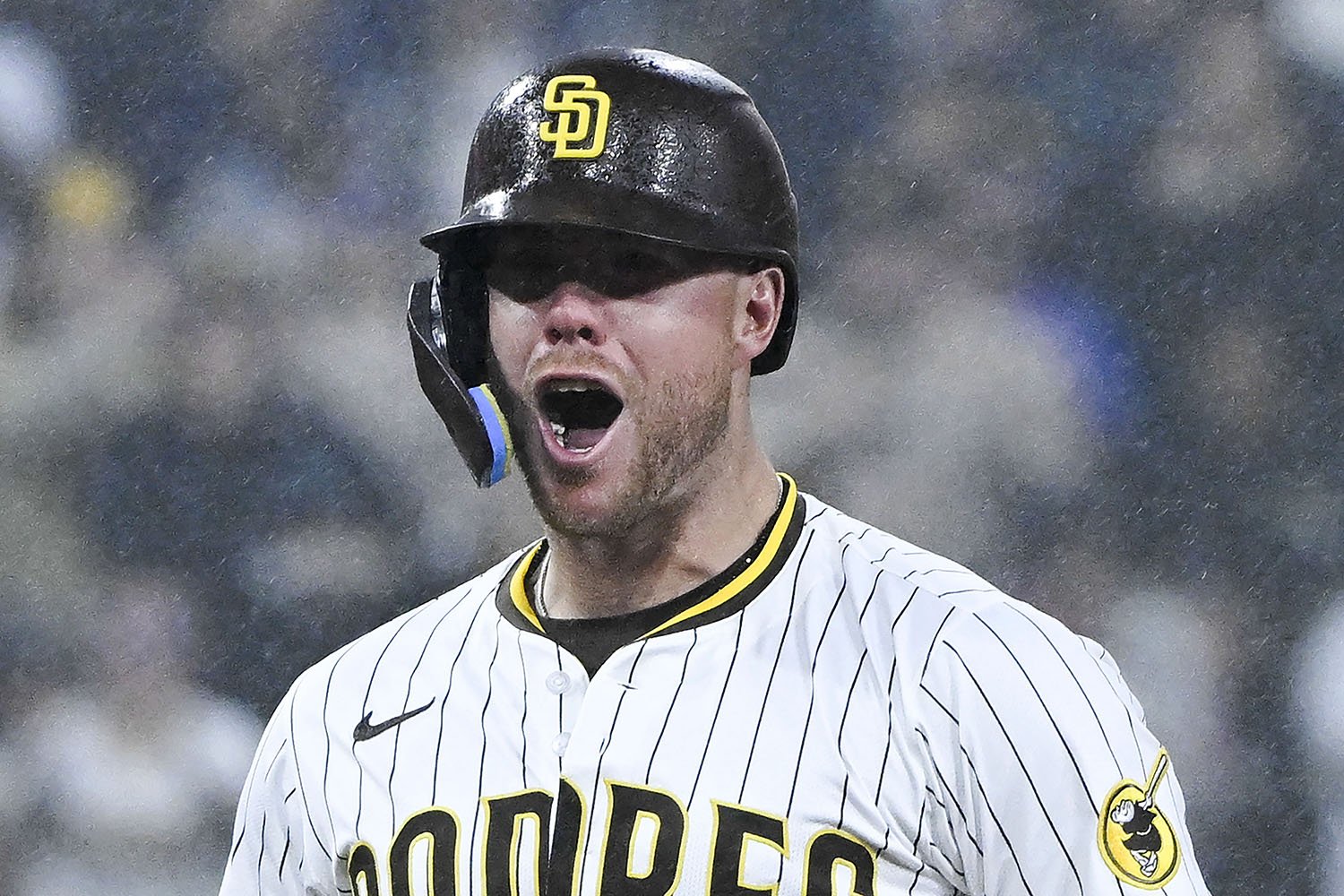 What are you scared of? Like, if you close your eyes and imagine your deepest fear, what do you see? For me, it’s probably heights, or clowns, I’m not really sure. For Cleveland Guardians’ RHP Luis L. Ortiz, the answer is obvious: a 6’3”, 235-pound left-handed DH from Lutherville, Maryland. Gavin Sheets faced Ortiz three times on a misty Monday night at Petco Park as the Padres sought a franchise record fifth straight win to open the season. They were three at-bats Ortiz would love to, but will not soon, forget. The two balls tracked by Statcast left the bat at 97.7 mph (two RBI, opposite-field double in the fifth) and 110.0 mph (single in the fourth). At the time of this writing, the third ball was not tracked by Statcast, likely due to the rain falling at the time interfering with Hawkeye cameras. However, from my seat along the 1st base line, I saw what was likely just as clear on television: Sheets line drive off the wall in RF was a Statcast “barrel”, a fact which will undoubtedly be confirmed if and when a correction is applied to the data to register the event. (As a San Diegan, I naturally have no idea how “weather correction” works for Hawkeye data, if at all.) Sheets' 2 RBI double in the 2nd inning with missing batted ball data. The 86.1 mph swing tied Jhonkensy Noel's 1st inning flyout as the fastest swings of the night on batted ball events. Sheets capped his night with a walk off reliever Triston McKenzie, who appeared very rightly terrified to give him anything to hit. If his 3-for-3, 4 RBI, 2.667 OPS night against the Guardians was Sheets’ official coming out party, eliciting chants of "Holy Sheets" from the Petco Park crowd, his torrid start to the year was vindication for a Padres front office and coaching staff who saw their hands tied by what I have to assume was Sheets’ audition for MLB’s Home Run Derby during spring training. The non-roster invitee's six-hmer, 13-RBI, 1.077-OPS performance in Peoria made a clear case for his selection to the Opening Day roster. But what does this all mean for the erstwhile White Sox outfielder? Where has this offensive surge come from, and how long will it last? As much as Padres fans would all love to see Sheets maintain his 301 wRC+ mark all year, a stat truly worthy of a few "Holy Sheets," we know better than to read too much into 15 plate appearances (see also: reigning three-time batting champion Luis Arraez will not finish the season with a .056 batting average). However, we can look at batted ball, plate discipline, and bat speed from Baseball Savant, all of which stabilize a lot faster than wRC+ or OPS. As we dive in, keep in mind that we are still working with small sample sizes, even for these swing-level metrics, so they should be taken with an appropriately large grain of salt. In 2024, Sheets posted contact and plate discipline metrics around the 25th percentile. His 5.7% barrel and 35.3% hard-hit rates do not exactly inspire confidence. The contrast between these and his early 2025 numbers is quite stark, as one might imagine. Entering Monday, Sheets had nine batted ball events, and including his two tracked batted ball events from Monday night against the Guardians, he has a total of eight hard-hit batted balls and one barrel (his pinch-hit home run on Opening Day) in 11 events. Baseball Savant and Fangraphs erroneously include the "missing" batted ball event despite not having a measured EV for it, so they show 12 events. This is good for a 67% hard-hit rate and 8% barrel rate officially; that jumps to 73% hard-hit rate and a 9% barrel rate if we do the math correctly and divide by 11 events instead of 12, or to 75% hard-hit and 17% barrel rate if we believe his missing event from Monday was a barrel. In any case, Sheets has roughly doubled his 2024 season-long hard-hit and barrel numbers over a short sample to start 2024, his average EV is currently up around 10 mph from 87.8 mph to 96.8 mph and on Monday matched his 2024 Max EV (110.0 mph). While these are all good signs, early season barrel rates can be extremely fickle, as evidenced by the fact that we are quibbling over whether he has one or two barrels. In order to say anything definitive based on batted ball data, we need more sample. Gavin Sheets' 2024 and 2025 (as of April 1, 2025) hitting sliders from Baseball Savant. In contrast to batted-ball data, plate discipline metrics offer us a bit more sample. Sheets had a 32.4% chase rate and 23.0% whiff rate in 2024, and his 2025 numbers appear to be largely consistent with these marks, if marginally better, at 28.9% chase rate and 21.4% whiff rate. While there is no obvious step forward in plate discipline, where these numbers eventually settle as we go from one week of data to one month of data will be important to watch. If Sheets can maintain a lower whiff rate while putting better contact on the ball, that will portend success. Indeed, Sheets' success on Monday came when he was absolutely locked in at the plate, hitting all three batted balls hard and joining Luis Arraez as the only two starters for either team to not record a single whiff. Sheets was able to consistently do damage in part because nothing Guardians' pitching did fooled him. Where batted ball events left us wanting for more sample and plate discipline metrics gave some hints, bat speed data offers us a more coherent and comprehensive view of Sheets' early success. Bat tracking burst onto Baseball Savant pages in May 2024, meaning this analysis would have to end here were we doing this one year ago, but thankfully the future is now and we have bat tracking. With the caveat that the same small sample concerns apply, Sheets' bat tracking numbers give us a way to make sense of both the plate discipline and batted ball data, along with offering a potential explanation for why this is happening. Gavin Sheets bat tracking data for 2023, 2024, and 2025 compared to MLB average (bottom). Let's focus on three parameters: bat speed, swing length, and squared-up rate. Sheets has added a modest 0.2 mph to his swing on average, but that has come at the cost of a swing which is 0.3 feet longer. This appears to be a wash on paper, since his swing got a bit faster but now has further to go. However, this is where squared-up rate and blasts, measures related to ideal contact rates, enter our calculus. Sheets' ideal contact rate has increased drastically over the short sample start to 2025 -- roughly doubling both the "per contact" and "per swing" of both squared-up and blast rates. This data, together with postgame comments about some approach tweaks, allows us to paint a picture here. Imagine a reality where Gavin Sheets reported to Peoria sporting a 72.7-mph swing but inconsistent in his ability to make good contact. Padres hitting coach Victor Rodriguez, working with the 28-year-old, saw a way to tweak his swing to keep the sweet spot of his bat through the zone for longer. Trading a bit more swing length for a bit more swing speed, they were able to increase the effective cross-section of his bat through the zone, leading to a much higher rate of near-ideal contact. If that were the case, we would expect to see an uptick in offensive production driven by increases in average exit velocity, including rising hard-hit and barrel rates, along with lower whiff rates as his bat stays through the zone longer and makes contact more often. We are then left with two potential theories of the case for Gavin "Holy Sheets" Sheets: is his early-season offensive surge the result of deliberate adjustments to his swing path and stance (narrowed from 28.4 inches between his feet to 21.7 inches), or is it all just small sample noise? No one can know that answer for sure, after five games, but I intend to keep the faith.
 -
The time has come to irresponsibly overreact to small sample batted ball, plate discipline, and bat speed data. What are you scared of? Like, if you close your eyes and imagine your deepest fear, what do you see? For me, it’s probably heights, or clowns, I’m not really sure. For Cleveland Guardians’ RHP Luis L. Ortiz, the answer is obvious: a 6’3”, 235-pound left-handed DH from Lutherville, Maryland. Gavin Sheets faced Ortiz three times on a misty Monday night at Petco Park as the Padres sought a franchise record fifth straight win to open the season. They were three at-bats Ortiz would love to, but will not soon, forget. The two balls tracked by Statcast left the bat at 97.7 mph (two RBI, opposite-field double in the fifth) and 110.0 mph (single in the fourth). At the time of this writing, the third ball was not tracked by Statcast, likely due to the rain falling at the time interfering with Hawkeye cameras. However, from my seat along the 1st base line, I saw what was likely just as clear on television: Sheets line drive off the wall in RF was a Statcast “barrel”, a fact which will undoubtedly be confirmed if and when a correction is applied to the data to register the event. (As a San Diegan, I naturally have no idea how “weather correction” works for Hawkeye data, if at all.) Sheets' 2 RBI double in the 2nd inning with missing batted ball data. The 86.1 mph swing tied Jhonkensy Noel's 1st inning flyout as the fastest swings of the night on batted ball events. Sheets capped his night with a walk off reliever Triston McKenzie, who appeared very rightly terrified to give him anything to hit. If his 3-for-3, 4 RBI, 2.667 OPS night against the Guardians was Sheets’ official coming out party, eliciting chants of "Holy Sheets" from the Petco Park crowd, his torrid start to the year was vindication for a Padres front office and coaching staff who saw their hands tied by what I have to assume was Sheets’ audition for MLB’s Home Run Derby during spring training. The non-roster invitee's six-hmer, 13-RBI, 1.077-OPS performance in Peoria made a clear case for his selection to the Opening Day roster. But what does this all mean for the erstwhile White Sox outfielder? Where has this offensive surge come from, and how long will it last? As much as Padres fans would all love to see Sheets maintain his 301 wRC+ mark all year, a stat truly worthy of a few "Holy Sheets," we know better than to read too much into 15 plate appearances (see also: reigning three-time batting champion Luis Arraez will not finish the season with a .056 batting average). However, we can look at batted ball, plate discipline, and bat speed from Baseball Savant, all of which stabilize a lot faster than wRC+ or OPS. As we dive in, keep in mind that we are still working with small sample sizes, even for these swing-level metrics, so they should be taken with an appropriately large grain of salt. In 2024, Sheets posted contact and plate discipline metrics around the 25th percentile. His 5.7% barrel and 35.3% hard-hit rates do not exactly inspire confidence. The contrast between these and his early 2025 numbers is quite stark, as one might imagine. Entering Monday, Sheets had nine batted ball events, and including his two tracked batted ball events from Monday night against the Guardians, he has a total of eight hard-hit batted balls and one barrel (his pinch-hit home run on Opening Day) in 11 events. Baseball Savant and Fangraphs erroneously include the "missing" batted ball event despite not having a measured EV for it, so they show 12 events. This is good for a 67% hard-hit rate and 8% barrel rate officially; that jumps to 73% hard-hit rate and a 9% barrel rate if we do the math correctly and divide by 11 events instead of 12, or to 75% hard-hit and 17% barrel rate if we believe his missing event from Monday was a barrel. In any case, Sheets has roughly doubled his 2024 season-long hard-hit and barrel numbers over a short sample to start 2024, his average EV is currently up around 10 mph from 87.8 mph to 96.8 mph and on Monday matched his 2024 Max EV (110.0 mph). While these are all good signs, early season barrel rates can be extremely fickle, as evidenced by the fact that we are quibbling over whether he has one or two barrels. In order to say anything definitive based on batted ball data, we need more sample. Gavin Sheets' 2024 and 2025 (as of April 1, 2025) hitting sliders from Baseball Savant. In contrast to batted-ball data, plate discipline metrics offer us a bit more sample. Sheets had a 32.4% chase rate and 23.0% whiff rate in 2024, and his 2025 numbers appear to be largely consistent with these marks, if marginally better, at 28.9% chase rate and 21.4% whiff rate. While there is no obvious step forward in plate discipline, where these numbers eventually settle as we go from one week of data to one month of data will be important to watch. If Sheets can maintain a lower whiff rate while putting better contact on the ball, that will portend success. Indeed, Sheets' success on Monday came when he was absolutely locked in at the plate, hitting all three batted balls hard and joining Luis Arraez as the only two starters for either team to not record a single whiff. Sheets was able to consistently do damage in part because nothing Guardians' pitching did fooled him. Where batted ball events left us wanting for more sample and plate discipline metrics gave some hints, bat speed data offers us a more coherent and comprehensive view of Sheets' early success. Bat tracking burst onto Baseball Savant pages in May 2024, meaning this analysis would have to end here were we doing this one year ago, but thankfully the future is now and we have bat tracking. With the caveat that the same small sample concerns apply, Sheets' bat tracking numbers give us a way to make sense of both the plate discipline and batted ball data, along with offering a potential explanation for why this is happening. Gavin Sheets bat tracking data for 2023, 2024, and 2025 compared to MLB average (bottom). Let's focus on three parameters: bat speed, swing length, and squared-up rate. Sheets has added a modest 0.2 mph to his swing on average, but that has come at the cost of a swing which is 0.3 feet longer. This appears to be a wash on paper, since his swing got a bit faster but now has further to go. However, this is where squared-up rate and blasts, measures related to ideal contact rates, enter our calculus. Sheets' ideal contact rate has increased drastically over the short sample start to 2025 -- roughly doubling both the "per contact" and "per swing" of both squared-up and blast rates. This data, together with postgame comments about some approach tweaks, allows us to paint a picture here. Imagine a reality where Gavin Sheets reported to Peoria sporting a 72.7-mph swing but inconsistent in his ability to make good contact. Padres hitting coach Victor Rodriguez, working with the 28-year-old, saw a way to tweak his swing to keep the sweet spot of his bat through the zone for longer. Trading a bit more swing length for a bit more swing speed, they were able to increase the effective cross-section of his bat through the zone, leading to a much higher rate of near-ideal contact. If that were the case, we would expect to see an uptick in offensive production driven by increases in average exit velocity, including rising hard-hit and barrel rates, along with lower whiff rates as his bat stays through the zone longer and makes contact more often. We are then left with two potential theories of the case for Gavin "Holy Sheets" Sheets: is his early-season offensive surge the result of deliberate adjustments to his swing path and stance (narrowed from 28.4 inches between his feet to 21.7 inches), or is it all just small sample noise? No one can know that answer for sure, after five games, but I intend to keep the faith. View full article
-
Lacking options they've had in previous seasons, the Padres will try to cobble together two arms into late-inning dominance. The Padres snuck past the Atlanta Braves and a dominant Spencer Schwellenbach in a 1-0 game on a chilly Saturday evening at Petco Park, marking their third consecutive win to open the year. In a game with unexpected heroes – Randy Vasquez delivering six scoreless innings, Wandy Peralta and Alek Jacob combining to slam the door, and Yuli Gurriel’s pinch-hit RBI to drive in the game’s lone run – perhaps the most surprising, or at least unfamiliar, thing was the bullpen door opening to the sound of Daddy Yankee’s “Rompe” as Adrian Morejon emerged for the save opportunity. In many ways, Shildt’s hands were tied. The usual suspects in Suarez, Adam, and Estrada had thrown 38, 35, and 40 pitches, respectively, across Thursday and Friday. At the start of 2024, this situation may have seen Robert Suarez asked to throw on a third consecutive day. A few months ago, it would call for Tanner Scott. The All-Star closer was a major deadline acquisition from the Marlins and gave the Padres a bonafide, high-leverage lefty to complement Suarez and fellow deadline addition Jason Adam. The addition of Scott allowed the Padres to rest Suarez after consecutive appearances by providing another solid high-leverage option. Scott’s $72 million, 4-year deal with the Dodgers in free agency left the Padres without an established, late-inning reliever from the left side out of the bullpen. Or did it? Let’s play manager for a day. Here are four relievers’ numbers for 2024. They range in innings pitched between 61 IP and 72 IP; two are RHP, while two are LHP. Who do you want to give the ball to? RHP A: 28.2% K-BB%, 2.07 FIP, 2.65 xFIP, 2.39 SIERA, 125 Pitching+ RHP B: 33.3% K-BB%, 2.18 FIP, 2.21 xFIP, 1.91 SIERA, 117 Pitching+ LHP C: 18.4% K-BB%, 2.79 FIP, 3.33 xFIP, 3.19 SIERA, 123 Pitching+ LHP D: 16.3% K-BB%, 2.92 FIP, 3.38 xFIP, 3.55 SIERA, 117 Pitching+ For those unfamiliar with the ERA estimators above, the ten-second explanation is that higher is better for K-BB% (the more people you strike out and the fewer you walk, the fewer runs you’ll allow) and Pitching+, while lower is better for FIP, xFIP, and SIERA, which you’ll recognize are scaled to look like ERA. Given the above options and holding all else equal, the clear choice is probably either of the RHPs. They are both better than their LHP counterparts across the board on all metrics aside from Pitching+. “RHP B” is All-Star and youth phenom Mason Miller, while “RHP A” is Palm Desert’s own Jeremiah Estrada. The fireballing Miller is generally regarded as one of the top closers in baseball, bursting onto the scene as a lockdown reliever for the then-Oakland Athletics in 2024 after his 2023 debut as a starter for the A’s was cut short by injury. The fact that Jeremiah Estrada compares favorably to Miller – if a touch behind on metrics like K-BB%, xFIP, and SIERA – is a fact that should inspire a lot of confidence in the Friar Faithful. “LHP C” and “LHP D” are worth a total of $20 million in 2025 AAV. One is 2024 All-Star Tanner Scott, who the Dodgers are paying an $18 million AAV this season, and one is Adrian Morejon, a 26-year-old owed $2 million by the Padres. Can you tell which is which? Without the aid of FanGraphs or Baseball-Reference, it is difficult to differentiate those two, and in many ways, that is the point of this exercise. All five ERA estimators listed here actually favor, albeit narrowly, Adrian Morejon, who is “LHP C” above. Perhaps Scott and Morejon’s similar peripherals are surprising because they fared quite differently, as measured by ERA, in 2024. Tanner Scott posted a full-season career-best 1.75 ERA (his shortened 2020 mark was 1.31) en route to an All-Star selection and deadline blockbuster trade, while Morejon’s 2.83 ERA was also a career-best for him but generated substantially less pomp and circumstance. The better underlying numbers for Morejon certainly caught the eye of the Padres coaches and front office and likely affected his 2025 role. The team announced in February that Morejon would remain in the bullpen this year. The Padres see Morejon’s potential as a high-leverage reliever. Tanner Scott’s departure passes the mantle of high-leverage lefty to him. For the Padres to have a successful 2025 season and Tanner Scott’s production, they will need Morejon and Estrada to step into high-leverage innings as Morejon did on Saturday night against the Braves. As dominant as Adam and Suarez are when available, they still need rest days. While the added pressure of save situations against playoff teams may be a new challenge for Morejon and Estrada to overcome, the pair of 26-year-old relievers have the underlying numbers to rival nearly any reliever in baseball, including their former teammate turned division foe. Estrada briefly filled this role early in 2024 before the addition of Adam and Scott, which gave the Padres considerably more bullpen depth, and he and Morejon seem poised to step into it again. His confidence certainly featured prominently in Reuben Niebla’s message to Morejon during the mound visit six pitches into the 9th inning. After pitching around a dangerous Marcell Ozuna, Morejon missed badly on his first pitch to Ozzie Albies, prompting a visit from his pitching coach. After Niebla returned to the dugout, his reliever needed just four pitches total to retire Albies via flyout and Michael Harris II via groundout before winning an 8-pitch battle against Drake Baldwin to record his first save of the season via the strikeout. Padres fans have become accustomed to “Bandoleros” and the display from Robert Suarez that follows it to mark the top of the ninth inning. Still, if all goes to plan, they can expect to hear any one of “Rompe” (Adrian Morejon), “Volver Volver” (Jeremiah Estrada), and “Use This Gospel” (Jason Adam) in the 9th inning on days when Suarez is unavailable. The elite backend talent provided by Estrada and Morejon and the expanded role that Tanner Scott’s absence both allows and necessitates afford Mike Shildt and Reuben Niebla the luxury of resting their All-Star closer and confidently giving the ball to either of their 26-year-old relievers. View full article
-
Can The Padres Recreate An All-Star Closer In The Aggregate?
Connor Richards posted an article in Padres
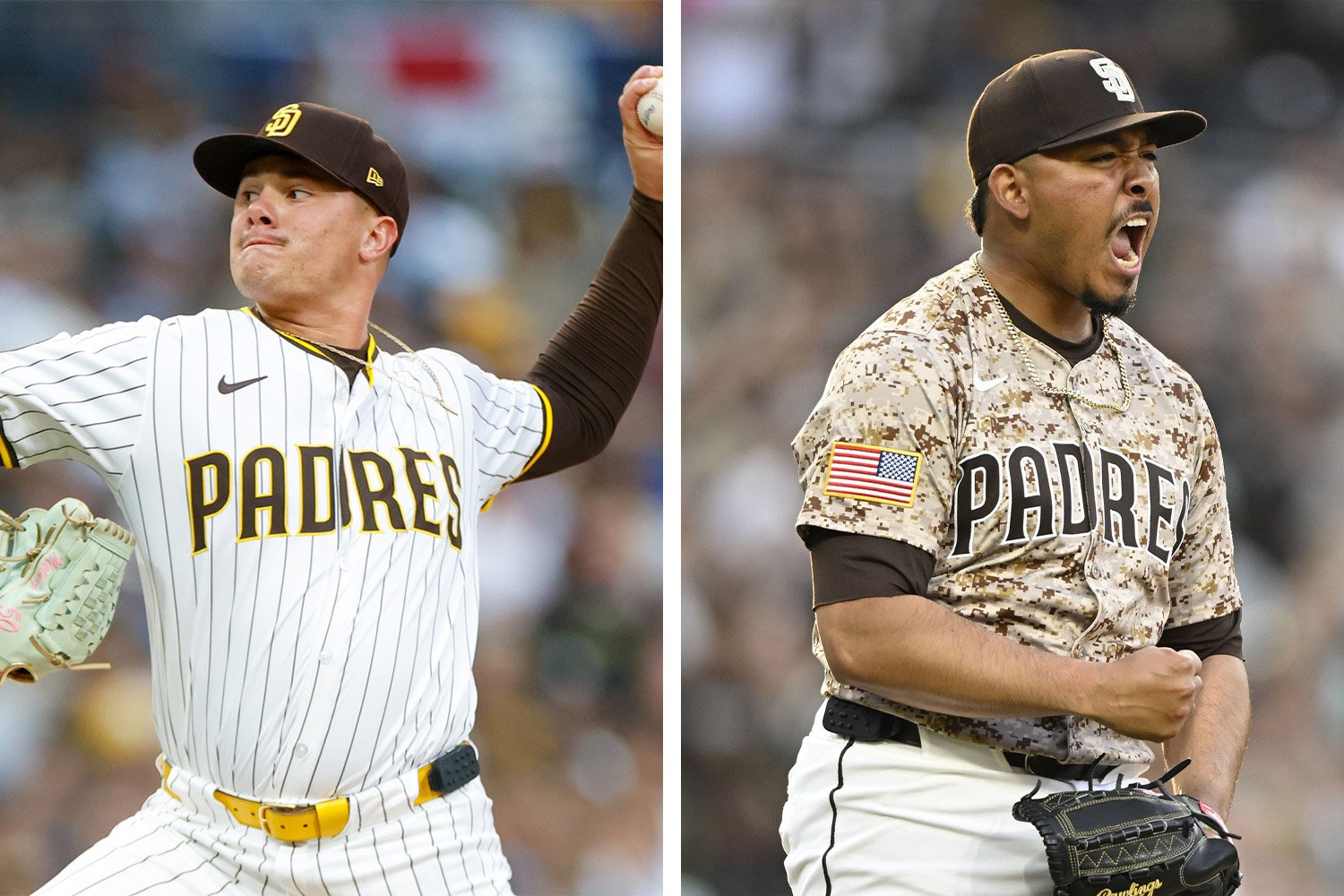 The Padres snuck past the Atlanta Braves and a dominant Spencer Schwellenbach in a 1-0 game on a chilly Saturday evening at Petco Park, marking their third consecutive win to open the year. In a game with unexpected heroes – Randy Vasquez delivering six scoreless innings, Wandy Peralta and Alek Jacob combining to slam the door, and Yuli Gurriel’s pinch-hit RBI to drive in the game’s lone run – perhaps the most surprising, or at least unfamiliar, thing was the bullpen door opening to the sound of Daddy Yankee’s “Rompe” as Adrian Morejon emerged for the save opportunity. In many ways, Shildt’s hands were tied. The usual suspects in Suarez, Adam, and Estrada had thrown 38, 35, and 40 pitches, respectively, across Thursday and Friday. At the start of 2024, this situation may have seen Robert Suarez asked to throw on a third consecutive day. A few months ago, it would call for Tanner Scott. The All-Star closer was a major deadline acquisition from the Marlins and gave the Padres a bonafide, high-leverage lefty to complement Suarez and fellow deadline addition Jason Adam. The addition of Scott allowed the Padres to rest Suarez after consecutive appearances by providing another solid high-leverage option. Scott’s $72 million, 4-year deal with the Dodgers in free agency left the Padres without an established, late-inning reliever from the left side out of the bullpen. Or did it? Let’s play manager for a day. Here are four relievers’ numbers for 2024. They range in innings pitched between 61 IP and 72 IP; two are RHP, while two are LHP. Who do you want to give the ball to? RHP A: 28.2% K-BB%, 2.07 FIP, 2.65 xFIP, 2.39 SIERA, 125 Pitching+ RHP B: 33.3% K-BB%, 2.18 FIP, 2.21 xFIP, 1.91 SIERA, 117 Pitching+ LHP C: 18.4% K-BB%, 2.79 FIP, 3.33 xFIP, 3.19 SIERA, 123 Pitching+ LHP D: 16.3% K-BB%, 2.92 FIP, 3.38 xFIP, 3.55 SIERA, 117 Pitching+ For those unfamiliar with the ERA estimators above, the ten-second explanation is that higher is better for K-BB% (the more people you strike out and the fewer you walk, the fewer runs you’ll allow) and Pitching+, while lower is better for FIP, xFIP, and SIERA, which you’ll recognize are scaled to look like ERA. Given the above options and holding all else equal, the clear choice is probably either of the RHPs. They are both better than their LHP counterparts across the board on all metrics aside from Pitching+. “RHP B” is All-Star and youth phenom Mason Miller, while “RHP A” is Palm Desert’s own Jeremiah Estrada. The fireballing Miller is generally regarded as one of the top closers in baseball, bursting onto the scene as a lockdown reliever for the then-Oakland Athletics in 2024 after his 2023 debut as a starter for the A’s was cut short by injury. The fact that Jeremiah Estrada compares favorably to Miller – if a touch behind on metrics like K-BB%, xFIP, and SIERA – is a fact that should inspire a lot of confidence in the Friar Faithful. “LHP C” and “LHP D” are worth a total of $20 million in 2025 AAV. One is 2024 All-Star Tanner Scott, who the Dodgers are paying an $18 million AAV this season, and one is Adrian Morejon, a 26-year-old owed $2 million by the Padres. Can you tell which is which? Without the aid of FanGraphs or Baseball-Reference, it is difficult to differentiate those two, and in many ways, that is the point of this exercise. All five ERA estimators listed here actually favor, albeit narrowly, Adrian Morejon, who is “LHP C” above. Perhaps Scott and Morejon’s similar peripherals are surprising because they fared quite differently, as measured by ERA, in 2024. Tanner Scott posted a full-season career-best 1.75 ERA (his shortened 2020 mark was 1.31) en route to an All-Star selection and deadline blockbuster trade, while Morejon’s 2.83 ERA was also a career-best for him but generated substantially less pomp and circumstance. The better underlying numbers for Morejon certainly caught the eye of the Padres coaches and front office and likely affected his 2025 role. The team announced in February that Morejon would remain in the bullpen this year. The Padres see Morejon’s potential as a high-leverage reliever. Tanner Scott’s departure passes the mantle of high-leverage lefty to him. For the Padres to have a successful 2025 season and Tanner Scott’s production, they will need Morejon and Estrada to step into high-leverage innings as Morejon did on Saturday night against the Braves. As dominant as Adam and Suarez are when available, they still need rest days. While the added pressure of save situations against playoff teams may be a new challenge for Morejon and Estrada to overcome, the pair of 26-year-old relievers have the underlying numbers to rival nearly any reliever in baseball, including their former teammate turned division foe. Estrada briefly filled this role early in 2024 before the addition of Adam and Scott, which gave the Padres considerably more bullpen depth, and he and Morejon seem poised to step into it again. His confidence certainly featured prominently in Reuben Niebla’s message to Morejon during the mound visit six pitches into the 9th inning. After pitching around a dangerous Marcell Ozuna, Morejon missed badly on his first pitch to Ozzie Albies, prompting a visit from his pitching coach. After Niebla returned to the dugout, his reliever needed just four pitches total to retire Albies via flyout and Michael Harris II via groundout before winning an 8-pitch battle against Drake Baldwin to record his first save of the season via the strikeout. Padres fans have become accustomed to “Bandoleros” and the display from Robert Suarez that follows it to mark the top of the ninth inning. Still, if all goes to plan, they can expect to hear any one of “Rompe” (Adrian Morejon), “Volver Volver” (Jeremiah Estrada), and “Use This Gospel” (Jason Adam) in the 9th inning on days when Suarez is unavailable. The elite backend talent provided by Estrada and Morejon and the expanded role that Tanner Scott’s absence both allows and necessitates afford Mike Shildt and Reuben Niebla the luxury of resting their All-Star closer and confidently giving the ball to either of their 26-year-old relievers.
