


Andy Johnson
-
Posts
52 -
Joined
-
Last visited
Andy Johnson's Achievements





-
How The Seidler Family Revamped Padres Baseball
Andy Johnson posted a topic in San Diego Padres Talk
When Peter Seidler and Ron Fowler purchased the San Diego Padres in the middle of the 2012 season, the Padres were in a rough spot. The team had not made the playoffs since 2006 and was mired in their fourth losing season in five years. Outside of a 90-win campaign in 2010 that saw the Padres miss out on the NL Wild Card by one game, San Diego had not had much success. The team had won 71 games in 2011 and would finish with 76 wins in 2012. San Diego was mostly irrelevant in a division dominated by the Giants and Dodgers. In the first seven years of Seidler and Fowler’s ownership, not much changed for the Friars. San Diego’s streak of losing seasons reached nine. The Padres lost at least 90 games four years in a row between 2016 and 2019, and finished either fourth or fifth in the NL West every season between 2015 and 2019. That’s not to say the team was not trying. AJ Preller was hired as the team's general manager in 2014, and he immediately began his tenure by making high-profile trades and free agency additions. He brought in All-Star caliber players like Justin Upton, James Shields, and Matt Kemp. When that failed to produce a winning team, he pivoted, selling Shields to acquire a young prospect, the son of former major league infielder Fernando Tatis. In 2018, the Padres signed another former All-Star and World Series champion, Eric Hosmer, to an 8-year, $144 million contract. But the biggest move, the one that sent a message to the league, was the 2019 signing of third baseman Manny Machado to a 10-year, $300 million deal. That signing, combined with the promotion of Fernando Tatis Jr. in 2019, was the beginning of a new era for the Padres. Peter Seidler Takes Control of Padres & Pushes Them To Greatness Over the first seven years of his co-ownership, Peter Seidler did not have complete control. That changed in 2020, when Seidler purchased a significant share of Ron Fowler’s stake in the Padres and took over as the team’s chairman, as he became the largest stakeholder in the organization. That was the same year the Padres finally achieved a winning record and returned to the postseason for the first time since 2006. That 2020 campaign began a run of success that San Diego was not used to. Even after missing the playoffs in 2021, the team was improving, and under Seidler’s leadership, the team decided to make another major investment into winning by investing into their pitching staff. The Padres added a pair of ace starting pitchers in Joe Musgrove and Yu Darvish, and would eventually extend both. It was a sign that Seidler and Preller were willing to spend the money that it would take to make San Diego a contender again in the NL West. In 2022, the fruits of their labor paid off. The Padres found themselves neck-and-neck with the Dodgers in the NL West, despite missing Tatis due to a suspension. That led Seidler to green light perhaps the biggest trade in Padres history at the 2022 trade deadline, when San Diego sent a package of four prospects, including James Wood, Robert Hassell, MacKenzie Gore, and CJ Abrams, to the Nationals, in exchange for 23-year-old superstar Juan Soto. With Soto on board, the Padres would make their deepest postseason run since losing the 1998 World Series. San Diego reached the NLCS for the third time in franchise history, and although they would go on to lose 4-games-to-1 against the Phillies, it was another year of improvement for San Diego. Seidler continued to green light more spending in 2023, as the Padres extended Manny Machado through 2033 and signed shortstop Xander Bogaerts to an 11-year, $280 million contract. With Soto, Tatis, Machado, and Bogaerts hitting atop the lineup, and Cy Young winner Blake Snell anchoring the rotation, the team’s 82-80 record felt like a massive letdown. Considering the team had a +104 run differential, it was also a massive outlier. Their expected win-loss record, with a +104 differential, would have been 92-70, which would have comfortably sent the Padres to the playoffs. When Peter Seidler died on November 14, 2023, his stated goal of seeing the Padres win a World Series unfortunately hadn't come to fruition. But surely, Seidler would be proud of the way his brother John has handled the team since his death. Under John Seidler’s leadership, the Padres have won 90 games in back-to-back seasons for the first time in franchise history, and reached the postseason in back-to-back seasons for the second time. These past seasons (2022-2025) are the best four-year stretch in Padres’ history, with a combined record of 354-294. San Diego ranks seventh in the MLB over the past four years, and fifth in total team fWAR. Even after trading Soto to the Yankees, the Padres managed to improve. The Seidler family’s tenure of Padres ownership was marked by big spending, big swings on the trade market, and an unprecedented run of success over the past four years. With José E. Feliciano now set to take over, it will be interesting to see if those trends continue, or if the organization will plan to scale back its spending and rebuild its farm system. View full article -
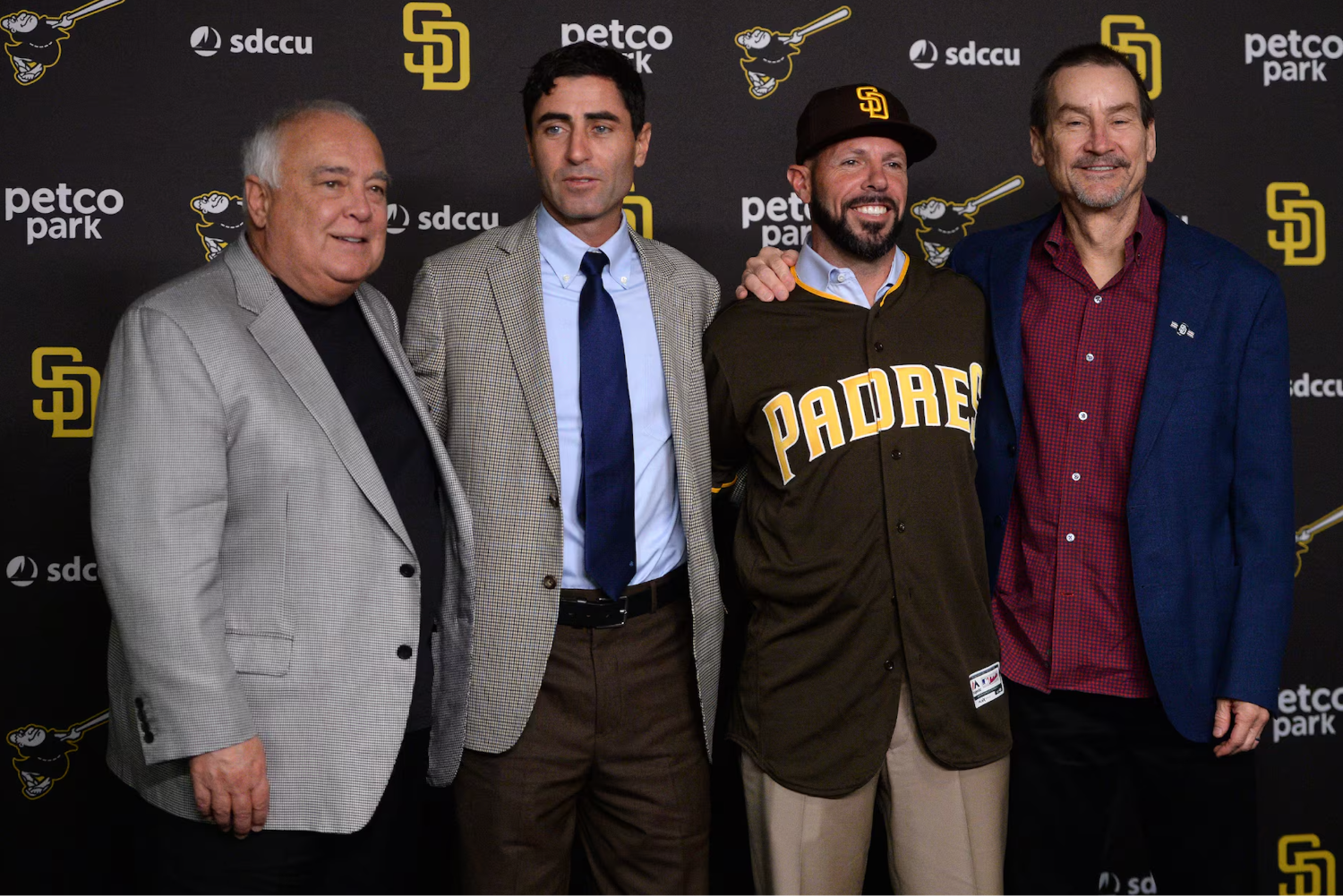 When Peter Seidler and Ron Fowler purchased the San Diego Padres in the middle of the 2012 season, the Padres were in a rough spot. The team had not made the playoffs since 2006 and was mired in their fourth losing season in five years. Outside of a 90-win campaign in 2010 that saw the Padres miss out on the NL Wild Card by one game, San Diego had not had much success. The team had won 71 games in 2011 and would finish with 76 wins in 2012. San Diego was mostly irrelevant in a division dominated by the Giants and Dodgers. In the first seven years of Seidler and Fowler’s ownership, not much changed for the Friars. San Diego’s streak of losing seasons reached nine. The Padres lost at least 90 games four years in a row between 2016 and 2019, and finished either fourth or fifth in the NL West every season between 2015 and 2019. That’s not to say the team was not trying. AJ Preller was hired as the team's general manager in 2014, and he immediately began his tenure by making high-profile trades and free agency additions. He brought in All-Star caliber players like Justin Upton, James Shields, and Matt Kemp. When that failed to produce a winning team, he pivoted, selling Shields to acquire a young prospect, the son of former major league infielder Fernando Tatis. In 2018, the Padres signed another former All-Star and World Series champion, Eric Hosmer, to an 8-year, $144 million contract. But the biggest move, the one that sent a message to the league, was the 2019 signing of third baseman Manny Machado to a 10-year, $300 million deal. That signing, combined with the promotion of Fernando Tatis Jr. in 2019, was the beginning of a new era for the Padres. Peter Seidler Takes Control of Padres & Pushes Them To Greatness Over the first seven years of his co-ownership, Peter Seidler did not have complete control. That changed in 2020, when Seidler purchased a significant share of Ron Fowler’s stake in the Padres and took over as the team’s chairman, as he became the largest stakeholder in the organization. That was the same year the Padres finally achieved a winning record and returned to the postseason for the first time since 2006. That 2020 campaign began a run of success that San Diego was not used to. Even after missing the playoffs in 2021, the team was improving, and under Seidler’s leadership, the team decided to make another major investment into winning by investing into their pitching staff. The Padres added a pair of ace starting pitchers in Joe Musgrove and Yu Darvish, and would eventually extend both. It was a sign that Seidler and Preller were willing to spend the money that it would take to make San Diego a contender again in the NL West. In 2022, the fruits of their labor paid off. The Padres found themselves neck-and-neck with the Dodgers in the NL West, despite missing Tatis due to a suspension. That led Seidler to green light perhaps the biggest trade in Padres history at the 2022 trade deadline, when San Diego sent a package of four prospects, including James Wood, Robert Hassell, MacKenzie Gore, and CJ Abrams, to the Nationals, in exchange for 23-year-old superstar Juan Soto. With Soto on board, the Padres would make their deepest postseason run since losing the 1998 World Series. San Diego reached the NLCS for the third time in franchise history, and although they would go on to lose 4-games-to-1 against the Phillies, it was another year of improvement for San Diego. Seidler continued to green light more spending in 2023, as the Padres extended Manny Machado through 2033 and signed shortstop Xander Bogaerts to an 11-year, $280 million contract. With Soto, Tatis, Machado, and Bogaerts hitting atop the lineup, and Cy Young winner Blake Snell anchoring the rotation, the team’s 82-80 record felt like a massive letdown. Considering the team had a +104 run differential, it was also a massive outlier. Their expected win-loss record, with a +104 differential, would have been 92-70, which would have comfortably sent the Padres to the playoffs. When Peter Seidler died on November 14, 2023, his stated goal of seeing the Padres win a World Series unfortunately hadn't come to fruition. But surely, Seidler would be proud of the way his brother John has handled the team since his death. Under John Seidler’s leadership, the Padres have won 90 games in back-to-back seasons for the first time in franchise history, and reached the postseason in back-to-back seasons for the second time. These past seasons (2022-2025) are the best four-year stretch in Padres’ history, with a combined record of 354-294. San Diego ranks seventh in the MLB over the past four years, and fifth in total team fWAR. Even after trading Soto to the Yankees, the Padres managed to improve. The Seidler family’s tenure of Padres ownership was marked by big spending, big swings on the trade market, and an unprecedented run of success over the past four years. With José E. Feliciano now set to take over, it will be interesting to see if those trends continue, or if the organization will plan to scale back its spending and rebuild its farm system.
 -
Jake Cronenworth had a lot to prove going into this season. After back-to-back All-Star campaigns in 2021 and 2022, Cronenworth has been a league-average player over the past three years. The San Diego Padres’ infielder has carried a 99 OPS+ from 2023-2025 while averaging less than 2.0 bWAR per season. Now 32, it's been a fair assumption to make that he's past his prime and is no longer capable of star-caliber production. That’s why it has been so disappointing to see Cronenworth get off to an incredibly slow start in 2026. In fact, he's been borderline unplayable so far — he’s hitting .148, with a .246 on-base percentage. That’s almost a full 100 points below his career OBP of .334. Even worse, Cronenworth is not slugging at all. He’s hit just one home run and one double, good for a .213 SLG. In 18 games, he has only driven in three runs. He’s rocking a wRC+ of 40, making him 60% worse than the average big-league hitter. His bWAR is currently sitting at -0.4, on pace for the worst season of his career. Obviously, if Cronenworth continues to hit this poorly, he will eventually be moved to a bench role. The Padres did experiment with Fernando Tatis Jr. at second base twice. If Tatis were to replace Cronenworth at second base, right field would open up to allow more at-bats for Gavin Sheets, Nick Castellanos, and Miguel Andujar. That's a very unlikely outcome given the hit it would apply to the team's defense, but it's one that we must address because of how poor the starting second baseman has been. But the Padres are not going to give up on Cronenworth this early. He still has four years left on his contract after 2026, and the Friars can’t afford to pay him $12 million to sit on the bench. Obviously, the results have not been good, but what do the advanced metrics have to offer? Is Cronenworth due for a breakout soon, or is this what the Padres can expect from him going forward? Jake Cronenworth Is Better Than His 2026 Stats According to Baseball Savant, Cronenworth’s expected stats are significantly better than his results so far. His xBA is .244 (nearly 100 points above his actual average). His xSLG is .360 (147 points above his actual slugging). Those numbers still aren’t great, but they’re a lot better than his current results, and would probably result in an OPS somewhere in the mid-600’s. Combined with his strong defense, Cronenworth’s expected numbers would be good enough to justify him being an everyday player. Cronenworth has been the victim of some bad luck, but he has not been doing himself any favors. His 4.5% barrel rate ranks in the 27th percentile. His 34.1% hard-hit rate ranks in the 23rd percentile. His launch-angle sweet-spot rate of 27.3% ranks in the 23rd percentile. His 71.8 miles per hour bat speed ranks in the 46th percentile, and his 19.2% squared-up rate ranks in the 14th percentile. Those are a lot of numbers to digest, but the gist of it is simple: Cronenworth is not hitting the ball hard very often, he’s not barreling it up or finding the sweet spot of the bat, and he’s not squaring pitches up. Even when he starts getting better BABIP luck, it’s hard to see how those numbers are going to result in more slugging. Bad Luck, Or Bad Timing? Clearly, there is some bad luck to blame here. Cronenworth’s .163 BABIP is the sixth-lowest in baseball, well below his .279 career BABIP. Last year, Eugenio Suarez had the worst BABIP in baseball at .243. The BABIP will stabilize, and Cronenworth’s batting average will rise with it. But there are some more troubling concerns when looking at Cronenworth’s splits. Cronenworth is currently hitting .000 against off-speed pitches. His xBA against off-speed pitches is .136, which is still too low and far below his career numbers. In 2024, Cronenworth hit .289 against off-speed pitches, with an xBA of .266. Last year, he hit .197 against off-speed pitches, a major drop-off from the year before. The trend of Cronenworth not being able to hit changeups has accelerated in 2026 to the point of disaster. It’s also possible that this is all stemming from a timing issue, and that once Cronenworth fixes his timing, he’ll be able to hit the off-speed again. Right now, that’s not happening. He has a 47.1% whiff rate against off-speed pitches. Pitchers have been able to utilize changeups to make Cronenworth look silly. However, it’s not just off-speed pitches that Cronenworth is struggling against. He's seen 51 breaking balls this season, and he’s hitting .063 against them, with an xBA of .151. He’s whiffing against the breaking ball 39.1% of the time. Are Cronenworth’s poor splits simply the result of a slump that he will soon break out of? Or is his slump the result of a decline that is causing him to whiff more often against breaking balls and changeups? It’s hard to say after less than 20 games. The reality is that Cronenworth has not been good, and while the BABIP luck should improve, there are real underlying issues at play that could prolong his slump and eventually cause the Padres to take action and move him out of the everyday lineup. View full article
-
Jake Cronenworth Might Be Playing His Way Onto the Padres' Bench
Andy Johnson posted an article in Padres
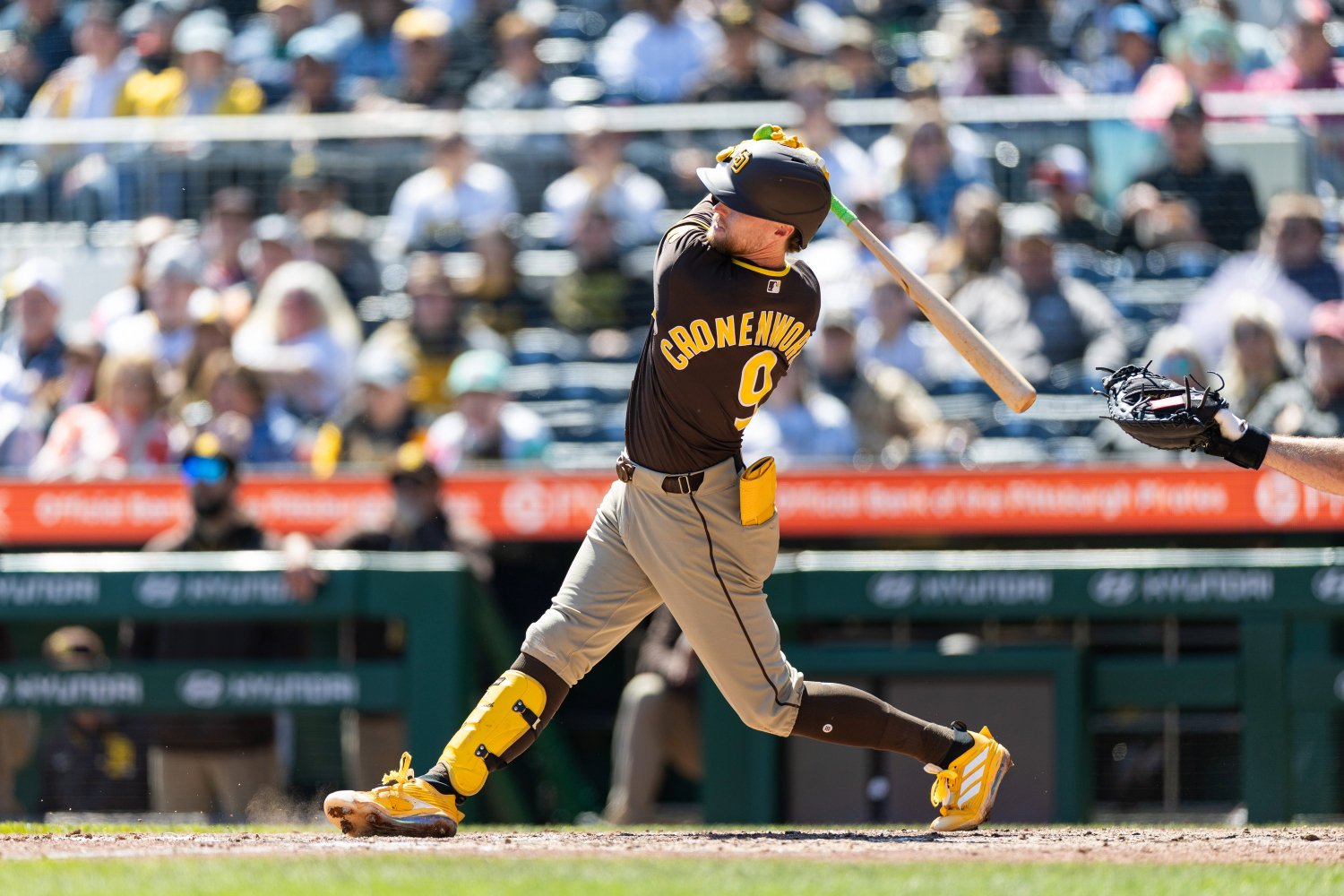 Jake Cronenworth had a lot to prove going into this season. After back-to-back All-Star campaigns in 2021 and 2022, Cronenworth has been a league-average player over the past three years. The San Diego Padres’ infielder has carried a 99 OPS+ from 2023-2025 while averaging less than 2.0 bWAR per season. Now 32, it's been a fair assumption to make that he's past his prime and is no longer capable of star-caliber production. That’s why it has been so disappointing to see Cronenworth get off to an incredibly slow start in 2026. In fact, he's been borderline unplayable so far — he’s hitting .148, with a .246 on-base percentage. That’s almost a full 100 points below his career OBP of .334. Even worse, Cronenworth is not slugging at all. He’s hit just one home run and one double, good for a .213 SLG. In 18 games, he has only driven in three runs. He’s rocking a wRC+ of 40, making him 60% worse than the average big-league hitter. His bWAR is currently sitting at -0.4, on pace for the worst season of his career. Obviously, if Cronenworth continues to hit this poorly, he will eventually be moved to a bench role. The Padres did experiment with Fernando Tatis Jr. at second base twice. If Tatis were to replace Cronenworth at second base, right field would open up to allow more at-bats for Gavin Sheets, Nick Castellanos, and Miguel Andujar. That's a very unlikely outcome given the hit it would apply to the team's defense, but it's one that we must address because of how poor the starting second baseman has been. But the Padres are not going to give up on Cronenworth this early. He still has four years left on his contract after 2026, and the Friars can’t afford to pay him $12 million to sit on the bench. Obviously, the results have not been good, but what do the advanced metrics have to offer? Is Cronenworth due for a breakout soon, or is this what the Padres can expect from him going forward? Jake Cronenworth Is Better Than His 2026 Stats According to Baseball Savant, Cronenworth’s expected stats are significantly better than his results so far. His xBA is .244 (nearly 100 points above his actual average). His xSLG is .360 (147 points above his actual slugging). Those numbers still aren’t great, but they’re a lot better than his current results, and would probably result in an OPS somewhere in the mid-600’s. Combined with his strong defense, Cronenworth’s expected numbers would be good enough to justify him being an everyday player. Cronenworth has been the victim of some bad luck, but he has not been doing himself any favors. His 4.5% barrel rate ranks in the 27th percentile. His 34.1% hard-hit rate ranks in the 23rd percentile. His launch-angle sweet-spot rate of 27.3% ranks in the 23rd percentile. His 71.8 miles per hour bat speed ranks in the 46th percentile, and his 19.2% squared-up rate ranks in the 14th percentile. Those are a lot of numbers to digest, but the gist of it is simple: Cronenworth is not hitting the ball hard very often, he’s not barreling it up or finding the sweet spot of the bat, and he’s not squaring pitches up. Even when he starts getting better BABIP luck, it’s hard to see how those numbers are going to result in more slugging. Bad Luck, Or Bad Timing? Clearly, there is some bad luck to blame here. Cronenworth’s .163 BABIP is the sixth-lowest in baseball, well below his .279 career BABIP. Last year, Eugenio Suarez had the worst BABIP in baseball at .243. The BABIP will stabilize, and Cronenworth’s batting average will rise with it. But there are some more troubling concerns when looking at Cronenworth’s splits. Cronenworth is currently hitting .000 against off-speed pitches. His xBA against off-speed pitches is .136, which is still too low and far below his career numbers. In 2024, Cronenworth hit .289 against off-speed pitches, with an xBA of .266. Last year, he hit .197 against off-speed pitches, a major drop-off from the year before. The trend of Cronenworth not being able to hit changeups has accelerated in 2026 to the point of disaster. It’s also possible that this is all stemming from a timing issue, and that once Cronenworth fixes his timing, he’ll be able to hit the off-speed again. Right now, that’s not happening. He has a 47.1% whiff rate against off-speed pitches. Pitchers have been able to utilize changeups to make Cronenworth look silly. However, it’s not just off-speed pitches that Cronenworth is struggling against. He's seen 51 breaking balls this season, and he’s hitting .063 against them, with an xBA of .151. He’s whiffing against the breaking ball 39.1% of the time. Are Cronenworth’s poor splits simply the result of a slump that he will soon break out of? Or is his slump the result of a decline that is causing him to whiff more often against breaking balls and changeups? It’s hard to say after less than 20 games. The reality is that Cronenworth has not been good, and while the BABIP luck should improve, there are real underlying issues at play that could prolong his slump and eventually cause the Padres to take action and move him out of the everyday lineup.
 -
If you were feeling concerned after Nick Pivetta's Opening Day start, you were not alone. Watching him allow six earned runs in three innings in his first outing of the season was not fun, creaking the door back open for questions about his long-term ability to be an ace. Pivetta had never been that caliber of pitcher until 2025, when he transformed himself from a solid back-end starter into a legitimate No. 1 option in the postseason. After a poor outing to start 2026, the one-year wonder allegations began. However, Pivetta cleaned things up in his second start of the season, tossing five shutout innings and striking out eight. He looked much more comfortable on the mound and calmed the fears that he would not be the same pitcher in 2026. So, which version of Pivetta are the Padres going to get going forward? Let's break down his first two starts to find some clues. Padres Breakdown: Nick Pivetta's First Two Starts of 2026 Start 1: The Tigers hit very well off of Pivetta, with a .438 batting average in three innings. He allowed seven hits and issued three walks. Three of those hits came against the fastball, two against cutters, one against a curveball, and one against the sweeper. Detroit's average exit velocity against Pivetta was 87.6 MPH. Detroit did outperform its expected stats against Pivetta, for what it's worth; according to Baseball Savant, their xBA was nearly 100 points lower at .346. Still not great, but better than the .438 average he allowed. Start 2: Against the Giants, Pivetta looked like a different pitcher. He allowed just one hit, a single to his former teammate Luis Arraez. The Giants had a batting average of .063 and an xBA of .066, which backs up the idea that Pivetta was in command all game. San Francisco's average exit velocity was 85 MPH, significantly lower than what the Tigers produced. Pitch usage: One thing worth noting is that Pivetta's pitch usage has changed significantly in 2026. He's throwing his fastball more than he ever has. Last year, he threw his fastball on 47% of pitches, but in 2026, that has jumped to 59%. His fastball velocity has also improved to 94.3 MPH, up from 93.8 MPH last year. That leap in velocity is noteworthy, but is that why he is throwing his fastball more? With Pivetta throwing so many more fastballs, he's throwing all of his other pitches less. This all could just be due to it being early in the season — it's not unreasonable to suggest that Pivetta is still fine-tuning his approach and has become reliant on his favorite pitch while doing so. There might not be a strategic approach that is causing him to throw more fastballs and fewer breaking balls. Or, there might be. In 2025, opponents hit .216 off of Pivetta's curveball, the highest of any of his pitches. Batters actually had an xBA of .279 against his curve. His curveball had a 16% whiff percentage, significantly lower than his fastball and sweeper. Perhaps the team weened him off the curve, fearing a regression to the mean. But why reduce the sweeper usage? Pivetta's sweeper produced an xBA of .177, making it Pivetta's best pitch. It produced matching wOBA and xwOBA figures (.212). The sweeper also had the highest whiff rate of any of his pitches, at 37.5%. If anything, Pivetta should probably be throwing his sweeper more often, not less. His cutter, meanwhile, got good results in 2025, but the expected stats told a different story. His cutter held opponents to a .176 average and .244 wOBA, but the xBA was .264, and the xWOBA was .332, nearly 100 points higher than the actual result. It's clearly not an offering he can build his arsenal around. Pivetta's fastball might be his best pitch, but increasing his fastball at the expense of his sweeper probably won't yield the ideal results. Half the hits he's allowed this year have been off the fastball. Verdict It's too early to tell if any of this means anything for Pivetta, but at this point, the Padres should probably expect a slightly worse version of the guy who led their rotation in 2025. He's not going to carry a 6.75 ERA for the rest of the year, but it probably won't be below 3.00. Pivetta's increased usage of fastballs could be due to getting poor results from his curveball and cutter last year. He's still doing a good job limiting hard contact, and he's still getting batters to chase. It's true that he probably benefited from some luck in 2025, but he should still be a reliable starter in 2026, even if he's not the no-questions-asked ace that he was last year. View full article
-
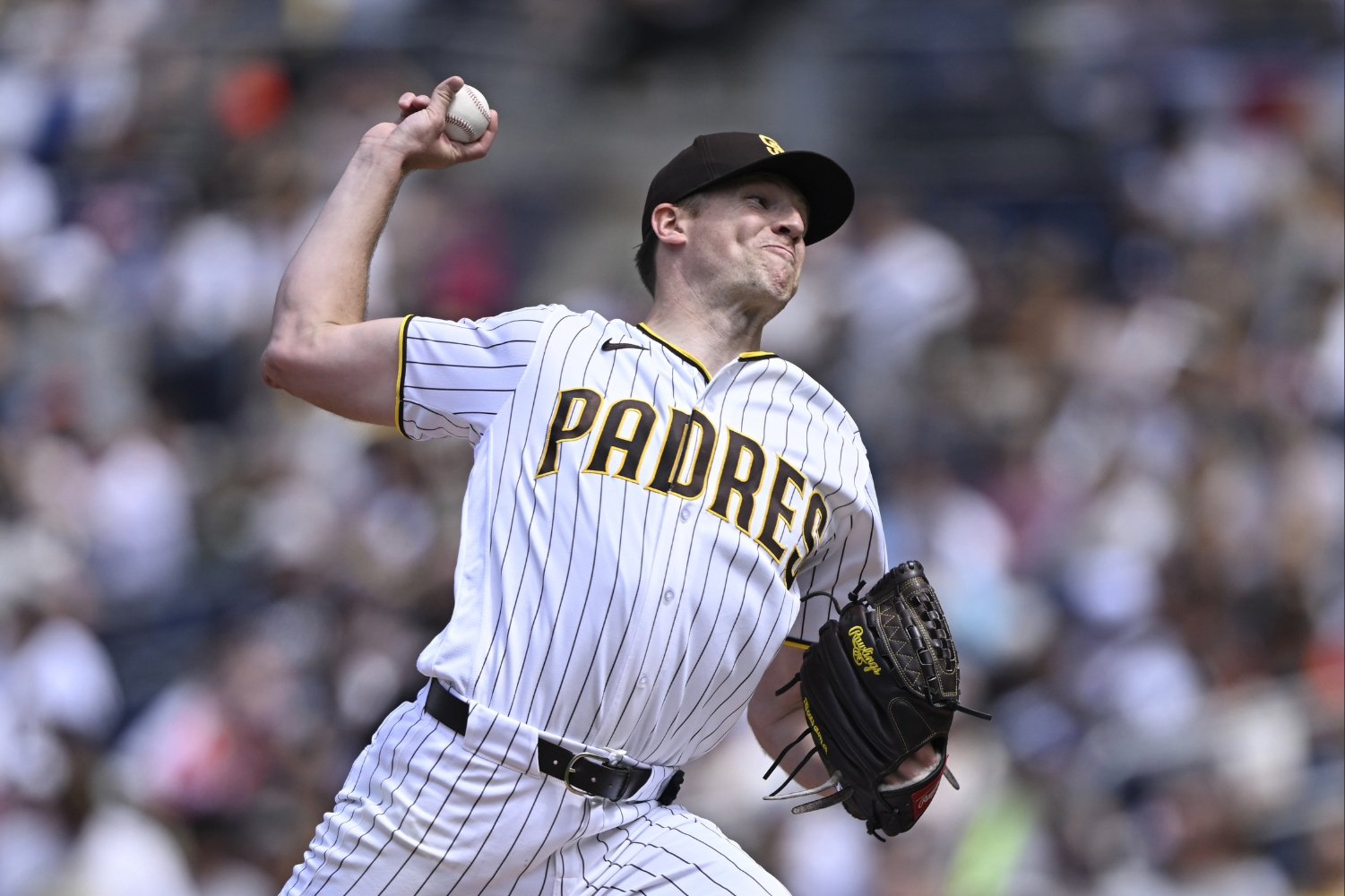 If you were feeling concerned after Nick Pivetta's Opening Day start, you were not alone. Watching him allow six earned runs in three innings in his first outing of the season was not fun, creaking the door back open for questions about his long-term ability to be an ace. Pivetta had never been that caliber of pitcher until 2025, when he transformed himself from a solid back-end starter into a legitimate No. 1 option in the postseason. After a poor outing to start 2026, the one-year wonder allegations began. However, Pivetta cleaned things up in his second start of the season, tossing five shutout innings and striking out eight. He looked much more comfortable on the mound and calmed the fears that he would not be the same pitcher in 2026. So, which version of Pivetta are the Padres going to get going forward? Let's break down his first two starts to find some clues. Padres Breakdown: Nick Pivetta's First Two Starts of 2026 Start 1: The Tigers hit very well off of Pivetta, with a .438 batting average in three innings. He allowed seven hits and issued three walks. Three of those hits came against the fastball, two against cutters, one against a curveball, and one against the sweeper. Detroit's average exit velocity against Pivetta was 87.6 MPH. Detroit did outperform its expected stats against Pivetta, for what it's worth; according to Baseball Savant, their xBA was nearly 100 points lower at .346. Still not great, but better than the .438 average he allowed. Start 2: Against the Giants, Pivetta looked like a different pitcher. He allowed just one hit, a single to his former teammate Luis Arraez. The Giants had a batting average of .063 and an xBA of .066, which backs up the idea that Pivetta was in command all game. San Francisco's average exit velocity was 85 MPH, significantly lower than what the Tigers produced. Pitch usage: One thing worth noting is that Pivetta's pitch usage has changed significantly in 2026. He's throwing his fastball more than he ever has. Last year, he threw his fastball on 47% of pitches, but in 2026, that has jumped to 59%. His fastball velocity has also improved to 94.3 MPH, up from 93.8 MPH last year. That leap in velocity is noteworthy, but is that why he is throwing his fastball more? With Pivetta throwing so many more fastballs, he's throwing all of his other pitches less. This all could just be due to it being early in the season — it's not unreasonable to suggest that Pivetta is still fine-tuning his approach and has become reliant on his favorite pitch while doing so. There might not be a strategic approach that is causing him to throw more fastballs and fewer breaking balls. Or, there might be. In 2025, opponents hit .216 off of Pivetta's curveball, the highest of any of his pitches. Batters actually had an xBA of .279 against his curve. His curveball had a 16% whiff percentage, significantly lower than his fastball and sweeper. Perhaps the team weened him off the curve, fearing a regression to the mean. But why reduce the sweeper usage? Pivetta's sweeper produced an xBA of .177, making it Pivetta's best pitch. It produced matching wOBA and xwOBA figures (.212). The sweeper also had the highest whiff rate of any of his pitches, at 37.5%. If anything, Pivetta should probably be throwing his sweeper more often, not less. His cutter, meanwhile, got good results in 2025, but the expected stats told a different story. His cutter held opponents to a .176 average and .244 wOBA, but the xBA was .264, and the xWOBA was .332, nearly 100 points higher than the actual result. It's clearly not an offering he can build his arsenal around. Pivetta's fastball might be his best pitch, but increasing his fastball at the expense of his sweeper probably won't yield the ideal results. Half the hits he's allowed this year have been off the fastball. Verdict It's too early to tell if any of this means anything for Pivetta, but at this point, the Padres should probably expect a slightly worse version of the guy who led their rotation in 2025. He's not going to carry a 6.75 ERA for the rest of the year, but it probably won't be below 3.00. Pivetta's increased usage of fastballs could be due to getting poor results from his curveball and cutter last year. He's still doing a good job limiting hard contact, and he's still getting batters to chase. It's true that he probably benefited from some luck in 2025, but he should still be a reliable starter in 2026, even if he's not the no-questions-asked ace that he was last year.
 -
Seven games into the season, the San Diego Padres ranked dead last in the MLB in runs scored. That's not the stat fans expected to see, especially with an offense featuring all-stars like Manny Machado, Fernando Tatis Jr., Jake Cronenworth and Jackson Merrill. Despite the firepower in San Diego, the bats have come out of the gate extremely cold... just like they were last year when the team was eliminated in the NL Wild Card Round. Not only are the Padres last in runs, they are also last in hits, home runs, OBP, SLG, and OPS. They rank 22nd in walks and 29th in batting average. The Friars are not scoring because they are not getting on base, hitting for average, or hitting for power. Their offense is failing in every element of the game. Not everyone on the offense is struggling, however. Ramon Laureano is playing some of the best baseball of his career. Laureano has been good for a while now. He had an .832 OPS and 1.3 bWAR in 67 games with the Braves in 2024, and followed that up with an impressive 2025 season, which saw him slash .281/.342/.512 with 3.8 bWAR split between Baltimore and San Diego. It was the best season of his career, but 2026 has been an even better start for the veteran outfielder. So, what is behind Laureano's hot start, and what is he doing right that the rest of the team is doing wrong? Padres Breakdown: Ramon Laureano's Scorching Hot Start Finding the Sweet Spot One number that jumps out from Laureano's Baseball Savant page is his launch-angle sweet-spot percentage of 52.9%. That ranks in the 94th percentile in the MLB. That means that the veteran outfielder's bat path and swing plane are on point, and he's producing contact at the ideal time in his swing. That explains the .318 batting average. The xBA backs it up, as his expected average of .308 almost perfectly matches the actual production. Laureano's also boasting a barrel rate of 17.6%, placing him in the 85th percentile of the league. That has helped raise his xSLG to .677, even better than his current .636 slugging percentage. Laureano has hit two of the Padres' three home runs in 2026, and his barrel rate is a big reason why. Laureano is hitting the ball hard, barreling it up at an above-average rate, and hitting the ball in the air consistently. It's almost surprising that his .984 OPS isn't higher. Taking A Page Out of Ramon Laureano's Book The Padres, as a team, rank dead last in barrels. In fact, San Diego only has seven barrels this season. Laureano is responsible for three of those. It's never a good sign when one player accounts for half of his team's production, but that has almost been the case for San Diego. The Braves already have 25 barrels, more than three times as many as the Friars. What is interesting is that San Diego's 41.3% hard-hit rate is fine, 11th best in the league so far. While they might not be barreling up the ball, they are at least hitting it hard. The team's expected stats are also significantly better than their actual stats, so that's another silver lining. San Diego's xBA as a team is .239 (17th) compared to their actual team average of .192 (29th). Their xSLG of .348 is still not great, ranking 27th in the league, but it's still nearly 60 points higher than their actual team SLG of .290, the worst in baseball. Ultimately, this team is going to need to take a page out of Laureano's book and start barreling the ball up more. Right now, the Padres 5.2% weak contact rate is the seventh-highest in the league. They are topping the ball 34.1% of the time, the fourth-most often, while they make solid contact just 6% of the time (13th). Improving contact quality is easier said than done, but there's more than enough firepower in Craig Stammen's lineup to make it happen. Ramon Laureano is leading by example, but he can't keep the offense afloat on his own. View full article
-
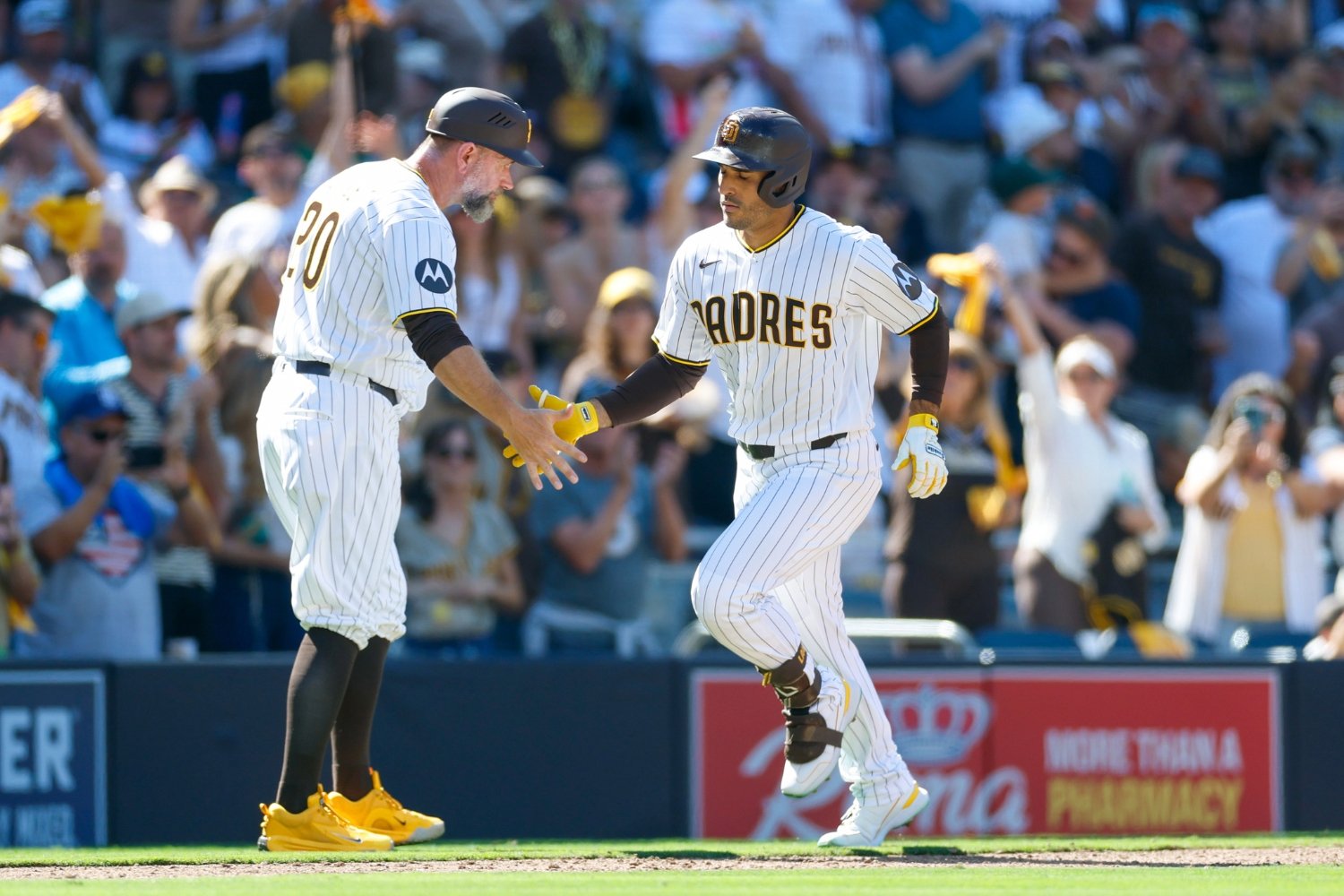 Seven games into the season, the San Diego Padres ranked dead last in the MLB in runs scored. That's not the stat fans expected to see, especially with an offense featuring all-stars like Manny Machado, Fernando Tatis Jr., Jake Cronenworth and Jackson Merrill. Despite the firepower in San Diego, the bats have come out of the gate extremely cold... just like they were last year when the team was eliminated in the NL Wild Card Round. Not only are the Padres last in runs, they are also last in hits, home runs, OBP, SLG, and OPS. They rank 22nd in walks and 29th in batting average. The Friars are not scoring because they are not getting on base, hitting for average, or hitting for power. Their offense is failing in every element of the game. Not everyone on the offense is struggling, however. Ramon Laureano is playing some of the best baseball of his career. Laureano has been good for a while now. He had an .832 OPS and 1.3 bWAR in 67 games with the Braves in 2024, and followed that up with an impressive 2025 season, which saw him slash .281/.342/.512 with 3.8 bWAR split between Baltimore and San Diego. It was the best season of his career, but 2026 has been an even better start for the veteran outfielder. So, what is behind Laureano's hot start, and what is he doing right that the rest of the team is doing wrong? Padres Breakdown: Ramon Laureano's Scorching Hot Start Finding the Sweet Spot One number that jumps out from Laureano's Baseball Savant page is his launch-angle sweet-spot percentage of 52.9%. That ranks in the 94th percentile in the MLB. That means that the veteran outfielder's bat path and swing plane are on point, and he's producing contact at the ideal time in his swing. That explains the .318 batting average. The xBA backs it up, as his expected average of .308 almost perfectly matches the actual production. Laureano's also boasting a barrel rate of 17.6%, placing him in the 85th percentile of the league. That has helped raise his xSLG to .677, even better than his current .636 slugging percentage. Laureano has hit two of the Padres' three home runs in 2026, and his barrel rate is a big reason why. Laureano is hitting the ball hard, barreling it up at an above-average rate, and hitting the ball in the air consistently. It's almost surprising that his .984 OPS isn't higher. Taking A Page Out of Ramon Laureano's Book The Padres, as a team, rank dead last in barrels. In fact, San Diego only has seven barrels this season. Laureano is responsible for three of those. It's never a good sign when one player accounts for half of his team's production, but that has almost been the case for San Diego. The Braves already have 25 barrels, more than three times as many as the Friars. What is interesting is that San Diego's 41.3% hard-hit rate is fine, 11th best in the league so far. While they might not be barreling up the ball, they are at least hitting it hard. The team's expected stats are also significantly better than their actual stats, so that's another silver lining. San Diego's xBA as a team is .239 (17th) compared to their actual team average of .192 (29th). Their xSLG of .348 is still not great, ranking 27th in the league, but it's still nearly 60 points higher than their actual team SLG of .290, the worst in baseball. Ultimately, this team is going to need to take a page out of Laureano's book and start barreling the ball up more. Right now, the Padres 5.2% weak contact rate is the seventh-highest in the league. They are topping the ball 34.1% of the time, the fourth-most often, while they make solid contact just 6% of the time (13th). Improving contact quality is easier said than done, but there's more than enough firepower in Craig Stammen's lineup to make it happen. Ramon Laureano is leading by example, but he can't keep the offense afloat on his own.
 -
Every kid is familiar with the feeling of waking up on Christmas morning and seeing their presents wrapped neatly under the tree, complete with ribbons and bows. The big, exciting presents tend to be wrapped in boxes under the tree. But what about the stockings? Those are usually filled with "stocking-stuffers"; smaller, more practical gifts that are not necessarily exciting, but sometimes tend to be more useful. As a kid, my stockings were usually stocked with fruit, soap, flossers, a CD, and plenty of other random goodies that I actually got quite a bit of use from. They weren't the flashiest presents, but they mattered, and they had a real impact on my life. You're probably thinking, what does this have to do with baseball? The truth is, every offseason, while there are a handful of flashy, big-name acquisitions, the majority of the moves every winter are depth pieces. Minor leaguers, prospects, seasoned veterans, relievers, utility men, bench-pieces, and fifth starters tend to be the guys moving around the most. And while those players aren't as exciting, the right ones can have just as much impact on the season. Here are five "stocking-stuffer' type depth players that could reshape the San Diego Padres' roster in a good way in 2026. Five Under-appreciated Players Padres Should Sign This Offseason 1. Gary Sanchez, C Backup catchers are the ultimate stocking-stuffers. Nobody gets too excited about them, but they are much more important than anyone realizes. Obviously, every backup catcher is one injury away from becoming the starting catcher, and catchers tend to get hurt often, due to the wear and tear the position can have on their bodies. The backup catcher is also responsible for starting at least one game every week to lighten the load on the starter. Thus, the backup catcher tends to be much more essential than we realize. And Gary Sanchez would be the perfect man to back up Freddy Fermin in San Diego. Sanchez was a league-average bat last year in Baltimore, with a 100 OPS+ and five home runs in 29 games. Before that, he had a solid 2024 with the Brewers, hitting 11 home runs in 89 games, finishing with 0.2 bWAR and a 94 OPS+. That's not the reason the Padres should sign him, though. Sanchez was brilliant in 2023 as part of the Friars. He was worth 2.3 bWAR in just 72 games, crushing 19 home runs and finishing with a 113 OPS+. He might never hit 19 home runs in a season again, but his offensive prowess would still be a huge upgrade to the bench. He'll be 33 next year, but it feels like the veteran should still be worth one more good season as a backup backstop. 2. Ty France, 1B The Padres still don't have a clear first baseman next year. It could be Sung-Mun Song or Jake Cronenworth, or possibly Jose Miranda. You could throw Gavin Sheets into the mix as well. Cronenworth is currently listed as the starter on the depth chart, but he's also listed as the starting second baseman. What about taking a flyer on a former All-Star in Seattle, Ty France? He was once a part of the Padres system, until he was traded to Seattle in 2020 as part of the Austin Nola trade. France peaked in 2022, when he was named to the AL All-Star team, and helped lead Seattle to their first playoff appearance in 21 years. Since then, he's been a mostly average player. Between 2023-2025, he's played for four teams (Seattle, Cincinnati, Minnesota, and Toronto), with 1.3 bWAR in 436 games. He has owned a 94 OPS+ since the beginning of 2023, with 32 home runs and 81 doubles. France is no longer a guy who will start 150 games at first base in a season, but he could be a valuable depth add on the bench in San Diego. He could play second or third base in a pinch (he was a third baseman in the Padres' system), and the Blue Jays thought he was valuable enough to keep him on their playoff roster (he was 1-for-4 with an RBI in the World Series). He won't change the complexion of the team, but he could augment what's already in place. 3. Dylan Moore, UTL Another former Mariner, Dylan Moore was the AL's Gold Glove utility man in 2024. Throughout his career, he has been one of the top utility players in the league, and while he's no Tommy Edman, he's the type of guy most teams could use on the bench. Moore was worth 2.2 bWAR in 2024, posting a 103 OPS+. He is capable of playing every position besides catcher, with appearances at all four infield positions and all three outfield positions. He also has tremendous speed, with 32 stolen bases in 2024 and 118 steals in his career. The righty is more of a platoon bat, having had most of his success against left-handed pitching, but that's something the Padres could work with. He could platoon with a guy like Gavin Sheets or Jake Cronenworth, playing second base or left field against left-handed pitchers, and coming off the bench as a pinch-runner in crucial late-game situations. His versatility also makes him the perfect guy to have in case injuries occur. He'd be a better option than Will Wagner or Mason McCoy as a utility infielder, and if someone like Manny Machado or Cronenworth were to get hurt, Moore would fit perfectly as a platoon partner for the left-handed Sung-mun Song. 4. Tyler Anderson, SP Anderson has been one of the most up-and-down players in the league over the past few seasons. He was an All-Star for the Dodgers in 2022 and again for the Angels in 2024, but was bad in 2023 and average in 2025. Still, for a team that is currently slated to have JP Sears as its fifth starter and Kyle Hart as their best depth piece, Anderson would not be a bad player to sign. He has accumulated 9.1 bWAR since 2022, with a 4.54 FIP and a 3.98 ERA (106 ERA+). Those are solid marks, and he's also proven to be durable, starting at least 26 games every season since the COVID-shortened 2020 season. He'll be 36 next year, but we've seen veterans his age put together solid seasons as back-end starters. If Anderson bounces back and continues his trend of making the All-Star team every other year, he could quickly become one of the most underrated signings of the year. Even if he doesn't return to All-Star form, though, he'd be a worthwhile flier as a No. 5 starter. Plus, he should come cheap. 5. Andrew Chafin, RP The Padres already have one of the best bullpens in the league, but why not add another solid reliever to the mix? The team did lose Robert Suarez, so it would make sense to add at least one more veteran to the 'pen. What about Andrew Chafin, the longtime Diamondback who has bounced around the league over the past few seasons? He posted a 2.41 ERA and 3.46 FIP last year, appearing in 42 games between Washington and Los Angeles. In 2024, pitching for the Tigers and Rangers, he finished with a 3.51 ERA and 3.54 FIP in 62 appearances. And in 2022, he was elite for the Tigers, appearing in 64 games and finishing with a 2.83 ERA and 3.06 FIP. He'll be 36 next year, and would be a cheap veteran to insert into the San Diego bullpen behind Mason Miller, Jason Adam, and Adrian Morejon. Chafin could definitely be a leverage reliever if necessary, but would also be a steady presence in the middle of the relief corps, alongside guys like Wandy Peralta and David Morgan. His addition is more about want than necessity, but sometimes, such is the spirit of the holidays. View full article
-
 Every kid is familiar with the feeling of waking up on Christmas morning and seeing their presents wrapped neatly under the tree, complete with ribbons and bows. The big, exciting presents tend to be wrapped in boxes under the tree. But what about the stockings? Those are usually filled with "stocking-stuffers"; smaller, more practical gifts that are not necessarily exciting, but sometimes tend to be more useful. As a kid, my stockings were usually stocked with fruit, soap, flossers, a CD, and plenty of other random goodies that I actually got quite a bit of use from. They weren't the flashiest presents, but they mattered, and they had a real impact on my life. You're probably thinking, what does this have to do with baseball? The truth is, every offseason, while there are a handful of flashy, big-name acquisitions, the majority of the moves every winter are depth pieces. Minor leaguers, prospects, seasoned veterans, relievers, utility men, bench-pieces, and fifth starters tend to be the guys moving around the most. And while those players aren't as exciting, the right ones can have just as much impact on the season. Here are five "stocking-stuffer' type depth players that could reshape the San Diego Padres' roster in a good way in 2026. Five Under-appreciated Players Padres Should Sign This Offseason 1. Gary Sanchez, C Backup catchers are the ultimate stocking-stuffers. Nobody gets too excited about them, but they are much more important than anyone realizes. Obviously, every backup catcher is one injury away from becoming the starting catcher, and catchers tend to get hurt often, due to the wear and tear the position can have on their bodies. The backup catcher is also responsible for starting at least one game every week to lighten the load on the starter. Thus, the backup catcher tends to be much more essential than we realize. And Gary Sanchez would be the perfect man to back up Freddy Fermin in San Diego. Sanchez was a league-average bat last year in Baltimore, with a 100 OPS+ and five home runs in 29 games. Before that, he had a solid 2024 with the Brewers, hitting 11 home runs in 89 games, finishing with 0.2 bWAR and a 94 OPS+. That's not the reason the Padres should sign him, though. Sanchez was brilliant in 2023 as part of the Friars. He was worth 2.3 bWAR in just 72 games, crushing 19 home runs and finishing with a 113 OPS+. He might never hit 19 home runs in a season again, but his offensive prowess would still be a huge upgrade to the bench. He'll be 33 next year, but it feels like the veteran should still be worth one more good season as a backup backstop. 2. Ty France, 1B The Padres still don't have a clear first baseman next year. It could be Sung-Mun Song or Jake Cronenworth, or possibly Jose Miranda. You could throw Gavin Sheets into the mix as well. Cronenworth is currently listed as the starter on the depth chart, but he's also listed as the starting second baseman. What about taking a flyer on a former All-Star in Seattle, Ty France? He was once a part of the Padres system, until he was traded to Seattle in 2020 as part of the Austin Nola trade. France peaked in 2022, when he was named to the AL All-Star team, and helped lead Seattle to their first playoff appearance in 21 years. Since then, he's been a mostly average player. Between 2023-2025, he's played for four teams (Seattle, Cincinnati, Minnesota, and Toronto), with 1.3 bWAR in 436 games. He has owned a 94 OPS+ since the beginning of 2023, with 32 home runs and 81 doubles. France is no longer a guy who will start 150 games at first base in a season, but he could be a valuable depth add on the bench in San Diego. He could play second or third base in a pinch (he was a third baseman in the Padres' system), and the Blue Jays thought he was valuable enough to keep him on their playoff roster (he was 1-for-4 with an RBI in the World Series). He won't change the complexion of the team, but he could augment what's already in place. 3. Dylan Moore, UTL Another former Mariner, Dylan Moore was the AL's Gold Glove utility man in 2024. Throughout his career, he has been one of the top utility players in the league, and while he's no Tommy Edman, he's the type of guy most teams could use on the bench. Moore was worth 2.2 bWAR in 2024, posting a 103 OPS+. He is capable of playing every position besides catcher, with appearances at all four infield positions and all three outfield positions. He also has tremendous speed, with 32 stolen bases in 2024 and 118 steals in his career. The righty is more of a platoon bat, having had most of his success against left-handed pitching, but that's something the Padres could work with. He could platoon with a guy like Gavin Sheets or Jake Cronenworth, playing second base or left field against left-handed pitchers, and coming off the bench as a pinch-runner in crucial late-game situations. His versatility also makes him the perfect guy to have in case injuries occur. He'd be a better option than Will Wagner or Mason McCoy as a utility infielder, and if someone like Manny Machado or Cronenworth were to get hurt, Moore would fit perfectly as a platoon partner for the left-handed Sung-mun Song. 4. Tyler Anderson, SP Anderson has been one of the most up-and-down players in the league over the past few seasons. He was an All-Star for the Dodgers in 2022 and again for the Angels in 2024, but was bad in 2023 and average in 2025. Still, for a team that is currently slated to have JP Sears as its fifth starter and Kyle Hart as their best depth piece, Anderson would not be a bad player to sign. He has accumulated 9.1 bWAR since 2022, with a 4.54 FIP and a 3.98 ERA (106 ERA+). Those are solid marks, and he's also proven to be durable, starting at least 26 games every season since the COVID-shortened 2020 season. He'll be 36 next year, but we've seen veterans his age put together solid seasons as back-end starters. If Anderson bounces back and continues his trend of making the All-Star team every other year, he could quickly become one of the most underrated signings of the year. Even if he doesn't return to All-Star form, though, he'd be a worthwhile flier as a No. 5 starter. Plus, he should come cheap. 5. Andrew Chafin, RP The Padres already have one of the best bullpens in the league, but why not add another solid reliever to the mix? The team did lose Robert Suarez, so it would make sense to add at least one more veteran to the 'pen. What about Andrew Chafin, the longtime Diamondback who has bounced around the league over the past few seasons? He posted a 2.41 ERA and 3.46 FIP last year, appearing in 42 games between Washington and Los Angeles. In 2024, pitching for the Tigers and Rangers, he finished with a 3.51 ERA and 3.54 FIP in 62 appearances. And in 2022, he was elite for the Tigers, appearing in 64 games and finishing with a 2.83 ERA and 3.06 FIP. He'll be 36 next year, and would be a cheap veteran to insert into the San Diego bullpen behind Mason Miller, Jason Adam, and Adrian Morejon. Chafin could definitely be a leverage reliever if necessary, but would also be a steady presence in the middle of the relief corps, alongside guys like Wandy Peralta and David Morgan. His addition is more about want than necessity, but sometimes, such is the spirit of the holidays.
 -
When thinking about who the most valuable players are, there is a lot to be considered. Obviously, talent and production are the biggest factors, but those are not the only things worth considering. Experience is a plus, but age can weigh down someone's value. A big contract makes a great player less valuable, while a cheap contract can make a mediocre player more valuable. Club control is extremely valuable, especially for younger players and top prospects. We've put together our list of who we believe the 25 most valuable Padres are this offseason, taking everything into account. Without further ado, here is the first segment of that list. 25. JP Sears, SP Sears came to San Diego as part of the Mason Miller trade, and at the time, many probably saw him as an afterthought. After all, he was not the centerpiece of the trade, and he only started five games for the Padres after being traded from the Athletics to San Diego. However, Sears is currently looking like he will factor into the team's rotation plans next April, and it makes sense. Between Opening Day of 2023 and August 4th, 2025 (his first start in San Diego), Sears never missed a start. He started 32 games for the Athletics in '23 and '24, and while his run-prevention numbers were not great (4.93 FIP, 4.46 ERA), he was worth 5.1 bWAR over those two seasons. Sears did show some regression in 2025, with just 0.8 bWAR and a 5.21 FIP, but unless San Diego makes more moves to add to their rotation, he will very likely get a chance to redeem himself as a starter in 2026. He is under club control for three more years, so if he does bounce back, he could become a more valuable asset to the Padres. 24. Yuki Matsui, RP Matsui was an underrated addition to the Padres' bullpen in 2024, and he's been a sneaky good player for San Diego the past two seasons. He's appeared in 125 games, throwing 126 innings and striking out 130 batters in the past two seasons. In that span, he has a 4.40 FIP, 1.262 WHIP, 109 ERA+, and 1.4 bWAR, with a 7-3 record. He has not done much in high-leverage situations, with just one save in 2025, but that's not necessarily an indictment of him. San Diego has had such a stacked bullpen, with guys like Robert Suarez, Jason Adam, Adrian Morejon, and Miller, that they have not needed Matsui to do much high-leverage pitching. That doesn't mean Matsui can't be a leverage reliever if they need him to. Matsui also has four more years of club control, as he won't reach free agency until 2030. The Padres owe the 30-year-old a significant chunk of money over the next three years, which lowers his trade value. He's owed $5.7 million in 2026, $6.5 million in 2027, and $7 million in 2028, before reaching arbitration in 2029. If Matsui does emerge as a potential set-up man or closer, that contract starts to look really good, but at the moment, it's an overpay for a solid middle reliever, which is why Matsui falls at No. 24 on this list. 23. Kash Mayfield, SP Mayfield has not reached the major leagues yet, but as a former first-round draft pick, he will hopefully get there soon. Mayfield was drafted 25th overall by the Padres in 2024, but did not get started in the minor leagues until 2025. He spent last season in Single-A, starting 19 games and pitching to a 2.97 ERA in 60 2/3 innings. He struck out 88 batters while walking 28. Mayfield will be 21 next season and will likely begin the season in Double-A. He might not reach the big leagues in 2026, but hopefully, he'll be ready to pitch in the major leagues by 2027. The 6-foot-4 starter is currently San Diego's top prospect according to Padres Mission, making him a realistic trade chip if San Diego wants to make another deadline move. 22. Xander Bogaerts, SS Bogaerts is the hardest player to rank on this list because of his contract and his declining production. The 33-year-old is still owed $203.6 million over the next eight seasons by San Diego. There's probably no getting out of that contract, although crazier things have happened. If San Diego wants out of Bogaerts (and let's face it - paying $25.4 million per year to a player with a 96 OPS+ in the last two seasons is not ideal), they would need to eat a significant portion of his contract. Or, they'd need Bogaerts to have a massive bounce-back in 2026, a bounce-back strong enough for another team to be interested in trading for him. For whatever reason, the infielder has not been the same player since he signed a massive, 11-year deal with the Padres ahead of the 2023 season. He was solid in 2023, finishing with a 117 OPS+ and 4.2 bWAR, but it was still his worst full-season since 2017. Things took a turn for the worse in 2024, turning in what was arguably the worst year of his career, as his OPS+ fell to 92 and his bWAR fell to 1.2 in 111 games. In 2025, he was slightly better, with 2.0 bWAR and a 99 OPS+ that hovered around league average for most of the season. His power has mostly dissipated, as Bogaerts has hit just 11 home runs in each of the past two years. While he was never known for being a power hitter, Bogaerts did average 19.4 long balls per season between 2016 and 2023. It feels like going forward, the Padres can only expect around 10 bombs from Bogaerts. Bogaerts is still valuable as a defender, with a solid shortstop glove. However, as he ages, that will almost certainly decline as well, leaving the veteran with very little to offer. 21. Ron Marinaccio, RP Marinaccio is one of the most intriguing relievers in the Padres' system. He's barely pitched in the big leagues over the past two years, having appeared in just seven games for the Padres in 2025 and 16 games for the Yankees in 2024. However, he's been good in those 23 games, with a 144 ERA+ and a 4.01 FIP. Before that, he was one of the Yankees' top relievers in 2022 and 2023. As a rookie in 2022, he posted a 2.05 ERA, 3.20 FIP, and 1.2 bWAR in 40 appearances, striking out 56 batters in 44 innings pitched. He has never matched the production of that rookie season, but based on his small sample size in San Diego last year, it feels like the potential is still there. He won't become a free agent until 2030, so San Diego has four years to develop Marinaccio back into the solid reliever he was in New York. He's also extremely cheap, as he'll be on a league-minimum salary in 2026 before beginning arbitration in 2027. View full article
-
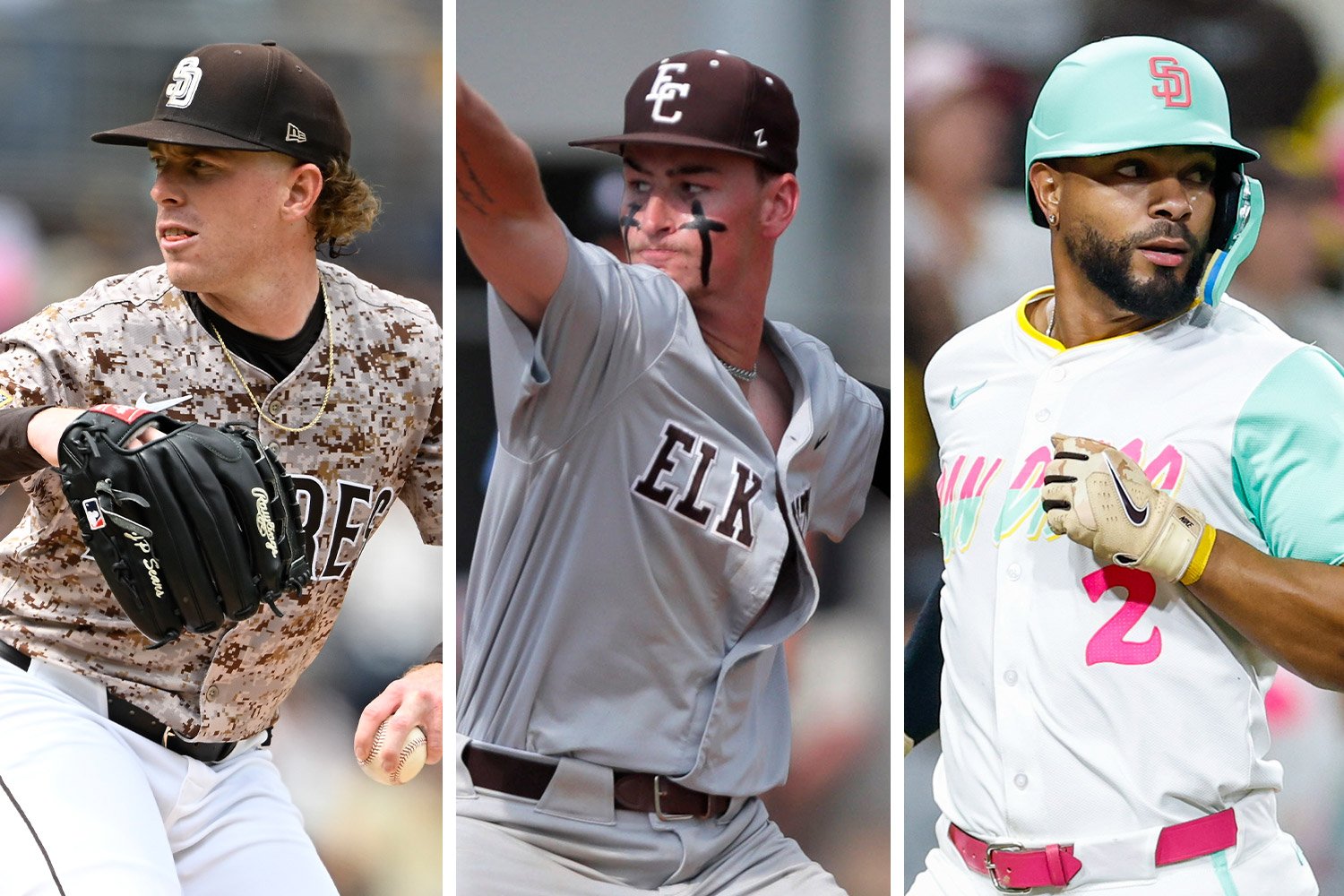 When thinking about who the most valuable players are, there is a lot to be considered. Obviously, talent and production are the biggest factors, but those are not the only things worth considering. Experience is a plus, but age can weigh down someone's value. A big contract makes a great player less valuable, while a cheap contract can make a mediocre player more valuable. Club control is extremely valuable, especially for younger players and top prospects. We've put together our list of who we believe the 25 most valuable Padres are this offseason, taking everything into account. Without further ado, here is the first segment of that list. 25. JP Sears, SP Sears came to San Diego as part of the Mason Miller trade, and at the time, many probably saw him as an afterthought. After all, he was not the centerpiece of the trade, and he only started five games for the Padres after being traded from the Athletics to San Diego. However, Sears is currently looking like he will factor into the team's rotation plans next April, and it makes sense. Between Opening Day of 2023 and August 4th, 2025 (his first start in San Diego), Sears never missed a start. He started 32 games for the Athletics in '23 and '24, and while his run-prevention numbers were not great (4.93 FIP, 4.46 ERA), he was worth 5.1 bWAR over those two seasons. Sears did show some regression in 2025, with just 0.8 bWAR and a 5.21 FIP, but unless San Diego makes more moves to add to their rotation, he will very likely get a chance to redeem himself as a starter in 2026. He is under club control for three more years, so if he does bounce back, he could become a more valuable asset to the Padres. 24. Yuki Matsui, RP Matsui was an underrated addition to the Padres' bullpen in 2024, and he's been a sneaky good player for San Diego the past two seasons. He's appeared in 125 games, throwing 126 innings and striking out 130 batters in the past two seasons. In that span, he has a 4.40 FIP, 1.262 WHIP, 109 ERA+, and 1.4 bWAR, with a 7-3 record. He has not done much in high-leverage situations, with just one save in 2025, but that's not necessarily an indictment of him. San Diego has had such a stacked bullpen, with guys like Robert Suarez, Jason Adam, Adrian Morejon, and Miller, that they have not needed Matsui to do much high-leverage pitching. That doesn't mean Matsui can't be a leverage reliever if they need him to. Matsui also has four more years of club control, as he won't reach free agency until 2030. The Padres owe the 30-year-old a significant chunk of money over the next three years, which lowers his trade value. He's owed $5.7 million in 2026, $6.5 million in 2027, and $7 million in 2028, before reaching arbitration in 2029. If Matsui does emerge as a potential set-up man or closer, that contract starts to look really good, but at the moment, it's an overpay for a solid middle reliever, which is why Matsui falls at No. 24 on this list. 23. Kash Mayfield, SP Mayfield has not reached the major leagues yet, but as a former first-round draft pick, he will hopefully get there soon. Mayfield was drafted 25th overall by the Padres in 2024, but did not get started in the minor leagues until 2025. He spent last season in Single-A, starting 19 games and pitching to a 2.97 ERA in 60 2/3 innings. He struck out 88 batters while walking 28. Mayfield will be 21 next season and will likely begin the season in Double-A. He might not reach the big leagues in 2026, but hopefully, he'll be ready to pitch in the major leagues by 2027. The 6-foot-4 starter is currently San Diego's top prospect according to Padres Mission, making him a realistic trade chip if San Diego wants to make another deadline move. 22. Xander Bogaerts, SS Bogaerts is the hardest player to rank on this list because of his contract and his declining production. The 33-year-old is still owed $203.6 million over the next eight seasons by San Diego. There's probably no getting out of that contract, although crazier things have happened. If San Diego wants out of Bogaerts (and let's face it - paying $25.4 million per year to a player with a 96 OPS+ in the last two seasons is not ideal), they would need to eat a significant portion of his contract. Or, they'd need Bogaerts to have a massive bounce-back in 2026, a bounce-back strong enough for another team to be interested in trading for him. For whatever reason, the infielder has not been the same player since he signed a massive, 11-year deal with the Padres ahead of the 2023 season. He was solid in 2023, finishing with a 117 OPS+ and 4.2 bWAR, but it was still his worst full-season since 2017. Things took a turn for the worse in 2024, turning in what was arguably the worst year of his career, as his OPS+ fell to 92 and his bWAR fell to 1.2 in 111 games. In 2025, he was slightly better, with 2.0 bWAR and a 99 OPS+ that hovered around league average for most of the season. His power has mostly dissipated, as Bogaerts has hit just 11 home runs in each of the past two years. While he was never known for being a power hitter, Bogaerts did average 19.4 long balls per season between 2016 and 2023. It feels like going forward, the Padres can only expect around 10 bombs from Bogaerts. Bogaerts is still valuable as a defender, with a solid shortstop glove. However, as he ages, that will almost certainly decline as well, leaving the veteran with very little to offer. 21. Ron Marinaccio, RP Marinaccio is one of the most intriguing relievers in the Padres' system. He's barely pitched in the big leagues over the past two years, having appeared in just seven games for the Padres in 2025 and 16 games for the Yankees in 2024. However, he's been good in those 23 games, with a 144 ERA+ and a 4.01 FIP. Before that, he was one of the Yankees' top relievers in 2022 and 2023. As a rookie in 2022, he posted a 2.05 ERA, 3.20 FIP, and 1.2 bWAR in 40 appearances, striking out 56 batters in 44 innings pitched. He has never matched the production of that rookie season, but based on his small sample size in San Diego last year, it feels like the potential is still there. He won't become a free agent until 2030, so San Diego has four years to develop Marinaccio back into the solid reliever he was in New York. He's also extremely cheap, as he'll be on a league-minimum salary in 2026 before beginning arbitration in 2027.
 -
It looked like Michael King would not be heading back to San Diego as recently as a few days ago, when it was reported his market was down to Baltimore, New York, and Boston. But something changed, because King is back in town on a three-year, $75 million deal. The Padres got their ace back, and the rotation now looks something like this: Michael King, Nick Pivetta, Joe Musgrove, Randy Vasquez, and JP Sears. For the first time this offseason, there are five starters who the team probably feels okay with in the rotation, and there's still the option of moving Mason Miller into the rotation as well. While this could be the final rotation going into 2026, there's now a higher possibility than before that we could see one of the Padres starters dealt this winter. That is Nick Pivetta, whose name has been thrown around in trade talks for a few weeks now. Obviously, shopping a guy like Pivetta would be risky, but it makes sense to think about the big picture. If Pivetta puts together another ace-level performance in 2026, he will very likely opt out after the season and sign a big contract, probably with another team. If he struggles in 2026 and turns out to be a one-year wonder, the Padres missed their chance to sell high on an average starter. The one big reason to hold on to Pivetta was the fear that a Pivetta trade would leave San Diego without any ace pitchers atop the rotation. Now that King is back, that's no longer the case. Especially if the team is considering moving Miller into the rotation, Pivetta would be their best trade asset. After all, it's no secret the Padres have a lot of needs. Most of those needs have been covered up in the past few seasons by their superstars. Fernando Tatis Jr, Manny Machado, Jackson Merrill, King, Pivetta, and an elite bullpen have managed to cover up a lot of the Padres' holes, but that won't last forever. The team has very little depth, especially in the outfield and the pitching staff. The Padres' farm system is among the weakest in the league, with Ethan Salas as their only top 100 prospect. If Pivetta were to be traded this offseason, he’d likely fetch significant value. The Padres might be able to land a top-100 prospect, in addition to a package of depth pieces and other prospects, if they decide to trade Pivetta. His stock is higher than it probably will ever be, especially if teams see him as a multi-year addition. Small-market teams probably would be shy to trade for Pivetta because of the opt-out, but a team like Los Angeles, New York, or Chicago would easily be able to extend Pivetta or re-sign him if he opts out. Losing their No. 2 starter would still weaken the Padres' rotation, but not as much as it would have weakened them before they brought back Michael King. Knowing AJ Preller, he will not be afraid to make whatever move he feels brings the Padres closest to a championship. If he feels keeping Pivetta gives them the best opportunity to win the World Series, he would not trade him, even with his value at an all-time high. But Preller has shown that for the right price, he’ll make almost any trade. If he feels it will improve the roster or the farm system, Pivetta could be out the door. And now that King is back at the top of the rotation, the Padres might just be okay without Pivetta in 2026. View full article
-
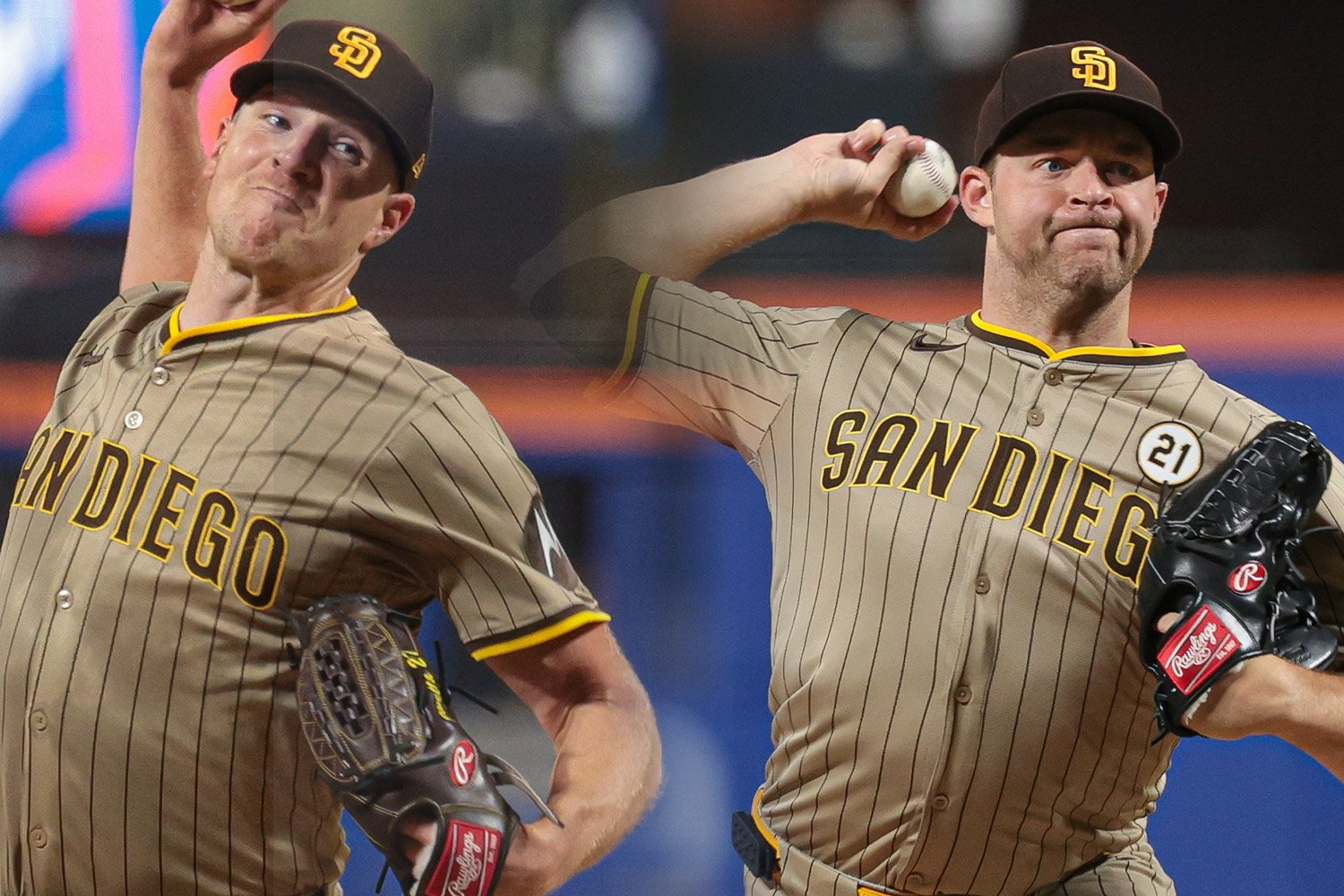 It looked like Michael King would not be heading back to San Diego as recently as a few days ago, when it was reported his market was down to Baltimore, New York, and Boston. But something changed, because King is back in town on a three-year, $75 million deal. The Padres got their ace back, and the rotation now looks something like this: Michael King, Nick Pivetta, Joe Musgrove, Randy Vasquez, and JP Sears. For the first time this offseason, there are five starters who the team probably feels okay with in the rotation, and there's still the option of moving Mason Miller into the rotation as well. While this could be the final rotation going into 2026, there's now a higher possibility than before that we could see one of the Padres starters dealt this winter. That is Nick Pivetta, whose name has been thrown around in trade talks for a few weeks now. Obviously, shopping a guy like Pivetta would be risky, but it makes sense to think about the big picture. If Pivetta puts together another ace-level performance in 2026, he will very likely opt out after the season and sign a big contract, probably with another team. If he struggles in 2026 and turns out to be a one-year wonder, the Padres missed their chance to sell high on an average starter. The one big reason to hold on to Pivetta was the fear that a Pivetta trade would leave San Diego without any ace pitchers atop the rotation. Now that King is back, that's no longer the case. Especially if the team is considering moving Miller into the rotation, Pivetta would be their best trade asset. After all, it's no secret the Padres have a lot of needs. Most of those needs have been covered up in the past few seasons by their superstars. Fernando Tatis Jr, Manny Machado, Jackson Merrill, King, Pivetta, and an elite bullpen have managed to cover up a lot of the Padres' holes, but that won't last forever. The team has very little depth, especially in the outfield and the pitching staff. The Padres' farm system is among the weakest in the league, with Ethan Salas as their only top 100 prospect. If Pivetta were to be traded this offseason, he’d likely fetch significant value. The Padres might be able to land a top-100 prospect, in addition to a package of depth pieces and other prospects, if they decide to trade Pivetta. His stock is higher than it probably will ever be, especially if teams see him as a multi-year addition. Small-market teams probably would be shy to trade for Pivetta because of the opt-out, but a team like Los Angeles, New York, or Chicago would easily be able to extend Pivetta or re-sign him if he opts out. Losing their No. 2 starter would still weaken the Padres' rotation, but not as much as it would have weakened them before they brought back Michael King. Knowing AJ Preller, he will not be afraid to make whatever move he feels brings the Padres closest to a championship. If he feels keeping Pivetta gives them the best opportunity to win the World Series, he would not trade him, even with his value at an all-time high. But Preller has shown that for the right price, he’ll make almost any trade. If he feels it will improve the roster or the farm system, Pivetta could be out the door. And now that King is back at the top of the rotation, the Padres might just be okay without Pivetta in 2026.
 -
At face value, the Nick Pivetta trade rumors make no sense for the San Diego Padres. We're talking about a rotation that has already lost Dylan Cease to free agency. The same rotation that will be without the injured Yu Darvish all season, and now features Joe Musgrove, who hasn't pitched since the end of the 2024 season. Currently, San Diego has Pivetta alongside Musgrove, Randy Vasquez, and JP Sears projected to be in their rotation for 2026. Plus, they just signed Michael King back, which could make Pivetta even more expendable. Of course, even with King in tow, that rotation is not a top staff in the league, with Pivetta as its ace. So, why are the Padres listening to offers on the right-hander? The truth is, it might make more sense than fans think. Pivetta's career stats scream "one-year-wonder." His previous career-high in bWAR was 2.5 in 2022, before breaking out for 5.3 bWAR in 2025. His best ERA was 4.04 in 2023, before posting a 2.87 mark in 2025. Likewise, his best FIP was 3.79, back in 2018, before finishing with a 3.49 FIP in 2025 (notably, much higher than his ERA). His WHIP fell to a career-best 0.985, blowing his previous best mark of 1.121 out of the water. The list goes on and on. The FIP/ERA comparison presents an interesting picture for Pivetta. From 2017-2024, Pivetta had a 4.36 FIP and a 4.76 ERA. His career FIP was nearly half a run better than his ERA. In a single-season sample, that would be considered bad luck, but over an eight-year period, it can be explained by the fact that Pivetta is a guy who gets hit hard. In his career, according to Baseball Savant, opposing hitters have a 9.4% barrel rate (compared to a 7.2% league-average). They've had an average exit velocity of 89.7 MPH, and a 40.5% hard-hit rate against Pivetta (compared to a 37% league-average). FIP is a stat based on strikeouts, walks, home runs, and hit batters. While he's not a strikeout artist, Pivetta has always had solid K/BB ratios and has never hit more than six batters in a season, so his FIP tends to be solid compared to his ERA. Usually, when a pitcher's ERA is higher than his FIP, it means his defense was bad and he got unlucky, but this is a long-term trend for Pivetta. His FIP was lower than his ERA in seven of his eight seasons. Did he have bad luck all seven seasons? Or were the Phillies and Red Sox defenses awful during his time with both clubs? Or could it be that Pivetta, being a pitcher who allowed more hard-contact than league average, made things harder for his defense? From 2017-2024, he allowed a .304 BABIP, while the league average hovered between .291 and .300. All of that is to say, Pivetta probably wasn't falling victim to bad BABIP luck and bad defense; he was falling victim to being one of the hardest-hit pitchers in the league. And that did not change in 2025. Pivetta allowed a 10.9% barrel rate (10th percentile), a 45% hard-hit rate (15th percentile), and a 90.3 average exit velocity (22nd percentile). Those were no better rates than he allowed in previous seasons, yet the results changed. In 2025, his ERA was 2.87, significantly lower than his 3.49 FIP, despite the underlying metrics staying almost exactly the same. What does that mean? It likely means Pivetta was not getting unlucky from 2017-2024; it means he got extremely lucky in 2025 and will probably regress back to the mean in 2026. If Pivetta is a one-year wonder, it makes sense for San Diego to sell high on their most tradeable asset. But what if he isn't? Will the Padres regret trading Pivetta if he has another strong 2026 season? Well, probably not, because Pivetta has a contract opt-out after 2026. If he turns in another All-Star level campaign next season, he will likely opt out of his deal, looking for a big payday before his career ends. That effectively makes it a lose-lose scenario for the Padres if they want to keep Pivetta. If they keep him and he turns out to be a one-year-wonder, they missed their chance to trade a No. 3 starter for the price of an ace. If they keep him and he continues to pitch like an ace, they will lose him next offseason and get nothing in return. That's why, as odd as it is to be shopping the ace of a rotation that is lacking in impact talent, it does make sense to offload Pivetta if the right deal emerges. View full article
