


Joshua Hutter
-
Posts
12 -
Joined
-
Last visited
Content Type
Profiles
San Diego Padres Videos
2026 San Diego Padres Top Prospects Ranking
San Diego Padres Free Agent & Trade Rumors, Notes, & Tidbits
Guides & Resources
2025 San Diego Padres Draft Pick Tracker
News
2026 San Diego Padres Draft Tracker: Picks & Bonuses
Forums
Blogs
Events
Store
Downloads
Gallery
Everything posted by Joshua Hutter
-
Mason Miller was brought over at the 2025 trade deadline to help the San Diego Padres make a push for the World Series. While that pursuit ended up coming up short, he showed in the playoffs why the Padres emptied out the farm for him, tying the MLB postseason record for striking out eight consecutive batters while giving up no runs in both of his appearances. Mason Miller has two amazing pitches — his fastball and his slider — and they both work really well together. This led him to having one of the highest K% in the league at 44.4% in 2025. However, when trying to be a starting pitcher, those pitches might start dominant, but it'd be hard to maintain their effectiveness. His fastball won't reach the same velocity heights as it does now, as starters need to be able to throw more pitches and stretch across multiple innings instead of only throwing all-out for one. The velocity is not going to be sustainable, which means he either needs to throw it slower, or the Padres can expect that his outings won’t be as long as the other starting pitchers, meaning more work for the bullpen. His slider also has the potential to miss, with a BB% of 12.0, good for the bottom 6% of the league. When you only have two effective pitches, and one of them isn’t working, batters are going to know what is coming; regardless of how good that pitch is, batters will be able to adjust and jump on that pitch to cause damage. Mason Miller would need to add another pitch to his arsenal, but last season he only threw a changeup 2% of the time. It'd be a steep learning curve to get that pitch up to par with his others. Not only that, but when you face batters multiple times in an outing, they tend to be very good at adjusting. Going through the batting order multiple times, hitters are more familiar with what is being thrown, and the averages show that they are getting on base more. For pitchers who had three to six pitches within their arsenal: 1 TTO: +0.07 RV/100, .316 wOBA (140K total pitches) 2 TTO: +0.01 RV/100, .318 wOBA (123K total pitches) 3 TTO: -0.35 RV/100, .335 wOBA, (70K total pitches) With fewer pitches, those numbers are only going to go up, meaning Mason Miller will be even less effective as the game goes on as he pushes deeper into a game. Relievers are also being used more now than they were ten years ago. In 2015, Relievers pitched 15,184 innings, while this past season they have pitched 17,863. [Those numbers might be slightly skewed as openers didn’t exist during that time, but that's still a good demonstration of how relievers are still being utilized more than they previously were.] Part of the reason the Miller trade was seen as good for the Padres was that it shortened the game. The Padres got another dominant reliever that would be able to come in and shut down a late inning, putting less pressure on the starting pitching staff. One inning of Mason Miller is worth more than, say, three innings of a No. 3 starter, which would be behind Nick Pivetta and Joe Musgrove as it currently stands. Miller also has an injury history that can’t be forgotten. In 2023, when he was a starter, he was diagnosed with a mild sprain of the ulnar collateral ligament in his throwing elbow, which prompted him to be shut down from throwing. He ended up on the 60-day injured list; once he returned, he transitioned to relief pitching. During his debut before that injury, he threw 15 pitches above 100 MPH across 4 ⅓ innings, which shows that he can maintain that velocity, but it will come with a cost. The best ability is availability, and having someone that can lock down an inning is always going to be valuable come October. On the surface, moving Mason Miller to the starting rotation looks both intriguing and cheap, given the market for starting pitching right now and the Padres' finances, but it becomes far less convincing when you account for what needs to change and what the Padres would need to give up in order to get it. The Padres might be tempted by Mason Miller the starter, but Mason Miller the closer is a known commodity. The Padres need more, not less, of those right now. View full article
-
Why Keeping Mason Miller in the Bullpen is Padres' Best Path Forward
Joshua Hutter posted an article in Padres
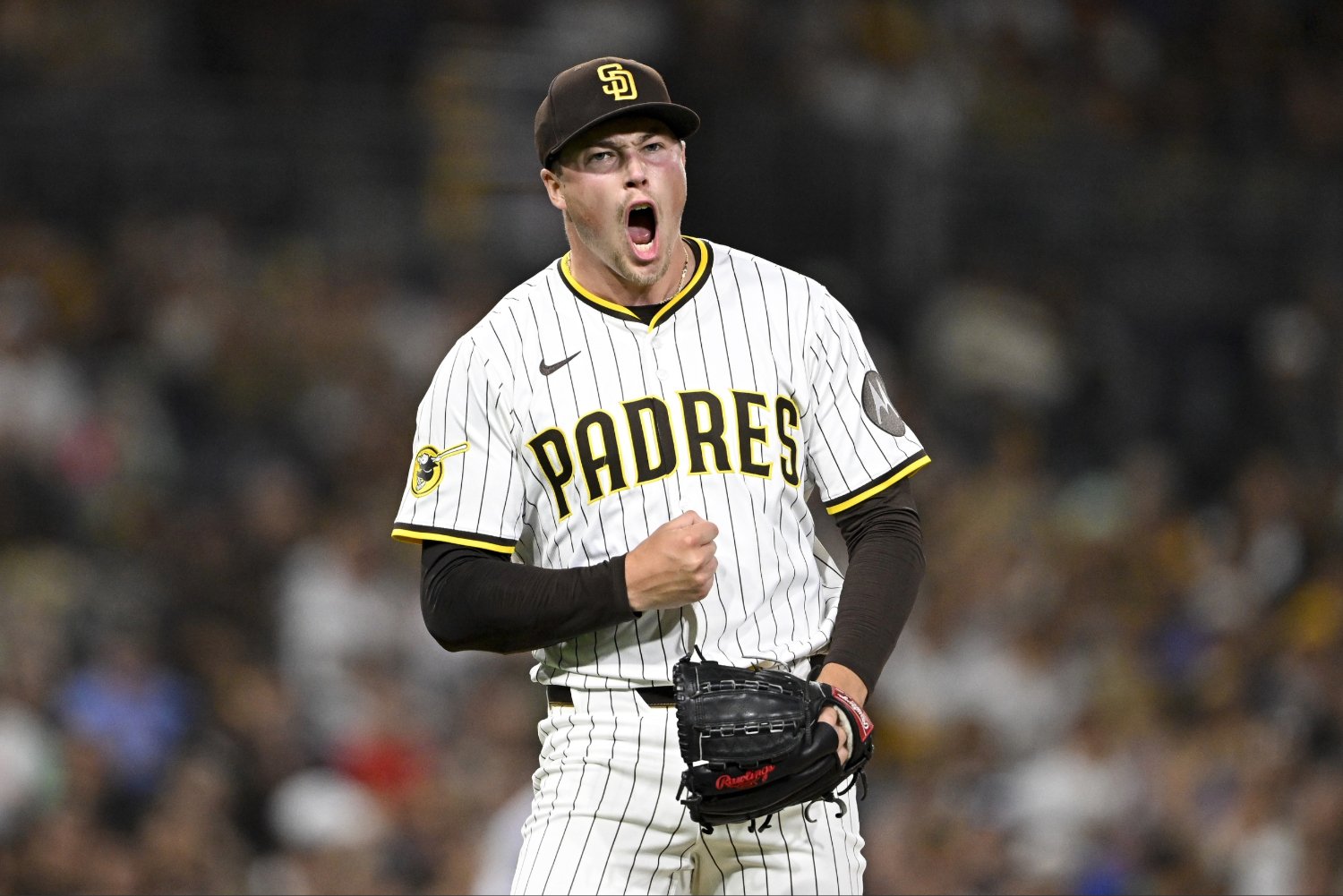 Mason Miller was brought over at the 2025 trade deadline to help the San Diego Padres make a push for the World Series. While that pursuit ended up coming up short, he showed in the playoffs why the Padres emptied out the farm for him, tying the MLB postseason record for striking out eight consecutive batters while giving up no runs in both of his appearances. Mason Miller has two amazing pitches — his fastball and his slider — and they both work really well together. This led him to having one of the highest K% in the league at 44.4% in 2025. However, when trying to be a starting pitcher, those pitches might start dominant, but it'd be hard to maintain their effectiveness. His fastball won't reach the same velocity heights as it does now, as starters need to be able to throw more pitches and stretch across multiple innings instead of only throwing all-out for one. The velocity is not going to be sustainable, which means he either needs to throw it slower, or the Padres can expect that his outings won’t be as long as the other starting pitchers, meaning more work for the bullpen. His slider also has the potential to miss, with a BB% of 12.0, good for the bottom 6% of the league. When you only have two effective pitches, and one of them isn’t working, batters are going to know what is coming; regardless of how good that pitch is, batters will be able to adjust and jump on that pitch to cause damage. Mason Miller would need to add another pitch to his arsenal, but last season he only threw a changeup 2% of the time. It'd be a steep learning curve to get that pitch up to par with his others. Not only that, but when you face batters multiple times in an outing, they tend to be very good at adjusting. Going through the batting order multiple times, hitters are more familiar with what is being thrown, and the averages show that they are getting on base more. For pitchers who had three to six pitches within their arsenal: 1 TTO: +0.07 RV/100, .316 wOBA (140K total pitches) 2 TTO: +0.01 RV/100, .318 wOBA (123K total pitches) 3 TTO: -0.35 RV/100, .335 wOBA, (70K total pitches) With fewer pitches, those numbers are only going to go up, meaning Mason Miller will be even less effective as the game goes on as he pushes deeper into a game. Relievers are also being used more now than they were ten years ago. In 2015, Relievers pitched 15,184 innings, while this past season they have pitched 17,863. [Those numbers might be slightly skewed as openers didn’t exist during that time, but that's still a good demonstration of how relievers are still being utilized more than they previously were.] Part of the reason the Miller trade was seen as good for the Padres was that it shortened the game. The Padres got another dominant reliever that would be able to come in and shut down a late inning, putting less pressure on the starting pitching staff. One inning of Mason Miller is worth more than, say, three innings of a No. 3 starter, which would be behind Nick Pivetta and Joe Musgrove as it currently stands. Miller also has an injury history that can’t be forgotten. In 2023, when he was a starter, he was diagnosed with a mild sprain of the ulnar collateral ligament in his throwing elbow, which prompted him to be shut down from throwing. He ended up on the 60-day injured list; once he returned, he transitioned to relief pitching. During his debut before that injury, he threw 15 pitches above 100 MPH across 4 ⅓ innings, which shows that he can maintain that velocity, but it will come with a cost. The best ability is availability, and having someone that can lock down an inning is always going to be valuable come October. On the surface, moving Mason Miller to the starting rotation looks both intriguing and cheap, given the market for starting pitching right now and the Padres' finances, but it becomes far less convincing when you account for what needs to change and what the Padres would need to give up in order to get it. The Padres might be tempted by Mason Miller the starter, but Mason Miller the closer is a known commodity. The Padres need more, not less, of those right now.
 -
San Diego Padres Arbitration Decisions & Projections: Freddy Fermin
Joshua Hutter posted an article in Padres
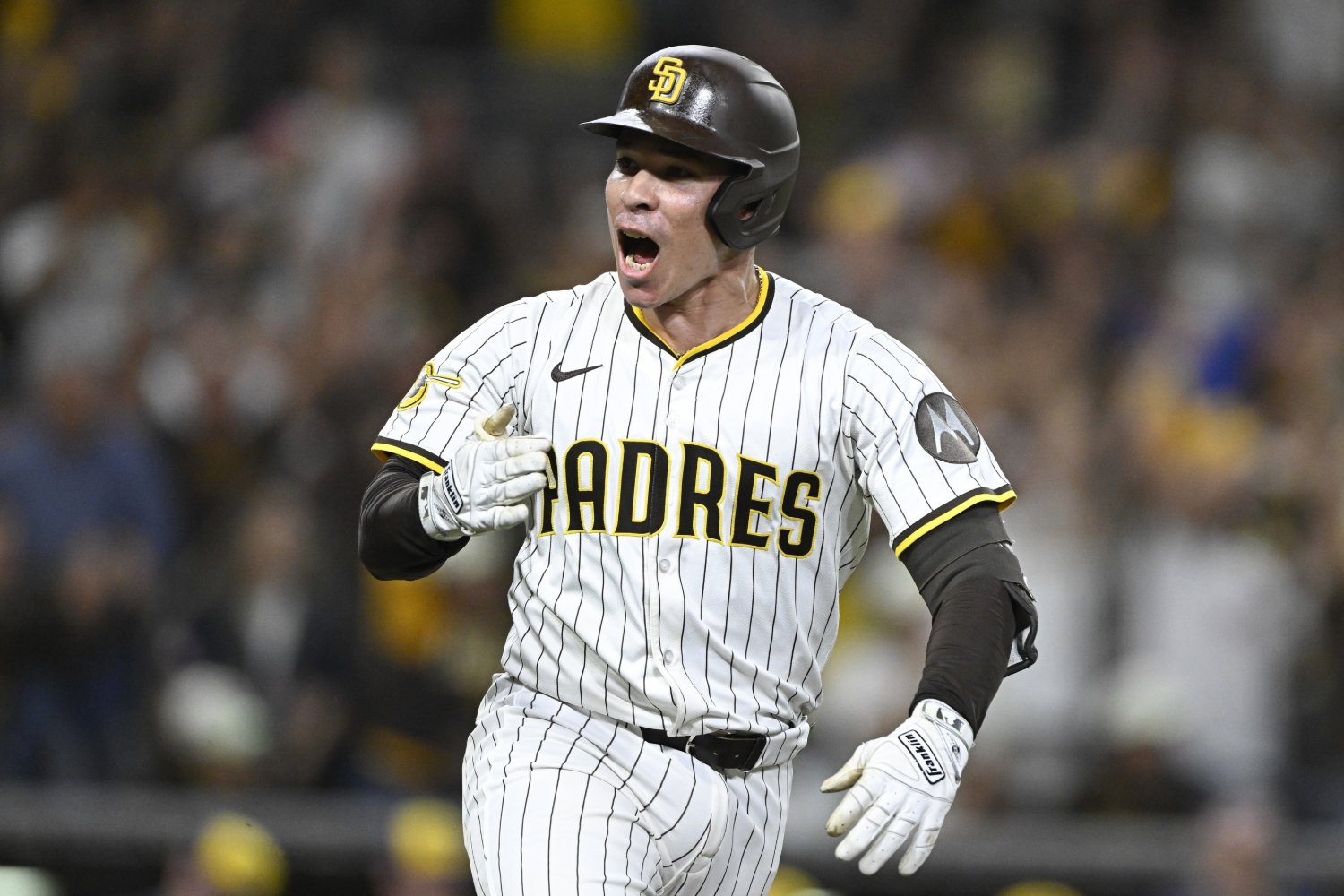 Before the trade deadline, one of the most glaring holes on the San Diego Padres' roster was the catching position and the No. 9 slot in the batting order. Elias Díaz and Martín Maldonado contributed 0.4 and a -0.8 fWAR, respectively, and were grading out poorly on defense. There was a shakeup that needed to happen to help the Padres push toward the playoffs. On July 31, that shakeup mercifully came. The Padres traded for Freddy Fermin from the Kansas City Royals, giving up both Ryan Berget and Stephen Kolek for a strong defensive catcher. Originally drafted in the by the Royals in 2015, Freddy Fermin came in and immediately took over everyday catching duties for the Friars: 42 Games 139 Plate Appearances .244 BA 2 HR 14 RBI’s .339 SLG .278 OBP 0.5 fWAR Looking at his entire season, his numbers look consistent, meaning you can expect what you are going to get from him at the plate; not much power, but consistent contact: 109 Games 347 Plate Appearances .251 BA 5 HR 26 RBI’s .339 SLG .297 OBP 1.0 fWAR Fermin, 30, is entering his first arbitration-eligible season in 2026, and is projected to make around $1.8 million. Given the volatility of catcher production, the Padres must decide whether to treat him strictly as a veteran or catching optin, or explore a multi-year arrangement that provides cost certainty through his arbitration window. In the playoffs against the Chicago Cubs, Fermin proved to be one of the more effective hitters that the Padres had during that series: 3 Games 11 Plate Appearances 4 Hits (2 Singles and 2 Doubles) .364 BA However, getting Fermin wasn’t necessarily about getting his bat, even though it was an upgrade from what the Padres previously had. He brought something that the Padres didn’t have before, which was quality defense from behind the plate. This was an area that the Padres needed to address, and should still address for next season. The trade that seemed more skewed toward favoring the Royals can be seen in a different light when you focus what Freddy Fermin’s best skill is: 4 Blocks Above Average (tied for 8th amongst all catchers) 1.90 Pop Time (11th amongst all catches, only 0.04 behind the league leader) 2 Catchers Caught Stealing Above Average (tied for 8th amongst all catchers) 11/44 Caught Stealing, 25% (tied for 11th amongst all catchers) These stats all look good, but they look even better when you see what the Padres had before he came over at the trade deadline. Elias Díaz wasn’t bad scoring, a Blocks Above Average of 2, but he was sharing the catching duties with Martín Maldonado, who had a -9 figure, which was the third worst in the league. Combined, they only caught 10 people stealing while they had 78 attempts between the two of them. While the obvious way to win a baseball game is to score runs, stopping the other team from scoring runs wins just as many games. The 2025 Padres were 30-23 in games decided by a single run, and they were 7-7 after the All-Star break. If those seven wins go the other way, the Padres would have been battling for the last Wild Card playoff spot instead of comfortably clinching it six days prior to the end of the season (after a walk-off hit by none other than Freddy Fermin). The Padres' previous catchers were allowing additional runs to be scored because of their inability to contain the basepaths; Fermin helped change that. Of course, not all is perfect in San Diego. Freddy Fermin had a Catcher Framing Runs stat of -1, while Elias Díaz and Martín Maldonado were at 2 and 0, respectively. This isn’t a huge issue in terms of everything else that he brings to the table, but it is something that the Padres will want to see an improvement in, especially with the ABS challenge system making its way to the big leagues in 2026. Freddy Fermin may not headline arbitration discussion, but his combination of defensive reliability, and affordable control make him an important structural piece of the Padres roster. If he maintains his currency trajectory, he could quietly deliver above-average value for a fraction of the cost typically associated with stable major-league catching.
 -
Before the trade deadline, one of the most glaring holes on the San Diego Padres' roster was the catching position and the No. 9 slot in the batting order. Elias Díaz and Martín Maldonado contributed 0.4 and a -0.8 fWAR, respectively, and were grading out poorly on defense. There was a shakeup that needed to happen to help the Padres push toward the playoffs. On July 31, that shakeup mercifully came. The Padres traded for Freddy Fermin from the Kansas City Royals, giving up both Ryan Berget and Stephen Kolek for a strong defensive catcher. Originally drafted in the by the Royals in 2015, Freddy Fermin came in and immediately took over everyday catching duties for the Friars: 42 Games 139 Plate Appearances .244 BA 2 HR 14 RBI’s .339 SLG .278 OBP 0.5 fWAR Looking at his entire season, his numbers look consistent, meaning you can expect what you are going to get from him at the plate; not much power, but consistent contact: 109 Games 347 Plate Appearances .251 BA 5 HR 26 RBI’s .339 SLG .297 OBP 1.0 fWAR Fermin, 30, is entering his first arbitration-eligible season in 2026, and is projected to make around $1.8 million. Given the volatility of catcher production, the Padres must decide whether to treat him strictly as a veteran or catching optin, or explore a multi-year arrangement that provides cost certainty through his arbitration window. In the playoffs against the Chicago Cubs, Fermin proved to be one of the more effective hitters that the Padres had during that series: 3 Games 11 Plate Appearances 4 Hits (2 Singles and 2 Doubles) .364 BA However, getting Fermin wasn’t necessarily about getting his bat, even though it was an upgrade from what the Padres previously had. He brought something that the Padres didn’t have before, which was quality defense from behind the plate. This was an area that the Padres needed to address, and should still address for next season. The trade that seemed more skewed toward favoring the Royals can be seen in a different light when you focus what Freddy Fermin’s best skill is: 4 Blocks Above Average (tied for 8th amongst all catchers) 1.90 Pop Time (11th amongst all catches, only 0.04 behind the league leader) 2 Catchers Caught Stealing Above Average (tied for 8th amongst all catchers) 11/44 Caught Stealing, 25% (tied for 11th amongst all catchers) These stats all look good, but they look even better when you see what the Padres had before he came over at the trade deadline. Elias Díaz wasn’t bad scoring, a Blocks Above Average of 2, but he was sharing the catching duties with Martín Maldonado, who had a -9 figure, which was the third worst in the league. Combined, they only caught 10 people stealing while they had 78 attempts between the two of them. While the obvious way to win a baseball game is to score runs, stopping the other team from scoring runs wins just as many games. The 2025 Padres were 30-23 in games decided by a single run, and they were 7-7 after the All-Star break. If those seven wins go the other way, the Padres would have been battling for the last Wild Card playoff spot instead of comfortably clinching it six days prior to the end of the season (after a walk-off hit by none other than Freddy Fermin). The Padres' previous catchers were allowing additional runs to be scored because of their inability to contain the basepaths; Fermin helped change that. Of course, not all is perfect in San Diego. Freddy Fermin had a Catcher Framing Runs stat of -1, while Elias Díaz and Martín Maldonado were at 2 and 0, respectively. This isn’t a huge issue in terms of everything else that he brings to the table, but it is something that the Padres will want to see an improvement in, especially with the ABS challenge system making its way to the big leagues in 2026. Freddy Fermin may not headline arbitration discussion, but his combination of defensive reliability, and affordable control make him an important structural piece of the Padres roster. If he maintains his currency trajectory, he could quietly deliver above-average value for a fraction of the cost typically associated with stable major-league catching. View full article
-
San Diego Padres Arbitration Decisions & Projections: Mason Miller
Joshua Hutter posted an article in Padres
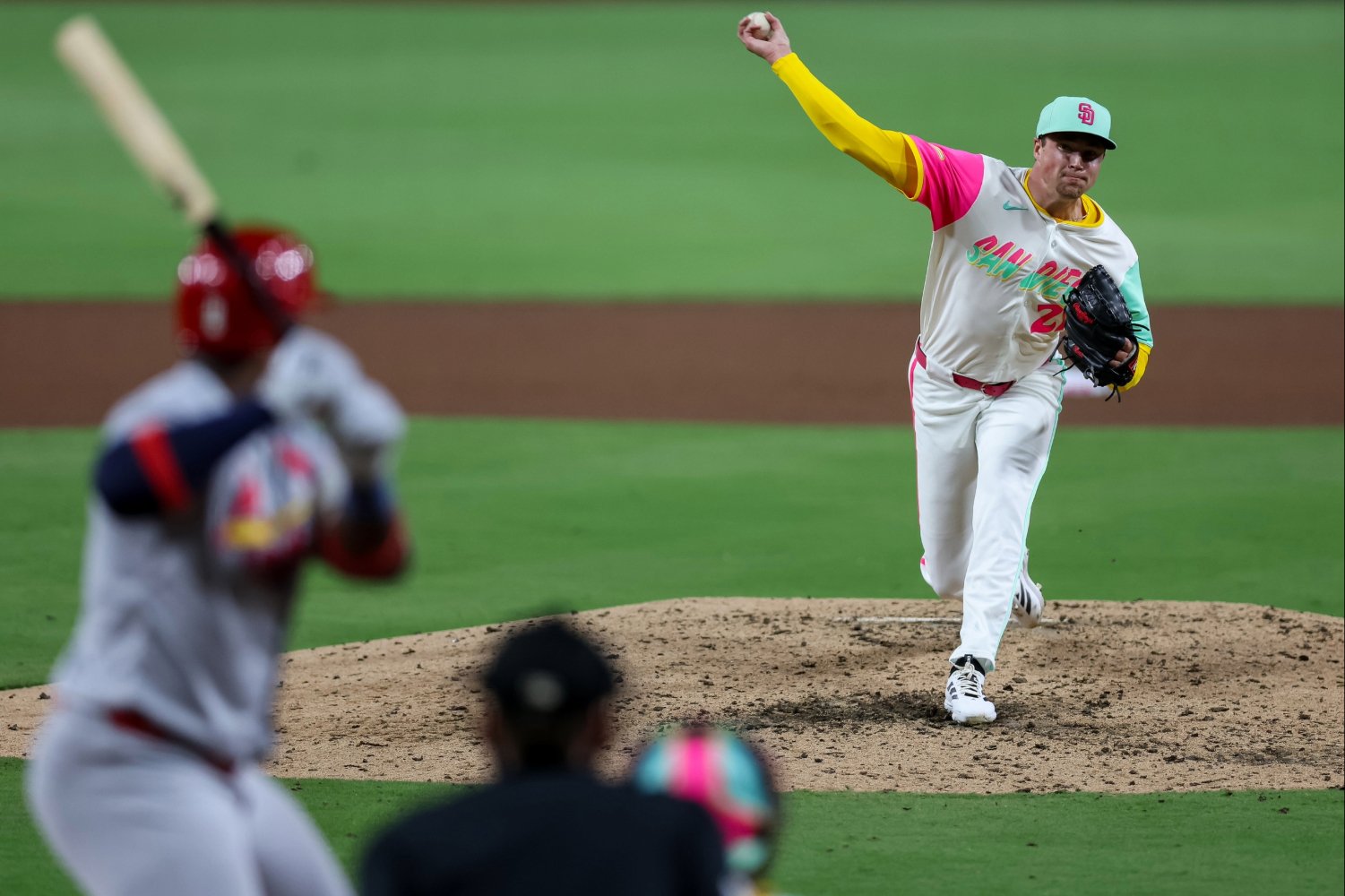 The San Diego Padres had an All-Star bullpen in 2025, and it got even better at the trade deadline, when Mason Miller was acquired from the Athletics on July 31 along with JP Sears. Miller immediately elevated the late-game advantage that the Padres already had and helped to mask a lot of the issues within the starting rotation. Following the injury to Jason Adam, most pitching staffs would have felt stretched, but this addition made that fallout much less noticeable than it should have been, which says a lot when you lose an All-Star reliever. Originally drafted in the third round by the Athletics in 2021, Mason Miller had an outstanding limited season with the Padres: 22 Games 23 1/3 Innings Pitched 0.77 ERA 1.12 FIP 54.2 K% 12.0 BB% 0.39 HR/9 1.1 FanGraphs' WAR (fWAR) Stretch the scope out to his entire season and his numbers take a slight dip, which makes one wonder what could have been if he had been on the Padres for the entire season: 60 Games 61 2/3 Innings Pitched 2.63 ERA 2.23 FIP 44.4 K% 12.0 BB% 0.73 HR/9 2.0 fWAR Mason Miller, 27, is entering his first arbitration-eligible season and is estimated to earn around $3.4 million in 2026. Given his dominant closer/late-inning role and elite strikeout rate this past season, the Padres must weigh whether to style him for just the arbitration year or seek a multi-year extension to lock in cost certainty. This decision is going to be of high strategic importance for the club’s long-term bullpen architecture. In the playoffs against the Chicago Cubs, Miller was unhittable: 2 Games 2 2/3 Innings Pitched 0.00 ERA 88.9 K% (including striking out eight consecutive batters, tying the MLB postseason record) The right-hander was everything you could have hoped for when he came over at the trade deadline. He throws a 100-plus mph fastball and a sweeping slider, causing many mismatches late in games. What stands out is not just his raw velocity (he threw an average of 101.2 MPH on his fastball in 2025), but how he balances his limited arsenal. His slider gets lost behind the thunderbolts he throws with his four-seamer, and yet, that pitch was his best this season: 48.4% active spin on the slider 54.6 Whiff% on the slider (third-best among all pitches thrown in MLB) 52.4 K% on the slider (third-best among all pitches thrown) Miller was traded for with both a win-now and a win-later mentality. Closer Robert Suarez faced uncertainty down the stretch, with a player option to opt-out at the end of the season (which he has exercised). Miller is an easy fit to slide in and be his replacement in the closer role, having fulfilled that position with the Athletics before; he saved 70 games over two and a half seasons before being traded. The Padres got both younger and more affordable with this move while keeping the bullpen essentially intact despite losing the league leader in saves in 2025. With all that being said, is that what the Padres actually brought him in for? The Padres need starting pitching; Yu Darvish just had elbow surgery and will be out for the 2026 season, Michael King and Dylan Cease are free agents, Joe Musgrove is returning from a year-long layoff, and Nick Pivetta is the only reliable starter returning from last season. There have already been rumors that Miller might move out of the bullpen and become a starting pitcher. He had six starts in 2024, throwing 24 ⅓ innings and finishing with a 3.70 ERA. He won’t be able to continue to throw his 100-plus mph fastball on a regular basis, but he has already shown that his slider is the actual pitch that elevates him to elite-level status. He primarily only threw those two pitches in 2025, having also thrown a changeup, but he would most likely need to start expanding his arsenal to effectively manage batting orders multiple times through. So, the real question for the Padres becomes: Where do you put him? This could be answered with any additional moves that the team makes this offseason, though his role could also determine the contract he gets in arbitration or in an extension (starters always make more than relievers).
 -
The San Diego Padres had an All-Star bullpen in 2025, and it got even better at the trade deadline, when Mason Miller was acquired from the Athletics on July 31 along with JP Sears. Miller immediately elevated the late-game advantage that the Padres already had and helped to mask a lot of the issues within the starting rotation. Following the injury to Jason Adam, most pitching staffs would have felt stretched, but this addition made that fallout much less noticeable than it should have been, which says a lot when you lose an All-Star reliever. Originally drafted in the third round by the Athletics in 2021, Mason Miller had an outstanding limited season with the Padres: 22 Games 23 1/3 Innings Pitched 0.77 ERA 1.12 FIP 54.2 K% 12.0 BB% 0.39 HR/9 1.1 FanGraphs' WAR (fWAR) Stretch the scope out to his entire season and his numbers take a slight dip, which makes one wonder what could have been if he had been on the Padres for the entire season: 60 Games 61 2/3 Innings Pitched 2.63 ERA 2.23 FIP 44.4 K% 12.0 BB% 0.73 HR/9 2.0 fWAR Mason Miller, 27, is entering his first arbitration-eligible season and is estimated to earn around $3.4 million in 2026. Given his dominant closer/late-inning role and elite strikeout rate this past season, the Padres must weigh whether to style him for just the arbitration year or seek a multi-year extension to lock in cost certainty. This decision is going to be of high strategic importance for the club’s long-term bullpen architecture. In the playoffs against the Chicago Cubs, Miller was unhittable: 2 Games 2 2/3 Innings Pitched 0.00 ERA 88.9 K% (including striking out eight consecutive batters, tying the MLB postseason record) The right-hander was everything you could have hoped for when he came over at the trade deadline. He throws a 100-plus mph fastball and a sweeping slider, causing many mismatches late in games. What stands out is not just his raw velocity (he threw an average of 101.2 MPH on his fastball in 2025), but how he balances his limited arsenal. His slider gets lost behind the thunderbolts he throws with his four-seamer, and yet, that pitch was his best this season: 48.4% active spin on the slider 54.6 Whiff% on the slider (third-best among all pitches thrown in MLB) 52.4 K% on the slider (third-best among all pitches thrown) Miller was traded for with both a win-now and a win-later mentality. Closer Robert Suarez faced uncertainty down the stretch, with a player option to opt-out at the end of the season (which he has exercised). Miller is an easy fit to slide in and be his replacement in the closer role, having fulfilled that position with the Athletics before; he saved 70 games over two and a half seasons before being traded. The Padres got both younger and more affordable with this move while keeping the bullpen essentially intact despite losing the league leader in saves in 2025. With all that being said, is that what the Padres actually brought him in for? The Padres need starting pitching; Yu Darvish just had elbow surgery and will be out for the 2026 season, Michael King and Dylan Cease are free agents, Joe Musgrove is returning from a year-long layoff, and Nick Pivetta is the only reliable starter returning from last season. There have already been rumors that Miller might move out of the bullpen and become a starting pitcher. He had six starts in 2024, throwing 24 ⅓ innings and finishing with a 3.70 ERA. He won’t be able to continue to throw his 100-plus mph fastball on a regular basis, but he has already shown that his slider is the actual pitch that elevates him to elite-level status. He primarily only threw those two pitches in 2025, having also thrown a changeup, but he would most likely need to start expanding his arsenal to effectively manage batting orders multiple times through. So, the real question for the Padres becomes: Where do you put him? This could be answered with any additional moves that the team makes this offseason, though his role could also determine the contract he gets in arbitration or in an extension (starters always make more than relievers). View full article
-
San Diego Padres Arbitration Decisions & Projections: JP Sears
Joshua Hutter posted an article in Padres
 The San Diego Padres had a volatile starting rotation in 2025, mainly due to injuries and inconsistent availability, forcing the organization to continuously adapt its pitching strategy. San Diego relied on a series of spot starters to eat innings before turning it over to their All-Star-laden bullpen. In that context, JP Sears was a capable backend arm who tried to help stabilize the staff during stretches of uncertainty. Originally drafted in the eleventh round by the Seattle Mariners in 2017, JP Sears had a very small sample size with the Padres: 5 Games 24.2 Innings Pitched 5.47 ERA 6.18 FIP 18.0 K% 6.8 BB% 2.6 HR/9 -0.1 FanGraph WAR Sears was traded on July 31 this past season alongside Mason Miller at the trade deadline. His entire season looked like: 27 Games 135.2 Innings Pitched 5.04 ERA 5.21 FIP 20.1 K% 6.2 BB% 1.99 HR/9 0.5 FanGraph WAR Nothing about these numbers jumps out as exciting, which goes along with what most thought of him prior to the trade. His first start for the team against the Arizona Diamondbacks (who were sellers at the trade deadline, trading away pieces like Josh Naylor and Eugenio Suárez) was ugly, as he surrendered 10 hits across five innings while giving up five earned runs. After this performance, the southpaw was optioned to El Paso, where he would await spot-start duty for the remainder of the year. Sears is entering his first year of arbitration after acquiring enough MLB service time (over three years on a roster). He remains club-controlled through the 2028 season, giving San Diego some much-needed flexibility and depth while navigating a rotation that is set to lose Michael King, Dylan Cease, and Yu Darvish next season. Sears should cost around $3.5M in 2026, according to MLB Trade Rumors. For that price, if he can deliver production near his career average of roughly 0.9 fWAR, then Padres would be getting some value relative to his salary, while preserving payroll flexibility to address other roster needs. The 29-year-old had a 2025 filled with ups and downs, his underlying stats offering promise and caution. His pitch selection changed significantly after he came to San Diego: 39.4% vs 46.3% Fastball 35.0% vs 29.5% Slider 15.4% vs 12.8% Changeup 5.8% vs 9.3% Sinker 4.4% vs 0.2% Curveball 0.0% vs 1.9% Cutter We can see that he introduced a seldom-used cutter into his mix and leaned more heavily on his fastball and sinker, while scaling back his slider and changeup and almost abandoning his curveball. That shift may reflect coaching, or an adjustment made in response to pitch effectiveness. For example, his slider, his second-most used pitch, posted a +6.7 Runs Above Average mark with the Athletics, but dropped to -4.0 after coming to the Padres. Optimistically, that decline could be the product of a new environment or simple variance and sequencing luck. More cautiously, it may suggest hitters adjusted, his command wavered, or his usage patterns became too predictable. While that looks like the start of a decline, his contract profile hints at underlying progress. His hard-hit rate improved from 40.5% to 34.9% post-trade, a promising sign for his future, especially if he can fall into a better groove with his pitch sequencing after a full offseason in Ruben Niebla's pitching lab. With all of that being said, JP Sears is by no means going to lead the 2026 Padres rotation. There are a lot of “ifs” when it comes to his profile, but what we do know is that he will be able to give the team the ability to eat some innings on a consistent basis. That's hardly sexy, but it's of vital importance for a rotation as thin as the Padres'.
 -
The San Diego Padres had a volatile starting rotation in 2025, mainly due to injuries and inconsistent availability, forcing the organization to continuously adapt its pitching strategy. San Diego relied on a series of spot starters to eat innings before turning it over to their All-Star-laden bullpen. In that context, JP Sears was a capable backend arm who tried to help stabilize the staff during stretches of uncertainty. Originally drafted in the eleventh round by the Seattle Mariners in 2017, JP Sears had a very small sample size with the Padres: 5 Games 24.2 Innings Pitched 5.47 ERA 6.18 FIP 18.0 K% 6.8 BB% 2.6 HR/9 -0.1 FanGraph WAR Sears was traded on July 31 this past season alongside Mason Miller at the trade deadline. His entire season looked like: 27 Games 135.2 Innings Pitched 5.04 ERA 5.21 FIP 20.1 K% 6.2 BB% 1.99 HR/9 0.5 FanGraph WAR Nothing about these numbers jumps out as exciting, which goes along with what most thought of him prior to the trade. His first start for the team against the Arizona Diamondbacks (who were sellers at the trade deadline, trading away pieces like Josh Naylor and Eugenio Suárez) was ugly, as he surrendered 10 hits across five innings while giving up five earned runs. After this performance, the southpaw was optioned to El Paso, where he would await spot-start duty for the remainder of the year. Sears is entering his first year of arbitration after acquiring enough MLB service time (over three years on a roster). He remains club-controlled through the 2028 season, giving San Diego some much-needed flexibility and depth while navigating a rotation that is set to lose Michael King, Dylan Cease, and Yu Darvish next season. Sears should cost around $3.5M in 2026, according to MLB Trade Rumors. For that price, if he can deliver production near his career average of roughly 0.9 fWAR, then Padres would be getting some value relative to his salary, while preserving payroll flexibility to address other roster needs. The 29-year-old had a 2025 filled with ups and downs, his underlying stats offering promise and caution. His pitch selection changed significantly after he came to San Diego: 39.4% vs 46.3% Fastball 35.0% vs 29.5% Slider 15.4% vs 12.8% Changeup 5.8% vs 9.3% Sinker 4.4% vs 0.2% Curveball 0.0% vs 1.9% Cutter We can see that he introduced a seldom-used cutter into his mix and leaned more heavily on his fastball and sinker, while scaling back his slider and changeup and almost abandoning his curveball. That shift may reflect coaching, or an adjustment made in response to pitch effectiveness. For example, his slider, his second-most used pitch, posted a +6.7 Runs Above Average mark with the Athletics, but dropped to -4.0 after coming to the Padres. Optimistically, that decline could be the product of a new environment or simple variance and sequencing luck. More cautiously, it may suggest hitters adjusted, his command wavered, or his usage patterns became too predictable. While that looks like the start of a decline, his contract profile hints at underlying progress. His hard-hit rate improved from 40.5% to 34.9% post-trade, a promising sign for his future, especially if he can fall into a better groove with his pitch sequencing after a full offseason in Ruben Niebla's pitching lab. With all of that being said, JP Sears is by no means going to lead the 2026 Padres rotation. There are a lot of “ifs” when it comes to his profile, but what we do know is that he will be able to give the team the ability to eat some innings on a consistent basis. That's hardly sexy, but it's of vital importance for a rotation as thin as the Padres'. View full article
-
Gavin Sheets enters a pivotal season for the Padres. The left-handed bat, with multi-positional flexibility and recent flashes of power, is approaching his next arbitration year, one that could define his standing with the club going forward. Originally drafted in the second round by the Chicago White Sox in 2017 out of Wake Forest University, Gavin Sheets had the best year of his career in 2025: 145 Games (most in his career) 545 Plate Appearances (most in his career) .252 BA (best in his career) 19 HR 71 RBIs .429 SLG .317 OBP 1.3 fWAR Gavin Sheets, 29, carved out increased playing time and showed the ability to contribute in the lineup and defensively as a position of need, whether that be left field or first base. Due to injuries to the Padres' outfield, Gavin Sheets moved to where he needed to, playing 64 games in left field and 13 at first base. He is entering his second year of arbitration, following his first in 2024 with the White Sox, where he was non-tendered before signing with the Padres as a free agent on a one-year minor league deal for the 2026 season. Gavin Sheets has two more years of arbitration eligibility before becoming a free agent in 2028. From the team’s perspective, the decision is whether to treat Gavin Sheets as a core role player deserving of arbitration, negotiate a multi-year deal, or look for cheaper alternatives if they believe that his upside is limited to what they saw this past season. There is no denying that Gavin Sheets had the best year of his career; however, you can’t overlook his past or the brief stint in the playoffs, where all of this matters the most. In the three games against the Chicago Cubs: 3 Games 6 PA 1 Hit (Single) .167 AVG Now, these stats come from a really small sample size; however, the picture gets a little bit bigger when you look at his last season in Chicago with the White Sox: 145 Games 501 PA .233 BA 10 HR 45 RBI’s .357 SLG .303 OBP -0.8 FanGraph WAR Now, the question really becomes: which version of Gavin Sheets will the Padres be getting? Is this a true step forward, or is this the outlier in all the statistics? To add complexity to that question, Gavin Sheets is projected to make approximately $4.3 million under arbitration, placing him in the mid-tier arbitration group. For context, players like Tyler Stephenson ($6.4 million projected) are at the higher end of this tier, whereas Jake Burger ($3.5 million) is at the lower end. Tyler Stephenson posted a FanGraphs WAR of 1.1, while Jake Burger posted -0.1 for the 2025 season. With other pressing roster needs, the Padres must not only prioritize adding the necessary bats and run production, but also ensure they maintain the payroll flexibility required to invest in key areas, most notably, starting pitching. Building a competitive lineup only matters if the organization can support it with a rotation capable of carrying postseason aspirations. The Padres outfield graded at a decent level with what many would consider down years from All-Star Fernando Tatis Jr. and up-and-coming youngster Jackson Merrill. With the possible return of trade acquisition Ramón Laureano (the team holds a $6.5 million option), Gavin Sheets more than likely moves to a platoon in the outfield or potentially to first base, with the team not currently addressing this position of need, with Luis Arráez and Ryan O’Hearn both becoming free agents. Diving deeper, Gavin Sheets shows a mixed but intriguing profile, with upside and defined areas for improvement. From a batted-ball standpoint, he consistently demonstrates the ability to generate impact contact. His hard-hit rate and average exit velocity sit above league average: 46.5% Hard-Hit Rate (54 out of 144 Qualified Players with Qualified PA) 95.0 MPH Exit Velocity (72 out of 144) This signals that when he squares the ball, the damage potential is legitimate. These metrics support the idea that there is more power in his bat than his surface-level traditional output suggests. Meaning, he brings more contact quality than pure contract frequency. However, there are also still notable concerns. His chase rate and swing-decision metrics lag a little. 23% Whiff Rate (86 out of 144) 31.4% Chase 59.6% Zone Swing (126 out of 144) 36.9% Out-of-Zone Swing (108 out of 144) The Zone Swing % shows that there are more hittable strikes that he is not swinging at, while his chase shows that he swings at out-of-zone pitches more than average. Overall, Gavin Sheets makes good contact when he swings at strikes, but his overall swing decision profile shows two side effects: he isn’t swinging aggressively at enough strikes, while he swings slightly too often at bad pitches. This all points to the fact that he has the raw skills to bring to the plate, but still needs to refine his approach. Overall, Gavin Sheets represents a meaningful piece in the Padres’ lineup strategy, especially given affordability and flexibility. The team would be prudent to retain him through arbitration, and if the metrics line up, consider locking him in as part of their long-term depth plan. With the right breakout, he could become a key contributor rather than simply a role player. View full article
-
San Diego Padres Arbitration Decisions & Projections: Gavin Sheets
Joshua Hutter posted an article in Padres
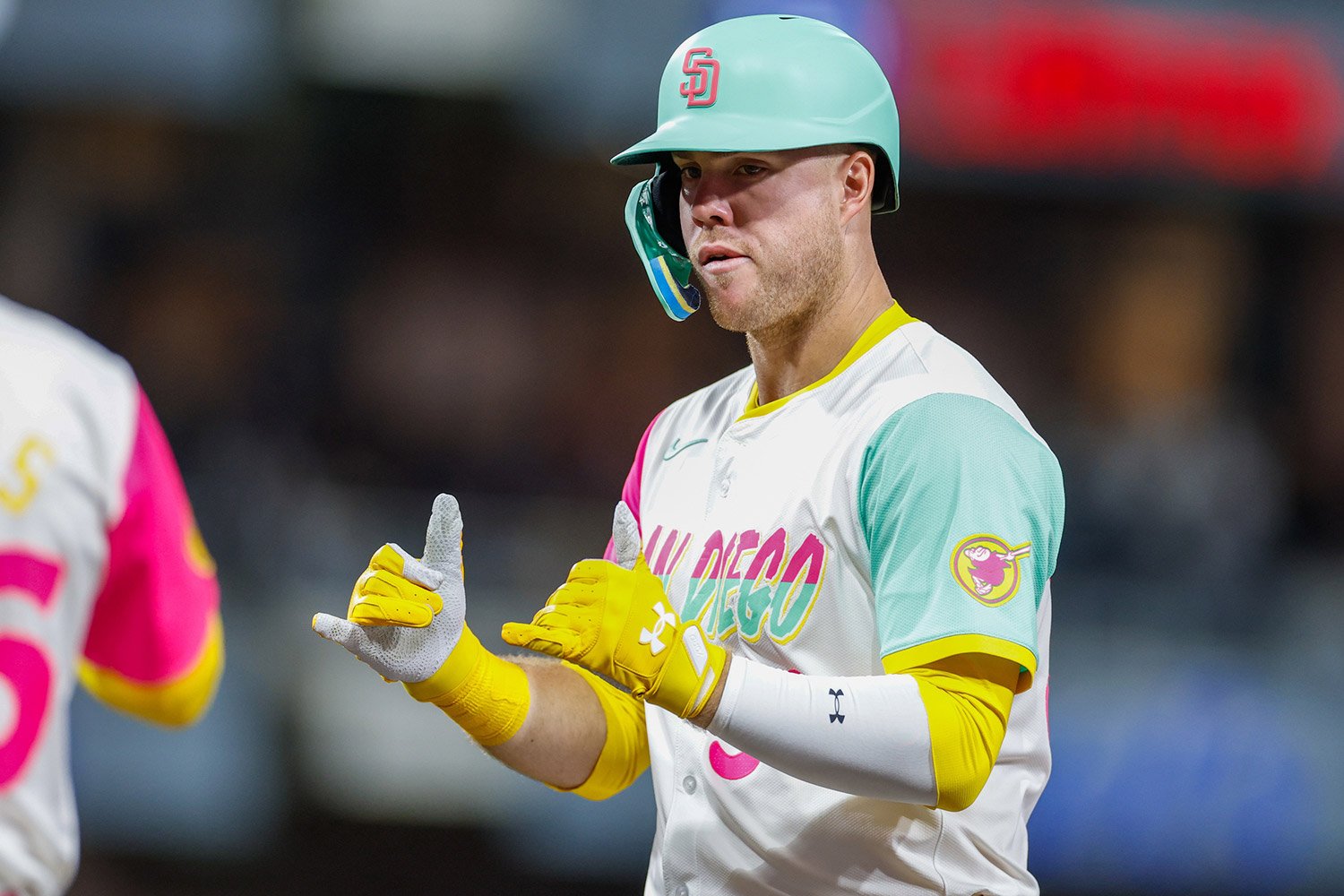 Gavin Sheets enters a pivotal season for the Padres. The left-handed bat, with multi-positional flexibility and recent flashes of power, is approaching his next arbitration year, one that could define his standing with the club going forward. Originally drafted in the second round by the Chicago White Sox in 2017 out of Wake Forest University, Gavin Sheets had the best year of his career in 2025: 145 Games (most in his career) 545 Plate Appearances (most in his career) .252 BA (best in his career) 19 HR 71 RBIs .429 SLG .317 OBP 1.3 fWAR Gavin Sheets, 29, carved out increased playing time and showed the ability to contribute in the lineup and defensively as a position of need, whether that be left field or first base. Due to injuries to the Padres' outfield, Gavin Sheets moved to where he needed to, playing 64 games in left field and 13 at first base. He is entering his second year of arbitration, following his first in 2024 with the White Sox, where he was non-tendered before signing with the Padres as a free agent on a one-year minor league deal for the 2026 season. Gavin Sheets has two more years of arbitration eligibility before becoming a free agent in 2028. From the team’s perspective, the decision is whether to treat Gavin Sheets as a core role player deserving of arbitration, negotiate a multi-year deal, or look for cheaper alternatives if they believe that his upside is limited to what they saw this past season. There is no denying that Gavin Sheets had the best year of his career; however, you can’t overlook his past or the brief stint in the playoffs, where all of this matters the most. In the three games against the Chicago Cubs: 3 Games 6 PA 1 Hit (Single) .167 AVG Now, these stats come from a really small sample size; however, the picture gets a little bit bigger when you look at his last season in Chicago with the White Sox: 145 Games 501 PA .233 BA 10 HR 45 RBI’s .357 SLG .303 OBP -0.8 FanGraph WAR Now, the question really becomes: which version of Gavin Sheets will the Padres be getting? Is this a true step forward, or is this the outlier in all the statistics? To add complexity to that question, Gavin Sheets is projected to make approximately $4.3 million under arbitration, placing him in the mid-tier arbitration group. For context, players like Tyler Stephenson ($6.4 million projected) are at the higher end of this tier, whereas Jake Burger ($3.5 million) is at the lower end. Tyler Stephenson posted a FanGraphs WAR of 1.1, while Jake Burger posted -0.1 for the 2025 season. With other pressing roster needs, the Padres must not only prioritize adding the necessary bats and run production, but also ensure they maintain the payroll flexibility required to invest in key areas, most notably, starting pitching. Building a competitive lineup only matters if the organization can support it with a rotation capable of carrying postseason aspirations. The Padres outfield graded at a decent level with what many would consider down years from All-Star Fernando Tatis Jr. and up-and-coming youngster Jackson Merrill. With the possible return of trade acquisition Ramón Laureano (the team holds a $6.5 million option), Gavin Sheets more than likely moves to a platoon in the outfield or potentially to first base, with the team not currently addressing this position of need, with Luis Arráez and Ryan O’Hearn both becoming free agents. Diving deeper, Gavin Sheets shows a mixed but intriguing profile, with upside and defined areas for improvement. From a batted-ball standpoint, he consistently demonstrates the ability to generate impact contact. His hard-hit rate and average exit velocity sit above league average: 46.5% Hard-Hit Rate (54 out of 144 Qualified Players with Qualified PA) 95.0 MPH Exit Velocity (72 out of 144) This signals that when he squares the ball, the damage potential is legitimate. These metrics support the idea that there is more power in his bat than his surface-level traditional output suggests. Meaning, he brings more contact quality than pure contract frequency. However, there are also still notable concerns. His chase rate and swing-decision metrics lag a little. 23% Whiff Rate (86 out of 144) 31.4% Chase 59.6% Zone Swing (126 out of 144) 36.9% Out-of-Zone Swing (108 out of 144) The Zone Swing % shows that there are more hittable strikes that he is not swinging at, while his chase shows that he swings at out-of-zone pitches more than average. Overall, Gavin Sheets makes good contact when he swings at strikes, but his overall swing decision profile shows two side effects: he isn’t swinging aggressively at enough strikes, while he swings slightly too often at bad pitches. This all points to the fact that he has the raw skills to bring to the plate, but still needs to refine his approach. Overall, Gavin Sheets represents a meaningful piece in the Padres’ lineup strategy, especially given affordability and flexibility. The team would be prudent to retain him through arbitration, and if the metrics line up, consider locking him in as part of their long-term depth plan. With the right breakout, he could become a key contributor rather than simply a role player.
 -
The San Diego Padres' 2025 season ended too soon, but that just means extra prep time for the offseason. One of the linchpins of the amazing bullpen is Jason Adam, who is one of many players entering the offseason with one final year of arbitration eligibility. Originally drafted in the fifth round by the Kansas City Royals in 2010, Adam followed up a sharp 2024 season with similar numbers this year: 65 Games (most appearances on the team before his injury) 65.1 Innings Pitched 1.93 ERA 3.07 FIP 25.9 K% 9.3 BB% 0.55 HR/9 1.2 FanGraphs WAR He provided important stability in the Padres bullpen. Considered one of the original four horsemen, before the late addition of Mason Miller, Adam brought in much-needed variety, going with his slider and changeup more than his fastball. Adam, 34, is now entering his fourth and final year of arbitration (he spent the first two with the Tampa Bay Rays). The Padres have not gone to an arbitration hearing since 2014, the year general manager A.J. Preller took over the team, so it will be interesting to see how San Diego decides how to handle Adam's case. Adam was having just as good of a year as one could have hoped, and then he had a horrific injury out of nowhere, rupturing his quad tendon in his left quadriceps right before the final push to the playoffs started. This is a significant injury that will add risk to any sort of extension that gets brought to the table. The injury typically takes six to nine months to recover from, meaning that Adam won’t be pitching again until around the start of the 2026 MLB season at the earliest. Adam was used in many high-leverage situations by former manager Mike Shildt, and given his performances over the course of 100+ innings of work, the Padres should strongly consider negotiating a multi-year extension sooner rather than later. General managers typically want to “buy low” to try to lock up talent in order to boost the overall roster, and the injury could leave a potential situation with an unknown outcome that could work in the Padres' favor. The Padres are clearly building a top-tier bullpen. With Adam in the mix, alongside the likes of Adrian Morejon, Jeremiah Estrada, and Mason Miller, they have the pieces to dominate the late innings. Keeping Adam under control helps avoid having to replace that late-inning production at a higher price later. The Padres still have championship hopes in 2026, and the consistency of Jason Adam is what you are looking for in a reliever. Here are some of Adam’s expected/advanced stats from between 2024 (listed first) and 2025 (second) that show his consistency: 88.5 and 88.8 Opponent Exit Velocity .336 and .315 xSLG .276 and .263 xWOBA 37.8 and 38.0 Opponent Hard-Hit rate 3.14 and 2.67 xERA There are plenty of rumors going around as well about Mason Miller and even Adrian Morejon possibly joining the starting rotation in 2026, barring any starting pitching acquisition this offseason. If that is in fact the case, shoring up the bullpen with known quantities becomes an even higher priority if more of the Padres success is diverted toward the early innings instead of the late ones. Now, this conversation comes with the important stipulation that everything goes well for Adam during his rehabilitation. The last three months of recovery is returning the injured leg to the sport and ensuring the strength and stability of said leg. The goal is to have the injured leg have at least 85-90% of the strength and stability of the uninjured leg. Adam injured his left leg, which as a right-handed pitcher, means that is the leg that he uses as his lead leg driving towards home plate. This is what he uses to create the forward momentum to generate the power behind the pitch. A strong, stable plant with the lead leg is crucial for a powerful and efficient delivery. Losing roughly 10% of that could mean we see a faster drop-off than we would have seen without it. Thankfully, there's some risk mitigation already built into Adam's arsenal. The veteran reliever threw three primary pitches last season: Slider - 35.1% Changeup - 33.4% Four-seamer - 22.7% His slider and changeup have been more heavily utilized since joining the Padres, naturally coming at the expense of his fastball. In 2024, his fastball was the pitch he used the most at 37.1%. He was already making his transition to more off-speed before his injury, which should continue as he gets older and rehabs his leg. Nobody knows how Adam is going to recover from his injury, however, based on his track record, he should still be in a Padres uniform in 2026 to help the team move closer toward a championship. That could happen via a cordial arbitration process as a “prove-it” year coming back from injury, or through a contract extension to get him at a lower price over multiple years. Either way, Adam is still a crucial part of the Padres bullpen as a model of consistency. View full article
-
San Diego Padres Arbitration Decisions & Projections: Jason Adam
Joshua Hutter posted an article in Padres
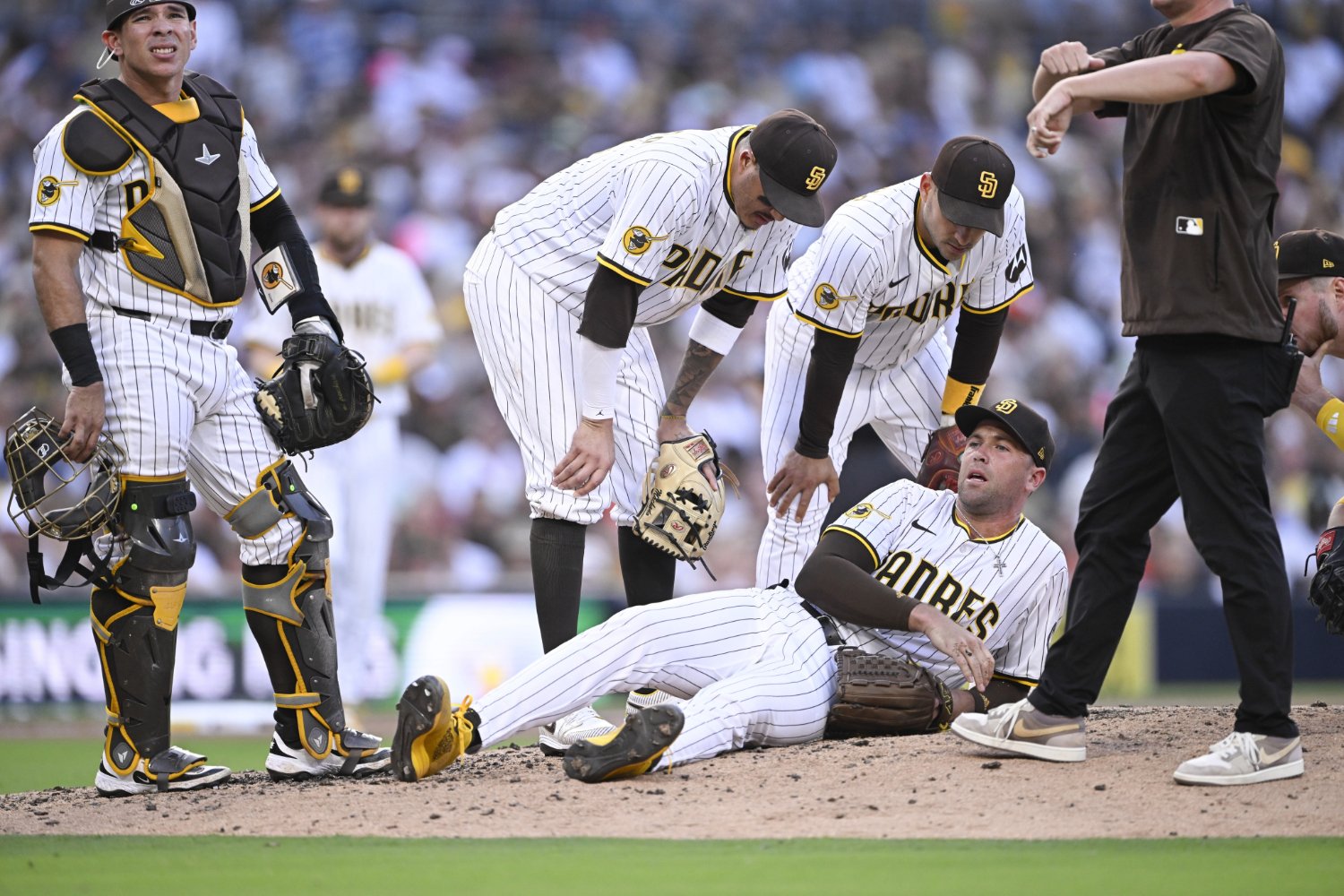 The San Diego Padres' 2025 season ended too soon, but that just means extra prep time for the offseason. One of the linchpins of the amazing bullpen is Jason Adam, who is one of many players entering the offseason with one final year of arbitration eligibility. Originally drafted in the fifth round by the Kansas City Royals in 2010, Adam followed up a sharp 2024 season with similar numbers this year: 65 Games (most appearances on the team before his injury) 65.1 Innings Pitched 1.93 ERA 3.07 FIP 25.9 K% 9.3 BB% 0.55 HR/9 1.2 FanGraphs WAR He provided important stability in the Padres bullpen. Considered one of the original four horsemen, before the late addition of Mason Miller, Adam brought in much-needed variety, going with his slider and changeup more than his fastball. Adam, 34, is now entering his fourth and final year of arbitration (he spent the first two with the Tampa Bay Rays). The Padres have not gone to an arbitration hearing since 2014, the year general manager A.J. Preller took over the team, so it will be interesting to see how San Diego decides how to handle Adam's case. Adam was having just as good of a year as one could have hoped, and then he had a horrific injury out of nowhere, rupturing his quad tendon in his left quadriceps right before the final push to the playoffs started. This is a significant injury that will add risk to any sort of extension that gets brought to the table. The injury typically takes six to nine months to recover from, meaning that Adam won’t be pitching again until around the start of the 2026 MLB season at the earliest. Adam was used in many high-leverage situations by former manager Mike Shildt, and given his performances over the course of 100+ innings of work, the Padres should strongly consider negotiating a multi-year extension sooner rather than later. General managers typically want to “buy low” to try to lock up talent in order to boost the overall roster, and the injury could leave a potential situation with an unknown outcome that could work in the Padres' favor. The Padres are clearly building a top-tier bullpen. With Adam in the mix, alongside the likes of Adrian Morejon, Jeremiah Estrada, and Mason Miller, they have the pieces to dominate the late innings. Keeping Adam under control helps avoid having to replace that late-inning production at a higher price later. The Padres still have championship hopes in 2026, and the consistency of Jason Adam is what you are looking for in a reliever. Here are some of Adam’s expected/advanced stats from between 2024 (listed first) and 2025 (second) that show his consistency: 88.5 and 88.8 Opponent Exit Velocity .336 and .315 xSLG .276 and .263 xWOBA 37.8 and 38.0 Opponent Hard-Hit rate 3.14 and 2.67 xERA There are plenty of rumors going around as well about Mason Miller and even Adrian Morejon possibly joining the starting rotation in 2026, barring any starting pitching acquisition this offseason. If that is in fact the case, shoring up the bullpen with known quantities becomes an even higher priority if more of the Padres success is diverted toward the early innings instead of the late ones. Now, this conversation comes with the important stipulation that everything goes well for Adam during his rehabilitation. The last three months of recovery is returning the injured leg to the sport and ensuring the strength and stability of said leg. The goal is to have the injured leg have at least 85-90% of the strength and stability of the uninjured leg. Adam injured his left leg, which as a right-handed pitcher, means that is the leg that he uses as his lead leg driving towards home plate. This is what he uses to create the forward momentum to generate the power behind the pitch. A strong, stable plant with the lead leg is crucial for a powerful and efficient delivery. Losing roughly 10% of that could mean we see a faster drop-off than we would have seen without it. Thankfully, there's some risk mitigation already built into Adam's arsenal. The veteran reliever threw three primary pitches last season: Slider - 35.1% Changeup - 33.4% Four-seamer - 22.7% His slider and changeup have been more heavily utilized since joining the Padres, naturally coming at the expense of his fastball. In 2024, his fastball was the pitch he used the most at 37.1%. He was already making his transition to more off-speed before his injury, which should continue as he gets older and rehabs his leg. Nobody knows how Adam is going to recover from his injury, however, based on his track record, he should still be in a Padres uniform in 2026 to help the team move closer toward a championship. That could happen via a cordial arbitration process as a “prove-it” year coming back from injury, or through a contract extension to get him at a lower price over multiple years. Either way, Adam is still a crucial part of the Padres bullpen as a model of consistency.

