


TomCent
-
Posts
54 -
Joined
-
Last visited
Content Type
Profiles
San Diego Padres Videos
2026 San Diego Padres Top Prospects Ranking
San Diego Padres Free Agent & Trade Rumors, Notes, & Tidbits
Guides & Resources
2025 San Diego Padres Draft Pick Tracker
News
2026 San Diego Padres Draft Tracker: Picks & Bonuses
Forums
Blogs
Events
Store
Downloads
Gallery
Everything posted by TomCent
-
Padres Mission's ranking of the organization's top prospects for 2026 has reached the final stage with a countdown of the top five. Be sure to check out our previous rankings here: No. 5: Miguel Mendez No. 6: Jagger Haynes No. 7: Humberto Cruz No. 8: Ty Harvey No. 9: Ryan Wideman No. 10: Kale Fountain Nos. 11-15 Nos. 16-20 No. 4 Bradgley Rodriguez (San Diego Padres, El Paso Chihuahuas, San Antonio Missions) After a successful big-league callup last September and a strong spring training this year, Rodriguez appears ready to handle a full-time role in the Padres' loaded bullpen. That's a big accomplishment for a 22-year-old who has spent half his pro career injured. Bradgley Rodriguez joined the Padres organization in January 2021 out of Venezuela, signing for $370,000. Later that year, the right-hander showed off his live arm in the Dominican Summer League. But then came the struggles. An elbow injury led to Tommy John surgery in 2022, and the subsequent rehab cost him the 2022 and 2023 seasons. When he finally got back on the mound in 2024, he made up for the lost time. He pitched at three levels that year, capped by a promotion to Double-A San Antonio in August. He went back to San Antonio to begin the 2025 season, and then he caught the Padres' eye. In late May, he was promoted to the majors straight from Double-A. He debuted on May 31 vs. the Pittsburgh Pirates, working 1 2/3 scoreless innings, but was optioned to Triple-A El Paso three days later. Then, the injury bug bit him again. He missed about two weeks in mid-June with biceps tightness and spent seven weeks on the IL from early July to late August. Once healthy, he earned another callup to San Diego, where the Padres were dealing with their own pitching injuries. His electric stuff and moxie earned him a spot on the club's roster for the Wild Card Series against the Cubs. Rodriguez did not appear in the series, but just being on a postseason roster was a clear sign that the club thought it might have something with him. Rodriguez faced just 31 batters over 7 2/3 innings in the majors in 2025, but we can still glean much from how he attacked them. He threw a four-seamer, sinker, changeup, and cutter. All three of his fastballs played up in the charged atmosphere of the Show --- the sinker and four-seamer velocity increased by a full mile per hour to 98.3 and 98.8, respectively, while the cutter velo increased by 0.9 mph to 89.2. The sinker and change showed sizable horizontal movement, with 15.3 and 16.0 inches of arm-side run, respectively. Some of that movement can be attributed to a drop in arm angle from 56 percent to 46.8 percent. According to Mad Friars, the organization made the switch to three-quarters after the biceps scare to ease the strain on his arm. Rodriguez's pitch mix underwent a transformation last year as well. It changed from sinker-heavy in Triple-A to four-seam-heavy in the majors. The four-seamer use was just 10.6 percent at El Paso, but 40.2 percent with the Padres. The sinker use fell from 45.8 percent to 26.0 percent in the bigs. Changeup use was pared from 31.3 percent to 23.6 percent. The changeup played very well off the four-seamer, generating a 46.7 whiff rate as Rodriguez's putaway pitch. In fact, both pitches were unhittable, a .000 batting average for both. The sinker helped to produce a 56.3 percent ground-ball rate, to pair with a 29.0 strikeout rate. Platoon advantage played a large role in pitch selection. Thirty-one of his 33 sinkers and all 13 of his cutters were thrown to right-handed batters, while 23 of his 30 changeups were thrown to left-handed batters. The four-seamer use was more balanced --- 32 to left-handers, 19 to right-handers. (All stats per Baseball Savant and FanGraphs.) Rodriguez put himself in position to win a job out of spring training with six consecutive scoreless outings to begin exhibition play. He allowed two hits, struck out seven, and, more importantly, walked one over six innings. His chances will improve greatly if Jason Adam (quad) needs to open the season on the injured list and the bullpen has a second opening. If Adam proves ready to go, then it will be Rodriguez, Ty Adcock, Logan Gillaspie, Alek Jacob, and Ron Marinaccio vying for one spot. Gillaspie has earned praise from manager Craig Stammen for his willingness to fill any role, while Marinaccio is out of minor-league options. Rodriguez, on the other hand, can be optioned. If he does have to go back to El Paso, he'll be an early call-up option when the staff begins to go through the inevitable churn. View full article
-
San Diego Padres 2026 Top Prospects Rankings: Bradgley Rodriguez (No. 4)
TomCent posted an article in Minor Leagues
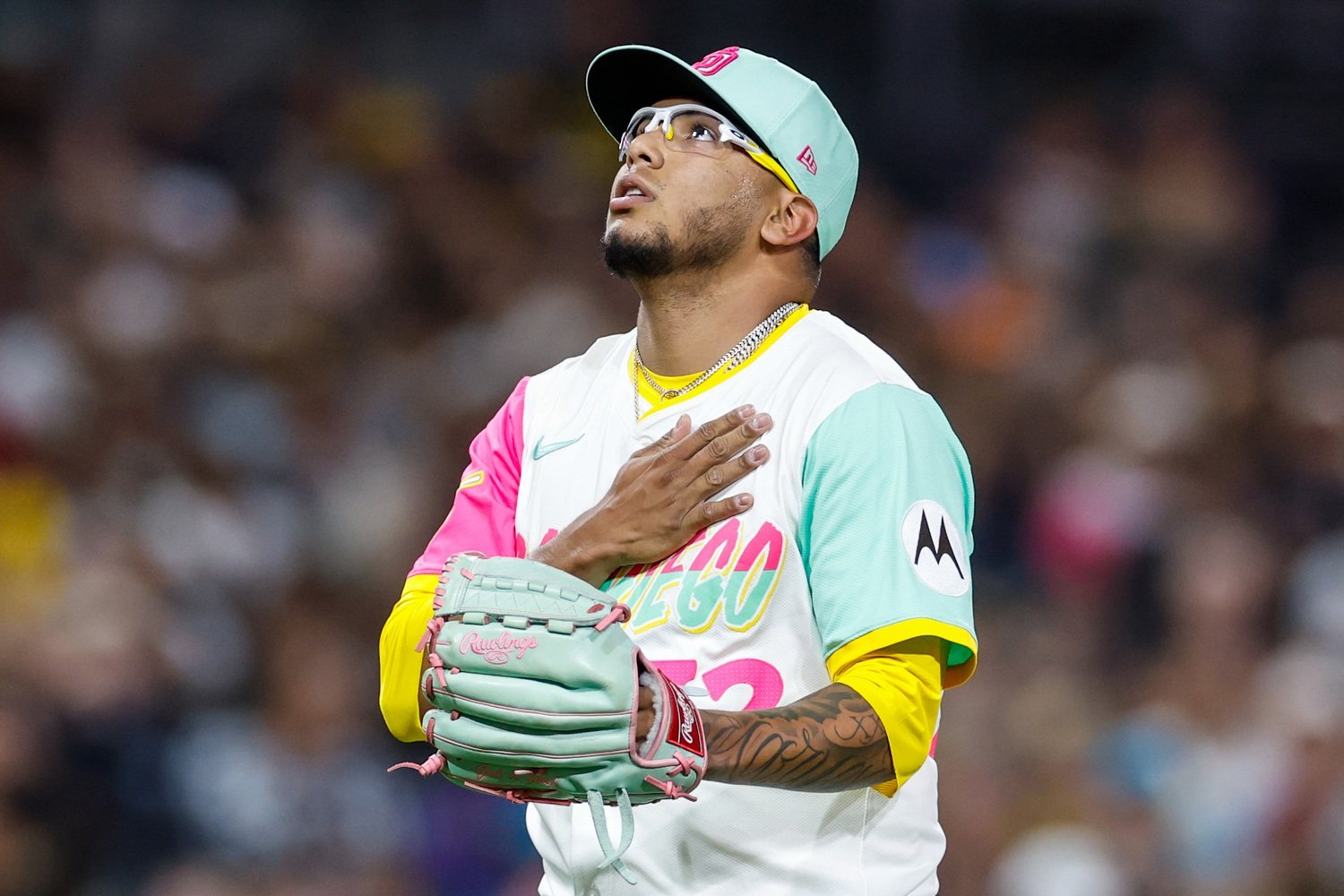 Padres Mission's ranking of the organization's top prospects for 2026 has reached the final stage with a countdown of the top five. Be sure to check out our previous rankings here: No. 5: Miguel Mendez No. 6: Jagger Haynes No. 7: Humberto Cruz No. 8: Ty Harvey No. 9: Ryan Wideman No. 10: Kale Fountain Nos. 11-15 Nos. 16-20 No. 4 Bradgley Rodriguez (San Diego Padres, El Paso Chihuahuas, San Antonio Missions) After a successful big-league callup last September and a strong spring training this year, Rodriguez appears ready to handle a full-time role in the Padres' loaded bullpen. That's a big accomplishment for a 22-year-old who has spent half his pro career injured. Bradgley Rodriguez joined the Padres organization in January 2021 out of Venezuela, signing for $370,000. Later that year, the right-hander showed off his live arm in the Dominican Summer League. But then came the struggles. An elbow injury led to Tommy John surgery in 2022, and the subsequent rehab cost him the 2022 and 2023 seasons. When he finally got back on the mound in 2024, he made up for the lost time. He pitched at three levels that year, capped by a promotion to Double-A San Antonio in August. He went back to San Antonio to begin the 2025 season, and then he caught the Padres' eye. In late May, he was promoted to the majors straight from Double-A. He debuted on May 31 vs. the Pittsburgh Pirates, working 1 2/3 scoreless innings, but was optioned to Triple-A El Paso three days later. Then, the injury bug bit him again. He missed about two weeks in mid-June with biceps tightness and spent seven weeks on the IL from early July to late August. Once healthy, he earned another callup to San Diego, where the Padres were dealing with their own pitching injuries. His electric stuff and moxie earned him a spot on the club's roster for the Wild Card Series against the Cubs. Rodriguez did not appear in the series, but just being on a postseason roster was a clear sign that the club thought it might have something with him. Rodriguez faced just 31 batters over 7 2/3 innings in the majors in 2025, but we can still glean much from how he attacked them. He threw a four-seamer, sinker, changeup, and cutter. All three of his fastballs played up in the charged atmosphere of the Show --- the sinker and four-seamer velocity increased by a full mile per hour to 98.3 and 98.8, respectively, while the cutter velo increased by 0.9 mph to 89.2. The sinker and change showed sizable horizontal movement, with 15.3 and 16.0 inches of arm-side run, respectively. Some of that movement can be attributed to a drop in arm angle from 56 percent to 46.8 percent. According to Mad Friars, the organization made the switch to three-quarters after the biceps scare to ease the strain on his arm. Rodriguez's pitch mix underwent a transformation last year as well. It changed from sinker-heavy in Triple-A to four-seam-heavy in the majors. The four-seamer use was just 10.6 percent at El Paso, but 40.2 percent with the Padres. The sinker use fell from 45.8 percent to 26.0 percent in the bigs. Changeup use was pared from 31.3 percent to 23.6 percent. The changeup played very well off the four-seamer, generating a 46.7 whiff rate as Rodriguez's putaway pitch. In fact, both pitches were unhittable, a .000 batting average for both. The sinker helped to produce a 56.3 percent ground-ball rate, to pair with a 29.0 strikeout rate. Platoon advantage played a large role in pitch selection. Thirty-one of his 33 sinkers and all 13 of his cutters were thrown to right-handed batters, while 23 of his 30 changeups were thrown to left-handed batters. The four-seamer use was more balanced --- 32 to left-handers, 19 to right-handers. (All stats per Baseball Savant and FanGraphs.) Rodriguez put himself in position to win a job out of spring training with six consecutive scoreless outings to begin exhibition play. He allowed two hits, struck out seven, and, more importantly, walked one over six innings. His chances will improve greatly if Jason Adam (quad) needs to open the season on the injured list and the bullpen has a second opening. If Adam proves ready to go, then it will be Rodriguez, Ty Adcock, Logan Gillaspie, Alek Jacob, and Ron Marinaccio vying for one spot. Gillaspie has earned praise from manager Craig Stammen for his willingness to fill any role, while Marinaccio is out of minor-league options. Rodriguez, on the other hand, can be optioned. If he does have to go back to El Paso, he'll be an early call-up option when the staff begins to go through the inevitable churn.
 -
San Diego Padres 2026 Top Prospects Rankings: #16-20
TomCent posted a topic in San Diego Padres Talk
Identifying the top prospects in a thin farm system such as the San Diego Padres' is as difficult as choosing from the prospects in a deep system. In each case, lots of hair-splitting happens as players are assigned spots. San Diego team president and general manager A.J. Preller cleared out the pipeline last summer in his deadline trades for Mason Miller, Ramon Laureano, Ryan O'Hearn and Freddy Fermin. Top prospect Leo De Vries led the group of players who were shipped out. It's time to list the best of what's left. Here's a look at the first set of prospects in Padres Mission's 2026 preseason Top 20 ranking -- the players ranked 16th through 20th. These rankings were voted on by the writers. 20. Francis Pena, RHP (El Paso Chihuahuas) Pena, 25, was ranked 17th on this list at the end of 2025, but his Triple-A numbers pushed him to the bottom of this list. ERA FIP xFIP IP G GS SV BS K% BB% K-BB% HR/9 SwStr% Whiff% WHIP BABIP LOB% LD% GB% FB% IFFB% HR/FB 4.99 5.23 5.50 52.1 43 0 0 4 19.8 14.3 5.5 0.69 10.3 28.1 1.61 .307 65.9 20.5 55.6 23.8 38.9 11.1 The Dominican-born reliever appeared to be on a fast track after his 2024 season that saw him speed through three levels. But he stalled at El Paso and spent the entire 2025 season there. The regression showed up in his walk rate (26th percentile of Triple-A pitchers) and strikeout rate (33rd percentile). But there was some deep red, too, namely in exit velocity allowed (83rd percentile) and hard-hit rate (76th percentile). He kept the ball in the yard, allowing just four home runs. That helped the FIP, but it was still ugly at 5.23. Pena relies on a hard sinker and slider that are delivered from a 44.5-degree arm angle. The sinker averaged 95.4 mph, 11 inches of arm-side run, and five inches of vertical break last year. The slider clocked in at 87.3 mph and had little depth. Those two pitches made up 86.6 percent of his arsenal. He mixed in a four-seamer (94.7 mph) and cutter (89.3 mph) the rest of the time. (Stats per Prospect Savant.) He showed enough to earn a non-roster invite to spring training for a second consecutive year, but a return to El Paso in 2026 seemed inevitable because of the Padres' bullpen depth. 19. Eric Yost, RHP (Fort Wayne TinCaps, San Antonio Missions) Yost, 23, cracks the top 20 three years after being drafted by the Padres in the 17th round out of Northeastern University. He earned the spot with a breakout at High-A that earned him a late-season promotion to Double-A. ERA FIP xFIP IP G GS SV BS K% BB% K-BB% HR/9 SwStr% Whiff% WHIP BABIP LOB% LD% GB% FB% IFFB% HR/FB 3.75 3.92 4.09 124.2 25 25 0 0 20.8 11.0 9.8 0.43 8.5 -- 1.40 .305 68.3 23.7 50.0 26.3 24.7 6.5 He made eight starts for San Antonio, and his stats there showed that the move challenged him. Contact and pull rates were higher than what he allowed in the Midwest League, and the swing rate decreased. He struggled badly with command as he faced better hitters, posting 26 strikeouts to 27 walks in 37 1/3 innings. That underwater ratio contributed to a 5.00 FIP (5.79 xFIP). Inconsistency was another problem; his first two Double-A starts were excellent, but five of his last six were poor. Overall, two splits stood out: Left-handed batters' OPS against him was 95 points higher than what right-handed batters produced, and opponents' OPS with runners on base was 110 points higher than their OPS with the bases empty (all splits via Baseball Reference). One thing in his favor: left-handed hitters' OPS was inflated by a .353 BABIP, a sign bad luck was involved. Yost's fastball sits in the low-to-mid-90s, but his combination of curve and slider/sweeper are graded highly by Prospect Savant. If he can't get his velocity higher, his pitchability will need to be elite. 18. Deivid Coronil, 3B/SS (Padres Gold) Coronil, 18, is one of eight players in our top 20 who made their professional debuts in 2025. The Venezuela native was a highly sought-after January international free agent. San Diego landed him with a $900,000 signing bonus. MLB.com ranked him 35th in its international prospects top 50. A few months after signing, he saw regular action with Padres Gold in the Dominican Summer League. PA H 2B 3B HR OPS wRC+ wOBA K% BB% SwStr% Whiff% PULL% CENT% OPPO% LD% GB% FB% SB CS SB% 174 26 2 1 0 .542 56 .306 27.0 12.1 20.5 -- 57.6 27.2 15.2 18.4 43.7 37.9 8 0 100.0 A big part of his appeal is his reputation as an elite fielder. MLB.com has already assigned him a 65 field grade on the 20-to-80 scouting scale. His four errors in 14 games at shortstop and eight errors in 27 games at third base last year look like the work of a young player at the start of his pro career. His arm, run and hit grades are listed at 50 each, and his power grade is 35. The slug could emerge once he grows into his body; he's listed as 6-3 and 162 pounds. And his running grade might be a bit low after his 8-for-8 on steal attempts. The Padres are famous for rushing young prospects through their system, but they might need to be patient with Coronil after a middling debut. 17. Truitt Madonna, C (Lake Elsinore Storm) Madonna is another of the 2025 debutants in the top 20. He was chosen by the Padres in the 11th round of the July draft out of Ballard High School in Seattle. The club gave him a $654,000 signing bonus, more than four times above slot, to break his commitment to UCLA. A strong showing in the spring-summer MLB Draft League boosted his stock. PA H 2B 3B HR OPS wRC+ wOBA K% BB% SwStr% Whiff% PULL% CENT% OPPO% LD% GB% FB% SB CS SB% 60 10 3 1 0 .544 55 .270 38.3 10.0 18.6 -- 23.3 23.3 53.3 16.1 61.3 22.6 0 0 0.0 Madonna made his pro debut two weeks before the end of the California League season with Lake Elsinore. He started seven games at catcher and two games at first base. Contact was a big issue, noted by his 38.3 strikeout rate and a 61.3 percent ground-ball rate in 60 plate appearances. There were hiccups on defense, as well. Madonna went 1-for-14 in throwing out base stealers, a seven-percent success rate. He was also charged with two passed balls. Power is Madonna's signature tool. Prospect Savant pegs it at 50 on the 20-to-80 scouting scale. The hit tool is 40, as is the run tool. His arm tool is 50 and his field tool is 40. Madonna already has size -- he's listed at 6-3 and 215 pounds -- and he'll turn 19 on March 12. There's a lot of room for growth in both his body and his game. 16. Kavares Tears, OF/1B (Lake Elsinore Storm) Tears was 11th in our post-deadline Top 20 last summer, but a rocky debut season at Low-A dinged him this year. More was expected from a toolsy player who came from a collegiate powerhouse in the University of Tennessee. PA H 2B 3B HR OPS wRC+ wOBA K% BB% SwStr% Whiff% PULL% CENT% OPPO% LD% GB% FB% SB CS SB% 475 93 22 2 13 .705 96 .339 29.1% 12.2% 16.6% -- 41.7% 23.7% 34.5% 24.6% 46.0% 29.4% 6 5 54.5% San Diego took him in the fourth round of the 2024 MLB Draft as the compensation for Josh Hader, but the organization waited until 2025 to start his career. His debut was pushed back further, to April 15, because of a hamstring injury. He then was limited to DH duty until late July. For the year, he started 29 games in the outfield and three games at first base. Four of his five scouting grades from Prospect Savant speak to his athleticism -- 60 throw, 55 run, 55 field, and 55 power. The fifth grade is a 40 hit tool. The left-handed hitting Tears slashed .227/.320/.385 (.159 ISO, 96 wRC+) in the hitter-friendly California League. He hit .188 in 72 games from June 1 through the end of the season. At least his 12.2 percent walk rate was encouraging, On top of that, he posted extreme home-road splits -- .782 OPS, 22 extra-base hits home; .625 OPS, 15 extra-base hits road -- and large reverse splits: .805 OPS vs. left-handers against a .676 OPS vs. right-handers. There's a lot to monitor as Tears enters Year 2 of his development. What stands out from Nos. 16-20 on our list? Let us know your thoughts in the comments! View full article -
 Identifying the top prospects in a thin farm system such as the San Diego Padres' is as difficult as choosing from the prospects in a deep system. In each case, lots of hair-splitting happens as players are assigned spots. San Diego team president and general manager A.J. Preller cleared out the pipeline last summer in his deadline trades for Mason Miller, Ramon Laureano, Ryan O'Hearn and Freddy Fermin. Top prospect Leo De Vries led the group of players who were shipped out. It's time to list the best of what's left. Here's a look at the first set of prospects in Padres Mission's 2026 preseason Top 20 ranking -- the players ranked 16th through 20th. These rankings were voted on by the writers. 20. Francis Pena, RHP (El Paso Chihuahuas) Pena, 25, was ranked 17th on this list at the end of 2025, but his Triple-A numbers pushed him to the bottom of this list. ERA FIP xFIP IP G GS SV BS K% BB% K-BB% HR/9 SwStr% Whiff% WHIP BABIP LOB% LD% GB% FB% IFFB% HR/FB 4.99 5.23 5.50 52.1 43 0 0 4 19.8 14.3 5.5 0.69 10.3 28.1 1.61 .307 65.9 20.5 55.6 23.8 38.9 11.1 The Dominican-born reliever appeared to be on a fast track after his 2024 season that saw him speed through three levels. But he stalled at El Paso and spent the entire 2025 season there. The regression showed up in his walk rate (26th percentile of Triple-A pitchers) and strikeout rate (33rd percentile). But there was some deep red, too, namely in exit velocity allowed (83rd percentile) and hard-hit rate (76th percentile). He kept the ball in the yard, allowing just four home runs. That helped the FIP, but it was still ugly at 5.23. Pena relies on a hard sinker and slider that are delivered from a 44.5-degree arm angle. The sinker averaged 95.4 mph, 11 inches of arm-side run, and five inches of vertical break last year. The slider clocked in at 87.3 mph and had little depth. Those two pitches made up 86.6 percent of his arsenal. He mixed in a four-seamer (94.7 mph) and cutter (89.3 mph) the rest of the time. (Stats per Prospect Savant.) He showed enough to earn a non-roster invite to spring training for a second consecutive year, but a return to El Paso in 2026 seemed inevitable because of the Padres' bullpen depth. 19. Eric Yost, RHP (Fort Wayne TinCaps, San Antonio Missions) Yost, 23, cracks the top 20 three years after being drafted by the Padres in the 17th round out of Northeastern University. He earned the spot with a breakout at High-A that earned him a late-season promotion to Double-A. ERA FIP xFIP IP G GS SV BS K% BB% K-BB% HR/9 SwStr% Whiff% WHIP BABIP LOB% LD% GB% FB% IFFB% HR/FB 3.75 3.92 4.09 124.2 25 25 0 0 20.8 11.0 9.8 0.43 8.5 -- 1.40 .305 68.3 23.7 50.0 26.3 24.7 6.5 He made eight starts for San Antonio, and his stats there showed that the move challenged him. Contact and pull rates were higher than what he allowed in the Midwest League, and the swing rate decreased. He struggled badly with command as he faced better hitters, posting 26 strikeouts to 27 walks in 37 1/3 innings. That underwater ratio contributed to a 5.00 FIP (5.79 xFIP). Inconsistency was another problem; his first two Double-A starts were excellent, but five of his last six were poor. Overall, two splits stood out: Left-handed batters' OPS against him was 95 points higher than what right-handed batters produced, and opponents' OPS with runners on base was 110 points higher than their OPS with the bases empty (all splits via Baseball Reference). One thing in his favor: left-handed hitters' OPS was inflated by a .353 BABIP, a sign bad luck was involved. Yost's fastball sits in the low-to-mid-90s, but his combination of curve and slider/sweeper are graded highly by Prospect Savant. If he can't get his velocity higher, his pitchability will need to be elite. 18. Deivid Coronil, 3B/SS (Padres Gold) Coronil, 18, is one of eight players in our top 20 who made their professional debuts in 2025. The Venezuela native was a highly sought-after January international free agent. San Diego landed him with a $900,000 signing bonus. MLB.com ranked him 35th in its international prospects top 50. A few months after signing, he saw regular action with Padres Gold in the Dominican Summer League. PA H 2B 3B HR OPS wRC+ wOBA K% BB% SwStr% Whiff% PULL% CENT% OPPO% LD% GB% FB% SB CS SB% 174 26 2 1 0 .542 56 .306 27.0 12.1 20.5 -- 57.6 27.2 15.2 18.4 43.7 37.9 8 0 100.0 A big part of his appeal is his reputation as an elite fielder. MLB.com has already assigned him a 65 field grade on the 20-to-80 scouting scale. His four errors in 14 games at shortstop and eight errors in 27 games at third base last year look like the work of a young player at the start of his pro career. His arm, run and hit grades are listed at 50 each, and his power grade is 35. The slug could emerge once he grows into his body; he's listed as 6-3 and 162 pounds. And his running grade might be a bit low after his 8-for-8 on steal attempts. The Padres are famous for rushing young prospects through their system, but they might need to be patient with Coronil after a middling debut. 17. Truitt Madonna, C (Lake Elsinore Storm) Madonna is another of the 2025 debutants in the top 20. He was chosen by the Padres in the 11th round of the July draft out of Ballard High School in Seattle. The club gave him a $654,000 signing bonus, more than four times above slot, to break his commitment to UCLA. A strong showing in the spring-summer MLB Draft League boosted his stock. PA H 2B 3B HR OPS wRC+ wOBA K% BB% SwStr% Whiff% PULL% CENT% OPPO% LD% GB% FB% SB CS SB% 60 10 3 1 0 .544 55 .270 38.3 10.0 18.6 -- 23.3 23.3 53.3 16.1 61.3 22.6 0 0 0.0 Madonna made his pro debut two weeks before the end of the California League season with Lake Elsinore. He started seven games at catcher and two games at first base. Contact was a big issue, noted by his 38.3 strikeout rate and a 61.3 percent ground-ball rate in 60 plate appearances. There were hiccups on defense, as well. Madonna went 1-for-14 in throwing out base stealers, a seven-percent success rate. He was also charged with two passed balls. Power is Madonna's signature tool. Prospect Savant pegs it at 50 on the 20-to-80 scouting scale. The hit tool is 40, as is the run tool. His arm tool is 50 and his field tool is 40. Madonna already has size -- he's listed at 6-3 and 215 pounds -- and he'll turn 19 on March 12. There's a lot of room for growth in both his body and his game. 16. Kavares Tears, OF/1B (Lake Elsinore Storm) Tears was 11th in our post-deadline Top 20 last summer, but a rocky debut season at Low-A dinged him this year. More was expected from a toolsy player who came from a collegiate powerhouse in the University of Tennessee. PA H 2B 3B HR OPS wRC+ wOBA K% BB% SwStr% Whiff% PULL% CENT% OPPO% LD% GB% FB% SB CS SB% 475 93 22 2 13 .705 96 .339 29.1% 12.2% 16.6% -- 41.7% 23.7% 34.5% 24.6% 46.0% 29.4% 6 5 54.5% San Diego took him in the fourth round of the 2024 MLB Draft as the compensation for Josh Hader, but the organization waited until 2025 to start his career. His debut was pushed back further, to April 15, because of a hamstring injury. He then was limited to DH duty until late July. For the year, he started 29 games in the outfield and three games at first base. Four of his five scouting grades from Prospect Savant speak to his athleticism -- 60 throw, 55 run, 55 field, and 55 power. The fifth grade is a 40 hit tool. The left-handed hitting Tears slashed .227/.320/.385 (.159 ISO, 96 wRC+) in the hitter-friendly California League. He hit .188 in 72 games from June 1 through the end of the season. At least his 12.2 percent walk rate was encouraging, On top of that, he posted extreme home-road splits -- .782 OPS, 22 extra-base hits home; .625 OPS, 15 extra-base hits road -- and large reverse splits: .805 OPS vs. left-handers against a .676 OPS vs. right-handers. There's a lot to monitor as Tears enters Year 2 of his development. What stands out from Nos. 16-20 on our list? Let us know your thoughts in the comments!
 -
Thinner than a rail all offseason, the San Diego Padres' rotation now has a glut of options. The most recent addition is former Colorado Rockies ace German Marquez, who reportedly agreed to a one-year contract with a mutual option for 2027. He brings the number of pitchers in camp competing for the last two spots to at least eight. San Diego isn't getting anything near the All-Star version of Márquez. The 30-year-old was hit hard last year after missing close to two full seasons because of elbow problems. In 126 1/3 innings over 26 starts, he posted full-season career worsts across the board: a 6.70 ERA/5.47 FIP, 5.9 strikeouts per nine innings, a .545 slugging percentage against and a .923 OPS against. He allowed 168 hits and 23 home runs. Our series on rotation candidates continues with Marquez. Should he be in the Friars' rotation, work out of the bullpen, or go down to Triple-A El Paso to begin 2026? Germán Márquez's Stuff In terms of results, Márquez's best pitch last year was his knuckle curve. It was well below-average in both movement and drop, but it had above-average spin (64th percentile). It served as Marquez's out pitch: opponents batted .208 with a 33.9 percent K rate against it. Despite that, it produced a negative-6 run value. Marquez's fastball velocity was league-average -- 94.8 mph on his four-seamer, 94.2 mph on his sinker -- but both pitches were about one mile per hour slower than his fastballs in 2022 and continued to have below-average spin (24th percentile). The four-seamer did have above-average horizontal movement, with 10.9 inches of arm-side run (in to right-handed batters, away from left-handed batters). And yet, hitters feasted on it, slugging .642. The pitch had a negative-24 run value. Opponents punished the rest of the repertoire, too. Marquez's sinker, slider, and changeup produced respective SLG's of .545, .565, and .556. Each of those pitches flashed below-average movement. There were plenty more ugly peripherals to go around. Marquez's ground-ball rate plummeted to a career-low 36.6 percent and his air rate soared to a career-high 63.3 percent. His 91.7 mph average exit velocity was more than two miles per hour higher than his career norms. His 11.1 barrel rate was the second-worst of his career. He allowed a 1.057 OPS after falling behind 1-0 in the count. There is a Coors Effect in Marquez's career splits, but it shows up in hits allowed rather than home runs allowed. He has averaged 9.99 hits per nine at Coors, compared to 8.53 per nine outside Denver. That speaks to the fact that lots of hits fall in at Coors Field because of the park's spacious outfield. His home run rates are 3.44 percent at home and 3.29 percent on the road. For what it's worth, Petco Park has been a good place for him. His career numbers there are skewed by two poor outings last year -- 12 earned runs in seven innings. Prior to that, he had a 3.64 ERA and 68 strikeouts in 10 games (nine starts). German Marquez's Arsenal Márquez was essentially a three-pitch pitcher last season. He threw the four-seamer 35 percent of the time, a knuckle curve 32 percent of the time, and a sinker 20 percent of the time. He also made use of slider (11 percent) and changeup (2 percent), though they were seldom featured. Of note: He threw his slider 21 percent of the time in 2022, his last full season prior to 2025. His knuckle-curve made up that 10-point difference last year. As usual, there was a narrow gap between the fastballs and his secondary pitches: 9.3 mph between his fastest (four-seamer) and slowest (knuckle curve, 85.5 mph). That was in line with his career averages. His slider (88.8) and changeup (88.5) were thrown at almost the same speed. The use of his fourth and fifth pitches was based almost strictly on batter handedness. He threw 196 of his 226 sliders to right-handed batters and 49 of his 50 changeups to left-handed batters. What Should German Marquez's Role Be in 2026? Márquez's 2025 season says that he shouldn't be guaranteed anything, but his history and contract say that he will begin the year in the rotation. How long he stays in it will depend on performance. The Rockies kept running him out there last year to eat innings. The Padres will have a fraction of that patience in 2026. If Márquez is eventually moved to a long-man role, it would be his first relief work since 2016, when he was a rookie. Again, because he's signing a major-league deal, it's almost certain that the Padres would keep him around as the 13th man on the staff. El Paso feels very far away, despite the recent results. View full article
-
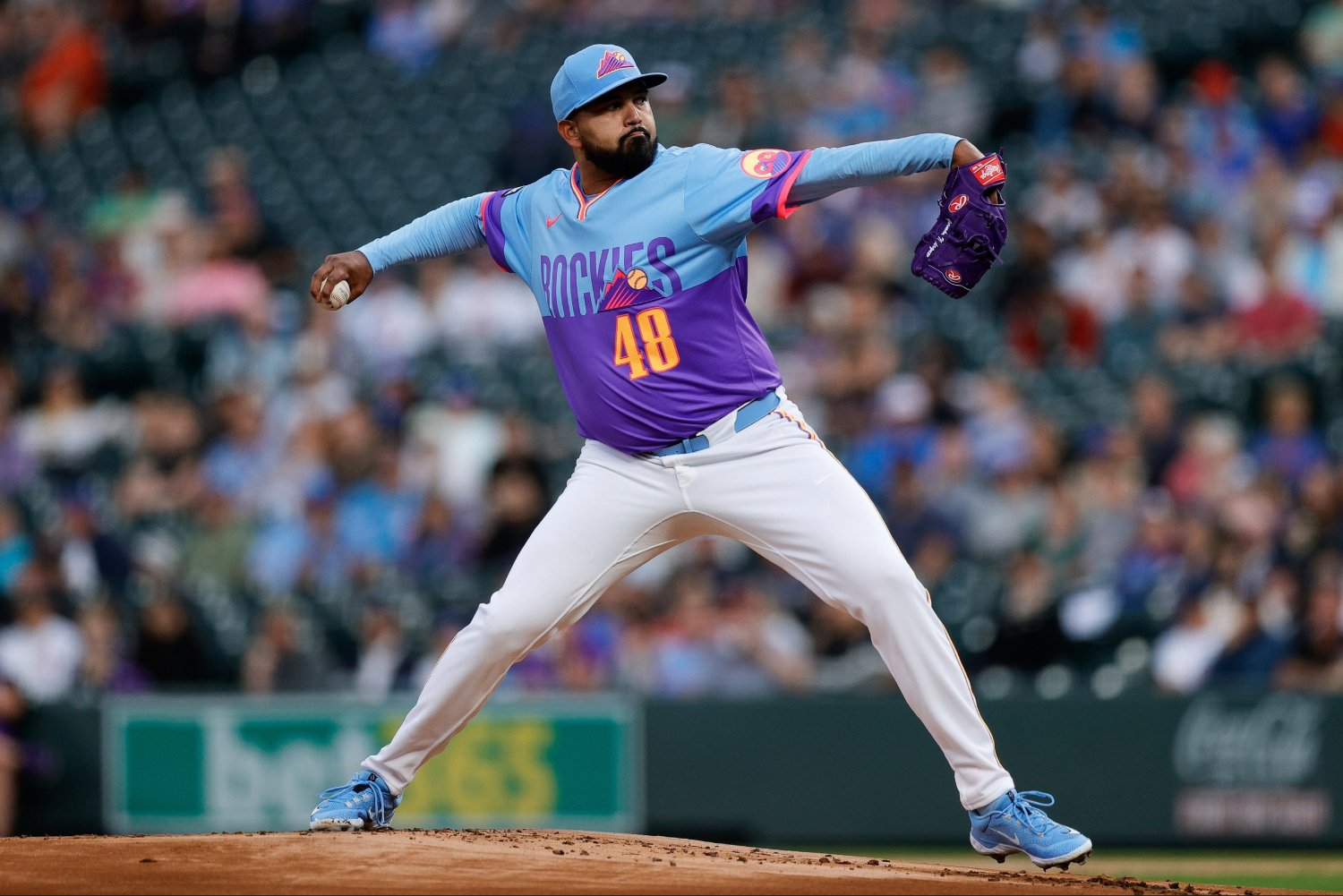 Thinner than a rail all offseason, the San Diego Padres' rotation now has a glut of options. The most recent addition is former Colorado Rockies ace German Marquez, who reportedly agreed to a one-year contract with a mutual option for 2027. He brings the number of pitchers in camp competing for the last two spots to at least eight. San Diego isn't getting anything near the All-Star version of Márquez. The 30-year-old was hit hard last year after missing close to two full seasons because of elbow problems. In 126 1/3 innings over 26 starts, he posted full-season career worsts across the board: a 6.70 ERA/5.47 FIP, 5.9 strikeouts per nine innings, a .545 slugging percentage against and a .923 OPS against. He allowed 168 hits and 23 home runs. Our series on rotation candidates continues with Marquez. Should he be in the Friars' rotation, work out of the bullpen, or go down to Triple-A El Paso to begin 2026? Germán Márquez's Stuff In terms of results, Márquez's best pitch last year was his knuckle curve. It was well below-average in both movement and drop, but it had above-average spin (64th percentile). It served as Marquez's out pitch: opponents batted .208 with a 33.9 percent K rate against it. Despite that, it produced a negative-6 run value. Marquez's fastball velocity was league-average -- 94.8 mph on his four-seamer, 94.2 mph on his sinker -- but both pitches were about one mile per hour slower than his fastballs in 2022 and continued to have below-average spin (24th percentile). The four-seamer did have above-average horizontal movement, with 10.9 inches of arm-side run (in to right-handed batters, away from left-handed batters). And yet, hitters feasted on it, slugging .642. The pitch had a negative-24 run value. Opponents punished the rest of the repertoire, too. Marquez's sinker, slider, and changeup produced respective SLG's of .545, .565, and .556. Each of those pitches flashed below-average movement. There were plenty more ugly peripherals to go around. Marquez's ground-ball rate plummeted to a career-low 36.6 percent and his air rate soared to a career-high 63.3 percent. His 91.7 mph average exit velocity was more than two miles per hour higher than his career norms. His 11.1 barrel rate was the second-worst of his career. He allowed a 1.057 OPS after falling behind 1-0 in the count. There is a Coors Effect in Marquez's career splits, but it shows up in hits allowed rather than home runs allowed. He has averaged 9.99 hits per nine at Coors, compared to 8.53 per nine outside Denver. That speaks to the fact that lots of hits fall in at Coors Field because of the park's spacious outfield. His home run rates are 3.44 percent at home and 3.29 percent on the road. For what it's worth, Petco Park has been a good place for him. His career numbers there are skewed by two poor outings last year -- 12 earned runs in seven innings. Prior to that, he had a 3.64 ERA and 68 strikeouts in 10 games (nine starts). German Marquez's Arsenal Márquez was essentially a three-pitch pitcher last season. He threw the four-seamer 35 percent of the time, a knuckle curve 32 percent of the time, and a sinker 20 percent of the time. He also made use of slider (11 percent) and changeup (2 percent), though they were seldom featured. Of note: He threw his slider 21 percent of the time in 2022, his last full season prior to 2025. His knuckle-curve made up that 10-point difference last year. As usual, there was a narrow gap between the fastballs and his secondary pitches: 9.3 mph between his fastest (four-seamer) and slowest (knuckle curve, 85.5 mph). That was in line with his career averages. His slider (88.8) and changeup (88.5) were thrown at almost the same speed. The use of his fourth and fifth pitches was based almost strictly on batter handedness. He threw 196 of his 226 sliders to right-handed batters and 49 of his 50 changeups to left-handed batters. What Should German Marquez's Role Be in 2026? Márquez's 2025 season says that he shouldn't be guaranteed anything, but his history and contract say that he will begin the year in the rotation. How long he stays in it will depend on performance. The Rockies kept running him out there last year to eat innings. The Padres will have a fraction of that patience in 2026. If Márquez is eventually moved to a long-man role, it would be his first relief work since 2016, when he was a rookie. Again, because he's signing a major-league deal, it's almost certain that the Padres would keep him around as the 13th man on the staff. El Paso feels very far away, despite the recent results.
 -
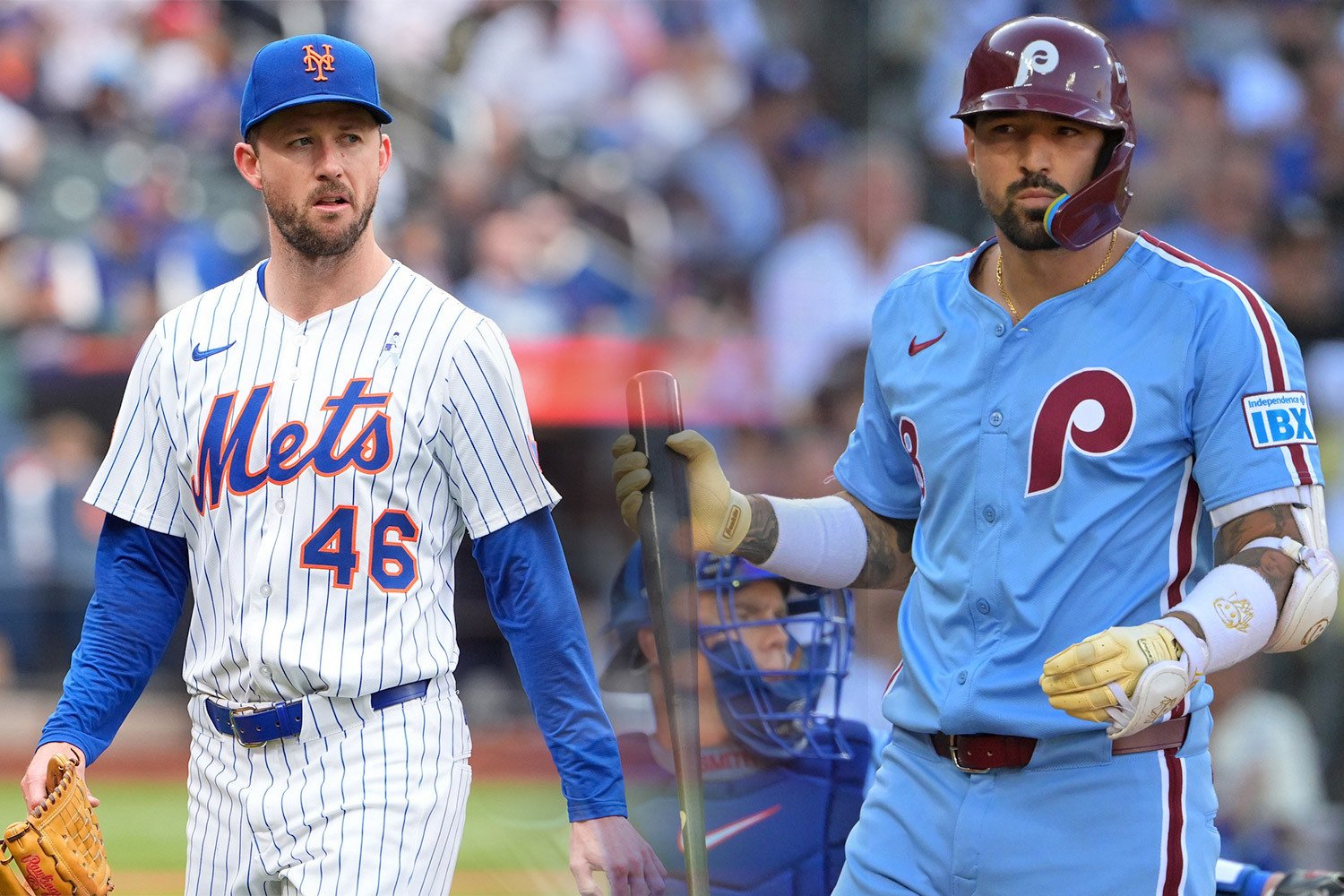 With the first week of spring training coming to an end, the Padres have brought in reinforcements to the rotation and lineup. The club on Saturday reportedly agreed to contracts with right-hander Griffin Canning and outfielder/DH Nick Castellanos. Canning was on the free-agent market all offseason, while Castellanos became a free agent Thursday when the Phillies released him. Both men figure to play significant roles for San Diego in 2026. Here's where they might fit. What will be Griffin Canning's role with the Padres? Canning is almost certain to take a spot in the rotation. The 29-year-old turned in a standout half-season with the New York Mets in 2025, pitching to a 3.77 ERA/4.04 FIP over 76 1/3 innings. But his New York tenure ended abruptly when he tore his left Achilles tendon during a start June 26 in Atlanta. He threw for teams at UCLA last week and reportedly topped out at 93 mph with his fastball. As good as that it, the status of Canning's slider is just as important. The pitch transformed him last season, The Mets got him to throw it more as they radically changed his pitch mix from his Angels days. Canning will step into a rotation that's led by Nick Pivetta, Joe Musgrove and Michael King. Randy Vasquez, J.P. Sears, Kyle Hart and Matt Waldron are among the pitchers in the mix for the other rotation spot. What will be Nick Castellanos' role with the Padres? Castellanos could be an intriguing player in San Diego. The club wanted another bat, and the 33-year-old slugger fits the description. There are red flags, though. Castellanos showed steep decline with Philadelphia last season. His wRC+ plunged to 87, his on-base percentage fell to a career-low. 294, and his ISO fell to .150. But there might have been a mitigating factor with those numbers. He suffered a knee injury July 25 at Yankee Stadium and then dealt with tendinitis in the knee the rest of the season. If he's healthy, then maybe the swing improves and the production follows. There was also his messy breakup with the Phils, which started in June when he confronted manager Rob Thomson in the dugout during a game in Miami, His quick signing indicates that there wasn't much fear about him being a bad teammate. The right-handed Castellanos figures to split at-bats with Gavin Sheets and another recent addition, Miguel Andujar at DH, first base and off the bench. His defense in the outfield is considered poor, but the Padres don't need him to do much on the grass. He last played on the infield 2017, and that was at third base. He has never played first base. This is a low-risk move for the Padres. They'll only have to pay him the minimum MLB salary, $780,000, this season. The Phillies are responsible for the remainder of his $20 million 2026 salary after releasing him.
 -
With the first week of spring training coming to an end, the Padres have brought in reinforcements to the rotation and lineup. The club on Saturday reportedly agreed to contracts with right-hander Griffin Canning and outfielder/DH Nick Castellanos. Canning was on the free-agent market all offseason, while Castellanos became a free agent Thursday when the Phillies released him. Both men figure to play significant roles for San Diego in 2026. Here's where they might fit. What will be Griffin Canning's role with the Padres? Canning is almost certain to take a spot in the rotation. The 29-year-old turned in a standout half-season with the New York Mets in 2025, pitching to a 3.77 ERA/4.04 FIP over 76 1/3 innings. But his New York tenure ended abruptly when he tore his left Achilles tendon during a start June 26 in Atlanta. He threw for teams at UCLA last week and reportedly topped out at 93 mph with his fastball. As good as that it, the status of Canning's slider is just as important. The pitch transformed him last season, The Mets got him to throw it more as they radically changed his pitch mix from his Angels days. Canning will step into a rotation that's led by Nick Pivetta, Joe Musgrove and Michael King. Randy Vasquez, J.P. Sears, Kyle Hart and Matt Waldron are among the pitchers in the mix for the other rotation spot. What will be Nick Castellanos' role with the Padres? Castellanos could be an intriguing player in San Diego. The club wanted another bat, and the 33-year-old slugger fits the description. There are red flags, though. Castellanos showed steep decline with Philadelphia last season. His wRC+ plunged to 87, his on-base percentage fell to a career-low. 294, and his ISO fell to .150. But there might have been a mitigating factor with those numbers. He suffered a knee injury July 25 at Yankee Stadium and then dealt with tendinitis in the knee the rest of the season. If he's healthy, then maybe the swing improves and the production follows. There was also his messy breakup with the Phils, which started in June when he confronted manager Rob Thomson in the dugout during a game in Miami, His quick signing indicates that there wasn't much fear about him being a bad teammate. The right-handed Castellanos figures to split at-bats with Gavin Sheets and another recent addition, Miguel Andujar at DH, first base and off the bench. His defense in the outfield is considered poor, but the Padres don't need him to do much on the grass. He last played on the infield 2017, and that was at third base. He has never played first base. This is a low-risk move for the Padres. They'll only have to pay him the minimum MLB salary, $780,000, this season. The Phillies are responsible for the remainder of his $20 million 2026 salary after releasing him. View full article
-
One of the ripples from Monday's six-player trade between the Boston Red Sox and Milwaukee Brewers, with Caleb Durbin and Kyle Harrison as the principals, was the idea that maybe a path had opened for the Padres to make a late trade for a starting pitcher. The thinking was this: Milwaukee has pitching depth after acquiring left-handers Harrison and Shane Drohan from Boston, and they no longer have a third baseman after unloading Durbin. David Hamilton, the other player Milwaukee got in the deal, might get the first crack at the job. Could A.J. Preller interest his Brewers counterpart Matt Arnold in, say, Jake Cronenworth to fill that gap? But then there was another thought: Now is not the time for the Padres to move Cronenworth, even though we posited during the Winter Meetings that trading him might be the club's easiest path to acquiring pitching. Here's an argument, albeit not a full-throated one, for keeping him as spring training begins: 3 reasons for Padres to retain Jake Cronenworth Cronenworth wouldn't fetch what other teams have gotten for versatile infielders this month True, the market for versatile infielders appears robust. The Durbin deal brought Milwaukee back an MLB arm, an MLB-ready arm, and a speedy MLB infielder. Four days earlier, the Arizona Diamondbacks dealt Blaze Alexander to the Baltimore Orioles for hard-throwing right-hander Kade Strowd and two minor leaguers. A couple of days before that, the St. Louis Cardinals bagged a top-100 prospect (Jurrangelo Cijntje), two other minor leaguers and two draft picks from the Seattle Mariners and Tampa Bay Rays for Brendan Donovan. But each move featured someone who had more overall value than Cronenworth. Durbin will turn 26 this month and is coming off a season in which he finished third in National League Rookie of the Year voting. Alexander is 26, he's cheap, and he has flashed potential during his brief career. Donovan, 29, is one of the best contact hitters in the game, he's still arbitration-eligible, and he's highly versatile. Cronenworth is 32 and has five years and $60 million-plus remaining on his seven-year, $80 million extension. He can play second, short and first but has just one inning of MLB experience at third base. How much money -- and what level of prospect -- would Preller need to attach to him for a team to bite? Cronenworth is the Padres' best internal option at second base First, the negative: There's a lot of blue on his Baseball Savant page. His career-high .367 on-base percentage last year was boosted by a career-high 13.4 walk rate that was three points higher than his previous personal best. Using run values, he could only handle four-seam fastballs last season. Was that a byproduct of the rib fracture that cost him most of April and a bit of May, or was that a sign of age? Now, the positive: Cronenworth delivers above-average offensive production (117 wRC+, 108 OPS+ in 2025, in line with his career averages). San Diego's other options at second base -- Mason McCoy, Sung Mun Song and Will Wagner -- can't be counted on to match that. Song, 29, hit a career-high 26 home runs in the KBO last year, but he has never taken an MLB at-bat and he's nursing an oblique injury suffered during offseason training. McCoy, 30, has made 84 mostly empty plate appearances over parts of three seasons (.494 OPS). Wagner, 27, has a career 95 wRC+ over roughly a full season of plate appearances. None of that says "everyday player for a contending club." Defense is the weakest part of this argument. Cronenworth's fielding at second last year was average to below average according to advanced metrics. He was eighth among 11 qualified second basemen with minus-8 defensive runs saved. Outs above average rated him better at minus-1, fifth-best in that group. Song, meanwhile, was a Gold Glove third baseman in Korea. McCoy and Wagner have posted middling defensive metrics. Cronenworth is a part of the Padres' core, and vibes matter He has been a regular contributor since making his MLB debut in 2020, the COVID year. San Diego has made the postseason four times in his six seasons. He forms a veteran keystone combination with shortstop Xander Bogaerts. San Diego would be removing a big piece -- for a potentially low return -- from a team that has championship aspirations. View full article
-
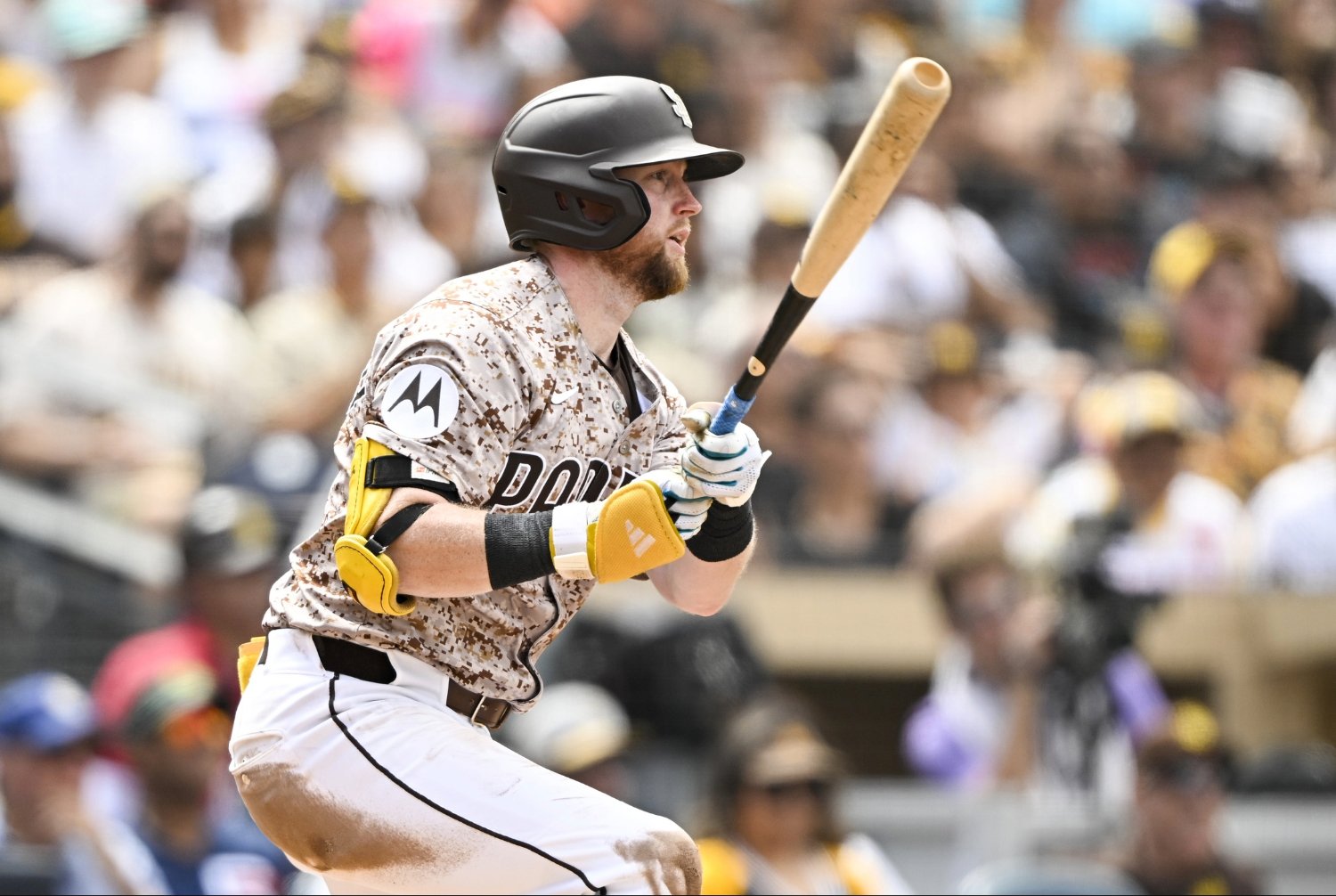 One of the ripples from Monday's six-player trade between the Boston Red Sox and Milwaukee Brewers, with Caleb Durbin and Kyle Harrison as the principals, was the idea that maybe a path had opened for the Padres to make a late trade for a starting pitcher. The thinking was this: Milwaukee has pitching depth after acquiring left-handers Harrison and Shane Drohan from Boston, and they no longer have a third baseman after unloading Durbin. David Hamilton, the other player Milwaukee got in the deal, might get the first crack at the job. Could A.J. Preller interest his Brewers counterpart Matt Arnold in, say, Jake Cronenworth to fill that gap? But then there was another thought: Now is not the time for the Padres to move Cronenworth, even though we posited during the Winter Meetings that trading him might be the club's easiest path to acquiring pitching. Here's an argument, albeit not a full-throated one, for keeping him as spring training begins: 3 reasons for Padres to retain Jake Cronenworth Cronenworth wouldn't fetch what other teams have gotten for versatile infielders this month True, the market for versatile infielders appears robust. The Durbin deal brought Milwaukee back an MLB arm, an MLB-ready arm, and a speedy MLB infielder. Four days earlier, the Arizona Diamondbacks dealt Blaze Alexander to the Baltimore Orioles for hard-throwing right-hander Kade Strowd and two minor leaguers. A couple of days before that, the St. Louis Cardinals bagged a top-100 prospect (Jurrangelo Cijntje), two other minor leaguers and two draft picks from the Seattle Mariners and Tampa Bay Rays for Brendan Donovan. But each move featured someone who had more overall value than Cronenworth. Durbin will turn 26 this month and is coming off a season in which he finished third in National League Rookie of the Year voting. Alexander is 26, he's cheap, and he has flashed potential during his brief career. Donovan, 29, is one of the best contact hitters in the game, he's still arbitration-eligible, and he's highly versatile. Cronenworth is 32 and has five years and $60 million-plus remaining on his seven-year, $80 million extension. He can play second, short and first but has just one inning of MLB experience at third base. How much money -- and what level of prospect -- would Preller need to attach to him for a team to bite? Cronenworth is the Padres' best internal option at second base First, the negative: There's a lot of blue on his Baseball Savant page. His career-high .367 on-base percentage last year was boosted by a career-high 13.4 walk rate that was three points higher than his previous personal best. Using run values, he could only handle four-seam fastballs last season. Was that a byproduct of the rib fracture that cost him most of April and a bit of May, or was that a sign of age? Now, the positive: Cronenworth delivers above-average offensive production (117 wRC+, 108 OPS+ in 2025, in line with his career averages). San Diego's other options at second base -- Mason McCoy, Sung Mun Song and Will Wagner -- can't be counted on to match that. Song, 29, hit a career-high 26 home runs in the KBO last year, but he has never taken an MLB at-bat and he's nursing an oblique injury suffered during offseason training. McCoy, 30, has made 84 mostly empty plate appearances over parts of three seasons (.494 OPS). Wagner, 27, has a career 95 wRC+ over roughly a full season of plate appearances. None of that says "everyday player for a contending club." Defense is the weakest part of this argument. Cronenworth's fielding at second last year was average to below average according to advanced metrics. He was eighth among 11 qualified second basemen with minus-8 defensive runs saved. Outs above average rated him better at minus-1, fifth-best in that group. Song, meanwhile, was a Gold Glove third baseman in Korea. McCoy and Wagner have posted middling defensive metrics. Cronenworth is a part of the Padres' core, and vibes matter He has been a regular contributor since making his MLB debut in 2020, the COVID year. San Diego has made the postseason four times in his six seasons. He forms a veteran keystone combination with shortstop Xander Bogaerts. San Diego would be removing a big piece -- for a potentially low return -- from a team that has championship aspirations.
 -
The San Diego Padres' biggest offseason question was how to plug the holes in the rotation. The club lost Dylan Cease to free agency and Yu Darvish to injury. Because A.J. Preller is in charge, visions of a Tarik Skubal or Freddy Peralta trade or a Framber Valdez signing danced in people's heads. However, Preller has just re-signed Michael King to a player-friendly contract. As the players arrive in Arizona for spring training, three of the five starting spots are spoken for: King, Nick Pivetta and Joe Musgrove. The incumbent options for spots Nos. 4 and 5 -- Randy Vasquez, J.P. Sears, Kyle Hart and Matt Waldron -- do not inspire much hope. That leaves the door open for non-roster invitees Triston McKenzie and Marco Gonzales. Padres Mission is taking an analytical look at all the contestants for Opening Day rotation spots. This piece will focus on what Gonzales might bring to the club and whether he should break camp with San Diego or report to Triple-A El Paso as an insurance policy/reclamation project. Previous Entries: Randy Vasquez's Arsenal Marco Gonzales' Stuff Gonzales fits the profile of a "crafty lefty" who "knows how to pitch." His velocity is distinctly below average, but he throws strikes, moves the ball around and expands the zone. He has produced excellent chase, exit velo, hard-hit and walk rates in his career. He also knows how to pitch to the dimensions of his home park. After working in St. Louis' Busch Stadium, Seattle's T-Mobile Park and Pittsburgh's PNC Park, his career home ERA is 0.62 runs lower than his road ERA in almost the same number of innings (3.85 to 4.47), and his home run percentage is six-tenths of a point better (3.0 to 3.6). Obviously, he'd go 4-for-4 if he adds Petco Park to the list. Those numbers help to explain why he has been able to pitch for a decade in the majors despite a career 90 Stuff+ and 104 Location+, per Fangraphs. The biggest unknown with Gonzales is his health. He has undergone two forearm surgeries in recent years --- the first one in August 2023 to repair a nerve issue, the second in September 2024 to repair a flexor tendon injury. He missed the 2025 season as he recovered from the latter procedure. How much command will he have when he returns to the mound? Marco Gonzales' Pitch Arsenal Saying Gonzales does not overpower hitters is a massive understatement. His fastball velocity ranked in the fourth percentile or lower every year from 2019 through 2024. In fact, his sinker --- which he threw nine percent of the time --- was his fastest pitch in 2024, averaging 90.1 mph, per Baseball Savant. His four-seamer averaged 89.7 mph and his cutter averaged 85.7 mph. All three speeds were well below the league average for left-handers. Gonzales also features a changeup and a curveball. The change is the primary off-speed pitch (80.2 mph), and its movement compares quite favorably to changes thrown by pitchers who have similar arm angles and extensions. The four-seamer, which tends to ride up in the zone, also stacks up well. (Gonzales enjoys the benefits of above-average extension.) With the Pirates in '24, he used the change about as often as the cutter, but both were thrown less frequently than the four-seamer. He threw those three pitches almost equally to right-handed batters, though he leaned more heavily on his four-seamer against left-handers (43 percent). The curveball lost its bite in 2024. Gonzales responded by throwing it 10 percent of the time, below his career norm. Of note, Gonzales' average arm angle has been dropping steadily over the years, from a high of 48 degrees in 2021 to a low of 37 degrees in 2024. The lowest individual angle is for the changeup, which was thrown at an average of 30.7 degrees two years ago. What Should Marco Gonzales' Role Be in 2026? Gonzales has been exclusively a starter since 2018. The Padres need rotation help. It seems clear what the role should be. But he needs to show enough in spring training to make a team, any team, and that might be too difficult after a year off. What does he have left after his latest surgery? Can he build up to around 80 pitches by Opening Day so he can get through five innings? Will he be afforded a longer ramp-up period while serving as Triple-A insurance? So many questions to answer, but it's clear that this is a veteran who could be serviceable if he's healthy. View full article
-
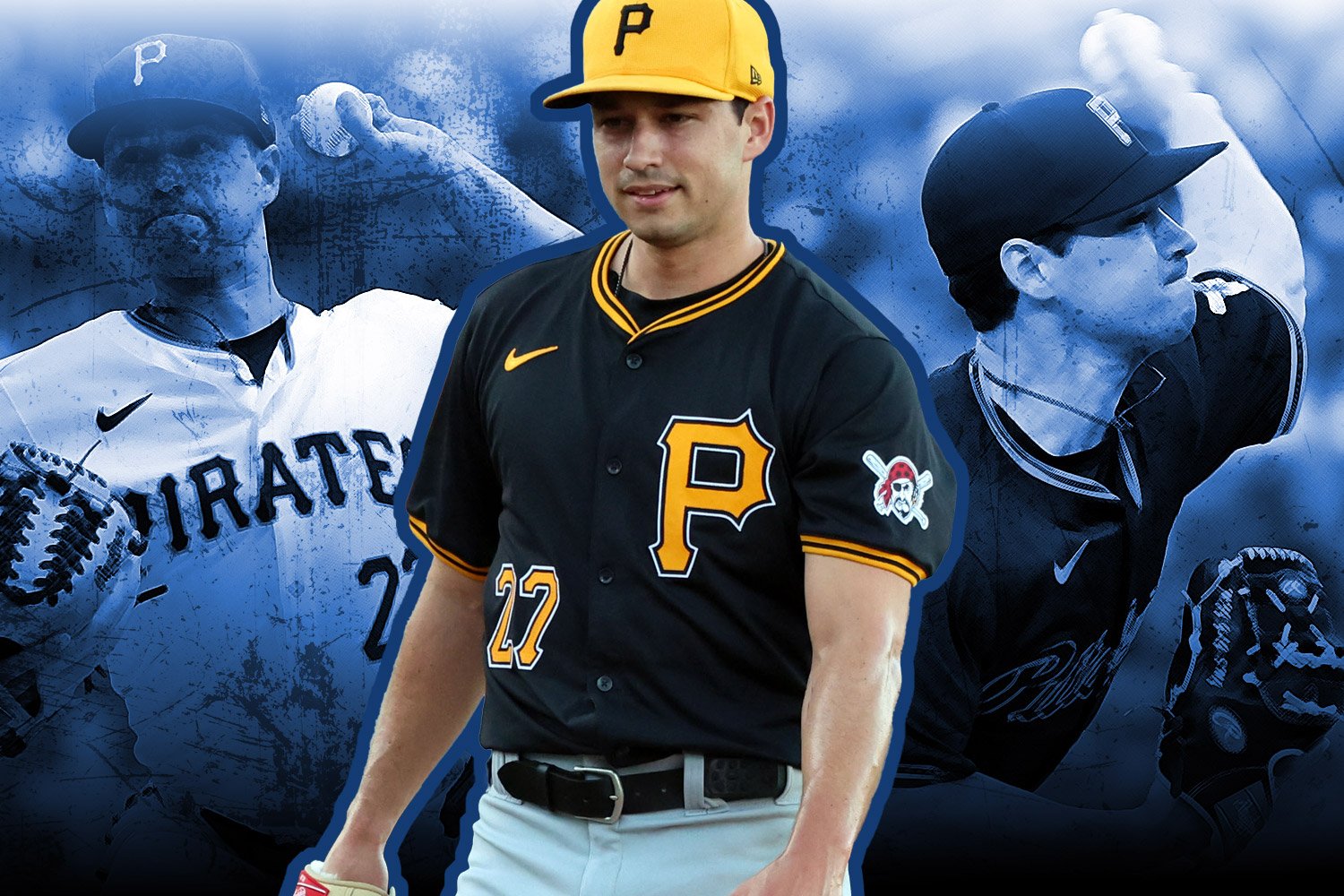 The San Diego Padres' biggest offseason question was how to plug the holes in the rotation. The club lost Dylan Cease to free agency and Yu Darvish to injury. Because A.J. Preller is in charge, visions of a Tarik Skubal or Freddy Peralta trade or a Framber Valdez signing danced in people's heads. However, Preller has just re-signed Michael King to a player-friendly contract. As the players arrive in Arizona for spring training, three of the five starting spots are spoken for: King, Nick Pivetta and Joe Musgrove. The incumbent options for spots Nos. 4 and 5 -- Randy Vasquez, J.P. Sears, Kyle Hart and Matt Waldron -- do not inspire much hope. That leaves the door open for non-roster invitees Triston McKenzie and Marco Gonzales. Padres Mission is taking an analytical look at all the contestants for Opening Day rotation spots. This piece will focus on what Gonzales might bring to the club and whether he should break camp with San Diego or report to Triple-A El Paso as an insurance policy/reclamation project. Previous Entries: Randy Vasquez's Arsenal Marco Gonzales' Stuff Gonzales fits the profile of a "crafty lefty" who "knows how to pitch." His velocity is distinctly below average, but he throws strikes, moves the ball around and expands the zone. He has produced excellent chase, exit velo, hard-hit and walk rates in his career. He also knows how to pitch to the dimensions of his home park. After working in St. Louis' Busch Stadium, Seattle's T-Mobile Park and Pittsburgh's PNC Park, his career home ERA is 0.62 runs lower than his road ERA in almost the same number of innings (3.85 to 4.47), and his home run percentage is six-tenths of a point better (3.0 to 3.6). Obviously, he'd go 4-for-4 if he adds Petco Park to the list. Those numbers help to explain why he has been able to pitch for a decade in the majors despite a career 90 Stuff+ and 104 Location+, per Fangraphs. The biggest unknown with Gonzales is his health. He has undergone two forearm surgeries in recent years --- the first one in August 2023 to repair a nerve issue, the second in September 2024 to repair a flexor tendon injury. He missed the 2025 season as he recovered from the latter procedure. How much command will he have when he returns to the mound? Marco Gonzales' Pitch Arsenal Saying Gonzales does not overpower hitters is a massive understatement. His fastball velocity ranked in the fourth percentile or lower every year from 2019 through 2024. In fact, his sinker --- which he threw nine percent of the time --- was his fastest pitch in 2024, averaging 90.1 mph, per Baseball Savant. His four-seamer averaged 89.7 mph and his cutter averaged 85.7 mph. All three speeds were well below the league average for left-handers. Gonzales also features a changeup and a curveball. The change is the primary off-speed pitch (80.2 mph), and its movement compares quite favorably to changes thrown by pitchers who have similar arm angles and extensions. The four-seamer, which tends to ride up in the zone, also stacks up well. (Gonzales enjoys the benefits of above-average extension.) With the Pirates in '24, he used the change about as often as the cutter, but both were thrown less frequently than the four-seamer. He threw those three pitches almost equally to right-handed batters, though he leaned more heavily on his four-seamer against left-handers (43 percent). The curveball lost its bite in 2024. Gonzales responded by throwing it 10 percent of the time, below his career norm. Of note, Gonzales' average arm angle has been dropping steadily over the years, from a high of 48 degrees in 2021 to a low of 37 degrees in 2024. The lowest individual angle is for the changeup, which was thrown at an average of 30.7 degrees two years ago. What Should Marco Gonzales' Role Be in 2026? Gonzales has been exclusively a starter since 2018. The Padres need rotation help. It seems clear what the role should be. But he needs to show enough in spring training to make a team, any team, and that might be too difficult after a year off. What does he have left after his latest surgery? Can he build up to around 80 pitches by Opening Day so he can get through five innings? Will he be afforded a longer ramp-up period while serving as Triple-A insurance? So many questions to answer, but it's clear that this is a veteran who could be serviceable if he's healthy.
 -
Much is made of A.J. Preller's penchant for trading prospects. In many instances, the San Diego Padres' team president has given a lot -- perhaps too much -- to get a lot in return. The list of "hits" collected by the other teams is long and growing. But one of those trades didn't have the desired effect for the team collecting the kids. It's the deal that brought Yu Darvish to the Padres from the Chicago Cubs. With Darvish nearing retirement or a separation from the Padres, it's worth looking back at the trade and noting how big a win it was for San Diego. For reference, this was the full trade, which was announced on Dec. 29, 2020: PADRES RECEIVE: RHP Yu Darvish C Victor Caratini CUBS RECEIVE: RHP Zach Davies OF Owen Caissie OF Ismael Mena INF Reginald Preciado INF Yeison Santana The move was a part of Preller's ambitious plan to revamp the rotation. On the same day Darvish became a Padre, the club acquired Cy Young Award-winning left-hander Blake Snell from the Tampa Bay Rays for a package led by Luis Patino. Four months earlier, Preller obtained Mike Clevinger from Cleveland for a prospect haul (more on that later). The Cubs were never going to match either return. In the 2020-21 offseason, they were facing a payroll crunch with their young core players -- in particular, Javier Baez, Kris Bryant and Anthony Rizzo -- and Darvish had three years and $59 million remaining on his contract. He dominated in the COVID-shortened 2020 season after years of solid but unspectacular results, tying for the MLB lead with eight wins and posting a 2.01 ERA in 76 innings over 12 starts, but durability was a question mark ahead of his age-34 season. Given that context, it's little wonder the Cubs executed a salary dump. Davies was a rental, as he signed with the Diamondbacks in January 2022. (For the record, Caratini was a rental for the Padres). Mena, Preciado and Santana were international lottery tickets, while Caissie was a high school hitter whom the Padres selected in the second round of the five-round 2020 MLB Draft. Two of those tickets have been torn up. Santana was released in June 2023, and Mena was released last August. Preciado is still active, but he hasn't advanced past High Single-A yet, and last year, in his fifth pro season, he compiled a .218/.292/.382 slash line (.594 OPS). He'll be in his age-23 season in 2026. Caissie, 23, became the Cubs' best hope for salvaging the trade. He reached the majors last year, with the British Columbia native making his debut Aug. 14 in Toronto. But on Jan. 6, he and minor-leaguers Edgardo De Leon and Cristian Hernandez were traded to the Miami Marlins for right-hander Edward Cabrera. With the Cubs getting barely any production from Caissie -- and none from the other prospects -- the contrast between the return for Darvish and the young players Preller sent the budget-conscious Tribe for an arbitration-eligible Clevinger --- Josh Naylor, Cal Quantrill, Gabriel Arias, Joey Cantillo and Owen Miller -- could not be starker. Darvish had an uneven tenure with the Friars. The peak was his 2022 season, when he posted a 3.10 ERA (3.31 FIP) and the club went 18-12 in his starts. The performance earned him a six-year, $108 million contract extension in February 2023. Over time, he became a leader of the pitching staff and a resource for younger teammates. But the past two seasons were cut short by injuries and a personal matter. Last year, his ERA ballooned to 5.38 (4.82 FIP). Now, at 39 and facing a lengthy rehab from elbow surgery, he's poised to leave San Diego three years early, The Padres didn't get great value from the extension, but overall, they got their money's worth from Darvish, mostly because they paid just pennies on the dollar to acquire him. View full article
-
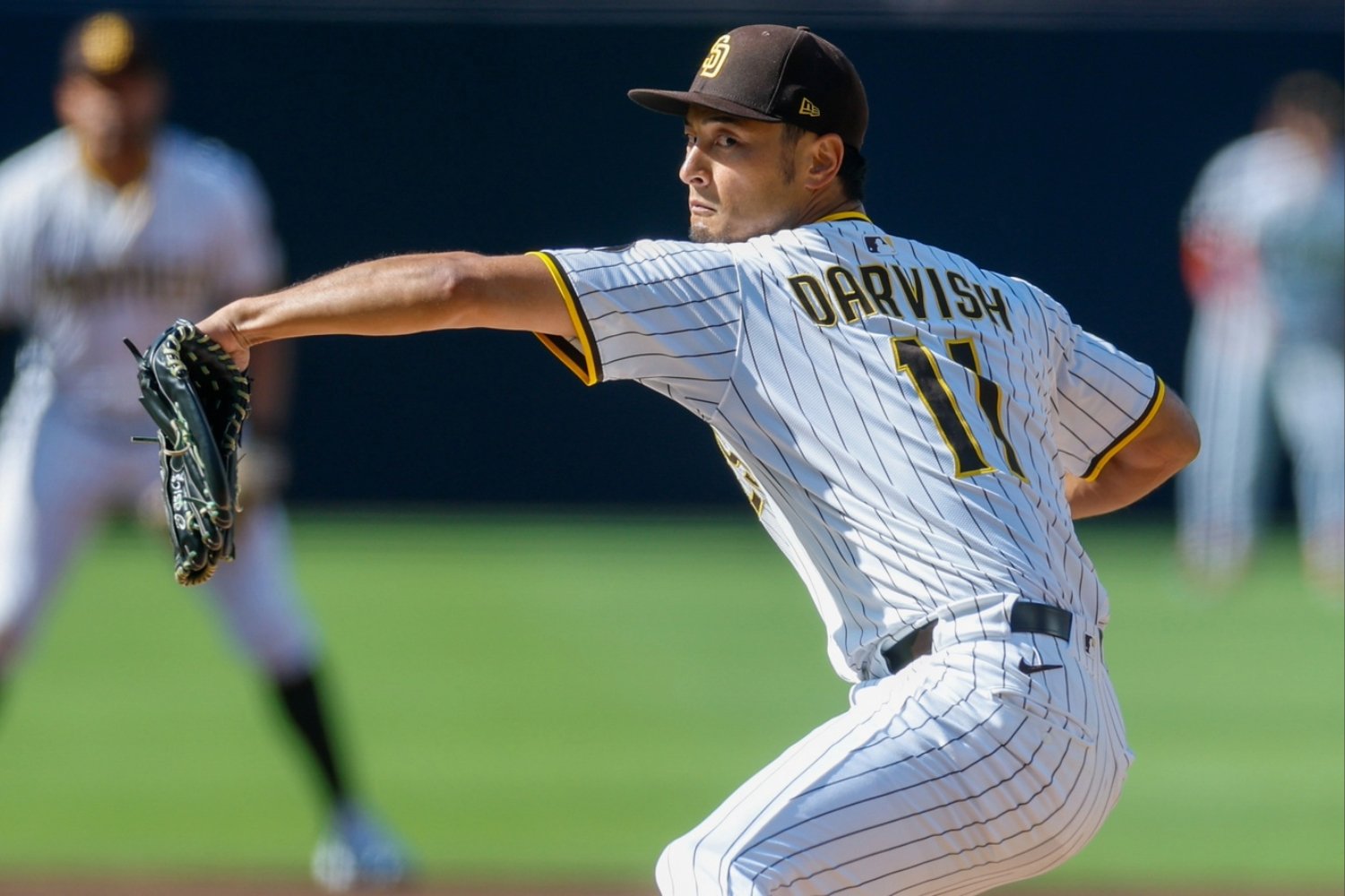 Much is made of A.J. Preller's penchant for trading prospects. In many instances, the San Diego Padres' team president has given a lot -- perhaps too much -- to get a lot in return. The list of "hits" collected by the other teams is long and growing. But one of those trades didn't have the desired effect for the team collecting the kids. It's the deal that brought Yu Darvish to the Padres from the Chicago Cubs. With Darvish nearing retirement or a separation from the Padres, it's worth looking back at the trade and noting how big a win it was for San Diego. For reference, this was the full trade, which was announced on Dec. 29, 2020: PADRES RECEIVE: RHP Yu Darvish C Victor Caratini CUBS RECEIVE: RHP Zach Davies OF Owen Caissie OF Ismael Mena INF Reginald Preciado INF Yeison Santana The move was a part of Preller's ambitious plan to revamp the rotation. On the same day Darvish became a Padre, the club acquired Cy Young Award-winning left-hander Blake Snell from the Tampa Bay Rays for a package led by Luis Patino. Four months earlier, Preller obtained Mike Clevinger from Cleveland for a prospect haul (more on that later). The Cubs were never going to match either return. In the 2020-21 offseason, they were facing a payroll crunch with their young core players -- in particular, Javier Baez, Kris Bryant and Anthony Rizzo -- and Darvish had three years and $59 million remaining on his contract. He dominated in the COVID-shortened 2020 season after years of solid but unspectacular results, tying for the MLB lead with eight wins and posting a 2.01 ERA in 76 innings over 12 starts, but durability was a question mark ahead of his age-34 season. Given that context, it's little wonder the Cubs executed a salary dump. Davies was a rental, as he signed with the Diamondbacks in January 2022. (For the record, Caratini was a rental for the Padres). Mena, Preciado and Santana were international lottery tickets, while Caissie was a high school hitter whom the Padres selected in the second round of the five-round 2020 MLB Draft. Two of those tickets have been torn up. Santana was released in June 2023, and Mena was released last August. Preciado is still active, but he hasn't advanced past High Single-A yet, and last year, in his fifth pro season, he compiled a .218/.292/.382 slash line (.594 OPS). He'll be in his age-23 season in 2026. Caissie, 23, became the Cubs' best hope for salvaging the trade. He reached the majors last year, with the British Columbia native making his debut Aug. 14 in Toronto. But on Jan. 6, he and minor-leaguers Edgardo De Leon and Cristian Hernandez were traded to the Miami Marlins for right-hander Edward Cabrera. With the Cubs getting barely any production from Caissie -- and none from the other prospects -- the contrast between the return for Darvish and the young players Preller sent the budget-conscious Tribe for an arbitration-eligible Clevinger --- Josh Naylor, Cal Quantrill, Gabriel Arias, Joey Cantillo and Owen Miller -- could not be starker. Darvish had an uneven tenure with the Friars. The peak was his 2022 season, when he posted a 3.10 ERA (3.31 FIP) and the club went 18-12 in his starts. The performance earned him a six-year, $108 million contract extension in February 2023. Over time, he became a leader of the pitching staff and a resource for younger teammates. But the past two seasons were cut short by injuries and a personal matter. Last year, his ERA ballooned to 5.38 (4.82 FIP). Now, at 39 and facing a lengthy rehab from elbow surgery, he's poised to leave San Diego three years early, The Padres didn't get great value from the extension, but overall, they got their money's worth from Darvish, mostly because they paid just pennies on the dollar to acquire him.
 -
Last year, the San Diego Padres acquired Mason Miller to be a late-inning weapon out of their bullpen. Miller wants to remain in that role 2026, even if the team thinks he could dominate elsewhere on the pitching staff. As a reminder, the right-hander is the team's projected closer after Robert Suarez signed with the Braves, but there has been chatter this winter that the Friars might consider converting Miller or Adrian Morejon back to starting to bolster a thin rotation. Miller is not a fan of the idea. "It's been an exciting conversation that's been had year in and year out since I did transition to the bullpen, I've had a lot of success (as a reliever), and right now, to go away from that doesn't make sense for me," he told Todd Frazier on the Foul Territory podcast Thursday. Miller, 27, was almost unhittable out of the 'pen for San Diego after coming over from the Athletics last July 31. He allowed seven hits and struck out 45 (with 10 walks) over 23 1/3 innings. He also worked 2 2/3 scoreless frames in the Wild Card Series against the Cubs. His last MLB start was on Sept. 16, 2023, as an A's rookie against the Padres. He allowed two runs in an inning as an opener for Luis Medina. Since then, he has made 118 consecutive relief appearances. "I'm never going to be the guy that rules (returning to starting) out down the line, but I will admit it is hard to go away from something that you're having a lot of success with," he told Frazier. "And I think my value right now is being the lockdown guy in the ninth or late in games." "Down the road? Maybe, we'll see, but this year we're looking at the bullpen," he added. Miller pointed out that there is a clear economic benefit to him remaining a reliever. "My first year in the (salary arbitration) system, I'm being (compared) as a reliever, and a pretty good reliever at that, so I'm going to keep that ball rolling," he said. Miller and the Padres avoided a hearing by agreeing to a one-year, $4 million contract last week. San Diego has less of a need for starters after re-signing Michael King to a three-year, $75 million contract, but The Athletic reported last week that club is telling teams they want to add another arm. Their limited financial (and prospect) resources make the path to achieving that unclear, but displacing perhaps the most dominant closer in the modern game doesn't seem to be the right way of going aboutit. On a lighter note, Miller is contemplating a new entrance song. He told Erik Kratz that he's down to a few options to replace Nickelback's "Burn it to the Ground." The goal is to amp up the energy. "Nickelback seemed to be so-so last year, so I think we're going to go a different route," he said. View full article
-
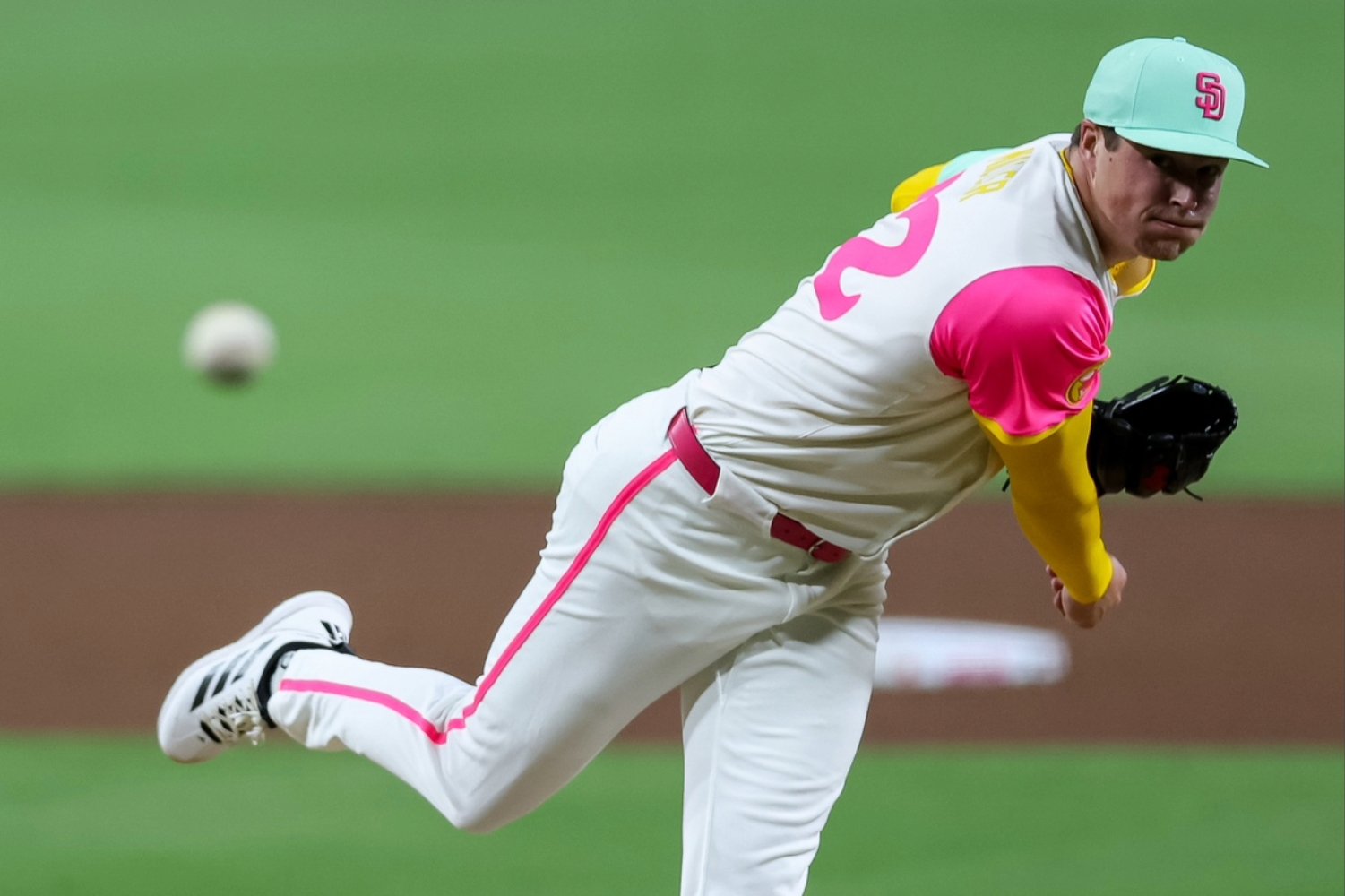 Last year, the San Diego Padres acquired Mason Miller to be a late-inning weapon out of their bullpen. Miller wants to remain in that role 2026, even if the team thinks he could dominate elsewhere on the pitching staff. As a reminder, the right-hander is the team's projected closer after Robert Suarez signed with the Braves, but there has been chatter this winter that the Friars might consider converting Miller or Adrian Morejon back to starting to bolster a thin rotation. Miller is not a fan of the idea. "It's been an exciting conversation that's been had year in and year out since I did transition to the bullpen, I've had a lot of success (as a reliever), and right now, to go away from that doesn't make sense for me," he told Todd Frazier on the Foul Territory podcast Thursday. Miller, 27, was almost unhittable out of the 'pen for San Diego after coming over from the Athletics last July 31. He allowed seven hits and struck out 45 (with 10 walks) over 23 1/3 innings. He also worked 2 2/3 scoreless frames in the Wild Card Series against the Cubs. His last MLB start was on Sept. 16, 2023, as an A's rookie against the Padres. He allowed two runs in an inning as an opener for Luis Medina. Since then, he has made 118 consecutive relief appearances. "I'm never going to be the guy that rules (returning to starting) out down the line, but I will admit it is hard to go away from something that you're having a lot of success with," he told Frazier. "And I think my value right now is being the lockdown guy in the ninth or late in games." "Down the road? Maybe, we'll see, but this year we're looking at the bullpen," he added. Miller pointed out that there is a clear economic benefit to him remaining a reliever. "My first year in the (salary arbitration) system, I'm being (compared) as a reliever, and a pretty good reliever at that, so I'm going to keep that ball rolling," he said. Miller and the Padres avoided a hearing by agreeing to a one-year, $4 million contract last week. San Diego has less of a need for starters after re-signing Michael King to a three-year, $75 million contract, but The Athletic reported last week that club is telling teams they want to add another arm. Their limited financial (and prospect) resources make the path to achieving that unclear, but displacing perhaps the most dominant closer in the modern game doesn't seem to be the right way of going aboutit. On a lighter note, Miller is contemplating a new entrance song. He told Erik Kratz that he's down to a few options to replace Nickelback's "Burn it to the Ground." The goal is to amp up the energy. "Nickelback seemed to be so-so last year, so I think we're going to go a different route," he said.
 -
The start of 2026 is fast approaching, and the San Diego Padres still haven't made the blockbuster trade(s) that were teased/threatened during the Winter Meetings. That inaction has created a vacuum in the fan realm. Usually, it gets filled with trade ideas that would make every team involved say "no." But until Padres president A.J. Preller decides whether he is or isn't moving Nick Pivetta, Mason Miller and anyone else who has been in the rumor mill this month, people will keep using the interwebs to fire off proposals that totally aren't fleece jobs in the Friars' favor. But what if I told you I have three wild ideas that can be rolled into one multi-team swap that would help everyone involved? And that I can actually defend it? (Save the eye rolls and hate until you get to the end.) With that, and against the opinions of podcasters and pundits who know better (I see you, Erik Kratz), here's what I've devised: TRADE No. 1: Padres and Mets PADRES GET: RHP Kodai Senga INF Ronny Mauricio SS/OF Jett Williams (Mets' No. 4 prospect, No. 51 overall prospect per Baseball America) LHP Jonathan Santucci (Mets' No. 10 prospect) METS GET: RHP Mason Miller OF Ramon Laureano Why the deal makes sense for the Padres: It capitalizes on two sell-high opportunities AND helps to set up a much larger trade. Last year, Miller cost the Padres their top prospect, shortstop Leo De Vries, in a deadline deal. At the moment, he's the team's closer, but Jeremiah Estrada is still around. Miller is 27 and controllable for the next four seasons. His trade value remains sky-high. In 2025, Laureano revived his career as a 30-year-old with the Orioles and Padres. He enjoyed a solid a post-deadline run in San Diego (.812 OPS, nine home runs in 198 plate appearances). He may never be more tradeable, even though the Padres don't have a ready replacement for him. Kratz said on the "Foul Territory" podcast that the Padres should offload Xander Bogaerts' contract if they're serious about trading Miller. That might be needed in a real trade, but here, it isn't. Senga, 33 in January, is a question mark because of injuries and the fact he was demoted to the minors in the middle of a playoff race last year. But his rookie season of 2023 (2.98 ERA/3.63 FIP, 29.1 strikeout percentage in 166 1/3 innings) and contract (two years, $28 million, club option for 2028 based on health) will tease teams. Our @Randy Holt wrote this month that, on paper, a Senga trade to the Padres makes sense; this would be one way to make that happen. Mauricio, 24, is a switch hitter with light-tower power from the left side, but he's still catching up physically two years after suffering a major knee injury. The Athletic's Will Sammon reported this week the Mets are "open to moving" him, along with fellow infielders Mark Vientos and Luisangel Acuna. Sammon also reported the return "matters quite a bit" to the Mets in any trades they may make. Dare we say, Miller would make it worth their while? In real life, Mauricio could take over at second base for the Pads, but in this hypothetical, he isn't staying. Neither are Williams, who was the Mets' top prospect and a top-30 player not long ago, or Santucci, who made it to Double-A in his first pro season in 2025 and impressed there. Now, on to what you could call the Pivetta Pivot. TRADE No. 2: Padres and Orioles PADRES GET: 1B Ryan Mountcastle OF Nate George (Orioles' No. 4 prospect, No. 78 overall) RHP Trey Gibson ORIOLES GET: RHP Nick Pivetta and cash Why the deal makes sense for the Padres: San Diego would fill a need on the infield and move a pitcher who is likely in the final year of his contract. They'd also add trade capital for the deal that comes next in this exercise. Pivetta, 33, in February, was at his best in 2025 (career highs with 181 2/3 innings pitched and 190 strikeouts; a 3.49 FIP/2.87 ERA; a 19-12 team record in his starts). He's the most reliable rotation option at the moment. But he'll also be making $19 million in 2026, and he has a player option for 2027; another good year would set him up well in a free-agent SP class that is expected to be loaded. Mountcastle, 29 in February, is a natural first baseman, unlike the converted middle infielders who have occupied the position recently in San Diego. He's a power threat who's entering his walk year following an injury-marred 2025. He also should be eminently available -- the O's are stacked at first base and DH with Pete Alonso, Tyler O'Neill, Samuel Basallo and Coby Mayo. George, 19, reached High-A ball last year in his first pro season and slashed .291/.380/.392 in 21 games there. Pretty good work for a 16th-round draft pick out of high school. Gibson, 23, is a power arm who struggled in his first go-round at Triple-A. Two down, one to go. That leaves the least realistic trade of the lot, but it's a deal that still works because of the returns from the first two trades. TRADE No. 3: Padres and Tigers PADRES GET: Tarik Skubal PTBNL TIGERS GET: Mauricio Williams Santucci George Gibson LHP Kash Mayfield (Padres' No. 4 prospect) Why this deal makes sense for the Padres: Skubal, even as a rental, is all that needs to be said, but let's expand on that: The prospect cost would be minimal, for once. Mayfield is the lone San Diego farmhand going to the Tigers in this scenario. Preller would flip the young players and minor leaguers that the Mets and Orioles provided. Dealing a first-rounder like Mayfield would be difficult, but it would also be on-brand. The left-hander was babied a bit in his first pro campaign. He mostly pitched once a week and logged just 60 2/3 innings over 19 appearances (all starts) for Low-A Lake Elsinore. He missed three weeks in May and June with shoulder discomfort. But when he was on the mound, he was good: 13.1 strikeouts per nine innings, a 3.14 K:BB ratio and 0.3 home runs per nine (in the California League!). Detroit needs to be overwhelmed to move its Cy Young-winning ace. A half-dozen players of this caliber could maybe make Tigers president Scott Harris think for a second: a young starting infielder, two top-100 hitters and three potential frontline starters in exchange for Skubal's walk season. In truth, this is probably too much for one year of the southpaw, but we're in the business of excess in this exercise. In the end, the Padres' portion of all this would be Skubal, Senga and Mountcastle for Pivetta, Miller, Laureano and Mayfield. Preller could actually make the first two trades separately, give or take a few names, if the Orioles aren't content with just adding Shane Baz. We've written previously that he should be trying to backfill the farm system after dealing more than a dozen high-level prospects over the past three years. And, yes, if he's offering Miller in trades, he could just make him the centerpiece of a potential trade for Skubal. The counter is that, in this scenario, Preller would stay true to his all-in M.O. by obtaining an elite starter and rotation depth, but without gutting the farm once more. View full article
-
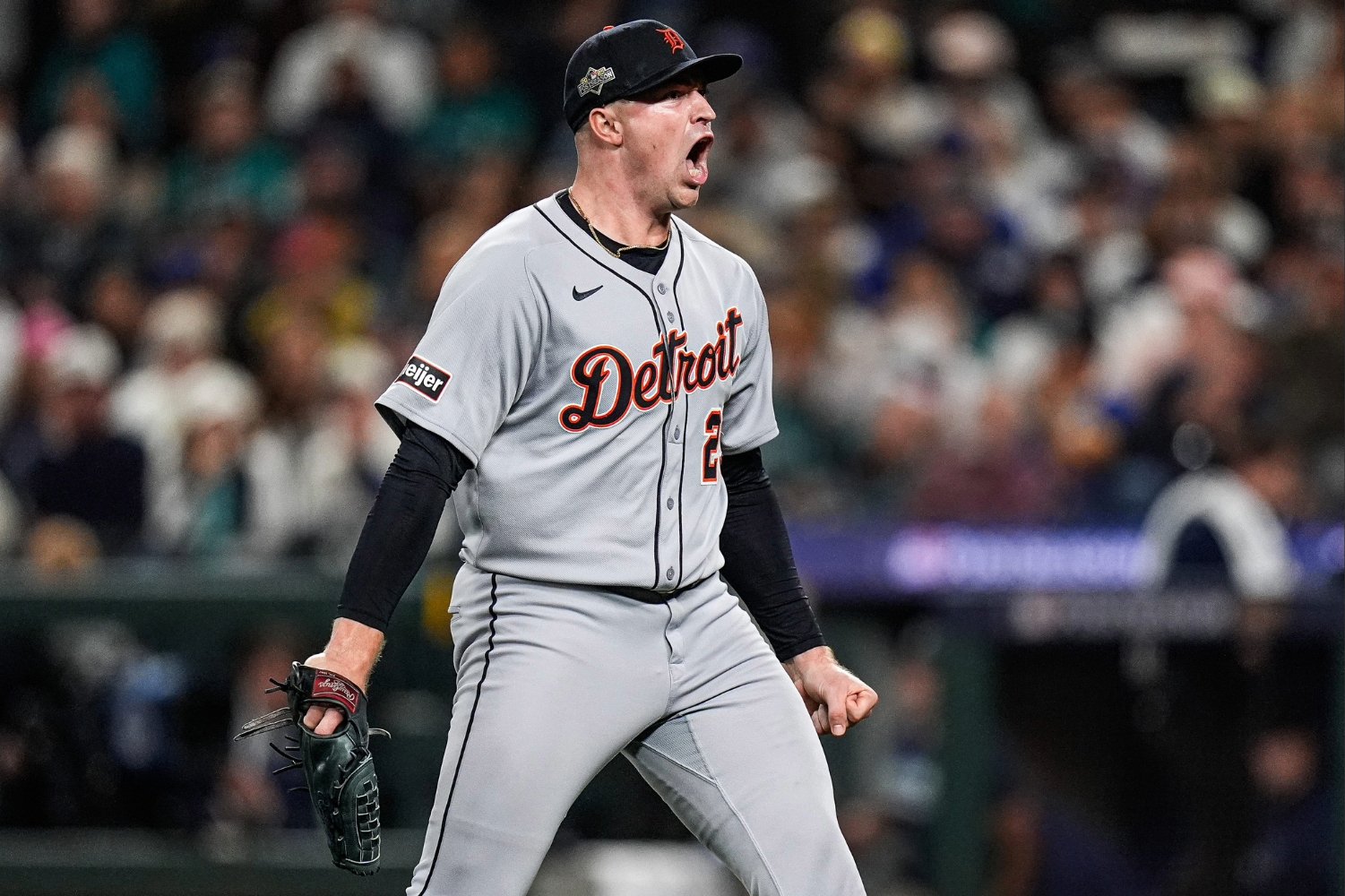 The start of 2026 is fast approaching, and the San Diego Padres still haven't made the blockbuster trade(s) that were teased/threatened during the Winter Meetings. That inaction has created a vacuum in the fan realm. Usually, it gets filled with trade ideas that would make every team involved say "no." But until Padres president A.J. Preller decides whether he is or isn't moving Nick Pivetta, Mason Miller and anyone else who has been in the rumor mill this month, people will keep using the interwebs to fire off proposals that totally aren't fleece jobs in the Friars' favor. But what if I told you I have three wild ideas that can be rolled into one multi-team swap that would help everyone involved? And that I can actually defend it? (Save the eye rolls and hate until you get to the end.) With that, and against the opinions of podcasters and pundits who know better (I see you, Erik Kratz), here's what I've devised: TRADE No. 1: Padres and Mets PADRES GET: RHP Kodai Senga INF Ronny Mauricio SS/OF Jett Williams (Mets' No. 4 prospect, No. 51 overall prospect per Baseball America) LHP Jonathan Santucci (Mets' No. 10 prospect) METS GET: RHP Mason Miller OF Ramon Laureano Why the deal makes sense for the Padres: It capitalizes on two sell-high opportunities AND helps to set up a much larger trade. Last year, Miller cost the Padres their top prospect, shortstop Leo De Vries, in a deadline deal. At the moment, he's the team's closer, but Jeremiah Estrada is still around. Miller is 27 and controllable for the next four seasons. His trade value remains sky-high. In 2025, Laureano revived his career as a 30-year-old with the Orioles and Padres. He enjoyed a solid a post-deadline run in San Diego (.812 OPS, nine home runs in 198 plate appearances). He may never be more tradeable, even though the Padres don't have a ready replacement for him. Kratz said on the "Foul Territory" podcast that the Padres should offload Xander Bogaerts' contract if they're serious about trading Miller. That might be needed in a real trade, but here, it isn't. Senga, 33 in January, is a question mark because of injuries and the fact he was demoted to the minors in the middle of a playoff race last year. But his rookie season of 2023 (2.98 ERA/3.63 FIP, 29.1 strikeout percentage in 166 1/3 innings) and contract (two years, $28 million, club option for 2028 based on health) will tease teams. Our @Randy Holt wrote this month that, on paper, a Senga trade to the Padres makes sense; this would be one way to make that happen. Mauricio, 24, is a switch hitter with light-tower power from the left side, but he's still catching up physically two years after suffering a major knee injury. The Athletic's Will Sammon reported this week the Mets are "open to moving" him, along with fellow infielders Mark Vientos and Luisangel Acuna. Sammon also reported the return "matters quite a bit" to the Mets in any trades they may make. Dare we say, Miller would make it worth their while? In real life, Mauricio could take over at second base for the Pads, but in this hypothetical, he isn't staying. Neither are Williams, who was the Mets' top prospect and a top-30 player not long ago, or Santucci, who made it to Double-A in his first pro season in 2025 and impressed there. Now, on to what you could call the Pivetta Pivot. TRADE No. 2: Padres and Orioles PADRES GET: 1B Ryan Mountcastle OF Nate George (Orioles' No. 4 prospect, No. 78 overall) RHP Trey Gibson ORIOLES GET: RHP Nick Pivetta and cash Why the deal makes sense for the Padres: San Diego would fill a need on the infield and move a pitcher who is likely in the final year of his contract. They'd also add trade capital for the deal that comes next in this exercise. Pivetta, 33, in February, was at his best in 2025 (career highs with 181 2/3 innings pitched and 190 strikeouts; a 3.49 FIP/2.87 ERA; a 19-12 team record in his starts). He's the most reliable rotation option at the moment. But he'll also be making $19 million in 2026, and he has a player option for 2027; another good year would set him up well in a free-agent SP class that is expected to be loaded. Mountcastle, 29 in February, is a natural first baseman, unlike the converted middle infielders who have occupied the position recently in San Diego. He's a power threat who's entering his walk year following an injury-marred 2025. He also should be eminently available -- the O's are stacked at first base and DH with Pete Alonso, Tyler O'Neill, Samuel Basallo and Coby Mayo. George, 19, reached High-A ball last year in his first pro season and slashed .291/.380/.392 in 21 games there. Pretty good work for a 16th-round draft pick out of high school. Gibson, 23, is a power arm who struggled in his first go-round at Triple-A. Two down, one to go. That leaves the least realistic trade of the lot, but it's a deal that still works because of the returns from the first two trades. TRADE No. 3: Padres and Tigers PADRES GET: Tarik Skubal PTBNL TIGERS GET: Mauricio Williams Santucci George Gibson LHP Kash Mayfield (Padres' No. 4 prospect) Why this deal makes sense for the Padres: Skubal, even as a rental, is all that needs to be said, but let's expand on that: The prospect cost would be minimal, for once. Mayfield is the lone San Diego farmhand going to the Tigers in this scenario. Preller would flip the young players and minor leaguers that the Mets and Orioles provided. Dealing a first-rounder like Mayfield would be difficult, but it would also be on-brand. The left-hander was babied a bit in his first pro campaign. He mostly pitched once a week and logged just 60 2/3 innings over 19 appearances (all starts) for Low-A Lake Elsinore. He missed three weeks in May and June with shoulder discomfort. But when he was on the mound, he was good: 13.1 strikeouts per nine innings, a 3.14 K:BB ratio and 0.3 home runs per nine (in the California League!). Detroit needs to be overwhelmed to move its Cy Young-winning ace. A half-dozen players of this caliber could maybe make Tigers president Scott Harris think for a second: a young starting infielder, two top-100 hitters and three potential frontline starters in exchange for Skubal's walk season. In truth, this is probably too much for one year of the southpaw, but we're in the business of excess in this exercise. In the end, the Padres' portion of all this would be Skubal, Senga and Mountcastle for Pivetta, Miller, Laureano and Mayfield. Preller could actually make the first two trades separately, give or take a few names, if the Orioles aren't content with just adding Shane Baz. We've written previously that he should be trying to backfill the farm system after dealing more than a dozen high-level prospects over the past three years. And, yes, if he's offering Miller in trades, he could just make him the centerpiece of a potential trade for Skubal. The counter is that, in this scenario, Preller would stay true to his all-in M.O. by obtaining an elite starter and rotation depth, but without gutting the farm once more.
 -
The San Diego Padres filled a gaping hole in their 2026 rotation by agreeing to re-sign free-agent right-hander Michael King. It's a big deal, in more ways than one. As important as it was for San Diego to address an offseason need, the contract's structure benefits the club early while also protecting the player for the foreseeable future. The basic math, per MLB.com's Mark Feinsand, is $75 million over three years ($25 million AAV). That's in line with what Nathan Eovaldi and Sean Manaea received last offseason to return to the Rangers and Mets, respectively. But the baseball math makes this deal potentially much smaller, and therefore a win for the Pads. It starts with the breakdown of the Year 1 compensation. According to Feinsand's sources, King is guaranteed up to $22 million in 2026, which is almost equal to the $22.05 million qualifying offer he declined last month. But the payout is not straightforward. Rather, it's divided this way: -- $12 million signing bonus. -- $5 million base salary. -- $5 million buyout of a $28 million player option for 2027. If King rebounds from his injury-marred 2025 season and pitches like the revelation he was in 2024, then he'll surely test the market again at 31. If he has a bad year and/or is injured again, then he can opt in and bank the $28 million. Then, he would face a similar decision following Year 2: a $30 million player option for 2028, with no buyout. Those are nice insurance policies. Consider this, too: If MLB's salary structure changes drastically in the wake of a lockout next December, that $58 million could become above market. King would have an incentive to stay all three seasons, but he still would be able to go year to year. Of course, the Padres get something out of this, too. King's $5 million salary next year should, in theory, allow the front office to spend on a back-end starter and/or an infield bat (beyond the recently signed Sung-mun Song). Even if that's not the plan, San Diego's rotation leaders -- King, Nick Pivetta ($19 million) and Joe Musgrove ($20 million) -- will tie up a reasonable $44 million in cash in 2026. For a budget-conscious team, that's more than affordable, even if the long-term plan is still uncertain. If King opts out next offseason, then the club would be freed from a backloaded contract after extracting solid value. The timing couldn't be better because of the labor situation and the possibility that ownership will change course and trim the payroll. It's rare that a deal with this kind of structure is a win-win for both sides, but the Padres did what it took to keep King in town. Now, they'll reap the benefits. View full article
-
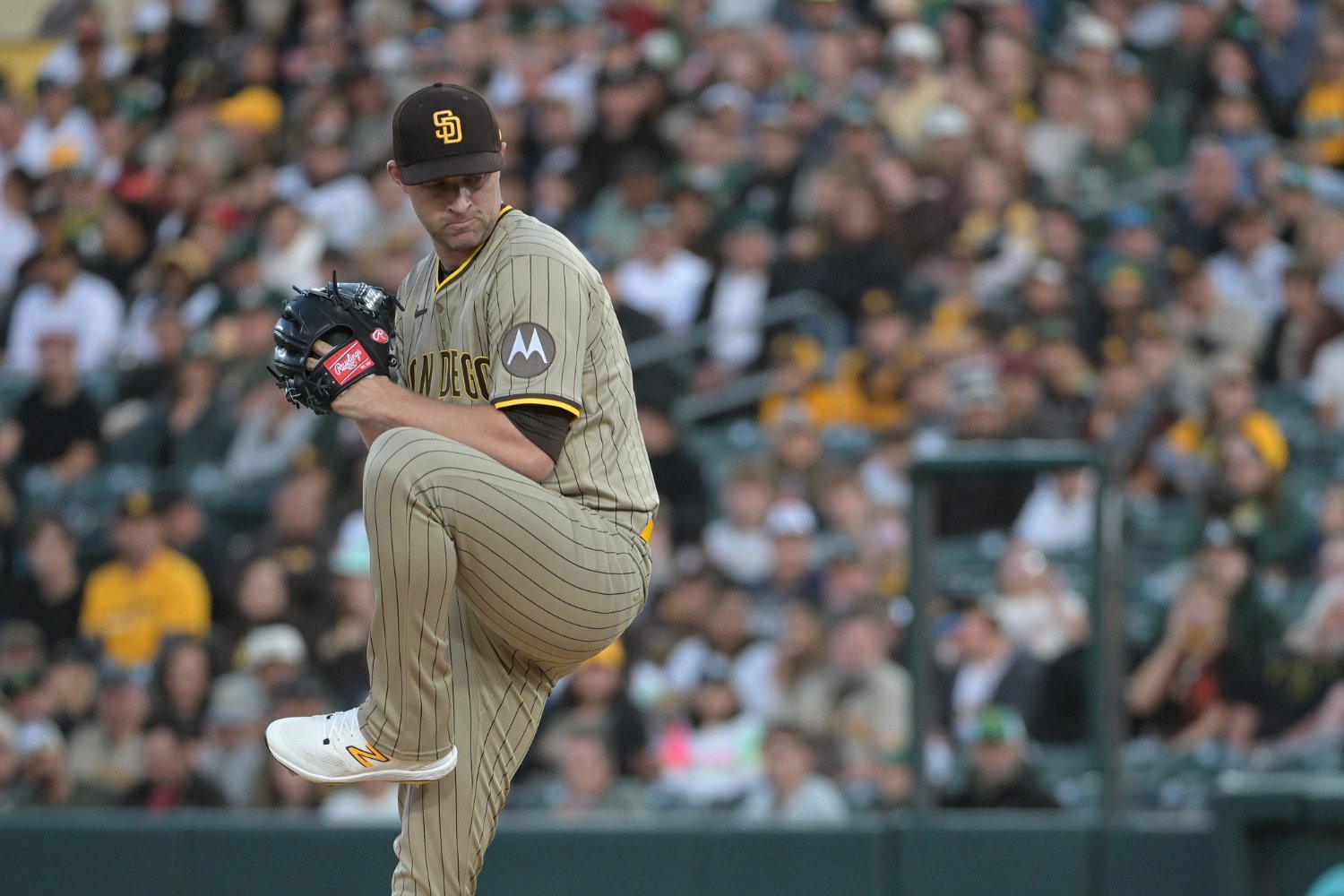 The San Diego Padres filled a gaping hole in their 2026 rotation by agreeing to re-sign free-agent right-hander Michael King. It's a big deal, in more ways than one. As important as it was for San Diego to address an offseason need, the contract's structure benefits the club early while also protecting the player for the foreseeable future. The basic math, per MLB.com's Mark Feinsand, is $75 million over three years ($25 million AAV). That's in line with what Nathan Eovaldi and Sean Manaea received last offseason to return to the Rangers and Mets, respectively. But the baseball math makes this deal potentially much smaller, and therefore a win for the Pads. It starts with the breakdown of the Year 1 compensation. According to Feinsand's sources, King is guaranteed up to $22 million in 2026, which is almost equal to the $22.05 million qualifying offer he declined last month. But the payout is not straightforward. Rather, it's divided this way: -- $12 million signing bonus. -- $5 million base salary. -- $5 million buyout of a $28 million player option for 2027. If King rebounds from his injury-marred 2025 season and pitches like the revelation he was in 2024, then he'll surely test the market again at 31. If he has a bad year and/or is injured again, then he can opt in and bank the $28 million. Then, he would face a similar decision following Year 2: a $30 million player option for 2028, with no buyout. Those are nice insurance policies. Consider this, too: If MLB's salary structure changes drastically in the wake of a lockout next December, that $58 million could become above market. King would have an incentive to stay all three seasons, but he still would be able to go year to year. Of course, the Padres get something out of this, too. King's $5 million salary next year should, in theory, allow the front office to spend on a back-end starter and/or an infield bat (beyond the recently signed Sung-mun Song). Even if that's not the plan, San Diego's rotation leaders -- King, Nick Pivetta ($19 million) and Joe Musgrove ($20 million) -- will tie up a reasonable $44 million in cash in 2026. For a budget-conscious team, that's more than affordable, even if the long-term plan is still uncertain. If King opts out next offseason, then the club would be freed from a backloaded contract after extracting solid value. The timing couldn't be better because of the labor situation and the possibility that ownership will change course and trim the payroll. It's rare that a deal with this kind of structure is a win-win for both sides, but the Padres did what it took to keep King in town. Now, they'll reap the benefits.
 -
The San Diego Padres reportedly are looking to do Padres things this offseason, even after the conclusion of the Winter Meetings. President of baseball operations A.J. Preller is devising something that would "rival" the Juan Soto trade (the one to the Yankees, that is) and/or "pale in comparison" to what he pulled off the past two trade deadlines, if Kevin Acee's sources are to be believed. What could such a deal -- or series of deals -- involve? Hint: It's not moving Jeremiah Estrada and/or Jake Cronenworth. No, there's a more obvious one, even it isn't being intensely discussed at the moment: moving Fernando Tatis Jr. for a haul. As odious as that might seem to Tatis (full no-trade through 2028) and Padres fans, it's THE move to attempt, now or in 2026, if Preller wants to keep the club's current run going -- or start a new one quickly. Based on San Diego's major-league roster and farm system, he has all but check-mated himself into doing it. A quick personnel review: After Tatis, the only young foundational position player is Jackson Merrill, whose nine-year, $135 million contract extension kicks in next year. Merrill produced 2.7 bWAR in 2025 despite injuries, but Tatis is in another galaxy of stars (team-leading 5.9 bWAR last year). The other lineup fixtures are getting old. Manny Machado and Xander Bogaerts are entering their age-33 seasons. Cronenworth is entering his age-32 season. Ramon Laureano is entering his age-31 season. Tatis will be in his age-27 campaign, with nine years and $286 million remaining on his extension, next year. Nick Pivetta is the lone reliable starting pitcher. Joe Musgrove is a dice roll. If the rotation remains a weak spot, then the bullpen needs to stay elite. An Estrada trade would need to significantly improve the roster. Is such a deal available? The farm is fallow. The Padres' system was dead last in Baseball America's midseason talent rankings last August. "This is the thinnest system in the game because of trades. The bottom two-thirds of this Top 30 would not crack the Top 30 of the game’s deepest systems," BA wrote. The owners are all but a lock to lock out the players a year from now, which might change payroll dynamics. The clubs will want to force the union into accepting a salary cap (evergreen sentence). The '26-27 offseason, therefore, figures to be as chaotic as the '21-22 offseason, which was the last lockout winter. Padres chairman John Seidler told Acee and other reporters this week that he is committed to keeping the payroll steady in '26, but will his thinking change if MLB's salary system changes? And will that then require really hard decisions, such as asking Tatis to leave? Back to now: Preller could try to push all-in for Tarik Skubal or Sandy Alcantara, but the Tigers seem uninterested in moving their ace and Alcantara hasn't yet regained his pre-surgery form. With the Pirates suddenly wanting to win, a Paul Skenes mega-trade has almost no chance of happening. And even if it was, Preller could add Estrada and Cronenworth to the prospects and it still wouldn't be good enough. Maybe he can offer enough to get Brandon Lowe from the Rays and/or Kodai Senga from the Mets. But much larger moves are being teased. Like, say, a 5- or 6-for-1 return for Tatis. Preller could aim for prospects who would rival the likes of James Wood, C.J. Abrams, MacKenzie Gore, Jakob Marsee, Stephen Kolek and Leo De Vries. During his MLB Network segment Tuesday night at the meetings, Preller wouldn't say outright whether Tatis or anyone else was untouchable. "Like anything, you want to listen," he said. "You want to be able to listen to hear what people are going to say. That's the only way to find out more information, what's out there. But we like our team." That's typical GM talk, of course. But when it comes to the 2026 and 2027 Padres, "We want to listen" needs to become "I'm all ears," particularly when it comes to Tatis. View full article
-
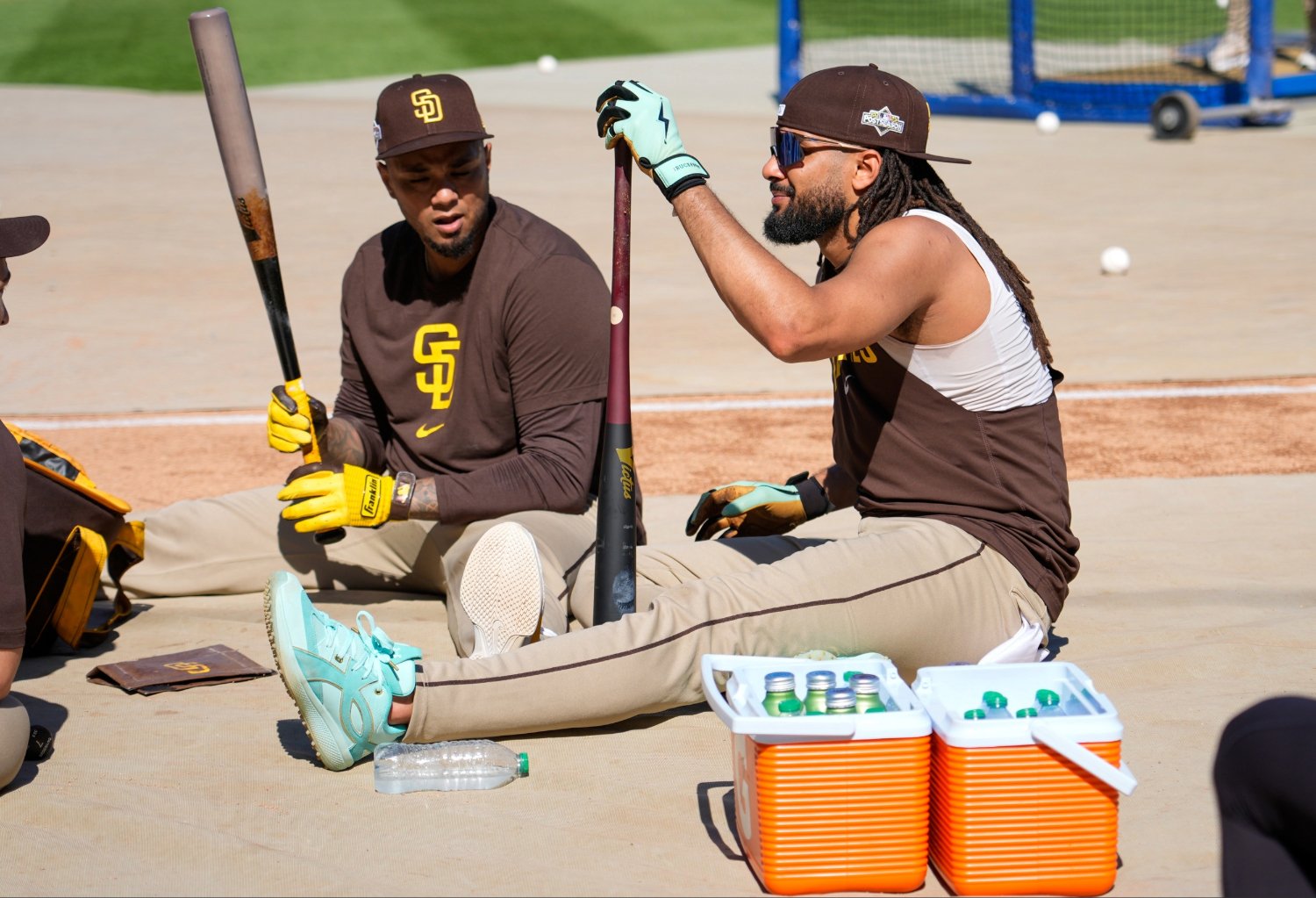 The San Diego Padres reportedly are looking to do Padres things this offseason, even after the conclusion of the Winter Meetings. President of baseball operations A.J. Preller is devising something that would "rival" the Juan Soto trade (the one to the Yankees, that is) and/or "pale in comparison" to what he pulled off the past two trade deadlines, if Kevin Acee's sources are to be believed. What could such a deal -- or series of deals -- involve? Hint: It's not moving Jeremiah Estrada and/or Jake Cronenworth. No, there's a more obvious one, even it isn't being intensely discussed at the moment: moving Fernando Tatis Jr. for a haul. As odious as that might seem to Tatis (full no-trade through 2028) and Padres fans, it's THE move to attempt, now or in 2026, if Preller wants to keep the club's current run going -- or start a new one quickly. Based on San Diego's major-league roster and farm system, he has all but check-mated himself into doing it. A quick personnel review: After Tatis, the only young foundational position player is Jackson Merrill, whose nine-year, $135 million contract extension kicks in next year. Merrill produced 2.7 bWAR in 2025 despite injuries, but Tatis is in another galaxy of stars (team-leading 5.9 bWAR last year). The other lineup fixtures are getting old. Manny Machado and Xander Bogaerts are entering their age-33 seasons. Cronenworth is entering his age-32 season. Ramon Laureano is entering his age-31 season. Tatis will be in his age-27 campaign, with nine years and $286 million remaining on his extension, next year. Nick Pivetta is the lone reliable starting pitcher. Joe Musgrove is a dice roll. If the rotation remains a weak spot, then the bullpen needs to stay elite. An Estrada trade would need to significantly improve the roster. Is such a deal available? The farm is fallow. The Padres' system was dead last in Baseball America's midseason talent rankings last August. "This is the thinnest system in the game because of trades. The bottom two-thirds of this Top 30 would not crack the Top 30 of the game’s deepest systems," BA wrote. The owners are all but a lock to lock out the players a year from now, which might change payroll dynamics. The clubs will want to force the union into accepting a salary cap (evergreen sentence). The '26-27 offseason, therefore, figures to be as chaotic as the '21-22 offseason, which was the last lockout winter. Padres chairman John Seidler told Acee and other reporters this week that he is committed to keeping the payroll steady in '26, but will his thinking change if MLB's salary system changes? And will that then require really hard decisions, such as asking Tatis to leave? Back to now: Preller could try to push all-in for Tarik Skubal or Sandy Alcantara, but the Tigers seem uninterested in moving their ace and Alcantara hasn't yet regained his pre-surgery form. With the Pirates suddenly wanting to win, a Paul Skenes mega-trade has almost no chance of happening. And even if it was, Preller could add Estrada and Cronenworth to the prospects and it still wouldn't be good enough. Maybe he can offer enough to get Brandon Lowe from the Rays and/or Kodai Senga from the Mets. But much larger moves are being teased. Like, say, a 5- or 6-for-1 return for Tatis. Preller could aim for prospects who would rival the likes of James Wood, C.J. Abrams, MacKenzie Gore, Jakob Marsee, Stephen Kolek and Leo De Vries. During his MLB Network segment Tuesday night at the meetings, Preller wouldn't say outright whether Tatis or anyone else was untouchable. "Like anything, you want to listen," he said. "You want to be able to listen to hear what people are going to say. That's the only way to find out more information, what's out there. But we like our team." That's typical GM talk, of course. But when it comes to the 2026 and 2027 Padres, "We want to listen" needs to become "I'm all ears," particularly when it comes to Tatis.
 -
Ty Adcock has three things going for him as he joins his fourth MLB organization: 1. A fun name. 2. A big arm. 3. Winter-league buzz. Nos. 2 and 3 are mostly why the Padres signed him to a one-year, major league contract less than a week before the start of the 2025 Winter Meetings. Adcock is the type of depth reliever teams try to accumulate. Usually, these pitchers can be shuttled between MLB and Triple-A during the season. If a roster crunch hits, they can be cut without much stress. But Adcock is out of minor league options. The Mets outrighted him last August, and he became a minor league free agent in November. The major league contract is a tell that the Pads think they might have something in the right-hander, who will turn 29 on February 7. Adcock made just six appearances for New York over parts of two seasons. (Yes, he was one of the record 46 pitchers used by New York in 2025.) He did not enter manager Carlos Mendoza's bullpen circle of trust. In fact, he pitched with a lead just once in those half-dozen outings. Including his rookie season of 2023 with the Mariners, Adcock has pitched to a career 5.48 ERA (7.18 FIP), with nine home runs allowed in 23 innings. On the positive side, he owns a 4.75 K:BB ratio. Maybe the Padres liked the strike-throwing and decided to make a move. More likely, they really liked what he was doing with Estrellas in the Dominican winter league, which until about a week ago was managed by Fernando Tatis Sr. In nine innings over seven appearances (all in relief), Adcock racked up 15 strikeouts with no walks. His strikeout rate was 41.7 percent, and his K:BB was, well, infinity. (All stats through Dec. 3.) San Diego saw enough to put him on the 40-man roster. So, what, exactly, does Adcock offer the Friars if not high-leverage experience? Heat, mostly. In Seattle, he was slider-first, followed by the four-seamer. In New York, the pitch mix flipped, and he started throwing a cutter. (Source: Baseball Savant) In that transformation was the usual pursuit of added velo. Adcock caught it. Last season, Adcock bumped up his four-seamer average from 96.6 mph to 97.1 mph, while his cutter stayed at 93.1 mph. And the slider, which he throws equally to right-handed and left-handed batters, checks in at 86.9 mph, giving him good separation. (All velos per Baseball Savant.) On the downside, the four-seam spin rate is... not elite: 2,172 rpm (he's between Jeffrey Springs and Carlos Carrasco on the Statcast chart). The slider profiles better at 2,199 rpm. The company around him on that pitch is Hunter Brown, Zack Littell, and... Jeremiah Estrada. The cutter, his third pitch, spins at 2,206 rpm, which puts him between Springs, Logan Gillaspie, and Jason Alexander. So, his stuff is a tick or two below Estrada and other new teammates, David Morgan and Bradgley Rodriguez, but it should still play at the bottom of the 'pen. To recap, Adcock comes to San Diego with a three-pitch arsenal mix by a high-90s heater and a big showing in winter ball. In the spring, he'll try to build momentum while working with pitching coach Ruben Niebla and first-year manager Craig Stammen. Maybe they'll end up with a guy who is no longer Just A Guy. View full article
-
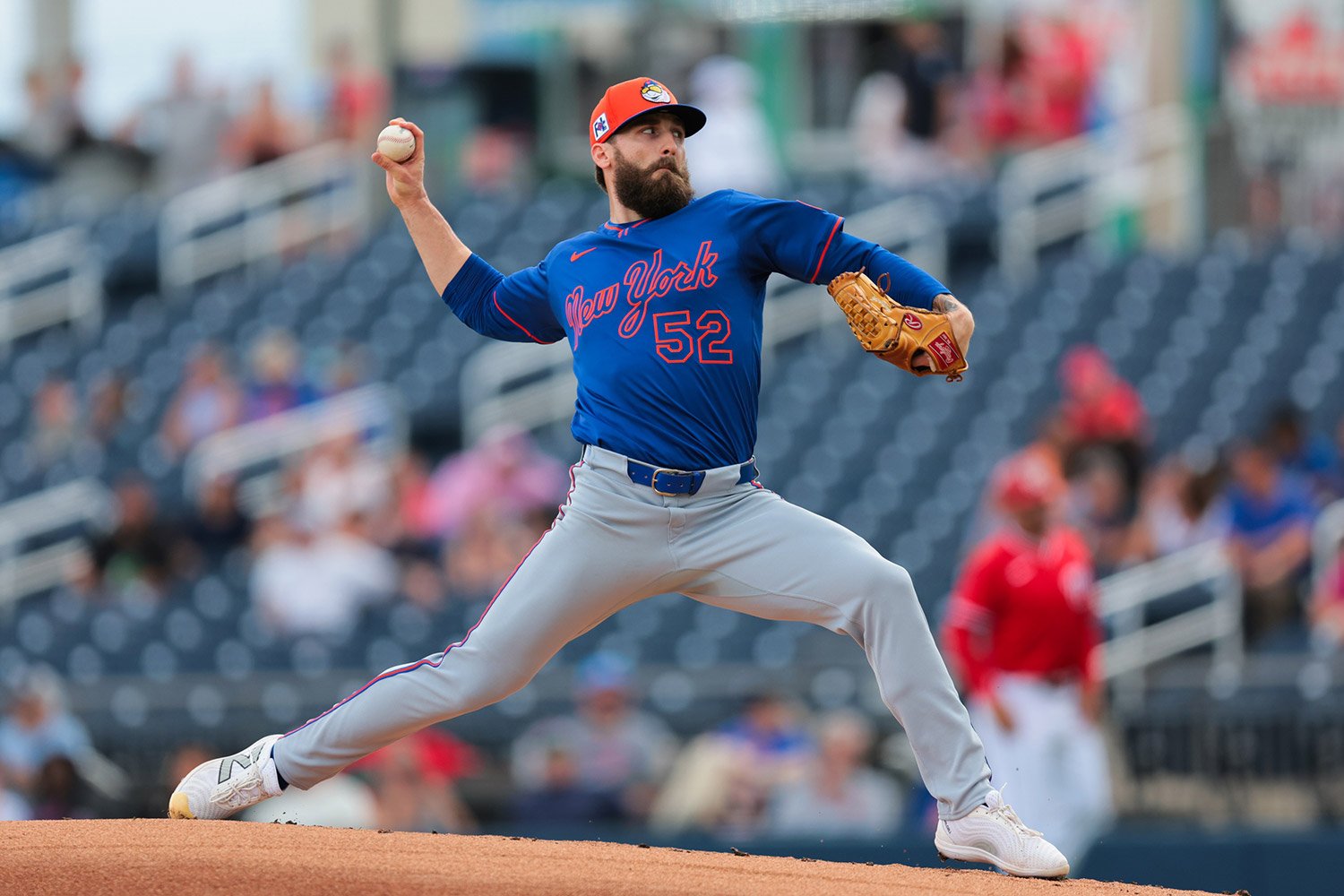 Ty Adcock has three things going for him as he joins his fourth MLB organization: 1. A fun name. 2. A big arm. 3. Winter-league buzz. Nos. 2 and 3 are mostly why the Padres signed him to a one-year, major league contract less than a week before the start of the 2025 Winter Meetings. Adcock is the type of depth reliever teams try to accumulate. Usually, these pitchers can be shuttled between MLB and Triple-A during the season. If a roster crunch hits, they can be cut without much stress. But Adcock is out of minor league options. The Mets outrighted him last August, and he became a minor league free agent in November. The major league contract is a tell that the Pads think they might have something in the right-hander, who will turn 29 on February 7. Adcock made just six appearances for New York over parts of two seasons. (Yes, he was one of the record 46 pitchers used by New York in 2025.) He did not enter manager Carlos Mendoza's bullpen circle of trust. In fact, he pitched with a lead just once in those half-dozen outings. Including his rookie season of 2023 with the Mariners, Adcock has pitched to a career 5.48 ERA (7.18 FIP), with nine home runs allowed in 23 innings. On the positive side, he owns a 4.75 K:BB ratio. Maybe the Padres liked the strike-throwing and decided to make a move. More likely, they really liked what he was doing with Estrellas in the Dominican winter league, which until about a week ago was managed by Fernando Tatis Sr. In nine innings over seven appearances (all in relief), Adcock racked up 15 strikeouts with no walks. His strikeout rate was 41.7 percent, and his K:BB was, well, infinity. (All stats through Dec. 3.) San Diego saw enough to put him on the 40-man roster. So, what, exactly, does Adcock offer the Friars if not high-leverage experience? Heat, mostly. In Seattle, he was slider-first, followed by the four-seamer. In New York, the pitch mix flipped, and he started throwing a cutter. (Source: Baseball Savant) In that transformation was the usual pursuit of added velo. Adcock caught it. Last season, Adcock bumped up his four-seamer average from 96.6 mph to 97.1 mph, while his cutter stayed at 93.1 mph. And the slider, which he throws equally to right-handed and left-handed batters, checks in at 86.9 mph, giving him good separation. (All velos per Baseball Savant.) On the downside, the four-seam spin rate is... not elite: 2,172 rpm (he's between Jeffrey Springs and Carlos Carrasco on the Statcast chart). The slider profiles better at 2,199 rpm. The company around him on that pitch is Hunter Brown, Zack Littell, and... Jeremiah Estrada. The cutter, his third pitch, spins at 2,206 rpm, which puts him between Springs, Logan Gillaspie, and Jason Alexander. So, his stuff is a tick or two below Estrada and other new teammates, David Morgan and Bradgley Rodriguez, but it should still play at the bottom of the 'pen. To recap, Adcock comes to San Diego with a three-pitch arsenal mix by a high-90s heater and a big showing in winter ball. In the spring, he'll try to build momentum while working with pitching coach Ruben Niebla and first-year manager Craig Stammen. Maybe they'll end up with a guy who is no longer Just A Guy.
 -
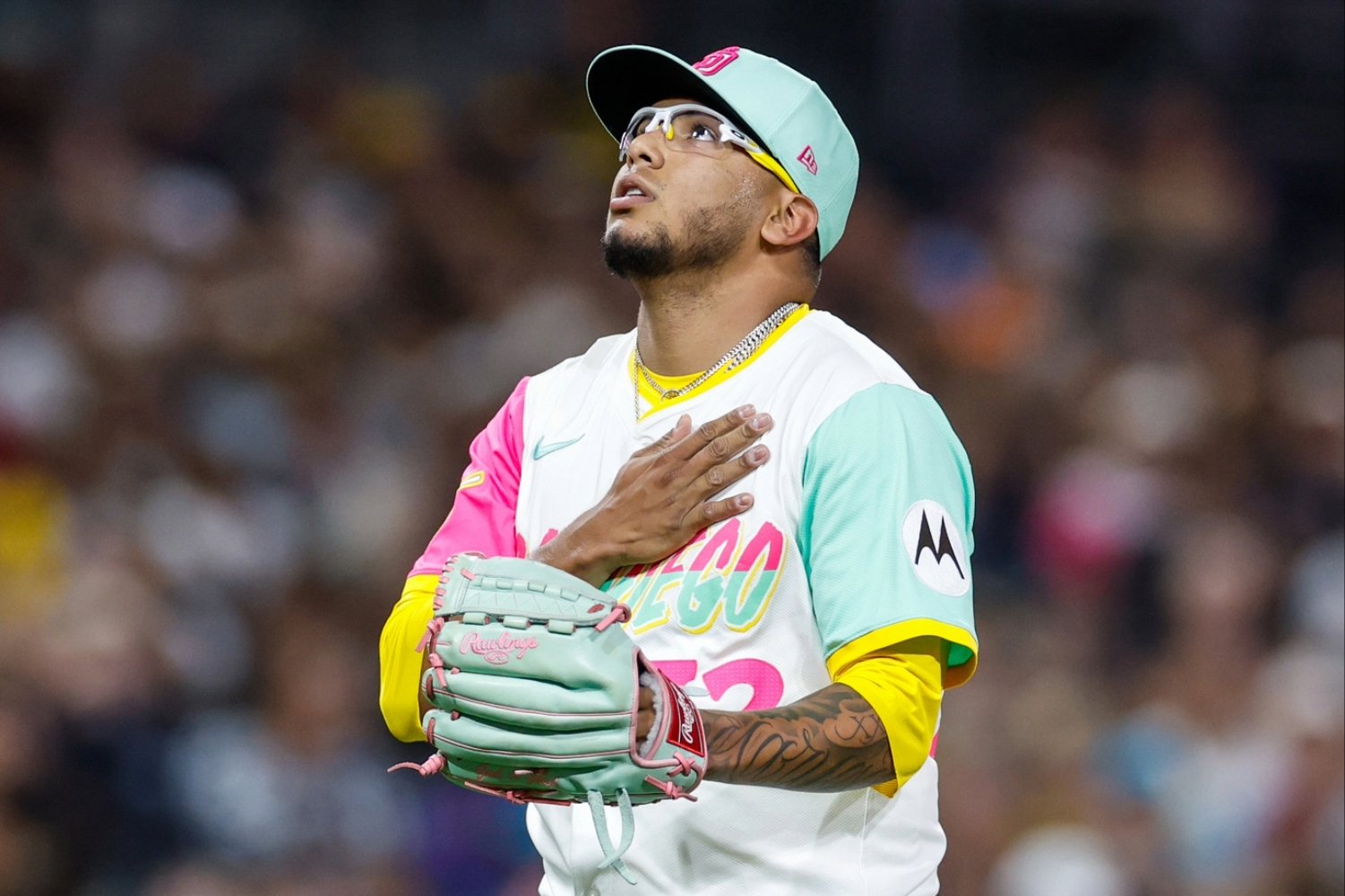 As sample sizes go, 7 2/3 innings for a pitcher is nothing. We know that no useful projections can be made from that. But sometimes, a team can still see the future during those limited moments -- if it swaps out the data microscope for the long-lamented eye test. Take the Padres and Bradgley Rodriguez, for example. Based on what the team saw from the rookie right-hander last September, it ought to feel confident that he can contribute to the big-league bullpen full time as soon as next March. In turn, it can avoid spending big on a middle reliever this winter and focus on the club's biggest needs: rotation, catcher, and the right side of the infield. Bradgley Rodriguez's career history It doesn't take a spreadsheet to determine that Rodriguez has potential. His triple-digit fastball is all anyone needs to see. But if they need more proof, they can also gaze at his power changeup. Those two pitches earned him an early-season promotion from Double-A to the Show as a 21-year-old. The Venezuela native made his MLB debut on May 31 against the Pirates and pitched well (1 2/3 IP, 0 H, 0 R, 1 BB, 1 SO, stranded both of his inherited runners). Three days later, the Padres optioned him to Triple-A El Paso to make room for right-hander Ryan Bergert. Prior to his call-up, Rodriguez was No. 9 in Padres Mission's ranking of the team's top prospects. The final sentence of the scouting report read: "His control is still a work in progress, but his high strikeout rate indicates significant upside as a power pitcher." When Rodriguez returned to San Diego in September, that upside shot way up. True, there were bumps, like the one he put on Mets catcher Francisco Alvarez's elbow with a 100 mph heater in New York. Rodriguez hit three batters total last season, with each pitch coming from his arm side, That's a sure sign of command issues. But there also was that wild game against the Brewers at Petco Park on the night of Sept. 22. Rodriguez entered in the 11th inning after the teams had traded runs in the 10th. He got three ground balls and, thanks to second baseman Jake Cronenworth, three outs in a scoreless frame. Minutes later, the Padres were walking off the Crew to clinch a playoff berth. Rodriguez was credited with his first MLB win. The outing was a showcase of the youngster's grit—he did not have an easy road to the majors. He had to fight to save his career as he missed the 2022 and 2023 seasons with elbow problems. Less than two years after returning to action, he was succeeding in a high-leverage role in a playoff race. Days later, Rodriguez was auditioning for the Padres' Wild Card Series roster. On the final weekend of the regular season, he made two relief appearances against the Diamondbacks. Each time, he was the first man out of the 'pen in the middle innings. He responded with five strikeouts and one walk over 2 1/3 scoreless frames. The Padres, of course, put him on the WCS roster, but he didn't appear in the three games against the Cubs. Despite that, Rodriguez carries all of that momentum into 2026. He's not your typical 22-year-old pitcher, at least in terms of résumé. Bradgley Rodriguez's statistics, outlook Rodriguez's final 2025 numbers for the Padres, small though they are, should leave everyone believing that he can be a difference-maker next year: Category Rodriguez Opponents' OPS .523 Strikeout percentage 29.0 Walk percentage 9.7* Average fastball velocity 98.3 Strike percentage 59.4 Ground ball rate 56.3 Inherited runners stranded 3 of 4 * Includes one intentional walk. Sources: MLB.com, Baseball Reference, Fangraphs The Padres' top four right-handed relievers heading into the Winter Meetings are Mason Miller, Jason Adam, Jeremiah Estrada and David Morgan. Adam, though, may begin next season on the injured list as he continues to rehab the quad tear he suffered Sept. 1. MLB.com reported last month that he is expected to resume throwing "in the coming weeks." After Rodriguez, the other righty options on the 40-man roster are: Jhony Brito: Missed all of last season recovering from an elbow brace procedure. Garrett Hawkins: Added to the 40-man last month to be protected from the Rule 5 draft. Bryan Hoeing: Optioned to Triple-A last July after making seven appearances for San Diego. Is more of a swingman/bulk reliever. Alex Jacob: Posted a 5.13 ERA in 33 1/3 innings but finished the season strong. Ron Marinaccio: Finished last season in the minors. Miguel Mendez: See Hawkins. The left side features Adrian Morejon (assuming he's not converted back into a starter), Wandy Peralta, Yuki Matsui and Kyle Hart (our Randy Holt recently did a deep dive into Hart's potential as a reliever). Figure three of those pitchers make the Opening Day bullpen—that would leave one open spot in an eight-man unit, although it's more likely to be two spots with Adam questionable. Rodriguez has a clear path to securing one of them. The Padres will add depth arms in the offseason, but with Rodriguez around, they shouldn't feel obligated to spend a few million or trade a prospect for a middle reliever. After all, they've already seen that he has the tools to do the job.
