


TomCent
-
Posts
54 -
Joined
-
Last visited
Content Type
Profiles
San Diego Padres Videos
2026 San Diego Padres Top Prospects Ranking
San Diego Padres Free Agent & Trade Rumors, Notes, & Tidbits
Guides & Resources
2025 San Diego Padres Draft Pick Tracker
News
2026 San Diego Padres Draft Tracker: Picks & Bonuses
Forums
Blogs
Events
Store
Downloads
Gallery
Everything posted by TomCent
-
Ethan SalasKash MayfieldMiguel MendezRyan WidemanKruz SchoolcraftJorge QuintanaTy HarveyKale FountainBraedon KarpathiosLamar King JrJagger HaynesTucker MusgroveTruitt MadonnaAlex McCoyJesus CastroColeman BorthwickRosman VerdugoElliot LascellesGarrett HawkinsEric Yost
-
Ethan SalasKash MayfieldMiguel MendezRyan WidemanKruz SchoolcraftTy HarveyJorge QuintanaKale FountainBraedon KarpathiosLamar King JrTruitt MadonnaJagger HaynesRosman VerdugoEric YostJesus CastroLuis GutierrezKavares TearsRomeo SanabriaTucker MusgroveAlex McCoy
-
Freddy Fermin was the San Diego Padres’ offense over the weekend. His performance exposed just how low the hitting group has fallen in 2026. The light-hitting catcher drove in five of the club's six runs in a three-game set against the New York Mets. He clubbed a pair of two-run home runs and hit an RBI double — all after being asked to lay down sacrifice bunts each of his first two times up Saturday. Only one other Padre collected an extra-base hit in the series: Fernando Tatis Jr., who doubled in the finale on Sunday. The inability to slug is one of the biggest things killing this team. The Padres entered their series against the Reds last in the majors with a .644 OPS and .355 slugging percentage and tied with the Colorado Rockies for 29th with an 85 wRC+. They were last in total bases by a wide margin — 63 behind the 29th-place Tampa Bay Rays and 64 behind the 28th-place Mets. This is not a raw power issue, even though it might seem that way now that Fermin has twice as many homers as Tatis. The Padres entered this week's play 20th in the league with 65 home runs, but they were also 29th with 83 doubles and tied for 17th with seven triples. That comes out to 155 extra-base hits. Only the Rays (150) had hit fewer. The club's league-worst 6.9 hits per game would be forgivable if more of them did damage. San Diego was 23rd with a .141 ISO. How can this situation be, specifically the lack of doubles and triples, when Petco Park's outfield is spacious in the gaps and the lineup is led by accomplished veterans? The simplest explanation is that the hitters just aren't good enough as a group. Their 40.6 percent hard-hit rate was tied for eighth in MLB entering Monday, but their 18.3 percent line-drive rate was 26th and their 45.3 percent ground-ball rate was tied for the second-worst. Maybe that's a consequence of being bad against all pitches; they rank in the bottom 10 in Statcast's pitch run value (via Fangraphs) against all types of fastballs and breaking balls. Their best ranking is 18th against changeups. On top of that, they’re hitting in some bad luck. According to Baseball Savant, the Padres’ xSLG through 64 games was .392, 19th:-best in the league and almost 40 points better than the real-life production. And luck bit the Friars hard last weekend. Twice on Sunday, Mets outfielders robbed Padres hitters of extra bases. First, left fielder MJ Melendez laid out in to snag a second-inning Miguel Andujar liner that was heading toward the corner. Later, center fielder A.J. Ewing ran down a Xander Bogaerts drive in the eighth that likely would have scored two runs and given the Padres a legitimate chance at a comeback. But, luck or no luck, the fact is the lineup is packing the weakest punch in baseball and is canceling out the team's strong defense and bullpen. The Padres have a huge opportunity this week to muscle up. They have three games each against the Cincinnati Reds (home).and Baltimore Orioles (away), clubs that entered Monday's play ranked in the bottom five in runs allowed. If they get shut down against those staffs, then this group surely will be beyond help. Everything will need to be on the table — benchings, demotions, panic trades. The time for trust and patience will be over. View full article
-
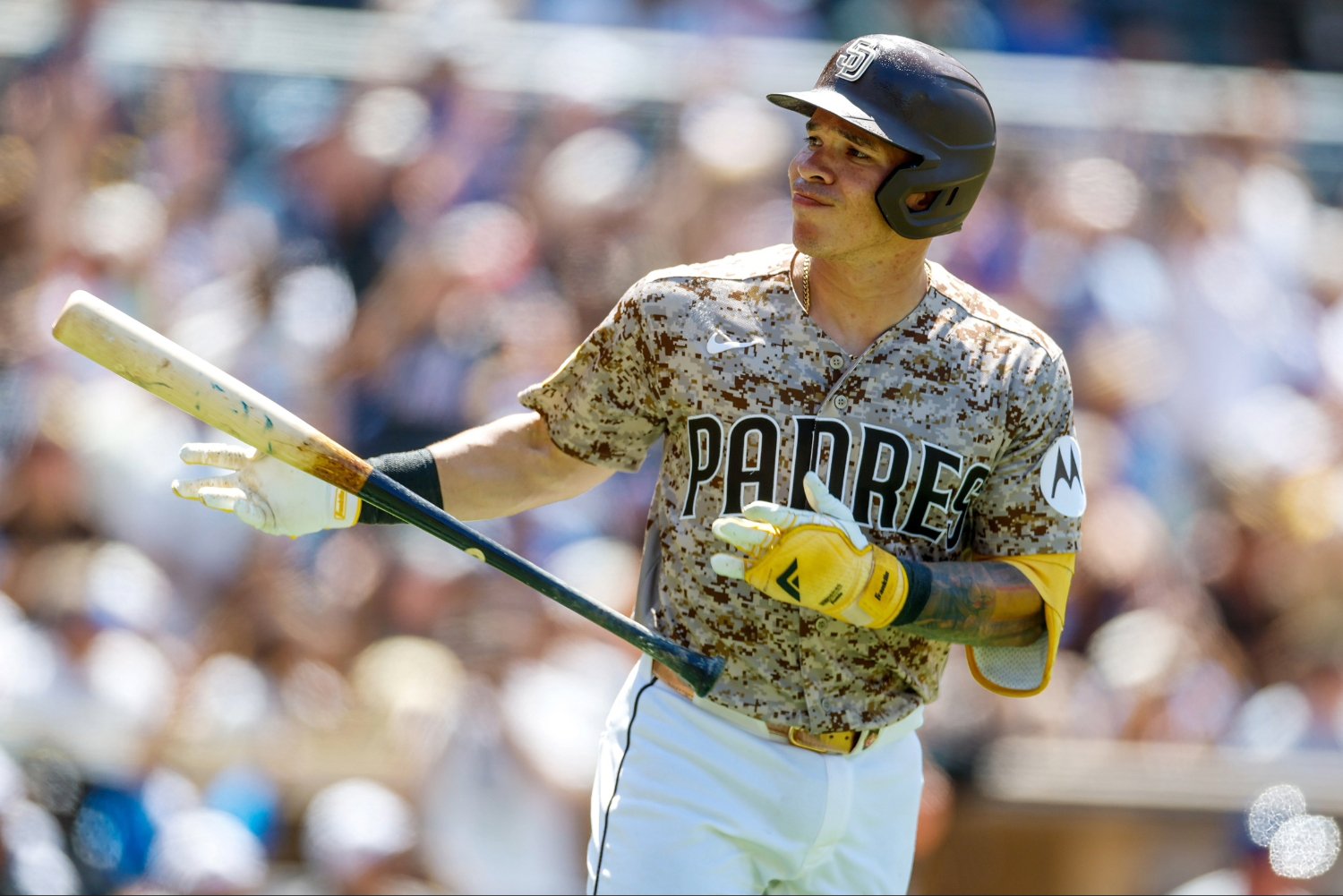 Freddy Fermin was the San Diego Padres’ offense over the weekend. His performance exposed just how low the hitting group has fallen in 2026. The light-hitting catcher drove in five of the club's six runs in a three-game set against the New York Mets. He clubbed a pair of two-run home runs and hit an RBI double — all after being asked to lay down sacrifice bunts each of his first two times up Saturday. Only one other Padre collected an extra-base hit in the series: Fernando Tatis Jr., who doubled in the finale on Sunday. The inability to slug is one of the biggest things killing this team. The Padres entered their series against the Reds last in the majors with a .644 OPS and .355 slugging percentage and tied with the Colorado Rockies for 29th with an 85 wRC+. They were last in total bases by a wide margin — 63 behind the 29th-place Tampa Bay Rays and 64 behind the 28th-place Mets. This is not a raw power issue, even though it might seem that way now that Fermin has twice as many homers as Tatis. The Padres entered this week's play 20th in the league with 65 home runs, but they were also 29th with 83 doubles and tied for 17th with seven triples. That comes out to 155 extra-base hits. Only the Rays (150) had hit fewer. The club's league-worst 6.9 hits per game would be forgivable if more of them did damage. San Diego was 23rd with a .141 ISO. How can this situation be, specifically the lack of doubles and triples, when Petco Park's outfield is spacious in the gaps and the lineup is led by accomplished veterans? The simplest explanation is that the hitters just aren't good enough as a group. Their 40.6 percent hard-hit rate was tied for eighth in MLB entering Monday, but their 18.3 percent line-drive rate was 26th and their 45.3 percent ground-ball rate was tied for the second-worst. Maybe that's a consequence of being bad against all pitches; they rank in the bottom 10 in Statcast's pitch run value (via Fangraphs) against all types of fastballs and breaking balls. Their best ranking is 18th against changeups. On top of that, they’re hitting in some bad luck. According to Baseball Savant, the Padres’ xSLG through 64 games was .392, 19th:-best in the league and almost 40 points better than the real-life production. And luck bit the Friars hard last weekend. Twice on Sunday, Mets outfielders robbed Padres hitters of extra bases. First, left fielder MJ Melendez laid out in to snag a second-inning Miguel Andujar liner that was heading toward the corner. Later, center fielder A.J. Ewing ran down a Xander Bogaerts drive in the eighth that likely would have scored two runs and given the Padres a legitimate chance at a comeback. But, luck or no luck, the fact is the lineup is packing the weakest punch in baseball and is canceling out the team's strong defense and bullpen. The Padres have a huge opportunity this week to muscle up. They have three games each against the Cincinnati Reds (home).and Baltimore Orioles (away), clubs that entered Monday's play ranked in the bottom five in runs allowed. If they get shut down against those staffs, then this group surely will be beyond help. Everything will need to be on the table — benchings, demotions, panic trades. The time for trust and patience will be over.
 -
The San Diego Padres are a handful of games past the one-third mark through the 2026 season -- a big enough sample size for the front office to know what it has with the club and what it needs to do to ensure a National League playoff berth. The players have made it easy for the evaluators because they've played mostly to preseason expectations. The strengths and weaknesses have not changed much, although some of the weaknesses have been more glaring than feared. The bullpen, led by closer Mason Miller, is strong overall but it doesn't look as formidable as last year's group. Jeremiah Estrada and Adrian Morejon have regressed; in Estrada's case, health has played a role. Miller was the primary reason the bullpen's ERA was the third-lowest in MLB entering Tuesday's action. The rotation has been subpar. It ranked 23rd in the majors in starter ERA through Monday. Depth signings Walker Buehler, Griffin Canning and Lucas Giolito have done little to compensate for Nick Pivetta’s early-season injury and Joe Musgrove's spring setback. The latter two may return after the All-Star Break, but the group could still use an ace for the stretch run. The offense is lacking. Manny Machado slashing .174/.267/.353 and Fernando Tatis Jr. hitting one home run in the team's first 58 games have a lot to do with the club being 29th in the majors in OPS through June 1, but no one has picked up the slack, either. Gavin Sheets has come the closest. The simplest way to fix these problems is to be aggressive ahead of the Aug. 3 MLB trade deadline. President of baseball operations A.J. Preller doesn't need an invitation to wheel and deal, but a flawed roster gives him an excuse to go big. How big he goes may depend on his intestinal fortitude, but we know he has the guts. Adding these three players, each filling one of the needs mentioned above, would be huge... and extremely costly. 3 Padres Trade Targets Who Could Restore Friars' World Series Identity Bullpen: Aroldis Chapman The Boston Red Sox's closer would be a dynamic setup man in San Diego, a second triple-digit left-handed reliever to complement Morejon. Like Miller at last year's deadline, adding Chapman would deepen the relief corps and keep the starters from being exposed. There is one thing to note, however: he will not be a pure rental. His contract includes a $13 million mutual option for 2027 that becomes guaranteed if he pitches 40 innings and passes an offseason physical in 2026, per Cot's Contracts. He's already halfway to that mark, and his usage certainly wouldn't decrease in San Diego. Rotation: Tarik Skubal The Detroit Tigers' ace will be the main character in this year's deadline drama if he comes back strong from elbow surgery and his team waves the white flag. ESPN's Buster Olney predicted last week that the Padres will acquire the left-hander because that's what Preller does, but so much has to line up for it to happen. Will Tigers president Scott Harris insist on a huge prospect return for a rental? Will he also insist that Preller pick up all or most of the $10 million-plus that Skubal will be owed over the season's final two months? Can Preller convince new principal owners Jose E. Feliciano and Kwanza Jones to add that much payroll? Cheaper, but not necessarily better, alternatives should emerge as more teams become sellers. Miami Marlins ace Sandy Alcantara and New York Mets No. 1 starter Freddy Peralta come to mind. Offense: Christian Walker The list of available hitters will grow as more clubs raise the white flag, but Preller can't afford to be patient. The Padres (33-30) trailed the Los Angeles Dodgers by eight games in the NL West during the weekend, and the wild-card race will be bruising. This team needs a bat, ASAP. Walker is off to a strong start this season (16 home runs, .835 OPS through June 1) for the Houston Astros. That's the type of slug the Padres need. Machado leads the club with 10 homers, followed by Sheets with nine. But there are downsides to adding Walker. First, he is exclusively a first baseman. He would push Sheets to the outfield, which, in turn, could cost France, Ramon Laureano and even Jake Cronenworth playing time (if Tatis has to play more second base). That would be bad for the defense, one of the club's strengths. Second, Walker is signed through 2027 and is making $20 million a year. How much of that money would the Astros include in a trade? And would the Padres want to add a large average annual value (AAV) to the payroll while there is massive uncertainty surrounding what's ahead for baseball's salary structure? These are the types of concessions the team will have to make to add another expensive star to their already-expensive core. View full article
-
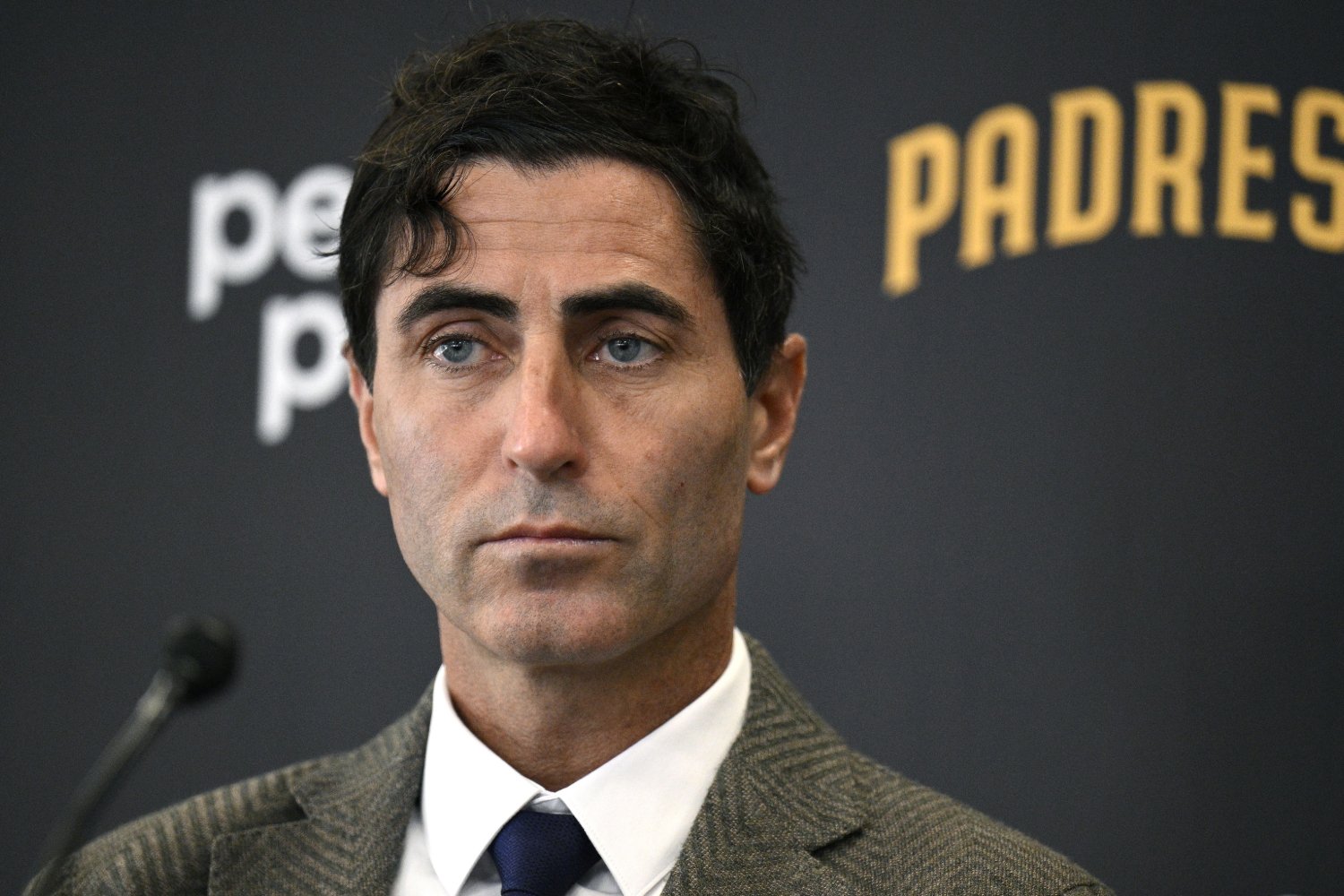 The San Diego Padres are a handful of games past the one-third mark through the 2026 season -- a big enough sample size for the front office to know what it has with the club and what it needs to do to ensure a National League playoff berth. The players have made it easy for the evaluators because they've played mostly to preseason expectations. The strengths and weaknesses have not changed much, although some of the weaknesses have been more glaring than feared. The bullpen, led by closer Mason Miller, is strong overall but it doesn't look as formidable as last year's group. Jeremiah Estrada and Adrian Morejon have regressed; in Estrada's case, health has played a role. Miller was the primary reason the bullpen's ERA was the third-lowest in MLB entering Tuesday's action. The rotation has been subpar. It ranked 23rd in the majors in starter ERA through Monday. Depth signings Walker Buehler, Griffin Canning and Lucas Giolito have done little to compensate for Nick Pivetta’s early-season injury and Joe Musgrove's spring setback. The latter two may return after the All-Star Break, but the group could still use an ace for the stretch run. The offense is lacking. Manny Machado slashing .174/.267/.353 and Fernando Tatis Jr. hitting one home run in the team's first 58 games have a lot to do with the club being 29th in the majors in OPS through June 1, but no one has picked up the slack, either. Gavin Sheets has come the closest. The simplest way to fix these problems is to be aggressive ahead of the Aug. 3 MLB trade deadline. President of baseball operations A.J. Preller doesn't need an invitation to wheel and deal, but a flawed roster gives him an excuse to go big. How big he goes may depend on his intestinal fortitude, but we know he has the guts. Adding these three players, each filling one of the needs mentioned above, would be huge... and extremely costly. 3 Padres Trade Targets Who Could Restore Friars' World Series Identity Bullpen: Aroldis Chapman The Boston Red Sox's closer would be a dynamic setup man in San Diego, a second triple-digit left-handed reliever to complement Morejon. Like Miller at last year's deadline, adding Chapman would deepen the relief corps and keep the starters from being exposed. There is one thing to note, however: he will not be a pure rental. His contract includes a $13 million mutual option for 2027 that becomes guaranteed if he pitches 40 innings and passes an offseason physical in 2026, per Cot's Contracts. He's already halfway to that mark, and his usage certainly wouldn't decrease in San Diego. Rotation: Tarik Skubal The Detroit Tigers' ace will be the main character in this year's deadline drama if he comes back strong from elbow surgery and his team waves the white flag. ESPN's Buster Olney predicted last week that the Padres will acquire the left-hander because that's what Preller does, but so much has to line up for it to happen. Will Tigers president Scott Harris insist on a huge prospect return for a rental? Will he also insist that Preller pick up all or most of the $10 million-plus that Skubal will be owed over the season's final two months? Can Preller convince new principal owners Jose E. Feliciano and Kwanza Jones to add that much payroll? Cheaper, but not necessarily better, alternatives should emerge as more teams become sellers. Miami Marlins ace Sandy Alcantara and New York Mets No. 1 starter Freddy Peralta come to mind. Offense: Christian Walker The list of available hitters will grow as more clubs raise the white flag, but Preller can't afford to be patient. The Padres (33-30) trailed the Los Angeles Dodgers by eight games in the NL West during the weekend, and the wild-card race will be bruising. This team needs a bat, ASAP. Walker is off to a strong start this season (16 home runs, .835 OPS through June 1) for the Houston Astros. That's the type of slug the Padres need. Machado leads the club with 10 homers, followed by Sheets with nine. But there are downsides to adding Walker. First, he is exclusively a first baseman. He would push Sheets to the outfield, which, in turn, could cost France, Ramon Laureano and even Jake Cronenworth playing time (if Tatis has to play more second base). That would be bad for the defense, one of the club's strengths. Second, Walker is signed through 2027 and is making $20 million a year. How much of that money would the Astros include in a trade? And would the Padres want to add a large average annual value (AAV) to the payroll while there is massive uncertainty surrounding what's ahead for baseball's salary structure? These are the types of concessions the team will have to make to add another expensive star to their already-expensive core.
 -
The San Diego Padres’ decision in April to make Fernando Tatis Jr. their backup second baseman bordered on bizarre. The club was putting a Platinum Glove outfielder back in the middle of the infield after moving him off it three years ago, and onto the opposite side of the bag, at that. The move resembled the Boston Red Sox's shuttling of Ceddanne Rafaela between the outfield and infield to solve a roster crunch problem. In other words, the Padres appeared to be admitting their 2026 roster was constructed poorly. They chose DH/corner players Nick Castellanos and Ty France over a true middle-infield backup. In April, the club kept offseason acquisition Sung Mun Song at Triple-A El Paso after his rehab from a spring training side injury was complete. Tatis' early games at the keystone made the skeptics look right. His footwork was poor and he made bad decisions. In early May, the objections grew louder after he passed on turning a routine 5-4-3 double play against the Chicago White Sox to try to throw Chase Meidroth out at home. The ball sailed high and wide toward the backstop. In the month since that play, a lot has changed. France is now a valuable platoon first baseman, Castellanos is out of the picture, Song is glued to the bench, and Tatis has become the everyday second baseman with Jake Cronenworth on the seven-day concussion injured list. Tatis started 13 consecutive games at second before starting in right field for the Padres’ series finale against the Washington Nationals last weekend. Overall, he has made 25 starts at second and 33 in right. He still isn't a smooth infielder, but his athletic ability allows him to get the job done, similar to when he played shortstop. In fact, he's the club's best second baseman based on metrics. Suffice it to say, his bosses are impressed. “He's definitely turning into one of the best second basemen in all of baseball,” Padres manager Craig Stammen said last week after Tatis handled all 10 of his chances (two putouts, eight assists) cleanly in the team's 3-0 loss to the Philadelphia Phillies. “I think he's taken something that looked normal to him and (is) making it look spectacular, just like he does about everything else,." A first-year manager gushing about a club leader should be taken with a large grain of salt, but the stats and even the hated eye test do back up Stammen's claims. Tatis had played 200 innings at second base. He had been charged with zero errors, but that stat hasn't been an acceptable fielding measure for years. The metrics matter most now, and the primary ones were largely positive. Among second basemen with at least 200 innings played at the position, Tatis was tied for fourth in the majors with a plus-4 fielding run value (FRV), tied for fifth with five outs above average (OAA) and tied for 15th with one defensive run saved (DRS). Three of the four FRV runs came from his range, also tied for sixth. (FRV and OAA figures per Baseball Savant, DRS figure per Fangraphs.) Those numbers put him well ahead of Cronenworth and Song: Player Inn FRV OAA DRS Fernando Tatis Jr. 200 4 5 1 Jake Cronenworth 254 1 0 -1 Sung Mun Song 62 -1 -1 -1 And here is another comparison: Tatis has been much better by the metrics than Rafaela was at second last year. Rafaela posted a zero FRV, zero OAA and one DRS in 165 innings. So, how is Tatis putting up these numbers if his movements aren't the most sure? An athletic play in the seventh inning of that Wednesday game helps to provide the answer. He used his outfield savvy and speed to range into shallow right, make an over-the-shoulder catch and rob the Phillies’ Alec Bohm of a single. His lateral range is expansive, too. Twice against the Phillies, he charged in and to his right, ending up on the shortstop side of the bag, to field a slow bouncer. He threw accurately on the move to get the out. Twice, he ranged far to his left to flag down a grounder in the hole before making an accurate throw to first to complete the out. He was quick in starting a pair.of 4-6-3 double plays. While Tatis is helping the club when he's on the infield, there is a tradeoff: the outfield defense suffers badly when he's not out there. Tatis is still a high-end right fielder, while Castellanos and Ramon Laureano, his most frequent fill-ins up to this point, are below average: Player Inn FRV OAA DRS Fernando Tatis Jr. 298 3 3 -1 Nick Castellanos 147 -3 -2 -3 Ramon Laureano 43 -1 -1 1 Bryce Johnson 28 0 0 0 Now that the club trusts Tatis with second base, what should it do with Cronenworth once he returns from the IL? He's in the third year of a seven-year, $80 million contract extension, but he’s coming off two seasons of negative defensive metrics and hasn't hit (47 wRC+) this season. He also has made a start each at short and third in 2026. The negatives point to him potentially losing playing time. Making him an $11 million utility player would be more bad roster management, but the Padres might need to do it if they want to give France and Song (by moving him to the outfield) more opportunities to improve one of baseball's worst offenses. At the very least, Tatis' infield defense has opened that avenue. View full article
-
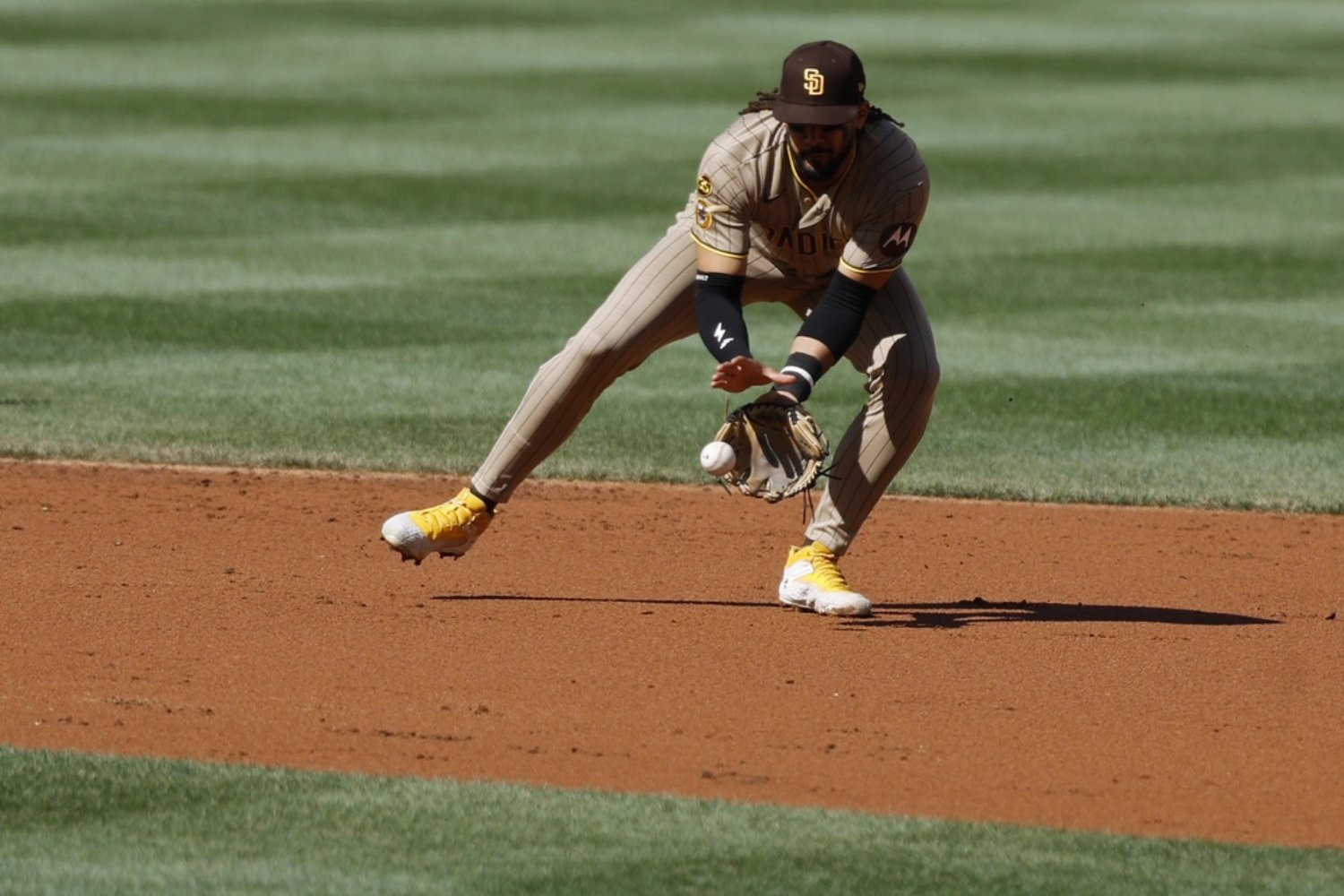 The San Diego Padres’ decision in April to make Fernando Tatis Jr. their backup second baseman bordered on bizarre. The club was putting a Platinum Glove outfielder back in the middle of the infield after moving him off it three years ago, and onto the opposite side of the bag, at that. The move resembled the Boston Red Sox's shuttling of Ceddanne Rafaela between the outfield and infield to solve a roster crunch problem. In other words, the Padres appeared to be admitting their 2026 roster was constructed poorly. They chose DH/corner players Nick Castellanos and Ty France over a true middle-infield backup. In April, the club kept offseason acquisition Sung Mun Song at Triple-A El Paso after his rehab from a spring training side injury was complete. Tatis' early games at the keystone made the skeptics look right. His footwork was poor and he made bad decisions. In early May, the objections grew louder after he passed on turning a routine 5-4-3 double play against the Chicago White Sox to try to throw Chase Meidroth out at home. The ball sailed high and wide toward the backstop. In the month since that play, a lot has changed. France is now a valuable platoon first baseman, Castellanos is out of the picture, Song is glued to the bench, and Tatis has become the everyday second baseman with Jake Cronenworth on the seven-day concussion injured list. Tatis started 13 consecutive games at second before starting in right field for the Padres’ series finale against the Washington Nationals last weekend. Overall, he has made 25 starts at second and 33 in right. He still isn't a smooth infielder, but his athletic ability allows him to get the job done, similar to when he played shortstop. In fact, he's the club's best second baseman based on metrics. Suffice it to say, his bosses are impressed. “He's definitely turning into one of the best second basemen in all of baseball,” Padres manager Craig Stammen said last week after Tatis handled all 10 of his chances (two putouts, eight assists) cleanly in the team's 3-0 loss to the Philadelphia Phillies. “I think he's taken something that looked normal to him and (is) making it look spectacular, just like he does about everything else,." A first-year manager gushing about a club leader should be taken with a large grain of salt, but the stats and even the hated eye test do back up Stammen's claims. Tatis had played 200 innings at second base. He had been charged with zero errors, but that stat hasn't been an acceptable fielding measure for years. The metrics matter most now, and the primary ones were largely positive. Among second basemen with at least 200 innings played at the position, Tatis was tied for fourth in the majors with a plus-4 fielding run value (FRV), tied for fifth with five outs above average (OAA) and tied for 15th with one defensive run saved (DRS). Three of the four FRV runs came from his range, also tied for sixth. (FRV and OAA figures per Baseball Savant, DRS figure per Fangraphs.) Those numbers put him well ahead of Cronenworth and Song: Player Inn FRV OAA DRS Fernando Tatis Jr. 200 4 5 1 Jake Cronenworth 254 1 0 -1 Sung Mun Song 62 -1 -1 -1 And here is another comparison: Tatis has been much better by the metrics than Rafaela was at second last year. Rafaela posted a zero FRV, zero OAA and one DRS in 165 innings. So, how is Tatis putting up these numbers if his movements aren't the most sure? An athletic play in the seventh inning of that Wednesday game helps to provide the answer. He used his outfield savvy and speed to range into shallow right, make an over-the-shoulder catch and rob the Phillies’ Alec Bohm of a single. His lateral range is expansive, too. Twice against the Phillies, he charged in and to his right, ending up on the shortstop side of the bag, to field a slow bouncer. He threw accurately on the move to get the out. Twice, he ranged far to his left to flag down a grounder in the hole before making an accurate throw to first to complete the out. He was quick in starting a pair.of 4-6-3 double plays. While Tatis is helping the club when he's on the infield, there is a tradeoff: the outfield defense suffers badly when he's not out there. Tatis is still a high-end right fielder, while Castellanos and Ramon Laureano, his most frequent fill-ins up to this point, are below average: Player Inn FRV OAA DRS Fernando Tatis Jr. 298 3 3 -1 Nick Castellanos 147 -3 -2 -3 Ramon Laureano 43 -1 -1 1 Bryce Johnson 28 0 0 0 Now that the club trusts Tatis with second base, what should it do with Cronenworth once he returns from the IL? He's in the third year of a seven-year, $80 million contract extension, but he’s coming off two seasons of negative defensive metrics and hasn't hit (47 wRC+) this season. He also has made a start each at short and third in 2026. The negatives point to him potentially losing playing time. Making him an $11 million utility player would be more bad roster management, but the Padres might need to do it if they want to give France and Song (by moving him to the outfield) more opportunities to improve one of baseball's worst offenses. At the very least, Tatis' infield defense has opened that avenue.
 -
Miguel Andujar has been one of the San Diego Padres’ most aggressive, but also one of their most valuable, hitters this season. He has drawn exactly three walks in 122 plate appearances and was sporting one of the highest chase rates of his career as the club opened a weekend series Friday in Seattle against the Mariners. His patience at the plate was really short during the club's previous series, against the Brewers in Milwaukee. He swung at 26 of the 43 pitches he saw in the three games. That's a 60 percent rate. And yet, after all that swinging, he was second on the club with a 126 wRC+, trailing only Luis Campusano. How is Andujar able to maintain a high level of production when he seems to be swinging at everything? It comes down to the fact that this is who Andujar is and it works for him. Start with his swing. He attacks the ball at a 7-degree angle, one of the most shallow on the club, according to Baseball Savant. The bat is mostly level as it enters the zone. That's one reason why his squared-up rate was in the 81st percentile entering Friday. But level doesn't necessarily mean all fields with Andujar. His 46.2 percent pull rate through May 15 was three points higher than the full-season career high he set during his breakout 2019 campaign with the New York Yankees. His 24.2 percent pull air rate was a fraction below his career best, which he also set in 2019. His attack direction was five degrees to the pull side, trailing just Campusano and Nick Castellanos among the club's pull-heavy hitters. A 10-degree average helps explain why he had just three home runs, one of which came off a hanging breaking ball by the Brewers' Brandon Sproat on Tuesday. The pull approach makes him vulnerable off the plate and, indeed, Andujar will expand the zone. His 38.2 percent chase rate through that Brewers series put him in the 10th percentile league-wide. But he can get to those pitches. He entered Friday's game second on the club with a 67.9 chase contact rate, trailing only Gavin Sheets. He was batting .412 against sinkers and .357 against sweepers. (On the other hand, he was batting .222 against four-seamers.) That level of plate coverage helps explain his 19.5 percent strikeout rate (61st percentile) and 19.6 percent whiff rate (79th percentile). All of that is the long way of saying that Andujar knows how to succeed as a free swinger and “bad ball” hitter. Expect him to stay on the attack, even if it means passing up a free trip to first base every now and again. View full article
-
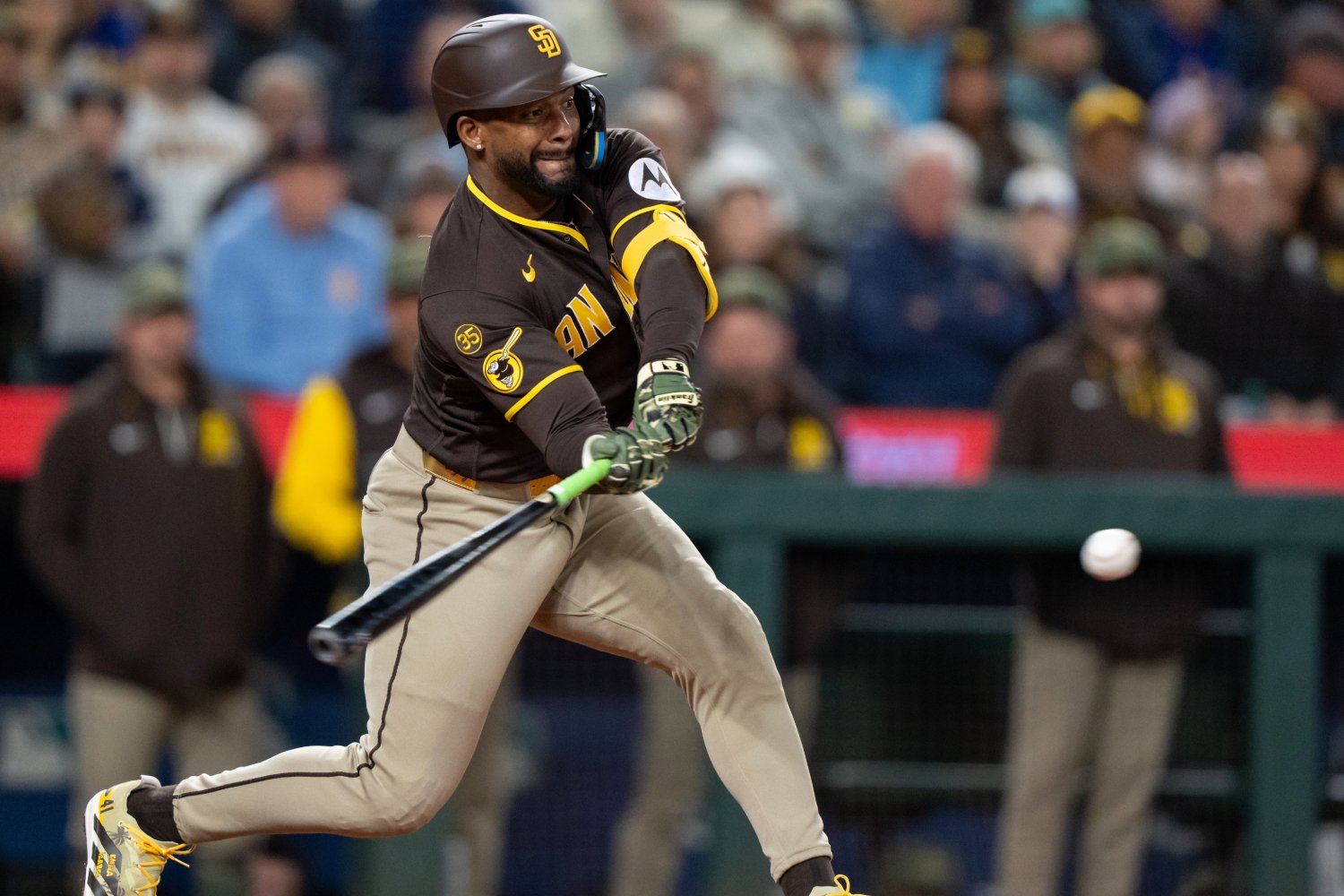 Miguel Andujar has been one of the San Diego Padres’ most aggressive, but also one of their most valuable, hitters this season. He has drawn exactly three walks in 122 plate appearances and was sporting one of the highest chase rates of his career as the club opened a weekend series Friday in Seattle against the Mariners. His patience at the plate was really short during the club's previous series, against the Brewers in Milwaukee. He swung at 26 of the 43 pitches he saw in the three games. That's a 60 percent rate. And yet, after all that swinging, he was second on the club with a 126 wRC+, trailing only Luis Campusano. How is Andujar able to maintain a high level of production when he seems to be swinging at everything? It comes down to the fact that this is who Andujar is and it works for him. Start with his swing. He attacks the ball at a 7-degree angle, one of the most shallow on the club, according to Baseball Savant. The bat is mostly level as it enters the zone. That's one reason why his squared-up rate was in the 81st percentile entering Friday. But level doesn't necessarily mean all fields with Andujar. His 46.2 percent pull rate through May 15 was three points higher than the full-season career high he set during his breakout 2019 campaign with the New York Yankees. His 24.2 percent pull air rate was a fraction below his career best, which he also set in 2019. His attack direction was five degrees to the pull side, trailing just Campusano and Nick Castellanos among the club's pull-heavy hitters. A 10-degree average helps explain why he had just three home runs, one of which came off a hanging breaking ball by the Brewers' Brandon Sproat on Tuesday. The pull approach makes him vulnerable off the plate and, indeed, Andujar will expand the zone. His 38.2 percent chase rate through that Brewers series put him in the 10th percentile league-wide. But he can get to those pitches. He entered Friday's game second on the club with a 67.9 chase contact rate, trailing only Gavin Sheets. He was batting .412 against sinkers and .357 against sweepers. (On the other hand, he was batting .222 against four-seamers.) That level of plate coverage helps explain his 19.5 percent strikeout rate (61st percentile) and 19.6 percent whiff rate (79th percentile). All of that is the long way of saying that Andujar knows how to succeed as a free swinger and “bad ball” hitter. Expect him to stay on the attack, even if it means passing up a free trip to first base every now and again.
 -
Ethan SalasKash MayfieldMiguel MendezKruz SchoolcraftRyan WidemanTy HarveyKale FountainJorge QuintanaLamar King JrFrancis PenaAlex McCoyBraedon KarpathiosTruitt MadonnaRosman VerdugoEric YostBryan BalzerJagger HaynesGarrett HawkinsTucker Musgrove
-
The Padres are home this.week after completing a challenging road trip of three days each in Denver and Mexico City. A series at a mile-high elevation was followed by a series at almost a mile-and-a-half elevation. Players didn't have much time to readjust to being at sea level, either. The club opened a three-game series against the Chicago Cubs on Monday night after playing at Estadio Alfedo Harp Helu in Mexico City on Sunday afternoon. There are reams of data on the challenges of playing in Denver -- the ball flies, pitches move differently than elsewhere, bodies wear down more. It's reasonable to assume that Mexico City presents similar issues even though MLB plays just two games a year there. The thinner air has to have some effect. The Padres' opponent in Mexico City, the Arizona Diamondbacks, believed that to be the case. They kept starting pitchers Eduardo Rodriguez and Michael Soroka away rather than expose them to the elements. Those two were scheduled to pitch Wednesday and Thursday in Milwaukee, respectively. Did the handful of Mexico City games justify the trepidation? Is there a major short-term effect on starting pitchers who throw there? And. because this is a Padres site, should fans expect German Marquez and Michael King, the team's starters in Mexico City, to struggle this weekend when they face the Chicago White Sox at Petco Park? We can use the 2023 and 2024 Mexico City series -- Padres vs. San Francisco Giants, Houston Astros vs. Colorado Rockies -- as rough guides. This is how the eight starters in those four games pitched in their next outing: 2023, Padres vs. Giants Pitcher IP H R ER BB SO NP/ST Joe Musgrove 5 2 1 0 3 5 81/49 Yu Darvish 6.2 4 2 1 1 6 94/68 Alex Cobb 7 5 0 0 2 5 107/68 Sean Manaea 5 6 4 3 2 6 94/63 2024, Astros vs. Rockies Pitcher IP H R ER BB SO NP/ST Ronel Blanco 6 5 3 3 2 6 94/60 Framber Valdez 5.1 9 5 5 1 3 91/58 Cal Quantrill 7.2 3 0 0 0 9 99/66 Austin Gomber 6 4 0 0 2 3 88/56 Only Valdez had a bad follow-up start. Everyone else was mediocre to excellent. One reason might be that the majority of these pitchers got an extra day of rest and recovery. Only Darvish and Manaea made their next start on four days' rest. Five pitchers went on five days' rest. Musgrove pitched on seven days' rest, in his third start following a toe fracture. Marquez and King will be working on five days' rest as well, thanks to the team's off-day Thursday. (The Padres lost two of three to the Cubs and were outscored in the series 20-16.) Another encouraging sign on Marquez is that he threw just 75 pitches (52 strikes) over six innings Saturday. Most importantly, he has a decade of experience adjusting to changes in altitude as a member of the Rockies' staff. King is the more interesting case. First, he altered his pitch mix Sunday. He threw his four-seamer, changeup and slider more than usual, his sinker a lot less than usual, and his sweeper the same as usual. (All percentages via Baseball Savant.) Pitch Season% Sunday% Sinker 27.8 11.3 Changeup 27.4 30.2 Sweeper 19.9 19.8 Four-seamer 19.8 28.3 Slider 5.5 10.4 Second, he threw a season-high 106 pitches in his six innings. That effort followed a 105-pitch start his previous time out. That is a heavy workload in today's baseball. This weekend, he'll face a young White Sox lineup that came into April 30 tied for seventh in the majors in home runs but fourth in strikeouts. The matchup can mask the negative effects from Mexico City and/or the high pitch counts. View full article
-
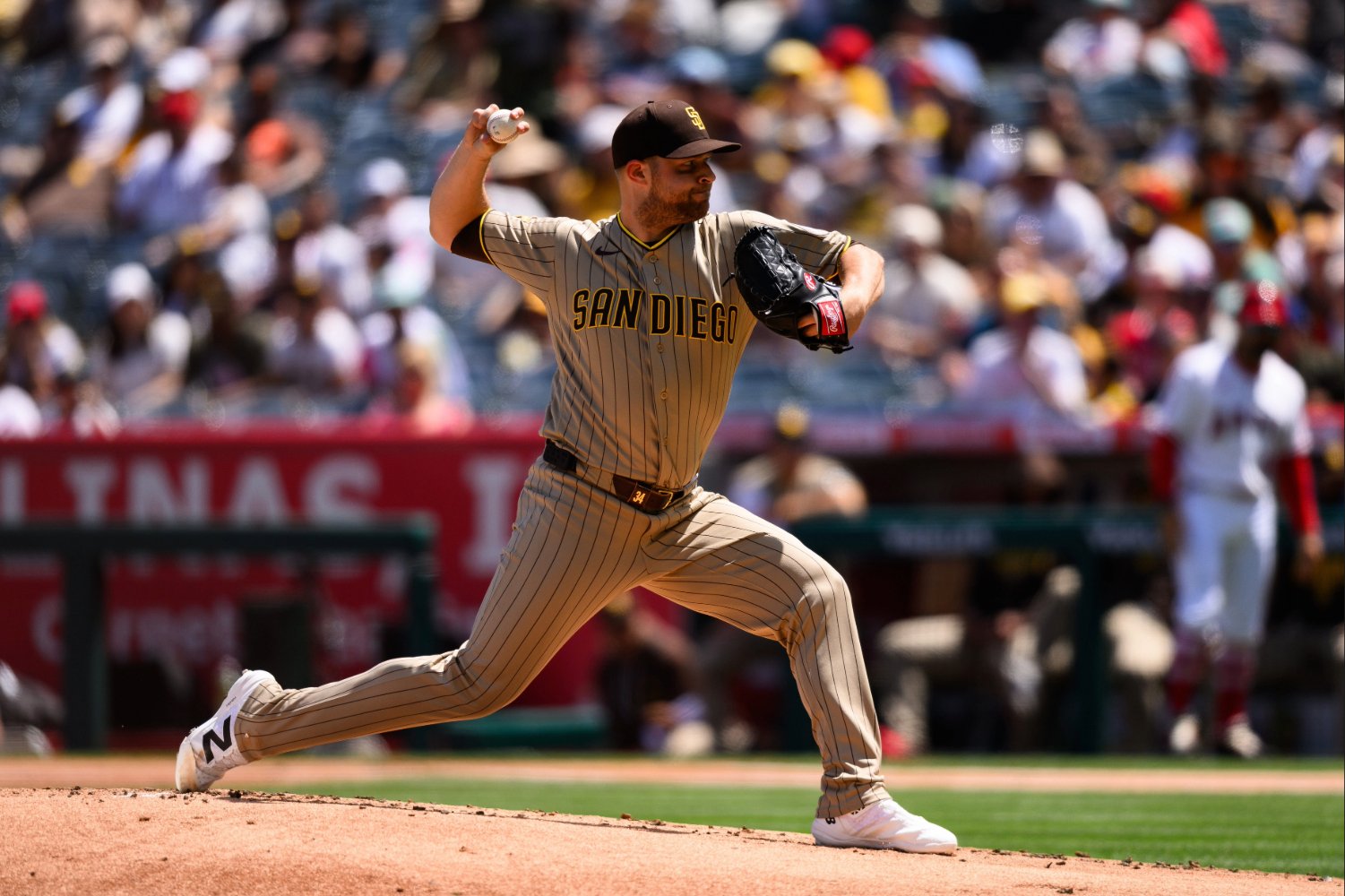 The Padres are home this.week after completing a challenging road trip of three days each in Denver and Mexico City. A series at a mile-high elevation was followed by a series at almost a mile-and-a-half elevation. Players didn't have much time to readjust to being at sea level, either. The club opened a three-game series against the Chicago Cubs on Monday night after playing at Estadio Alfedo Harp Helu in Mexico City on Sunday afternoon. There are reams of data on the challenges of playing in Denver -- the ball flies, pitches move differently than elsewhere, bodies wear down more. It's reasonable to assume that Mexico City presents similar issues even though MLB plays just two games a year there. The thinner air has to have some effect. The Padres' opponent in Mexico City, the Arizona Diamondbacks, believed that to be the case. They kept starting pitchers Eduardo Rodriguez and Michael Soroka away rather than expose them to the elements. Those two were scheduled to pitch Wednesday and Thursday in Milwaukee, respectively. Did the handful of Mexico City games justify the trepidation? Is there a major short-term effect on starting pitchers who throw there? And. because this is a Padres site, should fans expect German Marquez and Michael King, the team's starters in Mexico City, to struggle this weekend when they face the Chicago White Sox at Petco Park? We can use the 2023 and 2024 Mexico City series -- Padres vs. San Francisco Giants, Houston Astros vs. Colorado Rockies -- as rough guides. This is how the eight starters in those four games pitched in their next outing: 2023, Padres vs. Giants Pitcher IP H R ER BB SO NP/ST Joe Musgrove 5 2 1 0 3 5 81/49 Yu Darvish 6.2 4 2 1 1 6 94/68 Alex Cobb 7 5 0 0 2 5 107/68 Sean Manaea 5 6 4 3 2 6 94/63 2024, Astros vs. Rockies Pitcher IP H R ER BB SO NP/ST Ronel Blanco 6 5 3 3 2 6 94/60 Framber Valdez 5.1 9 5 5 1 3 91/58 Cal Quantrill 7.2 3 0 0 0 9 99/66 Austin Gomber 6 4 0 0 2 3 88/56 Only Valdez had a bad follow-up start. Everyone else was mediocre to excellent. One reason might be that the majority of these pitchers got an extra day of rest and recovery. Only Darvish and Manaea made their next start on four days' rest. Five pitchers went on five days' rest. Musgrove pitched on seven days' rest, in his third start following a toe fracture. Marquez and King will be working on five days' rest as well, thanks to the team's off-day Thursday. (The Padres lost two of three to the Cubs and were outscored in the series 20-16.) Another encouraging sign on Marquez is that he threw just 75 pitches (52 strikes) over six innings Saturday. Most importantly, he has a decade of experience adjusting to changes in altitude as a member of the Rockies' staff. King is the more interesting case. First, he altered his pitch mix Sunday. He threw his four-seamer, changeup and slider more than usual, his sinker a lot less than usual, and his sweeper the same as usual. (All percentages via Baseball Savant.) Pitch Season% Sunday% Sinker 27.8 11.3 Changeup 27.4 30.2 Sweeper 19.9 19.8 Four-seamer 19.8 28.3 Slider 5.5 10.4 Second, he threw a season-high 106 pitches in his six innings. That effort followed a 105-pitch start his previous time out. That is a heavy workload in today's baseball. This weekend, he'll face a young White Sox lineup that came into April 30 tied for seventh in the majors in home runs but fourth in strikeouts. The matchup can mask the negative effects from Mexico City and/or the high pitch counts.
 -
In isolation, the record-shattering sale of the San Diego Padres is a head-scratcher. Why would Jose E. Feliciano's group pay $3.9 billion for the franchise? That price is more than 60 percent higher than the $2.42 billion Steve Cohen paid for the New York Mets in 2020, and it's 25 percent more than the $3,1 billion Forbes magazine estimated the club to be worth last month. But if you look at Forbes' estimates of the top-tier clubs -- and the Padres are in that upper echelon -- you'll notice that it's not an outrageous overpay and Feliciano sees value. For example, Cohen's investment has appreciated nicely over the past six years. The Mets are now worth $3.5 billion in Forbes' estimation. That's sixth-highest in MLB. There's no sign Cohen wants to flip the club, but business is business -- and the baseball business is booming. Robust league revenues fueled by surging fan and sponsor interest is a tide lifting all yachts. The teams ahead of the Mets are all well ahead: the New York Yankees ($8.5 billion), Los Angeles Dodgers ($7.8 billion), Boston Red Sox ($5.75 billion), Chicago Cubs ($5 billion) and San Francisco Giants ($4.05 billion). Seventh through ninth are the Philadelphia Phillies ($3.4 billion), Atlanta Braves ($3.35 billion) and Houston Astros ($3.2 billion). The mid-market Padres, with their gem of a stadium, ideal weather, and huge payroll, are 10th. To put the franchise inflation into greater focus: The Baltimore Orioles were sold for $1.73 billion in August 2024 to a group led by billionaire David Rubenstein. A year and a half later, Forbes pegged the franchise as being worth $2.1.billion. There's a good chance, then, that the Penner Sports Group had a lot more than civic pride in mind when it bought 40 percent of the Colorado Rockies from the Monfort brothers this month. Forbes estimated the Rox at $1.68 billion, 25th in the league. If the cash infusion gets the club out of the mud -- and if the 30 team owners can avoid a damaging labor dispute next year -- then everyone would stand to benefit. Contrast that transaction with the Penner group buying the NFL's Denver Broncos for $4.65 billion, then a record for a North American pro sports franchise in 2022. (The Washington Commanders sped past the Broncos a year later when a group led by Josh Harris bought them for $6.05 billion. Then, the NBA's Los Angeles Lakers changed hands for a $10 billion valuation in 2025.).Last November, Forbes estimated the Broncos' franchise value at $6.8 billion, 13th-highest in the NFL. If one of the NFL's marquee franchises were to go on the market, the bar would be reset much higher. The Dallas Cowboys topped Forbes' rankings last year at $13 billion, followed by the Los Angeles Rams ($10.5 billion) and New York Giants ($10.1 billion). Just a reminder that MLB represents a desirable neighborhood but isn't the exclusive community the NFL is. Buying into an MLB franchise now practically guarantees a strong positive return on investment within a few years' time. The Padres are getting a wealthy owner who shelled out a gobsmacking total for them, but don't expect their record sale price to stand for long. View full article
-
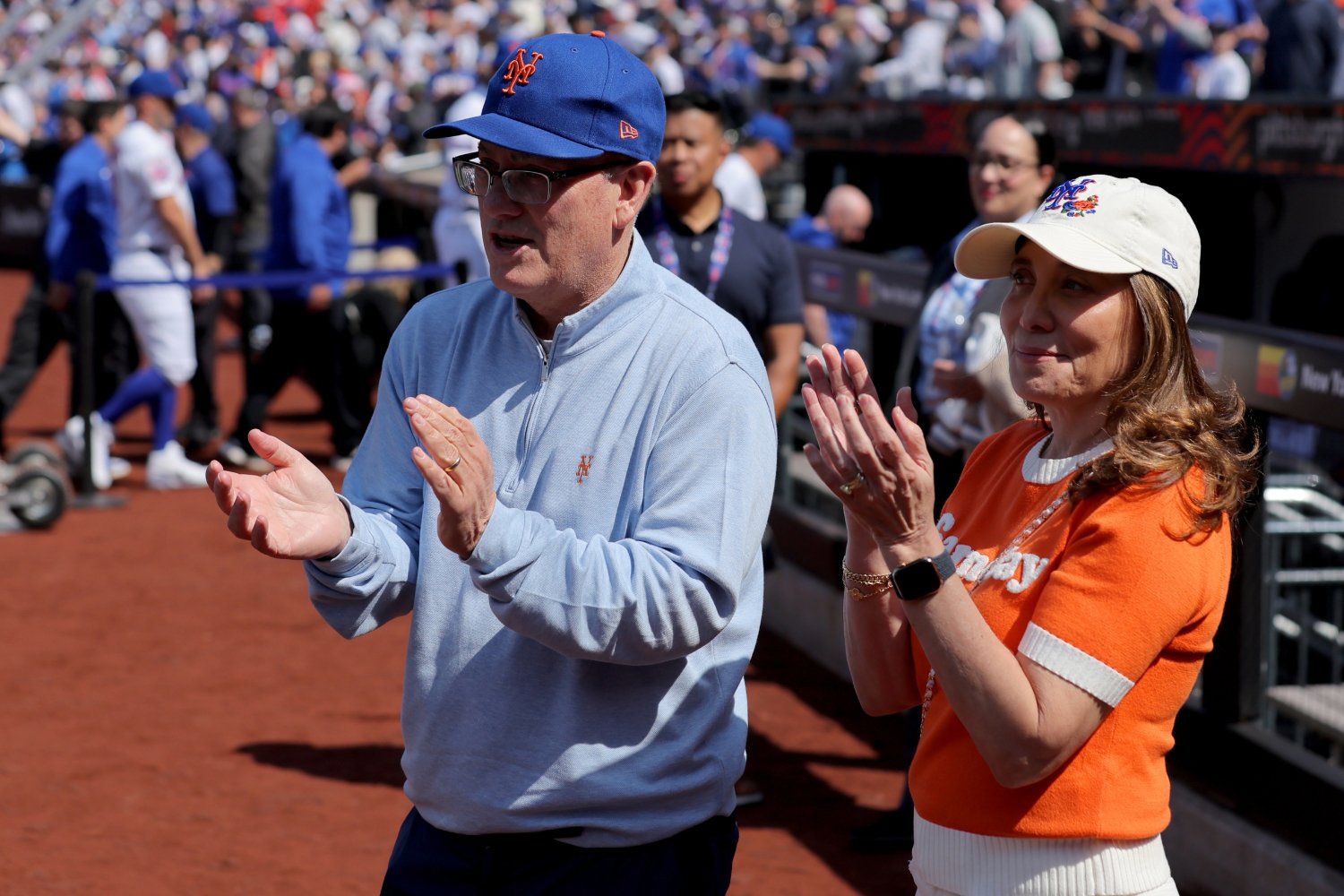 In isolation, the record-shattering sale of the San Diego Padres is a head-scratcher. Why would Jose E. Feliciano's group pay $3.9 billion for the franchise? That price is more than 60 percent higher than the $2.42 billion Steve Cohen paid for the New York Mets in 2020, and it's 25 percent more than the $3,1 billion Forbes magazine estimated the club to be worth last month. But if you look at Forbes' estimates of the top-tier clubs -- and the Padres are in that upper echelon -- you'll notice that it's not an outrageous overpay and Feliciano sees value. For example, Cohen's investment has appreciated nicely over the past six years. The Mets are now worth $3.5 billion in Forbes' estimation. That's sixth-highest in MLB. There's no sign Cohen wants to flip the club, but business is business -- and the baseball business is booming. Robust league revenues fueled by surging fan and sponsor interest is a tide lifting all yachts. The teams ahead of the Mets are all well ahead: the New York Yankees ($8.5 billion), Los Angeles Dodgers ($7.8 billion), Boston Red Sox ($5.75 billion), Chicago Cubs ($5 billion) and San Francisco Giants ($4.05 billion). Seventh through ninth are the Philadelphia Phillies ($3.4 billion), Atlanta Braves ($3.35 billion) and Houston Astros ($3.2 billion). The mid-market Padres, with their gem of a stadium, ideal weather, and huge payroll, are 10th. To put the franchise inflation into greater focus: The Baltimore Orioles were sold for $1.73 billion in August 2024 to a group led by billionaire David Rubenstein. A year and a half later, Forbes pegged the franchise as being worth $2.1.billion. There's a good chance, then, that the Penner Sports Group had a lot more than civic pride in mind when it bought 40 percent of the Colorado Rockies from the Monfort brothers this month. Forbes estimated the Rox at $1.68 billion, 25th in the league. If the cash infusion gets the club out of the mud -- and if the 30 team owners can avoid a damaging labor dispute next year -- then everyone would stand to benefit. Contrast that transaction with the Penner group buying the NFL's Denver Broncos for $4.65 billion, then a record for a North American pro sports franchise in 2022. (The Washington Commanders sped past the Broncos a year later when a group led by Josh Harris bought them for $6.05 billion. Then, the NBA's Los Angeles Lakers changed hands for a $10 billion valuation in 2025.).Last November, Forbes estimated the Broncos' franchise value at $6.8 billion, 13th-highest in the NFL. If one of the NFL's marquee franchises were to go on the market, the bar would be reset much higher. The Dallas Cowboys topped Forbes' rankings last year at $13 billion, followed by the Los Angeles Rams ($10.5 billion) and New York Giants ($10.1 billion). Just a reminder that MLB represents a desirable neighborhood but isn't the exclusive community the NFL is. Buying into an MLB franchise now practically guarantees a strong positive return on investment within a few years' time. The Padres are getting a wealthy owner who shelled out a gobsmacking total for them, but don't expect their record sale price to stand for long.
 -
After the first week of the San Diego Padres' 2026 season, we can say that two things are true: The club's scuffles at the plate this spring were real, and they were clear signs that the offense is lacking. San Diego put up 19 runs in a six-game homestand (3.17 per game). Seven of the runs were scored in the finale, a 7-1 victory gift-wrapped by the San Francisco Giants on Wednesday. The overall team slash line was .202/.280/.301. By themselves, six-game sample sizes are insignificant. Cold streaks and hot streaks cancel each other out. But this sample did not happen in isolation. It was a reminder that these Padres have had trouble scoring runs. Stats and circumstances can support or refute that statement, but the pessimistic indicators from the first week are more persuasive. Here are the six strongest, one per game: 1. This year's lineup is almost the same as last year's The club finished 18th in MLB in runs last year, and all the regulars from the end of the season, save for Luis Arraez, are back this year. Losing Arraez was not devastating -- he produced a 104 wRC+ and hit eight home runs in 2025 -- but there was no clear upgrade made in the offseason. It might be utility man Sung Mun Song, once he's healed from his oblique injury. He slugged .530 and hit a career-high 26 home runs last year in the KBO. It would be tough to bet on him repeating that as an MLB rookie, though. 2. Will the power come on? San Diego hit three home runs on the homestand. Ramon Laureano slugged two and Jackson Merrill hit the other one. The long ball was lacking last year, too -- the Padres finished 28th in homers and Manny Machado led the club with just 27. Maybe Merrill gets close to that figure with a full season of health. Maybe Laureano keeps it going. Maybe Song makes a difference. Then again, that's too many maybes this early in the year. 3. The quality of the opponent did not matter much The hitters faced Tarik Skubal, Framber Valdez, Jack Flaherty, Landen Roupp, Logan Webb and Adrian Houser in the first six games. Skubal (naturally) and Roupp (surprisingly) had the best outings -- no earned runs over six innings each -- but overall, opposing starters allowed 12 runs (seven earned) over 33 2/3 innings, and none of them gave up more than three. The Padres failed to jump on a starter early and seize control of a game. 4. The lineup leans too far to the right The team's handedness imbalance showed up in a key split: the Padres produced an 85 wRC+ against right-handers in their first six games, 23rd in the majors. Merrill, Jake Cronenworth and Gavin Sheets are the club's primary left-handed bats. Song will be a fourth once he's activated. Besides them, the only lefty swinger is switch-hitting backup outfielder Bryce Johnson. There isn't room for another one right now with the club committed to Luis Campusano, Miguel Andujar and Nick Castellanos as backups. 5. The contact was inconsistent This is a mixed indicator, but mostly a negative one. Statcast had the Padres seventh in hard-hit rate after six games at 43.0 percent, but also 13th in average exit velocity at 89.2 mph and 29th in barrel rate at 4.2 percent. The whiff rate was 17th at 27.9 percent. Lots of numbers there, but they point to one thing: the Padres didn't do enough to put pressure on defenses with batted balls. 6. There has already been a shakeup First-year manager Craig Stammen altered the batting order Wednesday to get guys going. The order looked closer to what it was against left-handers Skubal and Valdez. Tatis was in the leadoff spot against a right-hander for the first time, and Cronenworth was dropped from first to sixth. Stammen also flipped Machado and Merrill in the third and fourth spots. There's no conclusive data that changing the order will change the hitters, but a productive new alignment can be good for the team vibes. View full article
-
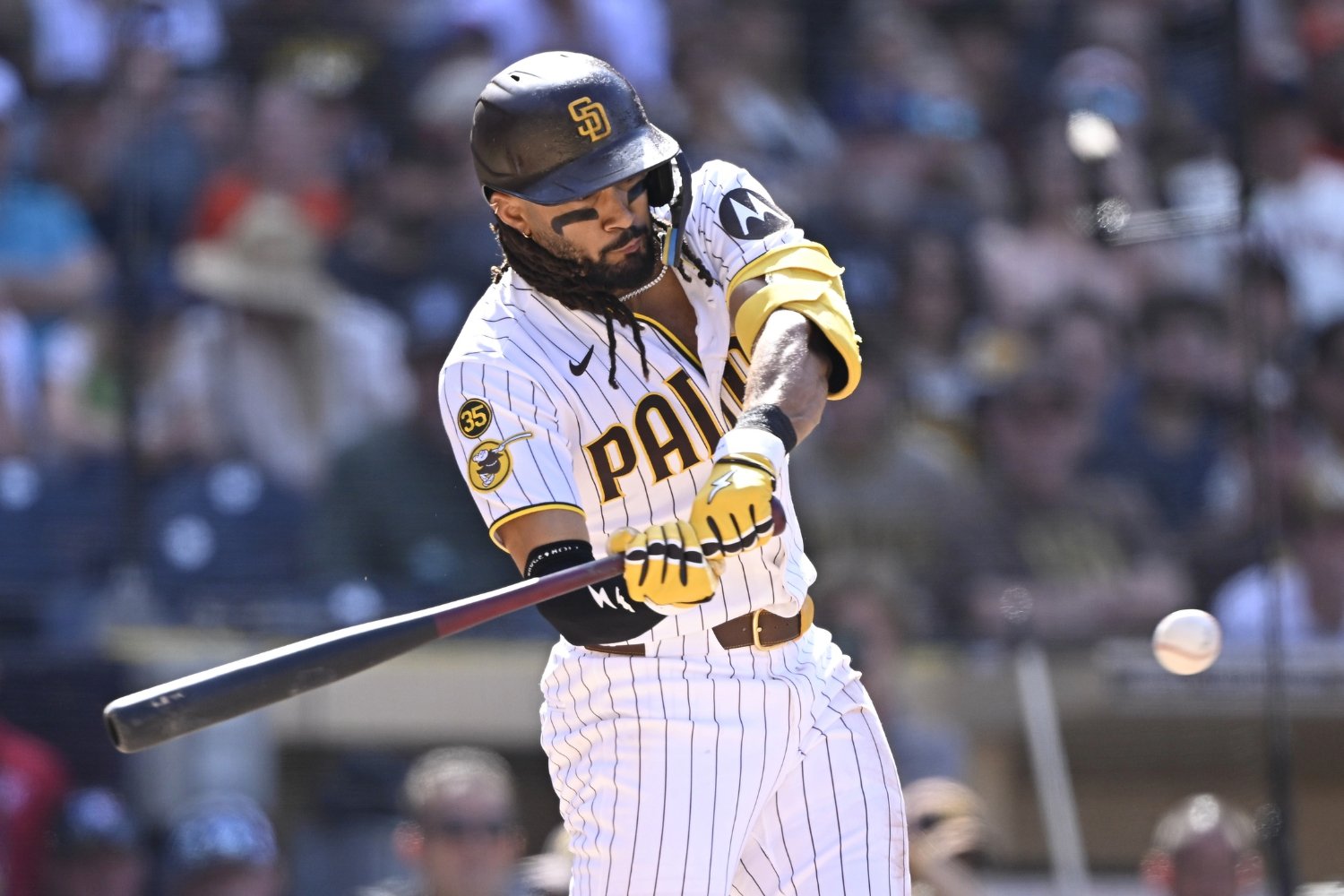 After the first week of the San Diego Padres' 2026 season, we can say that two things are true: The club's scuffles at the plate this spring were real, and they were clear signs that the offense is lacking. San Diego put up 19 runs in a six-game homestand (3.17 per game). Seven of the runs were scored in the finale, a 7-1 victory gift-wrapped by the San Francisco Giants on Wednesday. The overall team slash line was .202/.280/.301. By themselves, six-game sample sizes are insignificant. Cold streaks and hot streaks cancel each other out. But this sample did not happen in isolation. It was a reminder that these Padres have had trouble scoring runs. Stats and circumstances can support or refute that statement, but the pessimistic indicators from the first week are more persuasive. Here are the six strongest, one per game: 1. This year's lineup is almost the same as last year's The club finished 18th in MLB in runs last year, and all the regulars from the end of the season, save for Luis Arraez, are back this year. Losing Arraez was not devastating -- he produced a 104 wRC+ and hit eight home runs in 2025 -- but there was no clear upgrade made in the offseason. It might be utility man Sung Mun Song, once he's healed from his oblique injury. He slugged .530 and hit a career-high 26 home runs last year in the KBO. It would be tough to bet on him repeating that as an MLB rookie, though. 2. Will the power come on? San Diego hit three home runs on the homestand. Ramon Laureano slugged two and Jackson Merrill hit the other one. The long ball was lacking last year, too -- the Padres finished 28th in homers and Manny Machado led the club with just 27. Maybe Merrill gets close to that figure with a full season of health. Maybe Laureano keeps it going. Maybe Song makes a difference. Then again, that's too many maybes this early in the year. 3. The quality of the opponent did not matter much The hitters faced Tarik Skubal, Framber Valdez, Jack Flaherty, Landen Roupp, Logan Webb and Adrian Houser in the first six games. Skubal (naturally) and Roupp (surprisingly) had the best outings -- no earned runs over six innings each -- but overall, opposing starters allowed 12 runs (seven earned) over 33 2/3 innings, and none of them gave up more than three. The Padres failed to jump on a starter early and seize control of a game. 4. The lineup leans too far to the right The team's handedness imbalance showed up in a key split: the Padres produced an 85 wRC+ against right-handers in their first six games, 23rd in the majors. Merrill, Jake Cronenworth and Gavin Sheets are the club's primary left-handed bats. Song will be a fourth once he's activated. Besides them, the only lefty swinger is switch-hitting backup outfielder Bryce Johnson. There isn't room for another one right now with the club committed to Luis Campusano, Miguel Andujar and Nick Castellanos as backups. 5. The contact was inconsistent This is a mixed indicator, but mostly a negative one. Statcast had the Padres seventh in hard-hit rate after six games at 43.0 percent, but also 13th in average exit velocity at 89.2 mph and 29th in barrel rate at 4.2 percent. The whiff rate was 17th at 27.9 percent. Lots of numbers there, but they point to one thing: the Padres didn't do enough to put pressure on defenses with batted balls. 6. There has already been a shakeup First-year manager Craig Stammen altered the batting order Wednesday to get guys going. The order looked closer to what it was against left-handers Skubal and Valdez. Tatis was in the leadoff spot against a right-hander for the first time, and Cronenworth was dropped from first to sixth. Stammen also flipped Machado and Merrill in the third and fourth spots. There's no conclusive data that changing the order will change the hitters, but a productive new alignment can be good for the team vibes.
 -
The San Diego Padres are counting on Xander Bogaerts to hold down the shortstop position in 2026, but recent history says he won't be out there every day. Injuries have sidelined him for long stretches in each of the past two years, and he'll be playing his age-33 season this year. Those are troubling signs for a player who's entering Year 4 of an 11-year, $280 million contract. Utility man Mason McCoy and second baseman Jake Cronenworth are next on the depth chart, but each player has his drawbacks. McCoy is a glove-first infielder with a .494 OPS in 84 career plate appearances, while Cronenworth was regularly replaced for defense late in games when he filled in for Bogaerts last year. Sung-mun Song will also factor into the equation eventually, but he'll open the season on the injured list while tending to a lingering oblique strain. Here's how the position looks heading into Opening Day: Padres Shortstops At A Glance Starter: Xander Bogaerts Backup: Jake Cronenworth, Sung Mun Song Depth: Mason McCoy Prospects: Francisco Acuna, Ryan Jackson Padres' fWAR Ranking Last Year: 16th out of 30 Padres' fWAR Projection This Year: 16th out of 30 The Good Bogaerts remains a plus defender according to the metrics. Statcast put him in the 93rd percentile in outs above average (OAA) and the 87th percentile in fielding run value last year. Both marks were, by far, career highs. Statcast's plus-7 run value was also a career best. His offense was not very exciting, but he remained a solid contact hitter, with a 17.0 percent K rate (76th percentile). His 89.0 mph average exit velocity and 11.1-degree launch angle were both his highest since 2021, and his 39.2 percent hard-hit rate was his highest since 2022. Those peripherals contributed to a .267 xBA, his highest since '21. He handled certain off-speed and breaking pitches well, posting a plus-8 run value against sliders and a plus-6 run value against changeups. Interestingly, Bogaerts has put speed back to his game in his 30s. Last year, he set a career high with 20 stolen bases and was caught just twice. He has posted double-digit steals in each of his first three seasons with the Padres. The Bad Bogaerts' offensive prime with the Boston Red Sox is a distant memory. Last year, he put up a pedestrian 104 wRC+ and .720 OPS in 552 plate appearances. He was the least effective against fastballs, even though his whiff rates against them were better than his career norms. He registered a minus-9 run value against four-seamers and a minus-10 run value against sinkers. Not so coincidentally, his bat speed was in the 50th percentile. There was also a further decline in durability. Last year, he missed almost a month in August and September with a foot fracture. In 2024, he was out from mid-May to late July with a left shoulder fracture he suffered while diving for a ball. He has appeared in 136 and 111 games, respectively, the past two seasons. There isn't much at the position in the upper levels of the farm system. Francisco Acuna, 26, posted a 1.119 OPS with two homers in 12 games at Triple-A El Paso last season, but just a .706 OPS in 109 games at Double-A San Antonio. Ryan Jackson, 24, played at three levels last year in his first full pro season, getting as high as Double-A. He produced a .494 OPS in 19 games for San Antonio. The Padres took him in the 17th round of the 2024 MLB Draft. The return of Song will be key to the entire infield picture, but he'll also have to displace someone (likely Ty France) on the active roster when he returns, limiting depth elsewhere on the roster. The Bottom Line Bogaerts will be the starter if healthy -- a big if after the injuries. If Song remains out or limited by his oblique, San Diego could stand to add a backup who would be an upgrade over McCoy. View full article
-
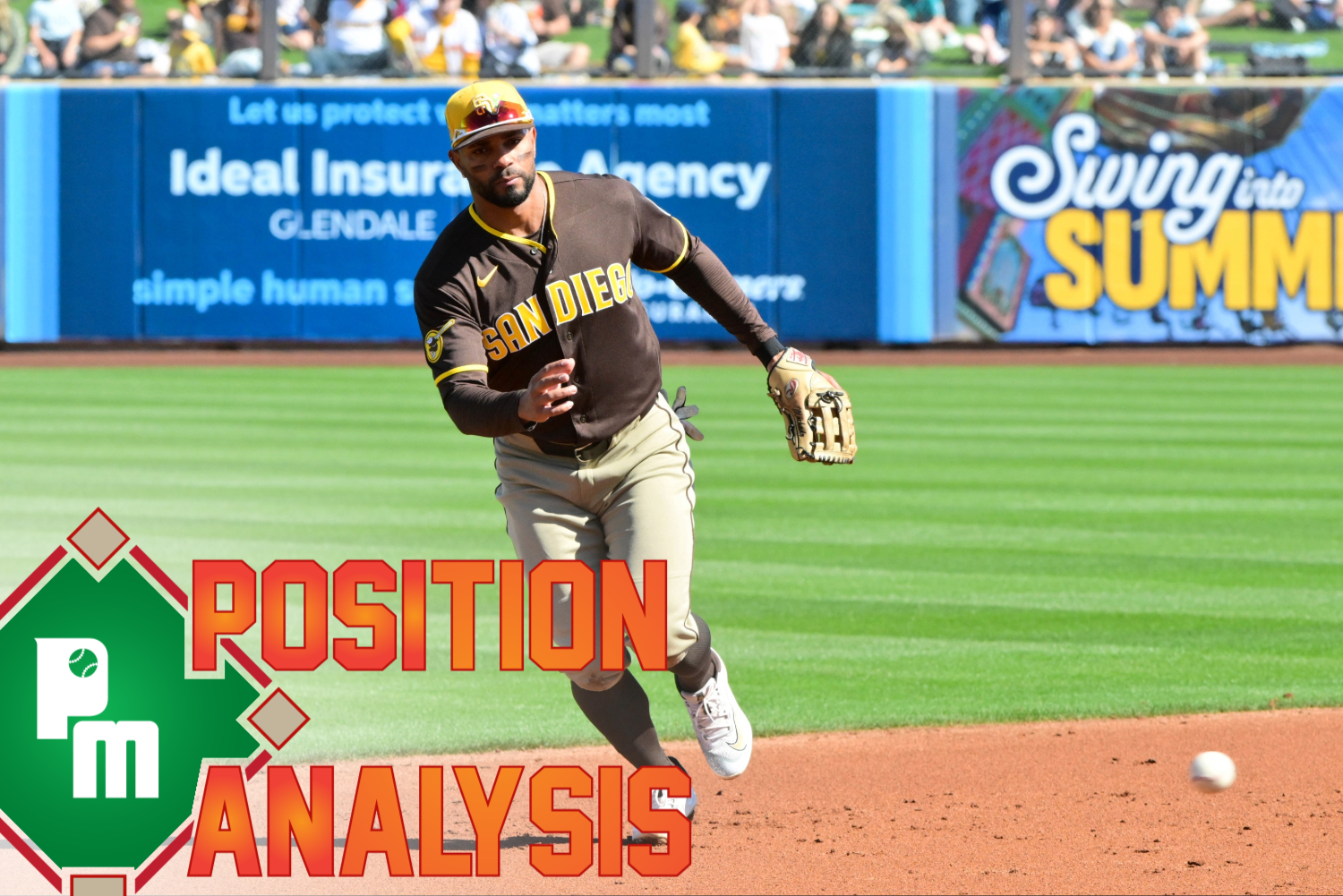 The San Diego Padres are counting on Xander Bogaerts to hold down the shortstop position in 2026, but recent history says he won't be out there every day. Injuries have sidelined him for long stretches in each of the past two years, and he'll be playing his age-33 season this year. Those are troubling signs for a player who's entering Year 4 of an 11-year, $280 million contract. Utility man Mason McCoy and second baseman Jake Cronenworth are next on the depth chart, but each player has his drawbacks. McCoy is a glove-first infielder with a .494 OPS in 84 career plate appearances, while Cronenworth was regularly replaced for defense late in games when he filled in for Bogaerts last year. Sung-mun Song will also factor into the equation eventually, but he'll open the season on the injured list while tending to a lingering oblique strain. Here's how the position looks heading into Opening Day: Padres Shortstops At A Glance Starter: Xander Bogaerts Backup: Jake Cronenworth, Sung Mun Song Depth: Mason McCoy Prospects: Francisco Acuna, Ryan Jackson Padres' fWAR Ranking Last Year: 16th out of 30 Padres' fWAR Projection This Year: 16th out of 30 The Good Bogaerts remains a plus defender according to the metrics. Statcast put him in the 93rd percentile in outs above average (OAA) and the 87th percentile in fielding run value last year. Both marks were, by far, career highs. Statcast's plus-7 run value was also a career best. His offense was not very exciting, but he remained a solid contact hitter, with a 17.0 percent K rate (76th percentile). His 89.0 mph average exit velocity and 11.1-degree launch angle were both his highest since 2021, and his 39.2 percent hard-hit rate was his highest since 2022. Those peripherals contributed to a .267 xBA, his highest since '21. He handled certain off-speed and breaking pitches well, posting a plus-8 run value against sliders and a plus-6 run value against changeups. Interestingly, Bogaerts has put speed back to his game in his 30s. Last year, he set a career high with 20 stolen bases and was caught just twice. He has posted double-digit steals in each of his first three seasons with the Padres. The Bad Bogaerts' offensive prime with the Boston Red Sox is a distant memory. Last year, he put up a pedestrian 104 wRC+ and .720 OPS in 552 plate appearances. He was the least effective against fastballs, even though his whiff rates against them were better than his career norms. He registered a minus-9 run value against four-seamers and a minus-10 run value against sinkers. Not so coincidentally, his bat speed was in the 50th percentile. There was also a further decline in durability. Last year, he missed almost a month in August and September with a foot fracture. In 2024, he was out from mid-May to late July with a left shoulder fracture he suffered while diving for a ball. He has appeared in 136 and 111 games, respectively, the past two seasons. There isn't much at the position in the upper levels of the farm system. Francisco Acuna, 26, posted a 1.119 OPS with two homers in 12 games at Triple-A El Paso last season, but just a .706 OPS in 109 games at Double-A San Antonio. Ryan Jackson, 24, played at three levels last year in his first full pro season, getting as high as Double-A. He produced a .494 OPS in 19 games for San Antonio. The Padres took him in the 17th round of the 2024 MLB Draft. The return of Song will be key to the entire infield picture, but he'll also have to displace someone (likely Ty France) on the active roster when he returns, limiting depth elsewhere on the roster. The Bottom Line Bogaerts will be the starter if healthy -- a big if after the injuries. If Song remains out or limited by his oblique, San Diego could stand to add a backup who would be an upgrade over McCoy.
 -
San Diego Padres 2026 Position Analysis: Second Base
TomCent posted a topic in San Diego Padres Talk
There's no mystery surrounding second base in San Diego -- Jake Cronenworth is the Padres' everyday option there. He returned to full-time duty at the position in 2025 after getting a lot of work at first base in 2023 and 2024. He shouldn't be needed at the cold corner in 2026 because Gavin Sheets, Miguel Andujar, Nick Castellanos and others are all available. Cronenworth's name was attached to trade speculation in the offseason, but it would be difficult for the Padres to deal him. He's in the third year of a seven-year, $80 million contract extension and is entering his age-32 season. His 2.9 fWAR in 2025 represented a marked improvement from his previous two seasons, but it still was just starter-class production. Offseason signee Sung Mun Song will be the backup to begin the season, assuming he's healthy. He is primarily a third baseman, but he did play a fair amount of second in the KBO -- 194 games (149 starts) over nine seasons. Holdovers Mason McCoy and Will Wagner entered the final stages of spring training as the Triple-A reinforcements. Padres Second Basemen At A Glance Starter: Jake Cronenworth Backup: Sung Mun Song Depth: Mason McCoy, Will Wagner Prospect: Marcos Castanon Padres' fWAR Ranking Last Year: 13th out of 30 Padres' fWAR Projection This Year: 19th out of 30 The Good Cronenworth will contribute at the plate against all pitching. The lefty swinger's platoon splits last year were nearly identical: a 118 wRC+ and .334 wOBA against right-handers vs. a 116 wRC+ and .331 wOBA against left-handers. His strikeout rate against lefties was two points lower than his K rate vs. righties (19.4 percent to 21.4 percent). His plate discipline led to a career-high 13.4 percent walk rate. Song, 29, is coming off two huge offensive seasons in the KBO and has displayed some power in his first MLB spring training. Second base will be one of his positions as he fills a utility role. McCoy, 30, is a glove-first player who can bounce between second and shortstop. Wagner, who was acquired from the Toronto Blue Jays at last year's trade deadline, has youth on his side at 27. Castanon, 26, has shown pop in his minor-league career. He slugged three home runs in 16 games for Triple-A El Paso last year following a late-season promotion from Double-A San Antonio. He was a 12th-round selection by the Padres in the 2021 MLB Draft out of Cal Santa Barbara. The Bad Cronenworth's reputation for durability has taken a hit after his injuries in 2023 and 2025. Last year, he missed a month with a rib fracture. When he came back, the pop in his bat was lacking. His 32 extra-base hits, .377 slugging percentage and .130 ISO were all full-season career lows. His fielding was not inspiring, either. He was a below-average second baseman according to the advanced metrics: minus-8 defensive runs saved (DRS), by far a career-worst figure, and minus-1 outs above average (OAA). His fielding run value (FRV) clocked in at minus-2. Song's offensive potential is a big unknown. His KBO numbers in '24 and '25 were outliers, and now he'll be a part-time player trying to adjust to much tougher pitching. Likewise, he's got injury concerns of his own, as he's currently fighting a nagging oblique injury that could hold him off the Opening Day roster. McCoy has a career .494 OPS in 84 big-league plate appearances. Wagner spent most of his time at Triple-A after coming over from Toronto. He got just 17 PAs with the Padres. Castanon isn't on Padres Mission's list of the top 20 prospects in the organization, despite his power potential. In other words: Without Song, the depth in the middle infield is lacking. The Bottom Line The Padres need Cronenworth to stay healthy and make the majority of the starts at second. Song is unproven and the players behind him do not look like viable everyday options. View full article -
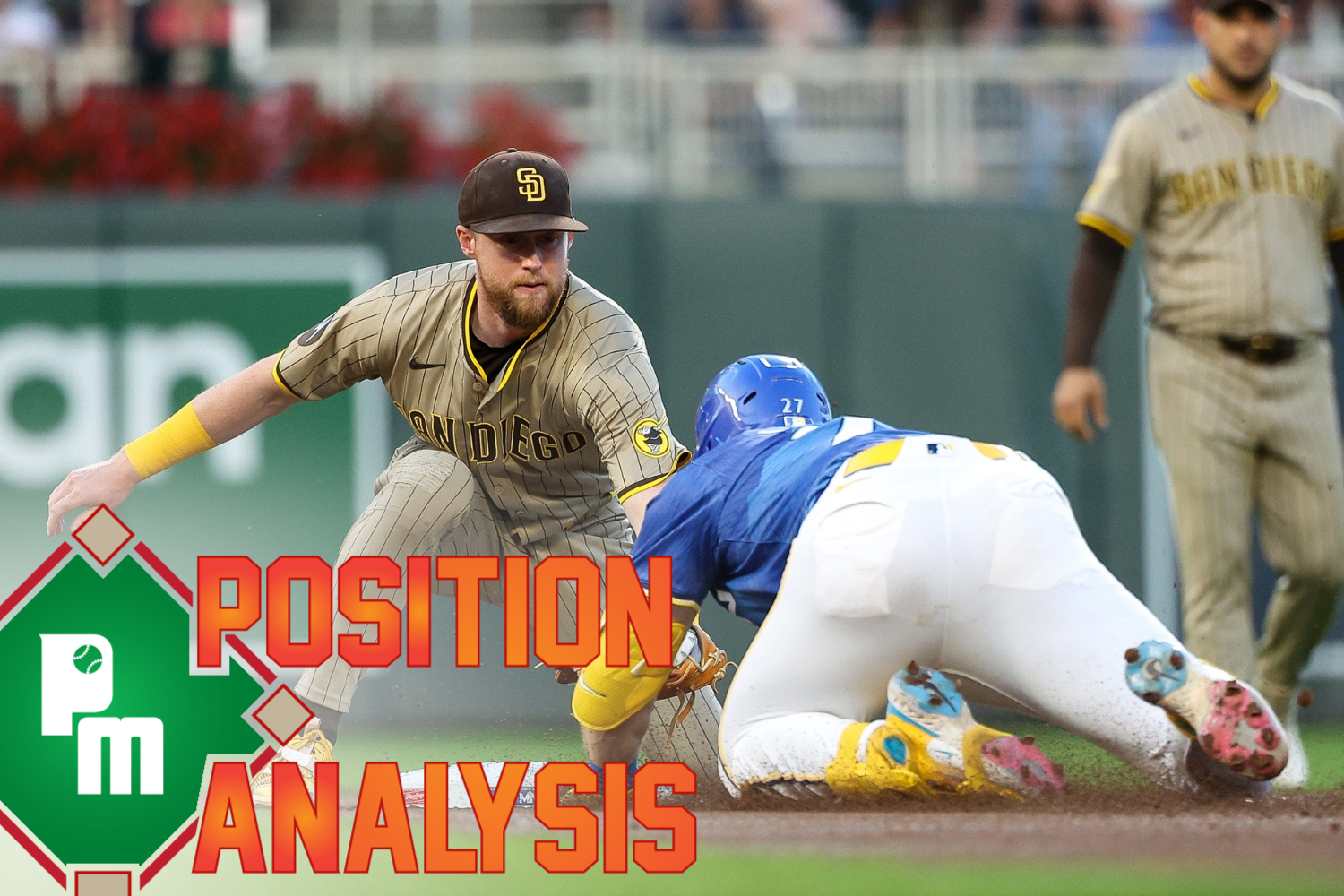 There's no mystery surrounding second base in San Diego -- Jake Cronenworth is the Padres' everyday option there. He returned to full-time duty at the position in 2025 after getting a lot of work at first base in 2023 and 2024. He shouldn't be needed at the cold corner in 2026 because Gavin Sheets, Miguel Andujar, Nick Castellanos and others are all available. Cronenworth's name was attached to trade speculation in the offseason, but it would be difficult for the Padres to deal him. He's in the third year of a seven-year, $80 million contract extension and is entering his age-32 season. His 2.9 fWAR in 2025 represented a marked improvement from his previous two seasons, but it still was just starter-class production. Offseason signee Sung Mun Song will be the backup to begin the season, assuming he's healthy. He is primarily a third baseman, but he did play a fair amount of second in the KBO -- 194 games (149 starts) over nine seasons. Holdovers Mason McCoy and Will Wagner entered the final stages of spring training as the Triple-A reinforcements. Padres Second Basemen At A Glance Starter: Jake Cronenworth Backup: Sung Mun Song Depth: Mason McCoy, Will Wagner Prospect: Marcos Castanon Padres' fWAR Ranking Last Year: 13th out of 30 Padres' fWAR Projection This Year: 19th out of 30 The Good Cronenworth will contribute at the plate against all pitching. The lefty swinger's platoon splits last year were nearly identical: a 118 wRC+ and .334 wOBA against right-handers vs. a 116 wRC+ and .331 wOBA against left-handers. His strikeout rate against lefties was two points lower than his K rate vs. righties (19.4 percent to 21.4 percent). His plate discipline led to a career-high 13.4 percent walk rate. Song, 29, is coming off two huge offensive seasons in the KBO and has displayed some power in his first MLB spring training. Second base will be one of his positions as he fills a utility role. McCoy, 30, is a glove-first player who can bounce between second and shortstop. Wagner, who was acquired from the Toronto Blue Jays at last year's trade deadline, has youth on his side at 27. Castanon, 26, has shown pop in his minor-league career. He slugged three home runs in 16 games for Triple-A El Paso last year following a late-season promotion from Double-A San Antonio. He was a 12th-round selection by the Padres in the 2021 MLB Draft out of Cal Santa Barbara. The Bad Cronenworth's reputation for durability has taken a hit after his injuries in 2023 and 2025. Last year, he missed a month with a rib fracture. When he came back, the pop in his bat was lacking. His 32 extra-base hits, .377 slugging percentage and .130 ISO were all full-season career lows. His fielding was not inspiring, either. He was a below-average second baseman according to the advanced metrics: minus-8 defensive runs saved (DRS), by far a career-worst figure, and minus-1 outs above average (OAA). His fielding run value (FRV) clocked in at minus-2. Song's offensive potential is a big unknown. His KBO numbers in '24 and '25 were outliers, and now he'll be a part-time player trying to adjust to much tougher pitching. Likewise, he's got injury concerns of his own, as he's currently fighting a nagging oblique injury that could hold him off the Opening Day roster. McCoy has a career .494 OPS in 84 big-league plate appearances. Wagner spent most of his time at Triple-A after coming over from Toronto. He got just 17 PAs with the Padres. Castanon isn't on Padres Mission's list of the top 20 prospects in the organization, despite his power potential. In other words: Without Song, the depth in the middle infield is lacking. The Bottom Line The Padres need Cronenworth to stay healthy and make the majority of the starts at second. Song is unproven and the players behind him do not look like viable everyday options.
 -
Padres Mission's ranking of the club's top prospects for 2026 has reached the final stage, and just the top two prospects are left to highlight. Be sure to check out our previous rankings here: No. 3: Kruz Schoolcraft No. 4: Bradgley Rodriguez No. 5: Miguel Mendez No. 6: Jagger Haynes No. 7: Humberto Cruz No. 8: Ty Harvey No. 9: Ryan Wideman No. 10: Kale Fountain Nos. 11-15 Nos. 16-20 No. 2 Kash Mayfield (Lake Elsinore Storm) The San Diego Padres organization has been extra cautious with Kash Mayfield ever since taking the left-hander 25th overall in the 2024 MLB Draft. They delayed his pro debut until last April, and then the team capped his workload for Low-A Lake Elsinore tightly. Mayfield never worked more than five innings or threw more than 80 pitches in a game. His innings limit shrunk further in midseason after he missed three weeks in May and June with inflammation in his pitching shoulder. When he did take the mound, he showed a lot of promise. Over 19 games (all starts) and 60 2/3 innings, Mayfield produced a 2.97 ERA/3.06 FIP, a 34.1 percent strikeout rate, a 3.14 strikeout-to-walk ratio and a 43.6 percent ground-ball rate. He was excellent at keeping the ball in the yard, allowing just two home runs in a hitter-friendly environment. His 10.9 percent walk rate was a blemish, if only slightly given his youth and lack of consistent reps. He succeeded despite working with a diminished arsenal. The San Diego Union-Tribune (subscription required) reported last September that Mayfield's fastball velocity was down about 3 mph from his days at Elk City (Okla.) High School; he topped out at 94 mph in the Cal League, compared to 97 mph in the prep ranks. The 21-year-old's offseason plans included adding weight and strength. That could bump the velocity back up. Other aspects of pitching helped him compensate. The heater had lively arm-side run, and Mayfield created deception with both the extension from his 6-4 frame and a relatively low release point. A mid-80s changeup and upper-70s slider gave him excellent separation. In fact, the changeup is thought to be Mayfield's best pitch. It has big-time sink and fade, making it a weapon against right-handed batters, and his arm speed creates great deception. His mechanics are considered advanced; his motion looks smooth and repeatable. Mayfield was one of 21 pitchers in the preliminary player pool for the Padres' Spring Breakout game on March 21 against the Chicago Cubs' top prospects. A strong outing against high-level competition would give him a nice boost ahead of his second minor-league season, which should begin at High-A Fort Wayne. View full article
-
San Diego Padres 2026 Top Prospects Rankings: Kash Mayfield (No. 2)
TomCent posted an article in Minor Leagues
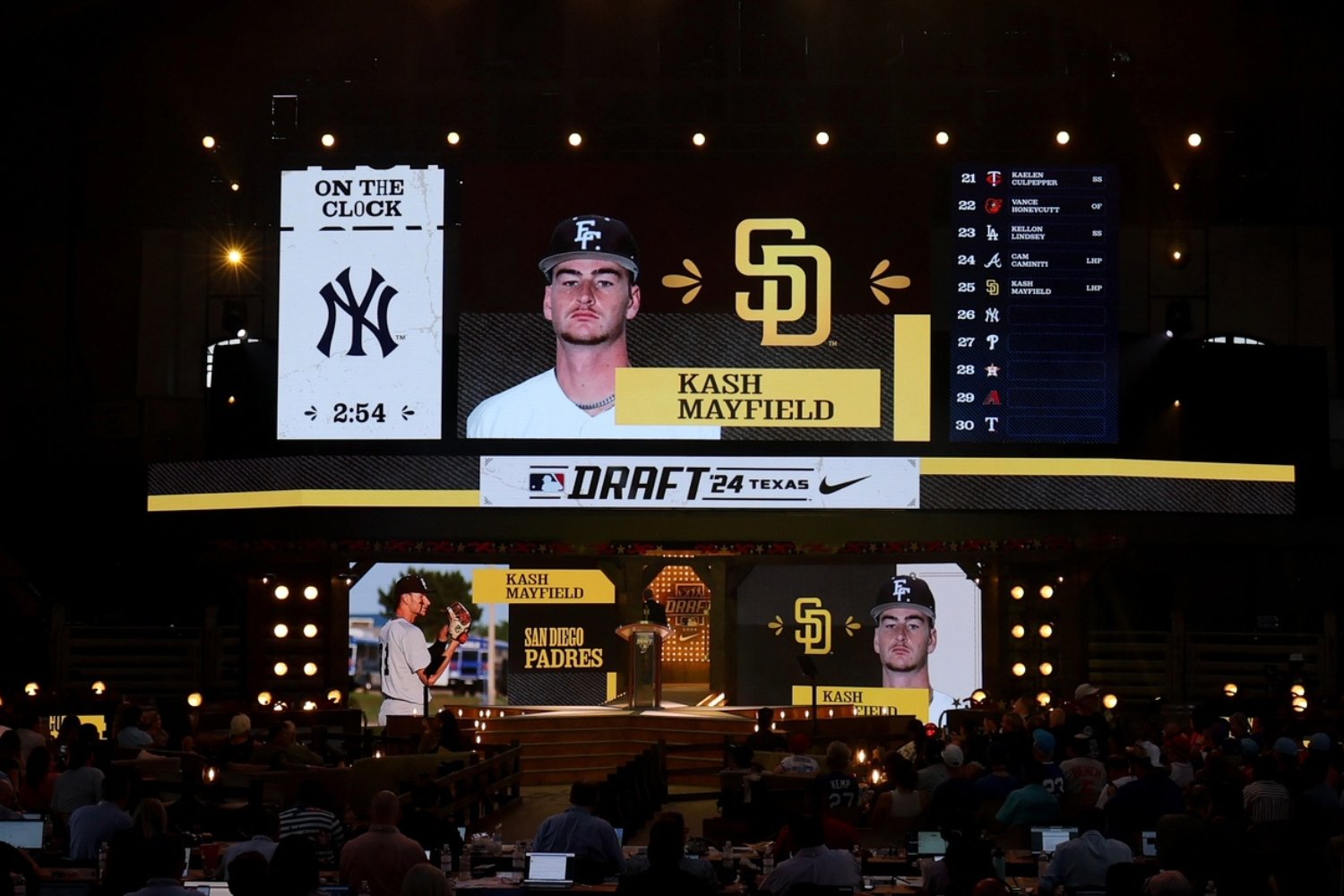 Padres Mission's ranking of the club's top prospects for 2026 has reached the final stage, and just the top two prospects are left to highlight. Be sure to check out our previous rankings here: No. 3: Kruz Schoolcraft No. 4: Bradgley Rodriguez No. 5: Miguel Mendez No. 6: Jagger Haynes No. 7: Humberto Cruz No. 8: Ty Harvey No. 9: Ryan Wideman No. 10: Kale Fountain Nos. 11-15 Nos. 16-20 No. 2 Kash Mayfield (Lake Elsinore Storm) The San Diego Padres organization has been extra cautious with Kash Mayfield ever since taking the left-hander 25th overall in the 2024 MLB Draft. They delayed his pro debut until last April, and then the team capped his workload for Low-A Lake Elsinore tightly. Mayfield never worked more than five innings or threw more than 80 pitches in a game. His innings limit shrunk further in midseason after he missed three weeks in May and June with inflammation in his pitching shoulder. When he did take the mound, he showed a lot of promise. Over 19 games (all starts) and 60 2/3 innings, Mayfield produced a 2.97 ERA/3.06 FIP, a 34.1 percent strikeout rate, a 3.14 strikeout-to-walk ratio and a 43.6 percent ground-ball rate. He was excellent at keeping the ball in the yard, allowing just two home runs in a hitter-friendly environment. His 10.9 percent walk rate was a blemish, if only slightly given his youth and lack of consistent reps. He succeeded despite working with a diminished arsenal. The San Diego Union-Tribune (subscription required) reported last September that Mayfield's fastball velocity was down about 3 mph from his days at Elk City (Okla.) High School; he topped out at 94 mph in the Cal League, compared to 97 mph in the prep ranks. The 21-year-old's offseason plans included adding weight and strength. That could bump the velocity back up. Other aspects of pitching helped him compensate. The heater had lively arm-side run, and Mayfield created deception with both the extension from his 6-4 frame and a relatively low release point. A mid-80s changeup and upper-70s slider gave him excellent separation. In fact, the changeup is thought to be Mayfield's best pitch. It has big-time sink and fade, making it a weapon against right-handed batters, and his arm speed creates great deception. His mechanics are considered advanced; his motion looks smooth and repeatable. Mayfield was one of 21 pitchers in the preliminary player pool for the Padres' Spring Breakout game on March 21 against the Chicago Cubs' top prospects. A strong outing against high-level competition would give him a nice boost ahead of his second minor-league season, which should begin at High-A Fort Wayne.
 -
Padres Mission's ranking of the club's top prospects for 2026 has reached the final stage with a countdown of the top five. Be sure to check out our previous rankings here: No. 4: Bradgley Rodriguez No. 5: Miguel Mendez No. 6: Jagger Haynes No. 7: Humberto Cruz No. 8: Ty Harvey No. 9: Ryan Wideman No. 10: Kale Fountain Nos. 11-15 Nos. 16-20 No. 3 Kruz Schoolcraft (Lake Elsinore Storm) Kruz Schoolcraft's professional career has barely begun -- he made one minor-league appearance made at the end of the 2025 season. He'll turn 19 in April and his development will take time. The good news? There's evidence to suggest that it won't be a lot of time. The Padres selected the 6-8, 229-pound Schoolcraft in the first round (25th overall) of last year's MLB Draft out of Sunset High School in Beaverton, Ore. He was the No. 1-ranked prep left-hander in the draft. He also was a legitimate first-base prospect with big-time power. San Diego lured him away from the University of Tennessee -- he committed to the Vols in December 2024 -- with a $3.6 million signing bonus. Then, they convinced the potential two-way star to become a full-time pitcher. The organization waited until Sept. 6 to get him into a game. His appearance with Lake Elsinore in the Low-A California League was brief and eventful: 1 2/3 innings, one hit, two runs (both earned), three walks, four strikeouts, four stolen bases allowed. Schoolcraft showed that he has a lot of work to do. But he still could rise quickly, for several reasons. First, he already throws three pitches -- a mid- to high-90s fastball with good extension, a changeup with deception, and a slider with depth. Prior to the draft, MLB.com gave both the fastball and slider a 60 on the 20-to-80 scouting scale and the change a 55, but the slider is considered his third pitch at the moment. Second, he is considered to have advanced mechanics, which will help make his delivery repeatable sooner. It also will help him improve his 50-grade control. Of course, his longer levers make it easy for baserunners to pick up on his cadence, so he'll have to fine-tune that in order to prevent everyone faster than Giancarlo Stanton from swiping a base against him. But his mechanics as a whole are quite impressive for a teenager. Third, the organization considers him a smart player and a hard worker. Schoolcraft showed those traits when he spoke with reporters, including MLB.com's Sam Dykstra, at spring training. He said that he wants to reshape his slider better and make it a pitch he can throw effectively both early and late in the count. He talked about getting stronger, and he shared a specific goal for 2026: he hopes to make 22+ starts. Schoolcraft has already made an impression in camp with his sharp outing in an intra-squad game. He might make another before spring training is through. The Padres listed him in the initial 40-man player pool for their Spring Breakout game on Saturday, March 21, against the Cubs' top prospects in Arizona. There's bound to be buzz about the kid moving rapidly through the system if he gets into that game and overpowers hitters. But those people will need to be patient; Schoolcraft is just getting started. View full article
-
San Diego Padres 2026 Top Prospects Rankings: Kruz Schoolcraft (No. 3)
TomCent posted an article in Minor Leagues
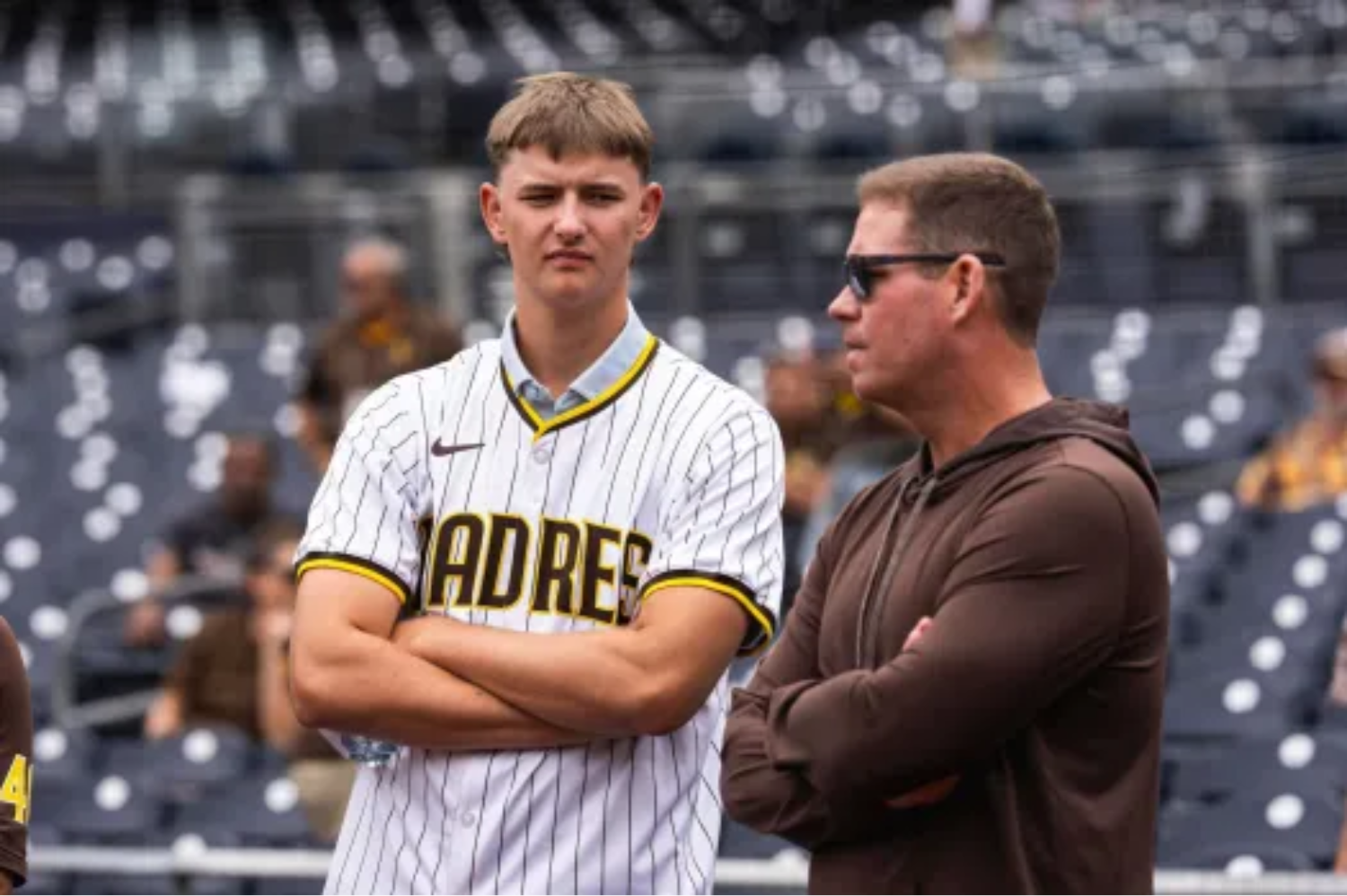 Padres Mission's ranking of the club's top prospects for 2026 has reached the final stage with a countdown of the top five. Be sure to check out our previous rankings here: No. 4: Bradgley Rodriguez No. 5: Miguel Mendez No. 6: Jagger Haynes No. 7: Humberto Cruz No. 8: Ty Harvey No. 9: Ryan Wideman No. 10: Kale Fountain Nos. 11-15 Nos. 16-20 No. 3 Kruz Schoolcraft (Lake Elsinore Storm) Kruz Schoolcraft's professional career has barely begun -- he made one minor-league appearance made at the end of the 2025 season. He'll turn 19 in April and his development will take time. The good news? There's evidence to suggest that it won't be a lot of time. The Padres selected the 6-8, 229-pound Schoolcraft in the first round (25th overall) of last year's MLB Draft out of Sunset High School in Beaverton, Ore. He was the No. 1-ranked prep left-hander in the draft. He also was a legitimate first-base prospect with big-time power. San Diego lured him away from the University of Tennessee -- he committed to the Vols in December 2024 -- with a $3.6 million signing bonus. Then, they convinced the potential two-way star to become a full-time pitcher. The organization waited until Sept. 6 to get him into a game. His appearance with Lake Elsinore in the Low-A California League was brief and eventful: 1 2/3 innings, one hit, two runs (both earned), three walks, four strikeouts, four stolen bases allowed. Schoolcraft showed that he has a lot of work to do. But he still could rise quickly, for several reasons. First, he already throws three pitches -- a mid- to high-90s fastball with good extension, a changeup with deception, and a slider with depth. Prior to the draft, MLB.com gave both the fastball and slider a 60 on the 20-to-80 scouting scale and the change a 55, but the slider is considered his third pitch at the moment. Second, he is considered to have advanced mechanics, which will help make his delivery repeatable sooner. It also will help him improve his 50-grade control. Of course, his longer levers make it easy for baserunners to pick up on his cadence, so he'll have to fine-tune that in order to prevent everyone faster than Giancarlo Stanton from swiping a base against him. But his mechanics as a whole are quite impressive for a teenager. Third, the organization considers him a smart player and a hard worker. Schoolcraft showed those traits when he spoke with reporters, including MLB.com's Sam Dykstra, at spring training. He said that he wants to reshape his slider better and make it a pitch he can throw effectively both early and late in the count. He talked about getting stronger, and he shared a specific goal for 2026: he hopes to make 22+ starts. Schoolcraft has already made an impression in camp with his sharp outing in an intra-squad game. He might make another before spring training is through. The Padres listed him in the initial 40-man player pool for their Spring Breakout game on Saturday, March 21, against the Cubs' top prospects in Arizona. There's bound to be buzz about the kid moving rapidly through the system if he gets into that game and overpowers hitters. But those people will need to be patient; Schoolcraft is just getting started.
