

Padres Video
The San Diego Padres' season ended painfully last week at the hands of the Chicago Cubs. After a low-scoring, back-and-forth series, the Padres were faced with their last chance to stay alive in the ninth inning of game three.
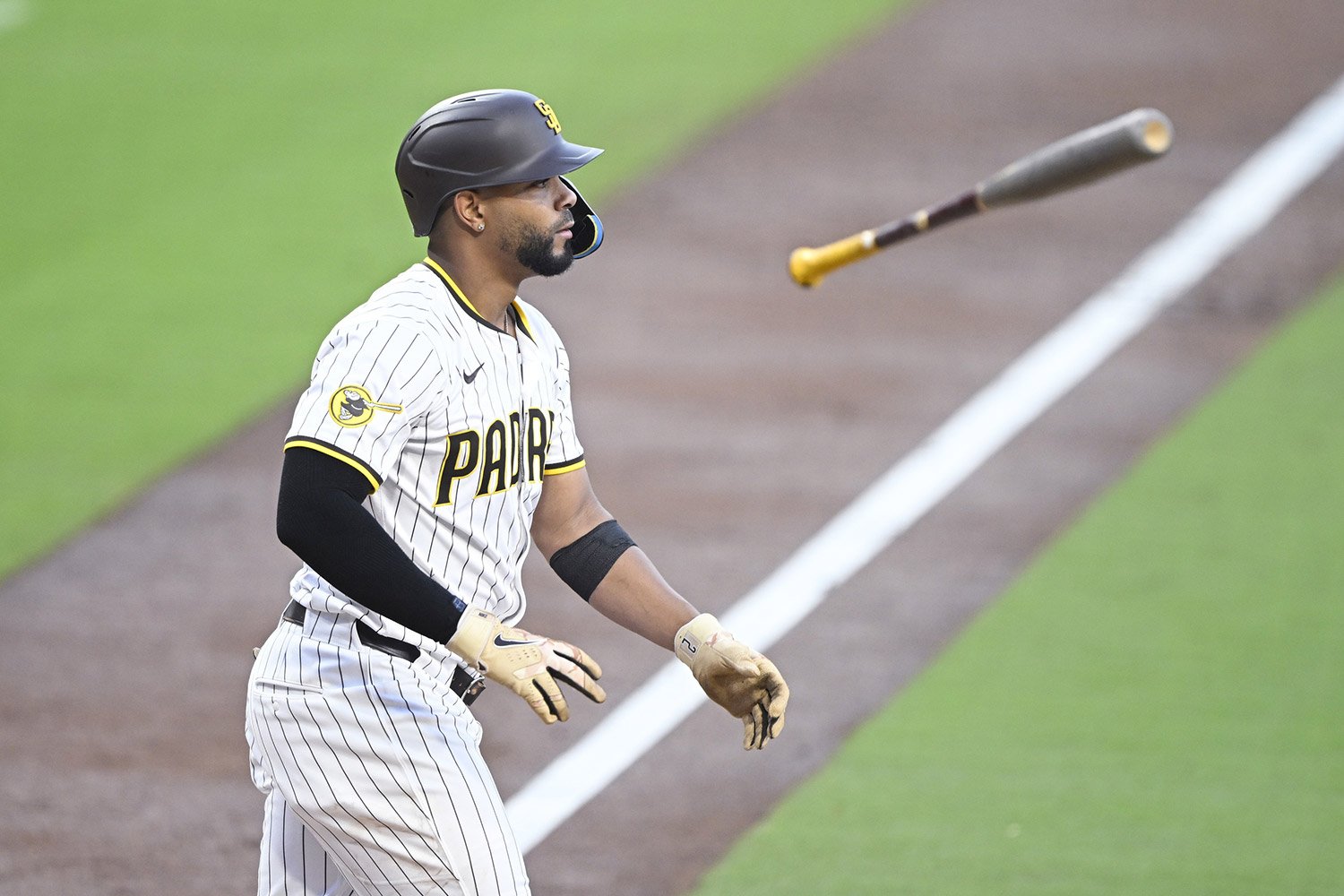
Down 3-0, Jackson Merrill got things started with a home run, cutting the deficit to two. Following the leadoff bomb, shortstop Xander Bogaerts stepped up to the plate for one of his biggest at-bats of the season. Bogaerts hit .333 in the series and had a lot of hard contact, so there was hope for a rally.
Cubs closer Brad Keller had been excellent all season, but clearly fought jitters trying to close out the series. Bogaerts was able to force a 3-1 count, with all three balls being way off the plate, and the one strike being a slider that barely nicked the zone.
With the count in Bogaerts' favor, Keller threw a 96.5 mph fastball that just touched the outside part of the plate. He got the call from the ump, making it a full count. No injustices had happened up to this point, but it was clear that Keller was on thin ice. He was barely getting strike calls, and his misses weren’t close.
Keller loaded up a full count fastball for the biggest pitch of the series, but missed a few inches below the TV strike zone. Despite the pitch being way below anyone's idea of a strike, home plate umpire D.J. Reyburn rang Bogaerts up. He and Padres Manager Mike Shildt flipped out, but there was nothing they could do. MLB won’t have challenged strike calls until 2026, making San Diego one of the last victims.
Hindsight is 20/20
What makes this moment notable isn’t just a bad call in a close postseason game; it’s what happened after the at-bat.
Looking at the rest of the ninth, Brad Keller was still a mess. Let’s pretend the umpire made the correct call and Bogaerts was on first base.
Keller then hit the next batter, Ryan O’Hearn, in a two-strike count. That would've put runners on first and second, with nobody out.
He then did the same thing to Bryce Johnson, missing badly with a change-up and hitting him in another two-strike count.
Now, instead of having runners on first and second with one out, it would be bases loaded with nobody out.
After two free bases, Cubs Coach Craig Counsell put in reliever Andrew Kittredge. Facing a new arm, Padres batter Jake Cronenworth hit a dribbling ground ball that resulted in a close out at first base, advancing both runners. Had the bases been loaded, this soft groundout would have easily scored Bogaerts, cutting the lead to one. The new hypothetical situation is runners on second and third, one out, and Freddy Fermin at the plate.
Fermin, who ended up being the final out of the Padres' season, smashed a 101.1 MPH line drive to center field. Cubs outfielder Pete Crow Armstrong made the play, sending San Diego home. Had there only been one out, though, this rope would've scored the game-tying run via sacrifice fly.
ABS System Breakdown
Obviously, if Bogaerts had gotten the walk, the plays after may not have been the same, so it’s not an end-all excuse. You can’t only blame the umpires when the offense was held scoreless through the first eight innings of an elimination game.
With that said, baseball is a game that favors pitchers and is built around big moments. There’s nothing worse for fans or players than umpires taking the bat out of a hitter's hands in a crucial situation.
Finally, in 2026, MLB is making a change.
Next season, MLB will introduce the ABS challenge system. ABS is a combination of technology and rules that allows players to challenge strike calls a few times a game. Implementing this system provides baseball with a more accurate strike zone by reducing the likelihood of incorrect calls having a significant impact on the game.
Technologically, MLB will have Hawkeye cameras built in at every stadium to track the location of every pitch. If a player challenges, the system will display the results of the pitch within 15 seconds and indicate how far a pitch was in/out of the strike zone for viewers. Powered by T-Mobile, the ABS is designed to deliver fast, accurate, and precise information on every challenging pitch.
Rule-wise, each team will have two challenges per game. If you successfully overturn a call, then you keep your challenges. If you incorrectly challenge a pitch, then you lose a challenge. Only a batter, pitcher, or catcher can choose to review a call, and the decision must be made quickly right after the pitch.
MLB has also announced the ABS strike zone for each player. The top of the strike zone will be 53.5% of a player's height, and the bottom will be 27%. Based on these metrics, it’s confirmed that ABS would have overturned the call on Bogaerts.
It’s exciting that MLB made the right choice in bringing a challenge system, but this took far too long. MLB wasted time experimenting with full-time robotic umpires, adding challenge systems to non-strike zone calls, and punishing players/coaches for speaking out about the issue.
Most fans don’t want to see umpires removed. They make the game unique, but sometimes the difficulty of their jobs creates major issues.
That’s why the ABS system is a perfect fit. We achieve greater accuracy for big moments, but we’re not taking away one of the most distinct aspects of our sport.
Unfortunately for the Padres, that won’t start until 2026, so we'll never know what could've happened in the bottom of the ninth inning against the Cubs.







Recommended Comments
There are no comments to display.
Create an account or sign in to comment
You need to be a member in order to leave a comment
Create an account
Sign up for a new account in our community. It's easy!
Register a new accountSign in
Already have an account? Sign in here.
Sign In Now