


Padres Video
The strength of the 2025 San Diego Padres resides on the mound. Pitching is the reason they've been able to compensate for a lack of offensive depth, and it's also the reason they were able to stave off a slide in the wake of injuries that threatened to expose that lack of depth.
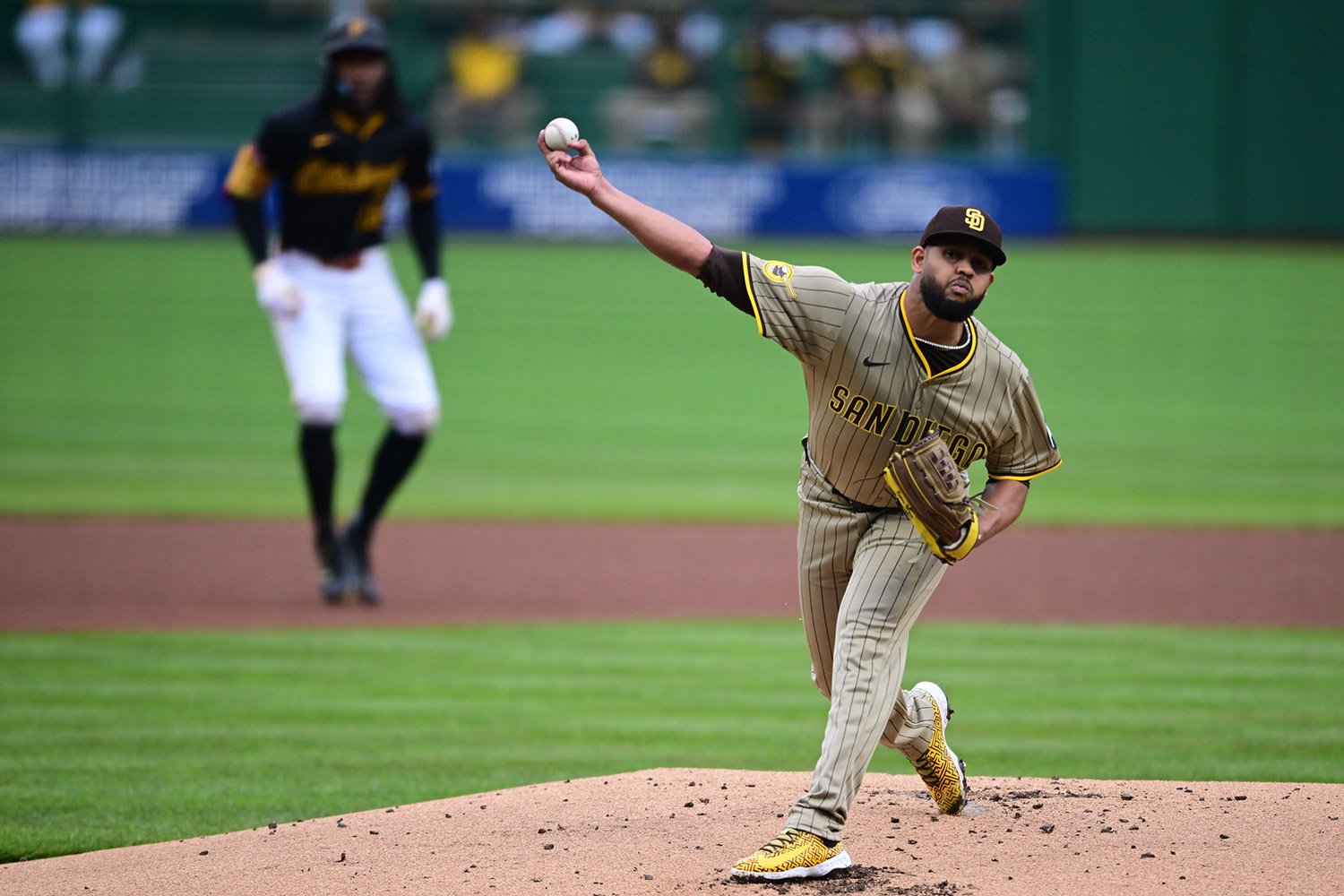
Randy Vásquez has been an important part of that.
Only six teams have a better ERA than the Padres' 3.46 mark from their starting pitchers. Only five are ahead in Hard-Hit% allowed (39.2). They're top 12 in BB% (9.4) and WHIP (1.24). Although there have been some inefficiencies, the group propped up by Michael King, Dylan Cease, and Nick Pivetta has been among the league's strongest. Even with Joe Musgrove out for the year, and Yu Darvish yet to appear in a game.
And here is where we transition to the aforementioned Randy Vásquez. The pitcher acquired from the New York Yankees in the Juan Soto trade has taken the mound for eight starts. He's 2-3 in those starts with a 3.76 ERA. He's been among the league's best in avoiding hard contact, sitting in the 86th percentile in average exit velocity (86.8 MPH). Given the stability he's provided, you'll take it. However, it doesn't require any level of detective skills to identify the flaws.
No starting pitcher with at least 30 innings has walked more hitters than Vásquez (14.5 percent). Only Colorado's Antonio Senzatela has a lower strikeout rate than his 10.3 percent. Again, it doesn't take Benoit Blanc to figure out the apprehension in thinking about Vásquez as a long-term option:

It's an intensely strange combination. We've seen pitchers have success sans punchouts. Limiting quality contact and getting the ball on the ground is a proven recipe for success. But those pitchers aren't walking the kind of volume we're seeing from Vásquez thus far. Even weirder, though, is the fact that not a whole lot has changed in the peripherals for Vásquez, except in one very notable way.
While each of his first strike, whiff, and contact rates hasn't changed in any real way, hitters simply are not swinging in the way that we've seen in the past. His overall swing rate has fallen more than six percent (43.0), and his chase rate has dropped nearly eight percent (19.7). Strikeouts may not be a prerequisite for success, but you have to induce some chase in order to keep hitters off balance via soft contact.
Part of that may be in the usage. Vásquez has used a cutter far more than he has in the past; the increase in opposing Swing% has been marginal. Meanwhile, hitters are chasing his other offerings with far less frequency. He's also been inconsistent in working the zone. This, while throwing technically six different pitches as part of his repertoire thus far.
There are very likely some things that need to be sorted in the usage. His avoidance of quality contact is allowing him to maintain success through an entirely backwards method of pitching, from the standpoint of the strikeout and walk rates. That isn't always going to work, though. We've seen it catch up with him in starts against Chicago and Detroit (read: good baseball teams). We'll conduct a deeper dive into the usage and explore potential solutions in the coming weeks. Still, it's extremely clear that you're currently operating on a very narrow margin for error.
Perhaps more than anyone in baseball.






Recommended Comments
There are no comments to display.
Create an account or sign in to comment
You need to be a member in order to leave a comment
Create an account
Sign up for a new account in our community. It's easy!
Register a new accountSign in
Already have an account? Sign in here.
Sign In Now