


Padres Video
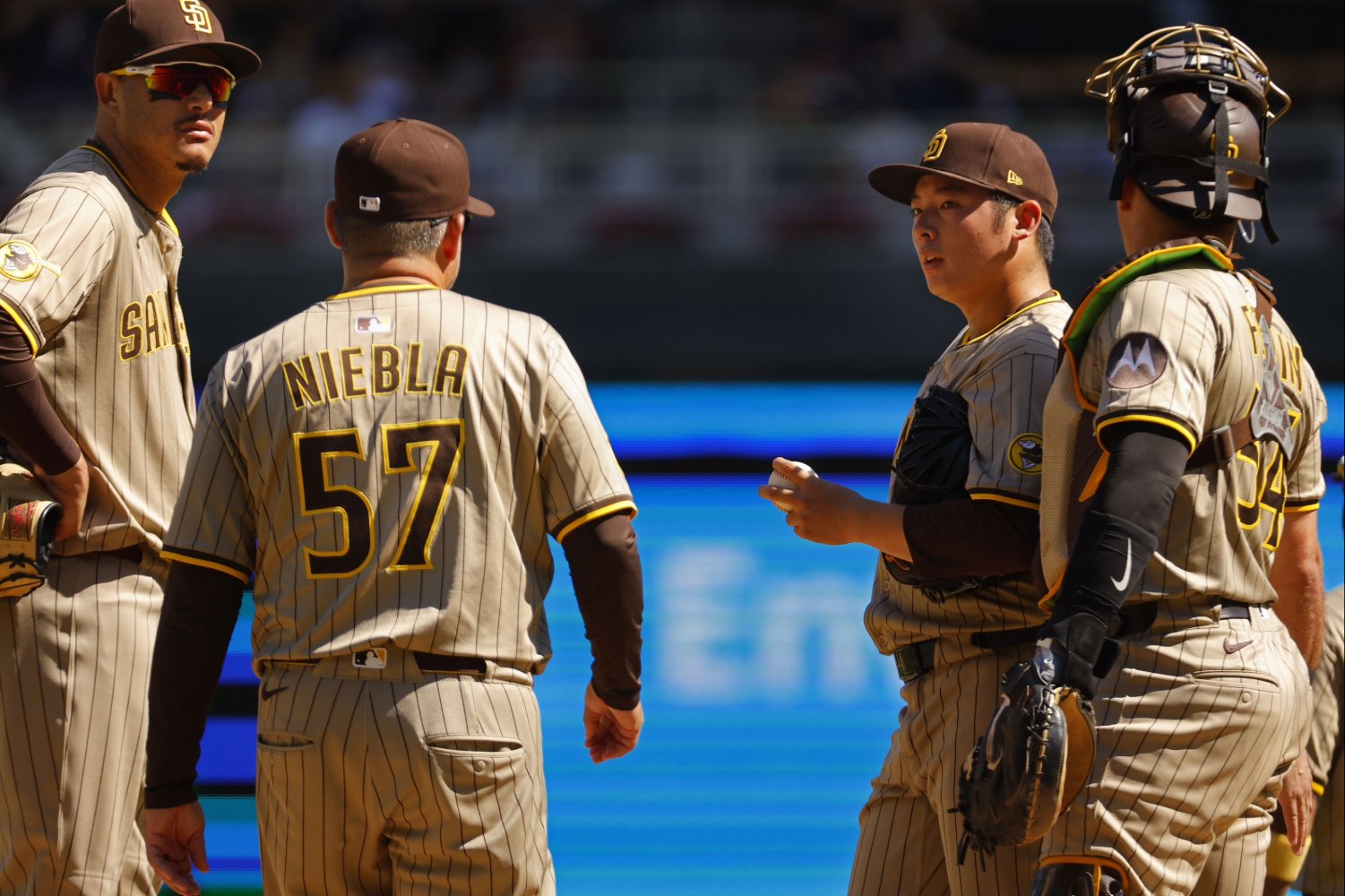
Ruben Niebla’s pitching program in San Diego has yielded clear results: Pitchers who join the Padres often become more consistent under his tutelage. Let's dive into Niebla’s role, then show the specific mechanisms he uses by analyzing some key case studies (Dylan Cease, Michael King, Joe Musgrove).
Ruben Niebla: What he actually does
Niebla runs a repeatable system. He does four things well at once. He gives each pitcher a precise plan for what to throw and when. He sets measurable checkpoints so coaches and pitchers see progress in raw numbers. He ties analytics and biomechanics to simple, on-field instructions. And he keeps the same approach year after year so pitchers get steady coaching instead of fluctuating messages.
Those four traits make the program predictable. Predictability is valuable because development is mostly a long march of small gains. The Padres’ stability under Niebla lowers the chance that a pitcher’s habits will be reset or contradicted later.
Dylan Cease: Volatile results and stabilization
Dylan Cease shows us the typical Niebla result: after moving to San Diego, his strikeout potential stayed top-notch, but other metrics changed in ways that impacted run prevention.
Cease’s strikeout numbers continued to dazzle in San Diego (224 K in 2024, 215 K in 2025), yet his ERA climbed from 3.47 in 2024 to 4.55 in 2025. On the whole, Cease’s ERA jumped by 1.08 runs (a 31% increase from the previous year) while his strikeouts dipped by around 4% and his innings pitched dropped by 11%.
His ability to get swings and misses remained strong (so his potential is still there), but the range of outcomes became broader (more damage from mistakes), which is exactly what a Niebla-style approach to sequencing, tunneling, and contact suppression aims to fix.
Unfortunately, it doesn't appear that Niebla and the Padres will be able to implement helpful changes for Cease, seeing as he's likely to leave via free agency. But his topsy-turvy tenure in San Diego is proof that Niebla's program is always in effect, even if it hasn't been perfected.
Michael King: Role clarity and workload control
King's 2025 surface line shows a 3.44 ERA in a limited season, following a solid 2024 where he logged a 2.95 ERA. However, the most significant improvement for the Padres has been in his role predictability. Given his bouts with shoulder inflammation and an IL stint, it's rather impressive that King returned in time for the stretch run (even if the results weren't great). His rehab process highlights the importance of workload targets and recovery checkpoints in his usage.
The Niebla program focuses on session thresholds, like pre-game velocity and spin bands, as well as ramp increments. This approach helped transform a pitcher with King's skill set into a consistently reliable starter, a decidedly more valuable pitcher than his previous swingman role.
Joe Musgrove: Rehab management and the institutional safety net
Joe Musgrove's case shows that not every "improvement" is clear on the stat sheets; sometimes, the real value lies in being cautious with medical decisions and taking a safe approach to recovery.
Musgrove sat out the 2025 season after undergoing Tommy John surgery on October 11, 2024. The Padres' careful, evidence-based rehab plan aims to maintain his pre-injury performance instead of rushing him back too soon. This cautious, methodical strategy is a key feature of Niebla's program when dealing with high-value players; monitor thresholds, apply biomechanics to fix mechanical issues, and then slowly reintroduce intent and sequencing.
The overall impact
Ruben Niebla’s system is about improving the odds. For pitchers who already have decent skills, the Padres’ program raises the chances of more reliable performances, fewer disasters, and better health. For elite strikeout pitchers like Cease, the biggest gain isn’t in velocity or raw stuff, but in reducing the ups and downs from game to game through better sequencing and contact management. Injured pitchers are likewise a focus of a program that prioritizes long-term durability over quick statistical results.
But how well the system works really depends on stability. When the roster is constantly changing because of trades, opt-outs, or free agency, pitchers tend to leave before the multi-season process is done. Recent roster changes demonstrate how these financial pressures can restrict the potential of the "Niebla Effect."






Recommended Comments
There are no comments to display.
Create an account or sign in to comment
You need to be a member in order to leave a comment
Create an account
Sign up for a new account in our community. It's easy!
Register a new accountSign in
Already have an account? Sign in here.
Sign In Now