


Padres Video
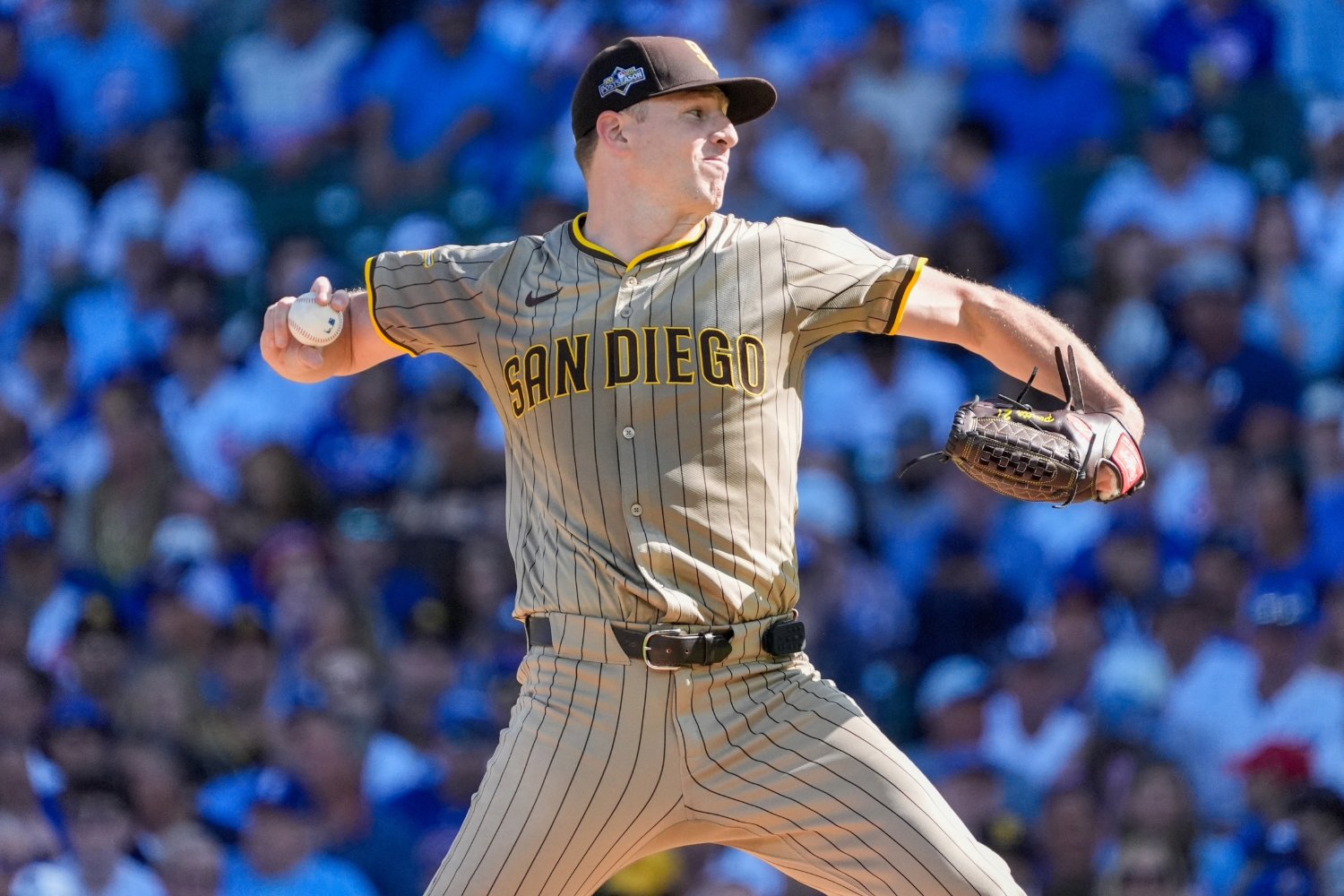
When it was reported last week that the San Diego Padres were listening on Nick Pivetta and Jake Cronenworth, the reaction here at Padres Mission was twofold.
The Cronenworth side was immediately acknowledged as legitimate and logical. If they're hoping to clear some longer-term money off the books, the lightest hitter of their positional contracts certainly makes some sense. Especially if it were to help them add some much-needed... anything to the rotation. We didn't meet the Pivetta component with quite the same gumption, however.
Instead, we approached the idea of trading Nick Pivetta as indicating a threat of organizational purgatory. That state in which teams find themselves when they're not quite good enough to contend but not quite bad enough to blow it all up. Trading Pivetta could certainly indicate that. With no other starter locked in for Opening Day and perpetual reports of financial peril, the optics of such a move one year into a four-year pact wouldn't be terrific. At the same time, the aggression of the point may have overshot and missed the actual logic of it altogether.
Because there's real sense in the Padres pursuing a trade of their veteran starter.
In a number of ways, Pivetta is coming off the best season of his career. His 2.87 ERA stands as a career best, as does his 3.49 FIP. While his 26.4 percent strikeout rate didn't necessarily touch the highest rates of his career, his 6.9 percent walk rate trailed only 2024. Perhaps most important was that his 9.7 percent homer-to-fly-ball rate was the best of his career and nearly five percent lower than his career average. He wasn't overpowering in 2025, but his run prevention was top marks.
With all of that said, there's reason to think that Pivetta is in for significant regression in the year(s) ahead. Here is his percentile distribution from 2025:

There are number of items here that read as just okay (though they aren't necessarily alarming). His xERA was still firmly in the middle of the pack while he did a decent-enough job of generating chase and whiff from opposing hitters. None of those numbers are stellar, but you can absolutely work with each of them as a mid-rotation arm. Where things get concerning, however, is in the contact trends that Pivetta experienced.
The barrel and hard-hit rates against speak for themselves. Pivetta sat near the bottom in each, with only 11 starters (of 107 qualifiers) allowing a higher barrel% than Pivetta's 10.9; only 20 served up a higher hard-hit rate than his 45.0. Pivetta's four-seam and curveball accounted for over 65 percent of his pitches thrown in 2025. Opposing hitters took each for an average of 12.2 percent in their barrel rate while the fastball, in particular, was touched for a hard-hit rate over 54 percent. The trends also got worse as the season wore on:

It's unsurprising, then, that along the way, Pivetta's whiff rate also declined steadily. His fly-ball rate also rose successively in each individual month before dropping only in September. Such trends, at least when you're talking about a pitcher who worked to an unsustainable .235 BABIP, don't bode particularly well for the subsequent years of a multi-year contract.
Not that Pivetta will be outright bad moving forward. His fastball-curveball combination, in conjunction with his zone aggression, go a long way toward keeping hitters off balance and led to an in-zone swing rate of just 63.5 percent. When you have one of the 16-lowest zone swing percentages in the sport, you can afford that aggression and live with some of the negative results of contact.
The big issue is going to be the contact regression. That type of BABIP figure has a way of evening out. And even if Pivetta is able to freeze hitters who are caught off guard by his in-zone work, the contact trends aren't indicative of him continuing the remainder of his performance off last year's stat sheet.
So, with that contract cost skyrocketing to $20.5 million in 2026 (per Roster Resource) before a pair of options worth a combined $32 million, you could understand if the Padres wanted to sell high on what Pivetta gave them last season. Especially if helps them to build a bit more for the medium- or longer-term.
Of course, the massive caveat to all of this is that A.J. Preller would have to really work to fill in a rotation that becomes almost entirely empty sans Pivetta. Sure, there are some in-house arms that can cover a few innings and Joe Musgrove is due to return, but there are no other surefire, guaranteed starters on the 40-man roster at present. So the needle becomes quite difficult to thread. Can you acquire an upper-minors prospect who is major-league ready? Perhaps another fringe arm in addition with which you can attempt an upside play?
There isn't any doubt that Preller could find value in Pivetta, who comes with cost certainty and a pair of seasons with an ERA lingering around four in his two years prior to 2025. He's a solid mid-rotation option coming off the best season of his career. There's plenty of logic in capitalizing on a guy like that considering the Padres' financial situation and what their farm system currently looks like. But with the Padres already lacking starters, innings coverage becomes even more burdensome a route this winter. Is the tradeoff one Preller is willing to make?





Recommended Comments
Create an account or sign in to comment
You need to be a member in order to leave a comment
Create an account
Sign up for a new account in our community. It's easy!
Register a new accountSign in
Already have an account? Sign in here.
Sign In Now