


Aidan Kurt
-
Posts
8 -
Joined
-
Last visited
Content Type
Profiles
San Diego Padres Videos
2026 San Diego Padres Top Prospects Ranking
San Diego Padres Free Agent & Trade Rumors, Notes, & Tidbits
Guides & Resources
2025 San Diego Padres Draft Pick Tracker
News
2026 San Diego Padres Draft Tracker: Picks & Bonuses
Forums
Blogs
Events
Store
Downloads
Gallery
Everything posted by Aidan Kurt
-
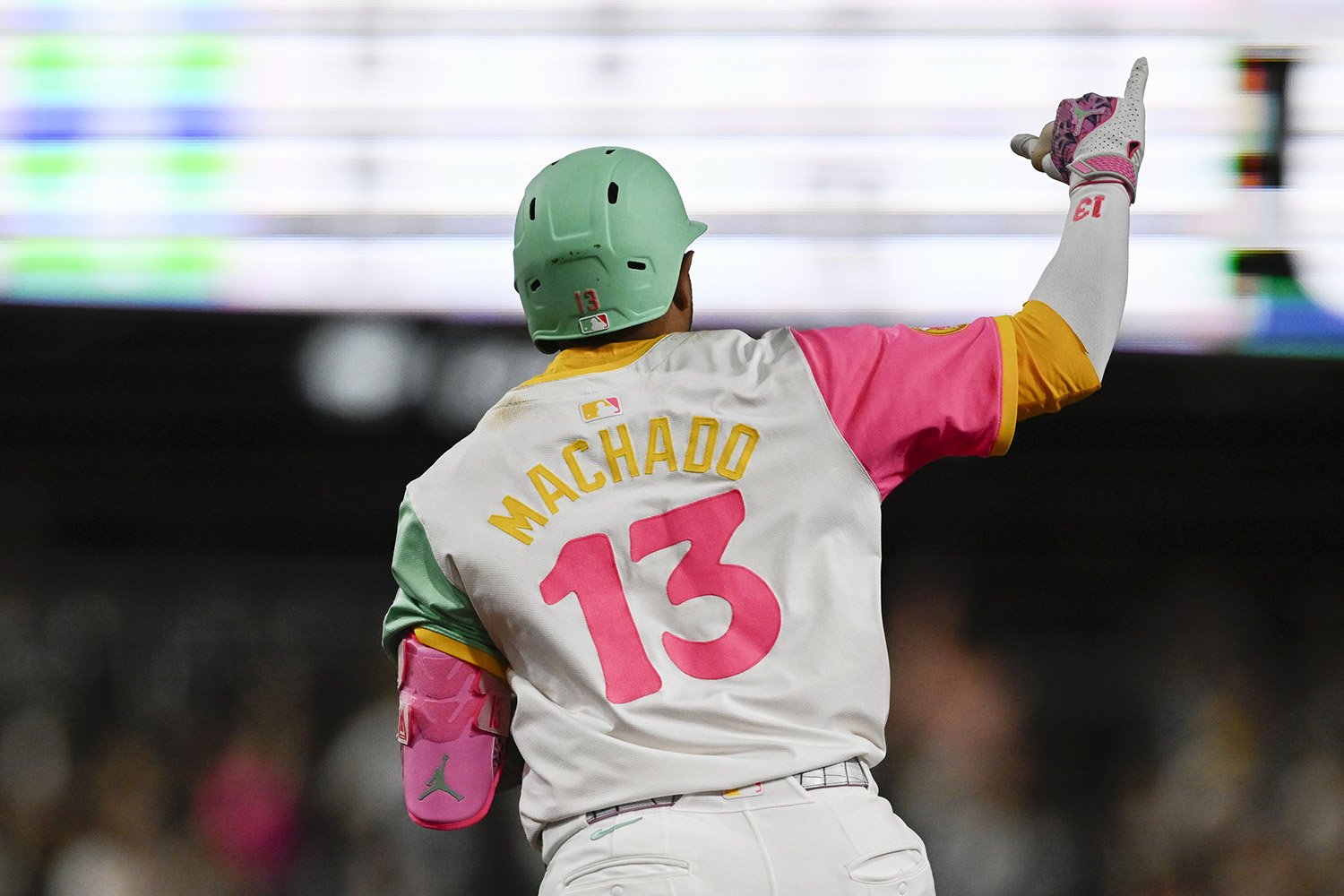 Early in June against the San Francisco Giants, Manny Machado belted a home run in the top of the third inning to put the San Diego Padres ahead 2-0. The home run marked a major milestone: the 350th home run of his career. Machado became the fifth active player to reach 350 home runs, behind Giancarlo Stanton, Mike Trout, Paul Goldschmidt, and Freddie Freeman. Since the swing, Machado has tied and passed Freeman for the fourth-most home runs with 355. He’s hit 180 of these home runs as a Padre, leading the team in his tenure. These swings have combined for a 22.8 Win Probability Added (WPA), which measures the change in win expectancy based on, in this case, home runs. In celebration of his 350th home run, let's take a look back at five of Machado’s most game-changing home runs based on WPA. 5. May 23, 2025 – .34 WPA Registering a .34 WPA, Machado’s home run against the Atlanta Braves last month is the most recent on this list. It came in the top of the ninth inning in a 1-1 game. The Braves brought in their closer, Raisel Iglesias, to shut down the middle of the Padres' lineup. Instead, Machado led off the inning by putting a 2-2 slider 422 feet into the left field bleachers. Machado’s home run would prove to be the difference, as the Padres would hold off the Braves in the bottom half of the inning and win 2-1. 4. September 25, 2021 – .34 WPA A few years prior, also against the Braves, Machado’s next biggest home run would ignite a thriller of a game at Petco Park. In the bottom of the fifth inning, the Padres would load the bases and, with two outs, were looking to cash in with Machado at the plate. Ahead in the count 2-1, Machado got a hanging slider and hit it 384 feet to left field. The swing registered a .34 WPA and would put the Padres ahead 7-3. However, Machado’s home run would not be enough, as the Braves would put four runs themselves in the next inning and win the game 10-8 in ten innings. Nevertheless, this was Machado’s 12th and most recent grand slam. If there’s one takeaway from these first two home runs, it’s that the Braves should stop throwing Machado sliders. In his career, he’s slugging .667 against sliders from Braves’ pitching, including four home runs, four doubles, and a triple. 3. April 30, 2022 – .35 WPA Machado’s next biggest home run would come a season later against the Pittsburgh Pirates. In the eighth inning of a 3-3 tie, Jake Cronenworth would draw a one-out walk. The Pirates would bring in their closer, the hard-throwing David Bednar, an inning early to face Machado. Bednar had yet to give up a run so far that season. He fell behind Machado 3-1. Trying to avoid a walk, he gave Machado a fastball over the heart of the plate, and he sent it 426 into right-center field, putting the Padres ahead 5-3. But the Pirates would overcome this .35 WPA with two runs in the bottom of the eighth inning and walk off the Padres in ten innings. 2 July 18, 2021 – .36 WPA Just a few months before his grand slam against the Braves, Machado would have another impactful swing of the bat, this time against the Washington Nationals. Machado came up to bat in the top of the eighth inning, tied at four, and a runner on. Pitching was Daniel Hudson, who would join the Padres later that season. Machado would turn on a 98 mph fastball and send it 413 feet into left field, 109.2 mph off the bat. With just an inning and a half left to play, the two-run home run would register a .36 WPA. Unfortunately, the Padres would be unable to hold on, dropping the game 8-7. 1. August 19, 2020 – .46 WPA Machado’s most impactful home run as a Padre blows the rest of this list out of the water. Hosting the Texas Rangers, the Padres were headed into the bottom of the tenth, down a run. Thanks to an automatic runner and two walks, the Padres would load the bases for Machado. In a full count, Rafael Montero threw Machado a sinker over the middle of the plate, which he crushed 436 feet to left-center field at 112 mph. Not only is this the hardest and furthest-hit ball on this list, but its .46 WPA is a full point higher than his home run against the Nationals. And there’s no greater way to top this list than a walk-off grand slam. Machado’s next stop is 400 home runs — an even more exclusive club of just 58 players. He’ll likely reach this feat in the next season or two, by which time we may have some new home runs on this list.
 -
Early in June against the San Francisco Giants, Manny Machado belted a home run in the top of the third inning to put the San Diego Padres ahead 2-0. The home run marked a major milestone: the 350th home run of his career. Machado became the fifth active player to reach 350 home runs, behind Giancarlo Stanton, Mike Trout, Paul Goldschmidt, and Freddie Freeman. Since the swing, Machado has tied and passed Freeman for the fourth-most home runs with 355. He’s hit 180 of these home runs as a Padre, leading the team in his tenure. These swings have combined for a 22.8 Win Probability Added (WPA), which measures the change in win expectancy based on, in this case, home runs. In celebration of his 350th home run, let's take a look back at five of Machado’s most game-changing home runs based on WPA. 5. May 23, 2025 – .34 WPA Registering a .34 WPA, Machado’s home run against the Atlanta Braves last month is the most recent on this list. It came in the top of the ninth inning in a 1-1 game. The Braves brought in their closer, Raisel Iglesias, to shut down the middle of the Padres' lineup. Instead, Machado led off the inning by putting a 2-2 slider 422 feet into the left field bleachers. Machado’s home run would prove to be the difference, as the Padres would hold off the Braves in the bottom half of the inning and win 2-1. 4. September 25, 2021 – .34 WPA A few years prior, also against the Braves, Machado’s next biggest home run would ignite a thriller of a game at Petco Park. In the bottom of the fifth inning, the Padres would load the bases and, with two outs, were looking to cash in with Machado at the plate. Ahead in the count 2-1, Machado got a hanging slider and hit it 384 feet to left field. The swing registered a .34 WPA and would put the Padres ahead 7-3. However, Machado’s home run would not be enough, as the Braves would put four runs themselves in the next inning and win the game 10-8 in ten innings. Nevertheless, this was Machado’s 12th and most recent grand slam. If there’s one takeaway from these first two home runs, it’s that the Braves should stop throwing Machado sliders. In his career, he’s slugging .667 against sliders from Braves’ pitching, including four home runs, four doubles, and a triple. 3. April 30, 2022 – .35 WPA Machado’s next biggest home run would come a season later against the Pittsburgh Pirates. In the eighth inning of a 3-3 tie, Jake Cronenworth would draw a one-out walk. The Pirates would bring in their closer, the hard-throwing David Bednar, an inning early to face Machado. Bednar had yet to give up a run so far that season. He fell behind Machado 3-1. Trying to avoid a walk, he gave Machado a fastball over the heart of the plate, and he sent it 426 into right-center field, putting the Padres ahead 5-3. But the Pirates would overcome this .35 WPA with two runs in the bottom of the eighth inning and walk off the Padres in ten innings. 2 July 18, 2021 – .36 WPA Just a few months before his grand slam against the Braves, Machado would have another impactful swing of the bat, this time against the Washington Nationals. Machado came up to bat in the top of the eighth inning, tied at four, and a runner on. Pitching was Daniel Hudson, who would join the Padres later that season. Machado would turn on a 98 mph fastball and send it 413 feet into left field, 109.2 mph off the bat. With just an inning and a half left to play, the two-run home run would register a .36 WPA. Unfortunately, the Padres would be unable to hold on, dropping the game 8-7. 1. August 19, 2020 – .46 WPA Machado’s most impactful home run as a Padre blows the rest of this list out of the water. Hosting the Texas Rangers, the Padres were headed into the bottom of the tenth, down a run. Thanks to an automatic runner and two walks, the Padres would load the bases for Machado. In a full count, Rafael Montero threw Machado a sinker over the middle of the plate, which he crushed 436 feet to left-center field at 112 mph. Not only is this the hardest and furthest-hit ball on this list, but its .46 WPA is a full point higher than his home run against the Nationals. And there’s no greater way to top this list than a walk-off grand slam. Machado’s next stop is 400 home runs — an even more exclusive club of just 58 players. He’ll likely reach this feat in the next season or two, by which time we may have some new home runs on this list. View full article
-
Has Ryan Bergert Been Lucky? Sure, But He's Also Just What The Padres Needed
Aidan Kurt posted an article in Padres
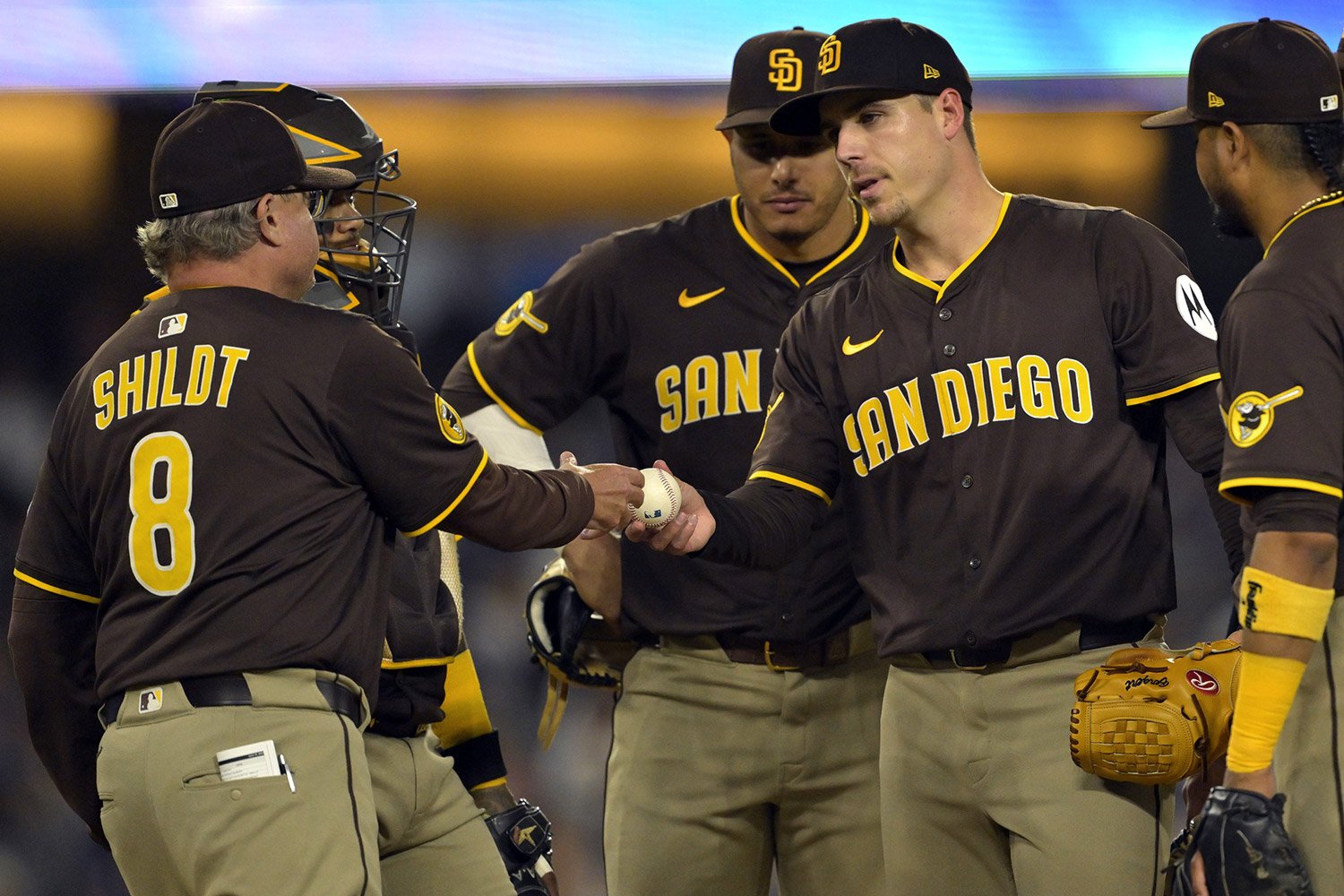 With a Michael King-sized hole in their starting rotation, the San Diego Padres have turned to Ryan Bergert in recent weeks to be the band-aid, protecting the rotation long enough for it to recover. Bergert, a rookie, started the season in Triple-A El Paso before being called up, making three relief appearances, then being sent back down to the minors. In June, he returned to the big leagues, this time as a starter. So far, he’s held down the fort, posting a 1.88 ERA and pitching at least five innings in each of his first three starts. Needless to say, he’s given the Padres exactly what they need from him: quality outings. His numbers back up what we’ve seen from him; his 7.13 K/9, 3.38 BB/9, and .075 HR/9 are great coming from the back of the rotation. After his last outing, in which he threw 4 1/3 scoreless innings against the Los Angeles Dodgers, the Padres should feel fairly comfortable rolling him out every five days. But the learning curve may be coming for Bergert. Every young pitcher faces adversity at the big league level; some of Bergert’s numbers show he may have already dodged potential trouble. One of the main signs is his Fielding Independent Pitching (FIP), which he registers at 3.81. FIP isolates a pitcher’s performance by excluding defense, instead focusing on strikeouts, walks, and home runs. The difference in his FIP and ERA indicates a discrepancy between his performance and his results. Other numbers also point to this discrepancy. Baseball Savant has Bergert’s xERA at 4.05 and batters’ xSLG and xwOBA above league average against him. Given the small sample size (24 innings), we can track down specific plays that may contextualize his results against expectations. One of these plays came against the Arizona Diamondbacks, against whom Bergert went five innings and gave up three runs. In the bottom of the fourth inning, Bergert faced Gabriel Moreno with a runner on second base and two outs. Moreno hit a deep fly ball to right field, caught by Fernando Tatis Jr. on the warning track. Inning over. V0FkYlBfV0ZRVkV3dEdEUT09X1V3ZFZYRkFFVVZNQURWUUVVQUFIQ1FRQUFBQUNXbFVBQlZ3RUNRTUdDQXNBQ0F0VQ==.mp4 What the box score doesn’t tell us, however, is that Moreno’s flyout would have been a home run at 22 of the 30 MLB ballparks, including Petco Park. But Chase Field held it in, saving Bergert an extra two runs on his ERA. Bergert had another ballpark to thank in his start against the San Francisco Giants. Bergert gave up a double to Patrick Bailey off the right field wall. Bailey’s double would have gone out at 25 ballparks, once again, including Petco Park. Bailey would score a few batters later on a Heliot Ramos two-run home run, so upgrading a double to a home run wouldn’t have hurt Bergert’s ERA. It would have, however, impacted his HR/9 and opponent’s SLG. Had both of these balls been home runs, Bergert’s HR/9 would double to 1.5. The home run ball is something Bergert has been prone to at times. In his nine Triple A starts this season, Bergert’s home-run-to-flyball ratio was 20.7%. However, as seen in the two earlier examples, it’s possible that Bergert’s statistics have benefited from pitcher-friendly stadiums. Despite his sub-2 ERA, his ERA-, which is park-adjusted, is well below average at 48. When he makes his first start at Petco Park, he won’t have those same ballpark luxuries. To Bergert’s credit, it’s not uncommon for a flyball pitcher (his flyball rate is 48.4% this season) to be susceptible to the long ball. But where it might become a problem is the 9.4% soft contact he gives up. Consistently solid contact in the air is not exactly a recipe for success. Nevertheless, he’s kept a tame 6.5% HR/FB ratio this season. Continuing to limit the long ball will be one of the bigger challenges for the right-hander this season. But regardless of how the rest of the season plays out, early confidence still goes a long way for a young pitcher. He’s already passed his WAR projections, according to FanGraphs. It’ll be interesting to see what the Padres decide to do with him once the top of their rotation gets healthy. As well as he’s pitching, they’ll likely want to keep him on the major league roster and return him to the bullpen. The other option, though less likely, is sending Bergert back down to El Paso. Bergert jumped from Double A to the majors fairly quickly, pitching just nine games in Triple A. If the Padres see Bergert as a potential long-term rotation piece, extra starts in in the minor leagues may be better for his long-term development.
 -
With a Michael King-sized hole in their starting rotation, the San Diego Padres have turned to Ryan Bergert in recent weeks to be the band-aid, protecting the rotation long enough for it to recover. Bergert, a rookie, started the season in Triple-A El Paso before being called up, making three relief appearances, then being sent back down to the minors. In June, he returned to the big leagues, this time as a starter. So far, he’s held down the fort, posting a 1.88 ERA and pitching at least five innings in each of his first three starts. Needless to say, he’s given the Padres exactly what they need from him: quality outings. His numbers back up what we’ve seen from him; his 7.13 K/9, 3.38 BB/9, and .075 HR/9 are great coming from the back of the rotation. After his last outing, in which he threw 4 1/3 scoreless innings against the Los Angeles Dodgers, the Padres should feel fairly comfortable rolling him out every five days. But the learning curve may be coming for Bergert. Every young pitcher faces adversity at the big league level; some of Bergert’s numbers show he may have already dodged potential trouble. One of the main signs is his Fielding Independent Pitching (FIP), which he registers at 3.81. FIP isolates a pitcher’s performance by excluding defense, instead focusing on strikeouts, walks, and home runs. The difference in his FIP and ERA indicates a discrepancy between his performance and his results. Other numbers also point to this discrepancy. Baseball Savant has Bergert’s xERA at 4.05 and batters’ xSLG and xwOBA above league average against him. Given the small sample size (24 innings), we can track down specific plays that may contextualize his results against expectations. One of these plays came against the Arizona Diamondbacks, against whom Bergert went five innings and gave up three runs. In the bottom of the fourth inning, Bergert faced Gabriel Moreno with a runner on second base and two outs. Moreno hit a deep fly ball to right field, caught by Fernando Tatis Jr. on the warning track. Inning over. V0FkYlBfV0ZRVkV3dEdEUT09X1V3ZFZYRkFFVVZNQURWUUVVQUFIQ1FRQUFBQUNXbFVBQlZ3RUNRTUdDQXNBQ0F0VQ==.mp4 What the box score doesn’t tell us, however, is that Moreno’s flyout would have been a home run at 22 of the 30 MLB ballparks, including Petco Park. But Chase Field held it in, saving Bergert an extra two runs on his ERA. Bergert had another ballpark to thank in his start against the San Francisco Giants. Bergert gave up a double to Patrick Bailey off the right field wall. Bailey’s double would have gone out at 25 ballparks, once again, including Petco Park. Bailey would score a few batters later on a Heliot Ramos two-run home run, so upgrading a double to a home run wouldn’t have hurt Bergert’s ERA. It would have, however, impacted his HR/9 and opponent’s SLG. Had both of these balls been home runs, Bergert’s HR/9 would double to 1.5. The home run ball is something Bergert has been prone to at times. In his nine Triple A starts this season, Bergert’s home-run-to-flyball ratio was 20.7%. However, as seen in the two earlier examples, it’s possible that Bergert’s statistics have benefited from pitcher-friendly stadiums. Despite his sub-2 ERA, his ERA-, which is park-adjusted, is well below average at 48. When he makes his first start at Petco Park, he won’t have those same ballpark luxuries. To Bergert’s credit, it’s not uncommon for a flyball pitcher (his flyball rate is 48.4% this season) to be susceptible to the long ball. But where it might become a problem is the 9.4% soft contact he gives up. Consistently solid contact in the air is not exactly a recipe for success. Nevertheless, he’s kept a tame 6.5% HR/FB ratio this season. Continuing to limit the long ball will be one of the bigger challenges for the right-hander this season. But regardless of how the rest of the season plays out, early confidence still goes a long way for a young pitcher. He’s already passed his WAR projections, according to FanGraphs. It’ll be interesting to see what the Padres decide to do with him once the top of their rotation gets healthy. As well as he’s pitching, they’ll likely want to keep him on the major league roster and return him to the bullpen. The other option, though less likely, is sending Bergert back down to El Paso. Bergert jumped from Double A to the majors fairly quickly, pitching just nine games in Triple A. If the Padres see Bergert as a potential long-term rotation piece, extra starts in in the minor leagues may be better for his long-term development. View full article
-
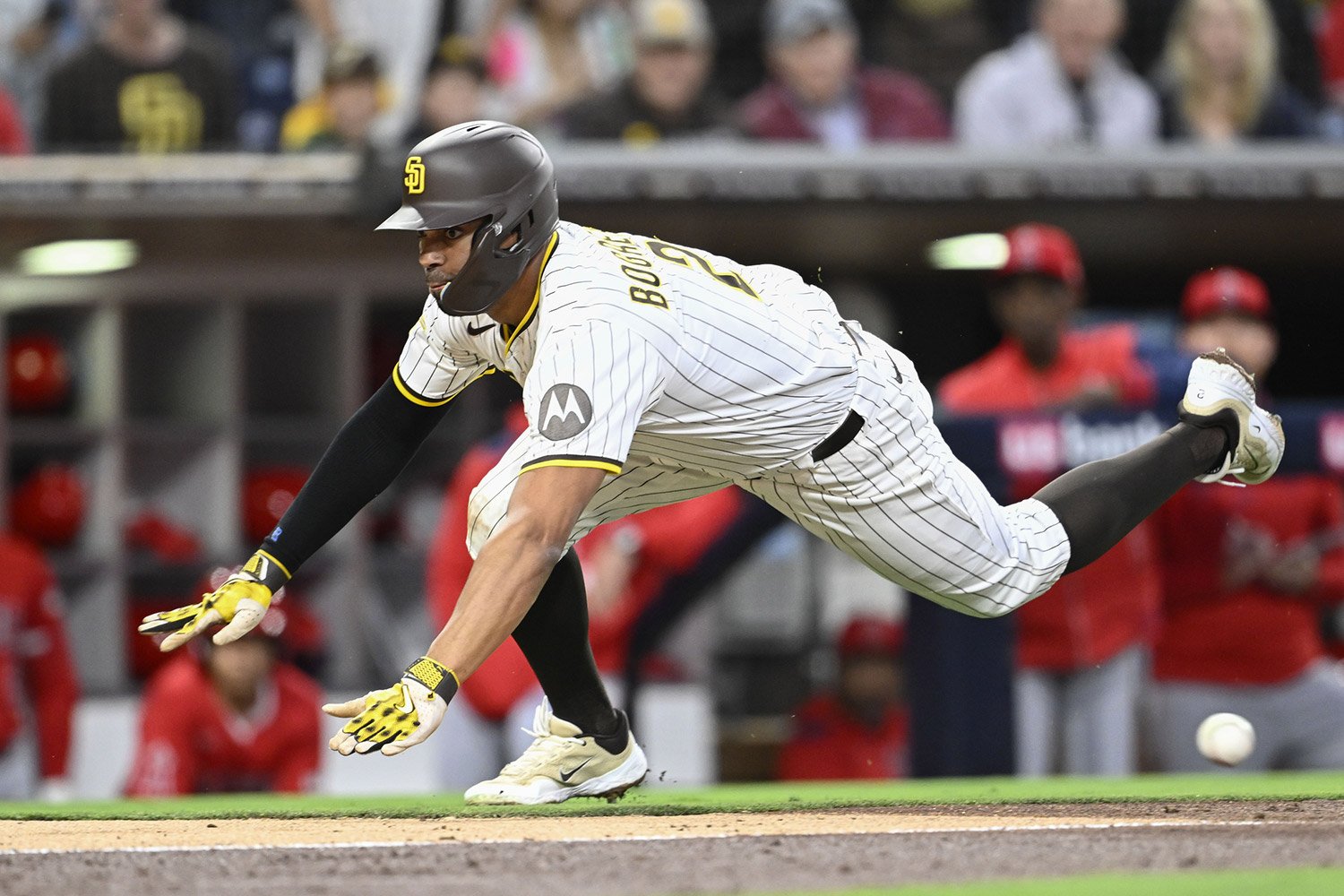 When watching Xander Bogaerts today, it's easy to forget how good a hitter he actually was when he signed his 11-year, $280 million deal with the Padres in 2023. Bogaerts was coming off his second 6.0 WAR season, having earned his fourth All-Star appearance and fifth Silver Slugger. He was among a mega-free agent shortstop class that included Trea Turner, Carlos Correa, and Dansby Swanson. At 30 years old, Bogaerts was the oldest of the four, but the Padres still gave him an 11-year deal in hopes of getting exclusive rights to his prime offensive years. However, it’s starting to look like his prime years may be behind him. Since these shortstops all inked their deals in 2023, Bogaerts has recorded the lowest SLG+ among the group and the fewest extra base hits, fewer than Correa, who has over 200 fewer plate appearances. In 2024, Bogaerts led the Padres in payroll but ended the season with the eighth-highest wRC+ at 95. He’s off to a similar start in 2025 with a 94 wRC+. Bogaerts’ offensive stumble is reminiscent of Troy Tulowitzki, another shortstop who dominated offensively early in his career. From 2006 to 2015, Tulowitski had the second-highest wRC+ among shortstops. The Rockies traded him away at the age of 30, and he never regained his offensive form, posting a 96 wRC+ over his next three seasons. Between Bogaerts and Tulowitski, it’s hard to understand why a player of their caliber would trail off at the age of 30, considering many of the most productive offensive players in baseball are in their 30s. Even Bogaerts’ 32-year-old teammate, Manny Machado, is registering a 145 wRC+ in 2025. However, perhaps the primary factor behind Bogaerts’ decline isn’t age. When Tulowitski was traded away from the Rockies, he was leaving the most favorable hitters' park in MLB. Bogaerts had a similar departure from Boston, leaving Fenway Park, the second most favorable hitters' park behind only the Rockies’ Coors Field. Fenway Park has always been hitter-friendly thanks to its unusual dimensions. The “green monster” in left field, for example, sits just 310 feet from home plate but stands over 37 feet tall. These dimensions would turn would-be flyouts at other stadiums into singles and doubles. For right-handed hitters like Bogaerts, the “green monster” is a certified stat-booster. Since 2015, no stadium has given up more hits to left field by right-handed hitters than Fenway Park. Over his last five seasons with the Red Sox, Bogaerts had just one season with a home wRC+ below 140. Petco Park, on the other hand, was the fifth-worst stadium for right-handed hitters in 2024. Its left field foul pole sits 26 feet further back than Fenway Park, and when you compare Bogaerts’ hits at Fenway to Petco, it’s easy to see the effect of exchanging home fields on his offense to left field. What were once hits to left field at Fenway have turned into outs at Petco. Bogaerts’ batting average on balls in play (BABIP) at home went from .370 in 2022 to .329 as a Padre in 2023. It fell even lower in 2024 with a .279 BABIP at Petco. His 2023 numbers were a predictable step down from what he put up in Boston, but he still managed to be a productive offensive player, finishing the season with a 117 OPS+. He adjusted nicely to Petco Park, relying less on his pull side than he did in Boston. At home, he went to the opposite field for a team-leading 29.2% of the time and put up a 128 OPS+ at Petco. But even with adjusted expectations in San Diego, Bogaerts put up some of the lowest numbers of his career in 2024. He put up his lowest batting average and WAR since 2014, excluding the shortened 2020 season. He particularly struggled at home, putting up a 93 wRC+ and slashing .246/.294/.369. His opposite-field usage at home dropped to 17.4%, and he recorded just seven hits to right field at Petco. Again, it’s in this season that we see Bogaerts’ BABIP at home fall below .300 for the first time since his rookie year. There are still eight years left in Bogaerts’ contract, but he’s not getting any younger. At this stage in his career, Bogaerts is surely not going to put up his Boston numbers at Petco Park, but it’s evident by his 2023 season that he is still capable of being a productive offensive player in San Diego. Even last season, he put up a 115 wRC+ in the second half. 2025 feels like an indicator of what to expect from Bogaerts going forward. He’s looking better so far, putting up a 1.0 WAR at the end of May. He’s hitting balls harder and has stepped up his opposite-field usage to 20.9%. At the end of April, his opposite field usage was 29.5% with a .312 BABIP. In May, however, these have fallen to 11.0% and .268, respectively. The correlation between his approach and productivity will certainly be something to monitor the rest of this season.
 -
When watching Xander Bogaerts today, it's easy to forget how good a hitter he actually was when he signed his 11-year, $280 million deal with the Padres in 2023. Bogaerts was coming off his second 6.0 WAR season, having earned his fourth All-Star appearance and fifth Silver Slugger. He was among a mega-free agent shortstop class that included Trea Turner, Carlos Correa, and Dansby Swanson. At 30 years old, Bogaerts was the oldest of the four, but the Padres still gave him an 11-year deal in hopes of getting exclusive rights to his prime offensive years. However, it’s starting to look like his prime years may be behind him. Since these shortstops all inked their deals in 2023, Bogaerts has recorded the lowest SLG+ among the group and the fewest extra base hits, fewer than Correa, who has over 200 fewer plate appearances. In 2024, Bogaerts led the Padres in payroll but ended the season with the eighth-highest wRC+ at 95. He’s off to a similar start in 2025 with a 94 wRC+. Bogaerts’ offensive stumble is reminiscent of Troy Tulowitzki, another shortstop who dominated offensively early in his career. From 2006 to 2015, Tulowitski had the second-highest wRC+ among shortstops. The Rockies traded him away at the age of 30, and he never regained his offensive form, posting a 96 wRC+ over his next three seasons. Between Bogaerts and Tulowitski, it’s hard to understand why a player of their caliber would trail off at the age of 30, considering many of the most productive offensive players in baseball are in their 30s. Even Bogaerts’ 32-year-old teammate, Manny Machado, is registering a 145 wRC+ in 2025. However, perhaps the primary factor behind Bogaerts’ decline isn’t age. When Tulowitski was traded away from the Rockies, he was leaving the most favorable hitters' park in MLB. Bogaerts had a similar departure from Boston, leaving Fenway Park, the second most favorable hitters' park behind only the Rockies’ Coors Field. Fenway Park has always been hitter-friendly thanks to its unusual dimensions. The “green monster” in left field, for example, sits just 310 feet from home plate but stands over 37 feet tall. These dimensions would turn would-be flyouts at other stadiums into singles and doubles. For right-handed hitters like Bogaerts, the “green monster” is a certified stat-booster. Since 2015, no stadium has given up more hits to left field by right-handed hitters than Fenway Park. Over his last five seasons with the Red Sox, Bogaerts had just one season with a home wRC+ below 140. Petco Park, on the other hand, was the fifth-worst stadium for right-handed hitters in 2024. Its left field foul pole sits 26 feet further back than Fenway Park, and when you compare Bogaerts’ hits at Fenway to Petco, it’s easy to see the effect of exchanging home fields on his offense to left field. What were once hits to left field at Fenway have turned into outs at Petco. Bogaerts’ batting average on balls in play (BABIP) at home went from .370 in 2022 to .329 as a Padre in 2023. It fell even lower in 2024 with a .279 BABIP at Petco. His 2023 numbers were a predictable step down from what he put up in Boston, but he still managed to be a productive offensive player, finishing the season with a 117 OPS+. He adjusted nicely to Petco Park, relying less on his pull side than he did in Boston. At home, he went to the opposite field for a team-leading 29.2% of the time and put up a 128 OPS+ at Petco. But even with adjusted expectations in San Diego, Bogaerts put up some of the lowest numbers of his career in 2024. He put up his lowest batting average and WAR since 2014, excluding the shortened 2020 season. He particularly struggled at home, putting up a 93 wRC+ and slashing .246/.294/.369. His opposite-field usage at home dropped to 17.4%, and he recorded just seven hits to right field at Petco. Again, it’s in this season that we see Bogaerts’ BABIP at home fall below .300 for the first time since his rookie year. There are still eight years left in Bogaerts’ contract, but he’s not getting any younger. At this stage in his career, Bogaerts is surely not going to put up his Boston numbers at Petco Park, but it’s evident by his 2023 season that he is still capable of being a productive offensive player in San Diego. Even last season, he put up a 115 wRC+ in the second half. 2025 feels like an indicator of what to expect from Bogaerts going forward. He’s looking better so far, putting up a 1.0 WAR at the end of May. He’s hitting balls harder and has stepped up his opposite-field usage to 20.9%. At the end of April, his opposite field usage was 29.5% with a .312 BABIP. In May, however, these have fallen to 11.0% and .268, respectively. The correlation between his approach and productivity will certainly be something to monitor the rest of this season. View full article
-
The Padres' June Schedule Is Their Time To Make Hay In The NL West
Aidan Kurt posted an article in Padres
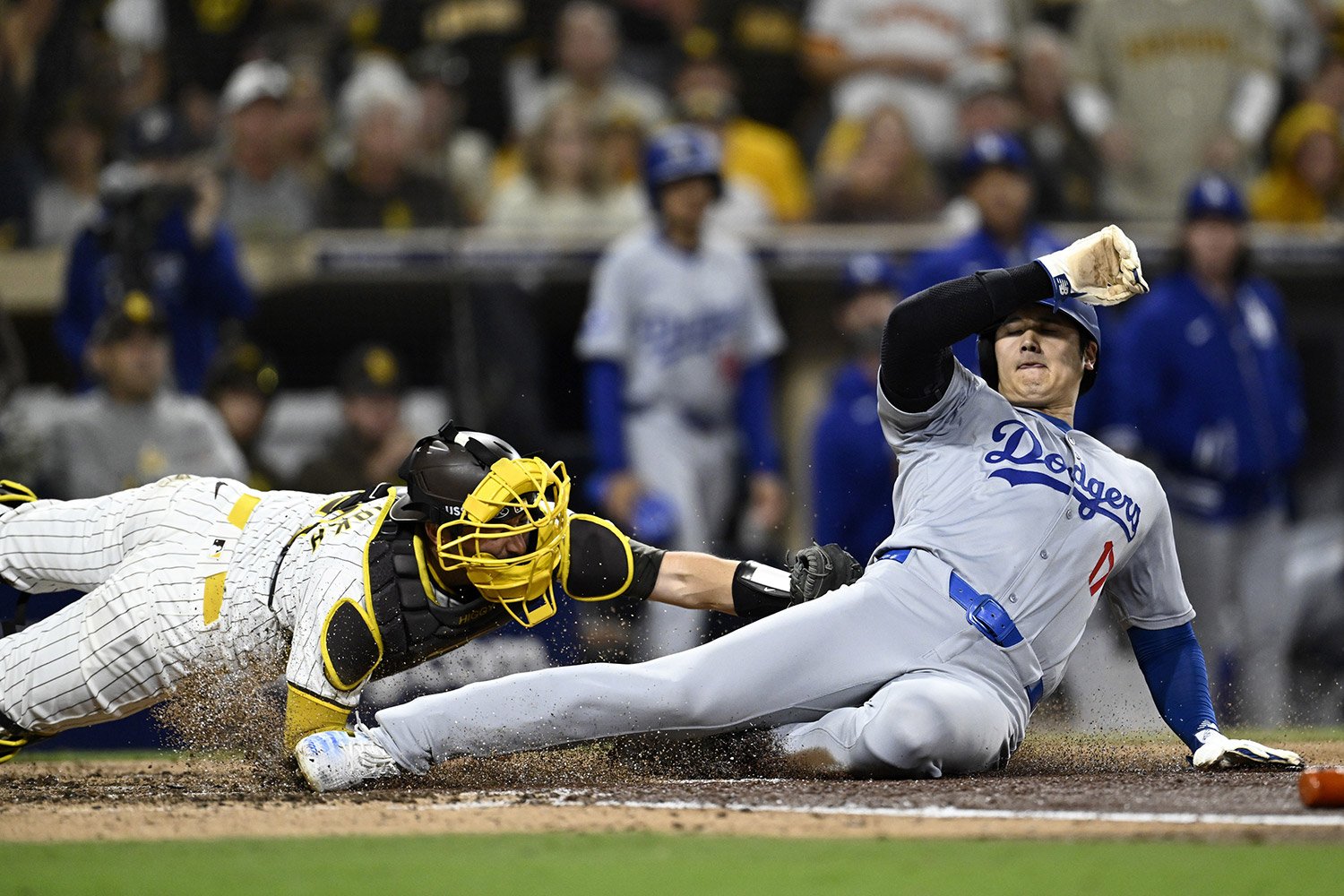 Despite their worst stretch of the season over the past week, the Padres have staved off panic mode and remain just two games out of first place in the National League West. The coming weeks will provide ample opportunity to gain ground in the standings as the Padres face a mix of sub-.500 teams and division rivals. The Padres recovered from their six-game losing streak with a series win over the Atlanta Braves and entered this week’s Marlins series with a May record of 10-11. They’ll finish the month against the Pirates, whom they swept several weeks ago. Both the Marlins and the Pirates are at the bottom of their respective divisions. Come June, however, competition is tougher, including 14 games against division rivals. Let’s take a closer look at the Padres’ upcoming competition. An NLDS Rematch In what is sure to be a mighty series, the Padres will face off against the first-place Dodgers for the first time since being defeated in the NLDS last season. Unlike the NLDS, they’ll have seven games, starting with a three-game set at home, followed by four games in Los Angeles the following week. Despite the preseason hype, the Dodgers have not been running away with the division. Instead, they’ve been plagued by injuries in their starting rotation and sit atop the NL West by a thin margin. Besides Yoshinobu Yamamoto, the Dodgers don’t have a starter with a sub-4 ERA. In Major League Baseball, the Dodgers’ starting pitching ranks 23rd in ERA and last in walks per nine innings (BB/9). Their offense has been strong enough to compensate for their pitching. They rank first in batting average and second in OBP, OPS, runs, and home runs. Contrary to their pitching staff, their offense is only getting healthier after recently activating Teoscar Hernandez and Tommy Edman off the injured list. After these seven games, the Padres won’t see the Dodgers again until mid-August. If their starting rotation returns to full health by then, they’ll have to face the likes of Tyler Glasnow, Blake Snell, and Roki Sasaki. If the Padres can take advantage of this weak rotation, they may have a chance to take first place in the West. The rest Of The NL West After the Dodgers, the Padres will have a shot at a couple of other division rivals and open the month of June with a four-game set in San Francisco. They will also spend a weekend in Arizona for their first three games against the Diamondbacks this season. The Padres went 7-6 against both teams last season. Currently, the Padres are one game behind the Giants, who have slowed down offensively lately. Since May 8, they have a wRC+ of 87, which is seventh-worst in MLB. Their 96 wRC+ this season ranks 18th. Their pitching has been their strength thanks to an MLB-leading bullpen in ERA and WHIP. However, their starting rotation does have some question marks. Justin Verlander has been placed on the injured list, Logan Webb is coming off his worst start of the season, and Jordan Hicks has been moved to the bullpen. The Diamondbacks, on the other hand, have been led by their offense. Their 127 wRC+ is third-best in the MLB. They are also top-10 in the MLB in batting average, OBP, OPS, and home runs. Their pitching has been their Achilles' heel, nearly equalizing their offense — their run differential is just +1 after allowing 266 runs this season. They’re particularly susceptible to the long ball with the fourth-highest HR/9. Besides Corbin Burnes and Merrill Kelley, the Diamondbacks have little reliable pitching. Keep An Eye on The Rotation One of the things to watch in June is the Padres’ starting rotation. They will not have their most valuable starter after Michael King joined the IL with shoulder inflammation. King’s spot in the rotation is likely to be filled by Matt Waldron, who is nearing a return from the IL. In his recent rehab start with the San Antonio Missions, Waldron struck out four batters over four-and-a-third innings. Yu Darvish also made a rehab start in Triple A. There is a chance he returns from the injured list in June. Dylan Cease will be an interesting player to watch in June. Cease has sported an unusually high ERA of 4.58 so far this season. It is worth noting, however, that his expected ERA is 3.56 — over a run lower. This means that Cease has pitched better than his results may seem. Over the next month, we may see this gap narrow and Cease’s numbers return to form. A key to the Padres' success in June will be their ability to pitch on the road. In away games this season, the Padres are 13-14 and have a 4.64 team ERA, more than two runs higher than at home. With 18 away games in June, the Padres' pitching is going to be put to the test.
 -
Despite their worst stretch of the season over the past week, the Padres have staved off panic mode and remain just two games out of first place in the National League West. The coming weeks will provide ample opportunity to gain ground in the standings as the Padres face a mix of sub-.500 teams and division rivals. The Padres recovered from their six-game losing streak with a series win over the Atlanta Braves and entered this week’s Marlins series with a May record of 10-11. They’ll finish the month against the Pirates, whom they swept several weeks ago. Both the Marlins and the Pirates are at the bottom of their respective divisions. Come June, however, competition is tougher, including 14 games against division rivals. Let’s take a closer look at the Padres’ upcoming competition. An NLDS Rematch In what is sure to be a mighty series, the Padres will face off against the first-place Dodgers for the first time since being defeated in the NLDS last season. Unlike the NLDS, they’ll have seven games, starting with a three-game set at home, followed by four games in Los Angeles the following week. Despite the preseason hype, the Dodgers have not been running away with the division. Instead, they’ve been plagued by injuries in their starting rotation and sit atop the NL West by a thin margin. Besides Yoshinobu Yamamoto, the Dodgers don’t have a starter with a sub-4 ERA. In Major League Baseball, the Dodgers’ starting pitching ranks 23rd in ERA and last in walks per nine innings (BB/9). Their offense has been strong enough to compensate for their pitching. They rank first in batting average and second in OBP, OPS, runs, and home runs. Contrary to their pitching staff, their offense is only getting healthier after recently activating Teoscar Hernandez and Tommy Edman off the injured list. After these seven games, the Padres won’t see the Dodgers again until mid-August. If their starting rotation returns to full health by then, they’ll have to face the likes of Tyler Glasnow, Blake Snell, and Roki Sasaki. If the Padres can take advantage of this weak rotation, they may have a chance to take first place in the West. The rest Of The NL West After the Dodgers, the Padres will have a shot at a couple of other division rivals and open the month of June with a four-game set in San Francisco. They will also spend a weekend in Arizona for their first three games against the Diamondbacks this season. The Padres went 7-6 against both teams last season. Currently, the Padres are one game behind the Giants, who have slowed down offensively lately. Since May 8, they have a wRC+ of 87, which is seventh-worst in MLB. Their 96 wRC+ this season ranks 18th. Their pitching has been their strength thanks to an MLB-leading bullpen in ERA and WHIP. However, their starting rotation does have some question marks. Justin Verlander has been placed on the injured list, Logan Webb is coming off his worst start of the season, and Jordan Hicks has been moved to the bullpen. The Diamondbacks, on the other hand, have been led by their offense. Their 127 wRC+ is third-best in the MLB. They are also top-10 in the MLB in batting average, OBP, OPS, and home runs. Their pitching has been their Achilles' heel, nearly equalizing their offense — their run differential is just +1 after allowing 266 runs this season. They’re particularly susceptible to the long ball with the fourth-highest HR/9. Besides Corbin Burnes and Merrill Kelley, the Diamondbacks have little reliable pitching. Keep An Eye on The Rotation One of the things to watch in June is the Padres’ starting rotation. They will not have their most valuable starter after Michael King joined the IL with shoulder inflammation. King’s spot in the rotation is likely to be filled by Matt Waldron, who is nearing a return from the IL. In his recent rehab start with the San Antonio Missions, Waldron struck out four batters over four-and-a-third innings. Yu Darvish also made a rehab start in Triple A. There is a chance he returns from the injured list in June. Dylan Cease will be an interesting player to watch in June. Cease has sported an unusually high ERA of 4.58 so far this season. It is worth noting, however, that his expected ERA is 3.56 — over a run lower. This means that Cease has pitched better than his results may seem. Over the next month, we may see this gap narrow and Cease’s numbers return to form. A key to the Padres' success in June will be their ability to pitch on the road. In away games this season, the Padres are 13-14 and have a 4.64 team ERA, more than two runs higher than at home. With 18 away games in June, the Padres' pitching is going to be put to the test. View full article
