


Samuel Cozart
-
Posts
24 -
Joined
-
Last visited
Content Type
Profiles
San Diego Padres Videos
2026 San Diego Padres Top Prospects Ranking
San Diego Padres Free Agent & Trade Rumors, Notes, & Tidbits
Guides & Resources
2025 San Diego Padres Draft Pick Tracker
News
2026 San Diego Padres Draft Tracker: Picks & Bonuses
Forums
Blogs
Events
Store
Downloads
Gallery
Everything posted by Samuel Cozart
-
For most of July, talk surrounding the San Diego Padres was centered off-the-field, rather than on it. Rumors of what the Friars would or would not do in the looming MLB trade deadline were swirling, with San Diego holding prized jewels in the bullpen. Amidst the trade speculation, pitching performances helped keep the Padres afloat in the NL Wild Card race, posting a 13-13 record in July. Ranking Padres' Best Pitchers In July #3: Adrian Morejon, Relief Pitcher In an overall underwhelming year, one aspect of the team has remained consistent for the Padres: the bullpen. In July, Adrian Morejon continued to show why he is a critical piece to San Diego’s biggest strength. The southpaw posted a 2.57 ERA and 1.50 WHIP in 14.0 innings pitched in the month. Morejon was a name that came up in trade deadline rumors, with reports of the Padres rejecting a trade offer from the Yankees. Ultimately, the team wisely opted to hold onto him, hoping to make a serious run at a championship prior to his impending trip into free agency at the conclusion of the season. #2: Michael King, Starting Pitcher This has been yet another year where injuries have decimated the rotation for the Padres. The exception, however, has been Michael King. In July, King continued to establish himself as San Diego’s ace in 2026, posting another month of solid numbers. In 29.0 innings pitched, the right-hander dealt a 2.79 ERA and 1.14 WHIP, both better than his season-long totals. King, for the most part, was safer than his relief pitching counterparts in trade discussions. His consistency in July helped steady the ship for the Padres, who hope to rely on him for the postseason push ahead. He also has some reinforcements to support his cause in Casey Mize and Robbie Ray. #1: Mason Miller, Relief Pitcher At the start of July, it would have come as a surprise to see Mason Miller’s name still on the Padres roster come August. His name was swirling in trade rumors, with many speculating that San Diego would cash in on its most valuable asset. However, that was not the case, and Miller pitched another brilliant month. In July, he owned a 0.82 ERA and 0.64 WHIP in 11.0 innings pitched, also going seven-for-seven in save opportunities. Miller’s performance in July earned him the NL Reliever of the Month award. Despite the noise from the trade deadline, Miller stayed on course. By not shipping him away for assets, A.J. Preller made it clear that he sees Miller as a part of the team's future and a crucial piece for the remainder of 2026. With him and Morejon closing out games, it's not difficult to understand that line of thinking. View full article
-
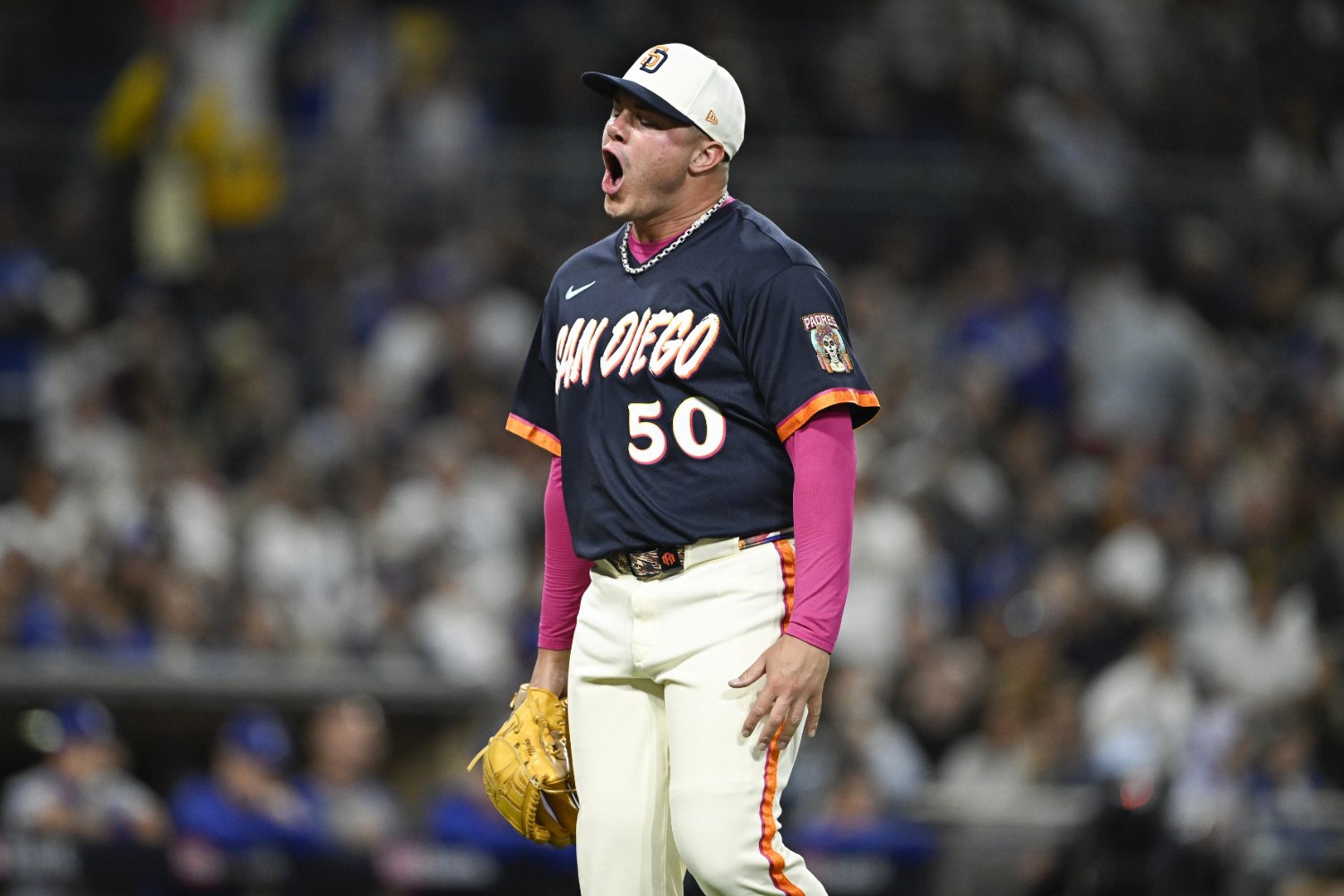 For most of July, talk surrounding the San Diego Padres was centered off-the-field, rather than on it. Rumors of what the Friars would or would not do in the looming MLB trade deadline were swirling, with San Diego holding prized jewels in the bullpen. Amidst the trade speculation, pitching performances helped keep the Padres afloat in the NL Wild Card race, posting a 13-13 record in July. Ranking Padres' Best Pitchers In July #3: Adrian Morejon, Relief Pitcher In an overall underwhelming year, one aspect of the team has remained consistent for the Padres: the bullpen. In July, Adrian Morejon continued to show why he is a critical piece to San Diego’s biggest strength. The southpaw posted a 2.57 ERA and 1.50 WHIP in 14.0 innings pitched in the month. Morejon was a name that came up in trade deadline rumors, with reports of the Padres rejecting a trade offer from the Yankees. Ultimately, the team wisely opted to hold onto him, hoping to make a serious run at a championship prior to his impending trip into free agency at the conclusion of the season. #2: Michael King, Starting Pitcher This has been yet another year where injuries have decimated the rotation for the Padres. The exception, however, has been Michael King. In July, King continued to establish himself as San Diego’s ace in 2026, posting another month of solid numbers. In 29.0 innings pitched, the right-hander dealt a 2.79 ERA and 1.14 WHIP, both better than his season-long totals. King, for the most part, was safer than his relief pitching counterparts in trade discussions. His consistency in July helped steady the ship for the Padres, who hope to rely on him for the postseason push ahead. He also has some reinforcements to support his cause in Casey Mize and Robbie Ray. #1: Mason Miller, Relief Pitcher At the start of July, it would have come as a surprise to see Mason Miller’s name still on the Padres roster come August. His name was swirling in trade rumors, with many speculating that San Diego would cash in on its most valuable asset. However, that was not the case, and Miller pitched another brilliant month. In July, he owned a 0.82 ERA and 0.64 WHIP in 11.0 innings pitched, also going seven-for-seven in save opportunities. Miller’s performance in July earned him the NL Reliever of the Month award. Despite the noise from the trade deadline, Miller stayed on course. By not shipping him away for assets, A.J. Preller made it clear that he sees Miller as a part of the team's future and a crucial piece for the remainder of 2026. With him and Morejon closing out games, it's not difficult to understand that line of thinking.
 -
The 2025 offseason has been an eventful one for the San Diego Padres. It started with the shocking resignation of Mike Shildt and the hiring of Craig Stammen. It has also featured the losses of star pitchers Dylan Cease and Robert Suarez, and most recently, the acquisition of sought-after Korean free agent Sung Mun Song. While the Padres have faced dramatic internal shifts this offseason, the remainder of the NL West is reshaping itself as well. Let’s take a look at San Diego’s divisional foes and how they stack up after notable additions and subtractions. Los Angeles Dodgers The rich continue to get richer. To the dismay of the Friar Faithful, the Padres’ arch-rival took home its second consecutive World Series title in 2025. The bad news for San Diego is that the Dodgers’ offseason has indicated nothing other than another year as World Series favorites. The most notable move by Los Angeles this winter was the acquisition of All-Star closer Edwin Diaz. If the Dodgers had one weak link in the 2025 postseason, it was the bullpen’s struggle to close games. Now, bringing in one of Major League Baseball’s top closers makes them all the more deadly. The retirement of future Hall of Fame pitcher Clayton Kershaw will put a void in the Dodgers’ clubhouse, but their dominant starting rotation will have no concern filling his role. Here are notable additions and subtractions for the back-to-back champions this offseason, according to MLB: Additions: Signed RP Edwin Diaz to a 3-year deal. 2025 WAR: 3.0 Re-signed SS Miguel Rojas to a 1-year deal. 2025 WAR: 1.9 Subtractions: SP Clayton Kershaw (retired). 2025 WAR: 1.6 Still on the board: UTIL Kiké Hernandez. 2025 WAR: -0.1 RP Michael Kopech. 2025 WAR: 0.2 RP Evan Phillips. 2025 WAR: 0.4 RP Kirby Yates. 2025 WAR: -0.5 OF Michael Conforto. 2025 WAR: -0.7 SP Tony Gonsolin. 2025 WAR: 0.0 SP Andrew Heaney. 2025 WAR: -0.3 Excluding re-signings and counting all remaining free agents as subtractions, the WAR +/- of the Dodgers’ additions and subtractions still comes out to +2.4. Another offseason where the empire to the North gets stronger. San Francisco Giants Like the Padres, the Giants’ offseason started with a change in manager. After firing Bob Melvin, San Francisco made an unprecedented move, hiring Tony Vitello from the University of Tennessee, who has no former coaching experience at the professional level. Buster Posey is taking the team in a new direction at the top, aiming to keep the Giants in Postseason contention in 2026. The Giants’ moves mostly rely on reshaping their pitching staff. Here are those moves so far, according to MLB: Additions: Signed RP Jason Foley to a 1-year deal. 2025 WAR: 3.4 Signed RP Sam Hentges to a 1-year deal. 2025 WAR: 1.4 Signed SP Adrian Houser to a 2-year deal. 2025 WAR: 3.3 Subtractions: C Andrew Knizner (signed with Seattle). 2025 WAR: 0.3 Still on the board: 1B Wilmer Flores. 2025 WAR: 0.3 1B Dominic Smith. 2025 WAR: 0.4 SP Justin Verlander. 2025 WAR: 1.2 RP Joey Lucchesi. 2025 WAR: 0.4 C Tom Murphy. 2025 WAR: N/A Even when counting all remaining free agents as subtractions, the Giants still have a WAR +/- of +5.5 in the offseason. A bolstered pitching staff should keep San Francisco afloat in the NL West in 2026. Arizona Diamondbacks Two years removed from a Cinderella run to the World Series, the D-backs are trying to turn the tide back towards the postseason. Arizona has not played postseason ball since the 2023 World Series, finishing just outside of the NL Wild Card in consecutive years. Like San Francisco, the Diamondbacks' offseason has focused on pitching reinforcement, notably bringing back Merrill Kelly just months after dealing him to Texas at the trade deadline. Zac Gallen, the club’s long-time ace, is currently testing the market, which would leave a hole in the rotation, but Arizona’s signings have prepared them for his departure. These are the Diamondbacks' moves this offseason, according to MLB: Additions: Signed SP Merrill Kelly to a 2-year deal. 2025 WAR: 2.9 Signed SP Michael Soroka to a 1-year deal. 2025 WAR: 0.6 Re-signed C James McCann to a 1-year deal. 2025 WAR: 1.0 Subtractions: RP Kyle Backhus (traded to Philadelphia). 2025 WAR: -0.1 Still on the board: SP Zac Gallen. 2025 WAR: 1.1 RP Jalen Beeks. 2025 WAR: 0.9 Excluding re-signings and counting all remaining free agents as subtractions, Arizona’s WAR +/- this offseason is +1.6. Although their moves have been marginal, the Diamondbacks are gearing themselves up for another year of postseason contention. Colorado Rockies After a historically bad 2025 season and third-straight 100-loss season, the Rockies finally decided to make front office changes. Colorado hired analytics guru and Moneyball hero, Paul DePodesta, as President of Baseball Operations and hired former Padres General Manager Josh Byrnes as GM. The moves stop there. Despite the changes at the top, it has been another offseason of non-action for Colorado, being the only team yet to sign an MLB contract this winter. All signs point to German Marquez, their former ace, walking in free agency, but he has not been the same since receiving Tommy John surgery. Here are Colorado’s moves (or lack thereof) this offseason: Additions: None as of Dec. 27, 2025 Subtractions: RP Ryan Rolison (traded to Atlanta). 2025 WAR: -0.3 Still on the board: SP German Marquez. 2025 WAR: -1.1 1B Michael Toglia. 2025 WAR: -1.7 SS Orlando Arcia. 2025 WAR: -1.2 INF Kyle Farmer. 2025 WAR: -0.8 Somehow, if all of Colorado’s free agents sign elsewhere, they will gain 5.5 WAR in the offseason, without making any signings. If their inactivity doesn’t make it obvious, the Rockies have no plans of competing in 2026, but moves at the top of the organization could be the start of much-needed change for Colorado. Implications for the Padres All signs point to another competitive season in the NL West for the Padres in 2026. The Dodgers, Giants, and Diamondbacks have all made improvements at the margins this winter, making for another exciting year of baseball out west. View full article
-
A Look At The Offseason For The Rest Of The National League West
Samuel Cozart posted an article in Padres
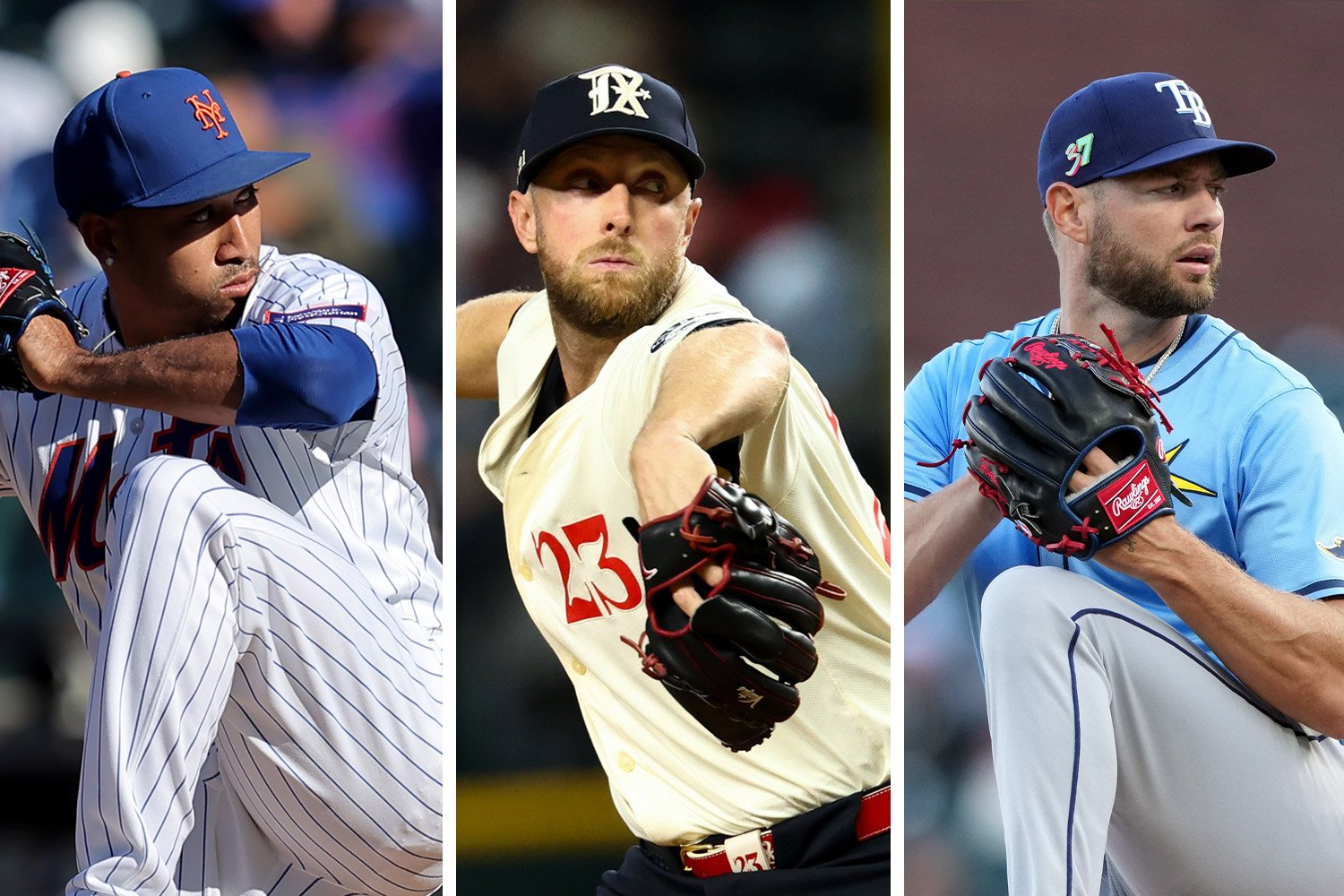 The 2025 offseason has been an eventful one for the San Diego Padres. It started with the shocking resignation of Mike Shildt and the hiring of Craig Stammen. It has also featured the losses of star pitchers Dylan Cease and Robert Suarez, and most recently, the acquisition of sought-after Korean free agent Sung Mun Song. While the Padres have faced dramatic internal shifts this offseason, the remainder of the NL West is reshaping itself as well. Let’s take a look at San Diego’s divisional foes and how they stack up after notable additions and subtractions. Los Angeles Dodgers The rich continue to get richer. To the dismay of the Friar Faithful, the Padres’ arch-rival took home its second consecutive World Series title in 2025. The bad news for San Diego is that the Dodgers’ offseason has indicated nothing other than another year as World Series favorites. The most notable move by Los Angeles this winter was the acquisition of All-Star closer Edwin Diaz. If the Dodgers had one weak link in the 2025 postseason, it was the bullpen’s struggle to close games. Now, bringing in one of Major League Baseball’s top closers makes them all the more deadly. The retirement of future Hall of Fame pitcher Clayton Kershaw will put a void in the Dodgers’ clubhouse, but their dominant starting rotation will have no concern filling his role. Here are notable additions and subtractions for the back-to-back champions this offseason, according to MLB: Additions: Signed RP Edwin Diaz to a 3-year deal. 2025 WAR: 3.0 Re-signed SS Miguel Rojas to a 1-year deal. 2025 WAR: 1.9 Subtractions: SP Clayton Kershaw (retired). 2025 WAR: 1.6 Still on the board: UTIL Kiké Hernandez. 2025 WAR: -0.1 RP Michael Kopech. 2025 WAR: 0.2 RP Evan Phillips. 2025 WAR: 0.4 RP Kirby Yates. 2025 WAR: -0.5 OF Michael Conforto. 2025 WAR: -0.7 SP Tony Gonsolin. 2025 WAR: 0.0 SP Andrew Heaney. 2025 WAR: -0.3 Excluding re-signings and counting all remaining free agents as subtractions, the WAR +/- of the Dodgers’ additions and subtractions still comes out to +2.4. Another offseason where the empire to the North gets stronger. San Francisco Giants Like the Padres, the Giants’ offseason started with a change in manager. After firing Bob Melvin, San Francisco made an unprecedented move, hiring Tony Vitello from the University of Tennessee, who has no former coaching experience at the professional level. Buster Posey is taking the team in a new direction at the top, aiming to keep the Giants in Postseason contention in 2026. The Giants’ moves mostly rely on reshaping their pitching staff. Here are those moves so far, according to MLB: Additions: Signed RP Jason Foley to a 1-year deal. 2025 WAR: 3.4 Signed RP Sam Hentges to a 1-year deal. 2025 WAR: 1.4 Signed SP Adrian Houser to a 2-year deal. 2025 WAR: 3.3 Subtractions: C Andrew Knizner (signed with Seattle). 2025 WAR: 0.3 Still on the board: 1B Wilmer Flores. 2025 WAR: 0.3 1B Dominic Smith. 2025 WAR: 0.4 SP Justin Verlander. 2025 WAR: 1.2 RP Joey Lucchesi. 2025 WAR: 0.4 C Tom Murphy. 2025 WAR: N/A Even when counting all remaining free agents as subtractions, the Giants still have a WAR +/- of +5.5 in the offseason. A bolstered pitching staff should keep San Francisco afloat in the NL West in 2026. Arizona Diamondbacks Two years removed from a Cinderella run to the World Series, the D-backs are trying to turn the tide back towards the postseason. Arizona has not played postseason ball since the 2023 World Series, finishing just outside of the NL Wild Card in consecutive years. Like San Francisco, the Diamondbacks' offseason has focused on pitching reinforcement, notably bringing back Merrill Kelly just months after dealing him to Texas at the trade deadline. Zac Gallen, the club’s long-time ace, is currently testing the market, which would leave a hole in the rotation, but Arizona’s signings have prepared them for his departure. These are the Diamondbacks' moves this offseason, according to MLB: Additions: Signed SP Merrill Kelly to a 2-year deal. 2025 WAR: 2.9 Signed SP Michael Soroka to a 1-year deal. 2025 WAR: 0.6 Re-signed C James McCann to a 1-year deal. 2025 WAR: 1.0 Subtractions: RP Kyle Backhus (traded to Philadelphia). 2025 WAR: -0.1 Still on the board: SP Zac Gallen. 2025 WAR: 1.1 RP Jalen Beeks. 2025 WAR: 0.9 Excluding re-signings and counting all remaining free agents as subtractions, Arizona’s WAR +/- this offseason is +1.6. Although their moves have been marginal, the Diamondbacks are gearing themselves up for another year of postseason contention. Colorado Rockies After a historically bad 2025 season and third-straight 100-loss season, the Rockies finally decided to make front office changes. Colorado hired analytics guru and Moneyball hero, Paul DePodesta, as President of Baseball Operations and hired former Padres General Manager Josh Byrnes as GM. The moves stop there. Despite the changes at the top, it has been another offseason of non-action for Colorado, being the only team yet to sign an MLB contract this winter. All signs point to German Marquez, their former ace, walking in free agency, but he has not been the same since receiving Tommy John surgery. Here are Colorado’s moves (or lack thereof) this offseason: Additions: None as of Dec. 27, 2025 Subtractions: RP Ryan Rolison (traded to Atlanta). 2025 WAR: -0.3 Still on the board: SP German Marquez. 2025 WAR: -1.1 1B Michael Toglia. 2025 WAR: -1.7 SS Orlando Arcia. 2025 WAR: -1.2 INF Kyle Farmer. 2025 WAR: -0.8 Somehow, if all of Colorado’s free agents sign elsewhere, they will gain 5.5 WAR in the offseason, without making any signings. If their inactivity doesn’t make it obvious, the Rockies have no plans of competing in 2026, but moves at the top of the organization could be the start of much-needed change for Colorado. Implications for the Padres All signs point to another competitive season in the NL West for the Padres in 2026. The Dodgers, Giants, and Diamondbacks have all made improvements at the margins this winter, making for another exciting year of baseball out west.
 -
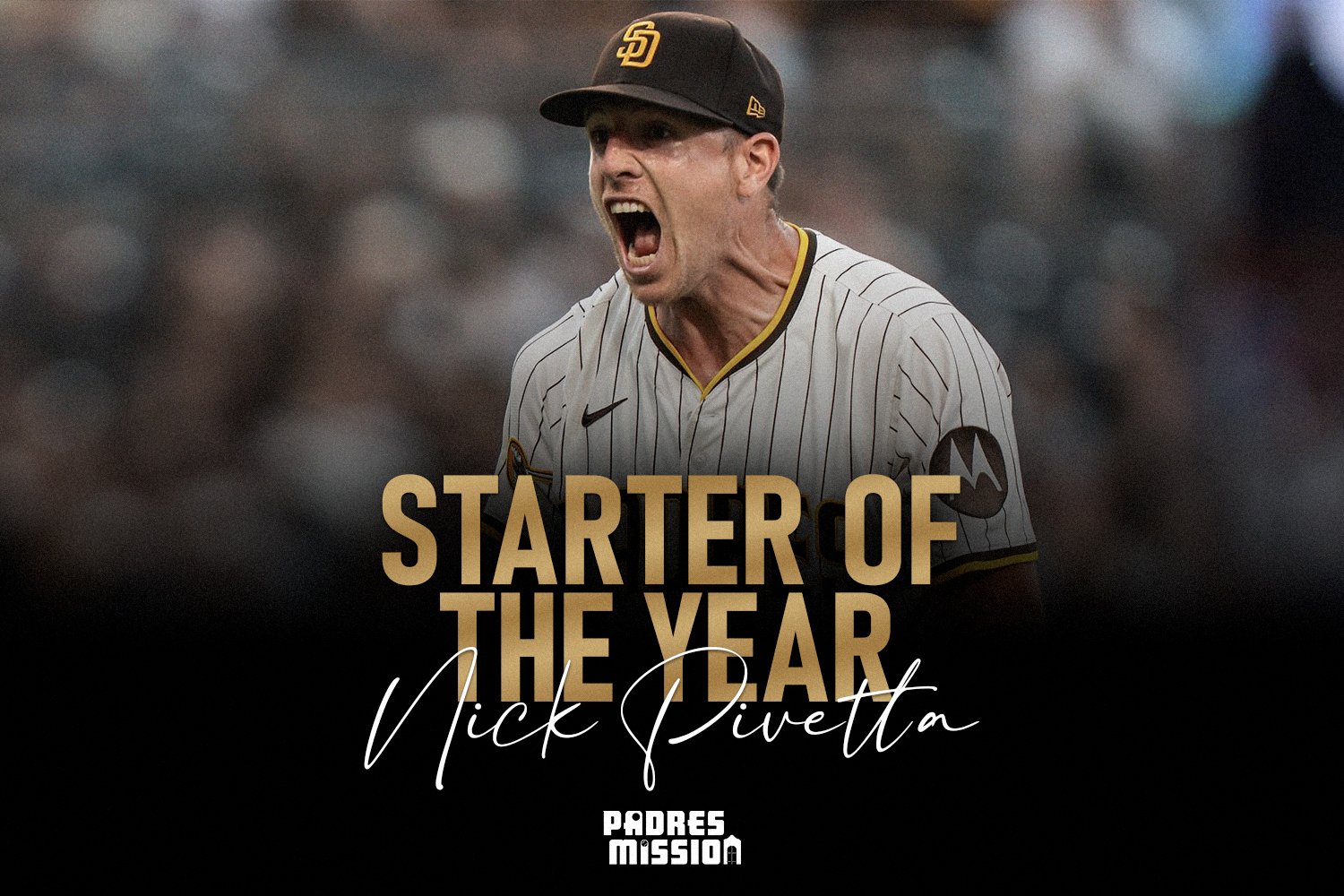 When Nick Pivetta signed a four-year, $55 million contract this offseason with the Padres, no one quite knew how important that deal would be for San Diego. In a year plagued with injuries to key starters, Pivetta stepped up to the occasion and was, without a doubt, the best starter this season for the Padres. Pivetta’s rise to the top of San Diego’s rotation was unexpected, but crucial to any of the Padres’ postseason hopes. With Joe Musgrove out for the season while recovering from Tommy John surgery, in conjunction with Yu Darvish and Michael King spending the majority of the season on the IL, someone had to fill the void on the mound. Even Dylan Cease, who was expected to be the Padres' ace this season, had his fair share of struggles. Despite the tremendous uncertainty in the rotation, Pivetta stepped in and dealt a career season in his first with the Padres. Numbers-wise, this was the best season of the 32-year-old’s career, and it’s not even close. In his tenth MLB season, Pivetta put up career-bests and led all Padres starters in the following statistics: 2.87 ERA 5.3 WAR 0.985 WHIP 3.50 FIP 13-5 record 181.2 IP To put that into perspective, in his entire MLB career, Pivetta never achieved a sub-3.00 ERA, sub-1.00 WHIP, or a WAR above 3 until this season. Despite solid years in Boston and Philadelphia prior to signing with San Diego, Pivetta has never pitched close to the level he showcased with the Friars in 2025. He was brought in by A.J. Preller to bring depth and stability to the rotation as a veteran, but was so much more. Pivetta boasts a six-pitch arsenal, featuring a four-seam fastball (46% usage), curveball (22% usage), sweeper (17% usage), cutter (9% usage), sinker (4% usage), and slider (2% usage). Out of his most used pitches, his four-seamer and sweeper are particularly effective. On his four seamer, Pivetta generated a 24.1 Whiff% and just a .195 batting average. On the sweeper, he tallied an impressive 37.4 Whiff% and .157 batting average. On left-handed hitters, Pivetta keeps it simple, mostly dealing his four seamer and changeup. Against righties, he brings a more varied selection, activating that very effective sweeper, as well as sinkers and cutters. Overall, he shuts down hitters on both sides of the plate, allowing a .205 batting average against righties and just .185 against lefties. According to Baseball Savant, Pivetta burdens elite value, ranking in the 99th percentile of pitching run value, 98th percentile of fastball run value, and 97th percentile of breaking run value. Not too shabby for a guy who was originally brought in as a rotational depth piece. Going into the postseason, Pivetta assumed a much bigger role for the Padres than initially believed. He was brilliant in a Game 1 loss in the Wild Card Round to the Chicago Cubs, striking out nine over five innings. Unfortunately, he surrendered back-to-back solo home runs in the fifth inning that proved to be the difference, but he was as good as advertised while making his first postseason appearance since 2021. In a season of injuries and uncertainty in the rotation for the Padres, Pivetta stood out from the rest. He was an unexpected hero for the Friars this season, blowing any expectations completely out of the water. His consistently high-level play this season kept the team afloat in a campaign where any crack from the rotation could have caused everything to crumble. Nobody saw it coming in April, but Nick Pivetta is your San Diego Padres starter of the year.
 -
When Nick Pivetta signed a four-year $55 million contract this offseason with the Padres, no one quite knew how big that deal would be for San Diego. In a year plagued with injuries to key starters, Pivetta stepped up to the occasion and was, without a doubt, the best starter this season for the Padres. Pivetta’s rise to the top of San Diego’s rotation was unexpected, but crucial to any of the Padres’ postseason hopes. With Joe Musgrove out for the season recovering from Tommy John surgery, as well as Yu Darvish and Michael King spending the majority of the season on the IL, someone had to fill the void on the mound. Even Dylan Cease, who was expected to be the Padres ace this season, had his fair share of struggles. Despite the tremendous uncertainty in the rotation, Pivetta stepped in and dealt a career season in his first with the Padres. Numbers-wise, this was the best season of the 32-year-old’s career and it’s not even close. In his tenth MLB season, Pivetta put up career-bests and led all Padres starters in the following statistics: 2.87 ERA 5.3 WAR 0.985 WHIP 3.50 FIP 13-5 record 181.2 IP To put it into perspective, in his entire MLB career, Pivetta never achieved a sub-3.0 ERA, sub-1.0 WHIP, or a WAR above 3 until this season. Despite solid years in Boston and Philadelphia prior to signing with San Diego, Pivetta has never pitched close to the level we have seen this season. He was brought in by A.J. Preller to bring depth and stability to the rotation as a veteran, but has been so much more. Pivetta boasts a six pitch arsenal, featuring a four-seam fastball (46% usage), curveball (22% usage), sweeper (17% usage), cutter (9% usage), sinker (4% usage), and slider (2% usage). Out of his most used pitches, his four seamer and sweeper are particularly effective. On his four seamer, Pivetta generated a 24.1 Whiff% and just a .195 batting average. On the sweeper, he tallied an impressive 37.4 Whiff% and .157 batting average. On left-handed hitters, Pivetta keeps it simple, mostly dealing his four seamer and changeup. Against righties, he brings a more varied selection, activating that very effective sweeper, as well as sinkers and cutters. Overall, he shuts down hitters on both sides of the plate, allowing a .205 batting average against righties and just .185 against lefties. According to Baseball Savant, Pivetta burdens elite value, ranking in the 99th percentile of pitching run value, 99th percentile of fastball run value, and 97th percentile of breaking run value. Not too shabby for a guy who was originally brought in as a rotational depth piece. Going into the postseason, Pivetta is assuming a much bigger role for the Padres than initially believed. They will need him to continue tossing the best season of his career, especially with the rotation looking less steady than it did preseason. Unfortunately there is not much of a postseason sample size to go off of when trying to predict what Pivetta will bring to the Padres in October. Pivetta’s only postseason appearance came with the Red Sox in 2021, where he pitched just 13.2 innings across three games. However, his numbers in those games are encouraging. A 2.63 ERA and 1.024 WHIP highlight his brief postseason stint. Those are solid numbers, but if his breakout this season indicates anything, San Diego should expect Pivetta to blow them away this postseason. If the Padres want a shot at their first World Series title, he has to. In a season of injuries and uncertainty in the rotation for the Padres, Pivetta has stood out from the rest. He has been an unexpected hero for the Friars this season, blowing any expectations completely out of the water. His consistently high-level play this season has kept the team afloat in a season where any bluff from starting pitching could cause everything to crumble. Nobody saw it coming in April, but Nick Pivetta is your San Diego Padres starter of the year. View full article
-
Major League Baseball’s best bullpen just took a huge blow and at the worst time. In the seventh inning of Monday’s loss to Baltimore, Jason Adam went down after a pitch and was carted off the field. On Tuesday, the Padres announced that Adam would miss the remainder of the season, placing him on the 15-day IL with a left quadriceps tendon rupture. The All-Star reliever has been nothing short of stellar this season for San Diego. In 65 1/3 innings (the second-highest mark of his career), Adam has accumulated a 1.93 ERA, 1.148 WHIP, and 2.5 WAR. He's been a tremendous asset amongst a veritable group of elite relievers. With the loss of Adam, the Padres lose arguably their most well-rounded reliever, as well as their go-to option for the middle innings. If it’s not clear by now, Adam is a crucial piece to making the Padres bullpen the best group in MLB. Luckily, he’s not the only star in the ‘pen for San Diego. He was joined by teammates Robert Suarez and Adrian Morejon as Padres relievers to make this year’s Midsummer Classic. A.J. Preller also approached the trade deadline with the intent of making the bullpen even stronger. That was shown by taking a big swing for Mason Miller. If any bullpen is built to withstand a setback like Adam’s injury, it’s this one. There are plenty of names who can fill-in the spots where Adam would be pitching. Miller, Suarez, and Morejon still form a nearly unhittable group on the mound. Having three guys who can step in at any point of the game and completely shutdown opposing offenses is a recipe for success in October. Assuming that Suarez will maintain his duties as closer through September and beyond, Miller and Morejon will (for the most part) fill the void left with Adam’s absence. Both guys are key reasons as to why Adam’s loss is not as detrimental for the Padres as it would be for nearly every other team in the league, and they should be counted on as the primary bridge options to Suarez when the playoffs begin. Since being traded to San Diego, Miller has done exactly as Preller had hoped. A 1.50 ERA and 0.917 WHIP in brown and gold bury any of his numbers with the A’s in the dirt. His arsenal is essentially only two pitches, with his legendary four-seam fastball and slider dominating hitters aplenty. He’s also an absolute flamethrower, with his average fastball clocking in at 101.2 MPH. Although his stuff is completely different from Adam’s, the addition of Miller helps lessen the damage of the injury and provides another elite arm that can rise to the occasion. Morejon also provides big-time prowess to the bullpen. He is simply one of the best relievers in baseball, and the numbers back it up. According to Baseball Savant, Morejon’s pitching run value is in the 96th percentile. That goes along with an outstanding 0.79 and 1.85 ERA in 63 1/3 innings pitched. It’s no question that the Padres bullpen has the star power to fill Adam’s shoes. Where things become questionable is in the play of the bullpen’s depth. Padres fans can expect to hear the names of Yuki Matsui, David Morgan, Jeremiah Estrada, Wandy Peralta, etc. as the season continues. This is where the question marks begin for the bullpen. Sure, those guys can be trustworthy coming into the game when leading the White Sox by five in September, but they are more difficult to trust in the postseason. If Mike Shildt sends out the wrong guy in sixth inning of a playoff game, those three outs that otherwise would have gone to Adam could cost the Padres their season. Outside of Suarez, Morejon, and Miller, San Diego is going to have to take risks with who they put on the mound. In totality, San Diego’s bullpen depth is still strong, but the margin for error runs much thinner without Adam rounding out the lineup. Come October, expect to see the Padres rely much more on their star relievers than before the injury. View full article
-
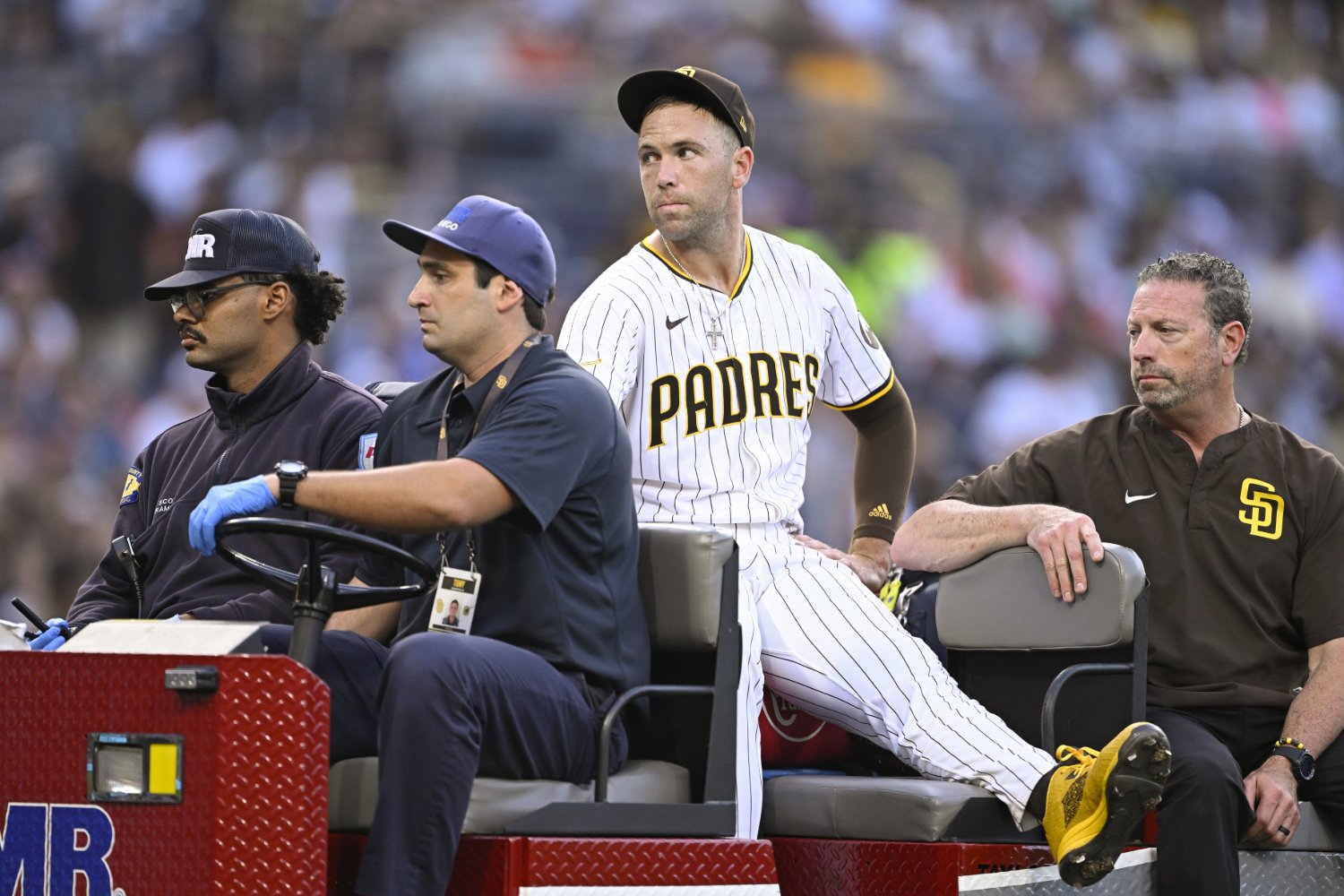 Major League Baseball’s best bullpen just took a huge blow and at the worst time. In the seventh inning of Monday’s loss to Baltimore, Jason Adam went down after a pitch and was carted off the field. On Tuesday, the Padres announced that Adam would miss the remainder of the season, placing him on the 15-day IL with a left quadriceps tendon rupture. The All-Star reliever has been nothing short of stellar this season for San Diego. In 65 1/3 innings (the second-highest mark of his career), Adam has accumulated a 1.93 ERA, 1.148 WHIP, and 2.5 WAR. He's been a tremendous asset amongst a veritable group of elite relievers. With the loss of Adam, the Padres lose arguably their most well-rounded reliever, as well as their go-to option for the middle innings. If it’s not clear by now, Adam is a crucial piece to making the Padres bullpen the best group in MLB. Luckily, he’s not the only star in the ‘pen for San Diego. He was joined by teammates Robert Suarez and Adrian Morejon as Padres relievers to make this year’s Midsummer Classic. A.J. Preller also approached the trade deadline with the intent of making the bullpen even stronger. That was shown by taking a big swing for Mason Miller. If any bullpen is built to withstand a setback like Adam’s injury, it’s this one. There are plenty of names who can fill-in the spots where Adam would be pitching. Miller, Suarez, and Morejon still form a nearly unhittable group on the mound. Having three guys who can step in at any point of the game and completely shutdown opposing offenses is a recipe for success in October. Assuming that Suarez will maintain his duties as closer through September and beyond, Miller and Morejon will (for the most part) fill the void left with Adam’s absence. Both guys are key reasons as to why Adam’s loss is not as detrimental for the Padres as it would be for nearly every other team in the league, and they should be counted on as the primary bridge options to Suarez when the playoffs begin. Since being traded to San Diego, Miller has done exactly as Preller had hoped. A 1.50 ERA and 0.917 WHIP in brown and gold bury any of his numbers with the A’s in the dirt. His arsenal is essentially only two pitches, with his legendary four-seam fastball and slider dominating hitters aplenty. He’s also an absolute flamethrower, with his average fastball clocking in at 101.2 MPH. Although his stuff is completely different from Adam’s, the addition of Miller helps lessen the damage of the injury and provides another elite arm that can rise to the occasion. Morejon also provides big-time prowess to the bullpen. He is simply one of the best relievers in baseball, and the numbers back it up. According to Baseball Savant, Morejon’s pitching run value is in the 96th percentile. That goes along with an outstanding 0.79 and 1.85 ERA in 63 1/3 innings pitched. It’s no question that the Padres bullpen has the star power to fill Adam’s shoes. Where things become questionable is in the play of the bullpen’s depth. Padres fans can expect to hear the names of Yuki Matsui, David Morgan, Jeremiah Estrada, Wandy Peralta, etc. as the season continues. This is where the question marks begin for the bullpen. Sure, those guys can be trustworthy coming into the game when leading the White Sox by five in September, but they are more difficult to trust in the postseason. If Mike Shildt sends out the wrong guy in sixth inning of a playoff game, those three outs that otherwise would have gone to Adam could cost the Padres their season. Outside of Suarez, Morejon, and Miller, San Diego is going to have to take risks with who they put on the mound. In totality, San Diego’s bullpen depth is still strong, but the margin for error runs much thinner without Adam rounding out the lineup. Come October, expect to see the Padres rely much more on their star relievers than before the injury.
 -
The month of August has October-level stakes for the Padres, as four consecutive series against Los Angeles and San Francisco will likely determine the outcome of the NL West. Just a month ago, it seemed like the Dodgers were on a cakewalk to the division title. On July 3, they stood nine games ahead of the Padres and Giants for the division’s top spot. Since that date, the Padres have surged with a 22-12 record, compared to 12-20 records for LA and San Francisco, respectively. Now, tied with Los Angeles for the division lead and nine games ahead of San Francisco, a chance at the NL West crown has become very real for the Padres. As luck will have it, San Diego’s next four series go as this: @SFG, @LAD, vs. SFG, vs. LAD. As it stands, the odds are still heavily in favor of the Dodgers winning the division for a fourth-straight season. FanGraphs' playoff odds model gives them a 70.6% chance at the division title, with the Padres at 29.3% and the Giants at 0.0% (as of the morning of August 13). With the odds against them, the Padres will need to show up and show up big in their upcoming series to put themselves in the division’s driver’s seat. First off, let’s take a look at the battle at the top between the Padres and Dodgers. The clubs are slated to face each other six more times this season, all of those coming in the upcoming weeks. Each game in these series could very well make or break the Padres’ 2025 campaign. In their head-to-head matchups this season, the Padres are just 2-5 against Los Angeles, so they are playing from behind. To earn back the tiebreaker, San Diego will have to dominate the Dodgers the rest of the way. To get this done, the Friars need to win at least five of the six remaining games against their Southern California foes. Even if the Padres are tied with the Dodgers after these series, the odds will be against them. In that case, they’d have to be one game better than the Dodgers in their remaining schedule, excluding head-to-head games. According to Tankathon, San Diego has the second-easiest remaining schedule in the league. So, how hard could it be to gain ground on LA? Well, the Dodgers have the easiest remaining schedule. With virtually the same strength of schedule, it can be assumed that the gap between the Padres and Dodgers will remain around the same. That makes the matchups between them all the more important. To optimize its chances of winning the division title, San Diego will need to win at least five of the remaining head-to-head games. Luckily, this portion of the schedule is coming at the right time for the Padres. As their earlier-mentioned records since July 3 indicate, San Diego is finding its groove as soon as Los Angeles is losing it. The Padres are being given an optimal chance to put destiny in their own hands and take over the division lead. However, this isn’t a two-team battle. At least not yet. The Giants are still lurking at the back of the race, trying to claw their way back into it. By taking care of business this month, the Padres can take them off of life support. Despite the Giants’ sizzling hot start to the season, the Padres have still managed a 5-2 record in their head-to-head matchups. With a much less daunting matchup than the LA series, San Diego can utilize its upcoming series against San Francisco to both knock them out of the race and gain ground in the division. The Giants are not just trying to ride the Padres’ coattails in the divisional race, but also in the Wild Card race. FanGraphs gives them just a 5.7% chance to clinch a Wild Card spot, so a couple of series wins for the Padres against them would dwindle those chances even closer to zero. Each time San Diego beats San Francisco, the Giants’ odds get even grimmer. Before Monday’s victory over the Giants, San Francisco had a 7.7% chance of a postseason clinch. Those odds dropped 2% after the game, showing the sheer weight each loss holds. A strong showing in August’s two series against the Giants can help push the Padres’ other California division rival to near-zero playoff odds. Not only would this help San Diego get one more team out of their vicinity, but it would also help them creep closer to the top of the NL West. If the trends continue, the Padres have a golden opportunity to take advantage of their Golden State rivals this month. An opportunity to enhance playoff position to this degree before September even begins is rare, so they have to be prepared to play October-level baseball in these series. If the Padres can do that, the NL could very well be theirs. View full article
-
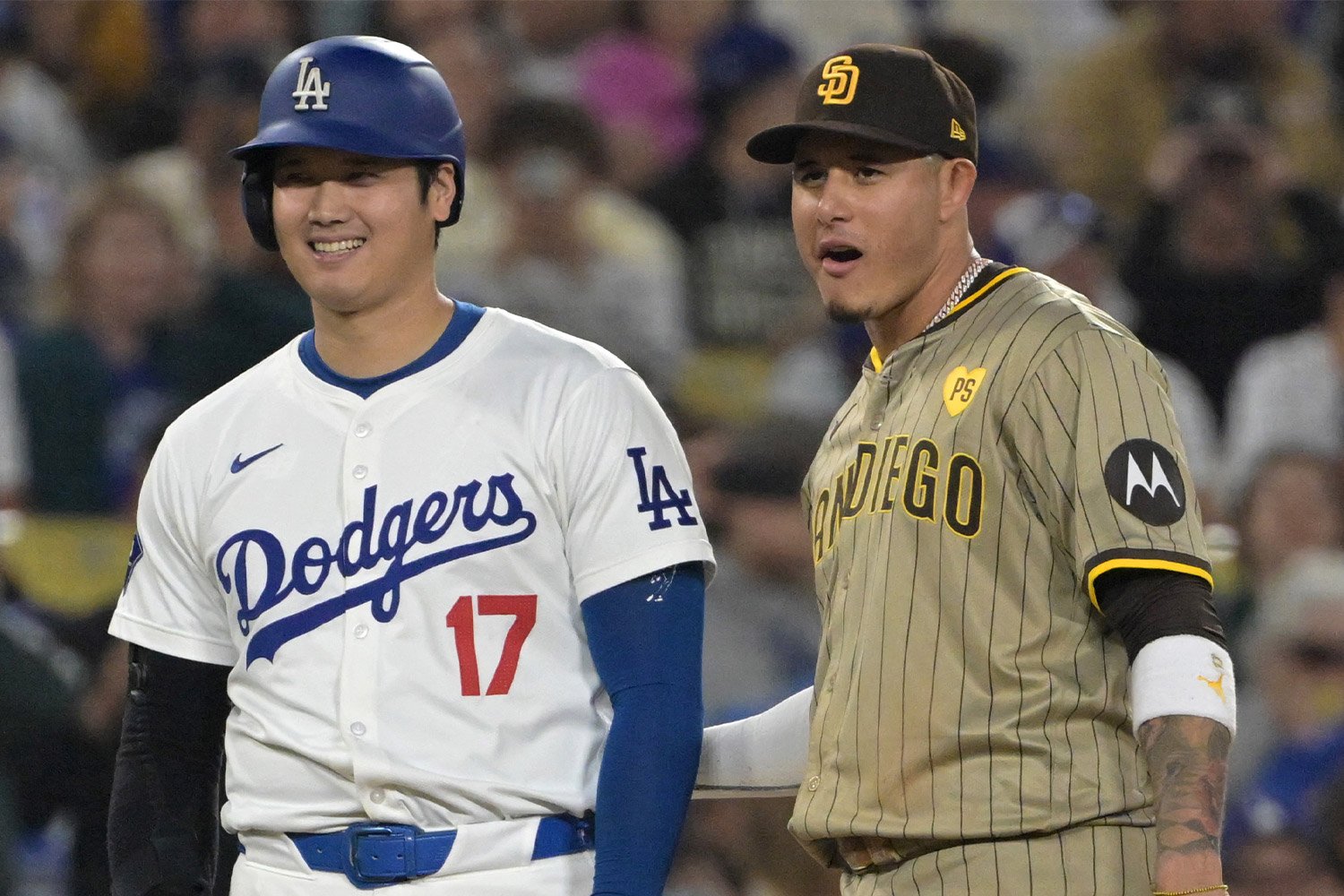 The month of August has October-level stakes for the Padres, as four consecutive series against Los Angeles and San Francisco will likely determine the outcome of the NL West. Just a month ago, it seemed like the Dodgers were on a cakewalk to the division title. On July 3, they stood nine games ahead of the Padres and Giants for the division’s top spot. Since that date, the Padres have surged with a 22-12 record, compared to 12-20 records for LA and San Francisco, respectively. Now, tied with Los Angeles for the division lead and nine games ahead of San Francisco, a chance at the NL West crown has become very real for the Padres. As luck will have it, San Diego’s next four series go as this: @SFG, @LAD, vs. SFG, vs. LAD. As it stands, the odds are still heavily in favor of the Dodgers winning the division for a fourth-straight season. FanGraphs' playoff odds model gives them a 70.6% chance at the division title, with the Padres at 29.3% and the Giants at 0.0% (as of the morning of August 13). With the odds against them, the Padres will need to show up and show up big in their upcoming series to put themselves in the division’s driver’s seat. First off, let’s take a look at the battle at the top between the Padres and Dodgers. The clubs are slated to face each other six more times this season, all of those coming in the upcoming weeks. Each game in these series could very well make or break the Padres’ 2025 campaign. In their head-to-head matchups this season, the Padres are just 2-5 against Los Angeles, so they are playing from behind. To earn back the tiebreaker, San Diego will have to dominate the Dodgers the rest of the way. To get this done, the Friars need to win at least five of the six remaining games against their Southern California foes. Even if the Padres are tied with the Dodgers after these series, the odds will be against them. In that case, they’d have to be one game better than the Dodgers in their remaining schedule, excluding head-to-head games. According to Tankathon, San Diego has the second-easiest remaining schedule in the league. So, how hard could it be to gain ground on LA? Well, the Dodgers have the easiest remaining schedule. With virtually the same strength of schedule, it can be assumed that the gap between the Padres and Dodgers will remain around the same. That makes the matchups between them all the more important. To optimize its chances of winning the division title, San Diego will need to win at least five of the remaining head-to-head games. Luckily, this portion of the schedule is coming at the right time for the Padres. As their earlier-mentioned records since July 3 indicate, San Diego is finding its groove as soon as Los Angeles is losing it. The Padres are being given an optimal chance to put destiny in their own hands and take over the division lead. However, this isn’t a two-team battle. At least not yet. The Giants are still lurking at the back of the race, trying to claw their way back into it. By taking care of business this month, the Padres can take them off of life support. Despite the Giants’ sizzling hot start to the season, the Padres have still managed a 5-2 record in their head-to-head matchups. With a much less daunting matchup than the LA series, San Diego can utilize its upcoming series against San Francisco to both knock them out of the race and gain ground in the division. The Giants are not just trying to ride the Padres’ coattails in the divisional race, but also in the Wild Card race. FanGraphs gives them just a 5.7% chance to clinch a Wild Card spot, so a couple of series wins for the Padres against them would dwindle those chances even closer to zero. Each time San Diego beats San Francisco, the Giants’ odds get even grimmer. Before Monday’s victory over the Giants, San Francisco had a 7.7% chance of a postseason clinch. Those odds dropped 2% after the game, showing the sheer weight each loss holds. A strong showing in August’s two series against the Giants can help push the Padres’ other California division rival to near-zero playoff odds. Not only would this help San Diego get one more team out of their vicinity, but it would also help them creep closer to the top of the NL West. If the trends continue, the Padres have a golden opportunity to take advantage of their Golden State rivals this month. An opportunity to enhance playoff position to this degree before September even begins is rare, so they have to be prepared to play October-level baseball in these series. If the Padres can do that, the NL could very well be theirs.
 -
Pinch-hitting has been an Achilles' heel for the Padres’ offense in 2025. According to FanGraphs, San Diego’s pinch-hitting ranks 28th in MLB with a depressing -0.5 WAR, .217 wOBA, and .156 AVG. The only Padres pinch hitter to produce positive WAR is Jake Cronenworth, who has only three at-bats when inserted into an at-bat, walking in two of them and driving in an RBI single in the other. Aside from Cronenworth’s small sample size, minimal positive impact has come from San Diego’s bench. A lot of that comes from its dependence on aging bench players, who are not able to provide the spark off the bench that pinch-hitters are expected to do. The club has primarily relied on veteran hitting off the bench this season, mostly turning to players 30 years old and beyond to spark offense off the bench. Among those veterans, Elias Diaz, Jose Iglesias, Trenton Brooks, and Tyler Wade have spent the most plate appearances pinch-hitting for San Diego. This group of players, all on the wrong side of 30, has been the Padres’ most-used pinch-hitters, mainly contributing to their pinch-hitting woes. Each one of them has a zero WAR or lower, which is not going to cut it for players who come up to the plate at some of the game’s most critical points. The 35-year-old Iglesias, the oldest of the bunch, has been the club’s best contributor off the bench. In 17 plate appearances as a pinch hitter, he has a .313 AVG with 4 RBIs and two runs. His average is quite a step up from his season batting average, which sits at .232. Throughout his career, Iglesias has been one of the best contact hitters in the game, so his bench production is not surprising. But after Iglesias, any kind of positive pinch-hitting production for San Diego drops off a cliff. 34-year-old catcher Diaz has been the Padres’ most-used pinch-hitter this season, with 19 plate appearances, and has been by far the worst hitter off of their bench this season. His numbers as a PH are somehow worse than as a starter this season, batting just .056 with a -0.3 WAR. If this is the production you’re getting from the highest volume pinch-hitter on the roster, then any hope of positive bench production is a lost cause. After acquiring Freddy Fermin at the deadline, Diaz will spend a lot more time as the backup catcher, which is a dangerous precedent for more pinch-hitting opportunities. The much younger Luis Campusano has been dominating Triple A and should get an opportunity to replace Diaz and plug a spark off the bench. However, that should be taken with a grain of salt given his previous stints in the big leagues. The next-worst pinch-hitter for San Diego has been Brooks, who mustered a .154 AVG and -0.1 WAR in 13 plate appearances as a pinch hitter for the Padres. The 30-year-old was designated for assignment on July 31, but is yet another example of an older, low-production player getting an abundance of pinch-hitting opportunities for the club. Right there with Brooks is Wade, another 30-year-old getting plenty of the spotlight on San Diego’s bench. As PH, Wade is only batting .100 and producing -0.1 WAR. Wade has done that in 12 plate appearances, the fourth-most of Padres pinch hitters. Shockingly, these players aren’t the only veterans the Padres have turned to produce off the bench this season. 41-year-old Yuli Gurriel and 35-year-old Jason Heyward also put up lackluster numbers off the bench, later getting designated for assignment. Comparing the Padres' bench full of veterans to the highest-ranking pinch-hitting groups in MLB, there is a night-and-day difference. Colorado (somehow) and Detroit sit atop their respective leagues in pinch-hitting WAR. What do those teams have in common? The pinch-hitters on their rosters are mostly younger than 30. The strategy of using veterans to fill in at PH is not the formula for a successful bench. Younger players with more to prove may be able to provide the sparks off the bench that San Diego’s offense lacks. Luckily, the resources are there to make it a possibility for the Padres. In addition to calling up Campusano, there are some more options to turn San Diego’s bench younger. After trading for Ramon Laureano to fill duties in left field, Gavin Sheets is likely to spend more time coming off the bench. A younger player with proven firepower might be exactly what the Padres need to turn things around for their depth hitting. It may not be entirely possible to do with just a few months left in the season, but a youth movement can turn the bench in the right direction for the Padres. View full article
-
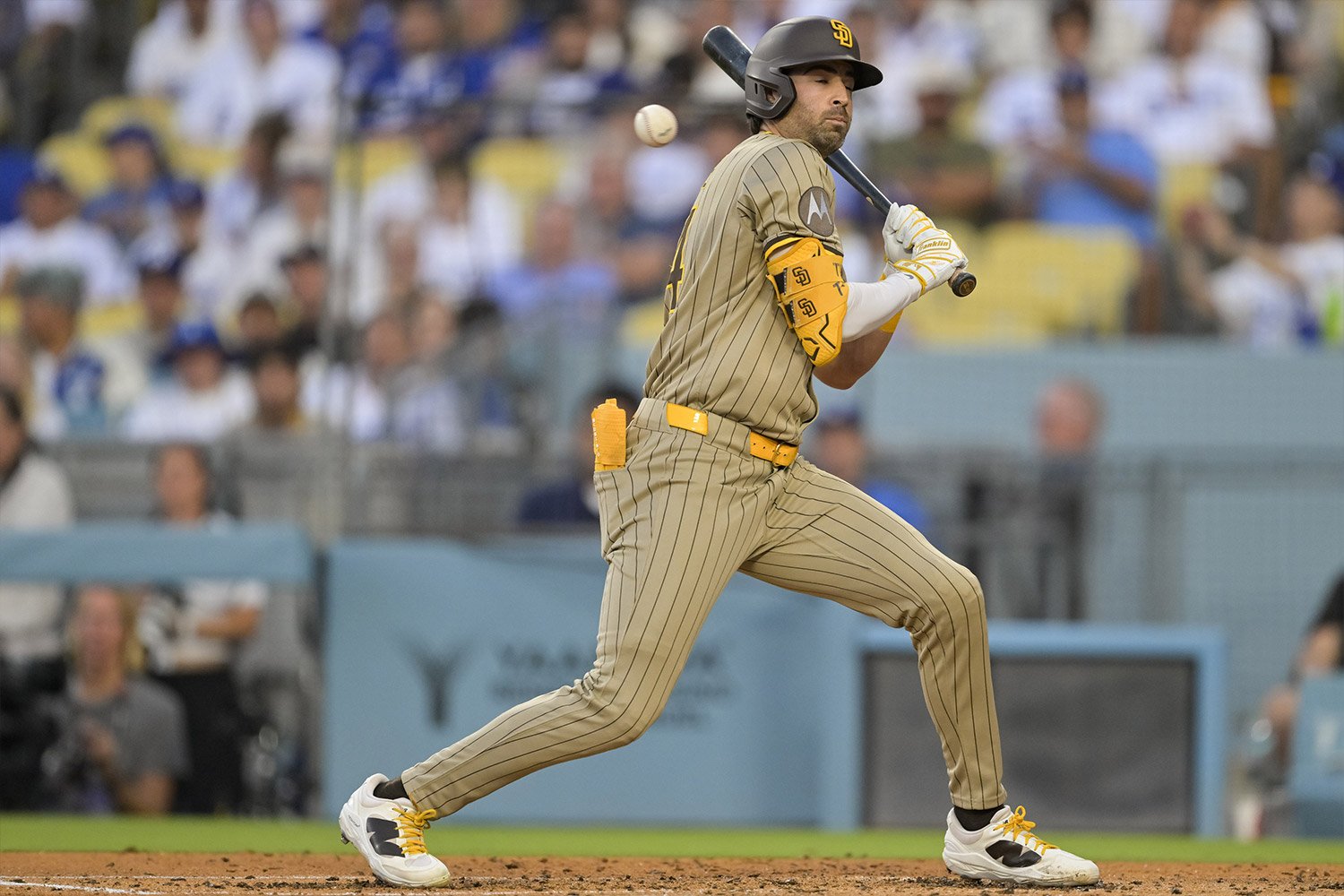 Pinch-hitting has been an Achilles' heel for the Padres’ offense in 2025. According to FanGraphs, San Diego’s pinch-hitting ranks 28th in MLB with a depressing -0.5 WAR, .217 wOBA, and .156 AVG. The only Padres pinch hitter to produce positive WAR is Jake Cronenworth, who has only three at-bats when inserted into an at-bat, walking in two of them and driving in an RBI single in the other. Aside from Cronenworth’s small sample size, minimal positive impact has come from San Diego’s bench. A lot of that comes from its dependence on aging bench players, who are not able to provide the spark off the bench that pinch-hitters are expected to do. The club has primarily relied on veteran hitting off the bench this season, mostly turning to players 30 years old and beyond to spark offense off the bench. Among those veterans, Elias Diaz, Jose Iglesias, Trenton Brooks, and Tyler Wade have spent the most plate appearances pinch-hitting for San Diego. This group of players, all on the wrong side of 30, has been the Padres’ most-used pinch-hitters, mainly contributing to their pinch-hitting woes. Each one of them has a zero WAR or lower, which is not going to cut it for players who come up to the plate at some of the game’s most critical points. The 35-year-old Iglesias, the oldest of the bunch, has been the club’s best contributor off the bench. In 17 plate appearances as a pinch hitter, he has a .313 AVG with 4 RBIs and two runs. His average is quite a step up from his season batting average, which sits at .232. Throughout his career, Iglesias has been one of the best contact hitters in the game, so his bench production is not surprising. But after Iglesias, any kind of positive pinch-hitting production for San Diego drops off a cliff. 34-year-old catcher Diaz has been the Padres’ most-used pinch-hitter this season, with 19 plate appearances, and has been by far the worst hitter off of their bench this season. His numbers as a PH are somehow worse than as a starter this season, batting just .056 with a -0.3 WAR. If this is the production you’re getting from the highest volume pinch-hitter on the roster, then any hope of positive bench production is a lost cause. After acquiring Freddy Fermin at the deadline, Diaz will spend a lot more time as the backup catcher, which is a dangerous precedent for more pinch-hitting opportunities. The much younger Luis Campusano has been dominating Triple A and should get an opportunity to replace Diaz and plug a spark off the bench. However, that should be taken with a grain of salt given his previous stints in the big leagues. The next-worst pinch-hitter for San Diego has been Brooks, who mustered a .154 AVG and -0.1 WAR in 13 plate appearances as a pinch hitter for the Padres. The 30-year-old was designated for assignment on July 31, but is yet another example of an older, low-production player getting an abundance of pinch-hitting opportunities for the club. Right there with Brooks is Wade, another 30-year-old getting plenty of the spotlight on San Diego’s bench. As PH, Wade is only batting .100 and producing -0.1 WAR. Wade has done that in 12 plate appearances, the fourth-most of Padres pinch hitters. Shockingly, these players aren’t the only veterans the Padres have turned to produce off the bench this season. 41-year-old Yuli Gurriel and 35-year-old Jason Heyward also put up lackluster numbers off the bench, later getting designated for assignment. Comparing the Padres' bench full of veterans to the highest-ranking pinch-hitting groups in MLB, there is a night-and-day difference. Colorado (somehow) and Detroit sit atop their respective leagues in pinch-hitting WAR. What do those teams have in common? The pinch-hitters on their rosters are mostly younger than 30. The strategy of using veterans to fill in at PH is not the formula for a successful bench. Younger players with more to prove may be able to provide the sparks off the bench that San Diego’s offense lacks. Luckily, the resources are there to make it a possibility for the Padres. In addition to calling up Campusano, there are some more options to turn San Diego’s bench younger. After trading for Ramon Laureano to fill duties in left field, Gavin Sheets is likely to spend more time coming off the bench. A younger player with proven firepower might be exactly what the Padres need to turn things around for their depth hitting. It may not be entirely possible to do with just a few months left in the season, but a youth movement can turn the bench in the right direction for the Padres.
 -
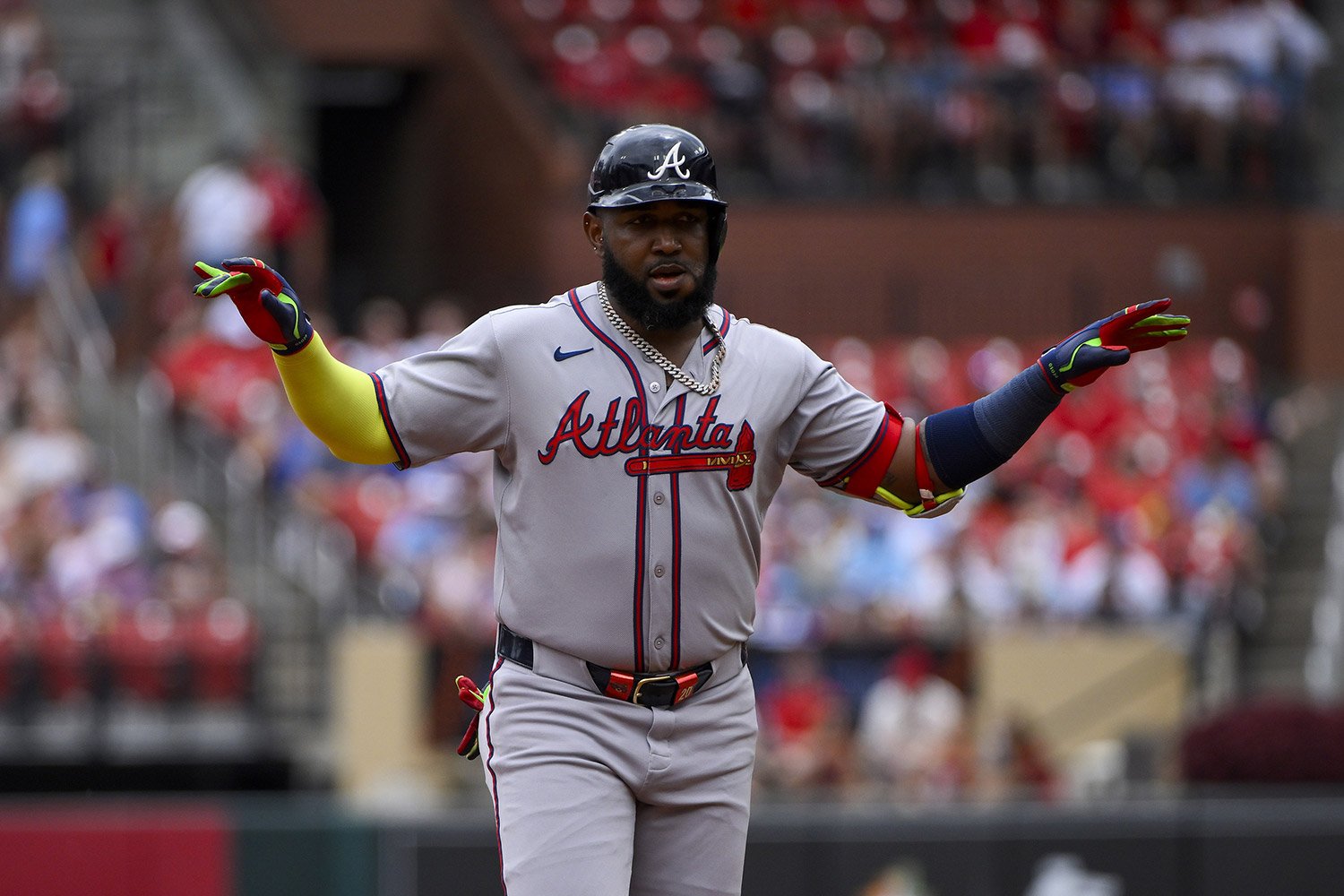 As the trade deadline approaches, a new name has entered the Padres’ radar. Dominican MLB insider Hector Gomez of Z101 Digital reported Tuesday that trade discussions between the Padres and Braves have “intensified”, with San Diego expressing heavy interest in DH Marcell Ozuna. Gomez suggested that the Padres would send a return of RHP Francis Pena and RHP Ryan Bergert, the organization’s No. 18 and No. 21 prospects, to Atlanta. Ozuna would likely fill the DH spot in the Padres’ lineup, despite spending most of his career in left field. He has taken a step back at the plate this season, slashing .235/.361/.390 with 13 home runs and 42 RBI. However, he finished fourth in NL MVP voting in 2024, compiling an impressive line of .302/.378/.546, mashing 39 home runs and 104 RBI. The 34-year-old is in the final year of a four-year $65 million contract, meaning he’d likely be a rental piece to help the Padres in their push for the postseason. It would be a steep price for an aging rental player, so San Diego would need Ozuna to play similarly to his 2024 version to make it pay off.
 -
As the trade deadline approaches, a new name has entered the Padres’ radar. Dominican MLB insider Hector Gomez of Z101 Digital reported Tuesday that trade discussions between the Padres and Braves have “intensified”, with San Diego expressing heavy interest in DH Marcell Ozuna. Gomez suggested that the Padres would send a return of RHP Francis Pena and RHP Ryan Bergert, the organization’s No. 18 and No. 21 prospects, to Atlanta. Ozuna would likely fill the DH spot in the Padres’ lineup, despite spending most of his career in left field. He has taken a step back at the plate this season, slashing .235/.361/.390 with 13 home runs and 42 RBI. However, he finished fourth in NL MVP voting in 2024, compiling an impressive line of .302/.378/.546, mashing 39 home runs and 104 RBI. The 34-year-old is in the final year of a four-year $65 million contract, meaning he’d likely be a rental piece to help the Padres in their push for the postseason. It would be a steep price for an aging rental player, so San Diego would need Ozuna to play similarly to his 2024 version to make it pay off. View full rumor
-
The Padres Are Overperforming In 2025, And It’s Not A Good Thing
Samuel Cozart posted an article in Padres
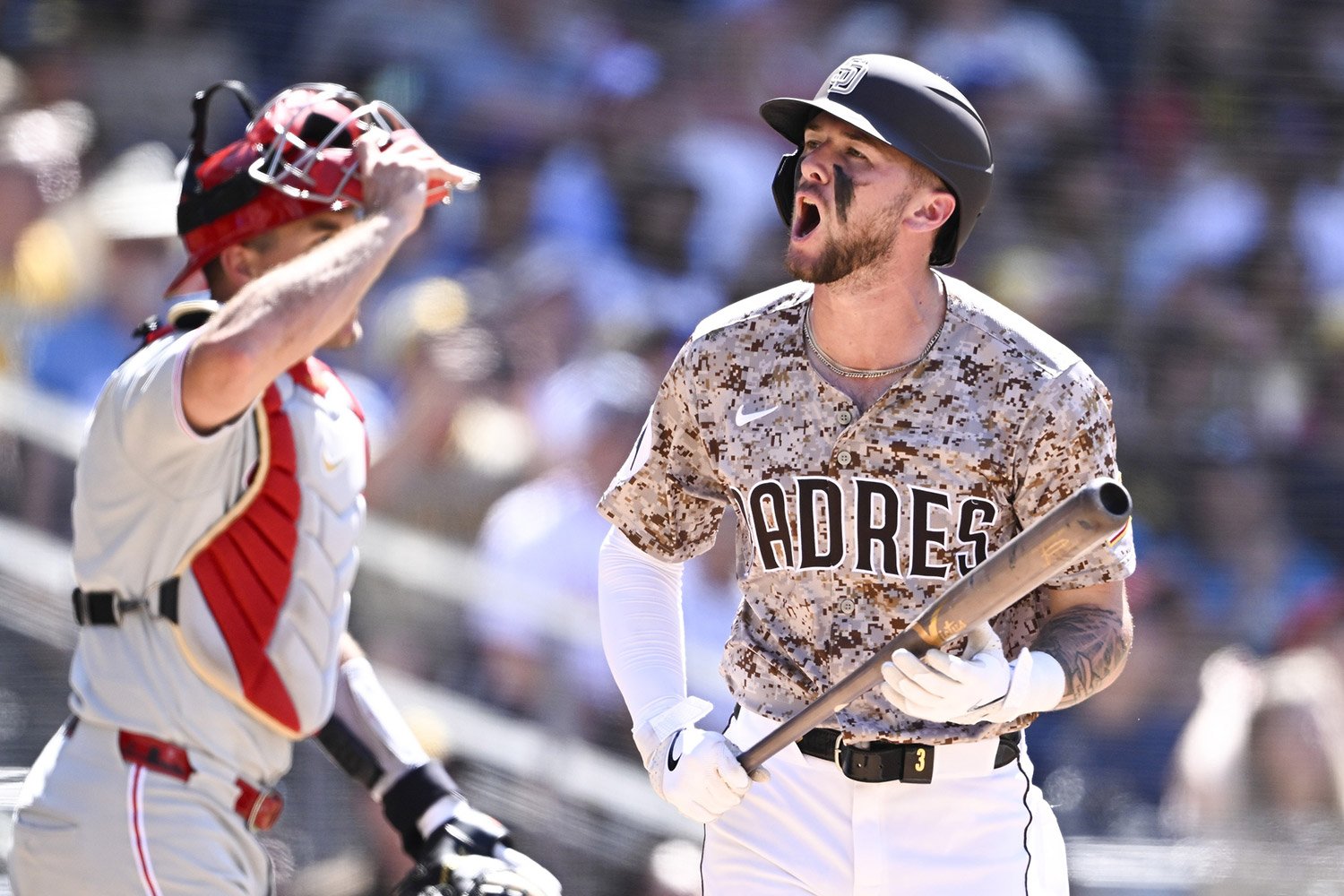 Believe it or not, the Padres have overperformed so far this season. Despite sitting in the final NL Wild Card spot with a 52-44 record at the All-Star break (the following statistics were compiled before play resumed on Friday, although two games will not significantly impact the math), 2025 has felt underwhelming for San Diego. Although not living up to expectations, things could (and probably should) be going a lot worse in America’s Finest City. According to FanGraphs, both BaseRuns and Pythagorean expectation estimate that the Padres should be sitting at a 49-47 record, right in the middle of the league standings. Playing at an average level of baseball will not get the Padres anywhere near where they expect to be. First of all, why do these metrics matter? Well, they predict what a team’s record should be, based on the amount of runs scored compared to runs against. Stripping the game down to these numbers makes it easy to tell if a team is under- or overachieving based on their run production. Most importantly, both the Pythagorean record and BaseRuns are better predictors of future performance than the current team record. BaseRuns takes into account the number of times a team “should” score, given their hits, walks, at-bats, total bases, and home runs. It does the same thing on the defensive side, to estimate what the team’s record should be. For the Padres, BaseRuns estimates 4.07 runs scored per game, vs. 3.95 runs against. Though their differential is slightly positive, it is well behind what the actual World Series contenders are generating. For example, the Cubs, who have the best BaseRuns record in the National League, boast an impressive differential of 5.27 RS/G and 4.24 RA/G. Unfortunately, BaseRuns isn’t the end of the gloomy metrics for San Diego. As mentioned earlier, Pythagorean expectation has the Padres at the same 49-47 record, which simply does not cut it. Pythagorean expectation follows a similar, yet simpler formula than BaseRuns, (runs scored^2) / [(runs scored^2) + (runs allowed^2)]. Essentially, this formula predicts a team’s record purely based on their runs scored and runs against. Pythagorean estimates a +3 run differential and .508 winning percentage for the Padres, which is still far from their contending counterparts. To put it simply, the Padres are overperforming this season, and the numbers back it up. Sure, overperforming isn’t “bad” per se, but it is a concerning precedent for how the rest of the season will play out. It is clear that change is needed to get the organization back on track, but what should they do? Luckily, the time of year to make moves is approaching. The MLB Trade Deadline falls on July 31, and the Padres must be active in the trade market. Specifically, two glaring holes in their lineup need to be addressed: catcher and left field. The obvious move that San Diego is expected to make is acquiring left fielder Jarren Duran from the Boston Red Sox. Rumors have swirled about Duran being shipped down to San Diego, shifting the focus from whether the trade will happen to how or when it will occur. The Padres have attempted to play eight different players in left this season, none of whom have met the team’s needs. Adding the 2024 All-Star to the squad would bring both dynamic fielding and a talented bat to a much-needed hole in San Diego’s lineup. The void at catcher is more of a need for the club, but there is not a surefire player to fill the void, like they have in Duran. Luckily, literally any addition behind the plate would be an upgrade for the Padres. A few names to keep an eye on are Atlanta’s Sean Murphy, Korey Lee of the White Sox, and Minnesota’s Ryan Jeffers, written about previously on Padres Mission. Adding a catcher with offensive capabilities would fill a crisis in San Diego’s lineup, while helping produce more much-needed runs. Another issue for the Padres is that their big names are not consistent enough. The club has a significant amount of money invested in a core of top players who need to produce at a more consistent rate. This is especially true for Fernando Tatis Jr. and Jackson Merrill, who have slowed down significantly after strong starts to the season. Both Tatis Jr. and Merrill were arguably playing at MVP levels before their stats plummeted in the summer. Since May 31, they have been batting .269 and .200, respectively, with only five combined home runs. Tatis Jr. has recovered a bit after a horrendous May at the plate, but both players need to play up to their contracts to turn the ship around into October. The last change the Padres need is a change in health, specifically in the starting rotation. The BaseRuns statistic of 3.95 RA/G is actually amongst the league’s best in that category, making a change in pitching less urgent for the Friars. However, that does not mean everything is perfect on the mound. The club’s starting rotation is still battling through injuries, which needs to be different to ensure any kind of postseason dreams. Yu Darvish has recently returned to the lineup, but Michael King is still sidelined on the 60-day Injured List, with Joe Musgrove already sidelined for the year. San Diego needs to find a way to have its pitchers healthy for the final stretch of the season. Whether it's managing the amount of innings the starters throw or relying on more bullpen games down the stretch, something has to be done to prevent the talented pitching group from falling apart. The opportunities are there for the Padres to turn the tide on their 2025 bid; it just needs to happen fast with marginal room for error.
 -
Believe it or not, the Padres have overperformed so far this season. Despite sitting in the final NL Wild Card spot with a 52-44 record at the All-Star break, 2025 has felt underwhelming for San Diego. Although not living up to expectations, things could (and probably should) be going a lot worse in America’s Finest City. According to FanGraphs, both BaseRuns and Pythagorean expectation estimate that the Padres should be sitting at a 49-47 record, right in the middle of the league standings. Playing such an average level of baseball will get the Padres nowhere near where they expect to be. First of all, why do these metrics matter? Well, they predict what a team’s record should be, based on the amount of runs scored compared to runs against. Stripping the game down to these numbers makes it easy to tell if a team is under or overachieving based on their run production. BaseRuns takes into account the amount of times a team “should” score, given their hits, walks, at bats, total bases, and home runs. It does the same thing on the defensive side, to estimate what the team’s record should be. For the Padres, BaseRuns estimates 4.07 runs scored per game, vs. 3.95 runs against. Though their differential is slightly positive, it is well behind what the true World Series contenders are generating. For example, the Cubs, who have the best BaseRuns record in the National League, boast an impressive differential of 5.27 RS/G and 4.24 RA/G. Unfortunately, BaseRuns isn’t the end of the glooming metrics for San Diego. As mentioned earlier, Pythagorean expectation has the Padres at the same 49-47 record, which simply does not cut it. Pythagorean expectation follows a similar, yet more simple formula than BaseRuns, (runs scored ^ 2) / [(runs scored ^ 2) + (runs allowed ^ 2)]. Essentially, this formula predicts a team’s record purely based on their runs scored and runs against. Pythagorean estimates a +3 run differential and .508 winning percentage for the Padres, which is still far from their contending counterparts. To put it in simple terms, the Padres are overperforming this season, and the numbers support it. Sure, overperforming isn’t “bad” per se, but it is a concerning precedent for how the rest of the season will play out. It is clear that change is needed to get the organization back on track, but what should they do? Luckily, the time of year to make moves is approaching. The MLB Trade Deadline falls on July 31, and it is critical for the Padres to be active in the trade market. Specifically, there are two glaring holes in their lineup that need to be addressed: catcher and left field. The obvious move that San Diego is expected to make is acquiring left fielder Jarren Duran from the Boston Red Sox. Rumors have swirled about Duran being shipped down to San Diego, turning the matter more into how or when the trade will go down than if it will happen. The Padres have attempted playing eight different players in left this season, none meeting the team’s necessity. Adding the 2024 All-Star to the squad would bring both dynamic fielding and a talented bat to a much-needed hole in San Diego’s lineup. The void at catcher is more of a need for the club, but there is not a surefire player to fill the void, like they have in Duran. Luckily, literally any addition behind the plate would be an upgrade for the Padres. A few names to keep an eye on are Atlanta’s Sean Murphy, Korey Lee of the White Sox, and Minnesota’s Ryan Jeffers. Adding a catcher with offensive capabilities would fill a crisis in San Diego’s lineup, while helping produce more much-needed runs. Another issue for the Padres is that their big names are not consistent enough. The club has a lot of money invested in a core of big-time players who need to produce at a more consistent rate. This especially includes Fernando Tatis Jr. and Jackson Merrill, who have slowed down tremendously after hot starts to the season. Both Tatis Jr. and Merrill were arguably playing at MVP levels, before their stats plummeted into the summer. Since May 31, they are batting .269 and .200 respectively, with only 5 combined home runs. Tatis Jr. has recovered a bit after a horrendous May at the plate, but both players need to play up to their contracts in order to turn the ship around into October. The last change the Padres need is a change in health, specifically in the starting rotation. The BaseRuns statistic of 3.95 RA/G is actually amongst the league’s best in that category, making change in pitching less urgent for the Friars. However, that does not mean everything is perfect on the mound. The club’s starting rotation is still battling through injuries, which needs to be different to ensure any kind of postseason dreams. Yu Darvish has recently returned to the lineup, but Michael King is still sidelined on the 60-day Injured List, with Joe Musgrove already sidelined for the year. San Diego needs to find a way to have its pitchers healthy for the final stretch of the season. Whether it's managing the amount of innings the starters throw or relying on more bullpen games down the stretch, something has to be done to prevent the talented pitching group from falling apart. The opportunities are there for the Padres to turn the tides on their 2025 bid, it just needs to happen fast with marginal room for error. View full article
-
Padres Week in Review: All-Stars, A Walk-Off, & Everything In Between
Samuel Cozart posted an article in Padres
 Weekly Overlook: Record: 3-3 (48-41 overall) Runs Scored: 18 Runs Allowed: 23 Standings: 2nd in NL West, 7.0 GB LAD Game 84 (6/30) | PHI 4, SD 0 Game 85 (7/2) | SD 6, PHI 4 Game 86 (7/2) | PHI 5, SD 1 Game 87 (7/4) | SD 3, TEX 2 Game 88 (7/5) | TEX 7, SD 4 Game 89 (7/6) | SD 4, TEX 1 Transactions: 07/06/25 - Optioned RHP Stephen Kolek to AAA El Paso. 07/06/25 - Recalled LHP Kyle Hart from AAA El Paso. 07/03/25 - Optioned RHP Ron Marinaccio to AAA El Paso. 07/02/25 - Recalled RHP Ron Marinaccio from AAA El Paso. 07/02/25 - Optioned RHP Matt Waldron to AAA El Paso. 07/02/25 - Selected the contract of RHP Eduarniel Nunez from AAA El Paso. 07/02/25 - Sent RHP Logan Gillaspie outright to AAA El Paso. 06/30/25 - Activated RHP Logan Gillaspie from the 15-day IL. 06/30/25 - Designated RHP Logan Gillaspie for assignment. 06/30/25 - Recalled RHP Matt Waldron from AAA El Paso. 06/30/25 - Optioned RHP Sean Reynolds to AAA El Paso. How it happened: The Padres started their week by heading out east to Philadelphia for a three-game series against the NL East-leading Phillies. Monday’s series opener featured the season debut for Matt Waldron, who was pitching in place of Ryan Bergert. Philadelphia went to work against Waldron, knocking six hits and scoring four runs in his 4 2/3 innings pitched. Despite San Diego’s bullpen not allowing any runs, the Friars failed to generate anything at the plate and fell to the Phillies 4-0. Tuesday’s game was postponed due to rain, setting the Padres and Phillies up for a Wednesday double-header on the 32nd anniversary of a double-header between the same two teams ending in the latest ending in MLB history. In the first leg of the double-header, things went well for the Padres. An offensive explosion in the second inning, backed by yet another solid outing from former Phillie Nick Pivetta, gave San Diego a 6-0 lead. Despite Philadelphia getting the better of the Padres’ bullpen late in the game, Robert Suarez escaped trouble, resulting in a 6-4 victory. In between Wednesday’s games, Manny Machado was announced as the NL’s starting third baseman for the MLB All-Star game. This marks Machado’s seventh career All-Star selection and fourth start amongst those. The nod came in a milestone week for Machado, as he inched closer to 2,000 career hits. Later in the week, it was announced that Machado’s teammates Fernando Tatis Jr. and Jason Adam would be joining him in Atlanta. Although it’s been a rough go for Tatis Jr. lately, an MVP-caliber start to the season was enough to put him over the edge. For Adam, a resounding 1.65 ERA and 1.191 WHIP made this selection a no-brainer. As it turns out, leading a bullpen amongst the best in baseball typically earns a spot in the Midsummer Classic. Unfortunately, the excitement from Machado’s All-Star announcement did not carry over to the field for the latter half of the doubleheader. The second game hummed a similar tune to Monday’s loss, where the Padres could not generate anything. Dylan Cease had yet another start where he did not make it past the sixth inning. On top of that, run support from the Padres’ offense was yet again minimal, which resulted in a 5-1 loss and a series defeat. In a series of a few bright spots at the plate for San Diego, Xander Bogaerts extended his hit streak to five games, accumulating five hits in the series. In addition to a strong series in Cincinnati, this success at the plate is much needed for Bogaerts, who is yet to live up to his massive contract. His successful road trip is worth keeping an eye on, as it could potentially be the start of a much-needed turnaround. After a day off on Thursday, the Padres came home to host a weekend series against the Texas Rangers. The series started on the Fourth of July, which started off looking eerily similar to San Diego’s recent losses. Texas scored two early runs off of Randy Vasquez, who has struggled in recent outings. On top of that, the Padres' bats stayed cold the first time through the order. However, a fourth-inning home run by Machado turned the tide at Petco Park, and a clean sheet from the Friars’ bullpen helped carry a tie game into extra innings. With a tie game and bases loaded in the tenth, Jake Cronenworth got the Fourth of July fireworks off to an early start in San Diego. On a 2-1 count with two outs, Cronenworth popped a single to left field, which brought home Jackson Merrill, resulting in a walk-off win. The holiday magic was not present for the Padres on Saturday. A rough outing from Stephen Kolek put San Diego in a hole too deep to get out of. 6 earned runs in 5.1 innings put the Padres down 6-2 through six innings. Despite a late push to cut the lead in half and a 4-hit performance from Luis Arraez, Saturday wasn’t the Padres' night, ending in a 7-4 loss. On Sunday, the Padres finally produced quality performances at the plate and on the mound, making it their most complete game of the series. San Diego turned to its bullpen for the series finale, and it continued its lights-out pitching. David Morgan pitched through the first inning, allowing a run in the opening frame. After that, Kyle Hart, Jeremiah Estrada, Adam, Adrian Morejon, and Suarez combined to allow no runs in the final eight frames. Sunday’s bullpen performance was a showcase of what has been the club’s best and most consistent aspect as of late. On top of that, a near-perfect performance at the plate from Tatis Jr. and multi-hit nights from Bogaerts, Arraez, and Martin Maldonado gave the bullpen the run support that it’s lacked lately. Sunday’s all-around performance by the Padres won them the series against Texas and made it another week of .500 baseball. They will stay cozy at Petco Park next week, hosting NL West foe Arizona and taking on Philadelphia in the latter half. San Diego remains right in the thick of the NL Wild Card race, tied with San Francisco for the final postseason spot. Upcoming Schedule: July 7, 2025 - Diamondbacks @ Padres - 6:40 PM PDT July 8, 2025 - Diamondbacks @ Padres - 6:40 PM PDT July 9, 2025 - Diamondbacks @ Padres - 6:40 PM PDT July 11, 2025 - Phillies @ Padres - 6:40 PM PDT July 12, 2025 - Phillies @ Padres - 4:35 PM PDT July 13, 2025 - Phillies @ Padres - 1:10 PM PDT
 -
Weekly Overlook: Record: 3-3 (48-41 overall) Runs Scored: 18 Runs Allowed: 23 Standings: 2nd in NL West, 7.0 GB LAD Game 84 (6/30) | PHI 4, SD 0 Game 85 (7/2) | SD 6, PHI 4 Game 86 (7/2) | PHI 5, SD 1 Game 87 (7/4) | SD 3, TEX 2 Game 88 (7/5) | TEX 7, SD 4 Game 89 (7/6) | SD 4, TEX 1 Transactions: 07/06/25 - Optioned RHP Stephen Kolek to AAA El Paso. 07/06/25 - Recalled LHP Kyle Hart from AAA El Paso. 07/03/25 - Optioned RHP Ron Marinaccio to AAA El Paso. 07/02/25 - Recalled RHP Ron Marinaccio from AAA El Paso. 07/02/25 - Optioned RHP Matt Waldron to AAA El Paso. 07/02/25 - Selected the contract of RHP Eduarniel Nunez from AAA El Paso. 07/02/25 - Sent RHP Logan Gillaspie outright to AAA El Paso. 06/30/25 - Activated RHP Logan Gillaspie from the 15-day IL. 06/30/25 - Designated RHP Logan Gillaspie for assignment. 06/30/25 - Recalled RHP Matt Waldron from AAA El Paso. 06/30/25 - Optioned RHP Sean Reynolds to AAA El Paso. How it happened: The Padres started their week by heading out east to Philadelphia for a three-game series against the NL East-leading Phillies. Monday’s series opener featured the season debut for Matt Waldron, who was pitching in place of Ryan Bergert. Philadelphia went to work against Waldron, knocking six hits and scoring four runs in his 4 2/3 innings pitched. Despite San Diego’s bullpen not allowing any runs, the Friars failed to generate anything at the plate and fell to the Phillies 4-0. Tuesday’s game was postponed due to rain, setting the Padres and Phillies up for a Wednesday double-header on the 32nd anniversary of a double-header between the same two teams ending in the latest ending in MLB history. In the first leg of the double-header, things went well for the Padres. An offensive explosion in the second inning, backed by yet another solid outing from former Phillie Nick Pivetta, gave San Diego a 6-0 lead. Despite Philadelphia getting the better of the Padres’ bullpen late in the game, Robert Suarez escaped trouble, resulting in a 6-4 victory. In between Wednesday’s games, Manny Machado was announced as the NL’s starting third baseman for the MLB All-Star game. This marks Machado’s seventh career All-Star selection and fourth start amongst those. The nod came in a milestone week for Machado, as he inched closer to 2,000 career hits. Later in the week, it was announced that Machado’s teammates Fernando Tatis Jr. and Jason Adam would be joining him in Atlanta. Although it’s been a rough go for Tatis Jr. lately, an MVP-caliber start to the season was enough to put him over the edge. For Adam, a resounding 1.65 ERA and 1.191 WHIP made this selection a no-brainer. As it turns out, leading a bullpen amongst the best in baseball typically earns a spot in the Midsummer Classic. Unfortunately, the excitement from Machado’s All-Star announcement did not carry over to the field for the latter half of the doubleheader. The second game hummed a similar tune to Monday’s loss, where the Padres could not generate anything. Dylan Cease had yet another start where he did not make it past the sixth inning. On top of that, run support from the Padres’ offense was yet again minimal, which resulted in a 5-1 loss and a series defeat. In a series of a few bright spots at the plate for San Diego, Xander Bogaerts extended his hit streak to five games, accumulating five hits in the series. In addition to a strong series in Cincinnati, this success at the plate is much needed for Bogaerts, who is yet to live up to his massive contract. His successful road trip is worth keeping an eye on, as it could potentially be the start of a much-needed turnaround. After a day off on Thursday, the Padres came home to host a weekend series against the Texas Rangers. The series started on the Fourth of July, which started off looking eerily similar to San Diego’s recent losses. Texas scored two early runs off of Randy Vasquez, who has struggled in recent outings. On top of that, the Padres' bats stayed cold the first time through the order. However, a fourth-inning home run by Machado turned the tide at Petco Park, and a clean sheet from the Friars’ bullpen helped carry a tie game into extra innings. With a tie game and bases loaded in the tenth, Jake Cronenworth got the Fourth of July fireworks off to an early start in San Diego. On a 2-1 count with two outs, Cronenworth popped a single to left field, which brought home Jackson Merrill, resulting in a walk-off win. The holiday magic was not present for the Padres on Saturday. A rough outing from Stephen Kolek put San Diego in a hole too deep to get out of. 6 earned runs in 5.1 innings put the Padres down 6-2 through six innings. Despite a late push to cut the lead in half and a 4-hit performance from Luis Arraez, Saturday wasn’t the Padres' night, ending in a 7-4 loss. On Sunday, the Padres finally produced quality performances at the plate and on the mound, making it their most complete game of the series. San Diego turned to its bullpen for the series finale, and it continued its lights-out pitching. David Morgan pitched through the first inning, allowing a run in the opening frame. After that, Kyle Hart, Jeremiah Estrada, Adam, Adrian Morejon, and Suarez combined to allow no runs in the final eight frames. Sunday’s bullpen performance was a showcase of what has been the club’s best and most consistent aspect as of late. On top of that, a near-perfect performance at the plate from Tatis Jr. and multi-hit nights from Bogaerts, Arraez, and Martin Maldonado gave the bullpen the run support that it’s lacked lately. Sunday’s all-around performance by the Padres won them the series against Texas and made it another week of .500 baseball. They will stay cozy at Petco Park next week, hosting NL West foe Arizona and taking on Philadelphia in the latter half. San Diego remains right in the thick of the NL Wild Card race, tied with San Francisco for the final postseason spot. Upcoming Schedule: July 7, 2025 - Diamondbacks @ Padres - 6:40 PM PDT July 8, 2025 - Diamondbacks @ Padres - 6:40 PM PDT July 9, 2025 - Diamondbacks @ Padres - 6:40 PM PDT July 11, 2025 - Phillies @ Padres - 6:40 PM PDT July 12, 2025 - Phillies @ Padres - 4:35 PM PDT July 13, 2025 - Phillies @ Padres - 1:10 PM PDT View full article
-
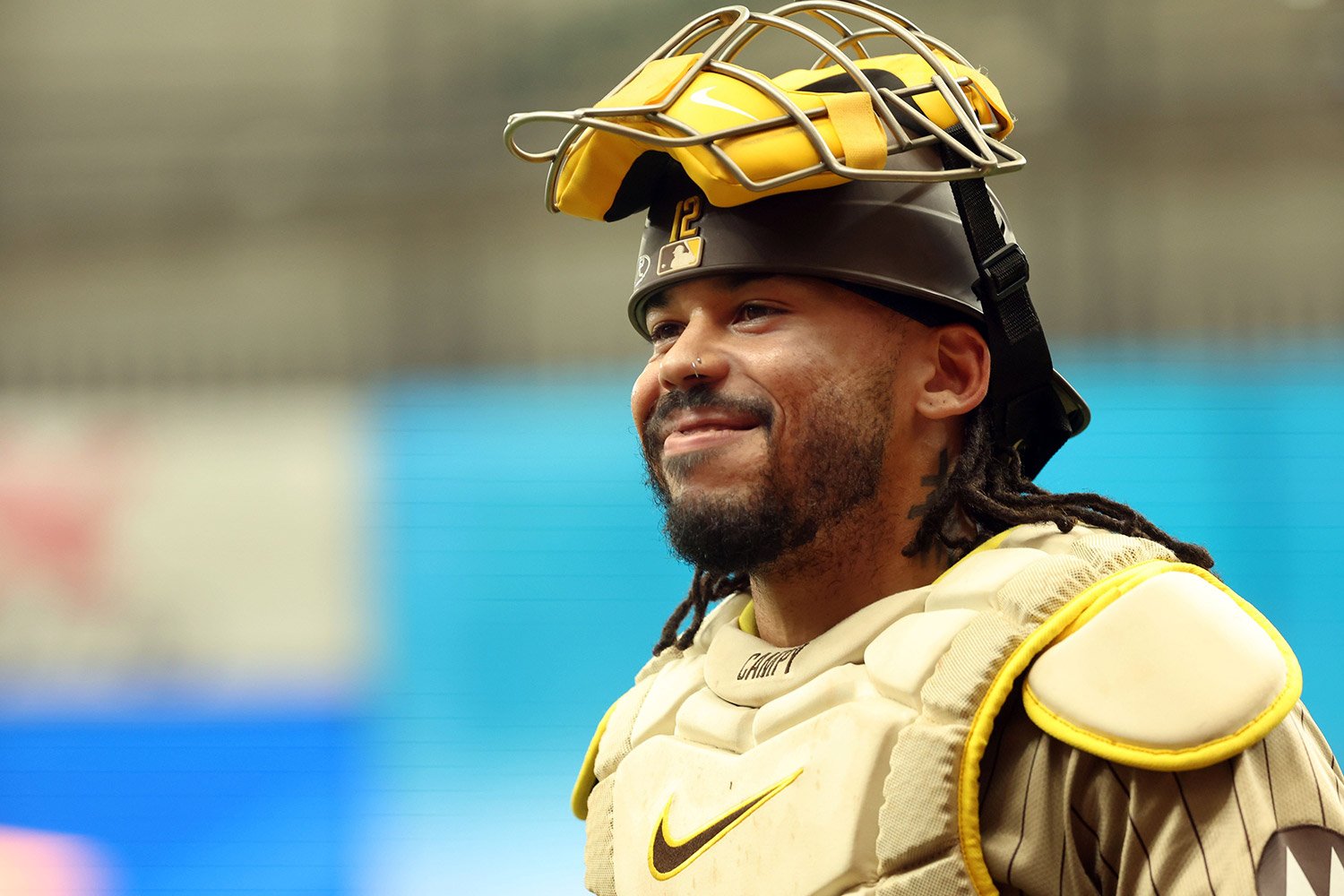 If you're a fan of understatements, then I've got one for you: the 2025 season has been a nightmare for the Padres behind the plate. The pair of the regressing Elias Diaz and 38-year-old Martin Maldonado has not been close to good enough at catcher for San Diego. One last glimmer of hope for a solution at the position lies in El Paso: Luis Campusano. Campusano has been tearing it up at the plate for the Chihuahuas, putting up impressive numbers. During his time in the Pacific Coast League, he boasts a slash line of .316/.439/.626. Those numbers are good enough for Campusano to rank 12th in the PCL in average, as well as second in OBP and SLG. Unsurprisingly, those ranks combine to put Campusano atop the PCL with a 1.064 OPS. Coinciding with those numbers, Campusano has mashed 13 home runs during his Triple-A tenure in 2025, which places him at tenth in the PCL. These numbers don’t come in a small sample size either. Campusano has appeared in 48 games for El Paso this season, going with 214 plate appearances. It is clear that he is thriving at the minor league level, with the skill set to make an impact in the majors. So Campusano is clearly the Padres’ solution at catcher, right? The answer is more complicated than it seems. For starters, the PCL is an extremely hitter-friendly league. Hitters flourish when playing down in the PCL, opposed to producing lower numbers in Major League Baseball. Per the MILB website, PCL hitters slash an average of .277/.347/.431 with a .778 OPS compared to MLB’s average of .260/.329/.397 with a .726 OPS. The PCL also features an average of 5.1 runs per game, compared to just 4.4 in MLB. Oddly, the PCL’s inflated stats are unique to the league, rather than all of Triple A. The International League, the PCL’s Triple-A counterpart, reflects more similar hitting numbers to the major leagues. This is due in large part to the amount of hitter-friendly parks around the league. Parks located on high-altitude hold extreme favorability to the players at the plate. PCL hitters get to enjoy environments like Isotopes Park (Albuquerque), Aces Ballpark (Reno), and Security Service Field (Colorado Springs), all high-altitude locales. Padres fans know the effects of a high-altitude ballpark all too well, having to witness San Diego travel to Coors Field a handful of times each year. It is important to take the PCL’s favorability towards catchers into account when considering Campusano’s impressive season. Taking his stats at face value would not be enough to determine if he is truly the solution at catcher for the Friars. Adjusted for various park factors and the inflated numbers of the PCL, wRC+ shows the runs created by a player at true value. According to FanGraphs, Campusano owns a 151 wRC+ this season, which is a ridiculously strong number for a catcher. The league average wRC+ for all players is 100, so he is creating runs at a well-above-average rate. The youngster blows Diaz’s wRC+ of 78 out of the water (though, of course, Diaz is playing against MLB competition). Even when accounting for the batting practice feel of the PCL, Campusano is still producing numbers at a rate that prove him able to perform at the highest level. However, his time in the majors tells a story of inconsistency. Campusano has bounced between the major and minor leagues since 2021, and finally got a real chance to prove his worth in 2023. During that season, Campusano produced impressive numbers. A slash line of .319/.356/.491 in 49 games showed that he had the potential to fill San Diego’s void at the position. However, his 2024 tenure told a completely different story. In 91 games last season, Campusano’s numbers dipped to .241/.259/.407, a significant drop off from the prior season. In 2025, Campusano has appeared in nine big league games, where he hasn’t registered a single hit. It feels inevitable that Campusano will get called up to San Diego during the club’s catching crisis. Whether he maintains his form from Triple A or returns to his recent major league struggles will determine his fate with the organization. If he can perform to his potential right out of the gate from getting called up, the Padres may their answer to their hole at backstop. If not, acquiring a catcher at the trade deadline will be San Diego’s top priority.
 -
If you're a fan of understatements, then I've got one for you: the 2025 season has been a nightmare for the Padres behind the plate. The pair of the regressing Elias Diaz and 38-year-old Martin Maldonado has not been close to good enough at catcher for San Diego. One last glimmer of hope for a solution at the position lies in El Paso: Luis Campusano. Campusano has been tearing it up at the plate for the Chihuahuas, putting up impressive numbers. During his time in the Pacific Coast League, he boasts a slash line of .316/.439/.626. Those numbers are good enough for Campusano to rank 12th in the PCL in average, as well as second in OBP and SLG. Unsurprisingly, those ranks combine to put Campusano atop the PCL with a 1.064 OPS. Coinciding with those numbers, Campusano has mashed 13 home runs during his Triple-A tenure in 2025, which places him at tenth in the PCL. These numbers don’t come in a small sample size either. Campusano has appeared in 48 games for El Paso this season, going with 214 plate appearances. It is clear that he is thriving at the minor league level, with the skill set to make an impact in the majors. So Campusano is clearly the Padres’ solution at catcher, right? The answer is more complicated than it seems. For starters, the PCL is an extremely hitter-friendly league. Hitters flourish when playing down in the PCL, opposed to producing lower numbers in Major League Baseball. Per the MILB website, PCL hitters slash an average of .277/.347/.431 with a .778 OPS compared to MLB’s average of .260/.329/.397 with a .726 OPS. The PCL also features an average of 5.1 runs per game, compared to just 4.4 in MLB. Oddly, the PCL’s inflated stats are unique to the league, rather than all of Triple A. The International League, the PCL’s Triple-A counterpart, reflects more similar hitting numbers to the major leagues. This is due in large part to the amount of hitter-friendly parks around the league. Parks located on high-altitude hold extreme favorability to the players at the plate. PCL hitters get to enjoy environments like Isotopes Park (Albuquerque), Aces Ballpark (Reno), and Security Service Field (Colorado Springs), all high-altitude locales. Padres fans know the effects of a high-altitude ballpark all too well, having to witness San Diego travel to Coors Field a handful of times each year. It is important to take the PCL’s favorability towards catchers into account when considering Campusano’s impressive season. Taking his stats at face value would not be enough to determine if he is truly the solution at catcher for the Friars. Adjusted for various park factors and the inflated numbers of the PCL, wRC+ shows the runs created by a player at true value. According to FanGraphs, Campusano owns a 151 wRC+ this season, which is a ridiculously strong number for a catcher. The league average wRC+ for all players is 100, so he is creating runs at a well-above-average rate. The youngster blows Diaz’s wRC+ of 78 out of the water (though, of course, Diaz is playing against MLB competition). Even when accounting for the batting practice feel of the PCL, Campusano is still producing numbers at a rate that prove him able to perform at the highest level. However, his time in the majors tells a story of inconsistency. Campusano has bounced between the major and minor leagues since 2021, and finally got a real chance to prove his worth in 2023. During that season, Campusano produced impressive numbers. A slash line of .319/.356/.491 in 49 games showed that he had the potential to fill San Diego’s void at the position. However, his 2024 tenure told a completely different story. In 91 games last season, Campusano’s numbers dipped to .241/.259/.407, a significant drop off from the prior season. In 2025, Campusano has appeared in nine big league games, where he hasn’t registered a single hit. It feels inevitable that Campusano will get called up to San Diego during the club’s catching crisis. Whether he maintains his form from Triple A or returns to his recent major league struggles will determine his fate with the organization. If he can perform to his potential right out of the gate from getting called up, the Padres may their answer to their hole at backstop. If not, acquiring a catcher at the trade deadline will be San Diego’s top priority. View full article
-
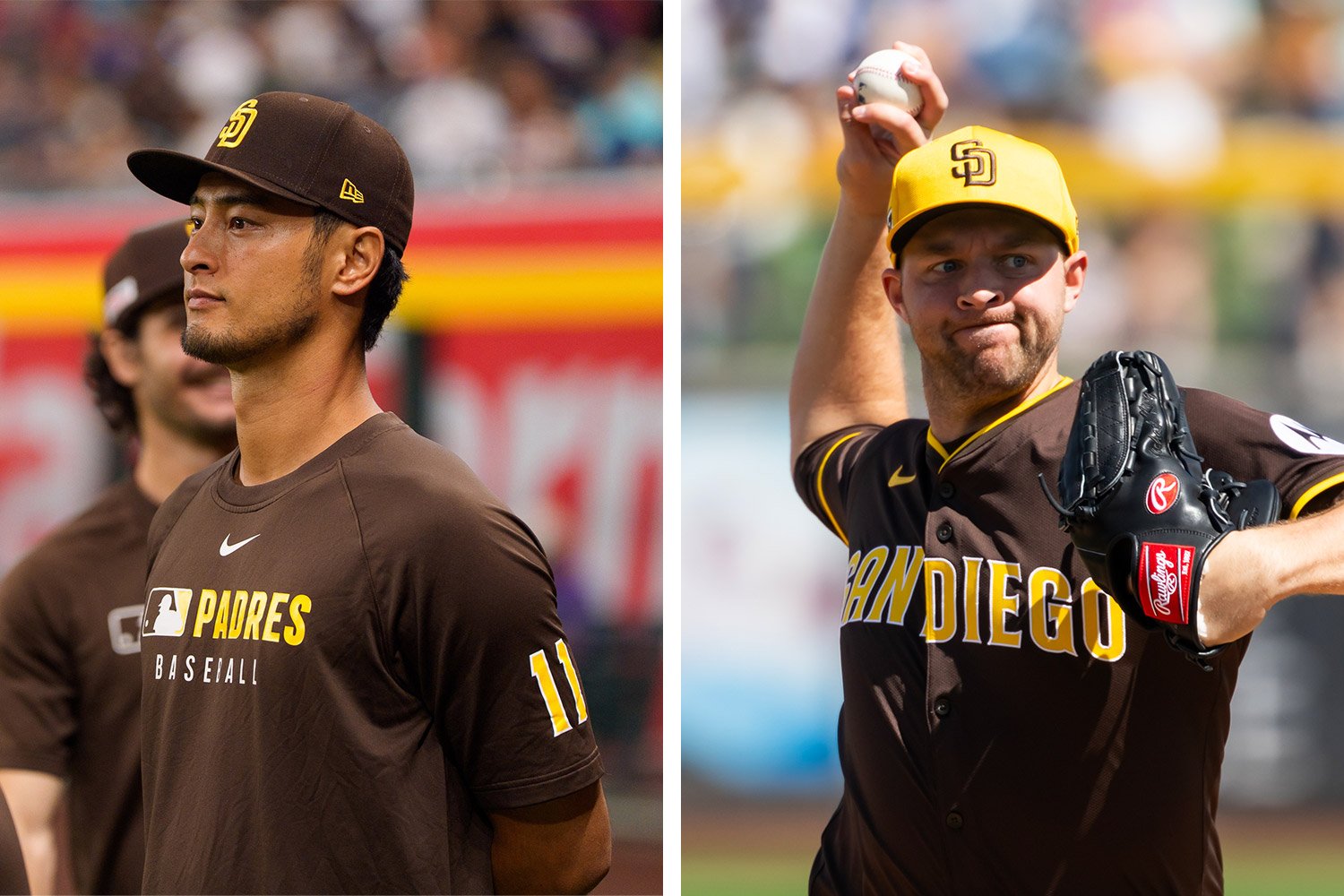 The San Diego Padres have struggled to find a sense of security in their starting rotation in the early months of the 2025 season. Injuries to key starters have prevented San Diego from working with a full-strength rotation. Currently, San Diego is fielding a starting rotation of Dylan Cease, Nick Pivetta, Randy Vasquez, Stephen Kolek, and Ryan Bergert. This rotation is nothing to shake a stick at, but lacks the necessary experience to make a deep playoff run. The solidifying of the rotation will depend on the returns of Michael King and Yu Darvish, who are both currently on the injured list. Darvish, who is yet to pitch this season, has been a standout on the mound during his time with the Padres. He is coming off a 2024 campaign in which he pitched a 3.31 ERA and a 4.08 FIP. Darvish also shone in the 2024 postseason, putting up a 1.98 ERA throughout two games in a hard-fought series against the eventual champion Dodgers. The hope is that Darvish will return to the rotation in late June or early July. Despite it being unlikely that he will make it deep into games right out of the gate, a mid-season return allows enough time for him to return to form for a stretch run. Darvish isn’t the only injured pitcher whose return will make a serious impact. King was arguably the Padres' best pitcher before going down with a pinched nerve in his right shoulder in May. He was dealing on the mound, continuing from the success of last season. In ten starts, King posted an impressive 2.59 ERA to go with a 1.4 FanGraphs WAR, the second-best amongst the club’s starters. A recent report does not present excellent news for King’s timeline to return, with a later expected return than expected. Dennis Lin of The Athletic reported that “a return before the All-Star break has become increasingly unlikely.” Whenever it is, the return of King is consequential to the overall stability of the Padres’ rotation. His elite numbers thus far offer a glimpse into what could take the Padres to the next level, as they close out the regular season and head into the postseason. With the upcoming returns of two elite pitchers, it means that some of the club’s current starters will lose their spots in the rotation. Although Bergert has impressed in his first few outings, it would be highly out of the ordinary for a team chasing a pennant to lean on an inexperienced pitcher to start 20% of their games down the stretch. His 1.26 ERA, along with an exceptional first two starts, shows high promise for the future, but relying on him now is sub-optimal. After Bergert, it comes down to Vasquez or Kolek leaving the rotation. The two share eerily similar numbers this season, highlighting why it's a toss-up to decide which one to leave in the lineup. Kolek has a 3.50 ERA compared to Vasquez’s 3.57 and a 1.317 WHIP compared to Vasquez’s 1.397. The club’s decision between the two should hinge on how they perform during the next month, when Darvish and King remain sidelined. Should one considerably outperform the other, there is a clear choice to make, but it looks to remain a tough decision as it stands. What Kolek has in his favor is that he is a young, homegrown talent, which makes him a valuable asset to the Padres organization. It would not be surprising for San Diego to favor its talent when choosing between the two. Another option for this spot in the rotation is to acquire a starter at the trade deadline, preferably a southpaw. Every pitcher in the rotation is right-handed, so adding a lefty would better equip the rotation for a wider array of matchups. One spot in the rotation that is growing increasingly questionable is that of Cease. The Padres' ace is having a down year, posting a 4.69 ERA, though his FIP is a stellar 2.94 in 14 starts. Cease has struggled to make it far in games, averaging just 5.2 innings per outing. A team is nothing without its ace, so the best option for the club is to stand pat with Cease and hope he finds his stuff come October. Amongst the club’s healthy starters, there is one who leaves no question marks: Pivetta. He has risen to the occasion while his peers have been sidelined. The free agency acquisition has settled in nicely during his first season in San Diego, boasting a 3.48 ERA and 1.5 WAR, which is the best amongst Padres starters. In a season where pitching has been uncertain, Pivetta provides a sense of security on the mound. If all goes according to plan (which is a rarity in baseball), a healthy starting rotation can help lead a deep postseason run for the Padres. A rotation consisting of Cease, Pivetta, King, Darvish, and one of Kolek, Vasquez, or a deadline acquisition gives the Friars a chance to win night in and night out.
 -
The San Diego Padres have struggled to find a sense of security in their starting rotation in the early months of the 2025 season. Injuries to key starters have prevented San Diego from working with a full-strength rotation. Currently, San Diego is fielding a starting rotation of Dylan Cease, Nick Pivetta, Randy Vasquez, Stephen Kolek, and Ryan Bergert. This rotation is nothing to shake a stick at, but lacks the necessary experience to make a deep playoff run. The solidifying of the rotation will depend on the returns of Michael King and Yu Darvish, who are both currently on the injured list. Darvish, who is yet to pitch this season, has been a standout on the mound during his time with the Padres. He is coming off a 2024 campaign in which he pitched a 3.31 ERA to go with a 7-3 record. Darvish also shone in the 2024 postseason, putting up a 1.98 ERA throughout two games in a hard-fought series against the eventual champion Dodgers. The hope is that Darvish will return to the rotation in late June or early July. Despite it being unlikely that he will make it deep into games right out of the gate, a mid-season return allows enough time for him to return to form. If Darvish is able to reach his form from last year, the Padres' pitching arsenal will take a serious step up from where it is right now. Darvish isn’t the only injured pitcher whose return will make a serious impact. King was arguably the Padres' best pitcher before going down with a pinched nerve in his right shoulder in May. He was dealing on the mound, continuing from the success of last season. In ten starts, King posted an impressive 2.59 ERA to go with a 1.4 WAR, the second-best amongst the club’s starters. A recent report does not present excellent news for King’s timeline to return, with a later expected return than expected. Dennis Lin of The Athletic reported that “a return before the All-Star break has become increasingly unlikely.” Whenever it is, the return of King is consequential to the overall stability of the Padres’ rotation. His elite numbers thus far offer a glimpse into what could take the Padres to the next level, as they close out the regular season and head into the postseason. With the upcoming returns of two elite pitchers, it means that some of the club’s current starters will lose their spots in the rotation. Although Bergert has impressed in his first few outings, it would be highly out of the ordinary for a team chasing pennants to trust such a young and inexperienced pitcher to start games down the stretch. His 1.26 ERA, along with an exceptional first two starts, shows high promise for the future, but as of now, veteran pitchers will have to carry the load. After Bergert, it comes down to Vasquez or Kolek leaving the rotation. The two share eerily similar numbers this season, highlighting why it's a toss-up to decide which one to leave in the lineup. Kolek has a 3.50 ERA compared to Vasquez’s 3.57 and a 1.317 WHIP compared to Vasquez’s 1.397. The club’s decision between the two should hinge on how they perform during the next month, when Darvish and King remain sidelined. Should one considerably outperform the other, there is a clear choice to make, but it looks to remain a tough decision as it stands. What Kolek has in his favor is that he is a young, homegrown talent, which makes him a valuable asset to the Padres organization. It would not be surprising for San Diego to favor its talent when choosing between the two. Another option for this spot in the rotation is to acquire a left-handed pitcher at the trade deadline. Every pitcher in the rotation is right-handed, so adding a lefty would better equip the rotation for a wider array of matchups. One spot in the rotation that is growing increasingly questionable is that of Cease. The Padres' ace is having a down year, posting a 4.28 ERA to go with just a 2-5 record in 14 starts. Cease has struggled to make it far in games, averaging just 5.2 innings per outing. A team is nothing without its ace, so the best option for the club is to stand pat with Cease and hope he finds his stuff come October. Amongst the club’s healthy starters, there is one who leaves no question marks: Pivetta. He has risen to the occasion while his peers have been sidelined. The free agency acquisition has settled in nicely during his first season in San Diego, boasting a 3.48 ERA and 1.5 WAR, which is the best amongst Padres starters. In a season where pitching has been uncertain, Pivetta provides a sense of security on the mound. If all goes according to plan (which is a rarity in baseball), a healthy starting rotation can help lead a deep postseason run for the Padres. A rotation consisting of Cease, Pivetta, King, Darvish, and one of Kolek, Vasquez, or a deadline acquisition gives the Friars a chance to win night in and night out. View full article
-
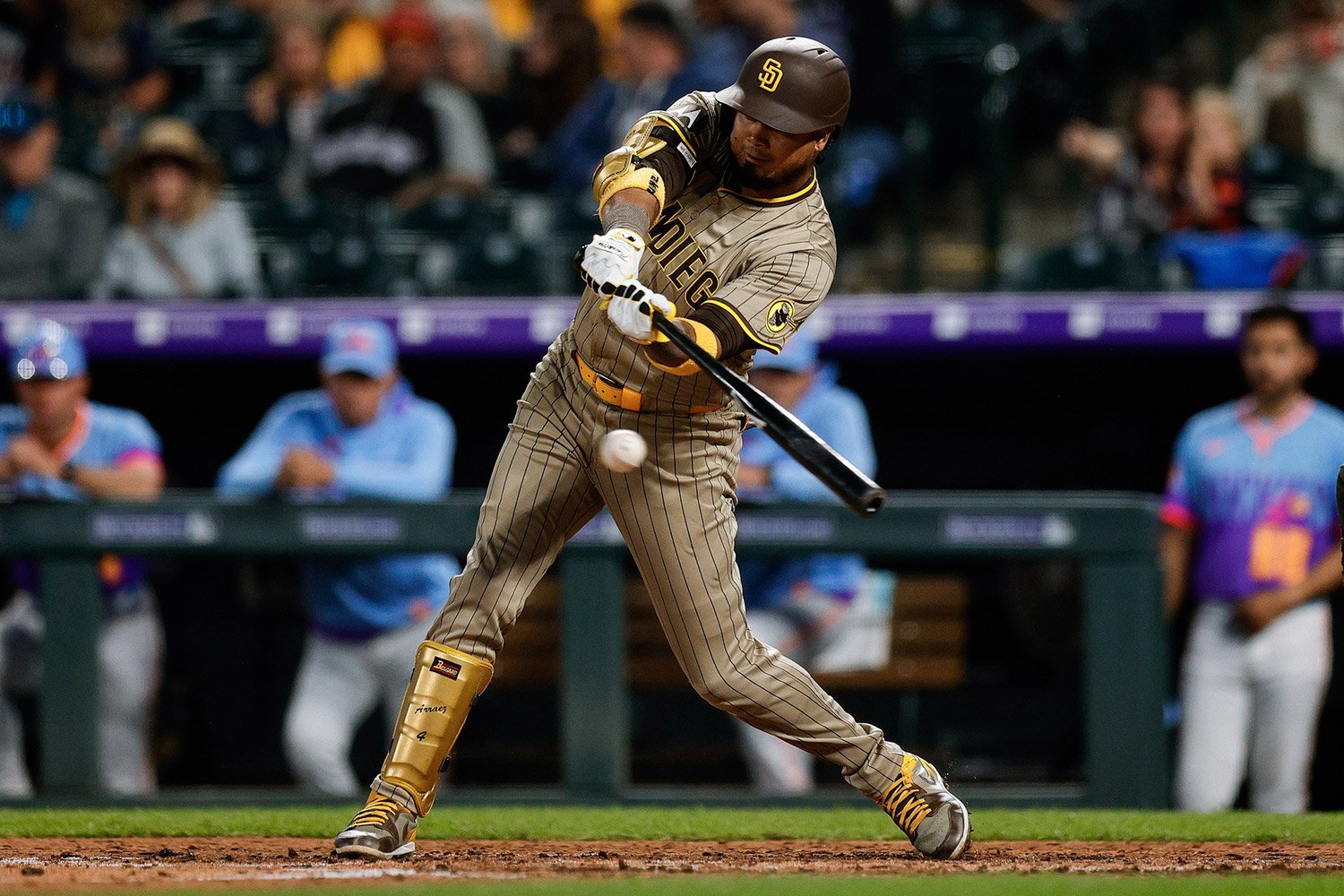 The Padres have taken a new approach to hitting in 2025: going oppo. San Diego’s hitters are finding the opposite side of the field at a much higher rate this year, propelling them to the top of the league in that category. Down the lineup, Padres hitters are going opposite field at a much higher rate, whether it’s for better or worse. Over the past three seasons, the Padres have increasingly favored hitting towards the opposite field over pulling for power, with the 2025 season featuring a significant jump in those splits. In 2025, they ranked first in Major League Baseball in opposite-field hitting, up from 17th in 2024 and 27th in 2023. However, this approach means sacrificing power for the sake of contact. San Diego now ranks 21st in the majors this season, compared to 11th and 13th in their previous two campaigns. Part of this change in approach comes from hitters who have established themselves as power hitters taking a more well-rounded approach to hitting. Manny Machado exemplifies the team’s shift from being power-reliant hitters to a more versatile group. According to Baseball Savant, 25.9% of Machado’s hits have gone to the opposite field this season, a more-than 3% rise from 2024. With that, his home run production has gone down. Machado has only sent six balls out of the park so far this year, putting him on pace for an out-of-character low number of homers. Just because Machado isn’t putting as many balls in the bleachers, it doesn’t mean that he isn’t having a productive year at the plate. 2025 has been a career season for Machado in terms of productivity at the plate. With a .328 xBA according to Baseball Savant, he ranks in the 100th percentile of the MLB and is on pace for a career-high batting average. He also boasts a .382 on-base percentage, which is good enough for 11th in MLB and would be another career high mark if the season ended today. In a case like Machado’s, the approach of pulling less for power is paying off. Hitting more to the opposite field has allowed for a career year in terms of efficiency. Machado isn’t the only hitter on San Diego finding the opposite field at a much higher rate this season. Even the club’s contact hitters are sending balls in the opposite direction at a much higher rate in 2025. Luis Arraez, the two-time reigning National League batting champion, has had a spike in his Oppo%. 37.6% of Arraez’s hits are going oppo, according to Baseball Savant. That tremendously high mark is a career-high and a nearly 7% increase from 2024. Arraez is already a perennial contact hitter, but his increased percentage of opposite-field hits supports the notion that this approach is a team-wide initiative. Unlike Machado, Arraez isn’t experiencing quite the same dip in power hitting, but is having a down year in productivity. Arraez currently sits at a .290 batting average and a .324 OBP, which would be career-low marks for the contact-hitting machine. The downgrade of Arraez’s productivity shows that San Diego’s new approach of hitting for the opposite field isn’t working all the way down the lineup. For players like Arraez, who already had no problem getting on base, this new approach might be an unnecessary change. Amongst the hitters producing the most power for the Padres this season, a good amount of their hits are still traveling to the opposite field. Fernando Tatis Jr. and Gavin Sheets lead the team in home runs in 2025, yet are still going oppo at a high rate. Tatis owns an Oppo% of 23.5%, while Sheets goes to left field 24.6% of the time. Both numbers are right around league average, showing the consistent theme of Padres players consistently hitting that mark. Both Tatis and Sheets balance the team-wide trend of hitting the ball to the opposite field more, with a focus on hitting for power. Per Baseball Savant, Tatis boasts a .548 xSLG%, which is the 92nd percentile of MLB hitters. Sheets is also on pace for a career-high in that category, with a .497 xSLG% himself. Both players provide much-needed power to a lineup that has lacked it this season, while also contributing to the team's approach of hitting to more parts of the field. San Diego’s new approach of increased opposite-field hitting has given the Padres a new identity, one that was previously power-reliant. Despite its benefits, there are concerning drawbacks to the approach. On top of the decreased number of home runs, the Padres rank 16th league-wide in runs scored in 2025, as opposed to 8th in 2024. Despite the concerns, manager Mike Shildt sees the strategy as an important one. An article from FriarWire quoted Shildt on the need to hit to the opposite field: “The opposite field hitting is very important to maintain,” said Shildt. “Just look at it from a common-sense viewpoint. You have a whole big field out there. You might as well use it all. The game has reverted to a state where you can’t overcorrect and shift. That is for a reason.” For this strategy to reach its full potential, the Padres must find the proper balance between sacrificing power for productivity and swinging for the fences. Luckily, they have multiple perspectives of that balance within the team, from Machado’s maximization of productivity to Tatis’ and Sheets’ blend of contact and power.
 -
The Padres have taken a new approach to hitting in 2025: going oppo. San Diego’s hitters are finding the opposite side of the field at a much higher rate this year, propelling them to the top of the league in that category. Down the lineup, Padres hitters are going opposite field at a much higher rate, whether it’s for better or worse. Over the past three seasons, the Padres have increasingly favored hitting towards the opposite field over pulling for power, with the 2025 season featuring a significant jump in those splits. In 2025, they ranked first in Major League Baseball in opposite-field hitting, up from 17th in 2024 and 27th in 2023. However, this approach means sacrificing power for the sake of contact. San Diego now ranks 21st in the majors this season, compared to 11th and 13th in their previous two campaigns. Part of this change in approach comes from hitters who have established themselves as power hitters taking a more well-rounded approach to hitting. Manny Machado exemplifies the team’s shift from being power-reliant hitters to a more versatile group. According to Baseball Savant, 25.9% of Machado’s hits have gone to the opposite field this season, a more-than 3% rise from 2024. With that, his home run production has gone down. Machado has only sent six balls out of the park so far this year, putting him on pace for an out-of-character low number of homers. Just because Machado isn’t putting as many balls in the bleachers, it doesn’t mean that he isn’t having a productive year at the plate. 2025 has been a career season for Machado in terms of productivity at the plate. With a .328 xBA according to Baseball Savant, he ranks in the 100th percentile of the MLB and is on pace for a career-high batting average. He also boasts a .382 on-base percentage, which is good enough for 11th in MLB and would be another career high mark if the season ended today. In a case like Machado’s, the approach of pulling less for power is paying off. Hitting more to the opposite field has allowed for a career year in terms of efficiency. Machado isn’t the only hitter on San Diego finding the opposite field at a much higher rate this season. Even the club’s contact hitters are sending balls in the opposite direction at a much higher rate in 2025. Luis Arraez, the two-time reigning National League batting champion, has had a spike in his Oppo%. 37.6% of Arraez’s hits are going oppo, according to Baseball Savant. That tremendously high mark is a career-high and a nearly 7% increase from 2024. Arraez is already a perennial contact hitter, but his increased percentage of opposite-field hits supports the notion that this approach is a team-wide initiative. Unlike Machado, Arraez isn’t experiencing quite the same dip in power hitting, but is having a down year in productivity. Arraez currently sits at a .290 batting average and a .324 OBP, which would be career-low marks for the contact-hitting machine. The downgrade of Arraez’s productivity shows that San Diego’s new approach of hitting for the opposite field isn’t working all the way down the lineup. For players like Arraez, who already had no problem getting on base, this new approach might be an unnecessary change. Amongst the hitters producing the most power for the Padres this season, a good amount of their hits are still traveling to the opposite field. Fernando Tatis Jr. and Gavin Sheets lead the team in home runs in 2025, yet are still going oppo at a high rate. Tatis owns an Oppo% of 23.5%, while Sheets goes to left field 24.6% of the time. Both numbers are right around league average, showing the consistent theme of Padres players consistently hitting that mark. Both Tatis and Sheets balance the team-wide trend of hitting the ball to the opposite field more, with a focus on hitting for power. Per Baseball Savant, Tatis boasts a .548 xSLG%, which is the 92nd percentile of MLB hitters. Sheets is also on pace for a career-high in that category, with a .497 xSLG% himself. Both players provide much-needed power to a lineup that has lacked it this season, while also contributing to the team's approach of hitting to more parts of the field. San Diego’s new approach of increased opposite-field hitting has given the Padres a new identity, one that was previously power-reliant. Despite its benefits, there are concerning drawbacks to the approach. On top of the decreased number of home runs, the Padres rank 16th league-wide in runs scored in 2025, as opposed to 8th in 2024. Despite the concerns, manager Mike Shildt sees the strategy as an important one. An article from FriarWire quoted Shildt on the need to hit to the opposite field: “The opposite field hitting is very important to maintain,” said Shildt. “Just look at it from a common-sense viewpoint. You have a whole big field out there. You might as well use it all. The game has reverted to a state where you can’t overcorrect and shift. That is for a reason.” For this strategy to reach its full potential, the Padres must find the proper balance between sacrificing power for productivity and swinging for the fences. Luckily, they have multiple perspectives of that balance within the team, from Machado’s maximization of productivity to Tatis’ and Sheets’ blend of contact and power. View full article
