


Michael Black
-
Posts
25 -
Joined
-
Last visited
Michael Black's Achievements






-
 While the San Diego Padres front office constantly reshapes its major-league roster through blockbuster trades and aggressive deadline deals, the true heartbeat of the organization relies on what's brewing down on the farm. Even with constant promotions and prospect movement shifting the landscape, tracking the standout performers across the minor-league affiliates reveals a system packed with high-OBP bats, gap-to-gap pop, and a pitching staff that proves the future in San Diego has plenty of depth. From elite foundational talents anchoring the diamond to breakout risers who forced their way into everyday roles, putting together a complete 2026 Minor League All-Star squad showcases a roster more than capable of driving the future in San Diego. San Diego Padres Minor League 26-Man All-Star Roster (2026 Season) Starting Lineup (9) Ethan Salas (C) 2026 Minor League Stat Line (San Antonio / El Paso) 348 AB | 103 H | 10 HR | 61 RBI | 17 SB | .296 AVG | .374 OBP | .448 SLG | .822 OPS Profile: Anchors the organization behind the plate with elite defensive presence and a polished .296 batting clip, driving 61 runs across 96 games. Has received his long awaited big league call-up. Nick Solak (1B) 2026 Minor League Stat Line (Triple-A El Paso): 431 AB | 135 H | 16 HR | 79 RBI | 7 SB | .313 AVG | .378 OBP | .497 SLG | .875 OPS Profile: A potent offensive force in the Pacific Coast League, providing El Paso with a .313 average, robust slugging, and consistent run production. Marcos Castañon (2B) 2026 Minor League Stat Line (Triple-A El Paso): 437 AB | 125 H | 17 HR | 70 RBI | 4 SB | .286 AVG | .335 OBP | .453 SLG | .788 OPS Profile: Delivers gap-to-gap pop and steady middle-infield execution at the highest level of the minor league system. Mason McCoy (SS) 2026 Minor League Stat Line (Triple-A El Paso): 476 AB | 10 HR | 67 RBI | 37 SB | .284 AVG | .359 OBP | .408 SLG | .767 OPS Profile: Combines top-tier defensive range at shortstop with high-IQ base running and timely run production. Kerrington Cross (3B) 2026 Minor League Stat Line (Lake Elsinore / Fort Wayne / San Antonio): 372 AB | 103 H | 25 2B | 18 HR | 64 RBI | 21 SB | 80 BB | .277 AVG | .415 OBP | .500 SLG | .915 OPS Profile: Put together a breakout campaign highlighted by an elite .415 on-base percentage and heavy extra-base power across the lower minors. Alex McCoy (LF) 2026 Minor League Stat Line (Fort Wayne / San Antonio ): 475 AB | 132 H | 31 2B | 19 HR | 71 RBI | 50 BB | 24 SB | .278 AVG | .355 OBP | .467 SLG | .822 OPS Profile: Showcases power-speed threat capabilities out of the outfield with 31 doubles and 21 stolen bases that brought consistent offensive pressure across High-A and Double-A Ryan Wideman (CF) 2026 Minor League Stat Line (Lake Elsinore / Fort Wayne): 451 AB | 129 H | 24 2B | 6 HR | 59 RBI | 65 SB | .286 AVG | .350 OBP | .406 SLG | .756 OPS Profile: Dynamic speed threat patrolling center field with an impressive 65 stolen bases and a reliable .286 batting average. Braedon Karpathios (RF) 2026 Minor League Stat Line (San Antonio / El Paso): 465 AB | 122 H | 17 HR | 73 RBI | 64 BB | .262 AVG | .350 OBP | .432 SLG | .782 OPS Profile: Texas League standout featuring a disciplined plate approach, low chase rates, and consistent middle-of-the-order run production. Promoted to Triple-A to finish a solid campaign. Jake Cunningham (DH) 2026 Minor League Stat Line (Fort Wayne / San Antonio): 339 AB | 96 H | 18 2B | 19 HR | 61 RBI | 44 BB | .283 AVG | .369 OBP | .516 SLG | .885 OPS Profile: Erupted with a .516 slugging clip and 19 home runs, slotting directly into the designated hitter role to maximize raw power output. Bench Players (4) Blake Hunt (C) 2026 Minor League Stat Line (Triple-A El Paso): .301 AVG | .381 OBP | .617 SLG | 11 HR | 32 RBI Profile: Highly efficient backup option providing elite catching depth and loud offensive impact in a shortened Triple-A sample. Was recently released in a bit of a surprise move. Justin DeCriscio (INF) 2026 Minor League Stat Line (Lake Elsinore / Fort Wayne / San Antonio): 463 AB | 125 H | 13 HR | 59 RBI | 22 SB | .270 AVG | .358 OBP | .783 OPS Profile: High-contact infield operator capable of filling multiple defensive positions cleanly while maintaining strong on-base metrics.with quiet pop. Carlos Rodríguez (OF) 2026 Minor League Stat Line (Triple-A El Paso): 465 AB | 146 H | 6 HR | 75 RBI | 23 SB | .314 AVG | .380 OBP | .806 OPS Profile: Displays exceptional hit-tool consistency with a .314 average, 139 total hits, and dependable speed on the base paths. Bradley Frye (UT) 2026 Minor League Stat Line (Lake Elsinore / Fort Wayne): 353 AB | 97 H | 5 HR | 52 RBI | 30 SB | .275 AVG | .371 OBP | .382 SLG | .753 OPS Profile: Gritty utility asset offering defensive versatility across the diamond alongside 30 stolen bases and a disciplined .371 OBP. Starting Rotation (6-Man) Luis Gutierrez (Starting Pitcher) 2026 Minor League Stat Line ( Arizona Complex / Fort Wayne / San Antonio / El Paso ): 33.0 IP | 3.27 ERA | 1.30 WHIP | 42 SO | 1-3 W-L Profile: Sinker-heavy profile generating extreme ground-ball inducement to navigate deep into games. Bryan Balzer (Starting Pitcher) 2026 Minor League Stat Line (Lake Elsinore / Fort Wayne): 98.2 IP | 4.77 ERA | 1.39 WHIP | 100 SO | 7-5 W-L Profile: Leveraged high-spin secondary offerings to rack up 100 strikeouts across nearly 100 frames, anchoring a durable starter's workload across two levels. Jesus Castro (Starting Pitcher) 2026 Minor League Stat Line ( Lake Elsinore ); 90.1 IP | 4.18 ERA | 1.31 WHIP | 100 SO | 3-5 W-L Profile: Exceptional sequencing depth and control execution keeping hitters off balance through extended outings. Winyer Chourio (Starting Pitcher) 2026 Minor League Stat Line (Lake Elsinore / Fort Wayne): 92.2 IP | 4.56 ERA | 1.46 WHIP | 122 SO | 6-5 W-L Profile: Utilizes high-spin, heavy vertical movement with his fastball alongside an emerging swing-and-miss breaking package to rack up 122 strikeouts across 92.2 frames. Ian Koenig (Starting Pitcher) 2026 Minor League Stat Line (San Antonio / El Paso): 137.1 IP | 4.39 ERA | 1.23 WHIP | 114 SO | 7-10 W-L Profile: Command-driven sequence specialist relying on heavy sinker-slider tunnels to induce weak contact across a heavy 137.1-inning workload in the upper levels Jhony Brito (Starting Pitcher) 2026 Minor League Stat Line ( Arizona Complex / San Antonio / El Paso ): 67.2 IP | 3.06 ERA | 1.21 WHIP | 44 SO | 4-1 W-L Profile: Mix-and-match approach prioritizing high execution rates and strategic pitch location. Bullpen (7-Man) Adler Cecil (Long-Relief) 2026 Minor League Stat Line (Arizona Complex / Lake Elsinore): 61.2 IP | 4.09 ERA | 1.28 WHIP | 107 SO | 2-3 W-L Profile: Showcased a high-octane arm by racking up 107 strikeouts in just 61.2 frames, offering elite multi-inning length and swing-and-miss stuff out of the pen. Javier Chacon (Middle-Relief) 2026 Minor League Stat Line (Lake Elsinore / Fort Wayne): 67 IP | 3.76 ERA | 1.46 WHIP | 82 SO | 6-1 W-L | 1 SV Profile: Provided steady, reliable bridge work across two levels, compiling a sharp 6-1 record while keeping traffic manageable and turning in 82 strikeouts. Igor Gil (Middle-Relief) 2026 Minor League Stat Line (Fort Wayne / San Antonio): 53.2 IP | 4.36 ERA | 1.62 WHIP | 73 SO | 2-2 W-L | 1 SV Profile: Leveraged a heavy strikeout approach—punching out 73 batters in 53.2 innings—to navigate high-leverage middle frames and advance through the upper levels. Tucker Musgrove (Middle-Relief) 2026 Minor League Stat Line (Fort Wayne / San Antonio): 34.1 IP | 3.41 ERA | 1.46 WHIP | 68 SO | 2-2 W-L | 3 SV Profile: Emerged as a dominant high-octane weapon in abbreviated stints, locking down 3 saves and posting an electric 68-to-34 strikeout-to-innings ratio. Francis Pena (Set-up) 2026 Minor League Stat Line (Double-A San Antonio): 59 IP | 3.05 ERA | 1.46 WHIP | 71 SO | 4-3 W-L | 3 SV Profile: Anchored the back-end bridge in Double-A with a stingy 3.05 ERA, showing excellent late-inning poise and missing bats consistently with 71 Ks in 59 frames. Josh Mallitz (Set-up) 2026 Minor League Stat Line (Double-A San Antonio): 61.2 IP | 4.09 ERA | 1.18 WHIP | 63 SO | 5-0 W-L | 6 SV Profile: Combined a pristine 1.18 WHIP with a flawless 5-0 record and 6 saves, proving to be a metronomic setup option who minimizes free passes in clutch spots. Hunter Stratton (Closer) 2026 Minor League Stat Line (Gwinnett, Indianapolis, El Paso): 49.1 IP | 2.92 ERA | 1.34 WHIP | 47 SO | 3-5 W-L | 4 SV Profile: Brought valuable veteran stabilization and a sharp 2.92 ERA to the Triple-A bullpen corps, locking down the ninth inning with veteran execution San Diego Padres Minor League 26-Man All-Star Roster Conclusion The 2026 minor league landscape showcased an exceptional wave of organizational depth across the Padres system, from high-octane arms dominating in the lower levels to resilient upper-level workhorses. This collective performance underscores a robust pipeline ready to impact San Diego and solidifies the strength of the entire farm system moving forward. *All players stats and player information have been updated as of 9/15 View full article
 -
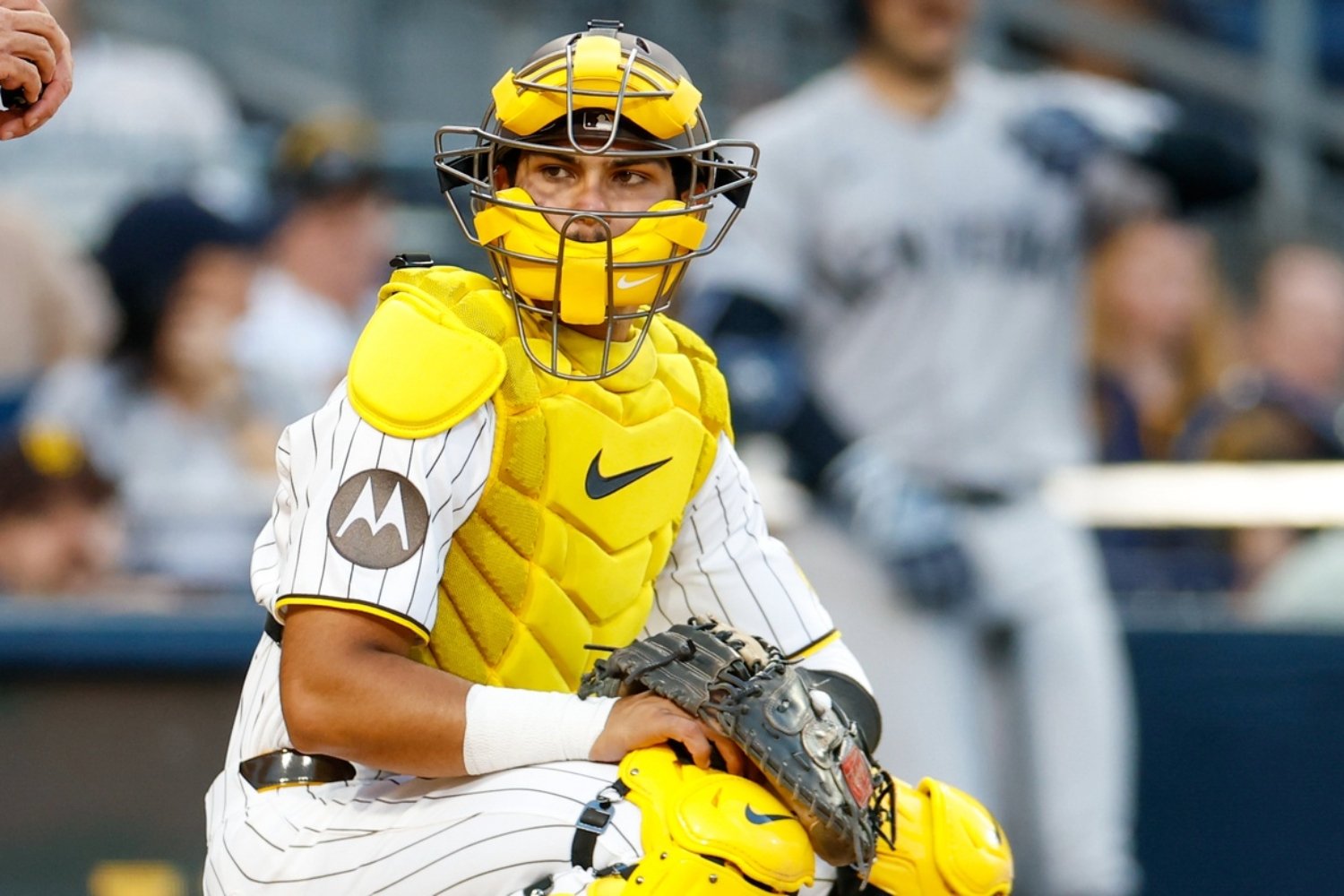 While the San Diego Padres front office constantly reshapes its major-league roster through blockbuster trades and aggressive deadline deals, the true heartbeat of the organization relies on what's brewing down on the farm. Even with constant promotions and prospect movement shifting the landscape, tracking the standout performers across the minor-league affiliates reveals a system packed with high-OBP bats, gap-to-gap pop, and a pitching staff that proves the future in San Diego has plenty of depth. From elite foundational talents anchoring the diamond to breakout risers who forced their way into everyday roles, putting together a complete 2026 Minor League All-Star squad showcases a roster more than capable of driving the future in San Diego. San Diego Padres Minor League 26-Man All-Star Roster (2026 Season) Starting Lineup (9) Ethan Salas (C) 2026 Minor League Stat Line (San Antonio / El Paso) 348 AB | 103 H | 10 HR | 61 RBI | 17 SB | .296 AVG | .374 OBP | .448 SLG | .822 OPS Profile: Anchors the organization behind the plate with elite defensive presence and a polished .296 batting clip, driving 61 runs across 96 games. Has received his long awaited big league call-up. Nick Solak (1B) 2026 Minor League Stat Line (Triple-A El Paso): 431 AB | 135 H | 16 HR | 79 RBI | 7 SB | .313 AVG | .378 OBP | .497 SLG | .875 OPS Profile: A potent offensive force in the Pacific Coast League, providing El Paso with a .313 average, robust slugging, and consistent run production. Marcos Castañon (2B) 2026 Minor League Stat Line (Triple-A El Paso): 437 AB | 125 H | 17 HR | 70 RBI | 4 SB | .286 AVG | .335 OBP | .453 SLG | .788 OPS Profile: Delivers gap-to-gap pop and steady middle-infield execution at the highest level of the minor league system. Mason McCoy (SS) 2026 Minor League Stat Line (Triple-A El Paso): 476 AB | 10 HR | 67 RBI | 37 SB | .284 AVG | .359 OBP | .408 SLG | .767 OPS Profile: Combines top-tier defensive range at shortstop with high-IQ base running and timely run production. Kerrington Cross (3B) 2026 Minor League Stat Line (Lake Elsinore / Fort Wayne / San Antonio): 372 AB | 103 H | 25 2B | 18 HR | 64 RBI | 21 SB | 80 BB | .277 AVG | .415 OBP | .500 SLG | .915 OPS Profile: Put together a breakout campaign highlighted by an elite .415 on-base percentage and heavy extra-base power across the lower minors. Alex McCoy (LF) 2026 Minor League Stat Line (Fort Wayne / San Antonio ): 475 AB | 132 H | 31 2B | 19 HR | 71 RBI | 50 BB | 24 SB | .278 AVG | .355 OBP | .467 SLG | .822 OPS Profile: Showcases power-speed threat capabilities out of the outfield with 31 doubles and 21 stolen bases that brought consistent offensive pressure across High-A and Double-A Ryan Wideman (CF) 2026 Minor League Stat Line (Lake Elsinore / Fort Wayne): 451 AB | 129 H | 24 2B | 6 HR | 59 RBI | 65 SB | .286 AVG | .350 OBP | .406 SLG | .756 OPS Profile: Dynamic speed threat patrolling center field with an impressive 65 stolen bases and a reliable .286 batting average. Braedon Karpathios (RF) 2026 Minor League Stat Line (San Antonio / El Paso): 465 AB | 122 H | 17 HR | 73 RBI | 64 BB | .262 AVG | .350 OBP | .432 SLG | .782 OPS Profile: Texas League standout featuring a disciplined plate approach, low chase rates, and consistent middle-of-the-order run production. Promoted to Triple-A to finish a solid campaign. Jake Cunningham (DH) 2026 Minor League Stat Line (Fort Wayne / San Antonio): 339 AB | 96 H | 18 2B | 19 HR | 61 RBI | 44 BB | .283 AVG | .369 OBP | .516 SLG | .885 OPS Profile: Erupted with a .516 slugging clip and 19 home runs, slotting directly into the designated hitter role to maximize raw power output. Bench Players (4) Blake Hunt (C) 2026 Minor League Stat Line (Triple-A El Paso): .301 AVG | .381 OBP | .617 SLG | 11 HR | 32 RBI Profile: Highly efficient backup option providing elite catching depth and loud offensive impact in a shortened Triple-A sample. Was recently released in a bit of a surprise move. Justin DeCriscio (INF) 2026 Minor League Stat Line (Lake Elsinore / Fort Wayne / San Antonio): 463 AB | 125 H | 13 HR | 59 RBI | 22 SB | .270 AVG | .358 OBP | .783 OPS Profile: High-contact infield operator capable of filling multiple defensive positions cleanly while maintaining strong on-base metrics.with quiet pop. Carlos Rodríguez (OF) 2026 Minor League Stat Line (Triple-A El Paso): 465 AB | 146 H | 6 HR | 75 RBI | 23 SB | .314 AVG | .380 OBP | .806 OPS Profile: Displays exceptional hit-tool consistency with a .314 average, 139 total hits, and dependable speed on the base paths. Bradley Frye (UT) 2026 Minor League Stat Line (Lake Elsinore / Fort Wayne): 353 AB | 97 H | 5 HR | 52 RBI | 30 SB | .275 AVG | .371 OBP | .382 SLG | .753 OPS Profile: Gritty utility asset offering defensive versatility across the diamond alongside 30 stolen bases and a disciplined .371 OBP. Starting Rotation (6-Man) Luis Gutierrez (Starting Pitcher) 2026 Minor League Stat Line ( Arizona Complex / Fort Wayne / San Antonio / El Paso ): 33.0 IP | 3.27 ERA | 1.30 WHIP | 42 SO | 1-3 W-L Profile: Sinker-heavy profile generating extreme ground-ball inducement to navigate deep into games. Bryan Balzer (Starting Pitcher) 2026 Minor League Stat Line (Lake Elsinore / Fort Wayne): 98.2 IP | 4.77 ERA | 1.39 WHIP | 100 SO | 7-5 W-L Profile: Leveraged high-spin secondary offerings to rack up 100 strikeouts across nearly 100 frames, anchoring a durable starter's workload across two levels. Jesus Castro (Starting Pitcher) 2026 Minor League Stat Line ( Lake Elsinore ); 90.1 IP | 4.18 ERA | 1.31 WHIP | 100 SO | 3-5 W-L Profile: Exceptional sequencing depth and control execution keeping hitters off balance through extended outings. Winyer Chourio (Starting Pitcher) 2026 Minor League Stat Line (Lake Elsinore / Fort Wayne): 92.2 IP | 4.56 ERA | 1.46 WHIP | 122 SO | 6-5 W-L Profile: Utilizes high-spin, heavy vertical movement with his fastball alongside an emerging swing-and-miss breaking package to rack up 122 strikeouts across 92.2 frames. Ian Koenig (Starting Pitcher) 2026 Minor League Stat Line (San Antonio / El Paso): 137.1 IP | 4.39 ERA | 1.23 WHIP | 114 SO | 7-10 W-L Profile: Command-driven sequence specialist relying on heavy sinker-slider tunnels to induce weak contact across a heavy 137.1-inning workload in the upper levels Jhony Brito (Starting Pitcher) 2026 Minor League Stat Line ( Arizona Complex / San Antonio / El Paso ): 67.2 IP | 3.06 ERA | 1.21 WHIP | 44 SO | 4-1 W-L Profile: Mix-and-match approach prioritizing high execution rates and strategic pitch location. Bullpen (7-Man) Adler Cecil (Long-Relief) 2026 Minor League Stat Line (Arizona Complex / Lake Elsinore): 61.2 IP | 4.09 ERA | 1.28 WHIP | 107 SO | 2-3 W-L Profile: Showcased a high-octane arm by racking up 107 strikeouts in just 61.2 frames, offering elite multi-inning length and swing-and-miss stuff out of the pen. Javier Chacon (Middle-Relief) 2026 Minor League Stat Line (Lake Elsinore / Fort Wayne): 67 IP | 3.76 ERA | 1.46 WHIP | 82 SO | 6-1 W-L | 1 SV Profile: Provided steady, reliable bridge work across two levels, compiling a sharp 6-1 record while keeping traffic manageable and turning in 82 strikeouts. Igor Gil (Middle-Relief) 2026 Minor League Stat Line (Fort Wayne / San Antonio): 53.2 IP | 4.36 ERA | 1.62 WHIP | 73 SO | 2-2 W-L | 1 SV Profile: Leveraged a heavy strikeout approach—punching out 73 batters in 53.2 innings—to navigate high-leverage middle frames and advance through the upper levels. Tucker Musgrove (Middle-Relief) 2026 Minor League Stat Line (Fort Wayne / San Antonio): 34.1 IP | 3.41 ERA | 1.46 WHIP | 68 SO | 2-2 W-L | 3 SV Profile: Emerged as a dominant high-octane weapon in abbreviated stints, locking down 3 saves and posting an electric 68-to-34 strikeout-to-innings ratio. Francis Pena (Set-up) 2026 Minor League Stat Line (Double-A San Antonio): 59 IP | 3.05 ERA | 1.46 WHIP | 71 SO | 4-3 W-L | 3 SV Profile: Anchored the back-end bridge in Double-A with a stingy 3.05 ERA, showing excellent late-inning poise and missing bats consistently with 71 Ks in 59 frames. Josh Mallitz (Set-up) 2026 Minor League Stat Line (Double-A San Antonio): 61.2 IP | 4.09 ERA | 1.18 WHIP | 63 SO | 5-0 W-L | 6 SV Profile: Combined a pristine 1.18 WHIP with a flawless 5-0 record and 6 saves, proving to be a metronomic setup option who minimizes free passes in clutch spots. Hunter Stratton (Closer) 2026 Minor League Stat Line (Gwinnett, Indianapolis, El Paso): 49.1 IP | 2.92 ERA | 1.34 WHIP | 47 SO | 3-5 W-L | 4 SV Profile: Brought valuable veteran stabilization and a sharp 2.92 ERA to the Triple-A bullpen corps, locking down the ninth inning with veteran execution San Diego Padres Minor League 26-Man All-Star Roster Conclusion The 2026 minor league landscape showcased an exceptional wave of organizational depth across the Padres system, from high-octane arms dominating in the lower levels to resilient upper-level workhorses. This collective performance underscores a robust pipeline ready to impact San Diego and solidifies the strength of the entire farm system moving forward. *All players stats and player information have been updated as of 9/15
 -
Before diving into this article, we recommend reading previous entries in this series, along with an introduction in part one. With that said, let's look at the gold standard Padres starting rotation. Part one: Gold Standard Padres, Infield Edition Part two: Gold Standard Padres, Outfield Edition Part three: Gold Standard Padres, Bench Edition Part four: Gold Standard Padres, Starting Rotation The Bullpen: The Guardians of the Lead This is where the game is won in the late hours. The arms that emerged from the shadows of the left-field fence to shut the door. These aren't just relievers; they are the high-leverage souls who carried the weight of the city on their shoulders when the lights were brightest. RP Mark Davis "The Hammer" "Uncle Charlie" 1989 (4.4 WAR) The Curveball Crown W-L: 4-3 | ERA: 1.85 | SV: 44 | G: 70 | IRS%: 78.4% | WHIP: 1.05 | IP: 92.2 | SO: 92 | K/BB: 2.97 | K%: 24.9% | K-BB%: 16.5% | ERA+: 191 | WPA: 6.1 | aLI: 2.14 NL Cy Young Award Winner | 2x NL All-Star (1988, 1989) | Padres Team MVP | Clyde McCullough Pitcher of the Year Award | NL Saves Leader | NL Rolaids Relief Man of the Year | NL Pitcher of the Month (April 1989) | NL Player of the Week (Sept 10, 1989) | Sporting News NL Pitcher of the Year The Five Pillars of Uncle Charlie Innovation: Davis relied on a heavy fastball that sat in the mid-90s—dominant velocity for 1989—paired with a sharp vertical snap on his breaking ball, nicknamed Uncle Charlie. That elite command of his signature pitch provided him the rare conviction to throw it for strikes in any count, including high-leverage situations. The innovation lay in the pitch's deadly movement; Davis threw his curveball with the same aggressive arm speed as his fastball. This created a tunneling effect in which the ball stayed on a fastball plane for the first 50 feet, making the two pitches indistinguishable to the hitter before the ball fell off the table in the final 10 feet. This approach kept hitters off balance, as they couldn't simply sit on his high-velocity heat in late-inning situations. By mastering this speed differential, he neutralized both left and right-handed threats. Impact: Davis served as the ultimate safety net for the 1989 Padres, transforming late innings into a foregone conclusion. His presence allowed the starting rotation to pitch with aggression, knowing that any lead handed to "The Hammer" was essentially a guaranteed victory. The statistical weight of his impact is anchored by a then-franchise record 44 saves and an elite 78.4% Inherited Runners Stranded rate. His 6.1 Win Probability Added (WPA) led the entire National League, meaning he shifted the outcome of more games than any other pitcher in the league. This dominance is further highlighted by a 2.14 Adjusted Leverage Index (aLI), which confirms he was consistently deployed in situations more than twice as intense as the league average. By maintaining a 1.05 WHIP and a 191 ERA+, Davis performed 91% better than his peers, holding opponents to a staggering .540 OPS while allowing only 5.9 hits per nine innings (H/9). Legend: In 1989, Mark Davis put together one of the most dominant seasons ever by a relief pitcher, becoming one of the few bullpen arms to ever win the Cy Young Award. By leading the league with 44 saves—a franchise record that stood for nine years until it was finally broken by Trevor Hoffman in 1998—he joined an elite group of only nine relief pitchers in MLB history to earn the honor. His performance was so significant that he finished 6th in the National League MVP voting, a rarity for a closer. This run began in late 1988, when he earned his first All-Star selection and recorded 28 saves, laying the foundation for his historic 1989 campaign. He led the National League with 65 games finished and posted a 1.85 ERA across 92.2 innings. His legendary status was cemented during the final month of the season, where he went a perfect 12-for-12 in save opportunities and stranded all 19 runners he inherited, transforming into the most feared arm in the game for a single, historic summer. Iconic Look: Standing a lanky 6'4", he was most recognizable for a high leg kick that brought his lead knee nearly to his chest before he delivered from a straight over-the-top arm slot. When the bases were empty, he worked from a full, deliberate windup, but he maintained that same motion even when he had to work from the stretch with runners on. He is best remembered in this season for his signature "Uncle Charlie" curveball, which looked like it was falling off a table as it reached the plate. He anchored the bullpen in the 1989 home white jersey with brown pinstripes and the solid brown cap with the orange "SD," often wearing a dark brown leather glove that matched the team’s classic colors. The sight of his frame in those brown and orange tones, using that kick to bury the curveball which gave it its nickname, is the image that defines his 1989 Cy Young season. The "Did You Know Factor": His 1989 season was so dominant that he captured 19 of the 24 first-place votes for the Cy Young Award, beating out legendary starters like Mike Scott and Orel Hershiser. During that campaign, he became the first pitcher in Major League history to record a save on five consecutive days, a record that stood alone for nearly a decade. While he remains the only left-handed reliever in National League history to win the award, his success also triggered a massive shift in how the league valued the closer position. Immediately following his win, he signed a landmark contract with the Kansas City Royals that briefly made him the highest-paid pitcher in baseball. This deal set a new financial ceiling for bullpen specialists, proving that a closer could command the same respect as the league’s most elite starting pitchers. RP Trevor Hoffman "Hell’s Bells" "Hoffy" "Trevor Time" 1998 (4.1 WAR) The Changeup King W-L: 4-2 | ERA: 1.48 | SV: 53 | G: 66 | IRS%: 81% | WHIP: 0.85 | IP: 73.0 | SO: 86 | K/BB: 4.10 | ERA+: 269 | WPA: 5.5 | aLI: 2.04 2x NL Rolaids Relief Man Award Winner (1998, 2006) | 6x NL All-Star (1998, 1999, 2000, 2002, 2006, 2007) | 2x NL Saves Leader (1998, 2006) | 3x Sporting News NL Reliever of the Year (1996, 1998, 2006) The Five Pillars of Hoffy Innovation: Hoffman was the ultimate master of the palmball, a grip that redefined late-inning dominance after a 1994 shoulder injury forced him to reinvent his power-pitching approach. While he began his career as a high-velocity thrower touching 95 mph, his success in 1998 was built on a mid-70s off-speed delivery that looked identical to his 91 mph fastball in both arm speed and release. This created a devastating tunneling effect where the ball stayed on a fastball plane for the first 50 feet before the bottom fell out in the final ten feet. The pitch was so deceptive that it earned the nickname the Bugs Bunny changeup from teammates and broadcasters alike, as hitters would often be halfway through their swing before the ball reached the plate. Opponents described the sensation as the ball having a parachute on it, forced by the way Hoffman pinched the seam with his thumb and middle finger to kill the rotation and create late, vertical sink. Impact: Trevor was the Padres' competitive anchor for over a decade, but 1998 stood as his statistical peak. He posted a career-best 5.5 Win Probability Added (WPA), meaning he personally shifted the outcome of more games than any other pitcher in the National League that year. Hoffman successfully converted 53 of 54 save opportunities—a 98.1% success rate—and held opposing hitters to a microscopic .165 batting average. This consistency produced an incredible 0.461 OPS against, essentially turning every hitter into a liability. In save situations specifically, his ERA dropped to 0.49, and the Padres finished with a 62-4 record in games he appeared in. Beyond the box score, his 269 ERA+ meant he performed 169% above the league average, making the 9th inning a foregone conclusion for the opponent and providing the edge that fueled the franchise-record 98 wins and a World Series berth. Legend: 1998 was the year Trevor Hoffman transitioned from an elite closer to a true baseball icon. On July 25, 1998, the "Hell’s Bells" phenomenon was born at Qualcomm Stadium; as the opening toll of the AC/DC track echoed through the park, Hoffman emerged from the bullpen to convert his 41st consecutive save, tying the then-MLB record. His dominance that season was so undeniable that he finished 2nd in one of the most controversial NL Cy Young races in history. Hoffman actually received more first-place votes (13) than the winner, Tom Glavine (11), but lost the award on total points because several voters left him off their ballots entirely. Along with finishing 7th in the NL MVP race, he became the face of the franchise’s "Keep the Faith" era, leading the team through the NLCS and into the World Series. This season didn't just cement his Hall of Fame trajectory—it turned "Trevor Time" into the most intimidating entrance in the history of the sport. Iconic Look: During the 1998 season, Hoffman rotated between the Padres' classic navy blue pinstripes, the road greys, and the season’s signature navy alternate jerseys, all topped with the navy cap and its white and orange interlocking "SD." On the mound, his trademark goatee look and intense stare from beneath a low-pulled brim were as recognizable as his entrance music. His mechanics were anchored by a signature high leg kick that created a sense of tension before he broke toward the plate, allowing him to hide the ball behind his body until the last possible second. This made his devastating changeup appear identical to his fastball until it was too late. The sight of Trevor emerging from the bullpen as the Qualcomm Stadium lights flickered and the first toll of the bells rang out remains the definitive visual of San Diego’s most celebrated season. The "Did You Know Factor": Hoffman was a trailblazer in the record books, becoming the first pitcher in MLB history to reach both the 500 and 600-save milestones—a feat so rare that only Mariano Rivera has ever joined him. Remarkably, his path to greatness began as a complete pivot; originally drafted as a shortstop, he possessed a rare 80-grade arm—the highest rating a scout can give—which convinced the Reds to move him to the mound after he struggled as a light-hitting infielder. This transition to a first-ballot Hall of Famer is even more impressive considering he had a kidney removed as an infant, a condition that once made many teams hesitant to recruit him. His dominance was so defining that Major League Baseball eventually renamed the National League Reliever of the Year Award in his honor: The Trevor Hoffman Award. RP Rollie Fingers "Rollie" "The Handlebar" "The 'Stash Man" 1978 (3.9 WAR) The Baron of the Bullpen W-L: 6-13 | ERA: 2.93 | SV: 37 | G: 67 | IRS%: 69.2% | WHIP: 1.15 | IP: 107.1 | SO: 82 | K/BB: 2.41 | ERA+: 120 | WPA: 2.1 | aLI: 1.85 2x NL Saves Leader ('77, '78) | NL Rolaids Relief Man | NL All-Star | Sporting News NL Fireman of the Year The Five Pillars of The Handlebar Innovation: Fingers was a master of the "sinker-slider" combination. At a time when many relievers just threw as hard as they could, Rollie used precision and late movement to induce weak contact. He was often called upon to pitch two or three innings at a time, redefining what it meant to "close" a game by being the ultimate high-leverage weapon. His innovation relied on a unique finger-pressure technique on his sinker that created a "heavy" ball, resulting in an elite groundball rate that allowed him to navigate the inherited jams that defined the "Fireman" era. While modern closers specialize in the clean 9th inning, Rollie innovated by "pitching to the floor," using a low three-quarters arm slot to make his slider "tilt" late. This created a devastating tunneling effect; by the time a hitter realized the pitch wasn't a sinker at the knees, it had already slid off the plate, forcing the weak, rollover contact that allowed him to pitch 107.1 innings of high-stress relief. Impact: His presence gave the 1970s Padres immediate credibility. He was a professional who knew how to finish games, and he helped a young franchise learn how to win close contests. He remains a rare Hall of Fame icon who cemented his legend by dominating for the Padres during his prime years in San Diego. Beyond the box score, Rollie was the essential "safety net" for a roster that had never experienced a winning season, providing the veteran stability required for the franchise to finally break through with 84 wins in 1978. His impact was felt most by appearing in 67 games and throwing 107.1 innings; he acted as a bridge for the entire staff, often entering in the 7th or 8th inning to protect a lead for hours. By posting an elite 2.1 WPA (Win Probability Added), he proved that a dominant reliever could single-handedly change the entire win-loss trajectory. Legend: Rollie Fingers brought an immediate championship pedigree to San Diego, arriving as a cornerstone free-agent signing with three World Series rings from his tenure with the Oakland A's. In 1978, he was an absolute workhorse, leading the National League with 37 saves while pitching a staggering 107.1 innings entirely out of the bullpen. Unlike modern closers, Fingers averaged nearly 1.2 innings per appearance, often entering in the 7th or 8th inning to extinguish threats. He served as the high-leverage anchor of a staff that featured Gaylord Perry’s Cy Young-winning campaign, creating a legendary veteran duo that finally propelled the Padres to an 84-78 finish—the first winning season in franchise history. His 1978 performance earned him his second consecutive Rolaids Relief Man of the Year Award and a top-10 finish in the Cy Young voting. Iconic Look: You cannot talk about Rollie Fingers without mentioning the most famous mustache in sports history. His impeccably waxed handlebar mustache, kept in place with Hungarian Mustache Wax, became a symbol of his icy composure on the mound. During the 1978 season, this look was perfectly framed by the Padres' vibrant yellow-and-brown "all-gold" uniforms—the iconic pullover jerseys that remain a fan favorite. Because San Diego hosted the 1978 All-Star Game, Fingers’ jersey was uniquely adorned with a commemorative "Swinging Padre" patch on the left sleeve. On the rubber, his look was defined by a classic, high-leg-kick delivery that added visual deception to a heavy 92-mph sinker and a sharp, biting slider that hitters simply could not square up. The "Did You Know" Factor: During his 1978 season in San Diego, Rollie was the ultimate volume-shooter of the bullpen, appearing in 67 games and facing 434 total batters. Despite his deceptive 6-13 record that year, his 3.9 WAR (Baseball-Reference) proves just how dominant he was in keeping the Padres in games. Did you know? Most of those losses were the result of Rollie being pushed to his absolute physical limit in extra-inning marathons where he was forced to throw multiple innings to protect thin leads for a team that lacked deep bullpen depth. Additionally, his famous mustache was so vital to his identity that he eventually chose to retire from baseball in 1986 rather than comply with the Cincinnati Reds' strict "no facial hair" policy. RP Rich Gossage "The Goose" 1984 (3.4 WAR) The Outlaw Fireman W-L: 10-6 | ERA: 2.90 | SV: 25 | G: 62 | IRS% 74% | WHIP: 1.08 | IP: 102.1 | SO: 84 | K/BB: 2.33 | ERA+ 122 | WPA: 2.7 | aLI: 1.70 2x NL All-Star (1984, 1985) | 1984 NL Champion The Five Pillars of The Goose Innovation: Goose was the pioneer of the "power closer" role, a high-velocity "fireman" who redefined what it meant to anchor a bullpen. Unlike modern closers who are often limited to a single clean inning, Gossage was a multi-inning weapon who specialized in "extinguishing" rallies in the 7th or 8th inning. His approach was built on a raw, aggressive delivery that made his upper-90s fastball feel even more overwhelming to hitters at Jack Murphy Stadium. By utilizing a heavy, sinking heater and a sharp slurve, he didn't just aim for the strike zone—he attacked it with a "here it is, try to hit it" mentality. This style of relief pitching was an evolutionary step in the game, moving away from the finesse-based relievers of the 70s and toward the era of late-inning power dominance that he helped invent. Impact: His arrival changed the culture of the San Diego Padres overnight. Signed as a high-profile free agent from the Yankees, Goose brought an intense, win-at-all-costs mentality that immediately rubbed off on younger players like Tony Gwynn and Kevin McReynolds. He acted as the "final piece" of the puzzle, transforming a franchise of perennial also-rans into an elite National League power. During the 1984 NLCS against the Chicago Cubs, his presence at the back end of the bullpen gave the city of San Diego the ultimate security blanket. In a season where he recorded 10 wins as a reliever, his impact was measured not just in saves, but in the psychological edge he provided; when Goose began his trot from the bullpen, the opposing dugout knew the game was effectively over. Legend: When the Padres signed Rich "Goose" Gossage in January 1984, they weren't just getting a pitcher; they were getting a Hall of Fame force of nature. He was the final major acquisition by legendary owner Ray Kroc before his passing, and Goose played like a man possessed to honor that legacy. This "Outlaw" earned his reputation through cold-blooded efficiency in high-leverage situations, helping the franchise reach its first-ever World Series appearance. Perhaps the most legendary moment of his '84 campaign was his relentless refusal to back down from any challenge, most famously illustrated by his desire to pitch to Kirk Gibson in the World Series rather than walk him—a move that, while it resulted in a home run, perfectly encapsulated the fearless, old-school warrior spirit that made him a San Diego icon. Iconic Look: With his legendary horseshoe mustache and a glare that could freeze a hitter in the box, Goose was the most feared man in baseball. Standing 6'3" with a hulking frame, he looked more like a Western outlaw than a ballplayer. During the 1984 season, he wore the classic "Taco Bell" brown and gold uniforms with the gold "RAK" patch on the sleeve in memory of Ray Kroc. Seeing him stomp off the mound after a three-inning save, sweat-soaked and snarling from beneath his navy and orange cap, remains one of the definitive images of the 80s era. His mechanics were as violent as his look, featuring a high-effort follow-through that saw him practically fall toward the first-base line, adding to the sheer intimidation of facing 98 mph heat in an era before that was common. The "Did You Know Factor": In 1984, Goose pitched over 100 innings entirely in relief—a workload that is almost unfathomable in the modern game. To put that in perspective, he pitched more innings that season than most modern "workhorse" relievers do in two full years combined. Despite this heavy usage and the constant pressure of entering games with runners on base, he maintained a sub-3.00 ERA and finished as an All-Star. He famously stated that the San Diego fans were the best he ever played for, noting that the electricity at "The Murph" during the '84 playoff run was the peak of his career. His 1984 performance remains the gold standard for veteran leadership, proving that a single elite reliever could truly shift the entire trajectory of a franchise. RP Kirby Yates "Yatesy" 2019 (3.4 WAR) The Splitter Surgeon W-L 0-5 | ERA 1.19 | SV 41 | G 60 | IRS% 80% | WHIP 0.89 | IP 60.2 | SO 101 | K/BB 8.42 | ERA+ 362 | WPA 3.7 | aLI 1.83 2019 All-MLB First Team | 2019 Baseball Digest Relief Pitcher of the Year | 2019 NL All-Star | 2019 MLB Saves Leader The Five Pillars of Yatesy Innovation Yates relied on a splitter that was statistically the most deceptive pitch in baseball during the 2019 season. Statcast data confirms he released the ball at a consistent 5.1-foot height, mirroring his 94 mph fastball perfectly before the splitter would plummet with 37.6 inches of vertical drop. By suppressing the spin rate to an average of 1,399 rpm—nearly 1,000 rpm lower than his four-seamer—he created a vertical break that was 3.5 inches greater than the league average. This mechanical "tunnelling" forced a 41.6% strikeout rate, as hitters routinely chased the pitch out of the zone thinking it was a belt-high heater. In 2019, his splitter accounted for the vast majority of his 101 strikeouts and held opposing batters to a .186 average, making it the premier "wipeout" pitch in the National League. Impact Yates served as the ultimate high-leverage stabilizer for a Padres team in the midst of a roster transition, providing a guaranteed finish for any lead held after eight innings. He converted 41 of 44 save opportunities for a 93% success rate, leading the major leagues in saves and becoming the first Padre to do so since 1998. His 3.7 Win Probability Added (WPA) ranked fifth among all MLB pitchers that year, indicating he dominated in the most pressured moments of the season. He was particularly dominant during a historic first-half stretch where he posted a 1.15 ERA through 39 innings, earning him the role of the National League's designated closer for the All-Star Game. By stabilizing the 9th inning, Yates allowed a young, unproven bullpen to develop in lower-stress roles, providing a veteran identity to the pitching staff. Legend The 2019 campaign was the culmination of a career reinvention that saw Yates go from being designated for assignment by three different teams to being the best reliever in baseball. His 1.19 ERA remains the lowest mark in franchise history for a pitcher with over 60 innings, and his 3.4 WAR is the second-highest ever for a Padres reliever in the divisional era, trailing only Mark Davis’s 1989 Cy Young season. He set a new franchise record by racking up 30 saves before the All-Star break, shattering the previous marks held by Heath Bell (26) and Trevor Hoffman (25). Though he was controversially bypassed for the NL Reliever of the Year Award, he was named the MLB-wide Relief Pitcher of the Year by Baseball Digest, proving that his surgical precision was the gold standard for the entire sport. Iconic Look Yates was defined by a cold, clinical efficiency that earned him his nickname "The Surgeon." Standing 5'10", he utilized a high-effort, athletic delivery that saw him finish in a deep crouch, staring down hitters through the follow-through. Whether he was wearing the navy and white or the brown and gold "Friday" alternates, his demeanor never wavered regardless of the score or the pressure. He was known for his stoic professional walk off the mound following a save, rarely showing emotion or over-celebrating a strikeout. This imagery of a focused, unshakeable closer became the defining visual for the Padres' 9th inning, symbolizing a "guaranteed victory" for the San Diego faithful even during a rebuilding year. The "Did You Know Factor" Kirby Yates was a 26th-round draft pick who didn't find a permanent home in the majors until his age-30 season. After being claimed off waivers by the Padres in 2017, he developed his elite splitter under the guidance of pitching coach Darren Balsley, transforming his entire career trajectory. In 2019, he became the first pitcher in MLB history to record 27 saves before the end of June, a blistering pace that set him apart from every other closer in the game. He also posted a 1.30 FIP (Fielding Independent Pitching), the lowest in the major leagues, confirming that his dominance was entirely the result of his own command rather than defensive luck. His 8.42 strikeout-to-walk ratio that year remains one of the most efficient marks for any closer in the modern era. RP Brad Hand "Brotein Shake" "Brotato" "Handy" 2017 (3.0 WAR) The Hand of God W-L: 3-4 | ERA: 2.16 | SV: 21 | G: 72 | IRS%: 74% | WHIP: 0.93 | IP: 79.1 | SO: 104 | K/BB: 5.47 | ERA+: 193 | WPA: 3.5 | aLI: 1.63 2x NL All-Star (2017, 2018) | 2x NL Reliever of the Month (July 2017, May 2018) | 2x Padres Darrel Akerfelds Bullpen Award Winner (2016, 2017) The Five Pillars of Brotato Innovation: Hand’s 2017 dominance was a clinical masterclass in pitch tunneling and the "primary-secondary" revolution. He leveraged an elite high-spin four-seam fastball (peaking at 2,629 rpm) to create an "induced vertical break" that perfectly mirrored the initial flight path of his primary weapon: a devastating 82 mph slider with elite vertical drop. By 2017, Hand had innovated his approach by increasing his slider usage to nearly 45%, defying the traditional "fastball-first" philosophy of the era. This mechanical deception forced hitters to respect a slider that looked identical to his 94-96 mph heater until the final 15 feet. This strategy effectively neutralized the platoon advantage, holding right-handed hitters to a meager .186 average and proving that a "wipeout" breaking ball could serve as a pitcher's true foundation. Impact: Hand was the definition of a "High-Leverage Eraser" for the 2017 Padres, leading the club with 72 appearances and a massive 3.5 Win Probability Added (WPA). He was far more than a traditional closer; he was a bridge-hybrid who frequently entered in the 7th or 8th inning to kill an opponent's momentum, successfully stranding 74% of inherited runners. His value was best highlighted by a historic mid-summer stretch where he threw 24 consecutive scoreless innings, a run that stabilized a young roster and elevated him to the top of every contender’s trade wish list. With a 193 ERA+ and a microscopic 0.93 WHIP, Hand was performing 93% better than the league average, effectively shortening games to six innings for San Diego’s opponents. Legend: The "Legend of Hand" is the ultimate story of a waiver-wire reclamation project becoming a franchise cornerstone. Originally a struggling starter in Miami, Hand arrived in San Diego and worked with Darren Balsley to refine a compact "short-arm" delivery that made his velocity play up. In 2017, he became the first Padres reliever since Trevor Hoffman to record over 100 strikeouts in a season, finishing with 104 punchouts in just 79.1 innings. His durability became a point of locker room pride, eventually fueling his journey to the prestigious 10-year Major League service time milestone. Teammates famously celebrated his blue-collar work ethic with "sleeveless and shades" days, cementing "Handy" as the respected veteran anchor of the Padres' bullpen during a critical era of transition. Iconic Look: Hand’s look was synonymous with the Padres’ 2017 "Blue & White" era, a clean, professional aesthetic that removed the yellow accents and pinstripes of previous seasons. He was most recognizable in the team’s navy road alternate jersey with the crisp white interlocking "SD" on the left chest, or the solid home whites. On the mound, his mechanics were distinctive for their lack of "noise"—an athletic, repeatable delivery from a mid-three-quarters slot. Staring down hitters from beneath a low-pulled navy brim, he maintained an icy, robotic stoicism that never broke regardless of the leverage. The definitive visual of this era was Hand freezing elite hitters with a "back-door" slider that appeared to be a fastball off the plate before biting back to catch the corner. The "Did You Know" Factor: Hand’s elite leg strength and durability were actually forged on the ice rather than the mound.Did you know? Brad Hand was a standout varsity hockey forward in Minnesota and credits his "ice-marrow" conditioning for his ability to lead the National League in games pitched (82) in 2016 without a single trip to the IL. This lower-body power allowed him to maintain his 96 mph peak velocity deep into the season. Additionally, Hand holds a rare piece of Marlins history: in his first MLB game in 2011, he not only earned the win but also recorded a line-drive base hit in his very first career at-bat—a "double-threat" debut that remains a rare feat for modern pitchers. RP Heath Bell "Heater" 2010 (2.4 WAR) The Running Man W-L 6-1 | ERA 1.93 | SV 47 | G 67 | IRS% 100% | WHIP 1.20 | IP 70.0 | SO 86 | K/BB 3.07 | ERA+ 186 | WPA 4.1 | aLI 1.98 2010 NL Rolaids Relief Man Award | 2010 MLB Delivery Man of the Year | 2010 NL All-Star | 2010 Sporting News NL Reliever of the Year The Five Pillars of Heater Innovation Unlike the finesse-based changeup of Trevor Hoffman, "Heater" was a power closer whose dominance was built on sheer explosive force and vertical deception. His 2010 repertoire centered on a heavy, mid-90s four-seam fastball that he lived with in the upper third of the zone, which he paired with a devastating 12-to-6 curveball. The effectiveness of this duo was driven by a massive 18 mph velocity gap, as his 76 mph breaking ball featured extreme vertical drop that induced a high groundball rate. By maintaining a high-effort delivery that masked his release point, Bell created a tunneling effect where both pitches looked identical out of the hand. This forced hitters to commit early to high heat, only to realize too late that the pitch was actually a floor-dropping curve, resulting in a career-high swinging strike rate. Impact Bell successfully stabilized the Padres' 9th inning during one of the most competitive seasons in franchise history, proving a lead was safe the moment he touched the rubber. His career-best 1.93 ERA was backed by an elite 11.1 K/9 rate and a stifling .221 opponent batting average, proving he could miss bats at will in high-leverage situations. His reliability was further defined by his "Shutdown" consistency; in 67 appearances, he recorded 44 Shutdowns (games where he increased his team's win probability by at least 6%) against just 5 Meltdowns, a ratio that ranked among the league's elite. Most notably, his 100% Inherited Runners Stranded (IRS%) rate underscored his role as the ultimate fireman, shutting down all nine runners he inherited that season and ensuring that late-inning rallies were extinguished before they could begin. Legend After serving a two-year apprenticeship in the setup role, Bell’s 2010 campaign solidified his place as one of the most prolific closers in franchise history. His 47 saves that season remain the second-highest single-season total in Padres history, and he currently sits second only to Hoffman on the club's all-time saves list. He was particularly dominant within the confines of Petco Park, where he posted a microscopic 1.11 ERA and converted 24 of 25 opportunities in front of the home crowd. During this stretch, Bell embarked on a historic run of 41 consecutive successful save conversions (spanning 2010–2011), tying a club record and cementing his legacy as a premier lockdown specialist. His 2010 performance ensured that the transition from the Hoffman era was seamless, maintaining San Diego's reputation as a "closer's paradise." Iconic Look Heath Bell was defined by his trademark sprint from the bullpen, a ritual that began the moment "We Are One" by 12 Stones hit the Petco Park speakers. While other closers maintained a slow, focused jog, Bell would charge toward the mound at a full-speed gallop—once clocked by team staff at nearly 18 mph—often leaping the foul line and finishing with a characteristic slide into the dirt at the back of the mound to fire up the crowd. Standing a sturdy 6'3" and 235 lbs, he was a ball of pure kinetic energy in the navy blue and sand pinstripes of the era. This high-octane entrance, combined with his tendency to scream in celebration after a game-ending strikeout, made him the emotional heartbeat of the roster and a showman who transformed the 9th inning into a high-intensity event. The "Did You Know" Factor Heath Bell’s path to stardom was one of the unlikeliest in baseball history; he was originally selected by the Tampa Bay Devil Rays in the 69th round of the 1997 draft (1,583rd overall) but did not sign, eventually signing with the Mets as an undrafted free agent. His 2010 season was a rare display of durability for a closer, as he became one of only three Padres relievers to ever record 45+ saves while pitching at least 70 innings in a single season, a workload that is virtually unheard of in the modern specialized era. He is perhaps most famously remembered for his 2011 All-Star Game entrance where he famously sprinted in and performed a full-body belly flop slide into the pitcher's mound. This moment, which occurred during a streak where he converted 34 consecutive saves to end a season, perfectly encapsulated Bell's philosophy: that baseball, even in its most pressured moments, should be played with unbridled joy. We’ve reached the end of this first volume, but the echoes of these legends never truly fade. They are stitched into the very fabric of this city. From the grass at Petco to the saltwater breeze off the bay, we remember that their legacy isn’t just found in the Cooperstown plaques or the retired numbers swaying in the breeze. You can find it at the coolest intersection in the world: the corner of Tony Gwynn Drive and Trevor Hoffman Way. That’s where the past meets the present, and where the roar of the crowd never quite stops. In the immortal words of the legendary Jerry Coleman, whenever a player did something truly spectacular, he would exclaim, "You can hang a star on that baby!" For these 26 icons, their stars are permanently hung in something sacred. They played with a "soul" that box scores can't fully capture, defining what it means to wear the brown and gold. "Oh, Doctor! You can hang a star on that one!" View full article
-
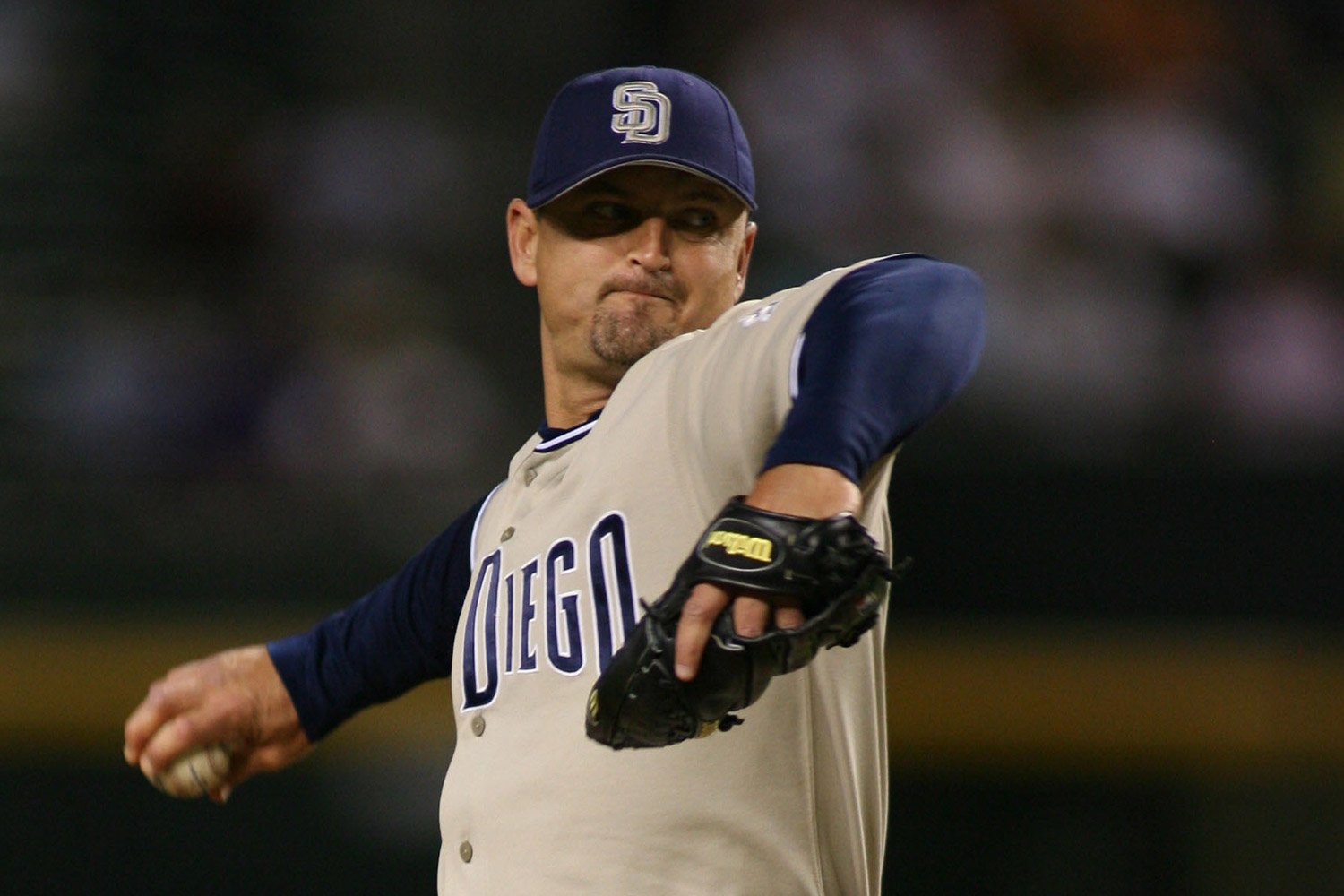 Before diving into this article, we recommend reading previous entries in this series, along with an introduction in part one. With that said, let's look at the gold standard Padres starting rotation. Part one: Gold Standard Padres, Infield Edition Part two: Gold Standard Padres, Outfield Edition Part three: Gold Standard Padres, Bench Edition Part four: Gold Standard Padres, Starting Rotation The Bullpen: The Guardians of the Lead This is where the game is won in the late hours. The arms that emerged from the shadows of the left-field fence to shut the door. These aren't just relievers; they are the high-leverage souls who carried the weight of the city on their shoulders when the lights were brightest. RP Mark Davis "The Hammer" "Uncle Charlie" 1989 (4.4 WAR) The Curveball Crown W-L: 4-3 | ERA: 1.85 | SV: 44 | G: 70 | IRS%: 78.4% | WHIP: 1.05 | IP: 92.2 | SO: 92 | K/BB: 2.97 | K%: 24.9% | K-BB%: 16.5% | ERA+: 191 | WPA: 6.1 | aLI: 2.14 NL Cy Young Award Winner | 2x NL All-Star (1988, 1989) | Padres Team MVP | Clyde McCullough Pitcher of the Year Award | NL Saves Leader | NL Rolaids Relief Man of the Year | NL Pitcher of the Month (April 1989) | NL Player of the Week (Sept 10, 1989) | Sporting News NL Pitcher of the Year The Five Pillars of Uncle Charlie Innovation: Davis relied on a heavy fastball that sat in the mid-90s—dominant velocity for 1989—paired with a sharp vertical snap on his breaking ball, nicknamed Uncle Charlie. That elite command of his signature pitch provided him the rare conviction to throw it for strikes in any count, including high-leverage situations. The innovation lay in the pitch's deadly movement; Davis threw his curveball with the same aggressive arm speed as his fastball. This created a tunneling effect in which the ball stayed on a fastball plane for the first 50 feet, making the two pitches indistinguishable to the hitter before the ball fell off the table in the final 10 feet. This approach kept hitters off balance, as they couldn't simply sit on his high-velocity heat in late-inning situations. By mastering this speed differential, he neutralized both left and right-handed threats. Impact: Davis served as the ultimate safety net for the 1989 Padres, transforming late innings into a foregone conclusion. His presence allowed the starting rotation to pitch with aggression, knowing that any lead handed to "The Hammer" was essentially a guaranteed victory. The statistical weight of his impact is anchored by a then-franchise record 44 saves and an elite 78.4% Inherited Runners Stranded rate. His 6.1 Win Probability Added (WPA) led the entire National League, meaning he shifted the outcome of more games than any other pitcher in the league. This dominance is further highlighted by a 2.14 Adjusted Leverage Index (aLI), which confirms he was consistently deployed in situations more than twice as intense as the league average. By maintaining a 1.05 WHIP and a 191 ERA+, Davis performed 91% better than his peers, holding opponents to a staggering .540 OPS while allowing only 5.9 hits per nine innings (H/9). Legend: In 1989, Mark Davis put together one of the most dominant seasons ever by a relief pitcher, becoming one of the few bullpen arms to ever win the Cy Young Award. By leading the league with 44 saves—a franchise record that stood for nine years until it was finally broken by Trevor Hoffman in 1998—he joined an elite group of only nine relief pitchers in MLB history to earn the honor. His performance was so significant that he finished 6th in the National League MVP voting, a rarity for a closer. This run began in late 1988, when he earned his first All-Star selection and recorded 28 saves, laying the foundation for his historic 1989 campaign. He led the National League with 65 games finished and posted a 1.85 ERA across 92.2 innings. His legendary status was cemented during the final month of the season, where he went a perfect 12-for-12 in save opportunities and stranded all 19 runners he inherited, transforming into the most feared arm in the game for a single, historic summer. Iconic Look: Standing a lanky 6'4", he was most recognizable for a high leg kick that brought his lead knee nearly to his chest before he delivered from a straight over-the-top arm slot. When the bases were empty, he worked from a full, deliberate windup, but he maintained that same motion even when he had to work from the stretch with runners on. He is best remembered in this season for his signature "Uncle Charlie" curveball, which looked like it was falling off a table as it reached the plate. He anchored the bullpen in the 1989 home white jersey with brown pinstripes and the solid brown cap with the orange "SD," often wearing a dark brown leather glove that matched the team’s classic colors. The sight of his frame in those brown and orange tones, using that kick to bury the curveball which gave it its nickname, is the image that defines his 1989 Cy Young season. The "Did You Know Factor": His 1989 season was so dominant that he captured 19 of the 24 first-place votes for the Cy Young Award, beating out legendary starters like Mike Scott and Orel Hershiser. During that campaign, he became the first pitcher in Major League history to record a save on five consecutive days, a record that stood alone for nearly a decade. While he remains the only left-handed reliever in National League history to win the award, his success also triggered a massive shift in how the league valued the closer position. Immediately following his win, he signed a landmark contract with the Kansas City Royals that briefly made him the highest-paid pitcher in baseball. This deal set a new financial ceiling for bullpen specialists, proving that a closer could command the same respect as the league’s most elite starting pitchers. RP Trevor Hoffman "Hell’s Bells" "Hoffy" "Trevor Time" 1998 (4.1 WAR) The Changeup King W-L: 4-2 | ERA: 1.48 | SV: 53 | G: 66 | IRS%: 81% | WHIP: 0.85 | IP: 73.0 | SO: 86 | K/BB: 4.10 | ERA+: 269 | WPA: 5.5 | aLI: 2.04 2x NL Rolaids Relief Man Award Winner (1998, 2006) | 6x NL All-Star (1998, 1999, 2000, 2002, 2006, 2007) | 2x NL Saves Leader (1998, 2006) | 3x Sporting News NL Reliever of the Year (1996, 1998, 2006) The Five Pillars of Hoffy Innovation: Hoffman was the ultimate master of the palmball, a grip that redefined late-inning dominance after a 1994 shoulder injury forced him to reinvent his power-pitching approach. While he began his career as a high-velocity thrower touching 95 mph, his success in 1998 was built on a mid-70s off-speed delivery that looked identical to his 91 mph fastball in both arm speed and release. This created a devastating tunneling effect where the ball stayed on a fastball plane for the first 50 feet before the bottom fell out in the final ten feet. The pitch was so deceptive that it earned the nickname the Bugs Bunny changeup from teammates and broadcasters alike, as hitters would often be halfway through their swing before the ball reached the plate. Opponents described the sensation as the ball having a parachute on it, forced by the way Hoffman pinched the seam with his thumb and middle finger to kill the rotation and create late, vertical sink. Impact: Trevor was the Padres' competitive anchor for over a decade, but 1998 stood as his statistical peak. He posted a career-best 5.5 Win Probability Added (WPA), meaning he personally shifted the outcome of more games than any other pitcher in the National League that year. Hoffman successfully converted 53 of 54 save opportunities—a 98.1% success rate—and held opposing hitters to a microscopic .165 batting average. This consistency produced an incredible 0.461 OPS against, essentially turning every hitter into a liability. In save situations specifically, his ERA dropped to 0.49, and the Padres finished with a 62-4 record in games he appeared in. Beyond the box score, his 269 ERA+ meant he performed 169% above the league average, making the 9th inning a foregone conclusion for the opponent and providing the edge that fueled the franchise-record 98 wins and a World Series berth. Legend: 1998 was the year Trevor Hoffman transitioned from an elite closer to a true baseball icon. On July 25, 1998, the "Hell’s Bells" phenomenon was born at Qualcomm Stadium; as the opening toll of the AC/DC track echoed through the park, Hoffman emerged from the bullpen to convert his 41st consecutive save, tying the then-MLB record. His dominance that season was so undeniable that he finished 2nd in one of the most controversial NL Cy Young races in history. Hoffman actually received more first-place votes (13) than the winner, Tom Glavine (11), but lost the award on total points because several voters left him off their ballots entirely. Along with finishing 7th in the NL MVP race, he became the face of the franchise’s "Keep the Faith" era, leading the team through the NLCS and into the World Series. This season didn't just cement his Hall of Fame trajectory—it turned "Trevor Time" into the most intimidating entrance in the history of the sport. Iconic Look: During the 1998 season, Hoffman rotated between the Padres' classic navy blue pinstripes, the road greys, and the season’s signature navy alternate jerseys, all topped with the navy cap and its white and orange interlocking "SD." On the mound, his trademark goatee look and intense stare from beneath a low-pulled brim were as recognizable as his entrance music. His mechanics were anchored by a signature high leg kick that created a sense of tension before he broke toward the plate, allowing him to hide the ball behind his body until the last possible second. This made his devastating changeup appear identical to his fastball until it was too late. The sight of Trevor emerging from the bullpen as the Qualcomm Stadium lights flickered and the first toll of the bells rang out remains the definitive visual of San Diego’s most celebrated season. The "Did You Know Factor": Hoffman was a trailblazer in the record books, becoming the first pitcher in MLB history to reach both the 500 and 600-save milestones—a feat so rare that only Mariano Rivera has ever joined him. Remarkably, his path to greatness began as a complete pivot; originally drafted as a shortstop, he possessed a rare 80-grade arm—the highest rating a scout can give—which convinced the Reds to move him to the mound after he struggled as a light-hitting infielder. This transition to a first-ballot Hall of Famer is even more impressive considering he had a kidney removed as an infant, a condition that once made many teams hesitant to recruit him. His dominance was so defining that Major League Baseball eventually renamed the National League Reliever of the Year Award in his honor: The Trevor Hoffman Award. RP Rollie Fingers "Rollie" "The Handlebar" "The 'Stash Man" 1978 (3.9 WAR) The Baron of the Bullpen W-L: 6-13 | ERA: 2.93 | SV: 37 | G: 67 | IRS%: 69.2% | WHIP: 1.15 | IP: 107.1 | SO: 82 | K/BB: 2.41 | ERA+: 120 | WPA: 2.1 | aLI: 1.85 2x NL Saves Leader ('77, '78) | NL Rolaids Relief Man | NL All-Star | Sporting News NL Fireman of the Year The Five Pillars of The Handlebar Innovation: Fingers was a master of the "sinker-slider" combination. At a time when many relievers just threw as hard as they could, Rollie used precision and late movement to induce weak contact. He was often called upon to pitch two or three innings at a time, redefining what it meant to "close" a game by being the ultimate high-leverage weapon. His innovation relied on a unique finger-pressure technique on his sinker that created a "heavy" ball, resulting in an elite groundball rate that allowed him to navigate the inherited jams that defined the "Fireman" era. While modern closers specialize in the clean 9th inning, Rollie innovated by "pitching to the floor," using a low three-quarters arm slot to make his slider "tilt" late. This created a devastating tunneling effect; by the time a hitter realized the pitch wasn't a sinker at the knees, it had already slid off the plate, forcing the weak, rollover contact that allowed him to pitch 107.1 innings of high-stress relief. Impact: His presence gave the 1970s Padres immediate credibility. He was a professional who knew how to finish games, and he helped a young franchise learn how to win close contests. He remains a rare Hall of Fame icon who cemented his legend by dominating for the Padres during his prime years in San Diego. Beyond the box score, Rollie was the essential "safety net" for a roster that had never experienced a winning season, providing the veteran stability required for the franchise to finally break through with 84 wins in 1978. His impact was felt most by appearing in 67 games and throwing 107.1 innings; he acted as a bridge for the entire staff, often entering in the 7th or 8th inning to protect a lead for hours. By posting an elite 2.1 WPA (Win Probability Added), he proved that a dominant reliever could single-handedly change the entire win-loss trajectory. Legend: Rollie Fingers brought an immediate championship pedigree to San Diego, arriving as a cornerstone free-agent signing with three World Series rings from his tenure with the Oakland A's. In 1978, he was an absolute workhorse, leading the National League with 37 saves while pitching a staggering 107.1 innings entirely out of the bullpen. Unlike modern closers, Fingers averaged nearly 1.2 innings per appearance, often entering in the 7th or 8th inning to extinguish threats. He served as the high-leverage anchor of a staff that featured Gaylord Perry’s Cy Young-winning campaign, creating a legendary veteran duo that finally propelled the Padres to an 84-78 finish—the first winning season in franchise history. His 1978 performance earned him his second consecutive Rolaids Relief Man of the Year Award and a top-10 finish in the Cy Young voting. Iconic Look: You cannot talk about Rollie Fingers without mentioning the most famous mustache in sports history. His impeccably waxed handlebar mustache, kept in place with Hungarian Mustache Wax, became a symbol of his icy composure on the mound. During the 1978 season, this look was perfectly framed by the Padres' vibrant yellow-and-brown "all-gold" uniforms—the iconic pullover jerseys that remain a fan favorite. Because San Diego hosted the 1978 All-Star Game, Fingers’ jersey was uniquely adorned with a commemorative "Swinging Padre" patch on the left sleeve. On the rubber, his look was defined by a classic, high-leg-kick delivery that added visual deception to a heavy 92-mph sinker and a sharp, biting slider that hitters simply could not square up. The "Did You Know" Factor: During his 1978 season in San Diego, Rollie was the ultimate volume-shooter of the bullpen, appearing in 67 games and facing 434 total batters. Despite his deceptive 6-13 record that year, his 3.9 WAR (Baseball-Reference) proves just how dominant he was in keeping the Padres in games. Did you know? Most of those losses were the result of Rollie being pushed to his absolute physical limit in extra-inning marathons where he was forced to throw multiple innings to protect thin leads for a team that lacked deep bullpen depth. Additionally, his famous mustache was so vital to his identity that he eventually chose to retire from baseball in 1986 rather than comply with the Cincinnati Reds' strict "no facial hair" policy. RP Rich Gossage "The Goose" 1984 (3.4 WAR) The Outlaw Fireman W-L: 10-6 | ERA: 2.90 | SV: 25 | G: 62 | IRS% 74% | WHIP: 1.08 | IP: 102.1 | SO: 84 | K/BB: 2.33 | ERA+ 122 | WPA: 2.7 | aLI: 1.70 2x NL All-Star (1984, 1985) | 1984 NL Champion The Five Pillars of The Goose Innovation: Goose was the pioneer of the "power closer" role, a high-velocity "fireman" who redefined what it meant to anchor a bullpen. Unlike modern closers who are often limited to a single clean inning, Gossage was a multi-inning weapon who specialized in "extinguishing" rallies in the 7th or 8th inning. His approach was built on a raw, aggressive delivery that made his upper-90s fastball feel even more overwhelming to hitters at Jack Murphy Stadium. By utilizing a heavy, sinking heater and a sharp slurve, he didn't just aim for the strike zone—he attacked it with a "here it is, try to hit it" mentality. This style of relief pitching was an evolutionary step in the game, moving away from the finesse-based relievers of the 70s and toward the era of late-inning power dominance that he helped invent. Impact: His arrival changed the culture of the San Diego Padres overnight. Signed as a high-profile free agent from the Yankees, Goose brought an intense, win-at-all-costs mentality that immediately rubbed off on younger players like Tony Gwynn and Kevin McReynolds. He acted as the "final piece" of the puzzle, transforming a franchise of perennial also-rans into an elite National League power. During the 1984 NLCS against the Chicago Cubs, his presence at the back end of the bullpen gave the city of San Diego the ultimate security blanket. In a season where he recorded 10 wins as a reliever, his impact was measured not just in saves, but in the psychological edge he provided; when Goose began his trot from the bullpen, the opposing dugout knew the game was effectively over. Legend: When the Padres signed Rich "Goose" Gossage in January 1984, they weren't just getting a pitcher; they were getting a Hall of Fame force of nature. He was the final major acquisition by legendary owner Ray Kroc before his passing, and Goose played like a man possessed to honor that legacy. This "Outlaw" earned his reputation through cold-blooded efficiency in high-leverage situations, helping the franchise reach its first-ever World Series appearance. Perhaps the most legendary moment of his '84 campaign was his relentless refusal to back down from any challenge, most famously illustrated by his desire to pitch to Kirk Gibson in the World Series rather than walk him—a move that, while it resulted in a home run, perfectly encapsulated the fearless, old-school warrior spirit that made him a San Diego icon. Iconic Look: With his legendary horseshoe mustache and a glare that could freeze a hitter in the box, Goose was the most feared man in baseball. Standing 6'3" with a hulking frame, he looked more like a Western outlaw than a ballplayer. During the 1984 season, he wore the classic "Taco Bell" brown and gold uniforms with the gold "RAK" patch on the sleeve in memory of Ray Kroc. Seeing him stomp off the mound after a three-inning save, sweat-soaked and snarling from beneath his navy and orange cap, remains one of the definitive images of the 80s era. His mechanics were as violent as his look, featuring a high-effort follow-through that saw him practically fall toward the first-base line, adding to the sheer intimidation of facing 98 mph heat in an era before that was common. The "Did You Know Factor": In 1984, Goose pitched over 100 innings entirely in relief—a workload that is almost unfathomable in the modern game. To put that in perspective, he pitched more innings that season than most modern "workhorse" relievers do in two full years combined. Despite this heavy usage and the constant pressure of entering games with runners on base, he maintained a sub-3.00 ERA and finished as an All-Star. He famously stated that the San Diego fans were the best he ever played for, noting that the electricity at "The Murph" during the '84 playoff run was the peak of his career. His 1984 performance remains the gold standard for veteran leadership, proving that a single elite reliever could truly shift the entire trajectory of a franchise. RP Kirby Yates "Yatesy" 2019 (3.4 WAR) The Splitter Surgeon W-L 0-5 | ERA 1.19 | SV 41 | G 60 | IRS% 80% | WHIP 0.89 | IP 60.2 | SO 101 | K/BB 8.42 | ERA+ 362 | WPA 3.7 | aLI 1.83 2019 All-MLB First Team | 2019 Baseball Digest Relief Pitcher of the Year | 2019 NL All-Star | 2019 MLB Saves Leader The Five Pillars of Yatesy Innovation Yates relied on a splitter that was statistically the most deceptive pitch in baseball during the 2019 season. Statcast data confirms he released the ball at a consistent 5.1-foot height, mirroring his 94 mph fastball perfectly before the splitter would plummet with 37.6 inches of vertical drop. By suppressing the spin rate to an average of 1,399 rpm—nearly 1,000 rpm lower than his four-seamer—he created a vertical break that was 3.5 inches greater than the league average. This mechanical "tunnelling" forced a 41.6% strikeout rate, as hitters routinely chased the pitch out of the zone thinking it was a belt-high heater. In 2019, his splitter accounted for the vast majority of his 101 strikeouts and held opposing batters to a .186 average, making it the premier "wipeout" pitch in the National League. Impact Yates served as the ultimate high-leverage stabilizer for a Padres team in the midst of a roster transition, providing a guaranteed finish for any lead held after eight innings. He converted 41 of 44 save opportunities for a 93% success rate, leading the major leagues in saves and becoming the first Padre to do so since 1998. His 3.7 Win Probability Added (WPA) ranked fifth among all MLB pitchers that year, indicating he dominated in the most pressured moments of the season. He was particularly dominant during a historic first-half stretch where he posted a 1.15 ERA through 39 innings, earning him the role of the National League's designated closer for the All-Star Game. By stabilizing the 9th inning, Yates allowed a young, unproven bullpen to develop in lower-stress roles, providing a veteran identity to the pitching staff. Legend The 2019 campaign was the culmination of a career reinvention that saw Yates go from being designated for assignment by three different teams to being the best reliever in baseball. His 1.19 ERA remains the lowest mark in franchise history for a pitcher with over 60 innings, and his 3.4 WAR is the second-highest ever for a Padres reliever in the divisional era, trailing only Mark Davis’s 1989 Cy Young season. He set a new franchise record by racking up 30 saves before the All-Star break, shattering the previous marks held by Heath Bell (26) and Trevor Hoffman (25). Though he was controversially bypassed for the NL Reliever of the Year Award, he was named the MLB-wide Relief Pitcher of the Year by Baseball Digest, proving that his surgical precision was the gold standard for the entire sport. Iconic Look Yates was defined by a cold, clinical efficiency that earned him his nickname "The Surgeon." Standing 5'10", he utilized a high-effort, athletic delivery that saw him finish in a deep crouch, staring down hitters through the follow-through. Whether he was wearing the navy and white or the brown and gold "Friday" alternates, his demeanor never wavered regardless of the score or the pressure. He was known for his stoic professional walk off the mound following a save, rarely showing emotion or over-celebrating a strikeout. This imagery of a focused, unshakeable closer became the defining visual for the Padres' 9th inning, symbolizing a "guaranteed victory" for the San Diego faithful even during a rebuilding year. The "Did You Know Factor" Kirby Yates was a 26th-round draft pick who didn't find a permanent home in the majors until his age-30 season. After being claimed off waivers by the Padres in 2017, he developed his elite splitter under the guidance of pitching coach Darren Balsley, transforming his entire career trajectory. In 2019, he became the first pitcher in MLB history to record 27 saves before the end of June, a blistering pace that set him apart from every other closer in the game. He also posted a 1.30 FIP (Fielding Independent Pitching), the lowest in the major leagues, confirming that his dominance was entirely the result of his own command rather than defensive luck. His 8.42 strikeout-to-walk ratio that year remains one of the most efficient marks for any closer in the modern era. RP Brad Hand "Brotein Shake" "Brotato" "Handy" 2017 (3.0 WAR) The Hand of God W-L: 3-4 | ERA: 2.16 | SV: 21 | G: 72 | IRS%: 74% | WHIP: 0.93 | IP: 79.1 | SO: 104 | K/BB: 5.47 | ERA+: 193 | WPA: 3.5 | aLI: 1.63 2x NL All-Star (2017, 2018) | 2x NL Reliever of the Month (July 2017, May 2018) | 2x Padres Darrel Akerfelds Bullpen Award Winner (2016, 2017) The Five Pillars of Brotato Innovation: Hand’s 2017 dominance was a clinical masterclass in pitch tunneling and the "primary-secondary" revolution. He leveraged an elite high-spin four-seam fastball (peaking at 2,629 rpm) to create an "induced vertical break" that perfectly mirrored the initial flight path of his primary weapon: a devastating 82 mph slider with elite vertical drop. By 2017, Hand had innovated his approach by increasing his slider usage to nearly 45%, defying the traditional "fastball-first" philosophy of the era. This mechanical deception forced hitters to respect a slider that looked identical to his 94-96 mph heater until the final 15 feet. This strategy effectively neutralized the platoon advantage, holding right-handed hitters to a meager .186 average and proving that a "wipeout" breaking ball could serve as a pitcher's true foundation. Impact: Hand was the definition of a "High-Leverage Eraser" for the 2017 Padres, leading the club with 72 appearances and a massive 3.5 Win Probability Added (WPA). He was far more than a traditional closer; he was a bridge-hybrid who frequently entered in the 7th or 8th inning to kill an opponent's momentum, successfully stranding 74% of inherited runners. His value was best highlighted by a historic mid-summer stretch where he threw 24 consecutive scoreless innings, a run that stabilized a young roster and elevated him to the top of every contender’s trade wish list. With a 193 ERA+ and a microscopic 0.93 WHIP, Hand was performing 93% better than the league average, effectively shortening games to six innings for San Diego’s opponents. Legend: The "Legend of Hand" is the ultimate story of a waiver-wire reclamation project becoming a franchise cornerstone. Originally a struggling starter in Miami, Hand arrived in San Diego and worked with Darren Balsley to refine a compact "short-arm" delivery that made his velocity play up. In 2017, he became the first Padres reliever since Trevor Hoffman to record over 100 strikeouts in a season, finishing with 104 punchouts in just 79.1 innings. His durability became a point of locker room pride, eventually fueling his journey to the prestigious 10-year Major League service time milestone. Teammates famously celebrated his blue-collar work ethic with "sleeveless and shades" days, cementing "Handy" as the respected veteran anchor of the Padres' bullpen during a critical era of transition. Iconic Look: Hand’s look was synonymous with the Padres’ 2017 "Blue & White" era, a clean, professional aesthetic that removed the yellow accents and pinstripes of previous seasons. He was most recognizable in the team’s navy road alternate jersey with the crisp white interlocking "SD" on the left chest, or the solid home whites. On the mound, his mechanics were distinctive for their lack of "noise"—an athletic, repeatable delivery from a mid-three-quarters slot. Staring down hitters from beneath a low-pulled navy brim, he maintained an icy, robotic stoicism that never broke regardless of the leverage. The definitive visual of this era was Hand freezing elite hitters with a "back-door" slider that appeared to be a fastball off the plate before biting back to catch the corner. The "Did You Know" Factor: Hand’s elite leg strength and durability were actually forged on the ice rather than the mound.Did you know? Brad Hand was a standout varsity hockey forward in Minnesota and credits his "ice-marrow" conditioning for his ability to lead the National League in games pitched (82) in 2016 without a single trip to the IL. This lower-body power allowed him to maintain his 96 mph peak velocity deep into the season. Additionally, Hand holds a rare piece of Marlins history: in his first MLB game in 2011, he not only earned the win but also recorded a line-drive base hit in his very first career at-bat—a "double-threat" debut that remains a rare feat for modern pitchers. RP Heath Bell "Heater" 2010 (2.4 WAR) The Running Man W-L 6-1 | ERA 1.93 | SV 47 | G 67 | IRS% 100% | WHIP 1.20 | IP 70.0 | SO 86 | K/BB 3.07 | ERA+ 186 | WPA 4.1 | aLI 1.98 2010 NL Rolaids Relief Man Award | 2010 MLB Delivery Man of the Year | 2010 NL All-Star | 2010 Sporting News NL Reliever of the Year The Five Pillars of Heater Innovation Unlike the finesse-based changeup of Trevor Hoffman, "Heater" was a power closer whose dominance was built on sheer explosive force and vertical deception. His 2010 repertoire centered on a heavy, mid-90s four-seam fastball that he lived with in the upper third of the zone, which he paired with a devastating 12-to-6 curveball. The effectiveness of this duo was driven by a massive 18 mph velocity gap, as his 76 mph breaking ball featured extreme vertical drop that induced a high groundball rate. By maintaining a high-effort delivery that masked his release point, Bell created a tunneling effect where both pitches looked identical out of the hand. This forced hitters to commit early to high heat, only to realize too late that the pitch was actually a floor-dropping curve, resulting in a career-high swinging strike rate. Impact Bell successfully stabilized the Padres' 9th inning during one of the most competitive seasons in franchise history, proving a lead was safe the moment he touched the rubber. His career-best 1.93 ERA was backed by an elite 11.1 K/9 rate and a stifling .221 opponent batting average, proving he could miss bats at will in high-leverage situations. His reliability was further defined by his "Shutdown" consistency; in 67 appearances, he recorded 44 Shutdowns (games where he increased his team's win probability by at least 6%) against just 5 Meltdowns, a ratio that ranked among the league's elite. Most notably, his 100% Inherited Runners Stranded (IRS%) rate underscored his role as the ultimate fireman, shutting down all nine runners he inherited that season and ensuring that late-inning rallies were extinguished before they could begin. Legend After serving a two-year apprenticeship in the setup role, Bell’s 2010 campaign solidified his place as one of the most prolific closers in franchise history. His 47 saves that season remain the second-highest single-season total in Padres history, and he currently sits second only to Hoffman on the club's all-time saves list. He was particularly dominant within the confines of Petco Park, where he posted a microscopic 1.11 ERA and converted 24 of 25 opportunities in front of the home crowd. During this stretch, Bell embarked on a historic run of 41 consecutive successful save conversions (spanning 2010–2011), tying a club record and cementing his legacy as a premier lockdown specialist. His 2010 performance ensured that the transition from the Hoffman era was seamless, maintaining San Diego's reputation as a "closer's paradise." Iconic Look Heath Bell was defined by his trademark sprint from the bullpen, a ritual that began the moment "We Are One" by 12 Stones hit the Petco Park speakers. While other closers maintained a slow, focused jog, Bell would charge toward the mound at a full-speed gallop—once clocked by team staff at nearly 18 mph—often leaping the foul line and finishing with a characteristic slide into the dirt at the back of the mound to fire up the crowd. Standing a sturdy 6'3" and 235 lbs, he was a ball of pure kinetic energy in the navy blue and sand pinstripes of the era. This high-octane entrance, combined with his tendency to scream in celebration after a game-ending strikeout, made him the emotional heartbeat of the roster and a showman who transformed the 9th inning into a high-intensity event. The "Did You Know" Factor Heath Bell’s path to stardom was one of the unlikeliest in baseball history; he was originally selected by the Tampa Bay Devil Rays in the 69th round of the 1997 draft (1,583rd overall) but did not sign, eventually signing with the Mets as an undrafted free agent. His 2010 season was a rare display of durability for a closer, as he became one of only three Padres relievers to ever record 45+ saves while pitching at least 70 innings in a single season, a workload that is virtually unheard of in the modern specialized era. He is perhaps most famously remembered for his 2011 All-Star Game entrance where he famously sprinted in and performed a full-body belly flop slide into the pitcher's mound. This moment, which occurred during a streak where he converted 34 consecutive saves to end a season, perfectly encapsulated Bell's philosophy: that baseball, even in its most pressured moments, should be played with unbridled joy. We’ve reached the end of this first volume, but the echoes of these legends never truly fade. They are stitched into the very fabric of this city. From the grass at Petco to the saltwater breeze off the bay, we remember that their legacy isn’t just found in the Cooperstown plaques or the retired numbers swaying in the breeze. You can find it at the coolest intersection in the world: the corner of Tony Gwynn Drive and Trevor Hoffman Way. That’s where the past meets the present, and where the roar of the crowd never quite stops. In the immortal words of the legendary Jerry Coleman, whenever a player did something truly spectacular, he would exclaim, "You can hang a star on that baby!" For these 26 icons, their stars are permanently hung in something sacred. They played with a "soul" that box scores can't fully capture, defining what it means to wear the brown and gold. "Oh, Doctor! You can hang a star on that one!"
 -
Before diving into this article, we recommend reading previous entries in this series, along with an introduction in part one. With that said, let's look at the gold standard Padres, starting rotation. Part one: Gold Standard Padres, Infield Edition Part two: Gold Standard Padres, Outfield Edition Part three: Gold Standard Padres, Bench Edition The Starting Rotation: The Masters of the Hill The architects of the rubber. These arms took the ball every fifth day, carrying the hopes of the city for nine innings at a time. Through heat, movement, control, deception, and sheer will, they turned the mound into a sanctuary and defined the different eras of Padres baseball. Kevin Brown "Brownie" "The Hired Gun" 1998 (8.6 WAR) The Sinkerball Assassin W-L: 18-7 | ERA: 2.38 | FIP: 2.23 | SIERA: 2.71 | SO: 257 | IP: 257.0 | CG: 7 | SHO: 3 | WHIP: 1.07 | K/BB: 5.24 | K%: 24.9% | K-BB%: 20.2% | ERA+ 164 NL All-Star (1998) | NL Player of the Week (Aug 16 & Sept 20, 1998) | Clyde McCullough Pitcher of the Year Award (1998) | Padres Chairman's Award (1998) The Five Pillars of Brownie Innovation: Brown was the architect of the modern "power sinker," a pitch that defied the laws of physics in the late 90s. While most sinkerballers of the era sat in the high 80s, Brown’s clocked in at a staggering 96-98 MPH with a violent, late horizontal run. Under the specific guidance of pitching coach Dave Stewart in 1998, Brown perfected a devastating split-finger fastball that mimicked the exact arm speed and tunnel of his sinker before falling off a table. This two-pitch tunnel made it impossible for hitters to distinguish between a ball breaking into their hands or one diving into the dirt. He effectively weaponized the ground ball and the strikeout simultaneously in a feat rarely seen before the Statcast era—a combination of power and precision that paved the way for the high-velocity, high-spin specialists of today's game. Impact: Kevin Brown’s presence changed the entire culture of the 1998 clubhouse. His "bulldog tenacity" was contagious, leading the staff to an imposing identity. In the playoffs, he famously outdueled Randy Johnson in Game 1 of the NLDS with 16 strikeouts—setting a franchise postseason record and the tone to upset the 102-win Astros. He followed that by silencing the 106-win Braves in the NLCS, throwing a three-hit, 11-strikeout complete game shutout in Atlanta that gave San Diego a commanding 2-0 series lead. During the regular season, he led the National League with 8.6 WAR and set a Padres franchise record with 257 strikeouts, a mark that still stands today. He finished the year with 7 complete games and 3 shutouts, while leading all of Major League Baseball with a microscopic 0.3 HR/9. Legend: Kevin Brown's 1998 season is widely regarded by historians as the most dominant single-season pitching performance in San Diego history. Beyond the record-breaking stats, he provided the psychological edge the franchise needed to transition from a divisional contender into a legitimate national juggernaut. He remains the only pitcher in club history to anchor a World Series run while simultaneously leading the entire Major Leagues in overall value with an 8.6 WAR. Brown arrived as the ultimate "hired gun," and though his tenure lasted only one summer, he established an impossible standard of excellence that remains the benchmark for every San Diego ace who has followed. His 1998 campaign is the definitive chapter of Padres pitching lore, representing a moment when the best pitcher on the planet belonged exclusively to San Diego. Iconic Look: Brown was the intimidating face of the Padres' 1998 "pinstripe" era in navy blue and orange. On the mound, he was a study in controlled aggression, standing 6'4" with a menacing, stoic expression and a traditional clean-shaven look that highlighted his intense, focused game face. His appearance was anchored by the team's navy blue crown cap featuring the iconic white-and-orange interlocking "SD" logo, a color scheme that became the visual hallmark of the 1998 World Series run. In an era where many pitchers were moving toward loose, baggy styles, Brown maintained a sharp, athletic appearance with high-set shoulders and a deliberate, high-leg kick. He exclusively used a dark Rawlings heart-of-the-hide pitcher’s glove with a closed web to hide his grips on his legendary sinker and split-finger pitches. The finishing touch to his look was his signature intensity; he rarely smiled, and his jersey was often stained with sweat and dirt, reflecting the grit he brought to every start. The "Did You Know Factor": Kevin Brown’s 1998 season was so dominant that he finished in the top four of the National League in every major pitching category: Wins (18), ERA (2.38), and Strikeouts (257). He was the only pitcher in the Senior Circuit to achieve that level of "Triple Crown" consistency that year. Despite his dominance, Brown finished 3rd in the Cy Young voting behind Tom Glavine and teammate Trevor Hoffman. This created a historical rarity: Brown and Hoffman became the only pair of teammates to finish second and third in the voting while the award went to a player from a different team. Perhaps most impressively, Brown surrendered only 8 home runs across 257.0 innings; he famously struck out twice as many batters in a single playoff game (16) as he allowed home runs over the entire 162-game regular season schedule. Randy Jones "The Junkman" "Jonesie" 1976 (7.8 WAR) The Workhorse of Mission Valley W-L: 22-14 | ERA: 2.74 | FIP: 3.16 | SIERA: 3.42 | SO: 93 | IP: 315.1 | CG: 25 | SHO: 5 | WHIP: 1.027 | K/BB: 1.86 | K%: 7.4% | K-BB%: 3.4% | ERA+ 119 NL Cy Young Award (1976) | Sporting News NL Pitcher of the Year (1976) | Baseball Bulletin NL Pitcher of the Year (1976) | NL All-Star (1975, 1976) | NL Player of the Month (April & May 1976) | NL Player of the Week (May 22, 1976) | Padres Team MVP (1975, 1976) | Clyde McCullough Pitcher of the Year Award (1975, 1976) | Padres Chairman's Award (1975, 1976) | No. 35 Retired by Padres (1997) | Padres Hall of Fame (1999 - Inaugural Class) The Five Pillars of Jonesie Innovation: Jones was the master of the "sinker-slider" approach, a style of pitching that served as a radical, cerebral departure from the high-heat dominance that defined the mid-70s. Relying on impeccable control and late, biting movement rather than raw velocity, Jones innovated through a blend of psychological warfare and relentless tempo. He famously worked with a rapid-fire cadence that bordered on the obsessive, often completing nine full innings in under two hours. By weaponizing the diving action of his sinker and varying its speeds to create a "ghost" effect, he forced the opposition to play at his speed, turning aggressive swings into a record-setting parade of weak ground balls and demoralizing double plays. He proved that a pitcher could dominate the strike zone and dismantle an order without ever needing to touch 90 miles per hour on a radar gun. Impact: He was the ultimate "workhorse" during a fragile era where the Padres franchise was still desperately fighting for respect and a foothold in the National League. In 1976, Jones got a season started that remains statistically unprecedented; he became the first pitcher in National League history to be named Player of the Month in back-to-back months (April and May). This early-season blitz anchored the entire organization, as he went on to lead the major leagues in Wins (22), Starts (40), Innings Pitched (315.1), and Complete Games (25). His efficiency was unmatched, finishing the year with a league-best 1.027 WHIP, proving he could maintain elite precision despite the massive workload. This output single-handedly preserved a thin bullpen and gave a young, often outmatched San Diego team a legitimate chance to win every fifth day. Legend: In 1976, Randy Jones became a literal folk hero, cementing his place in San Diego lore as the first pitcher in franchise history to capture the Cy Young Award. Following a 20-win season in 1975, where he was arguably snubbed for the honor, he returned with a quiet vengeance, capturing the hearts of the city during a historic summer where "Randy Jones Day" became a mandatory local holiday. He was the first true superstar the city could claim as entirely their own—a home-grown icon who provided a symbol of hope for a young expansion franchise. His legacy is defined by his "weapon of choice"—a sinker with a distinct screwball tilt that baffled the era's greatest hitters. This unique movement, combined with a superior mental plan, allowed him to out-duel Hall of Fame flamethrowers with surgical precision. Iconic Look: With his trademark blonde curls flowing out from beneath his cap and his classic brown and gold #35 jersey, Jones was the visual pulse of San Diego in the 70s. His calm, methodical presence on the mound provided a perfect contrast to the high-pressure situations he mastered, moving through innings with a smooth, repeatable delivery that looked effortless. He was the visual embodiment of the Swinging Friar era, frequently seen in the team’s signature brown-sleeved home whites or the solid chocolate brown road jerseys with gold sleeves. On the mound, he utilized an oversized, deep-pocketed tan glove to hide his finger grips and a short, controlled follow-through that left him in a perfect, square-ready defensive stance. His relaxed, West Coast swagger became as recognizable to fans as the Mission Valley skyline itself. The "Did You Know Factor": Jones started the All-Star Game for the National League and earned the win, pitching three dominant innings against an American League powerhouse. This performance came on the heels of his 1975 season, where he led the league in ERA, making him the only pitcher in franchise history to win an ERA title and a Cy Young Award in back-to-back campaigns. During the 1976 season, he went 68 consecutive innings without walking a single batter, tying a 63-year-old National League record set by the legendary Christy Mathewson in 1913. Furthermore, Jones set a major league record for the most total defensive chances by a pitcher in a single season (112) without committing an error. He also entered the All-Star break with a 16-3 record, a National League mark for most wins before the break. His dominance was so total that he finished 10th in the 1976 NL MVP voting. Dave Roberts "The Unlucky Lefty" 1971 (7.1 WAR) The Quiet Professional W-L: 14-17 | ERA: 2.10 | FIP: 2.89 | SIERA: 3.11 | SO: 135 | IP: 269.2 | CG: 16 | SHO: 3 | WHIP: 1.050 | K/BB: 2.21 | K% 12.4% | K-BB% 6.8% | ERA+ 151 NL Cy Young - 6th Place (1971) The Five Pillars of The Unlucky Leftie Innovation: The tendency of the era was toward high-strikeout smoke, but Roberts operated with a surgical precision that stood in stark contrast to his peers. He innovated through the art of the calculated contact game, utilizing a heavy, bowling-ball sinker that bore in on the hands of right-handed hitters with such violent downward action that it was widely considered the most physically taxing pitch to square up in the National League. He weaponized a unique cross-fire delivery, stepping slightly toward the third-base dugout to create an angled release point that hid the ball until the last possible millisecond, thriving in the expansive, marine-layer-heavy dimensions of San Diego Stadium. By mastering tunneling—maintaining an identical arm slot for both his biting slider and his fading changeup—he dictated the pace of every at-bat, forcing hitters into late, defensive swings. Impact: Roberts’ 1971 campaign remains the gold standard for hard luck brilliance in Major League history. Despite a losing record of 14-17, his 2.10 ERA was the second-best mark in the league, trailing only Tom Seaver, and remains a franchise record that still stands. His impact was defined by his role as the first true stabilizer for a fledgling Padres rotation; he threw nearly 270 innings and completed 16 games, single-handedly shielding a young, overmatched bullpen from exposure. His value was most visible in his 24 Quality Starts, a mark of consistency that was routinely sabotaged by a historically stagnant Padres offense that finished dead last in the NL in runs and hits. Roberts was forced to pitch with zero margin for error, as evidenced by his 11 starts in which his offense provided zero or one run of support, yet he still posted the third-highest WAR (7.1) of any pitcher in the league. Legend: Before the arrival of Cy Young winners like Randy Jones and Gaylord Perry, Dave Roberts was the quiet foundation upon which San Diego pitching was built. He was the franchise’s first legitimate Ace, a southpaw who carried the dignity of a last-place team on some of the worst rosters in team history. His legacy is etched in the 1971 leaderboards, where he stood toe-to-toe with Hall of Fame giants, earning a 6th-place Cy Young finish that served as the first legitimate mark of excellence in Padres history. To this day, he is remembered by San Diego purists as the Unlucky Lefty—a man who once pitched 28 consecutive innings without allowing an earned run across four starts, yet failed to record a single victory during that stretch due to an utter lack of support. He didn't just play for the Padres; he validated them, proving a pitcher could achieve immortality even while pitching for a 100-loss club. Iconic Look: Roberts was the personification of the early "Mustard and Mud" era, cutting a lean, focused figure on the mound in the Padres’ original 1971 uniforms. In contrast to the shaggier looks of the later 70s, Roberts maintained the clean-shaven, traditional appearance of a quiet professional. He wore the solid brown cap featuring the bold, gold SD logo and a gold button on top—the gritty, definitive look of the team's infancy. He donned the high-waisted, classic white flannels with the brown Padres script across the chest, often seen with his stirrups pulled high to show a flash of the white sanitary socks underneath. He used a dark, deep-pocketed Rawlings leather glove he kept tucked tight to his chest, emphasizing a windup as compact and unshakeable as his personality. The "Did You Know Factor": On August 11, 1971, Roberts participated in arguably the greatest pitching duel in franchise history, out-dueling Tom Seaver in a 1-0 masterpiece by throwing a 12-inning complete-game shutout and allowing only 5 hits while striking out 10. During that historic season, Roberts went on an incredible tear where he made 15 consecutive starts without allowing a single home run, a stretch spanning over 93 innings that remains a franchise record that stands to this day. His mastery extended to the running game; with a lightning-quick slide step and a deceptive pickoff move, he allowed only five players to successfully steal a base against him all season. He remains the only pitcher in major league history to finish a season with an ERA at or below 2.10 while pitching at least 250 innings and still finishing with a losing record. Jake Peavy "The Alabama Hammer" "The Gunslinger" 2007 (6.7 WAR) The Triple Crown Champion W-L: 19-6 | ERA: 2.54 | FIP: 2.62 | SIERA: 3.01 | SO: 240 | IP: 223.1 | CG: 0 | SHO: 0 | WHIP: 1.061 | K/BB: 3.53 | K% 26.8% | K-BB% 19.2% | ERA+ 158 NL Cy Young Winner - Unanimous (2007) | Pitching Triple Crown (2007) | NL All-Star Game Starter (2007) | Padres Team MVP (2007) | Clyde McCullough Pitcher of the Year (2007) The Five Pillars of The Gunslinger Innovation: Peavy was a "max-effort" right-hander with a violent, cross-fire delivery. Working closely with pitching coach Darren Balsley and veteran Greg Maddux, he refined his command to the point where he could pinpoint a "nasty" two-seamer that broke late and sharp, leaving the league's best hitters flailing. He mastered pitch tunneling, ensuring his 95-mph heater and his 10-to-4 slider looked identical until the last moment for the batter. By landing his lead foot toward the third-base side, he created a horizontal angle that made his sinker effectively run away from lefties and jam righties, leading to a league-best 0.52 HR/9. This mechanical precision transformed him from a pure thrower into a tactical surgeon who could dismantle lineups without ever giving up a barrel, marking the fifth-best ERA season in franchise history. Impact: He was the heartbeat of the mid-2000s Padres. Peavy didn't just pitch; he competed with a visible, fiery intensity that galvanized the entire stadium. His 2007 campaign kept the Padres in the hunt until the final breath of the season. Beyond his energy, he was the statistical anchor of the staff, taking the ball 34 times and leading the National League with a 1.06 WHIP. During the high-pressure stretch of September, Peavy went 4-1 with a 1.20 ERA, single-handedly carrying the rotation through a brutal race that ended in the 163rd tie-breaker game. He finished the season holding opponents to a measly .208 batting average, serving as the ultimate "stopper" every fifth day for a club that eventually fought into a 163rd tie-breaker game, providing the workhorse stability that allowed a heavy-use bullpen to survive. Legend: In 2007, Jake Peavy reached a level of dominance rarely seen in the modern era. By leading the National League in wins, ERA, and strikeouts, he secured the only Pitching Triple Crown in Padres history. He was the unanimous choice for the Cy Young, cementing his place as the greatest homegrown arm to ever wear the jersey. His 2007 season remains a mountaintop in franchise lore, as he received all 32 first-place votes to become a unanimous selection. He is one of only two NL pitchers since 1985 to sweep all three Triple Crown categories, joining Randy Johnson in that elite tier. His transformation from a 15th-round draft pick into the undisputed premier pitcher in the world solidified his status as the most important arm developed in San Diego history. Iconic Look: Often pitching with a face red from exertion and grit, Peavy was a blur of motion in the navy blue and sand uniforms. His jersey was usually stained with dirt and sweat by the fifth inning, a testament to his "bulldog" mentality. This high-octane visual was punctuated by a distinct, audible grunt that accompanied every single max-effort delivery, a sound that echoed through the stadium and signaled his absolute physical commitment to the pitch. His aggressive follow-through, where his flat-back finish left him staring down hitters through a sweat-streaked cap pulled low over his eyes, showcased the sheer torque of his delivery. The sight of him shouting into his glove after a massive strikeout became the definitive image of the Petco Park era, personifying a high-tension performer who exerted every ounce of physical torque into every single delivery to connect with a fan base that thrived on his gritty persona. The "Did You Know Factor": On April 25, 2007, he struck out 16 Arizona Diamondbacks, including a stretch where he fanned nine consecutive batters—just one shy of the all-time MLB record set by Tom Seaver. By winning the ERA title in 2007, he became the youngest pitcher since Dwight Gooden to win two career ERA crowns. Further adding to his 2007 legacy, he outdueled reigning Cy Young winner Brandon Webb in that 16-K performance and tied the franchise single-game record he had previously set in 2006. In a strange statistical anomaly, he also became the first pitcher in the live-ball era to win a Pitching Triple Crown without recording a single complete game. This 2007 run also included a stretch of four consecutive games with double-digit strikeouts, one of the most dominant stretches in franchise history, highlighting his status as the most feared arm in the National League. Gaylord Perry "The Spitter" 1978 (6.6 WAR) The Ageless Alchemist W-L: 21-6 | ERA: 2.73 | FIP: 3.19 | SIERA: 3.82 | SO: 154 | IP: 260.2 | CG: 5 | SHO: 2 | WHIP: 1.178 | K/BB: 2.33 | K% 14.6% | K-BB% 8.3% | ERA+ 122 NL Cy Young Award (1978) | Sporting News NL Pitcher of the Year (1978) | NL Pitcher of the Month (September 1978) | Clyde McCullough Pitcher of the Year (1978) The Five Pillars of The Spitter Innovation: Perry was the undisputed master of psychological warfare on the mound. Whether it was the legendary "spitball" or simply the threat of one, he kept hitters completely unsettled. He was a master of gamesmanship. By turning his pre-pitch routine into a theatrical performance, he forced batters to hunt for a "wet" ball rather than focusing on his actual release point. This mental manipulation enabled him to weaponize a high-leverage pitching style that disrupted a hitter's rhythm and intent. He effectively used an agonizingly deliberate pace to make his sinking fastball and hard slider even more devastating because the batter was often mentally defeated before the ball was even released. He mastered the art of the "decoy," understanding that in the heat of a pennant race, the suspicion of a doctored baseball was just as lethal as the pitch itself, forcing hitters to fight a ghost that may or may not have been there. Impact: His arrival provided a veteran championship pedigree that the 1978 Padres desperately needed. He gave the rotation an anchor and taught the younger staff how to "pitch with their heads," using 21 wins to lead the team to its first-ever winning season. Perry’s presence professionalized a clubhouse that had known only losing, serving as a de facto coach for young starters like Bob Shirley and Bob Owchinko. By eating 260 2/3 innings, he stabilized the rotation and protected the rest of the staff. His 21 wins accounted for 25% of the team's total victories, a workload that earned him the Cy Young over Burt Hooton and Vida Blue. This shift in culture resulted in an 84-78 finish—the first time in the franchise's 10-year history they finished above .500. His 1978 campaign wasn't just a statistical outlier; it was the blueprint that proved the Padres could compete for a pennant. Legend: In 1978, at the age of 39, Gaylord Perry became the first pitcher in MLB history to win the Cy Young Award in both leagues, proving that "Spitter" still had plenty of magic left in his right arm when he arrived in San Diego. This achievement made him the oldest pitcher to win the award at the time, a record that stood for 26 years until Roger Clemens won it at 42. His 1978 campaign remains the gold standard for veteran acquisitions in Padres history, as he defied the physical decline expected of a player his age through intelligence and craftiness. This dominance was recognized across the league, as he was voted the NL's top starting pitcher by his peers in The Sporting News. By the time he moved on from San Diego, he had climbed to 3rd all-time on the strikeout list, trailing only Walter Johnson and Bob Gibson, cementing his status as a first-ballot Hall of Famer who used the 1978 season to prove that the "Ageless Alchemist" longevity was no fluke. Iconic Look: With his weathered face and the 1978 home white pullover with its distinct brown sleeves, Perry looked like a veteran of a thousand battles. His left sleeve featured the 1978 All-Star Game patch, which famously introduced the "Swinging Friar" logo to the Padres' game uniform for the first time, placing him right in the center of the design. At 6'4" and 215 pounds, Perry was famous for having sweat on his forehead and neck; he used the San Diego heat to his advantage, making sure everyone saw the moisture he might be using for his spitter. It was a visual intimidation tactic that left hitters more focused on his fingers than his sinking fastball. His deliberate, methodical motion and legendary pre-pitch ritual—touching his hat, belt, and jersey—made him a fascinating spectacle that often prompted opposing managers to demand that umpires search him for hidden substances. The "Did You Know" Factor: Perry once famously said, "I'd give them a look at the dry side, the wet side, and the side they hadn't even thought of yet." He leaned so far into this reputation that he published an autobiography in 1974 titled Me and the Spitter, in which he detailed his methods for doctoring the ball. Because of this, opposing managers often asked umpires to perform mid-game inspections. These searches included peering into his cap and feeling behind his ears and along his neck. During one famous search, an umpire even made Perry pull up his pant legs to check his knees. His Padres catcher, Gene Tenace, later joked that the ball was sometimes so greasy he couldn't even throw it back to the mound, forced instead to walk it out and hand-deliver it to Perry. When he wasn't using grease, he used a "Puffball" tactic, caking the ball in rosin so it would explode in a cloud of white dust upon release, a move that forced MLB to pass a rule in 1981 specifically banning the practice. Blake Snell "Snellzilla" 2023 (6.0 WAR) The Cy Young Specialist W-L: 14-9 | ERA: 2.25 | FIP: 3.44 | SIERA: 4.06 | SO: 234 | IP: 180.0 | CG: 0 | SHO: 0 | WHIP: 1.189 | K/BB: 2.36 | K% 31.5% | K-BB% 18.2% | ERA+ 182 NL Cy Young Award (2023) | All-MLB First Team (2023) | NL Pitcher of the Month (June & September 2023) | Players' Choice NL Outstanding Pitcher (2023) | Sporting News MLB Starting Pitcher of the Year (2023) | Clyde McCullough Award (2023) The Five Pillars of Snellzilla Innovation: Snell mastered the "tunneling" of his four-pitch mix to a degree rarely seen in the Statcast era. He utilized a high-velocity four-seam fastball with "ride" to effectively set up three distinct "out" pitches: a devastating 12-6 curveball, a sharp slider, and a fading changeup. This approach focused on mirroring his release points to ensure that no pitch was ever located over the heart of the plate, keeping hitters off balance. In a shift from traditional usage, he reduced his fastball frequency to a career-low (under 50%), instead utilizing those secondary offerings as primary weapons. While traditional pitching emphasizes pounding the strike zone, Snell and pitching coach Ruben Niebla adopted a philosophy in which walks were a calculated risk, proving that a pitcher could dominate by using the space just outside the zone. Impact: During a season of high expectations, Snell became the ace of the Padres. He was a master of escaping jams, posting an 86.7% left-on-base rate—the seventh-highest mark by a starting pitcher in history—anchored by a Major League-best .152 opponent average with runners in scoring position. This was fueled by 234 strikeouts and a 37.3% whiff rate. He also led the majors with just 5.75 hits allowed per nine innings. This season was punctuated by an NL Pitcher of the Month performance in September—his second of the season (June and September)—where he went 3-0 with a 0.58 ERA and ended the year with 19 consecutive scoreless innings. Beyond his league-leading .181 opponent batting average, Snell also led all of Major League Baseball in opponent slugging (.286) and opponent OPS (.579). Legend: In 2023, Blake Snell produced one of the most dominant seasons in baseball history. He became just the seventh pitcher to win a Cy Young in both leagues, joining the elite company of Gaylord Perry as the only two players to accomplish the feat while wearing a Padres uniform. This achievement placed him in a rare circle alongside icons like Randy Johnson and Pedro Martinez. For months, he was essentially a brick wall, posting a historic 1.20 ERA over his final 23 starts. In the last century of Major League history, the only pitcher to post a lower ERA over a similar span in a single season was Bob Gibson (0.85 ERA), a feat not seen since the "Year of the Pitcher." In 1968. Iconic Look: Although he hails from the Pacific Northwest, Blake Snell brought a distinct, laid-back energy to the mound that resonated perfectly with the Friar Faithful. He became a staple of the modern Padres era, pulling off the vibrant City Connect pink and mint or the classic brown pinstripes. His signature look was defined by a loose-fitting jersey, his blingy Jaxxon gold chains, and a delivery where he holds his hands high before an explosive leg kick that hides the ball behind his frame. To complete the look, he wore custom gear that turned a childhood nickname he stole from his brother, Dru, at age eleven into a massive personal brand. This included his signature Snellzilla belt and hand-painted cleats featuring everything from Kobe Bryant tributes to The Simpsons—specifically Bart and Homer playing catch. The "Did You Know Factor": In his 2023 Cy Young campaign, Blake Snell became the first pitcher since the ERA became an official stat in 1913 and the first in Major League history to lead all of baseball in both ERA (2.25) and walks (99) in the same season. This ability to ignore negativity was built early on. Growing up, Blake was often smaller than his peers and doubted he could keep up, but his father, Dave—a former pro in the Giants and Mariners systems—guided him through those years at their family training facility, Showcase Sports NW. Having now passed that torch by launching "Zilla National," a youth travel team in Seattle, where he personally coaches and outfits players with neon gear and custom Jaxxon jewelry. His competitive edge translates to the digital world, too—Snell is a world-class gamer who dominated the delay in a shortened 2020 COVID season by winning the inaugural MLB The Show Players League championship, sweeping the virtual World Series 3-0. View full article
-
The Friar Anthology: Gold Standard Padres, Starting Rotation
Michael Black posted an article in History
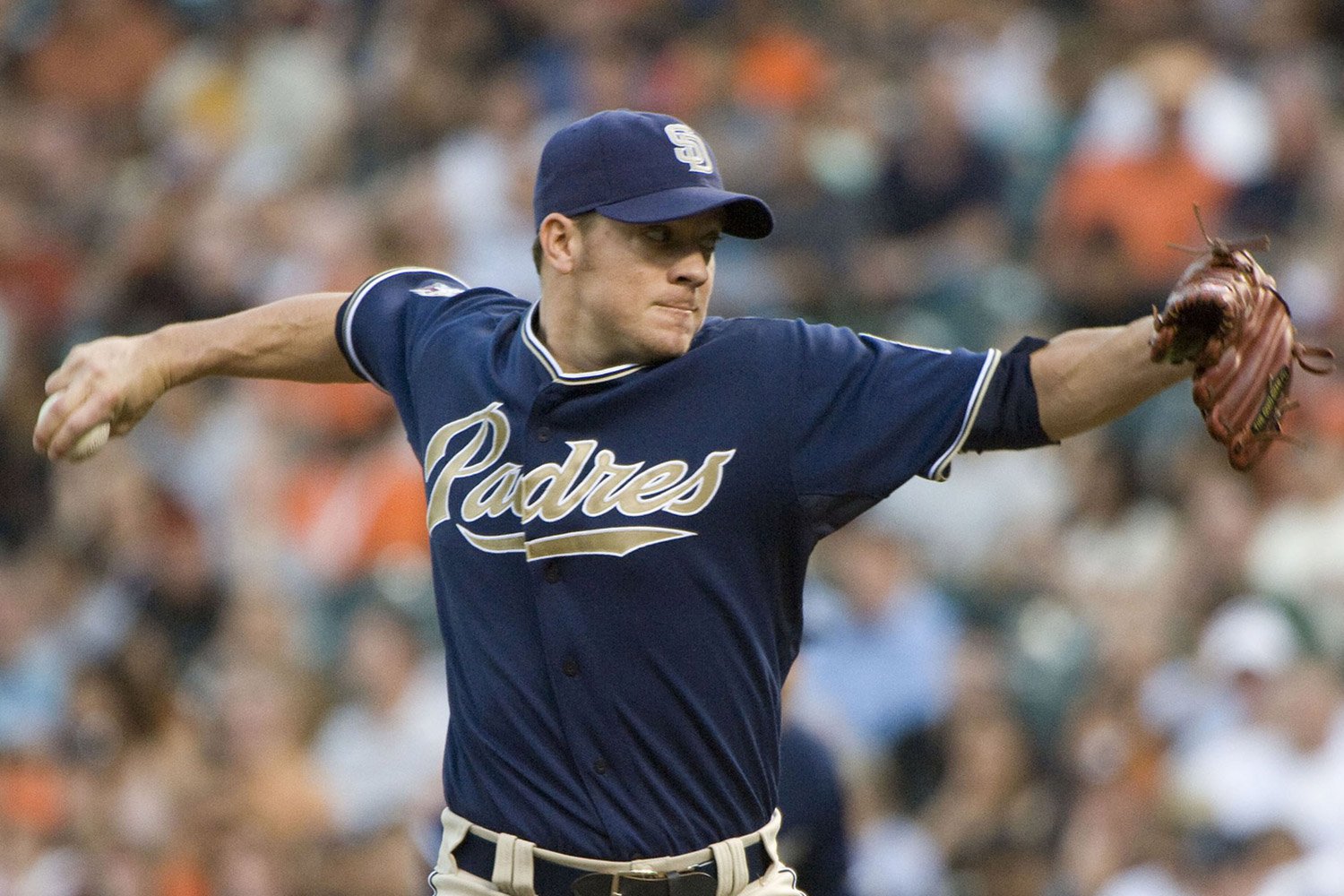 Before diving into this article, we recommend reading previous entries in this series, along with an introduction in part one. With that said, let's look at the gold standard Padres, starting rotation. Part one: Gold Standard Padres, Infield Edition Part two: Gold Standard Padres, Outfield Edition Part three: Gold Standard Padres, Bench Edition The Starting Rotation: The Masters of the Hill The architects of the rubber. These arms took the ball every fifth day, carrying the hopes of the city for nine innings at a time. Through heat, movement, control, deception, and sheer will, they turned the mound into a sanctuary and defined the different eras of Padres baseball. Kevin Brown "Brownie" "The Hired Gun" 1998 (8.6 WAR) The Sinkerball Assassin W-L: 18-7 | ERA: 2.38 | FIP: 2.23 | SIERA: 2.71 | SO: 257 | IP: 257.0 | CG: 7 | SHO: 3 | WHIP: 1.07 | K/BB: 5.24 | K%: 24.9% | K-BB%: 20.2% | ERA+ 164 NL All-Star (1998) | NL Player of the Week (Aug 16 & Sept 20, 1998) | Clyde McCullough Pitcher of the Year Award (1998) | Padres Chairman's Award (1998) The Five Pillars of Brownie Innovation: Brown was the architect of the modern "power sinker," a pitch that defied the laws of physics in the late 90s. While most sinkerballers of the era sat in the high 80s, Brown’s clocked in at a staggering 96-98 MPH with a violent, late horizontal run. Under the specific guidance of pitching coach Dave Stewart in 1998, Brown perfected a devastating split-finger fastball that mimicked the exact arm speed and tunnel of his sinker before falling off a table. This two-pitch tunnel made it impossible for hitters to distinguish between a ball breaking into their hands or one diving into the dirt. He effectively weaponized the ground ball and the strikeout simultaneously in a feat rarely seen before the Statcast era—a combination of power and precision that paved the way for the high-velocity, high-spin specialists of today's game. Impact: Kevin Brown’s presence changed the entire culture of the 1998 clubhouse. His "bulldog tenacity" was contagious, leading the staff to an imposing identity. In the playoffs, he famously outdueled Randy Johnson in Game 1 of the NLDS with 16 strikeouts—setting a franchise postseason record and the tone to upset the 102-win Astros. He followed that by silencing the 106-win Braves in the NLCS, throwing a three-hit, 11-strikeout complete game shutout in Atlanta that gave San Diego a commanding 2-0 series lead. During the regular season, he led the National League with 8.6 WAR and set a Padres franchise record with 257 strikeouts, a mark that still stands today. He finished the year with 7 complete games and 3 shutouts, while leading all of Major League Baseball with a microscopic 0.3 HR/9. Legend: Kevin Brown's 1998 season is widely regarded by historians as the most dominant single-season pitching performance in San Diego history. Beyond the record-breaking stats, he provided the psychological edge the franchise needed to transition from a divisional contender into a legitimate national juggernaut. He remains the only pitcher in club history to anchor a World Series run while simultaneously leading the entire Major Leagues in overall value with an 8.6 WAR. Brown arrived as the ultimate "hired gun," and though his tenure lasted only one summer, he established an impossible standard of excellence that remains the benchmark for every San Diego ace who has followed. His 1998 campaign is the definitive chapter of Padres pitching lore, representing a moment when the best pitcher on the planet belonged exclusively to San Diego. Iconic Look: Brown was the intimidating face of the Padres' 1998 "pinstripe" era in navy blue and orange. On the mound, he was a study in controlled aggression, standing 6'4" with a menacing, stoic expression and a traditional clean-shaven look that highlighted his intense, focused game face. His appearance was anchored by the team's navy blue crown cap featuring the iconic white-and-orange interlocking "SD" logo, a color scheme that became the visual hallmark of the 1998 World Series run. In an era where many pitchers were moving toward loose, baggy styles, Brown maintained a sharp, athletic appearance with high-set shoulders and a deliberate, high-leg kick. He exclusively used a dark Rawlings heart-of-the-hide pitcher’s glove with a closed web to hide his grips on his legendary sinker and split-finger pitches. The finishing touch to his look was his signature intensity; he rarely smiled, and his jersey was often stained with sweat and dirt, reflecting the grit he brought to every start. The "Did You Know Factor": Kevin Brown’s 1998 season was so dominant that he finished in the top four of the National League in every major pitching category: Wins (18), ERA (2.38), and Strikeouts (257). He was the only pitcher in the Senior Circuit to achieve that level of "Triple Crown" consistency that year. Despite his dominance, Brown finished 3rd in the Cy Young voting behind Tom Glavine and teammate Trevor Hoffman. This created a historical rarity: Brown and Hoffman became the only pair of teammates to finish second and third in the voting while the award went to a player from a different team. Perhaps most impressively, Brown surrendered only 8 home runs across 257.0 innings; he famously struck out twice as many batters in a single playoff game (16) as he allowed home runs over the entire 162-game regular season schedule. Randy Jones "The Junkman" "Jonesie" 1976 (7.8 WAR) The Workhorse of Mission Valley W-L: 22-14 | ERA: 2.74 | FIP: 3.16 | SIERA: 3.42 | SO: 93 | IP: 315.1 | CG: 25 | SHO: 5 | WHIP: 1.027 | K/BB: 1.86 | K%: 7.4% | K-BB%: 3.4% | ERA+ 119 NL Cy Young Award (1976) | Sporting News NL Pitcher of the Year (1976) | Baseball Bulletin NL Pitcher of the Year (1976) | NL All-Star (1975, 1976) | NL Player of the Month (April & May 1976) | NL Player of the Week (May 22, 1976) | Padres Team MVP (1975, 1976) | Clyde McCullough Pitcher of the Year Award (1975, 1976) | Padres Chairman's Award (1975, 1976) | No. 35 Retired by Padres (1997) | Padres Hall of Fame (1999 - Inaugural Class) The Five Pillars of Jonesie Innovation: Jones was the master of the "sinker-slider" approach, a style of pitching that served as a radical, cerebral departure from the high-heat dominance that defined the mid-70s. Relying on impeccable control and late, biting movement rather than raw velocity, Jones innovated through a blend of psychological warfare and relentless tempo. He famously worked with a rapid-fire cadence that bordered on the obsessive, often completing nine full innings in under two hours. By weaponizing the diving action of his sinker and varying its speeds to create a "ghost" effect, he forced the opposition to play at his speed, turning aggressive swings into a record-setting parade of weak ground balls and demoralizing double plays. He proved that a pitcher could dominate the strike zone and dismantle an order without ever needing to touch 90 miles per hour on a radar gun. Impact: He was the ultimate "workhorse" during a fragile era where the Padres franchise was still desperately fighting for respect and a foothold in the National League. In 1976, Jones got a season started that remains statistically unprecedented; he became the first pitcher in National League history to be named Player of the Month in back-to-back months (April and May). This early-season blitz anchored the entire organization, as he went on to lead the major leagues in Wins (22), Starts (40), Innings Pitched (315.1), and Complete Games (25). His efficiency was unmatched, finishing the year with a league-best 1.027 WHIP, proving he could maintain elite precision despite the massive workload. This output single-handedly preserved a thin bullpen and gave a young, often outmatched San Diego team a legitimate chance to win every fifth day. Legend: In 1976, Randy Jones became a literal folk hero, cementing his place in San Diego lore as the first pitcher in franchise history to capture the Cy Young Award. Following a 20-win season in 1975, where he was arguably snubbed for the honor, he returned with a quiet vengeance, capturing the hearts of the city during a historic summer where "Randy Jones Day" became a mandatory local holiday. He was the first true superstar the city could claim as entirely their own—a home-grown icon who provided a symbol of hope for a young expansion franchise. His legacy is defined by his "weapon of choice"—a sinker with a distinct screwball tilt that baffled the era's greatest hitters. This unique movement, combined with a superior mental plan, allowed him to out-duel Hall of Fame flamethrowers with surgical precision. Iconic Look: With his trademark blonde curls flowing out from beneath his cap and his classic brown and gold #35 jersey, Jones was the visual pulse of San Diego in the 70s. His calm, methodical presence on the mound provided a perfect contrast to the high-pressure situations he mastered, moving through innings with a smooth, repeatable delivery that looked effortless. He was the visual embodiment of the Swinging Friar era, frequently seen in the team’s signature brown-sleeved home whites or the solid chocolate brown road jerseys with gold sleeves. On the mound, he utilized an oversized, deep-pocketed tan glove to hide his finger grips and a short, controlled follow-through that left him in a perfect, square-ready defensive stance. His relaxed, West Coast swagger became as recognizable to fans as the Mission Valley skyline itself. The "Did You Know Factor": Jones started the All-Star Game for the National League and earned the win, pitching three dominant innings against an American League powerhouse. This performance came on the heels of his 1975 season, where he led the league in ERA, making him the only pitcher in franchise history to win an ERA title and a Cy Young Award in back-to-back campaigns. During the 1976 season, he went 68 consecutive innings without walking a single batter, tying a 63-year-old National League record set by the legendary Christy Mathewson in 1913. Furthermore, Jones set a major league record for the most total defensive chances by a pitcher in a single season (112) without committing an error. He also entered the All-Star break with a 16-3 record, a National League mark for most wins before the break. His dominance was so total that he finished 10th in the 1976 NL MVP voting. Dave Roberts "The Unlucky Lefty" 1971 (7.1 WAR) The Quiet Professional W-L: 14-17 | ERA: 2.10 | FIP: 2.89 | SIERA: 3.11 | SO: 135 | IP: 269.2 | CG: 16 | SHO: 3 | WHIP: 1.050 | K/BB: 2.21 | K% 12.4% | K-BB% 6.8% | ERA+ 151 NL Cy Young - 6th Place (1971) The Five Pillars of The Unlucky Leftie Innovation: The tendency of the era was toward high-strikeout smoke, but Roberts operated with a surgical precision that stood in stark contrast to his peers. He innovated through the art of the calculated contact game, utilizing a heavy, bowling-ball sinker that bore in on the hands of right-handed hitters with such violent downward action that it was widely considered the most physically taxing pitch to square up in the National League. He weaponized a unique cross-fire delivery, stepping slightly toward the third-base dugout to create an angled release point that hid the ball until the last possible millisecond, thriving in the expansive, marine-layer-heavy dimensions of San Diego Stadium. By mastering tunneling—maintaining an identical arm slot for both his biting slider and his fading changeup—he dictated the pace of every at-bat, forcing hitters into late, defensive swings. Impact: Roberts’ 1971 campaign remains the gold standard for hard luck brilliance in Major League history. Despite a losing record of 14-17, his 2.10 ERA was the second-best mark in the league, trailing only Tom Seaver, and remains a franchise record that still stands. His impact was defined by his role as the first true stabilizer for a fledgling Padres rotation; he threw nearly 270 innings and completed 16 games, single-handedly shielding a young, overmatched bullpen from exposure. His value was most visible in his 24 Quality Starts, a mark of consistency that was routinely sabotaged by a historically stagnant Padres offense that finished dead last in the NL in runs and hits. Roberts was forced to pitch with zero margin for error, as evidenced by his 11 starts in which his offense provided zero or one run of support, yet he still posted the third-highest WAR (7.1) of any pitcher in the league. Legend: Before the arrival of Cy Young winners like Randy Jones and Gaylord Perry, Dave Roberts was the quiet foundation upon which San Diego pitching was built. He was the franchise’s first legitimate Ace, a southpaw who carried the dignity of a last-place team on some of the worst rosters in team history. His legacy is etched in the 1971 leaderboards, where he stood toe-to-toe with Hall of Fame giants, earning a 6th-place Cy Young finish that served as the first legitimate mark of excellence in Padres history. To this day, he is remembered by San Diego purists as the Unlucky Lefty—a man who once pitched 28 consecutive innings without allowing an earned run across four starts, yet failed to record a single victory during that stretch due to an utter lack of support. He didn't just play for the Padres; he validated them, proving a pitcher could achieve immortality even while pitching for a 100-loss club. Iconic Look: Roberts was the personification of the early "Mustard and Mud" era, cutting a lean, focused figure on the mound in the Padres’ original 1971 uniforms. In contrast to the shaggier looks of the later 70s, Roberts maintained the clean-shaven, traditional appearance of a quiet professional. He wore the solid brown cap featuring the bold, gold SD logo and a gold button on top—the gritty, definitive look of the team's infancy. He donned the high-waisted, classic white flannels with the brown Padres script across the chest, often seen with his stirrups pulled high to show a flash of the white sanitary socks underneath. He used a dark, deep-pocketed Rawlings leather glove he kept tucked tight to his chest, emphasizing a windup as compact and unshakeable as his personality. The "Did You Know Factor": On August 11, 1971, Roberts participated in arguably the greatest pitching duel in franchise history, out-dueling Tom Seaver in a 1-0 masterpiece by throwing a 12-inning complete-game shutout and allowing only 5 hits while striking out 10. During that historic season, Roberts went on an incredible tear where he made 15 consecutive starts without allowing a single home run, a stretch spanning over 93 innings that remains a franchise record that stands to this day. His mastery extended to the running game; with a lightning-quick slide step and a deceptive pickoff move, he allowed only five players to successfully steal a base against him all season. He remains the only pitcher in major league history to finish a season with an ERA at or below 2.10 while pitching at least 250 innings and still finishing with a losing record. Jake Peavy "The Alabama Hammer" "The Gunslinger" 2007 (6.7 WAR) The Triple Crown Champion W-L: 19-6 | ERA: 2.54 | FIP: 2.62 | SIERA: 3.01 | SO: 240 | IP: 223.1 | CG: 0 | SHO: 0 | WHIP: 1.061 | K/BB: 3.53 | K% 26.8% | K-BB% 19.2% | ERA+ 158 NL Cy Young Winner - Unanimous (2007) | Pitching Triple Crown (2007) | NL All-Star Game Starter (2007) | Padres Team MVP (2007) | Clyde McCullough Pitcher of the Year (2007) The Five Pillars of The Gunslinger Innovation: Peavy was a "max-effort" right-hander with a violent, cross-fire delivery. Working closely with pitching coach Darren Balsley and veteran Greg Maddux, he refined his command to the point where he could pinpoint a "nasty" two-seamer that broke late and sharp, leaving the league's best hitters flailing. He mastered pitch tunneling, ensuring his 95-mph heater and his 10-to-4 slider looked identical until the last moment for the batter. By landing his lead foot toward the third-base side, he created a horizontal angle that made his sinker effectively run away from lefties and jam righties, leading to a league-best 0.52 HR/9. This mechanical precision transformed him from a pure thrower into a tactical surgeon who could dismantle lineups without ever giving up a barrel, marking the fifth-best ERA season in franchise history. Impact: He was the heartbeat of the mid-2000s Padres. Peavy didn't just pitch; he competed with a visible, fiery intensity that galvanized the entire stadium. His 2007 campaign kept the Padres in the hunt until the final breath of the season. Beyond his energy, he was the statistical anchor of the staff, taking the ball 34 times and leading the National League with a 1.06 WHIP. During the high-pressure stretch of September, Peavy went 4-1 with a 1.20 ERA, single-handedly carrying the rotation through a brutal race that ended in the 163rd tie-breaker game. He finished the season holding opponents to a measly .208 batting average, serving as the ultimate "stopper" every fifth day for a club that eventually fought into a 163rd tie-breaker game, providing the workhorse stability that allowed a heavy-use bullpen to survive. Legend: In 2007, Jake Peavy reached a level of dominance rarely seen in the modern era. By leading the National League in wins, ERA, and strikeouts, he secured the only Pitching Triple Crown in Padres history. He was the unanimous choice for the Cy Young, cementing his place as the greatest homegrown arm to ever wear the jersey. His 2007 season remains a mountaintop in franchise lore, as he received all 32 first-place votes to become a unanimous selection. He is one of only two NL pitchers since 1985 to sweep all three Triple Crown categories, joining Randy Johnson in that elite tier. His transformation from a 15th-round draft pick into the undisputed premier pitcher in the world solidified his status as the most important arm developed in San Diego history. Iconic Look: Often pitching with a face red from exertion and grit, Peavy was a blur of motion in the navy blue and sand uniforms. His jersey was usually stained with dirt and sweat by the fifth inning, a testament to his "bulldog" mentality. This high-octane visual was punctuated by a distinct, audible grunt that accompanied every single max-effort delivery, a sound that echoed through the stadium and signaled his absolute physical commitment to the pitch. His aggressive follow-through, where his flat-back finish left him staring down hitters through a sweat-streaked cap pulled low over his eyes, showcased the sheer torque of his delivery. The sight of him shouting into his glove after a massive strikeout became the definitive image of the Petco Park era, personifying a high-tension performer who exerted every ounce of physical torque into every single delivery to connect with a fan base that thrived on his gritty persona. The "Did You Know Factor": On April 25, 2007, he struck out 16 Arizona Diamondbacks, including a stretch where he fanned nine consecutive batters—just one shy of the all-time MLB record set by Tom Seaver. By winning the ERA title in 2007, he became the youngest pitcher since Dwight Gooden to win two career ERA crowns. Further adding to his 2007 legacy, he outdueled reigning Cy Young winner Brandon Webb in that 16-K performance and tied the franchise single-game record he had previously set in 2006. In a strange statistical anomaly, he also became the first pitcher in the live-ball era to win a Pitching Triple Crown without recording a single complete game. This 2007 run also included a stretch of four consecutive games with double-digit strikeouts, one of the most dominant stretches in franchise history, highlighting his status as the most feared arm in the National League. Gaylord Perry "The Spitter" 1978 (6.6 WAR) The Ageless Alchemist W-L: 21-6 | ERA: 2.73 | FIP: 3.19 | SIERA: 3.82 | SO: 154 | IP: 260.2 | CG: 5 | SHO: 2 | WHIP: 1.178 | K/BB: 2.33 | K% 14.6% | K-BB% 8.3% | ERA+ 122 NL Cy Young Award (1978) | Sporting News NL Pitcher of the Year (1978) | NL Pitcher of the Month (September 1978) | Clyde McCullough Pitcher of the Year (1978) The Five Pillars of The Spitter Innovation: Perry was the undisputed master of psychological warfare on the mound. Whether it was the legendary "spitball" or simply the threat of one, he kept hitters completely unsettled. He was a master of gamesmanship. By turning his pre-pitch routine into a theatrical performance, he forced batters to hunt for a "wet" ball rather than focusing on his actual release point. This mental manipulation enabled him to weaponize a high-leverage pitching style that disrupted a hitter's rhythm and intent. He effectively used an agonizingly deliberate pace to make his sinking fastball and hard slider even more devastating because the batter was often mentally defeated before the ball was even released. He mastered the art of the "decoy," understanding that in the heat of a pennant race, the suspicion of a doctored baseball was just as lethal as the pitch itself, forcing hitters to fight a ghost that may or may not have been there. Impact: His arrival provided a veteran championship pedigree that the 1978 Padres desperately needed. He gave the rotation an anchor and taught the younger staff how to "pitch with their heads," using 21 wins to lead the team to its first-ever winning season. Perry’s presence professionalized a clubhouse that had known only losing, serving as a de facto coach for young starters like Bob Shirley and Bob Owchinko. By eating 260 2/3 innings, he stabilized the rotation and protected the rest of the staff. His 21 wins accounted for 25% of the team's total victories, a workload that earned him the Cy Young over Burt Hooton and Vida Blue. This shift in culture resulted in an 84-78 finish—the first time in the franchise's 10-year history they finished above .500. His 1978 campaign wasn't just a statistical outlier; it was the blueprint that proved the Padres could compete for a pennant. Legend: In 1978, at the age of 39, Gaylord Perry became the first pitcher in MLB history to win the Cy Young Award in both leagues, proving that "Spitter" still had plenty of magic left in his right arm when he arrived in San Diego. This achievement made him the oldest pitcher to win the award at the time, a record that stood for 26 years until Roger Clemens won it at 42. His 1978 campaign remains the gold standard for veteran acquisitions in Padres history, as he defied the physical decline expected of a player his age through intelligence and craftiness. This dominance was recognized across the league, as he was voted the NL's top starting pitcher by his peers in The Sporting News. By the time he moved on from San Diego, he had climbed to 3rd all-time on the strikeout list, trailing only Walter Johnson and Bob Gibson, cementing his status as a first-ballot Hall of Famer who used the 1978 season to prove that the "Ageless Alchemist" longevity was no fluke. Iconic Look: With his weathered face and the 1978 home white pullover with its distinct brown sleeves, Perry looked like a veteran of a thousand battles. His left sleeve featured the 1978 All-Star Game patch, which famously introduced the "Swinging Friar" logo to the Padres' game uniform for the first time, placing him right in the center of the design. At 6'4" and 215 pounds, Perry was famous for having sweat on his forehead and neck; he used the San Diego heat to his advantage, making sure everyone saw the moisture he might be using for his spitter. It was a visual intimidation tactic that left hitters more focused on his fingers than his sinking fastball. His deliberate, methodical motion and legendary pre-pitch ritual—touching his hat, belt, and jersey—made him a fascinating spectacle that often prompted opposing managers to demand that umpires search him for hidden substances. The "Did You Know" Factor: Perry once famously said, "I'd give them a look at the dry side, the wet side, and the side they hadn't even thought of yet." He leaned so far into this reputation that he published an autobiography in 1974 titled Me and the Spitter, in which he detailed his methods for doctoring the ball. Because of this, opposing managers often asked umpires to perform mid-game inspections. These searches included peering into his cap and feeling behind his ears and along his neck. During one famous search, an umpire even made Perry pull up his pant legs to check his knees. His Padres catcher, Gene Tenace, later joked that the ball was sometimes so greasy he couldn't even throw it back to the mound, forced instead to walk it out and hand-deliver it to Perry. When he wasn't using grease, he used a "Puffball" tactic, caking the ball in rosin so it would explode in a cloud of white dust upon release, a move that forced MLB to pass a rule in 1981 specifically banning the practice. Blake Snell "Snellzilla" 2023 (6.0 WAR) The Cy Young Specialist W-L: 14-9 | ERA: 2.25 | FIP: 3.44 | SIERA: 4.06 | SO: 234 | IP: 180.0 | CG: 0 | SHO: 0 | WHIP: 1.189 | K/BB: 2.36 | K% 31.5% | K-BB% 18.2% | ERA+ 182 NL Cy Young Award (2023) | All-MLB First Team (2023) | NL Pitcher of the Month (June & September 2023) | Players' Choice NL Outstanding Pitcher (2023) | Sporting News MLB Starting Pitcher of the Year (2023) | Clyde McCullough Award (2023) The Five Pillars of Snellzilla Innovation: Snell mastered the "tunneling" of his four-pitch mix to a degree rarely seen in the Statcast era. He utilized a high-velocity four-seam fastball with "ride" to effectively set up three distinct "out" pitches: a devastating 12-6 curveball, a sharp slider, and a fading changeup. This approach focused on mirroring his release points to ensure that no pitch was ever located over the heart of the plate, keeping hitters off balance. In a shift from traditional usage, he reduced his fastball frequency to a career-low (under 50%), instead utilizing those secondary offerings as primary weapons. While traditional pitching emphasizes pounding the strike zone, Snell and pitching coach Ruben Niebla adopted a philosophy in which walks were a calculated risk, proving that a pitcher could dominate by using the space just outside the zone. Impact: During a season of high expectations, Snell became the ace of the Padres. He was a master of escaping jams, posting an 86.7% left-on-base rate—the seventh-highest mark by a starting pitcher in history—anchored by a Major League-best .152 opponent average with runners in scoring position. This was fueled by 234 strikeouts and a 37.3% whiff rate. He also led the majors with just 5.75 hits allowed per nine innings. This season was punctuated by an NL Pitcher of the Month performance in September—his second of the season (June and September)—where he went 3-0 with a 0.58 ERA and ended the year with 19 consecutive scoreless innings. Beyond his league-leading .181 opponent batting average, Snell also led all of Major League Baseball in opponent slugging (.286) and opponent OPS (.579). Legend: In 2023, Blake Snell produced one of the most dominant seasons in baseball history. He became just the seventh pitcher to win a Cy Young in both leagues, joining the elite company of Gaylord Perry as the only two players to accomplish the feat while wearing a Padres uniform. This achievement placed him in a rare circle alongside icons like Randy Johnson and Pedro Martinez. For months, he was essentially a brick wall, posting a historic 1.20 ERA over his final 23 starts. In the last century of Major League history, the only pitcher to post a lower ERA over a similar span in a single season was Bob Gibson (0.85 ERA), a feat not seen since the "Year of the Pitcher." In 1968. Iconic Look: Although he hails from the Pacific Northwest, Blake Snell brought a distinct, laid-back energy to the mound that resonated perfectly with the Friar Faithful. He became a staple of the modern Padres era, pulling off the vibrant City Connect pink and mint or the classic brown pinstripes. His signature look was defined by a loose-fitting jersey, his blingy Jaxxon gold chains, and a delivery where he holds his hands high before an explosive leg kick that hides the ball behind his frame. To complete the look, he wore custom gear that turned a childhood nickname he stole from his brother, Dru, at age eleven into a massive personal brand. This included his signature Snellzilla belt and hand-painted cleats featuring everything from Kobe Bryant tributes to The Simpsons—specifically Bart and Homer playing catch. The "Did You Know Factor": In his 2023 Cy Young campaign, Blake Snell became the first pitcher since the ERA became an official stat in 1913 and the first in Major League history to lead all of baseball in both ERA (2.25) and walks (99) in the same season. This ability to ignore negativity was built early on. Growing up, Blake was often smaller than his peers and doubted he could keep up, but his father, Dave—a former pro in the Giants and Mariners systems—guided him through those years at their family training facility, Showcase Sports NW. Having now passed that torch by launching "Zilla National," a youth travel team in Seattle, where he personally coaches and outfits players with neon gear and custom Jaxxon jewelry. His competitive edge translates to the digital world, too—Snell is a world-class gamer who dominated the delay in a shortened 2020 COVID season by winning the inaugural MLB The Show Players League championship, sweeping the virtual World Series 3-0.
 -
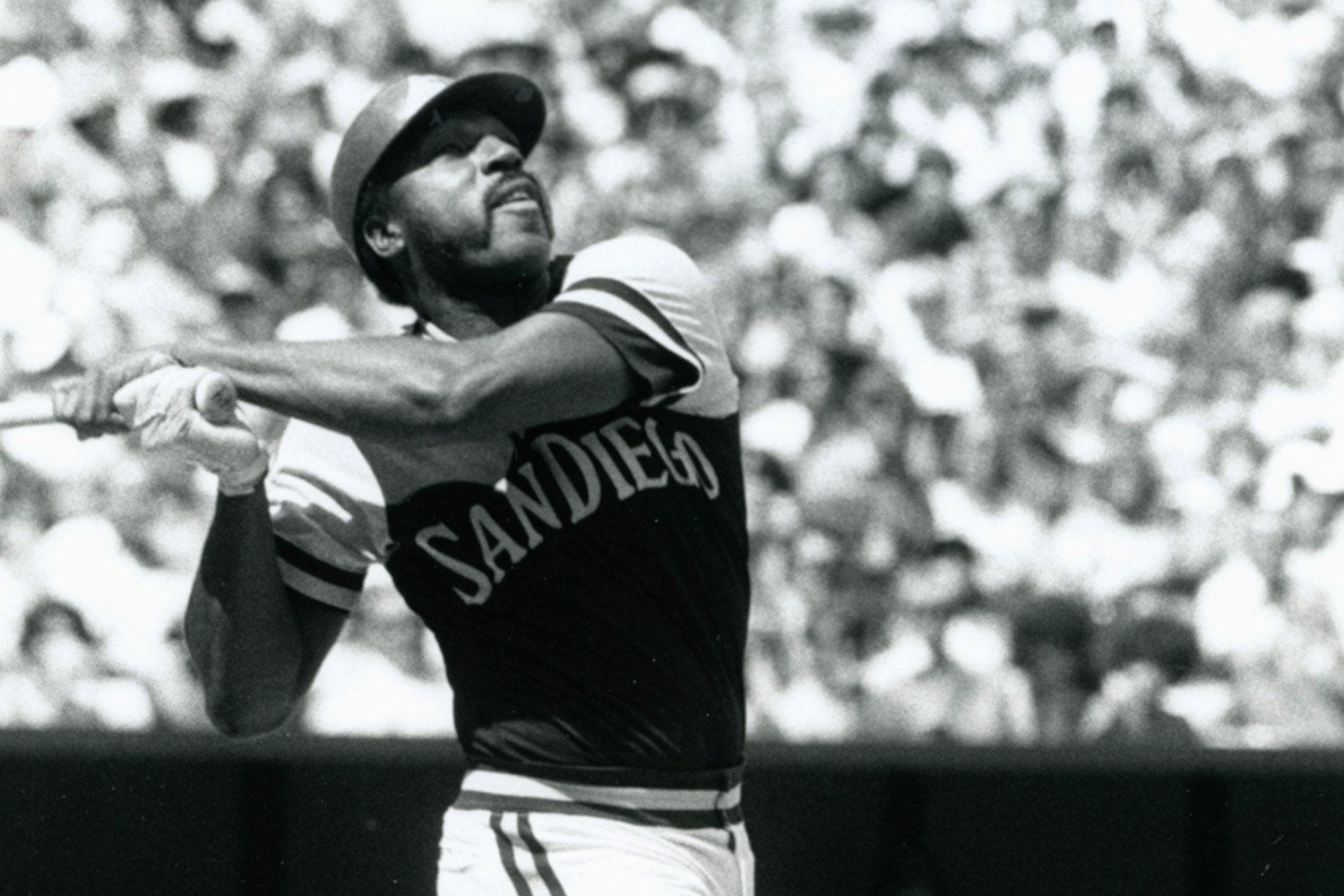 Before diving into this article, we recommend reading previous entries in this series, along with an introduction in part one. With that said, let's look at the gold standard Padres, bench edition. Part one: Gold Standard Padres, Infield Edition Part two: Gold Standard Padres, Outfield Edition The Bench: The Strategic Reserves The unsung heroes and the specialists. These are the versatile souls who waited for their moment in the sun, ready to deliver the clutch hit or the game-saving play. A roster is only as deep as its bench, and these are the pillars that hold the foundation together. C Terry Kennedy "TK" 1982 (WAR 4.1) The Blue-Collar Backstop AVG: .295 | H: 166 | R: 75 | 2B: 42 | 3B: 1 | HR: 21 | RBI: 97 | SB: 1 | BB: 26 | IBB: 9 | SO: 91 | OBP: .328 | OPS: .814 1982 Padres Team MVP | NL Player of the Week (August 22, 1982) The Five Pillars of TK Innovation: Kennedy was a "thinking man's" catcher who revolutionized offensive expectations for the position in San Diego. The son of MLB manager Bob Kennedy, Terry utilized an "advanced scout" mentality to stabilize the Padres' staff while overhauling his own offensive approach. He was a pioneer of the "doubles-gap" strategy; rather than chasing home runs in "The Murph’s" cavernous dimensions, he shortened his left-handed stroke to prioritize high-velocity contact. This mastery was defined by his ownership of the 3.5 hole — the corridor between first and second base — which he exploited with such frequency that it became his personal trademark. In 1982, this technical adjustment allowed him to record 42 doubles while playing catcher, tying the National League record for the position and proving that a backstop could be a primary offensive catalyst. Impact: The 1982 campaign established Kennedy as the premier workhorse of the National League. While maintaining a .295 average, he anchored the Padres' lineup by leading the team with 97 RBI, a total that ranked in the NL Top 10 and cemented his role as the team's primary run producer. His durability was record-setting; he led all NL catchers in Games (153) and Innings Caught (1,343.1), effectively serving as the iron man of the San Diego defense. Kennedy’s impact was most visible in high-leverage moments, where he recorded a team-high 15 game-winning RBIs, proving that his offensive production was the engine behind the Padres' winning record. Defensively, he was the league's most active backstop, leading the NL in Putouts (851) and providing the veteran stability required for a young pitching staff to take a significant leap forward. Legend: Terry Kennedy served as the emotional heartbeat of the clubhouse during the "Trader Jack" McKeon era, providing the foundation for San Diego’s 1984 World Series run. Known for blue-collar toughness, he famously endured the grueling 1982 schedule without a comparable backup, refusing days off despite the physical toll of catching 1,300+ innings. He solidified his status as a franchise icon that year by becoming one of the few catchers in major league history to record a 20-home run, 40-double season, a statistical rarity that redefined the ceiling for San Diego backstops. His left-handed swing and clutch performance (15 game-winning RBIs) set the benchmark for every future Padres catcher. At Jack Murphy Stadium, "TK" wasn't just a player; he was the team’s emerging identity: rugged, reliable, and relentlessly productive. Iconic Look: Behind the plate, Kennedy served as the physical anchor of the Padres' defense. Outfitted in a classic steel cage mask and the era's signature Wilson "West Coast" style chest protector, his frame acted as a heavy-set barrier for pitchers and a brick wall for baserunners. At the plate, he maintained a strict "old school" aesthetic, sporting a flapless batting helmet, thick white cotton wristbands high on his forearms, and no batting gloves. Draped in the Wilson brown-and-gold road pullover—complete with orange-and-yellow racing stripes—he gripped a Louisville Slugger heavy with dark pine tar, emphasizing his gritty approach. This look reflected his workhorse reputation: rugged armor for a catcher who refused to take a day off, paired with a technically precise swing. The "Did You Know Factor": On December 8, 1980, Terry Kennedy became the centerpiece of the first "Trader Jack" McKeon masterpiece—a massive 11-player blockbuster that fundamentally shifted the franchise's trajectory. To secure their cornerstone catcher, McKeon was famously given his choice by the Cardinals between Kennedy and veteran All-Star Ted Simmons; he chose "TK," trading away future Hall of Famer Rollie Fingers and 1972 World Series MVP Gene Tenace, along with Bob Shirley and Bob Geren. In return, the Padres received a seven-player haul: Kennedy, Steve Swisher, Mike Phillips, John Littlefield, John Urrea, Kim Seaman, and Al Olmsted. This trade remains one of the largest in MLB history, and by 1982, Kennedy had justified the cost by racking up 172 hits, leading all major league catchers, and proving he was the elite offensive force McKeon gambled on. UTIL Bip Roberts "Bipper" 1990 (5.8 WAR) The Ultimate Spark Plug AVG: .309 | H: 172 | R: 104 | 2B: 36 | 3B: 3 | HR: 9 | RBI: 44 | SB: 46 | BB: 55 | IBB: 3 | SO: 65 | OBP: .375 | OPS: .808 Padres Team MVP (1990) The Five Pillars of Bipper Innovation: Bip was the master of "small ball" and a pioneer of the Leadoff Disruptor role. He used his 5'7" frame to shrink the strike zone, and his elite speed to turn walks into de facto doubles. As a switch-hitter, he perfected a short-arc swing that eliminated the traditional weak side disadvantage most switch-hitters face. Beyond the box score, his true innovation was his mechanical manipulation of "bat-lag"; by keeping his hands high and deep, he allowed the barrel to stay in the hitting zone longer than traditional slap hitters, enabling him to drive 36 doubles into the gaps. He also mastered the drag bunt through a lower-half pivot that allowed him to initiate his sprint toward first base before making contact, shortening the baseline. Additionally, he utilized a "walking lead" and calculated jump-start technique on the basepaths that forced pitchers to alter their delivery. Impact: He was the engine of the 1990 squad. Tony Gwynn famously said that Bip "drove other teams crazy." In 1990, he provided elite versatility by starting 60+ games in both the outfield and at third base, while also logging time at second and shortstop. This "Defensive Chameleon" ability allowed the Padres to maintain an optimized offensive lineup every day, regardless of defensive injuries. On the bases, he reached base 233 times and compelled middle infielders to cheat toward the bag, physically opening up wider holes in the infield for hitters like Tony Gwynn and Jack Clark following him in the lineup. By playing four different positions at a high level, he provided a 5.8 WAR, the 5th highest among all NL position players that year, and his 104 runs scored (4th in the NL) proved he was the premier run-scoring engine in the league despite a lack of traditional power. Legend: Bip Roberts was the ultimate spark plug, serving as the 1990 San Diego Padres MVP and the emotional igniter for the clubhouse. He earned a reputation as a "Giant Killer," backed by a .314 average with runners in scoring position against elite rotations like the World Champion Cincinnati Reds and the Dodgers. His 1990 campaign redefined the utility player archetype, as he became the first Padre to log 30+ doubles, 40+ stolen bases, and 100+ runs in a single season. This established him as the "Gold Standard" for the leadoff catalyst in franchise history. Despite being cited by historians as having one of the greatest non-All-Star seasons in MLB history, his 5.8 WAR remains the benchmark for the "Padre Way"—combining relentless grit with high-level defensive versatility. Iconic Look: Bip Roberts epitomized the 1990 Padres aesthetic, characterized by the white home jersey with brown and orange pinstripes and accents, paired with the solid brown cap featuring the orange interlocking "SD". His signature look was defined by dark-tinted flip-up sunglasses perched on his bill, worn alongside orange wristbands on both forearms. At the plate, he displayed a high-handed rhythmic bat waggle while sporting a shined-finish batting helmet, often caked with pine tar, and black-and-orange Mizuno batting gloves. On the field, he maintained a classic high-sock aesthetic, wearing his pants cinched below the knee to showcase high-cut brown ribbon stirrups over traditional white sanitary socks. Whether patrolling the outfield or the dirt, his Wilson A2000 glove and dirt-stained jersey reflected the intensity that defined his career-best season. The "Did You Know Factor": By the time he became the Padres' most indispensable player in 1990, many fans forgot that Bip originally joined the club as a Rule 5 draft pick who started the 1986 season with San Diego. It is extremely rare for a Rule 5 acquisition, a player another team was willing to let go by not adding him to the 40-man roster, to develop into a franchise cornerstone. He cemented this legacy in 1990 by becoming the first player in Padres history other than Tony Gwynn to score 100+ runs in a season with fewer than 10 home runs. He is also the only Padre to ever hit over .300, score 100+ runs, and steal 40+ bases in a single season while playing 60+ games at two different positions. Beyond the stats, Bip was a psychological nightmare for pitchers; he maintained such elite bat-to-ball skills that he famously went on a 14-game stretch in July where he didn't strike out a single time. IF Manny Machado "El Ministro" "El Capitan" 2022 (7.4 WAR) The Captain of Swag AVG: .298 | H: 172 | R: 100 | 2B: 37 | 3B: 1 | HR: 32 | RBI: 102 | SB: 9 | BB: 63 | IBB: 9 | SO: 133 | OBP: .366 | OPS: .898 NL All-Star: 3x (2021, 2022-Starter, 2025-Starter) | NL Silver Slugger: 3x (2020, 2024, 2025) | All-MLB First Team: 2x (2020, 2022) | All-MLB Second Team: 2024 | Team MVP: 3x (2020, 2022, 2024) | Heart and Hustle Award: 2022 | NL Player of the Week: August 14, 2022 The Five Pillars of El Capitan Innovation: Manny made the "impossible play" look routine, fundamentally changing the geometry of the hot corner before the 2023 shift ban by pioneering a hybrid role in which he often served as a deep-right-field "rover." Known as MLB's "unicorn infielder," his ability to throw across his body with elite velocity from the shallow outfield grass redefined defensive expectations, proving he could get runners out from 200 feet away with flat-footed lasers. By trusting his elite internal clock and unmatched arm strength, he turned unconventional positioning into an art form. Offensively, his "calm-before-the-storm" approach has made him one of the most clutch hitters in Padres history, masking an explosive power stroke that relies on maintaining nearly zero head movement and elite hand speed rather than a traditional, high-effort load. Impact: He provided the swagger and winning culture that transformed the modern Padres. Manny’s 2022 season solidified his legacy as a future Hall of Famer, finishing 2nd in NL MVP voting after carrying a Tatis-less offense through a year of massive adversity. Voted as the National League’s starting third baseman and named to the All-MLB First Team, he served as the team's singular heartbeat. He posted a career-high 7.4 WAR, the highest mark by a Padres position player since Ken Caminiti’s 1996 MVP season. He led the club in nearly every offensive category with a .298 average, 32 home runs, and 102 RBIs. Despite a gruesome mid-season ankle sprain, he gutted out 150 games and hit .322 in high-leverage moments. By fulfilling owner Peter Seidler’s vision of "slaying the dragon up the freeway" in the NLDS, he shifted the city’s identity from underdog to perennial contender. Legend: He is the greatest power hitter to ever wear a Padres uniform. He officially cemented this status in 2024 by surpassing Nate Colbert’s franchise record of 163 home runs to become the club’s all-time leader. During his historic 2022 campaign, he became the first Friar since Tony Gwynn to win back-to-back Player of the Week honors and became one of only 17 players in MLB history to reach 1,500 hits and 250 home runs before age 30. His consistency earned him a place in the most exclusive offensive circle in San Diego history, joining Ken Caminiti as one of only five players to record a 30-home run, 100-RBI, and 100-run season. By recording his 2,000th career hit in 2025 and signing a historic $350 million "Lifetime Pact" in 2023, Manny has transformed from a superstar arrival into a permanent monument of the franchise. Iconic Look: Manny is the architect of the modern Padres’ Swag Diego identity, characterized by a short fade hairstyle, Oakley sunglasses (specifically Hydra and Sutro models), and Jordan Jumpman branding on his cleats and batting gloves. In 2022, this look was defined by the classic white home uniforms with brown pinstripes and gold accents, which he helped reintroduce in San Diego. His gear featured a custom Rawlings infield glove sporting exclusive Platinum labels, a rare mark of defensive excellence. His signature is capped off by a home run trot featuring a "no-doubt" bat drop followed by a smooth glide around the bases. The ultimate accessory of this era was the "Swag Chain"—a massive, spinning gold and brown medallion featuring the Padres' SD logo, which Manny commissioned from a luxury jeweler in 2021 to reward home run hitters. The "Did You Know Factor": Beyond the diamond, Manny is a pillar of the San Diego community and its sports culture. In 2024, he and the Padres Foundation made a $350,000 donation to the San Diego Rescue Mission to support the South County Lighthouse, a project honoring the legacy of the late Peter Seidler. His commitment to the city’s future was further cemented in 2023 when he became a founding part-owner of San Diego FC, the city's Major League Soccer expansion team. His leadership even extends to the front office; in 2019, he famously marched into management’s office to demand that Fernando Tatis Jr. make the Opening Day roster, an act of veteran advocacy that changed the franchise forever. Even his famous nickname, "El Ministro de la Defensa", has historic roots, bestowed by fans in the Dominican Republic during his defensive clinic in the 2017 World Baseball Classic. Dave Winfield "Big Dave" "Winnie" 1979 (8.3 WAR) The Three Sport Stud AVG .308 | H 184 | R 97 | 2B 27 | 3B 10 | HR 34 | RBI 118 | TB 333 | SB 15 | BB 85 | IBB 14 | OBP .395 | SLG .558 | OPS .953 | OPS+ 166 NL All-Star: 4x (1977, 1978, 1979-Starter, 1980) | NL Gold Glove: 2x (1979, 1980) | Padres Team MVP: 2x (1978, 1979) | Padres Team Captain: 2x (1978, 1979) | NL Player of the Week: June 3, 1979 | San Diego Padres No. 31 Retired: 2001 | Padres Hall of Fame: 2000 | MLB Hall of Fame: 2001 The Five Pillars of Big Dave Innovation: Winfield was a pioneer of sport-specific training, using specialized vision-tracking and developing his own "SST" rotational-resistance equipment decades before functional movement became an industry standard. He further redefined the "big man" archetype by pairing his massive power with elite-level speed, becoming one of the first players of the era to master the "five-tool" skillset and regularly surpass 20 stolen bases a season. Off the field, his forward-thinking was equally disruptive; in 1977, he became the first active athlete in history to establish his own 501(c)(3) foundation, setting the modern blueprint for the athlete-philanthropist and creating a template for community impact that is now the gold standard across all professional sports. Impact: In 1979, Winfield delivered one of the most statistically dominant seasons in National League history, leading the league in RBIs (118) and total bases (333). He single-handedly carried a lineup that lacked supporting power, accounting for nearly 20% of the Padres' total runs batted in while serving as team captain for both the 1978 and 1979 seasons. This dominance made him the first San Diego Padre ever voted by fans to start an All-Star Game—one of four selections he earned in a Padres uniform. Defensively, he redefined excellence in right field, winning the first of his two Gold Gloves by leading all National League outfielders in putouts (386) and assists (16), while utilizing a legendary "cannon" arm that also led the league in double plays turned by an outfielder (4). Legend: Dave Winfield stood as the Padres' first true homegrown superstar, proving the young franchise could develop a first-ballot Hall of Fame talent. His status as a once-in-a-century athlete was forged as the only person ever drafted by teams in the MLB (Padres), NBA (Hawks), ABA (Stars), and NFL (Vikings)—an incredible feat considering he never played a single down of high school or college football. Winfield furthered this myth by bypassing the minor leagues entirely, utilizing a "directional" power swing to generate elite contact and shatter the stereotype that 6'6" hitters were prone to high strikeout rates. A 12-time All-Star and 7-time Gold Glove winner, his immortality was cemented by joining the elite 3,000-hit and 400-home run club. Iconic Look: Winfield’s visual identity was defined by the bold 1970s San Diego baseball look. He is the face of the "Pullover" era, transitioning from the solid "mustard" yellows of his debut to the iconic brown jerseys with gold sleeves and the classic brown hats featuring the gold "bell" front panels. In 1980, his final season with the club, he helped introduce orange accents—a style that would carry the franchise through its 1984 World Series run. In the box, he stood tall with a wide stance wearing his signature flapless batting helmet, a trademark he maintained throughout his entire career. He paired a massive 35-inch Louisville Slugger, which looked like a toothpick in his hands, with oversized brown Rawlings wristbands and high-cuffed pants that put his solid brown stirrups on full display. The "Did You Know Factor": Winfield’s legendary athleticism was so dominant that in 1973, he was named the College World Series MVP as a pitcher, not an outfielder, after striking out 29 batters in just 17 1/3 innings with a 0.52 ERA. His career also features one of the most bizarre "international incidents" in sports history; in 1983, during a game in Toronto, a warm-up toss accidentally struck and killed a seagull on the field, leading to his actual arrest by Ontario police before the charges were quickly dropped. Despite his massive power, he was remarkably consistent, becoming one of the few players in history to collect over 3,000 hits without ever having a 200-hit season. Most significantly, when he was inducted into the Hall of Fame in 2001, he chose to become the first player ever depicted on a Cooperstown plaque wearing a San Diego Padres cap.
 -
Before diving into this article, we recommend reading previous entries in this series, along with an introduction in part one. With that said, let's look at the gold standard Padres, bench edition. Part one: Gold Standard Padres, Infield Edition Part two: Gold Standard Padres, Outfield Edition The Bench: The Strategic Reserves The unsung heroes and the specialists. These are the versatile souls who waited for their moment in the sun, ready to deliver the clutch hit or the game-saving play. A roster is only as deep as its bench, and these are the pillars that hold the foundation together. C Terry Kennedy "TK" 1982 (WAR 4.1) The Blue-Collar Backstop AVG: .295 | H: 166 | R: 75 | 2B: 42 | 3B: 1 | HR: 21 | RBI: 97 | SB: 1 | BB: 26 | IBB: 9 | SO: 91 | OBP: .328 | OPS: .814 1982 Padres Team MVP | NL Player of the Week (August 22, 1982) The Five Pillars of TK Innovation: Kennedy was a "thinking man's" catcher who revolutionized offensive expectations for the position in San Diego. The son of MLB manager Bob Kennedy, Terry utilized an "advanced scout" mentality to stabilize the Padres' staff while overhauling his own offensive approach. He was a pioneer of the "doubles-gap" strategy; rather than chasing home runs in "The Murph’s" cavernous dimensions, he shortened his left-handed stroke to prioritize high-velocity contact. This mastery was defined by his ownership of the 3.5 hole — the corridor between first and second base — which he exploited with such frequency that it became his personal trademark. In 1982, this technical adjustment allowed him to record 42 doubles while playing catcher, tying the National League record for the position and proving that a backstop could be a primary offensive catalyst. Impact: The 1982 campaign established Kennedy as the premier workhorse of the National League. While maintaining a .295 average, he anchored the Padres' lineup by leading the team with 97 RBI, a total that ranked in the NL Top 10 and cemented his role as the team's primary run producer. His durability was record-setting; he led all NL catchers in Games (153) and Innings Caught (1,343.1), effectively serving as the iron man of the San Diego defense. Kennedy’s impact was most visible in high-leverage moments, where he recorded a team-high 15 game-winning RBIs, proving that his offensive production was the engine behind the Padres' winning record. Defensively, he was the league's most active backstop, leading the NL in Putouts (851) and providing the veteran stability required for a young pitching staff to take a significant leap forward. Legend: Terry Kennedy served as the emotional heartbeat of the clubhouse during the "Trader Jack" McKeon era, providing the foundation for San Diego’s 1984 World Series run. Known for blue-collar toughness, he famously endured the grueling 1982 schedule without a comparable backup, refusing days off despite the physical toll of catching 1,300+ innings. He solidified his status as a franchise icon that year by becoming one of the few catchers in major league history to record a 20-home run, 40-double season, a statistical rarity that redefined the ceiling for San Diego backstops. His left-handed swing and clutch performance (15 game-winning RBIs) set the benchmark for every future Padres catcher. At Jack Murphy Stadium, "TK" wasn't just a player; he was the team’s emerging identity: rugged, reliable, and relentlessly productive. Iconic Look: Behind the plate, Kennedy served as the physical anchor of the Padres' defense. Outfitted in a classic steel cage mask and the era's signature Wilson "West Coast" style chest protector, his frame acted as a heavy-set barrier for pitchers and a brick wall for baserunners. At the plate, he maintained a strict "old school" aesthetic, sporting a flapless batting helmet, thick white cotton wristbands high on his forearms, and no batting gloves. Draped in the Wilson brown-and-gold road pullover—complete with orange-and-yellow racing stripes—he gripped a Louisville Slugger heavy with dark pine tar, emphasizing his gritty approach. This look reflected his workhorse reputation: rugged armor for a catcher who refused to take a day off, paired with a technically precise swing. The "Did You Know Factor": On December 8, 1980, Terry Kennedy became the centerpiece of the first "Trader Jack" McKeon masterpiece—a massive 11-player blockbuster that fundamentally shifted the franchise's trajectory. To secure their cornerstone catcher, McKeon was famously given his choice by the Cardinals between Kennedy and veteran All-Star Ted Simmons; he chose "TK," trading away future Hall of Famer Rollie Fingers and 1972 World Series MVP Gene Tenace, along with Bob Shirley and Bob Geren. In return, the Padres received a seven-player haul: Kennedy, Steve Swisher, Mike Phillips, John Littlefield, John Urrea, Kim Seaman, and Al Olmsted. This trade remains one of the largest in MLB history, and by 1982, Kennedy had justified the cost by racking up 172 hits, leading all major league catchers, and proving he was the elite offensive force McKeon gambled on. UTIL Bip Roberts "Bipper" 1990 (5.8 WAR) The Ultimate Spark Plug AVG: .309 | H: 172 | R: 104 | 2B: 36 | 3B: 3 | HR: 9 | RBI: 44 | SB: 46 | BB: 55 | IBB: 3 | SO: 65 | OBP: .375 | OPS: .808 Padres Team MVP (1990) The Five Pillars of Bipper Innovation: Bip was the master of "small ball" and a pioneer of the Leadoff Disruptor role. He used his 5'7" frame to shrink the strike zone, and his elite speed to turn walks into de facto doubles. As a switch-hitter, he perfected a short-arc swing that eliminated the traditional weak side disadvantage most switch-hitters face. Beyond the box score, his true innovation was his mechanical manipulation of "bat-lag"; by keeping his hands high and deep, he allowed the barrel to stay in the hitting zone longer than traditional slap hitters, enabling him to drive 36 doubles into the gaps. He also mastered the drag bunt through a lower-half pivot that allowed him to initiate his sprint toward first base before making contact, shortening the baseline. Additionally, he utilized a "walking lead" and calculated jump-start technique on the basepaths that forced pitchers to alter their delivery. Impact: He was the engine of the 1990 squad. Tony Gwynn famously said that Bip "drove other teams crazy." In 1990, he provided elite versatility by starting 60+ games in both the outfield and at third base, while also logging time at second and shortstop. This "Defensive Chameleon" ability allowed the Padres to maintain an optimized offensive lineup every day, regardless of defensive injuries. On the bases, he reached base 233 times and compelled middle infielders to cheat toward the bag, physically opening up wider holes in the infield for hitters like Tony Gwynn and Jack Clark following him in the lineup. By playing four different positions at a high level, he provided a 5.8 WAR, the 5th highest among all NL position players that year, and his 104 runs scored (4th in the NL) proved he was the premier run-scoring engine in the league despite a lack of traditional power. Legend: Bip Roberts was the ultimate spark plug, serving as the 1990 San Diego Padres MVP and the emotional igniter for the clubhouse. He earned a reputation as a "Giant Killer," backed by a .314 average with runners in scoring position against elite rotations like the World Champion Cincinnati Reds and the Dodgers. His 1990 campaign redefined the utility player archetype, as he became the first Padre to log 30+ doubles, 40+ stolen bases, and 100+ runs in a single season. This established him as the "Gold Standard" for the leadoff catalyst in franchise history. Despite being cited by historians as having one of the greatest non-All-Star seasons in MLB history, his 5.8 WAR remains the benchmark for the "Padre Way"—combining relentless grit with high-level defensive versatility. Iconic Look: Bip Roberts epitomized the 1990 Padres aesthetic, characterized by the white home jersey with brown and orange pinstripes and accents, paired with the solid brown cap featuring the orange interlocking "SD". His signature look was defined by dark-tinted flip-up sunglasses perched on his bill, worn alongside orange wristbands on both forearms. At the plate, he displayed a high-handed rhythmic bat waggle while sporting a shined-finish batting helmet, often caked with pine tar, and black-and-orange Mizuno batting gloves. On the field, he maintained a classic high-sock aesthetic, wearing his pants cinched below the knee to showcase high-cut brown ribbon stirrups over traditional white sanitary socks. Whether patrolling the outfield or the dirt, his Wilson A2000 glove and dirt-stained jersey reflected the intensity that defined his career-best season. The "Did You Know Factor": By the time he became the Padres' most indispensable player in 1990, many fans forgot that Bip originally joined the club as a Rule 5 draft pick who started the 1986 season with San Diego. It is extremely rare for a Rule 5 acquisition, a player another team was willing to let go by not adding him to the 40-man roster, to develop into a franchise cornerstone. He cemented this legacy in 1990 by becoming the first player in Padres history other than Tony Gwynn to score 100+ runs in a season with fewer than 10 home runs. He is also the only Padre to ever hit over .300, score 100+ runs, and steal 40+ bases in a single season while playing 60+ games at two different positions. Beyond the stats, Bip was a psychological nightmare for pitchers; he maintained such elite bat-to-ball skills that he famously went on a 14-game stretch in July where he didn't strike out a single time. IF Manny Machado "El Ministro" "El Capitan" 2022 (7.4 WAR) The Captain of Swag AVG: .298 | H: 172 | R: 100 | 2B: 37 | 3B: 1 | HR: 32 | RBI: 102 | SB: 9 | BB: 63 | IBB: 9 | SO: 133 | OBP: .366 | OPS: .898 NL All-Star: 3x (2021, 2022-Starter, 2025-Starter) | NL Silver Slugger: 3x (2020, 2024, 2025) | All-MLB First Team: 2x (2020, 2022) | All-MLB Second Team: 2024 | Team MVP: 3x (2020, 2022, 2024) | Heart and Hustle Award: 2022 | NL Player of the Week: August 14, 2022 The Five Pillars of El Capitan Innovation: Manny made the "impossible play" look routine, fundamentally changing the geometry of the hot corner before the 2023 shift ban by pioneering a hybrid role in which he often served as a deep-right-field "rover." Known as MLB's "unicorn infielder," his ability to throw across his body with elite velocity from the shallow outfield grass redefined defensive expectations, proving he could get runners out from 200 feet away with flat-footed lasers. By trusting his elite internal clock and unmatched arm strength, he turned unconventional positioning into an art form. Offensively, his "calm-before-the-storm" approach has made him one of the most clutch hitters in Padres history, masking an explosive power stroke that relies on maintaining nearly zero head movement and elite hand speed rather than a traditional, high-effort load. Impact: He provided the swagger and winning culture that transformed the modern Padres. Manny’s 2022 season solidified his legacy as a future Hall of Famer, finishing 2nd in NL MVP voting after carrying a Tatis-less offense through a year of massive adversity. Voted as the National League’s starting third baseman and named to the All-MLB First Team, he served as the team's singular heartbeat. He posted a career-high 7.4 WAR, the highest mark by a Padres position player since Ken Caminiti’s 1996 MVP season. He led the club in nearly every offensive category with a .298 average, 32 home runs, and 102 RBIs. Despite a gruesome mid-season ankle sprain, he gutted out 150 games and hit .322 in high-leverage moments. By fulfilling owner Peter Seidler’s vision of "slaying the dragon up the freeway" in the NLDS, he shifted the city’s identity from underdog to perennial contender. Legend: He is the greatest power hitter to ever wear a Padres uniform. He officially cemented this status in 2024 by surpassing Nate Colbert’s franchise record of 163 home runs to become the club’s all-time leader. During his historic 2022 campaign, he became the first Friar since Tony Gwynn to win back-to-back Player of the Week honors and became one of only 17 players in MLB history to reach 1,500 hits and 250 home runs before age 30. His consistency earned him a place in the most exclusive offensive circle in San Diego history, joining Ken Caminiti as one of only five players to record a 30-home run, 100-RBI, and 100-run season. By recording his 2,000th career hit in 2025 and signing a historic $350 million "Lifetime Pact" in 2023, Manny has transformed from a superstar arrival into a permanent monument of the franchise. Iconic Look: Manny is the architect of the modern Padres’ Swag Diego identity, characterized by a short fade hairstyle, Oakley sunglasses (specifically Hydra and Sutro models), and Jordan Jumpman branding on his cleats and batting gloves. In 2022, this look was defined by the classic white home uniforms with brown pinstripes and gold accents, which he helped reintroduce in San Diego. His gear featured a custom Rawlings infield glove sporting exclusive Platinum labels, a rare mark of defensive excellence. His signature is capped off by a home run trot featuring a "no-doubt" bat drop followed by a smooth glide around the bases. The ultimate accessory of this era was the "Swag Chain"—a massive, spinning gold and brown medallion featuring the Padres' SD logo, which Manny commissioned from a luxury jeweler in 2021 to reward home run hitters. The "Did You Know Factor": Beyond the diamond, Manny is a pillar of the San Diego community and its sports culture. In 2024, he and the Padres Foundation made a $350,000 donation to the San Diego Rescue Mission to support the South County Lighthouse, a project honoring the legacy of the late Peter Seidler. His commitment to the city’s future was further cemented in 2023 when he became a founding part-owner of San Diego FC, the city's Major League Soccer expansion team. His leadership even extends to the front office; in 2019, he famously marched into management’s office to demand that Fernando Tatis Jr. make the Opening Day roster, an act of veteran advocacy that changed the franchise forever. Even his famous nickname, "El Ministro de la Defensa", has historic roots, bestowed by fans in the Dominican Republic during his defensive clinic in the 2017 World Baseball Classic. Dave Winfield "Big Dave" "Winnie" 1979 (8.3 WAR) The Three Sport Stud AVG .308 | H 184 | R 97 | 2B 27 | 3B 10 | HR 34 | RBI 118 | TB 333 | SB 15 | BB 85 | IBB 14 | OBP .395 | SLG .558 | OPS .953 | OPS+ 166 NL All-Star: 4x (1977, 1978, 1979-Starter, 1980) | NL Gold Glove: 2x (1979, 1980) | Padres Team MVP: 2x (1978, 1979) | Padres Team Captain: 2x (1978, 1979) | NL Player of the Week: June 3, 1979 | San Diego Padres No. 31 Retired: 2001 | Padres Hall of Fame: 2000 | MLB Hall of Fame: 2001 The Five Pillars of Big Dave Innovation: Winfield was a pioneer of sport-specific training, using specialized vision-tracking and developing his own "SST" rotational-resistance equipment decades before functional movement became an industry standard. He further redefined the "big man" archetype by pairing his massive power with elite-level speed, becoming one of the first players of the era to master the "five-tool" skillset and regularly surpass 20 stolen bases a season. Off the field, his forward-thinking was equally disruptive; in 1977, he became the first active athlete in history to establish his own 501(c)(3) foundation, setting the modern blueprint for the athlete-philanthropist and creating a template for community impact that is now the gold standard across all professional sports. Impact: In 1979, Winfield delivered one of the most statistically dominant seasons in National League history, leading the league in RBIs (118) and total bases (333). He single-handedly carried a lineup that lacked supporting power, accounting for nearly 20% of the Padres' total runs batted in while serving as team captain for both the 1978 and 1979 seasons. This dominance made him the first San Diego Padre ever voted by fans to start an All-Star Game—one of four selections he earned in a Padres uniform. Defensively, he redefined excellence in right field, winning the first of his two Gold Gloves by leading all National League outfielders in putouts (386) and assists (16), while utilizing a legendary "cannon" arm that also led the league in double plays turned by an outfielder (4). Legend: Dave Winfield stood as the Padres' first true homegrown superstar, proving the young franchise could develop a first-ballot Hall of Fame talent. His status as a once-in-a-century athlete was forged as the only person ever drafted by teams in the MLB (Padres), NBA (Hawks), ABA (Stars), and NFL (Vikings)—an incredible feat considering he never played a single down of high school or college football. Winfield furthered this myth by bypassing the minor leagues entirely, utilizing a "directional" power swing to generate elite contact and shatter the stereotype that 6'6" hitters were prone to high strikeout rates. A 12-time All-Star and 7-time Gold Glove winner, his immortality was cemented by joining the elite 3,000-hit and 400-home run club. Iconic Look: Winfield’s visual identity was defined by the bold 1970s San Diego baseball look. He is the face of the "Pullover" era, transitioning from the solid "mustard" yellows of his debut to the iconic brown jerseys with gold sleeves and the classic brown hats featuring the gold "bell" front panels. In 1980, his final season with the club, he helped introduce orange accents—a style that would carry the franchise through its 1984 World Series run. In the box, he stood tall with a wide stance wearing his signature flapless batting helmet, a trademark he maintained throughout his entire career. He paired a massive 35-inch Louisville Slugger, which looked like a toothpick in his hands, with oversized brown Rawlings wristbands and high-cuffed pants that put his solid brown stirrups on full display. The "Did You Know Factor": Winfield’s legendary athleticism was so dominant that in 1973, he was named the College World Series MVP as a pitcher, not an outfielder, after striking out 29 batters in just 17 1/3 innings with a 0.52 ERA. His career also features one of the most bizarre "international incidents" in sports history; in 1983, during a game in Toronto, a warm-up toss accidentally struck and killed a seagull on the field, leading to his actual arrest by Ontario police before the charges were quickly dropped. Despite his massive power, he was remarkably consistent, becoming one of the few players in history to collect over 3,000 hits without ever having a 200-hit season. Most significantly, when he was inducted into the Hall of Fame in 2001, he chose to become the first player ever depicted on a Cooperstown plaque wearing a San Diego Padres cap. View full article
-
Before diving into this article, we recommend reading part one, Gold Standard Padres, Infield Edition. With that said, let's look at the gold standard Padres of the outfield and designated hitter. LF Greg Vaughn "Vaughnie" "Hootie" 1998 (6.3 WAR) The Left Field Landlord AVG: .272 | H: 156 | R: 112 | 2B: 28 | HR: 50 | RBI: 119 | SB: 11 | BB: 79 | OPS: .960 NL All-Star | Silver Slugger | TSN NL Comeback Player of the Year | Players' Choice NL Comeback Player | NL Player of the Week 7/19 | Padres Team MVP | Padres Chairman’s Award The Five Pillars of Hootie Innovation: After a disastrous 1997 season where many thought his career was fading, Vaughn innovated his entire offensive philosophy by apprentice-studying under Tony Gwynn. He abandoned his "all-or-nothing" pull-heavy swing for a shorter, more scientific stroke that utilized the gaps. Under Gwynn's mentorship, Greg spent countless hours in the video room, learning to stay back on the ball and drive outside pitches to the opposite field. This mechanical overhaul allowed him to remain a terrifying power threat while significantly improving his plate discipline, turning him into a surgical slugger who punished pitchers for nibbling at the strike zone. Impact: Vaughn was the indispensable engine of the 1998 squad, providing the middle-of-the-order gravity that allowed Tony Gwynn to see better pitches. By launching a franchise record (50) home runs and finishing 4th in NL MVP voting, he single-handedly altered the defensive strategy of every opponent the Padres faced. His production reached a crescendo in the World Series; in Game 1 against the Yankees, his two-homer performance silenced the Bronx and gave San Diego a legitimate belief they could capture a title. He was the emotional heartbeat of a clubhouse that won a franchise record (98) games, which remains the winningest season in franchise history and still stands years 28 later. Legend: The "Legend of Hootie" is etched into San Diego lore as the man who conquered the 50-home run plateau, a feat no other Padre has ever achieved. While the national media focused on the McGwire-Sosa race, Vaughn was the blue-collar hero of the West Coast, delivering massive shots that seemed to defy the heavy marine layer at Qualcomm Stadium. His story is one of pure resilience, having gone from the trade block to the MVP conversation in the span of twelve months. He became a folk hero for his grit, culminating in his (50th) blast on the final day of the season—a moment that remains a cornerstone of Padres history. Iconic Look: Standing in the box with a menacing, wide-legged stance and a high, rhythmic bat waggle, Vaughn was a terrifying silhouette. His visual presence was defined by his trademark goatee and jersey sleeves stretched to the breaking point over his massive biceps. Clad in the home white jerseys where navy pinstripes served as the sharp accent, paired with the navy cap featuring the white and orange interlocking "SD," he looked like a modern-day gladiator. The "Vaughn Trot"—a slow, purposeful stroll around the bases punctuated by his signature gold chain catching the stadium lights—became a symbol of 1998 dominance. Every at-bat felt like a heavyweight title fight, with his violent follow-through serving as the definitive exclamation point. The "Did You Know" Factor: Did you know that Greg Vaughn was the first player in the National League to reach the 10, 15, and 20-homer milestones during the historic 1998 home run chase? While the national media eventually shifted focus to Mark McGwire and Sammy Sosa, Vaughn was the one setting the pace for the first two months of the greatest power-hitting season in baseball history. He even became the only Padre in history to hit two home runs in a single World Series game, going deep twice off David Wells in Game 1. Furthermore, he joined an exclusive group by winning the Silver Slugger and Comeback Player of the Year awards in the same season. Despite the high-strikeout era, his discipline in 1998 was elite; he drew 79 walks and posted a .960 OPS, which still stands as one of the top offensive seasons in team history, proving he was a complete offensive force CF Steve Finley "Fins" 1996 (7.2 WAR) The Five-Tool Technician AVG: .298 | H: 198 | R: 126 | 2B: 45 | 3B: 9 | HR: 30 | RBI: 95 | SB: 22 | XBH: 84 | TB: 348 | OPS: .924 Gold Glove (1995-1996) | NL Player of the Week (7/7/96) The Five Pillars of Fins Innovation: Finley was a pioneer in "Biomechanical Longevity." Holding a degree in physiology, he treated his body like a laboratory, innovating a training regimen of chiropractic care, yoga, and precise nutrition long before they were standard in MLB clubhouses. He incorporated visual conditioning exercises to sharpen ocular tracking and neural reaction speeds, maintaining the twitch-fiber explosiveness of a man a decade younger. He wasn't just "talented"; he was a finely tuned machine who mastered a way to sustain peak "Speed-Power" output for six months straight. This commitment to physiological maintenance demonstrated that elite athleticism could be extended through science—a philosophy that allowed him to play until age 42. Impact: The statistical impact of Finley's 1996 is massive, but his "clutch impact" was global. He dominated the historic "Monterrey Series" in Mexico, hitting the first-ever regular-season home run on Mexican soil to ignite a sweep of the Mets that galvanized the San Diego fan base. On the field, he was a statistical vacuum; he led the Majors with 655 at-bats while setting franchise records for total bases (348), extra-base hits (84), and runs scored (126)—benchmarks that remain the franchise's all-time single-season records 30 years later. This offensive engine was anchored by his defensive erasure in center field; his elite range earned him the Gold Glove, as he turned sure-fire doubles into outs and provided an essential safety net for the pitching staff. This combination of iron-man durability and defensive mastery was the primary catalyst that powered the Padres to a 91-win division title. Legend: The legend of Steve Finley is that of the ultimate "Five-Tool Technician." He possessed a "Zen-like" focus that made him arguably the best defensive center fielder in the history of Jack Murphy Stadium. His legend was cemented on the final day of the 1996 season in a head-to-head battle for the National League West title against the Dodgers, where his consistent pressure helped San Diego clinch the division crown. His historical legend is tied to his membership in two of baseball's most exclusive clubs: he is one of only three players, joining Willie Mays and George Brett, to record 300 home runs, 425 doubles, and 100 triples; furthermore, he and Mays are the only two in that group to also surpass 300 career stolen bases Iconic Look: Finley’s iconic look was the epitome of lean, mid-90s baseball grace. Standing 6'2" with a wiry, athletic frame, he featured a silhouette that seemed perfectly designed for the expansive gaps of "The Murph." His stance was a masterclass in balance: a low, controlled crouch followed by a smooth, left-handed "loop" swing that generated effortless whip. Clad in the classic white-and-navy pinstripes with his pants worn high to emphasize his speed, he was the ultimate technician in motion. The most enduring image of Finley is him at a full sprint in center field, closing the gap with elite acceleration before a perfectly timed, head-first dive that preserved a late-inning lead. Did You Know" Factor: Did you know that in 1996, Steve Finley became only the second player in Padres history, after Tony Gwynn, to record 5 hits and a home run in the same game, with Finley's performance featuring a go-ahead home run. He also established a "Gold Standard" for versatility that year, finishing just one triple shy of becoming the first player in major league history to join the 30/40/10 club, ending the season with 30 home runs, 45 doubles, and 9 triples. Most impressively, his strict "physiology-first" lifestyle allowed him to start 161 games in center field, proving that his specialized conditioning made him one of the most reliable and durable fixtures in the National League during the Padres' title run. RF Tony Gwynn "Mr. Padre" 1987 (8.6 WAR) The High-Tech Hit King AVG: .370 | H: 218 | R: 119 | 2B: 36 | 3B: 13 | HR: 7 | RBI: 54 | SB: 56 | BB: 82 | IBB: 26 | SO: 35 | OBP: .454 | OPS: .958 8x NL Batting Champion (1984, 1987-1989, 1994-1997) | 5x Gold Glove (1986-1987, 1989-1991) | 7x Silver Slugger (1984, 1986-1987, | 8x Silver Bat Recipient | (1984, 1987-1989, 1994-1997) | 1989, 1994-1995, 1997) | 15x NL All-Star (1984-1987, 1989-1999) | 5x NL Player of the Month (May 1984, May 1987, July 1988, Aug 1993, May 1997) | 11x NL Player of the Week (June 7 & June 21, 1987) | 7x Padres Team MVP (1984, 1986-1988, 1990, 1994-1995) | Branch Rickey Award (1995) | Padres Chairman’s Award (1995) | Lou Gehrig Memorial Award (1998) | Roberto Clemente Award (1999) | Padres Hall of Fame (2002) | #19 Retired by the San Diego Padres (2004) | National Baseball Hall of Fame (2007) The Five Pillars of Mr. Padre Innovation: Gwynn pioneered the "Information Age" by becoming the sport's first true video junkie in 1987. He traveled with two professional-grade VCRs, utilizing shuttle-search frame-by-frame technology to build a mental and physical database of pitcher tendencies, release points, and sequence patterns. This was the birth of the "Captain Video" era. That same year, he overhauled his physical approach to develop explosive hand speed, which he maximized by using some of the smallest, lightest bats in MLB history—typically 32 to 33 inches and weighing only 31 ounces. This technical combination of video study and precise swing-weight innovation resulted in a .370 average, which was his career high at the time. Impact: The 1987 campaign remains the most complete individual season in Padres history. Gwynn’s 8.6 bWAR was fueled by a historic dual-threat performance where he earned a Silver Slugger while leading the league in (AVG .370), (H 218), and (158 Runs Created) while swiping a career-high (56 SB). His situational impact was statistically staggering—he hit a remarkable .375 with runners in scoring position for the entire 1987 season. He was the only player in the 20th century to finish a season with at least 200 hits, 100 runs, and 50 stolen bases while hitting over .350. Defensively, he utilized his "basketball feet" and elite lateral quickness to record 348 putouts and 10 assists in right field, earning his second Gold Glove Legend: Tony Gwynn remains the only player to serve as the heartbeat of both Padres World Series teams (1984 and 1998). In 1987, he maintained a historic "Contact Gap," striking out only 35 times in 680 plate appearances; he was 1.6 times more likely to steal a base (56) than he was to strike out. His bat control was so precise that he recorded only one multi-strikeout game during that entire campaign and maintained a .300 average even when reaching a two-strike count. This mastery was defined by his ownership of the "5.5 hole" between third base and shortstop, a corridor he exploited so often that it became his personal trademark. His status was solidified by his performance against the era's elite; he hit a combined .331 against Hall of Famers Greg Maddux, Tom Glavine, John Smoltz, and Pedro Martinez. Iconic Look: His 1987 aesthetic was deeply rooted in the Padres' vintage "Brownie" era (1985-1990) uniforms, in which the pinstripes emphasized his lean point guard physique, which still carried the athletic grace of his time on the court. Taller and more agile than in later years, he sported a closely trimmed mustache that framed an intense focus. He stood in a signature "closed" batting style, defined by a constant, rhythmic circular bat waggle and an inward knee-knock that triggered his legendary weight transfer. On his hands, he sported black Franklin batting gloves paired with vibrant orange wristbands on each arm, while his Rawlings glove was known for its distinctively soft, broken-in leather. Completing the late-eighties look was the clean, straight-line aesthetic of the ribbon sock style and a high-shine reflective brown helmet that caught the glint of the San Diego sun. The "Did You Know" Factor: Did you know that in 1987, Tony Gwynn became the first player in National League history to win a batting title and record over 50 stolen bases in the same season? This campaign stands alone in the Padres' record books as the only time a player hit the "200 Hit / 100 Run / 50 Steal" trifecta—a benchmark that has never been challenged in the decades since. Gwynn recorded a staggering 73 multi-hit games that year, meaning he collected more than one hit in nearly half of his appearances (46.5%). Furthermore, he showcased rare gap-to-gap power by tying the franchise record with 13 triples; fittingly, his 200th hit of the year was one of those record-setting triples. He capped off the season by winning the batting title by a massive 32-point margin over runner-up Pedro Guerrero, a gap that remains one of the largest in the modern era of the National League. DH Gary Sheffield "Sheffield of Dreams" "Sheff" 1992 (7.0 WAR) The Triple Threat Chaser AVG: .330 | H: 184 | R: 87 | 2B: 34 | 3B: 3 | HR: 33 | RBI: 100 | SB: 5 | BB: 48 | IBB: 12 | SO: 40 | OBP: .385 | SLG: .580 | OPS: .965 | OPS+ 168 | wRC+ 172 NL Batting Champion (1992) | Silver Bat Award (1992) | NL Silver Slugger (1992) | NL All-Star (1992) | NL Player of the Month (August 1992) | NL Player of the Week (May 24, 1992) | Sporting News MLB Player of the Year (1992) | Sporting News NL Comeback Player of the Year (1992) | Padres Team MVP (1992) The Five Pillars of Sheffield of Dreams Innovation: Sheffield engineered a swing that prioritized violent bat speed over traditional weight transfer in a way the league had never seen. His signature "bat waggle" served as a timing mechanism that allowed him to keep his hands back until the last possible moment, making him able to turn on triple-digit fastballs with ease. In 1992, he refined a lift-and-separate timing mechanism that maximized rotational force in his lower half, allowing him to dominate the inside pitch. He utilized a distinct open-stance foundation, providing a clear vantage point to identify the pitch early before the trigger synchronized his body for the point of contact. This mechanical shift allowed him to put backspin on the ball, which in the modern Statcast era is recognized as the foundation for spin rate, launch angle, and exit velocity. Impact: The impact of Sheffield's 1992 campaign is defined by a 7.0 Peak Value. He secured the NL Batting Title with a .330 average, becoming the first Padre other than Tony Gwynn to win the crown and the youngest player to do so since Tommy Davis in 1962. He remains the only player in franchise history to win a batting title while also hitting 30+ home runs in the same season. Sheffield led the Major Leagues with 323 total bases and produced an elite strikeout-to-home-run ratio, recording only 40 strikeouts despite smashing 33 home runs. His dominance was further cemented on August 6, 1992, when he and Fred McGriff became the first teammates since 1955 to hit back-to-back home runs twice in a single game. This 1992 breakout earned him the Sporting News Major League Player of the Year award and 9 first-place votes in the NL MVP race, where he finished 3rd behind Barry Bonds and Terry Pendleton. Legend: The 1992 season was a display of offensive dominance where Sheffield nearly rewrote history, fueled by a pursuit of the first NL Triple Crown since 1937. This chase represented the closest any National League player has come to the feat in the last 88 years—a drought that continues in the Senior Circuit to this day. He held the lead in all three Triple Crown categories as late as August 23rd and ultimately finished just two home runs and nine RBIs shy of the Crown. A fractured finger that ended his season a week early was the only thing that could stop the pursuit. By capturing the batting title that season, he became the first National League third baseman to do so since 1933—a 59-year historical gap spanning from the Great Depression to the end of the Cold War. This campaign established the foundation for a career that saw him become the first player in MLB history to record 100-RBI seasons with five different franchises. Iconic Look: Sheffield’s visual profile was the definition of "90s cool." He wore the white home navy pinstripe jersey featuring the navy-and-orange accented "Padres" script across the chest, paired with matching navy headwear showcasing the white-and-orange interlocking "SD". To commemorate San Diego hosting the Midsummer Classic, the 1992 All-Star Game patch was featured on both the side of his cap and his left jersey sleeve—drawing attention to his massive forearms. This look was further defined by thick navy wristbands, Franklin batting gloves, white-and-navy Nike high-tops, and a swinging gold chain. Every at-bat felt intense, as Sheffield stared down pitchers while pacing in the box and holding his pine-tar-stained Rawlings bat high, swinging it like a cobra. The "Did You Know" Factor: Traded to San Diego just 11 days before the 1992 season began, Sheffield arrived as a key piece of "The Four Tops"—the legendary quartet of Tony Fernandez, Tony Gwynn, Gary Sheffield, and Fred McGriff. Whenever any of the four recorded a hit at Jack Murphy Stadium, the PA system would blare Motown hits. Notably, Sheffield credited his entire transformation to Tony Gwynn, who took him under his wing after the trade and taught him how to "think" like a professional hitter. Despite being traded away in 1993, Sheffield famously said he cried when leaving San Diego because of the bond he had formed with Gwynn and the city. The ultimate family showdown occurred on May 12, 1992, when he faced his uncle, Dwight Gooden, at Shea Stadium; Sheffield famously smiled at the mound before lacing a line-drive single off the Cy Young winner. View full article
-
The Friar Anthology: Gold Standard Padres, Outfield & DH Edition
Michael Black posted an article in History
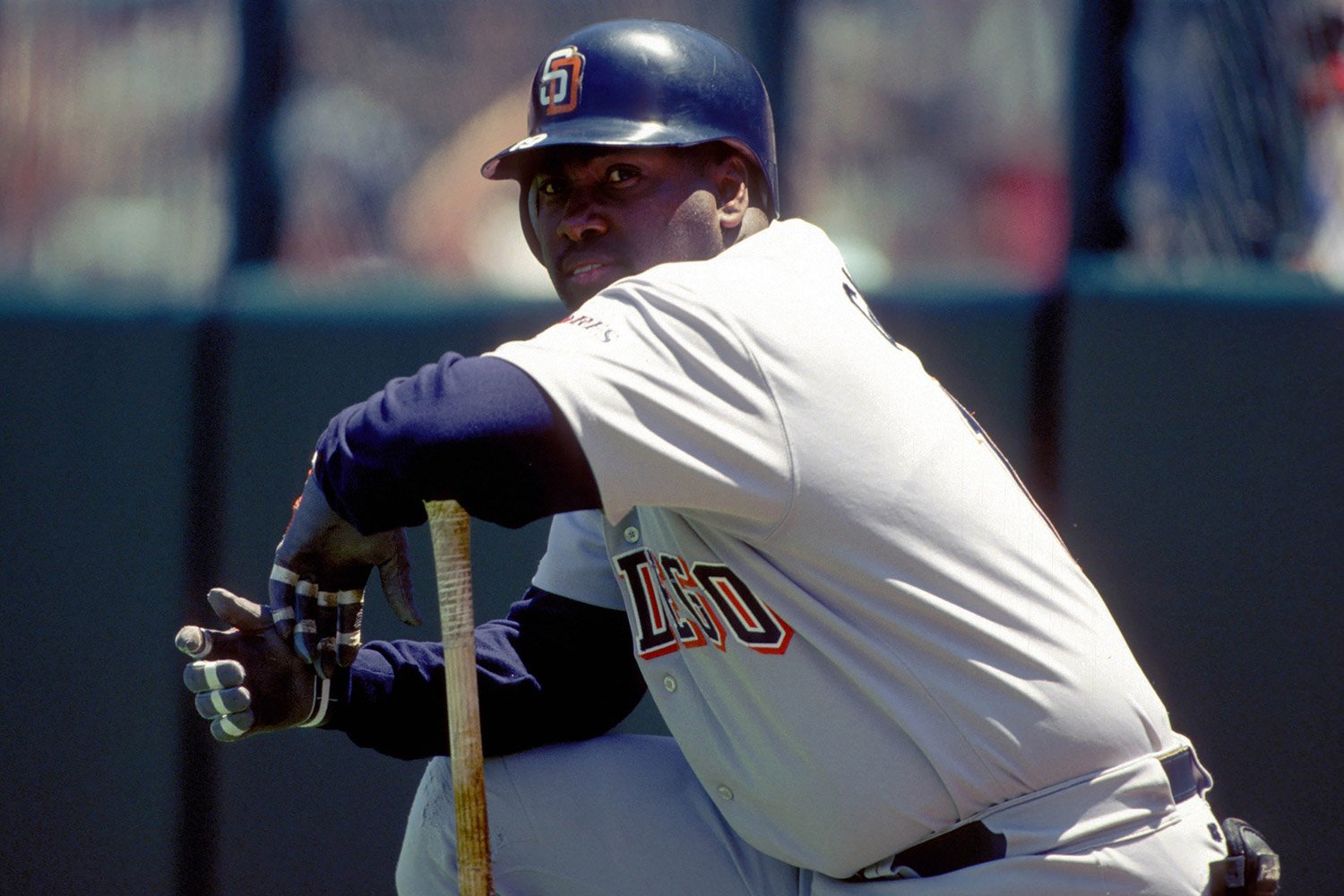 Before diving into this article, we recommend reading part one, Gold Standard Padres, Infield Edition. With that said, let's look at the gold standard Padres of the outfield and designated hitter. LF Greg Vaughn "Vaughnie" "Hootie" 1998 (6.3 WAR) The Left Field Landlord AVG: .272 | H: 156 | R: 112 | 2B: 28 | HR: 50 | RBI: 119 | SB: 11 | BB: 79 | OPS: .960 NL All-Star | Silver Slugger | TSN NL Comeback Player of the Year | Players' Choice NL Comeback Player | NL Player of the Week 7/19 | Padres Team MVP | Padres Chairman’s Award The Five Pillars of Hootie Innovation: After a disastrous 1997 season where many thought his career was fading, Vaughn innovated his entire offensive philosophy by apprentice-studying under Tony Gwynn. He abandoned his "all-or-nothing" pull-heavy swing for a shorter, more scientific stroke that utilized the gaps. Under Gwynn's mentorship, Greg spent countless hours in the video room, learning to stay back on the ball and drive outside pitches to the opposite field. This mechanical overhaul allowed him to remain a terrifying power threat while significantly improving his plate discipline, turning him into a surgical slugger who punished pitchers for nibbling at the strike zone. Impact: Vaughn was the indispensable engine of the 1998 squad, providing the middle-of-the-order gravity that allowed Tony Gwynn to see better pitches. By launching a franchise record (50) home runs and finishing 4th in NL MVP voting, he single-handedly altered the defensive strategy of every opponent the Padres faced. His production reached a crescendo in the World Series; in Game 1 against the Yankees, his two-homer performance silenced the Bronx and gave San Diego a legitimate belief they could capture a title. He was the emotional heartbeat of a clubhouse that won a franchise record (98) games, which remains the winningest season in franchise history and still stands years 28 later. Legend: The "Legend of Hootie" is etched into San Diego lore as the man who conquered the 50-home run plateau, a feat no other Padre has ever achieved. While the national media focused on the McGwire-Sosa race, Vaughn was the blue-collar hero of the West Coast, delivering massive shots that seemed to defy the heavy marine layer at Qualcomm Stadium. His story is one of pure resilience, having gone from the trade block to the MVP conversation in the span of twelve months. He became a folk hero for his grit, culminating in his (50th) blast on the final day of the season—a moment that remains a cornerstone of Padres history. Iconic Look: Standing in the box with a menacing, wide-legged stance and a high, rhythmic bat waggle, Vaughn was a terrifying silhouette. His visual presence was defined by his trademark goatee and jersey sleeves stretched to the breaking point over his massive biceps. Clad in the home white jerseys where navy pinstripes served as the sharp accent, paired with the navy cap featuring the white and orange interlocking "SD," he looked like a modern-day gladiator. The "Vaughn Trot"—a slow, purposeful stroll around the bases punctuated by his signature gold chain catching the stadium lights—became a symbol of 1998 dominance. Every at-bat felt like a heavyweight title fight, with his violent follow-through serving as the definitive exclamation point. The "Did You Know" Factor: Did you know that Greg Vaughn was the first player in the National League to reach the 10, 15, and 20-homer milestones during the historic 1998 home run chase? While the national media eventually shifted focus to Mark McGwire and Sammy Sosa, Vaughn was the one setting the pace for the first two months of the greatest power-hitting season in baseball history. He even became the only Padre in history to hit two home runs in a single World Series game, going deep twice off David Wells in Game 1. Furthermore, he joined an exclusive group by winning the Silver Slugger and Comeback Player of the Year awards in the same season. Despite the high-strikeout era, his discipline in 1998 was elite; he drew 79 walks and posted a .960 OPS, which still stands as one of the top offensive seasons in team history, proving he was a complete offensive force CF Steve Finley "Fins" 1996 (7.2 WAR) The Five-Tool Technician AVG: .298 | H: 198 | R: 126 | 2B: 45 | 3B: 9 | HR: 30 | RBI: 95 | SB: 22 | XBH: 84 | TB: 348 | OPS: .924 Gold Glove (1995-1996) | NL Player of the Week (7/7/96) The Five Pillars of Fins Innovation: Finley was a pioneer in "Biomechanical Longevity." Holding a degree in physiology, he treated his body like a laboratory, innovating a training regimen of chiropractic care, yoga, and precise nutrition long before they were standard in MLB clubhouses. He incorporated visual conditioning exercises to sharpen ocular tracking and neural reaction speeds, maintaining the twitch-fiber explosiveness of a man a decade younger. He wasn't just "talented"; he was a finely tuned machine who mastered a way to sustain peak "Speed-Power" output for six months straight. This commitment to physiological maintenance demonstrated that elite athleticism could be extended through science—a philosophy that allowed him to play until age 42. Impact: The statistical impact of Finley's 1996 is massive, but his "clutch impact" was global. He dominated the historic "Monterrey Series" in Mexico, hitting the first-ever regular-season home run on Mexican soil to ignite a sweep of the Mets that galvanized the San Diego fan base. On the field, he was a statistical vacuum; he led the Majors with 655 at-bats while setting franchise records for total bases (348), extra-base hits (84), and runs scored (126)—benchmarks that remain the franchise's all-time single-season records 30 years later. This offensive engine was anchored by his defensive erasure in center field; his elite range earned him the Gold Glove, as he turned sure-fire doubles into outs and provided an essential safety net for the pitching staff. This combination of iron-man durability and defensive mastery was the primary catalyst that powered the Padres to a 91-win division title. Legend: The legend of Steve Finley is that of the ultimate "Five-Tool Technician." He possessed a "Zen-like" focus that made him arguably the best defensive center fielder in the history of Jack Murphy Stadium. His legend was cemented on the final day of the 1996 season in a head-to-head battle for the National League West title against the Dodgers, where his consistent pressure helped San Diego clinch the division crown. His historical legend is tied to his membership in two of baseball's most exclusive clubs: he is one of only three players, joining Willie Mays and George Brett, to record 300 home runs, 425 doubles, and 100 triples; furthermore, he and Mays are the only two in that group to also surpass 300 career stolen bases Iconic Look: Finley’s iconic look was the epitome of lean, mid-90s baseball grace. Standing 6'2" with a wiry, athletic frame, he featured a silhouette that seemed perfectly designed for the expansive gaps of "The Murph." His stance was a masterclass in balance: a low, controlled crouch followed by a smooth, left-handed "loop" swing that generated effortless whip. Clad in the classic white-and-navy pinstripes with his pants worn high to emphasize his speed, he was the ultimate technician in motion. The most enduring image of Finley is him at a full sprint in center field, closing the gap with elite acceleration before a perfectly timed, head-first dive that preserved a late-inning lead. Did You Know" Factor: Did you know that in 1996, Steve Finley became only the second player in Padres history, after Tony Gwynn, to record 5 hits and a home run in the same game, with Finley's performance featuring a go-ahead home run. He also established a "Gold Standard" for versatility that year, finishing just one triple shy of becoming the first player in major league history to join the 30/40/10 club, ending the season with 30 home runs, 45 doubles, and 9 triples. Most impressively, his strict "physiology-first" lifestyle allowed him to start 161 games in center field, proving that his specialized conditioning made him one of the most reliable and durable fixtures in the National League during the Padres' title run. RF Tony Gwynn "Mr. Padre" 1987 (8.6 WAR) The High-Tech Hit King AVG: .370 | H: 218 | R: 119 | 2B: 36 | 3B: 13 | HR: 7 | RBI: 54 | SB: 56 | BB: 82 | IBB: 26 | SO: 35 | OBP: .454 | OPS: .958 8x NL Batting Champion (1984, 1987-1989, 1994-1997) | 5x Gold Glove (1986-1987, 1989-1991) | 7x Silver Slugger (1984, 1986-1987, | 8x Silver Bat Recipient | (1984, 1987-1989, 1994-1997) | 1989, 1994-1995, 1997) | 15x NL All-Star (1984-1987, 1989-1999) | 5x NL Player of the Month (May 1984, May 1987, July 1988, Aug 1993, May 1997) | 11x NL Player of the Week (June 7 & June 21, 1987) | 7x Padres Team MVP (1984, 1986-1988, 1990, 1994-1995) | Branch Rickey Award (1995) | Padres Chairman’s Award (1995) | Lou Gehrig Memorial Award (1998) | Roberto Clemente Award (1999) | Padres Hall of Fame (2002) | #19 Retired by the San Diego Padres (2004) | National Baseball Hall of Fame (2007) The Five Pillars of Mr. Padre Innovation: Gwynn pioneered the "Information Age" by becoming the sport's first true video junkie in 1987. He traveled with two professional-grade VCRs, utilizing shuttle-search frame-by-frame technology to build a mental and physical database of pitcher tendencies, release points, and sequence patterns. This was the birth of the "Captain Video" era. That same year, he overhauled his physical approach to develop explosive hand speed, which he maximized by using some of the smallest, lightest bats in MLB history—typically 32 to 33 inches and weighing only 31 ounces. This technical combination of video study and precise swing-weight innovation resulted in a .370 average, which was his career high at the time. Impact: The 1987 campaign remains the most complete individual season in Padres history. Gwynn’s 8.6 bWAR was fueled by a historic dual-threat performance where he earned a Silver Slugger while leading the league in (AVG .370), (H 218), and (158 Runs Created) while swiping a career-high (56 SB). His situational impact was statistically staggering—he hit a remarkable .375 with runners in scoring position for the entire 1987 season. He was the only player in the 20th century to finish a season with at least 200 hits, 100 runs, and 50 stolen bases while hitting over .350. Defensively, he utilized his "basketball feet" and elite lateral quickness to record 348 putouts and 10 assists in right field, earning his second Gold Glove Legend: Tony Gwynn remains the only player to serve as the heartbeat of both Padres World Series teams (1984 and 1998). In 1987, he maintained a historic "Contact Gap," striking out only 35 times in 680 plate appearances; he was 1.6 times more likely to steal a base (56) than he was to strike out. His bat control was so precise that he recorded only one multi-strikeout game during that entire campaign and maintained a .300 average even when reaching a two-strike count. This mastery was defined by his ownership of the "5.5 hole" between third base and shortstop, a corridor he exploited so often that it became his personal trademark. His status was solidified by his performance against the era's elite; he hit a combined .331 against Hall of Famers Greg Maddux, Tom Glavine, John Smoltz, and Pedro Martinez. Iconic Look: His 1987 aesthetic was deeply rooted in the Padres' vintage "Brownie" era (1985-1990) uniforms, in which the pinstripes emphasized his lean point guard physique, which still carried the athletic grace of his time on the court. Taller and more agile than in later years, he sported a closely trimmed mustache that framed an intense focus. He stood in a signature "closed" batting style, defined by a constant, rhythmic circular bat waggle and an inward knee-knock that triggered his legendary weight transfer. On his hands, he sported black Franklin batting gloves paired with vibrant orange wristbands on each arm, while his Rawlings glove was known for its distinctively soft, broken-in leather. Completing the late-eighties look was the clean, straight-line aesthetic of the ribbon sock style and a high-shine reflective brown helmet that caught the glint of the San Diego sun. The "Did You Know" Factor: Did you know that in 1987, Tony Gwynn became the first player in National League history to win a batting title and record over 50 stolen bases in the same season? This campaign stands alone in the Padres' record books as the only time a player hit the "200 Hit / 100 Run / 50 Steal" trifecta—a benchmark that has never been challenged in the decades since. Gwynn recorded a staggering 73 multi-hit games that year, meaning he collected more than one hit in nearly half of his appearances (46.5%). Furthermore, he showcased rare gap-to-gap power by tying the franchise record with 13 triples; fittingly, his 200th hit of the year was one of those record-setting triples. He capped off the season by winning the batting title by a massive 32-point margin over runner-up Pedro Guerrero, a gap that remains one of the largest in the modern era of the National League. DH Gary Sheffield "Sheffield of Dreams" "Sheff" 1992 (7.0 WAR) The Triple Threat Chaser AVG: .330 | H: 184 | R: 87 | 2B: 34 | 3B: 3 | HR: 33 | RBI: 100 | SB: 5 | BB: 48 | IBB: 12 | SO: 40 | OBP: .385 | SLG: .580 | OPS: .965 | OPS+ 168 | wRC+ 172 NL Batting Champion (1992) | Silver Bat Award (1992) | NL Silver Slugger (1992) | NL All-Star (1992) | NL Player of the Month (August 1992) | NL Player of the Week (May 24, 1992) | Sporting News MLB Player of the Year (1992) | Sporting News NL Comeback Player of the Year (1992) | Padres Team MVP (1992) The Five Pillars of Sheffield of Dreams Innovation: Sheffield engineered a swing that prioritized violent bat speed over traditional weight transfer in a way the league had never seen. His signature "bat waggle" served as a timing mechanism that allowed him to keep his hands back until the last possible moment, making him able to turn on triple-digit fastballs with ease. In 1992, he refined a lift-and-separate timing mechanism that maximized rotational force in his lower half, allowing him to dominate the inside pitch. He utilized a distinct open-stance foundation, providing a clear vantage point to identify the pitch early before the trigger synchronized his body for the point of contact. This mechanical shift allowed him to put backspin on the ball, which in the modern Statcast era is recognized as the foundation for spin rate, launch angle, and exit velocity. Impact: The impact of Sheffield's 1992 campaign is defined by a 7.0 Peak Value. He secured the NL Batting Title with a .330 average, becoming the first Padre other than Tony Gwynn to win the crown and the youngest player to do so since Tommy Davis in 1962. He remains the only player in franchise history to win a batting title while also hitting 30+ home runs in the same season. Sheffield led the Major Leagues with 323 total bases and produced an elite strikeout-to-home-run ratio, recording only 40 strikeouts despite smashing 33 home runs. His dominance was further cemented on August 6, 1992, when he and Fred McGriff became the first teammates since 1955 to hit back-to-back home runs twice in a single game. This 1992 breakout earned him the Sporting News Major League Player of the Year award and 9 first-place votes in the NL MVP race, where he finished 3rd behind Barry Bonds and Terry Pendleton. Legend: The 1992 season was a display of offensive dominance where Sheffield nearly rewrote history, fueled by a pursuit of the first NL Triple Crown since 1937. This chase represented the closest any National League player has come to the feat in the last 88 years—a drought that continues in the Senior Circuit to this day. He held the lead in all three Triple Crown categories as late as August 23rd and ultimately finished just two home runs and nine RBIs shy of the Crown. A fractured finger that ended his season a week early was the only thing that could stop the pursuit. By capturing the batting title that season, he became the first National League third baseman to do so since 1933—a 59-year historical gap spanning from the Great Depression to the end of the Cold War. This campaign established the foundation for a career that saw him become the first player in MLB history to record 100-RBI seasons with five different franchises. Iconic Look: Sheffield’s visual profile was the definition of "90s cool." He wore the white home navy pinstripe jersey featuring the navy-and-orange accented "Padres" script across the chest, paired with matching navy headwear showcasing the white-and-orange interlocking "SD". To commemorate San Diego hosting the Midsummer Classic, the 1992 All-Star Game patch was featured on both the side of his cap and his left jersey sleeve—drawing attention to his massive forearms. This look was further defined by thick navy wristbands, Franklin batting gloves, white-and-navy Nike high-tops, and a swinging gold chain. Every at-bat felt intense, as Sheffield stared down pitchers while pacing in the box and holding his pine-tar-stained Rawlings bat high, swinging it like a cobra. The "Did You Know" Factor: Traded to San Diego just 11 days before the 1992 season began, Sheffield arrived as a key piece of "The Four Tops"—the legendary quartet of Tony Fernandez, Tony Gwynn, Gary Sheffield, and Fred McGriff. Whenever any of the four recorded a hit at Jack Murphy Stadium, the PA system would blare Motown hits. Notably, Sheffield credited his entire transformation to Tony Gwynn, who took him under his wing after the trade and taught him how to "think" like a professional hitter. Despite being traded away in 1993, Sheffield famously said he cried when leaving San Diego because of the bond he had formed with Gwynn and the city. The ultimate family showdown occurred on May 12, 1992, when he faced his uncle, Dwight Gooden, at Shea Stadium; Sheffield famously smiled at the mound before lacing a line-drive single off the Cy Young winner.
 -
Most people look at a roster and see names and numbers on a page. We’re doing something different. We are building a machine. To make it into Article I: The Gold Standard, it wasn't enough to just show up in the box score. To earn a spot here, a player had to have a soul. They had to have an "Iconic Look" that a kid could draw from memory thirty years later. They had to have a "Did You Know" factor that could win a bar bet at a local dive. It is the smell of the salt air off the bay mixed with the pine tar in the dugout; the way the late-afternoon sun hits the brick, casting shadows that only the legends knew how to play. For decades, San Diego was told to "act like you’ve been here before." But the men in this vault didn't wait for permission. They didn't just play for a city; they defined its pulse when the rest of the league wasn't looking. This roster is a generational handshake—where the high-socks and stirrups of the 1969 expansion meet the swagger and bat flips of the modern era. Different decades, same relentless pursuit of the standard. The math here is absolute, but the criteria are higher. We aren't just looking for the highest WAR; we are looking for where that dominance meets defiance. If a player’s presence didn't change the gravity of the room while they were rewriting the record books, they didn't make the cut. This 26-man roster represents the pinnacle of San Diego baseball—the absolute apex of grit, innovation, and pure dominance. We’ve meticulously documented every legend, from the unbuttoned chest protector of Benito Santiago to the dirt-stained jersey of the late, great Ken Caminiti. We aren't just counting hits; we are documenting immortality. This isn't just a list of the greatest to ever wear the uniform; it is the unredacted DNA of what it means to be a San Diego Padre. The Glossary of Pillars: The Five-Point Metric To achieve "The Gold Standard," every player in this vault is measured against these five pillars. This is the criterion that separates a career from a legacy. The Legend: The narrative weight. The stories are told in the stands and passed down through generations. The Innovation: How they evolved their position or changed the way the game was perceived in San Diego. The Impact: The measurable shift in the franchise's trajectory. If they weren't there, the history of the Padres would look fundamentally different. The Iconic Look: The visual identity. Whether it was the brown-and-gold, the pinstripes, or a specific piece of gear, they owned the uniform. The "Did You Know" Factor: The grit and the trivia. The obscure, undeniable facts that define their "unredacted DNA." The WAR Standard: The peak of the ledger. In building this machine, we respect the math, but we refuse to be limited by it. We utilize WAR (Wins Above Replacement) as our baseline, but we recognize that the two titans of the industry—FanGraphs (fWAR) and Baseball-Reference (bWAR)—often see the game through different lenses. Our mandate is simple: We seek the absolute peak. The "Highest Possible" Rule: We do not settle for an average. We hunt for the highest documented WAR available for every player. If one system values a pitcher’s FIP while the other values their RA9, we take the higher mark. The Integrity Clause: We do not compromise the numbers. No player is selected for sentimentality alone if it drops the collective value of the roster. The Architecture: Building the Machine A 26-man roster is more than a list; it is an ecosystem. In selecting this unit, we didn't just look for the highest individual ceilings—we looked for how those peaks fit together to form a dominant whole. We have engineered this squad using a precise 6-7-9-4 blueprint: The Rotation (6 Starting Pitchers): Representing the absolute peak of dominance. We chose seasons where these men were "Ace Killers"—possessing the rare ability to shut down an offense single-handedly and hand the ball directly to the back end of the game. The Bullpen (7 High-Leverage Relievers): Selected based on their "Closer Mentality." We looked for the seasons where these seven arms were statistically "unhittable" in the moments that mattered most. The Starting Nine (9-Man Lineup including DH): From our "Igniters" at the top to the "Pure Gravity" of our power hitters and the designated hitter, the lineup is built for relentless pressure. These legends forced opposing managers to change their entire strategy before the first pitch was even thrown. The Defensive Spine: A roster's soul is found in its middle—Catcher, Shortstop, and Center Field. We selected the seasons when these players were at their peak in run prevention. The Tactical Reserves (4 Bench Spots): This is the machine's specialized toolkit. We have reserved four dedicated spots: Catcher, Infielder, Outfielder, and Utility. These are our "Swiss Army Knives," selected for their ability to stay cold for three hours and change the game in thirty seconds. The Creed of the Friar We do not look back out of nostalgia. We look back to remember the cost of excellence. To wear the Brown and Gold is to inherit a history of defiance—a legacy built by men who refused to be overlooked in a small corner of the map. This anthology is the ledger of that defiance. The standard has been set. The machine is synchronized. The Strategy of the Nine: A Positional Blueprint This isn't just a list of names; it's a structural masterpiece. Each position on this field was chosen to serve a specific purpose in the machine. The Battery (C): The general. We prioritize a catcher who can handle a generational pitching staff while providing a "bonus bat" that most teams lack. The Infield Corners (1B & 3B): The "Power Gates." These spots are reserved for the heavy-hitters who anchor the heart of the order and shut down the hot corners. The Middle Infield (2B & SS): The "Engine Room." Speed, range, and the ability to turn the tide of a game with both the glove and the bat. The Outfield (LF, CF, RF): The "Wall of Speed & Steel." A trio built to erase base hits in the gaps and provide the most iconic offensive peaks in San Diego history. The DH: The "Pure Force." A spot dedicated to the bat that was too dangerous to ever leave out of the lineup. The Bench Logic: The tactical safety net. The final four spots are our "Swiss Army Knives"—insurance for every possible scenario. The Backup Catcher: High-WAR stability to ensure the pitching staff never loses its rhythm. The Infielder & Outfielder: Gold-standard depth to maintain the "DNA" of the defense during substitutions. The Utility: The wild card. A player whose value comes from being everywhere at once. Step into the Vault. This is the 26-man roster that defines the franchise. The Starting Lineup: The Foundations of the Diamond These are the names that echo through the canyons of Mission Valley to the renovation of Downtown. From the lead-off spark to the clean-up power, this unit represents the daily heartbeat of the franchise—the men who set the tone the moment the first pitch crossed the plate. Benito Santiago "Benny" 1987 (3.4 WAR) The Cannon Arm Kid AVG: .300 | H: 164 | R: 64 | 2B: 33 | HR: 18 | RBI: 79 | SB: 21 | BB: 16 | OPS: .791 BBWAA NL Rookie of the Year (Unanimous 1987) | 4x Silver Slugger (1987-1988, 1990-1991) | TSN NL Rookie of the Year (1987) | Baseball Digest NL Rookie of the Year (1987) | Topps All-Star Rookie Team (1987) | Padres Hall of Fame (2015) The Five Pillars of Benny Innovation: Santiago revolutionized his position by introducing a "from-the-knees" throw to second base. Developed in Puerto Rico as a teenager by practicing against trash cans and mattresses, this technique leveraged elite arm strength to achieve a flat, rocket-like trajectory. This unique approach allowed him to stun base runners while fundamentally changing how opponents approached stealing against San Diego. While critics predicted this high-stress motion would eventually blow out his arm, these mechanics actually sustained his elite defensive pressure for two decades. This durability translated into 2,417 career games. Impact: In 1987, Santiago’s historic performance led to a National League and franchise first unanimous Rookie of the Year award within his position. He capped this debut season by securing a National League Silver Slugger, becoming Major League Baseball's only rookie to earn that distinction as well. These accolades were fueled by career-high marks, including 164 H, 33 2B, and a .300 AVG. These totals paced all Major League rookies while he led all National League catchers in hits, doubles, stolen bases (21), total bases (255), and extra-base hits (53). Legend: Santiago served as a cornerstone for the "New Generation" Padres, a youth movement redefining team identity following veteran-heavy rosters from 1984 through 1986. During this breakout year, Jack Murphy Stadium became a destination, single-handedly providing the franchise with clear direction for the future. Although his career spanned 20 seasons across 9 teams, his legacy remains anchored in this franchise’s history. During his 2015 Padres Hall of Fame induction speech, he shared a powerful admission with fans: "If I could do it over again, I'd have stayed in San Diego. That's when I was happiest." Iconic Look: Santiago was instantly recognizable for trademark gold hoop earrings and a refusal to look like a traditional catcher, appearing more like a converted shortstop playing behind home plate. He brought a rare, lean athleticism to the position, often sporting shades while commanding the diamond. Swagger arrived when he stepped to the dish with high hands and a constant bat waggle, while signature curls showed from beneath his helmet. Benito snapping a throw from one knee remains an iconic centerpiece of defensive dominance throughout his era at Jack Murphy Stadium. The "Did You Know" Factor: Santiago possessed a rare burst of speed for a catcher. He remains Major League Baseball's only catcher to record a hitting streak of at least 30 games (34) and steal more than 20 bases (21) during a single campaign. This historic streak began with a three-run homer in late August and shattered the all-time rookie record that had stood since 1899. As the longest hitting streak for any catcher or rookie in major league history, it also stands as the Padres all-time record. This legendary run only concluded on the season's second-to-last day against Dodgers ace Orel Hershiser. 1B Adrian Gonzalez "A-Gon" "Gonzo" 2009 (6.9 WAR) The Hometown Legend AVG: .277 | H: 153 | R: 90 | 2B: 27 | HR: 40 | RBI: 99 | SB: 1 | BB: 119 | OPS: .958 3x NL All-Star (2008-2010) | 2x Gold Glove (2008-2009) | 4x Padres Team MVP (2006, 2008-2010) | NL Player of the Week (5/31, 8/17) | HR Derby Participant The Five Pillars of Gonzo Innovation: González revolutionized expectations for Padres first basemen by pairing elite power with technical defensive mastery. He utilized a repeatable swing to weaponize Petco Park’s gaps, refusing to be neutralized by the "Marine Layer." He evolved the modern slugger role through elite discipline, setting a franchise record with eight consecutive multi-walk games. Defensively, he redefined the position with a "sweeping" stretch that provided an unrivaled radius. This 2009 masterclass resulted in a career-high .996 fielding percentage. Impact: Gonzo shattered the narrative that Petco Park was a power hitter’s graveyard. By becoming the first franchise player to reach 40 home runs while calling Petco home—hitting 12 at home and 28 on the road—he provided a massive statistical impact. In a stadium designed to suppress offense, his ability to drive the ball made him a singular force; he led the Major Leagues with 119 BB as managers adjusted strategies to avoid him. He finished with 27 more home runs than any teammate, carrying the offensive identity. This production earned him a career-high 162 OPS+. Legend: Gonzalez remains the ultimate San Diego success story—the local standout who lived out the dream of becoming the face of his hometown franchise. His legend is rooted in community connection; he was a native son carrying the weight of the city. In 2009, he became the first San Diego native named an All-Star and Gold Glove winner in the same season for the club. His icon status was cemented by his mentorship of the Park View Little League team and his local foundation. He finished 2009 having played a franchise-best 314 consecutive games. Iconic Look: Representing the peak of 2000s style, Gonzalez's look was defined by long, "pajama-style" pants draped over his cleats. Unlike the high-socks tradition of past icons, Adrian’s silhouette was distinctly modern. This relaxed, low-cuff style became synonymous with his calm demeanor and elite flexibility at first base. The defining visual of 2009 was Gonzalez fully extended in the dirt, his pants stretching as he executed a perfect backhand scoop. Punctuated by a signature one-handed, high-finish home run follow-through. The "Did You Know" Factor: The ultimate testament to Gonzalez’s makeup was the fear he struck into opposing managers. In 2009, he led MLB with 119 BB, including a staggering 22 intentional passes. He set a franchise record with eight consecutive multi-walk games, proving he refused to chase pitches out of the zone. This discipline was balanced by a rare ability to punish pitchers when challenged; on August 11, 2009, Gonzalez became the first player in franchise history to go 6-for-6 in a 9-inning game. These six hits solidified his place in history. 2B Mark Loretta "Get Back" 2004 (6.4 WAR) The Contact Master AVG: .335 | H: 208 | R: 108 | 2B: 47 | HR: 16 | RBI: 76 | SB: 5 | BB: 58 | OPS: .886 NL All-Star (2004) | Silver Slugger (2004) | 2x Padres Team MVP (2003-2004) The Five Pillars of Get Back Innovation: Loretta utilized a technical approach centered on pitch recognition. He trained his eyes with a high-velocity tennis ball machine, reading colored numbers on balls fired at 150 mph. This discipline resulted in a 6.3% strikeout rate, with only 45 strikeouts in 707 plate appearances. By mastering the two-strike count, Loretta acted as a human hit-and-run machine, dismantling defensive shifts years before they became a league standard. His ability to manipulate the bat head made him the ultimate tactical weapon in a contact-starved era. Impact: Loretta’s 2004 campaign drove the Padres' first winning season in six years. Moving into Petco Park, he proved he could conquer the "Marine Layer" by hitting through it. While others struggled with the park's dimensions, Loretta thrived as a road warrior, batting .368 away from San Diego. His 208 hits and 47 doubles provided the steady production that allowed the franchise to transition from rebuilding into a playoff contender. He finished 9th in NL MVP voting, serving as the most consistent offensive force in the league. Legend: As a Southern California native, Loretta’s legacy is that of a permanent franchise fixture. His .314 career average as a Padre is the second-highest in team history behind Tony Gwynn, and his 208 hits in 2004 are the highest single-season total by any player not named Gwynn. Now serving as a Special Assistant to the club, his technical mastery remains part of the organizational DNA. He bridged the gap between the Gwynn era and the modern generation, proving elite contact hitting still had a home in San Diego long after the stadium changed. Iconic Look: The groove of "Low Rider" by War remains the definitive auditory memory of Loretta’s tenure, echoing through Petco Park before every plate appearance. Visually, his short swing and compact stance were technical trademarks, representing a blue-collar precision that matched the city's ethos. A creature of habit, he paired this surgical approach with a signature black-and-tan SSK fielding glove and a specialized thin-handle bat. Whether turning a slick double play or spraying a line drive to right, his mechanics were perfectly repeatable. The "Did You Know" Factor: Mark Loretta joins Tony Gwynn as the only players in Padres history to record 200+ hits in a season. In 2004, he finished 3rd in the NL Batting Race, trailing only Barry Bonds and Todd Helton—placing him among the greatest offensive forces in history. His ability to put the ball in play was nearly unparalleled, averaging one strikeout for every 15 at-bats. This elite contact rate, combined with 47 doubles, made him one of only three second basemen in the last 20 years to win a Silver Slugger while recording over 200 hits. SS Fernando Tatis Jr. "El Niño" "Bebo" "Nando" "Tati" 2021 (7.3 WAR) The Face of the Franchise AVG: .282 | H: 135 | R: 99 | 2B: 31 | HR: 42 | RBI: 97 | SB: 25 | BB: 62 | OPS: .975 NL Home Run Leader (2021) | All-Star (NL Starter 2021) | 2x Silver Slugger (2020-2021) | 2x All-MLB First Team (2020-2021) | 2x Padres Team MVP (2019, 2021) | NL Player of the Month (May '21) | 2x NL Player of the Week (4/26, 6/27) The Five Pillars of El Niño Innovation: Tatis revolutionized the shortstop position by sacrificing traditional safety for explosive offensive output. His 7.3 WAR set a modern benchmark, demonstrating a power-speed combination never before seen in San Diego. By leaning into an aggressive range strategy, he reached balls that standard metrics deemed impossible, changing the geometry of the infield. He forced the league to account for a player who covered more ground than any shortstop in history while delivering the most dangerous bat in the lineup—a high-stakes evolution that turned the field's most difficult position into a platform for pure dominance. Impact: Beyond the stat sheet, his 2021 campaign set the franchise record for home runs by a shortstop. As the NL Home Run Leader, his presence altered how the division was managed, posting a 1.015 OPS and 24 home runs against NL West rivals. This production earned him a 3rd Place finish in the NL MVP voting, proving his status as a top-tier superstar despite missing significant time. This "division killer" status forced opposing managers to pitch around him at historic rates, providing the protection that stabilized the franchise’s identity during its modern resurgence. Legend: The legend of El Niño was cemented at Dodger Stadium. In 2021, Tatis tormented Los Angeles by hitting 7 home runs in their park—the most by any visitor in a single season. This included a monstrous 467-foot moonshot that completely cleared the stadium, making him only the fifth player in history to hit a ball entirely out of the yard. By recording three multi-home run games at Dodger Stadium in one season, he turned the rivalry’s biggest stage into a personal playground—homering on the exact 22nd anniversary of his father’s historic two-grand-slam inning in that very same building. Iconic Look: Flowing dreadlocks, oversized gold sunglasses, and custom-painted cleats—anchored by a signature hot pink arm sleeve worn to honor his mother—defined the visual brand of Tatis in 2021. This personal aesthetic was punctuated by the team’s spinning Swag Chain, blurring the line between high fashion and elite performance. The look was finalized by his trademark stutter-step as he rounded third base—a rhythmic skip that served as a psychological dagger to opponents. This move was so culturally dominant that its digital recreation became a benchmark for realism when he served as the cover athlete for MLB The Show 21, The "Did You Know" Factor: Tatis is the only player in Major League history to record 40+ home runs and 25+ stolen bases in a season while appearing in fewer than 135 games. This historic efficiency is underscored by his physical resilience, as he played through recurring shoulder instability that eventually forced a mid-season move to the outfield just to keep his bat in the lineup. Despite the physical toll, he averaged a home run every 11.4 at-bats—the highest rate in the majors—and joined Barry Bonds as the only players in history to amass 70+ HRs and 50+ SBs within their first 227 career games. 3B Ken Caminiti "Cammie" 1996 (7.6 WAR) The Ultimate Warrior AVG: .326 | H: 178 | R: 109 | 2B: 37 | HR: 40 | RBI: 130 | SB: 11 | BB: 78 | OPS: 1.028 BBWAA NL MVP (Unanimous 1996)| 2x NL All-Star (1996-1997) | 3x Gold Glove (1995-1997) | Silver Slugger (1996) | Sporting News MLB Player of the Year | Players Choice NL Outstanding Player | 2x NL Player of the Month (Aug/Sept '96) | Padres Hall of Fame (2016) The Five Pillars Of Cammie Innovation: Ken Caminiti weaponized third base with physical intimidation, transforming the Padres' defensive identity. In 1996, he pioneered a high-risk style that essentially closed off the diamond's left side. He famously ignored conventional "safe" mechanics, utilizing a raw, slingshot arm to record outs from impossible angles—most notably his "sitting down" strike to first base. Offensively, he revolutionized modern switch-hitting, setting a Major League record by homering from both sides of the plate in four different games during the '96 campaign. He proved a third baseman could be both the primary defensive shield and the league's most explosive offensive engine simultaneously. Impact: The 1996 season was a scorched-earth campaign that dragged the franchise into the National League's elite tier. Caminiti became the first player in Padres history to homer in an All-Star Game, signaling to the league that San Diego was no longer an underdog. His production was historically concentrated when the pennant race was most volatile; he hit an unthinkable .363 with 28 home runs and 82 RBIs after the break. His 130 RBIs that year remain the highest single-season total in franchise history. As the only unanimous MVP in team history, he established a 1.028 OPS that remains the franchise's single-season "Gold Standard." Legend: The legend of Cammie is the "Snickers Game" in Monterrey, Mexico. Seconds before a crucial rubber game against the Mets, Cammie lay on the locker room floor of Bruce Bochy's office receiving two liters of IV fluids to combat severe food poisoning. He looked like a man who belonged in a hospital, not a batter's box. Instead, he demanded a Snickers bar for a sugar boost, unwrapped it as he walked toward the dugout, and proceeded to launch two titanic home runs in an 8-0 shutout. This showed his teammates that as long as Cammy was breathing, the Padres would not lose. Iconic Look: Cammie was a visual titan, bringing a football mentality to the baseball diamond. He was "death personified" in a dirt-caked jersey and signature heavy white wrist tape, playing through a torn rotator cuff that he refused to acknowledge until the season ended. His look was defined by the navy-pinstriped home whites, a pine-tarred helmet, and the physique of a heavyweight prizefighter. Whether diving into the stands or sliding headfirst to break up a double play, he played as the ultimate gamer with zero regard for his own safety. Standing over the hot corner, his presence alone forced opposing runners to second-guess every lead they took. The "Did You Know" Factor: While power was his calling card, Caminiti’s 1996 season was a masterclass in tactical leadership. He led the National League with 10 sacrifice flies, underscoring an obsession with manufacturing runs at any cost. Beyond the box score, Caminiti was the emotional architect of the clubhouse, often providing personal funds to teammates and strangers facing medical crises. He was a warrior to the media, but a guardian to his peers. In August 1996 alone, he posted an .844 slugging percentage—a four-week stretch of hitting that remains among the most dominant months in sports history, cementing a legacy of raw brutality and quiet generosity. View full article
-
The Friar Anthology: Gold Standard Padres, Infield Edition
Michael Black posted an article in History
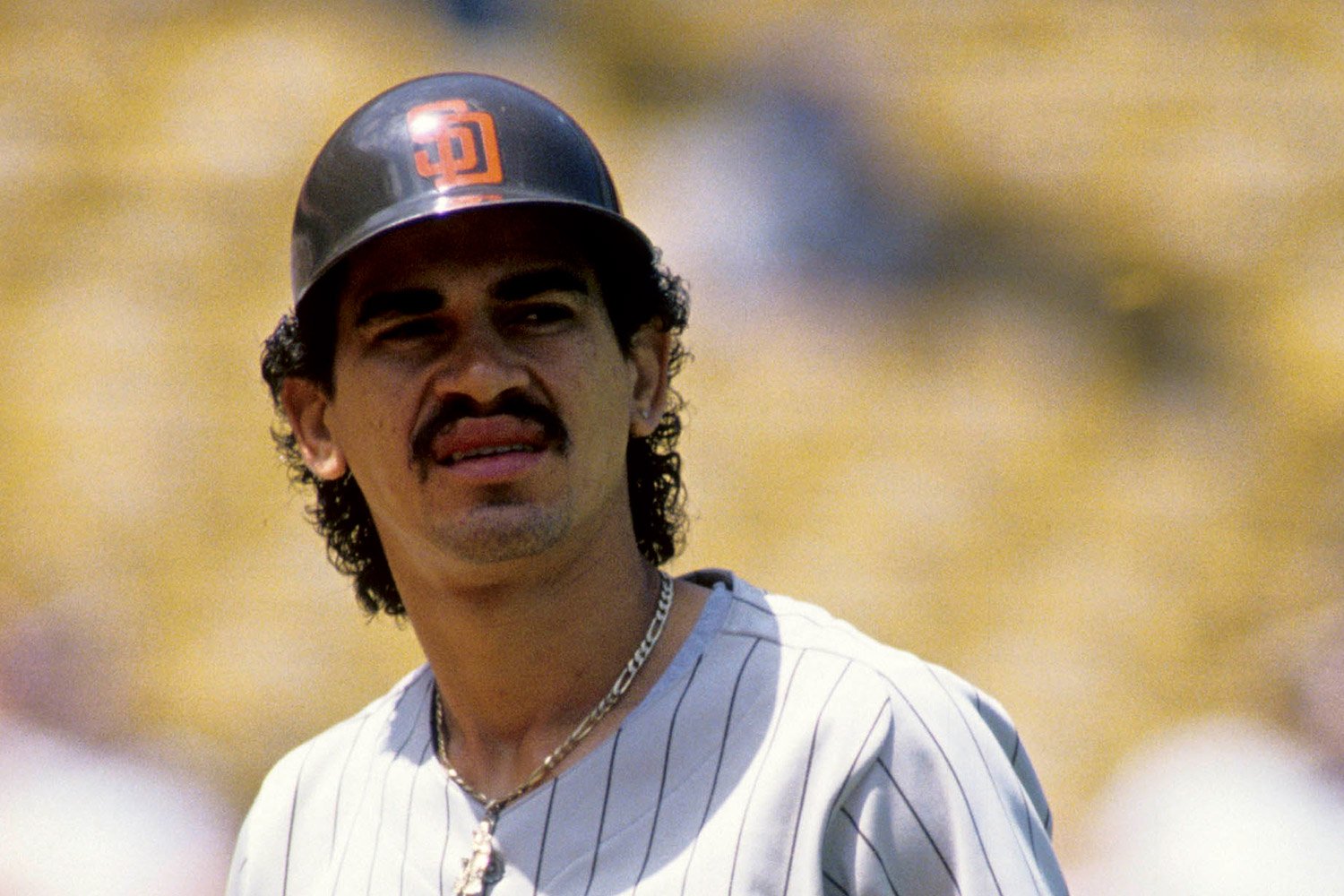 Most people look at a roster and see names and numbers on a page. We’re doing something different. We are building a machine. To make it into Article I: The Gold Standard, it wasn't enough to just show up in the box score. To earn a spot here, a player had to have a soul. They had to have an "Iconic Look" that a kid could draw from memory thirty years later. They had to have a "Did You Know" factor that could win a bar bet at a local dive. It is the smell of the salt air off the bay mixed with the pine tar in the dugout; the way the late-afternoon sun hits the brick, casting shadows that only the legends knew how to play. For decades, San Diego was told to "act like you’ve been here before." But the men in this vault didn't wait for permission. They didn't just play for a city; they defined its pulse when the rest of the league wasn't looking. This roster is a generational handshake—where the high-socks and stirrups of the 1969 expansion meet the swagger and bat flips of the modern era. Different decades, same relentless pursuit of the standard. The math here is absolute, but the criteria are higher. We aren't just looking for the highest WAR; we are looking for where that dominance meets defiance. If a player’s presence didn't change the gravity of the room while they were rewriting the record books, they didn't make the cut. This 26-man roster represents the pinnacle of San Diego baseball—the absolute apex of grit, innovation, and pure dominance. We’ve meticulously documented every legend, from the unbuttoned chest protector of Benito Santiago to the dirt-stained jersey of the late, great Ken Caminiti. We aren't just counting hits; we are documenting immortality. This isn't just a list of the greatest to ever wear the uniform; it is the unredacted DNA of what it means to be a San Diego Padre. The Glossary of Pillars: The Five-Point Metric To achieve "The Gold Standard," every player in this vault is measured against these five pillars. This is the criterion that separates a career from a legacy. The Legend: The narrative weight. The stories are told in the stands and passed down through generations. The Innovation: How they evolved their position or changed the way the game was perceived in San Diego. The Impact: The measurable shift in the franchise's trajectory. If they weren't there, the history of the Padres would look fundamentally different. The Iconic Look: The visual identity. Whether it was the brown-and-gold, the pinstripes, or a specific piece of gear, they owned the uniform. The "Did You Know" Factor: The grit and the trivia. The obscure, undeniable facts that define their "unredacted DNA." The WAR Standard: The peak of the ledger. In building this machine, we respect the math, but we refuse to be limited by it. We utilize WAR (Wins Above Replacement) as our baseline, but we recognize that the two titans of the industry—FanGraphs (fWAR) and Baseball-Reference (bWAR)—often see the game through different lenses. Our mandate is simple: We seek the absolute peak. The "Highest Possible" Rule: We do not settle for an average. We hunt for the highest documented WAR available for every player. If one system values a pitcher’s FIP while the other values their RA9, we take the higher mark. The Integrity Clause: We do not compromise the numbers. No player is selected for sentimentality alone if it drops the collective value of the roster. The Architecture: Building the Machine A 26-man roster is more than a list; it is an ecosystem. In selecting this unit, we didn't just look for the highest individual ceilings—we looked for how those peaks fit together to form a dominant whole. We have engineered this squad using a precise 6-7-9-4 blueprint: The Rotation (6 Starting Pitchers): Representing the absolute peak of dominance. We chose seasons where these men were "Ace Killers"—possessing the rare ability to shut down an offense single-handedly and hand the ball directly to the back end of the game. The Bullpen (7 High-Leverage Relievers): Selected based on their "Closer Mentality." We looked for the seasons where these seven arms were statistically "unhittable" in the moments that mattered most. The Starting Nine (9-Man Lineup including DH): From our "Igniters" at the top to the "Pure Gravity" of our power hitters and the designated hitter, the lineup is built for relentless pressure. These legends forced opposing managers to change their entire strategy before the first pitch was even thrown. The Defensive Spine: A roster's soul is found in its middle—Catcher, Shortstop, and Center Field. We selected the seasons when these players were at their peak in run prevention. The Tactical Reserves (4 Bench Spots): This is the machine's specialized toolkit. We have reserved four dedicated spots: Catcher, Infielder, Outfielder, and Utility. These are our "Swiss Army Knives," selected for their ability to stay cold for three hours and change the game in thirty seconds. The Creed of the Friar We do not look back out of nostalgia. We look back to remember the cost of excellence. To wear the Brown and Gold is to inherit a history of defiance—a legacy built by men who refused to be overlooked in a small corner of the map. This anthology is the ledger of that defiance. The standard has been set. The machine is synchronized. The Strategy of the Nine: A Positional Blueprint This isn't just a list of names; it's a structural masterpiece. Each position on this field was chosen to serve a specific purpose in the machine. The Battery (C): The general. We prioritize a catcher who can handle a generational pitching staff while providing a "bonus bat" that most teams lack. The Infield Corners (1B & 3B): The "Power Gates." These spots are reserved for the heavy-hitters who anchor the heart of the order and shut down the hot corners. The Middle Infield (2B & SS): The "Engine Room." Speed, range, and the ability to turn the tide of a game with both the glove and the bat. The Outfield (LF, CF, RF): The "Wall of Speed & Steel." A trio built to erase base hits in the gaps and provide the most iconic offensive peaks in San Diego history. The DH: The "Pure Force." A spot dedicated to the bat that was too dangerous to ever leave out of the lineup. The Bench Logic: The tactical safety net. The final four spots are our "Swiss Army Knives"—insurance for every possible scenario. The Backup Catcher: High-WAR stability to ensure the pitching staff never loses its rhythm. The Infielder & Outfielder: Gold-standard depth to maintain the "DNA" of the defense during substitutions. The Utility: The wild card. A player whose value comes from being everywhere at once. Step into the Vault. This is the 26-man roster that defines the franchise. The Starting Lineup: The Foundations of the Diamond These are the names that echo through the canyons of Mission Valley to the renovation of Downtown. From the lead-off spark to the clean-up power, this unit represents the daily heartbeat of the franchise—the men who set the tone the moment the first pitch crossed the plate. Benito Santiago "Benny" 1987 (3.4 WAR) The Cannon Arm Kid AVG: .300 | H: 164 | R: 64 | 2B: 33 | HR: 18 | RBI: 79 | SB: 21 | BB: 16 | OPS: .791 BBWAA NL Rookie of the Year (Unanimous 1987) | 4x Silver Slugger (1987-1988, 1990-1991) | TSN NL Rookie of the Year (1987) | Baseball Digest NL Rookie of the Year (1987) | Topps All-Star Rookie Team (1987) | Padres Hall of Fame (2015) The Five Pillars of Benny Innovation: Santiago revolutionized his position by introducing a "from-the-knees" throw to second base. Developed in Puerto Rico as a teenager by practicing against trash cans and mattresses, this technique leveraged elite arm strength to achieve a flat, rocket-like trajectory. This unique approach allowed him to stun base runners while fundamentally changing how opponents approached stealing against San Diego. While critics predicted this high-stress motion would eventually blow out his arm, these mechanics actually sustained his elite defensive pressure for two decades. This durability translated into 2,417 career games. Impact: In 1987, Santiago’s historic performance led to a National League and franchise first unanimous Rookie of the Year award within his position. He capped this debut season by securing a National League Silver Slugger, becoming Major League Baseball's only rookie to earn that distinction as well. These accolades were fueled by career-high marks, including 164 H, 33 2B, and a .300 AVG. These totals paced all Major League rookies while he led all National League catchers in hits, doubles, stolen bases (21), total bases (255), and extra-base hits (53). Legend: Santiago served as a cornerstone for the "New Generation" Padres, a youth movement redefining team identity following veteran-heavy rosters from 1984 through 1986. During this breakout year, Jack Murphy Stadium became a destination, single-handedly providing the franchise with clear direction for the future. Although his career spanned 20 seasons across 9 teams, his legacy remains anchored in this franchise’s history. During his 2015 Padres Hall of Fame induction speech, he shared a powerful admission with fans: "If I could do it over again, I'd have stayed in San Diego. That's when I was happiest." Iconic Look: Santiago was instantly recognizable for trademark gold hoop earrings and a refusal to look like a traditional catcher, appearing more like a converted shortstop playing behind home plate. He brought a rare, lean athleticism to the position, often sporting shades while commanding the diamond. Swagger arrived when he stepped to the dish with high hands and a constant bat waggle, while signature curls showed from beneath his helmet. Benito snapping a throw from one knee remains an iconic centerpiece of defensive dominance throughout his era at Jack Murphy Stadium. The "Did You Know" Factor: Santiago possessed a rare burst of speed for a catcher. He remains Major League Baseball's only catcher to record a hitting streak of at least 30 games (34) and steal more than 20 bases (21) during a single campaign. This historic streak began with a three-run homer in late August and shattered the all-time rookie record that had stood since 1899. As the longest hitting streak for any catcher or rookie in major league history, it also stands as the Padres all-time record. This legendary run only concluded on the season's second-to-last day against Dodgers ace Orel Hershiser. 1B Adrian Gonzalez "A-Gon" "Gonzo" 2009 (6.9 WAR) The Hometown Legend AVG: .277 | H: 153 | R: 90 | 2B: 27 | HR: 40 | RBI: 99 | SB: 1 | BB: 119 | OPS: .958 3x NL All-Star (2008-2010) | 2x Gold Glove (2008-2009) | 4x Padres Team MVP (2006, 2008-2010) | NL Player of the Week (5/31, 8/17) | HR Derby Participant The Five Pillars of Gonzo Innovation: González revolutionized expectations for Padres first basemen by pairing elite power with technical defensive mastery. He utilized a repeatable swing to weaponize Petco Park’s gaps, refusing to be neutralized by the "Marine Layer." He evolved the modern slugger role through elite discipline, setting a franchise record with eight consecutive multi-walk games. Defensively, he redefined the position with a "sweeping" stretch that provided an unrivaled radius. This 2009 masterclass resulted in a career-high .996 fielding percentage. Impact: Gonzo shattered the narrative that Petco Park was a power hitter’s graveyard. By becoming the first franchise player to reach 40 home runs while calling Petco home—hitting 12 at home and 28 on the road—he provided a massive statistical impact. In a stadium designed to suppress offense, his ability to drive the ball made him a singular force; he led the Major Leagues with 119 BB as managers adjusted strategies to avoid him. He finished with 27 more home runs than any teammate, carrying the offensive identity. This production earned him a career-high 162 OPS+. Legend: Gonzalez remains the ultimate San Diego success story—the local standout who lived out the dream of becoming the face of his hometown franchise. His legend is rooted in community connection; he was a native son carrying the weight of the city. In 2009, he became the first San Diego native named an All-Star and Gold Glove winner in the same season for the club. His icon status was cemented by his mentorship of the Park View Little League team and his local foundation. He finished 2009 having played a franchise-best 314 consecutive games. Iconic Look: Representing the peak of 2000s style, Gonzalez's look was defined by long, "pajama-style" pants draped over his cleats. Unlike the high-socks tradition of past icons, Adrian’s silhouette was distinctly modern. This relaxed, low-cuff style became synonymous with his calm demeanor and elite flexibility at first base. The defining visual of 2009 was Gonzalez fully extended in the dirt, his pants stretching as he executed a perfect backhand scoop. Punctuated by a signature one-handed, high-finish home run follow-through. The "Did You Know" Factor: The ultimate testament to Gonzalez’s makeup was the fear he struck into opposing managers. In 2009, he led MLB with 119 BB, including a staggering 22 intentional passes. He set a franchise record with eight consecutive multi-walk games, proving he refused to chase pitches out of the zone. This discipline was balanced by a rare ability to punish pitchers when challenged; on August 11, 2009, Gonzalez became the first player in franchise history to go 6-for-6 in a 9-inning game. These six hits solidified his place in history. 2B Mark Loretta "Get Back" 2004 (6.4 WAR) The Contact Master AVG: .335 | H: 208 | R: 108 | 2B: 47 | HR: 16 | RBI: 76 | SB: 5 | BB: 58 | OPS: .886 NL All-Star (2004) | Silver Slugger (2004) | 2x Padres Team MVP (2003-2004) The Five Pillars of Get Back Innovation: Loretta utilized a technical approach centered on pitch recognition. He trained his eyes with a high-velocity tennis ball machine, reading colored numbers on balls fired at 150 mph. This discipline resulted in a 6.3% strikeout rate, with only 45 strikeouts in 707 plate appearances. By mastering the two-strike count, Loretta acted as a human hit-and-run machine, dismantling defensive shifts years before they became a league standard. His ability to manipulate the bat head made him the ultimate tactical weapon in a contact-starved era. Impact: Loretta’s 2004 campaign drove the Padres' first winning season in six years. Moving into Petco Park, he proved he could conquer the "Marine Layer" by hitting through it. While others struggled with the park's dimensions, Loretta thrived as a road warrior, batting .368 away from San Diego. His 208 hits and 47 doubles provided the steady production that allowed the franchise to transition from rebuilding into a playoff contender. He finished 9th in NL MVP voting, serving as the most consistent offensive force in the league. Legend: As a Southern California native, Loretta’s legacy is that of a permanent franchise fixture. His .314 career average as a Padre is the second-highest in team history behind Tony Gwynn, and his 208 hits in 2004 are the highest single-season total by any player not named Gwynn. Now serving as a Special Assistant to the club, his technical mastery remains part of the organizational DNA. He bridged the gap between the Gwynn era and the modern generation, proving elite contact hitting still had a home in San Diego long after the stadium changed. Iconic Look: The groove of "Low Rider" by War remains the definitive auditory memory of Loretta’s tenure, echoing through Petco Park before every plate appearance. Visually, his short swing and compact stance were technical trademarks, representing a blue-collar precision that matched the city's ethos. A creature of habit, he paired this surgical approach with a signature black-and-tan SSK fielding glove and a specialized thin-handle bat. Whether turning a slick double play or spraying a line drive to right, his mechanics were perfectly repeatable. The "Did You Know" Factor: Mark Loretta joins Tony Gwynn as the only players in Padres history to record 200+ hits in a season. In 2004, he finished 3rd in the NL Batting Race, trailing only Barry Bonds and Todd Helton—placing him among the greatest offensive forces in history. His ability to put the ball in play was nearly unparalleled, averaging one strikeout for every 15 at-bats. This elite contact rate, combined with 47 doubles, made him one of only three second basemen in the last 20 years to win a Silver Slugger while recording over 200 hits. SS Fernando Tatis Jr. "El Niño" "Bebo" "Nando" "Tati" 2021 (7.3 WAR) The Face of the Franchise AVG: .282 | H: 135 | R: 99 | 2B: 31 | HR: 42 | RBI: 97 | SB: 25 | BB: 62 | OPS: .975 NL Home Run Leader (2021) | All-Star (NL Starter 2021) | 2x Silver Slugger (2020-2021) | 2x All-MLB First Team (2020-2021) | 2x Padres Team MVP (2019, 2021) | NL Player of the Month (May '21) | 2x NL Player of the Week (4/26, 6/27) The Five Pillars of El Niño Innovation: Tatis revolutionized the shortstop position by sacrificing traditional safety for explosive offensive output. His 7.3 WAR set a modern benchmark, demonstrating a power-speed combination never before seen in San Diego. By leaning into an aggressive range strategy, he reached balls that standard metrics deemed impossible, changing the geometry of the infield. He forced the league to account for a player who covered more ground than any shortstop in history while delivering the most dangerous bat in the lineup—a high-stakes evolution that turned the field's most difficult position into a platform for pure dominance. Impact: Beyond the stat sheet, his 2021 campaign set the franchise record for home runs by a shortstop. As the NL Home Run Leader, his presence altered how the division was managed, posting a 1.015 OPS and 24 home runs against NL West rivals. This production earned him a 3rd Place finish in the NL MVP voting, proving his status as a top-tier superstar despite missing significant time. This "division killer" status forced opposing managers to pitch around him at historic rates, providing the protection that stabilized the franchise’s identity during its modern resurgence. Legend: The legend of El Niño was cemented at Dodger Stadium. In 2021, Tatis tormented Los Angeles by hitting 7 home runs in their park—the most by any visitor in a single season. This included a monstrous 467-foot moonshot that completely cleared the stadium, making him only the fifth player in history to hit a ball entirely out of the yard. By recording three multi-home run games at Dodger Stadium in one season, he turned the rivalry’s biggest stage into a personal playground—homering on the exact 22nd anniversary of his father’s historic two-grand-slam inning in that very same building. Iconic Look: Flowing dreadlocks, oversized gold sunglasses, and custom-painted cleats—anchored by a signature hot pink arm sleeve worn to honor his mother—defined the visual brand of Tatis in 2021. This personal aesthetic was punctuated by the team’s spinning Swag Chain, blurring the line between high fashion and elite performance. The look was finalized by his trademark stutter-step as he rounded third base—a rhythmic skip that served as a psychological dagger to opponents. This move was so culturally dominant that its digital recreation became a benchmark for realism when he served as the cover athlete for MLB The Show 21, The "Did You Know" Factor: Tatis is the only player in Major League history to record 40+ home runs and 25+ stolen bases in a season while appearing in fewer than 135 games. This historic efficiency is underscored by his physical resilience, as he played through recurring shoulder instability that eventually forced a mid-season move to the outfield just to keep his bat in the lineup. Despite the physical toll, he averaged a home run every 11.4 at-bats—the highest rate in the majors—and joined Barry Bonds as the only players in history to amass 70+ HRs and 50+ SBs within their first 227 career games. 3B Ken Caminiti "Cammie" 1996 (7.6 WAR) The Ultimate Warrior AVG: .326 | H: 178 | R: 109 | 2B: 37 | HR: 40 | RBI: 130 | SB: 11 | BB: 78 | OPS: 1.028 BBWAA NL MVP (Unanimous 1996)| 2x NL All-Star (1996-1997) | 3x Gold Glove (1995-1997) | Silver Slugger (1996) | Sporting News MLB Player of the Year | Players Choice NL Outstanding Player | 2x NL Player of the Month (Aug/Sept '96) | Padres Hall of Fame (2016) The Five Pillars Of Cammie Innovation: Ken Caminiti weaponized third base with physical intimidation, transforming the Padres' defensive identity. In 1996, he pioneered a high-risk style that essentially closed off the diamond's left side. He famously ignored conventional "safe" mechanics, utilizing a raw, slingshot arm to record outs from impossible angles—most notably his "sitting down" strike to first base. Offensively, he revolutionized modern switch-hitting, setting a Major League record by homering from both sides of the plate in four different games during the '96 campaign. He proved a third baseman could be both the primary defensive shield and the league's most explosive offensive engine simultaneously. Impact: The 1996 season was a scorched-earth campaign that dragged the franchise into the National League's elite tier. Caminiti became the first player in Padres history to homer in an All-Star Game, signaling to the league that San Diego was no longer an underdog. His production was historically concentrated when the pennant race was most volatile; he hit an unthinkable .363 with 28 home runs and 82 RBIs after the break. His 130 RBIs that year remain the highest single-season total in franchise history. As the only unanimous MVP in team history, he established a 1.028 OPS that remains the franchise's single-season "Gold Standard." Legend: The legend of Cammie is the "Snickers Game" in Monterrey, Mexico. Seconds before a crucial rubber game against the Mets, Cammie lay on the locker room floor of Bruce Bochy's office receiving two liters of IV fluids to combat severe food poisoning. He looked like a man who belonged in a hospital, not a batter's box. Instead, he demanded a Snickers bar for a sugar boost, unwrapped it as he walked toward the dugout, and proceeded to launch two titanic home runs in an 8-0 shutout. This showed his teammates that as long as Cammy was breathing, the Padres would not lose. Iconic Look: Cammie was a visual titan, bringing a football mentality to the baseball diamond. He was "death personified" in a dirt-caked jersey and signature heavy white wrist tape, playing through a torn rotator cuff that he refused to acknowledge until the season ended. His look was defined by the navy-pinstriped home whites, a pine-tarred helmet, and the physique of a heavyweight prizefighter. Whether diving into the stands or sliding headfirst to break up a double play, he played as the ultimate gamer with zero regard for his own safety. Standing over the hot corner, his presence alone forced opposing runners to second-guess every lead they took. The "Did You Know" Factor: While power was his calling card, Caminiti’s 1996 season was a masterclass in tactical leadership. He led the National League with 10 sacrifice flies, underscoring an obsession with manufacturing runs at any cost. Beyond the box score, Caminiti was the emotional architect of the clubhouse, often providing personal funds to teammates and strangers facing medical crises. He was a warrior to the media, but a guardian to his peers. In August 1996 alone, he posted an .844 slugging percentage—a four-week stretch of hitting that remains among the most dominant months in sports history, cementing a legacy of raw brutality and quiet generosity.
 -
The Padres' Perfect Fits For The Rest Of Their Hot Stove Season
Michael Black posted an article in Padres
 The Padres have a few holes left to plug before pitchers and catchers report next month to begin the 2026 season. For the Friar Faithful, those spots are noticeable. At least one more starting pitcher, a first baseman, and a catcher or bench piece that hopefully can be a right-handed compliment at DH against left-handed pitching. Those first two are definitive holes. The others mentioned are up for debate. This article will provide three names that could be perfect fits to help fill those needs. It could end up being a free agency or trade route. We'll take a shot at both: two trade possibilities and one free agent signing. The first alternative is the starting pitching route. As mentioned above, they could sign a free agent. Players such as Chris Bassitt or Lucas Giolito, both of whom have been linked to the team in recent write-ups, could be alternatives. With the team possibly having budget constraints, however, that makes it obviously less likely. Here are three criteria for why a player is on the list. His age. How much will he cost in payroll obligations? The years of team control he'll provide. Initially, Edward Cabrera was listed as the original choice for the best fit. He would have made the most sense and would have fit all of our chosen criteria. His age, three years of team control, and estimated payroll hit of $3.5 million would have been perfect. With him being traded to the Cubs, the next candidate was bumped to the top of the list. Mitch Keller was also considered. He offers multiple years of team control and would be a reliable 4th or 5th starter that would eat innings; however, he wouldn't be much of an upgrade over current in-house options like Randy Vasquez or JP Sears. He also comes at a price tag that would be too high for what the team would be willing to pay for a back-end starter. With that being said, the next option is Freddy Peralta of the Milwaukee Brewers. His age and salary certainly fit into this possibility. His lack of team control and becoming a free agent after this season does not. The cost in a trade would be steep enough that it's just not worth giving up the capital for a one-year rental. Even if it is a pitcher of his caliber, though, it would be dreamy to see him fronting the rotation. Putting him at the top would be a real game-changer. It's just not feasible at that cost, though. Our next option may be just as good as Peralta. He also fits all three listed criteria. That player is MacKenzie Gore of the Washington Nationals. It would be a fun story for him to come full circle back to the team that originally drafted him with the third overall pick in the 2017 draft, too. Not to mention it would be nice to have a left-hander in the rotation to split things up a bit. He might not be quite as good as Peralta, but he does have two years of team control and is projected to make less money as well. Peralta is estimated to make $8 million, compared to $6.5 million for Gore. That's why we'll roll with him. Padres receive: MacKenzie Gore Nationals receive: Kruz Schoolcraft, SP Kash Mayfield, SP Jorge Quintana, SS Next up, first base choices. On the free agent front, the pickings are slim to say the least. With the Padres missing out on Kazuma Okamoto to the Blue Jays, there isn't really an upgrade that meets their need of a power bat. The best player available is probably former Padre Luis Arraez. Other options include Rhys Hoskins, Paul Goldschmidt, and Carlos Santana, none of which stand out as difference-makers. Arraez coming back is still a possibility, but if the Padres insist on finding more power, they'll have to look to the trade market. These four players present better options. Triston Casas of the Boston Red Sox, Mark Vientos of the New York Mets, Yandy Diaz of the Tampa Bay Rays, and Christian Walker of the Houston Astros make much better fits for the team's needs. Players like Ryan Mountcastle and Coby Mayo of the Baltimore Orioles also theoretically fit into this trade category. Still, theyy don't have the same appeal as the players we've mentioned above.. Though Casas and Vientos offer intrigue due to their low-cost salaries and years of team control, not to mention their power potential, they just don't have the same experience or upside in comparison to Diaz and Walker. Those two have multiple years of proven results. There's a scenario in which they could choose any of the four, depending on how much money they're willing to take on or how much trade capital they're willing to part with, which could also be said of Mountcastle and Mayo. However, when you consider the contention window the team is currently in, it makes the most sense to go after who fits their needs the most. We could seriously make a case that Diaz might be the best overall hitter and that his contract is more reasonable, but he'd probably cost the most in prospect capital. Not to mention, he is a poorly rated fielder and is only controlled through this season, albeit via a reasonably priced option for next year. Who's the player that provides the most upside and fits those needs the most, you'd ask? That would be Walker. While his salary might be the highest of the players mentioned ($20 million AAV), he is under contract for the next two years. His track record also speaks for itself. Even if his batting average (.238) and on-base percentage (.298) weren't ideal last season, he was still able to swat over twenty-five long balls (27) and knock in over eighty-five (88) runs. That's the middle of the order production they're looking for. He provides the most consistent thump of the four mentioned, too. He's also the best defender of the group, having won three Gold Gloves. If the Friars were able to get the Astros to throw in some money to offset Walker's salary, it makes him the frontrunner. They also have less leverage than the Rays in trade negotiations because of the logjam the Astros possess at the position. Padres receive: Christian Walker, 1B $10 million in cash considerations Astros receive: Miguel Mendez, SP Jagger Haynes, SP Tirso Ornelas, OF Now that the two positions of need are taken care of, the Padres still need a catcher and/or a bench piece. It's no secret that the team would like an experienced catcher to serve as the backup to starter Freddy Fermin, replacing Luis Campusano. His defensive deficiencies are well chronicled. His bat, on the other hand, could be of some use. Although Campusano didn't precisely set the world on fire with the chances he received last year (albeit in limited opportunities) at the major league level, he did crush Triple-A pitching. Even if it was in an extremely hitter-friendly environment in the Pacific Coast League, it also showed he doesn't have anything left to prove in the minors. That hit tool could fit a platoon role at DH. Campusano is also out of minor league options. Which segways us right into the final transaction. The Padres sign free agent catcher J.T. Realmuto. Signing Realmuto would give the Padres one of the better catching tandems in the game. It also presents a late-inning strategy of keeping three catchers on the roster. He might not be the player he was a few years ago, but with Fermin and Realmuto in the fold, they could split the catching duties fairly evenly. Other options were considered for this final spot, such as keeping Campusano as the backup catcher and going with a more traditional DH option, such as Marcell Ozuna, who doesn't offer much positional versatility and would be strictly a DH. A part-time one, at that. Not to mention, he's likely out of the team's price range. It still doesn't mean they couldn't still sign him and use him in that situation. Especially if the Padres don't see Campusano making the Opening Day roster. So what do you think, Friar Faithful? Are these reasonable options to finish off the Hot Stove season? Or would you go in another direction with some of the other names mentioned? Please let us know what your best options are for upgrading the team in the comments below.
 -
The Padres have a few holes left to plug before pitchers and catchers report next month to begin the 2026 season. For the Friar Faithful, those spots are noticeable. At least one more starting pitcher, a first baseman, and a catcher or bench piece that hopefully can be a right-handed compliment at DH against left-handed pitching. Those first two are definitive holes. The others mentioned are up for debate. This article will provide three names that could be perfect fits to help fill those needs. It could end up being a free agency or trade route. We'll take a shot at both: two trade possibilities and one free agent signing. The first alternative is the starting pitching route. As mentioned above, they could sign a free agent. Players such as Chris Bassitt or Lucas Giolito, both of whom have been linked to the team in recent write-ups, could be alternatives. With the team possibly having budget constraints, however, that makes it obviously less likely. Here are three criteria for why a player is on the list. His age. How much will he cost in payroll obligations? The years of team control he'll provide. Initially, Edward Cabrera was listed as the original choice for the best fit. He would have made the most sense and would have fit all of our chosen criteria. His age, three years of team control, and estimated payroll hit of $3.5 million would have been perfect. With him being traded to the Cubs, the next candidate was bumped to the top of the list. Mitch Keller was also considered. He offers multiple years of team control and would be a reliable 4th or 5th starter that would eat innings; however, he wouldn't be much of an upgrade over current in-house options like Randy Vasquez or JP Sears. He also comes at a price tag that would be too high for what the team would be willing to pay for a back-end starter. With that being said, the next option is Freddy Peralta of the Milwaukee Brewers. His age and salary certainly fit into this possibility. His lack of team control and becoming a free agent after this season does not. The cost in a trade would be steep enough that it's just not worth giving up the capital for a one-year rental. Even if it is a pitcher of his caliber, though, it would be dreamy to see him fronting the rotation. Putting him at the top would be a real game-changer. It's just not feasible at that cost, though. Our next option may be just as good as Peralta. He also fits all three listed criteria. That player is MacKenzie Gore of the Washington Nationals. It would be a fun story for him to come full circle back to the team that originally drafted him with the third overall pick in the 2017 draft, too. Not to mention it would be nice to have a left-hander in the rotation to split things up a bit. He might not be quite as good as Peralta, but he does have two years of team control and is projected to make less money as well. Peralta is estimated to make $8 million, compared to $6.5 million for Gore. That's why we'll roll with him. Padres receive: MacKenzie Gore Nationals receive: Kruz Schoolcraft, SP Kash Mayfield, SP Jorge Quintana, SS Next up, first base choices. On the free agent front, the pickings are slim to say the least. With the Padres missing out on Kazuma Okamoto to the Blue Jays, there isn't really an upgrade that meets their need of a power bat. The best player available is probably former Padre Luis Arraez. Other options include Rhys Hoskins, Paul Goldschmidt, and Carlos Santana, none of which stand out as difference-makers. Arraez coming back is still a possibility, but if the Padres insist on finding more power, they'll have to look to the trade market. These four players present better options. Triston Casas of the Boston Red Sox, Mark Vientos of the New York Mets, Yandy Diaz of the Tampa Bay Rays, and Christian Walker of the Houston Astros make much better fits for the team's needs. Players like Ryan Mountcastle and Coby Mayo of the Baltimore Orioles also theoretically fit into this trade category. Still, theyy don't have the same appeal as the players we've mentioned above.. Though Casas and Vientos offer intrigue due to their low-cost salaries and years of team control, not to mention their power potential, they just don't have the same experience or upside in comparison to Diaz and Walker. Those two have multiple years of proven results. There's a scenario in which they could choose any of the four, depending on how much money they're willing to take on or how much trade capital they're willing to part with, which could also be said of Mountcastle and Mayo. However, when you consider the contention window the team is currently in, it makes the most sense to go after who fits their needs the most. We could seriously make a case that Diaz might be the best overall hitter and that his contract is more reasonable, but he'd probably cost the most in prospect capital. Not to mention, he is a poorly rated fielder and is only controlled through this season, albeit via a reasonably priced option for next year. Who's the player that provides the most upside and fits those needs the most, you'd ask? That would be Walker. While his salary might be the highest of the players mentioned ($20 million AAV), he is under contract for the next two years. His track record also speaks for itself. Even if his batting average (.238) and on-base percentage (.298) weren't ideal last season, he was still able to swat over twenty-five long balls (27) and knock in over eighty-five (88) runs. That's the middle of the order production they're looking for. He provides the most consistent thump of the four mentioned, too. He's also the best defender of the group, having won three Gold Gloves. If the Friars were able to get the Astros to throw in some money to offset Walker's salary, it makes him the frontrunner. They also have less leverage than the Rays in trade negotiations because of the logjam the Astros possess at the position. Padres receive: Christian Walker, 1B $10 million in cash considerations Astros receive: Miguel Mendez, SP Jagger Haynes, SP Tirso Ornelas, OF Now that the two positions of need are taken care of, the Padres still need a catcher and/or a bench piece. It's no secret that the team would like an experienced catcher to serve as the backup to starter Freddy Fermin, replacing Luis Campusano. His defensive deficiencies are well chronicled. His bat, on the other hand, could be of some use. Although Campusano didn't precisely set the world on fire with the chances he received last year (albeit in limited opportunities) at the major league level, he did crush Triple-A pitching. Even if it was in an extremely hitter-friendly environment in the Pacific Coast League, it also showed he doesn't have anything left to prove in the minors. That hit tool could fit a platoon role at DH. Campusano is also out of minor league options. Which segways us right into the final transaction. The Padres sign free agent catcher J.T. Realmuto. Signing Realmuto would give the Padres one of the better catching tandems in the game. It also presents a late-inning strategy of keeping three catchers on the roster. He might not be the player he was a few years ago, but with Fermin and Realmuto in the fold, they could split the catching duties fairly evenly. Other options were considered for this final spot, such as keeping Campusano as the backup catcher and going with a more traditional DH option, such as Marcell Ozuna, who doesn't offer much positional versatility and would be strictly a DH. A part-time one, at that. Not to mention, he's likely out of the team's price range. It still doesn't mean they couldn't still sign him and use him in that situation. Especially if the Padres don't see Campusano making the Opening Day roster. So what do you think, Friar Faithful? Are these reasonable options to finish off the Hot Stove season? Or would you go in another direction with some of the other names mentioned? Please let us know what your best options are for upgrading the team in the comments below. View full article
-
 Now that the calendar has officially flipped, we can look forward to what the minor league prospects for 2026 will look like. With spring training just about six weeks away and a roster still undergoing some tweaks before pitchers and catchers report, let's move our attention to the future of what could be. The national media narrative that the Padres' farm system has been gutted is false. This article will provide a flipped script to such a narrative. Is it as good as it was at last year's trade deadline? No, it isn't. That doesn't mean it still doesn't possess some very interesting upside, however. We have heard the system has been in such a state almost every year for the past three or four years, yet every year with International signings and shrewd drafts, president of baseball operations and General Manager A.J. Preller has been able to rebuild it on the fly. Why else has he been able to trade for players such as Dylan Cease, Luis Arraez, Tanner Scott, Jason Adam, Ramon Laureano, Ryan O'Hearn, Freddy Fermin, and Mason Miller? It's because he's been able to sign the best players during international signing periods and has had some very good draft classes. Considering the hot stove season is still very much in full effect, we'll more than likely see some of the names listed on this prospect list traded away soon. It's what he does and what he's good at. With that being said, this list will consist of players who have the most upside, their minor league performance taken into account, and their proximity to making an impact at the major league level. Prospect lists are opinion pieces more than anything. We all have our own mindset of who we believe belongs on such a list. This will not be any different. We will provide a brief synopsis of each player in the top ten. It will also list the year and status of how the players were acquired for all players. It will be listed in reverse order, counting down from number 30. Let's begin, Friar Faithful. The back half: 30-21 #30) Cardell Thibodeaux, OF Drafted in Round 16-2025 #29) Dylan Grego, INF Drafted in Round 13-2025 #28) George Bilecki, OF Drafted in Round 12-2025 #27) Truitt Madonna, C Drafted in Round 11-2025 #26) Kerrington Cross, INF Drafted in Round 7-2025 #25) Ty Harvey, C Drafted in Round 5-2025 #24) Ryan Wideman, OF Drafted in Round 3-2025 #23) Yimy Tovar, INF Signed as an Amateur International Free Agent-2023 #22) Alex McCoy, OF Signed as an Undrafted Free Agent-2024 #21) Lamar King Jr., C Drafted in Round 4-2022 Level 2: 20-11 #20) Braedon Karpathios, OF Signed as an Undrafted Free Agent-2022 #19) Harry Gustin, RP Drafted in Round 18-2023 #18) Eric Yost, SP Drafted in Round 17-2023 #17) Luis Gutierrez, SP Signed as an Amateur International Free Agent-2019 #16) Romeo Sanabria, 1B Drafted in Round 18-2022 #15) Daison Acosta, RP Signed as a Minor League Free Agent-2026 #14) Marcos Castanon, INF Drafted in Round 12-2021 #13) Clay Dungan, INF Drafted as a Rule-5 minor leaguer-2023 #12 Manuel Castro, RP Signed as an Amateur International Free Agent-2021 #11) Rodolfo Duran, C Signed as a Minor League Free Agent-2025 Top Ten: 10-1 #10) Jagger Haynes, SP Drafted in the 5th round in the shortened Covid-19 draft of 2020. Haynes has slowly built himself into a top ten prospect in the organization after sitting out the 2021 and 2022 seasons following Tommy John surgery. He has progressed the last three years, moving from Low-A in 2023 to Double-A last season, Will more than likely be a part of the rotation options in Triple-A El Paso this year. Perhaps even getting a taste of the big leagues sometime this season. #9) Garrett Hawkins, RP Hawkins was initially a starter after being drafted in the 9th round in 2021. He has also missed an entire season due to surgery. Missing the 2024 season altogether. Coming back as a full-time reliever last season, he advanced from High-A ball to Double-A San Antonio, having a dominant comeback season in both stops. He was added to the 40-man roster earlier this offseason to be protected from the Rule-5 draft. Had a sub 2.00 ERA and averaged better than a strikeout per inning. #8) Nick Schnell, OF New to the organization after signing a minor league deal for the 2026 season. Schnell possesses some big-time power in his bat. Something the organization is in desperate need of. Originally drafted as a 1st round supplemental pick, 32nd overall by the Tampa Bay Rays in 2018, he comes to the Padres after having put up some serious Home Run production last year in the minors with the Washington Nationals. He'll provide outfield depth for Triple-A El Paso to begin his Friar tenure. #7) Tirso Ornelas, OF One of the longest tenured players in the entire organization. Ornelas was signed as part of the Padres' infamous 2016-17 International signing period. He and Adrian Morejon are the only two players left from that spending spree. After going through some growing pains, Ornelas has become one of the better prospects during that time. Having finally reached the big leagues last year with a cameo appearance. He could be the first outfielder called up if an injury occurs. #6) Kruz Schoolcraft, SP The Padres' 1st Round draft pick last season and #25 overall. Schoolcraft surprisingly saw action in his draft year. It's not something the Padres have usually done when drafting High school arms in the first round. They typically have them start their professional careers the following season in Low-A ball. Already a consensus top-100 prospect, #95 overall on MLB.com, he could be one of the faster-moving players in the entire organization in '26. #5) Kash Mayfield, SP Just like Schoolcraft last year. Mayfield was also drafted #25 overall in the first round of the previous draft in 2024. Unlike his predecessor, however, he started his career last year with the Low-A Lake Elsinore Storm. Not yet cracking the top 100 list on any national prospect publications, it should just be a matter of time before doing so. Especially if he remains on his current trajectory. He had a very good first year, averaging more than a strikeout per inning while sporting a sub-3.00 ERA. #4) Ethan Salas, C Signed as the top international free agent during the 2023 period. Salas has had an up-and-down career. He's a top-100 overall prospect on MLB.com, currently sitting at #78. His stock has fallen due to injuries and a very fast progression through the Padres organization. He missed almost the entire season last year for the Double-A San Antonio Missions with a stress reaction in his lower back. Now cleared with a clean bill of health, this could be a make-or-break year for the talented backstop. #3) Miguel Mendez, SP Mendez was originally signed as an International Free Agent during the 2022 period. Not on any Padres top 30 prospect lists to begin last season. He quickly rose through the system, dominating with the High-A Fort Wayne Tin Caps with a crazy sub-2.00 ERA and striking out better than a batter per inning. He finished the year at Double-A, not having the same success, however. He was also added to the 40-man roster earlier this offseason to avoid the Rule-5 draft. #2) Sung Mun Song, INF An International free agent signing. Song doesn't fit the normal circumstances for such a player. He comes with plenty of professional experience playing in the Korean Baseball Organization. It's hard to tell what his ceiling and floor are at this point. He's been compared to fellow countrymen and former Padre Ha-Seong Kim, perhaps with not as much upside. He did have two back-to-back seasons of excellence, however. Gaining player of the year honors in that league last season. Song probably projects as a utility player in 2026. #1) Bradgley Rodriguez, RP Perhaps not a typical number-one prospect for a top-30 list. Rodriguez came to the organization during the 2021 international signing period. He has been nothing short of excellent the past two years, moving up the hierarchy at a fast pace. Having reached the big leagues this past season after dominance at the minor league level. Rodriguez had a sub-2.00 ERA, albeit in a short cup of coffee with the Padres late in the season. Has every chance to crack the Opening Day roster and will more than likely make the biggest impact of any prospect on this list. There you have it, Friar Faithful. My Padres Pre-Season Top 30 Prospects for 2026. This was one of the harder lists to put together. As mentioned earlier, there is still a lot of upside in the minor league system. Please let us know in the comments what your Padres' top 30 Prospect list would look like!
