


Greg Spicer
-
Posts
58 -
Joined
-
Last visited
-
Days Won
6
Content Type
Profiles
San Diego Padres Videos
2026 San Diego Padres Top Prospects Ranking
San Diego Padres Free Agent & Trade Rumors, Notes, & Tidbits
Guides & Resources
2025 San Diego Padres Draft Pick Tracker
News
2026 San Diego Padres Draft Tracker: Picks & Bonuses
Forums
Blogs
Events
Store
Downloads
Gallery
Everything posted by Greg Spicer
-
To start the season, it looked like the Padres' offense was poised for a dominant season. Fernando Tatis Jr. immediately emerged as an MVP candidate, Jackson Merrill was seemingly avoiding a sophomore slump, and the rest of the lineup was doing their jobs. The offense peaked on May 10 when San Diego scored a blistering 21 runs against the ice-cold Colorado Rockies. Unfortunately, that was the last we’d see of a flaming hot Padres offense until Tuesday. Not long after that performance, the Padres went on a six-game losing streak, which included five consecutive games with one or fewer runs. The offensive struggles have naturally impacted the team's success as well. Although a dominant bullpen and solid rotation have kept the Padres in the thick of the playoff race, the squad has played sub-.500 ball since their May 10 explosion. The cool-off started with Fernando Tatis Jr. Through mid-May, it appeared that he was re-establishing himself among the best players in the MLB; now, he will need an exceptional next month to have a chance at making the All-Star Game in July. After May 10, Tatis has slashed .181/.277/.324 with a 20.2% strikeout rate. Low production has followed as he has just four home runs and six RBIs in that span as well. However, not all is lost for Tatis Jr. He leads the Padres with 13 home runs and is still slashing .262/.343/.460 on the season. Also, his 14 stolen bases, 1.9 Base Running Value (BsR FanGraphs), and 5.7 Defensive Outs Above Average (DEF Fangraphs) make him a high-value player regardless of offensive output. His .195 BABIP in the last month also suggests that his cold streak is a result of some unlucky hitting. Given his importance in the lineup, the Padres' offense needs him to be a star if they are to get back to winning consistently. While Tatis is their’ engine, the true pain of the Padres' offensive struggles lies in all of the supporting stars going cold at the same time. Xander Bogaerts, Luis Arraez, Jake Cronenworth, and Jackson Merrill (10 combined all-star appearances) have all hit to a sub-100 wRC+ since May 10. To make matters worse, the surprise breakout bat, Gavin Sheets, has come back to earth with a hard fall and 89 wRC+ in that same time frame. To identify the impact of these struggles, look no further than the power numbers. Since that dominant outburst against the Rockies, those four All-Stars have combined for just three home runs. One for each player except Arraez. They have combined for 445 plate appearances in that time, leading to an inconceivable 1/148 home run rate between them. Additionally, the Padres have plummeted to 26th in the MLB in total home runs (57) and 25th in home runs per game (0.86). To make matters worse, these Padres’ stars are struggling with low on-base rates and high strikeout rates. Usually, a successful high strikeout player still has power or gets walks, but as of May 10, these batters have displayed neither. Although his wOBA at .275, Merrill has worked just a 6.2% walk rate and 24.8% strikeout rate, giving him the biggest gap on the team since the cold streak started. Sheets is barely any more respectable with a 6.5% walk rate and 20.4% strikeout rate. Arraez is unique because he doesn’t strike out ever, even over the last month (1.7% strikeout rate). The issue is that the walk rate, at just 3.4%, is equally notable, but not in a good way. Additionally, a high contact batter can usually hit for a respectable batting average, but unsurprisingly, Arraez has been hitting just .266 since May 10. Although the lack of offensive output is what stands out over the last month, there is a reason the Padres have scored enough runs to stay 10 games over .500: Manny Machado. With the whole lineup going downhill, Machado picked the perfect time to become the hottest player in baseball. The six-time All-Star is well on his way to a seventh appearance and deserves a lot of credit for carrying the load. In his 120 plate appearances after May 10, Machado has slashed .324/.383/.556 with a .405 wOBA and 166 wRC+. On top of that, he has hit a power surge, hitting seven home runs in that span and driving in 21 runs. This adds to what has been a brilliant season for Machado. On the year, he is slashing .325/.386/.518 with 10 home runs and a 2.8 WAR, all team highs. This rough stretch has not been ideal for the Padres. Four high-salary star players going cold at once, combined with the face of the team falling off a cliff, is difficult for any team to play through. Despite this adversity, a consistent pitching staff and the greatness of Manny Machado have been enough to keep the Padres inside the playoff picture. If Tuesday's offensive outburst can get the squad rolling and the pitching can keep playing their part, a hot streak could be in store for San Diego. View full article
-

Jeremiah Estrada, The Unsung Hero Of One Of The Best Bullpens In Baseball
Greg Spicer posted an article in Padres
 Since 2024, the San Diego Padres have assembled one of the most dominant bullpens in the MLB. This performance has been headlined by a variety of big names who have deservingly gained a lot of spotlight. In 2024, they had two All-Star back-end arms in Robert Suarez and Tanner Scott, and Suarez is poised for a second consecutive appearance in the midsummer classic. In addition to those big names, Jason Adam has established himself as a dominant pitcher, garnering significant attention as a 2024 deadline addition. This stacked squad has also led to on-field success. Since 2024, the Padres' bullpen has ranked in the top three in FIP (3.58), WAR (8.3), and BB/9 (3.08). These numbers are supported by top ten ranks in ERA, saves, and K/9 as well. With so much success and so many big names, it’s easy to be overlooked when analyzing San Diego’s relievers. The main culprit of this has been Jeremiah Estrada. He has quietly become one of the best relief pitchers in the MLB and the catalyst for San Diego’s bullpen improvements beginning in 2024. Estrada, the sixth-round pick who makes just $777,000, turned his career around in 2024 when the Padres acquired him from waivers after being released from the Cubs in an abysmal decision. Since joining the team, his time in San Diego has been nothing short of brilliant. The 26-year-old right-hander has a three-pitch arsenal including a fastball, slider, and split finger changeup with 60-20-20 usage rates. This repertoire has led to a 2.25 FIP (7th in MLB), 2.3 WAR (7th), and 13.76 K/9 (4th) since the 2024 season. Not only are these numbers dominant, but they are also sustainable. His 87 2/3 innings pitched in that time frame represent a huge sample size, and the .290 BABIP is more likely to drop than increase, potentially improving his performance. The other counting stats support this data as well, as his 2.77 ERA, 0.72 HR/9, and 3.29 BB/9 are more than respectable. Although certainly impressive, Estrada's emergence was far from predictable. In Chicago, he was given limited opportunity and wasn’t able to do much with it. In just 16 1/3 IP before 2024, he put up a 7.37 FIP with 8.27 BB/9 and 2.76 HR/9. The only indicator of potential was a solid 11.57 K/9, and even that number seemed unsustainable given his pitch mix. In his appearances, Estrada was essentially a one-pitch pony, throwing a 96 mph fastball 84% of the time. What little he did have of an off-speed was a slider that was thrown 13% of the time. While it was fine against righties, it was useless against lefties. Seventy-three out of 83 of Estrada's pitches against lefties were fastballs in 2023. Padres pitching coach Ruben Niebla and the rest of the staff deserve a lot of credit for finding Estrada’s talents. Estrada worked with the Padres during the 2024 offseason to implement two major changes that enabled him to become the pitcher he is today. The first was a much-needed increase in velocity. A 96 mph fastball and 83 mph slider mix can pass for a starter or location/off-speed specialist, but in today's age, a reliever with a two-pitch mix needs to throw heat. The other change Estrada worked on was adding a third pitch, particularly one that could make him viable against lefties. For this, Estrada began mastering the split finger changeup. In 2024, Estrada’s fastball made the jump from 95.7 mph to 97.2 mph, and the results followed. The xBA (expected batting average) of the fastball dropped from .346 to .197, and its Whiff% increased from 20.2% to 32.6%. What's even more exciting is that Estrada has continued to improve his fastball so far in 2025. While it’s getting hit slightly harder this year (likely due to small sample size), his velocity is up to 97.9 mph, a career high. The same pattern was then followed for the slider. Estrada increased his velocity from 83.1 mph in 2023 to 89.8 mph in 2024, resulting in a .225 xBA with a 32.8% Whiff Rate. The second notable change for Estrada came in the form of a third pitch. His split finger isn’t just any third pitch either; it’s one of the most dangerous changeups in baseball. After only challenging lefties with fastballs in 2023, Estrada threw his new split finger 129 times to lefties in 2024, and the results were astonishing. In its first season, the pitch had just a .136 xBA and a 51% whiff rate. Now, in 2025, the split finger has become even more unhittable. It is yielding a minuscule .066 xBA with a further improved 53% Whiff Rate. This new addition to the pitch mix transformed Estrada from an unsuccessful righty specialist to an arm that lefties fear to step in the box against. From a viewer's perspective, what makes Estrada’s arsenal so satisfying is that it always keeps hitters off balance. His 98 mph fastball and 89 mph slider have the velocity to keep hitters on their heels, and the 83 mph split finger has every batter lunging. Having a plus fastball with two elite off-speed pitches makes him effective against lefties and righties in any situation. While he may not be the biggest name coming out of the pen, don’t forget about the unlikely emergence of Jeremiah Estrada.
 -
Since 2024, the San Diego Padres have assembled one of the most dominant bullpens in the MLB. This performance has been headlined by a variety of big names who have deservingly gained a lot of spotlight. In 2024, they had two All-Star back-end arms in Robert Suarez and Tanner Scott, and Suarez is poised for a second consecutive appearance in the midsummer classic. In addition to those big names, Jason Adam has established himself as a dominant pitcher, garnering significant attention as a 2024 deadline addition. This stacked squad has also led to on-field success. Since 2024, the Padres' bullpen has ranked in the top three in FIP (3.58), WAR (8.3), and BB/9 (3.08). These numbers are supported by top ten ranks in ERA, saves, and K/9 as well. With so much success and so many big names, it’s easy to be overlooked when analyzing San Diego’s relievers. The main culprit of this has been Jeremiah Estrada. He has quietly become one of the best relief pitchers in the MLB and the catalyst for San Diego’s bullpen improvements beginning in 2024. Estrada, the sixth-round pick who makes just $777,000, turned his career around in 2024 when the Padres acquired him from waivers after being released from the Cubs in an abysmal decision. Since joining the team, his time in San Diego has been nothing short of brilliant. The 26-year-old right-hander has a three-pitch arsenal including a fastball, slider, and split finger changeup with 60-20-20 usage rates. This repertoire has led to a 2.25 FIP (7th in MLB), 2.3 WAR (7th), and 13.76 K/9 (4th) since the 2024 season. Not only are these numbers dominant, but they are also sustainable. His 87 2/3 innings pitched in that time frame represent a huge sample size, and the .290 BABIP is more likely to drop than increase, potentially improving his performance. The other counting stats support this data as well, as his 2.77 ERA, 0.72 HR/9, and 3.29 BB/9 are more than respectable. Although certainly impressive, Estrada's emergence was far from predictable. In Chicago, he was given limited opportunity and wasn’t able to do much with it. In just 16 1/3 IP before 2024, he put up a 7.37 FIP with 8.27 BB/9 and 2.76 HR/9. The only indicator of potential was a solid 11.57 K/9, and even that number seemed unsustainable given his pitch mix. In his appearances, Estrada was essentially a one-pitch pony, throwing a 96 mph fastball 84% of the time. What little he did have of an off-speed was a slider that was thrown 13% of the time. While it was fine against righties, it was useless against lefties. Seventy-three out of 83 of Estrada's pitches against lefties were fastballs in 2023. Padres pitching coach Ruben Niebla and the rest of the staff deserve a lot of credit for finding Estrada’s talents. Estrada worked with the Padres during the 2024 offseason to implement two major changes that enabled him to become the pitcher he is today. The first was a much-needed increase in velocity. A 96 mph fastball and 83 mph slider mix can pass for a starter or location/off-speed specialist, but in today's age, a reliever with a two-pitch mix needs to throw heat. The other change Estrada worked on was adding a third pitch, particularly one that could make him viable against lefties. For this, Estrada began mastering the split finger changeup. In 2024, Estrada’s fastball made the jump from 95.7 mph to 97.2 mph, and the results followed. The xBA (expected batting average) of the fastball dropped from .346 to .197, and its Whiff% increased from 20.2% to 32.6%. What's even more exciting is that Estrada has continued to improve his fastball so far in 2025. While it’s getting hit slightly harder this year (likely due to small sample size), his velocity is up to 97.9 mph, a career high. The same pattern was then followed for the slider. Estrada increased his velocity from 83.1 mph in 2023 to 89.8 mph in 2024, resulting in a .225 xBA with a 32.8% Whiff Rate. The second notable change for Estrada came in the form of a third pitch. His split finger isn’t just any third pitch either; it’s one of the most dangerous changeups in baseball. After only challenging lefties with fastballs in 2023, Estrada threw his new split finger 129 times to lefties in 2024, and the results were astonishing. In its first season, the pitch had just a .136 xBA and a 51% whiff rate. Now, in 2025, the split finger has become even more unhittable. It is yielding a minuscule .066 xBA with a further improved 53% Whiff Rate. This new addition to the pitch mix transformed Estrada from an unsuccessful righty specialist to an arm that lefties fear to step in the box against. From a viewer's perspective, what makes Estrada’s arsenal so satisfying is that it always keeps hitters off balance. His 98 mph fastball and 89 mph slider have the velocity to keep hitters on their heels, and the 83 mph split finger has every batter lunging. Having a plus fastball with two elite off-speed pitches makes him effective against lefties and righties in any situation. While he may not be the biggest name coming out of the pen, don’t forget about the unlikely emergence of Jeremiah Estrada. View full article
-
San Diego Padres Minor League Relievers Of The Month - May 2025
Greg Spicer posted an article in Minor Leagues
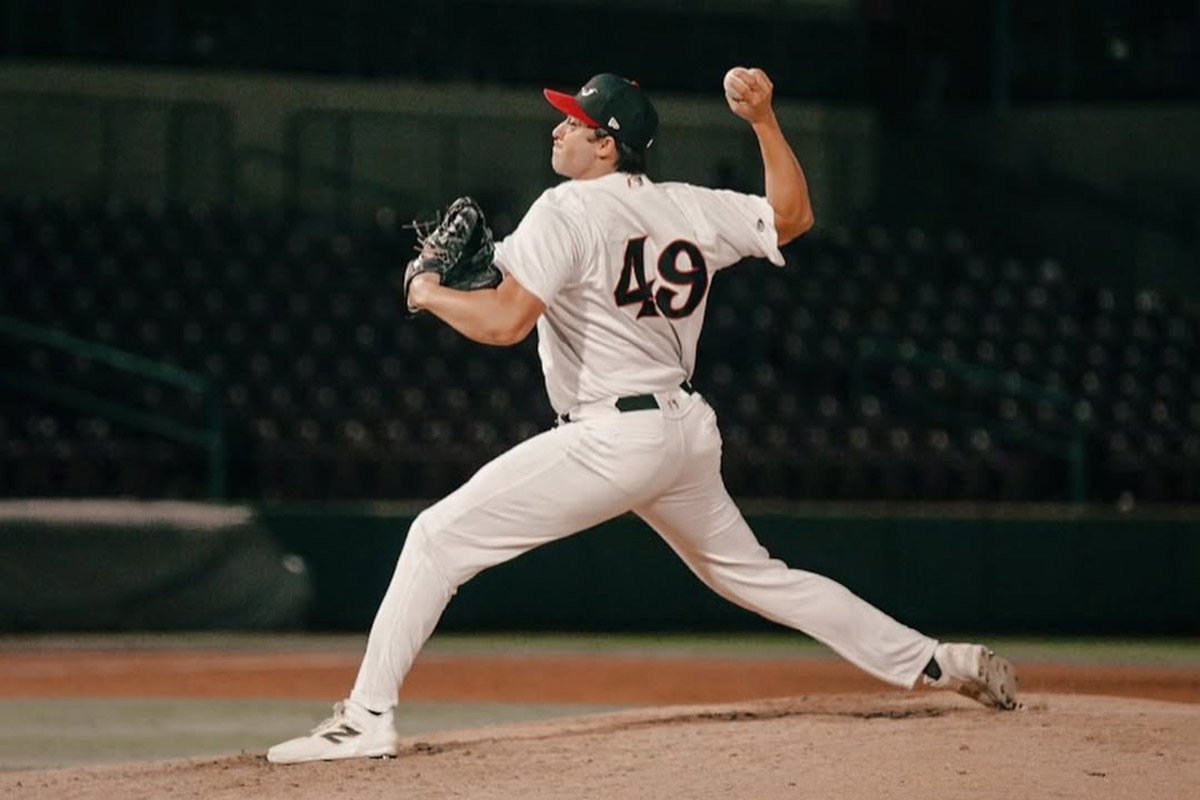 It was a roller coaster month for Padres relievers throughout the organization. While the top and bottom ends of the organization, Triple-A El Paso and ACL Padres, had struggling bullpens with few bright spots, the middle squads, Tin Caps, Mission, and Storm, were littered with strong months from high-quality arms. One of the most challenging aspects of putting together a great month as a reliever is that a couple of bad innings can completely upend your stats. Still, the following pitchers were able to stay steady for the entirety of May. #5- Bradgley Rodriguez (San Antonio Mission) - 10 G, 1.74 ERA, 0.68 WHIP, 10.1 IP, 7 H, 0 BB, 11 K Rodriguez, the reliever out of Venezuela, is one of the most promising arms in the Padres system. Last season, he made the jump from Low A to Double A quite quickly and has been a significant factor in clutch innings for San Antonio this year. At just 21 years old, Rodriguez is already one of the big inning pitchers for the San Antonio bullpen, and May was his most dominant month yet. Despite not starting a single game, Rodriguez led San Antonio with four wins on the month and coupled that number with zero losses and two saves (no blown saves). Rodriguez gave the Mission big inning after big inning, helping them finish May with a winning record. While his hits and ERA keep him at five in a competitive month of relievers, his accuracy and clutch play deserve recognition. #4- Josh Mallitz (Fort Wayne Tin Caps) - 6 G, 1.23 ERA, 0.95 WHIP, 14.2 IP, 8 H, 6 BB, 20 K After a terrible start to the season as a multi-inning reliever, Mallitz was finally able to settle into his role. His ERA is still sitting above five, but a solid last month is a good step in the right direction for the 23-year-old right-hander out of Mississippi. Being a long reliever is a difficult task because you still don’t get a high enough inning count to keep a low ERA after bad outings, but you're also tasked with higher pitch counts and more innings than other relievers. Continued consistency from Mallitz could be crucial for Fort Wayne to stay on track as the summer gets going. The key to his success will be to keep missing bats. When players are putting the ball in play, things tend to go south for Mallitz. In May, he led Fort Wayne relievers with 20 strikeouts, and hitters batted just .154 against him. Keeping those numbers sustainable has to be his goal moving forward. #3- Jose Espada (San Antonio Mission) - 8 G, 0.79 ERA, 0.62 WHIP, 11.1 IP, 5 H, 2 BB, 15 K The 28-year-old from Puerto Rico joins the list as its oldest member. A career journeyman in the minors, Espada is looking to capitalize on success for San Antonio to keep progressing through the system. He contributed a lot of high-quality innings for the Mission this month. He got his ERA down to 2.66 on the season and displayed his ability to get both late-inning outs (two saves) and multi-inning stretched appearances (five one-plus-inning appearances). Given his age and consistency to start the year, Espada is a candidate to look out for promotion to Triple A, but for now, he remains a key part of what was a dominant bullpen for San Antonio in May. #2- Garrett Hawkins (Fort Wayne Tin Caps) - 8 G, 0.00 ERA, 0.64 WHIP, 9.1 IP, 3 H, 3 BB, 15 K Two through four on the list were very hard to place and could be viewed as interchangeable. They all put together dominant months. All three arms had great WHIPS and K/BB ratios, and the ERAs increased with their innings pitched. The ranks came down to a choice between the value of the inning difference and runs allowed. I decided to give Hawkins the second spot because, at the end of the day, you can’t ask for more from your reliever than not allowing a single run. Hawkins, a 25-year-old from British Columbia, has established himself on the High-A roster this season. He pitched just four games for them last season (all starts), but has transitioned to becoming one of the Tin Caps' back-end relievers. Making the transition from starter to reliever has been challenging for many pitchers who have tried, but a May with 15 strikeouts in just over nine innings and a 0.64 WHIP suggests that his stuff can play as a reliever in the minors. Padres Minor League Reliever of the Month- Adam Conrad (Lake Elsinore Storm) - 7 G, 0.00 ERA, 1.26 WHIP, 14.1 IP, 7 H, 11 BB, 14 K Conrad has had an incredible start to his professional career. He is the first player to sign with an MLB team out of Carolina University, and he has already established his presence in the Storms' bullpen. The Padres signed Conrad due to his stuff and potential. Despite having a 4.85 ERA at Carolina, his 6'3 ", 205-pound frame at age 22, coupled with his electric fastball and plus breaking ball, gave the Padres enough to work with. Conrad's performances in May continue what has been the best start of any reliever's season throughout the Padres organization. In 21 2/3 innings pitched, he is yet to allow an earned run and is thriving in long relief and late-inning appearances. Conrad had three outings of three-plus innings pitched and five multi-inning outings last month. His only short performances came early, on May 4, when fielding let him down, as he conceded three unearned runs in one inning. Later, he showed his versatility by getting the two-out save against San Jose on May 11. Although this has been a dream start to his professional career, there are some concerns about the numbers Conrad has put up thus far. Despite the immaculate ERA, his 11 walks in 14 1/3 IP this month are not sustainable if he wants to keep runs from crossing home, and a 1.26 WHIP is sure to lead to earned runs at some point. His dominant scoreless inning streak is worthy of recognition as the Padres' reliever of the month. Still, it will be interesting to see if he can make the necessary adjustments to sustain this success throughout a professional season. The bright side is that Conrad is a young, healthy arm, which means he has time to make the necessary changes needed to be a productive player for a very long time. Sustainability will be the key for these pitchers moving forward, but a strong May could give them momentum that lasts the entire season. While the Padres MLB squad would’ve liked to see more production from the Triple-A relievers in case reinforcements are needed, it’s encouraging to see that MLB arms could be developing down the line.
 -
It was a roller coaster month for Padres relievers throughout the organization. While the top and bottom ends of the organization, Triple-A El Paso and ACL Padres, had struggling bullpens with few bright spots, the middle squads, Tin Caps, Mission, and Storm, were littered with strong months from high-quality arms. One of the most challenging aspects of putting together a great month as a reliever is that a couple of bad innings can completely upend your stats. Still, the following pitchers were able to stay steady for the entirety of May. #5- Bradgley Rodriguez (San Antonio Mission) - 10 G, 1.74 ERA, 0.68 WHIP, 10.1 IP, 7 H, 0 BB, 11 K Rodriguez, the reliever out of Venezuela, is one of the most promising arms in the Padres system. Last season, he made the jump from Low A to Double A quite quickly and has been a significant factor in clutch innings for San Antonio this year. At just 21 years old, Rodriguez is already one of the big inning pitchers for the San Antonio bullpen, and May was his most dominant month yet. Despite not starting a single game, Rodriguez led San Antonio with four wins on the month and coupled that number with zero losses and two saves (no blown saves). Rodriguez gave the Mission big inning after big inning, helping them finish May with a winning record. While his hits and ERA keep him at five in a competitive month of relievers, his accuracy and clutch play deserve recognition. #4- Josh Mallitz (Fort Wayne Tin Caps) - 6 G, 1.23 ERA, 0.95 WHIP, 14.2 IP, 8 H, 6 BB, 20 K After a terrible start to the season as a multi-inning reliever, Mallitz was finally able to settle into his role. His ERA is still sitting above five, but a solid last month is a good step in the right direction for the 23-year-old right-hander out of Mississippi. Being a long reliever is a difficult task because you still don’t get a high enough inning count to keep a low ERA after bad outings, but you're also tasked with higher pitch counts and more innings than other relievers. Continued consistency from Mallitz could be crucial for Fort Wayne to stay on track as the summer gets going. The key to his success will be to keep missing bats. When players are putting the ball in play, things tend to go south for Mallitz. In May, he led Fort Wayne relievers with 20 strikeouts, and hitters batted just .154 against him. Keeping those numbers sustainable has to be his goal moving forward. #3- Jose Espada (San Antonio Mission) - 8 G, 0.79 ERA, 0.62 WHIP, 11.1 IP, 5 H, 2 BB, 15 K The 28-year-old from Puerto Rico joins the list as its oldest member. A career journeyman in the minors, Espada is looking to capitalize on success for San Antonio to keep progressing through the system. He contributed a lot of high-quality innings for the Mission this month. He got his ERA down to 2.66 on the season and displayed his ability to get both late-inning outs (two saves) and multi-inning stretched appearances (five one-plus-inning appearances). Given his age and consistency to start the year, Espada is a candidate to look out for promotion to Triple A, but for now, he remains a key part of what was a dominant bullpen for San Antonio in May. #2- Garrett Hawkins (Fort Wayne Tin Caps) - 8 G, 0.00 ERA, 0.64 WHIP, 9.1 IP, 3 H, 3 BB, 15 K Two through four on the list were very hard to place and could be viewed as interchangeable. They all put together dominant months. All three arms had great WHIPS and K/BB ratios, and the ERAs increased with their innings pitched. The ranks came down to a choice between the value of the inning difference and runs allowed. I decided to give Hawkins the second spot because, at the end of the day, you can’t ask for more from your reliever than not allowing a single run. Hawkins, a 25-year-old from British Columbia, has established himself on the High-A roster this season. He pitched just four games for them last season (all starts), but has transitioned to becoming one of the Tin Caps' back-end relievers. Making the transition from starter to reliever has been challenging for many pitchers who have tried, but a May with 15 strikeouts in just over nine innings and a 0.64 WHIP suggests that his stuff can play as a reliever in the minors. Padres Minor League Reliever of the Month- Adam Conrad (Lake Elsinore Storm) - 7 G, 0.00 ERA, 1.26 WHIP, 14.1 IP, 7 H, 11 BB, 14 K Conrad has had an incredible start to his professional career. He is the first player to sign with an MLB team out of Carolina University, and he has already established his presence in the Storms' bullpen. The Padres signed Conrad due to his stuff and potential. Despite having a 4.85 ERA at Carolina, his 6'3 ", 205-pound frame at age 22, coupled with his electric fastball and plus breaking ball, gave the Padres enough to work with. Conrad's performances in May continue what has been the best start of any reliever's season throughout the Padres organization. In 21 2/3 innings pitched, he is yet to allow an earned run and is thriving in long relief and late-inning appearances. Conrad had three outings of three-plus innings pitched and five multi-inning outings last month. His only short performances came early, on May 4, when fielding let him down, as he conceded three unearned runs in one inning. Later, he showed his versatility by getting the two-out save against San Jose on May 11. Although this has been a dream start to his professional career, there are some concerns about the numbers Conrad has put up thus far. Despite the immaculate ERA, his 11 walks in 14 1/3 IP this month are not sustainable if he wants to keep runs from crossing home, and a 1.26 WHIP is sure to lead to earned runs at some point. His dominant scoreless inning streak is worthy of recognition as the Padres' reliever of the month. Still, it will be interesting to see if he can make the necessary adjustments to sustain this success throughout a professional season. The bright side is that Conrad is a young, healthy arm, which means he has time to make the necessary changes needed to be a productive player for a very long time. Sustainability will be the key for these pitchers moving forward, but a strong May could give them momentum that lasts the entire season. While the Padres MLB squad would’ve liked to see more production from the Triple-A relievers in case reinforcements are needed, it’s encouraging to see that MLB arms could be developing down the line. View full article
-
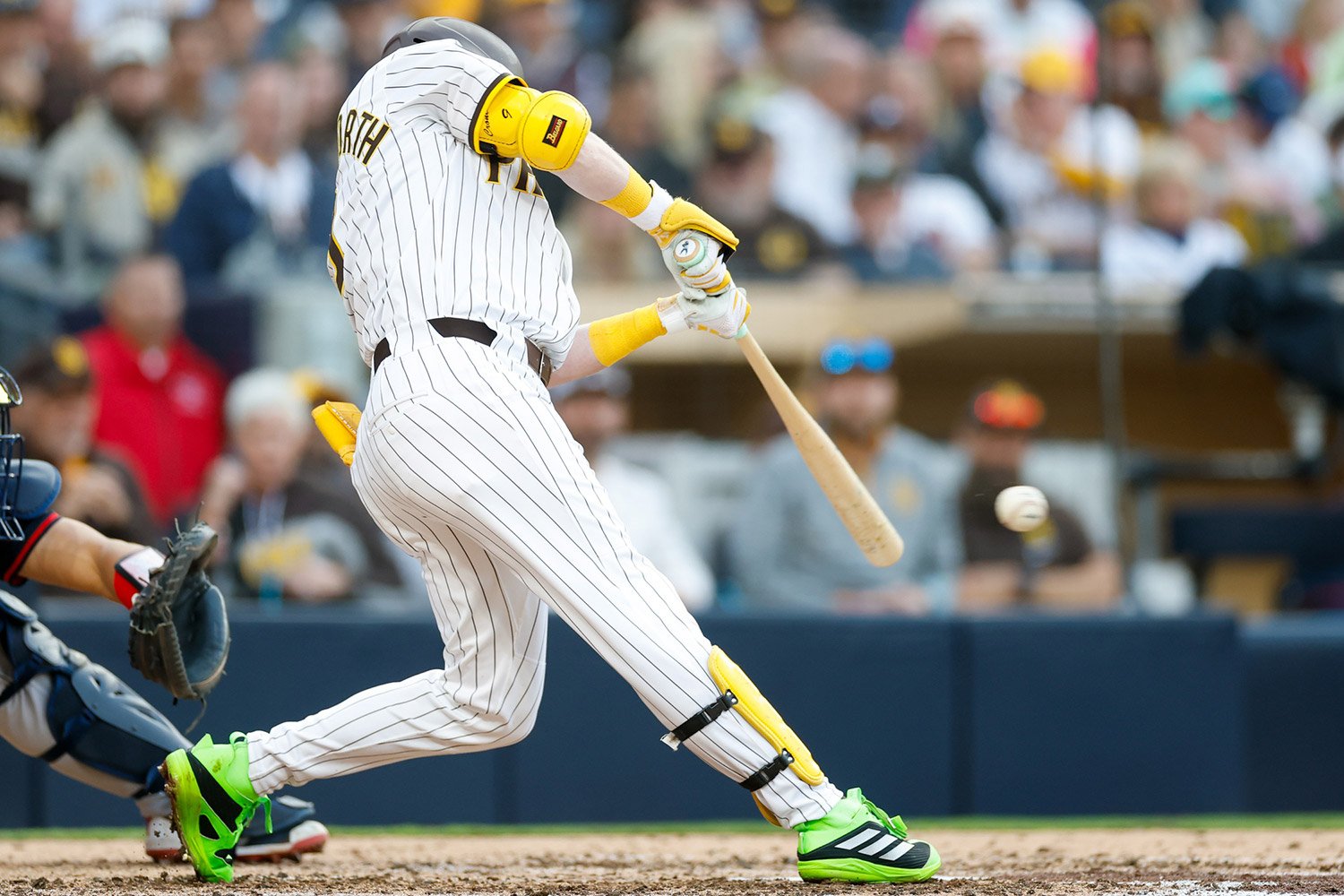 We are almost two months into the MLB season, and the confusing Padres’ offense has not become any easier to figure out. On one hand, the lineup has done enough to get the Padres to a 27-21 record entering the final week of May. On the other hand, the offense has relied heavily on a solid pitching staff, as they sit outside the top 15 in runs scored. The volatile nature of the Padres' lineup runs deeper than its impact on winning. Superstars Fernando Tatis Jr and Jackson Merrill are crushing the ball to the tune of .900+ OPS seasons, yet middle infielders Xander Bogaerts and Jose Iglesias have struggled with sub-.700 OPS production. Manny Machado and Luis Arraez have been hit machines, each boasting over .300 AVG seasons, yet haven’t been able to bring the power needed to elevate this Padres lineup, as they have just six combined home runs. While the Padres' offense is hoping that a healthy Jake Cronenworth (.823 OPS in 94 plate appearances) and the benching of Jason Heyward (.494 OPS) will revitalize a streaky lineup, new bat path data from Baseball Savant can give us insight into what exactly we are seeing from the Padres' sluggers. We now have access to new information about players' bats’ attack angle, attack direction, and swing path tilt, providing context to the production we have seen from the Padres' lineup. Attack angle measures the vertical angle of the direction of the bat’s barrel when it makes contact with the ball. For example, 5-20 degree angles are ideal with the highest potential to create line drives and deep pop-ups. Low angles closer to zero and negative degrees would result in more ground balls. Higher angles, such as 30 degrees, would likely lead to lazy pop-ups. Attack direction refers to the direction of the barrel, on average, when making contact with the baseball. A player with a pull attack direction is more likely to pull the ball, and a player with an opposite attack direction would be more likely to hit the ball to the opposite field. These two statistics give us key context when analyzing the production of Padres captains Fernando Tatis Jr and Manny Machado. Third baseman Manny Machado has maintained a 7-degree attack angle for the last two seasons. While this is within the 5-20 degree “ideal attack angle” range, it is on the lower end of that scale, and 3 degrees lower than league average (10 degrees). Machado combines this attack angle with a flat 0-degree attack direction, meaning his swing is nearly perfectly balanced between pull and opposite field. This explains how Machado has had such an odd combination of high production and low slugging in 2025. He maintains a respectable attack angle within ideal range, but at just 7 degrees, and an attack direction that aims right at the deepest part of the field (center field), it’s hard to hit home runs. Machado’s consistency in attack angle and centerfield approach can also be a relief to Padres fans. Both statistics display that he is hitting the ball effectively within the ideal attack angle range and sticking to his consistent approach. Still, I wouldn’t expect a 40-home-run season anytime soon. The electric Fernando Tatis Jr has begun 2025 with what looks to be his best season since 2021. His OPS is back over .900, and he leads the MLB with a 3.0 WAR. This new data also gives us a look at the changes Tatis has made. He took after Machado and began simplifying his approach and trusting his talent. He’s lowered his 2025 attack angle to 7 degrees, the same as Machado, and embraced an opposite-field approach(4 degrees opposite) compared to his 2024 angle of 2 degrees pull side. These adjustments have been the catalyst for Tatis to get the most out of his talent thus far. His consistency against both sides of the plate remains, as he maintains those angles within 1 degree against both lefties and righties. He combines that consistency with a team-leading 325 competitive swings to create productive, sustainable success. This new data can answer many questions about the 2025 Padres and leave us wondering. All-Star Luis Arraez is one of the most unique talents in the MLB. His low strikeout rates and high batting averages make him a great old-fashioned leadoff man, but his low slugging statistics limit his ceiling as a run producer. The newly tracked swing path tilt data gives us a look into what could either be a painful crash in production or an unexpected power surge for Arraez. Unsurprisingly, Arraez has the lowest bat speed on the team at just 62.6 MPH, but he compensates for this with his low strikeout rates. What comes unexpectedly is his team's high swing path tilt. Swing path tilt tells us the swing plane angle in the 40 milliseconds (ms) before it contacts the ball. The higher the tilt, the steeper the swing, whereas a low tilt results in a flatter swing. Arraez has by far the highest swing tilt on the team at 37 degrees, something he has done each of the past two seasons. This leaves Arraez with untapped power potential that, if harnessed (via increased exit velocity, pull percentage, etc.), could turn him into one of the most dynamic hitters in the game. The alternative outcome is that a low-power player balancing his productivity with a pop-up inducing swing path tilt could come crashing down at any point. The Padres' lineup has done enough to get the job done. Only time will tell if these observations hold and the data leads to success, but the goal will remain the same for the offense. Do enough to keep winning games.
 -
We are almost two months into the MLB season, and the confusing Padres’ offense has not become any easier to figure out. On one hand, the lineup has done enough to get the Padres to a 27-21 record entering the final week of May. On the other hand, the offense has relied heavily on a solid pitching staff, as they sit outside the top 15 in runs scored. The volatile nature of the Padres' lineup runs deeper than its impact on winning. Superstars Fernando Tatis Jr and Jackson Merrill are crushing the ball to the tune of .900+ OPS seasons, yet middle infielders Xander Bogaerts and Jose Iglesias have struggled with sub-.700 OPS production. Manny Machado and Luis Arraez have been hit machines, each boasting over .300 AVG seasons, yet haven’t been able to bring the power needed to elevate this Padres lineup, as they have just six combined home runs. While the Padres' offense is hoping that a healthy Jake Cronenworth (.823 OPS in 94 plate appearances) and the benching of Jason Heyward (.494 OPS) will revitalize a streaky lineup, new bat path data from Baseball Savant can give us insight into what exactly we are seeing from the Padres' sluggers. We now have access to new information about players' bats’ attack angle, attack direction, and swing path tilt, providing context to the production we have seen from the Padres' lineup. Attack angle measures the vertical angle of the direction of the bat’s barrel when it makes contact with the ball. For example, 5-20 degree angles are ideal with the highest potential to create line drives and deep pop-ups. Low angles closer to zero and negative degrees would result in more ground balls. Higher angles, such as 30 degrees, would likely lead to lazy pop-ups. Attack direction refers to the direction of the barrel, on average, when making contact with the baseball. A player with a pull attack direction is more likely to pull the ball, and a player with an opposite attack direction would be more likely to hit the ball to the opposite field. These two statistics give us key context when analyzing the production of Padres captains Fernando Tatis Jr and Manny Machado. Third baseman Manny Machado has maintained a 7-degree attack angle for the last two seasons. While this is within the 5-20 degree “ideal attack angle” range, it is on the lower end of that scale, and 3 degrees lower than league average (10 degrees). Machado combines this attack angle with a flat 0-degree attack direction, meaning his swing is nearly perfectly balanced between pull and opposite field. This explains how Machado has had such an odd combination of high production and low slugging in 2025. He maintains a respectable attack angle within ideal range, but at just 7 degrees, and an attack direction that aims right at the deepest part of the field (center field), it’s hard to hit home runs. Machado’s consistency in attack angle and centerfield approach can also be a relief to Padres fans. Both statistics display that he is hitting the ball effectively within the ideal attack angle range and sticking to his consistent approach. Still, I wouldn’t expect a 40-home-run season anytime soon. The electric Fernando Tatis Jr has begun 2025 with what looks to be his best season since 2021. His OPS is back over .900, and he leads the MLB with a 3.0 WAR. This new data also gives us a look at the changes Tatis has made. He took after Machado and began simplifying his approach and trusting his talent. He’s lowered his 2025 attack angle to 7 degrees, the same as Machado, and embraced an opposite-field approach(4 degrees opposite) compared to his 2024 angle of 2 degrees pull side. These adjustments have been the catalyst for Tatis to get the most out of his talent thus far. His consistency against both sides of the plate remains, as he maintains those angles within 1 degree against both lefties and righties. He combines that consistency with a team-leading 325 competitive swings to create productive, sustainable success. This new data can answer many questions about the 2025 Padres and leave us wondering. All-Star Luis Arraez is one of the most unique talents in the MLB. His low strikeout rates and high batting averages make him a great old-fashioned leadoff man, but his low slugging statistics limit his ceiling as a run producer. The newly tracked swing path tilt data gives us a look into what could either be a painful crash in production or an unexpected power surge for Arraez. Unsurprisingly, Arraez has the lowest bat speed on the team at just 62.6 MPH, but he compensates for this with his low strikeout rates. What comes unexpectedly is his team's high swing path tilt. Swing path tilt tells us the swing plane angle in the 40 milliseconds (ms) before it contacts the ball. The higher the tilt, the steeper the swing, whereas a low tilt results in a flatter swing. Arraez has by far the highest swing tilt on the team at 37 degrees, something he has done each of the past two seasons. This leaves Arraez with untapped power potential that, if harnessed (via increased exit velocity, pull percentage, etc.), could turn him into one of the most dynamic hitters in the game. The alternative outcome is that a low-power player balancing his productivity with a pop-up inducing swing path tilt could come crashing down at any point. The Padres' lineup has done enough to get the job done. Only time will tell if these observations hold and the data leads to success, but the goal will remain the same for the offense. Do enough to keep winning games. View full article
