Greg Spicer
-
Posts
58 -
Joined
-
Last visited
-
Days Won
6
Content Type
Profiles
San Diego Padres Videos
2026 San Diego Padres Top Prospects Ranking
San Diego Padres Free Agent & Trade Rumors, Notes, & Tidbits
Guides & Resources
2025 San Diego Padres Draft Pick Tracker
News
2026 San Diego Padres Draft Tracker: Picks & Bonuses
Forums
Blogs
Events
Store
Downloads
Gallery
Everything posted by Greg Spicer
-
 A few weeks ago, Padres fans were celebrating the team’s announcement that they weren’t planning to shed salary for the 2026 season. Instead, San Diego intends to operate with a payroll similar to last year’s. That opened the door to all sorts of exciting hypotheticals about what the Padres could do with their remaining money. Since then, San Diego has made two free-agent moves that put the 2026 payroll at $219 million - just $2 million less than the 2025 figure: re-signing star pitcher Michael King (3 years / $75 million) and adding Japanese talent Sung-Mon Song (4 years / $15 million). Based on the idea of maintaining a similar payroll, it looks like general manager AJ Preller has about $2 million left to spend. The roster still needs at least one more lefty starter and some offensive reinforcements. If the Padres want to fill every hole, ownership will probably have to go over last year’s number - especially if they plan to pursue a big-name southpaw free agent like Ranger Suárez or Framber Valdez. That said, Preller still has options. There are affordable players available that could fill at least one gap with the remaining $2 million. San Diego can also use the trade market to reallocate bad contracts and farm system assets to add talent without increasing payroll. The prospect depth is as thin as ever, but it doesn’t look like Preller is starting a rebuild, so we can assume he’ll operate the same way he always has: without regard for the farm’s strength. I’m not saying I support that strategy, but it’s the realistic outlook. As long as Preller is trying to compete, the farm system will be used to improve the MLB roster. Budget-Friendly Fillers Assuming the front office doesn’t shell out the cash needed for Valdez or Suárez, their best bet is finding a cheap lefty starter in free agency and using trade assets to retool the lineup. They also have JP Sears under contract, so they could test their luck with Sears plus another arm and see if one of them clicks. This role could be filled by several available pitchers, but these would be my top options. Martin Pérez The former Padre pitched very well during his half-season in San Diego in 2024, so a return would make sense. He was an All-Star in 2022 and posted a 3.54 ERA / 4.90 FIP in 56 innings with the White Sox last season. Patrick Corbin It’s been a rough stretch for Corbin since his championship run in Washington, but he still brings experience, health, and innings - all things the Padres lack. He’s also due for a year where the BABIP luck falls his way. He’s thrown 150+ innings every season since the 2020 Covid year and showed signs of life with a 4.40 ERA / 4.25 FIP in 2025. If the Padres decide to spend more on pitching than those two options, Preller may instead look for cheap offensive help. If that’s the route, here are a few possibilities. Justin Turner This will be unpopular, given Turner’s rough year with the Cubs and his status as a former Dodger. Still, he’ll be cheap and fits the lineup if money is tight. He posted a 112 wRC+ against lefties in 2025 and could platoon effectively with Gavin Sheets. Ty France I know these names aren’t mouthwatering, but they offer cost-effective upside. The 2022 All-Star should still have some production left. He hasn’t posted a wRC+ over 100 in the past two seasons, but when he’s right, he mashes lefties. He’d be another solid bench bat to pair with Sheets. Trade Opportunities Some players on the Padres’ roster simply aren’t playing up to their contracts. If the team genuinely wants to compete, they’ll need to use assets to move off these deals and redirect that money toward upgrades. They should avoid trading budget-friendly talent like Jackson Merrill and Mason Miller. Superstars Manny Machado and Fernando Tatis Jr. also project as strong values on sub-$30 million contracts, so I wouldn’t move them either. Xander Bogaerts This deal just hasn’t worked. Bogaerts will be making $25 million annually through 2032, and if Preller can find a way to move him, he should take it. A team like the Yankees could be tempted, given how terrible Anthony Volpe has been. Cover some of the money and include a top-five prospect to get bullpen depth in return. Finding a suitor would be difficult, but this is the clearest path to opening up payroll space. Yu Darvish Another complicated situation. Darvish won’t pitch in 2026 and isn’t particularly appealing to other teams, but perhaps a buyout could be structured to free up some money. He’s making $16 million this year and won’t even have a chance to bounce back. Getting Darvish off the books would require a sacrifice from ownership, but it would create so much more flexibility. Yuki Matsui Despite being one of the weaker arms in the bullpen, Matsui is one of the highest-paid relievers on the staff. His $6 million contract will only become more expensive over time, and it’s hard to project his future production. It’s not a franchise-altering move like shedding Bogaerts or Darvish, but the Padres could likely find a team willing to take on his full contract and get something in return. That freed-up money could help fill another hole or open additional trade avenues. The Bottom Line The best part of San Diego’s complicated financial situation is that they don’t have any truly outrageous contracts (outside of Bogaerts). Machado and Tatis should both earn their salaries, and none of the starters are tied to disastrous deals. Instead, the payroll is spread across the roster. There isn’t a clear path to financial freedom in San Diego, but one thing is certain: Preller has options. View full article
 -
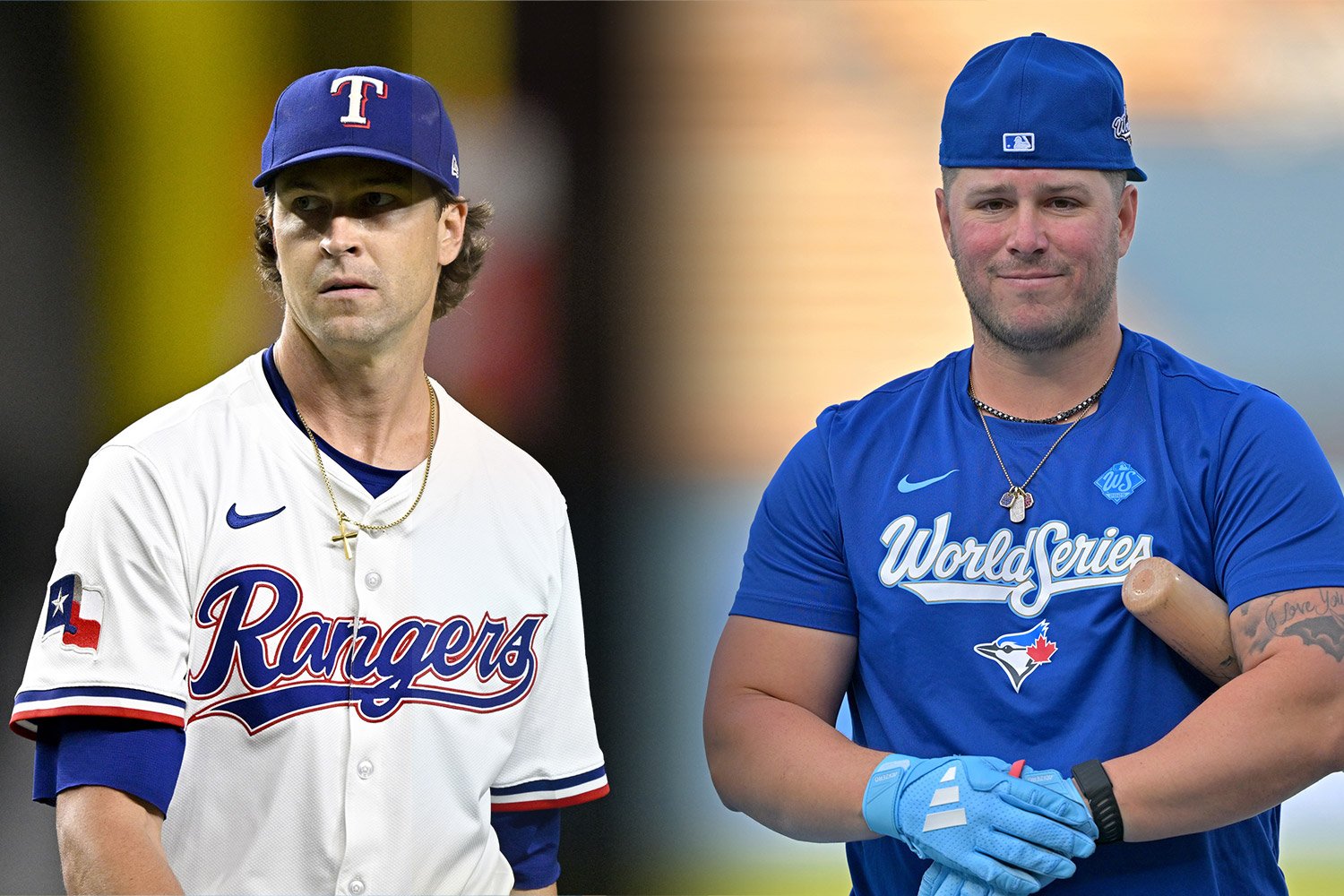 A few weeks ago, Padres fans were celebrating the team’s announcement that they weren’t planning to shed salary for the 2026 season. Instead, San Diego intends to operate with a payroll similar to last year’s. That opened the door to all sorts of exciting hypotheticals about what the Padres could do with their remaining money. Since then, San Diego has made two free-agent moves that put the 2026 payroll at $219 million - just $2 million less than the 2025 figure: re-signing star pitcher Michael King (3 years / $75 million) and adding Japanese talent Sung-Mon Song (4 years / $15 million). Based on the idea of maintaining a similar payroll, it looks like general manager AJ Preller has about $2 million left to spend. The roster still needs at least one more lefty starter and some offensive reinforcements. If the Padres want to fill every hole, ownership will probably have to go over last year’s number - especially if they plan to pursue a big-name southpaw free agent like Ranger Suárez or Framber Valdez. That said, Preller still has options. There are affordable players available that could fill at least one gap with the remaining $2 million. San Diego can also use the trade market to reallocate bad contracts and farm system assets to add talent without increasing payroll. The prospect depth is as thin as ever, but it doesn’t look like Preller is starting a rebuild, so we can assume he’ll operate the same way he always has: without regard for the farm’s strength. I’m not saying I support that strategy, but it’s the realistic outlook. As long as Preller is trying to compete, the farm system will be used to improve the MLB roster. Budget-Friendly Fillers Assuming the front office doesn’t shell out the cash needed for Valdez or Suárez, their best bet is finding a cheap lefty starter in free agency and using trade assets to retool the lineup. They also have JP Sears under contract, so they could test their luck with Sears plus another arm and see if one of them clicks. This role could be filled by several available pitchers, but these would be my top options. Martin Pérez The former Padre pitched very well during his half-season in San Diego in 2024, so a return would make sense. He was an All-Star in 2022 and posted a 3.54 ERA / 4.90 FIP in 56 innings with the White Sox last season. Patrick Corbin It’s been a rough stretch for Corbin since his championship run in Washington, but he still brings experience, health, and innings - all things the Padres lack. He’s also due for a year where the BABIP luck falls his way. He’s thrown 150+ innings every season since the 2020 Covid year and showed signs of life with a 4.40 ERA / 4.25 FIP in 2025. If the Padres decide to spend more on pitching than those two options, Preller may instead look for cheap offensive help. If that’s the route, here are a few possibilities. Justin Turner This will be unpopular, given Turner’s rough year with the Cubs and his status as a former Dodger. Still, he’ll be cheap and fits the lineup if money is tight. He posted a 112 wRC+ against lefties in 2025 and could platoon effectively with Gavin Sheets. Ty France I know these names aren’t mouthwatering, but they offer cost-effective upside. The 2022 All-Star should still have some production left. He hasn’t posted a wRC+ over 100 in the past two seasons, but when he’s right, he mashes lefties. He’d be another solid bench bat to pair with Sheets. Trade Opportunities Some players on the Padres’ roster simply aren’t playing up to their contracts. If the team genuinely wants to compete, they’ll need to use assets to move off these deals and redirect that money toward upgrades. They should avoid trading budget-friendly talent like Jackson Merrill and Mason Miller. Superstars Manny Machado and Fernando Tatis Jr. also project as strong values on sub-$30 million contracts, so I wouldn’t move them either. Xander Bogaerts This deal just hasn’t worked. Bogaerts will be making $25 million annually through 2032, and if Preller can find a way to move him, he should take it. A team like the Yankees could be tempted, given how terrible Anthony Volpe has been. Cover some of the money and include a top-five prospect to get bullpen depth in return. Finding a suitor would be difficult, but this is the clearest path to opening up payroll space. Yu Darvish Another complicated situation. Darvish won’t pitch in 2026 and isn’t particularly appealing to other teams, but perhaps a buyout could be structured to free up some money. He’s making $16 million this year and won’t even have a chance to bounce back. Getting Darvish off the books would require a sacrifice from ownership, but it would create so much more flexibility. Yuki Matsui Despite being one of the weaker arms in the bullpen, Matsui is one of the highest-paid relievers on the staff. His $6 million contract will only become more expensive over time, and it’s hard to project his future production. It’s not a franchise-altering move like shedding Bogaerts or Darvish, but the Padres could likely find a team willing to take on his full contract and get something in return. That freed-up money could help fill another hole or open additional trade avenues. The Bottom Line The best part of San Diego’s complicated financial situation is that they don’t have any truly outrageous contracts (outside of Bogaerts). Machado and Tatis should both earn their salaries, and none of the starters are tied to disastrous deals. Instead, the payroll is spread across the roster. There isn’t a clear path to financial freedom in San Diego, but one thing is certain: Preller has options.
 -
With the addition of KBO star Sung Mun Song and the re-signing of Michael King, it appears Padres general manager AJ Preller has finally come out of hibernation. Granted, he never actually went quiet, but Padres fans have grown accustomed to high-activity offseasons, and this year’s break has been quieter than usual in San Diego. One of the lingering rumors surrounding the Padres’ activity is that Preller has been listening to offers on superstar closer Mason Miller. Recently acquired at the 2025 deadline, Miller was dominant in San Diego last season, and trading him would be a huge mistake. Here’s what the 27-year-old produced in 2025: 61 2/3 Innings Pitched 10 Holds 22 Saves 2.63 ERA 2.56 xERA 2.23 FIP 2.27 xFIP 44.4% K-rate 12% BB-rate 2.0 FanGraphs WAR Regardless of the approach the Padres take this offseason, there is no reason to trade Miller. Not only is he an incredible player, but his age, contract, and skill set also make him a cornerstone for any organizational direction. Let’s say Preller isn’t able to execute any big trades or free-agent signings and instead decides to rebuild or retool. Miller should still, absolutely, be part of the future vision. In July, they traded the No. 3 overall prospect, Leo De Vries, along with other talent to acquire him. It’s unlikely they will find another team willing to offer a similar package. Trading Miller for a lesser return would mean cutting “losses” on not winning the championship last season, which is an unnecessary measure. If they decide to retool, Miller can be the anchor of the bullpen. He will be cost-efficient until he enters free agency in 2030, and keeping him as closer would allow the Padres to focus on other areas of the team. I assume a retool would include a shift in what the Padres are built around. Over the last few seasons, San Diego’s strongest dimension has been its bullpen. They finished top-three in FIP in both 2024 and 2025, while leading MLB with a 3.06 ERA last season. If they retool, they should let Miller carry the back-end load and throw 70+ innings at a cheap price, then use their other assets to build a more reliable lineup and starting staff. I find it unlikely they take it a step further and begin a full-on rebuild, especially given their two recent signings. However, if they did choose that route, they would be better off taking a shot at Miller becoming a starter. As I detailed after they acquired him at the deadline, Miller can be an elite starting pitcher. If he takes on that role and performs well, teams would be even more attracted to him, potentially allowing the Padres to receive greater value in a later trade. Now, if San Diego still hopes to compete for the NL West - let alone a championship - Miller should be a key piece of that plan. The stats speak for themselves, and there’s no indication his talent is going anywhere. His fastball averaged a career-high 101.2 mph last season, and although its Statcast run value was a mediocre +1 (down from a +11 in 2024), batters hit it to just a .171 xBA. The lower run value of the heater was likely due to opponents’ unsustainable 49.1% hard-hit rate against it in 2025. No advanced metrics project that dips to hold, and opposing hitters ultimately stopped hammering it once he got to San Diego. The issue stemmed from a short-lived early-season slump in Oakland. In San Diego, he produced: 23.1 IP 0.77 ERA 1.12 FIP 1.09 xFIP Along with his famous fastball, Miller’s slider is becoming the most dangerous off-speed pitch in baseball. As described above, teams were clearly sitting on his fastball last season. Instead of forcing the issue, Miller leaned into his breaking stuff. He threw his slider a career-high 46% of the time in 2025 at 87.8 mph - a 12.5 mph difference from his fastball. Production-wise, he was rewarded with a +16 run value, which sits in the top first percentile among all pitches in baseball, along with a 54.6% whiff rate. In a year where batters effectively squared up his fastball, Miller proved that opposing lineups will have to keep picking their poison - and even if sitting on one pitch works, he will still find ways to get you out. The production and electricity are undeniable. Still, it could be argued that Miller should be traded to help bolster other parts of the roster. That’s where you have to look at rival teams and evaluate what Preller has to do to build a competitive club. There’s no need to look further than the Los Angeles Dodgers: The defending two-time champions and a division rival. San Diego is a juggernaut in spending, but, like all teams, it operates with just a fraction of the Dodgers’ billion-dollar payroll. If the Padres are going to hold their own against Los Angeles, they need to find ways to acquire equal talent at a more affordable price. Shohei Ohtani is a unicorn who can’t be matched, but superstars Fernando Tatis Jr. and Manny Machado can, both financially and production-wise, match the Mookie Betts/Freddie Freeman duo. The pitching staff still needs some work, but if King and Joe Musgrove are healthy and Preller adds one more starter, they should have enough depth to throw a quality arm in every playoff game. As for the bullpen, the Dodgers just invested in All-Star closer Edwin Díaz for the next three seasons, paying him nearly $70 million. Keeping Miller as a closer is the only way San Diego can match the Dodgers’ newly acquired bullpen firepower - at a cost of at least $20 million less per season. With their former All-Star closer Robert Suarez gone to Atlanta this offseason, and other question marks surrounding the bullpen, the Padres should bank on Miller as the foundation of their pitching staff. He clearly has the production, talent, and potential to do so. Once that foundation is established, they can turn their focus toward improving an inconsistent lineup and starting rotation. View full article
-
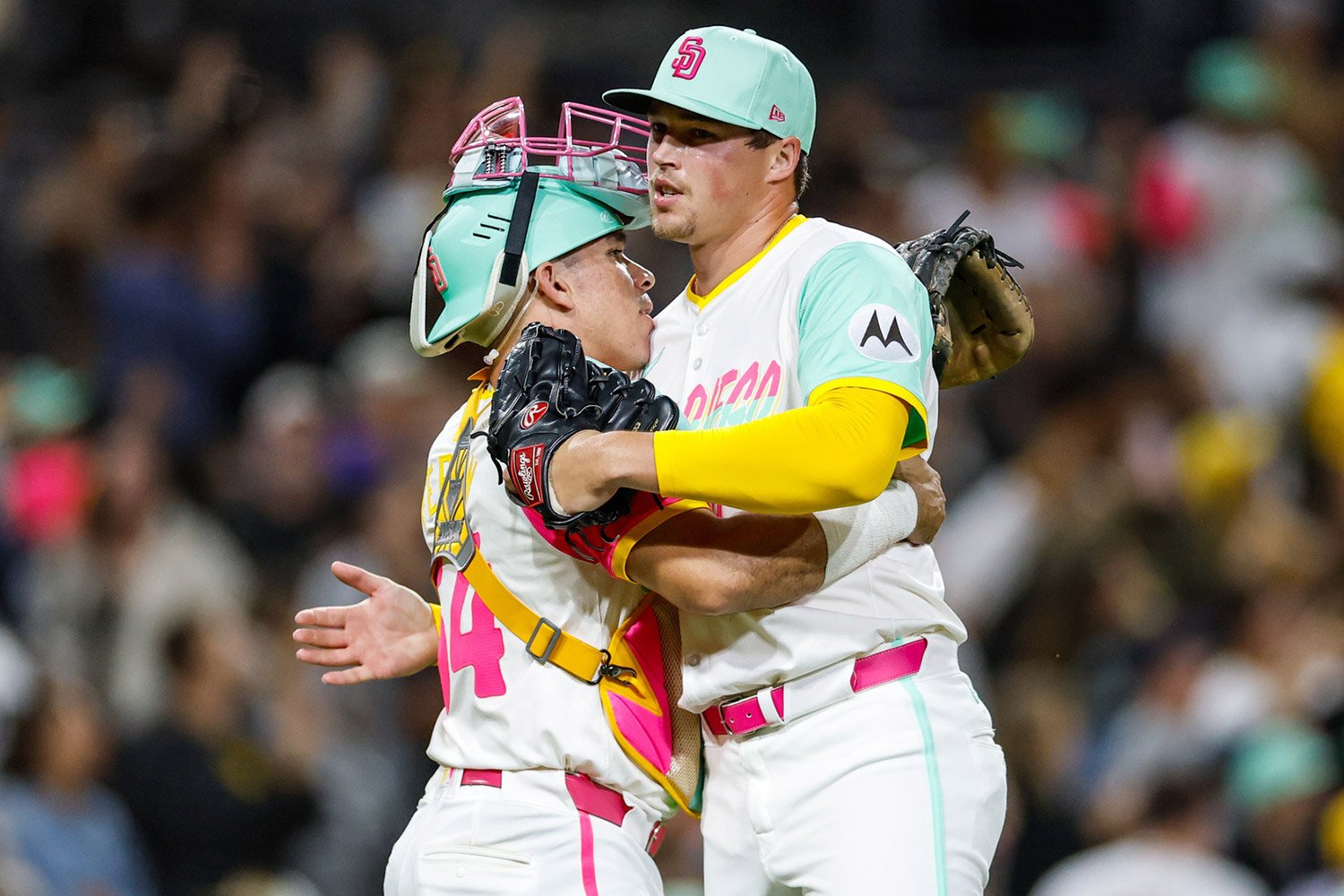 With the addition of KBO star Sung Mun Song and the re-signing of Michael King, it appears Padres general manager AJ Preller has finally come out of hibernation. Granted, he never actually went quiet, but Padres fans have grown accustomed to high-activity offseasons, and this year’s break has been quieter than usual in San Diego. One of the lingering rumors surrounding the Padres’ activity is that Preller has been listening to offers on superstar closer Mason Miller. Recently acquired at the 2025 deadline, Miller was dominant in San Diego last season, and trading him would be a huge mistake. Here’s what the 27-year-old produced in 2025: 61 2/3 Innings Pitched 10 Holds 22 Saves 2.63 ERA 2.56 xERA 2.23 FIP 2.27 xFIP 44.4% K-rate 12% BB-rate 2.0 FanGraphs WAR Regardless of the approach the Padres take this offseason, there is no reason to trade Miller. Not only is he an incredible player, but his age, contract, and skill set also make him a cornerstone for any organizational direction. Let’s say Preller isn’t able to execute any big trades or free-agent signings and instead decides to rebuild or retool. Miller should still, absolutely, be part of the future vision. In July, they traded the No. 3 overall prospect, Leo De Vries, along with other talent to acquire him. It’s unlikely they will find another team willing to offer a similar package. Trading Miller for a lesser return would mean cutting “losses” on not winning the championship last season, which is an unnecessary measure. If they decide to retool, Miller can be the anchor of the bullpen. He will be cost-efficient until he enters free agency in 2030, and keeping him as closer would allow the Padres to focus on other areas of the team. I assume a retool would include a shift in what the Padres are built around. Over the last few seasons, San Diego’s strongest dimension has been its bullpen. They finished top-three in FIP in both 2024 and 2025, while leading MLB with a 3.06 ERA last season. If they retool, they should let Miller carry the back-end load and throw 70+ innings at a cheap price, then use their other assets to build a more reliable lineup and starting staff. I find it unlikely they take it a step further and begin a full-on rebuild, especially given their two recent signings. However, if they did choose that route, they would be better off taking a shot at Miller becoming a starter. As I detailed after they acquired him at the deadline, Miller can be an elite starting pitcher. If he takes on that role and performs well, teams would be even more attracted to him, potentially allowing the Padres to receive greater value in a later trade. Now, if San Diego still hopes to compete for the NL West - let alone a championship - Miller should be a key piece of that plan. The stats speak for themselves, and there’s no indication his talent is going anywhere. His fastball averaged a career-high 101.2 mph last season, and although its Statcast run value was a mediocre +1 (down from a +11 in 2024), batters hit it to just a .171 xBA. The lower run value of the heater was likely due to opponents’ unsustainable 49.1% hard-hit rate against it in 2025. No advanced metrics project that dips to hold, and opposing hitters ultimately stopped hammering it once he got to San Diego. The issue stemmed from a short-lived early-season slump in Oakland. In San Diego, he produced: 23.1 IP 0.77 ERA 1.12 FIP 1.09 xFIP Along with his famous fastball, Miller’s slider is becoming the most dangerous off-speed pitch in baseball. As described above, teams were clearly sitting on his fastball last season. Instead of forcing the issue, Miller leaned into his breaking stuff. He threw his slider a career-high 46% of the time in 2025 at 87.8 mph - a 12.5 mph difference from his fastball. Production-wise, he was rewarded with a +16 run value, which sits in the top first percentile among all pitches in baseball, along with a 54.6% whiff rate. In a year where batters effectively squared up his fastball, Miller proved that opposing lineups will have to keep picking their poison - and even if sitting on one pitch works, he will still find ways to get you out. The production and electricity are undeniable. Still, it could be argued that Miller should be traded to help bolster other parts of the roster. That’s where you have to look at rival teams and evaluate what Preller has to do to build a competitive club. There’s no need to look further than the Los Angeles Dodgers: The defending two-time champions and a division rival. San Diego is a juggernaut in spending, but, like all teams, it operates with just a fraction of the Dodgers’ billion-dollar payroll. If the Padres are going to hold their own against Los Angeles, they need to find ways to acquire equal talent at a more affordable price. Shohei Ohtani is a unicorn who can’t be matched, but superstars Fernando Tatis Jr. and Manny Machado can, both financially and production-wise, match the Mookie Betts/Freddie Freeman duo. The pitching staff still needs some work, but if King and Joe Musgrove are healthy and Preller adds one more starter, they should have enough depth to throw a quality arm in every playoff game. As for the bullpen, the Dodgers just invested in All-Star closer Edwin Díaz for the next three seasons, paying him nearly $70 million. Keeping Miller as a closer is the only way San Diego can match the Dodgers’ newly acquired bullpen firepower - at a cost of at least $20 million less per season. With their former All-Star closer Robert Suarez gone to Atlanta this offseason, and other question marks surrounding the bullpen, the Padres should bank on Miller as the foundation of their pitching staff. He clearly has the production, talent, and potential to do so. Once that foundation is established, they can turn their focus toward improving an inconsistent lineup and starting rotation.
 -
San Diego Padres chairman John Seidler has stated that the team will continue its willingness to pay over $200 million in total salaries for 2026. That means San Diego has at least another $30 million to spend this offseason, which could lead to some high-impact additions. One name that came up during the Winter Meetings is Toronto Blue Jays starter José Berríos. The two-time All-Star signed a 7-year, $131 million extension with Toronto in 2021 and now, ironically, could end up swapping jerseys with the Jays’ newest starter, Dylan Cease. Berríos would give San Diego a reliable, cheaper, and easier commitment than Cease, while still offering strong production. He’s on the trading block after a slightly down regular season followed by an incredible postseason run in Toronto... all while Berrios was injured (he didn't pitch in the playoffs). His 4.14 ERA last year is a bit high, but overall, he’s been very solid across his last three seasons: 548.0 IP 3.79 ERA 4.68 xERA 4.44 FIP 4.22 xFIP 21% K-rate 7.1% BB-rate The one glaring negative on Berríos’s résumé is that his results often outperform his expected metrics. Some might view him as an “accident waiting to happen.” But expected metrics aren’t perfect predictors, and Berríos has consistently proven he can outperform them. Every season of his career, his ERA/xERA and FIP/xFIP have been within 0.75 runs of each other — usually within 0.3. The variance stems from his skillset. Projected metrics favor high-velocity, high-strikeout pitchers that keep runners off base. Berríos, who throws a low-90s fastball, instead relies on a five-pitch mix and a high-movement arsenal to work through lineups. These types of pitchers don’t always get love from expected stats. The real red flags appear when a pitcher has these discrepancies and low velocity, a limited arsenal, and no go-to pitch. Berríos, however, has a deep repertoire led by a sinker that has consistently ranked among the best pitches in baseball via Statcast. The theme of my Padres rotation coverage this offseason has been urging the team to find stability. That’s exactly what Berríos offers. His ceiling may not match someone like Cease — who boasts elite strikeout rates and sub-4.00 expected metrics — but his floor is much higher. He also brings durability to a rotation that badly needs it. With Cease gone, Nick Pivetta is the only remaining starter who was a healthy mainstay in 2025. Berríos has thrown at least 165 innings in seven of his ten career seasons; the exceptions were the shortened 2020 season and his rookie years in 2016-17. Along with durability, Berríos brings consistency. Since his 2016 debut, he’s only had one truly poor season: a 2023 campaign with a 5.23 ERA and 4.55 FIP. Even that year isn’t too concerning, as he faced the highest BABIP of his career (.328), meaning he was incredibly unlucky. As long as his luck normalizes, Berríos performs. After a solid yet underwhelming 2025, he will either continue a slight decline or remind MLB that he’s an All-Star caliber arm. If he wants to fully bounce back, he’ll need to regain dominance with his sinker and slurve. His sinker, historically his most reliable pitch, posted just a +2 run value last season. That’s still good relative to the league, just not up to his usual standards given its peak of +15 in 2021. As for the slurve, there’s work to be done. He threw it a career-low 26% of the time in 2024, and it produced a rough -5 run value. Still, these issues feel fixable in San Diego with pitching coach Ruben Niebla leading the way. There’s no statistical indication that either pitch is losing effectiveness. At 92.2 mph (sinker) and 82.5 mph (slurve), both pitches are maintaining their velocity. He also threw his sinker a career-high 33.6% of the time last year, so hitters may have begun sitting on it more often. Meanwhile, his breaking-ball spin rate remained above 2,350 RPM — consistent with his career norms — and still generated a 33.3% whiff rate. There’s no sign of physical decline, and the 2025 results are a small sample. As recently as 2024, his sinker had a +8 run value, and in 2023, his slurve posted +5. He’s still got great raw stuff. Berríos brings value everywhere, but what makes the Padres an especially good fit (beyond their need for stability), is their history of working well with pitchers of his archetype. Randy Vásquez, another sinker-reliant arm who excelled for San Diego in 2025, saw his sinker improve from a -8 run value in 2024 to +11 in 2025. Niebla could unlock similar improvements from Berríos. There’s also free agent Michael King, who the Padres would ideally re-sign alongside adding Berríos. King was already developed when he arrived from New York, but he’s another example of a sinker-heavy pitcher thriving in San Diego. He uses his 92.7 mph sinker 30% of the time, paired with an 82.2 mph sweeper at a 19% usage rate. He, Berrios, and Pivetta would form a talented trio atop the rotation. It wouldn’t be the most diverse pitching group, but adding Berríos would give the Padres financial flexibility while investing in what they do best (dominating with sinkers) and addressing their biggest pitching issue: consistency. View full article
-
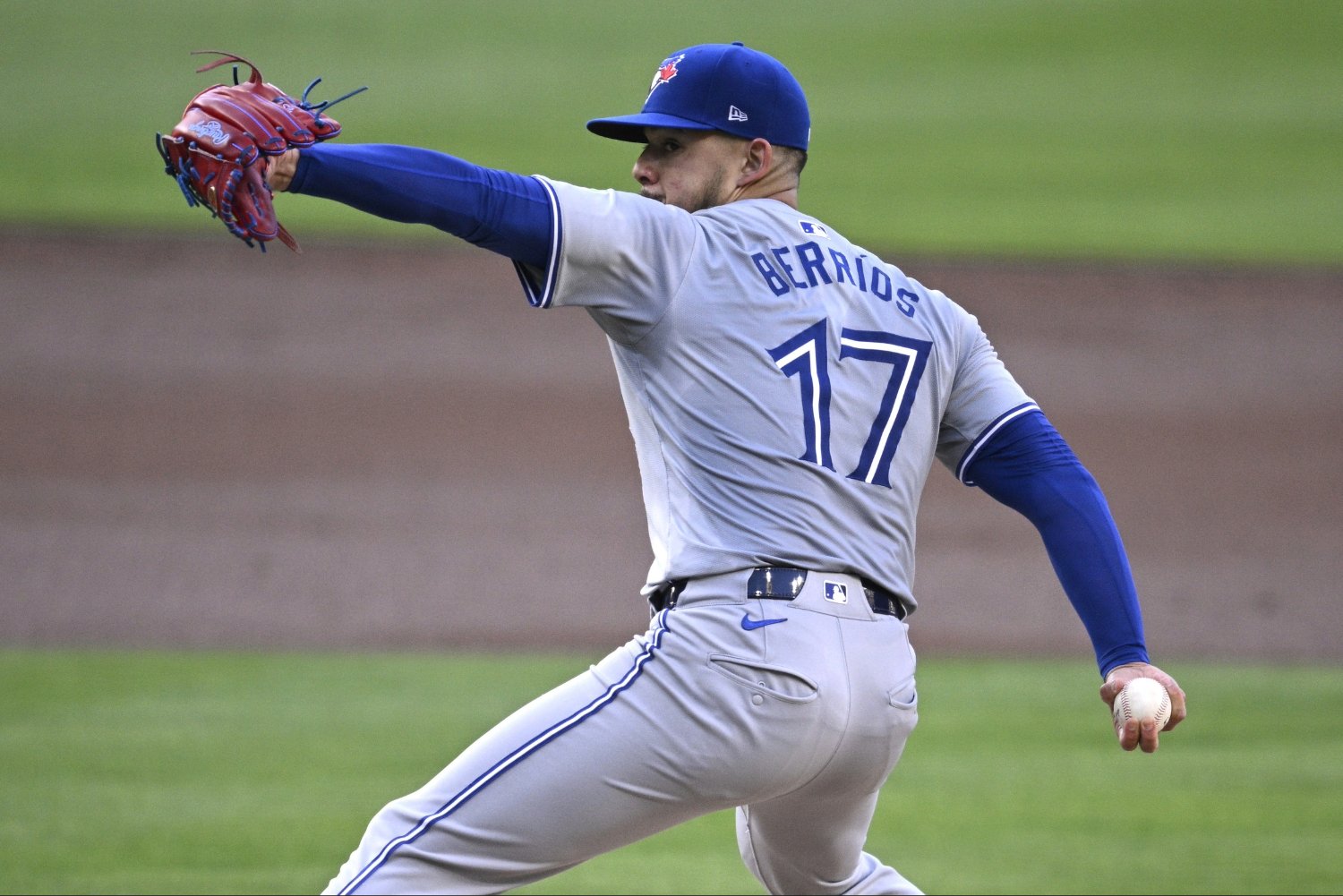 San Diego Padres chairman John Seidler has stated that the team will continue its willingness to pay over $200 million in total salaries for 2026. That means San Diego has at least another $30 million to spend this offseason, which could lead to some high-impact additions. One name that came up during the Winter Meetings is Toronto Blue Jays starter José Berríos. The two-time All-Star signed a 7-year, $131 million extension with Toronto in 2021 and now, ironically, could end up swapping jerseys with the Jays’ newest starter, Dylan Cease. Berríos would give San Diego a reliable, cheaper, and easier commitment than Cease, while still offering strong production. He’s on the trading block after a slightly down regular season followed by an incredible postseason run in Toronto... all while Berrios was injured (he didn't pitch in the playoffs). His 4.14 ERA last year is a bit high, but overall, he’s been very solid across his last three seasons: 548.0 IP 3.79 ERA 4.68 xERA 4.44 FIP 4.22 xFIP 21% K-rate 7.1% BB-rate The one glaring negative on Berríos’s résumé is that his results often outperform his expected metrics. Some might view him as an “accident waiting to happen.” But expected metrics aren’t perfect predictors, and Berríos has consistently proven he can outperform them. Every season of his career, his ERA/xERA and FIP/xFIP have been within 0.75 runs of each other — usually within 0.3. The variance stems from his skillset. Projected metrics favor high-velocity, high-strikeout pitchers that keep runners off base. Berríos, who throws a low-90s fastball, instead relies on a five-pitch mix and a high-movement arsenal to work through lineups. These types of pitchers don’t always get love from expected stats. The real red flags appear when a pitcher has these discrepancies and low velocity, a limited arsenal, and no go-to pitch. Berríos, however, has a deep repertoire led by a sinker that has consistently ranked among the best pitches in baseball via Statcast. The theme of my Padres rotation coverage this offseason has been urging the team to find stability. That’s exactly what Berríos offers. His ceiling may not match someone like Cease — who boasts elite strikeout rates and sub-4.00 expected metrics — but his floor is much higher. He also brings durability to a rotation that badly needs it. With Cease gone, Nick Pivetta is the only remaining starter who was a healthy mainstay in 2025. Berríos has thrown at least 165 innings in seven of his ten career seasons; the exceptions were the shortened 2020 season and his rookie years in 2016-17. Along with durability, Berríos brings consistency. Since his 2016 debut, he’s only had one truly poor season: a 2023 campaign with a 5.23 ERA and 4.55 FIP. Even that year isn’t too concerning, as he faced the highest BABIP of his career (.328), meaning he was incredibly unlucky. As long as his luck normalizes, Berríos performs. After a solid yet underwhelming 2025, he will either continue a slight decline or remind MLB that he’s an All-Star caliber arm. If he wants to fully bounce back, he’ll need to regain dominance with his sinker and slurve. His sinker, historically his most reliable pitch, posted just a +2 run value last season. That’s still good relative to the league, just not up to his usual standards given its peak of +15 in 2021. As for the slurve, there’s work to be done. He threw it a career-low 26% of the time in 2024, and it produced a rough -5 run value. Still, these issues feel fixable in San Diego with pitching coach Ruben Niebla leading the way. There’s no statistical indication that either pitch is losing effectiveness. At 92.2 mph (sinker) and 82.5 mph (slurve), both pitches are maintaining their velocity. He also threw his sinker a career-high 33.6% of the time last year, so hitters may have begun sitting on it more often. Meanwhile, his breaking-ball spin rate remained above 2,350 RPM — consistent with his career norms — and still generated a 33.3% whiff rate. There’s no sign of physical decline, and the 2025 results are a small sample. As recently as 2024, his sinker had a +8 run value, and in 2023, his slurve posted +5. He’s still got great raw stuff. Berríos brings value everywhere, but what makes the Padres an especially good fit (beyond their need for stability), is their history of working well with pitchers of his archetype. Randy Vásquez, another sinker-reliant arm who excelled for San Diego in 2025, saw his sinker improve from a -8 run value in 2024 to +11 in 2025. Niebla could unlock similar improvements from Berríos. There’s also free agent Michael King, who the Padres would ideally re-sign alongside adding Berríos. King was already developed when he arrived from New York, but he’s another example of a sinker-heavy pitcher thriving in San Diego. He uses his 92.7 mph sinker 30% of the time, paired with an 82.2 mph sweeper at a 19% usage rate. He, Berrios, and Pivetta would form a talented trio atop the rotation. It wouldn’t be the most diverse pitching group, but adding Berríos would give the Padres financial flexibility while investing in what they do best (dominating with sinkers) and addressing their biggest pitching issue: consistency.
 -
San Diego Padres ownership has been in shambles all offseason. That’s its own saga, but long story short, Padres fans are worried that their time as one of baseball’s highest-spending organizations may be over. With over $40 million coming off the books and no rumored big moves, it looked like the beginning of a slow decline back to the pre-COVID days of $80-110 million dollar rosters. No more $200+ million teams and no more superstar paydays. That was until Padres Chairman John Seidler said the team aims to keep next year’s payroll similar to the 2025 figure of $221 million. There is hope! As of now, San Diego has just over $160 million allocated for next season. After arbitration, assuming the Padres retain all their notable players (including Jason Adam and Adrian Morejon), that number will be around $190 million. That gives the Padres somewhere in the ballpark of $30 million to work with. With a highly active general manager, AJ Preller, at the helm and $30 million available, this offseason just got very exciting for San Diego. Here’s what we know: The Padres let go of Dylan Cease. I’d assume that means they don’t want to spend this money recklessly. Cease projects to be great, but he hasn’t exactly been consistent across his career. They also probably won’t retain Luis Arraez, another high-risk talent given his poor 2025 season. Then there’s Michael King, an injury prone, high-ceiling option whom the Padres are at least open to keeping. The losses of Cease and Arraez are hard to evaluate. Cease is an expensive, metric-supported arm, while Arraez is an anti-metric, cheaper bat. You can’t use those players to predict the Padres’ direction, other than to say they want to move on from 2025 underperformers. So, how can they spend their money? Add a Premier Starter San Diego’s rotation is far from complete, especially if they can’t retain King. The first name that comes to mind is, ironically, José Berríos. The 2025 Blue Jays Opening Day starter finds himself the odd man out of Toronto’s 2026 staff and could swap places with Cease. His $20 million salary in 2026 fits the Padres’ books nicely, and he brings much-needed stability. Berríos has never thrown fewer than 150 innings in a season (besides 2020) and has never posted a FIP over five. Or, they could aim higher and trade for Tarik Skubal. Every team wants him — he’s the best pitcher in baseball. That would require conversations with ownership about extending him, but Preller loves shock value. One of the weakest points of the 2025 staff was the lack of left-handers. They tried to fix it at the deadline with Nestor Cortes and JP Sears, but both struggled. Splurging on someone like Framber Valdez would also be worth it. If he’s unavailable, Ranger Suárez is another strong option who’s been dominant in both the regular season and postseason for the Phillies. Bring Back Michael King This would cost similar money to adding Berríos (around $20 million annually). Preller could weigh the pros and cons of each pitcher, or shed around $10 million in a Berríos trade and get both. The rotation certainly has room, which is why I prefer the latter. Simply retaining King and entering 2026 at roughly $210 million with a few filler players won’t get the job done. Retaining King and adding another arm is what would give the Padres a legitimately dangerous rotation: Nick Pivetta José Berríos or Other Michael King Joe Musgrove Randy Vásquez That's not necessarily equivalent to the Dodgers' world-beating group, but it is a competitive quintet with some depth. Carefully Add to the Infield With Arraez and Ryan O’Hearn entering free agency, the Padres have a huge hole in their lineup. They need more power than Arraez provided and real reinforcements at first base and designated hitter. Signing a pure platoon bat like Paul Goldschmidt or Rhys Hoskins would save money, but neither projects to perform all that well in 2026. That money would be better spent moving on from platooning altogether and adding everyday bats. Retaining O’Hearn could save salary while giving them a full-time first baseman, but he’s reportedly in talks with smaller-market teams like the Pirates and White Sox. It’s best to let those organizations overpay for mid-tier players and aim higher. A big name like Pete Alonso would solve the issue entirely. If not him, signing someone like JT Realmuto (as a catcher/DH) or trading for Yandy Díaz/Vinnie Pasquantino would fit nicely. The key is avoiding a platoon situation where no one finds their footing. We aren’t the Rays, after all. Whether through a blockbuster trade or savvy free-agent signings, San Diego has salary room to work with and clear areas requiring improvement. What do you think the Padres should do with their $30 million? Sounds off in the comments below! View full article
-
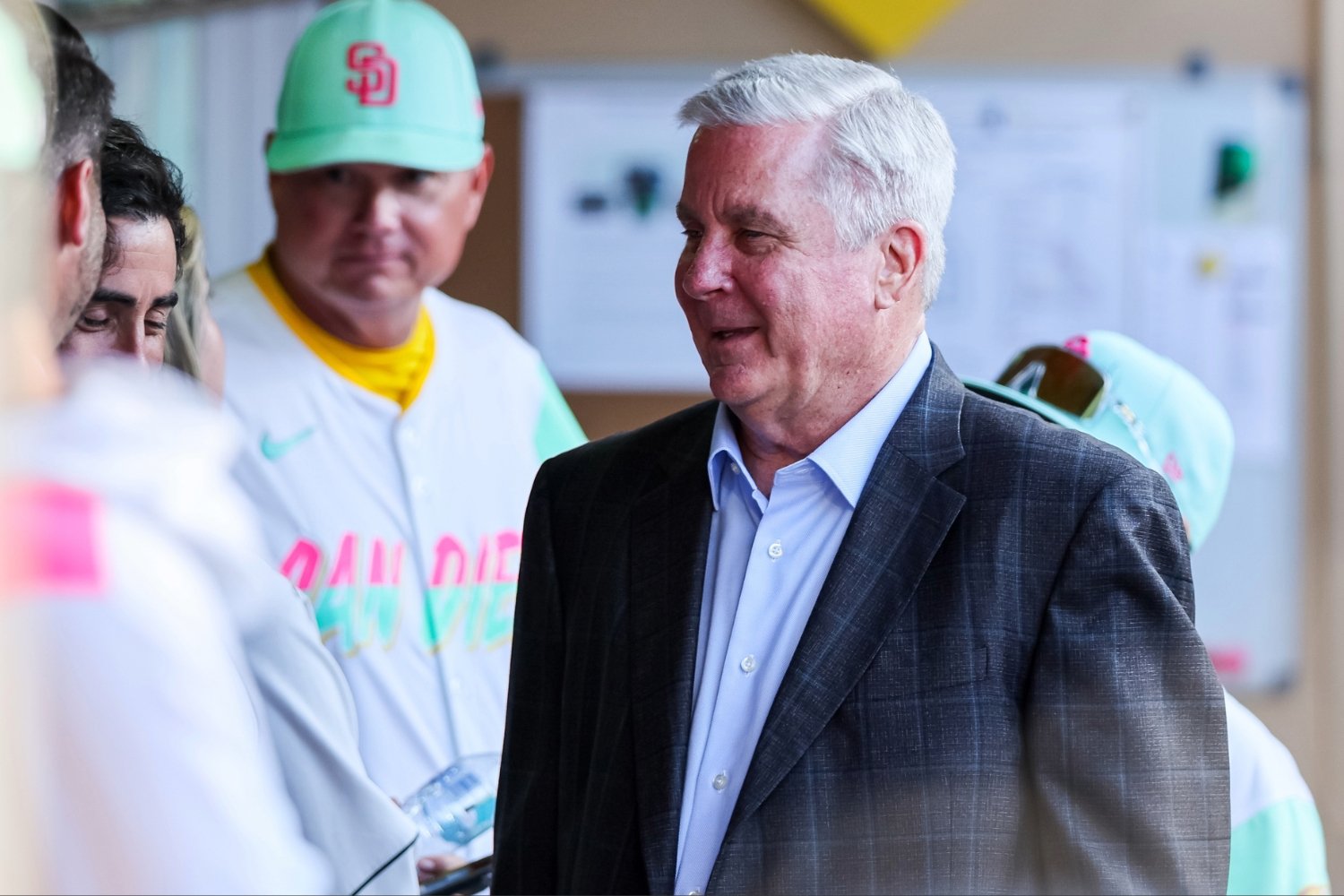 San Diego Padres ownership has been in shambles all offseason. That’s its own saga, but long story short, Padres fans are worried that their time as one of baseball’s highest-spending organizations may be over. With over $40 million coming off the books and no rumored big moves, it looked like the beginning of a slow decline back to the pre-COVID days of $80-110 million dollar rosters. No more $200+ million teams and no more superstar paydays. That was until Padres Chairman John Seidler said the team aims to keep next year’s payroll similar to the 2025 figure of $221 million. There is hope! As of now, San Diego has just over $160 million allocated for next season. After arbitration, assuming the Padres retain all their notable players (including Jason Adam and Adrian Morejon), that number will be around $190 million. That gives the Padres somewhere in the ballpark of $30 million to work with. With a highly active general manager, AJ Preller, at the helm and $30 million available, this offseason just got very exciting for San Diego. Here’s what we know: The Padres let go of Dylan Cease. I’d assume that means they don’t want to spend this money recklessly. Cease projects to be great, but he hasn’t exactly been consistent across his career. They also probably won’t retain Luis Arraez, another high-risk talent given his poor 2025 season. Then there’s Michael King, an injury prone, high-ceiling option whom the Padres are at least open to keeping. The losses of Cease and Arraez are hard to evaluate. Cease is an expensive, metric-supported arm, while Arraez is an anti-metric, cheaper bat. You can’t use those players to predict the Padres’ direction, other than to say they want to move on from 2025 underperformers. So, how can they spend their money? Add a Premier Starter San Diego’s rotation is far from complete, especially if they can’t retain King. The first name that comes to mind is, ironically, José Berríos. The 2025 Blue Jays Opening Day starter finds himself the odd man out of Toronto’s 2026 staff and could swap places with Cease. His $20 million salary in 2026 fits the Padres’ books nicely, and he brings much-needed stability. Berríos has never thrown fewer than 150 innings in a season (besides 2020) and has never posted a FIP over five. Or, they could aim higher and trade for Tarik Skubal. Every team wants him — he’s the best pitcher in baseball. That would require conversations with ownership about extending him, but Preller loves shock value. One of the weakest points of the 2025 staff was the lack of left-handers. They tried to fix it at the deadline with Nestor Cortes and JP Sears, but both struggled. Splurging on someone like Framber Valdez would also be worth it. If he’s unavailable, Ranger Suárez is another strong option who’s been dominant in both the regular season and postseason for the Phillies. Bring Back Michael King This would cost similar money to adding Berríos (around $20 million annually). Preller could weigh the pros and cons of each pitcher, or shed around $10 million in a Berríos trade and get both. The rotation certainly has room, which is why I prefer the latter. Simply retaining King and entering 2026 at roughly $210 million with a few filler players won’t get the job done. Retaining King and adding another arm is what would give the Padres a legitimately dangerous rotation: Nick Pivetta José Berríos or Other Michael King Joe Musgrove Randy Vásquez That's not necessarily equivalent to the Dodgers' world-beating group, but it is a competitive quintet with some depth. Carefully Add to the Infield With Arraez and Ryan O’Hearn entering free agency, the Padres have a huge hole in their lineup. They need more power than Arraez provided and real reinforcements at first base and designated hitter. Signing a pure platoon bat like Paul Goldschmidt or Rhys Hoskins would save money, but neither projects to perform all that well in 2026. That money would be better spent moving on from platooning altogether and adding everyday bats. Retaining O’Hearn could save salary while giving them a full-time first baseman, but he’s reportedly in talks with smaller-market teams like the Pirates and White Sox. It’s best to let those organizations overpay for mid-tier players and aim higher. A big name like Pete Alonso would solve the issue entirely. If not him, signing someone like JT Realmuto (as a catcher/DH) or trading for Yandy Díaz/Vinnie Pasquantino would fit nicely. The key is avoiding a platoon situation where no one finds their footing. We aren’t the Rays, after all. Whether through a blockbuster trade or savvy free-agent signings, San Diego has salary room to work with and clear areas requiring improvement. What do you think the Padres should do with their $30 million? Sounds off in the comments below!
 -
The Winter Meetings are upon us, and that means rumor season is in full swing. This offseason, 2019 All-Star Lucas Giolito is a free agent, and with starting pitching at a premium, he should have multiple suitors. That said, the San Diego Padres should avoid making a deal. Despite his success in 2025, there just isn’t enough underlying metric support to justify a multi-year, multi-million-dollar contract. I won’t deny that he had a surprisingly productive year. Giolito was paid what I thought was an excessive $19 million salary and helped the Boston Red Sox return to the postseason. 2025 Stats 26 Starts 145 IP 3.41 ERA 4.17 FIP 19.7% K-Rate 9.1% BB-Rate 2.0 fWAR Because of this strong campaign, he’s projected to sign a multi-year deal worth over $15 million annually. I don’t see that contract aging well for most teams — especially the Padres. The health of San Diego’s rotation is a bone I’ve picked all offseason, and I’ll continue to do so. Only Nick Pivetta and Dylan Cease surpassed 150 innings, and the only other 100+ inning arm was Randy Vasquez at 133 2/3 frames. The remaining spots went to an unsuccessful mix of unhealthy arms (Yu Darvish, Michael King) and struggling lefties (Nestor Cortes, JP Sears). This approach isn’t viable, and Giolito — who missed the entire 2024 season with a torn UCL and the end of 2025 plus the playoffs with a right elbow injury — is a major injury risk. Cease, who had five consecutive seasons of 30+ starts, has signed with Toronto, so the Padres should prioritize rebounding with another durable arm. Along with health concerns, the underlying metrics don’t look great. Coming from someone who doesn’t believe these stats tell the full story, there’s still reason for skepticism. The excellent ERA and respectable FIP from 2025 likely won’t continue given their “expected” counterparts from FanGraphs. His 2025 xERA was 4.99, and his xFIP was 4.59. He also benefited from a tame .273 BABIP. If that number climbs closer to .300, his production will dip. Beyond health, another large concern for the Padres’ staff is sustainable success. Cease is gone, so the Padres won’t reap the rewards of navigating his historically unlucky 2025 (as discussed in my FA outlook). Aside from him, there aren’t any Padres starters who project to improve in 2026. Pivetta should remain reliable, but at his age it’s hard to sustain that level of breakout. The other main starter, Vasquez, was heavily reliant on “unsustainable success.” He’s another an example of someone whose underlying numbers I trust. As discussed in my pro-Vasquez article, he relies on a six-pitch mix, has an incredible sinker, and excels with runners on base. Giolito shares the clutch-pitching ability (76.7 LOB%), but lacks the arsenal depth and go-to pitch needed for me to ignore his underlying metrics. Speaking of dominant pitches, that’s another area of concern for Giolito’s outlook. As a Chicagoan, I vividly remember the dominance of Giolito’s changeup during his time with the White Sox. He actually had two: a normal low-80s version that fell out of the zone as hitters lunged forward, and what might be my favorite pitch ever; a parachute changeup. It would come in high, look like a missed fastball, then float back into the zone for a strike. A risky, dominant pitch. It even got him a strikeout on Cody Bellinger in the 2019 All-Star Game. Clearly, it’s with great sadness that I write about the falloff of one of my favorite pitchers and pitches. Unfortunately, the numbers haven’t held. His changeup peaked with a +16 Statcast run value in 2019 and remained excellent through 2021. Since then, it’s been stuck at +0 for three straight seasons. One positive sign is that his fastball value (+5) returned above average results for the first time since 2020. It’s hard to see that continuing, though, as it averages just 93.3 mph (1.7 mph below league average), and he throws it 48% of the time. It is possible for a pitcher with nasty off-speed stuff to successfully rely on a slower fastball, but with only two other pitches (a +1 slider and a +0 changeup), there isn’t much preventing hitters from sitting on the nearly half of Giolito’s pitches that are fastballs. To summarize, just look at the Statcast breakdown of his 2025 season (some numbers vary from FanGraphs because they calculate things differently): 5.00 xERA (Bottom 13th Percentile) .267 xBA (Bottom 15th Percentile) 93.3 Fastball MPH (Bottom 32nd Percentile) 90.3 Avg Exit Velo (Bottom 22nd Percentile) 26.7% Chase Rate (Bottom 30th Percentile) 19.7% K-Rate (Bottom 28th Percentile) 9.1% BB-Rate (Bottom 30th Percentile) 9.0% Barrel Rate (Bottom 39th Percentile) 41.1% Hard Hit Rate (Bottom 45th Percentile) While I’m glad to see Giolito earn himself another big payday, the Padres, and any team needing a reliable starter, should look elsewhere in free agency. View full article
-
Why The Padres Shouldn't Sign Starting Pitcher Lucas Giolito
Greg Spicer posted an article in Padres
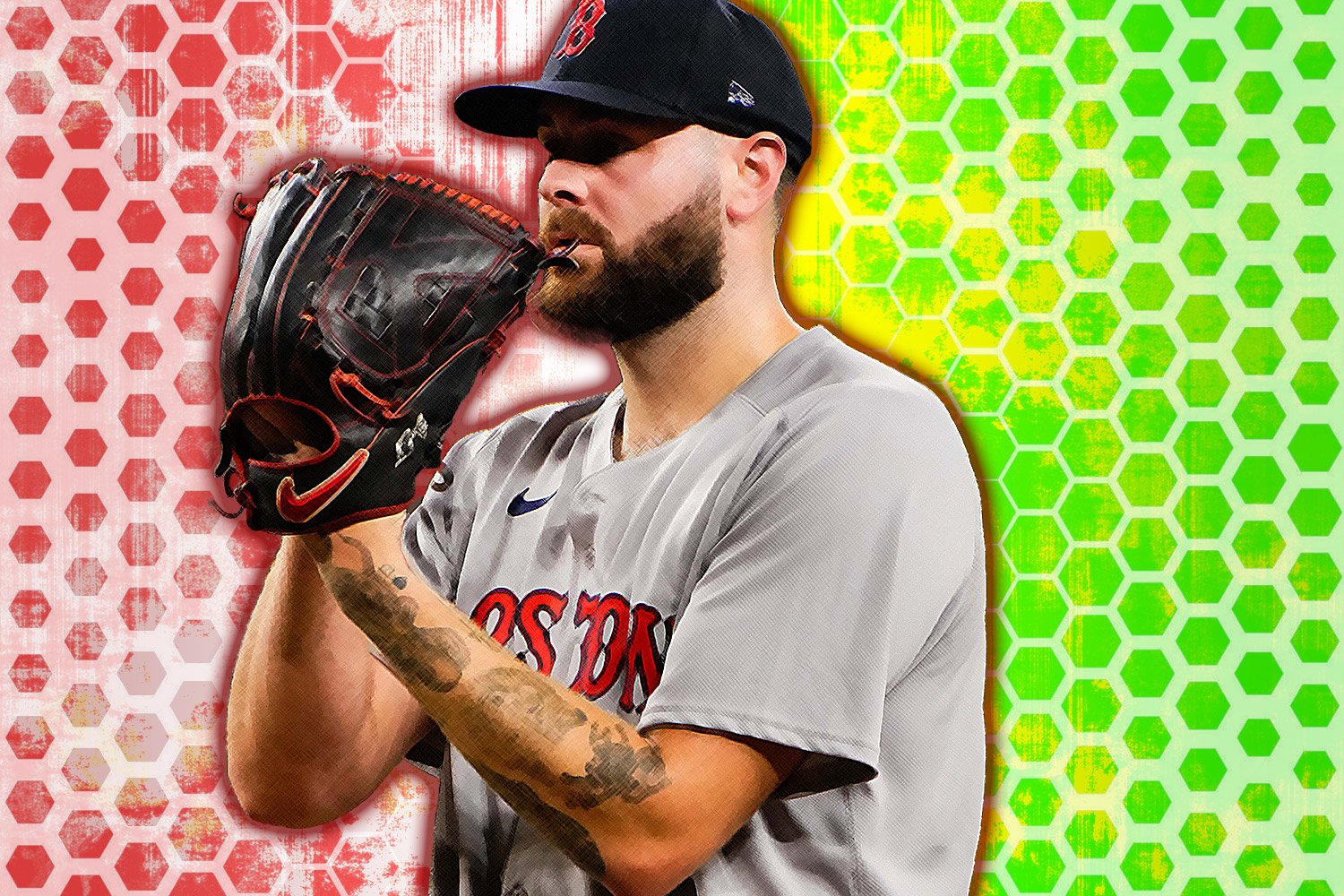 The Winter Meetings are upon us, and that means rumor season is in full swing. This offseason, 2019 All-Star Lucas Giolito is a free agent, and with starting pitching at a premium, he should have multiple suitors. That said, the San Diego Padres should avoid making a deal. Despite his success in 2025, there just isn’t enough underlying metric support to justify a multi-year, multi-million-dollar contract. I won’t deny that he had a surprisingly productive year. Giolito was paid what I thought was an excessive $19 million salary and helped the Boston Red Sox return to the postseason. 2025 Stats 26 Starts 145 IP 3.41 ERA 4.17 FIP 19.7% K-Rate 9.1% BB-Rate 2.0 fWAR Because of this strong campaign, he’s projected to sign a multi-year deal worth over $15 million annually. I don’t see that contract aging well for most teams — especially the Padres. The health of San Diego’s rotation is a bone I’ve picked all offseason, and I’ll continue to do so. Only Nick Pivetta and Dylan Cease surpassed 150 innings, and the only other 100+ inning arm was Randy Vasquez at 133 2/3 frames. The remaining spots went to an unsuccessful mix of unhealthy arms (Yu Darvish, Michael King) and struggling lefties (Nestor Cortes, JP Sears). This approach isn’t viable, and Giolito — who missed the entire 2024 season with a torn UCL and the end of 2025 plus the playoffs with a right elbow injury — is a major injury risk. Cease, who had five consecutive seasons of 30+ starts, has signed with Toronto, so the Padres should prioritize rebounding with another durable arm. Along with health concerns, the underlying metrics don’t look great. Coming from someone who doesn’t believe these stats tell the full story, there’s still reason for skepticism. The excellent ERA and respectable FIP from 2025 likely won’t continue given their “expected” counterparts from FanGraphs. His 2025 xERA was 4.99, and his xFIP was 4.59. He also benefited from a tame .273 BABIP. If that number climbs closer to .300, his production will dip. Beyond health, another large concern for the Padres’ staff is sustainable success. Cease is gone, so the Padres won’t reap the rewards of navigating his historically unlucky 2025 (as discussed in my FA outlook). Aside from him, there aren’t any Padres starters who project to improve in 2026. Pivetta should remain reliable, but at his age it’s hard to sustain that level of breakout. The other main starter, Vasquez, was heavily reliant on “unsustainable success.” He’s another an example of someone whose underlying numbers I trust. As discussed in my pro-Vasquez article, he relies on a six-pitch mix, has an incredible sinker, and excels with runners on base. Giolito shares the clutch-pitching ability (76.7 LOB%), but lacks the arsenal depth and go-to pitch needed for me to ignore his underlying metrics. Speaking of dominant pitches, that’s another area of concern for Giolito’s outlook. As a Chicagoan, I vividly remember the dominance of Giolito’s changeup during his time with the White Sox. He actually had two: a normal low-80s version that fell out of the zone as hitters lunged forward, and what might be my favorite pitch ever; a parachute changeup. It would come in high, look like a missed fastball, then float back into the zone for a strike. A risky, dominant pitch. It even got him a strikeout on Cody Bellinger in the 2019 All-Star Game. Clearly, it’s with great sadness that I write about the falloff of one of my favorite pitchers and pitches. Unfortunately, the numbers haven’t held. His changeup peaked with a +16 Statcast run value in 2019 and remained excellent through 2021. Since then, it’s been stuck at +0 for three straight seasons. One positive sign is that his fastball value (+5) returned above average results for the first time since 2020. It’s hard to see that continuing, though, as it averages just 93.3 mph (1.7 mph below league average), and he throws it 48% of the time. It is possible for a pitcher with nasty off-speed stuff to successfully rely on a slower fastball, but with only two other pitches (a +1 slider and a +0 changeup), there isn’t much preventing hitters from sitting on the nearly half of Giolito’s pitches that are fastballs. To summarize, just look at the Statcast breakdown of his 2025 season (some numbers vary from FanGraphs because they calculate things differently): 5.00 xERA (Bottom 13th Percentile) .267 xBA (Bottom 15th Percentile) 93.3 Fastball MPH (Bottom 32nd Percentile) 90.3 Avg Exit Velo (Bottom 22nd Percentile) 26.7% Chase Rate (Bottom 30th Percentile) 19.7% K-Rate (Bottom 28th Percentile) 9.1% BB-Rate (Bottom 30th Percentile) 9.0% Barrel Rate (Bottom 39th Percentile) 41.1% Hard Hit Rate (Bottom 45th Percentile) While I’m glad to see Giolito earn himself another big payday, the Padres, and any team needing a reliable starter, should look elsewhere in free agency.
 -
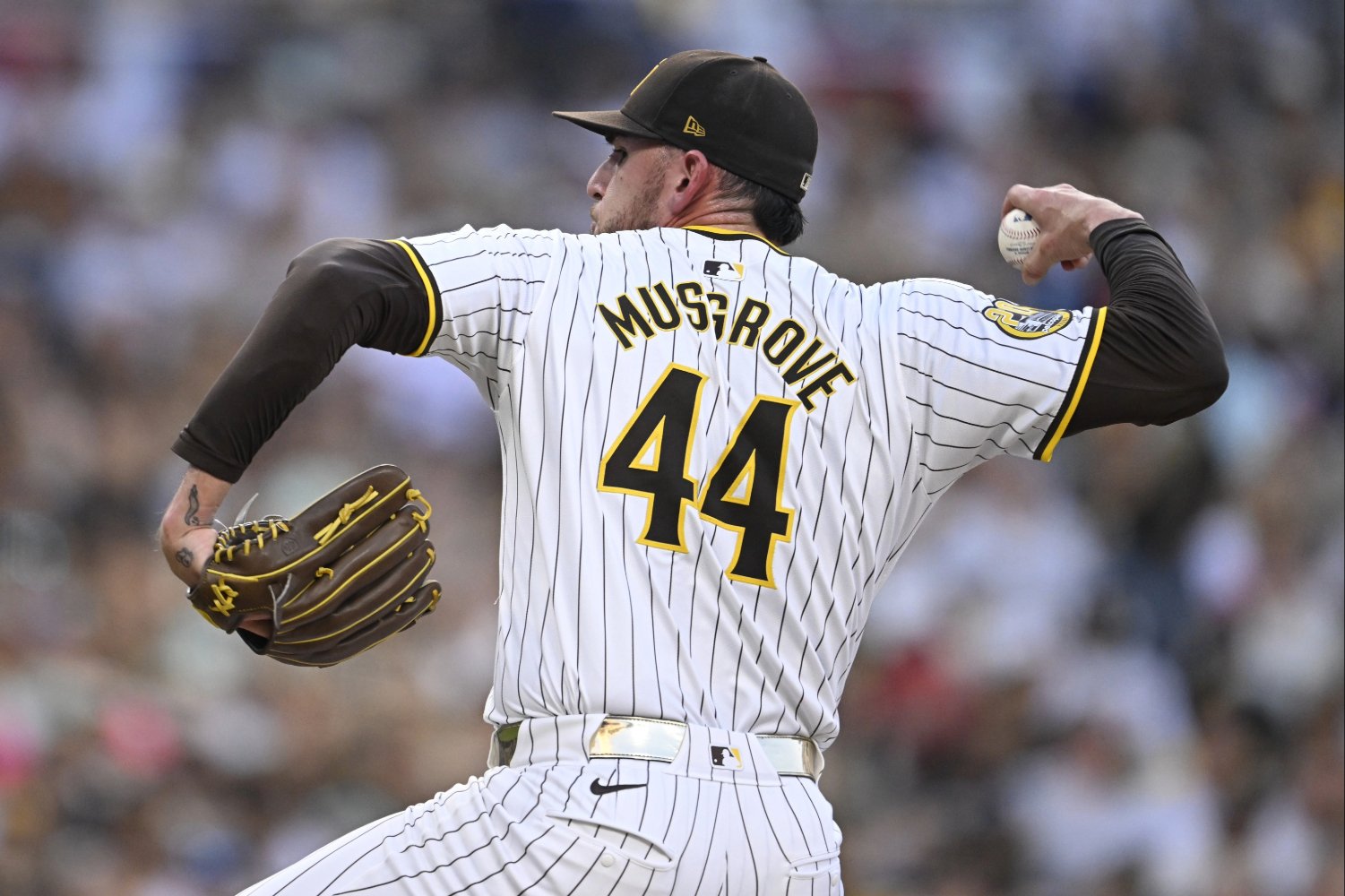 The San Diego Padres need Joe Musgrove to perform. Last year’s rotation was already an island of misfit toys, and things are only getting more complicated in 2026. Nick Pivetta will return, but can the 32-year-old breakout star be trusted to sustain his career-high output from last season? No one knows where Dylan Cease or Michael King will be pitching, but it’s unlikely San Diego keeps both. Ownership is in shambles and, unlike years past, can’t be counted on to save the day with a big signing or trade. (Yes, I’ll still be delusional and pray for Tarik Skubal like every other fanbase.) The brightest glimmer of hope for the Padres’ staff is the return of Joe Musgrove. He’s dealt with many injuries since 2023: Spring training fractured toe Shoulder capsule issue Bone spur Torn ulnar collateral ligament Tommy John surgery Returning to dominance won’t be easy, but with modern treatment plans and his history of success, he can still be a key piece of the rotation. Before the injuries, he was one of the most reliable pitchers in baseball. His last two fully healthy seasons, 2021 and 2022, included more than 180 innings each. During that stretch, he logged: 362 2/3 IP 3.06 ERA 3.64 FIP 3.58 xERA 26% strikeout rate 6.5% walk rate The most predictable drop-off will be in his workload. It’s unlikely he returns to the innings-eater he was a few seasons ago. Musgrove has already spoken about “easing” himself back into action, and that’s okay. In 2025, only two Padres starters threw more than 140 innings (Pivetta and Cease), and only one other reached 100 (Randy Vásquez). King was injured, Darvish was injured, and the Nestor Cortes/JP Sears deadline duo was notably unproductive. Despite that, the Padres still won 90 games and fielded a respectable pitching staff. Essentially, the bar for Musgrove to come in and be an upgrade is fairly low. The focus has to be on avoiding re-injury and making the innings he does throw as productive as possible. So, what can we expect? Musgrove has shown he can succeed even when he’s not fully healthy. Coming back from Tommy John surgery is a different level of adversity, but his 2023 and 2024 seasons are encouraging. Even though he never surpassed 100 innings in either year, he still produced: 3.47 ERA 3.74 FIP 3.69 xERA 24.5% strikeout rate 5.4% walk rate There’s clearly reason to believe in Musgrove’s resilience. Also, he isn’t a fastball-dependent pitcher. That’s important because many pitchers who get Tommy John struggle to survive the velocity drop. Musgrove throws his fastball just 25% of the time with an average velocity of 93 mph (1.7 mph below average). His fastball velocity hasn’t been above the 34th percentile since 2021, when it sat in the 45th. What will affect him more is a potential decline in spin rate. Musgrove has been in the 98th or 99th percentile in fastball spin since 2021. Compare that with Jacob deGrom, who missed a similar amount of time after Tommy John surgery and has dealt with his own injury battles. DeGrom dropped about five percentiles in both velocity and spin rate, yet still had a dominant return in 2025. Now, Musgrove isn’t deGrom, but he also isn’t as reliant on power pitching (elite velocity and high-spin off-speed pitches). Instead, he navigates lineups with a five-pitch mix and pinpoint command. Those traits don’t vanish—he’ll just need time to shake off rust. With likely declines in fastball metrics and breaking balls posing higher injury risk, expect Musgrove to lean more on his changeup. He threw it 11.4% of the time in 2023, his highest mark since 2018, and it became his most effective pitch, yielding a 40.6% whiff rate and 22.9% putaway rate. A cutter increase should complement that. The cutter has been one of Musgrove’s most consistent pitches, never posting a negative run value on Statcast. In 2023, the same year he threw more changeups, the cutter had a run value of +7. Shifting away from a fastball/curveball vertical attack and moving toward a horizontal approach with cutters and changeups isn’t just healthier, it’s effective. That said, he can still trust his breaking balls. Unlike fastballs, his curveball and sweeper should remain sharp. Looking at deGrom again—whose 90+ mph slider is one of the most arm-taxing pitches in baseball—he saw no drop in slider velocity or spin in 2025. In fact, he kept his RPM above 2,600, something he rarely did even in his prime. Hopefully, San Diego can use that same magic to keep Musgrove’s breaking pitches spinning. He typically throws his sweeper and curveball around 20% each. Overall, he’ll likely see a decline in velocity that will reduce the fastball’s effectiveness. He’ll also be coming off a long injured-list stint and a difficult surgery. Protecting his health will be the priority, and spinning a heavy load of breaking balls immediately isn’t smart. Still, sports science is stronger than ever, and pitchers like deGrom have been returning from similar injuries. We also know that Musgrove plans to ease back into a full starter workload. With that in mind, here’s my prediction: 2026 Projection 120 IP 3.75 ERA 3.98 FIP 23.8% strikeout rate 5.9% walk rate Pitch Mix 23.5% fastball 18% curveball 22% cutter 20% slider/sweeper 15% changeup 1.5% other It may not be Cy Young-level production, but this output would be a significant upgrade for a rotation in desperate need of stability.
 -
The San Diego Padres need Joe Musgrove to perform. Last year’s rotation was already an island of misfit toys, and things are only getting more complicated in 2026. Nick Pivetta will return, but can the 32-year-old breakout star be trusted to sustain his career-high output from last season? No one knows where Dylan Cease or Michael King will be pitching, but it’s unlikely San Diego keeps both. Ownership is in shambles and, unlike years past, can’t be counted on to save the day with a big signing or trade. (Yes, I’ll still be delusional and pray for Tarik Skubal like every other fanbase.) The brightest glimmer of hope for the Padres’ staff is the return of Joe Musgrove. He’s dealt with many injuries since 2023: Spring training fractured toe Shoulder capsule issue Bone spur Torn ulnar collateral ligament Tommy John surgery Returning to dominance won’t be easy, but with modern treatment plans and his history of success, he can still be a key piece of the rotation. Before the injuries, he was one of the most reliable pitchers in baseball. His last two fully healthy seasons, 2021 and 2022, included more than 180 innings each. During that stretch, he logged: 362 2/3 IP 3.06 ERA 3.64 FIP 3.58 xERA 26% strikeout rate 6.5% walk rate The most predictable drop-off will be in his workload. It’s unlikely he returns to the innings-eater he was a few seasons ago. Musgrove has already spoken about “easing” himself back into action, and that’s okay. In 2025, only two Padres starters threw more than 140 innings (Pivetta and Cease), and only one other reached 100 (Randy Vásquez). King was injured, Darvish was injured, and the Nestor Cortes/JP Sears deadline duo was notably unproductive. Despite that, the Padres still won 90 games and fielded a respectable pitching staff. Essentially, the bar for Musgrove to come in and be an upgrade is fairly low. The focus has to be on avoiding re-injury and making the innings he does throw as productive as possible. So, what can we expect? Musgrove has shown he can succeed even when he’s not fully healthy. Coming back from Tommy John surgery is a different level of adversity, but his 2023 and 2024 seasons are encouraging. Even though he never surpassed 100 innings in either year, he still produced: 3.47 ERA 3.74 FIP 3.69 xERA 24.5% strikeout rate 5.4% walk rate There’s clearly reason to believe in Musgrove’s resilience. Also, he isn’t a fastball-dependent pitcher. That’s important because many pitchers who get Tommy John struggle to survive the velocity drop. Musgrove throws his fastball just 25% of the time with an average velocity of 93 mph (1.7 mph below average). His fastball velocity hasn’t been above the 34th percentile since 2021, when it sat in the 45th. What will affect him more is a potential decline in spin rate. Musgrove has been in the 98th or 99th percentile in fastball spin since 2021. Compare that with Jacob deGrom, who missed a similar amount of time after Tommy John surgery and has dealt with his own injury battles. DeGrom dropped about five percentiles in both velocity and spin rate, yet still had a dominant return in 2025. Now, Musgrove isn’t deGrom, but he also isn’t as reliant on power pitching (elite velocity and high-spin off-speed pitches). Instead, he navigates lineups with a five-pitch mix and pinpoint command. Those traits don’t vanish—he’ll just need time to shake off rust. With likely declines in fastball metrics and breaking balls posing higher injury risk, expect Musgrove to lean more on his changeup. He threw it 11.4% of the time in 2023, his highest mark since 2018, and it became his most effective pitch, yielding a 40.6% whiff rate and 22.9% putaway rate. A cutter increase should complement that. The cutter has been one of Musgrove’s most consistent pitches, never posting a negative run value on Statcast. In 2023, the same year he threw more changeups, the cutter had a run value of +7. Shifting away from a fastball/curveball vertical attack and moving toward a horizontal approach with cutters and changeups isn’t just healthier, it’s effective. That said, he can still trust his breaking balls. Unlike fastballs, his curveball and sweeper should remain sharp. Looking at deGrom again—whose 90+ mph slider is one of the most arm-taxing pitches in baseball—he saw no drop in slider velocity or spin in 2025. In fact, he kept his RPM above 2,600, something he rarely did even in his prime. Hopefully, San Diego can use that same magic to keep Musgrove’s breaking pitches spinning. He typically throws his sweeper and curveball around 20% each. Overall, he’ll likely see a decline in velocity that will reduce the fastball’s effectiveness. He’ll also be coming off a long injured-list stint and a difficult surgery. Protecting his health will be the priority, and spinning a heavy load of breaking balls immediately isn’t smart. Still, sports science is stronger than ever, and pitchers like deGrom have been returning from similar injuries. We also know that Musgrove plans to ease back into a full starter workload. With that in mind, here’s my prediction: 2026 Projection 120 IP 3.75 ERA 3.98 FIP 23.8% strikeout rate 5.9% walk rate Pitch Mix 23.5% fastball 18% curveball 22% cutter 20% slider/sweeper 15% changeup 1.5% other It may not be Cy Young-level production, but this output would be a significant upgrade for a rotation in desperate need of stability. View full article
-
Although the San Diego Padres' 2025 season didn’t end the way the team hoped, many players on the squad had excellent performances, especially in the team's historically-great bullpen. Included in these successes is Adrian Morejon, who enters this offseason with one final year of arbitration eligibility. The southpaw reliever followed up his strong 2024 campaign with one of the best relief seasons in San Diego history. In 2025, Morejon produced: 75 G 73.2 IP (team-high out of the bullpen) 2.08 ERA 2.28 FIP 24.5 K% 5.9 BB% (tied for best among team relievers) 0.24 HR/9 (team-best) 2.2 FanGraph WAR (team-best among relievers) His dominance was game-changing for the Padres bullpen. With fellow star relievers Robert Suarez, Jason Adam and Mason Miller all being righties, Morejon’s lefty arm brought crucial balance to the relief corps. Morejon, 26, is now entering his fourth year of arbitration eligibility as a "Super-Two" player. San Diego has to decide how they are going to handle his contract situation, given that 2026 represents his final year before free agency. Most teams don’t like to reach that point, however. Especially with a premium talent like Morejon, front offices generally prefer to show these players faith and agree to a contract extension. That is where the decision-making comes in. Is this another arbitration year for Morejon, with contract talks being pushed to next offseason, or should the Padres lock up the 2025 All-Star now? On one hand, negotiating a long-term deal this offseason would be a “buy-high” move from general manager A.J. Preller. Pretty much everything went great for Morejon in 2025. On top of his dominant regular season, he was excellent against the Chicago Cubs in the first round of the playoffs: 3 G 4.1 IP 0.00 ERA 2.21 FIP 100% LOB% (Percent of baserunners Left on Base) Only SD Pitcher to record a win in the series If San Diego were to pay up this offseason, it would be a steep price. With that said, Morejon is an investment worth making. First of all, it is a general principle of team morale that players are happier when they are paid for their successes. San Diego should avoid tension at all costs, and the safest way to do that is by extending him. Sometimes, the player and team can agree on one-year contracts to avoid arbitration, or both parties end up comfortable with MLBs arbitration contract; but many times, these negotiations cause tension. This dynamic can lead to players leaving, or worsening performances. Think 2023 Corbin Burnes, 2018 Marcus Stroman, or for relievers, 2018 Dellin Betances. Also, looking at Morejon’s advanced stats, his dominance probably won’t be going anywhere. That’s a good thing for the Padres championship hopes in 2026, but it also means the front office can’t count on a “down year” from Morejon to buy low on. Next year’s price won’t change much, and if anything, could increase. Here are some of Morejon's expected/advanced stats from 2025 that project his continued ascendence. 85.9 Opponent Exit Velocity (Top 2% of MLB) .315 xSLG (Top 5%) .256 xWOBA (Top 3%) 30.7% Opponent Hard Hit Rate (Top 1%) 2.53 xERA (Top 5%) In fact, extending Morejon to a guaranteed contract this winter could end up being a savvy move. San Diego's starting rotation was scrappy in 2025. Nick Pivetta was the only pitcher to start and end the season as a healthy member of the rotation. Rumors are now floating around that superstar reliever Mason Miller (and perhaps even Morejon) could join the rotation in 2026. If he were to end up succeeding as a starter, his price tag would skyrocket. I already broke down Miller’s SP potential when the Padres acquired him in July. For Morejon, those same principles hold true. He has the experience coming into MLB as a starter, with eight outings early in his career showing flashes of potential. As a lefty, he also has the velocity to survive the natural MPH drop that pitchers experience when moving from the bullpen to the rotation; his sinker averaged 97.7 MPH this year, and his slider sat around 87.5 MPH. On top of those factors, the potential for Morejon to add a third high-usage pitch is especially notable. In 2025, 86.3% of his pitches were either sinkers or sliders. Outside of that, he didn’t throw any pitch over 7% of the time. This output isn’t sustainable as a starter, but Morejon has a change-up in his arsenal that is waiting to be fully unleashed. He threw just 66 changeups last season, exclusively against righties. The pitch averaged 90.5 MPH on the year, and was unhittable when used: 6.6% Usage Rate ONE Hit Allowed (Single) .131 xBA .214 xSLG 48.8% Whiff Rate 38.7 Put Away Rate All of these statistics, besides the usage rate, were by far the best of any Morejon pitch. Naturally, there would be some drop-off if he started relying on the changeup more frequently, but with only one hit allowed on 66 attempts, there is a lot of room to work with in terms of keeping the pitch effective—even if it’s not as dominant as 2025. Overall, Morejon has to stay in a Padres uniform, and Preller needs to make that happen without any conflict or tension. Whether that be through cordial arbitration negotiations or a contract extension, he is a vital part of the San Diego pitching staff and should be treated as such. View full article
-
San Diego Padres Arbitration Decisions & Projections: Adrian Morejon
Greg Spicer posted an article in Padres
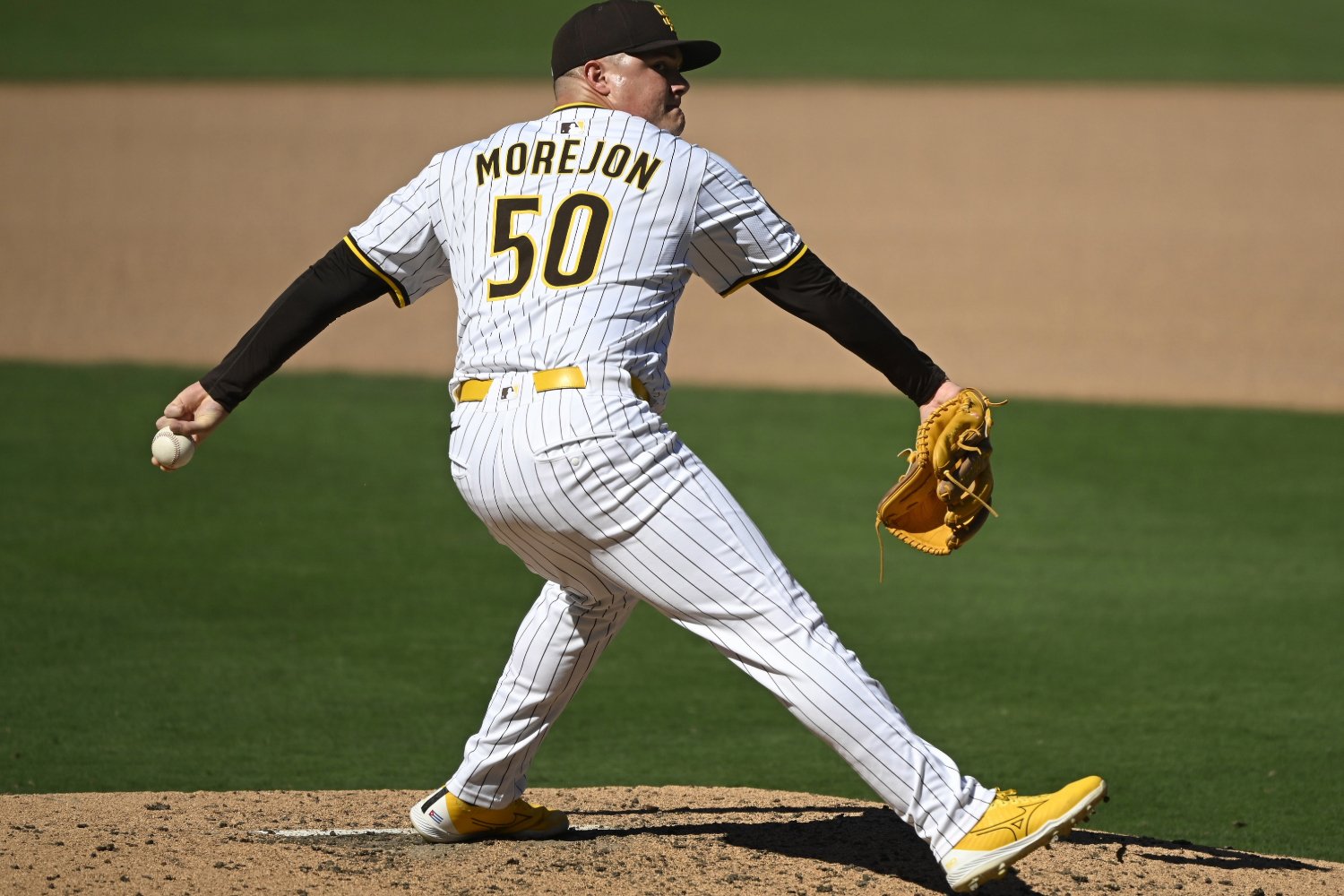 Although the San Diego Padres' 2025 season didn’t end the way the team hoped, many players on the squad had excellent performances, especially in the team's historically-great bullpen. Included in these successes is Adrian Morejon, who enters this offseason with one final year of arbitration eligibility. The southpaw reliever followed up his strong 2024 campaign with one of the best relief seasons in San Diego history. In 2025, Morejon produced: 75 G 73.2 IP (team-high out of the bullpen) 2.08 ERA 2.28 FIP 24.5 K% 5.9 BB% (tied for best among team relievers) 0.24 HR/9 (team-best) 2.2 FanGraph WAR (team-best among relievers) His dominance was game-changing for the Padres bullpen. With fellow star relievers Robert Suarez, Jason Adam and Mason Miller all being righties, Morejon’s lefty arm brought crucial balance to the relief corps. Morejon, 26, is now entering his fourth year of arbitration eligibility as a "Super-Two" player. San Diego has to decide how they are going to handle his contract situation, given that 2026 represents his final year before free agency. Most teams don’t like to reach that point, however. Especially with a premium talent like Morejon, front offices generally prefer to show these players faith and agree to a contract extension. That is where the decision-making comes in. Is this another arbitration year for Morejon, with contract talks being pushed to next offseason, or should the Padres lock up the 2025 All-Star now? On one hand, negotiating a long-term deal this offseason would be a “buy-high” move from general manager A.J. Preller. Pretty much everything went great for Morejon in 2025. On top of his dominant regular season, he was excellent against the Chicago Cubs in the first round of the playoffs: 3 G 4.1 IP 0.00 ERA 2.21 FIP 100% LOB% (Percent of baserunners Left on Base) Only SD Pitcher to record a win in the series If San Diego were to pay up this offseason, it would be a steep price. With that said, Morejon is an investment worth making. First of all, it is a general principle of team morale that players are happier when they are paid for their successes. San Diego should avoid tension at all costs, and the safest way to do that is by extending him. Sometimes, the player and team can agree on one-year contracts to avoid arbitration, or both parties end up comfortable with MLBs arbitration contract; but many times, these negotiations cause tension. This dynamic can lead to players leaving, or worsening performances. Think 2023 Corbin Burnes, 2018 Marcus Stroman, or for relievers, 2018 Dellin Betances. Also, looking at Morejon’s advanced stats, his dominance probably won’t be going anywhere. That’s a good thing for the Padres championship hopes in 2026, but it also means the front office can’t count on a “down year” from Morejon to buy low on. Next year’s price won’t change much, and if anything, could increase. Here are some of Morejon's expected/advanced stats from 2025 that project his continued ascendence. 85.9 Opponent Exit Velocity (Top 2% of MLB) .315 xSLG (Top 5%) .256 xWOBA (Top 3%) 30.7% Opponent Hard Hit Rate (Top 1%) 2.53 xERA (Top 5%) In fact, extending Morejon to a guaranteed contract this winter could end up being a savvy move. San Diego's starting rotation was scrappy in 2025. Nick Pivetta was the only pitcher to start and end the season as a healthy member of the rotation. Rumors are now floating around that superstar reliever Mason Miller (and perhaps even Morejon) could join the rotation in 2026. If he were to end up succeeding as a starter, his price tag would skyrocket. I already broke down Miller’s SP potential when the Padres acquired him in July. For Morejon, those same principles hold true. He has the experience coming into MLB as a starter, with eight outings early in his career showing flashes of potential. As a lefty, he also has the velocity to survive the natural MPH drop that pitchers experience when moving from the bullpen to the rotation; his sinker averaged 97.7 MPH this year, and his slider sat around 87.5 MPH. On top of those factors, the potential for Morejon to add a third high-usage pitch is especially notable. In 2025, 86.3% of his pitches were either sinkers or sliders. Outside of that, he didn’t throw any pitch over 7% of the time. This output isn’t sustainable as a starter, but Morejon has a change-up in his arsenal that is waiting to be fully unleashed. He threw just 66 changeups last season, exclusively against righties. The pitch averaged 90.5 MPH on the year, and was unhittable when used: 6.6% Usage Rate ONE Hit Allowed (Single) .131 xBA .214 xSLG 48.8% Whiff Rate 38.7 Put Away Rate All of these statistics, besides the usage rate, were by far the best of any Morejon pitch. Naturally, there would be some drop-off if he started relying on the changeup more frequently, but with only one hit allowed on 66 attempts, there is a lot of room to work with in terms of keeping the pitch effective—even if it’s not as dominant as 2025. Overall, Morejon has to stay in a Padres uniform, and Preller needs to make that happen without any conflict or tension. Whether that be through cordial arbitration negotiations or a contract extension, he is a vital part of the San Diego pitching staff and should be treated as such.
 -
The San Diego Padres' season ended painfully last week at the hands of the Chicago Cubs. After a low-scoring, back-and-forth series, the Padres were faced with their last chance to stay alive in the ninth inning of game three. Down 3-0, Jackson Merrill got things started with a home run, cutting the deficit to two. Following the leadoff bomb, shortstop Xander Bogaerts stepped up to the plate for one of his biggest at-bats of the season. Bogaerts hit .333 in the series and had a lot of hard contact, so there was hope for a rally. Cubs closer Brad Keller had been excellent all season, but clearly fought jitters trying to close out the series. Bogaerts was able to force a 3-1 count, with all three balls being way off the plate, and the one strike being a slider that barely nicked the zone. With the count in Bogaerts' favor, Keller threw a 96.5 mph fastball that just touched the outside part of the plate. He got the call from the ump, making it a full count. No injustices had happened up to this point, but it was clear that Keller was on thin ice. He was barely getting strike calls, and his misses weren’t close. Keller loaded up a full count fastball for the biggest pitch of the series, but missed a few inches below the TV strike zone. Despite the pitch being way below anyone's idea of a strike, home plate umpire D.J. Reyburn rang Bogaerts up. He and Padres Manager Mike Shildt flipped out, but there was nothing they could do. MLB won’t have challenged strike calls until 2026, making San Diego one of the last victims. Hindsight is 20/20 What makes this moment notable isn’t just a bad call in a close postseason game; it’s what happened after the at-bat. Looking at the rest of the ninth, Brad Keller was still a mess. Let’s pretend the umpire made the correct call and Bogaerts was on first base. Keller then hit the next batter, Ryan O’Hearn, in a two-strike count. That would've put runners on first and second, with nobody out. He then did the same thing to Bryce Johnson, missing badly with a change-up and hitting him in another two-strike count. Now, instead of having runners on first and second with one out, it would be bases loaded with nobody out. After two free bases, Cubs Coach Craig Counsell put in reliever Andrew Kittredge. Facing a new arm, Padres batter Jake Cronenworth hit a dribbling ground ball that resulted in a close out at first base, advancing both runners. Had the bases been loaded, this soft groundout would have easily scored Bogaerts, cutting the lead to one. The new hypothetical situation is runners on second and third, one out, and Freddy Fermin at the plate. Fermin, who ended up being the final out of the Padres' season, smashed a 101.1 MPH line drive to center field. Cubs outfielder Pete Crow Armstrong made the play, sending San Diego home. Had there only been one out, though, this rope would've scored the game-tying run via sacrifice fly. ABS System Breakdown Obviously, if Bogaerts had gotten the walk, the plays after may not have been the same, so it’s not an end-all excuse. You can’t only blame the umpires when the offense was held scoreless through the first eight innings of an elimination game. With that said, baseball is a game that favors pitchers and is built around big moments. There’s nothing worse for fans or players than umpires taking the bat out of a hitter's hands in a crucial situation. Finally, in 2026, MLB is making a change. Next season, MLB will introduce the ABS challenge system. ABS is a combination of technology and rules that allows players to challenge strike calls a few times a game. Implementing this system provides baseball with a more accurate strike zone by reducing the likelihood of incorrect calls having a significant impact on the game. Technologically, MLB will have Hawkeye cameras built in at every stadium to track the location of every pitch. If a player challenges, the system will display the results of the pitch within 15 seconds and indicate how far a pitch was in/out of the strike zone for viewers. Powered by T-Mobile, the ABS is designed to deliver fast, accurate, and precise information on every challenging pitch. Rule-wise, each team will have two challenges per game. If you successfully overturn a call, then you keep your challenges. If you incorrectly challenge a pitch, then you lose a challenge. Only a batter, pitcher, or catcher can choose to review a call, and the decision must be made quickly right after the pitch. MLB has also announced the ABS strike zone for each player. The top of the strike zone will be 53.5% of a player's height, and the bottom will be 27%. Based on these metrics, it’s confirmed that ABS would have overturned the call on Bogaerts. It’s exciting that MLB made the right choice in bringing a challenge system, but this took far too long. MLB wasted time experimenting with full-time robotic umpires, adding challenge systems to non-strike zone calls, and punishing players/coaches for speaking out about the issue. Most fans don’t want to see umpires removed. They make the game unique, but sometimes the difficulty of their jobs creates major issues. That’s why the ABS system is a perfect fit. We achieve greater accuracy for big moments, but we’re not taking away one of the most distinct aspects of our sport. Unfortunately for the Padres, that won’t start until 2026, so we'll never know what could've happened in the bottom of the ninth inning against the Cubs. View full article
-
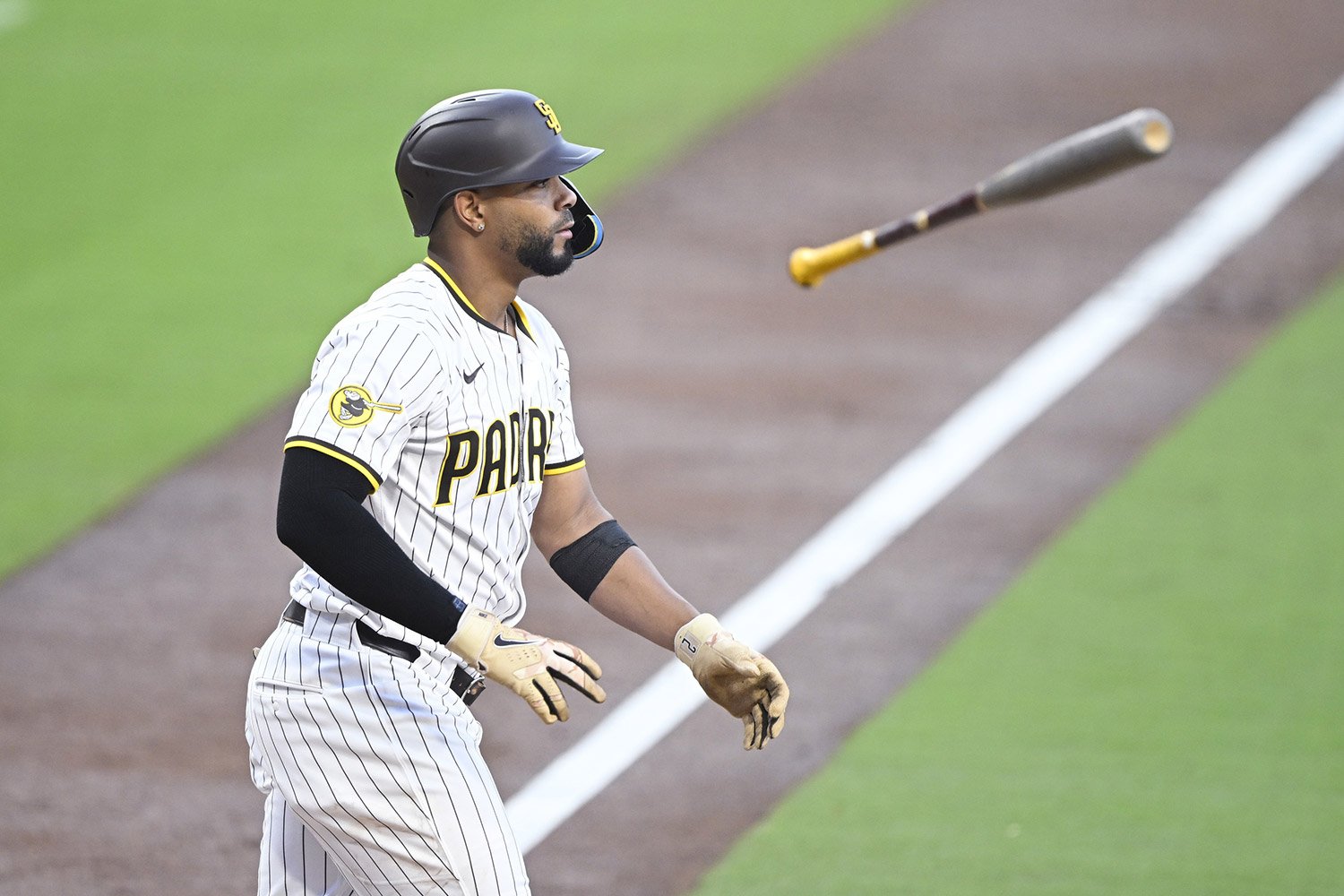 The San Diego Padres' season ended painfully last week at the hands of the Chicago Cubs. After a low-scoring, back-and-forth series, the Padres were faced with their last chance to stay alive in the ninth inning of game three. Down 3-0, Jackson Merrill got things started with a home run, cutting the deficit to two. Following the leadoff bomb, shortstop Xander Bogaerts stepped up to the plate for one of his biggest at-bats of the season. Bogaerts hit .333 in the series and had a lot of hard contact, so there was hope for a rally. Cubs closer Brad Keller had been excellent all season, but clearly fought jitters trying to close out the series. Bogaerts was able to force a 3-1 count, with all three balls being way off the plate, and the one strike being a slider that barely nicked the zone. With the count in Bogaerts' favor, Keller threw a 96.5 mph fastball that just touched the outside part of the plate. He got the call from the ump, making it a full count. No injustices had happened up to this point, but it was clear that Keller was on thin ice. He was barely getting strike calls, and his misses weren’t close. Keller loaded up a full count fastball for the biggest pitch of the series, but missed a few inches below the TV strike zone. Despite the pitch being way below anyone's idea of a strike, home plate umpire D.J. Reyburn rang Bogaerts up. He and Padres Manager Mike Shildt flipped out, but there was nothing they could do. MLB won’t have challenged strike calls until 2026, making San Diego one of the last victims. Hindsight is 20/20 What makes this moment notable isn’t just a bad call in a close postseason game; it’s what happened after the at-bat. Looking at the rest of the ninth, Brad Keller was still a mess. Let’s pretend the umpire made the correct call and Bogaerts was on first base. Keller then hit the next batter, Ryan O’Hearn, in a two-strike count. That would've put runners on first and second, with nobody out. He then did the same thing to Bryce Johnson, missing badly with a change-up and hitting him in another two-strike count. Now, instead of having runners on first and second with one out, it would be bases loaded with nobody out. After two free bases, Cubs Coach Craig Counsell put in reliever Andrew Kittredge. Facing a new arm, Padres batter Jake Cronenworth hit a dribbling ground ball that resulted in a close out at first base, advancing both runners. Had the bases been loaded, this soft groundout would have easily scored Bogaerts, cutting the lead to one. The new hypothetical situation is runners on second and third, one out, and Freddy Fermin at the plate. Fermin, who ended up being the final out of the Padres' season, smashed a 101.1 MPH line drive to center field. Cubs outfielder Pete Crow Armstrong made the play, sending San Diego home. Had there only been one out, though, this rope would've scored the game-tying run via sacrifice fly. ABS System Breakdown Obviously, if Bogaerts had gotten the walk, the plays after may not have been the same, so it’s not an end-all excuse. You can’t only blame the umpires when the offense was held scoreless through the first eight innings of an elimination game. With that said, baseball is a game that favors pitchers and is built around big moments. There’s nothing worse for fans or players than umpires taking the bat out of a hitter's hands in a crucial situation. Finally, in 2026, MLB is making a change. Next season, MLB will introduce the ABS challenge system. ABS is a combination of technology and rules that allows players to challenge strike calls a few times a game. Implementing this system provides baseball with a more accurate strike zone by reducing the likelihood of incorrect calls having a significant impact on the game. Technologically, MLB will have Hawkeye cameras built in at every stadium to track the location of every pitch. If a player challenges, the system will display the results of the pitch within 15 seconds and indicate how far a pitch was in/out of the strike zone for viewers. Powered by T-Mobile, the ABS is designed to deliver fast, accurate, and precise information on every challenging pitch. Rule-wise, each team will have two challenges per game. If you successfully overturn a call, then you keep your challenges. If you incorrectly challenge a pitch, then you lose a challenge. Only a batter, pitcher, or catcher can choose to review a call, and the decision must be made quickly right after the pitch. MLB has also announced the ABS strike zone for each player. The top of the strike zone will be 53.5% of a player's height, and the bottom will be 27%. Based on these metrics, it’s confirmed that ABS would have overturned the call on Bogaerts. It’s exciting that MLB made the right choice in bringing a challenge system, but this took far too long. MLB wasted time experimenting with full-time robotic umpires, adding challenge systems to non-strike zone calls, and punishing players/coaches for speaking out about the issue. Most fans don’t want to see umpires removed. They make the game unique, but sometimes the difficulty of their jobs creates major issues. That’s why the ABS system is a perfect fit. We achieve greater accuracy for big moments, but we’re not taking away one of the most distinct aspects of our sport. Unfortunately for the Padres, that won’t start until 2026, so we'll never know what could've happened in the bottom of the ninth inning against the Cubs.
 -
The playoffs are here, and baseball's top teams are preparing for the Wild Card round. Included in these matchups are two of MLB’s most electric teams, the Chicago Cubs (92-70) and the San Diego Padres (90-72). The Cubs will host the Padres at Wrigley Field for a best-of-three series from September 30 to October 2. This heavyweight matchup is projected to be a close battle that could be decided by many different factors. Battle of Superstars Each lineup features two elite talents. Whichever duo performs best will be a huge factor in the overall offensive production of each team. The Cubs lineup has two of baseball's best lefties, Kyle Tucker and Pete Crow-Armstrong. On the Padres' side, they are led by franchise cornerstones Manny Machado and Fernando Tatis Jr. All four players had roller coaster seasons, but if any of them catch fire, they can carry their team. Fernando Tatis Jr.Stats: .268 / .368 / .446 / 25 HR / 54 XBH / 32 SB / 691 PA Manny Machado Stats: .275 / .335 / .460 / 27 HR / 60 XBH / 14 SB / 678 PA Kyle Tucker Stats: .266 / .377 / .464 / 22 HR / 51 XBH / 25 SB / 597 PA Pete Crow Armstrong Stats: .247 / .287 / .481 / 31 HR / 72 XBH / 35 SB / 647 PA Injuries Everyone's least favorite part of sports will, unfortunately, play a large role in this matchup. Both teams have been without one of their top starters for all/most of 2025, as Joe Musgrove (Padres) and Justin Steele (Cubs) are not going to make miracle returns for the wildcard round. On the Cubs' side, they just learned that rookie sensation Cade Horton will miss the series with a rib fracture. This is a painful blow for the Cubs as he was one of baseball's best pitchers in 2025, and the ace of Chicago’s staff: - 22 GS - 118 IP - 2.67 ERA - 3.59 FIP - 20.4 K% / 6.9 BB% It’s hard to see the light with news that painful, but on the bright side, Tucker just returned from an IL stint and will be healthy for the first round. His offense will be crucial to support a depleted Cubs rotation. In San Diego, the injury bug has been almost as brutal. On September 1, All-Star reliever Jason Adam suffered a gut-wrenching injury that took him out for the entirety of the postseason. They still have the bullpen depth to compensate, but no arm on the Padres staff was as reliable as Adam in 2025. 65 G 65.1 IP 29 HLD 1.93 ERA 3.08 FIP 25.9 K% / 9.3 BB% Trade deadline acquisition Ramon Laureano is also day-to-day. The outfielder will likely return for the playoffs, but that will still come with some rust. Finally, shortstop Xander Bogaerts has been activated from the IL. His reintegration into the roster will be vital for the Padres' lineup depth. Starting Pitching With Horton out for the series, Padres ace Nick Pivetta is the only consistent option available for either team. 31 GS 181.2 IP 2.87 ERA 3.49 FIP 26.4 K% / 6.9 BB% After that, the Padres' rotation for the series is unclear. They offer multiple options, each with its own strengths and weaknesses. Michael King, the Padres' top pitcher coming into the season, is finally healthy and will probably take the ball for a start. In a potential game 3, the Padres will have a decision to make. Randy Vasquez was the number two for most of the season, but has scary sustainability metrics (3.73 ERA / 5.48 xERA). Dylan Cease (4.55 ERA / 3.56 FIP) and Yu Darvish (5.38 ERA / 4.82 FIP) are established arms, but struggled in 2025. Trade deadline acquisitions JP Sears and Nestor Cortes are not going to be available in the series, as Cortes is on the IL and Sears threw 113 pitches on Sunday. On the North Side, Chicago’s staff was led by four pitchers all season. With Horton removed from the equation, they will rely on their other three starters. Lefties Mathew Boyd and Shota Imanaga both had excellent first halves of the season. Boyd even made the All-Star Game with one of the lowest ERAs in MLB at the break. The second half wasn’t as friendly to Imanaga and Boyd, though, so Chicago will be hoping they can regain some magic. Boyd Before July 22: 2.20 ERA / 3.15 FIP / 23.2 K% / 5.2 BB% Boyd After July 22: 5.16 ERA / 4.63 FIP /18.2 K% / 7.1 BB% Imanaga Before July 22: 2.40 ERA / 4.35 FIP / 18.2 K% / 5.8 BB% Imanaga After July 22: 5.17 ERA / 5.42 FIP / 23.2 K% / 3.3 BB% Rounding out the Cubs starters is Jameson Taillon. The veteran’s 2025 season had the opposite pattern from his southpaw teammates. After a mediocre first few months, Taillon was placed on the IL for seven weeks from June 29 to Aug. 19. Since returning, he has been unhittable. Taillon’s continued dominance is the Cubs' most clear path to a series victory without Horton. Taillon Since August 19: 1.57 ERA / 3.11 FIP / 18.3 K% / 5.3 BB% Offense The superstars will be ready, but there's more offense on these teams than just Tucker/PCA and Machado/Tatis. Both rosters feature several all-stars, experienced bats, and sluggers. Can Padres catcher Freddy Fermin hold his own against the Cubs' talented catching trio of Carson Kelly, Miguel Amaya, and Reese McGuire? There's also a high-powered matchup at first base with lefties Michael Busch and Ryan O’Hearn. Ryan O’Hearn Stats: .281 / .366 / .437 / 17 HR Michael Busch Stats: .261 / .343 / .523 / 34 HR Each team has a veteran shortstop with an all-star pedigree. Will Bogaerts or Dansby Swanson provide playoff heroics? The outfields are stacked on both rosters. Along with PCA and Tucker, the Cubs have switch-hitter Ian Happ and slugger Seiya Suzuki. Happ has had an excellent second half, whereas Suzuki did most of his damage early in the season. The Padres counter the Cubs outfield with their own depth. Second-year star Jackson Merrill will look to compensate for his sophomore slump with a big playoffs, and Laureano has been their top hitter since joining the team in July. Bullpen Beasts The Padres pen has been making headlines since the trade deadline when they acquired flamethrower Mason Miller. Since the trade, he has been unhittable, putting up: 22 G 23.1 IP 0.77 ERA 1.12 FIP 54.2 K% / 12 BB% Along with Miller, the Padres' bullpen features two All-Stars: Adrian Morejon and Robert Suarez. You also can't forget Jeremiah Estrada, one of the league's top strikeout pitchers. This stackedness gives the Padres an edge in late innings, but the Cubs' bullpen can certainly hold their own in a three-game series. Chicago’s relief duties are handled by closer Daniel Palencia, who came out of nowhere in 2025, grabbing hold of the team's ninth-inning duties. They also have Brad Keller, a former starter who’s turned into a top-tier reliever. Keller handled the closing duties in September, when Palencia spent 16 days on the IL. He may stay as the closer in the wildcard round. For lefty matchups, veterans Drew Pomeranz and Caleb Thielbar have both been highly reliable. Cubs Bullpen: 3.80 ERA (12th) / 4.05 FIP (16th) / 25.7 K% (3rd) Padres Bullpen: 3.05 ERA (1st) / 3.55 FIP (2nd) / 22.7 K% (15th) Home Field Advantage MLB playoff games have some of the best atmospheres in sports, so that any home team will have an advantage. For this series, that advantage could be even bigger. Wrigley Field has one of the best environments in baseball and will surely sell out every game of this series (37,256 fans/game in 2025). The Cubs have benefited from their fans all season, finishing with a 50-31 record at home, compared to just 42-39 when traveling. The Padres have a similar advantage at Petco Park, another one of baseball's top stadiums, but that won’t help them in this round. If they are going to pull off the series victory, they will have to learn how to win on the road (38-43 away record in 2025). Overall, this matchup projects to be the most exciting battle of the wildcard round. Both sides have star power, World Series aspirations, and a fascinating combination of strengths/ weaknesses. View full article
-
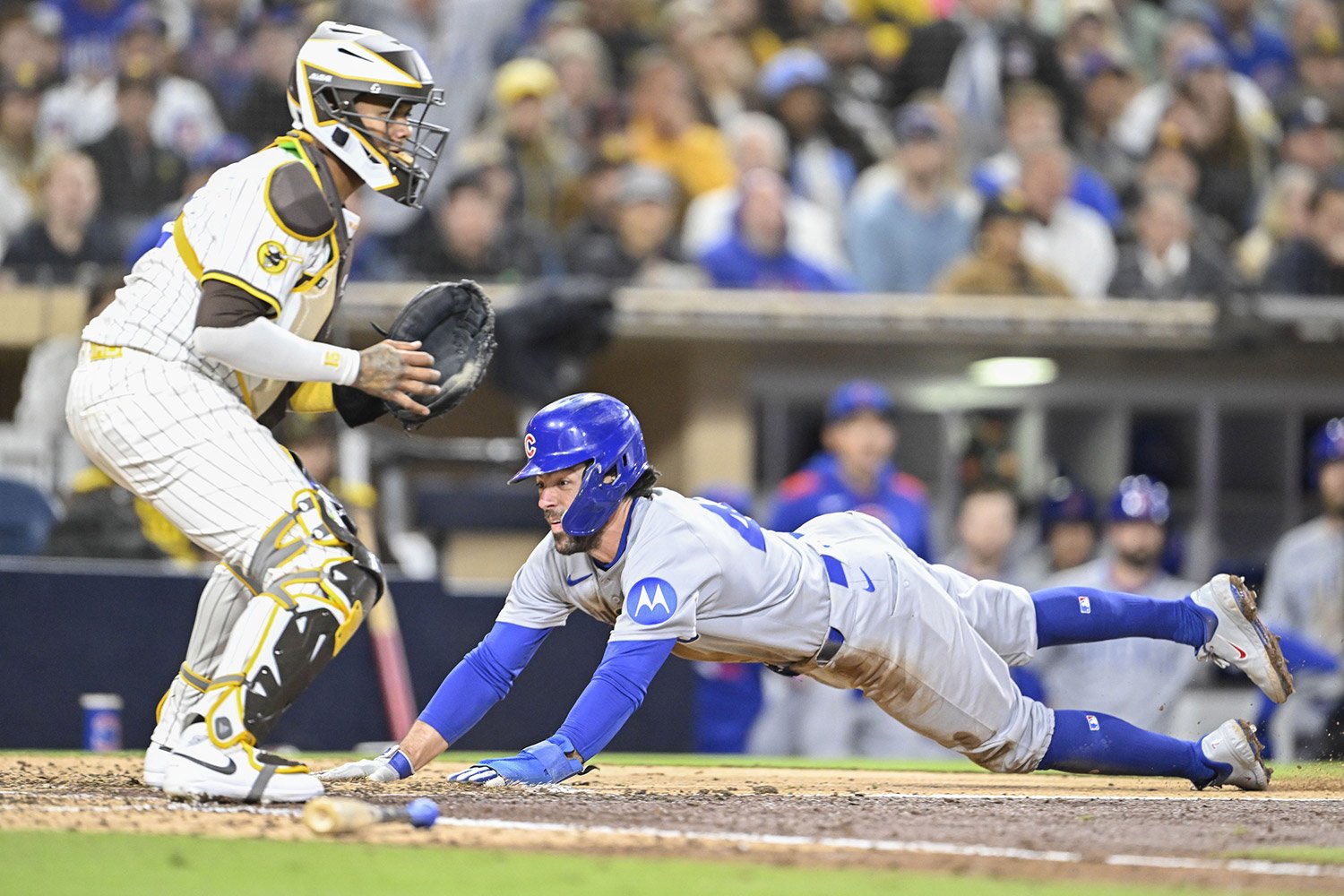 The playoffs are here, and baseball's top teams are preparing for the Wild Card round. Included in these matchups are two of MLB’s most electric teams, the Chicago Cubs (92-70) and the San Diego Padres (90-72). The Cubs will host the Padres at Wrigley Field for a best-of-three series from September 30 to October 2. This heavyweight matchup is projected to be a close battle that could be decided by many different factors. Battle of Superstars Each lineup features two elite talents. Whichever duo performs best will be a huge factor in the overall offensive production of each team. The Cubs lineup has two of baseball's best lefties, Kyle Tucker and Pete Crow-Armstrong. On the Padres' side, they are led by franchise cornerstones Manny Machado and Fernando Tatis Jr. All four players had roller coaster seasons, but if any of them catch fire, they can carry their team. Fernando Tatis Jr.Stats: .268 / .368 / .446 / 25 HR / 54 XBH / 32 SB / 691 PA Manny Machado Stats: .275 / .335 / .460 / 27 HR / 60 XBH / 14 SB / 678 PA Kyle Tucker Stats: .266 / .377 / .464 / 22 HR / 51 XBH / 25 SB / 597 PA Pete Crow Armstrong Stats: .247 / .287 / .481 / 31 HR / 72 XBH / 35 SB / 647 PA Injuries Everyone's least favorite part of sports will, unfortunately, play a large role in this matchup. Both teams have been without one of their top starters for all/most of 2025, as Joe Musgrove (Padres) and Justin Steele (Cubs) are not going to make miracle returns for the wildcard round. On the Cubs' side, they just learned that rookie sensation Cade Horton will miss the series with a rib fracture. This is a painful blow for the Cubs as he was one of baseball's best pitchers in 2025, and the ace of Chicago’s staff: - 22 GS - 118 IP - 2.67 ERA - 3.59 FIP - 20.4 K% / 6.9 BB% It’s hard to see the light with news that painful, but on the bright side, Tucker just returned from an IL stint and will be healthy for the first round. His offense will be crucial to support a depleted Cubs rotation. In San Diego, the injury bug has been almost as brutal. On September 1, All-Star reliever Jason Adam suffered a gut-wrenching injury that took him out for the entirety of the postseason. They still have the bullpen depth to compensate, but no arm on the Padres staff was as reliable as Adam in 2025. 65 G 65.1 IP 29 HLD 1.93 ERA 3.08 FIP 25.9 K% / 9.3 BB% Trade deadline acquisition Ramon Laureano is also day-to-day. The outfielder will likely return for the playoffs, but that will still come with some rust. Finally, shortstop Xander Bogaerts has been activated from the IL. His reintegration into the roster will be vital for the Padres' lineup depth. Starting Pitching With Horton out for the series, Padres ace Nick Pivetta is the only consistent option available for either team. 31 GS 181.2 IP 2.87 ERA 3.49 FIP 26.4 K% / 6.9 BB% After that, the Padres' rotation for the series is unclear. They offer multiple options, each with its own strengths and weaknesses. Michael King, the Padres' top pitcher coming into the season, is finally healthy and will probably take the ball for a start. In a potential game 3, the Padres will have a decision to make. Randy Vasquez was the number two for most of the season, but has scary sustainability metrics (3.73 ERA / 5.48 xERA). Dylan Cease (4.55 ERA / 3.56 FIP) and Yu Darvish (5.38 ERA / 4.82 FIP) are established arms, but struggled in 2025. Trade deadline acquisitions JP Sears and Nestor Cortes are not going to be available in the series, as Cortes is on the IL and Sears threw 113 pitches on Sunday. On the North Side, Chicago’s staff was led by four pitchers all season. With Horton removed from the equation, they will rely on their other three starters. Lefties Mathew Boyd and Shota Imanaga both had excellent first halves of the season. Boyd even made the All-Star Game with one of the lowest ERAs in MLB at the break. The second half wasn’t as friendly to Imanaga and Boyd, though, so Chicago will be hoping they can regain some magic. Boyd Before July 22: 2.20 ERA / 3.15 FIP / 23.2 K% / 5.2 BB% Boyd After July 22: 5.16 ERA / 4.63 FIP /18.2 K% / 7.1 BB% Imanaga Before July 22: 2.40 ERA / 4.35 FIP / 18.2 K% / 5.8 BB% Imanaga After July 22: 5.17 ERA / 5.42 FIP / 23.2 K% / 3.3 BB% Rounding out the Cubs starters is Jameson Taillon. The veteran’s 2025 season had the opposite pattern from his southpaw teammates. After a mediocre first few months, Taillon was placed on the IL for seven weeks from June 29 to Aug. 19. Since returning, he has been unhittable. Taillon’s continued dominance is the Cubs' most clear path to a series victory without Horton. Taillon Since August 19: 1.57 ERA / 3.11 FIP / 18.3 K% / 5.3 BB% Offense The superstars will be ready, but there's more offense on these teams than just Tucker/PCA and Machado/Tatis. Both rosters feature several all-stars, experienced bats, and sluggers. Can Padres catcher Freddy Fermin hold his own against the Cubs' talented catching trio of Carson Kelly, Miguel Amaya, and Reese McGuire? There's also a high-powered matchup at first base with lefties Michael Busch and Ryan O’Hearn. Ryan O’Hearn Stats: .281 / .366 / .437 / 17 HR Michael Busch Stats: .261 / .343 / .523 / 34 HR Each team has a veteran shortstop with an all-star pedigree. Will Bogaerts or Dansby Swanson provide playoff heroics? The outfields are stacked on both rosters. Along with PCA and Tucker, the Cubs have switch-hitter Ian Happ and slugger Seiya Suzuki. Happ has had an excellent second half, whereas Suzuki did most of his damage early in the season. The Padres counter the Cubs outfield with their own depth. Second-year star Jackson Merrill will look to compensate for his sophomore slump with a big playoffs, and Laureano has been their top hitter since joining the team in July. Bullpen Beasts The Padres pen has been making headlines since the trade deadline when they acquired flamethrower Mason Miller. Since the trade, he has been unhittable, putting up: 22 G 23.1 IP 0.77 ERA 1.12 FIP 54.2 K% / 12 BB% Along with Miller, the Padres' bullpen features two All-Stars: Adrian Morejon and Robert Suarez. You also can't forget Jeremiah Estrada, one of the league's top strikeout pitchers. This stackedness gives the Padres an edge in late innings, but the Cubs' bullpen can certainly hold their own in a three-game series. Chicago’s relief duties are handled by closer Daniel Palencia, who came out of nowhere in 2025, grabbing hold of the team's ninth-inning duties. They also have Brad Keller, a former starter who’s turned into a top-tier reliever. Keller handled the closing duties in September, when Palencia spent 16 days on the IL. He may stay as the closer in the wildcard round. For lefty matchups, veterans Drew Pomeranz and Caleb Thielbar have both been highly reliable. Cubs Bullpen: 3.80 ERA (12th) / 4.05 FIP (16th) / 25.7 K% (3rd) Padres Bullpen: 3.05 ERA (1st) / 3.55 FIP (2nd) / 22.7 K% (15th) Home Field Advantage MLB playoff games have some of the best atmospheres in sports, so that any home team will have an advantage. For this series, that advantage could be even bigger. Wrigley Field has one of the best environments in baseball and will surely sell out every game of this series (37,256 fans/game in 2025). The Cubs have benefited from their fans all season, finishing with a 50-31 record at home, compared to just 42-39 when traveling. The Padres have a similar advantage at Petco Park, another one of baseball's top stadiums, but that won’t help them in this round. If they are going to pull off the series victory, they will have to learn how to win on the road (38-43 away record in 2025). Overall, this matchup projects to be the most exciting battle of the wildcard round. Both sides have star power, World Series aspirations, and a fascinating combination of strengths/ weaknesses.
 -
My call for Randy Vasquez to rejoin the MLB roster was finally answered last week, and it’s worked out great for the Padres. Following a trade deadline that shook up the starting rotation, Padres GM AJ Preller sent his second “best” pitcher, Randy Vasquez, down to AAA El Paso. I put “best” in parentheses because that's only based on ERA and innings pitched. As detailed in my last article, the sustainability metrics tell a different story. Despite the underlying numbers, I believed Vasquez deserved a spot in the Padres' rotation. Like many fans, I was growing tired of the Dylan Cease / Yu Darvish / Nestor Cortes / JP Sears roller coaster. Preller finally felt the same way and returned Vasquez to MLB for a Sept. 6 start against the Rockies. In his two September outings, Vasquez produced: Disclaimer– Both Starts Were Against The Rockies… 2 Wins 12 IP 2 ER 12 H 12 K 0 BB What’s especially odd is that Preller removed Vasquez from the rotation in the midst of some of his best baseball. Since July 10, he had multiple extended periods between outings. July 10 - July 21 (MLB All-Star Break) Aug. 2 - Aug. 15 (Minor Leagues) Aug. 15 - Sept. 6 (Minor Leagues) *August 15 Appearance vs Dodgers Was In Relief In that same time frame, he put up: 7 G (6 GS) 33.0 IP 3.55 ERA 3.72 FIP 5.1 BB% 16.1 K% As shown by the solid 3.72 FIP, Vasquez’s recent success has been more sustainable than his early-season run (4.94 FIP). In those recent performances, he had just one bad outing against the Cardinals that resulted in a panic move from Preller (sending Vasquez to AAA). In every other outing, he gave up two or fewer earned runs. The one trait Vasquez has continued to rely on all season is his ability to get clutch outs. Since July 10, he has had a 75.4 LOB%, keeping his season rate over 75%. Hitters also have a .317 BABIP against Vasquez in that same time, meaning he could be getting a bit unlucky if anything. In addition to his consistency in clutch moments, Vasquez made a couple of adjustments that helped him regain his spot in the rotation. The first of which is a reduction in walks. Vasquez isn’t a strikeout pitcher, so he must prevent free passes. His 5.1% walk-rate since July 10 is 4.2% lower than his season average. On top of that, he hasn’t walked a batter in either of his September starts. This accuracy is likely linked to a pitch mix adjustment. In his last two outings, Vasquez threw 45 sinkers (27%) and 20 cutters (12%). That’s a big change from his full-season sinker (20%) and cutter (25%) rates. Upgrading his sinker to the top of his arsenal was a logical adjustment for Vasquez. It’s by far his best pitch with a +11 run value according to statcast. His cutter, in comparison, is his worst pitch with a -6 run value. Considering that sinkers can be effective against righties and lefties, there was no need for him to be so reliant on the cutter. The final adjustment he made was an unexpected one. Vasquez added a seventh pitch to his arsenal. His original six pitch mix has been effective enough, but none of the off-speed pitches have a positive run value. He relies more on variety than effectiveness. After throwing just 11 before September, Vasquez threw 32 sliders in his last two starts. The slider now has the highest PutAway% (16.7%) of his entire arsenal and the second highest whiff rate at 19%. While it may not be the most dominant pitch in baseball (still at zero run value), the new slider could give his off-speed enough variety to get him through the season, even if none of them are especially effective. It’s great to see Vasquez back in the rotation, being productive. San Diego needs to have all hands on deck come playoff time, and he could be the difference maker. He brings a deeper pitch arsenal than anyone in baseball, has the ability to get clutch outs, and can eat a lot of innings. View full article
-
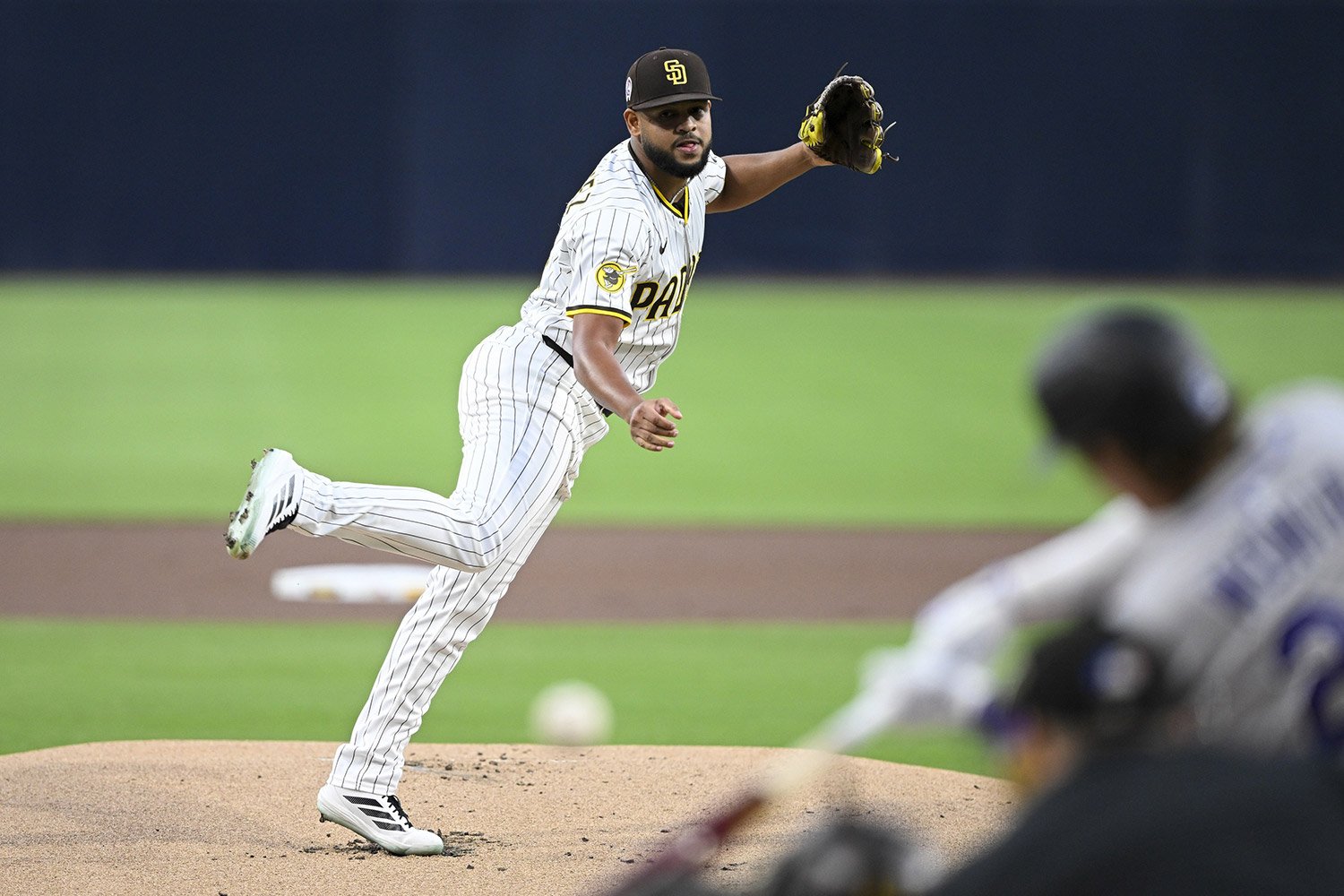 My call for Randy Vasquez to rejoin the MLB roster was finally answered last week, and it’s worked out great for the Padres. Following a trade deadline that shook up the starting rotation, Padres GM AJ Preller sent his second “best” pitcher, Randy Vasquez, down to AAA El Paso. I put “best” in parentheses because that's only based on ERA and innings pitched. As detailed in my last article, the sustainability metrics tell a different story. Despite the underlying numbers, I believed Vasquez deserved a spot in the Padres' rotation. Like many fans, I was growing tired of the Dylan Cease / Yu Darvish / Nestor Cortes / JP Sears roller coaster. Preller finally felt the same way and returned Vasquez to MLB for a Sept. 6 start against the Rockies. In his two September outings, Vasquez produced: Disclaimer– Both Starts Were Against The Rockies… 2 Wins 12 IP 2 ER 12 H 12 K 0 BB What’s especially odd is that Preller removed Vasquez from the rotation in the midst of some of his best baseball. Since July 10, he had multiple extended periods between outings. July 10 - July 21 (MLB All-Star Break) Aug. 2 - Aug. 15 (Minor Leagues) Aug. 15 - Sept. 6 (Minor Leagues) *August 15 Appearance vs Dodgers Was In Relief In that same time frame, he put up: 7 G (6 GS) 33.0 IP 3.55 ERA 3.72 FIP 5.1 BB% 16.1 K% As shown by the solid 3.72 FIP, Vasquez’s recent success has been more sustainable than his early-season run (4.94 FIP). In those recent performances, he had just one bad outing against the Cardinals that resulted in a panic move from Preller (sending Vasquez to AAA). In every other outing, he gave up two or fewer earned runs. The one trait Vasquez has continued to rely on all season is his ability to get clutch outs. Since July 10, he has had a 75.4 LOB%, keeping his season rate over 75%. Hitters also have a .317 BABIP against Vasquez in that same time, meaning he could be getting a bit unlucky if anything. In addition to his consistency in clutch moments, Vasquez made a couple of adjustments that helped him regain his spot in the rotation. The first of which is a reduction in walks. Vasquez isn’t a strikeout pitcher, so he must prevent free passes. His 5.1% walk-rate since July 10 is 4.2% lower than his season average. On top of that, he hasn’t walked a batter in either of his September starts. This accuracy is likely linked to a pitch mix adjustment. In his last two outings, Vasquez threw 45 sinkers (27%) and 20 cutters (12%). That’s a big change from his full-season sinker (20%) and cutter (25%) rates. Upgrading his sinker to the top of his arsenal was a logical adjustment for Vasquez. It’s by far his best pitch with a +11 run value according to statcast. His cutter, in comparison, is his worst pitch with a -6 run value. Considering that sinkers can be effective against righties and lefties, there was no need for him to be so reliant on the cutter. The final adjustment he made was an unexpected one. Vasquez added a seventh pitch to his arsenal. His original six pitch mix has been effective enough, but none of the off-speed pitches have a positive run value. He relies more on variety than effectiveness. After throwing just 11 before September, Vasquez threw 32 sliders in his last two starts. The slider now has the highest PutAway% (16.7%) of his entire arsenal and the second highest whiff rate at 19%. While it may not be the most dominant pitch in baseball (still at zero run value), the new slider could give his off-speed enough variety to get him through the season, even if none of them are especially effective. It’s great to see Vasquez back in the rotation, being productive. San Diego needs to have all hands on deck come playoff time, and he could be the difference maker. He brings a deeper pitch arsenal than anyone in baseball, has the ability to get clutch outs, and can eat a lot of innings.
 -
The Padres have been one of the most mediocre base-running teams in MLB this season, and the squad needs to make an adjustment because they are currently losing games on the bases. San Diego is 16th in MLB at -1.1 BsR (FanGraphs Baserunning Outs Above Average). With athletes like Fernando Tatis Jr., Jackson Merrill, and Xander Bogaerts on the team, there is potential for the Padres to move up the ranks. This improvement could be vital, given the roster's struggles with injuries. Starting with the positives, Tatis is an excellent baserunner. His health will make or break the rest of the Padres' season on the bases. So far in 2025, he leads San Diego in: 27 SB 4.9 BsR (13th in MLB) 3 Baserunning Runs (t-26th in MLB) 3 Runs Via Extra Bases Taken (t-10th in MLB) 1 Run Via 3rd base SB (t-3rd in MLB) He has some nice numbers, but Tatis still isn’t part of the elite group that can carry a team on the bases (Elly De La Cruz/Bobby Witt Jr/Byron Buxton/Corbin Carroll/Trea Turner). Besides Tatis, Bogaerts, and Merrill are positive value runners with a 1.4 BsR and 1.2 BsR, respectively. Despite the positive value, these numbers are underwhelming. Two of San Diego’s best athletes shouldn’t be outperformed on the base paths by players such as: Juan Soto (1.4 BsR) Josh Smith (1.5 BsR) Mike Yastrzemski (1.7 BsR) Outside of the top three, nobody in the lineup has brought much value on the bases. Brandon Lockridge had solid bench legs (1.2 BsR / 1 Baserunning Run), but he's now on the Brewers. The player with the most to gain from improved baserunning is Luis Arraez. At the moment, his contact abilities don’t bring much to the lineup, but if he can start causing havoc on the bases, that will exponentially improve his value as a player. Arraez has the potential to become a factor on the basepaths; he’s second on the team with 53 advance attempts, meaning the aggressive instincts are there. On the other hand, his six total stolen base advance attempts mean that aggressiveness hasn’t translated to base stealing. On the season, here’s what Arraez’s legs have produced: 9 SB 0.0 BsR 0 Baserunning Runs 53 Total Advance Attempts 6 SB Advance Attempts 47 XB Advance Attempts San Diego also benefited from some base-running improvements at the trade deadline. They didn’t add any speedsters; however, they did replace some of their weakest baserunning positions with mediocre runners. The Padres' overall base running ranks should increase as these new acquisitions get more playing time. Martin Maldonado (-2.0 BsR) replaced by Freddie Fermin (0.1 BsR) Gavin Sheets (-1.6 BsR) replaced by Ryan O’Hearn (0.0 BsR) and Ramon Laureano (0.2 BsR) If real changes are to be made in San Diego, the coaching staff will have to preach a smarter approach. Runs in the postseason are hard to come by, and with the roster’s health depleting, it’s time to get crafty. Currently, the Padres sit at 16th in MLB with 0.84 stolen base attempts per game. Merrill, who has dropped from 16 SBs in 2024 to just ONE in 2025, needs to try to get back to his 2024 level. Their second-best baserunner, Bogaerts (20 SB), is out for the remainder of the regular season. If the Padres are going to be aggressive on the bases without Bogaerts, it’s on Merrill to step up. The rest of the roster's mediocre runners, such as Fermin, Arraez, and Manny Machado, should all test the boundaries of their hustle and aggressiveness. Playoff games can be decided on the bases, and San Diego needs to incorporate some small ball into its strategy if it wants to win. View full article
-
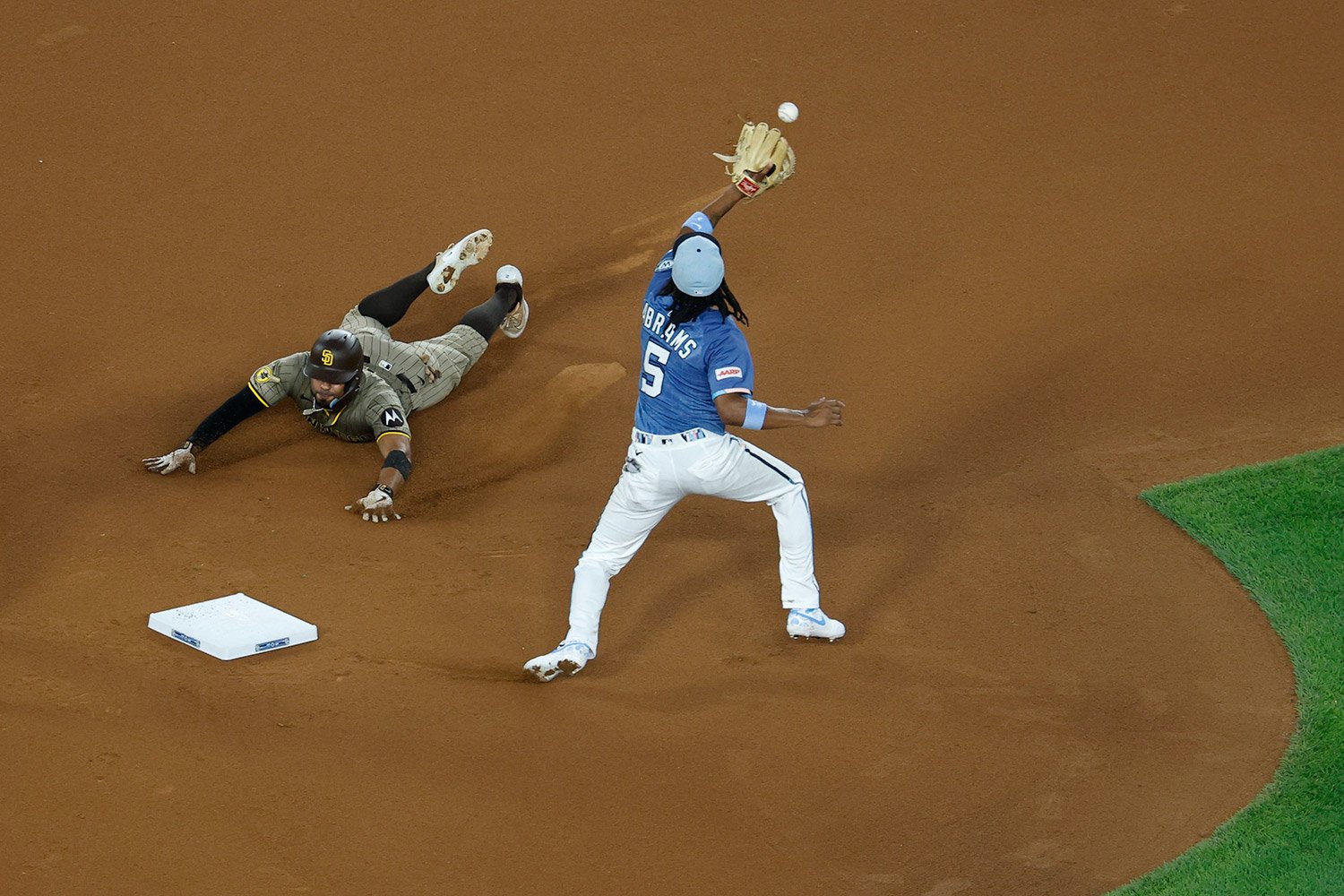 The Padres have been one of the most mediocre base-running teams in MLB this season, and the squad needs to make an adjustment because they are currently losing games on the bases. San Diego is 16th in MLB at -1.1 BsR (FanGraphs Baserunning Outs Above Average). With athletes like Fernando Tatis Jr., Jackson Merrill, and Xander Bogaerts on the team, there is potential for the Padres to move up the ranks. This improvement could be vital, given the roster's struggles with injuries. Starting with the positives, Tatis is an excellent baserunner. His health will make or break the rest of the Padres' season on the bases. So far in 2025, he leads San Diego in: 27 SB 4.9 BsR (13th in MLB) 3 Baserunning Runs (t-26th in MLB) 3 Runs Via Extra Bases Taken (t-10th in MLB) 1 Run Via 3rd base SB (t-3rd in MLB) He has some nice numbers, but Tatis still isn’t part of the elite group that can carry a team on the bases (Elly De La Cruz/Bobby Witt Jr/Byron Buxton/Corbin Carroll/Trea Turner). Besides Tatis, Bogaerts, and Merrill are positive value runners with a 1.4 BsR and 1.2 BsR, respectively. Despite the positive value, these numbers are underwhelming. Two of San Diego’s best athletes shouldn’t be outperformed on the base paths by players such as: Juan Soto (1.4 BsR) Josh Smith (1.5 BsR) Mike Yastrzemski (1.7 BsR) Outside of the top three, nobody in the lineup has brought much value on the bases. Brandon Lockridge had solid bench legs (1.2 BsR / 1 Baserunning Run), but he's now on the Brewers. The player with the most to gain from improved baserunning is Luis Arraez. At the moment, his contact abilities don’t bring much to the lineup, but if he can start causing havoc on the bases, that will exponentially improve his value as a player. Arraez has the potential to become a factor on the basepaths; he’s second on the team with 53 advance attempts, meaning the aggressive instincts are there. On the other hand, his six total stolen base advance attempts mean that aggressiveness hasn’t translated to base stealing. On the season, here’s what Arraez’s legs have produced: 9 SB 0.0 BsR 0 Baserunning Runs 53 Total Advance Attempts 6 SB Advance Attempts 47 XB Advance Attempts San Diego also benefited from some base-running improvements at the trade deadline. They didn’t add any speedsters; however, they did replace some of their weakest baserunning positions with mediocre runners. The Padres' overall base running ranks should increase as these new acquisitions get more playing time. Martin Maldonado (-2.0 BsR) replaced by Freddie Fermin (0.1 BsR) Gavin Sheets (-1.6 BsR) replaced by Ryan O’Hearn (0.0 BsR) and Ramon Laureano (0.2 BsR) If real changes are to be made in San Diego, the coaching staff will have to preach a smarter approach. Runs in the postseason are hard to come by, and with the roster’s health depleting, it’s time to get crafty. Currently, the Padres sit at 16th in MLB with 0.84 stolen base attempts per game. Merrill, who has dropped from 16 SBs in 2024 to just ONE in 2025, needs to try to get back to his 2024 level. Their second-best baserunner, Bogaerts (20 SB), is out for the remainder of the regular season. If the Padres are going to be aggressive on the bases without Bogaerts, it’s on Merrill to step up. The rest of the roster's mediocre runners, such as Fermin, Arraez, and Manny Machado, should all test the boundaries of their hustle and aggressiveness. Playoff games can be decided on the bases, and San Diego needs to incorporate some small ball into its strategy if it wants to win.
 -
It's time to call up Vasquez! This is getting ridiculous. He may not be sustainable, but Cease, Darvish, Nestor and Sears cannot be trusted.
-
Outfielder Ramon Laureano has been on a tear since joining the San Diego Padres on July 31. The 31-year-old outfielder came over from Baltimore along with all-star Ryan O'Hearn. At the time, O’Hearn and closer Mason Miller were the “faces” of the Padres trade deadline. While those two have performed very well in San Diego, Laureano has been better than almost everyone else in baseball since joining the Padres. Playing in Oakland for most of his career, Laureano was always a reliable player. Limited health issues, .700-.800 OPS, and solid defense. He never really exploded, but always found himself in the lineup. This season has been a completely different story, though, and it couldn’t be coming at a better time for San Diego. In 2025, Laureano has put up superstar numbers: 106 G / 385 PA 21 HR .300/.361/.553 Slash Line 7.3 BB% / 23.6 K% 152 wRC+ When general manager A.J. Preller acquired him at the deadline, he was already having the best season of his career (144 wRC+). Given how big an outlier this number was compared to his career averages, it was reasonable to assume he would come back to earth a bit after arriving in San Diego. Instead, the opposite has happened. Since joining the new clubhouse, Leaureano has put up: 24 G / 95 PA 6 HR .330/.379/.625 6.3 BB% / 20 K% 180 wRC+ It's one thing for a player to put together a fluky all-star first half or a late-season hot streak, but Laureano has cemented himself as one of the best hitters of the 2025 season. How has he done it? To start, we have to break down some of the unsustainable success he has taken advantage of. This isn’t to diminish his performance, but we want to see the whole picture. Part of Laureano’s dominance this season has come from his high batting average and on-base percentage. While he has always had decent bat skills, he isn’t hitting the ball notably hard, nor is he limiting strikeouts to the point where these slash lines would become permanent (a 23.6% strikeout rate is a huge career improvement, but still not great). He sits at the 51st percentile for hard-hit rate on Statcast and just the 36th percentile for squared-up percentage. Additionally, Laureano has enjoyed a .350 BABIP for the season, one of the highest among qualified hitters. These numbers can provide some context, but can’t be the full explanation for his surge. Laureano found new power in 2025 that turned him into one of the best batters the Padres have had in years. Despite his mid-sized 5.10 frame, he is slugging at a rate that is one of the best in MLB. One of the main skills Laureano has improved on in 2025 is his bat speed consistency. His 72.2 mph bat speed in 2025 is around his career average, and actually 0.5 mph lower than 2024. What’s different is the median of his swing speeds. In the past, Laureano’s swing speeds were very sporadic. High amounts of sub-65 mph and over 75 mph. Now, for the first time in his career, over 20% of his swings are in the 72 mph range. This increased consistency has enabled him to hit the ball harder and more frequently. The numbers also support this claim. Resulting from his consistent bat speeds: 87th Percentile Barrel Rate (13.9%) 87th Percentile Hard-Hit Rate (50.2%) 85th Percentile LA Sweet-Spot Rate (38.2%) 94th Percentile Expected Slug (.547) Not only is he utilizing bat speeds to harness more power, but the numbers also tell us that he is reading pitches very well. His 648 competitive swings are the highest of his career since Statcast began tracking them. He is also striking out at the lowest rate of his career (23.6%). His plate approach and swing data support these statistics. His 24.4% chase rate is 6% lower than his 2025 mark and is coupled with a 28.6% first-pitch swing rate (7.6% lower than 2024). It doesn’t stop there. Laureano has further committed to plate discipline by lowering his overall swing percentage from 52.3% in 2024 to 46.8% in 2025, and whiff percentage from 31.8% to 26.6%. This offseason, Laureano decided to adjust his approach, and he is reaping the rewards. It’s been a variety of improvements that have all mixed to make the magic potion for Ramon Laureano. Starting with some ball in play luck, added in with newfound bat speed consistency and a developed eye at the plate, and you have the best trade deadline acquisition of the A.J. Preller era. View full article
-
Ramon Laureano Is Destroying The Baseball, How Is This Happening?
Greg Spicer posted an article in Padres
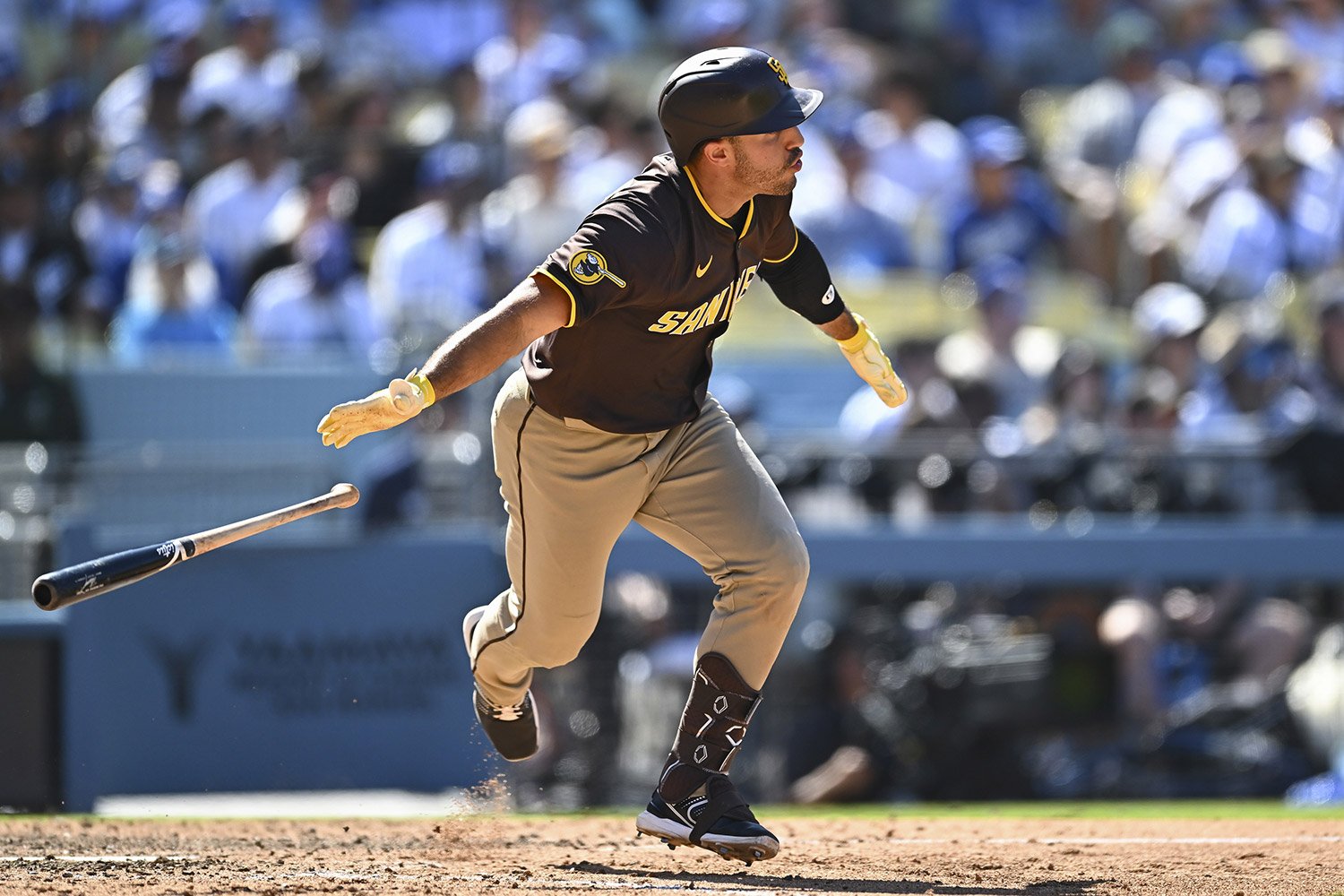 Outfielder Ramon Laureano has been on a tear since joining the San Diego Padres on July 31. The 31-year-old outfielder came over from Baltimore along with all-star Ryan O'Hearn. At the time, O’Hearn and closer Mason Miller were the “faces” of the Padres trade deadline. While those two have performed very well in San Diego, Laureano has been better than almost everyone else in baseball since joining the Padres. Playing in Oakland for most of his career, Laureano was always a reliable player. Limited health issues, .700-.800 OPS, and solid defense. He never really exploded, but always found himself in the lineup. This season has been a completely different story, though, and it couldn’t be coming at a better time for San Diego. In 2025, Laureano has put up superstar numbers: 106 G / 385 PA 21 HR .300/.361/.553 Slash Line 7.3 BB% / 23.6 K% 152 wRC+ When general manager A.J. Preller acquired him at the deadline, he was already having the best season of his career (144 wRC+). Given how big an outlier this number was compared to his career averages, it was reasonable to assume he would come back to earth a bit after arriving in San Diego. Instead, the opposite has happened. Since joining the new clubhouse, Leaureano has put up: 24 G / 95 PA 6 HR .330/.379/.625 6.3 BB% / 20 K% 180 wRC+ It's one thing for a player to put together a fluky all-star first half or a late-season hot streak, but Laureano has cemented himself as one of the best hitters of the 2025 season. How has he done it? To start, we have to break down some of the unsustainable success he has taken advantage of. This isn’t to diminish his performance, but we want to see the whole picture. Part of Laureano’s dominance this season has come from his high batting average and on-base percentage. While he has always had decent bat skills, he isn’t hitting the ball notably hard, nor is he limiting strikeouts to the point where these slash lines would become permanent (a 23.6% strikeout rate is a huge career improvement, but still not great). He sits at the 51st percentile for hard-hit rate on Statcast and just the 36th percentile for squared-up percentage. Additionally, Laureano has enjoyed a .350 BABIP for the season, one of the highest among qualified hitters. These numbers can provide some context, but can’t be the full explanation for his surge. Laureano found new power in 2025 that turned him into one of the best batters the Padres have had in years. Despite his mid-sized 5.10 frame, he is slugging at a rate that is one of the best in MLB. One of the main skills Laureano has improved on in 2025 is his bat speed consistency. His 72.2 mph bat speed in 2025 is around his career average, and actually 0.5 mph lower than 2024. What’s different is the median of his swing speeds. In the past, Laureano’s swing speeds were very sporadic. High amounts of sub-65 mph and over 75 mph. Now, for the first time in his career, over 20% of his swings are in the 72 mph range. This increased consistency has enabled him to hit the ball harder and more frequently. The numbers also support this claim. Resulting from his consistent bat speeds: 87th Percentile Barrel Rate (13.9%) 87th Percentile Hard-Hit Rate (50.2%) 85th Percentile LA Sweet-Spot Rate (38.2%) 94th Percentile Expected Slug (.547) Not only is he utilizing bat speeds to harness more power, but the numbers also tell us that he is reading pitches very well. His 648 competitive swings are the highest of his career since Statcast began tracking them. He is also striking out at the lowest rate of his career (23.6%). His plate approach and swing data support these statistics. His 24.4% chase rate is 6% lower than his 2025 mark and is coupled with a 28.6% first-pitch swing rate (7.6% lower than 2024). It doesn’t stop there. Laureano has further committed to plate discipline by lowering his overall swing percentage from 52.3% in 2024 to 46.8% in 2025, and whiff percentage from 31.8% to 26.6%. This offseason, Laureano decided to adjust his approach, and he is reaping the rewards. It’s been a variety of improvements that have all mixed to make the magic potion for Ramon Laureano. Starting with some ball in play luck, added in with newfound bat speed consistency and a developed eye at the plate, and you have the best trade deadline acquisition of the A.J. Preller era.