


Greg Spicer
-
Posts
58 -
Joined
-
Last visited
-
Days Won
6
Content Type
Profiles
San Diego Padres Videos
2026 San Diego Padres Top Prospects Ranking
San Diego Padres Free Agent & Trade Rumors, Notes, & Tidbits
Guides & Resources
2025 San Diego Padres Draft Pick Tracker
News
2026 San Diego Padres Draft Tracker: Picks & Bonuses
Forums
Blogs
Events
Store
Downloads
Gallery
Everything posted by Greg Spicer
-
 As of this week, the Padres have placed starting pitcher Randy Vasquez in Triple-A El Paso. While Vasquez has had some controversial production this season (specifically in terms of sustainability), optioning your second-most-productive pitcher to the minor leagues is a bold move for a team that should have all their best hands on deck. Vasquez’s spot in the rotation came into question following an active trade deadline, where the Padres added two lefty starters in the form of Nestor Cortes and JP Sears. Before these moves, the Padres didn’t have a single reliable, lefty starter, leading to general manager A.J. Preller’s acquisition of two veteran southpaws. Since the deadline, Vasquez has only been given the chance to start one game. An outing that, in the Padres' defense, was not a good one (4 IP and 5 ER vs St. Louis). Following that start, he was given one more opportunity to pitch out of the bullpen (3 2/3 IP and 2 ER vs Los Angeles), a role he clearly needed time to adjust to. He has been stuck in Triple A since. Vasquez’s season numbers are: 23 GS 111.1 IP 3.96 ERA 12.3 K% 10.2 BB% 5.20 FIP Even this small group of statistics paints a clear picture. Vasquez has been healthy, reliable, and numerically “unsustainable.” The top three stats are some of the best on the team, but the bottom three are concerning. To start, let's break down why the Padres are no longer prioritizing his spot in the rotation. Along with his scary K/BB ratio and poor FIP, Vasquez has a 5.88 xERA, 5.88 xFIP and .259 BABIP. These X’s mean “expected.” Essentially, every one of his expected stats is much higher than his actual production. The xERA being two runs higher than his actual ERA represents an especially high amount of statistical “luck.” The other difficulty for Vasquez is his current fit in the rotation. Early in the season, when he was racking up innings, the Padres were so unhealthy that his strong starts were a godsend. Having Vasquez as a second competent pitcher with Nick Pivetta was so crucial that nobody wanted to worry about whether he could keep it up. Now, with Darvish back and slowly returning to form, King continuing to dominate when healthy, and two new lefties, there isn’t as much need for Vasquez. Pitch Run Value Vasquez Sinker 9 Pivetta Fastball 20 Cease Slider 7 King Sinker 8 Pivetta Slider 7 Why Vasquez Still Belongs Despite the understandable lack of confidence from San Diego, I am a believer that Vasquez does not belong in El Paso. San Diego may have a deeper rotation than they did a few months ago, but they are still far from having a consistent starting five. Ace Pivetta locks up the top spot, but after him, nobody in the rotation has earned anything. All other options have some combination of poor performance (Dylan Cease, Yu Darvish, JP Sears), poor health (Michael King, Nestor Cortes, Yu Darvish), or unsustainable success (Randy Vasquez). Although FanGraphs projections aren’t a supporter of Vasquez, Statcast can give us some insight into why he has been effective. In 2025, he has turned his sinker into one of the best pitches in baseball. At 9.8 outs above average, the pitch has given him the ability to create weak contact consistently. As a result of his newly improved sinker, Vasquez has performed well in the following categories: 78.5 LOB % 52.5 Zone % 69.9 Chase Contact % 37.7 Ground Ball % 30.3 Under % .259 BABIP Even if Preller elects to bet against his sustainability, this skillset can still prove valuable for the MLB roster. Say the playoff rotation is Pivetta, King, Cease, Darvish, and one of the southpaws; then Vasquez can still track as a valuable long reliever. He can get clutch outs, induce weak contact, and give a new look to opposing offenses that complements San Diego’s heater-heavy bullpen. His single relief appearance in Los Angeles was not a disaster. The Dodgers have a difficult lineup, and he kept things together decently, despite his discomfort with the role. Finding more innings for Vasquez should be a priority in San Diego, especially if King remains injured. Given the importance of sustainability metrics in today's MLB, it’s impossible for me to undeniably prove that Vasquez has to remain in the Padres rotation. From a simpler perspective, though, he has been the second-best healthy run preventer in the rotation, and he has some numbers that give hope for continued success. 10.2 BB% is 3.5% higher than 2024. That number should even out to end the season. His xERA has always been much higher than his ERA during his career. “Expected” metrics don’t perfectly track contact pitchers. Only 2/6 of his pitches are negative value (cutter/curveball). A new pitch caller in Freddy Fermin could help his strategic pitch usage. Especially against lefties. His most impressive asset is his 6-pitch arsenal. Even if he cools down with his sinker, he can compensate by finding comfort with other pitches. I may eat my words, but I'm a supporter of 2025 Randy Vasquez. On an island of misfit toys, he has earned the chance to compete for a final rotation or long relief spot. If the staff's health fails them come October, or struggles to pitch with RISP, then the Padres will regret not letting Vasquez play out the season. View full article
 -
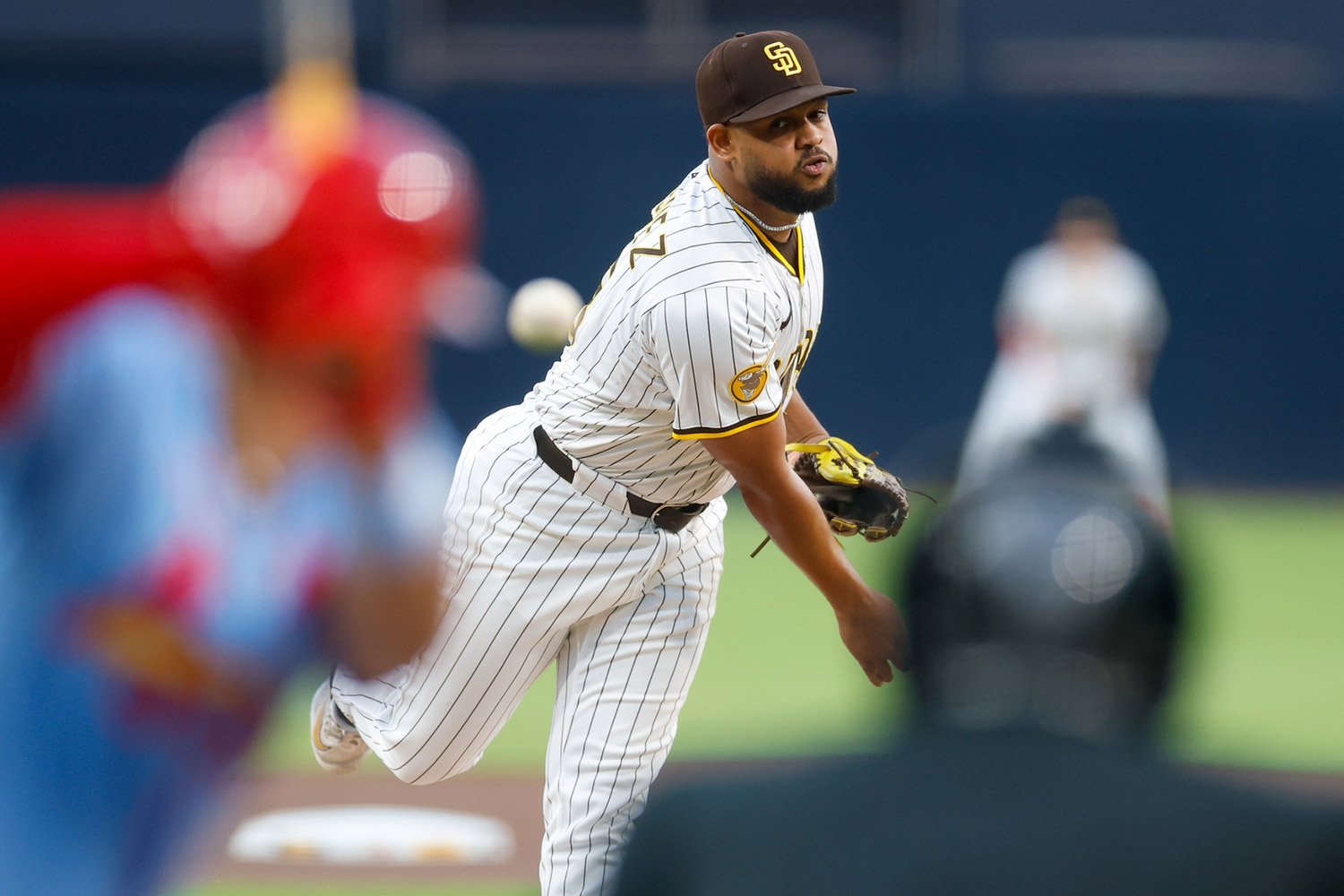 As of this week, the Padres have placed starting pitcher Randy Vasquez in Triple-A El Paso. While Vasquez has had some controversial production this season (specifically in terms of sustainability), optioning your second-most-productive pitcher to the minor leagues is a bold move for a team that should have all their best hands on deck. Vasquez’s spot in the rotation came into question following an active trade deadline, where the Padres added two lefty starters in the form of Nestor Cortes and JP Sears. Before these moves, the Padres didn’t have a single reliable, lefty starter, leading to general manager A.J. Preller’s acquisition of two veteran southpaws. Since the deadline, Vasquez has only been given the chance to start one game. An outing that, in the Padres' defense, was not a good one (4 IP and 5 ER vs St. Louis). Following that start, he was given one more opportunity to pitch out of the bullpen (3 2/3 IP and 2 ER vs Los Angeles), a role he clearly needed time to adjust to. He has been stuck in Triple A since. Vasquez’s season numbers are: 23 GS 111.1 IP 3.96 ERA 12.3 K% 10.2 BB% 5.20 FIP Even this small group of statistics paints a clear picture. Vasquez has been healthy, reliable, and numerically “unsustainable.” The top three stats are some of the best on the team, but the bottom three are concerning. To start, let's break down why the Padres are no longer prioritizing his spot in the rotation. Along with his scary K/BB ratio and poor FIP, Vasquez has a 5.88 xERA, 5.88 xFIP and .259 BABIP. These X’s mean “expected.” Essentially, every one of his expected stats is much higher than his actual production. The xERA being two runs higher than his actual ERA represents an especially high amount of statistical “luck.” The other difficulty for Vasquez is his current fit in the rotation. Early in the season, when he was racking up innings, the Padres were so unhealthy that his strong starts were a godsend. Having Vasquez as a second competent pitcher with Nick Pivetta was so crucial that nobody wanted to worry about whether he could keep it up. Now, with Darvish back and slowly returning to form, King continuing to dominate when healthy, and two new lefties, there isn’t as much need for Vasquez. Pitch Run Value Vasquez Sinker 9 Pivetta Fastball 20 Cease Slider 7 King Sinker 8 Pivetta Slider 7 Why Vasquez Still Belongs Despite the understandable lack of confidence from San Diego, I am a believer that Vasquez does not belong in El Paso. San Diego may have a deeper rotation than they did a few months ago, but they are still far from having a consistent starting five. Ace Pivetta locks up the top spot, but after him, nobody in the rotation has earned anything. All other options have some combination of poor performance (Dylan Cease, Yu Darvish, JP Sears), poor health (Michael King, Nestor Cortes, Yu Darvish), or unsustainable success (Randy Vasquez). Although FanGraphs projections aren’t a supporter of Vasquez, Statcast can give us some insight into why he has been effective. In 2025, he has turned his sinker into one of the best pitches in baseball. At 9.8 outs above average, the pitch has given him the ability to create weak contact consistently. As a result of his newly improved sinker, Vasquez has performed well in the following categories: 78.5 LOB % 52.5 Zone % 69.9 Chase Contact % 37.7 Ground Ball % 30.3 Under % .259 BABIP Even if Preller elects to bet against his sustainability, this skillset can still prove valuable for the MLB roster. Say the playoff rotation is Pivetta, King, Cease, Darvish, and one of the southpaws; then Vasquez can still track as a valuable long reliever. He can get clutch outs, induce weak contact, and give a new look to opposing offenses that complements San Diego’s heater-heavy bullpen. His single relief appearance in Los Angeles was not a disaster. The Dodgers have a difficult lineup, and he kept things together decently, despite his discomfort with the role. Finding more innings for Vasquez should be a priority in San Diego, especially if King remains injured. Given the importance of sustainability metrics in today's MLB, it’s impossible for me to undeniably prove that Vasquez has to remain in the Padres rotation. From a simpler perspective, though, he has been the second-best healthy run preventer in the rotation, and he has some numbers that give hope for continued success. 10.2 BB% is 3.5% higher than 2024. That number should even out to end the season. His xERA has always been much higher than his ERA during his career. “Expected” metrics don’t perfectly track contact pitchers. Only 2/6 of his pitches are negative value (cutter/curveball). A new pitch caller in Freddy Fermin could help his strategic pitch usage. Especially against lefties. His most impressive asset is his 6-pitch arsenal. Even if he cools down with his sinker, he can compensate by finding comfort with other pitches. I may eat my words, but I'm a supporter of 2025 Randy Vasquez. On an island of misfit toys, he has earned the chance to compete for a final rotation or long relief spot. If the staff's health fails them come October, or struggles to pitch with RISP, then the Padres will regret not letting Vasquez play out the season.
 -
Mason Miller has been everything fans hoped for in San Diego. The flamethrowing righty was a controversial deadline addition due to the sacrifice of top prospect Leo De Vries, but the flurry of strikeouts and dominant performances he’s provided have eased the pain. In his first five appearances with the Padres, Miller has put up the following stats: 5.1 IP 1 Save 3 Holds 3.38 ERA 2.17 FIP 60% Strikeout Rate 10% Walk Rate Although Miller put together some exciting performances in his first few games, no inning was more dominant than his eighth-inning hold against the division rival San Francisco Giants on Monday. The righty reliever showed off his entire arsenal at top form while holding the Padres' 4-1 lead. Miller faced the 8-9-1 hitters in the Giants lineup and started things out with a 100.5 mph fastball to Giants second baseman Christian Koss. Koss has struggled in a limited time in 2025 and possesses just an 84 wRC+ against right-handers; given the rookie Koss’s low experience and struggles against righties, this was a favorable matchup for Miller (0.90 FIP / 48.4% K-Rate against right-handed batters in 2025). After Koss missed the first pitch heater, Miller went in with a hard slider that never had a chance to be effective. The 88.3 mph breaker missed way up, evening the count at 1-1. Following that hiccup, it was all Miller. He came back with the juice, attacking Koss with a 100.7 mph, high fastball. It got just enough of the zone for Koss to bite, but he couldn’t catch up and fouled it off. With two strikes, Miller gave the breaking ball another try, and this time, it was a filthy one. The 89.3 mph slider broke a ridiculous 11 inches, sending Koss flailing at the pitch way off the plate. Next up, Miller had the Giants' nine hitter, Drew Gilbert. The newly called-up rookie had just recorded his first-ever MLB hit earlier in the game. The momentum from that milestone, combined with Gilbert's lefty bat, made him a slightly tougher matchup for Miller than Koss was. Unfazed by his new opponent, Miller went right back to what ended the last at bat. He threw a tight, 88.9 mph slider that broke 10 inches low and inside, causing him to whiff on the first pitch of the at-bat. Although Giants fans are heard in the background of the broadcast begging for Miller to “give 'em a heater,” Padres catcher Freddie Fermin had different plans. The failed swing on the first pitch showed Ferman that Gilbert was sitting fastball, so for the next pitch, he signaled Miller to execute a simple breaking ball. Miller eased an 88.5 mph slider over the heart of the plate. Gilbert lunged at it, but ultimately didn’t have the timing to try and swing, leaving him with nothing but a taken strike right down the middle. For his final pitch of this sequence, Miller threw the nastiest off-speed of the night. Surprisingly, it wasn’t another slider. Instead, Miller threw just his 13th change-up of the season, and it was his best one yet. The 92.5 mph change-up ran an incomprehensible 14 inches. What started out looking like a meaty fastball on the outside of the plate ended as a parachute that was nowhere near the strike zone. Once again, Miller had a batter flailing, and once again, it ended with a strikeout. This change-up gives promise for San Diego’s potential long-term ambitions with Miller. In my trade deadline analysis of his future in San Diego, I said that Miller needed two things to become a starter. One of those was a third pitch to help him against lefties. Seeing him throw one of the best change-ups of the entire MLB season could mean that he is getting more comfortable with an expanding arsenal. The movement is there, and the speed differential is good enough; it’s now on Miller and pitching coach Ruben Niebla to mold it into a consistent third option. Before he could celebrate his career-altering change-up, though, Miller had one more batter to face in Heliot Ramos. The 2024 All-Star has had a nice sophomore year, hitting to a 116 wRC+. To start, Miller chucked a 101.4 mph fastball down the heart of the plate that Ramos was ready for. Thankfully, he swung through it, and Fermin squeezed the foul tip. Fermin and Miller were not messing around; it was only going to be fastballs against Ramos. The electricity in Miller’s arm did get the best of him for a couple of pitches, though. After strike one, he missed way high with two fastballs that got Ramos back into the at-bat. With the count at 2-1, Miller bounced back with a 101 mph heater down the pipe that Ramos fouled off. After settling down, it seemed that Miller ramped back up too quickly. His first attempt at finishing Ramos failed, as he then sent a 102.2 mph fastball flying to the backstop. With the count full at 3-2, and Miller having only thrown heaters in the at-bat, he needed to give Ramos his best stuff. Deciding not to overthink it, Fermin called for another fastball. Miller executed perfectly this time with the fastest pitch of the game. The 102.6 mph high fastball nearly caught on fire as it hit the glove. It flew past Ramos’s bat as he swung hopelessly. Ramos never stood a chance. View full article
-
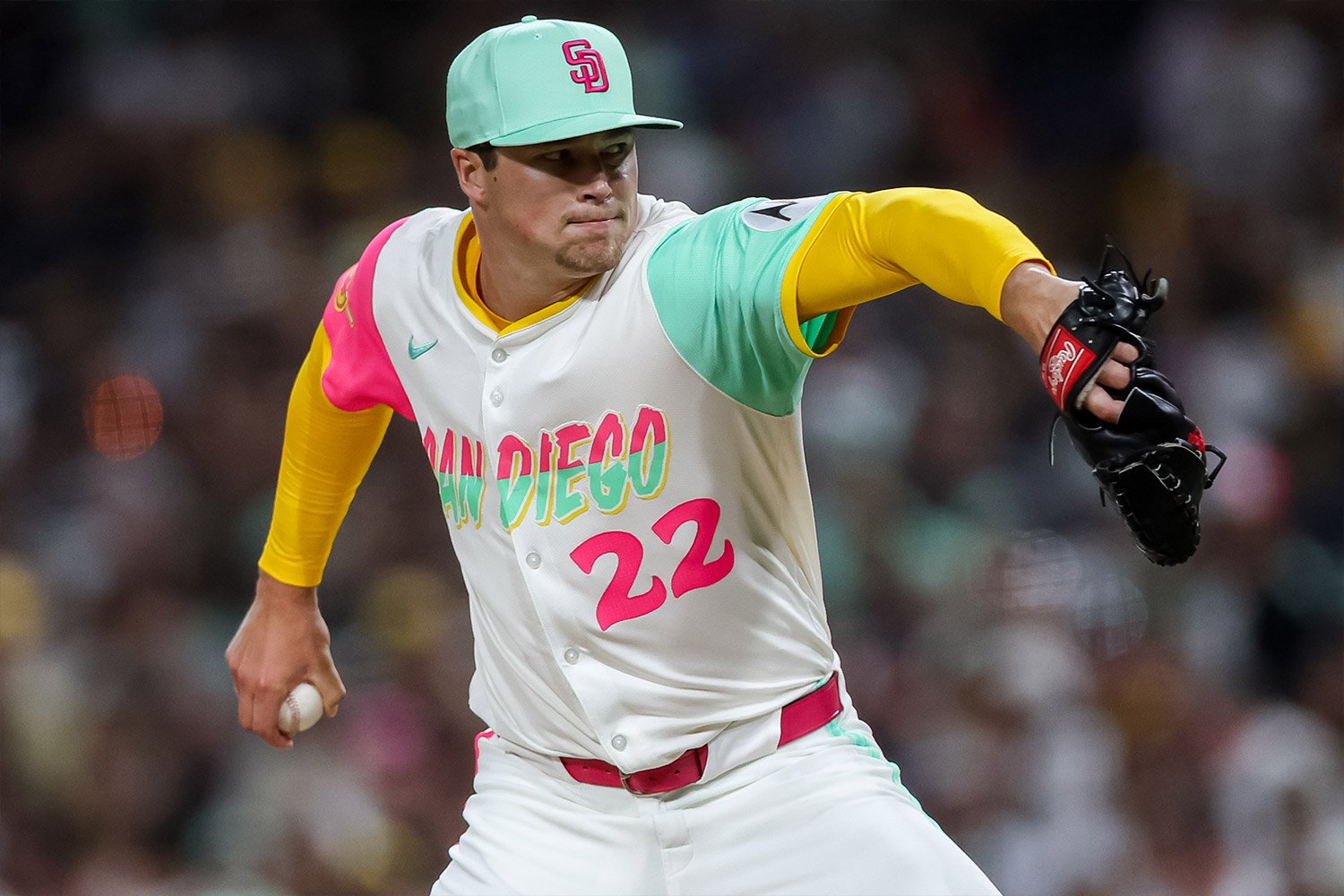 Mason Miller has been everything fans hoped for in San Diego. The flamethrowing righty was a controversial deadline addition due to the sacrifice of top prospect Leo De Vries, but the flurry of strikeouts and dominant performances he’s provided have eased the pain. In his first five appearances with the Padres, Miller has put up the following stats: 5.1 IP 1 Save 3 Holds 3.38 ERA 2.17 FIP 60% Strikeout Rate 10% Walk Rate Although Miller put together some exciting performances in his first few games, no inning was more dominant than his eighth-inning hold against the division rival San Francisco Giants on Monday. The righty reliever showed off his entire arsenal at top form while holding the Padres' 4-1 lead. Miller faced the 8-9-1 hitters in the Giants lineup and started things out with a 100.5 mph fastball to Giants second baseman Christian Koss. Koss has struggled in a limited time in 2025 and possesses just an 84 wRC+ against right-handers; given the rookie Koss’s low experience and struggles against righties, this was a favorable matchup for Miller (0.90 FIP / 48.4% K-Rate against right-handed batters in 2025). After Koss missed the first pitch heater, Miller went in with a hard slider that never had a chance to be effective. The 88.3 mph breaker missed way up, evening the count at 1-1. Following that hiccup, it was all Miller. He came back with the juice, attacking Koss with a 100.7 mph, high fastball. It got just enough of the zone for Koss to bite, but he couldn’t catch up and fouled it off. With two strikes, Miller gave the breaking ball another try, and this time, it was a filthy one. The 89.3 mph slider broke a ridiculous 11 inches, sending Koss flailing at the pitch way off the plate. Next up, Miller had the Giants' nine hitter, Drew Gilbert. The newly called-up rookie had just recorded his first-ever MLB hit earlier in the game. The momentum from that milestone, combined with Gilbert's lefty bat, made him a slightly tougher matchup for Miller than Koss was. Unfazed by his new opponent, Miller went right back to what ended the last at bat. He threw a tight, 88.9 mph slider that broke 10 inches low and inside, causing him to whiff on the first pitch of the at-bat. Although Giants fans are heard in the background of the broadcast begging for Miller to “give 'em a heater,” Padres catcher Freddie Fermin had different plans. The failed swing on the first pitch showed Ferman that Gilbert was sitting fastball, so for the next pitch, he signaled Miller to execute a simple breaking ball. Miller eased an 88.5 mph slider over the heart of the plate. Gilbert lunged at it, but ultimately didn’t have the timing to try and swing, leaving him with nothing but a taken strike right down the middle. For his final pitch of this sequence, Miller threw the nastiest off-speed of the night. Surprisingly, it wasn’t another slider. Instead, Miller threw just his 13th change-up of the season, and it was his best one yet. The 92.5 mph change-up ran an incomprehensible 14 inches. What started out looking like a meaty fastball on the outside of the plate ended as a parachute that was nowhere near the strike zone. Once again, Miller had a batter flailing, and once again, it ended with a strikeout. This change-up gives promise for San Diego’s potential long-term ambitions with Miller. In my trade deadline analysis of his future in San Diego, I said that Miller needed two things to become a starter. One of those was a third pitch to help him against lefties. Seeing him throw one of the best change-ups of the entire MLB season could mean that he is getting more comfortable with an expanding arsenal. The movement is there, and the speed differential is good enough; it’s now on Miller and pitching coach Ruben Niebla to mold it into a consistent third option. Before he could celebrate his career-altering change-up, though, Miller had one more batter to face in Heliot Ramos. The 2024 All-Star has had a nice sophomore year, hitting to a 116 wRC+. To start, Miller chucked a 101.4 mph fastball down the heart of the plate that Ramos was ready for. Thankfully, he swung through it, and Fermin squeezed the foul tip. Fermin and Miller were not messing around; it was only going to be fastballs against Ramos. The electricity in Miller’s arm did get the best of him for a couple of pitches, though. After strike one, he missed way high with two fastballs that got Ramos back into the at-bat. With the count at 2-1, Miller bounced back with a 101 mph heater down the pipe that Ramos fouled off. After settling down, it seemed that Miller ramped back up too quickly. His first attempt at finishing Ramos failed, as he then sent a 102.2 mph fastball flying to the backstop. With the count full at 3-2, and Miller having only thrown heaters in the at-bat, he needed to give Ramos his best stuff. Deciding not to overthink it, Fermin called for another fastball. Miller executed perfectly this time with the fastest pitch of the game. The 102.6 mph high fastball nearly caught on fire as it hit the glove. It flew past Ramos’s bat as he swung hopelessly. Ramos never stood a chance.
 -
July was a solid month in San Diego as the Padres were able to reassert their position in the National League postseason picture. After playing .500 baseball for the first 20 games, continuing a mediocre stretch that began in June, the Padres ended July on a five-game win streak. This hot streak gave San Diego a 15-10 finish for the month. They now sit at 63-51 on the season, with a three-game lead on the Reds for the final playoff spot. They are also tied with the New York Mets in the wild card race and three games back of the L.A. Dodgers for the divisional crown. Leading the charge for the squad was the consistently dominant bullpen. Many different arms could be acknowledged as an honorable mention or pitcher of the month, but a couple of middle relievers stood above the rest. Starting with the honorable mention, Adrian Morejon had perhaps the best month of his career in July. Not only did he get to participate in his first career All-Star Game on July 15 (no need to talk specifics about that performance), but he also led San Diego relievers in innings pitched. In 13 IP, Morejon totaled: 0.69 ERA 1.18 FIP 37.8 K% 6.7 BB% More notably, San Diego won 13 of 14 games in which Morejon appeared last month. Morejon’s job is to take out opposing lefties and get the ball to closer Robert Suarez, and the southpaw did just that. Despite a near-perfect showing for Morejon in July, there was another arm whose production was nearly flawless. Middle reliever Jeremiah Estrada may not have the all-star nods of his fellow bullpen pitchers, but Padres fans know how important his presence is. Estrada appeared in 12 July games, en route to his second Padres Mission reliever of the month acknowledgment. In 11 2/3 IP, Estrada totaled: 0.00 ERA 1.56 FIP 35.7 K% 4.8 BB% Like Morejon, Estrada’s outings were a catalyst for success. The Padres won 11 of 12 games he appeared in, and not a single earned or unearned run touched the plate under his watch. He pitched in two games against Texas, Arizona, Philly, St. Louis, and New York, all of which were series wins or ties. Estrada’s lockdown pitching helped San Diego stay afloat early and then get hot late. Without him, July could've gone in a whole different direction. The Bullpen has undoubtedly been the more consistent aspect of the Padres' pitching staff in 2025, but that doesn’t mean starters don’t deserve some love, too. Their top two starters in 2025 continued their strong play in July. Unexpected breakout pitcher Randy Vasquez is first up as my starting pitcher of the month honorable mention. In four starts, Vasquez totaled: 19 1/3 IP 2.79 ERA 4.92 FIP 4.9 K% 11.0 BB% That's right, our honorable mention had just a 4.9% strikeout rate. Part of that is because Vasquez was one of only two Padres starters who successfully prevented runs in July. Even with his poor strikeout-to-walk ratio, his ERA gets him the nod. On the other hand, Vasquez has been enjoying this unique type of success all year. Instead of following the modern era’s strikeout-based pitching strategy, Vasquez utilizes his six-pitch mix to create weak contact and get big outs. The sustainability stats don’t love him (5.94 xERA and 5.95 xFIP), but those metrics tend to favor strikeout pitchers. In a year with just one other healthy Padres starter, Vasquez’s crafty ability to get outs has been invaluable. The final pitching mention of the month goes to the starter who’s been the cornerstone of the rotation all season. Coming in with low expectations for his first year in San Diego, Nick Pivetta has become an absolute ace. July was a continuation of his awakening. In five starts, Pivetta totaled: 30 2/3 IP 1.17 ERA 2.88 FIP 25 K% 6.7 BB% Making these numbers more impressive is the context of who he pitched against. Pivetta totaled 13 innings and just one earned run against the playoff-bound Phillies and a scoreless outing against the division rival Diamondbacks. Between his availability, low walk rate, and overall consistency, Pivetta has been far and away the best pitcher in San Diego all season. These July statistics contributed to his team's season leads in wins (11), innings (128 2/3), and FIP (3.20). Entering the postseason with a rotation led by Nick Pivetta and Randy Vasquez isn’t what the fans expected for 2025. Still, if they can continue to build off their strong July performances, and the bullpen continues to control games, this staff can go the distance. View full article
-
- 1
-

-
- adrian morejon
- nick pivetta
- (and 2 more)
-
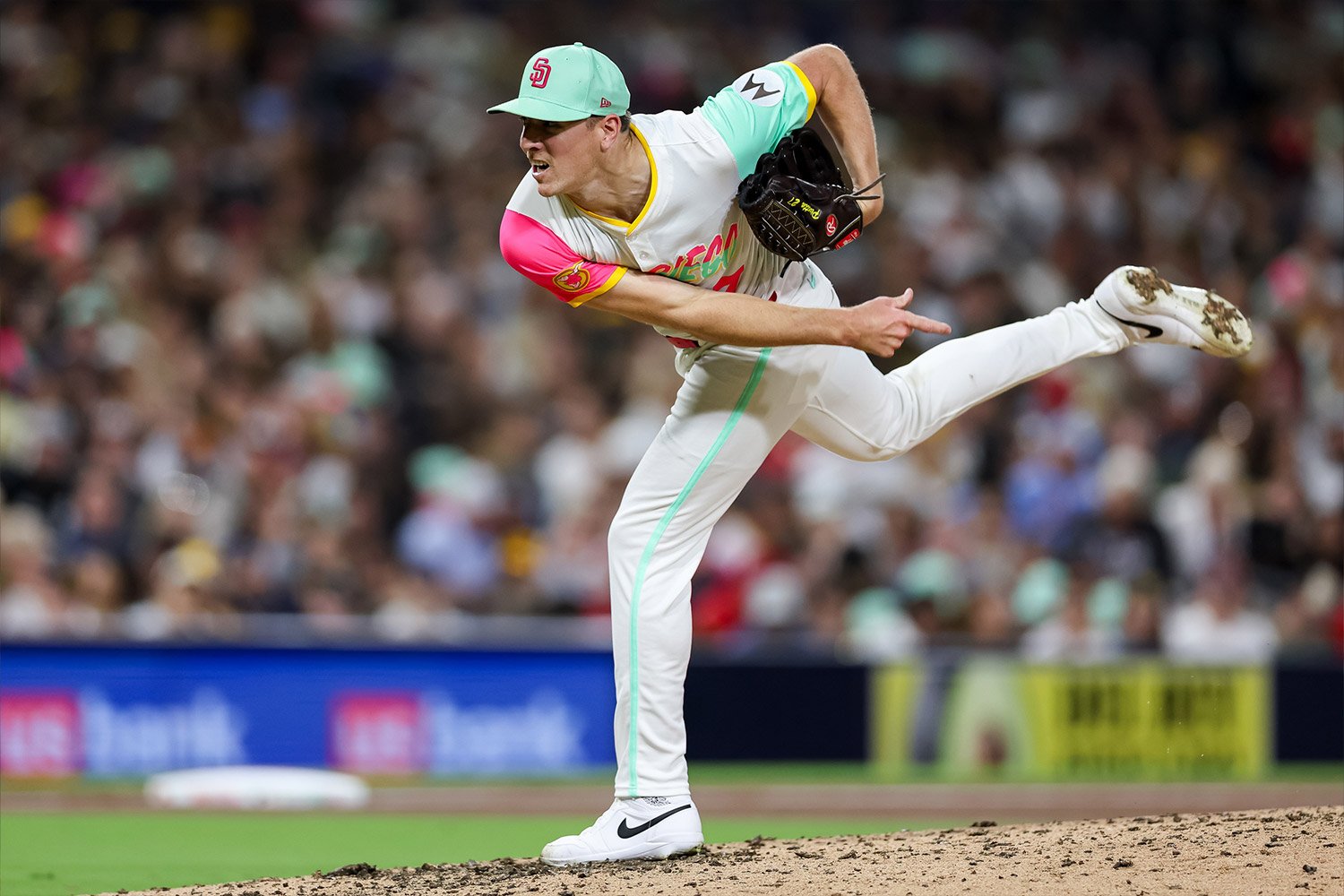 July was a solid month in San Diego as the Padres were able to reassert their position in the National League postseason picture. After playing .500 baseball for the first 20 games, continuing a mediocre stretch that began in June, the Padres ended July on a five-game win streak. This hot streak gave San Diego a 15-10 finish for the month. They now sit at 63-51 on the season, with a three-game lead on the Reds for the final playoff spot. They are also tied with the New York Mets in the wild card race and three games back of the L.A. Dodgers for the divisional crown. Leading the charge for the squad was the consistently dominant bullpen. Many different arms could be acknowledged as an honorable mention or pitcher of the month, but a couple of middle relievers stood above the rest. Starting with the honorable mention, Adrian Morejon had perhaps the best month of his career in July. Not only did he get to participate in his first career All-Star Game on July 15 (no need to talk specifics about that performance), but he also led San Diego relievers in innings pitched. In 13 IP, Morejon totaled: 0.69 ERA 1.18 FIP 37.8 K% 6.7 BB% More notably, San Diego won 13 of 14 games in which Morejon appeared last month. Morejon’s job is to take out opposing lefties and get the ball to closer Robert Suarez, and the southpaw did just that. Despite a near-perfect showing for Morejon in July, there was another arm whose production was nearly flawless. Middle reliever Jeremiah Estrada may not have the all-star nods of his fellow bullpen pitchers, but Padres fans know how important his presence is. Estrada appeared in 12 July games, en route to his second Padres Mission reliever of the month acknowledgment. In 11 2/3 IP, Estrada totaled: 0.00 ERA 1.56 FIP 35.7 K% 4.8 BB% Like Morejon, Estrada’s outings were a catalyst for success. The Padres won 11 of 12 games he appeared in, and not a single earned or unearned run touched the plate under his watch. He pitched in two games against Texas, Arizona, Philly, St. Louis, and New York, all of which were series wins or ties. Estrada’s lockdown pitching helped San Diego stay afloat early and then get hot late. Without him, July could've gone in a whole different direction. The Bullpen has undoubtedly been the more consistent aspect of the Padres' pitching staff in 2025, but that doesn’t mean starters don’t deserve some love, too. Their top two starters in 2025 continued their strong play in July. Unexpected breakout pitcher Randy Vasquez is first up as my starting pitcher of the month honorable mention. In four starts, Vasquez totaled: 19 1/3 IP 2.79 ERA 4.92 FIP 4.9 K% 11.0 BB% That's right, our honorable mention had just a 4.9% strikeout rate. Part of that is because Vasquez was one of only two Padres starters who successfully prevented runs in July. Even with his poor strikeout-to-walk ratio, his ERA gets him the nod. On the other hand, Vasquez has been enjoying this unique type of success all year. Instead of following the modern era’s strikeout-based pitching strategy, Vasquez utilizes his six-pitch mix to create weak contact and get big outs. The sustainability stats don’t love him (5.94 xERA and 5.95 xFIP), but those metrics tend to favor strikeout pitchers. In a year with just one other healthy Padres starter, Vasquez’s crafty ability to get outs has been invaluable. The final pitching mention of the month goes to the starter who’s been the cornerstone of the rotation all season. Coming in with low expectations for his first year in San Diego, Nick Pivetta has become an absolute ace. July was a continuation of his awakening. In five starts, Pivetta totaled: 30 2/3 IP 1.17 ERA 2.88 FIP 25 K% 6.7 BB% Making these numbers more impressive is the context of who he pitched against. Pivetta totaled 13 innings and just one earned run against the playoff-bound Phillies and a scoreless outing against the division rival Diamondbacks. Between his availability, low walk rate, and overall consistency, Pivetta has been far and away the best pitcher in San Diego all season. These July statistics contributed to his team's season leads in wins (11), innings (128 2/3), and FIP (3.20). Entering the postseason with a rotation led by Nick Pivetta and Randy Vasquez isn’t what the fans expected for 2025. Still, if they can continue to build off their strong July performances, and the bullpen continues to control games, this staff can go the distance.
-
- 2
-
-
- adrian morejon
- nick pivetta
- (and 2 more)
-
San Diego was once again leading the charge at this year's MLB trade deadline. General Manager A.J. Preller added six new players to the Major League roster, including: Mason Miller (CP) JP Sears (SP) Ryan O'Hearn (1B/DH) Ramon Laureano (OF) Freddy Fermin (C) Nestor Cortes (SP) The most impressive talents from this list are all-stars Mason Miller and Ryan O’Hearn. The starting pitchers, however, reveal the front office's bold strategy towards building their 2025 staff: pitching by committee. Let's break down how San Diego arrived at this point, and whether it can continue to work going forward. To start, who are these new additions, and how have they performed? Sears was a serviceable option for the Sacramento Athletics, but he never really elevated his game. Cortes only pitched two games in Milwaukee before straining his elbow. He is hopeful to return this month and is coming off a nice bounce-back year for the Yankees in 2024. Nestor Cortes 2024 - 174.1 IP / 3.77 ERA / 22.8 K% / 5.5 BB% / 3.84 FIP J.P. Sears 2024/25 - 291.2 IP / 4.60 ERA / 20.6 K% / 6.1 BB% / 4.60 FIP Sears has certified himself as an innings-eater. His numbers may not blow you away, but he brings a consistent presence to an injured Padres’ pitching staff. Cortes will add a World Series-experienced arm to the rotation when he returns. Another trait the two new starters share is their lefty arms. San Diego has just one lefty starter with over five games pitched, and it’s an opener who has pitched just 32 1/3 innings (Kyle Hart). Adding two new southpaws to the mix will give the rotation some crucial diversity in a platoon-heavy league. These two additions will ultimately become the 12th and 13th starters used by San Diego this season, eight of whom have started at least five games. This variety is a result of poor health. The Padres have a deep rotation, but only three of their pitchers have started over 15 games. With a group whose health is so unpredictable, Preller has decided to give head coach Mike Shildt as many options as possible. Padres Pitchers With 5+ Games Started Nick Pivetta - 21 GS / 121.2 IP/ 2.81 ERA Dylan Cease - 22 GS / 118.1 IP. 4.79 ERA Randy Vasquez - 21 GS / 103.2 IP / 3.65 ERA Stephen Kolek (Traded At Deadline) - 14 GS / 79.2 IP / 4.18 ERA Michael King - 10 GS / 55.2 IP / 2.59 ERA Ryan Bergert - 7 GS / 35.2 IP / 2.78 ERA Kyle Hart (Opener) - 6 GS / 32.1 IP / 5.29 ERA Yu Darvish - 5 GS / 23.2 IP / 6.46 ERA They may not have a superstar ace, but as long as five of their nine guys are healthy, the rotation will get the job done. This job is a simple one, too: Get the ball to the newly reinforced, high-powered bullpen. Despite that, this strategy isn’t an ideal one. The fanbase would certainly be more comfortable with a top-end rotation of consistent, healthy arms. Most teams that win a World Series have this. The good news, though, is that many of the National League's best teams are in the same boat as San Diego. This may be the one year a team can pull off the “by committee” rotational approach. The N.L. West-leading Los Angeles Dodgers only have three pitchers with over 10 games started. The Chicago Cubs are without their lefty ace, Justin Steele, for the remainder of 2025. The New York Mets fare slightly better but still don’t have any proven aces on their squad. The Milwaukee Brewers and Philadelphia Phillies hold a strong advantage in starting pitching, but their lineups don’t pack the same punch as San Diego or the other three teams with questionable rotations. As always, this year's playoffs are going to be unpredictable. The squads have been reinforced at the trade deadline, and now there's nothing left to do but compete. With an active day that included trading for two under-the-radar starters, San Diego’s pitching staff is ready for the long haul. View full article
-
- 1
-
-
- mason miller
- jp sears
- (and 4 more)
-
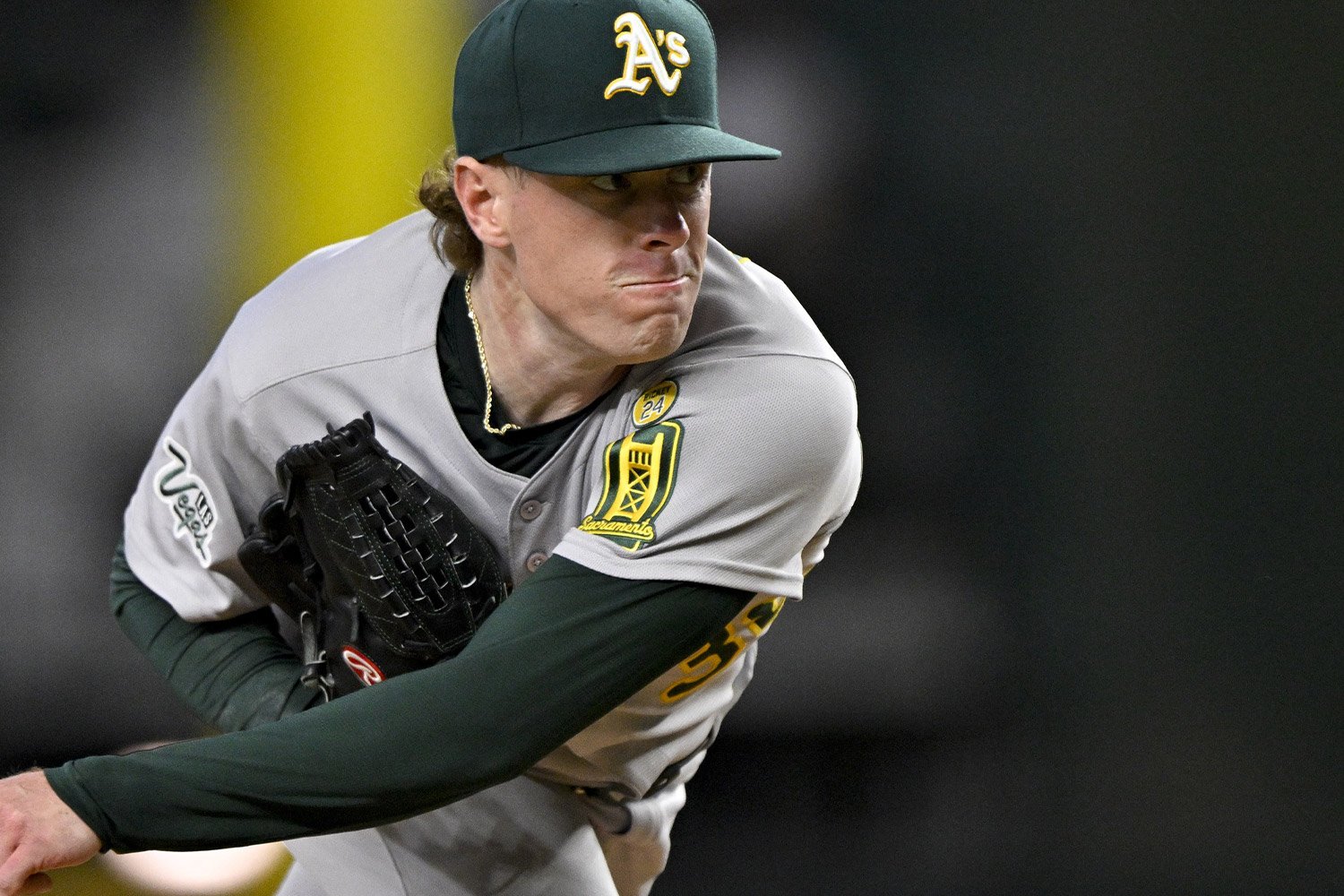 San Diego was once again leading the charge at this year's MLB trade deadline. General Manager A.J. Preller added six new players to the Major League roster, including: Mason Miller (CP) JP Sears (SP) Ryan O'Hearn (1B/DH) Ramon Laureano (OF) Freddy Fermin (C) Nestor Cortes (SP) The most impressive talents from this list are all-stars Mason Miller and Ryan O’Hearn. The starting pitchers, however, reveal the front office's bold strategy towards building their 2025 staff: pitching by committee. Let's break down how San Diego arrived at this point, and whether it can continue to work going forward. To start, who are these new additions, and how have they performed? Sears was a serviceable option for the Sacramento Athletics, but he never really elevated his game. Cortes only pitched two games in Milwaukee before straining his elbow. He is hopeful to return this month and is coming off a nice bounce-back year for the Yankees in 2024. Nestor Cortes 2024 - 174.1 IP / 3.77 ERA / 22.8 K% / 5.5 BB% / 3.84 FIP J.P. Sears 2024/25 - 291.2 IP / 4.60 ERA / 20.6 K% / 6.1 BB% / 4.60 FIP Sears has certified himself as an innings-eater. His numbers may not blow you away, but he brings a consistent presence to an injured Padres’ pitching staff. Cortes will add a World Series-experienced arm to the rotation when he returns. Another trait the two new starters share is their lefty arms. San Diego has just one lefty starter with over five games pitched, and it’s an opener who has pitched just 32 1/3 innings (Kyle Hart). Adding two new southpaws to the mix will give the rotation some crucial diversity in a platoon-heavy league. These two additions will ultimately become the 12th and 13th starters used by San Diego this season, eight of whom have started at least five games. This variety is a result of poor health. The Padres have a deep rotation, but only three of their pitchers have started over 15 games. With a group whose health is so unpredictable, Preller has decided to give head coach Mike Shildt as many options as possible. Padres Pitchers With 5+ Games Started Nick Pivetta - 21 GS / 121.2 IP/ 2.81 ERA Dylan Cease - 22 GS / 118.1 IP. 4.79 ERA Randy Vasquez - 21 GS / 103.2 IP / 3.65 ERA Stephen Kolek (Traded At Deadline) - 14 GS / 79.2 IP / 4.18 ERA Michael King - 10 GS / 55.2 IP / 2.59 ERA Ryan Bergert - 7 GS / 35.2 IP / 2.78 ERA Kyle Hart (Opener) - 6 GS / 32.1 IP / 5.29 ERA Yu Darvish - 5 GS / 23.2 IP / 6.46 ERA They may not have a superstar ace, but as long as five of their nine guys are healthy, the rotation will get the job done. This job is a simple one, too: Get the ball to the newly reinforced, high-powered bullpen. Despite that, this strategy isn’t an ideal one. The fanbase would certainly be more comfortable with a top-end rotation of consistent, healthy arms. Most teams that win a World Series have this. The good news, though, is that many of the National League's best teams are in the same boat as San Diego. This may be the one year a team can pull off the “by committee” rotational approach. The N.L. West-leading Los Angeles Dodgers only have three pitchers with over 10 games started. The Chicago Cubs are without their lefty ace, Justin Steele, for the remainder of 2025. The New York Mets fare slightly better but still don’t have any proven aces on their squad. The Milwaukee Brewers and Philadelphia Phillies hold a strong advantage in starting pitching, but their lineups don’t pack the same punch as San Diego or the other three teams with questionable rotations. As always, this year's playoffs are going to be unpredictable. The squads have been reinforced at the trade deadline, and now there's nothing left to do but compete. With an active day that included trading for two under-the-radar starters, San Diego’s pitching staff is ready for the long haul.
-
- 2
-
-
- mason miller
- jp sears
- (and 4 more)
-
The Padres have done it again! General manager A.J. Preller continues to live up to his reputation as one of the most active General Managers in baseball. This year, the headline acquisition is Sacramento Athletics’ flame-throwing closer, Mason Miller. The cost was steep, as San Diego sent their top prospect, Leo De Vries, to Sacramento in return for Miller. Clearly, Preller did not read my recent deadline article pleading for San Diego to hold onto their farm system; however, a return of Miller gives the Padres' pitching staff a very exciting future. Combining his 2024 and 2025 seasons, Miller has put up: 103.1 IP / 48 SV / 2.43 FIP / 40.8 K% / 9.8 BB% / 69 LOB% With just one of the six Padres' All-Star midseason acquisitions since 2021 still on the roster (Luis Arraez), Preller had to adjust his game plan in 2025. Instead of going big on a one or two-year rental, the front office decided to spend a little bit more and grab a player who will help them win this year and beyond. Here’s what Mason Miller's future in a Padres uniform could look like. The best assets Miller is bringing to San Diego (besides his 104 mph fastball) are his controllability and contract. He is still earning the minimum salary and won’t reach free agency until 2030. Arbitration seasons will increase his annual salary over time, but he’ll remain an affordable talent. Bringing in a controlled arm was crucial for the Padres' future. Current closer, Robert Suarez, is a free agent at the end of the year, and they had to get away from their trend of acquiring uncontrolled talent. Utilizing his team control, San Diego has some exciting options on what they can do with a pitcher as electric as Miller. The righty reliever has the biggest arm in baseball with a 101.1 mph average fastball in 2025. The production backs up the velocity, too, as he sits at second in MLB with a 39.1% strikeout rate in 20 saves. With this kind of talent here through 2030, the Padres are rumored to consider Miller as a starter in future seasons. Even if Suarez leaves in free agency and Miller joins the rotation, the bullpen will hold up. It would still have two all-stars in Jason Adam and Adrian Morejon, along with another top reliever in Jeremiah Estrada. Their current main starters, Yu Darvish, Michael King, and Dylan Cease, may all be gone soon via trade or retirement, so bringing Miller into the rotation may be a necessity rather than a luxury. Miller started six games in 2023 and performed well. In 24 1/3 innings, he finished with a 3.70 ERA and 27 Ks while allowing just a .267 wOBA. At 26 years old with no alarming injuries in his past, the Padres could view him as a candidate to become an elite starter. There isn’t an arm whose power is comparable to Miller's in baseball right now, besides maybe prime Aroldis Chapman, but there are some successful stories of relievers turned starters. Looking at players like Garrett Crochet, Reynaldo Lopez, and Clay Holmes, who all had success turning from a reliever to a starter, we can see a clear path for Miller joining the rotation. The combined average fastball drop for those players during their move was -3.4 mph. If Miller were to follow this trend, he would still have a 98-ish mph fastball that would be one of the best in MLB. The other crucial change for Miller would be the addition of a new pitch. Each of Crochet, Lopez, and Holmes added at least one tool to their arsenal during their first season as a starter. For Miller, that pitch would have to be a change-up. He has thrown just 11 of them in 2025 and is yet to record a strikeout with it. Becoming a starter with just two pitches would make him overly predictable for long outings, but a fastball/slider/changeup repertoire with his heat would get the job done, giving him an out pitch against opposite-handed batters. As exciting as molding Miller into a top starter sounds, they are getting one of the best relief pitchers in baseball right now. With the current closer, Robert Suarez, likely gone after this year, Miller can fit right into his ninth-inning role in 2025/2026. For the future, whether it be holding down late-inning wins or becoming San Diego’s next elite starting pitcher, superstar Mason Miller has arrived, and he’s here to stay. View full article
-
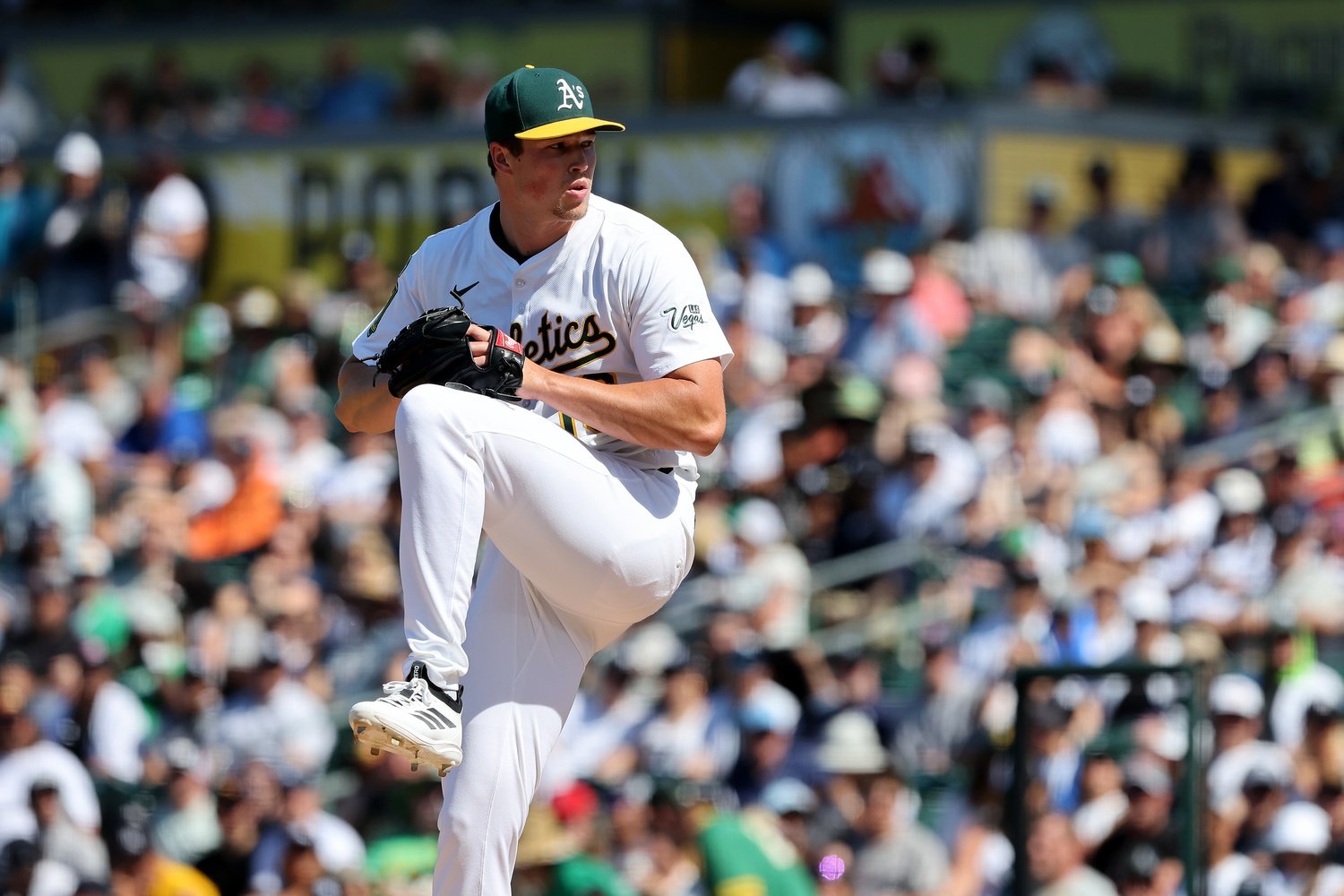 The Padres have done it again! General manager A.J. Preller continues to live up to his reputation as one of the most active General Managers in baseball. This year, the headline acquisition is Sacramento Athletics’ flame-throwing closer, Mason Miller. The cost was steep, as San Diego sent their top prospect, Leo De Vries, to Sacramento in return for Miller. Clearly, Preller did not read my recent deadline article pleading for San Diego to hold onto their farm system; however, a return of Miller gives the Padres' pitching staff a very exciting future. Combining his 2024 and 2025 seasons, Miller has put up: 103.1 IP / 48 SV / 2.43 FIP / 40.8 K% / 9.8 BB% / 69 LOB% With just one of the six Padres' All-Star midseason acquisitions since 2021 still on the roster (Luis Arraez), Preller had to adjust his game plan in 2025. Instead of going big on a one or two-year rental, the front office decided to spend a little bit more and grab a player who will help them win this year and beyond. Here’s what Mason Miller's future in a Padres uniform could look like. The best assets Miller is bringing to San Diego (besides his 104 mph fastball) are his controllability and contract. He is still earning the minimum salary and won’t reach free agency until 2030. Arbitration seasons will increase his annual salary over time, but he’ll remain an affordable talent. Bringing in a controlled arm was crucial for the Padres' future. Current closer, Robert Suarez, is a free agent at the end of the year, and they had to get away from their trend of acquiring uncontrolled talent. Utilizing his team control, San Diego has some exciting options on what they can do with a pitcher as electric as Miller. The righty reliever has the biggest arm in baseball with a 101.1 mph average fastball in 2025. The production backs up the velocity, too, as he sits at second in MLB with a 39.1% strikeout rate in 20 saves. With this kind of talent here through 2030, the Padres are rumored to consider Miller as a starter in future seasons. Even if Suarez leaves in free agency and Miller joins the rotation, the bullpen will hold up. It would still have two all-stars in Jason Adam and Adrian Morejon, along with another top reliever in Jeremiah Estrada. Their current main starters, Yu Darvish, Michael King, and Dylan Cease, may all be gone soon via trade or retirement, so bringing Miller into the rotation may be a necessity rather than a luxury. Miller started six games in 2023 and performed well. In 24 1/3 innings, he finished with a 3.70 ERA and 27 Ks while allowing just a .267 wOBA. At 26 years old with no alarming injuries in his past, the Padres could view him as a candidate to become an elite starter. There isn’t an arm whose power is comparable to Miller's in baseball right now, besides maybe prime Aroldis Chapman, but there are some successful stories of relievers turned starters. Looking at players like Garrett Crochet, Reynaldo Lopez, and Clay Holmes, who all had success turning from a reliever to a starter, we can see a clear path for Miller joining the rotation. The combined average fastball drop for those players during their move was -3.4 mph. If Miller were to follow this trend, he would still have a 98-ish mph fastball that would be one of the best in MLB. The other crucial change for Miller would be the addition of a new pitch. Each of Crochet, Lopez, and Holmes added at least one tool to their arsenal during their first season as a starter. For Miller, that pitch would have to be a change-up. He has thrown just 11 of them in 2025 and is yet to record a strikeout with it. Becoming a starter with just two pitches would make him overly predictable for long outings, but a fastball/slider/changeup repertoire with his heat would get the job done, giving him an out pitch against opposite-handed batters. As exciting as molding Miller into a top starter sounds, they are getting one of the best relief pitchers in baseball right now. With the current closer, Robert Suarez, likely gone after this year, Miller can fit right into his ninth-inning role in 2025/2026. For the future, whether it be holding down late-inning wins or becoming San Diego’s next elite starting pitcher, superstar Mason Miller has arrived, and he’s here to stay.
 -
The MLB trade deadline is approaching, and teams are deciding if it’s time to buy or sell. The Padres, who sit seven games over .500 before Friday night's action, are certainly looking to add to their roster and get into the postseason. The good news for San Diego is that their needs are clear. The lineup has two glaring weaknesses at catcher and left field. For this analysis, we’re going to focus on the Padres' trade options in the outfield. On the season, the Padres' left field stats rank near the bottom of MLB. Their combined wRC+ is 80 (25th in MLB), along with a -0.1 FanGraph WAR (25th) and -20 FanGraphs Offensive Value (28th). If San Diego can upgrade this position to even a mediocre extent, it can be the difference between a postseason run and no postseason at all. Considering they have one of the most aggressive front offices in baseball, Padres fans are expecting big changes to be made. Each of the last few deadlines (minus a painful 2023), San Diego has come away with flaming hot talent. It’s time they slightly alter their approach. They need to start making an effort to buy low on high-impact players. The last few notable midseason moves the Padres made haven’t aged well. Here are the all-star players they have added since 2021: Adam Frazier Juan Soto Josh Bell Josh Hader Luis Arraez Tanner Scott There are a couple of common themes in these deals. First of all, none of the players performed at the same level as when they were acquired. Second, they were all acquired at a high price, as the Padres traded for them when they were near the peak of their value. They have already given away a bunch of future star players in these trades. Ultimately, none of these players proved to be long-term fits. Only Arraez is still here, and while solid, he isn’t an offensive backbone. The Padres have to stop over-dealing their farm system at the trade deadline. Here are some names that fit the bill. Adolis Garcia Age 32 / Bat-Right / 2 YR-$14 Million Contract / Arbitration in 2026 / Free Agent in 2027 2025 Stats- .230/.273/.395 Slash / 84 wRC+ / 13 HR / 10 SB Garcia would be great for this Padres lineup because of the tools he possesses. Despite having his second “down year” in a row, he is still close to a 20/20 (HR/SB) season. He is also regaining some defensive ability with a 0.7 FanGraph Defensive WAR (up from his -20 mark in 2024). There are some question marks about an offensive turnaround from Garcia. His BABIP is solid at .275, and his walk rate is extremely low at 5.2%, especially compared to his 26% strikeout rate. While these numbers dampen the hope of a stunning comeback, Garcia should still be a target for the Padres. At just $7 million a year, San Diego can get a two-time All-Star who, even at his worst, is still a massive upgrade to the outfield. The dynamic power/running abilities, combined with his championship experience from the 2023 Rangers, make him a gamble worth taking. Bryan Reynolds Age 30 / Bat-Right / 8 YR-$106.75 Million Contract / Club Option In 2031 2025 Stats- .229/.288/.372 Slash / 81 wRC+ / 10 HR / 3 SB Reynolds would be a similar move to Garcia in terms of buying low on a star player, but there would also be a more dramatic risk/reward. He has a more consistent history than Garcia. 2025 could be just his first full MLB season with a wRC+ under 100, and he has been a staple in the middle of the Pirates' lineup for years. With that said, he doesn't have the natural power/speed combo that makes him valuable even in his worst stretches. If this were to be a worthwhile move for San Diego, Reynolds would have to bounce back. The gamble could be an amazing one if it works, though. Reynolds makes just $13.3 million a year, which is a steal given his 116 career wRC+. Projecting Reynolds' chances of bouncing back is difficult because he has always relied on a high BABIP. At .298 in 2025, you can’t ask for much more from the baseball gods, but it’s still the lowest of his career. If he’s got more .310+ BABIP left in the tank, then the Padres will be getting one of the best outfielders in the sport until 2031. If not, then Reynolds’ run of luck is likely coming to an end. Taylor Ward Age 31 / Bat-Left / 1 YR-$7.75 Million Contract / Arbitration in 2026 / Free Agent in 2027 2025 Stats- .233/.305/.492 Slash / 116wRC+ / 23 HR / 2 SB Finally, a player not having the worst season of their career! Ward brings a more popping bat into the mix, whom the Padres can still buy low on. At just over $7 million a year, Ward continues our trend of affordable talent while bringing in better 2025 production. The Angels aren’t looking poised to get into the postseason, and grabbing value for Ward while they can should be a priority in Anaheim. The reason San Diego can buy low here is because of Ward’s hitting splits. Despite the high wRC+, he is having a career-low season in batting average and on-base percentage. This may allow some affordability in negotiations. Ward’s power surge is what’s carrying his production in 2025. Due to a 3% launch angle increase, he is on pace for 40 home runs. He isn’t worth another top 100 prospect in my opinion, but San Diego has to try and get him for the right price. Marcell Ozuna, DH Age 34 / Bat-Right / 5 YR-$80 Million Contract / Free Agent in 2026 2025 Stats- .235/.361/.390 Slash/ 115 wRC+ / 13 HR / 0 SB If the front office wants to mix things up, it should kill two birds with one stone and acquire Ozuna from the Braves. Although he is a designated hitter, the move will place Gavin Sheets in left field, promptly upgrading San Diego at both positions. We are going to try to remain positive, so instead of detailing the defensive concerns that come with Sheets playing left field, let's look at the production Ozuna would bring. Even in his down year (lowest wRC+ since 2022), Ozuna is still a strong bat. He brings 30+ home run power with a pedigree of success that upgrades the entire lineup. He also has a career-high walk rate (16.2%) in 2025. With the Braves 12 games under .500 and Ozuna on the final year of his contract, he will likely be moved. If he ends up being a similar cost to other options, this could be the choice that maximizes offensive improvement. These are the four names that fit the mold of an ideal deadline approach. No more overpaying for short-term superstars. Instead, let’s hold onto the future and buy low for guys who will likely end up being just as productive as the hottest names. View full article
-
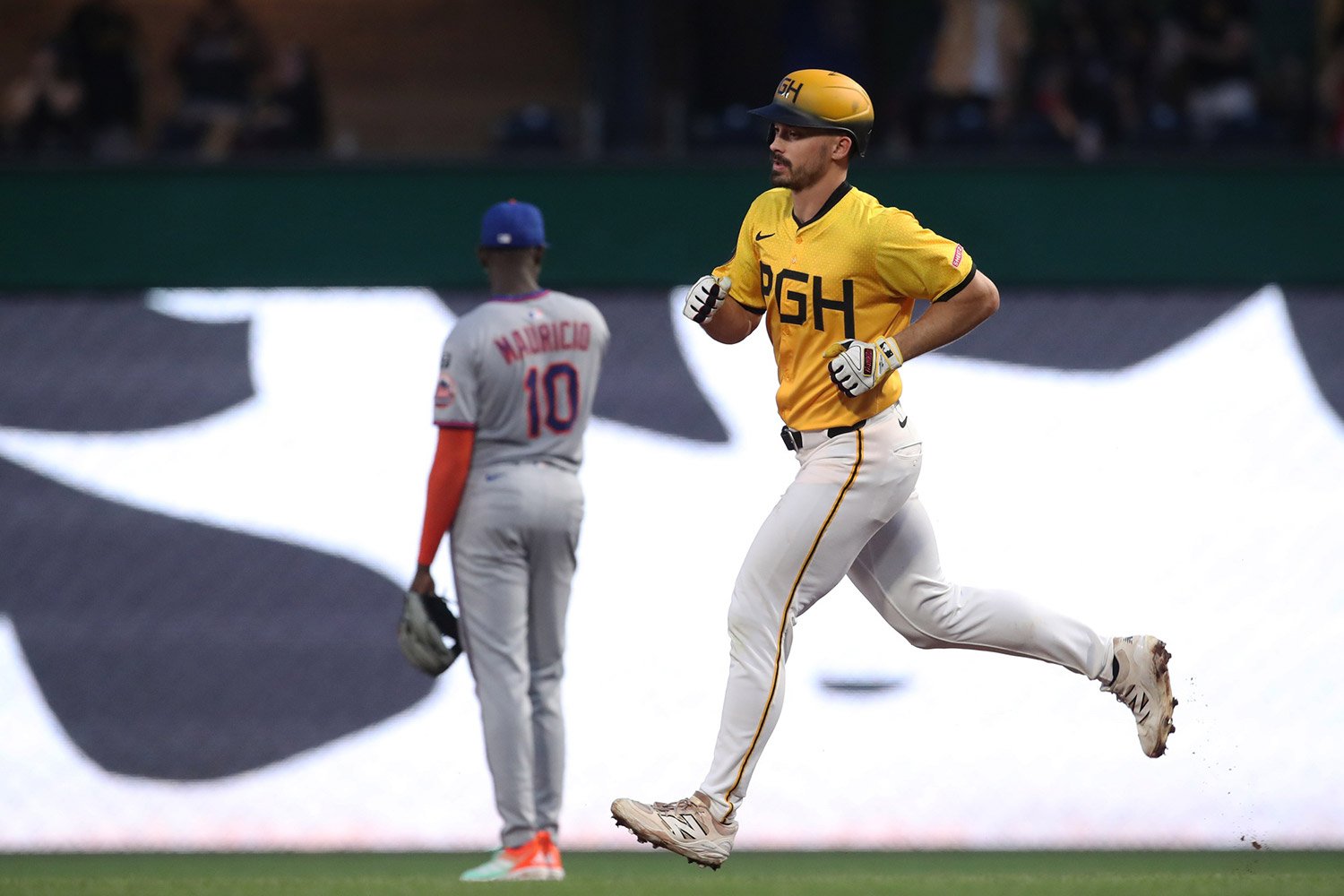 The MLB trade deadline is approaching, and teams are deciding if it’s time to buy or sell. The Padres, who sit seven games over .500 before Friday night's action, are certainly looking to add to their roster and get into the postseason. The good news for San Diego is that their needs are clear. The lineup has two glaring weaknesses at catcher and left field. For this analysis, we’re going to focus on the Padres' trade options in the outfield. On the season, the Padres' left field stats rank near the bottom of MLB. Their combined wRC+ is 80 (25th in MLB), along with a -0.1 FanGraph WAR (25th) and -20 FanGraphs Offensive Value (28th). If San Diego can upgrade this position to even a mediocre extent, it can be the difference between a postseason run and no postseason at all. Considering they have one of the most aggressive front offices in baseball, Padres fans are expecting big changes to be made. Each of the last few deadlines (minus a painful 2023), San Diego has come away with flaming hot talent. It’s time they slightly alter their approach. They need to start making an effort to buy low on high-impact players. The last few notable midseason moves the Padres made haven’t aged well. Here are the all-star players they have added since 2021: Adam Frazier Juan Soto Josh Bell Josh Hader Luis Arraez Tanner Scott There are a couple of common themes in these deals. First of all, none of the players performed at the same level as when they were acquired. Second, they were all acquired at a high price, as the Padres traded for them when they were near the peak of their value. They have already given away a bunch of future star players in these trades. Ultimately, none of these players proved to be long-term fits. Only Arraez is still here, and while solid, he isn’t an offensive backbone. The Padres have to stop over-dealing their farm system at the trade deadline. Here are some names that fit the bill. Adolis Garcia Age 32 / Bat-Right / 2 YR-$14 Million Contract / Arbitration in 2026 / Free Agent in 2027 2025 Stats- .230/.273/.395 Slash / 84 wRC+ / 13 HR / 10 SB Garcia would be great for this Padres lineup because of the tools he possesses. Despite having his second “down year” in a row, he is still close to a 20/20 (HR/SB) season. He is also regaining some defensive ability with a 0.7 FanGraph Defensive WAR (up from his -20 mark in 2024). There are some question marks about an offensive turnaround from Garcia. His BABIP is solid at .275, and his walk rate is extremely low at 5.2%, especially compared to his 26% strikeout rate. While these numbers dampen the hope of a stunning comeback, Garcia should still be a target for the Padres. At just $7 million a year, San Diego can get a two-time All-Star who, even at his worst, is still a massive upgrade to the outfield. The dynamic power/running abilities, combined with his championship experience from the 2023 Rangers, make him a gamble worth taking. Bryan Reynolds Age 30 / Bat-Right / 8 YR-$106.75 Million Contract / Club Option In 2031 2025 Stats- .229/.288/.372 Slash / 81 wRC+ / 10 HR / 3 SB Reynolds would be a similar move to Garcia in terms of buying low on a star player, but there would also be a more dramatic risk/reward. He has a more consistent history than Garcia. 2025 could be just his first full MLB season with a wRC+ under 100, and he has been a staple in the middle of the Pirates' lineup for years. With that said, he doesn't have the natural power/speed combo that makes him valuable even in his worst stretches. If this were to be a worthwhile move for San Diego, Reynolds would have to bounce back. The gamble could be an amazing one if it works, though. Reynolds makes just $13.3 million a year, which is a steal given his 116 career wRC+. Projecting Reynolds' chances of bouncing back is difficult because he has always relied on a high BABIP. At .298 in 2025, you can’t ask for much more from the baseball gods, but it’s still the lowest of his career. If he’s got more .310+ BABIP left in the tank, then the Padres will be getting one of the best outfielders in the sport until 2031. If not, then Reynolds’ run of luck is likely coming to an end. Taylor Ward Age 31 / Bat-Left / 1 YR-$7.75 Million Contract / Arbitration in 2026 / Free Agent in 2027 2025 Stats- .233/.305/.492 Slash / 116wRC+ / 23 HR / 2 SB Finally, a player not having the worst season of their career! Ward brings a more popping bat into the mix, whom the Padres can still buy low on. At just over $7 million a year, Ward continues our trend of affordable talent while bringing in better 2025 production. The Angels aren’t looking poised to get into the postseason, and grabbing value for Ward while they can should be a priority in Anaheim. The reason San Diego can buy low here is because of Ward’s hitting splits. Despite the high wRC+, he is having a career-low season in batting average and on-base percentage. This may allow some affordability in negotiations. Ward’s power surge is what’s carrying his production in 2025. Due to a 3% launch angle increase, he is on pace for 40 home runs. He isn’t worth another top 100 prospect in my opinion, but San Diego has to try and get him for the right price. Marcell Ozuna, DH Age 34 / Bat-Right / 5 YR-$80 Million Contract / Free Agent in 2026 2025 Stats- .235/.361/.390 Slash/ 115 wRC+ / 13 HR / 0 SB If the front office wants to mix things up, it should kill two birds with one stone and acquire Ozuna from the Braves. Although he is a designated hitter, the move will place Gavin Sheets in left field, promptly upgrading San Diego at both positions. We are going to try to remain positive, so instead of detailing the defensive concerns that come with Sheets playing left field, let's look at the production Ozuna would bring. Even in his down year (lowest wRC+ since 2022), Ozuna is still a strong bat. He brings 30+ home run power with a pedigree of success that upgrades the entire lineup. He also has a career-high walk rate (16.2%) in 2025. With the Braves 12 games under .500 and Ozuna on the final year of his contract, he will likely be moved. If he ends up being a similar cost to other options, this could be the choice that maximizes offensive improvement. These are the four names that fit the mold of an ideal deadline approach. No more overpaying for short-term superstars. Instead, let’s hold onto the future and buy low for guys who will likely end up being just as productive as the hottest names.
 -
The MLB All-Star break is wrapping up, and teams are preparing to take on the grueling second half of the MLB season. Despite being 96 games into the schedule, the National League wildcard race is still fluctuating every day. The Padres, at 52-44, sit in sixth place in the National League standings, giving them the final playoff spot for now. Major MLB stat websites are giving San Diego the edge in playoff chance calculations. FanGraphs predicts that San Diego will take the sixth playoff spot with a 48.0% chance of making it, 2.9% higher than their division opponent, the San Francisco Giants. Baseball Reference is even more favorable to the Padres, giving them a 49.6% playoff chance (sixth in N.L.), 13% higher than the Giants at 36.6%. Although they are beginning the final stretch in a strong position, San Diego has a lot of work to do if they are going to maintain control of their postseason position. The Giants are just a half-game back of the Padres and have been trading places with them throughout the season. After San Francisco, the NL Central’s Reds and Cardinals are also within striking distance at 2 1/2 and 1 1/2 games back, respectively. The squad will certainly be focused on the wildcard, but one hot streak could set the team's sights even higher. The high-spending Los Angeles Dodgers have been dominant, but they haven’t run away with the division, as they stand just 5.5 games ahead of the Padres in the N.L. West could become just as much of a wildcard in San Diego. The first indicator of how the Padres could perform after the All-Star break is their strength of schedule. At .483, San Diego has the fourth-easiest slate remaining in MLB, giving promise to a hot end to the season. On the other hand, the Giants and Dodgers also have similar schedules, with San Francisco at .491 and Los Angeles at .487, respectively. With all three squads having “easy” ends to the summer, taking care of business against subpar teams such as their divisional opponent, the Colorado Rockies (22-74), could be the deciding factor. The Dodgers and Padres each have seven games left against the Rockies, and the Giants have six. If the Padres can take care of business in those series, and the Dodgers or Giants let a couple of wins get away, that will have enormous standings implications. Projection-wise, the Padres have some hopeful indicators that they are favored to take the final playoff spot. Of their main competition (Giants, Reds, Cardinals), they are the only team with an over .500 record in their division (14-12). If that trend holds, the Padres will have a much better chance at securing the wildcard. Taking a deeper dive into the Padres’ remaining games, they have two crucial stretches that will dictate how they finish the year. The first of these important spans comes immediately after the All-Star break, on Friday. San Diego begins their easiest second-half stretch, with three games each against the Nationals and Marlins, followed by a four-game slate in St. Louis to take on the Cardinals. Unfortunately, all three of these series are on the road, which could make winning a little more difficult. With the Giants playing the division-leading Blue Jays, playoff-bound Mets, and the stacked Braves during that same time, the Padres must take advantage of those series to create separation. The second crucial stretch takes place between Aug. 15 and Aug. 24, when the Padres play the Dodgers six times and the Giants four times. Not only is this their last chance to play either team in the regular season, but seven out of ten of these games are at home, making it their best opportunity to lock themselves into the National League playoff picture. If the standings were to remain as close as they are now, one team dominating that stretch of games will likely guarantee them a spot in the postseason. San Diego, having home-field advantage for a large chunk of that stretch, needs to dominate. With just 5 1/2 games separating the best record in the National League (Dodgers) and the final playoff spot (Padres), matchup projections are entirely unpredictable. No team has asserted itself as the leader of the bunch, and whichever squad starts October hot will be the one that takes the crown. Having no competition separating themselves, and three hungry teams on their tail, San Diego needs to have one simple goal in mind to end the year: Get In. View full article
-
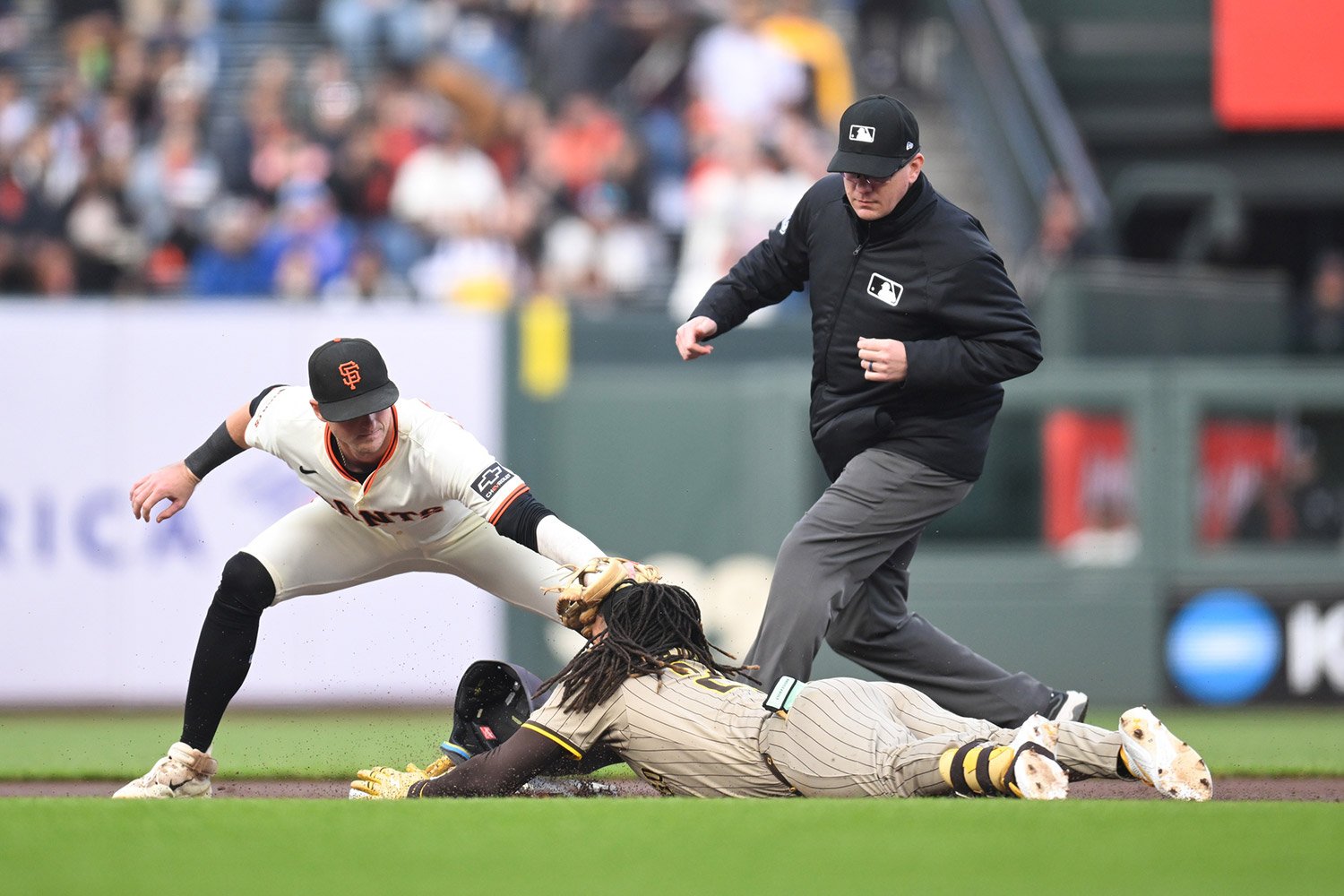 The MLB All-Star break is wrapping up, and teams are preparing to take on the grueling second half of the MLB season. Despite being 96 games into the schedule, the National League wildcard race is still fluctuating every day. The Padres, at 52-44, sit in sixth place in the National League standings, giving them the final playoff spot for now. Major MLB stat websites are giving San Diego the edge in playoff chance calculations. FanGraphs predicts that San Diego will take the sixth playoff spot with a 48.0% chance of making it, 2.9% higher than their division opponent, the San Francisco Giants. Baseball Reference is even more favorable to the Padres, giving them a 49.6% playoff chance (sixth in N.L.), 13% higher than the Giants at 36.6%. Although they are beginning the final stretch in a strong position, San Diego has a lot of work to do if they are going to maintain control of their postseason position. The Giants are just a half-game back of the Padres and have been trading places with them throughout the season. After San Francisco, the NL Central’s Reds and Cardinals are also within striking distance at 2 1/2 and 1 1/2 games back, respectively. The squad will certainly be focused on the wildcard, but one hot streak could set the team's sights even higher. The high-spending Los Angeles Dodgers have been dominant, but they haven’t run away with the division, as they stand just 5.5 games ahead of the Padres in the N.L. West could become just as much of a wildcard in San Diego. The first indicator of how the Padres could perform after the All-Star break is their strength of schedule. At .483, San Diego has the fourth-easiest slate remaining in MLB, giving promise to a hot end to the season. On the other hand, the Giants and Dodgers also have similar schedules, with San Francisco at .491 and Los Angeles at .487, respectively. With all three squads having “easy” ends to the summer, taking care of business against subpar teams such as their divisional opponent, the Colorado Rockies (22-74), could be the deciding factor. The Dodgers and Padres each have seven games left against the Rockies, and the Giants have six. If the Padres can take care of business in those series, and the Dodgers or Giants let a couple of wins get away, that will have enormous standings implications. Projection-wise, the Padres have some hopeful indicators that they are favored to take the final playoff spot. Of their main competition (Giants, Reds, Cardinals), they are the only team with an over .500 record in their division (14-12). If that trend holds, the Padres will have a much better chance at securing the wildcard. Taking a deeper dive into the Padres’ remaining games, they have two crucial stretches that will dictate how they finish the year. The first of these important spans comes immediately after the All-Star break, on Friday. San Diego begins their easiest second-half stretch, with three games each against the Nationals and Marlins, followed by a four-game slate in St. Louis to take on the Cardinals. Unfortunately, all three of these series are on the road, which could make winning a little more difficult. With the Giants playing the division-leading Blue Jays, playoff-bound Mets, and the stacked Braves during that same time, the Padres must take advantage of those series to create separation. The second crucial stretch takes place between Aug. 15 and Aug. 24, when the Padres play the Dodgers six times and the Giants four times. Not only is this their last chance to play either team in the regular season, but seven out of ten of these games are at home, making it their best opportunity to lock themselves into the National League playoff picture. If the standings were to remain as close as they are now, one team dominating that stretch of games will likely guarantee them a spot in the postseason. San Diego, having home-field advantage for a large chunk of that stretch, needs to dominate. With just 5 1/2 games separating the best record in the National League (Dodgers) and the final playoff spot (Padres), matchup projections are entirely unpredictable. No team has asserted itself as the leader of the bunch, and whichever squad starts October hot will be the one that takes the crown. Having no competition separating themselves, and three hungry teams on their tail, San Diego needs to have one simple goal in mind to end the year: Get In.
 -
Coming into the 2025 All-Star Game with five different representatives, San Diego was poised to make their mark on this year's mid-summer classic. Unexpectedly, the lone Padres highlight of the night came from the player who participated in just one at-bat. Star reliever Jason Adam was given his moment at the top of the second inning, and he didn’t disappoint. The National League had already taken a two-run lead thanks to a Ketel Marte double in the first inning, and the NL squad was hoping to shut the door on an early game comeback. To do this, N.L. manager Dave Roberts sent out his legendary ace, Clayton Kershaw, of the Los Angeles Dodgers. Someone Padres fans know all too well. The game plan was for Kershaw to get two batters, then have a reliever come in and get the last out of the inning. Making Adams' job easier, Kershaw was able to get the first two batters out. He got started by enjoying some help from his defense as Cubs outfielder Kyle Tucker made a sliding grab on a 326-foot, 102 mph laser beam from Mariners catcher Cal Raleigh. Following that, Kershaw settled in and struck out Blue Jays first baseman Vladimir Guerrero Jr. After a long, well-earned standing ovation for Kershaw, Adam took the mound looking to give the N.L. a clean inning. Coming up to the plate, though, was Orioles lefty slugger Ryan O'Hearn. This matchup featured two players over the age of 30 competing in their first All-Star games, so the hunger was real. Statistically, Adam has had a stellar year. In 47.2 innings, he has a 2.89 FIP, 25.7 K%, and 10.4 BB%. He has also managed to produce these stats despite an unlucky .289 BABIP. In his way, though, was a righty hunter in O’Hearn. Nobody can be sure why National League manager Roberts gave Jason Adam the worst possible matchup for his only at-bat. Still, we can guess that the lowered stakes of an exhibition All-Star Game limited the strategic aspect of the manager's decision-making. O’Hearn has an eye-popping .286/.382/.458 slash line on the season, and his wRC+ skyrockets from an 81 against lefties to a 150 against righties. The good news for Adam, however, was that he had fared just as well in this type of matchup. In 2025, lefties are hitting a .244 wOBA against him, with just a .160 batting average. This battle gave us an unstoppable force against an immovable object, and something had to give. To start the at-bat, Adam dotted a 94 mph fastball on the outside corner. Unsurprisingly, O’Hearn laid off this pitch. At 28.2%, he has one of the lowest first pitch swing percentages among qualified hitters. From Adam’s side, this pitch was 0.5 mph lower than his season fastball average of 94.5, but the first pitch strike was a welcome sign. Adam’s first pitch strike percentage is at just 53.7% on the season, a 7.4% decrease from 2024. Getting ahead against an elite hitter in the All-Star Game was a much-needed start. Adam then looked to his off-speed to get him through the at-bat. With the count at 0-1, he threw an 87.1 mph change-up that missed just off the upper outside part of the plate. Pitchers often use this fastball/change-up combo when facing hitters of the opposite hand, and Adam is no different. 70% of his change-ups in 2025 have been thrown to lefties. O’Hearn, taking the first attempt, wasn’t going to stop Adam from trying again. His change-up is one of MLB's best, allowing just a .278 wOBA on the year, and O’Hearn has struggled to the tune of a .161 wOBA against the change-up this season. Those numbers were too favorable not to give it another attempt. By lowering the location of the next pitch, Adam was able to fool O’Hearn. The 86.8 mph change-up got a swing and miss from the Orioles' lefty and gave Adam a 1-2 advantage. After gearing O’Hearn’s mind towards off-speed, Adam then tried to speed it back up and blow a fastball by him for strike three. Unfortunately, this pitch appeared to slip out of the hand and launch way off the plate at 94.4 mph. After a nice stop by Dodgers catcher, Will Smith, Adam looked to lock back in. The count was now even at 2-2, and facing one of the league's most potent bats, Adam needed to attack with his best stuff. He decided to stick with what had already worked once and throw a change-up on the low middle edge of the plate. Despite Adam dropping the mph to 86.1, O’Hearn was able to sit back and rope a line drive down the first baseline. Thankfully, the hit curved foul by a couple of feet, and the Padres star was given another chance to sit O’Hearn down. Adam was in a tricky spot now. He was facing a lefty killer and had already thrown two of his highest usage pitches (34.7% change-up and 20.4% fastball) multiple times. With that said, he still had his best trick up his sleeve, a nasty slider. The slider is Adam’s highest usage pitch at 36.3% and his best pitch with a 29.3 put-away percentage. The counterargument is that a significant portion (61%) of that usage has been against right-handed players. Throwing breaking balls to opposite-handed hitters isn’t a common strategy in MLB and has to be well-executed for it to work. With no options left, Adam tossed his slowest pitch of the inning, an 83.5 mph slider, ideally on the furthest part of the outside corner of the plate. O’Hearn was left shocked seeing a pitch that looked headed towards the backstop cut in so sharply and nick the strike zone. Although the American League had a challenge left, O’Hearn knew it was hopeless. He had been fooled by an unhittable slider that didn’t touch the strike zone until the last possible millisecond. Adam strutted off the field looking satisfied with his performance, having given Padres fans a moment of pride in what was otherwise an uneventful game from the San Diego representatives. View full article
-
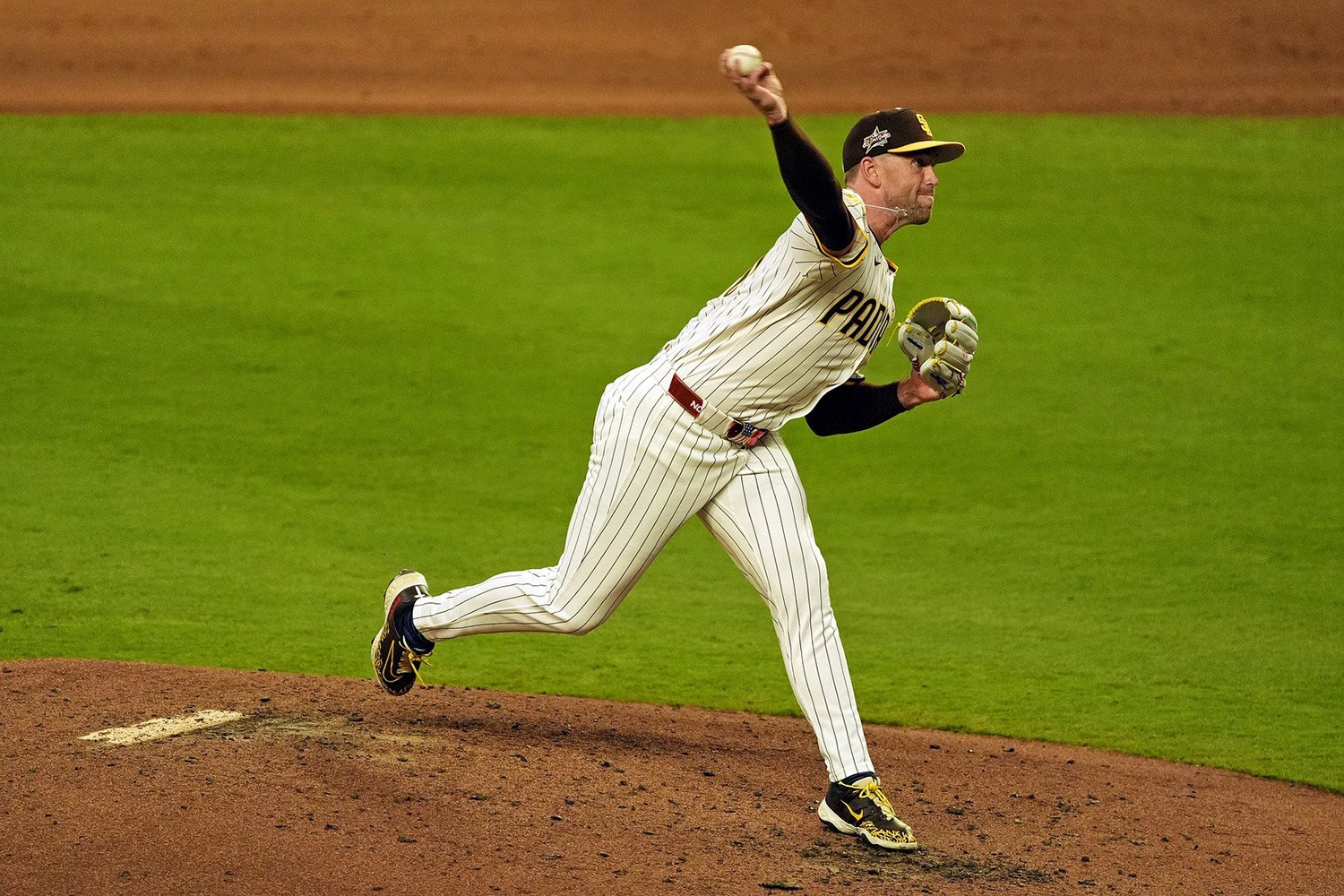 Coming into the 2025 All-Star Game with five different representatives, San Diego was poised to make their mark on this year's mid-summer classic. Unexpectedly, the lone Padres highlight of the night came from the player who participated in just one at-bat. Star reliever Jason Adam was given his moment at the top of the second inning, and he didn’t disappoint. The National League had already taken a two-run lead thanks to a Ketel Marte double in the first inning, and the NL squad was hoping to shut the door on an early game comeback. To do this, N.L. manager Dave Roberts sent out his legendary ace, Clayton Kershaw, of the Los Angeles Dodgers. Someone Padres fans know all too well. The game plan was for Kershaw to get two batters, then have a reliever come in and get the last out of the inning. Making Adams' job easier, Kershaw was able to get the first two batters out. He got started by enjoying some help from his defense as Cubs outfielder Kyle Tucker made a sliding grab on a 326-foot, 102 mph laser beam from Mariners catcher Cal Raleigh. Following that, Kershaw settled in and struck out Blue Jays first baseman Vladimir Guerrero Jr. After a long, well-earned standing ovation for Kershaw, Adam took the mound looking to give the N.L. a clean inning. Coming up to the plate, though, was Orioles lefty slugger Ryan O'Hearn. This matchup featured two players over the age of 30 competing in their first All-Star games, so the hunger was real. Statistically, Adam has had a stellar year. In 47.2 innings, he has a 2.89 FIP, 25.7 K%, and 10.4 BB%. He has also managed to produce these stats despite an unlucky .289 BABIP. In his way, though, was a righty hunter in O’Hearn. Nobody can be sure why National League manager Roberts gave Jason Adam the worst possible matchup for his only at-bat. Still, we can guess that the lowered stakes of an exhibition All-Star Game limited the strategic aspect of the manager's decision-making. O’Hearn has an eye-popping .286/.382/.458 slash line on the season, and his wRC+ skyrockets from an 81 against lefties to a 150 against righties. The good news for Adam, however, was that he had fared just as well in this type of matchup. In 2025, lefties are hitting a .244 wOBA against him, with just a .160 batting average. This battle gave us an unstoppable force against an immovable object, and something had to give. To start the at-bat, Adam dotted a 94 mph fastball on the outside corner. Unsurprisingly, O’Hearn laid off this pitch. At 28.2%, he has one of the lowest first pitch swing percentages among qualified hitters. From Adam’s side, this pitch was 0.5 mph lower than his season fastball average of 94.5, but the first pitch strike was a welcome sign. Adam’s first pitch strike percentage is at just 53.7% on the season, a 7.4% decrease from 2024. Getting ahead against an elite hitter in the All-Star Game was a much-needed start. Adam then looked to his off-speed to get him through the at-bat. With the count at 0-1, he threw an 87.1 mph change-up that missed just off the upper outside part of the plate. Pitchers often use this fastball/change-up combo when facing hitters of the opposite hand, and Adam is no different. 70% of his change-ups in 2025 have been thrown to lefties. O’Hearn, taking the first attempt, wasn’t going to stop Adam from trying again. His change-up is one of MLB's best, allowing just a .278 wOBA on the year, and O’Hearn has struggled to the tune of a .161 wOBA against the change-up this season. Those numbers were too favorable not to give it another attempt. By lowering the location of the next pitch, Adam was able to fool O’Hearn. The 86.8 mph change-up got a swing and miss from the Orioles' lefty and gave Adam a 1-2 advantage. After gearing O’Hearn’s mind towards off-speed, Adam then tried to speed it back up and blow a fastball by him for strike three. Unfortunately, this pitch appeared to slip out of the hand and launch way off the plate at 94.4 mph. After a nice stop by Dodgers catcher, Will Smith, Adam looked to lock back in. The count was now even at 2-2, and facing one of the league's most potent bats, Adam needed to attack with his best stuff. He decided to stick with what had already worked once and throw a change-up on the low middle edge of the plate. Despite Adam dropping the mph to 86.1, O’Hearn was able to sit back and rope a line drive down the first baseline. Thankfully, the hit curved foul by a couple of feet, and the Padres star was given another chance to sit O’Hearn down. Adam was in a tricky spot now. He was facing a lefty killer and had already thrown two of his highest usage pitches (34.7% change-up and 20.4% fastball) multiple times. With that said, he still had his best trick up his sleeve, a nasty slider. The slider is Adam’s highest usage pitch at 36.3% and his best pitch with a 29.3 put-away percentage. The counterargument is that a significant portion (61%) of that usage has been against right-handed players. Throwing breaking balls to opposite-handed hitters isn’t a common strategy in MLB and has to be well-executed for it to work. With no options left, Adam tossed his slowest pitch of the inning, an 83.5 mph slider, ideally on the furthest part of the outside corner of the plate. O’Hearn was left shocked seeing a pitch that looked headed towards the backstop cut in so sharply and nick the strike zone. Although the American League had a challenge left, O’Hearn knew it was hopeless. He had been fooled by an unhittable slider that didn’t touch the strike zone until the last possible millisecond. Adam strutted off the field looking satisfied with his performance, having given Padres fans a moment of pride in what was otherwise an uneventful game from the San Diego representatives.
 -
 The stakes of Friday night's game in San Diego against the Texas Rangers felt just a bit higher than usual. The Padres sat 0.5 games ahead of their wild card competition, and with the energy of a packed stadium on the Fourth of July, the squad needed to come out on top. The battle entered extra innings after a shutdown performance from Robert Suarez in the ninth and a painful stranding of the winning run on second by the Padres in the bottom half. For the tenth, San Diego sent out Padres Mission June reliever of the month, Adrian Morejon, who shut the door and gave the Padres a chance to win the game with just one run. That last run wasn’t going to come easy, however, as Rangers legendary manager, Bruce Bochy, used every trick up his sleeve to keep that runner from touching home. The Padres were able to put themselves in a prime position to win right away with the speedy Jackson Merrill starting on second base after being the final out of the previous inning. Creating even more promise, the Rangers sent out lefty reliever Robert Garcia to take on the tenth. This was ideal because, up to the plate first, was lefty killer Manny Machado. Machado leads the Padres with eight home runs and a 146 wRC+ against southpaws this season and was looking poised to add to those numbers. Unfortunately, that matchup was short-lived, as Bochy revealed the true thought process behind his matchup choice. Machado was promptly given an intentional walk and trotted onto first base. With just one run needed to win and a baserunner already on second, his at-bat was officially useless. Following Machado in the lineup, San Diego had two lefties in Luis Arraez and Gavin Sheets. Although both players are capable hitters, their wRC+s against lefties are just 82 and 84, respectively. Add in that lefty hitters are slashing just .190/.244/.383 against Garcia in 2025, and it’s clear the numbers were not in the Padres' favor. Hope was certainly not lost, though. Arraez is a three-time All-Star who possesses the unique ability of rarely striking out. If nothing else, he would likely be able to put the ball in play and get the runner on second over to third. Miraculously, Garcia ended up having the perfect approach to take down Arraez. After missing way up with a slider, Garcia challenged with a fastball that Arraez nailed foul. Garcia then came back with two more sliders. The first, despite being a ball on the outer half, was enticing enough for Arraez to swing at, creating a two-strike count. After Arraez was able to spit on a second slider way below the strike zone, Garcia responded by unexpectedly throwing his first change-up of the at-bat. This change-up was low and in the dirt, but an off-balance Arraez attempted to golf it out of the ground. Initially, Arraez and the home plate umpire both claimed that the pesky Arraez was able to get a foul piece, but after a quick umpire discussion, the call was changed, and he was handed just his eighth strikeout (lowest in the MLB) of the season. With Sheets, another lefty, coming to the plate and the momentum on Garcia’s side, San Diego needed some fire. This is precisely what Sheets provided as he stepped into the box and poked a first-pitch slider into centerfield at just 70 mph. This was one of the most improbable hits of Sheets' season. Not only has he struggled to hit lefties, but Sheet’s first-pitch swing rate is one of the lowest in MLB at 20.5%. Getting a hit that defies both of these numbers was truly improbable. The excitement didn’t last long, however, as the ball was not a clear base hit until the last few seconds before it dropped. This led to Merrill getting a bad head start when running home, and ultimately a stop sign from the third base coach as he rounded the bags. Although there was an anti-climactic feeling to the game-winning run being stopped in his tracks as the crowd cheered for a walk-off, the Padres were in great shape. Four-time all-star Xander Bogaerts stepped into the box with the bases juiced and a chance to send fans home happy. Despite his painful struggles in a Padres uniform, Bogaerts has hit slightly better against lefties in 2025 with a 103 wRC+. This was a prime chance to have a big moment that could get him back on track. The opportunity was sadly cut short, as Bogaerts swung out of his shoes on a first-pitch change-up that ended up injuring him. After just one pitch, the game was called into a timeout, and Bogaerts left the field, being replaced by backup Bryce Johnson. Johnson hasn’t seen the field much in 2025 with just 17 plate appearances, but he’s been flaming hot in those chances with a 139 wRC+. Unsurprisingly, though, the hot bat coming off the bench was not enough to overcome the difficult circumstances of starting a plate appearance down 0-1. Johnson swiftly got fooled by back-to-back change-ups, thus giving Garcia a much-needed three-pitch strikeout. That strikeout was the last piece building up to a bases-loaded, two-out climax. Two-time All-Star Jake Cronenworth stepped into the box, and this time, neither team had anywhere to hide. No base to walk Cronenworth to and no righty slugger on the bench for San Diego to sub in. With the crowd on their feet, Garcia started things off by throwing a 96 mph fastball on the outer half for strike one. Learning from his teammates, Cronenworth then laid off a changeup in the dirt to even the count at 1-1. Pitch three was the key to the at-bat. Garcia beamed his fastest pitch of the inning, a 97 mph fastball, just off the outside corner. Cronenworth flexed his discipline and held his swing, giving him a crucial 2-1 count advantage. This led to Garcia’s biggest miss of the inning. An 87 mph slider hung up and inside that caught enough of the plate for Cronenworth to jam over the second baseman's head. Despite being just a 64 mph hit, Cronenworth's swing got the job done and secured a Padres victory. Merrill touched home, and the team bombarded Cronenworth in the outfield, celebrating an electric 10-inning triumph. Between two lefty-lefty base hits, an improbable Arraez strikeout, two intentional walks, and two hits under 70 mph, it was an inning of chaos in San Diego this Fourth of July. No matter what, the rollercoaster was getting there, fans got to leave with fireworks, and the Padres are now one game higher in the standings, making it one to remember.
-
- 1
-
-
- robert suarez
- jackson merrill
- (and 4 more)
-
The stakes of Friday night's game in San Diego against the Texas Rangers felt just a bit higher than usual. The Padres sat 0.5 games ahead of their wild card competition, and with the energy of a packed stadium on the Fourth of July, the squad needed to come out on top. The battle entered extra innings after a shutdown performance from Robert Suarez in the ninth and a painful stranding of the winning run on second by the Padres in the bottom half. For the tenth, San Diego sent out Padres Mission June reliever of the month, Adrian Morejon, who shut the door and gave the Padres a chance to win the game with just one run. That last run wasn’t going to come easy, however, as Rangers legendary manager, Bruce Bochy, used every trick up his sleeve to keep that runner from touching home. The Padres were able to put themselves in a prime position to win right away with the speedy Jackson Merrill starting on second base after being the final out of the previous inning. Creating even more promise, the Rangers sent out lefty reliever Robert Garcia to take on the tenth. This was ideal because, up to the plate first, was lefty killer Manny Machado. Machado leads the Padres with eight home runs and a 146 wRC+ against southpaws this season and was looking poised to add to those numbers. Unfortunately, that matchup was short-lived, as Bochy revealed the true thought process behind his matchup choice. Machado was promptly given an intentional walk and trotted onto first base. With just one run needed to win and a baserunner already on second, his at-bat was officially useless. Following Machado in the lineup, San Diego had two lefties in Luis Arraez and Gavin Sheets. Although both players are capable hitters, their wRC+s against lefties are just 82 and 84, respectively. Add in that lefty hitters are slashing just .190/.244/.383 against Garcia in 2025, and it’s clear the numbers were not in the Padres' favor. Hope was certainly not lost, though. Arraez is a three-time All-Star who possesses the unique ability of rarely striking out. If nothing else, he would likely be able to put the ball in play and get the runner on second over to third. Miraculously, Garcia ended up having the perfect approach to take down Arraez. After missing way up with a slider, Garcia challenged with a fastball that Arraez nailed foul. Garcia then came back with two more sliders. The first, despite being a ball on the outer half, was enticing enough for Arraez to swing at, creating a two-strike count. After Arraez was able to spit on a second slider way below the strike zone, Garcia responded by unexpectedly throwing his first change-up of the at-bat. This change-up was low and in the dirt, but an off-balance Arraez attempted to golf it out of the ground. Initially, Arraez and the home plate umpire both claimed that the pesky Arraez was able to get a foul piece, but after a quick umpire discussion, the call was changed, and he was handed just his eighth strikeout (lowest in the MLB) of the season. With Sheets, another lefty, coming to the plate and the momentum on Garcia’s side, San Diego needed some fire. This is precisely what Sheets provided as he stepped into the box and poked a first-pitch slider into centerfield at just 70 mph. This was one of the most improbable hits of Sheets' season. Not only has he struggled to hit lefties, but Sheet’s first-pitch swing rate is one of the lowest in MLB at 20.5%. Getting a hit that defies both of these numbers was truly improbable. The excitement didn’t last long, however, as the ball was not a clear base hit until the last few seconds before it dropped. This led to Merrill getting a bad head start when running home, and ultimately a stop sign from the third base coach as he rounded the bags. Although there was an anti-climactic feeling to the game-winning run being stopped in his tracks as the crowd cheered for a walk-off, the Padres were in great shape. Four-time all-star Xander Bogaerts stepped into the box with the bases juiced and a chance to send fans home happy. Despite his painful struggles in a Padres uniform, Bogaerts has hit slightly better against lefties in 2025 with a 103 wRC+. This was a prime chance to have a big moment that could get him back on track. The opportunity was sadly cut short, as Bogaerts swung out of his shoes on a first-pitch change-up that ended up injuring him. After just one pitch, the game was called into a timeout, and Bogaerts left the field, being replaced by backup Bryce Johnson. Johnson hasn’t seen the field much in 2025 with just 17 plate appearances, but he’s been flaming hot in those chances with a 139 wRC+. Unsurprisingly, though, the hot bat coming off the bench was not enough to overcome the difficult circumstances of starting a plate appearance down 0-1. Johnson swiftly got fooled by back-to-back change-ups, thus giving Garcia a much-needed three-pitch strikeout. That strikeout was the last piece building up to a bases-loaded, two-out climax. Two-time All-Star Jake Cronenworth stepped into the box, and this time, neither team had anywhere to hide. No base to walk Cronenworth to and no righty slugger on the bench for San Diego to sub in. With the crowd on their feet, Garcia started things off by throwing a 96 mph fastball on the outer half for strike one. Learning from his teammates, Cronenworth then laid off a changeup in the dirt to even the count at 1-1. Pitch three was the key to the at-bat. Garcia beamed his fastest pitch of the inning, a 97 mph fastball, just off the outside corner. Cronenworth flexed his discipline and held his swing, giving him a crucial 2-1 count advantage. This led to Garcia’s biggest miss of the inning. An 87 mph slider hung up and inside that caught enough of the plate for Cronenworth to jam over the second baseman's head. Despite being just a 64 mph hit, Cronenworth's swing got the job done and secured a Padres victory. Merrill touched home, and the team bombarded Cronenworth in the outfield, celebrating an electric 10-inning triumph. Between two lefty-lefty base hits, an improbable Arraez strikeout, two intentional walks, and two hits under 70 mph, it was an inning of chaos in San Diego this Fourth of July. No matter what, the rollercoaster was getting there, fans got to leave with fireworks, and the Padres are now one game higher in the standings, making it one to remember. View full article
-
- 1
-
-
- robert suarez
- jackson merrill
- (and 4 more)
-
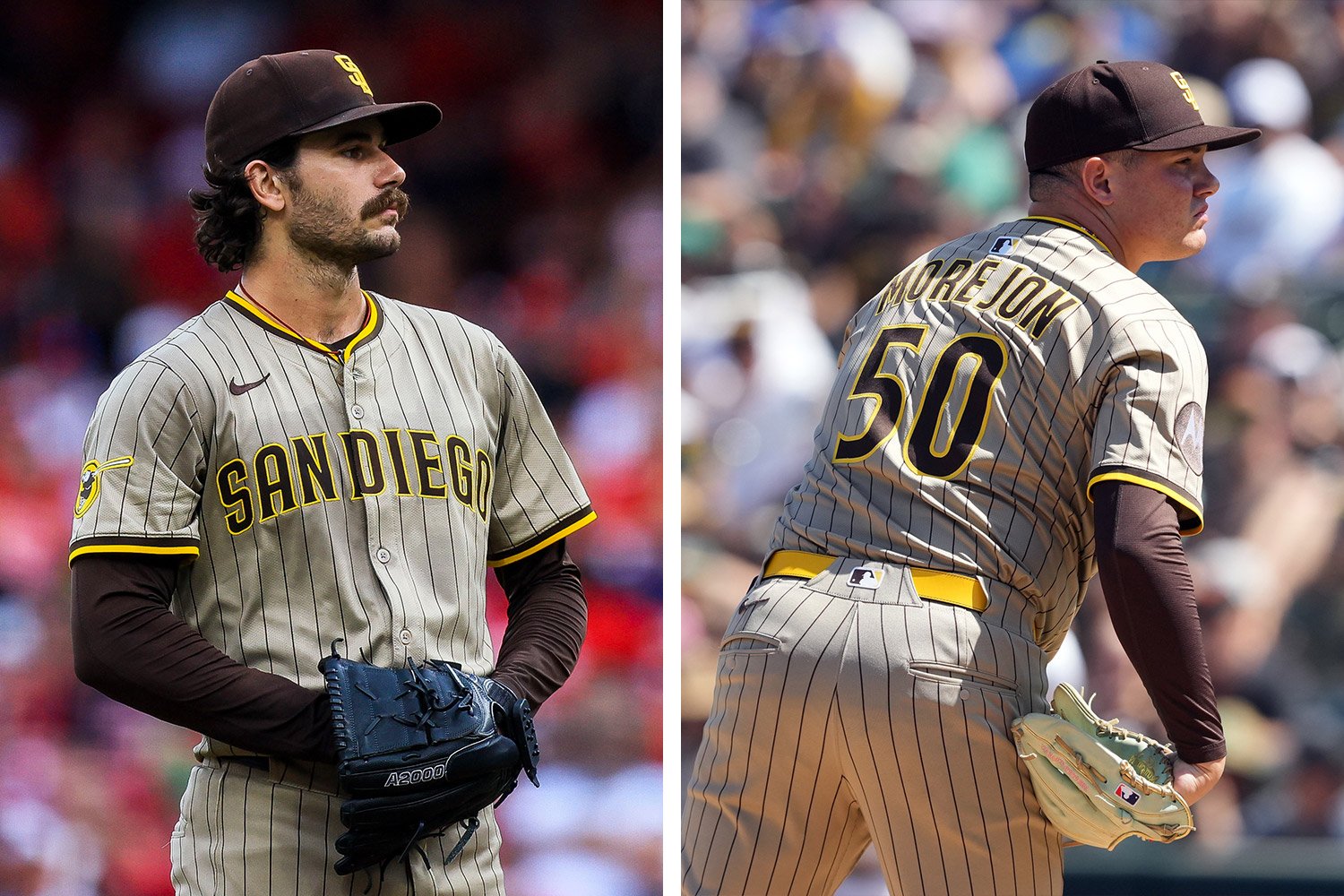 June was another mediocre month for the Padres, which represents exactly how the team has fared since their flaming-hot start to the season. San Diego finished June 13-15, which was good enough to keep themselves in the playoff race, but they certainly aren’t gaining any ground. These results stem from the Padres' continuing dilemma of underperforming offense, yet solid pitching. Despite subpar years from some of the arms, the staff has continued to produce quality innings. In June, Padres pitching ranked around the top ten of many major categories. They finished with a 3.3 WAR (11th), 3.91 FIP (12th), 8.74 K/9 (10th), and a 3.75 ERA (7th). Additionally, their outlier statistics seemed to offset each other. Despite the squad's struggle with giving up free passes at 3.67 BB/9 (27th), they limited the impact of these baserunners by preventing home runs to a tune of 0.92 HR/9 (3rd). Due to the solid performances from the pitching staff, Padres pitchers of the month were quite competitive. Several guys stepped up, some delivering dominant stuff with some unlucky outcomes, and others who had stellar outings but took advantage of some hard-hit outs. The honorable mention for starting pitching this month goes to Stephen Kolek. Kolek certainly has an argument for pitcher of the month as his starts had the best individual outcomes in terms of run prevention. He led the boys with 32 innings pitched in June and made the most of these starts with a 3.38 ERA and 3.87 FIP. Taking a deeper dive, the key to Kolek’s June success was keeping the ball in the park. His 6.47 K/9 wasn’t jumping off the stat sheet, and his 3.09 BB/9 is fine but not a catalyst for dominance. What fueled this run was a 0.56 HR/9 rate that prevented many of his starts from getting out of hand, as big at-bats produced multiple runs. He did have a stretch in June with 11 runs allowed in three starts, so consistency will be key moving forward if Kolek hopes to continue producing, but as long as he’s not giving up home runs, he should be just fine. For relievers, it’s another close call. The honorable mention for bullpen arms is Jason Adam, who has continued to dominate in San Diego. He led the relievers with a 0.7 WAR, 1.32 FIP, 11.66 K/9, and 14.2 IP. What makes Adam’s month especially impressive is that he produced to that level despite some notable lack of luck. His increase from 1.32 FIP to 2.72 xFIP suggests that he was giving up some hard contact, but not to the level of his absurd .439 BABIP. By getting key strikeouts and throwing clutch pitches, he was able to limit the impact of that BABIP and complete June with a nice 2.45 ERA, all without giving up a single home run. Now for the winners. The best starting pitcher for San Diego in June goes to Dylan Cease. It’s been a slow burn for Cease this season after his poor start. Over the last two months, he has lowered his ERA closer to the sub-four number we are used to seeing from him. While the production statistics, such as ERA and wins, have taken time to return to normal, it appears that with this month, Cease has gotten his stuff back. The advanced numbers all suggest that he is returning to form as an elite pitcher, and he just needs some luck, health, and consistency to finish the year on a dominant run. The production wasn’t elite, but it was still an improvement on his season totals as Cease completed the month with a 4.23 ERA in 27.2 IP. The signs of brilliance come in the advanced numbers, where it is clear that Cease can still dominate. He led the Padres by far in three crucial categories with a 3.05 FIP, 3.49 xFIP, and 0.7 WAR. He was able to produce these numbers by missing a lot of bats, as Cease also topped the squad at 12.69 K/9 and had a great 0.65 HR/9. Both of these numbers were more than enough to make up for his walk struggles (4.88 BB/9). It also appears that, like Adams, Cease struggled with some unlucky at-bats in June. His .333 BABIP led the starters and is sure to drop as the season progresses. Unfortunately, allowing too many base runners can be doom for any pitcher, so his high walk rate, combined with that .333 BABIP, was too much for his ERA to stay low. Despite this, every other metric discussed suggests that this was more a result of luck than his pitching. Overall, it was a huge month for Cease that could be his catalyst for a dominant second half. Finally, we have our reliever of the month. Adrian Morejon had a huge month and was the key reason the pen stayed afloat despite lackluster innings from Suarez and Estrada. The backbone of Morejon being the best reliever of June is simple; his production was near perfect. In 13.1 IP, he didn’t allow a single earned run. It’s hard to ask for any more than that from a reliever. What is even better for Morejon is that the advanced numbers suggest this was sustainable dominance. Now, obviously, no pitcher can go without giving up runs here and there, but Morejon’s 1.59 FIP, 2.47 xFIP represent elite stuff, and he got it done by being productive in many ways. His 8.78 K/9 was only okay, but when combined with a pinpoint 1.35 BB/9, it plays a lot better. On top of that, he joined Adams in not allowing a single home run this month. This ultimately resulted in a very good 0.6 WAR in June for Morejon. Although the success is sustainable, Morejon did benefit from some of the opposite luck that Adams and Cease had, as his 1.18 BABIP was the lowest on the team. Surely, much of this is a result of him generating weak contact, but a low strikeout pitcher is eventually going to have some ups and downs with BABIP, which will affect the production stats. For June, however, this was no issue as Morejon produced consistent, productive outings in huge situations. San Diego fans were hoping for more from their Padres overall in June. Hopefully, an offensive awakening and some better pitching luck will be just what they need to lock back into a playoff spot. Until then, these were the guys holding it down for the pitching staff in June.
 -
June was another mediocre month for the Padres, which represents exactly how the team has fared since their flaming-hot start to the season. San Diego finished June 13-15, which was good enough to keep themselves in the playoff race, but they certainly aren’t gaining any ground. These results stem from the Padres' continuing dilemma of underperforming offense, yet solid pitching. Despite subpar years from some of the arms, the staff has continued to produce quality innings. In June, Padres pitching ranked around the top ten of many major categories. They finished with a 3.3 WAR (11th), 3.91 FIP (12th), 8.74 K/9 (10th), and a 3.75 ERA (7th). Additionally, their outlier statistics seemed to offset each other. Despite the squad's struggle with giving up free passes at 3.67 BB/9 (27th), they limited the impact of these baserunners by preventing home runs to a tune of 0.92 HR/9 (3rd). Due to the solid performances from the pitching staff, Padres pitchers of the month were quite competitive. Several guys stepped up, some delivering dominant stuff with some unlucky outcomes, and others who had stellar outings but took advantage of some hard-hit outs. The honorable mention for starting pitching this month goes to Stephen Kolek. Kolek certainly has an argument for pitcher of the month as his starts had the best individual outcomes in terms of run prevention. He led the boys with 32 innings pitched in June and made the most of these starts with a 3.38 ERA and 3.87 FIP. Taking a deeper dive, the key to Kolek’s June success was keeping the ball in the park. His 6.47 K/9 wasn’t jumping off the stat sheet, and his 3.09 BB/9 is fine but not a catalyst for dominance. What fueled this run was a 0.56 HR/9 rate that prevented many of his starts from getting out of hand, as big at-bats produced multiple runs. He did have a stretch in June with 11 runs allowed in three starts, so consistency will be key moving forward if Kolek hopes to continue producing, but as long as he’s not giving up home runs, he should be just fine. For relievers, it’s another close call. The honorable mention for bullpen arms is Jason Adam, who has continued to dominate in San Diego. He led the relievers with a 0.7 WAR, 1.32 FIP, 11.66 K/9, and 14.2 IP. What makes Adam’s month especially impressive is that he produced to that level despite some notable lack of luck. His increase from 1.32 FIP to 2.72 xFIP suggests that he was giving up some hard contact, but not to the level of his absurd .439 BABIP. By getting key strikeouts and throwing clutch pitches, he was able to limit the impact of that BABIP and complete June with a nice 2.45 ERA, all without giving up a single home run. Now for the winners. The best starting pitcher for San Diego in June goes to Dylan Cease. It’s been a slow burn for Cease this season after his poor start. Over the last two months, he has lowered his ERA closer to the sub-four number we are used to seeing from him. While the production statistics, such as ERA and wins, have taken time to return to normal, it appears that with this month, Cease has gotten his stuff back. The advanced numbers all suggest that he is returning to form as an elite pitcher, and he just needs some luck, health, and consistency to finish the year on a dominant run. The production wasn’t elite, but it was still an improvement on his season totals as Cease completed the month with a 4.23 ERA in 27.2 IP. The signs of brilliance come in the advanced numbers, where it is clear that Cease can still dominate. He led the Padres by far in three crucial categories with a 3.05 FIP, 3.49 xFIP, and 0.7 WAR. He was able to produce these numbers by missing a lot of bats, as Cease also topped the squad at 12.69 K/9 and had a great 0.65 HR/9. Both of these numbers were more than enough to make up for his walk struggles (4.88 BB/9). It also appears that, like Adams, Cease struggled with some unlucky at-bats in June. His .333 BABIP led the starters and is sure to drop as the season progresses. Unfortunately, allowing too many base runners can be doom for any pitcher, so his high walk rate, combined with that .333 BABIP, was too much for his ERA to stay low. Despite this, every other metric discussed suggests that this was more a result of luck than his pitching. Overall, it was a huge month for Cease that could be his catalyst for a dominant second half. Finally, we have our reliever of the month. Adrian Morejon had a huge month and was the key reason the pen stayed afloat despite lackluster innings from Suarez and Estrada. The backbone of Morejon being the best reliever of June is simple; his production was near perfect. In 13.1 IP, he didn’t allow a single earned run. It’s hard to ask for any more than that from a reliever. What is even better for Morejon is that the advanced numbers suggest this was sustainable dominance. Now, obviously, no pitcher can go without giving up runs here and there, but Morejon’s 1.59 FIP, 2.47 xFIP represent elite stuff, and he got it done by being productive in many ways. His 8.78 K/9 was only okay, but when combined with a pinpoint 1.35 BB/9, it plays a lot better. On top of that, he joined Adams in not allowing a single home run this month. This ultimately resulted in a very good 0.6 WAR in June for Morejon. Although the success is sustainable, Morejon did benefit from some of the opposite luck that Adams and Cease had, as his 1.18 BABIP was the lowest on the team. Surely, much of this is a result of him generating weak contact, but a low strikeout pitcher is eventually going to have some ups and downs with BABIP, which will affect the production stats. For June, however, this was no issue as Morejon produced consistent, productive outings in huge situations. San Diego fans were hoping for more from their Padres overall in June. Hopefully, an offensive awakening and some better pitching luck will be just what they need to lock back into a playoff spot. Until then, these were the guys holding it down for the pitching staff in June. View full article
-
- 1
-
-
- dylan cease
- stephen kolek
- (and 2 more)
-
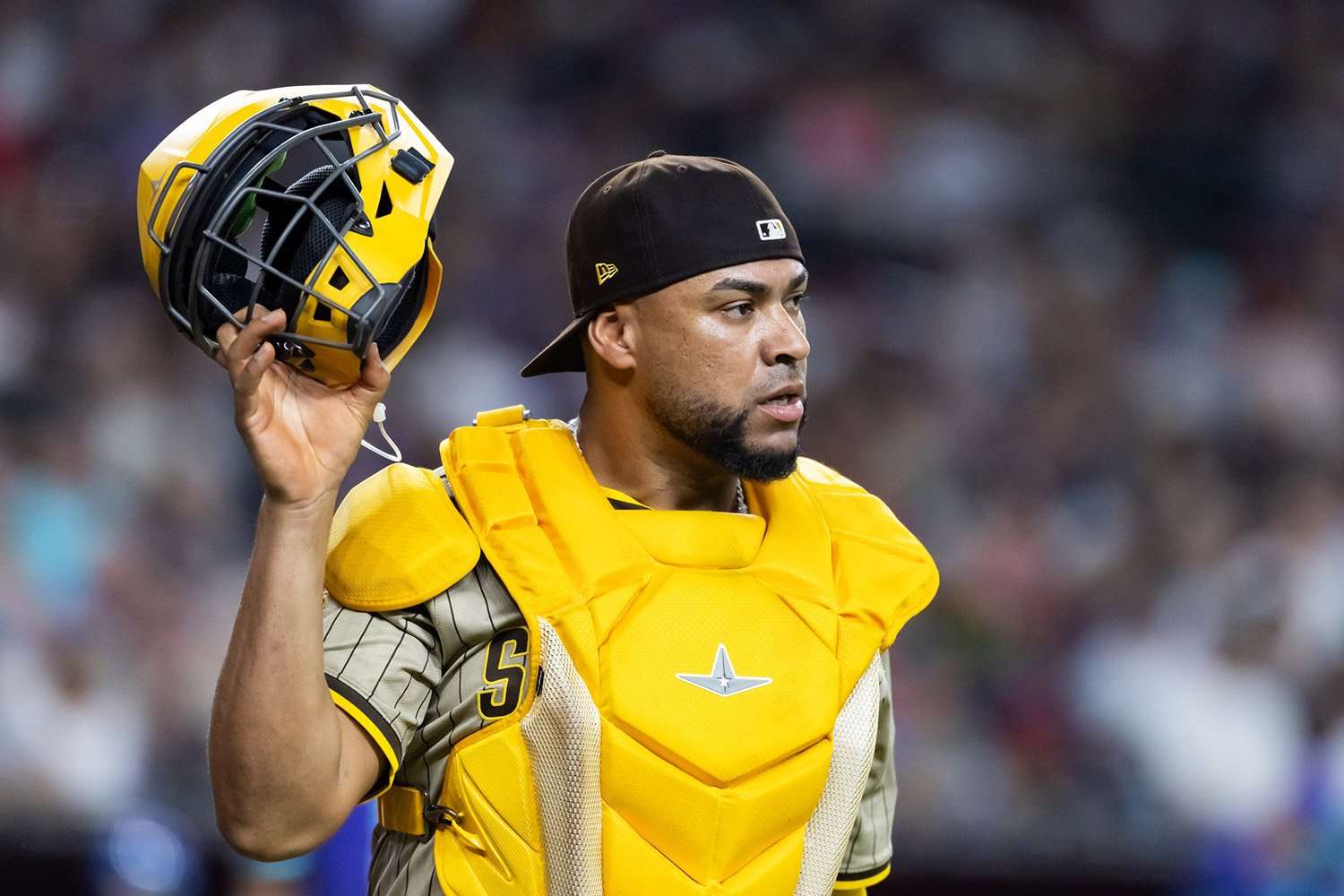 Coming into the 2025 season, the catcher position was the biggest question mark for San Diego. The Padres began the season with three options. Elias Diaz, who at age 34 is coming off an okay at best season, Martin Maldonado, arguably the worst player in baseball last season, and Luis Campusano, whose slow 2024 dimmed hope that youth would save the day. Unfortunately, this problem has only grown in prominence as we enter July. The Padres sit 0.5 games out of the playoffs after their flaming hot start. Most of the roster is filled with players who are either performing great or have a contract or pedigree that will prevent them from being moved off their spot. The one glaring weakness that can be fixed is behind the plate. 2023 All-Star Game MVP Elias Diaz has had an interesting stint in San Diego. He came in from Colorado for the second half of last season and gave the squad respectable short-term production. His experience at age 33, pop, and solid defense made him a viable backup as he slashed .190/.290/.429 and defended at 3.9 defensive outs above average (FanGraphs). Given his competent 2024 season and being just one season removed from a 2023 where he exploded with a .267/.316/.409 line, 14 home runs, and 72 RBI, there was enough for the Padres to justify giving him the starting spot. That decision is not aging well. As June wraps up, Diaz is hitting .206/.278/.313 with a 26% strikeout rate, significantly higher than his 2024 number of 19.7%. The pop has not been there either, with just four home runs in 177 plate appearances. His struggles have been especially notable as San Diego has no lefty platoon catcher to help him get favorable matchups, and backup Maldanado has fared even worse at the plate. Because of this, Diaz and his struggles have nowhere to hide on the Padres roster. When taking a deeper dive, it appears that scouting reports have been updated against Diaz, and his weaknesses are now being exposed. During his 2023 all-star season, Diaz got to face 1026 fastballs, which he hit to the tune of a .342 wOBA. Now in 2025, he is seeing a higher percentage of breaking balls than he has in his whole career (37%) and hitting them at career-low rates. So far against breaking pitches, Diaz has a .141 xBA, .171 xSLG, and .187 wOBA. As a result, Padres catchers sit 29th in MLB at 62 wRC+. Thankfully, the only way to go is up, and even a minor upgrade at catcher could lead to many more wins. Here are some of the Padres' options going forward. Stick With Elias Diaz Although everything discussed above is true, there are still minor signs to hold out hope for a turnaround in the second half. Diaz’s topped ball percentage is back below 30% for the first time in years, meaning he is putting the ball in the air. With his history of pop, that is a good sign that he’s due for a power surge. Also, while the breaking ball statistics for 2025 are scary, they appear to be outliers in his career. He hasn’t hit sub .200 in xBA, xSLG, or wOBA against breaking pitches since 2022, and that was the only other time of his career struggling to that extent. A few fly balls that catch the barrel and fly out of the park, coupled with a natural adjustment to get him back towards his career averages against breaking pitches would certainly be enough to get the Padres over that 0.5 game hump. The One That Got Away The best move for San Diego would’ve been to snag White Sox catcher Matt Thaiss earlier in the season. He ended up getting moved to the Rays for almost nothing (a 25-year-old with a 33 wRC+ in Triple A). Thaiss is a lefty bat who would’ve slotted right into a platoon position with Diaz taking Maldanado’s spot on the roster. Thais’s season has been highlighted by his .385 OBP and 108 wRC+, leading to a 1.0 WAR. On top of his solid individual talent, bringing in a lefty platoon would’ve also elevated Diaz. Giving Thais the majority of at-bats against righties, Diaz could’ve focused more on hitting lefties, whom he has fared slightly better against this season and much of his career. Make A Different Platoon Move While missing out on lefty catchers such as Matt Thaiss and Reese McGuire limits the Padres' options in terms of available platoon bats, some others could be worth acquiring for a very cheap price. Omar Narvaez and Tucker Barnhart are two experienced catchers looking for a roster spot in 2025. They have a 1.071 and .875 OPS, respectively, against righties in limited appearances this season. With these hot starts, combined with Narvaez's history as an all-star and Barnhart's history as a Gold Glove defender, either one could be a lottery ticket worth scratching. Call Up Campusano Keep an eye out here in the coming days, as we will be exploring a feature piece on Campusano and whether he's a viable second-half option behind the dish. Big Splash If the Padres wanted to do a full 360 on their weak catcher position, they could add another All-Star to their lineup and pursue William Contreras. The Brewers have been known to deal high-level players instead of paying them, and he would fit very nicely in the Padres' lineup. His slight struggles this season could drop him back into the Padres' price range, and he would certainly be cheaper than last season's All-Star acquisition, Tanner Scott. This year, Contreras is hitting .252/.358/.353 while playing defense at 4.7 outs above average (FanGraphs). He has also proven himself consistently productive at the plate with two All-Star appearances in the last three seasons. His 123 wRC+ and 12.7 WAR since joining the Brewers would deepen the Padres' lineup and give them consistency at a spot they desperately need. Padres fans would certainly like to see the front office have an aggressive deadline. With the season moving quickly and an airtight playoff race, time will tell if the Padres can do enough behind the plate to get over the hump.
 -
Coming into the 2025 season, the catcher position was the biggest question mark for San Diego. The Padres began the season with three options. Elias Diaz, who at age 34 is coming off an okay at best season, Martin Maldonado, arguably the worst player in baseball last season, and Luis Campusano, whose slow 2024 dimmed hope that youth would save the day. Unfortunately, this problem has only grown in prominence as we enter July. The Padres sit 0.5 games out of the playoffs after their flaming hot start. Most of the roster is filled with players who are either performing great or have a contract or pedigree that will prevent them from being moved off their spot. The one glaring weakness that can be fixed is behind the plate. 2023 All-Star Game MVP Elias Diaz has had an interesting stint in San Diego. He came in from Colorado for the second half of last season and gave the squad respectable short-term production. His experience at age 33, pop, and solid defense made him a viable backup as he slashed .190/.290/.429 and defended at 3.9 defensive outs above average (FanGraphs). Given his competent 2024 season and being just one season removed from a 2023 where he exploded with a .267/.316/.409 line, 14 home runs, and 72 RBI, there was enough for the Padres to justify giving him the starting spot. That decision is not aging well. As June wraps up, Diaz is hitting .206/.278/.313 with a 26% strikeout rate, significantly higher than his 2024 number of 19.7%. The pop has not been there either, with just four home runs in 177 plate appearances. His struggles have been especially notable as San Diego has no lefty platoon catcher to help him get favorable matchups, and backup Maldanado has fared even worse at the plate. Because of this, Diaz and his struggles have nowhere to hide on the Padres roster. When taking a deeper dive, it appears that scouting reports have been updated against Diaz, and his weaknesses are now being exposed. During his 2023 all-star season, Diaz got to face 1026 fastballs, which he hit to the tune of a .342 wOBA. Now in 2025, he is seeing a higher percentage of breaking balls than he has in his whole career (37%) and hitting them at career-low rates. So far against breaking pitches, Diaz has a .141 xBA, .171 xSLG, and .187 wOBA. As a result, Padres catchers sit 29th in MLB at 62 wRC+. Thankfully, the only way to go is up, and even a minor upgrade at catcher could lead to many more wins. Here are some of the Padres' options going forward. Stick With Elias Diaz Although everything discussed above is true, there are still minor signs to hold out hope for a turnaround in the second half. Diaz’s topped ball percentage is back below 30% for the first time in years, meaning he is putting the ball in the air. With his history of pop, that is a good sign that he’s due for a power surge. Also, while the breaking ball statistics for 2025 are scary, they appear to be outliers in his career. He hasn’t hit sub .200 in xBA, xSLG, or wOBA against breaking pitches since 2022, and that was the only other time of his career struggling to that extent. A few fly balls that catch the barrel and fly out of the park, coupled with a natural adjustment to get him back towards his career averages against breaking pitches would certainly be enough to get the Padres over that 0.5 game hump. The One That Got Away The best move for San Diego would’ve been to snag White Sox catcher Matt Thaiss earlier in the season. He ended up getting moved to the Rays for almost nothing (a 25-year-old with a 33 wRC+ in Triple A). Thaiss is a lefty bat who would’ve slotted right into a platoon position with Diaz taking Maldanado’s spot on the roster. Thais’s season has been highlighted by his .385 OBP and 108 wRC+, leading to a 1.0 WAR. On top of his solid individual talent, bringing in a lefty platoon would’ve also elevated Diaz. Giving Thais the majority of at-bats against righties, Diaz could’ve focused more on hitting lefties, whom he has fared slightly better against this season and much of his career. Make A Different Platoon Move While missing out on lefty catchers such as Matt Thaiss and Reese McGuire limits the Padres' options in terms of available platoon bats, some others could be worth acquiring for a very cheap price. Omar Narvaez and Tucker Barnhart are two experienced catchers looking for a roster spot in 2025. They have a 1.071 and .875 OPS, respectively, against righties in limited appearances this season. With these hot starts, combined with Narvaez's history as an all-star and Barnhart's history as a Gold Glove defender, either one could be a lottery ticket worth scratching. Call Up Campusano Keep an eye out here in the coming days, as we will be exploring a feature piece on Campusano and whether he's a viable second-half option behind the dish. Big Splash If the Padres wanted to do a full 360 on their weak catcher position, they could add another All-Star to their lineup and pursue William Contreras. The Brewers have been known to deal high-level players instead of paying them, and he would fit very nicely in the Padres' lineup. His slight struggles this season could drop him back into the Padres' price range, and he would certainly be cheaper than last season's All-Star acquisition, Tanner Scott. This year, Contreras is hitting .252/.358/.353 while playing defense at 4.7 outs above average (FanGraphs). He has also proven himself consistently productive at the plate with two All-Star appearances in the last three seasons. His 123 wRC+ and 12.7 WAR since joining the Brewers would deepen the Padres' lineup and give them consistency at a spot they desperately need. Padres fans would certainly like to see the front office have an aggressive deadline. With the season moving quickly and an airtight playoff race, time will tell if the Padres can do enough behind the plate to get over the hump. View full article
-
Catchers Are Mashing The Baseball In 2025. That's Right, Catchers
Greg Spicer posted an article in Padres
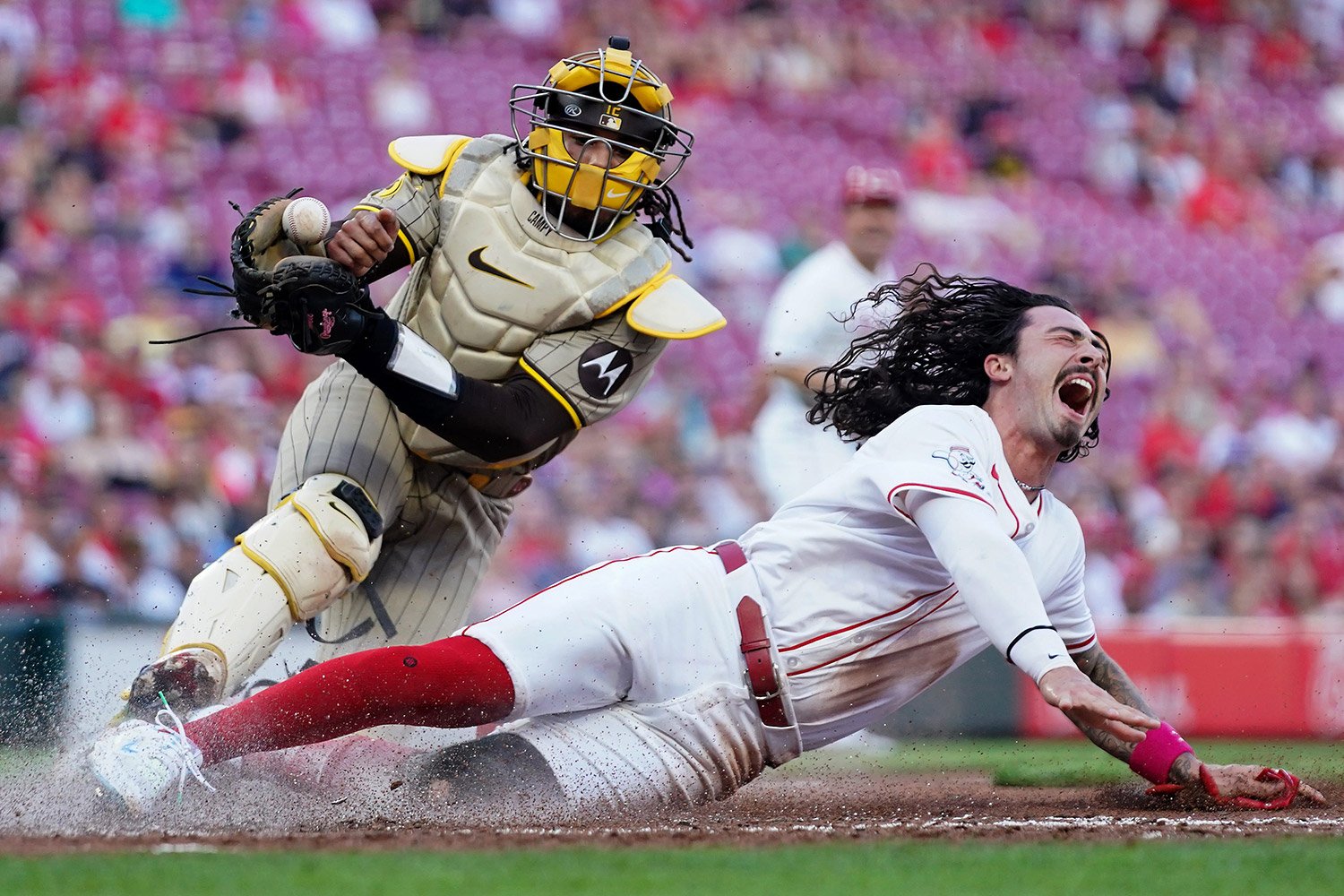 Last Saturday, Mariners catcher Cal Raleigh hit two home runs, positioning himself atop the home run leaderboard in 2025 and taking over the top spot from superstar Aaron Judge. If I told you in 2018 that the player overtaking Judge for the league lead in homers was a catcher, you’d undoubtedly be shocked. The assumption in modern-day MLB is that high-level hitting comes from outfielders, first basemen, and designated hitters. There’s also a solid group of infield bats, but catchers have lowered offensive expectations. That was until recently, when catchers are cementing themselves back into the realm of normal offense. While Raleigh’s slug is the headline of 2025’s catcher offensive surge, the group as a whole is putting together impressive production that hasn’t been seen in years. Since 2018, when the position batted to a minuscule 85 wRC+, catchers have steadily increased their output and now sit at a respectable 98 wRC+ in 2025. This change can be attributed to a variety of factors. First, catchers have benefited from an increase in analytical tools (a.k.a. platooning) for lineup formation. One of the strongest advantages a batter can have in MLB is facing a pitcher of the opposite hand. With teams often carrying at least two catchers, we have seen platooning employed more frequently, and the results have been notable. In 2018, of the seven lefty catchers with 100+ plate appearances against righties, just one had a wRC+ over 100. Fast forward to 2024, and the number remained at seven; however, three of these batters were able to produce a wRC+ of 100 or more. Now, we look at this season, where, once again, seven players meet the threshold (for 2025, we will use 50 plate appearances instead of 100, as we are roughly 45% through the season). Of these seven qualified lefty catchers, five are producing at a 100+ wRC+, illustrating the steady uptick in catchers’ offensive effectiveness. A similar pattern prevails for righty catchers against lefty pitchers. Of the 20 qualified batters in 2018 (100+ PAs), 10 of them boasted a 100+ wRC+. Then, in 2024, the sample size was 20 once again, but 12 of the batters had a wRC+ of 100 or higher. In the current season, the number of qualified hitters has dropped to 16; however, nine of them have achieved a wRC+ of 100 or more, making it a very strong group of hitters. The increased presence of platooning has certainly helped the production we see from role-playing catchers and backup players, but that alone can’t take the worst-hitting position in baseball and turn it into an offensive asset. We also have to look at the top of the ranks, where it’s clear that baseball has a dominant group of star catchers. These aren’t just one-hit wonders; these guys have been hitting for years. Now, with growth from the rest of the league's catchers, they are leading the position to glory. Back to where we started, Cal Raleigh has established himself as not only the best catcher in the sport but also one of the best hitters in the sport. He is slashing 265/.372/.629 with 181 wRC+ as we near the halfway mark of the season. On top of his impressive line, he has a league-leading 26 home runs, which would put him on pace for over 50 on the year. The craziest thing is, with just a .271 BABIP, he may be able to keep this production up for the whole season. There is also Will Smith, who has been one of the best catchers in MLB for years. A regular presence in the middle of the Dodgers' lineup, his consistency is rare at the position. With that said, this season may be his best. His .324/.427/.503 line is eye-popping and has led to a 164 wRC+. The foundation of Smith’s production is in his approach. With a 15.1% walk rate and just a 17.4% strikeout rate, his at-bats are incredibly efficient. The .374 BABIP will certainly decline, but the 103-point gap between his AVG and OBP should create production all year. Finally, we have Alejandro Kirk. While many catchers are deserving of a shout-out this season, Kirk’s re-emergence as an elite catcher in 2025 has been huge for the position's success. The 2022 All-Star is returning to form and slashing .325/.367/.440. His .325 average leads catchers this year and has come as a result of his 10.1% strikeout rate, making him one of the hardest outs in baseball. Although his .341 BABIP suggests some regression potential, his history and high contact rates should keep him among the top catchers in baseball. Along with these stars, the catcher position as a whole is in a better spot than it’s been in a long time. Looking at the catching landscape, you could argue that at least 25 out of the 30 teams are confident in their catchers' offensive production. Fourteen teams in MLB boast a 95 or higher wRC+ from their catchers, which any organization would certainly take. In addition to these 14 squads, seven more teams have received great production from their starting catchers but have just fallen off a bit from their backups. These teams are the Red Sox (Carlos Narvaez, 125 wRC+), Rockies (Hunter Goodman, 121 wRC+), Diamondbacks (Gabriel Moreno, 113 wRC+), Guardians (Bo Naylor, 103 wRC+), Athletics (Langeliers, 102 wRC+), Orioles (Adley Rutschman, 99 wRC+) and Angels (Logan O’Hoppe, 98 wRC+). Neither of those groups includes teams that have excellent catchers who have just started cold this season. Yainer Diaz (Astros, 90 wRC+), J.T. Realmuto (Phillies, 85 wRC+), Jonah Heim (Rangers, 82 wRC+), and Salvador Perez (Royals, 71 wRC+) will all likely finish the year better than they are hitting now. With so many teams having excellent catcher groups, an increase in the utilization of platooning, and an emerging class of superstars behind the plate, it’s safe to say catchers have entered the middle of the lineup, and they may be here to stay.
 -
Last Saturday, Mariners catcher Cal Raleigh hit two home runs, positioning himself atop the home run leaderboard in 2025 and taking over the top spot from superstar Aaron Judge. If I told you in 2018 that the player overtaking Judge for the league lead in homers was a catcher, you’d undoubtedly be shocked. The assumption in modern-day MLB is that high-level hitting comes from outfielders, first basemen, and designated hitters. There’s also a solid group of infield bats, but catchers have lowered offensive expectations. That was until recently, when catchers are cementing themselves back into the realm of normal offense. While Raleigh’s slug is the headline of 2025’s catcher offensive surge, the group as a whole is putting together impressive production that hasn’t been seen in years. Since 2018, when the position batted to a minuscule 85 wRC+, catchers have steadily increased their output and now sit at a respectable 98 wRC+ in 2025. This change can be attributed to a variety of factors. First, catchers have benefited from an increase in analytical tools (a.k.a. platooning) for lineup formation. One of the strongest advantages a batter can have in MLB is facing a pitcher of the opposite hand. With teams often carrying at least two catchers, we have seen platooning employed more frequently, and the results have been notable. In 2018, of the seven lefty catchers with 100+ plate appearances against righties, just one had a wRC+ over 100. Fast forward to 2024, and the number remained at seven; however, three of these batters were able to produce a wRC+ of 100 or more. Now, we look at this season, where, once again, seven players meet the threshold (for 2025, we will use 50 plate appearances instead of 100, as we are roughly 45% through the season). Of these seven qualified lefty catchers, five are producing at a 100+ wRC+, illustrating the steady uptick in catchers’ offensive effectiveness. A similar pattern prevails for righty catchers against lefty pitchers. Of the 20 qualified batters in 2018 (100+ PAs), 10 of them boasted a 100+ wRC+. Then, in 2024, the sample size was 20 once again, but 12 of the batters had a wRC+ of 100 or higher. In the current season, the number of qualified hitters has dropped to 16; however, nine of them have achieved a wRC+ of 100 or more, making it a very strong group of hitters. The increased presence of platooning has certainly helped the production we see from role-playing catchers and backup players, but that alone can’t take the worst-hitting position in baseball and turn it into an offensive asset. We also have to look at the top of the ranks, where it’s clear that baseball has a dominant group of star catchers. These aren’t just one-hit wonders; these guys have been hitting for years. Now, with growth from the rest of the league's catchers, they are leading the position to glory. Back to where we started, Cal Raleigh has established himself as not only the best catcher in the sport but also one of the best hitters in the sport. He is slashing 265/.372/.629 with 181 wRC+ as we near the halfway mark of the season. On top of his impressive line, he has a league-leading 26 home runs, which would put him on pace for over 50 on the year. The craziest thing is, with just a .271 BABIP, he may be able to keep this production up for the whole season. There is also Will Smith, who has been one of the best catchers in MLB for years. A regular presence in the middle of the Dodgers' lineup, his consistency is rare at the position. With that said, this season may be his best. His .324/.427/.503 line is eye-popping and has led to a 164 wRC+. The foundation of Smith’s production is in his approach. With a 15.1% walk rate and just a 17.4% strikeout rate, his at-bats are incredibly efficient. The .374 BABIP will certainly decline, but the 103-point gap between his AVG and OBP should create production all year. Finally, we have Alejandro Kirk. While many catchers are deserving of a shout-out this season, Kirk’s re-emergence as an elite catcher in 2025 has been huge for the position's success. The 2022 All-Star is returning to form and slashing .325/.367/.440. His .325 average leads catchers this year and has come as a result of his 10.1% strikeout rate, making him one of the hardest outs in baseball. Although his .341 BABIP suggests some regression potential, his history and high contact rates should keep him among the top catchers in baseball. Along with these stars, the catcher position as a whole is in a better spot than it’s been in a long time. Looking at the catching landscape, you could argue that at least 25 out of the 30 teams are confident in their catchers' offensive production. Fourteen teams in MLB boast a 95 or higher wRC+ from their catchers, which any organization would certainly take. In addition to these 14 squads, seven more teams have received great production from their starting catchers but have just fallen off a bit from their backups. These teams are the Red Sox (Carlos Narvaez, 125 wRC+), Rockies (Hunter Goodman, 121 wRC+), Diamondbacks (Gabriel Moreno, 113 wRC+), Guardians (Bo Naylor, 103 wRC+), Athletics (Langeliers, 102 wRC+), Orioles (Adley Rutschman, 99 wRC+) and Angels (Logan O’Hoppe, 98 wRC+). Neither of those groups includes teams that have excellent catchers who have just started cold this season. Yainer Diaz (Astros, 90 wRC+), J.T. Realmuto (Phillies, 85 wRC+), Jonah Heim (Rangers, 82 wRC+), and Salvador Perez (Royals, 71 wRC+) will all likely finish the year better than they are hitting now. With so many teams having excellent catcher groups, an increase in the utilization of platooning, and an emerging class of superstars behind the plate, it’s safe to say catchers have entered the middle of the lineup, and they may be here to stay. View full article
-
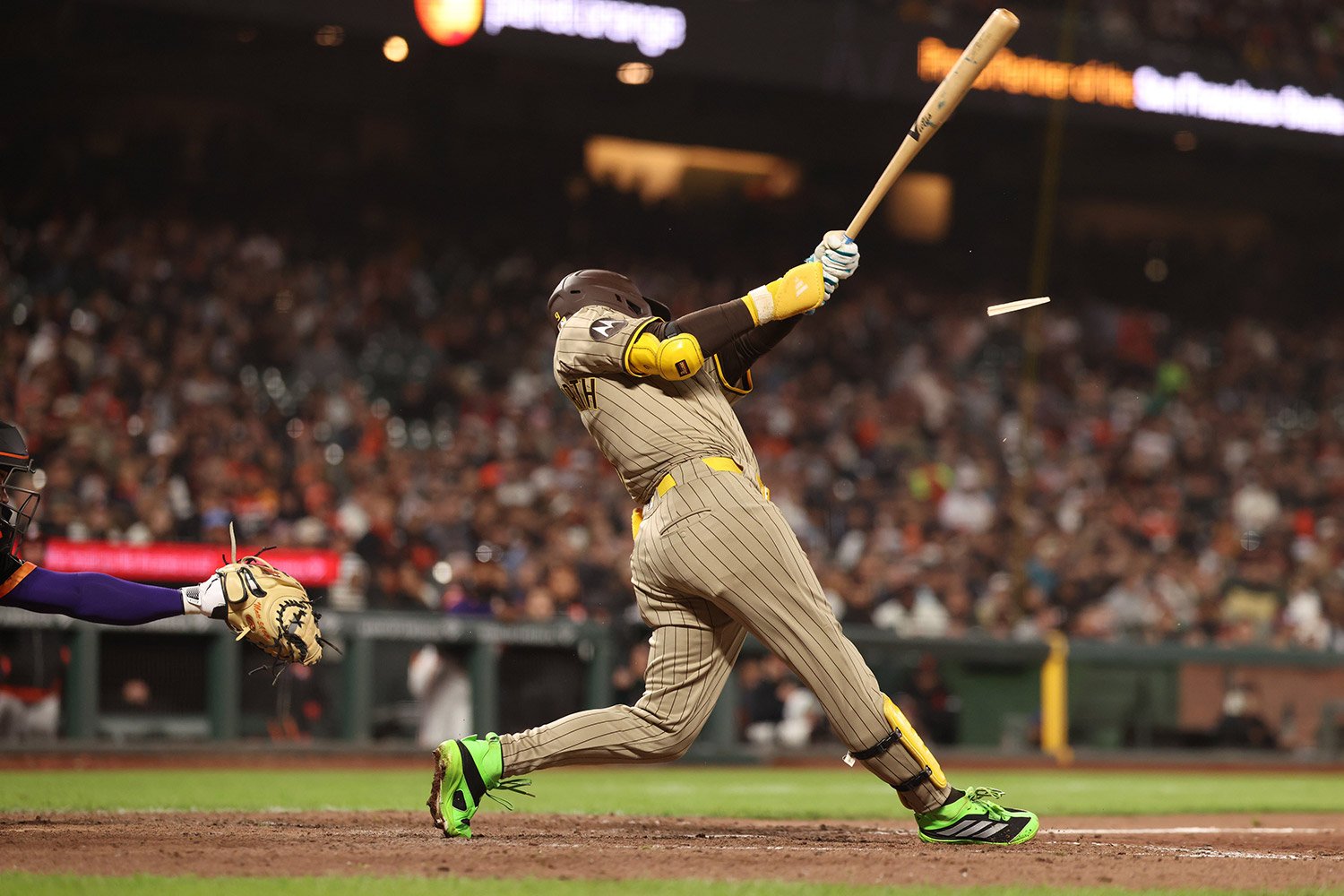 To start the season, it looked like the Padres' offense was poised for a dominant season. Fernando Tatis Jr. immediately emerged as an MVP candidate, Jackson Merrill was seemingly avoiding a sophomore slump, and the rest of the lineup was doing their jobs. The offense peaked on May 10 when San Diego scored a blistering 21 runs against the ice-cold Colorado Rockies. Unfortunately, that was the last we’d see of a flaming hot Padres offense until Tuesday. Not long after that performance, the Padres went on a six-game losing streak, which included five consecutive games with one or fewer runs. The offensive struggles have naturally impacted the team's success as well. Although a dominant bullpen and solid rotation have kept the Padres in the thick of the playoff race, the squad has played sub-.500 ball since their May 10 explosion. The cool-off started with Fernando Tatis Jr. Through mid-May, it appeared that he was re-establishing himself among the best players in the MLB; now, he will need an exceptional next month to have a chance at making the All-Star Game in July. After May 10, Tatis has slashed .181/.277/.324 with a 20.2% strikeout rate. Low production has followed as he has just four home runs and six RBIs in that span as well. However, not all is lost for Tatis Jr. He leads the Padres with 13 home runs and is still slashing .262/.343/.460 on the season. Also, his 14 stolen bases, 1.9 Base Running Value (BsR FanGraphs), and 5.7 Defensive Outs Above Average (DEF Fangraphs) make him a high-value player regardless of offensive output. His .195 BABIP in the last month also suggests that his cold streak is a result of some unlucky hitting. Given his importance in the lineup, the Padres' offense needs him to be a star if they are to get back to winning consistently. While Tatis is their’ engine, the true pain of the Padres' offensive struggles lies in all of the supporting stars going cold at the same time. Xander Bogaerts, Luis Arraez, Jake Cronenworth, and Jackson Merrill (10 combined all-star appearances) have all hit to a sub-100 wRC+ since May 10. To make matters worse, the surprise breakout bat, Gavin Sheets, has come back to earth with a hard fall and 89 wRC+ in that same time frame. To identify the impact of these struggles, look no further than the power numbers. Since that dominant outburst against the Rockies, those four All-Stars have combined for just three home runs. One for each player except Arraez. They have combined for 445 plate appearances in that time, leading to an inconceivable 1/148 home run rate between them. Additionally, the Padres have plummeted to 26th in the MLB in total home runs (57) and 25th in home runs per game (0.86). To make matters worse, these Padres’ stars are struggling with low on-base rates and high strikeout rates. Usually, a successful high strikeout player still has power or gets walks, but as of May 10, these batters have displayed neither. Although his wOBA at .275, Merrill has worked just a 6.2% walk rate and 24.8% strikeout rate, giving him the biggest gap on the team since the cold streak started. Sheets is barely any more respectable with a 6.5% walk rate and 20.4% strikeout rate. Arraez is unique because he doesn’t strike out ever, even over the last month (1.7% strikeout rate). The issue is that the walk rate, at just 3.4%, is equally notable, but not in a good way. Additionally, a high contact batter can usually hit for a respectable batting average, but unsurprisingly, Arraez has been hitting just .266 since May 10. Although the lack of offensive output is what stands out over the last month, there is a reason the Padres have scored enough runs to stay 10 games over .500: Manny Machado. With the whole lineup going downhill, Machado picked the perfect time to become the hottest player in baseball. The six-time All-Star is well on his way to a seventh appearance and deserves a lot of credit for carrying the load. In his 120 plate appearances after May 10, Machado has slashed .324/.383/.556 with a .405 wOBA and 166 wRC+. On top of that, he has hit a power surge, hitting seven home runs in that span and driving in 21 runs. This adds to what has been a brilliant season for Machado. On the year, he is slashing .325/.386/.518 with 10 home runs and a 2.8 WAR, all team highs. This rough stretch has not been ideal for the Padres. Four high-salary star players going cold at once, combined with the face of the team falling off a cliff, is difficult for any team to play through. Despite this adversity, a consistent pitching staff and the greatness of Manny Machado have been enough to keep the Padres inside the playoff picture. If Tuesday's offensive outburst can get the squad rolling and the pitching can keep playing their part, a hot streak could be in store for San Diego.
-
- 1
-
-
- manny machado
- luis arraez
- (and 4 more)

