


Brandon Glick
-
Posts
109 -
Joined
-
Last visited
Content Type
Profiles
San Diego Padres Videos
2026 San Diego Padres Top Prospects Ranking
San Diego Padres Free Agent & Trade Rumors, Notes, & Tidbits
Guides & Resources
2025 San Diego Padres Draft Pick Tracker
News
2026 San Diego Padres Draft Tracker: Picks & Bonuses
Forums
Blogs
Events
Store
Downloads
Gallery
Everything posted by Brandon Glick
-
Playoff Slumber: Padres Offense Goes Dark Against Cubs in Game 1
Brandon Glick posted an article in Padres
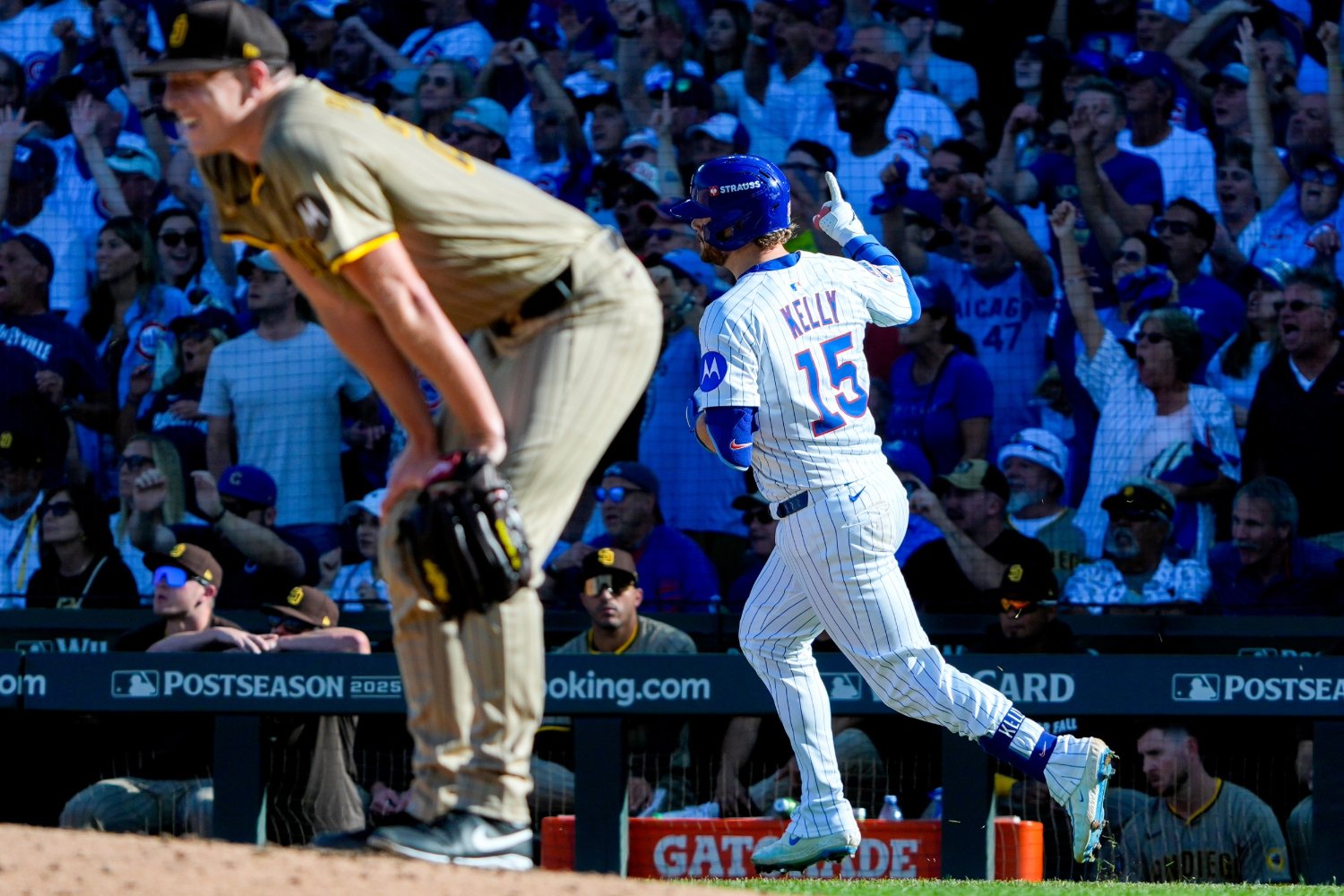 Prior to this series against the Chicago Cubs, what did we all say was the most important thing for the San Diego Padres to do? Not get beat before the bullpen cavalry could arrive. Anyone want to guess what happened today? Nick Pivetta was mostly tremendous, save for two crucial mistakes. The bullpen was as advertised, besides a wild pitch that got away from Jeremiah Estrada. And the offense... was, well, offensive. Xander Bogaerts was the only player to hit the ball with any sort of authority, as the Friars managed just one run on four hits. The lineup was utterly dismantled by Matthew Boyd and the Cubs' own elite crop of relievers. Now, the Padres are staring down an elimination game against (likely) Shota Imanaga in Game 2, which they have to win in front of a raucous, hostile crowd just for the right to play a sudden death Game 3. Let's hope Dylan Cease brings the goods tomorrow, because otherwise, this season is about to come to a screeching halt. In the meantime, let's review the most impactful plays from the game, per WPA via Baseball Savant: 3. Top 2nd: Xander Bogaerts hits RBI double off Matthew Boyd, +12.7% Win Expectancy This was both the highlight and lowlight of the Padres' day on offense. Bogaerts fought off a few tough pitches from Boyd before finally getting a mistake pitch, and he drove in Jackson Merrill (who hit a bloop double of his own) by smoking a line drive into the gap. It put San Diego ahead 1-0, and Bogaerts advanced to third on a throwing error from the usually-infallible Pete Crow-Armstrong. That's when any semblance of offense died. Bogaerts was stranded at third, as the lineup produced a hard groundout (which required a nice play by Dansby Swanson), a pop out, and another groundout to end the threat. The Padres wouldn't score again, notching just two more hits in the contest. 2. Bottom 5th: Carson Kelly hits solo home run off Nick Pivetta, -14.8% Win Expectancy This was the real backbreaker, as Kelly went back-to-back with Seiya Suzuki to give the Cubs a lead they wouldn't relinquish. The funny thing is this wasn't even that bad of a pitch—Pivetta was beating the Cubs with his fastball all day prior to this at-bat. Unfortunately, he threw it one too many times, and Kelly lifted the ball just high enough to hit it out through the swirling Wrigley Field win. Though it didn't end up mattering in the final score, Nico Hoerner's sac fly in the eighth inning was also a killer (even though it only added 1.9% win expectancy to the Cubs' bottom line), as it was clear the Padres weren't scoring multiple runs in the ninth inning. 1. Bottom 5th: Seiya Suzuki hits solo home run off Nick Pivetta, -15.8% Win Expectancy No surprises here. Pivetta looked unbeatable until Suzuki came up to the plate for the second time, laying off a few bad pitches up in the zone before finally getting a mistake pitch down the heart of the plate. This gave the Cubs all the momentum they needed behind a wild home crowd, as Kelly would hit his game-winning shot just moments later. Suzuki was on fire prior to the playoffs, homering in his last four games of the regular season, and its frustrating that Pivetta let the hottest hitter on the team beat him. Next up: The Padres will play Game 2 against the Cubs at Wrigley Field tomorrow, Oct. 1. They must win the next two games or they will be eliminated from the playoffs.
 -
Heading into Chicago to face a hostile crowd and the Cubs, the Padres were always going to have to get creative to win in the Wild Card Round. Their playoff roster has been released, and there's a few surprises, particularly at the catcher position. Catchers (3): Freddy Fermin, Martín Maldonado, Luis Campusano Infield (7): Ryan O’Hearn, Luis Arraez, Jake Cronenworth, Xander Bogaerts, Manny Machado, Jose Iglesias, Mason McCoy Outfield (4): Fernando Tatis Jr., Jackson Merrill, Gavin Sheets, Bryce Johnson Starters (5): Nick Pivetta, Dylan Cease, Yu Darvish, Michael King, Randy Vásquez Relievers (7): Robert Suarez, Mason Miller, Adrian Morejon, Jeremiah Estrada, David Morgan, Wandy Peralta, Bradgley Rodriguez So, Elias Diaz is officially out (hurt his oblique over the weekend), and Luis Campusano and Martin Maldonado are in. Neither backstop has been with the big league club since before the trade deadline... What do you think of the Padres' playoff roster? Are you surprised by any decisions made by Mike Shildt and the front office? View full rumor
-
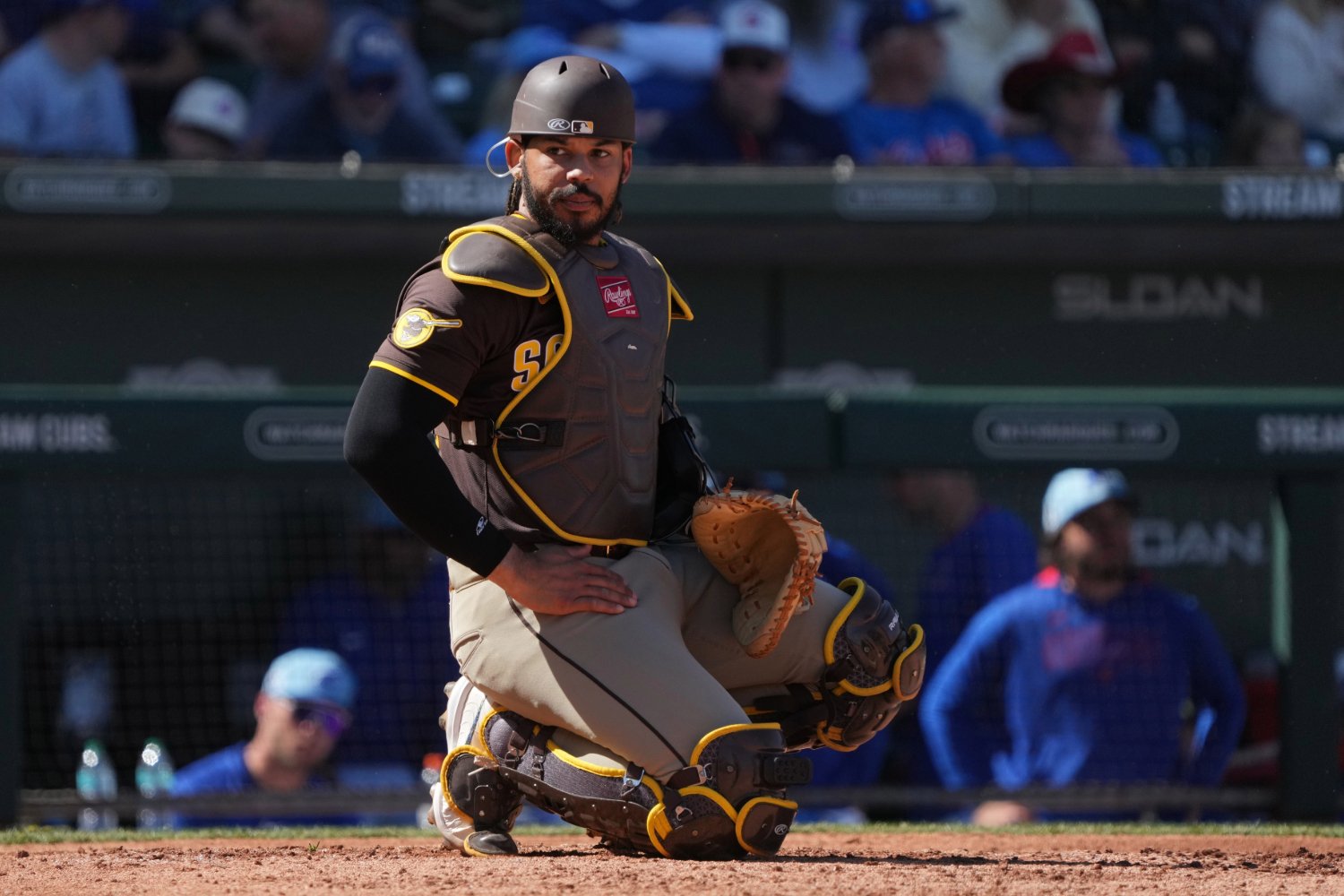 Heading into Chicago to face a hostile crowd and the Cubs, the Padres were always going to have to get creative to win in the Wild Card Round. Their playoff roster has been released, and there's a few surprises, particularly at the catcher position. Catchers (3): Freddy Fermin, Martín Maldonado, Luis Campusano Infield (7): Ryan O’Hearn, Luis Arraez, Jake Cronenworth, Xander Bogaerts, Manny Machado, Jose Iglesias, Mason McCoy Outfield (4): Fernando Tatis Jr., Jackson Merrill, Gavin Sheets, Bryce Johnson Starters (5): Nick Pivetta, Dylan Cease, Yu Darvish, Michael King, Randy Vásquez Relievers (7): Robert Suarez, Mason Miller, Adrian Morejon, Jeremiah Estrada, David Morgan, Wandy Peralta, Bradgley Rodriguez So, Elias Diaz is officially out (hurt his oblique over the weekend), and Luis Campusano and Martin Maldonado are in. Neither backstop has been with the big league club since before the trade deadline... What do you think of the Padres' playoff roster? Are you surprised by any decisions made by Mike Shildt and the front office?
 -
The Padres are set to square off against the Cubs in a best-of-three Wild Card series matchup at Wrigley Field. Which team is favored, and how can the underdog pull off the upset? View full video
-
The Padres are set to square off against the Cubs in a best-of-three Wild Card series matchup at Wrigley Field. Which team is favored, and how can the underdog pull off the upset?
-
Yu Darvish is one of the last vestiges of the "workhorse" starter, an archetype that has been slowly dying out over the last 20 years. He's completed 175 or more innings five times in his career, though only once since arriving in San Diego prior to the 2021 campaign. Despite being 39 years old, Darvish remains effective and one of the most unique pitchers in the league. His arsenal goes eight pitches deep according to Baseball Savant, with no offering being featured more than 21% of the time (his sinker leads the pack). His expected stats also remain favorable, with a 3.29 xERA, 94th-percentile average exit velocity allowed (86.7 mph), and a scant walk rate (6.2%) highlighting his ageless abilities. Even if he can't push his fastball into the upper-90s or fan 30% of hitters like he used to a decade ago, Darvish continues to be a solid anchor in the Padres' rotation. The issue is, recently, Darvish hasn't looked much like himself. His 5.51 ERA on the season is disappointing, but again, his expected metrics paint a far rosier picture of his abilities. Over the last month and change, though? Father Time appears to be closing in on its next victim. Darvish got off to a slow start this season, only making his debut in July after missing the first three months of the campaign with elbow inflammation. Things hit a nadir on July 24 when he allowed eight runs in 3 1/3 innings to the St. Louis Cardinals, though he quickly righted the ship, allowing just four earned runs over his next 17 innings. Unfortunately, it's been downhill ever since. Beginning with his next start after that good stretch of pitching (an Aug. 17 loss to the Dodgers), Darvish has surrendered the following: a 5.40 ERA, a .240/.296/.464 batting line (.328 wOBA), a 5.07 FIP, and, most disastrously, 2.2 home runs per nine innings. He's also going less than five innings per start despite throwing an average of 80 pitches in each appearance. His efficiency his waning, and hitters are clearly catching onto his guise. Now, there are some encouraging metrics -- his 25.7% strikeout rate and 4.4% walk rate remain elite for a starter -- but typical indicators of positive regression aren't on his side. His .265 BABIP allowed is already slightly better than average, as is his 66.0% left-on-base rate. Generating a few more groundballs would surely help his cause (and eliminate some of those pesky home runs), but the fact is hitters are pulling the ball more than 53% of the time against Darvish during this stretch. Even if he can still fool them often enough to generate a bundle of strikeouts, the power numbers (eight home runs allowed in last seven starts) won't creep down without a systematic change to his approach. That change could actually exist within his famously diverse arsenal; a simplification of it has always seemed like heresy, but it's clear that some offerings are now plainly more effective than others in Darvish's advanced age. Let's compare some of his similar pitches to get a sense of what we're looking at: Fastball: 93.4 mph, .365 SLG (.284 xSLG), .313 wOBA (.277 xwOBA) Sinker: 93.9 mph, .361 SLG (.316 xSLG), .262 wOBA (.233 xwOBA) Sweeper: 36.4% whiff rate, .333 BA (.276 xBA), .556 wOBA (.465 xwOBA) Curveball: 34.2% whiff rate, .133 BA (.155 xBA), .201 wOBA (.204 xwOBA) Again, part of what makes Darvish so effective is his ability to pull any of his many tricks out of his hat in any given moment or situation. The solution here isn't as simple as just "eliminate the sinker and slider", because then the fastball and curveball don't work as well. The movement profiles alone are different enough to justify their inclusion, not to mention the fact that Darvish can throw variants of his different pitches to further mess with a hitter's eye level or timing. Still, when some offerings are so clearly more effective than others, there comes a point at which you have to tighten the leash on freedom and creativity. With Michael King back in the rotation, the need for Darvish to be a bona fide No. 3 is no longer as pressing; it's entirely likely that King, Nick Pivetta, Dylan Cease, and Randy Vásquez make up the Padres' playoff quartet of starters, assuming they even escape the best-of-three Wild Card Round. Nevertheless, Darvish is still a weapon, even if it's as a long reliever out of the bullpen. Don't forget, this is a guy with a 2.56 ERA in six playoff starts (38 2/3 innings) for the Padres over the last three years. If he can make the necessary changes to keep hitters off balance more often, he could be Mike Shildt's X-factor in the playoffs. View full article
-
Yu Darvish Is Finally Showing His Age, Opening the Door for Blaspheming
Brandon Glick posted an article in Padres
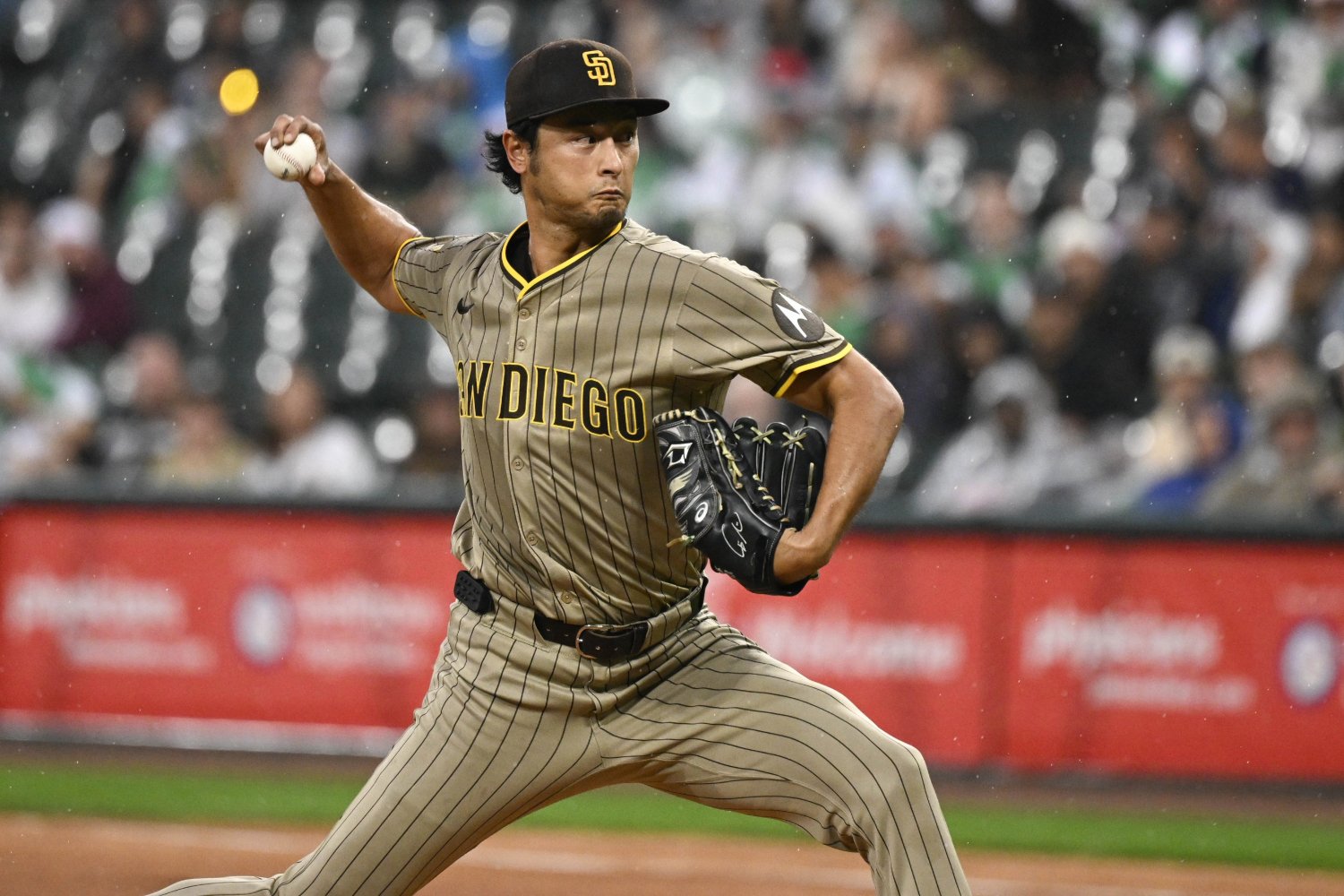 Yu Darvish is one of the last vestiges of the "workhorse" starter, an archetype that has been slowly dying out over the last 20 years. He's completed 175 or more innings five times in his career, though only once since arriving in San Diego prior to the 2021 campaign. Despite being 39 years old, Darvish remains effective and one of the most unique pitchers in the league. His arsenal goes eight pitches deep according to Baseball Savant, with no offering being featured more than 21% of the time (his sinker leads the pack). His expected stats also remain favorable, with a 3.29 xERA, 94th-percentile average exit velocity allowed (86.7 mph), and a scant walk rate (6.2%) highlighting his ageless abilities. Even if he can't push his fastball into the upper-90s or fan 30% of hitters like he used to a decade ago, Darvish continues to be a solid anchor in the Padres' rotation. The issue is, recently, Darvish hasn't looked much like himself. His 5.51 ERA on the season is disappointing, but again, his expected metrics paint a far rosier picture of his abilities. Over the last month and change, though? Father Time appears to be closing in on its next victim. Darvish got off to a slow start this season, only making his debut in July after missing the first three months of the campaign with elbow inflammation. Things hit a nadir on July 24 when he allowed eight runs in 3 1/3 innings to the St. Louis Cardinals, though he quickly righted the ship, allowing just four earned runs over his next 17 innings. Unfortunately, it's been downhill ever since. Beginning with his next start after that good stretch of pitching (an Aug. 17 loss to the Dodgers), Darvish has surrendered the following: a 5.40 ERA, a .240/.296/.464 batting line (.328 wOBA), a 5.07 FIP, and, most disastrously, 2.2 home runs per nine innings. He's also going less than five innings per start despite throwing an average of 80 pitches in each appearance. His efficiency his waning, and hitters are clearly catching onto his guise. Now, there are some encouraging metrics -- his 25.7% strikeout rate and 4.4% walk rate remain elite for a starter -- but typical indicators of positive regression aren't on his side. His .265 BABIP allowed is already slightly better than average, as is his 66.0% left-on-base rate. Generating a few more groundballs would surely help his cause (and eliminate some of those pesky home runs), but the fact is hitters are pulling the ball more than 53% of the time against Darvish during this stretch. Even if he can still fool them often enough to generate a bundle of strikeouts, the power numbers (eight home runs allowed in last seven starts) won't creep down without a systematic change to his approach. That change could actually exist within his famously diverse arsenal; a simplification of it has always seemed like heresy, but it's clear that some offerings are now plainly more effective than others in Darvish's advanced age. Let's compare some of his similar pitches to get a sense of what we're looking at: Fastball: 93.4 mph, .365 SLG (.284 xSLG), .313 wOBA (.277 xwOBA) Sinker: 93.9 mph, .361 SLG (.316 xSLG), .262 wOBA (.233 xwOBA) Sweeper: 36.4% whiff rate, .333 BA (.276 xBA), .556 wOBA (.465 xwOBA) Curveball: 34.2% whiff rate, .133 BA (.155 xBA), .201 wOBA (.204 xwOBA) Again, part of what makes Darvish so effective is his ability to pull any of his many tricks out of his hat in any given moment or situation. The solution here isn't as simple as just "eliminate the sinker and slider", because then the fastball and curveball don't work as well. The movement profiles alone are different enough to justify their inclusion, not to mention the fact that Darvish can throw variants of his different pitches to further mess with a hitter's eye level or timing. Still, when some offerings are so clearly more effective than others, there comes a point at which you have to tighten the leash on freedom and creativity. With Michael King back in the rotation, the need for Darvish to be a bona fide No. 3 is no longer as pressing; it's entirely likely that King, Nick Pivetta, Dylan Cease, and Randy Vásquez make up the Padres' playoff quartet of starters, assuming they even escape the best-of-three Wild Card Round. Nevertheless, Darvish is still a weapon, even if it's as a long reliever out of the bullpen. Don't forget, this is a guy with a 2.56 ERA in six playoff starts (38 2/3 innings) for the Padres over the last three years. If he can make the necessary changes to keep hitters off balance more often, he could be Mike Shildt's X-factor in the playoffs.
 -
The San Diego Padres and Los Angeles Dodgers appear to be in the ultimate game of hot potato for the National League West crown. Both teams are struggling badly, with the Dodgers sitting below .500 since the calendar flipped to August (16-18) and the Padres barely above that mark (18-16). The Dodgers just experienced one of the most heartbreaking losses in franchise history when they blew Yoshinobu Yamamoto's no-hit bid against the Baltimore Orioles; the Padres were swept by that same Orioles team just days earlier. They both having losing records on the road, and regardless of who leads the division on any given night, they'll have the worst record of any of the division leaders in baseball. Suffice it to say: A bloodbath this is not. Still, both squads are destined to make the playoffs, and they'll both be gunning for the division title. With it comes the NL's No. 3 seed, which means hosting the No. 6 seed (currently the New York Mets) in the best-of-three Wild Card series. The team that falls short will likely have to head to Chicago to face the Cubs in a very hostile environment in Wrigley Field. So, there's quite a bit at stake. Who has the edge? In terms of strength of schedule, the Padres have the advantage, but only barely. Their remaining opponents have a .458 winning percentage, the second-lowest in baseball, ahead of only the Washington Nationals. The Dodgers' opponents sit at a .484 winning percentage, which ranks 23rd. Here are each team's remaining games, sorted by home and away. Padres Remaining Schedule: Home: 3 vs Reds, 4 vs Rockies, 3 vs Brewers, 3 vs Diamondbacks Away: 3 vs Mets, 3 vs White Sox Dodgers Remaining Schedule: Home: 3 vs Rockies, 3 vs Phillies, 4 vs Giants Away: 3 vs Giants, 3 vs Diamondbacks, 3 vs Mariners Importantly, the Dodgers end their season on a six-game road trip, while the Padres get to enjoy the comforts of Petco Park in the final week of the season. Getting an extra game against the Rockies and a three-game set with the hapless White Sox should be huge for the Padres' chances, though the schedules are mostly even outside of that. Both teams also have two days off between now and the end of the season, for what it's worth. In terms of recent performance, neither franchise has done much to separate from the other. They are both 3-7 in their last ten contests, and San Diego now has the worst run differential of any team currently in the Senior Circuit playoff field (+54). If you can believe it, the Padres actually have the advantage in terms of health as well. Xander Bogaerts' (likely) season-ending injury is a blow to the team's lineup and defense, and poses a bigger net-negative than the Dodgers' losses of Tommy Edman and Dalton Rushing. However, save for recent injuries to Michael King, Jason Adam, and Nestor Cortes, San Diego's pitching staff is relatively healthy at this time of year. Los Angeles, meanwhile, is missing the following players from their rotation and bullpen: Tony Gonsolin, Roki Sasaki, Michael Grove, Evan Phillips, Brock Stewart, and Alex Vesia. Only the latter two players are on the 15-day injured list, with the remaining group all out for the season due to various long-term injuries. Add it all up, and the Padres appear to have the edge, however slight, on the Dodgers with about three weeks to play in the regular season. Of course, the Friars' recent play has been anything but worthy of a division crown, and the Dodgers have oodles of recent history on their side (see: 11 NL West titles in the past 12 seasons). Still, with so much at stake, the Padres can't yield to the mighty Dodgers down the stretch. What do you think about the state of the NL West race? Do you think the Padres will come out on top? Let us know in the comments! View full article
-
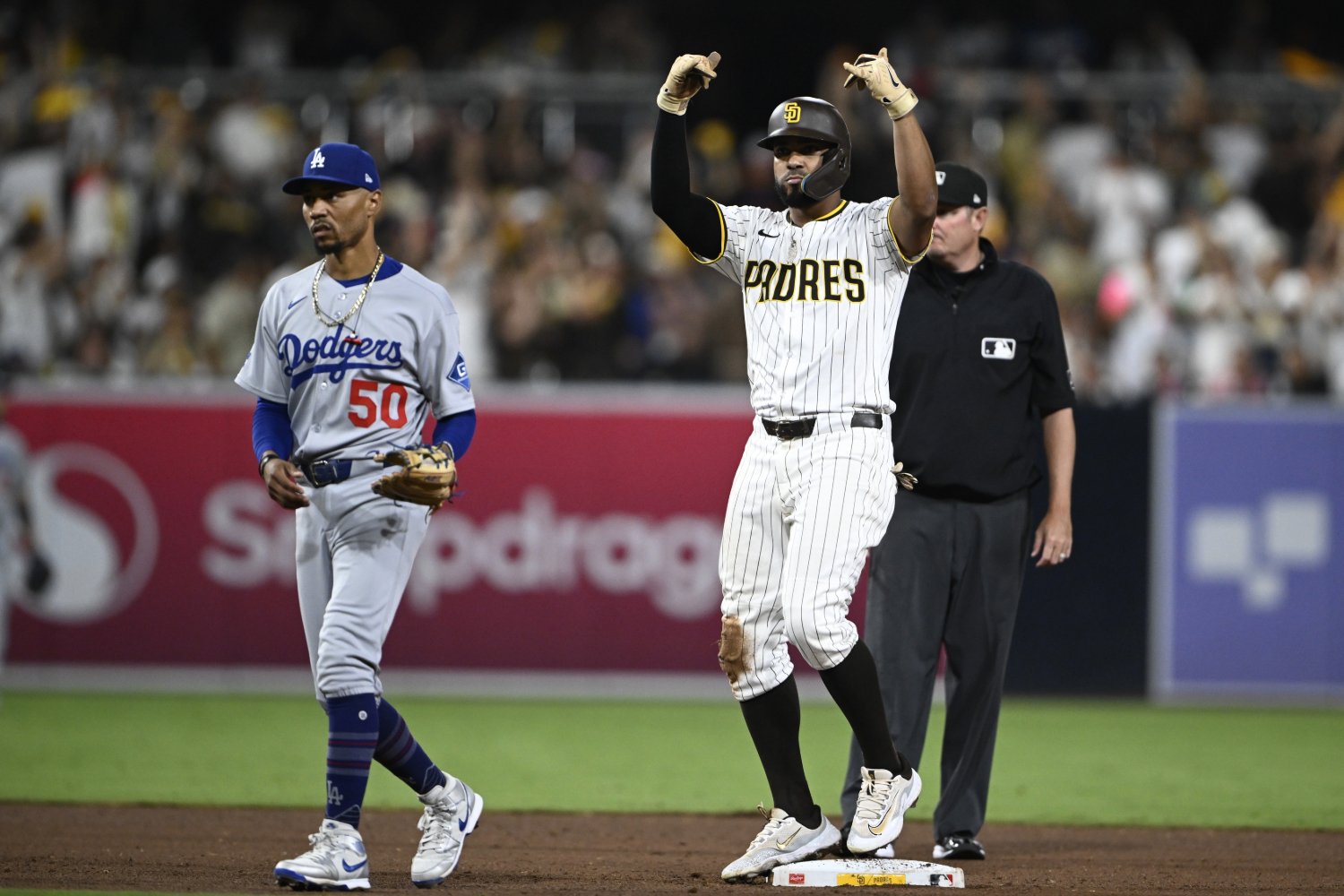 The San Diego Padres and Los Angeles Dodgers appear to be in the ultimate game of hot potato for the National League West crown. Both teams are struggling badly, with the Dodgers sitting below .500 since the calendar flipped to August (16-18) and the Padres barely above that mark (18-16). The Dodgers just experienced one of the most heartbreaking losses in franchise history when they blew Yoshinobu Yamamoto's no-hit bid against the Baltimore Orioles; the Padres were swept by that same Orioles team just days earlier. They both having losing records on the road, and regardless of who leads the division on any given night, they'll have the worst record of any of the division leaders in baseball. Suffice it to say: A bloodbath this is not. Still, both squads are destined to make the playoffs, and they'll both be gunning for the division title. With it comes the NL's No. 3 seed, which means hosting the No. 6 seed (currently the New York Mets) in the best-of-three Wild Card series. The team that falls short will likely have to head to Chicago to face the Cubs in a very hostile environment in Wrigley Field. So, there's quite a bit at stake. Who has the edge? In terms of strength of schedule, the Padres have the advantage, but only barely. Their remaining opponents have a .458 winning percentage, the second-lowest in baseball, ahead of only the Washington Nationals. The Dodgers' opponents sit at a .484 winning percentage, which ranks 23rd. Here are each team's remaining games, sorted by home and away. Padres Remaining Schedule: Home: 3 vs Reds, 4 vs Rockies, 3 vs Brewers, 3 vs Diamondbacks Away: 3 vs Mets, 3 vs White Sox Dodgers Remaining Schedule: Home: 3 vs Rockies, 3 vs Phillies, 4 vs Giants Away: 3 vs Giants, 3 vs Diamondbacks, 3 vs Mariners Importantly, the Dodgers end their season on a six-game road trip, while the Padres get to enjoy the comforts of Petco Park in the final week of the season. Getting an extra game against the Rockies and a three-game set with the hapless White Sox should be huge for the Padres' chances, though the schedules are mostly even outside of that. Both teams also have two days off between now and the end of the season, for what it's worth. In terms of recent performance, neither franchise has done much to separate from the other. They are both 3-7 in their last ten contests, and San Diego now has the worst run differential of any team currently in the Senior Circuit playoff field (+54). If you can believe it, the Padres actually have the advantage in terms of health as well. Xander Bogaerts' (likely) season-ending injury is a blow to the team's lineup and defense, and poses a bigger net-negative than the Dodgers' losses of Tommy Edman and Dalton Rushing. However, save for recent injuries to Michael King, Jason Adam, and Nestor Cortes, San Diego's pitching staff is relatively healthy at this time of year. Los Angeles, meanwhile, is missing the following players from their rotation and bullpen: Tony Gonsolin, Roki Sasaki, Michael Grove, Evan Phillips, Brock Stewart, and Alex Vesia. Only the latter two players are on the 15-day injured list, with the remaining group all out for the season due to various long-term injuries. Add it all up, and the Padres appear to have the edge, however slight, on the Dodgers with about three weeks to play in the regular season. Of course, the Friars' recent play has been anything but worthy of a division crown, and the Dodgers have oodles of recent history on their side (see: 11 NL West titles in the past 12 seasons). Still, with so much at stake, the Padres can't yield to the mighty Dodgers down the stretch. What do you think about the state of the NL West race? Do you think the Padres will come out on top? Let us know in the comments!
 -
Luis Arraez has been the subject of many great modern baseball debates about the dwindling perceived value of batting average, the lost art of contact hitting, and the legacy of a player who has won three consecutive batting titles, including one in both leagues. His ultra-contact approach is so unique in the current zeitgeist of Major League Baseball that it's become hard to properly analyze Arraez's value, even as he leads the sport in hits (by a country mile) since the start of the 2022 season. With all that, there comes one unique stipulation that comes with having such an extreme skill set: you better be really good at the thing you're known for. Arraez's approach requires absurd bat control, hence why he annually ranks as one of the league's best in limiting whiffs and strikeouts at the plate, and why his glacier-like bat speed continues to fall. The goal is never for him to hit the ball hard, but rather to just hit the ball. That's all well and good when he's one of the best hitters in the league at squaring the ball up, which he has been since 2022. However, in 2025, Arraez hasn't been the quite the same. And when someone who relies on picture-perfect contact starts making suboptimal contact... well, the results get pretty messy. He's still the best player in baseball when it comes to his whiff rate (5.2%), strikeout rate (2.9%), and squared-up rate (42.1%), and he remains the worst player in the sport in regards to bat speed (62.5 mph), hard-hit rate (16.5%), and barrel rate (1.1%). And yet, his batting average and expected batting average (xBA) are down more than 30 points from a season ago, despite an improvement in his chasing habits (he's swinging at pitches out of the zone less often than he did in 2024). That's partly due to a steep decline in his contact quality; that league-low hard-hit rate is a seven-percent drop from last year, and nearly 50% worse than his peak in 2022. So, what's happening? Well, if we narrow the scope to just the last month and change, you'll start to see some worrying trends. Since Aug. 1 (31 games), Arraez is batting .250/.272/.344, good for a .266 wOBA and 71 wRC+. He's managed just ten extra-base hits in that time (nine doubles and one home run), and he's worked an even number of walks and strikeouts (five each). That latter figure is part of the issue; Arraez once worked walks at a reasonable rate (8.3% in 2022), which mattered a whole lot considering how rarely he strikes out. Now, his overall swing rate on the year is up seven percent from 2022; in conjunction with his proclivity for making contact on pitches anywhere near the zone, it's no secret that he's barely getting free passes anymore. And that's really a microcosm of what's become a larger issue for Arraez recently. Since 2023, his swing rate is above 50%. Yes, he swings at more than half of the pitches he sees. Do you know how many of the pitches he's seen in that time have been in the zone? Roughly 53%. Much has been said about his otherworldly ability to get the bat on the ball when he swings -- his in-zone contact rate has never been below 92% in his career -- but that also he means he hits the ball a lot when it's outside the zone, too. His contact rate on chase swings (i.e., swings at pitches out of the zone) is 92.1%! I've bolded, underlined, and italicized that number because it's simply jaw-dropping. Most guys can't hit 92% of the pitches they swing at in the zone—Arraez is doing so this year on pitches outside the zone. The thing is, as impressive as that number is, you don't really want that high of a figure in that stat. The pitches you chase at are, naturally, the ones you can do the least amount of damage on. Arraez isn't just swinging more often this year; he's actually making contact more often than ever. Though that sounds ideal on the surface, in practice, it means Arraez has become utterly prone to making crappy contact on nearly every bad pitch he swings at. There's a time and a place when making contact at all costs is needed, but punching balls weakly to infielders is basically never the optimal outcome. What we have here is a case of a guy who is elite at one thing getting too elite at it. Arraez has traded any semblance of bat speed in order to achieve this miraculous feat, and when that player has the 35th-worst chase rate in baseball, he becomes the guy with the lowest EV50 (i.e., the average of the hardest 50% of his batted balls) in the sport. Luis Arraez is a contact maven, the likes of which the game rarely sees anymore. It's a hitting profile that's gone the way of the dinosaur as the importance of analytics has grown in batting cages. That doesn't make him invaluable, but it does mean he has to make exceptional contact to be valuable. But, as the Padres are learning this year, not all contact is created equal. View full article
-
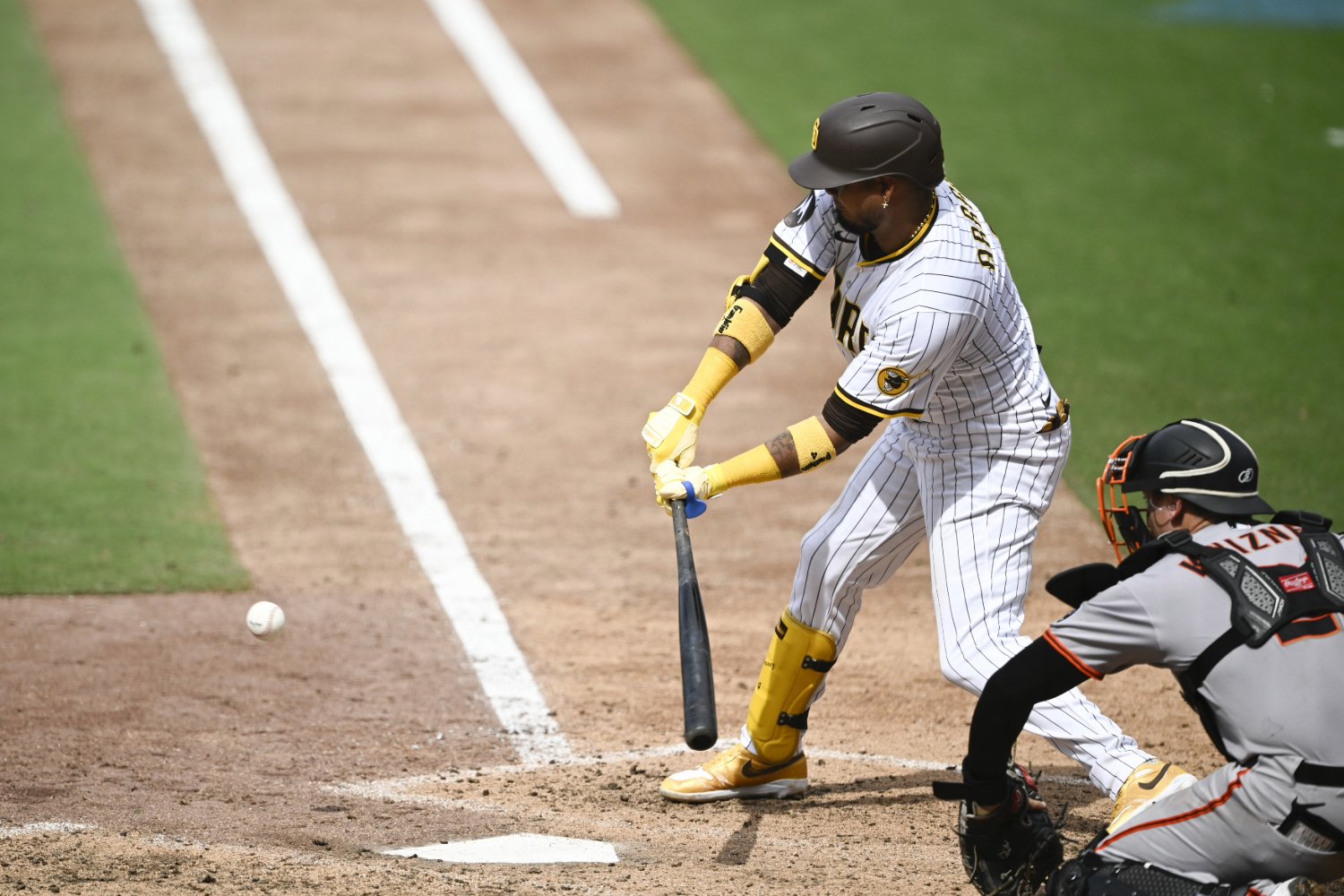 Luis Arraez has been the subject of many great modern baseball debates about the dwindling perceived value of batting average, the lost art of contact hitting, and the legacy of a player who has won three consecutive batting titles, including one in both leagues. His ultra-contact approach is so unique in the current zeitgeist of Major League Baseball that it's become hard to properly analyze Arraez's value, even as he leads the sport in hits (by a country mile) since the start of the 2022 season. With all that, there comes one unique stipulation that comes with having such an extreme skill set: you better be really good at the thing you're known for. Arraez's approach requires absurd bat control, hence why he annually ranks as one of the league's best in limiting whiffs and strikeouts at the plate, and why his glacier-like bat speed continues to fall. The goal is never for him to hit the ball hard, but rather to just hit the ball. That's all well and good when he's one of the best hitters in the league at squaring the ball up, which he has been since 2022. However, in 2025, Arraez hasn't been the quite the same. And when someone who relies on picture-perfect contact starts making suboptimal contact... well, the results get pretty messy. He's still the best player in baseball when it comes to his whiff rate (5.2%), strikeout rate (2.9%), and squared-up rate (42.1%), and he remains the worst player in the sport in regards to bat speed (62.5 mph), hard-hit rate (16.5%), and barrel rate (1.1%). And yet, his batting average and expected batting average (xBA) are down more than 30 points from a season ago, despite an improvement in his chasing habits (he's swinging at pitches out of the zone less often than he did in 2024). That's partly due to a steep decline in his contact quality; that league-low hard-hit rate is a seven-percent drop from last year, and nearly 50% worse than his peak in 2022. So, what's happening? Well, if we narrow the scope to just the last month and change, you'll start to see some worrying trends. Since Aug. 1 (31 games), Arraez is batting .250/.272/.344, good for a .266 wOBA and 71 wRC+. He's managed just ten extra-base hits in that time (nine doubles and one home run), and he's worked an even number of walks and strikeouts (five each). That latter figure is part of the issue; Arraez once worked walks at a reasonable rate (8.3% in 2022), which mattered a whole lot considering how rarely he strikes out. Now, his overall swing rate on the year is up seven percent from 2022; in conjunction with his proclivity for making contact on pitches anywhere near the zone, it's no secret that he's barely getting free passes anymore. And that's really a microcosm of what's become a larger issue for Arraez recently. Since 2023, his swing rate is above 50%. Yes, he swings at more than half of the pitches he sees. Do you know how many of the pitches he's seen in that time have been in the zone? Roughly 53%. Much has been said about his otherworldly ability to get the bat on the ball when he swings -- his in-zone contact rate has never been below 92% in his career -- but that also he means he hits the ball a lot when it's outside the zone, too. His contact rate on chase swings (i.e., swings at pitches out of the zone) is 92.1%! I've bolded, underlined, and italicized that number because it's simply jaw-dropping. Most guys can't hit 92% of the pitches they swing at in the zone—Arraez is doing so this year on pitches outside the zone. The thing is, as impressive as that number is, you don't really want that high of a figure in that stat. The pitches you chase at are, naturally, the ones you can do the least amount of damage on. Arraez isn't just swinging more often this year; he's actually making contact more often than ever. Though that sounds ideal on the surface, in practice, it means Arraez has become utterly prone to making crappy contact on nearly every bad pitch he swings at. There's a time and a place when making contact at all costs is needed, but punching balls weakly to infielders is basically never the optimal outcome. What we have here is a case of a guy who is elite at one thing getting too elite at it. Arraez has traded any semblance of bat speed in order to achieve this miraculous feat, and when that player has the 35th-worst chase rate in baseball, he becomes the guy with the lowest EV50 (i.e., the average of the hardest 50% of his batted balls) in the sport. Luis Arraez is a contact maven, the likes of which the game rarely sees anymore. It's a hitting profile that's gone the way of the dinosaur as the importance of analytics has grown in batting cages. That doesn't make him invaluable, but it does mean he has to make exceptional contact to be valuable. But, as the Padres are learning this year, not all contact is created equal.
 -
When the San Diego Padres executed their trade for Mason Miller at the 2025 MLB trade deadline, one thing became immediately obvious: the Padres were going to try to win in October by building a super bullpen. Thus far, things have more or less gone according to plan in the month since Miller came over from the Athletics. The Padres are 18-10 in August, have wrestled away (and ceded back) control of the NL West from the Los Angeles Dodgers, and are owners of baseball's best bullpen according to fWAR (6.6), ERA (3.04), FIP (3.50), and saves (43). That unit has been as advertised since the deadline, ranking fourth in ERA (3.29), fifth in fWAR (1.2) and FIP (3.53), and second in strikeout rate (29.2%) among all bullpens in August. As designed, it's really been a group effort this month. Four guys tie for the lead in fWAR with 0.3 (Miller, Robert Suarez, Jason Adam, Adrian Morejon), five have ERAs below 3.00 (the aforementioned quartet, plus Wandy Peralta), and five have a strikeout rate above 30.0% (Miller, Adam, Morejon, David Morgan, Jeremiah Estrada). Do you notice something about those lists? Only three guys fit all three categories -- Miller, Adam, and Morejon -- and only one of those guys is walking fewer than 7.0% of the hitters he's facing this month. Yes, Jason Adam is the man of the hour, and it's only right that he gets shown some love amidst a crop of renowned hurlers. Adam has always been good, and save for his disastrous rookie season in 2018 with the Kansas City Royals and a minor blip with the Chicago Cubs from 2020-21, he's never authored an ERA above 3.00 in any season of his major league career. The pitching factory out in Tampa saw to it that Adam would be able to unlock the best version of himself, and after the Rays turned him into one of baseball's best relievers from 2022-24, the Padres have reaped the benefits. Since trading for him at the 2024 trade deadline, the right-handed reliever has delivered the following to San Diego's cause: a 1.59 ERA, 2.90 FIP, 1.03 WHIP, 2.5 fWAR, and sterling strikeout (27.5%) and walk rates (8.8%). He leads the bullpen in innings pitched (90 1/3) and appearances (90) since then, fortifying himself as one of manager Mike Shildt's most dependable options. He makes his hay the same way most 34-year-old relievers do: a deep and varied arsenal. He's the rare reliever with four true offerings, all of which are forcing batters to whiff more than 21% of the time. His quartet of pitches are all distinct from one another, both in terms of movement and velocity. That's a marked change from the earlier part of his career, when he struggled to hide his changeup against his fastball. Take a look at his pitch charts from 2021 and 2025 (courtesy of Baseball Savant): This season, every pitch has at least four miles per hour and five inches of break separating it from the pack. As you'd imagine, that's pretty hard for a hitter to pick up on, hence why none of his pitches have surrendered a wOBA or xwOBA above .300. Each offering is a plus pitch, and each are thrown with purpose. When hitters have to try and square that up in one chance against a guy coming out of the bullpen -- especially with the looming threat of the pure gas that Suarez and Miller throw -- it's just an impossible task. Adam actually hasn't been quite as good this year as he was in 2024; his strikeout rate is down, his walk rate is up, he's generating less whiffs, allowing more barrels, and his fastball velocity is down. That's to be expected for a reliever aging into his mid-30s, but it's pretty telling that even this relatively neutered version of Adam is still as dominant as anyone in San Diego's bullpen of death. Though he won't be closing games in September and October, there's no doubting the importance of Adam to the Padres' bullpen operation. If this team is going to win, it's going to have to win the way A.J. Preller designed them to: with an unbeatable bullpen. And if this bullpen is going to live up that "unbeatable" moniker, Jason Adam will have to continue pitching the same way he has been since he first landed in San Diego. View full article
-
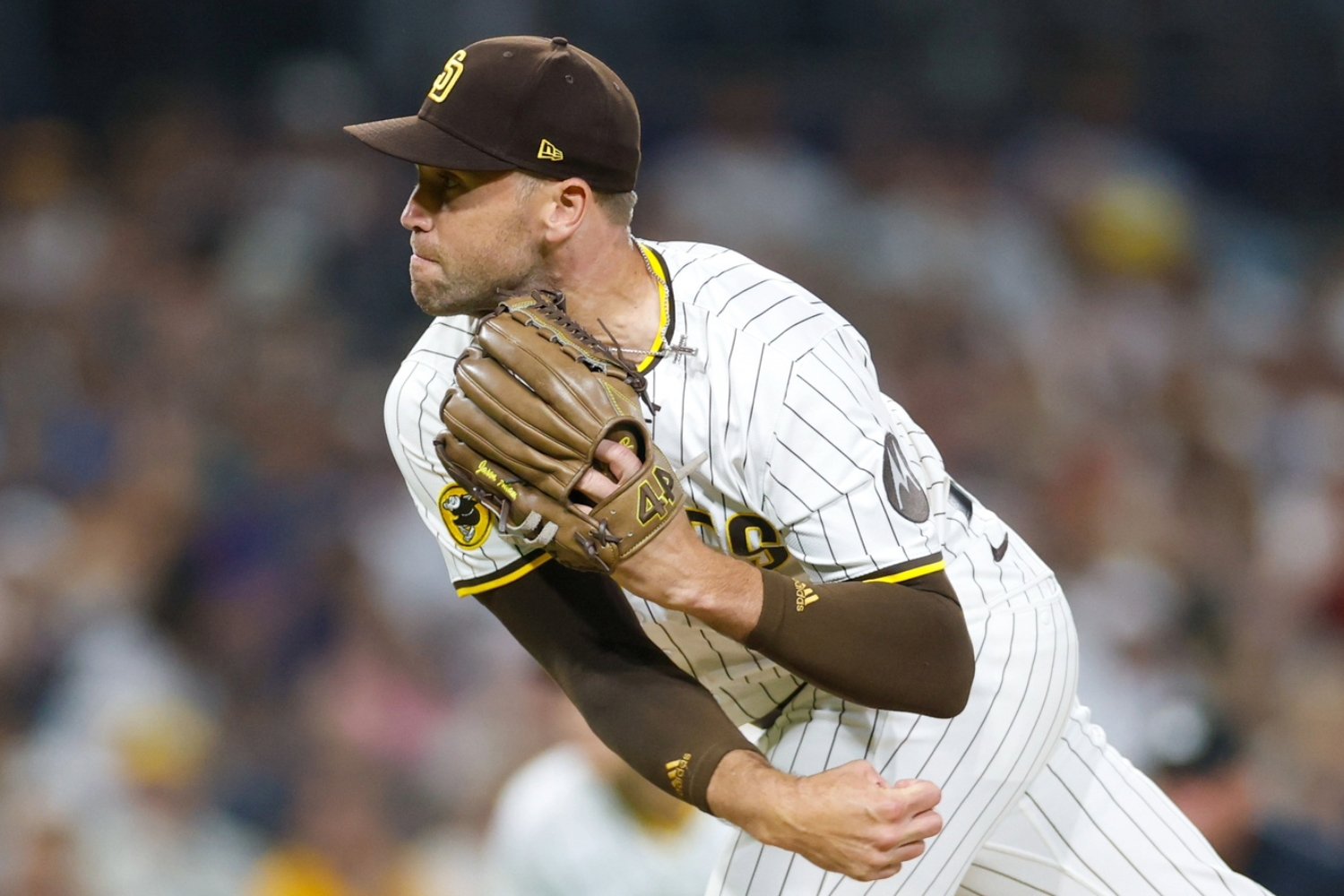 When the San Diego Padres executed their trade for Mason Miller at the 2025 MLB trade deadline, one thing became immediately obvious: the Padres were going to try to win in October by building a super bullpen. Thus far, things have more or less gone according to plan in the month since Miller came over from the Athletics. The Padres are 18-10 in August, have wrestled away (and ceded back) control of the NL West from the Los Angeles Dodgers, and are owners of baseball's best bullpen according to fWAR (6.6), ERA (3.04), FIP (3.50), and saves (43). That unit has been as advertised since the deadline, ranking fourth in ERA (3.29), fifth in fWAR (1.2) and FIP (3.53), and second in strikeout rate (29.2%) among all bullpens in August. As designed, it's really been a group effort this month. Four guys tie for the lead in fWAR with 0.3 (Miller, Robert Suarez, Jason Adam, Adrian Morejon), five have ERAs below 3.00 (the aforementioned quartet, plus Wandy Peralta), and five have a strikeout rate above 30.0% (Miller, Adam, Morejon, David Morgan, Jeremiah Estrada). Do you notice something about those lists? Only three guys fit all three categories -- Miller, Adam, and Morejon -- and only one of those guys is walking fewer than 7.0% of the hitters he's facing this month. Yes, Jason Adam is the man of the hour, and it's only right that he gets shown some love amidst a crop of renowned hurlers. Adam has always been good, and save for his disastrous rookie season in 2018 with the Kansas City Royals and a minor blip with the Chicago Cubs from 2020-21, he's never authored an ERA above 3.00 in any season of his major league career. The pitching factory out in Tampa saw to it that Adam would be able to unlock the best version of himself, and after the Rays turned him into one of baseball's best relievers from 2022-24, the Padres have reaped the benefits. Since trading for him at the 2024 trade deadline, the right-handed reliever has delivered the following to San Diego's cause: a 1.59 ERA, 2.90 FIP, 1.03 WHIP, 2.5 fWAR, and sterling strikeout (27.5%) and walk rates (8.8%). He leads the bullpen in innings pitched (90 1/3) and appearances (90) since then, fortifying himself as one of manager Mike Shildt's most dependable options. He makes his hay the same way most 34-year-old relievers do: a deep and varied arsenal. He's the rare reliever with four true offerings, all of which are forcing batters to whiff more than 21% of the time. His quartet of pitches are all distinct from one another, both in terms of movement and velocity. That's a marked change from the earlier part of his career, when he struggled to hide his changeup against his fastball. Take a look at his pitch charts from 2021 and 2025 (courtesy of Baseball Savant): This season, every pitch has at least four miles per hour and five inches of break separating it from the pack. As you'd imagine, that's pretty hard for a hitter to pick up on, hence why none of his pitches have surrendered a wOBA or xwOBA above .300. Each offering is a plus pitch, and each are thrown with purpose. When hitters have to try and square that up in one chance against a guy coming out of the bullpen -- especially with the looming threat of the pure gas that Suarez and Miller throw -- it's just an impossible task. Adam actually hasn't been quite as good this year as he was in 2024; his strikeout rate is down, his walk rate is up, he's generating less whiffs, allowing more barrels, and his fastball velocity is down. That's to be expected for a reliever aging into his mid-30s, but it's pretty telling that even this relatively neutered version of Adam is still as dominant as anyone in San Diego's bullpen of death. Though he won't be closing games in September and October, there's no doubting the importance of Adam to the Padres' bullpen operation. If this team is going to win, it's going to have to win the way A.J. Preller designed them to: with an unbeatable bullpen. And if this bullpen is going to live up that "unbeatable" moniker, Jason Adam will have to continue pitching the same way he has been since he first landed in San Diego.
 -
A.J. Preller lit the farm system on fire at the 2025 MLB trade deadline, adding Mason Miller and many others to the roster. How much did the team improve? View full video
-
A.J. Preller lit the farm system on fire at the 2025 MLB trade deadline, adding Mason Miller and many others to the roster. How much did the team improve?
-
Jeff Passan of ESPN is reporting the Padres are doing it again, as they acquire Ryan O'Hearn and Ramon Laureano from the Baltimore Orioles. The full trade includes Laureano and O'Hearn heading to San Diego in exchange for Boston Bateman, Cobb Hightower, Victor Figueroa, Tyson Neighbors, Tanner Smith, and Brandon Butterworth. You may think O'Hearn is the major piece of this return, but Laureano has actually been the better player this season. In 290 plate appearances with the Orioles this year, he has a .290/.355/.529 slash line to go along with 15 home runs and a 144 wRC+. He's whiffing (27.5%) and striking out (24.8%) at alarming rates, though when he does make contact, it's been good. His hard-hit rate (48.9%), barrel rate (12.6%), and expected slugging percentage (.531) all rank in the top quartile of qualified MLB bats. Once a sterling defender, Laureano isn't quite the glove he once was (-4 Outs Above Average), though his arm strength remains one of his best skills. He has a $6.5 million club option for 2026 that will likely be exercised at this rate. As for O'Hearn, the 32-year-old slugger is a rental. He's a first baseman, though he can play the outfield corners in a pinch (which shouldn't be needed too often with Laureano in tow). In 361 plate appearances this season, he's slashing .283/.374/.463 with 13 home runs, good for a 134 wRC+. After the Seattle Mariners' deal for Eugenio Suarez last night, he was the best corner infielder still on the market. He'll likely push Gavin Sheets to a full-time bench role (or off the roster entirely). Along with the previously-acquired Freddy Fermin, the Padres have completely transformed their offense and lineup at this deadline. They should be considered one of the premier contenders in the National League going into August. The price to make this happen was steep, as six prospects are heading back to Baltimore. Bateman and Hightower are the headliners, ranking fourth and sixth, respectively on the Padres' top-ten list after the earlier trades that gutted the farm system. This trade further decimates a now-razor thin minor league corps, and it's clear the Padres are all-in on 2025. View full article
-
Padres Trade Again, Acquire Ryan O'Hearn and Ramon Laureano From Orioles
Brandon Glick posted an article in Padres
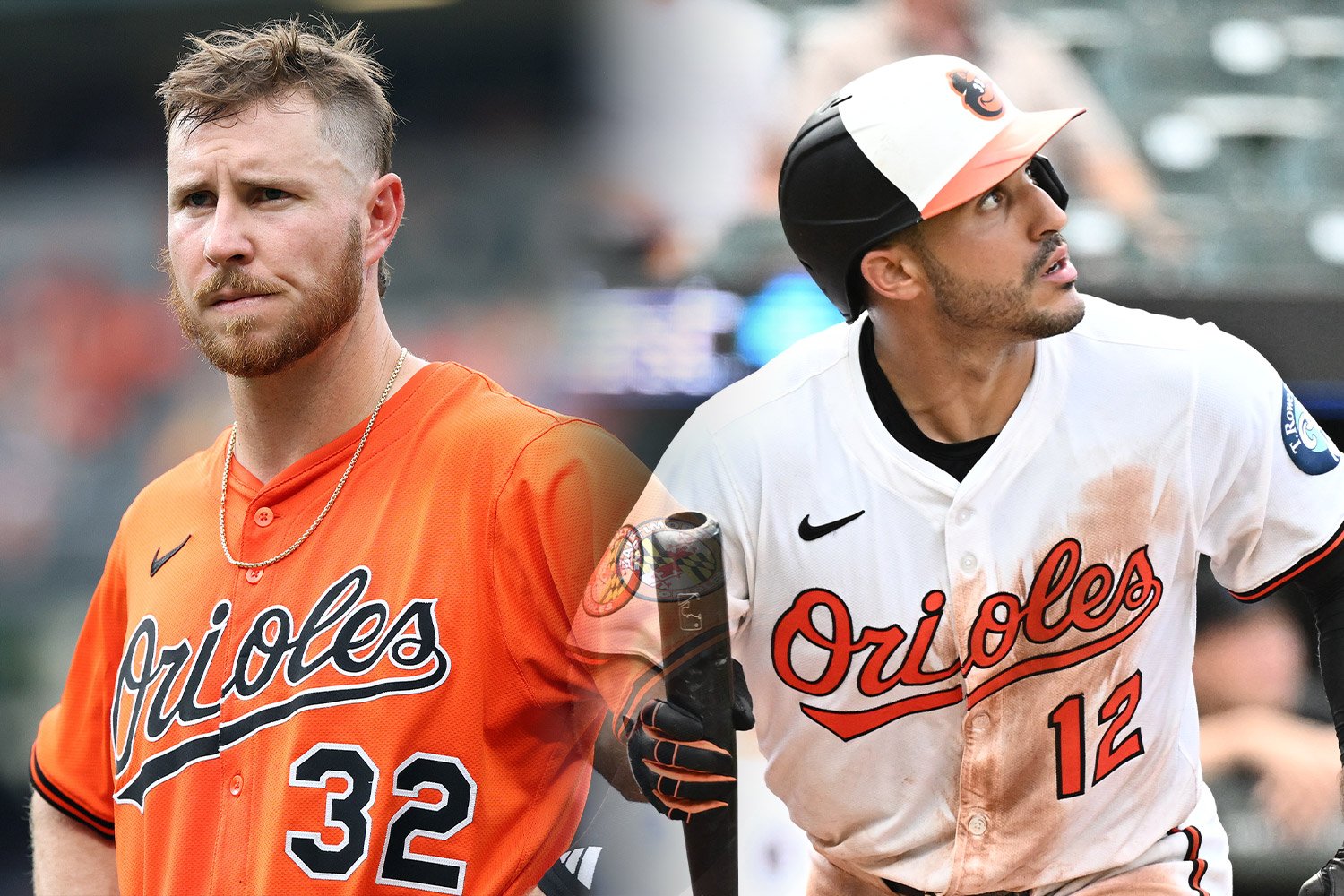 Jeff Passan of ESPN is reporting the Padres are doing it again, as they acquire Ryan O'Hearn and Ramon Laureano from the Baltimore Orioles. The full trade includes Laureano and O'Hearn heading to San Diego in exchange for Boston Bateman, Cobb Hightower, Victor Figueroa, Tyson Neighbors, Tanner Smith, and Brandon Butterworth. You may think O'Hearn is the major piece of this return, but Laureano has actually been the better player this season. In 290 plate appearances with the Orioles this year, he has a .290/.355/.529 slash line to go along with 15 home runs and a 144 wRC+. He's whiffing (27.5%) and striking out (24.8%) at alarming rates, though when he does make contact, it's been good. His hard-hit rate (48.9%), barrel rate (12.6%), and expected slugging percentage (.531) all rank in the top quartile of qualified MLB bats. Once a sterling defender, Laureano isn't quite the glove he once was (-4 Outs Above Average), though his arm strength remains one of his best skills. He has a $6.5 million club option for 2026 that will likely be exercised at this rate. As for O'Hearn, the 32-year-old slugger is a rental. He's a first baseman, though he can play the outfield corners in a pinch (which shouldn't be needed too often with Laureano in tow). In 361 plate appearances this season, he's slashing .283/.374/.463 with 13 home runs, good for a 134 wRC+. After the Seattle Mariners' deal for Eugenio Suarez last night, he was the best corner infielder still on the market. He'll likely push Gavin Sheets to a full-time bench role (or off the roster entirely). Along with the previously-acquired Freddy Fermin, the Padres have completely transformed their offense and lineup at this deadline. They should be considered one of the premier contenders in the National League going into August. The price to make this happen was steep, as six prospects are heading back to Baltimore. Bateman and Hightower are the headliners, ranking fourth and sixth, respectively on the Padres' top-ten list after the earlier trades that gutted the farm system. This trade further decimates a now-razor thin minor league corps, and it's clear the Padres are all-in on 2025.
 -
ESPN's Jeff Passan is reporting that the San Diego Padres have traded for catcher Freddy Fermin from the Kansas City Royals. The full return package is Ryan Bergert and Stephen Kolek. Following the team's earlier blockbuster for Mason Miller, Bergert ranked as the seventh-best prospect in the organization, according to MLB Pipeline. Fermin fills a gigantic need in San Diego as the new starting catcher. Elias Diaz and Martin Maldonado have been platooning in the role for most of the season, producing a combined -1.0 fWAR in just shy of 400 plate appearances. It stands to reason that one will be released following this trade; Diaz has historically been the better offensive catcher but has posted a paltry 67 wRC+ this season, while Maldonado is renowned for his glove work but remains a complete zero at the plate (62 wRC+, 35.4% strikeout rate). Fermin, a right-handed hitter, has played in 67 games for the Royals this season, slashing .255/.309/.339 in 208 plate appearances. His 78 wRC+ is below league-average for catchers this season but still a big step up from what the Padres have gotten this year, and his strong work behind the plate should cover for any shortcomings in his bat. He ranks in the 90th percentile in pop time this year, and his framing and blocking work has long been considered above average. With just three home runs on the year and a meager .083 ISO, he won't be providing a ton of power to the lineup, though he remains excellent at avoiding strikeouts (17.8% strikeout rate this season). As always, it's very difficult to throw catchers into the fire during the middle of the season by asking them to learn a new pitching staff and run-prevention philosophy/system, but Fermin is a veteran who should be able to make the transition relatively seamless. For what it's worth, he's caught a number of Padres alumni in recent seasons, including Seth Lugo and Michael Wacha. As for the players leaving San Diego, Kolek is a legitimately good starting pitcher having a successful season in 2025. In 14 starts (79 2/3 innings) with the big league club this season, the 28-year-old righty has authored a tidy 4.18 ERA and 4.23 FIP. This is probably his ceiling, but he's got 4.5 years of team control remaining. It's hard to imagine the front office was thrilled about surrendering him, even with Fermin matching his half-decade of cheap control remaining. The centerpiece in the deal, though, is Bergert, a 25-year-old who impressed in his MLB debut with the Padres this season. In 11 appearances (seven starts) in San Diego, he's recorded a 2.78 ERA and 4.24 FIP. His Triple-A stats (4.03 ERA, 5.43 FIP in 11 starts) aren't quite as impressive, though he's another MLB-ready starter with tons of control remaining. Those are valuable assets, and it's a bit surprising to see the Padres give up two of them in the same deal, especially for a good-not-great catcher in Fermin. Nevertheless, this is another need-filling trade by A.J. Preller and company. With a few hours left until the deadline, there's no telling what else his front office will do. View full article
-
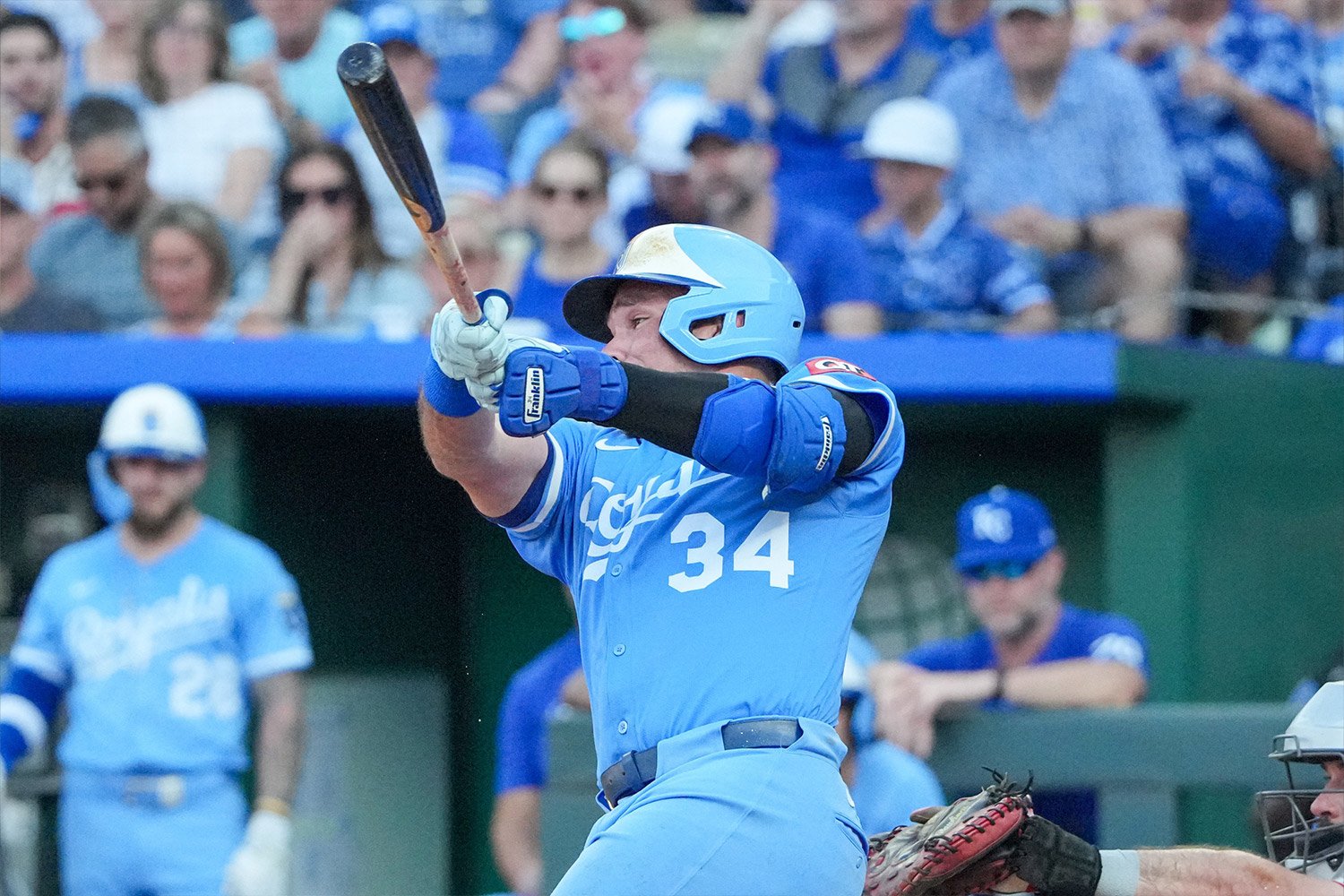 ESPN's Jeff Passan is reporting that the San Diego Padres have traded for catcher Freddy Fermin from the Kansas City Royals. The full return package is Ryan Bergert and Stephen Kolek. Following the team's earlier blockbuster for Mason Miller, Bergert ranked as the seventh-best prospect in the organization, according to MLB Pipeline. Fermin fills a gigantic need in San Diego as the new starting catcher. Elias Diaz and Martin Maldonado have been platooning in the role for most of the season, producing a combined -1.0 fWAR in just shy of 400 plate appearances. It stands to reason that one will be released following this trade; Diaz has historically been the better offensive catcher but has posted a paltry 67 wRC+ this season, while Maldonado is renowned for his glove work but remains a complete zero at the plate (62 wRC+, 35.4% strikeout rate). Fermin, a right-handed hitter, has played in 67 games for the Royals this season, slashing .255/.309/.339 in 208 plate appearances. His 78 wRC+ is below league-average for catchers this season but still a big step up from what the Padres have gotten this year, and his strong work behind the plate should cover for any shortcomings in his bat. He ranks in the 90th percentile in pop time this year, and his framing and blocking work has long been considered above average. With just three home runs on the year and a meager .083 ISO, he won't be providing a ton of power to the lineup, though he remains excellent at avoiding strikeouts (17.8% strikeout rate this season). As always, it's very difficult to throw catchers into the fire during the middle of the season by asking them to learn a new pitching staff and run-prevention philosophy/system, but Fermin is a veteran who should be able to make the transition relatively seamless. For what it's worth, he's caught a number of Padres alumni in recent seasons, including Seth Lugo and Michael Wacha. As for the players leaving San Diego, Kolek is a legitimately good starting pitcher having a successful season in 2025. In 14 starts (79 2/3 innings) with the big league club this season, the 28-year-old righty has authored a tidy 4.18 ERA and 4.23 FIP. This is probably his ceiling, but he's got 4.5 years of team control remaining. It's hard to imagine the front office was thrilled about surrendering him, even with Fermin matching his half-decade of cheap control remaining. The centerpiece in the deal, though, is Bergert, a 25-year-old who impressed in his MLB debut with the Padres this season. In 11 appearances (seven starts) in San Diego, he's recorded a 2.78 ERA and 4.24 FIP. His Triple-A stats (4.03 ERA, 5.43 FIP in 11 starts) aren't quite as impressive, though he's another MLB-ready starter with tons of control remaining. Those are valuable assets, and it's a bit surprising to see the Padres give up two of them in the same deal, especially for a good-not-great catcher in Fermin. Nevertheless, this is another need-filling trade by A.J. Preller and company. With a few hours left until the deadline, there's no telling what else his front office will do.
 -
In the absolute blockbuster of the trade deadline thus far, AJ Preller does it again: the Padres have traded top prospect Leo De Vries (and others) for the A's top closer and absolute flamethrower, Mason Miller. This is an obscene trade, one that only Preller could pull off given the circumstances. After being rebuffed in a blockbuster offer for Red Sox outfielder Jarren Duran just a few days ago, the team has now traded it's only "untouchable" prospect in De Vries. The full trade, per ESPN's Jeff Passan, includes Miller and starting pitcher JP Sears coming to San Diego in exchange for De Vries, Braden Nett, Henry Baez, and Eduarniel Nunez. Starting with Miller, the former Athletics closer is one of the best in the business at his job. His 3.76 ERA looks relatively concerning on the surface, but rest assured, he's still a dominant force in the back of the bullpen. His 2.86 FIP tells a much different story, as does his ludicrous 39.1% strikeout rate. With four seasons of team control remaining beyond 2025 and the hardest fastball in baseball, there's a reason why he cost the team so much. Initial reports are suggesting the team could try to convert him back into a starter, which would explain the front office's willingness to part with De Vries. The Padres have had tons of success with converting relievers into starters in recent seasons—Seth Lugo and Michael King chief among them—and Miller has the tools to be the ace of the staff going forward, if he can handle the workload. However, that's a transition that would take place over the offseason; for the remainder of 2025, expect to see the fireballer shutting the door in the ninth inning. As for Sears, the left-handed starting pitcher is an ideal No. 5 starter on a contending team. He eats innings (464 since the start of 2023) and is durable (hasn't missed a start in three years), pitching to a 4.58 ERA over the past three seasons in Oakland/Sacramento. He doesn't do anything particularly well besides limiting walks, but his sweeper (.238 wOBA allowed this season) is one of the best in the league among starting pitchers. There's enough here to hope for more, but even if he's just a depth arm, he's a good pick up, especially with 3.5 years of team control left (first-time eligible for arbitration this offseason). As for the prospects the Padres gave up... oh boy. We all know the story on De Vries by now, an 18-year-old shortstop that ranks among the five best prospects in baseball already. Once perceived to be untouchable, the presence of Miller on the trade market clearly changed the front office's thinking. This is another gut punch to a farm system that has routinely been gouged over the past few seasons. Beyond him, Nett was the team's third-best prospect according to MLB Pipeline, though he wasn't on their Top 100 yet. He has a 3.39 ERA across 17 starts in Double-A this year. Núñez was signed as a minor league free agent from the Cubs last year and has turned into one of the best relief prospects in baseball (ranked 17th in the Padres' system prior to the trade). He had a 3.86 ERA in 4 2/3 innings with the big league club this season. Lastly, Baez (ranked 13th) was experiencing his breakout campaign, pitching to the tune of a 1.96 ERA in 20 starts (96 2/3 innings) at Double-A this year. He has a ton of prospect helium and would have been a top-ten prospect in the system at the end of the season. In all, this is a huge package to send in exchange for a brilliant reliever and a solid but unspectacular starter. Preller has never been afraid of making big swings, and this profiles as perhaps his biggest since at least the first Juan Soto trade back in 2022. View full article
-
TRADE: Padres Loot Farm System For Athletics' Super-Closer Mason Miller
Brandon Glick posted an article in Padres
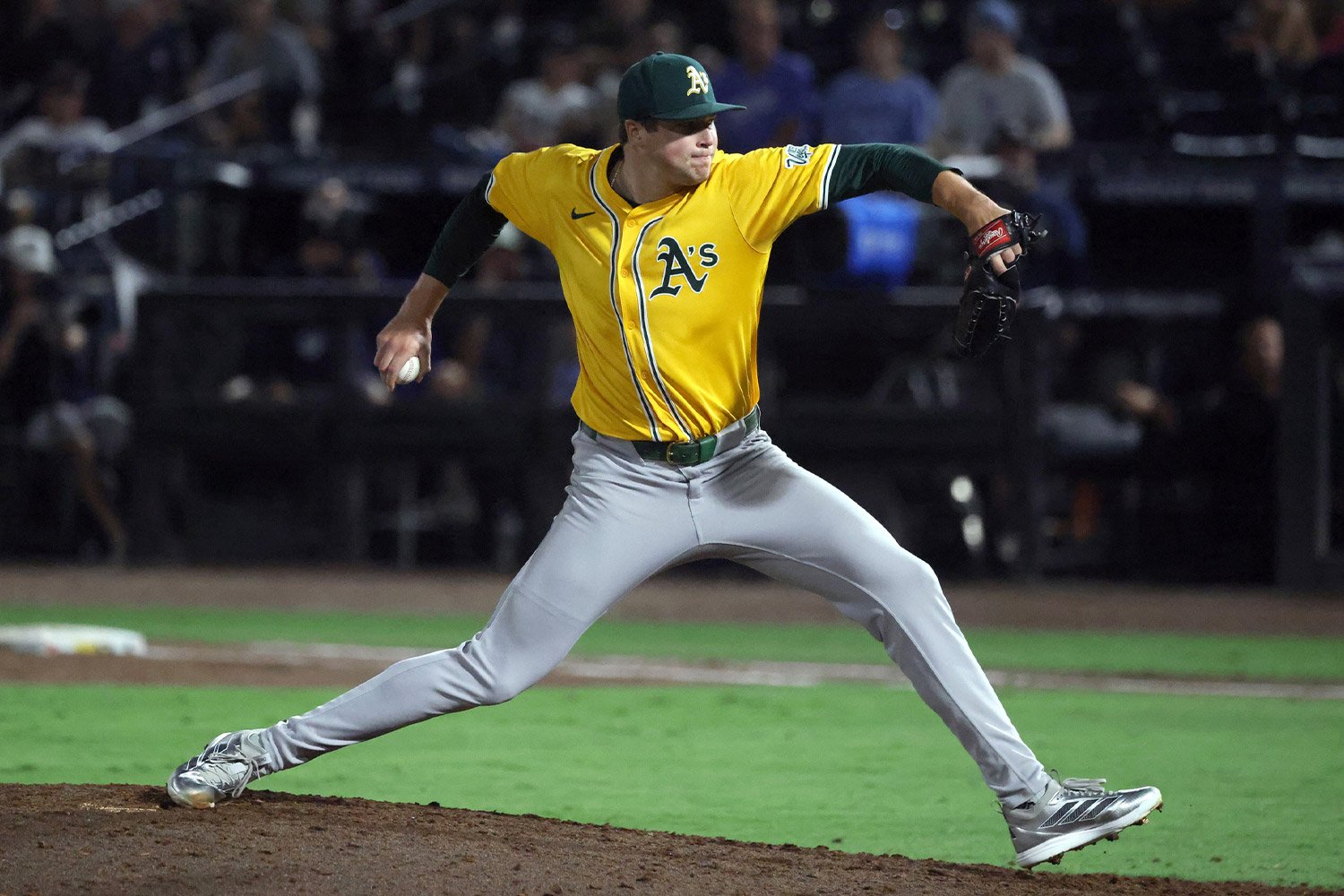 In the absolute blockbuster of the trade deadline thus far, AJ Preller does it again: the Padres have traded top prospect Leo De Vries (and others) for the A's top closer and absolute flamethrower, Mason Miller. This is an obscene trade, one that only Preller could pull off given the circumstances. After being rebuffed in a blockbuster offer for Red Sox outfielder Jarren Duran just a few days ago, the team has now traded it's only "untouchable" prospect in De Vries. The full trade, per ESPN's Jeff Passan, includes Miller and starting pitcher JP Sears coming to San Diego in exchange for De Vries, Braden Nett, Henry Baez, and Eduarniel Nunez. Starting with Miller, the former Athletics closer is one of the best in the business at his job. His 3.76 ERA looks relatively concerning on the surface, but rest assured, he's still a dominant force in the back of the bullpen. His 2.86 FIP tells a much different story, as does his ludicrous 39.1% strikeout rate. With four seasons of team control remaining beyond 2025 and the hardest fastball in baseball, there's a reason why he cost the team so much. Initial reports are suggesting the team could try to convert him back into a starter, which would explain the front office's willingness to part with De Vries. The Padres have had tons of success with converting relievers into starters in recent seasons—Seth Lugo and Michael King chief among them—and Miller has the tools to be the ace of the staff going forward, if he can handle the workload. However, that's a transition that would take place over the offseason; for the remainder of 2025, expect to see the fireballer shutting the door in the ninth inning. As for Sears, the left-handed starting pitcher is an ideal No. 5 starter on a contending team. He eats innings (464 since the start of 2023) and is durable (hasn't missed a start in three years), pitching to a 4.58 ERA over the past three seasons in Oakland/Sacramento. He doesn't do anything particularly well besides limiting walks, but his sweeper (.238 wOBA allowed this season) is one of the best in the league among starting pitchers. There's enough here to hope for more, but even if he's just a depth arm, he's a good pick up, especially with 3.5 years of team control left (first-time eligible for arbitration this offseason). As for the prospects the Padres gave up... oh boy. We all know the story on De Vries by now, an 18-year-old shortstop that ranks among the five best prospects in baseball already. Once perceived to be untouchable, the presence of Miller on the trade market clearly changed the front office's thinking. This is another gut punch to a farm system that has routinely been gouged over the past few seasons. Beyond him, Nett was the team's third-best prospect according to MLB Pipeline, though he wasn't on their Top 100 yet. He has a 3.39 ERA across 17 starts in Double-A this year. Núñez was signed as a minor league free agent from the Cubs last year and has turned into one of the best relief prospects in baseball (ranked 17th in the Padres' system prior to the trade). He had a 3.86 ERA in 4 2/3 innings with the big league club this season. Lastly, Baez (ranked 13th) was experiencing his breakout campaign, pitching to the tune of a 1.96 ERA in 20 starts (96 2/3 innings) at Double-A this year. He has a ton of prospect helium and would have been a top-ten prospect in the system at the end of the season. In all, this is a huge package to send in exchange for a brilliant reliever and a solid but unspectacular starter. Preller has never been afraid of making big swings, and this profiles as perhaps his biggest since at least the first Juan Soto trade back in 2022.
 -
Over at our cousin site, Fish on First, managing editor Ely Sussman put together a list of players the Marlins might deal at the deadline. Is there anyone you want the Padres to pursue? Which players Marlins are most likely to sell at trade deadline - Marlins - Fish On First FISHONFIRST.COM Unlike last summer, the Marlins won't be tearing apart their entire roster to load up on prospects, but there are still opportunities for them to cash in on redundant players and sell...
-
Over at our sister site, Talk Sox, one of our featured writers put together a list of trade targets for some trade deadline buyers to peruse. Any players here you want the Padres to pursue? If the Red Sox Become Sellers, Expect These Players to Be Discussed in Trade Talks - Red Sox - Talk Sox TALKSOX.COM The Red Sox are hovering around .500 and somehow still within striking distance of a postseason position. Should that change before the end of July, they have enough talent on the big...
-
The San Diego Padres have done incredible work to keep the ship afloat as they deal with numerous early season injuries to their star players. Joe Musgrove was ruled out for the season a long time ago following his Tommy John surgery, but the Padres have had to weather long-term injuries to Yu Darvish, Matt Waldron, Jake Cronenworth, Jackson Merrill, and Sean Reynolds, among others. The good news is the franchise is due to get a number of those players back in San Diego in short order, including two offensive threats who should provide a serious boost to the lineup. Jackson Merrill According to Kevin Acee of the San Diego Union-Tribune, Merrill's expected return date from his strained hamstring is May 5 against the New York Yankees. The outfielder has been out since April 6 — less than a week after inking his nine-year mega-extension worth $135 million — and only just began a rehab assignment this weekend, meaning that if all goes according to plan, Merrill will play just two games at Triple-A before facing major league pitching again. That's obviously a very tight turnaround after a month-long hiatus, but Merrill is talented enough to make the quick return seamless. The 22-year-old was slashing .378/.415/.676 in ten games (41 plate appearances) prior to his injury, good for a whopping 200 wRC+. In his rookie season last year, he provided the Padres with 24 home runs and a 130 wRC+, all while providing excellent defense and stealing 16 bases. He was the 18th-most valuable player in the sport according to his 5.3 fWAR. Considering how porous the Padres' offense has been outside of Fernando Tatis Jr. thus far, Merrill's (and Cronenworth's) impending return couldn't come at a better time. Jake Cronenworth Cronenworth won't make quite as speedy of a recovery as Merrill, though he isn't far behind. The Padres are targeting a May 9 return for him against the Colorado Rockies, meaning the team should get two of its most potent offensive threats back in the same week. Cronenworth has been on the injured list since April 11 due to a non-displaced right rib fracture, though he's already back to taking live at-bats. In 12 games (44 plate appearances) prior to his injury, the second baseman was slashing .257/.409/.486 (158 wRC+), though his defense and baserunning left a lot to be desired. He's never posted a wRC+ higher than the 126 mark he earned as a rookie, so that scorching start may not be sustainable, but even a lesser version of Cronenworth would be worlds better than what Jose Iglesias (89 wRC+) has offered up in his absence. Yu Darvish Michael King (2.09 ERA) and Nick Pivetta (1.78 ERA) are doing one heck of a job holding down the fort atop the rotation, though with Dylan Cease struggling and Musgrove out for the season, the Padres could really use a triumphant return from Darvish right about now. The 38-year-old righty has steadily declined in terms of his strikeout rate and underlying metrics since arriving in San Diego prior to the 2021 season, but he remains one of the best in the business at working deep into games and garnering quality starts. His 23.6% strikeout rate in 2024 was by far the lowest of his career, but he still generated a solid 4.08 FIP thanks to his ability to limit hard contact and walks. The ETA for the Japanese starter remains some time in the next six weeks, though after throwing consecutive intensive bullpens with no setbacks, he's ready to start facing live hitters again. Assuming that goes well, he could be lined up for two or three rehab starts in short order, meaning that he could take the mound in San Diego before May is over. View full article
-
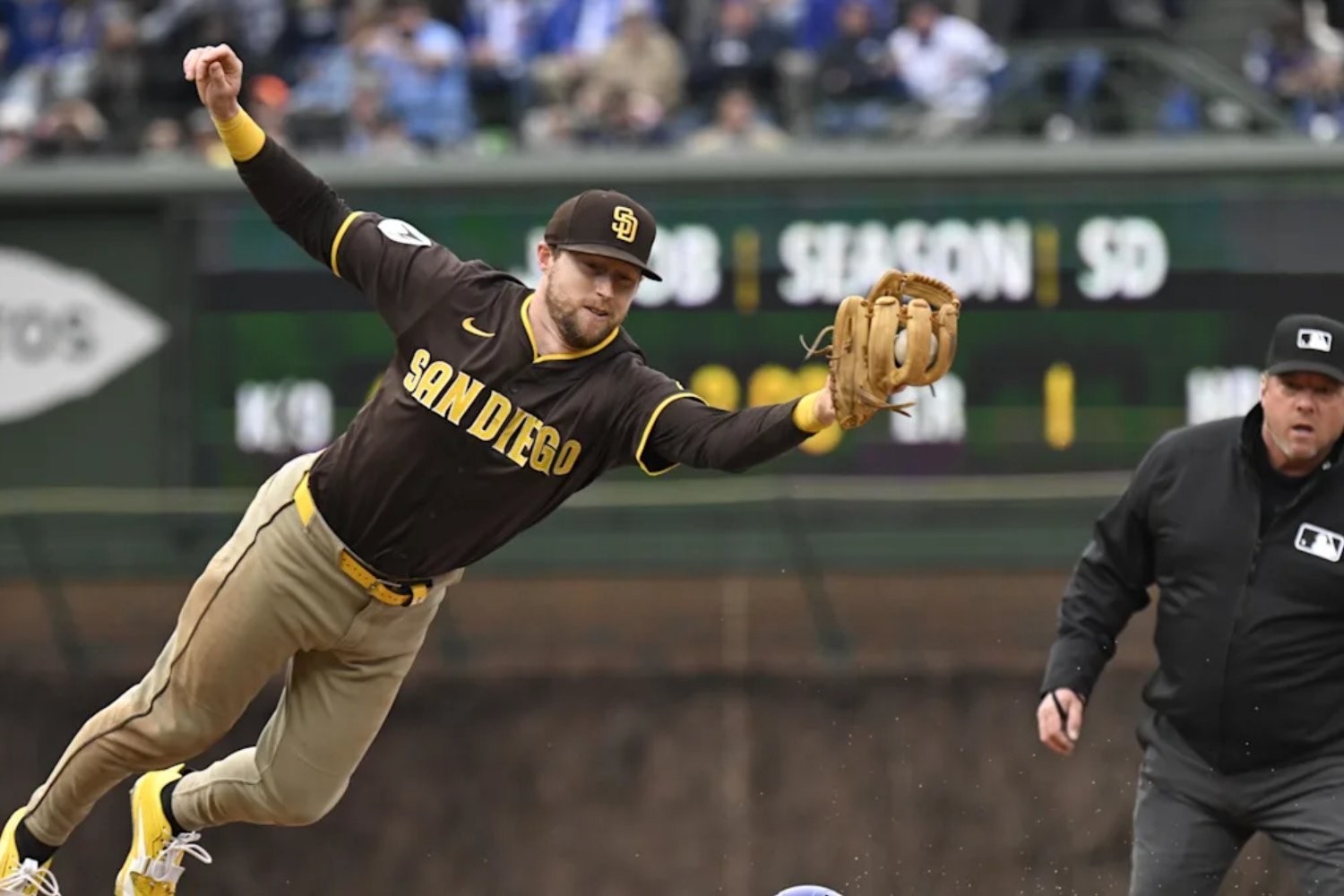 The San Diego Padres have done incredible work to keep the ship afloat as they deal with numerous early season injuries to their star players. Joe Musgrove was ruled out for the season a long time ago following his Tommy John surgery, but the Padres have had to weather long-term injuries to Yu Darvish, Matt Waldron, Jake Cronenworth, Jackson Merrill, and Sean Reynolds, among others. The good news is the franchise is due to get a number of those players back in San Diego in short order, including two offensive threats who should provide a serious boost to the lineup. Jackson Merrill According to Kevin Acee of the San Diego Union-Tribune, Merrill's expected return date from his strained hamstring is May 5 against the New York Yankees. The outfielder has been out since April 6 — less than a week after inking his nine-year mega-extension worth $135 million — and only just began a rehab assignment this weekend, meaning that if all goes according to plan, Merrill will play just two games at Triple-A before facing major league pitching again. That's obviously a very tight turnaround after a month-long hiatus, but Merrill is talented enough to make the quick return seamless. The 22-year-old was slashing .378/.415/.676 in ten games (41 plate appearances) prior to his injury, good for a whopping 200 wRC+. In his rookie season last year, he provided the Padres with 24 home runs and a 130 wRC+, all while providing excellent defense and stealing 16 bases. He was the 18th-most valuable player in the sport according to his 5.3 fWAR. Considering how porous the Padres' offense has been outside of Fernando Tatis Jr. thus far, Merrill's (and Cronenworth's) impending return couldn't come at a better time. Jake Cronenworth Cronenworth won't make quite as speedy of a recovery as Merrill, though he isn't far behind. The Padres are targeting a May 9 return for him against the Colorado Rockies, meaning the team should get two of its most potent offensive threats back in the same week. Cronenworth has been on the injured list since April 11 due to a non-displaced right rib fracture, though he's already back to taking live at-bats. In 12 games (44 plate appearances) prior to his injury, the second baseman was slashing .257/.409/.486 (158 wRC+), though his defense and baserunning left a lot to be desired. He's never posted a wRC+ higher than the 126 mark he earned as a rookie, so that scorching start may not be sustainable, but even a lesser version of Cronenworth would be worlds better than what Jose Iglesias (89 wRC+) has offered up in his absence. Yu Darvish Michael King (2.09 ERA) and Nick Pivetta (1.78 ERA) are doing one heck of a job holding down the fort atop the rotation, though with Dylan Cease struggling and Musgrove out for the season, the Padres could really use a triumphant return from Darvish right about now. The 38-year-old righty has steadily declined in terms of his strikeout rate and underlying metrics since arriving in San Diego prior to the 2021 season, but he remains one of the best in the business at working deep into games and garnering quality starts. His 23.6% strikeout rate in 2024 was by far the lowest of his career, but he still generated a solid 4.08 FIP thanks to his ability to limit hard contact and walks. The ETA for the Japanese starter remains some time in the next six weeks, though after throwing consecutive intensive bullpens with no setbacks, he's ready to start facing live hitters again. Assuming that goes well, he could be lined up for two or three rehab starts in short order, meaning that he could take the mound in San Diego before May is over.
