


Randy Holt
-
Posts
486 -
Joined
-
Last visited
-
Days Won
6
Content Type
Profiles
San Diego Padres Videos
2026 San Diego Padres Top Prospects Ranking
San Diego Padres Free Agent & Trade Rumors, Notes, & Tidbits
Guides & Resources
2025 San Diego Padres Draft Pick Tracker
News
2026 San Diego Padres Draft Tracker: Picks & Bonuses
Forums
Blogs
Events
Store
Downloads
Gallery
Everything posted by Randy Holt
-
Given how offseason budget constraints forced the San Diego Padres to assemble their roster, the bench was always something of a question for the 2026 team. Sure enough, the progression of this season has been fraught with turnover via designation for assignment (Nick Castellanos), injury (Gavin Sheets, Samad Taylor), and underperformance (Sung-Mun Song). Luis Rengifo was sort of a saving grace upon his selection to the roster back in July, but a torn ACL brought his season to an unceremonious end as the team continued to struggle to piece together a reserve group. Enter Dustin Harris. A castoff of the Chicago White Sox and Houston Astros this season, Harris signed a minor-league deal with the Padres back in July. He lit up opposing pitching in El Paso to the tune of a .350/.422/.617 line before being selected to the major-league roster toward the end of August. In the wake of the injuries to Rengifo & Sheets (alongside the continued absence of Ramón Laureano), Harris has helped the bench remain afloat in a number of ways. It's not just that Harris has performed well, though he's certainly done so with a .347/.389/.469 line through his first 55 plate appearances. He's also added a pair of doubles, two triples, and four stolen bases on five attempts. Beyond the performance is the type of role he's been able to fill. While Harris has gotten regular work in left field given the myriad of injuries the team has faced, he's also played in both right and center while serving as a pinch hitter and pinch runner on multiple occasions. That flexibility also applies to the batting order, where Harris has hit in six different spots. Even without a power element in his game, his ability to create contact and work his way on base makes him a benefit to the lineup in any spot on a given day. What's particularly important about Harris' ability to move around both the outfield and the batting order is his relation to a lineup that doesn't feature a ton of flexibility. Their regulars are almost all locked into their specific positions, with Song representing the only reserve infielder capable of actually moving around. Harris performing as well as he has has allowed Craig Stammen to move Fernando Tatis Jr. back to second base on occasion and maintain some semblance of upside in the wake of big struggles from Song & Jake Cronenworth. It really is a crucial development for the Padres and Stammen's ability to manage the roster. Rengifo had played so well prior to his injury in a way that supplemented the roster as well as any one player can. Harris' performance through his first 50-ish plate appearances has allowed them to maintain that, to the point where FanGraphs has him grabbing over 50 percent of the time in left field moving forward. Such a development speaks to just how essential his presence has proven to be over the last handful of weeks and moving into the home stretch of the regular season. View full article
-
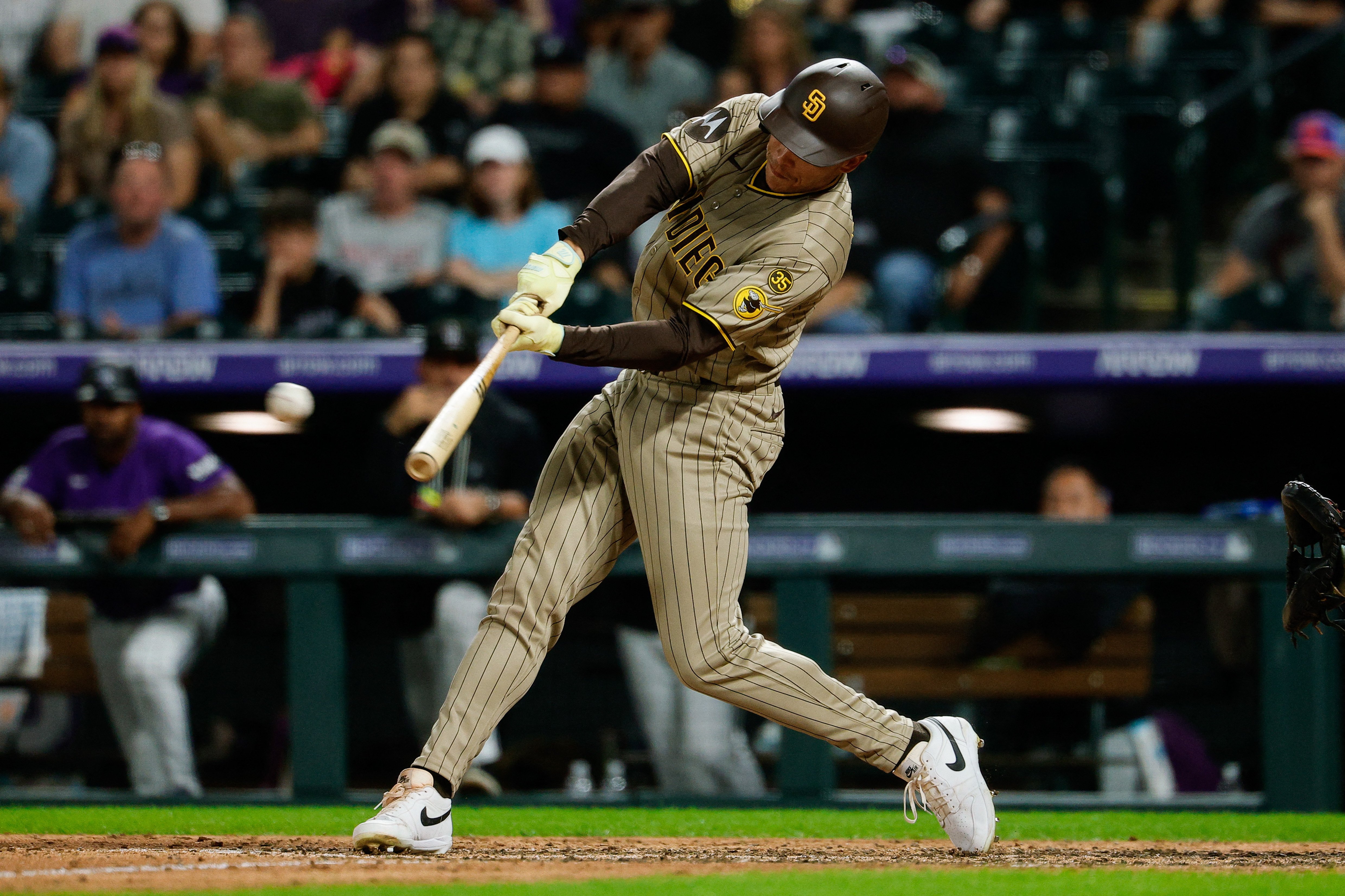 Given how offseason budget constraints forced the San Diego Padres to assemble their roster, the bench was always something of a question for the 2026 team. Sure enough, the progression of this season has been fraught with turnover via designation for assignment (Nick Castellanos), injury (Gavin Sheets, Samad Taylor), and underperformance (Sung-Mun Song). Luis Rengifo was sort of a saving grace upon his selection to the roster back in July, but a torn ACL brought his season to an unceremonious end as the team continued to struggle to piece together a reserve group. Enter Dustin Harris. A castoff of the Chicago White Sox and Houston Astros this season, Harris signed a minor-league deal with the Padres back in July. He lit up opposing pitching in El Paso to the tune of a .350/.422/.617 line before being selected to the major-league roster toward the end of August. In the wake of the injuries to Rengifo & Sheets (alongside the continued absence of Ramón Laureano), Harris has helped the bench remain afloat in a number of ways. It's not just that Harris has performed well, though he's certainly done so with a .347/.389/.469 line through his first 55 plate appearances. He's also added a pair of doubles, two triples, and four stolen bases on five attempts. Beyond the performance is the type of role he's been able to fill. While Harris has gotten regular work in left field given the myriad of injuries the team has faced, he's also played in both right and center while serving as a pinch hitter and pinch runner on multiple occasions. That flexibility also applies to the batting order, where Harris has hit in six different spots. Even without a power element in his game, his ability to create contact and work his way on base makes him a benefit to the lineup in any spot on a given day. What's particularly important about Harris' ability to move around both the outfield and the batting order is his relation to a lineup that doesn't feature a ton of flexibility. Their regulars are almost all locked into their specific positions, with Song representing the only reserve infielder capable of actually moving around. Harris performing as well as he has has allowed Craig Stammen to move Fernando Tatis Jr. back to second base on occasion and maintain some semblance of upside in the wake of big struggles from Song & Jake Cronenworth. It really is a crucial development for the Padres and Stammen's ability to manage the roster. Rengifo had played so well prior to his injury in a way that supplemented the roster as well as any one player can. Harris' performance through his first 50-ish plate appearances has allowed them to maintain that, to the point where FanGraphs has him grabbing over 50 percent of the time in left field moving forward. Such a development speaks to just how essential his presence has proven to be over the last handful of weeks and moving into the home stretch of the regular season.
 -
Prior to 2026, Luis Campusano had never really gotten his opportunity to solidify a role with the San Diego Padres. Previously looked at as a bat-first catcher, the most extensive run he got was 299 plate appearances in 2024 where he was almost entirely unplayable behind the dish. It's otherwise been a smattering of up-and-down travel from El Paso, none of it sustainable. This season, however, has represented a shift. While Campusano's 224 plate appearances won't represent a career-high, it's not due to a lack of faith from first-year manager Craig Stammen. Rather, that's the byproduct of a midsummer injury. Because when Campusano's been healthy, he's been in the mix. And Stammen has had every justification to run his No. 2 catcher out there as much as possible. Campusano's line on the season stands at .268/.366/.438. His wRC+ is at 130, his ISO is at .170, and he's shown enough defensive growth throughout the season to justify a place as the team's backup behind Freddy Fermin. His role as a pure bat has also expanded. With Gavin Sheets and Miguel Andujar each missing time in the season's second half, Campusano has gotten more run as the team's designated hitter; after appearing just once as a DH prior to the end of July, he's done it 10 times (two as a pinch-hitter) since the start of August. In general, it's all optimism around the output of Luis Campusano this season. But here at the midway point of September, some struggles are beginning to emerge in a way that they hadn't in the months prior. Much of the positive work Campusano turned in came in April & July, with the two months in between becoming a wash due to a fractured toe. On either end of the injury, though, he posted identical .326 averages, on-base figures of .380 & .456, and a combined wRC+ of 152. While there wasn't as much power in the latter of the two months, he walked more than 19 percent of the time and got plenty of fortune on batted balls. August is where we saw things slow down a touch. His wRC+ slipped to 112, but the power bumped back up (.115 ISO), and he continued to turn in strong numbers thanks to his plate approach (13.1 BB%). The calendar flipping over to September, however, hasn't left us with as much room for optimism. Midway through the month (52 plate appearances), Campusano's slash reads .229/.288/.438. His walk rate has fallen to below six percent. The power, at a .208 ISO, has become the only redeeming factor as his bat is just scratching above the average threshold (103 wRC+) in the first two weeks of the season's final month. While it's a concerning level of decline given what we saw over the first handful of months of the season, it's also not something that's particularly mysterious. Campusano has become more aggressive: His 54.4 percent swing rate is his highest in an individual month. With the exception of an even 50 percent back in April, it's actually startlingly higher than any other month. His chase rate has ballooned to 34.5 percent. It hasn't led to any decrease in the contact trends, but the quality of it has waned; his hard-hit rate of 28.9 percent is 14 percentage points lower than it was in July and seven points lower than it was in August. That has, in turn, led to a decline in his batted-ball fortune, where his BABIP is just .229 for the month. There are myriad reasons why this shift could be occurring, but it seems likely that Campusano is selling out for power. The increase in swing rate coupled with the fact that his 74.7 MPH bat speed this month is easily his fastest of the season is indicative of such a mindset. That he's not losing anything in terms of his contact rates speaks to his ability to make contact, but the loss of a mature plate approach has sapped him of actual production by decreasing the quality of said contact. This is something that Campusano will have to rein in down the stretch if he's to continue being a crucial supplemental bat for the Padres. There aren't any questions about what we saw earlier in the year, but that early success has wrought new expectations. At a time when the Friars need all the offense they can get, a more well-rounded approach from Campusano would go a long way toward lengthening the lineup. View full article
-
Luis Campusano's September Slump Has Put Padres In A Precarious Position
Randy Holt posted an article in Padres
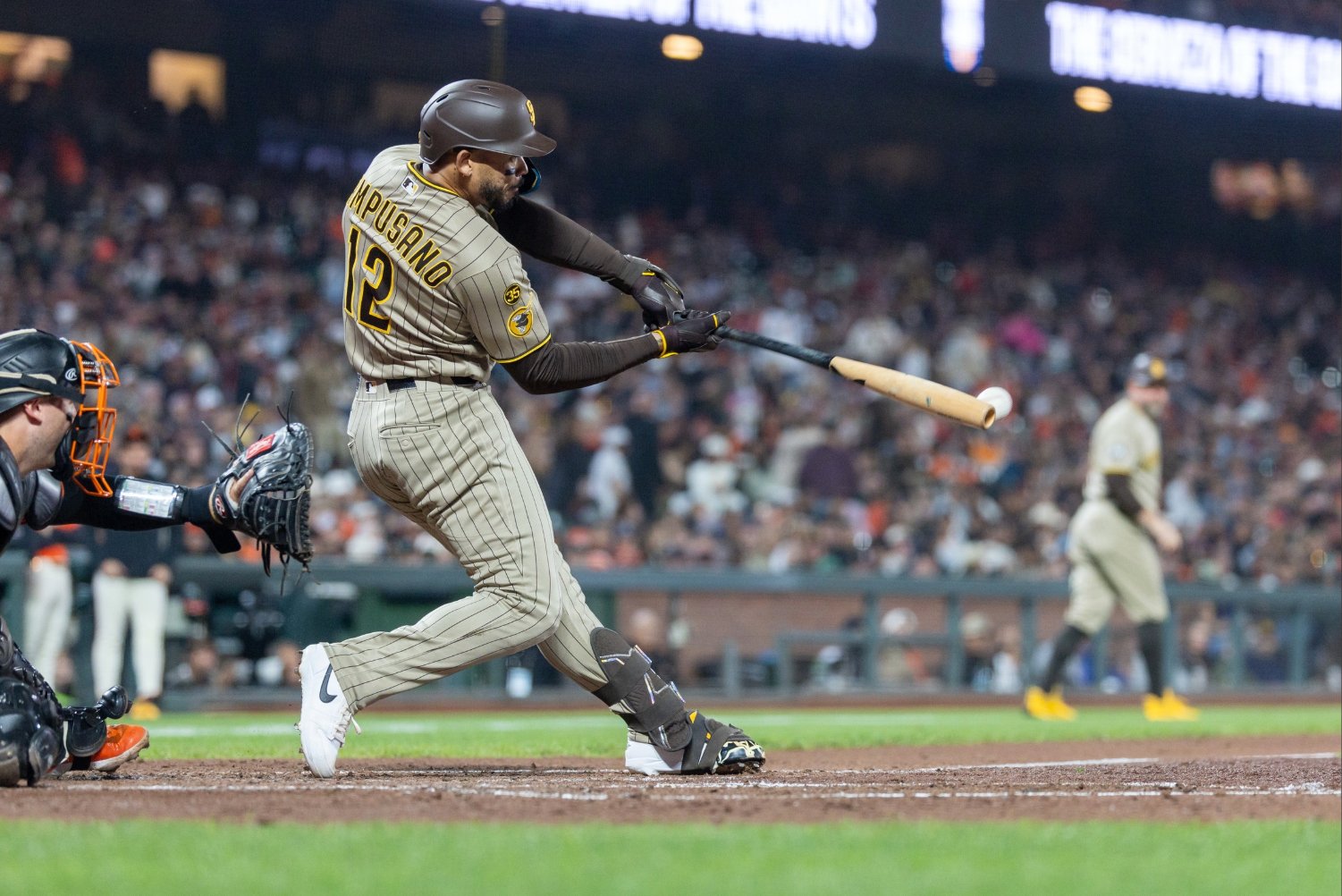 Prior to 2026, Luis Campusano had never really gotten his opportunity to solidify a role with the San Diego Padres. Previously looked at as a bat-first catcher, the most extensive run he got was 299 plate appearances in 2024 where he was almost entirely unplayable behind the dish. It's otherwise been a smattering of up-and-down travel from El Paso, none of it sustainable. This season, however, has represented a shift. While Campusano's 224 plate appearances won't represent a career-high, it's not due to a lack of faith from first-year manager Craig Stammen. Rather, that's the byproduct of a midsummer injury. Because when Campusano's been healthy, he's been in the mix. And Stammen has had every justification to run his No. 2 catcher out there as much as possible. Campusano's line on the season stands at .268/.366/.438. His wRC+ is at 130, his ISO is at .170, and he's shown enough defensive growth throughout the season to justify a place as the team's backup behind Freddy Fermin. His role as a pure bat has also expanded. With Gavin Sheets and Miguel Andujar each missing time in the season's second half, Campusano has gotten more run as the team's designated hitter; after appearing just once as a DH prior to the end of July, he's done it 10 times (two as a pinch-hitter) since the start of August. In general, it's all optimism around the output of Luis Campusano this season. But here at the midway point of September, some struggles are beginning to emerge in a way that they hadn't in the months prior. Much of the positive work Campusano turned in came in April & July, with the two months in between becoming a wash due to a fractured toe. On either end of the injury, though, he posted identical .326 averages, on-base figures of .380 & .456, and a combined wRC+ of 152. While there wasn't as much power in the latter of the two months, he walked more than 19 percent of the time and got plenty of fortune on batted balls. August is where we saw things slow down a touch. His wRC+ slipped to 112, but the power bumped back up (.115 ISO), and he continued to turn in strong numbers thanks to his plate approach (13.1 BB%). The calendar flipping over to September, however, hasn't left us with as much room for optimism. Midway through the month (52 plate appearances), Campusano's slash reads .229/.288/.438. His walk rate has fallen to below six percent. The power, at a .208 ISO, has become the only redeeming factor as his bat is just scratching above the average threshold (103 wRC+) in the first two weeks of the season's final month. While it's a concerning level of decline given what we saw over the first handful of months of the season, it's also not something that's particularly mysterious. Campusano has become more aggressive: His 54.4 percent swing rate is his highest in an individual month. With the exception of an even 50 percent back in April, it's actually startlingly higher than any other month. His chase rate has ballooned to 34.5 percent. It hasn't led to any decrease in the contact trends, but the quality of it has waned; his hard-hit rate of 28.9 percent is 14 percentage points lower than it was in July and seven points lower than it was in August. That has, in turn, led to a decline in his batted-ball fortune, where his BABIP is just .229 for the month. There are myriad reasons why this shift could be occurring, but it seems likely that Campusano is selling out for power. The increase in swing rate coupled with the fact that his 74.7 MPH bat speed this month is easily his fastest of the season is indicative of such a mindset. That he's not losing anything in terms of his contact rates speaks to his ability to make contact, but the loss of a mature plate approach has sapped him of actual production by decreasing the quality of said contact. This is something that Campusano will have to rein in down the stretch if he's to continue being a crucial supplemental bat for the Padres. There aren't any questions about what we saw earlier in the year, but that early success has wrought new expectations. At a time when the Friars need all the offense they can get, a more well-rounded approach from Campusano would go a long way toward lengthening the lineup.
 -
While Mason Miller gets the attention out of the San Diego Padres bullpen as baseball's top reliever, the team has also boasted, arguably, the No. 2 man in relief in Adrian Morejon. Morejon's success is the continued progression of three consecutive years pitching in leverage for the Padres. What began as a breakout 2024 continued to the tune of a 2.08 ERA and an All-Star appearance last season. This year, Morejon has driven up the strikeout rate to a career-high (29.7 percent) and carries a gaudy 59.6 groundball rate. Courtesy of his sinker-changeup-slider combo, Morejon's continued dominance has his percentile chart looking extraordinary: Now that we have the good end of the spectrum out of the way, let's talk about some concerns that have begun to emerge at this late stage of the season. Morejon is coming up on a career-high in terms of his volume of appearances; his 69 leaves him on pace to at least match last year's 75. However, he's already exceeded his career mark for innings, with 79.2 passing up last year's number by three with another three-ish weeks to go in the year. That's a number of appearances exceeding three outs for a pitcher so crucial to the long-term gains of the team, as far as postseason prospects go. That's a lot of volume in consecutive seasons for a relief pitcher. Generally, that's something you'd prefer to avoid in order to stave off any kind of regression in performance. To date, Morejon has been able to effectively navigate such volume. However, Sunday afternoon's outing against the New York Yankees was an indication, of which there have been a recent smattering, that the workload could be catching up with him. Entering with a 4-0 lead in the eighth inning, Morejon allowed three hits and a walk that culminated in three runs (two earned). That Luis Campusano was able to throw out a baserunner at second base with one out at least put Morejon in a situation where he was back to two outs with the bases empty before handing the ball to Miller for the ninth. No harm done in the grand scheme. However, that type of tumultuous outing is starting to manifest a bit more often. On September 1, Morejon worked 0.2 innings, walked two and allowed two hits, resulting in a pair of earned runs in a game the team lost 4-3. On August 29th, he faced five batters after allowing a hit and a walk in his inning of work. Between August 19th and September 6, Morejon had a 4.15 ERA (last among the team's qualifying relievers) and a 13.5 percent walk rate (highest among the team's qualifying relievers). Those are the types of things that are at least indicative of cracks. However, we're not on full-blown Morejon watch quite yet. The walk number is the most concerning element; Morejon hasn't exceeded 11 percent in an individual month, and he's gotten things under control in his past few outings. However, between the continued display of strikeouts (29.7 percent), huge groundball numbers (60.0 percent), and velocity that is actually increasing (97.1 in September is his highest in an individual month), now isn't the time to worry. Especially when his xERA is still barely scratching above two. So it's something to monitor, especially on the command side, but we are otherwise continuing to view Adrian Morejon as every bit the arm he's been purported to be since 2024. View full article
-
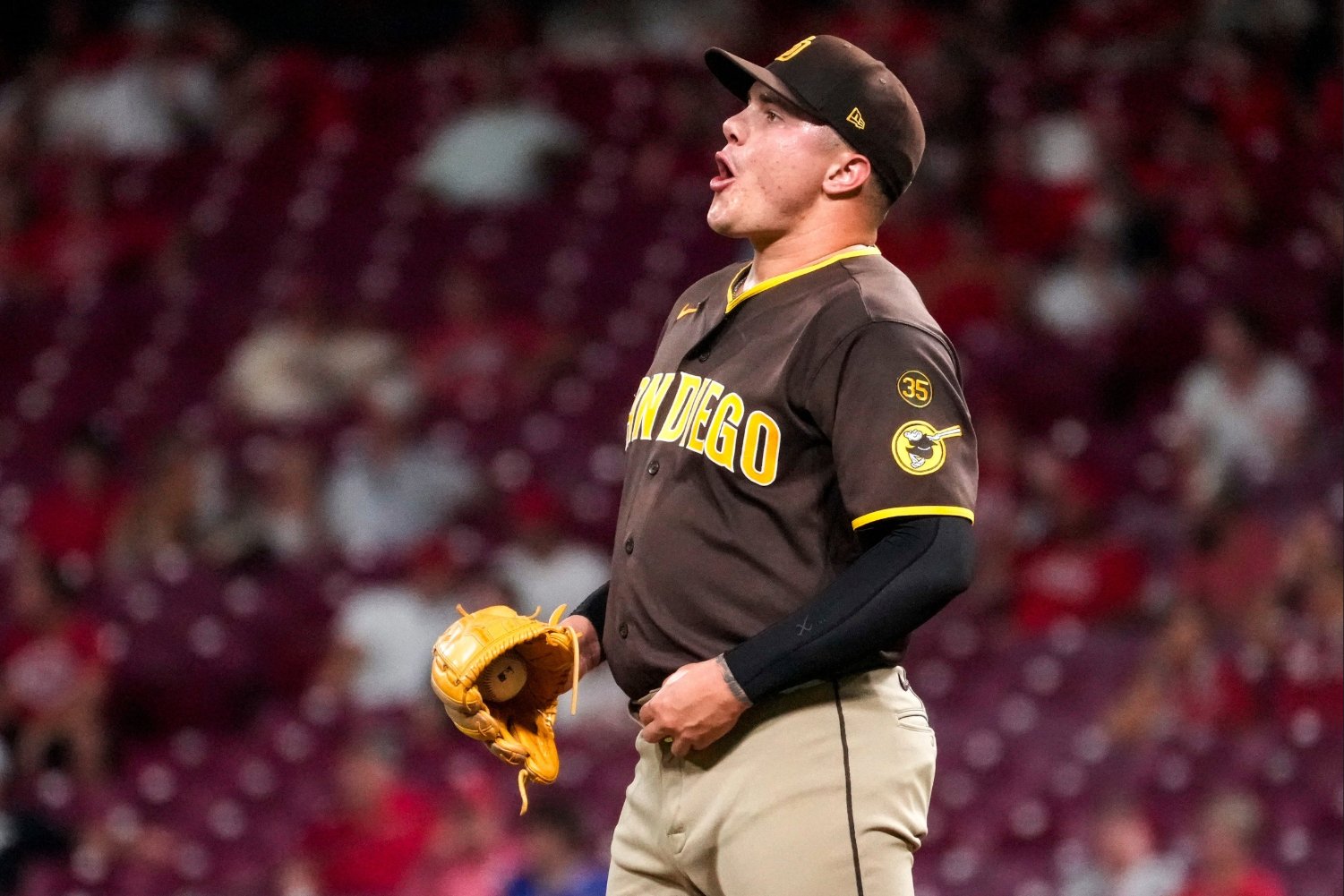 While Mason Miller gets the attention out of the San Diego Padres bullpen as baseball's top reliever, the team has also boasted, arguably, the No. 2 man in relief in Adrian Morejon. Morejon's success is the continued progression of three consecutive years pitching in leverage for the Padres. What began as a breakout 2024 continued to the tune of a 2.08 ERA and an All-Star appearance last season. This year, Morejon has driven up the strikeout rate to a career-high (29.7 percent) and carries a gaudy 59.6 groundball rate. Courtesy of his sinker-changeup-slider combo, Morejon's continued dominance has his percentile chart looking extraordinary: Now that we have the good end of the spectrum out of the way, let's talk about some concerns that have begun to emerge at this late stage of the season. Morejon is coming up on a career-high in terms of his volume of appearances; his 69 leaves him on pace to at least match last year's 75. However, he's already exceeded his career mark for innings, with 79.2 passing up last year's number by three with another three-ish weeks to go in the year. That's a number of appearances exceeding three outs for a pitcher so crucial to the long-term gains of the team, as far as postseason prospects go. That's a lot of volume in consecutive seasons for a relief pitcher. Generally, that's something you'd prefer to avoid in order to stave off any kind of regression in performance. To date, Morejon has been able to effectively navigate such volume. However, Sunday afternoon's outing against the New York Yankees was an indication, of which there have been a recent smattering, that the workload could be catching up with him. Entering with a 4-0 lead in the eighth inning, Morejon allowed three hits and a walk that culminated in three runs (two earned). That Luis Campusano was able to throw out a baserunner at second base with one out at least put Morejon in a situation where he was back to two outs with the bases empty before handing the ball to Miller for the ninth. No harm done in the grand scheme. However, that type of tumultuous outing is starting to manifest a bit more often. On September 1, Morejon worked 0.2 innings, walked two and allowed two hits, resulting in a pair of earned runs in a game the team lost 4-3. On August 29th, he faced five batters after allowing a hit and a walk in his inning of work. Between August 19th and September 6, Morejon had a 4.15 ERA (last among the team's qualifying relievers) and a 13.5 percent walk rate (highest among the team's qualifying relievers). Those are the types of things that are at least indicative of cracks. However, we're not on full-blown Morejon watch quite yet. The walk number is the most concerning element; Morejon hasn't exceeded 11 percent in an individual month, and he's gotten things under control in his past few outings. However, between the continued display of strikeouts (29.7 percent), huge groundball numbers (60.0 percent), and velocity that is actually increasing (97.1 in September is his highest in an individual month), now isn't the time to worry. Especially when his xERA is still barely scratching above two. So it's something to monitor, especially on the command side, but we are otherwise continuing to view Adrian Morejon as every bit the arm he's been purported to be since 2024.
 -
If Luis Campusano's weekend was a coming-out party, it couldn't have come at a better time for the San Diego Padres. While the loudest things to hit the stat sheet were a walk-off home run on Friday night and a solo jack on Sunday that would turn out to be the game (and series) winner over the New York Yankees, it's what Campusano did behind the plate that made it a marquee weekend for the team's No. 2 backstop. That work started on Friday, when Campusano threw out three Yankee baserunners in an extra-inning affair: He did it in a scoreless game in the second inning, in a 1-1 game in the fifth, and, most crucially, in the 10th inning with the Padres trailing 2-1. That allowed the team to keep it close before he did the rest of the work in the bottom half of the inning. On Sunday, he was at it again. As Adrian Morejon struggled to preserve the lead in his outing, Campusano's heave to second base in the bottom of the eighth put a second out on the board and cleared the bases for the team to finish off the last four outs of a 4-3 win: The throwing element represents the most obvious area of growth for a player whose long-term status at the catcher spot was thrown into some doubt following a tough 2024 season and absence of legitimate opportunity in 2025. As the Padres built their 2026 roster under new manager Craig Stammen, no true backup was brought in behind Freddy Fermin. That left Campusano with his first real opportunity in two seasons. His arm has certainly latched onto the chance. Campusano's caught-stealing-above-average figure (+2) ranks in the 72nd percentile league-wide. That ranks 21st in the league, with his actual rate of runners thrown out (32 percent) sitting eighth among the league's backstops. That's eight percent higher than his estimated CS%. What's important to note about Campusano is that while that is the only element of his defensive game that ranks above average, there's been real growth in the other areas. The last time we saw him behind the plate with any kind of regularity, his framing (measured in Framing Runs) drew a grade of -8. This year, he's at -5. His blocking (Blocking Above Average) was at -3; now it's at -1. His overall Catching Runs has graduated from -13 in 2024 to -4 this season. Again, those are still below-average figures, but they represent significant growth in each respect. That Campusano has such marked defensive growth is important for a couple of different reasons. The first is that his offensive upside far exceeds that of the incumbent starter Freddy Fermin. Fermin has excelled virtually everywhere on the defensive side, but carries a career-worst 61 wRC+ this year. He's been "better" in the second half, but is still a massive step down with the bat. Campusano becoming competent behind the dish, even if that simply means just being average, allows Stammen to make the offensive play on his daily lineup card without comprising on defense. The other piece of significance is what it means for Campusano's long-term future with the Padres. The bat plays. The bat always played, even without a legitimate run to prove it. With two more years of team control, it's entirely possible that his blend of offense from behind the plate and improving defense has locked him into a role in a way that may not have been perceived before. Could the team explore a move of Fermin this winter with top prospect Ethan Salas now arriving at the top level? That would give the Padres a younger 1-2 punch behind the plate with a much higher offensive upside than the current shape of the roster. Even if changes to the roster aren't quite so drastic, it really is a crucial development for the organization. That Campusano has grown to play even remotely competent defense and compensate for the shortcomings with his arm helps to provide some stability for a position that has featured a great deal of turnover in recent years. Whether it's Fermin or Salas as his running mate next year, the defensive development of Luis Campusano has to have the Padres feeling quite good about what the catcher position looks like beyond 2026. View full article
-
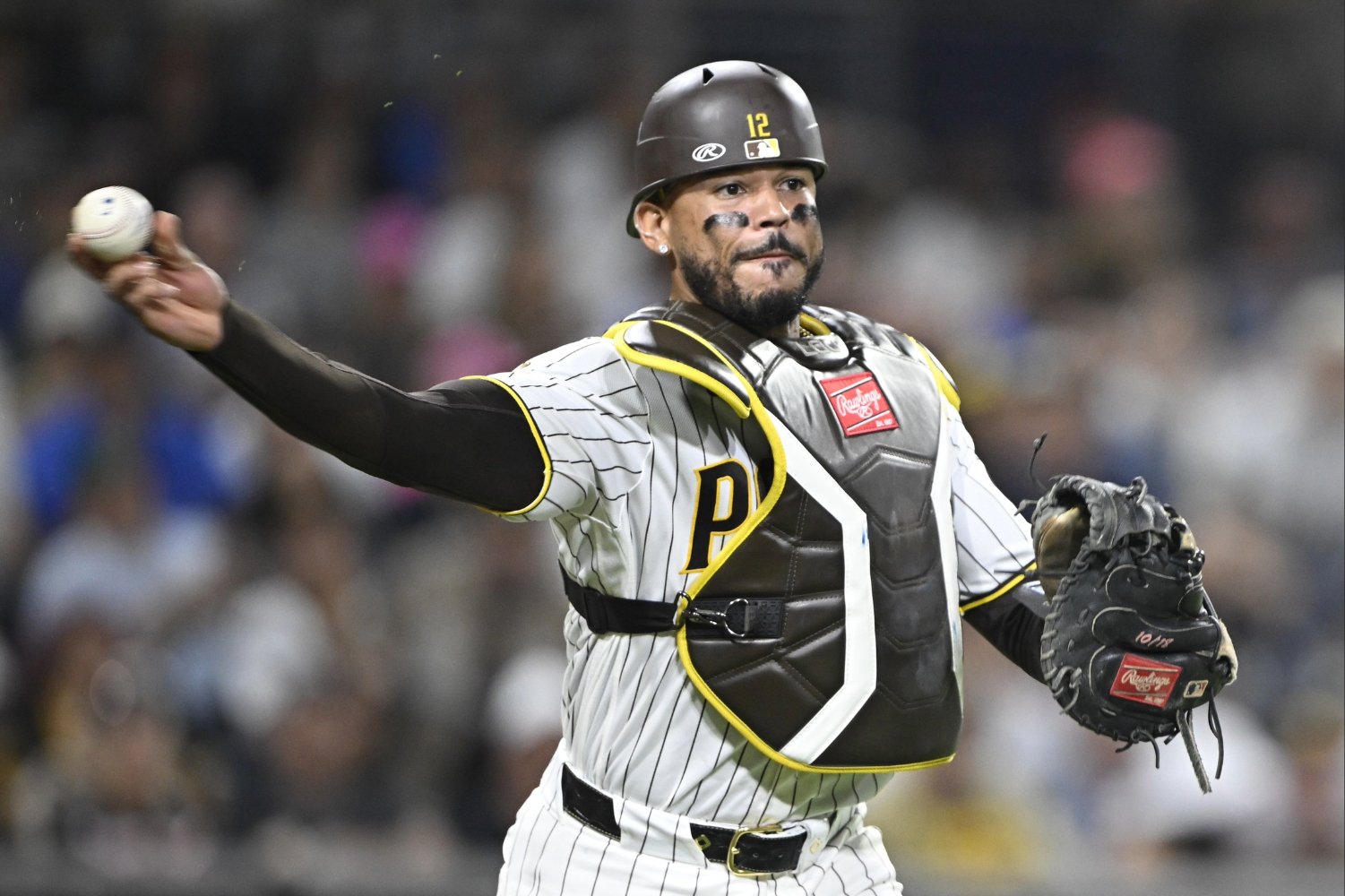 If Luis Campusano's weekend was a coming-out party, it couldn't have come at a better time for the San Diego Padres. While the loudest things to hit the stat sheet were a walk-off home run on Friday night and a solo jack on Sunday that would turn out to be the game (and series) winner over the New York Yankees, it's what Campusano did behind the plate that made it a marquee weekend for the team's No. 2 backstop. That work started on Friday, when Campusano threw out three Yankee baserunners in an extra-inning affair: He did it in a scoreless game in the second inning, in a 1-1 game in the fifth, and, most crucially, in the 10th inning with the Padres trailing 2-1. That allowed the team to keep it close before he did the rest of the work in the bottom half of the inning. On Sunday, he was at it again. As Adrian Morejon struggled to preserve the lead in his outing, Campusano's heave to second base in the bottom of the eighth put a second out on the board and cleared the bases for the team to finish off the last four outs of a 4-3 win: The throwing element represents the most obvious area of growth for a player whose long-term status at the catcher spot was thrown into some doubt following a tough 2024 season and absence of legitimate opportunity in 2025. As the Padres built their 2026 roster under new manager Craig Stammen, no true backup was brought in behind Freddy Fermin. That left Campusano with his first real opportunity in two seasons. His arm has certainly latched onto the chance. Campusano's caught-stealing-above-average figure (+2) ranks in the 72nd percentile league-wide. That ranks 21st in the league, with his actual rate of runners thrown out (32 percent) sitting eighth among the league's backstops. That's eight percent higher than his estimated CS%. What's important to note about Campusano is that while that is the only element of his defensive game that ranks above average, there's been real growth in the other areas. The last time we saw him behind the plate with any kind of regularity, his framing (measured in Framing Runs) drew a grade of -8. This year, he's at -5. His blocking (Blocking Above Average) was at -3; now it's at -1. His overall Catching Runs has graduated from -13 in 2024 to -4 this season. Again, those are still below-average figures, but they represent significant growth in each respect. That Campusano has such marked defensive growth is important for a couple of different reasons. The first is that his offensive upside far exceeds that of the incumbent starter Freddy Fermin. Fermin has excelled virtually everywhere on the defensive side, but carries a career-worst 61 wRC+ this year. He's been "better" in the second half, but is still a massive step down with the bat. Campusano becoming competent behind the dish, even if that simply means just being average, allows Stammen to make the offensive play on his daily lineup card without comprising on defense. The other piece of significance is what it means for Campusano's long-term future with the Padres. The bat plays. The bat always played, even without a legitimate run to prove it. With two more years of team control, it's entirely possible that his blend of offense from behind the plate and improving defense has locked him into a role in a way that may not have been perceived before. Could the team explore a move of Fermin this winter with top prospect Ethan Salas now arriving at the top level? That would give the Padres a younger 1-2 punch behind the plate with a much higher offensive upside than the current shape of the roster. Even if changes to the roster aren't quite so drastic, it really is a crucial development for the organization. That Campusano has grown to play even remotely competent defense and compensate for the shortcomings with his arm helps to provide some stability for a position that has featured a great deal of turnover in recent years. Whether it's Fermin or Salas as his running mate next year, the defensive development of Luis Campusano has to have the Padres feeling quite good about what the catcher position looks like beyond 2026.
 -
The rotation for the 2026 San Diego Padres always seemed destined serve as a weak point of the roster. Fragilely assembled out of a collection of minor-league and one-year deals, there wasn't a whole lot of certainty to be offered by the starting five despite the stability provided by the bullpen behind them. That largely came to fruition as the season progressed. In the first half, the Padres ranked 21st in innings from starting pitchers (848.2), 17th in ERA (4.25), and 19th in FIP (4.24). They also sat 19th in strikeout rate (21.5 percent) and 22nd in walk rate (9.5 percent), with a rare saving grace that they ranked merely in the middle in hard contact surrendered (38.2 percent). It's really that first number that stood as most concerning for much of the year. In March & April, they were 28th in the league in innings pitched by starters (268.0), before jumping to 16th in May (248.0) only to fall back to 22nd in June (228.2). That led to concerns about a taxed bullpen, especially as some injuries began to emerge out of the relief corps. Given all of that, A.J. Preller made it a point to confront the pitching issue directly at this year's trade deadline. He acquired Robbie Ray from the San Francisco Giants & Casey Mize from the Detroit Tigers, with the additional expectation that Joe Musgrove would return from his continued Tommy John recovery at some point in the second half. There was also a bump in performance from some of the regulars. While we've seen names like Griffin Canning, Matt Waldron, JP Sears, and Germán Márquez pitch their way out of a starting gig (if not the organization), other names began to stabilize the group. Michael King & Walker Buehler have each been remarkably steady over their last handful of starts while Randy Vásquez went on his own mini hot streak. Factor in the additions of Ray & Mize, and there was an expectation that the group would evolve from a severe shortcoming of this roster to something more resembling an actual strength. Now creeping deeper into September, we can pretty definitively say that hasn't happened. For their part, King, Buehler, and Vásquez have continued to stay the course. King has only failed to reach six innings of work in two of his last 11 starts, Buehler ended August with three outings of six frames and one of five, and Vásquez ended August with a 2.57 ERA across 28 innings, his best in any individual month. Ray has also been varying levels of fine. He has a 3.42 ERA through five starts with the Padres (though he's only averaging a shade over five innings per start). Where the Padres run into trouble with their previously conceived optimism is in Mize and in Musgrove, two arms that looked prime to provide as much upside as we'd seen from this group in 2026. Through six starts with the Padres, Mize has a 6.67 ERA. His debut was a 3.1-inning, nine-runs-allowed start before adding starts of an injury-shortened, four-earned-run variety and a four-inning, four-earned effort to close the month. In the two latter outings, he allowed a combined five home runs across 6.2 total innings. Musgrove, meanwhile, appeared to be nearing the end of his rehab work. In his final El Paso start in August, he threw five innings and allowed just one run. It was as good as he looked across a quartet of minor-league starts. However, recovery continues to be an issue following starts. He went 12 days between appearances for the Chihuahuas ahead of that last appearance, with no indication of when we may see him on the mound again. At this point, it's fairly clear that he's not an arm that can be relied upon for even one inning before season's end. And none of this even takes into account Nick Pivetta. After abruptly leaving a rehab start on August 4, he's appeared twice (including on August 30) for El Paso. Therein, he threw 4.1 innings and didn't allow a run. He's expected to be back tonight, though it's unfair to expect he'll immediately resume his position atop the rotation after such a long hiatus. So, while the Padres are still in better shape than they might have been in the first half of the season, rotation concerns still persist. They're merely taking on a new form with different names. While the starting pitching doesn't bear the entire responsibility for the team's recent slide out of a Wild Card position, any sort of positive news would be a welcome development for a team hoping to shift the vibe back in the correct direction as soon as possible. View full article
-
Padres' Rebuilt Rotation Deserves Equal Parts Optimism and Skepticism
Randy Holt posted an article in Padres
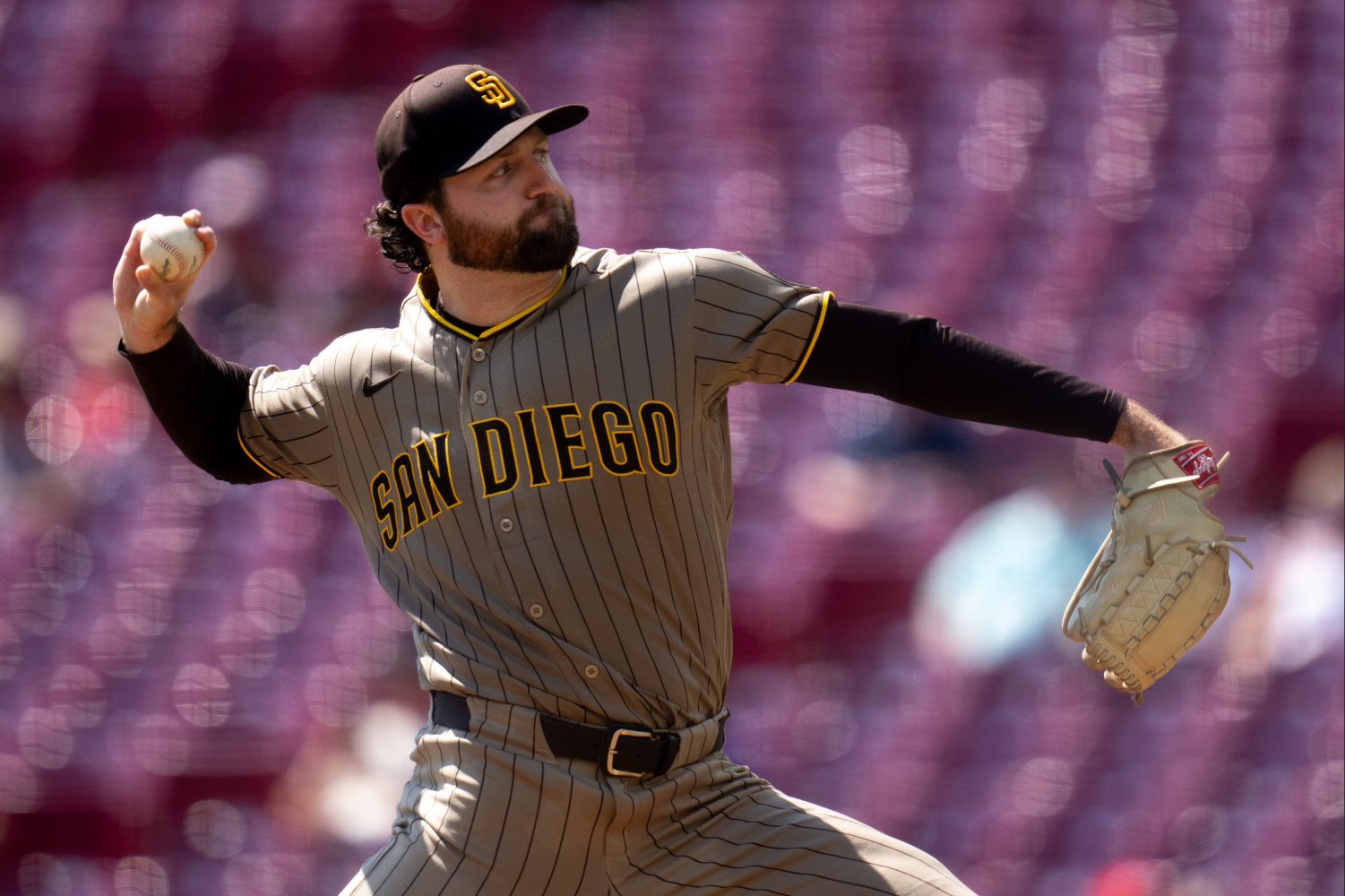 The rotation for the 2026 San Diego Padres always seemed destined serve as a weak point of the roster. Fragilely assembled out of a collection of minor-league and one-year deals, there wasn't a whole lot of certainty to be offered by the starting five despite the stability provided by the bullpen behind them. That largely came to fruition as the season progressed. In the first half, the Padres ranked 21st in innings from starting pitchers (848.2), 17th in ERA (4.25), and 19th in FIP (4.24). They also sat 19th in strikeout rate (21.5 percent) and 22nd in walk rate (9.5 percent), with a rare saving grace that they ranked merely in the middle in hard contact surrendered (38.2 percent). It's really that first number that stood as most concerning for much of the year. In March & April, they were 28th in the league in innings pitched by starters (268.0), before jumping to 16th in May (248.0) only to fall back to 22nd in June (228.2). That led to concerns about a taxed bullpen, especially as some injuries began to emerge out of the relief corps. Given all of that, A.J. Preller made it a point to confront the pitching issue directly at this year's trade deadline. He acquired Robbie Ray from the San Francisco Giants & Casey Mize from the Detroit Tigers, with the additional expectation that Joe Musgrove would return from his continued Tommy John recovery at some point in the second half. There was also a bump in performance from some of the regulars. While we've seen names like Griffin Canning, Matt Waldron, JP Sears, and Germán Márquez pitch their way out of a starting gig (if not the organization), other names began to stabilize the group. Michael King & Walker Buehler have each been remarkably steady over their last handful of starts while Randy Vásquez went on his own mini hot streak. Factor in the additions of Ray & Mize, and there was an expectation that the group would evolve from a severe shortcoming of this roster to something more resembling an actual strength. Now creeping deeper into September, we can pretty definitively say that hasn't happened. For their part, King, Buehler, and Vásquez have continued to stay the course. King has only failed to reach six innings of work in two of his last 11 starts, Buehler ended August with three outings of six frames and one of five, and Vásquez ended August with a 2.57 ERA across 28 innings, his best in any individual month. Ray has also been varying levels of fine. He has a 3.42 ERA through five starts with the Padres (though he's only averaging a shade over five innings per start). Where the Padres run into trouble with their previously conceived optimism is in Mize and in Musgrove, two arms that looked prime to provide as much upside as we'd seen from this group in 2026. Through six starts with the Padres, Mize has a 6.67 ERA. His debut was a 3.1-inning, nine-runs-allowed start before adding starts of an injury-shortened, four-earned-run variety and a four-inning, four-earned effort to close the month. In the two latter outings, he allowed a combined five home runs across 6.2 total innings. Musgrove, meanwhile, appeared to be nearing the end of his rehab work. In his final El Paso start in August, he threw five innings and allowed just one run. It was as good as he looked across a quartet of minor-league starts. However, recovery continues to be an issue following starts. He went 12 days between appearances for the Chihuahuas ahead of that last appearance, with no indication of when we may see him on the mound again. At this point, it's fairly clear that he's not an arm that can be relied upon for even one inning before season's end. And none of this even takes into account Nick Pivetta. After abruptly leaving a rehab start on August 4, he's appeared twice (including on August 30) for El Paso. Therein, he threw 4.1 innings and didn't allow a run. He's expected to be back tonight, though it's unfair to expect he'll immediately resume his position atop the rotation after such a long hiatus. So, while the Padres are still in better shape than they might have been in the first half of the season, rotation concerns still persist. They're merely taking on a new form with different names. While the starting pitching doesn't bear the entire responsibility for the team's recent slide out of a Wild Card position, any sort of positive news would be a welcome development for a team hoping to shift the vibe back in the correct direction as soon as possible.
 -
When the San Diego Padres signed Ty France to a minor-league pact in the middle of February, it had the chance to be a good story. While his place on the roster wasn't guaranteed up against multiple players of a similar profile, the former San Diego State Aztec & 2015 Padres draftee had the opportunity for a homecoming after consecutive seasons of plying his trade for multiple teams. That fresh status as a journeyman that France attained across stints with Seattle, Cincinnati, Minnesota, and Toronto were a mixed bag. He'd struggled on both sides of the ball in his final season with the Mariners and post-trade-deadline with the Reds in 2024 before regaining his defensive form (and some of his bat) with the Twins the following year. He spent time on the shelf with the Blue Jays after another deadline deal landed him in a new spot, but reappeared for Toronto in last year's World Series. That February signing back in San Diego came at a time when the team had added (or would add) Miguel Andujar and Nick Castellanos to a roster that already featured Gavin Sheets as a first-base-corner-outfield profile. France, nevertheless, was able to grab a roster spot courtesy of a strong spring and some positional injuries that unfolded during the exhibition season. Not only did he do that, but he's since become a key player in the team's playoff push. Nearly through the end of August, France has contributed a .285/.355/.501 line with a 138 wRC+. In a general sense, it's his best offensive season since 2022, with his .218 isolated power number representing a new career high. Not only has he regained form, he's done so in a way that would put him as the team's top hitter if measured by wRC+. Only Fernando Tatis Jr.'s 124 comes remotely close to matching France's full-season offensive output. Perhaps more importantly, the 32-year-old has been a stabilizing force on the infield. With the Padres featuring one of the league's most improved defensive units, France's name figures to be in the mix for some accolades at the position come season's end. He's third in Outs Above Average among first basemen (with five) with a success rate of 79 percent against an estimated rate of 77 percent. If we flipped the metric to Defensive Runs Saved, France actually leads the position with 12. There isn't any doubt as to France's value to this particular Padres team. But on a minor-league deal that became a one-year MLB pact, there's now a question as to whether the Friars should make this a longer-term arrangement. He has undoubtedly played himself into more earning power his next time out. That much is objective. Not far behind it, though, in the rankings of things considered to be inarguable is the idea that France should be manning the position again in 2027 (or, you know, 2028). The Padres do not have a prospect of which we can speak that is banging on the door of the big-league first base job. Romeo Sanabria represents perhaps the closest name to such a concept, but he has struggled mightily in 80ish plate appearances in El Paso (30 wRC+). Nor is there anyone on the present roster that you'd feel comfortable holding down the gig with any regularity; Jake Cronenworth's profile doesn't fit the position, and Gavin Sheets isn't someone you want to run out against left-handed pitchers. The list of first base free agents this winter is also an uninspiring group as a whole. Given all of that, it'd be really difficult to make a case against retaining Ty France beyond 2026. One images the cost itself wouldn't be prohibitive (especially if new ownership is able to offer an injection of at least some additional financing), nor would the length of a new contract. It really all reads as easy a call as A.J. Preller and co. will have to make this winter. View full article
-
Has Ty France Established Himself As Padres' Long-Term First Baseman?
Randy Holt posted an article in Padres
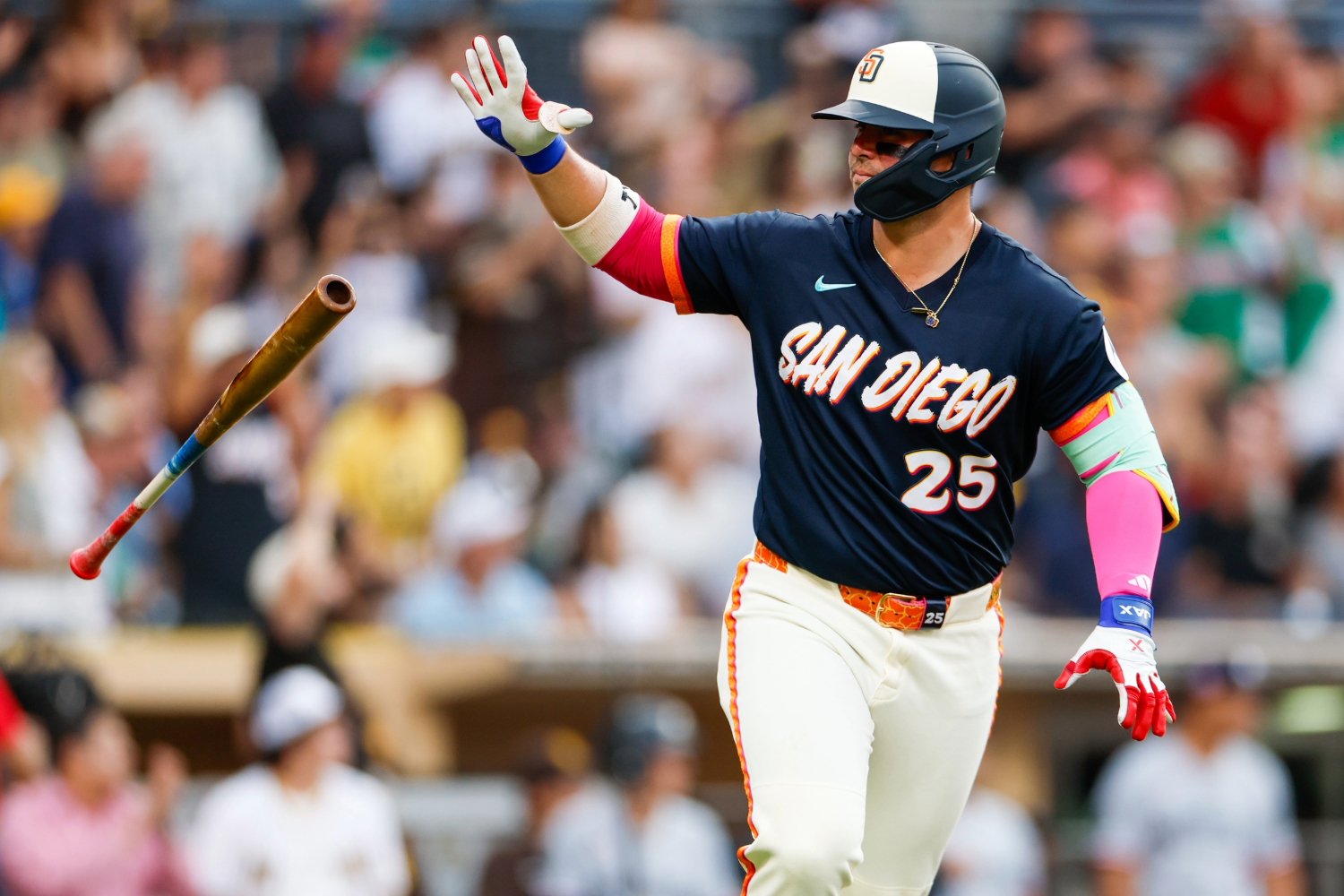 When the San Diego Padres signed Ty France to a minor-league pact in the middle of February, it had the chance to be a good story. While his place on the roster wasn't guaranteed up against multiple players of a similar profile, the former San Diego State Aztec & 2015 Padres draftee had the opportunity for a homecoming after consecutive seasons of plying his trade for multiple teams. That fresh status as a journeyman that France attained across stints with Seattle, Cincinnati, Minnesota, and Toronto were a mixed bag. He'd struggled on both sides of the ball in his final season with the Mariners and post-trade-deadline with the Reds in 2024 before regaining his defensive form (and some of his bat) with the Twins the following year. He spent time on the shelf with the Blue Jays after another deadline deal landed him in a new spot, but reappeared for Toronto in last year's World Series. That February signing back in San Diego came at a time when the team had added (or would add) Miguel Andujar and Nick Castellanos to a roster that already featured Gavin Sheets as a first-base-corner-outfield profile. France, nevertheless, was able to grab a roster spot courtesy of a strong spring and some positional injuries that unfolded during the exhibition season. Not only did he do that, but he's since become a key player in the team's playoff push. Nearly through the end of August, France has contributed a .285/.355/.501 line with a 138 wRC+. In a general sense, it's his best offensive season since 2022, with his .218 isolated power number representing a new career high. Not only has he regained form, he's done so in a way that would put him as the team's top hitter if measured by wRC+. Only Fernando Tatis Jr.'s 124 comes remotely close to matching France's full-season offensive output. Perhaps more importantly, the 32-year-old has been a stabilizing force on the infield. With the Padres featuring one of the league's most improved defensive units, France's name figures to be in the mix for some accolades at the position come season's end. He's third in Outs Above Average among first basemen (with five) with a success rate of 79 percent against an estimated rate of 77 percent. If we flipped the metric to Defensive Runs Saved, France actually leads the position with 12. There isn't any doubt as to France's value to this particular Padres team. But on a minor-league deal that became a one-year MLB pact, there's now a question as to whether the Friars should make this a longer-term arrangement. He has undoubtedly played himself into more earning power his next time out. That much is objective. Not far behind it, though, in the rankings of things considered to be inarguable is the idea that France should be manning the position again in 2027 (or, you know, 2028). The Padres do not have a prospect of which we can speak that is banging on the door of the big-league first base job. Romeo Sanabria represents perhaps the closest name to such a concept, but he has struggled mightily in 80ish plate appearances in El Paso (30 wRC+). Nor is there anyone on the present roster that you'd feel comfortable holding down the gig with any regularity; Jake Cronenworth's profile doesn't fit the position, and Gavin Sheets isn't someone you want to run out against left-handed pitchers. The list of first base free agents this winter is also an uninspiring group as a whole. Given all of that, it'd be really difficult to make a case against retaining Ty France beyond 2026. One images the cost itself wouldn't be prohibitive (especially if new ownership is able to offer an injection of at least some additional financing), nor would the length of a new contract. It really all reads as easy a call as A.J. Preller and co. will have to make this winter.
 -
The San Diego Padres are poised to get a couple of regular contributors back into the mix soon. Samad Taylor is on rehab assignment while Miguel Andujar has begun a swinging progression on his way back from a broken wrist. That these two increasingly imminent returns are approaching adds a wrinkle to a roster that already featured another one earlier this week. When the Padres optioned Sung-Mun Song to Triple-A El Paso, they created a roster deficiency in the form of a lack of infield depth. The only supplemental infielder listed on the official roster is Gavin Sheets, who has been used only sparingly at first base for more than a month. Neither of Taylor or Andujar returning changes that calculus; Taylor hasn't appeared on the infield since 2023 and Andujar, while capable of handling an infield corner, is far from an ideal solution beyond the odd appearance once in a blue moon. Which means that the Padres have some additional decisions ahead of them following Song's option. That Taylor is a lock for the roster upon his return speaks to how strong a year he was turning in prior to his stay on the injured list with an oblique injury. He had wRC+'d 135 over a 102 plate appearance sample with six steals courtesy of 93rd percentile sprint speed. Andujar, meanwhile, was always figured to be a key bat as a doubles machine that doesn't strike out a whole lot. Obviously, the expansion of rosters in September does have an impact here. Taylor's return is closer and will likely ignite a decision before we flip the calendar, while Andujar's return could come once there's already more wiggle room with which to work. At the same time, the standard protocol is, generally, a position player and a pitcher get added, bringing the total to 14 each. Many teams are inclined to call up a catcher to provide that position group with a little relief given its intense demand. As such, there's no guarantee that the Padres will use the expansion to answer the questions surrounding the impending roster decisions. Which means that there's a couple of players that could be in danger of losing a roster spot in the coming days or weeks in the way that we just saw Song surrender his. The outfield picture is already particularly crowded, with six players listed on the roster for that position group. Of that group, you have your stars (Fernando Tatis Jr. & Jackson Merrill) and at least one player in Luis Rengifo that appears to have played his way into being a lock for the stretch run on the strength of a 139 wRC+ in the second half (to say nothing of his ability to jump to the infield in a pinch). That leaves Jase Bowen, Austin Hays, and the newly added Dustin Harris as those who could be at risk of finding their way off the roster upon the respective returns of Taylor & Andujar. Bowen has had the longest run on the Padres roster, largely due to his ability to hang in centerfield in Jackson Merrill's stead. Most of his work, though, has come as a late-inning replacement as the team has had to hide his bat as much as possible. His wRC+ is a paltry 32 with a walk rate under three percent against a strikeout rate over 36 percent. There just isn't much offensive upside at present, and the fact that he has options remaining likely means that he'll be the one sent to El Paso first upon the return of the team's two injured players. It's not as if Austin Hays has offered too much certainty either, though. Since his big pinch-hit homer to introduce himself in San Diego, Hays has gone on to hit .250 and reach base at a .308 clip in 24 plate appearances. The fact that he's a right-handed bat more capable of providing power than Taylor, however, could grant him a longer look. He's certain to stick around longer than Bowen, at the very least. Harris has been with the team for the shortest amount of time (two games, seven plate appearances), but was scorching in Triple-A prior to his selection to the roster. He'd slashed a gaudy .350/.422/.617 in 120 plate appearances for the Chihuahuas, which could offer enough intrigue to give him more staying power than even Hays, despite the team's need for a lefty killer off the bench. With Taylor himself a right-handed hitter, they at least wouldn't lose the balance that Hays offers off the bench. Assuming that September is used to recall a catcher or Song, at least two of these names are going to find their way off the roster in the short term. Bowen will, by all accounts, be the first to go. The decision between Hays & Harris isn't going to be an easy one, though, unless one separates himself from the other. Either would have to be designated for assignment and could seek their next bench gig rather than accept an outright assignment back to El Paso. Which means that the Padres have some very real decisions ahead of them as they work to sort out what's left of their outfield-heavy bench in the coming weeks. View full article
-
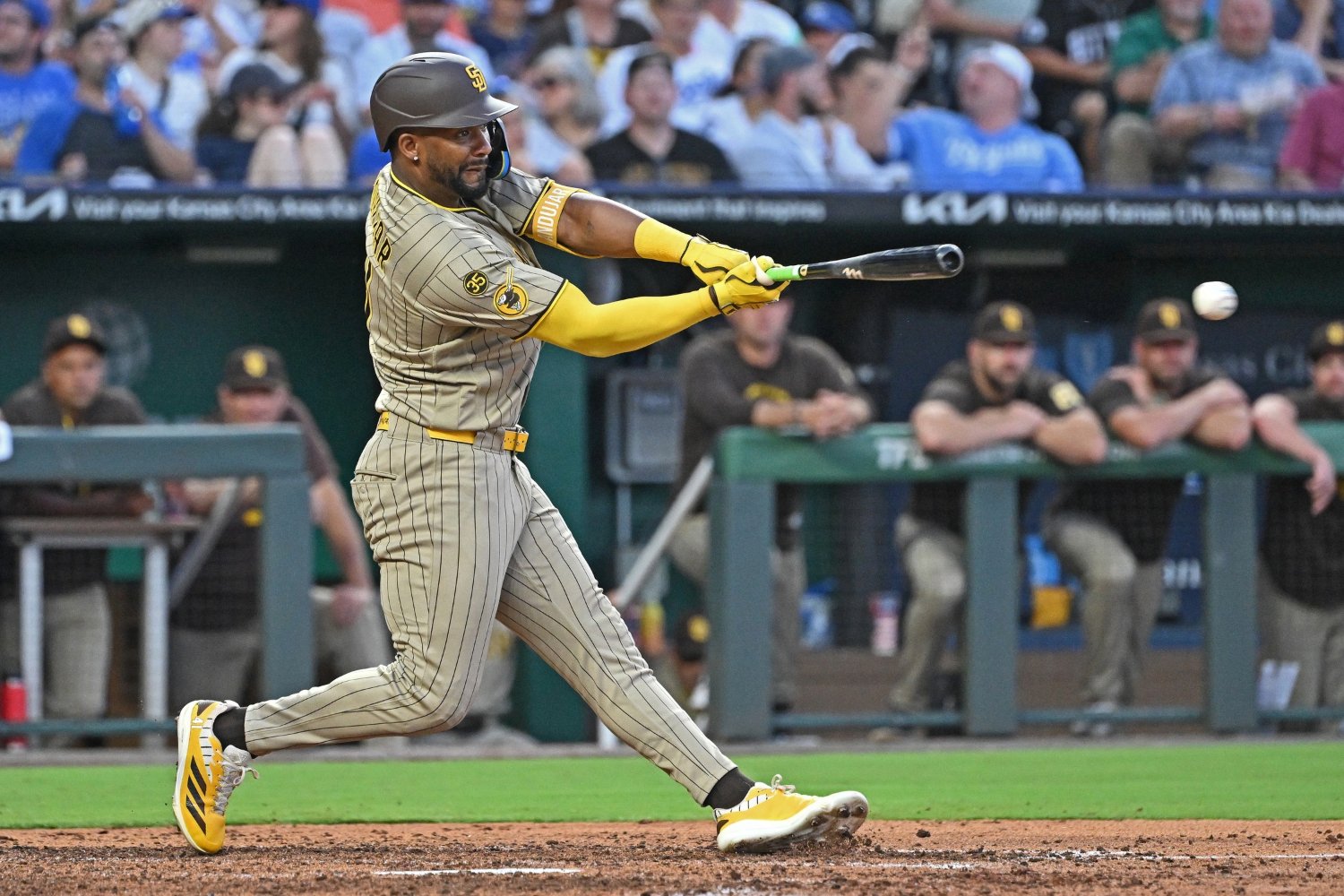 The San Diego Padres are poised to get a couple of regular contributors back into the mix soon. Samad Taylor is on rehab assignment while Miguel Andujar has begun a swinging progression on his way back from a broken wrist. That these two increasingly imminent returns are approaching adds a wrinkle to a roster that already featured another one earlier this week. When the Padres optioned Sung-Mun Song to Triple-A El Paso, they created a roster deficiency in the form of a lack of infield depth. The only supplemental infielder listed on the official roster is Gavin Sheets, who has been used only sparingly at first base for more than a month. Neither of Taylor or Andujar returning changes that calculus; Taylor hasn't appeared on the infield since 2023 and Andujar, while capable of handling an infield corner, is far from an ideal solution beyond the odd appearance once in a blue moon. Which means that the Padres have some additional decisions ahead of them following Song's option. That Taylor is a lock for the roster upon his return speaks to how strong a year he was turning in prior to his stay on the injured list with an oblique injury. He had wRC+'d 135 over a 102 plate appearance sample with six steals courtesy of 93rd percentile sprint speed. Andujar, meanwhile, was always figured to be a key bat as a doubles machine that doesn't strike out a whole lot. Obviously, the expansion of rosters in September does have an impact here. Taylor's return is closer and will likely ignite a decision before we flip the calendar, while Andujar's return could come once there's already more wiggle room with which to work. At the same time, the standard protocol is, generally, a position player and a pitcher get added, bringing the total to 14 each. Many teams are inclined to call up a catcher to provide that position group with a little relief given its intense demand. As such, there's no guarantee that the Padres will use the expansion to answer the questions surrounding the impending roster decisions. Which means that there's a couple of players that could be in danger of losing a roster spot in the coming days or weeks in the way that we just saw Song surrender his. The outfield picture is already particularly crowded, with six players listed on the roster for that position group. Of that group, you have your stars (Fernando Tatis Jr. & Jackson Merrill) and at least one player in Luis Rengifo that appears to have played his way into being a lock for the stretch run on the strength of a 139 wRC+ in the second half (to say nothing of his ability to jump to the infield in a pinch). That leaves Jase Bowen, Austin Hays, and the newly added Dustin Harris as those who could be at risk of finding their way off the roster upon the respective returns of Taylor & Andujar. Bowen has had the longest run on the Padres roster, largely due to his ability to hang in centerfield in Jackson Merrill's stead. Most of his work, though, has come as a late-inning replacement as the team has had to hide his bat as much as possible. His wRC+ is a paltry 32 with a walk rate under three percent against a strikeout rate over 36 percent. There just isn't much offensive upside at present, and the fact that he has options remaining likely means that he'll be the one sent to El Paso first upon the return of the team's two injured players. It's not as if Austin Hays has offered too much certainty either, though. Since his big pinch-hit homer to introduce himself in San Diego, Hays has gone on to hit .250 and reach base at a .308 clip in 24 plate appearances. The fact that he's a right-handed bat more capable of providing power than Taylor, however, could grant him a longer look. He's certain to stick around longer than Bowen, at the very least. Harris has been with the team for the shortest amount of time (two games, seven plate appearances), but was scorching in Triple-A prior to his selection to the roster. He'd slashed a gaudy .350/.422/.617 in 120 plate appearances for the Chihuahuas, which could offer enough intrigue to give him more staying power than even Hays, despite the team's need for a lefty killer off the bench. With Taylor himself a right-handed hitter, they at least wouldn't lose the balance that Hays offers off the bench. Assuming that September is used to recall a catcher or Song, at least two of these names are going to find their way off the roster in the short term. Bowen will, by all accounts, be the first to go. The decision between Hays & Harris isn't going to be an easy one, though, unless one separates himself from the other. Either would have to be designated for assignment and could seek their next bench gig rather than accept an outright assignment back to El Paso. Which means that the Padres have some very real decisions ahead of them as they work to sort out what's left of their outfield-heavy bench in the coming weeks.
 -
On Tuesday, the Cincinnati Reds placed each of third baseman/designated hitter Eugenio Suárez and outfielder TJ Friedl on waivers. This opens up the possibility of a contender fortifying their bench for the stretch run. Should the San Diego Padres be that contender? In general, neither of Suárez or Friedl offer much appeal if we were to look at their 2026 output. Suárez has followed up his 49 home runs last season with only 19 this year, has a 91 wRC+, and is striking out at a 34.9 percent clip that is abnormal even by his standards. Friedl, meanwhile, was ousted as the Reds' starting center fielder earlier this year and has been absolutely miserable at the plate, slashing .158/.242/.234, with a brutal 33 wRC+ and a 23.3 percent strikeout rate that is seven percentage points above his career average. Neither player features much in the way of selling points. But the Padres are also in the process of sorting their bench. At present, the reserve group is especially outfield heavy following the option of Sung Mun Song to Triple-A El paso. That's left Luis Rengifo, Gavin Sheets, Jase Bowen, Austin Hays, and newly-selected Dustin Harris working their way through left field, designated hitter, and as bats off the bench. Samad Taylor is on a rehab assignment while Miguel Andujar has begun a throwing progression, indicating further movement is on the horizon. Whether that movement could be prompted sooner as the result of a claim of either Suárez or Friedl is a question worth asking for at least a moment. Suárez, for all his warts in the contact and strikeout elements of his game, is a legitimate power threat. He's eclipsed 30 home runs three times since 2021. His 10.6 percent barrel rate sits in the 69th percentile, three points above the big-league average. If there's a case to be made, it's here. Despite underwhelming numbers on the season as a whole, Suárez has walked more than usual (10.0 percent) and has been solid in August. As we reach the end of the month, he's contributed five homers and a 134 wRC+ to his full-season output. He's not going to offer much in the way of defensive acumen—even less so because his below average glove has only been seen at third base this year, a position which is quite occupied in San Diego—but as a right-handed option off the bench or as a designated hitter, it's not as if his addition would hurt. With the claiming team being on the hook for nearly $3 million, though, the positional limitation he'd add to the roster would be a difficult one to justify. As for Friedl, it's hard to find a reason for the Padres to put in a claim. He has a history of quality production at the plate as recently as 2025, but he's been quite miserable in every offensive respect this year (even if his defense in the outfield has remained above average). Outfield depth is not at all an area of need for San Diego, meaning that this isn't even one they'd remotely consider. While we're loathe to underestimate A.J. Preller's aggression in upgrading the roster whenever possible, this doesn't appear to be a time where he'll be too active in doing so. View full article
-
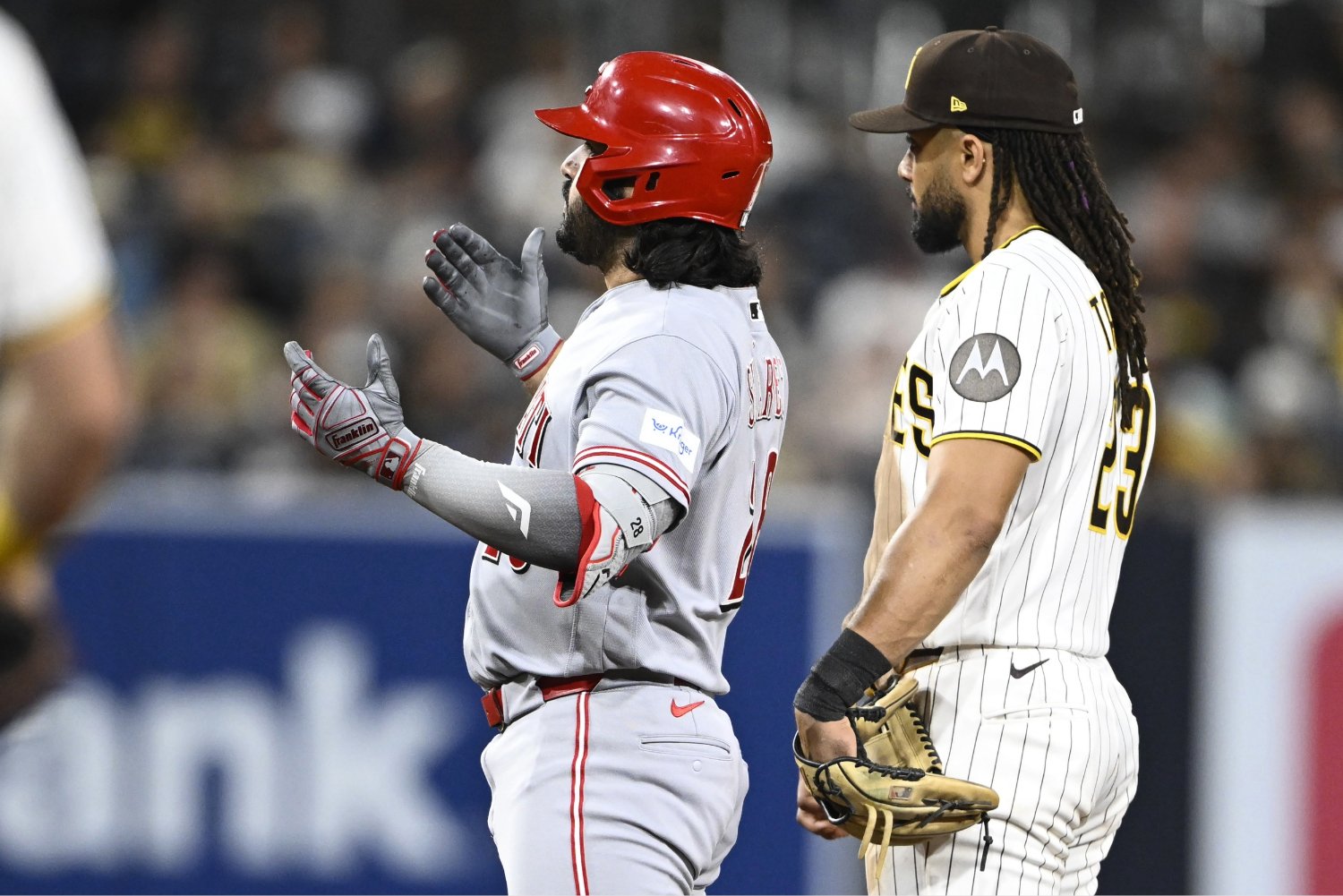 On Tuesday, the Cincinnati Reds placed each of third baseman/designated hitter Eugenio Suárez and outfielder TJ Friedl on waivers. This opens up the possibility of a contender fortifying their bench for the stretch run. Should the San Diego Padres be that contender? In general, neither of Suárez or Friedl offer much appeal if we were to look at their 2026 output. Suárez has followed up his 49 home runs last season with only 19 this year, has a 91 wRC+, and is striking out at a 34.9 percent clip that is abnormal even by his standards. Friedl, meanwhile, was ousted as the Reds' starting center fielder earlier this year and has been absolutely miserable at the plate, slashing .158/.242/.234, with a brutal 33 wRC+ and a 23.3 percent strikeout rate that is seven percentage points above his career average. Neither player features much in the way of selling points. But the Padres are also in the process of sorting their bench. At present, the reserve group is especially outfield heavy following the option of Sung Mun Song to Triple-A El paso. That's left Luis Rengifo, Gavin Sheets, Jase Bowen, Austin Hays, and newly-selected Dustin Harris working their way through left field, designated hitter, and as bats off the bench. Samad Taylor is on a rehab assignment while Miguel Andujar has begun a throwing progression, indicating further movement is on the horizon. Whether that movement could be prompted sooner as the result of a claim of either Suárez or Friedl is a question worth asking for at least a moment. Suárez, for all his warts in the contact and strikeout elements of his game, is a legitimate power threat. He's eclipsed 30 home runs three times since 2021. His 10.6 percent barrel rate sits in the 69th percentile, three points above the big-league average. If there's a case to be made, it's here. Despite underwhelming numbers on the season as a whole, Suárez has walked more than usual (10.0 percent) and has been solid in August. As we reach the end of the month, he's contributed five homers and a 134 wRC+ to his full-season output. He's not going to offer much in the way of defensive acumen—even less so because his below average glove has only been seen at third base this year, a position which is quite occupied in San Diego—but as a right-handed option off the bench or as a designated hitter, it's not as if his addition would hurt. With the claiming team being on the hook for nearly $3 million, though, the positional limitation he'd add to the roster would be a difficult one to justify. As for Friedl, it's hard to find a reason for the Padres to put in a claim. He has a history of quality production at the plate as recently as 2025, but he's been quite miserable in every offensive respect this year (even if his defense in the outfield has remained above average). Outfield depth is not at all an area of need for San Diego, meaning that this isn't even one they'd remotely consider. While we're loathe to underestimate A.J. Preller's aggression in upgrading the roster whenever possible, this doesn't appear to be a time where he'll be too active in doing so.
 -
Earlier this week, the San Diego Padres optioned Sung-Mun Song to Triple-A El Paso. On the surface, it's not a particularly impactful move; Song had struggled to a wRC+ of just 70 across his first 130-ish plate appearances in Major League Baseball. However, the shift it presents to the dynamics of the roster does indicate some questions about where the team's reserve group stands at this point. Aside from Fernando Tatis Jr.'s stint at the keystone during Jake Cronenworth's absence earlier this year, Song had logged the second-most innings at second base this year (28 games). His 16 games at shortstop were also indicative of him serving as the primary backup to Xander Bogaerts at the six. He also saw action a dozen times at third base. In short, Song represented the primary infield backup on this roster. With the former KBO MVP now in El Paso, the active roster features the following names on their infield: Bogaerts, Cronenworth, Manny Machado, Ty France, and Gavin Sheets. That's a starter for each position and a backup first baseman (Sheets) that hasn't appeared in a game there since July 24 (and hasn't started one since July 8). Which means that the rest of the current bench is comprised almost entirely of outfielders. Of course, such a label is a bit misleading. Technically, each of Luis Rengifo and the newly-added Dustin Harris can touch the infield dirt in a way that wouldn't be unusual. However, that's not the way either has been deployed of late. Rengifo moved to third base in a game against the New York Mets on August 19 and had started there on the 16 Since arriving in San Diego, though, he's only been used on the infield a small handful of times (and most of those were as a late-inning replacement following a pinch-hit appearance). That trend comes despite getting regular work at third base when he was with Milwaukee earlier this year. Harris, meanwhile, has a history of corner infield play during his time in the minor leagues but has only appeared on the grass while at the top level. So, while the Padres technically do have flexibility there on paper, it appears that they're not particularly inclined to throw either in an infield spot. Which means that those two, along with Austin Hays and Jase Bowen, are part of a bench comprised almost exclusively of outfielders (along with backup catcher Luis Campusano). It certainly doesn't lend itself to much flexibility. Sure, there's the possibility that Rengifo could begin to get more infield work. Tatis could always jump back to second base on an as-needed basis, with Cronenworth flipping over to short in a scenario where Xander Bogaerts needed a day off. Miguel Andujar has started a swinging progression and could join as a corner infield option, even as one with certain defensive shortcomings. Gage Workman was acquired from Detroit at the deadline and could represent a flexible option as a recall, albeit one with an astronomical strikeout rate. Still, none of this is ideal. The general goal with the bench in its current state is to get supplementary offense as needed, but it could really hamper the team from a defensive standpoint. It also means that the team is going to rely heavily on the health of their regulars in the stretch run. That's hardly a given considering that each of Cronenworth & Bogaerts have had various injury issues over the last couple of seasons, and keeping Machado fresh late in the year has proven to be an annual struggle. Whether or not this actually manifests as a problem for the Padres isn't something we'll actually know until we see it. On paper, their starters across the infield would be expected to log about as much time as any starter on any roster anyway. More than anything, the shift here in sending Song to El Paso results in a loss of flexibility. There are pathways to getting it back with the current group, but none of them are defensively ideal or feature a decent volume of recent positional experience. Ultimately, though, it's difficult to be too concerned about it yet. The highest upside bats are still on the roster from a bench standpoint, and that's where they're most crucial for the Padres. Should any of the infield regulars run into trouble of any sort, however, it'll be interesting to see how the team pivots with no one on the bench equipped to take over on a full-time basis. View full article
-
Sung-Mun Song's Demotion Has Wide-Reaching Impact On Padres' Bench
Randy Holt posted an article in Padres
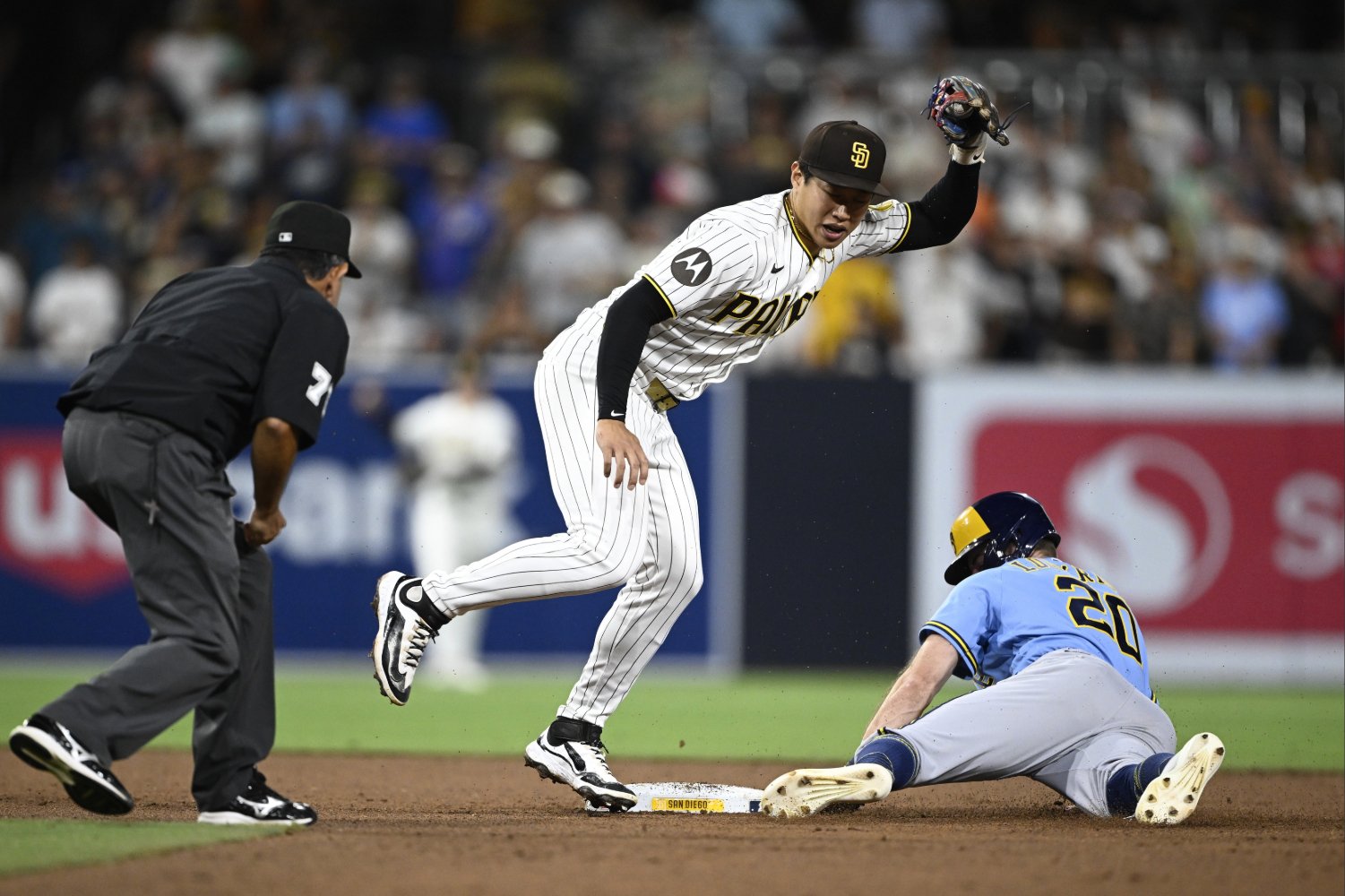 Earlier this week, the San Diego Padres optioned Sung-Mun Song to Triple-A El Paso. On the surface, it's not a particularly impactful move; Song had struggled to a wRC+ of just 70 across his first 130-ish plate appearances in Major League Baseball. However, the shift it presents to the dynamics of the roster does indicate some questions about where the team's reserve group stands at this point. Aside from Fernando Tatis Jr.'s stint at the keystone during Jake Cronenworth's absence earlier this year, Song had logged the second-most innings at second base this year (28 games). His 16 games at shortstop were also indicative of him serving as the primary backup to Xander Bogaerts at the six. He also saw action a dozen times at third base. In short, Song represented the primary infield backup on this roster. With the former KBO MVP now in El Paso, the active roster features the following names on their infield: Bogaerts, Cronenworth, Manny Machado, Ty France, and Gavin Sheets. That's a starter for each position and a backup first baseman (Sheets) that hasn't appeared in a game there since July 24 (and hasn't started one since July 8). Which means that the rest of the current bench is comprised almost entirely of outfielders. Of course, such a label is a bit misleading. Technically, each of Luis Rengifo and the newly-added Dustin Harris can touch the infield dirt in a way that wouldn't be unusual. However, that's not the way either has been deployed of late. Rengifo moved to third base in a game against the New York Mets on August 19 and had started there on the 16 Since arriving in San Diego, though, he's only been used on the infield a small handful of times (and most of those were as a late-inning replacement following a pinch-hit appearance). That trend comes despite getting regular work at third base when he was with Milwaukee earlier this year. Harris, meanwhile, has a history of corner infield play during his time in the minor leagues but has only appeared on the grass while at the top level. So, while the Padres technically do have flexibility there on paper, it appears that they're not particularly inclined to throw either in an infield spot. Which means that those two, along with Austin Hays and Jase Bowen, are part of a bench comprised almost exclusively of outfielders (along with backup catcher Luis Campusano). It certainly doesn't lend itself to much flexibility. Sure, there's the possibility that Rengifo could begin to get more infield work. Tatis could always jump back to second base on an as-needed basis, with Cronenworth flipping over to short in a scenario where Xander Bogaerts needed a day off. Miguel Andujar has started a swinging progression and could join as a corner infield option, even as one with certain defensive shortcomings. Gage Workman was acquired from Detroit at the deadline and could represent a flexible option as a recall, albeit one with an astronomical strikeout rate. Still, none of this is ideal. The general goal with the bench in its current state is to get supplementary offense as needed, but it could really hamper the team from a defensive standpoint. It also means that the team is going to rely heavily on the health of their regulars in the stretch run. That's hardly a given considering that each of Cronenworth & Bogaerts have had various injury issues over the last couple of seasons, and keeping Machado fresh late in the year has proven to be an annual struggle. Whether or not this actually manifests as a problem for the Padres isn't something we'll actually know until we see it. On paper, their starters across the infield would be expected to log about as much time as any starter on any roster anyway. More than anything, the shift here in sending Song to El Paso results in a loss of flexibility. There are pathways to getting it back with the current group, but none of them are defensively ideal or feature a decent volume of recent positional experience. Ultimately, though, it's difficult to be too concerned about it yet. The highest upside bats are still on the roster from a bench standpoint, and that's where they're most crucial for the Padres. Should any of the infield regulars run into trouble of any sort, however, it'll be interesting to see how the team pivots with no one on the bench equipped to take over on a full-time basis.
 -
Ty France's arrival over the offseason wasn't meant to signal a paradigm shift at first base for the San Diego Padres. Yet, with the 2026 campaign nearly over, that's exactly what he's done. Within the context of defensive performance in baseball, first base is a particularly difficult position to evaluate. Every position has nuance, but first base is reliant on other performers in a way that every other position in the sport (besides catcher) is not. While a first baseman can obviously maintain some semblance of control with quality footwork and the ability to read a throw from the hand of an infield comrade, the general lack of individual qualities have long made it a position less loved by defensive metrics. France's offensive contributions have been an essential part of the team's success in 2026, but the most significant aspect of his skill set has come as the result of what he can do with the glove. The American League's reigning Gold Glove winner at the cold corner has helped to stabilize the performance of his fellow infielders while sitting atop the position in Fielding Run Value (7) and Defensive Runs Saved (12) while ranking second in Outs Above Average (6). Now, though, we have new ways in which France's defensive acumen can be measured. Earlier this month, Statcast released their new first base receiving leaderboard. Measured as Receiving OAA, the new metric takes myriad factors into account including the throw itself (on-target, high & low, wide, bounce, and scoop), the speed of the baserunner, and the position of the baserunner when the ball contacts the glove. Each position (second base, third base, and shortstop) also carries its own out probability. Within the throw itself, the differentiator between bounces & scoops (the latter of which was already a measured statistic for first basemen) is in where the ball hits the ground; bounces hit the ball at least 15 feet in front of the bag while scoops are between five and 15 feet. Any other that doesn't fit that criteria is simply considered a low throw, with high throws considered to be at least seven feet off the ground. Here's a handy visual: That is an absolutely wild amount of information to be consumed to measure a position, and that doesn't even take into account the runner component of it all. But that's too much math for any one person to worry about whose responsibility it is to merely look at the output. Which means we can get back to Ty France. France's Receiving OAA in 2026 is +3. That ranks him sixth among full-time first baseman and third among those in the National League. On five of the six types of throws (on-target, low, side, scoop, and bounce) France has recorded a higher rate of outs than the average expected out rate. The only one where he isn't above average is on the high throws, where France has an out rate four percent lower than the expected one and is at -0.4 Receiving OAA. At 5'10", though, France is shorter than your average first baseman. That part is not at all surprising, and perhaps one of the clearest signs we have yet that height does give first basemen a distinct advantage. In other words, the high throws are always going to serve as a literal shortcoming for him. The important thing is that there isn't anything else in this new data to suggest anything other than what we've already been able to observe in 2026: that France has been a crucial part of helping the Padres' defense to ascend to near-elite status. View full article
-
Ty France Is Beloved By Statcast's New First Base Fielding Metrics
Randy Holt posted an article in Padres
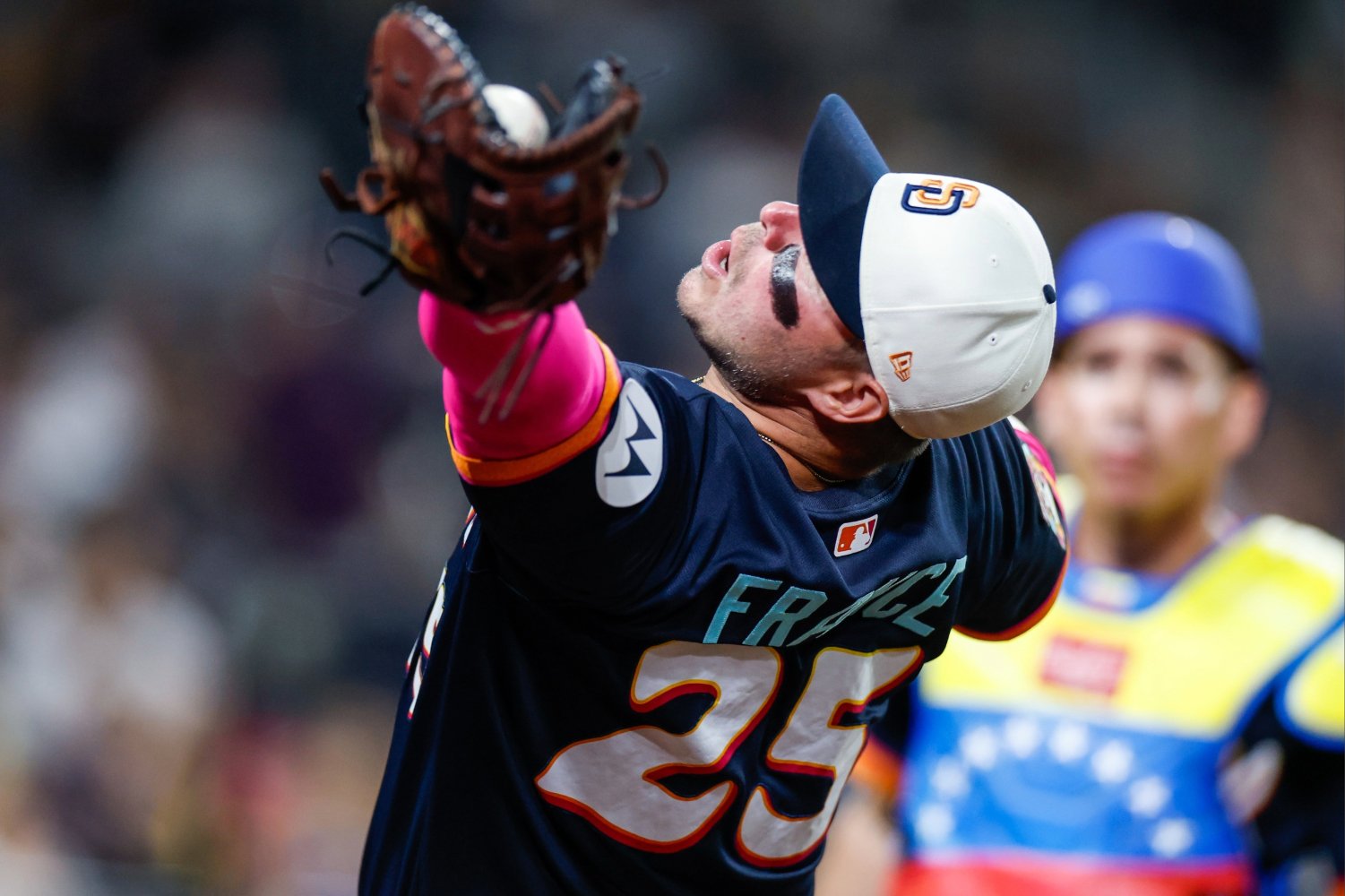 Ty France's arrival over the offseason wasn't meant to signal a paradigm shift at first base for the San Diego Padres. Yet, with the 2026 campaign nearly over, that's exactly what he's done. Within the context of defensive performance in baseball, first base is a particularly difficult position to evaluate. Every position has nuance, but first base is reliant on other performers in a way that every other position in the sport (besides catcher) is not. While a first baseman can obviously maintain some semblance of control with quality footwork and the ability to read a throw from the hand of an infield comrade, the general lack of individual qualities have long made it a position less loved by defensive metrics. France's offensive contributions have been an essential part of the team's success in 2026, but the most significant aspect of his skill set has come as the result of what he can do with the glove. The American League's reigning Gold Glove winner at the cold corner has helped to stabilize the performance of his fellow infielders while sitting atop the position in Fielding Run Value (7) and Defensive Runs Saved (12) while ranking second in Outs Above Average (6). Now, though, we have new ways in which France's defensive acumen can be measured. Earlier this month, Statcast released their new first base receiving leaderboard. Measured as Receiving OAA, the new metric takes myriad factors into account including the throw itself (on-target, high & low, wide, bounce, and scoop), the speed of the baserunner, and the position of the baserunner when the ball contacts the glove. Each position (second base, third base, and shortstop) also carries its own out probability. Within the throw itself, the differentiator between bounces & scoops (the latter of which was already a measured statistic for first basemen) is in where the ball hits the ground; bounces hit the ball at least 15 feet in front of the bag while scoops are between five and 15 feet. Any other that doesn't fit that criteria is simply considered a low throw, with high throws considered to be at least seven feet off the ground. Here's a handy visual: That is an absolutely wild amount of information to be consumed to measure a position, and that doesn't even take into account the runner component of it all. But that's too much math for any one person to worry about whose responsibility it is to merely look at the output. Which means we can get back to Ty France. France's Receiving OAA in 2026 is +3. That ranks him sixth among full-time first baseman and third among those in the National League. On five of the six types of throws (on-target, low, side, scoop, and bounce) France has recorded a higher rate of outs than the average expected out rate. The only one where he isn't above average is on the high throws, where France has an out rate four percent lower than the expected one and is at -0.4 Receiving OAA. At 5'10", though, France is shorter than your average first baseman. That part is not at all surprising, and perhaps one of the clearest signs we have yet that height does give first basemen a distinct advantage. In other words, the high throws are always going to serve as a literal shortcoming for him. The important thing is that there isn't anything else in this new data to suggest anything other than what we've already been able to observe in 2026: that France has been a crucial part of helping the Padres' defense to ascend to near-elite status.
 -
Between the end of the 2025 season and into 2026, Fernando Tatis Jr. went 56 games without hitting a home run. That's nearly 240 times that he stepped to the plate and came away without maximizing the output his skill set indicates should have been there all along. And as the San Diego Padres struggled to find consistent offense, there were legitimate concerns over what his performance could look like extrapolated over a full 162-game slate. Fortunately, Tatis was doing a lot of other things really well. Through the end of May, wRC+ still had him as a below-average hitter (89), but his .266 batting average and .340 on-base percentage, along with a 9.8 percent walk rate. still read as entirely reasonable figures. Without the power element, though, there was an absence of impact from one of the lineup's most essential bats. Compound it with the broader struggles from each of Jackson Merrill & Manny Machado, and the Padres had a real problem on their hands. Then we hit the start of June. It's not just that Tatis' home run power began to manifest more frequently that month—after his first homer on May 30, he was able to add four more in June—it's that the power, in a general sense, began to appear at a much higher rate than we'd seen in some time. In addition to the four homers, he added nine doubles, which exceeded his total of six from the two previous months combined. He did it again in July, when he added three more home runs and seven more doubles (as well as his second triple of the year). When you combine the power, whether in the gap sense or the over-the-outfield-wall sense, with everything else that was going well at the plate, you get the most fully-formed iteration of Fernando Tatis Jr. that we've come to expect. It's left him with a percentile distribution that looks like this in the middle of August: Despite a couple of underlying things that you'd, in an ideal world, like to see improved, that's a setup that has the look of an elite hitter. A ton of hard contact and expected stats indicative of a player feeling good at the plate. What is perhaps most notable about his rise in production since the start of June, however, is how it's left him looking up against his peers across Major League Baseball. Since June 1, Tatis Jr ranks eighth in fWAR among position players at 2.8. His average and on-base percentage each rank in the top 30 of a group that features more than 160 names, while his isolated power (.233) ranks 27th. While that may not be an overly impressive figure in a vacuum, it's still miles ahead from where we saw him earlier in the year. Sitting above the actual production, though, is the fact that only four players carry a hard-hit rate higher than Tatis Jr's 53.7 percent clip in the two-and-a-half-month span. Factor in the increase in flyball contact he's experienced this summer, and you have a player much more capable of providing impact than the mechanically flawed edition we saw earlier in the year. That Fernando Tatis Jr. has ascended not only in terms of his own production, but within the context of his positional counterparts throughout the league, is a welcome sight on its own. A player with that level of upside is one you simply want to see perform at a high level. For the Padres, though, it's been a crucial development. His progression since that early season slog has correlated almost directly with the team's collective run production; since the start of June, the Padres are 15th in runs scored and rank in the top 10 in virtually every other offensive category. Not that he's doing on its own, but it speaks to Tatis' overall impact that the two are aligned as closely as they are. So long as he keeps performing like a superstar, the Padres are as well-positioned as they've been all year to make a legitimate wild-card push in the National League. View full article
-
 Between the end of the 2025 season and into 2026, Fernando Tatis Jr. went 56 games without hitting a home run. That's nearly 240 times that he stepped to the plate and came away without maximizing the output his skill set indicates should have been there all along. And as the San Diego Padres struggled to find consistent offense, there were legitimate concerns over what his performance could look like extrapolated over a full 162-game slate. Fortunately, Tatis was doing a lot of other things really well. Through the end of May, wRC+ still had him as a below-average hitter (89), but his .266 batting average and .340 on-base percentage, along with a 9.8 percent walk rate. still read as entirely reasonable figures. Without the power element, though, there was an absence of impact from one of the lineup's most essential bats. Compound it with the broader struggles from each of Jackson Merrill & Manny Machado, and the Padres had a real problem on their hands. Then we hit the start of June. It's not just that Tatis' home run power began to manifest more frequently that month—after his first homer on May 30, he was able to add four more in June—it's that the power, in a general sense, began to appear at a much higher rate than we'd seen in some time. In addition to the four homers, he added nine doubles, which exceeded his total of six from the two previous months combined. He did it again in July, when he added three more home runs and seven more doubles (as well as his second triple of the year). When you combine the power, whether in the gap sense or the over-the-outfield-wall sense, with everything else that was going well at the plate, you get the most fully-formed iteration of Fernando Tatis Jr. that we've come to expect. It's left him with a percentile distribution that looks like this in the middle of August: Despite a couple of underlying things that you'd, in an ideal world, like to see improved, that's a setup that has the look of an elite hitter. A ton of hard contact and expected stats indicative of a player feeling good at the plate. What is perhaps most notable about his rise in production since the start of June, however, is how it's left him looking up against his peers across Major League Baseball. Since June 1, Tatis Jr ranks eighth in fWAR among position players at 2.8. His average and on-base percentage each rank in the top 30 of a group that features more than 160 names, while his isolated power (.233) ranks 27th. While that may not be an overly impressive figure in a vacuum, it's still miles ahead from where we saw him earlier in the year. Sitting above the actual production, though, is the fact that only four players carry a hard-hit rate higher than Tatis Jr's 53.7 percent clip in the two-and-a-half-month span. Factor in the increase in flyball contact he's experienced this summer, and you have a player much more capable of providing impact than the mechanically flawed edition we saw earlier in the year. That Fernando Tatis Jr. has ascended not only in terms of his own production, but within the context of his positional counterparts throughout the league, is a welcome sight on its own. A player with that level of upside is one you simply want to see perform at a high level. For the Padres, though, it's been a crucial development. His progression since that early season slog has correlated almost directly with the team's collective run production; since the start of June, the Padres are 15th in runs scored and rank in the top 10 in virtually every other offensive category. Not that he's doing on its own, but it speaks to Tatis' overall impact that the two are aligned as closely as they are. So long as he keeps performing like a superstar, the Padres are as well-positioned as they've been all year to make a legitimate wild-card push in the National League.
 -
There was a part of the season early on where it looked like Randy Vásquez wasn't just going to be a factor in the San Diego Padres rotation, but an absolutely crucial element of it. Grabbing one of the team's many rotation spots early in spring camp, Vásquez turned in a 2.94 ERA through March & April before regressing slightly to a still-respectable 3.71 mark in May. He demonstrated proper command between the two months that illustrated growth from the issues that had plagued him earlier in his career, with an 8.0 percent walk rate in the first month that improved to 5.4 percent by the following one. Despite the improved results that came via better control, however, there were some warning signs early on. His inability to generate much on the strikeout side gave way to quality contact, with a hard-hit rate that grew from an already-high 44.4 percent in April to over 46 percent in May. As opposing hitters began to elevate their contact, the triumphant vibe with which Vásquez was working early on began to wane. In June, Vásquez was hit hard. That early steadiness gave way to a skyrocketing 7.84 ERA in June. Opposing hitters hit nearly .370 off of Vásquez while reaching base at a .423 clip. His hard-hit rate against checked in at an even 50.0 percent. Even through the recent improvement to which we will eventually reach in his 2026 chronology, his percentile distribution is a tough watch. Vásquez's last appearance of the month was of the bulk variety, wherein he surrendered seven runs across 3.1 innings of work. He, nevertheless, got a start his next time out in July and was unable to complete four innings after being struck by a comebacker and experiencing a fainting spell on his way to get x-rayed. It was 17 days before we'd see him on the mound again. Such is the nature of the Padres' collection of starting pitchers in 2026 that Vásquez remained an integral part of the staff through those struggles. Upon his return from the injured list, though, three of his final four appearances in July were in relief, with his lone starting stint coming across 2.2 innings as Craig Stammen introduced his "pitching chaos" to avoid any of his starters working too many times through the order. In the subsequent weeks, however, Germán Márquez has been designated for assignment while Griffin Canning has largely lost his grip on any role outside of mop-up duty. That's left Vásquez starting twice in three chances in August, where the results have at least started to trend back toward where he was early in the season. Starting his first two times out and working bulk in the third, Vásquez has worked to a 3.38 ERA this month. That's his best mark since the opening month of the campaign. His walk rate, at 3.3 percent, is his best of the season, while his 3.39 FIP indicates that he's not getting away with a whole lot, either. What's especially crucial is that his hard-hit rate reads just 33.3 percent. That's easily his best avoidance of quality contact this year. A key development has been his change in usage: The three-fastballs concept is nothing new for Vásquez. Nor should we expect any change in usage to have an impact on his characteristically-low strikeout rate. Leaning on the cutter, though, alongside the sinker (and both over the four-seamer) has yielded some really positive results. Most notable is the fact that it's helped him to reestablish some command. He's in the zone nearly 57 percent of the time, features a first-strike rate over 70 percent, and an 18.5 percent called-strike rate. Those are all season highs for an individual month. Factor in the decline in hard contact, and you've got a pitcher capable of contributing in serious fashion down the stretch. Of course, it remains to be seen just how much of a factor Vásquez will actually be as a member of the rotation. With Joe Musgrove's return becoming more imminent by the day, one of Vásquez or Walker Buehler will be pushed out as a result. Given Vásquez's more recent work in relief, he's likely to be the one. But having this version of him on standby as a spot starter or for bulk purposes remains a much more enticing option that it might otherwise have been considering where things stood less than two months ago. View full article
-
 There was a part of the season early on where it looked like Randy Vásquez wasn't just going to be a factor in the San Diego Padres rotation, but an absolutely crucial element of it. Grabbing one of the team's many rotation spots early in spring camp, Vásquez turned in a 2.94 ERA through March & April before regressing slightly to a still-respectable 3.71 mark in May. He demonstrated proper command between the two months that illustrated growth from the issues that had plagued him earlier in his career, with an 8.0 percent walk rate in the first month that improved to 5.4 percent by the following one. Despite the improved results that came via better control, however, there were some warning signs early on. His inability to generate much on the strikeout side gave way to quality contact, with a hard-hit rate that grew from an already-high 44.4 percent in April to over 46 percent in May. As opposing hitters began to elevate their contact, the triumphant vibe with which Vásquez was working early on began to wane. In June, Vásquez was hit hard. That early steadiness gave way to a skyrocketing 7.84 ERA in June. Opposing hitters hit nearly .370 off of Vásquez while reaching base at a .423 clip. His hard-hit rate against checked in at an even 50.0 percent. Even through the recent improvement to which we will eventually reach in his 2026 chronology, his percentile distribution is a tough watch. Vásquez's last appearance of the month was of the bulk variety, wherein he surrendered seven runs across 3.1 innings of work. He, nevertheless, got a start his next time out in July and was unable to complete four innings after being struck by a comebacker and experiencing a fainting spell on his way to get x-rayed. It was 17 days before we'd see him on the mound again. Such is the nature of the Padres' collection of starting pitchers in 2026 that Vásquez remained an integral part of the staff through those struggles. Upon his return from the injured list, though, three of his final four appearances in July were in relief, with his lone starting stint coming across 2.2 innings as Craig Stammen introduced his "pitching chaos" to avoid any of his starters working too many times through the order. In the subsequent weeks, however, Germán Márquez has been designated for assignment while Griffin Canning has largely lost his grip on any role outside of mop-up duty. That's left Vásquez starting twice in three chances in August, where the results have at least started to trend back toward where he was early in the season. Starting his first two times out and working bulk in the third, Vásquez has worked to a 3.38 ERA this month. That's his best mark since the opening month of the campaign. His walk rate, at 3.3 percent, is his best of the season, while his 3.39 FIP indicates that he's not getting away with a whole lot, either. What's especially crucial is that his hard-hit rate reads just 33.3 percent. That's easily his best avoidance of quality contact this year. A key development has been his change in usage: The three-fastballs concept is nothing new for Vásquez. Nor should we expect any change in usage to have an impact on his characteristically-low strikeout rate. Leaning on the cutter, though, alongside the sinker (and both over the four-seamer) has yielded some really positive results. Most notable is the fact that it's helped him to reestablish some command. He's in the zone nearly 57 percent of the time, features a first-strike rate over 70 percent, and an 18.5 percent called-strike rate. Those are all season highs for an individual month. Factor in the decline in hard contact, and you've got a pitcher capable of contributing in serious fashion down the stretch. Of course, it remains to be seen just how much of a factor Vásquez will actually be as a member of the rotation. With Joe Musgrove's return becoming more imminent by the day, one of Vásquez or Walker Buehler will be pushed out as a result. Given Vásquez's more recent work in relief, he's likely to be the one. But having this version of him on standby as a spot starter or for bulk purposes remains a much more enticing option that it might otherwise have been considering where things stood less than two months ago.
 -
Throughout the 2026 season, there have been two stable truths about the San Diego Padres. The first is that they boast one of the league's best corps of relief pitchers. The other is that they are one of the most improved defensive teams from a year-to-year standpoint. We've given a lot of love to the former all year long; now, it's time to laud the latter. Last year's Padres were a below average defensive team, a label to which which no position group was especially immune. Their Fielding Run Value as a collective was -9, which had them 19th in Major League Baseball. Few regulars were able to avoid to such downtrodden defensive performance; each of Jake Cronenworth (-2 FRV), Gavin Sheets (-3), Manny Machado (-4), and Luis Arráez (-11) played out the full season with the team and contributed to the pinned-down metric. Even using Outs Above Average bumps only Cronenworth up to merely average status (0) and leaves the rest well below the threshold. On the other side of the coin, Fernando Tatis Jr. (9), Xander Bogaerts (6), and Jackson Merrill (5) excelled in the FRV game, contributing a range element that the defense sorely lacked. In the case of Tatis & Merrill, their arms each played heavily into their quality FRV figures, while Bogaerts was left slightly behind in that regard. Regardless, this was a team that was in need of defensive growth ahead of 2026, especially up against the shambles of a rotation that was held together by various forms of duct tape and non-guaranteed contracts. While that pitching staff hasn't entirely held up its end of the bargain throughout the season, the defense certainly has. In fact, the Padres are one of only three teams in baseball to turn in above-average glove work in 2026 after falling below the average threshold (by FRV) in 2025. The difference, however, lies in how significant the difference has been. While the Tampa Bay Rays & Chicago White Sox have each taken steps to dramatically improve their own defensive situations (Tampa Bay was at -39 last year & the Sox were at -38), the Padres are the only one of the trio to go from below-average defensively to one of the game's best. The Rays are at +1 FRV in 2026 while the White Sox are at +5. They've each certainly got their act together, but in a way that merely scratches above the league mean. San Diego, meanwhile, has ascended up to the status of a top-five defensive club at +20 FRV for the season thus far. There are myriad reasons for that. A full season of Freddy Fermin behind the plate; Ty France stabilizing the infield as the team's regular first baseman; Manny Machado has clawed back to his prior status as an above-average defender. It's the outfield defense, though, that is really carrying the Padres to these new defensive heights. His short stint at second base earlier this year aside, Fernando Tatis Jr. continues to serve as one of the premier players on the outfield grass. A smaller sample of innings has him at only +2 FRV for the season, but he's also doing things like this: At the same time, Jackson Merrill has been extraordinary in working adjacent to Tatis. Despite his offensive struggles for much of the year, Merrill's defense has been as good as ever. His +9 FRV is the fifth-best figure for outfielders, with nearly half of that being attributed to his arm. No other outfielder has garnered more FRV love for throwing the baseball than Jackson Merrill has in 2026. The combination of those two alone has helped the outfield to rank eighth in FRV for the league's outfield groups. And that's without left field being at all sorted. Nine different players have assumed the left field post in 2026, largely due to the fact that Ramón Laureano hasn't appeared in a game since early June. The issue there is that it's been mostly a collection of utility players whose skill sets tend to play better on the infield. That's led to a much more pedestrian -1 FRV for the position, with Laureano the only one of the group to post a mark deemed above average. Even if some of those utility players (namely, Luis Rengifo and Gavin Sheets) have managed to occasionally compensate for defensive shortcomings with their bats, left field does remain the shortcoming of an otherwise top-tier group. They're certainly not doing it alone given the improvement elsewhere, but it's become clear that between Merrill & Tatis, the Padres working with one of the best defensive outfields in the game. It's been a large part of what has catapulted them up the league rankings in their defensive performance, and the value of that in the midst of a wild-card chase with a still-in-question rotation cannot be overstated. View full article
