


Randy Holt
-
Posts
486 -
Joined
-
Last visited
-
Days Won
6
Content Type
Profiles
San Diego Padres Videos
2026 San Diego Padres Top Prospects Ranking
San Diego Padres Free Agent & Trade Rumors, Notes, & Tidbits
Guides & Resources
2025 San Diego Padres Draft Pick Tracker
News
2026 San Diego Padres Draft Tracker: Picks & Bonuses
Forums
Blogs
Events
Store
Downloads
Gallery
Everything posted by Randy Holt
-
There has been no shortage of weird and/or frustrating storylines for the San Diego Padres in 2026. Exceeding almost all of them, though, was the perplexing manner of Fernando Tatis Jr.'s early season power outage. It wasn't that Tatis was slumping across April and May. In fact, he was quite good. His batting average ran at .250 and .284 each month, respectively, while reaching base at rates of .323 and .360 over that span. Even better was the fact that he progressively cut down his strikeout rate between the two, maintained a walk rate over nine percent, and was a contributor on the basepaths. Of course, the broader narrative centered around the fact that, within all of that, his power was nowhere to be found. In the season's opening month, Tatis Jr's isolated power number read just .036. He followed that up with a .069 mark in May. As far as the raw count goes, he had four extra-base hits in March/April and three in May. Most notable was the fact that he went more than 50 games and well over 200 plate appearances before his first home run of the season, which occurred in May 30. That's two months of no long balls for the Padres hitter with the highest upside and a track record of upper-tier offensive performance. Theories abounded for what was causing such a stifling of the power side of his game. Most of them centered around something mechanical, notably in the form of timing or his swing path. The quality of contact was there all season, but the results didn't follow in terms of the impact. Until June and now into July. Tatis' more comprehensive skill set has continued to manifest over these last two months. His line included a .318 average & .356 on-base percentage in June and a .265 average & .365 OBP thus far in July. The power, however, is what has been particularly notable. After a minimal output on the ISO side in the first two months, Tatis Jr saw that figure climb to .191 in June. It's at .193 this month, highlighted by the longest home run in Major League Baseball in 2026 last week. A 27-degree launch angle, 111 MPH off the bat with a bat speed of 82.2 MPH culminating in 474 feet of power. Tatis appears to be back in a real John Wick sort of way. That's just the latest example, though, as Tatis' raw numbers featured nine doubles and four homers in June before his nine extra-base hits in July so far. Which means that after eight total extra-base hits spread across the first two months, he's more than doubled it since. With such a turnaround in this facet of his game, there are obviously going to be some embedded mechanical tweaks. For Tatis, the most notable ones have come in the form of his footwork. This is his stance through the end of May: And this is Tatis in June and through the first three weeks of July: The change is apparent in that his stance has become something much more akin to what we've seen from him in previous seasons with the open stance. So it's no surprise that his pull rate is up near 50 percent (49.1) in July after lingering in the low-30s in May & June. In addition to opening back up, Tatis has adjusted his swing path. Through the end of April, his attack angle was six degrees, rising to seven by the end of May. In these last two months, it's up at eight. His rate of an ideal attack angle has risen about eight percent between those two-month splits, resting at 59.5 percent in the latter half of the season so far. His bat speed is also up between each segment, rising from 74.5 MPH in the first two months to 76.8 MPH in the latter two. We know that Pull-AIR% has become a crucial component for hitters to generate power. Tatis' 7.8 percent rate in that regard was the Padres' worst through the end of May. It's at 11.1 percent since the start of June. That hasn't put him into elite company by any means, but it's not as if the launch angle itself has seen a dramatic steepening, either. This is all about margins. Tatis has been a very good hitter in 2026. He's just had to do his damage more methodically thanks to a power outage. His mechanics early sacrificed nearly all of the power for the sake of line drive contact. It was an overcorrection with an unknown origin. The changes we're seeing got him opened up and just level enough to begin tapping into more regular power. It's the slight changes across his attack angle and bat speed that have allowed him to rediscover elements of his power without the expense of everything else he was doing well. The line-drive hitter is still there in between the manifestation of impact contact, but that also shouldn't be looked upon as a negative either. Instead, we're looking at a player who made just enough of an adjustment to continue his crucial role as a top-of-the-order hitter capable of hitting or walking his way on base for (in an ideal world) the other drivers of the offense coming up behind him, especially when you factor in his baserunning prowess. This is the purest form of Fernando Tatis Jr. The exceptional hitter and threat on the bases capable of extreme power when the opportunity presents itself. As the Padres attempt to remain afloat in the National League playoff picture, it couldn't have come at a more ideal time. View full article
-
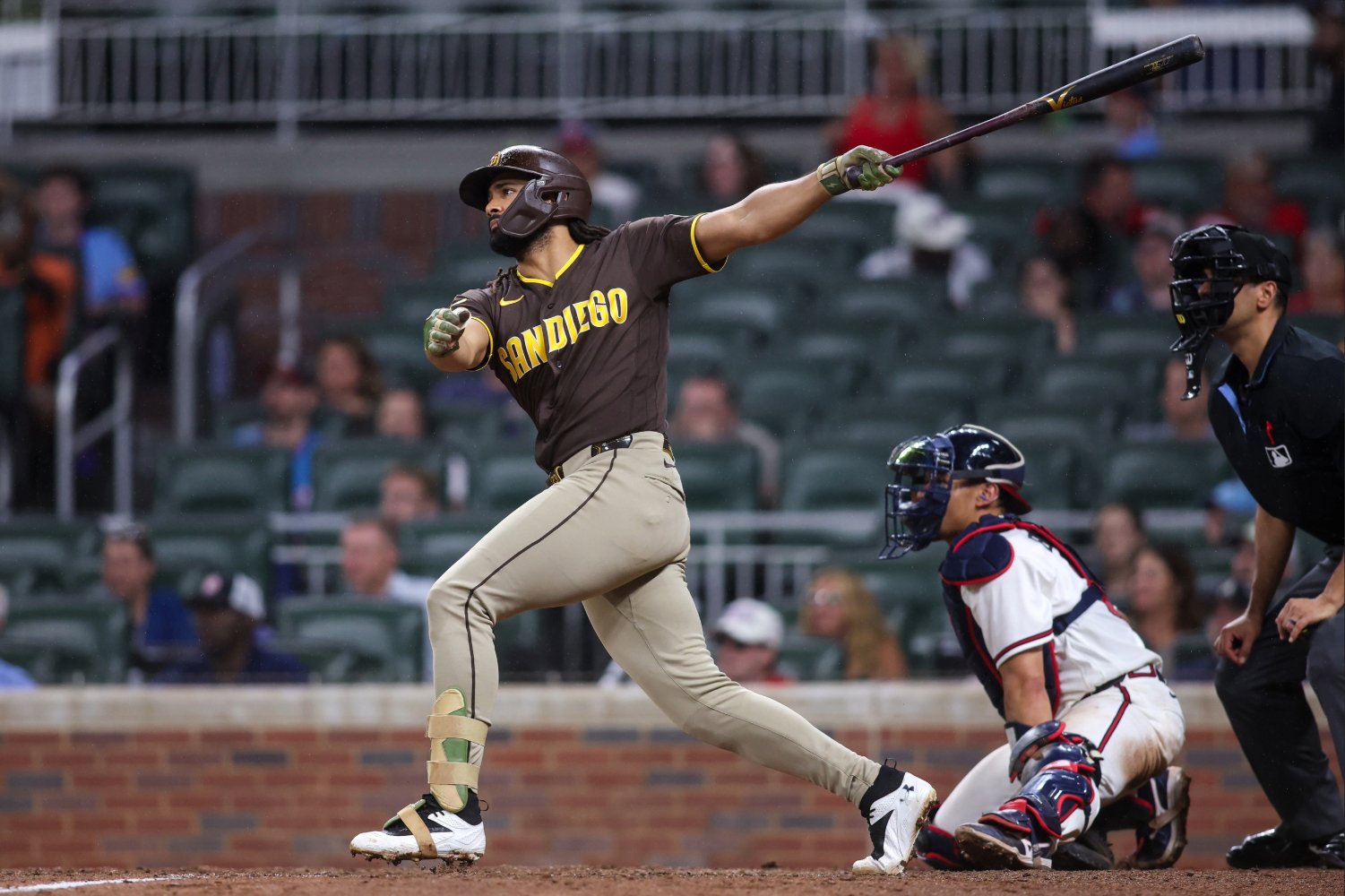 There has been no shortage of weird and/or frustrating storylines for the San Diego Padres in 2026. Exceeding almost all of them, though, was the perplexing manner of Fernando Tatis Jr.'s early season power outage. It wasn't that Tatis was slumping across April and May. In fact, he was quite good. His batting average ran at .250 and .284 each month, respectively, while reaching base at rates of .323 and .360 over that span. Even better was the fact that he progressively cut down his strikeout rate between the two, maintained a walk rate over nine percent, and was a contributor on the basepaths. Of course, the broader narrative centered around the fact that, within all of that, his power was nowhere to be found. In the season's opening month, Tatis Jr's isolated power number read just .036. He followed that up with a .069 mark in May. As far as the raw count goes, he had four extra-base hits in March/April and three in May. Most notable was the fact that he went more than 50 games and well over 200 plate appearances before his first home run of the season, which occurred in May 30. That's two months of no long balls for the Padres hitter with the highest upside and a track record of upper-tier offensive performance. Theories abounded for what was causing such a stifling of the power side of his game. Most of them centered around something mechanical, notably in the form of timing or his swing path. The quality of contact was there all season, but the results didn't follow in terms of the impact. Until June and now into July. Tatis' more comprehensive skill set has continued to manifest over these last two months. His line included a .318 average & .356 on-base percentage in June and a .265 average & .365 OBP thus far in July. The power, however, is what has been particularly notable. After a minimal output on the ISO side in the first two months, Tatis Jr saw that figure climb to .191 in June. It's at .193 this month, highlighted by the longest home run in Major League Baseball in 2026 last week. A 27-degree launch angle, 111 MPH off the bat with a bat speed of 82.2 MPH culminating in 474 feet of power. Tatis appears to be back in a real John Wick sort of way. That's just the latest example, though, as Tatis' raw numbers featured nine doubles and four homers in June before his nine extra-base hits in July so far. Which means that after eight total extra-base hits spread across the first two months, he's more than doubled it since. With such a turnaround in this facet of his game, there are obviously going to be some embedded mechanical tweaks. For Tatis, the most notable ones have come in the form of his footwork. This is his stance through the end of May: And this is Tatis in June and through the first three weeks of July: The change is apparent in that his stance has become something much more akin to what we've seen from him in previous seasons with the open stance. So it's no surprise that his pull rate is up near 50 percent (49.1) in July after lingering in the low-30s in May & June. In addition to opening back up, Tatis has adjusted his swing path. Through the end of April, his attack angle was six degrees, rising to seven by the end of May. In these last two months, it's up at eight. His rate of an ideal attack angle has risen about eight percent between those two-month splits, resting at 59.5 percent in the latter half of the season so far. His bat speed is also up between each segment, rising from 74.5 MPH in the first two months to 76.8 MPH in the latter two. We know that Pull-AIR% has become a crucial component for hitters to generate power. Tatis' 7.8 percent rate in that regard was the Padres' worst through the end of May. It's at 11.1 percent since the start of June. That hasn't put him into elite company by any means, but it's not as if the launch angle itself has seen a dramatic steepening, either. This is all about margins. Tatis has been a very good hitter in 2026. He's just had to do his damage more methodically thanks to a power outage. His mechanics early sacrificed nearly all of the power for the sake of line drive contact. It was an overcorrection with an unknown origin. The changes we're seeing got him opened up and just level enough to begin tapping into more regular power. It's the slight changes across his attack angle and bat speed that have allowed him to rediscover elements of his power without the expense of everything else he was doing well. The line-drive hitter is still there in between the manifestation of impact contact, but that also shouldn't be looked upon as a negative either. Instead, we're looking at a player who made just enough of an adjustment to continue his crucial role as a top-of-the-order hitter capable of hitting or walking his way on base for (in an ideal world) the other drivers of the offense coming up behind him, especially when you factor in his baserunning prowess. This is the purest form of Fernando Tatis Jr. The exceptional hitter and threat on the bases capable of extreme power when the opportunity presents itself. As the Padres attempt to remain afloat in the National League playoff picture, it couldn't have come at a more ideal time.
 -
When the San Diego Padres signed Gavin Sheets ahead of the 2025 season, it was as a non-guaranteed flier. Those kind of things tend to happen when you underperform over multiple years with a woeful Chicago White Sox club. When the White Sox non-tendered Sheets following the 2024 season, the two parties were in very different spots. Sheets impressed across a 179 plate appearances cup of coffee back in 2021, posting a .250/.324/.506 line and 123 wRC+ for a team that won the American League Central. His performance began to wane a bit in 2022, as he fell just under the average threshold by way of wRC+ (99), and it tailed off entirely over the next two seasons as Sheets and the Sox fell to the depths of the league in rather historic fashion. For their part, the Sox have ascended back to relevance here in 2026. Sheets, however, didn't need to wait as long. Upon his departure from the South Side, he landed in San Diego for a team starved for any supplementary bats they could find ahead of last season. The returns there were solid. In his first season with the Padres, Sheets went for a .252/.317/.429 line. His wRC+ was back up at 111 while his .177 ISO was his best power output since that initial call-up in Chicago. There was something of an evolution that occurred as he adjusted to his new surroundings, too. After striking out more than 26 percent of the time in the opening month of 2025, Sheets progressively improved his ability to make contact throughout the year. He maxed out on output in August when he hit over .400, managed a strikeout rate under 18 percent, and ISO'd a gaudy .333. That, of course, came over a somewhat smaller sample (51 PA) due to injury, so it was unreasonable to expect that iteration of Sheets to carry over into 2026. The total body of work, though, is what's carried between seasons. These last two years have given us some clarity as to the type of player that Sheets actually is. His last two seasons in Chicago were indicative of a player struggling to generate any level of consistency in the power game, which was a perception that didn't lend itself to much merit given his stature (6'3", 235 lbs). While his overall ability to make contact never really waned, his ability to make it of a certain quality definitely did, with a great deal of inconsistency in his overall swing trends. As that evolution manifested over 2025, the continued sample we've gained in 2026 has given us a firm picture of who Gavin Sheets is as a hitter. Sheets' .217/.318/.408 line is somewhat deceptive given a .242 batting average on balls in play that is ahead of only his 2023 campaign as the lowest of his career. Even through that, he remains an above average hitter by wRC+ (105), with a 21.6 percent strikeout rate that falls in line with his career norm and an 11.7 percent walk rate that sits above it. What's important is that everything we saw at his heights as 2025 progressed has stabilized, if not improved altogether. Despite the poor batted ball fortune, Sheets has been doing virtually everything right. His swing rate in each of his two seasons in San Diego has been the lowest of his career, and his contact rate (81.4 percent) in 2026 sits as a career best. His quality-of-contact rates with the Padres have been at their best since that 2021 season, with a 46.5 Hard-Hit% in 2025 and a 40.4 percent mark this season. What's rather beautiful about all of this is that this clarity we've gained around Sheets has emerged because of the simplicity of his offensive game. Sheets isn't a player that actively seeks out power at the expense of everything else. Instead, he has a quietly effective approach that helps to stabilize him as an on-base presence in between bouts of impact contact. His overall contact ability is deceptive for a player of his profile, too. The noise around him might be a whole lot louder were it now for the run of bad luck he's experienced on the BABIP side of things this year. That steadiness is an element that goes a bit overlooked on a team like the Padres that feature so much streakiness embedded into their offensive approach. Sure, you'd like the output to be better, but it's also clear that's not entirely the fault of Sheets and his run up against bad luck. Stability can be an undervalued trait in a hitter, and the way we've watched Sheets adjust from his aggressive self at the outset of his Friars tenure into a patient, calculated hitter is an encouraging tale for a team seemingly reliant on star power. View full article
-
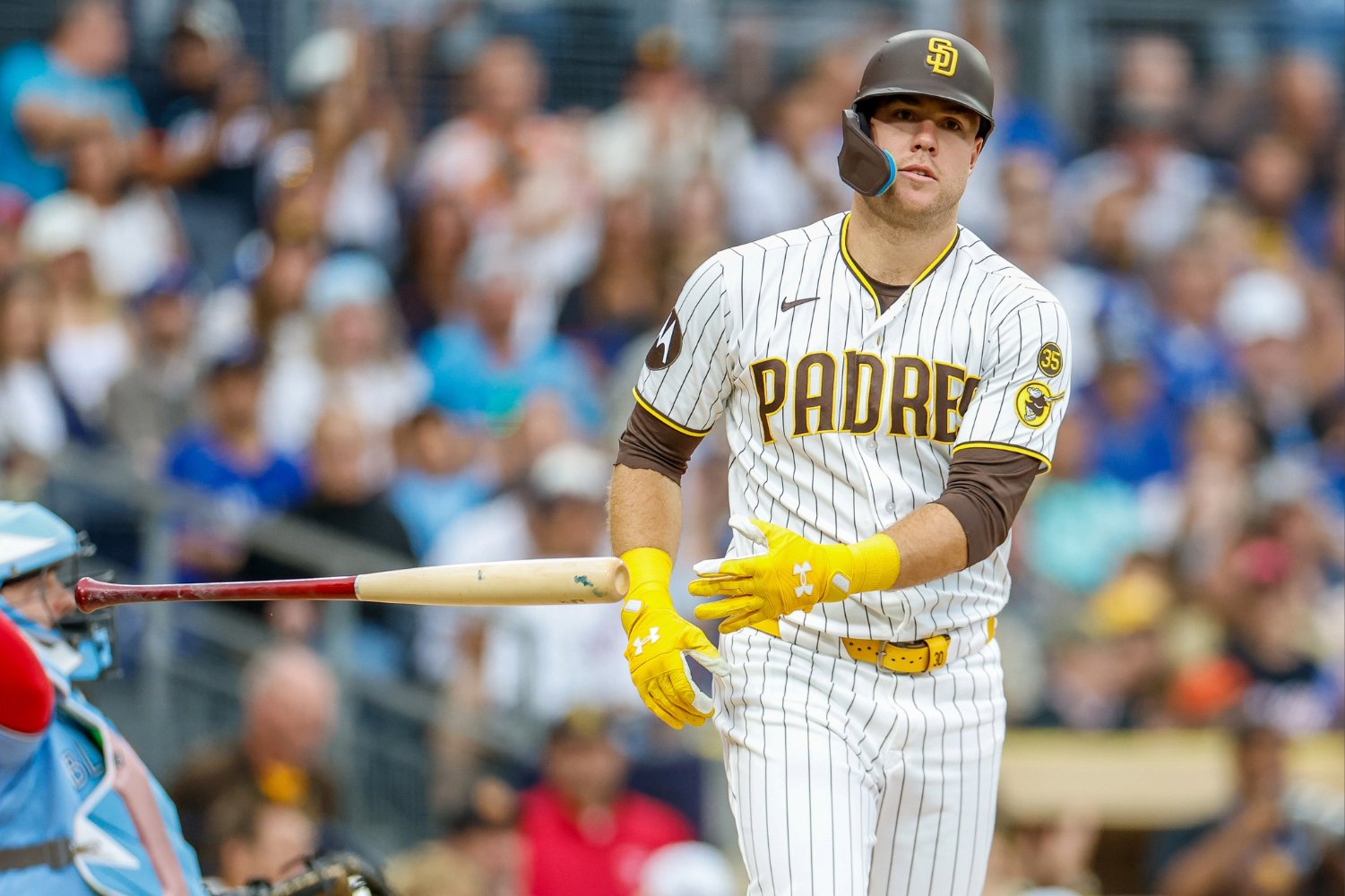 When the San Diego Padres signed Gavin Sheets ahead of the 2025 season, it was as a non-guaranteed flier. Those kind of things tend to happen when you underperform over multiple years with a woeful Chicago White Sox club. When the White Sox non-tendered Sheets following the 2024 season, the two parties were in very different spots. Sheets impressed across a 179 plate appearances cup of coffee back in 2021, posting a .250/.324/.506 line and 123 wRC+ for a team that won the American League Central. His performance began to wane a bit in 2022, as he fell just under the average threshold by way of wRC+ (99), and it tailed off entirely over the next two seasons as Sheets and the Sox fell to the depths of the league in rather historic fashion. For their part, the Sox have ascended back to relevance here in 2026. Sheets, however, didn't need to wait as long. Upon his departure from the South Side, he landed in San Diego for a team starved for any supplementary bats they could find ahead of last season. The returns there were solid. In his first season with the Padres, Sheets went for a .252/.317/.429 line. His wRC+ was back up at 111 while his .177 ISO was his best power output since that initial call-up in Chicago. There was something of an evolution that occurred as he adjusted to his new surroundings, too. After striking out more than 26 percent of the time in the opening month of 2025, Sheets progressively improved his ability to make contact throughout the year. He maxed out on output in August when he hit over .400, managed a strikeout rate under 18 percent, and ISO'd a gaudy .333. That, of course, came over a somewhat smaller sample (51 PA) due to injury, so it was unreasonable to expect that iteration of Sheets to carry over into 2026. The total body of work, though, is what's carried between seasons. These last two years have given us some clarity as to the type of player that Sheets actually is. His last two seasons in Chicago were indicative of a player struggling to generate any level of consistency in the power game, which was a perception that didn't lend itself to much merit given his stature (6'3", 235 lbs). While his overall ability to make contact never really waned, his ability to make it of a certain quality definitely did, with a great deal of inconsistency in his overall swing trends. As that evolution manifested over 2025, the continued sample we've gained in 2026 has given us a firm picture of who Gavin Sheets is as a hitter. Sheets' .217/.318/.408 line is somewhat deceptive given a .242 batting average on balls in play that is ahead of only his 2023 campaign as the lowest of his career. Even through that, he remains an above average hitter by wRC+ (105), with a 21.6 percent strikeout rate that falls in line with his career norm and an 11.7 percent walk rate that sits above it. What's important is that everything we saw at his heights as 2025 progressed has stabilized, if not improved altogether. Despite the poor batted ball fortune, Sheets has been doing virtually everything right. His swing rate in each of his two seasons in San Diego has been the lowest of his career, and his contact rate (81.4 percent) in 2026 sits as a career best. His quality-of-contact rates with the Padres have been at their best since that 2021 season, with a 46.5 Hard-Hit% in 2025 and a 40.4 percent mark this season. What's rather beautiful about all of this is that this clarity we've gained around Sheets has emerged because of the simplicity of his offensive game. Sheets isn't a player that actively seeks out power at the expense of everything else. Instead, he has a quietly effective approach that helps to stabilize him as an on-base presence in between bouts of impact contact. His overall contact ability is deceptive for a player of his profile, too. The noise around him might be a whole lot louder were it now for the run of bad luck he's experienced on the BABIP side of things this year. That steadiness is an element that goes a bit overlooked on a team like the Padres that feature so much streakiness embedded into their offensive approach. Sure, you'd like the output to be better, but it's also clear that's not entirely the fault of Sheets and his run up against bad luck. Stability can be an undervalued trait in a hitter, and the way we've watched Sheets adjust from his aggressive self at the outset of his Friars tenure into a patient, calculated hitter is an encouraging tale for a team seemingly reliant on star power.
 -
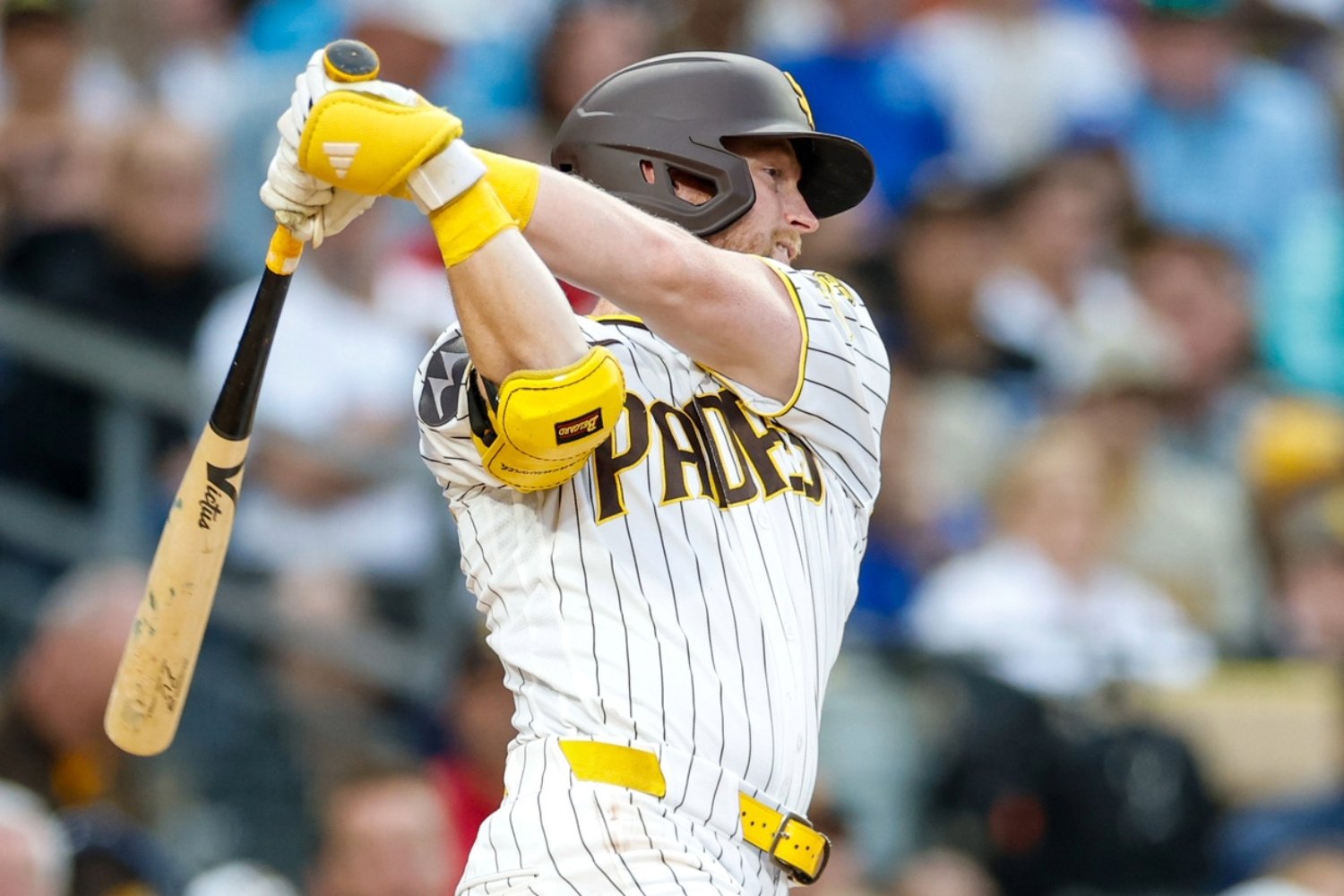 It'd be easy to look at the season of Jake Cronenworth and not walk away with anything of note. Such is life when you've missed two months of the year while residing on the concussion-related injured list. However, the early returns upon his, well, return are encouraging for a San Diego Padres team in need of any secondary contributions they can find on offense. Cronenworth's numbers on the season aren't anything terrific. He's running a .204/.291/.290 line and a 69 wRC+. His strikeout rate is up a touch (22.4 percent), and his walk rate is down a bit (9.3 percent) from their usual standards. The reality, though, is that much of that production is being dragged down by his performance early in the season. Since his return to action, he's done just enough to become interesting again. Prior to his lengthy IL stint, Cronenworth was struggling. In March & April, he was hitting only .146 and reaching base at a .276 clip. There was very little power to speak of either, as his .056 isolated power was ahead of only Fernando Tatis Jr. as the team's worst over that stretch. The approach that has become so typical of Cronenworth was still there, as he walked more than 13 percent of the time, but had very little else to offer the collective over that stretch. Over the next two months, Cronenworth would log only an even dozen trips to the plate. He was sent to the IL in early May and didn't return until nearly the last day of June. What's transpired since his return here in July has been quite interesting. Now healthy again, Cronenworth has slashed .292/.324/.431. His wRC+ is back to that of an above-average hitter for the month, at 111. Despite fewer plate appearances than he had in March & April, he's already eclipsed his total number of extra-base hits, with three doubles and a pair of home runs. What's particularly interesting about Cronenworth over this stretch, though, is the way his plate appearances have unfolded, which run a bit in contrast to the player we're accustomed to seeing. Across nearly 70 plate appearances since returning, Cronenworth has walked only three times. That's a 4.3 percent walk rate. Meanwhile, he's struck out more than 26 percent of the time. There's a level of aggression here that we're simply not used to over these last few years of watching Cronenworth. In July, his swing rate is nearly 52 percent. That's eight points higher than his rate from the season's first month and well above any mark he posted in an individual month in either 2024 or 2025. To some extent, it's come at the expense of his ability to make contact, with a 25.2 percent whiff rate that's roughly the same as it was in March & April of 2026 but certainly higher than anything we've seen in either of the last two seasons. It's possible that shouldn't be looked at as a complete negative, however. Cronenworth's bat speed is up quite a bit here in 2026. A 72.1 MPH average swing speed is well above any number he's posted since 2023. His attack angle has become just a bit steeper (eight degrees), and his rate of ideal attack angle (38.5 percent) has come up along with it. Those are positive trends for a player trying to get back to the more regular power output he showcased early in his career. The important thing for Cronenworth moving forward, as a result, is a discovery of balance. The jury is still out on Steven Souza Jr. as a hitting coach, but we know that one of his initiatives was to get bat speed up. However, that also cannot come at the expense of discipline. Especially for a player like Cronenworth, whose power is already of a more modest flavor to begin with. Don't get it twisted, though: this is an encouraging step. One primary factor holding Cronenworth back the last few years has been his inability to get the ball in the air in a more impactful fashion. A steeper, harder swing is going to help him do that. However, the balance needs to be there. It can't come at the expense of his approach at the plate, which allows him to be a regular pedestrian on the basepaths. He's showing us another dynamic of his skill set, but now needs to marry the patience and the increased power. If he can manage that, we could get back to the version of Cronenworth that the team felt warranted a lengthy contract just a few years ago.
 -
It'd be easy to look at the season of Jake Cronenworth and not walk away with anything of note. Such is life when you've missed two months of the year while residing on the concussion-related injured list. However, the early returns upon his, well, return are encouraging for a San Diego Padres team in need of any secondary contributions they can find on offense. Cronenworth's numbers on the season aren't anything terrific. He's running at a .196/.287/.278 line and a 65 wRC+. His strikeout rate is up a touch (21.8 percent), and his walk rate is down a bit (9.5 percent) from their usual lines. He hasn't logged enough time to qualify or feature percentile rankings on Statcast. The reality, though, is that much of that production is being dragged down by his performance early in the season. Since his return to action, he's done just enough to become interesting again. Prior to his lengthy IL stint, Cronenworth was struggling. In March & April, he was hitting only .146 and reaching base at a .276 clip. There was very little power to speak of either, as his .056 isolated power was ahead of only Fernando Tatis Jr. as the team's worst over that stretch. The approach that has become so typical of Cronenworth was still there, as he walked more than 13 percent of the time, but had very little else to offer the collective over that stretch. Over the next two months, Cronenworth would log only an even dozen trips to the plate. He was sent to the IL in early May and didn't return until nearly the last day of June. What's transpired since his return here in July has been quite interesting. Now healthy again, Cronenworth has slashed .296/.309/.444. His wRC+ is back to that of an above-average hitter for the month, at 109. Despite more than 30 fewer plate appearances than he had in March & April, he's already eclipsed his total number of extra-base hits, with a pair each of doubles and home runs. What's particularly interesting about Cronenworth over this stretch, though, is the way his plate appearances have unfolded, which run a bit in contrast to the player we're accustomed to seeing. Across more than 50 plate appearances this month, Cronenworth has walked only once. That's a 1.8 percent walk rate. Meanwhile, he's struck out more than 25 percent of the time. There's an aggression here that we're simply not used to over these last few years of watching Cronenworth. In July, his swing rate is nearly 52 percent. That's eight points higher than his rate from the season's first month and well above any mark he posted in an individual month in either 2024 or 2025. To some extent, it's come at the expense of his ability to make contact, with a 25.2 percent whiff rate that's roughly the same as it was in March & April of 2026 but certainly higher than anything we've seen in either of the last two seasons. It's possible that shouldn't be looked at as a complete negative, however. Cronenworth's bat speed is up quite a bit here in 2026. A 72.1 MPH average swing speed is well above any number he's posted since 2023. His attack angle has become just a bit steeper (eight degrees), and his rate of ideal attack angle (38.5 percent) has come up along with it. Those are positive trends for a player trying to get back to the more regular power output he showcased early in his career. The important thing for Cronenworth moving forward, as a result, is a discovery of balance. The jury is still out on Steven Souza Jr as a hitting coach, but we know that one of his initiatives was to get bat speed up. However, that also cannot come at the expense of discipline. Especially for a player like Cronenworth, whose power is already of a more modest flavor to begin with. Don't get it twisted, though. This is an encouraging step. A thing holding Cronenworth back the last few years has been his inability to get the ball in the air in a more impactful fashion. A steeper, harder swing is going to help him do that. However, the balance needs to be there. It can't come at the expense of his approach at the plate when he's considered to be as much of a regular on the basepaths as he is because of his ability to work a walk. He's showing us another dynamic of his skill set, but now needs to marry the patience and the increased power. If he can manage that, we could get back to the version of Cronenworth that the team felt warranted a lengthy contract just a few years ago. View full article
-
Less than two weeks away from Major League Baseball's 2026 trade deadline, we still lack a clear picture as to how A.J. Preller and the San Diego Padres will operate. They're two games out of the National League's final wild card spot, with their performance on a given night featuring so much variance that it's difficult to tell where they'll be floating in the standings by August 3, to say nothing of featuring one of the game's more aggressive executives atop their front office. Whether they buy or sell, the Padres do have clear needs. Offensive depth, potentially to supplement the middle infield or bring some depth to the outfield, is on the list, with starting pitching representing easily the most imperative of additions that Preller could seek to make at the beginning of next month. While the latter portion of that statement won't change as the team continues to cobble together starts from a shallow staff, one has to wonder if Miguel Andujar's recent injured list placement could impact their pursuit of the former. Andujar's trip to the IL comes as the result of a broken wrist. Such an injury carries an unclear timeline, though the Padres are hopeful he'll return before year's end. Playing on a one-year deal, Andujar has been a steady bat appearing almost exclusively as the team's designated hitter. Prior to his injury, he'd posted a .259/.303/.423 line (100 wRC+) with an extremely reasonable 15.0 percent strikeout rate and walk rate resting a shade under five percent. It's not gaudy production, especially on the slugging side, but such steadiness is something this lineup will sorely miss. Which is why it's reasonable to wonder whether or not this team, if buyers, will wind up more in pursuit of an additional bat than they might otherwise have been. It seems silly to wonder if a club lingering near the bottom of most offensive categories would have gone after a hitter otherwise. Logic would appear to indicate it as an obvious need. However, personnel is in place across most of the starting lineup that would have prevented the addition of an impact bat. Contract context and upside both matter, even in the wake of underperformance. So, while it may make on-paper sense to supplement a down year from Jackson Merrill or Xander Bogaerts with outside additions, doing so in a way that ate into either player's plate appearances may not have happened. The only real argument in terms of a full-time addition could have been made for left field. Questions were left in the respective absences of Ramón Laureano & Samad Taylor, with projections featuring a 42 percent timeshare for Gavin Sheets atop the group. From a defensive standpoint, that's less than ideal (while also serving as the best way to get his bat into the lineup when Andujar was healthy). If a bat-first player was going to be an addition, it was likely going to be as a supplement to the position that would have required some more flexibility on the part of Craig Stammen. Now, however, the Padres have a vacant designated hitter spot to go along with those lingering questions in left field. The only real change resulting here is in the flexibility Preller has to operate with. Instead of finding a complimentary bat that would then result in a cycling of Sheets, Andujar, and Ty France across left field and first base in some form or fashion, Preller now has the ability to pursue a true slugger, regardless of position, with more plate appearances made available. Whether or not such an addition is even possible remains to be seen, given the state of the farm system. Nevertheless, the need for a bat is now greater than it had been before, even on paper, with the only change wrought by Andujar's injury coming in the form of the flexibility it presents. An injury to a key and stable hitter isn't going to be looked upon as a positive in any context, but if there is a takeaway to be had, it's in that freedom that Preller now has to maneuver. View full article
-
How Miguel Andujar's Injury Alters Padres' Trade Deadline Plans
Randy Holt posted an article in Padres
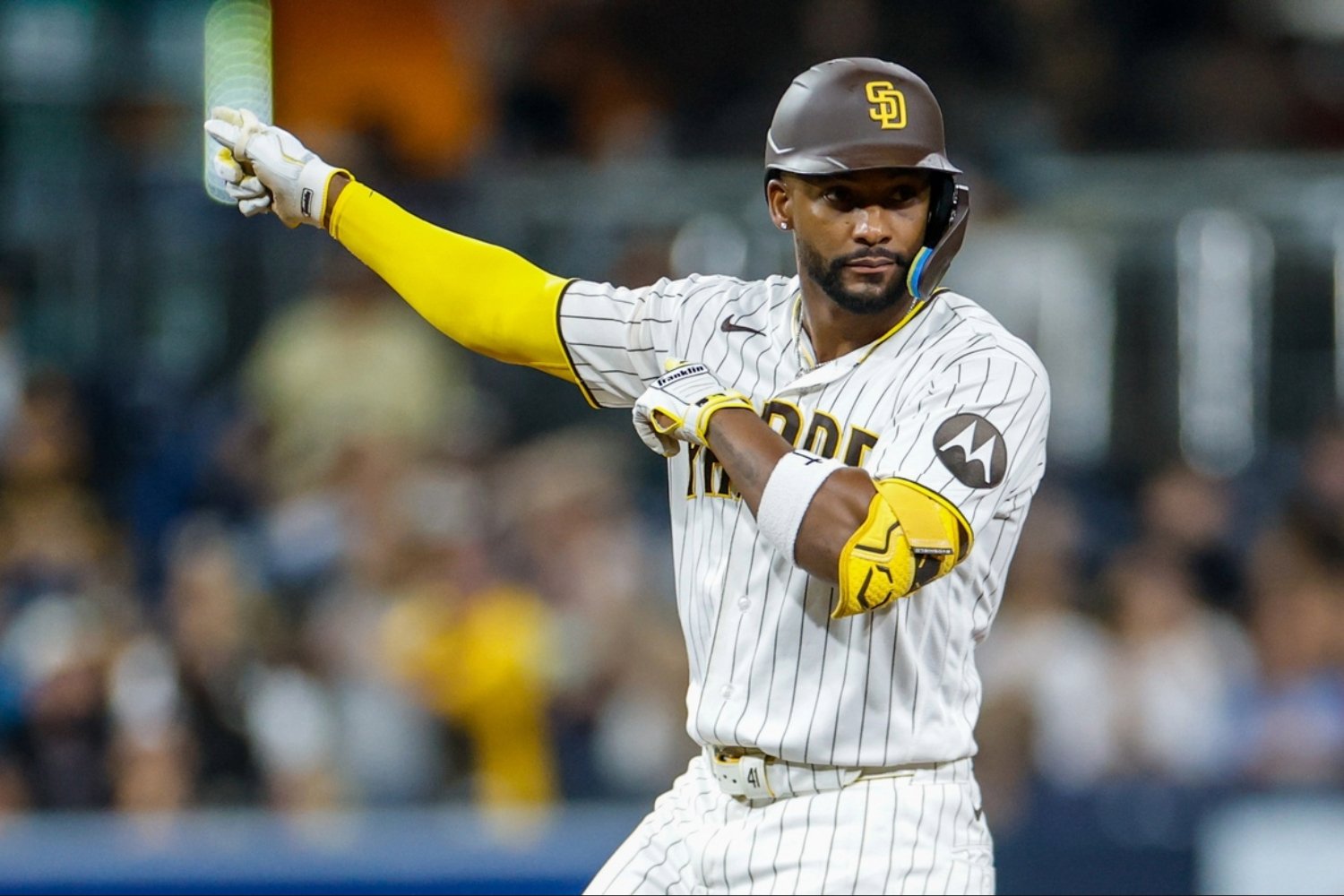 Less than two weeks away from Major League Baseball's 2026 trade deadline, we still lack a clear picture as to how A.J. Preller and the San Diego Padres will operate. They're two games out of the National League's final wild card spot, with their performance on a given night featuring so much variance that it's difficult to tell where they'll be floating in the standings by August 3, to say nothing of featuring one of the game's more aggressive executives atop their front office. Whether they buy or sell, the Padres do have clear needs. Offensive depth, potentially to supplement the middle infield or bring some depth to the outfield, is on the list, with starting pitching representing easily the most imperative of additions that Preller could seek to make at the beginning of next month. While the latter portion of that statement won't change as the team continues to cobble together starts from a shallow staff, one has to wonder if Miguel Andujar's recent injured list placement could impact their pursuit of the former. Andujar's trip to the IL comes as the result of a broken wrist. Such an injury carries an unclear timeline, though the Padres are hopeful he'll return before year's end. Playing on a one-year deal, Andujar has been a steady bat appearing almost exclusively as the team's designated hitter. Prior to his injury, he'd posted a .259/.303/.423 line (100 wRC+) with an extremely reasonable 15.0 percent strikeout rate and walk rate resting a shade under five percent. It's not gaudy production, especially on the slugging side, but such steadiness is something this lineup will sorely miss. Which is why it's reasonable to wonder whether or not this team, if buyers, will wind up more in pursuit of an additional bat than they might otherwise have been. It seems silly to wonder if a club lingering near the bottom of most offensive categories would have gone after a hitter otherwise. Logic would appear to indicate it as an obvious need. However, personnel is in place across most of the starting lineup that would have prevented the addition of an impact bat. Contract context and upside both matter, even in the wake of underperformance. So, while it may make on-paper sense to supplement a down year from Jackson Merrill or Xander Bogaerts with outside additions, doing so in a way that ate into either player's plate appearances may not have happened. The only real argument in terms of a full-time addition could have been made for left field. Questions were left in the respective absences of Ramón Laureano & Samad Taylor, with projections featuring a 42 percent timeshare for Gavin Sheets atop the group. From a defensive standpoint, that's less than ideal (while also serving as the best way to get his bat into the lineup when Andujar was healthy). If a bat-first player was going to be an addition, it was likely going to be as a supplement to the position that would have required some more flexibility on the part of Craig Stammen. Now, however, the Padres have a vacant designated hitter spot to go along with those lingering questions in left field. The only real change resulting here is in the flexibility Preller has to operate with. Instead of finding a complimentary bat that would then result in a cycling of Sheets, Andujar, and Ty France across left field and first base in some form or fashion, Preller now has the ability to pursue a true slugger, regardless of position, with more plate appearances made available. Whether or not such an addition is even possible remains to be seen, given the state of the farm system. Nevertheless, the need for a bat is now greater than it had been before, even on paper, with the only change wrought by Andujar's injury coming in the form of the flexibility it presents. An injury to a key and stable hitter isn't going to be looked upon as a positive in any context, but if there is a takeaway to be had, it's in that freedom that Preller now has to maneuver.
 -
Despite the fact that the San Diego Padres have come out of the All-Star Break in the same uneven fashion in which they entered it, they remain on the outskirts of the National League playoff picture. Entering the week, they're 2.5 games out of the last wild card spot and, as such, do not appear to have a clear direction ahead of next month's trade deadline. Clarity could be on the horizon, though. The next couple of weeks will obviously dictate the avenue A.J. Preller chooses to pursue. Even if it appears that he doesn't have it in him to purely sell as a deadline strategy, continued struggles could force his hand in that direction. This is a team with an inconsistent offense, a woefully underperforming starting staff, and an upper-tier bullpen. The ultimate direction which things go is going to be dependent on a few players on the roster from the former two areas. If the Padres do find themselves in a position to add at the deadline, the needs are clear. It's starting pitching above all, with supplemental help in the lineup (the outfield, in particular) and in the bullpen (for the middle innings) considered to be more secondary. Preller is an executive incapable of standing idle. Instead, what we should be on the lookout for ahead of the deadline is the nuance of the additions needed. Do they need genuine impact from a prospective starter or volume from, perhaps, multiple? Would a bat in the lineup be someone who can compensate for continued struggles of certain key players or someone in the Ramón Laureano class of a true secondary piece? Let's talk about three names that could lend themselves to dictation of a particular route, regardless of such scale, prior to Aug. 3. Jackson Merrill, CF To say that Merrill has struggled in 2026 would be a grave understatement. His batting line reads .214/.271/.341 with a 71 wRC+ that paints him as a well-below-average hitter this season. On paper, he's — alongside Fernando Tatis Jr. and Manny Machado — one of the three most important hitters on the roster. Tatis has provided steady production even in the absence of his usual power, while Machado has begun to come into his own over the last handful of weeks. Merrill has no such sustained stretch of play this year. Whether these problems are mechanical or psychological or a combination of both, Merrill providing any sort of offensive competence over these next couple of weeks would be a massive boon to the Padres' collective offense. It would give them that trio of steady drivers of the lineup with quality supplemental work from the likes of Ty France, Miguel Andujar, and Jake Cronenworth. In short, it would lengthen the lineup in a way that would allow the team to string together regular wins in the standings. Of course, a continued run of play similar to the one we've seen would have the opposite effect. The Padres offense will continue to struggle on a given night and, considering the issues with their starting pitching, fail to collect crucial wins. Whether it's more of the same or a turnaround, Merrill's performance will have a lot to say about the team's direction in the next couple of weeks. His impact is just more of a generalized nature, with the capacity to send the team into buy or sell mode almost on his own. Walker Buehler, SP Unlike Merrill, whose impact in itself could determine direction, Buehler's influence on the deadline approach is a little more intricate. On one hand, he could impact how they approaching buying, and on the other, he could be the catalyst that sends them to the land of sellers. There was a brief time where it looked as if Buehler was giving the Padres the most steadiness out of any starter on the roster not named Michael King. After gaining his footing, he pitched to a 1.71 ERA and provided over five innings per start in June. Such a performance doesn't eliminate the Padres' need for starting pitching but at least helps to mitigate the severity of it. Things have been different since the start of July, however. In his last three starts, Buehler has worked only 11 innings and allowed 20 earned runs. That obviously represents a sharp deviation from his previous form, but compounded with the absence of four other starters (Randy Vásquez, Joe Musgrove, Lucas Giolito, and Nick Pivetta) and the names behind him reading Griffin Canning, Germán Marquez, and JP Sears, there's an onus on Buehler to pitch more akin to a second or third starter, unreasonable an ask as that may be in 2026. Like Merrill, though, Buehler's impact on the trade deadline is twofold. Either he gets sorted and begins to provide the volume that he proved capable of in the months prior to July, or he continues to implode in a manner that brings his roster spot into question. The former takes at least some of the pressure off of Preller to acquire multiple starting-capable arms ahead of Aug. 3. The latter calls Buehler's roster spot into question and further amplifies the team's need for volume out of their rotation. Jake Cronenworth, 2B At his best, Cronenworth isn't of the same caliber of hitter as Merrill. However, he does come from the secondary group of hitters that has been such a crucial part of the roster over the past couple of years. When the Padres are going right on offense, it includes contributions from those outside of Tatis, Merrill, and Machado. It goes without saying that their deadline approach is going to hinge on offensive output and, as such, is going to require those secondary contributions to manifest. Cronenworth represents the most essential of those secondary bats. While names like France or Andujar are important, the team has played most of the year without their keystone mainstay in Cronenworth. The early returns since his return are encouraging at least; thus far in July, Cronenworth has slashed .320/.333/.480 with a 126 wRC+. He hasn't demonstrated his typical patient approach as he regains his footing, but there's been some impact there. It's the kind of impact that could shape the approach to the deadline in a manner not all that dissimilar from Merrill. While we've seen the other end of the spectrum from Cronenworth in the last few seasons, a return to his form of yesteryear would be a boon unlike any other other on the roster. As such, it feels quite clear that one Cronenworth-based outcome sends the Padres in a much healthier direction than the other. View full article
-
Three Padres Who Will Make Or Break San Diego's Trade Deadline Direction
Randy Holt posted an article in Padres
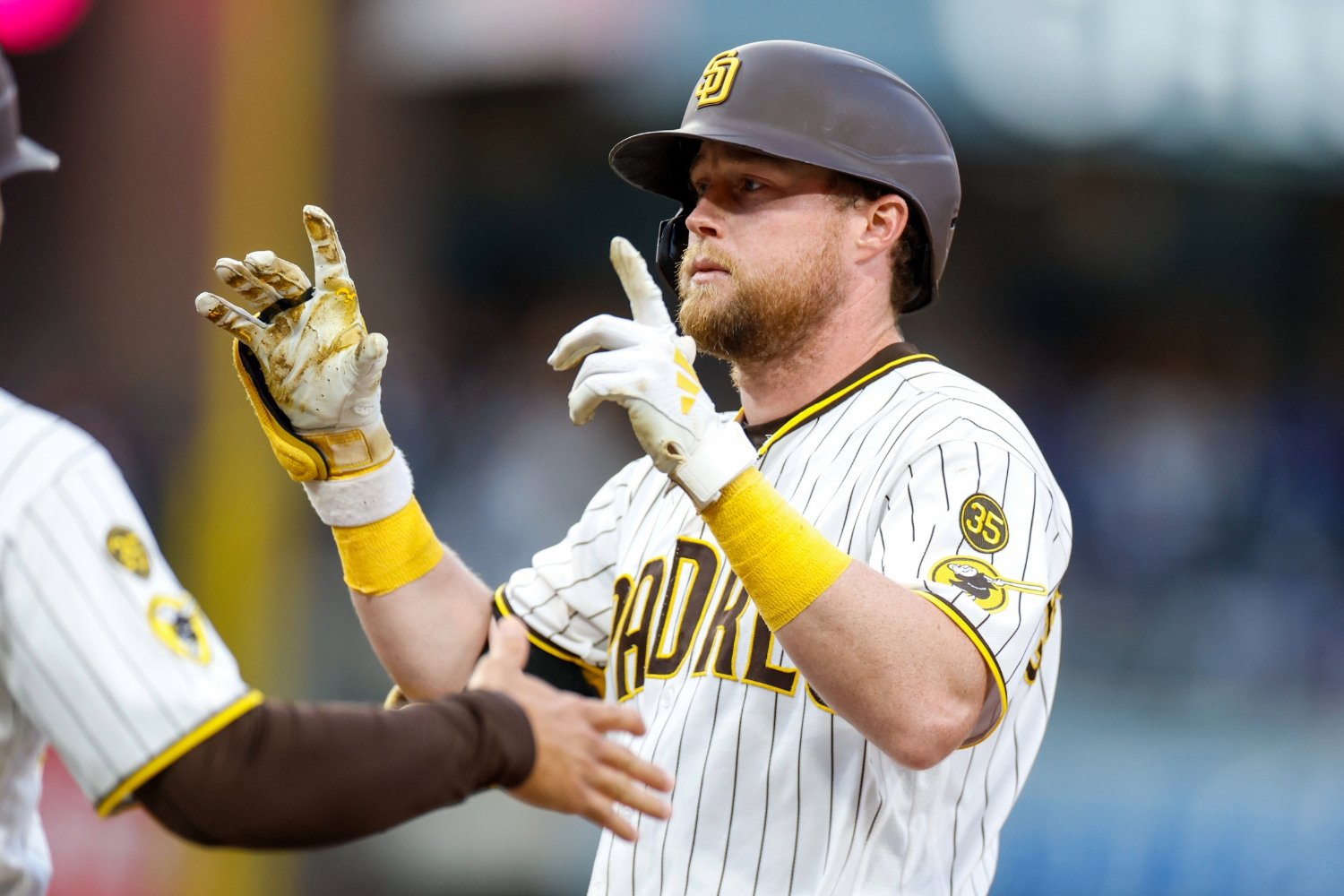 Despite the fact that the San Diego Padres have come out of the All-Star Break in the same uneven fashion in which they entered it, they remain on the outskirts of the National League playoff picture. Entering the week, they're 2.5 games out of the last wild card spot and, as such, do not appear to have a clear direction ahead of next month's trade deadline. Clarity could be on the horizon, though. The next couple of weeks will obviously dictate the avenue A.J. Preller chooses to pursue. Even if it appears that he doesn't have it in him to purely sell as a deadline strategy, continued struggles could force his hand in that direction. This is a team with an inconsistent offense, a woefully underperforming starting staff, and an upper-tier bullpen. The ultimate direction which things go is going to be dependent on a few players on the roster from the former two areas. If the Padres do find themselves in a position to add at the deadline, the needs are clear. It's starting pitching above all, with supplemental help in the lineup (the outfield, in particular) and in the bullpen (for the middle innings) considered to be more secondary. Preller is an executive incapable of standing idle. Instead, what we should be on the lookout for ahead of the deadline is the nuance of the additions needed. Do they need genuine impact from a prospective starter or volume from, perhaps, multiple? Would a bat in the lineup be someone who can compensate for continued struggles of certain key players or someone in the Ramón Laureano class of a true secondary piece? Let's talk about three names that could lend themselves to dictation of a particular route, regardless of such scale, prior to Aug. 3. Jackson Merrill, CF To say that Merrill has struggled in 2026 would be a grave understatement. His batting line reads .214/.271/.341 with a 71 wRC+ that paints him as a well-below-average hitter this season. On paper, he's — alongside Fernando Tatis Jr. and Manny Machado — one of the three most important hitters on the roster. Tatis has provided steady production even in the absence of his usual power, while Machado has begun to come into his own over the last handful of weeks. Merrill has no such sustained stretch of play this year. Whether these problems are mechanical or psychological or a combination of both, Merrill providing any sort of offensive competence over these next couple of weeks would be a massive boon to the Padres' collective offense. It would give them that trio of steady drivers of the lineup with quality supplemental work from the likes of Ty France, Miguel Andujar, and Jake Cronenworth. In short, it would lengthen the lineup in a way that would allow the team to string together regular wins in the standings. Of course, a continued run of play similar to the one we've seen would have the opposite effect. The Padres offense will continue to struggle on a given night and, considering the issues with their starting pitching, fail to collect crucial wins. Whether it's more of the same or a turnaround, Merrill's performance will have a lot to say about the team's direction in the next couple of weeks. His impact is just more of a generalized nature, with the capacity to send the team into buy or sell mode almost on his own. Walker Buehler, SP Unlike Merrill, whose impact in itself could determine direction, Buehler's influence on the deadline approach is a little more intricate. On one hand, he could impact how they approaching buying, and on the other, he could be the catalyst that sends them to the land of sellers. There was a brief time where it looked as if Buehler was giving the Padres the most steadiness out of any starter on the roster not named Michael King. After gaining his footing, he pitched to a 1.71 ERA and provided over five innings per start in June. Such a performance doesn't eliminate the Padres' need for starting pitching but at least helps to mitigate the severity of it. Things have been different since the start of July, however. In his last three starts, Buehler has worked only 11 innings and allowed 20 earned runs. That obviously represents a sharp deviation from his previous form, but compounded with the absence of four other starters (Randy Vásquez, Joe Musgrove, Lucas Giolito, and Nick Pivetta) and the names behind him reading Griffin Canning, Germán Marquez, and JP Sears, there's an onus on Buehler to pitch more akin to a second or third starter, unreasonable an ask as that may be in 2026. Like Merrill, though, Buehler's impact on the trade deadline is twofold. Either he gets sorted and begins to provide the volume that he proved capable of in the months prior to July, or he continues to implode in a manner that brings his roster spot into question. The former takes at least some of the pressure off of Preller to acquire multiple starting-capable arms ahead of Aug. 3. The latter calls Buehler's roster spot into question and further amplifies the team's need for volume out of their rotation. Jake Cronenworth, 2B At his best, Cronenworth isn't of the same caliber of hitter as Merrill. However, he does come from the secondary group of hitters that has been such a crucial part of the roster over the past couple of years. When the Padres are going right on offense, it includes contributions from those outside of Tatis, Merrill, and Machado. It goes without saying that their deadline approach is going to hinge on offensive output and, as such, is going to require those secondary contributions to manifest. Cronenworth represents the most essential of those secondary bats. While names like France or Andujar are important, the team has played most of the year without their keystone mainstay in Cronenworth. The early returns since his return are encouraging at least; thus far in July, Cronenworth has slashed .320/.333/.480 with a 126 wRC+. He hasn't demonstrated his typical patient approach as he regains his footing, but there's been some impact there. It's the kind of impact that could shape the approach to the deadline in a manner not all that dissimilar from Merrill. While we've seen the other end of the spectrum from Cronenworth in the last few seasons, a return to his form of yesteryear would be a boon unlike any other other on the roster. As such, it feels quite clear that one Cronenworth-based outcome sends the Padres in a much healthier direction than the other.
 -
To say that the San Diego Padres have a rotation issue would serve as a rather severe understatement. Nor would it be a stretch to declare their playoff hopes to be all but over, if it's not rectified in short order. Not that the Padres were ever supposed to be a team that could lean on their starting pitching. They were bullpen-forward throughout the offseason, with the expectation that it would combine with their collection of big names and long-term contracts on the positional side to compensate for the shortcomings of their starters. Health and budget issues forced them into the assembly of a staff that relied more on the volume of arms available than the quality of them. As such, that compensation has not happened. Just how bad it's been, though, still seems jarring. The Padres came into the season with a rotation that featured Michael King at its head, followed by Nick Pivetta, Randy Vásquez, Germán Márquez, and Walker Buehler. Each of Griffin Canning & Matt Waldron were set to serve as depth upon recovery from their respective injuries, with JP Sears in El Paso to begin the season as well. Lucas Giolito's arrival early in the season added yet another option. The assumption was that Joe Musgrove would be back in the mix at some point, too. While that's the kind of depth, it's difficult to overstate how complicated that group has become as the season has worn on. King has represented the only source of stability, albeit with massive struggles working deep into games; his ERA the third time through the order is more than nine, against marks of 2.03 & 1.84 the first two turns, respectively. Vásquez held his own through two months before he began to fade. The same goes for Buehler, who endured a particularly bad stretch of three starts (20 ER) heading into the All-Star break. Meanwhile, each of Márquez, Giolito, and Pivetta have missed significant time with injuries, the latter not having appeared since April 12. Likewise, Musgrove's return still hasn't come into focus. That's pressed the likes of Canning and Sears into heavier duty than they might otherwise have warranted at this point. Ultimately, though, the issue here isn't with performance. The Padres were not expecting top-half-of-the-league output from their collection of arms. Instead, it's volume that represents the central issue. The Padres rank just 28th in the league in innings pitched by starting pitchers, with 442.1. That's 4.6 innings per start. That figure doesn't take into account the use of an opener, which has been a route utilized more for Canning specifically. He's only averaged three innings per outing when being deployed as the "bulk" arm, though, so it's not as if the numbers would look more appealing had that side been included. Only three starters have exceeded 80 innings in such a role this year, with the distribution for candidates looking like this in total body of work and innings pitched per start: Michael King: 108.1 IP, 5.7 IP/GS Walker Buehler: 89.0 IP, 4.7 IP/GS Randy Vásquez: 80.2 IP, 5.0 IP/GS Griffin Canning: 46.2 IP, 4.6 IP/GS Germán Márquez: 38.2 IP, 4.8 IP/GS Lucas Giolito: 20.2 IP, 4.0 IP/GS JP Sears: 19.2 IP, 4.8 IP/GS Ideally, you'd like to live in a world where your starting pitcher is giving you at least five innings of work. Obviously, more volume would be the preferred route, but the Padres' construction of their starting staff makes five perhaps the most reasonable ask. They're not getting anything remotely close to that, however. In fact, since June 4, Padres starters have reached six innings only five times. Each of those starts has been from Michael King. Nobody else has sniffed a quality start in more than a month. There's plenty of context that goes into it. Command appears central, with San Diego starters featuring the league's sixth-highest walk rate (9.7 percent). And injuries haven't helped, particularly when the likes of Pivetta or Musgrove may be the most equipped to get you that volume and lack an imminent return date. It all comes together to present a massive two-fold issue for the rest of the roster. On one hand, you have a bullpen that's been pressed into work more frequently than you'd prefer this early in the season. Only four teams have had relievers work more than the Padres and their 406.1 innings of bullpen innings. It also puts the hitters, a group which has largely underperformed, working from behind seemingly from the jump. For an offense that has taken a while to get going, it's part of the reason that the Padres hit the break at exactly .500. It's an issue pinning down the Padres' ability to string together wins. And if it's not rectified soon, it could be their undoing ahead of next month's trade deadline. Unfortunately, it doesn't appear as if there's salvation on the horizon. We still don't know about the returns of Musgrove or Pivetta. Vásquez & Giolito each remain out. That means continued work for Canning, Márquez, Buehler, and Sears in the starting five with no firm way of knowing what you're getting out of any of that group on a given night. What's more unfortunate is that justification for adding to the group before the trade deadline goes out the window if the team can't get this sorted right away; why pull from your already-shallow pool of prospects for an arm when your team finds itself out of the race? Which means that this group needs to find a way to start providing some volume, or the Padres are looking at continued instability through the end of 2026. View full article
-
Padres' Rotation Can't Escape Their Fatal Flaw In Second Half
Randy Holt posted an article in Padres
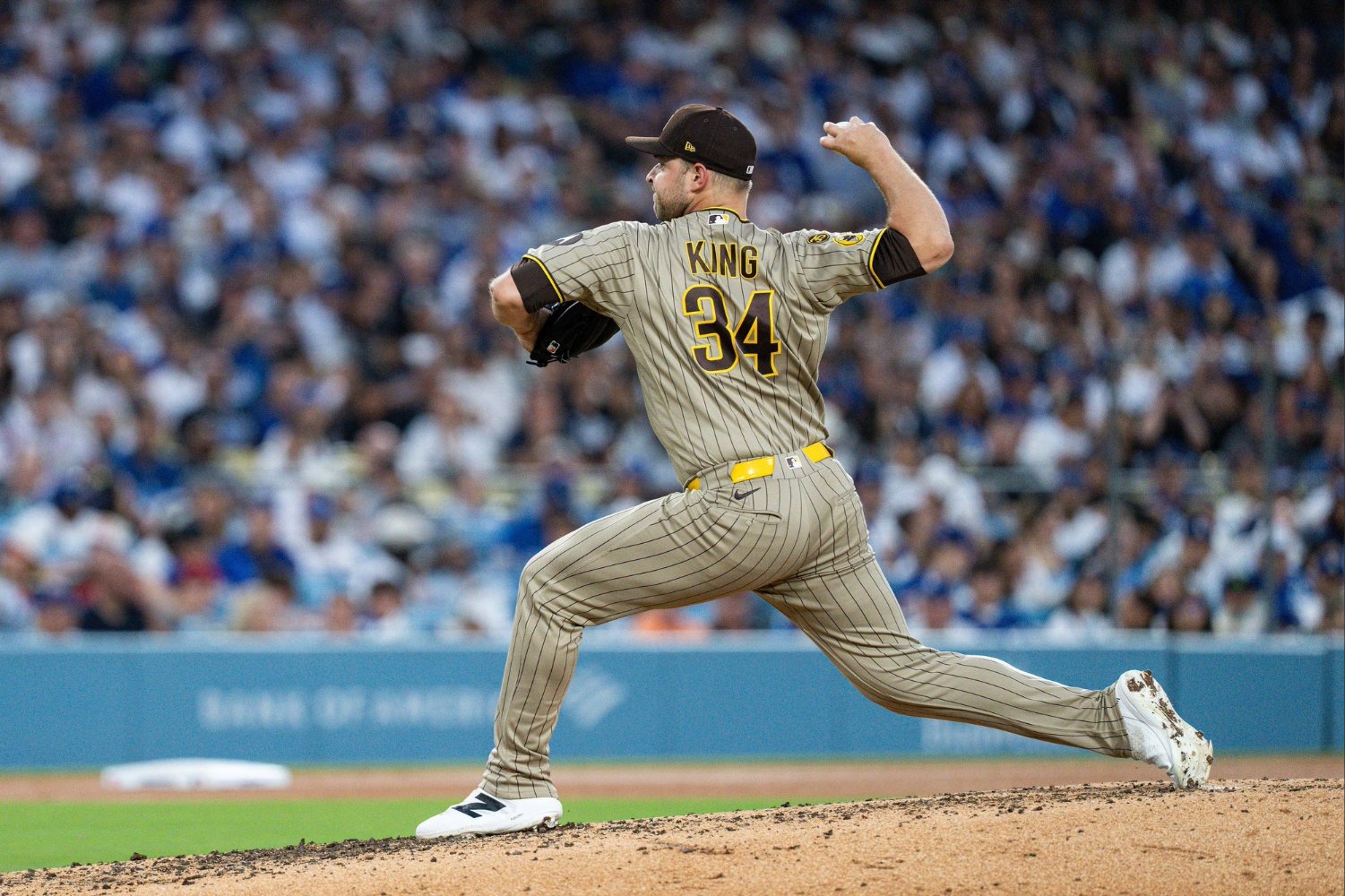 To say that the San Diego Padres have a rotation issue would serve as a rather severe understatement. Nor would it be a stretch to declare their playoff hopes to be all but over, if it's not rectified in short order. Not that the Padres were ever supposed to be a team that could lean on their starting pitching. They were bullpen-forward throughout the offseason, with the expectation that it would combine with their collection of big names and long-term contracts on the positional side to compensate for the shortcomings of their starters. Health and budget issues forced them into the assembly of a staff that relied more on the volume of arms available than the quality of them. As such, that compensation has not happened. Just how bad it's been, though, still seems jarring. The Padres came into the season with a rotation that featured Michael King at its head, followed by Nick Pivetta, Randy Vásquez, Germán Márquez, and Walker Buehler. Each of Griffin Canning & Matt Waldron were set to serve as depth upon recovery from their respective injuries, with JP Sears in El Paso to begin the season as well. Lucas Giolito's arrival early in the season added yet another option. The assumption was that Joe Musgrove would be back in the mix at some point, too. While that's the kind of depth, it's difficult to overstate how complicated that group has become as the season has worn on. King has represented the only source of stability, albeit with massive struggles working deep into games; his ERA the third time through the order is more than nine, against marks of 2.03 & 1.84 the first two turns, respectively. Vásquez held his own through two months before he began to fade. The same goes for Buehler, who endured a particularly bad stretch of three starts (20 ER) heading into the All-Star break. Meanwhile, each of Márquez, Giolito, and Pivetta have missed significant time with injuries, the latter not having appeared since April 12. Likewise, Musgrove's return still hasn't come into focus. That's pressed the likes of Canning and Sears into heavier duty than they might otherwise have warranted at this point. Ultimately, though, the issue here isn't with performance. The Padres were not expecting top-half-of-the-league output from their collection of arms. Instead, it's volume that represents the central issue. The Padres rank just 28th in the league in innings pitched by starting pitchers, with 442.1. That's 4.6 innings per start. That figure doesn't take into account the use of an opener, which has been a route utilized more for Canning specifically. He's only averaged three innings per outing when being deployed as the "bulk" arm, though, so it's not as if the numbers would look more appealing had that side been included. Only three starters have exceeded 80 innings in such a role this year, with the distribution for candidates looking like this in total body of work and innings pitched per start: Michael King: 108.1 IP, 5.7 IP/GS Walker Buehler: 89.0 IP, 4.7 IP/GS Randy Vásquez: 80.2 IP, 5.0 IP/GS Griffin Canning: 46.2 IP, 4.6 IP/GS Germán Márquez: 38.2 IP, 4.8 IP/GS Lucas Giolito: 20.2 IP, 4.0 IP/GS JP Sears: 19.2 IP, 4.8 IP/GS Ideally, you'd like to live in a world where your starting pitcher is giving you at least five innings of work. Obviously, more volume would be the preferred route, but the Padres' construction of their starting staff makes five perhaps the most reasonable ask. They're not getting anything remotely close to that, however. In fact, since June 4, Padres starters have reached six innings only five times. Each of those starts has been from Michael King. Nobody else has sniffed a quality start in more than a month. There's plenty of context that goes into it. Command appears central, with San Diego starters featuring the league's sixth-highest walk rate (9.7 percent). And injuries haven't helped, particularly when the likes of Pivetta or Musgrove may be the most equipped to get you that volume and lack an imminent return date. It all comes together to present a massive two-fold issue for the rest of the roster. On one hand, you have a bullpen that's been pressed into work more frequently than you'd prefer this early in the season. Only four teams have had relievers work more than the Padres and their 406.1 innings of bullpen innings. It also puts the hitters, a group which has largely underperformed, working from behind seemingly from the jump. For an offense that has taken a while to get going, it's part of the reason that the Padres hit the break at exactly .500. It's an issue pinning down the Padres' ability to string together wins. And if it's not rectified soon, it could be their undoing ahead of next month's trade deadline. Unfortunately, it doesn't appear as if there's salvation on the horizon. We still don't know about the returns of Musgrove or Pivetta. Vásquez & Giolito each remain out. That means continued work for Canning, Márquez, Buehler, and Sears in the starting five with no firm way of knowing what you're getting out of any of that group on a given night. What's more unfortunate is that justification for adding to the group before the trade deadline goes out the window if the team can't get this sorted right away; why pull from your already-shallow pool of prospects for an arm when your team finds itself out of the race? Which means that this group needs to find a way to start providing some volume, or the Padres are looking at continued instability through the end of 2026.
 -
Jackson Merrill's 2026 season has been a never-ending offensive spiral. Our @Gottie Chavez first looked at the San Diego Padres' center fielder back in April when it was becoming clear that he was struggling with timing against four-seam fastballs, feeding into a slow start. Then ,we were back in the Merrill business in May, when @N.B. Lindberg dove into Merrill's struggles that originated in the heart of the zone. He was expanding the zone early with little to compensate when he was working on pitches in the friendlier portions of it. In the month since the latter examination, things haven't gotten much better for Merrill in any respect. Sure, there was a decent blip of a bump in the power numbers — specifically against breaking pitches — but he has otherwise continued to spiral out of control at the plate. His numbers remain pinned down, with a .217/.273/.357 line and a 75 wRC+ to his name through more than three months in the books. The latest turn in Merrill's struggles comes courtesy of Timothy Jackson of Baseball Prospectus, who further established that Merrill isn't locked into an issue with his approach, but rather in his mechanics. As it turns out, there's a relationship between all of these pieces. If one were to watch Jackson Merrill log a plate appearance or two over the course of a game, the eye test might indicate it was, in fact, his approach at the center of his 2026 issues. It's an easy conclusion to draw, especially when the player has seen his strikeout rate increase for a third consecutive season. Merrill's K% sits at 25.8 this year, more than three points above his 2025 rate and over eight percentage points higher than it was in his breakout rookie campaign of 2024. Declaring it to be an approach issue based on that, however, neglects the other side of the story. A rising strikeout rate points us in an approach-related direction, especially when we saw Merrill's swing and chase rates each rise slightly between 2024 and 2025. That's not what's happening here, though. Instead, the outfielder is actually swinging less than even his rookie year, at a 54.8 Swing%. His 35.4 percent swing rate on pitches outside of the strike zone is less than a point above his rookie year and a three-point cut from last year's rate. And while his batting line looks egregiously worse than an injury-riddled 2025 season, the contact rates look quite similar across the board. Instead, where Merrill's issues live is in the blend of both making contact and making it of a certain quality based on his timing. Or, you know, a fusion of each of the pieces mentioned above. While that could be an approach issue, Merrill's problem is becoming more visibly of the mechanical variety. In those instances where he does make contact, Merrill is still doing so with authority. His 45.7 percent hard-hit rate is in the 74th percentile and comfortably above the league average of 39.1 percent. His bat speed being up from the last two years (73.5 MPH) likely helps, but that development on its own is not enough to drive production, especially because some other factors are helping to negate that. For one, Merrill's swing has gotten steeper. His 39-degree tilt is a couple degrees higher than each of the last two years, while his average attack angle was 10 degrees last year and is at nine in 2026 after being at six in 2024. At the same time, his swing has also gotten slightly longer, leading him to make contact farther out in front of the plate and, more importantly, farther away from his body. A long, upper-cut swing isn't going to be a BABIP darling. Which feeds into how Statcast's new data, which Jackson mentions in his work, illustrates the problem as a mechanical flaw rather than something rooted in the approach. Let's focus just on the fastballs here, though: The above is Merrill against fastballs in 2024, illustrated in red, and here in 2026 represented by that teal color. Our middle image there shows that he's closer to on time than he was even in 2024. No doubt that the swing speed has helped him there. However, the left graph indicates he's catching things closer to the end of the bat with greater regularity while ending up under fastballs more frequently. The result is a flyball rate to the opposite field at a 47.2 percent clip. Merrill was at roughly 32 percent in 2024. There's been a push to invest in fly balls to the pull side by myriad hitters across the baseball landscape the last couple of years. The rationale is obvious, in that pull side power is your greatest opportunity to create the highest quality of contact and, subsequently, create impact. Merrill is closer to on-time than he was in 2024, but he's squaring the ball up and creating fewer blasts while hitting just .071 on such contact. Therein lies our problem. Merrill has fallen just enough out of whack mechanically that he's unable to compensate no matter how hard he swings. As our writers here at Padres Mission posited earlier this year, it's very much a fastball issue. We just have more clarity on it now. Sure, there are some other factors weighing him down, embedded into the approach and against other pitch types. But as a major-league hitter, there's a better-than-not chance that your greatest success is going to come on fastballs. Merrill can't do that right now. As Jackson indicated in his piece, though, that doesn't mean that Merrill stopped being a good hitter. Nor does it mean the changes being made are intentional. Regardless of their origin, though, they're holding him back and he's going to have to find a new way to compensate to get back. It's not the approach and it's not solely bad luck. Once mechanics and, as a result, the fastball issue are sorted, we can worry about the rest. View full article
-
Jackson Merrill's Issues With Fastballs Finally Have An Origin
Randy Holt posted an article in Padres
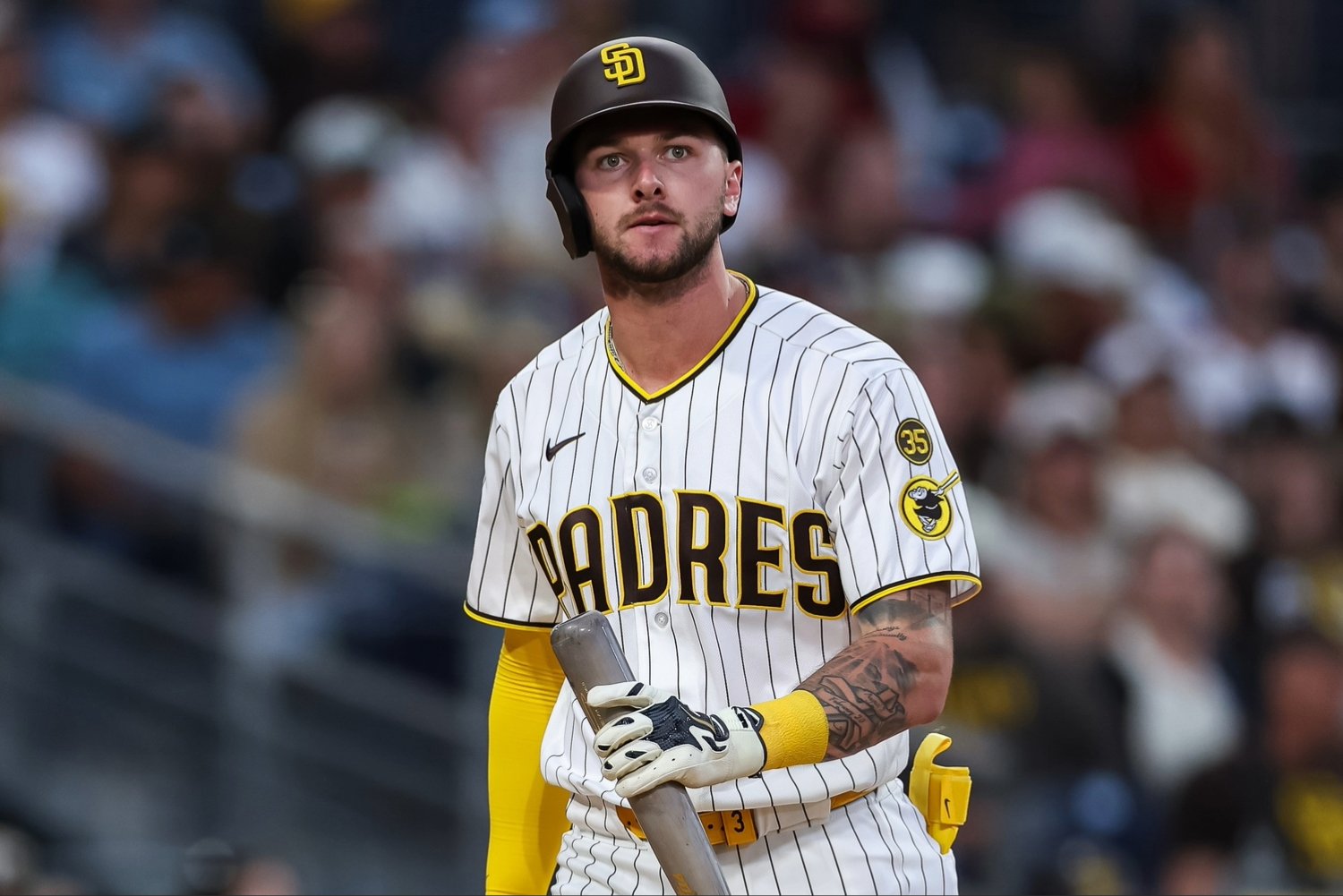 Jackson Merrill's 2026 season has been a never-ending offensive spiral. Our @Gottie Chavez first looked at the San Diego Padres' center fielder back in April when it was becoming clear that he was struggling with timing against four-seam fastballs, feeding into a slow start. Then ,we were back in the Merrill business in May, when @N.B. Lindberg dove into Merrill's struggles that originated in the heart of the zone. He was expanding the zone early with little to compensate when he was working on pitches in the friendlier portions of it. In the month since the latter examination, things haven't gotten much better for Merrill in any respect. Sure, there was a decent blip of a bump in the power numbers — specifically against breaking pitches — but he has otherwise continued to spiral out of control at the plate. His numbers remain pinned down, with a .217/.273/.357 line and a 75 wRC+ to his name through more than three months in the books. The latest turn in Merrill's struggles comes courtesy of Timothy Jackson of Baseball Prospectus, who further established that Merrill isn't locked into an issue with his approach, but rather in his mechanics. As it turns out, there's a relationship between all of these pieces. If one were to watch Jackson Merrill log a plate appearance or two over the course of a game, the eye test might indicate it was, in fact, his approach at the center of his 2026 issues. It's an easy conclusion to draw, especially when the player has seen his strikeout rate increase for a third consecutive season. Merrill's K% sits at 25.8 this year, more than three points above his 2025 rate and over eight percentage points higher than it was in his breakout rookie campaign of 2024. Declaring it to be an approach issue based on that, however, neglects the other side of the story. A rising strikeout rate points us in an approach-related direction, especially when we saw Merrill's swing and chase rates each rise slightly between 2024 and 2025. That's not what's happening here, though. Instead, the outfielder is actually swinging less than even his rookie year, at a 54.8 Swing%. His 35.4 percent swing rate on pitches outside of the strike zone is less than a point above his rookie year and a three-point cut from last year's rate. And while his batting line looks egregiously worse than an injury-riddled 2025 season, the contact rates look quite similar across the board. Instead, where Merrill's issues live is in the blend of both making contact and making it of a certain quality based on his timing. Or, you know, a fusion of each of the pieces mentioned above. While that could be an approach issue, Merrill's problem is becoming more visibly of the mechanical variety. In those instances where he does make contact, Merrill is still doing so with authority. His 45.7 percent hard-hit rate is in the 74th percentile and comfortably above the league average of 39.1 percent. His bat speed being up from the last two years (73.5 MPH) likely helps, but that development on its own is not enough to drive production, especially because some other factors are helping to negate that. For one, Merrill's swing has gotten steeper. His 39-degree tilt is a couple degrees higher than each of the last two years, while his average attack angle was 10 degrees last year and is at nine in 2026 after being at six in 2024. At the same time, his swing has also gotten slightly longer, leading him to make contact farther out in front of the plate and, more importantly, farther away from his body. A long, upper-cut swing isn't going to be a BABIP darling. Which feeds into how Statcast's new data, which Jackson mentions in his work, illustrates the problem as a mechanical flaw rather than something rooted in the approach. Let's focus just on the fastballs here, though: The above is Merrill against fastballs in 2024, illustrated in red, and here in 2026 represented by that teal color. Our middle image there shows that he's closer to on time than he was even in 2024. No doubt that the swing speed has helped him there. However, the left graph indicates he's catching things closer to the end of the bat with greater regularity while ending up under fastballs more frequently. The result is a flyball rate to the opposite field at a 47.2 percent clip. Merrill was at roughly 32 percent in 2024. There's been a push to invest in fly balls to the pull side by myriad hitters across the baseball landscape the last couple of years. The rationale is obvious, in that pull side power is your greatest opportunity to create the highest quality of contact and, subsequently, create impact. Merrill is closer to on-time than he was in 2024, but he's squaring the ball up and creating fewer blasts while hitting just .071 on such contact. Therein lies our problem. Merrill has fallen just enough out of whack mechanically that he's unable to compensate no matter how hard he swings. As our writers here at Padres Mission posited earlier this year, it's very much a fastball issue. We just have more clarity on it now. Sure, there are some other factors weighing him down, embedded into the approach and against other pitch types. But as a major-league hitter, there's a better-than-not chance that your greatest success is going to come on fastballs. Merrill can't do that right now. As Jackson indicated in his piece, though, that doesn't mean that Merrill stopped being a good hitter. Nor does it mean the changes being made are intentional. Regardless of their origin, though, they're holding him back and he's going to have to find a new way to compensate to get back. It's not the approach and it's not solely bad luck. Once mechanics and, as a result, the fastball issue are sorted, we can worry about the rest.
 -
Things are beginning to spiral out of control for the San Diego Padres. They lost eight in a row over the past week, including score lines of the 15-3, 23-3, and 12-7 variety, the latter of which the team led 6-0. This is a team at an inflection point for 2026 and beyond. The pitching is a patchwork staff, particularly in the rotation. Not only are they staving off another injury in the form of Randy Vásquez's ankle, but they're facing continued struggles from their volume approach to building out the staff. The offense has been among the league's worst up until recently. Even if the team's recent surge at the plate is sustained, the two phases haven't been on the same wavelength at any point this season. With the division long gone and each of the Philadelphia Phillies and Chicago Cubs clamping down on wild card spots, the Padres are quickly finding themselves at the back end of the slog of teams vying for one final playoff spot. It's very possible that A.J. Preller doesn't have it in him to sell. Considering the team's current state at the top level and in the farm system, though, he may be left with no choice by the time we reach the trade deadline early this month. With a handful of one-year deals and some players facing option decisions — to say nothing of the team's perilous payroll standing and the absence of clarity over both the approach by new ownership and future of the league's salary structure — it's at least possible that this team could look quite a bit different roughly a month from now. But first, some caveats. It's unlikely we'd see names like Germán Márquez or Griffin Canning included in such discussion as their performance may not even guarantee them a spot on the Padres' depleted staff. The Friars are a team as starved for pitching as any, so their performance indicates they're more likely to get hit with a DFA and sign a minor-league deal elsewhere given their minimal value. On the other end of the spectrum, Jackson Merrill isn't a name we'd find in rumors. Even in the midst of a disappointing year, he's a building block on an entirely reasonable long-term deal. If the team tore it down entirely, he'd be the last to go. Manny Machado can also be ruled out given his contract and career-worst performance. We can throw Joe Musgrove and Nick Pivetta out, too. The former hasn't pitched since 2024, and the latter hasn't appeared since April 12. It's a variety of contexts, but a handful of names not even worth mentioning here. Let's discuss those who could otherwise be facing an uncertain future in San Diego should things continue at their current pace. Padres Players That Will Definitely Be Traded Adrian Morejon, RP Team Control: Through 2026 2026 Stats: 40 G, 3.45 ERA, 2.50 FIP, 22.8 K-BB%, 1.4 fWAR Of the players the team could legitimately seek to trade ahead of the deadline, Morejon has perhaps as much value as any. He's among the game's most elite high-leverage relievers, with a 99th percentile fastball velocity and chase & whiff rates that each rest in the 96th. On another team, you'd be talking about him as a closer. The hitch here is that he's a free agent at year's end, which could limit his value slightly as a two-month rental against what the team could have got had they pursued a trade last winter. Nevertheless, you'd be hard-pressed to find a contender that wouldn't give up at least one legitimate player in their system to acquire the lefty's services. Wandy Peralta, RP Team Control: Through 2027 2026 Stats: 38 G, 2.38 ERA, 3.97 FIP, 6.5 K-BB%, 0.2 fWAR Peralta is an interesting case, especially against the more impactful Morejon. Rather than providing a team with a leverage arm, he'd be a sensible addition for the middle innings at a reasonable price. As clubs try to keep their top relievers fresh, there's something enticing about a player like Peralta, who has been a perfectly solid reliever without the bells & whistles of a Morejon or a Mason Miller. Additionally, he comes with a player option for 2027 at a reasonable $4.13 million price point. There's something to be said for stability, which he can offer across the middle innings beyond August & September of 2026. The return wouldn't be mind-blowing, but it's possible that the team could find an interesting prospect or two given Peralta's recent success. Possibly Traded Michael King, SP Team Control: Through 2028 2026 Stats: 18 G, 3.52 ERA, 4.10 FIP, 11.2 K-BB%, 1.5 fWAR The team control in the descriptor above isn't quite as simple as it appears, as King actually has player options for each of 2027 and 2028. However, given his $25 million salary, it's not hard to see him opting in. Whether that is enticing for a team in need of starting pitching, though, is another matter given his uneven performance thus far in 2026. At his best, King is a No. 2 or a No. 3 on a quality staff. Unfortunately for him, the Padres have needed production that matches that of an ace. Instead, he's fallen much more toward average with a strikeout rate that sits a far cry from where it was two years ago. Teams throughout the major-league landscape are certainly starved for stability in their rotation, but the question of the option could limit his market one way or the other. Jake Cronenworth, IF Team Control: Through 2030 2026 Stats: 132 PA, .256 wOBA, 62 wRC+, -0.2 fWAR Cronenworth's contract running through 2030 isn't unique among the Padres' collection of long-term position players, but he comes at a much more reasonable annual value ($11.43 million). While not the hitter he was a few years ago, Cronenworth's approach is among the game's best, and he's a league-average baserunner. He can also hold down the right side of the infield competently — handling first and second base regularly over the past handful of seasons — with the ability to handle shortstop in a pinch. Of course, the caveat here is the fact that Cronenworth has played very little baseball this year after spending the bulk of 2026 on the concussion IL. Now that he's back, if he can get right quickly, there's sure to be interest; we've heard in the last year or two that contenders were reaching out. His contract isn't unreasonable, so there's a very real possibility a team comes calling for a supplemental bat capable of boosting a team's on-base skills and moving around the field some. Walker Buehler, SP Team Control: Through 2026 2026 Stats: 17 G, 4.61 ERA, 3.89 FIP, 13.1 K-BB%, 1.2 fWAR Buehler gives the vibe of that player added to a deal or acquired at the last minute of the trade deadline. While nowhere close to the neighborhood of the pitcher he used to be — and a brutal start at Wrigley Field last week notwithstanding — Buehler has been an entirely adequate starting pitcher for the Padres in 2026. He wouldn't be a flashy addition, but as a steady option with tons of playoff experience, the Padres could find some takers here. Xander Bogaerts, SS Team Control: Through 2033 2026 Stats: 329 PA, .299 wOBA, 91 wRC+, 1.4 fWAR Of the Padres position players on long-term deals, Bogaerts represents a fascinating case. He doesn't possess the offensive upside of Fernando Tatis Jr. or Manny Machado at their best, nor does he come at the reasonable salary of someone like Cronenworth. On paper, his contract is decidedly the worst of the bunch. What he does add, though, is a solid contact bat with a rising walk rate, quality baserunning skills, and defense that remains above average. With all that said, it's unrealistic to think that the Padres would find an upper-tier return here considering the financial element. We also don't know what teams would actually be willing to take on his contract (let alone if such teams even exist). Instead, the motive would be to get off the contrast itself. Even if it requires them to eat some of the money, they should jump at the opportunity to at least clear some of it off their fragile books. It's hard to imagine that a Padres team in sell-mode wouldn't at least make an attempt to offload Bogaerts. Yuki Matsui, RP Team Control: Through 2028 2026 Stats: 21 G, 2.08 ERA, 4.26 FIP, 14.5 K-BB%, 0.2 fWAR Matsui is a bit different than his middle innings counterpart Wandy Peralta, in that he can opt out after 2026 and has a player option for 2028 while coming in at a slightly higher $5.60 million salary. Nevertheless, he offers the same type of skill set that Peralta does. He's a middle-inning reliever doing some of his best work courtesy this season of an improved strikeout rate and fewer home runs allowed. The question is whether the potential for two additional years of team control for a middle reliever at a higher salary is a benefit or a detriment to his case. Unlikely To Be Traded Fernando Tatis Jr., RF/2B Team Control: Through 2034 2026 Stats: 377 PA, .318 wOBA, 103 wRC+, 1.5 fWAR Fernando Tatis Jr. is coming off one of the worst power outages of his career, running up until the end of May without a home run on the books. He found some of it again in June, though, with another four homers and an increase in extra-base hits overall. Even if the impact hasn't been there, he's been quite good at the plate while providing upper-tier defense at two positions, with Cronenworth's concussion necessitating some time at second base for the team's superstar. We've heard whispers over the last year that the Padres and their financial situation could seek to move Tatis for the right return. Given some of his offensive shortcomings, even with his glaring upside, it's hard to imagine the Padres are going to find the right return at this moment. It also remains to be seen if the team would be motivated to move him at all considering his upside and status as the face of the organization. Nevertheless, if there's some envisioning of a full-scale rebuild of which we are unaware, this suddenly becomes more possible. Mason Miller, RP Team Control: Through 2029 2026 Stats: 33 G, 0.78 ERA, 0.43 FIP, 40.2 K-BB%, 2.2 fWAR There isn't a player on the Padres that possesses more value in a trade than that of Mason Miller. He's been the game's best reliever in 2026, and it isn't particularly close. The team gave up their No. 1 prospect in Leo De Vries to bring him from the Athletics last year, no doubt due at least in part to the team control he also carries for the next three seasons after 2026. For all of those reasons, it's difficult to see the Padres parting with him. They're also all reasons to move him if Preller can coax a team into matching the package he had to surrender to acquire him in the first place. At the end of the day, it just feels unlikely. His arm will likely remain too valuable to the Padres to part with. If not for the 2026 season, then for each of the next couple. Conclusion The issue with projecting who could go is that it implies the Padres are an organization with any level of predictability. Whether they'd seriously entertain moving long-term players given their absence of depth in the farm system is a mystery. Factor in incoming ownership and the uncertain future of the league's labor structure, and it's yet another layer of gray on an exercise that needs at least some bit of black-and-white to truly gauge intent. View full article
-
Ranking Padres Trade Candidates If They Sell At MLB Trade Deadline
Randy Holt posted an article in Padres
 Things are beginning to spiral out of control for the San Diego Padres. They lost eight in a row over the past week, including score lines of the 15-3, 23-3, and 12-7 variety, the latter of which the team led 6-0. This is a team at an inflection point for 2026 and beyond. The pitching is a patchwork staff, particularly in the rotation. Not only are they staving off another injury in the form of Randy Vásquez's ankle, but they're facing continued struggles from their volume approach to building out the staff. The offense has been among the league's worst up until recently. Even if the team's recent surge at the plate is sustained, the two phases haven't been on the same wavelength at any point this season. With the division long gone and each of the Philadelphia Phillies and Chicago Cubs clamping down on wild card spots, the Padres are quickly finding themselves at the back end of the slog of teams vying for one final playoff spot. It's very possible that A.J. Preller doesn't have it in him to sell. Considering the team's current state at the top level and in the farm system, though, he may be left with no choice by the time we reach the trade deadline early this month. With a handful of one-year deals and some players facing option decisions — to say nothing of the team's perilous payroll standing and the absence of clarity over both the approach by new ownership and future of the league's salary structure — it's at least possible that this team could look quite a bit different roughly a month from now. But first, some caveats. It's unlikely we'd see names like Germán Márquez or Griffin Canning included in such discussion as their performance may not even guarantee them a spot on the Padres' depleted staff. The Friars are a team as starved for pitching as any, so their performance indicates they're more likely to get hit with a DFA and sign a minor-league deal elsewhere given their minimal value. On the other end of the spectrum, Jackson Merrill isn't a name we'd find in rumors. Even in the midst of a disappointing year, he's a building block on an entirely reasonable long-term deal. If the team tore it down entirely, he'd be the last to go. Manny Machado can also be ruled out given his contract and career-worst performance. We can throw Joe Musgrove and Nick Pivetta out, too. The former hasn't pitched since 2024, and the latter hasn't appeared since April 12. It's a variety of contexts, but a handful of names not even worth mentioning here. Let's discuss those who could otherwise be facing an uncertain future in San Diego should things continue at their current pace. Padres Players That Will Definitely Be Traded Adrian Morejon, RP Team Control: Through 2026 2026 Stats: 40 G, 3.45 ERA, 2.50 FIP, 22.8 K-BB%, 1.4 fWAR Of the players the team could legitimately seek to trade ahead of the deadline, Morejon has perhaps as much value as any. He's among the game's most elite high-leverage relievers, with a 99th percentile fastball velocity and chase & whiff rates that each rest in the 96th. On another team, you'd be talking about him as a closer. The hitch here is that he's a free agent at year's end, which could limit his value slightly as a two-month rental against what the team could have got had they pursued a trade last winter. Nevertheless, you'd be hard-pressed to find a contender that wouldn't give up at least one legitimate player in their system to acquire the lefty's services. Wandy Peralta, RP Team Control: Through 2027 2026 Stats: 38 G, 2.38 ERA, 3.97 FIP, 6.5 K-BB%, 0.2 fWAR Peralta is an interesting case, especially against the more impactful Morejon. Rather than providing a team with a leverage arm, he'd be a sensible addition for the middle innings at a reasonable price. As clubs try to keep their top relievers fresh, there's something enticing about a player like Peralta, who has been a perfectly solid reliever without the bells & whistles of a Morejon or a Mason Miller. Additionally, he comes with a player option for 2027 at a reasonable $4.13 million price point. There's something to be said for stability, which he can offer across the middle innings beyond August & September of 2026. The return wouldn't be mind-blowing, but it's possible that the team could find an interesting prospect or two given Peralta's recent success. Possibly Traded Michael King, SP Team Control: Through 2028 2026 Stats: 18 G, 3.52 ERA, 4.10 FIP, 11.2 K-BB%, 1.5 fWAR The team control in the descriptor above isn't quite as simple as it appears, as King actually has player options for each of 2027 and 2028. However, given his $25 million salary, it's not hard to see him opting in. Whether that is enticing for a team in need of starting pitching, though, is another matter given his uneven performance thus far in 2026. At his best, King is a No. 2 or a No. 3 on a quality staff. Unfortunately for him, the Padres have needed production that matches that of an ace. Instead, he's fallen much more toward average with a strikeout rate that sits a far cry from where it was two years ago. Teams throughout the major-league landscape are certainly starved for stability in their rotation, but the question of the option could limit his market one way or the other. Jake Cronenworth, IF Team Control: Through 2030 2026 Stats: 132 PA, .256 wOBA, 62 wRC+, -0.2 fWAR Cronenworth's contract running through 2030 isn't unique among the Padres' collection of long-term position players, but he comes at a much more reasonable annual value ($11.43 million). While not the hitter he was a few years ago, Cronenworth's approach is among the game's best, and he's a league-average baserunner. He can also hold down the right side of the infield competently — handling first and second base regularly over the past handful of seasons — with the ability to handle shortstop in a pinch. Of course, the caveat here is the fact that Cronenworth has played very little baseball this year after spending the bulk of 2026 on the concussion IL. Now that he's back, if he can get right quickly, there's sure to be interest; we've heard in the last year or two that contenders were reaching out. His contract isn't unreasonable, so there's a very real possibility a team comes calling for a supplemental bat capable of boosting a team's on-base skills and moving around the field some. Walker Buehler, SP Team Control: Through 2026 2026 Stats: 17 G, 4.61 ERA, 3.89 FIP, 13.1 K-BB%, 1.2 fWAR Buehler gives the vibe of that player added to a deal or acquired at the last minute of the trade deadline. While nowhere close to the neighborhood of the pitcher he used to be — and a brutal start at Wrigley Field last week notwithstanding — Buehler has been an entirely adequate starting pitcher for the Padres in 2026. He wouldn't be a flashy addition, but as a steady option with tons of playoff experience, the Padres could find some takers here. Xander Bogaerts, SS Team Control: Through 2033 2026 Stats: 329 PA, .299 wOBA, 91 wRC+, 1.4 fWAR Of the Padres position players on long-term deals, Bogaerts represents a fascinating case. He doesn't possess the offensive upside of Fernando Tatis Jr. or Manny Machado at their best, nor does he come at the reasonable salary of someone like Cronenworth. On paper, his contract is decidedly the worst of the bunch. What he does add, though, is a solid contact bat with a rising walk rate, quality baserunning skills, and defense that remains above average. With all that said, it's unrealistic to think that the Padres would find an upper-tier return here considering the financial element. We also don't know what teams would actually be willing to take on his contract (let alone if such teams even exist). Instead, the motive would be to get off the contrast itself. Even if it requires them to eat some of the money, they should jump at the opportunity to at least clear some of it off their fragile books. It's hard to imagine that a Padres team in sell-mode wouldn't at least make an attempt to offload Bogaerts. Yuki Matsui, RP Team Control: Through 2028 2026 Stats: 21 G, 2.08 ERA, 4.26 FIP, 14.5 K-BB%, 0.2 fWAR Matsui is a bit different than his middle innings counterpart Wandy Peralta, in that he can opt out after 2026 and has a player option for 2028 while coming in at a slightly higher $5.60 million salary. Nevertheless, he offers the same type of skill set that Peralta does. He's a middle-inning reliever doing some of his best work courtesy this season of an improved strikeout rate and fewer home runs allowed. The question is whether the potential for two additional years of team control for a middle reliever at a higher salary is a benefit or a detriment to his case. Unlikely To Be Traded Fernando Tatis Jr., RF/2B Team Control: Through 2034 2026 Stats: 377 PA, .318 wOBA, 103 wRC+, 1.5 fWAR Fernando Tatis Jr. is coming off one of the worst power outages of his career, running up until the end of May without a home run on the books. He found some of it again in June, though, with another four homers and an increase in extra-base hits overall. Even if the impact hasn't been there, he's been quite good at the plate while providing upper-tier defense at two positions, with Cronenworth's concussion necessitating some time at second base for the team's superstar. We've heard whispers over the last year that the Padres and their financial situation could seek to move Tatis for the right return. Given some of his offensive shortcomings, even with his glaring upside, it's hard to imagine the Padres are going to find the right return at this moment. It also remains to be seen if the team would be motivated to move him at all considering his upside and status as the face of the organization. Nevertheless, if there's some envisioning of a full-scale rebuild of which we are unaware, this suddenly becomes more possible. Mason Miller, RP Team Control: Through 2029 2026 Stats: 33 G, 0.78 ERA, 0.43 FIP, 40.2 K-BB%, 2.2 fWAR There isn't a player on the Padres that possesses more value in a trade than that of Mason Miller. He's been the game's best reliever in 2026, and it isn't particularly close. The team gave up their No. 1 prospect in Leo De Vries to bring him from the Athletics last year, no doubt due at least in part to the team control he also carries for the next three seasons after 2026. For all of those reasons, it's difficult to see the Padres parting with him. They're also all reasons to move him if Preller can coax a team into matching the package he had to surrender to acquire him in the first place. At the end of the day, it just feels unlikely. His arm will likely remain too valuable to the Padres to part with. If not for the 2026 season, then for each of the next couple. Conclusion The issue with projecting who could go is that it implies the Padres are an organization with any level of predictability. Whether they'd seriously entertain moving long-term players given their absence of depth in the farm system is a mystery. Factor in incoming ownership and the uncertain future of the league's labor structure, and it's yet another layer of gray on an exercise that needs at least some bit of black-and-white to truly gauge intent.
 -
This weekend, Major League Baseball will reveal their rosters for the 2026 All-Star Game. Even through their uneven play through the first three months of the season, the San Diego Padres stand to have a couple of possible representatives for the Midsummer Classic in Philadelphia later this month. However, the nature of such variance in play is that the candidates look quite a bit different. In the case of the Padres, we can immediately rule out a couple of their notable names. Manny Machado will not be attending an eighth All-Star Game here in 2026. Despite an uptick in his power and defensive contributions this year — and a better overall performance over the last few weeks — he's still in the midst of one of the worst offensive seasons of his career, sitting at an 89 wRC+ and a batting average (.192) that is still tied for the worst among qualifying position players. There was some hope at the outset of the season that a healthy Jackson Merrill could reestablish himself as one of the game's young stars and reach his second All-Star game in three seasons. That hasn't come to fruition in any sense; Merrill has been unable to work himself out of a spiral in his approach and has generated very little of merit on his stat sheet. You'd be hard-pressed to find possible representation elsewhere in the remainder of the Padres' group of position players, either. That side of the ball has been comprised of replacement-level play from just about everyone not named Ty France (1.4 fWAR, 131 wRC+), but there's a long line of National League first basemen that would lay claim to a trip to Philadelphia before he would. If there's a case to be made, it could (somewhat surprisingly) come in the form of Fernando Tatis Jr. Despite the extended power outage that consumed most of his first half, he's been quite good just about everywhere else on the field, including his characteristically strong defense at both second base and in right field. The power has manifested with more regularity over the last month, too, with a .191 ISO in June. He's 16th in fWAR (1.5), ultimately, among National League outfielders. It's a case, but there's some stiff competition ahead of him that will likely hold him out. Given that, it's unlikely we'll see any Padres position player dress for the All-Star Game. Barring a number of drop-outs, there just isn't a case to be made up against their National League counterparts. The same is true of the team's rotation. If anything, the justification becomes easier. A team that ranks 24th in fWAR among their starting pitchers isn't likely to have a candidate to begin with. Even the rotation's linchpin in Michael King just endured a June where his ERA sat near 4.50 with a FIP over five. If he's not offering the type of performance to garner such recognition, one could hardly expect the remaining collection of Randy Vásquez, Walker Buehler, et al to do so. As it is, our candidates are not to be found here, either. It's possible that the real world was always going to be such where the team's most likely All-Star representatives emerged from the relief corps. The Padres' bullpen is one of the league's strongest individual phases for any team. It's there that we'll find the most assured lock the team has to offer, with their runner-up waiting in the wings. Mason Miller has been the game's best relief pitcher in 2026. He's accrued 2.2 fWAR with a 0.78 ERA, 0.42 FIP, and obscene 50.0 percent strikeout rate. He possesses what is, possibly, baseball's best individual pitch in the form of his slider. If the team could only have one representative, he'd be the one without question. One wouldn't have too difficult a time making a case for Adrian Morejon to join him, either. Morejon's 1.7 fWAR ranks second among NL relievers, with a FIP (2.05) that ranks second and a strikeout rate (29.5 percent) that ranks 13th. Among the top 30 relievers in innings pitched, his performance has been far-and-away of the highest quality in the National League. There are no surprises here. Given how Miller came out of the gate and how steady Morejon has been as his comrade in the late innings, a pair of relievers serving as the team's All-Star representatives was always going to be the most likely outcome. Sure, it's disappointing that they're the only two for which an easy case can be made, but there's at least a certain solace that exists in not getting the sympathy invite as part of the required representation for each team. That pair has earned it in the most objective sense. View full article
-
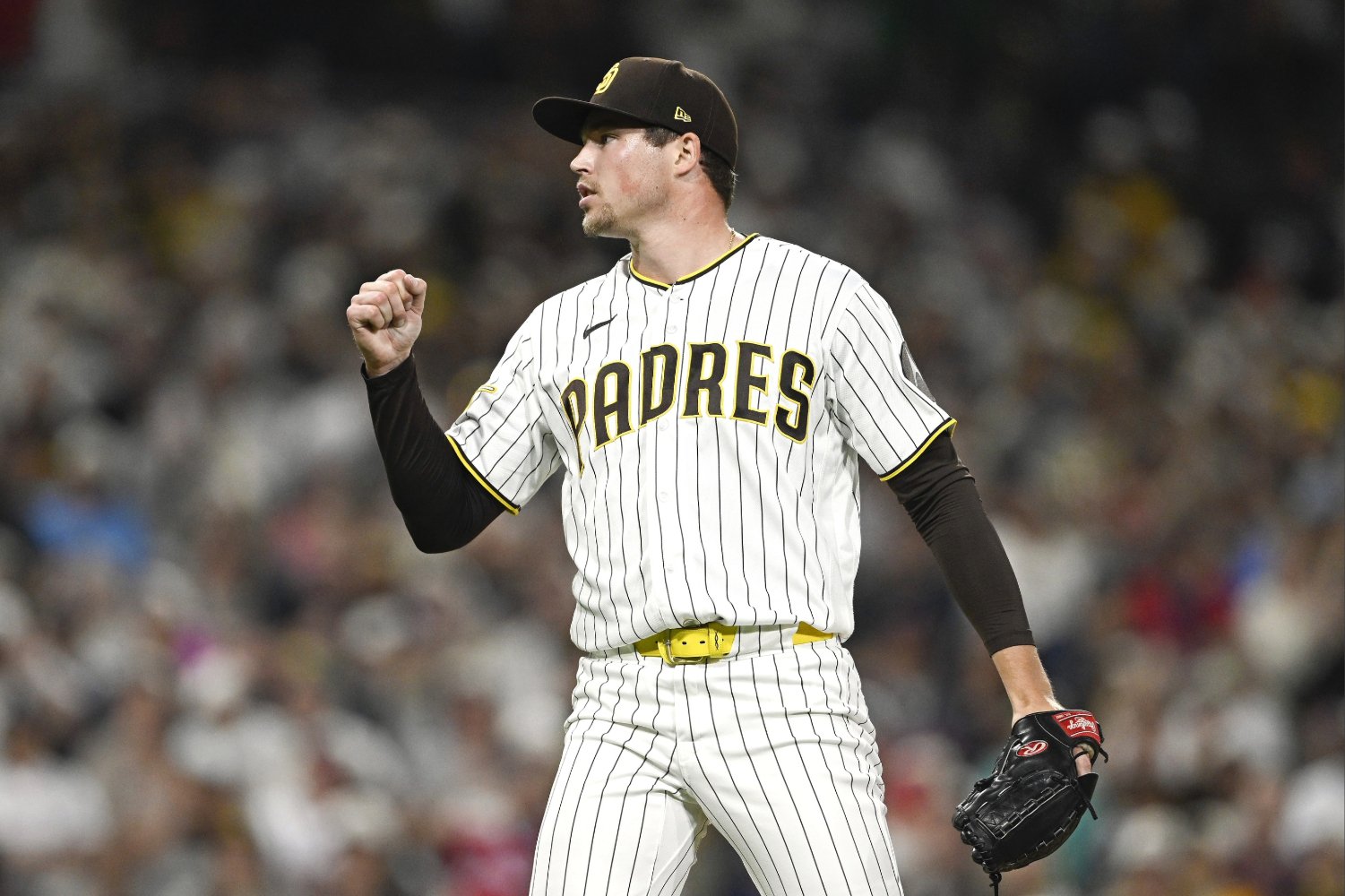 This weekend, Major League Baseball will reveal their rosters for the 2026 All-Star Game. Even through their uneven play through the first three months of the season, the San Diego Padres stand to have a couple of possible representatives for the Midsummer Classic in Philadelphia later this month. However, the nature of such variance in play is that the candidates look quite a bit different. In the case of the Padres, we can immediately rule out a couple of their notable names. Manny Machado will not be attending an eighth All-Star Game here in 2026. Despite an uptick in his power and defensive contributions this year — and a better overall performance over the last few weeks — he's still in the midst of one of the worst offensive seasons of his career, sitting at an 89 wRC+ and a batting average (.192) that is still tied for the worst among qualifying position players. There was some hope at the outset of the season that a healthy Jackson Merrill could reestablish himself as one of the game's young stars and reach his second All-Star game in three seasons. That hasn't come to fruition in any sense; Merrill has been unable to work himself out of a spiral in his approach and has generated very little of merit on his stat sheet. You'd be hard-pressed to find possible representation elsewhere in the remainder of the Padres' group of position players, either. That side of the ball has been comprised of replacement-level play from just about everyone not named Ty France (1.4 fWAR, 131 wRC+), but there's a long line of National League first basemen that would lay claim to a trip to Philadelphia before he would. If there's a case to be made, it could (somewhat surprisingly) come in the form of Fernando Tatis Jr. Despite the extended power outage that consumed most of his first half, he's been quite good just about everywhere else on the field, including his characteristically strong defense at both second base and in right field. The power has manifested with more regularity over the last month, too, with a .191 ISO in June. He's 16th in fWAR (1.5), ultimately, among National League outfielders. It's a case, but there's some stiff competition ahead of him that will likely hold him out. Given that, it's unlikely we'll see any Padres position player dress for the All-Star Game. Barring a number of drop-outs, there just isn't a case to be made up against their National League counterparts. The same is true of the team's rotation. If anything, the justification becomes easier. A team that ranks 24th in fWAR among their starting pitchers isn't likely to have a candidate to begin with. Even the rotation's linchpin in Michael King just endured a June where his ERA sat near 4.50 with a FIP over five. If he's not offering the type of performance to garner such recognition, one could hardly expect the remaining collection of Randy Vásquez, Walker Buehler, et al to do so. As it is, our candidates are not to be found here, either. It's possible that the real world was always going to be such where the team's most likely All-Star representatives emerged from the relief corps. The Padres' bullpen is one of the league's strongest individual phases for any team. It's there that we'll find the most assured lock the team has to offer, with their runner-up waiting in the wings. Mason Miller has been the game's best relief pitcher in 2026. He's accrued 2.2 fWAR with a 0.78 ERA, 0.42 FIP, and obscene 50.0 percent strikeout rate. He possesses what is, possibly, baseball's best individual pitch in the form of his slider. If the team could only have one representative, he'd be the one without question. One wouldn't have too difficult a time making a case for Adrian Morejon to join him, either. Morejon's 1.7 fWAR ranks second among NL relievers, with a FIP (2.05) that ranks second and a strikeout rate (29.5 percent) that ranks 13th. Among the top 30 relievers in innings pitched, his performance has been far-and-away of the highest quality in the National League. There are no surprises here. Given how Miller came out of the gate and how steady Morejon has been as his comrade in the late innings, a pair of relievers serving as the team's All-Star representatives was always going to be the most likely outcome. Sure, it's disappointing that they're the only two for which an easy case can be made, but there's at least a certain solace that exists in not getting the sympathy invite as part of the required representation for each team. That pair has earned it in the most objective sense.
 -
To their credit, the San Diego Padres were never supposed to be in the mix as long as they were. They spent the first month of the season flirting with first place in the National League West and have since remained involved as a key component of the NL Wild Card race. In the midst of budget woes that led to the halfway construction of their rotation and an inability to address their offensive depth — along with massive struggles from key elements of their lineup — that they are this relevant in the playoff picture this late in the year is something of a feat. At this particular time, though, it's looking like the game may be up in America's Finest City. Coming off a sweep of a first-place Atlanta team last week, one might have thought the vibes would be up as they hit the weekend for one of two consecutive turns against the Los Angeles Dodgers. Despite a win in the series opener, they went on to lose that series in rather convincing fashion. Those weekend struggles were further compounded with a trip to Wrigley Field that resulted in a sweep against a Chicago Cubs team that simply could not stop hitting home runs against the Padres' increasingly woeful pitching staff. The nature of those losses made things worse. The weekend set against the Dodgers included a 15-3 loss that followed their lone win of the series. Against the Cubs this week, Padres pitching allowed five home runs to Cub hitters on Tuesday and eight in Wednesday's 22-3 loss. They weren't cheap shots, either, as catcher Rodolfo Durán was pressed into pitching duty for the second time in five games. It's the kind of game that spins a team out entirely. Now, the Padres find themselves at an inflection point. They're two games back of one of the NL's three Wild Card spots and are attempting to stave off the Arizona Diamondbacks to retain the second-place position in the NL West. This does not, however, have the look of a team up for the challenge. If anything, they're a team at a point where faltering further could not only dictate their fortunes for the remainder of 2026 but beyond it. That's not to say the Padres are completely out of the Wild Card race or poised to sell at the trade deadline. Either one is possible, sure. Instead, the point is that the team has the look and feel of a team that was already held together in rather precarious fashion and, as a result, could be staring down a reckoning of that faulty construction. The Padres are last in the league in their collective wRC+ (89), with a team batting average (.223), on-base percentage (.299), and isolated power (.146) that all sit at or near the bottom of the league. Even with a recent ascent from Fernando Tatis Jr. and steady play from Ty France, there isn't a saving grace coming for this offense. Manny Machado has his power output up but almost nothing else to supplement it, while Jackson Merrill is stuck in an offensive spiral from which there appears no escape. The stalwarts aren't coming through, and there never was enough to compensate for that possibility elsewhere on the roster. Some teams can do so with their pitching staff. The Friars' starting staff, however, is 24th in the league in fWAR (3.8), with an ERA (4.59), FIP (4.53), and walk rate (9.6 percent) that all sit among the six or seven worst teams in the sport. Even a quality bullpen led by Mason Miller and Adrian Morejon can't make up that kind of ground. If anything, the need for volume out of the bullpen will eventually sap it of some of its value as the season progresses. It's a big ask for any leadership group, but it also remains to be seen if first-year manager Craig Stammen has the managerial chops to lead them through the impending storm. Questions persist about his handling of the pitching staff and choice of coaches for the staff (especially Steven Souza Jr. as the team's hitting coach given their offensive ineptitude). There isn't a whole lot to indicate stability on that front. As such, there are simply no solutions coming for this team in 2026, and that's a quandary that extends into the long term. The contracts on the books aren't looking any better. Their farm system is one of the league's most underwhelming, a byproduct of A.J. Preller's prior years of aggression. Unless the team's new ownership is going to lead to an injection of financing for the roster (and even that is complicated by impending labor negotiations for the league), there's a perilous outcome awaiting San Diego in the form of professional sports purgatory. This feels like a conversation we've had around the Padres before. Preller has managed to wriggle his way out of jams in the past with an exciting addition that benefits the club in the present, but he has fewer resources at his disposal to do so again. If the Padres continue their slide into the coming weeks, his ambition is rendered moot anyway. Even then, "selling" would be only modest, as there isn't likely to be much of a market for their collection of inflated contracts and below-average performers. That's where the looming threat of purgatory begins to manifest: when you have a middling roster but no obvious pathway toward short- or long-term improvement. The Padres are in a stretch where they play 17 consecutive games ahead of the All-Star break. They've already played three against the Dodgers and have another four coming against them this weekend. It's then four games against the Diamondbacks and three against the Toronto Blue Jays to close out the first half. That's the class of the league and two teams also trying to remain afloat, meaning that the schedule in this tough stretch isn't going to do the Friars any favors. Which means that by the time the break hits, we could have a pretty clear picture of where things stand with the Padres. But it's difficult to be optimistic about the shape of that picture. This team was flawed in its construction and held together in a way that was asking a lot of the roster and the coaching staff. A continued stretch of listless play could spell doom in 2026 and the state of the roster doesn't offer up much room for hope beyond it. There are two directions in which the season goes from here. One requires near-immediate improvement from the key components of the roster and any of the number of middling options in the starting rotation. The other, as a result, feels more likely... and more dire. View full article
-
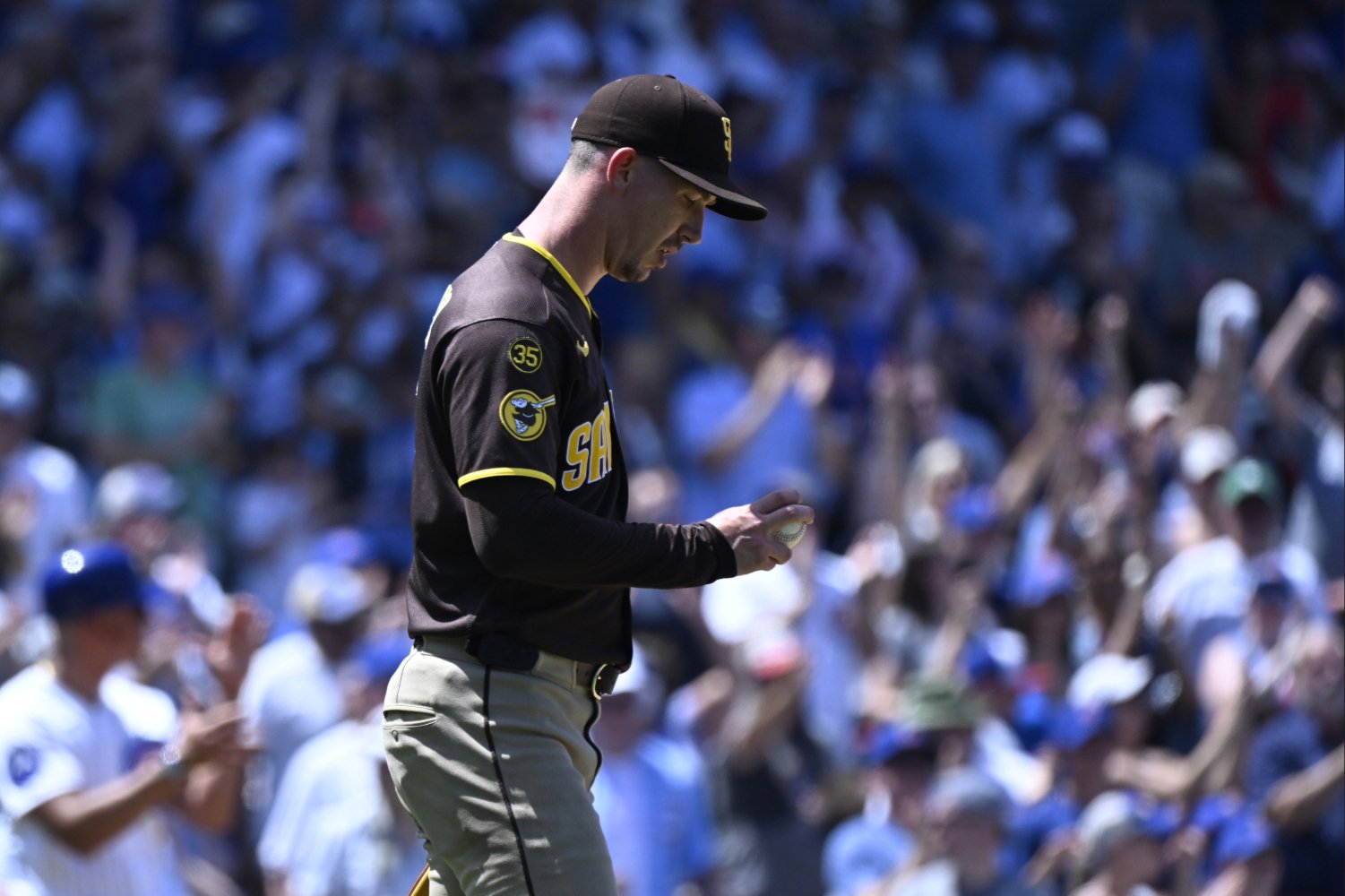 To their credit, the San Diego Padres were never supposed to be in the mix as long as they were. They spent the first month of the season flirting with first place in the National League West and have since remained involved as a key component of the NL Wild Card race. In the midst of budget woes that led to the halfway construction of their rotation and an inability to address their offensive depth — along with massive struggles from key elements of their lineup — that they are this relevant in the playoff picture this late in the year is something of a feat. At this particular time, though, it's looking like the game may be up in America's Finest City. Coming off a sweep of a first-place Atlanta team last week, one might have thought the vibes would be up as they hit the weekend for one of two consecutive turns against the Los Angeles Dodgers. Despite a win in the series opener, they went on to lose that series in rather convincing fashion. Those weekend struggles were further compounded with a trip to Wrigley Field that resulted in a sweep against a Chicago Cubs team that simply could not stop hitting home runs against the Padres' increasingly woeful pitching staff. The nature of those losses made things worse. The weekend set against the Dodgers included a 15-3 loss that followed their lone win of the series. Against the Cubs this week, Padres pitching allowed five home runs to Cub hitters on Tuesday and eight in Wednesday's 22-3 loss. They weren't cheap shots, either, as catcher Rodolfo Durán was pressed into pitching duty for the second time in five games. It's the kind of game that spins a team out entirely. Now, the Padres find themselves at an inflection point. They're two games back of one of the NL's three Wild Card spots and are attempting to stave off the Arizona Diamondbacks to retain the second-place position in the NL West. This does not, however, have the look of a team up for the challenge. If anything, they're a team at a point where faltering further could not only dictate their fortunes for the remainder of 2026 but beyond it. That's not to say the Padres are completely out of the Wild Card race or poised to sell at the trade deadline. Either one is possible, sure. Instead, the point is that the team has the look and feel of a team that was already held together in rather precarious fashion and, as a result, could be staring down a reckoning of that faulty construction. The Padres are last in the league in their collective wRC+ (89), with a team batting average (.223), on-base percentage (.299), and isolated power (.146) that all sit at or near the bottom of the league. Even with a recent ascent from Fernando Tatis Jr. and steady play from Ty France, there isn't a saving grace coming for this offense. Manny Machado has his power output up but almost nothing else to supplement it, while Jackson Merrill is stuck in an offensive spiral from which there appears no escape. The stalwarts aren't coming through, and there never was enough to compensate for that possibility elsewhere on the roster. Some teams can do so with their pitching staff. The Friars' starting staff, however, is 24th in the league in fWAR (3.8), with an ERA (4.59), FIP (4.53), and walk rate (9.6 percent) that all sit among the six or seven worst teams in the sport. Even a quality bullpen led by Mason Miller and Adrian Morejon can't make up that kind of ground. If anything, the need for volume out of the bullpen will eventually sap it of some of its value as the season progresses. It's a big ask for any leadership group, but it also remains to be seen if first-year manager Craig Stammen has the managerial chops to lead them through the impending storm. Questions persist about his handling of the pitching staff and choice of coaches for the staff (especially Steven Souza Jr. as the team's hitting coach given their offensive ineptitude). There isn't a whole lot to indicate stability on that front. As such, there are simply no solutions coming for this team in 2026, and that's a quandary that extends into the long term. The contracts on the books aren't looking any better. Their farm system is one of the league's most underwhelming, a byproduct of A.J. Preller's prior years of aggression. Unless the team's new ownership is going to lead to an injection of financing for the roster (and even that is complicated by impending labor negotiations for the league), there's a perilous outcome awaiting San Diego in the form of professional sports purgatory. This feels like a conversation we've had around the Padres before. Preller has managed to wriggle his way out of jams in the past with an exciting addition that benefits the club in the present, but he has fewer resources at his disposal to do so again. If the Padres continue their slide into the coming weeks, his ambition is rendered moot anyway. Even then, "selling" would be only modest, as there isn't likely to be much of a market for their collection of inflated contracts and below-average performers. That's where the looming threat of purgatory begins to manifest: when you have a middling roster but no obvious pathway toward short- or long-term improvement. The Padres are in a stretch where they play 17 consecutive games ahead of the All-Star break. They've already played three against the Dodgers and have another four coming against them this weekend. It's then four games against the Diamondbacks and three against the Toronto Blue Jays to close out the first half. That's the class of the league and two teams also trying to remain afloat, meaning that the schedule in this tough stretch isn't going to do the Friars any favors. Which means that by the time the break hits, we could have a pretty clear picture of where things stand with the Padres. But it's difficult to be optimistic about the shape of that picture. This team was flawed in its construction and held together in a way that was asking a lot of the roster and the coaching staff. A continued stretch of listless play could spell doom in 2026 and the state of the roster doesn't offer up much room for hope beyond it. There are two directions in which the season goes from here. One requires near-immediate improvement from the key components of the roster and any of the number of middling options in the starting rotation. The other, as a result, feels more likely... and more dire.
 -
The San Diego Padres — sweep of Atlanta last week be damned — are a team with a rotation in shambles. Aside from Michael King at its head, the remainder of the team's starting five is full up with questions ranging from concern to outright despair. Randy Vásquez has regressed mightily after a strong start. Walker Buehler has been toeing the line of being perfectly adequate but nothing beyond it. Griffin Canning and his command woes went from starter to bulk guy and then forgot the bulk in a less-than-one-inning outing last week. Lucas Giolito is on the injured list with elbow inflammation after his own issues with volume. Germán Márquez has been out since May 1, though his own impending return to the mix will add yet another wild-card element. Each of Joe Musgrove and Nick PIvetta remain out without a timeline. That's quite a bit of mess for one rotation. Considering the lack of certainty just about everywhere, it's entirely possible that JP Sears can now play a role in a much shorter term than would have been expected. The reason for such thinking stems from the singular start that Sears has made in 2026. On the heels of Giolito's IL placement, Sears became a surprise call-up for Wednesday's series finale against Atlanta. For a pitching staff with a dire need for volume, Sears provided it in the form of a 5.2-inning start in which he scattered five hits & two walks while keeping a first-place team off the scoreboard. It was an encouraging outing for Sears that bordered on shocking. He had an ERA over eight in spring training that led the team toward their more established options for rotation spots (though his ability to be optioned certainly played its role there as well). Then, with El Paso, he posted a 7.92 ERA through 14 starts. Even considering the hitter-friendly environment that the Pacific Coast League represents, there was very little reason to expect that Sears had the ability to stave off a thriving Atlanta team in the way that he did. Yet, what manifested out of Wednesday's start was something quite encouraging. Sears garnered whiffs at a 22 percent clip, utilizing his changeup as the secondary pitch while his sweeper — the pitch we saw him lean on as a No. 2 last season — took on a tertiary role that helped to increase its effectiveness. He generated a swing-and-miss with the sweeper 43 percent of the time, nearly doubling the amount induced with either his fastball or his change. It's difficult to draw too many conclusions after one start, especially for a pitcher who had experienced his share of struggles since being acquired at last season's trade deadline. However, there's also a real opportunity for Sears to latch onto a gig in relatively short order. This is a rotation that is now down Giolito in addition to two of its stalwarts in Pivetta & Musgrove. Canning has struggled to the point where his roster spot is in question, with Márquez sharing a similar track record prior to his IL stint. At this point, only King & Buehler feel like safe bets to remain in the big-league rotation, with Vásquez's June woes beginning to soften the ground on which he stands. This isn't a situation where Sears needs to be perfect in order to latch on as the No. 5 starter; being merely adequate would be a godsend, Keep in mind that the thing the Padres need most out of their starting staff is volume. Given its assembly, the team is not expecting dominant performances out of their rotation. It's about remaining afloat for five or six innings until the dominant bullpen can take charge. If the Friars feel that Sears offers them that kind of volume, then it's not even a question as to whether or not he could hold down a spot. He did it in start No. 1. The challenge now becomes doing it in start No. 2. If he can hold steady, the Padres likely would not hesitate to give him an extended run in such a role. View full article
-
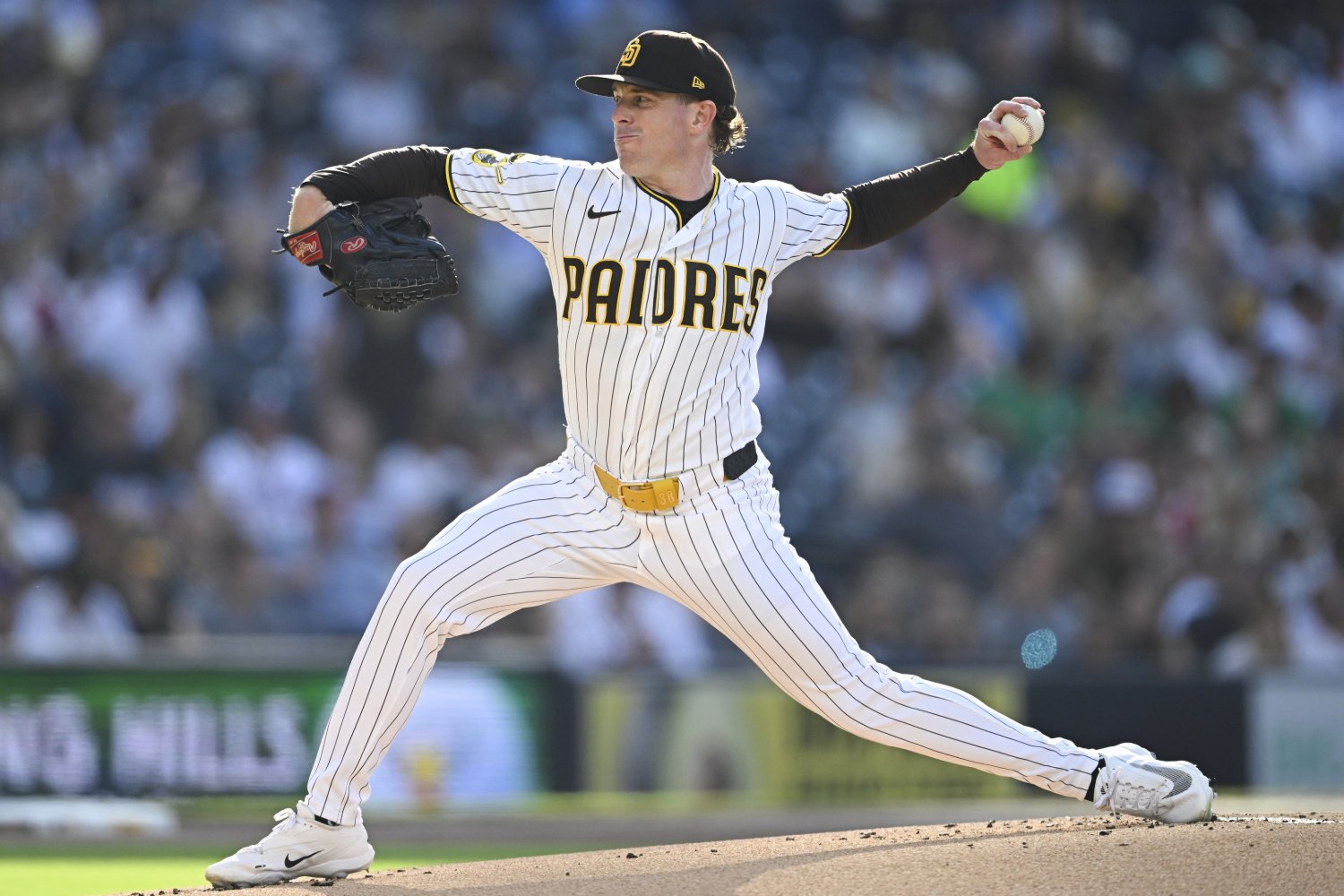 The San Diego Padres — sweep of Atlanta last week be damned — are a team with a rotation in shambles. Aside from Michael King at its head, the remainder of the team's starting five is full up with questions ranging from concern to outright despair. Randy Vásquez has regressed mightily after a strong start. Walker Buehler has been toeing the line of being perfectly adequate but nothing beyond it. Griffin Canning and his command woes went from starter to bulk guy and then forgot the bulk in a less-than-one-inning outing last week. Lucas Giolito is on the injured list with elbow inflammation after his own issues with volume. Germán Márquez has been out since May 1, though his own impending return to the mix will add yet another wild-card element. Each of Joe Musgrove and Nick PIvetta remain out without a timeline. That's quite a bit of mess for one rotation. Considering the lack of certainty just about everywhere, it's entirely possible that JP Sears can now play a role in a much shorter term than would have been expected. The reason for such thinking stems from the singular start that Sears has made in 2026. On the heels of Giolito's IL placement, Sears became a surprise call-up for Wednesday's series finale against Atlanta. For a pitching staff with a dire need for volume, Sears provided it in the form of a 5.2-inning start in which he scattered five hits & two walks while keeping a first-place team off the scoreboard. It was an encouraging outing for Sears that bordered on shocking. He had an ERA over eight in spring training that led the team toward their more established options for rotation spots (though his ability to be optioned certainly played its role there as well). Then, with El Paso, he posted a 7.92 ERA through 14 starts. Even considering the hitter-friendly environment that the Pacific Coast League represents, there was very little reason to expect that Sears had the ability to stave off a thriving Atlanta team in the way that he did. Yet, what manifested out of Wednesday's start was something quite encouraging. Sears garnered whiffs at a 22 percent clip, utilizing his changeup as the secondary pitch while his sweeper — the pitch we saw him lean on as a No. 2 last season — took on a tertiary role that helped to increase its effectiveness. He generated a swing-and-miss with the sweeper 43 percent of the time, nearly doubling the amount induced with either his fastball or his change. It's difficult to draw too many conclusions after one start, especially for a pitcher who had experienced his share of struggles since being acquired at last season's trade deadline. However, there's also a real opportunity for Sears to latch onto a gig in relatively short order. This is a rotation that is now down Giolito in addition to two of its stalwarts in Pivetta & Musgrove. Canning has struggled to the point where his roster spot is in question, with Márquez sharing a similar track record prior to his IL stint. At this point, only King & Buehler feel like safe bets to remain in the big-league rotation, with Vásquez's June woes beginning to soften the ground on which he stands. This isn't a situation where Sears needs to be perfect in order to latch on as the No. 5 starter; being merely adequate would be a godsend, Keep in mind that the thing the Padres need most out of their starting staff is volume. Given its assembly, the team is not expecting dominant performances out of their rotation. It's about remaining afloat for five or six innings until the dominant bullpen can take charge. If the Friars feel that Sears offers them that kind of volume, then it's not even a question as to whether or not he could hold down a spot. He did it in start No. 1. The challenge now becomes doing it in start No. 2. If he can hold steady, the Padres likely would not hesitate to give him an extended run in such a role.
 -
It was just two months ago that Randy Vásquez was one of the more exciting stories of the 2026 San Diego Padres. The former depth starter with command issues parlayed a strong spring into a firm gig in the rotation to start the year, with numbers in March & April that supported his role. As the calendar prepares to flip over to July, however, we're looking at some familiar issues manifesting for Vásquez in all new ways. The old book on the right-hander was that he is a more contact-oriented pitcher who needed to harness a deep mix of pitches to find success sans big strikeout numbers. The harnessing itself proved to be an issue in 2025 in particular, as he only struck out 13.7 percent of hitters against a 9.1 percent walk rate. His offseason work, however, proved fruitful, as he showed up to spring training with an uptick in velocity and compounded that with improved command in the season's first month. His strikeout rate sat way up at 24.8 percent in March & April with an 8.0 percent walk rate. He featured a 2.94 ERA that paired with a 3.40 FIP to indicate a pitcher demonstrating marked improvement rather than getting away with something. Then, the regression monster came for him in May. In the month that followed the strong start, Vásquez featured an ERA that jumped up to 3.71. That's a survivable figure in itself, but more worrisome was the fact that the FIP leapt to 5.35 while the strikeout rate cratered at just 11.6 percent. He managed to survive by a barrel rate that dropped between the two months and a walk rate of just 5.4 percent, but concerns certainly emerged for a player with little margin for error within his skill set and track record. Those worries have been further realized here in June. Through his first 17 innings and change of the month, Vásquez has an ERA up at 7.27. His strikeout rate is back up a touch but still sits at only 14.1 percent while the walk rate has climbed back up to 9.4 percent. The peak of those concerns came last Friday when Vásquez, who was spotted a 5-0 lead in the first inning, allowed eight hits and three walks through just 3.1 innings of work. Considering the aforementioned lack of a margin for error, it's difficult to pinpoint a central issue causing Vásquez's regression over the span of two months. His command has been fine in the sense that he's largely continued to mitigate walks even as he's begun to struggle. His case may start at the concept of a pitcher with three different types of fastballs (four-seam, cutter, sinker) and two different types of breaking pitch (curve & sweeper) struggling to solidify his usage. On the fastball side, the four-seam has increased steadily, the cutter has dropped quite a bit, and the sinker has varied. As far as his breaking stuff goes, he's ditched the more standard curve in favor of the sweeper. The reasoning for such a shift over these three months is unclear, but there are some other trends present beyond (and related to) the usage itself. For one, Vásquez is getting fewer hitters to chase. The breaking pitches were the highest source of chase in April. In May, hitters began chasing them less frequently and making hard contact at a higher clip, so Vásquez began relying on the four-seam and sinker more often. The latter represented his highest source of chase that month. In June, though, hitters have started to lay off the sinker and the cutter when they're thrown outside the zone, so he's pivoted back to the sweeper while continuing to rely on the four-seamer. The results on contact have varied, but it's all a bit muddled. If anything, there's a reactionary component to Vásquez that has mixed up his usage and pinned down his ability to remain consistent. That's not to say that usage in itself is the central issue, even if its messy nature could be yielding some of the declining results we're witnessing. There could be an issue with the stuff itself, as only the four-seam has resulted in a positive run value for Vásquez, and only the four-seamer (105) & sweeper (also 105) are above average in their effect by Stuff+. Or perhaps it's just a matter of the command needing continued refinement in order to find more sustained success. A pitcher in command of his arsenal would be able to locate not only for the called strikes we all love, but induce the chases he needs to avoid quality contact. Even if he's not walking people at as high a clip during this regression, the other elements speak to a pitcher not entirely in command. Whatever the issue may actually be, it's becoming increasingly clear that the Padres have a bit of a Randy Vásquez issue on their hands. For a rotation in as much peril as the Friars' is, both Vásquez and Michael King are the only members of the starting five entrenched in their role for the foreseeable future. Given those stakes, it's clear that the former needs to get back to his early season ways sooner rather than later. View full article
-
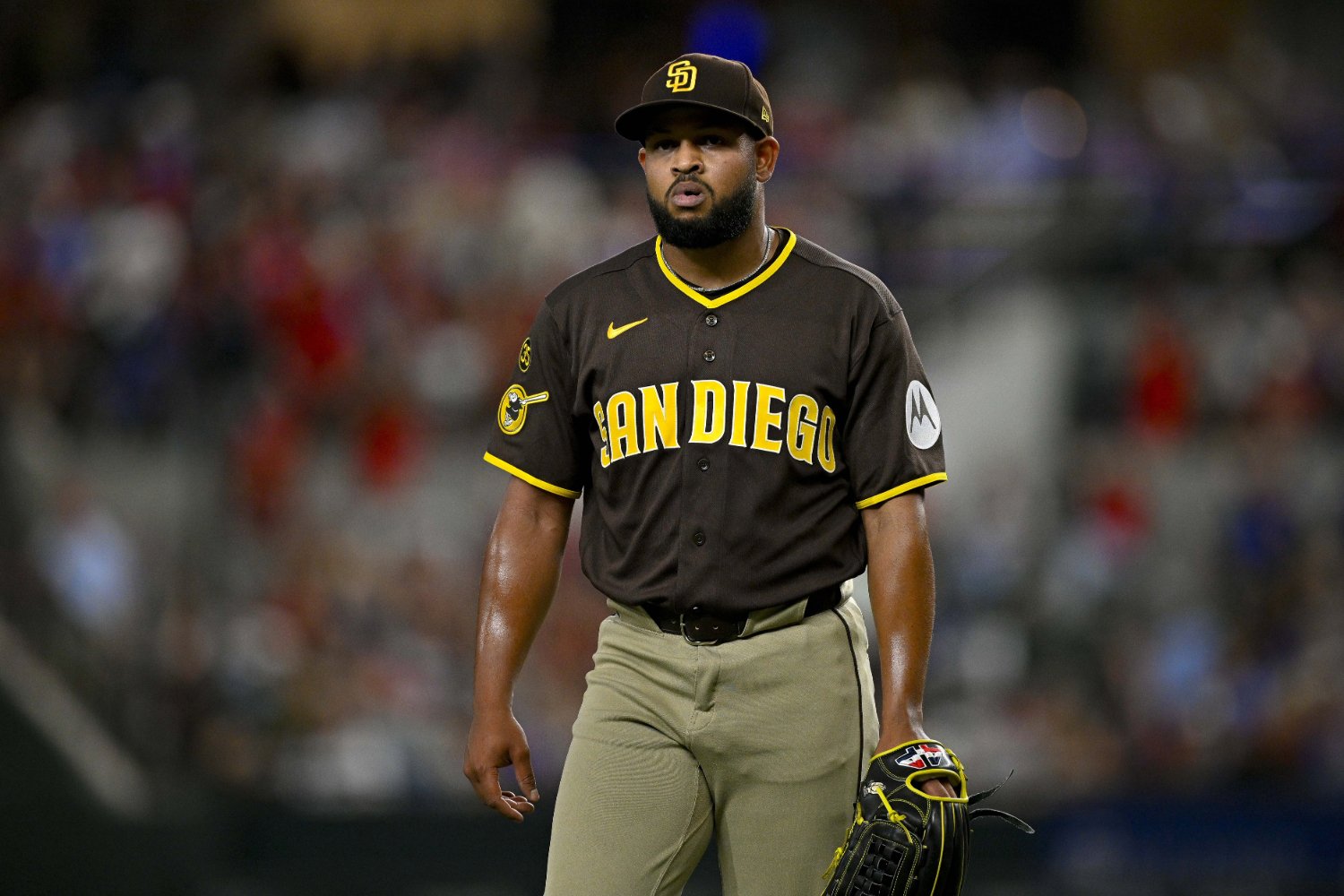 It was just two months ago that Randy Vásquez was one of the more exciting stories of the 2026 San Diego Padres. The former depth starter with command issues parlayed a strong spring into a firm gig in the rotation to start the year, with numbers in March & April that supported his role. As the calendar prepares to flip over to July, however, we're looking at some familiar issues manifesting for Vásquez in all new ways. The old book on the right-hander was that he is a more contact-oriented pitcher who needed to harness a deep mix of pitches to find success sans big strikeout numbers. The harnessing itself proved to be an issue in 2025 in particular, as he only struck out 13.7 percent of hitters against a 9.1 percent walk rate. His offseason work, however, proved fruitful, as he showed up to spring training with an uptick in velocity and compounded that with improved command in the season's first month. His strikeout rate sat way up at 24.8 percent in March & April with an 8.0 percent walk rate. He featured a 2.94 ERA that paired with a 3.40 FIP to indicate a pitcher demonstrating marked improvement rather than getting away with something. Then, the regression monster came for him in May. In the month that followed the strong start, Vásquez featured an ERA that jumped up to 3.71. That's a survivable figure in itself, but more worrisome was the fact that the FIP leapt to 5.35 while the strikeout rate cratered at just 11.6 percent. He managed to survive by a barrel rate that dropped between the two months and a walk rate of just 5.4 percent, but concerns certainly emerged for a player with little margin for error within his skill set and track record. Those worries have been further realized here in June. Through his first 17 innings and change of the month, Vásquez has an ERA up at 7.27. His strikeout rate is back up a touch but still sits at only 14.1 percent while the walk rate has climbed back up to 9.4 percent. The peak of those concerns came last Friday when Vásquez, who was spotted a 5-0 lead in the first inning, allowed eight hits and three walks through just 3.1 innings of work. Considering the aforementioned lack of a margin for error, it's difficult to pinpoint a central issue causing Vásquez's regression over the span of two months. His command has been fine in the sense that he's largely continued to mitigate walks even as he's begun to struggle. His case may start at the concept of a pitcher with three different types of fastballs (four-seam, cutter, sinker) and two different types of breaking pitch (curve & sweeper) struggling to solidify his usage. On the fastball side, the four-seam has increased steadily, the cutter has dropped quite a bit, and the sinker has varied. As far as his breaking stuff goes, he's ditched the more standard curve in favor of the sweeper. The reasoning for such a shift over these three months is unclear, but there are some other trends present beyond (and related to) the usage itself. For one, Vásquez is getting fewer hitters to chase. The breaking pitches were the highest source of chase in April. In May, hitters began chasing them less frequently and making hard contact at a higher clip, so Vásquez began relying on the four-seam and sinker more often. The latter represented his highest source of chase that month. In June, though, hitters have started to lay off the sinker and the cutter when they're thrown outside the zone, so he's pivoted back to the sweeper while continuing to rely on the four-seamer. The results on contact have varied, but it's all a bit muddled. If anything, there's a reactionary component to Vásquez that has mixed up his usage and pinned down his ability to remain consistent. That's not to say that usage in itself is the central issue, even if its messy nature could be yielding some of the declining results we're witnessing. There could be an issue with the stuff itself, as only the four-seam has resulted in a positive run value for Vásquez, and only the four-seamer (105) & sweeper (also 105) are above average in their effect by Stuff+. Or perhaps it's just a matter of the command needing continued refinement in order to find more sustained success. A pitcher in command of his arsenal would be able to locate not only for the called strikes we all love, but induce the chases he needs to avoid quality contact. Even if he's not walking people at as high a clip during this regression, the other elements speak to a pitcher not entirely in command. Whatever the issue may actually be, it's becoming increasingly clear that the Padres have a bit of a Randy Vásquez issue on their hands. For a rotation in as much peril as the Friars' is, both Vásquez and Michael King are the only members of the starting five entrenched in their role for the foreseeable future. Given those stakes, it's clear that the former needs to get back to his early season ways sooner rather than later.
 -
As we hit the end of June, the San Diego Padres' rotation picture remains as clouded as ever. Michael King is entrenched at the top of the starting five. We know that much. Randy Vásquez continues to provide decent-enough volume to stick around as part of the group despite increasingly alarming peripherals. From there, it gets messy. Lucas Giolito is now on the injured list with JP Sears up to replace him. Germán Márquez is nearing the end of a rehab assignment before his 5.76 ERA can rejoin the group. Griffin Canning has struggled mightily with his command, while each of Nick Pivetta & Joe Musgrove remain out indefinitely. If you're keeping track, that's two certainties for five spots, three massive question marks in the middle, and three injured arms on the other end. The Padres had Wandy Peralta serve as an opener on Tuesday with Sears scheduled to take the ball on Wednesday. They'll have an off day before circling back to Vásquez to open their series with the Los Angeles Dodgers on Friday. Which means that the most pressing question at this exact moment — how the team should handle Márquez & Canning upon the former's return — will get pushed to at least the weekend. It's difficult to imagine that the Padres would be comfortable running out both pitchers in their rotation given their respective struggles. While Giolito's absence does make it possible (as does Sears' ability to move to El Paso), each of Márquez and Canning have represented the starters with the largest hurdles to overcome in 2026. Prior to hitting the IL with a forearm injury, Márquez had made six starts for the Padres. He pitched to a 5.76 ERA, 6.64 FIP, a 14.8 percent strikeout rate, and a 9.4 percent walk rate. While his command fell within the neighborhood of "middling" from a walks perspective, his continually waning 94.3 MPH fastball velocity and precisely average (by Stuff+) knuckle-curve couldn't avoid hard contact; Márquez's 45.8 percent hard-hit rate sits in just the ninth percentile league-wide. Canning, meanwhile, has struggled with his command on the other side of the spectrum. His ERA sits at 7.38, largely due to the fact that he's walking more hitters than ever (13.7 percent). When hitters do swing, they're doing more damage than they were against Márquez in the hard-hit game, with Canning posting a 50.4 percent rate in that respect. He's had his moments, with a clean five-inning start against the New York Mets on June 6 and a 4.1 inning, one-run outing following an opener against St. Louis on June 17. The issue is that in between those kind of outings, he's had clunkers like a seven-run start on June 12 and a pair of six-run starts earlier in his Padres tenure. His second bulk outing saw him unable to finish even an inning and being credit for four runs before Kyle Hart cleaned up the bases he left loaded. Fresh as that particular outing may be, neither arm is one that's going to inspire much confidence. As such, determining which the Padres could go when Márquez is ready to return becomes a difficult task. In the case of Márquez, he's coming off four successful rehab outings with El Paso. He's thrown 15.1 innings, allowed three runs in total, and has his velocity up to 95.1 MPH. There's also more of an established track record (even if not terribly recently) to the point where the Padres may feel more comfortable rolling with him if they had to choose. Especially in the face of Canning's command woes. Even if the Friars wanted to get creative, something like piggybacking appears out of the question. Márquez has an 8.49 ERA his first time through the order while Canning features a 6.61 figure through the first pass. Given the inability to option either pitcher, it may be something they explore nevertheless, especially if they feel it can offer a bit more volume than they'd get from either arm on their own. Volume is, realistically, going to be the name of the game here. Neither pitcher is in a situation that offers Craig Stammen's squad legitimate upside, even if Márquez is showcasing improved velocity while out on rehab assignment. He has, though, given them 4.8 innings per start this year while Canning's down at 4.6 innings per start (excluding his bulk appearances out of the bullpen). If it's as simple as those two components, then perhaps the edge goes to Márquez. At the same time, maybe they feel as if Canning deserves a bit more runway himself in still working his way back to full strength from last year's Achilles injury. Tuesday's appearance could sap them of that patience, though. If this feels like stretching to make a case for one, that's the situation in which the Padres find themselves. It was always a volume approach to rounding out the rotation with the hope being that someone would latch onto a gig and run with it. That hasn't happened, to the point where the team likely is not going to be comfortable allowing each to retain their own spot even in the absence of three other starting pitchers. Given the development on Tuesday, it does feel like it'll be Márquez next time around, whether out of the gate or working in bulk. With such a shallow pool from which to choose, though, it's anybody's guess how this plays out over the remainder of the 2026 campaign. View full article
