


Randy Holt
-
Posts
486 -
Joined
-
Last visited
-
Days Won
6
Content Type
Profiles
San Diego Padres Videos
2026 San Diego Padres Top Prospects Ranking
San Diego Padres Free Agent & Trade Rumors, Notes, & Tidbits
Guides & Resources
2025 San Diego Padres Draft Pick Tracker
News
2026 San Diego Padres Draft Tracker: Picks & Bonuses
Forums
Blogs
Events
Store
Downloads
Gallery
Everything posted by Randy Holt
-
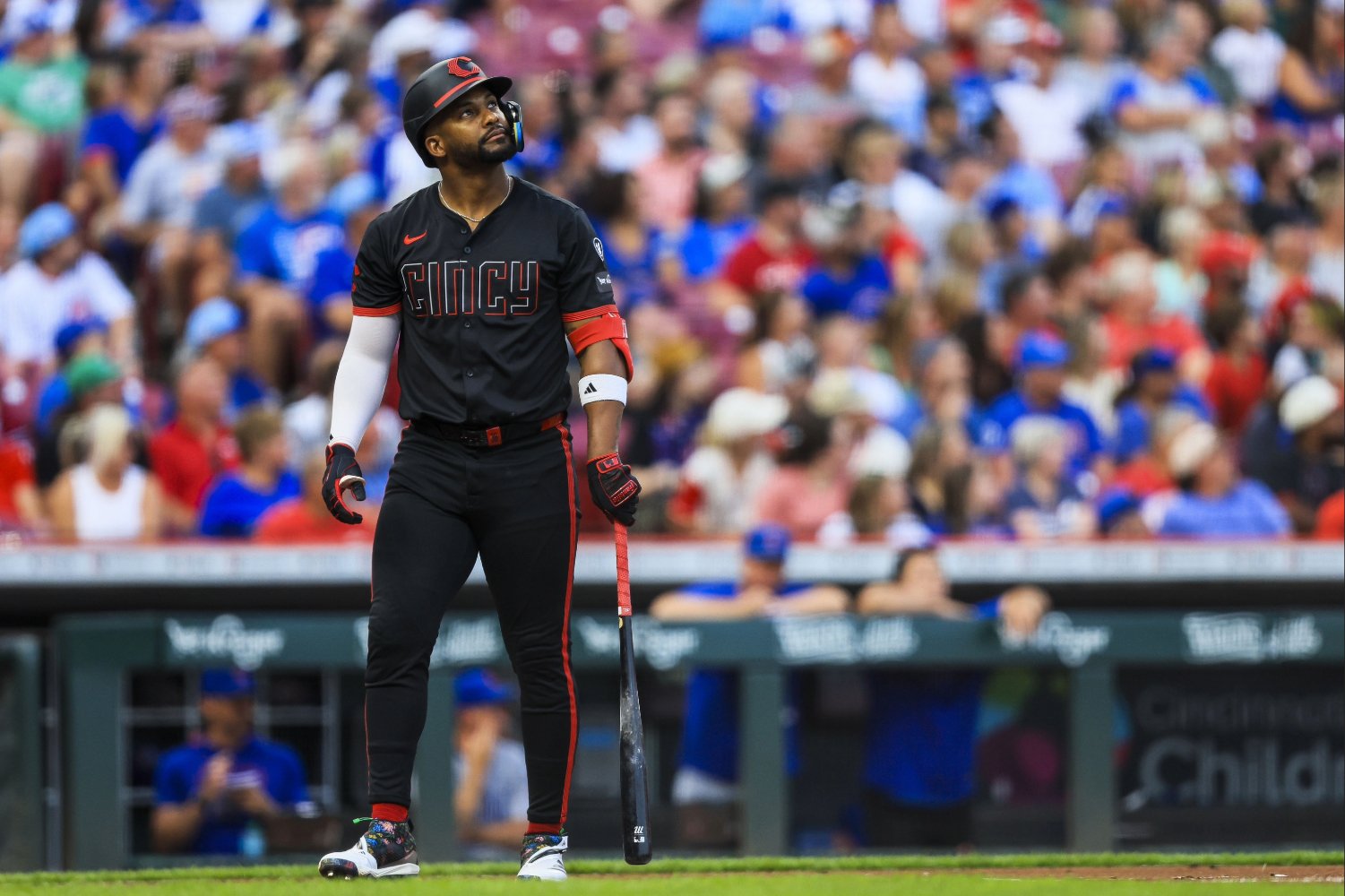 With their signing of Miguel Andujar to a one-year contract, the San Diego Padres have essentially fortified the position player portion of their 2026 roster. Eight of the starting nine are in place, with Andujar and Sung Mun Song representing at least half the bench contingent. If we assume that Luis Campusano and Bryce Johnson handle the backup catching and outfield duties, respectively, the reserves are almost entirely squared away. From there, it's a matter of whether we'll see Will Wagner or Mason McCoy on the active roster to start the year or if someone like Jose Miranda forces his way into the picture with a strong spring. Beyond that, we're not looking at a lot of wiggle room on the bench. With that in mind, where should A.J. Preller be turning his attention with the little bit of remaining time he has this offseason? We can think of at least three areas. Starting Pitcher This is easily the most obvious positional need, to the point where it may be the most glaring need for any would-be contender throughout the Major League Baseball landscape. The Padres have Nick Pivetta and Michael King as locks atop their rotation. Joe Musgrove is reportedly a full-go as the No. 3 starter, but it remains to be seen how effective he'll be out of the gate in his return from Tommy John surgery. Beyond that trio, though, things remain incredibly murky. Randy Vásquez could be primed to get work as a fourth or fifth starter given how he ended last year. After Vásquez, the list reads Matt Waldron, Sean Boyle, Triston McKenzie, Kyle Hart, JP Sears, Marco Gonzales, and Miguel Mendez, in some order. There's some bounce-back potential and some upside elsewhere among the mix of 40-man and non-roster guys. But a team that is as steady as the Padres in other areas of their roster could use some actual stability to fill out the middle of their rotation. Old friend Nick Martinez remains an option on the free-agent market. As do names like Lucas Giolito and Zac Gallen, in addition to a host of past-their-prime arms that could eat at least a few innings but with little guarantee of being able to do so. The options at this point are thin, but there's a strong argument for Preller to add at least one more surefire starter to the group before pitchers and catchers report next week. Backup Catcher Despite the fact that the position group appears settled, the chance remains that Preller could seek to find an alternative to Campusano to supplement Freddy Fermin behind the dish. Campusano's defensive work was an abomination the last time we saw him at the major-league level, and it may behoove the Padres to seek out someone that offers a bit more stability behind the plate. We won't see Ethan Salas break camp with the team as a backup, but the Padres also have Rodolfo Durán, Blake Hunt, and Anthony Vilar in camp as non-roster invitees. Names like Jonah Heim, Christian Vázquez, and Matt Thaiss are still available via free agency, and none would be cost-prohibitive. Not that they're particularly inspiring in their glove work, but there's at least the factor of providing defense above what Campusano offers. Perhaps there's an earnestness present in giving Campusano the first legitimate shot before the non-roster guys get an opportunity. Or maybe Preller just hasn't been able to agree to terms with one of the free agents. Either way, a surefire contingency behind the plate in the event of a Fermin injury seems like a necessity. It would allow Campusano to get some work as part of a short-side platoon at first base or designated hitter and Stammen to get his bat into the lineup rather than having to worry about his defense. Bullpen Depth This is an area where the Padres are above many of their peers across the big-league landscape; a back end of Mason Miller, Adrian Morejon, Jeremiah Estrada, and David Morgan is the envy of most teams. San Diego also has a number of bridge options to get it into the later innings, including Yuki Matsui, Wandy Peralta, and Ty Adcock, among others. That doesn't mean Preller shouldn't look to further the depth, however. Such a need is borne out of the lack of certainty in the rotation. In 2025, the Padres ranked ninth in innings thrown by relief pitchers, and that was with Dylan Cease and Yu Darvish in the mix at various times. With even less stability from their starting group, those bridge guys, in particular, become absolutely essential if the team is hoping to preserve its bullpen dominance again in 2026. Considering how many notable names are still permeating throughout the free-agent waters, it'd hardly be a surprise to see additions carry on into the spring exhibition slate. The Padres have built up a certain degree of volume, but it also lacks certainty. Maybe Preller takes a bit more of a wait-and-see approach at the outset of camp before pursuing from those that remain. Either way, it's difficult to imagine such an active executive doesn't have at least one more move of note before 2026 officially gets underway. Smart money says that, if one happens, it comes from one of these three groups.
 -
The San Diego Padres finally made the addition to their bench that had been coveted since the start of the offseason, signing Miguel Andujar to a one-year, $4 million contract. Considering the context of the roster and the team's finances at present, Andújar represented the ideal target among those that remain available in free agency. Andújar is coming off his best season since 2018. That year, he posted a 3.9 fWAR with the New York Yankees and finished as a finalist for the American League Rookie of the Year award. Such a breakout came courtesy of a .297/.328/.527 line that featured a .230 ISO and 129 wRC+. It also still stands as his peak, as the subsequent seasons were spent battling injury and toiling in the minor leagues with a handful of different organizations. After creeping his value back up to above average in 90 plate appearances with Pittsburgh in 2023 (105 wRC+), Andújar was able to maintain that level of performance in about a half-season's worth of work with Oakland the following year. In the latter, however, his power vanished to the tune of a .093 ISO. Nevertheless, the Athletics saw enough to let him hang around in 2025 before he was eventually traded to Cincinnati. All told, his 2025 season came with a 125 wRC+ and career-highs in batting average and on-base percentage. The power still wasn't back at his pre-2024 levels, but did show signs of reemerging at a .153 ISO figure. Despite the fact that he remained on the market at this late stage of the offseason, the reports of a number of teams interested in adding an effective bench bat go back several weeks. The Padres' current roster situation made the addition of Andújar kind of an essential one. This is a team that, on paper, has significant upside at the plate. They also lack depth in that ability to contribute on offense. With news that Gavin Sheets will get the first crack at holding down first base and designated hitter likely to be rotated out rather than feature a mainstay, the team was left with the likes of Sung Mun Song, Will Wagner, Mason McCoy, Luis Campusano, and Bryce Johnson behind their starters. Outside of Song, though, the offensive profiles of the remaining bench options read as uninspiring. With Song himself being a lefty, there was an imperative on adding some right-handed depth. Enter Andújar. Last year's group was in the bottom half of the league against southpaws, posting a collective 96 wRC+ that ranked 17th. On the power side, however, their .130 ISO sat only 23rd. Andújar should contribute massively in this regard, as his splits heavily favor matchups against left-handed pitching. He went for a 171 wRC+ against pitchers of that handedness last year against a 108 mark vs. righties. His ISO, at .189, was 50 points higher. In general, he doesn't walk much, with a 4.4 BB% in his career, but he also doesn't strike out either (15.5 career K%). That should fit the Padres well, too, given their penchant for contact over punchouts. The question of how Andújar will be utilized within this lineup isn't too difficult to solve, as a result. One imagines that he'll get plenty of run in the designated hitter slot against pitchers of the left-handed variety. Should Craig Stammen choose to deploy him in the field, though, he has some versatility to his name. Andújar logged time at each corner spot last year; he spent 13 innings at first base, 237 at third, 217 in left field, and 22 in right field. He's not particularly adept at the defensive work (he was either average or well-below at each spot), but the utility should prove valuable in the event that Stammen aims to get a regular off their feet for a day off. Even with this signing, Song will be the primary utility option off the bench. If the team can expand his utility to first and some work on the outfield grass, it'll only add to versatility that served as a centerpiece behind the appeal of his signing. But Andújar won't be far behind in his usage. Whether it's as the designated hitter or part of the rotation that figures to be incorporated regularly, he's not going to be wanting for playing time. For what it's worth, FanGraphs projects Andújar for a shade over 20 percent of the playing time at first, five percent at third, and another five in left. Baseball Prospectus has him living primarily as the DH (45 percent) and as a first base supplement (25 percent), with only another five that'll be spent in left field. The Padres should consider themselves somewhat fortune to be able to bring in this type of player at this stage of the offseason. Despite whispers that A.J. Preller had been working on something big around the Winter Meetings, it's been a while since they'd done something of note beyond a decent volume of minor-league signings. Andújar immediately changes the complexion of the roster and helps to quell prior concerns over the team's lack of depth on the positional side. View full article
-
Miguel Andujar Is Breath of Fresh Air That Padres' Bench Needed
Randy Holt posted an article in Padres
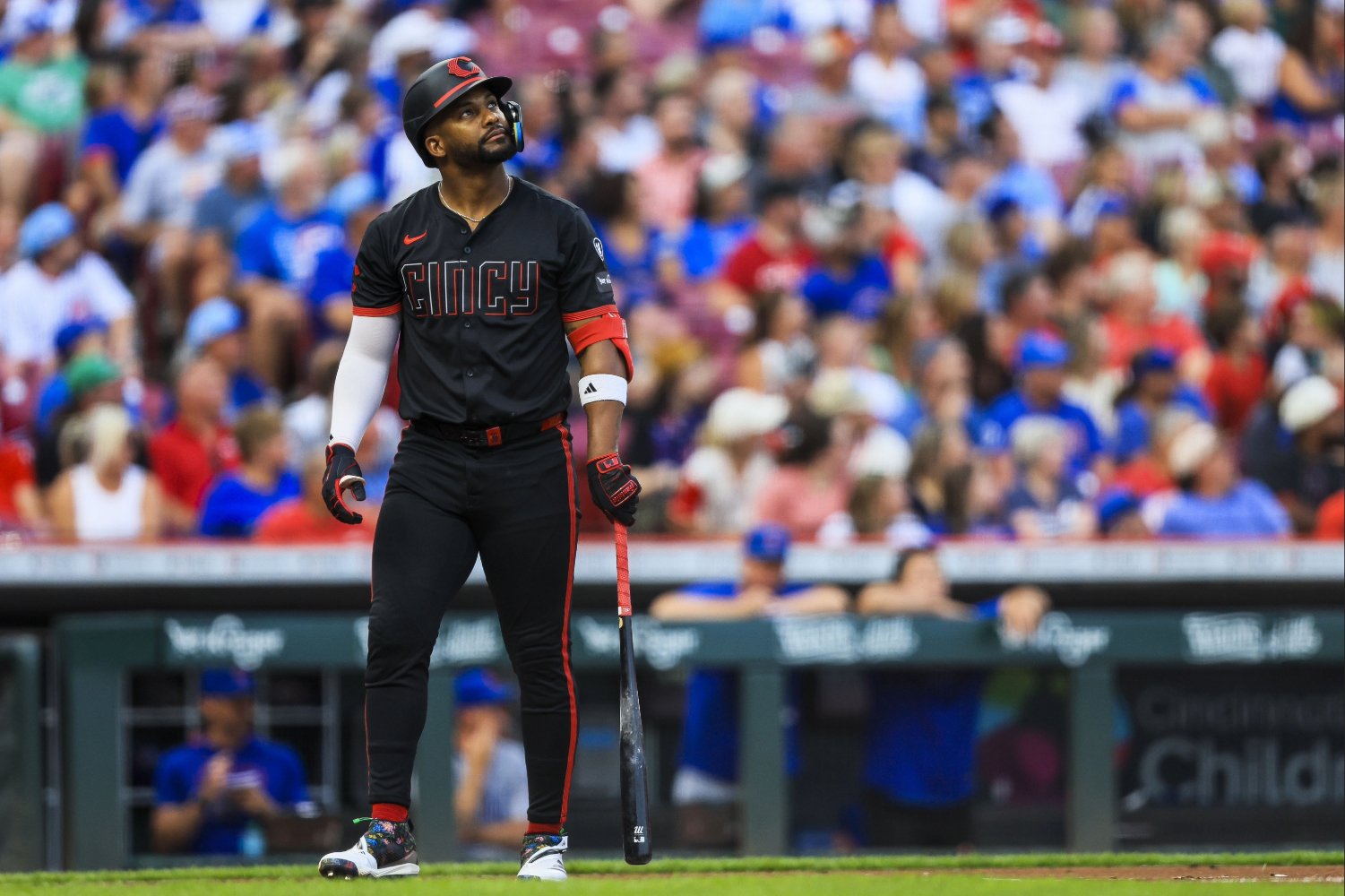 The San Diego Padres finally made the addition to their bench that had been coveted since the start of the offseason, signing Miguel Andujar to a one-year, $4 million contract. Considering the context of the roster and the team's finances at present, Andújar represented the ideal target among those that remain available in free agency. Andújar is coming off his best season since 2018. That year, he posted a 3.9 fWAR with the New York Yankees and finished as a finalist for the American League Rookie of the Year award. Such a breakout came courtesy of a .297/.328/.527 line that featured a .230 ISO and 129 wRC+. It also still stands as his peak, as the subsequent seasons were spent battling injury and toiling in the minor leagues with a handful of different organizations. After creeping his value back up to above average in 90 plate appearances with Pittsburgh in 2023 (105 wRC+), Andújar was able to maintain that level of performance in about a half-season's worth of work with Oakland the following year. In the latter, however, his power vanished to the tune of a .093 ISO. Nevertheless, the Athletics saw enough to let him hang around in 2025 before he was eventually traded to Cincinnati. All told, his 2025 season came with a 125 wRC+ and career-highs in batting average and on-base percentage. The power still wasn't back at his pre-2024 levels, but did show signs of reemerging at a .153 ISO figure. Despite the fact that he remained on the market at this late stage of the offseason, the reports of a number of teams interested in adding an effective bench bat go back several weeks. The Padres' current roster situation made the addition of Andújar kind of an essential one. This is a team that, on paper, has significant upside at the plate. They also lack depth in that ability to contribute on offense. With news that Gavin Sheets will get the first crack at holding down first base and designated hitter likely to be rotated out rather than feature a mainstay, the team was left with the likes of Sung Mun Song, Will Wagner, Mason McCoy, Luis Campusano, and Bryce Johnson behind their starters. Outside of Song, though, the offensive profiles of the remaining bench options read as uninspiring. With Song himself being a lefty, there was an imperative on adding some right-handed depth. Enter Andújar. Last year's group was in the bottom half of the league against southpaws, posting a collective 96 wRC+ that ranked 17th. On the power side, however, their .130 ISO sat only 23rd. Andújar should contribute massively in this regard, as his splits heavily favor matchups against left-handed pitching. He went for a 171 wRC+ against pitchers of that handedness last year against a 108 mark vs. righties. His ISO, at .189, was 50 points higher. In general, he doesn't walk much, with a 4.4 BB% in his career, but he also doesn't strike out either (15.5 career K%). That should fit the Padres well, too, given their penchant for contact over punchouts. The question of how Andújar will be utilized within this lineup isn't too difficult to solve, as a result. One imagines that he'll get plenty of run in the designated hitter slot against pitchers of the left-handed variety. Should Craig Stammen choose to deploy him in the field, though, he has some versatility to his name. Andújar logged time at each corner spot last year; he spent 13 innings at first base, 237 at third, 217 in left field, and 22 in right field. He's not particularly adept at the defensive work (he was either average or well-below at each spot), but the utility should prove valuable in the event that Stammen aims to get a regular off their feet for a day off. Even with this signing, Song will be the primary utility option off the bench. If the team can expand his utility to first and some work on the outfield grass, it'll only add to versatility that served as a centerpiece behind the appeal of his signing. But Andújar won't be far behind in his usage. Whether it's as the designated hitter or part of the rotation that figures to be incorporated regularly, he's not going to be wanting for playing time. For what it's worth, FanGraphs projects Andújar for a shade over 20 percent of the playing time at first, five percent at third, and another five in left. Baseball Prospectus has him living primarily as the DH (45 percent) and as a first base supplement (25 percent), with only another five that'll be spent in left field. The Padres should consider themselves somewhat fortune to be able to bring in this type of player at this stage of the offseason. Despite whispers that A.J. Preller had been working on something big around the Winter Meetings, it's been a while since they'd done something of note beyond a decent volume of minor-league signings. Andújar immediately changes the complexion of the roster and helps to quell prior concerns over the team's lack of depth on the positional side.
 -
With Gavin Sheets (mostly officially) set to take over as the San Diego Padres' starting first baseman for 2026, it appears that one of their two remaining lineup questions has been answered. The other, however, remains an unsolved riddle. Once the Padres exercised Ramón Laureano's club option, they settled seven of their nine positions in the lineup. Only first base and designated hitter were left to determine. With the news that Sheets will get the first run at the former, how the team will approach the latter now becomes a matter of some conjecture. Now on the cusp of pitchers and catchers reporting to Arizona, two paths lie before them. For one, there's a chance the Padres attempt to fill the position completely internally. Given how quiet things have been on the transactional front, this one would appear to be the most likely. It's also the most complex. At one point this winter, it might've been worthwhile for the team to consider deploying Luis Campusano as part of a regular DH rotation. His upside lives almost exclusively in his bat and, in the absence of other options, it appeared that he finally had a path to regular plate appearances. That could have even extended to a platoon, of sorts, with Sheets. With the latter now assumed to be getting regular field work, that idea dissolves. To say nothing of the fact that Campusano still projects to be the team's backup catcher. That's a guy more likely to start on the bench rather than elsewhere considering the logistical nightmare wrought by something happening to Freddy Fermin mid-game. With that idea out, the first path is paved for Craig Stammen to rotate someone new in depending on matchups and a desire to create partial off-days. Sung Mun Song's presence certainly helps in this regard. He can play any of second base, shortstop, or third, and the team plans to get him some additional run at first and in the outfield. Such utility could be used heavily to their advantage in getting veterans off their feet in the field on occasion. This is particularly true for Manny Machado, whose body has been through plenty of tribulations and who features declining defensive metrics. The same could be true of the outfield, where Bryce Johnson presents at least a stable glove in the event that Stammen wanted to give Fernando Tatis Jr. or Jackson Merrill a bit of a blow on a given day. There is a way to execute such a plan in a way that doesn't alter the lineup too much on a daily basis, as well. If it's Song, for example, rotating primarily through the group, then you hold his spot and simply rotate positions on an as-needed basis. It's still a good deal of roster juggling, but could allow the Padres to give their most important bats more frequent rest, at least on a halfway basis. The alternative to the expected route is to pursue a bat from outside the organization. This might be someone like Rhys Hoskins or Miguel Andujar on the free-agent market. Hoskins has become nearly unplayable in the field while Andujar at least has some versatility in a bat that bounced back in 2025. If the Philadelphia Phillies were willing to eat enough money, Nick Castellanos could be a somewhat realistic option, too. Such a route has appeal in the form of an additional bat for a team that probably needs more supplemental offense. Considering we don't know where the team's financial expectations are at this stage of the winter, however, it's also a much more difficult route to see to fruition than the expected one. With the clarity arriving on Sheets' role, though, there's an opportunity for the Padres to pursue the same on the designated hitter front. Even with the team appearing content to run things out with the status quo, it remains difficult to underestimate A.J. Preller's willingness to do anything he can to improve the roster. With the window to do so waning, we should see the same level of clarity emerge at DH in the coming weeks. View full article
-
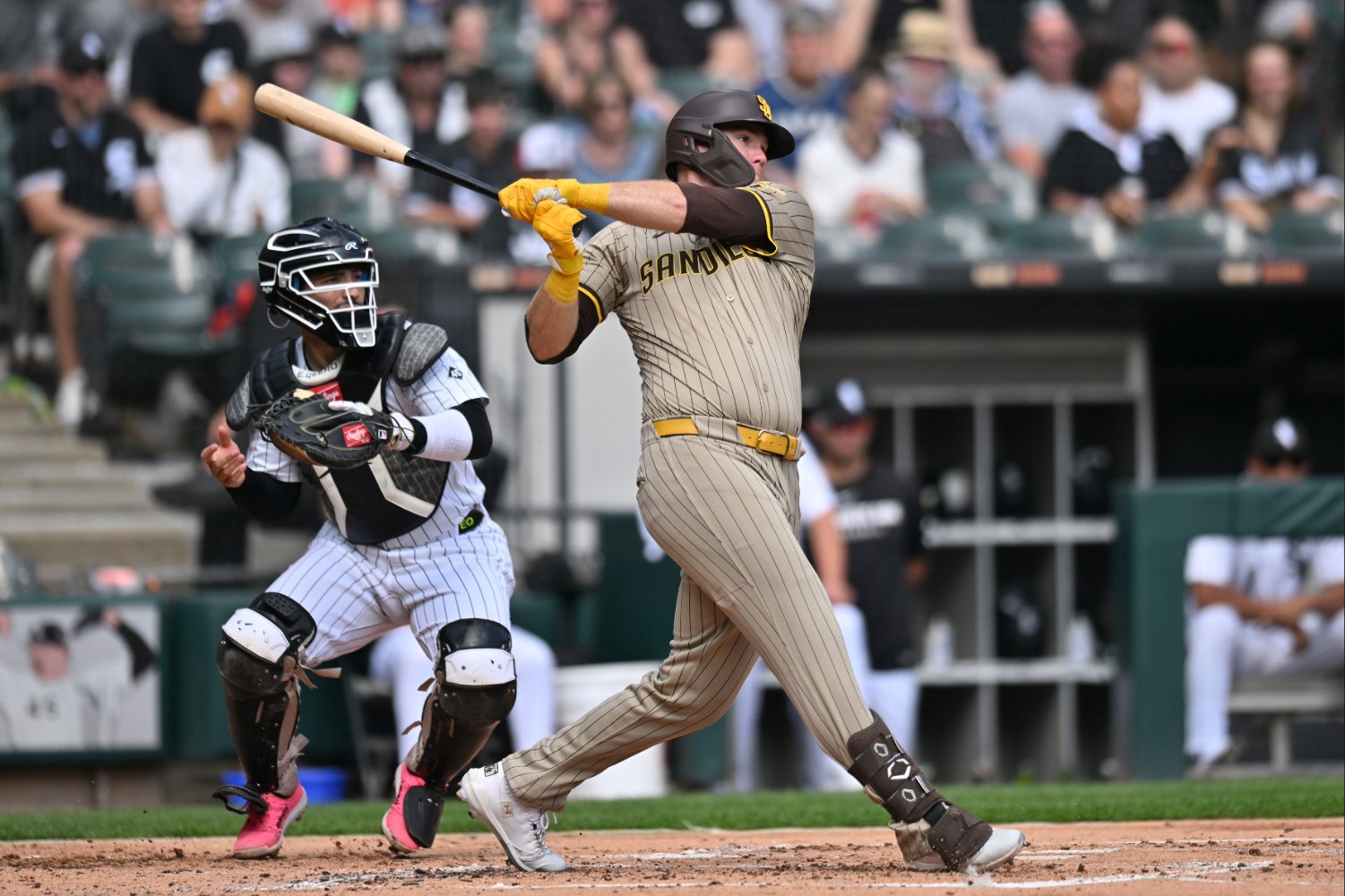 With Gavin Sheets (mostly officially) set to take over as the San Diego Padres' starting first baseman for 2026, it appears that one of their two remaining lineup questions has been answered. The other, however, remains an unsolved riddle. Once the Padres exercised Ramón Laureano's club option, they settled seven of their nine positions in the lineup. Only first base and designated hitter were left to determine. With the news that Sheets will get the first run at the former, how the team will approach the latter now becomes a matter of some conjecture. Now on the cusp of pitchers and catchers reporting to Arizona, two paths lie before them. For one, there's a chance the Padres attempt to fill the position completely internally. Given how quiet things have been on the transactional front, this one would appear to be the most likely. It's also the most complex. At one point this winter, it might've been worthwhile for the team to consider deploying Luis Campusano as part of a regular DH rotation. His upside lives almost exclusively in his bat and, in the absence of other options, it appeared that he finally had a path to regular plate appearances. That could have even extended to a platoon, of sorts, with Sheets. With the latter now assumed to be getting regular field work, that idea dissolves. To say nothing of the fact that Campusano still projects to be the team's backup catcher. That's a guy more likely to start on the bench rather than elsewhere considering the logistical nightmare wrought by something happening to Freddy Fermin mid-game. With that idea out, the first path is paved for Craig Stammen to rotate someone new in depending on matchups and a desire to create partial off-days. Sung Mun Song's presence certainly helps in this regard. He can play any of second base, shortstop, or third, and the team plans to get him some additional run at first and in the outfield. Such utility could be used heavily to their advantage in getting veterans off their feet in the field on occasion. This is particularly true for Manny Machado, whose body has been through plenty of tribulations and who features declining defensive metrics. The same could be true of the outfield, where Bryce Johnson presents at least a stable glove in the event that Stammen wanted to give Fernando Tatis Jr. or Jackson Merrill a bit of a blow on a given day. There is a way to execute such a plan in a way that doesn't alter the lineup too much on a daily basis, as well. If it's Song, for example, rotating primarily through the group, then you hold his spot and simply rotate positions on an as-needed basis. It's still a good deal of roster juggling, but could allow the Padres to give their most important bats more frequent rest, at least on a halfway basis. The alternative to the expected route is to pursue a bat from outside the organization. This might be someone like Rhys Hoskins or Miguel Andujar on the free-agent market. Hoskins has become nearly unplayable in the field while Andujar at least has some versatility in a bat that bounced back in 2025. If the Philadelphia Phillies were willing to eat enough money, Nick Castellanos could be a somewhat realistic option, too. Such a route has appeal in the form of an additional bat for a team that probably needs more supplemental offense. Considering we don't know where the team's financial expectations are at this stage of the winter, however, it's also a much more difficult route to see to fruition than the expected one. With the clarity arriving on Sheets' role, though, there's an opportunity for the Padres to pursue the same on the designated hitter front. Even with the team appearing content to run things out with the status quo, it remains difficult to underestimate A.J. Preller's willingness to do anything he can to improve the roster. With the window to do so waning, we should see the same level of clarity emerge at DH in the coming weeks.
 -
The 2025 San Diego Padres saw six different players log time at first base. If Craig Stammen and Gavin Sheets have their way, that number will come down quite a bit in 2026. Last year's iteration of the Padres rode out Luis Arráez for 117 games, Ryan O'Hearn for 27 games, and each of Sheets and Jake Cronenworth for a baker's dozen. Yuli Gurriel got four games worth of time, while Connor Joe appeared once in his brief time with the organization early in the year. Of those names, only Sheets and Cronenworth remain in the mix now. Comprehensively, the results were not terrific. The Padres' 1.6 fWAR at the cold corner ranked 15th in the league. Their cumulative wRC+ was 109, which sat 14th. Where issues arose was on the power side. A position that traditionally favors a power profile checked in at just 23rd on the Padres' end of things, as they finished the year with a .138 isolated power figure. Things were even worse on the defensive side, where the team's -6 Outs Above Average finished in 24th. The combination of uneven performance and various departures, both during and after the season, led to questions about the shape the position could take ahead of 2026. Without a designated hitter and in need of some extra depth in the outfield corners, there was an immediate assumption that Gavin Sheets would fill the former role primarily and fill in at either corner or at first base on occasion. Cronenworth, meanwhile, was expected to take back over at the keystone and perhaps move a bit in either direction upon the arrival of Sung Mun Song in San Diego. Either way, the position lacked someone of a visibly full-time vintage. This weekend's Fan Fest in San Diego appeared to put some of those questions to bed with new manager Craig Stammen asserting that Sheets would get the first run at serving such a role. After a career rebirth in San Diego last year and another two seasons before he hits free agency, is it possible that Sheets might actually offer some stability at first base? The profile is certainly there, at least. Sheets turned in above-average offensive production for the first time since he was a rookie, with a 111 wRC+ that was aided by some of the more sustained power output the team had last year. His .177 ISO was also his highest since he posted a gaudy .256 figure back in 2021. Both the strikeout (19.6 percent) and walk (8.1 percent) rates were steady, and a career-low chase rate indicated that there was some refinement occurring in his approach. From an offensive skill set, Sheets certainly has the chops to hang at the position. The primary question will come with the glove. A quality defensive first baseman improves the entirety of the infield defense. The Padres have posted -14 OAA at first base over the last three years, which ranks 21st over that span. In an ideal world, the regular first sacker is someone who can make life easier for the likes of Manny Machado, Xander Bogaerts, and Cronenworth. It remains to be seen, though, if a player with fewer than 800 innings across five seasons can be the one to do it. Much of Sheets' work at first came in 2023 and 2024 with the Chicago White Sox. In the former campaign, he posted -2 OAA in about 140 innings before following it up with another -2 in roughly 360 frames the following year. Last season, however, he was actually above average, with 1 OAA in 99 innings. Perhaps there's something in his positioning — which moved a touch deeper and at a narrower angle — that was able to provide a bump in the defensive performance. Should that defensive growth continue to manifest into 2026, the Padres find themselves in a much more stable position than they might've been otherwise. It seems necessary more now than ever, too. With no visible trade options and defensive quality lacking in what remains on the free-agent market, there's a good deal of pressure for this to work. The offensive should play, at least. It's just a matter of the defense continuing to follow suit. View full article
-
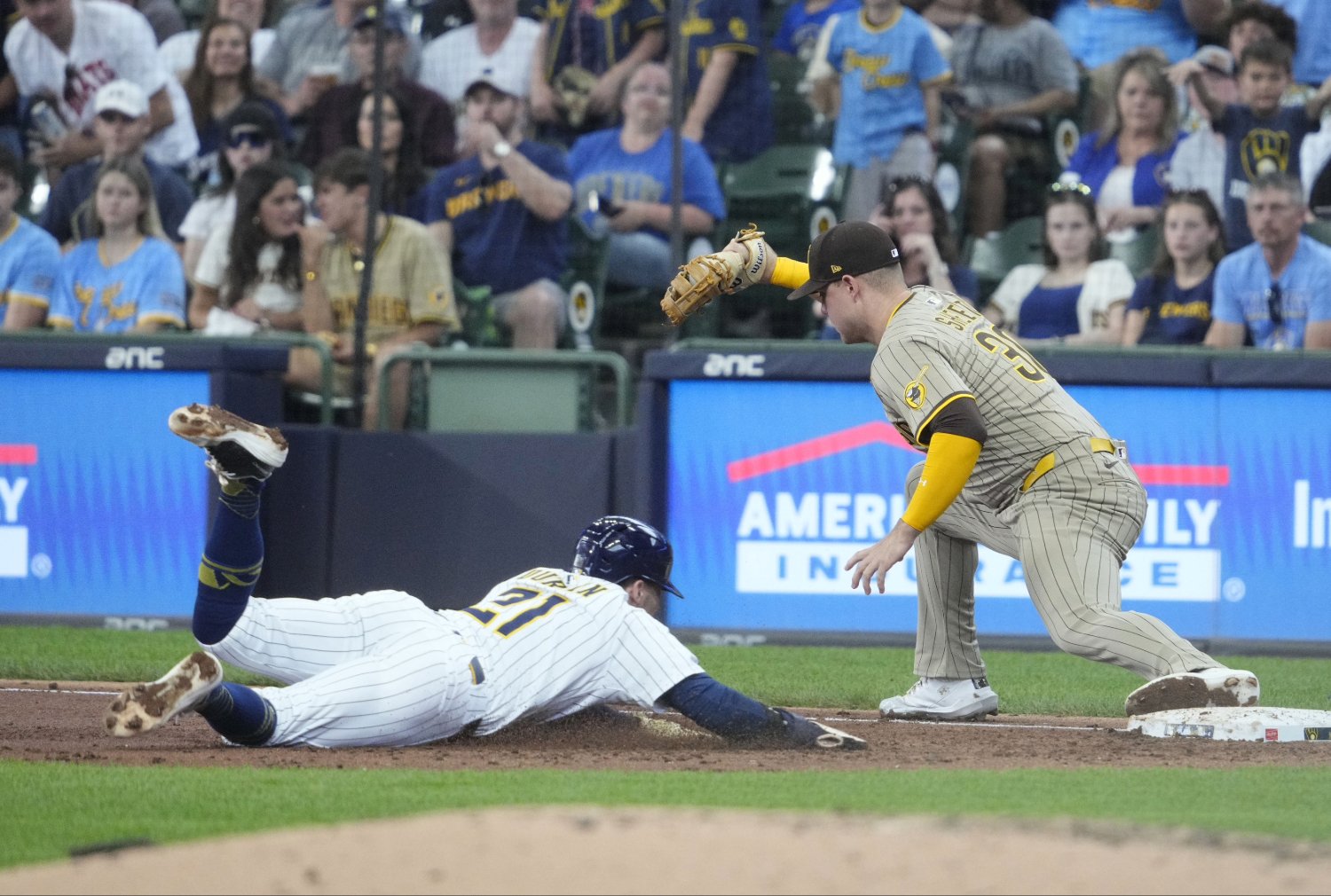 The 2025 San Diego Padres saw six different players log time at first base. If Craig Stammen and Gavin Sheets have their way, that number will come down quite a bit in 2026. Last year's iteration of the Padres rode out Luis Arráez for 117 games, Ryan O'Hearn for 27 games, and each of Sheets and Jake Cronenworth for a baker's dozen. Yuli Gurriel got four games worth of time, while Connor Joe appeared once in his brief time with the organization early in the year. Of those names, only Sheets and Cronenworth remain in the mix now. Comprehensively, the results were not terrific. The Padres' 1.6 fWAR at the cold corner ranked 15th in the league. Their cumulative wRC+ was 109, which sat 14th. Where issues arose was on the power side. A position that traditionally favors a power profile checked in at just 23rd on the Padres' end of things, as they finished the year with a .138 isolated power figure. Things were even worse on the defensive side, where the team's -6 Outs Above Average finished in 24th. The combination of uneven performance and various departures, both during and after the season, led to questions about the shape the position could take ahead of 2026. Without a designated hitter and in need of some extra depth in the outfield corners, there was an immediate assumption that Gavin Sheets would fill the former role primarily and fill in at either corner or at first base on occasion. Cronenworth, meanwhile, was expected to take back over at the keystone and perhaps move a bit in either direction upon the arrival of Sung Mun Song in San Diego. Either way, the position lacked someone of a visibly full-time vintage. This weekend's Fan Fest in San Diego appeared to put some of those questions to bed with new manager Craig Stammen asserting that Sheets would get the first run at serving such a role. After a career rebirth in San Diego last year and another two seasons before he hits free agency, is it possible that Sheets might actually offer some stability at first base? The profile is certainly there, at least. Sheets turned in above-average offensive production for the first time since he was a rookie, with a 111 wRC+ that was aided by some of the more sustained power output the team had last year. His .177 ISO was also his highest since he posted a gaudy .256 figure back in 2021. Both the strikeout (19.6 percent) and walk (8.1 percent) rates were steady, and a career-low chase rate indicated that there was some refinement occurring in his approach. From an offensive skill set, Sheets certainly has the chops to hang at the position. The primary question will come with the glove. A quality defensive first baseman improves the entirety of the infield defense. The Padres have posted -14 OAA at first base over the last three years, which ranks 21st over that span. In an ideal world, the regular first sacker is someone who can make life easier for the likes of Manny Machado, Xander Bogaerts, and Cronenworth. It remains to be seen, though, if a player with fewer than 800 innings across five seasons can be the one to do it. Much of Sheets' work at first came in 2023 and 2024 with the Chicago White Sox. In the former campaign, he posted -2 OAA in about 140 innings before following it up with another -2 in roughly 360 frames the following year. Last season, however, he was actually above average, with 1 OAA in 99 innings. Perhaps there's something in his positioning — which moved a touch deeper and at a narrower angle — that was able to provide a bump in the defensive performance. Should that defensive growth continue to manifest into 2026, the Padres find themselves in a much more stable position than they might've been otherwise. It seems necessary more now than ever, too. With no visible trade options and defensive quality lacking in what remains on the free-agent market, there's a good deal of pressure for this to work. The offensive should play, at least. It's just a matter of the defense continuing to follow suit.
 -
Given that he threw as many major-league innings in 2025 as he did in each of 2023 and 2024 combined, it wouldn't have been hard to call the former a career season for San Diego Padres starting pitcher Randy Vásquez. And in many ways, it was. After 20 starts in his first full season in San Diego, Vásquez made 26 starts (28 appearances overall) for the Padres last year. His ERA checked in at 3.84 (4.85 FIP). He improved each of his groundball and home run rates by roughly two percent — 40.1 & 8.3, respectively — while continuing to thrive via avoidance of quality contact. His 39.3 Hard-Hit% landed in the 60th percentile. Of course, when you're talking about a pitcher whose skill set lives on the margins due to minuscule whiff counts and occasionally shaky command, there's going to be variance within the results. Such was the case with Vásquez. From a month-to-month standpoint, Vásquez had some stretches where he was very good for the Padres in 2025. May, July, and September each stand out, as he went every-other-month in his ability to find success. May's 28 innings of work came with a 2.89 ERA and a strikeout bump from just 8.2 percent in April to 18.8 percent. He posted a 2.79 ERA in 19 innings in July, with a .289 opposing wOBA that was 20 points lower than even his finest work in the months prior. September, though, is what has many optimistic about what Vásquez's future in this rotation could look like. In 22 1/3 innings to close the year, Vásquez pitched to a 3.22 ERA, with a .260 opposing wOBA, a season-high 21.3 K%, and a 29.9 percent hard-hit rate. As should be expected given what happened in between those three individual months, there's an enigmatic quality to the 2025 output from Vásquez. The month that featured his best ERA also featured his highest amount of hard contact allowed and a season-low strikeout rate. In August, meanwhile, he posted his highest whiff rate and lowest walk rate but had an ERA over eight. Of course, that came across just seven innings of big-league work. Nevertheless, there's a lot going on there for a pitcher who was already somewhat difficult to figure out in terms of future projection. In order to try and predict his future output, though, it requires one to redefine expectations given where Vásquez was supposed to be based on his prospect profile versus where he actually is. The following is his writeup from MLB Pipeline back in 2023, when he was a prospect with the New York Yankees: Last year's iteration of Vásquez saw him utilize (technically) seven different pitches. He led the way with three different fastballs: a four-seam, a sinker, and a cutter. The four-seam was primarily deployed against left-handed hitters while the sinker was for the righties. The cutter, meanwhile, was distributed in a nearly identical fashion regardless of handedness. His curveball took on more of a sweeper shape against righties while left-handed hitters got a more standard curveball as it took on more of a vertical shape. The actual fastball velocity, though, sat at just 93.3 MPH (32nd percentile). While he was able to generate the type of spin noted in the scouting report in either form of his curve, he was also unable to generate much of anything when it came to whiffs. The more standard curveball got just a 15.8% swing-and-miss rate, while the sweeper was a bit higher at 25.2 percent. His overall 15.7 Whiff% landed in the first percentile among all qualified pitchers in 2025. This is also where we see some of the monthly variance come into play. The curve was rarely near the top of his whiff rates, while the sweeper was there early before falling behind: It's that type of graphic that speaks to a couple of issues with Vásquez, his arsenal, and his usage. For one, the pitch shape differs vastly depending on handedness. A second is that his command simply is not good enough for that type of differentiation. The following is his movement profile from 2025: None of the work here is indicative of a pitcher who has full command of his arsenal, expansive as it may be. That he's this all over the place in his ability to garner swings and misses, mitigate hard contact, and locate pitches with regularity is a symptom of more overarching command woes. It's why we see such intense change between individual months. There is, however, something encouraging to take away from the end of the season. Over the last three months of the campaign, there were trends in his usage that indicated he might be settling into something more consistent with the way he deploys his pitches: The changeup falling out of the rotation is an encouraging start; Stuff+ rates it as his worst offering. The four-seam becoming his primary fastball of choice also seems wise. In the two years prior, Stuff+ had that as an above-average pitch before the really heavy mixing began in 2024. The curveball-sweeper dynamic is fine to stay if the command is there, since that appears to be a shape based on handedness. Ultimately, it looks as if Vásquez began to simplify toward the end of the year, and it's such simplification that could be key to him beginning to stabilize in 2026. Which would be kind of an essential development for him in the upcoming year. The Padres are working with Nick Pivetta, Michael King, and a returning-from-Tommy-John-surgery Joe Musgrove atop their rotation. There isn't much to speak of on the depth front. Randy Vásquez becoming a stabilizing presence capable of eating innings would be tremendous for a shallow group. Unfortunately, given his prior month-to-month woes, we may not know if these trends are real until the temperature starts to rise this season. View full article
-
Randy Vásquez's Jekyll-and-Hyde Season Could Portend Future Success
Randy Holt posted an article in Padres
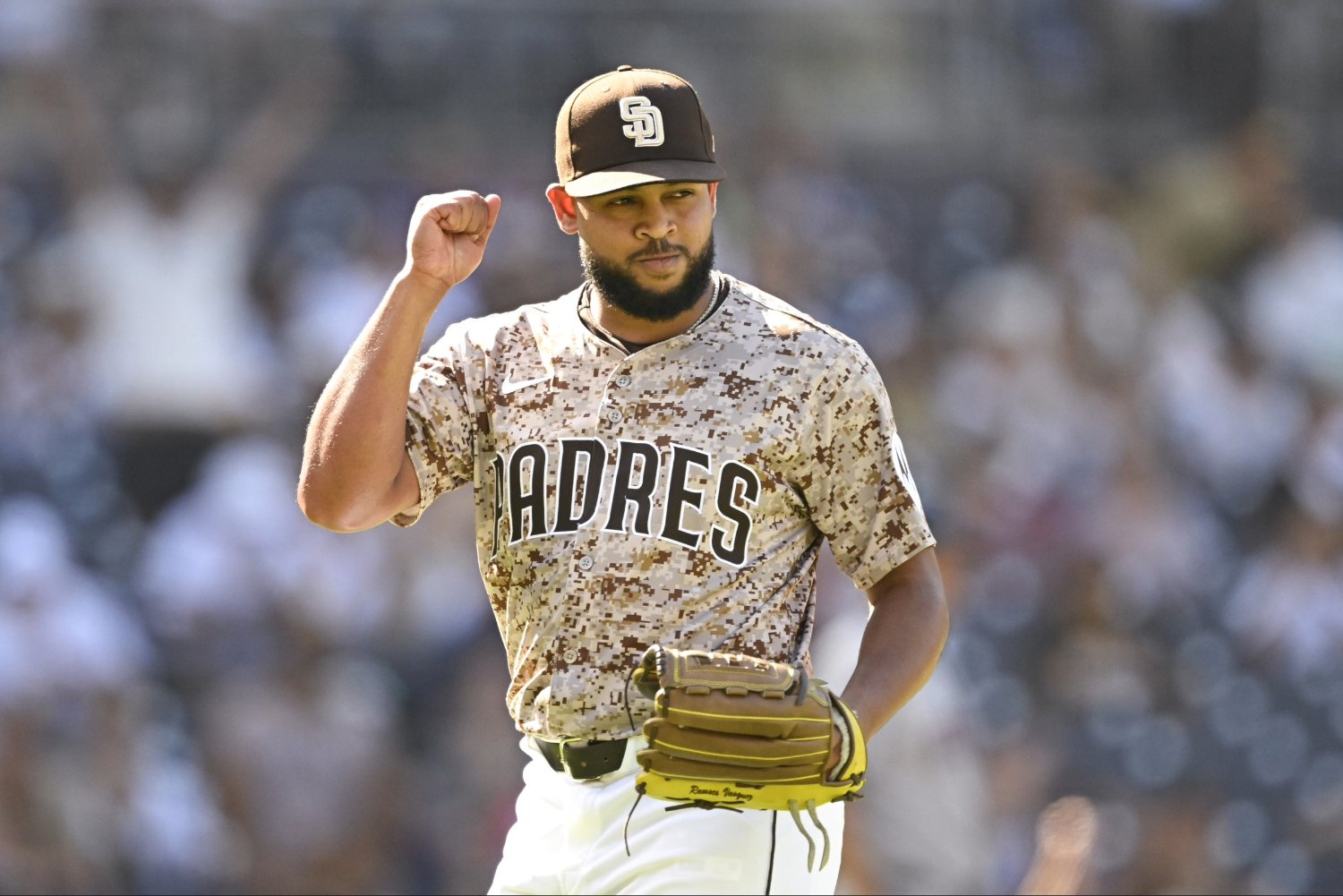 Given that he threw as many major-league innings in 2025 as he did in each of 2023 and 2024 combined, it wouldn't have been hard to call the former a career season for San Diego Padres starting pitcher Randy Vásquez. And in many ways, it was. After 20 starts in his first full season in San Diego, Vásquez made 26 starts (28 appearances overall) for the Padres last year. His ERA checked in at 3.84 (4.85 FIP). He improved each of his groundball and home run rates by roughly two percent — 40.1 & 8.3, respectively — while continuing to thrive via avoidance of quality contact. His 39.3 Hard-Hit% landed in the 60th percentile. Of course, when you're talking about a pitcher whose skill set lives on the margins due to minuscule whiff counts and occasionally shaky command, there's going to be variance within the results. Such was the case with Vásquez. From a month-to-month standpoint, Vásquez had some stretches where he was very good for the Padres in 2025. May, July, and September each stand out, as he went every-other-month in his ability to find success. May's 28 innings of work came with a 2.89 ERA and a strikeout bump from just 8.2 percent in April to 18.8 percent. He posted a 2.79 ERA in 19 innings in July, with a .289 opposing wOBA that was 20 points lower than even his finest work in the months prior. September, though, is what has many optimistic about what Vásquez's future in this rotation could look like. In 22 1/3 innings to close the year, Vásquez pitched to a 3.22 ERA, with a .260 opposing wOBA, a season-high 21.3 K%, and a 29.9 percent hard-hit rate. As should be expected given what happened in between those three individual months, there's an enigmatic quality to the 2025 output from Vásquez. The month that featured his best ERA also featured his highest amount of hard contact allowed and a season-low strikeout rate. In August, meanwhile, he posted his highest whiff rate and lowest walk rate but had an ERA over eight. Of course, that came across just seven innings of big-league work. Nevertheless, there's a lot going on there for a pitcher who was already somewhat difficult to figure out in terms of future projection. In order to try and predict his future output, though, it requires one to redefine expectations given where Vásquez was supposed to be based on his prospect profile versus where he actually is. The following is his writeup from MLB Pipeline back in 2023, when he was a prospect with the New York Yankees: Last year's iteration of Vásquez saw him utilize (technically) seven different pitches. He led the way with three different fastballs: a four-seam, a sinker, and a cutter. The four-seam was primarily deployed against left-handed hitters while the sinker was for the righties. The cutter, meanwhile, was distributed in a nearly identical fashion regardless of handedness. His curveball took on more of a sweeper shape against righties while left-handed hitters got a more standard curveball as it took on more of a vertical shape. The actual fastball velocity, though, sat at just 93.3 MPH (32nd percentile). While he was able to generate the type of spin noted in the scouting report in either form of his curve, he was also unable to generate much of anything when it came to whiffs. The more standard curveball got just a 15.8% swing-and-miss rate, while the sweeper was a bit higher at 25.2 percent. His overall 15.7 Whiff% landed in the first percentile among all qualified pitchers in 2025. This is also where we see some of the monthly variance come into play. The curve was rarely near the top of his whiff rates, while the sweeper was there early before falling behind: It's that type of graphic that speaks to a couple of issues with Vásquez, his arsenal, and his usage. For one, the pitch shape differs vastly depending on handedness. A second is that his command simply is not good enough for that type of differentiation. The following is his movement profile from 2025: None of the work here is indicative of a pitcher who has full command of his arsenal, expansive as it may be. That he's this all over the place in his ability to garner swings and misses, mitigate hard contact, and locate pitches with regularity is a symptom of more overarching command woes. It's why we see such intense change between individual months. There is, however, something encouraging to take away from the end of the season. Over the last three months of the campaign, there were trends in his usage that indicated he might be settling into something more consistent with the way he deploys his pitches: The changeup falling out of the rotation is an encouraging start; Stuff+ rates it as his worst offering. The four-seam becoming his primary fastball of choice also seems wise. In the two years prior, Stuff+ had that as an above-average pitch before the really heavy mixing began in 2024. The curveball-sweeper dynamic is fine to stay if the command is there, since that appears to be a shape based on handedness. Ultimately, it looks as if Vásquez began to simplify toward the end of the year, and it's such simplification that could be key to him beginning to stabilize in 2026. Which would be kind of an essential development for him in the upcoming year. The Padres are working with Nick Pivetta, Michael King, and a returning-from-Tommy-John-surgery Joe Musgrove atop their rotation. There isn't much to speak of on the depth front. Randy Vásquez becoming a stabilizing presence capable of eating innings would be tremendous for a shallow group. Unfortunately, given his prior month-to-month woes, we may not know if these trends are real until the temperature starts to rise this season.
 -
To say that outfielder Nick Castellanos will not be a member of the Philadelphia Phillies in 2026 isn't any kind of speculation. President of baseball operations Dave Dombrowski already indicated as much early this winter and has reiterated it within the last handful of days. Whether it's by a trade — wherein the team would have to eat a decent chunk of the $20 million owed to him in 2026 — or an outright release as a desperate measure, Castellanos will be playing his home games somewhere other than Philadelphia this season. Should it be San Diego that steps in as the next destination for the veteran hitter? After a pair of seasons where he combined for 52 home runs, Castellanos is coming off some of the worst work of his career in 2025. His slash line read just .250/.294/.400, with a 90 wRC+ and even worse defensive metrics (-12 Outs Above Average). The compounding of meager production at the plate and serving as a non-viable presence on the outfield grass led to a career-worst -0.6 fWAR. Now, a year ahead of free agency, Castellanos is presumed to be finding a change of scenery in the coming weeks. That comes as no surprise on the merits of the performance alone, but also the presence of numerous reports that Castellanos took umbrage with manager Rob Thomson's use of him in 2025. When one considers the myriad issues the Phillies have had with their players in recent months (remember the Bryce Harper "not elite" drama?), it becomes a bit more difficult to take Castellanos' struggles completely at face value. If we expand his body of work to his entire career, Castellanos is a .272 hitter with decent power (.193 ISO) who also doesn't walk much (6.2 BB%). His career wRC+ sits at 109. He's prone to bouts of streakiness, but compensates well enough in the high points to make up for the low points and lack of on-base percentage. He could also be exactly what the San Diego Padres seek at this stage of the winter. Isolating Castellanos' output to pitcher handedness, he's gone for a 127 wRC+ and .215 ISO against lefties. Against right-handed pitching, meanwhile, those numbers sit at 103 and .185, respectively. In short, the right-handed swinger holds up well against pitchers of the same handedness but finds his real value when he's matched up against the opposite. An opposite which the Padres just so happen to need in their lineup. San Diego ranked 17th in the league in wRC+ against southpaws in 2025 (96) while sitting closer to the back of the rankings on the power side (their .130 ISO ranked 23rd). While they didn't strike out against left-handed arms, they did make the lowest rate of quality contact against pitchers from that side, as well. For his money, Castellanos posted a hard-hit rate roughly 12 points higher in 2025 than the team's collective against left-handers. From a skill set standpoint, he certainly looks like the kind of player in which A.J. Preller should have interest. The issue lies in the logistics. At $20 million, it's difficult to see the Padres ponying up the cash to pay Castellanos given their current payroll constraints. While the expectation is that the Phillies will eat significant money, the unknown of how much money makes it difficult to project how realistic such a deal is. The return for a player that an organization is openly set on dealing isn't a concern so much as the finances. So in this case, the Padres' lack of depth on the farm isn't the issue. It's purely the money. Then, there's the roster fit. The Padres could have some combination of Gavin Sheets, Luis Campusano, and Sung Mun Song rotating as part of the bench, perhaps with Bryce Johnson filling out the foursome. Sheets can play first and outfield. Campusano can fill in behind the plate and at first. Song may get some outfield time beyond his utility infielder status. Johnson can competently play all three outfield spots. Considering the Padres already have a full starting outfield and the likes of Sheets and Campusano to rotate through first base and designated hitter, are they willing to deploy limited resources for a player that might end up representing something of a redundancy (even if said redundancy possesses the upside to be better than what is already present)? Even with the reasons to say "no," it's hard for the Padres to justify not at least exploring a deal to acquire Nick Castellanos. Especially if it reaches a point where the Phillies are eating a majority of the money or outright release him before the season starts. Their need for secondary offense and right-handed hitting is no secret. They're not in a position to turn away a good hitter, regardless of the contextual baggage with which they come. View full article
-
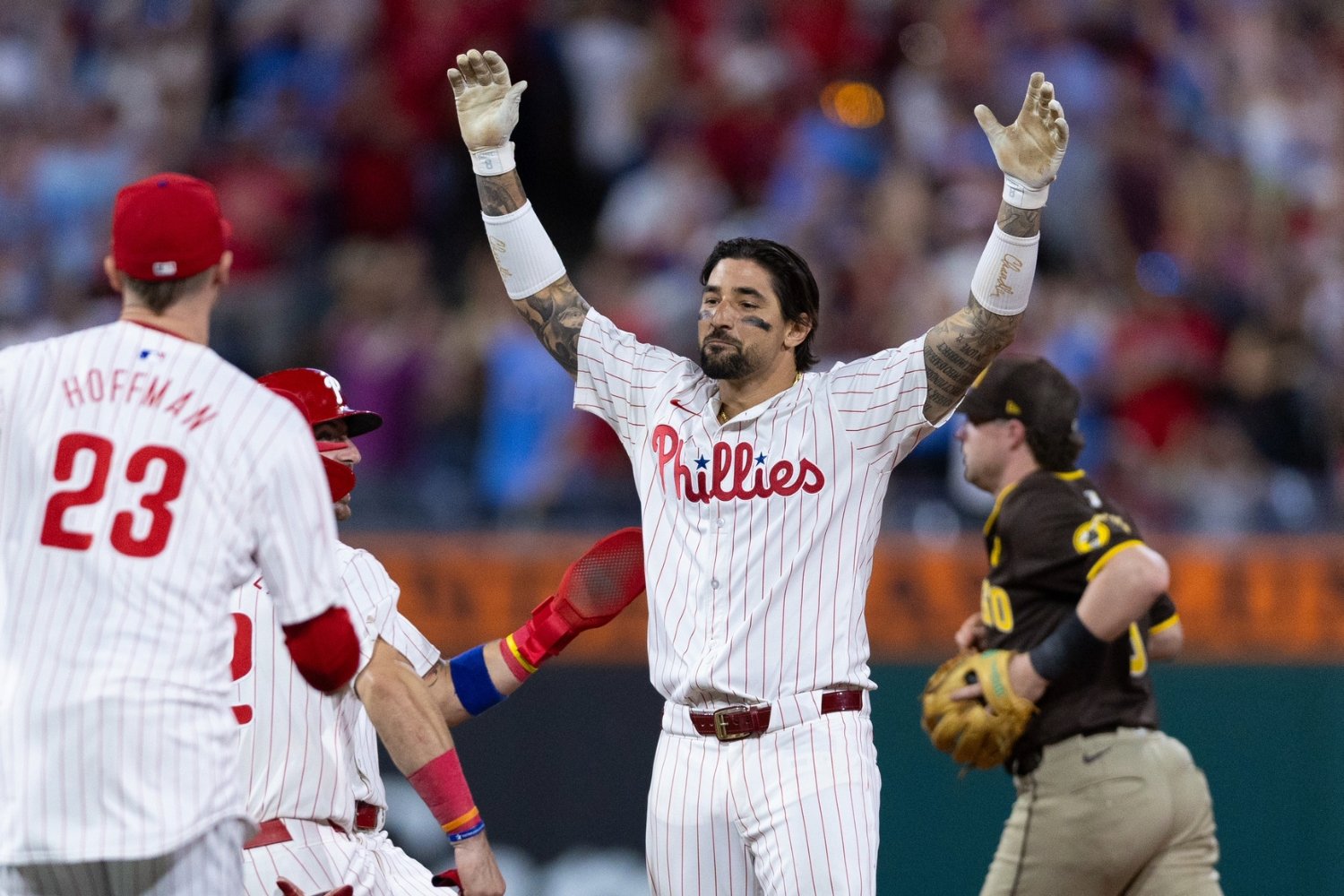 To say that outfielder Nick Castellanos will not be a member of the Philadelphia Phillies in 2026 isn't any kind of speculation. President of baseball operations Dave Dombrowski already indicated as much early this winter and has reiterated it within the last handful of days. Whether it's by a trade — wherein the team would have to eat a decent chunk of the $20 million owed to him in 2026 — or an outright release as a desperate measure, Castellanos will be playing his home games somewhere other than Philadelphia this season. Should it be San Diego that steps in as the next destination for the veteran hitter? After a pair of seasons where he combined for 52 home runs, Castellanos is coming off some of the worst work of his career in 2025. His slash line read just .250/.294/.400, with a 90 wRC+ and even worse defensive metrics (-12 Outs Above Average). The compounding of meager production at the plate and serving as a non-viable presence on the outfield grass led to a career-worst -0.6 fWAR. Now, a year ahead of free agency, Castellanos is presumed to be finding a change of scenery in the coming weeks. That comes as no surprise on the merits of the performance alone, but also the presence of numerous reports that Castellanos took umbrage with manager Rob Thomson's use of him in 2025. When one considers the myriad issues the Phillies have had with their players in recent months (remember the Bryce Harper "not elite" drama?), it becomes a bit more difficult to take Castellanos' struggles completely at face value. If we expand his body of work to his entire career, Castellanos is a .272 hitter with decent power (.193 ISO) who also doesn't walk much (6.2 BB%). His career wRC+ sits at 109. He's prone to bouts of streakiness, but compensates well enough in the high points to make up for the low points and lack of on-base percentage. He could also be exactly what the San Diego Padres seek at this stage of the winter. Isolating Castellanos' output to pitcher handedness, he's gone for a 127 wRC+ and .215 ISO against lefties. Against right-handed pitching, meanwhile, those numbers sit at 103 and .185, respectively. In short, the right-handed swinger holds up well against pitchers of the same handedness but finds his real value when he's matched up against the opposite. An opposite which the Padres just so happen to need in their lineup. San Diego ranked 17th in the league in wRC+ against southpaws in 2025 (96) while sitting closer to the back of the rankings on the power side (their .130 ISO ranked 23rd). While they didn't strike out against left-handed arms, they did make the lowest rate of quality contact against pitchers from that side, as well. For his money, Castellanos posted a hard-hit rate roughly 12 points higher in 2025 than the team's collective against left-handers. From a skill set standpoint, he certainly looks like the kind of player in which A.J. Preller should have interest. The issue lies in the logistics. At $20 million, it's difficult to see the Padres ponying up the cash to pay Castellanos given their current payroll constraints. While the expectation is that the Phillies will eat significant money, the unknown of how much money makes it difficult to project how realistic such a deal is. The return for a player that an organization is openly set on dealing isn't a concern so much as the finances. So in this case, the Padres' lack of depth on the farm isn't the issue. It's purely the money. Then, there's the roster fit. The Padres could have some combination of Gavin Sheets, Luis Campusano, and Sung Mun Song rotating as part of the bench, perhaps with Bryce Johnson filling out the foursome. Sheets can play first and outfield. Campusano can fill in behind the plate and at first. Song may get some outfield time beyond his utility infielder status. Johnson can competently play all three outfield spots. Considering the Padres already have a full starting outfield and the likes of Sheets and Campusano to rotate through first base and designated hitter, are they willing to deploy limited resources for a player that might end up representing something of a redundancy (even if said redundancy possesses the upside to be better than what is already present)? Even with the reasons to say "no," it's hard for the Padres to justify not at least exploring a deal to acquire Nick Castellanos. Especially if it reaches a point where the Phillies are eating a majority of the money or outright release him before the season starts. Their need for secondary offense and right-handed hitting is no secret. They're not in a position to turn away a good hitter, regardless of the contextual baggage with which they come.
 -
While the initial report of a retirement announcement was met with some apprehension on his part, it appears that San Diego Padres starting pitcher Yu Darvish may be getting closer to calling it a career. At the very least, it's possible that he walks away from his current contract via an early termination and buyout as he works his way back from an October internal brace procedure. In either direction, it would appear that there's set to be some certainty over Darvish's future in the coming days or weeks. There were whispers early this offseason that he was considering retirement on the heels of this surgery and five separate trips to the injured list over the last two years. While it would be difficult for him to walk away from the money owed to him through 2028, Darvish has generally been extremely transparent about where his body and mind are in relation to performance. So, it's no surprise that this situation, while not official, is already in front of the public. Should Darvish choose to retire or accept a buyout from the Padres, it would be a boon for them financially. He carries an $18 million average annual value over the next three years (though the actual salary is a touch lower depending on the year). A team with a handful of position player contracts that carry into the 2030s will likely accept any relief it can get on the books. At the same time, getting clarity on Yu Darvish would also present a fairly intense challenge to the Padres, who are trying to establish their future in the starting rotation. The Padres were always going to be without Darvish for 2026. That situation, on its own, has left them scrambling to find pitching for a rotation that remains unstable just weeks out of pitchers and catchers reporting to Arizona. If we looked to the point at which Darvish was expected back, though, things get even more complicated. Under contract for 2027 are Nick Pivetta and Joe Musgrove, the latter of whom will be entering the last year of his contract. Michael King has a player option for each of 2027 and 2028, lending itself to the assumption that he could depart with a steady, healthy 2026 season. Kyle Hart has a club option for 2027. Beyond that, there's JP Sears with a year of arbitration remaining and each of Randy Vásquez and Matt Waldron still in their pre-arb stage. There's a worst-case scenario where Pivetta regresses in 2026, Musgrove needs a year to get back to form from Tommy John surgery, King departs via his option, and none of the remaining options prove reliable enough to guarantee a rotation spot beyond this upcoming season. Such a pessimistic outlook was already in play even before the news of Darvish potentially ending his Padres tenure. Losing an arm that was expected to be a lock for next season, however, only adds to such concern. The good news is that worst-case scenarios likely come out at the 100th percentile of bad outcomes. Even if the 2026 group struggles to assert itself as something viable for the years beyond this season, prospects like Miguel Mendez or Jagger Haynes could be on deck to get an opportunity. If not by the end of 2026, then perhaps to start 2027. That would at least help to quell some concerns over a Darvish-less future in San Diego. Ultimately, though, the potential departure of Darvish doesn't change the calculus for the future of the Padres' staff all that much. The concern over a lack of clarity in the rotation always existed; he's been out of the mix so frequently the last two years that there was no guarantee he could even be relied upon post-surgery (in his age-40 season, no less). It does, however, reignite those concerns that have been in place all winter over the stability this staff currently lacks and will now have to work at least a little bit harder in order to establish. View full article
-
Clarity on Yu Darvish's Future May Cloud Padres' Own for Starting Rotation
Randy Holt posted an article in Padres
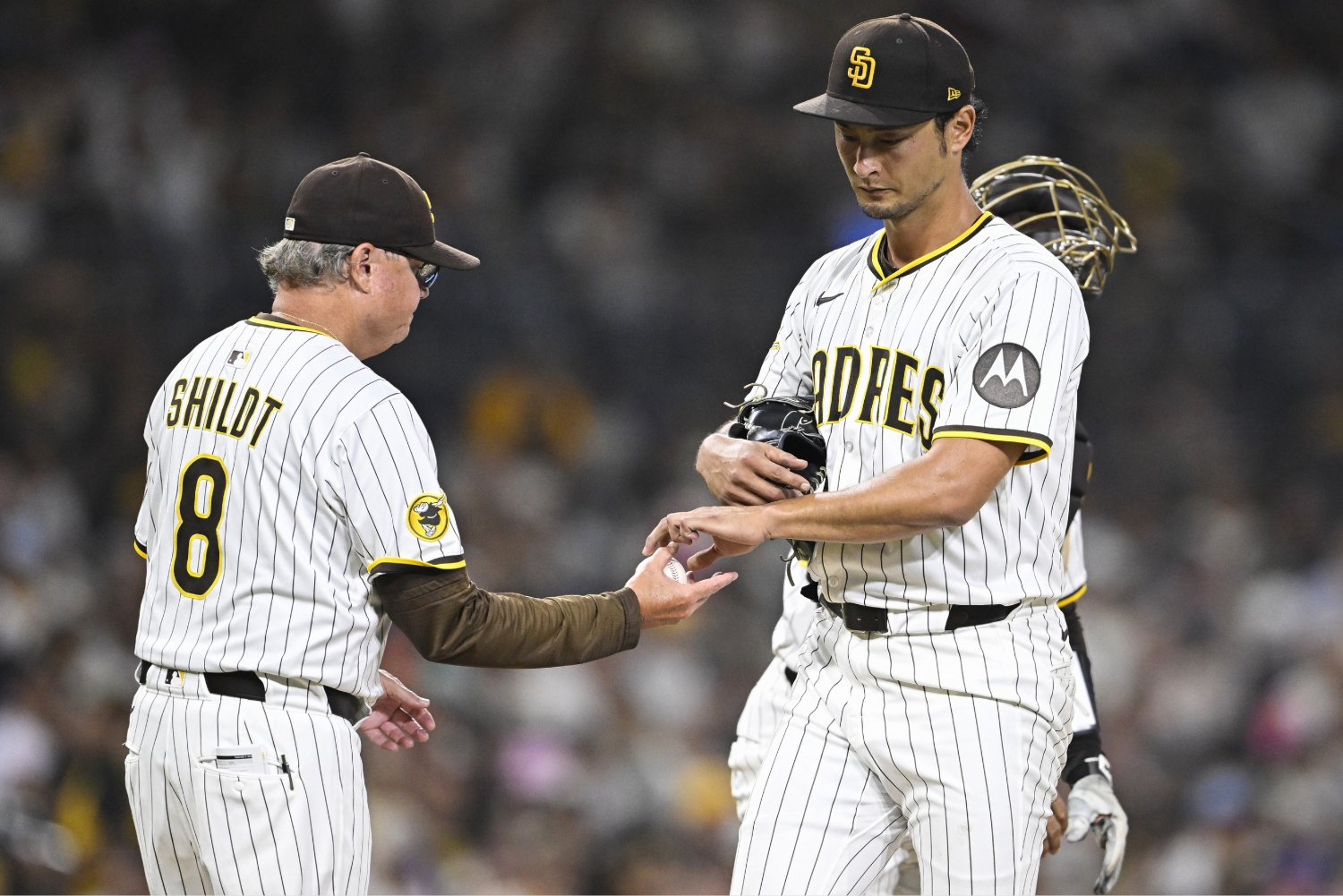 While the initial report of a retirement announcement was met with some apprehension on his part, it appears that San Diego Padres starting pitcher Yu Darvish may be getting closer to calling it a career. At the very least, it's possible that he walks away from his current contract via an early termination and buyout as he works his way back from an October internal brace procedure. In either direction, it would appear that there's set to be some certainty over Darvish's future in the coming days or weeks. There were whispers early this offseason that he was considering retirement on the heels of this surgery and five separate trips to the injured list over the last two years. While it would be difficult for him to walk away from the money owed to him through 2028, Darvish has generally been extremely transparent about where his body and mind are in relation to performance. So, it's no surprise that this situation, while not official, is already in front of the public. Should Darvish choose to retire or accept a buyout from the Padres, it would be a boon for them financially. He carries an $18 million average annual value over the next three years (though the actual salary is a touch lower depending on the year). A team with a handful of position player contracts that carry into the 2030s will likely accept any relief it can get on the books. At the same time, getting clarity on Yu Darvish would also present a fairly intense challenge to the Padres, who are trying to establish their future in the starting rotation. The Padres were always going to be without Darvish for 2026. That situation, on its own, has left them scrambling to find pitching for a rotation that remains unstable just weeks out of pitchers and catchers reporting to Arizona. If we looked to the point at which Darvish was expected back, though, things get even more complicated. Under contract for 2027 are Nick Pivetta and Joe Musgrove, the latter of whom will be entering the last year of his contract. Michael King has a player option for each of 2027 and 2028, lending itself to the assumption that he could depart with a steady, healthy 2026 season. Kyle Hart has a club option for 2027. Beyond that, there's JP Sears with a year of arbitration remaining and each of Randy Vásquez and Matt Waldron still in their pre-arb stage. There's a worst-case scenario where Pivetta regresses in 2026, Musgrove needs a year to get back to form from Tommy John surgery, King departs via his option, and none of the remaining options prove reliable enough to guarantee a rotation spot beyond this upcoming season. Such a pessimistic outlook was already in play even before the news of Darvish potentially ending his Padres tenure. Losing an arm that was expected to be a lock for next season, however, only adds to such concern. The good news is that worst-case scenarios likely come out at the 100th percentile of bad outcomes. Even if the 2026 group struggles to assert itself as something viable for the years beyond this season, prospects like Miguel Mendez or Jagger Haynes could be on deck to get an opportunity. If not by the end of 2026, then perhaps to start 2027. That would at least help to quell some concerns over a Darvish-less future in San Diego. Ultimately, though, the potential departure of Darvish doesn't change the calculus for the future of the Padres' staff all that much. The concern over a lack of clarity in the rotation always existed; he's been out of the mix so frequently the last two years that there was no guarantee he could even be relied upon post-surgery (in his age-40 season, no less). It does, however, reignite those concerns that have been in place all winter over the stability this staff currently lacks and will now have to work at least a little bit harder in order to establish.
 -
Earlier this week, The Athletic's Ken Rosenthal name-checked three free agent pitchers that the San Diego Padres could be pursuing at this late stage of the offseason: Justin Verlander, Lucas Giolito, and old friend Nick Martinez. The rationale was primarily due to the cost, as each of them would require in the neighborhood of between $8 million and $12 million in average annual value (according to Rosenthal, at least). When you factor in that each could likely be had on a short-term contract, the appeal starts to gain some clarity. It certainly lends itself to a more realistic outcome than, say, a trade for Milwaukee's Freddy Peralta ever was. As such, let's talk about those three names in Verlander, Giolito, and Martinez. Each has a track record of success, but none of them are without questions. It's at least partially those questions that leaves them looking for a new team as the calendar prepares to flip over to February, with pitchers and catchers just a few weeks away from reporting to team sites. Nevertheless, there's a good deal of intrigue present with all three. Assuming all things are equal in the contract for the purpose of this exercise, which veteran pitcher is the best fit for the 2026 Padres? Justin Verlander An ageless wonder, the fact that Verlander will turn 43 before the start of the season hasn't slowed him down much. Across 29 starts with the San Francisco Giants last year, Verlander pitched to an identical ERA and FIP, at 3.85. His fastball still checks in at 93.9 MPH on average, and while his strikeout and walk numbers have come down from his peak, he still limits hard contact at a high level. His 37.0 percent hard-hit rate allowed finished in the 78th percentile last year. The issue with Verlander is obviously the age and recent injury history. He averaged 5 2/3 innings per start last year, but experienced a pectoral issue in May that resulted in a stint on the injured list. Prior to that, he battled neck and shoulder woes in 2024. It's unreasonable to expect him to handle a full season at this stage, even if the performance is still there when he does. If the Padres feel comfortable about their depth, though, it becomes a very easy deal to justify. Especially when you factor in the unquantifiable experience that he'd bring to the rest of the staff. Lucas Giolito Giolito's situation isn't all that dissimilar from that of Verlander, albeit without the Hall of Fame credentials and an even more recent injury history. Perhaps, in that case, it's quite different. When the performance is intact, he's flashed a level of dominance at time throughout his career. The issue is sustaining it. Giolito hasn't been the same pitcher since he bookended 2020 with a 5.2 fWAR in 2019 and a 4.1 in 2021 with the Chicago White Sox. But in 2025, he proved there's at least something left in the tank. Starting the season late after an internal brace procedure wiped out his 2024 season, Giolito pitched to a 3.41 ERA and a career-best 9.3 percent home run rate. The issue is that his strikeout rate plummeted from previous years (19.7 percent) and his 9.1 percent walk rate was just 30th percentile. Even the homer rate looks less appealing when you consider the fact that he pitched his home games at Fenway Park, which ranked 22nd in the league for home runs according to Statcast's Park Factors. His numbers also got progressively worse across the board as the season wore on. Nick Martinez After a pair of seasons serving as a swingman in San Diego, Martinez has spent the last two pitching for the Cincinnati Reds. His role there was much the same, as he made 42 appearances in 2024 (16 starts) and 40 appearances in 2025 (26 starts). The latter of the two represented his highest volume of starts in a season at the major-league level. The results were promising, too. Martinez doesn't offer the strikeout upside of Verlander or even what we've seen at Giolito's heights. But his 2025 campaign was indicative of the skill set he could provide the Padres with. Martinez pitched to a walk rate of just 6.1 percent (84th percentile) and was very adept at avoiding quality contact. He avoided barrels (6.9 percent) and posted an opposing hard-hit rate that fell in the 90th percentile (34.5 percent). That so much of his work came as a starter provided some optimism that he could handle bulk in a way that might've been questioned in years prior. The Verdict Consider where things stand for the Padres' current starting group. Nick Pivetta and Michael King are the only Opening Day locks. Joe Musgrove should return not long after. Beyond that, it's a collection of Randy Vásquez, Matt Waldron, Kyle Hart, Sean Boyle, and non-roster invitee Triston McKenzie. What the Padres need more than anything is stability. When you factor in Verlander's age and Giolito's shaky performance and own injury history in recent memory, Martinez may actually represent the most stable choice of the three, though he may be the most expensive after playing last year on the qualifying offer. Ultimately, though, it'd be hard to turn away any of the three given the upside they bring and the team's lack of mid-rotation certainty. View full article
-
Which Name-Checked Free Agent Pitcher is Best Fit for San Diego Padres?
Randy Holt posted an article in Padres
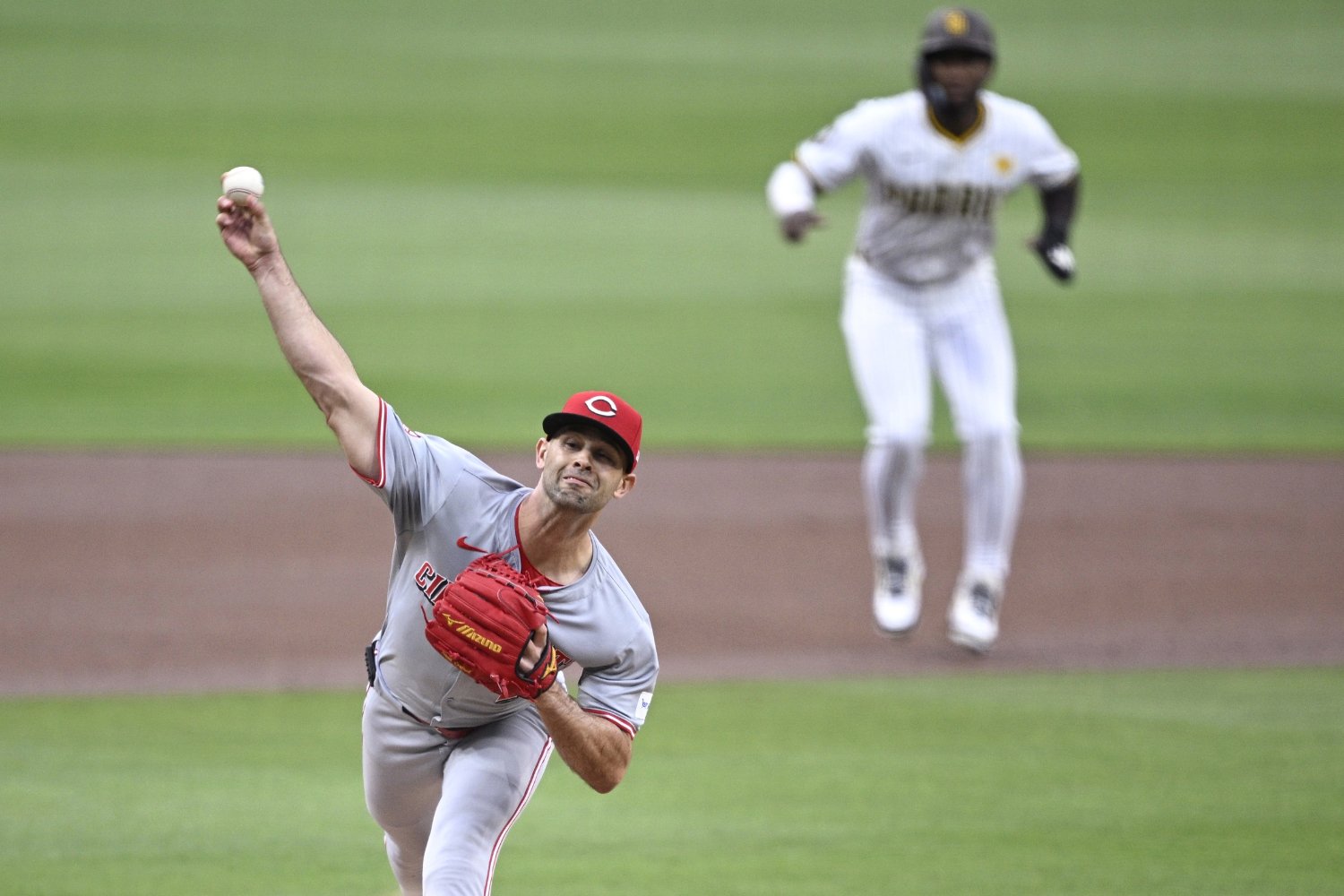 Earlier this week, The Athletic's Ken Rosenthal name-checked three free agent pitchers that the San Diego Padres could be pursuing at this late stage of the offseason: Justin Verlander, Lucas Giolito, and old friend Nick Martinez. The rationale was primarily due to the cost, as each of them would require in the neighborhood of between $8 million and $12 million in average annual value (according to Rosenthal, at least). When you factor in that each could likely be had on a short-term contract, the appeal starts to gain some clarity. It certainly lends itself to a more realistic outcome than, say, a trade for Milwaukee's Freddy Peralta ever was. As such, let's talk about those three names in Verlander, Giolito, and Martinez. Each has a track record of success, but none of them are without questions. It's at least partially those questions that leaves them looking for a new team as the calendar prepares to flip over to February, with pitchers and catchers just a few weeks away from reporting to team sites. Nevertheless, there's a good deal of intrigue present with all three. Assuming all things are equal in the contract for the purpose of this exercise, which veteran pitcher is the best fit for the 2026 Padres? Justin Verlander An ageless wonder, the fact that Verlander will turn 43 before the start of the season hasn't slowed him down much. Across 29 starts with the San Francisco Giants last year, Verlander pitched to an identical ERA and FIP, at 3.85. His fastball still checks in at 93.9 MPH on average, and while his strikeout and walk numbers have come down from his peak, he still limits hard contact at a high level. His 37.0 percent hard-hit rate allowed finished in the 78th percentile last year. The issue with Verlander is obviously the age and recent injury history. He averaged 5 2/3 innings per start last year, but experienced a pectoral issue in May that resulted in a stint on the injured list. Prior to that, he battled neck and shoulder woes in 2024. It's unreasonable to expect him to handle a full season at this stage, even if the performance is still there when he does. If the Padres feel comfortable about their depth, though, it becomes a very easy deal to justify. Especially when you factor in the unquantifiable experience that he'd bring to the rest of the staff. Lucas Giolito Giolito's situation isn't all that dissimilar from that of Verlander, albeit without the Hall of Fame credentials and an even more recent injury history. Perhaps, in that case, it's quite different. When the performance is intact, he's flashed a level of dominance at time throughout his career. The issue is sustaining it. Giolito hasn't been the same pitcher since he bookended 2020 with a 5.2 fWAR in 2019 and a 4.1 in 2021 with the Chicago White Sox. But in 2025, he proved there's at least something left in the tank. Starting the season late after an internal brace procedure wiped out his 2024 season, Giolito pitched to a 3.41 ERA and a career-best 9.3 percent home run rate. The issue is that his strikeout rate plummeted from previous years (19.7 percent) and his 9.1 percent walk rate was just 30th percentile. Even the homer rate looks less appealing when you consider the fact that he pitched his home games at Fenway Park, which ranked 22nd in the league for home runs according to Statcast's Park Factors. His numbers also got progressively worse across the board as the season wore on. Nick Martinez After a pair of seasons serving as a swingman in San Diego, Martinez has spent the last two pitching for the Cincinnati Reds. His role there was much the same, as he made 42 appearances in 2024 (16 starts) and 40 appearances in 2025 (26 starts). The latter of the two represented his highest volume of starts in a season at the major-league level. The results were promising, too. Martinez doesn't offer the strikeout upside of Verlander or even what we've seen at Giolito's heights. But his 2025 campaign was indicative of the skill set he could provide the Padres with. Martinez pitched to a walk rate of just 6.1 percent (84th percentile) and was very adept at avoiding quality contact. He avoided barrels (6.9 percent) and posted an opposing hard-hit rate that fell in the 90th percentile (34.5 percent). That so much of his work came as a starter provided some optimism that he could handle bulk in a way that might've been questioned in years prior. The Verdict Consider where things stand for the Padres' current starting group. Nick Pivetta and Michael King are the only Opening Day locks. Joe Musgrove should return not long after. Beyond that, it's a collection of Randy Vásquez, Matt Waldron, Kyle Hart, Sean Boyle, and non-roster invitee Triston McKenzie. What the Padres need more than anything is stability. When you factor in Verlander's age and Giolito's shaky performance and own injury history in recent memory, Martinez may actually represent the most stable choice of the three, though he may be the most expensive after playing last year on the qualifying offer. Ultimately, though, it'd be hard to turn away any of the three given the upside they bring and the team's lack of mid-rotation certainty.
 -
At this point in the winter, the need for another catcher on the San Diego Padres' roster is well known. While the active roster does, officially, feature the required two bodies prepared to get work behind the plate, the logistical side is screaming for a third. The team acquired Freddy Fermin at last year's trade deadline to give them some medium-term stability at the position. He's not a free agent until 2030 and offers decent-enough blocking and run game skills that compensate for his more average skill set as a framer. He's the presumptive starter. Behind Fermin, though, the Padres are lacking in clarity with their No. 2. Luis Campusano is a longtime member of the organization, but there has been an apparent reluctance to let him get regular work behind the plate. After nearly 700 innings in the field in 2024, the team employed each of Elías Díaz and Martín Maldonado last year instead of having Campusano work in alongside one of the two. Unfortunately for Campusano, that reluctance is fairly justified. Despite some offensive upside, he sat in the sixth percentile in blocks above average (-10), the eighth in caught stealing above average (-4), and the ninth in framing (-8). His brief time at the top level via injury in 2025 featured only 27 plate appearances in 10 games, all of which came as a designated hitter or serving as a pinch hitter in the later innings. While the team has yet to acquire a viable backup in his stead, those prior outcomes lead to the easy assumption that they'll, at some point, make another addition to provide some competition. We've already discussed the idea of the Chicago Cubs' Carson Kelly serving as one option. With a 1A/1B situation between Kelly and Miguel Amaya — in addition to the fact that the team is right up against the first luxury tax threshold — there's a possibility that the team could be willing to part with the veteran. Should the Padres seek such an addition via the trade market, there is another midwestern team that might be willing to part with another high-upside catcher. The Minnesota Twins recently signed Padres' old friend Victor Caratini to a two-year contract. Already employing each of Ryan Jeffers and an out-of-options Alex Jackson, there's now a bit of a logjam behind the plate for a team in a bit of a rebuild. As an impending free agent with a franchise that moved many of their veteran players at last year's deadline, are the Twins now in a position to further bolster their development system by moving Jeffers? Jeffers offers a fascinatingly-similar case to that of Kelly among potential Padres targets. In addition to playing out the last year of his contract, he was 11th among catchers with at least 300 plate appearances in wRC+ (113) and has a history of occasional power at the position, topping out at a .213 ISO back in 2023. The difference is that he's less effective as a blocker (13th percentile) and in run prevention (5th percentile) than either of Kelly or Fermin. He does, however, represent roughly the same level of adequate framing that either one brings to the table. What he is, though, is a sizable upgrade over what the team would be getting in Campusano's defensive work. Another difference lies in the trade package. The Cubs are in a position where they're set to contend, potentially for a division title. They don't need to feel in any way compelled to move Kelly if they want to keep the position fortified between he and Amaya. For the Twins, who could very well be in for a last-place finish in the American League Central, parting with Jeffers might be a simpler calculation. Which means that the trade cost might not be as high as it would be for someone like Kelly, who's also coming off something of a miniature breakout. It's also possible that the Twins hold onto Jeffers for now, roll out Caratini as their backup, and try to sneak Alex Jackson through waivers as organizational depth. But considering their organizational situation against the Padres' clear need for an upgrade in matters of a backup backstop, he may very well represent a more realistic name to monitor against someone like Kelly in the weeks ahead. View full article
-
Padres Have Another Trade Option at Catcher in Twins' Ryan Jeffers
Randy Holt posted an article in Padres
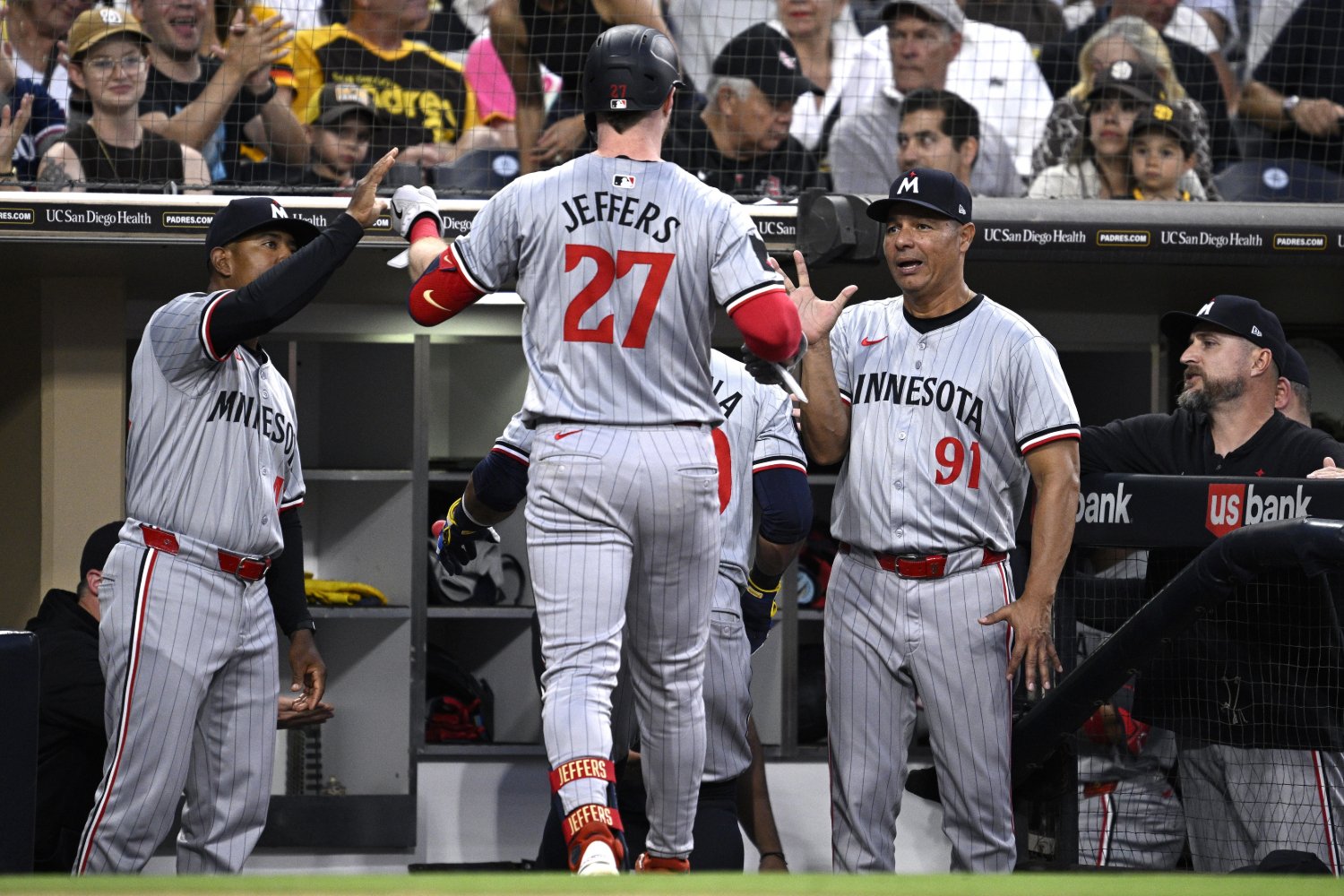 At this point in the winter, the need for another catcher on the San Diego Padres' roster is well known. While the active roster does, officially, feature the required two bodies prepared to get work behind the plate, the logistical side is screaming for a third. The team acquired Freddy Fermin at last year's trade deadline to give them some medium-term stability at the position. He's not a free agent until 2030 and offers decent-enough blocking and run game skills that compensate for his more average skill set as a framer. He's the presumptive starter. Behind Fermin, though, the Padres are lacking in clarity with their No. 2. Luis Campusano is a longtime member of the organization, but there has been an apparent reluctance to let him get regular work behind the plate. After nearly 700 innings in the field in 2024, the team employed each of Elías Díaz and Martín Maldonado last year instead of having Campusano work in alongside one of the two. Unfortunately for Campusano, that reluctance is fairly justified. Despite some offensive upside, he sat in the sixth percentile in blocks above average (-10), the eighth in caught stealing above average (-4), and the ninth in framing (-8). His brief time at the top level via injury in 2025 featured only 27 plate appearances in 10 games, all of which came as a designated hitter or serving as a pinch hitter in the later innings. While the team has yet to acquire a viable backup in his stead, those prior outcomes lead to the easy assumption that they'll, at some point, make another addition to provide some competition. We've already discussed the idea of the Chicago Cubs' Carson Kelly serving as one option. With a 1A/1B situation between Kelly and Miguel Amaya — in addition to the fact that the team is right up against the first luxury tax threshold — there's a possibility that the team could be willing to part with the veteran. Should the Padres seek such an addition via the trade market, there is another midwestern team that might be willing to part with another high-upside catcher. The Minnesota Twins recently signed Padres' old friend Victor Caratini to a two-year contract. Already employing each of Ryan Jeffers and an out-of-options Alex Jackson, there's now a bit of a logjam behind the plate for a team in a bit of a rebuild. As an impending free agent with a franchise that moved many of their veteran players at last year's deadline, are the Twins now in a position to further bolster their development system by moving Jeffers? Jeffers offers a fascinatingly-similar case to that of Kelly among potential Padres targets. In addition to playing out the last year of his contract, he was 11th among catchers with at least 300 plate appearances in wRC+ (113) and has a history of occasional power at the position, topping out at a .213 ISO back in 2023. The difference is that he's less effective as a blocker (13th percentile) and in run prevention (5th percentile) than either of Kelly or Fermin. He does, however, represent roughly the same level of adequate framing that either one brings to the table. What he is, though, is a sizable upgrade over what the team would be getting in Campusano's defensive work. Another difference lies in the trade package. The Cubs are in a position where they're set to contend, potentially for a division title. They don't need to feel in any way compelled to move Kelly if they want to keep the position fortified between he and Amaya. For the Twins, who could very well be in for a last-place finish in the American League Central, parting with Jeffers might be a simpler calculation. Which means that the trade cost might not be as high as it would be for someone like Kelly, who's also coming off something of a miniature breakout. It's also possible that the Twins hold onto Jeffers for now, roll out Caratini as their backup, and try to sneak Alex Jackson through waivers as organizational depth. But considering their organizational situation against the Padres' clear need for an upgrade in matters of a backup backstop, he may very well represent a more realistic name to monitor against someone like Kelly in the weeks ahead.
 -
With much of the top tier of free agency now off the board, especially on the positional side, we're starting to hear about the next wave of free agents having a market of their own. One of those is Miguel Andujar, something of a utility man for whose services the San Diego Padres are currently in the running. Jon Heyman's reporting on Monday listed at least six teams in on the veteran hitter, one of which is the Padres. Given the current context of their depth and their bench — which, at present, features Sung Mun Song, Bryce Johnson, and then a large gap before reliability — Andujar represents a logical target. This is true to the point where he could actually be an impact bat in a role that transcends that of a reserve altogether. Andujar is coming off his best season since his 2018 breakout with the New York Yankees. Following years of performance struggle and injury woes, Across 94 games and 341 plate appearances, he turned in a .318/.352/.470 line with a 125 wRC+. His skill set features a lot of balls in play, as he doesn't strike out much (14.4 K%), though he doesn't walk either (5.0 BB%). Even with only modest power at this point, his profile can be an asset to a Padres team in need of exactly the areas in which he appears. Already a contact-driven club, there's a handedness and a versatility to his game that suits San Diego in the most ideal of terms. As a right-handed hitter with traditional splits, Andujar would compliment the roster well. The Padres ranked 17th wRC+ (96) and 23rd in ISO (.130) against southpaws. Andujar, meanwhile, went for a 171 wRC+ and a .189 ISO against pitchers of the opposite handedness last year. Which becomes even more important when you consider the positions at which he could find work. With the Athletics and Cincinnati Reds, Andujar spent time at first base, third base, and each of the corner outfield spots. He also worked in some time as a designated hitter. While the outfield corners and third base are all spoken for, there's a bit of murkiness with respect to first base and the designated hitter spot. The assumption, at this stage, is that some combination of Jake Cronenworth, Gavin Sheets, and Song could all find some work there. Each is a left-handed hitter, however. It leaves an easy picture to paint as to where he'd find the most regular work should the Padres be successful in signing him. Even if it's not a situation where he's isolated to those two positions, the team could be more inclined for off days or DH days for Manny Machado at third or seize the opportunity to give Fernando Tatis Jr. more traditional days off in right. There are opportunities aplenty for a righty of this particular skill set in San Diego. The unfortunate thing for the Padres is that the competition is stiff and we don't know quite what their financial situation looks like. There's familiarity in their competition in each of the A's and Reds, with a surefire contender in the Chicago Cubs also lurking in attempting to sign him. Among those remaining on the free-agent market, though, you'd be hard-pressed to find a more ideal fit against the current roster context than Miguel Andujar and the San Diego Padres. View full article
-
What Makes Miguel Andujar an Attractive Free Agent for Padres?
Randy Holt posted an article in Padres
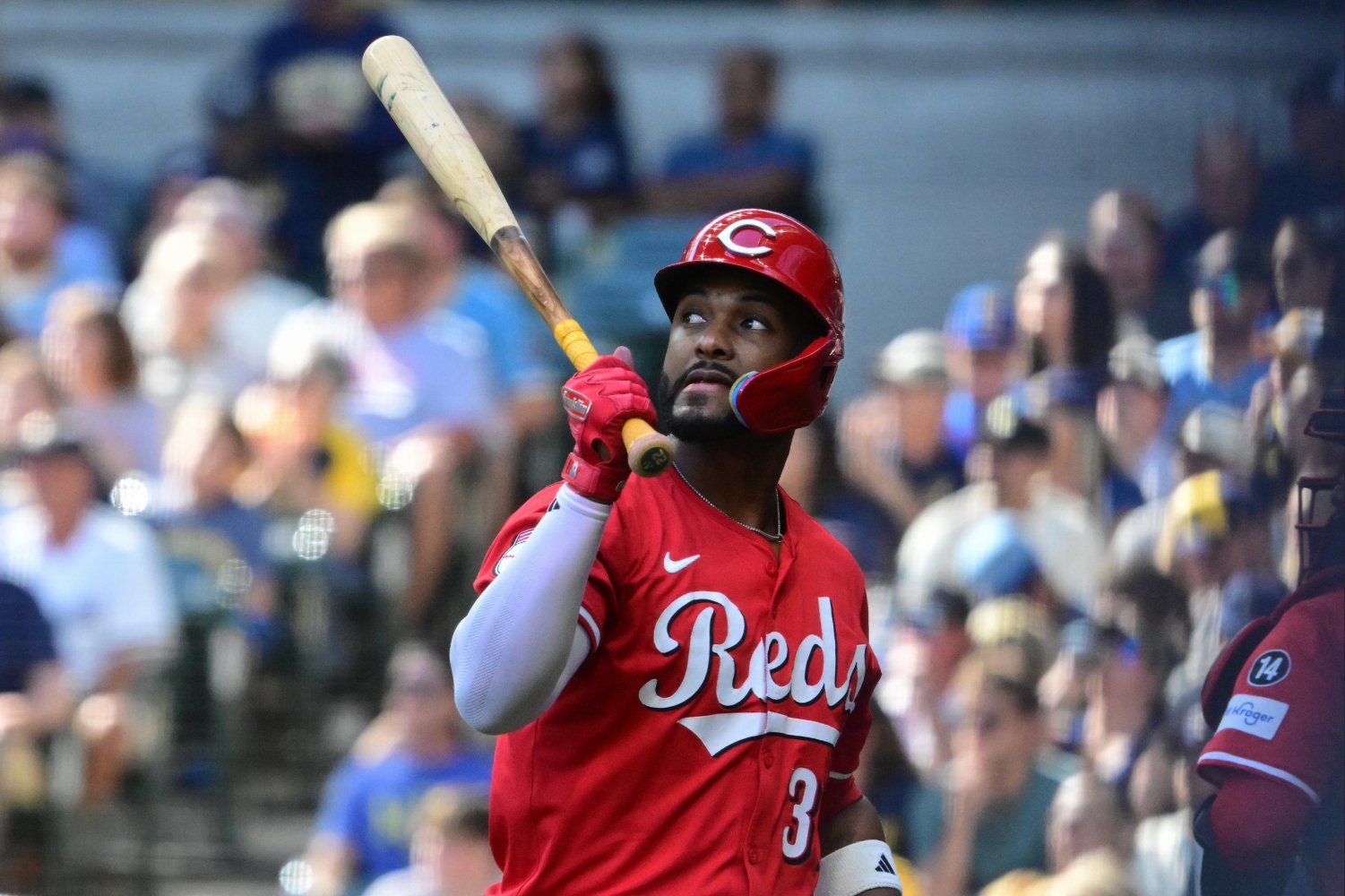 With much of the top tier of free agency now off the board, especially on the positional side, we're starting to hear about the next wave of free agents having a market of their own. One of those is Miguel Andujar, something of a utility man for whose services the San Diego Padres are currently in the running. Jon Heyman's reporting on Monday listed at least six teams in on the veteran hitter, one of which is the Padres. Given the current context of their depth and their bench — which, at present, features Sung Mun Song, Bryce Johnson, and then a large gap before reliability — Andujar represents a logical target. This is true to the point where he could actually be an impact bat in a role that transcends that of a reserve altogether. Andujar is coming off his best season since his 2018 breakout with the New York Yankees. Following years of performance struggle and injury woes, Across 94 games and 341 plate appearances, he turned in a .318/.352/.470 line with a 125 wRC+. His skill set features a lot of balls in play, as he doesn't strike out much (14.4 K%), though he doesn't walk either (5.0 BB%). Even with only modest power at this point, his profile can be an asset to a Padres team in need of exactly the areas in which he appears. Already a contact-driven club, there's a handedness and a versatility to his game that suits San Diego in the most ideal of terms. As a right-handed hitter with traditional splits, Andujar would compliment the roster well. The Padres ranked 17th wRC+ (96) and 23rd in ISO (.130) against southpaws. Andujar, meanwhile, went for a 171 wRC+ and a .189 ISO against pitchers of the opposite handedness last year. Which becomes even more important when you consider the positions at which he could find work. With the Athletics and Cincinnati Reds, Andujar spent time at first base, third base, and each of the corner outfield spots. He also worked in some time as a designated hitter. While the outfield corners and third base are all spoken for, there's a bit of murkiness with respect to first base and the designated hitter spot. The assumption, at this stage, is that some combination of Jake Cronenworth, Gavin Sheets, and Song could all find some work there. Each is a left-handed hitter, however. It leaves an easy picture to paint as to where he'd find the most regular work should the Padres be successful in signing him. Even if it's not a situation where he's isolated to those two positions, the team could be more inclined for off days or DH days for Manny Machado at third or seize the opportunity to give Fernando Tatis Jr. more traditional days off in right. There are opportunities aplenty for a righty of this particular skill set in San Diego. The unfortunate thing for the Padres is that the competition is stiff and we don't know quite what their financial situation looks like. There's familiarity in their competition in each of the A's and Reds, with a surefire contender in the Chicago Cubs also lurking in attempting to sign him. Among those remaining on the free-agent market, though, you'd be hard-pressed to find a more ideal fit against the current roster context than Miguel Andujar and the San Diego Padres.
 -
While a team in need of depth virtually across the board, the catcher spot could represent an area worth addressing for the San Diego Padres. A spot that was something of a mess last year remains concerningly uncertain ahead of 2026. The early 2025 iteration of the Padres relied on a combination of Elías Díaz and Martín Maldonado on any given day. Neither was particularly successful, with offensive oblivion present and defensive regression manifesting heavily in regard to the latter. Supporting an upper-tier pitching staff was a challenge, and neither was able to supplement the offense, even relative to the lower expectations of the position itself. Maldonado would eventually lose his spot in the regular season's second half upon the team's acquisition of Freddy Fermin. And it's Fermin who remains entrenched behind the plate to start 2026. Fermin wasn't particularly strong down the stretch, but the fact that his 64 wRC+ still represented an upgrade over either of his two predecessors speaks to how minimal their production was. With a career mark of a 90 wRC+ at the plate, it stands to reason that he'll fare better in a full season with the Padres. And even if he doesn't, he provides enough defensively as a blocker with an 88th percentile pop time that should compensate well enough. Behind him, though, is where things start to get a little bit messy. As of now, Luis Campusano is projected as the No. 2 catcher behind Fermin. A longtime prospect of the organization, Campusano has yet to get a genuinely extended run as an opportunity to be a full-time catcher. He caught two very brief stints at the top level last year and has regressed massively with the glove over time. Some upside still exists with the bat, but even if the team was inclined to give him an opportunity, could they still look to upgrade their catching duo and let his bat instead serve as an option at first base or designated hitter? If they were to choose such a route, there's at least one intriguing option that could be, theoretically, available in the Chicago Cubs' Carson Kelly. Kelly is coming off something of a career year with the Cubs, posting an offensive output that was at or near his career high just about everywhere you look. He parlayed a strong approach on breaking and off-speed pitches with improved contact skills to post a .179 ISO and 115 wRC+, the former of which was his best since 2019 and the latter serving as easily the highest of his time in the big leagues. Among the 34 catchers with at least 300 plate appearances to their name last year, Kelly's wRC+ ranked ninth. His ISO sat 14th, as did his total value reflected in fWAR (2.6). That latter number was also the highest of Kelly's career. Which makes sense when you start to factor in his defense, which is fairly similar to Fermin's. Kelly doesn't possess the pop time of Fermin (51st percentile), but he was still in the 90th in caught stealing above average and in the 91st in blocks above average. His framing was in the same neighborhood as the Padres' current backstop, but it's rare that you get a catcher that excels in each facet of the position. Having two catchers who are adept at blocking and controlling the run game while being at least within striking distance of "average" on the framing side would greatly support a pitching staff that will need every bit of it. Of course, Kelly being a viable target assumes that the Cubs would even be willing to move him. He's in something of a timeshare with Miguel Amaya, who looked to be on the come up in each of 2024 and 2025 before the latter was derailed by injuries. Even if the two split duties, the assumption is that Kelly's 2025 — from both a health and performance standpoint — would be a springboard toward the majority of duties in the upcoming year. That doesn't mean he's not available, though. A free agent after the year, Kelly's contract carries an AAV of $5.75 million. With the Cubs now up against the luxury tax threshold following the addition of Alex Bregman, could they deal from an area of stability in order to give themselves a little bit of breathing room against that marker? It's a bit tough to envision given the lack of options behind Kelly and Amaya and their apparent reluctance to allow top hitting prospect Moisés Ballesteros to get in work at the position. Nevertheless, the fact that they have two starting-caliber options, on paper, could allow them to feel more comfortable in such an endeavor. The Padres' side of it is easy. They don't feel comfortable allowing Luis Campusano to serve as a full-time backup. They'd rather him work in as a bench bat, first baseman, or designated hitter before doing so as a catcher. They get a solid option to partner with Freddy Fermin who offers more offensive upside and a similar skill set behind the plate. It's a way to fortify the position while deploying Campusano's best asset (his bat) in areas where it's not a detriment. It's a relatively murky picture to really make clear given the absence of an indication that Kelly is truly available. But with so few intriguing options on the free-agent market and the same lack of clarity permeating throughout the rest of the trade winds (to say nothing of the fact that the Jed Hoyer and the Cubs have awoken from what was a mid-winter slumber), it's an option that could be on the table if A.J. Preller gets aggressive enough. View full article
-
Do the Padres Have a Viable Trade Candidate in the Cubs' Carson Kelly?
Randy Holt posted an article in Padres
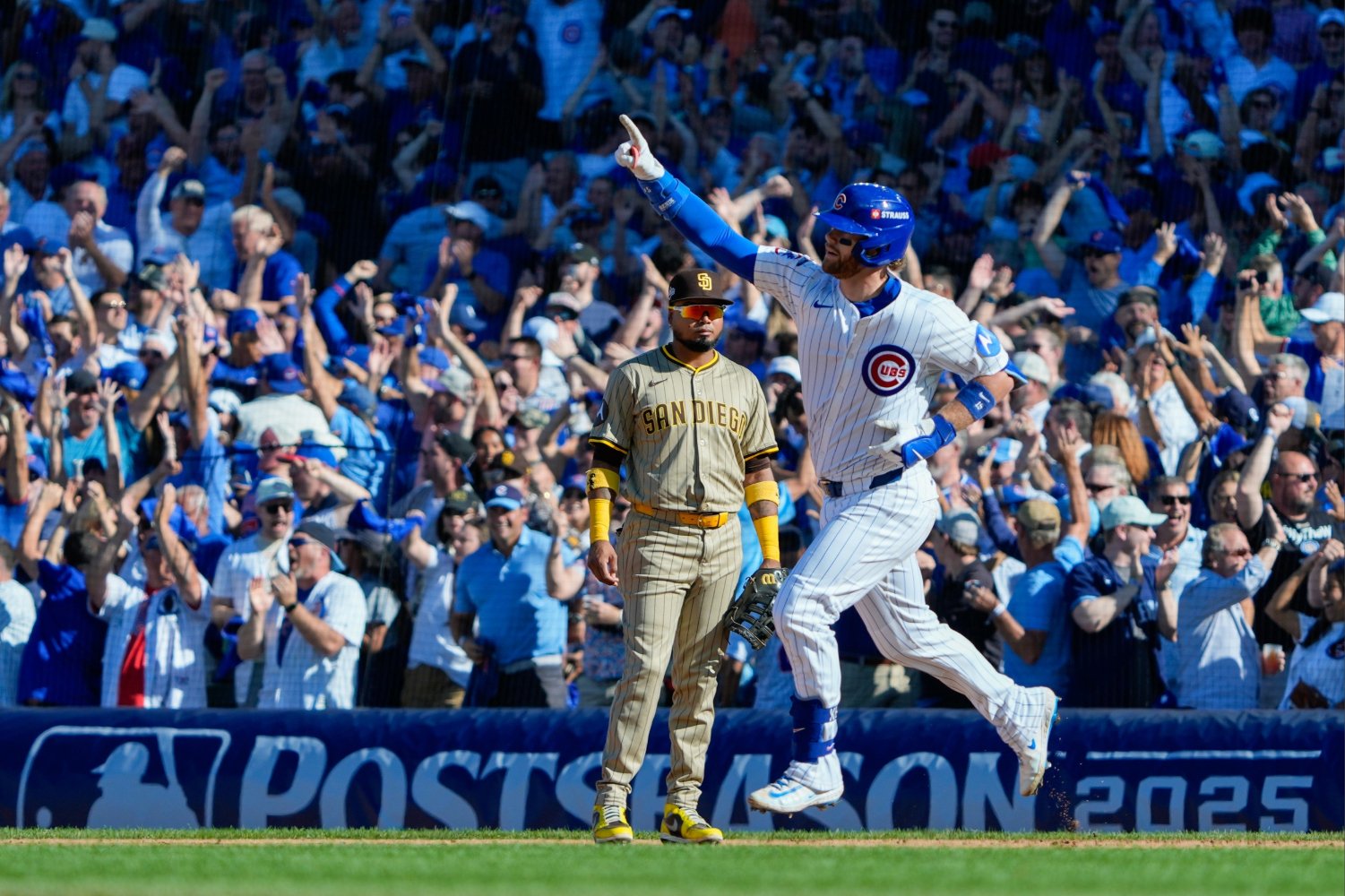 While a team in need of depth virtually across the board, the catcher spot could represent an area worth addressing for the San Diego Padres. A spot that was something of a mess last year remains concerningly uncertain ahead of 2026. The early 2025 iteration of the Padres relied on a combination of Elías Díaz and Martín Maldonado on any given day. Neither was particularly successful, with offensive oblivion present and defensive regression manifesting heavily in regard to the latter. Supporting an upper-tier pitching staff was a challenge, and neither was able to supplement the offense, even relative to the lower expectations of the position itself. Maldonado would eventually lose his spot in the regular season's second half upon the team's acquisition of Freddy Fermin. And it's Fermin who remains entrenched behind the plate to start 2026. Fermin wasn't particularly strong down the stretch, but the fact that his 64 wRC+ still represented an upgrade over either of his two predecessors speaks to how minimal their production was. With a career mark of a 90 wRC+ at the plate, it stands to reason that he'll fare better in a full season with the Padres. And even if he doesn't, he provides enough defensively as a blocker with an 88th percentile pop time that should compensate well enough. Behind him, though, is where things start to get a little bit messy. As of now, Luis Campusano is projected as the No. 2 catcher behind Fermin. A longtime prospect of the organization, Campusano has yet to get a genuinely extended run as an opportunity to be a full-time catcher. He caught two very brief stints at the top level last year and has regressed massively with the glove over time. Some upside still exists with the bat, but even if the team was inclined to give him an opportunity, could they still look to upgrade their catching duo and let his bat instead serve as an option at first base or designated hitter? If they were to choose such a route, there's at least one intriguing option that could be, theoretically, available in the Chicago Cubs' Carson Kelly. Kelly is coming off something of a career year with the Cubs, posting an offensive output that was at or near his career high just about everywhere you look. He parlayed a strong approach on breaking and off-speed pitches with improved contact skills to post a .179 ISO and 115 wRC+, the former of which was his best since 2019 and the latter serving as easily the highest of his time in the big leagues. Among the 34 catchers with at least 300 plate appearances to their name last year, Kelly's wRC+ ranked ninth. His ISO sat 14th, as did his total value reflected in fWAR (2.6). That latter number was also the highest of Kelly's career. Which makes sense when you start to factor in his defense, which is fairly similar to Fermin's. Kelly doesn't possess the pop time of Fermin (51st percentile), but he was still in the 90th in caught stealing above average and in the 91st in blocks above average. His framing was in the same neighborhood as the Padres' current backstop, but it's rare that you get a catcher that excels in each facet of the position. Having two catchers who are adept at blocking and controlling the run game while being at least within striking distance of "average" on the framing side would greatly support a pitching staff that will need every bit of it. Of course, Kelly being a viable target assumes that the Cubs would even be willing to move him. He's in something of a timeshare with Miguel Amaya, who looked to be on the come up in each of 2024 and 2025 before the latter was derailed by injuries. Even if the two split duties, the assumption is that Kelly's 2025 — from both a health and performance standpoint — would be a springboard toward the majority of duties in the upcoming year. That doesn't mean he's not available, though. A free agent after the year, Kelly's contract carries an AAV of $5.75 million. With the Cubs now up against the luxury tax threshold following the addition of Alex Bregman, could they deal from an area of stability in order to give themselves a little bit of breathing room against that marker? It's a bit tough to envision given the lack of options behind Kelly and Amaya and their apparent reluctance to allow top hitting prospect Moisés Ballesteros to get in work at the position. Nevertheless, the fact that they have two starting-caliber options, on paper, could allow them to feel more comfortable in such an endeavor. The Padres' side of it is easy. They don't feel comfortable allowing Luis Campusano to serve as a full-time backup. They'd rather him work in as a bench bat, first baseman, or designated hitter before doing so as a catcher. They get a solid option to partner with Freddy Fermin who offers more offensive upside and a similar skill set behind the plate. It's a way to fortify the position while deploying Campusano's best asset (his bat) in areas where it's not a detriment. It's a relatively murky picture to really make clear given the absence of an indication that Kelly is truly available. But with so few intriguing options on the free-agent market and the same lack of clarity permeating throughout the rest of the trade winds (to say nothing of the fact that the Jed Hoyer and the Cubs have awoken from what was a mid-winter slumber), it's an option that could be on the table if A.J. Preller gets aggressive enough.
 -
Even at this late stage of the winter, we know the San Diego Padres still have work to do on their 2026 roster and that their priorities could be aligned in a number of ways. For example, we know that they want to add another starting pitcher. Having added Michael King back into the mix and signing a smattering of low-cost or minor-league deals — Sean Boyle, Triston McKenzie, and Kyle Hart among them — will go a long way toward building out a rotation that already features Nick Pivetta, a returning-from-Tommy-John Joe Musgrove, and back-end candidates Randy Vásquez, Matt Waldron, and JP Sears. Despite the volume, though, there remains more stability to be found on either of the free agent or trade markets. We also know that the team has had talks about trading from their big-league roster at different points throughout the offseason. Pivetta has previously been mentioned as a trade candidate. Any of the elite bullpen, too, with Jeremiah Estrada, Mason Miller, and Adrian Morejon each finding their name floating out in the trade ether at various points this winter. While there's certainly logic in moving a reliever to acquire a starter given the strength of the bullpen, it's hard to see such a deal coming to fruition unless there was legitimate upside out of a young arm (with control) from another organization. It could still happen, but there's an apparent reluctance to do so considering that strength juxtaposed with a rotation that doesn't run terribly deep on performance or efficiency. The prospect of trading Pivetta against the need for additional starting pitching opens up a very interesting paradox, however. Trading Pivetta, in a vacuum, is an idea we explored fairly recently. In addition to the career year and the signs of an inevitable regression, his salary skyrockets from a mere $1 million in 2025 to $19 million in 2026 (though it's worth noting his payroll figure is actually at $13.75 million regardless). He will, though, cost a combined $32 million across each of 2027 and 2028. There are also a pair of opt-outs that could lead to him to re-exploring the market by then. As is generally the case with opt-outs, if a player doesn't exercise them, it's probably because their performance is waning. For a purportedly cash-strapped team like San Diego, you could make the argument that it's at least worth considering. Except the already-existent need for starting pitching makes it more difficult to justify... unless they had a plan in place for his replacement. There are three noteworthy starting pitchers still out on the free-agent market: Zac Gallen, Framber Valdez, and Ranger Suárez. Each of Valdez (3.7) and Suárez (3.3) are projected by STEAMER to produce more fWAR than Pivetta (2.9) in 2026. Gallen trails due to some efficiency issues the last two years but has also topped out at a higher figure than any of the other three names when he went for a 5.2 fWAR back in 2023. One imagines that the upside of any of that trio would stretch the team's ceiling far above where it currently resides. The cost might still end up bring prohibitive, however. Even with his actual salary figure, Pivetta's AAV ($13.75 million) remains an affordable number against the luxury tax threshold for the Padres. Ahead of this offseason, MLB Trade Rumors projected Valdez for a five-year, $150 million deal, Suárez for five years and $115 million, and Gallen for four years and $80 million. That's an AAV of $25 million, $23 million, and $20 million, respectively, without any additional contract logistics (e.g., deferrals) that could lower the number. That's more money on the books over a longer term. Even with the upside, each brings certain questions. It'd likely be a tough sell for ownership. That is, of course, unless the winter reaches a point where someone might be inclined to seek less term in order to revisit the market in the next year or two. It might be a dangerous proposition given where labor relations currently reside, but possible all the same as a route that has been taken by a handful of upper-tier free agents over the last few offseasons. Should such a scenario arise, would A.J. Preller be more inclined to give someone like Zac Gallen around $20 million to pitch for a year or two over Pivetta doing the same? It's an interesting concept, but one without a whole lot of evidence on which to stand as legitimate. It assumes that the Padres don't believe in Pivetta replicating the success of the previous season, that the remaining free agents are not going to get the type of term they seek on the market, and that Preller would automatically turn around and use that financial flexibility to pursue a free-agent starter rather than, potentially, shooting lower on upside in order to raise the floor of both the pitching staff and the bench. That's too many assumptions wrapped up in one idea for us to possibly lay credence to any of it. Nevertheless, we're also dealing with an unpredictable executive in an offseason that is growing shorter by the day. With the team in a position where they desire to add another starter and have a visible need for one, we can't discount the idea of a shakeup of this caliber in the coming weeks. View full article
-
The Padres Paradox: Do You Trade a Starting Pitcher to Add Another One?
Randy Holt posted an article in Padres
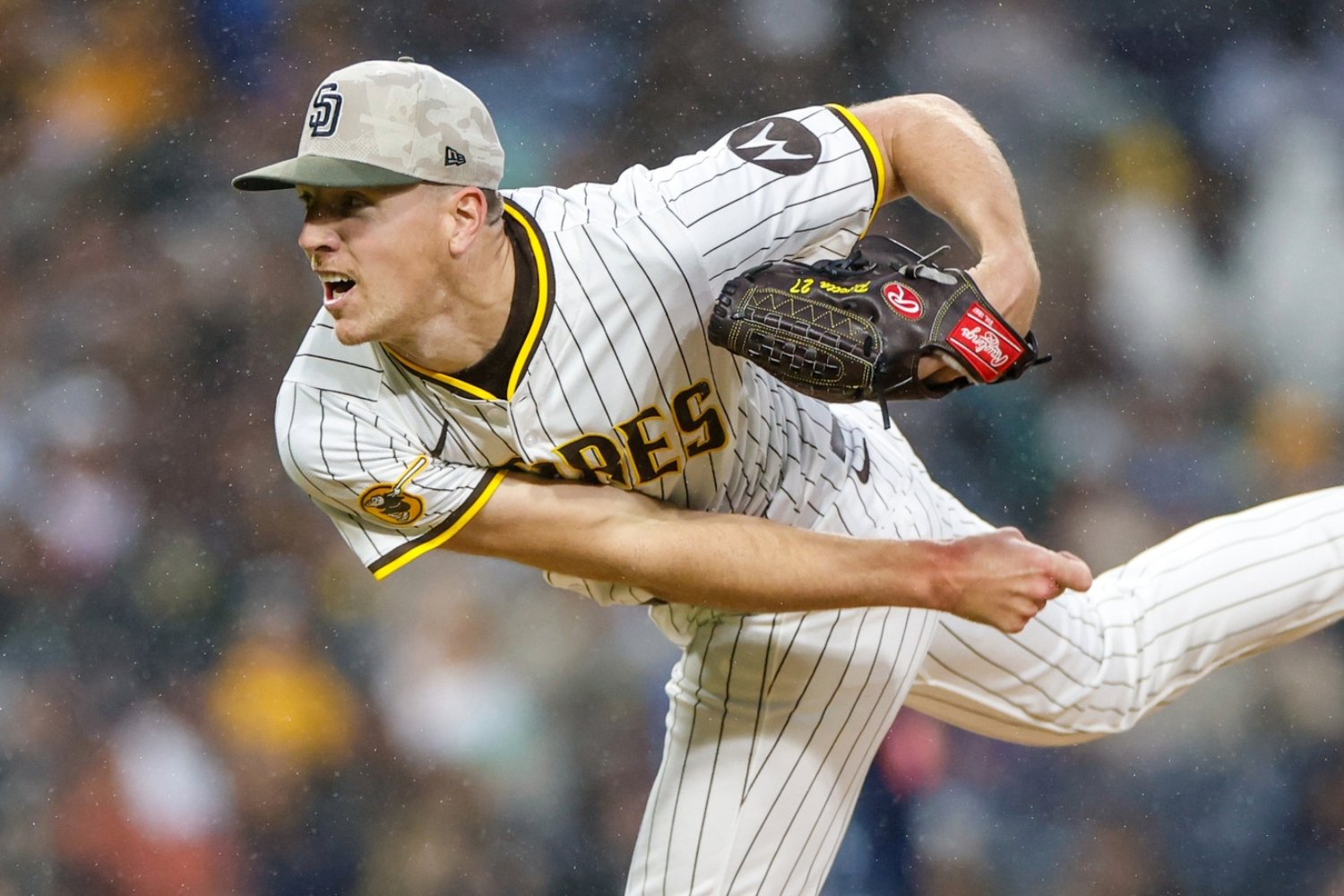 Even at this late stage of the winter, we know the San Diego Padres still have work to do on their 2026 roster and that their priorities could be aligned in a number of ways. For example, we know that they want to add another starting pitcher. Having added Michael King back into the mix and signing a smattering of low-cost or minor-league deals — Sean Boyle, Triston McKenzie, and Kyle Hart among them — will go a long way toward building out a rotation that already features Nick Pivetta, a returning-from-Tommy-John Joe Musgrove, and back-end candidates Randy Vásquez, Matt Waldron, and JP Sears. Despite the volume, though, there remains more stability to be found on either of the free agent or trade markets. We also know that the team has had talks about trading from their big-league roster at different points throughout the offseason. Pivetta has previously been mentioned as a trade candidate. Any of the elite bullpen, too, with Jeremiah Estrada, Mason Miller, and Adrian Morejon each finding their name floating out in the trade ether at various points this winter. While there's certainly logic in moving a reliever to acquire a starter given the strength of the bullpen, it's hard to see such a deal coming to fruition unless there was legitimate upside out of a young arm (with control) from another organization. It could still happen, but there's an apparent reluctance to do so considering that strength juxtaposed with a rotation that doesn't run terribly deep on performance or efficiency. The prospect of trading Pivetta against the need for additional starting pitching opens up a very interesting paradox, however. Trading Pivetta, in a vacuum, is an idea we explored fairly recently. In addition to the career year and the signs of an inevitable regression, his salary skyrockets from a mere $1 million in 2025 to $19 million in 2026 (though it's worth noting his payroll figure is actually at $13.75 million regardless). He will, though, cost a combined $32 million across each of 2027 and 2028. There are also a pair of opt-outs that could lead to him to re-exploring the market by then. As is generally the case with opt-outs, if a player doesn't exercise them, it's probably because their performance is waning. For a purportedly cash-strapped team like San Diego, you could make the argument that it's at least worth considering. Except the already-existent need for starting pitching makes it more difficult to justify... unless they had a plan in place for his replacement. There are three noteworthy starting pitchers still out on the free-agent market: Zac Gallen, Framber Valdez, and Ranger Suárez. Each of Valdez (3.7) and Suárez (3.3) are projected by STEAMER to produce more fWAR than Pivetta (2.9) in 2026. Gallen trails due to some efficiency issues the last two years but has also topped out at a higher figure than any of the other three names when he went for a 5.2 fWAR back in 2023. One imagines that the upside of any of that trio would stretch the team's ceiling far above where it currently resides. The cost might still end up bring prohibitive, however. Even with his actual salary figure, Pivetta's AAV ($13.75 million) remains an affordable number against the luxury tax threshold for the Padres. Ahead of this offseason, MLB Trade Rumors projected Valdez for a five-year, $150 million deal, Suárez for five years and $115 million, and Gallen for four years and $80 million. That's an AAV of $25 million, $23 million, and $20 million, respectively, without any additional contract logistics (e.g., deferrals) that could lower the number. That's more money on the books over a longer term. Even with the upside, each brings certain questions. It'd likely be a tough sell for ownership. That is, of course, unless the winter reaches a point where someone might be inclined to seek less term in order to revisit the market in the next year or two. It might be a dangerous proposition given where labor relations currently reside, but possible all the same as a route that has been taken by a handful of upper-tier free agents over the last few offseasons. Should such a scenario arise, would A.J. Preller be more inclined to give someone like Zac Gallen around $20 million to pitch for a year or two over Pivetta doing the same? It's an interesting concept, but one without a whole lot of evidence on which to stand as legitimate. It assumes that the Padres don't believe in Pivetta replicating the success of the previous season, that the remaining free agents are not going to get the type of term they seek on the market, and that Preller would automatically turn around and use that financial flexibility to pursue a free-agent starter rather than, potentially, shooting lower on upside in order to raise the floor of both the pitching staff and the bench. That's too many assumptions wrapped up in one idea for us to possibly lay credence to any of it. Nevertheless, we're also dealing with an unpredictable executive in an offseason that is growing shorter by the day. With the team in a position where they desire to add another starter and have a visible need for one, we can't discount the idea of a shakeup of this caliber in the coming weeks.
 -
Even at this late stage of the offseason, the San Diego Padres have a depth problem. While the team's addition of Sung Mun Song helps to quell some concerns over the infield depth and lengthens the bench, the fact that there are at least two unsettled spots in the team's lineup (first base and designated hitter) lends itself to the idea that more help is needed on that front. Even with Song's versatility, we saw in 2025 how a dearth of stability with respect to the reserves can derail a team over the course of a 162-game season. The 2025 Padres relied primarily on Jose Iglesias as their guy off the bench. Beyond him, it was a rotating cast of characters that at various points included Jason Heyward, Connor Joe, Tyler Wade, Yuli Gurriel, Oscar González, Brandon Lockridge, Trenton Brooks, and Mason McCoy, some for much shorter spells than others. None of those players completed the year still in the organization, with the exception of Iglesias, whose value was purely in his versatility rather than any semblance of production off the bench (73 wRC+). It was a group unable to compensate for injuries to regulars such as Jackson Merrill and Xander Bogaerts as the season wore on, in addition to its inability to provide relief, when needed, in shorter stints for someone like Fernando Tatis Jr. So, while Song provides legitimate offensive upside at multiple positions — and could end up allowing the team to rotate Jake Cronenworth in at first base while holding down the keystone himself over long stretches — the inevitability that injuries will arise feeds directly into the need for additional upside off the bench. Considering the lack of offensive talent at the upper levels of the minors and that most of the team's minor-league deals thus far have come on the mound, it seems certain that the Friars will explore further additions with the little bit of time that still remains this offseason. However, any discourse around the team's bench configuration at present may be overlooking a player they believe to be a valuable part of their roster: Bryce Johnson. A former San Francisco Giants draftee, Johnson was a former Padre at one point, albeit very briefly. He left as a free agent via a non-tender prior to 2025 but was quickly reacquired for catcher Brett Sullivan in April. Johnson wouldn't appear in a game for San Diego until June and only notched 55 games worth of playing time throughout last year. Despite the small sample for a player without much prospect pedigree, there was something of an indication that some value may lie in what he brings to the table. In Johnson's most extended big league action (84 PA), he posted a slash that included a .342 average and a .383 on-base percentage. His wRC+ checked in at 135 and he added four steals. That all came in addition to his league-average defense across all three outfield spots. Up against the rest of the players that rotated through the Padre bench, it's pretty masterful production. The biggest issue with Johnson's output from 2025, though, is that it came on the strength of a .446 batting average on balls in play. His strikeout rate came in above 22 percent while his walk rate sat just under four. His contact rates and trends are relatively uninspiring. And yet, as much as there is to indicate that such production is not repeatable, there are at least a couple of things working in Johnson's favor. For one, he hit line drives at a 33.3 percent clip. Line drive contact begets favorable BABIP rates, which was the case for him last year. His .298 xBA still would've been an upper-percentile figure had he enough plate appearances to qualify. Such contact came largely against breaking pitches (42.9 percent) and fastballs (35.3 percent). There appeared to be an adjustment in the approach at play that led to these results, as well. Johnson swung at 11 percent fewer off-speed pitches, which were often a source of struggle (his xBA, hard-hit rate, and line-drive rate have largely all been at their lowest against that pitch type), historically. Given that, there's at least some semblance of hope that he can replicate those numbers on some level, even if at not quite the same gaudy pace. Johnson isn't an especially flashy or tools-y bat off the bench. He also doesn't offer much of anything on the power side (.092 ISO). But if you can get a keen approach that emphasizes those pitches against which he succeeds, there's enough contact and on-base ability in there to allow him to become a valuable part of the bench rotation, especially when you factor in the ability to steal a base and provide steady glove work on the outfield grass. Of course, even another successful year from Bryce Johnson doesn't offset the need for more help in the depth department. The Padres will certainly need to add a bit of extra power off the bench. At the same time, we shouldn't discount Johnson's role in upgrading the unit as a regular reserve player with a much larger sample than the one he saw last year. View full article
-
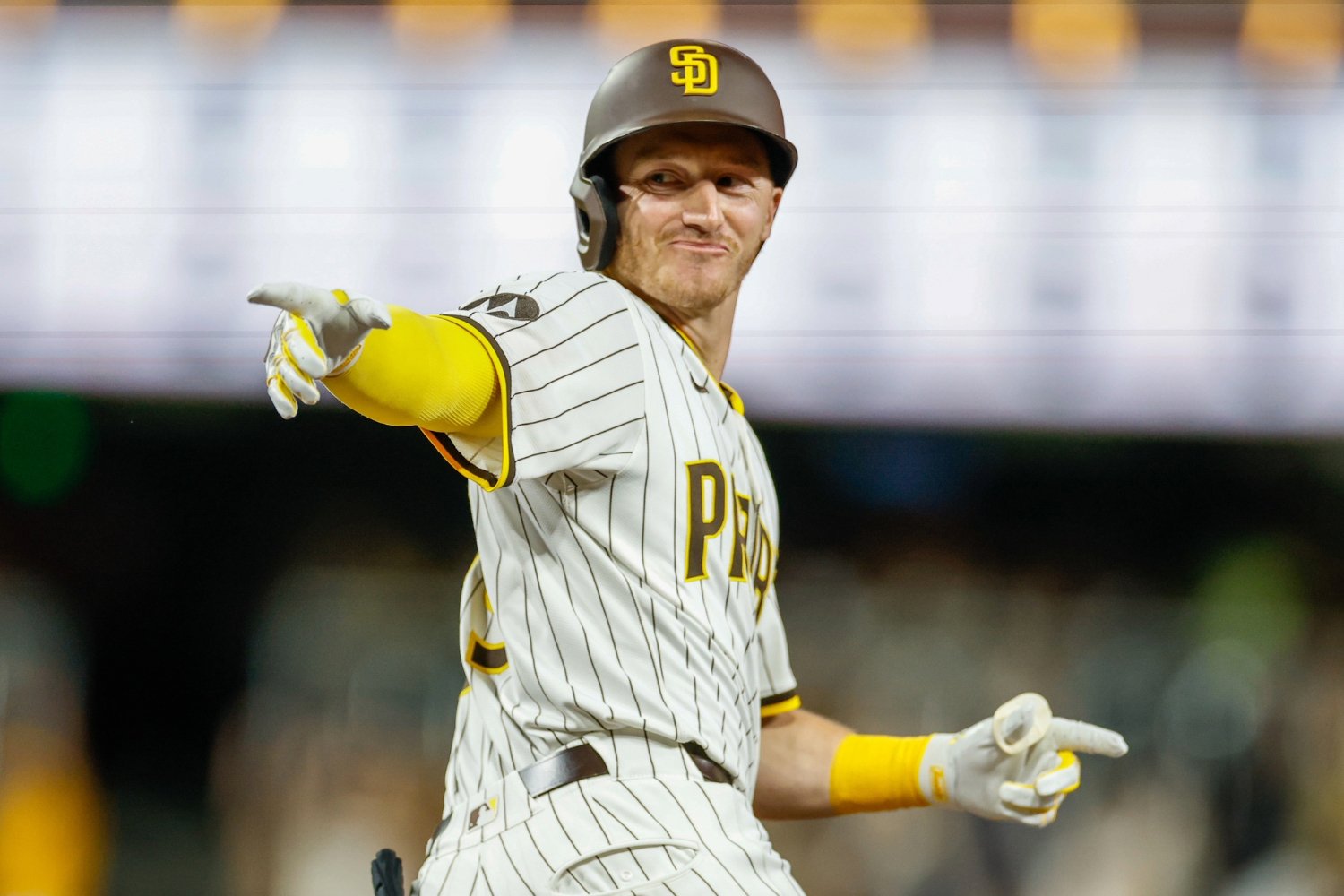 Even at this late stage of the offseason, the San Diego Padres have a depth problem. While the team's addition of Sung Mun Song helps to quell some concerns over the infield depth and lengthens the bench, the fact that there are at least two unsettled spots in the team's lineup (first base and designated hitter) lends itself to the idea that more help is needed on that front. Even with Song's versatility, we saw in 2025 how a dearth of stability with respect to the reserves can derail a team over the course of a 162-game season. The 2025 Padres relied primarily on Jose Iglesias as their guy off the bench. Beyond him, it was a rotating cast of characters that at various points included Jason Heyward, Connor Joe, Tyler Wade, Yuli Gurriel, Oscar González, Brandon Lockridge, Trenton Brooks, and Mason McCoy, some for much shorter spells than others. None of those players completed the year still in the organization, with the exception of Iglesias, whose value was purely in his versatility rather than any semblance of production off the bench (73 wRC+). It was a group unable to compensate for injuries to regulars such as Jackson Merrill and Xander Bogaerts as the season wore on, in addition to its inability to provide relief, when needed, in shorter stints for someone like Fernando Tatis Jr. So, while Song provides legitimate offensive upside at multiple positions — and could end up allowing the team to rotate Jake Cronenworth in at first base while holding down the keystone himself over long stretches — the inevitability that injuries will arise feeds directly into the need for additional upside off the bench. Considering the lack of offensive talent at the upper levels of the minors and that most of the team's minor-league deals thus far have come on the mound, it seems certain that the Friars will explore further additions with the little bit of time that still remains this offseason. However, any discourse around the team's bench configuration at present may be overlooking a player they believe to be a valuable part of their roster: Bryce Johnson. A former San Francisco Giants draftee, Johnson was a former Padre at one point, albeit very briefly. He left as a free agent via a non-tender prior to 2025 but was quickly reacquired for catcher Brett Sullivan in April. Johnson wouldn't appear in a game for San Diego until June and only notched 55 games worth of playing time throughout last year. Despite the small sample for a player without much prospect pedigree, there was something of an indication that some value may lie in what he brings to the table. In Johnson's most extended big league action (84 PA), he posted a slash that included a .342 average and a .383 on-base percentage. His wRC+ checked in at 135 and he added four steals. That all came in addition to his league-average defense across all three outfield spots. Up against the rest of the players that rotated through the Padre bench, it's pretty masterful production. The biggest issue with Johnson's output from 2025, though, is that it came on the strength of a .446 batting average on balls in play. His strikeout rate came in above 22 percent while his walk rate sat just under four. His contact rates and trends are relatively uninspiring. And yet, as much as there is to indicate that such production is not repeatable, there are at least a couple of things working in Johnson's favor. For one, he hit line drives at a 33.3 percent clip. Line drive contact begets favorable BABIP rates, which was the case for him last year. His .298 xBA still would've been an upper-percentile figure had he enough plate appearances to qualify. Such contact came largely against breaking pitches (42.9 percent) and fastballs (35.3 percent). There appeared to be an adjustment in the approach at play that led to these results, as well. Johnson swung at 11 percent fewer off-speed pitches, which were often a source of struggle (his xBA, hard-hit rate, and line-drive rate have largely all been at their lowest against that pitch type), historically. Given that, there's at least some semblance of hope that he can replicate those numbers on some level, even if at not quite the same gaudy pace. Johnson isn't an especially flashy or tools-y bat off the bench. He also doesn't offer much of anything on the power side (.092 ISO). But if you can get a keen approach that emphasizes those pitches against which he succeeds, there's enough contact and on-base ability in there to allow him to become a valuable part of the bench rotation, especially when you factor in the ability to steal a base and provide steady glove work on the outfield grass. Of course, even another successful year from Bryce Johnson doesn't offset the need for more help in the depth department. The Padres will certainly need to add a bit of extra power off the bench. At the same time, we shouldn't discount Johnson's role in upgrading the unit as a regular reserve player with a much larger sample than the one he saw last year.
