


Randy Holt
-
Posts
486 -
Joined
-
Last visited
-
Days Won
6
Content Type
Profiles
San Diego Padres Videos
2026 San Diego Padres Top Prospects Ranking
San Diego Padres Free Agent & Trade Rumors, Notes, & Tidbits
Guides & Resources
2025 San Diego Padres Draft Pick Tracker
News
2026 San Diego Padres Draft Tracker: Picks & Bonuses
Forums
Blogs
Events
Store
Downloads
Gallery
Everything posted by Randy Holt
-
At the outset of the offseason, there was perhaps no more need more urgent for any team in Major League Baseball than that of the San Diego Padres needing to add to their starting rotation. A group that already didn't run deep saw Dylan Cease depart in free agency, will be without Yu Darvish for the entirety of 2026, and made the early choice to keep each of Mason Miller and Adrian Morejon in relief, leaving a fairly dire situation with which to contend. Nick Pivetta was the only sure-thing starter on the 40-man roster when the winter began. A.J. Preller has since taken measures to address it. Michael King is back on a new three-year deal. Kyle Hart was brought back on a one-year deal as a swingman, while he, minor league signing Triston McKenzie, and holdovers JP Sears, Matt Waldron, and Randy Vásquez will likely fight it out this spring for a role in the latter portion of the rotation. With a Joe Musgrove return on the horizon as well, the starting side of things looks, at least, a bit better than it did back in November. The work isn't done, however. San Diego has a largely fortified roster. While they still need to add to their lineup to address either first base or designated hitter, the positional group is sorted and set for 2026. The bullpen, even with the departure of Robert Suárez, remains one of the more notable individual strengths of any team in the league. It's a group that, on paper, should be able to make a run toward October for the third consecutive season... if Preller can make at least one more addition to the rotation. As of right now, FanGraphs' depth charts have Pivetta leading the way in start share (21 percent), followed by King (19 percent), and Musgrove (17 percent). While the percentages are different, Baseball Prospectus projects Pivetta (18 percent), Musgrove (17 percent), and King (15 percent) as the top trio, as well. Nothing surprising there. And while the remaining spots are also the same — with Vásquez assuming the fourth spot and Sears the fifth on both sites — between the two, Baseball Prospectus actually presents less time for each and more time for Waldron in a starting role. FanGraphs, though, likes Hart more for the sixth spot as the first man up. Where the two sites differ is as strong an indicator as any that work remains in the rotation. But at this stage of the offseason, it remains to be seen from where further reinforcements could emerge. Widely-known organizational context tells you that the Padres are running thin on money to spend. This leaves the likes of Zac Gallen, Framber Valdez, and Ranger Suárez out of the team's reach. They also lack the resources in the minor leagues to make a trade for a notable arm, especially the Tarik Skubal's or Hunter Greene's or Freddy Peralta's of the world. So, where does Preller go from here? It's important to consider, in asking that question, that the Padres don't need a frontline starter. With King in place and Musgrove's return on the horizon, they'll combine with Pivetta to create a steady and solid top three in their starting corps. More often than not, they'll get the team into the middle innings before the bullpen can take over. What the Padres need is innings. History indicates that the other names to fill out the back end are more prone to short outings. That could put a lot of extra stress on long relief and, more importantly, the top-tier leverage arms. It's not about Skubal or even Gallen, but rather about finding stability for at least one of those final two spots. From a free agent standpoint, someone like Lucas Giolito could make sense. He carries a certain level of health risk, but he's averaged 5.8 innings per start when he's been in the mix. He's also likely to get a short-term deal. Old friend Nick Martinez served a swingman role in Cincinnati late in the year, but averaged 5.7 as a starter with the Reds (even if his performance took a step back from "good" to more "average" between 2024 and 2025). Those two would at least present the Padres with a certain level of short-term stability that they need. The options, though, get less inspiring the further you search. The trade market is less clear. We know about the top arms available, but less about those who could be moved at a cost the Padres can actually afford. Perhaps someone like Pittsburgh's Mitch Keller makes sense there. Is there a framework around Keller and Jake Cronenworth? We've also previously discussed Kodai Senga as a target, though he's not without plenty of risk. Ultimately, a majority of teams head into the offseason without their rotation completely solidified. No. 5 spots, in particular, often remain in flux. With King signed, the Padres aren't in as much peril as they once were this winter. However, they're clearly a team in need of adding at least one more starter to the mix in order to feel better about their group heading into the spring exhibition slate. View full article
-
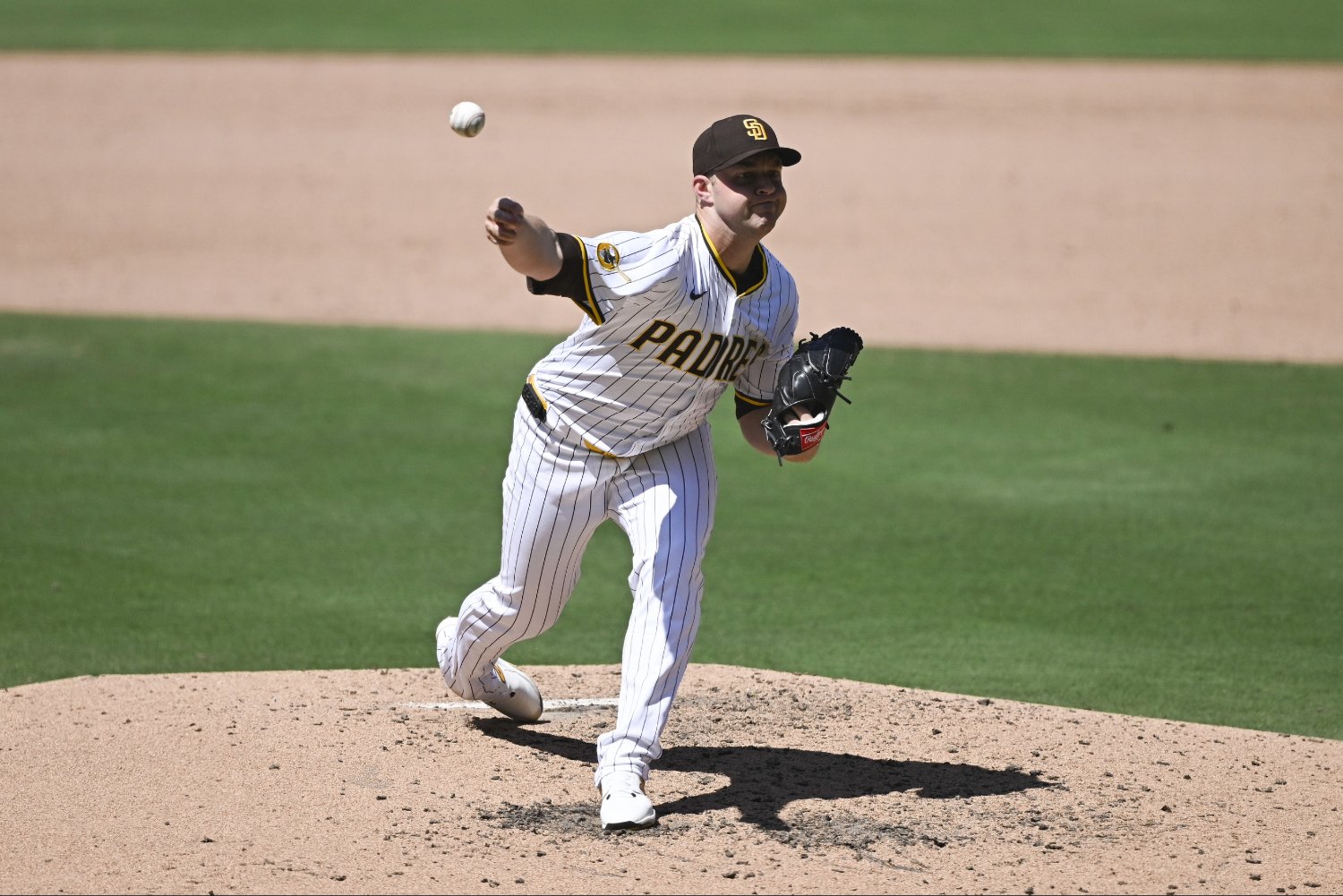 At the outset of the offseason, there was perhaps no more need more urgent for any team in Major League Baseball than that of the San Diego Padres needing to add to their starting rotation. A group that already didn't run deep saw Dylan Cease depart in free agency, will be without Yu Darvish for the entirety of 2026, and made the early choice to keep each of Mason Miller and Adrian Morejon in relief, leaving a fairly dire situation with which to contend. Nick Pivetta was the only sure-thing starter on the 40-man roster when the winter began. A.J. Preller has since taken measures to address it. Michael King is back on a new three-year deal. Kyle Hart was brought back on a one-year deal as a swingman, while he, minor league signing Triston McKenzie, and holdovers JP Sears, Matt Waldron, and Randy Vásquez will likely fight it out this spring for a role in the latter portion of the rotation. With a Joe Musgrove return on the horizon as well, the starting side of things looks, at least, a bit better than it did back in November. The work isn't done, however. San Diego has a largely fortified roster. While they still need to add to their lineup to address either first base or designated hitter, the positional group is sorted and set for 2026. The bullpen, even with the departure of Robert Suárez, remains one of the more notable individual strengths of any team in the league. It's a group that, on paper, should be able to make a run toward October for the third consecutive season... if Preller can make at least one more addition to the rotation. As of right now, FanGraphs' depth charts have Pivetta leading the way in start share (21 percent), followed by King (19 percent), and Musgrove (17 percent). While the percentages are different, Baseball Prospectus projects Pivetta (18 percent), Musgrove (17 percent), and King (15 percent) as the top trio, as well. Nothing surprising there. And while the remaining spots are also the same — with Vásquez assuming the fourth spot and Sears the fifth on both sites — between the two, Baseball Prospectus actually presents less time for each and more time for Waldron in a starting role. FanGraphs, though, likes Hart more for the sixth spot as the first man up. Where the two sites differ is as strong an indicator as any that work remains in the rotation. But at this stage of the offseason, it remains to be seen from where further reinforcements could emerge. Widely-known organizational context tells you that the Padres are running thin on money to spend. This leaves the likes of Zac Gallen, Framber Valdez, and Ranger Suárez out of the team's reach. They also lack the resources in the minor leagues to make a trade for a notable arm, especially the Tarik Skubal's or Hunter Greene's or Freddy Peralta's of the world. So, where does Preller go from here? It's important to consider, in asking that question, that the Padres don't need a frontline starter. With King in place and Musgrove's return on the horizon, they'll combine with Pivetta to create a steady and solid top three in their starting corps. More often than not, they'll get the team into the middle innings before the bullpen can take over. What the Padres need is innings. History indicates that the other names to fill out the back end are more prone to short outings. That could put a lot of extra stress on long relief and, more importantly, the top-tier leverage arms. It's not about Skubal or even Gallen, but rather about finding stability for at least one of those final two spots. From a free agent standpoint, someone like Lucas Giolito could make sense. He carries a certain level of health risk, but he's averaged 5.8 innings per start when he's been in the mix. He's also likely to get a short-term deal. Old friend Nick Martinez served a swingman role in Cincinnati late in the year, but averaged 5.7 as a starter with the Reds (even if his performance took a step back from "good" to more "average" between 2024 and 2025). Those two would at least present the Padres with a certain level of short-term stability that they need. The options, though, get less inspiring the further you search. The trade market is less clear. We know about the top arms available, but less about those who could be moved at a cost the Padres can actually afford. Perhaps someone like Pittsburgh's Mitch Keller makes sense there. Is there a framework around Keller and Jake Cronenworth? We've also previously discussed Kodai Senga as a target, though he's not without plenty of risk. Ultimately, a majority of teams head into the offseason without their rotation completely solidified. No. 5 spots, in particular, often remain in flux. With King signed, the Padres aren't in as much peril as they once were this winter. However, they're clearly a team in need of adding at least one more starter to the mix in order to feel better about their group heading into the spring exhibition slate.
 -
With Joe Musgrove demanding much of the attention as a key member of the San Diego Padres returning from major surgery early in 2026, it's easy to forget that he isn't the only one on the team's pitching staff set to do so. Jhony Brito underwent internal brace surgery for his UCL back in May, indicating that he could be back within the first couple of months of the upcoming year. For a pitching-starved team like San Diego, it's hard to imagine he won't carve out a role quickly upon his return. The role itself, however, is up in the air. Brito was one of the four players that A.J. Preller acquired when he sent Juan Soto to the Bronx, along with Michael King, Drew Thorpe, and Kyle Higashioka. Thorpe wasn't long for the roster as he was flipped for now-former Padre Dylan Cease, while Higashioka left in free agency at the end of that year. With King now back under contract in San Diego, he and Brito represent the only chance for the team to make good on that deal. There was not a point at which we saw Brito throw a pitch for the 2025 Padres, even before the surgery. His last action came back in 2024, when he logged nearly 44 innings at the big-league level and another 14 in Triple-A. His work at the top level came exclusively in relief, with 26 appearances to a 4.12 ERA and 3.72 FIP. His fastball, averaging 96.3 MPH, sat in the 84th percentile. Most of Brito's appearances that year were of the multi-inning variety. And that's an important part in determining what his role could be. Brito had plenty of work as a starter prior to the 2024 season. He made 20 starts between the minor and major leagues in 2023 and 23 starts in 2022. The results were generally fine, but fell off quite a bit when serving as a starter. His career ERA in 52 2/3 innings as a starter in Major League Baseball sits at 6.32; he's at a 2.88 ERA in 81 1/3 innings in relief. While he's never posted gaudy strikeout numbers, his combination of velocity, command (5.2 BB% in 2024), and groundball contact (48.3 GB%) each make him an enticing option in relief for this particular Padres team. The team, in its current form, has some options in long relief. Kyle Hart could serve such a role. So, too, could any combination of winter signing Ty Adcock or Triston McKenzie, the latter of whom is on a minor-league deal. None of that trio, however, offers the upside we've seen Brito flash in his brief time serving such a role. Hart was knocked around and shuttled between the top two levels in 2025, Adcock presents some command issues, and McKenzie is coming off a multi-year struggle that included a velocity dip wrought by health issues. Brito's skill set would help to contribute to an effective bridge between starting pitchers and a elite group of late-inning relievers. Given that, it's hard to imagine Brito serving any role outside of exactly the one in which we've already seen him. To say nothing of his health in all of this. Even if the team wanted Brito and his remaining years of team control to transition back onto the starting side — something that would only be a consideration given the relative shallowness of the entire starting operation in the short term — they wouldn't immediately transition him into such a position. Assuming a return at the early end of a recovery timeline (May), he'd likely be inserted into exactly the type of role in which we should expect to see him. As such, that multi-inning relief role in which we last saw Jhony Brito is also going to be his best path toward contributing to the 2026 Padres. The aforementioned lack of depth on the starting side will make the multi-inning gig an essential one for this roster, even when assuming more additions to the rotation are on the way. Brito has the skill set to succeed there above all other options, and it's hard to imagine the team would be inclined to let him ply his trade in any role but that upon his return. View full article
-
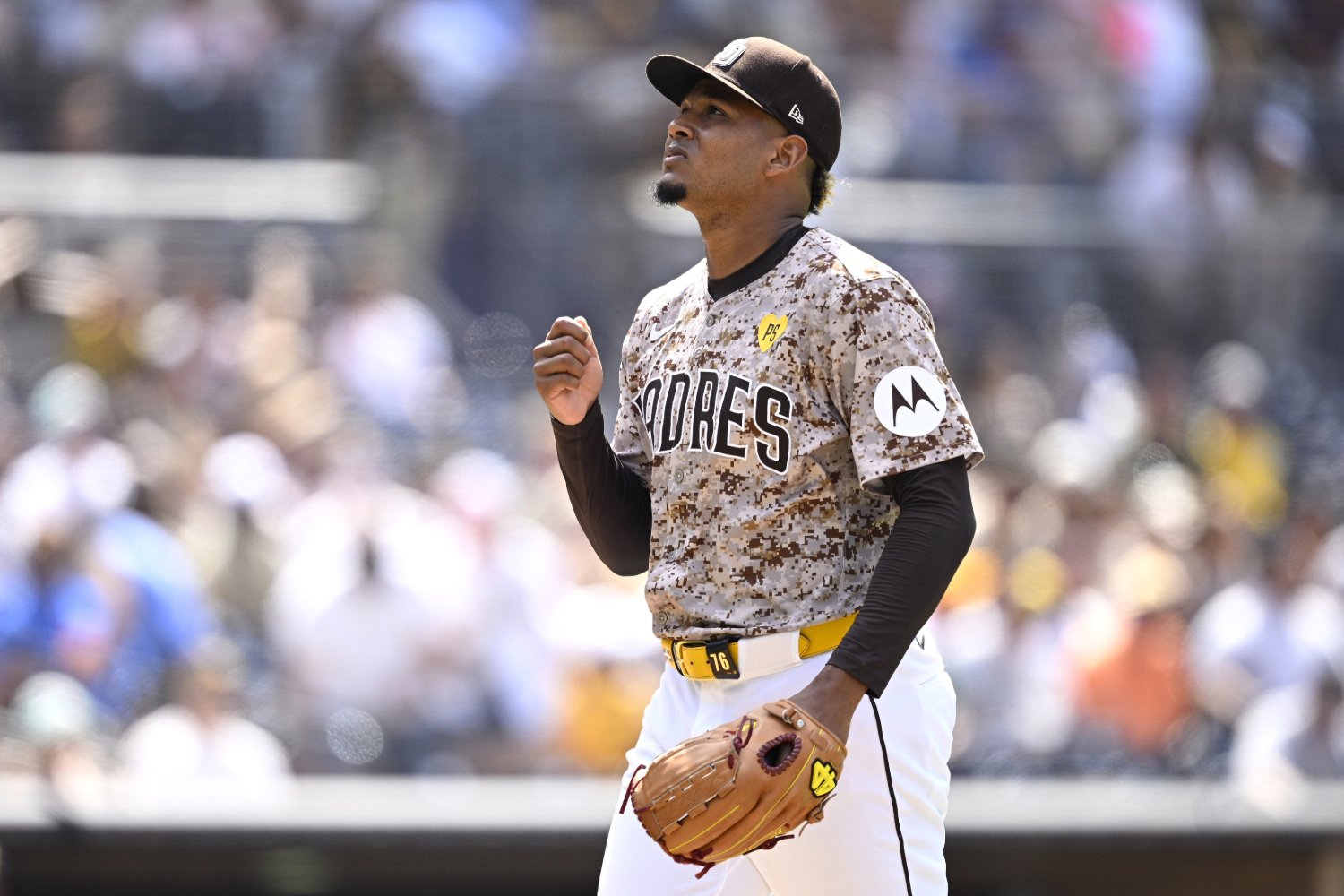 With Joe Musgrove demanding much of the attention as a key member of the San Diego Padres returning from major surgery early in 2026, it's easy to forget that he isn't the only one on the team's pitching staff set to do so. Jhony Brito underwent internal brace surgery for his UCL back in May, indicating that he could be back within the first couple of months of the upcoming year. For a pitching-starved team like San Diego, it's hard to imagine he won't carve out a role quickly upon his return. The role itself, however, is up in the air. Brito was one of the four players that A.J. Preller acquired when he sent Juan Soto to the Bronx, along with Michael King, Drew Thorpe, and Kyle Higashioka. Thorpe wasn't long for the roster as he was flipped for now-former Padre Dylan Cease, while Higashioka left in free agency at the end of that year. With King now back under contract in San Diego, he and Brito represent the only chance for the team to make good on that deal. There was not a point at which we saw Brito throw a pitch for the 2025 Padres, even before the surgery. His last action came back in 2024, when he logged nearly 44 innings at the big-league level and another 14 in Triple-A. His work at the top level came exclusively in relief, with 26 appearances to a 4.12 ERA and 3.72 FIP. His fastball, averaging 96.3 MPH, sat in the 84th percentile. Most of Brito's appearances that year were of the multi-inning variety. And that's an important part in determining what his role could be. Brito had plenty of work as a starter prior to the 2024 season. He made 20 starts between the minor and major leagues in 2023 and 23 starts in 2022. The results were generally fine, but fell off quite a bit when serving as a starter. His career ERA in 52 2/3 innings as a starter in Major League Baseball sits at 6.32; he's at a 2.88 ERA in 81 1/3 innings in relief. While he's never posted gaudy strikeout numbers, his combination of velocity, command (5.2 BB% in 2024), and groundball contact (48.3 GB%) each make him an enticing option in relief for this particular Padres team. The team, in its current form, has some options in long relief. Kyle Hart could serve such a role. So, too, could any combination of winter signing Ty Adcock or Triston McKenzie, the latter of whom is on a minor-league deal. None of that trio, however, offers the upside we've seen Brito flash in his brief time serving such a role. Hart was knocked around and shuttled between the top two levels in 2025, Adcock presents some command issues, and McKenzie is coming off a multi-year struggle that included a velocity dip wrought by health issues. Brito's skill set would help to contribute to an effective bridge between starting pitchers and a elite group of late-inning relievers. Given that, it's hard to imagine Brito serving any role outside of exactly the one in which we've already seen him. To say nothing of his health in all of this. Even if the team wanted Brito and his remaining years of team control to transition back onto the starting side — something that would only be a consideration given the relative shallowness of the entire starting operation in the short term — they wouldn't immediately transition him into such a position. Assuming a return at the early end of a recovery timeline (May), he'd likely be inserted into exactly the type of role in which we should expect to see him. As such, that multi-inning relief role in which we last saw Jhony Brito is also going to be his best path toward contributing to the 2026 Padres. The aforementioned lack of depth on the starting side will make the multi-inning gig an essential one for this roster, even when assuming more additions to the rotation are on the way. Brito has the skill set to succeed there above all other options, and it's hard to imagine the team would be inclined to let him ply his trade in any role but that upon his return.
 -
Had it not been for the 2024 brilliance of Paul Skenes in Pittsburgh, we may very well have had to stipulate "former National League Rookie of the Year" when discussing Jackson Merrill. As it were, Skenes took home the hardware while Merrill had to "settle" for a nine-year extension ahead of Year 2 in Major League Baseball. Indeed, such a contract was well-earned on the part of Merrill and not even remotely questioned for a San Diego Padres team that has faced plenty of them for handing out hefty multi-year pacts. His 2024 season featured a a .292/.326/.500 line across 156 games, as well as a 130 wRC+ and 5.3 fWAR. Just 13 qualifying position players finished ahead of Merrill in that fWAR figure, and only three of them were of the outfielder variety. One can understand why the Padres were so eager to lock him up long-term. His percentile distribution was indicative of a player standing on the cusp of elite status, as well: While there might have been a desire to see Merrill reign in the discipline a bit, it didn't cost him in his ability to avoid strikeouts or generate quality contact. Despite the aggression inherent in his approach, each of those rates remained respectable. His 7.5 ft swing length average allowed for zone coverage, with enough bat speed to help him compensate to the tune of the 16th-best Contact% among position players that year (81.0). He also scored high marks defensively, where his 12 Outs Above Average checked in in the 97th percentile. Unfortunately for Merrill, many of the positives from his rookie campaign regressed mightily in 2025. His line fell to one that went .264/.317/.457, with a wRC+ that dropped 14 points from the prior year (116). His 3.0 fWAR was a notable step back. It was still a strong year by any individual standard, but still rung as disappointing for a player that looked like a budding superstar after Year 1. Of course, there were perfectly good and obvious reasons for that. By the time we reached the end of August last year, Merrill was set to head to the injured list for the third time in 2025. He strained his hamstring in April and was the victim of a hard tag to the head while sliding into second base in June. The third stint was due to a rolled ankle that resulted in a sprain and bone bruise. Enduring such a rollercoaster on the health side resulted in Merrill appearing in just 115 games and even some of those were not played at 100 percent health. The result of such health woes were a percentile chart that doesn't look nearly as appealing as the first year: Merrill wasn't able to generate the same type of contact and saw roughly a five percent increase in strikeouts. What's striking is that he maintained an upper-tier barrel rate within all of that. It leads to a natural conclusion that some effects lingered as Merrill worked his way back from injury, only to face another a short while later. That doesn't mean it's all negative, though. The approach, in particular, saw some improvement. While Merrill did whiff and, subsequently, struck out more throughout the 2025 season, he also walked more. He saw a slight decrease in his swing rate and chase rate with two strikes specifically, indicating that there could be some growth on the horizon in that regard. A combination of an improving approach and an offseason clear of myriad injuries should each bode well, to say nothing of how Merrill finished the year. The following is Merrill's monthly wOBA throughout last season: There is a significant drop following the hamstring injury that held him out for exactly a month. It continued to drop following the concussion in June. Once he was clear of that second IL trip, the numbers started to rise sharply. Even following the ankle injury, he continued to ascend back toward his 2024 levels of performance. Aside from April, where he had come out scorching at the plate, September was Merrill's best individual month of the year. He returned from the ankle injury on September 1 and turned in a month that included a .352 ISO and 160 wRC+. His 53.8 percent hard-hit rate was his highest in an individual month. That continued into the postseason, as Merrill reached base in four of 12 plate appearances and was one of the team's only hitters to contribute much of anything in a short series against the Chicago Cubs. It is ultimately those trends that have the arrow pointing back up for Merrill in 2026... with one caveat. September was more aggression than patience at the plate, as his swing and strikeout rates each went up and the walk rate went down. But even if Merrill is unable to sustain growth in his approach, it's surely a tradeoff the Padres are willing to accept if the outcomes look like that. Regardless of the nuance presented in his plate appearances, it's clear that the healthy version of Jackson Merrill that we saw mere glimpses of in 2025 is closer to the true version we saw full-time in 2024. If the Padres are going to bank on a rebound from any of their hitters, he's likely the one. View full article
-
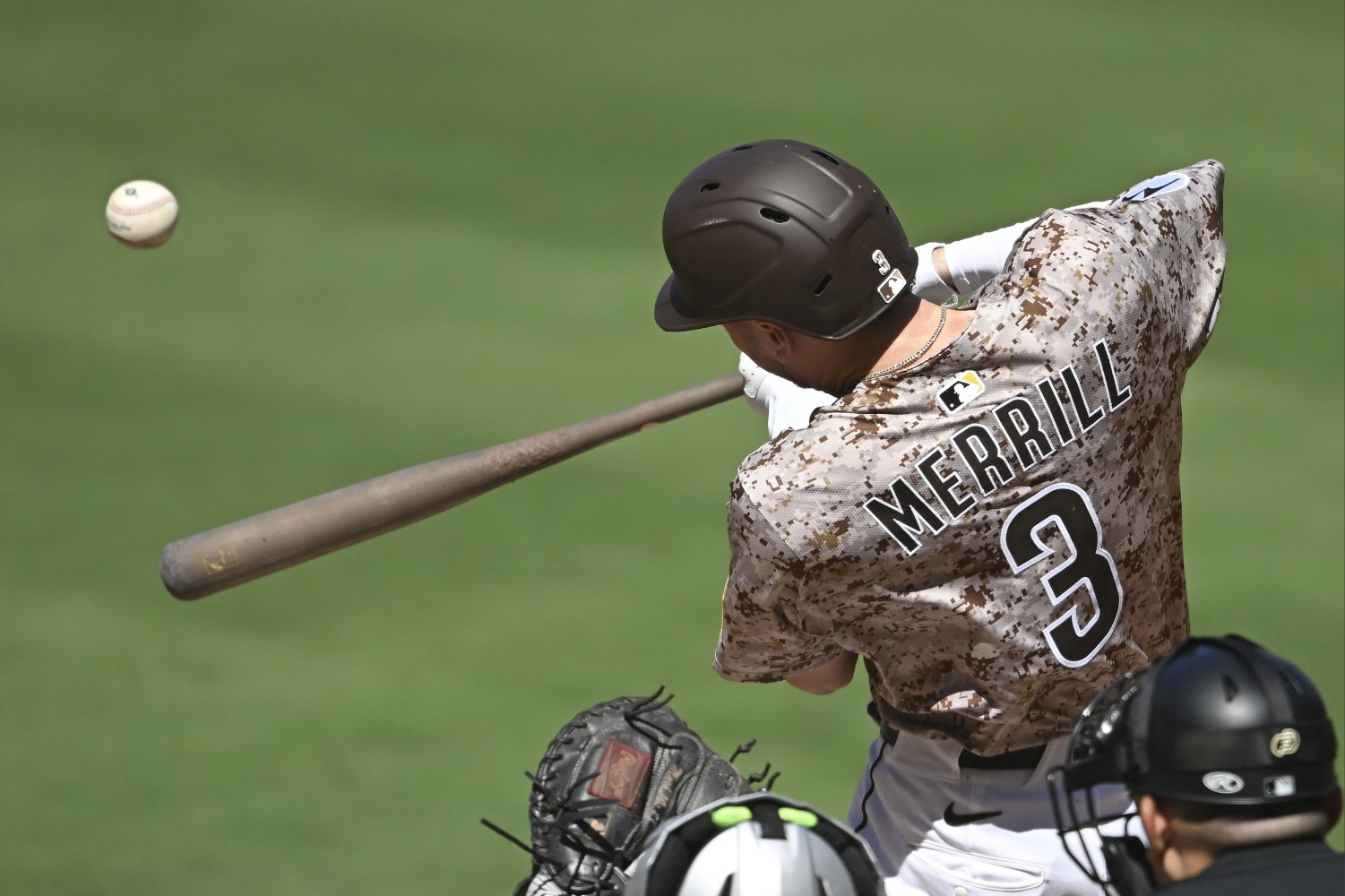 Had it not been for the 2024 brilliance of Paul Skenes in Pittsburgh, we may very well have had to stipulate "former National League Rookie of the Year" when discussing Jackson Merrill. As it were, Skenes took home the hardware while Merrill had to "settle" for a nine-year extension ahead of Year 2 in Major League Baseball. Indeed, such a contract was well-earned on the part of Merrill and not even remotely questioned for a San Diego Padres team that has faced plenty of them for handing out hefty multi-year pacts. His 2024 season featured a a .292/.326/.500 line across 156 games, as well as a 130 wRC+ and 5.3 fWAR. Just 13 qualifying position players finished ahead of Merrill in that fWAR figure, and only three of them were of the outfielder variety. One can understand why the Padres were so eager to lock him up long-term. His percentile distribution was indicative of a player standing on the cusp of elite status, as well: While there might have been a desire to see Merrill reign in the discipline a bit, it didn't cost him in his ability to avoid strikeouts or generate quality contact. Despite the aggression inherent in his approach, each of those rates remained respectable. His 7.5 ft swing length average allowed for zone coverage, with enough bat speed to help him compensate to the tune of the 16th-best Contact% among position players that year (81.0). He also scored high marks defensively, where his 12 Outs Above Average checked in in the 97th percentile. Unfortunately for Merrill, many of the positives from his rookie campaign regressed mightily in 2025. His line fell to one that went .264/.317/.457, with a wRC+ that dropped 14 points from the prior year (116). His 3.0 fWAR was a notable step back. It was still a strong year by any individual standard, but still rung as disappointing for a player that looked like a budding superstar after Year 1. Of course, there were perfectly good and obvious reasons for that. By the time we reached the end of August last year, Merrill was set to head to the injured list for the third time in 2025. He strained his hamstring in April and was the victim of a hard tag to the head while sliding into second base in June. The third stint was due to a rolled ankle that resulted in a sprain and bone bruise. Enduring such a rollercoaster on the health side resulted in Merrill appearing in just 115 games and even some of those were not played at 100 percent health. The result of such health woes were a percentile chart that doesn't look nearly as appealing as the first year: Merrill wasn't able to generate the same type of contact and saw roughly a five percent increase in strikeouts. What's striking is that he maintained an upper-tier barrel rate within all of that. It leads to a natural conclusion that some effects lingered as Merrill worked his way back from injury, only to face another a short while later. That doesn't mean it's all negative, though. The approach, in particular, saw some improvement. While Merrill did whiff and, subsequently, struck out more throughout the 2025 season, he also walked more. He saw a slight decrease in his swing rate and chase rate with two strikes specifically, indicating that there could be some growth on the horizon in that regard. A combination of an improving approach and an offseason clear of myriad injuries should each bode well, to say nothing of how Merrill finished the year. The following is Merrill's monthly wOBA throughout last season: There is a significant drop following the hamstring injury that held him out for exactly a month. It continued to drop following the concussion in June. Once he was clear of that second IL trip, the numbers started to rise sharply. Even following the ankle injury, he continued to ascend back toward his 2024 levels of performance. Aside from April, where he had come out scorching at the plate, September was Merrill's best individual month of the year. He returned from the ankle injury on September 1 and turned in a month that included a .352 ISO and 160 wRC+. His 53.8 percent hard-hit rate was his highest in an individual month. That continued into the postseason, as Merrill reached base in four of 12 plate appearances and was one of the team's only hitters to contribute much of anything in a short series against the Chicago Cubs. It is ultimately those trends that have the arrow pointing back up for Merrill in 2026... with one caveat. September was more aggression than patience at the plate, as his swing and strikeout rates each went up and the walk rate went down. But even if Merrill is unable to sustain growth in his approach, it's surely a tradeoff the Padres are willing to accept if the outcomes look like that. Regardless of the nuance presented in his plate appearances, it's clear that the healthy version of Jackson Merrill that we saw mere glimpses of in 2025 is closer to the true version we saw full-time in 2024. If the Padres are going to bank on a rebound from any of their hitters, he's likely the one.
 -
With Japanese slugger Kazuma Okamoto agreeing to a deal with the Toronto Blue Jays over the weekend, choices are suddenly limited for the San Diego Padres to round out their infield group. Specifically, it's the first base position that still lingers as one of the team's most pressing questions a mere six weeks out from the beginning of training camp. What the team could do to fill their first base vacancy loomed as one of the top questions heading into the offseason. With each of Luis Arráez and Ryan O'Hearn reaching free agency, it represented the most obvious pathway toward bolstering the offensive production of the roster. Okamoto was a corner infielder who could've served such a purpose. Willson Contreras could've been another prior to his trade to the Boston Red Sox. With those two now off the board, O'Hearn signing in Pittsburgh, and A.J. Preller unlikely to traverse the Cody Bellinger waters, the problem of what shape first base will take for San Diego persists. Not that the team is entirely without options. There is certainly an in-house path toward addressing the position. Gavin Sheets is coming off something of a breakout and has first base experience. He could form something of a platoon with out-of-options backup catcher Luis Campusano, if Craig Stammen & co. were so inclined. Jake Cronenworth could also slide back over from the keystone upon the arrival of former KBO star Sung Mun Song, even if the former's offensive profile doesn't necessarily fit the spot. Should the team look outside the present roster, though, could they turn to a familiar face? Luis Arraez remains a free agent. He's coming off a career-best 3.5 K%, which represented the lowest full-season strikeout rate since Tony Gwynn's 1995 campaign. However, he also sat in the first percentile in hard-hit rate (16.7 percent) and barrel rate (1.1 percent), both of which were at least partially wrought by a bat speed figure that has consistently dropped in the last three years; his 62.6 MPH average bat speed was the lowest of his career. But even as a contact-only bat, he's not entirely without value to a lineup. Consider that his .289 batting average on balls in play represented a 35-point drop from the previous season. He still posted a line that included a .292 average and a technically-above-average 104 wRC+. Even his isolated skill set does provide value, especially within the context of a Padres lineup that, on paper, could use him as an effective supplement. In a lesser lineup, his one tool might get lost. In a San Diego lineup that employs Fernando Tatis Jr. and Manny Machado, should see a bounce back year from Jackson Merrill, and features the likes of Ramón Laureano and Song, there's an argument to be made that he's still a worthy fit with this group. In such a scenario where the Padres were to re-sign Arráez, it takes some of the pressure off to settle first base specifically. You could roll out Sheets and/or Campusano or Cronenworth from a defensive standpoint. while Arráez serves primarily as a designated hitter to compensate for his below-average defense at the cold corner. It solidifies the lineup at what would likely be a lower price point for a cash-strapped team, too. Which brings us to the specific circumstances under which such a return would be logical. The first is that the contract would have to make sense. Arráez has just the one notable tool. With a glut of long-term contracts on the books, Preller can hardly afford to overpay on a multi-year deal, even if Arráez is still only 28. The other is that Stammen would have to avoid the tendency of hitting him near the top of the lineup in the way that Mike Shildt did. His on-base percentage isn't in good enough shape for such an integral role. If you can get him on a team-friendly, short-term deal in a way that still allows for an addition(s) on the pitching side, all while having him serve a role further down the lineup where his contact skills would get the OBP guys at the top moving around the bases, then you have a case. A few months ago, such a move would've seemed outlandish. But as the winter and the personnel options begin to dwindle, one could make the argument that this is precisely the type of short-term move Preller should explore before pivoting back to the much larger need that continues to live on the mound. View full article
-
Should the Padres Circle Back to Luis Arráez to Fill Their Lineup Vacancy?
Randy Holt posted an article in Padres
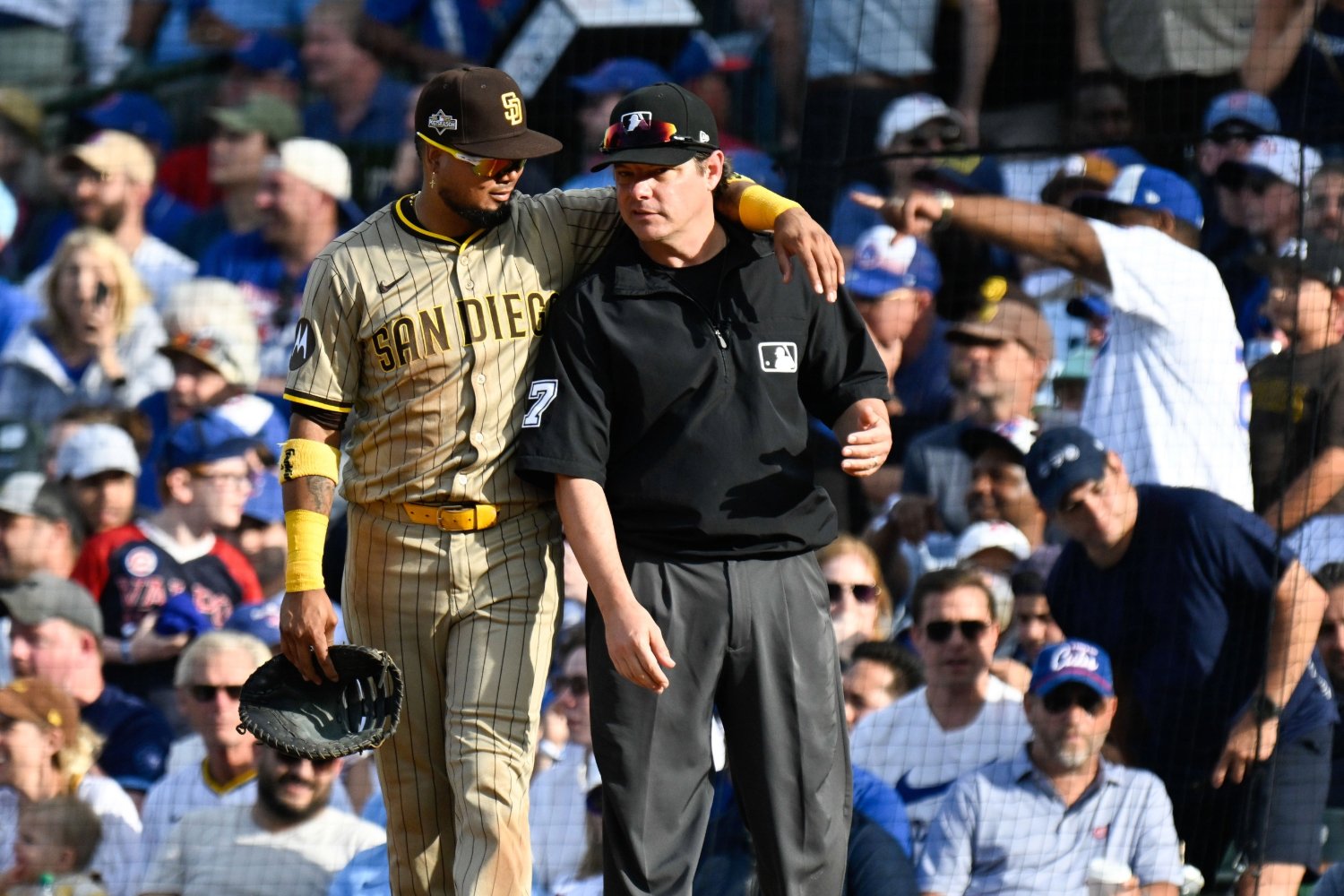 With Japanese slugger Kazuma Okamoto agreeing to a deal with the Toronto Blue Jays over the weekend, choices are suddenly limited for the San Diego Padres to round out their infield group. Specifically, it's the first base position that still lingers as one of the team's most pressing questions a mere six weeks out from the beginning of training camp. What the team could do to fill their first base vacancy loomed as one of the top questions heading into the offseason. With each of Luis Arráez and Ryan O'Hearn reaching free agency, it represented the most obvious pathway toward bolstering the offensive production of the roster. Okamoto was a corner infielder who could've served such a purpose. Willson Contreras could've been another prior to his trade to the Boston Red Sox. With those two now off the board, O'Hearn signing in Pittsburgh, and A.J. Preller unlikely to traverse the Cody Bellinger waters, the problem of what shape first base will take for San Diego persists. Not that the team is entirely without options. There is certainly an in-house path toward addressing the position. Gavin Sheets is coming off something of a breakout and has first base experience. He could form something of a platoon with out-of-options backup catcher Luis Campusano, if Craig Stammen & co. were so inclined. Jake Cronenworth could also slide back over from the keystone upon the arrival of former KBO star Sung Mun Song, even if the former's offensive profile doesn't necessarily fit the spot. Should the team look outside the present roster, though, could they turn to a familiar face? Luis Arraez remains a free agent. He's coming off a career-best 3.5 K%, which represented the lowest full-season strikeout rate since Tony Gwynn's 1995 campaign. However, he also sat in the first percentile in hard-hit rate (16.7 percent) and barrel rate (1.1 percent), both of which were at least partially wrought by a bat speed figure that has consistently dropped in the last three years; his 62.6 MPH average bat speed was the lowest of his career. But even as a contact-only bat, he's not entirely without value to a lineup. Consider that his .289 batting average on balls in play represented a 35-point drop from the previous season. He still posted a line that included a .292 average and a technically-above-average 104 wRC+. Even his isolated skill set does provide value, especially within the context of a Padres lineup that, on paper, could use him as an effective supplement. In a lesser lineup, his one tool might get lost. In a San Diego lineup that employs Fernando Tatis Jr. and Manny Machado, should see a bounce back year from Jackson Merrill, and features the likes of Ramón Laureano and Song, there's an argument to be made that he's still a worthy fit with this group. In such a scenario where the Padres were to re-sign Arráez, it takes some of the pressure off to settle first base specifically. You could roll out Sheets and/or Campusano or Cronenworth from a defensive standpoint. while Arráez serves primarily as a designated hitter to compensate for his below-average defense at the cold corner. It solidifies the lineup at what would likely be a lower price point for a cash-strapped team, too. Which brings us to the specific circumstances under which such a return would be logical. The first is that the contract would have to make sense. Arráez has just the one notable tool. With a glut of long-term contracts on the books, Preller can hardly afford to overpay on a multi-year deal, even if Arráez is still only 28. The other is that Stammen would have to avoid the tendency of hitting him near the top of the lineup in the way that Mike Shildt did. His on-base percentage isn't in good enough shape for such an integral role. If you can get him on a team-friendly, short-term deal in a way that still allows for an addition(s) on the pitching side, all while having him serve a role further down the lineup where his contact skills would get the OBP guys at the top moving around the bases, then you have a case. A few months ago, such a move would've seemed outlandish. But as the winter and the personnel options begin to dwindle, one could make the argument that this is precisely the type of short-term move Preller should explore before pivoting back to the much larger need that continues to live on the mound.
 -
The San Diego Padres' signing of former KBO infielder Sung Mun Song wasn't difficult to pin down in its motivation. A versatile infielder coming off a 25/25 season with Kiwoom is a player that virtually every team in baseball would want to add to their roster. So, it's a certain level of victory that the team was able to sign him to a four-year deal at an affordable price point, even if there isn't an obvious position for him to start at in the present moment. While A.J. Preller could still seek to make a move and trade someone like Jake Cronenworth, the team has options in how they deploy their newest positional acquisition. He could flip Cronenworth back over to first base while Song handles everyday duty at the keystone. The team could also keep Cronenworth at second, insert some sort of platoon involving Gavin Sheets and Luis Campusano (assuming the team doesn't sign an everyday first baseman), and utilize Song as a multi-positional component in their lineup while rotating the designated hitter spot. In any case, it sounds like the team is exploring additional contingencies in order to ensure Song's bat is in the lineup as frequently as possible. Reports emerged around the holidays that the team was considering letting Song spend some time on the outfield grass. New manager Craig Stammen confirmed as much, stating that the goal was to have his bat in the mix above all. It's an interesting proposition, but one that doesn't feature quite the same level of certainty as his work on the infield might. Presently, the Padres have their three starting outfielders in place. Fernando Tatis Jr. will continue his post as one of the game's best defensive right fielders. Jackson Merrill has center locked down for the next decade. Trade deadline acquisition Ramón Laureano, who is in a contract year playing on a club option, will handle left field duties. Tatis and Merrill are stars and, as such, everyday players, while Laureano was split neutral in a strong year at the plate. That's not necessarily a group that lends itself to too much flexibility. The 2025 Padres were hit with some brutal injury luck. Perhaps nobody fell more into that cycle than Merrill, who endured multiple stints on the injured list throughout the year. Laureano also missed the end of the season, while Tatis likely had various points at which he could've used a string of days off, particularly after absorbing multiple hit-by-pitches against the Los Angeles Dodgers in June. With very little offensive upside behind the starting trio — Bryce Johnson and Tirso Ornelas don't really move the needle — it could certainly behoove Stammen to see if Song has the chops to serve as a supplementary piece in the outfield puzzle in order to ensure the offense doesn't experience the kind of fall off they did last year when games were missed. If you get lucky and don't need that type of support in the way that the Friars did last season, then at least you've got someone worth throwing out there for the odd day off or late-game situation. Ultimately, though, this exploration is about expanding the bench at large. It wasn't only the outfield that suffered from the team's lack of depth in 2025; it was virtually everywhere. With Luis Campusano already set to occupy a spot as the team's backup catcher, the team needs to be able to maximize what they have in their remaining three players on the bench. Last year's reserve group featured the likes of Jose Iglesias, Johnson, and a host of other players that were largely out of the organization by the end of the year. Part of such heavy turnover was due to the fact that it was simply not a versatile group, save for Iglesias. The support just wasn't there when the team needed someone to step in whether in the short or long term. As such, it makes complete sense for Stammen and the Padres to consider Song in the outfield ahead of the 2026 campaign. Even if he's set to be utilized as primarily an infielder, an expansion of his skill set — assuming Song proves capable of handling such duty — provides the team with extra coverage in the outfield in addition to what he was already set to bring to the infield mix. Regardless of how it all shakes out, the fact that the Padres have a moveable player on their roster capable of providing notable offensive production is a really exciting prospect against what the team was working with last season. View full article
-
Sung-mun Song's Outfield Test Could Fix What Ails Padres' Bench
Randy Holt posted an article in Padres
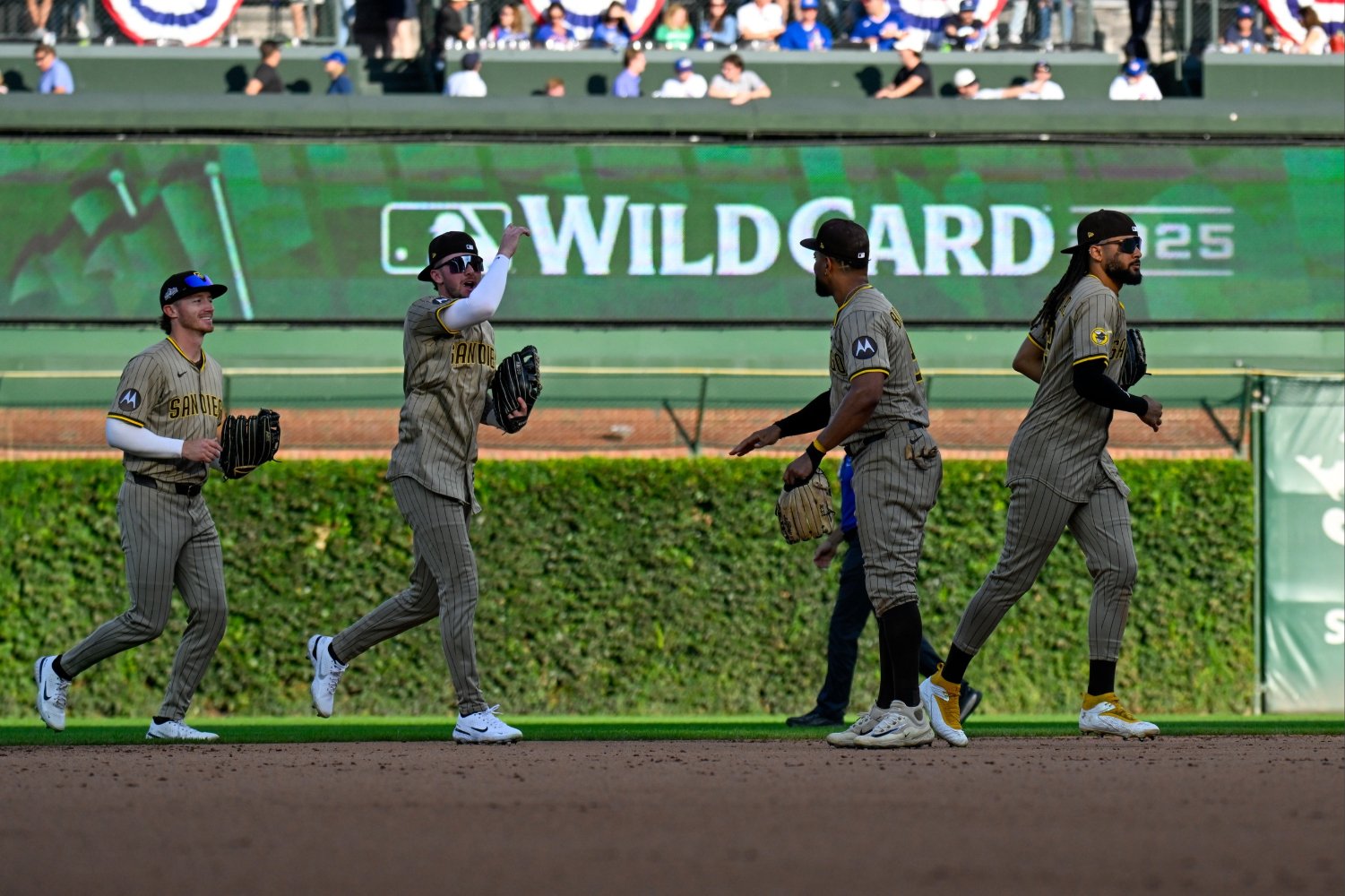 The San Diego Padres' signing of former KBO infielder Sung Mun Song wasn't difficult to pin down in its motivation. A versatile infielder coming off a 25/25 season with Kiwoom is a player that virtually every team in baseball would want to add to their roster. So, it's a certain level of victory that the team was able to sign him to a four-year deal at an affordable price point, even if there isn't an obvious position for him to start at in the present moment. While A.J. Preller could still seek to make a move and trade someone like Jake Cronenworth, the team has options in how they deploy their newest positional acquisition. He could flip Cronenworth back over to first base while Song handles everyday duty at the keystone. The team could also keep Cronenworth at second, insert some sort of platoon involving Gavin Sheets and Luis Campusano (assuming the team doesn't sign an everyday first baseman), and utilize Song as a multi-positional component in their lineup while rotating the designated hitter spot. In any case, it sounds like the team is exploring additional contingencies in order to ensure Song's bat is in the lineup as frequently as possible. Reports emerged around the holidays that the team was considering letting Song spend some time on the outfield grass. New manager Craig Stammen confirmed as much, stating that the goal was to have his bat in the mix above all. It's an interesting proposition, but one that doesn't feature quite the same level of certainty as his work on the infield might. Presently, the Padres have their three starting outfielders in place. Fernando Tatis Jr. will continue his post as one of the game's best defensive right fielders. Jackson Merrill has center locked down for the next decade. Trade deadline acquisition Ramón Laureano, who is in a contract year playing on a club option, will handle left field duties. Tatis and Merrill are stars and, as such, everyday players, while Laureano was split neutral in a strong year at the plate. That's not necessarily a group that lends itself to too much flexibility. The 2025 Padres were hit with some brutal injury luck. Perhaps nobody fell more into that cycle than Merrill, who endured multiple stints on the injured list throughout the year. Laureano also missed the end of the season, while Tatis likely had various points at which he could've used a string of days off, particularly after absorbing multiple hit-by-pitches against the Los Angeles Dodgers in June. With very little offensive upside behind the starting trio — Bryce Johnson and Tirso Ornelas don't really move the needle — it could certainly behoove Stammen to see if Song has the chops to serve as a supplementary piece in the outfield puzzle in order to ensure the offense doesn't experience the kind of fall off they did last year when games were missed. If you get lucky and don't need that type of support in the way that the Friars did last season, then at least you've got someone worth throwing out there for the odd day off or late-game situation. Ultimately, though, this exploration is about expanding the bench at large. It wasn't only the outfield that suffered from the team's lack of depth in 2025; it was virtually everywhere. With Luis Campusano already set to occupy a spot as the team's backup catcher, the team needs to be able to maximize what they have in their remaining three players on the bench. Last year's reserve group featured the likes of Jose Iglesias, Johnson, and a host of other players that were largely out of the organization by the end of the year. Part of such heavy turnover was due to the fact that it was simply not a versatile group, save for Iglesias. The support just wasn't there when the team needed someone to step in whether in the short or long term. As such, it makes complete sense for Stammen and the Padres to consider Song in the outfield ahead of the 2026 campaign. Even if he's set to be utilized as primarily an infielder, an expansion of his skill set — assuming Song proves capable of handling such duty — provides the team with extra coverage in the outfield in addition to what he was already set to bring to the infield mix. Regardless of how it all shakes out, the fact that the Padres have a moveable player on their roster capable of providing notable offensive production is a really exciting prospect against what the team was working with last season.
 -
The nature of an organization led by a hyper-aggressive executive like A.J. Preller is that, eventually, your farm system looks like it was ransacked by a prospect-hungry Galactus. Such is the state of the San Diego Padres at present. Despite years of building up an impressive minor-league system, Preller has recently emptied the cupboard in a way that's left the Padres at or near the bottom of just about every ranking from any outlet. While we shouldn't discount the front office's ability to build it back up rather quickly, that level of activity has left the upper levels of the organization without much talent capable of impacting the major-league roster in the immediate future. That doesn't mean it's completely hopeless, however. Prior to this year's 40-man rostering deadline, in which teams had to select players to their roster as means of protection from the Rule 5 Draft that took place earlier this month, Preller and the Padres added pitcher Miguel Mendez to the mix. MLB Pipeline has Mendez currently as the No. 5 prospect in the organization, with his profile noting the following: With the exception of Bradgley Rodriguez — who got a cup of coffee at the top level in 2025 — Mendez is the only prospect listed in the team's top 10 with an ETA even close to 2026. His recent addition to the 40-man, in conjunction with that exciting profile above, combine to create an exciting, if a bit overlooked, arm heading into next season. Of course, even such excitement comes with certain caveats. In 2025, Mendez made three starts with Single-A Lake Elsinore, a dozen in High-A Fort Wayne and another six with Double-A San Antonio. In those 21 starts, his ERA checked in at 3.22 (3.86 FIP), with a 29.4 percent strikeout rate and a walk rate just over 11 percent. When you consider the arsenal — an upper-90s fastball with an effective slider and developing changeup — against the results, you can understand why the Padres were concerned about protecting Mendez from selection in the Rule 5 Draft. However, let's circle back to those caveats before assuming we'll see Mendez throwing baseballs at Petco Park early in 2026. The first is his free pass habits. Since joining the organization back in 2021, Mendez has pitched to a BB% of 11.3. In each of 2023 and 2024, both with Lake Elsinore, he posted figures of 13.3 and 14.9, respectively. While he was able to improve that in his third time around in his trio of starts this year (8.0), it did increase gradually as he rose through the system. It was at 9.8 with Fort Wayne before leaping to 15.9 in San Antonio. That higher rate with San Antonio is also notable, as it was upon reaching Double-A that Mendez faced his biggest struggle of last season. In addition to the jump in free passes, Mendez's ERA came in above eight with the Missions. While his 5.91 FIP indicated slightly better results, the combination of walks and homers (16.7 percent homer-to-fly-ball ratio) did him in. It's likely he'll get another run against that same competition before he even touches Triple-A El Paso, let alone the top level. That doesn't mean Mendez was a total loss the higher he rose in the system, however. His strikeout rate was actually higher with the Missions than with Fort Wayne, and it's fairly clear that he ran into some bad luck with the former (.346 BABIP, 56.1 percent strand rate). It was also a mere 22-ish inning sample against more than 60 in High-A. It's a rather complex stage of development, where you're looking for growth against stronger competition but also have to be aware of the nuances and not take the stats purely at face value. Within all of that, it's important to note that the command has improved over his years in the organization. Last year's walk rate is a far cry from the 15.5 percent rate he posted back in 2022 and reflects steady improvement in the two seasons in between. Nevertheless, it's the command that will need to demonstrate continued and sustained improvement before Mendez is considered for a role on the San Diego staff. Regardless of that, the young right-hander is a fascinating piece of the puzzle for the Padres in 2026. The upside is undeniable; when you're flashing that kind of heat and an effective secondary pitch, you're going to find your way up the ladder in an expedient fashion. It's a matter of the command and perhaps that changeup emerging as a more effective tertiary offering that may dictate how fast the rise is. If Mendez can show that both of those things are coming to fruition early on, maybe he gets a look in El Paso. Or, depending on the team's pitching at the major-league level, he jumps a level entirely in order to get working with Ruben Niebla even faster. In any case, with a team that has such little upside at the upper levels at present, Mendez is an essential watch for a Padres staff that will be seeking quality starting pitching in any way they can find it in 2026. View full article
-
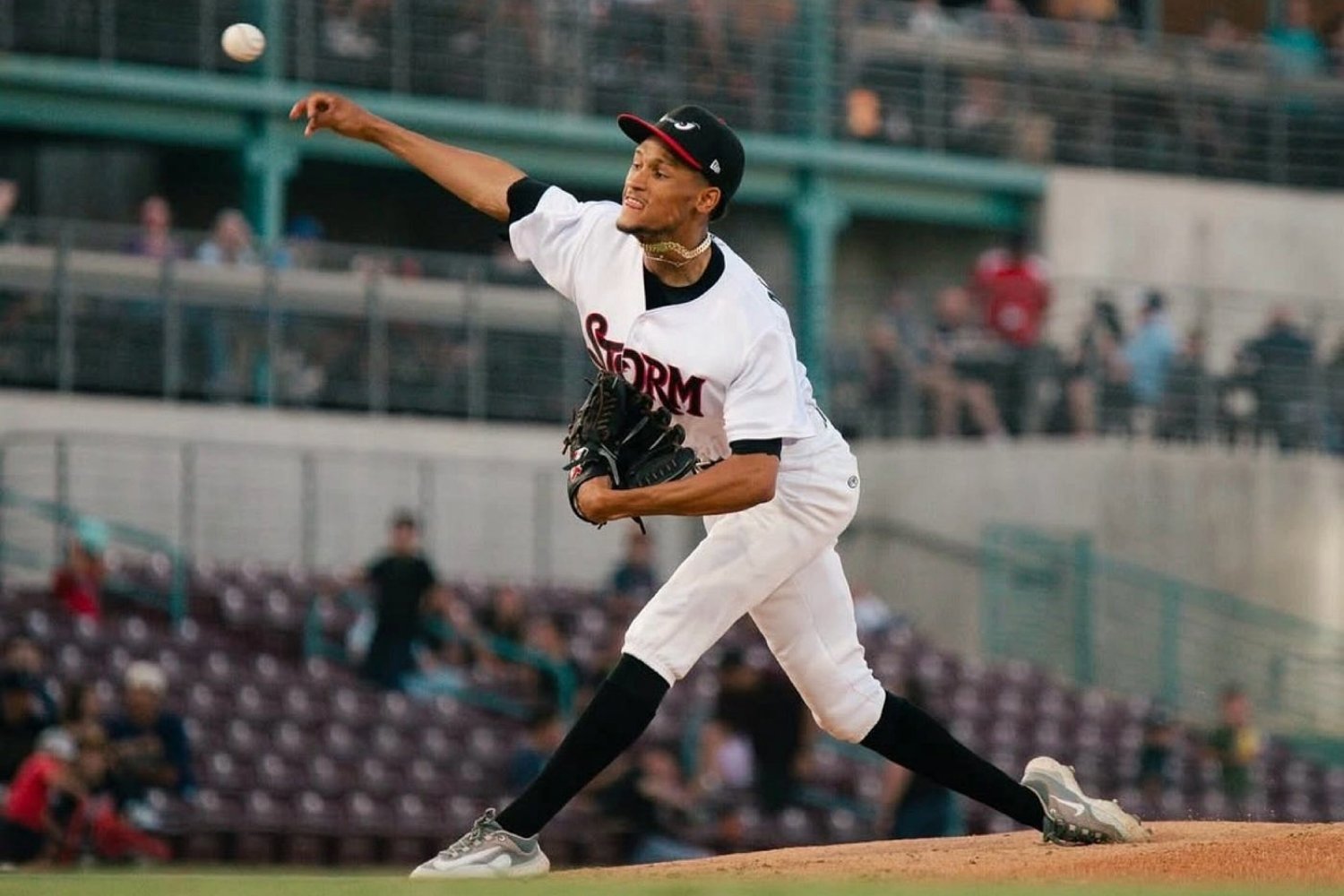 The nature of an organization led by a hyper-aggressive executive like A.J. Preller is that, eventually, your farm system looks like it was ransacked by a prospect-hungry Galactus. Such is the state of the San Diego Padres at present. Despite years of building up an impressive minor-league system, Preller has recently emptied the cupboard in a way that's left the Padres at or near the bottom of just about every ranking from any outlet. While we shouldn't discount the front office's ability to build it back up rather quickly, that level of activity has left the upper levels of the organization without much talent capable of impacting the major-league roster in the immediate future. That doesn't mean it's completely hopeless, however. Prior to this year's 40-man rostering deadline, in which teams had to select players to their roster as means of protection from the Rule 5 Draft that took place earlier this month, Preller and the Padres added pitcher Miguel Mendez to the mix. MLB Pipeline has Mendez currently as the No. 5 prospect in the organization, with his profile noting the following: With the exception of Bradgley Rodriguez — who got a cup of coffee at the top level in 2025 — Mendez is the only prospect listed in the team's top 10 with an ETA even close to 2026. His recent addition to the 40-man, in conjunction with that exciting profile above, combine to create an exciting, if a bit overlooked, arm heading into next season. Of course, even such excitement comes with certain caveats. In 2025, Mendez made three starts with Single-A Lake Elsinore, a dozen in High-A Fort Wayne and another six with Double-A San Antonio. In those 21 starts, his ERA checked in at 3.22 (3.86 FIP), with a 29.4 percent strikeout rate and a walk rate just over 11 percent. When you consider the arsenal — an upper-90s fastball with an effective slider and developing changeup — against the results, you can understand why the Padres were concerned about protecting Mendez from selection in the Rule 5 Draft. However, let's circle back to those caveats before assuming we'll see Mendez throwing baseballs at Petco Park early in 2026. The first is his free pass habits. Since joining the organization back in 2021, Mendez has pitched to a BB% of 11.3. In each of 2023 and 2024, both with Lake Elsinore, he posted figures of 13.3 and 14.9, respectively. While he was able to improve that in his third time around in his trio of starts this year (8.0), it did increase gradually as he rose through the system. It was at 9.8 with Fort Wayne before leaping to 15.9 in San Antonio. That higher rate with San Antonio is also notable, as it was upon reaching Double-A that Mendez faced his biggest struggle of last season. In addition to the jump in free passes, Mendez's ERA came in above eight with the Missions. While his 5.91 FIP indicated slightly better results, the combination of walks and homers (16.7 percent homer-to-fly-ball ratio) did him in. It's likely he'll get another run against that same competition before he even touches Triple-A El Paso, let alone the top level. That doesn't mean Mendez was a total loss the higher he rose in the system, however. His strikeout rate was actually higher with the Missions than with Fort Wayne, and it's fairly clear that he ran into some bad luck with the former (.346 BABIP, 56.1 percent strand rate). It was also a mere 22-ish inning sample against more than 60 in High-A. It's a rather complex stage of development, where you're looking for growth against stronger competition but also have to be aware of the nuances and not take the stats purely at face value. Within all of that, it's important to note that the command has improved over his years in the organization. Last year's walk rate is a far cry from the 15.5 percent rate he posted back in 2022 and reflects steady improvement in the two seasons in between. Nevertheless, it's the command that will need to demonstrate continued and sustained improvement before Mendez is considered for a role on the San Diego staff. Regardless of that, the young right-hander is a fascinating piece of the puzzle for the Padres in 2026. The upside is undeniable; when you're flashing that kind of heat and an effective secondary pitch, you're going to find your way up the ladder in an expedient fashion. It's a matter of the command and perhaps that changeup emerging as a more effective tertiary offering that may dictate how fast the rise is. If Mendez can show that both of those things are coming to fruition early on, maybe he gets a look in El Paso. Or, depending on the team's pitching at the major-league level, he jumps a level entirely in order to get working with Ruben Niebla even faster. In any case, with a team that has such little upside at the upper levels at present, Mendez is an essential watch for a Padres staff that will be seeking quality starting pitching in any way they can find it in 2026.
 -
It might've got lost in the midst of the re-signing of starter Michael King and the multi-year deal for infielder Sung Mun Song, but the San Diego Padres made an additional under-the-radar pickup last week in former Cleveland Guardians pitchers Triston McKenzie. It's only a minor-league deal that includes a spring training invite, but has the ability to yield big dividends for a Padres team starved for any semblance of starting pitching depth they can find. A couple of years ago, such a pickup would've generated a hefty buzz around the baseball world. As recently as 2022, McKenzie looked like one of the game's rising stars on the mound. That year, he posted a 2.96 ERA, a 25.6 percent strikeout rate, and a 5.9 percent walk rate on his way to a 3.4 fWAR campaign. Unfortunately for McKenzie, however, that would prove to be the peak of his powers up to this point. In the years since, McKenzie has battled seemingly constant injury issues. The 2023 season saw both shoulder and elbow issues develop, and he elected rehab over Tommy John surgery for the latter. As such, he's thrown less than 100 innings at the major-league level in the last three years combined, with his highest volume of work coming across 16 starts in 2024. His performance has suffered in those rare instances of play, with that 2024 season featuring an ERA over five and a fWAR that fell on the negative end of the threshold (-1.0). At his peak, McKenzie featured a fastball that averaged just under 93 MPH, a curveball that garnered whiffs at a 45 percent clip, and a slider that allowed quality contact at an impressive 30.9 percent rate. As a reliever with the Guardians in 2025, McKenzie threw only 5 2/3 innings. But it seems notable that his fastball velocity was closer to 94 and his curveball checked in at a swing-and-miss rate of 66.7 percent. It's a minuscule sample, but it speaks to the idea that McKenzie might have something to offer now a couple years clear of those woeful health developments back in 2023. An important factor to consider in this is Ruben Niebla, whose tenure in Cleveland overlapped heavily with McKenzie's time in the organization. He was the team's minor league pitching coordinator through 2019 before being elevated to the big-league staff as assistant pitching coach that year. Having left for the Padres in 2021, his work as pitching coach is evident in maximizing usage and outcomes for pitchers. One imagines that McKenzie joining this particular organization gives him as good a shot as any at reviving his career considering Niebla's presence. For McKenzie, that context of coaching personnel compounds with opportunity in order to create a logical fit. Even with Michael King back in the mix, this is still a team that lacks a full rotation at the top level. King joins Nick Pivetta as the only locks for Opening Day, while Joe Musgrove shouldn't be too far behind in his return from Tommy John. Randy Vásquez, JP Sears, and Matt Waldron each remain around as depth options, but there's a clear chance for McKenzie to create an impact here if he's able to regain any semblance of his previous form. That'll start with his command. The stuff played well enough in his brief time with Cleveland last season, but he was unable to gain any traction with his feel for the strike zone. If Niebla can help him get back to even remotely what he was in 2022, McKenzie is an arm that possesses farm more upside than any of Vásquez, Sears, Waldron, or Kyle Hart. We've seen this organization redeem players on both sides of the ball in recent years, though McKenzie's name and pedigree offer a steeper climb and more bountiful payoff if he can reach relevance once again. Even if he's unable to get completely back to form, there's at least a level of intrigue in his attempt to do so. For a team that generally lacks such mystique, he'll be a fun story to follow this spring. View full article
-
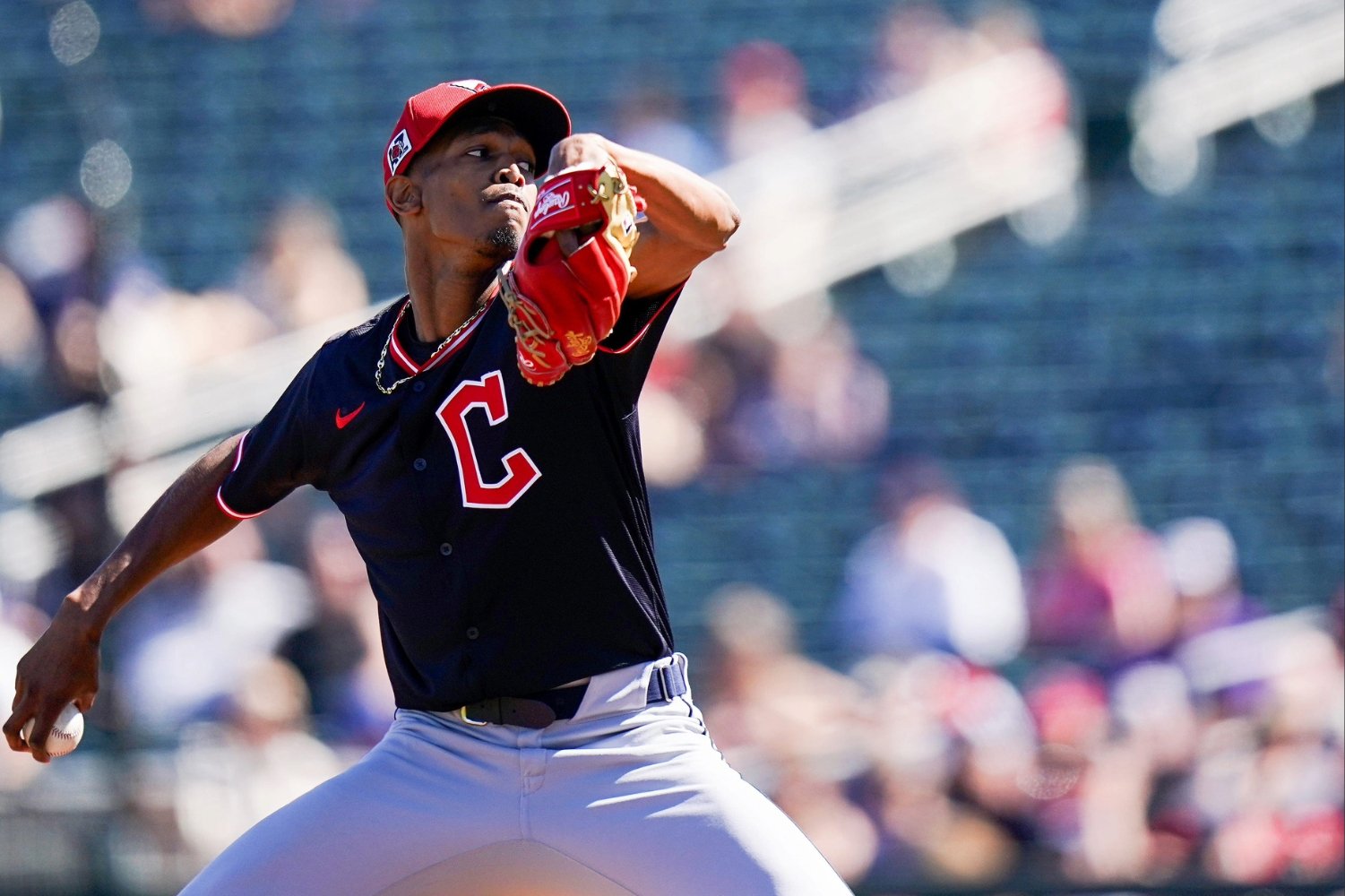 It might've got lost in the midst of the re-signing of starter Michael King and the multi-year deal for infielder Sung Mun Song, but the San Diego Padres made an additional under-the-radar pickup last week in former Cleveland Guardians pitchers Triston McKenzie. It's only a minor-league deal that includes a spring training invite, but has the ability to yield big dividends for a Padres team starved for any semblance of starting pitching depth they can find. A couple of years ago, such a pickup would've generated a hefty buzz around the baseball world. As recently as 2022, McKenzie looked like one of the game's rising stars on the mound. That year, he posted a 2.96 ERA, a 25.6 percent strikeout rate, and a 5.9 percent walk rate on his way to a 3.4 fWAR campaign. Unfortunately for McKenzie, however, that would prove to be the peak of his powers up to this point. In the years since, McKenzie has battled seemingly constant injury issues. The 2023 season saw both shoulder and elbow issues develop, and he elected rehab over Tommy John surgery for the latter. As such, he's thrown less than 100 innings at the major-league level in the last three years combined, with his highest volume of work coming across 16 starts in 2024. His performance has suffered in those rare instances of play, with that 2024 season featuring an ERA over five and a fWAR that fell on the negative end of the threshold (-1.0). At his peak, McKenzie featured a fastball that averaged just under 93 MPH, a curveball that garnered whiffs at a 45 percent clip, and a slider that allowed quality contact at an impressive 30.9 percent rate. As a reliever with the Guardians in 2025, McKenzie threw only 5 2/3 innings. But it seems notable that his fastball velocity was closer to 94 and his curveball checked in at a swing-and-miss rate of 66.7 percent. It's a minuscule sample, but it speaks to the idea that McKenzie might have something to offer now a couple years clear of those woeful health developments back in 2023. An important factor to consider in this is Ruben Niebla, whose tenure in Cleveland overlapped heavily with McKenzie's time in the organization. He was the team's minor league pitching coordinator through 2019 before being elevated to the big-league staff as assistant pitching coach that year. Having left for the Padres in 2021, his work as pitching coach is evident in maximizing usage and outcomes for pitchers. One imagines that McKenzie joining this particular organization gives him as good a shot as any at reviving his career considering Niebla's presence. For McKenzie, that context of coaching personnel compounds with opportunity in order to create a logical fit. Even with Michael King back in the mix, this is still a team that lacks a full rotation at the top level. King joins Nick Pivetta as the only locks for Opening Day, while Joe Musgrove shouldn't be too far behind in his return from Tommy John. Randy Vásquez, JP Sears, and Matt Waldron each remain around as depth options, but there's a clear chance for McKenzie to create an impact here if he's able to regain any semblance of his previous form. That'll start with his command. The stuff played well enough in his brief time with Cleveland last season, but he was unable to gain any traction with his feel for the strike zone. If Niebla can help him get back to even remotely what he was in 2022, McKenzie is an arm that possesses farm more upside than any of Vásquez, Sears, Waldron, or Kyle Hart. We've seen this organization redeem players on both sides of the ball in recent years, though McKenzie's name and pedigree offer a steeper climb and more bountiful payoff if he can reach relevance once again. Even if he's unable to get completely back to form, there's at least a level of intrigue in his attempt to do so. For a team that generally lacks such mystique, he'll be a fun story to follow this spring.
 -
The San Diego Padres made a pair of notable additions to their infield group last week, and both should have something to say about the team's first base conundrum. First, and probably more notably, they signed Korean infielder Sung Mun Song to a three-year deal. Later in the day, it was reported that they had signed former Minnesota Twins corner infielder José Miranda to a minor-league deal that includes a spring training invite. Song's addition will impact the team much more immediately and directly. Whether it leads to a trade of someone like Jake Cronenworth or simply takes the load off an infield group that needed some reliable depth, there is a multitude of ways in which he can be impactful for the 2026 team. Miranda, meanwhile, will have to work a bit more to take on the minor-league-invitee-to-impactful-role-player trajectory that we saw from Gavin Sheets last season. Regardless of either player's contribution in 2026, though, they each (in their own way) create a bit of mystery surrounding how the Padres may handle their one remaining vacancy on the infield dirt: first base. The 2025 Padres had six different players appear at first base. Luis Arráez was there for 117 games, trade deadline acquisition Ryan O'Hearn was in there for 27, and each of Jake Cronenworth and Gavin Sheets took reps on 13 occasions. Plus, Yuli Gurriel appeared four times and Connor Joe once early in the season. Of that group, only Cronenworth and Sheets remain. Arráez and O'Hearn remain free agents, with each of Gurriel and Joe finding themselves out of the organization early on last season. Including the two holdovers, the Padres now, technically, have five players capable of playing first base in their organization. Cronenworth handled first base duties in 2023 and a good deal of the time in 2024. Sheets profiles better at first base than he does in the outfield. While he only played second and third for Kiwoom last year, Song has some time at first to his name in previous years. Miranda was once Minnesota's first baseman of the future before falling off severely and grabbing only 36 plate appearances in 2025. Then you throw in Luis Campusano, whom the team might like more as a first base and designated hitter option even with his present status as the team's backup catcher. That's a lot of names, four of which are on the active roster. That opens up numerous possibilities as to how the team could handle the position heading into 2026. The simplest is that you have some kind of combination of Cronenworth and Song on the right side of the infield. Maybe that's Cronenworth at first and Song at second. Perhaps it's the other way around, especially with Song possessing a bit more power upside that serves as a prerequisite for the position. In that case, Sheets lands as your primary designated hitter and occasional corner outfield or first base fill-in, while Campusano plies his trade only as the team's backup catcher and gets in as the DH on occasion. In that scenario, Miranda isn't likely to be a factor on the major-league roster. However, should Miranda force his way in, things get a little more complicated. Maybe you've got a Miranda-Cronenworth-Song combination between first and second that is dependent on matchups. Or Miranda serves purely as a bench bat to fill in at either corner infield spot while Cronenworth and Song hold down the right side with more regularity. Sheets and Campusano then fight it out for some extra time as the designated hitter. It becomes more mouths to feed in the plate appearances game. Of course, Cronenworth could be traded. Then you're likely looking at Song as the everyday guy at the keystone while Miranda and Sheets comprise more of a platoon situation between first base and designated hitter. Campusano maybe fills in on occasion, but those are your priorities. That scenario requires the most heavy lifting, as you not only have to have a theoretical trade of Cronenworth but also a hypothetical situation in which Miranda wins a roster spot in camp. Given that it's A.J. Preller we're talking about, there's also the looming chance that an outside addition still has yet to manifest. Paul Goldschmidt exists on the free agent market. Even if his bat isn't what it once was, he adds a stable glove — assuming his -3 Outs Above Average in 2025 was an outlier — and an intangible presence. Rhys Hoskins and his .237 career ISO figure are also out on the free-agent market. Neither would cost a ton, to say nothing of a fallen-out-of-favor trade for someone like Triston Casas in Boston. For what it's worth, Mark Vientos is reportedly also available, and Preller has reportedly already talked to the New York Mets on some level in recent days. Essentially, the Padres now have two roads in front of them with respect to the first base position. They can either bring in a pure first baseman, with or without a Cronenworth trade, and maximize the flexibility of their current roster. Or, they can go with a volume approach and rotate out any of the options currently within their organization. With the composition of the current roster feeling incomplete, it's difficult to know which path is the "correct" one as of now. View full article
-
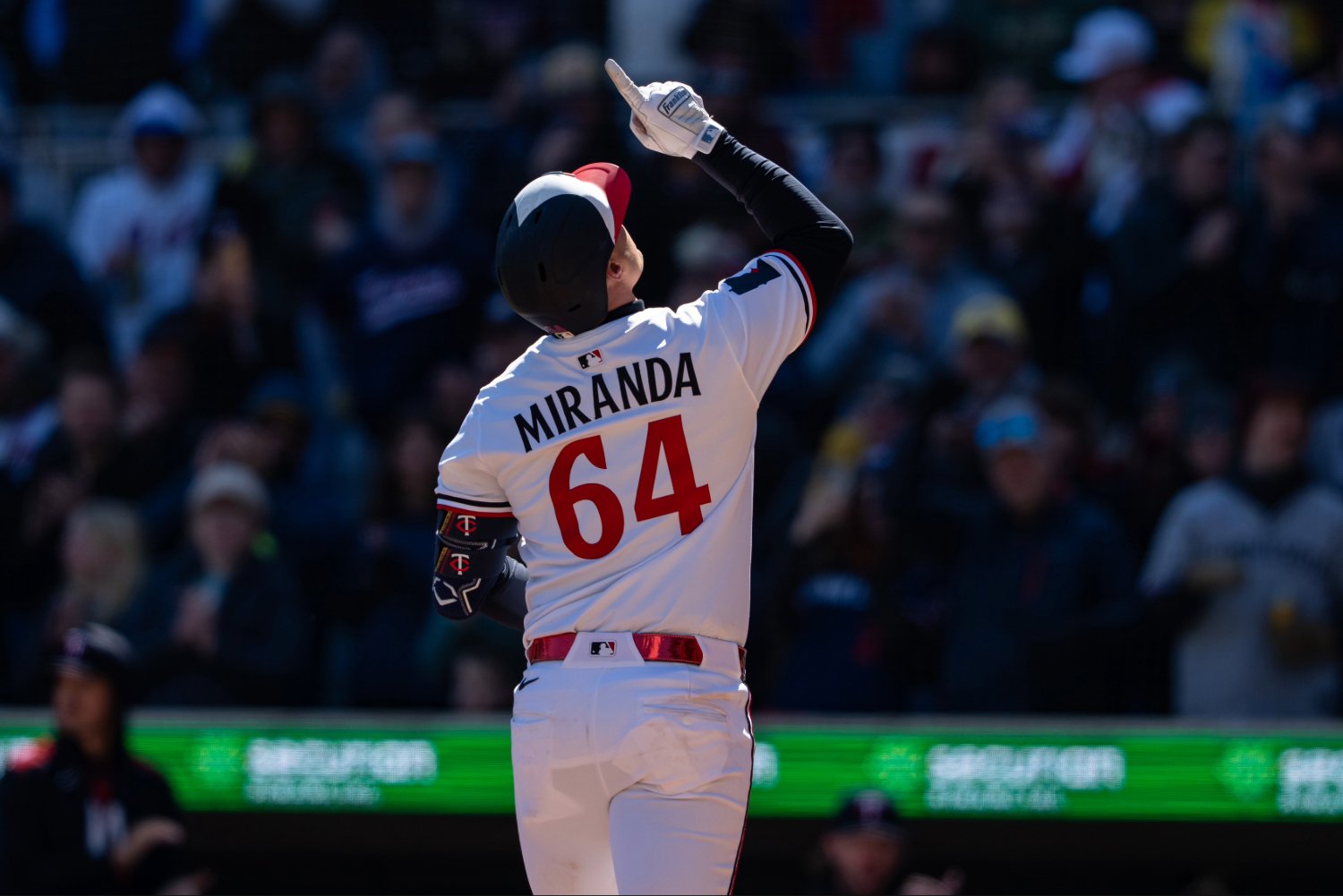 The San Diego Padres made a pair of notable additions to their infield group last week, and both should have something to say about the team's first base conundrum. First, and probably more notably, they signed Korean infielder Sung Mun Song to a three-year deal. Later in the day, it was reported that they had signed former Minnesota Twins corner infielder José Miranda to a minor-league deal that includes a spring training invite. Song's addition will impact the team much more immediately and directly. Whether it leads to a trade of someone like Jake Cronenworth or simply takes the load off an infield group that needed some reliable depth, there is a multitude of ways in which he can be impactful for the 2026 team. Miranda, meanwhile, will have to work a bit more to take on the minor-league-invitee-to-impactful-role-player trajectory that we saw from Gavin Sheets last season. Regardless of either player's contribution in 2026, though, they each (in their own way) create a bit of mystery surrounding how the Padres may handle their one remaining vacancy on the infield dirt: first base. The 2025 Padres had six different players appear at first base. Luis Arráez was there for 117 games, trade deadline acquisition Ryan O'Hearn was in there for 27, and each of Jake Cronenworth and Gavin Sheets took reps on 13 occasions. Plus, Yuli Gurriel appeared four times and Connor Joe once early in the season. Of that group, only Cronenworth and Sheets remain. Arráez and O'Hearn remain free agents, with each of Gurriel and Joe finding themselves out of the organization early on last season. Including the two holdovers, the Padres now, technically, have five players capable of playing first base in their organization. Cronenworth handled first base duties in 2023 and a good deal of the time in 2024. Sheets profiles better at first base than he does in the outfield. While he only played second and third for Kiwoom last year, Song has some time at first to his name in previous years. Miranda was once Minnesota's first baseman of the future before falling off severely and grabbing only 36 plate appearances in 2025. Then you throw in Luis Campusano, whom the team might like more as a first base and designated hitter option even with his present status as the team's backup catcher. That's a lot of names, four of which are on the active roster. That opens up numerous possibilities as to how the team could handle the position heading into 2026. The simplest is that you have some kind of combination of Cronenworth and Song on the right side of the infield. Maybe that's Cronenworth at first and Song at second. Perhaps it's the other way around, especially with Song possessing a bit more power upside that serves as a prerequisite for the position. In that case, Sheets lands as your primary designated hitter and occasional corner outfield or first base fill-in, while Campusano plies his trade only as the team's backup catcher and gets in as the DH on occasion. In that scenario, Miranda isn't likely to be a factor on the major-league roster. However, should Miranda force his way in, things get a little more complicated. Maybe you've got a Miranda-Cronenworth-Song combination between first and second that is dependent on matchups. Or Miranda serves purely as a bench bat to fill in at either corner infield spot while Cronenworth and Song hold down the right side with more regularity. Sheets and Campusano then fight it out for some extra time as the designated hitter. It becomes more mouths to feed in the plate appearances game. Of course, Cronenworth could be traded. Then you're likely looking at Song as the everyday guy at the keystone while Miranda and Sheets comprise more of a platoon situation between first base and designated hitter. Campusano maybe fills in on occasion, but those are your priorities. That scenario requires the most heavy lifting, as you not only have to have a theoretical trade of Cronenworth but also a hypothetical situation in which Miranda wins a roster spot in camp. Given that it's A.J. Preller we're talking about, there's also the looming chance that an outside addition still has yet to manifest. Paul Goldschmidt exists on the free agent market. Even if his bat isn't what it once was, he adds a stable glove — assuming his -3 Outs Above Average in 2025 was an outlier — and an intangible presence. Rhys Hoskins and his .237 career ISO figure are also out on the free-agent market. Neither would cost a ton, to say nothing of a fallen-out-of-favor trade for someone like Triston Casas in Boston. For what it's worth, Mark Vientos is reportedly also available, and Preller has reportedly already talked to the New York Mets on some level in recent days. Essentially, the Padres now have two roads in front of them with respect to the first base position. They can either bring in a pure first baseman, with or without a Cronenworth trade, and maximize the flexibility of their current roster. Or, they can go with a volume approach and rotate out any of the options currently within their organization. With the composition of the current roster feeling incomplete, it's difficult to know which path is the "correct" one as of now.
 -
While we don't know a whole lot about the reported trade talks between the San Diego Padres & the New York Mets, we at least know enough to be intrigued. Even if they've slowed at this point. For example, we know that neither of Fernando Tatis Jr. on the Padres' end nor Francisco Lindor on the Mets' side were included as part of the talks. We also know that Mason Miller's name emerged as part of the discussion. At this point, that's kind of all we know. But that leaves a whole lot of wiggle room for speculation. Let's talk about the things we do know first. It's not a surprise that neither of the team's respective stars are a part of the discussion. A.J. Preller has come as close as possible to declaring Fernando Tatis Jr. untouchable without saying the literal phrase while the team is also unlikely to be willing to take on another long-term contract for a position player. Despite Lindor's continued status as one of the game's top shortstops — he still posted a 6.3 fWAR in 2025 even with a slight power dip — he's a 32-year-old under contract through 2031. Preller is more compelled to get money off the books for the long-term, rather than add to it. Miller's inclusion in talks is, somewhat paradoxically, also not a surprise. Despite the fact that the team only acquired him in July for a package that included top prospect Leo De Vries, trading from the bullpen represents perhaps the best opportunity for the Padres to make improvements to their roster in areas that are not as fortified. As for the still-known-but-less-tangible components of the two matching up on a potential deal, we know the Padres are seeking starting pitching, even following the re-signing of Michael King. The Mets have some depth there and some intriguing names in the upper levels of their system. On their side of things, they're looking to supplement their offense upon Pete Alonso's departure while also adding to their relief corps after Edwin Díaz left for the Los Angeles Dodgers. While it's difficult to see the Padres moving Miller for anything resembling less than a similar haul to the one they gave up, the idea that his name is part of the discussion at least lends itself to a larger one that any move between the two teams would include a reliever of significance (of which the Padres have many). So, it makes sense that either team would find some solace in the other as far as trade partners go. For Preller, though, the Mets may represent the most ideal trade partner he could find this offseason. The Padres and their rotation represent perhaps as obvious a need as exists for any club across the major league landscape. With only Nick Pivetta (and King) set to serve as an established starter, there's an urgency for Preller to solidify the group. If he can do so while also threading the needle of the holy grail of trade acquisitions (controllable starting pitching), the Mets can offer him exactly what he wants. The Mets have already said that Nolan McLean represents an untouchable quantity from their farm system. He's the No. 11 prospect in baseball, per MLB Pipeline, and should factor heavily in their rotation in 2026. Fortunately for the Padres, he's not the only prospective starter near the top of their farm that's slotted into the league's top 100 prospects. Jonah Tong is a name you'll likely hear a lot if trade talks between the two sides continue. His Pipeline writeup states the following: The profile goes on to note his rising walk rate but also communicates the idea that he could be part of a rotation in 2026. Tong's combination of stuff, deception, and fact that he's only 22 represent a tantalizing combination for an organization like San Diego. And he's not the only one. Brandon Sproat no longer qualifies as a prospect, but his 2024 profile notes the following: Velocity, interesting secondary pitches, and 25 years old? That all tracks as something the Padres certainly desire. Either of Tong or Sproat would be a massive addition to the Padres not only for 2026 but moving forward. It remains to be seen if they'd have to part with an arm like Miller to get a prospect with Tong-like pedigree, but it's not as if he's the only reliever with tremendous upside in the bullpen. It's also not as if Tong and Sproat are the only intriguing names within the Mets' organization, either. We previously discussed the idea of a Kodai Senga trade on the San Diego side of things. While far from a sure thing given his injury history, he'd certainly offer upside at what would likely be perceived as a lower cost than either of Tong or Sproat. There are also reports that the Mets are willing to part with David Peterson, who is coming off a career-high 30 starts in 2025. He's more of an unexciting vintage among the options, but would offer some stability for a rotation that currently lacks it. There are obviously plenty of nuances to any arm that the Padres could acquire from the Mets, to say nothing of any deal at large. But with New York having a blend of established big-league arms and high-upside prospects which would slot well into a rotation starved for innings, the long and short of the discussion is that they represent the most ideal trade partner for A.J. Preller. While we'll likely hear of others in the coming weeks, the dialogue with the Mets should continue for that reason alone. View full article
-
San Diego Padres May Have an Ideal Trade Partner in New York Mets
Randy Holt posted an article in Padres
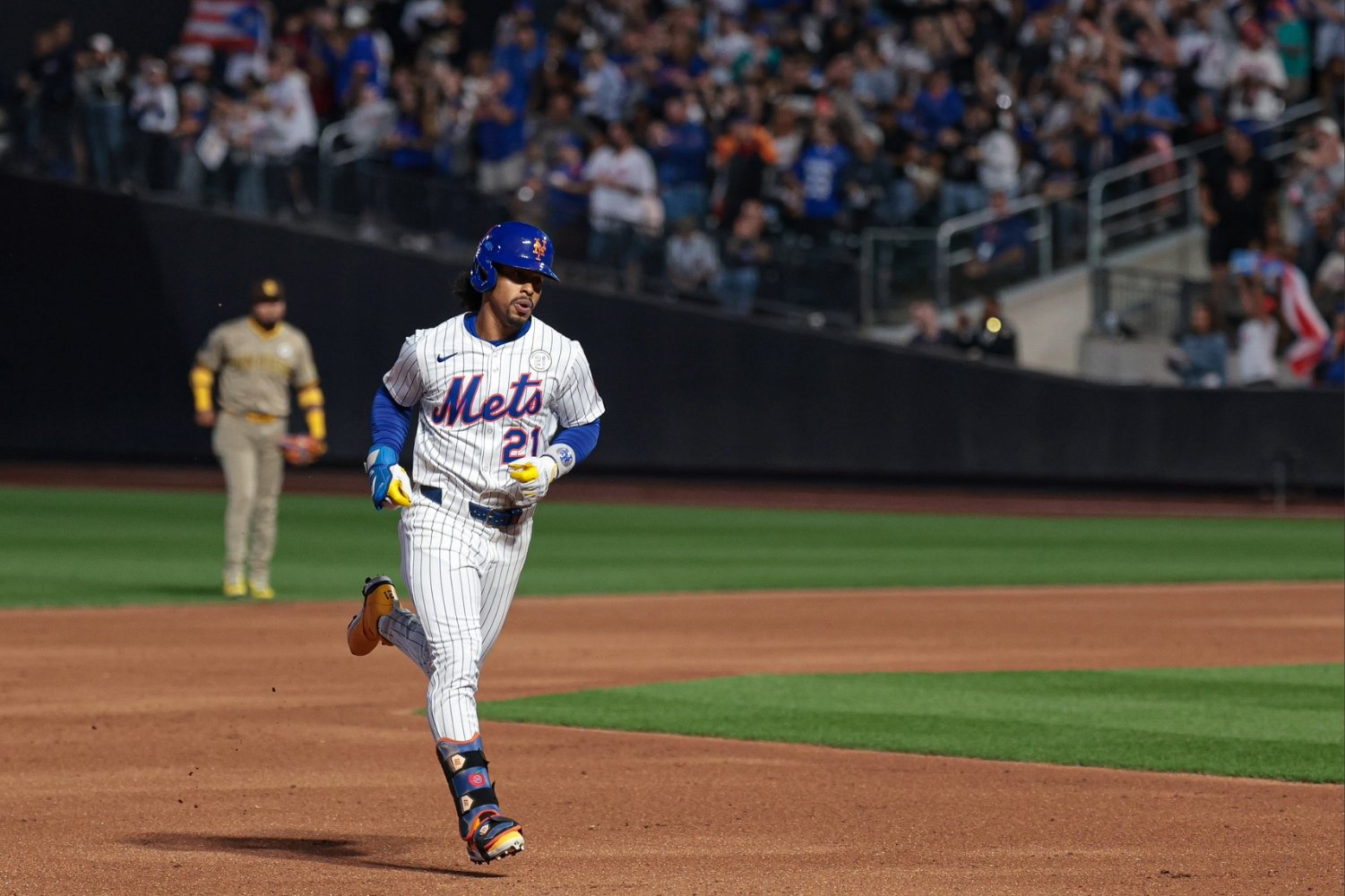 While we don't know a whole lot about the reported trade talks between the San Diego Padres & the New York Mets, we at least know enough to be intrigued. Even if they've slowed at this point. For example, we know that neither of Fernando Tatis Jr. on the Padres' end nor Francisco Lindor on the Mets' side were included as part of the talks. We also know that Mason Miller's name emerged as part of the discussion. At this point, that's kind of all we know. But that leaves a whole lot of wiggle room for speculation. Let's talk about the things we do know first. It's not a surprise that neither of the team's respective stars are a part of the discussion. A.J. Preller has come as close as possible to declaring Fernando Tatis Jr. untouchable without saying the literal phrase while the team is also unlikely to be willing to take on another long-term contract for a position player. Despite Lindor's continued status as one of the game's top shortstops — he still posted a 6.3 fWAR in 2025 even with a slight power dip — he's a 32-year-old under contract through 2031. Preller is more compelled to get money off the books for the long-term, rather than add to it. Miller's inclusion in talks is, somewhat paradoxically, also not a surprise. Despite the fact that the team only acquired him in July for a package that included top prospect Leo De Vries, trading from the bullpen represents perhaps the best opportunity for the Padres to make improvements to their roster in areas that are not as fortified. As for the still-known-but-less-tangible components of the two matching up on a potential deal, we know the Padres are seeking starting pitching, even following the re-signing of Michael King. The Mets have some depth there and some intriguing names in the upper levels of their system. On their side of things, they're looking to supplement their offense upon Pete Alonso's departure while also adding to their relief corps after Edwin Díaz left for the Los Angeles Dodgers. While it's difficult to see the Padres moving Miller for anything resembling less than a similar haul to the one they gave up, the idea that his name is part of the discussion at least lends itself to a larger one that any move between the two teams would include a reliever of significance (of which the Padres have many). So, it makes sense that either team would find some solace in the other as far as trade partners go. For Preller, though, the Mets may represent the most ideal trade partner he could find this offseason. The Padres and their rotation represent perhaps as obvious a need as exists for any club across the major league landscape. With only Nick Pivetta (and King) set to serve as an established starter, there's an urgency for Preller to solidify the group. If he can do so while also threading the needle of the holy grail of trade acquisitions (controllable starting pitching), the Mets can offer him exactly what he wants. The Mets have already said that Nolan McLean represents an untouchable quantity from their farm system. He's the No. 11 prospect in baseball, per MLB Pipeline, and should factor heavily in their rotation in 2026. Fortunately for the Padres, he's not the only prospective starter near the top of their farm that's slotted into the league's top 100 prospects. Jonah Tong is a name you'll likely hear a lot if trade talks between the two sides continue. His Pipeline writeup states the following: The profile goes on to note his rising walk rate but also communicates the idea that he could be part of a rotation in 2026. Tong's combination of stuff, deception, and fact that he's only 22 represent a tantalizing combination for an organization like San Diego. And he's not the only one. Brandon Sproat no longer qualifies as a prospect, but his 2024 profile notes the following: Velocity, interesting secondary pitches, and 25 years old? That all tracks as something the Padres certainly desire. Either of Tong or Sproat would be a massive addition to the Padres not only for 2026 but moving forward. It remains to be seen if they'd have to part with an arm like Miller to get a prospect with Tong-like pedigree, but it's not as if he's the only reliever with tremendous upside in the bullpen. It's also not as if Tong and Sproat are the only intriguing names within the Mets' organization, either. We previously discussed the idea of a Kodai Senga trade on the San Diego side of things. While far from a sure thing given his injury history, he'd certainly offer upside at what would likely be perceived as a lower cost than either of Tong or Sproat. There are also reports that the Mets are willing to part with David Peterson, who is coming off a career-high 30 starts in 2025. He's more of an unexciting vintage among the options, but would offer some stability for a rotation that currently lacks it. There are obviously plenty of nuances to any arm that the Padres could acquire from the Mets, to say nothing of any deal at large. But with New York having a blend of established big-league arms and high-upside prospects which would slot well into a rotation starved for innings, the long and short of the discussion is that they represent the most ideal trade partner for A.J. Preller. While we'll likely hear of others in the coming weeks, the dialogue with the Mets should continue for that reason alone.
 -
A.J. Preller has been activated. As evidenced by the San Diego Padres' re-signing of Michael King and signing of South Korean infielder Sung Mun Song, the organization now stands to play a significant role in how the remainder of the winter transpires across the landscape of Major League Baseball. And while the addition of Song, in particular, could have a bearing on the team's willingness to deal from their position player group, he stands to serve as a wildly important addition regardless of how the rest of the offseason unfolds. The 2025 Padres lacked infield depth. Outside of the starters, it was a group that was led by Jose Iglesias in a reserve role. The veteran appeared at second base for 40 games, third base for 24, and shortstop for another 32. Mason McCoy made a dozen appearances at short and another two at the keystone. There was a smattering of Tyler Wade in there early, too. To recap, that's a wRC+ of 73 (Iglesias), 42 (McCoy), and 69 (Wade) in support of their starting group. And that starting group didn't remain healthy throughout the year, with Xander Bogaerts, in particular, only appearing in 125 games. Plus, Jake Cronenworth missed a bit of time early in the year. Suffice it to say that when there was an absence — however brief it may have been — the Padres had a problem on their hands without any supplemental offense to speak of. Song's addition changes the calculus entirely. In general, the team is getting a versatile infielder that supplements the starting lineup with significantly more offensive upside than anyone they trotted out last year. His most recent KBO action featured a .315/.387/.530 line with 26 homers and 25 steals. Song logged time only at second and third base last year but also has some first base reps to his credit. His addition, as such, unlocks some versatility for the current roster. As things stand right now, you're looking at some combination of Gavin Sheets and Luis Campusano at first base. Jake Cronenworth will primarily handle the keystone while bouncing over to first occasionally. Xander Bogaerts and Manny Machado remain in place to handle shortstop and third base, respectively. While first base still stands as the most likely of the positions for an upgrade at present (barring a trade of Cronenworth), let's momentarily assume that no further transactions unfold with respect to the infield. Sheets' on-paper ability to move to the outfield corners and Campusano's current obligation as the team's No. 2 catcher allows new manager Craig Stammen to work Song in with some frequency, perhaps even as the primary first baseman if he's more content to have Sheets serve as a DH and let Campusano develop his glove behind the plate without additional obligations. Cronenworth can also slide over if he wants Song in at second base. Perhaps most importantly, though, is the fact that Song can step in reliably at third. That allows Stammen to work Machado in as the designated hitter with at least a little more frequency. We've seen his bat go through questionable stretches and his glove work decline a shade over the last two years. The flexibility there just adds a bit more of a safety net in those stretches where an approach or mechanical adjustment is needed on the part of Machado, without the extra burden of focusing on the defensive side of the ball. It's not that Song will supplant Machado for any meaningful stretch of time, but more so that he just offers that extra layer of protection for an essential player entering a season in which he'll turn 34 years old. Regardless of specifics, though, it cannot be overstated how much more dynamic the infield group becomes with Sung-mun Song now in the mix. Even if he's unable to attain a role as a traditional everyday player, he offers a level of offensive upside as a fill-in or injury replacement that the Padres lacked entirely in 2025. Not only does he offer the bat-to-ball skills that you prefer from that kind of role, but he possesses much more power and speed upside. While it's now much more likely that they deal from this group than it might have been even a few days ago, it's clear that the floor has been raised considerably on the infield grass in San Diego. View full article
-
Sung-mun Song Adds Newfound Stability, Versatility to Padres' Infield
Randy Holt posted an article in Padres
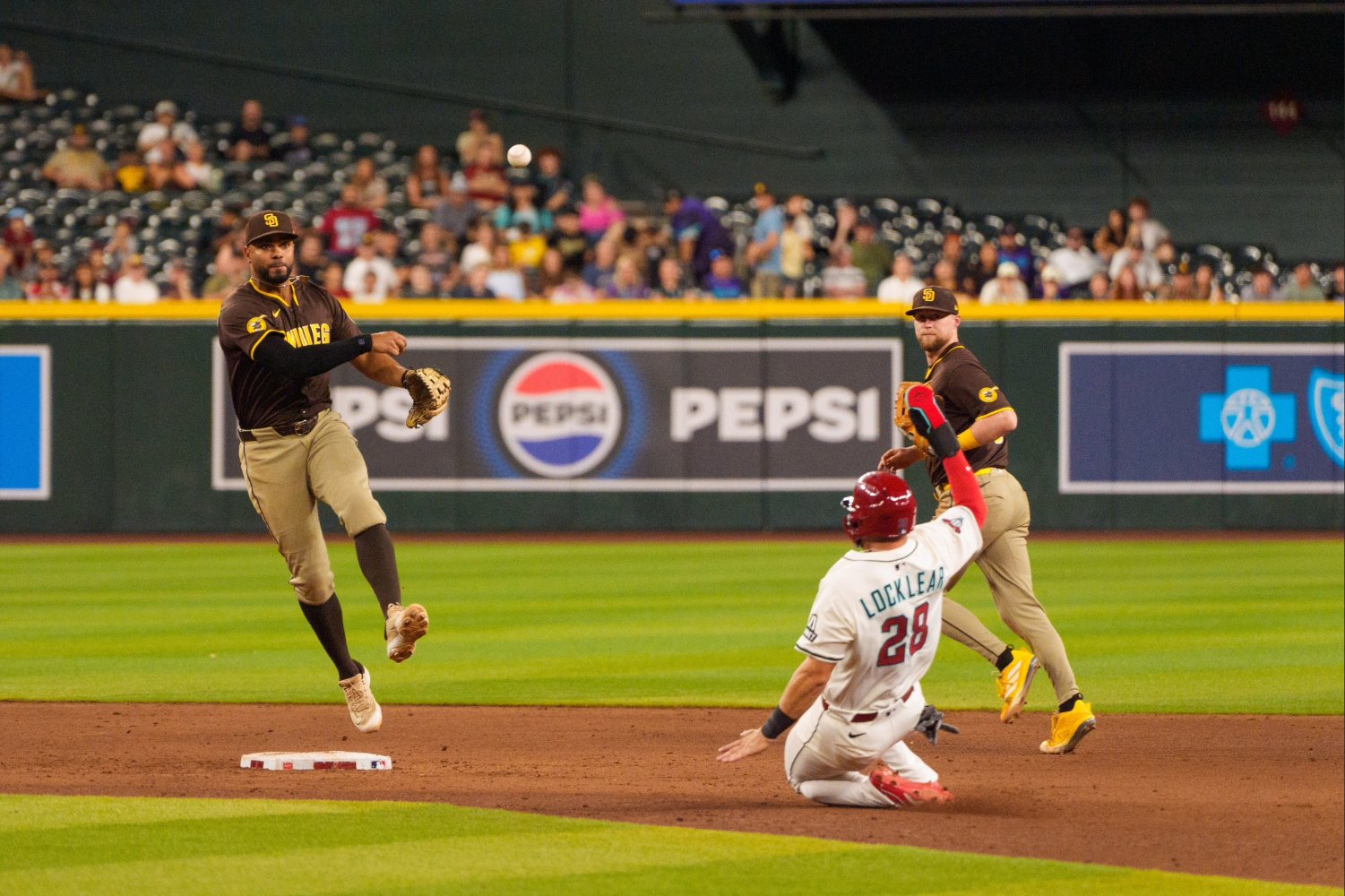 A.J. Preller has been activated. As evidenced by the San Diego Padres' re-signing of Michael King and signing of South Korean infielder Sung Mun Song, the organization now stands to play a significant role in how the remainder of the winter transpires across the landscape of Major League Baseball. And while the addition of Song, in particular, could have a bearing on the team's willingness to deal from their position player group, he stands to serve as a wildly important addition regardless of how the rest of the offseason unfolds. The 2025 Padres lacked infield depth. Outside of the starters, it was a group that was led by Jose Iglesias in a reserve role. The veteran appeared at second base for 40 games, third base for 24, and shortstop for another 32. Mason McCoy made a dozen appearances at short and another two at the keystone. There was a smattering of Tyler Wade in there early, too. To recap, that's a wRC+ of 73 (Iglesias), 42 (McCoy), and 69 (Wade) in support of their starting group. And that starting group didn't remain healthy throughout the year, with Xander Bogaerts, in particular, only appearing in 125 games. Plus, Jake Cronenworth missed a bit of time early in the year. Suffice it to say that when there was an absence — however brief it may have been — the Padres had a problem on their hands without any supplemental offense to speak of. Song's addition changes the calculus entirely. In general, the team is getting a versatile infielder that supplements the starting lineup with significantly more offensive upside than anyone they trotted out last year. His most recent KBO action featured a .315/.387/.530 line with 26 homers and 25 steals. Song logged time only at second and third base last year but also has some first base reps to his credit. His addition, as such, unlocks some versatility for the current roster. As things stand right now, you're looking at some combination of Gavin Sheets and Luis Campusano at first base. Jake Cronenworth will primarily handle the keystone while bouncing over to first occasionally. Xander Bogaerts and Manny Machado remain in place to handle shortstop and third base, respectively. While first base still stands as the most likely of the positions for an upgrade at present (barring a trade of Cronenworth), let's momentarily assume that no further transactions unfold with respect to the infield. Sheets' on-paper ability to move to the outfield corners and Campusano's current obligation as the team's No. 2 catcher allows new manager Craig Stammen to work Song in with some frequency, perhaps even as the primary first baseman if he's more content to have Sheets serve as a DH and let Campusano develop his glove behind the plate without additional obligations. Cronenworth can also slide over if he wants Song in at second base. Perhaps most importantly, though, is the fact that Song can step in reliably at third. That allows Stammen to work Machado in as the designated hitter with at least a little more frequency. We've seen his bat go through questionable stretches and his glove work decline a shade over the last two years. The flexibility there just adds a bit more of a safety net in those stretches where an approach or mechanical adjustment is needed on the part of Machado, without the extra burden of focusing on the defensive side of the ball. It's not that Song will supplant Machado for any meaningful stretch of time, but more so that he just offers that extra layer of protection for an essential player entering a season in which he'll turn 34 years old. Regardless of specifics, though, it cannot be overstated how much more dynamic the infield group becomes with Sung-mun Song now in the mix. Even if he's unable to attain a role as a traditional everyday player, he offers a level of offensive upside as a fill-in or injury replacement that the Padres lacked entirely in 2025. Not only does he offer the bat-to-ball skills that you prefer from that kind of role, but he possesses much more power and speed upside. While it's now much more likely that they deal from this group than it might have been even a few days ago, it's clear that the floor has been raised considerably on the infield grass in San Diego.
 -
A.J. Preller and the San Diego Padres are always lurking. So, when it was reported (though eventually clarified) that Michael King had boiled his free agency down to three teams — the Baltimore Orioles, Boston Red Sox, and New York Yankees — it was hardly shocking that it was San Diego that was able to convince the New York state native to put pen to paper and remain on the West Coast. King and the Padres agreed to a new three-year pact on Dec. 18. The deal can pay him up to $75 million across the three years, though only the first is guaranteed for both sides. Each of the two additional years carries a player option, with those two years holding the potential to pay King $58 million ($28 million in 2027, $30 million in 2028). The deal carries significant risk for the Padres, as there's plenty of opt-out potential if King can stay healthy and earn a longer-term contract following the 2026 campaign. If he's not healthy or struggles, then they're on the hook for significant dollars. Nevertheless, it's hard to overstate the value of familiarity in beginning the process of stabilizing a presently shallow rotation. The Padres entered the offseason with only Nick Pivetta guaranteed within their starting five. Dylan Cease departed for Toronto, and it was widely expected King would follow him out the door. Even with Joe Musgrove set to return from Tommy John surgery early in the year, his lack of a firm timeline and a collection of fringe arms — JP Sears, Sean Boyle, Randy Vásquez, and Matt Waldron — left very little by which to be inspired as far as the starting pitching group was concerned. Worse yet was that the path to actually improving that status was murky. The farm system is barren to the point where acquiring an impact starter via trade would've likely been impossible. Additionally, the organization is seemingly always in some form of financial peril, a situation which had the potential to become worse as ownership explores a potential sale of the franchise. So, while names like Ranger Suárez, Zac Gallen, Framber Valdez, and Tatsuya Imai exist on the free-agent market and options like Freddy Peralta or maybe Tarik Skubal are available via trade, possessing the resources to acquire any of them was going to be a tall order. Even for an executive as ambitious as Preller. Which is why, despite the risk, the re-signing of Michael King is in the upper tier of worthwhile roads the Padres could have traversed in their pursuit of starting pitching. When healthy, the Padres know what they're getting in King. The 2024 season, his first in San Diego, featured a 3.9 fWAR courtesy of a 2.95 ERA, a 27.7 percent strikeout rate, and an 8.7 percent walk rate. His percentile distribution looked as follows: Not only was King adept at running up his strikeout total, he was downright excellent in avoiding quality contact. It's an area in which he continued to find success through his injury-plagued, 15-start campaign of 2025. Despite the fact that he averaged fewer than five innings per start and took a major step back on the whiff side of things, he still ended things in the 84th percentile in average exit velocity for opposing hitters (87.8 MPH) and the 68th in Hard-Hit% against (38.1). For a player who worked through a nerve issue and knee inflammation over the course of a full season, that he still was able to maintain some level of effect is encouraging. What the Padres need King to do in 2026, above all, is to get back to his efficiency. He averaged 5.7 innings per start in that 2024 season, but followed it up with only 4.9 innings per start in 2025. The health component was (obviously) the primary factor there. Especially because there isn't a whole lot to be too discouraged by within the particulars. His fastball velocity only fell by 0.2 miles per hour through those issues, and his spin rates were actually higher on the year. There are some usage factors that could be improved (like getting the changeup back to its usual level of involvement and effectiveness), but health will be the primary factor in King providing value to the 2026 Padres. That's what they're banking on, too. The risk is obvious. If King experiences additional inflammation or nerve issues, then the Padres have a severe problem on their hands, both in terms of personnel and payroll. If healthy, though, he's a stabilizing force atop the rotation, capable of providing nearly six innings per start. And while the general public has already come to accept the idea that he'd opt out in the event of a strong season, he'd still be in line to take home elite money for two consecutive years. It'd be about years if he does, not dollars. Risk was going to be a natural byproduct of any of the notable free-agent options, though. And that's the important thing to consider here. Suárez has back issues. Gallen has had stretches of uneven performance and a smattering of trips to the injured list. Imai has to transition from Japan to the United States. Valdez is two years older. They all feature some kind of risk, and the term of any contract is projected to be longer for his free-agent counterparts. In King, the Padres not only get a short-term commitment (even if it doesn't end up completely working out), but familiarity. That matters. They know him in the physical sense and in a mechanical one. There isn't an adjustment period with the coaching staff given that Ruben Niebla is still running things as pitching coach. You purely have to ensure King is healthy, and it's unlikely the Padres and their limited resources would've been willing to make this investment if they believed he was anything but. Essentially, this is kind of an ideal outcome for the Padres. The risk exists but feels more minimal by comparison considering that familiarity. The contract doesn't run into next decade like, say, Xander Bogaerts' does. Above all, they now insert King atop their rotation alongside Pivetta and a returning Musgrove. This singular addition changes the pitching outlook for the staff and puts the roster into far better position than it was even 48 hours ago. View full article
-
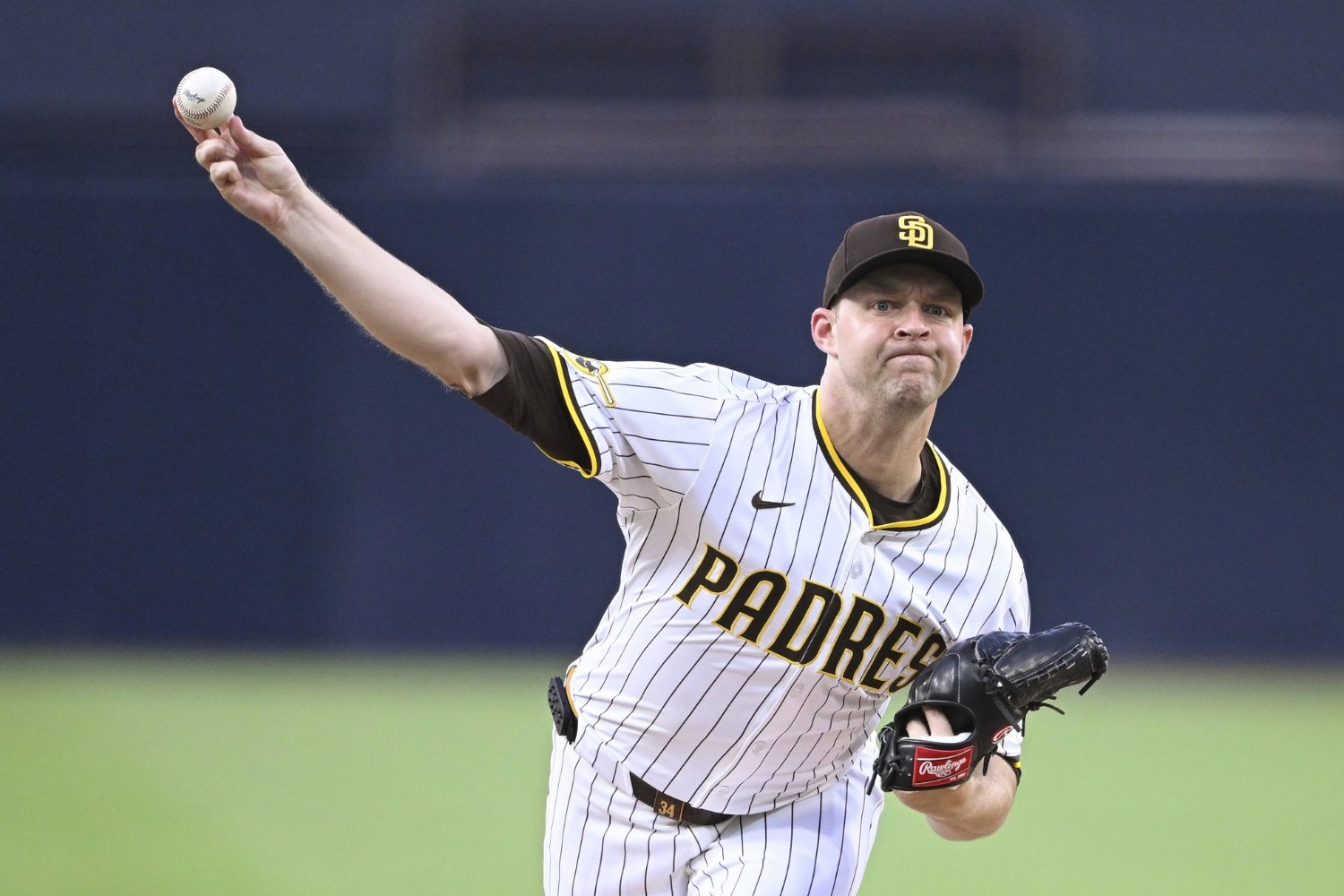 A.J. Preller and the San Diego Padres are always lurking. So, when it was reported (though eventually clarified) that Michael King had boiled his free agency down to three teams — the Baltimore Orioles, Boston Red Sox, and New York Yankees — it was hardly shocking that it was San Diego that was able to convince the New York state native to put pen to paper and remain on the West Coast. King and the Padres agreed to a new three-year pact on Dec. 18. The deal can pay him up to $75 million across the three years, though only the first is guaranteed for both sides. Each of the two additional years carries a player option, with those two years holding the potential to pay King $58 million ($28 million in 2027, $30 million in 2028). The deal carries significant risk for the Padres, as there's plenty of opt-out potential if King can stay healthy and earn a longer-term contract following the 2026 campaign. If he's not healthy or struggles, then they're on the hook for significant dollars. Nevertheless, it's hard to overstate the value of familiarity in beginning the process of stabilizing a presently shallow rotation. The Padres entered the offseason with only Nick Pivetta guaranteed within their starting five. Dylan Cease departed for Toronto, and it was widely expected King would follow him out the door. Even with Joe Musgrove set to return from Tommy John surgery early in the year, his lack of a firm timeline and a collection of fringe arms — JP Sears, Sean Boyle, Randy Vásquez, and Matt Waldron — left very little by which to be inspired as far as the starting pitching group was concerned. Worse yet was that the path to actually improving that status was murky. The farm system is barren to the point where acquiring an impact starter via trade would've likely been impossible. Additionally, the organization is seemingly always in some form of financial peril, a situation which had the potential to become worse as ownership explores a potential sale of the franchise. So, while names like Ranger Suárez, Zac Gallen, Framber Valdez, and Tatsuya Imai exist on the free-agent market and options like Freddy Peralta or maybe Tarik Skubal are available via trade, possessing the resources to acquire any of them was going to be a tall order. Even for an executive as ambitious as Preller. Which is why, despite the risk, the re-signing of Michael King is in the upper tier of worthwhile roads the Padres could have traversed in their pursuit of starting pitching. When healthy, the Padres know what they're getting in King. The 2024 season, his first in San Diego, featured a 3.9 fWAR courtesy of a 2.95 ERA, a 27.7 percent strikeout rate, and an 8.7 percent walk rate. His percentile distribution looked as follows: Not only was King adept at running up his strikeout total, he was downright excellent in avoiding quality contact. It's an area in which he continued to find success through his injury-plagued, 15-start campaign of 2025. Despite the fact that he averaged fewer than five innings per start and took a major step back on the whiff side of things, he still ended things in the 84th percentile in average exit velocity for opposing hitters (87.8 MPH) and the 68th in Hard-Hit% against (38.1). For a player who worked through a nerve issue and knee inflammation over the course of a full season, that he still was able to maintain some level of effect is encouraging. What the Padres need King to do in 2026, above all, is to get back to his efficiency. He averaged 5.7 innings per start in that 2024 season, but followed it up with only 4.9 innings per start in 2025. The health component was (obviously) the primary factor there. Especially because there isn't a whole lot to be too discouraged by within the particulars. His fastball velocity only fell by 0.2 miles per hour through those issues, and his spin rates were actually higher on the year. There are some usage factors that could be improved (like getting the changeup back to its usual level of involvement and effectiveness), but health will be the primary factor in King providing value to the 2026 Padres. That's what they're banking on, too. The risk is obvious. If King experiences additional inflammation or nerve issues, then the Padres have a severe problem on their hands, both in terms of personnel and payroll. If healthy, though, he's a stabilizing force atop the rotation, capable of providing nearly six innings per start. And while the general public has already come to accept the idea that he'd opt out in the event of a strong season, he'd still be in line to take home elite money for two consecutive years. It'd be about years if he does, not dollars. Risk was going to be a natural byproduct of any of the notable free-agent options, though. And that's the important thing to consider here. Suárez has back issues. Gallen has had stretches of uneven performance and a smattering of trips to the injured list. Imai has to transition from Japan to the United States. Valdez is two years older. They all feature some kind of risk, and the term of any contract is projected to be longer for his free-agent counterparts. In King, the Padres not only get a short-term commitment (even if it doesn't end up completely working out), but familiarity. That matters. They know him in the physical sense and in a mechanical one. There isn't an adjustment period with the coaching staff given that Ruben Niebla is still running things as pitching coach. You purely have to ensure King is healthy, and it's unlikely the Padres and their limited resources would've been willing to make this investment if they believed he was anything but. Essentially, this is kind of an ideal outcome for the Padres. The risk exists but feels more minimal by comparison considering that familiarity. The contract doesn't run into next decade like, say, Xander Bogaerts' does. Above all, they now insert King atop their rotation alongside Pivetta and a returning Musgrove. This singular addition changes the pitching outlook for the staff and puts the roster into far better position than it was even 48 hours ago.
 -
When it was reported last week that the San Diego Padres were listening on Nick Pivetta and Jake Cronenworth, the reaction here at Padres Mission was twofold. The Cronenworth side was immediately acknowledged as legitimate and logical. If they're hoping to clear some longer-term money off the books, the lightest hitter of their positional contracts certainly makes some sense. Especially if it were to help them add some much-needed... anything to the rotation. We didn't meet the Pivetta component with quite the same gumption, however. Instead, we approached the idea of trading Nick Pivetta as indicating a threat of organizational purgatory. That state in which teams find themselves when they're not quite good enough to contend but not quite bad enough to blow it all up. Trading Pivetta could certainly indicate that. With no other starter locked in for Opening Day and perpetual reports of financial peril, the optics of such a move one year into a four-year pact wouldn't be terrific. At the same time, the aggression of the point may have overshot and missed the actual logic of it altogether. Because there's real sense in the Padres pursuing a trade of their veteran starter. In a number of ways, Pivetta is coming off the best season of his career. His 2.87 ERA stands as a career best, as does his 3.49 FIP. While his 26.4 percent strikeout rate didn't necessarily touch the highest rates of his career, his 6.9 percent walk rate trailed only 2024. Perhaps most important was that his 9.7 percent homer-to-fly-ball rate was the best of his career and nearly five percent lower than his career average. He wasn't overpowering in 2025, but his run prevention was top marks. With all of that said, there's reason to think that Pivetta is in for significant regression in the year(s) ahead. Here is his percentile distribution from 2025: There are number of items here that read as just okay (though they aren't necessarily alarming). His xERA was still firmly in the middle of the pack while he did a decent-enough job of generating chase and whiff from opposing hitters. None of those numbers are stellar, but you can absolutely work with each of them as a mid-rotation arm. Where things get concerning, however, is in the contact trends that Pivetta experienced. The barrel and hard-hit rates against speak for themselves. Pivetta sat near the bottom in each, with only 11 starters (of 107 qualifiers) allowing a higher barrel% than Pivetta's 10.9; only 20 served up a higher hard-hit rate than his 45.0. Pivetta's four-seam and curveball accounted for over 65 percent of his pitches thrown in 2025. Opposing hitters took each for an average of 12.2 percent in their barrel rate while the fastball, in particular, was touched for a hard-hit rate over 54 percent. The trends also got worse as the season wore on: It's unsurprising, then, that along the way, Pivetta's whiff rate also declined steadily. His fly-ball rate also rose successively in each individual month before dropping only in September. Such trends, at least when you're talking about a pitcher who worked to an unsustainable .235 BABIP, don't bode particularly well for the subsequent years of a multi-year contract. Not that Pivetta will be outright bad moving forward. His fastball-curveball combination, in conjunction with his zone aggression, go a long way toward keeping hitters off balance and led to an in-zone swing rate of just 63.5 percent. When you have one of the 16-lowest zone swing percentages in the sport, you can afford that aggression and live with some of the negative results of contact. The big issue is going to be the contact regression. That type of BABIP figure has a way of evening out. And even if Pivetta is able to freeze hitters who are caught off guard by his in-zone work, the contact trends aren't indicative of him continuing the remainder of his performance off last year's stat sheet. So, with that contract cost skyrocketing to $20.5 million in 2026 (per Roster Resource) before a pair of options worth a combined $32 million, you could understand if the Padres wanted to sell high on what Pivetta gave them last season. Especially if helps them to build a bit more for the medium- or longer-term. Of course, the massive caveat to all of this is that A.J. Preller would have to really work to fill in a rotation that becomes almost entirely empty sans Pivetta. Sure, there are some in-house arms that can cover a few innings and Joe Musgrove is due to return, but there are no other surefire, guaranteed starters on the 40-man roster at present. So the needle becomes quite difficult to thread. Can you acquire an upper-minors prospect who is major-league ready? Perhaps another fringe arm in addition with which you can attempt an upside play? There isn't any doubt that Preller could find value in Pivetta, who comes with cost certainty and a pair of seasons with an ERA lingering around four in his two years prior to 2025. He's a solid mid-rotation option coming off the best season of his career. There's plenty of logic in capitalizing on a guy like that considering the Padres' financial situation and what their farm system currently looks like. But with the Padres already lacking starters, innings coverage becomes even more burdensome a route this winter. Is the tradeoff one Preller is willing to make? View full article
-
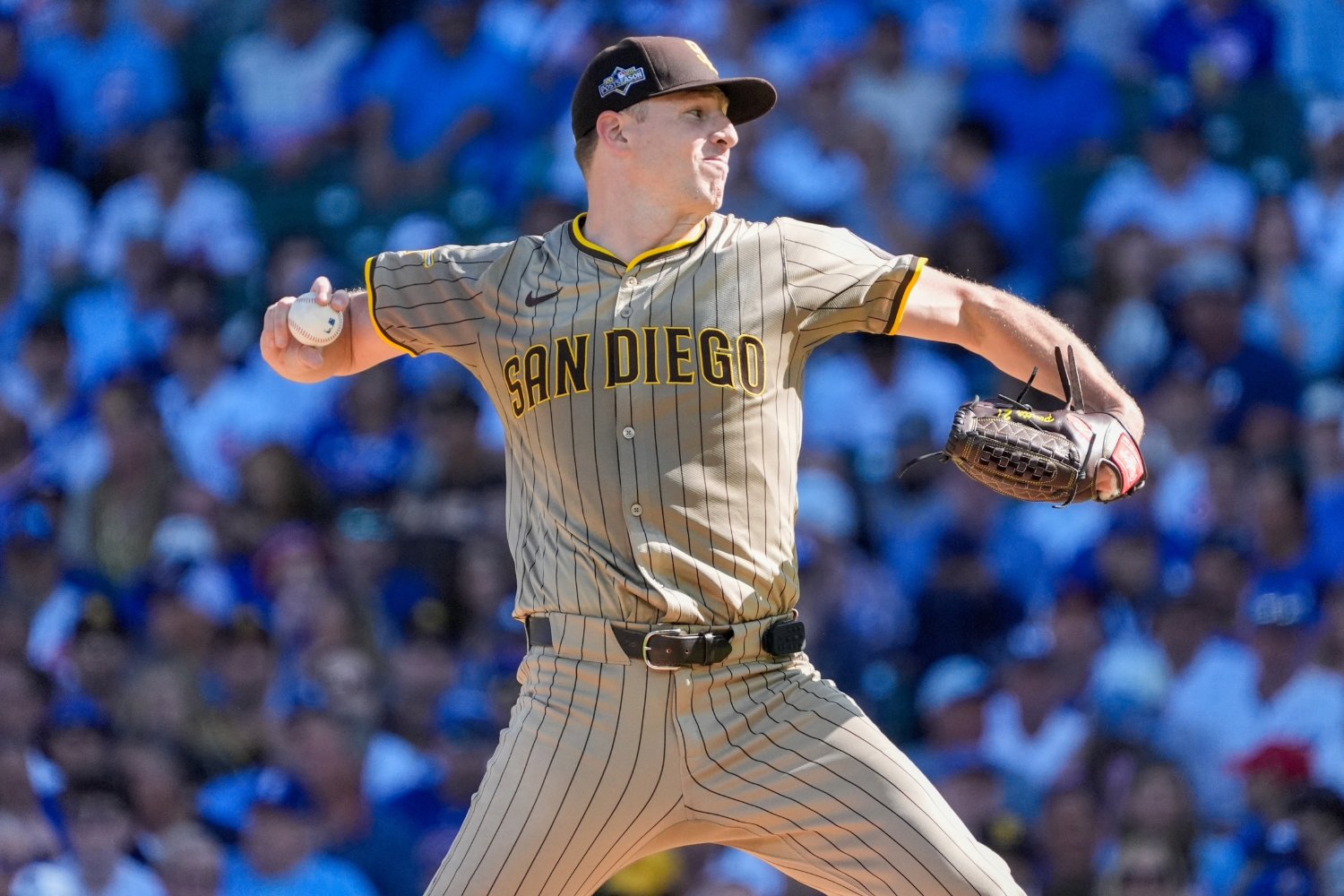 When it was reported last week that the San Diego Padres were listening on Nick Pivetta and Jake Cronenworth, the reaction here at Padres Mission was twofold. The Cronenworth side was immediately acknowledged as legitimate and logical. If they're hoping to clear some longer-term money off the books, the lightest hitter of their positional contracts certainly makes some sense. Especially if it were to help them add some much-needed... anything to the rotation. We didn't meet the Pivetta component with quite the same gumption, however. Instead, we approached the idea of trading Nick Pivetta as indicating a threat of organizational purgatory. That state in which teams find themselves when they're not quite good enough to contend but not quite bad enough to blow it all up. Trading Pivetta could certainly indicate that. With no other starter locked in for Opening Day and perpetual reports of financial peril, the optics of such a move one year into a four-year pact wouldn't be terrific. At the same time, the aggression of the point may have overshot and missed the actual logic of it altogether. Because there's real sense in the Padres pursuing a trade of their veteran starter. In a number of ways, Pivetta is coming off the best season of his career. His 2.87 ERA stands as a career best, as does his 3.49 FIP. While his 26.4 percent strikeout rate didn't necessarily touch the highest rates of his career, his 6.9 percent walk rate trailed only 2024. Perhaps most important was that his 9.7 percent homer-to-fly-ball rate was the best of his career and nearly five percent lower than his career average. He wasn't overpowering in 2025, but his run prevention was top marks. With all of that said, there's reason to think that Pivetta is in for significant regression in the year(s) ahead. Here is his percentile distribution from 2025: There are number of items here that read as just okay (though they aren't necessarily alarming). His xERA was still firmly in the middle of the pack while he did a decent-enough job of generating chase and whiff from opposing hitters. None of those numbers are stellar, but you can absolutely work with each of them as a mid-rotation arm. Where things get concerning, however, is in the contact trends that Pivetta experienced. The barrel and hard-hit rates against speak for themselves. Pivetta sat near the bottom in each, with only 11 starters (of 107 qualifiers) allowing a higher barrel% than Pivetta's 10.9; only 20 served up a higher hard-hit rate than his 45.0. Pivetta's four-seam and curveball accounted for over 65 percent of his pitches thrown in 2025. Opposing hitters took each for an average of 12.2 percent in their barrel rate while the fastball, in particular, was touched for a hard-hit rate over 54 percent. The trends also got worse as the season wore on: It's unsurprising, then, that along the way, Pivetta's whiff rate also declined steadily. His fly-ball rate also rose successively in each individual month before dropping only in September. Such trends, at least when you're talking about a pitcher who worked to an unsustainable .235 BABIP, don't bode particularly well for the subsequent years of a multi-year contract. Not that Pivetta will be outright bad moving forward. His fastball-curveball combination, in conjunction with his zone aggression, go a long way toward keeping hitters off balance and led to an in-zone swing rate of just 63.5 percent. When you have one of the 16-lowest zone swing percentages in the sport, you can afford that aggression and live with some of the negative results of contact. The big issue is going to be the contact regression. That type of BABIP figure has a way of evening out. And even if Pivetta is able to freeze hitters who are caught off guard by his in-zone work, the contact trends aren't indicative of him continuing the remainder of his performance off last year's stat sheet. So, with that contract cost skyrocketing to $20.5 million in 2026 (per Roster Resource) before a pair of options worth a combined $32 million, you could understand if the Padres wanted to sell high on what Pivetta gave them last season. Especially if helps them to build a bit more for the medium- or longer-term. Of course, the massive caveat to all of this is that A.J. Preller would have to really work to fill in a rotation that becomes almost entirely empty sans Pivetta. Sure, there are some in-house arms that can cover a few innings and Joe Musgrove is due to return, but there are no other surefire, guaranteed starters on the 40-man roster at present. So the needle becomes quite difficult to thread. Can you acquire an upper-minors prospect who is major-league ready? Perhaps another fringe arm in addition with which you can attempt an upside play? There isn't any doubt that Preller could find value in Pivetta, who comes with cost certainty and a pair of seasons with an ERA lingering around four in his two years prior to 2025. He's a solid mid-rotation option coming off the best season of his career. There's plenty of logic in capitalizing on a guy like that considering the Padres' financial situation and what their farm system currently looks like. But with the Padres already lacking starters, innings coverage becomes even more burdensome a route this winter. Is the tradeoff one Preller is willing to make?
 -
There was a time when the San Diego Padres having an interest in Chicago White Sox outfielder Luis Robert Jr. would've created a buzz across the landscape of Major League Baseball. After all, a center fielder with MVP-caliber upside is exactly the type of swing for which A.J. Preller has become known. Unfortunately for both Robert and the Padres, that time has since passed. Not that that's stopped the Padres, who are reported to be among the teams interested in acquiring Robert (along with the Phillies, Mets, and Pirates). But despite that rumored interest, such a pursuit would be a tough one for Preller to sell. That tough sell exists on multiple levels, too. Whether you're looking at the on-paper fit, the payroll fit, or the fit up against a variety of needs on the current roster, it doesn't seem a particularly worthwhile addition for San Diego. To say nothing of Robert's sharp decline in performance since he posted a 4.9 fWAR season back in 2023. It's all part of a rather puzzling motive on the part of Preller, assuming this interest is legitimate. From a roster standpoint, the Padres have their outfield for 2026 set. Robert's spot in center field is occupied for the long-term by Jackson Merrill, who still posted a 3.0 fWAR season despite battling through multiple injuries. Right field is spoken for in the form of Fernando Tatis Jr, also in the long term. While left field doesn't have the type of projectable stability that the other two spots have, Ramón Laureano is poised to handle full-time duty under his club option for next year. Barring a trade of one of the three (two of which would be shocking), you're not really going to have a spot open for Robert. And given that he's still a quality defender, he's not the type of player you're going to deploy as a remotely full-time designated hitter. You could, perhaps, make an argument for Laureano serving as a rotational fourth outfielder while Robert slides into left. Such a move would greatly enhance the team's depth on the bench. It wouldn't be an illogical path for Preller in that sense. However, the second caveat of their interest makes such a path still unlikely. Robert is set to play next year at a $20 million price point, with a club option for the same in 2027. Roster Resource has the Padres currently projected to carry a $201 million payroll next season. That's a shade under the $211 million at which they finished last year, with the team expected to linger around the same number for 2026. Without the White Sox eating at least half the money owed to Robert, you're not staying at or under that number. Let alone the myriad additions this team still has to make to fill out the rotation and the bench beyond acquiring Robert. And those other needs shouldn't be overlooked in all of this, either. Acquiring Robert would represent more of a luxury as opposed to necessities that exist elsewhere on the roster. The team is without roughly 60% of a legitimate rotation and doesn't feature much support in terms of infield depth. Unless it were in the face of a Laureano trade that sets you up in either of those other areas, it becomes difficult to justify such a move when those glaring needs on the roster still exist. Ultimately, though, the reason that the sell becomes difficult is due to the fact that you're talking about a player who has fallen off a cliff in terms of production. Robert turned in that near-five WAR campaign in 2023 on the heels of a 38-homer, 129 wRC+ season. In the two subsequent years, however, he's gone for an average ISO of just .148 and a wRC+ of 84. Even with some defensive value still in the tank, there just hasn't been much on which to hang his hat with the bat. And that's on top of continued health issues, as Robert appeared in just 210 games between the two years. Even if one wanted to make a case that change of scenery from Chicago's South Side worked wonders for Gavin Sheets, this is a much larger gamble. You're not talking about a player coming in on a non-guaranteed contract, but one that would eat up a significant portion of the already-limited flexibility this team has. It's just too many factors to be ignored, and they all add up to a fairly questionable prospective pursuit. View full article
