


Randy Holt
-
Posts
486 -
Joined
-
Last visited
-
Days Won
6
Content Type
Profiles
San Diego Padres Videos
2026 San Diego Padres Top Prospects Ranking
San Diego Padres Free Agent & Trade Rumors, Notes, & Tidbits
Guides & Resources
2025 San Diego Padres Draft Pick Tracker
News
2026 San Diego Padres Draft Tracker: Picks & Bonuses
Forums
Blogs
Events
Store
Downloads
Gallery
Everything posted by Randy Holt
-
How Worried Should Padres Be About A Potential Wandy Peralta Opt Out?
Randy Holt posted an article in Padres
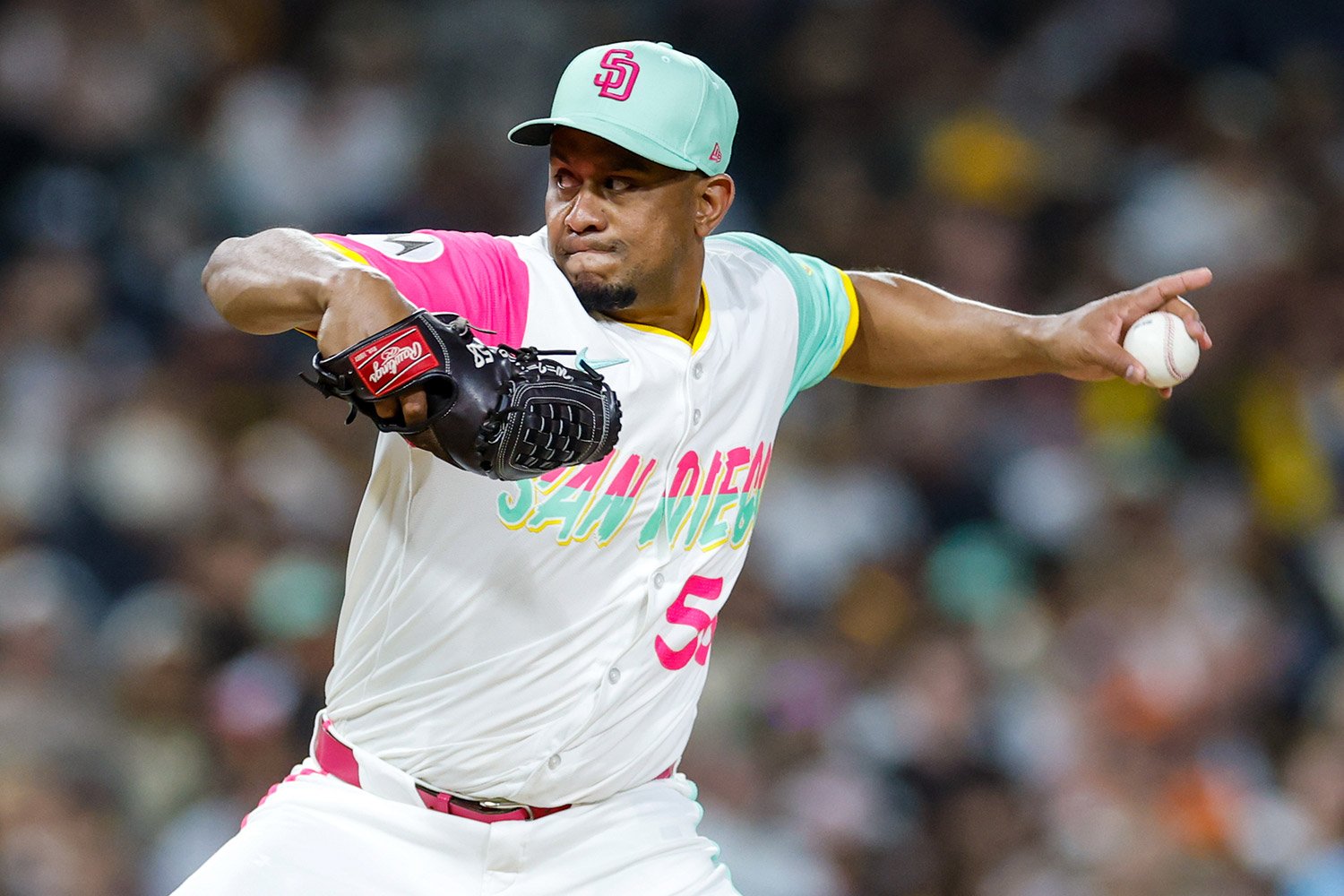 There's a strange perception that exists around San Diego Padres relief pitcher Wandy Peralta in that he doesn't carry the discernible value of some of his relief corps counterparts. And while that may be valid to an extent, it also oversimplifies his role for the group. To say nothing of what his potential departure could mean to the staff at large. Similar to his bullpen comrade Robert Suárez, Peralta carries a player option in his contract ahead of the 2026 season. There's a somewhat unique structure, too, in that he's able to exercise said option to reach free agency before both next season and in 2027. Each opt-in carries a price tag of $4.45 million. But then you circle back to that perception. It's assumed that a Suárez exercise of his option would be a net negative for the Padres. He's been one of the more crucial closers in the sport, and it's somewhat assumed that if he were to remain in San Diego, that could allow the Padres to deploy Mason Miller as a starter rather than shifting him into a ninth-inning role. There's a certain level of complexity associated with what declining his option could mean for the team, whether that complexity is positive or negative. No such association exists with Peralta. But should it? Peralta is perceived as a mid-inning bullpen arm. The perception there is likely accurate given the leverage distribution. In high leverage situations, the innings pitched count in 2025 reads, in order, Suárez (29.2 IP), Jason Adam (21.2), Jeremiah Estrada (18.2), and Adrian Morejon (15.2). In fact, you'd have to work through at least two starting pitchers before you got to Peralta on the list, at just 6.2 high-leverage innings. So, yes, he's a mid-inning guy that you're not necessarily utilizing in the seventh, eighth, or ninth innings. However, that perception also fails to acknowledge the following: There's plenty to scoff at if you're making an argument as to the value that Peralta brings to the Padres' group of relievers. His fastball velocity is just okay, he doesn't strike out opposing hitters, and he's had his issues with walks. His expected metrics don't appear particularly impressive, despite a 3.14 ERA and 3.62 FIP, each of which is his second-best output since a career-best 1.0 fWAR in 2022 with the New York Yankees. But then you get into some of the contact metrics, and it starts to become a little bit more notable. Peralta can get a hitter to expand the zone, and he can generate some swing-and-miss. He was adept at limiting barrels and quality contact, too, with a ton of that contact finding its way onto the infield grass. His groundball rate was six percent better than Morejon's, who finished with the second-highest rate among bullpen regulars. And there's an interesting usage change that can likely take some credit for that: The usage is indicative of the type of results Peralta was able to get in '25. He generated a 52.5 percent groundball rate with the sinker and was up in the high 60s with his changeup, which took on the form of his most-utilized secondary offering rather than his primary pitch as it had been in the years prior. And while there wasn't much to speak of in the whiff game with that sinker, the changeup (36.9 percent) and slider (41.7 percent) did plenty of work on that side. If we're looking for an explanation of why the strikeout rate was low, considering the high rates of swing-and-miss, it's likely due to the fact that Peralta threw his sinker 36.8 percent of the time with two strikes. That's a 12 percent jump for that pitch in two-strike counts. So it's fairly clear that it's not about generating punchouts for Peralta but just getting outs as a reliever. And there's a lot of value in that. Leverage relievers are crucial to team success, especially in October. It's why the Padres were able to keep games close against the Chicago Cubs despite little contribution from their offense. But you also need a bridge to such relievers. We don't know what shape the rotation will take. We do know that Joe Musgrove, Yu Darvish, and, maybe, JP Sears will be involved in the rotation mix. So there's going to be a need for relief help in the middle innings. And what Peralta brings, in terms of skill set, isn't something easily duplicated, especially at that entirely reasonable price for each of the next two seasons. It's because of that that we could see Peralta explore a declining of the option in order to test the market and get a bit of a raise. The Padres, though, should be hoping that Peralta is in their bullpen rotation again next season, as he's a needed presence for exactly the type of situations in which we saw him in 2025.
 -
Among the first San Diego Padres moves to watch this winter is a decision to come from closer Robert Suárez. The man who's gotten the ninth for each of the last two years in America's Finest City carries an early termination option in his contract, wherein he can decline his $8 million for each of the next two years and become a free agent now instead of the winter of 2027-28. It's not an entirely clear-cut decision for Suárez to make, either. Despite a somewhat shaky close to the year (by his standards), there were a number of things that Suárez did better in Year 2 as the team's closer than in Year 1. His strikeout rate jumped five percent (27.9) while his walk rate fell to a shade under six percent. Opposing hitters went for an average of just .187 against him as Suárez emerged from 2025 with a 2.97 ERA, 2.88 FIP, and 1.9 fWAR. If you're looking for negatives around Suárez, that ERA rising from 2.77 in '24 is a good place to start. A primary reason is in contact trends. Suárez allowed slightly more of it (78.2 percent) at a slightly higher quality (9.1 percent barrel rate per batted ball event and a 42.6 percent hard-hit rate). When put in conjunction with fewer chases, fewer whiffs, and the consideration of a velocity-dependent pitcher hitting his age-35 season in 2026, you can start to understand why future projections are something of an issue for Suárez. You can also perceive why the decision to opt out isn't so obvious. A closer with 76 saves, a 2.87 ERA, and 2.8 fWAR over two seasons would stand to make a whole lot more than $8 million per year on the open market. But, considering his age and general volatility of older relievers, the interest might not be as widespread as it would if he were even just two or three years younger. Regardless, though, the expectation is that Suárez will, in fact, opt out in order to pursue a heftier contract in free agency. Even if it's on the same term, he'd almost certainly get a sizable bump in his salary. If he chooses not to do so, the repercussion for the Padres is quite simple: he remains the team's closer. The bullpen remains a strength with the likes of Adrian Morejon, Mason Miller, and Jeremiah Estrada (among others) working the late innings to minimize pressure and allow him to remain fresh into the latter portion of the season. It's pretty black and white in terms of concept. If he does choose to exercise the early termination option, however, that's where things get really interesting for San Diego. There's been some talk of the team exploring a move to starting for the aforementioned Mason Miller. Would a Suárez departure lead them away from such a route in favor of inserting Miller into the ninth inning? We know it's a role he's served and one in which he excels. But if his preference is to start, is removing that as an option something the team is willing to do should a need arise for a full-time closer. The possibility also exists where Suárez departs, Miller gets a crack at a starting gig, and it's instead someone like Morejon, Estrada, or Jason Adam getting the ninth. Perhaps someone like David Morgan and/or Bradley Rodríguez moves back to cover some of the innings lost by Miller and the new closer. It's still a group that would run deep in their ability to close down games (at least on paper) while improving an area where depth is an issue (the rotation). In fact, there's an entire world where a Suárez opt out is a net positive for the San Diego Padres. You free up $8 million to allocate elsewhere while allowing for expanded roles from players capable of handling them. Of course, we'll stop short of saying something to the effect of "the Padres are better off with one of the game's elite closers on their roster." It's hard to make a case for that, seeing as his presence would enable the freedom to explore something such as a Miller-to-the-rotation type of move. But a departure not only does have that benefit of some extra cash. It simply offers far more intrigue in terms of roster and pitching staff construction. The gray area feels like it would just be more fun to explore than the simple, black-and-white one. Not that "fun" is always in conversation with "correct." Regardless of the outcome, it's (obviously) going to have a significant impact on the roster. Where that impact factors in, though, is going to make for one of the more fascinating elements of the Padres' 2025-26 offseason. View full article
-
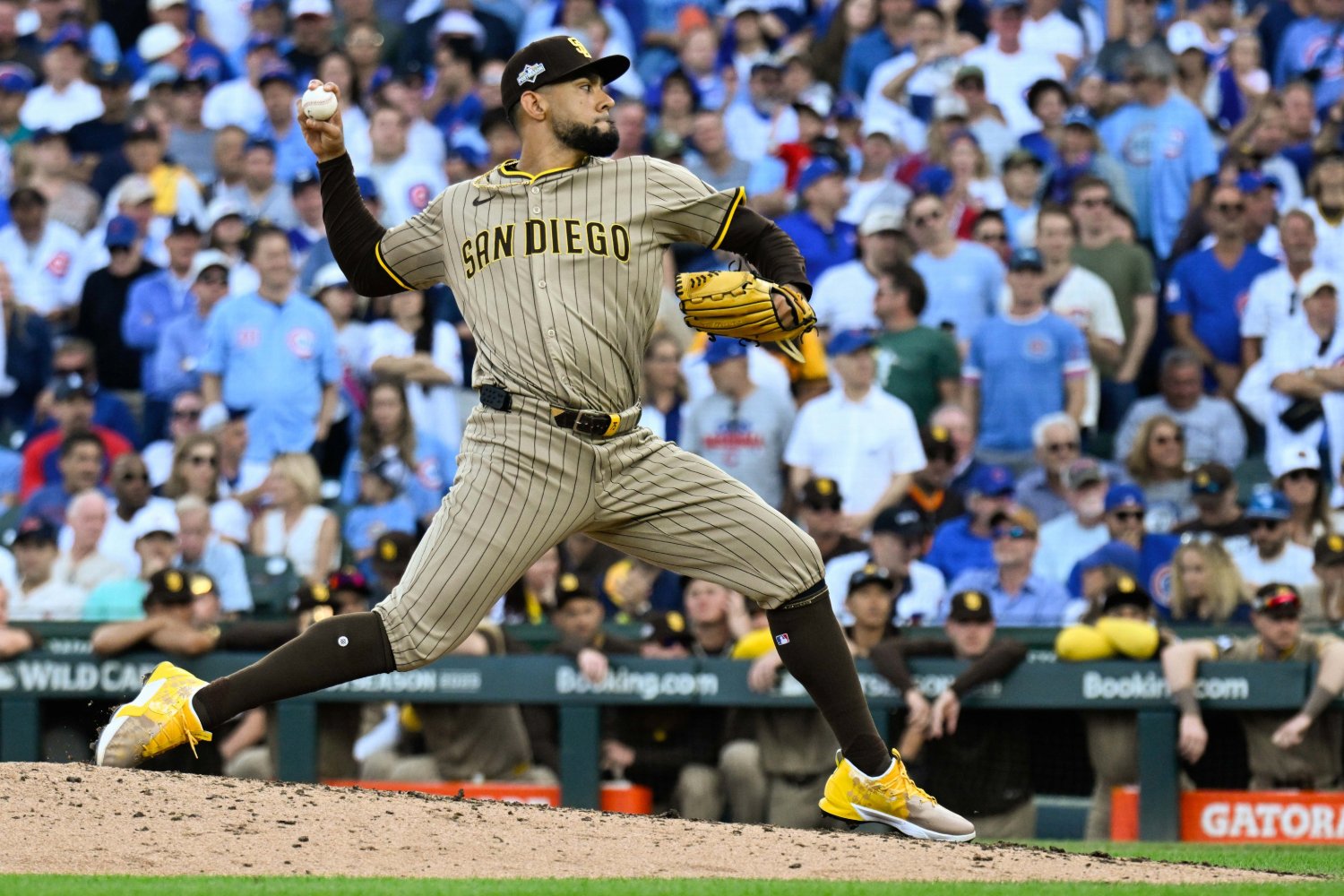 Among the first San Diego Padres moves to watch this winter is a decision to come from closer Robert Suárez. The man who's gotten the ninth for each of the last two years in America's Finest City carries an early termination option in his contract, wherein he can decline his $8 million for each of the next two years and become a free agent now instead of the winter of 2027-28. It's not an entirely clear-cut decision for Suárez to make, either. Despite a somewhat shaky close to the year (by his standards), there were a number of things that Suárez did better in Year 2 as the team's closer than in Year 1. His strikeout rate jumped five percent (27.9) while his walk rate fell to a shade under six percent. Opposing hitters went for an average of just .187 against him as Suárez emerged from 2025 with a 2.97 ERA, 2.88 FIP, and 1.9 fWAR. If you're looking for negatives around Suárez, that ERA rising from 2.77 in '24 is a good place to start. A primary reason is in contact trends. Suárez allowed slightly more of it (78.2 percent) at a slightly higher quality (9.1 percent barrel rate per batted ball event and a 42.6 percent hard-hit rate). When put in conjunction with fewer chases, fewer whiffs, and the consideration of a velocity-dependent pitcher hitting his age-35 season in 2026, you can start to understand why future projections are something of an issue for Suárez. You can also perceive why the decision to opt out isn't so obvious. A closer with 76 saves, a 2.87 ERA, and 2.8 fWAR over two seasons would stand to make a whole lot more than $8 million per year on the open market. But, considering his age and general volatility of older relievers, the interest might not be as widespread as it would if he were even just two or three years younger. Regardless, though, the expectation is that Suárez will, in fact, opt out in order to pursue a heftier contract in free agency. Even if it's on the same term, he'd almost certainly get a sizable bump in his salary. If he chooses not to do so, the repercussion for the Padres is quite simple: he remains the team's closer. The bullpen remains a strength with the likes of Adrian Morejon, Mason Miller, and Jeremiah Estrada (among others) working the late innings to minimize pressure and allow him to remain fresh into the latter portion of the season. It's pretty black and white in terms of concept. If he does choose to exercise the early termination option, however, that's where things get really interesting for San Diego. There's been some talk of the team exploring a move to starting for the aforementioned Mason Miller. Would a Suárez departure lead them away from such a route in favor of inserting Miller into the ninth inning? We know it's a role he's served and one in which he excels. But if his preference is to start, is removing that as an option something the team is willing to do should a need arise for a full-time closer. The possibility also exists where Suárez departs, Miller gets a crack at a starting gig, and it's instead someone like Morejon, Estrada, or Jason Adam getting the ninth. Perhaps someone like David Morgan and/or Bradley Rodríguez moves back to cover some of the innings lost by Miller and the new closer. It's still a group that would run deep in their ability to close down games (at least on paper) while improving an area where depth is an issue (the rotation). In fact, there's an entire world where a Suárez opt out is a net positive for the San Diego Padres. You free up $8 million to allocate elsewhere while allowing for expanded roles from players capable of handling them. Of course, we'll stop short of saying something to the effect of "the Padres are better off with one of the game's elite closers on their roster." It's hard to make a case for that, seeing as his presence would enable the freedom to explore something such as a Miller-to-the-rotation type of move. But a departure not only does have that benefit of some extra cash. It simply offers far more intrigue in terms of roster and pitching staff construction. The gray area feels like it would just be more fun to explore than the simple, black-and-white one. Not that "fun" is always in conversation with "correct." Regardless of the outcome, it's (obviously) going to have a significant impact on the roster. Where that impact factors in, though, is going to make for one of the more fascinating elements of the Padres' 2025-26 offseason.
 -
In hindsight, San Diego Padres president of baseball operations A.J. Preller played the 2025 trade deadline just about as well as he could have. While the Padres still came up short in the Wild Card Round of the postseason, he was able to address specific positions to a degree where those become less of a focal point this winter. The addition of Freddy Fermin offers some stability behind the plate in the way that a combination Elías Díaz & Martín Maldonado lacked, given the latter two being toward the end of their respective careers and playing on one-year contracts. Fermin, however, is under team control through 2029 while the organization waits for top prospect Ethan Salas to make his way up through the ranks. It's a somewhat similar situation, albeit on a shorter timeline, in left field. It seems extremely likely that the Padres will exercise their club option on Ramón Laureano that keeps him entrenched in that spot through the end of 2026. Despite long-term questions around the position, they've at least got it settled in a way that they didn't to start '25. Gavin Sheets' emergence also gives them some flexibility as a left-handed outfield bat or designated hitter option. There are, of course, some nuances to be worked through on the pitching side, but it's at least a pretty stable lineup heading into the winter. And with (optimistically) some financial freedom to at least move a little bit freely in the way that they didn't over the last couple of offseasons, it stands to reason that Preller will have some resources to make a key addition or two to a roster that was visibly at least a hitter or two short in their series against the Chicago Cubs. Given how that (and much of the middle of the season) transpired, there's no question as to the type of player Preller needs to be pursuing when the time comes. The Padres need power. As the season progressed, a couple of things became clear regarding that truth; the first was that the team simply did not have enough of it. It was a top-heavy group from the jump. The second is that players that were previously thought of as being able to supply it (Jake Cronenworth) have been unable to do so in any meaningful way. Even the likes of Fernando Tatis Jr. or Jackson Merrill are providing power on a more inconsistent basis than was perhaps previously thought. Regardless of cause, the absence of power was a massive detriment to this year's Padres roster. They ranked 28th in the league in total home runs (152) & ISO (.138), while sitting 25th in fly ball rate (36.4 percent). As such, the attention must be focused there. But, it's also not as simple as "acquire a power bat" given how much of the roster is occupied at this point. First base, however, represents an area where this type of upgrade could occur. Pete Alonso is likely off the menu given the cost. Could old friend Josh Naylor represent a suitable alternative? He's not walking in the door with Alonso-esque pop, but he's hit at least 20 homers three times in the past four seasons with a .178 ISO for his career, and he's not likely to be too prohibitive a cost in terms of dollars or length. What about someone like Willson Contreras, who carries guarantees through only 2027? We'll surely explore specific options as the winter wears on, but it's important to acknowledge that there will at least be options out there for San Diego. The possibility also exists that the team enhances their approach at the plate in order to tap into more power from players already on the roster. It shouldn't preclude them from making at least one notable outside addition, but given the need, it would be a surprise if that wasn't part of offseason programming in some form or fashion. It's not the only need the Padres have on the offensive side of the ball. They need to get deeper. They need to get more right-handed (which has the potential for a two birds, one stone kind of situation). Plenty needs to be sorted on both ends of the mound. But the power component is going to be the most essential of the needs that do exist. The good news is that ownership has acknowledged a need to improve and the team has a top executive willing to be aggressive in pursuit of such improvement. It'll be a fascinating element of the impending offseason to keep an eye on. View full article
-
Padres' Offseason Needs Begin and End With Search for More Power
Randy Holt posted an article in Padres
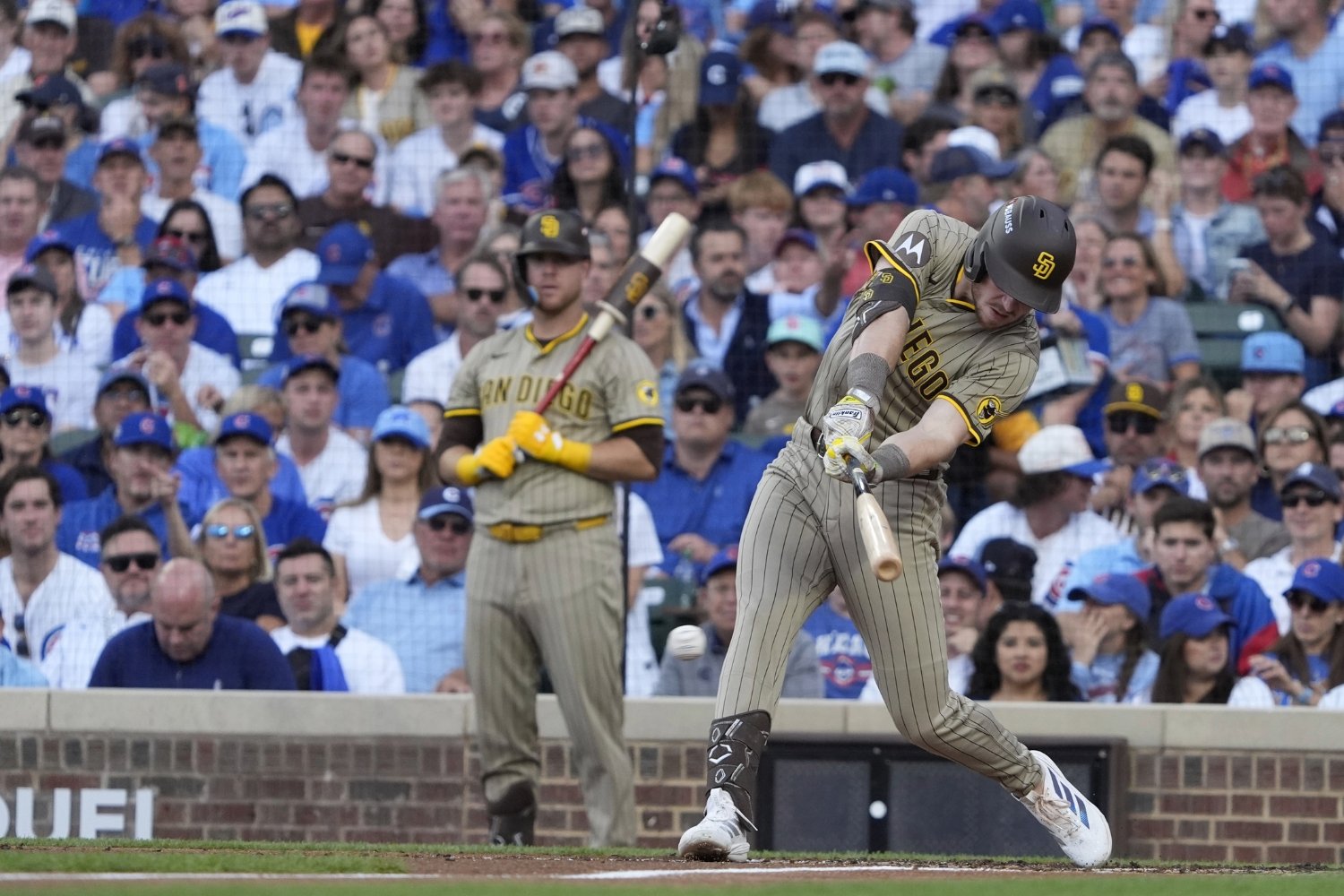 In hindsight, San Diego Padres president of baseball operations A.J. Preller played the 2025 trade deadline just about as well as he could have. While the Padres still came up short in the Wild Card Round of the postseason, he was able to address specific positions to a degree where those become less of a focal point this winter. The addition of Freddy Fermin offers some stability behind the plate in the way that a combination Elías Díaz & Martín Maldonado lacked, given the latter two being toward the end of their respective careers and playing on one-year contracts. Fermin, however, is under team control through 2029 while the organization waits for top prospect Ethan Salas to make his way up through the ranks. It's a somewhat similar situation, albeit on a shorter timeline, in left field. It seems extremely likely that the Padres will exercise their club option on Ramón Laureano that keeps him entrenched in that spot through the end of 2026. Despite long-term questions around the position, they've at least got it settled in a way that they didn't to start '25. Gavin Sheets' emergence also gives them some flexibility as a left-handed outfield bat or designated hitter option. There are, of course, some nuances to be worked through on the pitching side, but it's at least a pretty stable lineup heading into the winter. And with (optimistically) some financial freedom to at least move a little bit freely in the way that they didn't over the last couple of offseasons, it stands to reason that Preller will have some resources to make a key addition or two to a roster that was visibly at least a hitter or two short in their series against the Chicago Cubs. Given how that (and much of the middle of the season) transpired, there's no question as to the type of player Preller needs to be pursuing when the time comes. The Padres need power. As the season progressed, a couple of things became clear regarding that truth; the first was that the team simply did not have enough of it. It was a top-heavy group from the jump. The second is that players that were previously thought of as being able to supply it (Jake Cronenworth) have been unable to do so in any meaningful way. Even the likes of Fernando Tatis Jr. or Jackson Merrill are providing power on a more inconsistent basis than was perhaps previously thought. Regardless of cause, the absence of power was a massive detriment to this year's Padres roster. They ranked 28th in the league in total home runs (152) & ISO (.138), while sitting 25th in fly ball rate (36.4 percent). As such, the attention must be focused there. But, it's also not as simple as "acquire a power bat" given how much of the roster is occupied at this point. First base, however, represents an area where this type of upgrade could occur. Pete Alonso is likely off the menu given the cost. Could old friend Josh Naylor represent a suitable alternative? He's not walking in the door with Alonso-esque pop, but he's hit at least 20 homers three times in the past four seasons with a .178 ISO for his career, and he's not likely to be too prohibitive a cost in terms of dollars or length. What about someone like Willson Contreras, who carries guarantees through only 2027? We'll surely explore specific options as the winter wears on, but it's important to acknowledge that there will at least be options out there for San Diego. The possibility also exists that the team enhances their approach at the plate in order to tap into more power from players already on the roster. It shouldn't preclude them from making at least one notable outside addition, but given the need, it would be a surprise if that wasn't part of offseason programming in some form or fashion. It's not the only need the Padres have on the offensive side of the ball. They need to get deeper. They need to get more right-handed (which has the potential for a two birds, one stone kind of situation). Plenty needs to be sorted on both ends of the mound. But the power component is going to be the most essential of the needs that do exist. The good news is that ownership has acknowledged a need to improve and the team has a top executive willing to be aggressive in pursuit of such improvement. It'll be a fascinating element of the impending offseason to keep an eye on.
 -
On paper, and as of the end of their short-lived postseason run, the San Diego Padres are set to return seven of nine starters on the positional side, four starting pitchers, and the majority of their relief arms in 2026. A lot can happen between now and next year, but it's a favorable position in which they find themselves. Either they add to supplement those players already in place, or they move players out in order to replenish some of the farm and revamp their approach at a specific position. The most likely outcome could (and this is something we'll investigate later) feature a blend of both. In the meantime, they have some decisions to confront regarding their impending free agents. Four notable names are set to test the market as true free agents: Dylan Cease, Nestor Cortes, Jr., Luis Arráez, and Ryan O'Hearn. This, of course, doesn't account for players with player or mutual options (Robert Suárez & Michael King, respectively). But, because we don't have the official word (despite a fairly strong assumption) on decisions, we'll exclude them for the purpose of this discussion. We're also not including Jose Iglesias, who was an important player on the strength of his versatility only but will likely be forced to continue his journeyman career elsewhere in '26. As such, let's talk about what the future could hold, whether in San Diego or elsewhere, for each of the other four true free agents on the roster. Dylan Cease Of the four names, Cease is the most tantalizing because of the upside we've seen from him, both on the South Side of Chicago and for one of his two years in San Diego. He was genuinely excellent in 2024, finishing with a career-best 4.7 fWAR as well as a 3.47 ERA and 3.56 FIP. His strikeout rate (29.4 percent) was above his career average, while his 8.5 percent walk rate checked in at the lowest of his career. He was largely dominant while also remaining efficient. Unfortunately, that blend didn't carry over into 2025. The strikeouts were up (29.8 percent), but so were walks (9.8 percent). He struggled to find any semblance of batted ball luck (.320 BABIP against) with a slight uptick in barrels (8.6 percent). The BABIP does suggest his ability to be efficient was pinned down by misfortune, but his inability to work deep into games was glaring throughout the year. That was, no doubt, a factor in why his name floated around the ether before the July trade deadline (in addition to his pending free agent status). It's hard to imagine a world where teams are unlikely to look at that upside and the underlying metrics and deem him worthy of a significant contract. He stands to get paid, even if on a shorter term deal than might have been projected ahead of this year. Given the organization's ability to develop pitching, even at the major league level, it's hard to imagine the Padres swimming in the depth it would require to retain a player that'll play his age-30 season in 2026. That's especially true with fewer miles on Michael King, who they may prefer to try and sign longer term. Even if it's not completely implausible to see them bringing back both considering the lack of depth they do have at present, it doesn't feel remotely realistic. Nestor Cortes Jr. This one doesn't merit nearly as long a discussion. The former New York Yankees starter made a pair of starts with the Milwaukee Brewers to open the year. In one of those starts, he surrendered eight runs in two innings, including five home runs. In the other, he went six scoreless. It wasn't all that different from what we saw with the Padres after his arrival at the trade deadline. Cortes made six starts with San Diego and allowed home runs in three of them. In one of those starts, he was tagged for three big flies and served up four in another. Three of his four decisions in a Padre uniform were losses, with one beauty of a start against the Los Angeles Dodgers providing a glimmer of hope that he could provide value down the stretch. That didn't come to fruition, though, both due to the homer issue and a lack of efficiency. His last two starts totaled just 5 1/3 innings in length against two non-contending teams in Minnesota and Baltimore. That he wasn't included on the postseason roster speaks to his future in San Diego, in that there isn't one. The possibility exists of maybe some sort of minor league deal late into the winter depending on how his market shakes out, but any return feels far-fetched for the lefty. Luis Arráez Arráez is an interesting one. His skill set plays for any lineup, and he's expressed a willingness to remain in San Diego long-term. The skill set, though, is going to make for a fascinating offseason for Arráez, whether it's with the Padres or not. Even in a "down" year, Arráez still hit .292 and checked in at a 104 wRC+. His strikeout rate came in at an incredible 3.1 percent (a career-best mark) and his walk rate, at 5.0 percent, was actually up a touch. The issue is that his elite contact skills aren't as beneficial when swinging at just about everything, given the lack of impact that comes from such free-swinging tendencies. His on-base percentage (.327) was nearly 40 points lower than his career average, while his absence of power (.100 ISO) was troublesome for a team that needed power to come from literally anywhere. All of the tendencies were amplified in the Wild Card Round, when he hit just .182 and didn't take a walk across the three games. It's difficult to project what his game might be worth on the free agent market. But Arráez is probably going to be best-suited for a team that has power pieces in place and could use more contact in their lineup. The Padres aren't that at present. Despite the work he put in at first base and as the team's designated hitter in the last two seasons, they're probably going to be better-served looking for a bit more impact at either position moving forward. Ryan O'Hearn Acquired alongside Ramón Laureano in the deadline deal with Baltimore, O'Hearn was varying levels of fine in his two months with the Padres. He posted a 113 wRC+ in August before following that up with a 110 figure in September. The issue is that even those technically-above-average figures were well below what he'd turned in the last handful of years with the O's, and he offered practically no serious impact where it mattered most. A hitter with a career 22.1 K%, he punched out 23.7 percent of the time in August and at a 26.7 percent rate in September. He was unable to compensate for the strikeouts with much of anything power-wise. His .148 ISO in August represented a near-40 point drop from July before bottoming out at .071 in September. There were perhaps some mechanical issues at play, but that's water under the bridge at this point. This is the case of a pure rental player that didn't work out, and it's unlikely we'll hear much of any association between the two sides this winter. So, if we had to answer the actual headline in question, we're left with: maybe none of them. There's arguments to be made for Cease or Arráez, but given where the organization's needs lie and where the budget may fall (despite some freed up money by these very departures), the necessary shakeup after an early postseason exit makes it tough to envision any of this quartet returning in 2026. View full article
-
Which Impending Padres Free Agents Are Most Likely to Return?
Randy Holt posted an article in Padres
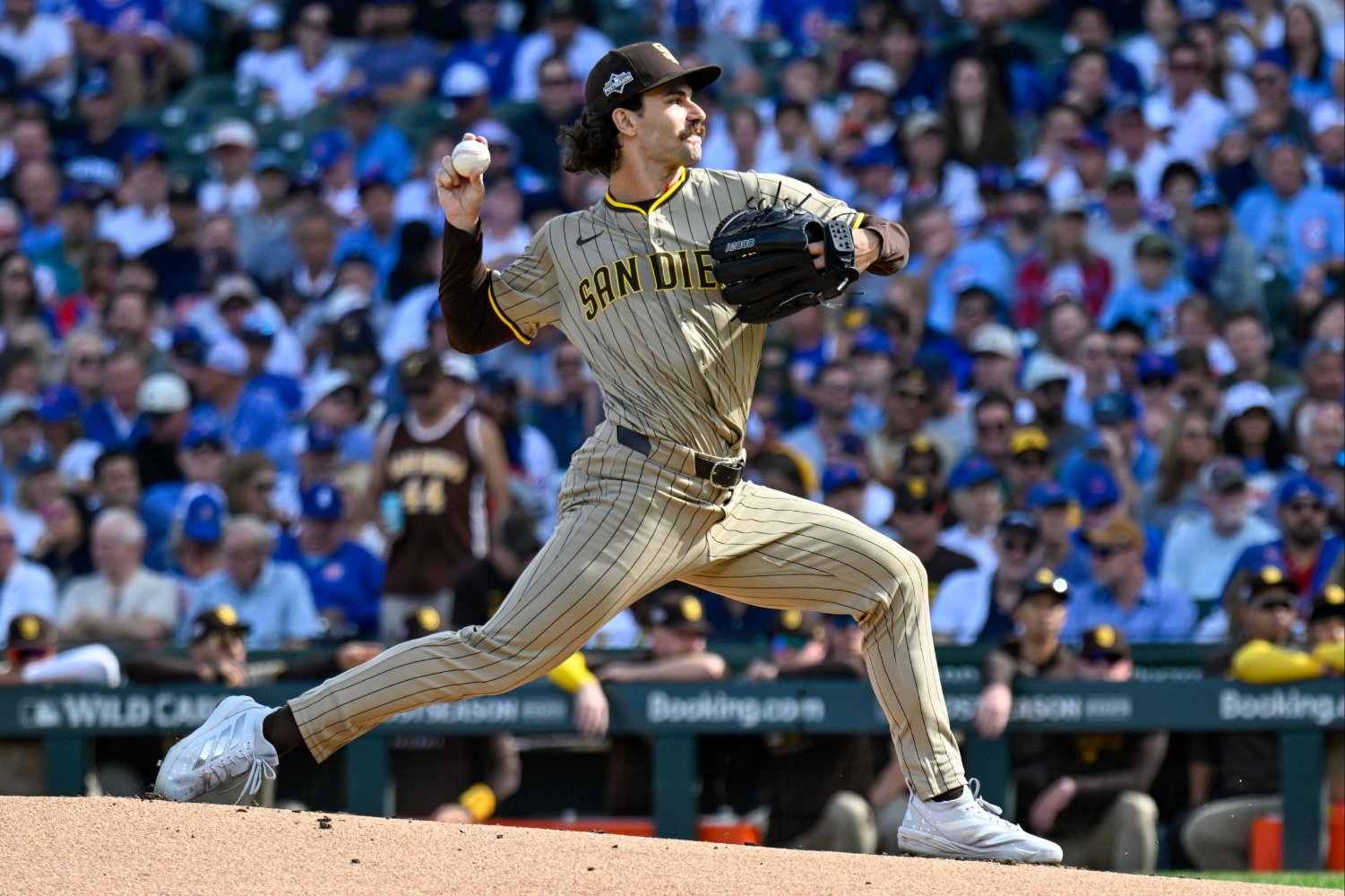 On paper, and as of the end of their short-lived postseason run, the San Diego Padres are set to return seven of nine starters on the positional side, four starting pitchers, and the majority of their relief arms in 2026. A lot can happen between now and next year, but it's a favorable position in which they find themselves. Either they add to supplement those players already in place, or they move players out in order to replenish some of the farm and revamp their approach at a specific position. The most likely outcome could (and this is something we'll investigate later) feature a blend of both. In the meantime, they have some decisions to confront regarding their impending free agents. Four notable names are set to test the market as true free agents: Dylan Cease, Nestor Cortes, Jr., Luis Arráez, and Ryan O'Hearn. This, of course, doesn't account for players with player or mutual options (Robert Suárez & Michael King, respectively). But, because we don't have the official word (despite a fairly strong assumption) on decisions, we'll exclude them for the purpose of this discussion. We're also not including Jose Iglesias, who was an important player on the strength of his versatility only but will likely be forced to continue his journeyman career elsewhere in '26. As such, let's talk about what the future could hold, whether in San Diego or elsewhere, for each of the other four true free agents on the roster. Dylan Cease Of the four names, Cease is the most tantalizing because of the upside we've seen from him, both on the South Side of Chicago and for one of his two years in San Diego. He was genuinely excellent in 2024, finishing with a career-best 4.7 fWAR as well as a 3.47 ERA and 3.56 FIP. His strikeout rate (29.4 percent) was above his career average, while his 8.5 percent walk rate checked in at the lowest of his career. He was largely dominant while also remaining efficient. Unfortunately, that blend didn't carry over into 2025. The strikeouts were up (29.8 percent), but so were walks (9.8 percent). He struggled to find any semblance of batted ball luck (.320 BABIP against) with a slight uptick in barrels (8.6 percent). The BABIP does suggest his ability to be efficient was pinned down by misfortune, but his inability to work deep into games was glaring throughout the year. That was, no doubt, a factor in why his name floated around the ether before the July trade deadline (in addition to his pending free agent status). It's hard to imagine a world where teams are unlikely to look at that upside and the underlying metrics and deem him worthy of a significant contract. He stands to get paid, even if on a shorter term deal than might have been projected ahead of this year. Given the organization's ability to develop pitching, even at the major league level, it's hard to imagine the Padres swimming in the depth it would require to retain a player that'll play his age-30 season in 2026. That's especially true with fewer miles on Michael King, who they may prefer to try and sign longer term. Even if it's not completely implausible to see them bringing back both considering the lack of depth they do have at present, it doesn't feel remotely realistic. Nestor Cortes Jr. This one doesn't merit nearly as long a discussion. The former New York Yankees starter made a pair of starts with the Milwaukee Brewers to open the year. In one of those starts, he surrendered eight runs in two innings, including five home runs. In the other, he went six scoreless. It wasn't all that different from what we saw with the Padres after his arrival at the trade deadline. Cortes made six starts with San Diego and allowed home runs in three of them. In one of those starts, he was tagged for three big flies and served up four in another. Three of his four decisions in a Padre uniform were losses, with one beauty of a start against the Los Angeles Dodgers providing a glimmer of hope that he could provide value down the stretch. That didn't come to fruition, though, both due to the homer issue and a lack of efficiency. His last two starts totaled just 5 1/3 innings in length against two non-contending teams in Minnesota and Baltimore. That he wasn't included on the postseason roster speaks to his future in San Diego, in that there isn't one. The possibility exists of maybe some sort of minor league deal late into the winter depending on how his market shakes out, but any return feels far-fetched for the lefty. Luis Arráez Arráez is an interesting one. His skill set plays for any lineup, and he's expressed a willingness to remain in San Diego long-term. The skill set, though, is going to make for a fascinating offseason for Arráez, whether it's with the Padres or not. Even in a "down" year, Arráez still hit .292 and checked in at a 104 wRC+. His strikeout rate came in at an incredible 3.1 percent (a career-best mark) and his walk rate, at 5.0 percent, was actually up a touch. The issue is that his elite contact skills aren't as beneficial when swinging at just about everything, given the lack of impact that comes from such free-swinging tendencies. His on-base percentage (.327) was nearly 40 points lower than his career average, while his absence of power (.100 ISO) was troublesome for a team that needed power to come from literally anywhere. All of the tendencies were amplified in the Wild Card Round, when he hit just .182 and didn't take a walk across the three games. It's difficult to project what his game might be worth on the free agent market. But Arráez is probably going to be best-suited for a team that has power pieces in place and could use more contact in their lineup. The Padres aren't that at present. Despite the work he put in at first base and as the team's designated hitter in the last two seasons, they're probably going to be better-served looking for a bit more impact at either position moving forward. Ryan O'Hearn Acquired alongside Ramón Laureano in the deadline deal with Baltimore, O'Hearn was varying levels of fine in his two months with the Padres. He posted a 113 wRC+ in August before following that up with a 110 figure in September. The issue is that even those technically-above-average figures were well below what he'd turned in the last handful of years with the O's, and he offered practically no serious impact where it mattered most. A hitter with a career 22.1 K%, he punched out 23.7 percent of the time in August and at a 26.7 percent rate in September. He was unable to compensate for the strikeouts with much of anything power-wise. His .148 ISO in August represented a near-40 point drop from July before bottoming out at .071 in September. There were perhaps some mechanical issues at play, but that's water under the bridge at this point. This is the case of a pure rental player that didn't work out, and it's unlikely we'll hear much of any association between the two sides this winter. So, if we had to answer the actual headline in question, we're left with: maybe none of them. There's arguments to be made for Cease or Arráez, but given where the organization's needs lie and where the budget may fall (despite some freed up money by these very departures), the necessary shakeup after an early postseason exit makes it tough to envision any of this quartet returning in 2026.
 -
The San Diego Padres saw their season come to an end on Thursday at Wrigley Field with a result that has to feel eerily familiar to anyone associated with last year's group. Steady pitching can't overcome a complete absence of run production, no matter how loaded the bullpen might be. And after a 24-inning scoreless streak that saw their 2024 season come to a close, the Padres went again quietly in heading home for the winter here at the end of 2025. It wasn't for lack of trying, though, at least from one area of the roster. While the ultimate outcome would have remained the same, Game 3 against the Chicago Cubs could have been much worse for the Padres. Yu Darvish didn't have it from the jump. He completed only one inning before being lifted in the second with the bases loaded and no outs. His final line included four hits and the two runs that crossed the plate to which he was attached. From there, though, the bullpen continued to do what they did throughout the short series. Six pitchers — Jeremiah Estrada, Michael King, Wandy Peralta, Robert Suárez, Adrian Morejon, and David Morgan — combined to finish this one off. Only an exhausted Suárez — who had thrown 49 pitches in two games — surrendered an additional run. Prior to the homer allowed to Michael Busch, the Padres had run their scoreless inning streak up to 13. As a staff, they allowed just six runs in three games. For a team with the third-best staff ERA (3.64) in the sport and top mark among relievers (3.06), that portion of the outcome hardly reads as a surprise. Unfortunately, the other half of the result doesn't either. The Padres scored just five runs in three games. They managed one in the second inning of Game 1, scratched across three in a Game 2 shutout win, and recorded one more on a solo home run from Jackson Merrill in the ninth inning of Game 3. And it's not as if they were without opportunity. In Game 1 against the Cubs, the Padres had only four hits and a walk. It's hard to produce with such a minimal on-base presence, but it's, nonetheless, still notable that the team stranded four runners and went 2-for-7 with runners in scoring position. Because in Game 2 (despite the win), they stranded another seven and went 1-for-11 with RISP. As the team faced elimination in Game 3, it was a complete zero in that regard, stranding eight and going 0-for-8 with runners in scoring position. And nobody was immune to the struggle. On-base wizard Jake Cronenworth was 0-for-11 without even a walk to his credit. Fernando Tatis Jr was 1-for-12. Manny Machado and Gavin Sheets, as memorable as the former's Game 2 homer might've been, combined for just two hits across 18 plate appearances. That's a key on-base piece, two of your stars, and one of your impact bats from 2025. Only three players — Xander Bogaerts (4), Freddy Fermin (4), and Jackson Merrill (3) — recorded more than a pair of hits across three games. It's a frustrating result for the Padres, but again, hardly a surprising one. This was a team that ranked just 18th in run production (702) during the regular season and sat only 16th in runs knocked in with runners in scoring position (489). Obviously, the caveat is that using RBI as a statistic indicative of anything, but it does speak to how little production the team got from hitters when runners were standing on second or third base. Ultimately, though, this is how things were always going to go for the 2025 San Diego Padres. The pitching was there. While they may not have had the depth in the starting staff, in volume or in efficiency, the bullpen ran deep enough to carry them for stretches (even if — and this is a separate discussion — Mike Shildt's aggression in deploying his relief arms might've neglected the fact that relievers still need rest, too). But the offense, both in production from the top of the order and in the depth supplementing them, was never going to be enough. And this is where things will get tricky for the Padres to navigate. Each of Tatis & Machado will, of course, be in San Diego next season. But they were also ghosts at the most crucial point in time. Merrill and Bogaerts each demonstrated that they can hack it in October, however. Even assuming that the struggles of the former two were a blip (hard to do, considering 2025 and the seasons prior), that's just four reliable bats in the order. Jake Cronenworth is clearly not the bat we might've thought in 2021, but still has value when he's working the count. He didn't find his way to first base in this series. Luis Arráez is a free agent. Ryan O'Hearn is a free agent. Gavin Sheets is set to hit arbitration. Freddy Fermin is a glove-first catcher. The bench was coughing up names like Jose Iglesias and Bryce Johnson. Despite what they may have on the mound, this is not a lineup built to hang with their peers in the National League. Can the Padres work around their depleted farm system and seemingly limited budget to make additions? That leads to a host of questions set to be ignited. Because it was always going to end this way. The pitching staff held up its end of the bargain. The lineup did not. Any 3-5 day stretch in 2025 would've indicated as much. Now the questions really begin to manifest. View full article
-
It Was Always Going To End This Way For 2025 San Diego Padres
Randy Holt posted an article in Padres
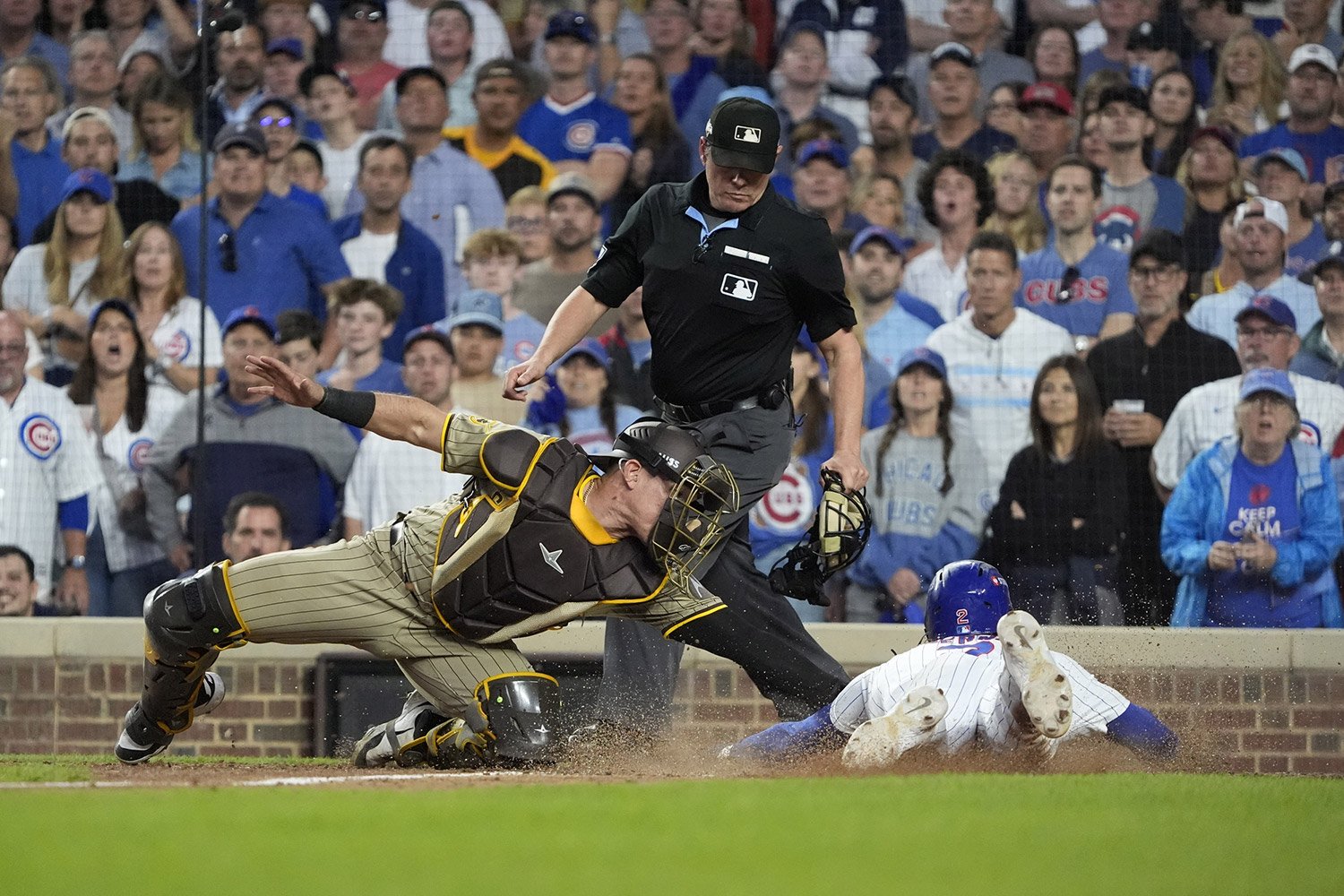 The San Diego Padres saw their season come to an end on Thursday at Wrigley Field with a result that has to feel eerily familiar to anyone associated with last year's group. Steady pitching can't overcome a complete absence of run production, no matter how loaded the bullpen might be. And after a 24-inning scoreless streak that saw their 2024 season come to a close, the Padres went again quietly in heading home for the winter here at the end of 2025. It wasn't for lack of trying, though, at least from one area of the roster. While the ultimate outcome would have remained the same, Game 3 against the Chicago Cubs could have been much worse for the Padres. Yu Darvish didn't have it from the jump. He completed only one inning before being lifted in the second with the bases loaded and no outs. His final line included four hits and the two runs that crossed the plate to which he was attached. From there, though, the bullpen continued to do what they did throughout the short series. Six pitchers — Jeremiah Estrada, Michael King, Wandy Peralta, Robert Suárez, Adrian Morejon, and David Morgan — combined to finish this one off. Only an exhausted Suárez — who had thrown 49 pitches in two games — surrendered an additional run. Prior to the homer allowed to Michael Busch, the Padres had run their scoreless inning streak up to 13. As a staff, they allowed just six runs in three games. For a team with the third-best staff ERA (3.64) in the sport and top mark among relievers (3.06), that portion of the outcome hardly reads as a surprise. Unfortunately, the other half of the result doesn't either. The Padres scored just five runs in three games. They managed one in the second inning of Game 1, scratched across three in a Game 2 shutout win, and recorded one more on a solo home run from Jackson Merrill in the ninth inning of Game 3. And it's not as if they were without opportunity. In Game 1 against the Cubs, the Padres had only four hits and a walk. It's hard to produce with such a minimal on-base presence, but it's, nonetheless, still notable that the team stranded four runners and went 2-for-7 with runners in scoring position. Because in Game 2 (despite the win), they stranded another seven and went 1-for-11 with RISP. As the team faced elimination in Game 3, it was a complete zero in that regard, stranding eight and going 0-for-8 with runners in scoring position. And nobody was immune to the struggle. On-base wizard Jake Cronenworth was 0-for-11 without even a walk to his credit. Fernando Tatis Jr was 1-for-12. Manny Machado and Gavin Sheets, as memorable as the former's Game 2 homer might've been, combined for just two hits across 18 plate appearances. That's a key on-base piece, two of your stars, and one of your impact bats from 2025. Only three players — Xander Bogaerts (4), Freddy Fermin (4), and Jackson Merrill (3) — recorded more than a pair of hits across three games. It's a frustrating result for the Padres, but again, hardly a surprising one. This was a team that ranked just 18th in run production (702) during the regular season and sat only 16th in runs knocked in with runners in scoring position (489). Obviously, the caveat is that using RBI as a statistic indicative of anything, but it does speak to how little production the team got from hitters when runners were standing on second or third base. Ultimately, though, this is how things were always going to go for the 2025 San Diego Padres. The pitching was there. While they may not have had the depth in the starting staff, in volume or in efficiency, the bullpen ran deep enough to carry them for stretches (even if — and this is a separate discussion — Mike Shildt's aggression in deploying his relief arms might've neglected the fact that relievers still need rest, too). But the offense, both in production from the top of the order and in the depth supplementing them, was never going to be enough. And this is where things will get tricky for the Padres to navigate. Each of Tatis & Machado will, of course, be in San Diego next season. But they were also ghosts at the most crucial point in time. Merrill and Bogaerts each demonstrated that they can hack it in October, however. Even assuming that the struggles of the former two were a blip (hard to do, considering 2025 and the seasons prior), that's just four reliable bats in the order. Jake Cronenworth is clearly not the bat we might've thought in 2021, but still has value when he's working the count. He didn't find his way to first base in this series. Luis Arráez is a free agent. Ryan O'Hearn is a free agent. Gavin Sheets is set to hit arbitration. Freddy Fermin is a glove-first catcher. The bench was coughing up names like Jose Iglesias and Bryce Johnson. Despite what they may have on the mound, this is not a lineup built to hang with their peers in the National League. Can the Padres work around their depleted farm system and seemingly limited budget to make additions? That leads to a host of questions set to be ignited. Because it was always going to end this way. The pitching staff held up its end of the bargain. The lineup did not. Any 3-5 day stretch in 2025 would've indicated as much. Now the questions really begin to manifest.
 -
The San Diego Padres forced a decisive Game 3 against the Chicago Cubs on Wednesday afternoon, stealing a 3-0 win at Wrigley Field. It was another game where the offense had difficulty breaking through, going just 1-for-11 with runners in scoring position. Things would have been quite a bit narrower had it not been for a massive home run off the bat of Manny Machado in the fifth inning. Nevertheless, they now stand with an opportunity to escape Chicago with a series win and head up to Milwaukee for the National League Division Series. An impact appearance at the plate from Fernando Tatis Jr should would help. However, that doesn't mean Tatis Jr. has been without value in the two games we've seen thus far. It's been a quiet series, to date, for the Padres' superstar right fielder. Coming in on the heels of a strong September showing (151 wRC+), Tatis has managed to reach base just twice across nine plate appearances. He went 0-for-4 in Game 1 before reaching twice in five plate appearances on Wednesday. The first came via a single to lead off the game before he was standing on base again via a walk in the fifth prior to scoring on Machado's blast. While the on-base component certainly helps, Tatis' status as one of the drivers of this team's offense means that he needs to emerge as an impact contributor for the Padres to go any further than Thursday evening's Game 3 tilt. It remains to be seen if that will manifest in the way that the lineup may need. In the interim, though, the Padres sure must be happy with the production they're getting out of him on the other side of the ball. In the eighth inning of Game 2, Tatis flashed the leather that helped preserve the 3-0 lead the Padres had built: At the time, the Padres had already sent Robert Suárez to the mound for a four-out save. Mason Miller left a man on with two outs after he hit Michael Busch. That allowed Nico Hoerner a chance to step to the plate. The contact he made was 94.9 MPH off the bat with a .470 expected batting average. Even with Tatis battling the sun, he was able to get the type of jump required to rob Hoerner of a hit that would have carried serious impact to it. Had Tatis not been able to reach that one, you're already looking at Busch scoring, given the immediate movement with two outs. Hoerner has speed to burn, so extra bases were a guarantee in that scenario, leaving only a trip to second or third base as the remaining question for the Cubs' second baseman. In that reality, it's a 3-1 game with a runner in scoring position and the tying run at the plate in the form of a lefty-swinging Ian Happ. Instead, Tatis Jr's excellence came through in maintaining the three-run cushion. Suárez locked it down in the ninth with a flyout-single-GIDP sequence. At this point, it's hardly a surprise to see Fernando Tatis Jr make such a play on the outfield grass. He finished the regular season with eight Outs Above Average and 15 Defensive Runs Saved; the former sat 16th among qualifying outfielders while the latter checked in at the six spot in the rankings. It's the type of defensive performance the Padres will continue to need, given the Cubs' impact lefties in the form of Happ, Kyle Tucker, and Michael Busch. That element is also allowing him to provide value to the Padres even if the bat hasn't come through yet. While you'd like to see more at the plate in a short series such as this, the defense from Tatis has been invaluable all season. We're just now seeing the type of impact that can make at the season's most crucial moments. View full article
-
Fernando Tatis Jr's Glove Compensating For Bat In Cubs Series
Randy Holt posted an article in Padres
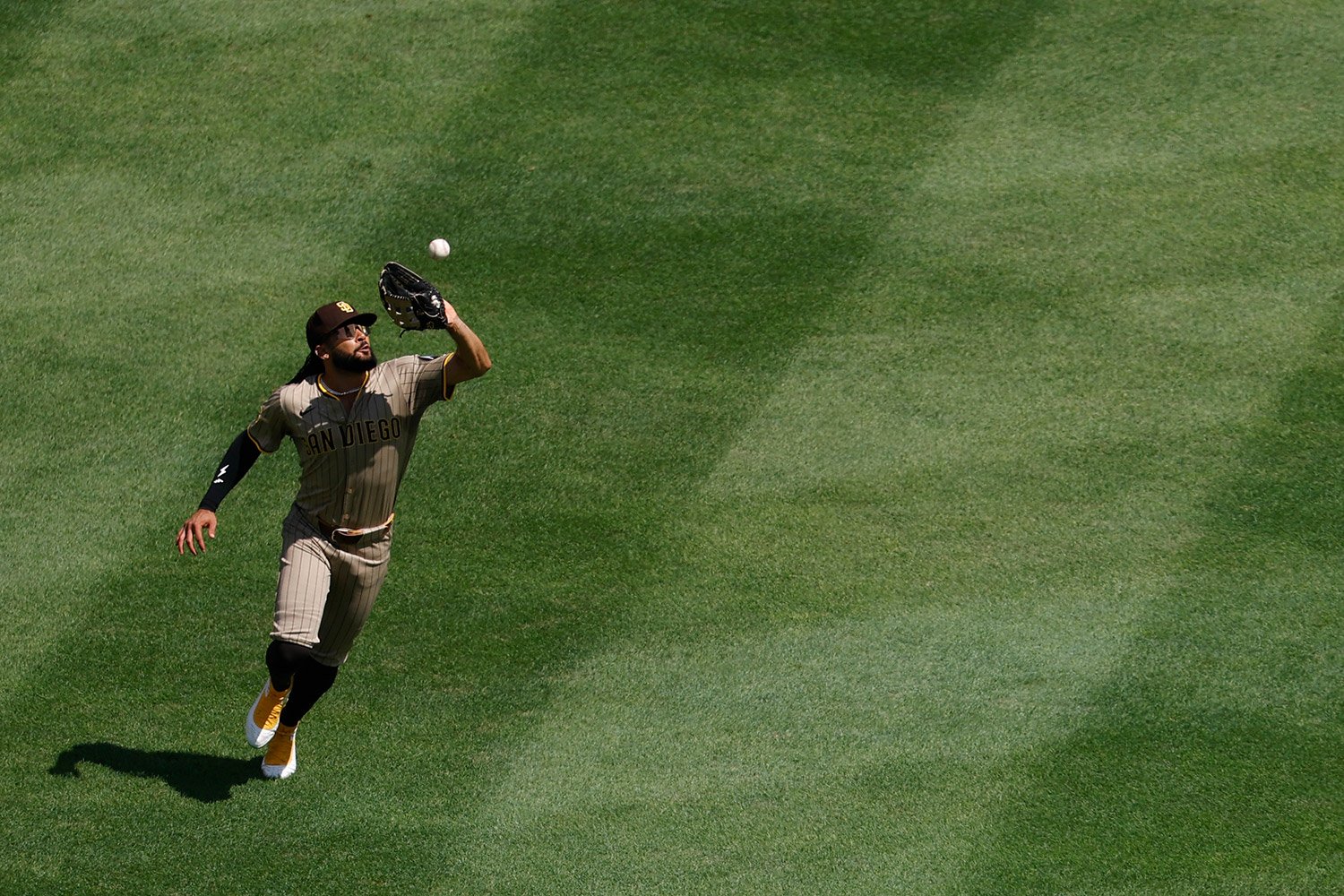 The San Diego Padres forced a decisive Game 3 against the Chicago Cubs on Wednesday afternoon, stealing a 3-0 win at Wrigley Field. It was another game where the offense had difficulty breaking through, going just 1-for-11 with runners in scoring position. Things would have been quite a bit narrower had it not been for a massive home run off the bat of Manny Machado in the fifth inning. Nevertheless, they now stand with an opportunity to escape Chicago with a series win and head up to Milwaukee for the National League Division Series. An impact appearance at the plate from Fernando Tatis Jr should would help. However, that doesn't mean Tatis Jr. has been without value in the two games we've seen thus far. It's been a quiet series, to date, for the Padres' superstar right fielder. Coming in on the heels of a strong September showing (151 wRC+), Tatis has managed to reach base just twice across nine plate appearances. He went 0-for-4 in Game 1 before reaching twice in five plate appearances on Wednesday. The first came via a single to lead off the game before he was standing on base again via a walk in the fifth prior to scoring on Machado's blast. While the on-base component certainly helps, Tatis' status as one of the drivers of this team's offense means that he needs to emerge as an impact contributor for the Padres to go any further than Thursday evening's Game 3 tilt. It remains to be seen if that will manifest in the way that the lineup may need. In the interim, though, the Padres sure must be happy with the production they're getting out of him on the other side of the ball. In the eighth inning of Game 2, Tatis flashed the leather that helped preserve the 3-0 lead the Padres had built: At the time, the Padres had already sent Robert Suárez to the mound for a four-out save. Mason Miller left a man on with two outs after he hit Michael Busch. That allowed Nico Hoerner a chance to step to the plate. The contact he made was 94.9 MPH off the bat with a .470 expected batting average. Even with Tatis battling the sun, he was able to get the type of jump required to rob Hoerner of a hit that would have carried serious impact to it. Had Tatis not been able to reach that one, you're already looking at Busch scoring, given the immediate movement with two outs. Hoerner has speed to burn, so extra bases were a guarantee in that scenario, leaving only a trip to second or third base as the remaining question for the Cubs' second baseman. In that reality, it's a 3-1 game with a runner in scoring position and the tying run at the plate in the form of a lefty-swinging Ian Happ. Instead, Tatis Jr's excellence came through in maintaining the three-run cushion. Suárez locked it down in the ninth with a flyout-single-GIDP sequence. At this point, it's hardly a surprise to see Fernando Tatis Jr make such a play on the outfield grass. He finished the regular season with eight Outs Above Average and 15 Defensive Runs Saved; the former sat 16th among qualifying outfielders while the latter checked in at the six spot in the rankings. It's the type of defensive performance the Padres will continue to need, given the Cubs' impact lefties in the form of Happ, Kyle Tucker, and Michael Busch. That element is also allowing him to provide value to the Padres even if the bat hasn't come through yet. While you'd like to see more at the plate in a short series such as this, the defense from Tatis has been invaluable all season. We're just now seeing the type of impact that can make at the season's most crucial moments.
 -
The San Diego Padres dropped Game 1 of their wild card series against the Chicago Cubs in a fashion that was likely visible from a mile away. With the 3-1 loss, the team now sits one loss away from heading home for the winter. It's a narrow margin of error, but such is the life of a wild card ballclub. Of course, some semblance of offensive production would help them avoid such a scenario. Despite a quick hook, Boyd tossed 4 1/3 innings and allowed just four hits and a walk against a San Diego lineup that deployed five left-handed hitters. Jackson Merrill was the only one of that group to record a hit against Boyd, as the others went a combined 0-for-13 with a pair of strikeouts over the course of their nine innings. But it's not as if the right-handed hitters had that much more to offer. Fernando Tatis Jr was 0-for-4. As was Manny Machado. Freddy Fermin offered a 1-for-3 performance out of the No. 9 spot in the lineup. The only hitter to produce much of anything was Xander Bogaerts, as he went 2-for-4 in a line that included the double that scored Merrill in the second inning. Outside of back-to-back doubles to start off that frame, the Padres were unable to break through against lefty starter Matthew Boyd. They left four hitters on and were 2-for-7 with runners in scoring position, including stranding Bogaerts on third base with no outs in the fifth. Which is why when the Cubs hit back-to-back solo home runs in the fifth inning, the win expectancy fell heavily in their favor: A 71.3 percent win expectancy with a one-run lead in the fifth inning, regardless of the factors that created it, speaks heavily to the pessimism surrounding this Padres offense overcoming even the narrowest of margins. This, quite obviously, represents fears about this lineup coming to fruition on a couple of different levels. The first fear was whether the Padres could manage to break through against either of the left-handed starters the Cubs planned to roll out to start each of the series' first two games. Earlier this week, we examined whether there was any hope for them to accomplish such a feat. The conclusion that we did reach was that it would be easier to do so against Shota Imanaga than it would against Boyd. While that scenario remains in play, the margin for error no longer exists given the poor output on Tuesday afternoon. In addition to the fact that the Cubs are, instead, turning to Andrew Kittredge as an opener, with Imanaga now only potentially working as a bulk arm. Ultimately, though, Game 1 did speak to the larger fears about this Padres lineup as a collective. Despite a more stable stretch of winning baseball in the second half than we'd become accustomed to seeing from May to July, the offense has not (at any point) been the driver of their success. That credit goes to the pitching, which did the work they needed to do in allowing just three runs to a Cubs team that has been hot of late on that side of the ball. This is a streaky group. Tatis, Machado, Merrill, and even Bogaerts have turned in absolutely torrid stretches of play this year. But, they've been confined to specific areas of the calendar. While some of that is the nature of baseball, it's also appeared to be much more exaggerated with this lineup. Getting sustained offensive production within the confines of a short series was always going to be a tough ask. But now Padres fans are asking for it. Not only do the Padres need to drum up offense against an opener and (we assume) another left-handed starter—albeit one of slightly lower quality on the stat sheet than Boyd—they'll need Dylan Cease to efficiently navigate that nonexistent margin for error. That can't be a great feeling heading into Game 2. View full article
-
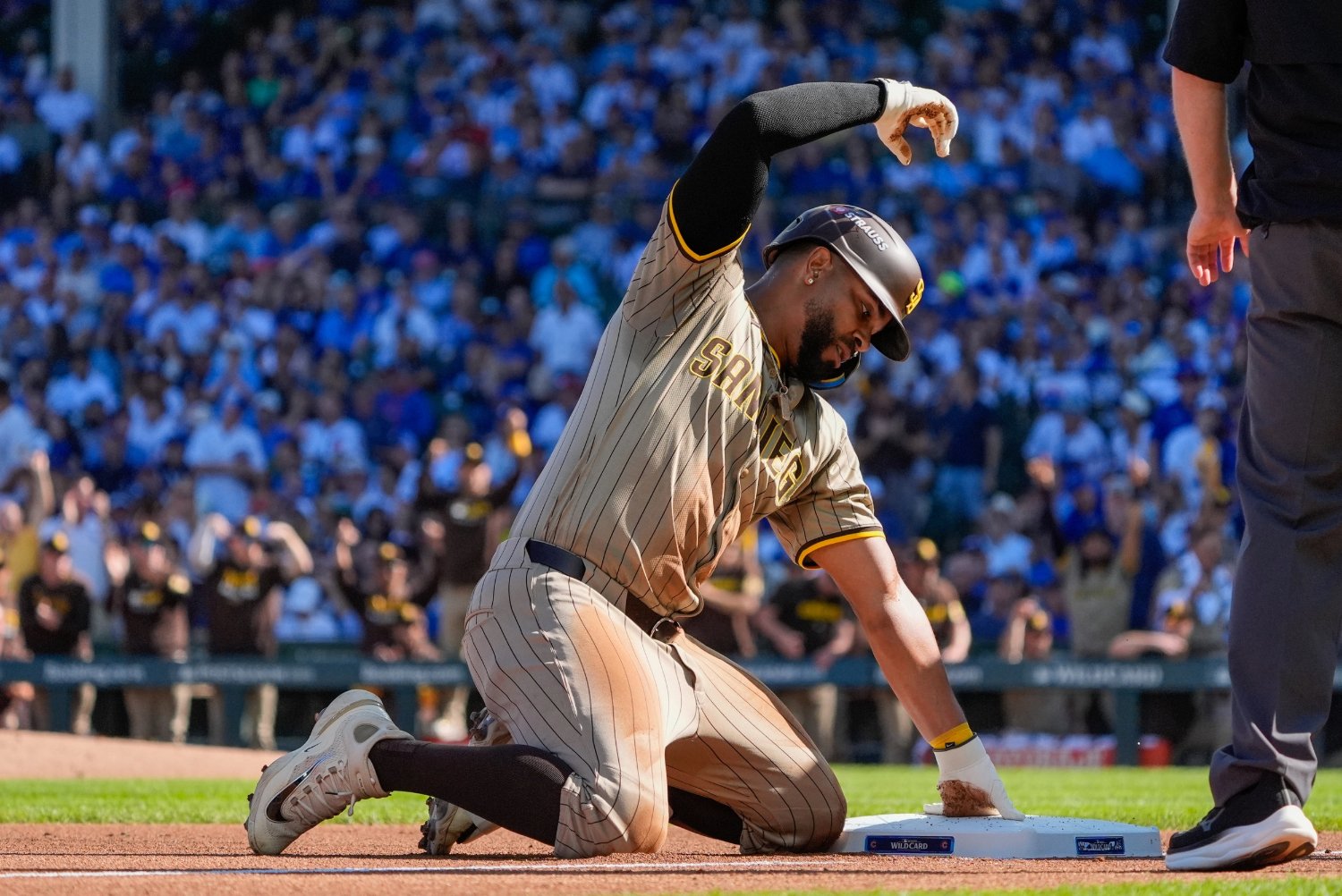 The San Diego Padres dropped Game 1 of their wild card series against the Chicago Cubs in a fashion that was likely visible from a mile away. With the 3-1 loss, the team now sits one loss away from heading home for the winter. It's a narrow margin of error, but such is the life of a wild card ballclub. Of course, some semblance of offensive production would help them avoid such a scenario. Despite a quick hook, Boyd tossed 4 1/3 innings and allowed just four hits and a walk against a San Diego lineup that deployed five left-handed hitters. Jackson Merrill was the only one of that group to record a hit against Boyd, as the others went a combined 0-for-13 with a pair of strikeouts over the course of their nine innings. But it's not as if the right-handed hitters had that much more to offer. Fernando Tatis Jr was 0-for-4. As was Manny Machado. Freddy Fermin offered a 1-for-3 performance out of the No. 9 spot in the lineup. The only hitter to produce much of anything was Xander Bogaerts, as he went 2-for-4 in a line that included the double that scored Merrill in the second inning. Outside of back-to-back doubles to start off that frame, the Padres were unable to break through against lefty starter Matthew Boyd. They left four hitters on and were 2-for-7 with runners in scoring position, including stranding Bogaerts on third base with no outs in the fifth. Which is why when the Cubs hit back-to-back solo home runs in the fifth inning, the win expectancy fell heavily in their favor: A 71.3 percent win expectancy with a one-run lead in the fifth inning, regardless of the factors that created it, speaks heavily to the pessimism surrounding this Padres offense overcoming even the narrowest of margins. This, quite obviously, represents fears about this lineup coming to fruition on a couple of different levels. The first fear was whether the Padres could manage to break through against either of the left-handed starters the Cubs planned to roll out to start each of the series' first two games. Earlier this week, we examined whether there was any hope for them to accomplish such a feat. The conclusion that we did reach was that it would be easier to do so against Shota Imanaga than it would against Boyd. While that scenario remains in play, the margin for error no longer exists given the poor output on Tuesday afternoon. In addition to the fact that the Cubs are, instead, turning to Andrew Kittredge as an opener, with Imanaga now only potentially working as a bulk arm. Ultimately, though, Game 1 did speak to the larger fears about this Padres lineup as a collective. Despite a more stable stretch of winning baseball in the second half than we'd become accustomed to seeing from May to July, the offense has not (at any point) been the driver of their success. That credit goes to the pitching, which did the work they needed to do in allowing just three runs to a Cubs team that has been hot of late on that side of the ball. This is a streaky group. Tatis, Machado, Merrill, and even Bogaerts have turned in absolutely torrid stretches of play this year. But, they've been confined to specific areas of the calendar. While some of that is the nature of baseball, it's also appeared to be much more exaggerated with this lineup. Getting sustained offensive production within the confines of a short series was always going to be a tough ask. But now Padres fans are asking for it. Not only do the Padres need to drum up offense against an opener and (we assume) another left-handed starter—albeit one of slightly lower quality on the stat sheet than Boyd—they'll need Dylan Cease to efficiently navigate that nonexistent margin for error. That can't be a great feeling heading into Game 2.
 -
In terms of the total body of work, no team in Major League Baseball has a better bullpen than the San Diego Padres. It's a group that sits atop the league in fWAR (7.6), ERA (3.06), and strand rate (77.3%), while ranking second in FIP (3.53) and third in strikeout rate (25.8%). With a playoff series against the Chicago Cubs now directly on the horizon, the calculus changes a bit for this group. Or does it? We do know some things about the shape of the Padres' relief corps as the postseason gets underway. For example, we know it's a group that will be without Jason Adam for the remainder of 2025 after a ruptured quad ended his season. We also know that it'll be Robert Suarez in any save situation. Despite questions about Mason Miller's role following his acquisition, Suárez has still been clinging to ninth-inning duty. It's hard to imagine that changes now. How the rest transpires is anyone's guess. We know that each of Miller, Adrian Morejon, and Jeremiah Estrada will be leaned on heavily. David Morgan or Wandy Peralta could get some bridge work in the middle innings. If Mike Shildt is hard-pressed for a lefty while saving Morejon for higher leverage, we'll probably see Yuki Matsui in the mix as well. That's the group overall, though: Suárez, Miller, Morejon, Estrada, Morgan, Peralta, and Matsui. How each arm will respectively be deployed will depend heavily on Craig Counsell's lineup on the other side, though. In that vein, it's very possible that we'll see a lineup similar to the one the Cubs fielded on Saturday. That went as such: Michael Busch (L) - 1B Nico Hoerner (R) - 2B Ian Happ (S) - LF Kyle Tucker (L) - DH Seiya Suzuki (R) - RF Carson Kelly (R) - C Pete Crow-Armstrong (L) - CF Dansby Swanson (R) - SS Matt Shaw (R) - 3B That the Padres will likely roll out exclusively right-handed starters in some form leaves the above as close a configuration as possible to the one we'll see, with Tucker possessing the chance to move back into right field. In contrast, Suzuki moves back to the designated hitter spot. Regardless of that nuance, it remains a tricky lineup for Shildt to navigate in the bullpen game. Left-handed hitters are strategically placed within that lineup, and each one possesses the ability to create impact at the plate. Each of Busch & Crow-Armstrong reached the 30-homer mark during the regular season, and injuries don't necessarily detract from the elite hitter status that Tucker has maintained for the last handful of years. That creates a challenge in itself. Because while Busch (81 wRC+), Crow-Armstrong (59 wRC+), and Ian Happ (92 wRC+) have struggled against left-handed pitching, the rest of the lineup is comfortably above average versus southpaws this year. To say nothing of the fact that the Padres' left-handed offerings are minimal. Yuki Matsui has pretty dramatic reverse splits this year, with a .366 wOBA allowed versus lefty hitters against a .283 figure versus righties. That limits Shildt's options to essentially Adrian Morejon in attempting to isolate lefty-lefty matchups. But even with Morejon's dominance this year, the fact that he's still a largely contact-oriented arm (even against type) means that we might not see too much right-handed opposition for him. He will, nevertheless, be heavily utilized in those matchups as much as possible, with the chance to oppose a softer-hitting right-hander like Dansby Swanson or even Nico Hoerner existing as a possible opportunity for him to stretch his legs a bit. The other arm that could serve as an option for the Cubs' challenging left-handed hitters is Jeremiah Estrada. Like Matsui, Estrada is working with reverse splits that include a .317 wOBA allowed against right-handed hitters and a .264 mark against lefties. He's endured a challenging second half, but the body of work being strong against lefties and adequate against righties does allow for the greatest possibility of overlap among the Padres' relief arms. Where Mason Miller could factor in begins in the fifth spot in the lineup. Even with decent splits, it's likely that the Padres would want to avoid their right-handed fireballer against an upper half that leans 75% left-handed (Busch, Happ, and Tucker). Instead, working him in against the path of Suzuki, Kelly, Crow-Armstrong, Swanson, and Busch could be an efficient way of managing outs in the later innings. In that case, you're not only getting Miller against a predominantly right-handed group, but Crow-Armstrong has a Run Value of -3 and a strikeout rate near 35 percent against four-seam fastballs in 2025. That aspect provides a lot of runway for an arm that has otherwise allowed a .172 wOBA against righties this season. It's Miller's involvement that really helps to develop a clear picture of how this bullpen could take shape if you're content to let Miller loose against the fifth through ninth hitters in the lineup to preserve matchups, which allows you to work Morejon and Estrada against the upper half. Factor in Suárez in the ninth and you're, ideally, speaking for at least four innings of a game. Maybe more. Especially when you consider the David Morgan of it all. Morgan, in particular, is something of a wild card within the group as he's pitched to a 2.66 ERA and 25.9 percent strikeout rate. There have been some command issues (11.9 BB%), but he's also someone who can offer up success against right-handed hitting in a pinch. Or serve as a bridge before you reach the higher-leverage arms. Either way, the additional presence of Morgan's 2025 success opens up the innings coverage to potentially five or even six, depending on the starters' output. Factor in Matsui & Wandy Peralta as guys capable of getting you to the next one, and there's a lot of length here even in Adam's absence. In any case, though, it's a group that stands to get a great deal of work over the next three days. The rotation is, in itself, a bit of an unknown in the volume game, given their 18th-ranked innings per start (5.09). If a starter is struggling to get through the early innings, an occurrence that has become too frequent for Padre starters, and you combine that with the upside that the relief arms offer, it's hard to imagine Mike Shildt being too hesitant to get his bullpen active at Wrigley Field this week. View full article
-
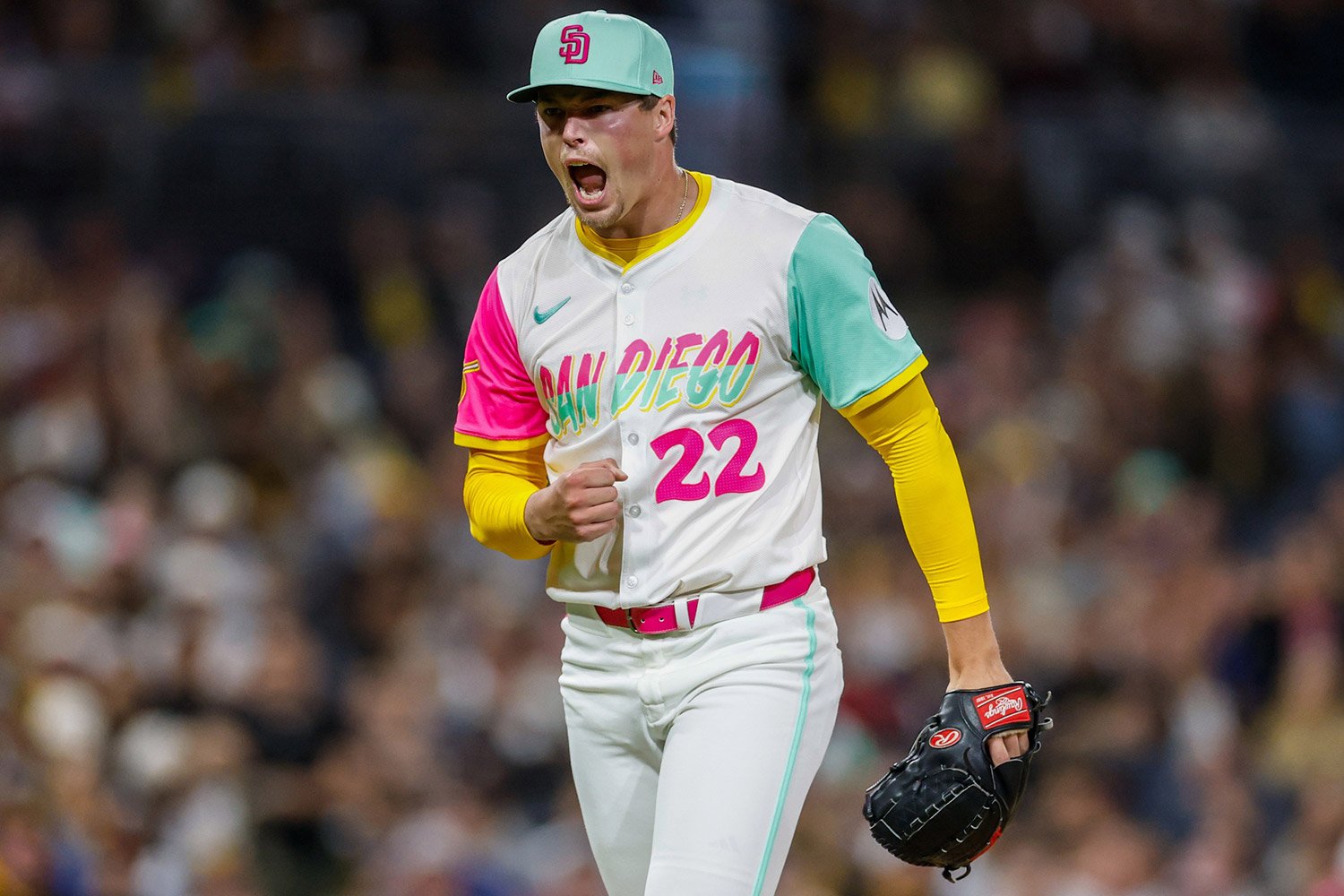 In terms of the total body of work, no team in Major League Baseball has a better bullpen than the San Diego Padres. It's a group that sits atop the league in fWAR (7.6), ERA (3.06), and strand rate (77.3%), while ranking second in FIP (3.53) and third in strikeout rate (25.8%). With a playoff series against the Chicago Cubs now directly on the horizon, the calculus changes a bit for this group. Or does it? We do know some things about the shape of the Padres' relief corps as the postseason gets underway. For example, we know it's a group that will be without Jason Adam for the remainder of 2025 after a ruptured quad ended his season. We also know that it'll be Robert Suarez in any save situation. Despite questions about Mason Miller's role following his acquisition, Suárez has still been clinging to ninth-inning duty. It's hard to imagine that changes now. How the rest transpires is anyone's guess. We know that each of Miller, Adrian Morejon, and Jeremiah Estrada will be leaned on heavily. David Morgan or Wandy Peralta could get some bridge work in the middle innings. If Mike Shildt is hard-pressed for a lefty while saving Morejon for higher leverage, we'll probably see Yuki Matsui in the mix as well. That's the group overall, though: Suárez, Miller, Morejon, Estrada, Morgan, Peralta, and Matsui. How each arm will respectively be deployed will depend heavily on Craig Counsell's lineup on the other side, though. In that vein, it's very possible that we'll see a lineup similar to the one the Cubs fielded on Saturday. That went as such: Michael Busch (L) - 1B Nico Hoerner (R) - 2B Ian Happ (S) - LF Kyle Tucker (L) - DH Seiya Suzuki (R) - RF Carson Kelly (R) - C Pete Crow-Armstrong (L) - CF Dansby Swanson (R) - SS Matt Shaw (R) - 3B That the Padres will likely roll out exclusively right-handed starters in some form leaves the above as close a configuration as possible to the one we'll see, with Tucker possessing the chance to move back into right field. In contrast, Suzuki moves back to the designated hitter spot. Regardless of that nuance, it remains a tricky lineup for Shildt to navigate in the bullpen game. Left-handed hitters are strategically placed within that lineup, and each one possesses the ability to create impact at the plate. Each of Busch & Crow-Armstrong reached the 30-homer mark during the regular season, and injuries don't necessarily detract from the elite hitter status that Tucker has maintained for the last handful of years. That creates a challenge in itself. Because while Busch (81 wRC+), Crow-Armstrong (59 wRC+), and Ian Happ (92 wRC+) have struggled against left-handed pitching, the rest of the lineup is comfortably above average versus southpaws this year. To say nothing of the fact that the Padres' left-handed offerings are minimal. Yuki Matsui has pretty dramatic reverse splits this year, with a .366 wOBA allowed versus lefty hitters against a .283 figure versus righties. That limits Shildt's options to essentially Adrian Morejon in attempting to isolate lefty-lefty matchups. But even with Morejon's dominance this year, the fact that he's still a largely contact-oriented arm (even against type) means that we might not see too much right-handed opposition for him. He will, nevertheless, be heavily utilized in those matchups as much as possible, with the chance to oppose a softer-hitting right-hander like Dansby Swanson or even Nico Hoerner existing as a possible opportunity for him to stretch his legs a bit. The other arm that could serve as an option for the Cubs' challenging left-handed hitters is Jeremiah Estrada. Like Matsui, Estrada is working with reverse splits that include a .317 wOBA allowed against right-handed hitters and a .264 mark against lefties. He's endured a challenging second half, but the body of work being strong against lefties and adequate against righties does allow for the greatest possibility of overlap among the Padres' relief arms. Where Mason Miller could factor in begins in the fifth spot in the lineup. Even with decent splits, it's likely that the Padres would want to avoid their right-handed fireballer against an upper half that leans 75% left-handed (Busch, Happ, and Tucker). Instead, working him in against the path of Suzuki, Kelly, Crow-Armstrong, Swanson, and Busch could be an efficient way of managing outs in the later innings. In that case, you're not only getting Miller against a predominantly right-handed group, but Crow-Armstrong has a Run Value of -3 and a strikeout rate near 35 percent against four-seam fastballs in 2025. That aspect provides a lot of runway for an arm that has otherwise allowed a .172 wOBA against righties this season. It's Miller's involvement that really helps to develop a clear picture of how this bullpen could take shape if you're content to let Miller loose against the fifth through ninth hitters in the lineup to preserve matchups, which allows you to work Morejon and Estrada against the upper half. Factor in Suárez in the ninth and you're, ideally, speaking for at least four innings of a game. Maybe more. Especially when you consider the David Morgan of it all. Morgan, in particular, is something of a wild card within the group as he's pitched to a 2.66 ERA and 25.9 percent strikeout rate. There have been some command issues (11.9 BB%), but he's also someone who can offer up success against right-handed hitting in a pinch. Or serve as a bridge before you reach the higher-leverage arms. Either way, the additional presence of Morgan's 2025 success opens up the innings coverage to potentially five or even six, depending on the starters' output. Factor in Matsui & Wandy Peralta as guys capable of getting you to the next one, and there's a lot of length here even in Adam's absence. In any case, though, it's a group that stands to get a great deal of work over the next three days. The rotation is, in itself, a bit of an unknown in the volume game, given their 18th-ranked innings per start (5.09). If a starter is struggling to get through the early innings, an occurrence that has become too frequent for Padre starters, and you combine that with the upside that the relief arms offer, it's hard to imagine Mike Shildt being too hesitant to get his bullpen active at Wrigley Field this week.
 -
When the San Diego Padres step into the box at Wrigley Field on each of Tuesday and Wednesday, they'll have a left-handed member of the Chicago Cubs' rotation looking down on them. An opponent down a budding star in Cade Horton will turn to the likes of Shota Imanaga and Matthew Boyd to begin the wild card set in Chicago. Whether that's good news or bad for a lefty-leaning San Diego lineup, however, remains to be seen. A typical Padres lineup features the following left-handed hitters: Jackson Merrill, Jake Cronenworth, Luis Arráez, Ryan O'Hearn, and Gavin Sheets. That's over half the lineup taking hacks from that side of the plate, with the late finger injury to Ramón Laureano essentially locking Sheets into left and some sort of combination of Arráez & O'Hearn at first base and designated hitter. As a team, the Padres have a collective wRC+ of just 96 against southpaws this season. That figure ranks 17th among their MLB counterparts in 2025. They're 15th in batting average (.244), 14th in on-base percentage (.316), and 23rd in isolated power (.130). From a standpoint of the Padres' own lefties, this is where each sits in terms of production this season: Jackson Merrill: .236/.278/.369, 20.0 K%, 5.3 BB%, 81 wRC+ Jake Cronenworth: .248/.373/.353, 19.4 K%, 12.7 BB%, 116 wRC+ Luis Arráez: .262/.294/.350, 4.9 K%, 3.9 BB%, 82 wRC+ Ryan O'Hearn (45 PA): .341/.400/.659, 26.7 K%, 6.7 BB%, 195 wRC+ Gavin Sheets (153 PA): .255/.301/.369, 18.3 K%, 6.5 BB%, 89 wRC+ It's not a particularly encouraging distribution from the jump, especially when you compound those numbers with Fernando Tatis Jr being less effective against lefties (104 wRC+) and Freddy Fermin serving as a virtual non-factor (8 wRC+). Only Manny Machado (128 wRC+) and Xander Bogaerts (114 wRC+) have proven reliable with any kind of regularity in left-handed matters. And the bad news doesn't stop there. Each of Imanaga & Boyd has, somewhat predictably, been quite good against hitters of the same handedness. Imanaga allowed a .276 wOBA against lefties this season with a 23.4 percent strikeout rate and 3.62 FIP. Boyd, meanwhile, went for a .258 wOBA, 23.5 K%, and 2.63 FIP. Both pitchers, also predictably, have been quite a bit better against left-handed hitters than those that swing righty. None of the ideas presented thus far would appear to bode super well for the San Diego lineup. If there is a path forward, though, it's likely going to come against Shota Imanaga, for two reasons. The first is that his walk rate is actually quite a bit higher against lefties (6.9 percent) than it is against righties (3.8 percent). The Padres have walked at the league's sixth-highest rate against left-handed pitchers (8.9 percent). Some traffic on the bases would serve the Padres well, especially if it's their desire to get a starter removed early to get a right-handed arm out of the bullpen early. Additionally, Imanaga allowed a 52.0 percent hard hit rate and a .309 xBA against left-handed hitters in September. So, he's not on a terrific trajectory against same-handedness hitters at this particular moment in time. It, at the very least, offers quite a bit more optimism than a path against Boyd. In addition to Boyd pinning down the ability of left-handed hitters to reach base at all (.280 OBP), the quality of contact he's allowed throughout the year has remained rather steady and topped out back in May (43.4 Hard-Hit%). Beyond that, the Padres have to hope that his highest volume of innings since 2019 catches up to him. Or, that the lineup's right-handed group can go to work in a manner that includes Tatis Jr and, perhaps, even Fermin. That's also assuming the Padres, ultimately, get very little out of their left-handed hitters in the first place. But there is room for at least some level of optimism. Ryan O'Hearn has been quite good against southpaws. Jake Cronenworth has demonstrated a keen approach regardless of from which hand a pitcher is throwing. Jackson Merrill's September surge included a 44.0 Hard-Hit% that stands as his highest against left-handed pitchers in any given month. Gavin Sheets just had his best quality-of-contact month since June and could be in for an uptick in actual production if it weren't for a groundball rate near 50%. Even a bit of elevation from him could yield some dividends in the impact game. So, while it's not a terribly uplifting outlook overall, there are various paths that the Padres could take toward discovering some success against the Cubs' two left-handed starters. And it's not as if they need to do it for three games. If they could scratch through against even one of Imanaga or Boyd, that leaves them with the potential for a Jameson Taillon or Colin Rea matchup in a prospective Game 3. The ultimate point remains, however, that while some of the lineup may be stifled by the Cubs on the virtues of their lefty starters alone, there are some components working back toward San Diego's favor. It might just require a bit of patience or good fortune to get there. View full article
-
Do the Padres Have a Path to Overcoming Cubs' Lefty Starters?
Randy Holt posted an article in Padres
 When the San Diego Padres step into the box at Wrigley Field on each of Tuesday and Wednesday, they'll have a left-handed member of the Chicago Cubs' rotation looking down on them. An opponent down a budding star in Cade Horton will turn to the likes of Shota Imanaga and Matthew Boyd to begin the wild card set in Chicago. Whether that's good news or bad for a lefty-leaning San Diego lineup, however, remains to be seen. A typical Padres lineup features the following left-handed hitters: Jackson Merrill, Jake Cronenworth, Luis Arráez, Ryan O'Hearn, and Gavin Sheets. That's over half the lineup taking hacks from that side of the plate, with the late finger injury to Ramón Laureano essentially locking Sheets into left and some sort of combination of Arráez & O'Hearn at first base and designated hitter. As a team, the Padres have a collective wRC+ of just 96 against southpaws this season. That figure ranks 17th among their MLB counterparts in 2025. They're 15th in batting average (.244), 14th in on-base percentage (.316), and 23rd in isolated power (.130). From a standpoint of the Padres' own lefties, this is where each sits in terms of production this season: Jackson Merrill: .236/.278/.369, 20.0 K%, 5.3 BB%, 81 wRC+ Jake Cronenworth: .248/.373/.353, 19.4 K%, 12.7 BB%, 116 wRC+ Luis Arráez: .262/.294/.350, 4.9 K%, 3.9 BB%, 82 wRC+ Ryan O'Hearn (45 PA): .341/.400/.659, 26.7 K%, 6.7 BB%, 195 wRC+ Gavin Sheets (153 PA): .255/.301/.369, 18.3 K%, 6.5 BB%, 89 wRC+ It's not a particularly encouraging distribution from the jump, especially when you compound those numbers with Fernando Tatis Jr being less effective against lefties (104 wRC+) and Freddy Fermin serving as a virtual non-factor (8 wRC+). Only Manny Machado (128 wRC+) and Xander Bogaerts (114 wRC+) have proven reliable with any kind of regularity in left-handed matters. And the bad news doesn't stop there. Each of Imanaga & Boyd has, somewhat predictably, been quite good against hitters of the same handedness. Imanaga allowed a .276 wOBA against lefties this season with a 23.4 percent strikeout rate and 3.62 FIP. Boyd, meanwhile, went for a .258 wOBA, 23.5 K%, and 2.63 FIP. Both pitchers, also predictably, have been quite a bit better against left-handed hitters than those that swing righty. None of the ideas presented thus far would appear to bode super well for the San Diego lineup. If there is a path forward, though, it's likely going to come against Shota Imanaga, for two reasons. The first is that his walk rate is actually quite a bit higher against lefties (6.9 percent) than it is against righties (3.8 percent). The Padres have walked at the league's sixth-highest rate against left-handed pitchers (8.9 percent). Some traffic on the bases would serve the Padres well, especially if it's their desire to get a starter removed early to get a right-handed arm out of the bullpen early. Additionally, Imanaga allowed a 52.0 percent hard hit rate and a .309 xBA against left-handed hitters in September. So, he's not on a terrific trajectory against same-handedness hitters at this particular moment in time. It, at the very least, offers quite a bit more optimism than a path against Boyd. In addition to Boyd pinning down the ability of left-handed hitters to reach base at all (.280 OBP), the quality of contact he's allowed throughout the year has remained rather steady and topped out back in May (43.4 Hard-Hit%). Beyond that, the Padres have to hope that his highest volume of innings since 2019 catches up to him. Or, that the lineup's right-handed group can go to work in a manner that includes Tatis Jr and, perhaps, even Fermin. That's also assuming the Padres, ultimately, get very little out of their left-handed hitters in the first place. But there is room for at least some level of optimism. Ryan O'Hearn has been quite good against southpaws. Jake Cronenworth has demonstrated a keen approach regardless of from which hand a pitcher is throwing. Jackson Merrill's September surge included a 44.0 Hard-Hit% that stands as his highest against left-handed pitchers in any given month. Gavin Sheets just had his best quality-of-contact month since June and could be in for an uptick in actual production if it weren't for a groundball rate near 50%. Even a bit of elevation from him could yield some dividends in the impact game. So, while it's not a terribly uplifting outlook overall, there are various paths that the Padres could take toward discovering some success against the Cubs' two left-handed starters. And it's not as if they need to do it for three games. If they could scratch through against even one of Imanaga or Boyd, that leaves them with the potential for a Jameson Taillon or Colin Rea matchup in a prospective Game 3. The ultimate point remains, however, that while some of the lineup may be stifled by the Cubs on the virtues of their lefty starters alone, there are some components working back toward San Diego's favor. It might just require a bit of patience or good fortune to get there.
 -
The San Diego Padres have not been a particularly strong offensive team in 2025. They rank only 19th in runs scored (678), 28th in isolated power (.136), and 16th in their collective wOBA (.310). Where they have succeeded, however, infielder Jake Cronenworth has very much been a fixture. There are a handful of components working against Cronenworth from a narrative perspective. From a chronological standpoint, the first is his breakout 2021 campaign. Therein, he posted an ISO figure of .194 while hitting 24 home runs. He's failed to replicate that power output in subsequent seasons. What that season did do, though, is earn him a contract that counts over $12 million in payroll beginning next year and running through 2030. While hardly a prohibitive amount in today's money, the team's constant battle against alleged payroll constraints has done him no favors when juxtaposed against the idea of that '21 campaign being an outlier on the power side. That doesn't mean Cronenworth is without value to these Padres, of course. Where the Padres have succeeded in 2025 is in their ability to work their way on base. Despite some of their issues producing runs, they rank eighth in batting average (.252) and 12th in on-base percentage (.320). Even enduring the worst power season of his career (.134 ISO), it's in this area where Cronenworth has been a regular provider for the San Diego lineup. Cronenworth's 2025 slash reads .246/.368/.380. His 20.6 K% does read as a career-high, but so does his 13.5 percent walk rate. It's the latter figure that has proven to be a key cog within this lineup. As a team, the Padres sit below league average (3.87) in pitches per plate appearance (3.84). Cronenworth, however, ranks eighth in this regard (4.22). That's eighth among 146 qualifying hitters, with an 86th percentile chase rate (22.2 percent). Which is why we care less about the strikeout rate, as it's clearly more a byproduct of his working deep counts than anything related to his ability to generate contact (for what it's worth, his contact rate and whiff trends (82nd percentile) are just about all within roughly one percent of his career averages). What Cronenworth has managed to do in this more recent stretch is parlay that approach into positive outcomes. There are a couple of things working in his favor, primarily from a mechanical standpoint. The first is bat speed: Apart from a small, 12-game sample in April that ended early due to a rib injury, May marked Cronenworth's highest power output across an individual month this season (.194 ISO). The bat speed was up coming off the injury before plummeting in the months that followed. It's back up now, though, which reads as especially important when you consider it in conjunction with the tilt of his swing path: It hasn't been a perfect process, as his actual attack angle is just now coming up after dropping to its lowest point in August, but there's a concerted effort here from Cronenworth to generate more elevated contact. Combine that with the bat speed, and you have a player that could very well be on the cusp of a power breakout. Sure enough, his expected slug is indicative of such a possibility: The caveat to all of this, of course, is that a bat speed increase does not necessarily correlate with a higher volume of power output. When we factor in Cronenworth's keen approach against the trends in his mechanics, there's absolutely reason to believe that he could be a massive factor for the team by the time we reach October. What a boost that would be, too. Despite strong months from each of Fernando Tatis Jr. and Jackson Merrill, they're still only 14th in runs, 19th in ISO, and 17th in wOBA this month. A .260 BABIP may be pinning down Cronenworth's numbers at present, but there's significant reason to believe that positive regression could be on the way in the (extremely) near future. The timing couldn't be better, should it come to fruition. View full article
-
 The San Diego Padres have not been a particularly strong offensive team in 2025. They rank only 19th in runs scored (678), 28th in isolated power (.136), and 16th in their collective wOBA (.310). Where they have succeeded, however, infielder Jake Cronenworth has very much been a fixture. There are a handful of components working against Cronenworth from a narrative perspective. From a chronological standpoint, the first is his breakout 2021 campaign. Therein, he posted an ISO figure of .194 while hitting 24 home runs. He's failed to replicate that power output in subsequent seasons. What that season did do, though, is earn him a contract that counts over $12 million in payroll beginning next year and running through 2030. While hardly a prohibitive amount in today's money, the team's constant battle against alleged payroll constraints has done him no favors when juxtaposed against the idea of that '21 campaign being an outlier on the power side. That doesn't mean Cronenworth is without value to these Padres, of course. Where the Padres have succeeded in 2025 is in their ability to work their way on base. Despite some of their issues producing runs, they rank eighth in batting average (.252) and 12th in on-base percentage (.320). Even enduring the worst power season of his career (.134 ISO), it's in this area where Cronenworth has been a regular provider for the San Diego lineup. Cronenworth's 2025 slash reads .246/.368/.380. His 20.6 K% does read as a career-high, but so does his 13.5 percent walk rate. It's the latter figure that has proven to be a key cog within this lineup. As a team, the Padres sit below league average (3.87) in pitches per plate appearance (3.84). Cronenworth, however, ranks eighth in this regard (4.22). That's eighth among 146 qualifying hitters, with an 86th percentile chase rate (22.2 percent). Which is why we care less about the strikeout rate, as it's clearly more a byproduct of his working deep counts than anything related to his ability to generate contact (for what it's worth, his contact rate and whiff trends (82nd percentile) are just about all within roughly one percent of his career averages). What Cronenworth has managed to do in this more recent stretch is parlay that approach into positive outcomes. There are a couple of things working in his favor, primarily from a mechanical standpoint. The first is bat speed: Apart from a small, 12-game sample in April that ended early due to a rib injury, May marked Cronenworth's highest power output across an individual month this season (.194 ISO). The bat speed was up coming off the injury before plummeting in the months that followed. It's back up now, though, which reads as especially important when you consider it in conjunction with the tilt of his swing path: It hasn't been a perfect process, as his actual attack angle is just now coming up after dropping to its lowest point in August, but there's a concerted effort here from Cronenworth to generate more elevated contact. Combine that with the bat speed, and you have a player that could very well be on the cusp of a power breakout. Sure enough, his expected slug is indicative of such a possibility: The caveat to all of this, of course, is that a bat speed increase does not necessarily correlate with a higher volume of power output. When we factor in Cronenworth's keen approach against the trends in his mechanics, there's absolutely reason to believe that he could be a massive factor for the team by the time we reach October. What a boost that would be, too. Despite strong months from each of Fernando Tatis Jr. and Jackson Merrill, they're still only 14th in runs, 19th in ISO, and 17th in wOBA this month. A .260 BABIP may be pinning down Cronenworth's numbers at present, but there's significant reason to believe that positive regression could be on the way in the (extremely) near future. The timing couldn't be better, should it come to fruition.
 -
The good news for the San Diego Padres is that they'll be playing playoff baseball. The bad news is that they'll be doing it without one of their key position players from the second half of the season. News that Ramón Laureano would be out for at least the first round due to a finger fracture certainly strikes a dour tone for a team that has put together a solid month of play ahead of next month's postseason. Given what Laureano had been offering the team, it's certainly reasonable to ask whether this is an injury the Padres are capable of weathering. They've gotten largely good news on the injury front in recent weeks, with Jackson Merrill missing minimal time and Xander Bogaerts returning from an injury of his own ahead of month's end. But losing Laureano out of the gate represents a notable setback for this group. Since joining the Padres, Laureano's 128 wRC+ is tied with Fernando Tatis Jr for the team lead, while his .220 ISO trails only Merrill over that stretch. He isn't particularly adept at reaching base as some of his counterparts (.323 on-base percentage), but he's been a source of impact at a position that has lacked it for much of the year. That impact could have been crucial in a first-round set, but now the Padres will have to look for it elsewhere on the roster. Lucky for them, it appears as though they might be better equipped to handle his absence than they would have at a different point this season. Maybe. Ironically, that good fortune is due to the player on the roster who stood to lose the most with Laureano's arrival. Sure enough, when the Padres made the trade with Baltimore, acquiring Laureano & Ryan O'Hearn, it was Gavin Sheets whose playing time suffered the most. Post-deadline, Sheets appeared in a starting role just three times over roughly three weeks, with a pair of pinch-hit appearances mixed in. Merrill's ankle injury renewed his opportunity in the lineup, with Sheets continuing to garner appearances (primarily as a designated hitter) even upon the former's return. As such, Sheets figures to be the primary replacement in Laureano's stead. It's worth noting that the month of September hasn't been kind to Sheets. He's slashing just .167/.265/.278 this month. Some of that's pinned down by a .204 batting average on balls in play. The more concerning part of it is that Sheets has begun to chase and miss at a higher rate than we've been accustomed to seeing this year. Last month, we explored Sheets' ability to make contact in 2025. There was an uptick in aggression, but his bat-to-ball skills had shown significant improvement since his time in Chicago. This month, however, he's regressed. A 41.4 percent chase-and-miss rate is nearly 20 points higher than it was last month. He isn't chasing more (it's a 0.6 percent rise from month to month), and his walk rate is actually up (10.8 BB% is his highest in an individual month). The contact element has just started to escape him, which is especially problematic considering the timing. The good news there, at least, is that Sheets has demonstrated a keen approach all year. His 4.16 pitches per plate appearance ranks 19th among qualifying position players, and he's been able to parlay the approach into his greatest power output since 2021 (.181 ISO). So it stands to reason that he can find that form again in order to be a regular contributor in left field in the absence of Laureano. Given Merrill and Tatis Jr reclaiming their status as two of the team's top hitters this month, the outfield trio should remain a steady group for this team ahead of the playoffs. Should Sheets fail to regain some semblance of form, however, things get a little murkier. What Laureano's absence does, above all, is remove some versatility from this lineup. Instead of rotating each of Sheets, Ryan O'Hearn, and Luis Arráez through first base and the designated hitter spot, now you're deploying Sheets in left and splitting the other duties between the latter two names. It removes Mike Shildt's ability to play the hot hand and instead forces each of the trio into the lineup every night. That's far from ideal, given O'Hearn's struggles and Arráez's up-and-down campaign (though Arráez has been far better in September). Ultimately, the on-paper version of the San Diego Padres has the ability to overcome the absence of Ramón Laureano not only for the first round of the playoffs but for as long as they're playing. Sheets in left and the O'Hearn/Arráez duo could be fine. With Laureano's overall production, however, it will be a difficult needle to thread, considering the context of the other names on the roster. It's a situation the team could certainly weather, but it's going to require some adjustments to be made on multiple parts if it's going to be made a reality. View full article
-
Can The Padres Survive Ramón Laureano's Injury Ahead Of The Playoffs?
Randy Holt posted an article in Padres
 The good news for the San Diego Padres is that they'll be playing playoff baseball. The bad news is that they'll be doing it without one of their key position players from the second half of the season. News that Ramón Laureano would be out for at least the first round due to a finger fracture certainly strikes a dour tone for a team that has put together a solid month of play ahead of next month's postseason. Given what Laureano had been offering the team, it's certainly reasonable to ask whether this is an injury the Padres are capable of weathering. They've gotten largely good news on the injury front in recent weeks, with Jackson Merrill missing minimal time and Xander Bogaerts returning from an injury of his own ahead of month's end. But losing Laureano out of the gate represents a notable setback for this group. Since joining the Padres, Laureano's 128 wRC+ is tied with Fernando Tatis Jr for the team lead, while his .220 ISO trails only Merrill over that stretch. He isn't particularly adept at reaching base as some of his counterparts (.323 on-base percentage), but he's been a source of impact at a position that has lacked it for much of the year. That impact could have been crucial in a first-round set, but now the Padres will have to look for it elsewhere on the roster. Lucky for them, it appears as though they might be better equipped to handle his absence than they would have at a different point this season. Maybe. Ironically, that good fortune is due to the player on the roster who stood to lose the most with Laureano's arrival. Sure enough, when the Padres made the trade with Baltimore, acquiring Laureano & Ryan O'Hearn, it was Gavin Sheets whose playing time suffered the most. Post-deadline, Sheets appeared in a starting role just three times over roughly three weeks, with a pair of pinch-hit appearances mixed in. Merrill's ankle injury renewed his opportunity in the lineup, with Sheets continuing to garner appearances (primarily as a designated hitter) even upon the former's return. As such, Sheets figures to be the primary replacement in Laureano's stead. It's worth noting that the month of September hasn't been kind to Sheets. He's slashing just .167/.265/.278 this month. Some of that's pinned down by a .204 batting average on balls in play. The more concerning part of it is that Sheets has begun to chase and miss at a higher rate than we've been accustomed to seeing this year. Last month, we explored Sheets' ability to make contact in 2025. There was an uptick in aggression, but his bat-to-ball skills had shown significant improvement since his time in Chicago. This month, however, he's regressed. A 41.4 percent chase-and-miss rate is nearly 20 points higher than it was last month. He isn't chasing more (it's a 0.6 percent rise from month to month), and his walk rate is actually up (10.8 BB% is his highest in an individual month). The contact element has just started to escape him, which is especially problematic considering the timing. The good news there, at least, is that Sheets has demonstrated a keen approach all year. His 4.16 pitches per plate appearance ranks 19th among qualifying position players, and he's been able to parlay the approach into his greatest power output since 2021 (.181 ISO). So it stands to reason that he can find that form again in order to be a regular contributor in left field in the absence of Laureano. Given Merrill and Tatis Jr reclaiming their status as two of the team's top hitters this month, the outfield trio should remain a steady group for this team ahead of the playoffs. Should Sheets fail to regain some semblance of form, however, things get a little murkier. What Laureano's absence does, above all, is remove some versatility from this lineup. Instead of rotating each of Sheets, Ryan O'Hearn, and Luis Arráez through first base and the designated hitter spot, now you're deploying Sheets in left and splitting the other duties between the latter two names. It removes Mike Shildt's ability to play the hot hand and instead forces each of the trio into the lineup every night. That's far from ideal, given O'Hearn's struggles and Arráez's up-and-down campaign (though Arráez has been far better in September). Ultimately, the on-paper version of the San Diego Padres has the ability to overcome the absence of Ramón Laureano not only for the first round of the playoffs but for as long as they're playing. Sheets in left and the O'Hearn/Arráez duo could be fine. With Laureano's overall production, however, it will be a difficult needle to thread, considering the context of the other names on the roster. It's a situation the team could certainly weather, but it's going to require some adjustments to be made on multiple parts if it's going to be made a reality.
 -
As of this writing, the San Diego Padres have yet to clinch a playoff spot. However, with their magic number to do so sitting at just one, it would be an entirely unthinkable collapse for it not to happen somewhere over the course of the next six games, which means that we can begin the process of projecting what things will look like when October officially gets underway. Standing with the end of the 2025 season in the clearest of views, one doesn't need to strain their vision to understand where the Padres have found their success this season. Among their major league counterparts, the team sits third in ERA (3.69), fourth in strikeout rate (23.9 percent), and has limited damaging home runs to the tune of the league's 10th-best homer-to-flyball ratio (11.0 percent). It gets even rosier when one looks through reliever-colored glasses; the team's 7.2 fWAR, 3.08 ERA, and 3.56 FIP are all tops in the league. Their strikeout rate (25.6 percent) also ranks fourth, and the HR/FB rate drops on that side of things to 9.1 percent (fifth). This is all to say that the Padres are where they are largely because of their arms. The depth has been tested, and there's been some need for some patchwork out of the starting gate. The pitching, though, has been the most consistent element of a team that has been anything but. It's that component that has the Padres standing on the verge of their fourth postseason appearance in the last six years. But, if the Padres are to make any noise in October, it's going to require something from their offense that they haven't gotten all year: consistency. It's not that the team is "bad" on that side of the ball. They simply haven't been able to gain traction for longer than a short stretch at a time. It exacerbates the impact of those periods where the team isn't so hot with the stick. Overall, they rank 13th in collective wRC+ (102) while checking in with the league's seventh-highest batting average (.252) and ninth-best on-base percentage (.321). They don't walk much -- an 8.3 percent walk rate sits only 17th -- but they don't strike out either, with the third-best K% in baseball (19.0). Where concern lies, however, is in their ability to generate consistent power. As a team, the Padres rank 28th in the league in ISO (.136). The only teams that sit behind them are the St. Louis Cardinals (.133) and the Pittsburgh Pirates (.118). Neither is the company you'd necessarily want to keep this year. Nor would you want to be behind the likes of the Washington Nationals (.143) or Chicago White Sox (.140). Nevertheless, that's where the team sits heading into the final week of play. To succeed in the postseason, you need impact. The ball doesn't necessarily need to find its way over the fence at every opportunity, but staffs get shorter and pitching, consequently, gets better in the postseason. You need hitters capable of breaking through the upper-tier mound work you're sure to face on the biggest stage in the sport. The 2023 ALCS featured two of the top eight ISO teams in baseball, in Texas (.190) and Houston (.178). The other side of the bracket saw the Philadelphia Phillies and their sixth-ranked ISO (.182) against the Arizona Diamondbacks (.158). While the latter team's figure sat only 19th in the regular season, it was still several shades better than this year's Padres. That trend continued last year when three of the final four teams -- the Los Angeles Dodgers (.189), New York Yankees (.181), and New York Mets (.169) -- sat in the top seven. Similar to Arizona the previous season, the Cleveland Guardians didn't rank highly but still sat a ways ahead of the '25 Friars in the ISO game (.157). On paper, the 2025 San Diego Padres are not any of those teams. They're not even the outliers. This is a team that has been quite good at the plate, but only at times. They're largely inefficient in matters of run production. So, when we consider all of that, is there anyone trustworthy enough to deliver when that impact is needed in the most meaningful games the team will play all year? The most efficient way to determine which Padres could bear some sort of positive impact on the postseason impact provided by the offense is with a scale. That's why we've elected to create the "Padres Playoff Trustworthy Scale." The premise is such: consider a player's ISO in conjunction with their hard hit rate in conjunction with their contact rate in conjunction with their walk rate. And that's kind of it. It's less a scale and more a jumbled mess of a way to determine how we feel about a player as the postseason draws closer. From there, we can sort them into tiers. For the purpose of this exercise, those tiers will be: for sure trustworthy, maybe trustworthy, probably not trustworthy, and certainly not trustworthy. There are no points for creativity here; above all, this is meant to take the temperature of where a player stands at a given point in time. In short, we're using a statistical basis to capture a vibe around a player's ability to produce. The contact and walk rates are indicative of a player's approach, while the hard-hit and ISO figures are designed to utilize that approach in a production-based manner. There's a great, big oversimplification to all of this, but with the calendar in late September, we've passed the point of trying to figure out who a player is. We know by now. With that, let's see who figures to be a player the team can rely on and who exists on the other end of the spectrum for the 2025 postseason, presented in reverse order. Tier 4: Certainly Not Trustworthy Luis Arráez ISO: .097 Hard-Hit%: 16.1 Contact%: 96.0 BB%: 4.9 The Bench (Jose Iglesias, Bryce Johnson) ISO: .079 Hard-Hit%: 29.0 Contact%: 78.1 BB%: 5.75 The name of the game in the postseason is impact, and it's hard to envision it coming to fruition from this trio. Arráez can hit his way on base, but we've also seen stretches where that aggression at the plate is a massive inhibitor to him reaching base with any regularity. An absurd volume contact is nice, but there's also something to be said about trading some of it off in exchange for a bit of exit velocity. Even if he's able to get into one of his hot stretches, the actual impact contact off the bat remains stifled by his overall skill set. Which is to say nothing of the fact that Iglesias' value is derived almost entirely from his versatility, and Johnson's wRC+ in part-time action in the last two seasons prior to '25 was under 50. Given that Elías Díaz has been relegated to No. 2 duties behind the plate and has a 43 wRC+ in September, we're not considering him a factor outside of serving as a late-game substitute. Tier 3: Probably Not Trustworthy Ryan O'Hearn ISO: .099 Hard-Hit%: 28.0 Contact%: 77.7 BB%: 8.2 Freddy Fermin ISO: .109 Hard-Hit%: 37.9 Contact%: 77.8 BB%: 4.1 Two of the Padres' deadline acquisitions on the positional side, Fermin has flashed a couple of hot stretches at either end of his arrival in San Diego. He's at a 124 wRC+ across his 43 plate appearances thus far in September, so we know there's a bit of offensive upside in the tank. At the same time, the Padres acquired him more on the strength of his glove work than anything else. So, while getting a bit of impact out of the bat would be a nice surprise, it would also be foolhardy to expect it. O'Hearn, on the other hand, is a bit of a disappointment in this regard. While he's never hit for the power that his frame and position might indicate, he's been a steadily above-average bat for the last three years in Baltimore. That hasn't been the case in San Diego, however. There has been some mechanical variance, and he's been whiffing heavily, both inside and out of the strike zone. If there was any sustainable performance that was indicative of a breakout being near, we might have a little more faith. But, even with some underlying trends that are showcasing better contact, the results haven't been there for us to believe that he'll be booming in the postseason. Tier 2: Maybe Trustworthy Ramón Laureano ISO: .226 Hard-Hit%: 50.8 Contact%: 75.6 BB%: 6.3 Jake Cronenworth ISO: .136 Hard-Hit%: 38.2 Contact%: 83.7 BB%: 13.3 Xander Bogaerts ISO: .125 Hard-Hit%: 38.8 Contact%: 80.2 BB%: 9.0 Gavin Sheets ISO: .186 Hard-Hit%: 46.3 Contact%: 78.2 BB%: 8.1 The Tier 2 group in the Trustworthy Scale is perhaps the most tantalizing one, considering where the upside could fall in October play. Laureano has essentially been the team's most consistent bat since his arrival at the trade deadline. Sheets looks like an entirely new player who took advantage of another Jackson Merrill injury to work his way back into the lineup after disappearing post-July 31. There are some swing and contact trends that are highly encouraging. Cronenworth has a keen enough approach that he's liable to demonstrate impact at any turn. Bogaerts may not be the one who's going to give you that late-game home run, but he's the one who's going to give your team a chance with a double that brings you within one. And that's why this group is No. 2. Any of them could pop at a given moment. There's legitimate upside across each name. However, it's also a group more likely to serve as the springboard rather than the actual driver of offensive success. If one of our Tier 1 names comes up, it feels likely you'll see one of them on base in a crucial moment. However, there shouldn't be an expectation of impact, considering the relatively low ISO figures and lower production in September for Laureano compared to August. It just wouldn't be a surprise if it did happen. Tier 1: For Sure Trustworthy Manny Machado ISO: .185 Hard-Hit%: 51.1 Contact%: 76.1 BB%: 8.0 Fernando Tatis, Jr. ISO: .171 Hard-Hit%: 52.1 Contact%: 75.2 BB%: 12.9 Jackson Merrill ISO: .191 Hard-Hit%: 42.4 Contact%: 75.5 BB%: 6.7 Machado is in this portion of the list largely as a courtesy; superstars do superstar things when their team needs them. The narrative loves his chances to pop in October, even if his 74 wRC+ in September doesn't. We've seen Machado at his best this year, so if he can recapture any semblance of the hitter he was in either May or July, the Padres will be cooking. In the interim, we'll take our chances in instilling trust in each of Tatis Jr. & Merrill. After a torrid start to the year, Tatis struggled to find traction anywhere that wasn't with his glove. Whether it was a health factor or a mechanical struggle, it's clear that it's an issue behind Tatis. His September numbers include a .205 ISO that stands as his best mark since April. Merrill, meanwhile, has had a handful of freak injuries that stalled his production for much of the year. But he's put his barrel to work in recent weeks and looks far closer to the hitter we saw in 2024 than at any point earlier this season. When it comes down to it, you've got to be able to trust your stars. If you don't have that, you're left with, well, the other guys. View full article
-
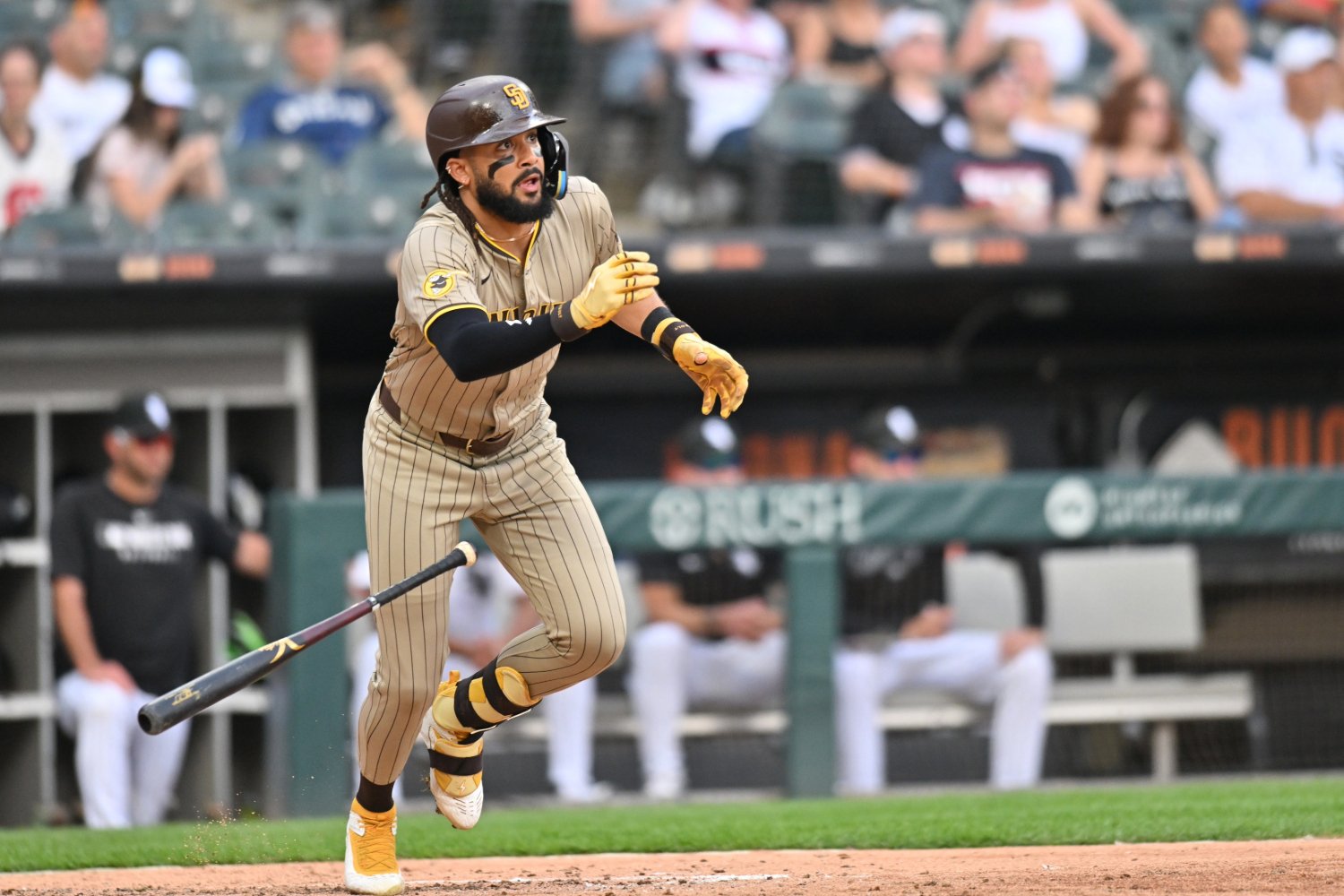 As of this writing, the San Diego Padres have yet to clinch a playoff spot. However, with their magic number to do so sitting at just one, it would be an entirely unthinkable collapse for it not to happen somewhere over the course of the next six games, which means that we can begin the process of projecting what things will look like when October officially gets underway. Standing with the end of the 2025 season in the clearest of views, one doesn't need to strain their vision to understand where the Padres have found their success this season. Among their major league counterparts, the team sits third in ERA (3.69), fourth in strikeout rate (23.9 percent), and has limited damaging home runs to the tune of the league's 10th-best homer-to-flyball ratio (11.0 percent). It gets even rosier when one looks through reliever-colored glasses; the team's 7.2 fWAR, 3.08 ERA, and 3.56 FIP are all tops in the league. Their strikeout rate (25.6 percent) also ranks fourth, and the HR/FB rate drops on that side of things to 9.1 percent (fifth). This is all to say that the Padres are where they are largely because of their arms. The depth has been tested, and there's been some need for some patchwork out of the starting gate. The pitching, though, has been the most consistent element of a team that has been anything but. It's that component that has the Padres standing on the verge of their fourth postseason appearance in the last six years. But, if the Padres are to make any noise in October, it's going to require something from their offense that they haven't gotten all year: consistency. It's not that the team is "bad" on that side of the ball. They simply haven't been able to gain traction for longer than a short stretch at a time. It exacerbates the impact of those periods where the team isn't so hot with the stick. Overall, they rank 13th in collective wRC+ (102) while checking in with the league's seventh-highest batting average (.252) and ninth-best on-base percentage (.321). They don't walk much -- an 8.3 percent walk rate sits only 17th -- but they don't strike out either, with the third-best K% in baseball (19.0). Where concern lies, however, is in their ability to generate consistent power. As a team, the Padres rank 28th in the league in ISO (.136). The only teams that sit behind them are the St. Louis Cardinals (.133) and the Pittsburgh Pirates (.118). Neither is the company you'd necessarily want to keep this year. Nor would you want to be behind the likes of the Washington Nationals (.143) or Chicago White Sox (.140). Nevertheless, that's where the team sits heading into the final week of play. To succeed in the postseason, you need impact. The ball doesn't necessarily need to find its way over the fence at every opportunity, but staffs get shorter and pitching, consequently, gets better in the postseason. You need hitters capable of breaking through the upper-tier mound work you're sure to face on the biggest stage in the sport. The 2023 ALCS featured two of the top eight ISO teams in baseball, in Texas (.190) and Houston (.178). The other side of the bracket saw the Philadelphia Phillies and their sixth-ranked ISO (.182) against the Arizona Diamondbacks (.158). While the latter team's figure sat only 19th in the regular season, it was still several shades better than this year's Padres. That trend continued last year when three of the final four teams -- the Los Angeles Dodgers (.189), New York Yankees (.181), and New York Mets (.169) -- sat in the top seven. Similar to Arizona the previous season, the Cleveland Guardians didn't rank highly but still sat a ways ahead of the '25 Friars in the ISO game (.157). On paper, the 2025 San Diego Padres are not any of those teams. They're not even the outliers. This is a team that has been quite good at the plate, but only at times. They're largely inefficient in matters of run production. So, when we consider all of that, is there anyone trustworthy enough to deliver when that impact is needed in the most meaningful games the team will play all year? The most efficient way to determine which Padres could bear some sort of positive impact on the postseason impact provided by the offense is with a scale. That's why we've elected to create the "Padres Playoff Trustworthy Scale." The premise is such: consider a player's ISO in conjunction with their hard hit rate in conjunction with their contact rate in conjunction with their walk rate. And that's kind of it. It's less a scale and more a jumbled mess of a way to determine how we feel about a player as the postseason draws closer. From there, we can sort them into tiers. For the purpose of this exercise, those tiers will be: for sure trustworthy, maybe trustworthy, probably not trustworthy, and certainly not trustworthy. There are no points for creativity here; above all, this is meant to take the temperature of where a player stands at a given point in time. In short, we're using a statistical basis to capture a vibe around a player's ability to produce. The contact and walk rates are indicative of a player's approach, while the hard-hit and ISO figures are designed to utilize that approach in a production-based manner. There's a great, big oversimplification to all of this, but with the calendar in late September, we've passed the point of trying to figure out who a player is. We know by now. With that, let's see who figures to be a player the team can rely on and who exists on the other end of the spectrum for the 2025 postseason, presented in reverse order. Tier 4: Certainly Not Trustworthy Luis Arráez ISO: .097 Hard-Hit%: 16.1 Contact%: 96.0 BB%: 4.9 The Bench (Jose Iglesias, Bryce Johnson) ISO: .079 Hard-Hit%: 29.0 Contact%: 78.1 BB%: 5.75 The name of the game in the postseason is impact, and it's hard to envision it coming to fruition from this trio. Arráez can hit his way on base, but we've also seen stretches where that aggression at the plate is a massive inhibitor to him reaching base with any regularity. An absurd volume contact is nice, but there's also something to be said about trading some of it off in exchange for a bit of exit velocity. Even if he's able to get into one of his hot stretches, the actual impact contact off the bat remains stifled by his overall skill set. Which is to say nothing of the fact that Iglesias' value is derived almost entirely from his versatility, and Johnson's wRC+ in part-time action in the last two seasons prior to '25 was under 50. Given that Elías Díaz has been relegated to No. 2 duties behind the plate and has a 43 wRC+ in September, we're not considering him a factor outside of serving as a late-game substitute. Tier 3: Probably Not Trustworthy Ryan O'Hearn ISO: .099 Hard-Hit%: 28.0 Contact%: 77.7 BB%: 8.2 Freddy Fermin ISO: .109 Hard-Hit%: 37.9 Contact%: 77.8 BB%: 4.1 Two of the Padres' deadline acquisitions on the positional side, Fermin has flashed a couple of hot stretches at either end of his arrival in San Diego. He's at a 124 wRC+ across his 43 plate appearances thus far in September, so we know there's a bit of offensive upside in the tank. At the same time, the Padres acquired him more on the strength of his glove work than anything else. So, while getting a bit of impact out of the bat would be a nice surprise, it would also be foolhardy to expect it. O'Hearn, on the other hand, is a bit of a disappointment in this regard. While he's never hit for the power that his frame and position might indicate, he's been a steadily above-average bat for the last three years in Baltimore. That hasn't been the case in San Diego, however. There has been some mechanical variance, and he's been whiffing heavily, both inside and out of the strike zone. If there was any sustainable performance that was indicative of a breakout being near, we might have a little more faith. But, even with some underlying trends that are showcasing better contact, the results haven't been there for us to believe that he'll be booming in the postseason. Tier 2: Maybe Trustworthy Ramón Laureano ISO: .226 Hard-Hit%: 50.8 Contact%: 75.6 BB%: 6.3 Jake Cronenworth ISO: .136 Hard-Hit%: 38.2 Contact%: 83.7 BB%: 13.3 Xander Bogaerts ISO: .125 Hard-Hit%: 38.8 Contact%: 80.2 BB%: 9.0 Gavin Sheets ISO: .186 Hard-Hit%: 46.3 Contact%: 78.2 BB%: 8.1 The Tier 2 group in the Trustworthy Scale is perhaps the most tantalizing one, considering where the upside could fall in October play. Laureano has essentially been the team's most consistent bat since his arrival at the trade deadline. Sheets looks like an entirely new player who took advantage of another Jackson Merrill injury to work his way back into the lineup after disappearing post-July 31. There are some swing and contact trends that are highly encouraging. Cronenworth has a keen enough approach that he's liable to demonstrate impact at any turn. Bogaerts may not be the one who's going to give you that late-game home run, but he's the one who's going to give your team a chance with a double that brings you within one. And that's why this group is No. 2. Any of them could pop at a given moment. There's legitimate upside across each name. However, it's also a group more likely to serve as the springboard rather than the actual driver of offensive success. If one of our Tier 1 names comes up, it feels likely you'll see one of them on base in a crucial moment. However, there shouldn't be an expectation of impact, considering the relatively low ISO figures and lower production in September for Laureano compared to August. It just wouldn't be a surprise if it did happen. Tier 1: For Sure Trustworthy Manny Machado ISO: .185 Hard-Hit%: 51.1 Contact%: 76.1 BB%: 8.0 Fernando Tatis, Jr. ISO: .171 Hard-Hit%: 52.1 Contact%: 75.2 BB%: 12.9 Jackson Merrill ISO: .191 Hard-Hit%: 42.4 Contact%: 75.5 BB%: 6.7 Machado is in this portion of the list largely as a courtesy; superstars do superstar things when their team needs them. The narrative loves his chances to pop in October, even if his 74 wRC+ in September doesn't. We've seen Machado at his best this year, so if he can recapture any semblance of the hitter he was in either May or July, the Padres will be cooking. In the interim, we'll take our chances in instilling trust in each of Tatis Jr. & Merrill. After a torrid start to the year, Tatis struggled to find traction anywhere that wasn't with his glove. Whether it was a health factor or a mechanical struggle, it's clear that it's an issue behind Tatis. His September numbers include a .205 ISO that stands as his best mark since April. Merrill, meanwhile, has had a handful of freak injuries that stalled his production for much of the year. But he's put his barrel to work in recent weeks and looks far closer to the hitter we saw in 2024 than at any point earlier this season. When it comes down to it, you've got to be able to trust your stars. If you don't have that, you're left with, well, the other guys.
 -
When the 2025 season got underway, it looked like San Diego Padres centerfielder Jackson Merrill was on his way to building on a strong rookie campaign. At least through the first 10 games of the season. Through that initial stretch, Merrill hit .378, reached base at a .415 clip, and posted an obscene 201 wRC+. The approach seemed to show some early refinement, with a walk rate a touch over seven percent. The most exciting component, however, was on the power side. Merrill's first 10 games featured a pair of doubles and three home runs on his way to a .297 ISO. None of this was sustainable, of course. It was largely the byproduct of a small sample. The results remained encouraging until a hamstring injury in early April. Then, there was the concussion in June, followed by an ankle injury after rolling it out of the box against the Los Angeles Dodgers last month. In short, the opportunities for Merrill to find a groove amid multiple injury issues have been scarce. It led to some fairly underwhelming numbers for the 2024 Rookie of the Year runner-up through the end of August. On August 31, Merrill carried a .261/.317/.413 line with a 105 wRC+. His strikeout rate (21.2 percent) exceeded last year's rookie mark (17.0). Most concerning was the absence of power, as Merrill's .152 ISO to that point represented a more than 50-point drop from last year's output (.208). That mark, as it stood, was also somewhat carried by his strong start given that he had individual months of .143, .100, and .109 in the ISO game, successively from May to July. There were signs last month that Merrill was due for a bit of a breakout in that respect, as he'd posted a .214 ISO prior to his third trip to the Injured List in '25. September, though, has seen an even better rebound than anticipated. Merrill's overall numbers this month (through nearly three weeks of play) are quite good. His .278 average is his best since May and his .316 OBP, while modest, is his top on-base rate since June. There are some notable trends on the strikeout & walk side, but the most notable element for our purposes lies in the power. Merrill is carrying a .407 ISO as of this writing, courtesy of three doubles, two triples, and five homers. It's not a complicated trend to explain either: Merrill's barrel rate has skyrocketed, with a 23.7 percent barrel rate on batted ball events thus far in September. That's an even 17-point jump from the rate he'd posted in August. It's a trend that comes largely courtesy of his work against fastballs. Merrill is swinging at fastballs more than any other pitch type this month (59.7 percent) with the hard stuff accounting for a 29.7 percent barrel rate. That's 13 percent higher than the next closest pitch type (off-speed). That Merrill is doing such impressive work against fastballs is a development of the utmost importance given where some of his trends against the other pitch types sits at present. He's whiffing at over 60 percent of off-speed pitches overall and nearly 37 percent of breaking pitches. Each one stands in heavy contrast to fastballs, where he's whiffing just 20.8 of the time. It's the pitch he's swinging at the most overall and chasing the least. On that side of his approach, at least, Merrill is demonstrating a sense of command on the hard stuff. That doesn't mean that there aren't adjustments that could help him to sustain some of this production, especially in terms of pitch recognition. Merrill doesn't have an abnormal swing rate overall, but he's striking out more than 28 percent of the time thus far in September. Such volume has come due to a 41.7 percent strikeout rate on off-speed pitches and a 38.5 K% on breaking pitches. Recognition seems key, as pitchers this month are throwing Merrill fastballs at a rate over 58 percent. That's sure to come down as they adjust. The good news is that we know Merrill to be plenty capable of doing this type of work beyond the fastball, as he had two months in 2024 where his barrel rate against off-speed pitches was the driver of his production. Remaining adjustments notwithstanding, this still sits as a crucial development for the Padres' center fielder. The 2025 campaign has predominantly been a year of woe for Jackson Merrill. The footing on the power side simply has not been there outside of that 10-game sample to start the year. That he's dialing in his approach to be aggressive on fastballs—and finding the desired outcomes as a result—could not be a more welcome development for a team in need of offense up and down the roster as October looms. View full article
-
Jackson Merrill Is (Finally) Letting His Barrel Do the Talking
Randy Holt posted an article in Padres
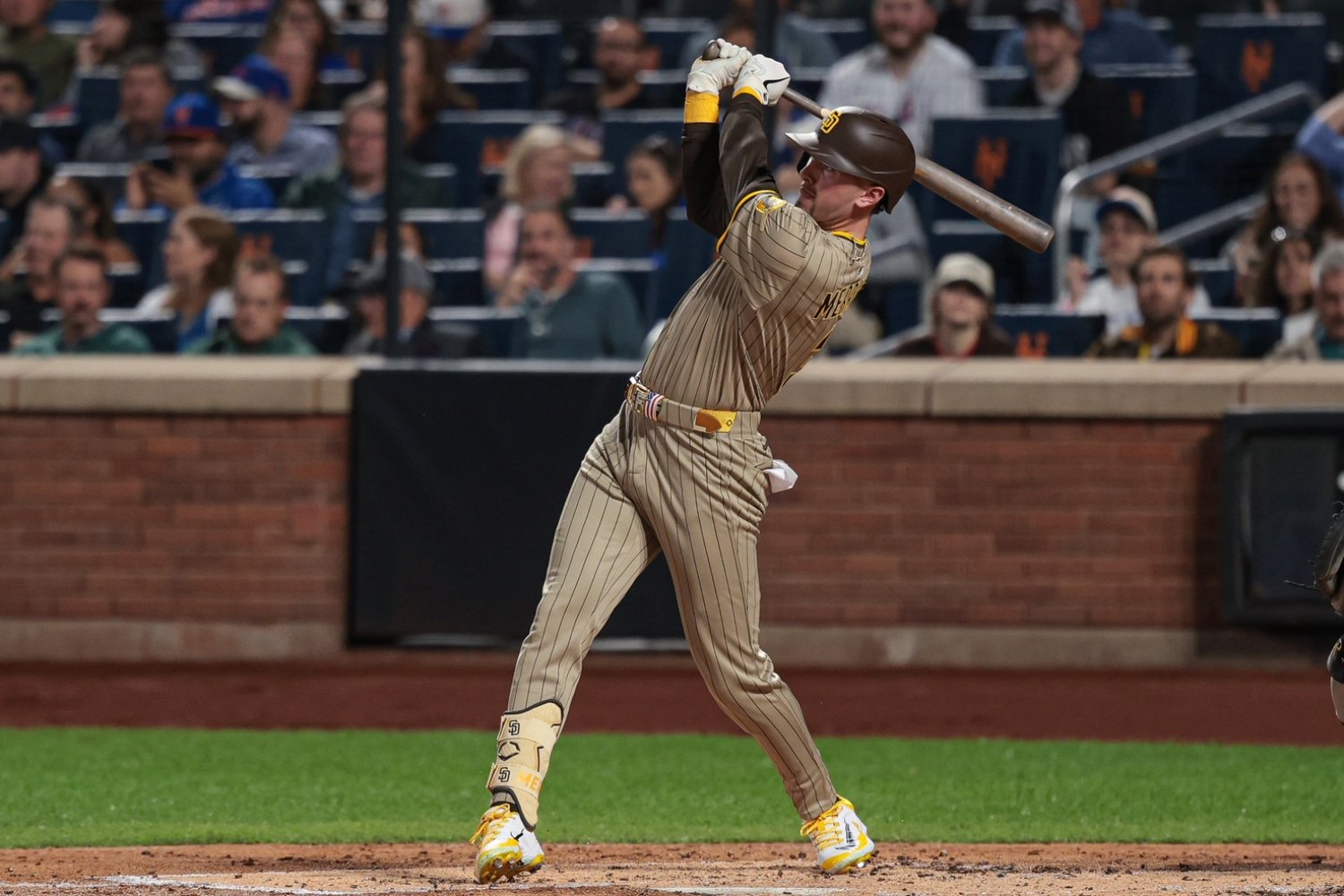 When the 2025 season got underway, it looked like San Diego Padres centerfielder Jackson Merrill was on his way to building on a strong rookie campaign. At least through the first 10 games of the season. Through that initial stretch, Merrill hit .378, reached base at a .415 clip, and posted an obscene 201 wRC+. The approach seemed to show some early refinement, with a walk rate a touch over seven percent. The most exciting component, however, was on the power side. Merrill's first 10 games featured a pair of doubles and three home runs on his way to a .297 ISO. None of this was sustainable, of course. It was largely the byproduct of a small sample. The results remained encouraging until a hamstring injury in early April. Then, there was the concussion in June, followed by an ankle injury after rolling it out of the box against the Los Angeles Dodgers last month. In short, the opportunities for Merrill to find a groove amid multiple injury issues have been scarce. It led to some fairly underwhelming numbers for the 2024 Rookie of the Year runner-up through the end of August. On August 31, Merrill carried a .261/.317/.413 line with a 105 wRC+. His strikeout rate (21.2 percent) exceeded last year's rookie mark (17.0). Most concerning was the absence of power, as Merrill's .152 ISO to that point represented a more than 50-point drop from last year's output (.208). That mark, as it stood, was also somewhat carried by his strong start given that he had individual months of .143, .100, and .109 in the ISO game, successively from May to July. There were signs last month that Merrill was due for a bit of a breakout in that respect, as he'd posted a .214 ISO prior to his third trip to the Injured List in '25. September, though, has seen an even better rebound than anticipated. Merrill's overall numbers this month (through nearly three weeks of play) are quite good. His .278 average is his best since May and his .316 OBP, while modest, is his top on-base rate since June. There are some notable trends on the strikeout & walk side, but the most notable element for our purposes lies in the power. Merrill is carrying a .407 ISO as of this writing, courtesy of three doubles, two triples, and five homers. It's not a complicated trend to explain either: Merrill's barrel rate has skyrocketed, with a 23.7 percent barrel rate on batted ball events thus far in September. That's an even 17-point jump from the rate he'd posted in August. It's a trend that comes largely courtesy of his work against fastballs. Merrill is swinging at fastballs more than any other pitch type this month (59.7 percent) with the hard stuff accounting for a 29.7 percent barrel rate. That's 13 percent higher than the next closest pitch type (off-speed). That Merrill is doing such impressive work against fastballs is a development of the utmost importance given where some of his trends against the other pitch types sits at present. He's whiffing at over 60 percent of off-speed pitches overall and nearly 37 percent of breaking pitches. Each one stands in heavy contrast to fastballs, where he's whiffing just 20.8 of the time. It's the pitch he's swinging at the most overall and chasing the least. On that side of his approach, at least, Merrill is demonstrating a sense of command on the hard stuff. That doesn't mean that there aren't adjustments that could help him to sustain some of this production, especially in terms of pitch recognition. Merrill doesn't have an abnormal swing rate overall, but he's striking out more than 28 percent of the time thus far in September. Such volume has come due to a 41.7 percent strikeout rate on off-speed pitches and a 38.5 K% on breaking pitches. Recognition seems key, as pitchers this month are throwing Merrill fastballs at a rate over 58 percent. That's sure to come down as they adjust. The good news is that we know Merrill to be plenty capable of doing this type of work beyond the fastball, as he had two months in 2024 where his barrel rate against off-speed pitches was the driver of his production. Remaining adjustments notwithstanding, this still sits as a crucial development for the Padres' center fielder. The 2025 campaign has predominantly been a year of woe for Jackson Merrill. The footing on the power side simply has not been there outside of that 10-game sample to start the year. That he's dialing in his approach to be aggressive on fastballs—and finding the desired outcomes as a result—could not be a more welcome development for a team in need of offense up and down the roster as October looms.
