


Randy Holt
-
Posts
486 -
Joined
-
Last visited
-
Days Won
6
Content Type
Profiles
San Diego Padres Videos
2026 San Diego Padres Top Prospects Ranking
San Diego Padres Free Agent & Trade Rumors, Notes, & Tidbits
Guides & Resources
2025 San Diego Padres Draft Pick Tracker
News
2026 San Diego Padres Draft Tracker: Picks & Bonuses
Forums
Blogs
Events
Store
Downloads
Gallery
Everything posted by Randy Holt
-
Luis Robert Jr. Not a Clear Fit with Padres Despite Rumored Interest
Randy Holt posted an article in Padres
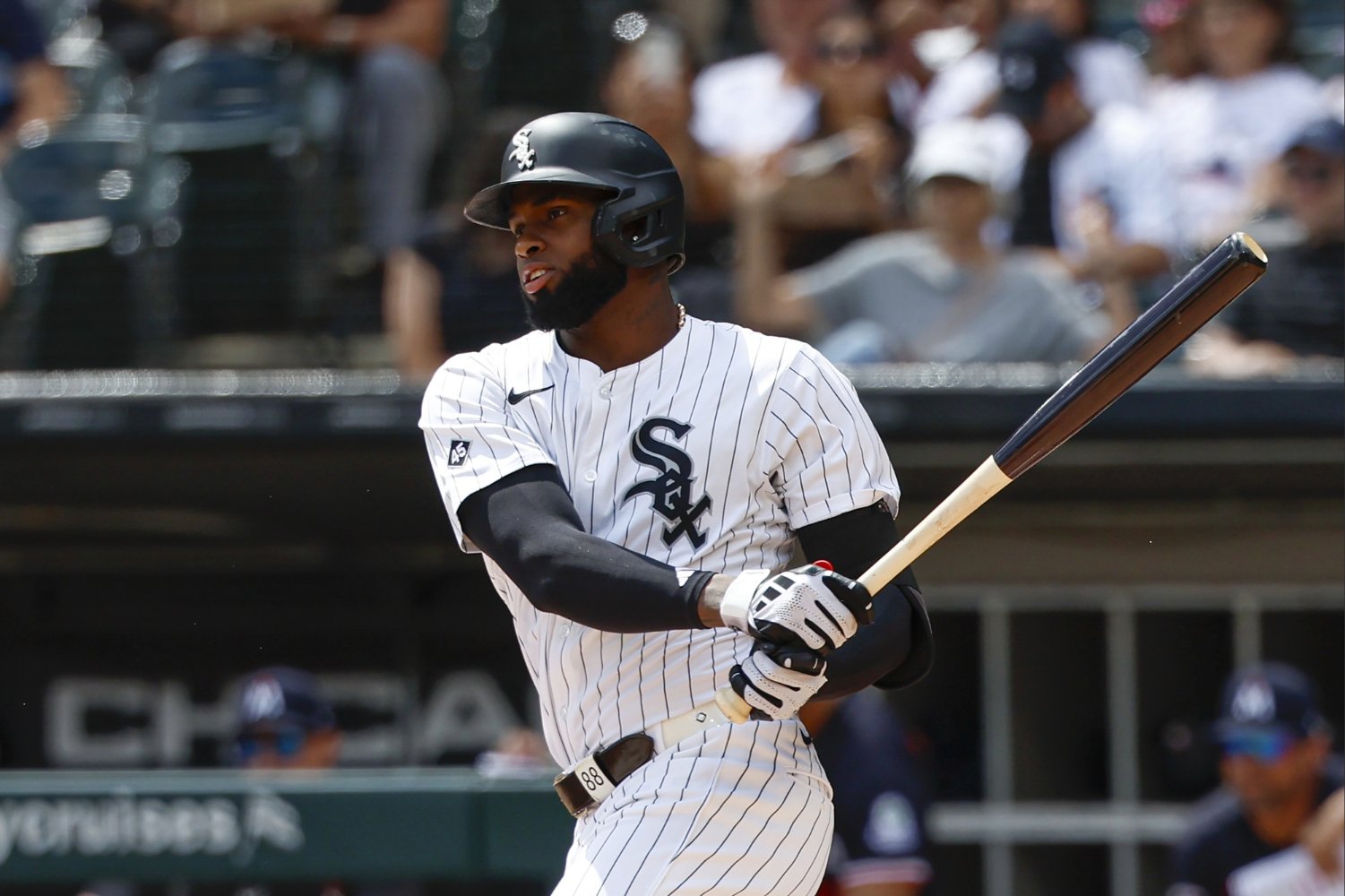 There was a time when the San Diego Padres having an interest in Chicago White Sox outfielder Luis Robert Jr. would've created a buzz across the landscape of Major League Baseball. After all, a center fielder with MVP-caliber upside is exactly the type of swing for which A.J. Preller has become known. Unfortunately for both Robert and the Padres, that time has since passed. Not that that's stopped the Padres, who are reported to be among the teams interested in acquiring Robert (along with the Phillies, Mets, and Pirates). But despite that rumored interest, such a pursuit would be a tough one for Preller to sell. That tough sell exists on multiple levels, too. Whether you're looking at the on-paper fit, the payroll fit, or the fit up against a variety of needs on the current roster, it doesn't seem a particularly worthwhile addition for San Diego. To say nothing of Robert's sharp decline in performance since he posted a 4.9 fWAR season back in 2023. It's all part of a rather puzzling motive on the part of Preller, assuming this interest is legitimate. From a roster standpoint, the Padres have their outfield for 2026 set. Robert's spot in center field is occupied for the long-term by Jackson Merrill, who still posted a 3.0 fWAR season despite battling through multiple injuries. Right field is spoken for in the form of Fernando Tatis Jr, also in the long term. While left field doesn't have the type of projectable stability that the other two spots have, Ramón Laureano is poised to handle full-time duty under his club option for next year. Barring a trade of one of the three (two of which would be shocking), you're not really going to have a spot open for Robert. And given that he's still a quality defender, he's not the type of player you're going to deploy as a remotely full-time designated hitter. You could, perhaps, make an argument for Laureano serving as a rotational fourth outfielder while Robert slides into left. Such a move would greatly enhance the team's depth on the bench. It wouldn't be an illogical path for Preller in that sense. However, the second caveat of their interest makes such a path still unlikely. Robert is set to play next year at a $20 million price point, with a club option for the same in 2027. Roster Resource has the Padres currently projected to carry a $201 million payroll next season. That's a shade under the $211 million at which they finished last year, with the team expected to linger around the same number for 2026. Without the White Sox eating at least half the money owed to Robert, you're not staying at or under that number. Let alone the myriad additions this team still has to make to fill out the rotation and the bench beyond acquiring Robert. And those other needs shouldn't be overlooked in all of this, either. Acquiring Robert would represent more of a luxury as opposed to necessities that exist elsewhere on the roster. The team is without roughly 60% of a legitimate rotation and doesn't feature much support in terms of infield depth. Unless it were in the face of a Laureano trade that sets you up in either of those other areas, it becomes difficult to justify such a move when those glaring needs on the roster still exist. Ultimately, though, the reason that the sell becomes difficult is due to the fact that you're talking about a player who has fallen off a cliff in terms of production. Robert turned in that near-five WAR campaign in 2023 on the heels of a 38-homer, 129 wRC+ season. In the two subsequent years, however, he's gone for an average ISO of just .148 and a wRC+ of 84. Even with some defensive value still in the tank, there just hasn't been much on which to hang his hat with the bat. And that's on top of continued health issues, as Robert appeared in just 210 games between the two years. Even if one wanted to make a case that change of scenery from Chicago's South Side worked wonders for Gavin Sheets, this is a much larger gamble. You're not talking about a player coming in on a non-guaranteed contract, but one that would eat up a significant portion of the already-limited flexibility this team has. It's just too many factors to be ignored, and they all add up to a fairly questionable prospective pursuit.
 -
The San Diego Padres have clear areas of need to address this winter. They need additional power in their lineup. They need some additional depth on the bench. And above all, they need starting pitching. There's just one issue with a team like the Padres in possession of such obvious needs: they lack the resources to properly address them. Just about everywhere in the baseball world will tell you that the Padres currently sit at the bottom of any farm system ranking. That's regardless of publication. It's a standing wrought by A.J. Preller's years of aggression on the trade front, depleting not only the upper tier of prospects with which he can make notable trades but the depth as well. It's why we saw the type of trades we did at the deadline, when Preller had to send a high volume of prospects (six of them) to Baltimore in order to acquire Ryan O'Hearn and Ramón Laureano. Furthering the Padres' offseason issues is their uncertain financial future. We've known for the last handful of years that the organization was trying to rein in spending. But with ownership reportedly exploring a sale of the franchise, it stands to reason that it'll only get worse in the weeks ahead (despite the thought that they might hang around last year's figure). The compounding of those two ideas has led to very little optimism over the Padres properly addressing the apparent needs that they have on the current roster. Which is why Preller might have to get a little bit creative in doing so. Unfortunately for him, such creativity may mean depleting the roster's largest area of strength. No team in baseball was able to get as much out of their relief corps as the Padres in 2025. Their 7.6 collective fWAR paced all bullpens, along with their 3.06 collective ERA. Their 3.53 FIP trailed only Cleveland with a 25.8 percent strikeout rate that sat third among their comrades in relief. They were also a group adept at avoiding hard contact, with a Hard-Hit% that was behind only Cincinnati for the lowest in the sport (37.4 percent). And while the group lost closer Robert Suárez to free agency (via his opt-out), the fact that three or four names could handle ninth inning duty in his stead speaks to the depth of this group. Any of Mason Miller, Adrian Morejon, and Jeremiah Estrada are capable of leverage innings. Jason Adam, too, once he returns from a ruptured quad. David Morgan showed that he's the next guy up for such a role, as well. That's five guys for essentially three innings of work. We're oversimplifying, of course, as matchups and injuries exist. But when you factor in Wandy Peralta, Yuki Matsui, Bradgley Rodriguez, and new Padre Daison Acosta, there's a certain level of volume that exists here. Who's to say that Ruben Niebla and the pitching infrastructure couldn't work their magic in developing additional leverage arms on top of the five already on the roster? Regardless of the intricacies of the roster itself — and the makeup of the fortunate position the Padres are in with respect to their bullpen setup — it stands to reason that Preller should utilize such volume in order to add to the starting rotation. If he does, it's not as if every one of the five leverage arms would be available. We have to imagine Mason Miller is out, despite recent reports suggesting otherwise. With plenty of ninth-inning experience already to his credit, he's the most obvious name to assume Suárez's role as the team's closer. Even without that experience, that the team just gave up their top prospect in July as part of the package to acquire him makes it even less likely. As the lone lefty of the group, Morejon is also likely to be around for 2026 as well. Left-handed pitchers with upper 90s fastballs don't grow on trees, and Morejon's 97.7 MPH average sat in the 94th percentile last year. While he doesn't deploy his fastball-slider combo in a way that generates strikeouts in the way one might expect, he was in the 98th percentile in average exit velocity against (85.9 MPH) and in the 99th in Hard-Hit% (30.7). He appears destined for eighth-inning work in 2026. David Morgan is still pre-arbitration. Given the Padres' financial circumstances, that flexibility against the payroll will prove important from a player that can give you leverage innings. To say nothing of how his limited experience (47 1/3 major-league innings) would lead to a smaller return that becomes more difficult to justify. Adam can likely be eliminated as a part of this discussion as well considering the severity of his injury. While he should be back on the mound in early 2026, the quad is likely to pin down his value on the trade market. Which leaves Jeremiah Estrada as the most apparent trade candidate should Preller pursue this avenue. Estrada is exactly the type of high-upside reliever teams want for the late innings. He offers a 94th-percentile fastball (97.9 MPH average) and 98th percentile strikeout stuff (35.5 K%) wrought by a combination of that fastball, a changeup-splitter hybrid, and a slider. He's not entirely skilled at limiting hard contact, but that becomes less of an issue when you're missing as many bats as he does. His .247 wOBA against in high leverage was also his best figure among all leverage situations. In San Diego, Estrada is likely slated for the seventh inning. For another club that doesn't have this type of depth, he could serve as a primary setup option in the eighth or even as a closer. For the Padres, a combination of Morgan and Adam then slide into seventh-inning duty while the collection of Matsui, Peralta, et al handle the middle innings. It's a trade that Preller can afford to make on paper. Especially if it allows the organization to address their lack of pitching on the starting side. Whether or not Preller will utilize someone like Estrada to address the need, however, remains to be seen. Pitching in any form is the most coveted element for any big league organization, and it's a tough sell to deal from it when you're a contending club. Even if the cupboard is this barren from a starting pitching standpoint. There's an argument to be made that the Padres could be an exception considering their volume and their infrastructure, but you'd have to receive a certified part of your rotation in the return. Even with Estrada's upside, there's no guarantee you're getting that back. It's a perilous situation to navigate, the absence of meaningful starting pitching. But perilous circumstances aren't terribly new to the Preller or the Padres. Should he make a move, it's easy to imagine Estrada's the guy throwing baseballs for a different team next year. But you can never be sure of anything with Preller. View full article
-
How Padres Might Use Their Bullpen Depth on the Trade Market This Offseason
Randy Holt posted an article in Padres
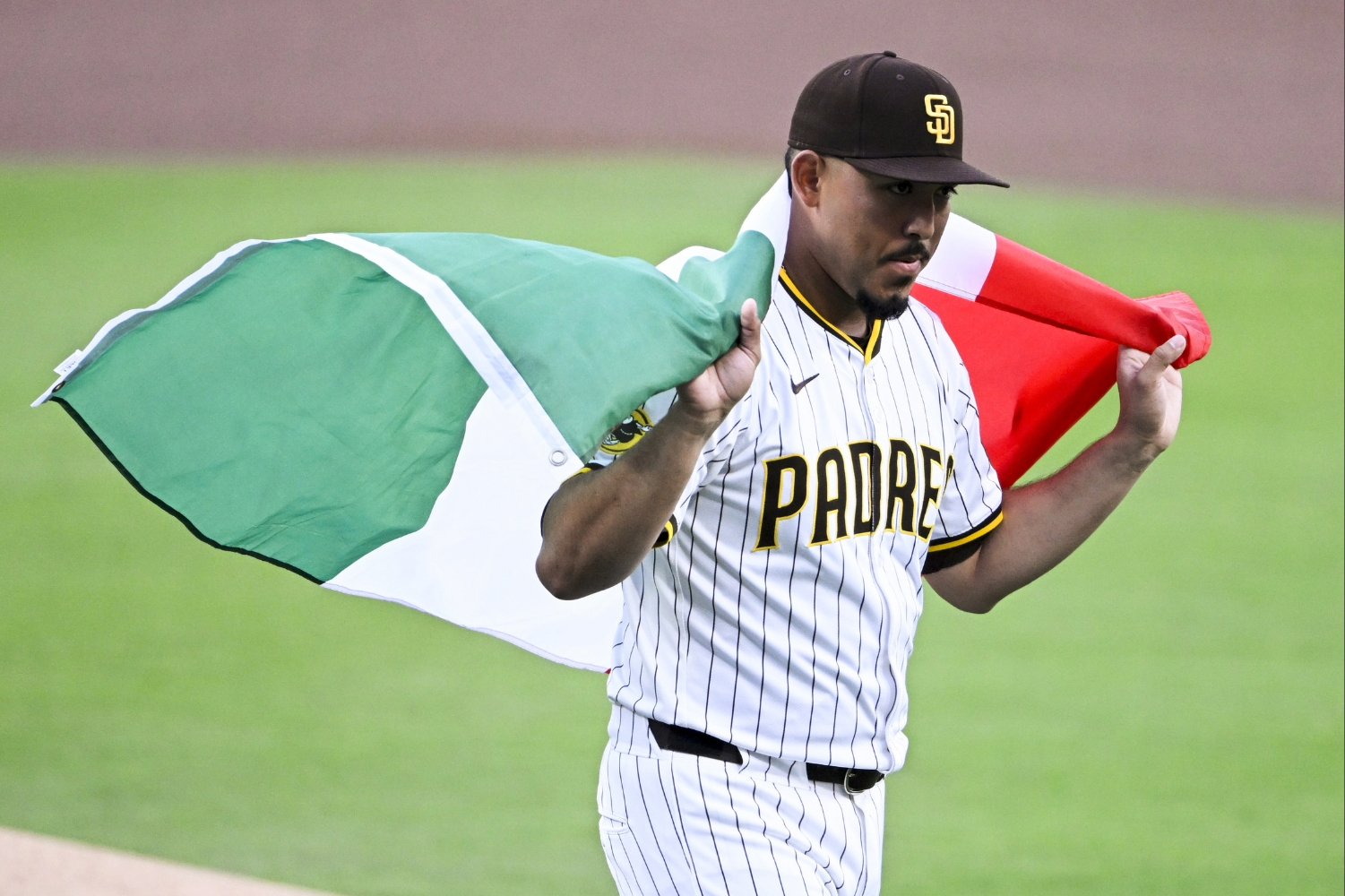 The San Diego Padres have clear areas of need to address this winter. They need additional power in their lineup. They need some additional depth on the bench. And above all, they need starting pitching. There's just one issue with a team like the Padres in possession of such obvious needs: they lack the resources to properly address them. Just about everywhere in the baseball world will tell you that the Padres currently sit at the bottom of any farm system ranking. That's regardless of publication. It's a standing wrought by A.J. Preller's years of aggression on the trade front, depleting not only the upper tier of prospects with which he can make notable trades but the depth as well. It's why we saw the type of trades we did at the deadline, when Preller had to send a high volume of prospects (six of them) to Baltimore in order to acquire Ryan O'Hearn and Ramón Laureano. Furthering the Padres' offseason issues is their uncertain financial future. We've known for the last handful of years that the organization was trying to rein in spending. But with ownership reportedly exploring a sale of the franchise, it stands to reason that it'll only get worse in the weeks ahead (despite the thought that they might hang around last year's figure). The compounding of those two ideas has led to very little optimism over the Padres properly addressing the apparent needs that they have on the current roster. Which is why Preller might have to get a little bit creative in doing so. Unfortunately for him, such creativity may mean depleting the roster's largest area of strength. No team in baseball was able to get as much out of their relief corps as the Padres in 2025. Their 7.6 collective fWAR paced all bullpens, along with their 3.06 collective ERA. Their 3.53 FIP trailed only Cleveland with a 25.8 percent strikeout rate that sat third among their comrades in relief. They were also a group adept at avoiding hard contact, with a Hard-Hit% that was behind only Cincinnati for the lowest in the sport (37.4 percent). And while the group lost closer Robert Suárez to free agency (via his opt-out), the fact that three or four names could handle ninth inning duty in his stead speaks to the depth of this group. Any of Mason Miller, Adrian Morejon, and Jeremiah Estrada are capable of leverage innings. Jason Adam, too, once he returns from a ruptured quad. David Morgan showed that he's the next guy up for such a role, as well. That's five guys for essentially three innings of work. We're oversimplifying, of course, as matchups and injuries exist. But when you factor in Wandy Peralta, Yuki Matsui, Bradgley Rodriguez, and new Padre Daison Acosta, there's a certain level of volume that exists here. Who's to say that Ruben Niebla and the pitching infrastructure couldn't work their magic in developing additional leverage arms on top of the five already on the roster? Regardless of the intricacies of the roster itself — and the makeup of the fortunate position the Padres are in with respect to their bullpen setup — it stands to reason that Preller should utilize such volume in order to add to the starting rotation. If he does, it's not as if every one of the five leverage arms would be available. We have to imagine Mason Miller is out, despite recent reports suggesting otherwise. With plenty of ninth-inning experience already to his credit, he's the most obvious name to assume Suárez's role as the team's closer. Even without that experience, that the team just gave up their top prospect in July as part of the package to acquire him makes it even less likely. As the lone lefty of the group, Morejon is also likely to be around for 2026 as well. Left-handed pitchers with upper 90s fastballs don't grow on trees, and Morejon's 97.7 MPH average sat in the 94th percentile last year. While he doesn't deploy his fastball-slider combo in a way that generates strikeouts in the way one might expect, he was in the 98th percentile in average exit velocity against (85.9 MPH) and in the 99th in Hard-Hit% (30.7). He appears destined for eighth-inning work in 2026. David Morgan is still pre-arbitration. Given the Padres' financial circumstances, that flexibility against the payroll will prove important from a player that can give you leverage innings. To say nothing of how his limited experience (47 1/3 major-league innings) would lead to a smaller return that becomes more difficult to justify. Adam can likely be eliminated as a part of this discussion as well considering the severity of his injury. While he should be back on the mound in early 2026, the quad is likely to pin down his value on the trade market. Which leaves Jeremiah Estrada as the most apparent trade candidate should Preller pursue this avenue. Estrada is exactly the type of high-upside reliever teams want for the late innings. He offers a 94th-percentile fastball (97.9 MPH average) and 98th percentile strikeout stuff (35.5 K%) wrought by a combination of that fastball, a changeup-splitter hybrid, and a slider. He's not entirely skilled at limiting hard contact, but that becomes less of an issue when you're missing as many bats as he does. His .247 wOBA against in high leverage was also his best figure among all leverage situations. In San Diego, Estrada is likely slated for the seventh inning. For another club that doesn't have this type of depth, he could serve as a primary setup option in the eighth or even as a closer. For the Padres, a combination of Morgan and Adam then slide into seventh-inning duty while the collection of Matsui, Peralta, et al handle the middle innings. It's a trade that Preller can afford to make on paper. Especially if it allows the organization to address their lack of pitching on the starting side. Whether or not Preller will utilize someone like Estrada to address the need, however, remains to be seen. Pitching in any form is the most coveted element for any big league organization, and it's a tough sell to deal from it when you're a contending club. Even if the cupboard is this barren from a starting pitching standpoint. There's an argument to be made that the Padres could be an exception considering their volume and their infrastructure, but you'd have to receive a certified part of your rotation in the return. Even with Estrada's upside, there's no guarantee you're getting that back. It's a perilous situation to navigate, the absence of meaningful starting pitching. But perilous circumstances aren't terribly new to the Preller or the Padres. Should he make a move, it's easy to imagine Estrada's the guy throwing baseballs for a different team next year. But you can never be sure of anything with Preller.
 -
While a need for starting pitching will grab headlines, we shouldn't forget that there is more work to do for A.J. Preller and the San Diego Padres this offseason. Among their quieter needs this winter is the one that exists behind the plate. As things stand right now, Freddy Fermin will be the team's starting catcher in 2026. There isn't any reason to expect a change there, either. The team sent Stephen Kolek and Ryan Bergert to the Kansas City Royals at the trade deadline. Given that both would be worthwhile depth arms in this rotation right now, the intent was always for Fermin to handle the top gig ahead of next season. Given the current roster construction, Luis Campusano will handle No. 2 duties. The team had been reluctant to give him much of a run due to some inefficiencies in working as a defensive catcher despite the upside he presents with the bat. Now out of options, the team has been forced into a scenario where they either give him run or look to move him. With top prospect Ethan Salas still a ways away, the backup spot is Campusano's to lose. Either way, the current duo looks to be an upgrade over the two the team started with last year when they brought Elías Díaz back on a one-year deal and signed Martín Maldonado to a non-guaranteed contract ahead of spring training. Neither provided much of anything on offense and each demonstrated various shortcomings defensively that negatively impacted the pitching staff. But even with a more formidable pair, there are some options that could allow the Padres to not only shore up their depth behind the plate but upgrade the roster depth, too. Names certainly abound, at least. Someone like Reese McGuire is a logical player that fits in here. McGuire turned in a strong framing season for the Chicago Cubs last year (3 Framing Runs) while providing steady power for a backup catcher (.218 ISO). Former Minnesota Twin Christian Vázquez doesn't give you that same pop, but has historically graded as a capable defensive backstop (2 Framing Runs in 2025). A name like Danny Jansen pops on the other side of the spectrum. His defensive output has taken a step back in recent years, but there's some decent offensive upside still within the context of that type of role. Even someone like Jonah Heim has a decent-enough track record (107 wRC+ in 2023) that you could pursue him for a one-year bounce back. Options aren't limited to the free-agent market, either. Escondido native Korey Lee is third on the Chicago White Sox's depth chart behind a pair of young catchers that the team is clearly prioritizing. The St. Louis Cardinals have a handful of options in something of a logjam they could seek to clear (Pedro Pagés, Yohel Pozo, Jimmy Crooks) in favor of even more depth within their minor-league system. The point is that there are options here for the San Diego Padres. Not that they're alone in such a pursuit, but when you're operating within a tight budget without much to trade in the way of prospects, you like that this type of volume exists, epecially considering the way it could impact the roster outside of the position. Let's say the Padres really are hesitant to give even backup reps to Campusano behind the plate. Rather than shoehorn him into a role for which he may not be well-suited, you bring in a new No. 2 catcher. From there, Campusano becomes more of a right-handed compliment as a designated hitter or first baseman for Gavin Sheets. He becomes the matchup play in a way that allows you to maximize his most important asset: the bat. It's a path toward the Padres improving their roster in a way that a team short on resources can actually pull off. At the very least, you want a veteran third-stringer in the organization so that you have that coverage. Even if Campusano is capable of holding down the spot behind Fermin, you're in a bad way should anything happen to them on the health front. So, even if it's a move made purely out of a depth pursuit rather than one that indicates a shifting role for Campusano, it's a necessary one for the Padres. Luckily, that volume exists. It doesn't have to be the priority at this point in the offseason. But it's not something we should overlook as the winter wears on. View full article
-
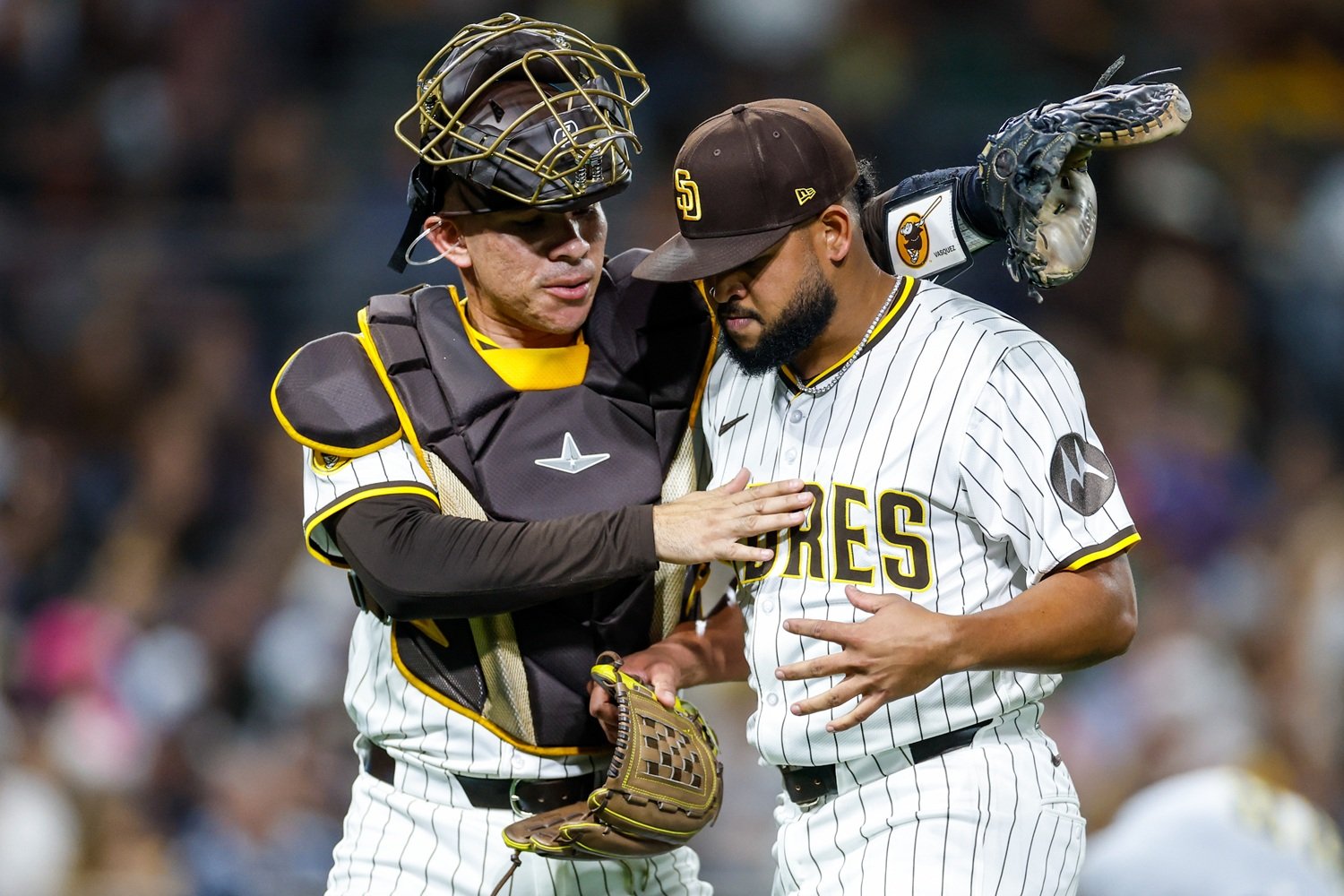 While a need for starting pitching will grab headlines, we shouldn't forget that there is more work to do for A.J. Preller and the San Diego Padres this offseason. Among their quieter needs this winter is the one that exists behind the plate. As things stand right now, Freddy Fermin will be the team's starting catcher in 2026. There isn't any reason to expect a change there, either. The team sent Stephen Kolek and Ryan Bergert to the Kansas City Royals at the trade deadline. Given that both would be worthwhile depth arms in this rotation right now, the intent was always for Fermin to handle the top gig ahead of next season. Given the current roster construction, Luis Campusano will handle No. 2 duties. The team had been reluctant to give him much of a run due to some inefficiencies in working as a defensive catcher despite the upside he presents with the bat. Now out of options, the team has been forced into a scenario where they either give him run or look to move him. With top prospect Ethan Salas still a ways away, the backup spot is Campusano's to lose. Either way, the current duo looks to be an upgrade over the two the team started with last year when they brought Elías Díaz back on a one-year deal and signed Martín Maldonado to a non-guaranteed contract ahead of spring training. Neither provided much of anything on offense and each demonstrated various shortcomings defensively that negatively impacted the pitching staff. But even with a more formidable pair, there are some options that could allow the Padres to not only shore up their depth behind the plate but upgrade the roster depth, too. Names certainly abound, at least. Someone like Reese McGuire is a logical player that fits in here. McGuire turned in a strong framing season for the Chicago Cubs last year (3 Framing Runs) while providing steady power for a backup catcher (.218 ISO). Former Minnesota Twin Christian Vázquez doesn't give you that same pop, but has historically graded as a capable defensive backstop (2 Framing Runs in 2025). A name like Danny Jansen pops on the other side of the spectrum. His defensive output has taken a step back in recent years, but there's some decent offensive upside still within the context of that type of role. Even someone like Jonah Heim has a decent-enough track record (107 wRC+ in 2023) that you could pursue him for a one-year bounce back. Options aren't limited to the free-agent market, either. Escondido native Korey Lee is third on the Chicago White Sox's depth chart behind a pair of young catchers that the team is clearly prioritizing. The St. Louis Cardinals have a handful of options in something of a logjam they could seek to clear (Pedro Pagés, Yohel Pozo, Jimmy Crooks) in favor of even more depth within their minor-league system. The point is that there are options here for the San Diego Padres. Not that they're alone in such a pursuit, but when you're operating within a tight budget without much to trade in the way of prospects, you like that this type of volume exists, epecially considering the way it could impact the roster outside of the position. Let's say the Padres really are hesitant to give even backup reps to Campusano behind the plate. Rather than shoehorn him into a role for which he may not be well-suited, you bring in a new No. 2 catcher. From there, Campusano becomes more of a right-handed compliment as a designated hitter or first baseman for Gavin Sheets. He becomes the matchup play in a way that allows you to maximize his most important asset: the bat. It's a path toward the Padres improving their roster in a way that a team short on resources can actually pull off. At the very least, you want a veteran third-stringer in the organization so that you have that coverage. Even if Campusano is capable of holding down the spot behind Fermin, you're in a bad way should anything happen to them on the health front. So, even if it's a move made purely out of a depth pursuit rather than one that indicates a shifting role for Campusano, it's a necessary one for the Padres. Luckily, that volume exists. It doesn't have to be the priority at this point in the offseason. But it's not something we should overlook as the winter wears on.
 -
With Major League Baseball's Winter Meetings underway this week, there are certainly questions as to how active A.J. Preller and the San Diego Padres stand to be. The needs are clear: The team needs supplementary offense, starting pitching, and relief depth. Resources, however, are limited in the face of a rumored exploration of a sale of the franchise and a farm system that sits at or near the bottom of just about every outlet's rankings. Which is why the pursuit of any meaningful addition is going to require the Padres to sacrifice from their big league roster more than they have in recent years. One name floating out in the trade ether at this point is Jake Cronenworth. We know that the team was getting calls on him prior to the trade deadline. The same is true now, according to Dennis Lin of The Athletic. We also know that among the team's long-term contracts, he offers the most reasonable for a team to fit into their payroll. His contract runs through 2030 and lives in the neighborhood of $12 million. This stands opposed to someone like Xander Bogaerts, whose contract runs through 2033 to the tune of more than $25 million a year. Of the team's position players, those are the two the team would likely be most willing to move, in contrast to names like Fernando Tatis Jr., Jackson Merrill, or Manny Machado. Cronenworth brings a level of versatility to his game and an approach that teams would love to add. While he's never replicated the power output he demonstrated back in 2021 (.194 ISO), his 13.4 percent walk rate stood as one of the best in baseball last season. The blend of approach and power, even if now only occasional, mixed with positional flexibility at a reasonable price point, could provide the Padres with an opportunity to bring in a starting arm that they're so desperately coveting at present. Perhaps a team like the Pittsburgh Pirates, starved for offense and always operating within a tight budget, could be a landing spot. Mitch Keller's name was out there at the 2025 trade deadline. He offers a mid-tier option capable of eating some innings. It's worth noting that the Pirates are also one of several teams that were recently linked to Arizona Diamondbacks second baseman Ketel Marte. The Marte component becomes interesting because it indicates the market has a handful of teams looking to fill a spot at the keystone. The Boston Red Sox, Philadelphia Phillies, Seattle Mariners, Detroit Tigers, Tampa Bay Rays, and Toronto Blue Jays are all teams that have been mentioned in connection with some level of Marte interest. Not all of those teams have the starting pitching the Padres desire, but they also don't all have a clear vacancy at second base either. More than anything, this speaks to the fact that teams that miss out on Marte (should he actually be moved) could pivot to Cronenworth as a suitable backup capable of providing some stability in the lineup. A team like Toronto could be interesting given their newly-found depth on the heels of signing former Padre Dylan Cease and Cody Ponce. Would someone like José Berríos fit into that Keller mold, where you get the contract through 2028 (at $24 million in the final two years) and hope for a bit more out of the upside? You get something of a middle-tier starter from a team with a rotation logjam while, in a roundabout way, not having to invest fully in a new contract. Teams like the Mariners or Rays certainly offer some organizational depth on the pitching front, as well. Either way, a potential shipping off of Cronenworth would appear to offer the most efficient path toward acquiring a starting pitcher. It's possible the team has to take on some salary, but Cronenworth's contract should help to offset things in a way that would make an acquisition less cumbersome against the payroll. Of course, then you have to reckon with the vacancy wrought by his departure. It's a complex situation, but the Winter Meetings present the Padres with an opportunity to earnestly begin their pursuit of a much-needed starting arm. Such an avenue could very well begin with trading their infield mainstay. View full article
-
Does Jake Cronenworth Offer Padres The Easiest Path To Acquire Pitching?
Randy Holt posted an article in Padres
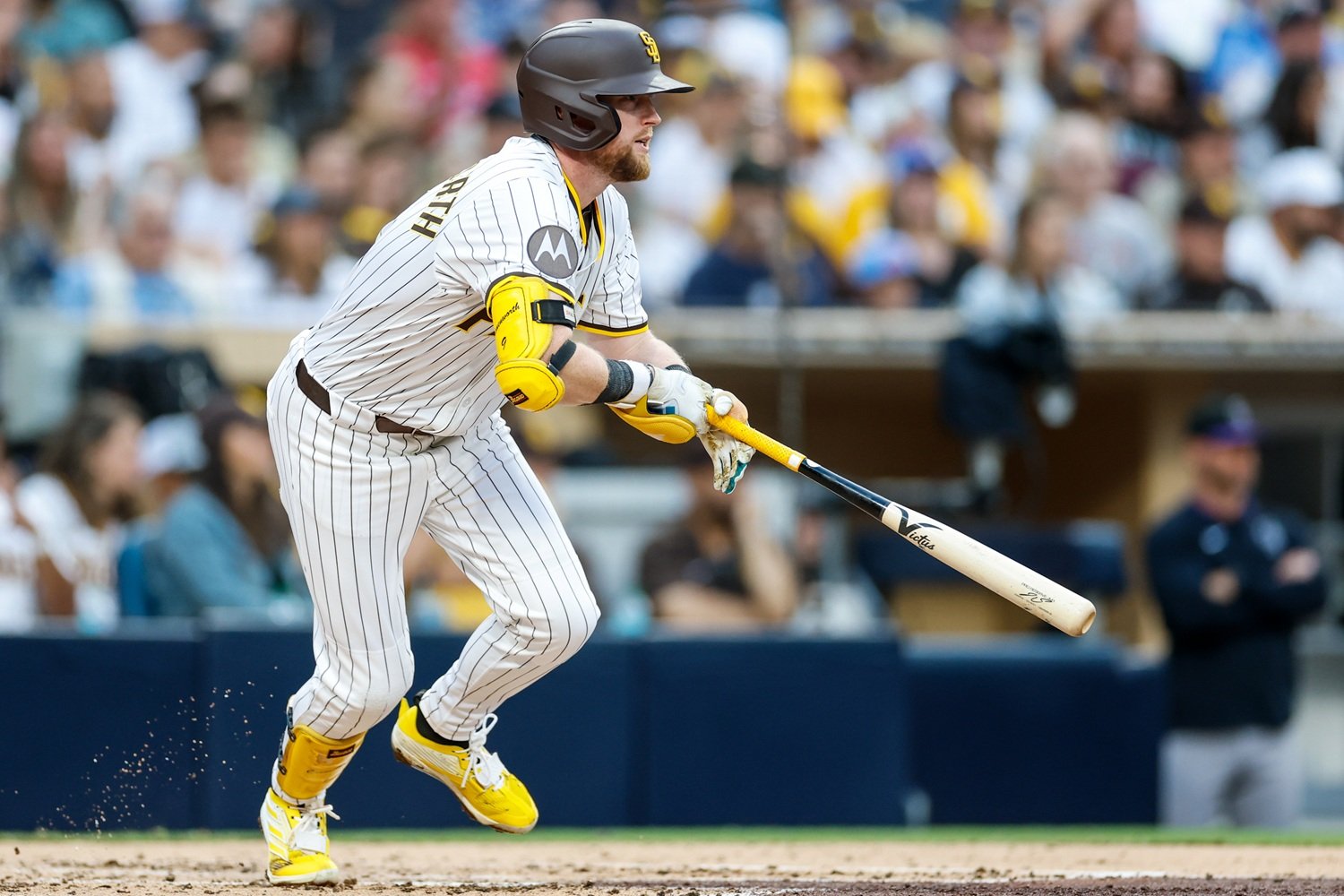 With Major League Baseball's Winter Meetings underway this week, there are certainly questions as to how active A.J. Preller and the San Diego Padres stand to be. The needs are clear: The team needs supplementary offense, starting pitching, and relief depth. Resources, however, are limited in the face of a rumored exploration of a sale of the franchise and a farm system that sits at or near the bottom of just about every outlet's rankings. Which is why the pursuit of any meaningful addition is going to require the Padres to sacrifice from their big league roster more than they have in recent years. One name floating out in the trade ether at this point is Jake Cronenworth. We know that the team was getting calls on him prior to the trade deadline. The same is true now, according to Dennis Lin of The Athletic. We also know that among the team's long-term contracts, he offers the most reasonable for a team to fit into their payroll. His contract runs through 2030 and lives in the neighborhood of $12 million. This stands opposed to someone like Xander Bogaerts, whose contract runs through 2033 to the tune of more than $25 million a year. Of the team's position players, those are the two the team would likely be most willing to move, in contrast to names like Fernando Tatis Jr., Jackson Merrill, or Manny Machado. Cronenworth brings a level of versatility to his game and an approach that teams would love to add. While he's never replicated the power output he demonstrated back in 2021 (.194 ISO), his 13.4 percent walk rate stood as one of the best in baseball last season. The blend of approach and power, even if now only occasional, mixed with positional flexibility at a reasonable price point, could provide the Padres with an opportunity to bring in a starting arm that they're so desperately coveting at present. Perhaps a team like the Pittsburgh Pirates, starved for offense and always operating within a tight budget, could be a landing spot. Mitch Keller's name was out there at the 2025 trade deadline. He offers a mid-tier option capable of eating some innings. It's worth noting that the Pirates are also one of several teams that were recently linked to Arizona Diamondbacks second baseman Ketel Marte. The Marte component becomes interesting because it indicates the market has a handful of teams looking to fill a spot at the keystone. The Boston Red Sox, Philadelphia Phillies, Seattle Mariners, Detroit Tigers, Tampa Bay Rays, and Toronto Blue Jays are all teams that have been mentioned in connection with some level of Marte interest. Not all of those teams have the starting pitching the Padres desire, but they also don't all have a clear vacancy at second base either. More than anything, this speaks to the fact that teams that miss out on Marte (should he actually be moved) could pivot to Cronenworth as a suitable backup capable of providing some stability in the lineup. A team like Toronto could be interesting given their newly-found depth on the heels of signing former Padre Dylan Cease and Cody Ponce. Would someone like José Berríos fit into that Keller mold, where you get the contract through 2028 (at $24 million in the final two years) and hope for a bit more out of the upside? You get something of a middle-tier starter from a team with a rotation logjam while, in a roundabout way, not having to invest fully in a new contract. Teams like the Mariners or Rays certainly offer some organizational depth on the pitching front, as well. Either way, a potential shipping off of Cronenworth would appear to offer the most efficient path toward acquiring a starting pitcher. It's possible the team has to take on some salary, but Cronenworth's contract should help to offset things in a way that would make an acquisition less cumbersome against the payroll. Of course, then you have to reckon with the vacancy wrought by his departure. It's a complex situation, but the Winter Meetings present the Padres with an opportunity to earnestly begin their pursuit of a much-needed starting arm. Such an avenue could very well begin with trading their infield mainstay.
 -
There are few worse places to be in sports than organizational purgatory. That middle ground where you're not quite good enough to legitimately contend, but also not quite bad enough to begin the rebuilding process. The latest trade rumor from the Winter Meetings has the San Diego Padres barreling toward such a status. While nothing of note has unfolded quite yet (none of Pablo Reyes, Sean Boyle, or Ty Adcock count), the Padres have the look and feel of a team on the brink. Already working within financial constraints that have grown tighter in the years since owner Peter Seidler's passing, the reported exploration of a sale has only furthered growing concern over the team's ability to hang, financially, with their major-league counterparts. That's left just about everybody on the roster involved in a trade rumor of some kind at various points in the early stages of this winter. The latest case is starting pitcher Nick Pivetta. Dennis Lin of The Athletic reported on the first day of the Winter Meetings that the team was listening to overtures on Pivetta and Jake Cronenworth. The latter is of no surprise, of course. We've long known that the team had taken calls on Cronenworth and that his contract could be the logical one to move among the bevy of long-term position players that the team currently rosters. There's plenty of logic to it. Pivetta's inclusion, however, necessitates an entirely different perspective. Pivetta's contract paid him just $2.5 million in 2025, but the number leaps up to $20.5 million next season. The team would then owe a remaining $32 million combined over the final two years of his deal. It all seems fairly reasonable when you consider the fact that Pivetta's coming off the best season of his career from a run prevention standpoint. Each of Pivetta's 2.87 ERA and 3.49 FIP were career bests, with the former checking in as his best mark by a wide margin. His 26.4 percent strikeout rate sat in the 78th percentile and his 6.9 percent walk rate was in the 69th. While the strikeout rate was a continued drop from his last two seasons, his walk rate did stand as the second-best mark of his career. Between preventing baserunners and garnering some good fortune on the batted-ball side of things (.235 BABIP), Pivetta was able to work around some less-than-desirable contact metrics (45.0 Hard-Hit%, 10.8 Barrel%). In any case, it was a strong year from the arm that wound up as the team's top starter for 2025. Which is why hearing his name in trade rumors is so distressing. It's not that the Padres need Nick Pivetta in order to contend. He's likely due for some very legitimate regression next season. You could even make an argument that the Padres selling high on Pivetta makes some degree of sense. The trouble is less about Pivetta's skill set and himself in a vacuum and more about what it means in the scheme of the larger narrative around this team. We already know the Padres are working within the confines of an ever-shrinking budget. This winter, though, reads as a little bit different of a vibe. There's more of an urgency to shed money and fewer prospects, despite both being important in bringing in players of note that would help this team realize their championship aspirations. Having a name like Pivetta in the trade mix speaks to that exact trouble, especially considering the state of the current roster. The Padres have virtually no starting pitchers to speak of. Dylan Cease is now a member of the Toronto Blue Jays. Michael King is poised to get a significant contract with a team not named the Padres in free agency. Yu Darvish is already out for all of 2026. Joe Musgrove is returning from Tommy John surgery. Pivetta represents the only legitimate starter on a 40-man roster sprinkled with names like Randy Vásquez, Matt Waldron, and JP Sears. Ty Adcock and Kyle Hart don't quite count there, either. With the team set to keep Mason Miller, Adrian Morejon, and David Morgan in relief, it's Pivetta, a rusty Musgrove, and a collection of fringe starters comprising the rotation at present. That the Padres would be willing to trade their only presently-viable starter speaks to the trouble in which this organization finds itself. To trade a key component from such a dire position of need would signal to the rest of the league that the Padres are trending in exactly the wrong type of direction. Without the resources in the farm system to make a trade, the road toward improving the roster becomes narrower — potentially to the point of becoming impassible. The budget was already a dark cloud looming over the offseason for this team from the jump. Compounding that fact along with the team's lack of depth was already a concerning reality. But the involvement of their only viable starting pitcher in the rumor mill speaks to another level of darkness. It's not about Pivetta the pitcher. It's about the larger narrative, and A.J. Preller is clearly going to have his work cut out for him to fight back toward the other direction, or risk slipping into organizational purgatory before long. View full article
-
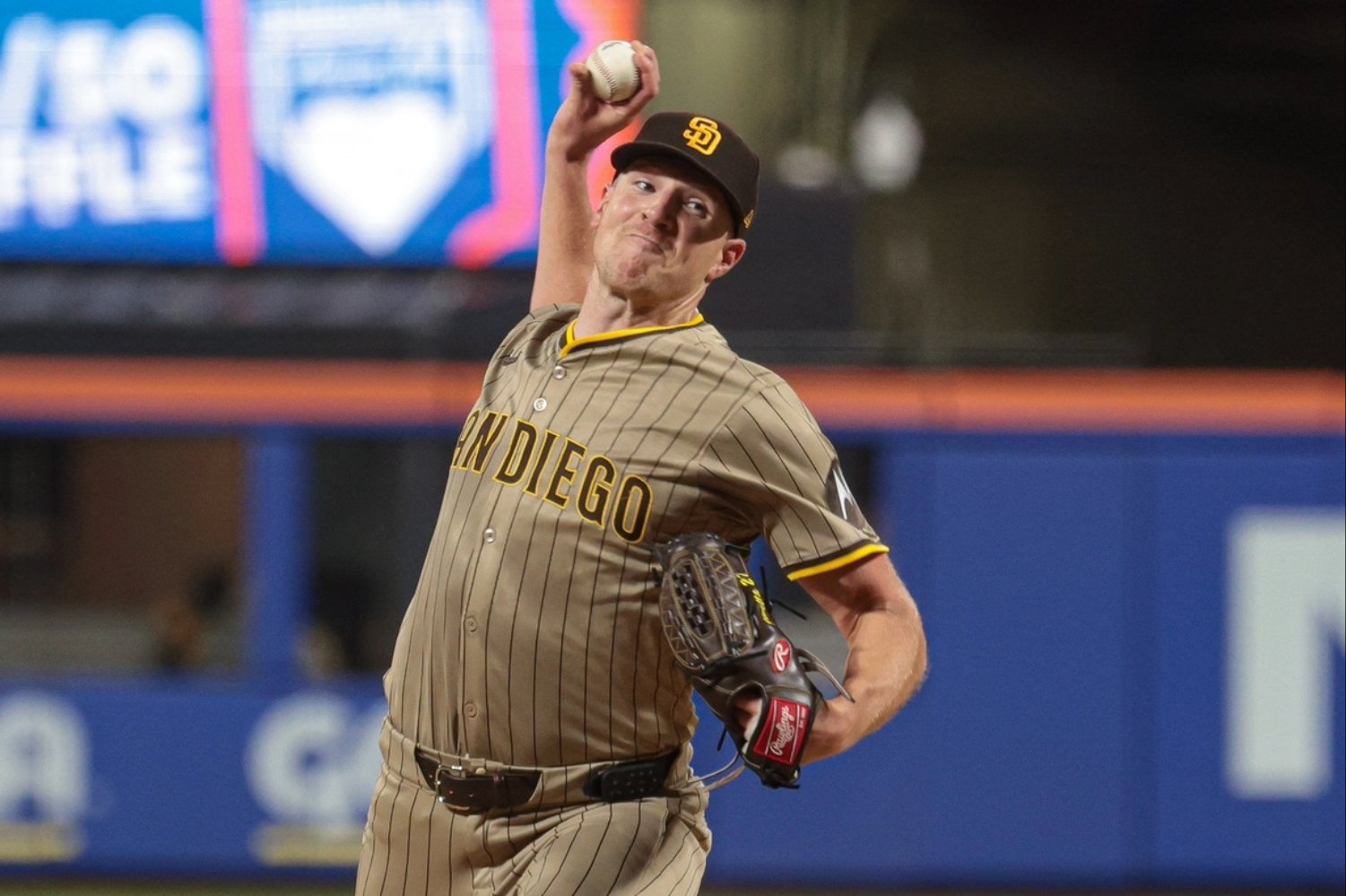 There are few worse places to be in sports than organizational purgatory. That middle ground where you're not quite good enough to legitimately contend, but also not quite bad enough to begin the rebuilding process. The latest trade rumor from the Winter Meetings has the San Diego Padres barreling toward such a status. While nothing of note has unfolded quite yet (none of Pablo Reyes, Sean Boyle, or Ty Adcock count), the Padres have the look and feel of a team on the brink. Already working within financial constraints that have grown tighter in the years since owner Peter Seidler's passing, the reported exploration of a sale has only furthered growing concern over the team's ability to hang, financially, with their major-league counterparts. That's left just about everybody on the roster involved in a trade rumor of some kind at various points in the early stages of this winter. The latest case is starting pitcher Nick Pivetta. Dennis Lin of The Athletic reported on the first day of the Winter Meetings that the team was listening to overtures on Pivetta and Jake Cronenworth. The latter is of no surprise, of course. We've long known that the team had taken calls on Cronenworth and that his contract could be the logical one to move among the bevy of long-term position players that the team currently rosters. There's plenty of logic to it. Pivetta's inclusion, however, necessitates an entirely different perspective. Pivetta's contract paid him just $2.5 million in 2025, but the number leaps up to $20.5 million next season. The team would then owe a remaining $32 million combined over the final two years of his deal. It all seems fairly reasonable when you consider the fact that Pivetta's coming off the best season of his career from a run prevention standpoint. Each of Pivetta's 2.87 ERA and 3.49 FIP were career bests, with the former checking in as his best mark by a wide margin. His 26.4 percent strikeout rate sat in the 78th percentile and his 6.9 percent walk rate was in the 69th. While the strikeout rate was a continued drop from his last two seasons, his walk rate did stand as the second-best mark of his career. Between preventing baserunners and garnering some good fortune on the batted-ball side of things (.235 BABIP), Pivetta was able to work around some less-than-desirable contact metrics (45.0 Hard-Hit%, 10.8 Barrel%). In any case, it was a strong year from the arm that wound up as the team's top starter for 2025. Which is why hearing his name in trade rumors is so distressing. It's not that the Padres need Nick Pivetta in order to contend. He's likely due for some very legitimate regression next season. You could even make an argument that the Padres selling high on Pivetta makes some degree of sense. The trouble is less about Pivetta's skill set and himself in a vacuum and more about what it means in the scheme of the larger narrative around this team. We already know the Padres are working within the confines of an ever-shrinking budget. This winter, though, reads as a little bit different of a vibe. There's more of an urgency to shed money and fewer prospects, despite both being important in bringing in players of note that would help this team realize their championship aspirations. Having a name like Pivetta in the trade mix speaks to that exact trouble, especially considering the state of the current roster. The Padres have virtually no starting pitchers to speak of. Dylan Cease is now a member of the Toronto Blue Jays. Michael King is poised to get a significant contract with a team not named the Padres in free agency. Yu Darvish is already out for all of 2026. Joe Musgrove is returning from Tommy John surgery. Pivetta represents the only legitimate starter on a 40-man roster sprinkled with names like Randy Vásquez, Matt Waldron, and JP Sears. Ty Adcock and Kyle Hart don't quite count there, either. With the team set to keep Mason Miller, Adrian Morejon, and David Morgan in relief, it's Pivetta, a rusty Musgrove, and a collection of fringe starters comprising the rotation at present. That the Padres would be willing to trade their only presently-viable starter speaks to the trouble in which this organization finds itself. To trade a key component from such a dire position of need would signal to the rest of the league that the Padres are trending in exactly the wrong type of direction. Without the resources in the farm system to make a trade, the road toward improving the roster becomes narrower — potentially to the point of becoming impassible. The budget was already a dark cloud looming over the offseason for this team from the jump. Compounding that fact along with the team's lack of depth was already a concerning reality. But the involvement of their only viable starting pitcher in the rumor mill speaks to another level of darkness. It's not about Pivetta the pitcher. It's about the larger narrative, and A.J. Preller is clearly going to have his work cut out for him to fight back toward the other direction, or risk slipping into organizational purgatory before long.
 -
Do the Padres Stand to Gain or Lose With Introduction of ABS?
Randy Holt posted an article in Padres
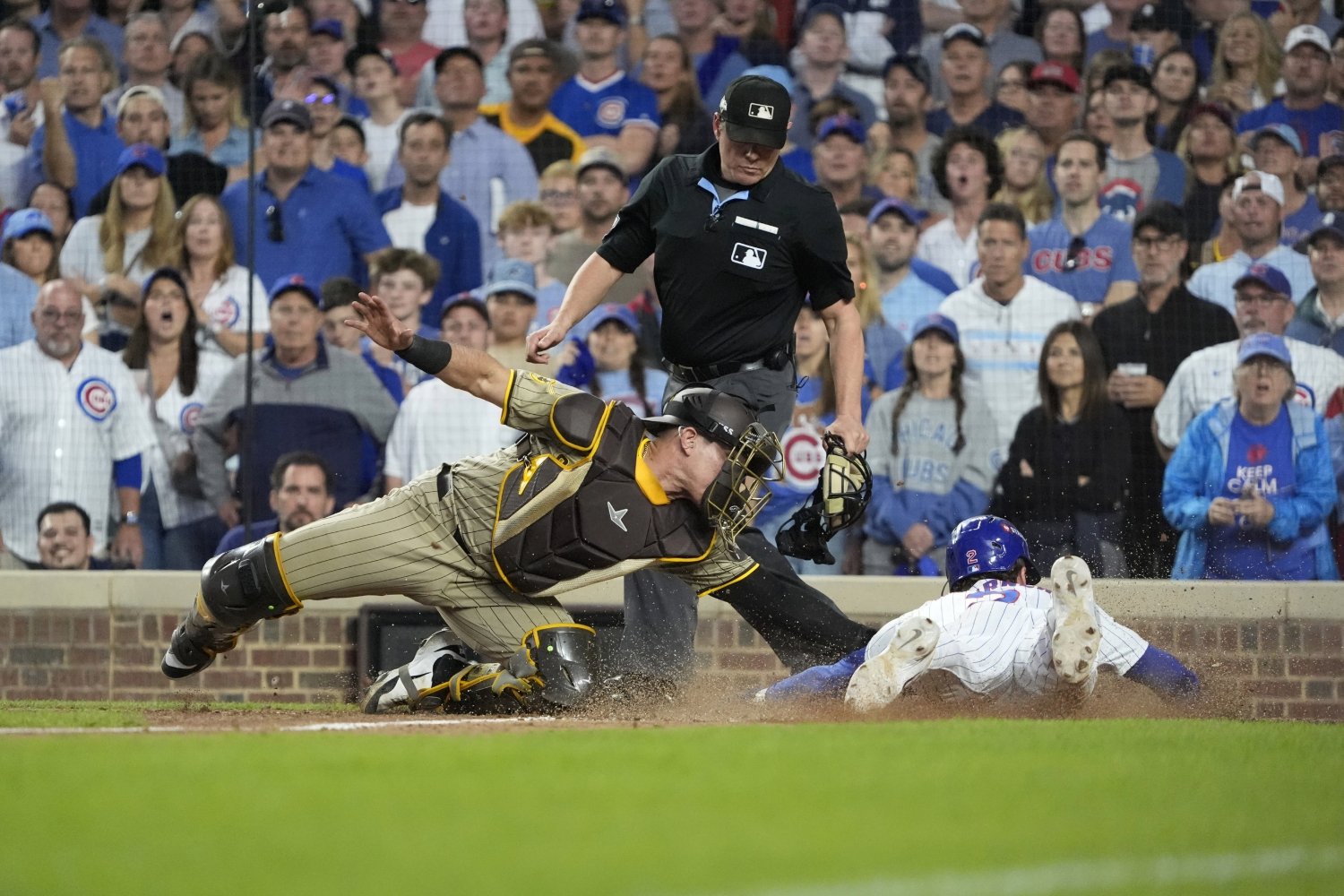 It's a storyline merely lurking in the weeds with so much offseason buzz floating around, but the Automated Ball-Strike challenge system (ABS) making its way to Major League Baseball next season will be at the forefront of our minds once it actually gets underway. And the pieces published thus far around its implementation lend themselves to some interesting questions related specifically to the San Diego Padres. Over at FanGraphs, Davy Andrews published a piece in which he explored framing in the age of ABS. After navigating some of the numbers and paradoxical thinking around how framing as a skill might coexist with ABS, he noted what was one of more cogent points in the still-young discussion around this development: The thought here is that catchers that are already good at framing are going to have their skills amplified. And considering the IQ that the position requires, the instinctive reaction required to challenge a called ball means it's not a surprise that they feature the higher overturn rates than hitters. Ultimately, teams that employ strong defenders behind the plate are going to feel an added benefit in the introduction of ABS. This, somewhat automatically, lends itself to questions about the Padres' eventual interaction with ABS. As of now, Freddy Fermin stands atop the depth chart for the Padres behind the plate. It's hard to imagine that changes in any meaningful way. Behind him, however, remains something of a question. Luis Campusano is in line for some run as the No. 2 given the absence of anyone else in the organization at present. Considering the prior reluctance to insert him in such a role, though, that side of it could certainly change. Either way, the assertion that good framers can be made better by ABS doesn't necessarily bode well for whatever shape the duo takes for San Diego. Fermin wasn't a particularly effective framer during his post-deadline time with the Padres. He finished with -2 Framing Runs and was largely ineffective in the shadows to which Andrews referred in the above excerpt. He graded out as exactly average in the top shadow (0 Framing Runs) and was at 2 Framing Runs to his left, but went -1 on the right and -2 on the bottom of the zone. Bear in mind the fact that that Baseball Savant's shadow doesn't exclusively consider inside of the zone, so we shouldn't expect Fermin to linger around that 90-percent mark. But his checking in as exactly average or below in the majority of the areas isn't a terrific development if we're to believe in the amplification of skill wrought by ABS. If there's a positive, it's that Fermin was a markedly better catcher in the bottom shadow (16 Framing Runs) and still above average to his left during his years with the Kansas City Royals. So, if he can find a marriage of his strengths between Kansas City and San Diego, the possibility exists that he can use ABS to his advantage. The more concerning part of this is Campusano. If ABS enhances the quality of good framers, then we're left with the belief that poor framers could become more exposed. He checked in at -9 Framing Runs between 2023 and 2024, including -4 in the top shadow and -8 to the left. There's a reason the Padres have been reluctant to insert him behind the plate. And if we're to believe this is a trend that could manifest next season, then it may certainly be worth exploring a transition to platoon first base and bench work, rather than as a regular catcher. Either way, as exciting as the prospect of ABS has the potential to be, it's not painting a terrific picture for the Padres at the present moment. In separate work cited by Andrews' article at FanGraphs, Tom Tango examined challenge probability by utilizing data available from the 2025 minor league season (where ABS was implemented for the full year). His model provided something of a baseline for what level of aggression we could see from hitters and catchers alike, with the following standing out: The psychological side of this is also going to be fascinating. Catchers that are quality framers carry that IQ with them. It would also be easy to assume that because quality framing is fairly black-and-white (courtesy of analytics), those that are good framers know they are good framers. Could those who struggle on the framing side be more reluctant to challenge with knowledge of their own shortcoming? It's impossible to project that, but the situational and skill-set side is going to be a tremendous aspect about which to speculate as far as underneath-the-surface factors go. We're still a long way off from this meaning too much for the Padres. They have an offseason to work with each backstop and could add another catcher that helps their case here. But the early indicators aren't off to a terrific start. For a shallow pitching staff that is going to need as much help as possible, this is suddenly an area that the Padres may need to address in short order.
 -
It's a storyline merely lurking in the weeds with so much offseason buzz floating around, but the Automated Ball-Strike challenge system (ABS) making its way to Major League Baseball next season will be at the forefront of our minds once it actually gets underway. And the pieces published thus far around its implementation lend themselves to some interesting questions related specifically to the San Diego Padres. Over at FanGraphs, Davy Andrews published a piece in which he explored framing in the age of ABS. After navigating some of the numbers and paradoxical thinking around how framing as a skill might coexist with ABS, he noted what was one of more cogent points in the still-young discussion around this development: The thought here is that catchers that are already good at framing are going to have their skills amplified. And considering the IQ that the position requires, the instinctive reaction required to challenge a called ball means it's not a surprise that they feature the higher overturn rates than hitters. Ultimately, teams that employ strong defenders behind the plate are going to feel an added benefit in the introduction of ABS. This, somewhat automatically, lends itself to questions about the Padres' eventual interaction with ABS. As of now, Freddy Fermin stands atop the depth chart for the Padres behind the plate. It's hard to imagine that changes in any meaningful way. Behind him, however, remains something of a question. Luis Campusano is in line for some run as the No. 2 given the absence of anyone else in the organization at present. Considering the prior reluctance to insert him in such a role, though, that side of it could certainly change. Either way, the assertion that good framers can be made better by ABS doesn't necessarily bode well for whatever shape the duo takes for San Diego. Fermin wasn't a particularly effective framer during his post-deadline time with the Padres. He finished with -2 Framing Runs and was largely ineffective in the shadows to which Andrews referred in the above excerpt. He graded out as exactly average in the top shadow (0 Framing Runs) and was at 2 Framing Runs to his left, but went -1 on the right and -2 on the bottom of the zone. Bear in mind the fact that that Baseball Savant's shadow doesn't exclusively consider inside of the zone, so we shouldn't expect Fermin to linger around that 90-percent mark. But his checking in as exactly average or below in the majority of the areas isn't a terrific development if we're to believe in the amplification of skill wrought by ABS. If there's a positive, it's that Fermin was a markedly better catcher in the bottom shadow (16 Framing Runs) and still above average to his left during his years with the Kansas City Royals. So, if he can find a marriage of his strengths between Kansas City and San Diego, the possibility exists that he can use ABS to his advantage. The more concerning part of this is Campusano. If ABS enhances the quality of good framers, then we're left with the belief that poor framers could become more exposed. He checked in at -9 Framing Runs between 2023 and 2024, including -4 in the top shadow and -8 to the left. There's a reason the Padres have been reluctant to insert him behind the plate. And if we're to believe this is a trend that could manifest next season, then it may certainly be worth exploring a transition to platoon first base and bench work, rather than as a regular catcher. Either way, as exciting as the prospect of ABS has the potential to be, it's not painting a terrific picture for the Padres at the present moment. In separate work cited by Andrews' article at FanGraphs, Tom Tango examined challenge probability by utilizing data available from the 2025 minor league season (where ABS was implemented for the full year). His model provided something of a baseline for what level of aggression we could see from hitters and catchers alike, with the following standing out: The psychological side of this is also going to be fascinating. Catchers that are quality framers carry that IQ with them. It would also be easy to assume that because quality framing is fairly black-and-white (courtesy of analytics), those that are good framers know they are good framers. Could those who struggle on the framing side be more reluctant to challenge with knowledge of their own shortcoming? It's impossible to project that, but the situational and skill-set side is going to be a tremendous aspect about which to speculate as far as underneath-the-surface factors go. We're still a long way off from this meaning too much for the Padres. They have an offseason to work with each backstop and could add another catcher that helps their case here. But the early indicators aren't off to a terrific start. For a shallow pitching staff that is going to need as much help as possible, this is suddenly an area that the Padres may need to address in short order. View full article
-
A Kodai Senga Trade Is Worth Exploring for Pitching-Starved Padres
Randy Holt posted an article in Padres
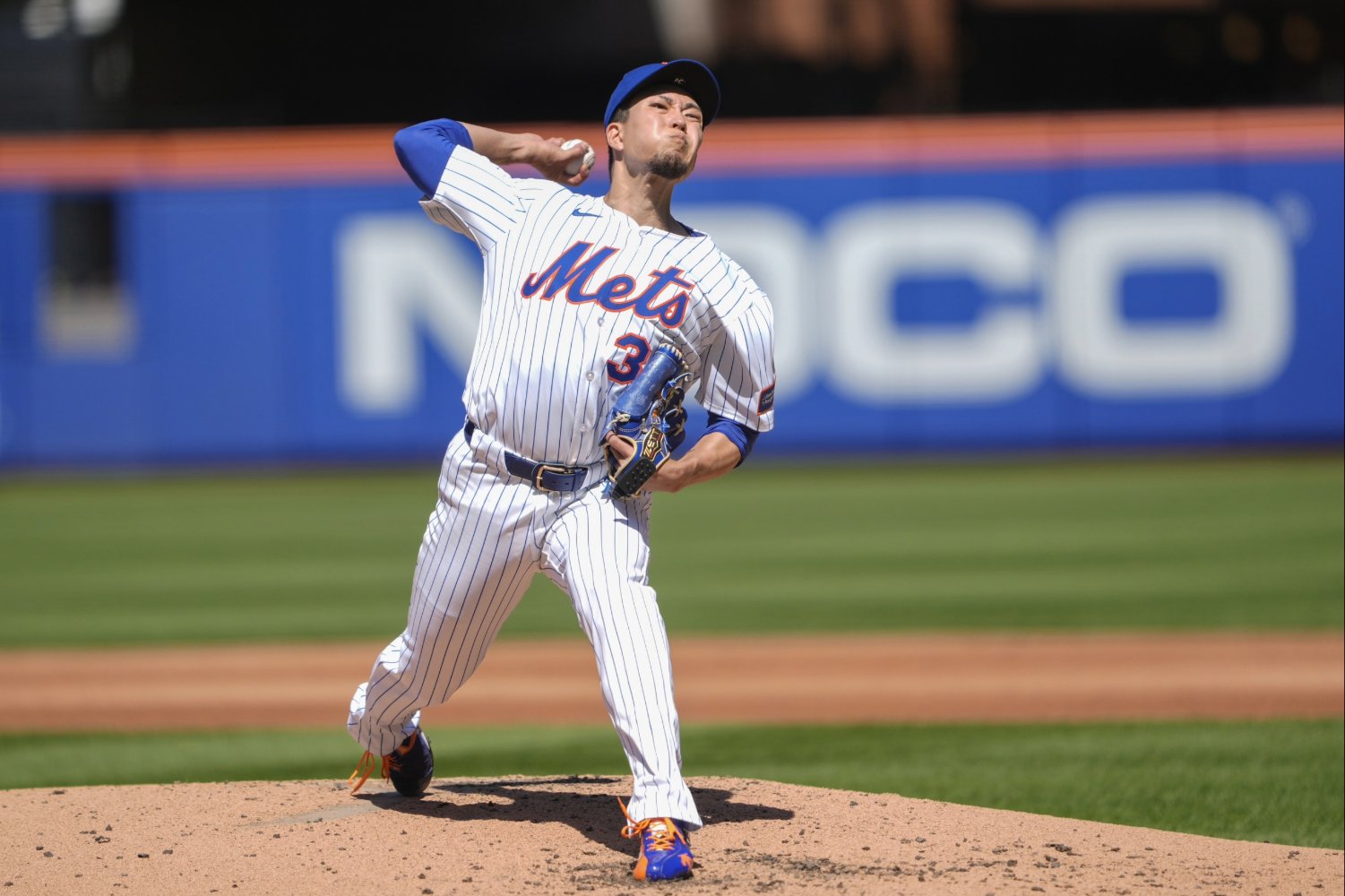 There was a point in 2025 where New York Mets starting pitcher Kodai Senga looked like he was ready for the breakthrough that would let him live among the game's top-tier arms. He pitched to a 1.39 ERA in the first half of the season and ended June with a 26.2 percent strikeout rate and 7.1 percent walk rate that each represented his best in an individual month up to that point. Then, the second half hit. As the Mets faltered in the standings, Senga played his part. His ERA skyrocketed to 6.56, his strikeout rate fell to 20.5 percent in July and August, and his walk rate sat at nearly 13 percent. He was touched for hard contact over 40 percent of the time (by FanGraphs' measure). While he's expressed a desire to stay in Queens, the Mets' attempt to rebuild their roster toward another postseason run has, naturally, led to Senga's name landing on the trade block this winter. Given their absence of starting pitching, it's also natural to ponder whether the San Diego Padres should make a run at the embattled starter. Despite the second-half swoon, Senga isn't without value. He has a career 3.00 ERA (3.82 FIP) in Major League Baseball, with a 26.8 percent strikeout rate and 11.1 percent walk rate across 285 innings. He's also averaged 5.5 innings per start, with longevity proving to be something of an issue for Padres starters in 2025. That's a lot of boxes checked by a player with two years remaining on his contract (and a club option for a third season). Those two years at a $28 million price point makes a whole lot of sense for the Padres, at least on paper. You're getting a pitcher with clear upside in a manner that would provide some stability in the starting five for the next two years, rather than relying on a veteran likely coming in on a one-year contract. To say nothing of the third-year club option that checks in at another $15 million. That's entirely affordable considering the upside. Again, though, we're talking about the addition on paper. There's plenty of reason for pause when analyzing Senga as a potential trade target. While he's averaged decent innings when healthy, he also hasn't been particularly healthy in either of the last two years. He threw just five innings in 2024 before calf and shoulder injuries brought his season to its untimely end. A hamstring issue in June this season was likely a factor in some of his second-half issues that resulted in him spending the stretch run in Triple-A. And then you have to consider those struggles, too. Senga missed fewer bats and was much more liable to serve up barreled contact in July and August than in the months prior. For a team that struggled down the stretch like the Mets did last year, sending one of your highest-upside arms to the minor leagues speaks volumes about where they felt he was from a production standpoint. The upside is obviously tantalizing. Which is why, on paper, a pursuit of Senga on the part of the Padres makes a ton of sense. You get mid-to-front of the rotation production on at least a two-year contract. Numerous vacancies exist on that side of the staff. In an ideal world, you acquire Senga and stabilize your rotation in '26 and '27. But the upside is also likely a reason the Mets wouldn't give Senga away for a soft return, with the injury and performance woes in the last two seasons presenting an absurdly complex scenario. The Padres have so few resources for a trade in their organization at present. Can they afford to dispense with those resources in pursuit of a pitcher who offers so much variability in terms of outcomes? That would be difficult to reckon with when stability should be the name of the game. It borders on being a frustratingly mind-bending scenario for the San Diego Padres. Do you add a veteran starter looking to rebuild value on a reasonable contract or pursue the volatile arm that might cost you prospects but look healthy on the payroll (comparatively)? Not that we've heard anything on the part of interest the Padres could have. But considering where the rotation stands, any arm deemed available by way of the trade winds is going to be an obvious connection. Whether this particular arm could or should be a target, however, is a question with an answer that could roll on for miles.
 -
There was a point in 2025 where New York Mets starting pitcher Kodai Senga looked like he was ready for the breakthrough that would let him live among the game's top-tier arms. He pitched to a 1.39 ERA in the first half of the season and ended June with a 26.2 percent strikeout rate and 7.1 percent walk rate that each represented his best in an individual month up to that point. Then, the second half hit. As the Mets faltered in the standings, Senga played his part. His ERA skyrocketed to 6.56, his strikeout rate fell to 20.5 percent in July and August, and his walk rate sat at nearly 13 percent. He was touched for hard contact over 40 percent of the time (by FanGraphs' measure). While he's expressed a desire to stay in Queens, the Mets' attempt to rebuild their roster toward another postseason run has, naturally, led to Senga's name landing on the trade block this winter. Given their absence of starting pitching, it's also natural to ponder whether the San Diego Padres should make a run at the embattled starter. Despite the second-half swoon, Senga isn't without value. He has a career 3.00 ERA (3.82 FIP) in Major League Baseball, with a 26.8 percent strikeout rate and 11.1 percent walk rate across 285 innings. He's also averaged 5.5 innings per start, with longevity proving to be something of an issue for Padres starters in 2025. That's a lot of boxes checked by a player with two years remaining on his contract (and a club option for a third season). Those two years at a $28 million price point makes a whole lot of sense for the Padres, at least on paper. You're getting a pitcher with clear upside in a manner that would provide some stability in the starting five for the next two years, rather than relying on a veteran likely coming in on a one-year contract. To say nothing of the third-year club option that checks in at another $15 million. That's entirely affordable considering the upside. Again, though, we're talking about the addition on paper. There's plenty of reason for pause when analyzing Senga as a potential trade target. While he's averaged decent innings when healthy, he also hasn't been particularly healthy in either of the last two years. He threw just five innings in 2024 before calf and shoulder injuries brought his season to its untimely end. A hamstring issue in June this season was likely a factor in some of his second-half issues that resulted in him spending the stretch run in Triple-A. And then you have to consider those struggles, too. Senga missed fewer bats and was much more liable to serve up barreled contact in July and August than in the months prior. For a team that struggled down the stretch like the Mets did last year, sending one of your highest-upside arms to the minor leagues speaks volumes about where they felt he was from a production standpoint. The upside is obviously tantalizing. Which is why, on paper, a pursuit of Senga on the part of the Padres makes a ton of sense. You get mid-to-front of the rotation production on at least a two-year contract. Numerous vacancies exist on that side of the staff. In an ideal world, you acquire Senga and stabilize your rotation in '26 and '27. But the upside is also likely a reason the Mets wouldn't give Senga away for a soft return, with the injury and performance woes in the last two seasons presenting an absurdly complex scenario. The Padres have so few resources for a trade in their organization at present. Can they afford to dispense with those resources in pursuit of a pitcher who offers so much variability in terms of outcomes? That would be difficult to reckon with when stability should be the name of the game. It borders on being a frustratingly mind-bending scenario for the San Diego Padres. Do you add a veteran starter looking to rebuild value on a reasonable contract or pursue the volatile arm that might cost you prospects but look healthy on the payroll (comparatively)? Not that we've heard anything on the part of interest the Padres could have. But considering where the rotation stands, any arm deemed available by way of the trade winds is going to be an obvious connection. Whether this particular arm could or should be a target, however, is a question with an answer that could roll on for miles. View full article
-
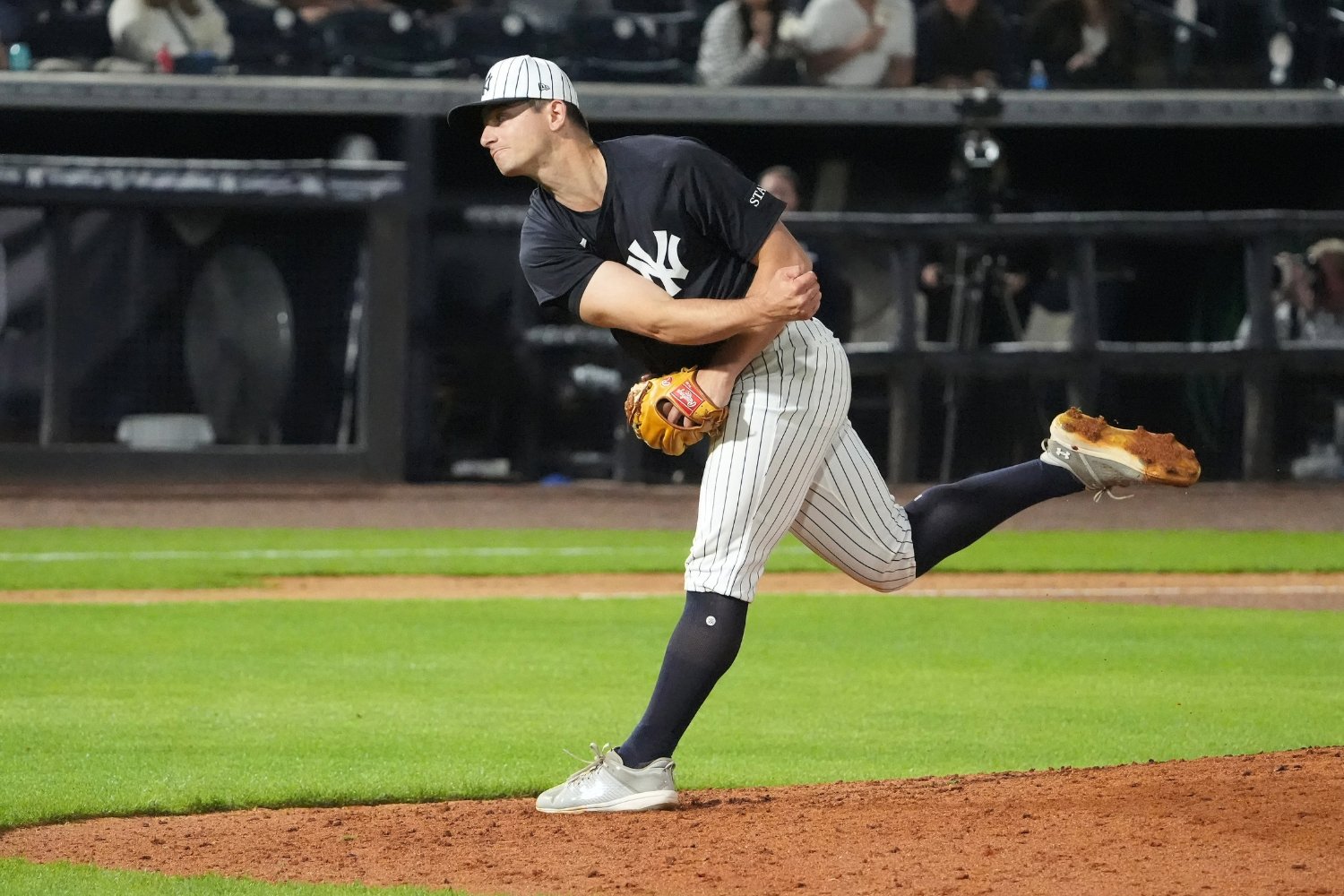 It was a quiet move that barely broke through the list of transactions on the Major League Baseball website, but the San Diego Padres have made another depth signing for a depleted pitching staff in former New York Yankees prospect Sean Boyle. It's a minor-league deal, but one that could have at least some bearing on the 2026 campaign. Boyle is a full year removed from a 2023 Tommy John surgery, spending the entirety of the '25 season with the Yankees' Triple-A affiliate in Scranton/Wilkes-Barre. He made 28 appearances (23 starts) and pitched to a 4.61 ERA (4.63 FIP) with a 20.5 percent strikeout rate and 8.7 percent walk rate. The results could be classified as barely-better-than-average, but it is worth noting that he threw more innings than any arm the Padres had in El Paso last season. There also may be a touch more upside to be realized than he demonstrated in 2025. While never a marquee prospect with the Yankees, Boyle did crack their list of Top 30 prospects in 2023. His MLB Pipeline writeup that year included the following: Based on that, Boyle is (in a sense) a 2.5-pitch pitcher. He offers the sweeper that can take the shape of a cutter while throwing a two-seam fastball that induces groundball contact. There isn't an overpowering component in his arsenal, but his pre-surgery numbers are indicative of a pitcher with higher upside on the strikeout side even if the command has left a little to be desired. As such, this other bit from his writeup is less surprising: There's a tightrope element to his game that isn't ideal. But each side of the scouting report does speak to a player who can be a regular contributor either as a backend starter or as more of a bulk type in relief, especially given the idea that his stuff will play against hitters of both handedness. Said stuff, even if not overpowering, should, on paper, combine with his proclivity for volume to provide a sense of stability in whatever role Boyle finds himself in. That is absolutely something this Padres team could use. The rotation itself is still depleted. Nick Pivetta is the only starter guaranteed a spot on the Opening Day roster. While Joe Musgrove may not be far behind and the team could opt to look at someone like Mason Miller for a starting gig, this is a team in dire need of arms to eat innings. It remains to be seen if Kyle Hart can fill such a role in Year 2 with the organization. Boyle, despite his lack of experience at the top level, appears capable of providing just that. It's another unexciting move for an organization starved for some stability following the confirmed departure of Dylan Cease and imminent one of Michael King. But, like the re-signing of Hart, it's one that is entirely necessary considering where the team stands on the mound at present.
 -
It was a quiet move that barely broke through the list of transactions on the Major League Baseball website, but the San Diego Padres have made another depth signing for a depleted pitching staff in former New York Yankees prospect Sean Boyle. It's a minor-league deal, but one that could have at least some bearing on the 2026 campaign. Boyle is a full year removed from a 2023 Tommy John surgery, spending the entirety of the '25 season with the Yankees' Triple-A affiliate in Scranton/Wilkes-Barre. He made 28 appearances (23 starts) and pitched to a 4.61 ERA (4.63 FIP) with a 20.5 percent strikeout rate and 8.7 percent walk rate. The results could be classified as barely-better-than-average, but it is worth noting that he threw more innings than any arm the Padres had in El Paso last season. There also may be a touch more upside to be realized than he demonstrated in 2025. While never a marquee prospect with the Yankees, Boyle did crack their list of Top 30 prospects in 2023. His MLB Pipeline writeup that year included the following: Based on that, Boyle is (in a sense) a 2.5-pitch pitcher. He offers the sweeper that can take the shape of a cutter while throwing a two-seam fastball that induces groundball contact. There isn't an overpowering component in his arsenal, but his pre-surgery numbers are indicative of a pitcher with higher upside on the strikeout side even if the command has left a little to be desired. As such, this other bit from his writeup is less surprising: There's a tightrope element to his game that isn't ideal. But each side of the scouting report does speak to a player who can be a regular contributor either as a backend starter or as more of a bulk type in relief, especially given the idea that his stuff will play against hitters of both handedness. Said stuff, even if not overpowering, should, on paper, combine with his proclivity for volume to provide a sense of stability in whatever role Boyle finds himself in. That is absolutely something this Padres team could use. The rotation itself is still depleted. Nick Pivetta is the only starter guaranteed a spot on the Opening Day roster. While Joe Musgrove may not be far behind and the team could opt to look at someone like Mason Miller for a starting gig, this is a team in dire need of arms to eat innings. It remains to be seen if Kyle Hart can fill such a role in Year 2 with the organization. Boyle, despite his lack of experience at the top level, appears capable of providing just that. It's another unexciting move for an organization starved for some stability following the confirmed departure of Dylan Cease and imminent one of Michael King. But, like the re-signing of Hart, it's one that is entirely necessary considering where the team stands on the mound at present. View full article
-
Is Willi Castro the Ideal Position Player Target for Padres This Offseason?
Randy Holt posted an article in Padres
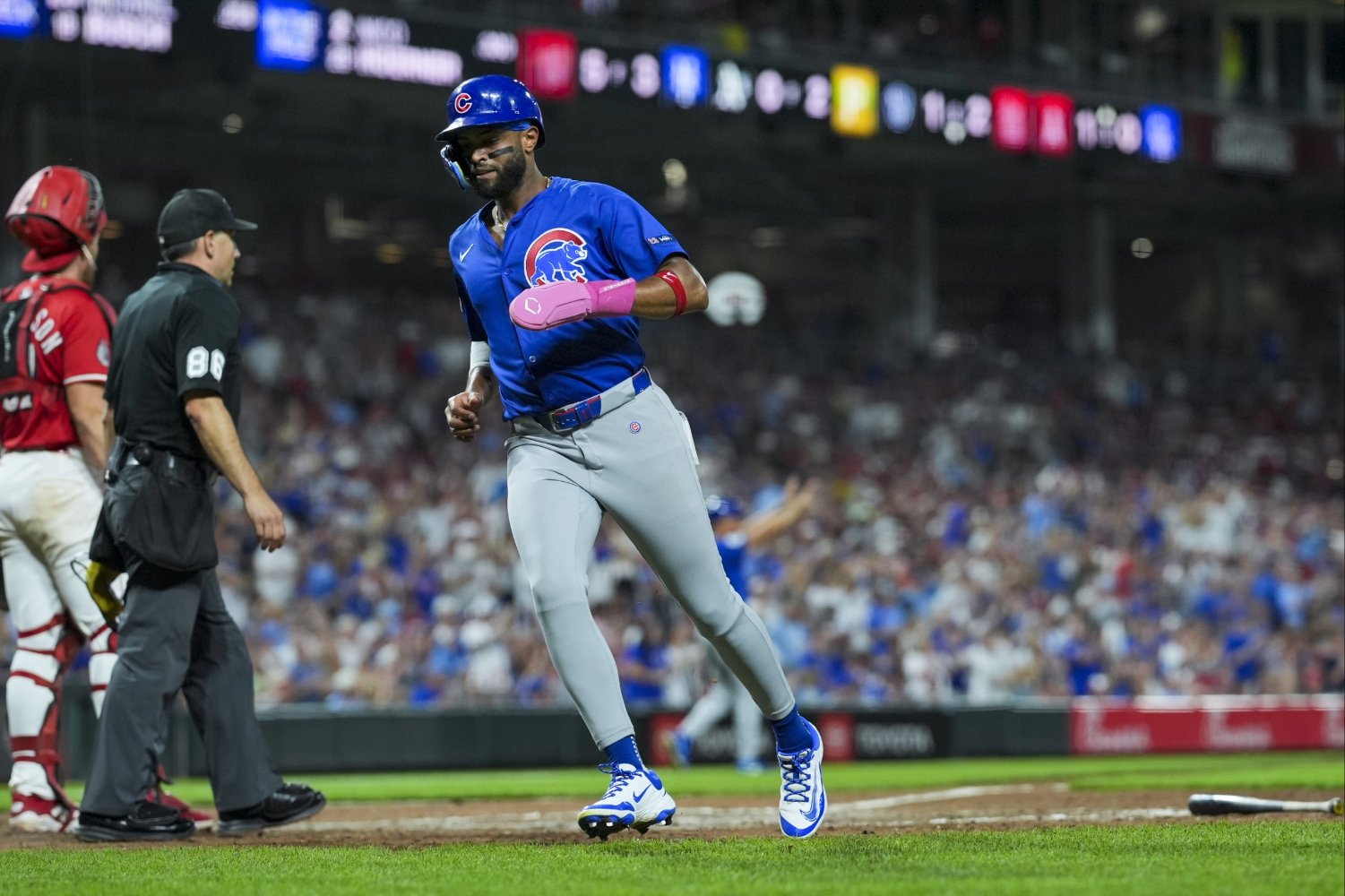 There are a couple of certainties when it comes to how the San Diego Padres might set out toward building their 2026 roster this winter. The first is a focus on pitching. This is a team losing Dylan Cease and Michael King to free agency. On the same note, Yu Darvish will miss all of next year. The rotation is in a bad way. Even if they're able to backfill some spots from the bullpen, they would then need to shore up the depth in relief. Regardless of how any actual addition transpires, the most notable ones will likely be on the mound. The second is that the team is likely going to fill their bench spots in a similar fashion to last year. The Padres went with the volume approach on fringe guys in 2025. Jason Heyward, Jose Iglesias, Tyler Wade, and Gavin Sheets (among others) were all brought in on minor-league deals. Only Iglesias and Sheets stuck around throughout the season, and only Sheets has a longer-term outlook with the organization. Having already signed Pablo Reyes to a minor-league pact, we should expect to see plenty more of that type of contract making their way to Peoria, Arizona next spring for a shot at the roster. But given how things transpired for the Padres in 2025, it's clear they can't rely solely on minor-league deals to fill out depth spots. When you lose games to injury — as the Padres did with Jackson Merrill, Xander Bogaerts, Ramón Laureano all missing notable time — and need to ensure breaks for the likes of Manny Machado or Fernando Tatis Jr. in the field, the likes of a Heyward or an Iglesias scattered throughout the bench are simply not enough to get the job done. Which is why Willi Castro represents the ideal candidate for the San Diego Padres to pursue this winter. A former Detroit Tiger, Minnesota Twin, and Chicago Cub, Castro hits free agency coming off a tough stretch following a deadline deal that landed him on the North Side of Chicago. Castro hit just .170 and reached base at a paltry .245 clip following the trade, relying primarily on his approach (16.0 percent walk rate in September) to drum up any semblance of value at the plate. He was worth -0.5 bWAR in 110 plate appearances with the Cubs. It's hard to put much stock in a player's post-deadline performance when said player changes his home stadium. Which is why Castro's career line — .244/.313/.384 with a wRC+ of 95 — represents something much more important. Even more notable is the fact that in his last two full seasons in Minnesota, he was an above-average hitter (107 wRC+) who added value on the bases (47 steals between 2023 & 2024). So, while his power has been uneven in his career, there's a steadiness to his bat and baserunning that the Padres lacked entirely in their reserves in 2025. Of course, the most important component that Castro brings is in his versatility. While not particularly elite at any position, he continues to log time all over the field in 2025. For Minnesota and Chicago last season, he totaled 264.2 innings at second base, 129 innings at third base, 26 innings at shortstop, 261.2 innings in left field, 35 innings in center field, and 256 innings in right field. His history prior to '25 includes a much longer run at short and in center, too. That level of versatility verges on being considered an everyday player rather than a true bench type. As such, Castro stands to receive a decent contract this winter, even if on a shorter term than some of his peers. At present, the Padres are without any sort of positional depth both on their roster and in the upper levels of the minors. Their 40-man roster includes Mason McCoy and Will Wagner on the infield, and Bryce Johnson and Tiros Ornelas in the outfield. None of those players offers the level of coverage that Castro can provide from a positional standpoint. McCoy and Wagner are each limited to the dirt while Johnson and Ornelas are stuck on the grass, all with shortcomings on the offensive side. Castro not only offers that coverage in a way that is extremely efficient for this roster but possesses a higher (read: any) upside at the plate. MLB Trade Rumors projects a two-year, $15 million deal for Castro. Even operating on a tight budget, that's not only something the Padres can afford, but something they should be entirely willing to pursue. The benefit of a player like Castro is that you can roster him and then scatter those six-figure minor-league pacts throughout the roster in a way that allows you to follow a singular skill set without trying to catch some kind of magic in the cheapest way possible. On that term and at that price point, Willi Castro isn't only a desirable entity for this roster, but an essential one.
 -
There are a couple of certainties when it comes to how the San Diego Padres might set out toward building their 2026 roster this winter. The first is a focus on pitching. This is a team losing Dylan Cease and Michael King to free agency. On the same note, Yu Darvish will miss all of next year. The rotation is in a bad way. Even if they're able to backfill some spots from the bullpen, they would then need to shore up the depth in relief. Regardless of how any actual addition transpires, the most notable ones will likely be on the mound. The second is that the team is likely going to fill their bench spots in a similar fashion to last year. The Padres went with the volume approach on fringe guys in 2025. Jason Heyward, Jose Iglesias, Tyler Wade, and Gavin Sheets (among others) were all brought in on minor-league deals. Only Iglesias and Sheets stuck around throughout the season, and only Sheets has a longer-term outlook with the organization. Having already signed Pablo Reyes to a minor-league pact, we should expect to see plenty more of that type of contract making their way to Peoria, Arizona next spring for a shot at the roster. But given how things transpired for the Padres in 2025, it's clear they can't rely solely on minor-league deals to fill out depth spots. When you lose games to injury — as the Padres did with Jackson Merrill, Xander Bogaerts, Ramón Laureano all missing notable time — and need to ensure breaks for the likes of Manny Machado or Fernando Tatis Jr. in the field, the likes of a Heyward or an Iglesias scattered throughout the bench are simply not enough to get the job done. Which is why Willi Castro represents the ideal candidate for the San Diego Padres to pursue this winter. A former Detroit Tiger, Minnesota Twin, and Chicago Cub, Castro hits free agency coming off a tough stretch following a deadline deal that landed him on the North Side of Chicago. Castro hit just .170 and reached base at a paltry .245 clip following the trade, relying primarily on his approach (16.0 percent walk rate in September) to drum up any semblance of value at the plate. He was worth -0.5 bWAR in 110 plate appearances with the Cubs. It's hard to put much stock in a player's post-deadline performance when said player changes his home stadium. Which is why Castro's career line — .244/.313/.384 with a wRC+ of 95 — represents something much more important. Even more notable is the fact that in his last two full seasons in Minnesota, he was an above-average hitter (107 wRC+) who added value on the bases (47 steals between 2023 & 2024). So, while his power has been uneven in his career, there's a steadiness to his bat and baserunning that the Padres lacked entirely in their reserves in 2025. Of course, the most important component that Castro brings is in his versatility. While not particularly elite at any position, he continues to log time all over the field in 2025. For Minnesota and Chicago last season, he totaled 264.2 innings at second base, 129 innings at third base, 26 innings at shortstop, 261.2 innings in left field, 35 innings in center field, and 256 innings in right field. His history prior to '25 includes a much longer run at short and in center, too. That level of versatility verges on being considered an everyday player rather than a true bench type. As such, Castro stands to receive a decent contract this winter, even if on a shorter term than some of his peers. At present, the Padres are without any sort of positional depth both on their roster and in the upper levels of the minors. Their 40-man roster includes Mason McCoy and Will Wagner on the infield, and Bryce Johnson and Tiros Ornelas in the outfield. None of those players offers the level of coverage that Castro can provide from a positional standpoint. McCoy and Wagner are each limited to the dirt while Johnson and Ornelas are stuck on the grass, all with shortcomings on the offensive side. Castro not only offers that coverage in a way that is extremely efficient for this roster but possesses a higher (read: any) upside at the plate. MLB Trade Rumors projects a two-year, $15 million deal for Castro. Even operating on a tight budget, that's not only something the Padres can afford, but something they should be entirely willing to pursue. The benefit of a player like Castro is that you can roster him and then scatter those six-figure minor-league pacts throughout the roster in a way that allows you to follow a singular skill set without trying to catch some kind of magic in the cheapest way possible. On that term and at that price point, Willi Castro isn't only a desirable entity for this roster, but an essential one. View full article
-
Pablo Reyes Signing Is First of a Familiar Trend for Padres This Offseason
Randy Holt posted an article in Padres
 When the San Diego Padres were building their bench for the 2025 season, they followed a very specific formula. With little money to invest (save for the deal to which they signed Nick Pivetta), the reserve group was comprised largely of minor-league signings that were selected to the active roster ahead of the start of the regular season. Sometimes it works. It's how the team was able to bring Gavin Sheets into the fold. Other — and perhaps more frequent — times, it doesn't. None of Jason Heyward, Oscar González, Martín Maldonado, Tyler Wade, Yuli Gurriel, Connor Joe, or Jose Iglesias offered much in the way of contributions throughout the season. Almost all of those names were off the roster and out of the organization in short order. Only Iglesias made it all the way through, and that was on the strength of his versatility above all. In San Diego's case, it was an ineffectual way to fill out the roster. Unfortunately for the Padres, it's likely how next year's depth will also be assembled. And we've already seen the start of it. The team signed Pablo Reyes to a minor-league deal last week. A utility veteran with time in seven separate seasons in Major League Baseball, Reyes' peak in volume came back in 2023. That season, he logged 185 plate appearances for the Milwaukee Brewers and was as close to checking in as a league average bat as he has in his entire career (95 wRC+). While he didn't offer anything in the way of power off the bench (.090 ISO), he struck out just 11.4 percent of the time, walked at a 7.6 percent rate, and added seven steals. He also hasn't remotely approached that output since. In the two subsequent seasons, Reyes has 98 combined plate appearances at the top level. He got into games on 21 occasions for the Boston Red Sox and made a single appearance for the New York Mets in 2024 (though he failed to make an appearance at the plate with the latter). He's now coming off a season in which he appeared in 25 games and notched 34 plate appearances with the New York Yankees. Even by the lower standard set forth by such a small sample of offensive work, the numbers are uninspiring. Reyes' strikeout rate in each of the last two years has approached 30 percent. His walk rate sits lower than it did in that decent '23 campaign, and there is almost zero power to speak of (.033 ISO). This is a player whose value is almost entirely wrapped up his ability to move around the field. In that sense, Reyes is, essentially, Jose Iglesias. But worse. There was a time when Reyes represented the super-utility type well. Second base, third base, shortstop, and all three outfield spots were at his disposal at each of the major league and Triple-A levels. That level of versatility, however, has started to diminish. His time on the outfield grass has waned as he's settled into a rotation between second, third, and short. Now, that's something that the Padres need given Iglesias' departure. But as lackluster as Iglesias' bat was, you'd like that extra bit of versatility in order to justify an even worse one in his stead. It's obviously possible that the team makes an additional investment or two that offers additional upside. And it's hard to get too worked up about a depth signing that occurs in November. What this does, however, is speak to the same trend we saw from the Padres last offseason continuing into this one. If there's an investment to be made, it's on the mound. The team is in need of significant help in the rotation and some additional depth in the bullpen. The limited financial resources at their disposal will likely be deployed there. The position group, meanwhile, will be supplemented with exactly this type of signing. Sometimes you get a Sheets. But considering the direction which Reyes' career has taken in recent years, you're looking like something much more akin to the much larger group of failed bench players that the team saw last year.
 -
When the San Diego Padres were building their bench for the 2025 season, they followed a very specific formula. With little money to invest (save for the deal to which they signed Nick Pivetta), the reserve group was comprised largely of minor-league signings that were selected to the active roster ahead of the start of the regular season. Sometimes it works. It's how the team was able to bring Gavin Sheets into the fold. Other — and perhaps more frequent — times, it doesn't. None of Jason Heyward, Oscar González, Martín Maldonado, Tyler Wade, Yuli Gurriel, Connor Joe, or Jose Iglesias offered much in the way of contributions throughout the season. Almost all of those names were off the roster and out of the organization in short order. Only Iglesias made it all the way through, and that was on the strength of his versatility above all. In San Diego's case, it was an ineffectual way to fill out the roster. Unfortunately for the Padres, it's likely how next year's depth will also be assembled. And we've already seen the start of it. The team signed Pablo Reyes to a minor-league deal last week. A utility veteran with time in seven separate seasons in Major League Baseball, Reyes' peak in volume came back in 2023. That season, he logged 185 plate appearances for the Milwaukee Brewers and was as close to checking in as a league average bat as he has in his entire career (95 wRC+). While he didn't offer anything in the way of power off the bench (.090 ISO), he struck out just 11.4 percent of the time, walked at a 7.6 percent rate, and added seven steals. He also hasn't remotely approached that output since. In the two subsequent seasons, Reyes has 98 combined plate appearances at the top level. He got into games on 21 occasions for the Boston Red Sox and made a single appearance for the New York Mets in 2024 (though he failed to make an appearance at the plate with the latter). He's now coming off a season in which he appeared in 25 games and notched 34 plate appearances with the New York Yankees. Even by the lower standard set forth by such a small sample of offensive work, the numbers are uninspiring. Reyes' strikeout rate in each of the last two years has approached 30 percent. His walk rate sits lower than it did in that decent '23 campaign, and there is almost zero power to speak of (.033 ISO). This is a player whose value is almost entirely wrapped up his ability to move around the field. In that sense, Reyes is, essentially, Jose Iglesias. But worse. There was a time when Reyes represented the super-utility type well. Second base, third base, shortstop, and all three outfield spots were at his disposal at each of the major league and Triple-A levels. That level of versatility, however, has started to diminish. His time on the outfield grass has waned as he's settled into a rotation between second, third, and short. Now, that's something that the Padres need given Iglesias' departure. But as lackluster as Iglesias' bat was, you'd like that extra bit of versatility in order to justify an even worse one in his stead. It's obviously possible that the team makes an additional investment or two that offers additional upside. And it's hard to get too worked up about a depth signing that occurs in November. What this does, however, is speak to the same trend we saw from the Padres last offseason continuing into this one. If there's an investment to be made, it's on the mound. The team is in need of significant help in the rotation and some additional depth in the bullpen. The limited financial resources at their disposal will likely be deployed there. The position group, meanwhile, will be supplemented with exactly this type of signing. Sometimes you get a Sheets. But considering the direction which Reyes' career has taken in recent years, you're looking like something much more akin to the much larger group of failed bench players that the team saw last year. View full article
-
 Luis Campusano's role with the San Diego Padres has been one of the more perplexing organizational developments over the last handful of seasons. Peaking as the team's No. 3 overall prospect in each of 2021 and 2022, the backstop has never quite gotten the run that his offensive upside might have deserved. Now on his last legs with the franchise, the 2026 campaign will finally reveal all about his long-term outlook in San Diego. After a cup of coffee in each of those two seasons when he was a top prospect, the 2023 season looked like the one where Campusano was finally going to get some run behind the plate. Given that he turned in his best season to date, turning in a .319/.356/.491 line and a 133 wRC+ across 174 plate appearances, that should have been the case. Health pinned down his ability to produce over a longer stretch, but it did lead to a decent run in the following year. However, Campusano was unable to duplicate his offensive success in 2024 — his line read .227/.281/.361, with a wRC+ of 83 in 299 PA — and his defensive grades were woeful (-13 Fielding Run Value, -17 Defensive Runs Saved). He would cede virtually all playing time to Kyle Higashioka and Elías Díaz by year's end. Unconvinced by such a downward turn in his development, the Padres turned to a combination of Díaz and Martín Maldonado ahead of 2025. Freddy Fermin was acquired at the deadline to gain further stability at the position. It'll be Fermin behind the dish for '26, with Higashioka long gone, Díaz a free agent, and Maldonado calling it a career at the outset of this offseason. Behind him, however, there's some space for depth. And if the Padres are finally going to understand what they have in Luis Campusano, it should likely be him as the No. 2 to start the season. The offensive upside is undeniable. Despite garnering only 27 trips to the plate in 2025 with the Padres, Campusano turned in an excellent year as a hitter in El Paso. His final line read .336/.441/.595 with a 148 wRC+. Perhaps most impressive was the fact that he nearly matched a strong strikeout rate (17.3 percent) with a quality walk figure (15.2 percent). He walked in 22.2 percent of his minuscule amount of plate appearances at the top level as well. Even if he struck out at a 40 percent clip, there's an approach there that is worth spending some time with in the lineup. The issue for the Padres will be getting Campusano playing time with this pitching staff. It's difficult to justify time for a poor defensive catcher with a group as quality as the Padres are in relief. It's even more so to deploy such a catcher with a starting staff that figures to exist heavily on the margins given an intense lack of depth and few dollars to play with this winter. You need a stabilizing presence back there. Fermin offers that as a starter and most teams are willing to compromise offense from their backup in the name of the glove, not the other way around. That the Padres were willing to tender a contract to Campusano speaks to the idea that this could be the year they consider giving him some actual run as a backup catcher and bench bat. There's a whole winter ahead to work with him. Maybe that time is dedicated to shoring up his skill behind the plate. Otherwise, he may not be long for the roster with a handful of savvy veterans now available in free agency at a lower price point. In any case, though, the relationship between player and organization is reaching its inflection point. If it doesn't work, then you're left with a couple of options. You either move him in the spring to a team that is intrigued enough by the bat, or you select the catcher to be inevitably added via a minor-league deal ahead of the spring. Either outcome isn't a terrible one. They both, however, fall short of what would be the preferred option: Luis Campusano shows enough with the glove to justify his presence on the roster while adding a more-than-capable bench bat to a Padres roster sorely in need of offensive depth. Of course, any road toward determining exactly what the future looks like for Luis Campusano will require the Padres to give him a legitimate leash.
 -
Luis Campusano's role with the San Diego Padres has been one of the more perplexing organizational developments over the last handful of seasons. Peaking as the team's No. 3 overall prospect in each of 2021 and 2022, the backstop has never quite gotten the run that his offensive upside might have deserved. Now on his last legs with the franchise, the 2026 campaign will finally reveal all about his long-term outlook in San Diego. After a cup of coffee in each of those two seasons when he was a top prospect, the 2023 season looked like the one where Campusano was finally going to get some run behind the plate. Given that he turned in his best season to date, turning in a .319/.356/.491 line and a 133 wRC+ across 174 plate appearances, that should have been the case. Health pinned down his ability to produce over a longer stretch, but it did lead to a decent run in the following year. However, Campusano was unable to duplicate his offensive success in 2024 — his line read .227/.281/.361, with a wRC+ of 83 in 299 PA — and his defensive grades were woeful (-13 Fielding Run Value, -17 Defensive Runs Saved). He would cede virtually all playing time to Kyle Higashioka and Elías Díaz by year's end. Unconvinced by such a downward turn in his development, the Padres turned to a combination of Díaz and Martín Maldonado ahead of 2025. Freddy Fermin was acquired at the deadline to gain further stability at the position. It'll be Fermin behind the dish for '26, with Higashioka long gone, Díaz a free agent, and Maldonado calling it a career at the outset of this offseason. Behind him, however, there's some space for depth. And if the Padres are finally going to understand what they have in Luis Campusano, it should likely be him as the No. 2 to start the season. The offensive upside is undeniable. Despite garnering only 27 trips to the plate in 2025 with the Padres, Campusano turned in an excellent year as a hitter in El Paso. His final line read .336/.441/.595 with a 148 wRC+. Perhaps most impressive was the fact that he nearly matched a strong strikeout rate (17.3 percent) with a quality walk figure (15.2 percent). He walked in 22.2 percent of his minuscule amount of plate appearances at the top level as well. Even if he struck out at a 40 percent clip, there's an approach there that is worth spending some time with in the lineup. The issue for the Padres will be getting Campusano playing time with this pitching staff. It's difficult to justify time for a poor defensive catcher with a group as quality as the Padres are in relief. It's even more so to deploy such a catcher with a starting staff that figures to exist heavily on the margins given an intense lack of depth and few dollars to play with this winter. You need a stabilizing presence back there. Fermin offers that as a starter and most teams are willing to compromise offense from their backup in the name of the glove, not the other way around. That the Padres were willing to tender a contract to Campusano speaks to the idea that this could be the year they consider giving him some actual run as a backup catcher and bench bat. There's a whole winter ahead to work with him. Maybe that time is dedicated to shoring up his skill behind the plate. Otherwise, he may not be long for the roster with a handful of savvy veterans now available in free agency at a lower price point. In any case, though, the relationship between player and organization is reaching its inflection point. If it doesn't work, then you're left with a couple of options. You either move him in the spring to a team that is intrigued enough by the bat, or you select the catcher to be inevitably added via a minor-league deal ahead of the spring. Either outcome isn't a terrible one. They both, however, fall short of what would be the preferred option: Luis Campusano shows enough with the glove to justify his presence on the roster while adding a more-than-capable bench bat to a Padres roster sorely in need of offensive depth. Of course, any road toward determining exactly what the future looks like for Luis Campusano will require the Padres to give him a legitimate leash. View full article
-
 Regardless of the shape the winter takes for the San Diego Padres in a financial sense, they have clear roster needs. On the positional side, they need a first baseman and they need a designated hitter (assuming they don't create a vacancy by moving a different position player via trade). Gavin Sheets figures to fill one of those roles, at least in a timeshare situation. Considering his defensive shortcomings as a full-time player, one imagines he's best suited for work as the extra hitter above a permanent position. Which means that first base stands as the largest positional need for the Padres as they venture into the winter months. The Padres primarily relied upon Luis Arráez at the "3" spot in the field in 2025. He logged nearly 1,000 innings at the position last year, with the eye test serving him a bit better than his -6 Outs Above Average. While he never looked quite as bad as the numbers might indicate, his light-hitting skill set was never meant for a position which demands a certain degree of power. The team's trade deadline acquisition of Ryan O'Hearn didn't do much to improve the offensive side, nor did it eat away too much from Arráez's time. The 2025 context notwithstanding, the Padres embarked on this offseason without a solution at first for 2026. Each of Arráez and O'Hearn are free agents and neither appears terribly likely to return given their respective struggles in various areas last season, as well as what they might be expecting in their next contract. Which means that, whether via trade or free-agent signing, the team needs to seek an outside source in order to fill that vacancy. Free agent candidates are likely out. Josh Naylor already re-signed in Seattle on a massive five-year deal. Pete Alonso will demand much more beyond what the Padres would be willing to offer. Many of the remaining options are players that linger around replacement level or aren't anything beyond bench bats at this stage of their career. Which means that if the Padres are seeking a full-time solution to their first base situation, it's going to have to come via trade; a complicated situation for a team sitting at the bottom of the farm system rankings. Which is why St. Louis Cardinals first baseman Willson Contreras may offer the most effective answer. Such a move would be the truest response to the need within the lineup. Though even that answer is not without complications, especially considering that this is the same Contreras you might remember from this interaction with the Padres in 2025: One never quite knows how much on-field turmoil like this impacts whether a player would play for the opposite franchise. We've seen players become declarative about not joining division rivals (Vladimir Guerrero Jr., for instance). But, candidly, if Contreras — who we're speaking about in this manner because he has a full no-trade clause — was hung up on joining teams with which he's had some sort of spat, that would drastically limit his market. He's a fiery player who joined his former club's biggest rival in St. Louis in free agency. It's hard to imagine this instance would deter him too much from joining a contender. But regardless of what unfolded in July of this year, Willson Contreras is very much a player in which the San Diego Padres should have interest. He's been a remarkably consistent player, even upon his transition to first base, maintaining a career 122 wRC+ and .202 ISO to compliment a .258/.352/.459 slash. As much as a deal in itself could be complicated, the fit is not. The Padres need right-handed power at first base. Contreras offers exactly that. Of course, you have to immediately navigate the aforementioned full no-trade clause. That's issue No. 1. Though if the Padres remain in contention in the National League, it's hard to imagine that as a significant hurdle to overcome. The Cardinals are rebuilding or retooling on some level to the point where the remainder of his contract could be spent with a non-contending club. One imagines the opportunity to compete in America's Finest City™ is an opportunity that the majority of players would find enticing. The contract represents the second complication. His deal, which runs through 2027 (with a 2028 club option), carries a $17.5 million AAV. As much as you'd love that level of cost-certainty for a steady bat in your lineup, whether the Padres can fit that into their payroll remains to be seen, given their much-more-significant needs that exist on the mound. But cost-certainty is cost-certainty, and that feels like an affordable price that fits within your contention window. If they can make the money fit, then it only enhances the logic. That, however, leads us to the third complication. The Padres have to have the prospects with which to part that St. Louis would find enticing. You're obviously not talking about one of the very elite bats that would require an elite farm system. But you are talking about an upper-tier hitter at a position of clear need. Even if the Cardinals are looking to get money off their books, it's not as if they're set to give Contreras away for the sake of freeing up money amidst a retool period. It will require at least one legitimate prospect or a volume in the way the Padres approached their deadline deal with Baltimore. In short, a hypothetical pursuit of Willson Contreras is the most logical position-player deal the team could pursue this winter. They need help on the right side of the plate. They have a vacancy at first base. Contreras offers a medium-term solution on both fronts. But they'll have to overcome a handful of complications toward reaching the logical path. Of course, if it was an easy process, then we wouldn't be talking about the San Diego Padres.
 -
Regardless of the shape the winter takes for the San Diego Padres in a financial sense, they have clear roster needs. On the positional side, they need a first baseman and they need a designated hitter (assuming they don't create a vacancy by moving a different position player via trade). Gavin Sheets figures to fill one of those roles, at least in a timeshare situation. Considering his defensive shortcomings as a full-time player, one imagines he's best suited for work as the extra hitter above a permanent position. Which means that first base stands as the largest positional need for the Padres as they venture into the winter months. The Padres primarily relied upon Luis Arráez at the "3" spot in the field in 2025. He logged nearly 1,000 innings at the position last year, with the eye test serving him a bit better than his -6 Outs Above Average. While he never looked quite as bad as the numbers might indicate, his light-hitting skill set was never meant for a position which demands a certain degree of power. The team's trade deadline acquisition of Ryan O'Hearn didn't do much to improve the offensive side, nor did it eat away too much from Arráez's time. The 2025 context notwithstanding, the Padres embarked on this offseason without a solution at first for 2026. Each of Arráez and O'Hearn are free agents and neither appears terribly likely to return given their respective struggles in various areas last season, as well as what they might be expecting in their next contract. Which means that, whether via trade or free-agent signing, the team needs to seek an outside source in order to fill that vacancy. Free agent candidates are likely out. Josh Naylor already re-signed in Seattle on a massive five-year deal. Pete Alonso will demand much more beyond what the Padres would be willing to offer. Many of the remaining options are players that linger around replacement level or aren't anything beyond bench bats at this stage of their career. Which means that if the Padres are seeking a full-time solution to their first base situation, it's going to have to come via trade; a complicated situation for a team sitting at the bottom of the farm system rankings. Which is why St. Louis Cardinals first baseman Willson Contreras may offer the most effective answer. Such a move would be the truest response to the need within the lineup. Though even that answer is not without complications, especially considering that this is the same Contreras you might remember from this interaction with the Padres in 2025: One never quite knows how much on-field turmoil like this impacts whether a player would play for the opposite franchise. We've seen players become declarative about not joining division rivals (Vladimir Guerrero Jr., for instance). But, candidly, if Contreras — who we're speaking about in this manner because he has a full no-trade clause — was hung up on joining teams with which he's had some sort of spat, that would drastically limit his market. He's a fiery player who joined his former club's biggest rival in St. Louis in free agency. It's hard to imagine this instance would deter him too much from joining a contender. But regardless of what unfolded in July of this year, Willson Contreras is very much a player in which the San Diego Padres should have interest. He's been a remarkably consistent player, even upon his transition to first base, maintaining a career 122 wRC+ and .202 ISO to compliment a .258/.352/.459 slash. As much as a deal in itself could be complicated, the fit is not. The Padres need right-handed power at first base. Contreras offers exactly that. Of course, you have to immediately navigate the aforementioned full no-trade clause. That's issue No. 1. Though if the Padres remain in contention in the National League, it's hard to imagine that as a significant hurdle to overcome. The Cardinals are rebuilding or retooling on some level to the point where the remainder of his contract could be spent with a non-contending club. One imagines the opportunity to compete in America's Finest City™ is an opportunity that the majority of players would find enticing. The contract represents the second complication. His deal, which runs through 2027 (with a 2028 club option), carries a $17.5 million AAV. As much as you'd love that level of cost-certainty for a steady bat in your lineup, whether the Padres can fit that into their payroll remains to be seen, given their much-more-significant needs that exist on the mound. But cost-certainty is cost-certainty, and that feels like an affordable price that fits within your contention window. If they can make the money fit, then it only enhances the logic. That, however, leads us to the third complication. The Padres have to have the prospects with which to part that St. Louis would find enticing. You're obviously not talking about one of the very elite bats that would require an elite farm system. But you are talking about an upper-tier hitter at a position of clear need. Even if the Cardinals are looking to get money off their books, it's not as if they're set to give Contreras away for the sake of freeing up money amidst a retool period. It will require at least one legitimate prospect or a volume in the way the Padres approached their deadline deal with Baltimore. In short, a hypothetical pursuit of Willson Contreras is the most logical position-player deal the team could pursue this winter. They need help on the right side of the plate. They have a vacancy at first base. Contreras offers a medium-term solution on both fronts. But they'll have to overcome a handful of complications toward reaching the logical path. Of course, if it was an easy process, then we wouldn't be talking about the San Diego Padres. View full article
-
Padres Have Multiple Paths to Deploying Newly Re-Signed Kyle Hart in 2026
Randy Holt posted an article in Padres
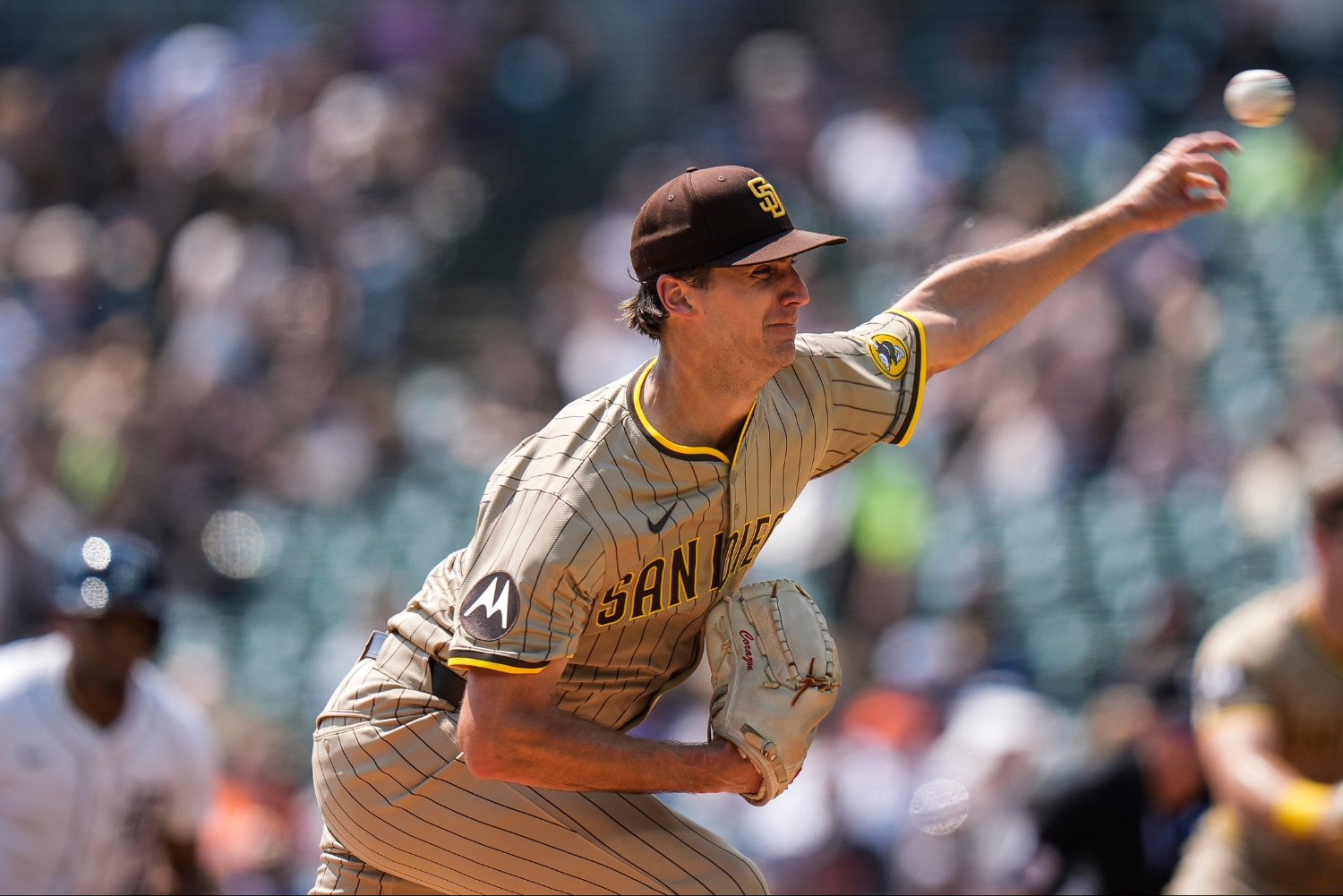 The San Diego Padres registered their first notable transaction of the 2025-26 offseason earlier this week, bringing back pitcher Kyle Hart on a one-year deal with a 2027 option. It's not a needle-mover in any sense, but given the absence of depth in the pitching staff at present, it's the kind of necessary move (at a low price point) that the organization is likely going to seek as they build out their staff for next season. But determining exactly where Hart fits in the staff ahead of next season is anyone's guess. The numbers weren't great in his first season stateside after a year in South Korea. Deployed out of the gate as the fifth starter, Hart's first 21 innings featured a 6.00 ERA and 6.18 FIP across five starts in March and April. That the early season sample includes a six-inning, zero-run start against Colorado speaks to how brutal the rest of his outings were to start the year. As a result, Hart found himself bound for El Paso until July, save for a quick start at the end of May. When Hart returned, it was exclusively in relief. The results remained mixed, but at least not in a way that was putting an extra burden on an already-heavily-utilized relief corps. All told, Hart finished with a 6.66 ERA, a 6.56 FIP, a 15.5 percent strikeout rate, and a 5.5 percent walk rate as a starter (25.2 innings). As a reliever (17.1 innings), he checked in at a 4.67 ERA, a 3.14 FIP, a 29.0 percent strikeout rate, and a 10.1 percent walk rate. On the surface, it's an easy call. Hart was more effective as a reliever, not only in terms of statistical outcomes but in underlying trends. Being more matchup-centric worked in his favor as his hard hit rate was cut by eight percent (20.0) while he generated groundballs at a rate roughly 13 percent higher than as a starter (41.0). And while it's easy to declare matchups as the reason for his success, it's at least a little bit more complicated than that. The following is Hart's pitch usage from 2025: What's interesting is that against left-handed hitters, Hart never threw a changeup or a splitter. In every month, he peppered lefty hitters with sinkers and sweepers, as his cumulative pitch distribution would indicate. But righties weren't getting even close to the same mix. Not that you should expect them to. When Hart was working in relief, though, right-handed hitters saw more changeups in August than any other pitch type while the splitter was his second-most-used offering. It speaks to the overall chaos that one might expect to see when looking at Hart's pitch mix exclusively against righties: It's the look of a guy who didn't necessarily know what he wanted to do. Meanwhile, he was getting decimated by hitters of the opposite handedness. His .359 wOBA allowed versus righty hitters was more than 120 points higher than it was against lefties (.237). His strikeout rate was three percent lower (19.7 percent) and his walk rate three percent higher (8.2 percent) when he was facing a right-handed hitter as opposed to a left-handed one. His hard contact rate (by FanGraphs' reporting of it) was about 20 percent higher when facing a hitter of the opposite handedness. When you combine the chaos of Hart's mix against right-handed hitters with the actual results, you very much have the look of a guy who you want to deploy as more of a specialist (or, at least what can be deemed a specialist given the minimum-batter requirement for relievers these days). And it's not as if there's a real argument to be made at this point, either. Hart was considerably better as a reliever and vastly better against lefties. Keeping him in relief allows you to meld the two and find some sustainable results. How well that matches up against reality, however, remains to be seen. Exclusively working as a reliever is the obvious path. But the Padres likely signed Hart with an eye on a sort of swingman role considering an absence of starting depth (or, you know, actual starters) at present. Which means that some work is going to have to be done with his usage and the subsequent command to get him going toward at least an average track against right-handed hitters. Because the "success vs. lefties, throw everything to righties and find out if any of it works" modus operandi as a starter is exactly what the Padres do not need from Kyle Hart in 2026.
 -
The San Diego Padres registered their first notable transaction of the 2025-26 offseason earlier this week, bringing back pitcher Kyle Hart on a one-year deal with a 2027 option. It's not a needle-mover in any sense, but given the absence of depth in the pitching staff at present, it's the kind of necessary move (at a low price point) that the organization is likely going to seek as they build out their staff for next season. But determining exactly where Hart fits in the staff ahead of next season is anyone's guess. The numbers weren't great in his first season stateside after a year in South Korea. Deployed out of the gate as the fifth starter, Hart's first 21 innings featured a 6.00 ERA and 6.18 FIP across five starts in March and April. That the early season sample includes a six-inning, zero-run start against Colorado speaks to how brutal the rest of his outings were to start the year. As a result, Hart found himself bound for El Paso until July, save for a quick start at the end of May. When Hart returned, it was exclusively in relief. The results remained mixed, but at least not in a way that was putting an extra burden on an already-heavily-utilized relief corps. All told, Hart finished with a 6.66 ERA, a 6.56 FIP, a 15.5 percent strikeout rate, and a 5.5 percent walk rate as a starter (25.2 innings). As a reliever (17.1 innings), he checked in at a 4.67 ERA, a 3.14 FIP, a 29.0 percent strikeout rate, and a 10.1 percent walk rate. On the surface, it's an easy call. Hart was more effective as a reliever, not only in terms of statistical outcomes but in underlying trends. Being more matchup-centric worked in his favor as his hard hit rate was cut by eight percent (20.0) while he generated groundballs at a rate roughly 13 percent higher than as a starter (41.0). And while it's easy to declare matchups as the reason for his success, it's at least a little bit more complicated than that. The following is Hart's pitch usage from 2025: What's interesting is that against left-handed hitters, Hart never threw a changeup or a splitter. In every month, he peppered lefty hitters with sinkers and sweepers, as his cumulative pitch distribution would indicate. But righties weren't getting even close to the same mix. Not that you should expect them to. When Hart was working in relief, though, right-handed hitters saw more changeups in August than any other pitch type while the splitter was his second-most-used offering. It speaks to the overall chaos that one might expect to see when looking at Hart's pitch mix exclusively against righties: It's the look of a guy who didn't necessarily know what he wanted to do. Meanwhile, he was getting decimated by hitters of the opposite handedness. His .359 wOBA allowed versus righty hitters was more than 120 points higher than it was against lefties (.237). His strikeout rate was three percent lower (19.7 percent) and his walk rate three percent higher (8.2 percent) when he was facing a right-handed hitter as opposed to a left-handed one. His hard contact rate (by FanGraphs' reporting of it) was about 20 percent higher when facing a hitter of the opposite handedness. When you combine the chaos of Hart's mix against right-handed hitters with the actual results, you very much have the look of a guy who you want to deploy as more of a specialist (or, at least what can be deemed a specialist given the minimum-batter requirement for relievers these days). And it's not as if there's a real argument to be made at this point, either. Hart was considerably better as a reliever and vastly better against lefties. Keeping him in relief allows you to meld the two and find some sustainable results. How well that matches up against reality, however, remains to be seen. Exclusively working as a reliever is the obvious path. But the Padres likely signed Hart with an eye on a sort of swingman role considering an absence of starting depth (or, you know, actual starters) at present. Which means that some work is going to have to be done with his usage and the subsequent command to get him going toward at least an average track against right-handed hitters. Because the "success vs. lefties, throw everything to righties and find out if any of it works" modus operandi as a starter is exactly what the Padres do not need from Kyle Hart in 2026. View full article
