


Randy Holt
-
Posts
486 -
Joined
-
Last visited
-
Days Won
6
Content Type
Profiles
San Diego Padres Videos
2026 San Diego Padres Top Prospects Ranking
San Diego Padres Free Agent & Trade Rumors, Notes, & Tidbits
Guides & Resources
2025 San Diego Padres Draft Pick Tracker
News
2026 San Diego Padres Draft Tracker: Picks & Bonuses
Forums
Blogs
Events
Store
Downloads
Gallery
Everything posted by Randy Holt
-
At no point in his brief career with the San Diego Padres has Ryan O'Hearn gotten on track. The Padres acquired O'Hearn & Ramón Laureano from the Baltimore Orioles in exchange for several prospects ahead of July's trade deadline. On the position player side, they also brought in Freddy Fermin from the Kansas City Royals to serve as an upgrade behind the plate. Laureano has provided stability in the outfield while serving as the team's best hitter in the second half, and Fermin has been an important addition from a defensive standpoint (even if his bat only appears occasionally). O'Hearn, meanwhile, has struggled mightily. When the Padres acquired O'Hearn, they were getting a hitter that came with a .286/.382/.458 slash line and a 136 wRC+. One who struck out only 16.3 percent of the time against a strong 12.2 percent walk rate. Since arriving in America's Finest City™, though, O'Hearn has regressed just about everywhere. His slash with San Diego is down to .242/.319/.379, while his wRC+ has fallen to the below-average side of the threshold (98). Worse yet, his strikeout rate has ballooned to 24.7 percent, in conjunction with a plummeting walk rate (8.8 percent). While that output features no shortage of alarming trends, it's the strikeout rate that has immediately presents itself at the center of O'Hearn's woes in San Diego. More specifically, O'Hearn has had a tough time making contact altogether: What wasn't so much a problem in August has emerged as a serious one here in September. And the fact that O'Hearn is experiencing his worst month of swing-and-miss in 2025 is only scratching the surface of concern. especially when you consider from where the whiffs are coming: O'Hearn's whiffs inside the strike zone have skyrocketed since joining the Padres. That's an alarming trend on its own, of course. Factor in the additional fact that 31 percent of those in-zone whiffs are coming on fastballs (almost 10 percent higher than any pitch type), and it really begins to incite a certain level of panic. For what it's worth, this does appear to be a mechanical issue rather than anything within the approach. O'Hearn's swing tendencies and approach to the zone have varied only slightly from month to month this year. Other than a June blip where he swung at many more off-speed pitches while still in Baltimore, nothing would indicate that he's doing anything different in that respect. Mechanically, though, there are some elements of the swing worth noting. Upon arrival in San Diego, O'Hearn's bat speed dropped from 72.1 MPH, on average, to 71.2. His average attack angle fell from 13 degrees in July to just nine in August. His tilt and swing length didn't change in too notable a fashion between the two months, but the two former components may have a lot to say about from where these struggles are coming, especially given that each of those stats has started to come back up thus far in September. O'Hearn's bat speed has crawled back up only slightly (71.5), but is at least closer to what he'd been putting up in the months prior. The attack angle has steepened back out to a 12 degree mark that sits more in line with what he'd been doing previously. Perhaps it's no surprise, then, that his hard hit rate is back up about five percent (30.0) and his average exit velocity is up about two miles per hour (87.5). He's also been able to elevate more, with an identical flyball rate to August and a line drive rate up about three percent (23.3 percent). That those numbers are back on the rebound suggests that the mechanical issues were at the heart of what was pinning down O'Hearn's ability to produce since his arrival (in addition to the whiffs). Of course, now he needs to get the contact volume going in the right direction and for luck to fall back in his favor. While getting his mechanics back on track is leading to some encouraging underlying trends in the contact game, O'Hearn is still striking out almost 25 percent of the time and has a BABIP of just .267 in September. It's not ideal to need both things to fall in your favor, but the higher the contact volume, the more chances you have to get the BABIP to level out. As such, it stands to reason that if O'Hearn can get the former getting in the right direction, the latter won't be too far behind. View full article
-
Ryan O'Hearn Is the Weak Link Among Padres' Trade Deadline Acquisitions
Randy Holt posted an article in Padres
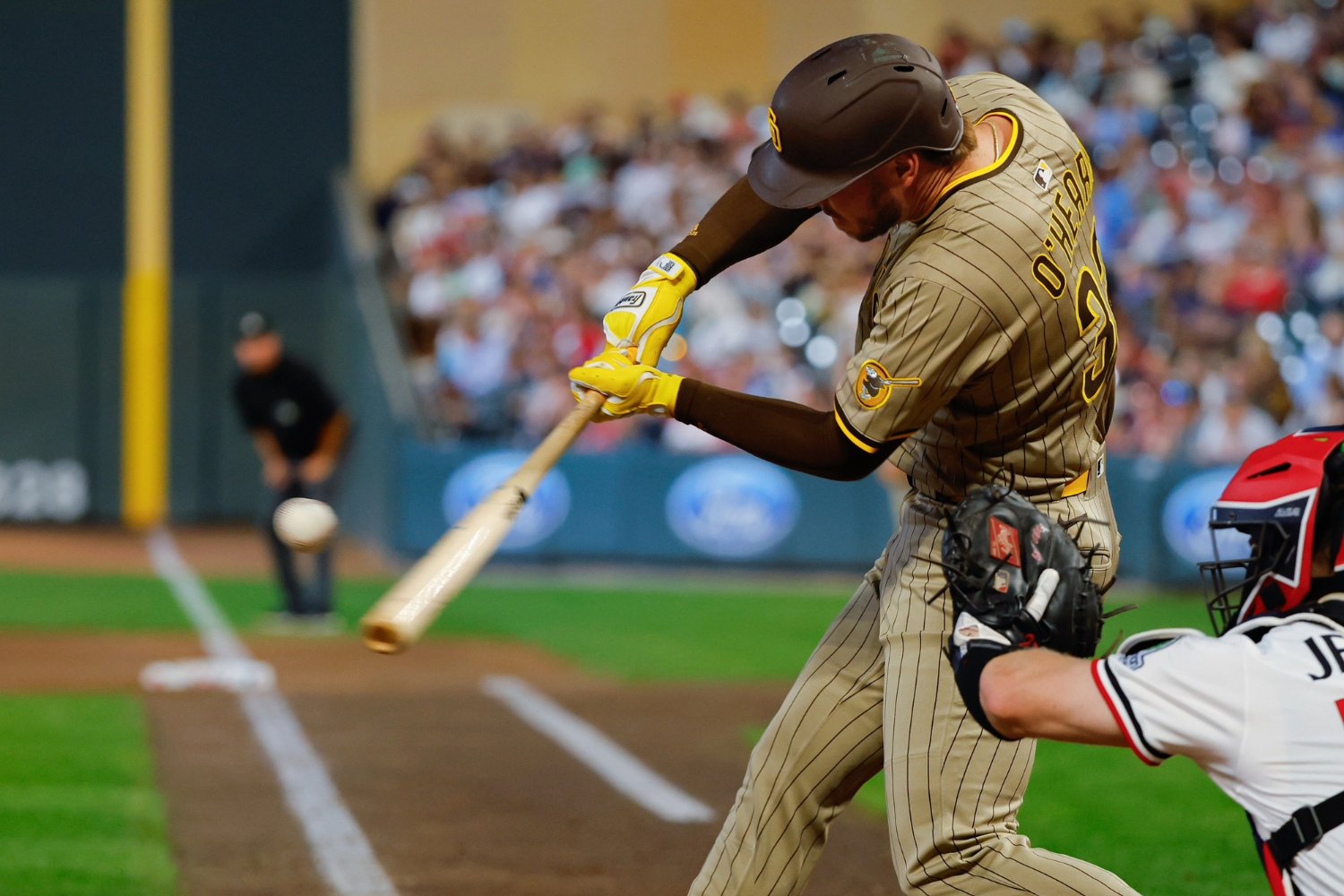 At no point in his brief career with the San Diego Padres has Ryan O'Hearn gotten on track. The Padres acquired O'Hearn & Ramón Laureano from the Baltimore Orioles in exchange for several prospects ahead of July's trade deadline. On the position player side, they also brought in Freddy Fermin from the Kansas City Royals to serve as an upgrade behind the plate. Laureano has provided stability in the outfield while serving as the team's best hitter in the second half, and Fermin has been an important addition from a defensive standpoint (even if his bat only appears occasionally). O'Hearn, meanwhile, has struggled mightily. When the Padres acquired O'Hearn, they were getting a hitter that came with a .286/.382/.458 slash line and a 136 wRC+. One who struck out only 16.3 percent of the time against a strong 12.2 percent walk rate. Since arriving in America's Finest City™, though, O'Hearn has regressed just about everywhere. His slash with San Diego is down to .242/.319/.379, while his wRC+ has fallen to the below-average side of the threshold (98). Worse yet, his strikeout rate has ballooned to 24.7 percent, in conjunction with a plummeting walk rate (8.8 percent). While that output features no shortage of alarming trends, it's the strikeout rate that has immediately presents itself at the center of O'Hearn's woes in San Diego. More specifically, O'Hearn has had a tough time making contact altogether: What wasn't so much a problem in August has emerged as a serious one here in September. And the fact that O'Hearn is experiencing his worst month of swing-and-miss in 2025 is only scratching the surface of concern. especially when you consider from where the whiffs are coming: O'Hearn's whiffs inside the strike zone have skyrocketed since joining the Padres. That's an alarming trend on its own, of course. Factor in the additional fact that 31 percent of those in-zone whiffs are coming on fastballs (almost 10 percent higher than any pitch type), and it really begins to incite a certain level of panic. For what it's worth, this does appear to be a mechanical issue rather than anything within the approach. O'Hearn's swing tendencies and approach to the zone have varied only slightly from month to month this year. Other than a June blip where he swung at many more off-speed pitches while still in Baltimore, nothing would indicate that he's doing anything different in that respect. Mechanically, though, there are some elements of the swing worth noting. Upon arrival in San Diego, O'Hearn's bat speed dropped from 72.1 MPH, on average, to 71.2. His average attack angle fell from 13 degrees in July to just nine in August. His tilt and swing length didn't change in too notable a fashion between the two months, but the two former components may have a lot to say about from where these struggles are coming, especially given that each of those stats has started to come back up thus far in September. O'Hearn's bat speed has crawled back up only slightly (71.5), but is at least closer to what he'd been putting up in the months prior. The attack angle has steepened back out to a 12 degree mark that sits more in line with what he'd been doing previously. Perhaps it's no surprise, then, that his hard hit rate is back up about five percent (30.0) and his average exit velocity is up about two miles per hour (87.5). He's also been able to elevate more, with an identical flyball rate to August and a line drive rate up about three percent (23.3 percent). That those numbers are back on the rebound suggests that the mechanical issues were at the heart of what was pinning down O'Hearn's ability to produce since his arrival (in addition to the whiffs). Of course, now he needs to get the contact volume going in the right direction and for luck to fall back in his favor. While getting his mechanics back on track is leading to some encouraging underlying trends in the contact game, O'Hearn is still striking out almost 25 percent of the time and has a BABIP of just .267 in September. It's not ideal to need both things to fall in your favor, but the higher the contact volume, the more chances you have to get the BABIP to level out. As such, it stands to reason that if O'Hearn can get the former getting in the right direction, the latter won't be too far behind.
 -
Sitting just 2.5 games back of the Los Angeles Dodgers in the National League West and five games clear of the New York Mets in the NL Wild Card, it's as close to a certainty as ever that the San Diego Padres will be playing postseason baseball. Of course, it hasn't been an easy road to get to even this point, mostly due to the offense. If you've followed this space for any length of time, you know that the offensive woes have been a central focus. And it's come for a variety of reasons. Injuries (Xander Bogaerts, Jackson Merrill), down years (Luis Arráez), and inconsistency (Fernando Tatis Jr., Manny Machado) are all sprinkled across the spectrum, with each factor working together to prevent the Padres from, well, working together. It feels like this is a team that has failed to be on the same page at the plate at virtually any point this season. Even now, as the team has started to post runs at a higher rate, it doesn't quite yet feel like they've reached that point, regardless of what the numbers say. As such, the turnaround has been somewhat quiet. What that doesn't do, however, is undermine the notable change that has occurred in this group in the second half. The first half iteration of the Padres was a group that was impressive in virtually zero ways. The following is where they sat, collectively, regarding a handful of key offensive categories: AVG: .246 (17th) OBP: .315 (17th) ISO: .129 (28th) K%: 18.9 (3rd) BB%: 8.7 (14th) Contact%: 79.0 (6th) Hard-Hit%: 36.7 (29th) wRC+: 96 (16th) Despite striking out at one of the league's lowest rates and creating contact at one of the highest, the team was unable to parlay that into much meaningful contact. It's not particularly surprising, though. Merrill was out for a good chunk of the first half. Each of Tatis Jr. & Machado struggled to gain traction. Bogaerts got off to a brutal start. Arráez merely existed. To say nothing of the fact that this team was rolling out names like Brandon Lockridge, Jason Heyward, and Martín Maldonado early on (none of which are still with the organization). Quality contact begets offensive impact, and the Padres were unable to create much of the former, leading to little surprise in their inability to manifest the latter. While the second-half Padres haven't been entirely able to erase the memory of their offensive ineptitude from the first half, they've certainly shown growth: AVG: .262 (5th) OBP: .331 (5th) ISO: .149 (24th) K%: 18.8 (3rd) BB%: 8.1 (17th) Contact%: 78.7 (6th) Hard-Hit%: 38.9 (24th) wRC+: 112 (7th) With the exception of the walk rate, which has dipped slightly, the Padres have shown collective growth across the board. Some good fortune has played a role — the team BABIP'd .285 in the first half against .304 in the second — but they've upped the flyball rate by a couple percent on their way to creating 20 points more worth of isolated power in the second half. The increase in the resulting production is due to a couple of key factors. One is the arrival of Ramón Laureano. While his former Baltimore comrade Ryan O'Hearn hasn't experienced the same level of success, the outfielder has helped bring stability to the left side of the Petco Park grass in slashing .281/.335/.510 and posting a 127 wRC+ that sits as the best among regulars in the second half. The team is also getting more out of names that were already on the roster. After a first half that featured multiple injured list stints and an absence of power, Jackson Merrill has bumped his ISO by more than 70 points in the second half (.225). After being benched initially following the Orioles' acquisitions, Gavin Sheets is ISO'ing .212 in the second half, while Fernando Tatis Jr. has his up to .250 in September. Machado's is at .277. So while someone like Arráez is always going to be a ghost in the impact game and names like Jake Cronenworth or Xander Bogaerts are past providing much on that side, there's a certain rounding into form that's taking place within the lineup, particularly this month. And that is, ultimately, what has changed with the Padres in the second half. Aside from a key trade acquisition, they're simply getting more out of the bats that they were expecting to get more out of. It's hard to imagine, given how the season has transpired, but if the team is, in fact, getting on the same page at the same time, it could serve as quite a springboard as we head into an October in which the Padres will be participating. View full article
-
Power Output From Key Names Driving Padres' Offensive Success in Second Half
Randy Holt posted an article in Padres
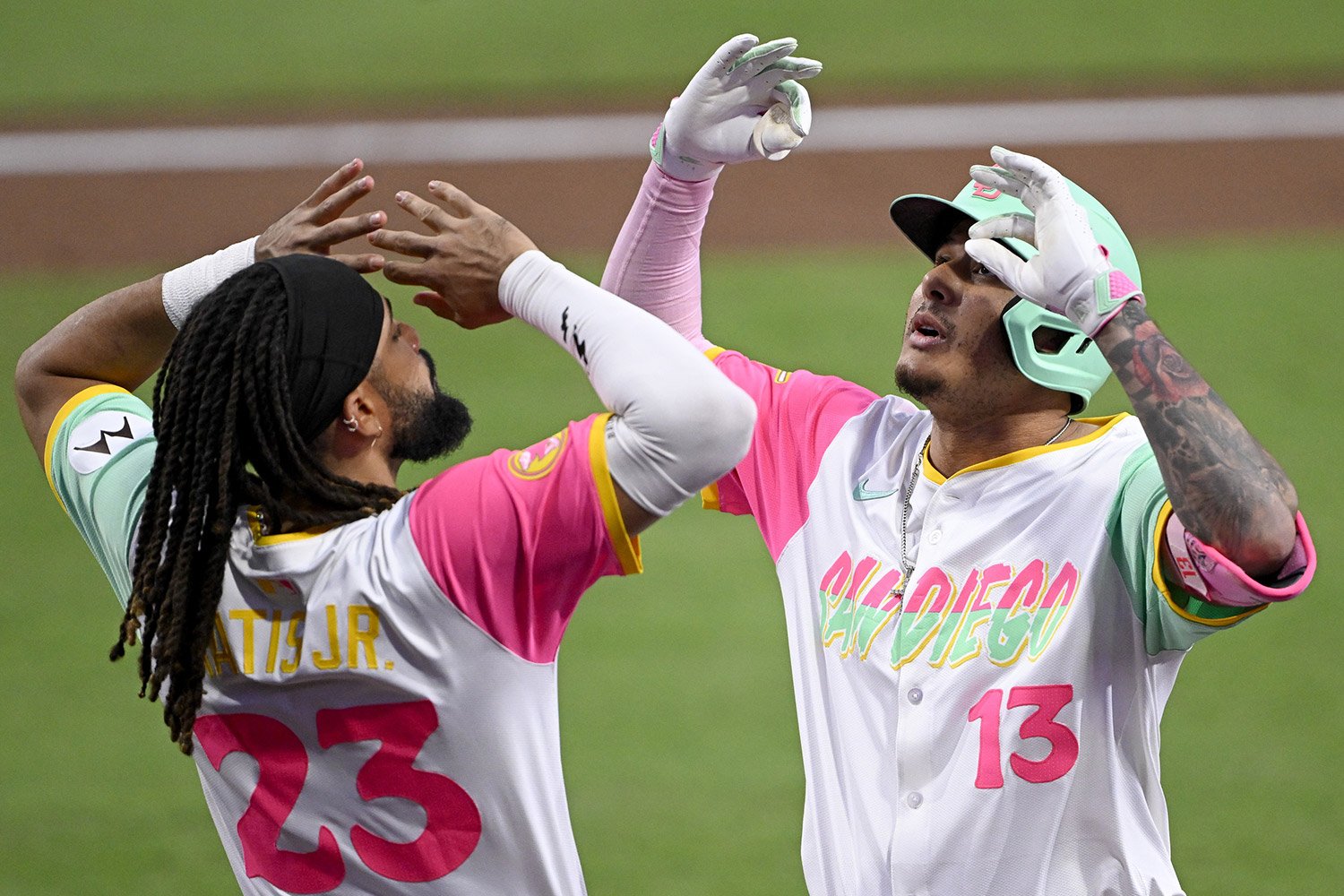 Sitting just 2.5 games back of the Los Angeles Dodgers in the National League West and five games clear of the New York Mets in the NL Wild Card, it's as close to a certainty as ever that the San Diego Padres will be playing postseason baseball. Of course, it hasn't been an easy road to get to even this point, mostly due to the offense. If you've followed this space for any length of time, you know that the offensive woes have been a central focus. And it's come for a variety of reasons. Injuries (Xander Bogaerts, Jackson Merrill), down years (Luis Arráez), and inconsistency (Fernando Tatis Jr., Manny Machado) are all sprinkled across the spectrum, with each factor working together to prevent the Padres from, well, working together. It feels like this is a team that has failed to be on the same page at the plate at virtually any point this season. Even now, as the team has started to post runs at a higher rate, it doesn't quite yet feel like they've reached that point, regardless of what the numbers say. As such, the turnaround has been somewhat quiet. What that doesn't do, however, is undermine the notable change that has occurred in this group in the second half. The first half iteration of the Padres was a group that was impressive in virtually zero ways. The following is where they sat, collectively, regarding a handful of key offensive categories: AVG: .246 (17th) OBP: .315 (17th) ISO: .129 (28th) K%: 18.9 (3rd) BB%: 8.7 (14th) Contact%: 79.0 (6th) Hard-Hit%: 36.7 (29th) wRC+: 96 (16th) Despite striking out at one of the league's lowest rates and creating contact at one of the highest, the team was unable to parlay that into much meaningful contact. It's not particularly surprising, though. Merrill was out for a good chunk of the first half. Each of Tatis Jr. & Machado struggled to gain traction. Bogaerts got off to a brutal start. Arráez merely existed. To say nothing of the fact that this team was rolling out names like Brandon Lockridge, Jason Heyward, and Martín Maldonado early on (none of which are still with the organization). Quality contact begets offensive impact, and the Padres were unable to create much of the former, leading to little surprise in their inability to manifest the latter. While the second-half Padres haven't been entirely able to erase the memory of their offensive ineptitude from the first half, they've certainly shown growth: AVG: .262 (5th) OBP: .331 (5th) ISO: .149 (24th) K%: 18.8 (3rd) BB%: 8.1 (17th) Contact%: 78.7 (6th) Hard-Hit%: 38.9 (24th) wRC+: 112 (7th) With the exception of the walk rate, which has dipped slightly, the Padres have shown collective growth across the board. Some good fortune has played a role — the team BABIP'd .285 in the first half against .304 in the second — but they've upped the flyball rate by a couple percent on their way to creating 20 points more worth of isolated power in the second half. The increase in the resulting production is due to a couple of key factors. One is the arrival of Ramón Laureano. While his former Baltimore comrade Ryan O'Hearn hasn't experienced the same level of success, the outfielder has helped bring stability to the left side of the Petco Park grass in slashing .281/.335/.510 and posting a 127 wRC+ that sits as the best among regulars in the second half. The team is also getting more out of names that were already on the roster. After a first half that featured multiple injured list stints and an absence of power, Jackson Merrill has bumped his ISO by more than 70 points in the second half (.225). After being benched initially following the Orioles' acquisitions, Gavin Sheets is ISO'ing .212 in the second half, while Fernando Tatis Jr. has his up to .250 in September. Machado's is at .277. So while someone like Arráez is always going to be a ghost in the impact game and names like Jake Cronenworth or Xander Bogaerts are past providing much on that side, there's a certain rounding into form that's taking place within the lineup, particularly this month. And that is, ultimately, what has changed with the Padres in the second half. Aside from a key trade acquisition, they're simply getting more out of the bats that they were expecting to get more out of. It's hard to imagine, given how the season has transpired, but if the team is, in fact, getting on the same page at the same time, it could serve as quite a springboard as we head into an October in which the Padres will be participating.
 -
As a collective, we've spent a lot of time talking about Xander Bogaerts in 2025. His early season struggles and term remaining on his contract compounded for a sizeable volume of negativity surrounding the San Diego Padres shortstop back in March & April and into May & June. It wasn't necessarily a rush to judgment given the prolonged struggles on the heels of a woeful 2024 season. Nevertheless, a team starved for consistent offense could nary afford to be without a starter at a position lacking depth. Bogaerts hasn't appeared in a game for the Padres since August 27th. He fouled a ball off his foot and was placed on the Injured List on August 29th with a fractured foot. While his outlook for postseason availability remained relatively optimistic, getting through the final month without their starter at the six wasn't going to be an easy task considering the available replacements. As of this writing, the Padres have played an even dozen games sans Bogaerts. The team has averaged 4.4 runs per game over that stretch. That number, however, is somewhat skewed by double-digit outbursts against Minnesota and Colorado over the 12 games. In between those games, the team has averaged just 3.0 runs per game in his absence. That might seem like cherry-picking, but it does speak to the steadying presence that the team is missing without Bogaerts in the mix. The following is Bogaerts' expected wOBA over the course of 2025: There's a downward progression in August that appears to be wrought by some bad luck (a 60ish-point drop in BABIP from July) and comes despite making quality contact at a higher rate than he has at any point this season. Disregarding that blip until it becomes a trend, Bogaerts has been well above the league average in wOBA since the start of June. Which is important not only for a Padres team that has largely failed to be consistent on offense this year but in navigating why his now imminent return is so crucial for the team's fortunes down the final stretch. On Wednesday, Bogaerts was cleared to resume baseball activities. We don't know what the timeline actually looks like for a return to play, but we do know that even this bit of optimism comes at an important time. For one, Jose Iglesias is labeled as day-to-day after a hit-by-pitch that forced him to leave Tuesday's game. Even when healthy, though, the results haven't been there. He has just three hits in 29 plate appearances in Bogaerts' stead, posting a wOBA of only .266 in nine games. Not that a different outcome was expected; that's all fairly in-line with a player hitting .223 and wOBAing .258 on the season. And Mason McCoy hasn't offered much in his minuscule opportunity. Despite some thought from this space that he could offer a touch more upside than the veteran Iglesias, McCoy has just nine plate appearances since August 27th. He's managed just a single hit while being deployed primarily as a late-game defensive replacement in order to allow Iglesias to continue to move around the infield a bit. None of that is surprising, of course. The Padres were never in possession of much upside beyond Bogaerts at the shortstop position. Unfortunately, that's come to fruition in exactly the expected fashion. Which is why news of Bogaerts' clearance to resume baseball activities is so crucial. Again, we don't know what the timeline may look like. The team will likely take his rehab process somewhat slow in order to avoid any setbacks that would impact October. It's possible that they may wait for the final couple of games of the season entirely as a projected timeline. Such an estimate would allow him to at least get his feet wet again before we head into postseason baseball. Nevertheless, this development, on its own, is still a welcome one for a player with far more importance than we could have expected just a few months ago. View full article
-
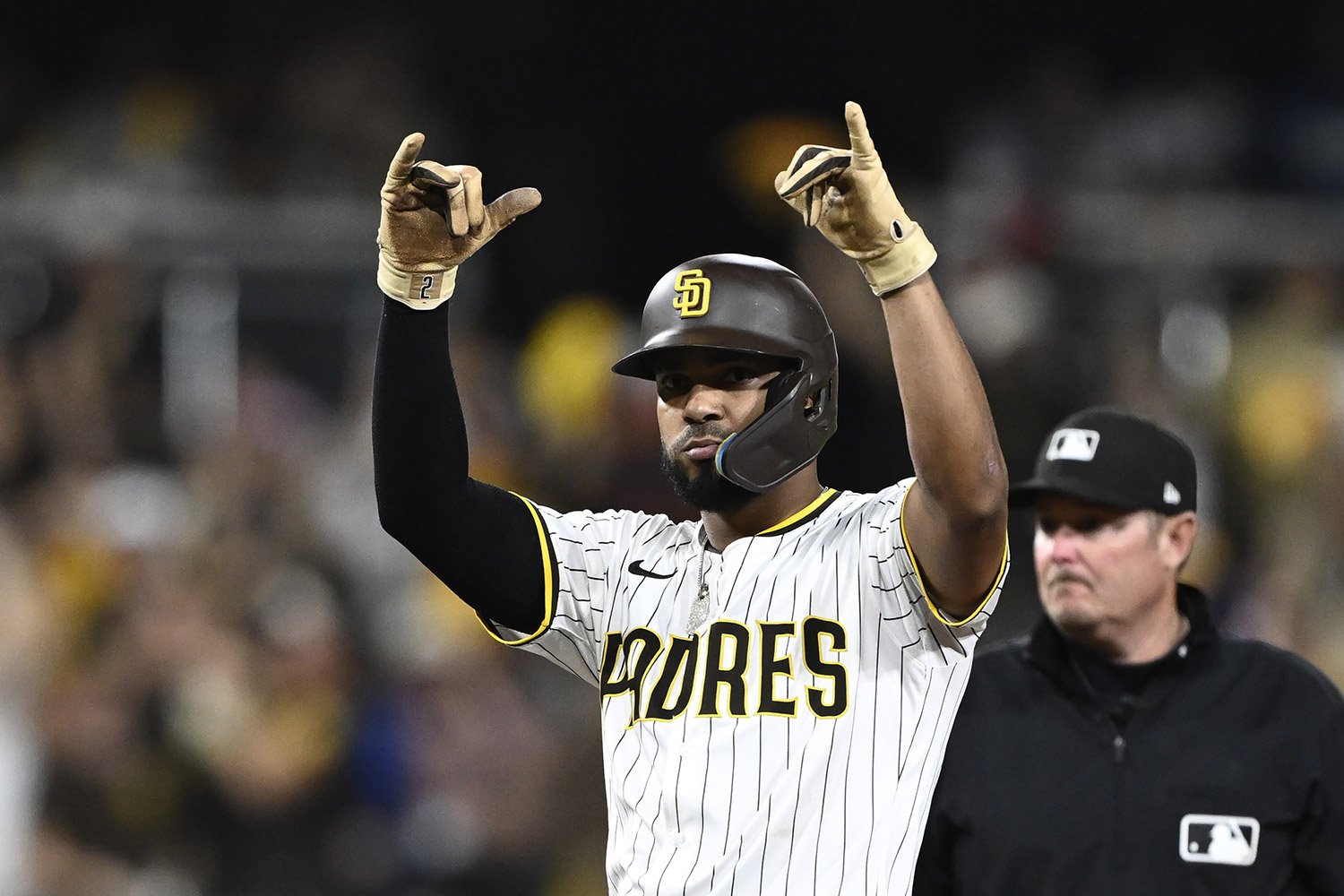 As a collective, we've spent a lot of time talking about Xander Bogaerts in 2025. His early season struggles and term remaining on his contract compounded for a sizeable volume of negativity surrounding the San Diego Padres shortstop back in March & April and into May & June. It wasn't necessarily a rush to judgment given the prolonged struggles on the heels of a woeful 2024 season. Nevertheless, a team starved for consistent offense could nary afford to be without a starter at a position lacking depth. Bogaerts hasn't appeared in a game for the Padres since August 27th. He fouled a ball off his foot and was placed on the Injured List on August 29th with a fractured foot. While his outlook for postseason availability remained relatively optimistic, getting through the final month without their starter at the six wasn't going to be an easy task considering the available replacements. As of this writing, the Padres have played an even dozen games sans Bogaerts. The team has averaged 4.4 runs per game over that stretch. That number, however, is somewhat skewed by double-digit outbursts against Minnesota and Colorado over the 12 games. In between those games, the team has averaged just 3.0 runs per game in his absence. That might seem like cherry-picking, but it does speak to the steadying presence that the team is missing without Bogaerts in the mix. The following is Bogaerts' expected wOBA over the course of 2025: There's a downward progression in August that appears to be wrought by some bad luck (a 60ish-point drop in BABIP from July) and comes despite making quality contact at a higher rate than he has at any point this season. Disregarding that blip until it becomes a trend, Bogaerts has been well above the league average in wOBA since the start of June. Which is important not only for a Padres team that has largely failed to be consistent on offense this year but in navigating why his now imminent return is so crucial for the team's fortunes down the final stretch. On Wednesday, Bogaerts was cleared to resume baseball activities. We don't know what the timeline actually looks like for a return to play, but we do know that even this bit of optimism comes at an important time. For one, Jose Iglesias is labeled as day-to-day after a hit-by-pitch that forced him to leave Tuesday's game. Even when healthy, though, the results haven't been there. He has just three hits in 29 plate appearances in Bogaerts' stead, posting a wOBA of only .266 in nine games. Not that a different outcome was expected; that's all fairly in-line with a player hitting .223 and wOBAing .258 on the season. And Mason McCoy hasn't offered much in his minuscule opportunity. Despite some thought from this space that he could offer a touch more upside than the veteran Iglesias, McCoy has just nine plate appearances since August 27th. He's managed just a single hit while being deployed primarily as a late-game defensive replacement in order to allow Iglesias to continue to move around the infield a bit. None of that is surprising, of course. The Padres were never in possession of much upside beyond Bogaerts at the shortstop position. Unfortunately, that's come to fruition in exactly the expected fashion. Which is why news of Bogaerts' clearance to resume baseball activities is so crucial. Again, we don't know what the timeline may look like. The team will likely take his rehab process somewhat slow in order to avoid any setbacks that would impact October. It's possible that they may wait for the final couple of games of the season entirely as a projected timeline. Such an estimate would allow him to at least get his feet wet again before we head into postseason baseball. Nevertheless, this development, on its own, is still a welcome one for a player with far more importance than we could have expected just a few months ago.
 -
No team has received more value out of their bullpen than the San Diego Padres. Their 6.9 fWAR from the group is tops in the league by a wide margin, while the relief corps sits first in ERA (3.09), first in FIP (3.57), fourth in K% (25.0 percent), and third in hard hit rate against (37.6 percent). That they've done so, especially in regard to the WAR figure, while throwing just the 10th-most innings among their Major League counterparts speaks to how impressive the group has been. Jeremiah Estrada has been a central fixture in all of that. He ranks 32nd among qualifying relievers in fWAR (1.2), mostly due to the fact that he currently sits seventh in strikeout rate (34.9 percent). While it hasn't been quite on par with his breakout 2024 campaign, it's hard to deny his place among the game's highest-upside relievers. The percentile rankings help to illustrate just that: The above visual is indicative of Estrada's stuff, above all. At the same time, there are a handful of second half developments that have called Estrada's value to this relief group into question, especially when one examines some of the shortcomings present in said visual. The following is where Estrada lands, statistically, in each half to date: 1st Half: 43.0 IP, 2.93 ERA, 3.12 FIP, 33.5 K%, 8.9 BB%, .278 wOBA 2nd Half: 22.2 IP, 4.37 ERA, 3.36 FIP, 38.9 K%, 8.4 BB%, .316 wOBA We're obviously only working with a sample about half the size thus far in half No. 2, but the ERA, in particular stands out. That figure is mostly wrought by a pair of brutal outings, including a loss to the Los Angeles Dodgers back on August 24, and a shaky win in Colorado on September 6. The latter contest was one the Padres led 10-2 but had to squeeze out by a much narrower 10-8 margin. Ultimately, there are some things Estrada has done well in the second half. Unlike the ERA figure, his FIP indicates that he's only been marginally worse overall while posting strikeout and walk numbers that are each actually better than what he turned in in the first half. There is, however, one primary reason to worry that we may not be through the shaky outings as we move into the middle of September: After his best contact month in August, Estrada has seen the quality of contact against skyrocket in the second half. It's a bit of a paradox, as he's seen the K% increase steadily over that same timeframe, with September representing his highest mark in an individual month (50.0 percent). But, while the punchouts are on the rise, we have the above visual to reckon with, in addition to what the expected metrics have to say: At .115, his xwOBA against peaked (as in, was at its best) on August 15. In the month since, it's been steadily on the rise. Our first question is, of course, why? Usage, in itself, does offer a likely explanation. Throughout the year, the four-seam fastball has represented Estrada's most utilized pitch. In the first handful of months, he was throwing the pitch at or just under 60 percent of the time, with his split-change hybrid serving as his secondary offering. The slider that had served that role in previous seasons took a back seat to the other two. Since the start of August, however, we've seen the four-seam and splitter usage dip while the slider has taken over. In August, Estrada threw his fastball 50 percent of the time. Thus far in September, it's at just 45.3 percent. The splitter, meanwhile, has dropped by five percent over the last three months, currently sitting at just 20.9 percent. In between, the slider has seen an increased role in his arsenal, rising from 13.2 percent usage in July to 33.7 percent in September. The issue is that the slider hasn't been a particularly consistent pitch since its increase. In August, it was responsible for the highest amount of swing-and-miss. But, it also had a .475 xwOBA against. The results haven't been there in September, as the four-seam has actually checked in higher on the whiff side. The slider has also seen a 50.0 Hard-Hit% in each of the last two months. The reason for the change remains unclear; it's possible that the grip of his split-change pitch might be cumbersome over the course of a full season, but that's purely speculation. It's also not one that has yielded pure benefits. Instead, it's led to more variability in Estrada's game. That feeds directly into a second question around whether it's something we should be worried about moving forward, especially in a now-depleted bullpen that is without Jason Adam for the remainder of the year. It's somewhat unusual for a pitcher to change usage so drastically at this point in a season. Estrada's slider has been an effective pitch for him in the past, but the way the fastball-splitter combination played at the beginning of the year was indicative of a positive evolution in his toolbox. The reintroduction of the slider to this extent appears to be almost directly responsible for the paradox in which Estrada is currently living. It's getting him more whiff, yes. But, when it gets touched, it's getting touched up. It'll certainly be interesting to see what shape his usage takes moving forward. He's clearly dedicated to implementing that slider with more regularity. But should it be coming at the expense of the splitter, given where results have landed for that pitch? In either case, it's necessity that Estrada gets himself—and his pitch mix—sorted. Adam's absence means that Estrada is as essential as ever. The Padres can't have such a crucial arm in-between pitches as the postseason creeps ever closer. View full article
-
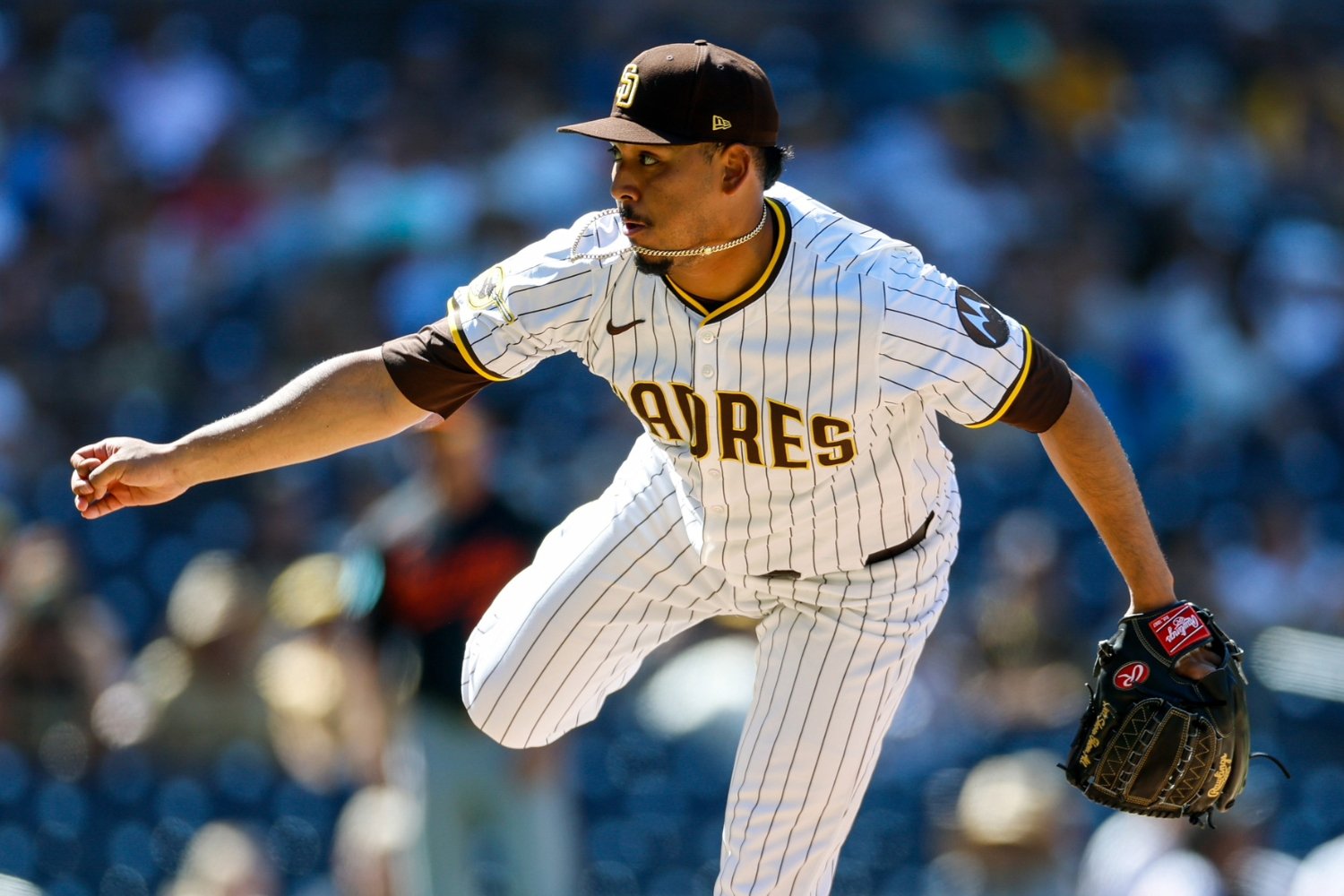 No team has received more value out of their bullpen than the San Diego Padres. Their 6.9 fWAR from the group is tops in the league by a wide margin, while the relief corps sits first in ERA (3.09), first in FIP (3.57), fourth in K% (25.0 percent), and third in hard hit rate against (37.6 percent). That they've done so, especially in regard to the WAR figure, while throwing just the 10th-most innings among their Major League counterparts speaks to how impressive the group has been. Jeremiah Estrada has been a central fixture in all of that. He ranks 32nd among qualifying relievers in fWAR (1.2), mostly due to the fact that he currently sits seventh in strikeout rate (34.9 percent). While it hasn't been quite on par with his breakout 2024 campaign, it's hard to deny his place among the game's highest-upside relievers. The percentile rankings help to illustrate just that: The above visual is indicative of Estrada's stuff, above all. At the same time, there are a handful of second half developments that have called Estrada's value to this relief group into question, especially when one examines some of the shortcomings present in said visual. The following is where Estrada lands, statistically, in each half to date: 1st Half: 43.0 IP, 2.93 ERA, 3.12 FIP, 33.5 K%, 8.9 BB%, .278 wOBA 2nd Half: 22.2 IP, 4.37 ERA, 3.36 FIP, 38.9 K%, 8.4 BB%, .316 wOBA We're obviously only working with a sample about half the size thus far in half No. 2, but the ERA, in particular stands out. That figure is mostly wrought by a pair of brutal outings, including a loss to the Los Angeles Dodgers back on August 24, and a shaky win in Colorado on September 6. The latter contest was one the Padres led 10-2 but had to squeeze out by a much narrower 10-8 margin. Ultimately, there are some things Estrada has done well in the second half. Unlike the ERA figure, his FIP indicates that he's only been marginally worse overall while posting strikeout and walk numbers that are each actually better than what he turned in in the first half. There is, however, one primary reason to worry that we may not be through the shaky outings as we move into the middle of September: After his best contact month in August, Estrada has seen the quality of contact against skyrocket in the second half. It's a bit of a paradox, as he's seen the K% increase steadily over that same timeframe, with September representing his highest mark in an individual month (50.0 percent). But, while the punchouts are on the rise, we have the above visual to reckon with, in addition to what the expected metrics have to say: At .115, his xwOBA against peaked (as in, was at its best) on August 15. In the month since, it's been steadily on the rise. Our first question is, of course, why? Usage, in itself, does offer a likely explanation. Throughout the year, the four-seam fastball has represented Estrada's most utilized pitch. In the first handful of months, he was throwing the pitch at or just under 60 percent of the time, with his split-change hybrid serving as his secondary offering. The slider that had served that role in previous seasons took a back seat to the other two. Since the start of August, however, we've seen the four-seam and splitter usage dip while the slider has taken over. In August, Estrada threw his fastball 50 percent of the time. Thus far in September, it's at just 45.3 percent. The splitter, meanwhile, has dropped by five percent over the last three months, currently sitting at just 20.9 percent. In between, the slider has seen an increased role in his arsenal, rising from 13.2 percent usage in July to 33.7 percent in September. The issue is that the slider hasn't been a particularly consistent pitch since its increase. In August, it was responsible for the highest amount of swing-and-miss. But, it also had a .475 xwOBA against. The results haven't been there in September, as the four-seam has actually checked in higher on the whiff side. The slider has also seen a 50.0 Hard-Hit% in each of the last two months. The reason for the change remains unclear; it's possible that the grip of his split-change pitch might be cumbersome over the course of a full season, but that's purely speculation. It's also not one that has yielded pure benefits. Instead, it's led to more variability in Estrada's game. That feeds directly into a second question around whether it's something we should be worried about moving forward, especially in a now-depleted bullpen that is without Jason Adam for the remainder of the year. It's somewhat unusual for a pitcher to change usage so drastically at this point in a season. Estrada's slider has been an effective pitch for him in the past, but the way the fastball-splitter combination played at the beginning of the year was indicative of a positive evolution in his toolbox. The reintroduction of the slider to this extent appears to be almost directly responsible for the paradox in which Estrada is currently living. It's getting him more whiff, yes. But, when it gets touched, it's getting touched up. It'll certainly be interesting to see what shape his usage takes moving forward. He's clearly dedicated to implementing that slider with more regularity. But should it be coming at the expense of the splitter, given where results have landed for that pitch? In either case, it's necessity that Estrada gets himself—and his pitch mix—sorted. Adam's absence means that Estrada is as essential as ever. The Padres can't have such a crucial arm in-between pitches as the postseason creeps ever closer.
 -
Considering how velocity and movement have evolved in baseball over the last handful of years, a certain archetype has emerged, predominantly in the bullpen. Two-pitch pitchers are the flavor of the day, with one of those pitches checking in as a high-velocity fastball of some sort and the other coming out of either the breaking or off-speed category. These two primary pitches collaborate in generating a high number of swinging strikes. While this might read as something of an oversimplification, it's also something that the San Diego Padres employ in force in their own relief corps. Robert Suarez. Mason Miller. Jeremiah Estrada. The San Diego 'pen is one that runs deep in terms of velocity, movement, and overall volume while leaning heavily on two primary pitches. And, unsurprisingly, it's been quite effective. As a collective, Padre relievers sport the fourth-highest strikeout rate in the sport (24.6 percent) and the fourth-highest whiff rate (12.7 percent). They've induced a chase rate that trails only the New York Yankees (33.4 percent). Somewhat surprising, however, is the fact that Adrian Morejon is not one of the major contributors to those specific efforts. Don't get it twisted; Morejon has been one of the very best relief pitchers in Major League Baseball in 2025. His percentile chart would tell you as much: Among 156 qualifying relief pitchers, Morejon ranks 16th in innings (65 1/3), fourth in ERA (1.79), fifth in FIP (2.18), and second in hard hit rate (28.5 percent). Expected metrics love him, too; his 2.17 xERA and .237 xwOBA each rank third. Given the combination of his status among his reliever comrades and where he lands on the percentile spectrum, it'd be fairly objective to note that Adrian Morejon has emerged as one of the premier bullpen arms in Major League Baseball. What's impressive, though, is that he's doing it in a sort of defiance of his archetype. That archetype, of course, is the two-pitch, high-whiff arm that has become almost a necessity across the relief pitching landscape. It isn't a total defiance, however. For one, Morejon is a two-pitch pitcher. He's thrown his sinker about 61 percent of the time this year and his slider roughly 35 percent of the time. He's also bringing elite velocity to the table. While it isn't completely top-tier velo, a 93rd percentile fastball would still fit the bill. To say nothing of the movement he's getting from the slider (almost 37 inches of vertical drop). Instead, we need to look to a more specific component of Morejon's game in discovering where he's actively working against the type of pitcher we might expect: the strikeouts. As much as the top of the various leaderboards features Morejon's name fixed in a prominent position, the strikeout game is where one is required to do a bit more searching. His SwStr% comes in at just 10.5 percent (unsurprising given his 37th percentile whiff figure) and is the 110th-ranked rate among that reliever group. His strikeout percentage, meanwhile, sits only 59th (25.7 percent). Not that this is leading us to perceive Morejon as a reliever of lower quality. He's clearly one of the top arms in that role. It's more than it leads us to two specific questions. The first of which is how he's managing to register so few punchouts against many of his counterparts with similar skill sets. The other is the manner in which he's finding success despite pitching at a lower rate, which is almost a prerequisite for success in relief at the game's current level of evolution. Our first query is actually a fairly easy one to answer. The sinker is Morejon's primary offering. It's generally not a pitch type that's going to lead to whiffs on its own. For that, you'd need a fastball of a different variety. Instead, a sinker is almost designed to generate contact rather than avoid it. Morejon wants you to swing at — and hit — his sinker. The result is a swing-and-miss percentage lingering around just 15 percent, but getting the ball on the ground about 56 percent of the time. When that's the pitch you're throwing at as high a volume as Morejon is (over 60 percent of the time), it's quite reasonable not to expect to see too much on the strikeout side. Those that he does register are wrought by the slider, with which he's garnering a whiff rate (39.4 percent) and a strikeout rate (36.4 percent) more than and nearly double the sinker, respectively. But even sans strikeouts, his deployment of the sinker at a high volume is leading to its own brand of success. Morejon has a 56.3 percent groundball rate and a Pull AIR% of only 5.9 percent with the sinker. His overall figure in the latter category is a third-ranked 7.0 percent, which means that the sinker is doing a healthy part of the work toward keeping the ball on the ground. It's a number of factors to stack. He's getting the minimal barrel output from opposing hitters. He's getting the ball on the ground and avoiding the pull-air combination that has allowed so many hitters to thrive in 2025. The slider is there when he needs the whiff, but the contact game is where Morejon is making his bones this year. Velocity, sure. Movement, yes. But the true driver is location: The above visual represents the work Morejon has done with his sinker, specifically. That's a whole lot of gray, representing an out in the field. Factor in the strikeouts, and there's a whole lot of good being done against the little bit of production you see on the part of opposing hitters. Morejon's development has been a key factor in the San Diego bullpen's success this year. The possibility exists that he returns to his starting roots at some point. The form his usage takes at that point will be fascinating. In the meantime, it's important to acknowledge that despite fitting the profile of many of his relief counterparts across the realm of Major League Baseball, Morejon is finding his success in a way that stands quite opposed. He's not any worse for it, either. If anything, it's an example of a player executing exactly what works for his own success in trying too hard to pursue the punchout side of things. View full article
-
Adrian Morejon's Sinker is Allowing Him to Defy His Reliever Archetype
Randy Holt posted an article in Padres
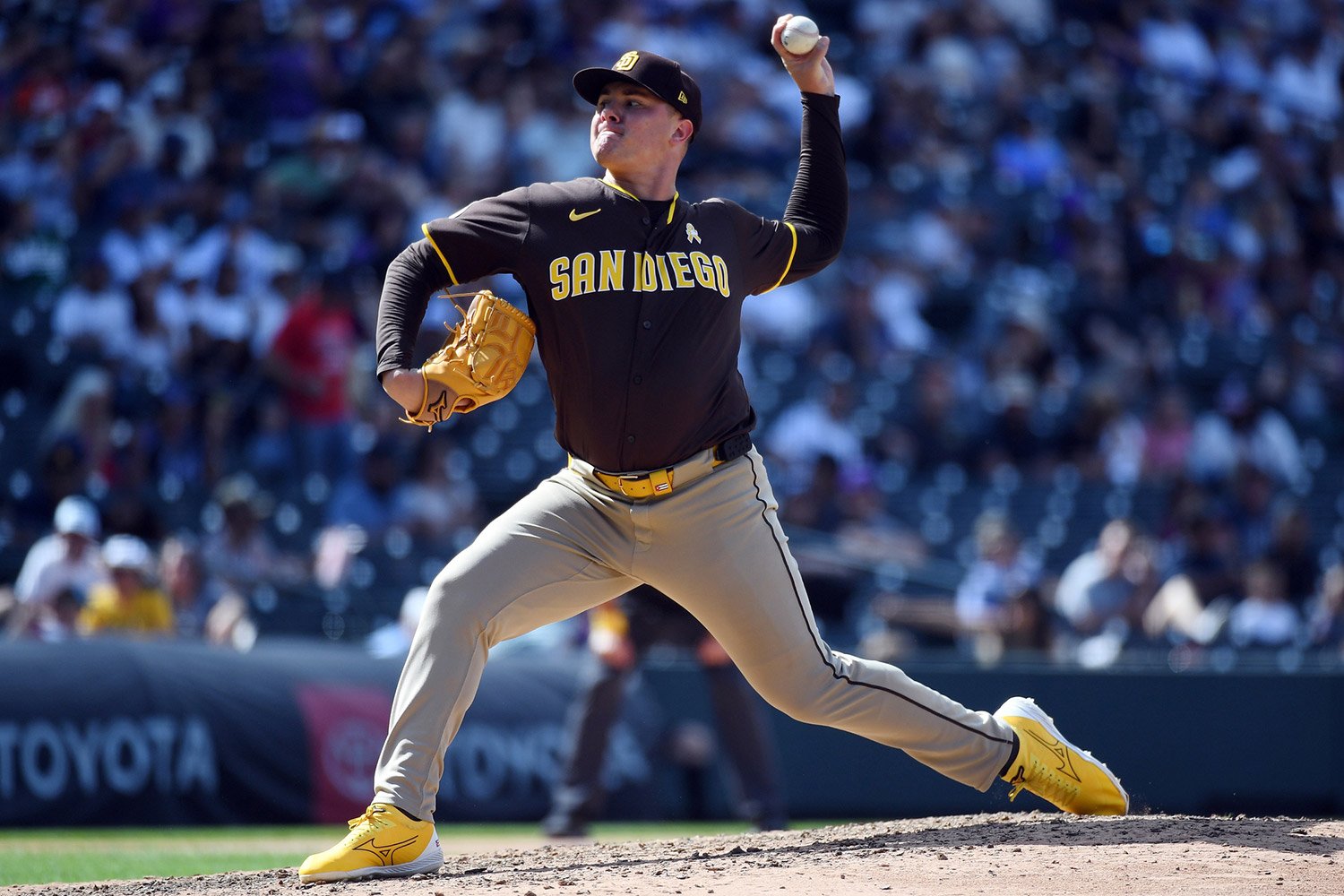 Considering how velocity and movement have evolved in baseball over the last handful of years, a certain archetype has emerged, predominantly in the bullpen. Two-pitch pitchers are the flavor of the day, with one of those pitches checking in as a high-velocity fastball of some sort and the other coming out of either the breaking or off-speed category. These two primary pitches collaborate in generating a high number of swinging strikes. While this might read as something of an oversimplification, it's also something that the San Diego Padres employ in force in their own relief corps. Robert Suarez. Mason Miller. Jeremiah Estrada. The San Diego 'pen is one that runs deep in terms of velocity, movement, and overall volume while leaning heavily on two primary pitches. And, unsurprisingly, it's been quite effective. As a collective, Padre relievers sport the fourth-highest strikeout rate in the sport (24.6 percent) and the fourth-highest whiff rate (12.7 percent). They've induced a chase rate that trails only the New York Yankees (33.4 percent). Somewhat surprising, however, is the fact that Adrian Morejon is not one of the major contributors to those specific efforts. Don't get it twisted; Morejon has been one of the very best relief pitchers in Major League Baseball in 2025. His percentile chart would tell you as much: Among 156 qualifying relief pitchers, Morejon ranks 16th in innings (65 1/3), fourth in ERA (1.79), fifth in FIP (2.18), and second in hard hit rate (28.5 percent). Expected metrics love him, too; his 2.17 xERA and .237 xwOBA each rank third. Given the combination of his status among his reliever comrades and where he lands on the percentile spectrum, it'd be fairly objective to note that Adrian Morejon has emerged as one of the premier bullpen arms in Major League Baseball. What's impressive, though, is that he's doing it in a sort of defiance of his archetype. That archetype, of course, is the two-pitch, high-whiff arm that has become almost a necessity across the relief pitching landscape. It isn't a total defiance, however. For one, Morejon is a two-pitch pitcher. He's thrown his sinker about 61 percent of the time this year and his slider roughly 35 percent of the time. He's also bringing elite velocity to the table. While it isn't completely top-tier velo, a 93rd percentile fastball would still fit the bill. To say nothing of the movement he's getting from the slider (almost 37 inches of vertical drop). Instead, we need to look to a more specific component of Morejon's game in discovering where he's actively working against the type of pitcher we might expect: the strikeouts. As much as the top of the various leaderboards features Morejon's name fixed in a prominent position, the strikeout game is where one is required to do a bit more searching. His SwStr% comes in at just 10.5 percent (unsurprising given his 37th percentile whiff figure) and is the 110th-ranked rate among that reliever group. His strikeout percentage, meanwhile, sits only 59th (25.7 percent). Not that this is leading us to perceive Morejon as a reliever of lower quality. He's clearly one of the top arms in that role. It's more than it leads us to two specific questions. The first of which is how he's managing to register so few punchouts against many of his counterparts with similar skill sets. The other is the manner in which he's finding success despite pitching at a lower rate, which is almost a prerequisite for success in relief at the game's current level of evolution. Our first query is actually a fairly easy one to answer. The sinker is Morejon's primary offering. It's generally not a pitch type that's going to lead to whiffs on its own. For that, you'd need a fastball of a different variety. Instead, a sinker is almost designed to generate contact rather than avoid it. Morejon wants you to swing at — and hit — his sinker. The result is a swing-and-miss percentage lingering around just 15 percent, but getting the ball on the ground about 56 percent of the time. When that's the pitch you're throwing at as high a volume as Morejon is (over 60 percent of the time), it's quite reasonable not to expect to see too much on the strikeout side. Those that he does register are wrought by the slider, with which he's garnering a whiff rate (39.4 percent) and a strikeout rate (36.4 percent) more than and nearly double the sinker, respectively. But even sans strikeouts, his deployment of the sinker at a high volume is leading to its own brand of success. Morejon has a 56.3 percent groundball rate and a Pull AIR% of only 5.9 percent with the sinker. His overall figure in the latter category is a third-ranked 7.0 percent, which means that the sinker is doing a healthy part of the work toward keeping the ball on the ground. It's a number of factors to stack. He's getting the minimal barrel output from opposing hitters. He's getting the ball on the ground and avoiding the pull-air combination that has allowed so many hitters to thrive in 2025. The slider is there when he needs the whiff, but the contact game is where Morejon is making his bones this year. Velocity, sure. Movement, yes. But the true driver is location: The above visual represents the work Morejon has done with his sinker, specifically. That's a whole lot of gray, representing an out in the field. Factor in the strikeouts, and there's a whole lot of good being done against the little bit of production you see on the part of opposing hitters. Morejon's development has been a key factor in the San Diego bullpen's success this year. The possibility exists that he returns to his starting roots at some point. The form his usage takes at that point will be fascinating. In the meantime, it's important to acknowledge that despite fitting the profile of many of his relief counterparts across the realm of Major League Baseball, Morejon is finding his success in a way that stands quite opposed. He's not any worse for it, either. If anything, it's an example of a player executing exactly what works for his own success in trying too hard to pursue the punchout side of things.
 -
The San Diego Padres lost another game on Wednesday. It was their sixth loss in their last seven games, and a sweep at the hands of a rather listless Baltimore Orioles squad (which followed a series loss to a Minnesota Twins club that traded virtually everybody they could prior to last month's trade deadline). The team remains in the hunt for the division lead (2.5 games back of Los Angeles), but things have gone south fast to start the month of September. At the center of the team's latest tale of woe is the Wednesday start from Nestor Cortes. The same Cortes who looked so strong against the Dodgers barely two weeks ago. Therein, he threw six innings of one-hit ball in a crucial game against an upper-echelon team. His pair of subsequent starts, however, have not featured remotely the same level of efficiency that Cortes was able to demonstrate there. The first sign of trouble emerged against the Twins on Friday. Cortes was only able to work three innings, ceding five hits and a pair of walks en route to allowing three earned runs. He threw 66 pitches before being lifted with no outs in the fourth inning. The bullpen contingent of Wandy Peralta, David Morgan, and Yuki Matsui couldn't hold it down in relief, as each allowed at least a run in addition to what Cortes' short outing had wrought on the scoreboard. Things were much worse on Wednesday, however. Cortes wasn't even able to replicate his work from the prior outing, as he only worked to one out into the third inning. Across those 2 1/3 frames, he walked three Orioles hitters and allowed seven hits, four of which were home runs. It's the latter component of the line that represents the largest issue, because this isn't the first time we've seen this from Cortes in 2025. Back on March 29, Nestor Cortes made his first start with the Milwaukee Brewers against his old mates out of the Bronx. He allowed five home runs in that game as torpedo bat fever gripped the nation. Four of those came in the first inning. It was a trend we saw early in his tenure in San Diego, as Cortes had a similar outing against the San Francisco Giants on August 18. There, he allowed a trio of homers in the first inning, including back-to-back shots to open the game. Cortes was able to settle in and work into the sixth inning, but it was a game that the Padres would go on to lose. Which allows us to circle back to Wednesday's start versus Baltimore. Things started with a leadoff home run off the bat of Jackson Holliday. Cortes' first inning included an addition hit, a walk, and another hit before he was able to close out the side. After working through an uneventful second, things went off the rails in the third. A walk and a single got the inning underway before the outcomes read homer-homer-homer from each of Colton Cowser, Coby Mayo, and Alex Jackson. The start was a microcosm of Cortes' 2025... in two ways. The first is the home run angle. Across 34 1/3 innings of work in '25, Cortes has a home run rate against of 24.5 percent. The highest among qualifying starting pitchers is St. Louis' Andre Pallante, at 18.7. Tampa Bay's Shane Baz follows at 16.9. If we changed the criteria to pitchers with just 30 innings to their name at minimum, the Athletics' J.T. Ginn takes over at 26.7 percent. The difference, of course, is that Ginn plays his home games at a minor league park for a team not remotely in playoff contention. Cortes, who holds down the second spot, has no such luxury. The homers are a massive problem. That's especially true given factor number two, which is when the home runs are primarily manifesting. Courtesy of Baseball Reference, here is where issues are presenting themselves for Cortes over the course of a ballgame: It's not a mystery as to what is plaguing Cortes in his poor starts, which are starting to pile up. A .421 average and .488 on-base percentage is ugly enough as it is. But the real issue is in the nine homers. Of the 13 total home runs that Cortes has allowed this year, nine have come in the first inning. He's been largely fine elsewhere. If we wanted to extend this to overall performance splits, Cortes has a 7.53 ERA and 11.65 FIP the first time through the order. That drops to 6.89/6.27, respectively, the second time and 0.00/4.52 in those rare instances in which Cortes has worked to a third pass through the order. The ultimate point here is that Cortes is having issues getting out of the gate. He can be fine once he settles in, but there's a real issue confronting the beginning of an outing. Which presents two possible solutions. The first simply requires Cortes to be better to start individual plate appearances, both at the top of an inning and the start of the plate appearance itself. He's demonstrated a tendency to groove a first pitch for a strike, reflected in a .429 average and .500 OBP to the first batter of a game and a .273 average/.368 OBP to the first batter of an inning. Further, if opposing hitters are swinging at the first pitch of an appearance, they're hitting .385, reaching base at a .419 clip, and have hit seven homers. There's an obvious need for improvement from the jump, in whatever form that needs to take. The solution that has yet to be explored is that of an opener. Even in the absence of Jason Adam, the Padres' bullpen runs deep. They have a number of bridge arms that could be serviceable in the first inning, including someone like David Morgan. Getting the first inning squared away and then deploying Cortes as a bulk reliever could help to relieve him of some of the issues early in games. Either way, there's a drastic need for a change in the approach toward Nestor Cortes outings. This isn't a rotation that runs particularly deep, a fact that's only being made more worrisome with each inefficient outing from Dylan Cease and the sustained absence of Michael King. Whatever form the solution may take, one is certainly needed if the team is to derive any value out of Cortes' arm down the stretch. View full article
-
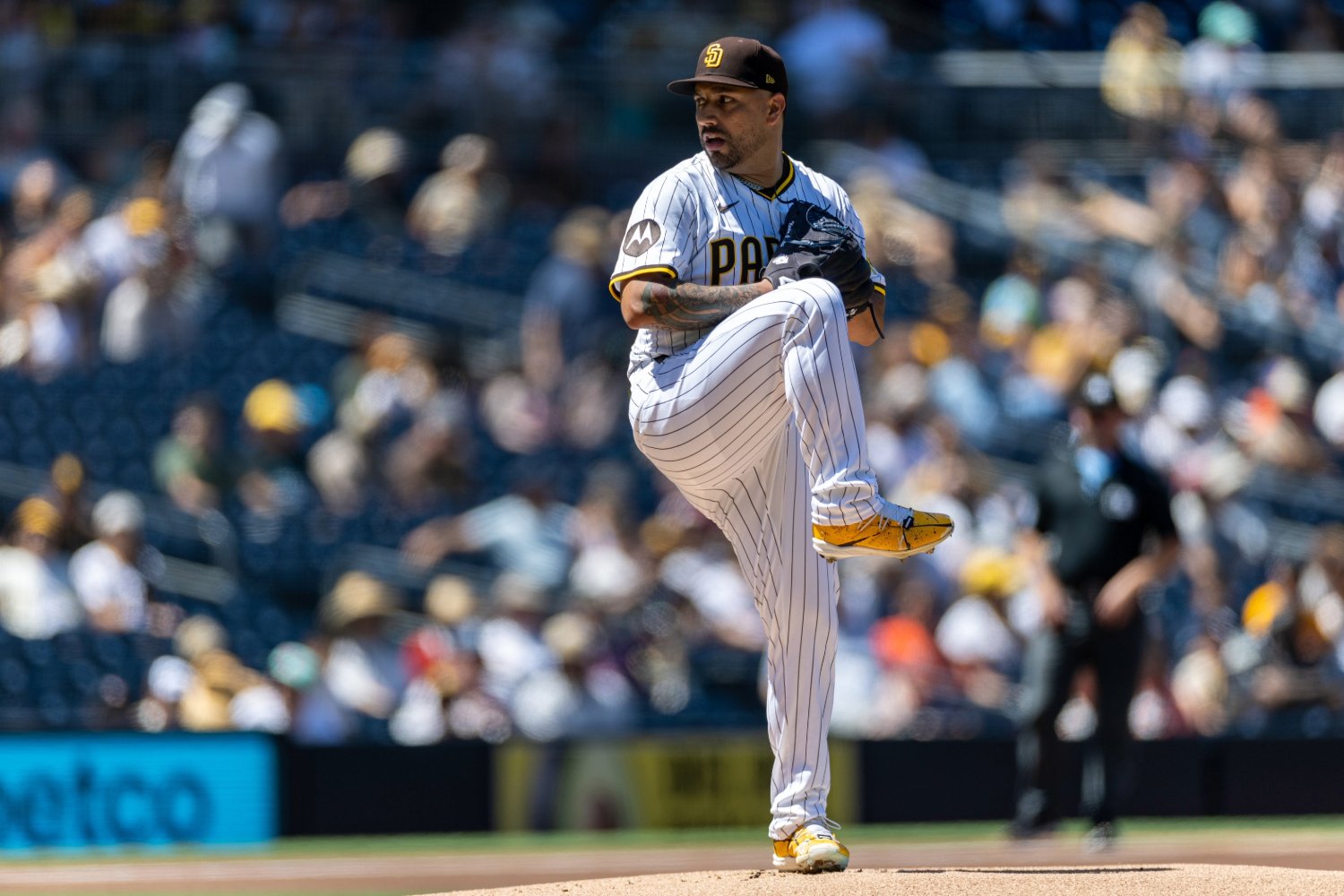 The San Diego Padres lost another game on Wednesday. It was their sixth loss in their last seven games, and a sweep at the hands of a rather listless Baltimore Orioles squad (which followed a series loss to a Minnesota Twins club that traded virtually everybody they could prior to last month's trade deadline). The team remains in the hunt for the division lead (2.5 games back of Los Angeles), but things have gone south fast to start the month of September. At the center of the team's latest tale of woe is the Wednesday start from Nestor Cortes. The same Cortes who looked so strong against the Dodgers barely two weeks ago. Therein, he threw six innings of one-hit ball in a crucial game against an upper-echelon team. His pair of subsequent starts, however, have not featured remotely the same level of efficiency that Cortes was able to demonstrate there. The first sign of trouble emerged against the Twins on Friday. Cortes was only able to work three innings, ceding five hits and a pair of walks en route to allowing three earned runs. He threw 66 pitches before being lifted with no outs in the fourth inning. The bullpen contingent of Wandy Peralta, David Morgan, and Yuki Matsui couldn't hold it down in relief, as each allowed at least a run in addition to what Cortes' short outing had wrought on the scoreboard. Things were much worse on Wednesday, however. Cortes wasn't even able to replicate his work from the prior outing, as he only worked to one out into the third inning. Across those 2 1/3 frames, he walked three Orioles hitters and allowed seven hits, four of which were home runs. It's the latter component of the line that represents the largest issue, because this isn't the first time we've seen this from Cortes in 2025. Back on March 29, Nestor Cortes made his first start with the Milwaukee Brewers against his old mates out of the Bronx. He allowed five home runs in that game as torpedo bat fever gripped the nation. Four of those came in the first inning. It was a trend we saw early in his tenure in San Diego, as Cortes had a similar outing against the San Francisco Giants on August 18. There, he allowed a trio of homers in the first inning, including back-to-back shots to open the game. Cortes was able to settle in and work into the sixth inning, but it was a game that the Padres would go on to lose. Which allows us to circle back to Wednesday's start versus Baltimore. Things started with a leadoff home run off the bat of Jackson Holliday. Cortes' first inning included an addition hit, a walk, and another hit before he was able to close out the side. After working through an uneventful second, things went off the rails in the third. A walk and a single got the inning underway before the outcomes read homer-homer-homer from each of Colton Cowser, Coby Mayo, and Alex Jackson. The start was a microcosm of Cortes' 2025... in two ways. The first is the home run angle. Across 34 1/3 innings of work in '25, Cortes has a home run rate against of 24.5 percent. The highest among qualifying starting pitchers is St. Louis' Andre Pallante, at 18.7. Tampa Bay's Shane Baz follows at 16.9. If we changed the criteria to pitchers with just 30 innings to their name at minimum, the Athletics' J.T. Ginn takes over at 26.7 percent. The difference, of course, is that Ginn plays his home games at a minor league park for a team not remotely in playoff contention. Cortes, who holds down the second spot, has no such luxury. The homers are a massive problem. That's especially true given factor number two, which is when the home runs are primarily manifesting. Courtesy of Baseball Reference, here is where issues are presenting themselves for Cortes over the course of a ballgame: It's not a mystery as to what is plaguing Cortes in his poor starts, which are starting to pile up. A .421 average and .488 on-base percentage is ugly enough as it is. But the real issue is in the nine homers. Of the 13 total home runs that Cortes has allowed this year, nine have come in the first inning. He's been largely fine elsewhere. If we wanted to extend this to overall performance splits, Cortes has a 7.53 ERA and 11.65 FIP the first time through the order. That drops to 6.89/6.27, respectively, the second time and 0.00/4.52 in those rare instances in which Cortes has worked to a third pass through the order. The ultimate point here is that Cortes is having issues getting out of the gate. He can be fine once he settles in, but there's a real issue confronting the beginning of an outing. Which presents two possible solutions. The first simply requires Cortes to be better to start individual plate appearances, both at the top of an inning and the start of the plate appearance itself. He's demonstrated a tendency to groove a first pitch for a strike, reflected in a .429 average and .500 OBP to the first batter of a game and a .273 average/.368 OBP to the first batter of an inning. Further, if opposing hitters are swinging at the first pitch of an appearance, they're hitting .385, reaching base at a .419 clip, and have hit seven homers. There's an obvious need for improvement from the jump, in whatever form that needs to take. The solution that has yet to be explored is that of an opener. Even in the absence of Jason Adam, the Padres' bullpen runs deep. They have a number of bridge arms that could be serviceable in the first inning, including someone like David Morgan. Getting the first inning squared away and then deploying Cortes as a bulk reliever could help to relieve him of some of the issues early in games. Either way, there's a drastic need for a change in the approach toward Nestor Cortes outings. This isn't a rotation that runs particularly deep, a fact that's only being made more worrisome with each inefficient outing from Dylan Cease and the sustained absence of Michael King. Whatever form the solution may take, one is certainly needed if the team is to derive any value out of Cortes' arm down the stretch.
 -
There was a point this year where it looked like shortstop was a position of dire need for the San Diego Padres. Year 3 of the Xander Bogaerts deal looked to be an imminent disaster and, with the team struggling to find offense, a way out of the contract was floated by many across the baseball blogosphere. It's been rather quiet on that front since, however. The reason for that is once we worked our way through that tumultuous period, Bogaerts has gone on to have a solid year for the Friars. In fact, he's been almost entirely average as a performer. Given where the Padres should be with some of their other pieces on offense, that's something you're more than happy to accept out of the six. But, since the start of June, he's also been one of the better players the position has to offer. Since June 1, Bogaerts ranks 12th among 25 qualifying shortstops in fWAR (2.1). He also sits 12th in wRC+ (112), seventh in strikeout rate (15.7 percent), 13th in walk rate (7.3 percent). His modest ISO (.145) checks in at 16th, but his nine steals since that point rank 11th. From a full season standpoint, Bogaerts is carrying a .262/.330/.387 slash with a 103 wRC+ and 20 steals. He's compensated for his sharp power decline with a certain prowess on the bases, including the decent swipe volume and a 1.5 BsR metric that pegs him as an above-average runner in more than just steals. In short, the Padres have had a decidedly average player in most respects manning shortstop for them in 2025. The contract, obviously, does not match the production. But, considering where things stood just a few months ago, it's production you'll happily take in the mix with such bats as Manny Machado, Fernando Tatis Jr., and Jackson Merrill elsewhere in the lineup. It's a worthwhile skill set to compliment those stars, at the very least. Which is going to make replacing even that average production quite difficult, especially when your shortstop production beyond the starter looks like this: Iglesias has been the name grabbing the early time at short in Bogaerts' absence as the latter deals with a foot fracture. He's been an important part of the team's bench this year, but that's due almost exclusively to his versatility. He's played 39 games at second base, 19 at third, 24 at shortstop, and has two innings in left field to his name. Since Bogaerts went down, it's been Iglesias and his early 0-for-13 stretch as a lineup regular working in his stead. That the Padres are going to be forced to deploy Iglesias in an everyday role is certainly cause for concern. His 64 wRC+ on the year isn't coming from the world of a small sample; there just isn't much that the bat has to offer. Given that, one does wonder if the other choice, Mason McCoy, could offer just a bit more. In 98 games with El Paso this year, McCoy posted a wRC+ of 89, with a .272/.354/.450 slash, a .178 ISO, and 17 steals. There's much more of a penchant for strikeouts than we see with Iglesias (25.6 percent strikeout rate in Triple-A), but he does offer at least the potential to run into a bit of impact at the plate. While never an upper-tier prospect, McCoy did find his way into MLB Pipeline's Top 30 list for the Baltimore Orioles back in 2020. His scouting report had the following to say: McCoy has become something of a minor league journeyman in the years since, appearing in each of Baltimore, Seattle, and Toronto's system prior to his arrival in San Diego's in 2024. While you're not going to get even Bogaerts' level of production out of him, it does stand to reason that McCoy could offer a bit more than Iglesias as the Padres work to bridge the gap between now and the end of the month, when Bogaerts could be back in the mix. That's especially true when you consider the baserunning component. That was a primary factor that Bogaerts offered the lineup. He was able to work his way on base and provide a source of competence in that respect. Iglesias is not only a below-average bat, but a below-average baserunner. McCoy not only offers a touch more upside at the plate, but much more of it in those rare instances that he winds up on base. That seems a worthy tradeoff as you work to find some level of production in the absence of Xander Bogaerts. Such a scenario would allow the team to continue rolling Iglesias out as a utility infielder to give the other starters a day off in this final stretch of the regular season. Of course, it's a route the team could also go by simply moving Iglesias around and inserting McCoy on days in which someone like Machado or Jake Cronenworth needs a breather. But that would leave a notable gap in the lineup at two spots, rather than one. Ultimately, it's an entirely unenviable situation for the Padres. Even if Bogaerts wasn't performing at a level akin to his days in Boston, he was still a source of stability in the lineup. Now without him, there's a rock-and-a-hard-place scenario playing out in San Diego with no "correct" answer in sight. There's an argument to be made that it should be McCoy, but it's likely going to be a limp to the finish out of that spot no matter which way the chips fall. View full article
-
How Much of a Decline are the Padres in for Without Xander Bogaerts?
Randy Holt posted an article in Padres
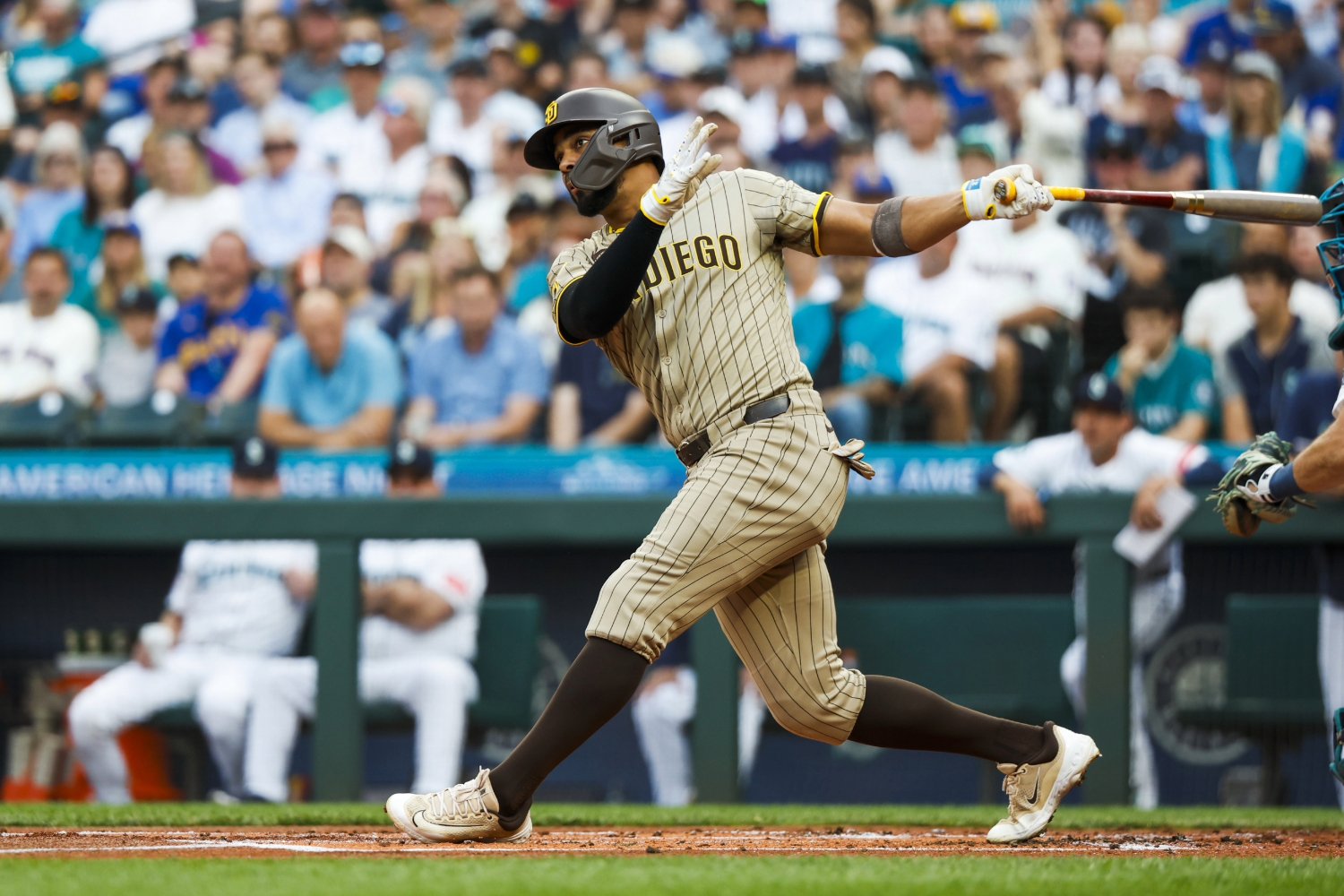 There was a point this year where it looked like shortstop was a position of dire need for the San Diego Padres. Year 3 of the Xander Bogaerts deal looked to be an imminent disaster and, with the team struggling to find offense, a way out of the contract was floated by many across the baseball blogosphere. It's been rather quiet on that front since, however. The reason for that is once we worked our way through that tumultuous period, Bogaerts has gone on to have a solid year for the Friars. In fact, he's been almost entirely average as a performer. Given where the Padres should be with some of their other pieces on offense, that's something you're more than happy to accept out of the six. But, since the start of June, he's also been one of the better players the position has to offer. Since June 1, Bogaerts ranks 12th among 25 qualifying shortstops in fWAR (2.1). He also sits 12th in wRC+ (112), seventh in strikeout rate (15.7 percent), 13th in walk rate (7.3 percent). His modest ISO (.145) checks in at 16th, but his nine steals since that point rank 11th. From a full season standpoint, Bogaerts is carrying a .262/.330/.387 slash with a 103 wRC+ and 20 steals. He's compensated for his sharp power decline with a certain prowess on the bases, including the decent swipe volume and a 1.5 BsR metric that pegs him as an above-average runner in more than just steals. In short, the Padres have had a decidedly average player in most respects manning shortstop for them in 2025. The contract, obviously, does not match the production. But, considering where things stood just a few months ago, it's production you'll happily take in the mix with such bats as Manny Machado, Fernando Tatis Jr., and Jackson Merrill elsewhere in the lineup. It's a worthwhile skill set to compliment those stars, at the very least. Which is going to make replacing even that average production quite difficult, especially when your shortstop production beyond the starter looks like this: Iglesias has been the name grabbing the early time at short in Bogaerts' absence as the latter deals with a foot fracture. He's been an important part of the team's bench this year, but that's due almost exclusively to his versatility. He's played 39 games at second base, 19 at third, 24 at shortstop, and has two innings in left field to his name. Since Bogaerts went down, it's been Iglesias and his early 0-for-13 stretch as a lineup regular working in his stead. That the Padres are going to be forced to deploy Iglesias in an everyday role is certainly cause for concern. His 64 wRC+ on the year isn't coming from the world of a small sample; there just isn't much that the bat has to offer. Given that, one does wonder if the other choice, Mason McCoy, could offer just a bit more. In 98 games with El Paso this year, McCoy posted a wRC+ of 89, with a .272/.354/.450 slash, a .178 ISO, and 17 steals. There's much more of a penchant for strikeouts than we see with Iglesias (25.6 percent strikeout rate in Triple-A), but he does offer at least the potential to run into a bit of impact at the plate. While never an upper-tier prospect, McCoy did find his way into MLB Pipeline's Top 30 list for the Baltimore Orioles back in 2020. His scouting report had the following to say: McCoy has become something of a minor league journeyman in the years since, appearing in each of Baltimore, Seattle, and Toronto's system prior to his arrival in San Diego's in 2024. While you're not going to get even Bogaerts' level of production out of him, it does stand to reason that McCoy could offer a bit more than Iglesias as the Padres work to bridge the gap between now and the end of the month, when Bogaerts could be back in the mix. That's especially true when you consider the baserunning component. That was a primary factor that Bogaerts offered the lineup. He was able to work his way on base and provide a source of competence in that respect. Iglesias is not only a below-average bat, but a below-average baserunner. McCoy not only offers a touch more upside at the plate, but much more of it in those rare instances that he winds up on base. That seems a worthy tradeoff as you work to find some level of production in the absence of Xander Bogaerts. Such a scenario would allow the team to continue rolling Iglesias out as a utility infielder to give the other starters a day off in this final stretch of the regular season. Of course, it's a route the team could also go by simply moving Iglesias around and inserting McCoy on days in which someone like Machado or Jake Cronenworth needs a breather. But that would leave a notable gap in the lineup at two spots, rather than one. Ultimately, it's an entirely unenviable situation for the Padres. Even if Bogaerts wasn't performing at a level akin to his days in Boston, he was still a source of stability in the lineup. Now without him, there's a rock-and-a-hard-place scenario playing out in San Diego with no "correct" answer in sight. There's an argument to be made that it should be McCoy, but it's likely going to be a limp to the finish out of that spot no matter which way the chips fall.
 -
With now less than a month to go, all options are on the table for the San Diego Padres. When September reaches its end, the team could be named the champion of the National League West. Or they could take one of the three wild card spots available in the NL. The route they choose to take, however, is kind of on them to decide. Especially when one examines their schedule. Tankathon has the Padres with the easiest remaining schedule of any team in all of Major League Baseball. Their opponents have just a .434 winning percentage, with top opponents including the Milwaukee Brewers, New York Mets, and Cincinnati Reds. On the opposite end of the spectrum, they'll finish this week's series versus the Baltimore Orioles and get a series against the Chicago White Sox, to say nothing of seven games against the Colorado Rockies this month. It's a schedule worth taking advantage of if they're able. But it's also important to acknowledge the other end of things. From a win percentage standpoint, the Los Angeles Dodgers rank just 26th in their September opponents. They'll get a bit tougher of competition against the Philadelphia Phillies and Seattle Mariners, with seven games against a San Francisco Giants squad that would love to spoil some things for their rivals down the stretch. On the lower end, they get Pittsburgh, Baltimore, and Colorado. So while it's easy to think that the Padres' schedule lines up favorably, that's also not happening in a vacuum. Plus, it's not as if we're looking at a Padres team ready to confront these lackluster squads while firing on all cylinders. The Padres dropped a series to the Minnesota Twins over the weekend. They lost their series opener to Baltimore on Monday. It's bad timing considering that the Dodgers just lost a long series to the Arizona Diamondbacks, preventing the Padres from making any headway in matters of the division and leaving them 2.5 games back heading into the remainder of the week. Nevertheless, it'll be really hard for them to not emerge from September with a playoff spot in hand. FanGraphs likes the way the Padres are positioned in the standings and what they have the rest of the way. They're at 99.1 percent in terms of playoff odds. Similarly, Baseball Reference has them at that mark in their overall chance to reach the postseason. Where the two sites differ is in their chance to steal a division out from under the Dodgers. FanGraphs is giving the Padres only a 16 percent chance of taking the crown, while Baseball Reference has them at a 27 percent chance to do so. So it would take something genuinely catastrophic for the playoffs not to be in the team's October future. At the same time, they're going to need to elevate play from what we've seen since a hot start to the month of August. In the second half of August, San Diego ranked just 19th in runs scored (73), with concerning trends emerging from the respective outputs of Manny Machado (56 wRC+), Luis Arráez (54), pre-injury Jackson Merrill (35), and Freddy Fermin (16). That's roughly half the lineup finding itself in some form of offensive woe. The pitching staff, meanwhile, posted a collective ERA that ranked 17th (4.34) and a FIP that sat just 26th (4.99) while posting the league's fourth-highest walk rate (9.9 percent). The team won just twice in their last seven to close out the month. It's a concerning trend for a team with such a favorable outlook for the remainder of the season. If the team is able to figure it out in short order, however, that favorability could bode well for them in establishing their positioning for the first round of next month's postseason. If they can't do so, even in the midst of such a healthy schedule, their failure to control their own destiny could spell doom early in October. View full article
-
Remaining Schedule Favors Padres, But Only If They Take Advantage
Randy Holt posted an article in Padres
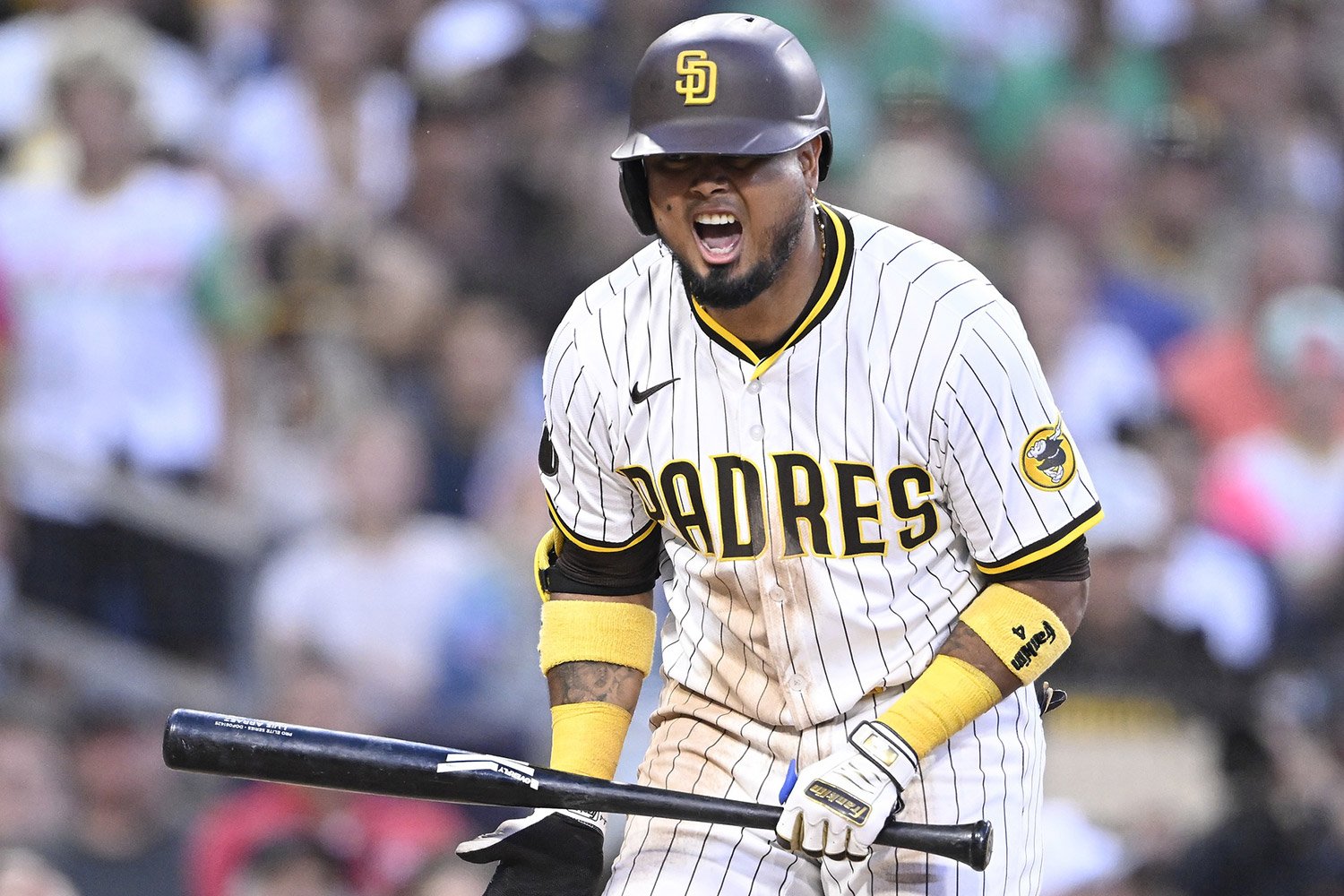 With now less than a month to go, all options are on the table for the San Diego Padres. When September reaches its end, the team could be named the champion of the National League West. Or they could take one of the three wild card spots available in the NL. The route they choose to take, however, is kind of on them to decide. Especially when one examines their schedule. Tankathon has the Padres with the easiest remaining schedule of any team in all of Major League Baseball. Their opponents have just a .434 winning percentage, with top opponents including the Milwaukee Brewers, New York Mets, and Cincinnati Reds. On the opposite end of the spectrum, they'll finish this week's series versus the Baltimore Orioles and get a series against the Chicago White Sox, to say nothing of seven games against the Colorado Rockies this month. It's a schedule worth taking advantage of if they're able. But it's also important to acknowledge the other end of things. From a win percentage standpoint, the Los Angeles Dodgers rank just 26th in their September opponents. They'll get a bit tougher of competition against the Philadelphia Phillies and Seattle Mariners, with seven games against a San Francisco Giants squad that would love to spoil some things for their rivals down the stretch. On the lower end, they get Pittsburgh, Baltimore, and Colorado. So while it's easy to think that the Padres' schedule lines up favorably, that's also not happening in a vacuum. Plus, it's not as if we're looking at a Padres team ready to confront these lackluster squads while firing on all cylinders. The Padres dropped a series to the Minnesota Twins over the weekend. They lost their series opener to Baltimore on Monday. It's bad timing considering that the Dodgers just lost a long series to the Arizona Diamondbacks, preventing the Padres from making any headway in matters of the division and leaving them 2.5 games back heading into the remainder of the week. Nevertheless, it'll be really hard for them to not emerge from September with a playoff spot in hand. FanGraphs likes the way the Padres are positioned in the standings and what they have the rest of the way. They're at 99.1 percent in terms of playoff odds. Similarly, Baseball Reference has them at that mark in their overall chance to reach the postseason. Where the two sites differ is in their chance to steal a division out from under the Dodgers. FanGraphs is giving the Padres only a 16 percent chance of taking the crown, while Baseball Reference has them at a 27 percent chance to do so. So it would take something genuinely catastrophic for the playoffs not to be in the team's October future. At the same time, they're going to need to elevate play from what we've seen since a hot start to the month of August. In the second half of August, San Diego ranked just 19th in runs scored (73), with concerning trends emerging from the respective outputs of Manny Machado (56 wRC+), Luis Arráez (54), pre-injury Jackson Merrill (35), and Freddy Fermin (16). That's roughly half the lineup finding itself in some form of offensive woe. The pitching staff, meanwhile, posted a collective ERA that ranked 17th (4.34) and a FIP that sat just 26th (4.99) while posting the league's fourth-highest walk rate (9.9 percent). The team won just twice in their last seven to close out the month. It's a concerning trend for a team with such a favorable outlook for the remainder of the season. If the team is able to figure it out in short order, however, that favorability could bode well for them in establishing their positioning for the first round of next month's postseason. If they can't do so, even in the midst of such a healthy schedule, their failure to control their own destiny could spell doom early in October.
 -
Despite their loudest trade deadline move being an addition to an area of strength in Mason Miller, A.J. Preller and the San Diego Padres spent the bulk of their time ahead of July 31 putting the focus where it was most warranted: on the offense. In the weeks since, it's transpired just about as well as one might've hoped. Ramón Laureano has been a genuine difference-maker in his first 100 plate appearances with the team (174 wRC+), while each of Ryan O'Hearn and Freddy Fermin have provided a boost relative to where they were most needed (corner infield power and competence behind the plate, respectively). That trio of acquisitions initially left very little time for one Gavin Sheets. One of the team's more important bats, particularly during the rough offensive stretches of June and July, Sheets didn't appear in a game post-deadline until August 4. It was another week before he drew another start on August 11. The week after that brought a pair of pinch-hit appearances and a single start. All told, Sheets had made just three starts through August 18, with three pinch-hit appearances. He certainly bore the mark of someone who was set to serve as a situational player more than one with everyday merits to his name. A combination of factors, however, have led to a renewed role in the San Diego lineup for Sheets. Most notably, that's been the injury to Jackson Merrill. Sheets has subsequently been thrust into regular work in left field, including a string of nine consecutive starts on the outfield grass. Defensive concerns notwithstanding, his bat has brought a welcome presence back into the lineup. That didn't seem like it would always be the case, however. The nature of playing for the current iteration of the Chicago White Sox is that you're easily going to be hit with the change-of-scenery label upon your departure. Sheets looked the part for the first two months of the year. Working his way into more playing time, his 130 wRC+ in April and May trailed only Manny Machado and Fernando Tatis Jr. among Padres regulars. He was striking out far too much (24.1 percent), but supplying much of the power that the collective had to offer (.229 ISO). Then, the calendar hit June. In each of June and July, Sheets' production tailed off considerably. His wRC+ fell to 102 in June and just 65 in July. His power output dissolved, going from a .149 ISO to a .086 mark between the two months. Weirdly, he struck out only 15.9 percent of the time and was still walking at a decent clip (8.8 percent), but the batted ball results weren't promising. There was a luck component involved, including a .219 BABIP in July, but the remainder of the explanation for Sheets' struggle is fairly unclear. He didn't feature any strange distribution in pitch types nor did pitchers overly adjust to his early-season production. There was a bat speed spike in July, but nothing else unusual mechanically. Perhaps this is a scenario where we can actually call the luck factor a factor. Because, since working his way back into regular work, it's one working well within his favor. Since the start of August, Sheets' line checks in at .350/.409/.725, with a .375 ISO and a 214 wRC+. There's obviously a sample component to such gaudy numbers, but within that, Sheets' BABIP is at .379. So, the luck has returned, in addition to the power. Perhaps more impressive than the numbers themselves is that Sheets is doing this while being more aggressive than he has at any point during the season. His Swing% this month is at 46.7 percent. That comes in just higher than his rate during the first month of the year and comfortably ahead of any month since. His chase rate is not quite his highest, but still abnormal at roughly 31 percent. Yet, this is also a notable trend within his overall plate discipline: Even when Sheets was going well early in the year, his chase and miss habits were cause for concern. That's reflected in the ballooned strikeout rate and a roughly 75 percent contact rate that was one of the 60 lowest in the league (among 169 qualifiers) in those first two months. Essentially, Sheets was giving the perception of a power-or-nothing type bat. He then reined it in and upped the contact rate to almost 80 percent, but was confronted with some brutal luck along the way. But now, we're looking at a more complete hitter in the form of Gavin Sheets. There's the aggression, but he's finding far more contact as a hitter than he was even at his early-season best. As of this writing, Sheets is making contact at a 82.1 percent rate and adding the elevation that hadn't been present when his struggles began (his 46.6 percent fly ball rate is his highest of the year in a given month). It's not particularly deep, either. We're not necessarily looking at a player who overhauled his mechanics or completely renewed his approach. He simply needed to make more contact and he did. The organic process of batted ball luck was the only thing standing in front of him realizing the value of that increased contact. The result is a version of Sheets that's going to continue to find his way into the lineup, even when the group is back to full health. View full article
-
For the Padres, It Looks Like Gavin Sheets is Back on the Menu
Randy Holt posted an article in Padres
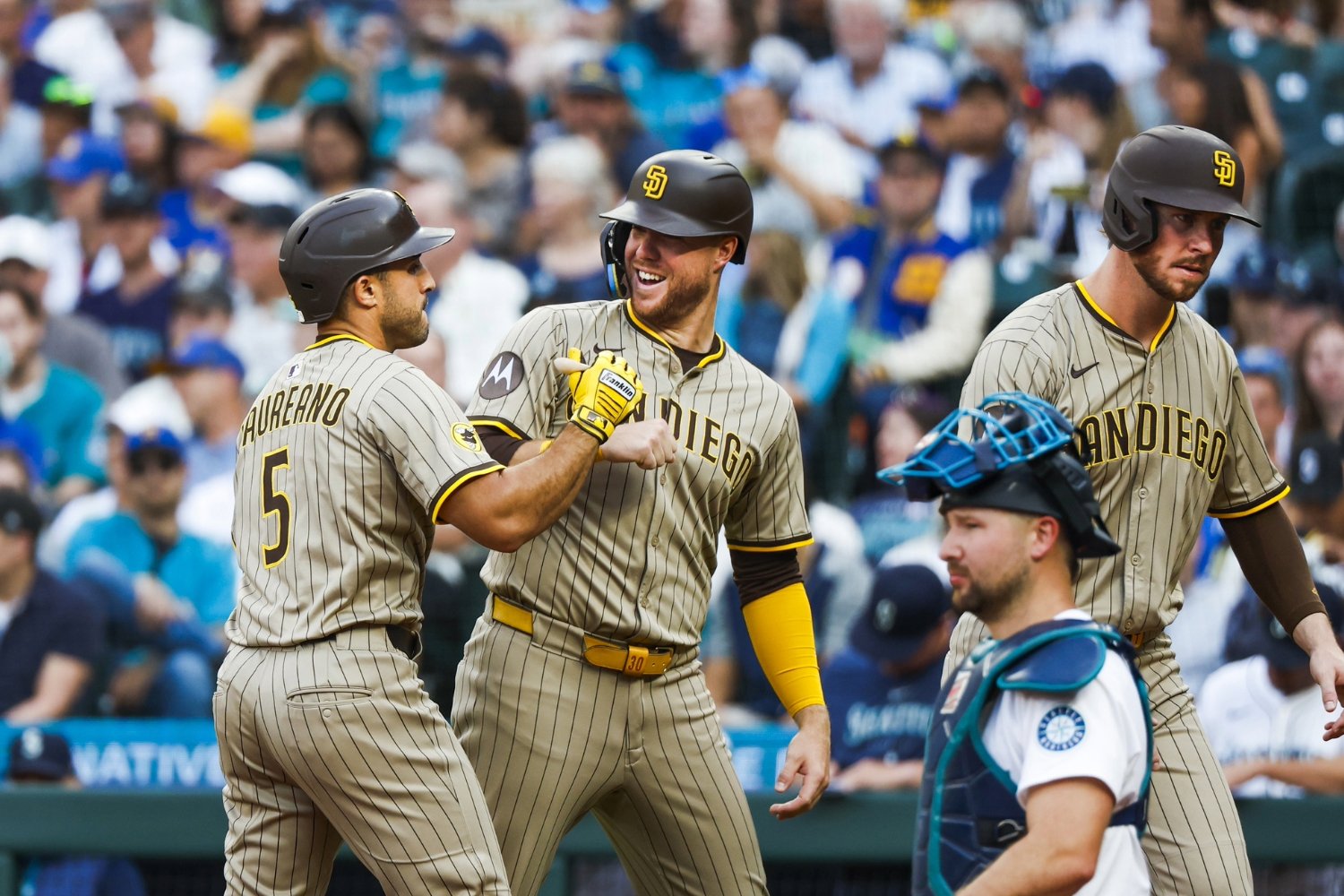 Despite their loudest trade deadline move being an addition to an area of strength in Mason Miller, A.J. Preller and the San Diego Padres spent the bulk of their time ahead of July 31 putting the focus where it was most warranted: on the offense. In the weeks since, it's transpired just about as well as one might've hoped. Ramón Laureano has been a genuine difference-maker in his first 100 plate appearances with the team (174 wRC+), while each of Ryan O'Hearn and Freddy Fermin have provided a boost relative to where they were most needed (corner infield power and competence behind the plate, respectively). That trio of acquisitions initially left very little time for one Gavin Sheets. One of the team's more important bats, particularly during the rough offensive stretches of June and July, Sheets didn't appear in a game post-deadline until August 4. It was another week before he drew another start on August 11. The week after that brought a pair of pinch-hit appearances and a single start. All told, Sheets had made just three starts through August 18, with three pinch-hit appearances. He certainly bore the mark of someone who was set to serve as a situational player more than one with everyday merits to his name. A combination of factors, however, have led to a renewed role in the San Diego lineup for Sheets. Most notably, that's been the injury to Jackson Merrill. Sheets has subsequently been thrust into regular work in left field, including a string of nine consecutive starts on the outfield grass. Defensive concerns notwithstanding, his bat has brought a welcome presence back into the lineup. That didn't seem like it would always be the case, however. The nature of playing for the current iteration of the Chicago White Sox is that you're easily going to be hit with the change-of-scenery label upon your departure. Sheets looked the part for the first two months of the year. Working his way into more playing time, his 130 wRC+ in April and May trailed only Manny Machado and Fernando Tatis Jr. among Padres regulars. He was striking out far too much (24.1 percent), but supplying much of the power that the collective had to offer (.229 ISO). Then, the calendar hit June. In each of June and July, Sheets' production tailed off considerably. His wRC+ fell to 102 in June and just 65 in July. His power output dissolved, going from a .149 ISO to a .086 mark between the two months. Weirdly, he struck out only 15.9 percent of the time and was still walking at a decent clip (8.8 percent), but the batted ball results weren't promising. There was a luck component involved, including a .219 BABIP in July, but the remainder of the explanation for Sheets' struggle is fairly unclear. He didn't feature any strange distribution in pitch types nor did pitchers overly adjust to his early-season production. There was a bat speed spike in July, but nothing else unusual mechanically. Perhaps this is a scenario where we can actually call the luck factor a factor. Because, since working his way back into regular work, it's one working well within his favor. Since the start of August, Sheets' line checks in at .350/.409/.725, with a .375 ISO and a 214 wRC+. There's obviously a sample component to such gaudy numbers, but within that, Sheets' BABIP is at .379. So, the luck has returned, in addition to the power. Perhaps more impressive than the numbers themselves is that Sheets is doing this while being more aggressive than he has at any point during the season. His Swing% this month is at 46.7 percent. That comes in just higher than his rate during the first month of the year and comfortably ahead of any month since. His chase rate is not quite his highest, but still abnormal at roughly 31 percent. Yet, this is also a notable trend within his overall plate discipline: Even when Sheets was going well early in the year, his chase and miss habits were cause for concern. That's reflected in the ballooned strikeout rate and a roughly 75 percent contact rate that was one of the 60 lowest in the league (among 169 qualifiers) in those first two months. Essentially, Sheets was giving the perception of a power-or-nothing type bat. He then reined it in and upped the contact rate to almost 80 percent, but was confronted with some brutal luck along the way. But now, we're looking at a more complete hitter in the form of Gavin Sheets. There's the aggression, but he's finding far more contact as a hitter than he was even at his early-season best. As of this writing, Sheets is making contact at a 82.1 percent rate and adding the elevation that hadn't been present when his struggles began (his 46.6 percent fly ball rate is his highest of the year in a given month). It's not particularly deep, either. We're not necessarily looking at a player who overhauled his mechanics or completely renewed his approach. He simply needed to make more contact and he did. The organic process of batted ball luck was the only thing standing in front of him realizing the value of that increased contact. The result is a version of Sheets that's going to continue to find his way into the lineup, even when the group is back to full health.
 -
It's possible that any of the following words came to mind upon hearing the San Diego Padres signed Nick Pivetta to a four-year contract shortly before spring training: sure, okay, fine, neat, or the good, old-fashioned absence of words altogether in favor of a mild shrug of the shoulders. A muted reaction was likely appropriate. The Padres were getting a starting pitcher to help fill out their rotation. That was the important thing. But, he'd also never posted an ERA below four over a full season and, while the strikeout numbers were decent enough, you weren't trading off punchouts for run prevention. Pivetta was merely a serviceable starter to plug into the latter portion of the rotation. Solid, but unspectacular. In a stroke of irony, that solid, but unspectacular starter has gone on to be the Padres' most important arm out of the starting gate this season. Alongside Dylan Cease, he's the only starting pitcher to remain healthy to date (26 starts), and his ERA (2.82) & FIP (3.32) trail only Michael King. His 6.8 percent walk rate trails only Kyle Hart among Padres with multiple starts this year. Factoring in the context that Cease has had efficiency issues, King has made just 11 starts, and Hart was permanently banished to El Paso in July, it's an easy call as to who has demonstrated the most value to this starting group. What's strange, though, is Pivetta's absence of regression. Since July 25th (six starts), his ERA sits at 2.91 and his FIP is at 3.76. That's reasonably in-line with the production he's turned in all year, with the latter figure suggesting that he's not getting lucky even at this late juncture. He's just as effective now as he was in April... which doesn't add up when you consider many of the underlying metrics against the actual outcomes. On percentiles alone, Pivetta lives in multiple layers of contradiction. He doesn't generate many chases or whiffs, but still sits quite high in terms of his strikeout rate. He doesn't generate soft contact or groundballs but has maintained a favorable expected batting average against. There just isn't much stuff to speak of—his only plus pitch by Stuff+ is a seldom-used slider—yet he's still consistently stifling hitters this late into the year. We call that a paradox. Taking the contradiction concept a step further, few pitchers live in the zone more than Pivetta has this year. His 46.6 Zone% ranks eighth among 55 qualifying starting pitchers. You're also not going to find him lingering around the top of the leaderboard in contact rate (27th) or even swing rate (34th). If we're painting with broad strokes, you'd almost expect a healthy dose of swings with an aggressive pitcher, with his ability to locate serving to avoid quality contact even if the contact itself comes at a high volume. Such is the archetype. But, almost none of that is present. Instead, Pivetta's a pitcher without elite stuff, absolutely living in the zone, and somehow always managing to get away with it. It's so confounding that FanGraphs' Ben Clemens questioned whether Pivetta was some kind of sorcerer in a piece last week. Therein, Clemens noted a combination of confidence and sequencing in allowing Pivetta to thrive in the way he's approaching hitters in 2025. His closing thought was especially enlightening: Indeed, Pivetta is simply working with more confidence in his arsenal than almost any of his contemporaries. This speaks to a couple of different ideas. One is the outcome-based fact that Pivetta is thriving in two-strike counts. He's in the zone 47.1 percent of the time in two-strike counts, but opposing hitters are going for an average of just .111 in those counts (xBA of .129). Even beyond the "caught looking on grooved pitches" metric that Clemens describes in the FanGraphs' piece, Pivetta is finding an extraordinary level of fortune in operating with two-strike counts. The other idea presented here is the entirely unquantifiable confidence. The following is the pitch type with which Pivetta is working in two-strike counts: Working with a fastball in two-strike counts speaks to confidence in itself, but the fact that Pivetta is hitting the zone with the curveball 53.1 percent of the time and the sweeper at a 47.8 percent clip in those situations represents some next -level faith in your stuff. Pivetta isn't even trying to get hitters to chase. He's simply going with whatever works in a given moment in the most obvious possible portion of the zone. How does one even account for something like that? That really is the remarkable thing about what Nick Pivetta is doing at this point in the year. If we were to believe what's on paper in terms of stuff and contact trends, he should be worse. But, the expected metrics say he shouldn't. And it's almost completely courtesy of his aggression, which is either freezing hitters into not swinging or offering up a swing that is five percent below their typical hard hit rate. You can't quantify confidence. Nick Pivetta may just continue to defy whatever the numbers have to say. View full article
-
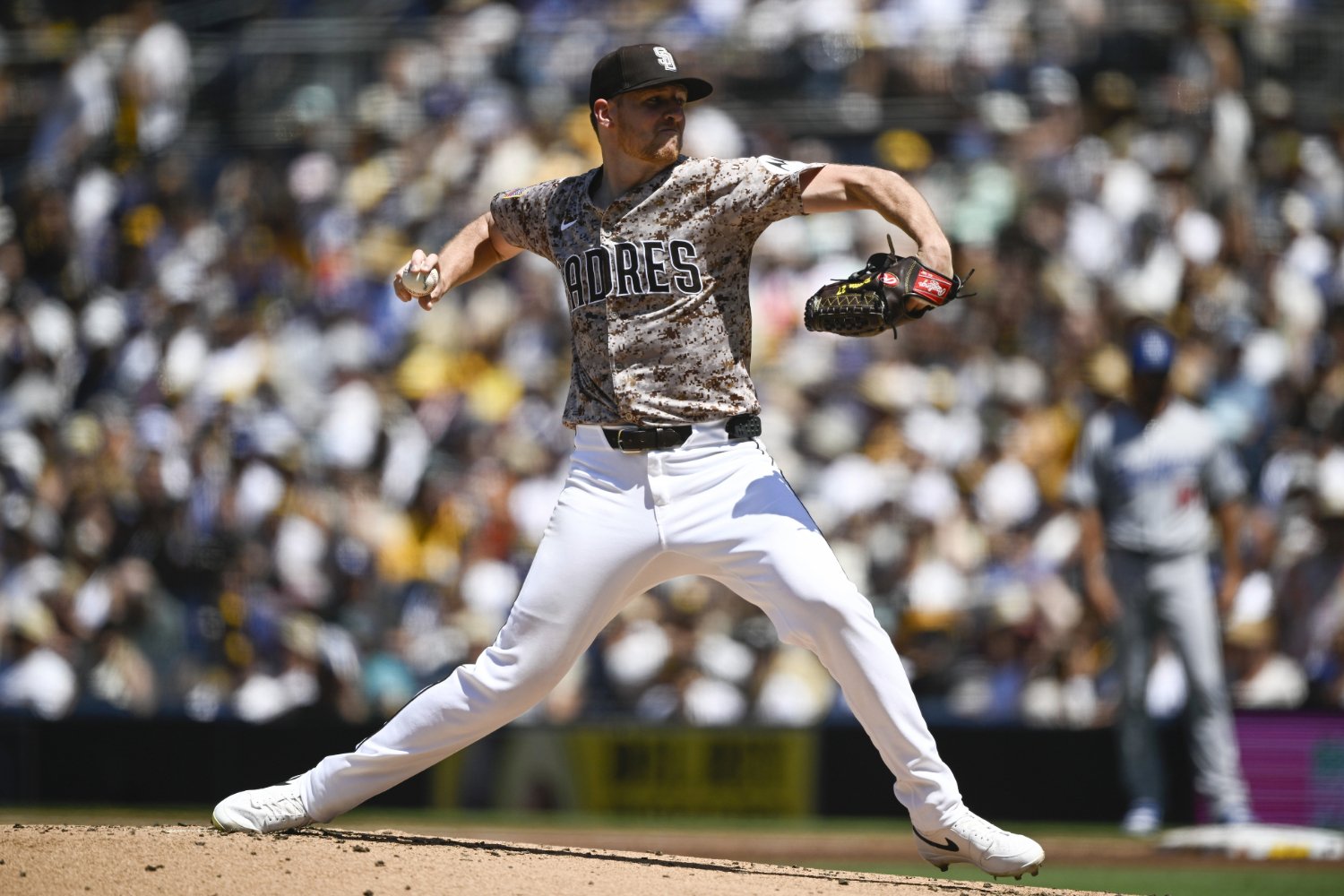 It's possible that any of the following words came to mind upon hearing the San Diego Padres signed Nick Pivetta to a four-year contract shortly before spring training: sure, okay, fine, neat, or the good, old-fashioned absence of words altogether in favor of a mild shrug of the shoulders. A muted reaction was likely appropriate. The Padres were getting a starting pitcher to help fill out their rotation. That was the important thing. But, he'd also never posted an ERA below four over a full season and, while the strikeout numbers were decent enough, you weren't trading off punchouts for run prevention. Pivetta was merely a serviceable starter to plug into the latter portion of the rotation. Solid, but unspectacular. In a stroke of irony, that solid, but unspectacular starter has gone on to be the Padres' most important arm out of the starting gate this season. Alongside Dylan Cease, he's the only starting pitcher to remain healthy to date (26 starts), and his ERA (2.82) & FIP (3.32) trail only Michael King. His 6.8 percent walk rate trails only Kyle Hart among Padres with multiple starts this year. Factoring in the context that Cease has had efficiency issues, King has made just 11 starts, and Hart was permanently banished to El Paso in July, it's an easy call as to who has demonstrated the most value to this starting group. What's strange, though, is Pivetta's absence of regression. Since July 25th (six starts), his ERA sits at 2.91 and his FIP is at 3.76. That's reasonably in-line with the production he's turned in all year, with the latter figure suggesting that he's not getting lucky even at this late juncture. He's just as effective now as he was in April... which doesn't add up when you consider many of the underlying metrics against the actual outcomes. On percentiles alone, Pivetta lives in multiple layers of contradiction. He doesn't generate many chases or whiffs, but still sits quite high in terms of his strikeout rate. He doesn't generate soft contact or groundballs but has maintained a favorable expected batting average against. There just isn't much stuff to speak of—his only plus pitch by Stuff+ is a seldom-used slider—yet he's still consistently stifling hitters this late into the year. We call that a paradox. Taking the contradiction concept a step further, few pitchers live in the zone more than Pivetta has this year. His 46.6 Zone% ranks eighth among 55 qualifying starting pitchers. You're also not going to find him lingering around the top of the leaderboard in contact rate (27th) or even swing rate (34th). If we're painting with broad strokes, you'd almost expect a healthy dose of swings with an aggressive pitcher, with his ability to locate serving to avoid quality contact even if the contact itself comes at a high volume. Such is the archetype. But, almost none of that is present. Instead, Pivetta's a pitcher without elite stuff, absolutely living in the zone, and somehow always managing to get away with it. It's so confounding that FanGraphs' Ben Clemens questioned whether Pivetta was some kind of sorcerer in a piece last week. Therein, Clemens noted a combination of confidence and sequencing in allowing Pivetta to thrive in the way he's approaching hitters in 2025. His closing thought was especially enlightening: Indeed, Pivetta is simply working with more confidence in his arsenal than almost any of his contemporaries. This speaks to a couple of different ideas. One is the outcome-based fact that Pivetta is thriving in two-strike counts. He's in the zone 47.1 percent of the time in two-strike counts, but opposing hitters are going for an average of just .111 in those counts (xBA of .129). Even beyond the "caught looking on grooved pitches" metric that Clemens describes in the FanGraphs' piece, Pivetta is finding an extraordinary level of fortune in operating with two-strike counts. The other idea presented here is the entirely unquantifiable confidence. The following is the pitch type with which Pivetta is working in two-strike counts: Working with a fastball in two-strike counts speaks to confidence in itself, but the fact that Pivetta is hitting the zone with the curveball 53.1 percent of the time and the sweeper at a 47.8 percent clip in those situations represents some next -level faith in your stuff. Pivetta isn't even trying to get hitters to chase. He's simply going with whatever works in a given moment in the most obvious possible portion of the zone. How does one even account for something like that? That really is the remarkable thing about what Nick Pivetta is doing at this point in the year. If we were to believe what's on paper in terms of stuff and contact trends, he should be worse. But, the expected metrics say he shouldn't. And it's almost completely courtesy of his aggression, which is either freezing hitters into not swinging or offering up a swing that is five percent below their typical hard hit rate. You can't quantify confidence. Nick Pivetta may just continue to defy whatever the numbers have to say.
 -
The most surprising element of the San Diego Padres' series victory over the Los Angeles Dodgers this weekend wasn't so much that they won the series. It was how they went about it. Not only did the offense show up in ways that we hadn't seen against that particular opponent going back to last year's postseason, the Padres received two of the highest-possible percentile outings from each of Yu Darvish & Nestor Cortes. While Darvish had previously flashed signs of the pitcher of old, the start from Cortes stands out as especially impressive given his recent history, both against Los Angeles and in general. Combined with his pair of starts with Milwaukee prior to an injury keeping him out until the trade deadline, the output from Cortes has been relatively uninspiring. On the season, the lefty has pitched to a 4.66 ERA and 7.18 FIP to go along with a 20.0 percent strikeout rate and 12.0 percent walk rate. The long ball has been a particular source of woe for Cortes in 2025, as he's working off a HR/FB rate a touch over 21 percent, a number largely wrought by a start at Yankee Stadium in which he surrendered five to his former club (to say nothing of his third start with San Diego in which he gave up another three in one inning against the San Francisco Giants). Things have improved with the Padres, however. Across his quartet of starts thus far in August, he's turned in a 3.00 ERA, a still-not-great-but-much-improved 5.40 FIP, a 19.5 K%, and a 9.2 BB%. His HR/FB% is down to 14.3 in a Padres uniform. None of it is screaming that we're seeing the Cortes of 2022, but you'll take that type of production at the back of the rotation. Even with the improvement we've seen during his brief time in San Diego, though, the start against the Dodgers came across as something quite shocking. That shock comes largely due to the last time we saw Cortes throw in a high-leverage game against this Dodgers team. In last year's postseason, it was Cortes who served up the walk-off grand slam to Freddie Freeman. Considering that history, Cortes' previous start in which he allowed three long balls to the Giants, and the fact that the Dodgers rank second in the league in home runs, things didn't appear to bode well ahead of Saturday's start. And yet, Cortes showed up and turned in six innings of one-hit ball to put the Padres back atop the division for a spell. It was just the second time this season that Cortes has completed six full innings of work, and the first time he didn't walk a single hitter. Indeed, his location data from the start is indicative of a pitcher in total control of everything he was throwing: The most notable change from what we'd seen from Cortes in his previous starts was the incorporation of the sweeper at a higher rate. It's a pitch he's only thrown roughly 12 percent of the time, but that was bumped up in a not-insignificant way on Saturday: Including that start, the last two outings for Cortes have featured the highest usage of that particular pitch. While his changeup usage had been climbing since joining the Padres, he took a big step back on deploying the offspeed in favor of the sweeper. The results were exactly what you'd hope to find, too: Cortes isn't the type of pitcher who is going to garner high whiff totals. Especially when he's so heavy on cutter and four-seam usage, but the sweeper serving as a factor on that side of things could be important. That pitch had represented his most frequent non-fastball offering up until his six starts this year, when he started to utilize the changeup at a higher rate. Its increased presence could be indicative of the way in which Cortes could use that pitch to play off of his two primary pitch types. Ultimately, we'll need a larger sample before the usage becomes a legitimate point of discussion. Our immediate concern at present is the start itself and what it means. Cortes has turned in strong work for the Padres outside of the one inning in San Francisco, but he was able to demonstrate something we hadn't quite seen yet: efficiency. A start like that against an opponent like that isn't only going to help the Padres secure a postseason position, but is going to make the bridge between the starting gate and the bullpen that much smoother. And given where things stand with the construction of this pitching staff, that really is the only thing that matters. They don't need Cortes to be the 2022 version of himself, when he nearly touched four Wins Above Replacement for the Yankees; they just need him to bring this brand of efficiency. View full article
-
How Nestor Cortes Exorcised His Past Demons & Reset Expectations
Randy Holt posted an article in Padres
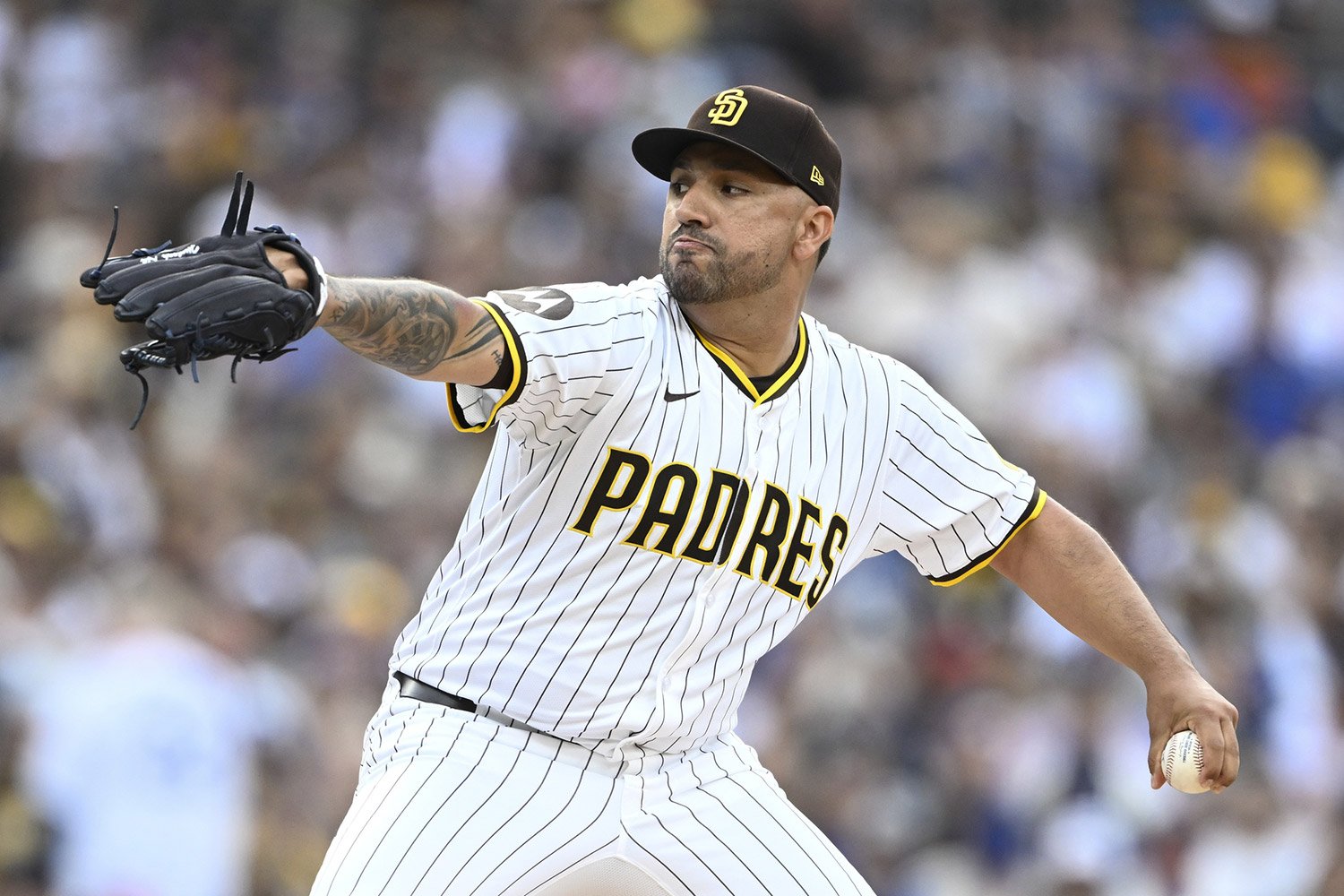 The most surprising element of the San Diego Padres' series victory over the Los Angeles Dodgers this weekend wasn't so much that they won the series. It was how they went about it. Not only did the offense show up in ways that we hadn't seen against that particular opponent going back to last year's postseason, the Padres received two of the highest-possible percentile outings from each of Yu Darvish & Nestor Cortes. While Darvish had previously flashed signs of the pitcher of old, the start from Cortes stands out as especially impressive given his recent history, both against Los Angeles and in general. Combined with his pair of starts with Milwaukee prior to an injury keeping him out until the trade deadline, the output from Cortes has been relatively uninspiring. On the season, the lefty has pitched to a 4.66 ERA and 7.18 FIP to go along with a 20.0 percent strikeout rate and 12.0 percent walk rate. The long ball has been a particular source of woe for Cortes in 2025, as he's working off a HR/FB rate a touch over 21 percent, a number largely wrought by a start at Yankee Stadium in which he surrendered five to his former club (to say nothing of his third start with San Diego in which he gave up another three in one inning against the San Francisco Giants). Things have improved with the Padres, however. Across his quartet of starts thus far in August, he's turned in a 3.00 ERA, a still-not-great-but-much-improved 5.40 FIP, a 19.5 K%, and a 9.2 BB%. His HR/FB% is down to 14.3 in a Padres uniform. None of it is screaming that we're seeing the Cortes of 2022, but you'll take that type of production at the back of the rotation. Even with the improvement we've seen during his brief time in San Diego, though, the start against the Dodgers came across as something quite shocking. That shock comes largely due to the last time we saw Cortes throw in a high-leverage game against this Dodgers team. In last year's postseason, it was Cortes who served up the walk-off grand slam to Freddie Freeman. Considering that history, Cortes' previous start in which he allowed three long balls to the Giants, and the fact that the Dodgers rank second in the league in home runs, things didn't appear to bode well ahead of Saturday's start. And yet, Cortes showed up and turned in six innings of one-hit ball to put the Padres back atop the division for a spell. It was just the second time this season that Cortes has completed six full innings of work, and the first time he didn't walk a single hitter. Indeed, his location data from the start is indicative of a pitcher in total control of everything he was throwing: The most notable change from what we'd seen from Cortes in his previous starts was the incorporation of the sweeper at a higher rate. It's a pitch he's only thrown roughly 12 percent of the time, but that was bumped up in a not-insignificant way on Saturday: Including that start, the last two outings for Cortes have featured the highest usage of that particular pitch. While his changeup usage had been climbing since joining the Padres, he took a big step back on deploying the offspeed in favor of the sweeper. The results were exactly what you'd hope to find, too: Cortes isn't the type of pitcher who is going to garner high whiff totals. Especially when he's so heavy on cutter and four-seam usage, but the sweeper serving as a factor on that side of things could be important. That pitch had represented his most frequent non-fastball offering up until his six starts this year, when he started to utilize the changeup at a higher rate. Its increased presence could be indicative of the way in which Cortes could use that pitch to play off of his two primary pitch types. Ultimately, we'll need a larger sample before the usage becomes a legitimate point of discussion. Our immediate concern at present is the start itself and what it means. Cortes has turned in strong work for the Padres outside of the one inning in San Francisco, but he was able to demonstrate something we hadn't quite seen yet: efficiency. A start like that against an opponent like that isn't only going to help the Padres secure a postseason position, but is going to make the bridge between the starting gate and the bullpen that much smoother. And given where things stand with the construction of this pitching staff, that really is the only thing that matters. They don't need Cortes to be the 2022 version of himself, when he nearly touched four Wins Above Replacement for the Yankees; they just need him to bring this brand of efficiency.
 -
A week ago, the San Diego Padres carried a one-game lead in the National League West into Dodger Stadium, with a chance to solidify their surprising position atop the division ranks. Of course, they were promptly swept and fell back to two games behind the Los Angeles Dodgers. But as we head into the weekend, there’s an opportunity for a serious bit of redemption on the San Diego end of things. On their home field, no less. Last weekend's sequence injected a bit of panic into the bloodstream in matters of the big picture. The Padres had ridden a combination of an improving offense and a late-summer swoon from the Dodgers to even be in the mix for the division. The sweep left one to wonder if they simply failed to meet the moment or if the Dodgers are, even simpler, a different class of team than San Diego. The trends of 2025 would likely have us believe it's the latter. Since squandering a 2-1 lead in the National League Division Series to Los Angeles in the 2024 postseason – a stretch in which their offense fell silent for the final two games in consecutive shutout losses – things haven’t been terrific for the Padres against their division rivals. They’ve won only twice in 10 games against the Dodgers thus far in 2025. Worse yet, the offensive production has served as the bulk of the reason for the struggle. The team has averaged 4.3 runs per game against Los Angeles this season, a number which dips to just 3.0 if you remove an 11-run outburst back on June 10. So as disappointing as it was that the Padres came out of last weekend's set with a two-game deficit in the NL West, it wasn't terribly surprising. Further pessimism transpired with the Dodgers set to play the Colorado Rockies for four games. How things can change over a four-day span. The Padres continued their recent run of success against the San Francisco Giants this week, taking three of four from their even-farther-north-in-California rivals. Los Angeles, meanwhile, split with the Rockies. Both teams managed wins on Thursday, which leaves the Padres just one game behind the Dodgers in the division. That opens up a few different possibilities. On the rather dour end of things, another sweep puts the Padres four games back ahead of a series against a Seattle team with which, anecdotally, the Padres seem to struggle against. Such a scenario would reignite the pessimism from early this week and push them just far back enough to shift their focus back toward the wild card. Conversely, grabbing at least a game leaves you two back. That's not an ideal scenario, but it's a manageable one, as the Dodgers possess the tougher schedule in the month of September. It leaves you enough room to climb back in with the right stretch of fortune. Winning the series outright — whether in taking two or via a revenge sweep — puts the Padres firmly in the drivers' seat. At the same time, scenarios hardly matter when one considers what is required from San Diego to take control of their own narrative this weekend, however. Spoiler alert: it's about the offense. Looking back at the 2025 calendar, many of the team's roughest stretches are wrought by bouts of ineptitude from the offense; they went 13-15 in June and ranked 24th in the league in runs scored, for example. Fernando Tatis Jr. was a ghost in June and July. Jackson Merrill didn't have a semblance of power until more recently. Luis Arráez and Manny Machado have each hit the highway to woe in August. It's been streakiness mixed with mechanical adjustments mixed with outright struggle while preventing the Padres from truly hitting an offensive stride. If ever there was a stretch where they were going to string together a number of collective offensive efforts, it's this one. The Padres are coming off three consecutive games of at least five runs scored. They have Yu Darvish and Nestor Cortes as scheduled starts for the weekend. It has never been more essential that the team does what they do well: navigate their approach appropriate and take advantage of runners in scoring position. When the team has been at its best on offense, it's been those two components. And with some uncertainty out of the gate on the pitching side, they're going to need to maximize the offensive outputs from said components. Should they fail to do so, a number of conclusions will start to be drawn about this team, its offense, and its ultimate upside in a potential 2025 postseason bid. If they're able to get themselves sorted in that regard, however, the narrative and the vibe immediately shift. And vibes, while unquantifiable, can do a number for a team this time of year. View full article
-
This Final Dodgers Series Will Tell The Story Of The 2025 San Diego Padres
Randy Holt posted an article in Padres
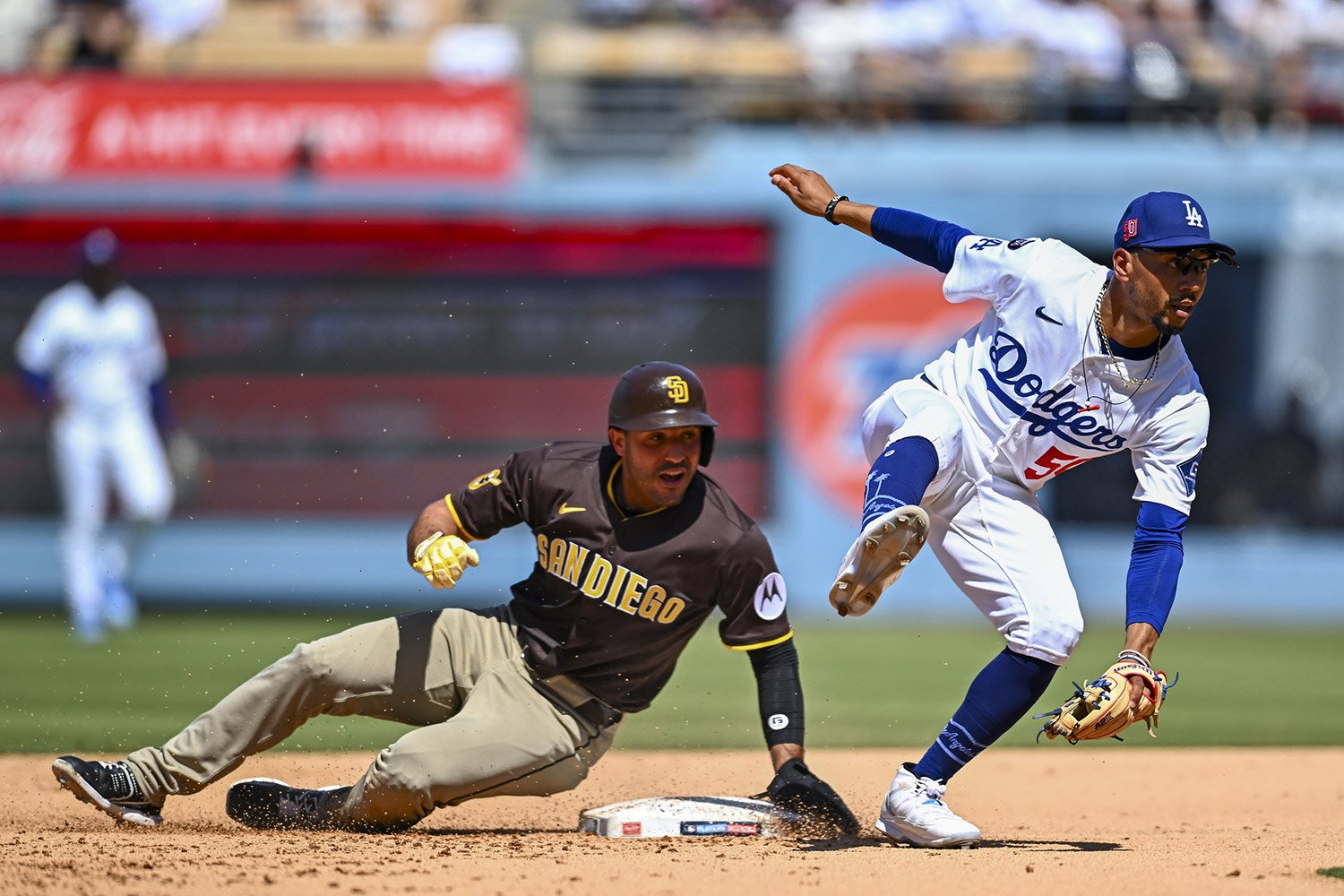 A week ago, the San Diego Padres carried a one-game lead in the National League West into Dodger Stadium, with a chance to solidify their surprising position atop the division ranks. Of course, they were promptly swept and fell back to two games behind the Los Angeles Dodgers. But as we head into the weekend, there’s an opportunity for a serious bit of redemption on the San Diego end of things. On their home field, no less. Last weekend's sequence injected a bit of panic into the bloodstream in matters of the big picture. The Padres had ridden a combination of an improving offense and a late-summer swoon from the Dodgers to even be in the mix for the division. The sweep left one to wonder if they simply failed to meet the moment or if the Dodgers are, even simpler, a different class of team than San Diego. The trends of 2025 would likely have us believe it's the latter. Since squandering a 2-1 lead in the National League Division Series to Los Angeles in the 2024 postseason – a stretch in which their offense fell silent for the final two games in consecutive shutout losses – things haven’t been terrific for the Padres against their division rivals. They’ve won only twice in 10 games against the Dodgers thus far in 2025. Worse yet, the offensive production has served as the bulk of the reason for the struggle. The team has averaged 4.3 runs per game against Los Angeles this season, a number which dips to just 3.0 if you remove an 11-run outburst back on June 10. So as disappointing as it was that the Padres came out of last weekend's set with a two-game deficit in the NL West, it wasn't terribly surprising. Further pessimism transpired with the Dodgers set to play the Colorado Rockies for four games. How things can change over a four-day span. The Padres continued their recent run of success against the San Francisco Giants this week, taking three of four from their even-farther-north-in-California rivals. Los Angeles, meanwhile, split with the Rockies. Both teams managed wins on Thursday, which leaves the Padres just one game behind the Dodgers in the division. That opens up a few different possibilities. On the rather dour end of things, another sweep puts the Padres four games back ahead of a series against a Seattle team with which, anecdotally, the Padres seem to struggle against. Such a scenario would reignite the pessimism from early this week and push them just far back enough to shift their focus back toward the wild card. Conversely, grabbing at least a game leaves you two back. That's not an ideal scenario, but it's a manageable one, as the Dodgers possess the tougher schedule in the month of September. It leaves you enough room to climb back in with the right stretch of fortune. Winning the series outright — whether in taking two or via a revenge sweep — puts the Padres firmly in the drivers' seat. At the same time, scenarios hardly matter when one considers what is required from San Diego to take control of their own narrative this weekend, however. Spoiler alert: it's about the offense. Looking back at the 2025 calendar, many of the team's roughest stretches are wrought by bouts of ineptitude from the offense; they went 13-15 in June and ranked 24th in the league in runs scored, for example. Fernando Tatis Jr. was a ghost in June and July. Jackson Merrill didn't have a semblance of power until more recently. Luis Arráez and Manny Machado have each hit the highway to woe in August. It's been streakiness mixed with mechanical adjustments mixed with outright struggle while preventing the Padres from truly hitting an offensive stride. If ever there was a stretch where they were going to string together a number of collective offensive efforts, it's this one. The Padres are coming off three consecutive games of at least five runs scored. They have Yu Darvish and Nestor Cortes as scheduled starts for the weekend. It has never been more essential that the team does what they do well: navigate their approach appropriate and take advantage of runners in scoring position. When the team has been at its best on offense, it's been those two components. And with some uncertainty out of the gate on the pitching side, they're going to need to maximize the offensive outputs from said components. Should they fail to do so, a number of conclusions will start to be drawn about this team, its offense, and its ultimate upside in a potential 2025 postseason bid. If they're able to get themselves sorted in that regard, however, the narrative and the vibe immediately shift. And vibes, while unquantifiable, can do a number for a team this time of year.
 -
From May 16 through the end of July, the San Diego Padres were one of the worst offensive teams in Major League Baseball. They ranked 26th in runs (249), 23rd in batting average (.242), 21st in on-base percentage (.310), and 24th in team wRC+ (93). Their already modest power output was better than only the Pittsburgh Pirates (.125 ISO), while their quality of contact (measured by Hard-Hit% in this case) checked in ahead of only the Cleveland Guardians (35.9 percent). Since the start of August, though, the offense has started to take multiple steps in the correct direction. This month, the team is up to 15th in runs scored (86), eighth in average (.257), fourth in OBP (.341), and eighth in wRC+ (117). Though they've been led by deadline acquisitions Ramón Laureano (174 wRC+) and Ryan O'Hearn (147), holdovers Jake Cronenworth (136), Jackson Merrill (119), and Fernando Tatis, Jr. (117) have started to find consistent success at the plate. It's a key turnaround at a crucial time for a team making a run at not just a playoff spot, but the National League West outright. It's been imperfect, of course. Few teams fire on all offensive cylinders simultaneously, and the Padres are not an exception in this regard. This is especially true considering one of the team's offensive catalysts has spent this month heading in the opposite direction of many of his comrades. In a broad sense, Manny Machado is having his best offensive year since 2022. His slash reads .292/.353/.484 with a 135 wRC+, a 17.6 strikeout rate, and an 8.5 percent walk rate. You have to go back three years, at minimum, to find such fine work from the team's third baseman. The power has waned in the big picture (.192 ISO), but he's also been prone to incredibly torrid stretches, including a .283 ISO for the month of July. The percentiles look really strong for a player with a lot of mileage at this stage of his career: Since August 1, though, Machado has disappeared at the plate. His .229 average, .299 on-base percentage, .100 ISO, and 81 wRC+ are all single-month lows for 2025. And while his walk rate (9.1 percent) serves as his second-best mark across a single month, his 22.1 K% is easily the highest rate he's posted. It's been a brutal month for Machado, but this stretch manifested in the worst possible way against the Los Angeles Dodgers last weekend. With the division lead on the line, Machado went just 1-for-12 against the division rivals with a trio of strikeouts and a walk. What exactly is plaguing Machado this month, however, is somewhat difficult to discern. The first place one tends to look is at the plate discipline numbers. From an approach standpoint, there hasn't been a significant change. Between the first handful of months of '25 and these three weeks in August, Machado is swinging and chasing at similar rates to what we've seen all year. His overall Swing% is up by less than a percent, and his chase rate is actually down in August, although only just. What Machado is doing more of this month is whiffing. His SwStr% has climbed about two percent this month with fewer called strikes. Are we seeing a touch too much aggression on his part? That's a possible factor. So is bat speed: The above visual isn't too difficult to sort; Machado's speed is at its lowest point for the entire year. Among the bat tracking metrics, that's the one with the biggest shift. There has been some variance in swing path and attack angle, but not remotely to the degree to which his bat speed has fallen. And the results are indicative of the speed drop more than anything else. His average exit velocity is down about two percent, his hard-hit rate is roughly nine percent lower, and his barrel rate has fallen by about six percent. When you talk about a decline in contact and a sharp dip in quality of contact against the backdrop of a serious bat speed decline, then the possible source of such a performance drop over a stretch as we've seen from Machado becomes fairly obvious. The only question is whether this is something biological or mechanical. If this is wear on Machado at this point in the season, then overcoming the dip becomes much more difficult. A healthy dose of rest, non-ideal as it may be during a chase for a division crown, would have to be in the cards. But, if there's something in the approach that is making him less confident and decisive within the zone or a swing component slowing his swing down (with the former being more likely), then you can look to overcome that with pointed, purposeful changes. And overcome is exactly what the Padres will need Machado to do. With another Dodgers series on the horizon and the playoffs looking like a surer thing with each passing day, they need their catalyst to be firmly in the mix. Ideally, sooner rather than later. View full article
