


Randy Holt
-
Posts
486 -
Joined
-
Last visited
-
Days Won
6
Content Type
Profiles
San Diego Padres Videos
2026 San Diego Padres Top Prospects Ranking
San Diego Padres Free Agent & Trade Rumors, Notes, & Tidbits
Guides & Resources
2025 San Diego Padres Draft Pick Tracker
News
2026 San Diego Padres Draft Tracker: Picks & Bonuses
Forums
Blogs
Events
Store
Downloads
Gallery
Everything posted by Randy Holt
-
On Tuesday, The Athletic's Dennis Lin published a column in which he explored how the San Diego Padres could approach the trade deadline with respect to future needs. The premise therein speaks to the idea that the organization could use the deadline not only to address immediate holes in the roster, but utilize some of their current major league talent in a trade with more of an eye on future projection. As such, it does lend itself to the idea that the Padres could move someone like, say, impending free agent Dylan Cease. Or Robert Suárez, who could test the free agent market via an opt-out after the 2025 season draws to a close. While a mid-season departure for either would represent some level of damage for the roster, there is some logic in the discussion given some of the team's payroll constraints and lack of impact talent in the upper levels of the minors. It's a difficult needle to thread, though, to be sure. When Jake Cronenworth's name is invoked in said column, however, the clarity of such rationalization starts to become a little murkier. Now, Lin didn't say that the Padres were actively shopping any of the three players. In Cronenworth's case, it was more of a note that contenders were interested. And while the same justification for exploring a trade of Cease or Suárez could be applied to Cronenworth, his role and his contract would appear to shift the context into something much more difficult to justify. Cronenworth isn't an elite bat. He hasn't returned to his 2021 levels of power (.194 ISO), nor has he shown an ability to get back to his 2022 levels of defensive stability (three Outs Above Average). But this is a Padres lineup that is already top-heavy. The skill set offered by the team's keystone player is something that remains useful, especially down the lineup. Earlier in the year, we discussed Cronenworth's walk rate as being responsible for propping up his overall offensive production. Roughly a month-and-a-half later, that component still sits as his greatest asset. His 12.9 percent walk rate is not only the highest of his career, but the top rate on a team that has been middle-of-the-road in working their way on base via the free pass. It's an asset in itself. But since that writing, it's not his only one. The power has returned in a fairly notable way. No, Cronenworth isn't approaching a .200 ISO again. But, his .163 mark is his best since that 2021 campaign. He's parlayed that patience into his highest hard hit rate since 2020 (38.7 percent) while generating the most fly ball contact that he's seen since '22. It's been a process toward finally settling back into the type of player he was purported to be a few seasons ago. In terms of the defense, he's experienced a bounce back in moving back to second base on a (mostly) full-time basis. His Fielding Run Value sits at exactly average for the year. So, you're getting above average offensive production (119 wRC+) and average defense out of a secondary contributor to your lineup. In short, he's serving exactly the type of role you'd want him to be serving. And at an reasonable price. Cronenworth's average salary sits a shade above $11 million. He ranks ninth among second basemen in that regard and 41st among all infielders. At present, Cronenworth's 1.6 fWAR ranks 10th among second basemen with at least 250 plate appearances. Another way to read this is the Padres are essentially getting exactly what they're paying for. And, while he'll see a $1 million bump in each of the next three seasons, it remains an entirely reasonable contract. Plus, none of this discussion mentions that the Padres don't have infielders coming up through the pipeline. Leo De Vries is the team's top prospect but is unlikely to move off shortstop (leaving him more as a part of a separate Xander Bogaerts discussion). MLB Pipeline's other top Padres prospects include Cobb Hightower, Deivid Coronil, and Jhoan De La Cruz. Hightower is the oldest of the group, at 20 years old, and none are projected to arrive at the top level before 2028. The team simply does not have the organizational infrastructure at present to give a youngster an opportunity in Cronenworth's stead. That stands in contrast to Cease & Suárez, where the team has proven capable of providing sufficient depth (more so in Suárez's case, where one of the other elite late-inning guys could step into his big shoes). Again, we don't have anything to suggest that the Padres are actively exploring moving Jake Cronenworth. But, with the idea that the Padres want to keep an eye on the horizon and contenders being interested in his services, it isn't an impossible scenario. The context is just so vastly different from his veteran counterparts on the mound, making it a really tough sell were A.J. Preller to act on such a move. View full article
-
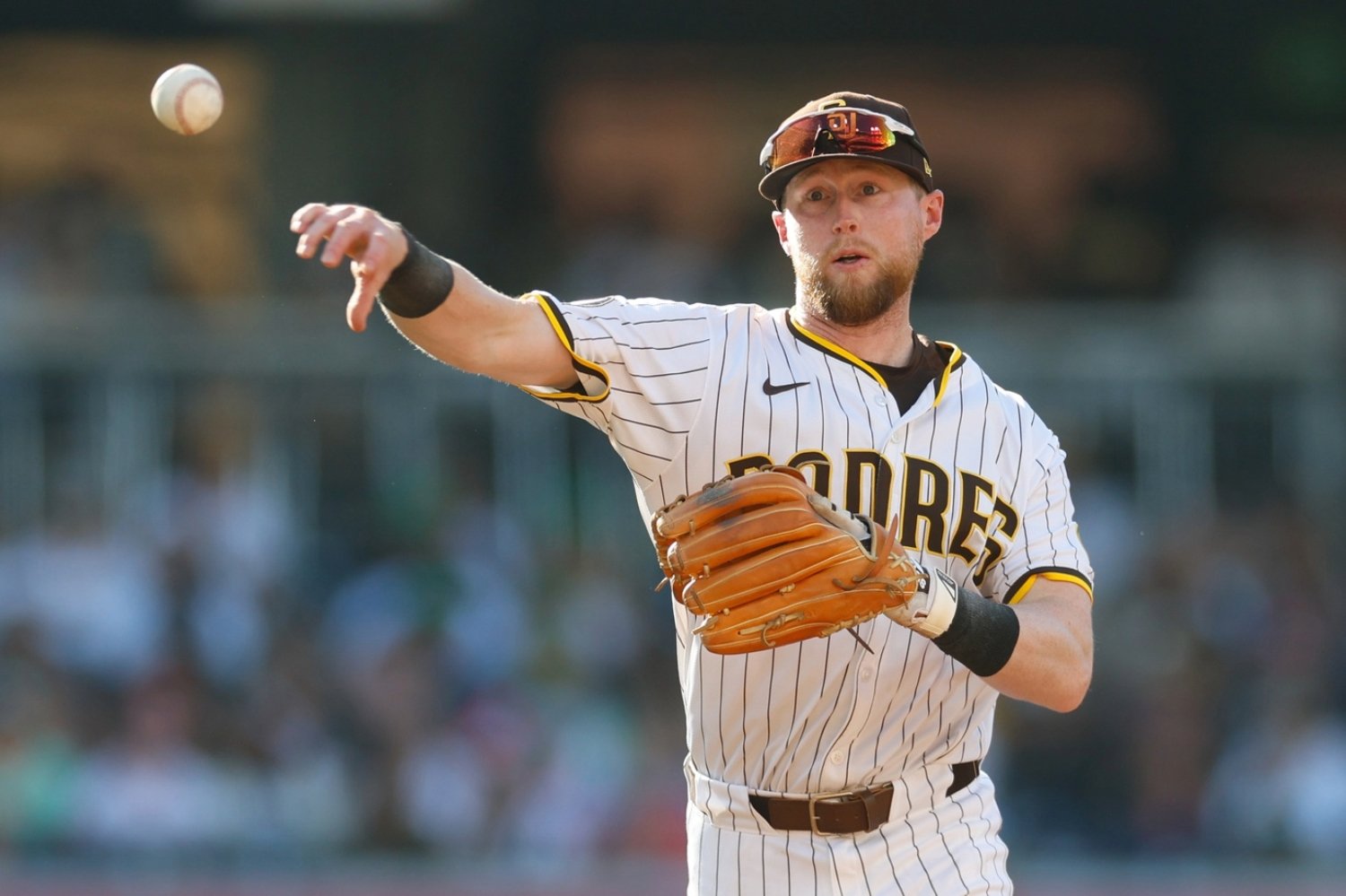 On Tuesday, The Athletic's Dennis Lin published a column in which he explored how the San Diego Padres could approach the trade deadline with respect to future needs. The premise therein speaks to the idea that the organization could use the deadline not only to address immediate holes in the roster, but utilize some of their current major league talent in a trade with more of an eye on future projection. As such, it does lend itself to the idea that the Padres could move someone like, say, impending free agent Dylan Cease. Or Robert Suárez, who could test the free agent market via an opt-out after the 2025 season draws to a close. While a mid-season departure for either would represent some level of damage for the roster, there is some logic in the discussion given some of the team's payroll constraints and lack of impact talent in the upper levels of the minors. It's a difficult needle to thread, though, to be sure. When Jake Cronenworth's name is invoked in said column, however, the clarity of such rationalization starts to become a little murkier. Now, Lin didn't say that the Padres were actively shopping any of the three players. In Cronenworth's case, it was more of a note that contenders were interested. And while the same justification for exploring a trade of Cease or Suárez could be applied to Cronenworth, his role and his contract would appear to shift the context into something much more difficult to justify. Cronenworth isn't an elite bat. He hasn't returned to his 2021 levels of power (.194 ISO), nor has he shown an ability to get back to his 2022 levels of defensive stability (three Outs Above Average). But this is a Padres lineup that is already top-heavy. The skill set offered by the team's keystone player is something that remains useful, especially down the lineup. Earlier in the year, we discussed Cronenworth's walk rate as being responsible for propping up his overall offensive production. Roughly a month-and-a-half later, that component still sits as his greatest asset. His 12.9 percent walk rate is not only the highest of his career, but the top rate on a team that has been middle-of-the-road in working their way on base via the free pass. It's an asset in itself. But since that writing, it's not his only one. The power has returned in a fairly notable way. No, Cronenworth isn't approaching a .200 ISO again. But, his .163 mark is his best since that 2021 campaign. He's parlayed that patience into his highest hard hit rate since 2020 (38.7 percent) while generating the most fly ball contact that he's seen since '22. It's been a process toward finally settling back into the type of player he was purported to be a few seasons ago. In terms of the defense, he's experienced a bounce back in moving back to second base on a (mostly) full-time basis. His Fielding Run Value sits at exactly average for the year. So, you're getting above average offensive production (119 wRC+) and average defense out of a secondary contributor to your lineup. In short, he's serving exactly the type of role you'd want him to be serving. And at an reasonable price. Cronenworth's average salary sits a shade above $11 million. He ranks ninth among second basemen in that regard and 41st among all infielders. At present, Cronenworth's 1.6 fWAR ranks 10th among second basemen with at least 250 plate appearances. Another way to read this is the Padres are essentially getting exactly what they're paying for. And, while he'll see a $1 million bump in each of the next three seasons, it remains an entirely reasonable contract. Plus, none of this discussion mentions that the Padres don't have infielders coming up through the pipeline. Leo De Vries is the team's top prospect but is unlikely to move off shortstop (leaving him more as a part of a separate Xander Bogaerts discussion). MLB Pipeline's other top Padres prospects include Cobb Hightower, Deivid Coronil, and Jhoan De La Cruz. Hightower is the oldest of the group, at 20 years old, and none are projected to arrive at the top level before 2028. The team simply does not have the organizational infrastructure at present to give a youngster an opportunity in Cronenworth's stead. That stands in contrast to Cease & Suárez, where the team has proven capable of providing sufficient depth (more so in Suárez's case, where one of the other elite late-inning guys could step into his big shoes). Again, we don't have anything to suggest that the Padres are actively exploring moving Jake Cronenworth. But, with the idea that the Padres want to keep an eye on the horizon and contenders being interested in his services, it isn't an impossible scenario. The context is just so vastly different from his veteran counterparts on the mound, making it a really tough sell were A.J. Preller to act on such a move.
 -
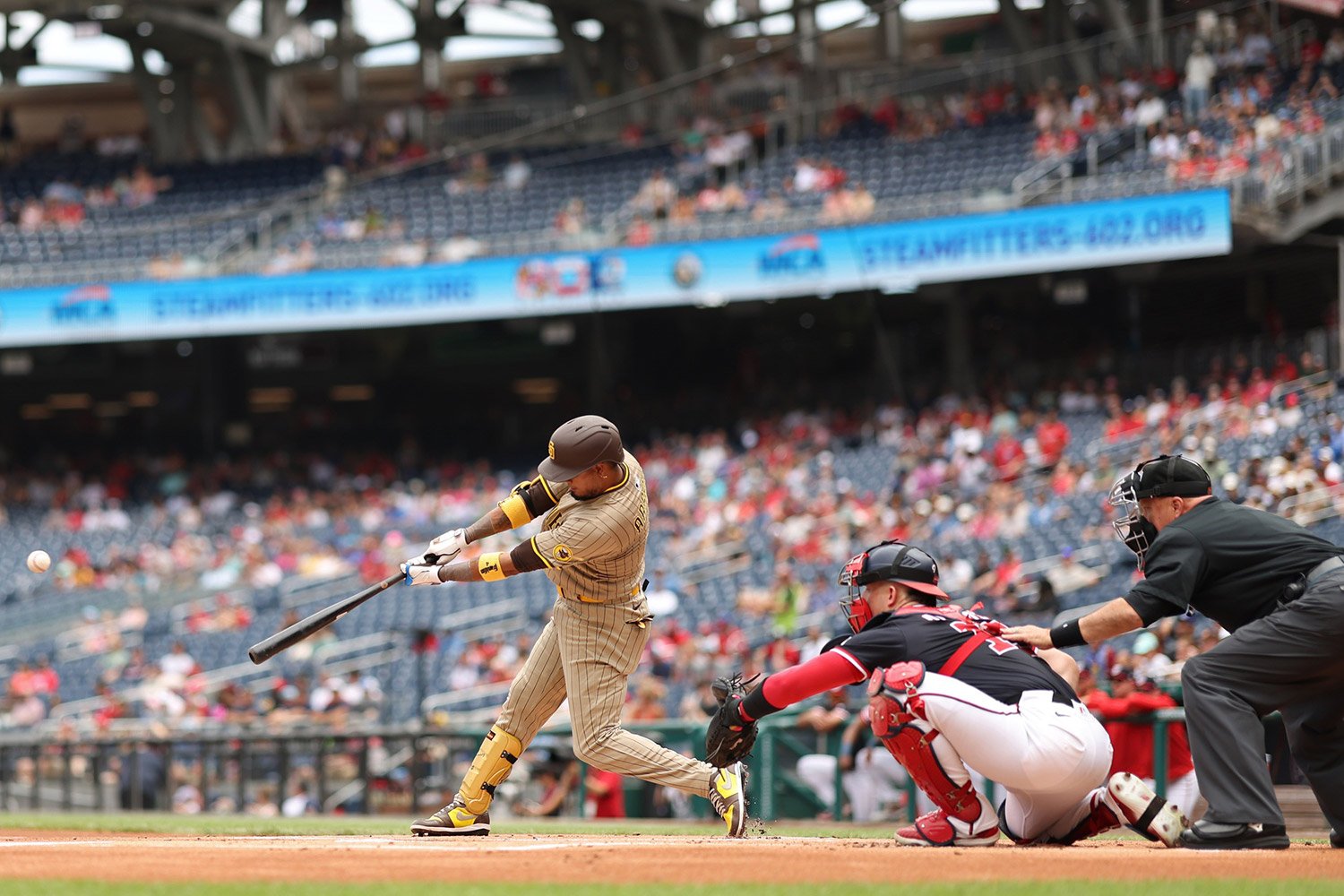 There isn't enough time left in the calendar to change the trade deadline path for the San Diego Padres. They'll land on the buying side of things. Winning three of their last four series (and splitting the other) has given them some breathing room in the wild card race, while the Los Angeles Dodgers' struggles have given them some renewed life on the divisional side as well. That stretch has expelled any doubt that A.J. Preller will be a busy man ahead of July 31st. Of course, we know he's also working with limited resources relative to some National League counterparts. Preller's prior aggressive trades have left the farm system in the league's bottom half, which will make it difficult for the Padres to address multiple needs to the level they may require. Nevertheless, certain positions require more immediate upgrades than others ahead of the end of the month. Below, we rank the San Diego roster by positional value, working our way from area of lowest (or, in some cases, non) need to spots with the most dire situation. Right Field: 3.9 fWAR, 127 wRC+, 8 FRV Fernando Tatis Jr. has been able to maintain a spot among the highest Wins Above Replacement output primarily on the strength of his defense. The offense faded after a strong start, but he has started to regain form after a brutal May & June (148 wRC+ in July). At his best, there are a small handful of players better than the Padres' right fielder. As long as he's healthy, this isn't even a minor area of need this month. Third Base: 3.3 fWAR, 141 wRC+, -4 FRV As stable as the Padres are in right field, Manny Machado offers much the same at the hot corner. He's at a 137 wRC+, which would represent his best overall output since 2022. The strikeout rate is down, the walk rate is up, and the power has bounced back after a quiet start to the year. His defense isn't quite what it was, but he compensates effectively enough courtesy of everything he does on the offensive side. Again, nothing to see here. Shortstop: 2.6 fWAR, 102 wRC+, 8 FRV Weirdly, the San Diego Padres can be fine down the stretch with Xander Bogaerts starting at the six. I say weirdly because there was a point earlier this year when we were ready to call it quits on any hope for Bogaerts and the eight years he'll have left on his contract after 2025. However, his offense has stabilized, and he has risen to the positive wRC+ threshold (107) while offering solid defense. There isn't much power to speak of, but he's compensated well with his walk rate and baserunning. There's value here that we didn't think still existed in May. No reason to think anything will change at shortstop now. Center Field: 1.9 fWAR, 104 wRC+, 5 FRV Jackson Merrill has endured two separate Injured List stints and, as such, has been unable to find his footing in 2025. Nevertheless, he's still an above-average bat with an above-average glove. The Padres will hope he can rediscover some of his power in the second half, but he still offers the same level of stability that his above comrades provide. Second Base: 0.9 fWAR, 97 wRC+, -3 FRV Could the Padres stand for more production from the keystone? Maybe. But Jake Cronenworth is quietly turning in a very solid year with a career-best .356 on-base percentage and more power than we've seen since 2021 (.166 ISO). The defense isn't terrific, and we had some questions about his value as a walks-only bat. Still, when you consider the approach and now-present occasional power, he's an excellent down-the-order bat considering the output. First Base: 0.5 fWAR, 111 wRC+, -6 FRV If the phrase "it is what it is" were a position, then first base would be that for San Diego. Luis Arráez is up to his usual stuff. The singles merchant isn't hitting for quite the same average, but .284 is still more than respectable. The strikeout rate is a hilarious 2.9 percent. You'd like more impact here, but you're still getting the hit tool. The larger concern lies on the defensive end. Arráez is part of the league's worst defensive group at first base. Nothing about the profile suggests him as a long-term option. However, you have nowhere else to put him (if other needs are addressed appropriately), and there isn't a wealth of first-base talent available on the market. You'll just have to bear it through the end of the year as is. Designated Hitter: -1.6 fWAR, 70 wRC+ This is where the must-acquire types begin. Fifteen different players have received at least one appearance as the team's DH, with only Gavin Sheets appearing in more than 15 games out of that spot. In an ideal world, you acquire a left fielder and relegate him specifically to these duties. Given the year he's turning in, you're likely to get more out of the spot than you have at any other point. So it isn't as much about acquiring a bat specifically as it is acquiring a positional bat that allows you to fill this position more organically. It's a need, for sure, but one that can be addressed by filling one of the two more pressing needs that follow. Left Field: -0.3 fWAR, 73 wRC+, 0 FRV Six teams have gotten less overall value, and only four have gotten less offensive value out of left field than the Padres. Things looked much worse before Sheets took over more of a full-time role, but his defense is still hazardous at best. You want someone who can provide offensive value and at least average defense to start solidifying things. This is where the organic improvement I mentioned earlier can begin to take hold. Acquiring even an average player to throw in left allows you to move Sheets to the DH spot. And while he has helped shore up some of the offensive shortcomings, that this still exists as the team's second-biggest need ahead of the deadline speaks to how dire things have been since Jurickson Profar's departure. Catcher: -0.8 fWAR, 67 wRC+, -10 FRV Things are quite bad behind the plate. Offensively, defensively, it doesn't particularly matter. The duo of Elias Diaz and Martín Maldonado has been the league's second-worst tandem in terms of fWAR. Typically, teams don't love the idea of trading for a catcher in-season. You've got pitching staffs to navigate, after all. However, considering the current situation, it's the team's most pressing need. If not on the offensive side — offensively-adept catchers are still fairly rare — then it'll help out your pitching staff in a number of ways. It also represents perhaps the easiest pathway to improvement when considering some of the help that might be available from other organizations soon (e.g., Reese McGuire, Korey Lee, etc.).
 -
There isn't enough time left in the calendar to change the trade deadline path for the San Diego Padres. They'll land on the buying side of things. Winning three of their last four series (and splitting the other) has given them some breathing room in the wild card race, while the Los Angeles Dodgers' struggles have given them some renewed life on the divisional side as well. That stretch has expelled any doubt that A.J. Preller will be a busy man ahead of July 31st. Of course, we know he's also working with limited resources relative to some National League counterparts. Preller's prior aggressive trades have left the farm system in the league's bottom half, which will make it difficult for the Padres to address multiple needs to the level they may require. Nevertheless, certain positions require more immediate upgrades than others ahead of the end of the month. Below, we rank the San Diego roster by positional value, working our way from area of lowest (or, in some cases, non) need to spots with the most dire situation. Right Field: 3.9 fWAR, 127 wRC+, 8 FRV Fernando Tatis Jr. has been able to maintain a spot among the highest Wins Above Replacement output primarily on the strength of his defense. The offense faded after a strong start, but he has started to regain form after a brutal May & June (148 wRC+ in July). At his best, there are a small handful of players better than the Padres' right fielder. As long as he's healthy, this isn't even a minor area of need this month. Third Base: 3.3 fWAR, 141 wRC+, -4 FRV As stable as the Padres are in right field, Manny Machado offers much the same at the hot corner. He's at a 137 wRC+, which would represent his best overall output since 2022. The strikeout rate is down, the walk rate is up, and the power has bounced back after a quiet start to the year. His defense isn't quite what it was, but he compensates effectively enough courtesy of everything he does on the offensive side. Again, nothing to see here. Shortstop: 2.6 fWAR, 102 wRC+, 8 FRV Weirdly, the San Diego Padres can be fine down the stretch with Xander Bogaerts starting at the six. I say weirdly because there was a point earlier this year when we were ready to call it quits on any hope for Bogaerts and the eight years he'll have left on his contract after 2025. However, his offense has stabilized, and he has risen to the positive wRC+ threshold (107) while offering solid defense. There isn't much power to speak of, but he's compensated well with his walk rate and baserunning. There's value here that we didn't think still existed in May. No reason to think anything will change at shortstop now. Center Field: 1.9 fWAR, 104 wRC+, 5 FRV Jackson Merrill has endured two separate Injured List stints and, as such, has been unable to find his footing in 2025. Nevertheless, he's still an above-average bat with an above-average glove. The Padres will hope he can rediscover some of his power in the second half, but he still offers the same level of stability that his above comrades provide. Second Base: 0.9 fWAR, 97 wRC+, -3 FRV Could the Padres stand for more production from the keystone? Maybe. But Jake Cronenworth is quietly turning in a very solid year with a career-best .356 on-base percentage and more power than we've seen since 2021 (.166 ISO). The defense isn't terrific, and we had some questions about his value as a walks-only bat. Still, when you consider the approach and now-present occasional power, he's an excellent down-the-order bat considering the output. First Base: 0.5 fWAR, 111 wRC+, -6 FRV If the phrase "it is what it is" were a position, then first base would be that for San Diego. Luis Arráez is up to his usual stuff. The singles merchant isn't hitting for quite the same average, but .284 is still more than respectable. The strikeout rate is a hilarious 2.9 percent. You'd like more impact here, but you're still getting the hit tool. The larger concern lies on the defensive end. Arráez is part of the league's worst defensive group at first base. Nothing about the profile suggests him as a long-term option. However, you have nowhere else to put him (if other needs are addressed appropriately), and there isn't a wealth of first-base talent available on the market. You'll just have to bear it through the end of the year as is. Designated Hitter: -1.6 fWAR, 70 wRC+ This is where the must-acquire types begin. Fifteen different players have received at least one appearance as the team's DH, with only Gavin Sheets appearing in more than 15 games out of that spot. In an ideal world, you acquire a left fielder and relegate him specifically to these duties. Given the year he's turning in, you're likely to get more out of the spot than you have at any other point. So it isn't as much about acquiring a bat specifically as it is acquiring a positional bat that allows you to fill this position more organically. It's a need, for sure, but one that can be addressed by filling one of the two more pressing needs that follow. Left Field: -0.3 fWAR, 73 wRC+, 0 FRV Six teams have gotten less overall value, and only four have gotten less offensive value out of left field than the Padres. Things looked much worse before Sheets took over more of a full-time role, but his defense is still hazardous at best. You want someone who can provide offensive value and at least average defense to start solidifying things. This is where the organic improvement I mentioned earlier can begin to take hold. Acquiring even an average player to throw in left allows you to move Sheets to the DH spot. And while he has helped shore up some of the offensive shortcomings, that this still exists as the team's second-biggest need ahead of the deadline speaks to how dire things have been since Jurickson Profar's departure. Catcher: -0.8 fWAR, 67 wRC+, -10 FRV Things are quite bad behind the plate. Offensively, defensively, it doesn't particularly matter. The duo of Elias Diaz and Martín Maldonado has been the league's second-worst tandem in terms of fWAR. Typically, teams don't love the idea of trading for a catcher in-season. You've got pitching staffs to navigate, after all. However, considering the current situation, it's the team's most pressing need. If not on the offensive side — offensively-adept catchers are still fairly rare — then it'll help out your pitching staff in a number of ways. It also represents perhaps the easiest pathway to improvement when considering some of the help that might be available from other organizations soon (e.g., Reese McGuire, Korey Lee, etc.). View full article
-
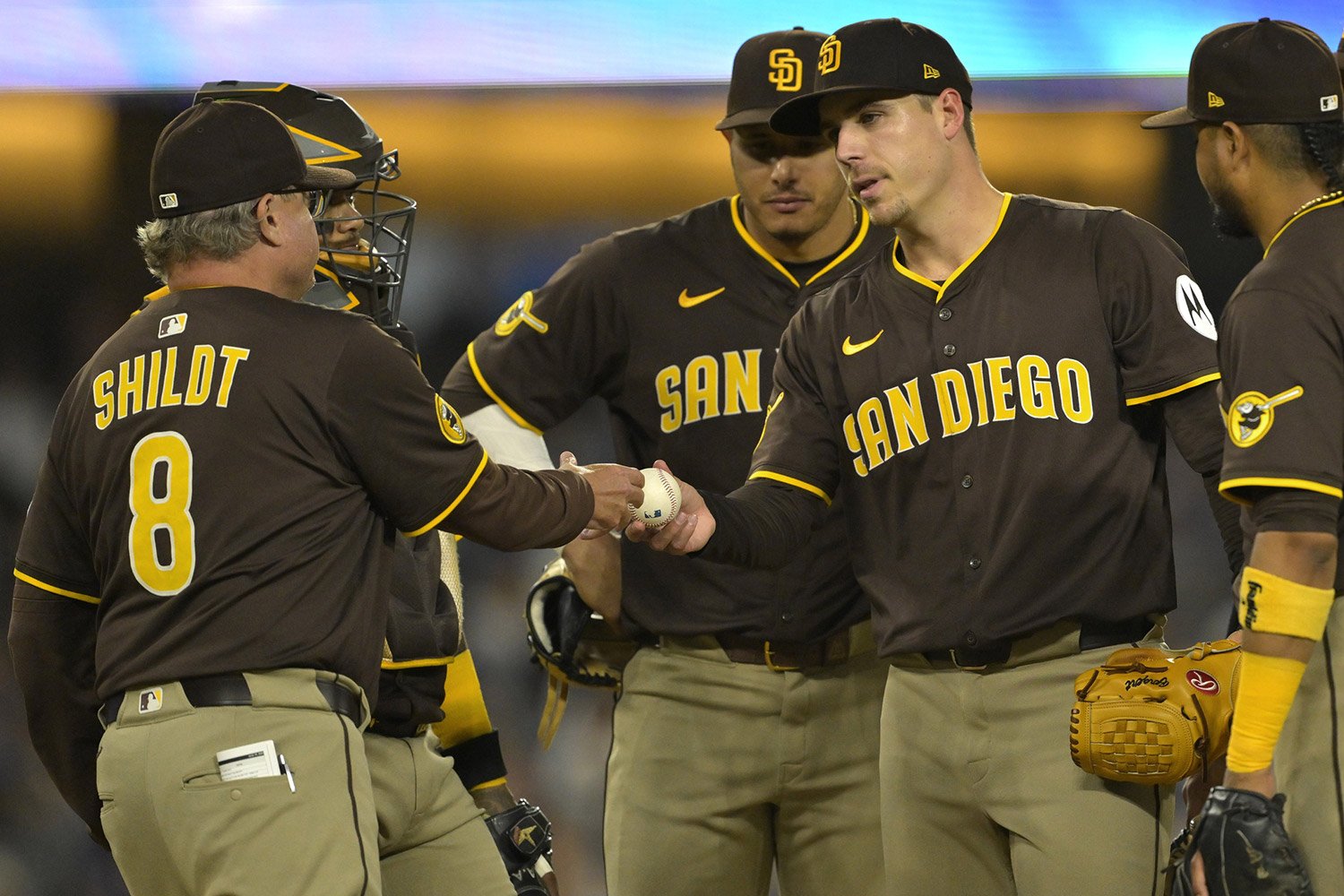 Our eyes are the great deceivers. They're riddled with confirmation bias. Baseball might just prove this more than any other sight which they can observe. The latest example is my own subscribing to the idea that the San Diego Padres are driving their bullpen into the ground with short outings. The eye test is famously a failure when compared to hard data. In this case, the eye test spent a good deal of the first half telling me that the Padres weren't getting what they needed out of their starters in terms of length. Such an outcome would hardly be a surprise. We've watched Randy Vásquez struggle to work through multiple outings. The rest of the rotation has been filled, at times, out by the inexperienced likes of Stephen Kolek, Kyle Hart, and Ryan Bergert. Yu Darvish's return isn't going to offer much in the short-term length department, either, as he works his way back to full strength. Given such context, my eyes were entirely of the mind that the Padres were leaning too heavily on their vaunted bullpen. It is, of course, a relief corps worth leaning on. Padres' relievers are second in the league in ERA (3.20), sixth in the league in strikeout rate (24.3 percent), and fifth in the league in Hard-Hit% allowed (37.7 percent). But there's a little bit of a temperance factor, as well. One starts to wonder how sustainable such success can be in the long-term when you're regularly being deployed on the earlier end of the middle innings. Except that's not entirely what's happening. It's not what's happening at all. The average length of a start in all of Major League Baseball in 2025 is 5.2 innings. The Padres are at exactly that mark (the Philadelphia Phillies lead the league with 5.7 per start). While starters are throwing a volume of pitches per inning that ranks on the higher end of the league (16.47 pitches per inning), it hasn't manifested into markedly shorter outings in a broad sense. Of those that have started at least a game on the bump for San Diego this year, it's probably not surprising to know that each of Vásquez (5.0 IP/GS), Bergert (4.6), and Hart (4.3) falls below the league average. Yu Darvish, at 4.2 IP/GS, also falls in with that group through his two starts. The rest of the staff, meanwhile, has largely kept things together. Nick Pivetta is at 5.8 IP/GS, Michael King was at 5.6 prior to his injury, and Dylan Cease is at 5.4. Even Stephen Kolek has worked to a steady 5.7 IP/GS with a couple of clunkers mixed in. So while there have been questions about efficiency within starts, those that were expected to hold things down in terms of volume have (when healthy). While certain starters require more innings from the bullpen, it's not something that has translated into an abnormal volume. At 348.2 innings, the Padres rank only 13th in usage. Of the 174 qualifying relievers throughout MLB, five Padres sit inside the top 60: Jason Adam (47.2), Adrian Morejón (43.2), Jeremiah Estrada (43.0), Wandy Peralta (42.1), and Robert Suárez (40.2). In other words, three All-Stars (Adam, Morejón, and Suárez) and a late-inning guy (Estrada). So it's more a matter of Mike Shildt leaning on his upper-tier arms than any deficiency being wrought by an inefficient rotation. The concept of leverage further illustrates this thinking. FanGraphs' Leverage Index quantifies the cruciality for individual players and classifies it into low, medium, and high leverage. The Average Leverage Index illustrates just that: in what type of leverage do players most often find themselves? The Padres' relief corps is at a 1.19 pLI, which ranks third in the league. That puts them firmly in medium-leverage situations, on average (defined as 0.85 to 2.0). By being involved in late-inning action, the leverage is automatically going to increase from what might be considered the lower end of the spectrum. So that figure lands kind of where one might expect without any indication of being regularly pressed into situations that were left by their starters. Perhaps unsurprisingly, the top four arms in pLI for San Diego in 2025 go Suárez (2.26), Adam (1.81), Estrada (1.62), and Morejón (1.46). Your closer in high-leverage and reliable arms at the upper end of medium just reads as logical. Names like Yuki Matsui (0.80) and Peralta (0.69), meanwhile, represent bullpen regulars that serve in the realm of lower leverage (under 0.85). Between the usage and the leverage, there just isn't anything to indicate that the starting pitching has been in any way damaging to the relief group. Which entirely speaks to the fact that our eyes deceive us. Or these eyes have seen a disproportionate amount of starts from Randy Vásquez this year. Either way, the reliance on an excellent bullpen isn't visibly coming at the expense of their longer-term efficiency.
 -
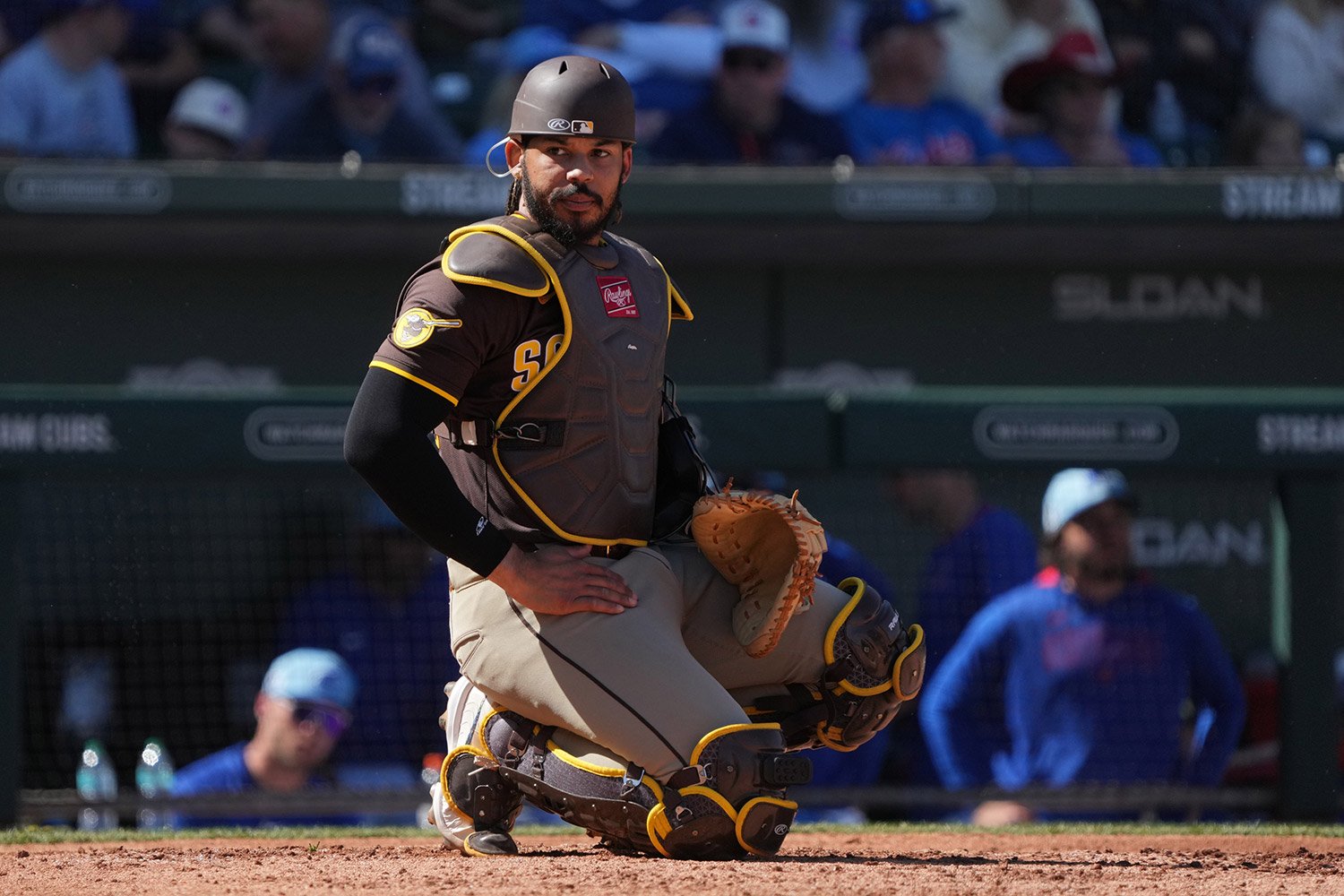 To refer to a baseball player as a Quad-A, Quadruple-A, or AAAA type is indicative of a player who is too good for Triple-A baseball but can't hack it at the major league level. The San Diego Padres may have such a player in their organization at present in the form of Luis Campusano. Only possible, though, as we don't have a large enough sample to confirm whether or not that's the case. Drafted out of a Georgia high school in 2018, Campusano's first extended look at the top level came in 2023. Campusano served as Gary Sánchez's backup for the majority of the year, turning in a 133 wRC+ and 1.1 fWAR. He parlayed that into an extra 120 plate appearances last year but regressed on both sides of the ball (83 wRC+, -0.5 fWAR) and ceded his job to Kyle Higashioka as the season wore on. Ahead of the 2025 season, the Padres chose to roll with a combination of Elias Diaz and Martín Maldonado behind the plate. Díaz was a late-season pickup in 2024, signed by the team to a new deal last winter, while Maldonado rode his outdated reputation as a defensive stopper behind the plate to a non-roster deal. Rather than extend another opportunity to Campusano, Mike Shildt & Co. decided to roll with the pair of veterans behind the dish for '25. It's a move that has not panned out at all. Maldonado, in particular, has compounded below-average offense (46 wRC+) with well-below-average defense. Statcast has him at -8 Blocks Above Average, -1 Framing Runs, and -6 Caught Stealing Above Average. Díaz hasn't been much better offensively (62 wRC+), but he's at least been passable with the glove via 2 Blocks Above Average and 1 Catcher's CS Above Average (though his framing is worse than Maldonado's at -3 Framing Runs). Such brutal production out of one spot assuredly indicates that A.J. Preller will prioritize a move for a catcher ahead of this month's trade deadline. A marginal improvement like the Cubs' Reese McGuire or Korey Lee of the White Sox would at least offer a boost to a positional group in need of it. But would it be entirely unreasonable in the interim for the Padres to consider Campusano for an extended look before such an acquisition were to transpire? Campusano has not been a good defensive catcher in his time with the Padres. Across two years of action, he went -11 in Blocks Above Average, -10 in Framing Runs, and -5 in CS Above Average. We don't have such data available from El Paso to determine whether or not Campusano has demonstrated any growth on that side of the ball in Triple-A, but considering that his numbers across two years aren't that much worse than what Maldonado, in particular, has turned in within half of just one, it's something worth considering, especially when you factor in the offensive side. We know Campusano has upside that neither Díaz (at this stage) nor Maldonado (at any point in his career) possesses. And he's done nothing but mash in Triple-A this year. Through a shade over 250 PA with El Paso, Campusano has wRC+'d 140. He carries a .308/.427/.587 line and a walk rate (16.3 percent) that narrowly exceeds his strikeout rate (16.0). His isolated power checks in at .279. Among 55 qualifying Triple-A hitters, the wRC+ ranks second, the slug/ISO figures sit fifth & sixth, and the on-base percentage is pacing the group. He's been one of the best hitters that the Pacific Coast League has to offer. That, dear reader, is the component that the Padres need to consider at this immediate point in time. The Padres are a team starved for offense. Catcher and left field are the two spots at which they've gotten almost zero production. The defensive caveat is a difficult one to ignore, but it's possible that the difference between Campusano & Maldonado could be negligible at this point. Why not take a run at an upside play if it could, potentially, allow you to deploy your resources elsewhere prior to July 31st? It is worth noting that Campusano does have 27 PA to his credit at the top level this year. He's accrued exactly zero hits in that time. However, there has also been no stability in his opportunities. He saw 10 chances at the start of May, was called up again 19 days later for another seven, and waited five days for another pair of plate appearances before the month's end. He scattered another five PAs across two appearances in mid-June before getting a start as the DH on July 13th, before another demotion. Twenty-seven plate appearances are a small enough sample on their own. Let alone when opportunities are scarce. Ultimately, though, the Padres and Luis Campusano are at a crucial point in their relationship. If, at this point, the team refuses to give him a shot, considering the context unfolding behind the plate, it's likely never coming. Considering the upside with the stick, you'd like to see a stable bit of opportunity to perhaps inject a little life into a position that has lacked it in 2025. At best, you're getting an in-house upgrade. At worst, it's the status quo. Campusano may very well be a Quad-A player. It's worth finding out for sure.
 -
It's Now Or Never For The Padres & Luis Campusano
Randy Holt posted a topic in San Diego Padres Talk
To refer to a baseball player as a Quad-A, Quadruple-A, or AAAA type is indicative of a player who is too good for Triple-A baseball but can't hack it at the major league level. The San Diego Padres may have such a player in their organization at present in the form of Luis Campusano. Only possible, though, as we don't have a large enough sample to confirm whether or not that's the case. Drafted out of a Georgia high school in 2018, Campusano's first extended look at the top level came in 2023. Campusano served as Gary Sánchez's backup for the majority of the year, turning in a 133 wRC+ and 1.1 fWAR. He parlayed that into an extra 120 plate appearances last year but regressed on both sides of the ball (83 wRC+, -0.5 fWAR) and ceded his job to Kyle Higashioka as the season wore on. Ahead of the 2025 season, the Padres chose to roll with a combination of Elias Diaz and Martín Maldonado behind the plate. Díaz was a late-season pickup in 2024, signed by the team to a new deal last winter, while Maldonado rode his outdated reputation as a defensive stopper behind the plate to a non-roster deal. Rather than extend another opportunity to Campusano, Mike Shildt & Co. decided to roll with the pair of veterans behind the dish for '25. It's a move that has not panned out at all. Maldonado, in particular, has compounded below-average offense (46 wRC+) with well-below-average defense. Statcast has him at -8 Blocks Above Average, -1 Framing Runs, and -6 Caught Stealing Above Average. Díaz hasn't been much better offensively (62 wRC+), but he's at least been passable with the glove via 2 Blocks Above Average and 1 Catcher's CS Above Average (though his framing is worse than Maldonado's at -3 Framing Runs). Such brutal production out of one spot assuredly indicates that A.J. Preller will prioritize a move for a catcher ahead of this month's trade deadline. A marginal improvement like the Cubs' Reese McGuire or Korey Lee of the White Sox would at least offer a boost to a positional group in need of it. But would it be entirely unreasonable in the interim for the Padres to consider Campusano for an extended look before such an acquisition were to transpire? Campusano has not been a good defensive catcher in his time with the Padres. Across two years of action, he went -11 in Blocks Above Average, -10 in Framing Runs, and -5 in CS Above Average. We don't have such data available from El Paso to determine whether or not Campusano has demonstrated any growth on that side of the ball in Triple-A, but considering that his numbers across two years aren't that much worse than what Maldonado, in particular, has turned in within half of just one, it's something worth considering, especially when you factor in the offensive side. We know Campusano has upside that neither Díaz (at this stage) nor Maldonado (at any point in his career) possesses. And he's done nothing but mash in Triple-A this year. Through a shade over 250 PA with El Paso, Campusano has wRC+'d 140. He carries a .308/.427/.587 line and a walk rate (16.3 percent) that narrowly exceeds his strikeout rate (16.0). His isolated power checks in at .279. Among 55 qualifying Triple-A hitters, the wRC+ ranks second, the slug/ISO figures sit fifth & sixth, and the on-base percentage is pacing the group. He's been one of the best hitters that the Pacific Coast League has to offer. That, dear reader, is the component that the Padres need to consider at this immediate point in time. The Padres are a team starved for offense. Catcher and left field are the two spots at which they've gotten almost zero production. The defensive caveat is a difficult one to ignore, but it's possible that the difference between Campusano & Maldonado could be negligible at this point. Why not take a run at an upside play if it could, potentially, allow you to deploy your resources elsewhere prior to July 31st? It is worth noting that Campusano does have 27 PA to his credit at the top level this year. He's accrued exactly zero hits in that time. However, there has also been no stability in his opportunities. He saw 10 chances at the start of May, was called up again 19 days later for another seven, and waited five days for another pair of plate appearances before the month's end. He scattered another five PAs across two appearances in mid-June before getting a start as the DH on July 13th, before another demotion. Twenty-seven plate appearances are a small enough sample on their own. Let alone when opportunities are scarce. Ultimately, though, the Padres and Luis Campusano are at a crucial point in their relationship. If, at this point, the team refuses to give him a shot, considering the context unfolding behind the plate, it's likely never coming. Considering the upside with the stick, you'd like to see a stable bit of opportunity to perhaps inject a little life into a position that has lacked it in 2025. At best, you're getting an in-house upgrade. At worst, it's the status quo. Campusano may very well be a Quad-A player. It's worth finding out for sure. View full article -
Our eyes are the great deceivers. They're riddled with confirmation bias. Baseball might just prove this more than any other sight which they can observe. The latest example is my own subscribing to the idea that the San Diego Padres are driving their bullpen into the ground with short outings. The eye test is famously a failure when compared to hard data. In this case, the eye test spent a good deal of the first half telling me that the Padres weren't getting what they needed out of their starters in terms of length. Such an outcome would hardly be a surprise. We've watched Randy Vásquez struggle to work through multiple outings. The rest of the rotation has been filled, at times, out by the inexperienced likes of Stephen Kolek, Kyle Hart, and Ryan Bergert. Yu Darvish's return isn't going to offer much in the short-term length department, either, as he works his way back to full strength. Given such context, my eyes were entirely of the mind that the Padres were leaning too heavily on their vaunted bullpen. It is, of course, a relief corps worth leaning on. Padres' relievers are second in the league in ERA (3.20), sixth in the league in strikeout rate (24.3 percent), and fifth in the league in Hard-Hit% allowed (37.7 percent). But there's a little bit of a temperance factor, as well. One starts to wonder how sustainable such success can be in the long-term when you're regularly being deployed on the earlier end of the middle innings. Except that's not entirely what's happening. It's not what's happening at all. The average length of a start in all of Major League Baseball in 2025 is 5.2 innings. The Padres are at exactly that mark (the Philadelphia Phillies lead the league with 5.7 per start). While starters are throwing a volume of pitches per inning that ranks on the higher end of the league (16.47 pitches per inning), it hasn't manifested into markedly shorter outings in a broad sense. Of those that have started at least a game on the bump for San Diego this year, it's probably not surprising to know that each of Vásquez (5.0 IP/GS), Bergert (4.6), and Hart (4.3) falls below the league average. Yu Darvish, at 4.2 IP/GS, also falls in with that group through his two starts. The rest of the staff, meanwhile, has largely kept things together. Nick Pivetta is at 5.8 IP/GS, Michael King was at 5.6 prior to his injury, and Dylan Cease is at 5.4. Even Stephen Kolek has worked to a steady 5.7 IP/GS with a couple of clunkers mixed in. So while there have been questions about efficiency within starts, those that were expected to hold things down in terms of volume have (when healthy). While certain starters require more innings from the bullpen, it's not something that has translated into an abnormal volume. At 348.2 innings, the Padres rank only 13th in usage. Of the 174 qualifying relievers throughout MLB, five Padres sit inside the top 60: Jason Adam (47.2), Adrian Morejón (43.2), Jeremiah Estrada (43.0), Wandy Peralta (42.1), and Robert Suárez (40.2). In other words, three All-Stars (Adam, Morejón, and Suárez) and a late-inning guy (Estrada). So it's more a matter of Mike Shildt leaning on his upper-tier arms than any deficiency being wrought by an inefficient rotation. The concept of leverage further illustrates this thinking. FanGraphs' Leverage Index quantifies the cruciality for individual players and classifies it into low, medium, and high leverage. The Average Leverage Index illustrates just that: in what type of leverage do players most often find themselves? The Padres' relief corps is at a 1.19 pLI, which ranks third in the league. That puts them firmly in medium-leverage situations, on average (defined as 0.85 to 2.0). By being involved in late-inning action, the leverage is automatically going to increase from what might be considered the lower end of the spectrum. So that figure lands kind of where one might expect without any indication of being regularly pressed into situations that were left by their starters. Perhaps unsurprisingly, the top four arms in pLI for San Diego in 2025 go Suárez (2.26), Adam (1.81), Estrada (1.62), and Morejón (1.46). Your closer in high-leverage and reliable arms at the upper end of medium just reads as logical. Names like Yuki Matsui (0.80) and Peralta (0.69), meanwhile, represent bullpen regulars that serve in the realm of lower leverage (under 0.85). Between the usage and the leverage, there just isn't anything to indicate that the starting pitching has been in any way damaging to the relief group. Which entirely speaks to the fact that our eyes deceive us. Or these eyes have seen a disproportionate amount of starts from Randy Vásquez this year. Either way, the reliance on an excellent bullpen isn't visibly coming at the expense of their longer-term efficiency. View full article
-
 It sort of boggles the mind, given how the first half progressed, but the San Diego Padres will begin the unofficial second half of the season in National League Wild Card contention. Winning two of their last three series (and managing a split in the other) afforded them such positioning by a half game over the San Francisco Giants. But if the team is going to secure such a berth in the next couple of months, the offense is going to have to play its part. If you've watched even a small sample of Padres baseball since mid-May, you know most periods of struggle for this team are due to the offense. In contention on the strength of their pitching, the top-heavy attack has had trouble piecing together even multiple innings of run production, let alone multiple games of it. Indeed, the numbers since that point provide a fairly objective measure by which to evaluate the offense. Since May 16th, the Padres are 27th in the league in runs (187). They're hitting just .231 as a collective (also 27th) with a .301 on-base percentage (25th). Power production has been an issue all year, but only the Pittsburgh Pirates have an isolated power figure worse than San Diego's .123 ISO since that point. Almost no member of the Padres has been immune to the struggle. Fernando Tatis Jr. fell into an offensive void in May from which he's just now beginning to emerge. Jackson Merrill has been working with a power deficiency on either end of his multiple injured-list stints. Jake Cronenworth is a walk merchant without much else, while Luis Arráez is of the same descriptor if we substituted walks for singles. Xander Bogaerts spent all of June working his way to even being an average bat. Even Manny Machado got off to a slow start. This, despite the team's struggles to find any sort of offensive stability in left field and behind the plate. The offensive component isn't an isolated issue; it's a collective one. As such, it's going to take a collective shift in philosophy if the Padres are going to start generating run production with a little more consistency. That begins with the approach. Plate discipline numbers don't give us the whole story, but they do have a lot to say about the 2025 San Diego Padres. Their 3.80 pitches per plate appearance ranks 24th in the league. For context, the Miami Marlins have the league's worst mark at 3.74 P/PA. They rank only 19th in Swing% (47.0) but sit fifth in chase rate (32.9). Their swing rate inside the strike zone, meanwhile, ranks only 28th (65.6 percent). Those are some problematic components, indicative of a team that isn't overly aggressive but simply makes poor choices at the plate. What they can do, however, is maintain solid contact rates. Their 79.0 Contact% is the sixth-best rate in the league while maintaining one of the league's lowest whiff rates (9.9). The overall swing rate has also helped buoy the team's walk rate, at 8.6 percent for the season (13th). Their strikeout rate, at 19.5 percent, is also tied for the third-lowest rate in the league at present. In a vacuum, you'd rather have more balls in play than fewer balls in play. However, given the disparity between swing rates inside and out of the strike zone, the team has been unable to parlay steady contact into good contact. The Padres' 36.6 Hard-Hit% in 2025 is the second-lowest rate of hard contact (defined as 95 MPH or more). Only Cleveland has a lower rate of hard contact. If we consider only the stretch since May 16th, the Padres actually have an identical rate to the Guardians in terms of quality of contact. Their 7.0 Barrel% is the third-lowest rate in that respect. When you factor in a 44.1 percent groundball rate and a 27.0 Oppo%, it's sort of a marvel that this team is hanging at even a (22nd-ranked) .285 BABIP. From the outside, there doesn't appear to be a lot of intentionality behind how they're approaching each plate appearance. Also worth noting in this discussion is Pull AIR%. Sort of the statistical darling of the 2025 season, the idea is that teams that can pull the ball in the air are going to create more offense, as 66 percent of all home runs over the three seasons before 2025 came on such contact. The Padres rank 28th in the league in Pull AIR% (15.4 percent), which speaks to their lack of overall power. Not that you have to pull the ball in the air to find offensive success. The Milwaukee Brewers are one of the two teams behind the Padres. At the same time, middle-tier run producers – the Philadelphia Phillies, New York Mets, and Athletics, for example — are all somewhat adjacent to them in the Pull AIR% rankings. The difference is that those teams walk more than the Padres and steal more bases than the Padres. They also have more isolated power scattered throughout the lineup. There are ways to compensate, but the Padres don't have a lineup built to do so. As such, increasing the discipline aspect will be a central factor in the team's ability to produce runs. The Padres are not an aggressive team, but they do exercise poor plate discipline. There's just too much expansion of the zone to generate contact, so the actual quality of contact is suffering as a result. There is more power than this lineup has realized thus far (even if it's not necessarily home run power). Power is derived from quality contact. Quality contact is derived from a strong approach. One thing begets another. So there's a certain onus on the Padres to start at a more foundational level in the second half. We don't know what A.J. Preller has planned for the lineup. However, given the limited resources at his disposal, the improvements will likely be marginal. As top-heavy as the San Diego Padres are, they're also a team with a stronger volume of quality bats than has been demonstrated to date. The approach needs to come through, though, if that's to be realized.
 -
It sort of boggles the mind, given how the first half progressed, but the San Diego Padres will begin the unofficial second half of the season in National League Wild Card contention. Winning two of their last three series (and managing a split in the other) afforded them such positioning by a half game over the San Francisco Giants. But if the team is going to secure such a berth in the next couple of months, the offense is going to have to play its part. If you've watched even a small sample of Padres baseball since mid-May, you know most periods of struggle for this team are due to the offense. In contention on the strength of their pitching, the top-heavy attack has had trouble piecing together even multiple innings of run production, let alone multiple games of it. Indeed, the numbers since that point provide a fairly objective measure by which to evaluate the offense. Since May 16th, the Padres are 27th in the league in runs (187). They're hitting just .231 as a collective (also 27th) with a .301 on-base percentage (25th). Power production has been an issue all year, but only the Pittsburgh Pirates have an isolated power figure worse than San Diego's .123 ISO since that point. Almost no member of the Padres has been immune to the struggle. Fernando Tatis Jr. fell into an offensive void in May from which he's just now beginning to emerge. Jackson Merrill has been working with a power deficiency on either end of his multiple injured-list stints. Jake Cronenworth is a walk merchant without much else, while Luis Arráez is of the same descriptor if we substituted walks for singles. Xander Bogaerts spent all of June working his way to even being an average bat. Even Manny Machado got off to a slow start. This, despite the team's struggles to find any sort of offensive stability in left field and behind the plate. The offensive component isn't an isolated issue; it's a collective one. As such, it's going to take a collective shift in philosophy if the Padres are going to start generating run production with a little more consistency. That begins with the approach. Plate discipline numbers don't give us the whole story, but they do have a lot to say about the 2025 San Diego Padres. Their 3.80 pitches per plate appearance ranks 24th in the league. For context, the Miami Marlins have the league's worst mark at 3.74 P/PA. They rank only 19th in Swing% (47.0) but sit fifth in chase rate (32.9). Their swing rate inside the strike zone, meanwhile, ranks only 28th (65.6 percent). Those are some problematic components, indicative of a team that isn't overly aggressive but simply makes poor choices at the plate. What they can do, however, is maintain solid contact rates. Their 79.0 Contact% is the sixth-best rate in the league while maintaining one of the league's lowest whiff rates (9.9). The overall swing rate has also helped buoy the team's walk rate, at 8.6 percent for the season (13th). Their strikeout rate, at 19.5 percent, is also tied for the third-lowest rate in the league at present. In a vacuum, you'd rather have more balls in play than fewer balls in play. However, given the disparity between swing rates inside and out of the strike zone, the team has been unable to parlay steady contact into good contact. The Padres' 36.6 Hard-Hit% in 2025 is the second-lowest rate of hard contact (defined as 95 MPH or more). Only Cleveland has a lower rate of hard contact. If we consider only the stretch since May 16th, the Padres actually have an identical rate to the Guardians in terms of quality of contact. Their 7.0 Barrel% is the third-lowest rate in that respect. When you factor in a 44.1 percent groundball rate and a 27.0 Oppo%, it's sort of a marvel that this team is hanging at even a (22nd-ranked) .285 BABIP. From the outside, there doesn't appear to be a lot of intentionality behind how they're approaching each plate appearance. Also worth noting in this discussion is Pull AIR%. Sort of the statistical darling of the 2025 season, the idea is that teams that can pull the ball in the air are going to create more offense, as 66 percent of all home runs over the three seasons before 2025 came on such contact. The Padres rank 28th in the league in Pull AIR% (15.4 percent), which speaks to their lack of overall power. Not that you have to pull the ball in the air to find offensive success. The Milwaukee Brewers are one of the two teams behind the Padres. At the same time, middle-tier run producers – the Philadelphia Phillies, New York Mets, and Athletics, for example — are all somewhat adjacent to them in the Pull AIR% rankings. The difference is that those teams walk more than the Padres and steal more bases than the Padres. They also have more isolated power scattered throughout the lineup. There are ways to compensate, but the Padres don't have a lineup built to do so. As such, increasing the discipline aspect will be a central factor in the team's ability to produce runs. The Padres are not an aggressive team, but they do exercise poor plate discipline. There's just too much expansion of the zone to generate contact, so the actual quality of contact is suffering as a result. There is more power than this lineup has realized thus far (even if it's not necessarily home run power). Power is derived from quality contact. Quality contact is derived from a strong approach. One thing begets another. So there's a certain onus on the Padres to start at a more foundational level in the second half. We don't know what A.J. Preller has planned for the lineup. However, given the limited resources at his disposal, the improvements will likely be marginal. As top-heavy as the San Diego Padres are, they're also a team with a stronger volume of quality bats than has been demonstrated to date. The approach needs to come through, though, if that's to be realized. View full article
-
Wherever they may be, it's clear that the baseball gods have chosen not to favor the San Diego Padres since the middle of May. After a blazing start to the year, they finished that month 13-13 before turning in a 13-15 June. As of this writing, they're off to a 4-3 start in July. It's been a good deal of middling baseball wrought by a shallow lineup more than anything, leaving the Padres fading in the division and currently on the outside of the Wild Card picture in the National League. Given where the problems this year have tended to find their origin, it's probably not surprising to find Xander Bogaerts central to most discussions about this team. The phrases have been bandied about include things like "sunk cost" and — for the more optimistic in the fanbase — "salary dump." Not ideal for a player in the third year of an 11-year pact. Indeed, a great deal of ink has been spilt surrounding Bogaerts' 2025 and the fear over what the remainder of his deal could look like. Considering such pessimism, it might surprise to find that Bogaerts actually had quite a good month of June. It was lost in the midst of .500 baseball, but there was a steady performer lining up at the six for San Diego last month: By both wOBA and wRC+, Bogaerts was actually the team's best hitter last month. He also led the team in average, trailed only Fernando Tatis Jr. in on-base percentage, and struck out at a rate that was higher than only Luis Arráez. Mixed in that month was a stretch of five consecutive at-bats with a hit and five multi-hit games overall. His power remained modest, but that's likely going to have to be a reality with which the Padres deal with moving forward. If he's proving a fixture on base, though, he's already proven to be adept at contributing in other ways. But, in observing such vast improvement from the first two months of the year, should we put any stock into what Bogaerts did in June? Especially considering that his July is already off to start of a much lower tier? In attempting to break with what I'm coining "The Great Padres Pessimism of Summer 2025", the answer is a resounding... maybe. The simplest observation to make about Bogaerts' June is that he swung the bat more. His 41.7 percent swing rate was his highest in an individual month through that point. What was impressive was that he upped the chase (23.0 percent) but didn't lose anything on the contact end (only a two point rise in Whiff%). For Bogaerts, the result of increased aggression was simply more balls in play: An obvious byproduct of that is that he didn't walk as much. But, he also struck out at easily his lowest rate of the season in a given month. That seems like an acceptable trade-off for a team that needs offensive creation to come from somewhere outside of the top guys in the lineup. Especially with someone possessing the awareness of the zone that Bogaerts has demonstrated in 2025. At the same time, there's a (potentially) intense caveat within this. Pitchers approached Bogaerts entirely different than they had in either of the first two months: Bogaerts received a near-ten-percent bump in the amount of fastballs he saw in May, which was already an increase in what he'd seen in March & April. For many hitters, the prospect of seeing that many fastballs and gaining an uptick in performance isn't something you want to see. It would read as more mirage than reality as pitchers would simply adjust again the following month. Instead, it looks as if the increased swing rate was due to the increase in fastballs but not the increased performance. That's an important distinction. Bogaerts wasn't doing his best work against fastballs; his higher hard hit rate still came against off-speed and breaking pitches. But he was able to become more aggressive as a result of simply seeing more fastballs, allowing for an overall swing increase. The contact ability has remained through these struggles, so it stands to reason that his contact ability deserves more credit for turning in a strong month than anything coming out of the pitcher's hand. It's not as if there was some absurd average on balls in play to emerge from it, either. His .310 BABIP remained an entirely reasonable figure. If anything, we're seeing this increased aggression from Bogaerts continue in July. It's just manifesting in a different area of the BABIP spectrum. Bogaerts' Swing% through his first few games in June is 42.9. That's about a one percent increase from June (which was a three percent increase from May). There's been a bit more whiff but the expected metrics really like what he's doing thus far: The results haven't been there quite yet, but the expected average (.314) and expected slug (.432) are among his best. While there are likely more intricacies occurring underneath the surface, there's plenty of evidence pointing us in the direction of a more aggressive Xander Bogaerts being a more effective Xander Bogaerts. Of course, we'll need a larger sample in July before coming to any firm conclusions on it. Many of the numbers don't look great so far (.289 wOBA, for example), but it doesn't seem as if June was entirely luck. Bogaerts has enough control of the strike zone that he can afford to be more aggressive in order to create offense. If the trends in June are any indication, he could spend the remainder of the summer proving just that. View full article
-
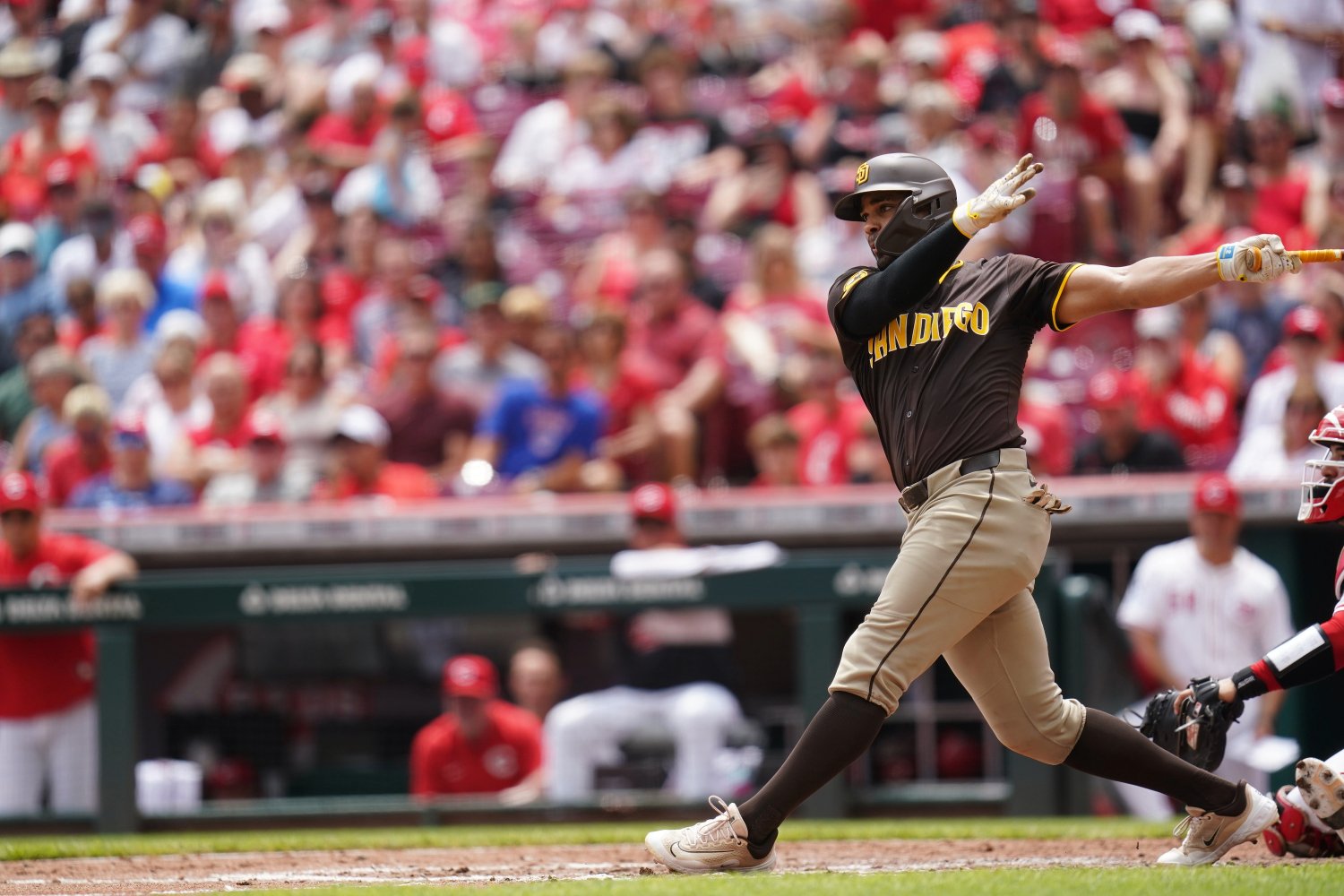 Wherever they may be, it's clear that the baseball gods have chosen not to favor the San Diego Padres since the middle of May. After a blazing start to the year, they finished that month 13-13 before turning in a 13-15 June. As of this writing, they're off to a 4-3 start in July. It's been a good deal of middling baseball wrought by a shallow lineup more than anything, leaving the Padres fading in the division and currently on the outside of the Wild Card picture in the National League. Given where the problems this year have tended to find their origin, it's probably not surprising to find Xander Bogaerts central to most discussions about this team. The phrases have been bandied about include things like "sunk cost" and — for the more optimistic in the fanbase — "salary dump." Not ideal for a player in the third year of an 11-year pact. Indeed, a great deal of ink has been spilt surrounding Bogaerts' 2025 and the fear over what the remainder of his deal could look like. Considering such pessimism, it might surprise to find that Bogaerts actually had quite a good month of June. It was lost in the midst of .500 baseball, but there was a steady performer lining up at the six for San Diego last month: By both wOBA and wRC+, Bogaerts was actually the team's best hitter last month. He also led the team in average, trailed only Fernando Tatis Jr. in on-base percentage, and struck out at a rate that was higher than only Luis Arráez. Mixed in that month was a stretch of five consecutive at-bats with a hit and five multi-hit games overall. His power remained modest, but that's likely going to have to be a reality with which the Padres deal with moving forward. If he's proving a fixture on base, though, he's already proven to be adept at contributing in other ways. But, in observing such vast improvement from the first two months of the year, should we put any stock into what Bogaerts did in June? Especially considering that his July is already off to start of a much lower tier? In attempting to break with what I'm coining "The Great Padres Pessimism of Summer 2025", the answer is a resounding... maybe. The simplest observation to make about Bogaerts' June is that he swung the bat more. His 41.7 percent swing rate was his highest in an individual month through that point. What was impressive was that he upped the chase (23.0 percent) but didn't lose anything on the contact end (only a two point rise in Whiff%). For Bogaerts, the result of increased aggression was simply more balls in play: An obvious byproduct of that is that he didn't walk as much. But, he also struck out at easily his lowest rate of the season in a given month. That seems like an acceptable trade-off for a team that needs offensive creation to come from somewhere outside of the top guys in the lineup. Especially with someone possessing the awareness of the zone that Bogaerts has demonstrated in 2025. At the same time, there's a (potentially) intense caveat within this. Pitchers approached Bogaerts entirely different than they had in either of the first two months: Bogaerts received a near-ten-percent bump in the amount of fastballs he saw in May, which was already an increase in what he'd seen in March & April. For many hitters, the prospect of seeing that many fastballs and gaining an uptick in performance isn't something you want to see. It would read as more mirage than reality as pitchers would simply adjust again the following month. Instead, it looks as if the increased swing rate was due to the increase in fastballs but not the increased performance. That's an important distinction. Bogaerts wasn't doing his best work against fastballs; his higher hard hit rate still came against off-speed and breaking pitches. But he was able to become more aggressive as a result of simply seeing more fastballs, allowing for an overall swing increase. The contact ability has remained through these struggles, so it stands to reason that his contact ability deserves more credit for turning in a strong month than anything coming out of the pitcher's hand. It's not as if there was some absurd average on balls in play to emerge from it, either. His .310 BABIP remained an entirely reasonable figure. If anything, we're seeing this increased aggression from Bogaerts continue in July. It's just manifesting in a different area of the BABIP spectrum. Bogaerts' Swing% through his first few games in June is 42.9. That's about a one percent increase from June (which was a three percent increase from May). There's been a bit more whiff but the expected metrics really like what he's doing thus far: The results haven't been there quite yet, but the expected average (.314) and expected slug (.432) are among his best. While there are likely more intricacies occurring underneath the surface, there's plenty of evidence pointing us in the direction of a more aggressive Xander Bogaerts being a more effective Xander Bogaerts. Of course, we'll need a larger sample in July before coming to any firm conclusions on it. Many of the numbers don't look great so far (.289 wOBA, for example), but it doesn't seem as if June was entirely luck. Bogaerts has enough control of the strike zone that he can afford to be more aggressive in order to create offense. If the trends in June are any indication, he could spend the remainder of the summer proving just that.
 -
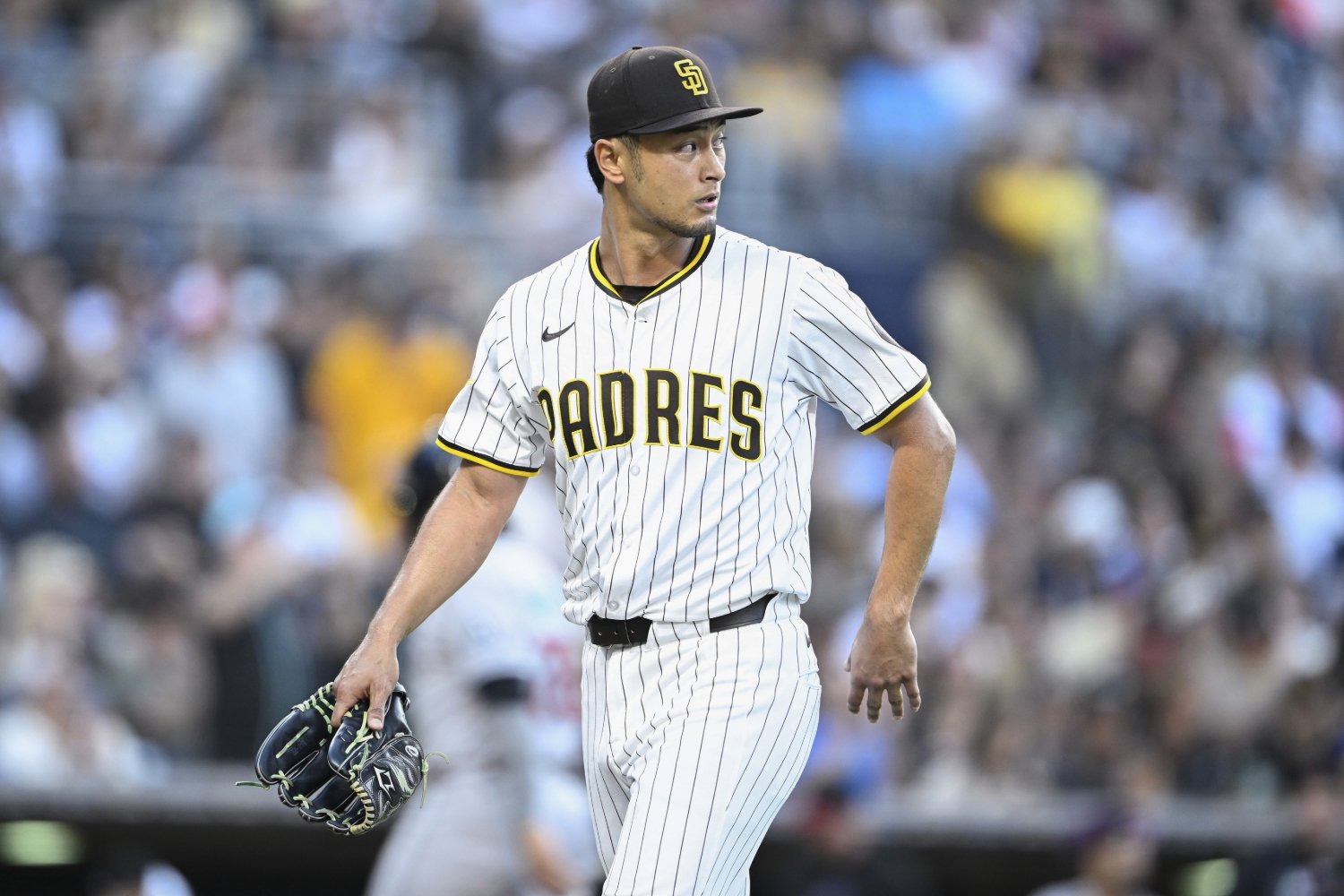 It took a few months of a rather murky timeline, but Yu Darvish finally made his 2025 debut for the San Diego Padres on Monday night. The 38-year-old fought elbow inflammation during the spring exhibition slate that cost him over half the year. The Padres were content to let Darvish largely handle his own rehab process, which likely led to the slow ramp-up. Nevertheless, his return was set to deliver some stability to a Padres rotation in need of it given the absence of Michael King in an already thin group. Stability, however, will likely have to wait a few starts. Clearly working within a tight window with respect to pitch count, Darvish delivered only 3 2/3 innings of work against the Arizona Diamondbacks in a frustrating outing against a reeling division rival. Darvish's start left him with the loss to kick off his campaign in a game where the offense couldn't muster much against Zac Gallen and his 5.45 ERA. The focus is on Darvish, though, and despite the abbreviated appearance, the Padres are hoping that it'll set the course for a strong second half out of one of their key veteran pitchers. And there were, at least, some positives to take away from the start despite the ultimate outcome. Darvish threw 63 pitches in his start, leaning heavily on the curveball (22 percent usage), sweeper (19 percent), and slider (also 19 percent). Statcast had Darvish at eight different pitch types in the start, though, and everything except the knuckle-curve was thrown at least five times in terms of raw pitch count. Of course, the two don't always jive given the volume of pitch types Darvish is purported to throw. Nonetheless, this is how things shook out in his debut: The command actually looked pretty decent for Darvish in start No. 1. He threw 41 of his 63 pitches for strikes (65 percent) and he was able to work to a 39 percent whiff rate. The sweeper did much of the work there, as he not only generated the highest rate of swings with that pitch (26 percent) but also the highest whiff rate (63 percent). The sweeper and slider were each able to garner called strikes or swinging strikes 58 percent of the time. So, the stuff was very much present. As was the velocity. Darvish touched 96 mph with each of his four-seam and sinker offerings, averaging 95.1 and 94.2 MPH with each of the two, respectively. Each of those would represent an increase in his velocity on the two pitches from 2024. We're obviously looking at just one start rather than a collection of them, but it's an encouraging development regardless. And that really should be the takeaway. There was rust; the above visual is indicative of some inconsistency in locating pitches with confidence. That he was able to generate swings and whiffs while demonstrating upper-tier velocity should certainly check in as a positive, though. Now, it's about stretching the outing a little bit more. We're likely going to see a similar restriction in his next start. The aim is, undoubtedly, to weaponize Darvish atop the rotation down the stretch in the wake of King's absence and some other inconsistencies within the rotation. With maybe one more start to go ahead of the All-Star break, you can bet Mike Shildt will remain conservative in order to allow this short stretch to serve as a springboard toward more impact in the season's second half. It was a solid debut, to be sure. Now, the aim becomes building on it into something more sustainable after so much time missed.
 -
It took a few months of a rather murky timeline, but Yu Darvish finally made his 2025 debut for the San Diego Padres on Monday night. The 38-year-old fought elbow inflammation during the spring exhibition slate that cost him over half the year. The Padres were content to let Darvish largely handle his own rehab process, which likely led to the slow ramp-up. Nevertheless, his return was set to deliver some stability to a Padres rotation in need of it given the absence of Michael King in an already thin group. Stability, however, will likely have to wait a few starts. Clearly working within a tight window with respect to pitch count, Darvish delivered only 3 2/3 innings of work against the Arizona Diamondbacks in a frustrating outing against a reeling division rival. Darvish's start left him with the loss to kick off his campaign in a game where the offense couldn't muster much against Zac Gallen and his 5.45 ERA. The focus is on Darvish, though, and despite the abbreviated appearance, the Padres are hoping that it'll set the course for a strong second half out of one of their key veteran pitchers. And there were, at least, some positives to take away from the start despite the ultimate outcome. Darvish threw 63 pitches in his start, leaning heavily on the curveball (22 percent usage), sweeper (19 percent), and slider (also 19 percent). Statcast had Darvish at eight different pitch types in the start, though, and everything except the knuckle-curve was thrown at least five times in terms of raw pitch count. Of course, the two don't always jive given the volume of pitch types Darvish is purported to throw. Nonetheless, this is how things shook out in his debut: The command actually looked pretty decent for Darvish in start No. 1. He threw 41 of his 63 pitches for strikes (65 percent) and he was able to work to a 39 percent whiff rate. The sweeper did much of the work there, as he not only generated the highest rate of swings with that pitch (26 percent) but also the highest whiff rate (63 percent). The sweeper and slider were each able to garner called strikes or swinging strikes 58 percent of the time. So, the stuff was very much present. As was the velocity. Darvish touched 96 mph with each of his four-seam and sinker offerings, averaging 95.1 and 94.2 MPH with each of the two, respectively. Each of those would represent an increase in his velocity on the two pitches from 2024. We're obviously looking at just one start rather than a collection of them, but it's an encouraging development regardless. And that really should be the takeaway. There was rust; the above visual is indicative of some inconsistency in locating pitches with confidence. That he was able to generate swings and whiffs while demonstrating upper-tier velocity should certainly check in as a positive, though. Now, it's about stretching the outing a little bit more. We're likely going to see a similar restriction in his next start. The aim is, undoubtedly, to weaponize Darvish atop the rotation down the stretch in the wake of King's absence and some other inconsistencies within the rotation. With maybe one more start to go ahead of the All-Star break, you can bet Mike Shildt will remain conservative in order to allow this short stretch to serve as a springboard toward more impact in the season's second half. It was a solid debut, to be sure. Now, the aim becomes building on it into something more sustainable after so much time missed. View full article
-
Did Sunday Night Show Fernando Tatis Jr is Finally Ready to Turn a Corner?
Randy Holt posted an article in Padres
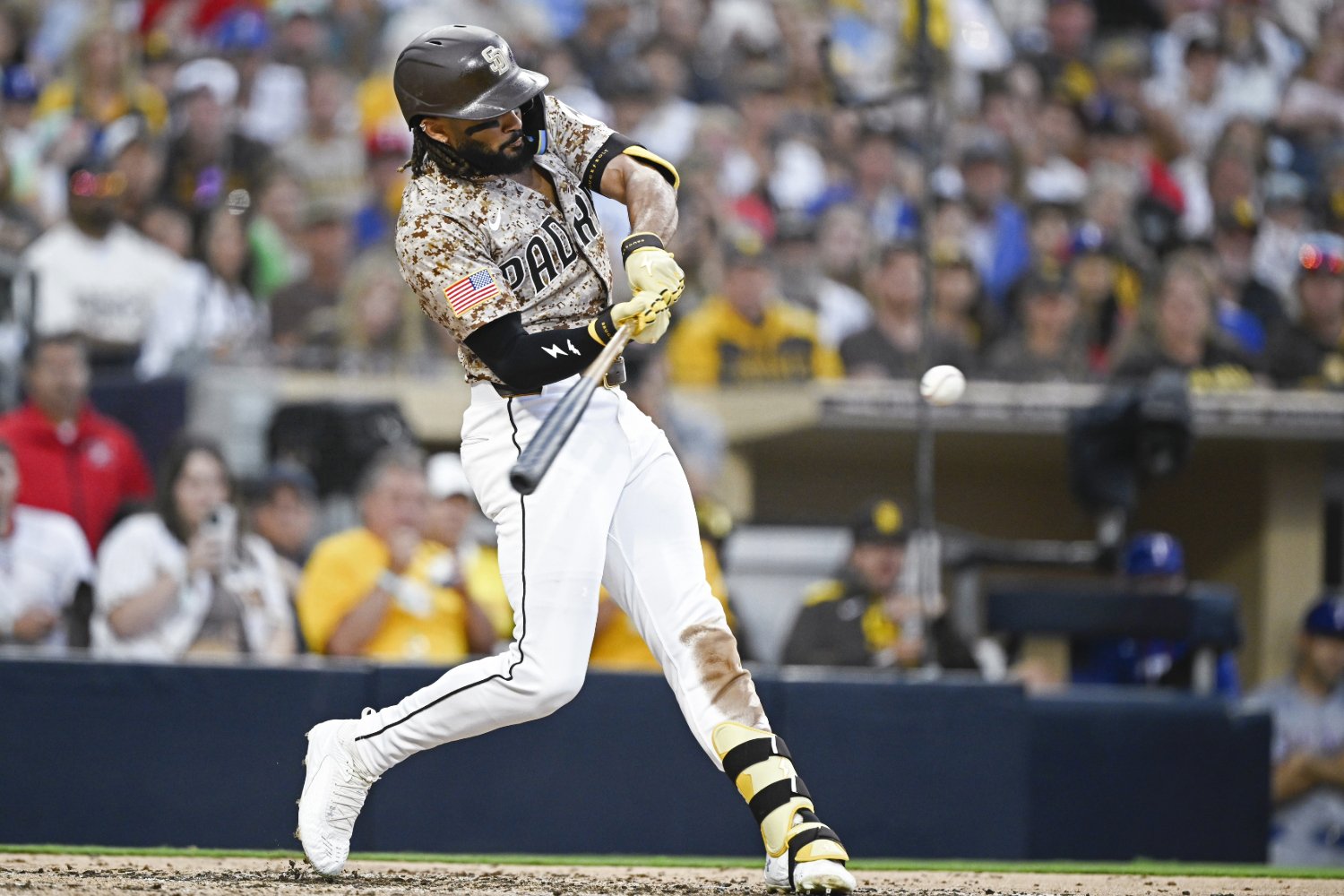 The San Diego Padres won a game and, subsequently, a series against the Texas Rangers on Sunday evening. That, in itself, is a positive given how things have gone for the last month-and-a-half. More important, though, was the role that Fernando Tatis Jr. played in the win. We've discussed Tatis at length in the last couple of months. After a scorching start to the year, he's fallen off virtually everywhere but his defense. That's led to some speculation on his approach and his mechanics as we wonder exactly what needs to get sorted in order to get him back on that superstar trajectory on which he placed himself out of the gate. Sunday's game gave us a glimpse of what Tatis looks like when he's going right, however. Across five plate appearances against the Rangers, Tatis reached four times. He walked twice and recorded a single and a double, with the latter serving to knock in one of the Padres' four runs on the evening. The walk component isn't necessarily a surprise; Tatis has maintained a steady approach that has allowed him to continue to reach base even in the midst of these months-long struggles. The contact, however, is what leads us to recover a little bit of confidence that the superstar is still in there in 2025. At 106.7 MPH, Tatis had the game's hardest hit ball. It was a first-inning single off a 98.9 MPH pitch that carried a .980 expected batting average. After one of his walks in the third, he came back in the fourth with a 102.2 MPH double that knocked in what would be the winning run for San Diego: That one was against an off-speed pitch (something Tatis has struggled against during this stretch) and carried a .920 xBA. It was absolutely laced. Both swings — at 84.8 and 77.6 MPH — checked in well above Tatis' average swing speed this year, indicating a little bit of confidence. Perhaps he's found a little bit of juice after being named to the National League All-Star roster. Whether it's actually an increased confidence or starting to lock in, the challenge for Tatis will now be to carry such a performance over into the coming days. It's not the first time since he went cold that we've seen Tatis have a good game in isolation. He had a four-hit effort back on June 15th. But, he's also recorded hits in seven of his last eight games with some walks mixed in. That follows a stretch where he failed to record a hit in seven of 10 games. It's obviously something we'll be keeping a keen eye on moving forward. There's some question as to the validity of Tatis' inclusion in Atlanta given his struggles since mid-May. But his fWAR, at 3.5, doesn't lie. Some sustained offensive production, though, could drive even that figure up in conjunction with his defensive excellence and help him regain his status as one of the league's top hitters. This all feels like a uniquely baseball thing. It isn't what Fernando Tatis Jr. did on Sunday. It's what he does next.
 -
The San Diego Padres won a game and, subsequently, a series against the Texas Rangers on Sunday evening. That, in itself, is a positive given how things have gone for the last month-and-a-half. More important, though, was the role that Fernando Tatis Jr. played in the win. We've discussed Tatis at length in the last couple of months. After a scorching start to the year, he's fallen off virtually everywhere but his defense. That's led to some speculation on his approach and his mechanics as we wonder exactly what needs to get sorted in order to get him back on that superstar trajectory on which he placed himself out of the gate. Sunday's game gave us a glimpse of what Tatis looks like when he's going right, however. Across five plate appearances against the Rangers, Tatis reached four times. He walked twice and recorded a single and a double, with the latter serving to knock in one of the Padres' four runs on the evening. The walk component isn't necessarily a surprise; Tatis has maintained a steady approach that has allowed him to continue to reach base even in the midst of these months-long struggles. The contact, however, is what leads us to recover a little bit of confidence that the superstar is still in there in 2025. At 106.7 MPH, Tatis had the game's hardest hit ball. It was a first-inning single off a 98.9 MPH pitch that carried a .980 expected batting average. After one of his walks in the third, he came back in the fourth with a 102.2 MPH double that knocked in what would be the winning run for San Diego: That one was against an off-speed pitch (something Tatis has struggled against during this stretch) and carried a .920 xBA. It was absolutely laced. Both swings — at 84.8 and 77.6 MPH — checked in well above Tatis' average swing speed this year, indicating a little bit of confidence. Perhaps he's found a little bit of juice after being named to the National League All-Star roster. Whether it's actually an increased confidence or starting to lock in, the challenge for Tatis will now be to carry such a performance over into the coming days. It's not the first time since he went cold that we've seen Tatis have a good game in isolation. He had a four-hit effort back on June 15th. But, he's also recorded hits in seven of his last eight games with some walks mixed in. That follows a stretch where he failed to record a hit in seven of 10 games. It's obviously something we'll be keeping a keen eye on moving forward. There's some question as to the validity of Tatis' inclusion in Atlanta given his struggles since mid-May. But his fWAR, at 3.5, doesn't lie. Some sustained offensive production, though, could drive even that figure up in conjunction with his defensive excellence and help him regain his status as one of the league's top hitters. This all feels like a uniquely baseball thing. It isn't what Fernando Tatis Jr. did on Sunday. It's what he does next. View full article
-
Padres Rumors: Reese McGuire Could Be Sneaky Target At MLB Trade Deadline
Randy Holt posted an article in Padres
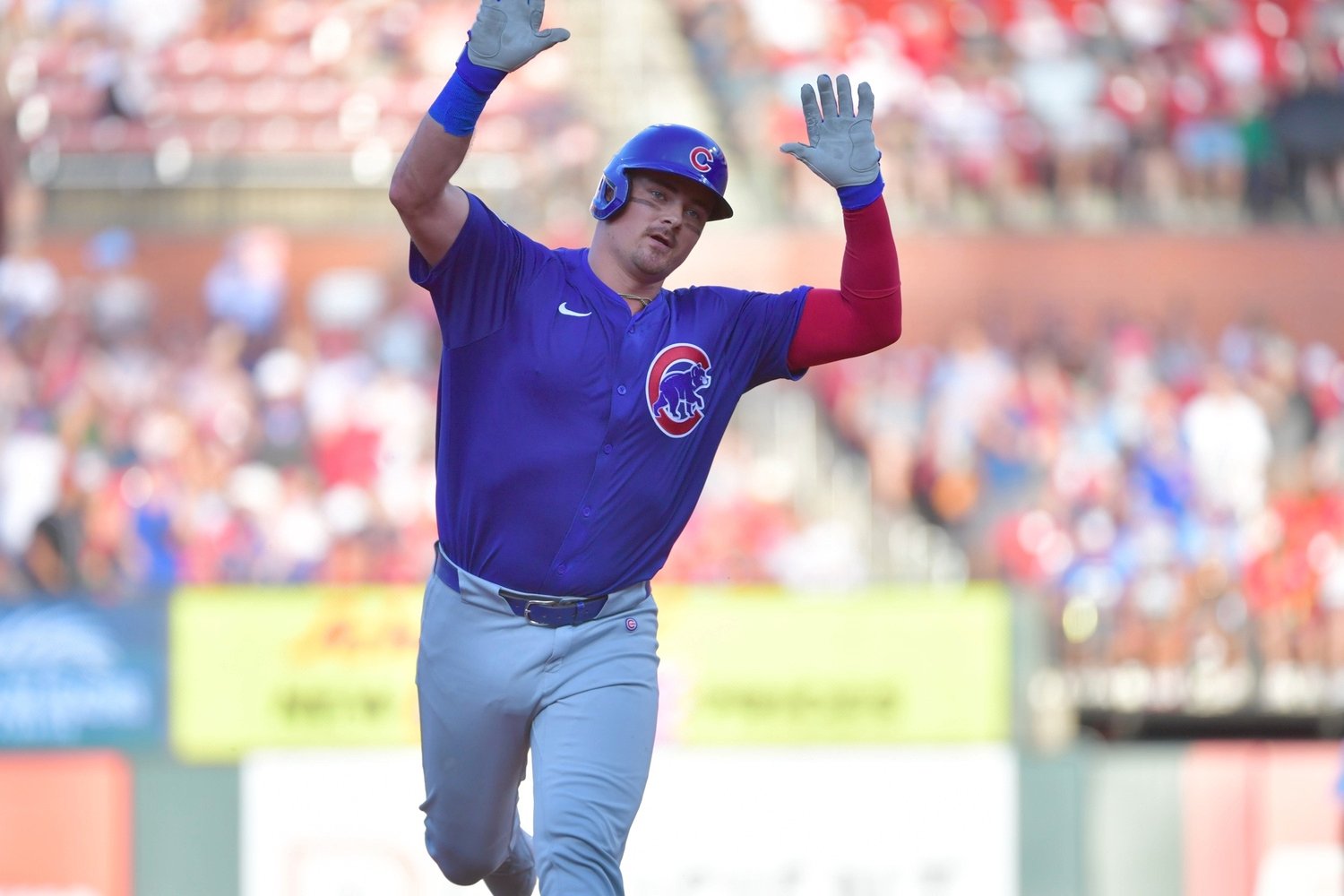 With just a few weeks to go until Major League Baseball's trade deadline on July 31, it's difficult to project exactly where the San Diego Padres will stand when the smoke clears. No stranger to impact moves, A.J. Preller finds himself with a team that has been middling since May and limited resources with which to operate. That the Padres don't have a lot of prospect capital with which to work is courtesy of Preller's own hand. And while it's difficult to underestimate an executive with a reputation for the bold, the reality is that this is a team sitting extremely top heavy in the farm system. If top prospects Leo De Vries & Ethan Salas are, indeed, untouchable (to say nothing of any continued budget "woes"), then we can assume the focus is going to live on the margins where the cost is more digestible. Of the clarity we do have, we know that the team is in the market for a catcher. At -0.8 fWAR, only the Washington Nationals have gotten less out of the position than Elías Díaz & Martín Maldonado have provided San Diego. And, despite what work Luis Campusano has done as a hitter in Triple-A this year, their reluctance for a shake-up involving the former top prospect is indicative of his lack of inclusion in the position moving forward. Considering the factors involved, there's an increasingly clear name worth targeting for the Padres: the Chicago Cubs' Reese McGuire. A former top prospect in Toronto, McGuire has become something of a journeyman in the last few seasons. He was traded to the Chicago White Sox in 2022 and caught on with Boston via another trade later that year. He was designated for assignment around this time last year before reaching free agency and signing a minor league deal with the Cubs over the winter. Given their tandem of Miguel Amaya & Carson Kelly, he was there to serve as depth. But with Amaya on the shelf due to an oblique injury, McGuire has been pressed into big league duty the last handful of weeks. The showing has been rather impressive. As of July 7, McGuire is carrying a slash of .237/.262/.508. That latter figure is the important one. The slug has been the most noteworthy component of his offensive game between the .508 slugging percentage and a .296 isolated power figure through more than 60 plate appearances. His five home runs in that sample are nearly as much as he recorded across the past three seasons combined (seven). And, while you'd like the average and on-base numbers to look a bit better, Díaz and Maldonado are combining to hit .190 and reach base at around the same clip. So, you're getting modestly better production from an on-base standpoint but a big boost on the power side. Then, there's the defensive component to consider. Statcast has McGuire above average in framing, blocking, and throwing. The Padres' tandem, meanwhile, sits below average in framing (-1 in Framing Runs for Díaz, -2 for Maldonado). They're mixed in the blocking game (Díaz at 1 Blocks Above Average, Maldonado at -8) and in throwing (2 CS Above Average for Díaz, -6 for Maldonado). So, while you're looking at a guy who has succeeded in a small sample, he's also one that can offer a fairly significant upgrade to at least half of the current catching tandem. With the added benefit of the bump you get on the power he's offering as a hitter at present. There is, of course, a caveat to this. A trade of McGuire would be heavily dependent on Miguel Amaya's timeline in returning from his injury. He's started a throwing & hitting program but isn't expected to return to game action until after the All-Star break. That'd be a pretty narrow timeframe for the Padres to get something done, but should everything progress as expected, the Cubs aren't really going to have a choice. The likelihood of carrying three catchers on an already-thin bench would be foolhardy. Eventually, McGuire is going to have to go. Teams don't always love to acquire a catcher in-season, but factoring in his power and defensive performance against what you're getting from (in particular) Maldonado, it would behoove the Padres to give him a long look once the time comes.
 -
With just a few weeks to go until Major League Baseball's trade deadline on July 31, it's difficult to project exactly where the San Diego Padres will stand when the smoke clears. No stranger to impact moves, A.J. Preller finds himself with a team that has been middling since May and limited resources with which to operate. That the Padres don't have a lot of prospect capital with which to work is courtesy of Preller's own hand. And while it's difficult to underestimate an executive with a reputation for the bold, the reality is that this is a team sitting extremely top heavy in the farm system. If top prospects Leo De Vries & Ethan Salas are, indeed, untouchable (to say nothing of any continued budget "woes"), then we can assume the focus is going to live on the margins where the cost is more digestible. Of the clarity we do have, we know that the team is in the market for a catcher. At -0.8 fWAR, only the Washington Nationals have gotten less out of the position than Elías Díaz & Martín Maldonado have provided San Diego. And, despite what work Luis Campusano has done as a hitter in Triple-A this year, their reluctance for a shake-up involving the former top prospect is indicative of his lack of inclusion in the position moving forward. Considering the factors involved, there's an increasingly clear name worth targeting for the Padres: the Chicago Cubs' Reese McGuire. A former top prospect in Toronto, McGuire has become something of a journeyman in the last few seasons. He was traded to the Chicago White Sox in 2022 and caught on with Boston via another trade later that year. He was designated for assignment around this time last year before reaching free agency and signing a minor league deal with the Cubs over the winter. Given their tandem of Miguel Amaya & Carson Kelly, he was there to serve as depth. But with Amaya on the shelf due to an oblique injury, McGuire has been pressed into big league duty the last handful of weeks. The showing has been rather impressive. As of July 7, McGuire is carrying a slash of .237/.262/.508. That latter figure is the important one. The slug has been the most noteworthy component of his offensive game between the .508 slugging percentage and a .296 isolated power figure through more than 60 plate appearances. His five home runs in that sample are nearly as much as he recorded across the past three seasons combined (seven). And, while you'd like the average and on-base numbers to look a bit better, Díaz and Maldonado are combining to hit .190 and reach base at around the same clip. So, you're getting modestly better production from an on-base standpoint but a big boost on the power side. Then, there's the defensive component to consider. Statcast has McGuire above average in framing, blocking, and throwing. The Padres' tandem, meanwhile, sits below average in framing (-1 in Framing Runs for Díaz, -2 for Maldonado). They're mixed in the blocking game (Díaz at 1 Blocks Above Average, Maldonado at -8) and in throwing (2 CS Above Average for Díaz, -6 for Maldonado). So, while you're looking at a guy who has succeeded in a small sample, he's also one that can offer a fairly significant upgrade to at least half of the current catching tandem. With the added benefit of the bump you get on the power he's offering as a hitter at present. There is, of course, a caveat to this. A trade of McGuire would be heavily dependent on Miguel Amaya's timeline in returning from his injury. He's started a throwing & hitting program but isn't expected to return to game action until after the All-Star break. That'd be a pretty narrow timeframe for the Padres to get something done, but should everything progress as expected, the Cubs aren't really going to have a choice. The likelihood of carrying three catchers on an already-thin bench would be foolhardy. Eventually, McGuire is going to have to go. Teams don't always love to acquire a catcher in-season, but factoring in his power and defensive performance against what you're getting from (in particular) Maldonado, it would behoove the Padres to give him a long look once the time comes. View full article
-
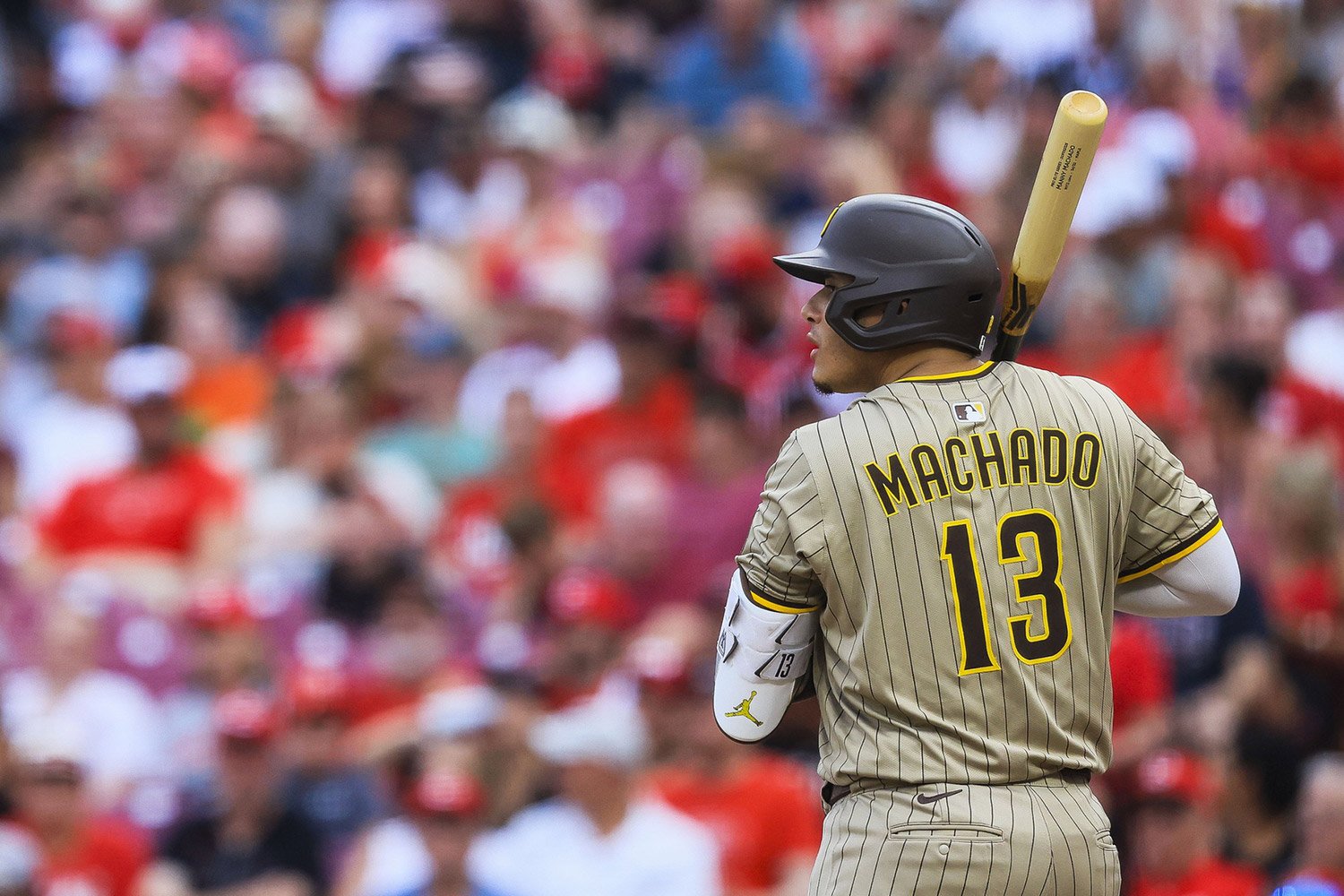 By the end of this week, there's a very good chance that San Diego Padres third baseman Manny Machado will have recorded the 2,000th hit of his career. With 1,994 hits going into Wednesday's doubleheader, he continues to be one of the more impactful hitters across the landscape of Major League Baseball. It's an impending moment worthy of celebration, but also an opportunity to take stock of the present and examine Machado's projection moving forward. First, there's the matter of the 2025 context. Machado is having an excellent season, as evidenced by his chance to start the All-Star Game in Atlanta later this month. Despite a slow start on the power side, he's picked it up to become a steadying force in a Padres lineup that has lacked it since the middle of May. He has been a top-five player among qualifying third basemen this year by fWAR (2.5), while turning in a 135 wRC+ that demonstrates his well-above-average production. If we were looking at 2025 from a pure hits standpoint, then Manny Machado would be a top 10 player in the sport. His 93 hits sit in that 10th spot, just narrowly behind names like Shohei Ohtani & Bobby Witt Jr. Obviously, we don't evaluate players by hit volume alone, but it does speak to the consistency with which Machado is able to not only get balls in play but also make them work for him. He has a career BABIP of .299 courtesy of his ability to lift the baseball (41.6 GB% for his career). Even as his power wavers (seemingly) depending on the month, his pure hit tool should continue to carry him to high hit numbers for at least the foreseeable future. Which brings us to the broader context, both in terms of the significance of Machado reaching 2,000 hits and whether he can attain the next threshold(s) on a potential Hall of Fame journey. Let's discuss the general significance and organizational context first. Only 297 players in Major League Baseball's history have amassed at least 2,000 hits. With his present 1,994, Machado ranks 301st in total hits. If he's able to replicate his first half and turn in another 90 or so hits, he can move closer to 250 on the all-time list. You're talking about 300 or fewer names among 20,000 or so that have touched a major league field. Even if you wanted to take the overgeneralized numbers instead of the specific ones, that means that Machado is among the game's top two percent in hits recorded. Hits, on their own, obviously simplify the complex nature of a player. But there's a consistency factor involved when you're talking about that high a volume of hits. It's already at an elite level and becomes even more so when you pare it down to a Padre-centric focus. Of his total to this point, 943 of Machado's hits have come in a Padres uniform. That trails only Gene Richards (994), Dave Winfield (1,134), Garry Templeton (1,135), and, obviously, Tony Gwynn (3,141). While there is, obviously (again), zero chance of Machado reaching the top of the Padres' hits leaderboard, it stands to reason that he could sit behind Gwynn only by the time 2026 reaches its end. At worst, you're talking about the fourth-best hitter in the organization's history. As for the projection portion, MLB.com's AJ Cassavell did plenty of legwork in looking at what hitting that next benchmark looks like for Machado. He specifically notes that the average number of hits needed for Machado to reach 3,000 in a Padres uniform is 118 through the end of his contract (which runs through 2033). Considering his lowest output in a non-pandemic year in the last decade was 140, it seems a relatively easily attainable feat for Machado to reach before it's all said and done, health factors notwithstanding. Of course, this also somewhat buries the lede because 3,000 hits isn't the only mark toward which Machado is striving. Also within Cassavell's article is a reminder that Machado has also already hit 350 home runs in his career (and is also on pace for 500). By eclipsing 2,000 hits at some point in the next week, he'll accomplish something that only 11 other players in big league history have done at his age. Eight of said players are in the Hall, two are locks, and the other is Alex Rodriguez. Both the hit and the homer mark remain entirely within reach for Machado. With that, you're not only talking about a legendary player for the San Diego Padres organization but one on an inarguable Hall of Fame trajectory. Given that the power has been a rare source of inconsistency in the last couple of seasons for Machado, the 500 home run angle doesn't read quite as solid. But 3,000 hits is rarified air in itself; only 33 people have reached that one. The minimum total required to reach that point being what it is leaves us to believe that he'll hit it with the power side becoming something of a bonus. Regardless of which mark he does or does not hit, it's difficult to overstate what reaching this next benchmark will indicate about Machado as a player. It's easy to get cynical about "hits" and what they do or do not mean in the age of analytics, but there's something to be said about the consistency and stability requisite to such an accomplishment. You're not only affirming your status among the all-time greats from a league standpoint, but you're entrenching yourself directly next to the all-time great within the Padres organization. His polarizing nature is a subject for another day (and another fanbase). Manny Machado has been one of the game's best hitters for more than a decade, and within the next week, he'll have yet another credential to back up such an idea.
 -
Randy Vásquez Is Taking One Step Forward, One Step Back In 2025
Randy Holt posted an article in Padres
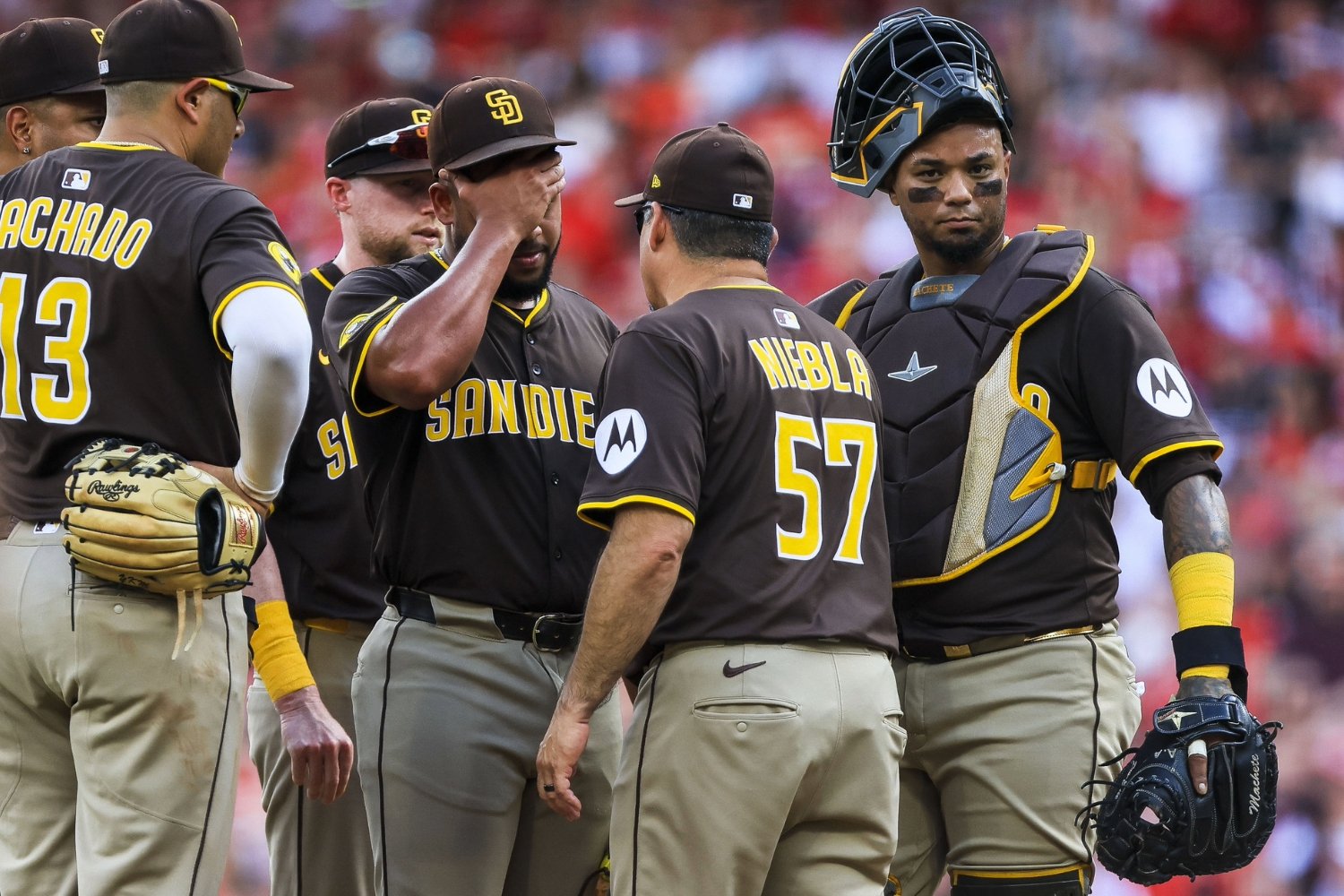 One of the more impressive feats that the San Diego Padres have been able to pull off in 2025 is within their rotation. Already a starting group that lacked depth, injuries (both new and pre-existing) have led Mike Shildt to cobble together a rotation as best he could. And, somehow, it's hung in there halfway through the season. As of this writing, the Padres sit in the top half of the league in ERA (3.92), FIP (4.02), and strikeout rate (22.6 percent). That's made all the more impressive considering the group is currently rolling without Michael King and has yet to see a start from Yu Darvish. Perhaps more impressively is that they're doing all of that with the start-to-start variance of one Randy Vásquez. Acquired from the New York Yankees as a part of the Juan Soto trade, Vásquez struggled quite a bit across 20 starts last year, with both an ERA and a FIP that lingered around five. The spring absence of Darvish and Matt Waldron pressed him into rotation duty at the top level to start the year. And through 17 starts, he's managed to hang onto the job despite some abbreviated outings wrought by questionable command. It's the command that's been the issue for Vásquez throughout the year. Already without strikeout stuff (13.1 K%), his 10.7 percent walk rate is one of the five highest among qualifying starting pitchers. And it's not just about walking hitters, either. It's about sustained plate appearances which begets high pitch counts which begets short outings; eight of Vásquez's 17 starts have gone fewer than five innings. The good news is that he's started to figure out some of the command stuff: That he's been able to drive up the Zone% steadily speaks to the fact that he's been working around it more frequently. It's been an imperfect process, but the walk rates from the first three months of the year read as follows: 15.6 percent in March/April, 6.8 percent in May, and 9.4 percent in June. You'd obviously like to see a continuation of the improvement that you saw between the season's first two months, but the fact that there's still a steep drop from the season's opening month reads as encouraging. Instead, the frustration with Vásquez has evolved into a something of a new issue revolving around his pitch selection: Now, obviously, part of the nature of being a starting pitcher is varying your usage depending on the opponent and what your feel may be on a given day. But, the distribution for Vásquez is an absolute mess. Even his cutter, which has been the primary pitch all year, has taken a back seat in more recent outings. Given that he was able to (somewhat) rein in the command woes, you'd expect this to look at least a little bit cleaner. Instead, this is indicative of a guy who is still trying to determine what his best offerings may be. When that's the case, you get a start like Vásquez had against the Cincinnati Reds last weekend. A few bloop hits were among the nine he surrendered against only two walks. The high hit volume put him in an early hole in allowing four earned runs across just 4 1/3 innings of work. When your command isn't pristine (something we should never expected from Vásquez) and you're uncomfortable with your usage, hitters aren't going to know what's coming. With Vásquez actually improving his command, that led to more swings than we might otherwise see which, in turn, led to additional hits that likely could have been avoided. But, without upper-tier stuff, that's going to be a byproduct of this process for Vásquez. He's harnessing his stuff but only on an in-between sort of level given the usage mess. For what it's worth, it does seem like there's an ideal mix for Vásquez, as indicated by his outcomes to date: By these metrics, the cutter, sinker, and sweeper have been Vásquez's most important offerings this year. The cutter for the whiff and stability it provides, the sinker that induces groundballs to pin down opposing averages, and the sweeper as a lone putaway offering. And it should probably come in that order to if we're thinking about standard sequencing. Utilize the cutter to get ahead before turning to the sinker and sweeper as your out pitches in different ways. Even if it's a different sequence, some logic in the distribution appears necessary for Vásquez to start stringing together a level of consistency that we haven't seen yet. Getting the command on track was obviously an important step. Now, it's about taking that improved command and spinning it into a steady arsenal that Vásquez can feel comfortable with start to start. Only then might we start seeing some level of stability and, thus, a step toward him realizing his value within this San Diego Padres rotation.
 -
One of the more impressive feats that the San Diego Padres have been able to pull off in 2025 is within their rotation. Already a starting group that lacked depth, injuries (both new and pre-existing) have led Mike Shildt to cobble together a rotation as best he could. And, somehow, it's hung in there halfway through the season. As of this writing, the Padres sit in the top half of the league in ERA (3.92), FIP (4.02), and strikeout rate (22.6 percent). That's made all the more impressive considering the group is currently rolling without Michael King and has yet to see a start from Yu Darvish. Perhaps more impressively is that they're doing all of that with the start-to-start variance of one Randy Vásquez. Acquired from the New York Yankees as a part of the Juan Soto trade, Vásquez struggled quite a bit across 20 starts last year, with both an ERA and a FIP that lingered around five. The spring absence of Darvish and Matt Waldron pressed him into rotation duty at the top level to start the year. And through 17 starts, he's managed to hang onto the job despite some abbreviated outings wrought by questionable command. It's the command that's been the issue for Vásquez throughout the year. Already without strikeout stuff (13.1 K%), his 10.7 percent walk rate is one of the five highest among qualifying starting pitchers. And it's not just about walking hitters, either. It's about sustained plate appearances which begets high pitch counts which begets short outings; eight of Vásquez's 17 starts have gone fewer than five innings. The good news is that he's started to figure out some of the command stuff: That he's been able to drive up the Zone% steadily speaks to the fact that he's been working around it more frequently. It's been an imperfect process, but the walk rates from the first three months of the year read as follows: 15.6 percent in March/April, 6.8 percent in May, and 9.4 percent in June. You'd obviously like to see a continuation of the improvement that you saw between the season's first two months, but the fact that there's still a steep drop from the season's opening month reads as encouraging. Instead, the frustration with Vásquez has evolved into a something of a new issue revolving around his pitch selection: Now, obviously, part of the nature of being a starting pitcher is varying your usage depending on the opponent and what your feel may be on a given day. But, the distribution for Vásquez is an absolute mess. Even his cutter, which has been the primary pitch all year, has taken a back seat in more recent outings. Given that he was able to (somewhat) rein in the command woes, you'd expect this to look at least a little bit cleaner. Instead, this is indicative of a guy who is still trying to determine what his best offerings may be. When that's the case, you get a start like Vásquez had against the Cincinnati Reds last weekend. A few bloop hits were among the nine he surrendered against only two walks. The high hit volume put him in an early hole in allowing four earned runs across just 4 1/3 innings of work. When your command isn't pristine (something we should never expected from Vásquez) and you're uncomfortable with your usage, hitters aren't going to know what's coming. With Vásquez actually improving his command, that led to more swings than we might otherwise see which, in turn, led to additional hits that likely could have been avoided. But, without upper-tier stuff, that's going to be a byproduct of this process for Vásquez. He's harnessing his stuff but only on an in-between sort of level given the usage mess. For what it's worth, it does seem like there's an ideal mix for Vásquez, as indicated by his outcomes to date: By these metrics, the cutter, sinker, and sweeper have been Vásquez's most important offerings this year. The cutter for the whiff and stability it provides, the sinker that induces groundballs to pin down opposing averages, and the sweeper as a lone putaway offering. And it should probably come in that order to if we're thinking about standard sequencing. Utilize the cutter to get ahead before turning to the sinker and sweeper as your out pitches in different ways. Even if it's a different sequence, some logic in the distribution appears necessary for Vásquez to start stringing together a level of consistency that we haven't seen yet. Getting the command on track was obviously an important step. Now, it's about taking that improved command and spinning it into a steady arsenal that Vásquez can feel comfortable with start to start. Only then might we start seeing some level of stability and, thus, a step toward him realizing his value within this San Diego Padres rotation. View full article
-
By the end of this week, there's a very good chance that San Diego Padres third baseman Manny Machado will have recorded the 2,000th hit of his career. With 1,994 hits going into Wednesday's doubleheader, he continues to be one of the more impactful hitters across the landscape of Major League Baseball. It's an impending moment worthy of celebration, but also an opportunity to take stock of the present and examine Machado's projection moving forward. First, there's the matter of the 2025 context. Machado is having an excellent season, as evidenced by his chance to start the All-Star Game in Atlanta later this month. Despite a slow start on the power side, he's picked it up to become a steadying force in a Padres lineup that has lacked it since the middle of May. He has been a top-five player among qualifying third basemen this year by fWAR (2.5), while turning in a 135 wRC+ that demonstrates his well-above-average production. If we were looking at 2025 from a pure hits standpoint, then Manny Machado would be a top 10 player in the sport. His 93 hits sit in that 10th spot, just narrowly behind names like Shohei Ohtani & Bobby Witt Jr. Obviously, we don't evaluate players by hit volume alone, but it does speak to the consistency with which Machado is able to not only get balls in play but also make them work for him. He has a career BABIP of .299 courtesy of his ability to lift the baseball (41.6 GB% for his career). Even as his power wavers (seemingly) depending on the month, his pure hit tool should continue to carry him to high hit numbers for at least the foreseeable future. Which brings us to the broader context, both in terms of the significance of Machado reaching 2,000 hits and whether he can attain the next threshold(s) on a potential Hall of Fame journey. Let's discuss the general significance and organizational context first. Only 297 players in Major League Baseball's history have amassed at least 2,000 hits. With his present 1,994, Machado ranks 301st in total hits. If he's able to replicate his first half and turn in another 90 or so hits, he can move closer to 250 on the all-time list. You're talking about 300 or fewer names among 20,000 or so that have touched a major league field. Even if you wanted to take the overgeneralized numbers instead of the specific ones, that means that Machado is among the game's top two percent in hits recorded. Hits, on their own, obviously simplify the complex nature of a player. But there's a consistency factor involved when you're talking about that high a volume of hits. It's already at an elite level and becomes even more so when you pare it down to a Padre-centric focus. Of his total to this point, 943 of Machado's hits have come in a Padres uniform. That trails only Gene Richards (994), Dave Winfield (1,134), Garry Templeton (1,135), and, obviously, Tony Gwynn (3,141). While there is, obviously (again), zero chance of Machado reaching the top of the Padres' hits leaderboard, it stands to reason that he could sit behind Gwynn only by the time 2026 reaches its end. At worst, you're talking about the fourth-best hitter in the organization's history. As for the projection portion, MLB.com's AJ Cassavell did plenty of legwork in looking at what hitting that next benchmark looks like for Machado. He specifically notes that the average number of hits needed for Machado to reach 3,000 in a Padres uniform is 118 through the end of his contract (which runs through 2033). Considering his lowest output in a non-pandemic year in the last decade was 140, it seems a relatively easily attainable feat for Machado to reach before it's all said and done, health factors notwithstanding. Of course, this also somewhat buries the lede because 3,000 hits isn't the only mark toward which Machado is striving. Also within Cassavell's article is a reminder that Machado has also already hit 350 home runs in his career (and is also on pace for 500). By eclipsing 2,000 hits at some point in the next week, he'll accomplish something that only 11 other players in big league history have done at his age. Eight of said players are in the Hall, two are locks, and the other is Alex Rodriguez. Both the hit and the homer mark remain entirely within reach for Machado. With that, you're not only talking about a legendary player for the San Diego Padres organization but one on an inarguable Hall of Fame trajectory. Given that the power has been a rare source of inconsistency in the last couple of seasons for Machado, the 500 home run angle doesn't read quite as solid. But 3,000 hits is rarified air in itself; only 33 people have reached that one. The minimum total required to reach that point being what it is leaves us to believe that he'll hit it with the power side becoming something of a bonus. Regardless of which mark he does or does not hit, it's difficult to overstate what reaching this next benchmark will indicate about Machado as a player. It's easy to get cynical about "hits" and what they do or do not mean in the age of analytics, but there's something to be said about the consistency and stability requisite to such an accomplishment. You're not only affirming your status among the all-time greats from a league standpoint, but you're entrenching yourself directly next to the all-time great within the Padres organization. His polarizing nature is a subject for another day (and another fanbase). Manny Machado has been one of the game's best hitters for more than a decade, and within the next week, he'll have yet another credential to back up such an idea. View full article
-
Fernando Tatis Jr. Is (Somehow) Still Among Baseball's Best In 2025
Randy Holt posted an article in Padres
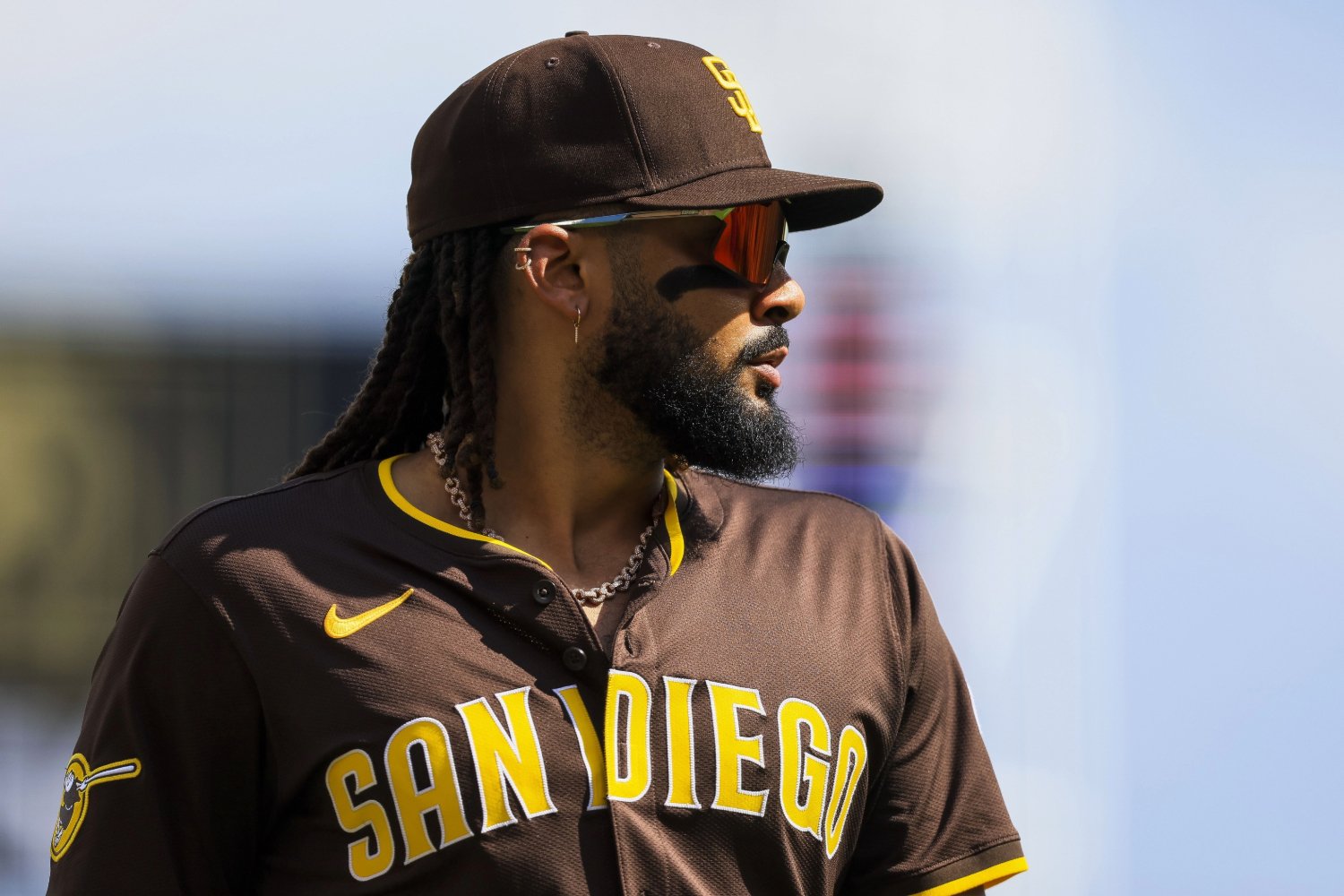 Nobody is suggesting that the stretch of time since the middle of May has revealed anything special about Fernando Tatis Jr. The San Diego Padres right fielder remains a superstar player with a standard set by multiple years of upper-tier performance. However, it's also fairly clear that since that point the Padres have not been deploying the same player in their lineup as they did in the year's earlier portion. Tatis Jr. came out of the gate absolutely blazing. Serving as the team's leadoff hitter, he went on a scorching run of play at the plate that propelled San Diego out to a start that had them hanging with the Los Angeles Dodgers and San Francisco Giants in one of the league's most competitive division. But, for whatever reason since May 15th, Tatis has not been the same player. Sure, we've speculated about mechanical issues or approach changes, and we'll offer a few other suggestions before this text runs out. What's interesting, though, is that despite the lull since mid-May, Tatis' output still remains one of the league's best from a cumulative standpoint. The following is where Fernando Tatis Jr. sat at each end of our circled date on the calendar: Through May 15th: .308/.383/.508, 16.7 K%, 10.6 BB%, .252 ISO, 163 wRC+, 2.5 fWAR There were 163 qualifying hitters in that early stretch of the year. Tatis' average ranked 16th, and both his on-base percentage and isolated slugging ranked 21st. His wRC+ checked in at No. 10, and his overall Wins Above Replacement, per FanGraphs, pegged him as a top-five player. The defense helped to supplement the offense, but it's not as if the production was pinning him down in any meaningful way; he was one of the league's best hitters as of May 15th. Since May 16th: .205/.314/.325, 17.7 K%, 12.0 BB%, .119 ISO, 87 wRC+, 0.9 fWAR Again, nothing surprising here. Tatis' game has fallen off severely from an offensive standpoint. While he's still managed to work his way on base via the walk — and simultaneously avoided turning a solid approach into a ballooned strikeout rate — the power has dissolved. Among the 169 players that qualify, Tatis' average is 155th, his on-base percentage ranks 107th, and his isolated power ranks 119th. It's true that fWAR's perceptive eyes still have him hanging in at 64th, but that defensive component is doing much more heavy lifting than it had to back in March & April. Interestingly, though, such a barren offensive stretch hasn't done much to hurt him in the broader picture of 2025. 2025 Overall: .258/.349/.445, 17.2 K%, 11.3 BB%, .187 ISO, 125 wRC+, 3.4 fWAR The most striking thing about the overall production for Tatis is in the WAR figure there. On the merits of that concept, he's been one of the top dozen position players in baseball. But, when you start picking apart the individual offensive components among the 158 players that qualify for the full season, it doesn't look nearly as rosy. His average is 81st, his on-base percentage is 50th, and his isolated power is 55th. If you were looking at wRC+, he's the 49th-best hitter in the sport in 2025. However, that's not necessarily our concern here. The aim is simply to look at the two sides of Tatis' season to date and see how much of the work that first half is doing for him. Or, at least, what's responsible for keeping him among the league leaders in overall value given what we've seen these last couple months. At first blush, it's a lot of work on the part of his March/April performance. That he's still well within the top half in terms of power, in particular, speaks to how strong the start was, to say nothing of the wRC+ data. That he's been able to maintain some value doesn't ring as quite surprising, however, as the approach has largely been maintained. In fact, many of the underlying components of Tatis have carried over. His swing rates, whiff rates, and contact rates are all steady. Which represents something very frustrating, but also speaks to the idea that the player we've seen since May 16th isn't entirely different from the one we saw before. He's not making quite as much hard contact, and he's hitting the ball on the ground just enough to hurt him in the box score seemingly every night out. That's led to a brutal .233 BABIP against a .319 mark he was able to post in the stretch prior. Regardless, it does lead us to the fairly obvious conclusion that Tatis is still hanging in there among the league's best hitters due to his outcomes before May 16th, especially as far as the power aspect goes, even if there is some reason to be positive given some of the underlying stuff. If we're looking at just how Fernando Tatis Jr. remains a top-12 player heading into July, though, his defense is primarily responsible for that—maybe even exclusively considering how the year has transpired. Tatis sits eighth in Fielding Run Value (9), trailing only Boston's Ceddanne Rafaela (13), Chicago's Pete Crow-Armstrong (12), and Seattle's Julio Rodríguez (10) in total defensive value. Both his range and his arm have him hanging in the top-15 or so defenders, regardless of position. So, it's not so much that one half of the year is doing more for his stats from an offensive standpoint. It's that he's done enough on the defensive side to compensate for whatever shortcomings might be present in his bat. Nevertheless, the calendar flipping over to July is an opportunity for Tatis Jr to clear the slate and get a little bit of lift back in his swing. If everything else holds, luck at the plate has to shift back in his favor at some point. And, if not, he'll always have a chance to impress with the glove.
 -
Nobody is suggesting that the stretch of time since the middle of May has revealed anything special about Fernando Tatis Jr. The San Diego Padres right fielder remains a superstar player with a standard set by multiple years of upper-tier performance. However, it's also fairly clear that since that point the Padres have not been deploying the same player in their lineup as they did in the year's earlier portion. Tatis Jr. came out of the gate absolutely blazing. Serving as the team's leadoff hitter, he went on a scorching run of play at the plate that propelled San Diego out to a start that had them hanging with the Los Angeles Dodgers and San Francisco Giants in one of the league's most competitive division. But, for whatever reason since May 15th, Tatis has not been the same player. Sure, we've speculated about mechanical issues or approach changes, and we'll offer a few other suggestions before this text runs out. What's interesting, though, is that despite the lull since mid-May, Tatis' output still remains one of the league's best from a cumulative standpoint. The following is where Fernando Tatis Jr. sat at each end of our circled date on the calendar: Through May 15th: .308/.383/.508, 16.7 K%, 10.6 BB%, .252 ISO, 163 wRC+, 2.5 fWAR There were 163 qualifying hitters in that early stretch of the year. Tatis' average ranked 16th, and both his on-base percentage and isolated slugging ranked 21st. His wRC+ checked in at No. 10, and his overall Wins Above Replacement, per FanGraphs, pegged him as a top-five player. The defense helped to supplement the offense, but it's not as if the production was pinning him down in any meaningful way; he was one of the league's best hitters as of May 15th. Since May 16th: .205/.314/.325, 17.7 K%, 12.0 BB%, .119 ISO, 87 wRC+, 0.9 fWAR Again, nothing surprising here. Tatis' game has fallen off severely from an offensive standpoint. While he's still managed to work his way on base via the walk — and simultaneously avoided turning a solid approach into a ballooned strikeout rate — the power has dissolved. Among the 169 players that qualify, Tatis' average is 155th, his on-base percentage ranks 107th, and his isolated power ranks 119th. It's true that fWAR's perceptive eyes still have him hanging in at 64th, but that defensive component is doing much more heavy lifting than it had to back in March & April. Interestingly, though, such a barren offensive stretch hasn't done much to hurt him in the broader picture of 2025. 2025 Overall: .258/.349/.445, 17.2 K%, 11.3 BB%, .187 ISO, 125 wRC+, 3.4 fWAR The most striking thing about the overall production for Tatis is in the WAR figure there. On the merits of that concept, he's been one of the top dozen position players in baseball. But, when you start picking apart the individual offensive components among the 158 players that qualify for the full season, it doesn't look nearly as rosy. His average is 81st, his on-base percentage is 50th, and his isolated power is 55th. If you were looking at wRC+, he's the 49th-best hitter in the sport in 2025. However, that's not necessarily our concern here. The aim is simply to look at the two sides of Tatis' season to date and see how much of the work that first half is doing for him. Or, at least, what's responsible for keeping him among the league leaders in overall value given what we've seen these last couple months. At first blush, it's a lot of work on the part of his March/April performance. That he's still well within the top half in terms of power, in particular, speaks to how strong the start was, to say nothing of the wRC+ data. That he's been able to maintain some value doesn't ring as quite surprising, however, as the approach has largely been maintained. In fact, many of the underlying components of Tatis have carried over. His swing rates, whiff rates, and contact rates are all steady. Which represents something very frustrating, but also speaks to the idea that the player we've seen since May 16th isn't entirely different from the one we saw before. He's not making quite as much hard contact, and he's hitting the ball on the ground just enough to hurt him in the box score seemingly every night out. That's led to a brutal .233 BABIP against a .319 mark he was able to post in the stretch prior. Regardless, it does lead us to the fairly obvious conclusion that Tatis is still hanging in there among the league's best hitters due to his outcomes before May 16th, especially as far as the power aspect goes, even if there is some reason to be positive given some of the underlying stuff. If we're looking at just how Fernando Tatis Jr. remains a top-12 player heading into July, though, his defense is primarily responsible for that—maybe even exclusively considering how the year has transpired. Tatis sits eighth in Fielding Run Value (9), trailing only Boston's Ceddanne Rafaela (13), Chicago's Pete Crow-Armstrong (12), and Seattle's Julio Rodríguez (10) in total defensive value. Both his range and his arm have him hanging in the top-15 or so defenders, regardless of position. So, it's not so much that one half of the year is doing more for his stats from an offensive standpoint. It's that he's done enough on the defensive side to compensate for whatever shortcomings might be present in his bat. Nevertheless, the calendar flipping over to July is an opportunity for Tatis Jr to clear the slate and get a little bit of lift back in his swing. If everything else holds, luck at the plate has to shift back in his favor at some point. And, if not, he'll always have a chance to impress with the glove. View full article
-
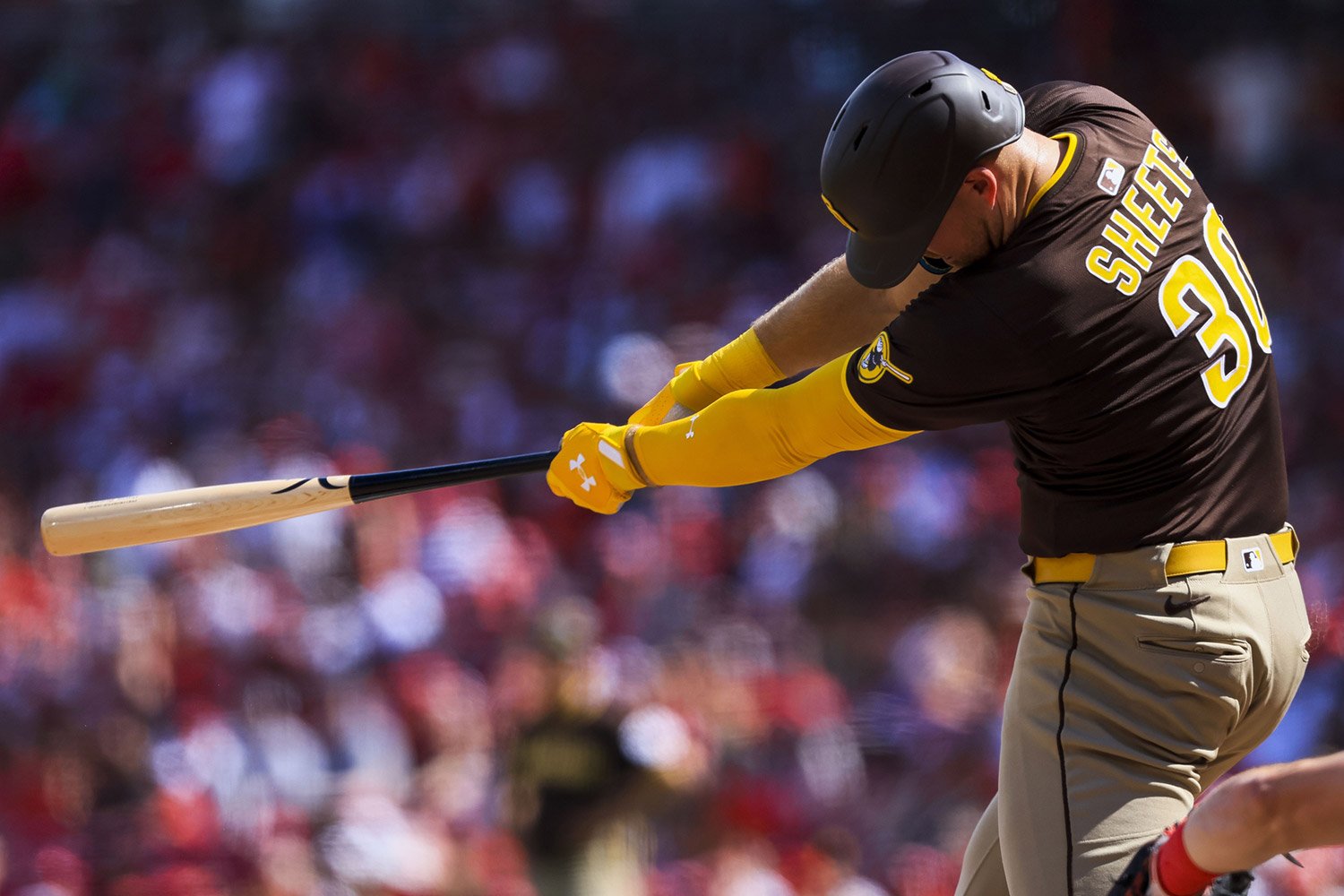 Despite coming out of the gate firing, the San Diego Padres spent the second quarter of 2025 stumbling all over the field. Their offense cratered for a time; their pitching faltered in those rare moments when the offense provided support. There were injuries. There were suspensions. There were fringe players designated for assignment. They might have emerged from it in solid standing in the broader National League playoff picture, but it wasn't as easy as April led us to believe it would be. Nonetheless, it remains a key benchmark for the 2025 season. The Padres hit their 81st game of the season over the weekend, marking the official midway point (even if we won't recognize the "second half" until after the All-Star break) of the campaign. With that, it seemed appropriate to take stock of some of the standouts on this roster to date (for better and worse). We'll keep it fairly standard in recognizing those names, with our last one projecting into the season's second half. The theme, though, is stability. San Diego has somewhat lacked it in the first half, given the rollercoaster performance, the injuries, and the lack of depth rearing its ugly head. With that, we're leaning on the concept to identify some of the key components. Most Valuable Hitter: Manny Machado We'll take some time this week to put Manny Machado's excellence into context, but it's hard to overstate the value he's brought to this roster. As the team started their mid-May offensive lull, Machado upped his game, particularly on the power side. Coming out of the gate relatively quiet in that respect (.144 ISO), Machado turned in a .196 ISO in May and a .229 figure thus far in June. Even when you focus more on the comprehensive rather than an individual component like power, it's a rather flattering picture for Machado. By wOBA (.365) and wRC+ (138), he's been the team's most valuable hitter. Anyway you slice it, he's been the most valuable hitter. Not that this rings as any sort of surprise. But given a relatively quiet start on the power side, in conjunction with the blazing starts from Fernando Tatis Jr & Jackson Merrill, it kind of is. Machado's a future Hall of Fame player for a reason, though, and his stability in the wake of such massive struggles tells you everything you need to know. Honorable Mention: Gavin Sheets Most Valuable Pitcher: Nick Pivetta It's a bit of a surprise on a roster that features Dylan Cease, Michael King, and Robert Suárez to have Pivetta emerge as the team's most valuable arm. You could even take it a step further and include the standout performances out of the relief corps. But considering how volatile the first half has been for San Diego, you'd like a little bit of calm, a little bit of stability. Pivetta has given the team that. Through 16 starts, Pivetta has averaged 5.8 innings. He has a 3.36 ERA and a 3.27 FIP. It's the best work he's done in his career from a run prevention standpoint. There have been some signs of regression the whole way through (11.9 Barrel%, 36th percentile chase rate), but he's worked extremely effectively and provided some respite for a bullpen that has had to work heavily, depending on which starter takes the bump. While it has been imperfect, it has been immensely valuable. Honorable Mention: Adrian Morejón Most Surprising Player: Stephen Kolek Stability is a recurring theme here, given the Padres' performance since mid-May. Already shorthanded in the rotation to start the year (sans Yu Darvish & Matt Waldron), the team also lost Michael King to a nerve issue that should keep him out until at least the All-Star break. Factor in Dylan Cease's struggles in a given outing & Randy Vásquez's lack of command, and the Padres just needed someone to give them an ounce of it out of the gate. Enter Stephen Kolek. Through 10 starts, Kolek has pitched to a 3.95 ERA and 4.07 FIP with low strikeout numbers (17.4 K%) and a walk rate that could be characterized as just okay (8.3 percent). But he's never been a particularly high-punchout guy and has done two things extraordinarily well: he's avoided barrels and gotten the ball on the ground. Kolek is currently working with a Barrel% in the 84th percentile (5.7 percent) and a GB% in the 81st percentile (50.0 percent). There have been some wonky starts mixed in there, but considering the surface work that Kolek did as a reliever last year (5.21 ERA), it's surprising just how steady he's been as a backend option. Honorable Mention: Gavin Sheets Most Disappointing Player: Kyle Hart Xander Bogaerts was the easy play, but he started to show some signs of life in June. And it might seem silly to pick on someone like Hart, but he serves as our most disappointing player for the same reason that Kolek landed opposite him on the spectrum. With so little rotation depth, Hart's return from the KBO was supposed to be that sort of stabilizing presence to fill out the back half of the rotation. Instead, he's made just six starts and given up five runs in half of them. The home run ball has been a particular source of woe for Hart. His 16.0 HR/FB ratio was the worst among team starters before his second demotion, with nothing else happening in his skill set to compensate. Things haven't been much better in El Paso, as he's pitched to a 4.67 ERA and 5.61 FIP, so we may not see him again anytime soon. Honorable Mention: Xander Bogaerts Most Likely To Succeed (In The Second Half): Jackson Merrill In between a hamstring injury and a concussion, Merrill has done very little to make us doubt that the superstardom he indicated as a rookie was anything other than real. When healthy, he's been among the Padres' most consistent hitters. To date, Merrill's slash includes a .301 average and a .354 on-base percentage, with a .353 wOBA that trails only Machado as the team's best. Where Merrill could stand to improve is on the power side. His .161 ISO does represent a step back from last year's .208 mark, but some mild tweaks to the approach could serve as a springboard there. Regardless, now that Merrill's injury issues appear to be isolated, things behind him, he could be in store for a big second half. Honorable Mention: Ryan Bergert
