


Randy Holt
-
Posts
486 -
Joined
-
Last visited
-
Days Won
6
Content Type
Profiles
San Diego Padres Videos
2026 San Diego Padres Top Prospects Ranking
San Diego Padres Free Agent & Trade Rumors, Notes, & Tidbits
Guides & Resources
2025 San Diego Padres Draft Pick Tracker
News
2026 San Diego Padres Draft Tracker: Picks & Bonuses
Forums
Blogs
Events
Store
Downloads
Gallery
Everything posted by Randy Holt
-
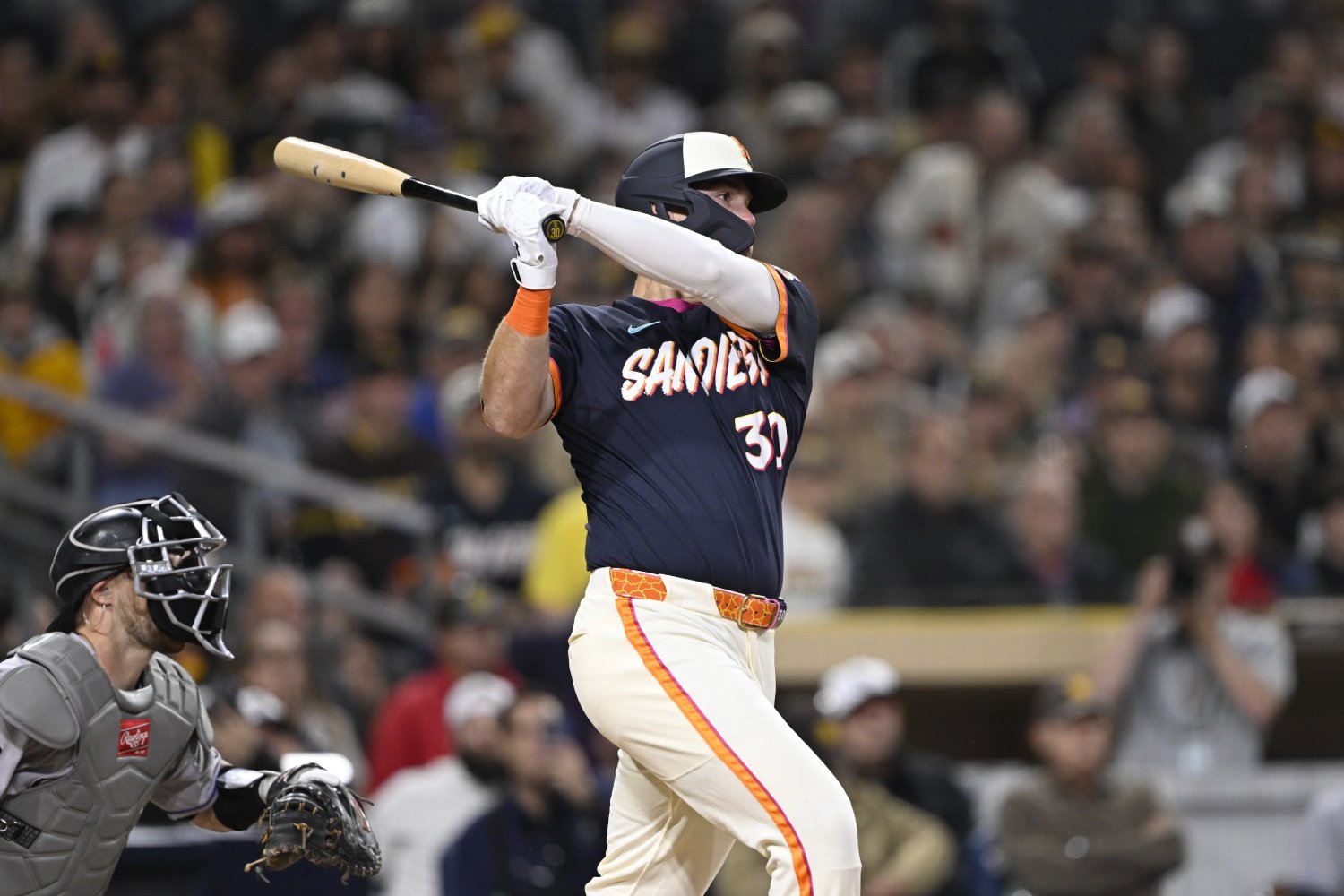 There was a brief moment over the weekend where it looked like San Diego Padres first baseman Gavin Sheets was shaking off the early season rust and morphing back into the excelling, change-of-scenery bat that he’d been for much of 2025. After a solo home run early in the game, Sheets sent a three-run homer into the seats in the bottom of the ninth for the second walk-off victory in as many days. Unfortunately, either side of that has been plagued with a rather downtrodden performance from Sheets. Worse yet is that it’s extended to both sides of the ball. We’re still operating within a small sample here in the middle of April, but Sheets has been below average by wRC+ standards (92). Through the roughly 50 plate appearances he’s logged as of the middle of the Mariners series, he’s at a .220/.250/.440 line. His strikeout rate, at 26.9 percent, is abnormally high even against the lower standards set forth when he was at the height of his struggles with the Chicago White Sox. He’s not compensating with deep counts either, as a 3.8 percent walk rate is less than half of what he turned in last season. One concerning trend is that Sheets has apparently lost all semblance of plate discipline. He’s chasing pitches at a 41.1 percent clip (a 10 percent leap from where he was last year) and swinging inside the zone at a slightly lower rate. His 49.7 percent swing rate would represent the highest of his career. There isn’t any discrimination in pitch type, either. He’s swinging at more fastballs than anything but is chasing just about anything regardless of pitch type. What’s even worse for Sheets is that there’s no compensating with the glove. He has been transitioning to full-time work at first base after spending the bulk of his time on the outfield grass last season. However, he’s also turned in -3 Outs Above Average thus far, which ranks 34 out of 35 qualifiers at the position. Only Bryce Harper’s -5 figure is worse. He has a 62 percent success rate against a 69 percent estimated success rate. He’s particularly struggling moving to his right, which is an area in which he’d been only slightly below average (-1) in his career prior to this year’s sample. Plays simply are not being made for a player who was awarded the heaviest run at the position on a roster loaded with first base archetypes. And that’s an important consideration within all of this. Sheets is struggling massively not only to put the ball in play but to help a delicate pitching staff record outs. This is the same roster that features a defending Gold Glove winner in Ty France in addition to Miguel Andujar and Nick Castellanos. Each of France and Andujar have looked strong at the plate while Castellanos’ results are not indicative of the more solid under-the-hood figures with which he’s working. Which means that despite what Sheets has working in his favor – namely the fact that the Padres are currently winning games after a slow start – the runway is going to begin to get shorter. Sometimes in the early season, you see a player (like Castellanos) who is executing solid process and running into bad luck. Others you see a player who gets outside of his general performance and needs to reign it back in before the outcomes begin to fall in line. Given the Padres’ roster construction, Sheets needs to be the latter. Otherwise, the depth chart has the ability to change rather quickly. Especially as Sung Mun Song gets closer to returning and thins out some of the available innings on the bench.
 -
For all of the concerns that we might have had around the starting pitching for the San Diego Padres, the rotation has actually been quite solid in the early going. Their collective 1.3 fWAR ranks 12th among all starting staffs while also sitting in the top 12 in ERA (3.82) and strikeout rate (24.2 percent). It's been imperfect, but it was always going to be. A potential long-term injury to Nick Pivetta, however, reignites concerns over the shape of this staff in 2026. This year's Opening Day starter, Pivetta was an anchor for the rotation in a career year in 2025 (3.7 fWAR). After a shaky outing on Opening Day against Detroit (three innings, six earned runs), Pivetta was flawless for five against San Francisco and held Pittsburgh to two runs in five more frames in his third start. His fourth start on Sunday against Colorado was shaping up to be another solid outing before "elbow stiffness" ended his day early. Details are murky and Pivetta dealt with arm fatigue in spring training, but any sort of elbow injury for a starting pitcher begets concerns for the long-term. In the event that Pivetta remains out, the team has Michael King, Randy Vásquez, Walker Buehler, and Germán Márquez already on the active roster. King has been steady and Vásquez has been excellent, while each of the latter two have been a bit of a mixed bag thus far. An injury would surely lock at least one of them in for a continued rollercoaster, if not both. Bigger picture, the Padres do have Joe Musgrove and Griffin Canning on the mend. However, the timeline between the two has the potential to vary quite a bit. Musgrove has been slow to ramp back up in his recovery from Tommy John surgery and has endured multiple setbacks in attempting his return. Canning, meanwhile, has made his first rehab start off an Achilles tear and looked decent. His impending return feels like more of a sure thing at this stage than Musgrove's. There's a third injured starter with the potential to fill a role in the form of Matt Waldron. He's made a trio of rehab starts in his return from an infection with a 0.00 ERA across 12 innings. And we shouldn't forget about JP Sears, who is in the minors via an option and not an injury. He's made three starts and has struggled with his command, though. Assuming that gets settled as we progress into April, he's another possibility. If the Padres are able to weather the storm without Pivetta for a time, any one of Waldron or Canning or Sears would slide in fairly easily from an on-paper standpoint. Reality, though, is a different beast. Like Buehler and Márquez, the results from each of Waldron, Canning, or Sears have the ability to vary wildly. Waldron was on shaky ground before suffering his setback and Sears was optioned for a reason, while the other three among that quintet have their own checked histories with both injury and performance. The good news, at least, is that there's volume. It's a lot of abstract value given the variables unique to each arm, but they won't have to pull from the relief corps to cover innings like other teams might be forced to. It's important to consider, though, that Pivetta's time in San Diego has come with a certain sense of reliability. Even amid such volume, the spectrum of outcomes for the two currently in the rotation and the two with imminent returns is massive. Would the Padres find money in the budget to bring in someone like Lucas Giolito? Or Tyler Anderson? There are a handful of others available, but money may be a sticking point no matter what. Those already in the organization may be what the organization has to work with to cover the innings lost by Pivetta, regardless of time. Of course, all of this discussion and concern assumes some type of long-term absence in the first place. We still don't know the shape of the injury and, as such, the length of time for which he'll be out. Perhaps it pops as a scare and Pivetta misses a day or a start, with just an individual outing or so in need of coverage. Should it manifest as something more serious, though, there's a volume of depth here that the Padres spent the latter part of the offseason building. They probably hoped they wouldn't have to use it this early (and for this starter), however. UPDATE: Nick Pivetta has been placed on the 15-day IL with an elbow inflammation designation. View full article
-
Can Padres Compensate For A Potential Long-Term Nick Pivetta Absence?
Randy Holt posted an article in Padres
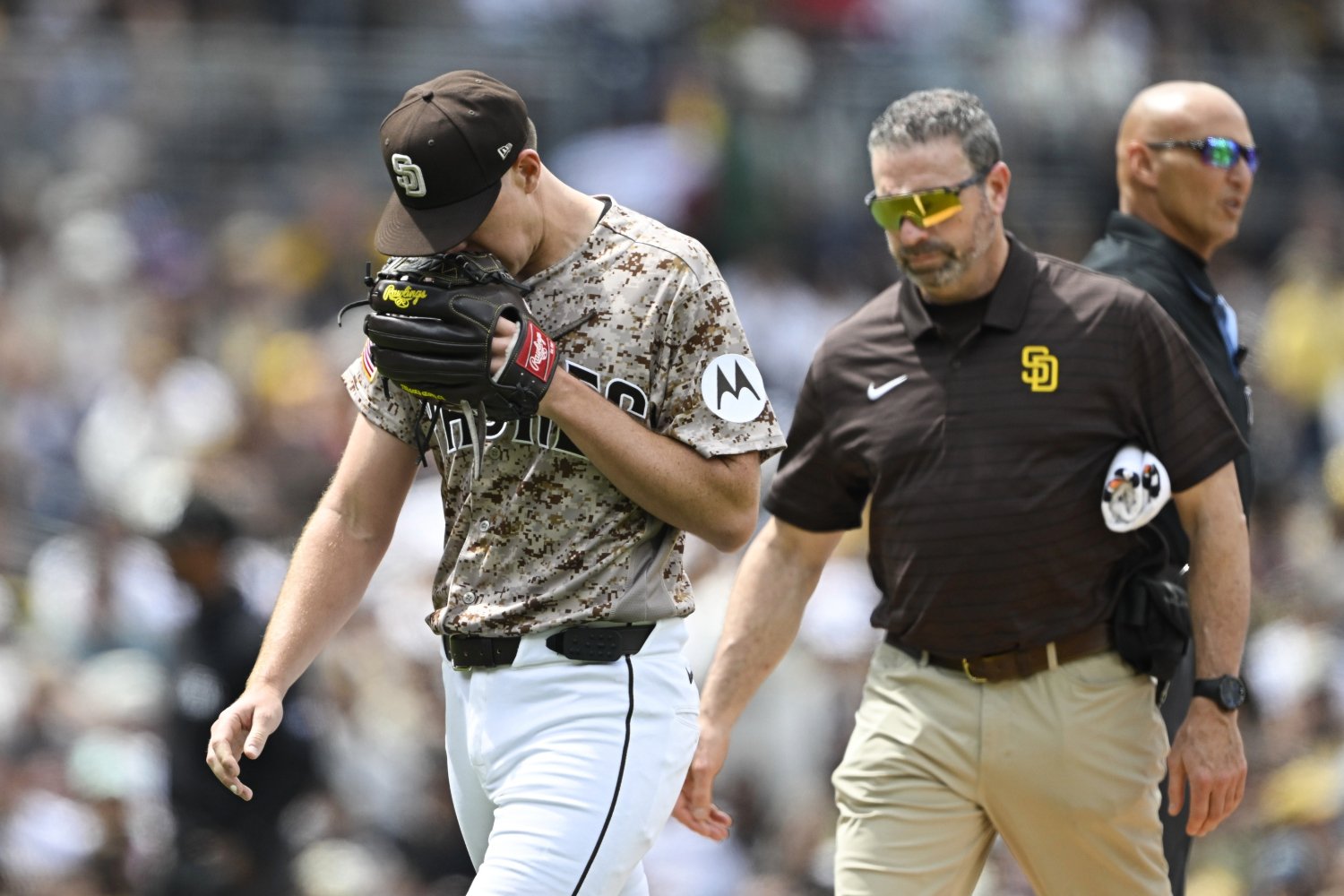 For all of the concerns that we might have had around the starting pitching for the San Diego Padres, the rotation has actually been quite solid in the early going. Their collective 1.3 fWAR ranks 12th among all starting staffs while also sitting in the top 12 in ERA (3.82) and strikeout rate (24.2 percent). It's been imperfect, but it was always going to be. A potential long-term injury to Nick Pivetta, however, reignites concerns over the shape of this staff in 2026. This year's Opening Day starter, Pivetta was an anchor for the rotation in a career year in 2025 (3.7 fWAR). After a shaky outing on Opening Day against Detroit (three innings, six earned runs), Pivetta was flawless for five against San Francisco and held Pittsburgh to two runs in five more frames in his third start. His fourth start on Sunday against Colorado was shaping up to be another solid outing before "elbow stiffness" ended his day early. Details are murky and Pivetta dealt with arm fatigue in spring training, but any sort of elbow injury for a starting pitcher begets concerns for the long-term. In the event that Pivetta remains out, the team has Michael King, Randy Vásquez, Walker Buehler, and Germán Márquez already on the active roster. King has been steady and Vásquez has been excellent, while each of the latter two have been a bit of a mixed bag thus far. An injury would surely lock at least one of them in for a continued rollercoaster, if not both. Bigger picture, the Padres do have Joe Musgrove and Griffin Canning on the mend. However, the timeline between the two has the potential to vary quite a bit. Musgrove has been slow to ramp back up in his recovery from Tommy John surgery and has endured multiple setbacks in attempting his return. Canning, meanwhile, has made his first rehab start off an Achilles tear and looked decent. His impending return feels like more of a sure thing at this stage than Musgrove's. There's a third injured starter with the potential to fill a role in the form of Matt Waldron. He's made a trio of rehab starts in his return from an infection with a 0.00 ERA across 12 innings. And we shouldn't forget about JP Sears, who is in the minors via an option and not an injury. He's made three starts and has struggled with his command, though. Assuming that gets settled as we progress into April, he's another possibility. If the Padres are able to weather the storm without Pivetta for a time, any one of Waldron or Canning or Sears would slide in fairly easily from an on-paper standpoint. Reality, though, is a different beast. Like Buehler and Márquez, the results from each of Waldron, Canning, or Sears have the ability to vary wildly. Waldron was on shaky ground before suffering his setback and Sears was optioned for a reason, while the other three among that quintet have their own checked histories with both injury and performance. The good news, at least, is that there's volume. It's a lot of abstract value given the variables unique to each arm, but they won't have to pull from the relief corps to cover innings like other teams might be forced to. It's important to consider, though, that Pivetta's time in San Diego has come with a certain sense of reliability. Even amid such volume, the spectrum of outcomes for the two currently in the rotation and the two with imminent returns is massive. Would the Padres find money in the budget to bring in someone like Lucas Giolito? Or Tyler Anderson? There are a handful of others available, but money may be a sticking point no matter what. Those already in the organization may be what the organization has to work with to cover the innings lost by Pivetta, regardless of time. Of course, all of this discussion and concern assumes some type of long-term absence in the first place. We still don't know the shape of the injury and, as such, the length of time for which he'll be out. Perhaps it pops as a scare and Pivetta misses a day or a start, with just an individual outing or so in need of coverage. Should it manifest as something more serious, though, there's a volume of depth here that the Padres spent the latter part of the offseason building. They probably hoped they wouldn't have to use it this early (and for this starter), however. UPDATE: Nick Pivetta has been placed on the 15-day IL with an elbow inflammation designation.
 -
The San Diego Padres spent their weekend completing a four-game sweep of the Colorado Rockies, extending what has become a nice rebound from a sluggish start to the year. Unfortunately for Nick Castellanos, he was pinned down a bit from contributing to the repeated offensive outbursts from the collective. Not only from some general misfortune, but more specifically from Rockies outfielder Jordan Beck. Down early against Colorado on Saturday night, Castellanos put a ball into the air toward the right field seats. As it traveled and looked destined for his first home in a Padres uniform, Beck had other ideas: Not that it was a tank of a potential home run, mind you. Castellanos' exit velocity was 98.3 and the contact carried a .290 expected batting average. It would've been a homer in just one out of 30 major-league parks (Houston). The robbery component might've been overblown. But between that and each of the 91.6 MPH groundout with a .350 xBA and a 97.9 MPH line out with a .740 xBA that he also experienced over the weekend, there's a more general string of bad luck that he's running up against so far. Many of Castellanos' underlying metrics look quite good: The xBA alone is indicative of a player that should be seeing far better results than he has to this point. Castellanos has made good contact (as indicated by his Hard-Hit%) while avoiding groundball contact to an excessive 28.0 percent clip. Yet, this is a player who will carry a line of just .200/.263/.286 and a 54 wRC+ into the new week of games. Despite the hard luck associated with that kind of batting line, there are some positives to takeaway. Castellanos' strikeout rate (17.6 percent) and walk rate (8.8 percent) would each represent the best marks of his career. That hard contact rate is also significantly higher than it was last season by roughly 14 percent. These are all objectively good things that should likely be leading to better results than the ones Castellanos has received so far. If the discipline reigned itself in just a bit, he could take greater control over said outcomes. That's the one negative component we've seen out of Castellanos to this point in the young season. Even with a swing rate that is down a couple of percentage points and a chase rate that has remained within one percent of where it was last year, Castellanos has made less contact than last season by about three percent thus far. There isn't anything discernibly different in the types of pitches at which he's swinging, but merely his ability to make contact in and around the zone. Perhaps there's a susceptibility to swinging at less favorable pitches that has emerged given a small spike in his called strike rate (by about two percent), but we're still working within too small a sample to identify real trends there. The takeaway here is that Nick Castellanos has actually been varying shades of fine in 2026. The numbers say he should be quite a bit better, though, and if he's able to drive up the contact rate and create additional batted ball opportunities, his case looks to be one of those that is the natural ebb and flow of fortune in April of a new season. View full article
-
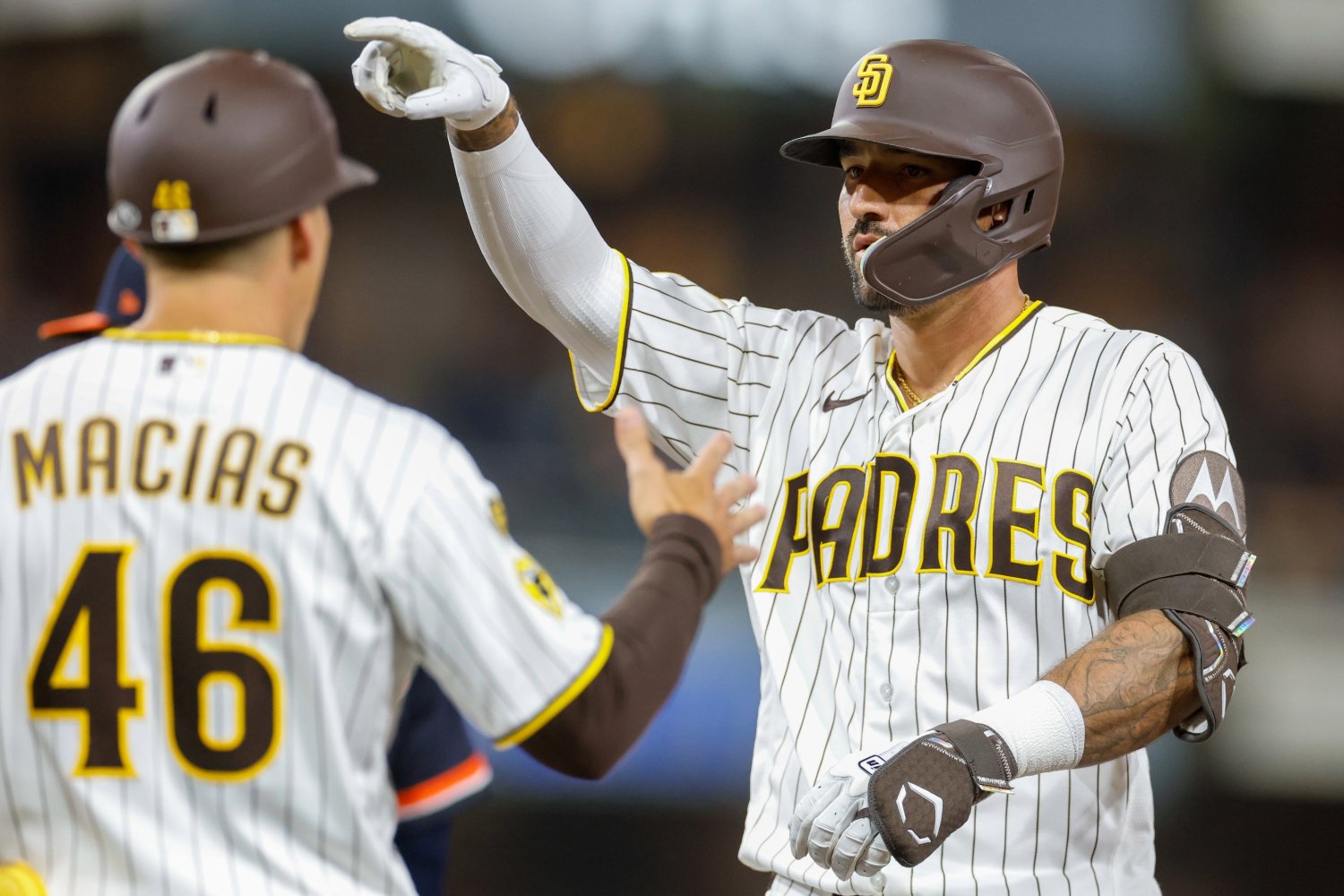 The San Diego Padres spent their weekend completing a four-game sweep of the Colorado Rockies, extending what has become a nice rebound from a sluggish start to the year. Unfortunately for Nick Castellanos, he was pinned down a bit from contributing to the repeated offensive outbursts from the collective. Not only from some general misfortune, but more specifically from Rockies outfielder Jordan Beck. Down early against Colorado on Saturday night, Castellanos put a ball into the air toward the right field seats. As it traveled and looked destined for his first home in a Padres uniform, Beck had other ideas: Not that it was a tank of a potential home run, mind you. Castellanos' exit velocity was 98.3 and the contact carried a .290 expected batting average. It would've been a homer in just one out of 30 major-league parks (Houston). The robbery component might've been overblown. But between that and each of the 91.6 MPH groundout with a .350 xBA and a 97.9 MPH line out with a .740 xBA that he also experienced over the weekend, there's a more general string of bad luck that he's running up against so far. Many of Castellanos' underlying metrics look quite good: The xBA alone is indicative of a player that should be seeing far better results than he has to this point. Castellanos has made good contact (as indicated by his Hard-Hit%) while avoiding groundball contact to an excessive 28.0 percent clip. Yet, this is a player who will carry a line of just .200/.263/.286 and a 54 wRC+ into the new week of games. Despite the hard luck associated with that kind of batting line, there are some positives to takeaway. Castellanos' strikeout rate (17.6 percent) and walk rate (8.8 percent) would each represent the best marks of his career. That hard contact rate is also significantly higher than it was last season by roughly 14 percent. These are all objectively good things that should likely be leading to better results than the ones Castellanos has received so far. If the discipline reigned itself in just a bit, he could take greater control over said outcomes. That's the one negative component we've seen out of Castellanos to this point in the young season. Even with a swing rate that is down a couple of percentage points and a chase rate that has remained within one percent of where it was last year, Castellanos has made less contact than last season by about three percent thus far. There isn't anything discernibly different in the types of pitches at which he's swinging, but merely his ability to make contact in and around the zone. Perhaps there's a susceptibility to swinging at less favorable pitches that has emerged given a small spike in his called strike rate (by about two percent), but we're still working within too small a sample to identify real trends there. The takeaway here is that Nick Castellanos has actually been varying shades of fine in 2026. The numbers say he should be quite a bit better, though, and if he's able to drive up the contact rate and create additional batted ball opportunities, his case looks to be one of those that is the natural ebb and flow of fortune in April of a new season.
 -
As preseason prognostications rolled out, it was clear that any hope the San Diego Padres had in 2026 hinged on the strength of their bullpen. Across both their slow start and a more recent stretch of success, that has largely proven to be true. No team in baseball has gotten more out of their bullpen in total value (1.4 fWAR), as the Friars sit in the top 10 in the league in ERA, FIP, walk rate, and groundball rate. It's a group that extends even beyond the very loud success of Mason Miller, but not quite in the way that we would've thought. While Miller was always going to be the guy in the ninth inning upon the free agent departure of Robert Suárez, the expectation was that it would be some blend of Jeremiah Estrada, Adrian Morejon, and Jason Adam in high-leverage situations. Others, like David Morgan, sat slightly behind in the pecking order. Early on, though, it's been Morgan that might just be the most reliable (non-Miller) arm the relief corps has to offer. Each of Estrada and Morejon have faced their struggles in the early going. Estrada maintained a high strikeout rate (26.7 percent) across his seven appearances but was battling woeful command on his way to a 16.7% walk rate prior to being placed on the injured list. Combine that with an inability to miss the barrel when he did allow contact and, consequently, a hard-hit rate approaching half of all batted balls, and you've got a high-leverage reliever working with an ERA north of five. Morejon, meanwhile, is fighting bad luck more than anything, with a .500 batting average allowed on balls in play despite good command. Both of them are working with a strand rate of around 40 percent, which is incredibly scant for relievers of their caliber. As such, with Adam's return still in its infancy following last year's ruptured quad, it may be Morgan's time to slide into the eighth-inning role given his early success. Through his first six appearances of the season, Morgan has been as stable as anyone this side of Mason Miller. He hasn't allowed a run, he's avoided hard contact, and he's getting the ball on the ground at an obscene rate. While he hasn't yet flashed the strikeout upside of his comrades at the back end of the bullpen, he's demonstrated that he has the chops to handle leverage opportunities. Here's his percentile chart from this early stage of the year: There's a lot to like there. Most notable, though, is the blend in his ability to avoid hard contact and get opposing contact on the ground. Combining those two things is going to result in plenty of success regardless of the defense behind you, and that Morgan is doing both up in the 99th percentile speaks to why he's stifled opposing hitters completely thus far in 2026. It's not a mystery as to how he's doing it either, as there's a usage change driving his success. Morgan is primarily working with three pitches. He's throwing a sinker nearly 40 percent of the time, his curveball at about a 32 percent clip, and the four-seamer about 27 percent of the time. That's a shift from last year, when Morgan threw his four-seam the majority of the time (36.7 percent) and brought his slider into the mix much more frequently (18.3 percent of the time). By ditching the slider and putting the sinker at the forefront, Morgan has lost some oomph on the strikeout side but gained it all back in run prevention courtesy of the aforementioned soft, ground-oriented contact. So, what's preventing Morgan from perhaps getting a larger share of those leverage innings? With Estrada on the IL, there's an easy case to be made that he should see some of that work, even when accounting for Adam's return. Ultimately, though, where you see that blue in the above visual is also likely what could pin Morgan down. For one, his command has been imperfect. While the dip in strikeouts is at least partially a byproduct of his change in pitch usage, he also hasn't been able to generate much in terms of whiffs. You want that from a late-inning, high-leverage arm. The fact that he's been susceptible to allowing runners on base via the free pass also isn't working in his favor. Perhaps those two imperfections begin to trend in the appropriate direction as he grows more accustomed to his change in repertoire (assuming permanence). With Adam back in the mix and Morejon experiencing more bad luck than actual struggle, there just isn't quite enough there yet to let Morgan ply his trade in, say, the eighth inning. Nevertheless, this continued growth is encouraging. His emergence last year was part of the reason the Padres felt so good about their volume in relief coming into the year. If Estrada can come back to form upon returning from the IL, you're talking about four legitimate arms leading up to your closer. The value in the pressure that relieves from your starting rotation cannot be overstated. View full article
-
Is David Morgan Ready To Assume Higher Leverage Duties For The Padres?
Randy Holt posted an article in Padres
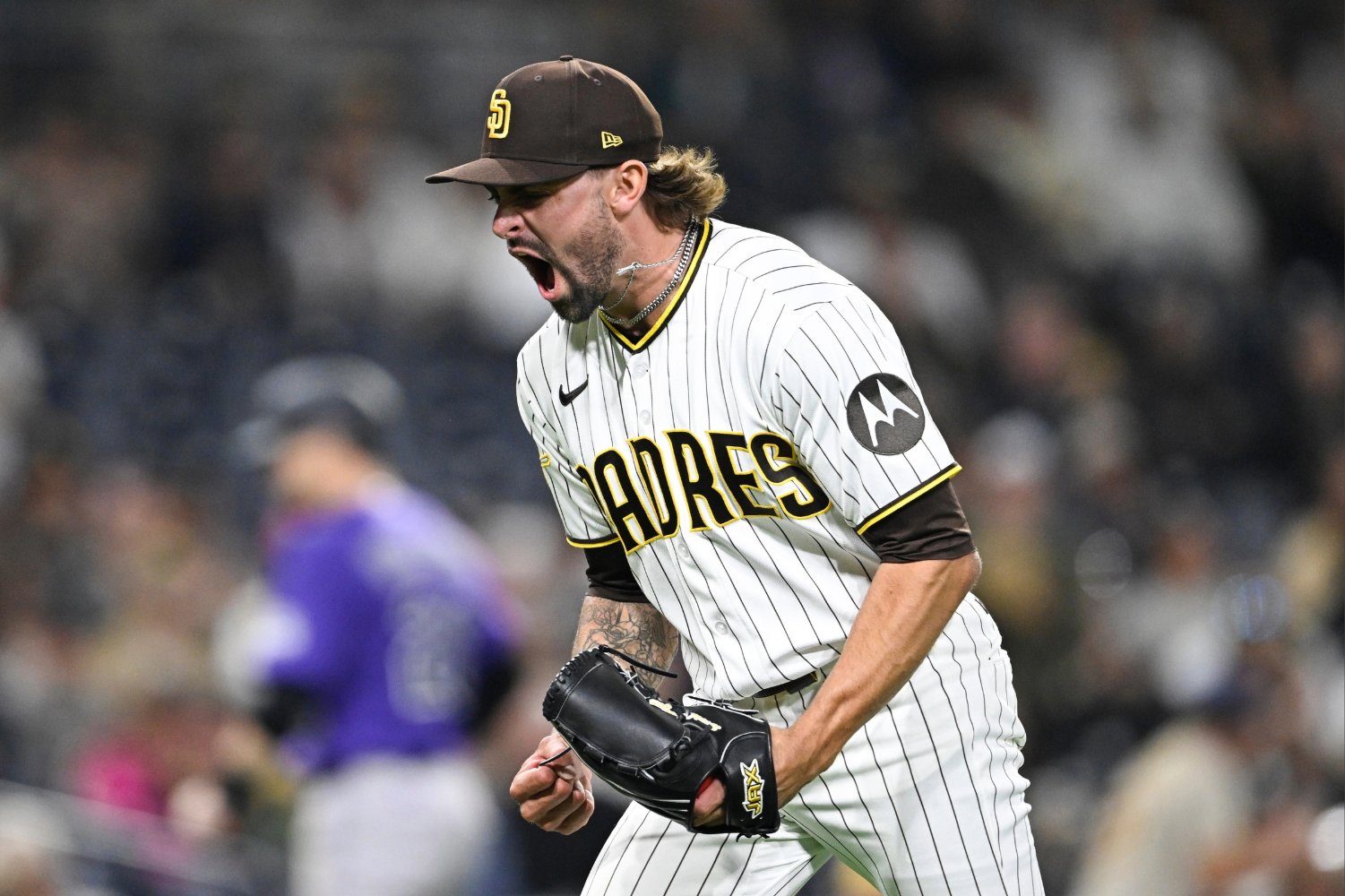 As preseason prognostications rolled out, it was clear that any hope the San Diego Padres had in 2026 hinged on the strength of their bullpen. Across both their slow start and a more recent stretch of success, that has largely proven to be true. No team in baseball has gotten more out of their bullpen in total value (1.4 fWAR), as the Friars sit in the top 10 in the league in ERA, FIP, walk rate, and groundball rate. It's a group that extends even beyond the very loud success of Mason Miller, but not quite in the way that we would've thought. While Miller was always going to be the guy in the ninth inning upon the free agent departure of Robert Suárez, the expectation was that it would be some blend of Jeremiah Estrada, Adrian Morejon, and Jason Adam in high-leverage situations. Others, like David Morgan, sat slightly behind in the pecking order. Early on, though, it's been Morgan that might just be the most reliable (non-Miller) arm the relief corps has to offer. Each of Estrada and Morejon have faced their struggles in the early going. Estrada maintained a high strikeout rate (26.7 percent) across his seven appearances but was battling woeful command on his way to a 16.7% walk rate prior to being placed on the injured list. Combine that with an inability to miss the barrel when he did allow contact and, consequently, a hard-hit rate approaching half of all batted balls, and you've got a high-leverage reliever working with an ERA north of five. Morejon, meanwhile, is fighting bad luck more than anything, with a .500 batting average allowed on balls in play despite good command. Both of them are working with a strand rate of around 40 percent, which is incredibly scant for relievers of their caliber. As such, with Adam's return still in its infancy following last year's ruptured quad, it may be Morgan's time to slide into the eighth-inning role given his early success. Through his first six appearances of the season, Morgan has been as stable as anyone this side of Mason Miller. He hasn't allowed a run, he's avoided hard contact, and he's getting the ball on the ground at an obscene rate. While he hasn't yet flashed the strikeout upside of his comrades at the back end of the bullpen, he's demonstrated that he has the chops to handle leverage opportunities. Here's his percentile chart from this early stage of the year: There's a lot to like there. Most notable, though, is the blend in his ability to avoid hard contact and get opposing contact on the ground. Combining those two things is going to result in plenty of success regardless of the defense behind you, and that Morgan is doing both up in the 99th percentile speaks to why he's stifled opposing hitters completely thus far in 2026. It's not a mystery as to how he's doing it either, as there's a usage change driving his success. Morgan is primarily working with three pitches. He's throwing a sinker nearly 40 percent of the time, his curveball at about a 32 percent clip, and the four-seamer about 27 percent of the time. That's a shift from last year, when Morgan threw his four-seam the majority of the time (36.7 percent) and brought his slider into the mix much more frequently (18.3 percent of the time). By ditching the slider and putting the sinker at the forefront, Morgan has lost some oomph on the strikeout side but gained it all back in run prevention courtesy of the aforementioned soft, ground-oriented contact. So, what's preventing Morgan from perhaps getting a larger share of those leverage innings? With Estrada on the IL, there's an easy case to be made that he should see some of that work, even when accounting for Adam's return. Ultimately, though, where you see that blue in the above visual is also likely what could pin Morgan down. For one, his command has been imperfect. While the dip in strikeouts is at least partially a byproduct of his change in pitch usage, he also hasn't been able to generate much in terms of whiffs. You want that from a late-inning, high-leverage arm. The fact that he's been susceptible to allowing runners on base via the free pass also isn't working in his favor. Perhaps those two imperfections begin to trend in the appropriate direction as he grows more accustomed to his change in repertoire (assuming permanence). With Adam back in the mix and Morejon experiencing more bad luck than actual struggle, there just isn't quite enough there yet to let Morgan ply his trade in, say, the eighth inning. Nevertheless, this continued growth is encouraging. His emergence last year was part of the reason the Padres felt so good about their volume in relief coming into the year. If Estrada can come back to form upon returning from the IL, you're talking about four legitimate arms leading up to your closer. The value in the pressure that relieves from your starting rotation cannot be overstated.
 -
When working with a small sample in April, it’s sometimes difficult to get a read on a player. Are there trends that we can chalk up to bad luck? Is there some underlying information we can use to project a quick rebound before the calendar turns to May? Or could said trends manifest into something more worrisome over the longer-term? In the case of Fernando Tatis Jr., it’s a mix of all three. The San Diego Padres are off to an uneven start. Almost nobody in the lineup is immune to it, either. Tatis represents one such case given a stat sheet that doesn’t look too favorable. While the physical tools have remained in place (we’ll touch on this in a moment), the early returns through 11 games and nearly 50 plate appearances have featured a brutal .195/.292/.268 line and a wRC+ of only 68. The walk rate, which Tatis reset when he walked at a nearly 13 percent clip last year, has remained high (12.5 percent), but there’s a clear contact issue pinning down his ability to contribute. That inability to feed into an underperforming offensive unit comes in spite of Tatis putting nearly all of his physical tools on display. The defense continues to look outstanding, and the sprint speed is up in the 96th percentile. The most impressive thing he’s done thus far, though, is hit the ball hard. Like, really hard. With the major caveat that we’re working within a minuscule sample, Tatis has made hard contact at a 70.4 percent rate. It’s a wildly unsustainable rate that, nevertheless, has him in the 99th percentile in contact quality. His 14.8 Barrel% is four percent higher than his overall clip from 2025. He’s also making more contact overall by about two percent, with a swing rate that has increased only slightly. These are all, objectively, good things. At the same time, something isn’t jibing between the contact metrics, the approach, and the overall production. It’s not as if Tatis is simply running into bad luck. A .276 batting average on balls in play may not be indicative of the elite contact trends he’s displayed, but it’s also not some horrendous figure. And while a strikeout rate lingering up near 28 percent is abnormal for him, it’s not as if he’s taking too many pitches or expanding the zone too frequently. In fact, his plate discipline numbers look really similar to last year across the board. So, what’s the issue here? Don’t get it twisted; the strikeout rate is, in itself, problematic. It’s not as if he’s working deep counts and experiencing punchouts as a byproduct of that. Tatis’ 3.83 pitches per plate appearance sits below league average at this point in the year. There’s a whiff issue happening, with a rate of 30.4 percent that sits three percent above where he was at last year. So, while the contact rate itself looks decent, there’s too much whiff happening in between that’s leading to the ballooned K%. We also can’t put all of it on merely swinging too much. There’s also a contract distribution issue at play. The concept of PullAIR% has gotten plenty of run in the last couple of years as a key ingredient in unlocking a player’s power potential. Tatis Jr’s PullAIR% through nearly 50 PA sits at 0.0 percent. In fact, he’s only pulling the ball 20.7 percent of the time overall. That’s nearly half of what’s he done in basically every season in which he’s played to date. Nearly half his contact (48.3 percent) has been to the center of the field, with another roughly 30 percent to the opposite field. None of those are going to yield particularly impressive power results. It’s not as if he’s seen a bat speed decline or anything mechanical. If there’s one thing to which we can remotely point, it’s in the intercept. Tatis’ intercept point (the point at which he makes contact with the ball relative to home plate) in 2025 was 3.6 inches in front of the plate. That’s almost identical to what he’d posted in the previous year. This year, he’s at just 0.9 inches in front of it. There’s a timing issue at play. He’s compensating effectively with bat speed, but there’s clearly something happening in his reaction that’s stalling his ability to recognize and swing early. That’s really the only explanation we have to offer at this point. Perhaps that’s something that can be worked out in short order. Tatis spent time last year adjusting his mechanics and his approach. We’re not even to the middle of April yet, so there may just be a further adjustment that’s transpiring in these early days of the season. But given that it’s leading to an absence of power and an influx of strikeouts, it’s something that he needs to adjust early in order to help this offense begin to move along with any level of consistency. View full article
-
Fernando Tatis Jr. Is Crushing Baseballs, But His Timing Is Way Off
Randy Holt posted an article in Padres
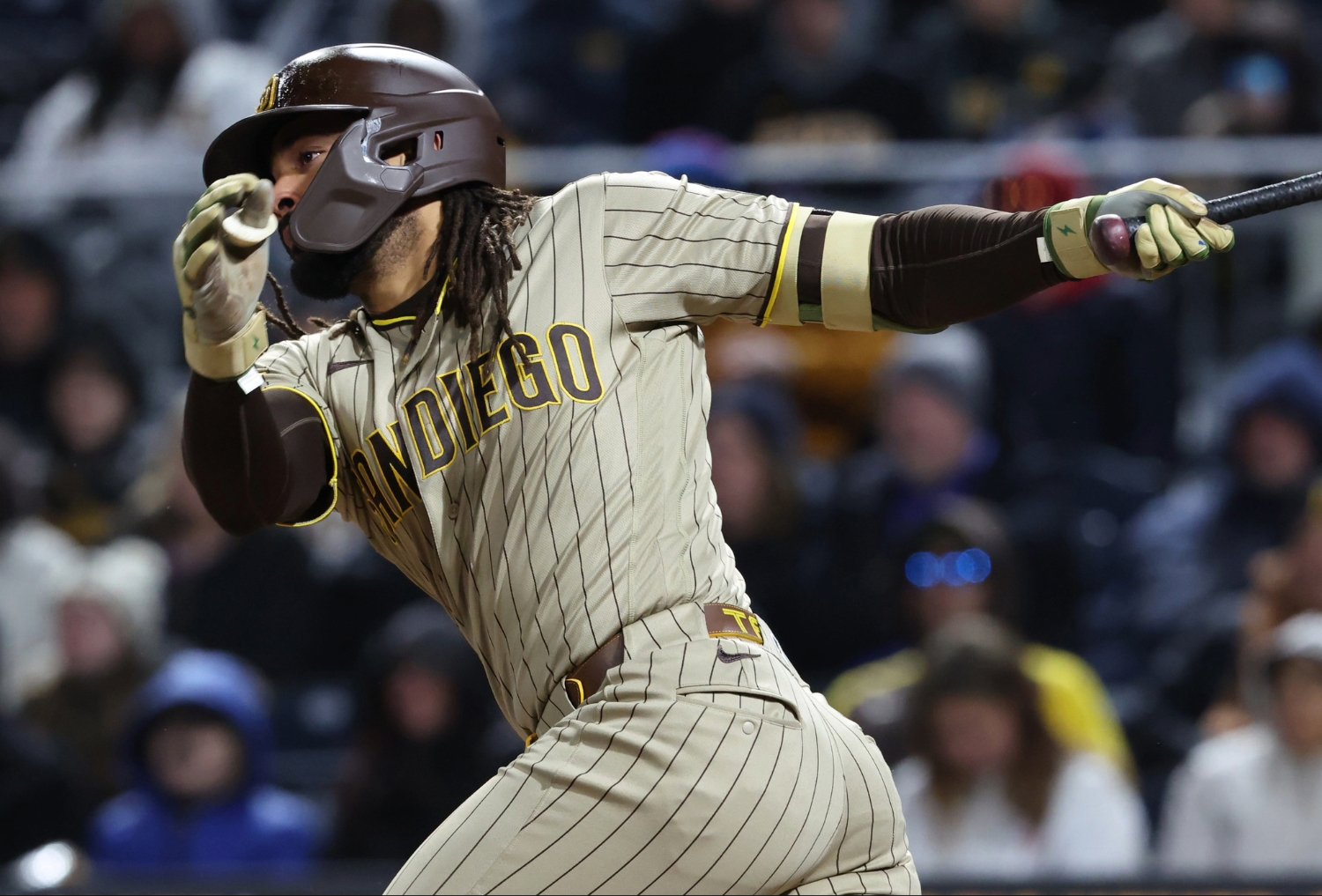 When working with a small sample in April, it’s sometimes difficult to get a read on a player. Are there trends that we can chalk up to bad luck? Is there some underlying information we can use to project a quick rebound before the calendar turns to May? Or could said trends manifest into something more worrisome over the longer-term? In the case of Fernando Tatis Jr., it’s a mix of all three. The San Diego Padres are off to an uneven start. Almost nobody in the lineup is immune to it, either. Tatis represents one such case given a stat sheet that doesn’t look too favorable. While the physical tools have remained in place (we’ll touch on this in a moment), the early returns through 11 games and nearly 50 plate appearances have featured a brutal .195/.292/.268 line and a wRC+ of only 68. The walk rate, which Tatis reset when he walked at a nearly 13 percent clip last year, has remained high (12.5 percent), but there’s a clear contact issue pinning down his ability to contribute. That inability to feed into an underperforming offensive unit comes in spite of Tatis putting nearly all of his physical tools on display. The defense continues to look outstanding, and the sprint speed is up in the 96th percentile. The most impressive thing he’s done thus far, though, is hit the ball hard. Like, really hard. With the major caveat that we’re working within a minuscule sample, Tatis has made hard contact at a 70.4 percent rate. It’s a wildly unsustainable rate that, nevertheless, has him in the 99th percentile in contact quality. His 14.8 Barrel% is four percent higher than his overall clip from 2025. He’s also making more contact overall by about two percent, with a swing rate that has increased only slightly. These are all, objectively, good things. At the same time, something isn’t jibing between the contact metrics, the approach, and the overall production. It’s not as if Tatis is simply running into bad luck. A .276 batting average on balls in play may not be indicative of the elite contact trends he’s displayed, but it’s also not some horrendous figure. And while a strikeout rate lingering up near 28 percent is abnormal for him, it’s not as if he’s taking too many pitches or expanding the zone too frequently. In fact, his plate discipline numbers look really similar to last year across the board. So, what’s the issue here? Don’t get it twisted; the strikeout rate is, in itself, problematic. It’s not as if he’s working deep counts and experiencing punchouts as a byproduct of that. Tatis’ 3.83 pitches per plate appearance sits below league average at this point in the year. There’s a whiff issue happening, with a rate of 30.4 percent that sits three percent above where he was at last year. So, while the contact rate itself looks decent, there’s too much whiff happening in between that’s leading to the ballooned K%. We also can’t put all of it on merely swinging too much. There’s also a contract distribution issue at play. The concept of PullAIR% has gotten plenty of run in the last couple of years as a key ingredient in unlocking a player’s power potential. Tatis Jr’s PullAIR% through nearly 50 PA sits at 0.0 percent. In fact, he’s only pulling the ball 20.7 percent of the time overall. That’s nearly half of what’s he done in basically every season in which he’s played to date. Nearly half his contact (48.3 percent) has been to the center of the field, with another roughly 30 percent to the opposite field. None of those are going to yield particularly impressive power results. It’s not as if he’s seen a bat speed decline or anything mechanical. If there’s one thing to which we can remotely point, it’s in the intercept. Tatis’ intercept point (the point at which he makes contact with the ball relative to home plate) in 2025 was 3.6 inches in front of the plate. That’s almost identical to what he’d posted in the previous year. This year, he’s at just 0.9 inches in front of it. There’s a timing issue at play. He’s compensating effectively with bat speed, but there’s clearly something happening in his reaction that’s stalling his ability to recognize and swing early. That’s really the only explanation we have to offer at this point. Perhaps that’s something that can be worked out in short order. Tatis spent time last year adjusting his mechanics and his approach. We’re not even to the middle of April yet, so there may just be a further adjustment that’s transpiring in these early days of the season. But given that it’s leading to an absence of power and an influx of strikeouts, it’s something that he needs to adjust early in order to help this offense begin to move along with any level of consistency.
 -
Even with the offense beginning to show signs of life in Boston over the weekend, the San Diego Padres have begun 2026 as one of Major League Baseball’s worst offensive teams. They rank just 26th in the league in runs (32) scored across nine games, with the 28th-ranked isolated power (.116) and 27th-ranked wRC+ (79). While almost no one – this side of Ramón Laureano, at least – has been immune to the struggle, Xander Bogaerts finds himself in a familiar position as a scuffling bat in an underperforming offense. In 2025, Bogaerts was off to such a brutal offensive struggle that by June we wondered if his contract was purely a sunk cost with few redeeming qualities. He was a below-average offensive player for the first two months, posting wRC+ figures of 93 and 83 in April and May of last year, respectively. There was no power to speak of over that stretch, with only his baserunning, in the form of 11 steals, propping him up toward any semblance of positive value. The story to begin 2026 hasn’t been all that different. Through the nearly 40 plate appearances he's accrued prior to the Pirates series, his wRC+ sits at just 48 with a .200/.243/.257 line. The baserunning skills that were on display haven’t had the ability to manifest in such a small sample that also features such infrequent appearances on the bases. Despite the fact that the sample is that small, it’s reignited fears over not only Bogaerts’ longer-term viability in the lineup, but his present value. While Bogaerts’ production has been, undeniably, poor thus far, whether or not those fears are valid this early on is a different discussion. As a general practice, a nine-game sample isn’t enough to have any concern land as legitimate, even for a player whose standing as a regular contributor is on shaky ground. If there’s good process in the underlying numbers, then it becomes even easier to stave off those concerns until the sample actually grows. For Bogaerts, the value lies not only in his baserunning, but in his plate approach. Even through the struggles, he’s been adept at avoiding strikeouts and finding his way on base. His walk rate in 2025 (8.7 percent) was his highest since 2022, and he continued to make contact at a rate around 80 percent. The strikeout rate remained very solid, checking in in the 76th percentile (17.0 percent) league-wide. When you combine all of that with average defense, that’s a workable player (even if he falls short of his contract-related expectations). In 2026, though, we’re only seeing some of that so far. Bogaerts’ 84.1 Contact% would represent the best mark of his career. In general, that would seem to qualify as a positive. Additionally, his 15.9 percent whiff rate currently resides in the 87th percentile and serves as a decrease of about five percent from last year’s rate. He’s also cutting out strikeouts completely at this point, with a mere 8.1 K% that sits up in the 96th percentile. It’s an unsustainable figure, but his previous career-best in that respect was also back in 2015 (15.4 percent), so it’s quite a deviation from what we’re used to seeing from him there. Where we start to run into an issue is in actual swing decisions. For example, a 5.4 percent walk rate would represent Bogaerts’ lowest since 2025. There's also some deeper-rooted problems to worry about. One is the fact that Bogaerts is actually chasing pitches at a far higher rate. His 29.1 percent chase rate thus far is nearly six percent higher than it was last year. His overall Swing% is up about five percent. He’s making contact within that aggression, yes. However, both his barrel rate (3.1 percent) and his hard hit rate (31.3 percent) are down quite a bit. The Barrel% is less than half of what it was last year while the Hard-Hit% is down roughly eight percent. It’s one thing to get balls in play, but sacrificing quality of contact is how you end up with a batting average on balls in play of just .219. This is where the primary issues lie. Bogaerts appears to be sacrificing quality of contact for just any old contact. Merely putting balls in play doesn’t tend to work at this level. Unless you’re a player in possession of a profile that manifests hard contact all over the zone, then there needs to be a certain degree of finesse in the approach that yields positive results. Historically, that's the type of player we’ve seen Bogaerts be. However, there’s something in his newfound aggression that is pinning down his ability to be productive. Fortunately, the sample remains tiny. It’s hard to get too wrapped up in anything he’s doing (or not doing), but the early aggression does seem to be indicative of why he’s facing the struggles that he is. It’s by no means a permanent development, but one on which we’ll have to keep a close eye as the sample begins to grow in April. View full article
-
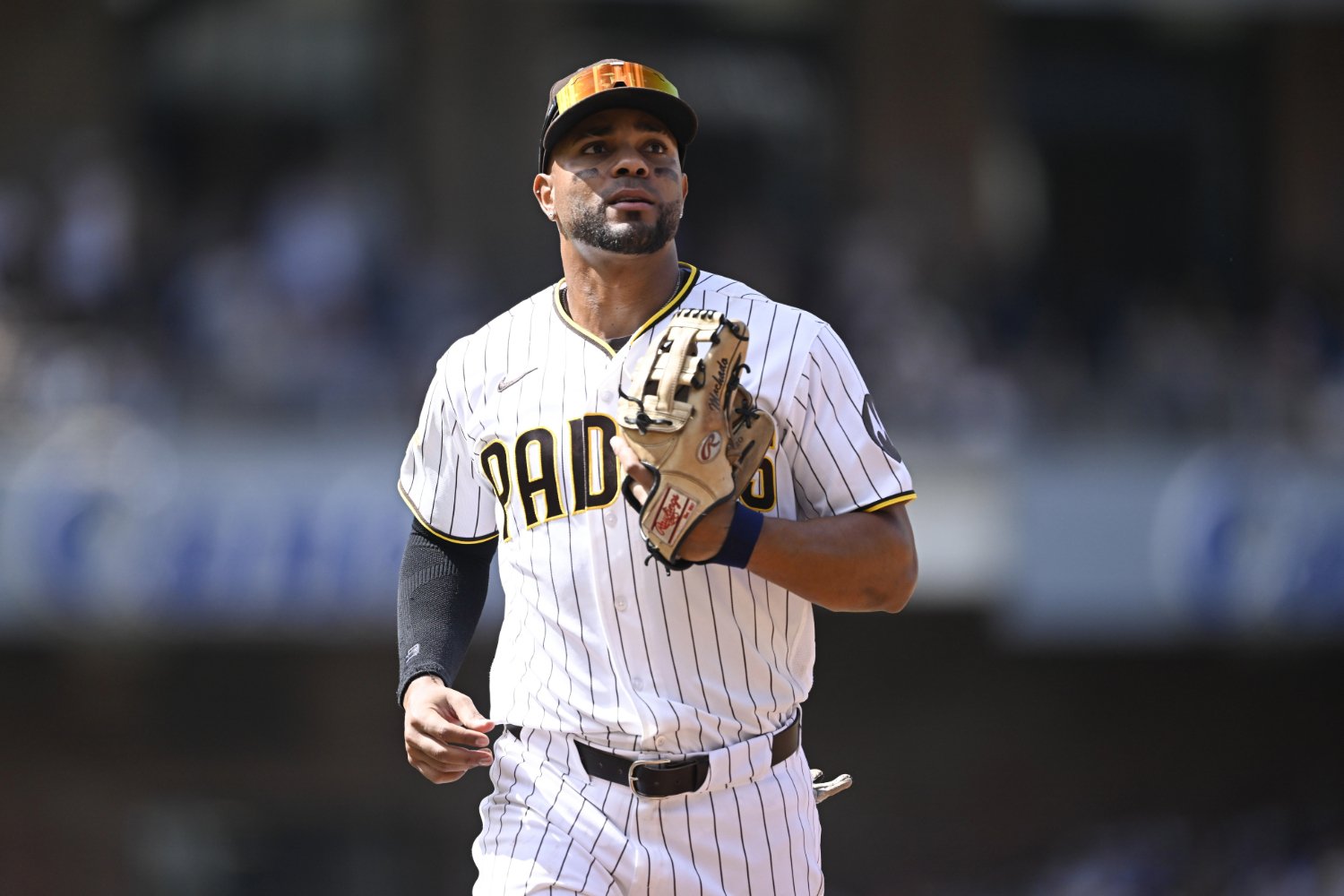 Even with the offense beginning to show signs of life in Boston over the weekend, the San Diego Padres have begun 2026 as one of Major League Baseball’s worst offensive teams. They rank just 26th in the league in runs (32) scored across nine games, with the 28th-ranked isolated power (.116) and 27th-ranked wRC+ (79). While almost no one – this side of Ramón Laureano, at least – has been immune to the struggle, Xander Bogaerts finds himself in a familiar position as a scuffling bat in an underperforming offense. In 2025, Bogaerts was off to such a brutal offensive struggle that by June we wondered if his contract was purely a sunk cost with few redeeming qualities. He was a below-average offensive player for the first two months, posting wRC+ figures of 93 and 83 in April and May of last year, respectively. There was no power to speak of over that stretch, with only his baserunning, in the form of 11 steals, propping him up toward any semblance of positive value. The story to begin 2026 hasn’t been all that different. Through the nearly 40 plate appearances he's accrued prior to the Pirates series, his wRC+ sits at just 48 with a .200/.243/.257 line. The baserunning skills that were on display haven’t had the ability to manifest in such a small sample that also features such infrequent appearances on the bases. Despite the fact that the sample is that small, it’s reignited fears over not only Bogaerts’ longer-term viability in the lineup, but his present value. While Bogaerts’ production has been, undeniably, poor thus far, whether or not those fears are valid this early on is a different discussion. As a general practice, a nine-game sample isn’t enough to have any concern land as legitimate, even for a player whose standing as a regular contributor is on shaky ground. If there’s good process in the underlying numbers, then it becomes even easier to stave off those concerns until the sample actually grows. For Bogaerts, the value lies not only in his baserunning, but in his plate approach. Even through the struggles, he’s been adept at avoiding strikeouts and finding his way on base. His walk rate in 2025 (8.7 percent) was his highest since 2022, and he continued to make contact at a rate around 80 percent. The strikeout rate remained very solid, checking in in the 76th percentile (17.0 percent) league-wide. When you combine all of that with average defense, that’s a workable player (even if he falls short of his contract-related expectations). In 2026, though, we’re only seeing some of that so far. Bogaerts’ 84.1 Contact% would represent the best mark of his career. In general, that would seem to qualify as a positive. Additionally, his 15.9 percent whiff rate currently resides in the 87th percentile and serves as a decrease of about five percent from last year’s rate. He’s also cutting out strikeouts completely at this point, with a mere 8.1 K% that sits up in the 96th percentile. It’s an unsustainable figure, but his previous career-best in that respect was also back in 2015 (15.4 percent), so it’s quite a deviation from what we’re used to seeing from him there. Where we start to run into an issue is in actual swing decisions. For example, a 5.4 percent walk rate would represent Bogaerts’ lowest since 2025. There's also some deeper-rooted problems to worry about. One is the fact that Bogaerts is actually chasing pitches at a far higher rate. His 29.1 percent chase rate thus far is nearly six percent higher than it was last year. His overall Swing% is up about five percent. He’s making contact within that aggression, yes. However, both his barrel rate (3.1 percent) and his hard hit rate (31.3 percent) are down quite a bit. The Barrel% is less than half of what it was last year while the Hard-Hit% is down roughly eight percent. It’s one thing to get balls in play, but sacrificing quality of contact is how you end up with a batting average on balls in play of just .219. This is where the primary issues lie. Bogaerts appears to be sacrificing quality of contact for just any old contact. Merely putting balls in play doesn’t tend to work at this level. Unless you’re a player in possession of a profile that manifests hard contact all over the zone, then there needs to be a certain degree of finesse in the approach that yields positive results. Historically, that's the type of player we’ve seen Bogaerts be. However, there’s something in his newfound aggression that is pinning down his ability to be productive. Fortunately, the sample remains tiny. It’s hard to get too wrapped up in anything he’s doing (or not doing), but the early aggression does seem to be indicative of why he’s facing the struggles that he is. It’s by no means a permanent development, but one on which we’ll have to keep a close eye as the sample begins to grow in April.
 -
Things haven’t gotten off to the best of starts for the San Diego Padres in 2026. Some of the offensive questions and rotation uncertainty have manifested for the worst. In the team’s first win of the season, however, one of the more intriguing parts of the roster has already emerged as a potential answer to one of those problems. On the whole, there wasn’t a lot about Randy Vásquez’s 2025 that would impress the average observer. His percentile distribution offered very little by which to be encouraged: That he was below average in nearly every notable pitching metric speaks to the struggles he endured for much of last season. He was largely unable to get hitters out by way of the strikeout while simultaneously navigating consistently shaky command. The only even moderately positive takeaway could be found in his ability to minimize hard contact (and even then, he was more mid-tier in doing so than actually good at it). But the way in which Vásquez finished the season offered something more optimistic than the prior months that had come before. After pitching to a 3.80 ERA but 5.37 FIP (and a .318 opposing wOBA) in the first half, Vásquez bottomed-out across 7.2 innings in August, wherein he allowed seven runs and a .372 opposing wOBA. There were some encouraging signs in that small sample, though, as he posted a 21.2 percent strikeout rate and 3.0 percent walk rate. As such, September began to represent a very different story for him. That month, Vásquez tossed 22.1 innings to a 3.22 ERA, 3.00 FIP, and a .260 opposing wOBA. His strikeout rate was technically at its highest in an individual month (21.3 percent), while his walk rate remained low across a larger body of work (3.4 percent). Most importantly, his arsenal began to showcase signs of evolution. At 93.2 MPH, his average fastball velocity peaked late in the season, and he had more spin on his sweeper than in any month prior. The results include far more chases outside the zone, which helped to sustain the strikeout rate of August and led to a groundball rate over 52 percent. Between that and a spring exhibition season that indicated another jump in velocity (95.6 MPH average on the four-seam), there was plenty of optimism that Vásquez could not only latch onto one of the vacant spots in the starting five but solidify himself as a legitimate mid-rotation arm as the season wore on. And while we’re only one start into his 2026 campaign, it’s certainly looking like that could come to fruition. Here’s the breakdown of his first start: Even within just one start, there’s a lot to be encouraged by here. The fastball velocity speaks for itself. That continues to be an area of improvement, which should serve as a nice springboard moving forward. But the enhanced effectiveness of the stuff is an equally important development. Each of the whiffs and the CSW% reflected in the above are miles above what Vásquez had turned in virtually across the board in 2025, to say nothing of zone expansion he coaxed out of opposing hitters. One of the issues that Vásquez had last year was his inability to generate swings outside the zone. Hitters didn’t chase, which tamps down whiffs and inhibits one’s ability to get strikeouts. As a result, Vásquez was forced to try and work the edges of the zone which, more often than not, were reflected in a lack of strikeouts and a ballooned walk rate. In his first start, though, he was generating chases 45 percent of the time with his four-seamer, 40 percent of the time with his curveball, and 33 percent of the time with his sweeper (the latter of which are probably the same pitch taking on a different shape and resulting in a different classification). Last year, Vásquez didn’t reach a 30 percent chase rate until the middle of May, and it took another month before he touched the rate that he posted in his first start of 2026. When you compound a newfound ability to avoid the heart of the plate with the improvement in raw stuff, then there is good reason to be optimistic about what Randy Vásquez can provide the Padres this season. He’s never going to develop into an elite pitcher, but the combination of a mid-90s fastball, strong pitch diversity, and a genuine out-pitch (his sweeper) offers a combination that can evolve into real mid-rotation stability for a team that has none to speak of. Now, he needs to prove capable of replicating these results in future outings. View full article
-
Randy Vásquez's 2026 Debut Laid the Foundation For A Much-Needed Breakout
Randy Holt posted an article in Padres
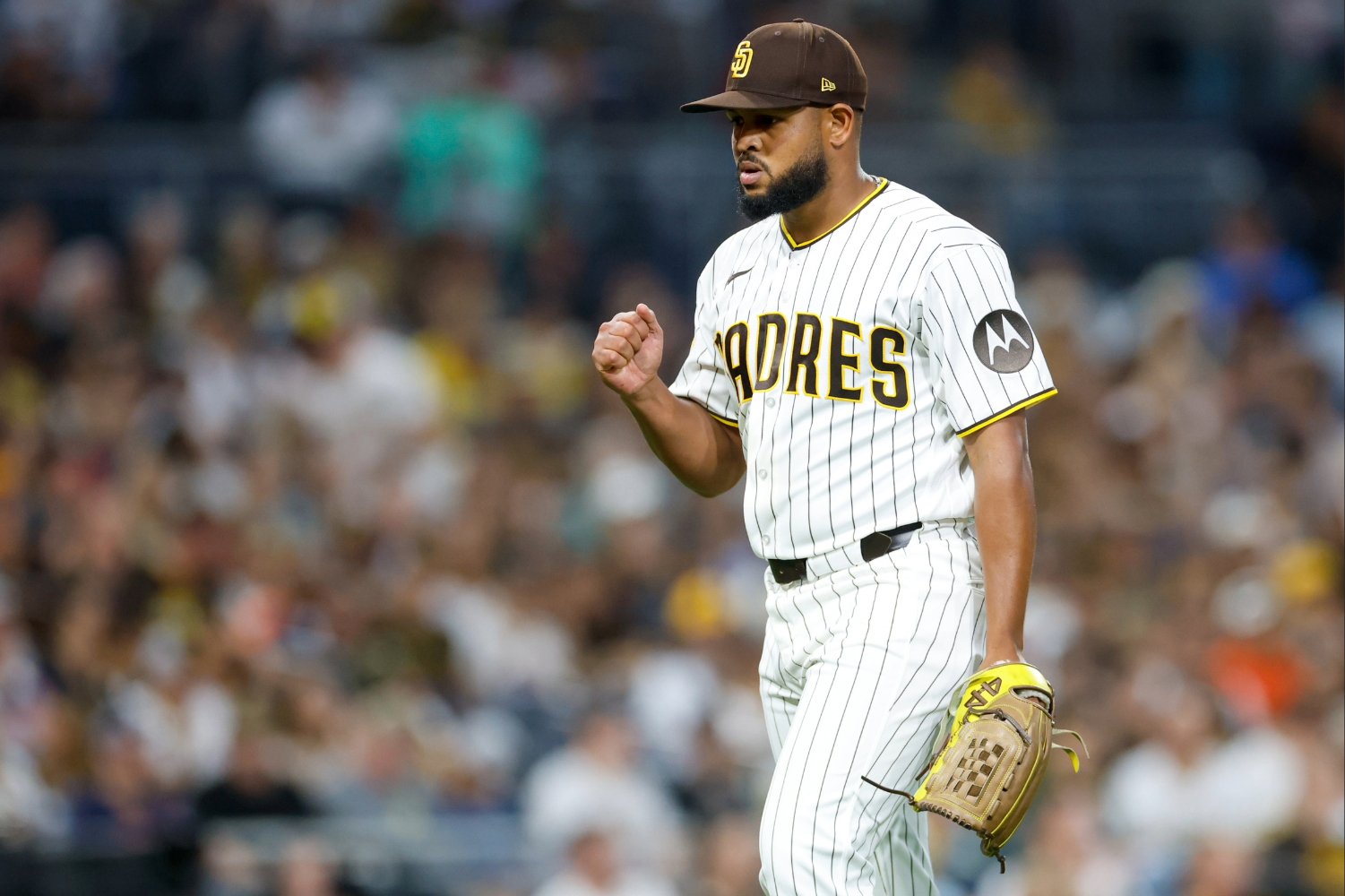 Things haven’t gotten off to the best of starts for the San Diego Padres in 2026. Some of the offensive questions and rotation uncertainty have manifested for the worst. In the team’s first win of the season, however, one of the more intriguing parts of the roster has already emerged as a potential answer to one of those problems. On the whole, there wasn’t a lot about Randy Vásquez’s 2025 that would impress the average observer. His percentile distribution offered very little by which to be encouraged: That he was below average in nearly every notable pitching metric speaks to the struggles he endured for much of last season. He was largely unable to get hitters out by way of the strikeout while simultaneously navigating consistently shaky command. The only even moderately positive takeaway could be found in his ability to minimize hard contact (and even then, he was more mid-tier in doing so than actually good at it). But the way in which Vásquez finished the season offered something more optimistic than the prior months that had come before. After pitching to a 3.80 ERA but 5.37 FIP (and a .318 opposing wOBA) in the first half, Vásquez bottomed-out across 7.2 innings in August, wherein he allowed seven runs and a .372 opposing wOBA. There were some encouraging signs in that small sample, though, as he posted a 21.2 percent strikeout rate and 3.0 percent walk rate. As such, September began to represent a very different story for him. That month, Vásquez tossed 22.1 innings to a 3.22 ERA, 3.00 FIP, and a .260 opposing wOBA. His strikeout rate was technically at its highest in an individual month (21.3 percent), while his walk rate remained low across a larger body of work (3.4 percent). Most importantly, his arsenal began to showcase signs of evolution. At 93.2 MPH, his average fastball velocity peaked late in the season, and he had more spin on his sweeper than in any month prior. The results include far more chases outside the zone, which helped to sustain the strikeout rate of August and led to a groundball rate over 52 percent. Between that and a spring exhibition season that indicated another jump in velocity (95.6 MPH average on the four-seam), there was plenty of optimism that Vásquez could not only latch onto one of the vacant spots in the starting five but solidify himself as a legitimate mid-rotation arm as the season wore on. And while we’re only one start into his 2026 campaign, it’s certainly looking like that could come to fruition. Here’s the breakdown of his first start: Even within just one start, there’s a lot to be encouraged by here. The fastball velocity speaks for itself. That continues to be an area of improvement, which should serve as a nice springboard moving forward. But the enhanced effectiveness of the stuff is an equally important development. Each of the whiffs and the CSW% reflected in the above are miles above what Vásquez had turned in virtually across the board in 2025, to say nothing of zone expansion he coaxed out of opposing hitters. One of the issues that Vásquez had last year was his inability to generate swings outside the zone. Hitters didn’t chase, which tamps down whiffs and inhibits one’s ability to get strikeouts. As a result, Vásquez was forced to try and work the edges of the zone which, more often than not, were reflected in a lack of strikeouts and a ballooned walk rate. In his first start, though, he was generating chases 45 percent of the time with his four-seamer, 40 percent of the time with his curveball, and 33 percent of the time with his sweeper (the latter of which are probably the same pitch taking on a different shape and resulting in a different classification). Last year, Vásquez didn’t reach a 30 percent chase rate until the middle of May, and it took another month before he touched the rate that he posted in his first start of 2026. When you compound a newfound ability to avoid the heart of the plate with the improvement in raw stuff, then there is good reason to be optimistic about what Randy Vásquez can provide the Padres this season. He’s never going to develop into an elite pitcher, but the combination of a mid-90s fastball, strong pitch diversity, and a genuine out-pitch (his sweeper) offers a combination that can evolve into real mid-rotation stability for a team that has none to speak of. Now, he needs to prove capable of replicating these results in future outings.
 -
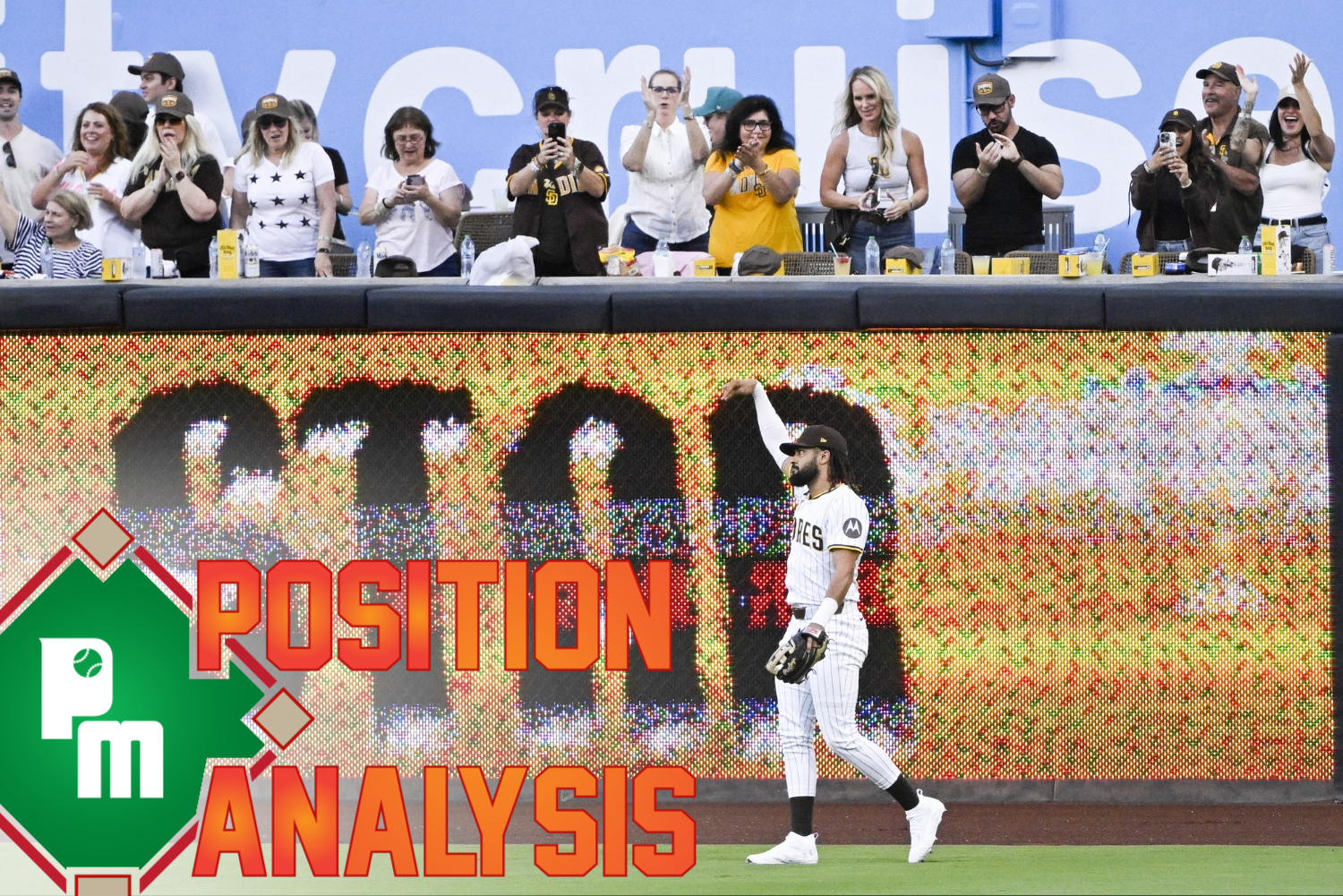 The San Diego Padres entered the 2025-26 offseason with questions abounding throughout several aspects of their roster. Corner outfield was not among those questions, however. On one hand, it helps when you have Fernando Tatis Jr. holding down one side of the outfield grass. While it didn’t come without frustrating stretches, Tatis reestablished himself as one of the premier players in Major League Baseball courtesy of a 6.1 fWAR figure that ranked 10th among big league regulars. The other side of the outfield remained a struggle for much of the year. What began as a platoon between Jason Heyward and Connor Joe quickly devolved. Neither was long for the roster, and the Padres spent much of the rest of the first half watching the adventures of Gavin Sheets and a rotating cast of other reserves. At the trade deadline, A.J. Preller was able to address the spot with a move that stabilized the position in the form of Ramón Laureano. While Laureano would miss the postseason because of a finger injury, he turned in strong enough numbers down the stretch that made exercising his $6.5 million club option an easy call. That’s the duo bookending Jackson Merrill for much of 2026. Unlike last year, though, the team actually boasts some depth. Each of Sheets, Miguel Andujar, and Nick Castellanos can handle a corner for a spell, with the team also aiming to expand the versatility of Sung Mun Song to get his bat in the lineup as frequently as possible. As far as positional groups on this roster go, the brass shouldn’t have a difficult time feeling confident about this group. Padres Corner Outfielders At A Glance Starters: Ramón Laureano (LF), Fernando Tatis Jr. (RF) Backups: Gavin Sheets, Miguel Andujar, Nick Castellanos, Bryce Johnson Depth: Alex Verdugo, Sung Mun Song Prospects: Tirso Ornelas, Braedon Karpathios LF fWAR Ranking Last Year: 21st (1.3) RF fWAR Ranking Last Year: 5th (6.1) LF fWAR Projection This Year: 19th (1.8) RF fWAR Projection This Year: 2nd (5.4) The Good The outfield corners might just represent the most stable aspects of the 2026 roster. Everywhere else you look, there are significant question. The infield has them. The pitching staff certainly has them. Outside of the bullpen, you have to feel the best about what this duo in the corners offers the team. Tatis finished a season healthy. While he may have been held back by a nagging injury or two in the summer, he appeared in 155 games, hit 25 homers, stole 32 bases, and brought elite defense to right field. If he can recoup some value on the power side — and indications are that some mechanical settling should help him to do just that — then the momentum he built up for Dominican Republic in the World Baseball Classic could very well carry over into the regular season. The same could be said of Laureano. His 2025 season was his best across the board since 2019, including an isolated power figure that was 35 points better than any individual mark he'd posted in the years since. If his growth in the approach is for real, it could yield real power dividends for a team that needed to scrape it from anywhere they could find it last season. The improved depth also marks a positive for this group. The following is a list of players that appeared in either corner for the Padres in 2025 beyond their two projected starters: Gavin Sheets (64 games in LF) Jason Heyward (30 games in LF, four games in RF) Brandon Lockridge (30 games in LF, three games in RF) Bryce Johnson (26 games in LF, 10 games in RF) Tyler Wade (17 games in LF, three games in RF) Oscar González (14 games in LF, five games in RF) Tirso Ornelas (five games in LF) Trenton Brooks (two games in LF) Jose Iglesias (one game in LF) Connor Joe (one game in LF) Three of those players remain in the organization. The combination of Sheets, Andujar, and Castellanos may not offer much on the defensive side, but each raises the floor of this position group significantly in the event of an injury or a day off. There's also a chance that Sung Mun Song could provide a higher quality of defense once he gets a little more work on the grass, as the team has expressed a desire to maximize his versatility. The Bad As stable as the group looks on paper, there's a certain streakiness and a mild uncertainty that could manifest for the Padres' corner outfielders in 2026. After a torrid start to last year, Tatis' wRC+ in May was just 74. He recovered some offensive value in June, but with an ISO of just .102. He repeated the trend between July and August before tapping back into his aggression and posting big power numbers in September. While Laureano wasn't prone to the same type of month-to-month variance, he did bookend the year with a brutal showing. His wRC+ with Baltimore in April was 74 before posting an 83 in September, after which point the finger injury shut him down. Any player is prone to a stretch of poor production. That's not unique to Tatis or Laureano. The reason you worry is because neither has a recent track record of genuinely sustained success. In fact, their career paths are somewhat similar given injury and prior suspensions for performance-enhancing drugs. You feel good about Tatis given where the upside was before 2022 and what the skill set has always been. You feel less sure about Laureano given the career stagnation that unfolded between 2019 and 2025 before he broke back out in the latter season. The defense represents a much more tangible concern, at least in left field. Laureano's metrics don't look nearly as favorable as they did early in his career, bottoming out with a -9 Outs Above Average that sat in just the second percentile. Only five outfielders graded worse by way of OAA than Laureano did, even if his arm strength remains potent. Perhaps even worse is the fact that Nick Castellanos was one of those five, tying Juan Soto's -12 OAA as the work mark among all outfielders that qualified. If we were to expand that to a minimum of 50 outfield attempts, Andujar's -3 led the group in being ranked 135th out of 183, while Sheets' -5 ranked 160th. It's not as if the Padres are a reputable defensive club to begin with, but it'll be interesting to see how well the offensive upside can compensate for the defensive shortcomings. The Bottom Line That the concerns are rooted in the abstract and hypotheticals more than any tangible concern speaks to the strength the San Diego Padres feature in the corners of their outfield, especially in comparison to what the situation looked like last year. Corner outfield defense doesn't bear the same negative impact that it may in other areas, so even that doesn't represent a significant reason for worry over what the pair of starters and their trio of reserves could look like in 2026. Ultimately, when you're talking about a position that features one of the 10 or so best players in baseball and another coming off a breakout season, you're in a good spot. The Padres are, in fact, in a good spot here. Fernando Tatis Jr.'s stock is pointing up after a good season and an even stronger showing in the WBC, while a full season with a healthy Laureano should be massive for the lineup at large.
 -
The wait is finally over. The San Diego Padres will be back on the field at Petco Park on Thursday afternoon, playing host to Tarik Skubal and the Detroit Tigers. It was a long wait for the announcement of the roster, but we now have clarity as to what the on-field team will look like early on. Of course, even upon the return of Joe Musgrove, Sung Mun Song, et al, there's a slight tempering of expectations as to where the Padres could fall when 2026 comes to a close. FanGraphs, for example, figures them for fourth in the division with an 80-82 record. Baseball Prospectus is slightly more optimistic in projecting them to finish third and just a hair behind the San Francisco Giants (81.4 win projection). The Padres and their limited financial wiggle room with which to make improvements this winter will have a lot to do in order to drive more optimism around their fortunes. Nevertheless, this is still a team that features Fernando Tatis Jr., Manny Machado, and Jackson Merrill at the top of their lineup, as well as the league's most dominant bullpen. With good supplemental production from the lineup and in the rotation, it shouldn't be too difficult for those projections to change quickly. Of course, they'll stare down Skubal to start the year. Getting runs across against the reigning two-time American League Cy Young winner is no easy feat for a team that finished in the bottom half of the league in offensive production versus left-handed pitchers. Nevertheless, this is a different group with different leadership, so there's nothing to stand on as far as what carryover could look like in that department. Beyond that, let's talk about what else you need to know ahead of Opening Day 2026. Opening Day Roster Catchers: Freddy Fermin, Luis Campusano Infielders: Gavin Sheets, Jake Cronenworth, Xander Bogaerts, Manny Machado, Miguel Andujar, Nick Castellanos, Ty France Outfielders: Fernando Tatis Jr., Jackson Merrill, Ramón Laureano, Bryce Johnson Starting Pitchers: Nick Pivetta, Michael King, Randy Vásquez, Germán Marquez, Walker Buehler Relief Pitchers: Mason Miller, Adrian Morejon, Jeremiah Estrada, David Morgan, Wandy Peralta, Kyle Hart, Bradgley Rodriguez, Ron Marinaccio As far as lineup construction goes, Gavin Sheets is going to get the bulk of the work at first base when a right-hander is on the mound. He can also work as the designated hitter or fill in somewhere in an outfield corner on occasion. Against a lefty, though, it's anybody's guess. France just won a Gold Glove. Miguel Andujar hits lefties well. Nick Castellanos had a nice spring and adjusted well to the position. There's going to be a heavy rotation between that spot, the DH, and as an occasional corner outfielder throughout that group, so the early part of the season will inform how Craig Stammen could rotate it out as we progress through 2026. The starting staff is another notable element here. Each of Marquez and Buehler got rotation spots with Joe Musgrove starting the season on the Injured List. Randy Vásquez doesn't have the most stable track record, even if he finished the 2025 season on a high note. King was prone to health and efficiency woes last year. It's perhaps the most concerning element of the roster, one that will have to be heavily support by the dominance of the relief corps. Opening Day Injured List Joe Musgrove (Starting Pitcher) Matt Waldron (Starting Pitcher) Griffin Canning (Starting Pitcher) Jason Adam (Relief Pitcher) Yuki Matsui (Relief Pitcher) Will Wagner (Utility) Sung Mun Song (Utility) There's plenty of depth upon which the Padres will rely on before long that's starting the year on the shelf. Song will be a key component in supplementing at least three spots with both his glove and his bat. Musgrove will be crucial as an innings-eater while each of Waldron and Canning represent important depth in the rotation. Adam will add another upper-tier arm to the late innings while Matsui is likely to supplant Hart as a middle-relief lefty upon his return. There isn't anything overly concerning here, but it's a decent volume of regular contributors that they'll start without. Major Storylines First Base/Designated Hitter Hodgepodge: We've already discussed it, but how playing time is distributed between Sheets, Castellanos, Andujar, and France will be a fascinating development to watch early on. Starting Pitcher Innings: Starting pitchers, in general, don't work too deep into games early in the season as they continue to build up their workload for the stretch run. But being able to work deep enough for the Padres to deploy their bullpen to its benefit and not leave the early part of the season completely overworked is going to be key. On-Paper vs. Real Life: Fernando Tatis, Manny Machado, and Jackson Merrill are the three best players on this team. Yet Tatis disappeared for stretches while Merrill fought through multiple injuries in 2025. They need each to be closer to the on-paper version of themselves than the iteration we saw at various points last year. Song's (Eventual) Arrival: Whenever Sung-mun Song makes his debut, it's likely we start seeing him worked in the lineup on a near-daily basis given his utility. How the offensive profile — which included a 25-homer, 25-steal campaign in his last season in the KBO — translates will tell us a lot about how much value he can add to the run production that we know is so crucial for this team to find success. Game Info: Detroit Tigers at San Diego Padres Starting Pitchers: Tarik Skubal (DET) vs. Nick Pivetta (SD) Time: 4:10 PM ET/1:10 PM PT Location: Petco Park; San Diego, CA Broadcast: PADRES.TV, Detroit SportsNet, MLB app View full article
-
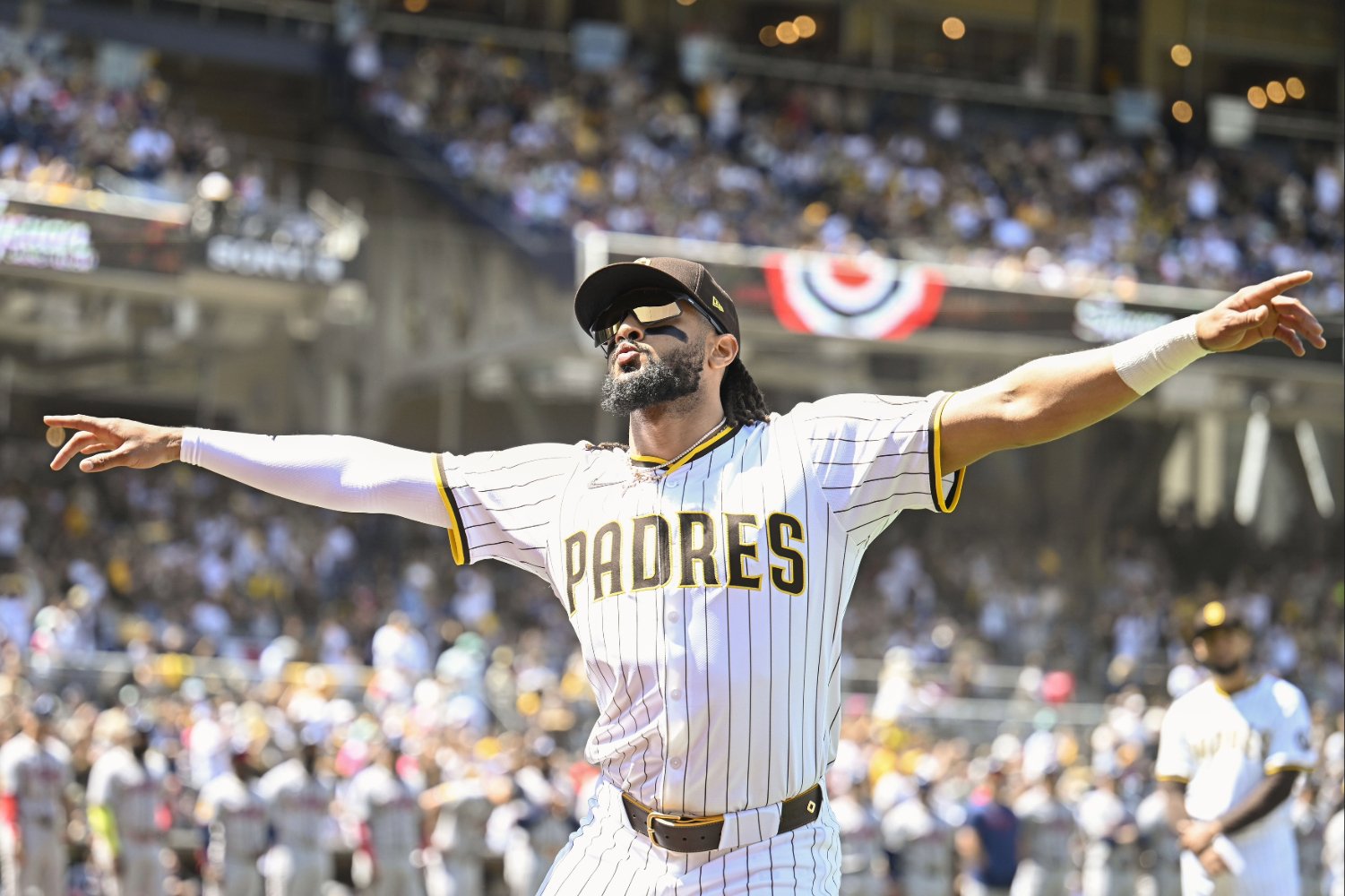 The wait is finally over. The San Diego Padres will be back on the field at Petco Park on Thursday afternoon, playing host to Tarik Skubal and the Detroit Tigers. It was a long wait for the announcement of the roster, but we now have clarity as to what the on-field team will look like early on. Of course, even upon the return of Joe Musgrove, Sung Mun Song, et al, there's a slight tempering of expectations as to where the Padres could fall when 2026 comes to a close. FanGraphs, for example, figures them for fourth in the division with an 80-82 record. Baseball Prospectus is slightly more optimistic in projecting them to finish third and just a hair behind the San Francisco Giants (81.4 win projection). The Padres and their limited financial wiggle room with which to make improvements this winter will have a lot to do in order to drive more optimism around their fortunes. Nevertheless, this is still a team that features Fernando Tatis Jr., Manny Machado, and Jackson Merrill at the top of their lineup, as well as the league's most dominant bullpen. With good supplemental production from the lineup and in the rotation, it shouldn't be too difficult for those projections to change quickly. Of course, they'll stare down Skubal to start the year. Getting runs across against the reigning two-time American League Cy Young winner is no easy feat for a team that finished in the bottom half of the league in offensive production versus left-handed pitchers. Nevertheless, this is a different group with different leadership, so there's nothing to stand on as far as what carryover could look like in that department. Beyond that, let's talk about what else you need to know ahead of Opening Day 2026. Opening Day Roster Catchers: Freddy Fermin, Luis Campusano Infielders: Gavin Sheets, Jake Cronenworth, Xander Bogaerts, Manny Machado, Miguel Andujar, Nick Castellanos, Ty France Outfielders: Fernando Tatis Jr., Jackson Merrill, Ramón Laureano, Bryce Johnson Starting Pitchers: Nick Pivetta, Michael King, Randy Vásquez, Germán Marquez, Walker Buehler Relief Pitchers: Mason Miller, Adrian Morejon, Jeremiah Estrada, David Morgan, Wandy Peralta, Kyle Hart, Bradgley Rodriguez, Ron Marinaccio As far as lineup construction goes, Gavin Sheets is going to get the bulk of the work at first base when a right-hander is on the mound. He can also work as the designated hitter or fill in somewhere in an outfield corner on occasion. Against a lefty, though, it's anybody's guess. France just won a Gold Glove. Miguel Andujar hits lefties well. Nick Castellanos had a nice spring and adjusted well to the position. There's going to be a heavy rotation between that spot, the DH, and as an occasional corner outfielder throughout that group, so the early part of the season will inform how Craig Stammen could rotate it out as we progress through 2026. The starting staff is another notable element here. Each of Marquez and Buehler got rotation spots with Joe Musgrove starting the season on the Injured List. Randy Vásquez doesn't have the most stable track record, even if he finished the 2025 season on a high note. King was prone to health and efficiency woes last year. It's perhaps the most concerning element of the roster, one that will have to be heavily support by the dominance of the relief corps. Opening Day Injured List Joe Musgrove (Starting Pitcher) Matt Waldron (Starting Pitcher) Griffin Canning (Starting Pitcher) Jason Adam (Relief Pitcher) Yuki Matsui (Relief Pitcher) Will Wagner (Utility) Sung Mun Song (Utility) There's plenty of depth upon which the Padres will rely on before long that's starting the year on the shelf. Song will be a key component in supplementing at least three spots with both his glove and his bat. Musgrove will be crucial as an innings-eater while each of Waldron and Canning represent important depth in the rotation. Adam will add another upper-tier arm to the late innings while Matsui is likely to supplant Hart as a middle-relief lefty upon his return. There isn't anything overly concerning here, but it's a decent volume of regular contributors that they'll start without. Major Storylines First Base/Designated Hitter Hodgepodge: We've already discussed it, but how playing time is distributed between Sheets, Castellanos, Andujar, and France will be a fascinating development to watch early on. Starting Pitcher Innings: Starting pitchers, in general, don't work too deep into games early in the season as they continue to build up their workload for the stretch run. But being able to work deep enough for the Padres to deploy their bullpen to its benefit and not leave the early part of the season completely overworked is going to be key. On-Paper vs. Real Life: Fernando Tatis, Manny Machado, and Jackson Merrill are the three best players on this team. Yet Tatis disappeared for stretches while Merrill fought through multiple injuries in 2025. They need each to be closer to the on-paper version of themselves than the iteration we saw at various points last year. Song's (Eventual) Arrival: Whenever Sung-mun Song makes his debut, it's likely we start seeing him worked in the lineup on a near-daily basis given his utility. How the offensive profile — which included a 25-homer, 25-steal campaign in his last season in the KBO — translates will tell us a lot about how much value he can add to the run production that we know is so crucial for this team to find success. Game Info: Detroit Tigers at San Diego Padres Starting Pitchers: Tarik Skubal (DET) vs. Nick Pivetta (SD) Time: 4:10 PM ET/1:10 PM PT Location: Petco Park; San Diego, CA Broadcast: PADRES.TV, Detroit SportsNet, MLB app
 -
The San Diego Padres entered the 2025-26 offseason with questions abounding throughout several aspects of their roster. Corner outfield was not among those questions, however. On one hand, it helps when you have Fernando Tatis Jr. holding down one side of the outfield grass. While it didn’t come without frustrating stretches, Tatis Jr reestablished himself as one of the premier players in Major League Baseball courtesy of a 6.1 fWAR figure that ranked 10th among big league regulars. The other side of the outfield remained a struggle for much of the year. What began as a platoon between Jason Heyward and Connor Joe quickly devolved. Neither was long for the roster, and the Padres spent much of the rest of the first half watching the adventures of Gavin Sheets and a rotating cast of other reserves. At the trade deadline, A.J. Preller was able to address the spot with a move that stabilized the position in the form of Ramón Laureano. While Laureano would miss the postseason because of a finger injury, he turned in strong enough numbers down the stretch that made exercising his $6.5 million club option an easy call. That’s the duo bookending Jackson Merrill for much of 2026. Unlike last year, though, the team actually boasts some depth. Each of Sheets, Miguel Andujar, and Nick Castellanos can handle a corner for a spell, with the team also aiming to expand the versatility of Sung Mun Song to get his bat in the lineup as frequently as possible. As far as positional groups on this roster go, the brass shouldn’t have a difficult time feeling confident about this group. Padres Corner Outfielders At A Glance Starters: Ramón Laureano (LF), Fernando Tatis Jr. (RF) Backups: Gavin Sheets, Miguel Andujar, Nick Castellanos, Bryce Johnson Depth: Alex Verdugo, Sung Mun Song Prospects: Tirso Ornelas, Braedon Karpathios LF fWAR Ranking Last Year: 21st (1.3) RF fWAR Ranking Last Year: 5th (6.1) LF fWAR Projection This Year: 19th (1.8) RF fWAR Projection This Year: 2nd (5.4) The Good The outfield corners might just represent the most stable aspects of the 2026 roster. Everywhere else you look, there are significant question. The infield has them. The pitching staff certainly has them. Outside of the bullpen, you have to feel good about what this duo in the corners offers the team. Tatis Jr finished a season healthy. While he may have been held back by a nagging injury or two in the summer, he appeared in 155 games, hit 25 homers, stole 32 bases, and brought elite defense to right field. If he can recoup some on the power side — and indications are that some mechanical settling should help him to do just that — then this momentum he's building up for Dominican Republic in the World Baseball Classic could very well carry over into the regular season. The same could be said of Laureano. His 2025 season was his best across the board since 2019, including an isolated power figure that was 35 points better than any individual mark he'd posted in the years since. If his growth in the approach is for real, it could yield real power dividends for a team that needed to scrape it from anywhere they could find it last season. The improved depth also marks a positive for this group. The following is a list of players that appeared in either corner for the Padres in 2025 beyond their two projected starters: Gavin Sheets (64 games in LF) Jason Heyward (30 games in LF, four games in RF) Brandon Lockridge (30 games in LF, three games in RF) Bryce Johnson (26 games in LF, 10 games in RF) Tyler Wade (17 games in LF, three games in RF) Oscar González (14 games in LF, five games in RF) Tirso Ornelas (five games in LF) Trenton Brooks (two games in LF) Jose Iglesias (one game in LF) Connor Joe (one game in LF) Three of those players remain in the organization. The combination of Sheets, Andujar, and Castellanos may not offer much on the defensive side, but each raises the floor of this position group significantly in the event of an injury or a day off. There's also a chance that Sung Mun Song could provide a higher quality of defense once he gets a little more work on the grass, as the team has expressed a desire to maximize his versatility. The Bad As stable as the group looks on paper, there's a certain streakiness and a mild uncertainty that could manifest for the Padres corner outfielders in 2026. After a torrid start to last year, Tatis Jr's wRC+ in May was just 74. He recovered some offensive value in June, but with an ISO of just .102. He repeated the trend between July and August before tapping back into his aggression and posting big power numbers in September. While Laureano wasn't prone to the same type of month-to-month variance, he did bookend the year with a brutal showing. His wRC+ with Baltimore in April was 74 before posting an 83 in September before the finger injury shut him down. Any player is prone to a stretch of poor production. That's not unique to Tatis Jr or Laureano. The reason you worry is because neither has a recent track record of genuinely sustained success. In fact, their career paths are somewhat similar given injury and prior suspensions for performance-enhancing drugs. You feel good about Tatis Jr given where the upside was before 2022 and what the skill set has always been. You feel less sure about Laureano given the career stagnation that unfolded between 2019 and 2025 before he broke back out in the latter. The defense represents a much more tangible concern, at least in left field. Laureano's metrics don't look nearly as favorable as they did early in his career, bottoming out with a -9 Outs Above Average that sat in just the second percentile. Only five outfielders graded worse by way of OAA than Laureano did, even if his arm strength remains. Perhaps even worse is the fact that Nick Castellanos was one of those five, tying Juan Soto's -12 OAA as the work mark among all outfielders that qualified. If we were to expand that to a minimum of 50 outfield attempts, Andujar's -3 led the group in being ranked 135th out of 183 while Sheets' -5 ranked 160th. It's not as if the Padres are a reputable defensive club to begin with, but it'll be interesting to see how well the offensive upside can compensate for the defensive shortcomings. The Bottom Line That the concerns are rooted in the abstract and hypotheticals more than any tangible concern speaks to the strength the San Diego Padres feature in the corners of their outfield, especially in comparison to what the situation looked like last year. Outfield defense doesn't bear the same negative impact that it may in other areas, so even that doesn't represent a significant reason for worry over what the pair of starters and their trio of reserves could look like in 2026. Ultimately, when you're talking about a position that features one of the 10 or so best players in baseball and another coming off a breakout, you're in a good spot. The Padres are, in fact, in a good spot here. Fernando Tatis Jr's stock is pointing up after a good season and an even stronger showing in the WBC, while a full season with a healthy Laureano should be massive for the lineup at large. As much variance as the Padres' collective fortunes might bear ahead of the new season, it's not coming from the corner outfield. View full article
-
The 2025 San Diego Padres were one of the meekest teams in Major League Baseball. As a collective, both their 152 home runs and .138 isolated power ranked 28th in the league. Plenty of context goes into that, of course. Regardless of the particulars, though, this was a team that was not built for power. It remains to be seen how much the on-paper dynamic has changed ahead of 2026. Yes, the team went out and signed Sung Mun Song, Miguel Andujar, and Nick Castellanos to shore up their offensive depth. But Song's game may need time to adjust, Andujar is more platoon-dependent on the power side, and Castellanos is coming off some of the worst offensive production of his career. The volume approach could very well work, but there's also a wide array of outcomes for the team's current construction. Which is why the offensive progression of someone like Jake Cronenworth becomes essential in the broader context of the latest iteration of the Padres. It was four full seasons ago now that Cronenworth peaked in the power game. His .194 ISO in 2021 isn't just a mark that he's failed to top since then, but one that he hasn't come within 40 points of in subsequent seasons. Cronenworth's 11 home runs in 2025 were his second-fewest in a full season, while his .131 ISO last year represented a bottoming-out in that regard. That doesn't mean Cronenworth has been without value, however. In the years since he last demonstrated such consistent power, Cronenworth's earned his keep via patience. His 10.3 percent walk rate since 2022 ranks 65th among 306 qualifying players, and his walking at a 13.4 percent clip in 2025 ranked 12th. It helped that only six players in the league saw more pitches than Cronenworth's 4.22 per plate appearance last year, while his chase rate finished in the 86th percentile. There's value in that, even as an average baserunner for the bigger bats in the lineup. But with vastly different potential outcomes awaiting the Padres offense in 2026, it'd behoove him to adjust in a way that taps into the power of old at least on occasion to drive up his value beyond what it reads in the on-base percentage column. Luckily, Cronenworth appears poised to do just that. The following is a distribution of the various swing factors Cronenworth demonstrated in 2025: There isn't a whole lot in there to indicate that Cronenworth should be finding power outcomes upon contact. His attack angle was below league average and the swing path was right around it. So, while the latter indicates he was steeper to the ball, he wasn't gaining elevation upon contact. Additionally, he posted an attack direction that generated up-the-middle-contact. Low line drives up the middle yield base hits, certainly. But produce power outcomes they do not. Toss in a swing that sits just below league average in its speed while operating with a length that isn't exactly short, and there aren't really any factors lending themselves to the idea of power in Cronenworth's case. Thus far in the spring, though, Cronenworth has concentrated on improving in a few of these areas. His bat speed, for one. A more consistent bat path — perhaps one that doesn't invoke a steep angle to shallow contact — is on the agenda as well via improving his lower half balance throughout the swing. While bat tracking data isn't widely available for exhibition games, the results have been there thus far for Cronenworth. Now on the verge of Opening Day, his spring output included a .167 ISO and 57.4 percent hard-hit rate. He started elevating, too, with a 34.4 percent groundball rate that sits lower that any regular season clip he's posted in his career. He also hit the first opposite field homer of his career earlier in the month (even if the spring training of it all doesn't allow it to count). It's a small sample (50 plate appearances), but the adjustments have been on display within the spring window. It'll be interesting to see not only how the improvement sustains, but whether the changes are later reflected in his visual mechanics. It cannot be overstated how valuable such improvements sustaining into the regular season would be for both Cronenworth and for the Padres. While their volume approach to the roster could lead to some improvement in the power game, an everyday player getting back to his previous upside in that regard would be absolutely massive. Parlaying patience with improved quality of contact could very well have Jake Cronenworth among the most important pieces of this roster in 2026. View full article
-
Jake Cronenworth's Swing Adjustment Could Yield Massive Benefit for Padres
Randy Holt posted an article in Padres
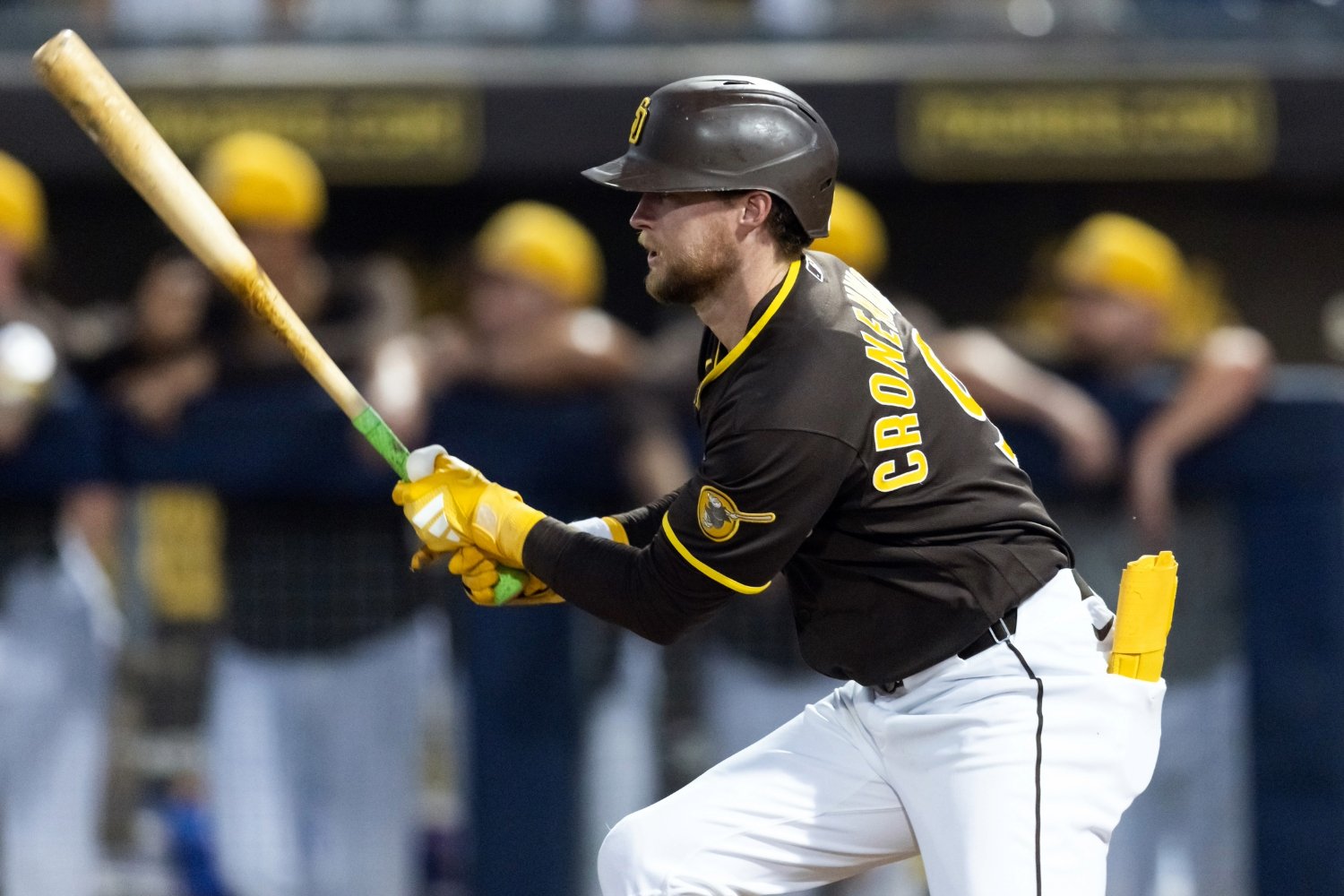 The 2025 San Diego Padres were one of the meekest teams in Major League Baseball. As a collective, both their 152 home runs and .138 isolated power ranked 28th in the league. Plenty of context goes into that, of course. Regardless of the particulars, though, this was a team that was not built for power. It remains to be seen how much the on-paper dynamic has changed ahead of 2026. Yes, the team went out and signed Sung Mun Song, Miguel Andujar, and Nick Castellanos to shore up their offensive depth. But Song's game may need time to adjust, Andujar is more platoon-dependent on the power side, and Castellanos is coming off some of the worst offensive production of his career. The volume approach could very well work, but there's also a wide array of outcomes for the team's current construction. Which is why the offensive progression of someone like Jake Cronenworth becomes essential in the broader context of the latest iteration of the Padres. It was four full seasons ago now that Cronenworth peaked in the power game. His .194 ISO in 2021 isn't just a mark that he's failed to top since then, but one that he hasn't come within 40 points of in subsequent seasons. Cronenworth's 11 home runs in 2025 were his second-fewest in a full season, while his .131 ISO last year represented a bottoming-out in that regard. That doesn't mean Cronenworth has been without value, however. In the years since he last demonstrated such consistent power, Cronenworth's earned his keep via patience. His 10.3 percent walk rate since 2022 ranks 65th among 306 qualifying players, and his walking at a 13.4 percent clip in 2025 ranked 12th. It helped that only six players in the league saw more pitches than Cronenworth's 4.22 per plate appearance last year, while his chase rate finished in the 86th percentile. There's value in that, even as an average baserunner for the bigger bats in the lineup. But with vastly different potential outcomes awaiting the Padres offense in 2026, it'd behoove him to adjust in a way that taps into the power of old at least on occasion to drive up his value beyond what it reads in the on-base percentage column. Luckily, Cronenworth appears poised to do just that. The following is a distribution of the various swing factors Cronenworth demonstrated in 2025: There isn't a whole lot in there to indicate that Cronenworth should be finding power outcomes upon contact. His attack angle was below league average and the swing path was right around it. So, while the latter indicates he was steeper to the ball, he wasn't gaining elevation upon contact. Additionally, he posted an attack direction that generated up-the-middle-contact. Low line drives up the middle yield base hits, certainly. But produce power outcomes they do not. Toss in a swing that sits just below league average in its speed while operating with a length that isn't exactly short, and there aren't really any factors lending themselves to the idea of power in Cronenworth's case. Thus far in the spring, though, Cronenworth has concentrated on improving in a few of these areas. His bat speed, for one. A more consistent bat path — perhaps one that doesn't invoke a steep angle to shallow contact — is on the agenda as well via improving his lower half balance throughout the swing. While bat tracking data isn't widely available for exhibition games, the results have been there thus far for Cronenworth. Now on the verge of Opening Day, his spring output included a .167 ISO and 57.4 percent hard-hit rate. He started elevating, too, with a 34.4 percent groundball rate that sits lower that any regular season clip he's posted in his career. He also hit the first opposite field homer of his career earlier in the month (even if the spring training of it all doesn't allow it to count). It's a small sample (50 plate appearances), but the adjustments have been on display within the spring window. It'll be interesting to see not only how the improvement sustains, but whether the changes are later reflected in his visual mechanics. It cannot be overstated how valuable such improvements sustaining into the regular season would be for both Cronenworth and for the Padres. While their volume approach to the roster could lead to some improvement in the power game, an everyday player getting back to his previous upside in that regard would be absolutely massive. Parlaying patience with improved quality of contact could very well have Jake Cronenworth among the most important pieces of this roster in 2026.
 -
Recent years across Major League Baseball have shown that you don't have to be an elite defensive team to make a deep playoff run. But it helps. The Toronto Blue Jays were the best defensive team in the league last year, according to Statcast's Fielding Run Value. They posted a mark of 44, which finished four runs ahead of the Chicago Cubs and 16 ahead of the third-place Cleveland Guardians. The Los Angeles Dodgers, meanwhile, ranked 18th in FRV at -1. Of course, they were also one of just three teams that scored over 800 runs in 2025, negating whatever advantage another team could have in the field. More than anything, quality defense helps a team to compensate on the margins for those periods where a different element of their game may not be producing in the way that it should. In the case of the Padres, the defensive component is now more essential than ever. Last year's offense was prone to down stretches, and while they've taken a volume approach that can keep the lineup afloat, they're working behind a starting pitching staff that's been cobbled together by past-their-prime veterans and non-roster invitees. As good as the bullpen may be, the variance at the plate combined with a shaky starting group will help to illustrate the importance of the defensive phase within the broader fortunes of the 2026 team. The Padres were 20th in the league in FRV last year -1. They were also below average in Outs Above Average (-7) but ranked in the top half of the league in Defensive Runs Saved (28). Each metric measures something different. OAA is about outs recorded and includes range as a factor. DRS is about runs prevented and lacks some of the nuance of a positional adjustment that OAA has. For our purpose, we'll utilize FRV due to its more comprehensive nature in examining a player range and arm, among other factors. This is how each projected Padre regular figured in the FRV game in 2025: Freddy Fermin (C): 0 FRV Jake Cronenworth (2B): -1 FRV Xander Bogaerts (SS): 7 FRV Manny Machado (3B): -4 FRV Ramón Laureano (LF): -5 FRV Jackson Merrill (CF): 5 FRV Fernando Tatis Jr. (RF): 9 FRV One of the things that makes FRV valuable as a defensive metric is that it includes catcher adjustments as part of its calculation (other metrics have a more difficult time integrating catchers). The Padres finished at -4 FRV as a catching group, which was largely held down by Martín Maldonado & Elías Díaz prior to the acquisition of Fermin ahead of last year's trade deadline. Even at exactly average, Fermin should represent a sizable improvement in the work behind the plate. Maldonado, in particular, was woeful in the metrics posted at catcher. He sat below average in blocking, throwing, and framing. Díaz was closer to average or slightly below in each regard. That means that on the merit of their starter alone, the Padres are looking at improvement behind the plate. It's when you look past the starter that things get a bit more questionable. In 2024, Luis Campusano caught enough innings to qualify for the defensive leaderboard. His FRV that year came in at -13, which tied with Shea Langeliers for the league's worst mark. His defense was bad enough that even a team as thin at the position as the Padres were last year essentially refused to give him a crack at regular work, electing to roll out the Maldonado-Díaz tandem for much of the year instead (despite the upside Campusano possesses at the plate). We'll have to see if a full spring within the context of being the for-sure backup yields anything positive, but given what the Padres seem to gain with Fermin as the No. 1, it may be difficult to compensate if he goes down or misses time. The middle infield doesn't represent a source of concern in the same way. Jake Cronenworth graded slightly below average in range and exactly average with his arm. Where he lost points in the FRV calculation was in his inability to turn double plays, where he finished at -2. There's some pretty stiff competition on the leaderboard in range at second base, but there are also some regulars held in higher esteem that were far worse off in the field than he was. Factor in the part where his running mate on the middle infield missed almost a full month while readjusting to a position that he hadn't played full-time in two years, and there's some optimism that he could be slightly back toward where he was pre-2023 (2 FRV). Speaking of names about which there is little worth being concerned about, Xander Bogaerts returns after missing most of September of last year with an injury. Since demonstrating marked improvement with the glove between the 2021 and 2022 seasons when he was still in Boston, Bogaerts has yet to post a season where he is below average in the eyes of the metrics. While his weaker arm pins him down a bit in the FRV calculations, his range is undeniable. That becomes a key component when you're talking about the potential area of concern to his right. After falling from 10 FRV to 0 between 2023 and 2024, Manny Machado dropped yet again in 2025. His -4 FRV was his worst since 2019, wrought by a poorly-graded arm that was also his lowest since that first year in San Diego. Last May, we wondered if there was a positioning factor at play in such a rapid regression. The conclusion at the time was that Machado's positioning had certainly changed and may have played a role in his regression. But we also were unsure of the reason for such a change. What we do know, however, is that it's something worth monitoring. Machado was better from that point on, with a -1 FRV from June through the end of the year, and a leadership change on the bench could have some impact on what positioning looks like for him. His body isn't what it used to be, so any chance to regain an advantage and capitalize on what remains a quality arm should help him to recover some value there. The Padres' outfield is more unique in this discussion, as two of their three spots are of no concern. Jackson Merrill has thrived with the glove, even when he's mired in an injury-riddled season like he was last year. Meanwhile, Fernando Tatis Jr. is one of the sport's premier defenders and has the hardware to back it up. Instead, the only real concern lies in the -5 FRV of Ramón Laureano, who is poised to handle full-time duty after being acquired from the Baltimore Orioles at last year's trade deadline. What's interesting about Laureano in left is that his inclusion on the leaderboard only accounts for his time post-deadline. Even so, his FRV was the worst among qualifying Padres defenders last year. And that's with an arm value that sits in the 92nd percentile among all MLB players. It's also important to acknowledge that defensive metrics rely heavily on sample size to find validity. It's hard to put too much stock in a 400-or-so inning sample. Nevertheless, that so much of his negative FRV is indicative of a range issue — something that was also problematic when his range accounted for -6 of his overall -2 FRV in 2024 — may not bode super well for improving on a position that ranked 15th in FRV last year. It's a much more enigmatic situation than the team has anywhere else on the field. Can playing next to Merrill help? Can the arm compensate more for the range over a full season? Either way, the fact that there's stability has to mean something on the defensive front against the rotating cast of characters left field saw last year. You will note that there has yet to be a discussion about first base as part of this larger exploration of team defense. That represents sort of an important position on the field in its need to effectively support the rest of the infield defenders. The fact is that this position is a complete wild card in matters of the San Diego Padres' defense in 2026. Each of Gavin Sheets, Nick Castellanos, and Miguel Andujar have either zero or minimal sample on which to hang their defensive hat. Other than a decent showing in a small sample from Sheets last year, there is simply no way of knowing where the numbers may end up in this position by the end of 2026. It's because of that that it becomes fairly difficult to state that the Padres can be a better defensive team in 2026 than they were last year. There are certainly things that indicate that they should be. Fermin and Laureano as full-time contributors, Cronenworth back in a full-time position, Machado's improvement after a brutal start, and Sung Mun Song's presence as a utility fielder all paint a rosier picture this time around. The defense should be, at worst, league average. First base, however, will have a lot to say about how far above or below they land on that threshold when it's all said and done. View full article
-
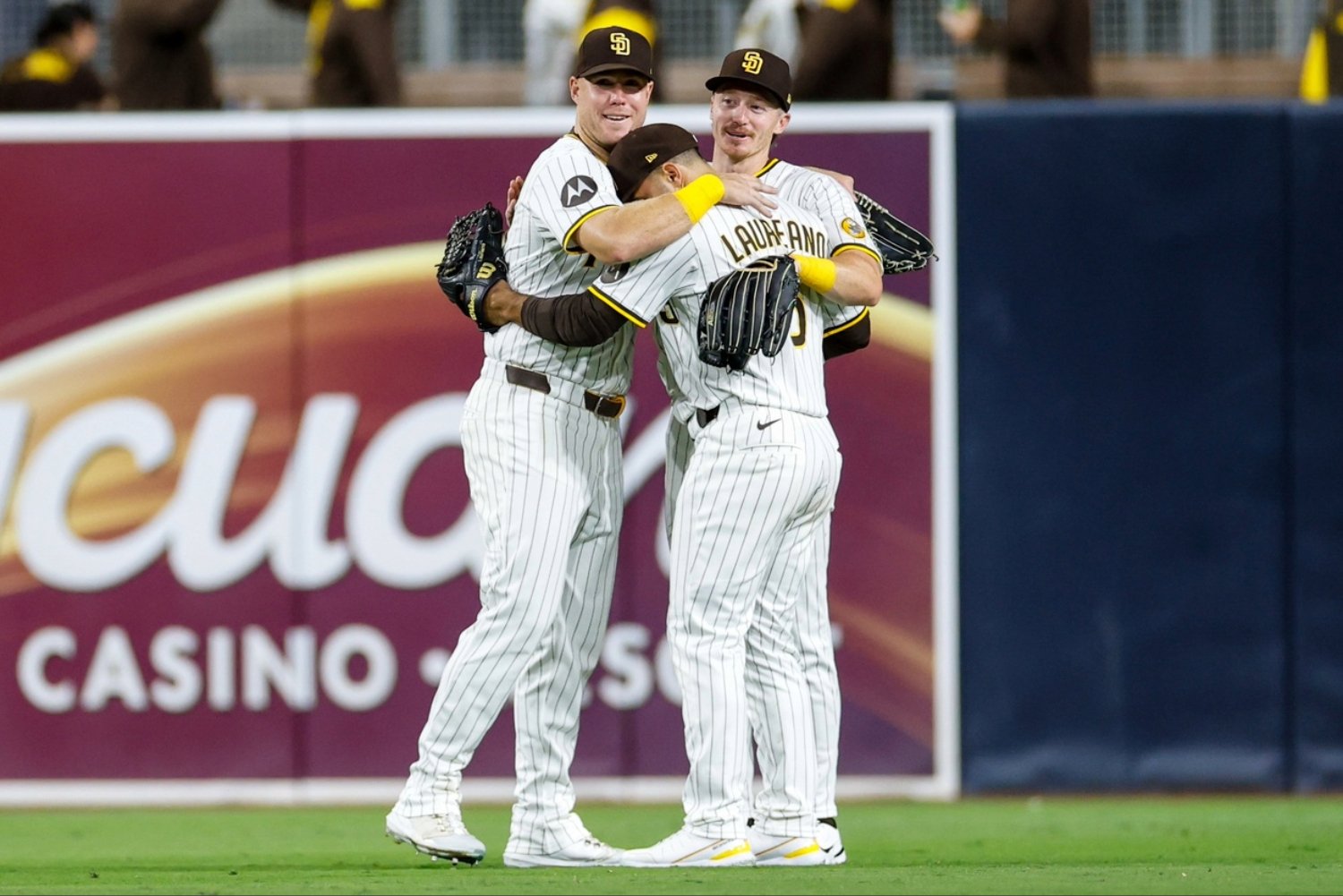 Recent years across Major League Baseball have shown that you don't have to be an elite defensive team to make a deep playoff run. But it helps. The Toronto Blue Jays were the best defensive team in the league last year, according to Statcast's Fielding Run Value. They posted a mark of 44, which finished four runs ahead of the Chicago Cubs and 16 ahead of the third-place Cleveland Guardians. The Los Angeles Dodgers, meanwhile, ranked 18th in FRV at -1. Of course, they were also one of just three teams that scored over 800 runs in 2025, negating whatever advantage another team could have in the field. More than anything, quality defense helps a team to compensate on the margins for those periods where a different element of their game may not be producing in the way that it should. In the case of the Padres, the defensive component is now more essential than ever. Last year's offense was prone to down stretches, and while they've taken a volume approach that can keep the lineup afloat, they're working behind a starting pitching staff that's been cobbled together by past-their-prime veterans and non-roster invitees. As good as the bullpen may be, the variance at the plate combined with a shaky starting group will help to illustrate the importance of the defensive phase within the broader fortunes of the 2026 team. The Padres were 20th in the league in FRV last year -1. They were also below average in Outs Above Average (-7) but ranked in the top half of the league in Defensive Runs Saved (28). Each metric measures something different. OAA is about outs recorded and includes range as a factor. DRS is about runs prevented and lacks some of the nuance of a positional adjustment that OAA has. For our purpose, we'll utilize FRV due to its more comprehensive nature in examining a player range and arm, among other factors. This is how each projected Padre regular figured in the FRV game in 2025: Freddy Fermin (C): 0 FRV Jake Cronenworth (2B): -1 FRV Xander Bogaerts (SS): 7 FRV Manny Machado (3B): -4 FRV Ramón Laureano (LF): -5 FRV Jackson Merrill (CF): 5 FRV Fernando Tatis Jr. (RF): 9 FRV One of the things that makes FRV valuable as a defensive metric is that it includes catcher adjustments as part of its calculation (other metrics have a more difficult time integrating catchers). The Padres finished at -4 FRV as a catching group, which was largely held down by Martín Maldonado & Elías Díaz prior to the acquisition of Fermin ahead of last year's trade deadline. Even at exactly average, Fermin should represent a sizable improvement in the work behind the plate. Maldonado, in particular, was woeful in the metrics posted at catcher. He sat below average in blocking, throwing, and framing. Díaz was closer to average or slightly below in each regard. That means that on the merit of their starter alone, the Padres are looking at improvement behind the plate. It's when you look past the starter that things get a bit more questionable. In 2024, Luis Campusano caught enough innings to qualify for the defensive leaderboard. His FRV that year came in at -13, which tied with Shea Langeliers for the league's worst mark. His defense was bad enough that even a team as thin at the position as the Padres were last year essentially refused to give him a crack at regular work, electing to roll out the Maldonado-Díaz tandem for much of the year instead (despite the upside Campusano possesses at the plate). We'll have to see if a full spring within the context of being the for-sure backup yields anything positive, but given what the Padres seem to gain with Fermin as the No. 1, it may be difficult to compensate if he goes down or misses time. The middle infield doesn't represent a source of concern in the same way. Jake Cronenworth graded slightly below average in range and exactly average with his arm. Where he lost points in the FRV calculation was in his inability to turn double plays, where he finished at -2. There's some pretty stiff competition on the leaderboard in range at second base, but there are also some regulars held in higher esteem that were far worse off in the field than he was. Factor in the part where his running mate on the middle infield missed almost a full month while readjusting to a position that he hadn't played full-time in two years, and there's some optimism that he could be slightly back toward where he was pre-2023 (2 FRV). Speaking of names about which there is little worth being concerned about, Xander Bogaerts returns after missing most of September of last year with an injury. Since demonstrating marked improvement with the glove between the 2021 and 2022 seasons when he was still in Boston, Bogaerts has yet to post a season where he is below average in the eyes of the metrics. While his weaker arm pins him down a bit in the FRV calculations, his range is undeniable. That becomes a key component when you're talking about the potential area of concern to his right. After falling from 10 FRV to 0 between 2023 and 2024, Manny Machado dropped yet again in 2025. His -4 FRV was his worst since 2019, wrought by a poorly-graded arm that was also his lowest since that first year in San Diego. Last May, we wondered if there was a positioning factor at play in such a rapid regression. The conclusion at the time was that Machado's positioning had certainly changed and may have played a role in his regression. But we also were unsure of the reason for such a change. What we do know, however, is that it's something worth monitoring. Machado was better from that point on, with a -1 FRV from June through the end of the year, and a leadership change on the bench could have some impact on what positioning looks like for him. His body isn't what it used to be, so any chance to regain an advantage and capitalize on what remains a quality arm should help him to recover some value there. The Padres' outfield is more unique in this discussion, as two of their three spots are of no concern. Jackson Merrill has thrived with the glove, even when he's mired in an injury-riddled season like he was last year. Meanwhile, Fernando Tatis Jr. is one of the sport's premier defenders and has the hardware to back it up. Instead, the only real concern lies in the -5 FRV of Ramón Laureano, who is poised to handle full-time duty after being acquired from the Baltimore Orioles at last year's trade deadline. What's interesting about Laureano in left is that his inclusion on the leaderboard only accounts for his time post-deadline. Even so, his FRV was the worst among qualifying Padres defenders last year. And that's with an arm value that sits in the 92nd percentile among all MLB players. It's also important to acknowledge that defensive metrics rely heavily on sample size to find validity. It's hard to put too much stock in a 400-or-so inning sample. Nevertheless, that so much of his negative FRV is indicative of a range issue — something that was also problematic when his range accounted for -6 of his overall -2 FRV in 2024 — may not bode super well for improving on a position that ranked 15th in FRV last year. It's a much more enigmatic situation than the team has anywhere else on the field. Can playing next to Merrill help? Can the arm compensate more for the range over a full season? Either way, the fact that there's stability has to mean something on the defensive front against the rotating cast of characters left field saw last year. You will note that there has yet to be a discussion about first base as part of this larger exploration of team defense. That represents sort of an important position on the field in its need to effectively support the rest of the infield defenders. The fact is that this position is a complete wild card in matters of the San Diego Padres' defense in 2026. Each of Gavin Sheets, Nick Castellanos, and Miguel Andujar have either zero or minimal sample on which to hang their defensive hat. Other than a decent showing in a small sample from Sheets last year, there is simply no way of knowing where the numbers may end up in this position by the end of 2026. It's because of that that it becomes fairly difficult to state that the Padres can be a better defensive team in 2026 than they were last year. There are certainly things that indicate that they should be. Fermin and Laureano as full-time contributors, Cronenworth back in a full-time position, Machado's improvement after a brutal start, and Sung Mun Song's presence as a utility fielder all paint a rosier picture this time around. The defense should be, at worst, league average. First base, however, will have a lot to say about how far above or below they land on that threshold when it's all said and done.
 -
Coming into the offseason, there may not have been a position with more uncertainty for the San Diego Padres than first base. While the team retained Gavin Sheets, the two names that logged the most time at the spot both appeared set to depart in free agency. Of course, that would come to fruition as Luis Arráez (117 games) and Ryan O'Hearn (27 games) signed deals with San Francisco and Pittsburgh, respectively. That left just Sheets and Cronenworth (13 games apiece) as players on the roster who spent any time at the cold corner in 2025. Fortunately, the volume approach that the organization took to the roster impacted first base most heavily. They were never in on the likes of Pete Alonso via free agency or Willson Contreras via trade. Instead, Craig Stammen declared early that Sheets would get the first crack, with the signings of Miguel Andujar and Nick Castellanos to follow. That left four options on the roster including Cronenworth. Then, Ty France and José Miranda were each added on minor-league deals as well. Factor in the idea that Sung Mun Song's versatility as an infielder is likely to be expanded to include a few quick stints — and that Luis Campusano is capable of handling it for a spell — and the Padres appear to be well-suited at first base for 2026. The only question is what the playing time distribution will look like. FanGraphs has Sheets with a healthy edge in playing time as he's projected for 53 percent of the first base innings. They like Nick Castellanos for the second-most time (22 percent), followed by France (10 percent), Cronenworth (eight percent), and Andujar (four percent). Song and Miranda make up the last three percent of the time combined. Baseball Prospectus agrees only in the sense that it'll be Sheets ahead of everyone else (40 percent). From there, it goes Cronenworth and Andujar (25 percent each), Castellanos (five percent), and Campusano (five percent). None of Song, France, or Miranda are included, most likely due to the non-guaranteed contracts of the latter two. All of that indicates that there isn't a lot of certainty around how the playing time distribution could shake out, especially early in the season. Nevertheless, with Sheets, Cronenworth, Castellanos, and Andujar all on guaranteed contracts (and at least one of France or Miranda with a decent chance at cracking the roster given their strong springs), Craig Stammen has plenty at his disposal to get the most out of the position. San Diego Padres First Baseman At A Glance Starter: Gavin Sheets Backup: Nick Castellanos, Miguel Andujar Depth: Jake Cronenworth, Sung Mun Song, Ty France, José Miranda Prospects: Romeo Sanabria fWAR Ranking Last Year: 20th (0.9) fWAR Projection This Year: 28th (0.8) The Good Volume is a never a bad thing to have, especially when it allows a manager to play the matchups as much as possible. That goes double for a position like first base, where the goal is to maximize power given the position's profile. Unsurprisingly, Sheets was much better against right-handed pitchers (119 wRC+) than he was against lefties (89 wRC+) in 2025. His power was especially notable against pitchers of the opposite handedness, with a .202 ISO against righties as opposed to the .113 mark he went for against left-handed arms. The same could be said of Andujar. While he was above average against pitchers of both handedness, his 171 wRC+ against left-handers far exceeds that of the 108 wRC+ he posted otherwise. His .189 ISO was also exactly 50 points higher. We can't glean that same kind of trend out of Castellanos after an abysmal last year in Philadelphia, but Cronenworth offers someone a little more split-neutral everywhere but in his power output. That's a lot of chess pieces at Stammen's disposal, which should yield some positives throughout the rest of the lineup. Given the setup, he can slide either of Andujar or Sheets to left or Castellanos to right. Cronenworth would move to first while Song logs time at second. France and Miranda, should either make the roster, can flip over to the hot corner to get Manny Machado off his feet for a day. It opens up a ton of different lineup possibilities and raises the floor of the position significantly from what Arráez and O'Hearn's respective skill sets offered last year. The Bad If you have eight players that could log time at first base, you probably don't have a first baseman. While it's unlikely that the volume approach fails at this particular spot considering the names involved, there's at least a possibility that this is the worst defensive position on the field for the Padres in 2026. A primary factor in FanGraphs' WAR figure not only indicating a regression for the position, but projecting it to be among the worst in the sport, is in the defense. Sheets is a -3 Outs Above Average player there in his career. Cronenworth was at -2 OAA last season. If he were to make the roster, Miranda is at -4 OAA. If Ty France did, he's two years removed from a -12 OAA season, with no way of knowing if he'll repeat the 10 OAA to which he bounced back last year. Further, Andujar has just 30 innings there, and Castellanos hasn't appeared there in a major-league game. Ditto for Sung-mun Song in the KBO. Of the seven players for which FanGraphs projects time, only Sheets is expected to fall on the positive end of their fielding metric. It's also difficult to know whether you'll see improvement when the playing time might be inconsistent until Stammen settles into what he wants from that spot. So, while it's unlikely that we see this area of the roster fail completely given the volume and the flexibility available, there's also massive questions about what this spot will look like defensively and who can rise above to become the cream of the crop. The Bottom Line It's highly probable that we see Gavin Sheets run out at first base for the bulk of the time in 2026. He offers the most reasonable defensive aptitude while demonstrating visible growth at the plate last season. But one of the ways a manager can support a player is by offering the platoon solution to protect him as needed. Stammen has that at his disposal with Sheets, where each of Castellanos, Andujar, et al will be in the mix to support him. That should bode well at the position, providing consistent production given that each of these hitters has at least some track record of offensive success to their names. While it may be somewhat worrisome that the team didn't bring in a surefire option to handle first base, the way in which the position was addressed should benefit the Padres this season, especially in the myriad ways all of the options can impact other parts of the roster. View full article
-
 Coming into the offseason, there may not have been a position with more uncertainty for the San Diego Padres than first base. While the team retained Gavin Sheets, the two names that logged the most time at the spot both appeared set to depart in free agency. Of course, that would come to fruition as Luis Arráez (117 games) and Ryan O'Hearn (27 games) signed deals with San Francisco and Pittsburgh, respectively. That left just Sheets and Cronenworth (13 games apiece) as players on the roster who spent any time at the cold corner in 2025. Fortunately, the volume approach that the organization took to the roster impacted first base most heavily. They were never in on the likes of Pete Alonso via free agency or Willson Contreras via trade. Instead, Craig Stammen declared early that Sheets would get the first crack, with the signings of Miguel Andujar and Nick Castellanos to follow. That left four options on the roster including Cronenworth. Then, Ty France and José Miranda were each added on minor-league deals as well. Factor in the idea that Sung Mun Song's versatility as an infielder is likely to be expanded to include a few quick stints — and that Luis Campusano is capable of handling it for a spell — and the Padres appear to be well-suited at first base for 2026. The only question is what the playing time distribution will look like. FanGraphs has Sheets with a healthy edge in playing time as he's projected for 53 percent of the first base innings. They like Nick Castellanos for the second-most time (22 percent), followed by France (10 percent), Cronenworth (eight percent), and Andujar (four percent). Song and Miranda make up the last three percent of the time combined. Baseball Prospectus agrees only in the sense that it'll be Sheets ahead of everyone else (40 percent). From there, it goes Cronenworth and Andujar (25 percent each), Castellanos (five percent), and Campusano (five percent). None of Song, France, or Miranda are included, most likely due to the non-guaranteed contracts of the latter two. All of that indicates that there isn't a lot of certainty around how the playing time distribution could shake out, especially early in the season. Nevertheless, with Sheets, Cronenworth, Castellanos, and Andujar all on guaranteed contracts (and at least one of France or Miranda with a decent chance at cracking the roster given their strong springs), Craig Stammen has plenty at his disposal to get the most out of the position. San Diego Padres First Baseman At A Glance Starter: Gavin Sheets Backup: Nick Castellanos, Miguel Andujar Depth: Jake Cronenworth, Sung Mun Song, Ty France, José Miranda Prospects: Romeo Sanabria fWAR Ranking Last Year: 20th (0.9) fWAR Projection This Year: 28th (0.8) The Good Volume is a never a bad thing to have, especially when it allows a manager to play the matchups as much as possible. That goes double for a position like first base, where the goal is to maximize power given the position's profile. Unsurprisingly, Sheets was much better against right-handed pitchers (119 wRC+) than he was against lefties (89 wRC+) in 2025. His power was especially notable against pitchers of the opposite handedness, with a .202 ISO against righties as opposed to the .113 mark he went for against left-handed arms. The same could be said of Andujar. While he was above average against pitchers of both handedness, his 171 wRC+ against left-handers far exceeds that of the 108 wRC+ he posted otherwise. His .189 ISO was also exactly 50 points higher. We can't glean that same kind of trend out of Castellanos after an abysmal last year in Philadelphia, but Cronenworth offers someone a little more split-neutral everywhere but in his power output. That's a lot of chess pieces at Stammen's disposal, which should yield some positives throughout the rest of the lineup. Given the setup, he can slide either of Andujar or Sheets to left or Castellanos to right. Cronenworth would move to first while Song logs time at second. France and Miranda, should either make the roster, can flip over to the hot corner to get Manny Machado off his feet for a day. It opens up a ton of different lineup possibilities and raises the floor of the position significantly from what Arráez and O'Hearn's respective skill sets offered last year. The Bad If you have eight players that could log time at first base, you probably don't have a first baseman. While it's unlikely that the volume approach fails at this particular spot considering the names involved, there's at least a possibility that this is the worst defensive position on the field for the Padres in 2026. A primary factor in FanGraphs' WAR figure not only indicating a regression for the position, but projecting it to be among the worst in the sport, is in the defense. Sheets is a -3 Outs Above Average player there in his career. Cronenworth was at -2 OAA last season. If he were to make the roster, Miranda is at -4 OAA. If Ty France did, he's two years removed from a -12 OAA season, with no way of knowing if he'll repeat the 10 OAA to which he bounced back last year. Further, Andujar has just 30 innings there, and Castellanos hasn't appeared there in a major-league game. Ditto for Sung-mun Song in the KBO. Of the seven players for which FanGraphs projects time, only Sheets is expected to fall on the positive end of their fielding metric. It's also difficult to know whether you'll see improvement when the playing time might be inconsistent until Stammen settles into what he wants from that spot. So, while it's unlikely that we see this area of the roster fail completely given the volume and the flexibility available, there's also massive questions about what this spot will look like defensively and who can rise above to become the cream of the crop. The Bottom Line It's highly probable that we see Gavin Sheets run out at first base for the bulk of the time in 2026. He offers the most reasonable defensive aptitude while demonstrating visible growth at the plate last season. But one of the ways a manager can support a player is by offering the platoon solution to protect him as needed. Stammen has that at his disposal with Sheets, where each of Castellanos, Andujar, et al will be in the mix to support him. That should bode well at the position, providing consistent production given that each of these hitters has at least some track record of offensive success to their names. While it may be somewhat worrisome that the team didn't bring in a surefire option to handle first base, the way in which the position was addressed should benefit the Padres this season, especially in the myriad ways all of the options can impact other parts of the roster.
 -
The San Diego Padres may lack the might they once had in terms of prospect depth, but that doesn’t mean they lack intrigue down on the farm. Having already explored three-quarters of the team’s top 20 prospects – as voted on by our Padres Mission staff – we turn our attention to one whose intrigue might become relevant rather soon. Check out prior entries in the rankings here: No. 6: Jagger Haynes No. 7: Humberto Cruz No. 8: Ty Harvey No. 9: Ryan Wideman No. 10: Kale Fountain Nos. 11-15 Nos. 16-20 Miguel Mendez – Pitcher (San Antonio Missions; Double-A) With so little depth and so few long-term names on the payroll on the mound for the Padres, it might seem there’s little to look forward to. Miguel Mendez might offer a shift in that mindset. Mendez was a quick riser in 2025. He began the season in A-ball, and before 2025 ended, he’d crossed into High-A and made a handful of starts at Double-A. The numbers support such a rapid ascent through the system, too. He made just three starts and threw 11 innings with Lake Elsinore. Therein, he allowed five runs on 11 hits but also struck out 18 hitters. That penchant for swings-and-misses earned him a dozen starts at the next level in Fort Wayne. He built on his early success in posting a 1.32 ERA, a 28.6 percent strikeout rate (70 total), and a 9.8 percent walk rate in 61 1/3 innings. That earned him another call-up. He wrapped 2025 with San Antonio, though the results were not quite as good. His ERA sat over eight in 22.1 innings (5.91 FIP) and a homer-to-flyball ratio up near 17 percent. All told, Mendez pitched 95 innings (22 starts), posted a 3.22 ERA, and struck out 29.4 percent of the batters he faced. One imagines that his clunky stint in San Antonio will have him ticketed for Double-A again to start the year, but one also doesn’t have to stretch to see the potential for a cup of coffee down the road if his trajectory stays on course. What To Like: Mendez doesn’t make this complicated. His stuff is very good. He brings a quality fastball with plenty of movement that he mixes with a slider and a less-used changeup. Baseball America’s scouting report noted the following: "Mendez attacks hitters out of a slightly lowered three-quarters slot with no shortage of arm speed and features a fastball, slider and a changeup. Mendez’s heater sits in the mid-to-upper-90s with both run and ride through the zone. It jumps out of his hand and plays especially well in the top half of the strike zone, which is also where it generates the vast majority of its swings and misses. Mendez’s tight mid-to-upper-80s slider regularly generates empty swings. It flashes plus with sharp two-plane tilt, though against right-handed hitters it will sometimes have more length than depth. Mendez used his upper-80s-to-low-90s changeup just 8% of the time, but its results were encouraging. It garnered a 37% miss rate while flashing effective tumble and fade." Fastball-slider is a devastating combination on its own, especially with the upside of each pitch. If he can harness the changeup to the point where it becomes a viable third pitch, then you’re talking about him in the big-league mix in fairly short order. The most important thing for Mendez thus far, though, has been the growth. In his first stint in affiliated ball back in 2022, he walked hitters at a rate up near 29 percent and struck them out at only half that clip. That number remained high in Low-A in both 2023 and 2024, with walk rates reading 13.3 and 14.9, respectively. That it came down so significantly across the various levels in 2025 is certainly encouraging. Though after that brief trip to San Antonio, it’s the one area where continued improvement will need to be demonstrated. What To Work On: The aforementioned command is, obviously, objective No. 1 for Mendez moving forward. There’s more evidence of him struggling with it than him having it to this point in his professional career. If we’re to assume that this is an aberration wrought by a small sample at a new level, then it’s not overly concerning. Beyond the obvious, Mendez needs to get that changeup into the game at a higher rate. It’s extraordinarily difficult to stick as a starter at the major-league level without a third pitch. That Mendez only threw it eight percent of the time last year – even amid the success he was experiencing – speaks to the lack of comfort he has with that offering. If he’s able to grasp command of the other two pitches more fully, then 2026 will present him with an opportunity to get that pitch to be a factor in the broader arsenal. What’s Next: Double-A seems like the most likely starting point for Mendez this year. If the command demonstrated last year returns, though, he could be on his way to El Paso before long once the new year begins. Beyond that, there are a couple of different routes the Padres could take with him. They could give him a full year of seasoning to harness command and develop the change. That could put him in decent position to grab a rotation spot in camp ahead of the 2027 season (assuming such adjustments are fully realized). There will be opportunities for rotation spots in the same way we’re seeing them this year. The other possibility is that we end up seeing Mendez pitching in San Diego before year’s end, albeit as a reliever. A two-pitch pitcher is much more viable in relief. Even with the depth the Padres have in the bullpen, there might be nothing stopping them from wanting to see his upside as a one- or two-inning reliever as he gets adapted to the big-league level. Either way, there’s an intensely bright future here that should be featured as part of the depth chart for the top club in some form or fashion before year’s end. View full article
-
San Diego Padres 2026 Top Prospects Rankings: Miguel Mendez (No. 5)
Randy Holt posted an article in Padres
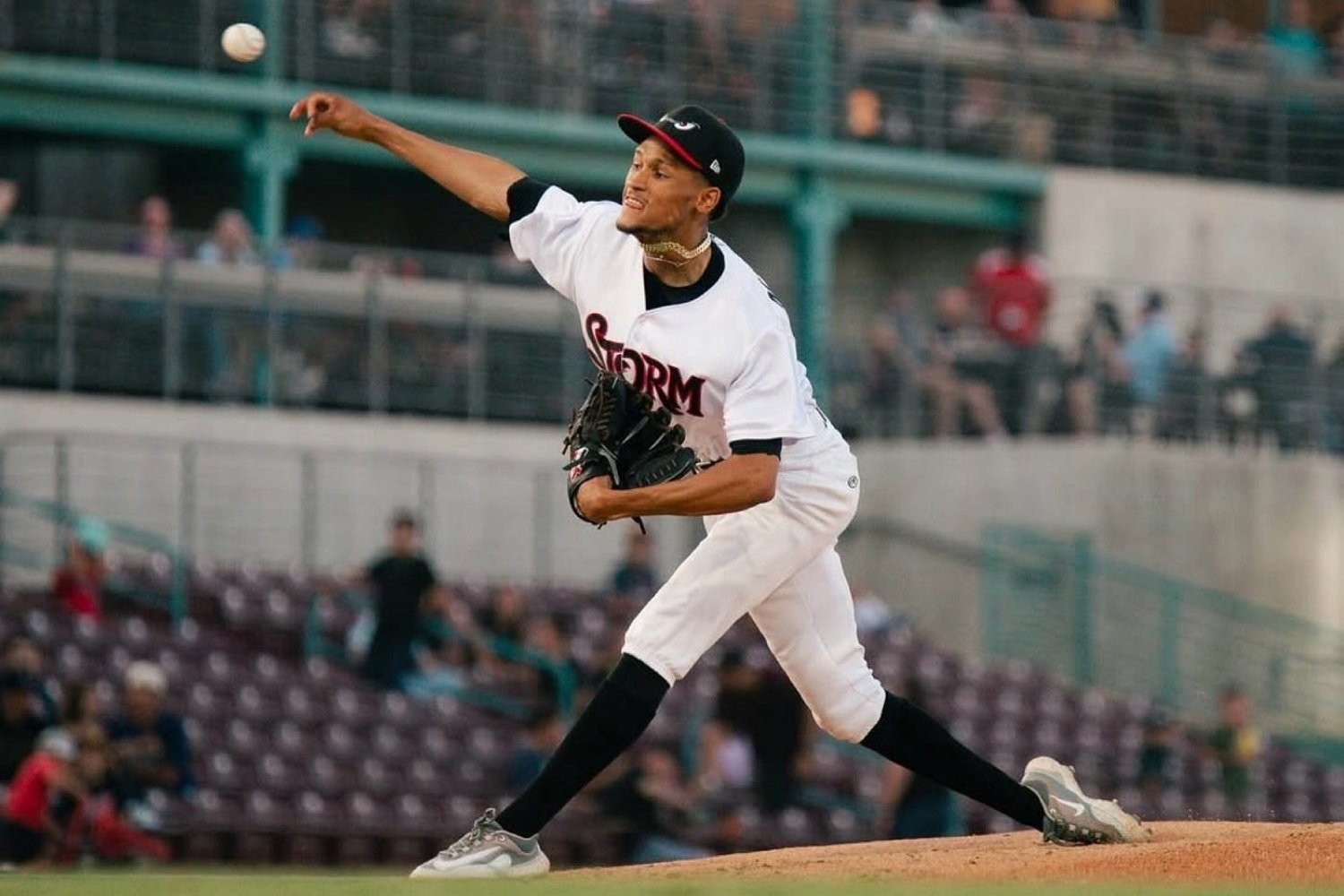 The San Diego Padres may lack the might they once had in terms of prospect depth, but that doesn’t mean they lack intrigue down on the farm. Having already explored three-quarters of the team’s top 20 prospects – as voted on by our Padres Mission staff – we turn our attention to one whose intrigue might become relevant rather soon. Check out prior entries in the rankings here: No. 6: Jagger Haynes No. 7: Humberto Cruz No. 8: Ty Harvey No. 9: Ryan Wideman No. 10: Kale Fountain Nos. 11-15 Nos. 16-20 Miguel Mendez – Pitcher (San Antonio Missions; Double-A) With so little depth and so few long-term names on the payroll on the mound for the Padres, it might seem there’s little to look forward to. Miguel Mendez might offer a shift in that mindset. Mendez was a quick riser in 2025. He began the season in A-ball, and before 2025 ended, he’d crossed into High-A and made a handful of starts at Double-A. The numbers support such a rapid ascent through the system, too. He made just three starts and threw 11 innings with Lake Elsinore. Therein, he allowed five runs on 11 hits but also struck out 18 hitters. That penchant for swings-and-misses earned him a dozen starts at the next level in Fort Wayne. He built on his early success in posting a 1.32 ERA, a 28.6 percent strikeout rate (70 total), and a 9.8 percent walk rate in 61 1/3 innings. That earned him another call-up. He wrapped 2025 with San Antonio, though the results were not quite as good. His ERA sat over eight in 22.1 innings (5.91 FIP) and a homer-to-flyball ratio up near 17 percent. All told, Mendez pitched 95 innings (22 starts), posted a 3.22 ERA, and struck out 29.4 percent of the batters he faced. One imagines that his clunky stint in San Antonio will have him ticketed for Double-A again to start the year, but one also doesn’t have to stretch to see the potential for a cup of coffee down the road if his trajectory stays on course. What To Like: Mendez doesn’t make this complicated. His stuff is very good. He brings a quality fastball with plenty of movement that he mixes with a slider and a less-used changeup. Baseball America’s scouting report noted the following: "Mendez attacks hitters out of a slightly lowered three-quarters slot with no shortage of arm speed and features a fastball, slider and a changeup. Mendez’s heater sits in the mid-to-upper-90s with both run and ride through the zone. It jumps out of his hand and plays especially well in the top half of the strike zone, which is also where it generates the vast majority of its swings and misses. Mendez’s tight mid-to-upper-80s slider regularly generates empty swings. It flashes plus with sharp two-plane tilt, though against right-handed hitters it will sometimes have more length than depth. Mendez used his upper-80s-to-low-90s changeup just 8% of the time, but its results were encouraging. It garnered a 37% miss rate while flashing effective tumble and fade." Fastball-slider is a devastating combination on its own, especially with the upside of each pitch. If he can harness the changeup to the point where it becomes a viable third pitch, then you’re talking about him in the big-league mix in fairly short order. The most important thing for Mendez thus far, though, has been the growth. In his first stint in affiliated ball back in 2022, he walked hitters at a rate up near 29 percent and struck them out at only half that clip. That number remained high in Low-A in both 2023 and 2024, with walk rates reading 13.3 and 14.9, respectively. That it came down so significantly across the various levels in 2025 is certainly encouraging. Though after that brief trip to San Antonio, it’s the one area where continued improvement will need to be demonstrated. What To Work On: The aforementioned command is, obviously, objective No. 1 for Mendez moving forward. There’s more evidence of him struggling with it than him having it to this point in his professional career. If we’re to assume that this is an aberration wrought by a small sample at a new level, then it’s not overly concerning. Beyond the obvious, Mendez needs to get that changeup into the game at a higher rate. It’s extraordinarily difficult to stick as a starter at the major-league level without a third pitch. That Mendez only threw it eight percent of the time last year – even amid the success he was experiencing – speaks to the lack of comfort he has with that offering. If he’s able to grasp command of the other two pitches more fully, then 2026 will present him with an opportunity to get that pitch to be a factor in the broader arsenal. What’s Next: Double-A seems like the most likely starting point for Mendez this year. If the command demonstrated last year returns, though, he could be on his way to El Paso before long once the new year begins. Beyond that, there are a couple of different routes the Padres could take with him. They could give him a full year of seasoning to harness command and develop the change. That could put him in decent position to grab a rotation spot in camp ahead of the 2027 season (assuming such adjustments are fully realized). There will be opportunities for rotation spots in the same way we’re seeing them this year. The other possibility is that we end up seeing Mendez pitching in San Diego before year’s end, albeit as a reliever. A two-pitch pitcher is much more viable in relief. Even with the depth the Padres have in the bullpen, there might be nothing stopping them from wanting to see his upside as a one- or two-inning reliever as he gets adapted to the big-league level. Either way, there’s an intensely bright future here that should be featured as part of the depth chart for the top club in some form or fashion before year’s end.
