


Randy Holt
-
Posts
486 -
Joined
-
Last visited
-
Days Won
6
Content Type
Profiles
San Diego Padres Videos
2026 San Diego Padres Top Prospects Ranking
San Diego Padres Free Agent & Trade Rumors, Notes, & Tidbits
Guides & Resources
2025 San Diego Padres Draft Pick Tracker
News
2026 San Diego Padres Draft Tracker: Picks & Bonuses
Forums
Blogs
Events
Store
Downloads
Gallery
Everything posted by Randy Holt
-
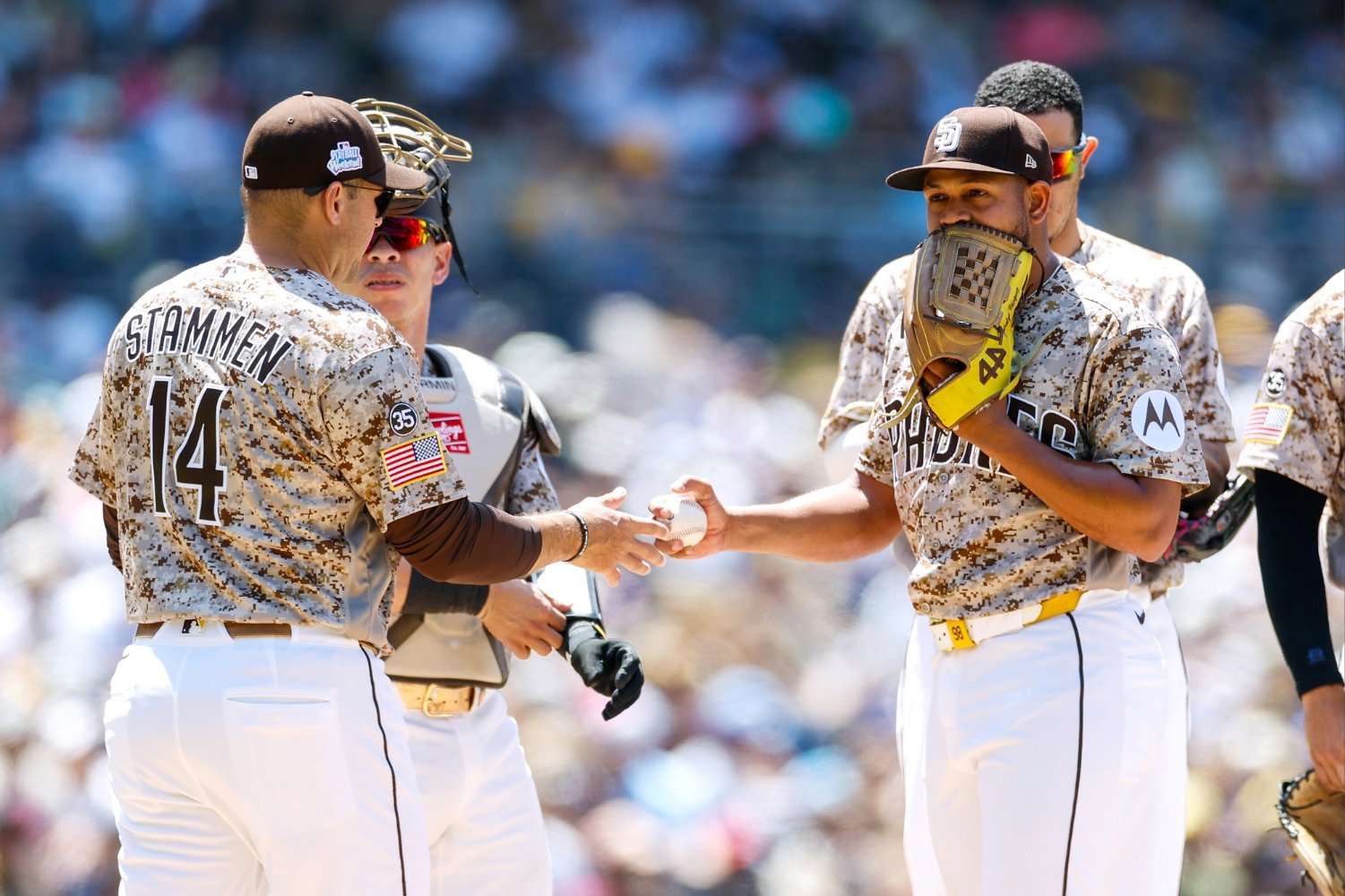
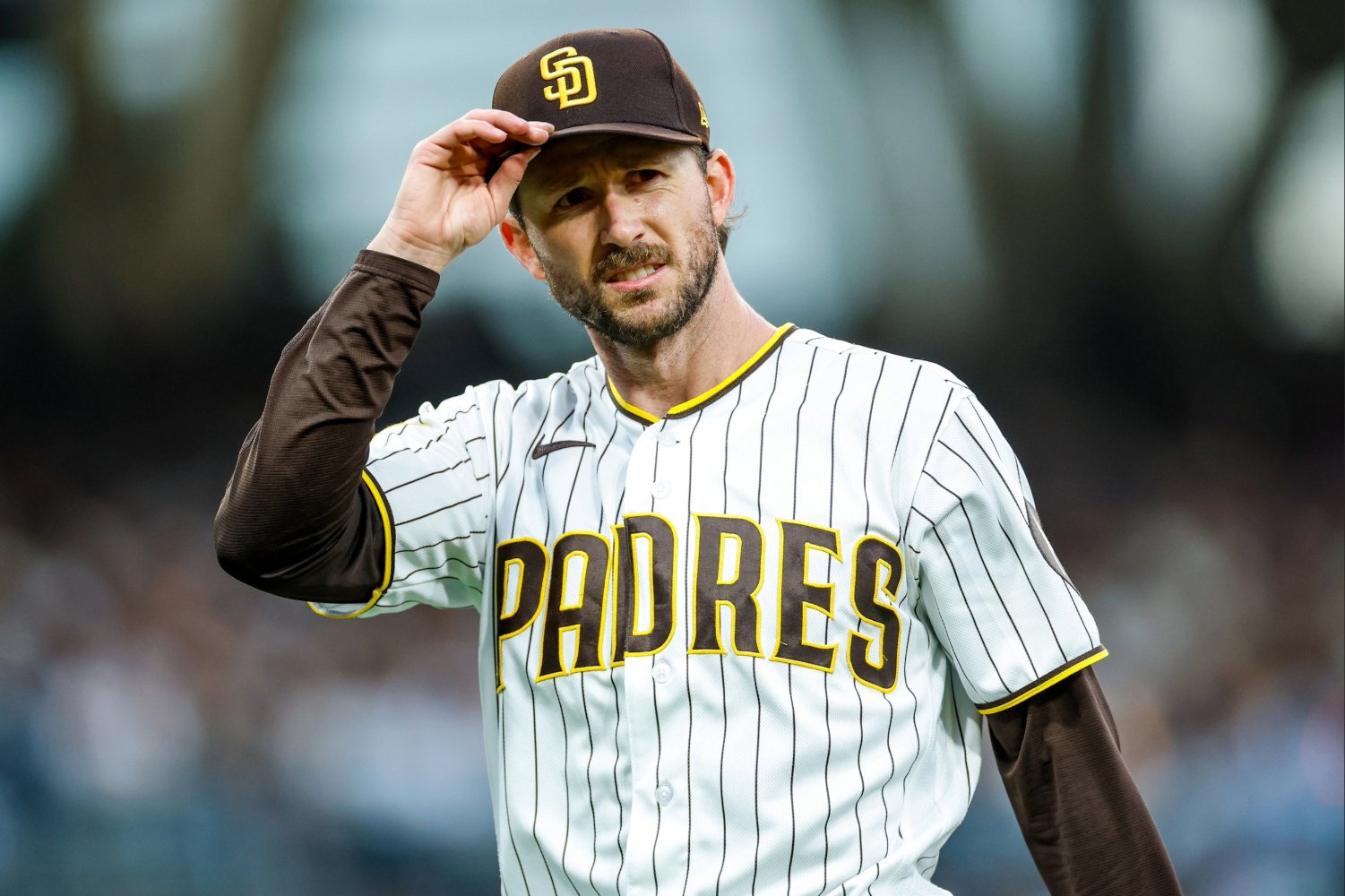 As we hit the end of June, the San Diego Padres' rotation picture remains as clouded as ever. Michael King is entrenched at the top of the starting five. We know that much. Randy Vásquez continues to provide decent-enough volume to stick around as part of the group despite increasingly alarming peripherals. From there, it gets messy. Lucas Giolito is now on the injured list with JP Sears up to replace him. Germán Márquez is nearing the end of a rehab assignment before his 5.76 ERA can rejoin the group. Griffin Canning has struggled mightily with his command, while each of Nick Pivetta & Joe Musgrove remain out indefinitely. If you're keeping track, that's two certainties for five spots, three massive question marks in the middle, and three injured arms on the other end. The Padres had Wandy Peralta serve as an opener on Tuesday with Sears scheduled to take the ball on Wednesday. They'll have an off day before circling back to Vásquez to open their series with the Los Angeles Dodgers on Friday. Which means that the most pressing question at this exact moment — how the team should handle Márquez & Canning upon the former's return — will get pushed to at least the weekend. It's difficult to imagine that the Padres would be comfortable running out both pitchers in their rotation given their respective struggles. While Giolito's absence does make it possible (as does Sears' ability to move to El Paso), each of Márquez and Canning have represented the starters with the largest hurdles to overcome in 2026. Prior to hitting the IL with a forearm injury, Márquez had made six starts for the Padres. He pitched to a 5.76 ERA, 6.64 FIP, a 14.8 percent strikeout rate, and a 9.4 percent walk rate. While his command fell within the neighborhood of "middling" from a walks perspective, his continually waning 94.3 MPH fastball velocity and precisely average (by Stuff+) knuckle-curve couldn't avoid hard contact; Márquez's 45.8 percent hard-hit rate sits in just the ninth percentile league-wide. Canning, meanwhile, has struggled with his command on the other side of the spectrum. His ERA sits at 7.38, largely due to the fact that he's walking more hitters than ever (13.7 percent). When hitters do swing, they're doing more damage than they were against Márquez in the hard-hit game, with Canning posting a 50.4 percent rate in that respect. He's had his moments, with a clean five-inning start against the New York Mets on June 6 and a 4.1 inning, one-run outing following an opener against St. Louis on June 17. The issue is that in between those kind of outings, he's had clunkers like a seven-run start on June 12 and a pair of six-run starts earlier in his Padres tenure. His second bulk outing saw him unable to finish even an inning and being credit for four runs before Kyle Hart cleaned up the bases he left loaded. Fresh as that particular outing may be, neither arm is one that's going to inspire much confidence. As such, determining which the Padres could go when Márquez is ready to return becomes a difficult task. In the case of Márquez, he's coming off four successful rehab outings with El Paso. He's thrown 15.1 innings, allowed three runs in total, and has his velocity up to 95.1 MPH. There's also more of an established track record (even if not terribly recently) to the point where the Padres may feel more comfortable rolling with him if they had to choose. Especially in the face of Canning's command woes. Even if the Friars wanted to get creative, something like piggybacking appears out of the question. Márquez has an 8.49 ERA his first time through the order while Canning features a 6.61 figure through the first pass. Given the inability to option either pitcher, it may be something they explore nevertheless, especially if they feel it can offer a bit more volume than they'd get from either arm on their own. Volume is, realistically, going to be the name of the game here. Neither pitcher is in a situation that offers Craig Stammen's squad legitimate upside, even if Márquez is showcasing improved velocity while out on rehab assignment. He has, though, given them 4.8 innings per start this year while Canning's down at 4.6 innings per start (excluding his bulk appearances out of the bullpen). If it's as simple as those two components, then perhaps the edge goes to Márquez. At the same time, maybe they feel as if Canning deserves a bit more runway himself in still working his way back to full strength from last year's Achilles injury. Tuesday's appearance could sap them of that patience, though. If this feels like stretching to make a case for one, that's the situation in which the Padres find themselves. It was always a volume approach to rounding out the rotation with the hope being that someone would latch onto a gig and run with it. That hasn't happened, to the point where the team likely is not going to be comfortable allowing each to retain their own spot even in the absence of three other starting pitchers. Given the development on Tuesday, it does feel like it'll be Márquez next time around, whether out of the gate or working in bulk. With such a shallow pool from which to choose, though, it's anybody's guess how this plays out over the remainder of the 2026 campaign.
 -
As Fernando Tatis Jr. and the San Diego Padres plummet further down the standings of the National League West, it becomes more difficult to find the positives in the offense given its responsibility for said plight. Tatis has played his own role within that as he and his fellow stalwarts in the lineup — namely Manny Machado and Jackson Merrill — have continued to generate production far below the threshold that their career norms and respective skill sets indicate. Considering his face-of-the-franchise status, Tatis represents the loudest of the struggling entries into the Padre lineup. A player with multiple 6.0 fWAR campaigns to his credit, the right-fielder-turned-second-baseman has just a pair of home runs on the stat sheet this year, and even those didn't start coming until May 30. It's not as if getting the ball over the outfield fence is the sole struggle of Tatis' game this year, either. Prior to this season, his lowest ISO over a full season was .178 (a number he posted last season). That's a modest figure coming off a .216 mark in 2024 and an even farther cry from where he was early in his career. There's plenty of context for why he's experienced such a precarious drop on the power side, but even the .073 ISO he's posted thus far in 2026 represents a rather severe regression against any of his previous seasons at this level. With the collective struggling to generate any source of power — the Padres rank 23rd in the league with a .144 team ISO — Tatis' role in its absence sits near the top of the team's list of concerns. That doesn't mean he has been a total zero at the plate, however. In fact, there are a number of things he's done that merit attention even in the face of such a dwindling power figure. By wRC+, Tatis has actually been better than league average (103). His line looks rather solid at .285/.349/.358. Even if the power isn't there, he's hitting well enough and walking at a sturdy-enough clip (8.9 percent) to create a steady on-base presence at the top of the order. He's also continued to make quality contact, with a hard-hit rate (53.1 percent) that sits within striking distance of his career average (52.5) and in the 96th percentile. In addition to that consistency, his 74.1 percent contact rate is almost entirely in line with each of the last two years following a 74.4 figure in 2024 and a 74.9 mark last season. Tatis has also been a rare bright spot on the situational side. He's hitting .306 with a .370 on-base percentage with runners on base while also going for a .316 average and .388 OBP with runners in scoring position. Each of his strikeout and walk rates trend in positive directions, while his wRC+ sits at 102 and 101 in the two situations, respectively. Even without the power, he's comfortably above where the Padres as a whole are performing in those situations; the team is slashing .238/.316/.400 with runners on and .236/.323/.392 when they're in scoring position. Of course, it's difficult for any of this to compensate for the absence of power. If anything, it only serves to make it all the more perplexing considering the positive swing decisions and quality of contact, perhaps driving home the idea that there's something mechanical at play that he simply cannot work his way out of. In any case, two things can be true: It's important not to lose sight of the fact that there's still a quality player in there (especially in conjunction with his defensive acumen), while also recognizing that Fernando Tatis Jr. needs to find his power stroke in order to fully realize his value to the San Diego Padres. View full article
-
Even Without Power, Fernando Tatis Jr. Is Finding Ways To Help Padres
Randy Holt posted an article in Padres
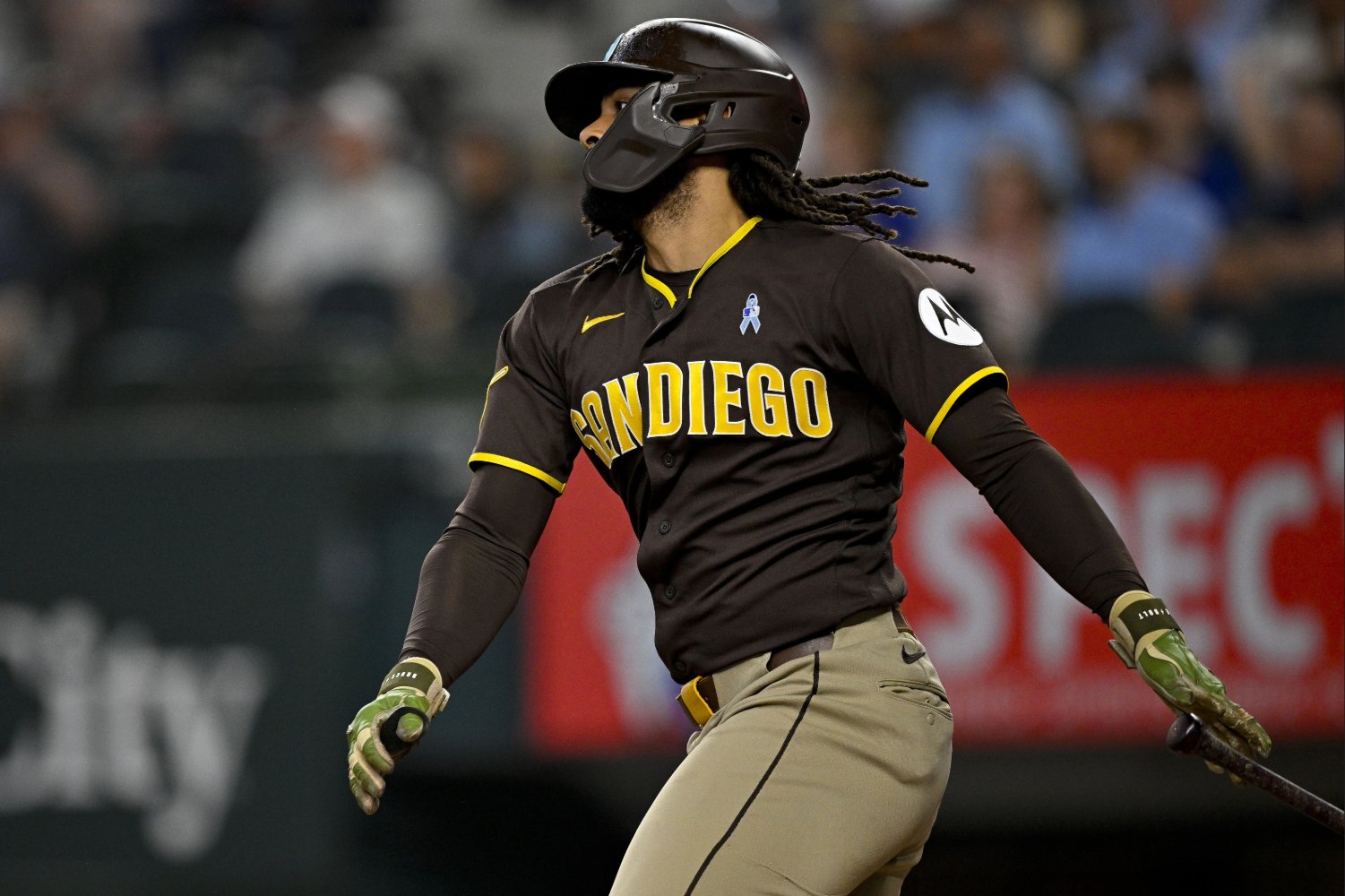 As Fernando Tatis Jr. and the San Diego Padres plummet further down the standings of the National League West, it becomes more difficult to find the positives in the offense given its responsibility for said plight. Tatis has played his own role within that as he and his fellow stalwarts in the lineup — namely Manny Machado and Jackson Merrill — have continued to generate production far below the threshold that their career norms and respective skill sets indicate. Considering his face-of-the-franchise status, Tatis represents the loudest of the struggling entries into the Padre lineup. A player with multiple 6.0 fWAR campaigns to his credit, the right-fielder-turned-second-baseman has just a pair of home runs on the stat sheet this year, and even those didn't start coming until May 30. It's not as if getting the ball over the outfield fence is the sole struggle of Tatis' game this year, either. Prior to this season, his lowest ISO over a full season was .178 (a number he posted last season). That's a modest figure coming off a .216 mark in 2024 and an even farther cry from where he was early in his career. There's plenty of context for why he's experienced such a precarious drop on the power side, but even the .073 ISO he's posted thus far in 2026 represents a rather severe regression against any of his previous seasons at this level. With the collective struggling to generate any source of power — the Padres rank 23rd in the league with a .144 team ISO — Tatis' role in its absence sits near the top of the team's list of concerns. That doesn't mean he has been a total zero at the plate, however. In fact, there are a number of things he's done that merit attention even in the face of such a dwindling power figure. By wRC+, Tatis has actually been better than league average (103). His line looks rather solid at .285/.349/.358. Even if the power isn't there, he's hitting well enough and walking at a sturdy-enough clip (8.9 percent) to create a steady on-base presence at the top of the order. He's also continued to make quality contact, with a hard-hit rate (53.1 percent) that sits within striking distance of his career average (52.5) and in the 96th percentile. In addition to that consistency, his 74.1 percent contact rate is almost entirely in line with each of the last two years following a 74.4 figure in 2024 and a 74.9 mark last season. Tatis has also been a rare bright spot on the situational side. He's hitting .306 with a .370 on-base percentage with runners on base while also going for a .316 average and .388 OBP with runners in scoring position. Each of his strikeout and walk rates trend in positive directions, while his wRC+ sits at 102 and 101 in the two situations, respectively. Even without the power, he's comfortably above where the Padres as a whole are performing in those situations; the team is slashing .238/.316/.400 with runners on and .236/.323/.392 when they're in scoring position. Of course, it's difficult for any of this to compensate for the absence of power. If anything, it only serves to make it all the more perplexing considering the positive swing decisions and quality of contact, perhaps driving home the idea that there's something mechanical at play that he simply cannot work his way out of. In any case, two things can be true: It's important not to lose sight of the fact that there's still a quality player in there (especially in conjunction with his defensive acumen), while also recognizing that Fernando Tatis Jr. needs to find his power stroke in order to fully realize his value to the San Diego Padres.
 -
Despite being clear of the health woes that plagued him in 2025, Jackson Merrill has not been immune to the struggles of the collective San Diego Padres offense. In fact, he's largely been a driver of such struggles. As he approaches his first 300 plate appearances of the season, Merrill carries a line of just .213/.277/.358 with little power (.146 ISO) and a wRC+ of 79. Each of his strikeout (24.1 percent) and walk (7.8 percent) rates are up a touch, with very little batted ball luck on which to fall back (.259 BABIP). He's provided steady defense and been a force on the bases (12 steals), but there hasn't been much to generate excitement over his performance at the plate. The month of June has represented a turnaround in at least one respect, however. Merrill's power is beginning to show itself with more consistency than we'd seen in the first couple of months of the season. Many of the issues that we saw from Merrill have persisted even halfway this month. His slash still only features a batting average of .226 and on-base percentage lingering around .260. His wRC+ is still, technically, that of a below-average hitter at 93. His batted ball fortunes are worse than ever, at a .244 BABIP. The power, though, is of particular interest. Merrill's ability to impact a baseball game with one swing has started to appear, even in the face of continued struggle elsewhere. Merrill's ISO this month reads .210. Coming off a .130 figure in March & April and a .121 output in May, that's particularly encouraging. His three home runs this month match his total from March & April with half the month still to go. What's more is that Merrill's 52.1 percent hard-hit rate represents his highest in an individual month this year. That's by a fairly wide margin, too; he had rates of 44.2 and 47.7 percent in each of the the first two months. What's interesting in the re-emergence of his power is that it's largely come on the strength of his work against breaking pitches. While Merrill's best work in his career has come against the hard stuff (run values of six and seven in his first two seasons, respectively), his rookie year showcased an impressive standing against breaking pitches. This month, he's mashing them: His 61.5 percent hard-hit rate against breaking pitches this month is his highest against any of the three groups in any month thus far. He's finding the barrel at an obscene 23.1 percent clip, too, helping to drive that trend. Two of his three home runs this month have also come against breaking pitches. It's something that Merrill clearly recognizes, as well. His swing rate against breaking pitches is up at 68.2 percent this month, leading all pitch groups. What's encouraging about that is that while he's swinging at them more, he's not whiffing. Merrill's swing-and-miss rate against breaking pitches is actually down slightly from last month, while his fly-ball rate on contact has more than doubled to 53.8 percent. Whether or not this is a permanent trend, however, remains to be seen. Merrill's best work has always come against fastballs. They've served as the primary source of quality contact and subsequent power output in the small sample that his career still is. That breaking balls have jumped to the forefront of his production is an interesting development that doesn't feature a strong foundation on which to stand at this point. What may be more important in terms of that foundational skillset is that Merrill appears to be locking in his eye on some level. There's a pitch recognition happening here that is allowing him to jump on breaking pitches. Perhaps that's something that can carry over into the rest of his approach as he tries to reestablish himself as a multi-faceted offensive player. That's something that we'll have to continue to monitor given the minuscule sample with which we have to work. View full article
-
Jackson Merrill's Power Is Starting to Manifest, Courtesy of Breaking Balls
Randy Holt posted an article in Padres
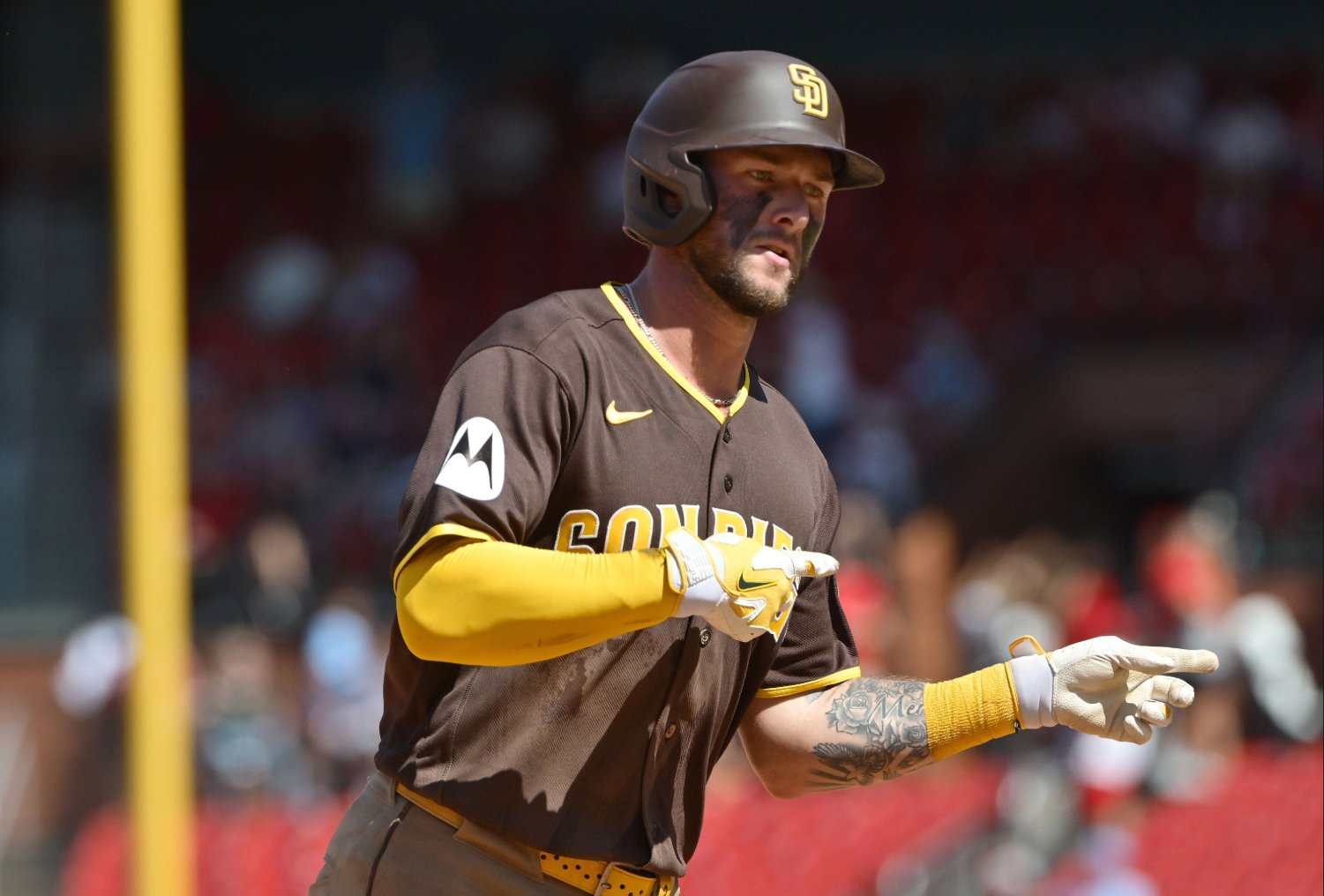 Despite being clear of the health woes that plagued him in 2025, Jackson Merrill has not been immune to the struggles of the collective San Diego Padres offense. In fact, he's largely been a driver of such struggles. As he approaches his first 300 plate appearances of the season, Merrill carries a line of just .213/.277/.358 with little power (.146 ISO) and a wRC+ of 79. Each of his strikeout (24.1 percent) and walk (7.8 percent) rates are up a touch, with very little batted ball luck on which to fall back (.259 BABIP). He's provided steady defense and been a force on the bases (12 steals), but there hasn't been much to generate excitement over his performance at the plate. The month of June has represented a turnaround in at least one respect, however. Merrill's power is beginning to show itself with more consistency than we'd seen in the first couple of months of the season. Many of the issues that we saw from Merrill have persisted even halfway this month. His slash still only features a batting average of .226 and on-base percentage lingering around .260. His wRC+ is still, technically, that of a below-average hitter at 93. His batted ball fortunes are worse than ever, at a .244 BABIP. The power, though, is of particular interest. Merrill's ability to impact a baseball game with one swing has started to appear, even in the face of continued struggle elsewhere. Merrill's ISO this month reads .210. Coming off a .130 figure in March & April and a .121 output in May, that's particularly encouraging. His three home runs this month match his total from March & April with half the month still to go. What's more is that Merrill's 52.1 percent hard-hit rate represents his highest in an individual month this year. That's by a fairly wide margin, too; he had rates of 44.2 and 47.7 percent in each of the the first two months. What's interesting in the re-emergence of his power is that it's largely come on the strength of his work against breaking pitches. While Merrill's best work in his career has come against the hard stuff (run values of six and seven in his first two seasons, respectively), his rookie year showcased an impressive standing against breaking pitches. This month, he's mashing them: His 61.5 percent hard-hit rate against breaking pitches this month is his highest against any of the three groups in any month thus far. He's finding the barrel at an obscene 23.1 percent clip, too, helping to drive that trend. Two of his three home runs this month have also come against breaking pitches. It's something that Merrill clearly recognizes, as well. His swing rate against breaking pitches is up at 68.2 percent this month, leading all pitch groups. What's encouraging about that is that while he's swinging at them more, he's not whiffing. Merrill's swing-and-miss rate against breaking pitches is actually down slightly from last month, while his fly-ball rate on contact has more than doubled to 53.8 percent. Whether or not this is a permanent trend, however, remains to be seen. Merrill's best work has always come against fastballs. They've served as the primary source of quality contact and subsequent power output in the small sample that his career still is. That breaking balls have jumped to the forefront of his production is an interesting development that doesn't feature a strong foundation on which to stand at this point. What may be more important in terms of that foundational skillset is that Merrill appears to be locking in his eye on some level. There's a pitch recognition happening here that is allowing him to jump on breaking pitches. Perhaps that's something that can carry over into the rest of his approach as he tries to reestablish himself as a multi-faceted offensive player. That's something that we'll have to continue to monitor given the minuscule sample with which we have to work.
 -
The San Diego Padres have what is perhaps the most impressive pitcher in baseball in Mason Miller. At worst, they have its most impressive pitch in the form of his slider. But while his slider and obscene velocity compound to grab most of the narrative around the stability of the team's relief corps, it shouldn't overshadow the work being done by Adrian Morejon. That Morejon is having an excellent season is hardly surprising. He's coming off a pair of impressive campaigns, including a 2025 season in which he posted a 2.08 ERA, 2.2 fWAR, and made an appearance in Atlanta as a National League All-Star. That excellence is a bit overlooked, however, given the first number to which one always points when examining a pitcher's quality: the ERA. Morejon has a 4.00 ERA through his first 33 appearances of 2026. That number itself ranks only 119th among qualifying relief pitchers. It's a number that makes his overall performance somewhat easy to overlook. It's also incredibly deceptive. Despite that figure sitting atop the stat sheet, Morejon has thrived everywhere else. His percentile distribution alone is indicative of a pitcher that has been much better than such a number would indicate; he ranks in the top 10 percent league-wide in xERA, fastball velocity, average exit velocity allowed, barrel rate allowed, hard-hit rate, chase rate, whiff rate, walk rate, and ground-ball rate. In other words, he's one of the best pitchers in the sport at basically anything you can do on the mound. Not only has Morejon brought elite velocity, he's been dominant in forcing opposing hitters to chase and look foolish in doing so, as illustrated by his whiff rate (34.2 percent). In those rare instances in which hitters do make contact, they're not doing it to any meaningful extent. As such, it becomes easy to attribute the ERA to a blend of bad luck (.305 opposing BABIP) and a pair of isolated clunky outings (one on April 7 in Pittsburgh and one on June 4 in Philadelphia). Otherwise, he's been genuinely excellent. Beyond the ERA itself, Morejon has posted a 2.21 FIP and strikeout (28.1 percent) & walk (4.8 percent) rates that would stand as a career best if the season ended today. He's already turned in a 1.3 fWAR figure, putting him on pace to at least match the total he posted in his standard-setting 2025 season. That Morejon is posting these numbers speaks to what the stuff is doing this year. He's thrown the sinker as a primary pitch at 47 percent of the time, with each of his slider (21 percent), changeup (18 percent), and four-seam (14 percent) serving as consistently-used secondary offerings. Stuff+ loves all four pitches, as they carry figures of 133, 127, 129, and 121, respectively. That means that not only his pitches above average in their physical characteristics but comfortably above. Only Mason Miller's slider ranks higher on the season among Padre pitchers and nobody (not even Miller) has a better pitch by that measure since the start of June. For what it's worth, all four pitches also sit above average on the Location+ side with the changeup leading the way at 115, indicating he's not only maximizing his pitches in their shape but in their situational value as well. Statcast's new data around swing timing and miss distance helps to further emphasize the work being done by Morejon: In general, the pitches are doing what they're supposed to be doing. Hitters are late on the four-seam and early on each of the changeup & slider. Two of Morejon's pitches, the change and the four-seam, rank in the top eight of individual Padre pitches in their ability to generate flawed swings (20 and 16 percent, respectively). That Morejon's avoiding bats in this way speaks to not only the stuff itself but his ability to locate. It's an effective supplement to what each of Stuff+ & Location+ tell us. Regardless of metric, though, it all tells us the same thing: Adrian Morejon has been one of the best pitchers in Major League Baseball in 2026. If anything, his ability to mix four pitches this effectively rather than the relief industry standard of two or maybe three only adds to the lore. It's easy to overlook the season he's having; the Padres are struggling, his ERA looks below average, and he shares a bullpen seat with baseball's objectively best reliever. None of that, though, should lead to an underestimation of just how good Adrian Morejon has been this season. View full article
-
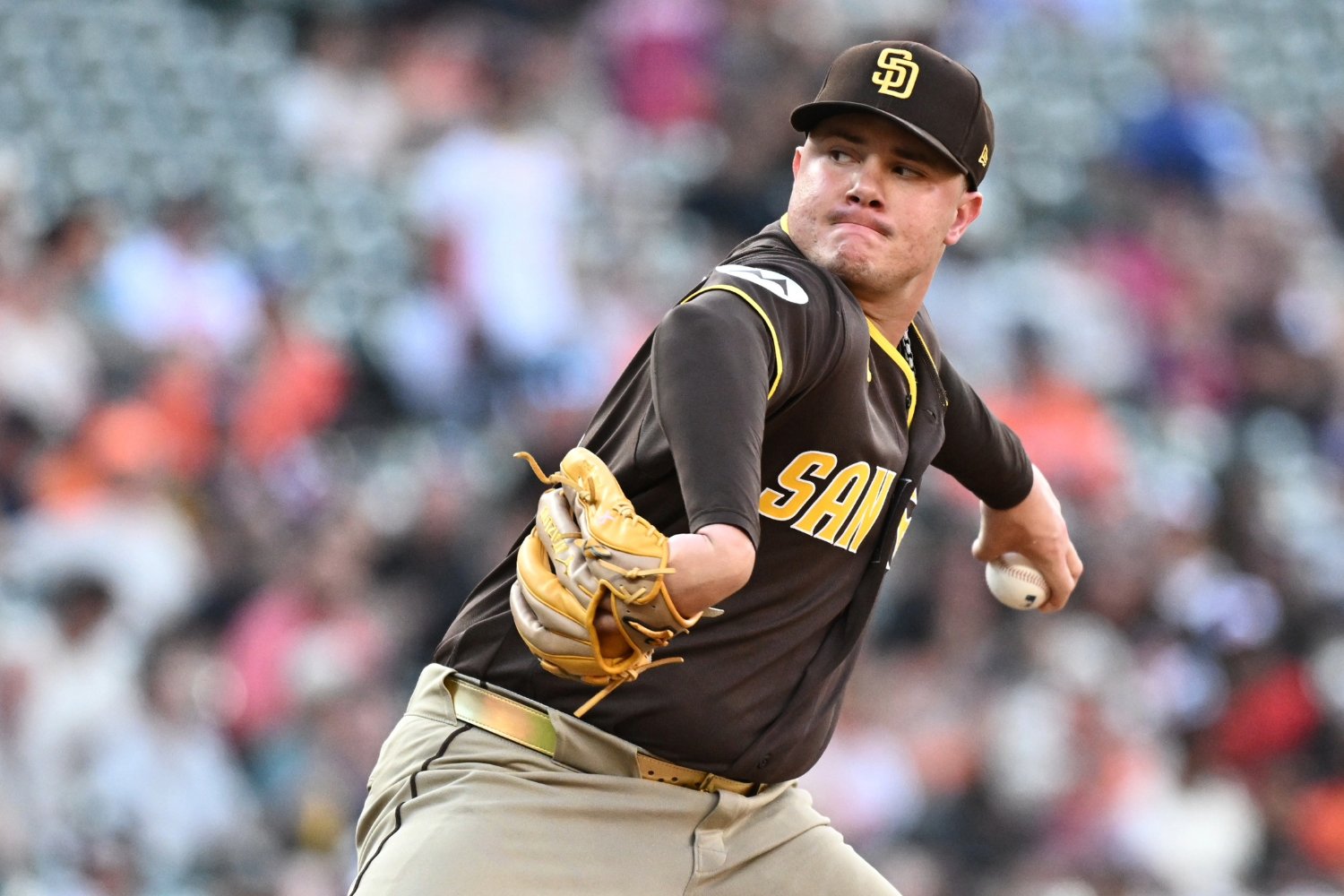 The San Diego Padres have what is perhaps the most impressive pitcher in baseball in Mason Miller. At worst, they have its most impressive pitch in the form of his slider. But while his slider and obscene velocity compound to grab most of the narrative around the stability of the team's relief corps, it shouldn't overshadow the work being done by Adrian Morejon. That Morejon is having an excellent season is hardly surprising. He's coming off a pair of impressive campaigns, including a 2025 season in which he posted a 2.08 ERA, 2.2 fWAR, and made an appearance in Atlanta as a National League All-Star. That excellence is a bit overlooked, however, given the first number to which one always points when examining a pitcher's quality: the ERA. Morejon has a 4.00 ERA through his first 33 appearances of 2026. That number itself ranks only 119th among qualifying relief pitchers. It's a number that makes his overall performance somewhat easy to overlook. It's also incredibly deceptive. Despite that figure sitting atop the stat sheet, Morejon has thrived everywhere else. His percentile distribution alone is indicative of a pitcher that has been much better than such a number would indicate; he ranks in the top 10 percent league-wide in xERA, fastball velocity, average exit velocity allowed, barrel rate allowed, hard-hit rate, chase rate, whiff rate, walk rate, and ground-ball rate. In other words, he's one of the best pitchers in the sport at basically anything you can do on the mound. Not only has Morejon brought elite velocity, he's been dominant in forcing opposing hitters to chase and look foolish in doing so, as illustrated by his whiff rate (34.2 percent). In those rare instances in which hitters do make contact, they're not doing it to any meaningful extent. As such, it becomes easy to attribute the ERA to a blend of bad luck (.305 opposing BABIP) and a pair of isolated clunky outings (one on April 7 in Pittsburgh and one on June 4 in Philadelphia). Otherwise, he's been genuinely excellent. Beyond the ERA itself, Morejon has posted a 2.21 FIP and strikeout (28.1 percent) & walk (4.8 percent) rates that would stand as a career best if the season ended today. He's already turned in a 1.3 fWAR figure, putting him on pace to at least match the total he posted in his standard-setting 2025 season. That Morejon is posting these numbers speaks to what the stuff is doing this year. He's thrown the sinker as a primary pitch at 47 percent of the time, with each of his slider (21 percent), changeup (18 percent), and four-seam (14 percent) serving as consistently-used secondary offerings. Stuff+ loves all four pitches, as they carry figures of 133, 127, 129, and 121, respectively. That means that not only his pitches above average in their physical characteristics but comfortably above. Only Mason Miller's slider ranks higher on the season among Padre pitchers and nobody (not even Miller) has a better pitch by that measure since the start of June. For what it's worth, all four pitches also sit above average on the Location+ side with the changeup leading the way at 115, indicating he's not only maximizing his pitches in their shape but in their situational value as well. Statcast's new data around swing timing and miss distance helps to further emphasize the work being done by Morejon: In general, the pitches are doing what they're supposed to be doing. Hitters are late on the four-seam and early on each of the changeup & slider. Two of Morejon's pitches, the change and the four-seam, rank in the top eight of individual Padre pitches in their ability to generate flawed swings (20 and 16 percent, respectively). That Morejon's avoiding bats in this way speaks to not only the stuff itself but his ability to locate. It's an effective supplement to what each of Stuff+ & Location+ tell us. Regardless of metric, though, it all tells us the same thing: Adrian Morejon has been one of the best pitchers in Major League Baseball in 2026. If anything, his ability to mix four pitches this effectively rather than the relief industry standard of two or maybe three only adds to the lore. It's easy to overlook the season he's having; the Padres are struggling, his ERA looks below average, and he shares a bullpen seat with baseball's objectively best reliever. None of that, though, should lead to an underestimation of just how good Adrian Morejon has been this season.
 -
In Mason Miller, the San Diego Padres have the best relief arm in baseball coming out of their bullpen. The wild thing is that the above sentiment isn't opinion. It's as objective an idea as possible considering his blend of velocity, strikeouts, and overall ability to prevent runs. As the calendar hits the middle of June, Miller is one of the only certainties the Padres possess on a roster full of questions. Miller's 1.9 fWAR through his first 29 appearances leads all qualifying relievers. As does his remarkable 51.8 percent strikeout rate (Miller has faced 114 hitters as of this writing and struck out 59 of them). His 0.90 ERA ranks fifth among that group, but he's also allowing the least amount of hard contact by a wide margin (14.0 percent) in those rare instances in which a hitter even gets a bat on the ball. Miller's 51.9 percent contact rate is the best in the sport by more than seven percent. His 101.3 MPH fastball velocity also sits at the top of the leaderboard. For an illustrated indicator of just how good he's been, take his Baseball Savant percentile chart. He ranks in the 100th percentile for (i.e., he's the best in baseball at) the following: xERA, xBA, fastball velocity, average exit velocity allowed, barrel rate allowed, hard-hit rate, whiff rate, and strikeout rate. Oh, and his chase rate and ground-ball rate also rank in the top 10 perecent among all pitchers league-wide. Given all of that, we didn't necessarily need new reasons to be impressed by Miller. He was already one of the game's top closers upon his arrival in San Diego and has only increased in his dominance in the trips he's taken to the mound since. However, Statcast's new data has given us even more ways in which that dominance can be quantified. The introduction of the swing timing and the miss distance leaderboard unlocks additional insight into the impact of pitches. We now have more of a tangible means to describe just how much certain pitchers can overwhelm the average hitter. The miss distance helps to indicate just that; it's the closest distance (in inches) between the top half of the bat and the ball over the course of a swing. Swing timing, meanwhile, helps to indicate how in front of or behind, above or below, and horizontally centered a swing ends up on a given pitch or pitch type. In Miller's case, that data is illustrated below in a couple of different ways. The red curve is his fastball; the yellow curve is his slider. Let's talk about the fastball first. Hitters are able to keep it centered, sure. A four-seam isn't liable to feature too much horizontal movement to it, after all. What's more notable is in the timing and the vertical components. Hitters are much more liable to be behind. They're not getting completely overpowered given the overall velocity present in the game, but they're much more likely to be behind than directly on time, and they're certainly not going to be early. When you factor in the vertical movement in which a four-seamer moves upward — Miller gets 16.9 inches of induced break — it becomes nearly impossible for a hitter to make quality contact. In Miller's case, the 22.7 percent hard-hit rate he's allowing is more than 25 percent lower than it was last year. The slider is, perhaps, an even more impressive picture. In each of the three areas of the swing, hitters are all over the map. They're off the end of the bat, they're swinging early, and they're swinging over it. A "flawed" swing in the eyes of this new data is a swing in which a hitter fails on all three fronts. Miller's 37 percent rate of flawed swings with his slider isn't just the highest rate among any individual pitch type for any Padres pitcher, but the highest of any individual pitch for any pitcher in the sport. The 60 percent whiff rate with the slider is also atop the leaderboard, while his 67 percent rate of competitive swings is the lowest for any pitch. It's not just that Mason Miller is likely the most dominant reliever in the sport. He also possesses its most dominant pitch in his slider. That four-seam/slider combination is not a modern invention in baseball, but Miller is executing it as well as anybody we've seen in recent memory. The idea itself is not revelatory; Miller was already having an elite season by just about any measure. Statcast's new data is just another perspective to reinforce it. View full article
-
Padres' New Statcast Data Reveals Just How Dominant Mason Miller Really Is
Randy Holt posted an article in Padres
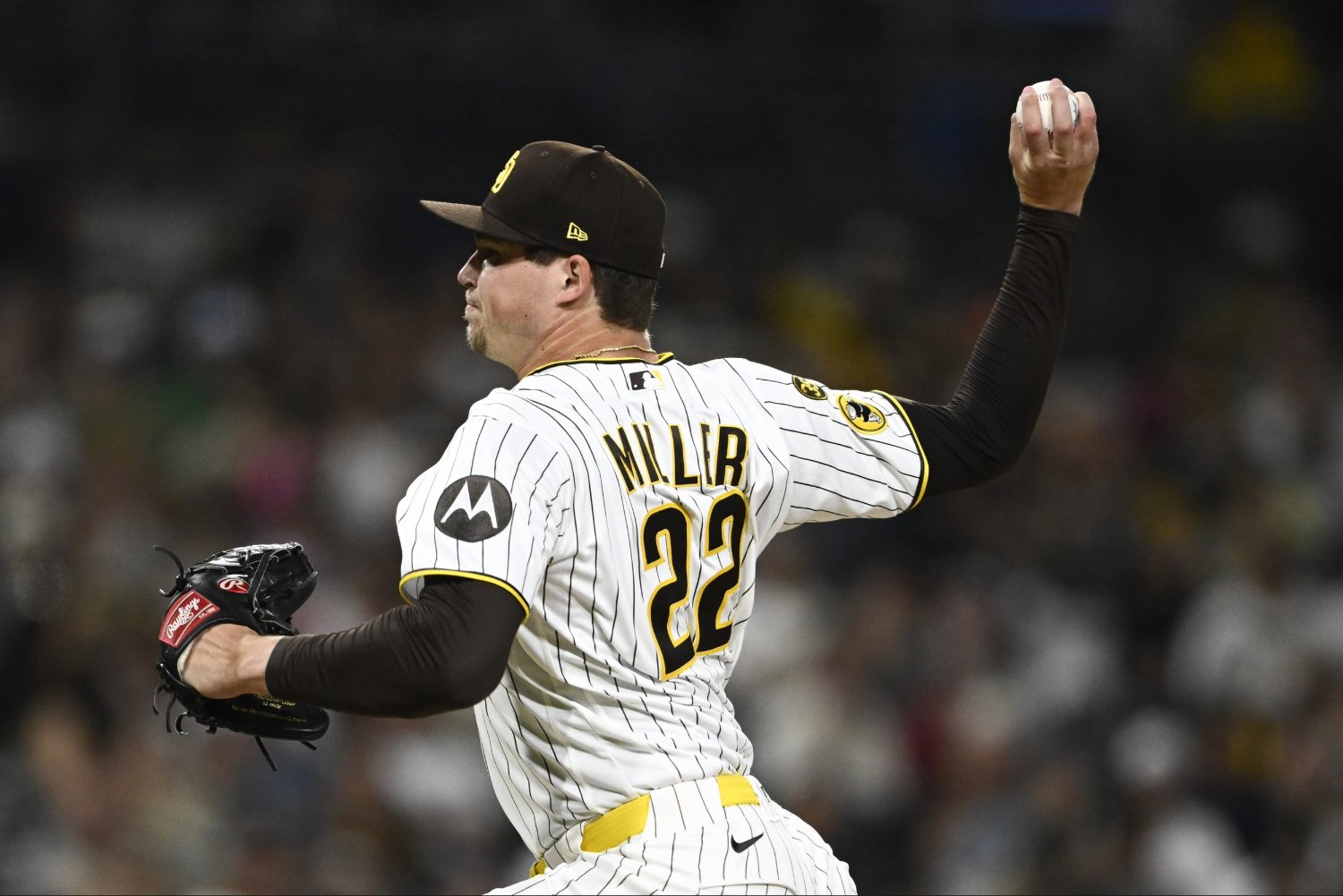 In Mason Miller, the San Diego Padres have the best relief arm in baseball coming out of their bullpen. The wild thing is that the above sentiment isn't opinion. It's as objective an idea as possible considering his blend of velocity, strikeouts, and overall ability to prevent runs. As the calendar hits the middle of June, Miller is one of the only certainties the Padres possess on a roster full of questions. Miller's 1.9 fWAR through his first 29 appearances leads all qualifying relievers. As does his remarkable 51.8 percent strikeout rate (Miller has faced 114 hitters as of this writing and struck out 59 of them). His 0.90 ERA ranks fifth among that group, but he's also allowing the least amount of hard contact by a wide margin (14.0 percent) in those rare instances in which a hitter even gets a bat on the ball. Miller's 51.9 percent contact rate is the best in the sport by more than seven percent. His 101.3 MPH fastball velocity also sits at the top of the leaderboard. For an illustrated indicator of just how good he's been, take his Baseball Savant percentile chart. He ranks in the 100th percentile for (i.e., he's the best in baseball at) the following: xERA, xBA, fastball velocity, average exit velocity allowed, barrel rate allowed, hard-hit rate, whiff rate, and strikeout rate. Oh, and his chase rate and ground-ball rate also rank in the top 10 perecent among all pitchers league-wide. Given all of that, we didn't necessarily need new reasons to be impressed by Miller. He was already one of the game's top closers upon his arrival in San Diego and has only increased in his dominance in the trips he's taken to the mound since. However, Statcast's new data has given us even more ways in which that dominance can be quantified. The introduction of the swing timing and the miss distance leaderboard unlocks additional insight into the impact of pitches. We now have more of a tangible means to describe just how much certain pitchers can overwhelm the average hitter. The miss distance helps to indicate just that; it's the closest distance (in inches) between the top half of the bat and the ball over the course of a swing. Swing timing, meanwhile, helps to indicate how in front of or behind, above or below, and horizontally centered a swing ends up on a given pitch or pitch type. In Miller's case, that data is illustrated below in a couple of different ways. The red curve is his fastball; the yellow curve is his slider. Let's talk about the fastball first. Hitters are able to keep it centered, sure. A four-seam isn't liable to feature too much horizontal movement to it, after all. What's more notable is in the timing and the vertical components. Hitters are much more liable to be behind. They're not getting completely overpowered given the overall velocity present in the game, but they're much more likely to be behind than directly on time, and they're certainly not going to be early. When you factor in the vertical movement in which a four-seamer moves upward — Miller gets 16.9 inches of induced break — it becomes nearly impossible for a hitter to make quality contact. In Miller's case, the 22.7 percent hard-hit rate he's allowing is more than 25 percent lower than it was last year. The slider is, perhaps, an even more impressive picture. In each of the three areas of the swing, hitters are all over the map. They're off the end of the bat, they're swinging early, and they're swinging over it. A "flawed" swing in the eyes of this new data is a swing in which a hitter fails on all three fronts. Miller's 37 percent rate of flawed swings with his slider isn't just the highest rate among any individual pitch type for any Padres pitcher, but the highest of any individual pitch for any pitcher in the sport. The 60 percent whiff rate with the slider is also atop the leaderboard, while his 67 percent rate of competitive swings is the lowest for any pitch. It's not just that Mason Miller is likely the most dominant reliever in the sport. He also possesses its most dominant pitch in his slider. That four-seam/slider combination is not a modern invention in baseball, but Miller is executing it as well as anybody we've seen in recent memory. The idea itself is not revelatory; Miller was already having an elite season by just about any measure. Statcast's new data is just another perspective to reinforce it.
 -
In just about every way possible, the 2026 season has been Manny Machado's worst of his major-league career. The last time Machado even flirted with the threshold constituting an average hitter was 2017, well before he was a member of the San Diego Padres. This year has represented something much worse, however, as Machado's wRC+ of just 73 has his offensive value among the 10-worst qualified hitters in the sport. Amid those struggles, concerns over age have begun to emerge. Unlike Fernando Tatis Jr. or Jackson Merrill, each of whom are also experiencing their own woes in 2026, Machado is at the point in his career where the aging curve looms as a factor. His bat speed has declined in the last few seasons while his power output is threatening to decrease for a sixth consecutive campaign. It's an entirely reasonable concern given how things have transpired in San Diego. The most surefire of the concerns would have manifested in the form of issues against fastballs. Waning bat speed unable to keep up with increasing velocity could be indicative of such age-related issues, especially given that Machado's best work has come against the hard stuff. His hard-hit rate has been highest against fastballs every season of his big league career. His best outcomes in terms of batting average have come against fastballs in five of the last seven seasons prior to 2026 and, with the exception of 2022, have always been within just a few percentage points of whatever pitch type did end up atop the list. They've also represented the lowest source of swing-and-miss for Machado throughout his career. Until 2026, at least. This year, Machado is hitting a mere .192 against the hard stuff. Of course, that number's relative given the .167 average he's produced against off-speed and .135 average versus breaking pitches. Nevertheless, it's a sharp decline combined with a swing-and-miss rate of 22.8 percent that, for the first time, rests narrowly above the off-speed stuff for the lowest among the three groups. His whiff rate is also cause for concern, as a 21.4 percent swing-and-miss rate on fastballs inside the zone represents a slight increase of last year's number that served as a big jump from 2024. However, before we start to get too wrapped up in Machado's fight against the aging curve, there are a couple of things to consider. The first is the luck component. Machado's .210 batting average against fastballs comes despite a .272 xBA. His .320 wOBA against that pitch type sits far lower than his .371 xwOBA indicates. He's still making hard contact over half the time against fastballs (53.4 percent), but not finding fortune in doing so. Perhaps more important, though, is Statcast's new data around swing timing and miss distances. This new information informs us not only about a hitter's timing against each of the three prominent pitch groups but how much they're missing in the event that they're not making contact. As easy as it could be to find concern over Machado's performance against fastballs, this new data tends to lean the other direction. Here is Machado's performance against fastballs specifically: Machado is centering the ball effectively. He's getting slightly under it in a way that you want to be against fastballs. Most importantly, though, he's not that late on fastballs. The middle graph in the above indicates that he's a touch late, but mostly on time. Given his declining bat speed and the velocity against which he's going, this is not an unreasonable trend quite yet. Certainly not one that would offer genuine concern for his ability to handle heat. Further, Machado's average miss distance against fastballs sits at 0.9 inches. That's below the big-league average of 1.3 inches. He has a flawed swing — characterized as a swing that does none of the three above components correctly — just seven percent of the time while generating perfect contact at a 24 percent clip. His competitive swing rate of 92.9 percent is one of the top rates for any Padre hitter against any pitch type. Reason for optimism exists here, borne out of the fact that Machado isn't as overmatched by fastballs as other bits of information may have us believe. It's possible that there's a bit of a timing issue at play, certainly. Perhaps even a pitch recognition issue. But between the luck element and the information wrought by the new Statcast data, we can stave off thoughts of Manny Machado's retirement for at least another day. View full article
-
Padres Have Hope, As New Statcast Data Offers Optimism Around Manny Machado
Randy Holt posted an article in Padres
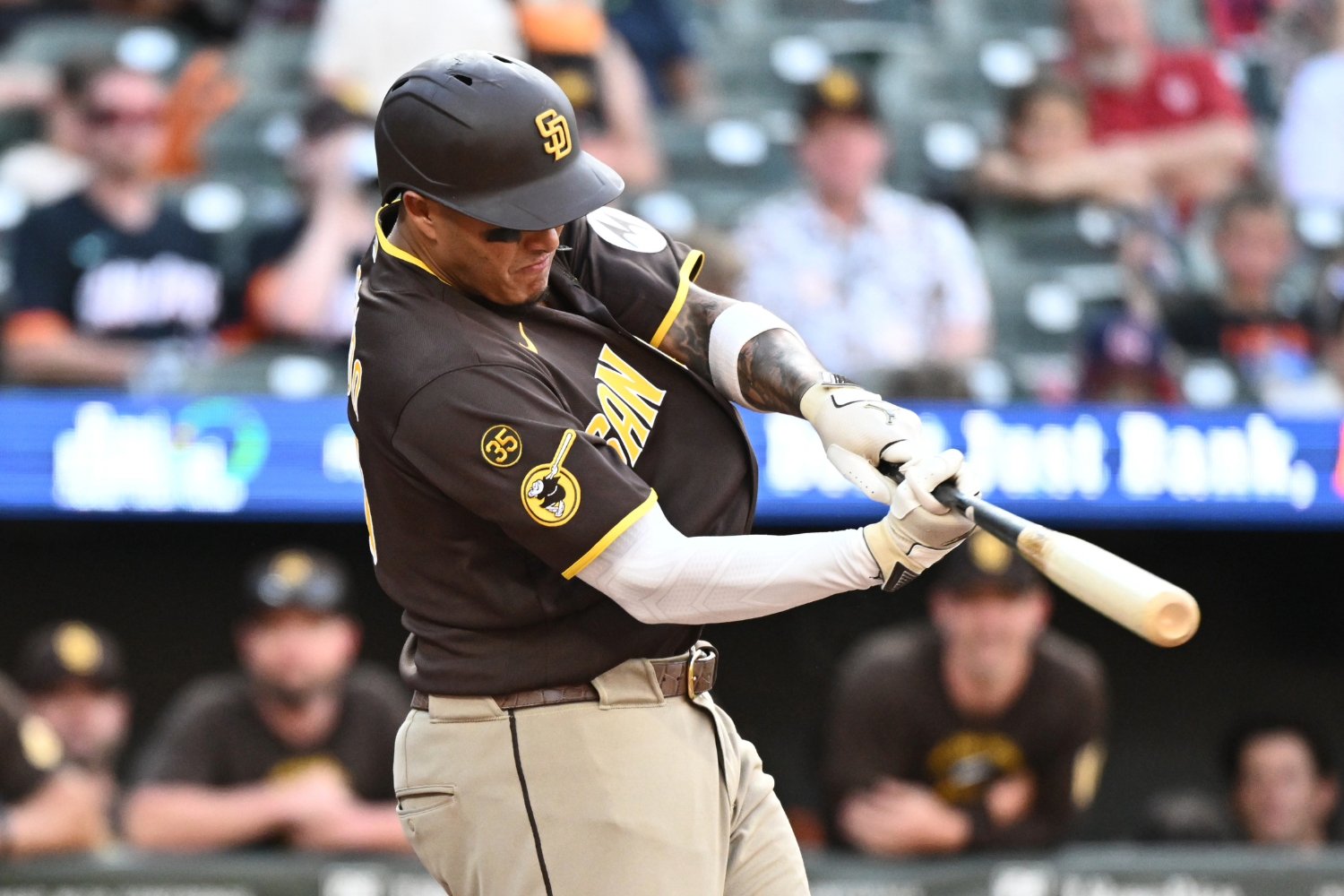 In just about every way possible, the 2026 season has been Manny Machado's worst of his major-league career. The last time Machado even flirted with the threshold constituting an average hitter was 2017, well before he was a member of the San Diego Padres. This year has represented something much worse, however, as Machado's wRC+ of just 73 has his offensive value among the 10-worst qualified hitters in the sport. Amid those struggles, concerns over age have begun to emerge. Unlike Fernando Tatis Jr. or Jackson Merrill, each of whom are also experiencing their own woes in 2026, Machado is at the point in his career where the aging curve looms as a factor. His bat speed has declined in the last few seasons while his power output is threatening to decrease for a sixth consecutive campaign. It's an entirely reasonable concern given how things have transpired in San Diego. The most surefire of the concerns would have manifested in the form of issues against fastballs. Waning bat speed unable to keep up with increasing velocity could be indicative of such age-related issues, especially given that Machado's best work has come against the hard stuff. His hard-hit rate has been highest against fastballs every season of his big league career. His best outcomes in terms of batting average have come against fastballs in five of the last seven seasons prior to 2026 and, with the exception of 2022, have always been within just a few percentage points of whatever pitch type did end up atop the list. They've also represented the lowest source of swing-and-miss for Machado throughout his career. Until 2026, at least. This year, Machado is hitting a mere .192 against the hard stuff. Of course, that number's relative given the .167 average he's produced against off-speed and .135 average versus breaking pitches. Nevertheless, it's a sharp decline combined with a swing-and-miss rate of 22.8 percent that, for the first time, rests narrowly above the off-speed stuff for the lowest among the three groups. His whiff rate is also cause for concern, as a 21.4 percent swing-and-miss rate on fastballs inside the zone represents a slight increase of last year's number that served as a big jump from 2024. However, before we start to get too wrapped up in Machado's fight against the aging curve, there are a couple of things to consider. The first is the luck component. Machado's .210 batting average against fastballs comes despite a .272 xBA. His .320 wOBA against that pitch type sits far lower than his .371 xwOBA indicates. He's still making hard contact over half the time against fastballs (53.4 percent), but not finding fortune in doing so. Perhaps more important, though, is Statcast's new data around swing timing and miss distances. This new information informs us not only about a hitter's timing against each of the three prominent pitch groups but how much they're missing in the event that they're not making contact. As easy as it could be to find concern over Machado's performance against fastballs, this new data tends to lean the other direction. Here is Machado's performance against fastballs specifically: Machado is centering the ball effectively. He's getting slightly under it in a way that you want to be against fastballs. Most importantly, though, he's not that late on fastballs. The middle graph in the above indicates that he's a touch late, but mostly on time. Given his declining bat speed and the velocity against which he's going, this is not an unreasonable trend quite yet. Certainly not one that would offer genuine concern for his ability to handle heat. Further, Machado's average miss distance against fastballs sits at 0.9 inches. That's below the big-league average of 1.3 inches. He has a flawed swing — characterized as a swing that does none of the three above components correctly — just seven percent of the time while generating perfect contact at a 24 percent clip. His competitive swing rate of 92.9 percent is one of the top rates for any Padre hitter against any pitch type. Reason for optimism exists here, borne out of the fact that Machado isn't as overmatched by fastballs as other bits of information may have us believe. It's possible that there's a bit of a timing issue at play, certainly. Perhaps even a pitch recognition issue. But between the luck element and the information wrought by the new Statcast data, we can stave off thoughts of Manny Machado's retirement for at least another day.
 -
As far as samples go, it's nearly impossible to glean anything from less than 20 plate appearances for a player. And that really goes for any point during the season, let alone the first 20. Samad Taylor, though, is providing a bit of intrigue through his minuscule sample for the San Diego Padres, and it has less to do with what he's done in those trips to the plate and more with what he's done elsewhere. That's not to say that the work at the play hasn't been solid thus far. Heading into the weekend series agains the Orioles, Taylor slashed .333/.444/.400 while walking 15.8 percent of the time. He's also knocked in five runs and swiped a pair of bases. That's objectively good work, even if we're only looking at a quintet of games in which he's appeared for the Padres thus far. If anything, his play has been crucial for a team that will take offense anywhere that they can get it at present. Taylor's value, though, lies in what he's been able to bring with the glove. The Padres have spent 2026 ascending up the defensive leaderboard, courtesy of an improved situation behind the plate and upgraded personnel — in the form of a newly-signed Ty France at first and an adapting Fernando Tatis Jr. at second — at key spots. The early returns on Taylor have continued to add to that defensive growth, especially in the wake of Ramón Laureano's potentially season-ending absence. On Sunday against the New York Mets, Taylor made this catch in what had become a close game: He was at it against the next night against Cincinnati, preserving a tie game with a runner on second base: Against the Reds, he went on to give the Padres the lead on a bunt single in the seventh inning before adding two more on another single later in the game. He repeated the effort on Tuesday night, tying the game on a single in the bottom of the 10th inning (though the Padres would go on to lose the latter contest). For a team like the Friars, Taylor's skill set is one that has value. The defensive aspect is crucial. Laureano had been putting together a better defensive season than the team saw from him post-deadline in 2025, and the Padres stood to lose quite a bit by rolling Gavin Sheets out in left field with regularity. Taylor's speed and defensive acumen help to ensure stability in the outfield in Laureano's absence. Given how paramount run prevention has become for a team that is starved for offense, that stability is more essential than it may be for your average club. Taylor's speed, in itself, is another asset to the Padres. It's not elite speed, mind you, as he sits narrowly above league average at 27.9 ft/sec. However, the Padres are a slow baseball team in terms of their regulars. Each of Ty France, Manny Machado, and Gavin Sheets rank well below the average threshold in sprint speed while a number of others linger right around the average mark. Taylor's wheels have proven to be a benefit not only in his defense, but in the bunt single that propelled the team to a win on Monday night. We're not necessarily talking about a game-breaker in Samad Taylor. This is a journeyman player with only 102 plate appearances to his name at the major-league level across three seasons. However, considering San Diego's current roster and overall struggles, one imagines he could be primed for his most extended run at this level to date. That could greatly benefit both parties if he keeps up his early stretch of sound play. View full article
-
Desperate Padres Might As Well Lean Into Samad Taylor's Skillset
Randy Holt posted an article in Padres
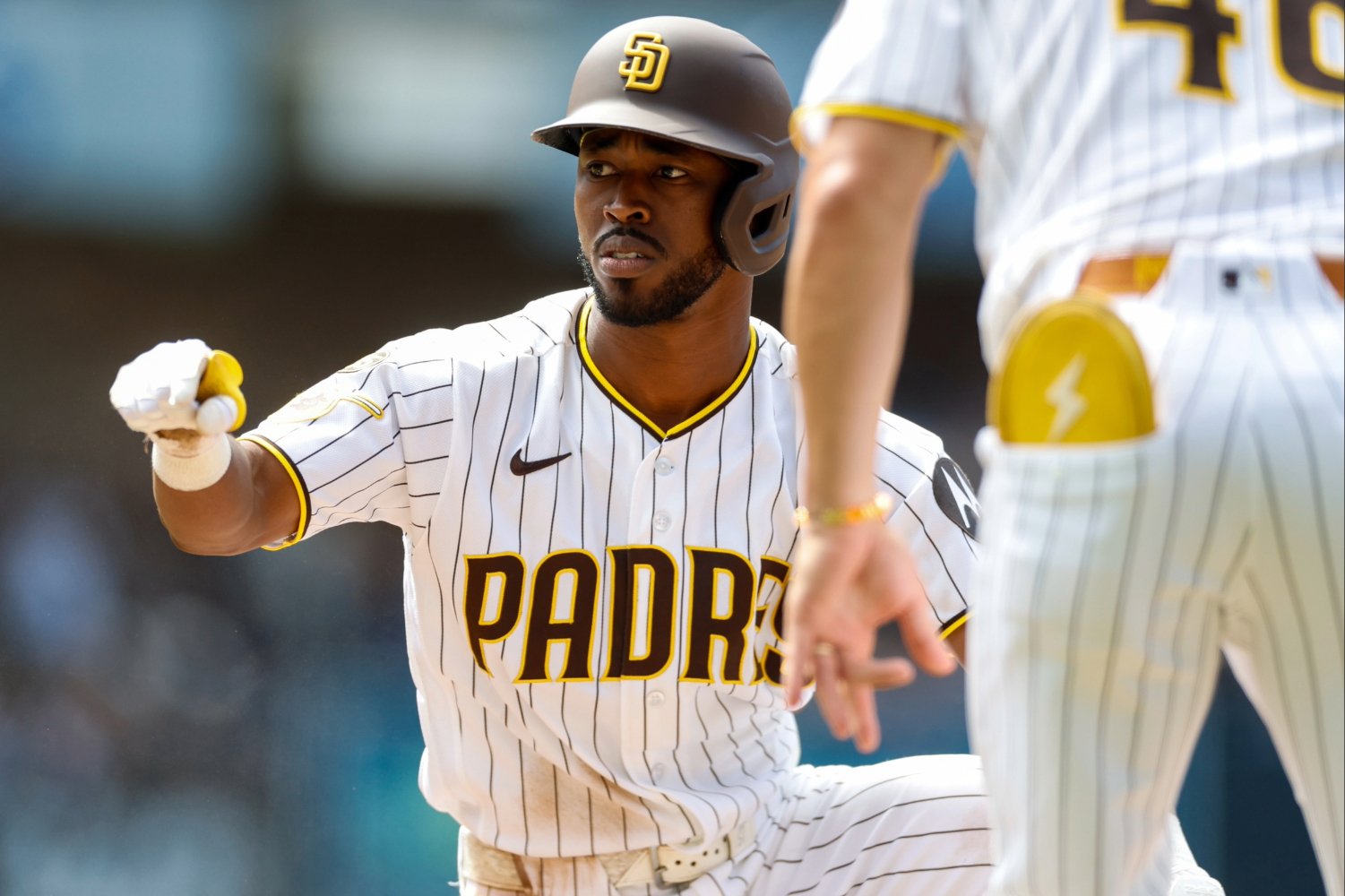 As far as samples go, it's nearly impossible to glean anything from less than 20 plate appearances for a player. And that really goes for any point during the season, let alone the first 20. Samad Taylor, though, is providing a bit of intrigue through his minuscule sample for the San Diego Padres, and it has less to do with what he's done in those trips to the plate and more with what he's done elsewhere. That's not to say that the work at the play hasn't been solid thus far. Heading into the weekend series agains the Orioles, Taylor slashed .333/.444/.400 while walking 15.8 percent of the time. He's also knocked in five runs and swiped a pair of bases. That's objectively good work, even if we're only looking at a quintet of games in which he's appeared for the Padres thus far. If anything, his play has been crucial for a team that will take offense anywhere that they can get it at present. Taylor's value, though, lies in what he's been able to bring with the glove. The Padres have spent 2026 ascending up the defensive leaderboard, courtesy of an improved situation behind the plate and upgraded personnel — in the form of a newly-signed Ty France at first and an adapting Fernando Tatis Jr. at second — at key spots. The early returns on Taylor have continued to add to that defensive growth, especially in the wake of Ramón Laureano's potentially season-ending absence. On Sunday against the New York Mets, Taylor made this catch in what had become a close game: He was at it against the next night against Cincinnati, preserving a tie game with a runner on second base: Against the Reds, he went on to give the Padres the lead on a bunt single in the seventh inning before adding two more on another single later in the game. He repeated the effort on Tuesday night, tying the game on a single in the bottom of the 10th inning (though the Padres would go on to lose the latter contest). For a team like the Friars, Taylor's skill set is one that has value. The defensive aspect is crucial. Laureano had been putting together a better defensive season than the team saw from him post-deadline in 2025, and the Padres stood to lose quite a bit by rolling Gavin Sheets out in left field with regularity. Taylor's speed and defensive acumen help to ensure stability in the outfield in Laureano's absence. Given how paramount run prevention has become for a team that is starved for offense, that stability is more essential than it may be for your average club. Taylor's speed, in itself, is another asset to the Padres. It's not elite speed, mind you, as he sits narrowly above league average at 27.9 ft/sec. However, the Padres are a slow baseball team in terms of their regulars. Each of Ty France, Manny Machado, and Gavin Sheets rank well below the average threshold in sprint speed while a number of others linger right around the average mark. Taylor's wheels have proven to be a benefit not only in his defense, but in the bunt single that propelled the team to a win on Monday night. We're not necessarily talking about a game-breaker in Samad Taylor. This is a journeyman player with only 102 plate appearances to his name at the major-league level across three seasons. However, considering San Diego's current roster and overall struggles, one imagines he could be primed for his most extended run at this level to date. That could greatly benefit both parties if he keeps up his early stretch of sound play.
 -
When it comes to the offense and pitching staff (the latter of which specifically applies to the rotation), the San Diego Padres are floundering. Despite keeping up with the Los Angeles Dodgers in the National League West standings through more than a month to open 2026, they're currently mired in third place with very little optimism of working themselves out of a late-May-early-June swoon anytime soon. That doesn't mean it's all bad, though. In addition to the bullpen, which has been a predictable strength of the roster, the team's defense has been much-improved. That progression comes despite the team routinely spending time lingering in the bottom half of the league in defensive output over the last handful of seasons. No position seemed to be immune to the struggle on that side of the ball. Take 2024, for example. The Padres ranked 22nd in the league in Fielding Run Value (-16). FRV represents the most logical route toward evaluating the collective, given its comprehensive approach to not only glove work but also throwing value (i.e., arm strength, accuracy, etc.). Jackson Merrill led the way that year with a FRV of 10, with Ha-Seong Kim's 4 FRV ranking second on the team. From there, it was a steady stream downhill. Regulars Xander Bogaerts (-1), Jake Cronenworth (-4), Luis Arráez (-4), and Jurickson Profar (-6), all finished under the average threshold by the metric. The catching situation was nothing short of a disaster, with Kyle Higashioka (-2) and Luis Campusano (-13) weighing down the group further. The 2025 campaign demonstrated a continued struggle on that side of the ball. Even with a rapid ascent up the FRV board from Fernando Tatis Jr. (9) and Xander Bogaerts (7), the group still finished 17th with a -2 FRV as a collective. Cronenworth and Arráez were below average at two positions each, while trade deadline acquisition Ramón Laureano managed that feat at all three outfield positions. Meanwhile, Manny Machado checked in at -4 FRV, while Martín Maldonado was the caboose at -6. Even with steady work behind the plate from catching mate Elías Díaz, the catching in particular was another source of struggle that compounded with modestly-below-average play elsewhere to give the Padres a firmly below-average defense. Things have shifted heavily in 2026, however. The Padres are fourth in the league with a FRV of 17. That trails the first-place Chicago Cubs (27) by a heavy amount, but is just one notch below second-place Boston's 18. It's the result not only of improvement at key positions, but a progression by multiple players who had struggled over the last couple of years. Catching represents the most obvious area of improvement, especially given the struggles of individual backstops over the last couple of seasons. This year, however, it's an area of strength. Each of Freddy Fermin (2) and Rodolfo Durán (2) are comfortably above average in FRV, while Luis Campusano (0) is checking in at exactly average in his own right and demonstrating significant improvement defensively from two years ago. Durán's work has helped to ensure stability in Campusano's absence, as well. While that group is the most notable among the improvements, a couple of changes behind made to the roster configuration have also helped. The obvious one is moving Tatis from full-time work in right field to regular work at the keystone. Across 2024 and 2025, the Padres' -7 FRV at second base ranked 25th in the league. Tatis, though, is working with a 4 FRV in 225 innings there while continuing to offer above-average play in right field (2 FRV). As a result, they're now seventh in the league in their defensive performance at the position. First base is also a key area of improvement. Ty France was coming off a Gold Glove season in Minnesota when the Padres added him on a minor-league deal this winter. His 5 FRV is pacing the team and proving to be a massive improvement on the combination of Arráez, Cronenworth, et al. from last season. Only two teams (Chicago & Atlanta) have a higher Fielding Run Value at that spot than the Padres do in their cumulative first base work. Those key changes come in addition to improvements from Manny Machado (3 FRV) and continued stability at shortstop from Xander Bogaerts (also 3 FRV). Ramón Laureano had also been above average in this regard prior to his injury. It's possible that there's a positioning component — Machado, for example, has moved in a couple of feet on his average start point — but there isn't any one change that appears to be indicative of the more individual improvements manifesting on the roster. The full-time run for Fermin and change in personnel at first base are obvious factors yielding big benefits, as well as Tatis' move to second base. Regardless of the how, there isn't any doubt that this is a much better defensive team than it has been the last couple of years. Of course, how much that matters in the standings remains to be seen. Pitching and defense are always noted as the pillars of contention. The Padres have all of one and half of the other at present, given their deficiencies in the rotation. The defense isn't going to prop them up against their counterparts in the NL West, but it could certainly be a separator if the team is able to overcome its present shortcomings when at the plate and starting the game on the mound. View full article
-
Padres' Defense Is Holding It Together As Offense and Pitching Struggle
Randy Holt posted an article in Padres
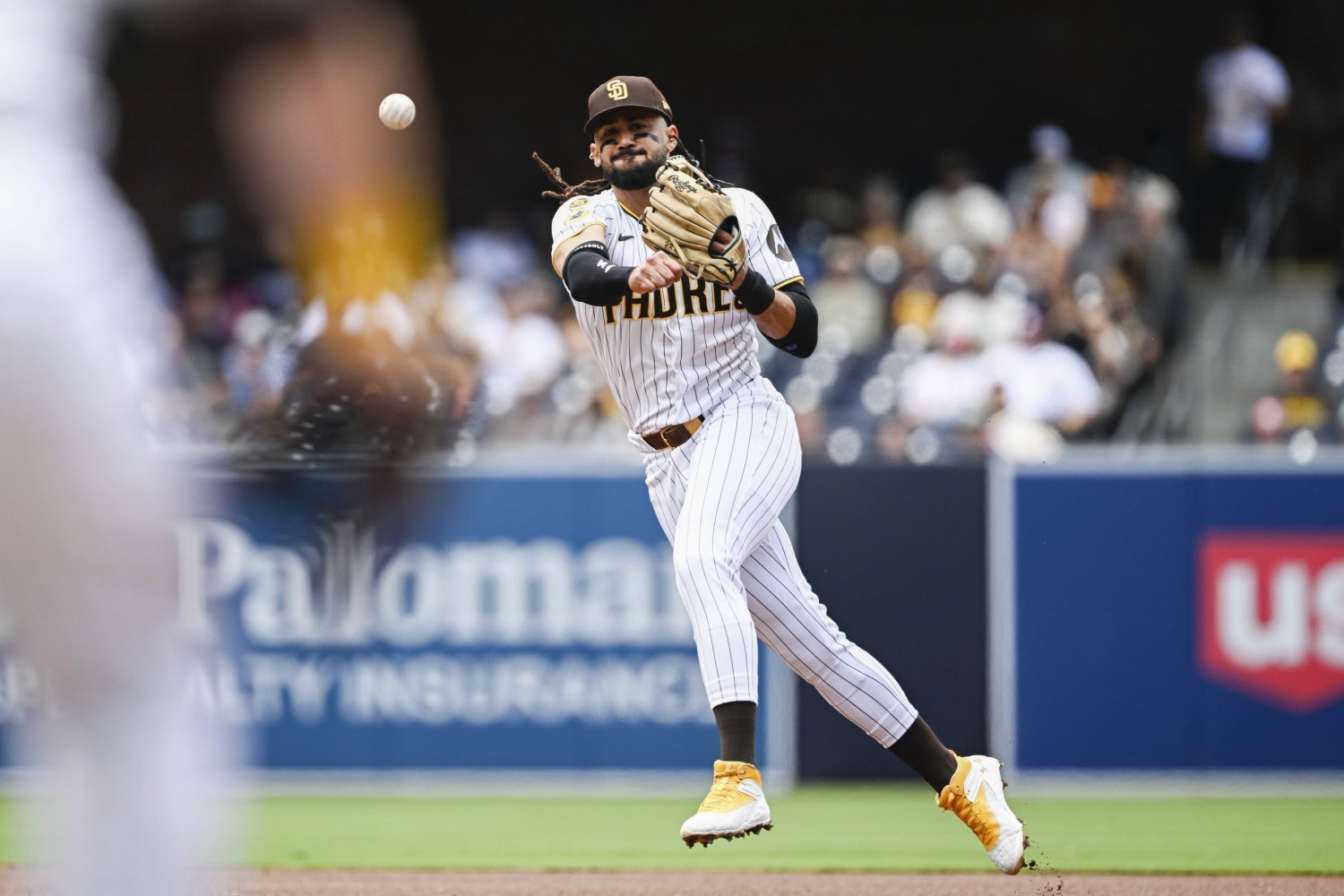 When it comes to the offense and pitching staff (the latter of which specifically applies to the rotation), the San Diego Padres are floundering. Despite keeping up with the Los Angeles Dodgers in the National League West standings through more than a month to open 2026, they're currently mired in third place with very little optimism of working themselves out of a late-May-early-June swoon anytime soon. That doesn't mean it's all bad, though. In addition to the bullpen, which has been a predictable strength of the roster, the team's defense has been much-improved. That progression comes despite the team routinely spending time lingering in the bottom half of the league in defensive output over the last handful of seasons. No position seemed to be immune to the struggle on that side of the ball. Take 2024, for example. The Padres ranked 22nd in the league in Fielding Run Value (-16). FRV represents the most logical route toward evaluating the collective, given its comprehensive approach to not only glove work but also throwing value (i.e., arm strength, accuracy, etc.). Jackson Merrill led the way that year with a FRV of 10, with Ha-Seong Kim's 4 FRV ranking second on the team. From there, it was a steady stream downhill. Regulars Xander Bogaerts (-1), Jake Cronenworth (-4), Luis Arráez (-4), and Jurickson Profar (-6), all finished under the average threshold by the metric. The catching situation was nothing short of a disaster, with Kyle Higashioka (-2) and Luis Campusano (-13) weighing down the group further. The 2025 campaign demonstrated a continued struggle on that side of the ball. Even with a rapid ascent up the FRV board from Fernando Tatis Jr. (9) and Xander Bogaerts (7), the group still finished 17th with a -2 FRV as a collective. Cronenworth and Arráez were below average at two positions each, while trade deadline acquisition Ramón Laureano managed that feat at all three outfield positions. Meanwhile, Manny Machado checked in at -4 FRV, while Martín Maldonado was the caboose at -6. Even with steady work behind the plate from catching mate Elías Díaz, the catching in particular was another source of struggle that compounded with modestly-below-average play elsewhere to give the Padres a firmly below-average defense. Things have shifted heavily in 2026, however. The Padres are fourth in the league with a FRV of 17. That trails the first-place Chicago Cubs (27) by a heavy amount, but is just one notch below second-place Boston's 18. It's the result not only of improvement at key positions, but a progression by multiple players who had struggled over the last couple of years. Catching represents the most obvious area of improvement, especially given the struggles of individual backstops over the last couple of seasons. This year, however, it's an area of strength. Each of Freddy Fermin (2) and Rodolfo Durán (2) are comfortably above average in FRV, while Luis Campusano (0) is checking in at exactly average in his own right and demonstrating significant improvement defensively from two years ago. Durán's work has helped to ensure stability in Campusano's absence, as well. While that group is the most notable among the improvements, a couple of changes behind made to the roster configuration have also helped. The obvious one is moving Tatis from full-time work in right field to regular work at the keystone. Across 2024 and 2025, the Padres' -7 FRV at second base ranked 25th in the league. Tatis, though, is working with a 4 FRV in 225 innings there while continuing to offer above-average play in right field (2 FRV). As a result, they're now seventh in the league in their defensive performance at the position. First base is also a key area of improvement. Ty France was coming off a Gold Glove season in Minnesota when the Padres added him on a minor-league deal this winter. His 5 FRV is pacing the team and proving to be a massive improvement on the combination of Arráez, Cronenworth, et al. from last season. Only two teams (Chicago & Atlanta) have a higher Fielding Run Value at that spot than the Padres do in their cumulative first base work. Those key changes come in addition to improvements from Manny Machado (3 FRV) and continued stability at shortstop from Xander Bogaerts (also 3 FRV). Ramón Laureano had also been above average in this regard prior to his injury. It's possible that there's a positioning component — Machado, for example, has moved in a couple of feet on his average start point — but there isn't any one change that appears to be indicative of the more individual improvements manifesting on the roster. The full-time run for Fermin and change in personnel at first base are obvious factors yielding big benefits, as well as Tatis' move to second base. Regardless of the how, there isn't any doubt that this is a much better defensive team than it has been the last couple of years. Of course, how much that matters in the standings remains to be seen. Pitching and defense are always noted as the pillars of contention. The Padres have all of one and half of the other at present, given their deficiencies in the rotation. The defense isn't going to prop them up against their counterparts in the NL West, but it could certainly be a separator if the team is able to overcome its present shortcomings when at the plate and starting the game on the mound.
 -
The San Diego Padres were never going to be players in the deep end of the spending pool over the winter of 2025-2026. Their stack of long-term position player contracts worked in conjunction with an uncertain ownership future to limit any sort of financial flexibility. The sliver of it that remained went out the window when the team elected to bring back Michael King on a three-year deal. At this point, we know how the remainder of the offseason played out. With the additional exception of Sung Mun Song, A.J. Preller was forced into a smattering of one-year and minor-league pacts. Despite glaring needs in both the rotation and in the lineup, no positional group was immune to the approach. Each area of need was filled out with a little bit of each, with the hope being that enough volume would lead to striking somewhere. Unfortunately for Preller and the Padres, that's not really how it's played out. The following is how the team's offseason played out on the mound, particularly in the starting rotation: Kyle Hart: One-year deal Sean Boyle: Minor-league deal Ty Adcock: One-year deal Triston McKenzie: Minor-league deal Marco Gonzales: Minor-league deal Griffin Canning: One-year deal Germán Márquez: One-year deal Walker Buehler: Minor-league deal While the bullpen was an enduring area of strength, the rotation was to be filled out largely from this group. The names of particular intrigue were those with prior success at the top level: McKenzie, Gonzales, Canning, Márquez, and Buehler. With Canning starting the season on the Injured List as he worked back from an Achilles injury sustained in 2025, the early starting roles went to Márquez and Buehler. Márquez pitched to a 5.76 ERA and 6.64 FIP before hitting the IL on May 1. He hasn't been seen since. Buehler has survived a dozen starts thus far, with a 4.53 ERA to his name despite whiff and contact metrics well into the bottom half of the league rankings. Canning, since his return, has an ERA of 6.34 through six starts (and a FIP over five). In El Paso, meanwhile, Gonzales has an ERA over nine. McKenzie is rolling with a 14.85 figure through nine appearances (only three of which were starts). Boyle's is over six while Adcock has only pitched one-third of an inning due to injury. Even adding Lucas Giolito in late April hasn't done much to stabilize things in the way the Padres might have hoped after his first couple of outings. Through four starts, he's working with an ERA near five (4.86) and a FIP that looks much worse (6.64). He's averaging barely more than four innings per start after working just over six across his last pair of outings. And it's not as if it gets much better once you look on the offensive side of things: Nick Solak: Minor-league deal Sung Mun Song: Three-year deal José Miranda: Minor-league deal Samad Taylor: Minor-league deal Miguel Andujar: One-year deal Nick Castellanos: One-year deal Ty France: Minor-league deal With the Padres needing to improve their bench and discover some supplemental power, the hope here was much the same in the rotation. Even if it meant limiting the dynamic quality of the roster by filling it out with first base/corner outfield types. After a strong spring, though, Miranda never reached the top level for the Padres before he was released. Castellanos wRC+'d a meager 53 before his designation for assignment last week. Song got off to a late start due to an oblique injury but has been quite bad in his transition to the U.S.; despite nearly parallel strikeout and walk rates, he's hitting just .194 (72 wRC+) through roughly 40 plate appearances. Solak remains in El Paso while Taylor has just two plate appearances to his name after his contract selection. That leaves only Andujar and France as saving graces on the positional side. Andujar has been almost exactly league average (98 wRC+) but has provided very little power (.168 ISO). He's also reaching base at just a .285 clip thanks heavily to a brutal 3.1 percent walk rate. France, however, has slashed .277/.323/.504 with a 133 wRC+. He's offered some stability at what was a relatively vacant first base spot expected to be assumed by Gavin Sheets ahead of 2026. With injuries and production issues in the outfield, though, France's output has at least allowed Sheets to be utilized elsewhere. However, when you're looking at Ty France as the lone clear victory out of essentially 15 different contracts, it's clear that the way in which the roster was constructed this past winter constitutes an objective failure. It's difficult to lay that entirely at the feet of the front office given the strict financial straits which Preller and company were forced to navigate. However, there's also an onus on the coaching staff to maximize player production. The inability of this staff to extract any value from more than 90 percent of their signings from this winter, non-guaranteed pact or not, represents real shortcomings manifesting on that side of things as well. It's not that one expects a team to extract value from players who are past their prime or have dealt with too many injuries to be effective. That would be unrealistic and unfair. It's just the rate of failures that is hard to make peace with. When you compound that with the struggles of the established names on the roster — some of which could also be due to factors on the coaching side of things — you get the 2026 San Diego Padres: a team floundering after a strong start that was never going to be sustainable. Not all of this is within the control of brass considering where those restrictions came from in the first place, but it's a place with which the Padres may have to familiarize themselves until the core begins emerging from their collective slump or new ownership is able to inject additional means of adding impact. View full article
-
Offseason Budget Restrictions Proving To Be Padres' Undoing In 2026
Randy Holt posted an article in Padres
 The San Diego Padres were never going to be players in the deep end of the spending pool over the winter of 2025-2026. Their stack of long-term position player contracts worked in conjunction with an uncertain ownership future to limit any sort of financial flexibility. The sliver of it that remained went out the window when the team elected to bring back Michael King on a three-year deal. At this point, we know how the remainder of the offseason played out. With the additional exception of Sung Mun Song, A.J. Preller was forced into a smattering of one-year and minor-league pacts. Despite glaring needs in both the rotation and in the lineup, no positional group was immune to the approach. Each area of need was filled out with a little bit of each, with the hope being that enough volume would lead to striking somewhere. Unfortunately for Preller and the Padres, that's not really how it's played out. The following is how the team's offseason played out on the mound, particularly in the starting rotation: Kyle Hart: One-year deal Sean Boyle: Minor-league deal Ty Adcock: One-year deal Triston McKenzie: Minor-league deal Marco Gonzales: Minor-league deal Griffin Canning: One-year deal Germán Márquez: One-year deal Walker Buehler: Minor-league deal While the bullpen was an enduring area of strength, the rotation was to be filled out largely from this group. The names of particular intrigue were those with prior success at the top level: McKenzie, Gonzales, Canning, Márquez, and Buehler. With Canning starting the season on the Injured List as he worked back from an Achilles injury sustained in 2025, the early starting roles went to Márquez and Buehler. Márquez pitched to a 5.76 ERA and 6.64 FIP before hitting the IL on May 1. He hasn't been seen since. Buehler has survived a dozen starts thus far, with a 4.53 ERA to his name despite whiff and contact metrics well into the bottom half of the league rankings. Canning, since his return, has an ERA of 6.34 through six starts (and a FIP over five). In El Paso, meanwhile, Gonzales has an ERA over nine. McKenzie is rolling with a 14.85 figure through nine appearances (only three of which were starts). Boyle's is over six while Adcock has only pitched one-third of an inning due to injury. Even adding Lucas Giolito in late April hasn't done much to stabilize things in the way the Padres might have hoped after his first couple of outings. Through four starts, he's working with an ERA near five (4.86) and a FIP that looks much worse (6.64). He's averaging barely more than four innings per start after working just over six across his last pair of outings. And it's not as if it gets much better once you look on the offensive side of things: Nick Solak: Minor-league deal Sung Mun Song: Three-year deal José Miranda: Minor-league deal Samad Taylor: Minor-league deal Miguel Andujar: One-year deal Nick Castellanos: One-year deal Ty France: Minor-league deal With the Padres needing to improve their bench and discover some supplemental power, the hope here was much the same in the rotation. Even if it meant limiting the dynamic quality of the roster by filling it out with first base/corner outfield types. After a strong spring, though, Miranda never reached the top level for the Padres before he was released. Castellanos wRC+'d a meager 53 before his designation for assignment last week. Song got off to a late start due to an oblique injury but has been quite bad in his transition to the U.S.; despite nearly parallel strikeout and walk rates, he's hitting just .194 (72 wRC+) through roughly 40 plate appearances. Solak remains in El Paso while Taylor has just two plate appearances to his name after his contract selection. That leaves only Andujar and France as saving graces on the positional side. Andujar has been almost exactly league average (98 wRC+) but has provided very little power (.168 ISO). He's also reaching base at just a .285 clip thanks heavily to a brutal 3.1 percent walk rate. France, however, has slashed .277/.323/.504 with a 133 wRC+. He's offered some stability at what was a relatively vacant first base spot expected to be assumed by Gavin Sheets ahead of 2026. With injuries and production issues in the outfield, though, France's output has at least allowed Sheets to be utilized elsewhere. However, when you're looking at Ty France as the lone clear victory out of essentially 15 different contracts, it's clear that the way in which the roster was constructed this past winter constitutes an objective failure. It's difficult to lay that entirely at the feet of the front office given the strict financial straits which Preller and company were forced to navigate. However, there's also an onus on the coaching staff to maximize player production. The inability of this staff to extract any value from more than 90 percent of their signings from this winter, non-guaranteed pact or not, represents real shortcomings manifesting on that side of things as well. It's not that one expects a team to extract value from players who are past their prime or have dealt with too many injuries to be effective. That would be unrealistic and unfair. It's just the rate of failures that is hard to make peace with. When you compound that with the struggles of the established names on the roster — some of which could also be due to factors on the coaching side of things — you get the 2026 San Diego Padres: a team floundering after a strong start that was never going to be sustainable. Not all of this is within the control of brass considering where those restrictions came from in the first place, but it's a place with which the Padres may have to familiarize themselves until the core begins emerging from their collective slump or new ownership is able to inject additional means of adding impact.
 -
The San Diego Padres remain a fascinating case study of team success. They continue to sit within striking distance of the Los Angeles Dodgers atop the National League West and are still ahead of the field in the standings for the National League wild card. That continued success has not come remotely due to their offense, however. It's come in spite of it. The Padres remain near the bottom of the league in run production, ranking 27th in runs scored. They're last in team batting average (.218), last in team on-base percentage (.291), and 28th in their collective wRC+ (88). While they're closer to the middle of the pack in their power production (.143 ISO), they continue to be a downtrodden team in matters of scoring runs. The prolonged struggle of their three most essential hitters — Fernando Tatis Jr., Manny Machado, and Jackson Merrill — remains a problem of the highest order, with no particular end in sight. Throughout this continued struggle, there is one idea we've heard repeated. It's come from manager Craig Stammen, hitting coach Steven Souza Jr, and a handful of players: information. The hitters have all of the information they need. Each of Machado and Nick Castellanos have noted as much. The Padres have what they need, they just need to execute. The vision of what they need, however, is a fairly murky picture. Especially when you compare results and underlying trends to what Souza Jr noted ahead of the season: “What I am going to try and bring is controlling the zone, hammering mistakes, being able to make the pitcher do something different out there. Because when these guys put the ball on the barrel, it’s hit hard and goes a long way, typically.” Souza's quote is, of course, coach-speak, and you're not going to expect to see a coach divulge his plan for hitters in hopes of maintaining a competitive advantage. At the same time, when you have a team struggling as badly as the Padres are, even an outsider begins to wonder just how much there is to this whole operation beyond "hitting hard and watching it go a long way." Because the trends aren't lending themselves to much more than an abstract philosophy to this point in the season. The Padres are certainly swinging harder: After sitting near the bottom of the league in average bat speed, the team is much closer to the top of the league here in 2026. And while there's been some change in personnel, there hasn't been quite enough turnover to indicate anything other than this being due to the change in philosophy. The Padres are swinging harder by design. However, there's also an inefficiency to it. The only team making less squared-up contact in the entire league is the Los Angeles Angels. That's not particularly a team you want to be in league with on really any front. What is clear is that this increase in swing speed is coming at the expense of their ability to make contact. That relationship exists on its own, but there's also an approach factor here. Despite a collective swing rate that ranks fifth in the league (49.6 percent), the Padres rank just 19th in Contact% (75.8). They're chasing at the league's third-highest rate as well (70.6 percent) and whiffing at the fourth-highest (12.0 percent). There's an impatience manifesting here, and when you combine that with the inefficiency wrought by overly aggressive swings, you get a relatively punchless team at the plate. The mess in the approach is also reflected in the team's run value. Run value is considered in relation to four zones around the plate: heart, shadow, chase, and waste. The trends of the Padres regulars in each of these zones is also indicative of some fairly serious problems: The heart of the zone is where hitters should be doing the most damage. Yet, only Gavin Sheets & Nick Castellanos have a positive run value in the portion of the zone where run production should be simplest. If a pitcher puts something in the heart of the zone, that's your opportunity as a hitter. This is perhaps the most damning evidence of the Padre offensive plan thus far in 2026. They're also not handling the edges well, with only Miguel Andujar working that portion effectively, with only the portions outside of the zone — where value is derived from not swinging the baseball bat — proving to be a consistent source of positivity for this group. Again, we don't know what information is being exchanged between coaches and hitters and everybody in between. However, there's clearly an issue here rooted somewhere in the philosophy of the new staff. The approaches are questionable and compounding with harder swings to render the offense as ineffective as any in the sport. It's a problem with no end in sight, and the abstract quality of it all makes it especially concerning for a team trying to remain in contention. View full article
-
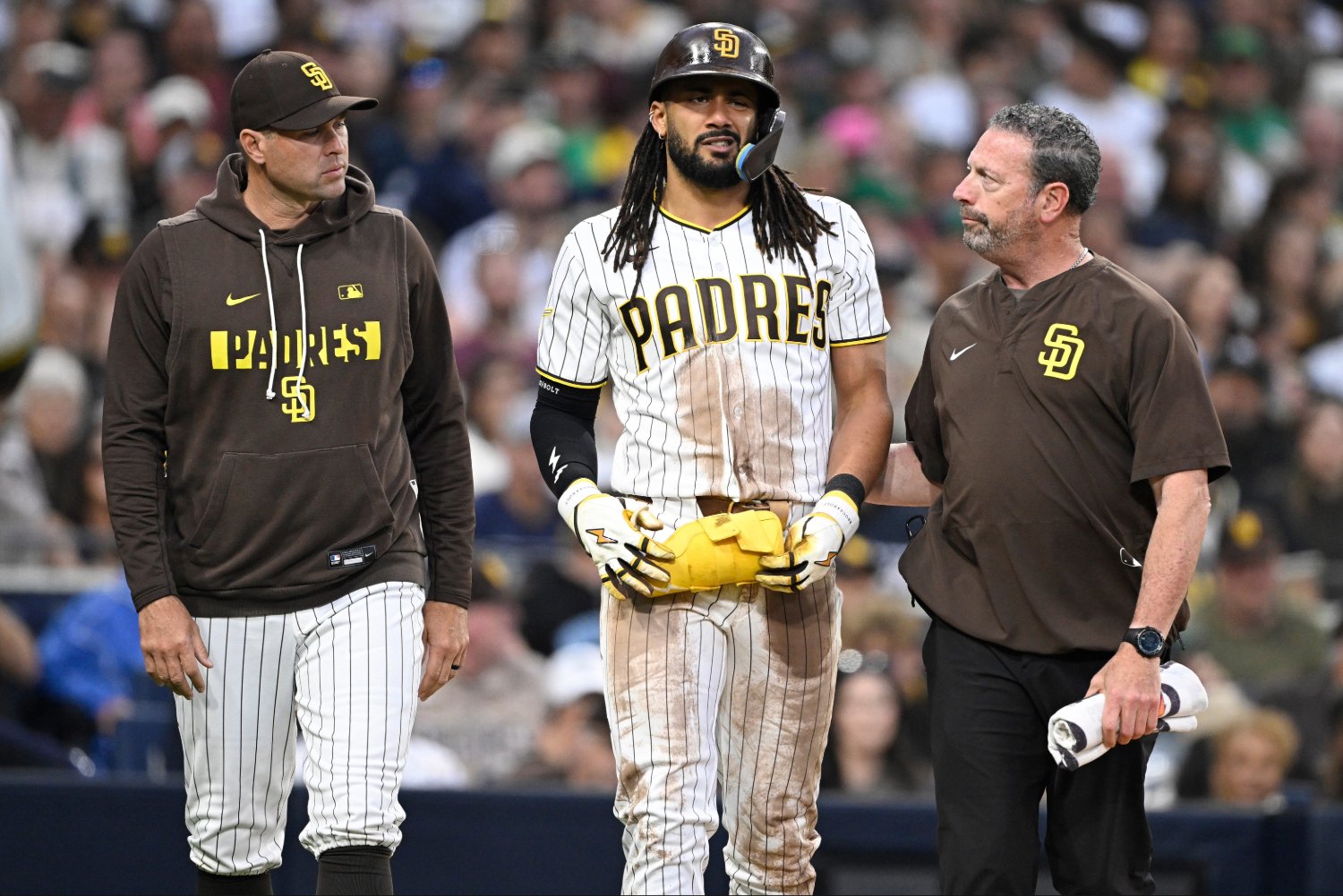 The San Diego Padres remain a fascinating case study of team success. They continue to sit within striking distance of the Los Angeles Dodgers atop the National League West and are still ahead of the field in the standings for the National League wild card. That continued success has not come remotely due to their offense, however. It's come in spite of it. The Padres remain near the bottom of the league in run production, ranking 27th in runs scored. They're last in team batting average (.218), last in team on-base percentage (.291), and 28th in their collective wRC+ (88). While they're closer to the middle of the pack in their power production (.143 ISO), they continue to be a downtrodden team in matters of scoring runs. The prolonged struggle of their three most essential hitters — Fernando Tatis Jr., Manny Machado, and Jackson Merrill — remains a problem of the highest order, with no particular end in sight. Throughout this continued struggle, there is one idea we've heard repeated. It's come from manager Craig Stammen, hitting coach Steven Souza Jr, and a handful of players: information. The hitters have all of the information they need. Each of Machado and Nick Castellanos have noted as much. The Padres have what they need, they just need to execute. The vision of what they need, however, is a fairly murky picture. Especially when you compare results and underlying trends to what Souza Jr noted ahead of the season: “What I am going to try and bring is controlling the zone, hammering mistakes, being able to make the pitcher do something different out there. Because when these guys put the ball on the barrel, it’s hit hard and goes a long way, typically.” Souza's quote is, of course, coach-speak, and you're not going to expect to see a coach divulge his plan for hitters in hopes of maintaining a competitive advantage. At the same time, when you have a team struggling as badly as the Padres are, even an outsider begins to wonder just how much there is to this whole operation beyond "hitting hard and watching it go a long way." Because the trends aren't lending themselves to much more than an abstract philosophy to this point in the season. The Padres are certainly swinging harder: After sitting near the bottom of the league in average bat speed, the team is much closer to the top of the league here in 2026. And while there's been some change in personnel, there hasn't been quite enough turnover to indicate anything other than this being due to the change in philosophy. The Padres are swinging harder by design. However, there's also an inefficiency to it. The only team making less squared-up contact in the entire league is the Los Angeles Angels. That's not particularly a team you want to be in league with on really any front. What is clear is that this increase in swing speed is coming at the expense of their ability to make contact. That relationship exists on its own, but there's also an approach factor here. Despite a collective swing rate that ranks fifth in the league (49.6 percent), the Padres rank just 19th in Contact% (75.8). They're chasing at the league's third-highest rate as well (70.6 percent) and whiffing at the fourth-highest (12.0 percent). There's an impatience manifesting here, and when you combine that with the inefficiency wrought by overly aggressive swings, you get a relatively punchless team at the plate. The mess in the approach is also reflected in the team's run value. Run value is considered in relation to four zones around the plate: heart, shadow, chase, and waste. The trends of the Padres regulars in each of these zones is also indicative of some fairly serious problems: The heart of the zone is where hitters should be doing the most damage. Yet, only Gavin Sheets & Nick Castellanos have a positive run value in the portion of the zone where run production should be simplest. If a pitcher puts something in the heart of the zone, that's your opportunity as a hitter. This is perhaps the most damning evidence of the Padre offensive plan thus far in 2026. They're also not handling the edges well, with only Miguel Andujar working that portion effectively, with only the portions outside of the zone — where value is derived from not swinging the baseball bat — proving to be a consistent source of positivity for this group. Again, we don't know what information is being exchanged between coaches and hitters and everybody in between. However, there's clearly an issue here rooted somewhere in the philosophy of the new staff. The approaches are questionable and compounding with harder swings to render the offense as ineffective as any in the sport. It's a problem with no end in sight, and the abstract quality of it all makes it especially concerning for a team trying to remain in contention.
 -
Lucas Giolito is not the pitcher he once was. The San Diego Padres are simply banking on him being better than he is right now. Giolito has made two starts for the Padres. He's thrown 10 innings and has posted a 2.70 ERA. Most important, at present, is the fact that he has a pair of wins to his credit. He has effectively navigated hard contact to the point where he hasn't allowed a barrel in either start. With a pitcher that didn't have a spring training, though, there's still a rounding-into-form that needs to take place before the results can be considered more reliable. That is certainly the case with Giolito. Because while the actual outcomes have been strong and resulted in two crucial wins at this still-early stage of the season for the Padres, they've also been imperfect. Giolito's fastball velocity is way down, at 90.4 MPH with the four-seamer. His 12.2 percent strikeout rate would represent a career-low, while his 19.5 percent walk rate is astronomical compared to his career averages. He's also still trying to figure out his pitch usage. In Giolito's first start, he was four-seam forward. He threw the pitch 55 percent of the time with a 25 percent whiff rate and 10 called strikes. Even without the velocity, it was effective. His changeup came in as his primary secondary pitch at a 29 percent pitch rate. It wasn't effective on the whiff side, but he also avoided hard contact entirely with it. Over the weekend, Giolito made start No. 2 against the Athletics. Therein, the pitch mix was somewhat flipped in that he threw the change 47 percent of the time and the four-seamer for 31 percent of his offerings. The whiffs came through with the former this time (33 percent), but not the latter. The A's were much more adept at avoiding chase and making contact than in his first start against Seattle, but the results remained strong across his second outing. What's important in all of this isn't so much the results. This is still a minuscule sample and it's hard to glean too much based on those outcomes for a player that didn't have a spring exhibition slate in which to ramp up. It's Giolito getting a grip on what he wants to throw and the subsequent effect of those choices. Which brings us to one element on which to keep an eye: where's the slider? The slider has long represented Giolito's tertiary offering. He has always been four-seam and changeup first, with the slider behind them. However, that pitch has only been thrown 15.9 percent of the time in his two starts this season. Is it a feel thing? Is it not wanting to aggravate prior issues by heavily utilizing a pitch notorious for irritating the elbow? Considering he's cut the usage by 10 percent off last year's rate, it's worth monitoring given the necessity of a third pitch in starting pitcher success. Of course, the results have their place as well. While the game for Giolito has been about getting settled in the rotation, he's going to be keen to improve the underlying stuff beyond his ERA. Especially given that he's operated with a rather fortunate .185 batting average on balls in play through those two starts. He's going to want to get the strikeout rate to at least a modest bump and improve his command to cut the free passes to a much more serious extent. Ultimately, the results have been what the Padres needed. After watching a stretch of starts featuring wobbly outings from Germán Márquez, Walker Buehler, and Griffin Canning, a couple of five-inning performances resulting in victories have to feel like a breath of fresh air. But as the sample grows, there's plenty of room for improvement from Giolito. He doesn't need to be the pitcher he once was, but there's going to need to be at least a bit of a trending in that direction for him to continue to provide such steady value for the remainder of 2026. View full article
-
Lucas Giolito Providing Early Stability For Padres With Room For Improvement
Randy Holt posted an article in Padres
 Lucas Giolito is not the pitcher he once was. The San Diego Padres are simply banking on him being better than he is right now. Giolito has made two starts for the Padres. He's thrown 10 innings and has posted a 2.70 ERA. Most important, at present, is the fact that he has a pair of wins to his credit. He has effectively navigated hard contact to the point where he hasn't allowed a barrel in either start. With a pitcher that didn't have a spring training, though, there's still a rounding-into-form that needs to take place before the results can be considered more reliable. That is certainly the case with Giolito. Because while the actual outcomes have been strong and resulted in two crucial wins at this still-early stage of the season for the Padres, they've also been imperfect. Giolito's fastball velocity is way down, at 90.4 MPH with the four-seamer. His 12.2 percent strikeout rate would represent a career-low, while his 19.5 percent walk rate is astronomical compared to his career averages. He's also still trying to figure out his pitch usage. In Giolito's first start, he was four-seam forward. He threw the pitch 55 percent of the time with a 25 percent whiff rate and 10 called strikes. Even without the velocity, it was effective. His changeup came in as his primary secondary pitch at a 29 percent pitch rate. It wasn't effective on the whiff side, but he also avoided hard contact entirely with it. Over the weekend, Giolito made start No. 2 against the Athletics. Therein, the pitch mix was somewhat flipped in that he threw the change 47 percent of the time and the four-seamer for 31 percent of his offerings. The whiffs came through with the former this time (33 percent), but not the latter. The A's were much more adept at avoiding chase and making contact than in his first start against Seattle, but the results remained strong across his second outing. What's important in all of this isn't so much the results. This is still a minuscule sample and it's hard to glean too much based on those outcomes for a player that didn't have a spring exhibition slate in which to ramp up. It's Giolito getting a grip on what he wants to throw and the subsequent effect of those choices. Which brings us to one element on which to keep an eye: where's the slider? The slider has long represented Giolito's tertiary offering. He has always been four-seam and changeup first, with the slider behind them. However, that pitch has only been thrown 15.9 percent of the time in his two starts this season. Is it a feel thing? Is it not wanting to aggravate prior issues by heavily utilizing a pitch notorious for irritating the elbow? Considering he's cut the usage by 10 percent off last year's rate, it's worth monitoring given the necessity of a third pitch in starting pitcher success. Of course, the results have their place as well. While the game for Giolito has been about getting settled in the rotation, he's going to be keen to improve the underlying stuff beyond his ERA. Especially given that he's operated with a rather fortunate .185 batting average on balls in play through those two starts. He's going to want to get the strikeout rate to at least a modest bump and improve his command to cut the free passes to a much more serious extent. Ultimately, the results have been what the Padres needed. After watching a stretch of starts featuring wobbly outings from Germán Márquez, Walker Buehler, and Griffin Canning, a couple of five-inning performances resulting in victories have to feel like a breath of fresh air. But as the sample grows, there's plenty of room for improvement from Giolito. He doesn't need to be the pitcher he once was, but there's going to need to be at least a bit of a trending in that direction for him to continue to provide such steady value for the remainder of 2026.
 -
Even as we reach the end of May, the San Diego Padres are, somewhat surprisingly, continuing to prove their meddle in 2026. Despite an offense that continues to linger around the middle of the pack and a pitching staff racking up injuries but not innings, they’ve been hanging around with the Los Angeles Dodgers at or near the top of the National League West. If they could gain some stability in the rotation, they could further fortify themselves as a repeat contender in the NL. Unfortunately, that hasn’t been the case quite yet. Facing an uncertain ownership future (that has since become more certain) and some payroll peril wrought by repeated long-term position player contracts from A.J. Preller, the Padres were forced into various band-aid solutions this past winter. That approach drove their additions to the lineup – in the form of one-year or minor-league deals – but has become more glaring in the rotation where the same philosophy applied. After bringing Michael King back on what is essentially a one-year pact, the Padres added each of Germán Márquez, Walker Buehler, and Griffin Canning on either one-year or minor-league, non-guaranteed deals. That trio joined Matt Waldron and JP Sears as candidates to fill out the back end of the rotation (as well as Marco Gonzales & Triston McKenzie as rotation candidates in camp). It was a group short on ceiling but also without a clear floor given the blend of past-prime skill sets and variable performance. So, it should come as no surprise that the results thus far have been exceedingly mediocre for San Diego. The Padres rank 18th in fWAR accrued by starting pitching (3.3), with an ERA that sits 22nd (4.47) and a FIP that reads slightly better at 4.01 (15th). Most concerning, though, is the fact that their 241.2 innings from the rotation ranks just 25th. As of the middle of the month, they’d been outscored 69-35 in the first three innings of games in 2026. While the offense itself is part of the issue in that latter number, the absence of longevity from much of the starting staff looms as the larger problem moving forward. It’s hard to think of an example of this more on display than on May 14 in Milwaukee. Griffin Canning needed 43 pitches to get through the first inning against the Brewers, walking four consecutive hitters and leaving his team in a 3-0 hole before it was done. Through his first three starts, he was averaging less than four innings per outing with an ERA that sat (deceptively) over 10 and a walk rate that checked in over 16 percent. It’s still a small sample for him, but the issues aren’t limited to Canning either. Márquez has a 5.76 ERA across six starts with an even worse FIP (6.65) and a strikeout rate of only 14.8 percent against a 9.4 percent walk rate. Waldron has an 8.49 ERA and FIP over five through roughly 23 innings of work. The issues have become more glaring in the absence of Nick Pivetta and repeated setbacks for Joe Musgrove. Had the Padres had their full arsenal of safe options among the starting candidates, this would be far less of a conversation. But outside of Michael King and Randy Vásquez, there isn’t a lot of stability to be found. It remains to be seen how much Lucas Giolito will help in that regard, but it seems as if the Padres will be in need of help regardless. Ultimately, the issue lies not in what the rotation woes are doing to the team at large, but what it could mean for the bullpen. Padre relievers have already been asked to throw over 200 innings, ranking seventh in the league. That’s an intense volume at this point in the year. Bullpens become more crucial as the season wears on, and the Padres will certainly want their top arms to remain as fresh as possible if they’re to remain in contention for the stretch run. Whether or not that can happen, however, is an entire mystery. Each of Márquez (even if currently on the IL) and Waldron appear on the shakiest ground. Canning has been mostly fine, if not at the mercy of terrible command and woeful defense. However, the Padres simply cannot sustain their success with only two starters offering steady outings. Perhaps Giolito will help to quell those concerns. If not, questions about this team’s long-term viability with such a patchwork rotation will continue to persist. View full article
-
The Padres’ Approach To Their Rotation Looks Like An Early Failure
Randy Holt posted an article in Padres
 Even as we reach the end of May, the San Diego Padres are, somewhat surprisingly, continuing to prove their meddle in 2026. Despite an offense that continues to linger around the middle of the pack and a pitching staff racking up injuries but not innings, they’ve been hanging around with the Los Angeles Dodgers at or near the top of the National League West. If they could gain some stability in the rotation, they could further fortify themselves as a repeat contender in the NL. Unfortunately, that hasn’t been the case quite yet. Facing an uncertain ownership future (that has since become more certain) and some payroll peril wrought by repeated long-term position player contracts from A.J. Preller, the Padres were forced into various band-aid solutions this past winter. That approach drove their additions to the lineup – in the form of one-year or minor-league deals – but has become more glaring in the rotation where the same philosophy applied. After bringing Michael King back on what is essentially a one-year pact, the Padres added each of Germán Márquez, Walker Buehler, and Griffin Canning on either one-year or minor-league, non-guaranteed deals. That trio joined Matt Waldron and JP Sears as candidates to fill out the back end of the rotation (as well as Marco Gonzales & Triston McKenzie as rotation candidates in camp). It was a group short on ceiling but also without a clear floor given the blend of past-prime skill sets and variable performance. So, it should come as no surprise that the results thus far have been exceedingly mediocre for San Diego. The Padres rank 18th in fWAR accrued by starting pitching (3.3), with an ERA that sits 22nd (4.47) and a FIP that reads slightly better at 4.01 (15th). Most concerning, though, is the fact that their 241.2 innings from the rotation ranks just 25th. As of the middle of the month, they’d been outscored 69-35 in the first three innings of games in 2026. While the offense itself is part of the issue in that latter number, the absence of longevity from much of the starting staff looms as the larger problem moving forward. It’s hard to think of an example of this more on display than on May 14 in Milwaukee. Griffin Canning needed 43 pitches to get through the first inning against the Brewers, walking four consecutive hitters and leaving his team in a 3-0 hole before it was done. Through his first three starts, he was averaging less than four innings per outing with an ERA that sat (deceptively) over 10 and a walk rate that checked in over 16 percent. It’s still a small sample for him, but the issues aren’t limited to Canning either. Márquez has a 5.76 ERA across six starts with an even worse FIP (6.65) and a strikeout rate of only 14.8 percent against a 9.4 percent walk rate. Waldron has an 8.49 ERA and FIP over five through roughly 23 innings of work. The issues have become more glaring in the absence of Nick Pivetta and repeated setbacks for Joe Musgrove. Had the Padres had their full arsenal of safe options among the starting candidates, this would be far less of a conversation. But outside of Michael King and Randy Vásquez, there isn’t a lot of stability to be found. It remains to be seen how much Lucas Giolito will help in that regard, but it seems as if the Padres will be in need of help regardless. Ultimately, the issue lies not in what the rotation woes are doing to the team at large, but what it could mean for the bullpen. Padre relievers have already been asked to throw over 200 innings, ranking seventh in the league. That’s an intense volume at this point in the year. Bullpens become more crucial as the season wears on, and the Padres will certainly want their top arms to remain as fresh as possible if they’re to remain in contention for the stretch run. Whether or not that can happen, however, is an entire mystery. Each of Márquez (even if currently on the IL) and Waldron appear on the shakiest ground. Canning has been mostly fine, if not at the mercy of terrible command and woeful defense. However, the Padres simply cannot sustain their success with only two starters offering steady outings. Perhaps Giolito will help to quell those concerns. If not, questions about this team’s long-term viability with such a patchwork rotation will continue to persist.
 -
To say that Gavin Sheets got off to a poor start here in 2026 might be overstating the situation. After all, he did finish April above the average threshold in wRC+ (110). For a San Diego Padres team starved for consistency on the offensive side, though, it was definitely an output that left something to be desired. Sheets' first month of the season was propped up heavily by his power output. He struck out 22.0 percent of the time against a mere 4.4 percent walk rate. That type of spread doesn't lend itself to regular contribution. As such, the power (.244 ISO) represented the only meaningful production Sheets was able to offer the Friars. That ISO figure trailed only Luis Campusano among Padres hitters in March & April, though Sheets' number came with nearly twice the plate appearances. In terms of total contributions, things have certainly shifted for Sheets here in May. Here is the breakdown of Sheets' performance between the season's first month and his work this month: March/April: .233/.275/.477, 22.0 K%, 4.4 BB%, 110 wRC+ May: .302/.434/.674, 18.9 K%, 18.9 BB%, 209 wRC+ It's not just that Sheets has been better; he's been obscenely good in general. No qualifying hitter in the sport has a better wRC+ than Sheets' 209 and only two have posted a higher ISO over halfway through the month than his .372 mark (Byron Buxton & Kyle Schwarber). How Sheets has managed to drive up his numbers in such an impressive way isn't any sort of mystery. For one, he's become more patient. Sheets' swing rate in April was 46.8 percent before dropping to 38.1 thus far in May. The chase rate has come down along with that overall decline in swings, falling from 37.2 percent to 31.3 percent between the two months. That increased patience has (obviously) allowed him to drop his strikeout rate while driving the walk rate way up, but it's also allowed him to do more with the contact that's being made. More specifically, it's allowing him to find the portions of the zone that are going to yield the most positive outcomes. The below visual is of Sheets' swing rates in and around the strike zone in March & April: It's not a bad trend, mind you, where many of those swings wind up. But there's also a lot of work down in the zone that's going to result in a heavy volume of groundball contact. Meanwhile, this is where Sheets is swinging to this point in May: There's been a much heavier emphasis on not only the inner portion of the zone, but avoiding those lower areas that have caused him trouble in the past. With not a ton of variable change with respect to pitch types, we can attribute the improved patience to his ability to lock in on more impactful portions of the zone. The areas of emphasis in the second visual (middle-middle and middle-in) are where we typically see his power manifest. That trend is present in the elevation of Sheets' contact over these past handful of weeks. After going for a groundball rate over 45 percent in April, he's down to 36 percent in May. His fly-ball rate, meanwhile, has experienced an eleven percent leap up to 30.3 in May. The quality of contact was always there, but his lack of discipline wasn't allowing it to be maximized. By honing in his approach and gaining control of the zone, he's been able to elevate his game to a fairly drastic extent, much to the Padres' benefit. View full article
-
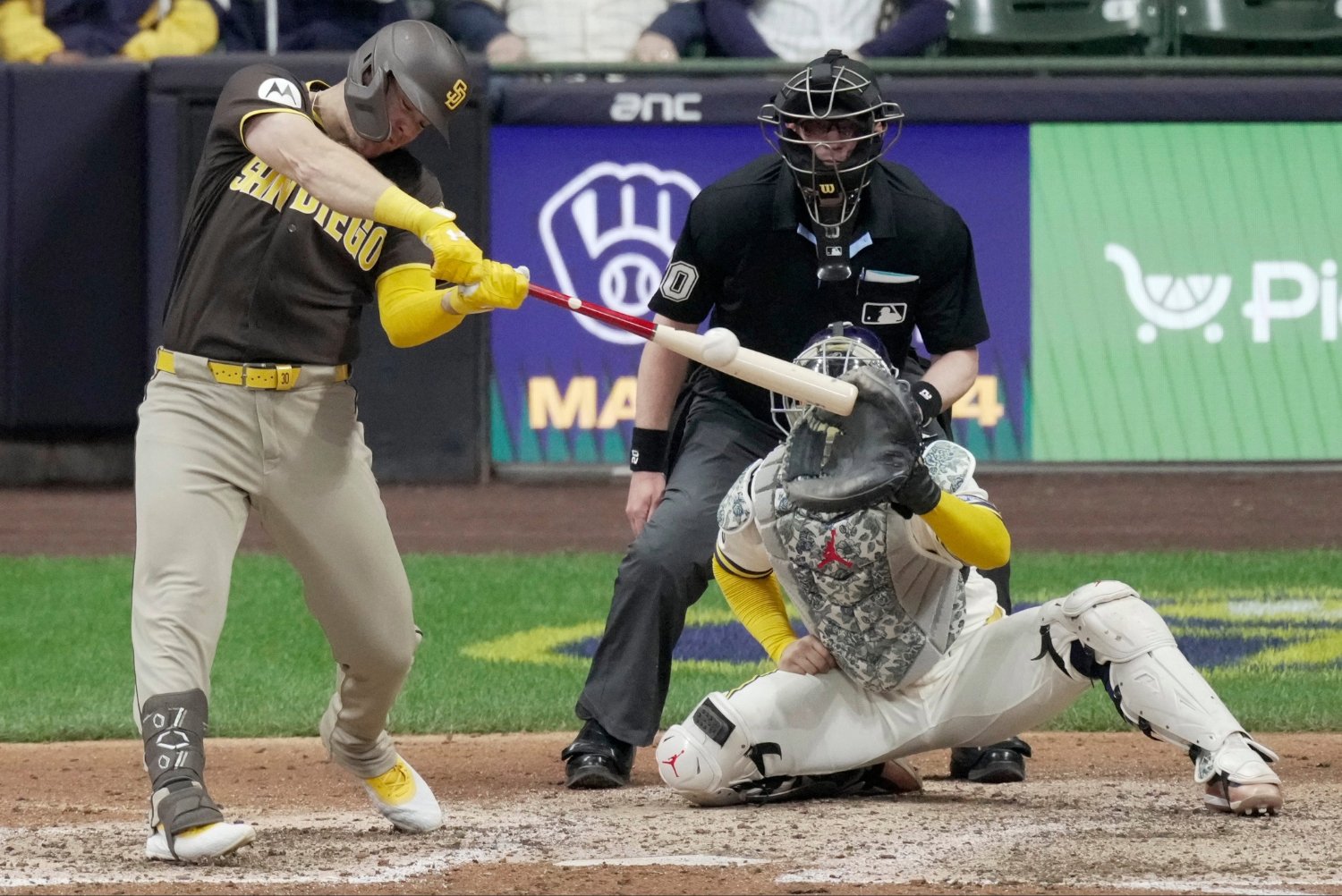 To say that Gavin Sheets got off to a poor start here in 2026 might be overstating the situation. After all, he did finish April above the average threshold in wRC+ (110). For a San Diego Padres team starved for consistency on the offensive side, though, it was definitely an output that left something to be desired. Sheets' first month of the season was propped up heavily by his power output. He struck out 22.0 percent of the time against a mere 4.4 percent walk rate. That type of spread doesn't lend itself to regular contribution. As such, the power (.244 ISO) represented the only meaningful production Sheets was able to offer the Friars. That ISO figure trailed only Luis Campusano among Padres hitters in March & April, though Sheets' number came with nearly twice the plate appearances. In terms of total contributions, things have certainly shifted for Sheets here in May. Here is the breakdown of Sheets' performance between the season's first month and his work this month: March/April: .233/.275/.477, 22.0 K%, 4.4 BB%, 110 wRC+ May: .302/.434/.674, 18.9 K%, 18.9 BB%, 209 wRC+ It's not just that Sheets has been better; he's been obscenely good in general. No qualifying hitter in the sport has a better wRC+ than Sheets' 209 and only two have posted a higher ISO over halfway through the month than his .372 mark (Byron Buxton & Kyle Schwarber). How Sheets has managed to drive up his numbers in such an impressive way isn't any sort of mystery. For one, he's become more patient. Sheets' swing rate in April was 46.8 percent before dropping to 38.1 thus far in May. The chase rate has come down along with that overall decline in swings, falling from 37.2 percent to 31.3 percent between the two months. That increased patience has (obviously) allowed him to drop his strikeout rate while driving the walk rate way up, but it's also allowed him to do more with the contact that's being made. More specifically, it's allowing him to find the portions of the zone that are going to yield the most positive outcomes. The below visual is of Sheets' swing rates in and around the strike zone in March & April: It's not a bad trend, mind you, where many of those swings wind up. But there's also a lot of work down in the zone that's going to result in a heavy volume of groundball contact. Meanwhile, this is where Sheets is swinging to this point in May: There's been a much heavier emphasis on not only the inner portion of the zone, but avoiding those lower areas that have caused him trouble in the past. With not a ton of variable change with respect to pitch types, we can attribute the improved patience to his ability to lock in on more impactful portions of the zone. The areas of emphasis in the second visual (middle-middle and middle-in) are where we typically see his power manifest. That trend is present in the elevation of Sheets' contact over these past handful of weeks. After going for a groundball rate over 45 percent in April, he's down to 36 percent in May. His fly-ball rate, meanwhile, has experienced an eleven percent leap up to 30.3 in May. The quality of contact was always there, but his lack of discipline wasn't allowing it to be maximized. By honing in his approach and gaining control of the zone, he's been able to elevate his game to a fairly drastic extent, much to the Padres' benefit.

