


Randy Holt
-
Posts
486 -
Joined
-
Last visited
-
Days Won
6
Content Type
Profiles
San Diego Padres Videos
2026 San Diego Padres Top Prospects Ranking
San Diego Padres Free Agent & Trade Rumors, Notes, & Tidbits
Guides & Resources
2025 San Diego Padres Draft Pick Tracker
News
2026 San Diego Padres Draft Tracker: Picks & Bonuses
Forums
Blogs
Events
Store
Downloads
Gallery
Everything posted by Randy Holt
-
When the San Diego Padres square off against Tarik Skubal and the Detroit Tigers later this month, it won’t be one of Fernando Tatis Jr. or Luis Arráez doing so atop the lineup. The two combined for 161 games out of that spot in the order in 2025. Instead, Craig Stammen appears poised to take a different approach. Prior to the start of the World Baseball Classic, Xander Bogaerts assumed that role for the majority of his exhibition appearances. In his stead, it’s been Jake Cronenworth holding down the No. 1 spot in the order. Given how the rest of the lineup appears destined to be structured, it seems as if it’ll be one of those two working out of the top spot in the Padres’ order to start 2026. Which one, though, remains something of a mystery as we head into the second half of the spring slate. When one considers the options for lineup configuration in the upcoming season, there are a few possibilities we can eliminate. Arráez, obviously, will not be around given his contract in San Francisco. Tatis is set to move to the third or fourth spot given the upside he presents in run production. He’ll likely work back-to-back with Manny Machado on some level. Jackson Merrill should fit into somewhere in between second and fifth in the order, as well, with anyone else anticipated as a regular working farther down the lineup. Which means that the Bogaerts-Cronenworth contingent that has gotten so much work there this spring isn’t any kind of mirage. Bogaerts could very well be the favorite given his volume of appearances prior to departing for the WBC. In his absence, Cronenworth has received plenty of work. There might not be a “right” answer for which of the two could, ultimately, land the gig. Instead, the correct choice may boil down to which skill set Stammen prefers in that role. Between the two, Bogaerts represents the more contact-oriented bat to put atop the lineup. His 3.75 pitches per plate appearance checked in below league average (3.88), which resulted in a walk rate that finished in just the 54th percentile (8.7 percent). While that number sits around league average, Bogaerts is able to use a keen eye to drive his contact rather than work a walk. His chase rate (23.6 percent) ended the year a shade below the 80th percentile and resulted in an above-average strikeout rate (17.0 percent). Bogaerts is able to use those factors to generate consistent contact, the rate of which has ended at or above 80 percent in each of the last three seasons. There’s also a bit of actual experience in that top spot to consider. While not a massive sample, Bogaerts does have 365 plate appearances to his name as a leadoff hitter. In such a role, he’s slashed .283/.351/.397, with a 14.5 percent strikeout rate against a 9.0 percent walk rate. You’re not relying on power in that spot anyway, but the combination of approach and contact could make him a worthwhile option. That’s if Stammen can stomach the streakiness which the bat of Xander Bogaerts bore in 2025. Cronenworth represents a vastly different player in that role than Bogaerts would. While the latter relies on his approach to create contact and work his way on base through that method, much of Cronenworth’s value is wrapped up in the walk itself. Not only did Cronenworth’s 4.22 pitches per plate appearance rank seventh among all qualified hitters last season, his 13.4 percent walk rate landed in the 94th percentile. With that patience, he was able to post a .367 on-base percentage that eclipsed the previous season’s mark by more than 40 points while also serving as the top rate of his career. A strikeout rate that crossed the 20 percent threshold last year might indicate an overreliance on patience, but it’s difficult to question the benefit in yielding such a consistent on-base presence. If there’s another element to consider here, it’s in the baserunning. At no point in his career has Bogaerts fallen below the average threshold in FanGraphs’ BsR baserunning metric; he was at 2.6 and 1.7 in each of the last two seasons, respectively. For his money, Cronenworth was at just 0.1 in 2024 and -0.6 in 2025. So, while Cronenworth may have the sprint speed advantage – 28.1 feet per second to Bogaerts’ closer-to-league-average 27.6 – Bogaerts is better at applying it to the basepaths. Ultimately, though, there isn’t a whole lot separating the two. The offensive skill sets present different profiles while the baserunning difference is fairly marginal between the two. If Bogaerts was an upper-tier contact hitter with a runaway advantage in the quality of his baserunning, then his sample in that spot this spring would just about indicate the whole competition as being over. But Cronenworth’s ability to draw walks and provide competence on the bases doesn’t rule him out entirely, either. It’s going to come down to what Craig Stammen wants out of that spot. If he wants contact and baserunning acumen, it’s probably going to Xander Bogaerts. If it’s the steadiest of eyes to work an early count and additional quickness on the bases, then perhaps Jake Cronenworth gets some run. Either way, there’s a suitable player here. It’s just a matter of what Stammen wants at this point. View full article
-
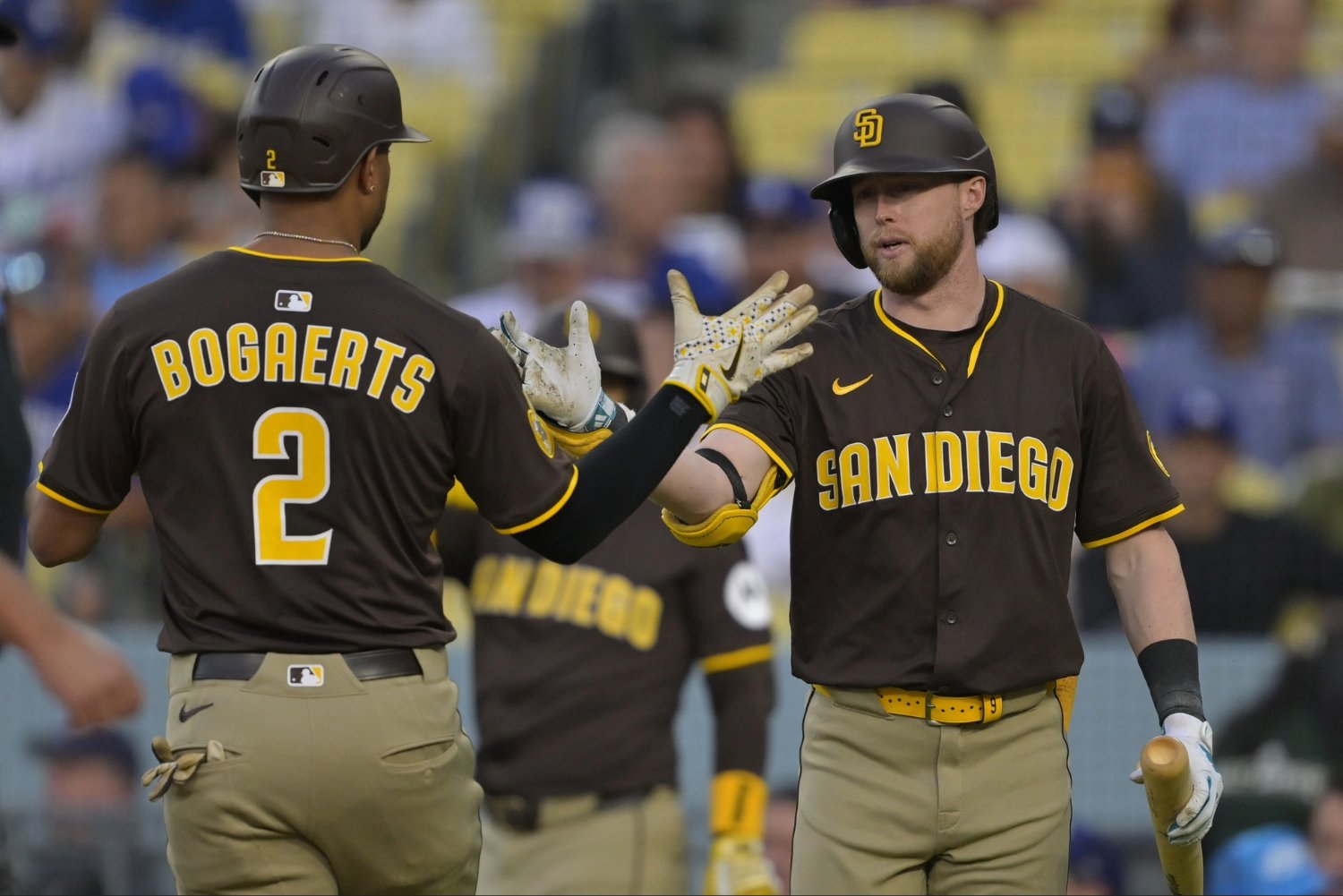 When the San Diego Padres square off against Tarik Skubal and the Detroit Tigers later this month, it won’t be one of Fernando Tatis Jr. or Luis Arráez doing so atop the lineup. The two combined for 161 games out of that spot in the order in 2025. Instead, Craig Stammen appears poised to take a different approach. Prior to the start of the World Baseball Classic, Xander Bogaerts assumed that role for the majority of his exhibition appearances. In his stead, it’s been Jake Cronenworth holding down the No. 1 spot in the order. Given how the rest of the lineup appears destined to be structured, it seems as if it’ll be one of those two working out of the top spot in the Padres’ order to start 2026. Which one, though, remains something of a mystery as we head into the second half of the spring slate. When one considers the options for lineup configuration in the upcoming season, there are a few possibilities we can eliminate. Arráez, obviously, will not be around given his contract in San Francisco. Tatis is set to move to the third or fourth spot given the upside he presents in run production. He’ll likely work back-to-back with Manny Machado on some level. Jackson Merrill should fit into somewhere in between second and fifth in the order, as well, with anyone else anticipated as a regular working farther down the lineup. Which means that the Bogaerts-Cronenworth contingent that has gotten so much work there this spring isn’t any kind of mirage. Bogaerts could very well be the favorite given his volume of appearances prior to departing for the WBC. In his absence, Cronenworth has received plenty of work. There might not be a “right” answer for which of the two could, ultimately, land the gig. Instead, the correct choice may boil down to which skill set Stammen prefers in that role. Between the two, Bogaerts represents the more contact-oriented bat to put atop the lineup. His 3.75 pitches per plate appearance checked in below league average (3.88), which resulted in a walk rate that finished in just the 54th percentile (8.7 percent). While that number sits around league average, Bogaerts is able to use a keen eye to drive his contact rather than work a walk. His chase rate (23.6 percent) ended the year a shade below the 80th percentile and resulted in an above-average strikeout rate (17.0 percent). Bogaerts is able to use those factors to generate consistent contact, the rate of which has ended at or above 80 percent in each of the last three seasons. There’s also a bit of actual experience in that top spot to consider. While not a massive sample, Bogaerts does have 365 plate appearances to his name as a leadoff hitter. In such a role, he’s slashed .283/.351/.397, with a 14.5 percent strikeout rate against a 9.0 percent walk rate. You’re not relying on power in that spot anyway, but the combination of approach and contact could make him a worthwhile option. That’s if Stammen can stomach the streakiness which the bat of Xander Bogaerts bore in 2025. Cronenworth represents a vastly different player in that role than Bogaerts would. While the latter relies on his approach to create contact and work his way on base through that method, much of Cronenworth’s value is wrapped up in the walk itself. Not only did Cronenworth’s 4.22 pitches per plate appearance rank seventh among all qualified hitters last season, his 13.4 percent walk rate landed in the 94th percentile. With that patience, he was able to post a .367 on-base percentage that eclipsed the previous season’s mark by more than 40 points while also serving as the top rate of his career. A strikeout rate that crossed the 20 percent threshold last year might indicate an overreliance on patience, but it’s difficult to question the benefit in yielding such a consistent on-base presence. If there’s another element to consider here, it’s in the baserunning. At no point in his career has Bogaerts fallen below the average threshold in FanGraphs’ BsR baserunning metric; he was at 2.6 and 1.7 in each of the last two seasons, respectively. For his money, Cronenworth was at just 0.1 in 2024 and -0.6 in 2025. So, while Cronenworth may have the sprint speed advantage – 28.1 feet per second to Bogaerts’ closer-to-league-average 27.6 – Bogaerts is better at applying it to the basepaths. Ultimately, though, there isn’t a whole lot separating the two. The offensive skill sets present different profiles while the baserunning difference is fairly marginal between the two. If Bogaerts was an upper-tier contact hitter with a runaway advantage in the quality of his baserunning, then his sample in that spot this spring would just about indicate the whole competition as being over. But Cronenworth’s ability to draw walks and provide competence on the bases doesn’t rule him out entirely, either. It’s going to come down to what Craig Stammen wants out of that spot. If he wants contact and baserunning acumen, it’s probably going to Xander Bogaerts. If it’s the steadiest of eyes to work an early count and additional quickness on the bases, then perhaps Jake Cronenworth gets some run. Either way, there’s a suitable player here. It’s just a matter of what Stammen wants at this point.
 -
For the second time since signing with the San Diego Padres, utility man Sung Mun Song is set to miss some time with an oblique injury. He was lifted from Thursday’s game after aggravating the injury that he’d originally sustained back in January. As Song continues to sit, it opens up a couple of questions around his status for Opening Day and what it could mean for the bench picture at large. Song is projected to log heavy time all over the field for the Padres. A second and third baseman by trade, the Padres plan to move Song all over the field. He’ll get some time at the hot corner when Manny Machado serves as the designated hitter or flip over to the keystone when Jake Cronenworth needs a day or is shifting over to first base. The team is also exploring getting him some reps on the outfield grass, leaving a chance that he could play virtually every day for the Padres depending on off days and injuries (for what it’s worth, FanGraphs projects him to log time at five different positions in 2026). The good news is that the injury itself doesn’t appear serious. While oblique injuries can linger, Opening Day is not yet in question, and Craig Stammen made an assertion that it’s less worrisome that it came as a result of work more broadly – with his removal on Thursday falling under “precautionary” – than having occurred on a specific swing. That speaks more to a soreness than an acute injury, which should help the team to navigate this over the next couple of weeks. There’s enough time before March 26 that Song could very well be back in action with additional reps before the regular season begins. Nevertheless, it’s still important to consider what impact an injury to Song that lands him on the injured list to start the year could bear on a somewhat crowded bench picture over these next couple of weeks. The wide assumption to this point is that the Friars’ bench was going to be comprised of Song, Luis Campusano as the No. 2 catcher, and whichever of Gavin Sheets, Nick Castellanos, or Miguel Andujar were not split starting between a corner outfield spot, first base, or designated hitter on a particular day. Which means that the Padres had, essentially, one spot with which to work. That could shift a bit if Song was to become IL-bound to start the year. With only one spot remaining, the Padres would have to make a choice between a likely group of Bryce Johnson, Mason McCoy, Will Wagner, Ty France, and Jose Miranda. The former three are each on the 40-man roster. Johnson, however, is out of options while McCoy & Wagner each still have multiple to their name. Which means that the decision, if we’re sticking to this group of five, could come down to Johnson, France, and Miranda. Each brings something just a little bit different while offering a strong showing at the plate thus far in the spring exhibition season. As of publishing, Johnson is hitting .320 with a .346 on-base percentage and a homer to his credit in spring training. As an outfielder on a team that lacks a clear fourth option on the grass, he might’ve been the favorite. At the same time, each of Miranda (.370/.452/.630) and France (.375/.444/.500) are off to torrid starts and have a bit of versatility in their respective toolboxes. If the Padres were comfortable with Sheets, Castellanos, or Andujar in an outfield corner for a spell while Ramón Laureano slides over to center when Jackson Merrill needs a day, then it’s possible that one of those bats could’ve earned a spot. A Song absence might allow them to keep the outfield steady with Johnson and retain one of the two non-roster invitees in Miranda and France. Or they could keep Miranda and France because of their bats and designated the out-of-options Johnson for assignment. Either way, they’d be afforded that flexibility in the wake of an extended absence for Song. Ultimately, though, it’s not any kind of a given that the Padres would find themselves in such a scenario. Song’s oblique might be holding him out now, but we have no reason to think (at this point, at least) that it’ll hamper his chances of an Opening Day appearance. The roster squeeze will remain as it is, but the Padres do at least have contingencies should a longer-term absence manifest for their KBO convert. View full article
-
Sung-mun Song's Oblique Troubles Create Various Paths For Padres' Bench
Randy Holt posted an article in Padres
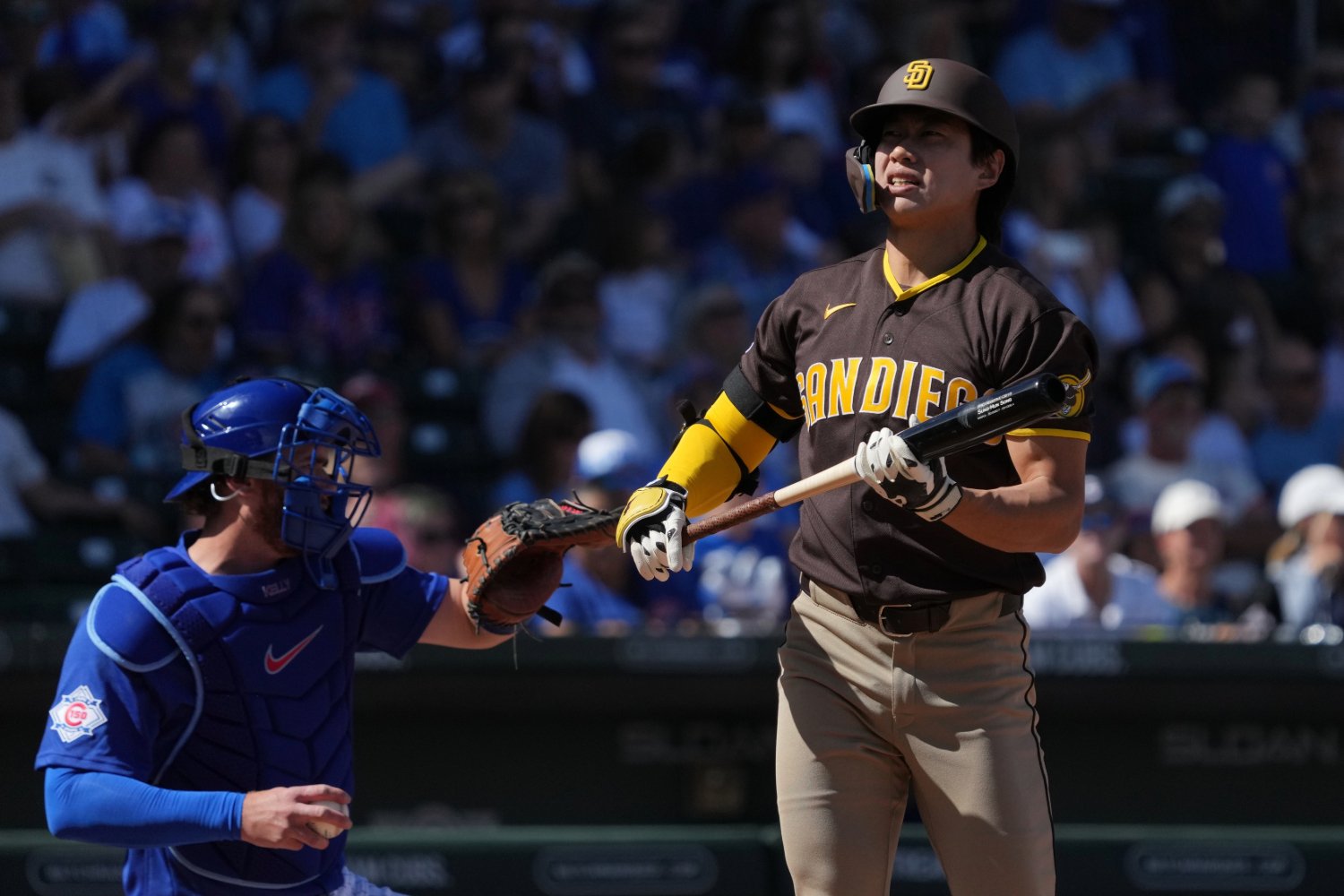 For the second time since signing with the San Diego Padres, utility man Sung Mun Song is set to miss some time with an oblique injury. He was lifted from Thursday’s game after aggravating the injury that he’d originally sustained back in January. As Song continues to sit, it opens up a couple of questions around his status for Opening Day and what it could mean for the bench picture at large. Song is projected to log heavy time all over the field for the Padres. A second and third baseman by trade, the Padres plan to move Song all over the field. He’ll get some time at the hot corner when Manny Machado serves as the designated hitter or flip over to the keystone when Jake Cronenworth needs a day or is shifting over to first base. The team is also exploring getting him some reps on the outfield grass, leaving a chance that he could play virtually every day for the Padres depending on off days and injuries (for what it’s worth, FanGraphs projects him to log time at five different positions in 2026). The good news is that the injury itself doesn’t appear serious. While oblique injuries can linger, Opening Day is not yet in question, and Craig Stammen made an assertion that it’s less worrisome that it came as a result of work more broadly – with his removal on Thursday falling under “precautionary” – than having occurred on a specific swing. That speaks more to a soreness than an acute injury, which should help the team to navigate this over the next couple of weeks. There’s enough time before March 26 that Song could very well be back in action with additional reps before the regular season begins. Nevertheless, it’s still important to consider what impact an injury to Song that lands him on the injured list to start the year could bear on a somewhat crowded bench picture over these next couple of weeks. The wide assumption to this point is that the Friars’ bench was going to be comprised of Song, Luis Campusano as the No. 2 catcher, and whichever of Gavin Sheets, Nick Castellanos, or Miguel Andujar were not split starting between a corner outfield spot, first base, or designated hitter on a particular day. Which means that the Padres had, essentially, one spot with which to work. That could shift a bit if Song was to become IL-bound to start the year. With only one spot remaining, the Padres would have to make a choice between a likely group of Bryce Johnson, Mason McCoy, Will Wagner, Ty France, and Jose Miranda. The former three are each on the 40-man roster. Johnson, however, is out of options while McCoy & Wagner each still have multiple to their name. Which means that the decision, if we’re sticking to this group of five, could come down to Johnson, France, and Miranda. Each brings something just a little bit different while offering a strong showing at the plate thus far in the spring exhibition season. As of publishing, Johnson is hitting .320 with a .346 on-base percentage and a homer to his credit in spring training. As an outfielder on a team that lacks a clear fourth option on the grass, he might’ve been the favorite. At the same time, each of Miranda (.370/.452/.630) and France (.375/.444/.500) are off to torrid starts and have a bit of versatility in their respective toolboxes. If the Padres were comfortable with Sheets, Castellanos, or Andujar in an outfield corner for a spell while Ramón Laureano slides over to center when Jackson Merrill needs a day, then it’s possible that one of those bats could’ve earned a spot. A Song absence might allow them to keep the outfield steady with Johnson and retain one of the two non-roster invitees in Miranda and France. Or they could keep Miranda and France because of their bats and designated the out-of-options Johnson for assignment. Either way, they’d be afforded that flexibility in the wake of an extended absence for Song. Ultimately, though, it’s not any kind of a given that the Padres would find themselves in such a scenario. Song’s oblique might be holding him out now, but we have no reason to think (at this point, at least) that it’ll hamper his chances of an Opening Day appearance. The roster squeeze will remain as it is, but the Padres do at least have contingencies should a longer-term absence manifest for their KBO convert.
 -
When the San Diego Padres signed Jose Miranda to a minor-league deal in December, the level of intrigue in response was tepid at best. A former top prospect of a certain pedigree with two separate years of success at the top level as a change-of-scenery candidate rung as similar to Gavin Sheets. But could the Padres capture lightning in a bottle twice after Sheets established himself as a key bat following multiple down years with the Chicago White Sox? If Miranda’s early returns in spring training are any indication, they just might. While the story of Sheets didn’t quite reach the valleys on the performance front as that of Miranda, the context is somewhat similar. After two steady years of above-average play that bookended a brutal 2023, Miranda was woeful in 2025. He struck out over 36 percent of the time, didn’t walk once, and saw his power dissipate entirely across 36 plate appearances with a Minnesota Twins team that traded away as much of their roster as they could at the trade deadline. His Triple-A output wasn’t much better, as a .214 batting average on balls in play pinned him down to a wRC+ of 49 in 371 plate appearances with the St. Paul Saints. So, even for a team mired in a rebuild like the Twins, they didn’t feel he was worth giving another shot at either infield corner ahead of 2026. Miranda caught on with San Diego on that non-guaranteed pact and has immediately produced during the exhibition season. As of this writing, he’s stepped to the plate 19 times, turned in a .412/.474/.765 line with a 15.8 percent strikeout rate against a 10.5 percent walk rate. He’s slugged a homer and a trio of doubles along the way. It’s a small sample, but gaudy numbers are gaudy numbers, especially this time of year. The “issue” for the Padres is if Miranda continues this pace. With an already-existent glut of profiles that read as quite similar to Miranda, could they make room for him on the Opening Day roster even if they wanted to? Miranda offers a bat at first base, third base, and designated hitter for the Padres. As of right now, the only of those three spots with a guaranteed body entrenched is third base featuring Manny Machado. As far as guaranteed contracts on the roster, the Padres figure to rotate Sheets, Nick Castellanos, and Miguel Andujar into those other two spots regularly. The latter two can fill in on the outfield grass occasionally, but with Fernando Tatis Jr., Jackson Merrill, and Ramón Laureano occupying the three spots, opportunities there may be sparse. However, given that at least two of those three names will have to be in the lineup on a given day, the Sheets-Castellanos-Andujar contingent will, technically, only count for one bench spot. However, even one bench spot counts for a lot given how the rest of the reserves stand to shake out. Sung Mun Song will occupy a key role as a utility player, but without a clear path to a starting gig, someone’s on the bench in his stead as he moves around the diamond. Beyond Song, Luis Campusano has the inside track as the No. 2 gig behind the plate, and Bryce Johnson is the favorite as the fourth outfielder. That’s a very murky picture for someone like Miranda, good as his spring has been thus far, to actually crack the roster barring an injury. Additionally, it’s difficult to see the Padres cutting someone from that mix in order to accommodate him. Let’s deal in hypotheticals for a moment, though. An injury could put Miranda on the roster on its own. To a corner outfielder, you’ve got Andujar, Castellanos, and Sheets in tow capable of handling such a role over a short stint. In center, you’re looking at Laureano or Bryce Johnson, with Song sliding into regular duty wherever infield coverage may be needed. Either way, a lane would open up for Miranda in that case. Obviously, that’s not the ideal scenario, of course, so let’s talk about a pathway to the roster that doesn’t involve someone’s trip to the injured list. The Padres need offensive upside from their bench. They’re not a team that is necessarily prioritizing defense. Johnson offers the least offensive upside of anyone currently in the group. He’s also out of options. Would the team part ways by way of a DFA for their lone three-position-capable outfielder if it meant further stocking up the bench with bats? In that case, you get Miranda on the roster with Laureano filling in in center field on occasion. Should the Padres want Miranda on the roster to the point of executing that type of move, though? That all depends on how the remainder of spring shakes out. If he keeps going this way, you’re not just talking about him on the roster, but supplanting either of Andujar or Castellanos as a right-handed hitter getting regular work on a corner or as the designated hitter. Then again, that develops a concern regarding the defensive limitations of that veteran-laden group. Should he make the roster in someone like Johnson’s stead, you’d be looking at Miranda on either infield corner, Andujar at any of the four corners, and Sheets and Castellanos each at first and handling one side of the outfield apiece (the former in left and the latter in right). That leaves only Song up the middle, unless the Padres trust Jake Cronenworth to slide over to shortstop from the keystone on occasion. In those terms, it doesn’t seem as dire. Of course, Miranda has to sustain his output before this is a conversation the team is willing to have. As muddled as it might make things if he does, it does appear that there are at least a couple of paths toward feasibly getting him on the Opening Day roster. Ultimately, it’d make for a good problem to have for the Padres in 2026. View full article
-
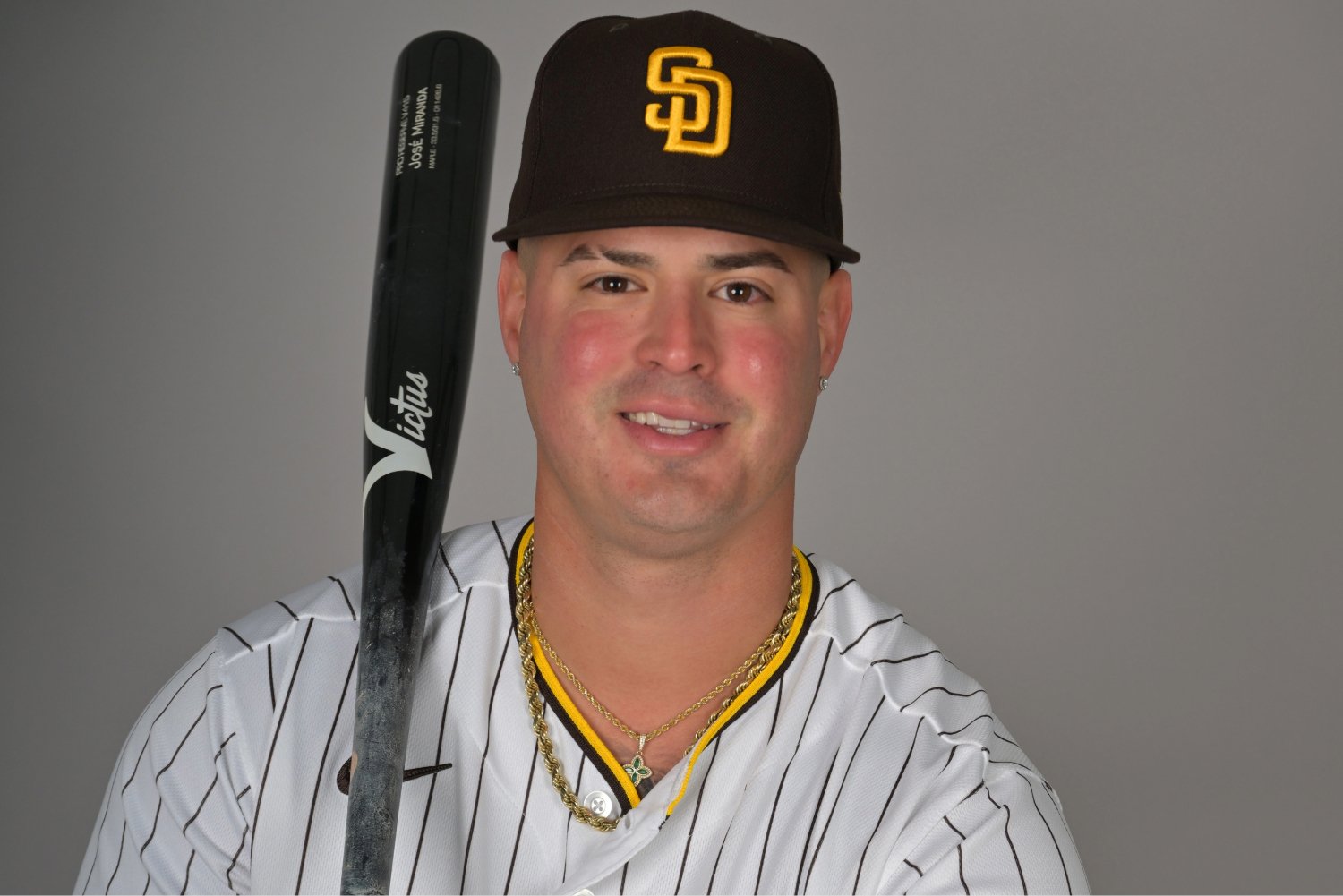 When the San Diego Padres signed Jose Miranda to a minor-league deal in December, the level of intrigue in response was tepid at best. A former top prospect of a certain pedigree with two separate years of success at the top level as a change-of-scenery candidate rung as similar to Gavin Sheets. But could the Padres capture lightning in a bottle twice after Sheets established himself as a key bat following multiple down years with the Chicago White Sox? If Miranda’s early returns in spring training are any indication, they just might. While the story of Sheets didn’t quite reach the valleys on the performance front as that of Miranda, the context is somewhat similar. After two steady years of above-average play that bookended a brutal 2023, Miranda was woeful in 2025. He struck out over 36 percent of the time, didn’t walk once, and saw his power dissipate entirely across 36 plate appearances with a Minnesota Twins team that traded away as much of their roster as they could at the trade deadline. His Triple-A output wasn’t much better, as a .214 batting average on balls in play pinned him down to a wRC+ of 49 in 371 plate appearances with the St. Paul Saints. So, even for a team mired in a rebuild like the Twins, they didn’t feel he was worth giving another shot at either infield corner ahead of 2026. Miranda caught on with San Diego on that non-guaranteed pact and has immediately produced during the exhibition season. As of this writing, he’s stepped to the plate 19 times, turned in a .412/.474/.765 line with a 15.8 percent strikeout rate against a 10.5 percent walk rate. He’s slugged a homer and a trio of doubles along the way. It’s a small sample, but gaudy numbers are gaudy numbers, especially this time of year. The “issue” for the Padres is if Miranda continues this pace. With an already-existent glut of profiles that read as quite similar to Miranda, could they make room for him on the Opening Day roster even if they wanted to? Miranda offers a bat at first base, third base, and designated hitter for the Padres. As of right now, the only of those three spots with a guaranteed body entrenched is third base featuring Manny Machado. As far as guaranteed contracts on the roster, the Padres figure to rotate Sheets, Nick Castellanos, and Miguel Andujar into those other two spots regularly. The latter two can fill in on the outfield grass occasionally, but with Fernando Tatis Jr., Jackson Merrill, and Ramón Laureano occupying the three spots, opportunities there may be sparse. However, given that at least two of those three names will have to be in the lineup on a given day, the Sheets-Castellanos-Andujar contingent will, technically, only count for one bench spot. However, even one bench spot counts for a lot given how the rest of the reserves stand to shake out. Sung Mun Song will occupy a key role as a utility player, but without a clear path to a starting gig, someone’s on the bench in his stead as he moves around the diamond. Beyond Song, Luis Campusano has the inside track as the No. 2 gig behind the plate, and Bryce Johnson is the favorite as the fourth outfielder. That’s a very murky picture for someone like Miranda, good as his spring has been thus far, to actually crack the roster barring an injury. Additionally, it’s difficult to see the Padres cutting someone from that mix in order to accommodate him. Let’s deal in hypotheticals for a moment, though. An injury could put Miranda on the roster on its own. To a corner outfielder, you’ve got Andujar, Castellanos, and Sheets in tow capable of handling such a role over a short stint. In center, you’re looking at Laureano or Bryce Johnson, with Song sliding into regular duty wherever infield coverage may be needed. Either way, a lane would open up for Miranda in that case. Obviously, that’s not the ideal scenario, of course, so let’s talk about a pathway to the roster that doesn’t involve someone’s trip to the injured list. The Padres need offensive upside from their bench. They’re not a team that is necessarily prioritizing defense. Johnson offers the least offensive upside of anyone currently in the group. He’s also out of options. Would the team part ways by way of a DFA for their lone three-position-capable outfielder if it meant further stocking up the bench with bats? In that case, you get Miranda on the roster with Laureano filling in in center field on occasion. Should the Padres want Miranda on the roster to the point of executing that type of move, though? That all depends on how the remainder of spring shakes out. If he keeps going this way, you’re not just talking about him on the roster, but supplanting either of Andujar or Castellanos as a right-handed hitter getting regular work on a corner or as the designated hitter. Then again, that develops a concern regarding the defensive limitations of that veteran-laden group. Should he make the roster in someone like Johnson’s stead, you’d be looking at Miranda on either infield corner, Andujar at any of the four corners, and Sheets and Castellanos each at first and handling one side of the outfield apiece (the former in left and the latter in right). That leaves only Song up the middle, unless the Padres trust Jake Cronenworth to slide over to shortstop from the keystone on occasion. In those terms, it doesn’t seem as dire. Of course, Miranda has to sustain his output before this is a conversation the team is willing to have. As muddled as it might make things if he does, it does appear that there are at least a couple of paths toward feasibly getting him on the Opening Day roster. Ultimately, it’d make for a good problem to have for the Padres in 2026.
 -
With the spring exhibition slate underway, new San Diego Padres manager Craig Stammen has already been tinkering with potential lineup options for the 2026 regular season. While there are a couple of individual spots to be settled from a personnel standpoint, the biggest mystery is how the batting order itself could be structured. It’s a puzzle that is made more complicated by a relatively enigmatic presence in the form of Fernando Tatis Jr. Tatis Jr. had a very good 2025 season. He turned in a .268/.368/.446 line with an 18.7 K% and 12.9 BB% that each represented a career mark. At 135, his wRC+ was indicative of a player well above average offensively, with 32 steals and the defensive component of his game pushing him up to a 6.1 fWAR mark that represented his best since he posted a 6.8 figure back in 2021. It’s the type of comprehensive performance that merits MVP consideration had it not been for the one element of his game that was notably absent for much of the year: his power. A season with 25 home runs and a .178 isolated power number isn’t necessarily something to frown upon. But we know where Tatis Jr. has set the bar in years past (if we’re optimistically assuming the performance-enhancing drug usage that resulted in a suspension was a one-off). He also started hot in the power game in 2025, posting a .257 ISO in April. That latter figure dropped significantly in May (.184), further in June (.102), and stayed low until he drove it back up with a .256 ISO in September. There are certainly mechanical reasons for last season’s power dip. On one hand, it looked like he was caught in between some changes to his footwork. Here is the 2024 season, when the ISO was up to .216: And here’s 2025: The changes aren’t wildly obvious to the eye, especially given that his positioning in the box and the intercept point all remained relatively similar. However, the distance between his feet and the stance, which went from 29 degrees open in 2024 to 38 degrees in 2025, could impact timing. While even less revealing, it’s possible that we can glean some further information from Tatis Jr’s actual swing, too. Here it is in 2024: Note the above average bat speed and the quality attack angle. Especially in comparison with 2025: Tatis Jr’s bat came through the zone just a touch slower, and the attack angle fell to eight degrees. Within all of this, you’re also talking about a player who experienced a severe drop in his barrel rate. In 2024, Tatis Jr. posted a 14.5 percent barrel rate, which ranked in the 92nd percentile. Last year’s iteration saw that percentage fall to 10.9 and 66th. Slower, shallower swing, finding the barrel at a lower frequency? It’s no wonder that the ball was on the ground 48.9 percent of the time. It doesn’t help, either, when those angles are all over the place on a month-to-month basis, as Tatis Jr. had no shortage of variance in attack angle and direction depending on the time of year. For what it’s worth, Tatis Jr. has already expressed that the mechanical things he was working through last year are behind him. If he can get his way back to generating quality contact and elevating in the way that he did in years past, then one imagines a simple transition back toward his power numbers of old. If it were that simple. Mechanics aren’t the only puzzle that Fernando Tatis Jr. will need to solve ahead of 2026, though. The approach is going to need to steer back in a direction that is more likely to beget power outcomes. Because, somewhere along the line, there was a tradeoff. In general, Tatis Jr’s swing rate declined in 2025. He carried a 51.1 Swing% in 2024 before dropping that down to 45.4 percent last season. Both ends of the spectrum were impacted, as he dropped his chase rate by roughly five percent and his zone swing rate by almost four. However, he also made less contact when chasing and, more importantly, wasn’t able to parlay the approach into more success within the strike zone. Within the zone, Tatis Jr bumped his contact rate up about one percent. At least some of that is due to the fact that he was active on offspeed pitches inside the zone, which was his highest whiff source among the three pitch groups. With that approach, he swung at four percent fewer fastballs inside the strike zone (69.3 percent). While this development unfolded, his barrel rate on fastballs fell more than five percent (10.0). It seems as if Tatis Jr was attempting to become more patient in a broad sense, but perhaps was not consciously devoted to the actual pitch types. Instead, the zone was the focus, which inhibited his ability to be as active on the type of pitch responsible for his power outcomes in the years prior. The thing that’s ironic about the number of factors that led to Tatis Jr.’s 2025 production is that it’s still good production. This is an elite baseball player with an elite skill set. That means that even caught in between mechanical or approach adjustments, production is still there. In his case, though, we’re looking for more of it on the power side. It’s clear that Tatis Jr himself was working through some stuff at the plate last year. If he is genuinely clear of that, then the offseason reset could compound with what was already there to manifest in a fascinatingly strong 2026 campaign. The Padres and their overall lack of collective power sure would like that. View full article
-
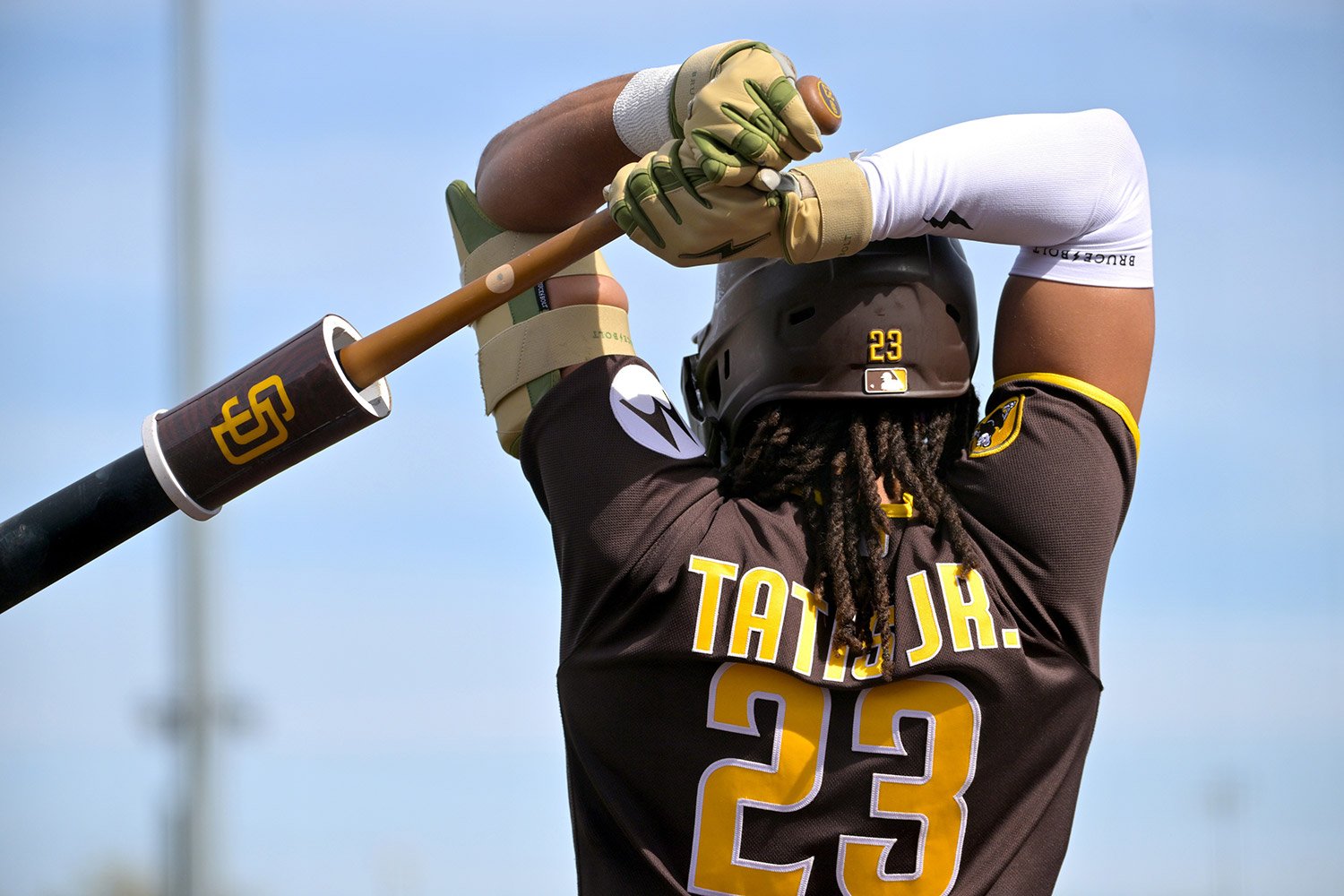 With the spring exhibition slate underway, new San Diego Padres manager Craig Stammen has already been tinkering with potential lineup options for the 2026 regular season. While there are a couple of individual spots to be settled from a personnel standpoint, the biggest mystery is how the batting order itself could be structured. It’s a puzzle that is made more complicated by a relatively enigmatic presence in the form of Fernando Tatis Jr. Tatis Jr. had a very good 2025 season. He turned in a .268/.368/.446 line with an 18.7 K% and 12.9 BB% that each represented a career mark. At 135, his wRC+ was indicative of a player well above average offensively, with 32 steals and the defensive component of his game pushing him up to a 6.1 fWAR mark that represented his best since he posted a 6.8 figure back in 2021. It’s the type of comprehensive performance that merits MVP consideration had it not been for the one element of his game that was notably absent for much of the year: his power. A season with 25 home runs and a .178 isolated power number isn’t necessarily something to frown upon. But we know where Tatis Jr. has set the bar in years past (if we’re optimistically assuming the performance-enhancing drug usage that resulted in a suspension was a one-off). He also started hot in the power game in 2025, posting a .257 ISO in April. That latter figure dropped significantly in May (.184), further in June (.102), and stayed low until he drove it back up with a .256 ISO in September. There are certainly mechanical reasons for last season’s power dip. On one hand, it looked like he was caught in between some changes to his footwork. Here is the 2024 season, when the ISO was up to .216: And here’s 2025: The changes aren’t wildly obvious to the eye, especially given that his positioning in the box and the intercept point all remained relatively similar. However, the distance between his feet and the stance, which went from 29 degrees open in 2024 to 38 degrees in 2025, could impact timing. While even less revealing, it’s possible that we can glean some further information from Tatis Jr’s actual swing, too. Here it is in 2024: Note the above average bat speed and the quality attack angle. Especially in comparison with 2025: Tatis Jr’s bat came through the zone just a touch slower, and the attack angle fell to eight degrees. Within all of this, you’re also talking about a player who experienced a severe drop in his barrel rate. In 2024, Tatis Jr. posted a 14.5 percent barrel rate, which ranked in the 92nd percentile. Last year’s iteration saw that percentage fall to 10.9 and 66th. Slower, shallower swing, finding the barrel at a lower frequency? It’s no wonder that the ball was on the ground 48.9 percent of the time. It doesn’t help, either, when those angles are all over the place on a month-to-month basis, as Tatis Jr. had no shortage of variance in attack angle and direction depending on the time of year. For what it’s worth, Tatis Jr. has already expressed that the mechanical things he was working through last year are behind him. If he can get his way back to generating quality contact and elevating in the way that he did in years past, then one imagines a simple transition back toward his power numbers of old. If it were that simple. Mechanics aren’t the only puzzle that Fernando Tatis Jr. will need to solve ahead of 2026, though. The approach is going to need to steer back in a direction that is more likely to beget power outcomes. Because, somewhere along the line, there was a tradeoff. In general, Tatis Jr’s swing rate declined in 2025. He carried a 51.1 Swing% in 2024 before dropping that down to 45.4 percent last season. Both ends of the spectrum were impacted, as he dropped his chase rate by roughly five percent and his zone swing rate by almost four. However, he also made less contact when chasing and, more importantly, wasn’t able to parlay the approach into more success within the strike zone. Within the zone, Tatis Jr bumped his contact rate up about one percent. At least some of that is due to the fact that he was active on offspeed pitches inside the zone, which was his highest whiff source among the three pitch groups. With that approach, he swung at four percent fewer fastballs inside the strike zone (69.3 percent). While this development unfolded, his barrel rate on fastballs fell more than five percent (10.0). It seems as if Tatis Jr was attempting to become more patient in a broad sense, but perhaps was not consciously devoted to the actual pitch types. Instead, the zone was the focus, which inhibited his ability to be as active on the type of pitch responsible for his power outcomes in the years prior. The thing that’s ironic about the number of factors that led to Tatis Jr.’s 2025 production is that it’s still good production. This is an elite baseball player with an elite skill set. That means that even caught in between mechanical or approach adjustments, production is still there. In his case, though, we’re looking for more of it on the power side. It’s clear that Tatis Jr himself was working through some stuff at the plate last year. If he is genuinely clear of that, then the offseason reset could compound with what was already there to manifest in a fascinatingly strong 2026 campaign. The Padres and their overall lack of collective power sure would like that.
 -
The range of outcomes that we could see from the 2026 San Diego Padres is vast. It’s a flawed roster, but one that isn’t short on upside. Despite the attention that the pitching staff has gotten throughout the offseason, it’s the offensive side of things that could have the most significant bearing on their fortunes in the upcoming year. The stars are still in place in Manny Machado, Fernando Tatis Jr., and Jackson Merrill. The secondary pieces are, too, in Jake Cronenworth, Xander Bogaerts, et al. Some new faces join the fray – most notably Sung Mun Song, Miguel Andujar, and Nick Castellanos – but it’s the holdover that will have the most to say about where this team can go this season. As such, let’s talk about what the team needs out of each hitter in order to maximize the offensive success that felt so fleeting a year ago. Freddy Fermin: Get on Base Freddy Fermin is not in San Diego to hit. He’s in San Diego as a competent, controllable catcher. Nevertheless, he’s going to have to find ways to stretch this lineup, and reaching base is the best way that he can do that. Despite limited upside, Fermin does have a keen awareness of the strike zone. What he doesn’t do, though, is walk. Despite quality strikeout numbers in the last two seasons – 17.9 and 18.7 percent, respectively – he’s more prone to swinging than walking, where he did so at a rate of just 5.5 percent in 2025. If he can start to work that patience to his advantage at a higher rate, it would be a boon for the top of the order given his likely presence toward the bottom of it. More on base for a catcher that has been close to an average baserunner in his career would beget more run production opportunities for the top bats when the lineup flips. Gavin Sheets: Consistency in Approach The 2025 iteration of Gavin Sheets lent plenty of validation to change-of-scenery as a concept. While the vibe shift itself likely played a role, Sheets was able to ascend on his own courtesy of chase and whiff rates that improved steadily as the season wore on. In August, Sheets posted by his highest in-zone swing rate (64.5 percent) and his lowest rate of chase-and-miss (22.2 percent) of any individual month. The result? Sheets slashed .412/.464/.745 with a 237 wRC+ in 56 plate appearances. It was a smaller sample due to injury (while also being entirely unsustainable), but there’s a foundation laid that speaks to what Sheets can do if he has the discipline reined in. If he wants to hold off Andujar and Castellanos for playing time, he’ll have to demonstrate some consistency in that regard. Jake Cronenworth: Find the Barrel As indicated by his 13.4 percent walk rate (94th percentile), Cronenworth is perhaps the most patient hitter the Padres have to offer. What he couldn’t do, however, was parlay that patience into positive outcomes when he actually swung the bat. His 6.2 percent barrel rate didn’t just live in the 25th percentile, but represented a rather notable drop from 2024, when he found it at a 7.8 percent clip. He swung the bat faster in 2025 than either of the previous years, getting him to roughly average after a pair of seasons on the slow end of the swing speed leaderboard. If he can utilize the approach toward creating more quality contact, the compounding of a keen eye and improved bat speed could have him trending back toward the power upside we saw from him early in his career. Xander Bogaerts: Be Aggressive In the first two months of 2025, there was plenty of talk of Bogaerts being a sunk cost and some hope that a team might be willing to take some of his contract off the Padres’ books. That shifted in June and July as Bogaerts posted wRC+ figures of 123 and 125, respectively, and brought his slugging percentage well back over the .400 threshold. The big change was in his aggression. While he walked at an abnormally high rate (based on his career number) in the first two months, the free passes dipped and the swing rate went up. We saw a glimpse of the same in an injury-shortened September (115 wRC+, .500 SLG), albeit in just 18 plate appearances. Bogaerts has the contact chops and an above-average swing speed that rose two percent from the previous season (72.2 MPH). Similar to Cronenworth – even if not as extreme – he can sacrifice a bit on the walk end if it means more impact when he swings the bat. Manny Machado: Find the Power Faster Manny Machado is one of the two or three most important hitters in the San Diego lineup. The last two seasons, however, it has taken him a while to get going. In 2024, he went three consecutive months with a sub-.200 ISO before exploding to .250, .283, and .237 in the last three months of the year. Last season, he started much the same before crossing the .200 threshold in June on his way to a .283 ISO in July. The difference is that in 2024, he was coming off an offseason surgery that likely contributed to his slow start. That same scenario didn’t exist last year. If the Padres want to continue their run of contention, though, the power is going to have to manifest out of Machado’s bat much earlier, especially in order to compensate for some of those stretches where it wanes as he ages. Ramón Laureano: Get Back to Baltimore Ways When the Padres acquired Laureano ahead of the trade deadline, the hope was that he’d continue the bounce back he’d demonstrated all year with the Orioles. Prior to the trade, he’d cut down the strikeout rate to a career best and had driven up the contact metrics above where they’d been in any year prior. With the Padres, though, things started to slide before a finger injury ended his season early. The swing rate rose, the whiff rate jumped five percent between August and September, and a rise in groundball contact led to his lowest BABIP outside of an abysmal April (.278). We know the skill set exists given the contact metrics, but the approach will have to resemble something closer to Baltimore if he’s going to serve as a regular contributor in 2026. Jackson Merrill: Get the Slug Back Merrill is somewhat unique on this list, as his top priority is to merely stay healthy. A hamstring strain, concussion, and ankle sprain limited him greatly over the course of 2025. His performance climbing back toward his rookie form from 2024 might just be a natural byproduct of being clear of those woes. Ultimately, though, the Padres need Merrill to regain some of his form on the power side above all. He came out hot in April (.297 ISO before the hamstring injury), but was unable to maintain that in the face of his other health issues as the year progressed. His ISO dropped and remained low in the subsequent months, going .143, .100, and .109, respectively, in the three months following his April tear. It did start to rebound in August, though, climbing to .214 before spiking to a gaudy .352 ISO in September. There’s some nuance in the approach that could yield the power outcomes, but the stroke is clearly there. As long as he’s healthy, he should be a dynamic presence in a lineup that needs all the power it can find. Fernando Tatis Jr.: Balance Approach & Power Tatis’ trajectory merits its own discussion in the coming weeks. But even as one of the most valuable players in the sport (6.1 fWAR in 2025), he hasn’t gotten back to the superstar level we saw prior to his various injuries and suspension quite yet. That’s largely due to the decline in power. Tatis’ .178 ISO in 2026 was a career low. At the same time, his strikeout and walk numbers were the best of his career. There’s a clear tradeoff happening in hopes of making more contact. While that may have its benefits, Tatis is a catalyst to this lineup that already suffers a bit in the power department. He may have to find a blend of the two to maximize his value to this group. View full article
-
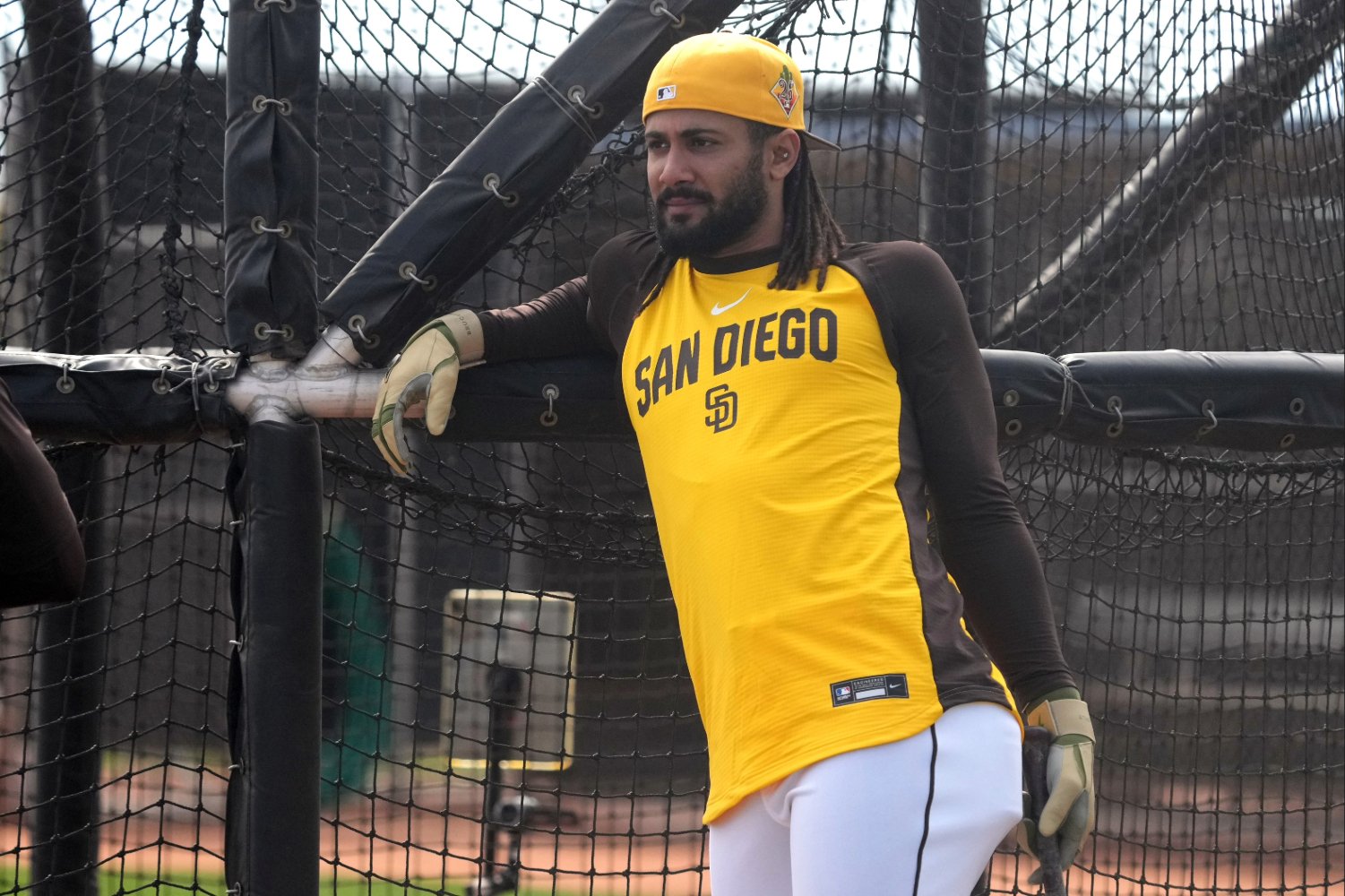 The range of outcomes that we could see from the 2026 San Diego Padres is vast. It’s a flawed roster, but one that isn’t short on upside. Despite the attention that the pitching staff has gotten throughout the offseason, it’s the offensive side of things that could have the most significant bearing on their fortunes in the upcoming year. The stars are still in place in Manny Machado, Fernando Tatis Jr., and Jackson Merrill. The secondary pieces are, too, in Jake Cronenworth, Xander Bogaerts, et al. Some new faces join the fray – most notably Sung Mun Song, Miguel Andujar, and Nick Castellanos – but it’s the holdover that will have the most to say about where this team can go this season. As such, let’s talk about what the team needs out of each hitter in order to maximize the offensive success that felt so fleeting a year ago. Freddy Fermin: Get on Base Freddy Fermin is not in San Diego to hit. He’s in San Diego as a competent, controllable catcher. Nevertheless, he’s going to have to find ways to stretch this lineup, and reaching base is the best way that he can do that. Despite limited upside, Fermin does have a keen awareness of the strike zone. What he doesn’t do, though, is walk. Despite quality strikeout numbers in the last two seasons – 17.9 and 18.7 percent, respectively – he’s more prone to swinging than walking, where he did so at a rate of just 5.5 percent in 2025. If he can start to work that patience to his advantage at a higher rate, it would be a boon for the top of the order given his likely presence toward the bottom of it. More on base for a catcher that has been close to an average baserunner in his career would beget more run production opportunities for the top bats when the lineup flips. Gavin Sheets: Consistency in Approach The 2025 iteration of Gavin Sheets lent plenty of validation to change-of-scenery as a concept. While the vibe shift itself likely played a role, Sheets was able to ascend on his own courtesy of chase and whiff rates that improved steadily as the season wore on. In August, Sheets posted by his highest in-zone swing rate (64.5 percent) and his lowest rate of chase-and-miss (22.2 percent) of any individual month. The result? Sheets slashed .412/.464/.745 with a 237 wRC+ in 56 plate appearances. It was a smaller sample due to injury (while also being entirely unsustainable), but there’s a foundation laid that speaks to what Sheets can do if he has the discipline reined in. If he wants to hold off Andujar and Castellanos for playing time, he’ll have to demonstrate some consistency in that regard. Jake Cronenworth: Find the Barrel As indicated by his 13.4 percent walk rate (94th percentile), Cronenworth is perhaps the most patient hitter the Padres have to offer. What he couldn’t do, however, was parlay that patience into positive outcomes when he actually swung the bat. His 6.2 percent barrel rate didn’t just live in the 25th percentile, but represented a rather notable drop from 2024, when he found it at a 7.8 percent clip. He swung the bat faster in 2025 than either of the previous years, getting him to roughly average after a pair of seasons on the slow end of the swing speed leaderboard. If he can utilize the approach toward creating more quality contact, the compounding of a keen eye and improved bat speed could have him trending back toward the power upside we saw from him early in his career. Xander Bogaerts: Be Aggressive In the first two months of 2025, there was plenty of talk of Bogaerts being a sunk cost and some hope that a team might be willing to take some of his contract off the Padres’ books. That shifted in June and July as Bogaerts posted wRC+ figures of 123 and 125, respectively, and brought his slugging percentage well back over the .400 threshold. The big change was in his aggression. While he walked at an abnormally high rate (based on his career number) in the first two months, the free passes dipped and the swing rate went up. We saw a glimpse of the same in an injury-shortened September (115 wRC+, .500 SLG), albeit in just 18 plate appearances. Bogaerts has the contact chops and an above-average swing speed that rose two percent from the previous season (72.2 MPH). Similar to Cronenworth – even if not as extreme – he can sacrifice a bit on the walk end if it means more impact when he swings the bat. Manny Machado: Find the Power Faster Manny Machado is one of the two or three most important hitters in the San Diego lineup. The last two seasons, however, it has taken him a while to get going. In 2024, he went three consecutive months with a sub-.200 ISO before exploding to .250, .283, and .237 in the last three months of the year. Last season, he started much the same before crossing the .200 threshold in June on his way to a .283 ISO in July. The difference is that in 2024, he was coming off an offseason surgery that likely contributed to his slow start. That same scenario didn’t exist last year. If the Padres want to continue their run of contention, though, the power is going to have to manifest out of Machado’s bat much earlier, especially in order to compensate for some of those stretches where it wanes as he ages. Ramón Laureano: Get Back to Baltimore Ways When the Padres acquired Laureano ahead of the trade deadline, the hope was that he’d continue the bounce back he’d demonstrated all year with the Orioles. Prior to the trade, he’d cut down the strikeout rate to a career best and had driven up the contact metrics above where they’d been in any year prior. With the Padres, though, things started to slide before a finger injury ended his season early. The swing rate rose, the whiff rate jumped five percent between August and September, and a rise in groundball contact led to his lowest BABIP outside of an abysmal April (.278). We know the skill set exists given the contact metrics, but the approach will have to resemble something closer to Baltimore if he’s going to serve as a regular contributor in 2026. Jackson Merrill: Get the Slug Back Merrill is somewhat unique on this list, as his top priority is to merely stay healthy. A hamstring strain, concussion, and ankle sprain limited him greatly over the course of 2025. His performance climbing back toward his rookie form from 2024 might just be a natural byproduct of being clear of those woes. Ultimately, though, the Padres need Merrill to regain some of his form on the power side above all. He came out hot in April (.297 ISO before the hamstring injury), but was unable to maintain that in the face of his other health issues as the year progressed. His ISO dropped and remained low in the subsequent months, going .143, .100, and .109, respectively, in the three months following his April tear. It did start to rebound in August, though, climbing to .214 before spiking to a gaudy .352 ISO in September. There’s some nuance in the approach that could yield the power outcomes, but the stroke is clearly there. As long as he’s healthy, he should be a dynamic presence in a lineup that needs all the power it can find. Fernando Tatis Jr.: Balance Approach & Power Tatis’ trajectory merits its own discussion in the coming weeks. But even as one of the most valuable players in the sport (6.1 fWAR in 2025), he hasn’t gotten back to the superstar level we saw prior to his various injuries and suspension quite yet. That’s largely due to the decline in power. Tatis’ .178 ISO in 2026 was a career low. At the same time, his strikeout and walk numbers were the best of his career. There’s a clear tradeoff happening in hopes of making more contact. While that may have its benefits, Tatis is a catalyst to this lineup that already suffers a bit in the power department. He may have to find a blend of the two to maximize his value to this group.
 -
There was perhaps no need that was more evident, for any team in Major League Baseball, than starting pitching was this winter for the San Diego Padres. They lost Dylan Cease early in free agency and appeared poised to do the same with Michael King. Yu Darvish was quickly declared out for the entirety of 2026, if he doesn’t call it a career it a career altogether. Nestor Cortes was a virtual non-factor upon his acquisition at last year’s trade deadline and never really merited discussion of a return. In short, the situation was dire for the Padres’ 2026 rotation. As the offseason progressed, however, they started to shift the narrative, at least a bit. King was, surprisingly, re-signed to what could amount to a one-year deal (though reads three on paper). Joe Musgrove is going to be close to a full-go for the regular season from the jump as he works back from Tommy John surgery. Adding those two to Nick Pivetta provided at least some stability to the top of the group. Questions remained, however. Sure, Randy Vásquez finished the year strong. But his profile is still flawed given some command woes against a lack of upside in his stuff. Even if he is able to build on that finish, the absence of anything resembling certainty helps to make this the murkiest positional group on the roster. With the team more recently opting for a pure volume approach in addressing it, though, they might have an opportunity to capitalize on that lack of clarity in seeking a more creative solution: the six-man rotation. Last week, the team signed Griffin Canning and Germán Márquez to one-year deals. They join in-house holdovers JP Sears, Kyle Hart, and Matt Waldron and non-roster invitees Triston McKenzie, Marco Gonzales, Sean Boyle, and Walker Buehler to create a competition that presents plenty of intrigue, even if it’s lacking in upside. If you’re keeping count, that’s 13 names for five spots. Pared down based on the more certain aspects, that’s 10 names for two spots. It’s not a terribly favorable probability for those that are on a deal of the minor-league variety or lacking in upside altogether. For example, it’s much more likely that we see a name like Hart in the bullpen or El Paso on the guaranteed contract side, with Boyle serving a similar role off the 40-man roster. However things shake out, though, it’s an opportunity to the Padres to explore the possibility of the six-man setup. The concept of a six-man rotation is floated throughout the league with decent regularity, but few teams actually adopt it. Pitchers being as routine oriented as they are stifles at least some of its usage, while another share of the responsibility goes to simply not having six options with which to work in the context of some organizations. In the Padres’ case, though, there’s real logic in exploring the possibility. From the standpoint of the certain aspects of the rotation, King is coming off a season in which he made only 15 starts. Musgrove hasn’t thrown a big-league inning since 2024. Pursuing such an avenue as a six-man rotation allows each of the two to settle back into regular work without putting too much stress on either arm early in the season. That’s the primary reason the team would even consider it. But it may not be the only one. As an added benefit, it also provides the Padres with runway beyond the spring to sort through some of the volume they’ve accrued. If they like what they see from the likes of Triston McKenzie or Walker Buehler – two pitchers that have performed at a high level in the past – they could structure the rotation in such a way that allows them sufficient time to evaluate whether some of the upside still persists within either pitcher. With Griffin Canning likely needing some time to work his way back from the Achilles injury, too, they get additional coverage from an innings standpoint. FanGraphs’ prognostication indicates that, in some way, the Padres will heavily feature at least six starters in 2026. Their list includes Canning grabbing 11 percent of the available starts, which is the lowest among the six starters playing on a guaranteed contract. That amounts to roughly 18 starts. While the depth charts are predictive and don’t necessarily always factor in context, this at least suggests that the thought isn’t entirely unreasonable. The Padres represent as good a case as any for the six-man rotation. The situation is always different when these conversations manifest around different organizations. But considering their lack of certainty at the back end of the rotation and their group of pitchers recovering from injury, the merits of the approach are at least visible to the naked eye. View full article
-
Padres' Newfound Depth May Be Perfect For Six-Man Rotation Experiment
Randy Holt posted an article in Padres
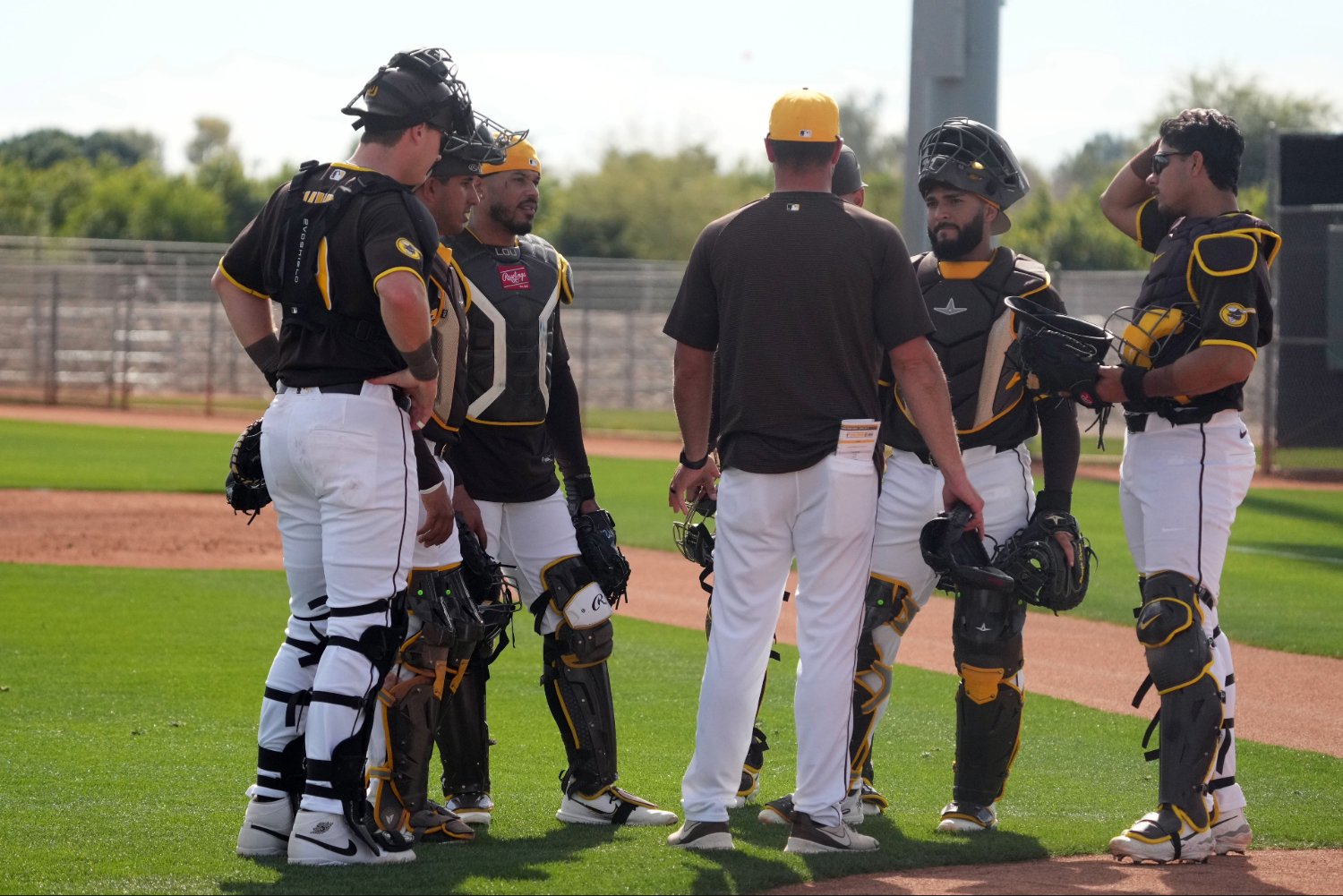 There was perhaps no need that was more evident, for any team in Major League Baseball, than starting pitching was this winter for the San Diego Padres. They lost Dylan Cease early in free agency and appeared poised to do the same with Michael King. Yu Darvish was quickly declared out for the entirety of 2026, if he doesn’t call it a career it a career altogether. Nestor Cortes was a virtual non-factor upon his acquisition at last year’s trade deadline and never really merited discussion of a return. In short, the situation was dire for the Padres’ 2026 rotation. As the offseason progressed, however, they started to shift the narrative, at least a bit. King was, surprisingly, re-signed to what could amount to a one-year deal (though reads three on paper). Joe Musgrove is going to be close to a full-go for the regular season from the jump as he works back from Tommy John surgery. Adding those two to Nick Pivetta provided at least some stability to the top of the group. Questions remained, however. Sure, Randy Vásquez finished the year strong. But his profile is still flawed given some command woes against a lack of upside in his stuff. Even if he is able to build on that finish, the absence of anything resembling certainty helps to make this the murkiest positional group on the roster. With the team more recently opting for a pure volume approach in addressing it, though, they might have an opportunity to capitalize on that lack of clarity in seeking a more creative solution: the six-man rotation. Last week, the team signed Griffin Canning and Germán Márquez to one-year deals. They join in-house holdovers JP Sears, Kyle Hart, and Matt Waldron and non-roster invitees Triston McKenzie, Marco Gonzales, Sean Boyle, and Walker Buehler to create a competition that presents plenty of intrigue, even if it’s lacking in upside. If you’re keeping count, that’s 13 names for five spots. Pared down based on the more certain aspects, that’s 10 names for two spots. It’s not a terribly favorable probability for those that are on a deal of the minor-league variety or lacking in upside altogether. For example, it’s much more likely that we see a name like Hart in the bullpen or El Paso on the guaranteed contract side, with Boyle serving a similar role off the 40-man roster. However things shake out, though, it’s an opportunity to the Padres to explore the possibility of the six-man setup. The concept of a six-man rotation is floated throughout the league with decent regularity, but few teams actually adopt it. Pitchers being as routine oriented as they are stifles at least some of its usage, while another share of the responsibility goes to simply not having six options with which to work in the context of some organizations. In the Padres’ case, though, there’s real logic in exploring the possibility. From the standpoint of the certain aspects of the rotation, King is coming off a season in which he made only 15 starts. Musgrove hasn’t thrown a big-league inning since 2024. Pursuing such an avenue as a six-man rotation allows each of the two to settle back into regular work without putting too much stress on either arm early in the season. That’s the primary reason the team would even consider it. But it may not be the only one. As an added benefit, it also provides the Padres with runway beyond the spring to sort through some of the volume they’ve accrued. If they like what they see from the likes of Triston McKenzie or Walker Buehler – two pitchers that have performed at a high level in the past – they could structure the rotation in such a way that allows them sufficient time to evaluate whether some of the upside still persists within either pitcher. With Griffin Canning likely needing some time to work his way back from the Achilles injury, too, they get additional coverage from an innings standpoint. FanGraphs’ prognostication indicates that, in some way, the Padres will heavily feature at least six starters in 2026. Their list includes Canning grabbing 11 percent of the available starts, which is the lowest among the six starters playing on a guaranteed contract. That amounts to roughly 18 starts. While the depth charts are predictive and don’t necessarily always factor in context, this at least suggests that the thought isn’t entirely unreasonable. The Padres represent as good a case as any for the six-man rotation. The situation is always different when these conversations manifest around different organizations. But considering their lack of certainty at the back end of the rotation and their group of pitchers recovering from injury, the merits of the approach are at least visible to the naked eye.
 -
In general, the San Diego Padres are always a team to watch for intrigue during a transactional period. Whether it’s the signing of Manny Machado during the 2019 offseason, the acquisition of Juan Soto in the summer of 2022, or any of the myriad of notable signings, trades, and extensions that have happened before, during, and after, A.J. Preller always gives us a reason to divert our attention to San Diego when there are moves to be made. Such was not the case this winter. A combination of budget constraints wrought by said prior activity and an uncertain ownership situation left Preller to address the team’s needs more on the margins than confronting them directly. There were, of course, exceptions to that. Michael King was brought back on what is essentially a one-year deal. South Korean standout Sung Mun Song adds a combination of offensive upside and versatility that the roster sorely lacked. Beyond that pair of moves, however, it’s been a glut of short-term or minor-league signings to make improvements toward another year of contention in 2026. The Padres have certainly signed names. Miguel Andujar was one of the more sought-after bench bats available, while the team was also quick to bring in Nick Castellanos upon his ouster from Philadelphia. Non-roster invitees like Jose Miranda, Samad Taylor, Pablo Reyes, and Nick Solak each feature a healthy bit of major-league experience. On the mound, it’s names like Germán Márquez and Griffin Canning playing on one-year pacts, while others such as Triston McKenzie, Marco Gonzales, and Walker Buehler were at one point very notable in the world of arms. Each of the latter three settled for a minor-league deal with the Friars this winter. That’s nearly a dozen names for only a couple of spots on the roster, with more opportunity existing on the pitching front. Without the resources to make a more dramatic move – whether it’d cost cash on the free-agent market or prospects via trade – this is the manner in which Preller had to build up his team. Will it work? Let’s consider, for a moment, what the Padres actually needed heading into this offseason. From a position player standpoint, they needed additional right-handed power and some depth off the bench. Last year’s lineup struggled to generate power (from either side, really) and failed to compensate effectively when players were out with an injury. They rotated out a tough cast of characters that included names like Jose Iglesias, Tyler Wade, Jason Heyward, and Yuli Gurriel. In their stead, Song will be the primary name off the bench. He can fill in at three infield positions as of now, with the possibility already floated that he could get work at first base and on the outfield grass. That helps immediately but is far from curing the bench problem. Andujar and Castellanos are in the mix on guaranteed deals. They both bring offensive upside to the plate, with Andujar doing so more recently. Their positional skill set – with Andujar capable of handling each of the four corners and Castellanos more limited to right field and, maybe, first base – will also help Craig Stammen to rotate out the two biggest positions of need: first base and designated hitter. They’ll combine with Gavin Sheets in forming that rotation. It remains to be seen how much of a factor the likes of Miranda, Reyes, or Taylor might be, let alone Solak. Miranda extends the corner dynamic, while Reyes and Taylor offer more support up the middle, perhaps in the stead of already-present options like Mason McCoy or Will Wagner. Given where the need existed, both in terms of the power dynamic and the positional depth chart, there’s a clear on-paper solution here wrought by the volume approach. The same is less clear on the mound. Márquez is on a guaranteed deal but has fought injury woes and a velocity dip over the last few seasons that have led to some abominable percentile outcomes. Canning, meanwhile, is coming off some of his best work but may not be ready for the season due to last year’s Achilles rupture. Walker Buehler did his best work back in 2021, but health issues have pinned him down before he was undone by performance woes in 2025. McKenzie was good more recently (2022) but has a similar track record as it relates to health and the declining performance that has resulted. What isn’t working in the Padres’ favor on the pitching side is the natural variance that is inherent to that position. There’s always a correlation between health, age, and performance in different ways. But that correlation does not appear to be impacting them as much on the position player side as it could on the mound. One would be perfectly justified to feel decent about the lineup and still feel like they’re floating in the abstract as it relates to their arms. And that’s really the conclusion that should be reached. There are only so many position players to go around in a given offseason, regardless of the market on which they are available. While Preller had to wait it out in order to address the needs, those at least appear to be settled in the on-paper sense. Even if it doesn’t work to complete fruition, the combination of handedness and positional flexibility aim directly at the shortcomings of last year’s group. How successful this approach will be for the pitching staff, however, remains to be seen. In general, it’s hard to be disappointed with the job Preller did with the limited framework in which he had to operate this winter against prior ones. While it may be hard to declare this year’s roster to be better than last year’s, steps were taken to address deficient areas. One imagines that such an intense volume should yield at least some positive dividends for the organization as the season progresses. View full article
-
Quantity Over Quality: Will Padres' Offseason Approach Yield Better Results?
Randy Holt posted an article in Padres
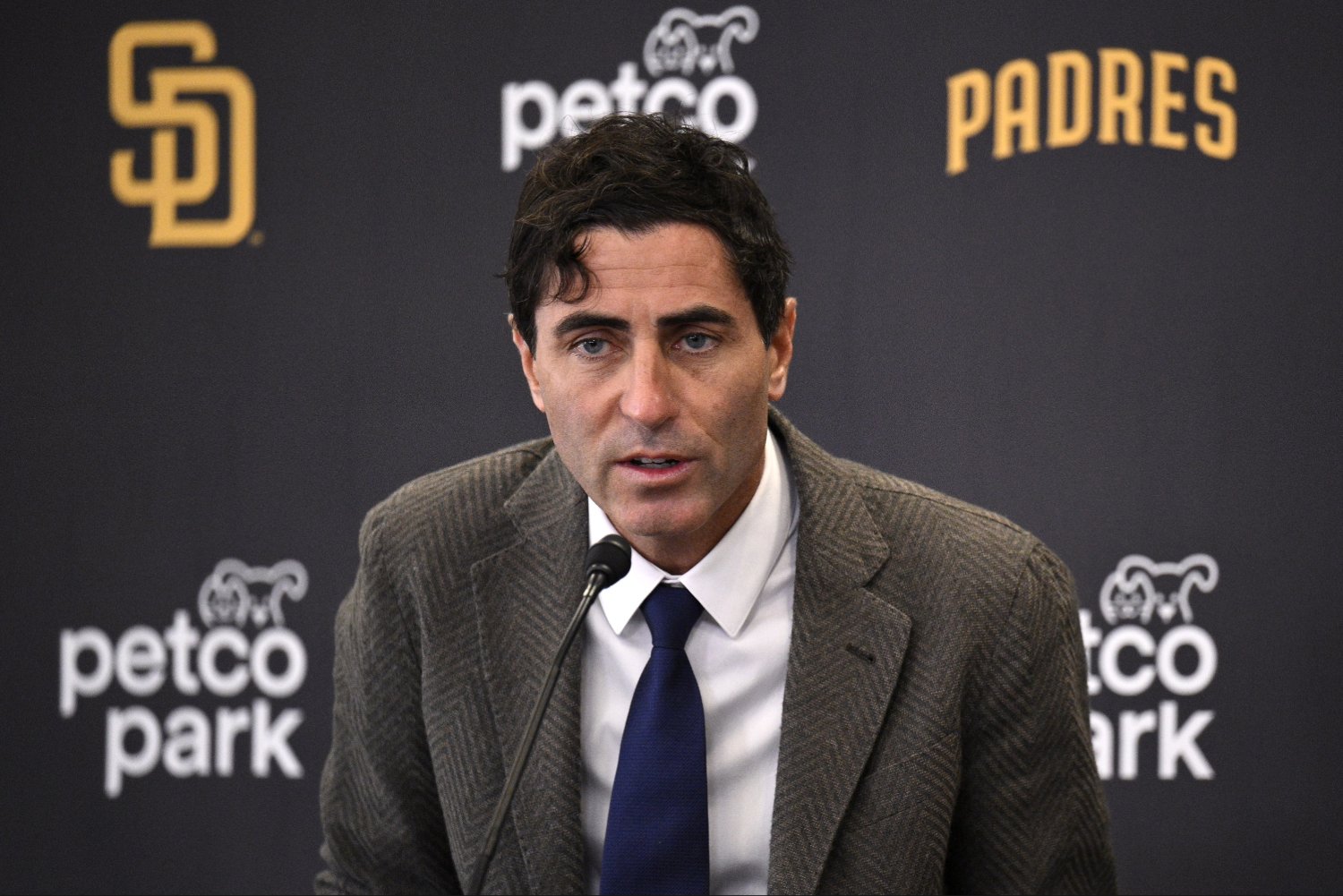 In general, the San Diego Padres are always a team to watch for intrigue during a transactional period. Whether it’s the signing of Manny Machado during the 2019 offseason, the acquisition of Juan Soto in the summer of 2022, or any of the myriad of notable signings, trades, and extensions that have happened before, during, and after, A.J. Preller always gives us a reason to divert our attention to San Diego when there are moves to be made. Such was not the case this winter. A combination of budget constraints wrought by said prior activity and an uncertain ownership situation left Preller to address the team’s needs more on the margins than confronting them directly. There were, of course, exceptions to that. Michael King was brought back on what is essentially a one-year deal. South Korean standout Sung Mun Song adds a combination of offensive upside and versatility that the roster sorely lacked. Beyond that pair of moves, however, it’s been a glut of short-term or minor-league signings to make improvements toward another year of contention in 2026. The Padres have certainly signed names. Miguel Andujar was one of the more sought-after bench bats available, while the team was also quick to bring in Nick Castellanos upon his ouster from Philadelphia. Non-roster invitees like Jose Miranda, Samad Taylor, Pablo Reyes, and Nick Solak each feature a healthy bit of major-league experience. On the mound, it’s names like Germán Márquez and Griffin Canning playing on one-year pacts, while others such as Triston McKenzie, Marco Gonzales, and Walker Buehler were at one point very notable in the world of arms. Each of the latter three settled for a minor-league deal with the Friars this winter. That’s nearly a dozen names for only a couple of spots on the roster, with more opportunity existing on the pitching front. Without the resources to make a more dramatic move – whether it’d cost cash on the free-agent market or prospects via trade – this is the manner in which Preller had to build up his team. Will it work? Let’s consider, for a moment, what the Padres actually needed heading into this offseason. From a position player standpoint, they needed additional right-handed power and some depth off the bench. Last year’s lineup struggled to generate power (from either side, really) and failed to compensate effectively when players were out with an injury. They rotated out a tough cast of characters that included names like Jose Iglesias, Tyler Wade, Jason Heyward, and Yuli Gurriel. In their stead, Song will be the primary name off the bench. He can fill in at three infield positions as of now, with the possibility already floated that he could get work at first base and on the outfield grass. That helps immediately but is far from curing the bench problem. Andujar and Castellanos are in the mix on guaranteed deals. They both bring offensive upside to the plate, with Andujar doing so more recently. Their positional skill set – with Andujar capable of handling each of the four corners and Castellanos more limited to right field and, maybe, first base – will also help Craig Stammen to rotate out the two biggest positions of need: first base and designated hitter. They’ll combine with Gavin Sheets in forming that rotation. It remains to be seen how much of a factor the likes of Miranda, Reyes, or Taylor might be, let alone Solak. Miranda extends the corner dynamic, while Reyes and Taylor offer more support up the middle, perhaps in the stead of already-present options like Mason McCoy or Will Wagner. Given where the need existed, both in terms of the power dynamic and the positional depth chart, there’s a clear on-paper solution here wrought by the volume approach. The same is less clear on the mound. Márquez is on a guaranteed deal but has fought injury woes and a velocity dip over the last few seasons that have led to some abominable percentile outcomes. Canning, meanwhile, is coming off some of his best work but may not be ready for the season due to last year’s Achilles rupture. Walker Buehler did his best work back in 2021, but health issues have pinned him down before he was undone by performance woes in 2025. McKenzie was good more recently (2022) but has a similar track record as it relates to health and the declining performance that has resulted. What isn’t working in the Padres’ favor on the pitching side is the natural variance that is inherent to that position. There’s always a correlation between health, age, and performance in different ways. But that correlation does not appear to be impacting them as much on the position player side as it could on the mound. One would be perfectly justified to feel decent about the lineup and still feel like they’re floating in the abstract as it relates to their arms. And that’s really the conclusion that should be reached. There are only so many position players to go around in a given offseason, regardless of the market on which they are available. While Preller had to wait it out in order to address the needs, those at least appear to be settled in the on-paper sense. Even if it doesn’t work to complete fruition, the combination of handedness and positional flexibility aim directly at the shortcomings of last year’s group. How successful this approach will be for the pitching staff, however, remains to be seen. In general, it’s hard to be disappointed with the job Preller did with the limited framework in which he had to operate this winter against prior ones. While it may be hard to declare this year’s roster to be better than last year’s, steps were taken to address deficient areas. One imagines that such an intense volume should yield at least some positive dividends for the organization as the season progresses.
 -
For much of the winter, it was evident where the San Diego Padres needed improvement to their current roster. Such a statement held true for both sides of the ball, and while starting pitching grabbed much of the attention of the media and fanbase, building up depth in their lineup wasn't too far behind in terms of raw need. In the closing weeks of the offseason, A.J. Preller has largely managed to do that in the face of budget constraints and an uncertain organizational future. It began earlier this winter, when the team signed South Korean standout Sung Mun Song to a four-year deal. His versatility alone helped to extend the bench in providing support at multiple positions. While it took several weeks for additional supplementation of the roster, Preller was able to do so in the form of Miguel Andujar and Philadelphia castoff Nick Castellanos on a pair of one-year deals. On Monday, the team added Ty France on a minor-league deal for good measure (and Jose Miranda earlier this winter). It's a slate of players that complicates the overall construction but should help in areas where the Padres struggled in 2025. Last year's lineup struggled to generate power. They ranked only 28th in the league in ISO (.138) and 29th in hard-hit rate (37.8 percent). Their barrel rate, at 7.5 percent, was also among the league's worst (27th). Each of those figures was a touch worse against left-handed pitching, too. So, it was about adding not only power to the mix, but power that could aid in production against southpaws. How each of those names translates to supporting the Padres in their specific areas of need remains to be seen. None of the players noted are barrel merchants, but each does offer more success against lefties in their career than right-handers. Even considering the nuance of lineup construction against the type of opponents the Padres will see in 2026, there's enough volume here to consider how things might look in general. We know what the majority of the lineup will look like to start the year. The "locks" are as follows: Catcher: Freddy Fermin Second Base: Jake Cronenworth Shortstop: Xander Bogaerts Third Base: Manny Machado Left Field: Ramón Laureano Center Field: Jackson Merrill Right Field: Fernando Tatis Jr. That leaves first base and designated hitter as options through which the team's new additions could rotate. Which automatically presents us with a complication: Gavin Sheets. Sheets had previously been indicated as the player with the first crack at serving as the everyday first baseman. Now, however, you have at least four names in the mix that either have experience at first base (Andujar, Miranda, and France) or are working at the position to hold it down on at least a part-time basis (Castellanos). To say nothing of the possibility that Cronenworth could bounce over from the keystone while Song gets work at second base. This is all to say that first base might not nearly be the lock that one might have expected upon Stammen's prior declaration. If anything, it only adds to the flexibility that could exist as part of the new-look depth. There are some key elements to note about each name, though. Sheets profiles better defensively at first, but is not a plus-defender anywhere in reality. The same is true of Andujar and Castellanos. The former has handled each corner on both the dirt and the grass, while Castellanos is working to handle the right-side corners. No matter what, though, you're not getting upper-echelon defensive work. The situation is a bit different with France, in particular, among the non-guaranteed contracts, but we can only work with things that offer a little more certainty. As such, let's assume, for a moment, that the Padres are facing a right-handed starter. Each of Andujar and Castellanos have rather stark splits against said handedness. If the goal is to get Sheets in the mix, then the lineup might look something more like this: Catcher: Fermin First Base: Cronenworth Second Base: Song Shortstop: Bogaerts Third Base: Machado Left Field: Laureano Center Field: Merrill Right Field: Tatis, Jr. Designated Hitter: Sheets This scenario has plenty more nuance, however. If Stammen were inclined to rotate Machado into the DH spot, then you could get Song at the hot corner, Cronenworth back at second, and Sheets at first. Laureano doesn't have especially favorable splits against righties. Could this specific scenario be an area where Andujar or Castellanos — who at least offer a little bit of competence against right-handers — work into left field? We'll table that for now given how much it rides on in-season context. As for the configuration against southpaws, things might look more like this: Catcher: Fermin First Base: Andujar Second Base: Cronenworth Shortstop: Bogaerts Third Base: Machado Left Field: Laureano Center Field: Merrill Right Field: Tatis, Jr. Designated Hitter: Castellanos Again, nuance exists. The goal here is to eliminate Sheets and his career 56 wRC+ against left-handers entirely from the equation. Could this be an area where Luis Campusano gets into the mix, either behind the plate or as a designated hitter? Could Song prove more effective against lefties than Cronenworth? Does one of Andujar or Castellanos have the edge to a defensive role over the other? There's a lot of questions to be answered. None of this considers a split-neutral Ty France or a possible resurgence from Jose Miranda, either. It's a lot of bodies to be sorted in order to gain some level of consistency with the lineup that is desired by most players. For what it's worth, FanGraphs has the primary seven spots in the lineup anchored by the respective names for no less than 70 percent of the work at each spot. First base, meanwhile, has Sheets getting in at a 55 percent clip, with Castellanos at 18 percent and Andujar at 10 percent. France and Miranda are thrown five and one percent, respectively, amid their non-guaranteed deals. At designated hitter, Andujar is projected for the most work (34 percent), followed by Castellanos (23 percent), and Sheets (15 percent). While these are based only on projections, it does help to support the idea that much of the rotation we see in the lineup will come from one of those two spots, with room for Machado bouncing into the DH role and Song's versatility also taken into account in the distribution. Ultimately, though, it's kind of the ideal problem to have heading into the spring exhibition season. The Padres will use February and March to answer these exact questions. Determining Song's role, the defensive competence of Andujar and Castellanos, and whether either of France or Miranda deserve a spot in the mix are of the utmost importance. From there, it becomes a matter of how first base and the designated hitter spot will be utilized, or if you're looking at more of a pure matchup-based situation. As much of this lineup is settled, the volume of intrigue in those remaining areas is exceeded only by the volume of players creating it given Preller's recent involvement on the transaction list. View full article
-
Navigating the Padres' Lineup Possibilities Following Flurry of Signings
Randy Holt posted an article in Padres
 For much of the winter, it was evident where the San Diego Padres needed improvement to their current roster. Such a statement held true for both sides of the ball, and while starting pitching grabbed much of the attention of the media and fanbase, building up depth in their lineup wasn't too far behind in terms of raw need. In the closing weeks of the offseason, A.J. Preller has largely managed to do that in the face of budget constraints and an uncertain organizational future. It began earlier this winter, when the team signed South Korean standout Sung Mun Song to a four-year deal. His versatility alone helped to extend the bench in providing support at multiple positions. While it took several weeks for additional supplementation of the roster, Preller was able to do so in the form of Miguel Andujar and Philadelphia castoff Nick Castellanos on a pair of one-year deals. On Monday, the team added Ty France on a minor-league deal for good measure (and Jose Miranda earlier this winter). It's a slate of players that complicates the overall construction but should help in areas where the Padres struggled in 2025. Last year's lineup struggled to generate power. They ranked only 28th in the league in ISO (.138) and 29th in hard-hit rate (37.8 percent). Their barrel rate, at 7.5 percent, was also among the league's worst (27th). Each of those figures was a touch worse against left-handed pitching, too. So, it was about adding not only power to the mix, but power that could aid in production against southpaws. How each of those names translates to supporting the Padres in their specific areas of need remains to be seen. None of the players noted are barrel merchants, but each does offer more success against lefties in their career than right-handers. Even considering the nuance of lineup construction against the type of opponents the Padres will see in 2026, there's enough volume here to consider how things might look in general. We know what the majority of the lineup will look like to start the year. The "locks" are as follows: Catcher: Freddy Fermin Second Base: Jake Cronenworth Shortstop: Xander Bogaerts Third Base: Manny Machado Left Field: Ramón Laureano Center Field: Jackson Merrill Right Field: Fernando Tatis Jr. That leaves first base and designated hitter as options through which the team's new additions could rotate. Which automatically presents us with a complication: Gavin Sheets. Sheets had previously been indicated as the player with the first crack at serving as the everyday first baseman. Now, however, you have at least four names in the mix that either have experience at first base (Andujar, Miranda, and France) or are working at the position to hold it down on at least a part-time basis (Castellanos). To say nothing of the possibility that Cronenworth could bounce over from the keystone while Song gets work at second base. This is all to say that first base might not nearly be the lock that one might have expected upon Stammen's prior declaration. If anything, it only adds to the flexibility that could exist as part of the new-look depth. There are some key elements to note about each name, though. Sheets profiles better defensively at first, but is not a plus-defender anywhere in reality. The same is true of Andujar and Castellanos. The former has handled each corner on both the dirt and the grass, while Castellanos is working to handle the right-side corners. No matter what, though, you're not getting upper-echelon defensive work. The situation is a bit different with France, in particular, among the non-guaranteed contracts, but we can only work with things that offer a little more certainty. As such, let's assume, for a moment, that the Padres are facing a right-handed starter. Each of Andujar and Castellanos have rather stark splits against said handedness. If the goal is to get Sheets in the mix, then the lineup might look something more like this: Catcher: Fermin First Base: Cronenworth Second Base: Song Shortstop: Bogaerts Third Base: Machado Left Field: Laureano Center Field: Merrill Right Field: Tatis, Jr. Designated Hitter: Sheets This scenario has plenty more nuance, however. If Stammen were inclined to rotate Machado into the DH spot, then you could get Song at the hot corner, Cronenworth back at second, and Sheets at first. Laureano doesn't have especially favorable splits against righties. Could this specific scenario be an area where Andujar or Castellanos — who at least offer a little bit of competence against right-handers — work into left field? We'll table that for now given how much it rides on in-season context. As for the configuration against southpaws, things might look more like this: Catcher: Fermin First Base: Andujar Second Base: Cronenworth Shortstop: Bogaerts Third Base: Machado Left Field: Laureano Center Field: Merrill Right Field: Tatis, Jr. Designated Hitter: Castellanos Again, nuance exists. The goal here is to eliminate Sheets and his career 56 wRC+ against left-handers entirely from the equation. Could this be an area where Luis Campusano gets into the mix, either behind the plate or as a designated hitter? Could Song prove more effective against lefties than Cronenworth? Does one of Andujar or Castellanos have the edge to a defensive role over the other? There's a lot of questions to be answered. None of this considers a split-neutral Ty France or a possible resurgence from Jose Miranda, either. It's a lot of bodies to be sorted in order to gain some level of consistency with the lineup that is desired by most players. For what it's worth, FanGraphs has the primary seven spots in the lineup anchored by the respective names for no less than 70 percent of the work at each spot. First base, meanwhile, has Sheets getting in at a 55 percent clip, with Castellanos at 18 percent and Andujar at 10 percent. France and Miranda are thrown five and one percent, respectively, amid their non-guaranteed deals. At designated hitter, Andujar is projected for the most work (34 percent), followed by Castellanos (23 percent), and Sheets (15 percent). While these are based only on projections, it does help to support the idea that much of the rotation we see in the lineup will come from one of those two spots, with room for Machado bouncing into the DH role and Song's versatility also taken into account in the distribution. Ultimately, though, it's kind of the ideal problem to have heading into the spring exhibition season. The Padres will use February and March to answer these exact questions. Determining Song's role, the defensive competence of Andujar and Castellanos, and whether either of France or Miranda deserve a spot in the mix are of the utmost importance. From there, it becomes a matter of how first base and the designated hitter spot will be utilized, or if you're looking at more of a pure matchup-based situation. As much of this lineup is settled, the volume of intrigue in those remaining areas is exceeded only by the volume of players creating it given Preller's recent involvement on the transaction list.
 -
There is a truth to the San Diego Padres that has been relevant since 2019: Manny Machado is the team’s most important player. Yes, this is a team that also employs the likes of Fernando Tatis Jr. and Jackson Merrill. But Machado drives the bus, a responsibility wrought by his blend of offense, defense, and intangible qualities in the clubhouse. In general, that blend is not yet stale. Machado has remained an above average hitter by wRC+ in each year with the Padres, and his two most recent seasons have shown a significant bounce back from what was a down season in 2023. The defensive chops have waned in certain respects, but Machado remains largely in line with his career outputs in average, on-base percentage, and a number of the underlying rates and trends on the offensive side. With all that being said, the projections anticipate a dip in productivity from the bat of one Manny Machado in 2026. There are roughly five prominent projection systems that we’re considering here, all of which feature a slightly different way of evaluating players. Some favor veteran players and take playing time more heavily into consideration. Others are deep on Statcast data or other nuanced factors. In any case, here are how those five project Machado to perform in 2026: Model BA OBP SLG K% BB% wOBA wRC+ ATC .262 .323 .450 19.4 8.1 .332 113 OOPSY .264 .324 .456 19.7 8.1 .335 119 Steamer .268 .329 .465 19.5 8.1 .340 122 THE BAT X .260 .321 .455 19.3 8.2 .332 117 ZiPS .258 .321 .430 19.8 8.4 .324 111 First, the obvious: each of these projections offers a fairly similar outcome as to what to expect from Machado in 2026. That’s not terribly surprising given that he’s a veteran player with an extensive sample from which to choose. Nevertheless, it’s notable that Steamer – which tends to like veteran players – is higher on Machado, while ZiPs – which is heavily weighted by aging curves – is lower. Regardless, we’re within shouting distance of his norms regardless of metric. None of this seems entirely unreasonable given what Machado has continued to turn in over the past couple of seasons. There is one area, however, where Machado is coming up short: power. None of those slugging projections is especially favorable. If we isolated it to, well, ISO, where only extra-base hits are taken into consideration, we get the following (in order): .187, .192, .197, .195, .172. Again, Steamer likes him the most, and ZiPS isn’t a fan. This is the area, though, where we’ve seen Machado’s regular contributions start to fade. He’s had some absolutely torrid stretches in recent years; last July he followed up a .212 ISO month with a .283 clip. But it hasn’t been there on a remotely consistent-enough basis for a team that isn’t quite on a level with their peers in the power department. Age is the most likely factor for this decline. When one considers that alone, is there any reason to think that we may see Machado best the projections and start to regain some semblance of his old self in creating a more standard form of offensive impact? Interestingly, Machado’s percentile outcomes from 2025 are indicative of a player who was already doing just that: Machado still swings hard. Compound that with an upper-percentile barrel rate, and it’s no wonder he’s able to maintain such an elite Hard-Hit% at this point. One thing worth noting, too, is that Machado isn’t the type of player who needs to sit on one specific pitch type in order to drive the power side. He’s been versatile in each of his seasons with San Diego. What seems most notable there is actually his expected slugging. The xSLG for Manny Machado in 2025 was .495. It was .467 in 2024 and .465 in 2023. His true slugging read .460 in 2025 (.185 ISO). It was his lowest output in either measure of power since 2024. In the two most recent seasons before that (the noted 2023 and 2024 campaigns), his actual slugging percentage checked in at .462 and .472. So, in 2023, his expected and actual slugging percentage lingered around one another while in 2024, he actually outperformed the expected metric. To add to this perplexing trend, Machado hit the ball hard at a 51.5 percent rate in 2025, which exceeded each of the two previous seasons. His PullAIR% was also two percent higher in 2025 than it was in 2024. Yet, within all of that, Machado got worse outcomes in matters of slug last year when he should’ve actually showcased one of the best power outputs of his entire career based on what the data had to say. So, the question isn’t so much whether or not Machado can regain his power stroke, it’s whether the power will actually manifest in the way it’s supposed to based on Statcast’s own expectation. Unfortunately, it’s difficult to see that actually coming to fruition. Machado, obviously, plays his home games at Petco Park. That’s 81 games at a venue that ranked 27th in its Park Factor for overall offense, last in doubles, and 20th in home runs. Those overall numbers are almost exactly what you’d get if you isolated it to only right-handed hitters, too. Machado’s slugging percentage was 13 points lower at home than it was on the road last year. His ISO was 24 points lower, too. It’s not a problem inherent in Machado or his age, but rather one that exists in the park itself. This presents us with an interesting paradox. It’s actually good that Machado is being pinned down so heavily by his home environment in that it means that any decline at this point isn’t so much due to age. Of course, the other side of that is that it’s also extremely bad that his offense is being pinned down by his home environment because the Padres need every source of run production they can find. Perhaps things find a way to even out in 2026, but the Padres should, at least, hope that Machado can bring the stick on the road with him. At least they know that it won’t be for lack of trying in either setting. View full article
-
Manny Machado Already Started Beating the Projection Systems Last Season
Randy Holt posted an article in Padres
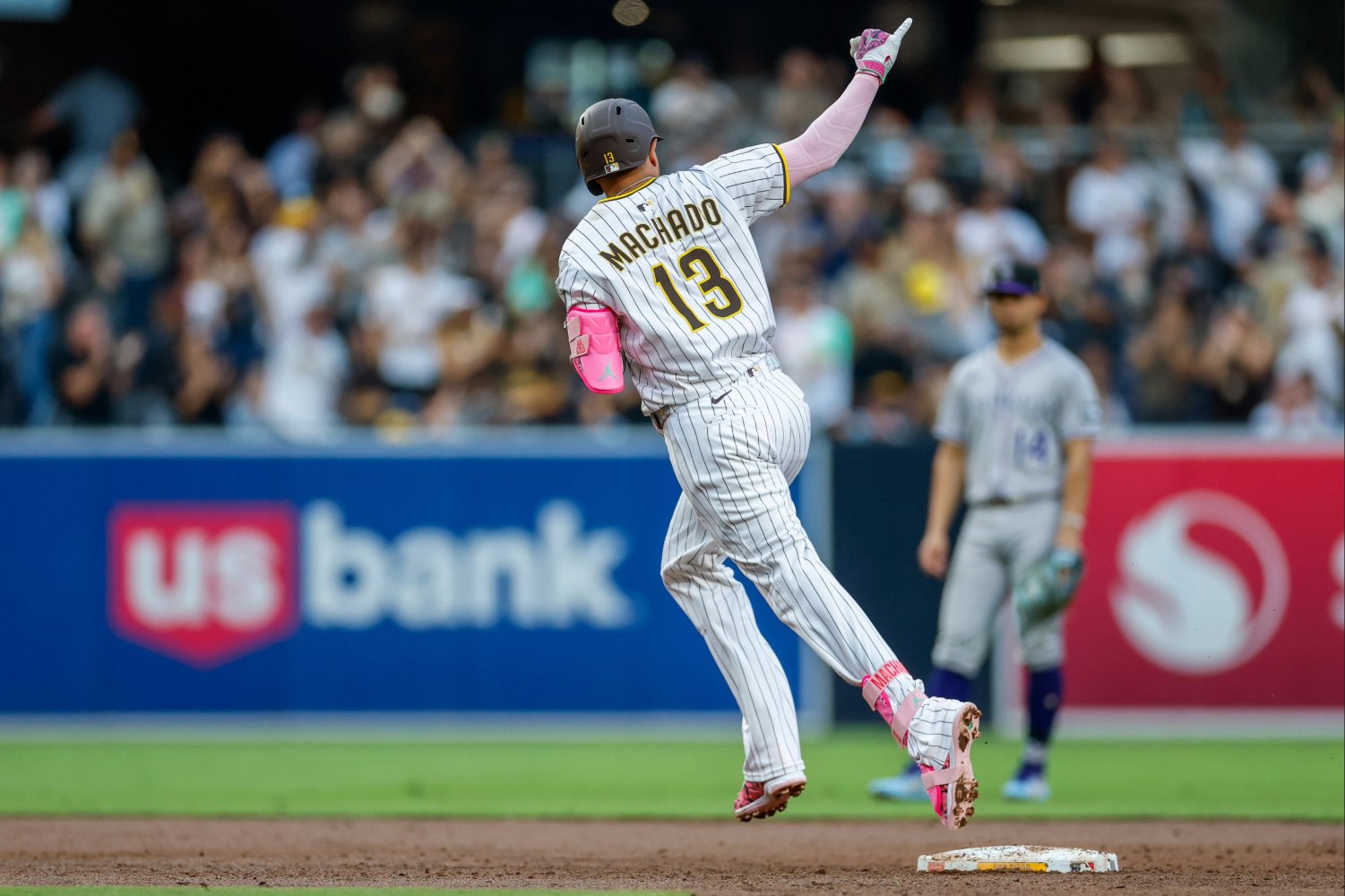 There is a truth to the San Diego Padres that has been relevant since 2019: Manny Machado is the team’s most important player. Yes, this is a team that also employs the likes of Fernando Tatis Jr. and Jackson Merrill. But Machado drives the bus, a responsibility wrought by his blend of offense, defense, and intangible qualities in the clubhouse. In general, that blend is not yet stale. Machado has remained an above average hitter by wRC+ in each year with the Padres, and his two most recent seasons have shown a significant bounce back from what was a down season in 2023. The defensive chops have waned in certain respects, but Machado remains largely in line with his career outputs in average, on-base percentage, and a number of the underlying rates and trends on the offensive side. With all that being said, the projections anticipate a dip in productivity from the bat of one Manny Machado in 2026. There are roughly five prominent projection systems that we’re considering here, all of which feature a slightly different way of evaluating players. Some favor veteran players and take playing time more heavily into consideration. Others are deep on Statcast data or other nuanced factors. In any case, here are how those five project Machado to perform in 2026: Model BA OBP SLG K% BB% wOBA wRC+ ATC .262 .323 .450 19.4 8.1 .332 113 OOPSY .264 .324 .456 19.7 8.1 .335 119 Steamer .268 .329 .465 19.5 8.1 .340 122 THE BAT X .260 .321 .455 19.3 8.2 .332 117 ZiPS .258 .321 .430 19.8 8.4 .324 111 First, the obvious: each of these projections offers a fairly similar outcome as to what to expect from Machado in 2026. That’s not terribly surprising given that he’s a veteran player with an extensive sample from which to choose. Nevertheless, it’s notable that Steamer – which tends to like veteran players – is higher on Machado, while ZiPs – which is heavily weighted by aging curves – is lower. Regardless, we’re within shouting distance of his norms regardless of metric. None of this seems entirely unreasonable given what Machado has continued to turn in over the past couple of seasons. There is one area, however, where Machado is coming up short: power. None of those slugging projections is especially favorable. If we isolated it to, well, ISO, where only extra-base hits are taken into consideration, we get the following (in order): .187, .192, .197, .195, .172. Again, Steamer likes him the most, and ZiPS isn’t a fan. This is the area, though, where we’ve seen Machado’s regular contributions start to fade. He’s had some absolutely torrid stretches in recent years; last July he followed up a .212 ISO month with a .283 clip. But it hasn’t been there on a remotely consistent-enough basis for a team that isn’t quite on a level with their peers in the power department. Age is the most likely factor for this decline. When one considers that alone, is there any reason to think that we may see Machado best the projections and start to regain some semblance of his old self in creating a more standard form of offensive impact? Interestingly, Machado’s percentile outcomes from 2025 are indicative of a player who was already doing just that: Machado still swings hard. Compound that with an upper-percentile barrel rate, and it’s no wonder he’s able to maintain such an elite Hard-Hit% at this point. One thing worth noting, too, is that Machado isn’t the type of player who needs to sit on one specific pitch type in order to drive the power side. He’s been versatile in each of his seasons with San Diego. What seems most notable there is actually his expected slugging. The xSLG for Manny Machado in 2025 was .495. It was .467 in 2024 and .465 in 2023. His true slugging read .460 in 2025 (.185 ISO). It was his lowest output in either measure of power since 2024. In the two most recent seasons before that (the noted 2023 and 2024 campaigns), his actual slugging percentage checked in at .462 and .472. So, in 2023, his expected and actual slugging percentage lingered around one another while in 2024, he actually outperformed the expected metric. To add to this perplexing trend, Machado hit the ball hard at a 51.5 percent rate in 2025, which exceeded each of the two previous seasons. His PullAIR% was also two percent higher in 2025 than it was in 2024. Yet, within all of that, Machado got worse outcomes in matters of slug last year when he should’ve actually showcased one of the best power outputs of his entire career based on what the data had to say. So, the question isn’t so much whether or not Machado can regain his power stroke, it’s whether the power will actually manifest in the way it’s supposed to based on Statcast’s own expectation. Unfortunately, it’s difficult to see that actually coming to fruition. Machado, obviously, plays his home games at Petco Park. That’s 81 games at a venue that ranked 27th in its Park Factor for overall offense, last in doubles, and 20th in home runs. Those overall numbers are almost exactly what you’d get if you isolated it to only right-handed hitters, too. Machado’s slugging percentage was 13 points lower at home than it was on the road last year. His ISO was 24 points lower, too. It’s not a problem inherent in Machado or his age, but rather one that exists in the park itself. This presents us with an interesting paradox. It’s actually good that Machado is being pinned down so heavily by his home environment in that it means that any decline at this point isn’t so much due to age. Of course, the other side of that is that it’s also extremely bad that his offense is being pinned down by his home environment because the Padres need every source of run production they can find. Perhaps things find a way to even out in 2026, but the Padres should, at least, hope that Machado can bring the stick on the road with him. At least they know that it won’t be for lack of trying in either setting.
 -
When the San Diego Padres traded for Mason Miller last year, the attention was (obviously, and entirely justifiably) squared on the acquisition of one of the hardest throwers in Major League Baseball. But there was also an underrated component of the trade that existed in the form of JP Sears. While not spectacular, there was a stable element that Sears could, in theory, provide to a team in need of future depth in the starting rotation. A steady arm who won’t reach free agency until 2029? That’s the kind of profile the Padres should seek to work into every trade that an ambitious executive like A.J. Preller likes to make. Across five starts with San Diego to close out 2025, however, the results weren’t quite there even for an arm with modest expectations. Sears threw 24 2/3 innings across five starts that culminated in a 5.47 ERA and even-worse 6.18 FIP. His strikeout rate sat at just 18.0 percent, while opposing hitters slugged .580 against the lefty. That ran the total body of work up to a 5.04 ERA, 5.21 FIP, and 0.4 fWAR across 27 total starts split between the Athletics and Padres. Perhaps unlike his comrade in the depth mix (Kyle Hart), however, Sears presents some intrigue. He’s never been a high-strikeout arm. It’s difficult to expect that with 15th percentile fastball velocity (91.9 MPH), anyway. Where Sears should, ideally, excel is in his ability to avoid walks and work his way around hard contact. JP Sears’ Stuff Sears, technically, works with seven different pitches. His most-used pitch is his four-seamer, which moves effectively in a horizontal fashion. The 11.9 inches of arm side run he gets out of it is actually better than comparable arms. He’s able to play each of the sweeper and changeup off it effectively, leveraging a relatively average sweeper against hitters of the same handedness and throwing his changeup to good effect against the other side. Having 16.5 inches of horizontal movement to the arm side — featuring a similar shape to that of his four-seamer — is an effective manner of doing business. Despite that, Sears is prone to flyball contact and lacks the upside with any pitch to generate whiffs. That led to opponents slugging .534 against the four-seam and .500 against the changeup. His sweeper was the only pitch to feature a positive run value, which feels logical given the effectiveness of that pitch against hitters of the same handedness as a general practice. Somewhat like the aforementioned Hart, Sears throws out of a shallow arm angle and works side-to-side. Pitchers who do so that also possess less upside are going to have a tougher time evading impact outcomes against good hitters in the absence of the changing of eye levels. Even through all of that, intrigue remains over what Sears could provide as a member of the staff in 2026. JP Sears’ Arsenal Sears’ arsenal is indicative of intent across his three primary pitches. Considering the volume of those three against the remaining four that he allegedly threw in 2025, it’s almost worth dismissing the rest as being mis-labeled due to their shape. Despite the minimal arsenal that persists as a result, there’s an argument that Sears’ pitch mix and subsequent usage suit him well for what he’s aiming to do. The four-seam is going to be a factor against hitters of either handedness. It moves in toward lefty hitters and away from the right-handed types. The issue is its location. Sears spent a lot of time squarely in the middle of the zone with that pitch, often using that pitch to get ahead early in counts. That was especially true upon his arrival in August where opposing hitters swung first pitch on the four-seamer 46.4 percent of the time. The issue there is that it’s his pitch where hitters found the highest rate of hard contact (46.0 percent) against a low whiff rate (20.5 percent). His horizontal movement allows him to evade genuinely terrible outcomes more than he probably should, but his presence up in the zone means a difficult needle to thread with it. What Sears does have going for him, though, is that the sweeper and change each play well off of it. The sweeper offers something in the vertical department, while the changeup is as close to a change in eye levels as he can establish in its working more down-and-in to right-handed hitters. The stuff can certainly be effective even with a limited ceiling. It’s just a matter of proper deployment. What Should JP Sears’ Role Be In 2026? Assuming full health early for Joe Musgrove, the Padres have three locks in their rotation to start 2026. If we assume that Randy Vásquez has the inside track courtesy of a strong finish last year, that leaves just one spot to start the year for Sears and a smattering of depth signings. Sears doesn’t have a particularly high ceiling. But the Padres are in a situation where they don’t really need it out of the backend of their rotation. They have a dominant bullpen, and one imagines that at least one or two of those depth signings may offer some volume in relief. What they seek as a result is stability. In his brief career at the top level, Sears had made strides in his percentile placement in both his walk rate and his hard-hit rate. That could help him to an early advantage in the race, as you know exactly what you’re getting out of the profile in mitigating a baserunning presence. To say nothing of the fact that he’s a left-handed thrower in a group full of righties. It’s difficult to envision someone such as Sears in a relief setting quite yet. A soft-tosser with more than two pitches can contribute to a starting staff in such a way as providing a stable, innings-consuming arm. If it’s not the Padres rotation out of camp, it’s likely the El Paso starting group for him in March and April. View full article
-
Rotation, Bullpen Or El Paso: Analytically Breaking Down JP Sears' Arsenal
Randy Holt posted an article in Padres
 When the San Diego Padres traded for Mason Miller last year, the attention was (obviously, and entirely justifiably) squared on the acquisition of one of the hardest throwers in Major League Baseball. But there was also an underrated component of the trade that existed in the form of JP Sears. While not spectacular, there was a stable element that Sears could, in theory, provide to a team in need of future depth in the starting rotation. A steady arm who won’t reach free agency until 2029? That’s the kind of profile the Padres should seek to work into every trade that an ambitious executive like A.J. Preller likes to make. Across five starts with San Diego to close out 2025, however, the results weren’t quite there even for an arm with modest expectations. Sears threw 24 2/3 innings across five starts that culminated in a 5.47 ERA and even-worse 6.18 FIP. His strikeout rate sat at just 18.0 percent, while opposing hitters slugged .580 against the lefty. That ran the total body of work up to a 5.04 ERA, 5.21 FIP, and 0.4 fWAR across 27 total starts split between the Athletics and Padres. Perhaps unlike his comrade in the depth mix (Kyle Hart), however, Sears presents some intrigue. He’s never been a high-strikeout arm. It’s difficult to expect that with 15th percentile fastball velocity (91.9 MPH), anyway. Where Sears should, ideally, excel is in his ability to avoid walks and work his way around hard contact. JP Sears’ Stuff Sears, technically, works with seven different pitches. His most-used pitch is his four-seamer, which moves effectively in a horizontal fashion. The 11.9 inches of arm side run he gets out of it is actually better than comparable arms. He’s able to play each of the sweeper and changeup off it effectively, leveraging a relatively average sweeper against hitters of the same handedness and throwing his changeup to good effect against the other side. Having 16.5 inches of horizontal movement to the arm side — featuring a similar shape to that of his four-seamer — is an effective manner of doing business. Despite that, Sears is prone to flyball contact and lacks the upside with any pitch to generate whiffs. That led to opponents slugging .534 against the four-seam and .500 against the changeup. His sweeper was the only pitch to feature a positive run value, which feels logical given the effectiveness of that pitch against hitters of the same handedness as a general practice. Somewhat like the aforementioned Hart, Sears throws out of a shallow arm angle and works side-to-side. Pitchers who do so that also possess less upside are going to have a tougher time evading impact outcomes against good hitters in the absence of the changing of eye levels. Even through all of that, intrigue remains over what Sears could provide as a member of the staff in 2026. JP Sears’ Arsenal Sears’ arsenal is indicative of intent across his three primary pitches. Considering the volume of those three against the remaining four that he allegedly threw in 2025, it’s almost worth dismissing the rest as being mis-labeled due to their shape. Despite the minimal arsenal that persists as a result, there’s an argument that Sears’ pitch mix and subsequent usage suit him well for what he’s aiming to do. The four-seam is going to be a factor against hitters of either handedness. It moves in toward lefty hitters and away from the right-handed types. The issue is its location. Sears spent a lot of time squarely in the middle of the zone with that pitch, often using that pitch to get ahead early in counts. That was especially true upon his arrival in August where opposing hitters swung first pitch on the four-seamer 46.4 percent of the time. The issue there is that it’s his pitch where hitters found the highest rate of hard contact (46.0 percent) against a low whiff rate (20.5 percent). His horizontal movement allows him to evade genuinely terrible outcomes more than he probably should, but his presence up in the zone means a difficult needle to thread with it. What Sears does have going for him, though, is that the sweeper and change each play well off of it. The sweeper offers something in the vertical department, while the changeup is as close to a change in eye levels as he can establish in its working more down-and-in to right-handed hitters. The stuff can certainly be effective even with a limited ceiling. It’s just a matter of proper deployment. What Should JP Sears’ Role Be In 2026? Assuming full health early for Joe Musgrove, the Padres have three locks in their rotation to start 2026. If we assume that Randy Vásquez has the inside track courtesy of a strong finish last year, that leaves just one spot to start the year for Sears and a smattering of depth signings. Sears doesn’t have a particularly high ceiling. But the Padres are in a situation where they don’t really need it out of the backend of their rotation. They have a dominant bullpen, and one imagines that at least one or two of those depth signings may offer some volume in relief. What they seek as a result is stability. In his brief career at the top level, Sears had made strides in his percentile placement in both his walk rate and his hard-hit rate. That could help him to an early advantage in the race, as you know exactly what you’re getting out of the profile in mitigating a baserunning presence. To say nothing of the fact that he’s a left-handed thrower in a group full of righties. It’s difficult to envision someone such as Sears in a relief setting quite yet. A soft-tosser with more than two pitches can contribute to a starting staff in such a way as providing a stable, innings-consuming arm. If it’s not the Padres rotation out of camp, it’s likely the El Paso starting group for him in March and April.
 -
When the San Diego Padres signed Kyle Hart upon his return from the KBO ahead of 2025, it was a move that wasn’t met with a particular degree of fanfare. The former Boston Red Sox draftee had only appeared in 11 big league innings in the years since his 2016 selection, and the results were relatively uninspiring across his minor-league journey. Nevertheless, the team needed depth on the bump and it arrived in the form of Hart. It’s that very scenario that led to him being back in America’s Finest City ahead of 2026. Hart was able to earn a rotation spot out of camp last year. Save for a six-innings-no-runs-allowed performance against Colorado in April, however, he struggled to maintain his grip on such a role. Five of Hart’s six starts came before the end of the season’s first month, and he went on to make just 20 appearances overall. The results therein were not terrific. He finished with a 5.86 ERA and 5.18 FIP in a year that was indicative of negative value (-0.2 fWAR). He struggled to prevent home runs, with a 13.0 percent rate of flyballs that went over the outfield wall, while neither his strikeout or walk numbers – 20.7 and 7.3 percent, respectively – compensated for that effectively. Even amid such struggles, though, Hart earned a second contract in San Diego. He agreed to a one-year deal with a club option for 2027. The Padres knew they’d need depth, and Hart will provide it. How much time he actually logs at the top level, however, remains unclear. Kyle Hart’s Stuff Without much velocity of which to speak, Hart is a sweeper-driven pitcher; he threw it 33 percent of the time last season. The pitch was thrown far more to left-handed hitters (43 percent) than righties (29 percent), though. For the latter handedness, he incorporated a changeup at 20 percent of the time (a pitch he threw just a handful of times against lefties). There’s a sinker in the mix as well, with an even 22 percent being thrown to hitters standing in either box. The sweeper and sinker each have their benefits. The sweeper drew whiffs nearly 29 percent of the time last year, and both pitches pinned down opponents’ slugging to under .300. It’s when he begins to graduate outside of his two primary pitches that things start to become problematic. His change, in particular, was touched for a .625 slugging percentage in 2025. Part of Hart’s struggle is that, regardless of pitch, he works high: There’s decent horizontal movement on his two primary pitches. He gets 14.1 inches of horizontal break to his glove side with the sweeper and 16.7 inches of run to his arm side with the sinker. There’s very little vertical drop to speak of across the board, though, which represents a problem for a pitcher who doesn’t work with much velocity. Only his minimally used splitter garners anything in terms of vertical drop. In terms of run value, Hart does get positive results out of each of the sweeper (5) and sinker (2). There’s enough swing-and-miss with the former and effective groundball tendencies wrought by the latter to allow him to work within a framework that can find some success. The issue is when he starts to move outside of his comfort zone with the change and the rest of the crew. None of his other pitches bear a positive run value, with the changeup sitting at -4 on its own. Kyle Hart’s Arsenal There’s an argument to be made that Hart should shift his focus toward more of a two-pitch situation. The results are evident in the sweeper and sinker being effective pitches for him, somewhat courtesy of a lower arm angle. There’s a location factor that at least mildly explains his success as well. Not that Hart’s command is elite, but he’s at least able to utilize those pitches to seek the results that each pitch should, theoretically, see. Such is not the case with the others in his mix. With the changeup, there is an intriguing movement profile, but the results haven’t been remotely steady enough to consider it a factor quite yet. Such an argument exists in a world where Hart ends up as more of a one-inning reliever than even as a long man, let alone a starter. It’s very difficult to find success in volume with only two effective pitches. Unless we see some evolution in the arsenal, though, that may very well be the role for which he’s best-suited. What Should Kyle Hart’s Role Be In 2026? Even with a Padres rotation that sits as shallow as this group ahead of the upcoming season, it’d be really difficult to justify a rotation spot out of the gate for Kyle Hart. You’d even be hard-pressed to find an argument that he’s destined for the bullpen, considering where the rest of the group stands. The relief corps is where the Padres actually have some depth with which to work. Given that, it would appear that Hart’s best shot at regular work within the organization will, once again, come with El Paso. It would at least give him an opportunity to hone the arsenal and discover some command of the secondaries. If he can do that, then there is a path toward contributions at the top level as a backend starter. In the meantime, however, the floor remains simply too low to justify a spot in either the rotation or the bullpen, regardless of how thin the former looks. View full article
-
Rotation, Bullpen Or El Paso: Analytically Breaking Down Kyle Hart's Arsenal
Randy Holt posted an article in Padres
 When the San Diego Padres signed Kyle Hart upon his return from the KBO ahead of 2025, it was a move that wasn’t met with a particular degree of fanfare. The former Boston Red Sox draftee had only appeared in 11 big league innings in the years since his 2016 selection, and the results were relatively uninspiring across his minor-league journey. Nevertheless, the team needed depth on the bump and it arrived in the form of Hart. It’s that very scenario that led to him being back in America’s Finest City ahead of 2026. Hart was able to earn a rotation spot out of camp last year. Save for a six-innings-no-runs-allowed performance against Colorado in April, however, he struggled to maintain his grip on such a role. Five of Hart’s six starts came before the end of the season’s first month, and he went on to make just 20 appearances overall. The results therein were not terrific. He finished with a 5.86 ERA and 5.18 FIP in a year that was indicative of negative value (-0.2 fWAR). He struggled to prevent home runs, with a 13.0 percent rate of flyballs that went over the outfield wall, while neither his strikeout or walk numbers – 20.7 and 7.3 percent, respectively – compensated for that effectively. Even amid such struggles, though, Hart earned a second contract in San Diego. He agreed to a one-year deal with a club option for 2027. The Padres knew they’d need depth, and Hart will provide it. How much time he actually logs at the top level, however, remains unclear. Kyle Hart’s Stuff Without much velocity of which to speak, Hart is a sweeper-driven pitcher; he threw it 33 percent of the time last season. The pitch was thrown far more to left-handed hitters (43 percent) than righties (29 percent), though. For the latter handedness, he incorporated a changeup at 20 percent of the time (a pitch he threw just a handful of times against lefties). There’s a sinker in the mix as well, with an even 22 percent being thrown to hitters standing in either box. The sweeper and sinker each have their benefits. The sweeper drew whiffs nearly 29 percent of the time last year, and both pitches pinned down opponents’ slugging to under .300. It’s when he begins to graduate outside of his two primary pitches that things start to become problematic. His change, in particular, was touched for a .625 slugging percentage in 2025. Part of Hart’s struggle is that, regardless of pitch, he works high: There’s decent horizontal movement on his two primary pitches. He gets 14.1 inches of horizontal break to his glove side with the sweeper and 16.7 inches of run to his arm side with the sinker. There’s very little vertical drop to speak of across the board, though, which represents a problem for a pitcher who doesn’t work with much velocity. Only his minimally used splitter garners anything in terms of vertical drop. In terms of run value, Hart does get positive results out of each of the sweeper (5) and sinker (2). There’s enough swing-and-miss with the former and effective groundball tendencies wrought by the latter to allow him to work within a framework that can find some success. The issue is when he starts to move outside of his comfort zone with the change and the rest of the crew. None of his other pitches bear a positive run value, with the changeup sitting at -4 on its own. Kyle Hart’s Arsenal There’s an argument to be made that Hart should shift his focus toward more of a two-pitch situation. The results are evident in the sweeper and sinker being effective pitches for him, somewhat courtesy of a lower arm angle. There’s a location factor that at least mildly explains his success as well. Not that Hart’s command is elite, but he’s at least able to utilize those pitches to seek the results that each pitch should, theoretically, see. Such is not the case with the others in his mix. With the changeup, there is an intriguing movement profile, but the results haven’t been remotely steady enough to consider it a factor quite yet. Such an argument exists in a world where Hart ends up as more of a one-inning reliever than even as a long man, let alone a starter. It’s very difficult to find success in volume with only two effective pitches. Unless we see some evolution in the arsenal, though, that may very well be the role for which he’s best-suited. What Should Kyle Hart’s Role Be In 2026? Even with a Padres rotation that sits as shallow as this group ahead of the upcoming season, it’d be really difficult to justify a rotation spot out of the gate for Kyle Hart. You’d even be hard-pressed to find an argument that he’s destined for the bullpen, considering where the rest of the group stands. The relief corps is where the Padres actually have some depth with which to work. Given that, it would appear that Hart’s best shot at regular work within the organization will, once again, come with El Paso. It would at least give him an opportunity to hone the arsenal and discover some command of the secondaries. If he can do that, then there is a path toward contributions at the top level as a backend starter. In the meantime, however, the floor remains simply too low to justify a spot in either the rotation or the bullpen, regardless of how thin the former looks.
 -
The Milwaukee Brewers made something of a strange trade, sending starting third baseman Caleb Durbin and two utility players to the Boston Red Sox for a package of three players that included versatile infielder David Hamilton. Given that such a trade creates a new void for the Crew at third base — and the fact that Hamilton's more of a reserve type than a starter — the San Diego Padres could be primed to take advantage. Milwaukee no longer has a third baseman. Not only that, they traded a pair of players who could have filled in at the position for a time in Andruw Monasterio and Anthony Seigler. There is no firm conclusion as to what things could now look like at the hot corner, though the possibility exists that they flip shortstop Joey Ortiz back over to third and let newly-acquired prospect Jett Williams handled duties at the six. That's a lot to put on a prospect with no big league experience, however. Enter the Padres. The Friars don't figure to be a team especially lauded for their depth outside of the bullpen. But position players, they have. And with the team desperately in need of some help on the starting pitching front, there's a logical connection to be made between the two organizations. It's not a terribly obvious fit. The Padres have Gavin Sheets, Jake Cronenworth, Xander Bogaerts, and Manny Machado set to start across their infield. Sung Mun Song figures to spend time at all four spots, and Miguel Andujar will occasionally fill in at a corner. They also have the likes of Mason McCoy and Will Wagner on the 40-man roster and José Miranda coming to camp on a minor-league deal. It's a lot of bodies, even if it may not be much in the way of certifiable depth. However, such volume does lend itself to the idea of attempting to capitalize on the Brewers' current positional deficiency. Is there a world where the Brewers — who spun Caleb Durbin into a quality defender within a calendar year — would be interested in doing the same with Jake Cronenworth? It might be a tougher sell in a lineup that's already heavy on left-handed hitting, but they're also a team that likes versatility. A transition to third while maintaining the ability to hang at each of the three infield spots could be enticing. His upside at the plate compared to the Padres' other options in this imaginary world also represents the opportunity to get the most effective return. Even McCoy or Wagner could have their purpose in the hypothetical game. You're not going to net one of the top rotation options, but perhaps there's a framework to be generated around one of the more fringe types currently on the Milwaukee staff. The Padres are in a position where another team's fringe is their full-time starter, after all. Given that volume exists on both ends of this these fake trade talks, though, it makes projecting anything remotely finite nearly impossible. We're merely offering a more general scenario. On the Brewers' end of things, they're not necessarily looking to move a starter just as the Padres aren't looking to move a position player. Intriguing names exist, however. Brandon Woodruff and Jacob Misiorowski are each, of course, not likely to be considered here; Woodruff costs too much for the Padres' books, while Misiorowski was one of the genuine breakouts of 2025. Robert Gasser and Logan Henderson each have upside, but it's also possible that the Brewers are more interested in retaining Brandon Sproat and giving one of the two a change of scenery to accommodate the arm they acquired from the New York Mets. Chad Patrick represents more of a back-end option that could maybe be had to eat some innings. Is Quinn Priester too valuable to do the same, or could the Padres make something work there, too? Despite so much uncertainty in what a framework would look like, it's worth noting that the two organizations also have a transactional history. The two sides came together on the trade that brought Josh Hader to San Diego back in 2022 and, prior to that, San Diego acquired Trent Grisham and Zach Davies from Milwaukee in 2019. A move here may lack the magnitude of either deal (particularly the 2019 agreement), but one can't completely underestimate such a factor in trade matters. The only logical picture to be created here is that there is a broad fit. The Padres need arms, and the Brewers need some help on the positional side. What the intricacies of that all look like is anybody's guess. The thing that is clear, though, is that there is a fit and there is a history. With the team running out of time to build ahead of the upcoming season, perhaps there's something to the abstract that could manifest into something more concrete in the near future. View full article
-
Could Padres Take Advantage of Brewers' New Third Base Vacancy?
Randy Holt posted an article in Padres
 The Milwaukee Brewers made something of a strange trade, sending starting third baseman Caleb Durbin and two utility players to the Boston Red Sox for a package of three players that included versatile infielder David Hamilton. Given that such a trade creates a new void for the Crew at third base — and the fact that Hamilton's more of a reserve type than a starter — the San Diego Padres could be primed to take advantage. Milwaukee no longer has a third baseman. Not only that, they traded a pair of players who could have filled in at the position for a time in Andruw Monasterio and Anthony Seigler. There is no firm conclusion as to what things could now look like at the hot corner, though the possibility exists that they flip shortstop Joey Ortiz back over to third and let newly-acquired prospect Jett Williams handled duties at the six. That's a lot to put on a prospect with no big league experience, however. Enter the Padres. The Friars don't figure to be a team especially lauded for their depth outside of the bullpen. But position players, they have. And with the team desperately in need of some help on the starting pitching front, there's a logical connection to be made between the two organizations. It's not a terribly obvious fit. The Padres have Gavin Sheets, Jake Cronenworth, Xander Bogaerts, and Manny Machado set to start across their infield. Sung Mun Song figures to spend time at all four spots, and Miguel Andujar will occasionally fill in at a corner. They also have the likes of Mason McCoy and Will Wagner on the 40-man roster and José Miranda coming to camp on a minor-league deal. It's a lot of bodies, even if it may not be much in the way of certifiable depth. However, such volume does lend itself to the idea of attempting to capitalize on the Brewers' current positional deficiency. Is there a world where the Brewers — who spun Caleb Durbin into a quality defender within a calendar year — would be interested in doing the same with Jake Cronenworth? It might be a tougher sell in a lineup that's already heavy on left-handed hitting, but they're also a team that likes versatility. A transition to third while maintaining the ability to hang at each of the three infield spots could be enticing. His upside at the plate compared to the Padres' other options in this imaginary world also represents the opportunity to get the most effective return. Even McCoy or Wagner could have their purpose in the hypothetical game. You're not going to net one of the top rotation options, but perhaps there's a framework to be generated around one of the more fringe types currently on the Milwaukee staff. The Padres are in a position where another team's fringe is their full-time starter, after all. Given that volume exists on both ends of this these fake trade talks, though, it makes projecting anything remotely finite nearly impossible. We're merely offering a more general scenario. On the Brewers' end of things, they're not necessarily looking to move a starter just as the Padres aren't looking to move a position player. Intriguing names exist, however. Brandon Woodruff and Jacob Misiorowski are each, of course, not likely to be considered here; Woodruff costs too much for the Padres' books, while Misiorowski was one of the genuine breakouts of 2025. Robert Gasser and Logan Henderson each have upside, but it's also possible that the Brewers are more interested in retaining Brandon Sproat and giving one of the two a change of scenery to accommodate the arm they acquired from the New York Mets. Chad Patrick represents more of a back-end option that could maybe be had to eat some innings. Is Quinn Priester too valuable to do the same, or could the Padres make something work there, too? Despite so much uncertainty in what a framework would look like, it's worth noting that the two organizations also have a transactional history. The two sides came together on the trade that brought Josh Hader to San Diego back in 2022 and, prior to that, San Diego acquired Trent Grisham and Zach Davies from Milwaukee in 2019. A move here may lack the magnitude of either deal (particularly the 2019 agreement), but one can't completely underestimate such a factor in trade matters. The only logical picture to be created here is that there is a broad fit. The Padres need arms, and the Brewers need some help on the positional side. What the intricacies of that all look like is anybody's guess. The thing that is clear, though, is that there is a fit and there is a history. With the team running out of time to build ahead of the upcoming season, perhaps there's something to the abstract that could manifest into something more concrete in the near future.
 -
With their signing of Miguel Andujar to a one-year contract, the San Diego Padres have essentially fortified the position player portion of their 2026 roster. Eight of the starting nine are in place, with Andujar and Sung Mun Song representing at least half the bench contingent. If we assume that Luis Campusano and Bryce Johnson handle the backup catching and outfield duties, respectively, the reserves are almost entirely squared away. From there, it's a matter of whether we'll see Will Wagner or Mason McCoy on the active roster to start the year or if someone like Jose Miranda forces his way into the picture with a strong spring. Beyond that, we're not looking at a lot of wiggle room on the bench. With that in mind, where should A.J. Preller be turning his attention with the little bit of remaining time he has this offseason? We can think of at least three areas. Starting Pitcher This is easily the most obvious positional need, to the point where it may be the most glaring need for any would-be contender throughout the Major League Baseball landscape. The Padres have Nick Pivetta and Michael King as locks atop their rotation. Joe Musgrove is reportedly a full-go as the No. 3 starter, but it remains to be seen how effective he'll be out of the gate in his return from Tommy John surgery. Beyond that trio, though, things remain incredibly murky. Randy Vásquez could be primed to get work as a fourth or fifth starter given how he ended last year. After Vásquez, the list reads Matt Waldron, Sean Boyle, Triston McKenzie, Kyle Hart, JP Sears, Marco Gonzales, and Miguel Mendez, in some order. There's some bounce-back potential and some upside elsewhere among the mix of 40-man and non-roster guys. But a team that is as steady as the Padres in other areas of their roster could use some actual stability to fill out the middle of their rotation. Old friend Nick Martinez remains an option on the free-agent market. As do names like Lucas Giolito and Zac Gallen, in addition to a host of past-their-prime arms that could eat at least a few innings but with little guarantee of being able to do so. The options at this point are thin, but there's a strong argument for Preller to add at least one more surefire starter to the group before pitchers and catchers report next week. Backup Catcher Despite the fact that the position group appears settled, the chance remains that Preller could seek to find an alternative to Campusano to supplement Freddy Fermin behind the dish. Campusano's defensive work was an abomination the last time we saw him at the major-league level, and it may behoove the Padres to seek out someone that offers a bit more stability behind the plate. We won't see Ethan Salas break camp with the team as a backup, but the Padres also have Rodolfo Durán, Blake Hunt, and Anthony Vilar in camp as non-roster invitees. Names like Jonah Heim, Christian Vázquez, and Matt Thaiss are still available via free agency, and none would be cost-prohibitive. Not that they're particularly inspiring in their glove work, but there's at least the factor of providing defense above what Campusano offers. Perhaps there's an earnestness present in giving Campusano the first legitimate shot before the non-roster guys get an opportunity. Or maybe Preller just hasn't been able to agree to terms with one of the free agents. Either way, a surefire contingency behind the plate in the event of a Fermin injury seems like a necessity. It would allow Campusano to get some work as part of a short-side platoon at first base or designated hitter and Stammen to get his bat into the lineup rather than having to worry about his defense. Bullpen Depth This is an area where the Padres are above many of their peers across the big-league landscape; a back end of Mason Miller, Adrian Morejon, Jeremiah Estrada, and David Morgan is the envy of most teams. San Diego also has a number of bridge options to get it into the later innings, including Yuki Matsui, Wandy Peralta, and Ty Adcock, among others. That doesn't mean Preller shouldn't look to further the depth, however. Such a need is borne out of the lack of certainty in the rotation. In 2025, the Padres ranked ninth in innings thrown by relief pitchers, and that was with Dylan Cease and Yu Darvish in the mix at various times. With even less stability from their starting group, those bridge guys, in particular, become absolutely essential if the team is hoping to preserve its bullpen dominance again in 2026. Considering how many notable names are still permeating throughout the free-agent waters, it'd hardly be a surprise to see additions carry on into the spring exhibition slate. The Padres have built up a certain degree of volume, but it also lacks certainty. Maybe Preller takes a bit more of a wait-and-see approach at the outset of camp before pursuing from those that remain. Either way, it's difficult to imagine such an active executive doesn't have at least one more move of note before 2026 officially gets underway. Smart money says that, if one happens, it comes from one of these three groups. View full article
