


Randy Holt
-
Posts
486 -
Joined
-
Last visited
-
Days Won
6
Content Type
Profiles
San Diego Padres Videos
2026 San Diego Padres Top Prospects Ranking
San Diego Padres Free Agent & Trade Rumors, Notes, & Tidbits
Guides & Resources
2025 San Diego Padres Draft Pick Tracker
News
2026 San Diego Padres Draft Tracker: Picks & Bonuses
Forums
Blogs
Events
Store
Downloads
Gallery
Everything posted by Randy Holt
-
The Padres Are Baseball's Best Home Team, But Their Road Woes Are Concerning
Randy Holt posted an article in Padres
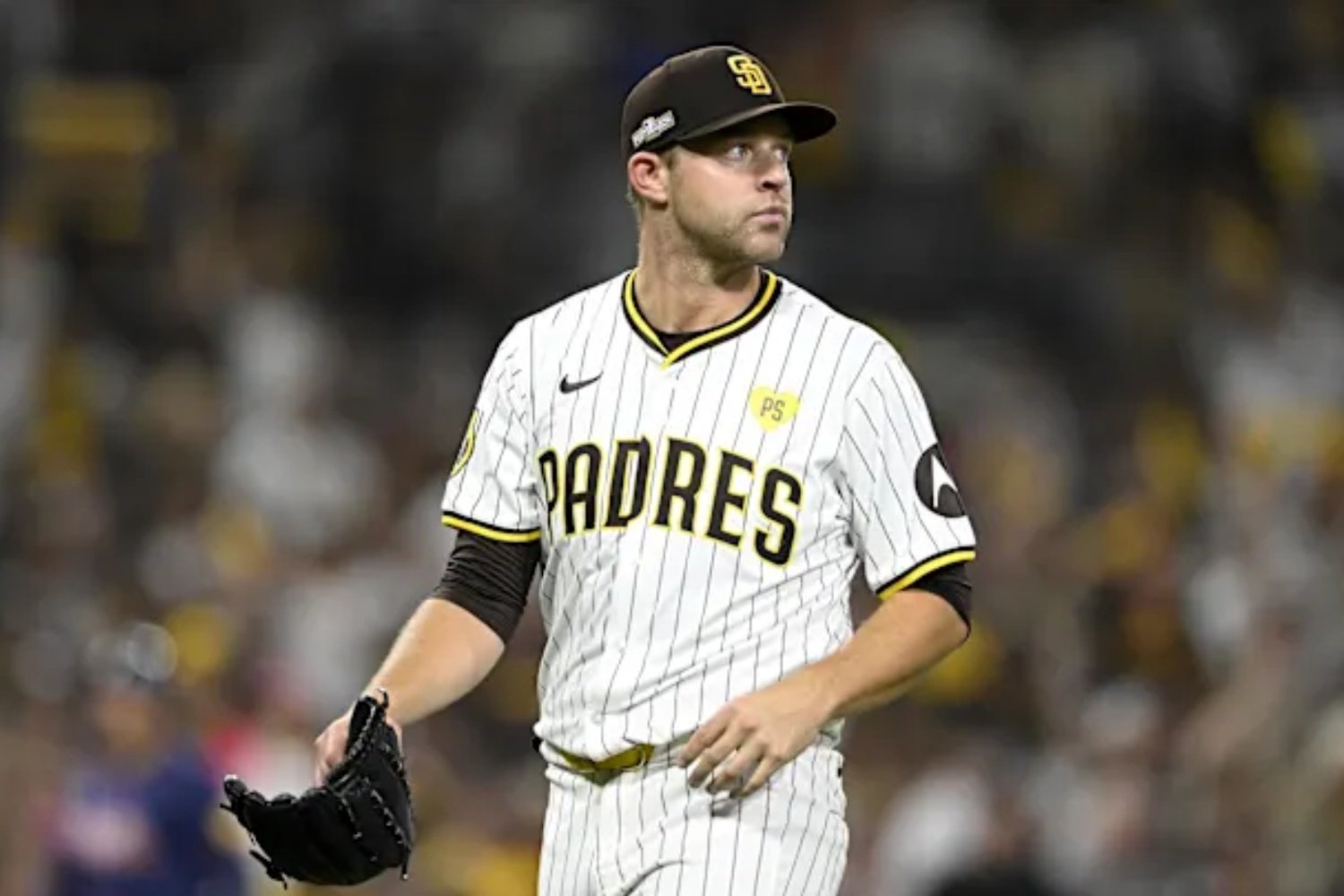 The San Diego Padres remain off to a scorching first-place start. As of 4/23, they sit at 17-7 to start the season with a +35 run differential that comes in as the second-best in the league. They're ahead of the Los Angeles Dodgers, San Francisco Giants, and Arizona Diamondbacks to pace what is, objectively, baseball's toughest division. Just imagine where they'd be if they played all of their games in America's Finest City™. The Padres feature a 12-1 record at home, with only a single loss on the books that came against the Chicago Cubs in extra innings back on Jackie Robinson Day. The road, however, has not proven to be as kind to the Friars through their first dozen or so games. At 5-6 away from Petco Park, it's clear that there's a few things working in their own friendly confines against when they're in a less welcoming environment. It starts on the offensive side: At home, the they're averaging 5.2 runs per game. On the road, that average drops to 3.3. Across the board, San Diego is getting more out of their hitters at Petco than at any other ballpark. You could complete such an exercise with a few individual hitters, as well. Gavin Sheets is has a 224 wRC+ through his first 35 plate appearances at home. Jose Iglesias has a 156 figure through 32 PA. From there, you get into your usual suspects. Fernando Tatis Jr (210) and Manny Machado (169) pace the group among healthy regulars. Of course, when you flip it to a road perspective, things tail off. With the exception of Tatis Jr, who still sits at a 166 wRC+ away from home, everyone else devolves into a below-average hitter. Machado's at 93, Sheets is at 73, and Iglesias plummets all the way to 39. Overall, the collective lineup features a 128 wRC+ at home against 98 on the road. Interestingly, there are a couple of Padres who are performing better away from the home park than they are in San Diego. Through 38 road plate appearances, for example, Luis Arráez is leading the roster with a 197 wRC+ vs. just 61 at home. Xander Bogaerts carries a 76 wRC+ at home against a 137 wRC+ on the road. We'll dive into some of the particulars of that later this week. While it's not a terribly pleasant picture which to paint from an offensive standpoint, the pitching side of things gets quite a bit worse: The starting rotation, in particular, has thrived at home. Each of Michael King (1.62 ERA), Nick Pivetta (0.45), Randy Vásquez (0.82), Kyle Hart (1.82), and Dylan Cease (3.32) have been stellar. When you flip the perspective, though, things get quite ugly quite fast, especially as it relates to three of the current starting group. Vásquez (6.94), Cease (11.00), and Hart (15.88) have been absolutely brutal away from home. Even King (3.97) can't match his home production in quite the same way. Because of the overall dominance of the team's relief corps, there isn't a discernible difference between bullpen production home or away. You could observe that Adrian Morejón or Wandy Peralta haven't allowed a run in any of their road appearances, but each also carries a sub-1.50 ERA at home as well. It's the starting group that is of concern at this point. While the home-road splits themselves are quite obvious, it's also not something we need to express too much concern over at this juncture, for a couple of different reasons. For one, the road environments in which the Padres have landed in thus far are not the most ideal of circumstances, especially for hitters. While Sacramento has been the second-friendliest ballpark for hitters this year, Statcast's Park Factors has Wrigley Field at 16th and Houston at 21st. For right-handed hitters in particular (the team's primary source of offense given injuries), the two parks check in at 21 and 22, respectively. Detroit's at 15th overall and 17th for righties. Once the team is through a quick homestand, though, they'll get a bit of relief in their next road environments. Starting in Pittsburgh (18th) won't quite be that, but trips to the Bronx (seventh) and Colorado (fourth) certainly will. They'll also hit Toronto (third) and Atlanta (ninth) before the month of May is out. So, the road parks themselves will lighten up a little bit in terms of offensive viability. That's also to say nothing of the fact that, at some point, the Padres are going to have Jackson Merrill and Jake Cronenworth back in the mix. Each represents a source of balance for the lineup while also providing the team with a bat that has started out quite well on the road. The primary concern moving forward is in the starting pitching. Those splits are vast. And while the healthier, upcoming environments for hitters will play well for them, we do have to express some apprehension about what it could mean for the rotation. Each is still working through some individual components at this stage in the game, but they'll be the ones tasked with getting the Padres back to even on the road.
 -
Home is where the heart is bats are. The San Diego Padres remain off to a scorching first-place start. As of 4/23, they sit at 17-7 to start the season with a +35 run differential that comes in as the second-best in the league. They're ahead of the Los Angeles Dodgers, San Francisco Giants, and Arizona Diamondbacks to pace what is, objectively, baseball's toughest division. Just imagine where they'd be if they played all of their games in America's Finest City™. The Padres feature a 12-1 record at home, with only a single loss on the books that came against the Chicago Cubs in extra innings back on Jackie Robinson Day. The road, however, has not proven to be as kind to the Friars through their first dozen or so games. At 5-6 away from Petco Park, it's clear that there's a few things working in their own friendly confines against when they're in a less welcoming environment. It starts on the offensive side: At home, the they're averaging 5.2 runs per game. On the road, that average drops to 3.3. Across the board, San Diego is getting more out of their hitters at Petco than at any other ballpark. You could complete such an exercise with a few individual hitters, as well. Gavin Sheets is has a 224 wRC+ through his first 35 plate appearances at home. Jose Iglesias has a 156 figure through 32 PA. From there, you get into your usual suspects. Fernando Tatis Jr (210) and Manny Machado (169) pace the group among healthy regulars. Of course, when you flip it to a road perspective, things tail off. With the exception of Tatis Jr, who still sits at a 166 wRC+ away from home, everyone else devolves into a below-average hitter. Machado's at 93, Sheets is at 73, and Iglesias plummets all the way to 39. Overall, the collective lineup features a 128 wRC+ at home against 98 on the road. Interestingly, there are a couple of Padres who are performing better away from the home park than they are in San Diego. Through 38 road plate appearances, for example, Luis Arráez is leading the roster with a 197 wRC+ vs. just 61 at home. Xander Bogaerts carries a 76 wRC+ at home against a 137 wRC+ on the road. We'll dive into some of the particulars of that later this week. While it's not a terribly pleasant picture which to paint from an offensive standpoint, the pitching side of things gets quite a bit worse: The starting rotation, in particular, has thrived at home. Each of Michael King (1.62 ERA), Nick Pivetta (0.45), Randy Vásquez (0.82), Kyle Hart (1.82), and Dylan Cease (3.32) have been stellar. When you flip the perspective, though, things get quite ugly quite fast, especially as it relates to three of the current starting group. Vásquez (6.94), Cease (11.00), and Hart (15.88) have been absolutely brutal away from home. Even King (3.97) can't match his home production in quite the same way. Because of the overall dominance of the team's relief corps, there isn't a discernible difference between bullpen production home or away. You could observe that Adrian Morejón or Wandy Peralta haven't allowed a run in any of their road appearances, but each also carries a sub-1.50 ERA at home as well. It's the starting group that is of concern at this point. While the home-road splits themselves are quite obvious, it's also not something we need to express too much concern over at this juncture, for a couple of different reasons. For one, the road environments in which the Padres have landed in thus far are not the most ideal of circumstances, especially for hitters. While Sacramento has been the second-friendliest ballpark for hitters this year, Statcast's Park Factors has Wrigley Field at 16th and Houston at 21st. For right-handed hitters in particular (the team's primary source of offense given injuries), the two parks check in at 21 and 22, respectively. Detroit's at 15th overall and 17th for righties. Once the team is through a quick homestand, though, they'll get a bit of relief in their next road environments. Starting in Pittsburgh (18th) won't quite be that, but trips to the Bronx (seventh) and Colorado (fourth) certainly will. They'll also hit Toronto (third) and Atlanta (ninth) before the month of May is out. So, the road parks themselves will lighten up a little bit in terms of offensive viability. That's also to say nothing of the fact that, at some point, the Padres are going to have Jackson Merrill and Jake Cronenworth back in the mix. Each represents a source of balance for the lineup while also providing the team with a bat that has started out quite well on the road. The primary concern moving forward is in the starting pitching. Those splits are vast. And while the healthier, upcoming environments for hitters will play well for them, we do have to express some apprehension about what it could mean for the rotation. Each is still working through some individual components at this stage in the game, but they'll be the ones tasked with getting the Padres back to even on the road. View full article
-
The Padres Have A Bit Of A Power Outage. Does It Even Matter?
Randy Holt posted an article in Padres
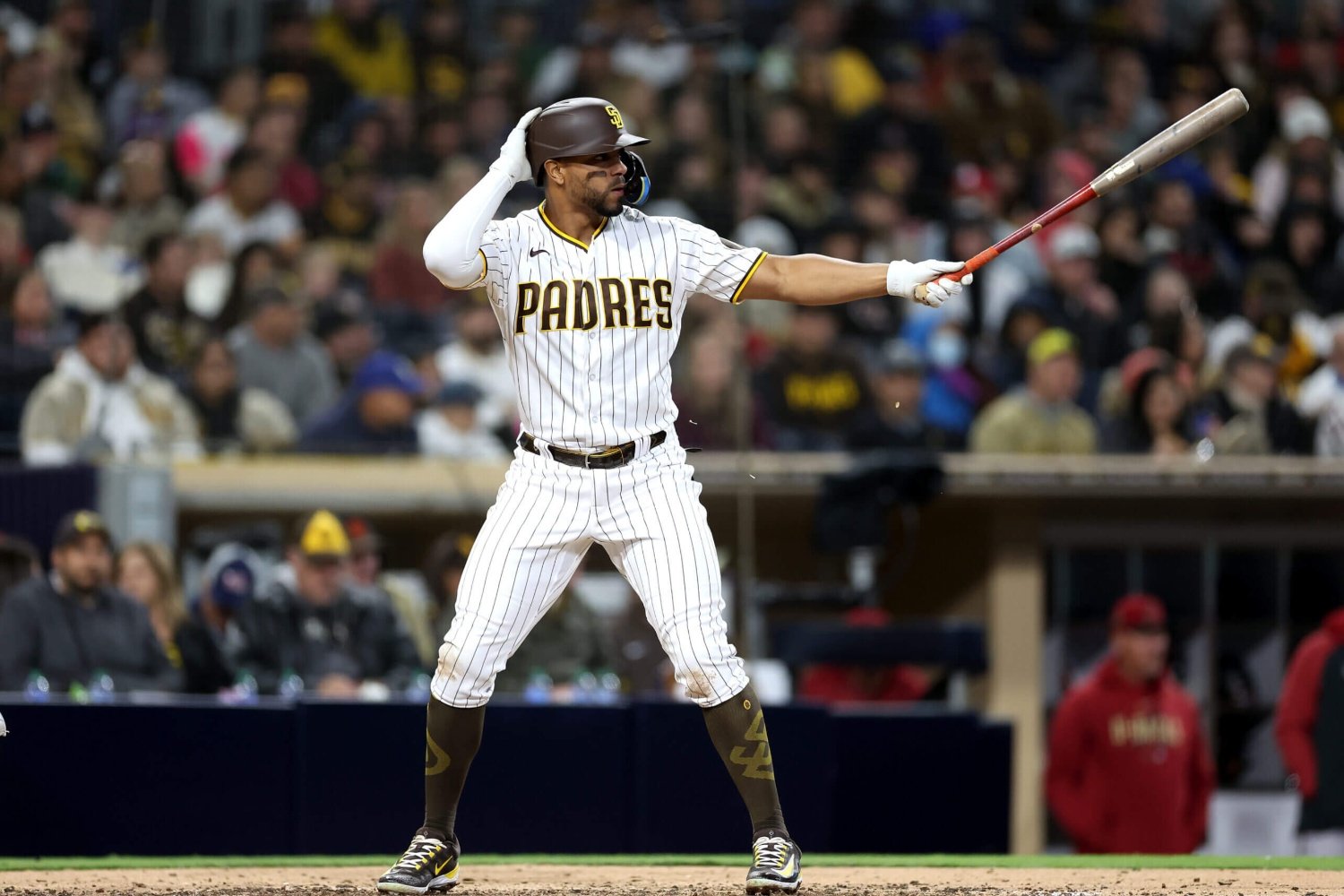 The San Diego Padres do a lot of things well at the plate. As of this writing, they lead the league in batting average (.276) and on-base percentage (.346), and sit third in wRC+ (119). They walk at the league's ninth-highest clip (9.4 percent) and strike out at the league's lowest (17.2 percent). Their 25 steals are ninth in the league. Again, they do a lot of things well. There are also things they do... less well. And those things happen to be just as crucial to an offense as the above indicators. Their 6.5 Barrel% is 28th, and their 38.4 Hard-Hit% ranks 25th. Their .147 ISO comes in at 14th. It's these factors that have the Padres with only the 14th-most runs (97) in the league through roughly a month, despite a record that has them as one of the best handful of clubs. In fact, the Padres' power output is doing less for them than most other clubs. During Saturday's broadcast, there was a graphic regarding the lowest percentage of runs scored via home run. The Padres' 22 homers sit 18th in the league, with the volume accounting for only 27 runs. That means that home runs are responsible for only 28 percent of the team's run total this season. For some additional context, this doesn't even look like the teams around them in the run production game. Baltimore (98 runs) has had 46 percent of their production generated by home runs. Seattle (98) has had 45 percent of their runs come via the longball. The Athletics (95 runs) have had home runs coming in at 44 percent responsible, the Rays (94) have had 35 percent, and the Marlins (also 94) have had 31 percent. Even teams with less overall power, like Tampa Bay or Miami, have derived more meaning out of it. There's a certain degree of objectivity in noting that a team needs power in the long-term. Ten of the 12 playoff teams from last year ranked in the top half of the league in runs scored; six of those teams sat in the top 10 in the league in ISO. Three of the top seven reached the Championship Series stage of the postseason, with two of the top three reaching the World Series. You can survive, to an extent, without it, but it sure does make your life a whole lot easier. Which brings us to two questions are far as the San Diego Padres are concerned: Is this absence of impactful home run power something temporary or a permanent fixture of their offense? Can they survive without a high volume of home runs contributing to the larger context of their offense? In terms of the first one, it does appear to be something at least mildly temporary. Of the team's top ISO hitters, each of Jackson Merrill (.297) and Jake Cronenworth (.229) remain out. They combined for five homers and 15 runs knocked in prior to their respective injuries. Their imminent returns should help drive up the rate of runs wrought by the longball at least a little bit. One also imagines there's a bit more power in Manny Machado's bat than we've seen to this point. He started off slow in the ISO game last year too before heating up in the summer. But, at the same time, we knew this Padres offense would be top heavy. Luis Arráez is a key component of the lineup. Xander Bogaerts hasn't hit for power since, like, 2019. It's a group supplemented by the likes of Jose Iglesias, Jason Heyward (when healthy), and a combination of Martín Maldonado & Elías Díaz behind the plate. There just isn't a lot of power to speak of. What doesn't help is that because of that dearth of offensive impact in the bottom half of the lineup, the team's most powerful hitter isn't able to generate run production as part of his power displays. Fernando Tatis Jr has a .333 ISO and eight home runs already, but only 16 runs knocked in. He's led off an inning (whether to begin a game or otherwise) with a home run in four of those eight instances. That's the downside to having him in the leadoff spot. But with how effective the Padres are protecting leads, getting Tatis an extra opportunity to create one rather than wishing for baserunners in front of him seems like the more practical strategy at this point. Ultimately, though, it's not as if this is anything to express an active concern about. The Padres are not a healthy team. It's going to hurt their ability to produce runs. But even a fully healthy San Diego squad needs to be present and efficient on the basepaths in order to generate runs, more so than on the power side. While power makes your life easier, it's not the only way to generate offense. The Padres should remain a fairly solid case study of that.
 -
Whether it's a bug or a feature, we're about to test how far a lack of power to supplement an offense can take an otherwise formidable club. The San Diego Padres do a lot of things well at the plate. As of this writing, they lead the league in batting average (.276) and on-base percentage (.346), and sit third in wRC+ (119). They walk at the league's ninth-highest clip (9.4 percent) and strike out at the league's lowest (17.2 percent). Their 25 steals are ninth in the league. Again, they do a lot of things well. There are also things they do... less well. And those things happen to be just as crucial to an offense as the above indicators. Their 6.5 Barrel% is 28th, and their 38.4 Hard-Hit% ranks 25th. Their .147 ISO comes in at 14th. It's these factors that have the Padres with only the 14th-most runs (97) in the league through roughly a month, despite a record that has them as one of the best handful of clubs. In fact, the Padres' power output is doing less for them than most other clubs. During Saturday's broadcast, there was a graphic regarding the lowest percentage of runs scored via home run. The Padres' 22 homers sit 18th in the league, with the volume accounting for only 27 runs. That means that home runs are responsible for only 28 percent of the team's run total this season. For some additional context, this doesn't even look like the teams around them in the run production game. Baltimore (98 runs) has had 46 percent of their production generated by home runs. Seattle (98) has had 45 percent of their runs come via the longball. The Athletics (95 runs) have had home runs coming in at 44 percent responsible, the Rays (94) have had 35 percent, and the Marlins (also 94) have had 31 percent. Even teams with less overall power, like Tampa Bay or Miami, have derived more meaning out of it. There's a certain degree of objectivity in noting that a team needs power in the long-term. Ten of the 12 playoff teams from last year ranked in the top half of the league in runs scored; six of those teams sat in the top 10 in the league in ISO. Three of the top seven reached the Championship Series stage of the postseason, with two of the top three reaching the World Series. You can survive, to an extent, without it, but it sure does make your life a whole lot easier. Which brings us to two questions are far as the San Diego Padres are concerned: Is this absence of impactful home run power something temporary or a permanent fixture of their offense? Can they survive without a high volume of home runs contributing to the larger context of their offense? In terms of the first one, it does appear to be something at least mildly temporary. Of the team's top ISO hitters, each of Jackson Merrill (.297) and Jake Cronenworth (.229) remain out. They combined for five homers and 15 runs knocked in prior to their respective injuries. Their imminent returns should help drive up the rate of runs wrought by the longball at least a little bit. One also imagines there's a bit more power in Manny Machado's bat than we've seen to this point. He started off slow in the ISO game last year too before heating up in the summer. But, at the same time, we knew this Padres offense would be top heavy. Luis Arráez is a key component of the lineup. Xander Bogaerts hasn't hit for power since, like, 2019. It's a group supplemented by the likes of Jose Iglesias, Jason Heyward (when healthy), and a combination of Martín Maldonado & Elías Díaz behind the plate. There just isn't a lot of power to speak of. What doesn't help is that because of that dearth of offensive impact in the bottom half of the lineup, the team's most powerful hitter isn't able to generate run production as part of his power displays. Fernando Tatis Jr has a .333 ISO and eight home runs already, but only 16 runs knocked in. He's led off an inning (whether to begin a game or otherwise) with a home run in four of those eight instances. That's the downside to having him in the leadoff spot. But with how effective the Padres are protecting leads, getting Tatis an extra opportunity to create one rather than wishing for baserunners in front of him seems like the more practical strategy at this point. Ultimately, though, it's not as if this is anything to express an active concern about. The Padres are not a healthy team. It's going to hurt their ability to produce runs. But even a fully healthy San Diego squad needs to be present and efficient on the basepaths in order to generate runs, more so than on the power side. While power makes your life easier, it's not the only way to generate offense. The Padres should remain a fairly solid case study of that. View full article
-
If it's a tightrope with so many injuries, the San Diego Padres' late-inning trio are Philippe Petit. I won't pretend I knew Philippe Petit's name offhand. I've seen The Walk (2015). I've heard of Man on Wire (2008). Regardless of your choice of media regarding the famed walk between the Twin Towers in 1974, the combination of walking and performing across a wire over 1,300 feet above the ground draws a (rather absurd) comparison to what the San Diego Padres are currently faced with as it relates to winning baseball games. The Padres are not healthy. They're currently rolling without Jackson Merrill, Jake Cronenworth, and Luis Arráez (among others) on the positional side and Yu Darvish, Bryan Hoeing, Matt Waldron, and Sean Reynolds on the mound. Despite a start that has them positioned as one of the best teams in Major League Baseball, it's not getting any easier considering the volume of IL placements. And yet, if the team can muster just enough offense, the late innings feel like the easy part. In the same way, Petit was able to traverse the length of the Towers with relative ease only after the arduous process of reaching the top; the late-inning combination of Jeremiah Estrada, Jason Adam, and Robert Suárez brings the same level of confidence in stepping out on the wire once they're there. Estrada & Adam rank in the top 30 in usage out of 215 qualifying relief pitchers. Estrada has thrown 11.2 innings while Adam has tossed an even dozen. Estrada has pitched to a 1.54 ERA and a 32.6 K% while stranding 90.9 percent of baserunners. His change in usage has been imperfect, but he's emerged clean in nine of his 11 appearances. Adam has been even better. His 37.0 K% is his best since limited work with the Chicago Cubs in 2021, with whiff, barrel, and hard-hit rates that all sit above the 90th percentile. Perhaps the most important part of this is a return to form for Suárez. Through just 10 innings of work, he's already two-thirds of the way to his 2024 fWAR total (0.9) thanks to a jump in usage on his change, allowing for more variety against opposing hitters. With that, he's experienced an uptick in punchouts (34.3 K%) and a decline in walks (5.7 BB%). He has yet to allow a run. No team in baseball has a better relief corps than San Diego at the moment. Their collective 1.57 ERA and 4.5 percent barrel rate are pacing the league by a wide margin, with each of their K% (26.6) & Hard-Hit% (35.1) sitting in the top five. The Estrada-Adam-Suárez trio has accounted for roughly 40 percent of innings in relief for the Padres thus far. While Alek Jacob & Adrián Morejón have each been important factors in the middle innings, the late-inning group is the most important component of the team's roster at present. The next couple of weeks will bring matchups against a Detroit Tigers roster that is in the top 10 in runs scored, a San Francisco Giants team that ranks sixth, and the No. 2 offense in the New York Yankees. They'll mix in tilts with the Tampa Bay Rays and Pittsburgh Pirates in between. Each of those teams also features the distinction of sitting in the top half of the league in ERA. Which means, again, that runs aren't going to be easy. This means that on those occasions when the Padres are able to secure a lead, they'll need the pitching staff to shoulder the load in keeping it. Getting out on that wire with a lead is going to be the challenge, but keeping it appears to be the easy part. View full article
-
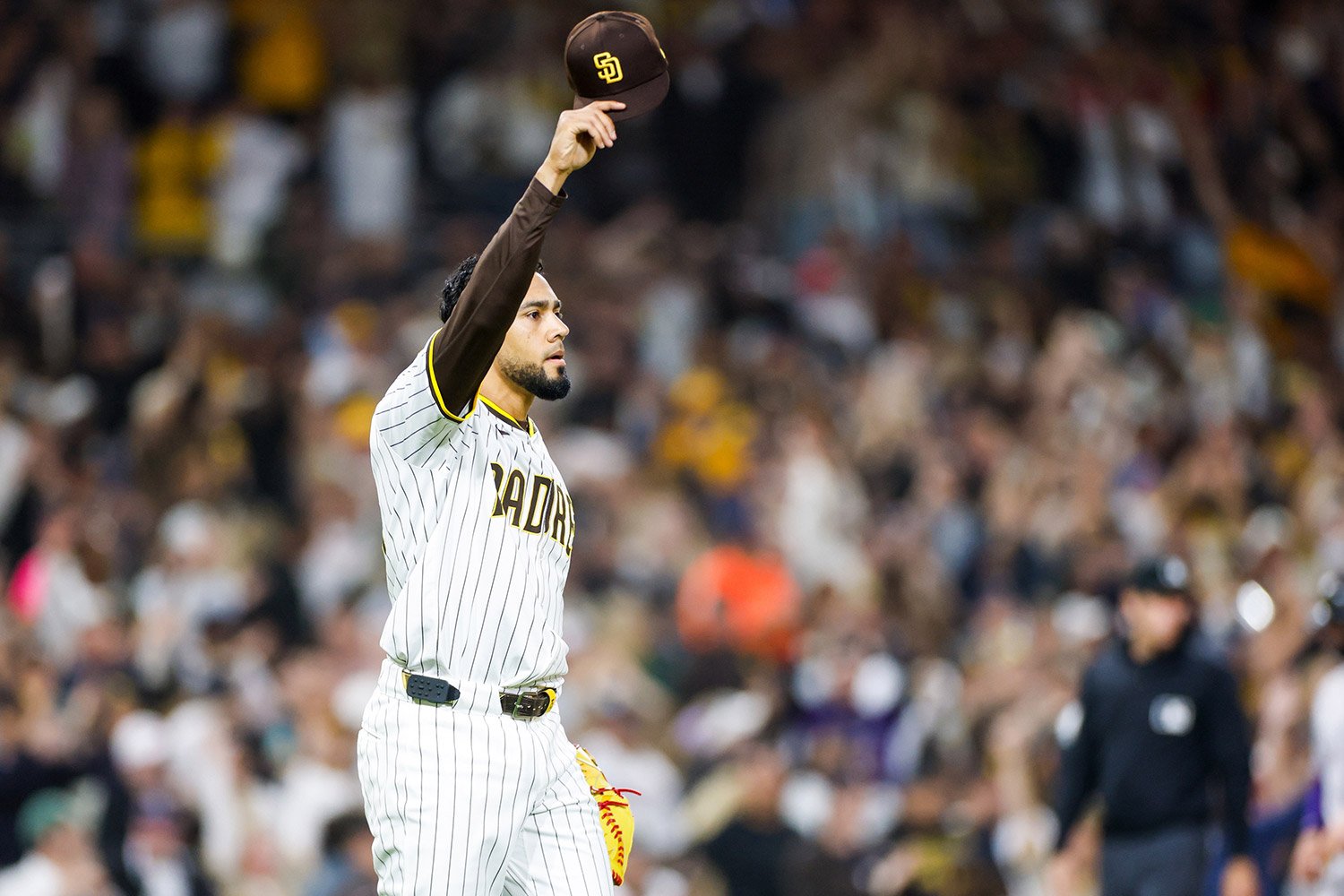 I won't pretend I knew Philippe Petit's name offhand. I've seen The Walk (2015). I've heard of Man on Wire (2008). Regardless of your choice of media regarding the famed walk between the Twin Towers in 1974, the combination of walking and performing across a wire over 1,300 feet above the ground draws a (rather absurd) comparison to what the San Diego Padres are currently faced with as it relates to winning baseball games. The Padres are not healthy. They're currently rolling without Jackson Merrill, Jake Cronenworth, and Luis Arráez (among others) on the positional side and Yu Darvish, Bryan Hoeing, Matt Waldron, and Sean Reynolds on the mound. Despite a start that has them positioned as one of the best teams in Major League Baseball, it's not getting any easier considering the volume of IL placements. And yet, if the team can muster just enough offense, the late innings feel like the easy part. In the same way, Petit was able to traverse the length of the Towers with relative ease only after the arduous process of reaching the top; the late-inning combination of Jeremiah Estrada, Jason Adam, and Robert Suárez brings the same level of confidence in stepping out on the wire once they're there. Estrada & Adam rank in the top 30 in usage out of 215 qualifying relief pitchers. Estrada has thrown 11.2 innings while Adam has tossed an even dozen. Estrada has pitched to a 1.54 ERA and a 32.6 K% while stranding 90.9 percent of baserunners. His change in usage has been imperfect, but he's emerged clean in nine of his 11 appearances. Adam has been even better. His 37.0 K% is his best since limited work with the Chicago Cubs in 2021, with whiff, barrel, and hard-hit rates that all sit above the 90th percentile. Perhaps the most important part of this is a return to form for Suárez. Through just 10 innings of work, he's already two-thirds of the way to his 2024 fWAR total (0.9) thanks to a jump in usage on his change, allowing for more variety against opposing hitters. With that, he's experienced an uptick in punchouts (34.3 K%) and a decline in walks (5.7 BB%). He has yet to allow a run. No team in baseball has a better relief corps than San Diego at the moment. Their collective 1.57 ERA and 4.5 percent barrel rate are pacing the league by a wide margin, with each of their K% (26.6) & Hard-Hit% (35.1) sitting in the top five. The Estrada-Adam-Suárez trio has accounted for roughly 40 percent of innings in relief for the Padres thus far. While Alek Jacob & Adrián Morejón have each been important factors in the middle innings, the late-inning group is the most important component of the team's roster at present. The next couple of weeks will bring matchups against a Detroit Tigers roster that is in the top 10 in runs scored, a San Francisco Giants team that ranks sixth, and the No. 2 offense in the New York Yankees. They'll mix in tilts with the Tampa Bay Rays and Pittsburgh Pirates in between. Each of those teams also features the distinction of sitting in the top half of the league in ERA. Which means, again, that runs aren't going to be easy. This means that on those occasions when the Padres are able to secure a lead, they'll need the pitching staff to shoulder the load in keeping it. Getting out on that wire with a lead is going to be the challenge, but keeping it appears to be the easy part.
 -
Is the Padres' worst starter from 2024 now their secret weapon? It feels like there's a dash of cruelty in labeling a pitcher as the "worst" on a team that made a playoff run in 2024. But it fits rather inarguably in the case of Randy Vásquez. Vásquez's first year with the San Diego Padres saw him finish at the bottom of those who threw at least 50 innings for the Friars last year in most categories. He sat at the bottom in fWAR (0.8), strikeout rate (14.4%), and whiff rate (8.1%), while permitting more contact than anyone else in the starting group (83.7%). His 39.5% hard-hit rate checked in behind Joe Musgrove and Yu Darvish. Unlike those two, however, he didn't have an additional element — groundballs in Musgrove's case and strikeouts for Darvish — to compensate for quality contact against. It wasn't a tremendously big sample, of course. Vásquez threw 98 innings with the big club for a staff that was deeper (and healthier) in 2024. However, he looked even worse in El Paso, pitching to a 8.21 ERA and stranding only 58.7% of baserunners. If this year's staff could expect a full season from Musgrove, any clarity on Darvish's health, or a sense of when Matt Waldron might be effective again, Vásquez's story might be different. As it is, a lack of depth combined with a decent-enough exhibition slate in the spring to afford him another shot. And while he's been imperfect, Vásquez has been every bit as important to the Padres' strong start as counterparts like Michael King or Dylan Cease. Perhaps even more so, given his role. Vásquez's early-season numbers are wildly interesting. He's allowed just four earned runs through four starts and 20 2/3 innings. That he's pitched to a 1.74 ERA through four starts, though, is deceiving; he's also at a low 9.3% strikeout rate, a ballooned 16.3% walk rate, and a 4.28 FIP, with a .219 batting average allowed on balls in play. His Baseball Savant percentile distribution is doing its best impression of Arnold Schwarzenegger's Mr. Freeze in Batman & Robin: You can't argue with results, but you also have to wonder just how long before regression hits Vásquez in the hardest fashion possible. At the same time, that hard-hit rate stands out. Not only because it's the only strong component of his game thus far, but because of how he's managed to stifle quality contact in the face of everything else happening right now. There's some potentially interesting stuff happening with his arm angle & release point, but we'll wait until the sample expands before believing too much in it. For now, let's talk about the pitch mix: The steep decline in four-seam usage is notable, as it appears to have made way for the cutter. It's a logical move for Vásquez; his four-seam was barreled at an 11.7% rate last year. Only his changeup (also experiencing a heavy decline of its own) was hit harder (12.5%). It was also elevated (flyballs and line drives) at a 61.1% rate last year. Not an ideal combination for a guy who finished in the front half of the home run per fly ball leaderboard and who doesn't compensate with any other elite area of a skill set. The leaning on the cutter and sweeper this year (they account for 50.4% of his pitches) has been effective. Opposing hitters are swinging at nearly half of his cutters and whiffing at a high volume against the sweeper (21.4%). They aren't elite pitches, but there's a balance issue for opposing hitters. When you throw in the other four pitches he's utilizing regularly, you're going to get a contact quality distribution like the one Vásquez features (29.7% Topped, 35.9% Under). Command remains an issue, even more so than last year. Perhaps there's an adjustment to the usage being made. That's something to keep an eye on. But if you're a pitcher like Vásquez, without elite strikeout stuff, avoiding the barrel is the next best thing. For the Padres, it's an invaluable quality. There isn't a lot of depth here. Getting roughly five innings of minimal-run ball from Vásquez could end up being an invaluable component given the strength of their bullpen and overall offensive output. We'll continue to monitor some intricacies here, but we've already learned early on that Vásquez doesn't have to be perfect. He just has to avoid the barrel. View full article
-
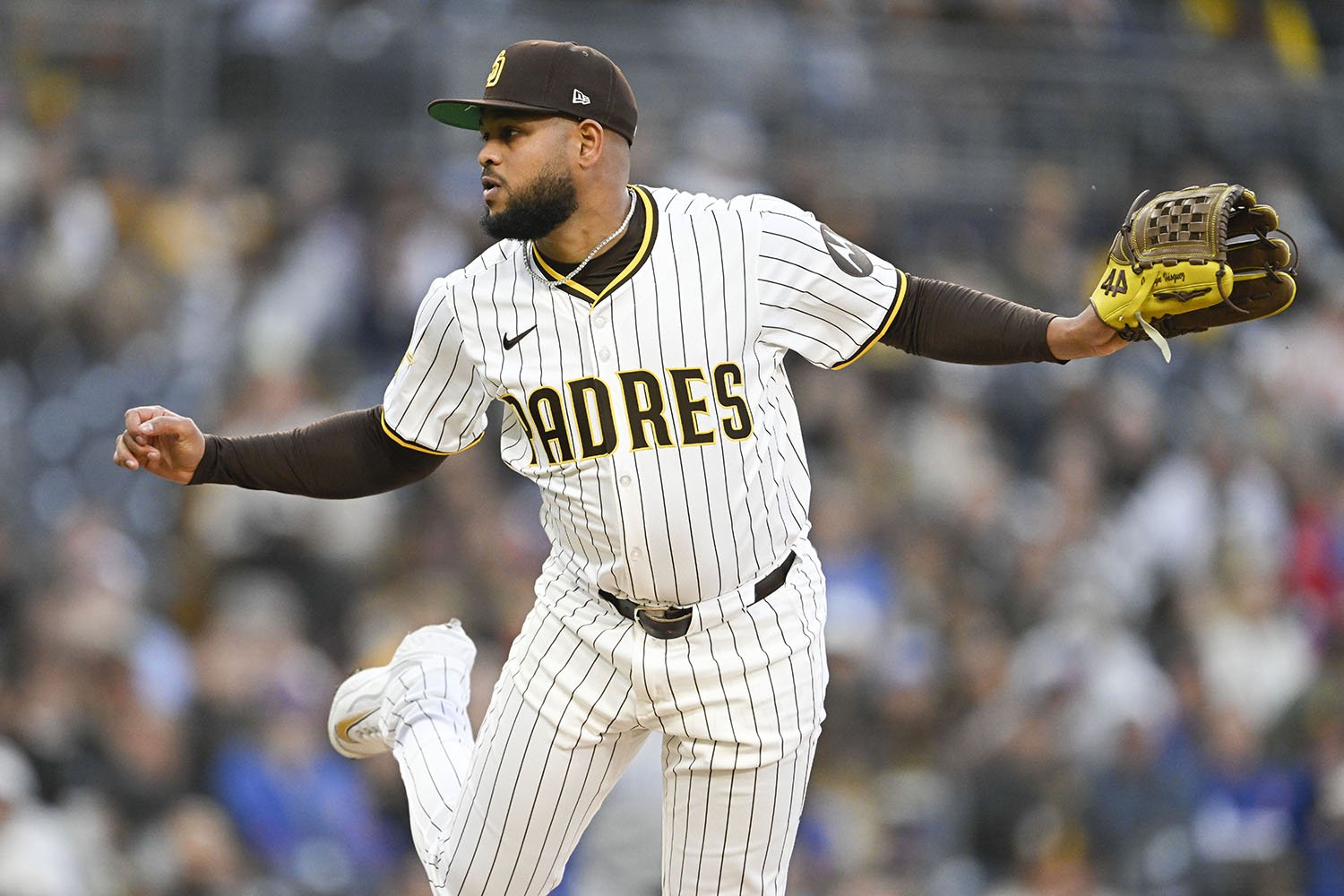 It feels like there's a dash of cruelty in labeling a pitcher as the "worst" on a team that made a playoff run in 2024. But it fits rather inarguably in the case of Randy Vásquez. Vásquez's first year with the San Diego Padres saw him finish at the bottom of those who threw at least 50 innings for the Friars last year in most categories. He sat at the bottom in fWAR (0.8), strikeout rate (14.4%), and whiff rate (8.1%), while permitting more contact than anyone else in the starting group (83.7%). His 39.5% hard-hit rate checked in behind Joe Musgrove and Yu Darvish. Unlike those two, however, he didn't have an additional element — groundballs in Musgrove's case and strikeouts for Darvish — to compensate for quality contact against. It wasn't a tremendously big sample, of course. Vásquez threw 98 innings with the big club for a staff that was deeper (and healthier) in 2024. However, he looked even worse in El Paso, pitching to a 8.21 ERA and stranding only 58.7% of baserunners. If this year's staff could expect a full season from Musgrove, any clarity on Darvish's health, or a sense of when Matt Waldron might be effective again, Vásquez's story might be different. As it is, a lack of depth combined with a decent-enough exhibition slate in the spring to afford him another shot. And while he's been imperfect, Vásquez has been every bit as important to the Padres' strong start as counterparts like Michael King or Dylan Cease. Perhaps even more so, given his role. Vásquez's early-season numbers are wildly interesting. He's allowed just four earned runs through four starts and 20 2/3 innings. That he's pitched to a 1.74 ERA through four starts, though, is deceiving; he's also at a low 9.3% strikeout rate, a ballooned 16.3% walk rate, and a 4.28 FIP, with a .219 batting average allowed on balls in play. His Baseball Savant percentile distribution is doing its best impression of Arnold Schwarzenegger's Mr. Freeze in Batman & Robin: You can't argue with results, but you also have to wonder just how long before regression hits Vásquez in the hardest fashion possible. At the same time, that hard-hit rate stands out. Not only because it's the only strong component of his game thus far, but because of how he's managed to stifle quality contact in the face of everything else happening right now. There's some potentially interesting stuff happening with his arm angle & release point, but we'll wait until the sample expands before believing too much in it. For now, let's talk about the pitch mix: The steep decline in four-seam usage is notable, as it appears to have made way for the cutter. It's a logical move for Vásquez; his four-seam was barreled at an 11.7% rate last year. Only his changeup (also experiencing a heavy decline of its own) was hit harder (12.5%). It was also elevated (flyballs and line drives) at a 61.1% rate last year. Not an ideal combination for a guy who finished in the front half of the home run per fly ball leaderboard and who doesn't compensate with any other elite area of a skill set. The leaning on the cutter and sweeper this year (they account for 50.4% of his pitches) has been effective. Opposing hitters are swinging at nearly half of his cutters and whiffing at a high volume against the sweeper (21.4%). They aren't elite pitches, but there's a balance issue for opposing hitters. When you throw in the other four pitches he's utilizing regularly, you're going to get a contact quality distribution like the one Vásquez features (29.7% Topped, 35.9% Under). Command remains an issue, even more so than last year. Perhaps there's an adjustment to the usage being made. That's something to keep an eye on. But if you're a pitcher like Vásquez, without elite strikeout stuff, avoiding the barrel is the next best thing. For the Padres, it's an invaluable quality. There isn't a lot of depth here. Getting roughly five innings of minimal-run ball from Vásquez could end up being an invaluable component given the strength of their bullpen and overall offensive output. We'll continue to monitor some intricacies here, but we've already learned early on that Vásquez doesn't have to be perfect. He just has to avoid the barrel.
 -
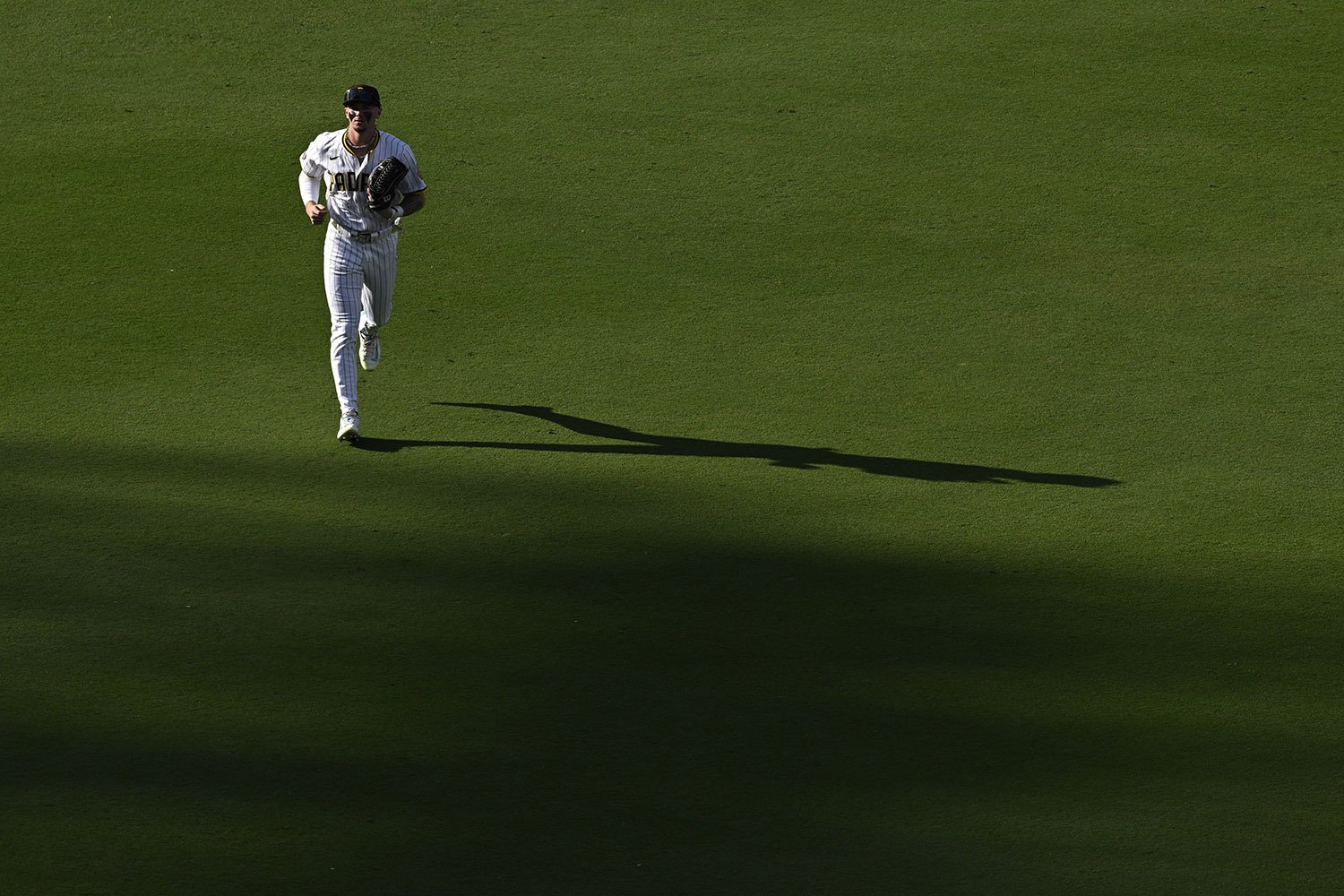 You wouldn't know it by their historic start, but the Padres are kind of going through it on the health side these last couple of weeks. It started when they lost Jackson Merrill to a hamstring injury. Jake Cronenworth followed with what turned out to be a rib fracture. They avoided further woes when Fernando Tatis Jr. bounced back quickly to only miss one game after tweaking his surgically-repaired shoulder. Now, though, the team is set to be without Brandon Lockridge for an indeterminate amount of time. Lockridge sustained a hamstring injury of his own on Sunday and was placed on the injured list on Monday. At first blush, it's understandable to wonder why losing a guy with limited name recognition and a wRC+ of 58 would spell concern for the Friars. Given Merrill's absence, however, Lockridge represented the team's last bit of depth on the outfield grass as far as the current roster is concerned. The team recalled utilityman Connor Joe to replace Lockridge on the active roster. The move is more about having a body on the roster than anything. Joe has flashed some upside with the bat in the past, but hasn't appeared in center for even a third of an inning in his big league career. Which leaves the Padres with very few options. Jason Heyward seems most likely to handle duties until Merrill (or Lockridge) returns. He's handled over 1,500 innings there in his career, topping out with a shade over 600 of them back in 2019 with the Chicago Cubs. He's 35 and has seen his defensive quality slip a bit as far as the metrics go, but there's something to be said about instincts carrying him in the short-term, given that he's one of the better defensive players of his generation. From there, it gets into the likes of Tyler Wade. Selected back to the active roster following Cronenworth's injury, Wade has exactly 52.2 innings of service out in center. Eleven of those came with the Padres last year and 11 more in the year prior with the Los Angeles Angels. It's a big step down from Heyward in terms of experience, but versatility is embedded enough in Wade's skill set that he could make it work for a spell. The possibility exists that Tatis gets a few extra reps in center. He logged over 50 innings there in 2021 and another 30 in 2023. He's expressed interest in sliding to his right with more frequency, but whether or not the Padres are willing to put him in a less health-assured situation remains to be seen. There isn't any doubt that he has the defensive chops, given his excellence in right. It seems like an organizational call; it'd be hard to see them being too aggressive, though, if Merrill projects to be back in short order. Ultimately, though, this represents a problematic situation for San Diego. An infield injury to someone like Cronenworth, while not ideal, is something they can handle given the presence of Jose Iglesias and Wade on the roster (to say nothing of Luis Arráez, who is technically still listed as a second baseman). Their bench consists of two extra first basemen, after all. But in centerfield, there really isn't any puzzle to be solved. The depth is gone. It's an abstract concept. One hopes the rest of the roster continues holding it together.
 -
No Jackson Merrill. Not even a Brandon Lockridge. Where do the San Diego Padres go from here? You wouldn't know it by their historic start, but the Padres are kind of going through it on the health side these last couple of weeks. It started when they lost Jackson Merrill to a hamstring injury. Jake Cronenworth followed with what turned out to be a rib fracture. They avoided further woes when Fernando Tatis Jr. bounced back quickly to only miss one game after tweaking his surgically-repaired shoulder. Now, though, the team is set to be without Brandon Lockridge for an indeterminate amount of time. Lockridge sustained a hamstring injury of his own on Sunday and was placed on the injured list on Monday. At first blush, it's understandable to wonder why losing a guy with limited name recognition and a wRC+ of 58 would spell concern for the Friars. Given Merrill's absence, however, Lockridge represented the team's last bit of depth on the outfield grass as far as the current roster is concerned. The team recalled utilityman Connor Joe to replace Lockridge on the active roster. The move is more about having a body on the roster than anything. Joe has flashed some upside with the bat in the past, but hasn't appeared in center for even a third of an inning in his big league career. Which leaves the Padres with very few options. Jason Heyward seems most likely to handle duties until Merrill (or Lockridge) returns. He's handled over 1,500 innings there in his career, topping out with a shade over 600 of them back in 2019 with the Chicago Cubs. He's 35 and has seen his defensive quality slip a bit as far as the metrics go, but there's something to be said about instincts carrying him in the short-term, given that he's one of the better defensive players of his generation. From there, it gets into the likes of Tyler Wade. Selected back to the active roster following Cronenworth's injury, Wade has exactly 52.2 innings of service out in center. Eleven of those came with the Padres last year and 11 more in the year prior with the Los Angeles Angels. It's a big step down from Heyward in terms of experience, but versatility is embedded enough in Wade's skill set that he could make it work for a spell. The possibility exists that Tatis gets a few extra reps in center. He logged over 50 innings there in 2021 and another 30 in 2023. He's expressed interest in sliding to his right with more frequency, but whether or not the Padres are willing to put him in a less health-assured situation remains to be seen. There isn't any doubt that he has the defensive chops, given his excellence in right. It seems like an organizational call; it'd be hard to see them being too aggressive, though, if Merrill projects to be back in short order. Ultimately, though, this represents a problematic situation for San Diego. An infield injury to someone like Cronenworth, while not ideal, is something they can handle given the presence of Jose Iglesias and Wade on the roster (to say nothing of Luis Arráez, who is technically still listed as a second baseman). Their bench consists of two extra first basemen, after all. But in centerfield, there really isn't any puzzle to be solved. The depth is gone. It's an abstract concept. One hopes the rest of the roster continues holding it together. View full article
-
Fernando Tatis Jr.’s New Stance Opens New Pull-Side Possibilities
Randy Holt posted an article in Padres
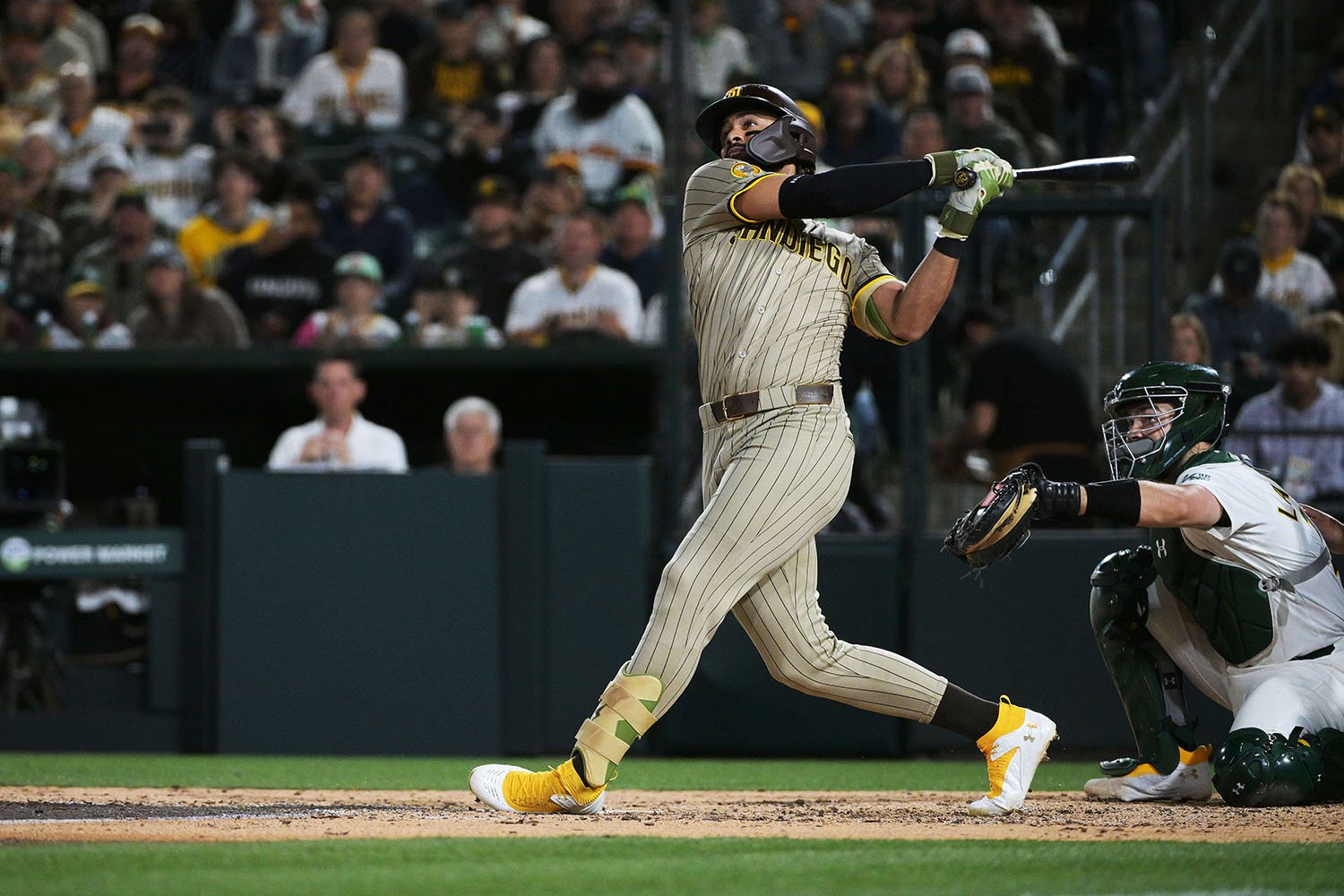 Baseball Savant's new batting stance data gives us insight into more mechanics for hitters than ever before. So now, instead of simply noticing that the San Diego Padres right fielder dropped his hands, added more of a crouch, and opened up his stance, we can put concrete numbers to what our eyes are telling us. And concrete terms are important when you're off to the kind of start both Tatis and the Padres currently are. Heading into Sunday, only three players ranked higher in FanGraphs fWAR than Tatis's 1.1 through his first 14 games. Since assuming the leadoff spot, all he's done is posted a .365/.433/.615/1.049 line with a .250 isolated slugging, six steals, and seven walks against only eight strikeouts. Factor in the defense (already 1 FRV), and there isn't a single component of his game that isn't firing at an upper-tier level right now. And that's with a midweek scare after he tweaked his shoulder in Sacramento. One of the more noteworthy components of his hot start has been in the swing. Such a statement applies both to the setup and what manifests on contact. The following is Tatis Jr's stance from 2024: And here's 2025: There are a handful of things to note here. First, obviously, is the front foot. The stance angle has opened up dramatically, from 29 degrees in 2024 to 49 degrees this year. He's also backed up from the plate in general, standing nearly a full inch more off the plate this year against last year. The intercept point is notable, too, as he's catching the ball just a tick later. What does Tatis get out of this? Well, for one, he's opening himself up to more pull-side contact. His pull rate as of Sunday was 44.4%. His 2024 setup had him just slightly closed by the time the swing was over, leading to more middle-of-the-field contact than we've seen this year. Especially given his 86th percentile bat speed (74.7 MPH). This year's, however, allows him to remain balanced through the swing. When done in conjunction with a swing that is slightly slower (73.5 MPH) — and, thus, likely why he's catching the ball just a little bit later — he's opening up the left side of the field to a higher rate of balls in play off his bat. The bat speed becomes somewhat less important given the setup. You could even make the argument that slower is better given the open position of his feet (slower being used relatively here, as even a slower swing from Tatis Jr is still considered a "fast" swing, on average). Ultimately, though, it really leaves us with no surprise that this year's heatmap on extra base contact looks like this: There's obviously plenty of middle-middle contact. That isn't a new component for Tatis, or any hitter hoping to generate any extra-base contact. But in years prior, we've seen plenty of extra-base contact spread more horizontally throughout the zone. Obviously, there's a sample size consideration there and why the above visual is more concentrated. But those inner areas of the zone were nary to be found in previous years for Tatis. But the increase to the pull side is actually stellar news for Tatis given this: Those represent Tatis' overall balls in play to the pull side throughout his career. Those numbers, down the line, are either really similar to his work up the middle or outright better than, depending on the year. He's able to achieve a level of consistency on the left side of the field despite a higher rate of quality contact. He's just found more success from a cumulative standpoint there than any other area of the field. That's not to say that Fernando Tatis Jr is abandoning the other parts of the field. Nor should he. The nature of being an elite hitter is that you can make an impact in all areas of the field. But there's something to be said about making yourself a threat on the inner portion of the zone. Tatis has done that thus far, given the new setup. And when pitchers can't throw inside they have to go outside. And when they go outside, it's very likely that the still-above-average bat speed won't have a problem making an adjustment in getting the barrel to the baseball.
 -
Part of being Fernando Tatis Jr. is that you're always going to be under a microscope. So you make mechanical changes, the world is going to notice. Baseball Savant's new batting stance data gives us insight into more mechanics for hitters than ever before. So now, instead of simply noticing that the San Diego Padres right fielder dropped his hands, added more of a crouch, and opened up his stance, we can put concrete numbers to what our eyes are telling us. And concrete terms are important when you're off to the kind of start both Tatis and the Padres currently are. Heading into Sunday, only three players ranked higher in FanGraphs fWAR than Tatis's 1.1 through his first 14 games. Since assuming the leadoff spot, all he's done is posted a .365/.433/.615/1.049 line with a .250 isolated slugging, six steals, and seven walks against only eight strikeouts. Factor in the defense (already 1 FRV), and there isn't a single component of his game that isn't firing at an upper-tier level right now. And that's with a midweek scare after he tweaked his shoulder in Sacramento. One of the more noteworthy components of his hot start has been in the swing. Such a statement applies both to the setup and what manifests on contact. The following is Tatis Jr's stance from 2024: And here's 2025: There are a handful of things to note here. First, obviously, is the front foot. The stance angle has opened up dramatically, from 29 degrees in 2024 to 49 degrees this year. He's also backed up from the plate in general, standing nearly a full inch more off the plate this year against last year. The intercept point is notable, too, as he's catching the ball just a tick later. What does Tatis get out of this? Well, for one, he's opening himself up to more pull-side contact. His pull rate as of Sunday was 44.4%. His 2024 setup had him just slightly closed by the time the swing was over, leading to more middle-of-the-field contact than we've seen this year. Especially given his 86th percentile bat speed (74.7 MPH). This year's, however, allows him to remain balanced through the swing. When done in conjunction with a swing that is slightly slower (73.5 MPH) — and, thus, likely why he's catching the ball just a little bit later — he's opening up the left side of the field to a higher rate of balls in play off his bat. The bat speed becomes somewhat less important given the setup. You could even make the argument that slower is better given the open position of his feet (slower being used relatively here, as even a slower swing from Tatis Jr is still considered a "fast" swing, on average). Ultimately, though, it really leaves us with no surprise that this year's heatmap on extra base contact looks like this: There's obviously plenty of middle-middle contact. That isn't a new component for Tatis, or any hitter hoping to generate any extra-base contact. But in years prior, we've seen plenty of extra-base contact spread more horizontally throughout the zone. Obviously, there's a sample size consideration there and why the above visual is more concentrated. But those inner areas of the zone were nary to be found in previous years for Tatis. But the increase to the pull side is actually stellar news for Tatis given this: Those represent Tatis' overall balls in play to the pull side throughout his career. Those numbers, down the line, are either really similar to his work up the middle or outright better than, depending on the year. He's able to achieve a level of consistency on the left side of the field despite a higher rate of quality contact. He's just found more success from a cumulative standpoint there than any other area of the field. That's not to say that Fernando Tatis Jr is abandoning the other parts of the field. Nor should he. The nature of being an elite hitter is that you can make an impact in all areas of the field. But there's something to be said about making yourself a threat on the inner portion of the zone. Tatis has done that thus far, given the new setup. And when pitchers can't throw inside they have to go outside. And when they go outside, it's very likely that the still-above-average bat speed won't have a problem making an adjustment in getting the barrel to the baseball. View full article
-
Michael King got his pitch count in order on Sunday. Much to the chagrin of the Colorado Rockies. On Sunday, coming off two consecutive shutouts, the San Diego Padres sent their de facto ace to the mound aiming for a sweep of their division rivals. And while the assumption should have been that they'd complete the sweep with Michael King on the mound, his three previous starts had been laborious enough to wonder exactly what it'd look like. On Opening Day against Atlanta, King made it through 76 pitches in 2 2/3 innings, allowing four hits and four walks that led to three earned runs. He followed that up with a 5 2/3-innings, three-earned-run start against the Athletics (101 pitches) and a clean five innings against Cleveland (88 pitches). That's 13 1/3 innings of work that featured 265 pitches. In other words, King has averaged a shade over 20 pitches per inning this year. It's not as if he was running up high strikeout numbers in all three starts, either. He did strike out 11 against the A's, but combined for just five in the other two starts against seven walks (six of them in the bookending starts prior to Sunday). Not that it had a negative bearing on the outcome; the Padres won all three starts. But there was a clear efficiency issue holding King back from working deeper into games. Efficiency turned out to not be an issue for King on Sunday, however. He went the distance, finishing with 110 pitches across nine innings. King surrendered just two hits and one walk, striking out eight in the outing. Had he been able to work faster in the ninth, he could've been in line for a Maddux. While a complete game shutout is a rarity in today's game structure — and thus worthy of merit on its own — the efficiency is the most important element out of all of this. And that starts with strike one. Prior to Sunday, King's first strike rate this year was down almost 10 percentage points. He'd been at 66.1% a year ago; it was only 56.5% through his first three starts this year. That's not only down from his first season in San Diego, but down about eight percentage points from his career mark (64.8%). The worst of the bunch came against Cleveland, when he found the zone on the first pitch only 47.4% of the time. Not an issue on Sunday. Against the Rox, King came in at 69.0%, and for the first time this season, King was on his four-seam to open up counts: King was able to get ahead with the four-seam and then move to the changeup in 0-1 counts. Being deliberate with those two pitches allowed him to be more free in deploying the sinker in different contexts and to mix in the sweeper occasionally. Given how much we've seen him struggle with efficiency, the work early in counts proved to be much more ideal in this outing than the others. That leads us to the other encouraging component: the usage. Back on April 7th, Davy Andrews wrote on King's evolving pitch shapes. The oversimplified version of the piece is that a change in arm angle is in the process of changing the shape and quality of his pitches. The four-seam and changeup are beneficiaries of this; the sweeper less so. King's three most-used pitches on Sunday? Four-seam (26%), changeup (26%), and sinker (23%). The sweeper came in at 18%. We hadn't seen the pitch take a clear backseat through any of King's first three starts. This stands as an encouraging sign. Not that we're advocating for King abandoning the pitch altogether. That he was able to generate whiffs on it 44 percent of the time would indicate that there's an efficient strategy to be deployed here: use the other offerings to fill in and around the zone before knocking them over with the sweeper. Ultimately, King's game is still evolving. That evolution likely includes usage issues — and likely sacrificing some efficiency — as pitches take shape early in the season. But Sunday was a positive step forward, regardless of opponent. The arsenal is gaining more clarity, and if there's one thing opposing hitters don't want, that's probably it. View full article
-
Michael King’s Complete Game Shutout Revealed a New Level of Efficiency
Randy Holt posted an article in Padres
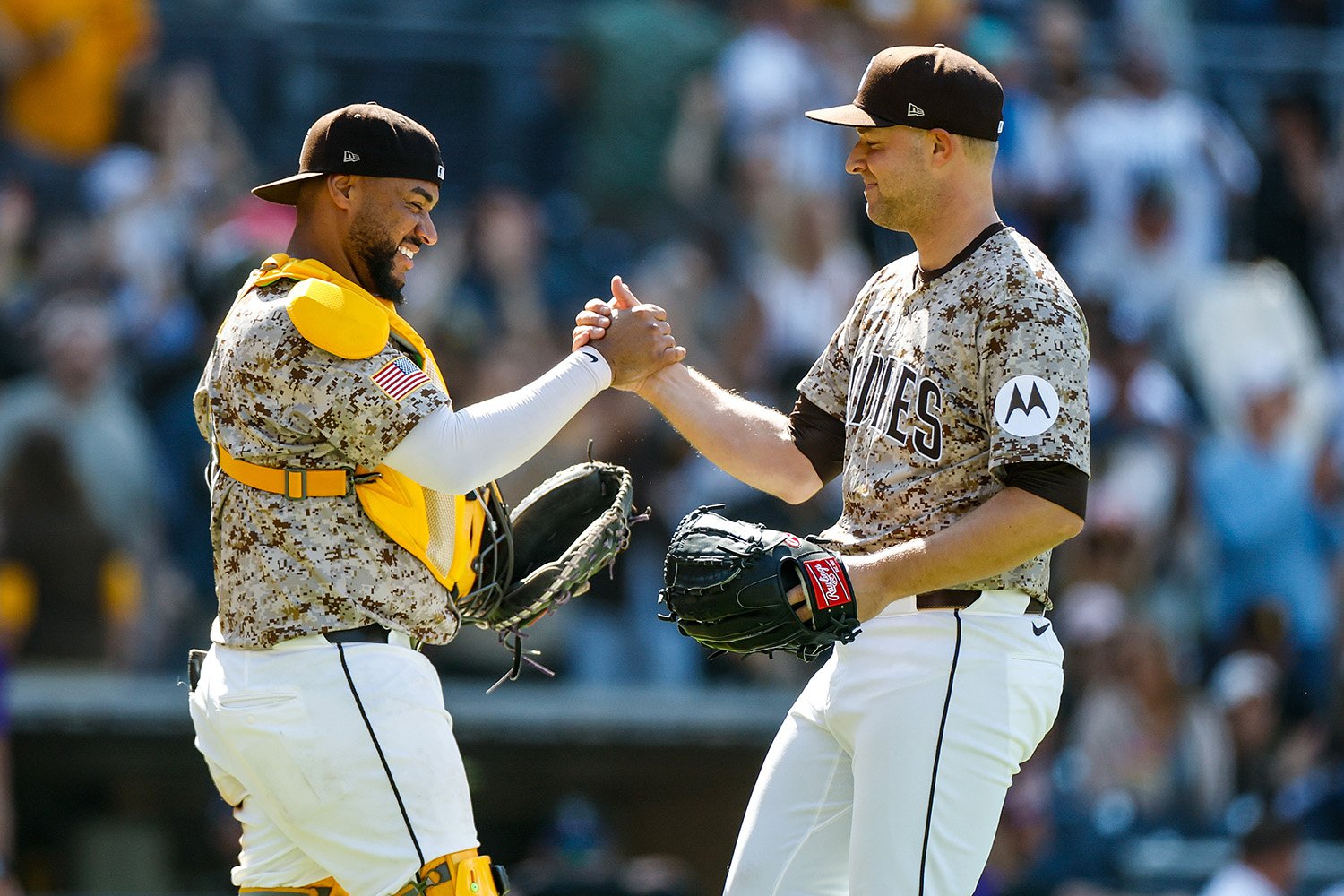 On Sunday, coming off two consecutive shutouts, the San Diego Padres sent their de facto ace to the mound aiming for a sweep of their division rivals. And while the assumption should have been that they'd complete the sweep with Michael King on the mound, his three previous starts had been laborious enough to wonder exactly what it'd look like. On Opening Day against Atlanta, King made it through 76 pitches in 2 2/3 innings, allowing four hits and four walks that led to three earned runs. He followed that up with a 5 2/3-innings, three-earned-run start against the Athletics (101 pitches) and a clean five innings against Cleveland (88 pitches). That's 13 1/3 innings of work that featured 265 pitches. In other words, King has averaged a shade over 20 pitches per inning this year. It's not as if he was running up high strikeout numbers in all three starts, either. He did strike out 11 against the A's, but combined for just five in the other two starts against seven walks (six of them in the bookending starts prior to Sunday). Not that it had a negative bearing on the outcome; the Padres won all three starts. But there was a clear efficiency issue holding King back from working deeper into games. Efficiency turned out to not be an issue for King on Sunday, however. He went the distance, finishing with 110 pitches across nine innings. King surrendered just two hits and one walk, striking out eight in the outing. Had he been able to work faster in the ninth, he could've been in line for a Maddux. While a complete game shutout is a rarity in today's game structure — and thus worthy of merit on its own — the efficiency is the most important element out of all of this. And that starts with strike one. Prior to Sunday, King's first strike rate this year was down almost 10 percentage points. He'd been at 66.1% a year ago; it was only 56.5% through his first three starts this year. That's not only down from his first season in San Diego, but down about eight percentage points from his career mark (64.8%). The worst of the bunch came against Cleveland, when he found the zone on the first pitch only 47.4% of the time. Not an issue on Sunday. Against the Rox, King came in at 69.0%, and for the first time this season, King was on his four-seam to open up counts: King was able to get ahead with the four-seam and then move to the changeup in 0-1 counts. Being deliberate with those two pitches allowed him to be more free in deploying the sinker in different contexts and to mix in the sweeper occasionally. Given how much we've seen him struggle with efficiency, the work early in counts proved to be much more ideal in this outing than the others. That leads us to the other encouraging component: the usage. Back on April 7th, Davy Andrews wrote on King's evolving pitch shapes. The oversimplified version of the piece is that a change in arm angle is in the process of changing the shape and quality of his pitches. The four-seam and changeup are beneficiaries of this; the sweeper less so. King's three most-used pitches on Sunday? Four-seam (26%), changeup (26%), and sinker (23%). The sweeper came in at 18%. We hadn't seen the pitch take a clear backseat through any of King's first three starts. This stands as an encouraging sign. Not that we're advocating for King abandoning the pitch altogether. That he was able to generate whiffs on it 44 percent of the time would indicate that there's an efficient strategy to be deployed here: use the other offerings to fill in and around the zone before knocking them over with the sweeper. Ultimately, King's game is still evolving. That evolution likely includes usage issues — and likely sacrificing some efficiency — as pitches take shape early in the season. But Sunday was a positive step forward, regardless of opponent. The arsenal is gaining more clarity, and if there's one thing opposing hitters don't want, that's probably it.
 -
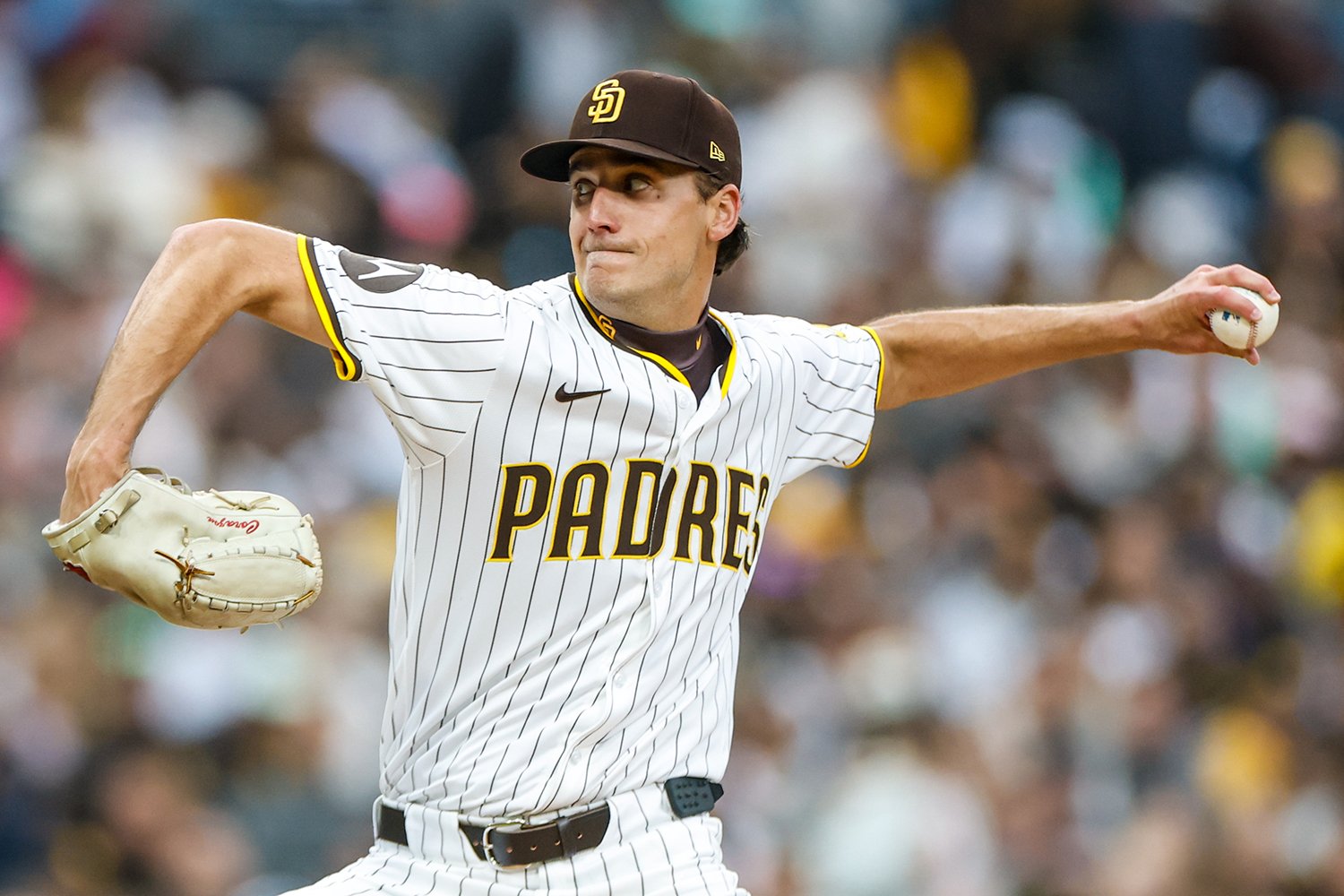 Kyle Hart's first start back stateside was varying levels of fine. He tossed five innings against Cleveland, allowing a pair of runs and working ar ound a lot of hard contact (57.1% hard-hit rate). Hart's second outing was downright bad, as he failed to make it out of the first inning against the Chicago Cubs in a disastrous outing wrought by poor command (four walks in two-thirds of an inning). Start no. 3, however, could be a sign of some traction for the former KBO pitcher. Against the Rox on Saturday night, Hart's line included six innings, one hit, zero walks, and four strikeouts. It was what both Hart and the Padres needed given a quiet night from the offense. And while it's easy to declare that the outing came against one of the league's worst offenses (collective 69 wRC+), that might be an oversimplification. In a general sense, the command was much better. Hart's start against the Cubs last weekend included just 39 pitches before he was yanked. Only 18 of those were strikes. He didn't generate a single whiff and couldn't find the zone with any consistency. But on Saturday against Colorado, Hart reined it in to a pretty astonishing extent. He threw 74 pitches this time around, with 49 of them landing for strikes. That's a 66.2% strike rate after just 46.2% last weekend. Even more notable is the fact that his percentage of first strikes skyrocketed; he averaged only 39.8% in his first two starts before going for a 68.4% percent clip on Saturday. The broadcast on Saturday noted that Hart's mechanics looked more in sync. Specifically, his frontside coming down more firmly than it had in his last start was attributed as a predominant factor in his ability to locate his pitches. He was a bit more over the top than horizontal as well, allowing him to realize much of the same success that he did in his first start against the Guardians. Hart's usage might have something to do with the effectiveness as well: Hart's sweeper is his best pitch. Full stop. It's the pitch with which he's avoided hard contact to the highest degree. It's the pitch that Hart needs to utilize in order to be effective, given that he's not going to generate a high volume of whiffs to begin with. In deploying the sweeper to the extent he did on Saturday (36%), he generated a called strike and whiff rate (CSW%) of 44.0% against the Rockies. No other pitch was close to that mark. With an ability to locate the sweeper, Hart could play his other pitches off it. Against the Cubs last weekend, the sweeper and fastball were used equally, with only the sinker factoring in regularly among his other offerings. While those three were his most frequently thrown pitches again on Saturday, he was also able to mix in the change and slider to more effect. Those two averaged his lowest average exit velocity against this side of the sweeper. It'll be interesting to see how that command and pitch mix holds up against an opponent of higher quality. While too simple for an explanation of his success on Saturday, it's still a factor. The good news for Hart is that his next projected start comes next weekend against Houston. The Astros currently carry a team wRC+ of just 84 (23rd), with middle-tier contact quality and almost no power to speak of (.101 ISO as a team). Beyond that, Hart projects to go against Tampa Bay. While both better than Colorado in a handful of ways, neither is among the league's higher-end offensive groups. That should, ideally, allow Hart to settle in further and springboard that command into the summer months.
 -
What Did Kyle Hart Do Differently in Start No. 3?
Randy Holt posted a topic in San Diego Padres Talk
Nothing remedies a clunky start to the year like an outing against the Colorado Rockies. Kyle Hart's first start back stateside was varying levels of fine. He tossed five innings against Cleveland, allowing a pair of runs and working ar ound a lot of hard contact (57.1% hard-hit rate). Hart's second outing was downright bad, as he failed to make it out of the first inning against the Chicago Cubs in a disastrous outing wrought by poor command (four walks in two-thirds of an inning). Start no. 3, however, could be a sign of some traction for the former KBO pitcher. Against the Rox on Saturday night, Hart's line included six innings, one hit, zero walks, and four strikeouts. It was what both Hart and the Padres needed given a quiet night from the offense. And while it's easy to declare that the outing came against one of the league's worst offenses (collective 69 wRC+), that might be an oversimplification. In a general sense, the command was much better. Hart's start against the Cubs last weekend included just 39 pitches before he was yanked. Only 18 of those were strikes. He didn't generate a single whiff and couldn't find the zone with any consistency. But on Saturday against Colorado, Hart reined it in to a pretty astonishing extent. He threw 74 pitches this time around, with 49 of them landing for strikes. That's a 66.2% strike rate after just 46.2% last weekend. Even more notable is the fact that his percentage of first strikes skyrocketed; he averaged only 39.8% in his first two starts before going for a 68.4% percent clip on Saturday. The broadcast on Saturday noted that Hart's mechanics looked more in sync. Specifically, his frontside coming down more firmly than it had in his last start was attributed as a predominant factor in his ability to locate his pitches. He was a bit more over the top than horizontal as well, allowing him to realize much of the same success that he did in his first start against the Guardians. Hart's usage might have something to do with the effectiveness as well: Hart's sweeper is his best pitch. Full stop. It's the pitch with which he's avoided hard contact to the highest degree. It's the pitch that Hart needs to utilize in order to be effective, given that he's not going to generate a high volume of whiffs to begin with. In deploying the sweeper to the extent he did on Saturday (36%), he generated a called strike and whiff rate (CSW%) of 44.0% against the Rockies. No other pitch was close to that mark. With an ability to locate the sweeper, Hart could play his other pitches off it. Against the Cubs last weekend, the sweeper and fastball were used equally, with only the sinker factoring in regularly among his other offerings. While those three were his most frequently thrown pitches again on Saturday, he was also able to mix in the change and slider to more effect. Those two averaged his lowest average exit velocity against this side of the sweeper. It'll be interesting to see how that command and pitch mix holds up against an opponent of higher quality. While too simple for an explanation of his success on Saturday, it's still a factor. The good news for Hart is that his next projected start comes next weekend against Houston. The Astros currently carry a team wRC+ of just 84 (23rd), with middle-tier contact quality and almost no power to speak of (.101 ISO as a team). Beyond that, Hart projects to go against Tampa Bay. While both better than Colorado in a handful of ways, neither is among the league's higher-end offensive groups. That should, ideally, allow Hart to settle in further and springboard that command into the summer months. View full article -
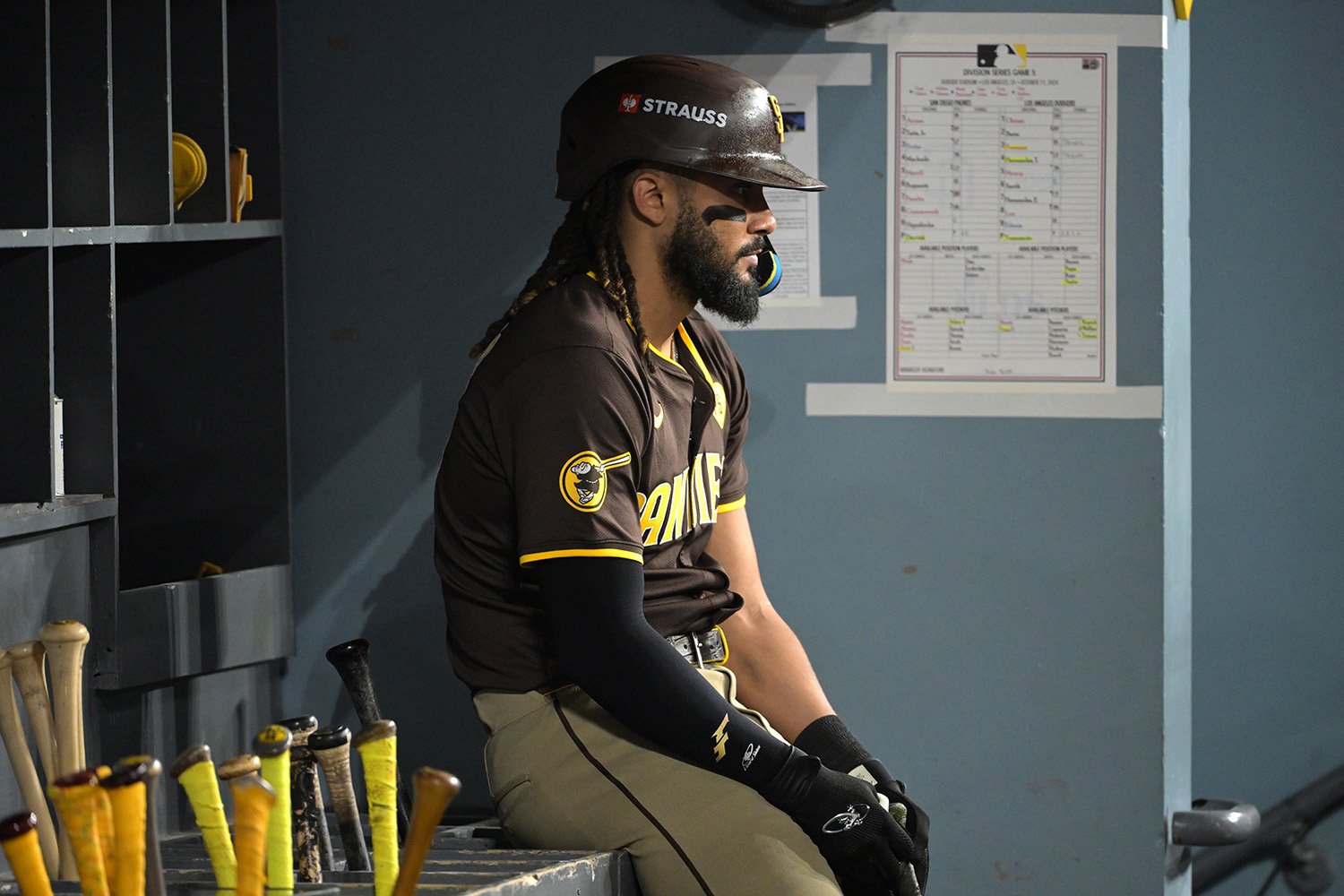 After starting off a scorching 7-0, the Friars' fortunes came to a halt at a brisk Wrigley Field over the weekend. They lost two of three to the Chicago Cubs before heading back out west. While they were able to claim a pair from the West Sacramento Athletics, they didn't come through remotely unscathed. The series began with Jackson Merrill being placed on the injured list with a hamstring strain. Merrill sat out the series opener in Sacramento on Monday before being placed on the IL on Tuesday. The team isn't expecting him to miss much more than the minimum 10 days, if even beyond that threshold. Nonetheless, it puts a damper on his excellent start and the nine-year extension he signed last week. Worse yet, a big loss to the A's on Tuesday night saw Jake Cronenworth and Fernando Tatis Jr. leave with injuries. Cronenworth experienced cramping in his ribs coming off a hit by pitch on Sunday. Tatis tweaked his shoulder on an awkward-looking swing and further aggravated it on a slide to third. Neither player was in the lineup for the series finale on Wednesday afternoon. But neither expressed concern, either. Tatis explicitly stated he'll avoid an IL trip of his own; Cronenworth expects to be in the lineup on Friday. The Padres have a day off Thursday. While it's a massively positive outcome — really, on all three counts — the scare really underscores the lack of depth throughout the big league ranks for the Padres. Tatis and Merrill were both off to as good a start as any position player in the league. Both players sit at 0.7 fWAR, putting them among the league leaders in a small sample. By wRC+, they're the team's two best hitters, with Merrill at 202 and Tatis at 175. Cronenworth sits third at 159. Together, they represent the biggest impact of the team's current roster. Merrill's ISO is at .297 and Cronenworth's is .229. Those are the two highest isolated slugging marks on the team. When you remove that level of impact from any big league roster, there are going to be questions. But those questions loom even larger for a Padres team visibly lacking in lineup depth, both on the current roster and in the minor league ranks. Sure, Manny Machado is off to a strong start (142 wRC+). But he's the final piece of this top-heavy puzzle. When you start to look past him, the picture gets murkier. Luis Arráez is wRC+'ing 118, but needed a stretch of 11 hits in four games to get there. Prior to that, he had only four hits across eight games. Gavin Sheets looks like the ideal change-of-scenery guy (143 wRC+), but he's also hitting almost exclusively against right-handed pitching. Xander Bogaerts is exactly average by wRC+ but has demonstrated virtually zero power to date. From there, it's a smattering of platoon and bench options. Martín Maldonado and Elias Díaz. Jason Heyward and Brandon Lockridge. Jose Iglesias. Yuli Gurriel. Of the team's collection of stopgap, non-roster invite types, only Sheets has demonstrated the ability to provide consistent offense. And that's in a super defined — and as such quite limited — role. The departures of players like Ha-Seong Kim, Jurickson Profar (current suspension notwithstanding), and even Kyle Higashioka removed a massive chunk of the supplementary offense. In the system, it's difficult to see where the offense could come from down the line. Each of (recently recalled) Oscar Gonzalez and Luis Campusano are off to strong starts in El Paso, but neither has shown the ability to be anything resembling consistent at the top level. Maybe Tirso Ornelas gets a shot at a bench gig. Maybe Connor Joe does. Ultimately, though, it's not as if stability is to be found elsewhere within the organization should the worst transpire. Luckily for the Padres, the worst has not, in fact, transpired at this point. Tatis and Cronenworth were able to avoid IL stints entirely, while Merrill's should only hold him out within range of that 10-day mark. The team, top-heavy though it may be, is in fairly good shape. But when you've got a series of scares like the team has had this week, you start taking stock of some things. And while it's not a surprise, down the bench and into the system isn't in great shape for an "in case of emergency" situation.
- 1 comment
-
- 1
-

-
- fernando tatis jr
- jackson merrill
- (and 1 more)
-
The vibes were incredible for the San Diego Padres in Week 1 of the 2025 Major League season. Less so in Week 2. After starting off a scorching 7-0, the Friars' fortunes came to a halt at a brisk Wrigley Field over the weekend. They lost two of three to the Chicago Cubs before heading back out west. While they were able to claim a pair from the West Sacramento Athletics, they didn't come through remotely unscathed. The series began with Jackson Merrill being placed on the injured list with a hamstring strain. Merrill sat out the series opener in Sacramento on Monday before being placed on the IL on Tuesday. The team isn't expecting him to miss much more than the minimum 10 days, if even beyond that threshold. Nonetheless, it puts a damper on his excellent start and the nine-year extension he signed last week. Worse yet, a big loss to the A's on Tuesday night saw Jake Cronenworth and Fernando Tatis Jr. leave with injuries. Cronenworth experienced cramping in his ribs coming off a hit by pitch on Sunday. Tatis tweaked his shoulder on an awkward-looking swing and further aggravated it on a slide to third. Neither player was in the lineup for the series finale on Wednesday afternoon. But neither expressed concern, either. Tatis explicitly stated he'll avoid an IL trip of his own; Cronenworth expects to be in the lineup on Friday. The Padres have a day off Thursday. While it's a massively positive outcome — really, on all three counts — the scare really underscores the lack of depth throughout the big league ranks for the Padres. Tatis and Merrill were both off to as good a start as any position player in the league. Both players sit at 0.7 fWAR, putting them among the league leaders in a small sample. By wRC+, they're the team's two best hitters, with Merrill at 202 and Tatis at 175. Cronenworth sits third at 159. Together, they represent the biggest impact of the team's current roster. Merrill's ISO is at .297 and Cronenworth's is .229. Those are the two highest isolated slugging marks on the team. When you remove that level of impact from any big league roster, there are going to be questions. But those questions loom even larger for a Padres team visibly lacking in lineup depth, both on the current roster and in the minor league ranks. Sure, Manny Machado is off to a strong start (142 wRC+). But he's the final piece of this top-heavy puzzle. When you start to look past him, the picture gets murkier. Luis Arráez is wRC+'ing 118, but needed a stretch of 11 hits in four games to get there. Prior to that, he had only four hits across eight games. Gavin Sheets looks like the ideal change-of-scenery guy (143 wRC+), but he's also hitting almost exclusively against right-handed pitching. Xander Bogaerts is exactly average by wRC+ but has demonstrated virtually zero power to date. From there, it's a smattering of platoon and bench options. Martín Maldonado and Elias Díaz. Jason Heyward and Brandon Lockridge. Jose Iglesias. Yuli Gurriel. Of the team's collection of stopgap, non-roster invite types, only Sheets has demonstrated the ability to provide consistent offense. And that's in a super defined — and as such quite limited — role. The departures of players like Ha-Seong Kim, Jurickson Profar (current suspension notwithstanding), and even Kyle Higashioka removed a massive chunk of the supplementary offense. In the system, it's difficult to see where the offense could come from down the line. Each of (recently recalled) Oscar Gonzalez and Luis Campusano are off to strong starts in El Paso, but neither has shown the ability to be anything resembling consistent at the top level. Maybe Tirso Ornelas gets a shot at a bench gig. Maybe Connor Joe does. Ultimately, though, it's not as if stability is to be found elsewhere within the organization should the worst transpire. Luckily for the Padres, the worst has not, in fact, transpired at this point. Tatis and Cronenworth were able to avoid IL stints entirely, while Merrill's should only hold him out within range of that 10-day mark. The team, top-heavy though it may be, is in fairly good shape. But when you've got a series of scares like the team has had this week, you start taking stock of some things. And while it's not a surprise, down the bench and into the system isn't in great shape for an "in case of emergency" situation. View full article
-
Don’t Call It a Changeup: Jeremiah Estrada’s Chitter Changed His Approach
Randy Holt posted an article in Padres
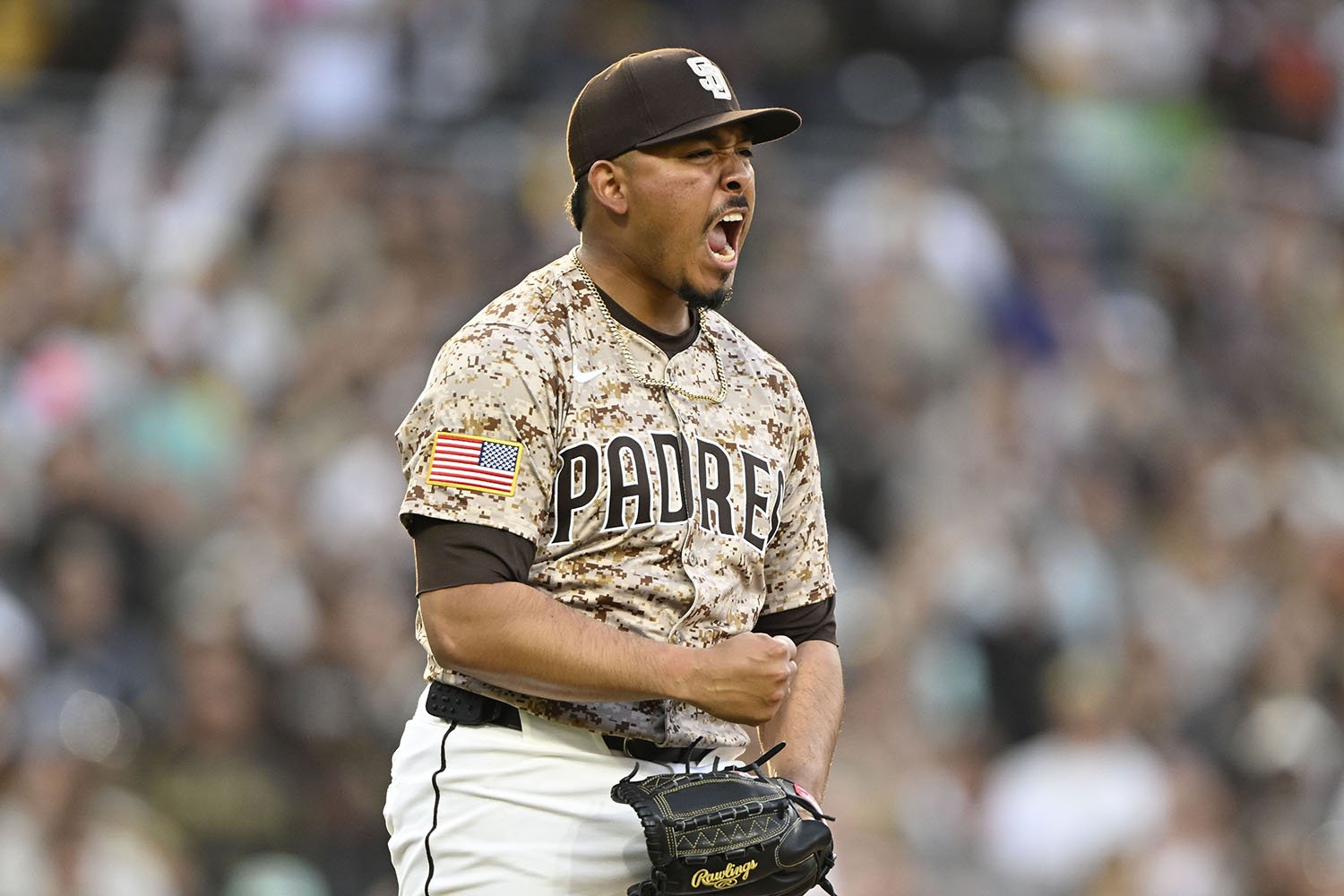 A former prospect of the Chicago Cubs as far back as 2017, Jeremiah Estrada broke out in 2022 courtesy of a 1.30 ERA across three levels of the minor leagues. That performance earned him a cup of coffee and five big league innings before another dozen appearances in 2023. The latter year didn't favor him nearly as much. His command slipped and the Cubs designated him for assignment by early November. The Padres claimed Estrada off waivers four days after his DFA, and Estrada latched onto a regular relief role last year. He didn't just hold onto a roster spot but thrived across 62 appearances and 61 innings in San Diego. He would go on to post a 37.3% strikeout rate, a 9.1% walk rate, and a 2.07 ERA, emerging as a key part one of the better relief groups in the league. Estrada became something of a sensation courtesy of his "chitter." A hybrid pitch that features a Vulcan grip and characteristics of a splitter and changeup, Estrada began throwing the pitch last year. The Cubs had attempted to get him to throw a splitter, but he was unable to get comfortable throwing it. With the Padres, the chitter was born. Because there's only so many times you can use the word "chitter," we'll refer to the pitch as his splitter moving forward (also because that's how Baseball Savant classifies it). And while Estrada's splitter only accounted for 19.8% of his pitches last year, its 51.8% whiff rate was the best among his pitches by more than nearly 20 percentage points. As Estrada adjusted to throwing the pitch, though, he remained primarily a fastball-slider guy. Clearly, given the numbers above and his increasingly crucial role as the season wore on, that worked for him. This year, however, we've already seen a deviation in his usage from a year ago. The possibility that we'd see the splitter more frequently deployed in conjunction with his fastball and slider always existed. But that hasn't been the case. Instead, Estrada has virtually ditched his slider in favor of the splitter as his no. 2 pitch: The rise for the splitter hasn't been tremendous on its own. The pitch is up to 22.6% usage, but when you combine it with the steep drop in his throwing of the slider, his aim starts to become fairly clear. The slider is being thrown just 6.5% of the time this year (with a notable 100% percent whiff rate in those rare instances). While the slider was an effective tool for Estrada, it also wasn't an out pitch in the way that we might expect for a two-pitch reliever. He generated a 52.9% groundball rate with it, but there was no discernible difference between the slider and his other offerings in terms of average exit velocity, chase rate, or movement. It just wasn't doing the things you'd really expect a slider to do in terms of outcomes. Given how much more effective the splitter was than the slider last season, the shift in usage is logical. Adding to the logic is the fact that he was able to hold opposing hitters to the lowest hard-hit rate (25.0%) among his three primary offerings with that pitch, while generating the highest whiff rate. But with the flip from slider to splitter, an interesting trend has started to emerge. For one, Estrada hasn't generated a single chase with the split. He hasn't garnered one groundball (with the splitter or any other pitch type). There also isn't any hard contact to speak of against his non-fastball pitches. A quick peek at the zone profile tells us what we need to know, though: It's too early to know whether this is intentional, but through his first handful of appearances, Estrada is working up in the zone more often. He worked all four corners last year, especially when the slider was involved. Now, it's almost as if he's taking on a plan of attack not unlike Shōta Imanaga in Chicago. It can be effective when properly executed. And it certainly looks as if Estrada's up to the challenge thus far. With the fastball, he's been able to generate popups exactly half the time; with the splitter he's getting fly ball contact at a full 100% clip. Hard contact hardly matters (and barely exists) on a popup and the soft contact induced by the splitter minimizes the danger pretty drastically. Estrada has also been inside the zone on 50% of each pitch type. Hitters are going to feel compelled to swing when you're working inside the zone that frequently, and that could be to his benefit as long as the precision remains. We're not foolish enough to think that the command will always be precise enough to make this a surefire strategy. It's also much too early in the season to know if this is even intentional; Estrada has only made five appearances as of this writing. But a .080 expected batting average with zero barrels kind of speaks for itelf. The usage and its connection to the early outcomes, though, are fascinating. Not fascinating enough for an adjustment, mind you. Once the weather warms, fastball-splitter becomes a more dangerous combination in the upper parts of the zone. Whether the new pitch mix is permanent, whether the slider gets more involved again, and whether we Estrada go back to working the edges and outside of the zone more frequently — these will all be important considerations as the season progresses.
 -
Ahead of the 2024 season, Jeremiah Estrada was a two-pitch reliever with barely more than 15 big league innings to his name. A year later, he's still a two-pitch reliever. But the pitches — and the volume — have changed. A former prospect of the Chicago Cubs as far back as 2017, Jeremiah Estrada broke out in 2022 courtesy of a 1.30 ERA across three levels of the minor leagues. That performance earned him a cup of coffee and five big league innings before another dozen appearances in 2023. The latter year didn't favor him nearly as much. His command slipped and the Cubs designated him for assignment by early November. The Padres claimed Estrada off waivers four days after his DFA, and Estrada latched onto a regular relief role last year. He didn't just hold onto a roster spot but thrived across 62 appearances and 61 innings in San Diego. He would go on to post a 37.3% strikeout rate, a 9.1% walk rate, and a 2.07 ERA, emerging as a key part one of the better relief groups in the league. Estrada became something of a sensation courtesy of his "chitter." A hybrid pitch that features a Vulcan grip and characteristics of a splitter and changeup, Estrada began throwing the pitch last year. The Cubs had attempted to get him to throw a splitter, but he was unable to get comfortable throwing it. With the Padres, the chitter was born. Because there's only so many times you can use the word "chitter," we'll refer to the pitch as his splitter moving forward (also because that's how Baseball Savant classifies it). And while Estrada's splitter only accounted for 19.8% of his pitches last year, its 51.8% whiff rate was the best among his pitches by more than nearly 20 percentage points. As Estrada adjusted to throwing the pitch, though, he remained primarily a fastball-slider guy. Clearly, given the numbers above and his increasingly crucial role as the season wore on, that worked for him. This year, however, we've already seen a deviation in his usage from a year ago. The possibility that we'd see the splitter more frequently deployed in conjunction with his fastball and slider always existed. But that hasn't been the case. Instead, Estrada has virtually ditched his slider in favor of the splitter as his no. 2 pitch: The rise for the splitter hasn't been tremendous on its own. The pitch is up to 22.6% usage, but when you combine it with the steep drop in his throwing of the slider, his aim starts to become fairly clear. The slider is being thrown just 6.5% of the time this year (with a notable 100% percent whiff rate in those rare instances). While the slider was an effective tool for Estrada, it also wasn't an out pitch in the way that we might expect for a two-pitch reliever. He generated a 52.9% groundball rate with it, but there was no discernible difference between the slider and his other offerings in terms of average exit velocity, chase rate, or movement. It just wasn't doing the things you'd really expect a slider to do in terms of outcomes. Given how much more effective the splitter was than the slider last season, the shift in usage is logical. Adding to the logic is the fact that he was able to hold opposing hitters to the lowest hard-hit rate (25.0%) among his three primary offerings with that pitch, while generating the highest whiff rate. But with the flip from slider to splitter, an interesting trend has started to emerge. For one, Estrada hasn't generated a single chase with the split. He hasn't garnered one groundball (with the splitter or any other pitch type). There also isn't any hard contact to speak of against his non-fastball pitches. A quick peek at the zone profile tells us what we need to know, though: It's too early to know whether this is intentional, but through his first handful of appearances, Estrada is working up in the zone more often. He worked all four corners last year, especially when the slider was involved. Now, it's almost as if he's taking on a plan of attack not unlike Shōta Imanaga in Chicago. It can be effective when properly executed. And it certainly looks as if Estrada's up to the challenge thus far. With the fastball, he's been able to generate popups exactly half the time; with the splitter he's getting fly ball contact at a full 100% clip. Hard contact hardly matters (and barely exists) on a popup and the soft contact induced by the splitter minimizes the danger pretty drastically. Estrada has also been inside the zone on 50% of each pitch type. Hitters are going to feel compelled to swing when you're working inside the zone that frequently, and that could be to his benefit as long as the precision remains. We're not foolish enough to think that the command will always be precise enough to make this a surefire strategy. It's also much too early in the season to know if this is even intentional; Estrada has only made five appearances as of this writing. But a .080 expected batting average with zero barrels kind of speaks for itelf. The usage and its connection to the early outcomes, though, are fascinating. Not fascinating enough for an adjustment, mind you. Once the weather warms, fastball-splitter becomes a more dangerous combination in the upper parts of the zone. Whether the new pitch mix is permanent, whether the slider gets more involved again, and whether we Estrada go back to working the edges and outside of the zone more frequently — these will all be important considerations as the season progresses. View full article
-
 Despite spending barely a calendar year with the Padres to this point, fans quickly became accustomed to what makes Luis Arráez such a fascinating quantity among big league hitters. He really only does one thing well. The three-time batting champion doesn't hit the ball hard, doesn't hit for power, doesn't walk, doesn't run the bases well, and doesn't play defense. But what does he do? If you're Moneyball-pilled, your instinctive response to that question is "he gets on base." However, even that would be a stretch. Yes, he has a .347 OBP for his career. But this is also a guy who walked at a clip of only 3.6% in 2024 (and is only at 2.6% thus far in 2025). No, our response here is: he puts the bat on the baseball. Since arriving at the top level back in 2019, no player has recorded a higher contact rate than Arráez, who sits at 93.1%. For context, Steven Kwan sits second (91.5%) and former big leaguer David Fletcher ranks third (90.7%). Both have roughly 1,000 fewer plate appearances than Arráez, however. His overall contact rate includes a rate of 95.1% on pitches inside of the strike zone and 88.3% percent on ones outside of it. The latter number is almost 10 percentage points higher than the second-ranked Fletcher. There isn't anything particularly interesting or notable about the approach, either. He sits in roughly the middle of the pack in swing rates of all varieties. He's just exceptional at putting the bat on the baseball. That skill comes despite the following percentile distribution: Poor bat speed. Low barrel rates. Chases pitches. Rarely walks. But doesn't miss and puts the ball on exactly the part of the bat he needs. There are so many things that have pointed to why this skill set shouldn't work. And yet, it has. Every single day since May 18, 2019. Arráez flew out in the first plate appearance of his career. His average at that point was .000. He then doubled and finished the game with a .500 average. It remained the same after a 1-for-2 performance in career game no. 2. For the remainder of the season, the average fluctuated between .332 at the lowest and over .400 at the highest. He finished at a .334 BA across 366 PA for the season. The lowest average Arráez has posted in a season was .294 back in 2021. By then, though, he'd already turned in marks of .334 and .321. so a one-year dip under the .300 threshold wasn't going to touch him. Especially given that he went .316, .354, .314 in the three subsequent seasons. There really isn't anybody doing anything remotely like that these days. As it turns out, Stathead sort of...breaks when you're looking for streaks as long as this. A search into somewhat recent history would spit out Tony Gwynn and Larry Walker as names with comparable streaks hitting over the .300 mark. Names of an even more recent vintage would give you guys like Christian Yelich, Trea Turner, and Joey Votto. As far as the latter names go, each had enough years finishing under the .300 benchmark to pin them down into the .295 range as a career total. Arráez hasn't pushed such a streak far enough to put him at that point for even a single day. It's a pretty wild accomplishment. While batting average obviously doesn't carry the same weight it once did, there's something to be said about the ability to remain over a certain mark for the entirety of one's career. Especially while not doing anything particularly well. And while Arráez isn't off to the best of starts (90 wRC+ to date), he's coming off six hits in two games and has yet to strike out this season. So something is still working. Just as it has each day since May 18, 2019.
 -
On May 18, 2019, current San Diego Padres first baseman Luis Arráez made his big league debut with the Minnesota Twins. He hasn't had a career average under .300 since. Despite spending barely a calendar year with the Padres to this point, fans quickly became accustomed to what makes Luis Arráez such a fascinating quantity among big league hitters. He really only does one thing well. The three-time batting champion doesn't hit the ball hard, doesn't hit for power, doesn't walk, doesn't run the bases well, and doesn't play defense. But what does he do? If you're Moneyball-pilled, your instinctive response to that question is "he gets on base." However, even that would be a stretch. Yes, he has a .347 OBP for his career. But this is also a guy who walked at a clip of only 3.6% in 2024 (and is only at 2.6% thus far in 2025). No, our response here is: he puts the bat on the baseball. Since arriving at the top level back in 2019, no player has recorded a higher contact rate than Arráez, who sits at 93.1%. For context, Steven Kwan sits second (91.5%) and former big leaguer David Fletcher ranks third (90.7%). Both have roughly 1,000 fewer plate appearances than Arráez, however. His overall contact rate includes a rate of 95.1% on pitches inside of the strike zone and 88.3% percent on ones outside of it. The latter number is almost 10 percentage points higher than the second-ranked Fletcher. There isn't anything particularly interesting or notable about the approach, either. He sits in roughly the middle of the pack in swing rates of all varieties. He's just exceptional at putting the bat on the baseball. That skill comes despite the following percentile distribution: Poor bat speed. Low barrel rates. Chases pitches. Rarely walks. But doesn't miss and puts the ball on exactly the part of the bat he needs. There are so many things that have pointed to why this skill set shouldn't work. And yet, it has. Every single day since May 18, 2019. Arráez flew out in the first plate appearance of his career. His average at that point was .000. He then doubled and finished the game with a .500 average. It remained the same after a 1-for-2 performance in career game no. 2. For the remainder of the season, the average fluctuated between .332 at the lowest and over .400 at the highest. He finished at a .334 BA across 366 PA for the season. The lowest average Arráez has posted in a season was .294 back in 2021. By then, though, he'd already turned in marks of .334 and .321. so a one-year dip under the .300 threshold wasn't going to touch him. Especially given that he went .316, .354, .314 in the three subsequent seasons. There really isn't anybody doing anything remotely like that these days. As it turns out, Stathead sort of...breaks when you're looking for streaks as long as this. A search into somewhat recent history would spit out Tony Gwynn and Larry Walker as names with comparable streaks hitting over the .300 mark. Names of an even more recent vintage would give you guys like Christian Yelich, Trea Turner, and Joey Votto. As far as the latter names go, each had enough years finishing under the .300 benchmark to pin them down into the .295 range as a career total. Arráez hasn't pushed such a streak far enough to put him at that point for even a single day. It's a pretty wild accomplishment. While batting average obviously doesn't carry the same weight it once did, there's something to be said about the ability to remain over a certain mark for the entirety of one's career. Especially while not doing anything particularly well. And while Arráez isn't off to the best of starts (90 wRC+ to date), he's coming off six hits in two games and has yet to strike out this season. So something is still working. Just as it has each day since May 18, 2019. View full article
-
 I don't know if you know this, but baseball players are inherently followers. What works for one guy, might not work for another. But you can be darn sure they're going to try that thing that works for that other guy just in case. Which is why it's no surprise that seemingly overnight, the torpedo bat has taken over Major League Baseball. The new-look bat, marked by its bowling pin-like shape, shifts the distribution of the wood within the bat in order to generate more quality contact a little lower down the barrel. It's an area more frequently used by hitters, with those utilizing it at this point hoping to get some stronger gains out of the type of contact they're making. It's been likened to a golfer getting a club fitting, with the new shape not necessarily likely to work for everyone. But given what the Yankees did to the Milwaukee Brewers' staff over the weekend (to say nothing of Elly De La Cruz's two-homer night using it on Monday), the attention is there. At this point, we know it's not entirely new. Former New York Yankees assistant hitting coordinator (and current field coordinator of the Miami Marlins) Aaron Leanhardt is the bulk of the brains behind the new stick, which has designs going back a couple of years. Teams, including the Yankees, Chicago Cubs, and Tampa Bay Rays were doing the research on the impact of the bat before this season. So it makes sense that of the 16 hitters reported to be using the torpedo bat at this time, half of them come from those three teams (and five of them from the Yankees). Given that the realm of sports discussion is, in itself, driven by following the ideas of others, we're likely to continue to hear about the bat's presence quite regularly in the coming months. Especially if a polarizing team like the Yankees continues to slug home runs against pitching staffs held together by duct tape and paper clips. But should the torpedo make its way to San Diego in the near future, the Padres appear to feature the perfect candidate for such a tool. Jason Heyward has long been a frustrating offensive presence to watch. As much as he brings to a team in the defense and intangibles departments, the hitting hasn't been there in a legitimate decade. With the exception of the shortened 2020 and 2023, when he parlayed a minor league deal into a platoon role with the Dodgers, the last above-average season he posted (by wRC+) came with St. Louis back in 2015 (121). There have been various adjustments and retools on the mechanical side, but the swing ultimately produces the same results: plenty of contact, but a lot of it soft and on the ground. Since 2016, Heyward's 81.5% contact rate ranks 120th out of 529 qualified position players. His 49.6% groundball rate ranks 122nd. One of those things is a problem. One of them is not. I'll let you sort which is which. Despite the contact volume, Heyward has not been remotely adept at creating quality contact. There have been some years where he finishes in a reasonable percentile in the hard-hit game (including a 60th percentile finish in 2021 courtesy of a 42.4% hard-hit rate), but barrels have been a particularly difficult puzzle for Heyward to solve. He finished 47th percentile in barrel rate (8.1%) in 2023, but has never been above the 29th in any of the other years throughout the decade. The lack of quality contact comes despite impressive bat speed figures over the course of the last two seasons: Heyward's average bat speed checks in around what is considered a fast swing. One imagines that you'd experience at least some degree of higher quality of contact when you're getting the bat through the zone at the pace at which Heyward clearly is. At the same time, his ideal point of contact leaves something to be desired: The point of contact being almost squarely above the plate is suboptimal. The swing speed helps him to compensate for seemingly late reactions and leads to heavy pull rates (a 50.7% pull rate in the last four seasons alone). Even with his positioning in the back-middle of the box, he's late to the ball and unable to find the barrel with one of the longer average swings among any hitter (he's averaged 8.3 ft against Giancarlo Stanton's league-leading 8.5). The positioning and the bat speed should be ideal. Instead, he's just an apparently late swinger and the barrel almost never has a chance to find the baseball. Which is why he makes so much sense as a torpedo bat candidate. It's not a thing that's going to work for everyone. But it's been especially effective for those who find themselves contacting the ball a little closer to the handle. As Heyward has aged, this has become an increasingly obvious issue within his game. Given the unique blend of approach and contact ability, this is a tool that should fall directly into his wheelhouse. I don't imagine it'll be too long before the torpedo bat starts spreading throughout the western region. And once it's in the Padres clubhouse, I'd be a bit surprised if he wasn't among the first to take a swing.
 -
Heyward's struggles at the plate and his batted ball profile seem like they'd make him a good fit for the new fad. I don't know if you know this, but baseball players are inherently followers. What works for one guy, might not work for another. But you can be darn sure they're going to try that thing that works for that other guy just in case. Which is why it's no surprise that seemingly overnight, the torpedo bat has taken over Major League Baseball. The new-look bat, marked by its bowling pin-like shape, shifts the distribution of the wood within the bat in order to generate more quality contact a little lower down the barrel. It's an area more frequently used by hitters, with those utilizing it at this point hoping to get some stronger gains out of the type of contact they're making. It's been likened to a golfer getting a club fitting, with the new shape not necessarily likely to work for everyone. But given what the Yankees did to the Milwaukee Brewers' staff over the weekend (to say nothing of Elly De La Cruz's two-homer night using it on Monday), the attention is there. At this point, we know it's not entirely new. Former New York Yankees assistant hitting coordinator (and current field coordinator of the Miami Marlins) Aaron Leanhardt is the bulk of the brains behind the new stick, which has designs going back a couple of years. Teams, including the Yankees, Chicago Cubs, and Tampa Bay Rays were doing the research on the impact of the bat before this season. So it makes sense that of the 16 hitters reported to be using the torpedo bat at this time, half of them come from those three teams (and five of them from the Yankees). Given that the realm of sports discussion is, in itself, driven by following the ideas of others, we're likely to continue to hear about the bat's presence quite regularly in the coming months. Especially if a polarizing team like the Yankees continues to slug home runs against pitching staffs held together by duct tape and paper clips. But should the torpedo make its way to San Diego in the near future, the Padres appear to feature the perfect candidate for such a tool. Jason Heyward has long been a frustrating offensive presence to watch. As much as he brings to a team in the defense and intangibles departments, the hitting hasn't been there in a legitimate decade. With the exception of the shortened 2020 and 2023, when he parlayed a minor league deal into a platoon role with the Dodgers, the last above-average season he posted (by wRC+) came with St. Louis back in 2015 (121). There have been various adjustments and retools on the mechanical side, but the swing ultimately produces the same results: plenty of contact, but a lot of it soft and on the ground. Since 2016, Heyward's 81.5% contact rate ranks 120th out of 529 qualified position players. His 49.6% groundball rate ranks 122nd. One of those things is a problem. One of them is not. I'll let you sort which is which. Despite the contact volume, Heyward has not been remotely adept at creating quality contact. There have been some years where he finishes in a reasonable percentile in the hard-hit game (including a 60th percentile finish in 2021 courtesy of a 42.4% hard-hit rate), but barrels have been a particularly difficult puzzle for Heyward to solve. He finished 47th percentile in barrel rate (8.1%) in 2023, but has never been above the 29th in any of the other years throughout the decade. The lack of quality contact comes despite impressive bat speed figures over the course of the last two seasons: Heyward's average bat speed checks in around what is considered a fast swing. One imagines that you'd experience at least some degree of higher quality of contact when you're getting the bat through the zone at the pace at which Heyward clearly is. At the same time, his ideal point of contact leaves something to be desired: The point of contact being almost squarely above the plate is suboptimal. The swing speed helps him to compensate for seemingly late reactions and leads to heavy pull rates (a 50.7% pull rate in the last four seasons alone). Even with his positioning in the back-middle of the box, he's late to the ball and unable to find the barrel with one of the longer average swings among any hitter (he's averaged 8.3 ft against Giancarlo Stanton's league-leading 8.5). The positioning and the bat speed should be ideal. Instead, he's just an apparently late swinger and the barrel almost never has a chance to find the baseball. Which is why he makes so much sense as a torpedo bat candidate. It's not a thing that's going to work for everyone. But it's been especially effective for those who find themselves contacting the ball a little closer to the handle. As Heyward has aged, this has become an increasingly obvious issue within his game. Given the unique blend of approach and contact ability, this is a tool that should fall directly into his wheelhouse. I don't imagine it'll be too long before the torpedo bat starts spreading throughout the western region. And once it's in the Padres clubhouse, I'd be a bit surprised if he wasn't among the first to take a swing. View full article
-
Jackson Merrill Extension Locks in Certainty for San Diego Padres
Randy Holt posted an article in Padres
 Not that Jackson Merrill's future was some looming question for the San Diego Padres, but with arbitration eligibility coming after 2026, the team had incentive to try to lock in some cost certainty with their emerging superstar. They have it now, with Merrill and the Padres agreeing to a nine-year contract extension that includes an option for a 10th season in 2035. Efforts to sign Merrill to a long-term pact were not a secret. The Padres had reportedly approached him before his debut about such a deal, similar to what the Milwaukee Brewers did when they signed Jackson Chourio for eight years ahead of his own rookie campaign in 2024. For his own money, Merrill was satisfied waiting but did note that he wanted to remain in San Diego throughout his career. Now, an organization that lacks a certain degree of longer-term certainty locks in a whole lot more of it. There are long-term contracts on the books throughout the roster. Jake Cronenworth is on the books through 2030. Xander Bogaerts and Manny Machado are each signed through 2033. Fernando Tatis Jr. is signed through 2034. On the bump, they've got 38-year-old Yu Darvish for three more seasons and recovering Joe Musgrove for two. But even with a handful of deals set to carry well into the future, it's not an entirely stable situation. It remains to be seen whether Darvish will see that deal through to the end. Cronenworth has been floated in trade rumors. There are questions about Machado's long-term durability and the impact of his swing on his body. And it remains to be seen whether previous payroll constraints will continue to put the clamps on additional spending in the way that we've seen this organization do in years prior. But between Merrill and Tatis, the Padres have two of their younger talents with more upside than anyone on the roster locked down for the foreseeable future. In Merrill's case, they get that cost certainty more than a year ahead of arbitration. Even with various escalators in the contract, the team was able to get out ahead of what would be substantial dollars in the arbitration process. On Merrill's end, he assures himself of financial security for the next decade. The interest in this particular deal was fairly obvious for each side. Merrill is off to a fantastic start this year, with a 216 wRC+ through the team's first seven games. He hit his first home run on Tuesday night and celebrated his newfound security by launching his second on Wednesday. And he's demonstrating a more refined approach at the plate that could allow his game to reach new heights. The Padres are certainly getting a good deal. Payroll constraints have been present over the last two years, but the presence of Merrill and Tatis should help attract more talent if and when they look to add further. There's still a willingness to invest in the team even with the various background contexts above even the front office's paygrade. That should continue to bode well as the team aims for their first title in franchise history.
