


Randy Holt
-
Posts
486 -
Joined
-
Last visited
-
Days Won
6
Content Type
Profiles
San Diego Padres Videos
2026 San Diego Padres Top Prospects Ranking
San Diego Padres Free Agent & Trade Rumors, Notes, & Tidbits
Guides & Resources
2025 San Diego Padres Draft Pick Tracker
News
2026 San Diego Padres Draft Tracker: Picks & Bonuses
Forums
Blogs
Events
Store
Downloads
Gallery
Everything posted by Randy Holt
-
Manny Machado Has Quietly Been A Top Hitter Since The Start Of May
Randy Holt posted an article in Padres
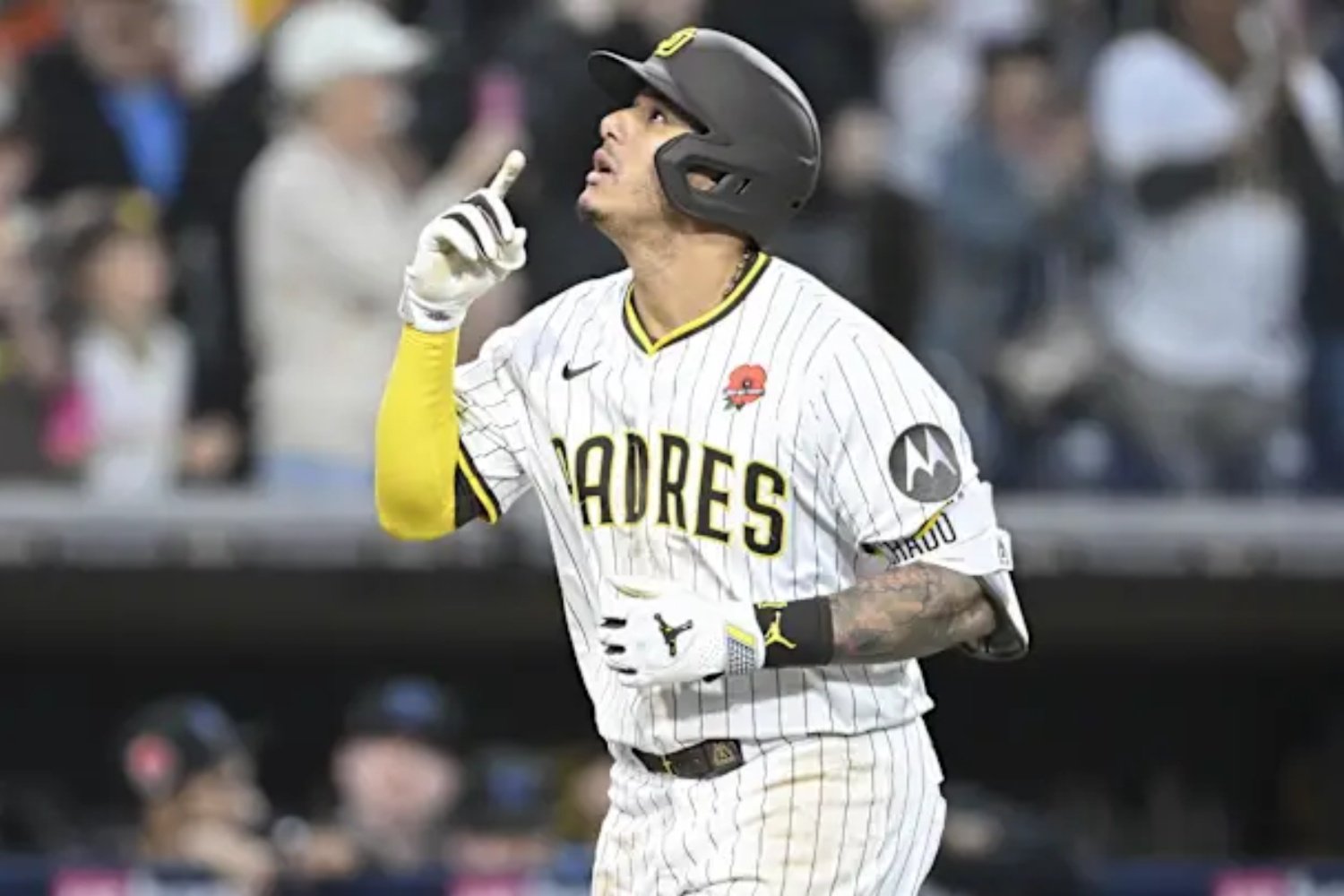 On Tuesday night in San Francisco, the San Diego Padres looked destined for yet another shutout loss. An offense that has wavered in producing runs consistently in recent weeks was down 2-0 in the Bay with two outs on the board. Luckily for them, Manny Machado was up. And Manny Machado knew the moment. With the bases loaded, Machado took a Camilo Doval breaking pitch into left field for a game-tying single. The Padres would go on to win in the 10th, courtesy of a Jake Cronenworth single. But it was Machado and his four hits that were the star, none bigger than the last one that came against the San Francisco Giants closer: Perhaps the most impressive element isn't the clutch nature of it, but where Machado was able to make the contact to drive the ball into the outfield. Not only was it at his shins, but the breaking pitch checks in as Doval's best overall pitch (121 Stuff+). Here's the visual: Those are contact skills of an elite nature, both in adjusting to the pitch itself and creating something of quality from it. Not that any of this should be a surprise, given what Machado has given the Padres since the start of May. Machado's start to the season was varying shades of fine. He had a 114 wRC+ with a .279 average and .336 on-base percentage. The power wasn't completely there (.144 ISO), but he was making plenty of quality contact. Nothing about it was bad, of course. But when you're measuring against the start of Fernando Tatis Jr or Jackson Merrill — to say nothing of Machado's own career at large — it didn't appear as impactful as we're accustomed to seeing from Machado. Then, the calendar flipped over to May. Since May 1, Machado's 178 wRC+ ranks 11th out of 176 qualifying hitters. His .352 average ranks sixth in that group, while his .423 OBP sits 12th. Perhaps most importantly, given some of the Padres' offensive struggles, is that the power has come along with it. His ISO since May 1st is at .204, with five of his seven home runs coming outside of the season's first month. What's encouraging is that there isn't a big difference in underlying trends for Machado since May 1 against what those trends looked like in March & April. He's actually made a little less contact, but he's also been slightly more choose-y in where he's deploying his swings (read: the swing rate is down). Whether this is intentional is something we'll likely need a larger sample with which to work, but the result is undeniable given that it's leading to more elevation. Machado was putting the ball on the ground at a 43.5 percent clip in March & April. Despite quality contact, that's not what you want when you're not the fleetest of foot at this stage of your career. Since the start of May, though, that rate has dropped to 36.0 percent, which is the lowest of the Padres' group of qualifying hitters. His fly ball rate has, in turn, risen to slightly over 40 percent. When you combine that with continued contact quality (12.4 Barrel%), you're going to get a more impactful version of Manny Machado. That's the version the Padres need. Machado's bat speed has declined in each of the last three years, but his barrel rate is going up. You can deal with a little bit whiff in his game if you're getting the blend of premium contact off the barrel and some elevation. And that's why you have Manny Machado on your roster — he's the player to lead through the tough stretches with his own offensive performance. Injuries slowed this team from the jump. Now, it's roster-wide underperformance. But, after a relatively quiet start to the year, Machado is leading them through both.
 -
On Tuesday night in San Francisco, the San Diego Padres looked destined for yet another shutout loss. An offense that has wavered in producing runs consistently in recent weeks was down 2-0 in the Bay with two outs on the board. Luckily for them, Manny Machado was up. And Manny Machado knew the moment. With the bases loaded, Machado took a Camilo Doval breaking pitch into left field for a game-tying single. The Padres would go on to win in the 10th, courtesy of a Jake Cronenworth single. But it was Machado and his four hits that were the star, none bigger than the last one that came against the San Francisco Giants closer: Perhaps the most impressive element isn't the clutch nature of it, but where Machado was able to make the contact to drive the ball into the outfield. Not only was it at his shins, but the breaking pitch checks in as Doval's best overall pitch (121 Stuff+). Here's the visual: Those are contact skills of an elite nature, both in adjusting to the pitch itself and creating something of quality from it. Not that any of this should be a surprise, given what Machado has given the Padres since the start of May. Machado's start to the season was varying shades of fine. He had a 114 wRC+ with a .279 average and .336 on-base percentage. The power wasn't completely there (.144 ISO), but he was making plenty of quality contact. Nothing about it was bad, of course. But when you're measuring against the start of Fernando Tatis Jr or Jackson Merrill — to say nothing of Machado's own career at large — it didn't appear as impactful as we're accustomed to seeing from Machado. Then, the calendar flipped over to May. Since May 1, Machado's 178 wRC+ ranks 11th out of 176 qualifying hitters. His .352 average ranks sixth in that group, while his .423 OBP sits 12th. Perhaps most importantly, given some of the Padres' offensive struggles, is that the power has come along with it. His ISO since May 1st is at .204, with five of his seven home runs coming outside of the season's first month. What's encouraging is that there isn't a big difference in underlying trends for Machado since May 1 against what those trends looked like in March & April. He's actually made a little less contact, but he's also been slightly more choose-y in where he's deploying his swings (read: the swing rate is down). Whether this is intentional is something we'll likely need a larger sample with which to work, but the result is undeniable given that it's leading to more elevation. Machado was putting the ball on the ground at a 43.5 percent clip in March & April. Despite quality contact, that's not what you want when you're not the fleetest of foot at this stage of your career. Since the start of May, though, that rate has dropped to 36.0 percent, which is the lowest of the Padres' group of qualifying hitters. His fly ball rate has, in turn, risen to slightly over 40 percent. When you combine that with continued contact quality (12.4 Barrel%), you're going to get a more impactful version of Manny Machado. That's the version the Padres need. Machado's bat speed has declined in each of the last three years, but his barrel rate is going up. You can deal with a little bit whiff in his game if you're getting the blend of premium contact off the barrel and some elevation. And that's why you have Manny Machado on your roster — he's the player to lead through the tough stretches with his own offensive performance. Injuries slowed this team from the jump. Now, it's roster-wide underperformance. But, after a relatively quiet start to the year, Machado is leading them through both. View full article
-
Jarren Duran Is An Imperfect Player That Could Be Perfect Fit For Padres
Randy Holt posted an article in Padres
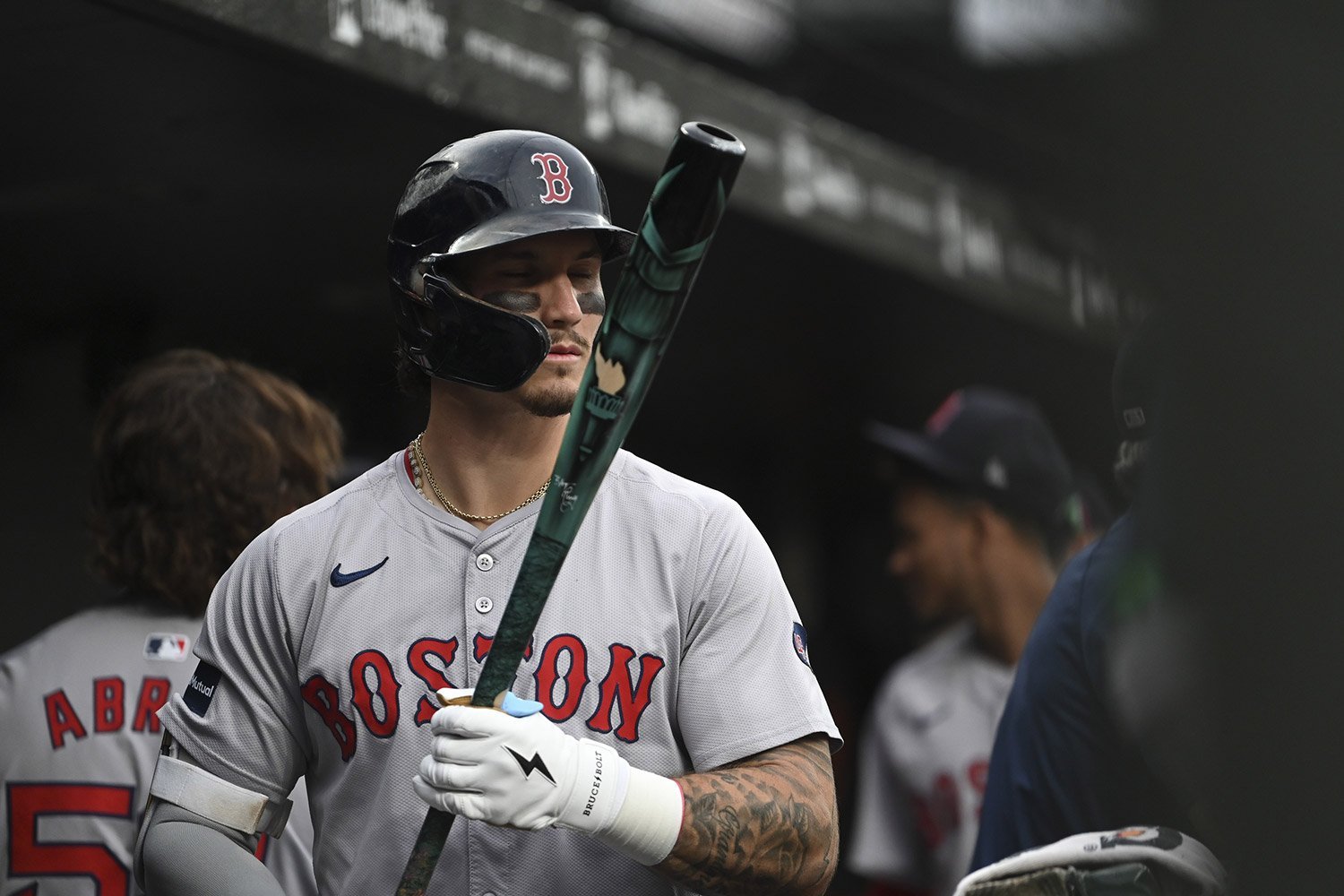 The San Diego Padres need a left fielder. It's one of the loudest needs of any contending team as the summer creeps ever closer and trade possibilities start to materialize at a higher volume. With Gavin Sheets' crash into the left field wall on Sunday, it's one rapidly becoming more amplified. So, it's no surprise that we've already heard their name in connection with one prominent name: Boston Red Sox left fielder Jarren Duran. On Monday morning, The Athletic's Dennis Lin reported that the Padres were interested in acquiring Duran. It's a logical connection to make both ways. The Red Sox have a crowded lineup — including all-world defender Ceddanne Rafaela and an emerging Wilyer Abreu — that still needs to make room for top prospect Roman Anthony, who's banging on the door of the big leagues. That could, in turn, make Duran expendable given the variance in outcomes he's demonstrated over the past handful of seasons. Given the need, though, it makes even more sense on the Padres' end of things. Their top two prospects reside on the infield (Leo De Vries) and behind the plate (Ethan Salas), so they're without a clear & viable longer-term option in left. Duran is under team control through 2028. With the contract angle and Duran's past performance, however, it's also one that would present certain challenges for such a move from AJ Preller. That's primarily due to the fact that the organization's farm system has been visibly depleted with trades made over the last two years. While there are a number of intriguing names at the lower levels of the minor leagues — to say nothing of the fact that we should never underestimate Preller's willingness to push a deal through — it remains to be seen whether the team would have the resources to acquire a player such as Duran, especially when Lin's report also identifies starting pitching as a desired add prior to the trade deadline. Regardless of the context, though, there isn't any doubt that Jarren Duran is exactly the type of player that could suit the San Diego lineup. His 2024 season was his best, as he finished toward the top of the fWAR leaderboard (6.7) courtesy of a .285 average, a .342 on-base percentage, and a career-best .207 isolated power. His wRC+ checked in at 129 while he hit 21 homers and accrued 34 stolen bases. His Fielding Run Value of 11 was the fourth-best mark among qualifying outfielders, as well. That's not to say that Duran has been the same player in '25. He hasn't been as much of a fixture on the basepaths this season, and his power has fallen off, but the tools he does provide are exactly what the Padres could be searching for in a potential acquisition. Ideally, you'd like that power to remain intact. But the speed (13 steals) and left field defense (2 FRV for his career) would be assets. The former would help to lengthen the lineup, as well. Sure, the team has Luis Arráez as an effective-enough table setter next to Fernando Tatis Jr. (regardless of their order). But, Arráez doesn't possess the speed or baserunning acumen of Duran. Pairing the two atop the lineup could push the likes of Tatis Jr, Manny Machado, and Jackson Merrill down in order to create more run scoring opportunities. Factor in the defensive side, and you've got a nice player with which to work for the next few seasons. The financial cost of Duran shouldn't become too burdensome. It's a matter of the prospect acquisition. Preller might not be fighting for his job in the way that was perceived a year ago, but no one wants to leave the prospect cupboard too bare when the roster starts to age. That would likely be the primary hold up in any prospective trade talks. Luckily, the Red Sox have an upper-tier farm with some talent ready to break through in the next year or two. As a result, they might be more inclined to take on greener names in the system in order to build up the depth in the lower runs of their organization. Either way, that we're hearing concrete names speaks to the urgency the Padres possess. Duran's an early fit on the ideal side, but he's probably far from the last name we'll hear as a left field possibility.
 -
The San Diego Padres need a left fielder. It's one of the loudest needs of any contending team as the summer creeps ever closer and trade possibilities start to materialize at a higher volume. With Gavin Sheets' crash into the left field wall on Sunday, it's one rapidly becoming more amplified. So, it's no surprise that we've already heard their name in connection with one prominent name: Boston Red Sox left fielder Jarren Duran. On Monday morning, The Athletic's Dennis Lin reported that the Padres were interested in acquiring Duran. It's a logical connection to make both ways. The Red Sox have a crowded lineup — including all-world defender Ceddanne Rafaela and an emerging Wilyer Abreu — that still needs to make room for top prospect Roman Anthony, who's banging on the door of the big leagues. That could, in turn, make Duran expendable given the variance in outcomes he's demonstrated over the past handful of seasons. Given the need, though, it makes even more sense on the Padres' end of things. Their top two prospects reside on the infield (Leo De Vries) and behind the plate (Ethan Salas), so they're without a clear & viable longer-term option in left. Duran is under team control through 2028. With the contract angle and Duran's past performance, however, it's also one that would present certain challenges for such a move from AJ Preller. That's primarily due to the fact that the organization's farm system has been visibly depleted with trades made over the last two years. While there are a number of intriguing names at the lower levels of the minor leagues — to say nothing of the fact that we should never underestimate Preller's willingness to push a deal through — it remains to be seen whether the team would have the resources to acquire a player such as Duran, especially when Lin's report also identifies starting pitching as a desired add prior to the trade deadline. Regardless of the context, though, there isn't any doubt that Jarren Duran is exactly the type of player that could suit the San Diego lineup. His 2024 season was his best, as he finished toward the top of the fWAR leaderboard (6.7) courtesy of a .285 average, a .342 on-base percentage, and a career-best .207 isolated power. His wRC+ checked in at 129 while he hit 21 homers and accrued 34 stolen bases. His Fielding Run Value of 11 was the fourth-best mark among qualifying outfielders, as well. That's not to say that Duran has been the same player in '25. He hasn't been as much of a fixture on the basepaths this season, and his power has fallen off, but the tools he does provide are exactly what the Padres could be searching for in a potential acquisition. Ideally, you'd like that power to remain intact. But the speed (13 steals) and left field defense (2 FRV for his career) would be assets. The former would help to lengthen the lineup, as well. Sure, the team has Luis Arráez as an effective-enough table setter next to Fernando Tatis Jr. (regardless of their order). But, Arráez doesn't possess the speed or baserunning acumen of Duran. Pairing the two atop the lineup could push the likes of Tatis Jr, Manny Machado, and Jackson Merrill down in order to create more run scoring opportunities. Factor in the defensive side, and you've got a nice player with which to work for the next few seasons. The financial cost of Duran shouldn't become too burdensome. It's a matter of the prospect acquisition. Preller might not be fighting for his job in the way that was perceived a year ago, but no one wants to leave the prospect cupboard too bare when the roster starts to age. That would likely be the primary hold up in any prospective trade talks. Luckily, the Red Sox have an upper-tier farm with some talent ready to break through in the next year or two. As a result, they might be more inclined to take on greener names in the system in order to build up the depth in the lower runs of their organization. Either way, that we're hearing concrete names speaks to the urgency the Padres possess. Duran's an early fit on the ideal side, but he's probably far from the last name we'll hear as a left field possibility. View full article
-
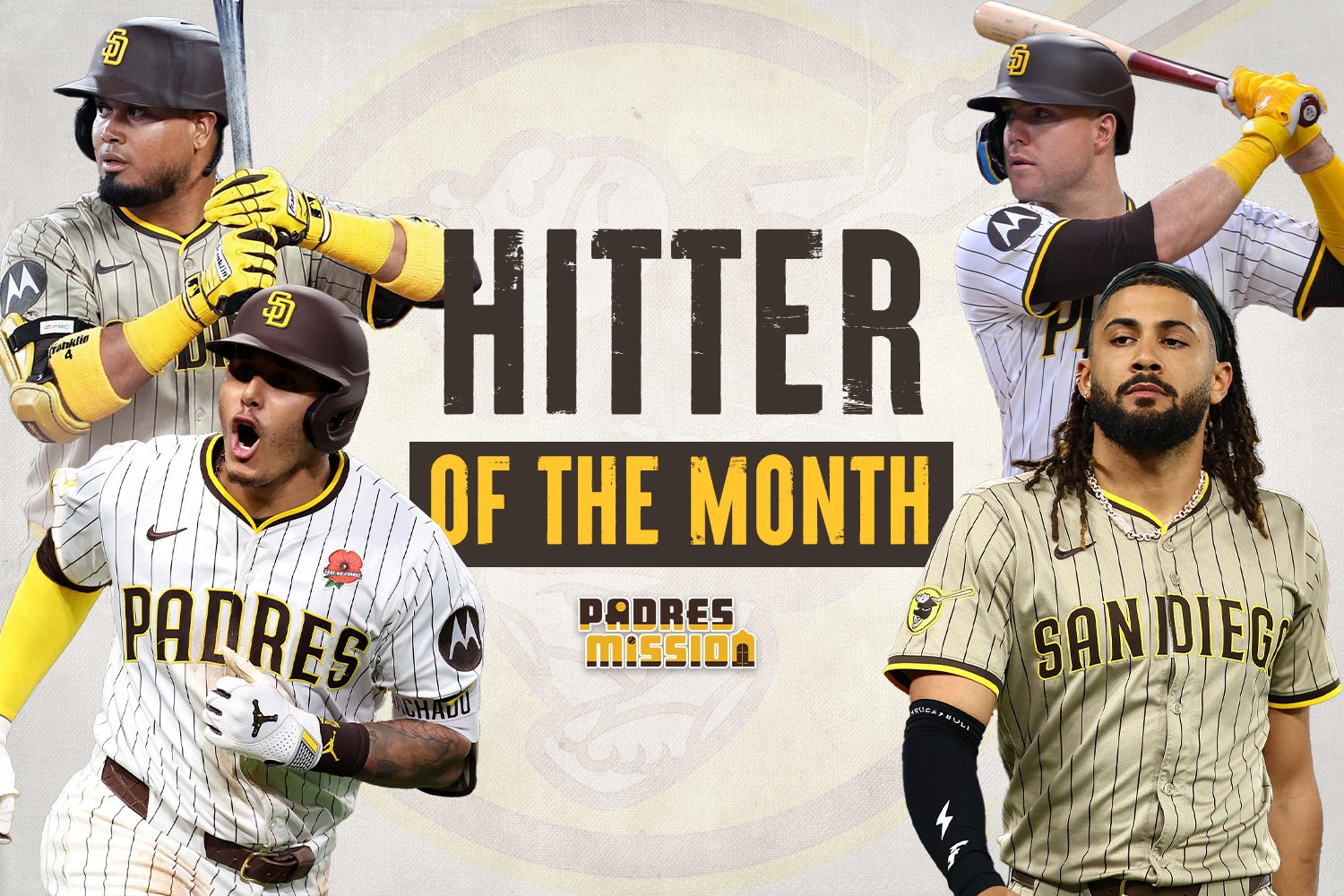 Given that the year is 2025, we are collectively aware that Runs Batted In is no longer considered an accurate indicator of a player's ability. But the San Diego Padres spent a good chunk of May finding it difficult to score runs. In one stretch, in particular, they plated only 12 runs total across eight games, which is why we're going to put a little extra emphasis on the idea of the RBI in identifying this month's top hitter for the club. That doesn't mean that our No. 1 was the only guy hitting. Despite playing their role in that stretch above, each of Jake Cronenworth & Jackson Merrill have been worthy contributors since their returns earlier this month from respective Injured List stints. However, given that only five hitters even approached the league average threshold presented by wRC+, the following were not difficult to identify. #3: Luis Arráez May Stats: .283 AVG, .314 OBP, 2.8% K-rate, 4.7% BB-rate, .101 ISO, 97 wRC+ Given the lack of power present in the profile, it's always difficult for a metric like wRC+ to love a player like Luis Arráez. But after struggling to start the year, he's back to his old ways. Only Manny Machado exceeded Arráez's 28 hits during the month. The craziest thing about his game this year, though, is in the entire absence of strikeouts. We know that Arráez is a pure contact hitter who doesn't strike out. However, a 2.8 percent rate for the month is still a remarkable achievement. Even wilder is that it's actually a higher rate than his full-season percentage (2.4 percent). For context, Jacob Wilson's 5.3 percent strikeout rate is the second-lowest in the league. So while he may not offer much else in the way of power or defense, he can be a driver of run production atop the lineup when he's hitting his way on like this. #2: Manny Machado May Stats: .356 AVG, .437 OBP, 15.5% K-rate, 12.6% BB-rate, .200 ISO, 182 wRC+ On the merit of the above numbers, Manny Machado was the team's best overall hitter in May. He's starting to strike out less and walk more while providing steady impact, given an ISO figure roughly 60 points higher than the one he turned in during March & April. Even if there are hitters in the league providing more isolated power than even that, the overall picture is MVP-level production that the team saw from Machado for the month. They just need it to continue. Machado's power, even on a gap level, has waned in recent years and was off to the slow start we saw in '25. He only drove in a dozen runs this month, with 22 of his 30 hits checking in as singles. It feels silly to knock him for the former, but the impact simply must continue moving forward. Regardless, it was exactly the type of month you wanted to see in projecting the Padres' 2025 outcome. #1: Gavin Sheets May Stats: .297 AVG, .319 OBP, 23.1% K-rate, 3.3% BB-rate, .310 ISO, 155 wRC+ Again, we're leaning heavily on the run production element of the month, given some of the valleys to which the offense has sunk. As such, Sheets is kind of the only option when you consider the impact provided over the month. It seemed like any given night featured a two-run shot off the bat of Sheets to at least give the team a shot in the latter innings. Sheets hit eight for the month, providing the same amount of home run power as Machado, Jackson Merrill, and Jake Cronenworth combined. He knocked in 22 runs, which exceeded second-place Xander Bogaerts by nine. Sheets remains an imperfect player with the lackluster approach at the plate (as depicted in the K/BB split), but there wasn't a hitter who had a more important impact on the team's fortunes in May than a guy who was a non-roster invitee just a few months ago.
 -
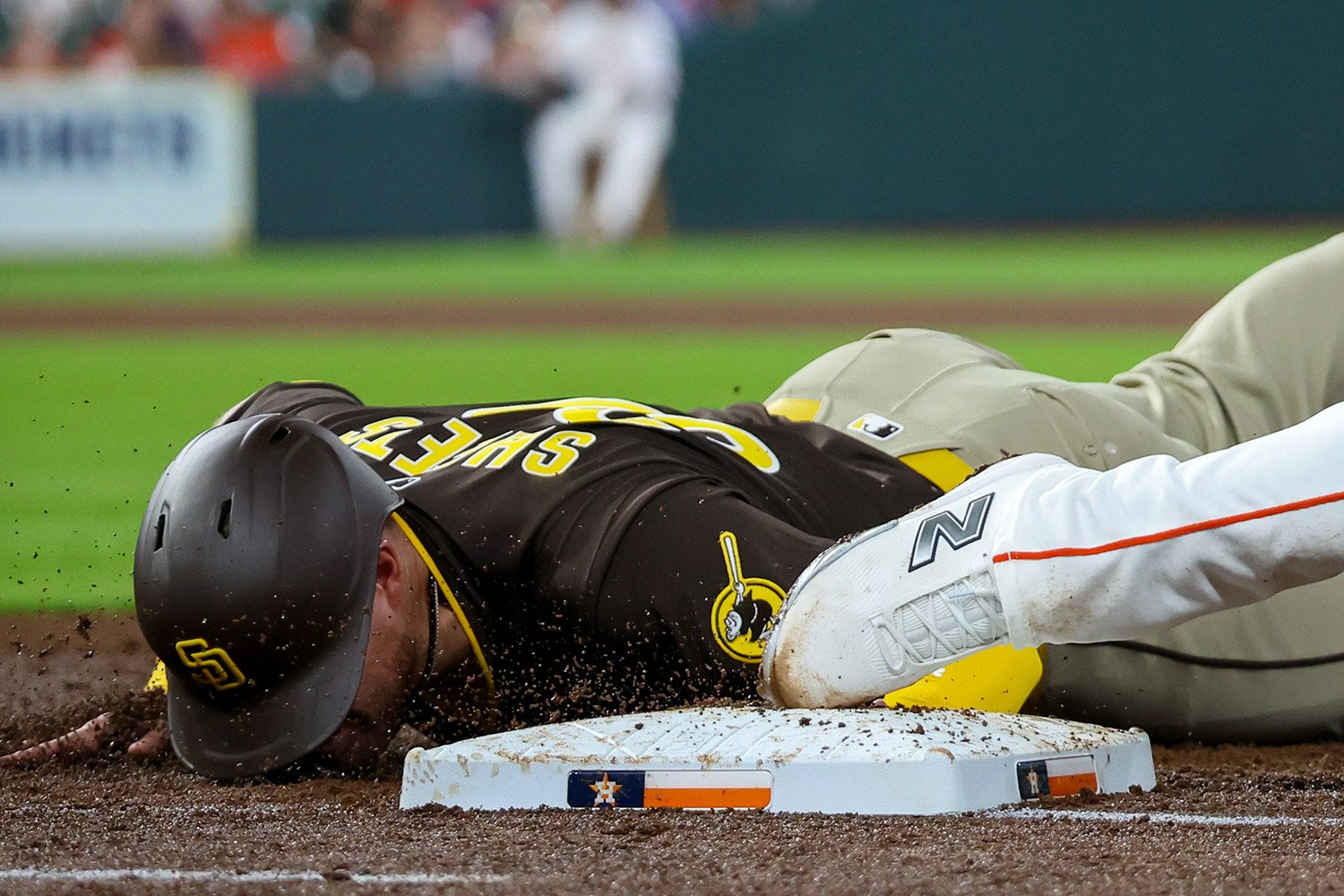
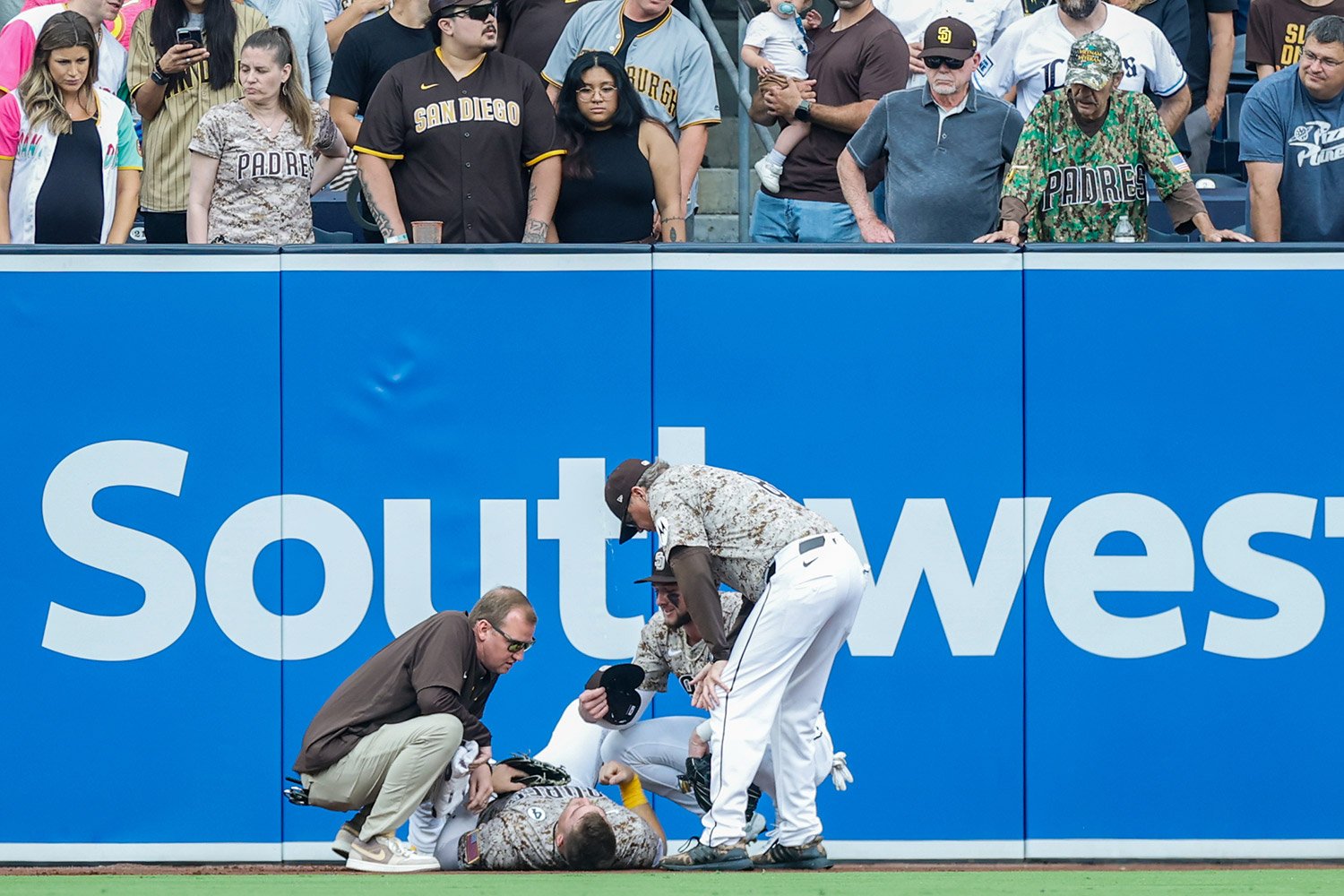 The San Diego Padres are in need of a left fielder who contributes to the team's offense. Gavin Sheets had been one of the team's best hitters through the end of May. He can technically play the outfield. It wasn't a difficult puzzle to solve. But, of course, solving said puzzle reveals the massive caveat that is Gavin Sheets in the outfield. It was a caveat Mike Shildt was willing to confront, though, given the circumstances. Including Sunday's series finale vs. Pittsburgh, Sheets had started five of his last seven games on the outfield grass. He'd hit a pair of home runs over that stretch. By the middle of that game, though, we got a little taste as to why Sheets was always going to be a temporary solution. The Padres went down 4-1 early against a lackluster Pirates squad. Part of that deficit was due to Sheets taking a bad angle on a Spencer Horwitz double in the third inning that became a run. In the fourth, however, is when the real damage came. Adam Frazier hit a leadoff home run that just barely cleared the wall, with Sheets colliding with the wall in pursuit. It was a result that probably doesn't occur for an experienced left fielder. Regardless of the particulars, it appears that Sheets is set to miss some time. On the play, Sheets suffered a head contusion, a sore hip, and a jammed wrist & thumb. He's also in concussion protocol. Take your pick as to which could land Sheets on the IL, but the Padres now find themselves going back to the drawing board in attempting to drum up any sort of offensive production from that specific position. Jason Heyward is still on the IL with an oblique injury. Although the team wasn't receiving regular production from the veteran, it's an injury notorious for its ambiguity in terms of timeline. This means that, for however long Sheets & Heyward remain out, the team will likely be forced to press the likes of Brandon Lockridge and Tyler Wade into left field duty. To date, the only team getting less production out of left field is Pittsburgh. The Padres' 51 wRC+ from that position ranks 29th, with a bottom-six strikeout rate (19.7 percent), a bottom-seven walk rate (6.4 percent), and bottom-five power output (.097 ISO). It's unlikely that either Lockridge or Wade stands to change that. Lockridge has wRC+ed 51 through roughly 70 plate appearances. He hasn't provided much in the way of on-base presence (.258 OBP) and even less on the power side (.066 ISO). Wade has managed to compensate for a strikeout rate lingering around 30 by walking 13.8 percent of the time and, subsequently, reaching base at a .345 clip. Unfortunately, the impact he provides is even less than Lockridge (.045 ISO). The best-case scenario is that Mike Shildt can deploy each in such a way that you can attempt to leverage Lockridge against lefties and hope Wade continues his steady on-base presence against right-handed pitching. The latter would, at least, let the top of the order swing back around with him already there. But beyond that, the picture in left field looks to be at its worst. Tirso Ornelas continues to hit well in Triple-A (.384 OBP, 15 extra-base hits), but mustered just one hit across 16 PA last time he was up. Would the team give him more of a run considering the absence of any other upside? Tim Locastro could also serve as an option (.390 OBP, 13 XBH), but would have to be added to the 40-man roster. That's kind of what you're looking at, though. You're exercising patience with limited big-league experience or hoping to continue maximizing the talents of fringe big-league players. Either way, it's a situation that continues to escalate. While the offense has improved since their late May swoon, there are still players who aren't quite back to full strength in production. Without a stable presence in left field, you're unable to combat that to a degree that you would be if you had a regular there. This means that the team's need for a left fielder has just become even greater. The whole league already knew it. And when the whole league knows you need something, you're less likely to make a viable move for fear of an overpay. A solution isn't likely to come soon. But it likely needs to.
 -
The San Diego Padres are in need of a left fielder who contributes to the team's offense. Gavin Sheets had been one of the team's best hitters through the end of May. He can technically play the outfield. It wasn't a difficult puzzle to solve. But, of course, solving said puzzle reveals the massive caveat that is Gavin Sheets in the outfield. It was a caveat Mike Shildt was willing to confront, though, given the circumstances. Including Sunday's series finale vs. Pittsburgh, Sheets had started five of his last seven games on the outfield grass. He'd hit a pair of home runs over that stretch. By the middle of that game, though, we got a little taste as to why Sheets was always going to be a temporary solution. The Padres went down 4-1 early against a lackluster Pirates squad. Part of that deficit was due to Sheets taking a bad angle on a Spencer Horwitz double in the third inning that became a run. In the fourth, however, is when the real damage came. Adam Frazier hit a leadoff home run that just barely cleared the wall, with Sheets colliding with the wall in pursuit. It was a result that probably doesn't occur for an experienced left fielder. Regardless of the particulars, it appears that Sheets is set to miss some time. On the play, Sheets suffered a head contusion, a sore hip, and a jammed wrist & thumb. He's also in concussion protocol. Take your pick as to which could land Sheets on the IL, but the Padres now find themselves going back to the drawing board in attempting to drum up any sort of offensive production from that specific position. Jason Heyward is still on the IL with an oblique injury. Although the team wasn't receiving regular production from the veteran, it's an injury notorious for its ambiguity in terms of timeline. This means that, for however long Sheets & Heyward remain out, the team will likely be forced to press the likes of Brandon Lockridge and Tyler Wade into left field duty. To date, the only team getting less production out of left field is Pittsburgh. The Padres' 51 wRC+ from that position ranks 29th, with a bottom-six strikeout rate (19.7 percent), a bottom-seven walk rate (6.4 percent), and bottom-five power output (.097 ISO). It's unlikely that either Lockridge or Wade stands to change that. Lockridge has wRC+ed 51 through roughly 70 plate appearances. He hasn't provided much in the way of on-base presence (.258 OBP) and even less on the power side (.066 ISO). Wade has managed to compensate for a strikeout rate lingering around 30 by walking 13.8 percent of the time and, subsequently, reaching base at a .345 clip. Unfortunately, the impact he provides is even less than Lockridge (.045 ISO). The best-case scenario is that Mike Shildt can deploy each in such a way that you can attempt to leverage Lockridge against lefties and hope Wade continues his steady on-base presence against right-handed pitching. The latter would, at least, let the top of the order swing back around with him already there. But beyond that, the picture in left field looks to be at its worst. Tirso Ornelas continues to hit well in Triple-A (.384 OBP, 15 extra-base hits), but mustered just one hit across 16 PA last time he was up. Would the team give him more of a run considering the absence of any other upside? Tim Locastro could also serve as an option (.390 OBP, 13 XBH), but would have to be added to the 40-man roster. That's kind of what you're looking at, though. You're exercising patience with limited big-league experience or hoping to continue maximizing the talents of fringe big-league players. Either way, it's a situation that continues to escalate. While the offense has improved since their late May swoon, there are still players who aren't quite back to full strength in production. Without a stable presence in left field, you're unable to combat that to a degree that you would be if you had a regular there. This means that the team's need for a left fielder has just become even greater. The whole league already knew it. And when the whole league knows you need something, you're less likely to make a viable move for fear of an overpay. A solution isn't likely to come soon. But it likely needs to. View full article
-
Given that the year is 2025, we are collectively aware that Runs Batted In is no longer considered an accurate indicator of a player's ability. But the San Diego Padres spent a good chunk of May finding it difficult to score runs. In one stretch, in particular, they plated only 12 runs total across eight games, which is why we're going to put a little extra emphasis on the idea of the RBI in identifying this month's top hitter for the club. That doesn't mean that our No. 1 was the only guy hitting. Despite playing their role in that stretch above, each of Jake Cronenworth & Jackson Merrill have been worthy contributors since their returns earlier this month from respective Injured List stints. However, given that only five hitters even approached the league average threshold presented by wRC+, the following were not difficult to identify. #3: Luis Arráez May Stats: .283 AVG, .314 OBP, 2.8% K-rate, 4.7% BB-rate, .101 ISO, 97 wRC+ Given the lack of power present in the profile, it's always difficult for a metric like wRC+ to love a player like Luis Arráez. But after struggling to start the year, he's back to his old ways. Only Manny Machado exceeded Arráez's 28 hits during the month. The craziest thing about his game this year, though, is in the entire absence of strikeouts. We know that Arráez is a pure contact hitter who doesn't strike out. However, a 2.8 percent rate for the month is still a remarkable achievement. Even wilder is that it's actually a higher rate than his full-season percentage (2.4 percent). For context, Jacob Wilson's 5.3 percent strikeout rate is the second-lowest in the league. So while he may not offer much else in the way of power or defense, he can be a driver of run production atop the lineup when he's hitting his way on like this. #2: Manny Machado May Stats: .356 AVG, .437 OBP, 15.5% K-rate, 12.6% BB-rate, .200 ISO, 182 wRC+ On the merit of the above numbers, Manny Machado was the team's best overall hitter in May. He's starting to strike out less and walk more while providing steady impact, given an ISO figure roughly 60 points higher than the one he turned in during March & April. Even if there are hitters in the league providing more isolated power than even that, the overall picture is MVP-level production that the team saw from Machado for the month. They just need it to continue. Machado's power, even on a gap level, has waned in recent years and was off to the slow start we saw in '25. He only drove in a dozen runs this month, with 22 of his 30 hits checking in as singles. It feels silly to knock him for the former, but the impact simply must continue moving forward. Regardless, it was exactly the type of month you wanted to see in projecting the Padres' 2025 outcome. #1: Gavin Sheets May Stats: .297 AVG, .319 OBP, 23.1% K-rate, 3.3% BB-rate, .310 ISO, 155 wRC+ Again, we're leaning heavily on the run production element of the month, given some of the valleys to which the offense has sunk. As such, Sheets is kind of the only option when you consider the impact provided over the month. It seemed like any given night featured a two-run shot off the bat of Sheets to at least give the team a shot in the latter innings. Sheets hit eight for the month, providing the same amount of home run power as Machado, Jackson Merrill, and Jake Cronenworth combined. He knocked in 22 runs, which exceeded second-place Xander Bogaerts by nine. Sheets remains an imperfect player with the lackluster approach at the plate (as depicted in the K/BB split), but there wasn't a hitter who had a more important impact on the team's fortunes in May than a guy who was a non-roster invitee just a few months ago. View full article
-
Positioning May Be The Source Of Manny Machado's Defensive Regression
Randy Holt posted an article in Padres
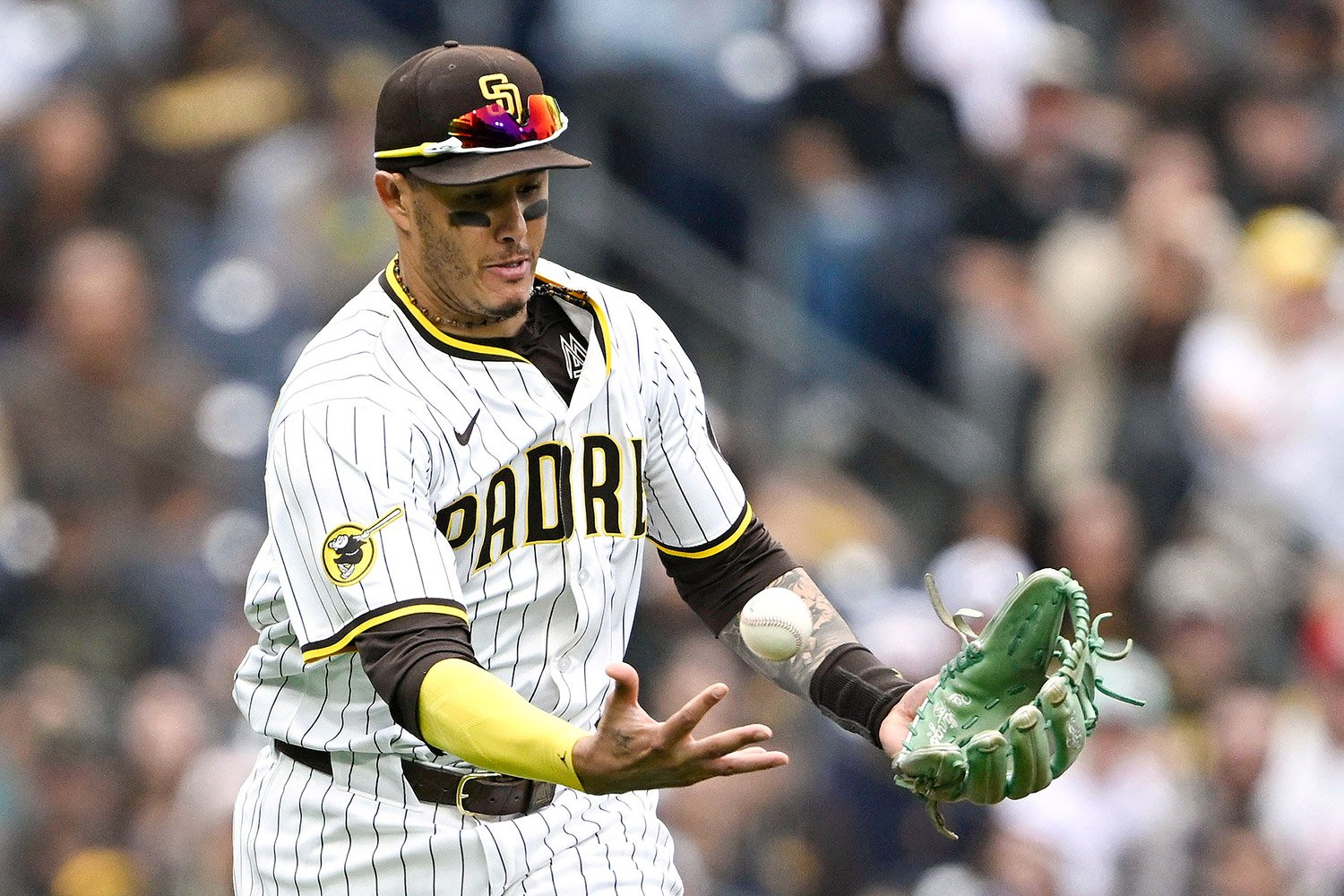 Disclaimer: What we're not doing here is casting aspersions on Manny Machado. Having just recently passed the threshold of playing more games with the San Diego Padres than the Baltimore Orioles, he's further cemented himself as a legend of the organization. He remains a key contributor and an upper tier player within the larger scale of Major League Baseball. That said, his defense in 2025 has been, in a word, bad. Before he emerged into a genuinely elite hitter, Machado made his bones as a star caliber player with the glove. He recorded seven Defensive Runs Saved in his first 460-ish inning action back in 2012 before posting 27 over nearly 1,400 the following year. When advanced metrics came into the picture in 2016, he notched a Fielding Run Value of five, which was tied for the fourth-best mark among 18 qualifying third basemen that year. Fielding Run Value is what we will continue to use to evaluate Machado's defense of a more recent vintage, as it takes into account both range and arm in providing a comprehensive defensive metric. As recently as 2023, Machado remained elite. Among qualifying third baseman that year, only Ke'Bryan Hayes posted a higher figure than Machado's 9 FRV. That was primarily on the strength of his 97th percentile range, given that his arm strength came in at just the 51st. Nevertheless, he converted outs at a 76 percent success rate against a 72 percent estimated success rate. A tough act to follow, especially with an offseason surgery looming. Between '23 and '24, Machado had elbow surgery to repair a tendon. When he debuted in 2024, it was as the team's designated hitter. The 870-ish innings he logged was his fewest over a full season (as a full-time third sacker) since 2014. But this is where the regression started. By FRV, Machado was exactly average defensively in 2024. He converted 69 percent of chances into outs on a 69 percent estimation. The concerning element, though, is that his range fell to the 38th percentile, while his arm checked in slightly above what it was the previous season (56th percentile). It's sort of the opposite of what you'd expect. You could understand the arm strength coming down from even his average figure, but the range certainly presents as concerning. Perhaps there was a readjustment period. Or, more alarming, maybe his 32-year-old body is starting to show signs of wear in not getting to balls that he used to. It's not something you want to speculate on, but the 2025 defensive metrics only enhance such concerns. His FRV thus far is -3, almost entirely a result of his actually making the play. His success rate is at 71 percent against a 74 percent estimated success rate. Weirdly, though, his play on balls in a "straight up" scenario is even worse. His 70 percent success rate is five points lower than the expected. It's a trend that has Machado sitting in 23rd in FRV among 29 qualifying players at the position. Worse yet, there's not a lot of breathing room between Machado and the bottom of the list. Max Muncy and Mark Vientos, who occupy the bottom two spots, are at -5 FRV. The exact source of Machado's defensive issues remains the issue. Is this a situation where he can adjust based on positioning? Other than something less quantifiable, like an aging curve, it may be the best explanation we have. In 2023, Machado was playing at an average depth of 117 feet at a 32 degree angle (the third base line is 45 degrees, for reference). The angle itself read as fairly normal against his contemporaries, but the depth was one of the shortest distances among full-time third basemen. In 2024, that depth grew to 120 feet at a 30 degree angle; a little bit deeper, a little bit farther off the bag. Thus far in 2025, Machado's depth is at 125 feet and a 28 degree angle. The distance has grown from the plate, and he continues to gravitate away from the third base line. For context, the top players at the position (by FRV) are on the opposite end of the spectrum, particularly in regard to depth. Ke'Bryan Hayes is at 113 feet, Ernie Clement is at 117, and Nolan Arenado is at 119. Those are the three best third base defenders by FRV. Third base is a position where you want to cut the distance as much as (realistically) possible. You're getting the highest exit velocities of anyone on the field, but you also want to mitigate the chance of weird spin, strange bounce, etc. Which is why you see the shorter distance among the more effective third base defenders. And could also serve as an explanation as to why Machado is having such difficulty in converting "straight up" outs. So why the change for Machado? We don't know. Maybe it's a comfort thing. Maybe it's not at all intentional. But in terms of the quantifiable, it's the only tangible explanation we have for the defensive woes he's experiencing. Whether he can compensate with his new positioning or make an adjustment to get back on track will be a situation worth monitoring moving forward.
 -
Disclaimer: What we're not doing here is casting aspersions on Manny Machado. Having just recently passed the threshold of playing more games with the San Diego Padres than the Baltimore Orioles, he's further cemented himself as a legend of the organization. He remains a key contributor and an upper tier player within the larger scale of Major League Baseball. That said, his defense in 2025 has been, in a word, bad. Before he emerged into a genuinely elite hitter, Machado made his bones as a star caliber player with the glove. He recorded seven Defensive Runs Saved in his first 460-ish inning action back in 2012 before posting 27 over nearly 1,400 the following year. When advanced metrics came into the picture in 2016, he notched a Fielding Run Value of five, which was tied for the fourth-best mark among 18 qualifying third basemen that year. Fielding Run Value is what we will continue to use to evaluate Machado's defense of a more recent vintage, as it takes into account both range and arm in providing a comprehensive defensive metric. As recently as 2023, Machado remained elite. Among qualifying third baseman that year, only Ke'Bryan Hayes posted a higher figure than Machado's 9 FRV. That was primarily on the strength of his 97th percentile range, given that his arm strength came in at just the 51st. Nevertheless, he converted outs at a 76 percent success rate against a 72 percent estimated success rate. A tough act to follow, especially with an offseason surgery looming. Between '23 and '24, Machado had elbow surgery to repair a tendon. When he debuted in 2024, it was as the team's designated hitter. The 870-ish innings he logged was his fewest over a full season (as a full-time third sacker) since 2014. But this is where the regression started. By FRV, Machado was exactly average defensively in 2024. He converted 69 percent of chances into outs on a 69 percent estimation. The concerning element, though, is that his range fell to the 38th percentile, while his arm checked in slightly above what it was the previous season (56th percentile). It's sort of the opposite of what you'd expect. You could understand the arm strength coming down from even his average figure, but the range certainly presents as concerning. Perhaps there was a readjustment period. Or, more alarming, maybe his 32-year-old body is starting to show signs of wear in not getting to balls that he used to. It's not something you want to speculate on, but the 2025 defensive metrics only enhance such concerns. His FRV thus far is -3, almost entirely a result of his actually making the play. His success rate is at 71 percent against a 74 percent estimated success rate. Weirdly, though, his play on balls in a "straight up" scenario is even worse. His 70 percent success rate is five points lower than the expected. It's a trend that has Machado sitting in 23rd in FRV among 29 qualifying players at the position. Worse yet, there's not a lot of breathing room between Machado and the bottom of the list. Max Muncy and Mark Vientos, who occupy the bottom two spots, are at -5 FRV. The exact source of Machado's defensive issues remains the issue. Is this a situation where he can adjust based on positioning? Other than something less quantifiable, like an aging curve, it may be the best explanation we have. In 2023, Machado was playing at an average depth of 117 feet at a 32 degree angle (the third base line is 45 degrees, for reference). The angle itself read as fairly normal against his contemporaries, but the depth was one of the shortest distances among full-time third basemen. In 2024, that depth grew to 120 feet at a 30 degree angle; a little bit deeper, a little bit farther off the bag. Thus far in 2025, Machado's depth is at 125 feet and a 28 degree angle. The distance has grown from the plate, and he continues to gravitate away from the third base line. For context, the top players at the position (by FRV) are on the opposite end of the spectrum, particularly in regard to depth. Ke'Bryan Hayes is at 113 feet, Ernie Clement is at 117, and Nolan Arenado is at 119. Those are the three best third base defenders by FRV. Third base is a position where you want to cut the distance as much as (realistically) possible. You're getting the highest exit velocities of anyone on the field, but you also want to mitigate the chance of weird spin, strange bounce, etc. Which is why you see the shorter distance among the more effective third base defenders. And could also serve as an explanation as to why Machado is having such difficulty in converting "straight up" outs. So why the change for Machado? We don't know. Maybe it's a comfort thing. Maybe it's not at all intentional. But in terms of the quantifiable, it's the only tangible explanation we have for the defensive woes he's experiencing. Whether he can compensate with his new positioning or make an adjustment to get back on track will be a situation worth monitoring moving forward. View full article
-
Searching For The Source Of Fernando Tatis Jr's May Struggles
Randy Holt posted an article in Padres
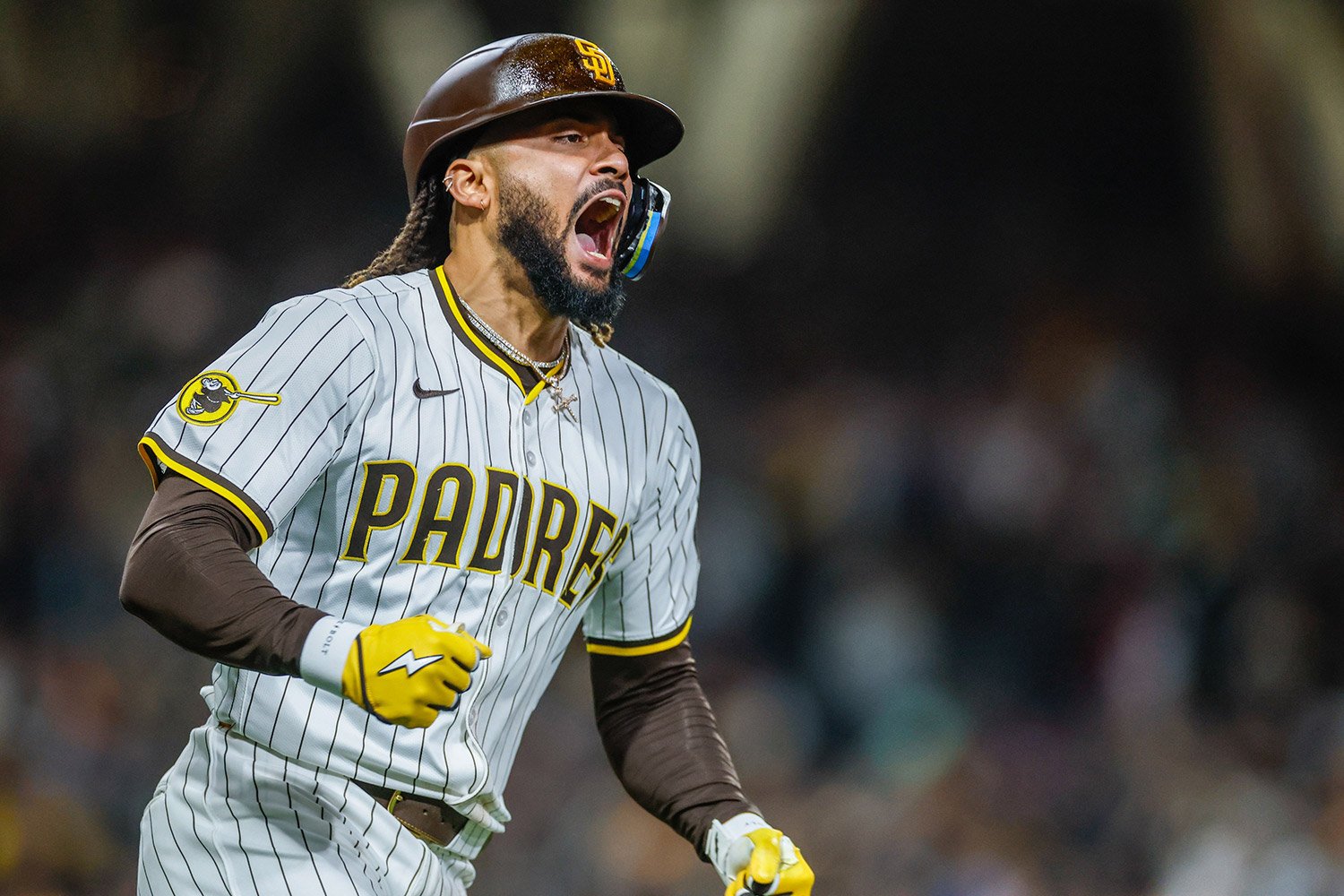 At the end of April, we were discussing Fernando Tatis Jr. in the context of a return to superstardom and as a fixture in the National League MVP race. As we prepare to hit the end of May, we've watched Tatis Jr's offensive performance sink with the majority of the rest of the San Diego Padres offense. Tatis' March & April included a slash of .345/.409/.632 to go along with a .257 isolated power, and a strikeout rate of just 15.0 percent. His wRC+ sat at 182. Add in the baserunning prowess (seven steals) and the defense and you had a player looking every bit like his old self again. But May has been far from the same story. He's hitting only .195 and reaching base at a mere .267 clip. The power has dwindled to a .195 ISO while his cumulative performance has resulted in a wRC+ of just 83. What is perhaps most notable is that his walk rate — which sat a shade over 10 percent in March & April — has dwindled to just 7.8 in May. This, while his strikeout rate has shot up to 26.7 percent. The strikeout rate would appear to be the source of what has held Tatis Jr back during his May swoon. If you can't put the ball in play, you can't deploy your 93rd percentile Hard-Hit% (53.6 percent). Except assuming that he's simply striking out more and, thus, not hitting would represent an oversimplification. Such an oversimplification implies that Tatis is swinging more or chasing more. Except he isn't. In fact, Tatis' plate discipline numbers should bely a player experiencing a similar level of success that we saw in the previous month. His 49.5 Swing% and 30.9 Chase% in March & April each went down in May (47.0 Swing%, 29.2 Chase%). Notably, his swing rate inside of the zone fell most among the plate discipline figures. After hacking at pitches in the zone roughly 77 percent of the time at April's end, he's swinging at such pitches 73.8 percent of the time. It's not a drastic change, but it is the second-most significant among the trends in his approach. The most significant is in his zone contact. Tatis Jr has made contact inside the zone just 83.2 percent of the time this month; he was at 89.5 in March & April. It's there we might find some semblance of a reason for his struggles this month. That reasoning exists almost exclusively due to offspeed pitches. Opposing pitchers haven't changed much in how they navigate a Fernando Tatis Jr. plate appearance this year. They're coming into the zone roughly as much while the distribution of pitch types has changed only marginally. What is worth paying attention to, though, is the bringing of offspeed pitches into the strike zone: That's about a 12 percent increase on off-speed pitches inside the zone. Tatis has experienced trouble with that pitch type this year, whiffing at it 46.9 percent of the time. For context, breaking pitches are in second at just 32.0 percent. So it's possible that an adjustment is needed against that pitch type in particular in order to get Tatis back on track. It's also important to note that the off-speed stuff doesn't represent the entirety of a source. There's a luck component, as his BABIP is at just .222 after a .356 start to the year. That will even out and help him to compensate on its own. The good news here is that there isn't anything severe plaguing Fernando Tatis Jr.at the plate. It's not an expansion of the zone or a general context issue. Nor is it a zone swing issue, as he's largely focused on the same areas that he did to start the year. Pitchers have simply adjusted in the way they pitch to Tatis. Now he has to adjust back.
 -
At the end of April, we were discussing Fernando Tatis Jr. in the context of a return to superstardom and as a fixture in the National League MVP race. As we prepare to hit the end of May, we've watched Tatis Jr's offensive performance sink with the majority of the rest of the San Diego Padres offense. Tatis' March & April included a slash of .345/.409/.632 to go along with a .257 isolated power, and a strikeout rate of just 15.0 percent. His wRC+ sat at 182. Add in the baserunning prowess (seven steals) and the defense and you had a player looking every bit like his old self again. But May has been far from the same story. He's hitting only .195 and reaching base at a mere .267 clip. The power has dwindled to a .195 ISO while his cumulative performance has resulted in a wRC+ of just 83. What is perhaps most notable is that his walk rate — which sat a shade over 10 percent in March & April — has dwindled to just 7.8 in May. This, while his strikeout rate has shot up to 26.7 percent. The strikeout rate would appear to be the source of what has held Tatis Jr back during his May swoon. If you can't put the ball in play, you can't deploy your 93rd percentile Hard-Hit% (53.6 percent). Except assuming that he's simply striking out more and, thus, not hitting would represent an oversimplification. Such an oversimplification implies that Tatis is swinging more or chasing more. Except he isn't. In fact, Tatis' plate discipline numbers should bely a player experiencing a similar level of success that we saw in the previous month. His 49.5 Swing% and 30.9 Chase% in March & April each went down in May (47.0 Swing%, 29.2 Chase%). Notably, his swing rate inside of the zone fell most among the plate discipline figures. After hacking at pitches in the zone roughly 77 percent of the time at April's end, he's swinging at such pitches 73.8 percent of the time. It's not a drastic change, but it is the second-most significant among the trends in his approach. The most significant is in his zone contact. Tatis Jr has made contact inside the zone just 83.2 percent of the time this month; he was at 89.5 in March & April. It's there we might find some semblance of a reason for his struggles this month. That reasoning exists almost exclusively due to offspeed pitches. Opposing pitchers haven't changed much in how they navigate a Fernando Tatis Jr. plate appearance this year. They're coming into the zone roughly as much while the distribution of pitch types has changed only marginally. What is worth paying attention to, though, is the bringing of offspeed pitches into the strike zone: That's about a 12 percent increase on off-speed pitches inside the zone. Tatis has experienced trouble with that pitch type this year, whiffing at it 46.9 percent of the time. For context, breaking pitches are in second at just 32.0 percent. So it's possible that an adjustment is needed against that pitch type in particular in order to get Tatis back on track. It's also important to note that the off-speed stuff doesn't represent the entirety of a source. There's a luck component, as his BABIP is at just .222 after a .356 start to the year. That will even out and help him to compensate on its own. The good news here is that there isn't anything severe plaguing Fernando Tatis Jr.at the plate. It's not an expansion of the zone or a general context issue. Nor is it a zone swing issue, as he's largely focused on the same areas that he did to start the year. Pitchers have simply adjusted in the way they pitch to Tatis. Now he has to adjust back. View full article
-
Should The Padres Consider More Time In Left Field For Gavin Sheets?
Randy Holt posted an article in Padres
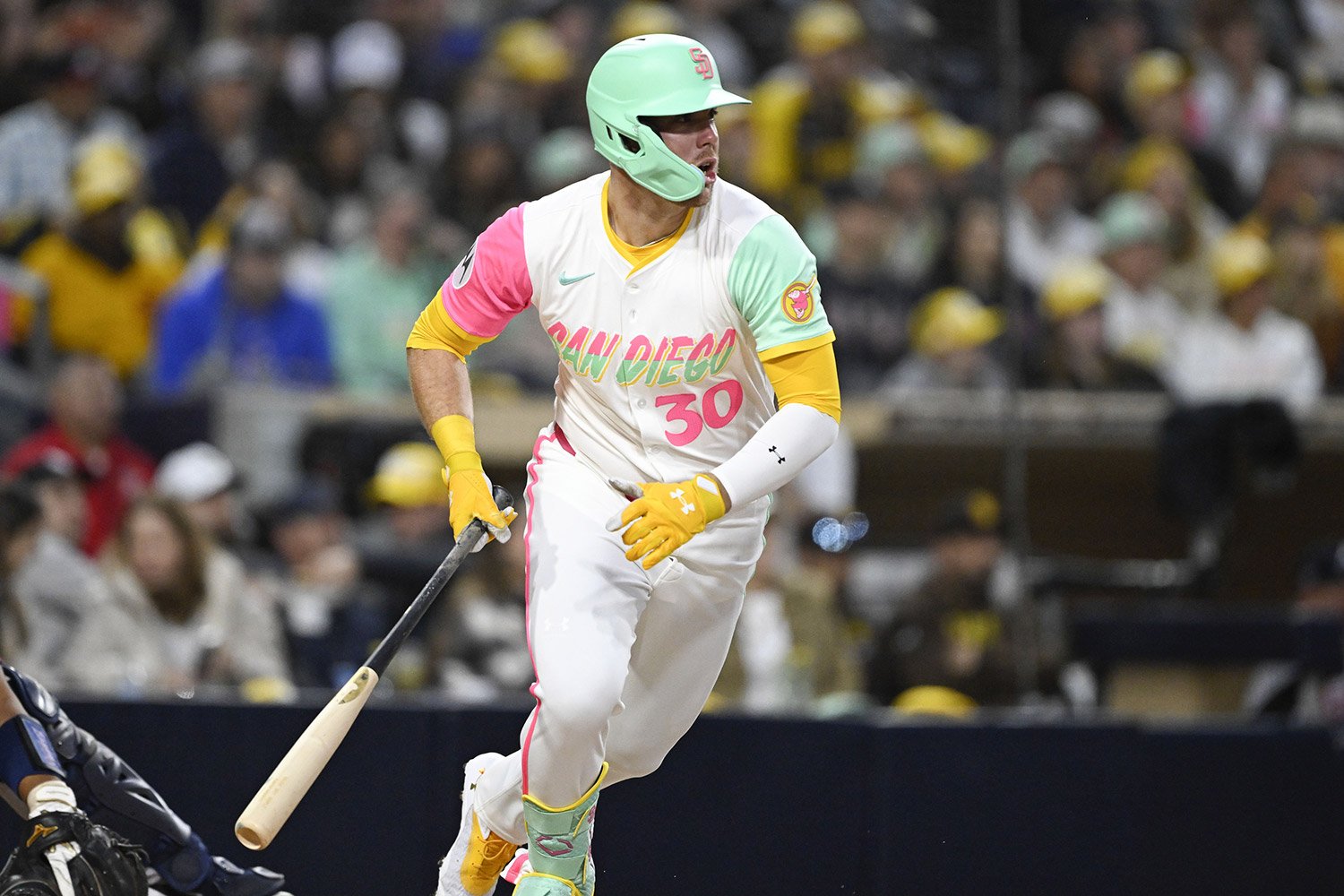 One of Major League Baseball's worst-kept secrets is that the San Diego Padres need a left fielder. After watching Jurickson Profar depart in free agency (and, subsequently, get hit with a PED suspension), eight different Padres have nabbed a start on that third of the outfield grass. Jason Heyward leads the way with 30 appearances, followed by Brandon Lockridge's 15, and 14 from Oscar González prior to his release. After that, it's a smattering of Tirso Ornelas, Gavin Sheets, and Tyler Wade. Even Jose Iglesias has an appearance there. As a collective, Padre left fielders rank 28th in fWAR (-0.9) while wRC+ing a league-worst 34. Their .180 average is ahead of only the Los Angeles Dodgers, while they've also received almost zero impact from the position as reflected by their .057 ISO. In short, it's a mess. It was a mess even before Jason Heyward hit the injured list over the weekend with an oblique strain. So should the Padres consider trying something new? Say, run Gavin Sheets out there with a little more frequency? It's a little bit of a wacky suggestion considering that the position's only saving grace has been in the defense. Left field has provided a Fielding Run Value of 0 out of San Diego, which is considered league average but also ranks seventh among all 30 teams. It's an element you'd be losing should they choose to run Sheets out there with any regularity. Sheets has only four appearances in left field this season. He's started there twice and filled in on two other occasions after serving as a pinch hitter. He's logged only 98 innings in left against over 700 at first base and over 1,500 in right field. Interestingly, the defensive numbers actually don't look terrible. He's been exactly average in those 98 innings (0 FRV) compared to a -2 FRV at first base and -18 in right field. One imagines that the small sample is aiding him there, especially as only 10 of his 18 total appearances in left have been actual starts. It may, indeed, get worse if the team were to stretch it out. But consider what you'd be getting on the offensive side that you're not getting now. By wRC+ (153), Sheets has been the team's best hitter in May this side of Manny Machado. He's continued to post steady reach rates via a .296 average and a .315 on-base percentage while providing more power than anyone on the roster this month (.296 ISO). While we're still not entirely sure if he's trustworthy given the lackluster approach, he's at least provided steady value amid massive offensive struggles over the past couple of weeks. One reason for suggesting that the team turn to him more frequently in left field is the recall of Luis Campusano from El Paso. While it's unlikely we'll see him log virtually any time behind the plate, he's off to an absolutely massive start in the Pacific Coast League. Only one player has a better wRC+ thus far than Campusano's 152 mark, while his average (.313), on-base percentage (.432), and isolated power (.298) are all top 10 figures. He's also walked (17.1 BB%) more than he's struck out (14.0 K%). Getting Sheets in left field regularly would allow the team to deploy Campusano out of the designated hitter spot that Sheets has been holding down for much of the season. Given the lack of depth elsewhere, it's an opportunity for the team to get their best nine hitters into the lineup on a given night, as the upside Campusano has flashed at the plate is more than the down-the-order hitters the team has deployed at points in 2025. It is, of course, an imperfect suggestion considering the aforementioned defensive woes of Sheets on the opposite side of the outfield. And while we're not going to suggest the team punt defense altogether, it's not as if they're proving stable on that side of the ball anyway. We already know the team has the pitching to compensate. Suppose they can get the offense moving in a steady direction again. In that case, you can afford to have a below-average defender making more regular appearances until you make the acquisition that virtually everyone expects them to (as in, someone to capably hold down left field eventually). The defense is likely the primary consideration holding Gavin Sheets back from a little more run out on the grass. Heyward has been fine. As has Lockridge. But considering how difficult runs have been to come by for the San Diego Padres in recent weeks, such a consideration as far as their lineup construction may be too difficult to ignore for much longer.
 -
One of Major League Baseball's worst-kept secrets is that the San Diego Padres need a left fielder. After watching Jurickson Profar depart in free agency (and, subsequently, get hit with a PED suspension), eight different Padres have nabbed a start on that third of the outfield grass. Jason Heyward leads the way with 30 appearances, followed by Brandon Lockridge's 15, and 14 from Oscar González prior to his release. After that, it's a smattering of Tirso Ornelas, Gavin Sheets, and Tyler Wade. Even Jose Iglesias has an appearance there. As a collective, Padre left fielders rank 28th in fWAR (-0.9) while wRC+ing a league-worst 34. Their .180 average is ahead of only the Los Angeles Dodgers, while they've also received almost zero impact from the position as reflected by their .057 ISO. In short, it's a mess. It was a mess even before Jason Heyward hit the injured list over the weekend with an oblique strain. So should the Padres consider trying something new? Say, run Gavin Sheets out there with a little more frequency? It's a little bit of a wacky suggestion considering that the position's only saving grace has been in the defense. Left field has provided a Fielding Run Value of 0 out of San Diego, which is considered league average but also ranks seventh among all 30 teams. It's an element you'd be losing should they choose to run Sheets out there with any regularity. Sheets has only four appearances in left field this season. He's started there twice and filled in on two other occasions after serving as a pinch hitter. He's logged only 98 innings in left against over 700 at first base and over 1,500 in right field. Interestingly, the defensive numbers actually don't look terrible. He's been exactly average in those 98 innings (0 FRV) compared to a -2 FRV at first base and -18 in right field. One imagines that the small sample is aiding him there, especially as only 10 of his 18 total appearances in left have been actual starts. It may, indeed, get worse if the team were to stretch it out. But consider what you'd be getting on the offensive side that you're not getting now. By wRC+ (153), Sheets has been the team's best hitter in May this side of Manny Machado. He's continued to post steady reach rates via a .296 average and a .315 on-base percentage while providing more power than anyone on the roster this month (.296 ISO). While we're still not entirely sure if he's trustworthy given the lackluster approach, he's at least provided steady value amid massive offensive struggles over the past couple of weeks. One reason for suggesting that the team turn to him more frequently in left field is the recall of Luis Campusano from El Paso. While it's unlikely we'll see him log virtually any time behind the plate, he's off to an absolutely massive start in the Pacific Coast League. Only one player has a better wRC+ thus far than Campusano's 152 mark, while his average (.313), on-base percentage (.432), and isolated power (.298) are all top 10 figures. He's also walked (17.1 BB%) more than he's struck out (14.0 K%). Getting Sheets in left field regularly would allow the team to deploy Campusano out of the designated hitter spot that Sheets has been holding down for much of the season. Given the lack of depth elsewhere, it's an opportunity for the team to get their best nine hitters into the lineup on a given night, as the upside Campusano has flashed at the plate is more than the down-the-order hitters the team has deployed at points in 2025. It is, of course, an imperfect suggestion considering the aforementioned defensive woes of Sheets on the opposite side of the outfield. And while we're not going to suggest the team punt defense altogether, it's not as if they're proving stable on that side of the ball anyway. We already know the team has the pitching to compensate. Suppose they can get the offense moving in a steady direction again. In that case, you can afford to have a below-average defender making more regular appearances until you make the acquisition that virtually everyone expects them to (as in, someone to capably hold down left field eventually). The defense is likely the primary consideration holding Gavin Sheets back from a little more run out on the grass. Heyward has been fine. As has Lockridge. But considering how difficult runs have been to come by for the San Diego Padres in recent weeks, such a consideration as far as their lineup construction may be too difficult to ignore for much longer. View full article
-
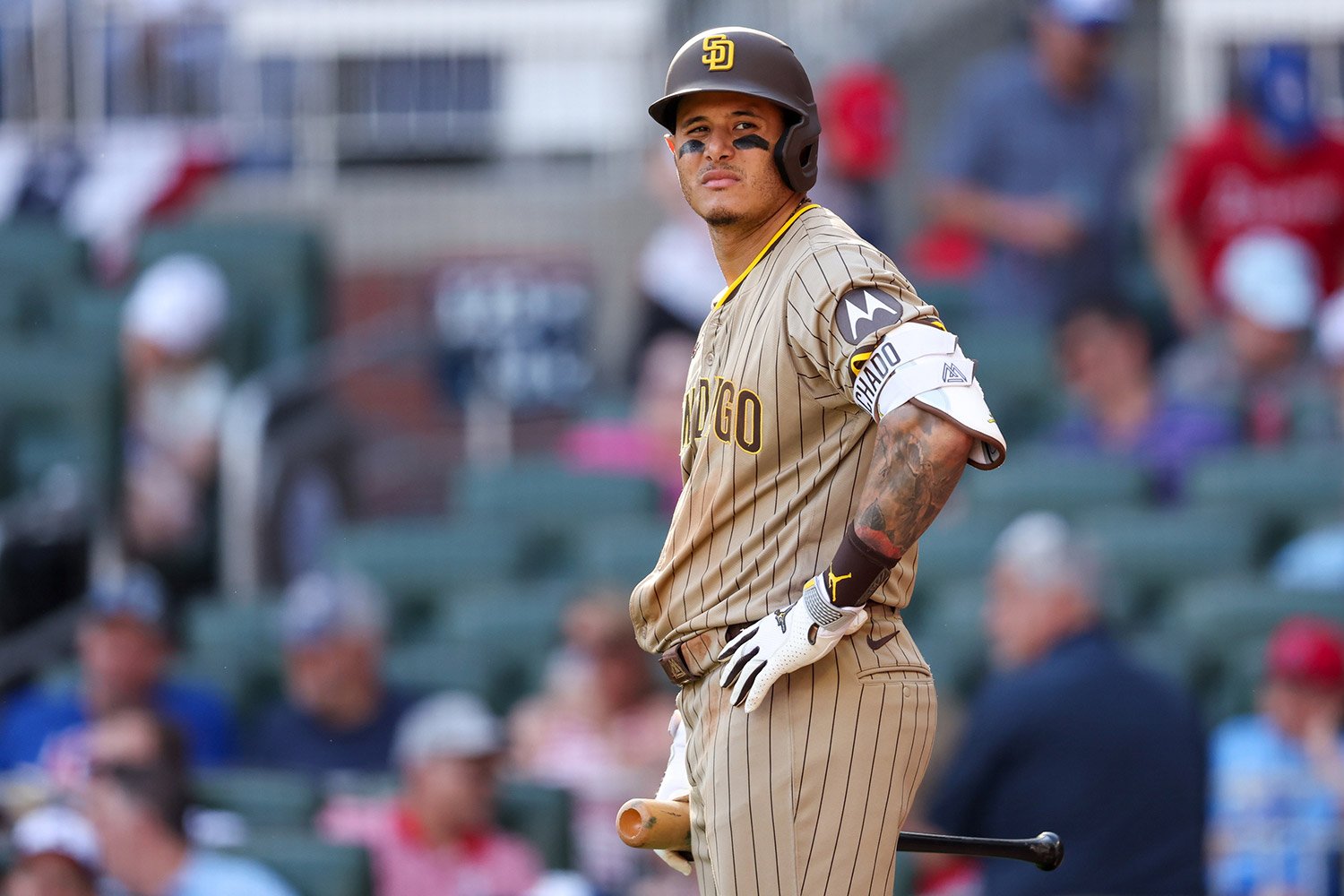 The San Diego Padres are a bad offensive baseball team right now. Some might say they're bad and offensive at present, given how the past week has gone. It started last weekend against Seattle. The Padres were swept at home and managed to score just one run in each of the three games. It got worse in Toronto, as they dropped consecutive games via shutout to open the series before losing in extra innings to close it. Even as they ended the losing streak on Friday in Atlanta, they still only mustered a pair of runs in doing so before offering just one again on Saturday. There isn't a whole lot in the underlying numbers to suggest it'll end anytime soon, either. That feels hard to believe given where they were just a couple of weeks ago. Through May 14th, they were 27-15 and just a half game behind the Los Angeles Dodgers in the National League West. They were a top-10 offensive group by wRC+ (109), driven by an on-base approach (.333) that featured limited strikeouts (8.9 percent) and timely hitting, highlighted by a .282 average with runners in scoring position and a .294 average with two outs, which led baseball by a wide margin. The group ran deep, too. Seven different Padres hitters sat above the average threshold by wRC+ in that stretch. Jackson Merrill paced the group on either side of his hamstring injury (211), followed by Jake Cronenworth (168) and Fernando Tatis Jr. (163). Even the likes of Elias Diaz (109) and Tyler Wade (105) were above average with pretty heavy playing time. There were a couple of different issues, though. For one, the batting averages on balls in play were entirely unsustainable. Merrill was over .450; Wade was over .400. Manny Machado was up at .395. As good as two of those three players are, that rate is always going to come down. Then you factor in the team's work with two outs. With two outs, virtually everything across the board ballooned even further. Wade, Machado, Oscar Gonzalez, Merrill, Cronenworth, and Gavin Sheets all BABIP'd over .400 with two outs across at least 20 plate appearances. The team at large ran that .294 average with a .369 on-base percentage and a 140 wRC+ with two outs on the board. There is simply no margin for error anywhere that would allow that to be sustainable. The offensive production was going to dip into something more sustainable at some point, even as you're waiting for more power from guys like Machado or Xander Bogaerts to balance it out. This also lends itself to the idea that the Padres' current misery is, in itself, unsustainable. Over the past week-and-change, Luis Arráez is essentially the only member of the Padres getting contact to fall. He carries a strikeout rate of just 3.4 percent and a 175 wRC+ through his last 29 PA. The rest of the lineup, however, is finding no such fortune. Fernando Tatis Jr's BABIP is just .250 and the highest of the other regulars. Merrill's at only .235 while each of Cronenworth, Sheets, and Machado sit at or below .200. Tatis, Merrill, and Machado have each plummeted with two outs, as well. They're averaging a -55 wRC+ between them with two outs. Machado's catching the worst of it, with a BABIP of just .111 in two-out situations. One aspect where the Padres can help themselves start to work their way out of it is in their approach. They were striking out at a shade below 16 percent as a collective through May 14th. They're up to almost 24 percent inside of this recent stretch. The walk rate has also been cut in half. They were walking at a 9.6 percent clip through the first half of May and are at just 4.5 percent over the past week. That part of it almost feels natural. Your offense is scuffling something serious, and you're subsequently trying to make something happen. That forces a hitter into taking swings he wouldn't normally take. However, a more measured approach, which drove the team early on, is likely what needs to happen to help them crawl back out of it. I suppose it does ring as at least some sort of good news that the Padres aren't as bad as their recent stretch would indicate. However, the paradox is that they aren't as good as the first one was. They're somewhere in the middle, with no shortage of nuances involved in where the real offensive upside of this group exists. Either way, nine of their next dozen games after Atlanta come against teams in the bottom half of the league in staff ERA. Perhaps we'll start to see the real San Diego Padres make an appearance over that stretch.
 -
The San Diego Padres are a bad offensive baseball team right now. Some might say they're bad and offensive at present, given how the past week has gone. It started last weekend against Seattle. The Padres were swept at home and managed to score just one run in each of the three games. It got worse in Toronto, as they dropped consecutive games via shutout to open the series before losing in extra innings to close it. Even as they ended the losing streak on Friday in Atlanta, they still only mustered a pair of runs in doing so before offering just one again on Saturday. There isn't a whole lot in the underlying numbers to suggest it'll end anytime soon, either. That feels hard to believe given where they were just a couple of weeks ago. Through May 14th, they were 27-15 and just a half game behind the Los Angeles Dodgers in the National League West. They were a top-10 offensive group by wRC+ (109), driven by an on-base approach (.333) that featured limited strikeouts (8.9 percent) and timely hitting, highlighted by a .282 average with runners in scoring position and a .294 average with two outs, which led baseball by a wide margin. The group ran deep, too. Seven different Padres hitters sat above the average threshold by wRC+ in that stretch. Jackson Merrill paced the group on either side of his hamstring injury (211), followed by Jake Cronenworth (168) and Fernando Tatis Jr. (163). Even the likes of Elias Diaz (109) and Tyler Wade (105) were above average with pretty heavy playing time. There were a couple of different issues, though. For one, the batting averages on balls in play were entirely unsustainable. Merrill was over .450; Wade was over .400. Manny Machado was up at .395. As good as two of those three players are, that rate is always going to come down. Then you factor in the team's work with two outs. With two outs, virtually everything across the board ballooned even further. Wade, Machado, Oscar Gonzalez, Merrill, Cronenworth, and Gavin Sheets all BABIP'd over .400 with two outs across at least 20 plate appearances. The team at large ran that .294 average with a .369 on-base percentage and a 140 wRC+ with two outs on the board. There is simply no margin for error anywhere that would allow that to be sustainable. The offensive production was going to dip into something more sustainable at some point, even as you're waiting for more power from guys like Machado or Xander Bogaerts to balance it out. This also lends itself to the idea that the Padres' current misery is, in itself, unsustainable. Over the past week-and-change, Luis Arráez is essentially the only member of the Padres getting contact to fall. He carries a strikeout rate of just 3.4 percent and a 175 wRC+ through his last 29 PA. The rest of the lineup, however, is finding no such fortune. Fernando Tatis Jr's BABIP is just .250 and the highest of the other regulars. Merrill's at only .235 while each of Cronenworth, Sheets, and Machado sit at or below .200. Tatis, Merrill, and Machado have each plummeted with two outs, as well. They're averaging a -55 wRC+ between them with two outs. Machado's catching the worst of it, with a BABIP of just .111 in two-out situations. One aspect where the Padres can help themselves start to work their way out of it is in their approach. They were striking out at a shade below 16 percent as a collective through May 14th. They're up to almost 24 percent inside of this recent stretch. The walk rate has also been cut in half. They were walking at a 9.6 percent clip through the first half of May and are at just 4.5 percent over the past week. That part of it almost feels natural. Your offense is scuffling something serious, and you're subsequently trying to make something happen. That forces a hitter into taking swings he wouldn't normally take. However, a more measured approach, which drove the team early on, is likely what needs to happen to help them crawl back out of it. I suppose it does ring as at least some sort of good news that the Padres aren't as bad as their recent stretch would indicate. However, the paradox is that they aren't as good as the first one was. They're somewhere in the middle, with no shortage of nuances involved in where the real offensive upside of this group exists. Either way, nine of their next dozen games after Atlanta come against teams in the bottom half of the league in staff ERA. Perhaps we'll start to see the real San Diego Padres make an appearance over that stretch. View full article
-
 If you hadn't watched the San Diego Padres prior to the last five days, you'd assume their contemporaries in the run production game were, like, the Pittsburgh Pirates or Chicago White Sox. And while they do technically remain a middle-tier offensive team in most regards, with the exception of walk rate and on-base percentage, where they're closer to the top, the last four games have made it difficult to draw any other conclusions. These are facts: the Padres have lost four games in a row. They've scored a total of three runs across those four games. And while they've run into some quality pitching out of Seattle and, more recently, Toronto, it appears to be a byproduct of their top-heavy lineup. Over these last four games (not including Wednesday night's "action"), only three teams have been worse in terms of wRC+. The Friars have posted a figure of 56, indicating that they are collectively 44 percent worse than the league average. Their run total (again, three) and OBP (.246) are at the very bottom, while only the White Sox have been worse in walk rate (3.6 percent). Only three teams have a lower power output than their .091 ISO. They're not getting on base. They're not finding any impact. It's a brutal offensive stretch. Among regulars, only Luis Arráez has provided anything of value over this stretch; he's hitting .400 and has thrown in a walk for good measure. Fernando Tatis Jr has a wRC+ that just scrapes above the average threshold, at 106. That's pretty much only courtesy of a leadoff homer he hit over the weekend. Xander Bogaerts has been better since Friday, but still checks in with a wRC+ of 99. Outside of Arráez & Tatis, Gavin Sheets' .273 ISO is the only power the team has to speak of. Speaking of Sheets, he's hitting just .214 over this stretch, while striking out at a 26.7 percent clip and lacking even one. And he's one of the better ones. Jake Cronenworth is posting a wRC+ of only 60 and hasn't walked. Jackson Merrill has a wRC+ of -5 and has struck out over 40 percent of the time. Elías Díaz, who has played in all four, is at -9. Manny Machado? He's at -80 without a hit to speak of. Those four have combined for an OBP of .155. There's just nothing happening for this group. Such is the danger of assembling this type of lineup. You have a couple of guys who are providing at least something of value. Arráez has been legitimately good, Bogaerts is reaching base regularly, and Tatis has at least jumped in the mix with a little bit of power. However, only one of those individuals has a tangible impact. The remainder are all slumping simultaneously. When your offensive impact is concentrated this much in such a select group, you have nothing to offset the struggles. You just have to bear it until the natural ebb & flow of baseball manifests and the offense returns. It's quite a powerless construction in that regard. There is, at the very least, some positive news for the Padres moving forward. In getting Chris Bassitt out of the way, they're clear of the only stable Toronto starter. And while a weekend series against Atlanta won't make things any easier in finding their offensive footing, they'll at least get six games of reprieve in the form of Miami and Pittsburgh next week. The offense must figure it out, though, as the June schedule is packed with contenders. Ultimately, however, this stretch has revealed a great deal about the team's lineup, just not in the way that you'd like to see.
 -
If you hadn't watched the San Diego Padres prior to the last five days, you'd assume their contemporaries in the run production game were, like, the Pittsburgh Pirates or Chicago White Sox. And while they do technically remain a middle-tier offensive team in most regards, with the exception of walk rate and on-base percentage, where they're closer to the top, the last four games have made it difficult to draw any other conclusions. These are facts: the Padres have lost four games in a row. They've scored a total of three runs across those four games. And while they've run into some quality pitching out of Seattle and, more recently, Toronto, it appears to be a byproduct of their top-heavy lineup. Over these last four games (not including Wednesday night's "action"), only three teams have been worse in terms of wRC+. The Friars have posted a figure of 56, indicating that they are collectively 44 percent worse than the league average. Their run total (again, three) and OBP (.246) are at the very bottom, while only the White Sox have been worse in walk rate (3.6 percent). Only three teams have a lower power output than their .091 ISO. They're not getting on base. They're not finding any impact. It's a brutal offensive stretch. Among regulars, only Luis Arráez has provided anything of value over this stretch; he's hitting .400 and has thrown in a walk for good measure. Fernando Tatis Jr has a wRC+ that just scrapes above the average threshold, at 106. That's pretty much only courtesy of a leadoff homer he hit over the weekend. Xander Bogaerts has been better since Friday, but still checks in with a wRC+ of 99. Outside of Arráez & Tatis, Gavin Sheets' .273 ISO is the only power the team has to speak of. Speaking of Sheets, he's hitting just .214 over this stretch, while striking out at a 26.7 percent clip and lacking even one. And he's one of the better ones. Jake Cronenworth is posting a wRC+ of only 60 and hasn't walked. Jackson Merrill has a wRC+ of -5 and has struck out over 40 percent of the time. Elías Díaz, who has played in all four, is at -9. Manny Machado? He's at -80 without a hit to speak of. Those four have combined for an OBP of .155. There's just nothing happening for this group. Such is the danger of assembling this type of lineup. You have a couple of guys who are providing at least something of value. Arráez has been legitimately good, Bogaerts is reaching base regularly, and Tatis has at least jumped in the mix with a little bit of power. However, only one of those individuals has a tangible impact. The remainder are all slumping simultaneously. When your offensive impact is concentrated this much in such a select group, you have nothing to offset the struggles. You just have to bear it until the natural ebb & flow of baseball manifests and the offense returns. It's quite a powerless construction in that regard. There is, at the very least, some positive news for the Padres moving forward. In getting Chris Bassitt out of the way, they're clear of the only stable Toronto starter. And while a weekend series against Atlanta won't make things any easier in finding their offensive footing, they'll at least get six games of reprieve in the form of Miami and Pittsburgh next week. The offense must figure it out, though, as the June schedule is packed with contenders. Ultimately, however, this stretch has revealed a great deal about the team's lineup, just not in the way that you'd like to see. View full article
-
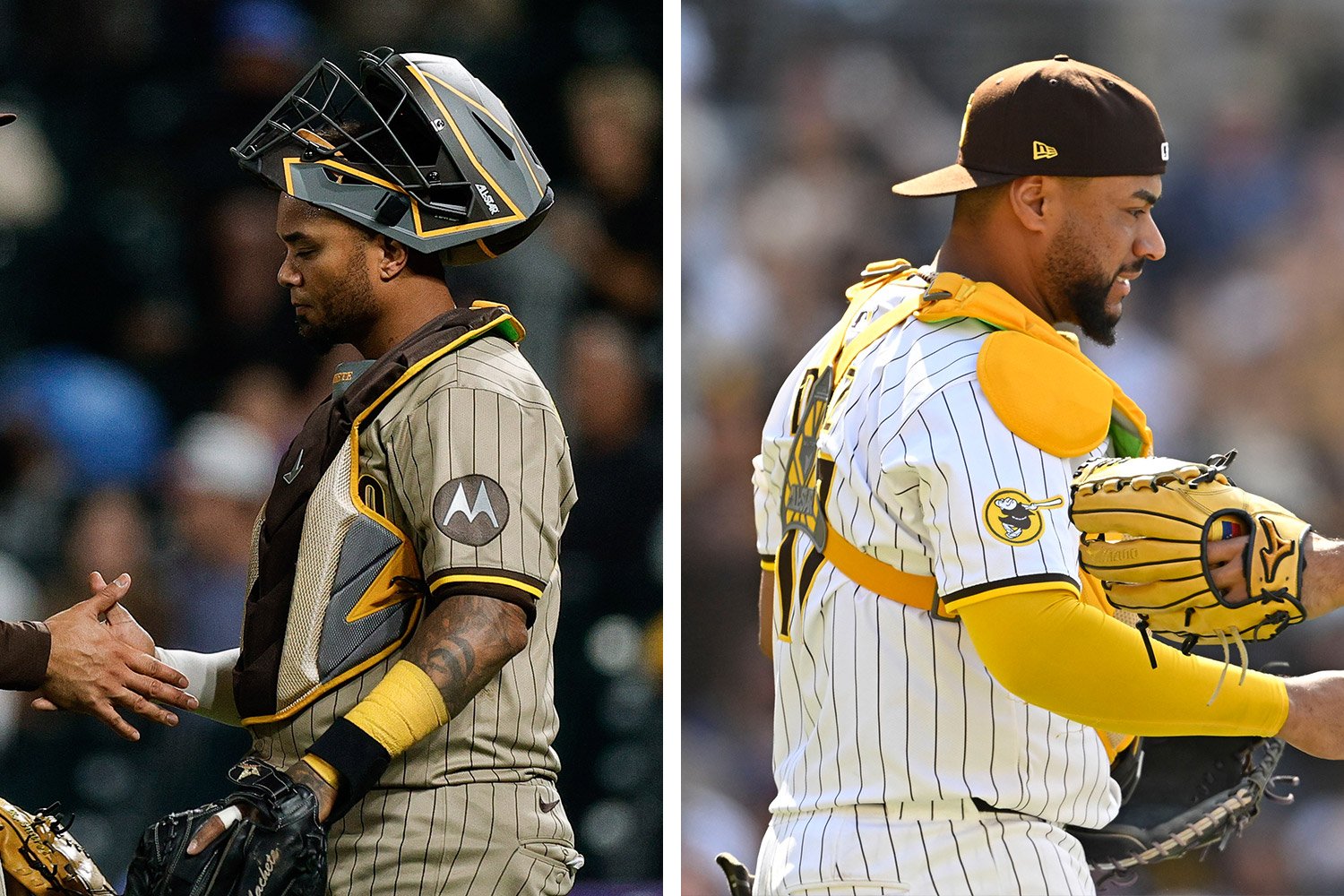 If the San Diego Padres have any hope of sustaining their hot start to the season, it's likely going to have to come in the form of some kind of offensive supplementation. We know what the team looks like when the top hitters are, well, hitting. Fernando Tatis Jr, Jackson Merrill, Manny Machado. These guys can carry a lineup over a multi-day stretch. But, as we've seen, that only goes so far. Having watched the team hang just three runs against the Seattle Mariners over the weekend, it's clear that there's a bit of help needed in addressing these quiet stretches. But the current roster construction makes it a difficult proposition. Each of the four main infield spots is locked down. Center and right out on the outfield grass are each handled for the next decade. So you're looking at either left field or catcher as a spot that merits an upgrade. We'll talk about the rotating band of heroes in left in the coming days, but catcher represents a different animal entirely. The Padres knew coming into the season that they did not have a long-term option. Luis Campusano has received a couple of chances to run with the job and has failed to do so. This was true to the extent last year, when he lost the starting gig to Kyle Higashioka altogether. As Campusano prepared to at least start the year in El Paso (where he's remained for much of the year), the team turned to a pair of light-hitting veterans: Martín Maldonado & Elias Diaz. That tandem has produced about as expected, with middling defensive output and even less on the offensive side. Maldonado has graded out as an average framer but below average in the blocking & run prevention aspects of the position. Díaz, meanwhile, has been well below average in framing but average in the other two areas. If you could combine them, you'd have a pretty sturdy backstop behind the plate. Alas... From an offensive standpoint, the duo ranks 21st in the league in on-base percentage (.294), 16th in isolated slugging (.129), 20th in wRC+ (87), and features the 11th-highest strikeout rate the position has to offer (22.2 percent). Considering the respective histories of each, it almost stands to reason that it could be worse, which is something the Padres are probably fearing as they project deeper into 2025. There are a couple of issues with such a situation behind the plate. Obviously, you'd prefer to have average defense all around, at minimum. Especially when a staff that runs as deep as the one in San Diego. Then, you'd like to have even average offense in order to supplement the heavier hitters in the upper half of the lineup. The Padres aren't getting average on either side of the ball. That's issue number one. Issue number two is... what exactly do you do about it? The thing about catchers is that if you have one, you're probably not moving them, which means that a majority of outside options will ring fairly similar in skill set to the pair the team currently employs back there. To say nothing of the fact that teams are hesitant to add catching in-season anyway, given the nuances associated with the position (read: handling a new staff on a short timeframe). Does that make perhaps the team's most immediate area of need also the least likely to be upgraded? We know that Campusano's out. Maybe there's space for him to rotate in at designated hitter in the near future with the way he's going in El Paso. But there just isn't a lot of freedom of movement for the San Diego Padres as it relates to the catcher position. The good news is that it could be worse. It could be better, with average being kind of a decent threshold for short-term catching options. But given the perception of these two as both hitters and as defenders, it could be worse. Ideally, the team acts on it before that manifests.
 -
Navigating The San Diego Padres' Catcher Quandary
Randy Holt posted a topic in San Diego Padres Talk
If the San Diego Padres have any hope of sustaining their hot start to the season, it's likely going to have to come in the form of some kind of offensive supplementation. We know what the team looks like when the top hitters are, well, hitting. Fernando Tatis Jr, Jackson Merrill, Manny Machado. These guys can carry a lineup over a multi-day stretch. But, as we've seen, that only goes so far. Having watched the team hang just three runs against the Seattle Mariners over the weekend, it's clear that there's a bit of help needed in addressing these quiet stretches. But the current roster construction makes it a difficult proposition. Each of the four main infield spots is locked down. Center and right out on the outfield grass are each handled for the next decade. So you're looking at either left field or catcher as a spot that merits an upgrade. We'll talk about the rotating band of heroes in left in the coming days, but catcher represents a different animal entirely. The Padres knew coming into the season that they did not have a long-term option. Luis Campusano has received a couple of chances to run with the job and has failed to do so. This was true to the extent last year, when he lost the starting gig to Kyle Higashioka altogether. As Campusano prepared to at least start the year in El Paso (where he's remained for much of the year), the team turned to a pair of light-hitting veterans: Martín Maldonado & Elias Diaz. That tandem has produced about as expected, with middling defensive output and even less on the offensive side. Maldonado has graded out as an average framer but below average in the blocking & run prevention aspects of the position. Díaz, meanwhile, has been well below average in framing but average in the other two areas. If you could combine them, you'd have a pretty sturdy backstop behind the plate. Alas... From an offensive standpoint, the duo ranks 21st in the league in on-base percentage (.294), 16th in isolated slugging (.129), 20th in wRC+ (87), and features the 11th-highest strikeout rate the position has to offer (22.2 percent). Considering the respective histories of each, it almost stands to reason that it could be worse, which is something the Padres are probably fearing as they project deeper into 2025. There are a couple of issues with such a situation behind the plate. Obviously, you'd prefer to have average defense all around, at minimum. Especially when a staff that runs as deep as the one in San Diego. Then, you'd like to have even average offense in order to supplement the heavier hitters in the upper half of the lineup. The Padres aren't getting average on either side of the ball. That's issue number one. Issue number two is... what exactly do you do about it? The thing about catchers is that if you have one, you're probably not moving them, which means that a majority of outside options will ring fairly similar in skill set to the pair the team currently employs back there. To say nothing of the fact that teams are hesitant to add catching in-season anyway, given the nuances associated with the position (read: handling a new staff on a short timeframe). Does that make perhaps the team's most immediate area of need also the least likely to be upgraded? We know that Campusano's out. Maybe there's space for him to rotate in at designated hitter in the near future with the way he's going in El Paso. But there just isn't a lot of freedom of movement for the San Diego Padres as it relates to the catcher position. The good news is that it could be worse. It could be better, with average being kind of a decent threshold for short-term catching options. But given the perception of these two as both hitters and as defenders, it could be worse. Ideally, the team acts on it before that manifests. View full article -
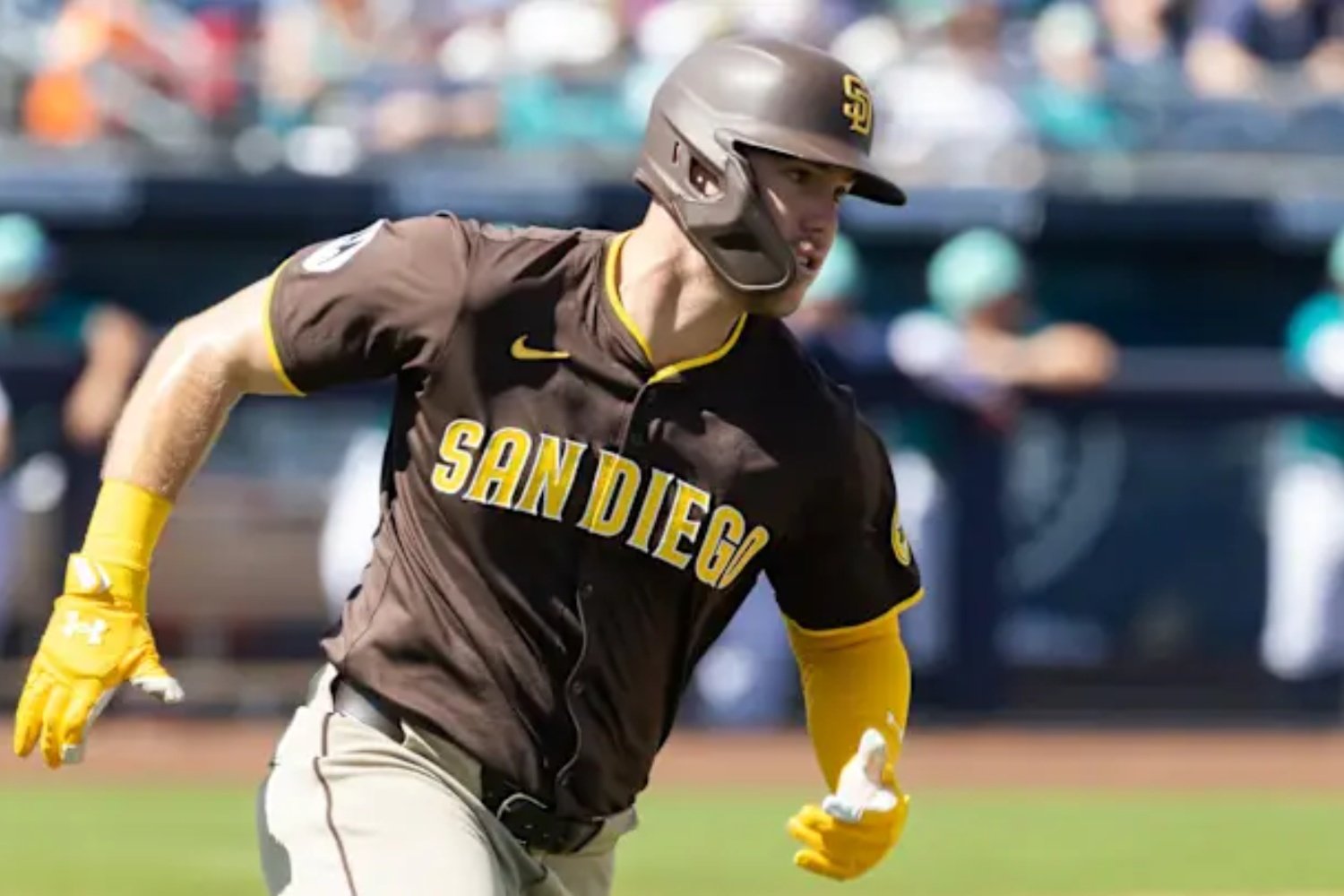 Somewhat predictably, the San Diego Padres' approach to constructing the roster has come through as something of a mixed bag. Such is the case when you supplement your upper-tier offensive talent with a host of non-roster invitees and past-their-prime-but-recognizable names. In some cases, the team did both. On one hand, you've got those like Yuli Gurriel and Jason Heyward. One has already found his way into free agency given an underwhelming performance, while the other could soon follow. On the other, you've got Gavin Sheets, who, in certain respects, looks like the ideal change-of-scenery guy. But, there's a fine line between being a reliable addition and being an early-season flash. We're still not entirely sure which Sheets is. While Sheets was never a top-tier prospect for the Chicago White Sox, he did earn a 54-game sample with the team back in 2021. He posted a 123 wRC+ across 179 plate appearances, providing steady value in the power (.256 ISO) and on-base (.324 OBP) departments. He was unable to replicate those numbers in any of the three subsequent seasons, however. As the Sox began their plight, so too did Sheets. Combined with the lack of a defensive home (or a proper defensive skill set), it's not difficult to see why a former mid-level prospect with big power had to settle for a minor league deal this past offseason. And as far as the NRI-type signings go, Sheets has landed among the top in providing value for his new squad... mostly. In a number of different respects, Sheets has been better than he was during that rookie year on the South Side of Chicago. His wRC+ sits at 126, he's reaching base at a .333 clip, and his average is nearly 30 points higher than it was in '21 (.281). His percentile rankings (via Baseball Savant) indicate that there's clearly some impact in that bat. His Hard-Hit% (55.7) sits in the 95th, while his average exit velocity (89.7 MPH) is in the 89th. When Sheets makes contact, he's making it count. It's the making contact portion of that concept, though, which is proving to be a bit of a struggle. Sheets' overall Contact% is down about six percent from last season (73.2 percent). His whiff rate is up about three percent (12.3). It's all led to a strikeout rate that is the highest of his career (26.5 percent). Interestingly, though, it's not as if Sheets is expanding the zone at some otherworldly clip or struggling against breaking pitches. Instead, he's just... missing, particularly when he expands the zone. When Sheets has swung outside the strike zone in his career, he's made contact at a 67.1 percent rate. This year, that number sits at just 53.5 percent. It's the lowest rate of his career by a fairly wide margin. And there's no discernible pitch type against which those whiffs are coming. In fact, the most concerning element of the chase-and-miss trend is that fastballs represent the heaviest increase: Sheets is missing fastballs he chases 39.0 percent of the time. That's nearly twice what it was last year. What doesn't make particular sense is that Sheets' bat speed is actually up. What was a problem early in his career has evolved into a much faster swing. He's at a 74.0 MPH average and a 44.5 percent rate of fast swings this year. Both are career-high marks, with the latter checking in vastly higher than any rate he's posted in any of the last three seasons. So, why such substantial whiffs against the hard stuff? The easy explanation is that he's trying to attack the fastball. He's at a 53.6 percent swing rate against the hard stuff, which is a four percent increase from last year and 12 percent higher than any other pitch type. By attempting to zero in on the fastball, he's losing a sense of the zone, and that's resulting in more whiffs. It's also why the contact looks so good when it happens, but it's pinning down his ability to put the ball in play to begin with. Which spells questions for Gavin Sheets' longer-term fit with the Padres. With roughly four reliable bats in the order, this is a team in need of contact above all. They need balls in play to supplement the on-base skills that are more exclusively reserved for the reliable ones atop the order. While Sheets can provide impact on occasion (still valuable!), his feast-or-famine outcomes wrought by inconsistent contact are a contributing factor in a weekend like we just saw out of San Diego, when they scored three runs total across three games. Does that mean his role should be reduced? Probably not. There just isn't impact to be found elsewhere, even on an inconsistent basis. But it's not like his presence is going to preclude them from making an addition. Not unless he can reign in the approach to make him viable in a role more than his current Occasional DH, Pinch-Hit Guy™.
 -
Somewhat predictably, the San Diego Padres' approach to constructing the roster has come through as something of a mixed bag. Such is the case when you supplement your upper-tier offensive talent with a host of non-roster invitees and past-their-prime-but-recognizable names. In some cases, the team did both. On one hand, you've got those like Yuli Gurriel and Jason Heyward. One has already found his way into free agency given an underwhelming performance, while the other could soon follow. On the other, you've got Gavin Sheets, who, in certain respects, looks like the ideal change-of-scenery guy. But, there's a fine line between being a reliable addition and being an early-season flash. We're still not entirely sure which Sheets is. While Sheets was never a top-tier prospect for the Chicago White Sox, he did earn a 54-game sample with the team back in 2021. He posted a 123 wRC+ across 179 plate appearances, providing steady value in the power (.256 ISO) and on-base (.324 OBP) departments. He was unable to replicate those numbers in any of the three subsequent seasons, however. As the Sox began their plight, so too did Sheets. Combined with the lack of a defensive home (or a proper defensive skill set), it's not difficult to see why a former mid-level prospect with big power had to settle for a minor league deal this past offseason. And as far as the NRI-type signings go, Sheets has landed among the top in providing value for his new squad... mostly. In a number of different respects, Sheets has been better than he was during that rookie year on the South Side of Chicago. His wRC+ sits at 126, he's reaching base at a .333 clip, and his average is nearly 30 points higher than it was in '21 (.281). His percentile rankings (via Baseball Savant) indicate that there's clearly some impact in that bat. His Hard-Hit% (55.7) sits in the 95th, while his average exit velocity (89.7 MPH) is in the 89th. When Sheets makes contact, he's making it count. It's the making contact portion of that concept, though, which is proving to be a bit of a struggle. Sheets' overall Contact% is down about six percent from last season (73.2 percent). His whiff rate is up about three percent (12.3). It's all led to a strikeout rate that is the highest of his career (26.5 percent). Interestingly, though, it's not as if Sheets is expanding the zone at some otherworldly clip or struggling against breaking pitches. Instead, he's just... missing, particularly when he expands the zone. When Sheets has swung outside the strike zone in his career, he's made contact at a 67.1 percent rate. This year, that number sits at just 53.5 percent. It's the lowest rate of his career by a fairly wide margin. And there's no discernible pitch type against which those whiffs are coming. In fact, the most concerning element of the chase-and-miss trend is that fastballs represent the heaviest increase: Sheets is missing fastballs he chases 39.0 percent of the time. That's nearly twice what it was last year. What doesn't make particular sense is that Sheets' bat speed is actually up. What was a problem early in his career has evolved into a much faster swing. He's at a 74.0 MPH average and a 44.5 percent rate of fast swings this year. Both are career-high marks, with the latter checking in vastly higher than any rate he's posted in any of the last three seasons. So, why such substantial whiffs against the hard stuff? The easy explanation is that he's trying to attack the fastball. He's at a 53.6 percent swing rate against the hard stuff, which is a four percent increase from last year and 12 percent higher than any other pitch type. By attempting to zero in on the fastball, he's losing a sense of the zone, and that's resulting in more whiffs. It's also why the contact looks so good when it happens, but it's pinning down his ability to put the ball in play to begin with. Which spells questions for Gavin Sheets' longer-term fit with the Padres. With roughly four reliable bats in the order, this is a team in need of contact above all. They need balls in play to supplement the on-base skills that are more exclusively reserved for the reliable ones atop the order. While Sheets can provide impact on occasion (still valuable!), his feast-or-famine outcomes wrought by inconsistent contact are a contributing factor in a weekend like we just saw out of San Diego, when they scored three runs total across three games. Does that mean his role should be reduced? Probably not. There just isn't impact to be found elsewhere, even on an inconsistent basis. But it's not like his presence is going to preclude them from making an addition. Not unless he can reign in the approach to make him viable in a role more than his current Occasional DH, Pinch-Hit Guy™. View full article
-
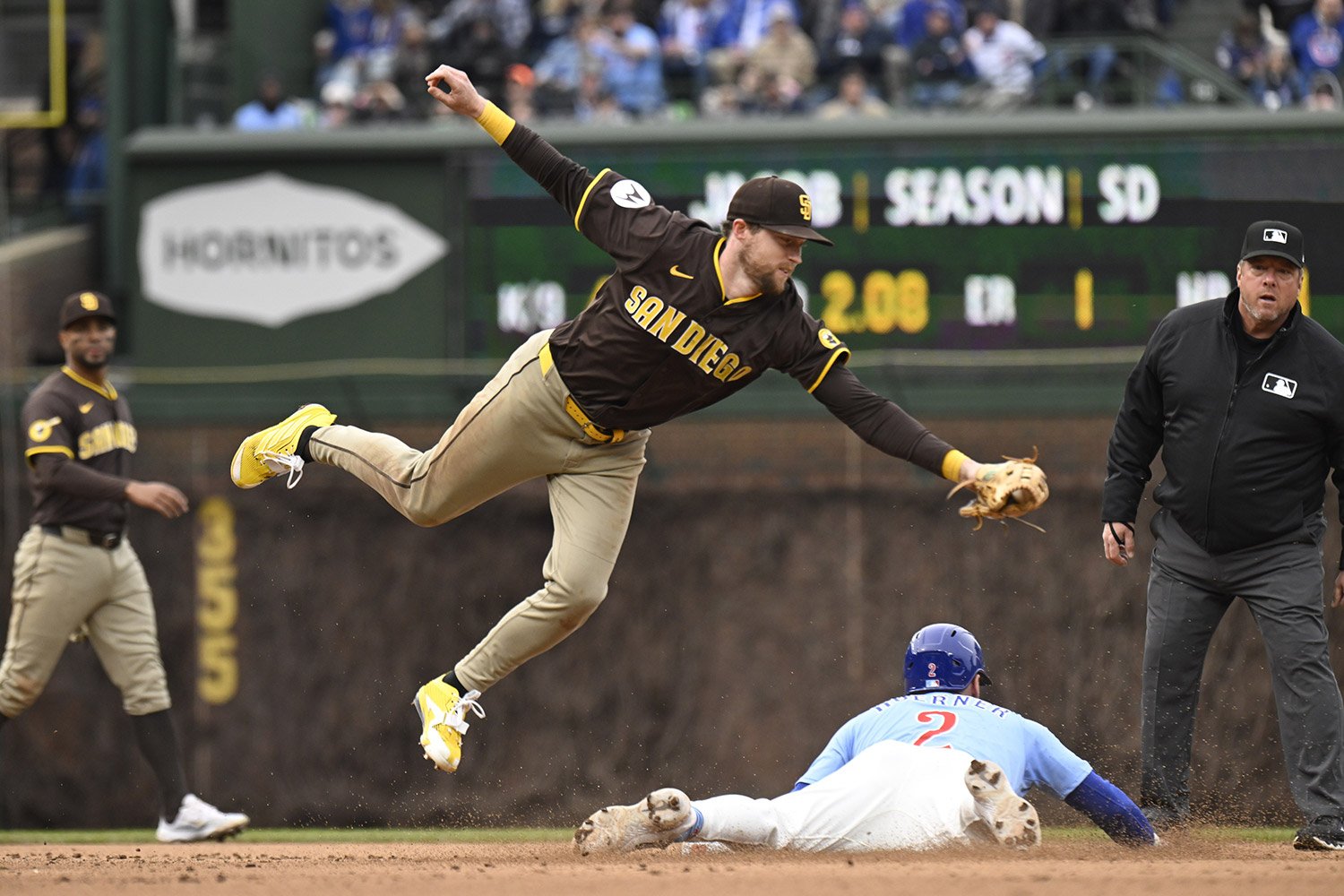 When it comes to the issues with analyzing defense in baseball, take your pick. There are a number of things that are frustrating in attempting to analyze it before the eyes of any hard data. Defensive metrics need the largest sample size of any element in baseball before they begin to stabilize. The metrics themselves are somewhat finicky and don't quantify everything to begin with. So, you're ultimately waiting months to analyze something that doesn't tell you the whole story. Fielding Run Value is, at present, as close as we've gotten. It evaluates defense on a run-based scale, incorporating Outs Above Average in terms of range and Throwing Runs in terms of the arm. Catchers have their stuff folded in, as well. Of course, once they stabilize and you get into the actual numbers, you come to yet another realization: they don't look good for the San Diego Padres. The Padres don't necessarily have the limitation of sample that we see with other teams because there has been so little turnover. They subtracted Jurickson Profar in left field. By FRV, Jurickson Profar was the seventh-worst outfield defender in baseball last year. Other than that, you're looking at largely the same defensive group that we saw in 2024 (albeit with some injuries to be taken into account). Even in mid-May, we can look at it with a more critical eye. By FRV (-12), the Padres were the 21st-ranked team in baseball in 2024. Lucky for them, they scored more runs than most of the teams in baseball and were able to reach the postseason regardless. The defense didn't matter in the same way it didn't matter for the Los Angeles Dodgers, who sat tied with them in the FRV game. Thus far in 2025, the Padres are... 20th in FRV (-3). The right side of the infield is a particular problem. Jake Cronenworth is at -4, with his range contributing -5 to the calculation. Luis Arráez is at that same -4 mark with that same range issue. Cronenworth has an estimated defensive success rate of 79 percent. He's currently at a 70 percent success rate. Arráez carries an estimated figure of 71 percent. He's at an actual rate of 65. And it's not like things get better on the other side of second base. Manny Machado is at -2. Xander Bogaerts sits exactly average (0.). So while Fernando Tatis Jr has been excellent (6 FRV) and Jackson Merrill hasn't quite played enough games to be anything other than average, the infield defense, in particular, appears to be a massive issue for this club. Which is made even more frustrating when you consider that the pitching staff is still maintaining quality strikeout rates and allowing the second-lowest rate of hard contact. Given the issues, particularly on the range side, you'd think such trends would be ideal. Turns out, they're not. The Padres being a poor defensive team was hardly an issue last year because they had an offense that scored consistently and a pitching staff that was punching out hitters on both ends of the staff. They were able to compensate effectively. The pitching continues to do its job. However, while the minimal turnover isn't too impactful on the defensive side, given the carryover of starters, it has made the Padres a more top-heavy offense. Profar's gone. The bench contributors are gone. The result is a much smaller margin for error than the team was working with in 2024. While the turnover does allow us to make certain declarations, there are still certain considerations that must be taken into account. Cronenworth missed a month and is still working with a rib injury. Arráez doesn't have an extensive track record as a first baseman. Even Bogaerts is readjusting to his old spot. There is reason to believe that improvement is possible. If it's not, though, trade season is going to heat up. Defensive infrastructure will also be a priority, as the Padres lack the same means of overcoming it that they had last year.
 -
When it comes to the issues with analyzing defense in baseball, take your pick. There are a number of things that are frustrating in attempting to analyze it before the eyes of any hard data. Defensive metrics need the largest sample size of any element in baseball before they begin to stabilize. The metrics themselves are somewhat finicky and don't quantify everything to begin with. So, you're ultimately waiting months to analyze something that doesn't tell you the whole story. Fielding Run Value is, at present, as close as we've gotten. It evaluates defense on a run-based scale, incorporating Outs Above Average in terms of range and Throwing Runs in terms of the arm. Catchers have their stuff folded in, as well. Of course, once they stabilize and you get into the actual numbers, you come to yet another realization: they don't look good for the San Diego Padres. The Padres don't necessarily have the limitation of sample that we see with other teams because there has been so little turnover. They subtracted Jurickson Profar in left field. By FRV, Jurickson Profar was the seventh-worst outfield defender in baseball last year. Other than that, you're looking at largely the same defensive group that we saw in 2024 (albeit with some injuries to be taken into account). Even in mid-May, we can look at it with a more critical eye. By FRV (-12), the Padres were the 21st-ranked team in baseball in 2024. Lucky for them, they scored more runs than most of the teams in baseball and were able to reach the postseason regardless. The defense didn't matter in the same way it didn't matter for the Los Angeles Dodgers, who sat tied with them in the FRV game. Thus far in 2025, the Padres are... 20th in FRV (-3). The right side of the infield is a particular problem. Jake Cronenworth is at -4, with his range contributing -5 to the calculation. Luis Arráez is at that same -4 mark with that same range issue. Cronenworth has an estimated defensive success rate of 79 percent. He's currently at a 70 percent success rate. Arráez carries an estimated figure of 71 percent. He's at an actual rate of 65. And it's not like things get better on the other side of second base. Manny Machado is at -2. Xander Bogaerts sits exactly average (0.). So while Fernando Tatis Jr has been excellent (6 FRV) and Jackson Merrill hasn't quite played enough games to be anything other than average, the infield defense, in particular, appears to be a massive issue for this club. Which is made even more frustrating when you consider that the pitching staff is still maintaining quality strikeout rates and allowing the second-lowest rate of hard contact. Given the issues, particularly on the range side, you'd think such trends would be ideal. Turns out, they're not. The Padres being a poor defensive team was hardly an issue last year because they had an offense that scored consistently and a pitching staff that was punching out hitters on both ends of the staff. They were able to compensate effectively. The pitching continues to do its job. However, while the minimal turnover isn't too impactful on the defensive side, given the carryover of starters, it has made the Padres a more top-heavy offense. Profar's gone. The bench contributors are gone. The result is a much smaller margin for error than the team was working with in 2024. While the turnover does allow us to make certain declarations, there are still certain considerations that must be taken into account. Cronenworth missed a month and is still working with a rib injury. Arráez doesn't have an extensive track record as a first baseman. Even Bogaerts is readjusting to his old spot. There is reason to believe that improvement is possible. If it's not, though, trade season is going to heat up. Defensive infrastructure will also be a priority, as the Padres lack the same means of overcoming it that they had last year. View full article
-
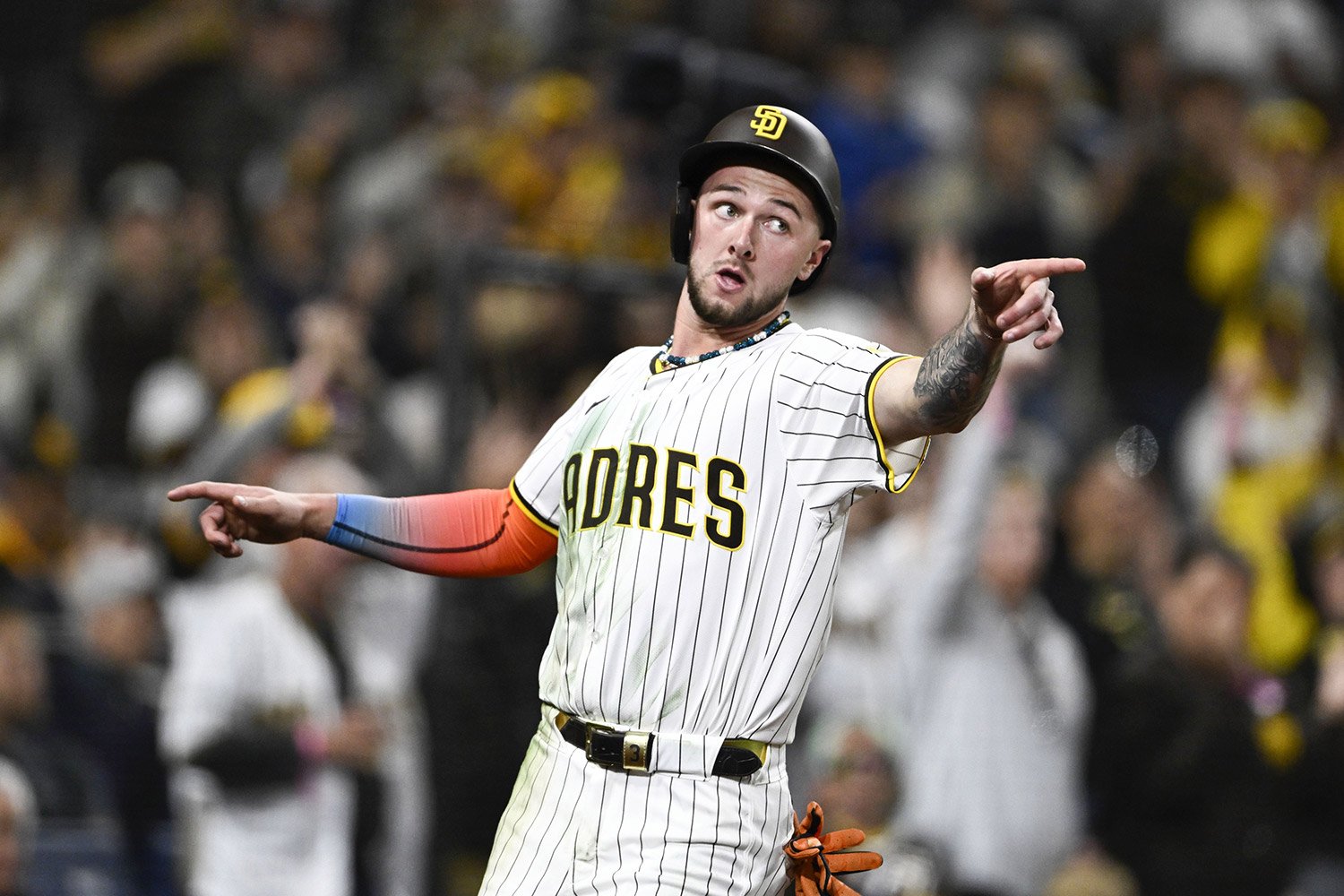 Jackson Merrill was on fire to start the season. Through 41 plate appearances in March & April, the sophomore outfielder was wRC+ing 202 courtesy of a .378/.415/.676 line that went along with a .297 ISO. Only a dozen players featured a better wRC+ through April 6th (the last game he played before his injury), and only eight carried more fWAR than Merrill's 0.6 mark in a minuscule sample. Merrill was out from April 6th to May 6th. He returned to rainy weather in the Bronx against the New York Yankees and recorded a pair of hits, one of which was a double. The next night, he notched another two, one of which was a home run off Max Fried (who, if you're unaware, has been one of the best starting pitchers in baseball this year): Merrill spent his weekend in Colorado continuing to hit. He recorded three hits on Friday and another four in the 21-0 win on Saturday. After an illness held him out of the lineup on Sunday, he was at it again with three hits. While it was a game the Padres ended up losing (courtesy of a Robert Suárez blown save), Merrill was a star in all facets: The May returns include a .607 average, a .625 OBP, and a 337 wRC+. He's struck out at a lower rate than he did in March & April while providing slightly more on the power side (.304 ISO). Obviously it's a smaller sample. But the fact that he didn't skip a beat even with a month between Major League games speaks to the talent level the Padres currently possess in center field. Even without enough time to qualify, his Baseball Savant percentile distribution is a sight to behold. If you're fan of the color red, at least. That the Padres were able to weather the storm without such a key component of their lineup is reflective of the contributions they've been able to get elsewhere (on both sides of the ball). But having Jackson Merrill back in the mix is perhaps the most important development in recent days for a Padres team with no shortage of them. Especially as they begin the march toward a contender-heavy June.
