


Randy Holt
-
Posts
486 -
Joined
-
Last visited
-
Days Won
6
Content Type
Profiles
San Diego Padres Videos
2026 San Diego Padres Top Prospects Ranking
San Diego Padres Free Agent & Trade Rumors, Notes, & Tidbits
Guides & Resources
2025 San Diego Padres Draft Pick Tracker
News
2026 San Diego Padres Draft Tracker: Picks & Bonuses
Forums
Blogs
Events
Store
Downloads
Gallery
Everything posted by Randy Holt
-
Despite coming out of the gate firing, the San Diego Padres spent the second quarter of 2025 stumbling all over the field. Their offense cratered for a time; their pitching faltered in those rare moments when the offense provided support. There were injuries. There were suspensions. There were fringe players designated for assignment. They might have emerged from it in solid standing in the broader National League playoff picture, but it wasn't as easy as April led us to believe it would be. Nonetheless, it remains a key benchmark for the 2025 season. The Padres hit their 81st game of the season over the weekend, marking the official midway point (even if we won't recognize the "second half" until after the All-Star break) of the campaign. With that, it seemed appropriate to take stock of some of the standouts on this roster to date (for better and worse). We'll keep it fairly standard in recognizing those names, with our last one projecting into the season's second half. The theme, though, is stability. San Diego has somewhat lacked it in the first half, given the rollercoaster performance, the injuries, and the lack of depth rearing its ugly head. With that, we're leaning on the concept to identify some of the key components. Most Valuable Hitter: Manny Machado We'll take some time this week to put Manny Machado's excellence into context, but it's hard to overstate the value he's brought to this roster. As the team started their mid-May offensive lull, Machado upped his game, particularly on the power side. Coming out of the gate relatively quiet in that respect (.144 ISO), Machado turned in a .196 ISO in May and a .229 figure thus far in June. Even when you focus more on the comprehensive rather than an individual component like power, it's a rather flattering picture for Machado. By wOBA (.365) and wRC+ (138), he's been the team's most valuable hitter. Anyway you slice it, he's been the most valuable hitter. Not that this rings as any sort of surprise. But given a relatively quiet start on the power side, in conjunction with the blazing starts from Fernando Tatis Jr & Jackson Merrill, it kind of is. Machado's a future Hall of Fame player for a reason, though, and his stability in the wake of such massive struggles tells you everything you need to know. Honorable Mention: Gavin Sheets Most Valuable Pitcher: Nick Pivetta It's a bit of a surprise on a roster that features Dylan Cease, Michael King, and Robert Suárez to have Pivetta emerge as the team's most valuable arm. You could even take it a step further and include the standout performances out of the relief corps. But considering how volatile the first half has been for San Diego, you'd like a little bit of calm, a little bit of stability. Pivetta has given the team that. Through 16 starts, Pivetta has averaged 5.8 innings. He has a 3.36 ERA and a 3.27 FIP. It's the best work he's done in his career from a run prevention standpoint. There have been some signs of regression the whole way through (11.9 Barrel%, 36th percentile chase rate), but he's worked extremely effectively and provided some respite for a bullpen that has had to work heavily, depending on which starter takes the bump. While it has been imperfect, it has been immensely valuable. Honorable Mention: Adrian Morejón Most Surprising Player: Stephen Kolek Stability is a recurring theme here, given the Padres' performance since mid-May. Already shorthanded in the rotation to start the year (sans Yu Darvish & Matt Waldron), the team also lost Michael King to a nerve issue that should keep him out until at least the All-Star break. Factor in Dylan Cease's struggles in a given outing & Randy Vásquez's lack of command, and the Padres just needed someone to give them an ounce of it out of the gate. Enter Stephen Kolek. Through 10 starts, Kolek has pitched to a 3.95 ERA and 4.07 FIP with low strikeout numbers (17.4 K%) and a walk rate that could be characterized as just okay (8.3 percent). But he's never been a particularly high-punchout guy and has done two things extraordinarily well: he's avoided barrels and gotten the ball on the ground. Kolek is currently working with a Barrel% in the 84th percentile (5.7 percent) and a GB% in the 81st percentile (50.0 percent). There have been some wonky starts mixed in there, but considering the surface work that Kolek did as a reliever last year (5.21 ERA), it's surprising just how steady he's been as a backend option. Honorable Mention: Gavin Sheets Most Disappointing Player: Kyle Hart Xander Bogaerts was the easy play, but he started to show some signs of life in June. And it might seem silly to pick on someone like Hart, but he serves as our most disappointing player for the same reason that Kolek landed opposite him on the spectrum. With so little rotation depth, Hart's return from the KBO was supposed to be that sort of stabilizing presence to fill out the back half of the rotation. Instead, he's made just six starts and given up five runs in half of them. The home run ball has been a particular source of woe for Hart. His 16.0 HR/FB ratio was the worst among team starters before his second demotion, with nothing else happening in his skill set to compensate. Things haven't been much better in El Paso, as he's pitched to a 4.67 ERA and 5.61 FIP, so we may not see him again anytime soon. Honorable Mention: Xander Bogaerts Most Likely To Succeed (In The Second Half): Jackson Merrill In between a hamstring injury and a concussion, Merrill has done very little to make us doubt that the superstardom he indicated as a rookie was anything other than real. When healthy, he's been among the Padres' most consistent hitters. To date, Merrill's slash includes a .301 average and a .354 on-base percentage, with a .353 wOBA that trails only Machado as the team's best. Where Merrill could stand to improve is on the power side. His .161 ISO does represent a step back from last year's .208 mark, but some mild tweaks to the approach could serve as a springboard there. Regardless, now that Merrill's injury issues appear to be isolated, things behind him, he could be in store for a big second half. Honorable Mention: Ryan Bergert View full article
-
Can Increased Aggression Help Jose Iglesias Claim Some Offensive Value?
Randy Holt posted an article in Padres
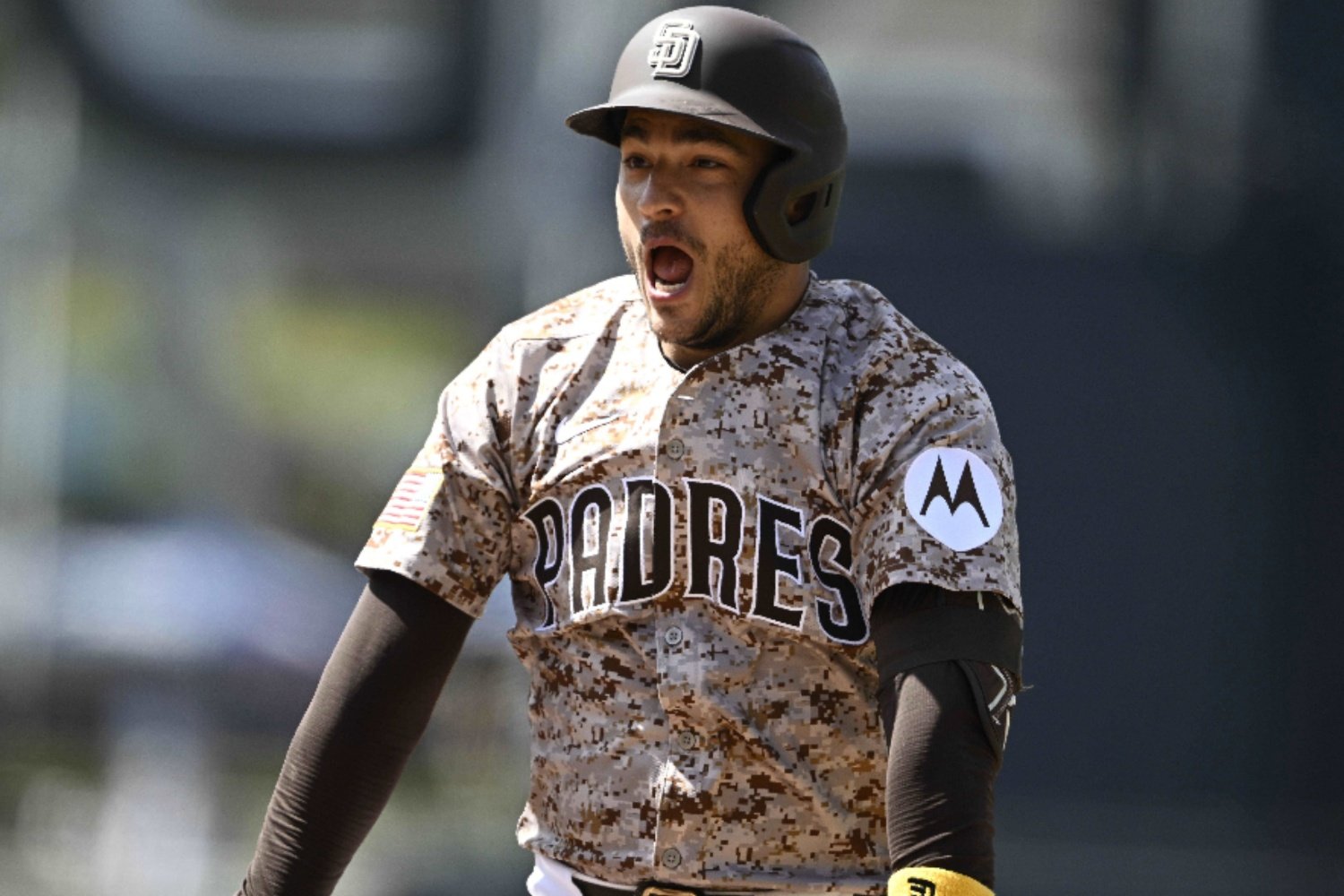 Jose Iglesias is not having a good season. As of this writing, he's turned in a wRC+ of 66 for a San Diego Padres team in need of supplementary offense. He's at a -3 Outs Above Average for a San Diego Padres team in need of stability on defense. Despite a strong showing in Queens for the New York Mets as recently as last year, he's been sort of a dud off the bench for the Padres. None of that mattered on Sunday, of course. Iglesias not only knocked in all three runs to help the Friars take the series over the Kansas City Royals, he provided the walk-off in the ninth inning that sent everyone home happy. It was a brief respite from what has otherwise been a year-long void at the plate in Jose Iglesias form: What's notable about the walk-off fielder's choice is that Iglesias merely put a ball in play. With Luis Arráez standing on third, Xander Bogaerts on second, and just one out on the board, the Royals drew the infield in. Iglesias' chopper found Bobby Witt Jr, who didn't have time to nab Arráez at the plate. A ball in play got the job done. Perhaps that's something Iglesias should consider moving forward. To say the offense hasn't been there would qualify as something of an understatement. His 44-percent-below-league-average wRC+ is indicative of that alone. Only 21 players among the 268 with at least 150 plate appearances are lower in that regard. Elsewhere on the stat sheet, he's sitting at a .232 average, a .297 on-base percentage, and an isolated power of just .085. In general, there is some value in his approach. His 16.3 percent strikeout rate is tied for second-best on the team behind only Arráez. So, in theory, balls have been put in play by Iglesias. But avoiding strikeouts isn't necessarily the same thing as having an approach. If anything, the way Iglesias has stepped into the box thus far has been in avoidance of striking out rather than creating offense. There is such a thing as being too patient at the plate. Iglesias' overall swing rate is down more than six percent from last year (46.0 percent). He's cut his chase rate down by a modest two percent but has lost his swing rate in the zone by almost exactly 11 percent (52.4 percent). As a result, his current K% is four percent higher than his career average along with all of his swing trends dropping to varying degrees. And therein lies the problem: Iglesias isn't simply being patient. He's taking strikes. If it were as simple as taking pitches and working your way on base, Iglesias would have a walk rate higher than 5.6 percent, which is ahead of only Arráez. Instead, he's hanging around at a 23.9 percent called strike rate that trails only Chase Meidroth & Alex Verdugo among hitters in that same 150 PA group, as well as a 31.6 CSW% that is one of the league's 10 highest. Now, swinging the bat more, in a vacuum, isn't necessarily going to create more offense for Iglesias and the Padres. While he's never been a high-impact swinger, a 0.8 Barrel% & 23.3 Hard-Hit% are low even by his standards. But, it's fairly clear that patience alone isn't a virtue for his game. Opposing pitchers are already hitting the zone at a 53.2 percent clip. There are opportunities here for Iglesias to get the bat through the zone with a little more frequency. A reevaluation of the zone can help more balls find their way in play and, ideally, lead pitchers to work around the zone a little bit more. That would, in turn, allow Iglesias to turn that keen eye into something valuable via the walk. This is all hypothetical and relatively oversimplified, of course. But, last year's numbers can give us a little bit of insight into what a more active version of Jose Iglesias looks like. He swung at a 52.5 percent rate overall and a 63.3 percent rate inside of the strike zone. The result? A lower strikeout rate, some batted ball luck, and a wRC+ of 137. It might be unreasonable to expect him to replicate it exactly, but there's recent precedent for additional value in his bat given his overall ability to make contact. It's a simple fix that isn't guaranteed to work given his already-modest impact at the plate. But, as the trade deadline draws ever closer, it becomes inevitable that the Padres are going to bring in some new blood for the bench. A player that appears to be well-liked in the clubhouse and possesses no shortage of veteran experience could be safe, but he could further help his case by serving as a creator more at the plate rather than a spectator.
 -
Jose Iglesias is not having a good season. As of this writing, he's turned in a wRC+ of 66 for a San Diego Padres team in need of supplementary offense. He's at a -3 Outs Above Average for a San Diego Padres team in need of stability on defense. Despite a strong showing in Queens for the New York Mets as recently as last year, he's been sort of a dud off the bench for the Padres. None of that mattered on Sunday, of course. Iglesias not only knocked in all three runs to help the Friars take the series over the Kansas City Royals, he provided the walk-off in the ninth inning that sent everyone home happy. It was a brief respite from what has otherwise been a year-long void at the plate in Jose Iglesias form: What's notable about the walk-off fielder's choice is that Iglesias merely put a ball in play. With Luis Arráez standing on third, Xander Bogaerts on second, and just one out on the board, the Royals drew the infield in. Iglesias' chopper found Bobby Witt Jr, who didn't have time to nab Arráez at the plate. A ball in play got the job done. Perhaps that's something Iglesias should consider moving forward. To say the offense hasn't been there would qualify as something of an understatement. His 44-percent-below-league-average wRC+ is indicative of that alone. Only 21 players among the 268 with at least 150 plate appearances are lower in that regard. Elsewhere on the stat sheet, he's sitting at a .232 average, a .297 on-base percentage, and an isolated power of just .085. In general, there is some value in his approach. His 16.3 percent strikeout rate is tied for second-best on the team behind only Arráez. So, in theory, balls have been put in play by Iglesias. But avoiding strikeouts isn't necessarily the same thing as having an approach. If anything, the way Iglesias has stepped into the box thus far has been in avoidance of striking out rather than creating offense. There is such a thing as being too patient at the plate. Iglesias' overall swing rate is down more than six percent from last year (46.0 percent). He's cut his chase rate down by a modest two percent but has lost his swing rate in the zone by almost exactly 11 percent (52.4 percent). As a result, his current K% is four percent higher than his career average along with all of his swing trends dropping to varying degrees. And therein lies the problem: Iglesias isn't simply being patient. He's taking strikes. If it were as simple as taking pitches and working your way on base, Iglesias would have a walk rate higher than 5.6 percent, which is ahead of only Arráez. Instead, he's hanging around at a 23.9 percent called strike rate that trails only Chase Meidroth & Alex Verdugo among hitters in that same 150 PA group, as well as a 31.6 CSW% that is one of the league's 10 highest. Now, swinging the bat more, in a vacuum, isn't necessarily going to create more offense for Iglesias and the Padres. While he's never been a high-impact swinger, a 0.8 Barrel% & 23.3 Hard-Hit% are low even by his standards. But, it's fairly clear that patience alone isn't a virtue for his game. Opposing pitchers are already hitting the zone at a 53.2 percent clip. There are opportunities here for Iglesias to get the bat through the zone with a little more frequency. A reevaluation of the zone can help more balls find their way in play and, ideally, lead pitchers to work around the zone a little bit more. That would, in turn, allow Iglesias to turn that keen eye into something valuable via the walk. This is all hypothetical and relatively oversimplified, of course. But, last year's numbers can give us a little bit of insight into what a more active version of Jose Iglesias looks like. He swung at a 52.5 percent rate overall and a 63.3 percent rate inside of the strike zone. The result? A lower strikeout rate, some batted ball luck, and a wRC+ of 137. It might be unreasonable to expect him to replicate it exactly, but there's recent precedent for additional value in his bat given his overall ability to make contact. It's a simple fix that isn't guaranteed to work given his already-modest impact at the plate. But, as the trade deadline draws ever closer, it becomes inevitable that the Padres are going to bring in some new blood for the bench. A player that appears to be well-liked in the clubhouse and possesses no shortage of veteran experience could be safe, but he could further help his case by serving as a creator more at the plate rather than a spectator. View full article
-
The San Diego Padres Need Jackson Merrill To Recover His Power Stroke
Randy Holt posted an article in Padres
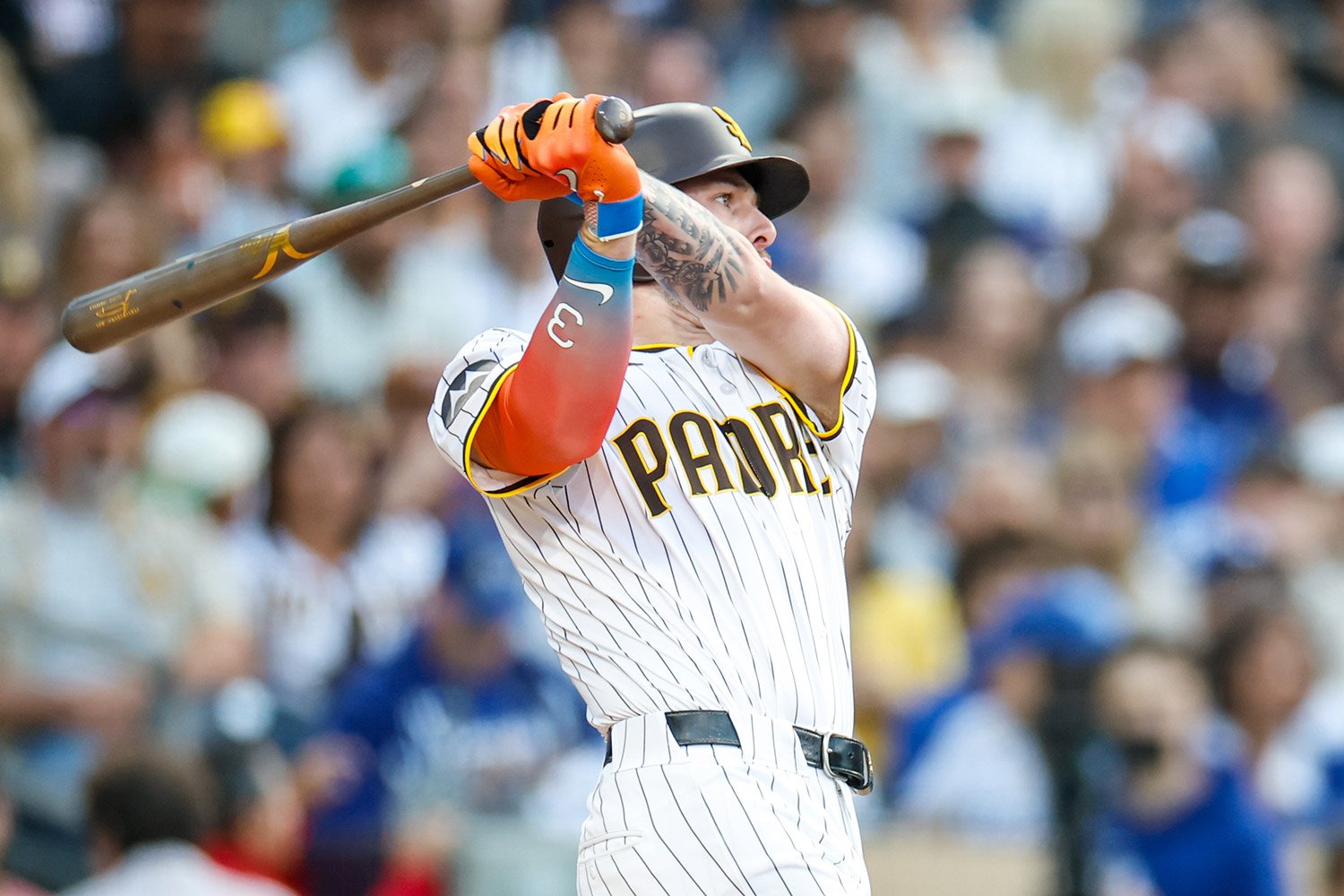 It's difficult to criticize the season Jackson Merrill is turning in thus far in 2025. It might even be unnecessary. The San Diego Padres' star centerfielder has worked through a hamstring injury and a week-long stay on the concussion IL to turn in a .303/.347/.474 line, a bump in the walk rate, and, ultimately, a 130 wRC+. When healthy, he's been very, very good. However, a Padres squad that has struggled to produce runs consistently over the past month needs him to be even better, specifically in terms of his power production. It's a tough ask for a player who has dealt with a non-contact injury and a concussion to date. But it was a bar Merrill set last year when he turned in a .208 isolated power figure and hit 24 home runs. This year, the former sits at .171 and the latter at just five. With the Padres sitting 27th in the league in that regard (.130 ISO team-wide), a bump in the power game from Merrill seems like an obvious route toward collective offensive improvement. Not that it's solely on Merrill to sort out the power side. That we know it's there, given the upside and the output from 2024. Where has it gone, exactly? A 37 percent drop in ISO isn't insignificant, and Merrill has seen a notable decline in Hard-Hit% between 2024 (43.9) and 2025 (38.2), whether there's a clear explanation — and, as such, an apparent fix — remains to be seen. The approach, in a broad sense, has regressed a bit: He's been a bit more aggressive, both inside and outside the zone. In doing so, he's subjected himself to more whiffs and less overall contact. While it's not anything drastic in terms of his 2024 trends, reigning in the discipline a bit could help him to realize some of that power upside more frequently. However, we can also refine this approach a little further. One possible explanation for the power decline is in the types of pitches at which Merrill is swinging. Off-speed pitches, in particular, represent a source of woe for Merrill in the small sample that has been his career. Merrill has been able to muster a slug against off-speed pitches just 25.9 percent of the time this year, compared to 47.7 vs. fastballs and 56.7 against breaking pitches. It's not an aberration either, as his expected slug against the pitch type is just 35.1 percent, nearly 20 points lower than his expected slug against either of the two other pitch types. Yet, Merrill is hacking at off-speed pitches more than any other pitch type: That's a Swing% of 65.6 against that pitch type, not only a drastic increase from 2024 (54.7), but also his highest rate against any of the three types by a significant margin. He's chasing (44.6 percent) and whiffing (28.8 percent) at that pitch pretty severely in comparison to the other two types. To say nothing of a 63.6 percent groundball rate when he does make contact. He's in the low 40s in GB% when the other two types of pitches are put into play. So, it's not only that he's having a tough time making contact to begin with, but it's also something that we can point to in pinning down his overall power output. If it were a situation where those numbers existed but he was minimizing the actual swings, then we probably wouldn't be wondering where the power went. But because such a high volume of swings against off-speed exists, it looks like an easy explanation. The good news is that it's not as if pitchers are suddenly throwing a bunch of off-speed at Jackson Merrill in comparison to last year. He's seeing less of it this year, at just 14.2 percent. It's the lowest frequency of any of the pitch types. Merrill's just subjecting himself to it at a higher rate. Which, despite the outcomes, does read as a positive. There is nothing in the mechanics to suggest that a path or attack angle has changed, and the only noticeable change in the zone is a slight drop in his swing frequency. However, because Merrill is able to derive much of his power from that area anyway, there is no conversation worth having about the zone itself. For Jackson Merrill, it very much does seem to be rooted in the approach. While it isn't hurting his overall game, it is sapping him of some of his power potential. It's important to consider that the two separate injuries could have stalled his progression in matters of the approach. Now clear of the second one, perhaps he now has the runway to settle in, at which point, the Padres would get the power boost they so sorely need.
 -
It's difficult to criticize the season Jackson Merrill is turning in thus far in 2025. It might even be unnecessary. The San Diego Padres' star centerfielder has worked through a hamstring injury and a week-long stay on the concussion IL to turn in a .303/.347/.474 line, a bump in the walk rate, and, ultimately, a 130 wRC+. When healthy, he's been very, very good. However, a Padres squad that has struggled to produce runs consistently over the past month needs him to be even better, specifically in terms of his power production. It's a tough ask for a player who has dealt with a non-contact injury and a concussion to date. But it was a bar Merrill set last year when he turned in a .208 isolated power figure and hit 24 home runs. This year, the former sits at .171 and the latter at just five. With the Padres sitting 27th in the league in that regard (.130 ISO team-wide), a bump in the power game from Merrill seems like an obvious route toward collective offensive improvement. Not that it's solely on Merrill to sort out the power side. That we know it's there, given the upside and the output from 2024. Where has it gone, exactly? A 37 percent drop in ISO isn't insignificant, and Merrill has seen a notable decline in Hard-Hit% between 2024 (43.9) and 2025 (38.2), whether there's a clear explanation — and, as such, an apparent fix — remains to be seen. The approach, in a broad sense, has regressed a bit: He's been a bit more aggressive, both inside and outside the zone. In doing so, he's subjected himself to more whiffs and less overall contact. While it's not anything drastic in terms of his 2024 trends, reigning in the discipline a bit could help him to realize some of that power upside more frequently. However, we can also refine this approach a little further. One possible explanation for the power decline is in the types of pitches at which Merrill is swinging. Off-speed pitches, in particular, represent a source of woe for Merrill in the small sample that has been his career. Merrill has been able to muster a slug against off-speed pitches just 25.9 percent of the time this year, compared to 47.7 vs. fastballs and 56.7 against breaking pitches. It's not an aberration either, as his expected slug against the pitch type is just 35.1 percent, nearly 20 points lower than his expected slug against either of the two other pitch types. Yet, Merrill is hacking at off-speed pitches more than any other pitch type: That's a Swing% of 65.6 against that pitch type, not only a drastic increase from 2024 (54.7), but also his highest rate against any of the three types by a significant margin. He's chasing (44.6 percent) and whiffing (28.8 percent) at that pitch pretty severely in comparison to the other two types. To say nothing of a 63.6 percent groundball rate when he does make contact. He's in the low 40s in GB% when the other two types of pitches are put into play. So, it's not only that he's having a tough time making contact to begin with, but it's also something that we can point to in pinning down his overall power output. If it were a situation where those numbers existed but he was minimizing the actual swings, then we probably wouldn't be wondering where the power went. But because such a high volume of swings against off-speed exists, it looks like an easy explanation. The good news is that it's not as if pitchers are suddenly throwing a bunch of off-speed at Jackson Merrill in comparison to last year. He's seeing less of it this year, at just 14.2 percent. It's the lowest frequency of any of the pitch types. Merrill's just subjecting himself to it at a higher rate. Which, despite the outcomes, does read as a positive. There is nothing in the mechanics to suggest that a path or attack angle has changed, and the only noticeable change in the zone is a slight drop in his swing frequency. However, because Merrill is able to derive much of his power from that area anyway, there is no conversation worth having about the zone itself. For Jackson Merrill, it very much does seem to be rooted in the approach. While it isn't hurting his overall game, it is sapping him of some of his power potential. It's important to consider that the two separate injuries could have stalled his progression in matters of the approach. Now clear of the second one, perhaps he now has the runway to settle in, at which point, the Padres would get the power boost they so sorely need. View full article
-
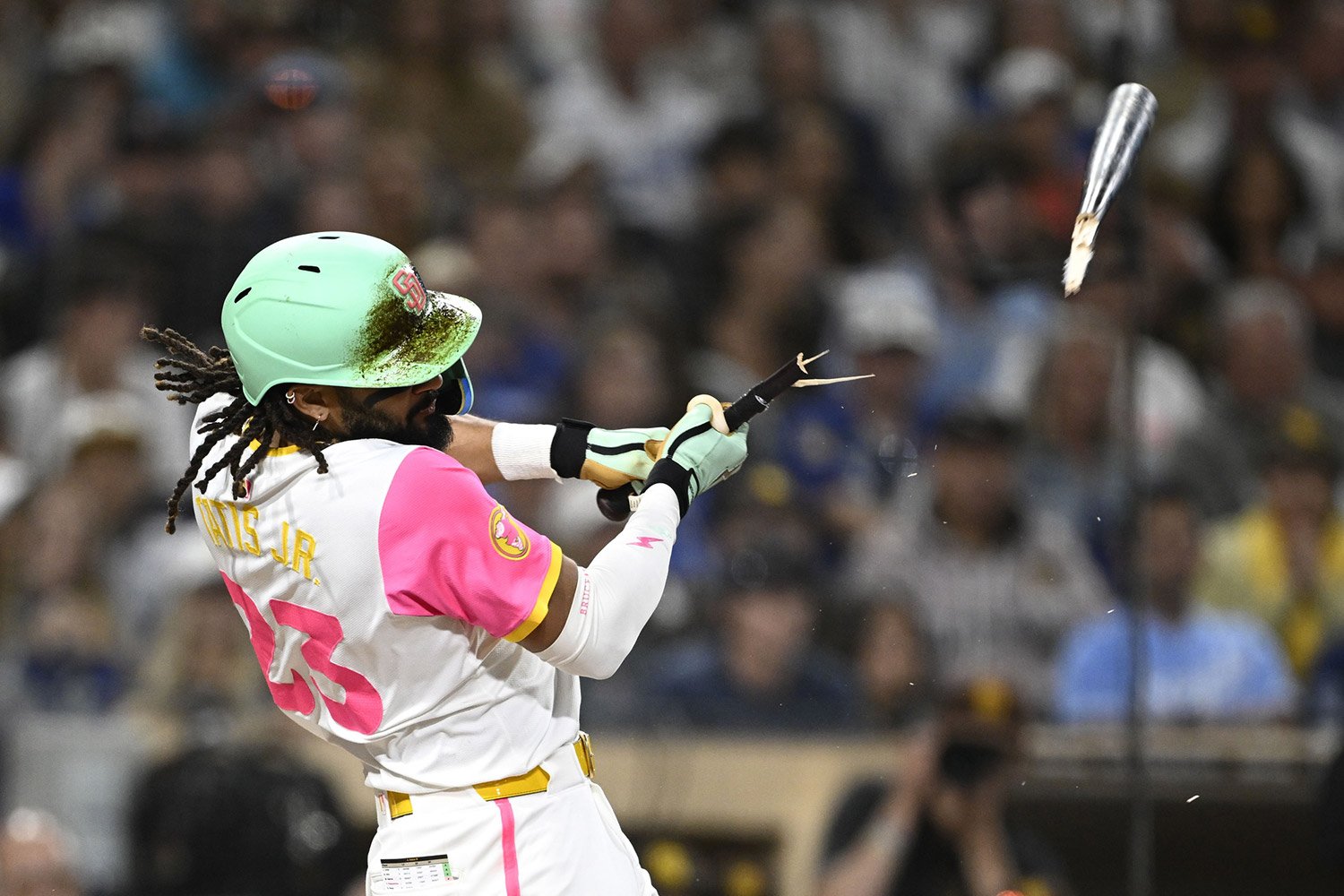 After a scorching start to the season, the San Diego Padres have won just nine games in June. They've won only 14 since May 16th, leaving them with a 14-20 record since the point in which some of their offensive woes really started to manifest. That particular mark in the calendar is significant, as it was a stretch where they plated just three runs in five games and started the slide in which they are still currently mired. Whether we're attributing it to injury, lack of depth, or poor timing on the part of pitching struggles, it has undoubtedly been the team's worst stretch of any length this season. However, we can also look closer to the center in identifying just what has made it such a struggle since May 16th. Because it's just a broad swoon for the lineup but a situational one. Whether you're considering "situational" to mean runners on, runners in scoring position, or hitting with two outs, the Padres were succeeding in the early going. The following is what the production looked like and where they ranked as a team in each facet as of May 15th: Runners On: .271 AVG (4th), .340 OBP (7th), 17.5 K% (2nd), 9.4 BB% (14th), .124 ISO (19th), .313 BABIP (5th) RISP: .282 AVG (4th), .362 OBP (3rd), 18.5 K% (4th), 11.7 BB% (7th), .103 ISO (27th), .332 BABIP (3rd) With Two Outs: .294 AVG (1st), .369 OBP (1st), 15.7 K% (1st), 9.6 BB% (9th), .184 ISO (4th), .325 BABIP (3rd) That's obviously a lot to unpack. The team was quite good at generating production with runners on, whether they were in a scoring position or not. They were consistently getting the ball in play and working their way on base. Neither BABIP figure is outlandish, so it's hard to say that they were relying entirely on luck. While they weren't producing a real impact at the plate, there was a visible approach that allowed them to score runs when given the opportunity. The two-out element really stands out, especially considering how much better the Padres were than everyone else. Their average was 25 points higher than the second-place Athletics, and their strikeout rate was five percent better than second-place Kansas City. You could make the argument that regression was due there, in particular, given how far ahead they were of their counterparts on either leaderboard. What was really impressive was that it wasn't a matter of one or two guys carrying any figure, either. Jackson Merrill started the year hitting over .400 with runners on. Each of Manny Machado, Jose Iglesias, and Luis Arráez carried averages over .300 while Gavin Sheets & Fernando Tatis Jr. were over .280. The lowest wRC+ with a runner on base from that group was Iglesias' 110. It got even better when you put said runners in scoring position. Merrill's average still paced the group (.421), but Iglesias joined him in the hitting-over-.400 department (.409). Machado was at .395 while Tatis' .296 average with runners in scoring position was the "worst" of that group. The top performers with two outs included Machado (.429 average), Tatis Jr (.362), and Sheets (.341). None of the three struck out more than 16 percent of the time in such situations, with Tatis (.362 ISO) and Machado (.224) doing some of their best work on the power side with two outs on the board. Obviously, things can become a little more outlandish when examining individual performance from a situational standpoint. You're looking at a 40-ish plate appearance sample prone to things like batting averages over .400. Each guy has different nuances and approach trends, but the bottom line is that the Padres were absolutely thriving when you dropped them in run-scoring situations or put them against the wall with only an out to spare. Of course, that was before the calendar read May 16th. Here's where the Padres stand in each regard (runners on, runners in scoring position, and two-out situations) in the weeks since that point: Runners On: .236 AVG (23rd), .306 OBP (26th), 17.8 K% (3rd), 9.1 BB% (11th), .109 ISO (27th), .274 BABIP (25th) RISP: .214 AVG (27th), .283 OBP (29th), 20.3 K% (12th), 8.6 BB% (24th), .075 ISO (30th), .260 BABIP (27th) With Two Outs: .206 AVG (27th), .265 OBP (30th), 21.1 K% (11th), 7.4 BB% (24th), .124 ISO (19th), .248 BABIP (30th) That is... a lot of regression. It's not even the Padres' fault in certain respects. The walk numbers indicate a certain decline in the approach that could bear some responsibility, but it's not like they're expanding the zone to the point of racking up strikeout numbers here. It appears to be a lot of brutal luck, most notably with the way the BABIP numbers have plummeted in each situation. That's not even the regression-to-the-mean type of regression. That level of regression feels almost cruel. Unsurprisingly, the individual numbers don't favor many members of the Padres here. Luis Arráez is hitting .322 with runners on since May 16th. Jackson Merrill's at .289, Jake Cronenworth is .275, and then it's quite downhill from there. Moving those runners into scoring position further decreases the numbers, with Gavin Sheets' .258 average sitting as the third-best among qualifying Padres. His .290 average with two outs is the best, speaking to how much worse things have gotten for the collective since that May 16 threshold. A hodgepodge of numbers stands before you, to be sure. And, again, there are any number of things we can point to as bearing responsibility for why the Padres have regressed so much situationally. It's not all of their own doing, but the fact is, the regression is there. It's certainly the type of trend that was always going to manifest, but given that the team is currently sitting at over a month of this, you hope that things start to go the other way directly.
 -
After a scorching start to the season, the San Diego Padres have won just nine games in June. They've won only 14 since May 16th, leaving them with a 14-20 record since the point in which some of their offensive woes really started to manifest. That particular mark in the calendar is significant, as it was a stretch where they plated just three runs in five games and started the slide in which they are still currently mired. Whether we're attributing it to injury, lack of depth, or poor timing on the part of pitching struggles, it has undoubtedly been the team's worst stretch of any length this season. However, we can also look closer to the center in identifying just what has made it such a struggle since May 16th. Because it's just a broad swoon for the lineup but a situational one. Whether you're considering "situational" to mean runners on, runners in scoring position, or hitting with two outs, the Padres were succeeding in the early going. The following is what the production looked like and where they ranked as a team in each facet as of May 15th: Runners On: .271 AVG (4th), .340 OBP (7th), 17.5 K% (2nd), 9.4 BB% (14th), .124 ISO (19th), .313 BABIP (5th) RISP: .282 AVG (4th), .362 OBP (3rd), 18.5 K% (4th), 11.7 BB% (7th), .103 ISO (27th), .332 BABIP (3rd) With Two Outs: .294 AVG (1st), .369 OBP (1st), 15.7 K% (1st), 9.6 BB% (9th), .184 ISO (4th), .325 BABIP (3rd) That's obviously a lot to unpack. The team was quite good at generating production with runners on, whether they were in a scoring position or not. They were consistently getting the ball in play and working their way on base. Neither BABIP figure is outlandish, so it's hard to say that they were relying entirely on luck. While they weren't producing a real impact at the plate, there was a visible approach that allowed them to score runs when given the opportunity. The two-out element really stands out, especially considering how much better the Padres were than everyone else. Their average was 25 points higher than the second-place Athletics, and their strikeout rate was five percent better than second-place Kansas City. You could make the argument that regression was due there, in particular, given how far ahead they were of their counterparts on either leaderboard. What was really impressive was that it wasn't a matter of one or two guys carrying any figure, either. Jackson Merrill started the year hitting over .400 with runners on. Each of Manny Machado, Jose Iglesias, and Luis Arráez carried averages over .300 while Gavin Sheets & Fernando Tatis Jr. were over .280. The lowest wRC+ with a runner on base from that group was Iglesias' 110. It got even better when you put said runners in scoring position. Merrill's average still paced the group (.421), but Iglesias joined him in the hitting-over-.400 department (.409). Machado was at .395 while Tatis' .296 average with runners in scoring position was the "worst" of that group. The top performers with two outs included Machado (.429 average), Tatis Jr (.362), and Sheets (.341). None of the three struck out more than 16 percent of the time in such situations, with Tatis (.362 ISO) and Machado (.224) doing some of their best work on the power side with two outs on the board. Obviously, things can become a little more outlandish when examining individual performance from a situational standpoint. You're looking at a 40-ish plate appearance sample prone to things like batting averages over .400. Each guy has different nuances and approach trends, but the bottom line is that the Padres were absolutely thriving when you dropped them in run-scoring situations or put them against the wall with only an out to spare. Of course, that was before the calendar read May 16th. Here's where the Padres stand in each regard (runners on, runners in scoring position, and two-out situations) in the weeks since that point: Runners On: .236 AVG (23rd), .306 OBP (26th), 17.8 K% (3rd), 9.1 BB% (11th), .109 ISO (27th), .274 BABIP (25th) RISP: .214 AVG (27th), .283 OBP (29th), 20.3 K% (12th), 8.6 BB% (24th), .075 ISO (30th), .260 BABIP (27th) With Two Outs: .206 AVG (27th), .265 OBP (30th), 21.1 K% (11th), 7.4 BB% (24th), .124 ISO (19th), .248 BABIP (30th) That is... a lot of regression. It's not even the Padres' fault in certain respects. The walk numbers indicate a certain decline in the approach that could bear some responsibility, but it's not like they're expanding the zone to the point of racking up strikeout numbers here. It appears to be a lot of brutal luck, most notably with the way the BABIP numbers have plummeted in each situation. That's not even the regression-to-the-mean type of regression. That level of regression feels almost cruel. Unsurprisingly, the individual numbers don't favor many members of the Padres here. Luis Arráez is hitting .322 with runners on since May 16th. Jackson Merrill's at .289, Jake Cronenworth is .275, and then it's quite downhill from there. Moving those runners into scoring position further decreases the numbers, with Gavin Sheets' .258 average sitting as the third-best among qualifying Padres. His .290 average with two outs is the best, speaking to how much worse things have gotten for the collective since that May 16 threshold. A hodgepodge of numbers stands before you, to be sure. And, again, there are any number of things we can point to as bearing responsibility for why the Padres have regressed so much situationally. It's not all of their own doing, but the fact is, the regression is there. It's certainly the type of trend that was always going to manifest, but given that the team is currently sitting at over a month of this, you hope that things start to go the other way directly. View full article
-
Is There Any Hope For The Padres To Salvage The Xander Bogaerts Contract?
Randy Holt posted an article in Padres
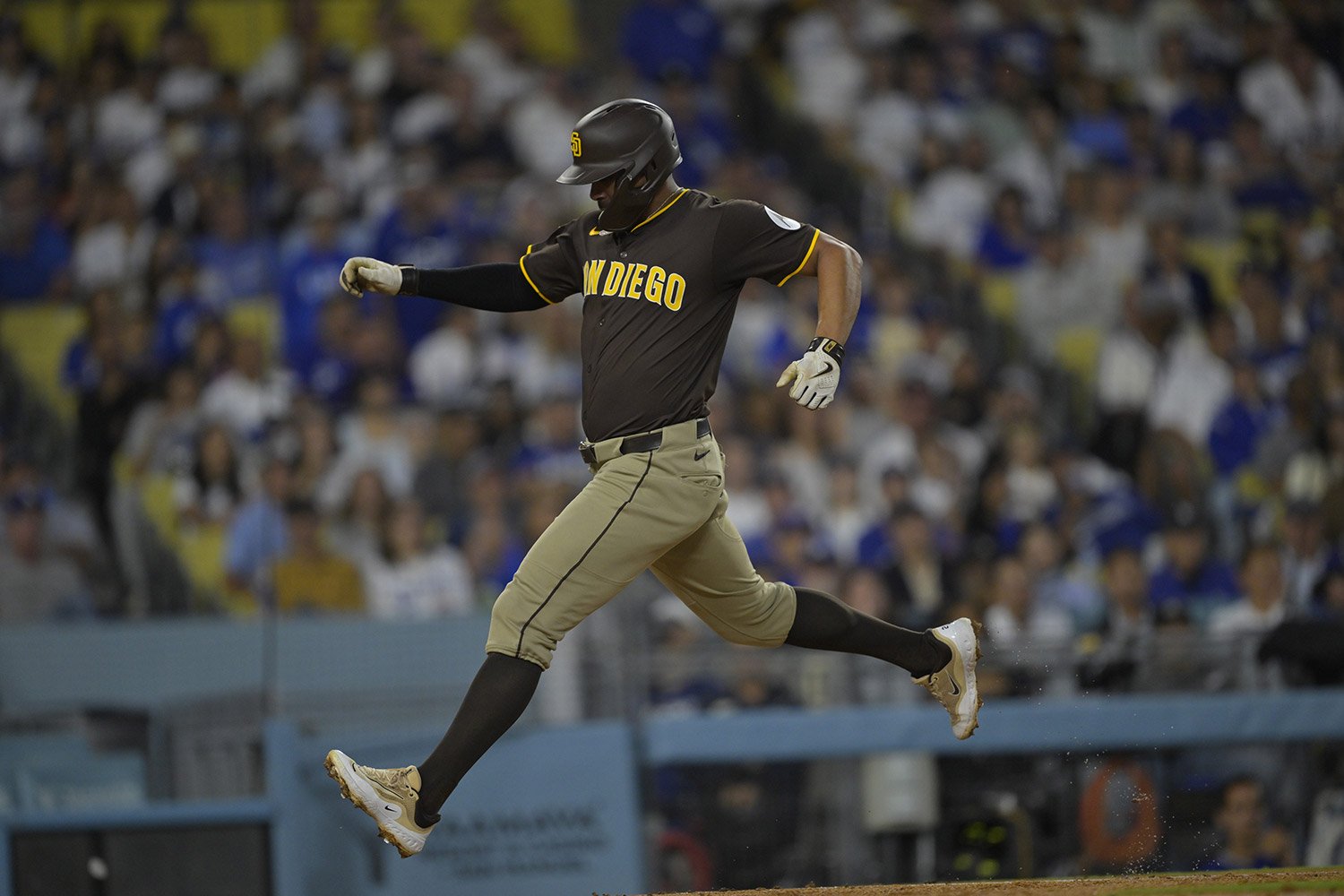 In the interest of full disclosure, the following was written prior to Xander Bogaerts' 4-for-4 performance in Los Angeles on Thursday night. And while it was a treat to see him perform in such a way as he did, it doesn't change the ultimate outlook given everything else we have to go off from 2025. With that in mind, it's difficult to find a superlative that gets to the heart of just how bad the Xander Bogaerts contract has been for the San Diego Padres. So hard-pressed to find a compliment for Manny Machado & Fernando Tatis Jr., the team signed a 30-year-old player without a ton of favorable projectability onto their payroll for 11 years. It was always a deal that seemed destined to fail. The midway point of year three, though, might've exceeded even the Padres' optimistic projection. The struggles of Bogaerts have drawn recent comparisons to Eric Hosmer, whose own disastrous deal remains on the payroll through the end of this year. While it's difficult to make such a dire comparison between the two — Bogaerts, for example, posted 6.6 fWAR in his first two seasons in San Diego while Hosmer sat at -1.0 fWAR — it speaks to the perception that has developed around the San Diego shortstop. You hate to pile on a guy that is acutely aware of the perception that surrounds him, as Bogaerts appears to be. This quote, following Wednesday's latest loss, is fairly telling (from MLB.com): However, it shouldn't come as a surprise that the Padres have reached this point with their starting shortstop. The following is Bogaerts' year-over-year wOBA: That thing has been in steady decline since 2021. Most metrics are going to tell you a similar story. His wRC+ has gone 129, 133, 119, 95, and 76 thus far in '25. His isolated slugging has read .198, .149, .154, .117, and .086. His Hard-Hit% goes 43.0, 39.5, 34.3, 33.0, and 37.8 percent. There is a slight variability, but each figure is far more indicative of decline than any other possible explanation. Each metric has essentially combined with the expected metrics (xBA, xSLG, etc.) to give Bogaerts the worst season of his career. And there isn't much to suggest that change is on the horizon. He's been able to increase his bat speed but has lost some consistency in squaring up on pitches. He's not generating more power, which pinpoints his inability to provide value when making contact. Essentially all of Bogaerts' present value to the lineup is wrapped up in walks and baserunning. Which is, of course, a problem when you're talking about another eight years on the books. As the Padres waver in their hope in the 2025 (divisional) standings, is it time to abandon it specifically in relation to Xander Bogaerts? Realistically, there isn't much that can be done. There are a few possible outcomes in the short term, however. The most optimistic read is that the team starts to figure it out at the plate. Jackson Merrill returns, the team starts hitting, and Bogaerts' present skill set becomes a perfectly acceptable secondary component in the lineup. There is a way for Bogaerts to contribute without relying on power. But the impact is going to have to come from somewhere else. Then, you can start to worry about the contract a little bit later and focus on the other needs that are currently glaring on this roster. The second-most optimistic scenario is that the Padres are able to find a trade partner for Bogaerts on the market. You'll likely have to eat a good chunk of the remaining money, but you can at least free up some payroll and examine other potential avenues at the position. Given the lack of depth on the roster, it's a bit of a tougher sell from a present standpoint. But if you're starting to think longer-term, then it makes some degree of sense. The Detroit Tigers have been (loosely, through information aggregators more than any actual source) linked to Bogaerts at this point. At the end of the day, the most likely outcome is the most dour one. The Padres are stuck with Xander Bogaerts on their roster until they're willing to eat the entirety of what remains on his contract. You'd obviously prefer a different direction. Either a world wherein Bogaerts is able to recover some semblance of value to complement his relatively solid defense, or the team is able to find a taker for some of the remaining money. But without an indicator in the underlying metrics that Bogaerts is being pinned down with any sort of bad luck or a change in money-saving attitude from a Major League Baseball team, you're likely looking at Door #3. Of course, there's a chance that Thursday night was, in fact, the start of something, and we forget all about this conversation by August.
 -
In the interest of full disclosure, the following was written prior to Xander Bogaerts' 4-for-4 performance in Los Angeles on Thursday night. And while it was a treat to see him perform in such a way as he did, it doesn't change the ultimate outlook given everything else we have to go off from 2025. With that in mind, it's difficult to find a superlative that gets to the heart of just how bad the Xander Bogaerts contract has been for the San Diego Padres. So hard-pressed to find a compliment for Manny Machado & Fernando Tatis Jr., the team signed a 30-year-old player without a ton of favorable projectability onto their payroll for 11 years. It was always a deal that seemed destined to fail. The midway point of year three, though, might've exceeded even the Padres' optimistic projection. The struggles of Bogaerts have drawn recent comparisons to Eric Hosmer, whose own disastrous deal remains on the payroll through the end of this year. While it's difficult to make such a dire comparison between the two — Bogaerts, for example, posted 6.6 fWAR in his first two seasons in San Diego while Hosmer sat at -1.0 fWAR — it speaks to the perception that has developed around the San Diego shortstop. You hate to pile on a guy that is acutely aware of the perception that surrounds him, as Bogaerts appears to be. This quote, following Wednesday's latest loss, is fairly telling (from MLB.com): However, it shouldn't come as a surprise that the Padres have reached this point with their starting shortstop. The following is Bogaerts' year-over-year wOBA: That thing has been in steady decline since 2021. Most metrics are going to tell you a similar story. His wRC+ has gone 129, 133, 119, 95, and 76 thus far in '25. His isolated slugging has read .198, .149, .154, .117, and .086. His Hard-Hit% goes 43.0, 39.5, 34.3, 33.0, and 37.8 percent. There is a slight variability, but each figure is far more indicative of decline than any other possible explanation. Each metric has essentially combined with the expected metrics (xBA, xSLG, etc.) to give Bogaerts the worst season of his career. And there isn't much to suggest that change is on the horizon. He's been able to increase his bat speed but has lost some consistency in squaring up on pitches. He's not generating more power, which pinpoints his inability to provide value when making contact. Essentially all of Bogaerts' present value to the lineup is wrapped up in walks and baserunning. Which is, of course, a problem when you're talking about another eight years on the books. As the Padres waver in their hope in the 2025 (divisional) standings, is it time to abandon it specifically in relation to Xander Bogaerts? Realistically, there isn't much that can be done. There are a few possible outcomes in the short term, however. The most optimistic read is that the team starts to figure it out at the plate. Jackson Merrill returns, the team starts hitting, and Bogaerts' present skill set becomes a perfectly acceptable secondary component in the lineup. There is a way for Bogaerts to contribute without relying on power. But the impact is going to have to come from somewhere else. Then, you can start to worry about the contract a little bit later and focus on the other needs that are currently glaring on this roster. The second-most optimistic scenario is that the Padres are able to find a trade partner for Bogaerts on the market. You'll likely have to eat a good chunk of the remaining money, but you can at least free up some payroll and examine other potential avenues at the position. Given the lack of depth on the roster, it's a bit of a tougher sell from a present standpoint. But if you're starting to think longer-term, then it makes some degree of sense. The Detroit Tigers have been (loosely, through information aggregators more than any actual source) linked to Bogaerts at this point. At the end of the day, the most likely outcome is the most dour one. The Padres are stuck with Xander Bogaerts on their roster until they're willing to eat the entirety of what remains on his contract. You'd obviously prefer a different direction. Either a world wherein Bogaerts is able to recover some semblance of value to complement his relatively solid defense, or the team is able to find a taker for some of the remaining money. But without an indicator in the underlying metrics that Bogaerts is being pinned down with any sort of bad luck or a change in money-saving attitude from a Major League Baseball team, you're likely looking at Door #3. Of course, there's a chance that Thursday night was, in fact, the start of something, and we forget all about this conversation by August. View full article
-
On Fernando Tatis Jr, Mike Shildt, & The Padres-Dodgers Rivalry
Randy Holt posted an article in Padres
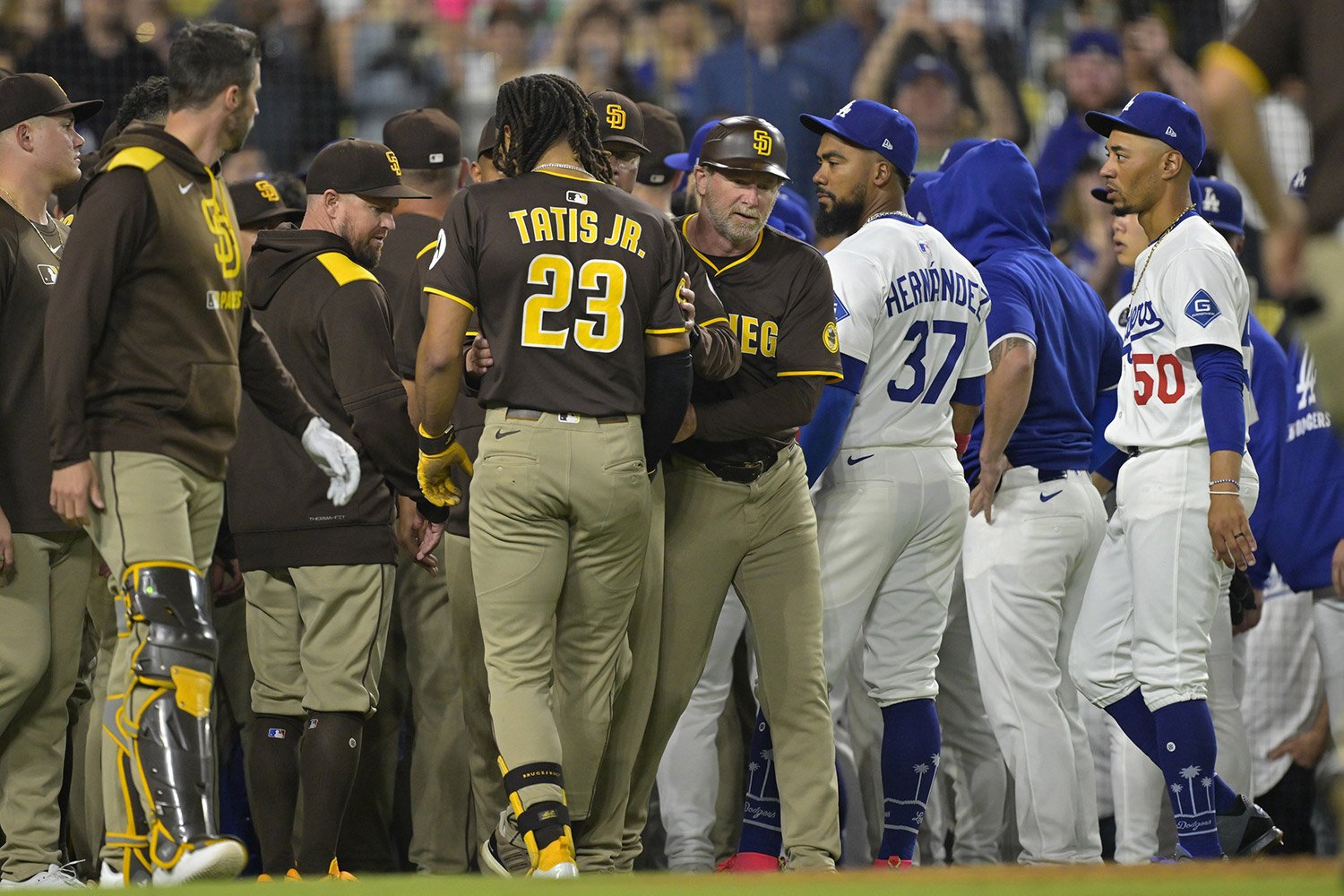 Thursday night's game between the San Diego Padres & Los Angeles Dodgers was a chance for the former to salvage a game out of a tough four-game series. Whether it was a Dylan Cease meltdown or a Will Smith walkoff home run after a ninth-inning comeback, the first trio of games was unkind to the Padres. Ahead of the ninth inning on Thursday, however, they held a 5-0 lead with each of Mookie Betts, Freddie Freeman, and Smith pulled. Then, the ninth inning happened. Already a testy dynamic in Los Angeles, considering the recent history — and serving as the seventh game in 11 days — between the teams, it was an environment wrought by a raucous crowd intent on making each of Fernando Tatis Jr. and Manny Machado specifically aware of how they felt about them. The Dodgers had sent reliever Jack Little out for his major league debut in the inning prior. Little's command was off from the jump. He walked only one but was having trouble locating his fastball in particular. So, as he hit Fernando Tatis Jr. on a pitch up-and-in, it's hard to imagine any intent. But what was supposed to be a rather smooth path to a sorely needed win for the Padres suddenly became treacherous: Manager Mike Shildt was more or less yelling into the void before Dave Roberts caught his attention. Then, of course, Shildt began directing his ire toward his managerial counterpart. From there, it's hard to argue against the idea that it was Roberts escalating the situation by charging out and initiating (notably soft) contact with Shildt. Regardless of the particulars, both were sent to the clubhouse early, while the fans remaining in attendance actively cheering the downing of San Diego's star right fielder. Things were eventually calmed down before the bottom of the frame. There, Sean Reynolds had zero semblance of command and walked the first two hitters. Rather than wait for an official save situation, bench coach Brian Esposito sent Robert Suárez to the bump to close it out. Struggling with command in his own right, Suárez proceeded to hit Shohei Ohtani on a 3-0 count. He and Esposito were subsequently ejected as well. It's occasionally difficult to navigate intent in these situations, but: The Padres argued the ejection, likely pointing to earlier in the series when warnings had been issued but ejections did not take place after another hit batter. Of course, in this instance the warnings were much more recent. And when you're talking about a marquee talent like Ohtani taking the HPB in the box score after Tatis in the top half, then it becomes less arguable. Ultimately, Yuki Matsui came to the mound, struggled with command and was eventually able to close it out with a strikeout of winning run Dalton Rushing. The Padres got their win. But almost nothing about it was enjoyable as a result of that ninth inning. On multiple levels. Among the most pressing matters is the potential to lose Fernando Tatis Jr. for an extended period of time. Initial imaging came back negative, but Shildt stated that it was in a spot with a lot of bones that complicated that imaging. As such, he's scheduled for more on Friday. As of this writing, we don't know what the potential injury or timeline can look like. A hit by pitch off a wrist is among the most alarming sights that we can witness as observers. One hopes that it's the absolute minimum given his injury history and how integral he is to the Padres turning around this early-summer swoon. Then, of course, is the future impact of the theatrics. If you're the Padres, you don't necessarily want the perception to work against you when you're already trying to beat a team like the Dodgers on the scoreboard. I don't think that the takeaways will work against them in this instance, even with Shildt's outburst. Nonetheless, with such an intense situation unfolding, it creates a little bit of anxiety for the next time these two teams match up. Whether that's the Padres maintaining a long memory and starting something that would shift that perception, or if it's any number of high-velocity, low-command Dodger arms doing the same. Either way, that the tension boiled over in the way that it did doesn't always create opportunities for moments of high character. You hope that brains prevail the next time. A word on Mike Shildt, though. My concern when he was hired is that he was something of a dud atop the coaching staff. As a strategist, he's fine. But he always came across as kind of a wet blanket that didn't have the chops to create a vibe that a roster like this needs. Those concerns had already been largely quelled throughout the season, as I think there's something to be a said for a manager who keeps it lowkey and lets his players do the talking. But to rise up in defense of your player in the way that he did for Tatis on Thursday does say a lot about the type of skipper the Padres have on their bench. I don't always jive with an old school mentality, but you want a guy who's going to go to bat for your players in the way that he did. Ultimately, though, it's hard to find any level of joy in a victory like that. The situation stinks. It makes you feel gross. You don't want players injured via HPB and you don't want any reason for perception to work against you when you're the underdog against a behemoth. And you don't want the carryover that can result in even more nonsense moving forward that isn't healthy, on-field competition. What you hope comes out of this is a healthy Fernando Tatis Jr.and an angry Padres team able to deploy their temperament in a productive fashion. Maybe it's a springboard. Or maybe it's a win on the stat sheet, but something that becomes more difficult to overcome. Either way, I think we're about to learn a lot more about this Padres team than we already thought we knew.
 -
Thursday night's game between the San Diego Padres & Los Angeles Dodgers was a chance for the former to salvage a game out of a tough four-game series. Whether it was a Dylan Cease meltdown or a Will Smith walkoff home run after a ninth-inning comeback, the first trio of games was unkind to the Padres. Ahead of the ninth inning on Thursday, however, they held a 5-0 lead with each of Mookie Betts, Freddie Freeman, and Smith pulled. Then, the ninth inning happened. Already a testy dynamic in Los Angeles, considering the recent history — and serving as the seventh game in 11 days — between the teams, it was an environment wrought by a raucous crowd intent on making each of Fernando Tatis Jr. and Manny Machado specifically aware of how they felt about them. The Dodgers had sent reliever Jack Little out for his major league debut in the inning prior. Little's command was off from the jump. He walked only one but was having trouble locating his fastball in particular. So, as he hit Fernando Tatis Jr. on a pitch up-and-in, it's hard to imagine any intent. But what was supposed to be a rather smooth path to a sorely needed win for the Padres suddenly became treacherous: Manager Mike Shildt was more or less yelling into the void before Dave Roberts caught his attention. Then, of course, Shildt began directing his ire toward his managerial counterpart. From there, it's hard to argue against the idea that it was Roberts escalating the situation by charging out and initiating (notably soft) contact with Shildt. Regardless of the particulars, both were sent to the clubhouse early, while the fans remaining in attendance actively cheering the downing of San Diego's star right fielder. Things were eventually calmed down before the bottom of the frame. There, Sean Reynolds had zero semblance of command and walked the first two hitters. Rather than wait for an official save situation, bench coach Brian Esposito sent Robert Suárez to the bump to close it out. Struggling with command in his own right, Suárez proceeded to hit Shohei Ohtani on a 3-0 count. He and Esposito were subsequently ejected as well. It's occasionally difficult to navigate intent in these situations, but: The Padres argued the ejection, likely pointing to earlier in the series when warnings had been issued but ejections did not take place after another hit batter. Of course, in this instance the warnings were much more recent. And when you're talking about a marquee talent like Ohtani taking the HPB in the box score after Tatis in the top half, then it becomes less arguable. Ultimately, Yuki Matsui came to the mound, struggled with command and was eventually able to close it out with a strikeout of winning run Dalton Rushing. The Padres got their win. But almost nothing about it was enjoyable as a result of that ninth inning. On multiple levels. Among the most pressing matters is the potential to lose Fernando Tatis Jr. for an extended period of time. Initial imaging came back negative, but Shildt stated that it was in a spot with a lot of bones that complicated that imaging. As such, he's scheduled for more on Friday. As of this writing, we don't know what the potential injury or timeline can look like. A hit by pitch off a wrist is among the most alarming sights that we can witness as observers. One hopes that it's the absolute minimum given his injury history and how integral he is to the Padres turning around this early-summer swoon. Then, of course, is the future impact of the theatrics. If you're the Padres, you don't necessarily want the perception to work against you when you're already trying to beat a team like the Dodgers on the scoreboard. I don't think that the takeaways will work against them in this instance, even with Shildt's outburst. Nonetheless, with such an intense situation unfolding, it creates a little bit of anxiety for the next time these two teams match up. Whether that's the Padres maintaining a long memory and starting something that would shift that perception, or if it's any number of high-velocity, low-command Dodger arms doing the same. Either way, that the tension boiled over in the way that it did doesn't always create opportunities for moments of high character. You hope that brains prevail the next time. A word on Mike Shildt, though. My concern when he was hired is that he was something of a dud atop the coaching staff. As a strategist, he's fine. But he always came across as kind of a wet blanket that didn't have the chops to create a vibe that a roster like this needs. Those concerns had already been largely quelled throughout the season, as I think there's something to be a said for a manager who keeps it lowkey and lets his players do the talking. But to rise up in defense of your player in the way that he did for Tatis on Thursday does say a lot about the type of skipper the Padres have on their bench. I don't always jive with an old school mentality, but you want a guy who's going to go to bat for your players in the way that he did. Ultimately, though, it's hard to find any level of joy in a victory like that. The situation stinks. It makes you feel gross. You don't want players injured via HPB and you don't want any reason for perception to work against you when you're the underdog against a behemoth. And you don't want the carryover that can result in even more nonsense moving forward that isn't healthy, on-field competition. What you hope comes out of this is a healthy Fernando Tatis Jr.and an angry Padres team able to deploy their temperament in a productive fashion. Maybe it's a springboard. Or maybe it's a win on the stat sheet, but something that becomes more difficult to overcome. Either way, I think we're about to learn a lot more about this Padres team than we already thought we knew. View full article
-
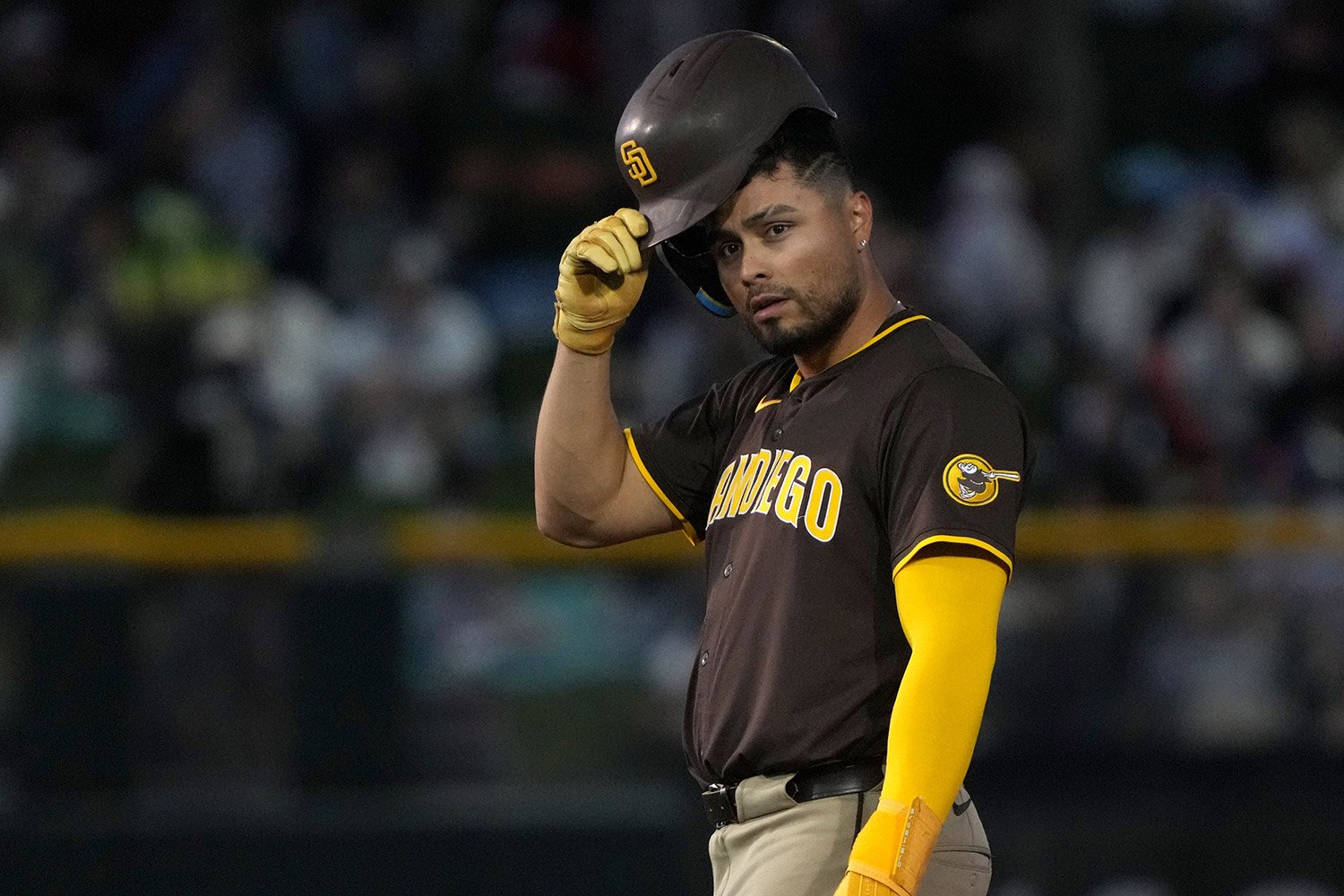 The San Diego Padres are in peril. Despite some mild recovery from a late-May offensive swoon, they're struggling to lay down wins with any level of consistency. While there are certainly a number of different viable explanations, the absence of production coming out of left field is one of the more obvious. Only three teams have gotten less production out of their left field spot than the Padres thus far. One is Atlanta. The other two are the Chicago White Sox and Pittsburgh Pirates. Not necessarily teams you'd like to be in league with from an offensive standpoint in the year 2025. That comes despite running eight different players out at the position to date. The original platoon plan was for Jason Heyward to face right-handed pitchers and Brandon Lockridge to face lefties. Heyward remains on the injured list, while Lockridge has been used more in center than originally expected in coverage of the now twice-injured Jackson Merrill. Jose Iglesias got a game, but is (obviously) a utility infielder. Tyler Wade has provided coverage across 11 games, but his services have also been needed in center and on the infield dirt. Beyond that, Connor Joe got a single game. Oscar González got 14. Neither is still with the organization. Then you get to the Gavin Sheets of it all. He's been the steadiest offensive performer to appear there, but we know what the defense looks like. Considering the risks associated, he's probably better served to be a rotational piece between a corner, first base, and the designated hitter spot rather than spending all of his time on the grass. Even with Sheets' strong performance, the position has provided the team with a .215 average, a .268 on-base percentage, and a .107 isolated power. The collective wRC+ sits at 68. Again, that's with Sheets turning in .300, .368, .275, and 168 in each of those aspects, respectively. Imagine the fall without him as part of the equation. The player notable absent from the above, though, is Tirso Ornelas. The team's 11th-ranked prospect per MLB Pipeline, Ornelas, has received four games and 12 plate appearances to date at the top level. He's hit just .091 and has a -21 wRC+, but you're talking about the most minuscule of samples. Is it time for the Padres to expand it? From MLB Pipeline: The power output described refers to a jump in ISO between 2023 & 2024, wherein Ornelas went from a .119 figure to a .167. There are obviously some warts in his game, indicated by the fact that the power has waned again in '25 (.115 ISO), but there's an argument to be made in favor of a full-time run for Ornelas in left field. For one, Ornelas' on-base presence could be a massive boost for the Padres. He's walking at a clip near 12 percent in El Paso, which would easily lead the team's regulars. As such, he's been on base at a .386 rate. That would also lead the group. While the writeup above does note his occasional expansion of the zone, he's able to provide consistent contact and avoid whiffs. Despite frequent groundball contact, you're talking about consistent, quality contact. Even with a groundball rate lingering around 43 percent, he's still managing a BABIP over .360. Sure, you'd like to see that power form from '24 (or any kind of elevation given the ability to drive the baseball), but the Padres are 17th in OBP as a collective (.314) and 19th in walk rate (8.4 percent). The approach alone would provide a certain degree of benefit for a team that has been a total zero in left field. The other factors — which are at minimum occasionally present — become a bonus. And that's really the most important aspect of such a discussion. You've gotten nothing from a position outside of a guy who shouldn't be out there with regularity. The offensive production beyond Sheets has been absent. Thus far in June, Ornelas is reaching base at a .378 rate, with six walks against six strikeouts. Previous call-ups haven't been enough to get a real sense of what he can offer at the big league level. Given the position in which the San Diego Padres find themselves, it's probably time to find out.
 -
The San Diego Padres are in peril. Despite some mild recovery from a late-May offensive swoon, they're struggling to lay down wins with any level of consistency. While there are certainly a number of different viable explanations, the absence of production coming out of left field is one of the more obvious. Only three teams have gotten less production out of their left field spot than the Padres thus far. One is Atlanta. The other two are the Chicago White Sox and Pittsburgh Pirates. Not necessarily teams you'd like to be in league with from an offensive standpoint in the year 2025. That comes despite running eight different players out at the position to date. The original platoon plan was for Jason Heyward to face right-handed pitchers and Brandon Lockridge to face lefties. Heyward remains on the injured list, while Lockridge has been used more in center than originally expected in coverage of the now twice-injured Jackson Merrill. Jose Iglesias got a game, but is (obviously) a utility infielder. Tyler Wade has provided coverage across 11 games, but his services have also been needed in center and on the infield dirt. Beyond that, Connor Joe got a single game. Oscar González got 14. Neither is still with the organization. Then you get to the Gavin Sheets of it all. He's been the steadiest offensive performer to appear there, but we know what the defense looks like. Considering the risks associated, he's probably better served to be a rotational piece between a corner, first base, and the designated hitter spot rather than spending all of his time on the grass. Even with Sheets' strong performance, the position has provided the team with a .215 average, a .268 on-base percentage, and a .107 isolated power. The collective wRC+ sits at 68. Again, that's with Sheets turning in .300, .368, .275, and 168 in each of those aspects, respectively. Imagine the fall without him as part of the equation. The player notable absent from the above, though, is Tirso Ornelas. The team's 11th-ranked prospect per MLB Pipeline, Ornelas, has received four games and 12 plate appearances to date at the top level. He's hit just .091 and has a -21 wRC+, but you're talking about the most minuscule of samples. Is it time for the Padres to expand it? From MLB Pipeline: The power output described refers to a jump in ISO between 2023 & 2024, wherein Ornelas went from a .119 figure to a .167. There are obviously some warts in his game, indicated by the fact that the power has waned again in '25 (.115 ISO), but there's an argument to be made in favor of a full-time run for Ornelas in left field. For one, Ornelas' on-base presence could be a massive boost for the Padres. He's walking at a clip near 12 percent in El Paso, which would easily lead the team's regulars. As such, he's been on base at a .386 rate. That would also lead the group. While the writeup above does note his occasional expansion of the zone, he's able to provide consistent contact and avoid whiffs. Despite frequent groundball contact, you're talking about consistent, quality contact. Even with a groundball rate lingering around 43 percent, he's still managing a BABIP over .360. Sure, you'd like to see that power form from '24 (or any kind of elevation given the ability to drive the baseball), but the Padres are 17th in OBP as a collective (.314) and 19th in walk rate (8.4 percent). The approach alone would provide a certain degree of benefit for a team that has been a total zero in left field. The other factors — which are at minimum occasionally present — become a bonus. And that's really the most important aspect of such a discussion. You've gotten nothing from a position outside of a guy who shouldn't be out there with regularity. The offensive production beyond Sheets has been absent. Thus far in June, Ornelas is reaching base at a .378 rate, with six walks against six strikeouts. Previous call-ups haven't been enough to get a real sense of what he can offer at the big league level. Given the position in which the San Diego Padres find themselves, it's probably time to find out. View full article
-
The Rafael Devers Trade Could Spell Further Doom For San Diego Padres
Randy Holt posted an article in Padres
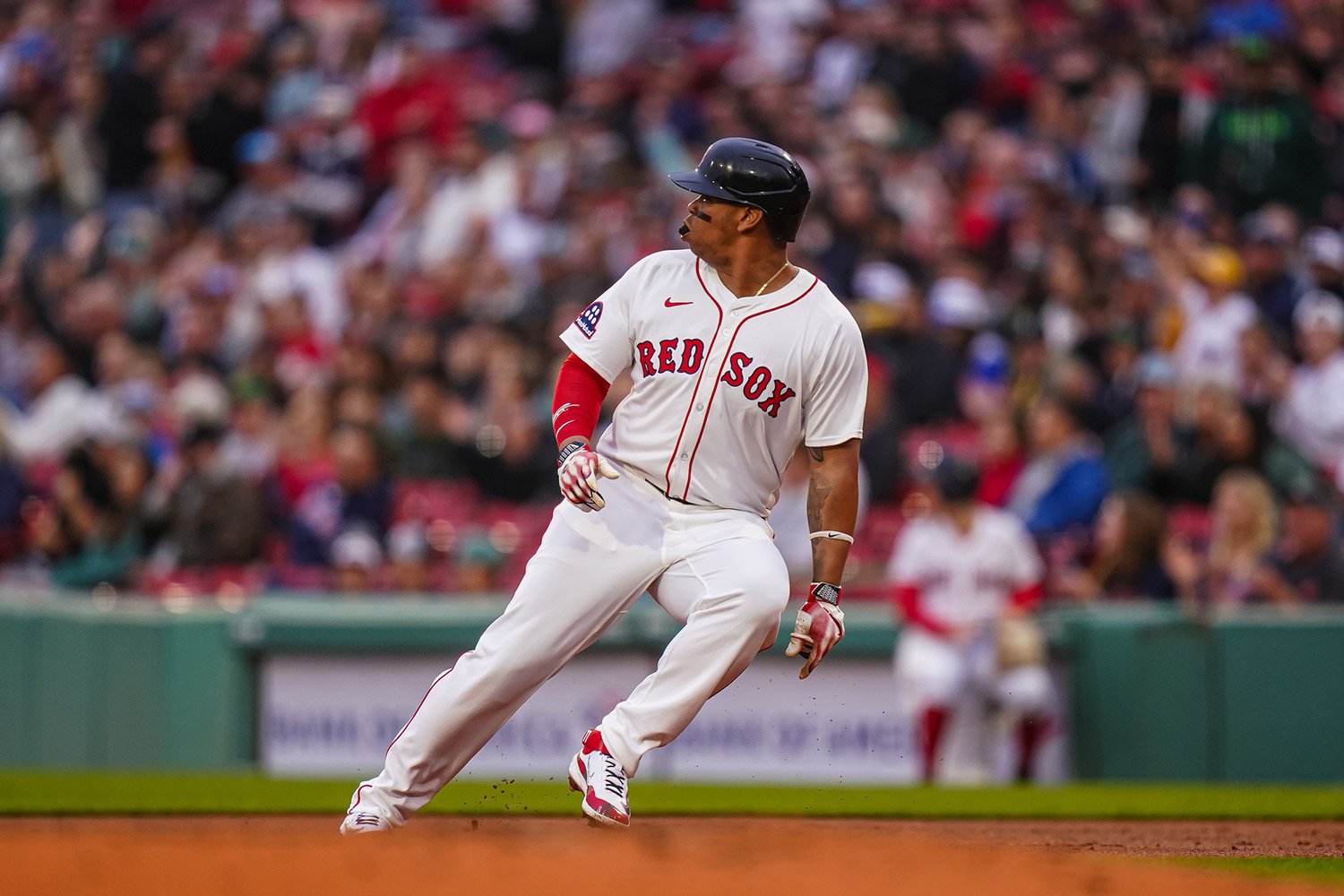 Ahead of the 2025 season, the consensus was that the National League West is the best division in baseball. That has largely proven to be true. The Los Angeles Dodgers continue to win, despite having more than a dozen pitchers on the injured list at any given moment. The San Francisco Giants recently heated up to pull even with said Dodgers atop the division before falling back over the weekend. Even the Arizona Diamondbacks remain within striking distance despite myriad bullpen woes & pitcher injuries. But it's that middle squad that, at present, delivers a rather significant problem for the San Diego Padres. The Padres have been in the mix for the NL West lead since the jump. Depending on who you ask, that may or may not be a surprise, mostly due to their overall lack of depth. Despite featuring one of the worst offenses in baseball over the last month, they still remain only three games back of the division-leading Dodgers. The Giants, however, remain sandwiched between the two of them. Given the trade they pulled off on Sunday, they may entrench themselves there for the foreseeable future. San Francisco acquired Boston Red Sox star Rafael Devers for a package that includes a struggling Jordan Hicks, a currently fringe-y Kyle Harrison, and two prospects. In other words, such a deal only adds to their 2025 roster. Which is potentially very problematic for the Padres specifically. The Giants' offense has not been entirely dissimilar from the Padres' this year. Each club has been fairly middle-of-the-road in terms of run production, and since the May 16th threshold where San Diego's offense fell off, the Giants are in front of them by only one run. But the Devers trade illustrates the potential for a sharp break between the two. For his part, Devers is in the middle of another strong year despite an almost-unbelievable slow start. He's reaching base at a clip just over .400 and has a wRC+ of 148 on the year, both of which would represent career highs. Which brings me, dear reader, to the point of this: the San Diego Padres are in trouble. Winning the division was always going to be a stretch. The Dodgers are the Dodgers, after all. And despite their offensive struggles for the past month, the Giants have scored the league's seventh-most runs over the past two weeks. They already represented a more balanced — and slightly deeper — club in challenging the Dodgers for the top spot in the NL West as much as any one team can. Meanwhile, the Padres continue to struggle to score runs. Even on two of the four occasions in which they scored seven runs in the past week, their pitching faltered in the way to losses. The margin for error is small given how top heavy the roster is. It's an unsustainable way to win games over the long-term. The Devers addition threatens to leave the Padres behind entirely in matters of the division. Which could mean that it's time for the Padres to instead shift their attention toward a wild card. It also amplifies the need for A.J. Preller to make additions to the current roster. The issue there is, of course, the depleted farm system from such moves over the last handful of years. So the Padres are now in a position where their need is even greater but the resources aren't quite where they need to be. To say nothing of the report that the team was apparently interested in Devers as well (though we don't know to what extent their actual interest existed nor said lack of resources hurt them in any hypothetical talks). Ultimately, it's another deflating moment in a stretch of deflating moments over the past month. The Padres were already in a certain degree of danger given how hard they've had to work to scratch wins for roughly the last month combined with the nature of having the Dodgers in their division. Now, the urgency picks up. But — and not be too dramatic here — the magnitude of the deal their other division rival just made could mean it's already too late. Despite the narrow gap at present, Wild Card City may be the team's best hope for a postseason destination.
 -
Ahead of the 2025 season, the consensus was that the National League West is the best division in baseball. That has largely proven to be true. The Los Angeles Dodgers continue to win, despite having more than a dozen pitchers on the injured list at any given moment. The San Francisco Giants recently heated up to pull even with said Dodgers atop the division before falling back over the weekend. Even the Arizona Diamondbacks remain within striking distance despite myriad bullpen woes & pitcher injuries. But it's that middle squad that, at present, delivers a rather significant problem for the San Diego Padres. The Padres have been in the mix for the NL West lead since the jump. Depending on who you ask, that may or may not be a surprise, mostly due to their overall lack of depth. Despite featuring one of the worst offenses in baseball over the last month, they still remain only three games back of the division-leading Dodgers. The Giants, however, remain sandwiched between the two of them. Given the trade they pulled off on Sunday, they may entrench themselves there for the foreseeable future. San Francisco acquired Boston Red Sox star Rafael Devers for a package that includes a struggling Jordan Hicks, a currently fringe-y Kyle Harrison, and two prospects. In other words, such a deal only adds to their 2025 roster. Which is potentially very problematic for the Padres specifically. The Giants' offense has not been entirely dissimilar from the Padres' this year. Each club has been fairly middle-of-the-road in terms of run production, and since the May 16th threshold where San Diego's offense fell off, the Giants are in front of them by only one run. But the Devers trade illustrates the potential for a sharp break between the two. For his part, Devers is in the middle of another strong year despite an almost-unbelievable slow start. He's reaching base at a clip just over .400 and has a wRC+ of 148 on the year, both of which would represent career highs. Which brings me, dear reader, to the point of this: the San Diego Padres are in trouble. Winning the division was always going to be a stretch. The Dodgers are the Dodgers, after all. And despite their offensive struggles for the past month, the Giants have scored the league's seventh-most runs over the past two weeks. They already represented a more balanced — and slightly deeper — club in challenging the Dodgers for the top spot in the NL West as much as any one team can. Meanwhile, the Padres continue to struggle to score runs. Even on two of the four occasions in which they scored seven runs in the past week, their pitching faltered in the way to losses. The margin for error is small given how top heavy the roster is. It's an unsustainable way to win games over the long-term. The Devers addition threatens to leave the Padres behind entirely in matters of the division. Which could mean that it's time for the Padres to instead shift their attention toward a wild card. It also amplifies the need for A.J. Preller to make additions to the current roster. The issue there is, of course, the depleted farm system from such moves over the last handful of years. So the Padres are now in a position where their need is even greater but the resources aren't quite where they need to be. To say nothing of the report that the team was apparently interested in Devers as well (though we don't know to what extent their actual interest existed nor said lack of resources hurt them in any hypothetical talks). Ultimately, it's another deflating moment in a stretch of deflating moments over the past month. The Padres were already in a certain degree of danger given how hard they've had to work to scratch wins for roughly the last month combined with the nature of having the Dodgers in their division. Now, the urgency picks up. But — and not be too dramatic here — the magnitude of the deal their other division rival just made could mean it's already too late. Despite the narrow gap at present, Wild Card City may be the team's best hope for a postseason destination. View full article
-
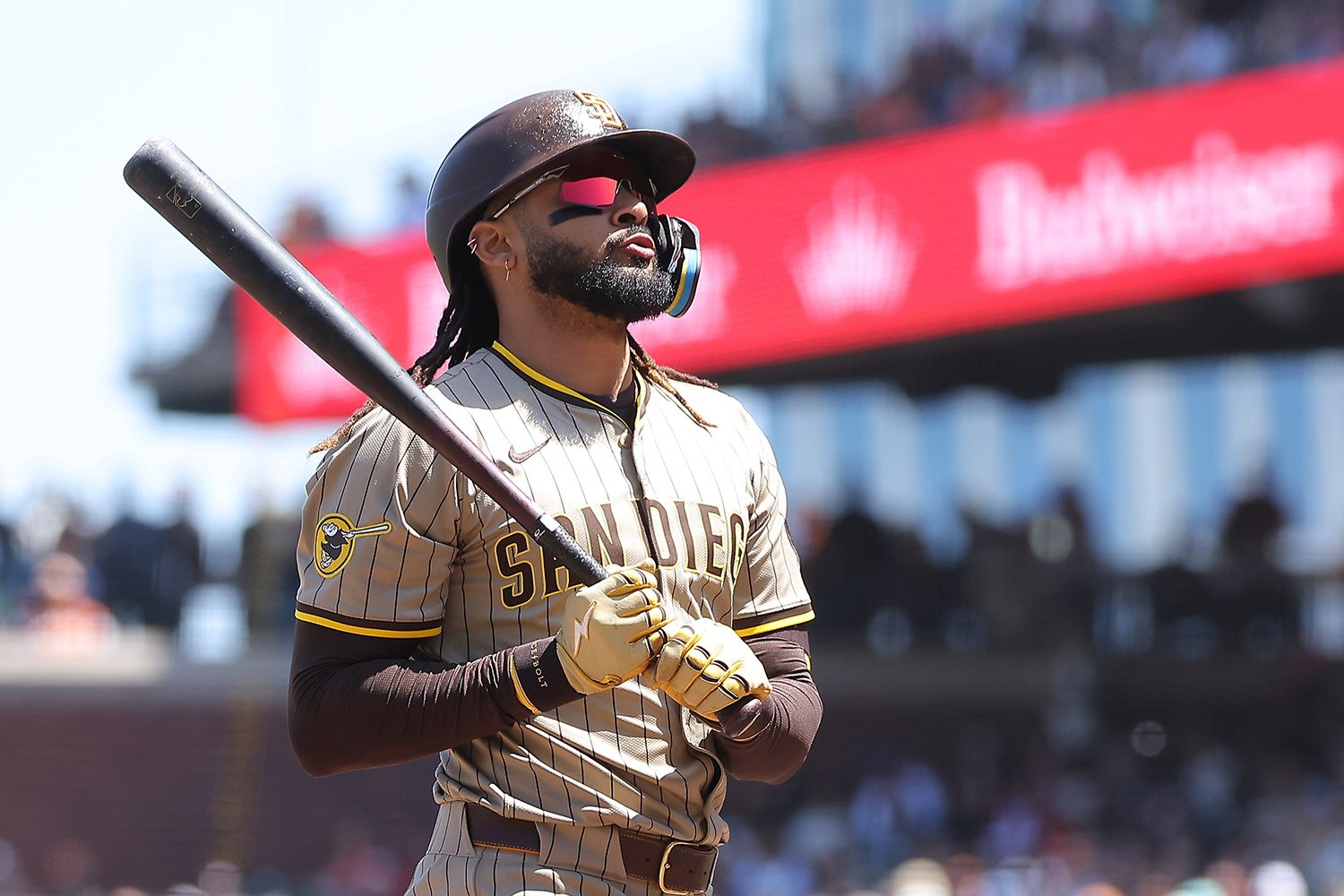 A couple of weeks ago, I speculated that pitchers were adjusting to Fernando Tatis Jr. by incorporating more off-speed pitches. There wasn't a drastic change in his overall zone approach, but that pitch type was clearly something he was struggling with. That, in itself, was one possible explanation for the struggles we're about to explore from a different angle. Since the midway point of May, the San Diego Padres have been one of the worst offensive teams in baseball. They rank 27th in the league in runs scored (83), 29th in the league in on-base percentage (.284), and dead last in their power output (.115 isolated power). Even an 11-run outburst against the Los Angeles Dodgers earlier this week and an absolutely torrid stretch from Manny Machado haven't mattered, considering the bottoming out of essentially the entire lineup. Central to those woes since May 15th is Fernando Tatis Jr. Despite sitting on pace to eclipse last year's Wins Above Replacement figure — he's at 2.7 after a 3.2 mark in 2024 — it's the output from March & April that's doing a lot of the heavy lifting as far as his overall numbers go. That iteration of Tatis atop the lineup was a marvel. He very much looked like he regained superstar status, given a .345/.409/.602 line that accompanied a .257 ISO and a 184 wRC+. That was not only leading the Padres' strong lineup to start the year, but also planted him firmly in the middle of early National League Most Valuable Player discussion. The discussion since has been... not that. The point in time to which we can point where Tatis' struggles began was following a hit-by-pitch in Pittsburgh back at the beginning of May. He returned to the lineup on May 3rd without requiring any kind of IL stint. However, the numbers since that point are, objectively, quite bad. In the time since that HBP on his forearm, Tatis Jr has been the team's worst hitter by wRC+ (76). He's hitting just .188, reaching base at a mere .277 clip, and ISOing at a rate of just .145. The first two numbers are also the team's worst in that stretch, with his isolated power checking in behind only Machado (.232) and Gavin Sheets (.221). His strikeout rate remains manageable (21.3 percent) and his walk rate is completely acceptable, as a 10.3 percent rate trails only Jake Cronenworth (14.3) & Xander Bogaerts (10.7) for the team lead. Whether the HBP is central to the story here is impossible for us to ascertain. We're not in the clubhouse or the training room. But it does represent a fixed point in time between the two versions of Tatis Jr that we've seen thus far in 2025. The off-speed component we've explored does offer one potential explanation. But with new bat tracking data available from Statcast, is there something we missed? The following is the breakdown of Tatis' swing metrics through May 2nd: And here is where he's sitting in each regard since May 3rd: The bat speed has increased slightly. It's also gotten slightly longer, with a 7.1-foot average in March & April and a 7.3 average since the start of May. Faster and longer, on its own, isn't entirely ideal when you're struggling to make contact, especially against one type of pitch. It gained about two miles per hour against off-speed pitches in May and became slightly longer. This certainly supports the element of struggle against off-speed pitches. What else is here that we might've missed at first blush? The swing path tilt has dropped. Similarly, the attack direction has also changed. But neither has deviated from his initial production to indicate any massive mechanical change. You might note, however, that there has been a substantial change in his footwork. While we can't isolate a visual difference between the two points in time, it's a rather notable change that's more of a reversion to his setup from last season. Tatis has spread his feet a bit more and gotten much more closed since our May 3rd framing. It's still a much more open stance than his 29-degree stance from 2024, but it does represent a fairly notable mechanical change. Is it a change that is, perhaps, messing with his timing on some level? It's possible. In addition to a contact rate that's roughly three percent lower between the two timeframes, he has also seen a three-mile-per-hour drop in average exit velocity (94.1 MPH to 91 MPH) and, notably, a more than 17 percent drop in Hard-Hit% (54.7 to 37.0 percent). It's difficult to pinpoint the exact issue here and the reason behind it. But it wouldn't be entirely unreasonable to say that after that hit-by-pitch, Tatis Jr changed something in the way he swings the bat. We can't speculate on whether it was to compensate for any level of pain, but a clear change in the way he's swinging has manifested in the games since May 3rd. This is on top of the off-speed struggles he was already facing, due to the opposing pitcher's adjustments. So, where exactly do you go from here if you're Fernando Tatis Jr. It's a question he needs to answer in a rather expedient fashion, given his importance to this Padres' offense in figuring it out as we move into the second half of the month.
 -
A couple of weeks ago, I speculated that pitchers were adjusting to Fernando Tatis Jr. by incorporating more off-speed pitches. There wasn't a drastic change in his overall zone approach, but that pitch type was clearly something he was struggling with. That, in itself, was one possible explanation for the struggles we're about to explore from a different angle. Since the midway point of May, the San Diego Padres have been one of the worst offensive teams in baseball. They rank 27th in the league in runs scored (83), 29th in the league in on-base percentage (.284), and dead last in their power output (.115 isolated power). Even an 11-run outburst against the Los Angeles Dodgers earlier this week and an absolutely torrid stretch from Manny Machado haven't mattered, considering the bottoming out of essentially the entire lineup. Central to those woes since May 15th is Fernando Tatis Jr. Despite sitting on pace to eclipse last year's Wins Above Replacement figure — he's at 2.7 after a 3.2 mark in 2024 — it's the output from March & April that's doing a lot of the heavy lifting as far as his overall numbers go. That iteration of Tatis atop the lineup was a marvel. He very much looked like he regained superstar status, given a .345/.409/.602 line that accompanied a .257 ISO and a 184 wRC+. That was not only leading the Padres' strong lineup to start the year, but also planted him firmly in the middle of early National League Most Valuable Player discussion. The discussion since has been... not that. The point in time to which we can point where Tatis' struggles began was following a hit-by-pitch in Pittsburgh back at the beginning of May. He returned to the lineup on May 3rd without requiring any kind of IL stint. However, the numbers since that point are, objectively, quite bad. In the time since that HBP on his forearm, Tatis Jr has been the team's worst hitter by wRC+ (76). He's hitting just .188, reaching base at a mere .277 clip, and ISOing at a rate of just .145. The first two numbers are also the team's worst in that stretch, with his isolated power checking in behind only Machado (.232) and Gavin Sheets (.221). His strikeout rate remains manageable (21.3 percent) and his walk rate is completely acceptable, as a 10.3 percent rate trails only Jake Cronenworth (14.3) & Xander Bogaerts (10.7) for the team lead. Whether the HBP is central to the story here is impossible for us to ascertain. We're not in the clubhouse or the training room. But it does represent a fixed point in time between the two versions of Tatis Jr that we've seen thus far in 2025. The off-speed component we've explored does offer one potential explanation. But with new bat tracking data available from Statcast, is there something we missed? The following is the breakdown of Tatis' swing metrics through May 2nd: And here is where he's sitting in each regard since May 3rd: The bat speed has increased slightly. It's also gotten slightly longer, with a 7.1-foot average in March & April and a 7.3 average since the start of May. Faster and longer, on its own, isn't entirely ideal when you're struggling to make contact, especially against one type of pitch. It gained about two miles per hour against off-speed pitches in May and became slightly longer. This certainly supports the element of struggle against off-speed pitches. What else is here that we might've missed at first blush? The swing path tilt has dropped. Similarly, the attack direction has also changed. But neither has deviated from his initial production to indicate any massive mechanical change. You might note, however, that there has been a substantial change in his footwork. While we can't isolate a visual difference between the two points in time, it's a rather notable change that's more of a reversion to his setup from last season. Tatis has spread his feet a bit more and gotten much more closed since our May 3rd framing. It's still a much more open stance than his 29-degree stance from 2024, but it does represent a fairly notable mechanical change. Is it a change that is, perhaps, messing with his timing on some level? It's possible. In addition to a contact rate that's roughly three percent lower between the two timeframes, he has also seen a three-mile-per-hour drop in average exit velocity (94.1 MPH to 91 MPH) and, notably, a more than 17 percent drop in Hard-Hit% (54.7 to 37.0 percent). It's difficult to pinpoint the exact issue here and the reason behind it. But it wouldn't be entirely unreasonable to say that after that hit-by-pitch, Tatis Jr changed something in the way he swings the bat. We can't speculate on whether it was to compensate for any level of pain, but a clear change in the way he's swinging has manifested in the games since May 3rd. This is on top of the off-speed struggles he was already facing, due to the opposing pitcher's adjustments. So, where exactly do you go from here if you're Fernando Tatis Jr. It's a question he needs to answer in a rather expedient fashion, given his importance to this Padres' offense in figuring it out as we move into the second half of the month. View full article
-
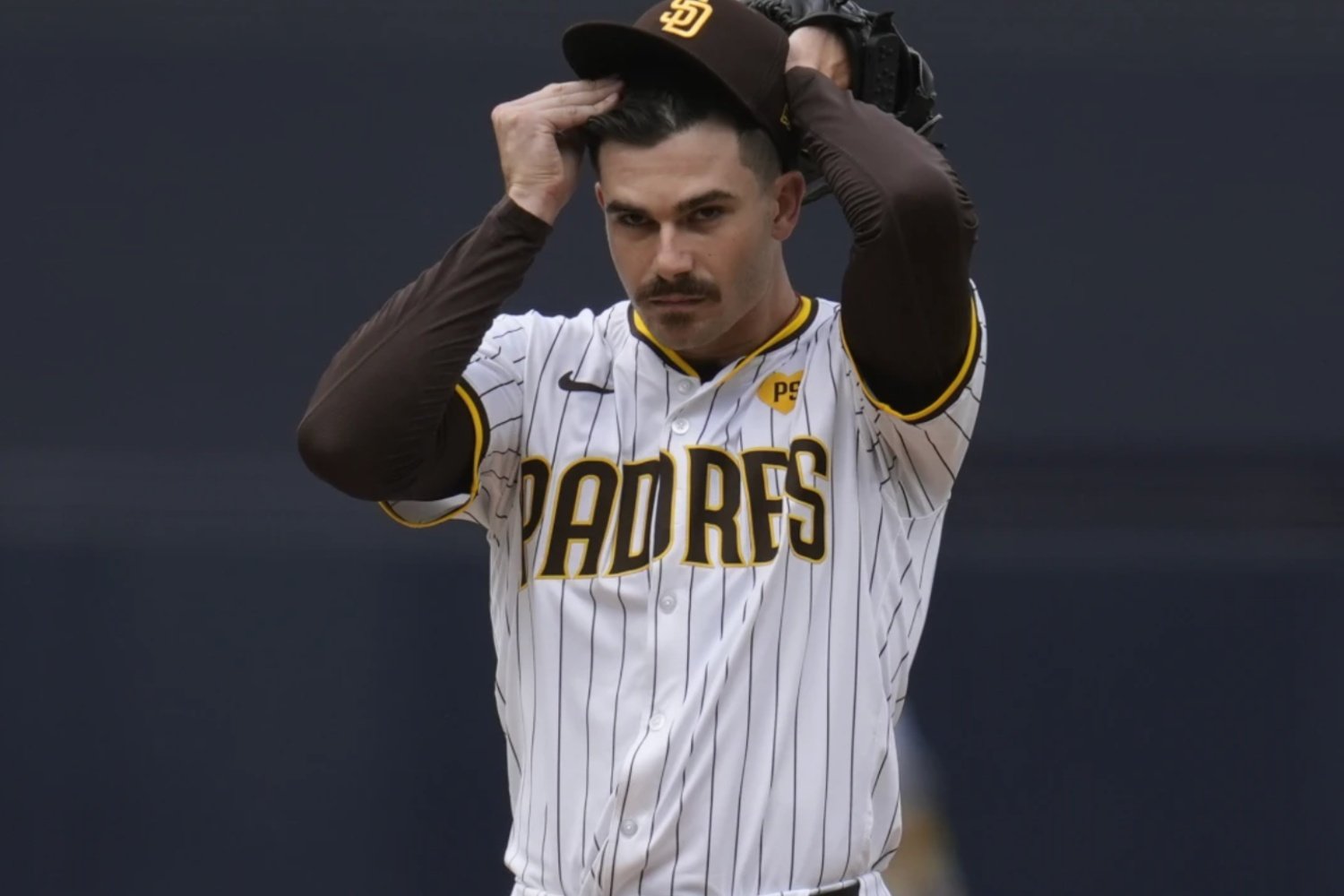 The San Diego Padres find themselves in their current position largely on the strength of what they're able to do on the mound. While the offense has sputtered at times, it's the arms that have kept the team in the mix in the National League West. Imagine where they could be sitting if not for the apparent struggles of Dylan Cease. Cease, along with his rotation-mate Michael King, garnered attention over the winter as potential trade candidates. With free agency on the horizon — and the constant barrage of budget concerns in which the Padres apparently find themselves — it was mildly surprising to see both suit up in San Diego from the jump this season. And although King has only helped his case for a sizable new contract (despite his current role serving as a member of the Injured List), that hasn't been quite the case for Dylan Cease, at least outwardly. Which represents something a little bit weird. Because the underlying data we have indicates that Cease should be turning in a strong 2025 campaign. Yet, he's sitting with a 4.72 ERA, his highest home run rate since 2021 (1.05 per nine innings), and a strand rate that currently resides as the worst of his career (66.4 percent). Are those numbers even indicative of anything given what we see underneath the hood? Cease's 96.8 MPH average fastball velocity is in the 87th percentile, his whiff rate (33.7 percent) is in the 93rd, and his overall strikeout rate (29.1) is in the 85th. He's maintained his elite status in the "stuff" department (which extends beyond the colloquial meaning, given that his Stuff+ checks in above average on both his fastball and his slider). The slider, specifically, which has become his most-used pitch, ranks 18th in baseball among the 78 qualifying arms that throw one. As we look at all of that, it's fairly clear that results are not indicative of the actual season Cease is giving the Padres. And there are at least a couple of reasons for that, one of which is a direct result of the other. On one hand, there's a longevity issue unfolding for Cease at present. Through his first 13 starts, Cease is averaging roughly 5 2/3 innings per outing (68 2/3 innings total). He's failed to work through the fifth inning in five of those starts and has gone exactly five in another three of them. The modern baseball world obviously does not value pitcher wins to the extent they used to (which remains a largely valid development). But, with Cease only having a single win on the books (1-5 record overall) despite the fact we're well into June, it's certainly indicative of some struggles to work deep into games. But is that even his fault? The above numbers appear to indicate that it isn't, given the high volume of strikeouts and — on a more pitch-to-pitch level — whiffs. Cease's 8.2 percent walk rate is actually the best of his career, so he's working in and around the zone at a level we haven't seen before. He had one start back on April 26th where he walked four hitters and two others where he walked three. Other than that, Cease has issued free passes to two or fewer hitters in 10 of those 13 starts. Which brings us directly to the source: the defense. That longevity issue is likely wrought by a more severe "luck" issue, both in terms of his batted ball fortunes and in what the defense behind him is doing in order to support him. Cease's opposing hitter batting average on balls in play is .333. By that metric alone, only six qualifying starters have worked against worst luck than Cease. And then there's the FIP side of things. Fielding Independent Pitching, for the uninitiated, removes defensive factors in favor of those events over which a pitcher has more direct control (strikeouts, walks, homers, etc.). In Cease's case, his season FIP sits at just 3.20. Additionally, in some of his worst individual starts, the FIP is screaming at us about the defense's role in all of this. On April 8th, Cease gave up nine earned runs across four innings but had a FIP of 3.32. In his two most recent starts (May 31st and June 5th), he was unable to work past the fifth inning while allowing three runs to cross in each. But his FIP in those starts was 3.93 and 2.07, respectively. There's a defensive component here that's impossible to ignore. It's not that they're recording errors behind Cease. They're simply failing to make the necessary plays in support of their starting pitcher... which probably shouldn't ring as any kind of a surprise. The San Diego Padres are just 17th in the league in Fielding Run Value (0), with the range aspect of the equation specifically coming in at -2. They're a below-average team in matters of getting to the baseball in order to record outs. If you're wondering why Dylan Cease is operating against a .333 BABIP, there's a good chunk of it. Not that Cease has been perfect, mind you. He's giving up a bit more barrel contact than he did last year as an example. But, the expected stats tell us plenty. A 3.67 xERA. A .242 xBA against. He should be better. But it's not a situation where his usage has changed or he's missing spots. This is a matter of some bad luck compounding with defensive inefficiency to pin down the production that we should be seeing from a typically effective starting pitcher. The good news is that these things have a tendency to even themselves out.
 -
The San Diego Padres find themselves in their current position largely on the strength of what they're able to do on the mound. While the offense has sputtered at times, it's the arms that have kept the team in the mix in the National League West. Imagine where they could be sitting if not for the apparent struggles of Dylan Cease. Cease, along with his rotation-mate Michael King, garnered attention over the winter as potential trade candidates. With free agency on the horizon — and the constant barrage of budget concerns in which the Padres apparently find themselves — it was mildly surprising to see both suit up in San Diego from the jump this season. And although King has only helped his case for a sizable new contract (despite his current role serving as a member of the Injured List), that hasn't been quite the case for Dylan Cease, at least outwardly. Which represents something a little bit weird. Because the underlying data we have indicates that Cease should be turning in a strong 2025 campaign. Yet, he's sitting with a 4.72 ERA, his highest home run rate since 2021 (1.05 per nine innings), and a strand rate that currently resides as the worst of his career (66.4 percent). Are those numbers even indicative of anything given what we see underneath the hood? Cease's 96.8 MPH average fastball velocity is in the 87th percentile, his whiff rate (33.7 percent) is in the 93rd, and his overall strikeout rate (29.1) is in the 85th. He's maintained his elite status in the "stuff" department (which extends beyond the colloquial meaning, given that his Stuff+ checks in above average on both his fastball and his slider). The slider, specifically, which has become his most-used pitch, ranks 18th in baseball among the 78 qualifying arms that throw one. As we look at all of that, it's fairly clear that results are not indicative of the actual season Cease is giving the Padres. And there are at least a couple of reasons for that, one of which is a direct result of the other. On one hand, there's a longevity issue unfolding for Cease at present. Through his first 13 starts, Cease is averaging roughly 5 2/3 innings per outing (68 2/3 innings total). He's failed to work through the fifth inning in five of those starts and has gone exactly five in another three of them. The modern baseball world obviously does not value pitcher wins to the extent they used to (which remains a largely valid development). But, with Cease only having a single win on the books (1-5 record overall) despite the fact we're well into June, it's certainly indicative of some struggles to work deep into games. But is that even his fault? The above numbers appear to indicate that it isn't, given the high volume of strikeouts and — on a more pitch-to-pitch level — whiffs. Cease's 8.2 percent walk rate is actually the best of his career, so he's working in and around the zone at a level we haven't seen before. He had one start back on April 26th where he walked four hitters and two others where he walked three. Other than that, Cease has issued free passes to two or fewer hitters in 10 of those 13 starts. Which brings us directly to the source: the defense. That longevity issue is likely wrought by a more severe "luck" issue, both in terms of his batted ball fortunes and in what the defense behind him is doing in order to support him. Cease's opposing hitter batting average on balls in play is .333. By that metric alone, only six qualifying starters have worked against worst luck than Cease. And then there's the FIP side of things. Fielding Independent Pitching, for the uninitiated, removes defensive factors in favor of those events over which a pitcher has more direct control (strikeouts, walks, homers, etc.). In Cease's case, his season FIP sits at just 3.20. Additionally, in some of his worst individual starts, the FIP is screaming at us about the defense's role in all of this. On April 8th, Cease gave up nine earned runs across four innings but had a FIP of 3.32. In his two most recent starts (May 31st and June 5th), he was unable to work past the fifth inning while allowing three runs to cross in each. But his FIP in those starts was 3.93 and 2.07, respectively. There's a defensive component here that's impossible to ignore. It's not that they're recording errors behind Cease. They're simply failing to make the necessary plays in support of their starting pitcher... which probably shouldn't ring as any kind of a surprise. The San Diego Padres are just 17th in the league in Fielding Run Value (0), with the range aspect of the equation specifically coming in at -2. They're a below-average team in matters of getting to the baseball in order to record outs. If you're wondering why Dylan Cease is operating against a .333 BABIP, there's a good chunk of it. Not that Cease has been perfect, mind you. He's giving up a bit more barrel contact than he did last year as an example. But, the expected stats tell us plenty. A 3.67 xERA. A .242 xBA against. He should be better. But it's not a situation where his usage has changed or he's missing spots. This is a matter of some bad luck compounding with defensive inefficiency to pin down the production that we should be seeing from a typically effective starting pitcher. The good news is that these things have a tendency to even themselves out. View full article
-
Xander Bogaerts Is Compensating For His Lack Of Power On The Bases
Randy Holt posted an article in Padres
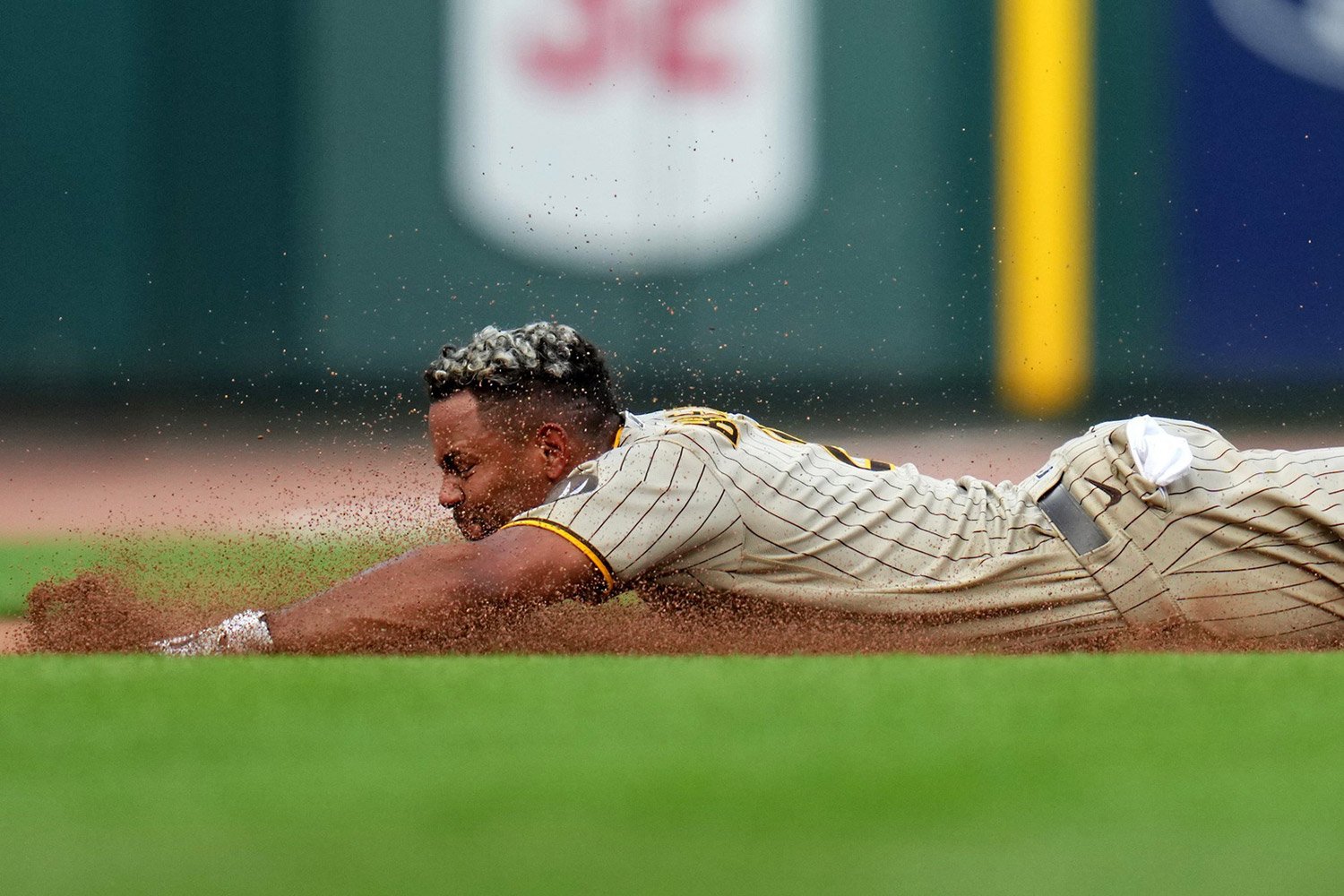 There really isn't any way around the fact that Xander Bogaerts has not been the player the San Diego Padres thought they were signing prior to the 2023 season. It's purely objective at this point. Our own Aidan Kurt recently examined how it was an ill-conceived signing from the start, largely due to the fact that Petco Park does not play the same way for right-handed hitters as his former stomping grounds in Boston. However, that doesn't mean Bogaerts has been a complete loss during his time as a member of the Padres, especially in 2025. In each of his two full seasons and the roughly two-and-a-half months of 2025, Bogaerts has seen the power element of his game dissolve almost entirely. His isolated power figure as of this writing checks in at a mere .091. Among qualifying hitters, that ranks 153rd of 166. For context, even Luis Arráez is all the way up at 121st. With that, though, he's managed to find a different component with which to contribute to the team's offensive output: baserunning. His steady approach has been worthwhile (including a 77th percentile walk rate, which will be revisited shortly), but he's started to make his mark on the bases. Bogaerts already has 11 steals on the season, which puts him 17th within that same group. It's also an early total that has him on pace to obliterate his previous career high, which was already set during his time with the Padres. His career high in swipes with the Red Sox was 15, set back in 2017. In his first year in San Diego, he stole 19 before injuries held his game (and steal) total to 13. This year's 11 through 61 games, however, put him on pace for 29. It's not simply a matter of the raw number of steals working in his favor, though. The following is how Statcast depicts the underlying value of Bogaerts' baserunning acumen: Among the components that primarily stand out here are the bases gained vs average (four) and the steal attempt rate (2.7 percent). Both of those are currently among the higher outputs that Bogaerts has posted since they were first tracked in 2016, with a chance for Bogaerts to similarly sprint past each figure in the way that he could on the raw SB total. Not bad for a guy with just the 69th percentile sprint speed. Circling back to the on-base element, Bogaerts' walk rate is at 11.2 percent thus far. If that continues, it would be the highest BB% of his entire career. And while a .324 OBP isn't remotely among the higher-end rates that he's turned in throughout his career, he's refined his approach to help provide value against the waning power output. It's one thing to be able to steal bases. But you've got to be able to reach base to make that mean anything. Bogaerts is managing to do both in the face of alarming decline elsewhere. It's an important thing to be cognizant of within the Xander Bogaerts narrative. Sure, he's not the player he was in Boston. He was never really going to be, and the 11-year deal was a foolhardy endeavor from the jump. But there's something to be said about a player who can refine or develop a new avenue toward offensive value when a different facet starts to decline. Bogaerts, finding his way on base with a keen eye and creating that additional value with his baserunning, is illustrating exactly that.
 -
There really isn't any way around the fact that Xander Bogaerts has not been the player the San Diego Padres thought they were signing prior to the 2023 season. It's purely objective at this point. Our own Aidan Kurt recently examined how it was an ill-conceived signing from the start, largely due to the fact that Petco Park does not play the same way for right-handed hitters as his former stomping grounds in Boston. However, that doesn't mean Bogaerts has been a complete loss during his time as a member of the Padres, especially in 2025. In each of his two full seasons and the roughly two-and-a-half months of 2025, Bogaerts has seen the power element of his game dissolve almost entirely. His isolated power figure as of this writing checks in at a mere .091. Among qualifying hitters, that ranks 153rd of 166. For context, even Luis Arráez is all the way up at 121st. With that, though, he's managed to find a different component with which to contribute to the team's offensive output: baserunning. His steady approach has been worthwhile (including a 77th percentile walk rate, which will be revisited shortly), but he's started to make his mark on the bases. Bogaerts already has 11 steals on the season, which puts him 17th within that same group. It's also an early total that has him on pace to obliterate his previous career high, which was already set during his time with the Padres. His career high in swipes with the Red Sox was 15, set back in 2017. In his first year in San Diego, he stole 19 before injuries held his game (and steal) total to 13. This year's 11 through 61 games, however, put him on pace for 29. It's not simply a matter of the raw number of steals working in his favor, though. The following is how Statcast depicts the underlying value of Bogaerts' baserunning acumen: Among the components that primarily stand out here are the bases gained vs average (four) and the steal attempt rate (2.7 percent). Both of those are currently among the higher outputs that Bogaerts has posted since they were first tracked in 2016, with a chance for Bogaerts to similarly sprint past each figure in the way that he could on the raw SB total. Not bad for a guy with just the 69th percentile sprint speed. Circling back to the on-base element, Bogaerts' walk rate is at 11.2 percent thus far. If that continues, it would be the highest BB% of his entire career. And while a .324 OBP isn't remotely among the higher-end rates that he's turned in throughout his career, he's refined his approach to help provide value against the waning power output. It's one thing to be able to steal bases. But you've got to be able to reach base to make that mean anything. Bogaerts is managing to do both in the face of alarming decline elsewhere. It's an important thing to be cognizant of within the Xander Bogaerts narrative. Sure, he's not the player he was in Boston. He was never really going to be, and the 11-year deal was a foolhardy endeavor from the jump. But there's something to be said about a player who can refine or develop a new avenue toward offensive value when a different facet starts to decline. Bogaerts, finding his way on base with a keen eye and creating that additional value with his baserunning, is illustrating exactly that. View full article
-
Jake Cronenworth's Walk Rate Is Propping Up His Numbers. Can It Last?
Randy Holt posted an article in Padres
 There are 308 players in Major League Baseball with at least 100 plate appearances thus far in 2025. By OPS, Jake Cronenworth is the 54th-best player out of that group. And as much as it'd be nice to believe that the San Diego Padres' second baseman has regained form and reached an upper tier of the league's offensive talent, there's something deceptive happening within the numbers. Cronenworth's OPS (on-base percentage plus slugging percentage) currently sits at .816. For context, an OPS figure of over .800 is considered very good. Above average, even. It's a number, though, that is more propped up by the on-base side of things than the slugging. As of this writing, the former number sits at .384, while his slugging checks in at a mere .432. As far as the on-base figure goes, Cronenworth's OBP ranks 21st in the league among that same large group of players. That's primarily courtesy of his walk rate, which at 15.8 percent, sits eighth. It's important to note that both of those components of his game are admirable. You need those drivers of on-base presence to create opportunities for your top sluggers to drive in runs. The nature of these specific numbers, however, speaks to the one-dimensional nature of Cronenworth as a hitter in 2025. The issue is reflected in his percentile distribution thus far: The approach numbers are very real. Cronenworth has been able to work plate appearances effectively, both avoiding pitches outside the strike zone and limiting swings and misses. In turn, he has an absolutely elite walk rate. The larger concern lies in the blue areas of the top half. By measures of expectation, Cronenworth features an xBA of just .224 and an xSLG of only .335. Those expected outcomes are roughly 50 points and 70 points lower than what he has actually turned in to this point, respectively. Therein, we begin to find cause for concern regarding Jake Cronenworth's overall production, both in OPS and the overall output at large. While Cronenworth has been able to work each plate appearance to his advantage, he's been unable to parlay that into much success in terms of contact. His barrel rate, at 4.7 percent, is the second-lowest mark of his career. And while his 41.9 Hard-Hit% is okay, he's putting the ball on the ground almost 45 percent of the time. That would be his highest GB% since his rookie season in 2020. There is no obvious or immediate fix, either. His bat speed is up, which should play to his benefit considering the approach. His attack angle has dipped slightly against fastballs and breaking pitches, but not seemingly enough to generate as much groundball contact as he is at present. Ultimately, though, the concern is whether the walk rate can sustainably prop up the rest of his performance. Because when he's making contact, he's outperforming his peripherals. We know that in baseball, that's not always going to be reliable. Even a modest .296 BABIP is at risk of allowing one to maintain a steady on-base presence when the contact quality isn't there. Again, it stands to reason that Jake Cronenworth can remain a valuable part of this lineup on the merit of his approach alone. However, the contact quality will have to improve if he's to sustain such value.
 -
There are 308 players in Major League Baseball with at least 100 plate appearances thus far in 2025. By OPS, Jake Cronenworth is the 54th-best player out of that group. And as much as it'd be nice to believe that the San Diego Padres' second baseman has regained form and reached an upper tier of the league's offensive talent, there's something deceptive happening within the numbers. Cronenworth's OPS (on-base percentage plus slugging percentage) currently sits at .816. For context, an OPS figure of over .800 is considered very good. Above average, even. It's a number, though, that is more propped up by the on-base side of things than the slugging. As of this writing, the former number sits at .384, while his slugging checks in at a mere .432. As far as the on-base figure goes, Cronenworth's OBP ranks 21st in the league among that same large group of players. That's primarily courtesy of his walk rate, which at 15.8 percent, sits eighth. It's important to note that both of those components of his game are admirable. You need those drivers of on-base presence to create opportunities for your top sluggers to drive in runs. The nature of these specific numbers, however, speaks to the one-dimensional nature of Cronenworth as a hitter in 2025. The issue is reflected in his percentile distribution thus far: The approach numbers are very real. Cronenworth has been able to work plate appearances effectively, both avoiding pitches outside the strike zone and limiting swings and misses. In turn, he has an absolutely elite walk rate. The larger concern lies in the blue areas of the top half. By measures of expectation, Cronenworth features an xBA of just .224 and an xSLG of only .335. Those expected outcomes are roughly 50 points and 70 points lower than what he has actually turned in to this point, respectively. Therein, we begin to find cause for concern regarding Jake Cronenworth's overall production, both in OPS and the overall output at large. While Cronenworth has been able to work each plate appearance to his advantage, he's been unable to parlay that into much success in terms of contact. His barrel rate, at 4.7 percent, is the second-lowest mark of his career. And while his 41.9 Hard-Hit% is okay, he's putting the ball on the ground almost 45 percent of the time. That would be his highest GB% since his rookie season in 2020. There is no obvious or immediate fix, either. His bat speed is up, which should play to his benefit considering the approach. His attack angle has dipped slightly against fastballs and breaking pitches, but not seemingly enough to generate as much groundball contact as he is at present. Ultimately, though, the concern is whether the walk rate can sustainably prop up the rest of his performance. Because when he's making contact, he's outperforming his peripherals. We know that in baseball, that's not always going to be reliable. Even a modest .296 BABIP is at risk of allowing one to maintain a steady on-base presence when the contact quality isn't there. Again, it stands to reason that Jake Cronenworth can remain a valuable part of this lineup on the merit of his approach alone. However, the contact quality will have to improve if he's to sustain such value. View full article
-
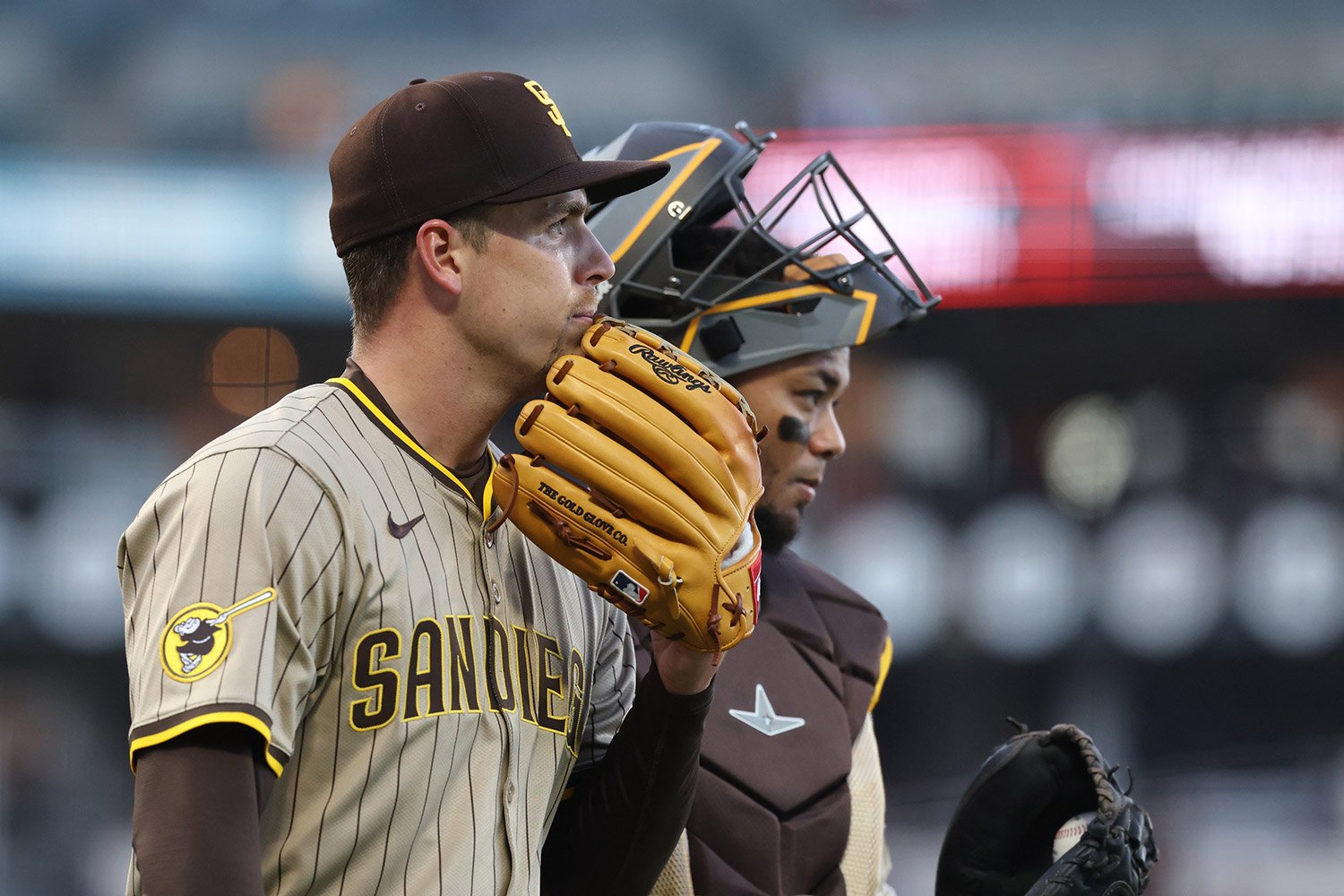 Regardless of the outcome on a given night, the specter of an absence of depth continues to loom over the San Diego Padres. It's a narrative we're more accustomed to in matters of position players, but it's begun to manifest with more frequency on the bump. Still without Yu Darvish and now without Michael King, the Padres have been forced to get a little bit creative with their starting pitching. It's that creativity that forced Ryan Bergert to the mound in San Francisco on Tuesday night. Already rolling with a rotation that has featured six (mostly effective) starts from Stephen Kolek, another recent dud from Kyle Hart, and a Sean Reynolds starting cameo, Bergert was named the starter for Tuesday ahead of time by Mike Shildt. He didn't disappoint. Of course, it wasn't the first we'd seen of Bergert this year. He'd made four clean appearances in relief for the team, totaling four innings with a pair of strikeouts, one hit, and one walk. Solid, unspectacular stuff. There's a funny thing about "solid, unspectacular" in baseball: it generally gets the job done. And while Bergert left without a result sitting in his favor, that solid, unspectacular outing put his team in a position to win. Bergert threw five innings, struck out two, walked two, and allowed six hits. One of those hits was a 107 MPH shot off the bat of Heliot Ramos that landed over the center field wall (and was a homer in 28 out of 30 ballparks). That it came with a man on didn't help, but it landed as the only blemish on an otherwise strong starting debut for Bergert. What's more notable than the outcome, though, is the usage we saw. In his four relief appearances, Bergert was fastball-heavy, throwing his four-seam fastball 68.6 percent of the time. The slider served as his secondary offering (21.6 percent), with a sinker and changeup combining for five pitches total across those four innings. Tuesday showed us something entirely different: Bergert threw his four-seam 41 percent of the time. No surprise there. But the cutter chimed in a third of the time (accounting for 27 of his raw pitch count), with the slider checking in at only 14 percent (12 thrown in total). The sinker was thrown 10 percent of the time, and a changeup wasn't documented at all. So did Bergert suddenly bring a cutter to the table while not throwing a single one in any of his relief appearances? Not quite. This excerpt from his MLB Pipeline scouting report stands out: Baseball Savant had the cutter coming in at 2,625 RPM of spin and the slider at 2,677, on average. The cutter garnered 31 inches of vertical break while the slider offered 37. Given that information, the "slider" indicated by Savant is likely the first pitch noted in the excerpt, and the cutter is the second. It's also worth noting that four of Bergert's eight total whiffs on the evening came via the pitch classified as a cutter. Ultimately, the previous usage probably wasn't distinguishing the two pitches in a smaller sample. However, out of a starting roll, it gave a larger sample with which to work and allowed for differentiation to take place. That changeup we saw in relief could be viable down the line, though, especially as he was forced to go with a four-seam majority against left-handed hitters. Regardless of the usage clarification, Bergert's start against a middle-of-the-pack Giants squad was an important step. That's a contending team in the same division against which you need to stack wins. Bergert left down 2-0, but kept the team within striking distance so that they could work their two-out magic in the ninth inning. Until they nail down more certainty in the rotation, this type of solid, unspectacular work is exactly what the Padres need when you consider what's waiting in the bullpen.
 -
Regardless of the outcome on a given night, the specter of an absence of depth continues to loom over the San Diego Padres. It's a narrative we're more accustomed to in matters of position players, but it's begun to manifest with more frequency on the bump. Still without Yu Darvish and now without Michael King, the Padres have been forced to get a little bit creative with their starting pitching. It's that creativity that forced Ryan Bergert to the mound in San Francisco on Tuesday night. Already rolling with a rotation that has featured six (mostly effective) starts from Stephen Kolek, another recent dud from Kyle Hart, and a Sean Reynolds starting cameo, Bergert was named the starter for Tuesday ahead of time by Mike Shildt. He didn't disappoint. Of course, it wasn't the first we'd seen of Bergert this year. He'd made four clean appearances in relief for the team, totaling four innings with a pair of strikeouts, one hit, and one walk. Solid, unspectacular stuff. There's a funny thing about "solid, unspectacular" in baseball: it generally gets the job done. And while Bergert left without a result sitting in his favor, that solid, unspectacular outing put his team in a position to win. Bergert threw five innings, struck out two, walked two, and allowed six hits. One of those hits was a 107 MPH shot off the bat of Heliot Ramos that landed over the center field wall (and was a homer in 28 out of 30 ballparks). That it came with a man on didn't help, but it landed as the only blemish on an otherwise strong starting debut for Bergert. What's more notable than the outcome, though, is the usage we saw. In his four relief appearances, Bergert was fastball-heavy, throwing his four-seam fastball 68.6 percent of the time. The slider served as his secondary offering (21.6 percent), with a sinker and changeup combining for five pitches total across those four innings. Tuesday showed us something entirely different: Bergert threw his four-seam 41 percent of the time. No surprise there. But the cutter chimed in a third of the time (accounting for 27 of his raw pitch count), with the slider checking in at only 14 percent (12 thrown in total). The sinker was thrown 10 percent of the time, and a changeup wasn't documented at all. So did Bergert suddenly bring a cutter to the table while not throwing a single one in any of his relief appearances? Not quite. This excerpt from his MLB Pipeline scouting report stands out: Baseball Savant had the cutter coming in at 2,625 RPM of spin and the slider at 2,677, on average. The cutter garnered 31 inches of vertical break while the slider offered 37. Given that information, the "slider" indicated by Savant is likely the first pitch noted in the excerpt, and the cutter is the second. It's also worth noting that four of Bergert's eight total whiffs on the evening came via the pitch classified as a cutter. Ultimately, the previous usage probably wasn't distinguishing the two pitches in a smaller sample. However, out of a starting roll, it gave a larger sample with which to work and allowed for differentiation to take place. That changeup we saw in relief could be viable down the line, though, especially as he was forced to go with a four-seam majority against left-handed hitters. Regardless of the usage clarification, Bergert's start against a middle-of-the-pack Giants squad was an important step. That's a contending team in the same division against which you need to stack wins. Bergert left down 2-0, but kept the team within striking distance so that they could work their two-out magic in the ninth inning. Until they nail down more certainty in the rotation, this type of solid, unspectacular work is exactly what the Padres need when you consider what's waiting in the bullpen. View full article
