Randy Holt
-
Posts
486 -
Joined
-
Last visited
-
Days Won
6
Content Type
Profiles
San Diego Padres Videos
2026 San Diego Padres Top Prospects Ranking
San Diego Padres Free Agent & Trade Rumors, Notes, & Tidbits
Guides & Resources
2025 San Diego Padres Draft Pick Tracker
News
2026 San Diego Padres Draft Tracker: Picks & Bonuses
Forums
Blogs
Events
Store
Downloads
Gallery
Everything posted by Randy Holt
-
Jackson Merrill never wanted to leave San Diego. Now he doesn't have to. Not that Jackson Merrill's future was some looming question for the San Diego Padres, but with arbitration eligibility coming after 2026, the team had incentive to try to lock in some cost certainty with their emerging superstar. They have it now, with Merrill and the Padres agreeing to a nine-year contract extension that includes an option for a 10th season in 2035. Efforts to sign Merrill to a long-term pact were not a secret. The Padres had reportedly approached him before his debut about such a deal, similar to what the Milwaukee Brewers did when they signed Jackson Chourio for eight years ahead of his own rookie campaign in 2024. For his own money, Merrill was satisfied waiting but did note that he wanted to remain in San Diego throughout his career. Now, an organization that lacks a certain degree of longer-term certainty locks in a whole lot more of it. There are long-term contracts on the books throughout the roster. Jake Cronenworth is on the books through 2030. Xander Bogaerts and Manny Machado are each signed through 2033. Fernando Tatis Jr. is signed through 2034. On the bump, they've got 38-year-old Yu Darvish for three more seasons and recovering Joe Musgrove for two. But even with a handful of deals set to carry well into the future, it's not an entirely stable situation. It remains to be seen whether Darvish will see that deal through to the end. Cronenworth has been floated in trade rumors. There are questions about Machado's long-term durability and the impact of his swing on his body. And it remains to be seen whether previous payroll constraints will continue to put the clamps on additional spending in the way that we've seen this organization do in years prior. But between Merrill and Tatis, the Padres have two of their younger talents with more upside than anyone on the roster locked down for the foreseeable future. In Merrill's case, they get that cost certainty more than a year ahead of arbitration. Even with various escalators in the contract, the team was able to get out ahead of what would be substantial dollars in the arbitration process. On Merrill's end, he assures himself of financial security for the next decade. The interest in this particular deal was fairly obvious for each side. Merrill is off to a fantastic start this year, with a 216 wRC+ through the team's first seven games. He hit his first home run on Tuesday night and celebrated his newfound security by launching his second on Wednesday. And he's demonstrating a more refined approach at the plate that could allow his game to reach new heights. The Padres are certainly getting a good deal. Payroll constraints have been present over the last two years, but the presence of Merrill and Tatis should help attract more talent if and when they look to add further. There's still a willingness to invest in the team even with the various background contexts above even the front office's paygrade. That should continue to bode well as the team aims for their first title in franchise history. View full article
-
Keep an Eye on Jackson Merrill’s Plate Discipline
Randy Holt posted a topic in San Diego Padres Talk
At this particular time in other parts of the multiverse, we're likely referring to Jackson Merrill as the "reigning" National League Rookie of the Year. As it were, the Paul Skenes factor left the shortstop-turned-outfielder a mere runner-up. He's anything but for the San Diego Padres, especially if his early plate discipline is to be believed. Examining plate discipline after four games isn't necessarily the best use of one's time. Baseball is a game of sample sizes and analyzing an approach requires far more than the opening series of the year. Which means that if we're talking about Jackson Merrill's plate discipline at this point, it's probably at least noteworthy. Within the context of his exceptional 130 wRC+ rookie campaign, Merrill demonstrated an imperfect approach. His 34.4% chase rate was 16th-highest among qualified batters. That's not good news, but at the same time, it didn't seem to matter a whole lot. While the aggression held his walk rate down to an extremely poor 4.9%, his 79.5% contact rate was well above average, as was his his 64.2% contact rate on pitches outside the zone. You can get away with that type of free-swinging when you're going to make that consistent of contact. That doesn't mean it's an ideal way to go about things, though. Contact outside the zone isn't necessarily a good thing, as players tend to hit the ball weaker when they're swinging at bad pitches. However, Merrill's .373 wOBA and .348 xwOBA on balls in play that came on pitches outside the zone were among the best in baseball. It's probably too early to say, but he might just be a very good bad-ball hitter. Nonetheless, even incremental improvement on the approach side can bump up the run production provided by Merrill's excellent activity on the basepaths. Given that, these first four games have allowed Merrill to demonstrate a bit of maturity as it relates to the approach: Season Pitches Zone% Z-Swing% Z-Contact% O-Swing% O-Contact% Whiff% 2024 2,214 49.3 80 85.8 34.4 64.2 20.5 2025 44 50 72.7 87.5 27.3 100 9.1 Obviously, we're comparing 156 games and 593 plate appearances last year to...four games and 15 in the lower row. But the chase rate being down — and the whiff rate along with it — immediately presents as encouraging. Merrill's chase rate isn't just lower, it's well above the league average. Merrill has also taken more pitches in the zone, but he's still not overly patient, which is an important distinction. You don't want to strip the aggression away entirely when it led to so much success last year. The ideal version of Merrill looks reigned in just a bit. The outcomes speak for themselves. His 6.7% walk rate, while still not great, is higher than last year's. His 6.7% strikeout rate is drastically lower. His line includes a .467 on-base percentage and 185 wRC+ (though his .462 BABIP means we should take these numbers with a grain of salt). And that's with very little power output thus far. A somewhat-but-not-entirely-related component to the swing rates is the swing speed. Merrill's average swing speed is coming in at about the same rate as last year (71.9 mph), but his 27.8% fast swing rate is an improvement of more than six percentage points. As a result, he's experiencing quite a bit more squared-up contact. This all speaks to a guy who is entirely confident in what he's doing right now. Not that he needed the boost coming off a stellar rookie season, but when he's hacking with selective aggression with more consistent bat speed, it appears there's another level to be reached here. Whether it comes to fruition, of course, is going to take us quite a bit longer to discern. Again, four games does not indicate much of anything, and plate discipline statistics are notoriously sticky year-over-year. But considering Merrill's previous level of aggression, improving his selectivity at all could say a lot. There's a long way yet to go, but with a talent like Merrill, these little nuances could make all the difference. View full article -
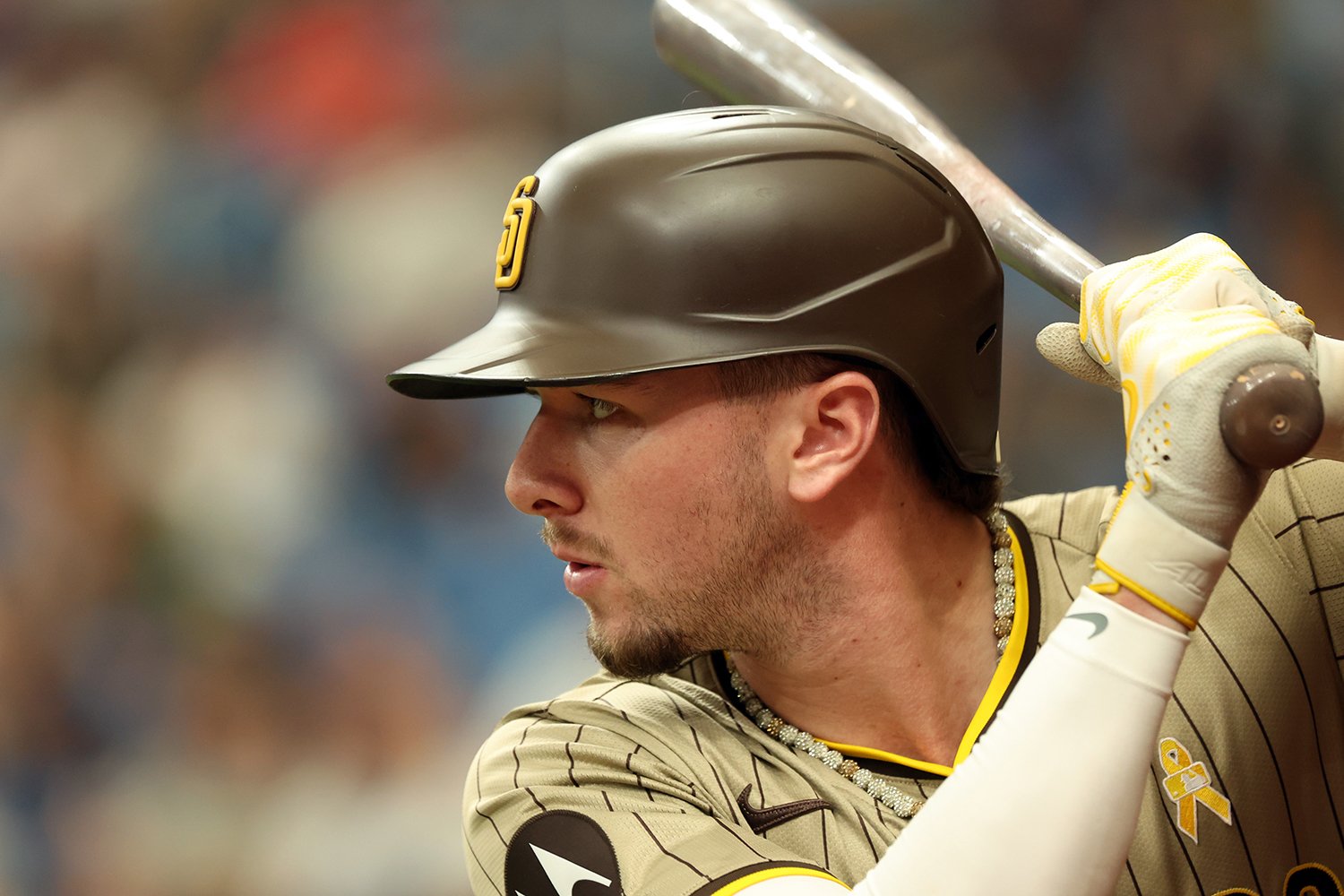 Examining plate discipline after four games isn't necessarily the best use of one's time. Baseball is a game of sample sizes and analyzing an approach requires far more than the opening series of the year. Which means that if we're talking about Jackson Merrill's plate discipline at this point, it's probably at least noteworthy. Within the context of his exceptional 130 wRC+ rookie campaign, Merrill demonstrated an imperfect approach. His 34.4% chase rate was 16th-highest among qualified batters. That's not good news, but at the same time, it didn't seem to matter a whole lot. While the aggression held his walk rate down to an extremely poor 4.9%, his 79.5% contact rate was well above average, as was his his 64.2% contact rate on pitches outside the zone. You can get away with that type of free-swinging when you're going to make that consistent of contact. That doesn't mean it's an ideal way to go about things, though. Contact outside the zone isn't necessarily a good thing, as players tend to hit the ball weaker when they're swinging at bad pitches. However, Merrill's .373 wOBA and .348 xwOBA on balls in play that came on pitches outside the zone were among the best in baseball. It's probably too early to say, but he might just be a very good bad-ball hitter. Nonetheless, even incremental improvement on the approach side can bump up the run production provided by Merrill's excellent activity on the basepaths. Given that, these first four games have allowed Merrill to demonstrate a bit of maturity as it relates to the approach: Season Pitches Zone% Z-Swing% Z-Contact% O-Swing% O-Contact% Whiff% 2024 2,214 49.3 80 85.8 34.4 64.2 20.5 2025 44 50 72.7 87.5 27.3 100 9.1 Obviously, we're comparing 156 games and 593 plate appearances last year to...four games and 15 in the lower row. But the chase rate being down — and the whiff rate along with it — immediately presents as encouraging. Merrill's chase rate isn't just lower, it's well above the league average. Merrill has also taken more pitches in the zone, but he's still not overly patient, which is an important distinction. You don't want to strip the aggression away entirely when it led to so much success last year. The ideal version of Merrill looks reigned in just a bit. The outcomes speak for themselves. His 6.7% walk rate, while still not great, is higher than last year's. His 6.7% strikeout rate is drastically lower. His line includes a .467 on-base percentage and 185 wRC+ (though his .462 BABIP means we should take these numbers with a grain of salt). And that's with very little power output thus far. A somewhat-but-not-entirely-related component to the swing rates is the swing speed. Merrill's average swing speed is coming in at about the same rate as last year (71.9 mph), but his 27.8% fast swing rate is an improvement of more than six percentage points. As a result, he's experiencing quite a bit more squared-up contact. This all speaks to a guy who is entirely confident in what he's doing right now. Not that he needed the boost coming off a stellar rookie season, but when he's hacking with selective aggression with more consistent bat speed, it appears there's another level to be reached here. Whether it comes to fruition, of course, is going to take us quite a bit longer to discern. Again, four games does not indicate much of anything, and plate discipline statistics are notoriously sticky year-over-year. But considering Merrill's previous level of aggression, improving his selectivity at all could say a lot. There's a long way yet to go, but with a talent like Merrill, these little nuances could make all the difference.
 -
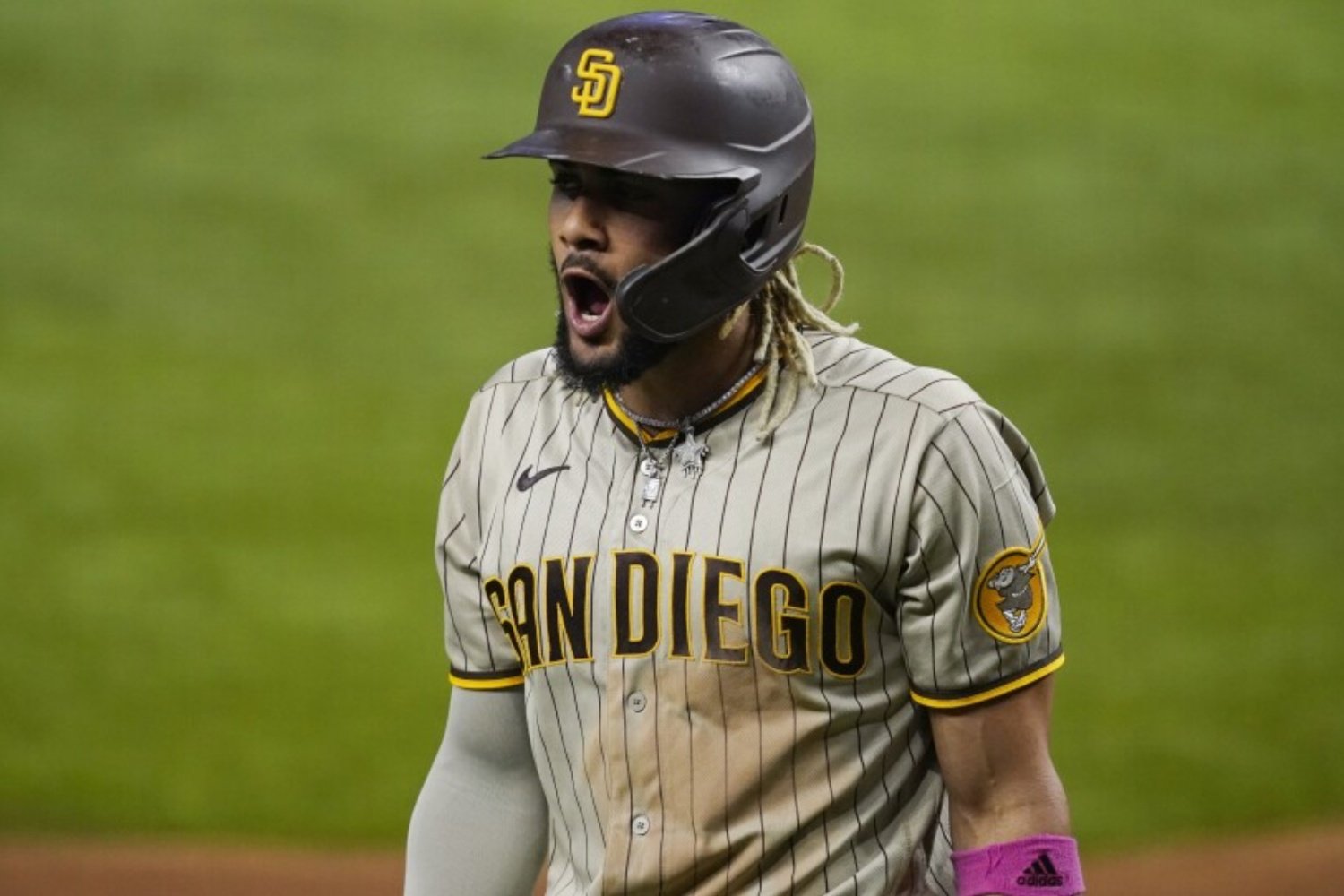 Despite rumblings that the team could try to move pending free agent Luis Arráez during the past offseason, the three-time batting champion is still on the roster. His expected role in the lineup, however, has already started to shift. During each of the Padres' first two games, Mike Shildt elected to go with Fernando Tatis Jr. out of the leadoff spot rather than Arráez. The results have been stellar. Tatis has four hits in his first eight plate appearances, with the pair of steals on Thursday and a leadoff home run on Friday that came on the first pitch of the bottom of the first inning. He's scored three of the four times he's reached base, with the Padres grabbing the first two of four against Atlanta. On the other side of the coin, Arráez doesn't have a hit yet in his own eight PAs. But he does have a walk and a sacrifice fly. While two games isn't going to tell us a whole lot about defined roles, it does at least give us some insight into what Shildt may be trying to accomplish out of that top spot in the order. Arráez is obviously an exceptional hitter. He's hit .316, .354, and .314 in each of the last three seasons, respectively. But he's also become more of a one-note presence atop the order in that same set of years. He's never hit for any notable power, but his walk rate has declined, to the point where he maintained a BB% of just 3.6 last year. That's not as much of a concern when you're hitting that much, but his nine steals were also more than twice his previous career high. You're looking at a high volume of balls in play, but not as much in other areas with Arráez as your leadoff hitter. Which is probably part of what Mike Shildt's thinking is regarding Fernando Tatis Jr in such a role. For his career (749 PA), Tatis has a wRC+ of 159 with a .311/.376/.603/.973 slash in that top spot. He also has a .292 ISO and 8.8 BB%. Given the impact, it makes sense that he'd spend most of his time as the no. 2 hitter in the order. At the same time, the emergence of Jackson Merrill and health of a few key contributors down the lineup makes a swap here a bit more logical. With Tatis, you're obviously getting the possibility of electricity right out of the gate, as we saw on Friday night. But the leadoff profile has shifted from a balls-in-play-plus-baserunning guy to someone with a little extra something. Tatis happens to have a little bit of extra everything. Now that he's fully healthy, though, we're also likely to start seeing the baserunning side of it more frequently. He stole 25 bags in 2022 and 29 in 2023. Last year, he was down to 11 given the stress reaction in his femur. So you've got the extra pop and a potential demon on the base paths out of your top spot. That allows Arráez to slide down a spot with his contact skills. If Tatis is running in front of him, that puts the Padres in a position to add some runs early. From there, you get into Manny Machado, Jackson Merrill, and an assortment of quality bats beyond those two. It's an entirely logical construction atop the lineup, especially given how frequently the Padres had to come from behind in 2024. They came back 38 times last year, including five times in the ninth inning. Getting Tatis atop your lineup has the potential to change the dynamic of some of these games. Playing with a lead can take the pressure off of a lineup and a pitching staff, while saving some juice for the end of the season. If the Padres are hoping to stave off the type of disappointment they experienced last October, that juice will come in handy.
 -
On Thursday, Fernando Tatis Jr. became the first member of the San Diego Padres with 2+ hits and 2+ steals on Opening Day. If his new role starts to become permanent, that may be the type of thing we can expect to see a little more of moving forward. Despite rumblings that the team could try to move pending free agent Luis Arráez during the past offseason, the three-time batting champion is still on the roster. His expected role in the lineup, however, has already started to shift. During each of the Padres' first two games, Mike Shildt elected to go with Fernando Tatis Jr. out of the leadoff spot rather than Arráez. The results have been stellar. Tatis has four hits in his first eight plate appearances, with the pair of steals on Thursday and a leadoff home run on Friday that came on the first pitch of the bottom of the first inning. He's scored three of the four times he's reached base, with the Padres grabbing the first two of four against Atlanta. On the other side of the coin, Arráez doesn't have a hit yet in his own eight PAs. But he does have a walk and a sacrifice fly. While two games isn't going to tell us a whole lot about defined roles, it does at least give us some insight into what Shildt may be trying to accomplish out of that top spot in the order. Arráez is obviously an exceptional hitter. He's hit .316, .354, and .314 in each of the last three seasons, respectively. But he's also become more of a one-note presence atop the order in that same set of years. He's never hit for any notable power, but his walk rate has declined, to the point where he maintained a BB% of just 3.6 last year. That's not as much of a concern when you're hitting that much, but his nine steals were also more than twice his previous career high. You're looking at a high volume of balls in play, but not as much in other areas with Arráez as your leadoff hitter. Which is probably part of what Mike Shildt's thinking is regarding Fernando Tatis Jr in such a role. For his career (749 PA), Tatis has a wRC+ of 159 with a .311/.376/.603/.973 slash in that top spot. He also has a .292 ISO and 8.8 BB%. Given the impact, it makes sense that he'd spend most of his time as the no. 2 hitter in the order. At the same time, the emergence of Jackson Merrill and health of a few key contributors down the lineup makes a swap here a bit more logical. With Tatis, you're obviously getting the possibility of electricity right out of the gate, as we saw on Friday night. But the leadoff profile has shifted from a balls-in-play-plus-baserunning guy to someone with a little extra something. Tatis happens to have a little bit of extra everything. Now that he's fully healthy, though, we're also likely to start seeing the baserunning side of it more frequently. He stole 25 bags in 2022 and 29 in 2023. Last year, he was down to 11 given the stress reaction in his femur. So you've got the extra pop and a potential demon on the base paths out of your top spot. That allows Arráez to slide down a spot with his contact skills. If Tatis is running in front of him, that puts the Padres in a position to add some runs early. From there, you get into Manny Machado, Jackson Merrill, and an assortment of quality bats beyond those two. It's an entirely logical construction atop the lineup, especially given how frequently the Padres had to come from behind in 2024. They came back 38 times last year, including five times in the ninth inning. Getting Tatis atop your lineup has the potential to change the dynamic of some of these games. Playing with a lead can take the pressure off of a lineup and a pitching staff, while saving some juice for the end of the season. If the Padres are hoping to stave off the type of disappointment they experienced last October, that juice will come in handy. View full article
-
Fernando Tatis Jr: Very Good Again In 2025 Or A Return To Superstardom?
Randy Holt posted an article in Padres
 Given all that's transpired since it feels like a decade ago, but the San Diego Padres were must-watch television for even the most neutral observers in the not-too-distant past. A new aesthetic combined with an infusion of exciting talent and front-office aggression made them one of the more fascinating organizations in the sport. Fernando Tatis Jr. was, of course, central to this. Tatis broke onto the scene with 84 games in 2019, turned in a very good 59 games during the 2020 season, and was an MVP finalist in 2021. Across two partial and one full season, he never posted a wRC+ figure under 150. The latter campaign saw him turn in a slash that included a .282 average, .364 on-base percentage, and .975 OPS on his way to a 158 wRC+ while ISO'ing an obscene .328. At this point, we know what the subsequent season included. A motorcycle accident-induced broken wrist and a PED suspension wiped out 2022 and forced him into a late start in 2023. After such a lengthy stint away from the game, the readjustment led to underwhelming outcomes that year, not just for Tatis but also for the Padres, who disappointed as a collective. Ahead of 2024, it was natural to wonder whether we'd already seen the best Fernando Tatis Jr.had to offer. That notion proved to be misguided on two separate levels. One is the fact that there is, indeed, quite a good baseball player still in there. The other is that there's probably an even better version of Tatis waiting to be unlocked. The 2024 season saw Tatis turn in a .276/.394/.407/.801 line, finishing with a 135 wRC+ and 3.2 fWAR. In broad strokes, it was well off his 2021 output but improved in a couple of key areas while leaving optimism for others. The most notable absence from Tatis' very solid 2024 campaign was in the power. His ISO checked in at .216, representing his lowest power output besides the tough hang of a 2023 season. The home run total sat at just 21, lower than even 2023 when he ISO'd only .191 but hit 25. His walk rate was also at its lowest, with a mere 7.3 BB%. But there were also worthy improvements elsewhere. The K%, at 21.9, was the lowest of his career. His 74.4 percent contact rate was his highest, while his 12.8 Whiff% was his best over a full season. His bat speed was also up a tick, his rate of fast swings skyrocketed, and he experienced a 4-5 percent increase in rates of squared-up contact and blasts. The former developments speak to a maturation in his approach, the latter to the idea that 2023 served as a readjustment for Tatis above all. Regardless, all of it should have led to better outcomes given this: While the approach was improved for Tatis within his own individual context, it's obviously not quite there with the rest of the league. But the actual contact trends indicate that this guy has far more electricity in the stick than we saw come to fruition last season. Most of those percentile rankings look similar to where they fell in 2021, with the approach figures also sitting much higher than they did even then. We can objectively say that Fernando Tatis Jr.was good in 2024. The above indicates he was quite a bit more than that. The projections ahead of the 2025 season are indicative of just that. Each of Steamer & ZiPS has him checking in at a wRC+ above 140, with a return to ISO figures well above .200. Steamer likes him for a .253 figure, and ZiPS is at .249. PECOTA has him jumping back up over 30 homers and a 126 DRC+ (and even that's with the BABIP coming down back under .300). Anywhere you turn, the machines are in love with Fernando Tatis Jr.and his 2025 prospects. The combination of increased health and maturity (both on and off the field) gives us no reason to doubt them. He had the 2023 readjustment, and the physical tools manifested again in 2024. It's all there. It's probably time for us to get back on board.
 -
Fernando Tatis Jr.'s career has stabilized after a rapid ascent and even faster fall. Does this mean we should expect a return to his meteoric upside in 2025? Given all that's transpired since it feels like a decade ago, but the San Diego Padres were must-watch television for even the most neutral observers in the not-too-distant past. A new aesthetic combined with an infusion of exciting talent and front-office aggression made them one of the more fascinating organizations in the sport. Fernando Tatis Jr. was, of course, central to this. Tatis broke onto the scene with 84 games in 2019, turned in a very good 59 games during the 2020 season, and was an MVP finalist in 2021. Across two partial and one full season, he never posted a wRC+ figure under 150. The latter campaign saw him turn in a slash that included a .282 average, .364 on-base percentage, and .975 OPS on his way to a 158 wRC+ while ISO'ing an obscene .328. At this point, we know what the subsequent season included. A motorcycle accident-induced broken wrist and a PED suspension wiped out 2022 and forced him into a late start in 2023. After such a lengthy stint away from the game, the readjustment led to underwhelming outcomes that year, not just for Tatis but also for the Padres, who disappointed as a collective. Ahead of 2024, it was natural to wonder whether we'd already seen the best Fernando Tatis Jr.had to offer. That notion proved to be misguided on two separate levels. One is the fact that there is, indeed, quite a good baseball player still in there. The other is that there's probably an even better version of Tatis waiting to be unlocked. The 2024 season saw Tatis turn in a .276/.394/.407/.801 line, finishing with a 135 wRC+ and 3.2 fWAR. In broad strokes, it was well off his 2021 output but improved in a couple of key areas while leaving optimism for others. The most notable absence from Tatis' very solid 2024 campaign was in the power. His ISO checked in at .216, representing his lowest power output besides the tough hang of a 2023 season. The home run total sat at just 21, lower than even 2023 when he ISO'd only .191 but hit 25. His walk rate was also at its lowest, with a mere 7.3 BB%. But there were also worthy improvements elsewhere. The K%, at 21.9, was the lowest of his career. His 74.4 percent contact rate was his highest, while his 12.8 Whiff% was his best over a full season. His bat speed was also up a tick, his rate of fast swings skyrocketed, and he experienced a 4-5 percent increase in rates of squared-up contact and blasts. The former developments speak to a maturation in his approach, the latter to the idea that 2023 served as a readjustment for Tatis above all. Regardless, all of it should have led to better outcomes given this: While the approach was improved for Tatis within his own individual context, it's obviously not quite there with the rest of the league. But the actual contact trends indicate that this guy has far more electricity in the stick than we saw come to fruition last season. Most of those percentile rankings look similar to where they fell in 2021, with the approach figures also sitting much higher than they did even then. We can objectively say that Fernando Tatis Jr.was good in 2024. The above indicates he was quite a bit more than that. The projections ahead of the 2025 season are indicative of just that. Each of Steamer & ZiPS has him checking in at a wRC+ above 140, with a return to ISO figures well above .200. Steamer likes him for a .253 figure, and ZiPS is at .249. PECOTA has him jumping back up over 30 homers and a 126 DRC+ (and even that's with the BABIP coming down back under .300). Anywhere you turn, the machines are in love with Fernando Tatis Jr.and his 2025 prospects. The combination of increased health and maturity (both on and off the field) gives us no reason to doubt them. He had the 2023 readjustment, and the physical tools manifested again in 2024. It's all there. It's probably time for us to get back on board. View full article
-
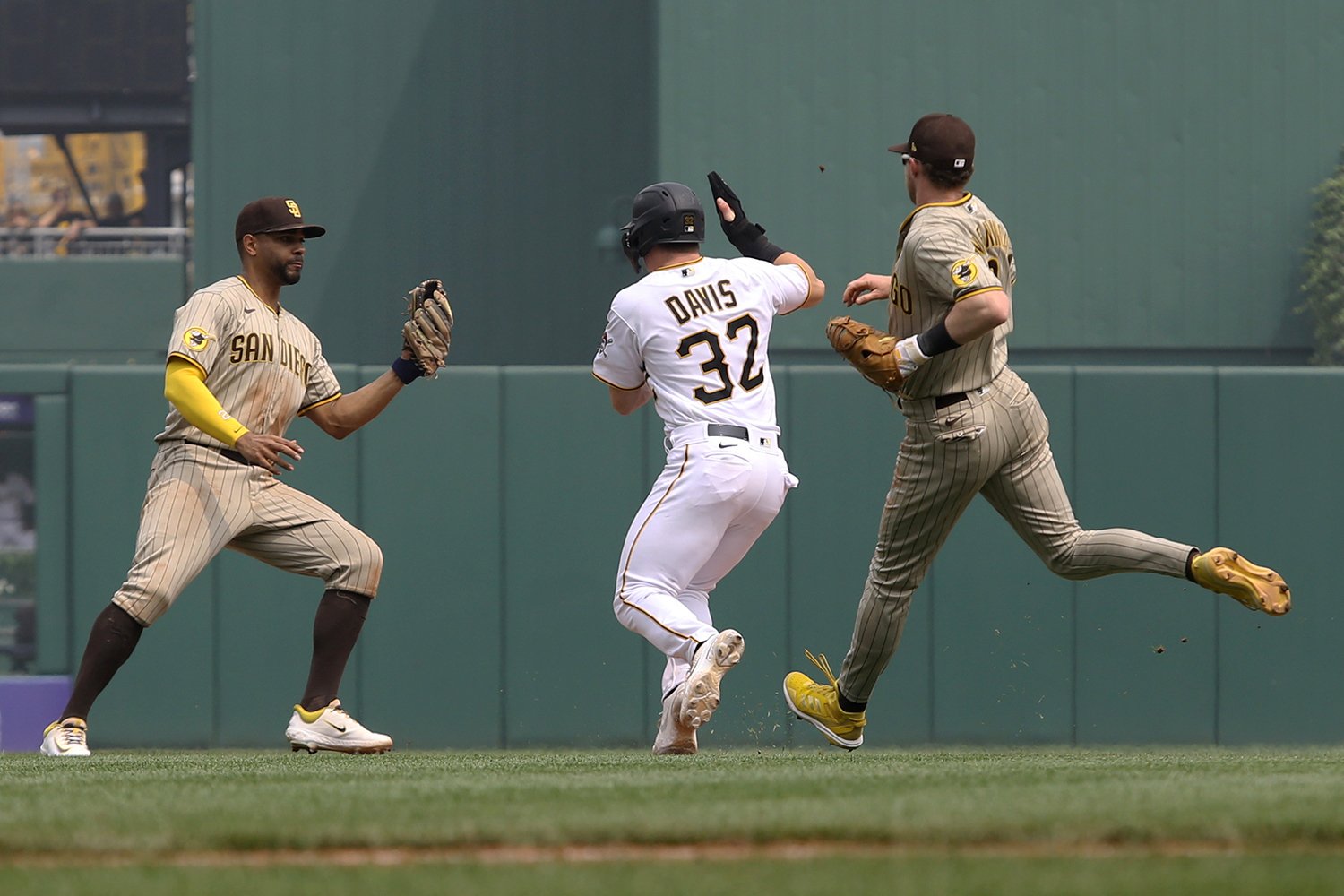 On the surface, the San Diego Padres were not a good defensive baseball team last season. They sat in the league's bottom third in Fielding Run Value (FRV), courtesy of a -12 mark under Statcast's comprehensive fielding metric. By that metric alone, they were the worst in the National League West. Only Miami, Cincinnati, Pittsburgh, and Washington sat behind them on the senior circuit. That shouldn't serve as any sort of indicator for 2025, however. Defense is important. Of the dozen teams that lived to play October baseball in 2024, seven — the Yankees (36), Royals (35), Guardians (31), Brewers (29), Tigers (26), Phillies (10), and Mets (9) — ranked inside of the top 11 in Fielding Run Value. The first five teams on that list occupied spots two through seven on the FRV leaderboard. Atlanta trailed closely behind that group at 13 (3). Only the Astros (-2), Dodgers (-12), and Orioles (-15) found themselves in league with the Padres' 21st-ranked group (-12). There's a clear threshold that separates the elite defensive teams, the average (or around there) defensive teams, and the bad defensive teams. Last year, a threshold separated the Mets and the 12th-ranked Rays (3 FRV), and another separated the Astros and the Dodgers, who ranked 19th and 20th in FRV, respectively. The FRV leaderboard shows that quality defense gives you a chance of being in the postseason mix. While there are notable exceptions (first-ranked Toronto finished last in the American League East), the high volume of postseason teams near the top of that board tells you what you need to know. On top of that, we saw the disastrous effects that come when those teams falter on that side of the ball in October. Sure, it's possible to hit your way into the playoffs. But once you're there, you win on the strength of your defense. The regular season is about run production. The postseason is about run prevention. Which presents both good and bad news for the 2025 iteration of the Padres of San Diego. Below is how FanGraphs projects the Friars to line up in 2025: Let's talk about the positives first. Jackson Merrill was the team's top defender last year, checking in at a FRV of 10. He was a true darling of Statcast, sitting favorably in just about any metric we can throw at him (Jump, Catch Probability, etc.). Center field is in steady hands with Merrill moving forward. It's a similar case with Fernando Tatis Jr. While his overall defensive output isn't as loud, he was above average by FRV (2) and has proven almost too athletic for right field, allowing him to compensate for any shortcomings in jump or specific outfield components. Left field isn't as settled as the other two spots, at least in terms of personnel. While Jason Heyward projects to get the majority of the time there, Brandon Lockridge and, eventually, Connor Joe should factor into the platoon against left-handed pitching. Heyward and Lockridge represent the higher-upside duo from a defensive standpoint. Heyward's left field experience is limited, but he's been an all-world defender for much of his career. Lockridge provides an effective supplement with range and athleticism of his own. Considering Jurickson Profar turned in a -6 FRV at the spot in 2024, you're looking at a significant upgrade on that third of the grass as it relates to defense. Changes should help the Padres behind the plate, as well, even if only modestly. After spending the majority of last year with Kyle Higashioka (good defender) and Luis Campusano (bad defender; literal worst on the team defender) serving as one half of the battery, San Diego will start '25 off with a combination of Elías Díaz and Martín Maldonado managing the pitching staff. Díaz sat 17th out of 100 backstops in Baseball Prospectus' Deserved Runs Prevented metric (2.8). Given that Higashioka was directly in front of him, the defensive impact of a catcher change should remain fairly minimal. At this late stage of his career, Maldonado isn't the defender his reputation would have you believe, but he was much better in 2024 than in 2023 (though in a smaller sample), and was certainly better than Campusano, who sat 98th out of that group in DRP. Ultimately, it's largely a wash in the turnover there, but even a slight improvement with the optioning of Campusano still represents improvement nonetheless. The largest questions for the Padres' gloves come on the infield. Xander Bogaerts (4) and Jake Cronenworth (3) were the team's second and third-best defenders by FRV in 2024. However, that output came at positions at which they will no longer spend the majority of their time. In roughly 150 innings at short, Bogaerts checked in at a -1 FRV, while Cronenworth was -3 at the keystone across almost 600. In Cronenworth's case at least, there's a history of quality defense at his regular position. The 2024 campaign was actually the first in which the veteran posted a below average FRV at the spot. Unless you're a true utility player, there's something to be said for positional stability against your actual defensive output. The hope is that he can reestablish his defensive value with more consistency in starting at second. Bogaerts' reintegration at shortstop is perhaps the largest defensive question facing this team. There's a reason the organization swapped him with Ha-Seong Kim last season. But it should be noted that such a change likely boiled down to arm strength more than any other deep-rooted issue within Bogaerts' game. His two most recent seasons as a full-time shortstop (2022 and 2023) were his only above-average FRV years at the position. And he has 88th percentile range. Of course, 15th percentile arm strength remains less than ideal. The team is undoubtedly going to miss Kim's blend of range and arm strength. But Bogaerts had demonstrated marked growth in the face of a narrative that was at least somewhat misguided. He could be fine there. That doesn't change the fact that it's the unit's most notable question, though. Unless, of course, you count Manny Machado. He was precisely average with the glove by FRV (0). That represents a pretty steep decline from a 9 FRV 2023. His range also fell from the 97th percentile in '23 to 38th in 2024. One has to wonder how much of this was due to a late start after offseason surgery and the subsequent workload management. If those numbers stay low, then perhaps we can have that conversation. But until then, we have no reason to think that Manny Machado is anyone other than the defender he's always been. Given where the Padres finished on the FRV leaderboard in 2024, it's not difficult to find where the improvement will come. Luis Campusano's present subtraction via option brings the figure up some behind the plate. Profar's absence via free agency helps in left (even if it hurts on the other side of things). Moving guys back into more stable positions could be a boon, too. There are a lot of things we could identify as...less than stable within this organization. The testy ownership situation, for one. Pitching, for another. But this year's roster construction should help to at least remove defense from that portion of the discussion. It stands to be better. Potentially even much better. With a top-heavy offensive group and a rotation that lacks depth, it's a fascinating test of defense's value. If the Padres lose some steam off top 12-ish performances in those two respects, could a rise in the third phase help to compensate? We're about to find out.
 -
You don't have to be a good defensive team to win a World Series. But it helps. On the surface, the San Diego Padres were not a good defensive baseball team last season. They sat in the league's bottom third in Fielding Run Value (FRV), courtesy of a -12 mark under Statcast's comprehensive fielding metric. By that metric alone, they were the worst in the National League West. Only Miami, Cincinnati, Pittsburgh, and Washington sat behind them on the senior circuit. That shouldn't serve as any sort of indicator for 2025, however. Defense is important. Of the dozen teams that lived to play October baseball in 2024, seven — the Yankees (36), Royals (35), Guardians (31), Brewers (29), Tigers (26), Phillies (10), and Mets (9) — ranked inside of the top 11 in Fielding Run Value. The first five teams on that list occupied spots two through seven on the FRV leaderboard. Atlanta trailed closely behind that group at 13 (3). Only the Astros (-2), Dodgers (-12), and Orioles (-15) found themselves in league with the Padres' 21st-ranked group (-12). There's a clear threshold that separates the elite defensive teams, the average (or around there) defensive teams, and the bad defensive teams. Last year, a threshold separated the Mets and the 12th-ranked Rays (3 FRV), and another separated the Astros and the Dodgers, who ranked 19th and 20th in FRV, respectively. The FRV leaderboard shows that quality defense gives you a chance of being in the postseason mix. While there are notable exceptions (first-ranked Toronto finished last in the American League East), the high volume of postseason teams near the top of that board tells you what you need to know. On top of that, we saw the disastrous effects that come when those teams falter on that side of the ball in October. Sure, it's possible to hit your way into the playoffs. But once you're there, you win on the strength of your defense. The regular season is about run production. The postseason is about run prevention. Which presents both good and bad news for the 2025 iteration of the Padres of San Diego. Below is how FanGraphs projects the Friars to line up in 2025: Let's talk about the positives first. Jackson Merrill was the team's top defender last year, checking in at a FRV of 10. He was a true darling of Statcast, sitting favorably in just about any metric we can throw at him (Jump, Catch Probability, etc.). Center field is in steady hands with Merrill moving forward. It's a similar case with Fernando Tatis Jr. While his overall defensive output isn't as loud, he was above average by FRV (2) and has proven almost too athletic for right field, allowing him to compensate for any shortcomings in jump or specific outfield components. Left field isn't as settled as the other two spots, at least in terms of personnel. While Jason Heyward projects to get the majority of the time there, Brandon Lockridge and, eventually, Connor Joe should factor into the platoon against left-handed pitching. Heyward and Lockridge represent the higher-upside duo from a defensive standpoint. Heyward's left field experience is limited, but he's been an all-world defender for much of his career. Lockridge provides an effective supplement with range and athleticism of his own. Considering Jurickson Profar turned in a -6 FRV at the spot in 2024, you're looking at a significant upgrade on that third of the grass as it relates to defense. Changes should help the Padres behind the plate, as well, even if only modestly. After spending the majority of last year with Kyle Higashioka (good defender) and Luis Campusano (bad defender; literal worst on the team defender) serving as one half of the battery, San Diego will start '25 off with a combination of Elías Díaz and Martín Maldonado managing the pitching staff. Díaz sat 17th out of 100 backstops in Baseball Prospectus' Deserved Runs Prevented metric (2.8). Given that Higashioka was directly in front of him, the defensive impact of a catcher change should remain fairly minimal. At this late stage of his career, Maldonado isn't the defender his reputation would have you believe, but he was much better in 2024 than in 2023 (though in a smaller sample), and was certainly better than Campusano, who sat 98th out of that group in DRP. Ultimately, it's largely a wash in the turnover there, but even a slight improvement with the optioning of Campusano still represents improvement nonetheless. The largest questions for the Padres' gloves come on the infield. Xander Bogaerts (4) and Jake Cronenworth (3) were the team's second and third-best defenders by FRV in 2024. However, that output came at positions at which they will no longer spend the majority of their time. In roughly 150 innings at short, Bogaerts checked in at a -1 FRV, while Cronenworth was -3 at the keystone across almost 600. In Cronenworth's case at least, there's a history of quality defense at his regular position. The 2024 campaign was actually the first in which the veteran posted a below average FRV at the spot. Unless you're a true utility player, there's something to be said for positional stability against your actual defensive output. The hope is that he can reestablish his defensive value with more consistency in starting at second. Bogaerts' reintegration at shortstop is perhaps the largest defensive question facing this team. There's a reason the organization swapped him with Ha-Seong Kim last season. But it should be noted that such a change likely boiled down to arm strength more than any other deep-rooted issue within Bogaerts' game. His two most recent seasons as a full-time shortstop (2022 and 2023) were his only above-average FRV years at the position. And he has 88th percentile range. Of course, 15th percentile arm strength remains less than ideal. The team is undoubtedly going to miss Kim's blend of range and arm strength. But Bogaerts had demonstrated marked growth in the face of a narrative that was at least somewhat misguided. He could be fine there. That doesn't change the fact that it's the unit's most notable question, though. Unless, of course, you count Manny Machado. He was precisely average with the glove by FRV (0). That represents a pretty steep decline from a 9 FRV 2023. His range also fell from the 97th percentile in '23 to 38th in 2024. One has to wonder how much of this was due to a late start after offseason surgery and the subsequent workload management. If those numbers stay low, then perhaps we can have that conversation. But until then, we have no reason to think that Manny Machado is anyone other than the defender he's always been. Given where the Padres finished on the FRV leaderboard in 2024, it's not difficult to find where the improvement will come. Luis Campusano's present subtraction via option brings the figure up some behind the plate. Profar's absence via free agency helps in left (even if it hurts on the other side of things). Moving guys back into more stable positions could be a boon, too. There are a lot of things we could identify as...less than stable within this organization. The testy ownership situation, for one. Pitching, for another. But this year's roster construction should help to at least remove defense from that portion of the discussion. It stands to be better. Potentially even much better. With a top-heavy offensive group and a rotation that lacks depth, it's a fascinating test of defense's value. If the Padres lose some steam off top 12-ish performances in those two respects, could a rise in the third phase help to compensate? We're about to find out. View full article
-
Despite standing on the precipice of a World Series berth just six months ago, questions permeate the air in America's Finest City™. Chief among them: the future of the Padres' second-baseman-turned-first-baseman-turned-second-baseman. When the Padres rewarded Jake Cronenworth with a seven-year extension ahead of the 2023 season, it was clear they saw him as a permanent piece of their lineup. Given the contract's fairly modest nature (a shade over $11 million per year), it seemed logical. After a breakout during the sprint of 2020, Cronenworth posted 3.7 fWAR in each of the two subsequent seasons, combining for 38 home runs and a 113 wRC+. A versatile infielder with above-average production that can hit all over the lineup? You pay that price for that type of player without hesitation. Of course, you also expect that production level to maintain into even year one of said deal. The latest pair of seasons has featured a clunky transition to first base and a notable decline in offensive production. Cronenworth was a below-average performer by wRC+ (91) in 2023 and just scratched back to above in 2024 (104). While it hasn't been to the extent of some of his counterparts throughout the roster, Cronenworth's name also hasn't been immune to floating around in the trade rumor ether. Could 2025 provide a reset regarding his value and our overall expectations? Cronenworth's move to first was necessitated by the long-term deal awarded to Xander Bogaerts. At that moment, Ha-Seong Kim was forced to second and Cronenworth to first. An early injury to Bogaerts last year was a factor in the team's acquisition of Luis Arráez. And while Arráez wound up splitting time between first base and designated hitter, Cronenworth still spent almost 150 more innings at first than second. With Kim now in Tampa Bay, the configuration resets to allow Cronenworth to return to the keystone full-time, with brief cameos still likely set to unfold at first. Not entirely unlike Arráez, who exists as his separate conversation in all of this, one of the issues with Cronenworth logging such heavy time at first base is in the profile. In 2025, the average ISO figure for a qualifying first baseman was .174. The average on-base percentage was .321, and the average home run total was 21. Comprehensively, the position averaged a wRC+ of 114 when it was all said and done. In contrast, second base went .135, .325, 15, and 104, respectively, in that hodgepodge of offensive figures. Given Cronenworth's output, which included a .149 ISO, .324 OBP, 17 homers, and a 105 wRC+, which position fits his skill set more appropriately is fairly straightforward. The profile is important because it allows you to manage expectations properly. Cronenworth was never an ideal offensive first baseman. His career ISO checks in at .163, and his home run power peaked in 2021 when he hit 21. He was also a 40th percentile guy in average exit velocity, a 29th percentile guy in Hard Hit %, and a 50th percentile guy in Barrel %. While he's consistently demonstrated a keen approach and an ability to avoid the K, the power just isn't there to support the idea of him as a regular first-sacker. And this is all working in Jake Cronenworth's favor for 2025. The power output has stabilized around the .150 mark in ISO, and his OBP regularly sits above .320. If you're getting that out of him again in the upcoming season, you're getting average second-base production at worst. Steamer has him at .242/.322/.393/.714, with a .151 ISO and 105 wRC+. ZiPS is at .240/.322/.391/.713, .152, and 104. The rest of the projections down the list convey a similar idea. It is also worth considering whether he can beat those projections and exceed expectations that have been redefined after two underwhelming seasons. Not much has changed in the approach. There's been an uptick in swing rate since his first two years, but that also came largely in the zone. The result was fewer called strikes, but there isn't a recognizable detriment in that slight increase in aggression. Nor can we glean too much out of his pitch selection. Offspeed has sat atop his swing rates each year in the bigs. Fastballs and breaking pitches have alternated throughout. But nothing discernible there, either. The swing has looked the same, too. So, it doesn't appear to be anything mechanical. Perhaps Statcast's new batter positioning data could give us some insight. Unless it's there, the only explanation is that Cronenworth has always been what he is now rather than hoping for some sort of return to a form that doesn't exist. That would leave the first two seasons as something of an aberration rather than an actual decline. But, again, even if there isn't more in the bat than we've seen, the current iteration of Jake Cronenworth is perfectly acceptable for his new (old) role. A return to the keystone should allow him to return to above-average defense, with his occasional versatility being a boon for the roster construction as a whole. The Cronenworth narrative exists in its current form largely as a byproduct of the move to first base. Don't underestimate the psychological impact of returning to a position of comfort. View full article
-
Jake Cronenworth vs. the Projections, the Profile, and Himself
Randy Holt posted an article in Padres
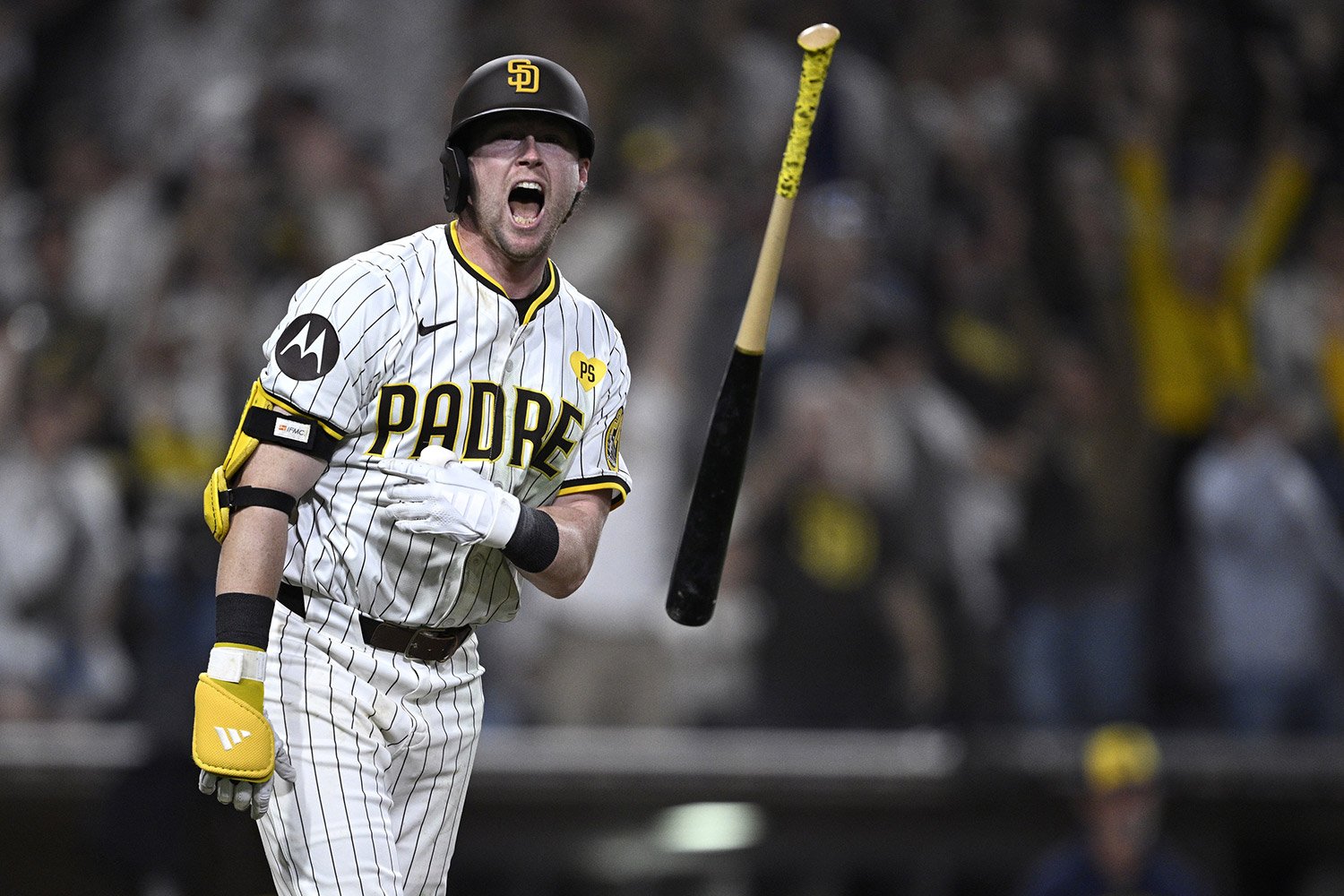 When the Padres rewarded Jake Cronenworth with a seven-year extension ahead of the 2023 season, it was clear they saw him as a permanent piece of their lineup. Given the contract's fairly modest nature (a shade over $11 million per year), it seemed logical. After a breakout during the sprint of 2020, Cronenworth posted 3.7 fWAR in each of the two subsequent seasons, combining for 38 home runs and a 113 wRC+. A versatile infielder with above-average production that can hit all over the lineup? You pay that price for that type of player without hesitation. Of course, you also expect that production level to maintain into even year one of said deal. The latest pair of seasons has featured a clunky transition to first base and a notable decline in offensive production. Cronenworth was a below-average performer by wRC+ (91) in 2023 and just scratched back to above in 2024 (104). While it hasn't been to the extent of some of his counterparts throughout the roster, Cronenworth's name also hasn't been immune to floating around in the trade rumor ether. Could 2025 provide a reset regarding his value and our overall expectations? Cronenworth's move to first was necessitated by the long-term deal awarded to Xander Bogaerts. At that moment, Ha-Seong Kim was forced to second and Cronenworth to first. An early injury to Bogaerts last year was a factor in the team's acquisition of Luis Arráez. And while Arráez wound up splitting time between first base and designated hitter, Cronenworth still spent almost 150 more innings at first than second. With Kim now in Tampa Bay, the configuration resets to allow Cronenworth to return to the keystone full-time, with brief cameos still likely set to unfold at first. Not entirely unlike Arráez, who exists as his separate conversation in all of this, one of the issues with Cronenworth logging such heavy time at first base is in the profile. In 2025, the average ISO figure for a qualifying first baseman was .174. The average on-base percentage was .321, and the average home run total was 21. Comprehensively, the position averaged a wRC+ of 114 when it was all said and done. In contrast, second base went .135, .325, 15, and 104, respectively, in that hodgepodge of offensive figures. Given Cronenworth's output, which included a .149 ISO, .324 OBP, 17 homers, and a 105 wRC+, which position fits his skill set more appropriately is fairly straightforward. The profile is important because it allows you to manage expectations properly. Cronenworth was never an ideal offensive first baseman. His career ISO checks in at .163, and his home run power peaked in 2021 when he hit 21. He was also a 40th percentile guy in average exit velocity, a 29th percentile guy in Hard Hit %, and a 50th percentile guy in Barrel %. While he's consistently demonstrated a keen approach and an ability to avoid the K, the power just isn't there to support the idea of him as a regular first-sacker. And this is all working in Jake Cronenworth's favor for 2025. The power output has stabilized around the .150 mark in ISO, and his OBP regularly sits above .320. If you're getting that out of him again in the upcoming season, you're getting average second-base production at worst. Steamer has him at .242/.322/.393/.714, with a .151 ISO and 105 wRC+. ZiPS is at .240/.322/.391/.713, .152, and 104. The rest of the projections down the list convey a similar idea. It is also worth considering whether he can beat those projections and exceed expectations that have been redefined after two underwhelming seasons. Not much has changed in the approach. There's been an uptick in swing rate since his first two years, but that also came largely in the zone. The result was fewer called strikes, but there isn't a recognizable detriment in that slight increase in aggression. Nor can we glean too much out of his pitch selection. Offspeed has sat atop his swing rates each year in the bigs. Fastballs and breaking pitches have alternated throughout. But nothing discernible there, either. The swing has looked the same, too. So, it doesn't appear to be anything mechanical. Perhaps Statcast's new batter positioning data could give us some insight. Unless it's there, the only explanation is that Cronenworth has always been what he is now rather than hoping for some sort of return to a form that doesn't exist. That would leave the first two seasons as something of an aberration rather than an actual decline. But, again, even if there isn't more in the bat than we've seen, the current iteration of Jake Cronenworth is perfectly acceptable for his new (old) role. A return to the keystone should allow him to return to above-average defense, with his occasional versatility being a boon for the roster construction as a whole. The Cronenworth narrative exists in its current form largely as a byproduct of the move to first base. Don't underestimate the psychological impact of returning to a position of comfort.