


Randy Holt
-
Posts
486 -
Joined
-
Last visited
-
Days Won
6
Content Type
Profiles
San Diego Padres Videos
2026 San Diego Padres Top Prospects Ranking
San Diego Padres Free Agent & Trade Rumors, Notes, & Tidbits
Guides & Resources
2025 San Diego Padres Draft Pick Tracker
News
2026 San Diego Padres Draft Tracker: Picks & Bonuses
Forums
Blogs
Events
Store
Downloads
Gallery
Everything posted by Randy Holt
-
As Padres' Offense Rises, Manny Machado is Going the Other Direction
Randy Holt posted an article in Padres
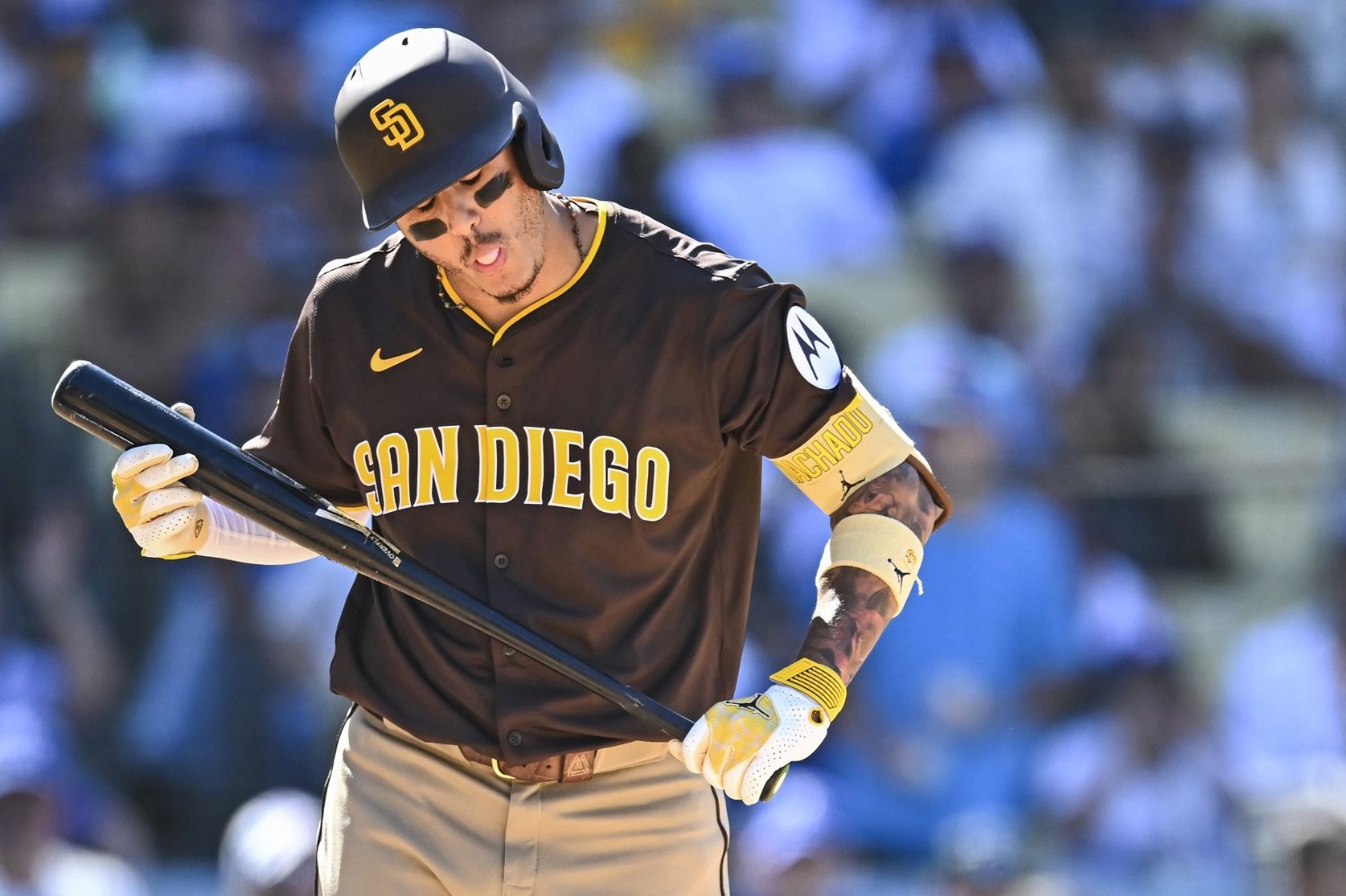 From May 16 through the end of July, the San Diego Padres were one of the worst offensive teams in Major League Baseball. They ranked 26th in runs (249), 23rd in batting average (.242), 21st in on-base percentage (.310), and 24th in team wRC+ (93). Their already modest power output was better than only the Pittsburgh Pirates (.125 ISO), while their quality of contact (measured by Hard-Hit% in this case) checked in ahead of only the Cleveland Guardians (35.9 percent). Since the start of August, though, the offense has started to take multiple steps in the correct direction. This month, the team is up to 15th in runs scored (86), eighth in average (.257), fourth in OBP (.341), and eighth in wRC+ (117). Though they've been led by deadline acquisitions Ramón Laureano (174 wRC+) and Ryan O'Hearn (147), holdovers Jake Cronenworth (136), Jackson Merrill (119), and Fernando Tatis, Jr. (117) have started to find consistent success at the plate. It's a key turnaround at a crucial time for a team making a run at not just a playoff spot, but the National League West outright. It's been imperfect, of course. Few teams fire on all offensive cylinders simultaneously, and the Padres are not an exception in this regard. This is especially true considering one of the team's offensive catalysts has spent this month heading in the opposite direction of many of his comrades. In a broad sense, Manny Machado is having his best offensive year since 2022. His slash reads .292/.353/.484 with a 135 wRC+, a 17.6 strikeout rate, and an 8.5 percent walk rate. You have to go back three years, at minimum, to find such fine work from the team's third baseman. The power has waned in the big picture (.192 ISO), but he's also been prone to incredibly torrid stretches, including a .283 ISO for the month of July. The percentiles look really strong for a player with a lot of mileage at this stage of his career: Since August 1, though, Machado has disappeared at the plate. His .229 average, .299 on-base percentage, .100 ISO, and 81 wRC+ are all single-month lows for 2025. And while his walk rate (9.1 percent) serves as his second-best mark across a single month, his 22.1 K% is easily the highest rate he's posted. It's been a brutal month for Machado, but this stretch manifested in the worst possible way against the Los Angeles Dodgers last weekend. With the division lead on the line, Machado went just 1-for-12 against the division rivals with a trio of strikeouts and a walk. What exactly is plaguing Machado this month, however, is somewhat difficult to discern. The first place one tends to look is at the plate discipline numbers. From an approach standpoint, there hasn't been a significant change. Between the first handful of months of '25 and these three weeks in August, Machado is swinging and chasing at similar rates to what we've seen all year. His overall Swing% is up by less than a percent, and his chase rate is actually down in August, although only just. What Machado is doing more of this month is whiffing. His SwStr% has climbed about two percent this month with fewer called strikes. Are we seeing a touch too much aggression on his part? That's a possible factor. So is bat speed: The above visual isn't too difficult to sort; Machado's speed is at its lowest point for the entire year. Among the bat tracking metrics, that's the one with the biggest shift. There has been some variance in swing path and attack angle, but not remotely to the degree to which his bat speed has fallen. And the results are indicative of the speed drop more than anything else. His average exit velocity is down about two percent, his hard-hit rate is roughly nine percent lower, and his barrel rate has fallen by about six percent. When you talk about a decline in contact and a sharp dip in quality of contact against the backdrop of a serious bat speed decline, then the possible source of such a performance drop over a stretch as we've seen from Machado becomes fairly obvious. The only question is whether this is something biological or mechanical. If this is wear on Machado at this point in the season, then overcoming the dip becomes much more difficult. A healthy dose of rest, non-ideal as it may be during a chase for a division crown, would have to be in the cards. But, if there's something in the approach that is making him less confident and decisive within the zone or a swing component slowing his swing down (with the former being more likely), then you can look to overcome that with pointed, purposeful changes. And overcome is exactly what the Padres will need Machado to do. With another Dodgers series on the horizon and the playoffs looking like a surer thing with each passing day, they need their catalyst to be firmly in the mix. Ideally, sooner rather than later.
 -
Despite a solid start to 2025, the San Diego Padres hadn't spent the subsequent months of the season being taken all that seriously in matters of postseason chatter. They endured much of June and July in struggling to drum up offense while relying on their pitching staff — namely the bullpen — to scratch out wins. It wasn't so much that a narrative developed around this team being a disappointment, but more an absence of one altogether. So frequently the talk of baseball on the back of A.J. Preller's aggression, they faded into the background as a backend wild card contender (with a middling offense) in the National League. That started to shift in August. With their acquisitions of Mason Miller, Ramón Laureano, Ryan O'Hearn, and Freddy Fermin ahead of last month's trade deadline, Preller addressed some important components. He fortified the excellent bullpen even further to support an inefficient starting staff while offering stability to left field and third base (the two positions at which the team has struggled so much this year). O'Hearn, meanwhile, provided a bit more pop out of a first base/designated hitter combination than the team was getting out of Luis Arráez. Each move paid immediate dividends as August got underway. The Padres scored the seventh-most runs in all of baseball during that two-ish week stretch (64) while striking out at the league's lowest rate (15.1 percent) and walking at a rate tied atop the leaderboard (11.4 percent). Their 123 wRC+ as a collective had them pegged as the fourth-best offensive club to start August and snapped back into success with runners in scoring position in a way that had dissolved altogether in the two months prior (.283 average). Those new faces were heavy contributors in that run, too. Laureano's 180 wRC+ led the team while Fermin's 152 mark sat third. O'Hearn wasn't quite hanging with his new-Padre counterparts in the advanced metric, but was still reaching base at a .343 clip courtesy of a walk rate over 17 percent. Suddenly, the Padres were back in the national conversation, especially with the likes of Fernando Tatis Jr. and Jackson Merrill starting to find their respective grooves at the plate. Ahead of their series against the Los Angeles Dodgers on Friday, the Padres held a one-game lead in the National League West. It was a lead that came as the byproduct of that 8-3 start to the month of August against a tougher stretch from the LA side of things. A showdown at Chavez Ravine promised to say a lot about where things could head in this division as we prepare to hit the stretch run. Just a few days later, though, the lead is gone. And an ascendant narrative with it. Not only has the minuscule lead immediately disappeared, but the Padres will start Tuesday down 2.5 games to their division rivals following yet another loss to the San Francisco Giants on Monday night. A four-game slide at this time of year can doom a team in the standings. Especially when your competition appears to be hitting its stride as the Dodgers are. The Padres of June & July manifested again as the team mustered just two runs on Friday before suffering a shutout loss on Saturday. They hung around for a while on Sunday before a pitch, Robert Suárez to Mookie Betts, landed in the bleachers and sent the Padres back home empty-handed. It's a familiar sight for San Diego in 2025, as they've now beaten their division foes just twice in 10 games thus far. Worse yet, it's a three-game sequence that could have a lot to say about this year's group. Many of the things the Padres did so well in the first two weeks of the month evaporated entirely. The team was an absurd 3-for-20 with runners in scoring position and stranded 19 runners in total. They struck out 24 times for the weekend, including a baker's dozen on Sunday. It was the story of the season: the pitching held its own (Suárez's late homer allowed notwithstanding) while the offense didn't have much to offer in support of their arms. That's been the story of the year against Los Angeles, though; they've averaged just 2.7 runs per game in the eight losses. Winning the division was always going to be an uphill battle for the San Diego Padres. In fact, was hardly expected. While there was some level of expectation over their ability to hang with Los Angeles, the wild card was the general ambition. The post-deadline Padres had an opportunity to grasp that narrative and suddenly become a serious contender in the National League. One with a robust pitching staff (highlighted by a dominant relief corps) and a now-balanced offense to support them. Unfortunately for the Padres, that narrative is back on reserve while the team will have some work to do in order to reclaim their resurgent vibes. They don't have a lot of time to do it, either. The team already laid another offensive egg on Monday against San Francisco. The Dodgers loom again as this weekend's opponent. Either way, a narrative is likely getting locked in a week from now. For the Padres, they'll need to quickly revert to the first half of August's form if they want to avoid it being the one where they're forgotten across the National League landscape once again. View full article
-
How The San Diego Padres Quickly Lost The Division Lead And Their Narrative
Randy Holt posted an article in Padres
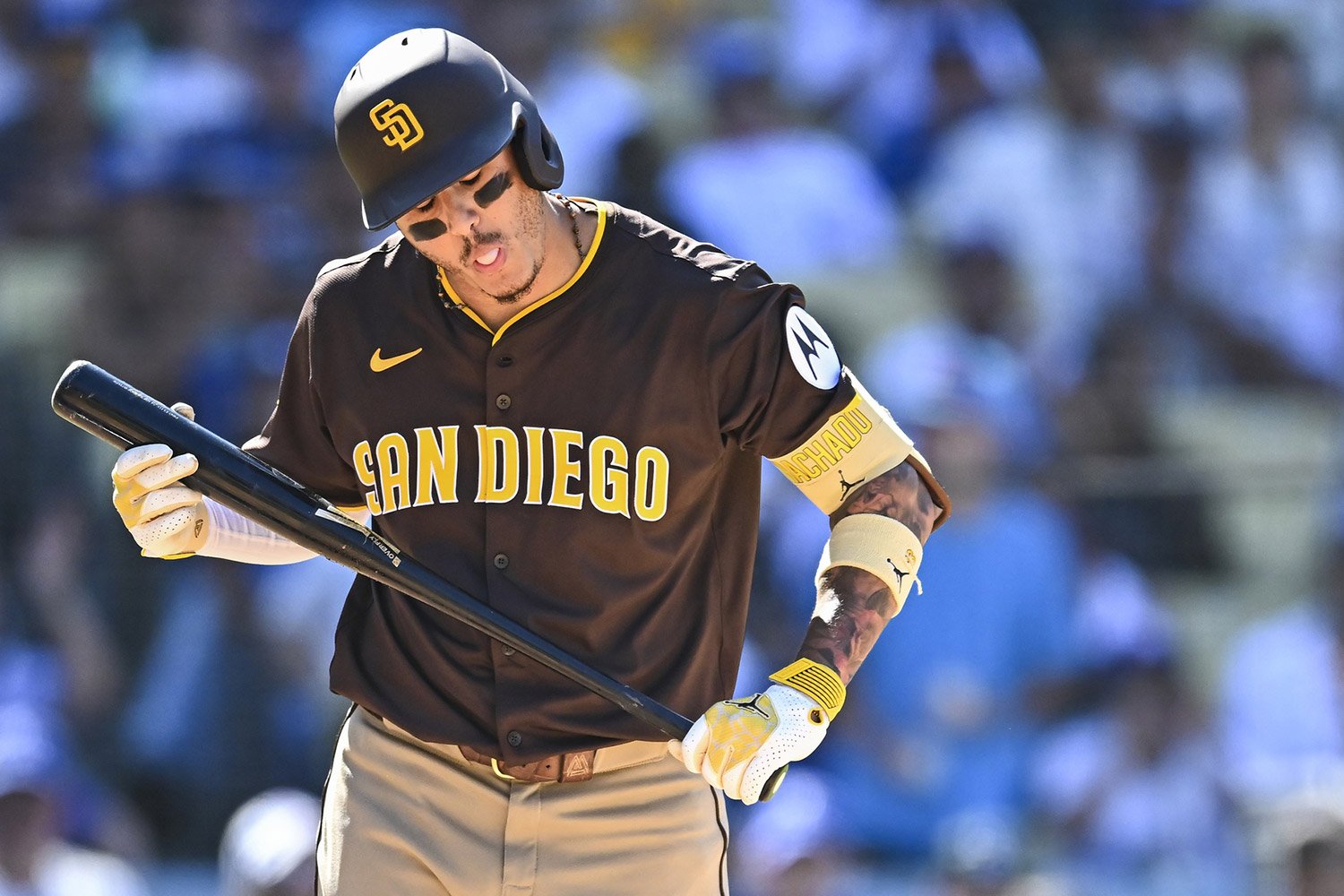 Despite a solid start to 2025, the San Diego Padres hadn't spent the subsequent months of the season being taken all that seriously in matters of postseason chatter. They endured much of June and July in struggling to drum up offense while relying on their pitching staff — namely the bullpen — to scratch out wins. It wasn't so much that a narrative developed around this team being a disappointment, but more an absence of one altogether. So frequently the talk of baseball on the back of A.J. Preller's aggression, they faded into the background as a backend wild card contender (with a middling offense) in the National League. That started to shift in August. With their acquisitions of Mason Miller, Ramón Laureano, Ryan O'Hearn, and Freddy Fermin ahead of last month's trade deadline, Preller addressed some important components. He fortified the excellent bullpen even further to support an inefficient starting staff while offering stability to left field and third base (the two positions at which the team has struggled so much this year). O'Hearn, meanwhile, provided a bit more pop out of a first base/designated hitter combination than the team was getting out of Luis Arráez. Each move paid immediate dividends as August got underway. The Padres scored the seventh-most runs in all of baseball during that two-ish week stretch (64) while striking out at the league's lowest rate (15.1 percent) and walking at a rate tied atop the leaderboard (11.4 percent). Their 123 wRC+ as a collective had them pegged as the fourth-best offensive club to start August and snapped back into success with runners in scoring position in a way that had dissolved altogether in the two months prior (.283 average). Those new faces were heavy contributors in that run, too. Laureano's 180 wRC+ led the team while Fermin's 152 mark sat third. O'Hearn wasn't quite hanging with his new-Padre counterparts in the advanced metric, but was still reaching base at a .343 clip courtesy of a walk rate over 17 percent. Suddenly, the Padres were back in the national conversation, especially with the likes of Fernando Tatis Jr. and Jackson Merrill starting to find their respective grooves at the plate. Ahead of their series against the Los Angeles Dodgers on Friday, the Padres held a one-game lead in the National League West. It was a lead that came as the byproduct of that 8-3 start to the month of August against a tougher stretch from the LA side of things. A showdown at Chavez Ravine promised to say a lot about where things could head in this division as we prepare to hit the stretch run. Just a few days later, though, the lead is gone. And an ascendant narrative with it. Not only has the minuscule lead immediately disappeared, but the Padres will start Tuesday down 2.5 games to their division rivals following yet another loss to the San Francisco Giants on Monday night. A four-game slide at this time of year can doom a team in the standings. Especially when your competition appears to be hitting its stride as the Dodgers are. The Padres of June & July manifested again as the team mustered just two runs on Friday before suffering a shutout loss on Saturday. They hung around for a while on Sunday before a pitch, Robert Suárez to Mookie Betts, landed in the bleachers and sent the Padres back home empty-handed. It's a familiar sight for San Diego in 2025, as they've now beaten their division foes just twice in 10 games thus far. Worse yet, it's a three-game sequence that could have a lot to say about this year's group. Many of the things the Padres did so well in the first two weeks of the month evaporated entirely. The team was an absurd 3-for-20 with runners in scoring position and stranded 19 runners in total. They struck out 24 times for the weekend, including a baker's dozen on Sunday. It was the story of the season: the pitching held its own (Suárez's late homer allowed notwithstanding) while the offense didn't have much to offer in support of their arms. That's been the story of the year against Los Angeles, though; they've averaged just 2.7 runs per game in the eight losses. Winning the division was always going to be an uphill battle for the San Diego Padres. In fact, was hardly expected. While there was some level of expectation over their ability to hang with Los Angeles, the wild card was the general ambition. The post-deadline Padres had an opportunity to grasp that narrative and suddenly become a serious contender in the National League. One with a robust pitching staff (highlighted by a dominant relief corps) and a now-balanced offense to support them. Unfortunately for the Padres, that narrative is back on reserve while the team will have some work to do in order to reclaim their resurgent vibes. They don't have a lot of time to do it, either. The team already laid another offensive egg on Monday against San Francisco. The Dodgers loom again as this weekend's opponent. Either way, a narrative is likely getting locked in a week from now. For the Padres, they'll need to quickly revert to the first half of August's form if they want to avoid it being the one where they're forgotten across the National League landscape once again.
 -
When the San Diego Padres acquired Mason Miller in a blockbuster deal at the trade deadline, he didn't come alone. As part of the massive package it required to bring in one of the most electric arms in the league, A.J. Preller was able to add some depth, for both now and the next handful of seasons, to the starting group in the form of JP Sears. Not that it's been a particular memorable start to his Padres tenure, though. Sears has made just one start with San Diego thus far, something of a dud of an outing against the Arizona Diamondbacks back on August 4. There, the lefty threw five innings of five-run ball, allowing 10 hits and a walk along the way. He was somewhat unceremoniously optioned to El Paso following that start, leaving the Padres with just four clear-cut starts to speak of on the active roster. In the days since, Nestor Cortes has returned to action to put the Padres back at five. Given some of what he's flashed, going back to 2022 when he was a member of the New York Yankees, it's logical to make the upside play at the back end of the rotation. With that, behind the rest of the group that also includes a now-healthy Michael King, Dylan Cease, Yu Darvish, and Nick Pivetta, Sears' role in all of this has become quite murky in a present context. As long as the health stands up for each of the team's individual starters, there isn't room for Sears to ply his trade against that list of arms. Sears was acquired by the Athletics back in '22 as part of the deal that sent Frankie Montas & Lou Trivino to the Bronx. He was the No. 22 ranked prospect in the Yankees' organization at the time, with MLB Pipeline having the following to say about his skill set: The writeup also noted that Sears doesn't have much margin for error given the somewhat limited ceiling in the stuff game, relying much more on location than overpowering opposing hitters. That certainly tracks given that, prior to his demotion to El Paso, he was sitting in only the 37th percentile in K% (20.3 percent) but 83rd in walk rate (6.0 percent). Sears has been able to drop his Barrel% against by one percent in each of the last three years, which speaks to the type of presence he offers when considered in conjunction with his ability to limit free passes. Lucky for Sears, he won't have to wait too much longer to gain some clarity over his role with the Padres. Even if it doesn't come until 2026, he'll be an important piece moving forward. From a pure personnel standpoint, Sears will represent an important component to the '26 pitching staff. Darvish, Pivetta, and Joe Musgrove are the only starters under a guaranteed contract for next season. Cease and Cortes are free agents while King will almost certainly decline his end of a mutual option and reach free agency. Even if the team does re-sign one of them (and King is the one they're rumored to want to lock in longer term), you're still looking at a vacant fifth spot in the rotation. Outside of Sears, Randy Vásquez and Matt Waldron represent the only starters currently on the 40-man roster, with Preller's frenzy of prospect movement at the deadline pushing back the timeline for any reinforcements coming in from the system. Assuming Musgrove is ready—and there's reportedly an outside shot he somehow returns this season—you're looking at three locks in the rotation. If the team should sign King or another starter with more upside, that leaves just one spot for Sears, Vásquez, or Waldron. Of course, all three will probably factor in on some level. Depth in the pitching staff is almost always utilized during a 162-game season, and each of Vásquez and Waldron have two more years of team control. Sears has three of his own to his name. Given Vásquez's command woes and Waldron's penchant for getting touched up in terms of contact quality, one would imagine that Sears would have the inside track at the No. 5 starter gig ahead of 2026 spring training. His skill set certainly profiles well for this group. The Padres rank in the top half of the league in starting pitching ERA (3.99) while offering the league's fourth-highest fly ball rate (43.5 percent). Combine that with just okay strikeout numbers (22.1 percent), and it feels somewhat logical that the team would deem a command-oriented, fly ball-prone starter as a strong fit in the back of the rotation. And that really is JP Sears' future with this organization. Part of the reason they acquired him was because of some of the uncertainty in the rotation beyond 2025. More of it was the team control component, with the skill set also serving as something with which this coaching staff has familiarity. So, while we might not see Sears too much down the stretch here for August and September of this season, it seems likely that he's going to get a whole lot of work at the top level from the jump in '26. View full article
-
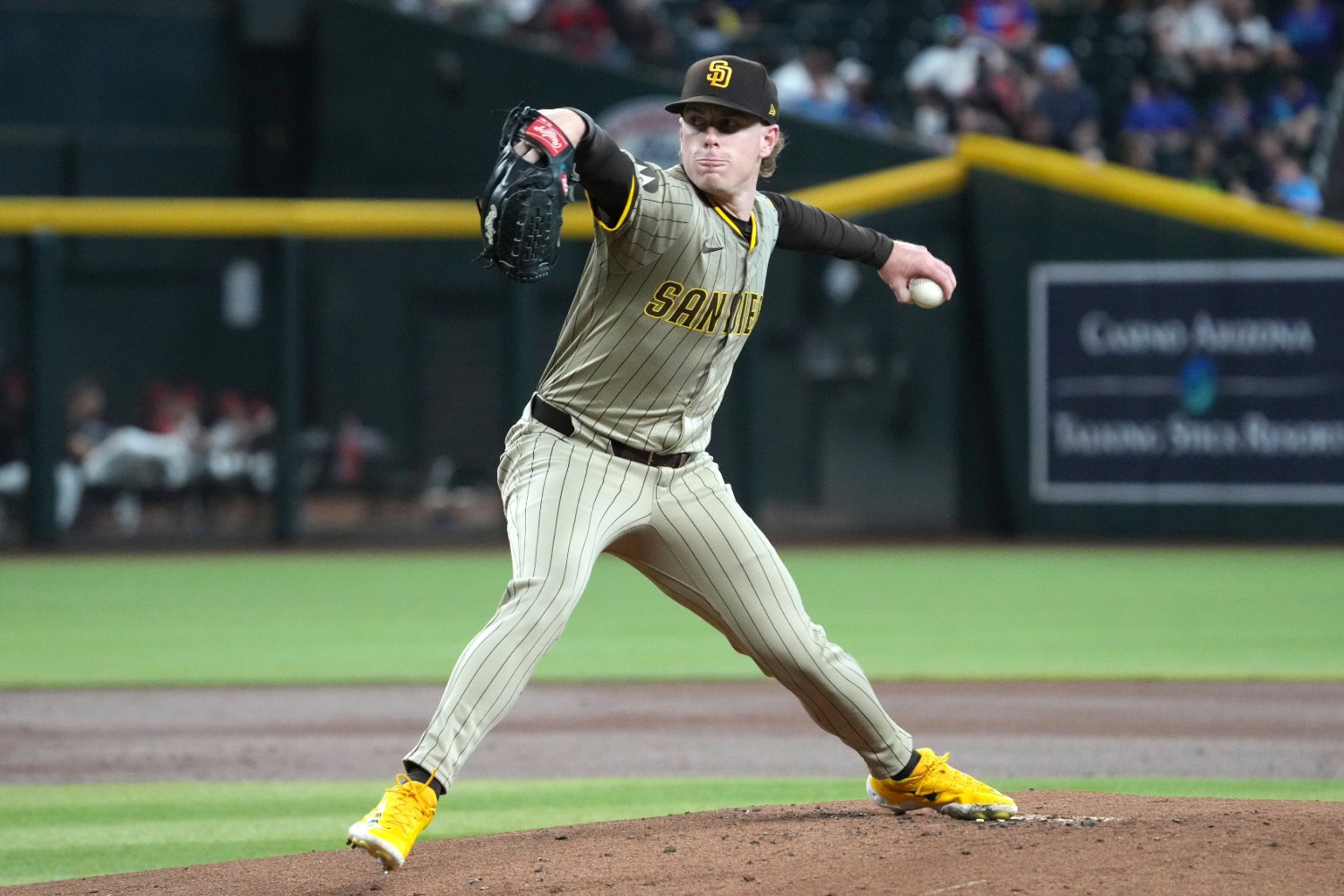 When the San Diego Padres acquired Mason Miller in a blockbuster deal at the trade deadline, he didn't come alone. As part of the massive package it required to bring in one of the most electric arms in the league, A.J. Preller was able to add some depth, for both now and the next handful of seasons, to the starting group in the form of JP Sears. Not that it's been a particular memorable start to his Padres tenure, though. Sears has made just one start with San Diego thus far, something of a dud of an outing against the Arizona Diamondbacks back on August 4. There, the lefty threw five innings of five-run ball, allowing 10 hits and a walk along the way. He was somewhat unceremoniously optioned to El Paso following that start, leaving the Padres with just four clear-cut starts to speak of on the active roster. In the days since, Nestor Cortes has returned to action to put the Padres back at five. Given some of what he's flashed, going back to 2022 when he was a member of the New York Yankees, it's logical to make the upside play at the back end of the rotation. With that, behind the rest of the group that also includes a now-healthy Michael King, Dylan Cease, Yu Darvish, and Nick Pivetta, Sears' role in all of this has become quite murky in a present context. As long as the health stands up for each of the team's individual starters, there isn't room for Sears to ply his trade against that list of arms. Sears was acquired by the Athletics back in '22 as part of the deal that sent Frankie Montas & Lou Trivino to the Bronx. He was the No. 22 ranked prospect in the Yankees' organization at the time, with MLB Pipeline having the following to say about his skill set: The writeup also noted that Sears doesn't have much margin for error given the somewhat limited ceiling in the stuff game, relying much more on location than overpowering opposing hitters. That certainly tracks given that, prior to his demotion to El Paso, he was sitting in only the 37th percentile in K% (20.3 percent) but 83rd in walk rate (6.0 percent). Sears has been able to drop his Barrel% against by one percent in each of the last three years, which speaks to the type of presence he offers when considered in conjunction with his ability to limit free passes. Lucky for Sears, he won't have to wait too much longer to gain some clarity over his role with the Padres. Even if it doesn't come until 2026, he'll be an important piece moving forward. From a pure personnel standpoint, Sears will represent an important component to the '26 pitching staff. Darvish, Pivetta, and Joe Musgrove are the only starters under a guaranteed contract for next season. Cease and Cortes are free agents while King will almost certainly decline his end of a mutual option and reach free agency. Even if the team does re-sign one of them (and King is the one they're rumored to want to lock in longer term), you're still looking at a vacant fifth spot in the rotation. Outside of Sears, Randy Vásquez and Matt Waldron represent the only starters currently on the 40-man roster, with Preller's frenzy of prospect movement at the deadline pushing back the timeline for any reinforcements coming in from the system. Assuming Musgrove is ready—and there's reportedly an outside shot he somehow returns this season—you're looking at three locks in the rotation. If the team should sign King or another starter with more upside, that leaves just one spot for Sears, Vásquez, or Waldron. Of course, all three will probably factor in on some level. Depth in the pitching staff is almost always utilized during a 162-game season, and each of Vásquez and Waldron have two more years of team control. Sears has three of his own to his name. Given Vásquez's command woes and Waldron's penchant for getting touched up in terms of contact quality, one would imagine that Sears would have the inside track at the No. 5 starter gig ahead of 2026 spring training. His skill set certainly profiles well for this group. The Padres rank in the top half of the league in starting pitching ERA (3.99) while offering the league's fourth-highest fly ball rate (43.5 percent). Combine that with just okay strikeout numbers (22.1 percent), and it feels somewhat logical that the team would deem a command-oriented, fly ball-prone starter as a strong fit in the back of the rotation. And that really is JP Sears' future with this organization. Part of the reason they acquired him was because of some of the uncertainty in the rotation beyond 2025. More of it was the team control component, with the skill set also serving as something with which this coaching staff has familiarity. So, while we might not see Sears too much down the stretch here for August and September of this season, it seems likely that he's going to get a whole lot of work at the top level from the jump in '26.
 -
Fans of the San Diego Padres are likely well aware of May 16, 2025. It was the day the Padres' offense broke. We don't know precisely why the breaking happened. There were some injuries on the books, sure. Fernando Tatis Jr. endured multiple hit-by-pitches and Jackson Merrill had missed time with a hamstring and a concussion. Losing their collective grip on their collective approach at the plate might've been a factor, too. Regardless, the Padres spent the time from that May 16 threshold through the end of July as one of the league's worst offensive teams. In terms of total run production, the Padres scored just 249 runs over that stretch. That checked in at 3.7 runs per game and ranked 26th in the league. Despite maintaining one of the league's lowest strikeout rates (a 19.2 K%, which was third-best), they couldn't parlay that into walks or quality contact. The team sat 17th in walk rate (8.1 percent), 21st in on-base percentage (.310), and 29th in Hard-Hit% (35.9). Unsurprisingly, their isolated power was ahead of only the Pittsburgh Pirates, at .125. Given such dire straights on that side of the ball, it certainly tracks that almost nobody was immune from offensive ineptitude during those two-and-a-half months. Only four regulars checked in above league average in the wRC+ game, and only Manny Machado sat comfortably above 100 in that respect (138). Jake Cronenworth (96) and Jackson Merrill (71) each sat below the benchmark deemed "average." And while each of Luis Arráez and Xander Bogaerts sat above it, their lack of impact (.110 combined ISO) didn't help the lineup climb out of the hole wrought by an otherwise underperforming group. A.J. Preller's work at last month's trade deadline, however, started to offer some hope on that front. The team's president of baseball operations was able to execute trades for Baltimore's Ryan O'Hearn & Ramón Laureano and Kansas City's Freddy Fermin. The hope was that that trio would offer stability, particularly in left field and at catcher, the two spots where the team had been among the league's worst from the jump. And while those three aren't solely responsible for the turn that we're starting to see manifest within the Padres' lineup, it's hard to argue against their presence being a factor. As we near the midway point of August, the Padres are a team that suddenly looks like a threat at the plate again. Since August 1, the Padres rank 12th in the league in runs scored (48). Their strikeout rate (16.3 percent) is the league's best, but the difference is that the approach is starting to lead to free passes; their 11.0 BB% ranks third over that stretch. That's helped to lead to an OBP which ranks fifth (.344), with the team also leaping to 11th in Hard-Hit% (41.1 percent). It hasn't manifested in any noticeable power to speak of (.134 ISO), but there are enough signs that this is a team on the rebound. Two of the three new Padres have played a role in starting to turn this thing around. Laureano has a 121 wRC+ and .211 ISO across his first 40-ish plate appearances with his new club. Fermin has a 168 wRC+ and hit a three-run home run that essentially gave the Padres a victory on Monday night. Each of Jake Cronenworth and Bogaerts continue making regular contributions as they attempt to recoup some of their respective value to the lineup. Perhaps more important is the fact that Jackson Merrill has started to hit a little bit. He's at a 121 wRC+ and is finally starting to run into some good luck after a brutal .232 BABIP in July. It hasn't been perfect, of course. Neither Machado or Tatis Jr. have joined their comrades in jump-starting the offense. Nor has the team started to get back to their early success with runners in scoring position, though a .261 average in such situations is a rather significant improvement from where they stood in the midst of that lackluster offensive stretch in the middle of the season. Unfortunately, that takes us to the most severe caveat in all of this: the sample size. This is a minuscule sample with which we're working; it's possible that Machado and Tatis Jr. can jump into contribution mode at just about any point. Each has demonstrated torrid stretches of play at the plate this year, Machado in particular. So , it stands to reason that the group could really take off if one of their stars joins the party. Of course, that caveat could also go sharply in the other direction if, say, Cronenworth or Bogaerts starts to struggle again. It's a fine line for the San Diego Padres on that side of the ball. On paper, the upside is quite obviously there. We just hadn't seen it in two months, so it's easy to get wrapped up in a 12-day stretch of competence. Nevertheless, with the walk rates and contact quality starting to even out, we at least have something of an indicator that this interval could be very much for real. Of course, that would bode extremely well as the focus pivots to postseason baseball in less than two months. View full article
-
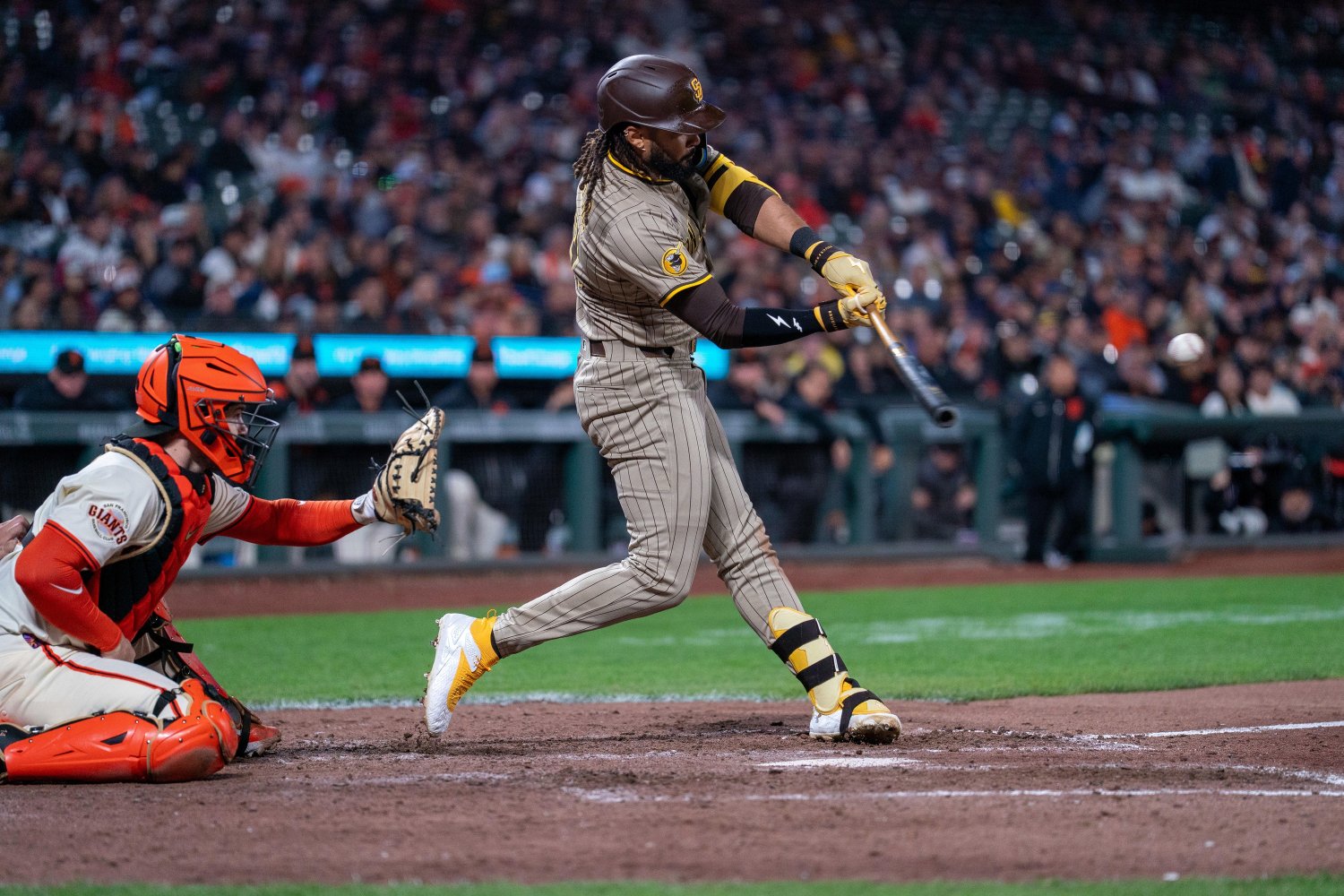 Fans of the San Diego Padres are likely well aware of May 16, 2025. It was the day the Padres' offense broke. We don't know precisely why the breaking happened. There were some injuries on the books, sure. Fernando Tatis Jr. endured multiple hit-by-pitches and Jackson Merrill had missed time with a hamstring and a concussion. Losing their collective grip on their collective approach at the plate might've been a factor, too. Regardless, the Padres spent the time from that May 16 threshold through the end of July as one of the league's worst offensive teams. In terms of total run production, the Padres scored just 249 runs over that stretch. That checked in at 3.7 runs per game and ranked 26th in the league. Despite maintaining one of the league's lowest strikeout rates (a 19.2 K%, which was third-best), they couldn't parlay that into walks or quality contact. The team sat 17th in walk rate (8.1 percent), 21st in on-base percentage (.310), and 29th in Hard-Hit% (35.9). Unsurprisingly, their isolated power was ahead of only the Pittsburgh Pirates, at .125. Given such dire straights on that side of the ball, it certainly tracks that almost nobody was immune from offensive ineptitude during those two-and-a-half months. Only four regulars checked in above league average in the wRC+ game, and only Manny Machado sat comfortably above 100 in that respect (138). Jake Cronenworth (96) and Jackson Merrill (71) each sat below the benchmark deemed "average." And while each of Luis Arráez and Xander Bogaerts sat above it, their lack of impact (.110 combined ISO) didn't help the lineup climb out of the hole wrought by an otherwise underperforming group. A.J. Preller's work at last month's trade deadline, however, started to offer some hope on that front. The team's president of baseball operations was able to execute trades for Baltimore's Ryan O'Hearn & Ramón Laureano and Kansas City's Freddy Fermin. The hope was that that trio would offer stability, particularly in left field and at catcher, the two spots where the team had been among the league's worst from the jump. And while those three aren't solely responsible for the turn that we're starting to see manifest within the Padres' lineup, it's hard to argue against their presence being a factor. As we near the midway point of August, the Padres are a team that suddenly looks like a threat at the plate again. Since August 1, the Padres rank 12th in the league in runs scored (48). Their strikeout rate (16.3 percent) is the league's best, but the difference is that the approach is starting to lead to free passes; their 11.0 BB% ranks third over that stretch. That's helped to lead to an OBP which ranks fifth (.344), with the team also leaping to 11th in Hard-Hit% (41.1 percent). It hasn't manifested in any noticeable power to speak of (.134 ISO), but there are enough signs that this is a team on the rebound. Two of the three new Padres have played a role in starting to turn this thing around. Laureano has a 121 wRC+ and .211 ISO across his first 40-ish plate appearances with his new club. Fermin has a 168 wRC+ and hit a three-run home run that essentially gave the Padres a victory on Monday night. Each of Jake Cronenworth and Bogaerts continue making regular contributions as they attempt to recoup some of their respective value to the lineup. Perhaps more important is the fact that Jackson Merrill has started to hit a little bit. He's at a 121 wRC+ and is finally starting to run into some good luck after a brutal .232 BABIP in July. It hasn't been perfect, of course. Neither Machado or Tatis Jr. have joined their comrades in jump-starting the offense. Nor has the team started to get back to their early success with runners in scoring position, though a .261 average in such situations is a rather significant improvement from where they stood in the midst of that lackluster offensive stretch in the middle of the season. Unfortunately, that takes us to the most severe caveat in all of this: the sample size. This is a minuscule sample with which we're working; it's possible that Machado and Tatis Jr. can jump into contribution mode at just about any point. Each has demonstrated torrid stretches of play at the plate this year, Machado in particular. So , it stands to reason that the group could really take off if one of their stars joins the party. Of course, that caveat could also go sharply in the other direction if, say, Cronenworth or Bogaerts starts to struggle again. It's a fine line for the San Diego Padres on that side of the ball. On paper, the upside is quite obviously there. We just hadn't seen it in two months, so it's easy to get wrapped up in a 12-day stretch of competence. Nevertheless, with the walk rates and contact quality starting to even out, we at least have something of an indicator that this interval could be very much for real. Of course, that would bode extremely well as the focus pivots to postseason baseball in less than two months.
 -
The most shocking component of this year's trade deadline wasn't so much that A.J. Preller and the San Diego Padres traded for one of the best players believed to be available. It was that they traded for one of the best players believed to be available at a position that didn't represent a present, on-paper need. In acquiring Mason Miller, the Padres further enhanced the strongest part of their roster. It's a relief corps that ranks at the top of the league in fWAR (6.2), ERA (3.06), and FIP (3.48) while ranking fourth in strikeouts (24.5 K%) and hard hit rate against (37.5 percent). While somewhat puzzling at first, there's no shortage of merit in such a deal when you consider the idea that Robert Suárez will likely opt out of his contract to hit free agency after the season. Preller was able to gain some medium-term stability at the back of the bullpen (with Miller serving as the future closer) while simultaneously giving the Padres as strong a relief group as exists in baseball. It's the sort of roster component that really fortifies your team in matters of postseason baseball, especially when you consider some of the longevity issues that the team has faced out of the rotation. The Padres certainly find themselves well-positioned for such an environment. As of this writing, they're just two games back of the Los Angeles Dodgers in the National League West and three games clear of the New York Mets in occupying the No. 2 wild card slot in the NL. Something rather catastrophic would have to unfold at this rate for the Padres not to be playing October baseball. But in matters of the bullpen, what happens when they get there? We know the shape that it's taken thus far since the deadline, but is there a specific way in which Mike Shildt can optimize his elite group of relievers in order to maximize the outcomes? This is, of course, specifically in reference for the "closing out games" aspect of relief work. With such a high volume of effective arms coming out of the bullpen, you're unlikely to see names like Yuki Matsui or Wandy Peralta getting into the late-inning mix. They're strictly bridge guys or arms you deploy with a large lead or deficit at this point. It's also difficult to include David Morgan in such a discussion. He's been excellent, pitching to a 1.57 ERA and a 26.0 percent strikeout rate across 25 games courtesy of his 97th percentile fastball velocity playing off strong curveball and slider offerings (123 and 122 Stuff+, respectively). But you also have to figure that with five arms in possession of more experience in late-game situations, he's going to end up falling into that same mix with Matsui & Peralta when the rubber meets the road, even if he presents more upside than either of the other two. Which leaves us with five: Suárez, Miller, Adrián Morejón, Jason Adam, and Jeremiah Estrada. With that group, you're getting the following: Suárez: 3.28 ERA, 26.2 K%, 7.2 BB%, 67.7 LOB%, 33.3 GB%, 1.9 fWAR Miller: 3.80 ERA, 40.5 K%, 11.9 BB%, 69.2 LOB%, 36.4 GB%, 1.0 fWAR Morejón: 2.00 ERA, 25.7 K%, 5.2 BB%, 65.0 LOB%, 53.2 GB%, 2.0 fWAR Adam: 1.73 ERA, 26.3 K%, 10.4 BB%, 84.1 LOB%, 43.5 GB%, 1.0 fWAR Estrada: 2.52 ERA, 36.3 K%, 7.9 BB%, 77.6 LOB%, 38.3 GB%, 1.6 fWAR In broad strokes, the Padres have a quintet of five power arms at the back of their bullpen. But, what's genuinely interesting about this group is that they also represent five distinctly different type of pitchers. Four of these five, along with Morgan, make up the top five in average fastball velocity on the Padres' pitching staff. Miller, of course, leads the way (102.1 MPH on average), followed by Suárez (98.5), Estrada (97.9), Morejón (96.7), and then Adam follows a little bit lower on the list (94.5). What separates them is in their secondary offerings. Miller & Morejón are each heavy on the slider. For Suárez, it's the changeup. Estrada brings his variation of a splitter and the occasional slide piece. Adam deploys his slider and change more than his fastball. It's a lot of velocity and a lot of movement. So, what does the optimum distribution of time look like? Lucky for us, Statcast can not only isolate each pitcher's performance into run value but add in a leverage factor. That leaves us with the following: While it doesn't have the ability to distinguish starter from reliever, it does speak to the strength of our group of focus that each of the possible late-inning arms falls inside of the team's top eight pitchers in run value. And if we're going by this alone, which factors in leverage, Morejón would be the guy to get the highest of leverage spots (i.e. the ninth inning). That would leave Estrada & Adam for eighth inning work and Suárez & Miller for the seventh. Again, that's if we were going purely based on run value, which, of course, is not the case. In terms of actual structure, we know that Suárez is going to get the ninth. Even with Miller's arrival, the veteran closer has continued to get the ninth inning work, so we have to assume he's locked in from here until his (assumed) free agency. But what about the rest? The massive benefit of running such a deep 'pen is that Mike Shildt can play the matchups to his liking as much as possible. So, for a lefty-heavy lineup (like a certain team within the Padres' division), you're quite obviously going to get Morejón involved in the late-going, as he's allowing a .154 wOBA against hitters of the same handedness. Interestingly, the other option for a late-inning situation would be Estrada, who has demonstrated some notable reverse splits in 2025 (.223 wOBA vs. lefties & .273 wOBA against righties). Miller represents the antithesis of Estrada, as he's struggled quite a bit against left-handed hitters this year. They've gone for a .347 wOBA versus the fireballer, as opposed to a .204 mark from right-handed hitters. With some of the command issues that Miller has been prone to, you're likely avoiding lefties at all costs for Miller when the bullpen is in action. Adam is a relatively unique quantity among this group, as he's remained relatively split-neutral this year. Left-handed bats have a .264 wOBA against Adam while righty hitters are at .261. He gives you an option to go against either handedness, but perhaps a bit lower on the depth chart when lefties are involved given the run values of each of Morejón and Estrada in comparison to himself. If you wanted to pinpoint the ideal order, you're looking at Adam in the seventh given his versatility, with each of Morejón, Estrada, and Miller getting work in the eighth depending on handedness. Suárez remains the guy in the ninth, even if the numbers don't love him against his counterparts. But, when you're talking about five different pitchers (to say nothing of David Morgan), there are myriad combinations that would conceivably work when games progress into those high leverage moments. Regardless of the form it takes, though, A.J. Preller has built something rather remarkable with this San Diego relief corps. There is so much velocity and so much movement that he's fortified a pitching staff that was subject to questions given inconsistency out of the starting gate. It relieves quite a bit of pressure from the starting staff to work deep into games when that might simply not be in the cards for this particular group. View full article
-
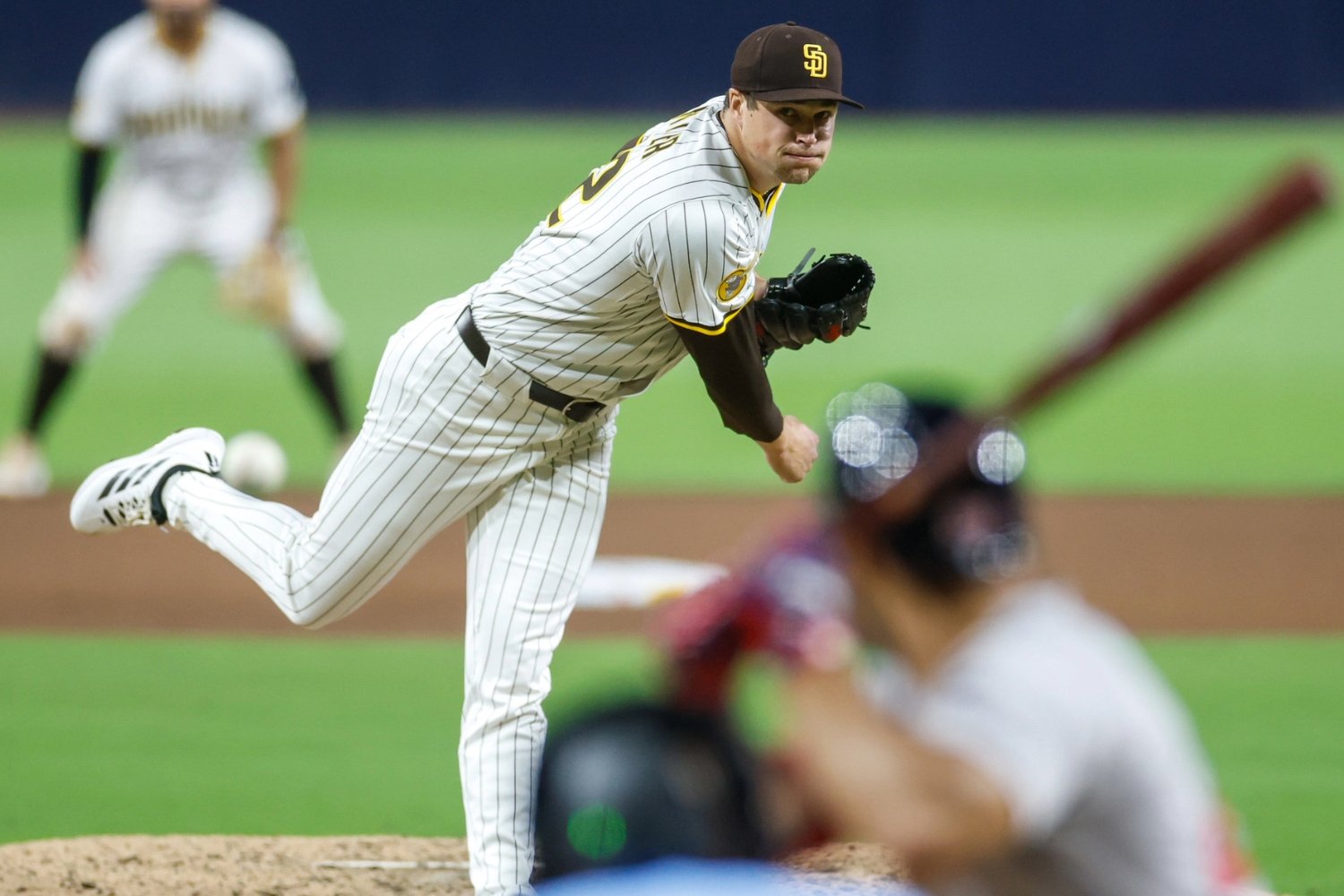 The most shocking component of this year's trade deadline wasn't so much that A.J. Preller and the San Diego Padres traded for one of the best players believed to be available. It was that they traded for one of the best players believed to be available at a position that didn't represent a present, on-paper need. In acquiring Mason Miller, the Padres further enhanced the strongest part of their roster. It's a relief corps that ranks at the top of the league in fWAR (6.2), ERA (3.06), and FIP (3.48) while ranking fourth in strikeouts (24.5 K%) and hard hit rate against (37.5 percent). While somewhat puzzling at first, there's no shortage of merit in such a deal when you consider the idea that Robert Suárez will likely opt out of his contract to hit free agency after the season. Preller was able to gain some medium-term stability at the back of the bullpen (with Miller serving as the future closer) while simultaneously giving the Padres as strong a relief group as exists in baseball. It's the sort of roster component that really fortifies your team in matters of postseason baseball, especially when you consider some of the longevity issues that the team has faced out of the rotation. The Padres certainly find themselves well-positioned for such an environment. As of this writing, they're just two games back of the Los Angeles Dodgers in the National League West and three games clear of the New York Mets in occupying the No. 2 wild card slot in the NL. Something rather catastrophic would have to unfold at this rate for the Padres not to be playing October baseball. But in matters of the bullpen, what happens when they get there? We know the shape that it's taken thus far since the deadline, but is there a specific way in which Mike Shildt can optimize his elite group of relievers in order to maximize the outcomes? This is, of course, specifically in reference for the "closing out games" aspect of relief work. With such a high volume of effective arms coming out of the bullpen, you're unlikely to see names like Yuki Matsui or Wandy Peralta getting into the late-inning mix. They're strictly bridge guys or arms you deploy with a large lead or deficit at this point. It's also difficult to include David Morgan in such a discussion. He's been excellent, pitching to a 1.57 ERA and a 26.0 percent strikeout rate across 25 games courtesy of his 97th percentile fastball velocity playing off strong curveball and slider offerings (123 and 122 Stuff+, respectively). But you also have to figure that with five arms in possession of more experience in late-game situations, he's going to end up falling into that same mix with Matsui & Peralta when the rubber meets the road, even if he presents more upside than either of the other two. Which leaves us with five: Suárez, Miller, Adrián Morejón, Jason Adam, and Jeremiah Estrada. With that group, you're getting the following: Suárez: 3.28 ERA, 26.2 K%, 7.2 BB%, 67.7 LOB%, 33.3 GB%, 1.9 fWAR Miller: 3.80 ERA, 40.5 K%, 11.9 BB%, 69.2 LOB%, 36.4 GB%, 1.0 fWAR Morejón: 2.00 ERA, 25.7 K%, 5.2 BB%, 65.0 LOB%, 53.2 GB%, 2.0 fWAR Adam: 1.73 ERA, 26.3 K%, 10.4 BB%, 84.1 LOB%, 43.5 GB%, 1.0 fWAR Estrada: 2.52 ERA, 36.3 K%, 7.9 BB%, 77.6 LOB%, 38.3 GB%, 1.6 fWAR In broad strokes, the Padres have a quintet of five power arms at the back of their bullpen. But, what's genuinely interesting about this group is that they also represent five distinctly different type of pitchers. Four of these five, along with Morgan, make up the top five in average fastball velocity on the Padres' pitching staff. Miller, of course, leads the way (102.1 MPH on average), followed by Suárez (98.5), Estrada (97.9), Morejón (96.7), and then Adam follows a little bit lower on the list (94.5). What separates them is in their secondary offerings. Miller & Morejón are each heavy on the slider. For Suárez, it's the changeup. Estrada brings his variation of a splitter and the occasional slide piece. Adam deploys his slider and change more than his fastball. It's a lot of velocity and a lot of movement. So, what does the optimum distribution of time look like? Lucky for us, Statcast can not only isolate each pitcher's performance into run value but add in a leverage factor. That leaves us with the following: While it doesn't have the ability to distinguish starter from reliever, it does speak to the strength of our group of focus that each of the possible late-inning arms falls inside of the team's top eight pitchers in run value. And if we're going by this alone, which factors in leverage, Morejón would be the guy to get the highest of leverage spots (i.e. the ninth inning). That would leave Estrada & Adam for eighth inning work and Suárez & Miller for the seventh. Again, that's if we were going purely based on run value, which, of course, is not the case. In terms of actual structure, we know that Suárez is going to get the ninth. Even with Miller's arrival, the veteran closer has continued to get the ninth inning work, so we have to assume he's locked in from here until his (assumed) free agency. But what about the rest? The massive benefit of running such a deep 'pen is that Mike Shildt can play the matchups to his liking as much as possible. So, for a lefty-heavy lineup (like a certain team within the Padres' division), you're quite obviously going to get Morejón involved in the late-going, as he's allowing a .154 wOBA against hitters of the same handedness. Interestingly, the other option for a late-inning situation would be Estrada, who has demonstrated some notable reverse splits in 2025 (.223 wOBA vs. lefties & .273 wOBA against righties). Miller represents the antithesis of Estrada, as he's struggled quite a bit against left-handed hitters this year. They've gone for a .347 wOBA versus the fireballer, as opposed to a .204 mark from right-handed hitters. With some of the command issues that Miller has been prone to, you're likely avoiding lefties at all costs for Miller when the bullpen is in action. Adam is a relatively unique quantity among this group, as he's remained relatively split-neutral this year. Left-handed bats have a .264 wOBA against Adam while righty hitters are at .261. He gives you an option to go against either handedness, but perhaps a bit lower on the depth chart when lefties are involved given the run values of each of Morejón and Estrada in comparison to himself. If you wanted to pinpoint the ideal order, you're looking at Adam in the seventh given his versatility, with each of Morejón, Estrada, and Miller getting work in the eighth depending on handedness. Suárez remains the guy in the ninth, even if the numbers don't love him against his counterparts. But, when you're talking about five different pitchers (to say nothing of David Morgan), there are myriad combinations that would conceivably work when games progress into those high leverage moments. Regardless of the form it takes, though, A.J. Preller has built something rather remarkable with this San Diego relief corps. There is so much velocity and so much movement that he's fortified a pitching staff that was subject to questions given inconsistency out of the starting gate. It relieves quite a bit of pressure from the starting staff to work deep into games when that might simply not be in the cards for this particular group.
 -
The San Diego Padres waited roughly three months for the 2025 debut of starting pitcher Yu Darvish. While the timeline wasn't ideal, the timing of his return was. Down Michael King in a thinning — and some cases struggling — rotation, the team was likely hoping that the veteran would offer some stability upon his return. That, of course, didn't happen out of the gate. In his first start on July 7th, Darvish was unable to work through the fourth inning. He allowed a pair of earned runs (three overall) while striking out five and walking three in 3 2/3 innings. There wasn't anything especially concerning there, with the assumption being that start-to-start longevity would require additional building up. In his next two starts, though, Darvish threw a combined 9 2/3 innings, allowed seven earned runs, and only struck out three hitters. That started to ignite some concern as to whether he'd be remotely reliable moving forward, let alone bring that craved stability. Questions were further amplified in start number four. Against the St. Louis Cardinals on July 24th, Darvish was again unable to escape the fourth inning. He allowed an obscene eight earned runs in a start that included eight hits, two walks, and a pair of home runs. But then something kind of fascinating happened: Darvish suddenly became effective. Darvish's next outing came against the New York Mets on July 30th. In that start, he worked seven full innings, surrendered just two hits, and struck out seven without walking a hitter. He wasn't quite able to replicate the same success in his most recent start on August 5th, but he did strike out five and allow just three hits across four innings (one of which happened to be a home run). The two starts worked together to reignite a little bit of optimism that Darvish could be more of an asset than a detriment as we creep toward the season's final stretch. Notably, Darvish attributed the increased success following the start against the Mets to a decreased arm angle. Regardless of the difference in outcomes, it's now a trend we've seen in each of his last two starts: As an aside, any graph illustrating individual pitches from Darvish is going to look much more overwhelming due to the volume of pitch types he throws. But focusing on the arm slot component, the most notable decline in that respect took place between his start on July 24th and the one on July 30th. The arm slot declined further between that excellent Mets start and his most recent effort against the Arizona Diamondbacks earlier this week. Even through all the various colors, the slot drop is extremely evident. Darvish's arm slot in his first start off the Injured List checked in at 43.3 degrees. He hadn't had an arm slot that steep since 2021. It leveled out a bit in the three subsequent starts, coming in at 39.9 degrees in the July 24th start. From there, though, he dropped it to 32.7 against the Mets and 28.3 against the Diamondbacks. There's likely going to be a medium into which he settles moving forward, but it's a precipitous drop in his arm angle from what we saw immediately upon his return. In the stretch before the arm slot drop (four starts), Darvish's numbers read 16 2/3 innings, 11 strikeouts, nine walks, and a 9.91 ERA. In the two since, he's gone 11 innings, 12 strikeouts, two walks, and a 3.38 ERA. His Whiff% checks in at 28.3 in the two more recent starts, while his hard hit rate against has averaged 28.5 percent. There are a couple of caveats within that, of course. You're looking at an imbalanced comparison between a set of four starts and just two. And one of those two starts is working to prop up the numbers. Ultimately, though, there have been strong signs of increased effectiveness for Darvish in the two starts since he dropped the arm slot. Plus, there's this: In dropping the arm slot, Darvish has been able to get back to what makes him most effective: whiffs. He's parlayed that new slot into a lot more swing-and-miss than he'd been demonstrating in the four previous starts. There have been some positive movement changes helping on that front, depending on the pitch type, too. But that's not necessarily all this is about. For Darvish, it's about command. While whiffs can be a natural byproduct of command, Darvish needs to be accurate to the zone in order to be effective. Anecdotally, his periods of struggle generally occur when he's trying to be too fine with the zone and often misses opportunities for strikes. When he has his command on point, he's able to get both called strikes and swings that feature soft contact or an outright whiff. We've seen flashes of it in those last two starts. The outing against the Mets, in particular, saw his contact quality plummet and, specifically, the in-zone whiff rate rise. That's the version of Yu Darvish the Padres want to see. The arm slot isn't about movement in the way that it might be for other pitchers. The nature of Darvish is that his pitches are going to move regardless of slot. Instead, his focus needs to be on efficiency. A two-start sample isn't enough to show us that the new arm slot is working, especially when there is still some variance in the slot itself between the pair of outings. The hope, though, is that this serves as a springboard for Darvish to harness his efficiency and, as such, his effectiveness in a rotation that needs quite a bit of both. View full article
-
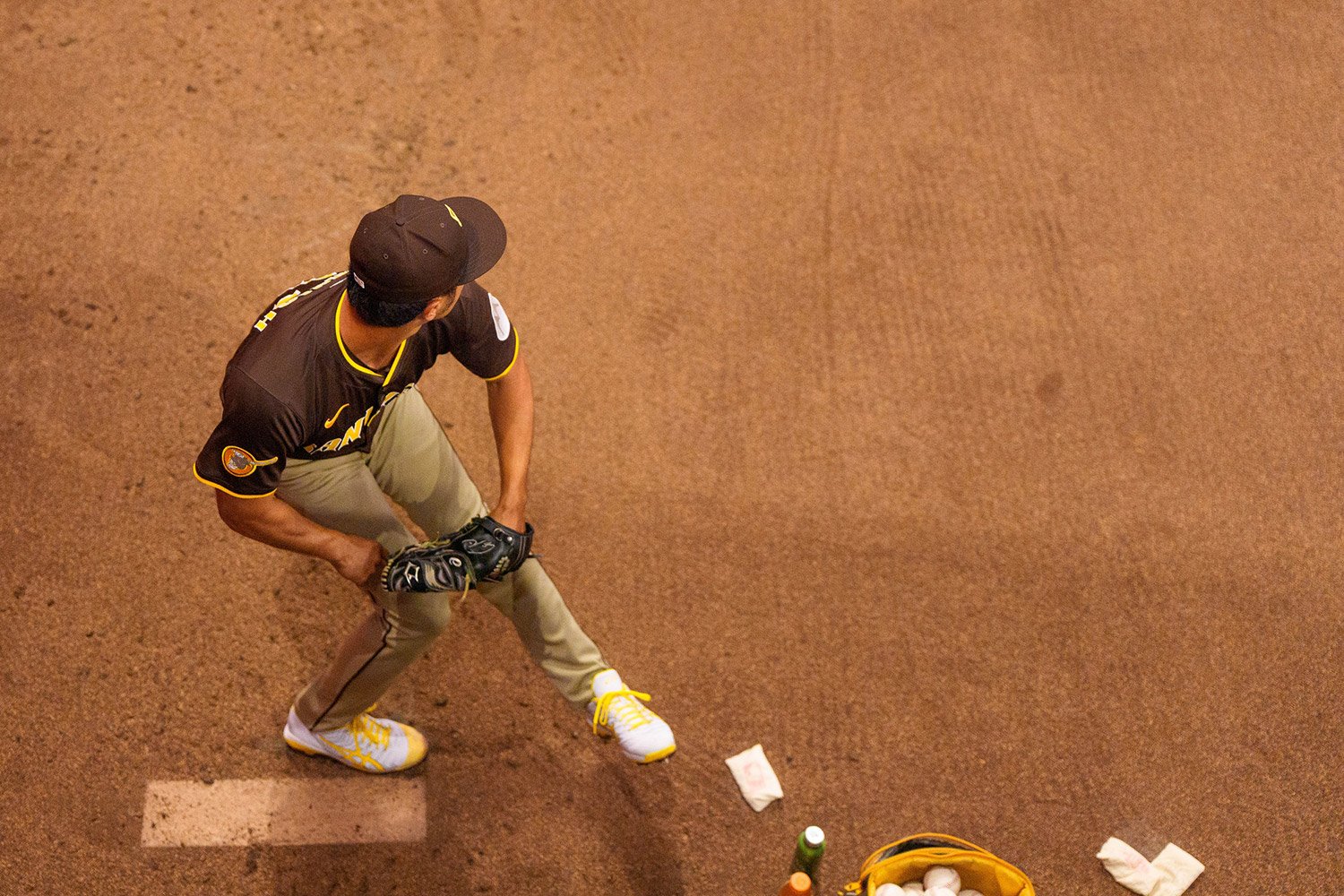 The San Diego Padres waited roughly three months for the 2025 debut of starting pitcher Yu Darvish. While the timeline wasn't ideal, the timing of his return was. Down Michael King in a thinning — and some cases struggling — rotation, the team was likely hoping that the veteran would offer some stability upon his return. That, of course, didn't happen out of the gate. In his first start on July 7th, Darvish was unable to work through the fourth inning. He allowed a pair of earned runs (three overall) while striking out five and walking three in 3 2/3 innings. There wasn't anything especially concerning there, with the assumption being that start-to-start longevity would require additional building up. In his next two starts, though, Darvish threw a combined 9 2/3 innings, allowed seven earned runs, and only struck out three hitters. That started to ignite some concern as to whether he'd be remotely reliable moving forward, let alone bring that craved stability. Questions were further amplified in start number four. Against the St. Louis Cardinals on July 24th, Darvish was again unable to escape the fourth inning. He allowed an obscene eight earned runs in a start that included eight hits, two walks, and a pair of home runs. But then something kind of fascinating happened: Darvish suddenly became effective. Darvish's next outing came against the New York Mets on July 30th. In that start, he worked seven full innings, surrendered just two hits, and struck out seven without walking a hitter. He wasn't quite able to replicate the same success in his most recent start on August 5th, but he did strike out five and allow just three hits across four innings (one of which happened to be a home run). The two starts worked together to reignite a little bit of optimism that Darvish could be more of an asset than a detriment as we creep toward the season's final stretch. Notably, Darvish attributed the increased success following the start against the Mets to a decreased arm angle. Regardless of the difference in outcomes, it's now a trend we've seen in each of his last two starts: As an aside, any graph illustrating individual pitches from Darvish is going to look much more overwhelming due to the volume of pitch types he throws. But focusing on the arm slot component, the most notable decline in that respect took place between his start on July 24th and the one on July 30th. The arm slot declined further between that excellent Mets start and his most recent effort against the Arizona Diamondbacks earlier this week. Even through all the various colors, the slot drop is extremely evident. Darvish's arm slot in his first start off the Injured List checked in at 43.3 degrees. He hadn't had an arm slot that steep since 2021. It leveled out a bit in the three subsequent starts, coming in at 39.9 degrees in the July 24th start. From there, though, he dropped it to 32.7 against the Mets and 28.3 against the Diamondbacks. There's likely going to be a medium into which he settles moving forward, but it's a precipitous drop in his arm angle from what we saw immediately upon his return. In the stretch before the arm slot drop (four starts), Darvish's numbers read 16 2/3 innings, 11 strikeouts, nine walks, and a 9.91 ERA. In the two since, he's gone 11 innings, 12 strikeouts, two walks, and a 3.38 ERA. His Whiff% checks in at 28.3 in the two more recent starts, while his hard hit rate against has averaged 28.5 percent. There are a couple of caveats within that, of course. You're looking at an imbalanced comparison between a set of four starts and just two. And one of those two starts is working to prop up the numbers. Ultimately, though, there have been strong signs of increased effectiveness for Darvish in the two starts since he dropped the arm slot. Plus, there's this: In dropping the arm slot, Darvish has been able to get back to what makes him most effective: whiffs. He's parlayed that new slot into a lot more swing-and-miss than he'd been demonstrating in the four previous starts. There have been some positive movement changes helping on that front, depending on the pitch type, too. But that's not necessarily all this is about. For Darvish, it's about command. While whiffs can be a natural byproduct of command, Darvish needs to be accurate to the zone in order to be effective. Anecdotally, his periods of struggle generally occur when he's trying to be too fine with the zone and often misses opportunities for strikes. When he has his command on point, he's able to get both called strikes and swings that feature soft contact or an outright whiff. We've seen flashes of it in those last two starts. The outing against the Mets, in particular, saw his contact quality plummet and, specifically, the in-zone whiff rate rise. That's the version of Yu Darvish the Padres want to see. The arm slot isn't about movement in the way that it might be for other pitchers. The nature of Darvish is that his pitches are going to move regardless of slot. Instead, his focus needs to be on efficiency. A two-start sample isn't enough to show us that the new arm slot is working, especially when there is still some variance in the slot itself between the pair of outings. The hope, though, is that this serves as a springboard for Darvish to harness his efficiency and, as such, his effectiveness in a rotation that needs quite a bit of both.
 -
It sort of got lost in the shuffle of the absence of production in left field and behind the plate prior to the trade deadline, but the San Diego Padres have failed to get much of anything out of their bench in 2025. It's hardly a surprise, of course. Strapped for cash last winter, the Padres attempted to fill much of their bench with Quadruple-A types and spring training non-roster invitees. That process ultimately, and objectively, failed. The list of players they've attempted to press into bench roles this year is... extensive. Jason Heyward, Oscar González, Connor Joe, Mason McCoy, Brandon Lockridge, Tirso Ornelas, Yuli Gurriel, Trenton Brooks, and Tyler Wade were all players manning a reserve role in San Diego this season at one point or another. Of that group, none of the 10 remain on the active roster, and only two (Ornelas & McCoy) remain on the 40-man roster. Most are out of the organization entirely. Jose Iglesias is the only bench player who has survived the turnover to date. A quick look at the production is an easy indicator as to why. Tyler Wade's 69 wRC+ was the highest among those who have logged any time at the major league level, with Lockridge's 49 topping the remainder of the group of now-former bench guys. Iglesias' presence as a versatile infielder and resident vibes guy has allowed him to hang around through his own struggles. The post-deadline Padres look a little bit different. Acquisitions of Ryan O'Hearn and Ramón Laureano have allowed Mike Shildt to slide Gavin Sheets into more of a reserve role, strengthening the bench group somewhat organically. Another factor in improving the reserve group? The emergence of Bryce Johnson as a solid bench contributor. Johnson isn't a new face in the Padres organization; he was non-tendered after the 2024 season before signing a minor league deal with Pittsburgh last winter. The Padres brought him back in a trade for catcher Brett Sullivan back in April before his selection to the active roster in mid-June. Through 50 plate appearances, the Padres have at least some reason to be encouraged as to the value he can provide as a bench piece. Everything with Johnson is a small sample, which is an important caveat. So, too, is the amount of luck he's experienced through just 50 plate appearances. Grain of salt and all that. But you're not going to fight back too much against a .333/.375/.400 line and 125 wRC+ quite yet, considering what came before him among 2025 backups. There isn't much power to speak of (.067 ISO), but Johnson has proven capable on the defensive side and on the basepaths, which is exactly what you want when you're talking fourth outfielder. The skill set is important. Because we're not expecting the overall production from Johnson to be much better than that of someone like Lockridge, but he's already graded as the team's sixth-best baserunner among the 24 players we've seen appear on offense (per FanGraphs BsR metric), has three steals, and has posted +1 Outs Above Average as a defensive outfielder. Those are the areas where you want to see a player like Johnson succeed. What he's giving them right now with the bat in his hands is something of a bonus. It's heavily buoyed by a .500 batting average on balls in play, but his 34.6 line drive percentage is the highest on the team. You're going to continue to get some good luck when you're creating that type of contact. His attack angle, at nine degrees on average, should help him continue to get balls in play with that sort of trajectory. That's an improvement from his predecessor in Lockridge, whose much shallower attack angle had him putting the ball on the ground at a near-60-percent clip. That's a much more difficult trend to overcome. Not that Johnson is smacking the ball around the field (21.9 Hard-Hit%), but the Padres don't necessarily need him to do a whole lot more than he's doing. Even if the luck disappears (and it will), the nature of his swing should allow him to retain some value from the types of balls he puts into play. Combine it with the defense and baserunning components he adds, and you're talking about legitimate value in an area of the roster that the team has entirely lacked this year. Of course, we're not talking about Bryce Johnson as anything more than a bench bat. There isn't anything to suggest he's due for more playing time or could prove to be a starting option in left field at some point in the future. He merely brings exactly what he needs. Even upon the inevitable statistical regression, the on-paper element of Johnson as a player on this roster should help him to remain an important part of a bench sorely in need of him. View full article
-
Lucky or Not, Bryce Johnson Emerging as Key Bench Component for Padres
Randy Holt posted an article in Padres
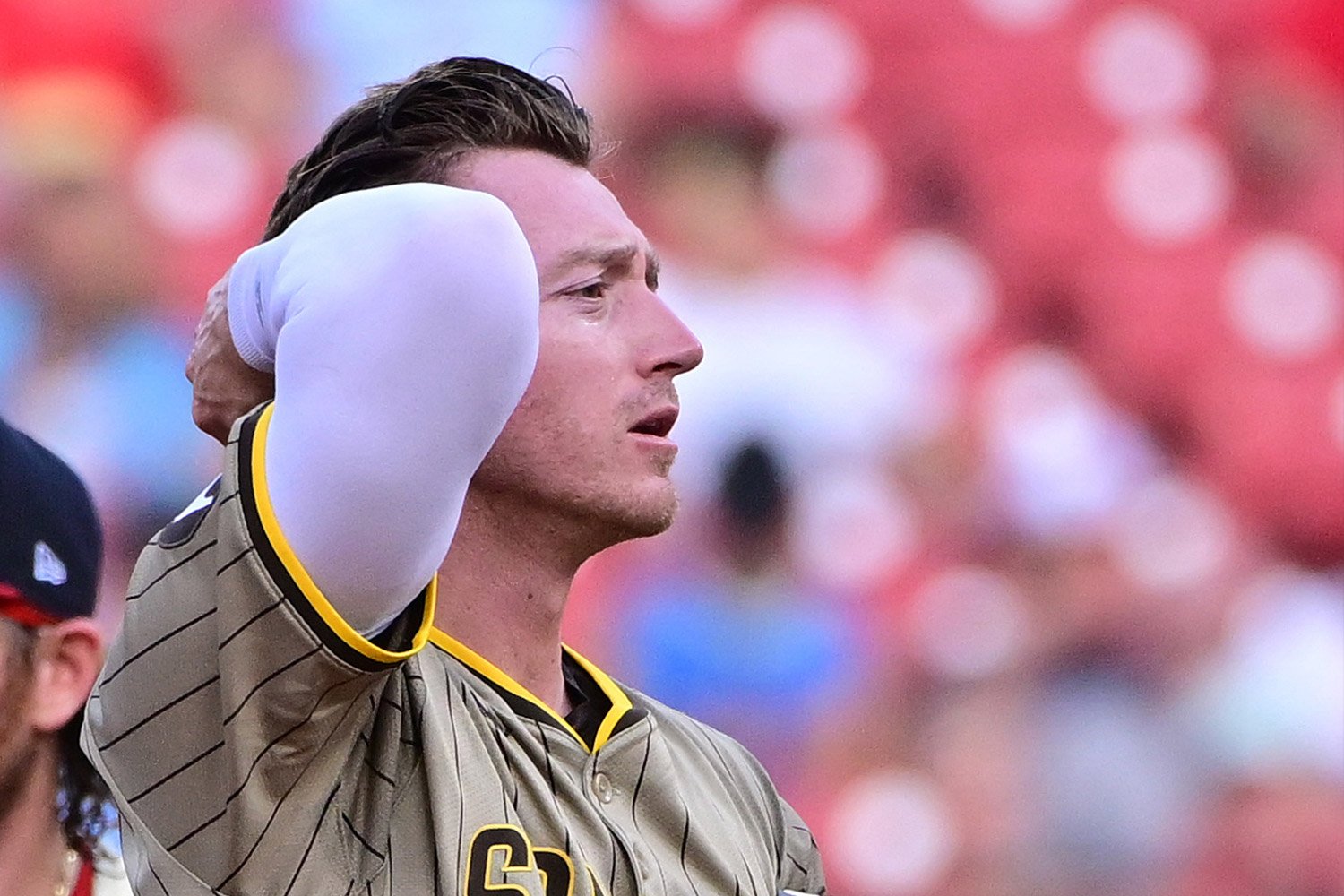 It sort of got lost in the shuffle of the absence of production in left field and behind the plate prior to the trade deadline, but the San Diego Padres have failed to get much of anything out of their bench in 2025. It's hardly a surprise, of course. Strapped for cash last winter, the Padres attempted to fill much of their bench with Quadruple-A types and spring training non-roster invitees. That process ultimately, and objectively, failed. The list of players they've attempted to press into bench roles this year is... extensive. Jason Heyward, Oscar González, Connor Joe, Mason McCoy, Brandon Lockridge, Tirso Ornelas, Yuli Gurriel, Trenton Brooks, and Tyler Wade were all players manning a reserve role in San Diego this season at one point or another. Of that group, none of the 10 remain on the active roster, and only two (Ornelas & McCoy) remain on the 40-man roster. Most are out of the organization entirely. Jose Iglesias is the only bench player who has survived the turnover to date. A quick look at the production is an easy indicator as to why. Tyler Wade's 69 wRC+ was the highest among those who have logged any time at the major league level, with Lockridge's 49 topping the remainder of the group of now-former bench guys. Iglesias' presence as a versatile infielder and resident vibes guy has allowed him to hang around through his own struggles. The post-deadline Padres look a little bit different. Acquisitions of Ryan O'Hearn and Ramón Laureano have allowed Mike Shildt to slide Gavin Sheets into more of a reserve role, strengthening the bench group somewhat organically. Another factor in improving the reserve group? The emergence of Bryce Johnson as a solid bench contributor. Johnson isn't a new face in the Padres organization; he was non-tendered after the 2024 season before signing a minor league deal with Pittsburgh last winter. The Padres brought him back in a trade for catcher Brett Sullivan back in April before his selection to the active roster in mid-June. Through 50 plate appearances, the Padres have at least some reason to be encouraged as to the value he can provide as a bench piece. Everything with Johnson is a small sample, which is an important caveat. So, too, is the amount of luck he's experienced through just 50 plate appearances. Grain of salt and all that. But you're not going to fight back too much against a .333/.375/.400 line and 125 wRC+ quite yet, considering what came before him among 2025 backups. There isn't much power to speak of (.067 ISO), but Johnson has proven capable on the defensive side and on the basepaths, which is exactly what you want when you're talking fourth outfielder. The skill set is important. Because we're not expecting the overall production from Johnson to be much better than that of someone like Lockridge, but he's already graded as the team's sixth-best baserunner among the 24 players we've seen appear on offense (per FanGraphs BsR metric), has three steals, and has posted +1 Outs Above Average as a defensive outfielder. Those are the areas where you want to see a player like Johnson succeed. What he's giving them right now with the bat in his hands is something of a bonus. It's heavily buoyed by a .500 batting average on balls in play, but his 34.6 line drive percentage is the highest on the team. You're going to continue to get some good luck when you're creating that type of contact. His attack angle, at nine degrees on average, should help him continue to get balls in play with that sort of trajectory. That's an improvement from his predecessor in Lockridge, whose much shallower attack angle had him putting the ball on the ground at a near-60-percent clip. That's a much more difficult trend to overcome. Not that Johnson is smacking the ball around the field (21.9 Hard-Hit%), but the Padres don't necessarily need him to do a whole lot more than he's doing. Even if the luck disappears (and it will), the nature of his swing should allow him to retain some value from the types of balls he puts into play. Combine it with the defense and baserunning components he adds, and you're talking about legitimate value in an area of the roster that the team has entirely lacked this year. Of course, we're not talking about Bryce Johnson as anything more than a bench bat. There isn't anything to suggest he's due for more playing time or could prove to be a starting option in left field at some point in the future. He merely brings exactly what he needs. Even upon the inevitable statistical regression, the on-paper element of Johnson as a player on this roster should help him to remain an important part of a bench sorely in need of him.
 -
Regardless of label or title for the executive in charge, running a Major League Baseball organization in the year 2025 is largely about risk aversion. The culture of the league lends itself to front offices attempting to do one of two things: they're either attempting to strike a balance between contention in the present and longer-term organizational health in the form of the farm system, or they're gutting their roster for the rebuild so that they can get to the point of the other option. There isn't a whole lot of existence elsewhere on the spectrum. Unless you're A.J. Preller. Preller isn't the most active executive the sport has to offer — such a superlative might be reserved for someone excelling in the pure volume game like Seattle's Jerry DiPoto — but he might just be the most significant. In acquiring players such as Mason Miller, Ryan O'Hearn, and Ramón Laureano at this year's trade deadline, Preller essentially dispatched with most of the higher-upside prospects his organization had to offer. For a president of baseball operations who carries the reputation that he does, it wasn't terribly surprising. But it still spoke to Preller's refusal to adhere to the typical standard operating procedure among his front office counterparts. Whether Preller's method of operating — wherein he trades prospects by the bunch in order to add to the active roster over a given season — is a successful model to follow doesn't require too much deliberation. The fact that it has yet to manifest in a championship for the Padres makes it an easy call. So does the team's inability/unwillingness to re-sign Juan Soto long-term after moving so much starting-caliber talent in the first place. The data beyond the anecdotal doesn't fall too much in his favor, either: The additional context in Frey's post (that the WAR figures are all pre-deadline) likely means that things are a little bit worse in reality. Then, there's this: There are a couple of components of the above insights worth examining while at the same time offering at least something of a defense for Preller. First is the fact that, yes, Preller has traded away an obscene amount of current major league talent. Some names that were once in the Padres organization include Trea Turner, Max Fried, James Wood, MacKenzie Gore, and Emmanuel Clase, among others. Even looking at last year's MLB Pipeline Top 30 Padres prospects, only 13 names still remain with the organization. From either group, some of those traded, like Wood & Gore, were moved in blockbusters. Others, like Clase, were in much smaller deals. But you could also do that same exercise for every organization in Major League Baseball. It's the nature of such deep systems and such a high volume of players that you're going to move guys that will go on to great success with other organizations. Preller's manner of doing business means he's more liable to it. Still, the fact that it's happened with some of the names listed above doesn't necessarily illustrate a flaw specific to Preller. As far as the second piece of information goes, such a minimal contribution from system players doesn't mean that the Padres are incapable of developing talent. Just that they sort of refuse to. Many of them were at the lower levels of the minors when they were moved, indicative of a desire for present winning rather than a focus on future projection. As Preller has gotten more into this current iteration of the Padres, he's been more susceptible to moving minor league talent. It's a logical progression of his process that, again, isn't telling us anything unexpected. Ultimately, though, both parts help to really tell the story of A.J. Preller. There's a desperation. Whether it's a noble desperation to bring a championship to San Diego or borne more out of self-preservation at this stage of his career, it's a desperation all the same. But while the strategy from the standpoint of the entire timeline is mostly indefensible, the present era in the Padres organization actually does make Preller's movement this year, in moving Leo De Vries, entirely logical. Preller has the Padres serving as a perennial playoff contender. It's varying degrees of Actual National League Pennant Threat depending on the year, but they're in the mix regardless. It's a window. The type of window that exists when you're rostering the likes of Fernando Tatis Jr., Manny Machado, and Jackson Merrill all at the same time and all on long-term contracts. So when Preller makes drastic moves in dealing 14 players from various levels of the system, he's doing so in attempting to capture success in that very window. Mason Miller is under team control through 2029. Freddy Fermin, too. That's a massive upgrade to your staff and some long-needed stability behind the plate for longer than it might take specific prospects even to reach the top level. To say nothing of the fact that Laureano has a club option and acquired starter JP Sears has another three years of team control in his own right. Don't forget that this was a team rapidly headed toward baseball purgatory. Their offense was middling, and some of their key arms are destined for free agency this winter. Much, if not most, of the minor league talent in the system pre-deadline wasn't going to contribute in 2026, let alone 2027 or 2028. Preller was able to proactively fill spots on the roster in a way that should prove to be more impactful and more sustainable, rather than filling the gaps on spring training invites and short-term solutions as he was forced to do this past winter. This isn't meant to be a total defense of A.J. Preller. It does, however, create something of a paradox. His insatiable need to add immediate talent to the active roster is almost entirely due to his own transaction history. That previous aggression is more difficult to defend when you don't win, don't extend the marquee talent, and put yourself in a situation where budgetary constraints (real or imagined) loom each winter. But now? Now you kind of have to. And that requirement has put Preller in a position where he comes out of the deadline looking entirely rational in his approach. He's now set the Padres up to not only threaten the Los Angeles Dodgers down the stretch but have far more stability with respect to the current roster over the next few offseasons than they might otherwise have had. One might not love how he got there in the first place, but it's impossible to argue against the idea that he's pushing to maximize the window, a concept that more than one league executive could stand to take note of. View full article
-
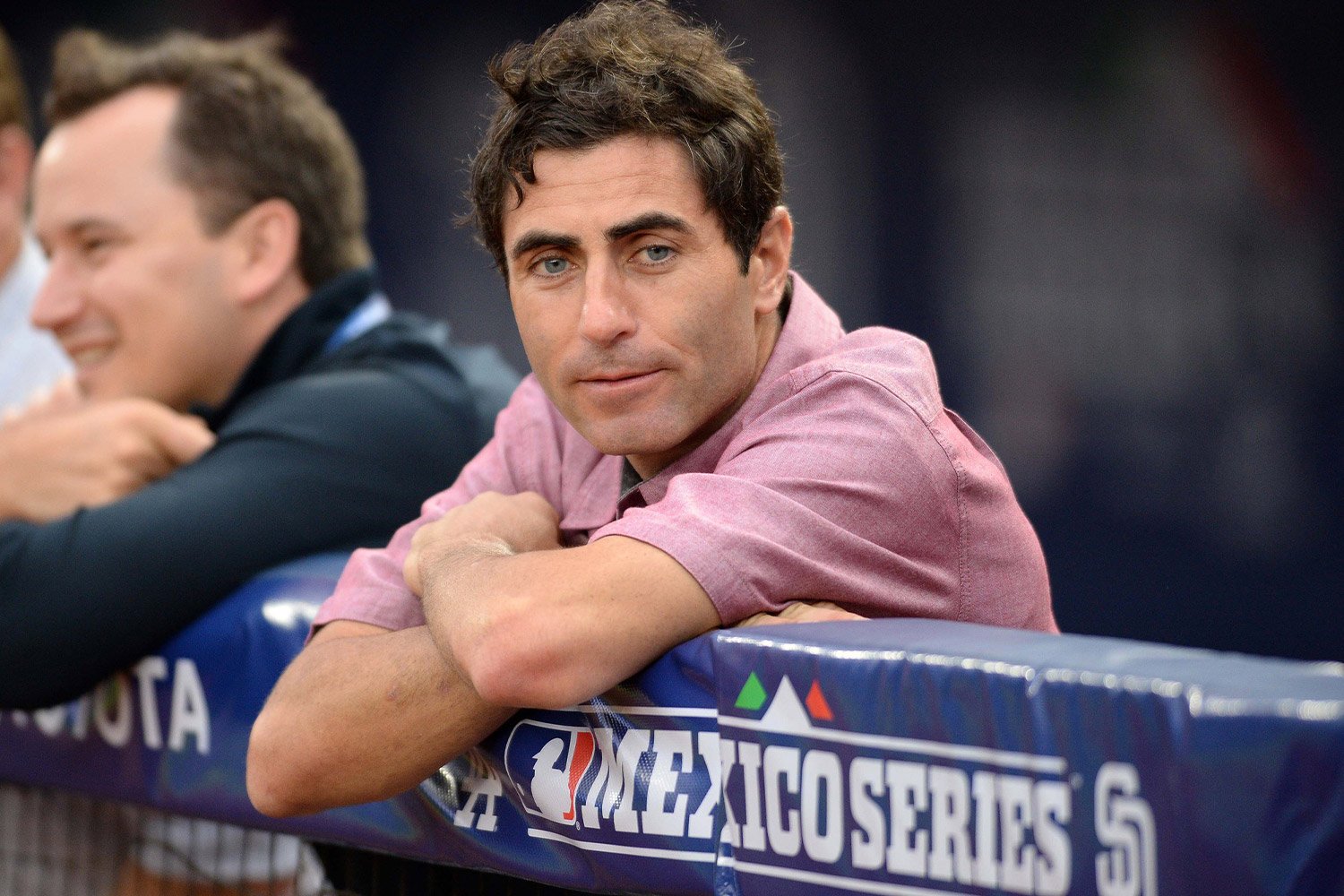 Regardless of label or title for the executive in charge, running a Major League Baseball organization in the year 2025 is largely about risk aversion. The culture of the league lends itself to front offices attempting to do one of two things: they're either attempting to strike a balance between contention in the present and longer-term organizational health in the form of the farm system, or they're gutting their roster for the rebuild so that they can get to the point of the other option. There isn't a whole lot of existence elsewhere on the spectrum. Unless you're A.J. Preller. Preller isn't the most active executive the sport has to offer — such a superlative might be reserved for someone excelling in the pure volume game like Seattle's Jerry DiPoto — but he might just be the most significant. In acquiring players such as Mason Miller, Ryan O'Hearn, and Ramón Laureano at this year's trade deadline, Preller essentially dispatched with most of the higher-upside prospects his organization had to offer. For a president of baseball operations who carries the reputation that he does, it wasn't terribly surprising. But it still spoke to Preller's refusal to adhere to the typical standard operating procedure among his front office counterparts. Whether Preller's method of operating — wherein he trades prospects by the bunch in order to add to the active roster over a given season — is a successful model to follow doesn't require too much deliberation. The fact that it has yet to manifest in a championship for the Padres makes it an easy call. So does the team's inability/unwillingness to re-sign Juan Soto long-term after moving so much starting-caliber talent in the first place. The data beyond the anecdotal doesn't fall too much in his favor, either: The additional context in Frey's post (that the WAR figures are all pre-deadline) likely means that things are a little bit worse in reality. Then, there's this: There are a couple of components of the above insights worth examining while at the same time offering at least something of a defense for Preller. First is the fact that, yes, Preller has traded away an obscene amount of current major league talent. Some names that were once in the Padres organization include Trea Turner, Max Fried, James Wood, MacKenzie Gore, and Emmanuel Clase, among others. Even looking at last year's MLB Pipeline Top 30 Padres prospects, only 13 names still remain with the organization. From either group, some of those traded, like Wood & Gore, were moved in blockbusters. Others, like Clase, were in much smaller deals. But you could also do that same exercise for every organization in Major League Baseball. It's the nature of such deep systems and such a high volume of players that you're going to move guys that will go on to great success with other organizations. Preller's manner of doing business means he's more liable to it. Still, the fact that it's happened with some of the names listed above doesn't necessarily illustrate a flaw specific to Preller. As far as the second piece of information goes, such a minimal contribution from system players doesn't mean that the Padres are incapable of developing talent. Just that they sort of refuse to. Many of them were at the lower levels of the minors when they were moved, indicative of a desire for present winning rather than a focus on future projection. As Preller has gotten more into this current iteration of the Padres, he's been more susceptible to moving minor league talent. It's a logical progression of his process that, again, isn't telling us anything unexpected. Ultimately, though, both parts help to really tell the story of A.J. Preller. There's a desperation. Whether it's a noble desperation to bring a championship to San Diego or borne more out of self-preservation at this stage of his career, it's a desperation all the same. But while the strategy from the standpoint of the entire timeline is mostly indefensible, the present era in the Padres organization actually does make Preller's movement this year, in moving Leo De Vries, entirely logical. Preller has the Padres serving as a perennial playoff contender. It's varying degrees of Actual National League Pennant Threat depending on the year, but they're in the mix regardless. It's a window. The type of window that exists when you're rostering the likes of Fernando Tatis Jr., Manny Machado, and Jackson Merrill all at the same time and all on long-term contracts. So when Preller makes drastic moves in dealing 14 players from various levels of the system, he's doing so in attempting to capture success in that very window. Mason Miller is under team control through 2029. Freddy Fermin, too. That's a massive upgrade to your staff and some long-needed stability behind the plate for longer than it might take specific prospects even to reach the top level. To say nothing of the fact that Laureano has a club option and acquired starter JP Sears has another three years of team control in his own right. Don't forget that this was a team rapidly headed toward baseball purgatory. Their offense was middling, and some of their key arms are destined for free agency this winter. Much, if not most, of the minor league talent in the system pre-deadline wasn't going to contribute in 2026, let alone 2027 or 2028. Preller was able to proactively fill spots on the roster in a way that should prove to be more impactful and more sustainable, rather than filling the gaps on spring training invites and short-term solutions as he was forced to do this past winter. This isn't meant to be a total defense of A.J. Preller. It does, however, create something of a paradox. His insatiable need to add immediate talent to the active roster is almost entirely due to his own transaction history. That previous aggression is more difficult to defend when you don't win, don't extend the marquee talent, and put yourself in a situation where budgetary constraints (real or imagined) loom each winter. But now? Now you kind of have to. And that requirement has put Preller in a position where he comes out of the deadline looking entirely rational in his approach. He's now set the Padres up to not only threaten the Los Angeles Dodgers down the stretch but have far more stability with respect to the current roster over the next few offseasons than they might otherwise have had. One might not love how he got there in the first place, but it's impossible to argue against the idea that he's pushing to maximize the window, a concept that more than one league executive could stand to take note of.
 -
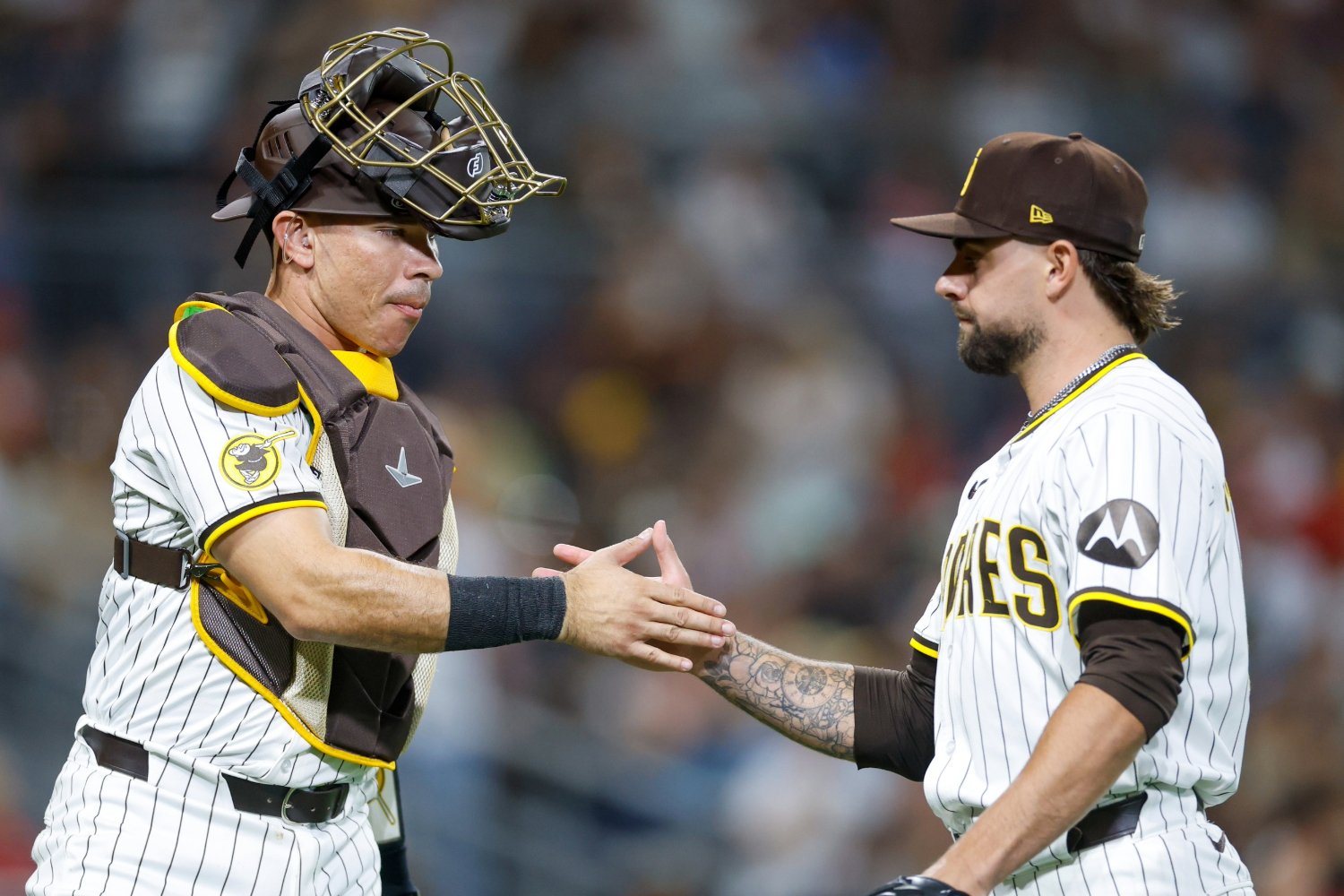 The catching situation for the San Diego Padres in 2025 was never going to be completely tenable. In fact, it wasn't even remotely tenable. In reality, the Padres had been skating by on a little bit of luck behind the plate over the last few years. They got some really nice production out of Gary Sánchez in 2023 before Kyle Higashioka parlayed his stealing of the starting job last year into a lucrative two-year pact with Texas. Neither was meant to be a long-term solution, however. The team also failed to bring in such an answer ahead of this season. Last winter, San Diego brought back late-season pickup Elías Díaz on January 30th. That came exactly two weeks after they agreed to a minor league deal with veteran backstop Martín Maldonado. It was a low-risk pairing that allowed the team to work within the confines of their budgetary limitations, but there was also never going to be a high-reward aspect. You kind of knew exactly what you were getting. Unfortunately, that minimal upside has come to pass in more ways than one in '25. Díaz has turned in a wRC+ of just 67 across 85 games while providing decent defense. Maldonado, meanwhile, was at a wRC+ of 61 (64 games) and was below average on the defensive side just about everywhere. All told, only the Washington Nationals have gotten less than the -0.9 fWAR that San Diego has seen from behind the plate. As such, it wasn't a matter of if A.J. Preller would seek to upside the catching position ahead of the trade deadline, but how it would be addressed. Options did exist, and none at a prohibitive cost. Korey Lee gave way to a pair of youngsters on the South Side of Chicago. Ryan Jeffers was playing out a season for an increasingly bad team out of Minnesota. Reese McGuire might've been an option out of Chicago had Miguel Amaya returned for the Cubs before the deadline. All of those names were floated as possibilities, whether real or imagined. Instead, Preller went a route that few might've expected in acquiring Freddy Fermin from the Kansas City Royals. Fermin is 30 years old but has only been at the top level as a regular since 2023. He broke onto the scene with Kansas City via a 108 wRC+ and nice defensive metrics two years ago before taking a bit of a step back at the plate in '24 (92 wRC+). He's regressed further in 2025 (78 wRC+) but still provides an upgrade over what the team was getting out of the Díaz-Maldonado duo. Given that Preller also acquired Ramón Laureano and Ryan O'Hearn, though, the more immediate concern is going to be what Fermin can offer from a defensive standpoint. From a framing standpoint, Fermin technically sits above average. He's accrued one Catcher Framing Runs (per Statcast), putting him 23rd among 56 qualifying catchers. That sits fairly well ahead of where Maldonado's -1 (34th) and Díaz's -4 (50th) rank. On the blocking side, Fermin is at three Blocks Above Average. That's 19th among 63 catchers with enough chances to qualify there. That's slightly ahead of Díaz (two) and miles in front of Maldonado (-8). If we expanded the range to include each of the last three seasons, Fermin is a top-10 blocker at the position with 13 Blocks Above Average. That puts him right at No. 10 while Díaz checks in at 35th and Maldonado at 52nd. It's a trend that largely carries over to managing the run game, as well. Fermin is exactly average in Caught Stealing Above Average (zero) which does put him behind Díaz (one) for 2025. It does, however, put him well ahead of Maldonado (-5), who ranked 65th out of 66 catchers. If we did the same expansion of the timeframe, though, Fermin jumps up to the 10th spot, just narrowly ahead of Díaz. It seems worth noting that Fermin also possesses one of the faster pop times (1.89 sec) in all of baseball. So it goes without saying that the team is getting an upgrade behind the dish in Freddy Fermin. It's not a massive defensive upgrade over Díaz in every respect, but it is in most of them. To say nothing of the bump you get at the plate (even if Fermin does remain a below average hitter). In shedding Maldonado, as the Padres did in quickly designating him for assignment, the team stands to get a tangible upgrade. What's more is that this is a medium-term move for the Padres. This isn't yet another situation where the team has a catcher settle in only to depart in the subsequent offseason. Instead, Fermin is under team control through 2029. So, you're getting a wholly solid defensive catcher who's shown a bit more with the bat than he's demonstrated in '25. Moving some depth in Ryan Bergert and Stephen Kolek made it a hefty price to pay, but it's one that offers some stability to a position that has lacked it entirely in San Diego in recent years. On paper, that type of move is worth the cost.
 -
The catching situation for the San Diego Padres in 2025 was never going to be completely tenable. In fact, it wasn't even remotely tenable. In reality, the Padres had been skating by on a little bit of luck behind the plate over the last few years. They got some really nice production out of Gary Sánchez in 2023 before Kyle Higashioka parlayed his stealing of the starting job last year into a lucrative two-year pact with Texas. Neither was meant to be a long-term solution, however. The team also failed to bring in such an answer ahead of this season. Last winter, San Diego brought back late-season pickup Elías Díaz on January 30th. That came exactly two weeks after they agreed to a minor league deal with veteran backstop Martín Maldonado. It was a low-risk pairing that allowed the team to work within the confines of their budgetary limitations, but there was also never going to be a high-reward aspect. You kind of knew exactly what you were getting. Unfortunately, that minimal upside has come to pass in more ways than one in '25. Díaz has turned in a wRC+ of just 67 across 85 games while providing decent defense. Maldonado, meanwhile, was at a wRC+ of 61 (64 games) and was below average on the defensive side just about everywhere. All told, only the Washington Nationals have gotten less than the -0.9 fWAR that San Diego has seen from behind the plate. As such, it wasn't a matter of if A.J. Preller would seek to upside the catching position ahead of the trade deadline, but how it would be addressed. Options did exist, and none at a prohibitive cost. Korey Lee gave way to a pair of youngsters on the South Side of Chicago. Ryan Jeffers was playing out a season for an increasingly bad team out of Minnesota. Reese McGuire might've been an option out of Chicago had Miguel Amaya returned for the Cubs before the deadline. All of those names were floated as possibilities, whether real or imagined. Instead, Preller went a route that few might've expected in acquiring Freddy Fermin from the Kansas City Royals. Fermin is 30 years old but has only been at the top level as a regular since 2023. He broke onto the scene with Kansas City via a 108 wRC+ and nice defensive metrics two years ago before taking a bit of a step back at the plate in '24 (92 wRC+). He's regressed further in 2025 (78 wRC+) but still provides an upgrade over what the team was getting out of the Díaz-Maldonado duo. Given that Preller also acquired Ramón Laureano and Ryan O'Hearn, though, the more immediate concern is going to be what Fermin can offer from a defensive standpoint. From a framing standpoint, Fermin technically sits above average. He's accrued one Catcher Framing Runs (per Statcast), putting him 23rd among 56 qualifying catchers. That sits fairly well ahead of where Maldonado's -1 (34th) and Díaz's -4 (50th) rank. On the blocking side, Fermin is at three Blocks Above Average. That's 19th among 63 catchers with enough chances to qualify there. That's slightly ahead of Díaz (two) and miles in front of Maldonado (-8). If we expanded the range to include each of the last three seasons, Fermin is a top-10 blocker at the position with 13 Blocks Above Average. That puts him right at No. 10 while Díaz checks in at 35th and Maldonado at 52nd. It's a trend that largely carries over to managing the run game, as well. Fermin is exactly average in Caught Stealing Above Average (zero) which does put him behind Díaz (one) for 2025. It does, however, put him well ahead of Maldonado (-5), who ranked 65th out of 66 catchers. If we did the same expansion of the timeframe, though, Fermin jumps up to the 10th spot, just narrowly ahead of Díaz. It seems worth noting that Fermin also possesses one of the faster pop times (1.89 sec) in all of baseball. So it goes without saying that the team is getting an upgrade behind the dish in Freddy Fermin. It's not a massive defensive upgrade over Díaz in every respect, but it is in most of them. To say nothing of the bump you get at the plate (even if Fermin does remain a below average hitter). In shedding Maldonado, as the Padres did in quickly designating him for assignment, the team stands to get a tangible upgrade. What's more is that this is a medium-term move for the Padres. This isn't yet another situation where the team has a catcher settle in only to depart in the subsequent offseason. Instead, Fermin is under team control through 2029. So, you're getting a wholly solid defensive catcher who's shown a bit more with the bat than he's demonstrated in '25. Moving some depth in Ryan Bergert and Stephen Kolek made it a hefty price to pay, but it's one that offers some stability to a position that has lacked it entirely in San Diego in recent years. On paper, that type of move is worth the cost. View full article
-
It's in A.J. Preller's nature to be the center of attention. Seemingly every deadline, the San Diego Padres shake the ground with a significant addition and with little regard for the prospect cost that so many other organizations hold dear. This year was, of course, no exception. If anything, it set a new standard for the executive. Preller parted with nearly a third of the team's top 30 prospects (per MLB Pipeline). Gone across the team's major deals from Thursday are Leo De Vries (formerly no. 1), Braden Nett (no. 3), Boston Bateman (no. 4), Cobb Hightower (no. 6), Tyson Neighbors (no. 12), Henry Baez (no. 13), Eduarniel Núñez (no. 17), Brandon Valenzuela (no. 26), and Victor Figueroa (no. 29). This comes in addition to sending pitchers Stephen Kolek & Ryan Bergert and outfielder Brandon Lockridge out of town. While the latter trio represent some needed depth, the headline of the day is that the bottom tier system becomes even more barren, but flags fly forever. At least, that's what Preller is hoping he can say in a few months' time. In their place are some new components essential the roster. Mason Miller was obviously the major get for the Padres. He joins in conjunction with JP Sears out of the Athletics organization, providing additional heat at the end of the bullpen (in Miller's case) and some stability toward the back of the rotation (in the form of Sears). Preller then moved to poach catcher Freddy Fermin from Kansas City for the two major league arms before jumping over to Baltimore for designated hitter Ryan O'Hearn and outfielder Ramón Laureano. For good measure, Preller also acquired Will Wagner from Toronto, providing the team with some optionable versatility in the infield. It's a series of moves that not only rattles the organization's farm system but the current on-field roster. Six new players join the fray, with roles that were rather sturdy in nature set to shift on both sides of the ball. Here's what we're expecting each position to look like moving forward: Catcher Aside from left field, catcher represented the most desperate need for the Padres. Fermin forced his way into something of a timeshare alongside Kansas City legend Salvador Perez over the last two years. He doesn't offer too much on the offensive side, but neither did the previous duo of Elías Díaz and Martín Maldonado. Fermin replaces the latter, who was designated for assignment upon his arrival and grades as an above-average framer and average thrower from behind the plate. He'll likely get the bulk of the starts with Díaz being relegated to a clear backup role. For what it's worth, Baseball Prospectus has Fermin occupying the spot behind the plate 60 percent of the time moving forward. First Base The configuration here is going to be really interesting. Of the team's active roster, Luis Arráez has appeared at first in 85 games. Gavin Sheets follows him with 12 appearances, and Jake Cronenworth has 11. Arráez has also graded very poorly defensively as the team's first sacker. Enter Ryan O'Hearn. He wasn't a full-time first baseman in Baltimore but still grabbed 48 appearances there (tied with Ryan Mountcastle for the team lead). Notably, O'Hearn has actually received quite favorable grades on the defensive side; he's at six Outs Above Average for the year; Arráez is at the literal other end of the spectrum with a -6 OAA. The assumption here is that O'Hearn gets the lion's share of the time while Arráez serves more of a straightforward DH role moving forward. BP leans that way, too, giving O'Hearn 60 percent of the time down the stretch. Second Base, Shortstop, Third Base Nothing to see here. Cronenworth did not, in fact, end up traded, while the left side of the infield was never expected to be anything other than Xander Bogaerts and Manny Machado. We could, however, see Wagner grab a little bit of time at the keystone before the season's over, particularly in someone like Tyler Wade's stead. Left Field We heard some interesting names that A.J. Preller could target to fill the Padres' massive vacancy on the left side of the outfield grass. Luis Robert Jr. and Jarren Duran were among those floated in the days and weeks leading up to the deadline. Instead, the Padres walked away with Ramón Laureano. He's not the name he was a few years ago, but he's been on the comeback trail in 2025. Prior to the trade he was at a 144 wRC+ and a .239 isolated power. Both represent career highs. The defense isn't quite what it was when he first broke out with Oakland, but it's an upgrade from rolling Gavin Sheets out there with regularity. Center Field, Right Field Again, the picture remains set here. Jackson Merrill and Fernando Tatis, Jr. are your guys now and until the end of the decade. Bench If there's one player that stands to lose quite a lot in the midst of Thursday's trades, it's Gavin Sheets. The spring invitee was enjoying a strong season with plenty of power in his first year in San Diego before his numbers cratered in July (65 wRC+). Nevertheless, he's sure to give guys a blow in left, at first, and out of the designated hitter spot. Even with the struggles, he remains the only upside bat outside of the starting lineup, so pinch hit opportunities should be available in spades. Beyond Sheets, Díaz officially takes over as the backup backstop with Jose Iglesias, Tyler Wade, and Bryce Johnson figuring into the mix on some level. One of Iglesias or Wade, though, could be on the fringes of the roster with Wagner's arrival. Pushing Sheets to the bench helps the unit look better, at least. Starting Pitching Somewhat surprisingly, the team did not move Dylan Cease and will hope he regains his form ahead of free agency. He remains atop the rotation that remains relatively deep following the departures of Kolek & Bergert, but a little bit less stable. Baseball Prospectus has the team rolling eight deep with starting opportunities. Cease (18 percent of starts), Nick Pivetta (18 percent), Yu Darvish (16 percent), JP Sears (14 percent), and Randy Vásquez (13 percent) lead the way in projected starting opportunities. Michael King (10 percent), Nestor Cortes (9 percent), and Matt Waldron (2 percent) follow the other five. There are health questions for King & Cortes and performance questions for Darvish, Cease, and Vásquez. Nonetheless, it's an impressive group if it can even come close to touching some of the upside present. Bullpen It's unreal. The relief corps already represented the strength of the 2025 San Diego Padres. Jeremiah Estrada, Jason Adam, Adrian Morejón, and Robert Suárez at the end of games is about as tight as you can get. And then Preller acquired perhaps the most coveted reliever of them all in Mason Miller. The immediate inclination was to believe Suárez was on his way out. Instead, he remains as part of what could (should? is?) be the league's best group of relievers. BP likes Miller to take about 85 percent of the saves down the stretch with Suárez transitioning to more of an eighth inning role. That pushes everyone down a bit, leaving Yuki Matsui, David Morgan, and Wandy Peralta to serve exclusively the middle innings. Covering four or five innings with obscene velocity and some pretty silly movement? That'll work. View full article
-
Updating Padres' Depth Chart Following Wild 2025 Trade Deadline
Randy Holt posted an article in Padres
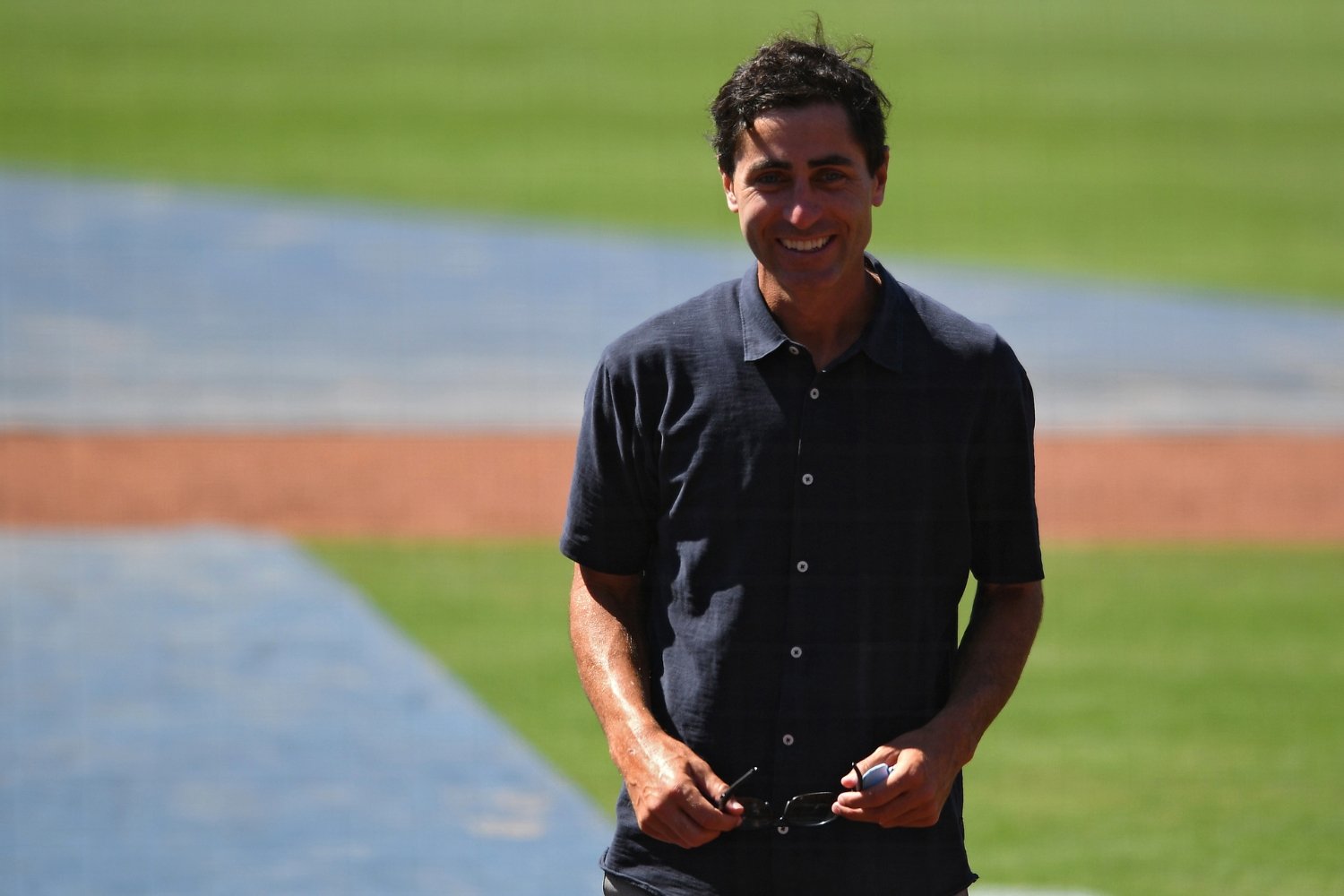 It's in A.J. Preller's nature to be the center of attention. Seemingly every deadline, the San Diego Padres shake the ground with a significant addition and with little regard for the prospect cost that so many other organizations hold dear. This year was, of course, no exception. If anything, it set a new standard for the executive. Preller parted with nearly a third of the team's top 30 prospects (per MLB Pipeline). Gone across the team's major deals from Thursday are Leo De Vries (formerly no. 1), Braden Nett (no. 3), Boston Bateman (no. 4), Cobb Hightower (no. 6), Tyson Neighbors (no. 12), Henry Baez (no. 13), Eduarniel Núñez (no. 17), Brandon Valenzuela (no. 26), and Victor Figueroa (no. 29). This comes in addition to sending pitchers Stephen Kolek & Ryan Bergert and outfielder Brandon Lockridge out of town. While the latter trio represent some needed depth, the headline of the day is that the bottom tier system becomes even more barren, but flags fly forever. At least, that's what Preller is hoping he can say in a few months' time. In their place are some new components essential the roster. Mason Miller was obviously the major get for the Padres. He joins in conjunction with JP Sears out of the Athletics organization, providing additional heat at the end of the bullpen (in Miller's case) and some stability toward the back of the rotation (in the form of Sears). Preller then moved to poach catcher Freddy Fermin from Kansas City for the two major league arms before jumping over to Baltimore for designated hitter Ryan O'Hearn and outfielder Ramón Laureano. For good measure, Preller also acquired Will Wagner from Toronto, providing the team with some optionable versatility in the infield. It's a series of moves that not only rattles the organization's farm system but the current on-field roster. Six new players join the fray, with roles that were rather sturdy in nature set to shift on both sides of the ball. Here's what we're expecting each position to look like moving forward: Catcher Aside from left field, catcher represented the most desperate need for the Padres. Fermin forced his way into something of a timeshare alongside Kansas City legend Salvador Perez over the last two years. He doesn't offer too much on the offensive side, but neither did the previous duo of Elías Díaz and Martín Maldonado. Fermin replaces the latter, who was designated for assignment upon his arrival and grades as an above-average framer and average thrower from behind the plate. He'll likely get the bulk of the starts with Díaz being relegated to a clear backup role. For what it's worth, Baseball Prospectus has Fermin occupying the spot behind the plate 60 percent of the time moving forward. First Base The configuration here is going to be really interesting. Of the team's active roster, Luis Arráez has appeared at first in 85 games. Gavin Sheets follows him with 12 appearances, and Jake Cronenworth has 11. Arráez has also graded very poorly defensively as the team's first sacker. Enter Ryan O'Hearn. He wasn't a full-time first baseman in Baltimore but still grabbed 48 appearances there (tied with Ryan Mountcastle for the team lead). Notably, O'Hearn has actually received quite favorable grades on the defensive side; he's at six Outs Above Average for the year; Arráez is at the literal other end of the spectrum with a -6 OAA. The assumption here is that O'Hearn gets the lion's share of the time while Arráez serves more of a straightforward DH role moving forward. BP leans that way, too, giving O'Hearn 60 percent of the time down the stretch. Second Base, Shortstop, Third Base Nothing to see here. Cronenworth did not, in fact, end up traded, while the left side of the infield was never expected to be anything other than Xander Bogaerts and Manny Machado. We could, however, see Wagner grab a little bit of time at the keystone before the season's over, particularly in someone like Tyler Wade's stead. Left Field We heard some interesting names that A.J. Preller could target to fill the Padres' massive vacancy on the left side of the outfield grass. Luis Robert Jr. and Jarren Duran were among those floated in the days and weeks leading up to the deadline. Instead, the Padres walked away with Ramón Laureano. He's not the name he was a few years ago, but he's been on the comeback trail in 2025. Prior to the trade he was at a 144 wRC+ and a .239 isolated power. Both represent career highs. The defense isn't quite what it was when he first broke out with Oakland, but it's an upgrade from rolling Gavin Sheets out there with regularity. Center Field, Right Field Again, the picture remains set here. Jackson Merrill and Fernando Tatis, Jr. are your guys now and until the end of the decade. Bench If there's one player that stands to lose quite a lot in the midst of Thursday's trades, it's Gavin Sheets. The spring invitee was enjoying a strong season with plenty of power in his first year in San Diego before his numbers cratered in July (65 wRC+). Nevertheless, he's sure to give guys a blow in left, at first, and out of the designated hitter spot. Even with the struggles, he remains the only upside bat outside of the starting lineup, so pinch hit opportunities should be available in spades. Beyond Sheets, Díaz officially takes over as the backup backstop with Jose Iglesias, Tyler Wade, and Bryce Johnson figuring into the mix on some level. One of Iglesias or Wade, though, could be on the fringes of the roster with Wagner's arrival. Pushing Sheets to the bench helps the unit look better, at least. Starting Pitching Somewhat surprisingly, the team did not move Dylan Cease and will hope he regains his form ahead of free agency. He remains atop the rotation that remains relatively deep following the departures of Kolek & Bergert, but a little bit less stable. Baseball Prospectus has the team rolling eight deep with starting opportunities. Cease (18 percent of starts), Nick Pivetta (18 percent), Yu Darvish (16 percent), JP Sears (14 percent), and Randy Vásquez (13 percent) lead the way in projected starting opportunities. Michael King (10 percent), Nestor Cortes (9 percent), and Matt Waldron (2 percent) follow the other five. There are health questions for King & Cortes and performance questions for Darvish, Cease, and Vásquez. Nonetheless, it's an impressive group if it can even come close to touching some of the upside present. Bullpen It's unreal. The relief corps already represented the strength of the 2025 San Diego Padres. Jeremiah Estrada, Jason Adam, Adrian Morejón, and Robert Suárez at the end of games is about as tight as you can get. And then Preller acquired perhaps the most coveted reliever of them all in Mason Miller. The immediate inclination was to believe Suárez was on his way out. Instead, he remains as part of what could (should? is?) be the league's best group of relievers. BP likes Miller to take about 85 percent of the saves down the stretch with Suárez transitioning to more of an eighth inning role. That pushes everyone down a bit, leaving Yuki Matsui, David Morgan, and Wandy Peralta to serve exclusively the middle innings. Covering four or five innings with obscene velocity and some pretty silly movement? That'll work.
 -
Never count out A.J. Preller. The San Diego Padres had been quiet in the days and hours leading up to the trade deadline. Turns out, it was only so that Preller could stun us all the more with yet another blockbuster move. Preller was able to poach Mason Miller and his 104 MPH fastball away from the West Sacramento Athletics in what will surely go down as one of the louder moves of the 2025 deadline. Immediately, our mind goes to the cost. The Padres were light on marquee prospects and feature a system that, overall, sits near the bottom of the league. Prior to Thursday, we'd heard that the team was disinclined to include top prospect Leo De Vries in any deal. The same largely applied to catcher Ethan Salas, though we had heard whispers that he'd been floated as part of discussions with the Boston Red Sox surrounding Jarren Duran. Outside of those two, the Padres' top prospects aren't exactly a list full of names. Braden Nett was seen as a riser this year. Henry Baez, perhaps as an arm that could contribute as early as 2026. Preller included three out of those four — De Vries (no. 1), Nett (no. 3), and Baez (no. 13) — as part of the package to acquire Miller and starting pitcher JP Sears. Eduarniel Núñez (no. 17) was also included. Four of the top 17 prospects in a thin system seems like a wild price to pay for even a closer of Miller's caliber and a back-end starter in Sears, especially for a relief pitching-rich team like San Diego. To say nothing of the additional prospect cost in the later deal with the Baltimore Orioles. But in doing so, Preller was able to buy his team some medium-term stability. In more recent weeks, I've floated the idea that the Padres could soon find themselves in a sort of baseball purgatory. Given some of the offensive struggles we saw throughout May, June, and July, the Padres were without clear reinforcements on the position player side. The pitching staff wasn't immune to that line of thinking, however. Michael King & Dylan Cease are free agents, with the latter remaining a trade candidate. Robert Suárez can opt out of his deal and become a free agent, which seems even more likely now. Yu Darvish's first three starts on the Injured List looked objectively bad. It's been a lot of patchwork in '25, particularly on the starting side. But what Preller did in acquiring both Miller and Sears in this deal is help to mitigate some of that. Suárez will either depart on Thursday via trade or free agency. Miller becomes the team's closer for the foreseeable future, as he's under team control for four additional years; he's not a free agent until 2030. Sears doesn't have remotely the same kind of upside, but he's the kind of stable backend arm that this team has yearned for this year. He's not a free agent until 2029. So there's a lot of logic in this deal. The prospect cost was, on paper, intense. It's difficult to stomach that at first blush, for a team already struggling to keep up on the farm with so many of their National League counterparts. But someone like De Vries remains at least a couple of years away. Manny Machado is touching his mid-30s. You've got Fernando Tatis Jr and Jackson Merrill in their respective primes, with the latter likely leaving room to grow into even greater heights. There is a lot of talent on this roster in need of medium-term supplementation. Preller was able to get it. You might not like it, perhaps even more as we get closer to the end of the decade. My instinct was to loathe it, given what it required and where the system stands. But there's too much logic in it to be ignored. Preller succeeded with this one, both in the short term and in the medium term. View full article
-
In Mason Miller, JP Sears Padres Gain Essential Medium-Term Stability
Randy Holt posted an article in Padres
 Never count out A.J. Preller. The San Diego Padres had been quiet in the days and hours leading up to the trade deadline. Turns out, it was only so that Preller could stun us all the more with yet another blockbuster move. Preller was able to poach Mason Miller and his 104 MPH fastball away from the West Sacramento Athletics in what will surely go down as one of the louder moves of the 2025 deadline. Immediately, our mind goes to the cost. The Padres were light on marquee prospects and feature a system that, overall, sits near the bottom of the league. Prior to Thursday, we'd heard that the team was disinclined to include top prospect Leo De Vries in any deal. The same largely applied to catcher Ethan Salas, though we had heard whispers that he'd been floated as part of discussions with the Boston Red Sox surrounding Jarren Duran. Outside of those two, the Padres' top prospects aren't exactly a list full of names. Braden Nett was seen as a riser this year. Henry Baez, perhaps as an arm that could contribute as early as 2026. Preller included three out of those four — De Vries (no. 1), Nett (no. 3), and Baez (no. 13) — as part of the package to acquire Miller and starting pitcher JP Sears. Eduarniel Núñez (no. 17) was also included. Four of the top 17 prospects in a thin system seems like a wild price to pay for even a closer of Miller's caliber and a back-end starter in Sears, especially for a relief pitching-rich team like San Diego. To say nothing of the additional prospect cost in the later deal with the Baltimore Orioles. But in doing so, Preller was able to buy his team some medium-term stability. In more recent weeks, I've floated the idea that the Padres could soon find themselves in a sort of baseball purgatory. Given some of the offensive struggles we saw throughout May, June, and July, the Padres were without clear reinforcements on the position player side. The pitching staff wasn't immune to that line of thinking, however. Michael King & Dylan Cease are free agents, with the latter remaining a trade candidate. Robert Suárez can opt out of his deal and become a free agent, which seems even more likely now. Yu Darvish's first three starts on the Injured List looked objectively bad. It's been a lot of patchwork in '25, particularly on the starting side. But what Preller did in acquiring both Miller and Sears in this deal is help to mitigate some of that. Suárez will either depart on Thursday via trade or free agency. Miller becomes the team's closer for the foreseeable future, as he's under team control for four additional years; he's not a free agent until 2030. Sears doesn't have remotely the same kind of upside, but he's the kind of stable backend arm that this team has yearned for this year. He's not a free agent until 2029. So there's a lot of logic in this deal. The prospect cost was, on paper, intense. It's difficult to stomach that at first blush, for a team already struggling to keep up on the farm with so many of their National League counterparts. But someone like De Vries remains at least a couple of years away. Manny Machado is touching his mid-30s. You've got Fernando Tatis Jr and Jackson Merrill in their respective primes, with the latter likely leaving room to grow into even greater heights. There is a lot of talent on this roster in need of medium-term supplementation. Preller was able to get it. You might not like it, perhaps even more as we get closer to the end of the decade. My instinct was to loathe it, given what it required and where the system stands. But there's too much logic in it to be ignored. Preller succeeded with this one, both in the short term and in the medium term.
 -
Fernando Tatis Jr. wasn't the worst hitter in Major League Baseball in May or June... even if it felt like it at times. Coming off a blazing start to the year — which featured a .345/.409/.602 line and 184 wRC+ in March & April — the San Diego Padres' right fielder completely fell off in the two subsequent months. Not in a he's-been-just-okay-which-isn't-great-for-a-scuffling-lineup context. Like, objectively terrible. Tatis Jr. carried a .206/.313/.323 line in May & June, with a 87 wRC+. Again, he wasn't the worst in baseball (his wRC+, for example, was just the 38th-worst among qualifying hitters), but it felt like nothing was going right at the plate, even if his defense helped him to maintain value in the WAR game. There were a number of factors that could've played into such a brutal stretch for one of the game's brightest stars. Mechanical changes abounded. Approach issues might have been present. We don't know if there were any outstanding health components either given multiple hit-by-pitches sustained within that stretch. But, in those instances when you're trying to muster anything at the plate, a .233 average on balls in play certainly isn't your friend. But, that's the mark against which Tatis fought over those two middle months of the season thus far. There wasn't any particular reason for it, either, at least beyond the speculative. If we wanted to take a fairly obvious route, though, there was a blend of batted ball issues. He put the ball on the ground far too much in May (53.7 GB%) and checked in at a sub-.200 BABIP (.196). It didn't completely stabilize in June, but when he cut that groundball rate by 13 percent, he was able to drive that number up to .266. Such batted ball trends are at least somewhat indicative of why we've seen Tatis Jr. take off once again in July. Want to see a visual that depicts something incredibly obvious? It's not particularly insightful to note that a player is able to provide more offensive value when he's experiencing some batted ball luck. In Tatis' case, though, it's extremely stark. He hasn't been able to work his through the BABIP monster this year; his success has been almost entirely tied to it. As such, just how he's managing to reclaim the "luck" in July is of particular interest. As of this writing, Tatis Jr's BABIP sits at .397 for the month of July. Everything else has come with it to the tune of a .309/.429/.481 line and a 155 wRC+. The power isn't quite there yet, but a .173 isolated power is at least encouraging following a .102 ISO in June. Of course, the answer here might be disappointing in its simplicity. Explanations include the idea that Tatis is simply hitting the ball harder and at a more appropriate angle. The groundball rate is back up a touch from June (roughly 45 percent), but where Tatis Jr. has thrived is in creating line drive contact rather than true elevation. His FB%, at 23.3 percent, is his lowest of the year. His LD%, however, is his highest of the year (31.7 percent). Not only is it his highest of the year, but it's nearly double any rate he's turned in to this point. That includes March & April. For Tatis, the appropriate observation seems to be that this hasn't been so much an adjustment against pitch types, but a zone emphasis. This is the zone from March to June: And here it is in July: From these visuals, it looks like Tatis is concentrating his zone a bit more toward the outer third of the plate. Middle-middle is always going to be an area of emphasis, but it appears he's graduated from expanding a bit more vertically to stretching the zone more horizontally. Most notable is in that outer third where his groundball contact is less severe. Given a setup more toward the back corner of the box (26.3" back, 29.3" off the plate) and one of the game's longer swings (7.3 feet), it's a part of the plate that plays well. Even more so when you consider an 11-degree attack angle that is a four-degree increase from May and two from June. The July angle is one that sits well within the window of elevating the baseball. So, not only are his batted ball trends settling back to something favorable, but his mechanics are driving it. Sure enough, at 7.4 percent, Tatis Jr is experiencing his highest barrel rate since the first month of the season (more than three percent higher than May). And you really don't need more than that. Fernando Tatis Jr. is emphasizing an area of the zone that's going to allow him to get the barrel on the baseball at a higher rate. That doesn't mean we should continue to expect a BABIP figure that is touching nearly .400. But, the changes made speak to something real. If Tatis can continue to generate this kind of contact, then May & June will quickly become a distant memory in what could be a really strong second half of the year. View full article
-
Fernando Tatis Jr. Is Changing His Zone & Letting Good Fortune Do The Rest
Randy Holt posted an article in Padres
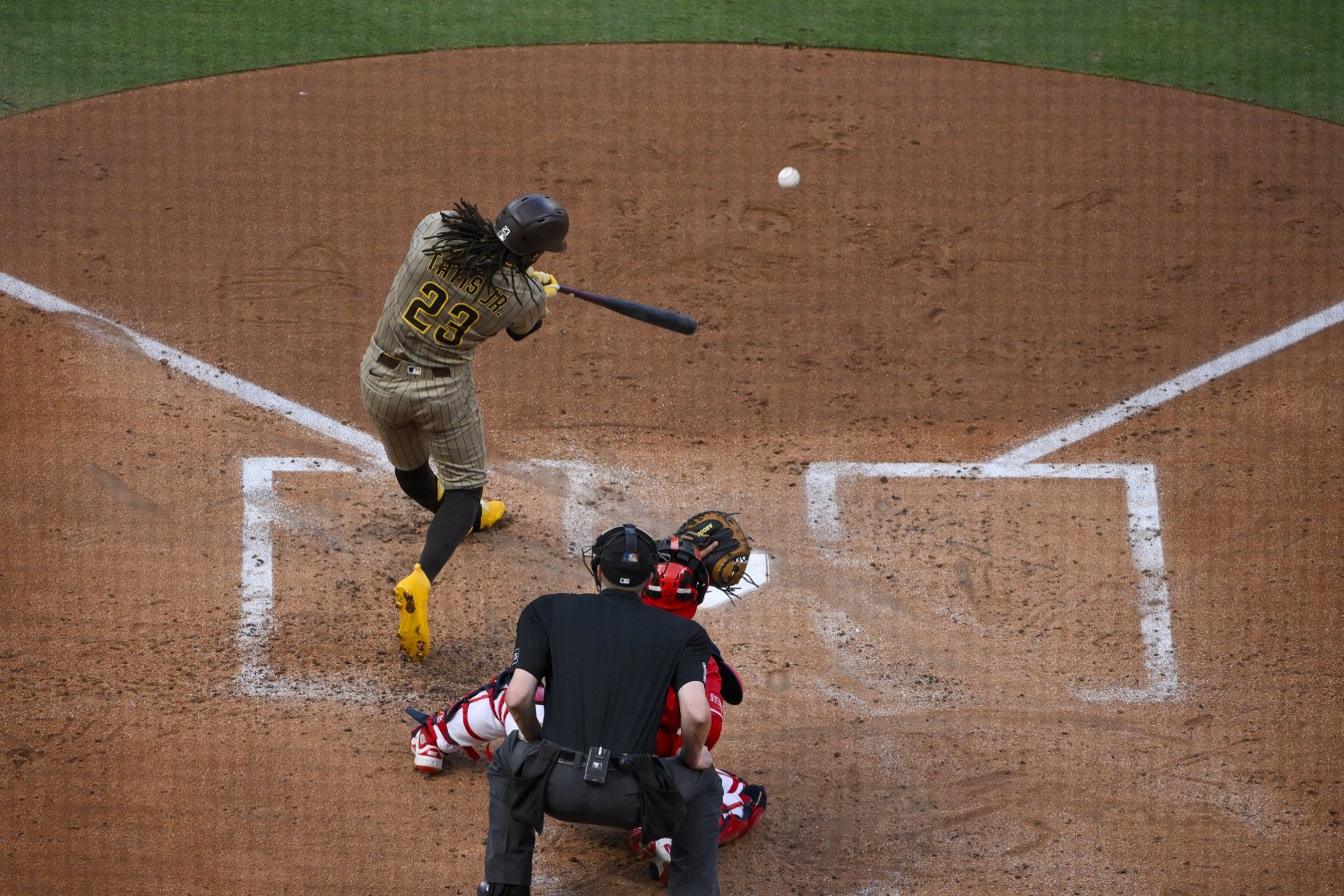 Fernando Tatis Jr. wasn't the worst hitter in Major League Baseball in May or June... even if it felt like it at times. Coming off a blazing start to the year — which featured a .345/.409/.602 line and 184 wRC+ in March & April — the San Diego Padres' right fielder completely fell off in the two subsequent months. Not in a he's-been-just-okay-which-isn't-great-for-a-scuffling-lineup context. Like, objectively terrible. Tatis Jr. carried a .206/.313/.323 line in May & June, with a 87 wRC+. Again, he wasn't the worst in baseball (his wRC+, for example, was just the 38th-worst among qualifying hitters), but it felt like nothing was going right at the plate, even if his defense helped him to maintain value in the WAR game. There were a number of factors that could've played into such a brutal stretch for one of the game's brightest stars. Mechanical changes abounded. Approach issues might have been present. We don't know if there were any outstanding health components either given multiple hit-by-pitches sustained within that stretch. But, in those instances when you're trying to muster anything at the plate, a .233 average on balls in play certainly isn't your friend. But, that's the mark against which Tatis fought over those two middle months of the season thus far. There wasn't any particular reason for it, either, at least beyond the speculative. If we wanted to take a fairly obvious route, though, there was a blend of batted ball issues. He put the ball on the ground far too much in May (53.7 GB%) and checked in at a sub-.200 BABIP (.196). It didn't completely stabilize in June, but when he cut that groundball rate by 13 percent, he was able to drive that number up to .266. Such batted ball trends are at least somewhat indicative of why we've seen Tatis Jr. take off once again in July. Want to see a visual that depicts something incredibly obvious? It's not particularly insightful to note that a player is able to provide more offensive value when he's experiencing some batted ball luck. In Tatis' case, though, it's extremely stark. He hasn't been able to work his through the BABIP monster this year; his success has been almost entirely tied to it. As such, just how he's managing to reclaim the "luck" in July is of particular interest. As of this writing, Tatis Jr's BABIP sits at .397 for the month of July. Everything else has come with it to the tune of a .309/.429/.481 line and a 155 wRC+. The power isn't quite there yet, but a .173 isolated power is at least encouraging following a .102 ISO in June. Of course, the answer here might be disappointing in its simplicity. Explanations include the idea that Tatis is simply hitting the ball harder and at a more appropriate angle. The groundball rate is back up a touch from June (roughly 45 percent), but where Tatis Jr. has thrived is in creating line drive contact rather than true elevation. His FB%, at 23.3 percent, is his lowest of the year. His LD%, however, is his highest of the year (31.7 percent). Not only is it his highest of the year, but it's nearly double any rate he's turned in to this point. That includes March & April. For Tatis, the appropriate observation seems to be that this hasn't been so much an adjustment against pitch types, but a zone emphasis. This is the zone from March to June: And here it is in July: From these visuals, it looks like Tatis is concentrating his zone a bit more toward the outer third of the plate. Middle-middle is always going to be an area of emphasis, but it appears he's graduated from expanding a bit more vertically to stretching the zone more horizontally. Most notable is in that outer third where his groundball contact is less severe. Given a setup more toward the back corner of the box (26.3" back, 29.3" off the plate) and one of the game's longer swings (7.3 feet), it's a part of the plate that plays well. Even more so when you consider an 11-degree attack angle that is a four-degree increase from May and two from June. The July angle is one that sits well within the window of elevating the baseball. So, not only are his batted ball trends settling back to something favorable, but his mechanics are driving it. Sure enough, at 7.4 percent, Tatis Jr is experiencing his highest barrel rate since the first month of the season (more than three percent higher than May). And you really don't need more than that. Fernando Tatis Jr. is emphasizing an area of the zone that's going to allow him to get the barrel on the baseball at a higher rate. That doesn't mean we should continue to expect a BABIP figure that is touching nearly .400. But, the changes made speak to something real. If Tatis can continue to generate this kind of contact, then May & June will quickly become a distant memory in what could be a really strong second half of the year.
 -
Two things can be true. In this case, the San Diego Padres are poised to be buyers ahead of this month's July 31 trade deadline. Recent rumors, however, have pointed to the idea that they could also be sellers. It's a difficult balance to strike, but when you have leadership as aggressive as A.J. Preller, it's not an unreasonable (or unrealistic) concept. The team has very obvious needs. They need a left fielder. They need a catcher. They need help on the bench. Perhaps the pitching staff could get a bump in the form of some additional depth. It's foolhardy to think a team can address all of their needs in this mid-season window, but it stands to reason that the team could make marginal improvement (at worse) in a majority of those areas considering some of the names available. However, there's also the matter of increasing chatter that the team could aim to move on from multiple contracts, largely courtesy of Dennis Lin's column at The Athletic. Dylan Cease is the name at the forefront of such discussion, as he's set to become a free agent after the season. His name has garnered more attention over the last 48 hours or so. Closer Robert Suárez has a player opt-out that could lead to him testing the market as well. Luis Arráez represents another impending free agent, with rumors swirling (as relayed by Lin in the above column) that contenders are also interested in Jake Cronenworth. Those are some absolutely massive names on this roster. Your purported staff ace, your closer, and the starting right side of your infield. Even if Preller were to get active in moving major league talent from the roster in order to even out the collective, it's unlikely all four find new homes in the next week. But what if they did? Unrealistic as it may be, there's an argument to be made that leaning heavily into the selling side of things makes a large degree of sense for San Diego. This is an organization without a lot of talent in the upper minors. MLB Pipeline ranked the Padres 25th in their pre-season farm system rankings, while FanGraphs struck an even more dour tone by putting them 28th. There isn't a pathway for the team to improve the roster organically before roughly 2028. Which is to say nothing of the team's continued payroll restraints. Even if certain players and their respective salaries were to walk after the year, it's unlikely that the organization is going to be in a spot where they will actually deploy such savings in order to seek significant outside additions. Instead, that'll likely be another tool utilized to pin down payroll. Those two factors have the ability to rapidly catapult the Padres toward a certain kind of purgatory. Sure, you have the stars on your roster locked down for the long-term. They'll keep you interesting. But, even the game's biggest names still need to be supplemented appropriately in order to drive success for a roster. The Padres simply do not have the tools in order to do that at present, to the point where leaning more on selling than buying could go beyond being arguable. It could be necessary. It wouldn't be a seamless process. It remains to be seen if a contender will be interested in Luis Arráez's hit tool. Perhaps the fact that he's not tied to a long-term commitment could drive some interest given his ability to hit his way on base. And I've already opined that Cronenworth represents the most unreasonable to move among those mentioned or possible. His contract isn't burdensome enough to justify removing that production from the bottom half of the lineup... which is probably why contenders are interested. Cease & Suárez, however, represent desirable players for virtually any and all prospective contenders. Cease has had an uneven season, but the stuff is still very much present. A contender isn't going to shy away from that skill set just because he's staring down a 3-10 record on the year. His Whiff% (34.3) is in the 94th percentile and his K% (30.0) is in the 89th. Suárez, his 100 MPH fastball, and league-leading save count are a no-brainer acquisition for virtually any club in playoff position. Any of the four have the ability to bring back multiple players of varying skill sets and abilities. Arráez might be more likely to bring back a post-hype prospect or fringe-type. Cronenworth, should they choose to move him, could yield more. Cease & Suárez, though, could be worth truly premium returns considering the vast need for pitching on both sides from virtually everywhere and the respective upside that each possesses. Why, though, would a contending team trade away such important pieces? There's a rationale here that the team could remain on a similar trajectory as they are at present without the likes of Cease or Suárez or even Arráez (Cronenworth's context remains just a little bit different). On the Cease front, the team has staved off an injury to Michael King and an extended absence from Yu Darvish in piecing together a reasonably-performing staff. It's been imperfect, but with Darvish now back in the fold, there's an argument to be made that the team could part Cease's uneven performance and continue to manage with the likes of Randy Vásquez, Stephen Kolek, and Ryan Bergert. It's a flimsy one, but it's an argument nonetheless, especially if you get back the value his upside indicates you could to improve the roster elsewhere. In Suárez's case, it's a little firmer of an argument. The Padres have an elite bullpen. It stands to reason that any of Jeremiah Estrada, Jason Adam, or Adrian Morejón could be due for an expanded role. We'll likely see such a scenario play out in 2026 anyway, as each of the trio remains under team control through at least next year. The positional side of things is a little more difficult to navigate. The Arráez of it all is as enigmatic as his overall performance. Despite continuing to rack up singles, he's provided little overall value by wRC+ (103) or on the defensive side. But, that hit tool and his history could be tantalizing for the right club that needs just a little bit more contact in their lineup. Cronenworth, again, is in a different situation given his contract and more varied production he brings into the fold. Again, the way in which the Padres could approach the deadline will be an extremely difficult needle to thread. Teams don't typically explore both sides of the strategy this time of year. But when you consider the context in which the Padres find themselves, the logic becomes increasingly clear. View full article
-
Can the Padres Justify Buying and Selling at the Trade Deadline?
Randy Holt posted an article in Padres
 Two things can be true. In this case, the San Diego Padres are poised to be buyers ahead of this month's July 31 trade deadline. Recent rumors, however, have pointed to the idea that they could also be sellers. It's a difficult balance to strike, but when you have leadership as aggressive as A.J. Preller, it's not an unreasonable (or unrealistic) concept. The team has very obvious needs. They need a left fielder. They need a catcher. They need help on the bench. Perhaps the pitching staff could get a bump in the form of some additional depth. It's foolhardy to think a team can address all of their needs in this mid-season window, but it stands to reason that the team could make marginal improvement (at worse) in a majority of those areas considering some of the names available. However, there's also the matter of increasing chatter that the team could aim to move on from multiple contracts, largely courtesy of Dennis Lin's column at The Athletic. Dylan Cease is the name at the forefront of such discussion, as he's set to become a free agent after the season. His name has garnered more attention over the last 48 hours or so. Closer Robert Suárez has a player opt-out that could lead to him testing the market as well. Luis Arráez represents another impending free agent, with rumors swirling (as relayed by Lin in the above column) that contenders are also interested in Jake Cronenworth. Those are some absolutely massive names on this roster. Your purported staff ace, your closer, and the starting right side of your infield. Even if Preller were to get active in moving major league talent from the roster in order to even out the collective, it's unlikely all four find new homes in the next week. But what if they did? Unrealistic as it may be, there's an argument to be made that leaning heavily into the selling side of things makes a large degree of sense for San Diego. This is an organization without a lot of talent in the upper minors. MLB Pipeline ranked the Padres 25th in their pre-season farm system rankings, while FanGraphs struck an even more dour tone by putting them 28th. There isn't a pathway for the team to improve the roster organically before roughly 2028. Which is to say nothing of the team's continued payroll restraints. Even if certain players and their respective salaries were to walk after the year, it's unlikely that the organization is going to be in a spot where they will actually deploy such savings in order to seek significant outside additions. Instead, that'll likely be another tool utilized to pin down payroll. Those two factors have the ability to rapidly catapult the Padres toward a certain kind of purgatory. Sure, you have the stars on your roster locked down for the long-term. They'll keep you interesting. But, even the game's biggest names still need to be supplemented appropriately in order to drive success for a roster. The Padres simply do not have the tools in order to do that at present, to the point where leaning more on selling than buying could go beyond being arguable. It could be necessary. It wouldn't be a seamless process. It remains to be seen if a contender will be interested in Luis Arráez's hit tool. Perhaps the fact that he's not tied to a long-term commitment could drive some interest given his ability to hit his way on base. And I've already opined that Cronenworth represents the most unreasonable to move among those mentioned or possible. His contract isn't burdensome enough to justify removing that production from the bottom half of the lineup... which is probably why contenders are interested. Cease & Suárez, however, represent desirable players for virtually any and all prospective contenders. Cease has had an uneven season, but the stuff is still very much present. A contender isn't going to shy away from that skill set just because he's staring down a 3-10 record on the year. His Whiff% (34.3) is in the 94th percentile and his K% (30.0) is in the 89th. Suárez, his 100 MPH fastball, and league-leading save count are a no-brainer acquisition for virtually any club in playoff position. Any of the four have the ability to bring back multiple players of varying skill sets and abilities. Arráez might be more likely to bring back a post-hype prospect or fringe-type. Cronenworth, should they choose to move him, could yield more. Cease & Suárez, though, could be worth truly premium returns considering the vast need for pitching on both sides from virtually everywhere and the respective upside that each possesses. Why, though, would a contending team trade away such important pieces? There's a rationale here that the team could remain on a similar trajectory as they are at present without the likes of Cease or Suárez or even Arráez (Cronenworth's context remains just a little bit different). On the Cease front, the team has staved off an injury to Michael King and an extended absence from Yu Darvish in piecing together a reasonably-performing staff. It's been imperfect, but with Darvish now back in the fold, there's an argument to be made that the team could part Cease's uneven performance and continue to manage with the likes of Randy Vásquez, Stephen Kolek, and Ryan Bergert. It's a flimsy one, but it's an argument nonetheless, especially if you get back the value his upside indicates you could to improve the roster elsewhere. In Suárez's case, it's a little firmer of an argument. The Padres have an elite bullpen. It stands to reason that any of Jeremiah Estrada, Jason Adam, or Adrian Morejón could be due for an expanded role. We'll likely see such a scenario play out in 2026 anyway, as each of the trio remains under team control through at least next year. The positional side of things is a little more difficult to navigate. The Arráez of it all is as enigmatic as his overall performance. Despite continuing to rack up singles, he's provided little overall value by wRC+ (103) or on the defensive side. But, that hit tool and his history could be tantalizing for the right club that needs just a little bit more contact in their lineup. Cronenworth, again, is in a different situation given his contract and more varied production he brings into the fold. Again, the way in which the Padres could approach the deadline will be an extremely difficult needle to thread. Teams don't typically explore both sides of the strategy this time of year. But when you consider the context in which the Padres find themselves, the logic becomes increasingly clear.
