


Randy Holt
-
Posts
486 -
Joined
-
Last visited
-
Days Won
6
Content Type
Profiles
San Diego Padres Videos
2026 San Diego Padres Top Prospects Ranking
San Diego Padres Free Agent & Trade Rumors, Notes, & Tidbits
Guides & Resources
2025 San Diego Padres Draft Pick Tracker
News
2026 San Diego Padres Draft Tracker: Picks & Bonuses
Forums
Blogs
Events
Store
Downloads
Gallery
Everything posted by Randy Holt
-
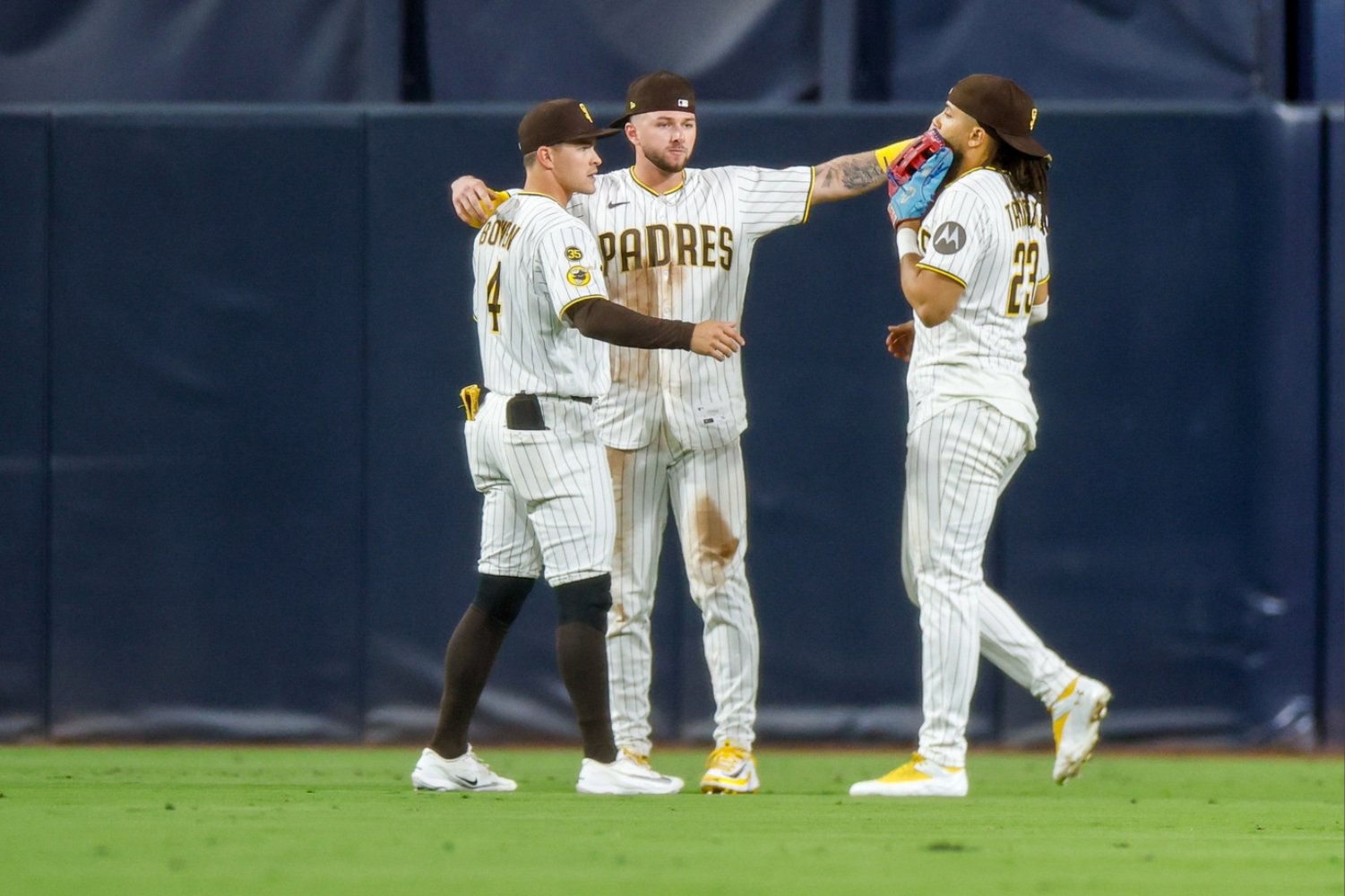 Throughout the 2026 season, there have been two stable truths about the San Diego Padres. The first is that they boast one of the league's best corps of relief pitchers. The other is that they are one of the most improved defensive teams from a year-to-year standpoint. We've given a lot of love to the former all year long; now, it's time to laud the latter. Last year's Padres were a below average defensive team, a label to which which no position group was especially immune. Their Fielding Run Value as a collective was -9, which had them 19th in Major League Baseball. Few regulars were able to avoid to such downtrodden defensive performance; each of Jake Cronenworth (-2 FRV), Gavin Sheets (-3), Manny Machado (-4), and Luis Arráez (-11) played out the full season with the team and contributed to the pinned-down metric. Even using Outs Above Average bumps only Cronenworth up to merely average status (0) and leaves the rest well below the threshold. On the other side of the coin, Fernando Tatis Jr. (9), Xander Bogaerts (6), and Jackson Merrill (5) excelled in the FRV game, contributing a range element that the defense sorely lacked. In the case of Tatis & Merrill, their arms each played heavily into their quality FRV figures, while Bogaerts was left slightly behind in that regard. Regardless, this was a team that was in need of defensive growth ahead of 2026, especially up against the shambles of a rotation that was held together by various forms of duct tape and non-guaranteed contracts. While that pitching staff hasn't entirely held up its end of the bargain throughout the season, the defense certainly has. In fact, the Padres are one of only three teams in baseball to turn in above-average glove work in 2026 after falling below the average threshold (by FRV) in 2025. The difference, however, lies in how significant the difference has been. While the Tampa Bay Rays & Chicago White Sox have each taken steps to dramatically improve their own defensive situations (Tampa Bay was at -39 last year & the Sox were at -38), the Padres are the only one of the trio to go from below-average defensively to one of the game's best. The Rays are at +1 FRV in 2026 while the White Sox are at +5. They've each certainly got their act together, but in a way that merely scratches above the league mean. San Diego, meanwhile, has ascended up to the status of a top-five defensive club at +20 FRV for the season thus far. There are myriad reasons for that. A full season of Freddy Fermin behind the plate; Ty France stabilizing the infield as the team's regular first baseman; Manny Machado has clawed back to his prior status as an above-average defender. It's the outfield defense, though, that is really carrying the Padres to these new defensive heights. His short stint at second base earlier this year aside, Fernando Tatis Jr. continues to serve as one of the premier players on the outfield grass. A smaller sample of innings has him at only +2 FRV for the season, but he's also doing things like this: At the same time, Jackson Merrill has been extraordinary in working adjacent to Tatis. Despite his offensive struggles for much of the year, Merrill's defense has been as good as ever. His +9 FRV is the fifth-best figure for outfielders, with nearly half of that being attributed to his arm. No other outfielder has garnered more FRV love for throwing the baseball than Jackson Merrill has in 2026. The combination of those two alone has helped the outfield to rank eighth in FRV for the league's outfield groups. And that's without left field being at all sorted. Nine different players have assumed the left field post in 2026, largely due to the fact that Ramón Laureano hasn't appeared in a game since early June. The issue there is that it's been mostly a collection of utility players whose skill sets tend to play better on the infield. That's led to a much more pedestrian -1 FRV for the position, with Laureano the only one of the group to post a mark deemed above average. Even if some of those utility players (namely, Luis Rengifo and Gavin Sheets) have managed to occasionally compensate for defensive shortcomings with their bats, left field does remain the shortcoming of an otherwise top-tier group. They're certainly not doing it alone given the improvement elsewhere, but it's become clear that between Merrill & Tatis, the Padres working with one of the best defensive outfields in the game. It's been a large part of what has catapulted them up the league rankings in their defensive performance, and the value of that in the midst of a wild-card chase with a still-in-question rotation cannot be overstated.
 -
Coming into the 2026 season, there was reason to believe that David Morgan was going to be a key part of an upper-tier San Diego Padres bullpen. He was fresh off a 2025 campaign in which he posted a 2.66 ERA and a strikeout rate that rested a shade over 25 percent. His start to the year had such a trajectory looking very much in play, too (however short-lived it might have been). Through April 12, Morgan made seven appearances for the Padres that included 10.1 innings of work. In that sample, he didn't allow an earned run, got the ball on the ground an obscene 68.2 percent of the time, and had the bullpen's lowest hard-hit rate against at 16.7 percent. There were some warning signs, though, in the form of a strikeout rate that sat over 16 percent and a strand rate that read over 92 percent. By April 17, those problems had caught up with him. Between April 17-28, Morgan made four appearances. He allowed a pair of earned runs in each of the first two, four in the third, and another in the fourth. From there, it was off to El Paso for a month before he came back up for seven appearances in June, at which point knee inflammation landed him on the shelf. Upon his activation last week, the team sent him back to El Paso. How long he could reside in Texas, however, is certainly a matter worth considering. The following is Morgan's percentile distribution from his 15.2 innings in Triple-A this season: To no one's surprise, Morgan has been quite good throughout his time at Triple-A. While he's had to work around some quality contact allowed, the right-hander otherwise turned in very strong work, with a distribution that looks quite similar to what he's posted in roughly 22 big-league innings in 2026: Morgan may not have enough innings to qualify for the actual percentiles, but the visual here is clear enough to indicate that he did just about everything well between his two stints at the top level this season. The groundball rate is a particularly enticing element of his game, alongside the ability to generate a fair bit of swing-and-miss. Even the walk rate could be dismissed rather easily given that 10 of his 13 total walks came in his first nine of 18 appearances thus far, and he had only walked two total over his seven appearances before heading to the injured list. These two images make it clear that his ERA at each level—5.74 in Triple-A & 4.50 with the Padres—are a byproduct of bad luck (a .411 BABIP between the two levels) rather than any fundamental flaw. The issue, then, is that there isn't necessarily room for Morgan. Which leads to a somewhat natural question of: should they make room for Morgan? It's not so much that the team needs David Morgan in their high-leverage mix. They've got Mason Miller at the end of games and Adrian Morejon directly in front of him. Each of Bradgley Rodríguez, Wandy Peralta, and Jeremiah Estrada have handled the late innings well, too. Yuki Matsui remains in the relief mix, with Jason Adam's return also on the horizon. That's a lot of mouths to feed for innings. What's important to consider though is the early strain that the team's deficiency in the rotation put on the bullpen. Miller is less than 14 innings shy of his career-high for relief innings at the top level and 11 games behind his personal record for total appearances. Morejon is roughly just eight frames shy despite 19 fewer games than the season in which he set his innings mark. Rodríguez has already blown away his total across his 55 innings of work. Estrada & Adam have had injury issues, while the general preference is to keep the likes of Matsui & Peralta away from leverage. The re-addition of Morgan to the mix could introduce an arm with upside that helps to take some of the strain off of the relief corps (alongside a rotation that has begun to stabilize since the trade deadline). Of course, then you get into the question of how one makes Morgan fit into the group considering the current roster construction. While the Padres have finally rounded out a starting five without the need for a "chaos" plan, Walker Buehler & Randy Vásquez are still likely only giving you five or six innings in a given start (at most). Does that type of situation make someone like Griffin Canning or Kyle Hart more of a necessity than they might otherwise be considered? And then you get into the imminent return of Joe Musgrove, which was already set to complicate the roster picture by pushing (likely) one of Buehler or Vásquez into at least part-time relief. It's possible that such a situation makes the (re)addition of Morgan a bit more difficult. He's not necessarily an arm that helps you in the volume department, which has been a key role for the Padres this year. Perhaps Musgrove's arrival could actually help that case, with one of the current starters headed to relief as a much more stable presence than either of Canning or Hart, leading to both finding their way out upon the former's return. It's also possible that the team waits until September and the expansion of rosters. Regardless of the logistics required or how the team ultimately decides to go about it, it's clear that there is a benefit to David Morgan being a part of this group in as expedient a fashion as possible. Despite the early blip of bad luck that sunk his numbers a bit and the injury that put him out of the picture entirely, he can work in the middle innings or in leverage with that combination of decent swing-and-miss stuff and upper-tier penchant for groundballs. Given all that, we know we'll see Morgan soon. It's just a question of how and when. View full article
-
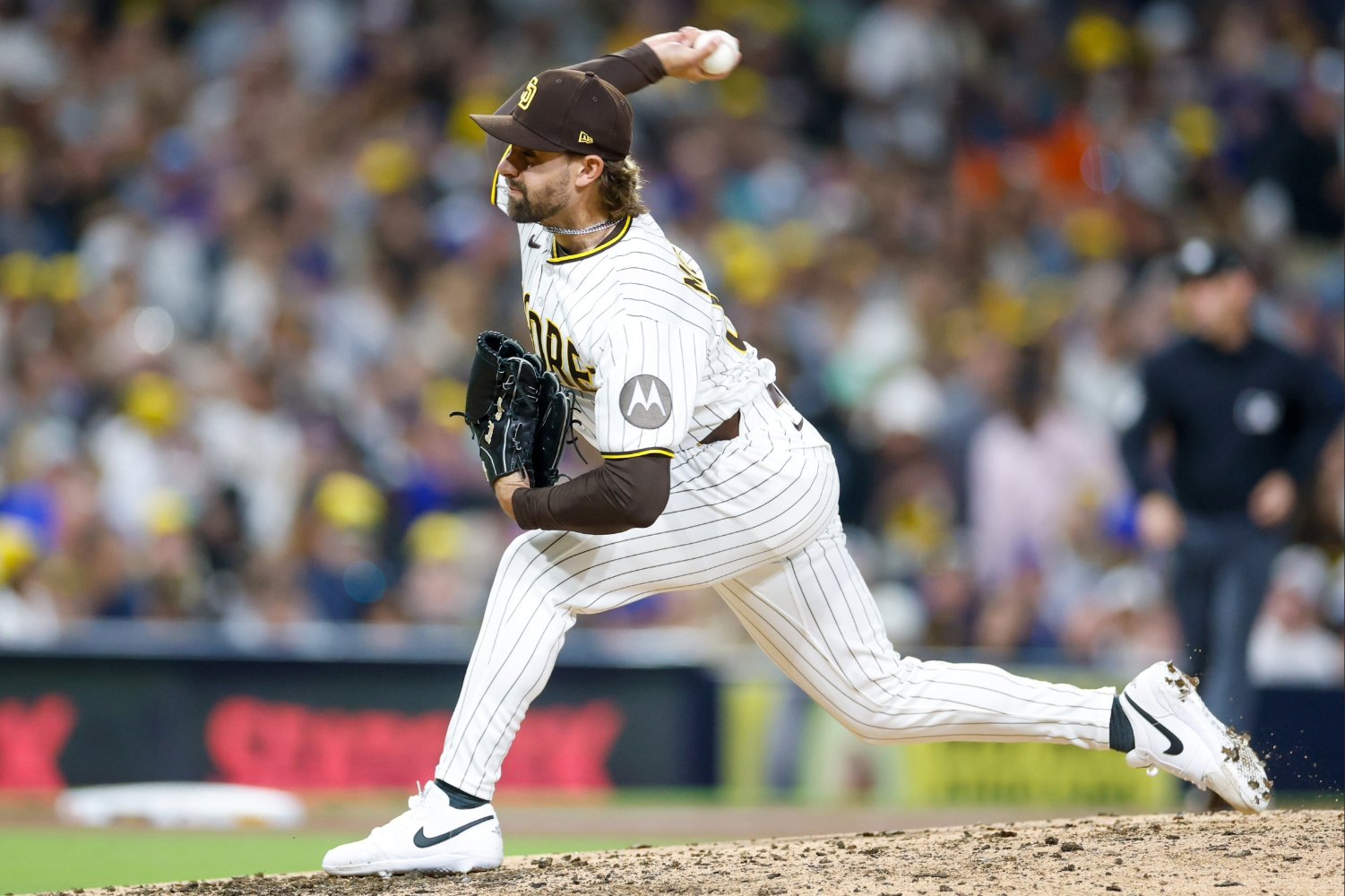 Coming into the 2026 season, there was reason to believe that David Morgan was going to be a key part of an upper-tier San Diego Padres bullpen. He was fresh off a 2025 campaign in which he posted a 2.66 ERA and a strikeout rate that rested a shade over 25 percent. His start to the year had such a trajectory looking very much in play, too (however short-lived it might have been). Through April 12, Morgan made seven appearances for the Padres that included 10.1 innings of work. In that sample, he didn't allow an earned run, got the ball on the ground an obscene 68.2 percent of the time, and had the bullpen's lowest hard-hit rate against at 16.7 percent. There were some warning signs, though, in the form of a strikeout rate that sat over 16 percent and a strand rate that read over 92 percent. By April 17, those problems had caught up with him. Between April 17-28, Morgan made four appearances. He allowed a pair of earned runs in each of the first two, four in the third, and another in the fourth. From there, it was off to El Paso for a month before he came back up for seven appearances in June, at which point knee inflammation landed him on the shelf. Upon his activation last week, the team sent him back to El Paso. How long he could reside in Texas, however, is certainly a matter worth considering. The following is Morgan's percentile distribution from his 15.2 innings in Triple-A this season: To no one's surprise, Morgan has been quite good throughout his time at Triple-A. While he's had to work around some quality contact allowed, the right-hander otherwise turned in very strong work, with a distribution that looks quite similar to what he's posted in roughly 22 big-league innings in 2026: Morgan may not have enough innings to qualify for the actual percentiles, but the visual here is clear enough to indicate that he did just about everything well between his two stints at the top level this season. The groundball rate is a particularly enticing element of his game, alongside the ability to generate a fair bit of swing-and-miss. Even the walk rate could be dismissed rather easily given that 10 of his 13 total walks came in his first nine of 18 appearances thus far, and he had only walked two total over his seven appearances before heading to the injured list. These two images make it clear that his ERA at each level—5.74 in Triple-A & 4.50 with the Padres—are a byproduct of bad luck (a .411 BABIP between the two levels) rather than any fundamental flaw. The issue, then, is that there isn't necessarily room for Morgan. Which leads to a somewhat natural question of: should they make room for Morgan? It's not so much that the team needs David Morgan in their high-leverage mix. They've got Mason Miller at the end of games and Adrian Morejon directly in front of him. Each of Bradgley Rodríguez, Wandy Peralta, and Jeremiah Estrada have handled the late innings well, too. Yuki Matsui remains in the relief mix, with Jason Adam's return also on the horizon. That's a lot of mouths to feed for innings. What's important to consider though is the early strain that the team's deficiency in the rotation put on the bullpen. Miller is less than 14 innings shy of his career-high for relief innings at the top level and 11 games behind his personal record for total appearances. Morejon is roughly just eight frames shy despite 19 fewer games than the season in which he set his innings mark. Rodríguez has already blown away his total across his 55 innings of work. Estrada & Adam have had injury issues, while the general preference is to keep the likes of Matsui & Peralta away from leverage. The re-addition of Morgan to the mix could introduce an arm with upside that helps to take some of the strain off of the relief corps (alongside a rotation that has begun to stabilize since the trade deadline). Of course, then you get into the question of how one makes Morgan fit into the group considering the current roster construction. While the Padres have finally rounded out a starting five without the need for a "chaos" plan, Walker Buehler & Randy Vásquez are still likely only giving you five or six innings in a given start (at most). Does that type of situation make someone like Griffin Canning or Kyle Hart more of a necessity than they might otherwise be considered? And then you get into the imminent return of Joe Musgrove, which was already set to complicate the roster picture by pushing (likely) one of Buehler or Vásquez into at least part-time relief. It's possible that such a situation makes the (re)addition of Morgan a bit more difficult. He's not necessarily an arm that helps you in the volume department, which has been a key role for the Padres this year. Perhaps Musgrove's arrival could actually help that case, with one of the current starters headed to relief as a much more stable presence than either of Canning or Hart, leading to both finding their way out upon the former's return. It's also possible that the team waits until September and the expansion of rosters. Regardless of the logistics required or how the team ultimately decides to go about it, it's clear that there is a benefit to David Morgan being a part of this group in as expedient a fashion as possible. Despite the early blip of bad luck that sunk his numbers a bit and the injury that put him out of the picture entirely, he can work in the middle innings or in leverage with that combination of decent swing-and-miss stuff and upper-tier penchant for groundballs. Given all that, we know we'll see Morgan soon. It's just a question of how and when.
 -
That catching prospect Ethan Salas escaped the trade deadline still a member of the San Diego Padres organization served as a mild surprise. Once it became evident that the team would be buyers, there wasn't really an existent threshold between a pathway to improving the current roster and A.J. Preller's penchant for dealing away prospects in pursuit of a win-now mentality. Fortunately for the Padres, Salas never really appeared to be in danger of moving as the Padres worked in tiers other than the very top of the market in order to improve their rotation. Which means now the conversation around Salas can transition to his future in San Diego. Of course, the immediate question in such a conversation becomes just how quickly that future can come to fruition. Salas is still only 20 years old (and has been for just a couple of months), but carries the weight of the entire farm system on his back. He rose through the minor-league ranks rapidly between 2023 and 2025, with injuries slowing him down from what could have been a Triple-A appearance as a 19-year-old last season. Nevertheless, he progressed to El Paso at the end of July of this year and now stands on the precipice of a major-league appearance. The sample with the Chihuahuas remains minuscule (11 games, 52 plate appearances), but after earning his promotion, Salas has done nothing but rake since his promotion. It's not even just that the numbers have been good (Salas has slashed .326/.404/.605 with a .279 ISO, good for a 133 wRC+); it's that the underlying trends look incredible. Salas is showing an advanced approach even as a youngster in Triple-A. He's swinging a lot, but he's not chasing. That's allowed him to maintain a high rate of contact (much of which has been quality) and a 14.0 percent walk rate that holds up well against a strong 16.3 percent strikeout rate. Considering the lack of questions about his defensive acumen (again, even given the age), it's only natural to wonder if a call-up upon roster expansion could be imminent. Such a question might be absurd for a contending team in the midst of a playoff chase. But starting catcher Freddy Fermin has struggled mightily (.197/.275/.320, 69 wRC+) at the plate, and Luis Campusano, while improved defensively, profiles more as a backup with the ability to DH than as someone you're going to entrench in the starting gig over long stretches of time. The former issue has been at least temporarily solved. Fermin hit .292 in July and is well over .300 through our small sample in August. He's also hitting the ball hard at his highest rate (37.5 percent) since April. So, there's some steady improvement with the bat there, in addition to the fact that his Fielding Run Value ranks sixth among qualifying catchers. That's not exactly a trend you want to remove from regular work, and the Padres aren't going to be inclined to have Salas sit on the bench behind him when everyday reps will surely benefit him more in the long run. However, it's not as if Fermin is a surefire option for the long haul. While he's excellent with the glove in his hand, his bat has been more of the streaky variety, especially since his arrival in San Diego last season. It's entirely possible that the team could give Salas a cup of coffee upon the expansion of rosters in September just to get him some exposure to the top level. More realistically, though, we're looking at him as legitimately part of the catching mix come next spring. That alone is a really exciting possibility. Franchise catchers are a rarity in the game, and Salas has spent a healthy 2026 looking, once again, like he has the chops to become just that. The stall in his development because of last year's health issues appears to be behind him and, regardless of what the timeline could look like, it doesn't seem like it'll be too much longer before an opportunity presents itself. View full article
-
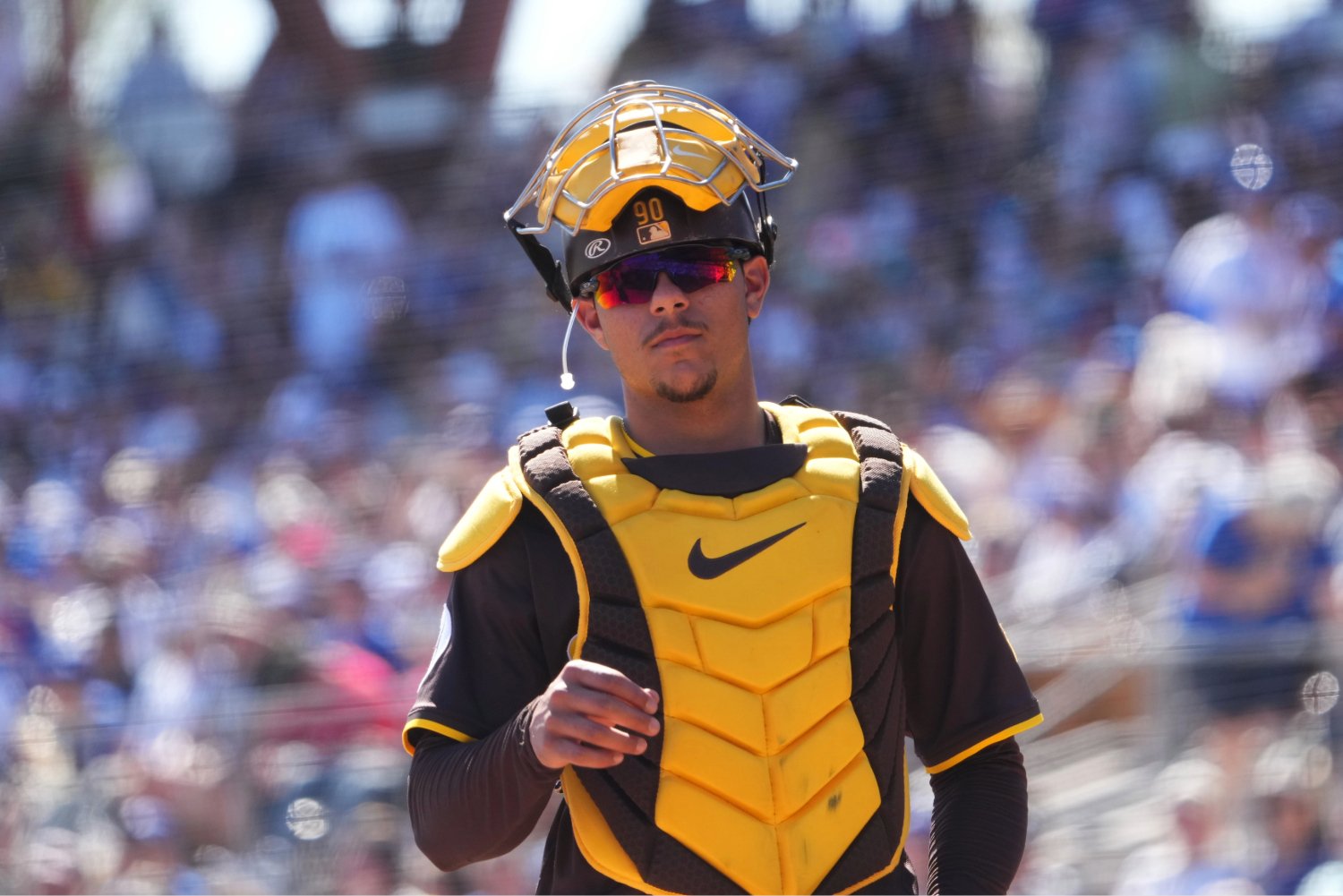 That catching prospect Ethan Salas escaped the trade deadline still a member of the San Diego Padres organization served as a mild surprise. Once it became evident that the team would be buyers, there wasn't really an existent threshold between a pathway to improving the current roster and A.J. Preller's penchant for dealing away prospects in pursuit of a win-now mentality. Fortunately for the Padres, Salas never really appeared to be in danger of moving as the Padres worked in tiers other than the very top of the market in order to improve their rotation. Which means now the conversation around Salas can transition to his future in San Diego. Of course, the immediate question in such a conversation becomes just how quickly that future can come to fruition. Salas is still only 20 years old (and has been for just a couple of months), but carries the weight of the entire farm system on his back. He rose through the minor-league ranks rapidly between 2023 and 2025, with injuries slowing him down from what could have been a Triple-A appearance as a 19-year-old last season. Nevertheless, he progressed to El Paso at the end of July of this year and now stands on the precipice of a major-league appearance. The sample with the Chihuahuas remains minuscule (11 games, 52 plate appearances), but after earning his promotion, Salas has done nothing but rake since his promotion. It's not even just that the numbers have been good (Salas has slashed .326/.404/.605 with a .279 ISO, good for a 133 wRC+); it's that the underlying trends look incredible. Salas is showing an advanced approach even as a youngster in Triple-A. He's swinging a lot, but he's not chasing. That's allowed him to maintain a high rate of contact (much of which has been quality) and a 14.0 percent walk rate that holds up well against a strong 16.3 percent strikeout rate. Considering the lack of questions about his defensive acumen (again, even given the age), it's only natural to wonder if a call-up upon roster expansion could be imminent. Such a question might be absurd for a contending team in the midst of a playoff chase. But starting catcher Freddy Fermin has struggled mightily (.197/.275/.320, 69 wRC+) at the plate, and Luis Campusano, while improved defensively, profiles more as a backup with the ability to DH than as someone you're going to entrench in the starting gig over long stretches of time. The former issue has been at least temporarily solved. Fermin hit .292 in July and is well over .300 through our small sample in August. He's also hitting the ball hard at his highest rate (37.5 percent) since April. So, there's some steady improvement with the bat there, in addition to the fact that his Fielding Run Value ranks sixth among qualifying catchers. That's not exactly a trend you want to remove from regular work, and the Padres aren't going to be inclined to have Salas sit on the bench behind him when everyday reps will surely benefit him more in the long run. However, it's not as if Fermin is a surefire option for the long haul. While he's excellent with the glove in his hand, his bat has been more of the streaky variety, especially since his arrival in San Diego last season. It's entirely possible that the team could give Salas a cup of coffee upon the expansion of rosters in September just to get him some exposure to the top level. More realistically, though, we're looking at him as legitimately part of the catching mix come next spring. That alone is a really exciting possibility. Franchise catchers are a rarity in the game, and Salas has spent a healthy 2026 looking, once again, like he has the chops to become just that. The stall in his development because of last year's health issues appears to be behind him and, regardless of what the timeline could look like, it doesn't seem like it'll be too much longer before an opportunity presents itself.
 -
When the San Diego Padres acquired starting pitcher Casey Mize from the Detroit Tigers at the trade deadline, he was part of a pair of moves (in conjunction with Robbie Ray) to stabilize a very fragile rotation for a prospective playoff team. In his first start against the Arizona Diamondbacks back on August 5, though, he was anything but stable. In that first start for the Padres, Mize worked through just 3.1 innings. He allowed nine hits, walked three hitters, and struck out only one on his way to allowing eight runs in a blowout loss against a direct Wild Card competitor. While only one swing found its way over the fence, the Snakes' overall quality of contact provided a big issue for Mize in that debut appearance. It wasn't just that Mize allowed the nine hits. It was what the Diamondbacks' bats were able to create: The Diamondbacks were very active in the zone against Mize, creating their nine hits on 18 batted ball events. The problem lies in the fact that 11 different hitters made hard contact versus Mize, with each of his three most-frequently-used pitches—the four-seam, slider, and splitter—seeing average exit velocities over 90 miles-per-hour. Luckily for both Mize and the Padres, his second start on Monday night went quite a bit better. Against the Milwaukee Brewers in the series opener, Mize worked through six innings. His strikeout number jumped up to six while he scattered five hits and walked only a pair against the team with baseball's best record. While there wasn't a big shift in terms of the usage, the results were far better: Mize's fastball got touched up a decent amount, but he was able to use the slider and splitter more effectively the second time out. It helped that he was up against a team that was a touch less aggressive inside the zone, but his whiff rate graduated from just five percent against Arizona to 17 percent versus Milwaukee. Fewer swings with more effect certainly bodes well for a pitcher trying to bounce back. What was particularly notable was how little changed with the stuff itself. It all boiled down to improved command. Against the Diamondbacks, Mize threw 55 percent of his first pitches for strikes. That number was up to 64 percent in start No. 2. When you're a pitcher working ahead, the entire approach shifts. Mize being able to do so this time out is central to why he was able to find more success. If we want to take it a step further, that first start with the Padres was Mize's first in 10 days. The Tigers had scratched him from a start prior to the trade deadline, leaving a long layoff between his last outing with them against Kansas City (a start which looked eerily similar to Monday's) and that start against Arizona. It doesn't have to be more complicated than that. This most recent iteration of Casey Mize is far closer to the version we should expect to see down the stretch than the one that showed up for his Friars debut last week. View full article
-
Casey Mize Assuaged Padres' Concerns In Impressive Bounce-Back Start
Randy Holt posted an article in Padres
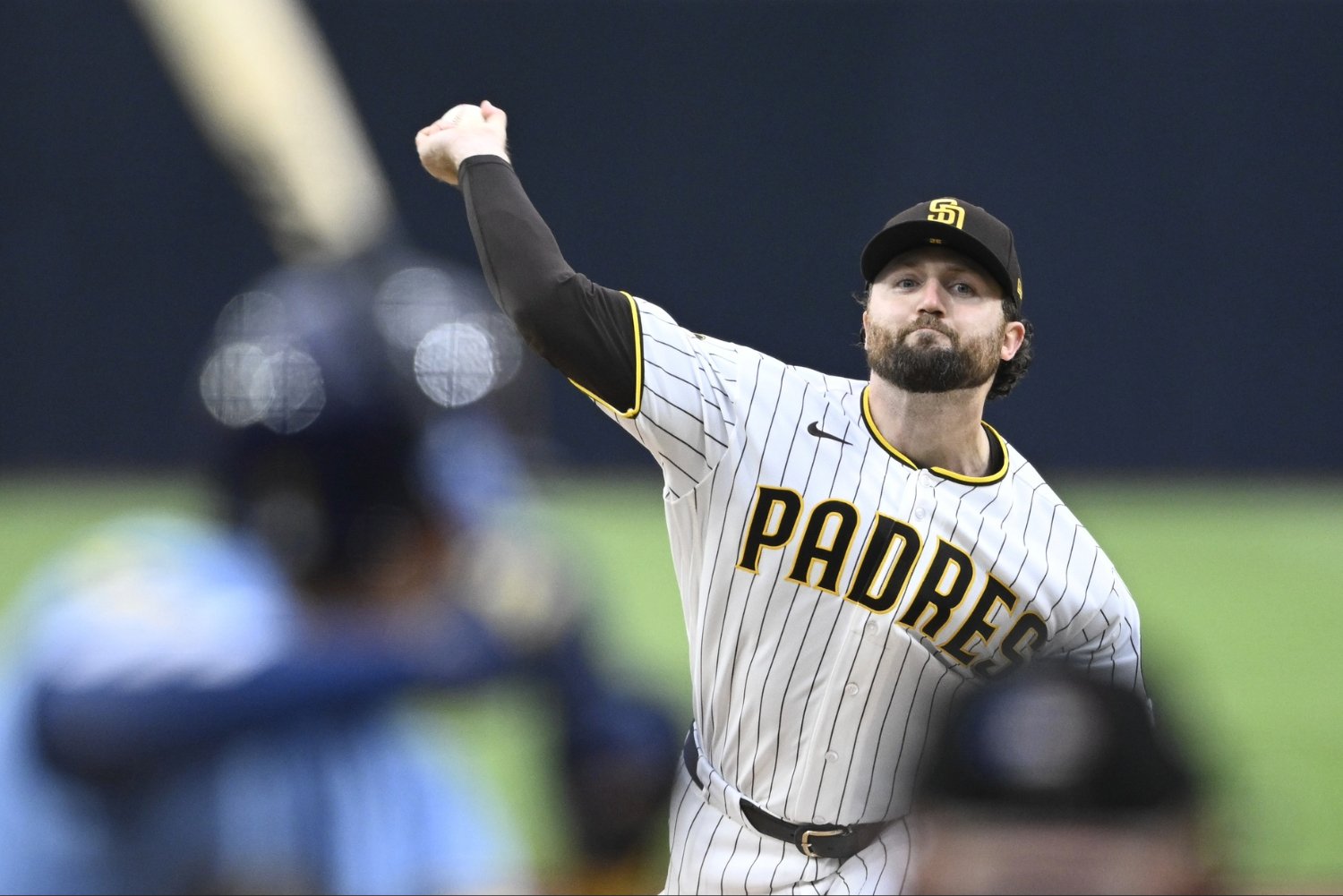 When the San Diego Padres acquired starting pitcher Casey Mize from the Detroit Tigers at the trade deadline, he was part of a pair of moves (in conjunction with Robbie Ray) to stabilize a very fragile rotation for a prospective playoff team. In his first start against the Arizona Diamondbacks back on August 5, though, he was anything but stable. In that first start for the Padres, Mize worked through just 3.1 innings. He allowed nine hits, walked three hitters, and struck out only one on his way to allowing eight runs in a blowout loss against a direct Wild Card competitor. While only one swing found its way over the fence, the Snakes' overall quality of contact provided a big issue for Mize in that debut appearance. It wasn't just that Mize allowed the nine hits. It was what the Diamondbacks' bats were able to create: The Diamondbacks were very active in the zone against Mize, creating their nine hits on 18 batted ball events. The problem lies in the fact that 11 different hitters made hard contact versus Mize, with each of his three most-frequently-used pitches—the four-seam, slider, and splitter—seeing average exit velocities over 90 miles-per-hour. Luckily for both Mize and the Padres, his second start on Monday night went quite a bit better. Against the Milwaukee Brewers in the series opener, Mize worked through six innings. His strikeout number jumped up to six while he scattered five hits and walked only a pair against the team with baseball's best record. While there wasn't a big shift in terms of the usage, the results were far better: Mize's fastball got touched up a decent amount, but he was able to use the slider and splitter more effectively the second time out. It helped that he was up against a team that was a touch less aggressive inside the zone, but his whiff rate graduated from just five percent against Arizona to 17 percent versus Milwaukee. Fewer swings with more effect certainly bodes well for a pitcher trying to bounce back. What was particularly notable was how little changed with the stuff itself. It all boiled down to improved command. Against the Diamondbacks, Mize threw 55 percent of his first pitches for strikes. That number was up to 64 percent in start No. 2. When you're a pitcher working ahead, the entire approach shifts. Mize being able to do so this time out is central to why he was able to find more success. If we want to take it a step further, that first start with the Padres was Mize's first in 10 days. The Tigers had scratched him from a start prior to the trade deadline, leaving a long layoff between his last outing with them against Kansas City (a start which looked eerily similar to Monday's) and that start against Arizona. It doesn't have to be more complicated than that. This most recent iteration of Casey Mize is far closer to the version we should expect to see down the stretch than the one that showed up for his Friars debut last week.
 -
All of the talk around the San Diego Padres at the trade deadline related to starting pitching, and rightfully so considering the staff's patchwork nature. They were able to address that effectively with the additions of Robbie Ray & Casey Mize, but such an effort also neglected a secondary need in the form of a supplemental bat. It's gone with less notice as the year has worn on and several hitters have rounded into form, but the Padres have long featured a similar approach in their positional depth as they have from a starting pitching standpoint. They attempted to fill out their bench with volume (via minor-league deals and one-year contracts) above all. In some cases that's worked (Luis Rengifo) and in others it very much hasn't (Nick Castellanos). One spot in particular where the need for depth has manifested has been in left field. An injury to Ramón Laureano left something of a vacancy there, with Craig Stammen rotating a cast of characters that has included eight different players throughout 2026. Most recently, that's been a heavy dose of Gavin Sheets on the outfield grass, which isn't necessarily what you want with a team that has focused on improving defensively this season. Enter Austin Hays. He was a castoff of the Chicago White Sox after his one-year deal was marred by injury and the ascent of a number of youngsters (and the addition of Randal Grichuk) in an upstart season, which led to his designation for assignment earlier this month. He was subsequently released after logging just a dozen games of work, a shade over 45 plate appearances, and a bunch of strikeouts. The Padres were happy to add him quickly given their present need for some supplementary help in the outfield. And then, it took just one swing for Hays to announce himself in San Diego: It's not so much that we should expect Hays to do that with regularity (though he did homer 15 times for Cincinnati just last season). It's what he brings to the Padres in a specific area of need. Against left-handed pitching, the Padres have been one of the worst offensive teams in the league. They've slashed only .240/.307/.365 with a bottom-of-the-league .125 ISO and 88 wRC+ as a collective. While that does take into account the full season and we've seen the offense improve over the last month and change, the addition of a hitter who can handle lefties was considered a secondary need that they were unable to address directly at the trade deadline. Hays, however, can be just that. For his career, Hays has slashed .283/.340/.481 against southpaws, with a 125 wRC+ that far exceeds his mark of 96 against right-handed pitchers. His .198 career ISO against them is more than 30 points higher than his work against righties. Toss in the fact that Hays has generally lingered around the average threshold defensively (if not just a shade below it) in left field, and the Padres were able to reign in precisely the kind of player that they likely needed ahead of the deadline. Only without the additional prospect cost. Let's not pretend that the Padres just picked up an offensive savior. That responsibility lies in bats like Fernando Tatis Jr., Jackson Merrill, and Manny Machado. For his part, though, Hays adds a dynamic that fortifies this lineup against lefties in a way they previously lacked. There's tremendous value in that, and, ideally, Sunday's home run is the first of a few we see from him down the stretch as they continue their pursuit of a National League Wild Card spot. View full article
-
Austin Hays Covers A Weakness Padres Failed To Address At Trade Deadline
Randy Holt posted an article in Padres
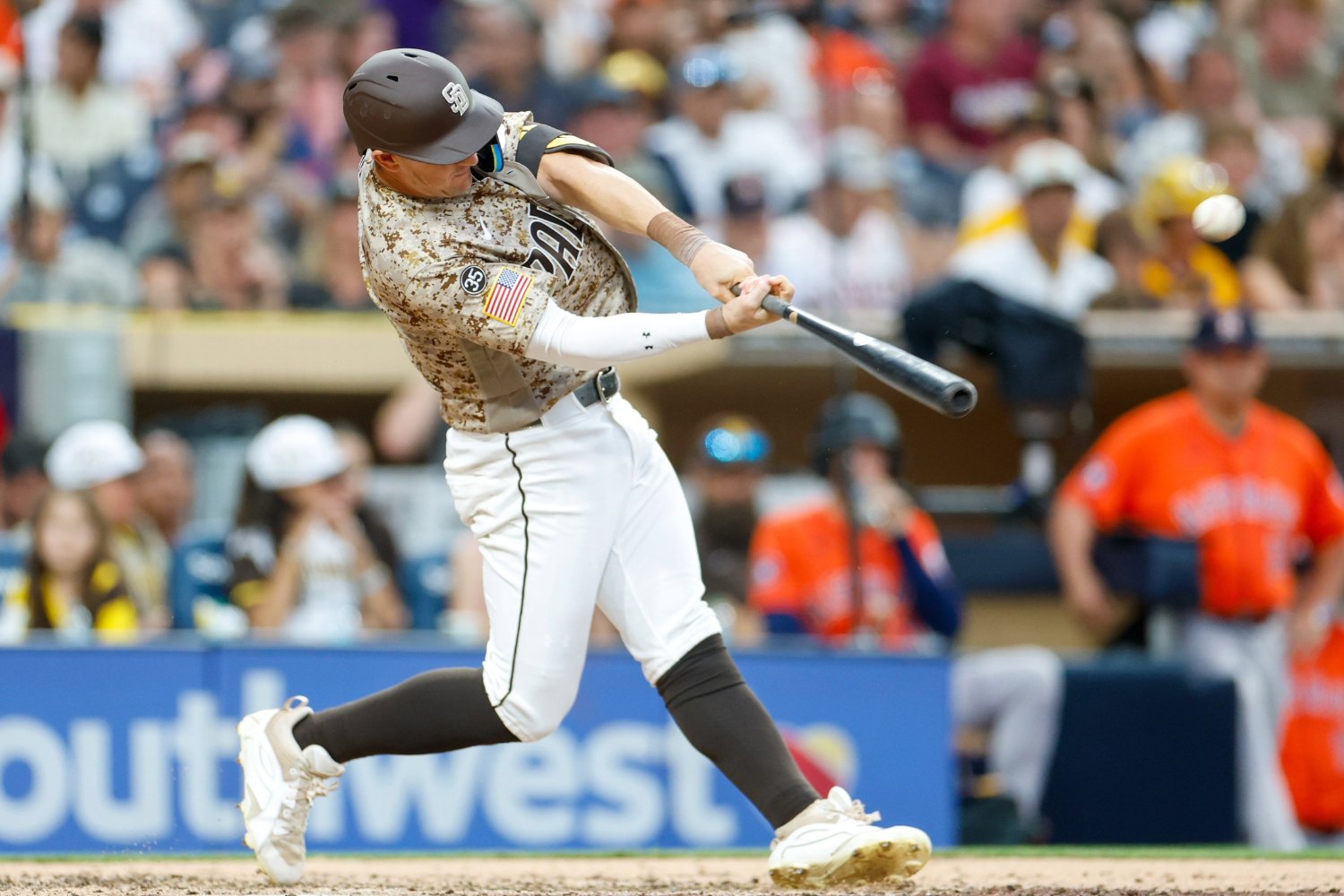 All of the talk around the San Diego Padres at the trade deadline related to starting pitching, and rightfully so considering the staff's patchwork nature. They were able to address that effectively with the additions of Robbie Ray & Casey Mize, but such an effort also neglected a secondary need in the form of a supplemental bat. It's gone with less notice as the year has worn on and several hitters have rounded into form, but the Padres have long featured a similar approach in their positional depth as they have from a starting pitching standpoint. They attempted to fill out their bench with volume (via minor-league deals and one-year contracts) above all. In some cases that's worked (Luis Rengifo) and in others it very much hasn't (Nick Castellanos). One spot in particular where the need for depth has manifested has been in left field. An injury to Ramón Laureano left something of a vacancy there, with Craig Stammen rotating a cast of characters that has included eight different players throughout 2026. Most recently, that's been a heavy dose of Gavin Sheets on the outfield grass, which isn't necessarily what you want with a team that has focused on improving defensively this season. Enter Austin Hays. He was a castoff of the Chicago White Sox after his one-year deal was marred by injury and the ascent of a number of youngsters (and the addition of Randal Grichuk) in an upstart season, which led to his designation for assignment earlier this month. He was subsequently released after logging just a dozen games of work, a shade over 45 plate appearances, and a bunch of strikeouts. The Padres were happy to add him quickly given their present need for some supplementary help in the outfield. And then, it took just one swing for Hays to announce himself in San Diego: It's not so much that we should expect Hays to do that with regularity (though he did homer 15 times for Cincinnati just last season). It's what he brings to the Padres in a specific area of need. Against left-handed pitching, the Padres have been one of the worst offensive teams in the league. They've slashed only .240/.307/.365 with a bottom-of-the-league .125 ISO and 88 wRC+ as a collective. While that does take into account the full season and we've seen the offense improve over the last month and change, the addition of a hitter who can handle lefties was considered a secondary need that they were unable to address directly at the trade deadline. Hays, however, can be just that. For his career, Hays has slashed .283/.340/.481 against southpaws, with a 125 wRC+ that far exceeds his mark of 96 against right-handed pitchers. His .198 career ISO against them is more than 30 points higher than his work against righties. Toss in the fact that Hays has generally lingered around the average threshold defensively (if not just a shade below it) in left field, and the Padres were able to reign in precisely the kind of player that they likely needed ahead of the deadline. Only without the additional prospect cost. Let's not pretend that the Padres just picked up an offensive savior. That responsibility lies in bats like Fernando Tatis Jr., Jackson Merrill, and Manny Machado. For his part, though, Hays adds a dynamic that fortifies this lineup against lefties in a way they previously lacked. There's tremendous value in that, and, ideally, Sunday's home run is the first of a few we see from him down the stretch as they continue their pursuit of a National League Wild Card spot.
 -
Around this time last week, it remained unclear if the San Diego Padres would buy or sell at the 2026 trade deadline. Mired in a standing a few games back of the top three in the National League Wild Card race—and with a handful of teams between them and an actual place among said three—it would have been difficult to justify outright buying. A five-game winning streak and winning eight of nine overall certainly changed things. Of course, shifting to "buy" mode also comes with a massive caveat in the form of the Padres' president of baseball operations A.J. Preller. Perhaps the most aggressive of any executive Major League Baseball has to offer, Preller's previous trading of seemingly every noteworthy prospect to journey through their farm system certainly set forth expectations of massive deals involving the likes of Ethan Salas and a further decimation of a talent pool that consistently ranks among the game's worst given his prior pursuit of major-league talent. And yet, that's not how things unfolded. Mostly. The Padres entered the deadline stage of the 2026 season facing down as large of a starting pitching need as just about any team in baseball. Cobbling together a rotation that has come to feature a "chaos plan" of Griffin Canning, Randy Vásquez, JP Sears, and Germán Márquez working a few innings at a time (as well as Michael King & Walker Buehler offering plenty of variance in their own volume) made contention a much larger question than even their place in the standings would indicate. With multiple clubs floating names that ranged from pending free agent to multiple years of team control, the spectrum of outcomes was vast, especially with Preller at the helm. Ultimately, though, the Padres emerged from the trade deadline in a way that was entirely normal. In acquiring free-agents-to-be Robbie Ray & Casey Mize (as well as utility man Gage Workman & depth reliever Hunter Stratton), the Padres traded away a pool of five players that included Kash Mayfield & Miguel Mendez. The losses of those two can and probably will hurt down the line, but this is a much more restrained version of Preller than we've seen in the past. You know, the kind of deal wherein he's sending four or five prospects off to another organization for one or two names. Mayfield has as much upside as any arm in the system, while Mendez's floor is unclear (even if his ceiling as a high-velocity, high-spin arm is not). Ultimately, though, this is the kind of deal that a team that fancies itself a contender makes. Robbie Ray is one of the more stable arms in the league. While he's not punching hitters out at the clip he used to, he's offering strong run prevention and nearly six innings per start. Casey Mize, meanwhile, would be in the middle of a breakout season had he enough innings to qualify. He's in the 90th percentile for walk rate and is striking hitters out at a higher rate (24.9 percent) than he did in his All-Star 2025 campaign. Those are two very good pitchers that stabilize a rotation that lacked any sort of certainty. They're the kind of players that you give up legitimate prospects for without selling the whole farm, considering their status as pending free agents. Both Workman and Stratton also provide organizational depth in the upper levels of the minors, an area where the team was lacking. It's the restraint here that's most impressive from Preller. Don't get it twisted; he surrendered legitimate talent from a fairly limited pool of prospects. But he didn't go over the top in the way that we've seen him work in the past. These are the kind of deals that read as entirely logical and, more importantly, justifiable. The Padres may not end up making the playoffs. It remains a hill to climb given the competition directly above and around them in the Wild Card picture. Sitting on the fringes of that race, though, with new arms in tow, they certainly have a better shot than they did last week. View full article
-
Padres' A.J. Preller Won At Trade Deadline By Being Completely Normal
Randy Holt posted an article in Padres
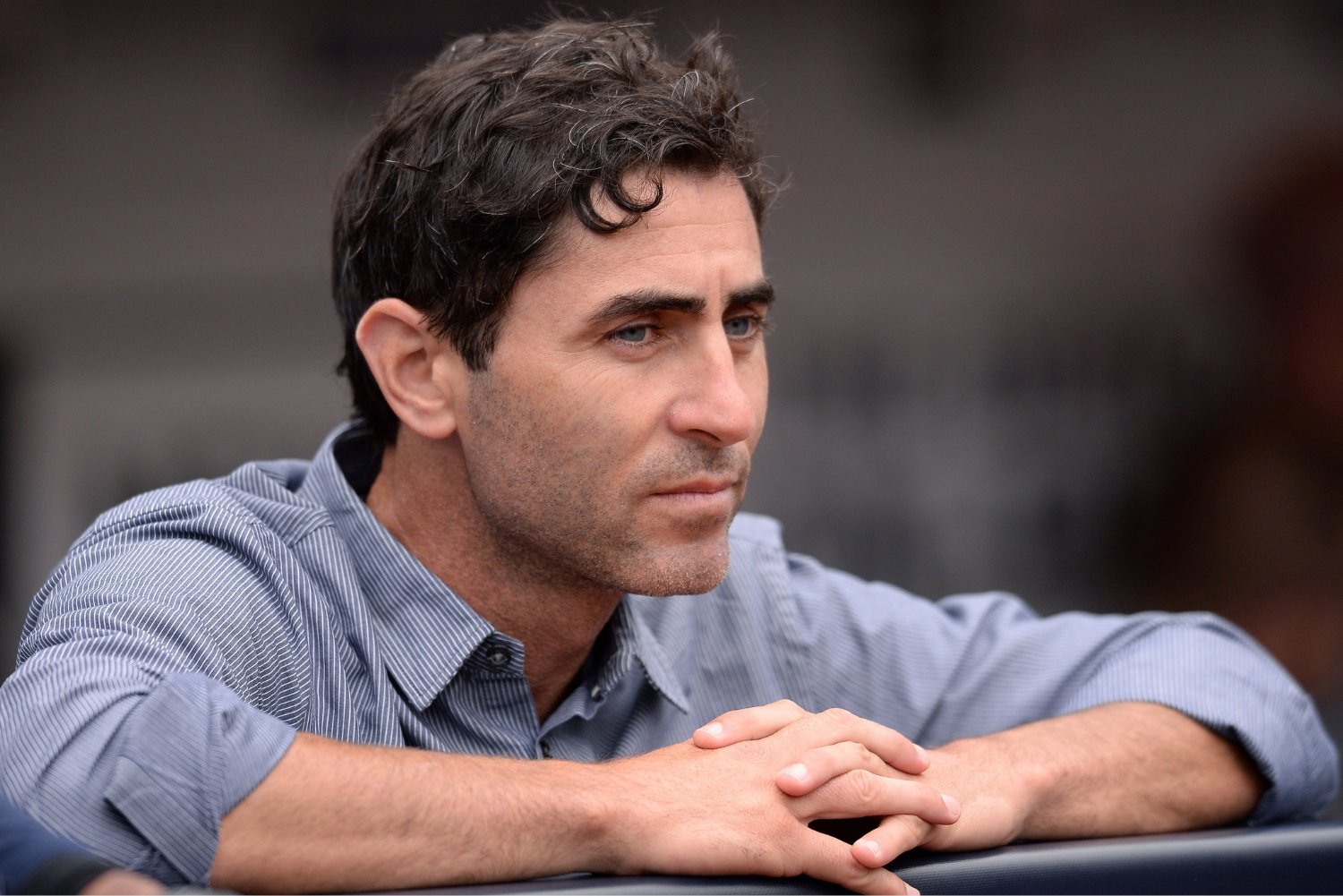 Around this time last week, it remained unclear if the San Diego Padres would buy or sell at the 2026 trade deadline. Mired in a standing a few games back of the top three in the National League Wild Card race—and with a handful of teams between them and an actual place among said three—it would have been difficult to justify outright buying. A five-game winning streak and winning eight of nine overall certainly changed things. Of course, shifting to "buy" mode also comes with a massive caveat in the form of the Padres' president of baseball operations A.J. Preller. Perhaps the most aggressive of any executive Major League Baseball has to offer, Preller's previous trading of seemingly every noteworthy prospect to journey through their farm system certainly set forth expectations of massive deals involving the likes of Ethan Salas and a further decimation of a talent pool that consistently ranks among the game's worst given his prior pursuit of major-league talent. And yet, that's not how things unfolded. Mostly. The Padres entered the deadline stage of the 2026 season facing down as large of a starting pitching need as just about any team in baseball. Cobbling together a rotation that has come to feature a "chaos plan" of Griffin Canning, Randy Vásquez, JP Sears, and Germán Márquez working a few innings at a time (as well as Michael King & Walker Buehler offering plenty of variance in their own volume) made contention a much larger question than even their place in the standings would indicate. With multiple clubs floating names that ranged from pending free agent to multiple years of team control, the spectrum of outcomes was vast, especially with Preller at the helm. Ultimately, though, the Padres emerged from the trade deadline in a way that was entirely normal. In acquiring free-agents-to-be Robbie Ray & Casey Mize (as well as utility man Gage Workman & depth reliever Hunter Stratton), the Padres traded away a pool of five players that included Kash Mayfield & Miguel Mendez. The losses of those two can and probably will hurt down the line, but this is a much more restrained version of Preller than we've seen in the past. You know, the kind of deal wherein he's sending four or five prospects off to another organization for one or two names. Mayfield has as much upside as any arm in the system, while Mendez's floor is unclear (even if his ceiling as a high-velocity, high-spin arm is not). Ultimately, though, this is the kind of deal that a team that fancies itself a contender makes. Robbie Ray is one of the more stable arms in the league. While he's not punching hitters out at the clip he used to, he's offering strong run prevention and nearly six innings per start. Casey Mize, meanwhile, would be in the middle of a breakout season had he enough innings to qualify. He's in the 90th percentile for walk rate and is striking hitters out at a higher rate (24.9 percent) than he did in his All-Star 2025 campaign. Those are two very good pitchers that stabilize a rotation that lacked any sort of certainty. They're the kind of players that you give up legitimate prospects for without selling the whole farm, considering their status as pending free agents. Both Workman and Stratton also provide organizational depth in the upper levels of the minors, an area where the team was lacking. It's the restraint here that's most impressive from Preller. Don't get it twisted; he surrendered legitimate talent from a fairly limited pool of prospects. But he didn't go over the top in the way that we've seen him work in the past. These are the kind of deals that read as entirely logical and, more importantly, justifiable. The Padres may not end up making the playoffs. It remains a hill to climb given the competition directly above and around them in the Wild Card picture. Sitting on the fringes of that race, though, with new arms in tow, they certainly have a better shot than they did last week.
 -
The moment the San Diego Padres started to pick up a little bit of momentum, you just knew that they were going to pivot to a buyer's stance ahead of the 2026 trade deadline. Selling was always going to be a tough, well, sell for an executive with the reputation of A.J. Preller. But their five-game winning streak and eight-of-nine run prior to Monday certainly made justifying a buy approach easier. Of course, there was also a certain degree of apprehension as to just how wild Preller could go when in the buyer's chair. The team had as dire a need in their rotation as anyone in Major League Baseball, with some bullpen relief and perhaps a supplementary bat on the list as well. With myriad starting arms available, though, that's where the focus was always going to be. Let's talk about how Preller emerged from the deadline. Padres Acquire SP Robbie Ray In Intradivision Deal Trade: Padres acquire LHP Robbie Ray from San Francisco Giants in exchange for RHP Miguel Mendez & IF Joniel Hernandez Robbie Ray is not necessarily the pitcher that he used to be. We haven't seen him post big strikeout numbers over a full season since roughly 2022. However, the Padres weren't necessarily in a situation where they needed excellence atop the rotation. They needed stability. Ray has the ability to provide just that. Ray has averaged 5.5 innings per start this season across 21 of them for the Giants. What he lacks in pure stuff, he compensates for in his ability to largely avoid hard contact (37.5 Hard-Hit%) and effectively navigate baserunners (79.0 LOB%). He's also avoided home runs in each of the last two seasons far more than he did early in his career, with homer-to-flyball rates under 10 percent in each of 2025 & 2026. From a prospect standpoint, the Padres lose one of the more intriguing arms in their system in Mendez. With a high-velocity fastball and effective slider, there was likely to be a place on the major-league staff for him before long. However, with that type of profile, the floor remained relatively unclear. Could he hang as a starter? Would command issues relegate him to bullpen duty? That lack of clarity around his future role likely made the Padres at least somewhat more comfortable in dealing him. Hernandez, meanwhile, is almost an entirely unknown quantity and multiple years away. At the end of the day, the Padres got a pending free agent pitcher (with postseason experience) who helps to stabilize their rotation in a way that was absolutely needed, even if he's not performing at the level we've seen from him in his younger years. Grade: B+ Padres Snag Casey Mize at Trade Deadline Buzzer Trade: Padres acquire RHP Casey Mize & IF Gage Workman from Detroit Tigers in exchange for LHP Kash Mayfield & LHP Jackson Wolf Like Robbie Ray, Casey Mize is a pending free agent. Unlike Ray, he's at something resembling a performance peak. The former No. 1 overall pick had battled injury issues during his time with the Tigers, but spun that into an All-Star campaign in 2025 and a season that looks even better in 2026 (albeit one that has seen the odd injury issue sprinkled in). Through 16 starts, Mize has a 2.70 ERA (2.58 FIP), a 24.9 K%, and a 5.6 BB%. That latter figure sits in the 90th percentile, indicating just how "on" Mize has been throughout 2026. Each of those numbers overall are better than the ones he posted a year ago when he was an All-Star. He doesn't necessarily work at the same volume Ray's able to provide, but there is legitimate upside here that' he's finally realizing. To acquire that upside, the Padres had to part with their No. 2 prospect in Kash Mayfield. Perhaps re-signing Mize makes that a little more digestible. Even if they don't, though, Mize was one of the better arms available based on performance, even as a pending free agent. You have to give something to get something, and Mize further fortifies the starting group alongside Ray. His upside makes the deal just a touch more interesting for San Diego, however. Also of note: Workman & Wolf offer a little bit of extra depth for each organization. Workman can move around the infield, but will have to mitigate some massive strikeout issues before becoming a viable bench piece. That Wolf hadn't been a factor for a Padres team desperately in need of arms tells you all you need to know about him. Grade: A- Padres Find Bullpen Depth In Hunter Stratton Trade: Padres acquire RHP Hunter Stratton from Pittsburgh Pirates in exchange for RHP Andrew Moore Stratton checks a box, and that's kind of where it ends. Designated for assignment for the Pirates upon the arrival of Camilo Doval, the Padres were happy to accommodate him within their own organization. He's been pretty respectable across 28 minor-league appearances in Atlanta and Pittsburgh this season (3.31 ERA, 4.05 FIP), but will have to settle some command issues before emerging as anything remotely trustworthy in the Padres' elite bullpen. At the end of the day, they wanted a bit of extra depth on the relief front. Stratton does that, unspectacular as he may be. Grade: C View full article
-
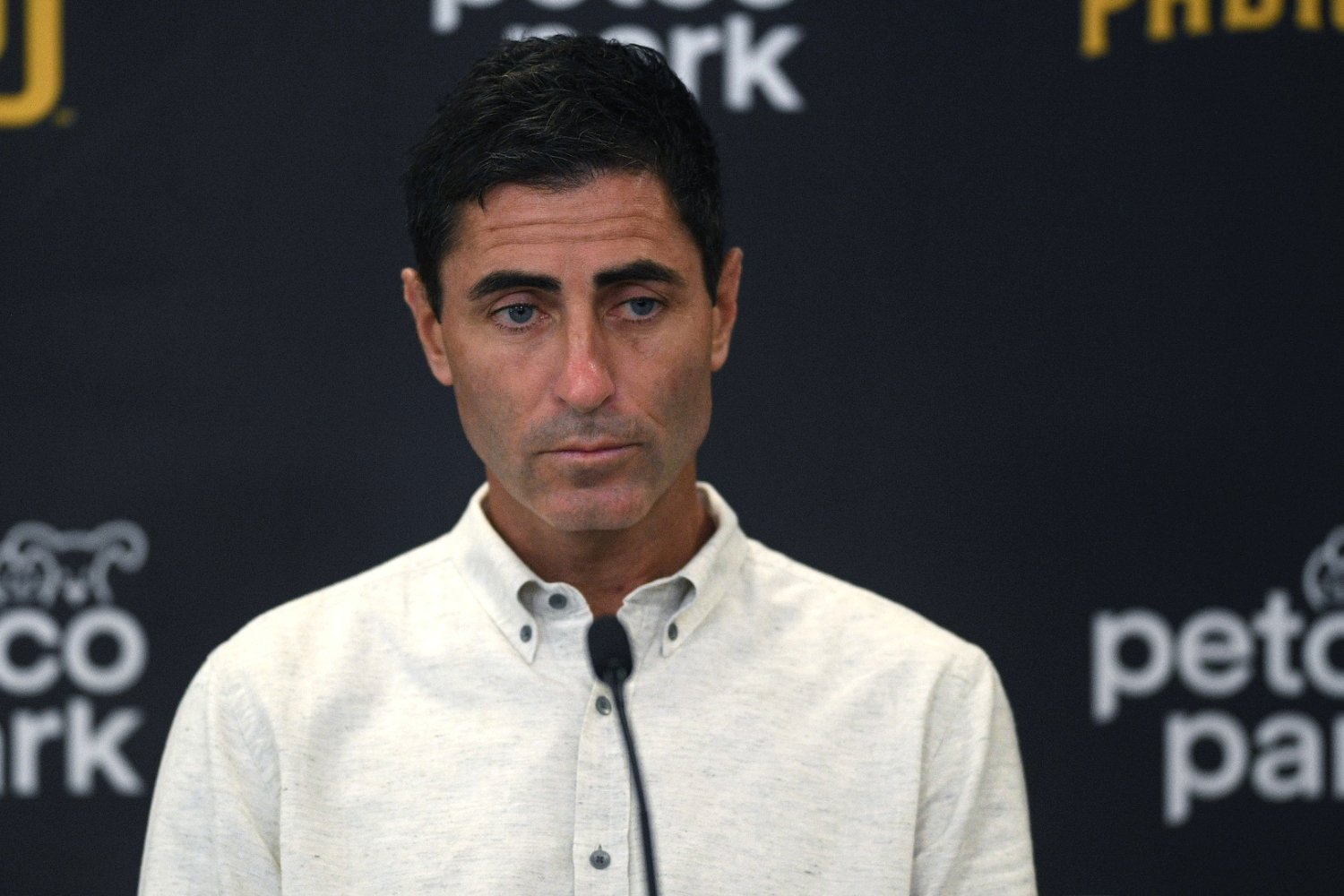 The moment the San Diego Padres started to pick up a little bit of momentum, you just knew that they were going to pivot to a buyer's stance ahead of the 2026 trade deadline. Selling was always going to be a tough, well, sell for an executive with the reputation of A.J. Preller. But their five-game winning streak and eight-of-nine run prior to Monday certainly made justifying a buy approach easier. Of course, there was also a certain degree of apprehension as to just how wild Preller could go when in the buyer's chair. The team had as dire a need in their rotation as anyone in Major League Baseball, with some bullpen relief and perhaps a supplementary bat on the list as well. With myriad starting arms available, though, that's where the focus was always going to be. Let's talk about how Preller emerged from the deadline. Padres Acquire SP Robbie Ray In Intradivision Deal Trade: Padres acquire LHP Robbie Ray from San Francisco Giants in exchange for RHP Miguel Mendez & IF Joniel Hernandez Robbie Ray is not necessarily the pitcher that he used to be. We haven't seen him post big strikeout numbers over a full season since roughly 2022. However, the Padres weren't necessarily in a situation where they needed excellence atop the rotation. They needed stability. Ray has the ability to provide just that. Ray has averaged 5.5 innings per start this season across 21 of them for the Giants. What he lacks in pure stuff, he compensates for in his ability to largely avoid hard contact (37.5 Hard-Hit%) and effectively navigate baserunners (79.0 LOB%). He's also avoided home runs in each of the last two seasons far more than he did early in his career, with homer-to-flyball rates under 10 percent in each of 2025 & 2026. From a prospect standpoint, the Padres lose one of the more intriguing arms in their system in Mendez. With a high-velocity fastball and effective slider, there was likely to be a place on the major-league staff for him before long. However, with that type of profile, the floor remained relatively unclear. Could he hang as a starter? Would command issues relegate him to bullpen duty? That lack of clarity around his future role likely made the Padres at least somewhat more comfortable in dealing him. Hernandez, meanwhile, is almost an entirely unknown quantity and multiple years away. At the end of the day, the Padres got a pending free agent pitcher (with postseason experience) who helps to stabilize their rotation in a way that was absolutely needed, even if he's not performing at the level we've seen from him in his younger years. Grade: B+ Padres Snag Casey Mize at Trade Deadline Buzzer Trade: Padres acquire RHP Casey Mize & IF Gage Workman from Detroit Tigers in exchange for LHP Kash Mayfield & LHP Jackson Wolf Like Robbie Ray, Casey Mize is a pending free agent. Unlike Ray, he's at something resembling a performance peak. The former No. 1 overall pick had battled injury issues during his time with the Tigers, but spun that into an All-Star campaign in 2025 and a season that looks even better in 2026 (albeit one that has seen the odd injury issue sprinkled in). Through 16 starts, Mize has a 2.70 ERA (2.58 FIP), a 24.9 K%, and a 5.6 BB%. That latter figure sits in the 90th percentile, indicating just how "on" Mize has been throughout 2026. Each of those numbers overall are better than the ones he posted a year ago when he was an All-Star. He doesn't necessarily work at the same volume Ray's able to provide, but there is legitimate upside here that' he's finally realizing. To acquire that upside, the Padres had to part with their No. 2 prospect in Kash Mayfield. Perhaps re-signing Mize makes that a little more digestible. Even if they don't, though, Mize was one of the better arms available based on performance, even as a pending free agent. You have to give something to get something, and Mize further fortifies the starting group alongside Ray. His upside makes the deal just a touch more interesting for San Diego, however. Also of note: Workman & Wolf offer a little bit of extra depth for each organization. Workman can move around the infield, but will have to mitigate some massive strikeout issues before becoming a viable bench piece. That Wolf hadn't been a factor for a Padres team desperately in need of arms tells you all you need to know about him. Grade: A- Padres Find Bullpen Depth In Hunter Stratton Trade: Padres acquire RHP Hunter Stratton from Pittsburgh Pirates in exchange for RHP Andrew Moore Stratton checks a box, and that's kind of where it ends. Designated for assignment for the Pirates upon the arrival of Camilo Doval, the Padres were happy to accommodate him within their own organization. He's been pretty respectable across 28 minor-league appearances in Atlanta and Pittsburgh this season (3.31 ERA, 4.05 FIP), but will have to settle some command issues before emerging as anything remotely trustworthy in the Padres' elite bullpen. At the end of the day, they wanted a bit of extra depth on the relief front. Stratton does that, unspectacular as he may be. Grade: C
 -
Despite the fact that we still do not know which direction A.J. Preller and the San Diego Padres will head prior to the trade deadline, there is a case to be made that they should sell off at least a few pieces in order to start building more with the future in mind. Even if they do make a run at October, the construction of this team would benefit from some longer-term pieces that haven't already passed their primes. If the Padres do decide to sell, there are a number of candidates permeating the roster. Arms like Mason Miller, Michael King, Adrian Morejon, and a handful of others could head out from the pitching staff, while the likes of Ty France or Jake Cronenworth could be had for the right price on the positional side. Selling means that the Padres would be poised to being a reconstruction of their underwhelming farm system. As such, it's difficult to see too many names coming back that would immediately impact the major-league roster. That is, of course, barring any deal that includes current top-level talent in exchange for top-level talent or upper-minors talent from other clubs included as part of a deal that might've been blocked elsewhere. However, the Padres are going to need bodies to fill in for any departures, regardless of which level players are traded from. Obviously, the immediate pivot would be to veterans with prior major-league experience. Which means that it's more likely that we could see names in the system like Ty Adcock, Will Wagner, or Nick Solak added back into the equation before year's end. Those represent genuine bodies that could play out the rest of a year if the team punted on their postseason prospects (unlikely as that may be right now). However, there's also not a whole lot of intrigue with more known quantities that live on the fringes of the top level at this point in their respective careers. The real interest is in those who could be in line for a debut in 2026, with the potential to be a factor beyond it. As such, taking players of that ilk out of the equation, who from the system could get at least a cup of coffee post-deadline? Jagger Haynes (LHP, El Paso) Currently No. 13 in our list of the Padres' top prospects, Haynes was a fifth-round pick in the shortened 2020 draft and was just recently promoted to El Paso. He only has two short starts under his belt with the Chihuahuas with terrible results (18.00 ERA), but averaged 5.2 innings per start and a 4.37 ERA with Double-A San Antonio earlier this season. Those numbers aren't especially noteworthy, but Haynes offers specific context that could warrant a call-up before year's end, especially if slots in the pitching staff are vacated prior to the deadline. For one, he offers a slider and changeup that can be effective against hitters of both handedness. His command tends to lean a bit wonky, but he's had more success with each of those pitches than his largely average fastball that tops out in the mid-90s. That his command has been in question could have him carving out a role in relief rather than as a starter. That's the other factor here. Having multiple spots available on both ends of the pitching staff could afford the team with a chance to see where he best fits moving forward, if he fits at all. As Haynes is 23 and through a season of Rule 5 eligibility, the team may take the opportunity to see what his future holds. Considering his ability to provide volume, the team could choose to deploy him in a starting capacity down the stretch in lieu of the likes of Griffin Canning or Walker Buehler, with an eye on a potential relief role in 2027 should it not work out. Miguel Mendez (RHP, San Antonio) Mendez was a fast riser in 2025, moving from Low-A to Double-A before season's end. The results weren't especially terrific once he reached San Antonio, but he's looked much better since starting there at the outset of 2026. He's made 11 starts, with a 4.93 ERA and a more appealing 3.20 FIP. There's an interesting alignment here with Haynes in that Mendez also doesn't have a clearly defined role for the future; he's only reached five innings in a start twice this season. However, Mendez does present the organization with quite a bit more upside in terms of the stuff, with a strikeout rate near 25 percent courtesy of a fastball that lives in the mid-to-upper 90s and combines with an effective slider. That stuff could make him just intriguing enough to warrant a call-up as the Padres work to carve out a role for him moving forward. His command has steadily improved, though the team may like him more as a reliever given his history of shakiness in that aspect of his game. If the Padres move on from any of their higher profile arms, it's entirely possible we see Mendez get a call to bring his fastball-slider combination to replace whatever upside is lost at the deadline. Dropping that combo into leverage in lower stakes games could be a solid showcase. He's already on the 40-man, too. Marcos Castañon (IF, El Paso) It's more difficult to find position players that merit a call-up for showcase purposes than it is to find an arm. If the Padres were to recall a fresh face on the positional side, Castañon may be the most logical choice. The 2021 12th-round pick from UC Santa Barbara is in the midst of a below-average offensive season by wRC+ (81), but has put together a respectable .279/.327/.443 line across more than 325 plate appearances this season. He's also cut his strikeout rate by nearly 10 percent since last year. The catch here is that it's been a couple of years since Castañon found his name on any prospect list for the Padres given his lack of a clear position and waning upside with the bat. Nevertheless, that he's been able to move around the field even in 2026 — logging time at first, second, and third base — while improving his contact skills could make him a worthwhile replacement for someone like Ty France or Gavin Sheets, should either one be traded prior to the deadline. At the very least, he reads as the kind of player sort of at the end of his run up through the system, and it may behoove the Padres to see if he's capable of hanging around as a bench bat in the future. View full article
-
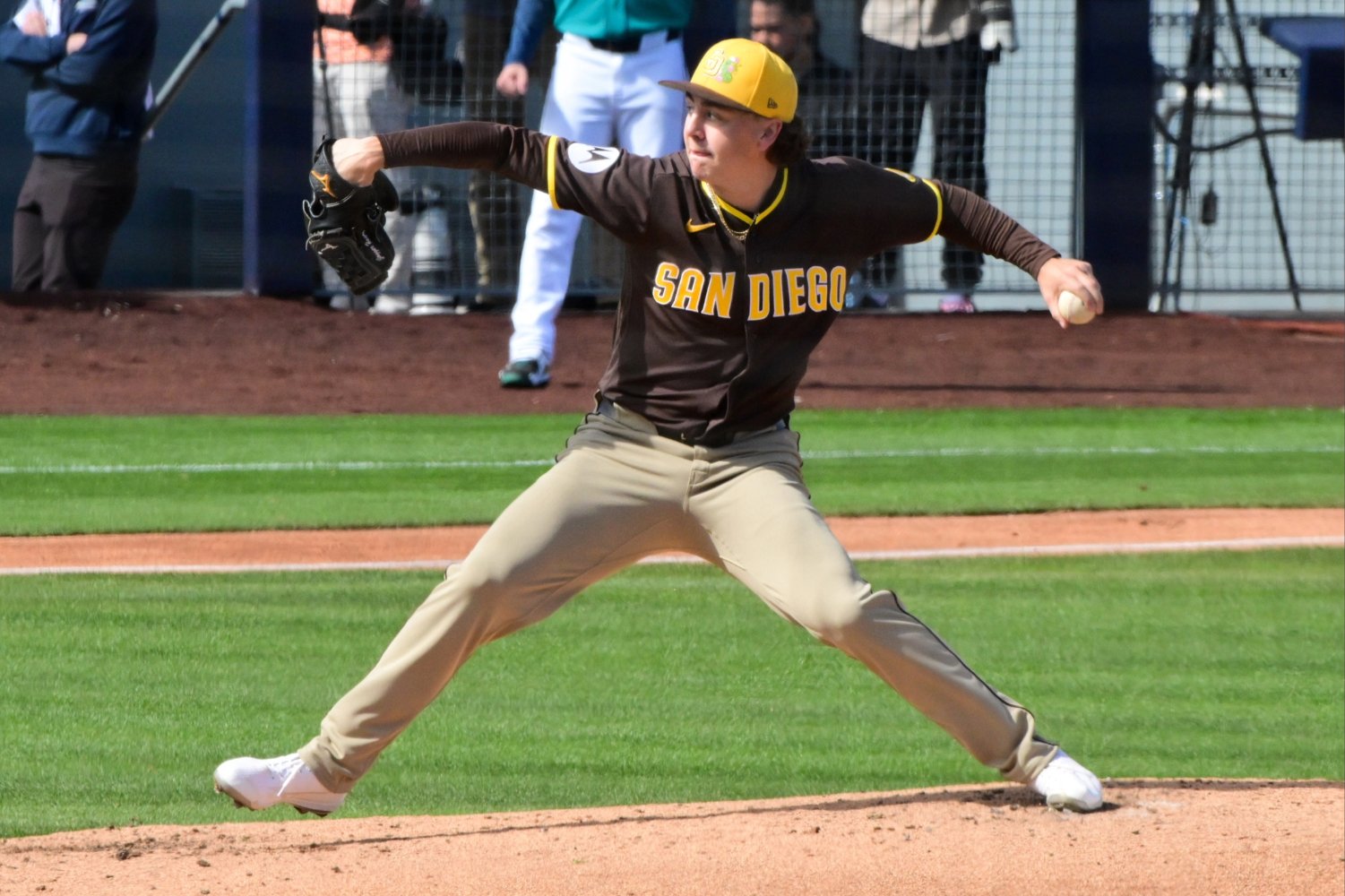 Despite the fact that we still do not know which direction A.J. Preller and the San Diego Padres will head prior to the trade deadline, there is a case to be made that they should sell off at least a few pieces in order to start building more with the future in mind. Even if they do make a run at October, the construction of this team would benefit from some longer-term pieces that haven't already passed their primes. If the Padres do decide to sell, there are a number of candidates permeating the roster. Arms like Mason Miller, Michael King, Adrian Morejon, and a handful of others could head out from the pitching staff, while the likes of Ty France or Jake Cronenworth could be had for the right price on the positional side. Selling means that the Padres would be poised to being a reconstruction of their underwhelming farm system. As such, it's difficult to see too many names coming back that would immediately impact the major-league roster. That is, of course, barring any deal that includes current top-level talent in exchange for top-level talent or upper-minors talent from other clubs included as part of a deal that might've been blocked elsewhere. However, the Padres are going to need bodies to fill in for any departures, regardless of which level players are traded from. Obviously, the immediate pivot would be to veterans with prior major-league experience. Which means that it's more likely that we could see names in the system like Ty Adcock, Will Wagner, or Nick Solak added back into the equation before year's end. Those represent genuine bodies that could play out the rest of a year if the team punted on their postseason prospects (unlikely as that may be right now). However, there's also not a whole lot of intrigue with more known quantities that live on the fringes of the top level at this point in their respective careers. The real interest is in those who could be in line for a debut in 2026, with the potential to be a factor beyond it. As such, taking players of that ilk out of the equation, who from the system could get at least a cup of coffee post-deadline? Jagger Haynes (LHP, El Paso) Currently No. 13 in our list of the Padres' top prospects, Haynes was a fifth-round pick in the shortened 2020 draft and was just recently promoted to El Paso. He only has two short starts under his belt with the Chihuahuas with terrible results (18.00 ERA), but averaged 5.2 innings per start and a 4.37 ERA with Double-A San Antonio earlier this season. Those numbers aren't especially noteworthy, but Haynes offers specific context that could warrant a call-up before year's end, especially if slots in the pitching staff are vacated prior to the deadline. For one, he offers a slider and changeup that can be effective against hitters of both handedness. His command tends to lean a bit wonky, but he's had more success with each of those pitches than his largely average fastball that tops out in the mid-90s. That his command has been in question could have him carving out a role in relief rather than as a starter. That's the other factor here. Having multiple spots available on both ends of the pitching staff could afford the team with a chance to see where he best fits moving forward, if he fits at all. As Haynes is 23 and through a season of Rule 5 eligibility, the team may take the opportunity to see what his future holds. Considering his ability to provide volume, the team could choose to deploy him in a starting capacity down the stretch in lieu of the likes of Griffin Canning or Walker Buehler, with an eye on a potential relief role in 2027 should it not work out. Miguel Mendez (RHP, San Antonio) Mendez was a fast riser in 2025, moving from Low-A to Double-A before season's end. The results weren't especially terrific once he reached San Antonio, but he's looked much better since starting there at the outset of 2026. He's made 11 starts, with a 4.93 ERA and a more appealing 3.20 FIP. There's an interesting alignment here with Haynes in that Mendez also doesn't have a clearly defined role for the future; he's only reached five innings in a start twice this season. However, Mendez does present the organization with quite a bit more upside in terms of the stuff, with a strikeout rate near 25 percent courtesy of a fastball that lives in the mid-to-upper 90s and combines with an effective slider. That stuff could make him just intriguing enough to warrant a call-up as the Padres work to carve out a role for him moving forward. His command has steadily improved, though the team may like him more as a reliever given his history of shakiness in that aspect of his game. If the Padres move on from any of their higher profile arms, it's entirely possible we see Mendez get a call to bring his fastball-slider combination to replace whatever upside is lost at the deadline. Dropping that combo into leverage in lower stakes games could be a solid showcase. He's already on the 40-man, too. Marcos Castañon (IF, El Paso) It's more difficult to find position players that merit a call-up for showcase purposes than it is to find an arm. If the Padres were to recall a fresh face on the positional side, Castañon may be the most logical choice. The 2021 12th-round pick from UC Santa Barbara is in the midst of a below-average offensive season by wRC+ (81), but has put together a respectable .279/.327/.443 line across more than 325 plate appearances this season. He's also cut his strikeout rate by nearly 10 percent since last year. The catch here is that it's been a couple of years since Castañon found his name on any prospect list for the Padres given his lack of a clear position and waning upside with the bat. Nevertheless, that he's been able to move around the field even in 2026 — logging time at first, second, and third base — while improving his contact skills could make him a worthwhile replacement for someone like Ty France or Gavin Sheets, should either one be traded prior to the deadline. At the very least, he reads as the kind of player sort of at the end of his run up through the system, and it may behoove the Padres to see if he's capable of hanging around as a bench bat in the future.
 -
Heading into the final weekend before the MLB trade deadline, we still don't know whether the San Diego Padres plan to buy or sell. They're just outside of wild card spot in the National League, but the handful of teams within their range makes even that relatively narrow gap a difficult one to traverse. Mason Miller's role within either route only makes those waters all the more murky. We don't know whether or not A.J. Preller is seriously entertaining the idea of moving his all-world closer, even if he does take the seller's path. San Diego's precarious positioning within the broader National League context makes a general narrative around it easier to justify from the outside, though, with Miller's value at present only adding to a potential rationale. There has not been a better relief pitcher in baseball in 2026 than the Padres' closer. He sits atop the relief pitcher leaderboard in fWAR (2.9), FIP (0.44), and strikeout rate (49.4 percent) while also ranking in the top three in ERA (0.79) His slider represents perhaps the best individual pitch in the sport, helping him to a 98th percentile standing in chase rate (38 percent) while also residing in the 100th in whiff rate (48%). As few certainties as this Padres roster has possessed this season, Miller has been perhaps the most certain thing in the game. Even with their questionable standing in the NL playoff picture, trading Mason Miller is in no way something that the Padres have to do. Despite the fact that he sits atop DiamondCentric's list of the top trade candidates, he remains under team control through 2029. Even if the Friars were not to make an appearance in this year's postseason, it stands to reason that they could find their way back well within the timeframe in which he's a part of the organization. Perhaps even with an eye on moving him into a starting role before his team control runs out, as we heard throughout the offseason. Whether they should move Miller prior to August 3, however, represents a different query altogether. When the Padres acquired Miller last season, they were forced to surrender one of the sport's top prospects in Leo De Vries, along with Braden Nett, Henry Baez, and Eduarnial Núñez. That trade accounts for three of the Athletics' top 13 prospects, according to MLB Pipeline. The Padres, at present, were ranked 30th by that outlet back in March while currently residing in the same position per FanGraphs' farm system rankings. No matter what source one was to utilize, this team currently sports a prospect pipeline that sits at or near the bottom of the league. A trade of Miller would go a ways toward improving that standing. As much of a bump as the A's were able to get in trading Miller, it's possible that the Padres could exceed their own previous package given his 2026 dominance and remaining team control. And that's important considering some of the team's shortcomings and aging components of their roster. There is very little at the upper levels of the minors to help their woes on the starting pitching front or to aid in supplementing their veteran position players that are either underperforming or nearing the painful end of their contracts. If the Padres are content to call it good on 2026, then trading Miller helps them turn their attention to a more medium and long-term arc while giving them a foundation of prospects that could serve as a springboard to either. What's particularly fascinating about a potential trade of Miller, though, is that the team doesn't have to be a seller in order to justify it. This is a team capable of developing high-leverage arms. Names like Robert Suárez, Jason Adam, Adrian Morejon, and Jeremiah Estrada are among those who have raised their profile in the last couple of seasons in serving as late-inning relief. There's a realistic pathway to trading Miller while still remaining in contention. Such a scenario would likely see at least one major-league caliber starting pitcher coming back with a name like Adam or Morejon (assuming neither is also traded) sliding into ninth inning work in Miller's stead. Such a move theoretically would allow San Diego to remain relevant in the National League while also addressing their largest shortcoming this season. Considering either pathway, there is a very real justification for trading Mason Miller. If the Padres are selling, Miller helps them to ignite a farm system revamp in the most impactful way. If they're leaning the other direction, Miller can help them address their current roster in a way that almost no other individual player could. It would be a tough piece of business for A.J. Preller to sell to the fanbase considering Miller's profile and his performance, but there is at least reason to believe it's the best path forward. View full article
-
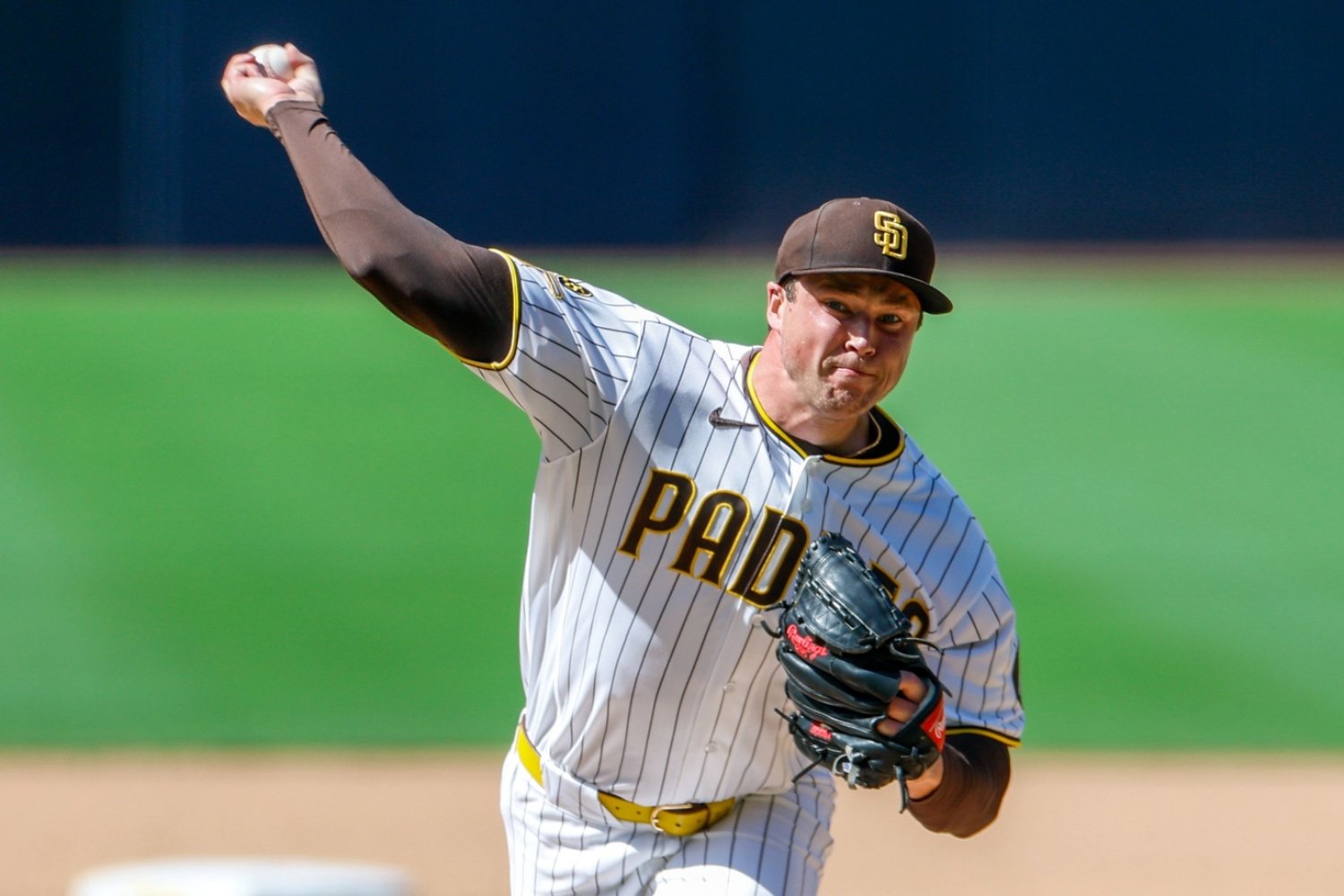 Heading into the final weekend before the MLB trade deadline, we still don't know whether the San Diego Padres plan to buy or sell. They're just outside of wild card spot in the National League, but the handful of teams within their range makes even that relatively narrow gap a difficult one to traverse. Mason Miller's role within either route only makes those waters all the more murky. We don't know whether or not A.J. Preller is seriously entertaining the idea of moving his all-world closer, even if he does take the seller's path. San Diego's precarious positioning within the broader National League context makes a general narrative around it easier to justify from the outside, though, with Miller's value at present only adding to a potential rationale. There has not been a better relief pitcher in baseball in 2026 than the Padres' closer. He sits atop the relief pitcher leaderboard in fWAR (2.9), FIP (0.44), and strikeout rate (49.4 percent) while also ranking in the top three in ERA (0.79) His slider represents perhaps the best individual pitch in the sport, helping him to a 98th percentile standing in chase rate (38 percent) while also residing in the 100th in whiff rate (48%). As few certainties as this Padres roster has possessed this season, Miller has been perhaps the most certain thing in the game. Even with their questionable standing in the NL playoff picture, trading Mason Miller is in no way something that the Padres have to do. Despite the fact that he sits atop DiamondCentric's list of the top trade candidates, he remains under team control through 2029. Even if the Friars were not to make an appearance in this year's postseason, it stands to reason that they could find their way back well within the timeframe in which he's a part of the organization. Perhaps even with an eye on moving him into a starting role before his team control runs out, as we heard throughout the offseason. Whether they should move Miller prior to August 3, however, represents a different query altogether. When the Padres acquired Miller last season, they were forced to surrender one of the sport's top prospects in Leo De Vries, along with Braden Nett, Henry Baez, and Eduarnial Núñez. That trade accounts for three of the Athletics' top 13 prospects, according to MLB Pipeline. The Padres, at present, were ranked 30th by that outlet back in March while currently residing in the same position per FanGraphs' farm system rankings. No matter what source one was to utilize, this team currently sports a prospect pipeline that sits at or near the bottom of the league. A trade of Miller would go a ways toward improving that standing. As much of a bump as the A's were able to get in trading Miller, it's possible that the Padres could exceed their own previous package given his 2026 dominance and remaining team control. And that's important considering some of the team's shortcomings and aging components of their roster. There is very little at the upper levels of the minors to help their woes on the starting pitching front or to aid in supplementing their veteran position players that are either underperforming or nearing the painful end of their contracts. If the Padres are content to call it good on 2026, then trading Miller helps them turn their attention to a more medium and long-term arc while giving them a foundation of prospects that could serve as a springboard to either. What's particularly fascinating about a potential trade of Miller, though, is that the team doesn't have to be a seller in order to justify it. This is a team capable of developing high-leverage arms. Names like Robert Suárez, Jason Adam, Adrian Morejon, and Jeremiah Estrada are among those who have raised their profile in the last couple of seasons in serving as late-inning relief. There's a realistic pathway to trading Miller while still remaining in contention. Such a scenario would likely see at least one major-league caliber starting pitcher coming back with a name like Adam or Morejon (assuming neither is also traded) sliding into ninth inning work in Miller's stead. Such a move theoretically would allow San Diego to remain relevant in the National League while also addressing their largest shortcoming this season. Considering either pathway, there is a very real justification for trading Mason Miller. If the Padres are selling, Miller helps them to ignite a farm system revamp in the most impactful way. If they're leaning the other direction, Miller can help them address their current roster in a way that almost no other individual player could. It would be a tough piece of business for A.J. Preller to sell to the fanbase considering Miller's profile and his performance, but there is at least reason to believe it's the best path forward.
 -
While a multi-game deficit and a handful of teams ahead of them in the National League Wild Card race isn't the most ideal set of circumstances for the San Diego Padres, their weekend sweep of the Miami Marlins likely gave A.J. Preller all the clearance he needed to work in an additive direction ahead of next week's trade deadline. With only the lowly Colorado and San Francisco organizations standing in their way prior to August 3, the expectation is that the Friars fancy themselves buyers at the present moment. It's at least a mildly more encouraging picture than last week, when we didn't any level of clarity over which direction the team could head. Buying doesn't necessarily mean keeping all of their current major-league talent, however. There's a path where the team trades one of their high-leverage relievers (Mason Miller, Adrian Morejon) with an eye on adding starting pitching and catapulting themselves square into the middle of the NL Wild Card race. And that's an important note within all of this. The Padres don't have an upper-tier farm system; in fact, their minor-league talent pool generally ranks among the league's worst (if not at the very bottom). Even within the context of buying, Preller is likely going to have to move impact talent if he seeks to add impact talent in turn. That means that even buying is going to result in someone like Miller or Morejon finding their way to a new organization in the name of improvement elsewhere. While those aren't the only appealing names the team has on their roster, it feels like at least one would have to go for the necessary improvements to be made to other areas of the team. With that in mind, which prospective trade partner represents the most ideal organization with which to strike a deal? The Milwaukee Brewers are a team that immediately springs to mind. This is for two reasons. The first is that they can offer the Padres at least one major-league caliber starting pitcher in a trade for one of Miller or Morejon. Someone like Logan Henderson represents exactly the type of arm the Padres would covet. He's having an exceptional year (3.05 ERA, 2.98 FIP in eight starts) pitching in the latter half of the Brewers' rotation and isn't even eligible for arbitration until 2029. There are other arms that could be appealing here (Robert Gasser, Coleman Crow), but Henderson and some combination of prospects would be an ideal path given the Padres' current shortcomings in their starting staff. The prospect component represents the other reason Milwaukee is such an ideal trade partner. The Brewers have a system lauded by essentially every outlet, with six prospects inside of MLB Pipeline's Top 100. While we wouldn't necessarily expect one of those six in a potential deal alongside an upside play like Henderson, it speaks to the strength of their system to have such a consistent presence throughout that list. Overall, it's a team with which the Padres have a transactional history and can help to fill a need. The Brewers are in need of some starting pitching help in their own right given injuries, but they're also in search of relief help. If the Padres were to part with one of Miller or Morejon, then a move here presents plenty of logic for both parties (with room for either to seek out other organizations for additional needs). In a similar vein, the New York Yankees could represent the type of organization that represents the ideal partner for Preller. Like the Brewers, the Padres have a history of trades with the Yankees (the Juan Soto deal being most notable among them). And, like Milwaukee, New York has the ability to provide the Padres with what they need ahead of this deadline. The dynamic is only slightly different. On the minor-league side of things, the Yankees do not boast the farm system depth that the Brewers have. What they do have, though, is pitching in abundance. Roughly 20 of the team's top 30 prospects come from the mound, with many featuring an ETA of 2026 or 2027. Could a package involving someone like Will Warren and additional minor=league arms make sense in a deal? Absolutely, but that would also come at a similar expense in that the Padres would be likely to part with Miller or Morejon in such a scenario. It's similar contexts and similar needs from both New York & Milwaukee, which would then come down to which minor-league system Preller and the scouting department favor more. That doesn't mean those are the only two teams worth watching out for ahead of Aug. 3. Nor does any trade for impact mean that Preller will be forced to send Miller or Morejon the opposite way; it just feels like the most efficient way of shifting the fortunes of the current roster. Preller could also approach Detroit about Casey Mize, the Mets about someone like Clay Holmes, or the Royals (another team with which there's a recent transactional history) about old friends Michael Wacha & Seth Lugo. Options exist here toward improving the Padres' most vulnerable phase of their roster. But if we're talking about the type of deal Preller loves to make — the one where he gets to turn the baseball world on its head — then facilitating a deal with the Milwaukee Brewers or New York Yankees is the best bet. View full article
-
 While a multi-game deficit and a handful of teams ahead of them in the National League Wild Card race isn't the most ideal set of circumstances for the San Diego Padres, their weekend sweep of the Miami Marlins likely gave A.J. Preller all the clearance he needed to work in an additive direction ahead of next week's trade deadline. With only the lowly Colorado and San Francisco organizations standing in their way prior to August 3, the expectation is that the Friars fancy themselves buyers at the present moment. It's at least a mildly more encouraging picture than last week, when we didn't any level of clarity over which direction the team could head. Buying doesn't necessarily mean keeping all of their current major-league talent, however. There's a path where the team trades one of their high-leverage relievers (Mason Miller, Adrian Morejon) with an eye on adding starting pitching and catapulting themselves square into the middle of the NL Wild Card race. And that's an important note within all of this. The Padres don't have an upper-tier farm system; in fact, their minor-league talent pool generally ranks among the league's worst (if not at the very bottom). Even within the context of buying, Preller is likely going to have to move impact talent if he seeks to add impact talent in turn. That means that even buying is going to result in someone like Miller or Morejon finding their way to a new organization in the name of improvement elsewhere. While those aren't the only appealing names the team has on their roster, it feels like at least one would have to go for the necessary improvements to be made to other areas of the team. With that in mind, which prospective trade partner represents the most ideal organization with which to strike a deal? The Milwaukee Brewers are a team that immediately springs to mind. This is for two reasons. The first is that they can offer the Padres at least one major-league caliber starting pitcher in a trade for one of Miller or Morejon. Someone like Logan Henderson represents exactly the type of arm the Padres would covet. He's having an exceptional year (3.05 ERA, 2.98 FIP in eight starts) pitching in the latter half of the Brewers' rotation and isn't even eligible for arbitration until 2029. There are other arms that could be appealing here (Robert Gasser, Coleman Crow), but Henderson and some combination of prospects would be an ideal path given the Padres' current shortcomings in their starting staff. The prospect component represents the other reason Milwaukee is such an ideal trade partner. The Brewers have a system lauded by essentially every outlet, with six prospects inside of MLB Pipeline's Top 100. While we wouldn't necessarily expect one of those six in a potential deal alongside an upside play like Henderson, it speaks to the strength of their system to have such a consistent presence throughout that list. Overall, it's a team with which the Padres have a transactional history and can help to fill a need. The Brewers are in need of some starting pitching help in their own right given injuries, but they're also in search of relief help. If the Padres were to part with one of Miller or Morejon, then a move here presents plenty of logic for both parties (with room for either to seek out other organizations for additional needs). In a similar vein, the New York Yankees could represent the type of organization that represents the ideal partner for Preller. Like the Brewers, the Padres have a history of trades with the Yankees (the Juan Soto deal being most notable among them). And, like Milwaukee, New York has the ability to provide the Padres with what they need ahead of this deadline. The dynamic is only slightly different. On the minor-league side of things, the Yankees do not boast the farm system depth that the Brewers have. What they do have, though, is pitching in abundance. Roughly 20 of the team's top 30 prospects come from the mound, with many featuring an ETA of 2026 or 2027. Could a package involving someone like Will Warren and additional minor=league arms make sense in a deal? Absolutely, but that would also come at a similar expense in that the Padres would be likely to part with Miller or Morejon in such a scenario. It's similar contexts and similar needs from both New York & Milwaukee, which would then come down to which minor-league system Preller and the scouting department favor more. That doesn't mean those are the only two teams worth watching out for ahead of Aug. 3. Nor does any trade for impact mean that Preller will be forced to send Miller or Morejon the opposite way; it just feels like the most efficient way of shifting the fortunes of the current roster. Preller could also approach Detroit about Casey Mize, the Mets about someone like Clay Holmes, or the Royals (another team with which there's a recent transactional history) about old friends Michael Wacha & Seth Lugo. Options exist here toward improving the Padres' most vulnerable phase of their roster. But if we're talking about the type of deal Preller loves to make — the one where he gets to turn the baseball world on its head — then facilitating a deal with the Milwaukee Brewers or New York Yankees is the best bet.
 -
The concept of a mess is not unique to any particular facet of the 2026 San Diego Padres roster. They've struggled to piece together starts on the mound, have received mixed performances from virtually every hitter, and have had to handle injury issues with nearly everyone of note. The result of so much clutter, though, is that the mess behind the plate has gone somewhat overlooked. Freddy Fermin entered the season as the team's No. 1 catcher. After sending Stephen Kolek & Ryan Bergert to the Kansas City Royals prior to last year's trade deadline, it was clear that A.J. Preller was acquiring his top option for the handful of years Fermin remains under team control. With the team unable (or unwilling) to add a suitable backup last winter, Luis Campusano was set to assume duties as the No. 2. As we sit here at the end of July, that's still how things look. Getting here, though, is where the mess comes in. The Padres rank 16th in the league in fWAR accrued by their catchers (1.3). Much of that is propped up by the defensive work of the group, given that the team sits 21st in wRC+ (79) and in the bottom five teams in the league in terms of batting average (.187) and on-base percentage (.283). Fermin has played in only 66 games. He missed time in June while out on the concussion injured list before heading back to the regular IL earlier this month with a head contusion. Campusano missed two months with a fractured toe and has logged time in just 34 contests. That meant that the team's catching picture also featured Rodolfo Durán for 36 games and Blake Hunt for another two over the course of this season. With things now settled back into featuring Fermin & Campusano, the conversation can take on another turn in pondering whether it should be Campusano atop the depth chart with Fermin as the backup. Such a conversation would be a far cry from where we found ourselves last winter. Fermin as the starter was a sentiment that went undisputed given his defensive competence and a solid stretch of play upon his acquisition from Kansas City. At the same time, few believed that Campusano merited such a guarantee as the Friars' top reserve behind the plate, as he struggled to realize his offensive upside and was coming off some woeful defensive marks the last time we saw him log regular work at the major-league level back in 2024. It speaks to the gravity of the struggles of the former and the growth of the latter, then, that we're even entertaining this conversation. But that's where we find ourselves with a No. 1, in Fermin, that has worked to a line of only .164/.259/.276, with a 54 wRC+. While he's posted a career-best 9.6 percent walk rate, he's struck out at his highest clip since 2023 (19.8 percent). There's been the occasional impact, indicated by a .112 ISO that is better than either of the last two years, but his offensive performance has been too riddled with soft contact and strikeouts for it to have any sort of sustained realization. On the other side of things, Campusano is in the midst of an offensive breakout. It remains a small sample given the injury (107 plate appearances), but his line reads .286/.393/.505 with a gaudy 152 wRC+. His 23.4 percent strikeout rate is reasonable against a 14 percent walk rate, especially when you factor in the power output. Had he been healthy over a full season, we'd likely be framing Campusano as one of the team's best hitters in 2026. As it is, his offensive output is one that far exceeds that of his counterpart behind the plate. General narratives around each player would tell us that a justification for keeping Fermin entrenched as the starter over Campusano would be due to his defense. Fermin's chops with the glove have, historically, been far better than the work we've seen from his teammate. After all, the last time we saw Campusano behind the plate regularly was when he turned in a -13 Fielding Run Value. This season, Fermin has a FRV of +5. He's been good across the board, turning in at least average marks in each phase that is considered for the position (framing, blocking, throwing). On the other hand, Campusano is at -4 FRV. He's improved his framing metric from -8 to -4 while providing exactly average work with respect to blocking and throwing. In choosing to give more runway to Campusano as the starter over Fermin, you'd be sacrificing some defense. However, it's important to note that such sacrifice is not remotely what it would have been two years ago. You lose something of note when it comes to framing, very little in the other two areas, and then more than make up the difference offensively considering where the two currently reside with the bat. The extent to which Craig Stammen is willing to explore that tradeoff remains to be seen. For what it's worth, FanGraphs likes Campusano's share of the work behind the plate to exceed that of Fermin's, giving him 48 percent of the time to Fermin's 42 percent start share. Baseball Prospectus, though, has Fermin at 55 percent of the work to Campusano's 30. Here in reality, they've split the work evenly over the last six contests. It's entirely possible Stammen is ready to lean into a new workload distribution. Depending on what goes down over the next week leading up to the trade deadline, simply inserting Campusano into the starting lineup more frequently could be one of the biggest additions the Padres make. View full article
-
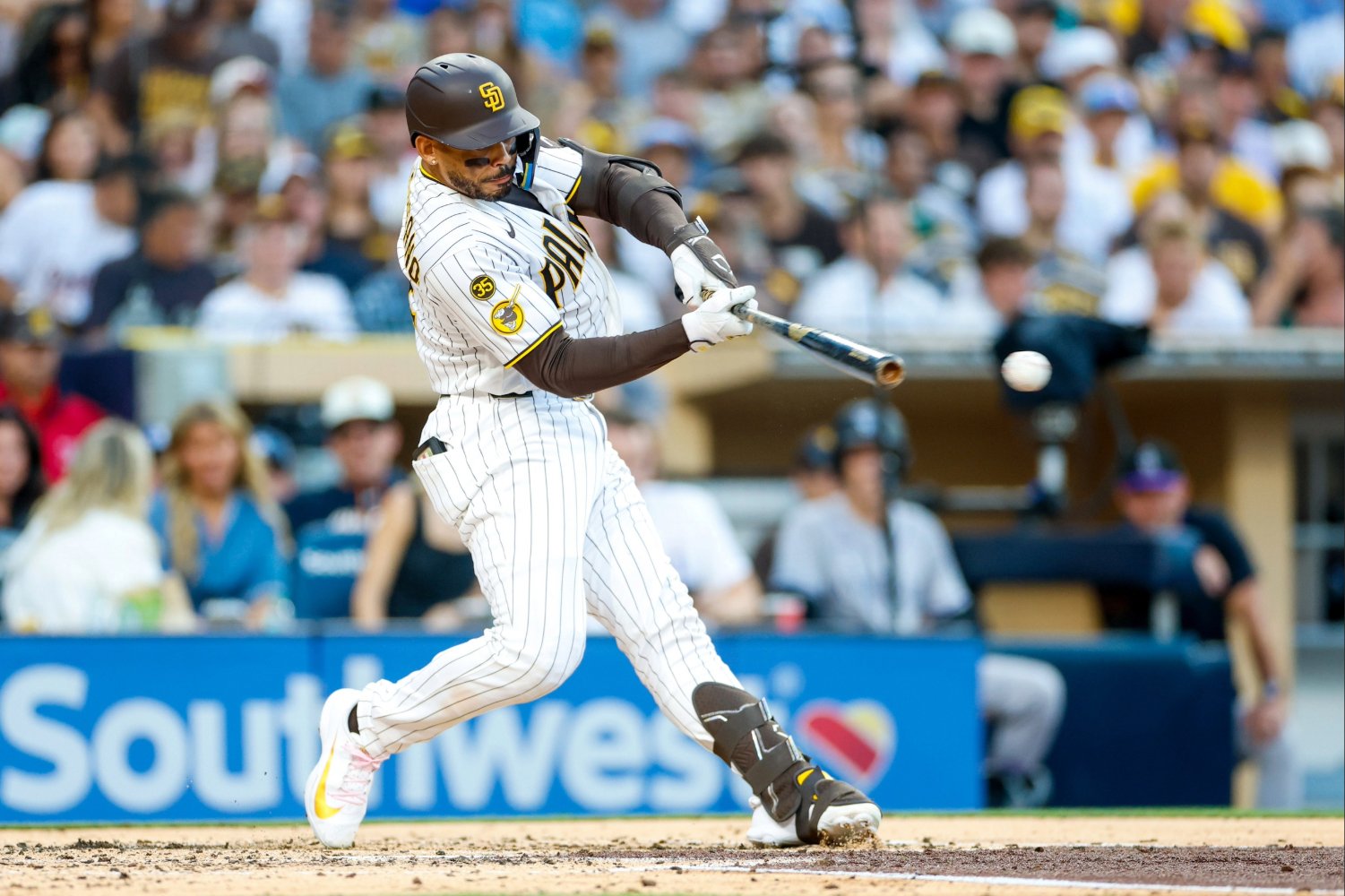 The concept of a mess is not unique to any particular facet of the 2026 San Diego Padres roster. They've struggled to piece together starts on the mound, have received mixed performances from virtually every hitter, and have had to handle injury issues with nearly everyone of note. The result of so much clutter, though, is that the mess behind the plate has gone somewhat overlooked. Freddy Fermin entered the season as the team's No. 1 catcher. After sending Stephen Kolek & Ryan Bergert to the Kansas City Royals prior to last year's trade deadline, it was clear that A.J. Preller was acquiring his top option for the handful of years Fermin remains under team control. With the team unable (or unwilling) to add a suitable backup last winter, Luis Campusano was set to assume duties as the No. 2. As we sit here at the end of July, that's still how things look. Getting here, though, is where the mess comes in. The Padres rank 16th in the league in fWAR accrued by their catchers (1.3). Much of that is propped up by the defensive work of the group, given that the team sits 21st in wRC+ (79) and in the bottom five teams in the league in terms of batting average (.187) and on-base percentage (.283). Fermin has played in only 66 games. He missed time in June while out on the concussion injured list before heading back to the regular IL earlier this month with a head contusion. Campusano missed two months with a fractured toe and has logged time in just 34 contests. That meant that the team's catching picture also featured Rodolfo Durán for 36 games and Blake Hunt for another two over the course of this season. With things now settled back into featuring Fermin & Campusano, the conversation can take on another turn in pondering whether it should be Campusano atop the depth chart with Fermin as the backup. Such a conversation would be a far cry from where we found ourselves last winter. Fermin as the starter was a sentiment that went undisputed given his defensive competence and a solid stretch of play upon his acquisition from Kansas City. At the same time, few believed that Campusano merited such a guarantee as the Friars' top reserve behind the plate, as he struggled to realize his offensive upside and was coming off some woeful defensive marks the last time we saw him log regular work at the major-league level back in 2024. It speaks to the gravity of the struggles of the former and the growth of the latter, then, that we're even entertaining this conversation. But that's where we find ourselves with a No. 1, in Fermin, that has worked to a line of only .164/.259/.276, with a 54 wRC+. While he's posted a career-best 9.6 percent walk rate, he's struck out at his highest clip since 2023 (19.8 percent). There's been the occasional impact, indicated by a .112 ISO that is better than either of the last two years, but his offensive performance has been too riddled with soft contact and strikeouts for it to have any sort of sustained realization. On the other side of things, Campusano is in the midst of an offensive breakout. It remains a small sample given the injury (107 plate appearances), but his line reads .286/.393/.505 with a gaudy 152 wRC+. His 23.4 percent strikeout rate is reasonable against a 14 percent walk rate, especially when you factor in the power output. Had he been healthy over a full season, we'd likely be framing Campusano as one of the team's best hitters in 2026. As it is, his offensive output is one that far exceeds that of his counterpart behind the plate. General narratives around each player would tell us that a justification for keeping Fermin entrenched as the starter over Campusano would be due to his defense. Fermin's chops with the glove have, historically, been far better than the work we've seen from his teammate. After all, the last time we saw Campusano behind the plate regularly was when he turned in a -13 Fielding Run Value. This season, Fermin has a FRV of +5. He's been good across the board, turning in at least average marks in each phase that is considered for the position (framing, blocking, throwing). On the other hand, Campusano is at -4 FRV. He's improved his framing metric from -8 to -4 while providing exactly average work with respect to blocking and throwing. In choosing to give more runway to Campusano as the starter over Fermin, you'd be sacrificing some defense. However, it's important to note that such sacrifice is not remotely what it would have been two years ago. You lose something of note when it comes to framing, very little in the other two areas, and then more than make up the difference offensively considering where the two currently reside with the bat. The extent to which Craig Stammen is willing to explore that tradeoff remains to be seen. For what it's worth, FanGraphs likes Campusano's share of the work behind the plate to exceed that of Fermin's, giving him 48 percent of the time to Fermin's 42 percent start share. Baseball Prospectus, though, has Fermin at 55 percent of the work to Campusano's 30. Here in reality, they've split the work evenly over the last six contests. It's entirely possible Stammen is ready to lean into a new workload distribution. Depending on what goes down over the next week leading up to the trade deadline, simply inserting Campusano into the starting lineup more frequently could be one of the biggest additions the Padres make.
 -
The San Diego Padres are still alive. Despite their best efforts over the last handful of weeks, their sweep of the Miami Marlins over the weekend set them back at .500 (53-53). That put them back to within two games of a National League Wild Card spot, though three teams remain ahead of them before they even get to the likes of those currently occupying the three spots in Chicago, Philadelphia, and Arizona. Nevertheless, they're still hanging around. That doesn't lend itself to any clarity regarding their approach to the trade deadline, but it does draw the attention back to the active roster. Because the Padres wouldn't be in a position to have any hope, let alone a thinner margin, at this point if it weren't for those players. Specifically, we're talking about Jackson Merrill. Merrill was a centerpiece over the weekend sweep in Florida. He had a three-hit game on Saturday before adding another two on Sunday. Few actions were more notable over the weekend than this: Down early, Merrill's solo home run in the eighth gave them a lead they wouldn't relinquish. It was the latest in what has become a very strong July for a player who had struggled mightily over the season's first three months. This is Merrill's monthly distribution from the first half of the season: March/April: 128 PA, .200/.270/.330, .130 ISO, 68 wRC+ May: 101 PA, .220/.297/.341, .121 ISO, 79 wRC+ June: 114 PA, .220/.248/.358, .138 ISO, 67 wRC+ To say that the young center fielder struggled in those first three months would be a severe understatement. Had he posted numbers of this variety in 2025, you could almost understand it given the myriad injuries he encountered. However, a fully healthy iteration of Merrill is one that was expected to bounce back. That didn't remotely come to fruition in the first half; there were a couple of modest stretches where it looked like a corner was being turned, but the production stayed minimal. Frustratingly, there didn't appear to be a clear cause for the struggle either. Some mixed up mechanics appeared to be central, but even those weren't as clear-cut as we'd like it to be. Perhaps it doesn't matter anymore. Merrill has turned a corner in July to a fairly astonishing extent. As the Padres' offense has stabilized, Merrill has been one of the drivers of the lineup this month. Through an even 90 plate appearances, he's carrying a slash of .298/.333/.571, with a gaudy .274 ISO and a 147 wRC+. His strikeout rate (23.3 percent) is his lowest in an individual month while the seven homers he's hit are only one off his cumulative total from the first three months of the season. What's important to note about this stretch is that he isn't getting lucky. His .316 batting average on balls in play isn't the kind of nonsense figure you might expect from a struggling player suddenly breaking out. Nor is it the result of any massive shift in his mechanics. There is one component worth noting here, however: Previously, we discussed that Merrill's swing had become just long and just steep enough to pose an issue for him. That was leading to questionable contact that wasn't adept at creating impact. In other words, he was simply losing on the margins. It's clear that Merrill is now finding that contact, whether he's done so by way of improved pitch recognition or a small mechanical tweak. That rate of his ideal attack angle is every bit indicative of a player who is finding the bat in the right spot upon meeting the ball. The next step in this is making it sustainable. We don't know the reason for Merrill's 2026 trends of swinging longer, swinging harder, or swinging with enough of an increase in his angle that he ended up a shade under seemingly everything. What we do know right now is that he's making everything click. In order for the Padres to stay relevant, that will have to remain the case. View full article
-
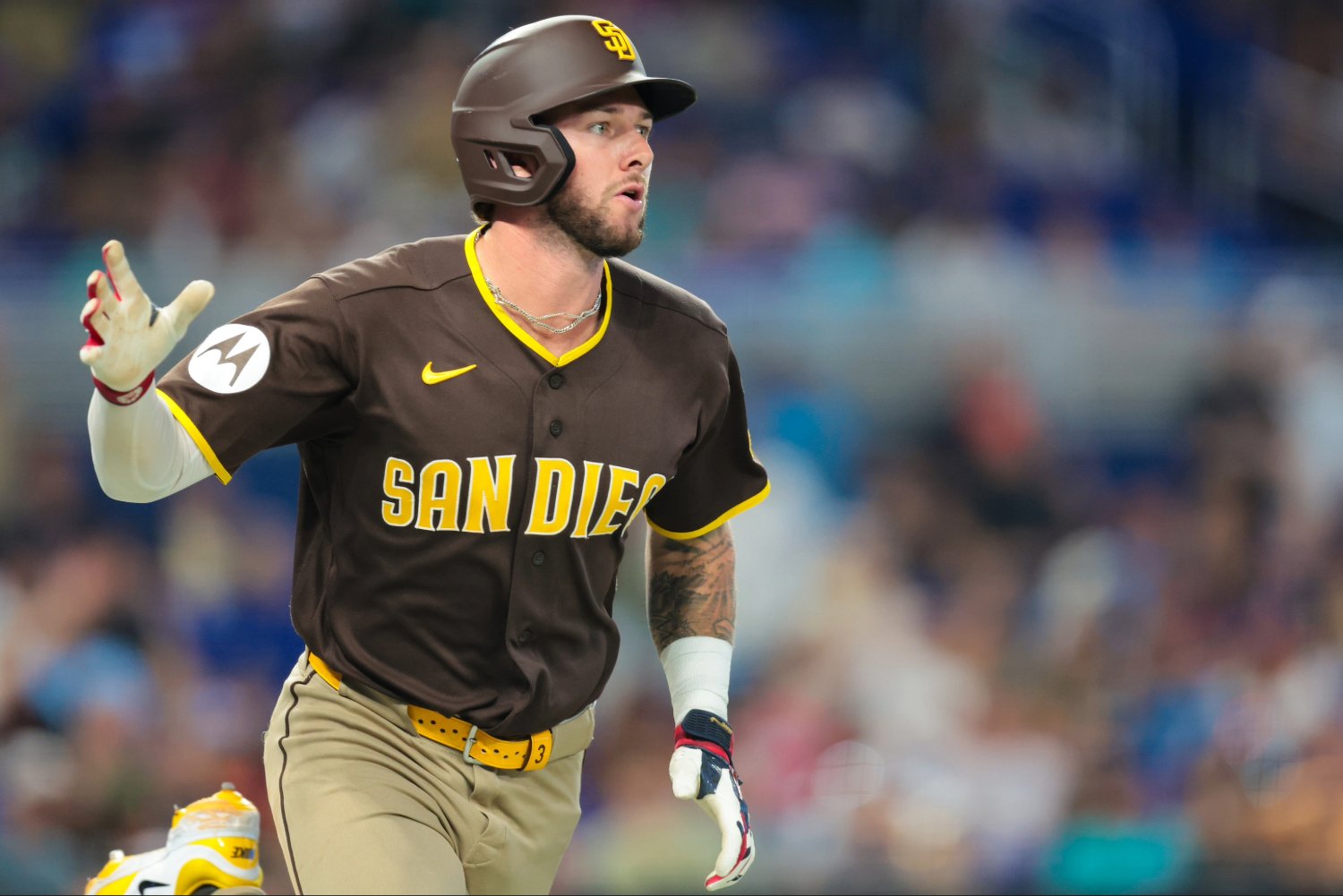 The San Diego Padres are still alive. Despite their best efforts over the last handful of weeks, their sweep of the Miami Marlins over the weekend set them back at .500 (53-53). That put them back to within two games of a National League Wild Card spot, though three teams remain ahead of them before they even get to the likes of those currently occupying the three spots in Chicago, Philadelphia, and Arizona. Nevertheless, they're still hanging around. That doesn't lend itself to any clarity regarding their approach to the trade deadline, but it does draw the attention back to the active roster. Because the Padres wouldn't be in a position to have any hope, let alone a thinner margin, at this point if it weren't for those players. Specifically, we're talking about Jackson Merrill. Merrill was a centerpiece over the weekend sweep in Florida. He had a three-hit game on Saturday before adding another two on Sunday. Few actions were more notable over the weekend than this: Down early, Merrill's solo home run in the eighth gave them a lead they wouldn't relinquish. It was the latest in what has become a very strong July for a player who had struggled mightily over the season's first three months. This is Merrill's monthly distribution from the first half of the season: March/April: 128 PA, .200/.270/.330, .130 ISO, 68 wRC+ May: 101 PA, .220/.297/.341, .121 ISO, 79 wRC+ June: 114 PA, .220/.248/.358, .138 ISO, 67 wRC+ To say that the young center fielder struggled in those first three months would be a severe understatement. Had he posted numbers of this variety in 2025, you could almost understand it given the myriad injuries he encountered. However, a fully healthy iteration of Merrill is one that was expected to bounce back. That didn't remotely come to fruition in the first half; there were a couple of modest stretches where it looked like a corner was being turned, but the production stayed minimal. Frustratingly, there didn't appear to be a clear cause for the struggle either. Some mixed up mechanics appeared to be central, but even those weren't as clear-cut as we'd like it to be. Perhaps it doesn't matter anymore. Merrill has turned a corner in July to a fairly astonishing extent. As the Padres' offense has stabilized, Merrill has been one of the drivers of the lineup this month. Through an even 90 plate appearances, he's carrying a slash of .298/.333/.571, with a gaudy .274 ISO and a 147 wRC+. His strikeout rate (23.3 percent) is his lowest in an individual month while the seven homers he's hit are only one off his cumulative total from the first three months of the season. What's important to note about this stretch is that he isn't getting lucky. His .316 batting average on balls in play isn't the kind of nonsense figure you might expect from a struggling player suddenly breaking out. Nor is it the result of any massive shift in his mechanics. There is one component worth noting here, however: Previously, we discussed that Merrill's swing had become just long and just steep enough to pose an issue for him. That was leading to questionable contact that wasn't adept at creating impact. In other words, he was simply losing on the margins. It's clear that Merrill is now finding that contact, whether he's done so by way of improved pitch recognition or a small mechanical tweak. That rate of his ideal attack angle is every bit indicative of a player who is finding the bat in the right spot upon meeting the ball. The next step in this is making it sustainable. We don't know the reason for Merrill's 2026 trends of swinging longer, swinging harder, or swinging with enough of an increase in his angle that he ended up a shade under seemingly everything. What we do know right now is that he's making everything click. In order for the Padres to stay relevant, that will have to remain the case.
 -
Whether they needed to be deployed due to injury or poor performance, the San Diego Padres have made heavy use of their positional depth in 2026. Of course, that's not necessarily a positive when your depth is as thin as theirs has been. And when you're cycling through said options in rapid succession, that's indicative of some questions about the personnel in place. This is a team that has, at times, sent Nick Castellanos, Will Wagner, Bryce Johnson, Samad Taylor, Sung-Mun Song, and Jase Bowen into the field in spots that weren't behind the plate. Many have been responsible for mixed (or outright bad) results, and not all of the names listed made it very long. It's forced Craig Stammen to roll with starters who were otherwise struggling through periods in which he may want to give them at least the occasional rest. Emerging from that turmoil, though, it's possible that the team finally may have the piece they need in the form of Luis Rengifo. Signed by the Milwaukee Brewers ahead of the season, Rengifo was expected to play an important role in their infield picture this season. That didn't happen. Rengifo slashed just .205/.280/.254 during his time in the National League Central. He posted a wRC+ of just 51 (second-worst, ahead of only Blake Perkins in that stretch) and was worth -0.7 fWAR. The Brewers designated him for assignment towards the end of June. Thus far, Milwaukee's loss appears to be the Padres' gain. In need of serviceable depth, especially on the infield, Rengifo has been nothing short of spectacular since his arrival. Rengifo's slash through his first 30-ish plate appearances in San Diego reads .433/.485/.667. His wRC+ sits at an absurd 221 mark. His two home runs in a Padre uniform account for the only two he's hit all year. While Rengifo is still hitting the ball on the ground a fair bit (58.3 percent), he's begun to elevate enough while mixing in opposite field contact (37.5 Oppo%) in a way that is yielding some pretty impressive results. The team's collective offense has looked much better the last few weeks, and while Rengifo's addition isn't the only reason, it's still a factor. Of course, the massive caveat within all of that is that we're still talking about a sample of 33 plate appearances. As much as we'd like to make grand statements about a player thriving after a change of scenery, that's not enough volume to speak within any realm of certainty. Nevertheless, the addition of Rengifo could remain an important one for the Padres. This is a player with a solid track record as recently as 2024, before a wrist injury ended his season prematurely. Therein, he hit .300, provided occasional power (.117 ISO), and stole 24 bases. That's the type of skill set the Friars' infield could use. If even moderately sustainable, Rengifo can hang at second base, third base, and make the occasional cameo at shortstop or in the outfield. Such a player affords more days as a designated hitter for Manny Machado and provides some flexibility with how Stammen utilizes Jake Cronenworth. As Sung-Mun Song, in particular, continues to adjust to Major League Baseball, Rengifo also has the ability to provide something of a buffer for his transition. The team doesn't have to force Song into spots that could stall his development, instead opting for more of a veteran presence off the bench. Again, the sample we're working with doesn't offer any sort of promise that Luis Rengifo's current stretch will extend into any long-term picture. But he's been a crucial piece of their offense here in July, with a skill set that helps to provide a depth component to numerous positions on the depth chart. As much as the team has struggled to make their non-guaranteed additions work throughout other areas of the roster, Rengifo looks like an early win... for now. View full article
-
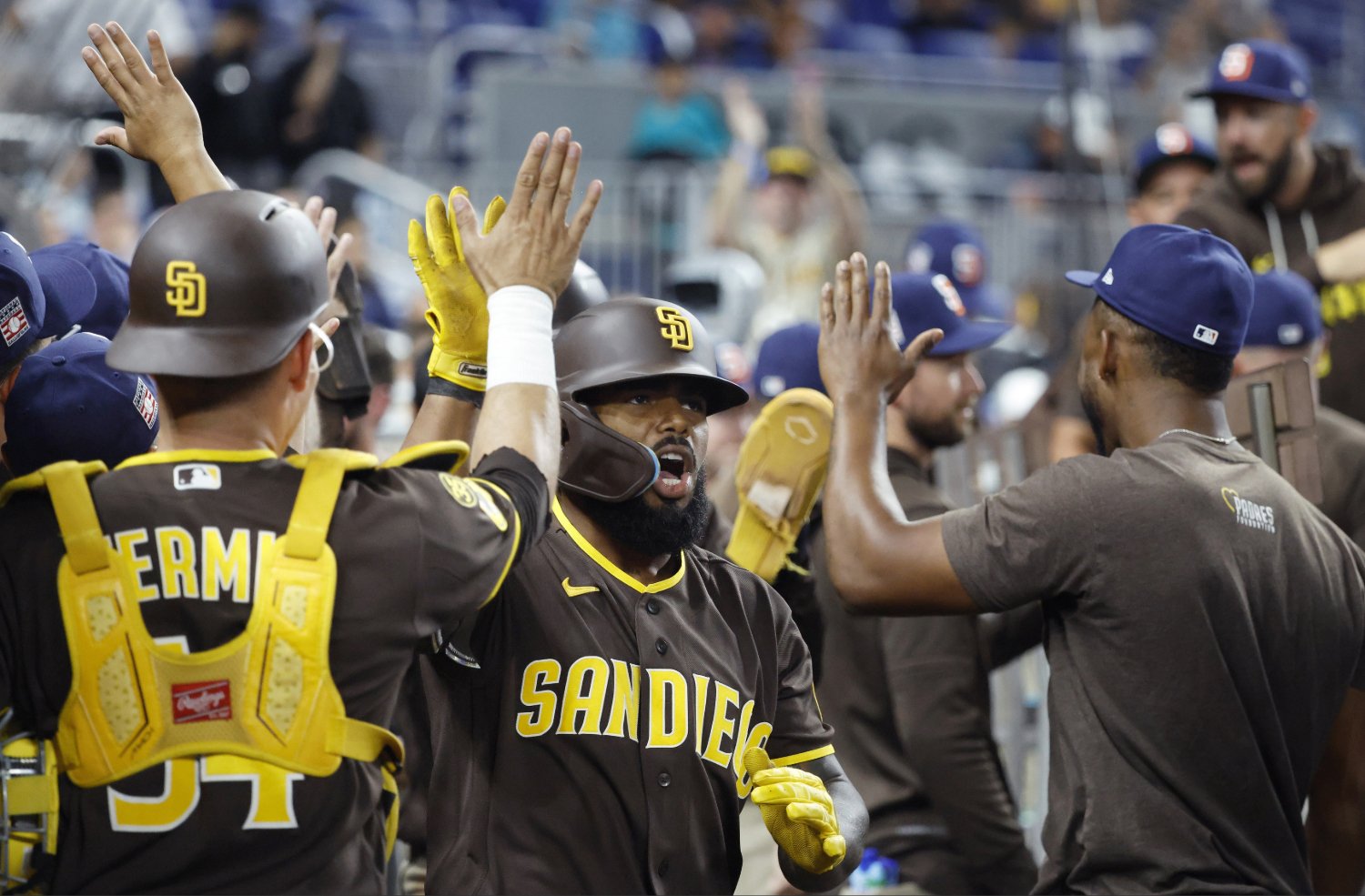 Whether they needed to be deployed due to injury or poor performance, the San Diego Padres have made heavy use of their positional depth in 2026. Of course, that's not necessarily a positive when your depth is as thin as theirs has been. And when you're cycling through said options in rapid succession, that's indicative of some questions about the personnel in place. This is a team that has, at times, sent Nick Castellanos, Will Wagner, Bryce Johnson, Samad Taylor, Sung-Mun Song, and Jase Bowen into the field in spots that weren't behind the plate. Many have been responsible for mixed (or outright bad) results, and not all of the names listed made it very long. It's forced Craig Stammen to roll with starters who were otherwise struggling through periods in which he may want to give them at least the occasional rest. Emerging from that turmoil, though, it's possible that the team finally may have the piece they need in the form of Luis Rengifo. Signed by the Milwaukee Brewers ahead of the season, Rengifo was expected to play an important role in their infield picture this season. That didn't happen. Rengifo slashed just .205/.280/.254 during his time in the National League Central. He posted a wRC+ of just 51 (second-worst, ahead of only Blake Perkins in that stretch) and was worth -0.7 fWAR. The Brewers designated him for assignment towards the end of June. Thus far, Milwaukee's loss appears to be the Padres' gain. In need of serviceable depth, especially on the infield, Rengifo has been nothing short of spectacular since his arrival. Rengifo's slash through his first 30-ish plate appearances in San Diego reads .433/.485/.667. His wRC+ sits at an absurd 221 mark. His two home runs in a Padre uniform account for the only two he's hit all year. While Rengifo is still hitting the ball on the ground a fair bit (58.3 percent), he's begun to elevate enough while mixing in opposite field contact (37.5 Oppo%) in a way that is yielding some pretty impressive results. The team's collective offense has looked much better the last few weeks, and while Rengifo's addition isn't the only reason, it's still a factor. Of course, the massive caveat within all of that is that we're still talking about a sample of 33 plate appearances. As much as we'd like to make grand statements about a player thriving after a change of scenery, that's not enough volume to speak within any realm of certainty. Nevertheless, the addition of Rengifo could remain an important one for the Padres. This is a player with a solid track record as recently as 2024, before a wrist injury ended his season prematurely. Therein, he hit .300, provided occasional power (.117 ISO), and stole 24 bases. That's the type of skill set the Friars' infield could use. If even moderately sustainable, Rengifo can hang at second base, third base, and make the occasional cameo at shortstop or in the outfield. Such a player affords more days as a designated hitter for Manny Machado and provides some flexibility with how Stammen utilizes Jake Cronenworth. As Sung-Mun Song, in particular, continues to adjust to Major League Baseball, Rengifo also has the ability to provide something of a buffer for his transition. The team doesn't have to force Song into spots that could stall his development, instead opting for more of a veteran presence off the bench. Again, the sample we're working with doesn't offer any sort of promise that Luis Rengifo's current stretch will extend into any long-term picture. But he's been a crucial piece of their offense here in July, with a skill set that helps to provide a depth component to numerous positions on the depth chart. As much as the team has struggled to make their non-guaranteed additions work throughout other areas of the roster, Rengifo looks like an early win... for now.
