


Randy Holt
-
Posts
486 -
Joined
-
Last visited
-
Days Won
6
Content Type
Profiles
San Diego Padres Videos
2026 San Diego Padres Top Prospects Ranking
San Diego Padres Free Agent & Trade Rumors, Notes, & Tidbits
Guides & Resources
2025 San Diego Padres Draft Pick Tracker
News
2026 San Diego Padres Draft Tracker: Picks & Bonuses
Forums
Blogs
Events
Store
Downloads
Gallery
Everything posted by Randy Holt
-
You could forgive Jackson Merrill for a sophomore slump in 2025. It would even be tough to label it such. The San Diego Padres' young star dealt with a variety of injuries seemingly from the jump, facing a hamstring strain, a concussion, and an ankle injury before the season reached its end, to say nothing of the lingering effects in between. As a result, he experienced a decline just about everywhere on the stat sheet. Yet even clear of such health woes, things have only gotten worse thus far in 2026. As he approaches 200 plate appearances for the year, Merrill is bogged down in a .206/.274/.329 line. He's striking out at a 26.1 percent clip and has a wRC+ of 72. His power has waned, with a .124 isolated power number that represents a 69-point drop from even last year's 15-point decline in that regard. Just about the only positives to emerge to this point in the year are an increased walk rate (8.0 percent) and eight steals that put him halfway to his career-high. As the Padres struggle to find sustained production on offense, Merrill's early struggles have been right at the forefront with no such injury excuses on which to fall back. The issue with Merrill's early performance this year isn't even in the performance itself. It's the absence of an obvious explanation for why he's underperforming. Generally, one can look at a player's underlying trends and find a catalyst that speaks to the origins of the struggle. Matters of the approach are a particularly notable factor in performance variance. Merrill's case isn't so apparent, however. For example, here are his swing trends over the course of his three years in the league: 2024: 34.3 O-Swing%, 79.8 Z-Swing%, 56.7 Swing% 2025: 37.8 O-Swing%, 79.1 Z-Swing%, 58.3 Swing% 2026: 36.3 O-Swing%, 80.6 Z-Swing%, 56.1 Swing% There isn't anything remarkably different in the approach there. Even his swing distribution against different pitch types has remained within three percent over that stretch of time. Instead of the issue being in the approach, Merrill's problem lies in the execution. He's just not making enough contact. Here are those trends over three years: 2024: 66.0 O-Contact%, 87.6 Z-Contact%, 81.0 Contact%, 10.8 SwStr% 2025: 58.6 O-Contact%, 83.7 Z-Contact%, 75.5 Contact%, 14.1 SwStr% 2026: 60.3 O-Contact%, 83.4 Z-Contact%, 75.1 Contact%, 14.0 SwStr% That's a pretty cut-and-dry case right there. Even though his swing rate is at the lowest point of his career, he's not managing to translate that into anything meaningful. This is especially true against off-speed pitches. The rate of swings against that pitch type has only increased by a single percentage point, but his whiff rate against off-speed offerings has jumped from 26.0 percent in 2024 to 34.8 percent in 2026. It's possible that some of this, especially the off-speed element, is due to an increased swing speed. At 73.3 MPH, Merrill's swing is harder than ever. Conventional baseball wisdom, however, indicates that you don't need to swing hard to make meaningful contact. Is it possible that Merrill is simply swinging too hard in a way that's stifling his ability to make contact? It would represent an obvious connection between an approach that has stayed the same despite contact metrics that have dropped off since his rookie season. He's also been coming in with a steeper swing in the last two years than in the first. His attack angle in 2024 was just six degrees against a 10-degree angle in 2025 and a nine-degree angle thus far in 2026. A faster, steeper swing occurring alongside wilting contact numbers seems to be where we may find the root of the issue for Merrill. Especially with a hard contact rate that sits up in the 84th percentile (48.3 percent). That's our intersection. The approach has been steady, but the swing has become more aggressive and, at the same time, steeper. That means when contact is there, it's of a harder variety, but we also see less of it. That's also why the biggest issue in his contact has been with the off-speed, which feeds off a hitter's aggression. It's not that Merrill is swinging at the wrong pitches. He's swinging at them in the wrong manner. Whether or not this is something fixable within the confines of a baseball season remains to be seen. It's not a pure mechanical tweak like footwork but something that manifests more out of mindset or instruction. That means an adjustment will have to come courtesy of Merrill's own fix or from hitting coach Steven Souza Jr. Doing so in the midst of a 162-game grind is far easier said than done. View full article
-
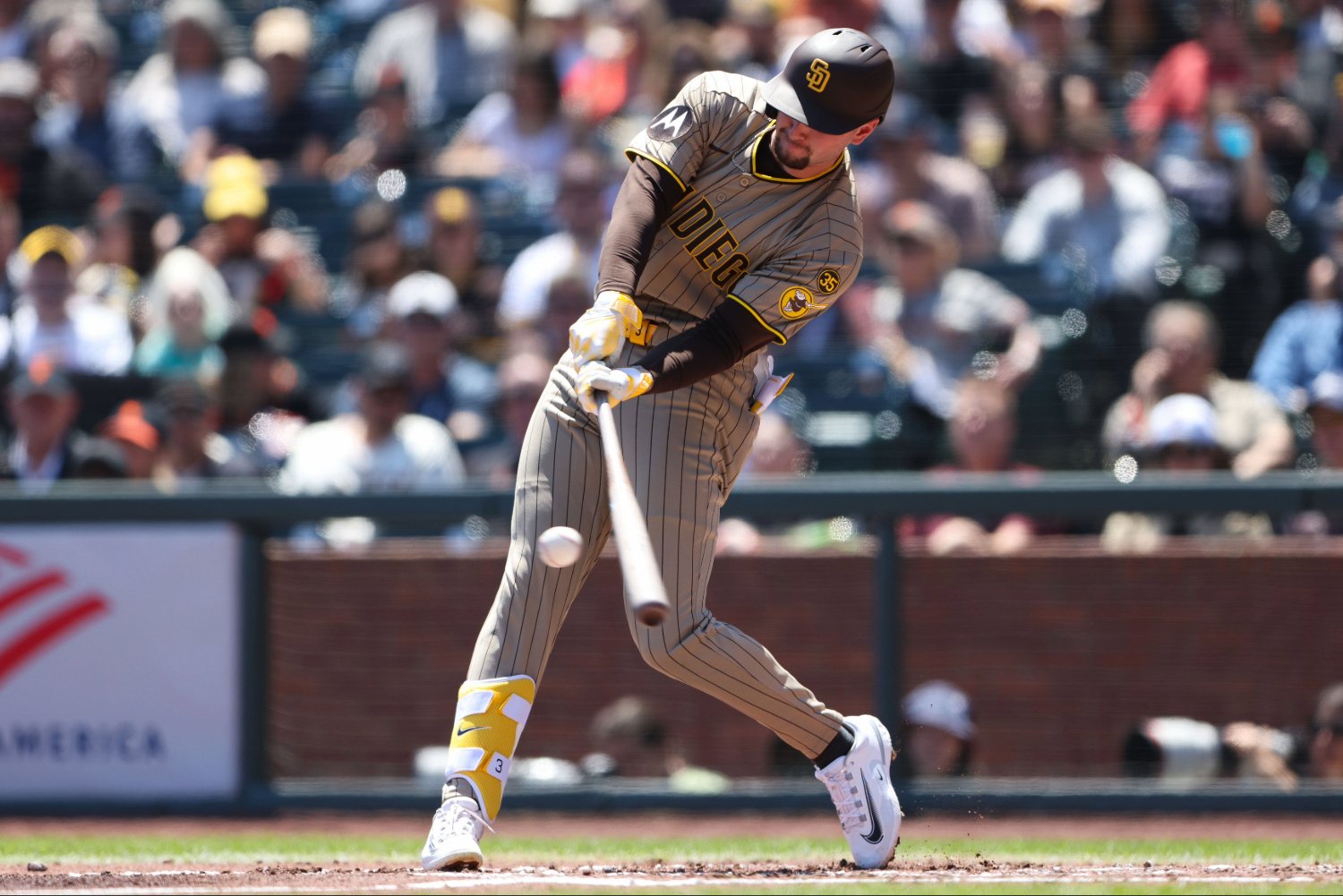 You could forgive Jackson Merrill for a sophomore slump in 2025. It would even be tough to label it such. The San Diego Padres' young star dealt with a variety of injuries seemingly from the jump, facing a hamstring strain, a concussion, and an ankle injury before the season reached its end, to say nothing of the lingering effects in between. As a result, he experienced a decline just about everywhere on the stat sheet. Yet even clear of such health woes, things have only gotten worse thus far in 2026. As he approaches 200 plate appearances for the year, Merrill is bogged down in a .206/.274/.329 line. He's striking out at a 26.1 percent clip and has a wRC+ of 72. His power has waned, with a .124 isolated power number that represents a 69-point drop from even last year's 15-point decline in that regard. Just about the only positives to emerge to this point in the year are an increased walk rate (8.0 percent) and eight steals that put him halfway to his career-high. As the Padres struggle to find sustained production on offense, Merrill's early struggles have been right at the forefront with no such injury excuses on which to fall back. The issue with Merrill's early performance this year isn't even in the performance itself. It's the absence of an obvious explanation for why he's underperforming. Generally, one can look at a player's underlying trends and find a catalyst that speaks to the origins of the struggle. Matters of the approach are a particularly notable factor in performance variance. Merrill's case isn't so apparent, however. For example, here are his swing trends over the course of his three years in the league: 2024: 34.3 O-Swing%, 79.8 Z-Swing%, 56.7 Swing% 2025: 37.8 O-Swing%, 79.1 Z-Swing%, 58.3 Swing% 2026: 36.3 O-Swing%, 80.6 Z-Swing%, 56.1 Swing% There isn't anything remarkably different in the approach there. Even his swing distribution against different pitch types has remained within three percent over that stretch of time. Instead of the issue being in the approach, Merrill's problem lies in the execution. He's just not making enough contact. Here are those trends over three years: 2024: 66.0 O-Contact%, 87.6 Z-Contact%, 81.0 Contact%, 10.8 SwStr% 2025: 58.6 O-Contact%, 83.7 Z-Contact%, 75.5 Contact%, 14.1 SwStr% 2026: 60.3 O-Contact%, 83.4 Z-Contact%, 75.1 Contact%, 14.0 SwStr% That's a pretty cut-and-dry case right there. Even though his swing rate is at the lowest point of his career, he's not managing to translate that into anything meaningful. This is especially true against off-speed pitches. The rate of swings against that pitch type has only increased by a single percentage point, but his whiff rate against off-speed offerings has jumped from 26.0 percent in 2024 to 34.8 percent in 2026. It's possible that some of this, especially the off-speed element, is due to an increased swing speed. At 73.3 MPH, Merrill's swing is harder than ever. Conventional baseball wisdom, however, indicates that you don't need to swing hard to make meaningful contact. Is it possible that Merrill is simply swinging too hard in a way that's stifling his ability to make contact? It would represent an obvious connection between an approach that has stayed the same despite contact metrics that have dropped off since his rookie season. He's also been coming in with a steeper swing in the last two years than in the first. His attack angle in 2024 was just six degrees against a 10-degree angle in 2025 and a nine-degree angle thus far in 2026. A faster, steeper swing occurring alongside wilting contact numbers seems to be where we may find the root of the issue for Merrill. Especially with a hard contact rate that sits up in the 84th percentile (48.3 percent). That's our intersection. The approach has been steady, but the swing has become more aggressive and, at the same time, steeper. That means when contact is there, it's of a harder variety, but we also see less of it. That's also why the biggest issue in his contact has been with the off-speed, which feeds off a hitter's aggression. It's not that Merrill is swinging at the wrong pitches. He's swinging at them in the wrong manner. Whether or not this is something fixable within the confines of a baseball season remains to be seen. It's not a pure mechanical tweak like footwork but something that manifests more out of mindset or instruction. That means an adjustment will have to come courtesy of Merrill's own fix or from hitting coach Steven Souza Jr. Doing so in the midst of a 162-game grind is far easier said than done.
 -
The San Diego Padres are not a fast baseball team when it comes to moving around the bases. Anyone who has watched Manny Machado sidle up the basepaths would not be surprised by that fact. But while Machado represents the most noticeable element of the team’s collective lack of speed, he’s hardly the only sole representative in this department. In fact, when it comes to the broader major-league picture, only a trio of Padres would come highly recommended in their ability to scoot on the basepaths: Jake Cronenworth, Jackson Merrill, and Fernando Tatis Jr. Those three sit in the 91st, the 89th, and the 85th percentiles, respectively, in sprint speed. You’d have to trek down the 71st to find the next-closest Padre in Ramón Laureano before you saw another name from this roster. That there are so few fleet-footed members of the 2026 Padres doesn’t feel particularly surprising. This is a veteran-laden roster that is heavily comprised of first base/corner outfield types. However, the actual distribution of spring speed does paint a rather sobering picture of what the group is able to do on the basepaths: In the above visual, Luis Campusano represents the slower of the two catchers indicated, while Ty France is the slower of the two first basemen. Nick Castellanos and Bryce Johnson, respectively, are represented as part of the right field group. Ultimately, that is a contingent that falls quite heavily below average in matters of spring speed, or, at best, decidedly average. Interestingly, though, it’s not something that is proving to be too much of a surface-level detriment. We can see where the issue is manifesting for them, however. Statcast’s Run Value illustrates the value of the baserunner, taking into account runs created via steals or extra bases taken. The Padres actually rank ninth in the league in this metric, checking in with a run value of two. Where things get complex is in where that run value emerges. In establishing run value via extra-bases taken, the Padres’ ranking falls all the way down to 17th where their run value is zero. Instead, the run value they do have is rooted in their ability to steal bases, where they rank tied for second. That’s where the impact of the team’s collective (lack of) speed comes into focus. In the breakdown of run value via extra bases taken, the Padres are 26th in advances (6), 13th in runners thrown out (-2), and fourth in runners held up (-4). That’s where a team’s lack of speed is going to hurt you. It leads to conservative tendencies on the basepaths and a 23rd-place ranking in advance attempts overall (102). You’re not going to have a Manny Machado or a Ty France or even a Nick Castellanos try to grab an extra base. Such a conservative approach helps to buoy them in the rankings a bit in avoiding throw-outs and makes holds the more logical approach, but it certainly isn’t generating much in actually producing value. The steals game, meanwhile, is where the Padres are proving effective. They rank eighth in the league in steals (41), with Tatis (10), Jackson Merrill (8), and Xander Bogaerts (5) leading the way. An even dozen players have at least one steal to their credit this year. As a result, they’re fifth in league in run value added via steals of second (1), and seven in the league in run value in steals of third (0). They have six more attempted steals of second versus the average (which ranks fifth) and two more attempted steals of third against the average (which ranks sixth). Their 12th-place standing in attempted steals is indicative of a certain efficiency in this phase of the game. It’s important to note the difference in how sprint speed impacts the two sides of the Padres’ run value. A runner doesn’t have to be fast to steal bases. While it can be a positive factor, the concept of a read and a jump also have a bearing on a successful steal. The taking of extra bases, however, requires less on the instinct front and more on the ability to get around the bases with a certain degree of speed. The Padres visibly have the former but lack the latter. Given the two’s standing in opposition with one another, it’s hard not to feel like they cancel each other out. The Padres aren’t hurt in their ability to score because they can get runners into scoring position with the steal. They’re also held back some by a relative absence of extra bases being taken upon contact. At the end of the day, it’s the byproduct of the team’s roster construction and something that will likely be maintained moving forward. For a team that finds offensive production quite challenging on any given night, that's not the most satisfying answer to give, but it's one the Friars will have to live with. View full article
-
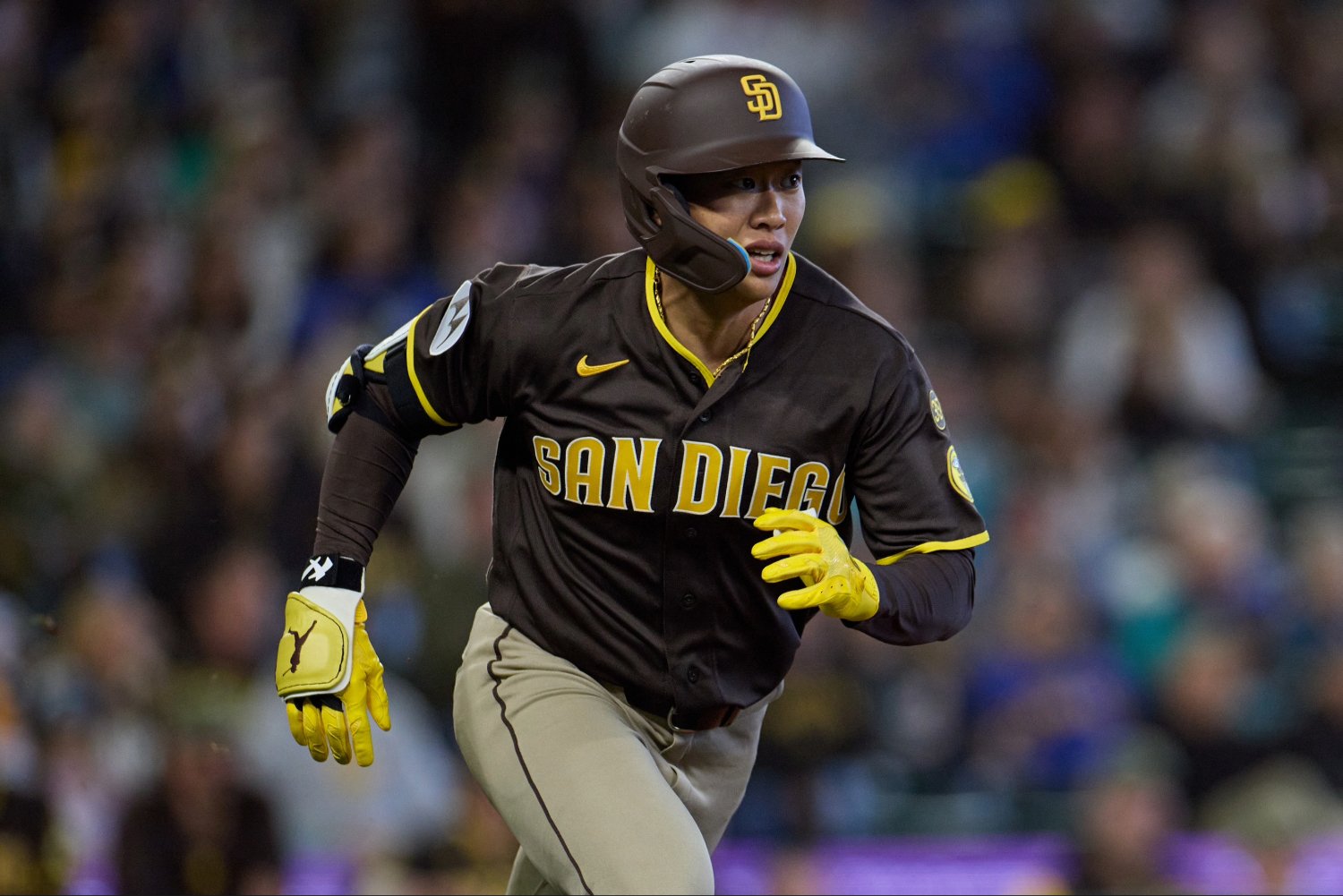 The San Diego Padres are not a fast baseball team when it comes to moving around the bases. Anyone who has watched Manny Machado sidle up the basepaths would not be surprised by that fact. But while Machado represents the most noticeable element of the team’s collective lack of speed, he’s hardly the only sole representative in this department. In fact, when it comes to the broader major-league picture, only a trio of Padres would come highly recommended in their ability to scoot on the basepaths: Jake Cronenworth, Jackson Merrill, and Fernando Tatis Jr. Those three sit in the 91st, the 89th, and the 85th percentiles, respectively, in sprint speed. You’d have to trek down the 71st to find the next-closest Padre in Ramón Laureano before you saw another name from this roster. That there are so few fleet-footed members of the 2026 Padres doesn’t feel particularly surprising. This is a veteran-laden roster that is heavily comprised of first base/corner outfield types. However, the actual distribution of spring speed does paint a rather sobering picture of what the group is able to do on the basepaths: In the above visual, Luis Campusano represents the slower of the two catchers indicated, while Ty France is the slower of the two first basemen. Nick Castellanos and Bryce Johnson, respectively, are represented as part of the right field group. Ultimately, that is a contingent that falls quite heavily below average in matters of spring speed, or, at best, decidedly average. Interestingly, though, it’s not something that is proving to be too much of a surface-level detriment. We can see where the issue is manifesting for them, however. Statcast’s Run Value illustrates the value of the baserunner, taking into account runs created via steals or extra bases taken. The Padres actually rank ninth in the league in this metric, checking in with a run value of two. Where things get complex is in where that run value emerges. In establishing run value via extra-bases taken, the Padres’ ranking falls all the way down to 17th where their run value is zero. Instead, the run value they do have is rooted in their ability to steal bases, where they rank tied for second. That’s where the impact of the team’s collective (lack of) speed comes into focus. In the breakdown of run value via extra bases taken, the Padres are 26th in advances (6), 13th in runners thrown out (-2), and fourth in runners held up (-4). That’s where a team’s lack of speed is going to hurt you. It leads to conservative tendencies on the basepaths and a 23rd-place ranking in advance attempts overall (102). You’re not going to have a Manny Machado or a Ty France or even a Nick Castellanos try to grab an extra base. Such a conservative approach helps to buoy them in the rankings a bit in avoiding throw-outs and makes holds the more logical approach, but it certainly isn’t generating much in actually producing value. The steals game, meanwhile, is where the Padres are proving effective. They rank eighth in the league in steals (41), with Tatis (10), Jackson Merrill (8), and Xander Bogaerts (5) leading the way. An even dozen players have at least one steal to their credit this year. As a result, they’re fifth in league in run value added via steals of second (1), and seven in the league in run value in steals of third (0). They have six more attempted steals of second versus the average (which ranks fifth) and two more attempted steals of third against the average (which ranks sixth). Their 12th-place standing in attempted steals is indicative of a certain efficiency in this phase of the game. It’s important to note the difference in how sprint speed impacts the two sides of the Padres’ run value. A runner doesn’t have to be fast to steal bases. While it can be a positive factor, the concept of a read and a jump also have a bearing on a successful steal. The taking of extra bases, however, requires less on the instinct front and more on the ability to get around the bases with a certain degree of speed. The Padres visibly have the former but lack the latter. Given the two’s standing in opposition with one another, it’s hard not to feel like they cancel each other out. The Padres aren’t hurt in their ability to score because they can get runners into scoring position with the steal. They’re also held back some by a relative absence of extra bases being taken upon contact. At the end of the day, it’s the byproduct of the team’s roster construction and something that will likely be maintained moving forward. For a team that finds offensive production quite challenging on any given night, that's not the most satisfying answer to give, but it's one the Friars will have to live with.
 -
The San Diego Padres have largely continued to win baseball games despite an offense that has slowly worked its way from below average to more of a middling nature. While they continue to wait on the likes of Fernando Tatis Jr. and Jackson Merrill to become regular contributors to the cause, it’s been an unlikely source spearheading the runs they are able to score: Xander Bogaerts. Bogaerts hasn’t been entirely lost on offense during his time with the Padres, but there have certainly been stretches where it looked as if the organization would regret his 11-year deal far too early into it. He’s done his best to stave off those concerns in 2026, however, working at a pace that has him to set to exceed his prior production just about everywhere if he’s able to maintain it. Through more than 160 plate appearances thus far, Bogaerts carries a line that reads .262/.337/.423 with a 121 wRC+. His 16.9 percent strikeout rate sits up in the 78th percentile with a walk rate that rests nicely at 10.2 percent. The former is down slightly and the latter is up more significantly from his trends since arriving in San Diego prior to 2023. Most notable within his performance, though, is the power. Bogaerts has a .161 isolated power figure to this point. That’s not a gaudy number relative to the league’s genuine sluggers, but he previously topped out for the Padres back in that initial 2023 campaign with a .154 ISO. The two subsequent years featured marks of .117 and .128, respectively. He compensated well in those two middle years with his baserunning acumen, but the absence of any real impact stifled his ability to contribute regularly to an offensive attack to which his place in the payroll indicates he should be central. Nevertheless, there’s a contribution happening here that wasn’t before. With a player experiencing even a modest upswing in power after an extended sample without it, the sustainability question generally harkens to mechanics and approach as preeminent sources of the increase. And what’s interesting in this case is that Bogaerts isn’t doing anything demonstrably different within his swing that is indicative of an uptick in power. He’s actually swinging the bat slower, with an attack angle, attack direction, and tilt that have all remained fairly similar to every other season on which we have data. The mechanics of the swing have remained just about constant. As for the approach, Bogaerts has remained fairly steady there, too. He’s become a touch more aggressive overall, raising his swing rate from 41.7 percent last year to 44.3 percent thus far in 2026. He’s also managed to make slightly more contact, so there’s a higher volume of balls in play. That tends to help the overall line, especially when the contact is happening to all fields (Bogaerts has driven his Oppo% up by nearly six percent). He’s also swinging at more fastballs (also by about six percent), which can help to yield the type of all-fields contact helping Bogaerts to maintain his production to date. But there isn’t anything particularly noteworthy within this area of his game either. What it may, in fact, come down to is rather simple: he’s healthy. In each of Bogaerts’ first three seasons with the Padres, he has dealt with an injury of some sort. He battled a lingering wrist injury and a calf issue in 2023, a shoulder injury in 2024, and a myriad of problems in 2025 that included his shoulder, hamstring, and foot. Only the 2024 injury cost him legitimate time as he appeared in just 111 games. The rest, however, were of the lingering variety which certainly tamped down his production across even games in which he was still playing. Which means that there’s a decent shot that Bogaerts is the same player he’s always been in matters of his mechanics and his approach. We know the talent has always been there. Perhaps something in the underlying data will manifest as the sample grows and provides us with another rationale. In the meantime, a healthy Xander Bogaerts is not only an improved player for the Padres in 2026, but an absolutely crucial one given the slow start of some of his counterparts. View full article
-
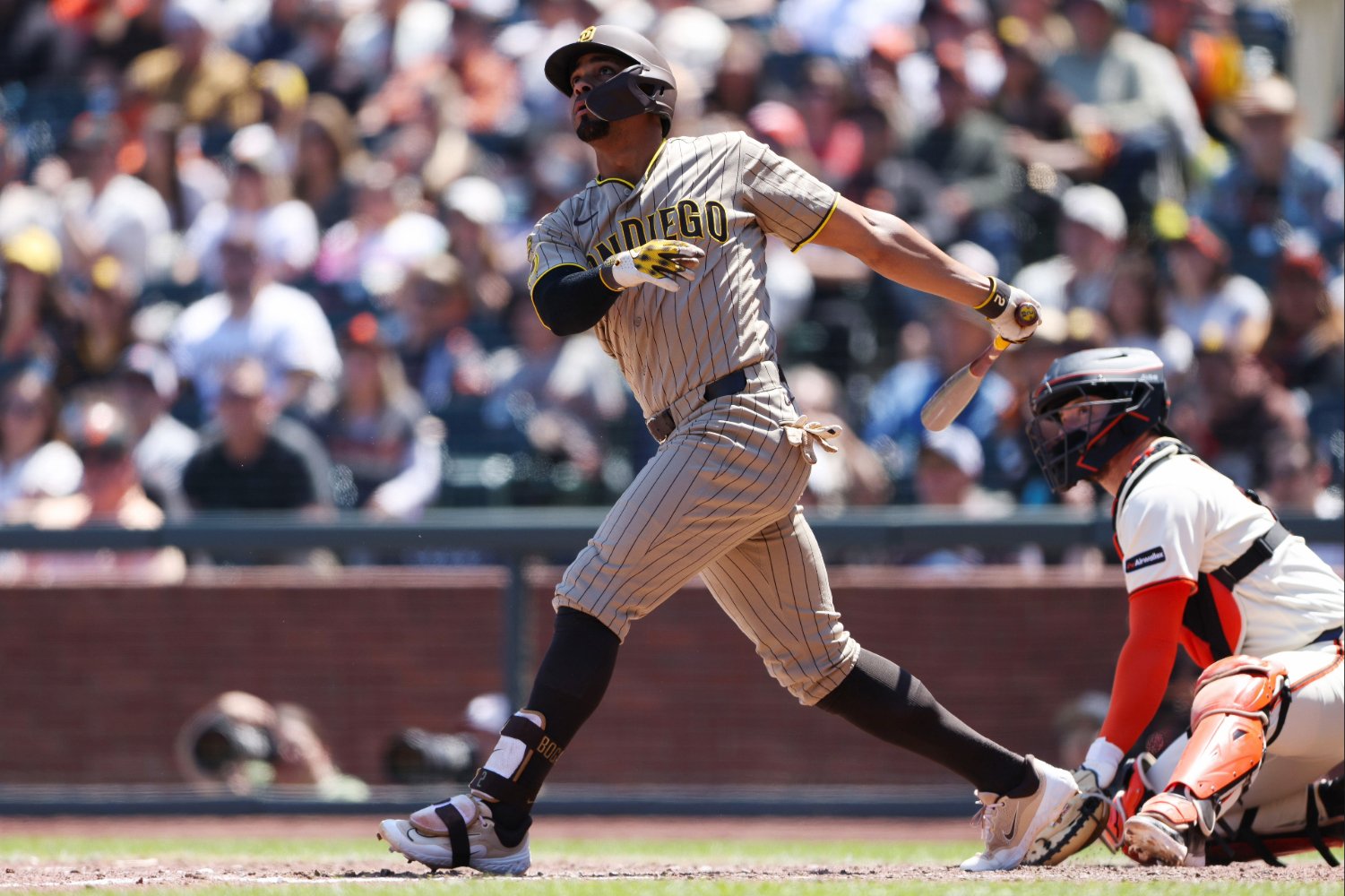 The San Diego Padres have largely continued to win baseball games despite an offense that has slowly worked its way from below average to more of a middling nature. While they continue to wait on the likes of Fernando Tatis Jr. and Jackson Merrill to become regular contributors to the cause, it’s been an unlikely source spearheading the runs they are able to score: Xander Bogaerts. Bogaerts hasn’t been entirely lost on offense during his time with the Padres, but there have certainly been stretches where it looked as if the organization would regret his 11-year deal far too early into it. He’s done his best to stave off those concerns in 2026, however, working at a pace that has him to set to exceed his prior production just about everywhere if he’s able to maintain it. Through more than 160 plate appearances thus far, Bogaerts carries a line that reads .262/.337/.423 with a 121 wRC+. His 16.9 percent strikeout rate sits up in the 78th percentile with a walk rate that rests nicely at 10.2 percent. The former is down slightly and the latter is up more significantly from his trends since arriving in San Diego prior to 2023. Most notable within his performance, though, is the power. Bogaerts has a .161 isolated power figure to this point. That’s not a gaudy number relative to the league’s genuine sluggers, but he previously topped out for the Padres back in that initial 2023 campaign with a .154 ISO. The two subsequent years featured marks of .117 and .128, respectively. He compensated well in those two middle years with his baserunning acumen, but the absence of any real impact stifled his ability to contribute regularly to an offensive attack to which his place in the payroll indicates he should be central. Nevertheless, there’s a contribution happening here that wasn’t before. With a player experiencing even a modest upswing in power after an extended sample without it, the sustainability question generally harkens to mechanics and approach as preeminent sources of the increase. And what’s interesting in this case is that Bogaerts isn’t doing anything demonstrably different within his swing that is indicative of an uptick in power. He’s actually swinging the bat slower, with an attack angle, attack direction, and tilt that have all remained fairly similar to every other season on which we have data. The mechanics of the swing have remained just about constant. As for the approach, Bogaerts has remained fairly steady there, too. He’s become a touch more aggressive overall, raising his swing rate from 41.7 percent last year to 44.3 percent thus far in 2026. He’s also managed to make slightly more contact, so there’s a higher volume of balls in play. That tends to help the overall line, especially when the contact is happening to all fields (Bogaerts has driven his Oppo% up by nearly six percent). He’s also swinging at more fastballs (also by about six percent), which can help to yield the type of all-fields contact helping Bogaerts to maintain his production to date. But there isn’t anything particularly noteworthy within this area of his game either. What it may, in fact, come down to is rather simple: he’s healthy. In each of Bogaerts’ first three seasons with the Padres, he has dealt with an injury of some sort. He battled a lingering wrist injury and a calf issue in 2023, a shoulder injury in 2024, and a myriad of problems in 2025 that included his shoulder, hamstring, and foot. Only the 2024 injury cost him legitimate time as he appeared in just 111 games. The rest, however, were of the lingering variety which certainly tamped down his production across even games in which he was still playing. Which means that there’s a decent shot that Bogaerts is the same player he’s always been in matters of his mechanics and his approach. We know the talent has always been there. Perhaps something in the underlying data will manifest as the sample grows and provides us with another rationale. In the meantime, a healthy Xander Bogaerts is not only an improved player for the Padres in 2026, but an absolutely crucial one given the slow start of some of his counterparts.
 -
When Ethan Salas burst onto the Single-A scene as a 17-year-old back in 2023, it might’ve been easy to expect to see him playing home games at the top level for the San Diego Padres by now. Especially when he was up a level with Double-A San Antonio at the same age. Between injuries and subsequent uneven performance in the years since, however, he remains a catcher for… Double-A San Antonio. Perhaps not for long, however. Clear of a 2025 back injury that limited him to only 10 games, Salas has come out of the gates scorching for the Missions. As of mid-May, he’s slashing .320/.396/.546 with a 151 wRC+. His 23.4 percent strikeout rate sits around his career norm in the minor leagues, while his 11.7 percent walk rate is indicative of the improved discipline he demonstrated in his minuscule sample last season. What’s more impressive is the rate at which he’s performed over this last stretch of games. Salas has recorded hits in 11 of his last 15 contests. Eight of those outings have featured multiple hits. All of his home runs have come in that stretch, with nine total walks against 12 total strikeouts. It’s resulted in a percentile distribution that looks rather visually appealing: This isn’t a matter of a hitter finding a random hot stretch. He’s making a ton of contact and elevating the ball to the pull side. When those two things are working in conjunction with one another, good things tend to happen. Hence, the gaudy line you see before you through his first 110-ish plate appearances of 2026. The question is whether any of this will actually matter to A.J. Preller. Last year, we saw Preller trade his No. 1 prospect in Leo De Vries for a relief pitcher. Of course, Mason Miller isn’t just any relief pitcher (especially not thus far in 2026), but moving a middle infield prospect of his caliber amid the context of an aging group of veterans on the major-league roster still raises questions about how much value is placed on prospects for this organization and its leader. As Salas now begins to recoup his value, both in trade and in future projection for the Padres, is there a chance he’s the next marquee prospect to land with a new organization? This one is a bit more difficult to envision than the trade of De Vries. Don’t get it twisted. De Vries’ upside is massive. The Padres also have Manny Machado, Xander Bogaerts, and Jake Cronenworth around the infield in the long-term. Only Cronenworth is a viable trade candidate among that group, and the organization has been inclined to hold onto him through multiple bouts of trade rumors. On paper, there is personnel in place at a position which De Vries would be likely to occupy (with the “on paper” phrasing doing a lot of heavy lifting in that sentence). Salas faces much softer obstacles on his path to the big leagues. Sure, the Padres have two catchers with multiple years of team control in place; Freddy Fermin is arbitration-eligible through 2029 and Luis Campusano carries his through 2028. Fermin is a defensive-forward backstop without much to speak of in the bat. Campusano represents the inverse, with the organization demonstrating a prior reluctance to even allow him to catch given what some of his defensive metrics looked like. There are no established veterans on long-term deals standing in Ethan Salas’ way. And if he’s going to continue to look like he has this year, his promotion to the next level could be aggressive. It wouldn’t be entirely unreasonable to expect to see him in San Diego before year’s end if the current trajectory is even remotely maintained. When one factors in the positional context, trading Salas in the same way that De Vries was shipped out would be a really tough sell for Preller. Luckily, it’s one that he may not feel as inclined to make now that Salas has trended back toward ascent rather than spending time in Stagnation City. View full article
-
Is Ethan Salas Suddenly An Untouchable Prospect Again For the Padres?
Randy Holt posted an article in Padres
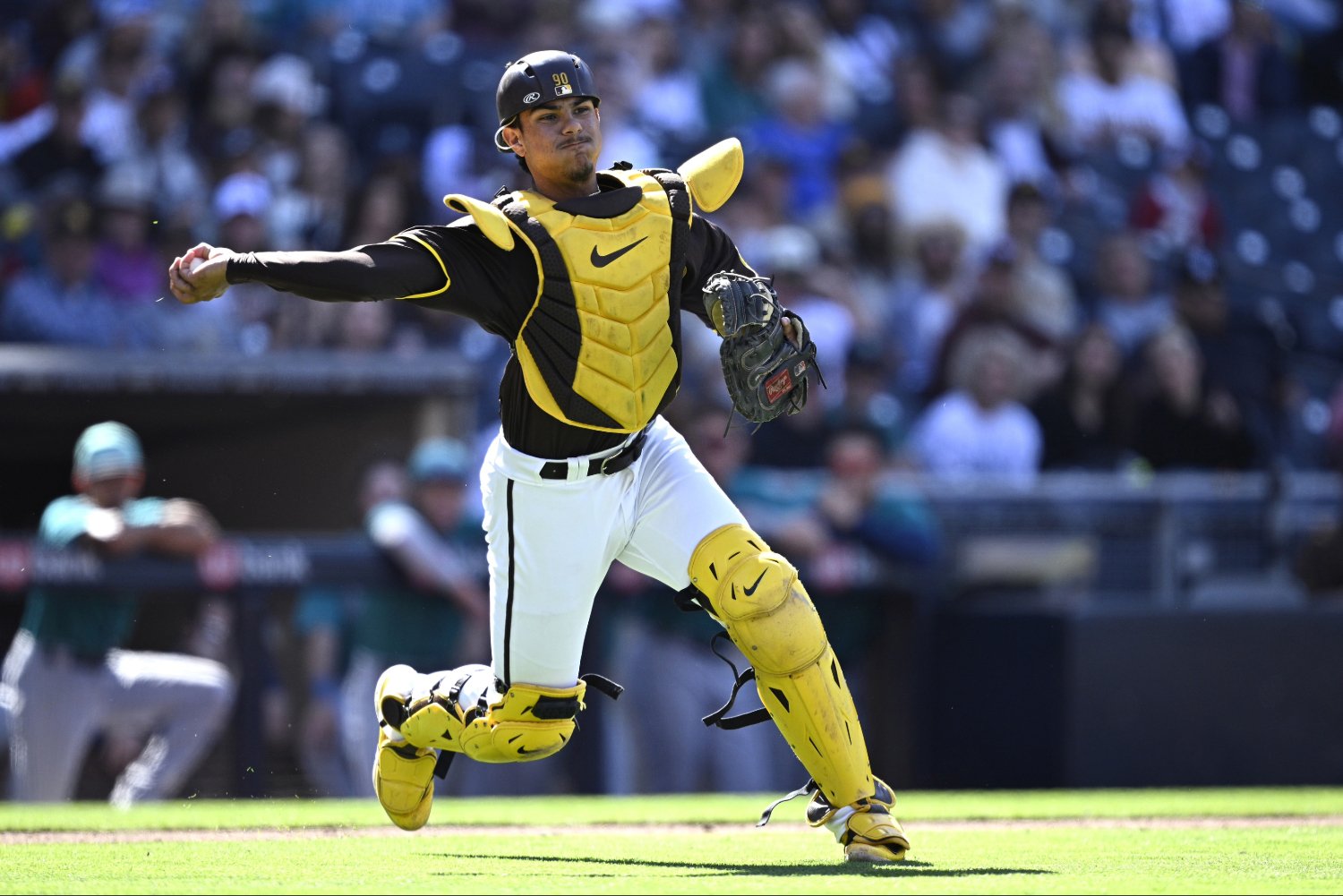 When Ethan Salas burst onto the Single-A scene as a 17-year-old back in 2023, it might’ve been easy to expect to see him playing home games at the top level for the San Diego Padres by now. Especially when he was up a level with Double-A San Antonio at the same age. Between injuries and subsequent uneven performance in the years since, however, he remains a catcher for… Double-A San Antonio. Perhaps not for long, however. Clear of a 2025 back injury that limited him to only 10 games, Salas has come out of the gates scorching for the Missions. As of mid-May, he’s slashing .320/.396/.546 with a 151 wRC+. His 23.4 percent strikeout rate sits around his career norm in the minor leagues, while his 11.7 percent walk rate is indicative of the improved discipline he demonstrated in his minuscule sample last season. What’s more impressive is the rate at which he’s performed over this last stretch of games. Salas has recorded hits in 11 of his last 15 contests. Eight of those outings have featured multiple hits. All of his home runs have come in that stretch, with nine total walks against 12 total strikeouts. It’s resulted in a percentile distribution that looks rather visually appealing: This isn’t a matter of a hitter finding a random hot stretch. He’s making a ton of contact and elevating the ball to the pull side. When those two things are working in conjunction with one another, good things tend to happen. Hence, the gaudy line you see before you through his first 110-ish plate appearances of 2026. The question is whether any of this will actually matter to A.J. Preller. Last year, we saw Preller trade his No. 1 prospect in Leo De Vries for a relief pitcher. Of course, Mason Miller isn’t just any relief pitcher (especially not thus far in 2026), but moving a middle infield prospect of his caliber amid the context of an aging group of veterans on the major-league roster still raises questions about how much value is placed on prospects for this organization and its leader. As Salas now begins to recoup his value, both in trade and in future projection for the Padres, is there a chance he’s the next marquee prospect to land with a new organization? This one is a bit more difficult to envision than the trade of De Vries. Don’t get it twisted. De Vries’ upside is massive. The Padres also have Manny Machado, Xander Bogaerts, and Jake Cronenworth around the infield in the long-term. Only Cronenworth is a viable trade candidate among that group, and the organization has been inclined to hold onto him through multiple bouts of trade rumors. On paper, there is personnel in place at a position which De Vries would be likely to occupy (with the “on paper” phrasing doing a lot of heavy lifting in that sentence). Salas faces much softer obstacles on his path to the big leagues. Sure, the Padres have two catchers with multiple years of team control in place; Freddy Fermin is arbitration-eligible through 2029 and Luis Campusano carries his through 2028. Fermin is a defensive-forward backstop without much to speak of in the bat. Campusano represents the inverse, with the organization demonstrating a prior reluctance to even allow him to catch given what some of his defensive metrics looked like. There are no established veterans on long-term deals standing in Ethan Salas’ way. And if he’s going to continue to look like he has this year, his promotion to the next level could be aggressive. It wouldn’t be entirely unreasonable to expect to see him in San Diego before year’s end if the current trajectory is even remotely maintained. When one factors in the positional context, trading Salas in the same way that De Vries was shipped out would be a really tough sell for Preller. Luckily, it’s one that he may not feel as inclined to make now that Salas has trended back toward ascent rather than spending time in Stagnation City.
 -
When Kyle Hart struggled through six starts out of the gate for the San Diego Padres in 2025, the remainder of his appearances came in relief. Even short on rotation depth to start this year, that’s where Hart has spent all of his time in 2026. The results? A 5.40 ERA, a plummeting 14.7 K%, and an 8.8 percent walk rate that sits above last year’s mark through 16 2/3 innings. That work earned him a demotion to Triple-A upon the return of Yuki Matsui. And yet, there’s something enticing about this iteration of Kyle Hart (even if his recent minor-league option will put a pin on the anticipation). Last year’s version of Hart didn’t offer anything particularly inspiring. He pitched to a 5.86 ERA, a 5.18 FIP, and was only particularly strong in his ability to mitigate free passes (7.3 BB%). For a pitcher without upper-tier stuff, he also wasn’t particularly adept at mixing things up depending on the handedness of opposing hitters. This is Hart’s pitch distribution in 2025: There was a favoring of the sweeper against lefties that was balanced out by the changeup to right-handed hitters. Other than that, he was evenly spreading things out regardless of opposing hitters. Worse yet is the fact that deploying the change against righties didn’t make a bit of difference, as he was touched for a .359 opposing wOBA and 42.5 percent hard hit rate against that handedness. In 2026, however, there has been a stark change to Hart’s repertoire. Note that splitter down at the bottom of the distribution, thrown a mere five percent of the time in total. That’s where things get interesting: Hart’s splitter usage has taken off. He’s now throwing it 22.4 percent of the time, in line with each of his sweeper and sinker usage. Not only that, the changeup has become a thing of memory; he has yet to throw one in 2026. While the results haven’t been there in terms of run prevention, there’s something very interesting happening with that splitter in particular. Opposing hitters are swinging at the split 56.1 percent of the time. That’s the most of any pitch Hart is throwing. They’re whiffing at a 21.9 percent, also the tops of any component in his arsenal. It’s gone for a 25.0 Hard-Hit% and has yet to find a barrel. Even more importantly, it’s righties that are most heavily impacted by each of these trends. Not only are they following each one, they’re putting the splitter into the ground at a 66.7 percent rate. The value of this development cannot be overstated given that it’s a tool designed for right-handed hitters (and he’s throwing it to said hitters more than any other pitch at 31 percent of the time). It’s been an imperfect process given that Hart still has a .328 wOBA against righties on his ledger. Within that context, though, it’s notable that he continues to walk righties at a much higher rate, with five of his six walks coming against hitters of the opposite handedness. Nevertheless, the fact that the process is there speaks to an evolution that could be tremendously beneficial to the middle innings for the Padres. The strikeout numbers don’t look good. The walk rate looks just okay. But when you are working with a hard-hit rate in the 95th percentile and a groundball rate in the 96th, then you offer plenty to be a regularly utilized arm in relief. If Hart is able to gain enough of a grip on his command to right-handed hitters, there’s a real viability here that removes any thought of a restriction over which handedness he could face. The splitter is the springboard. He just needs to harness it. View full article
-
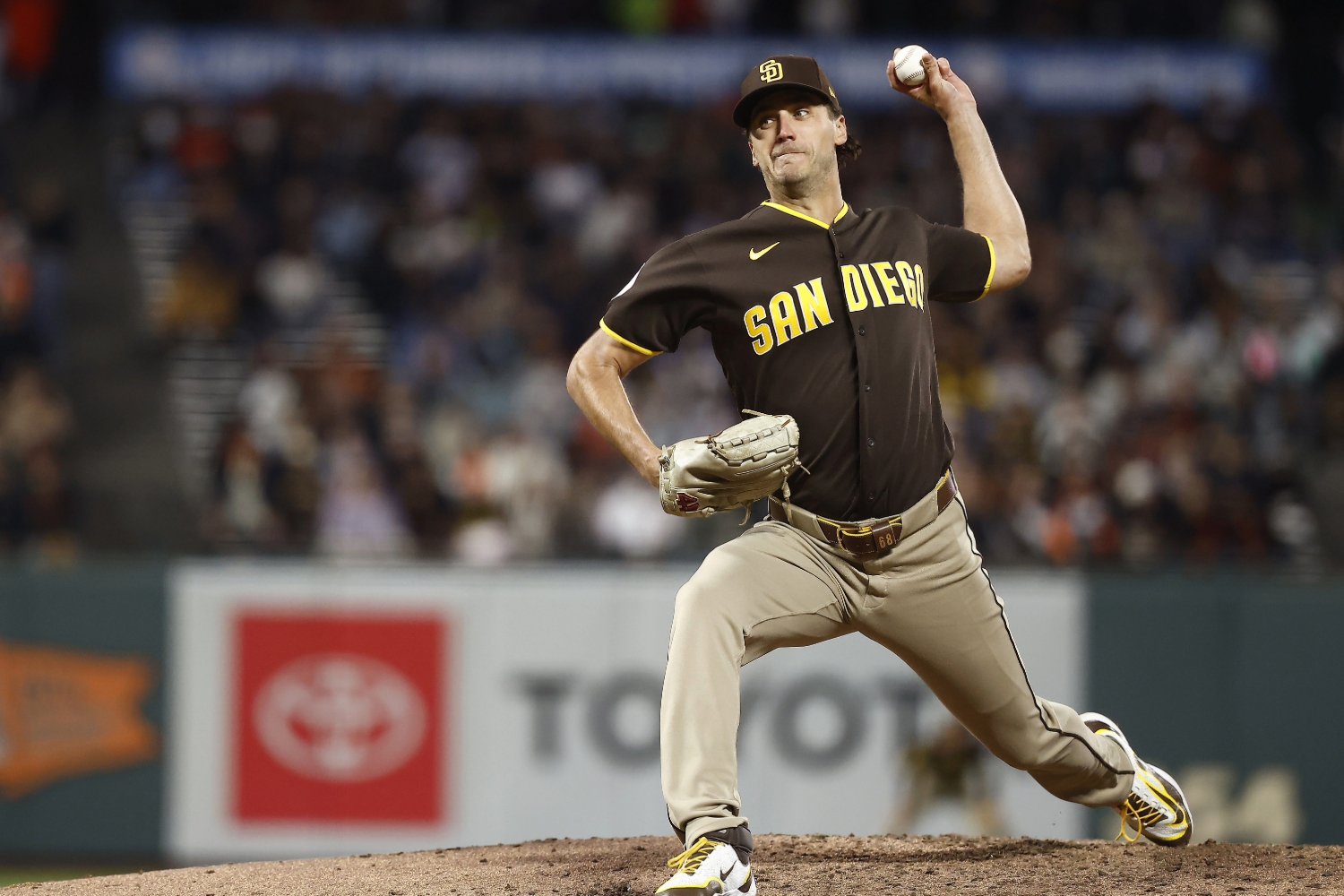 When Kyle Hart struggled through six starts out of the gate for the San Diego Padres in 2025, the remainder of his appearances came in relief. Even short on rotation depth to start this year, that’s where Hart has spent all of his time in 2026. The results? A 5.40 ERA, a plummeting 14.7 K%, and an 8.8 percent walk rate that sits above last year’s mark through 16 2/3 innings. That work earned him a demotion to Triple-A upon the return of Yuki Matsui. And yet, there’s something enticing about this iteration of Kyle Hart (even if his recent minor-league option will put a pin on the anticipation). Last year’s version of Hart didn’t offer anything particularly inspiring. He pitched to a 5.86 ERA, a 5.18 FIP, and was only particularly strong in his ability to mitigate free passes (7.3 BB%). For a pitcher without upper-tier stuff, he also wasn’t particularly adept at mixing things up depending on the handedness of opposing hitters. This is Hart’s pitch distribution in 2025: There was a favoring of the sweeper against lefties that was balanced out by the changeup to right-handed hitters. Other than that, he was evenly spreading things out regardless of opposing hitters. Worse yet is the fact that deploying the change against righties didn’t make a bit of difference, as he was touched for a .359 opposing wOBA and 42.5 percent hard hit rate against that handedness. In 2026, however, there has been a stark change to Hart’s repertoire. Note that splitter down at the bottom of the distribution, thrown a mere five percent of the time in total. That’s where things get interesting: Hart’s splitter usage has taken off. He’s now throwing it 22.4 percent of the time, in line with each of his sweeper and sinker usage. Not only that, the changeup has become a thing of memory; he has yet to throw one in 2026. While the results haven’t been there in terms of run prevention, there’s something very interesting happening with that splitter in particular. Opposing hitters are swinging at the split 56.1 percent of the time. That’s the most of any pitch Hart is throwing. They’re whiffing at a 21.9 percent, also the tops of any component in his arsenal. It’s gone for a 25.0 Hard-Hit% and has yet to find a barrel. Even more importantly, it’s righties that are most heavily impacted by each of these trends. Not only are they following each one, they’re putting the splitter into the ground at a 66.7 percent rate. The value of this development cannot be overstated given that it’s a tool designed for right-handed hitters (and he’s throwing it to said hitters more than any other pitch at 31 percent of the time). It’s been an imperfect process given that Hart still has a .328 wOBA against righties on his ledger. Within that context, though, it’s notable that he continues to walk righties at a much higher rate, with five of his six walks coming against hitters of the opposite handedness. Nevertheless, the fact that the process is there speaks to an evolution that could be tremendously beneficial to the middle innings for the Padres. The strikeout numbers don’t look good. The walk rate looks just okay. But when you are working with a hard-hit rate in the 95th percentile and a groundball rate in the 96th, then you offer plenty to be a regularly utilized arm in relief. If Hart is able to gain enough of a grip on his command to right-handed hitters, there’s a real viability here that removes any thought of a restriction over which handedness he could face. The splitter is the springboard. He just needs to harness it.
 -
Despite a solid record for the first full month of the season, the San Diego Padres came into May sitting near the bottom of Major League Baseball in a number of offensive categories. As of the start of the Cardinals series, they're 23rd in runs scored (141), 26th in on-base percentage (.307), and 22nd in isolated power (.143). Not that this is surprising, of course, given the minimal turnover for a team that struggled to plate runs for much of 2025. That doesn't mean the lineup is operating in the same fashion, though. In fact, the lack of an offensive punch stands in contrast to what the lineup is attempting to do. The 2024 Padres — a team which featured five of the same regulars as this year's group — ranked 29th in average bat speed (70.5 MPH). They did, however, trade swing speed for efficiency in ranking atop the league in squared-up contact (28.0 percent of swings) and sitting 12th in blasts (10.7 percent). Despite a modest increase in swing speed the following season (71.3 MPH), the trend largely carried over into 2025. They were fourth in the league in squared-up swing rate (26.8 percent) and maintained the same blast rate. The trend here is creating quality contact despite a swing speed that sits behind many of their peers across the major-league landscape. With a new coaching staff in place this year, though, it appears that they've begun to deviate a bit from this philosophy in 2026. This year's Padres are up to 12th in the league in average swing speed (72.4 percent). Their collective fast swing rate (defined as over 75 MPH) has moved up to 26.9 percent. While the individual swing speeds vary in their increase (or decrease, in some cases), each of Fernando Tatis Jr., Jake Cronenworth, and Jackson Merrill have seen dramatic increases in their fast swing rate. When you factor in the subtraction of a notoriously-slow-swinging Luis Arráez and add in harder swingers like Ty France and Miguel Andujar, the collective increase isn't difficult to conceptualize. Are the Padres better for it, though? The below graphic shows last year's team, with their swing speeds sitting on the x-axis and their squared-up contact on the percentage of swings on the y-axis: Obviously the Arráez outlier obscures things, but you'll note where Padres hitters sit in proximity to the vertical red line indicating league average swing speed and the horizontal one indicating league average in matters of squared-up contact. Our interest is in the latter. These Padres lingered nicely around that line. Even if they weren't swinging particularly hard (outside of Tatis, Machado, and Sheets), they were creating quality contact in a way that yielded positive results in matters of batting average, on-base percentage, and strikeout avoidance. Squared-up contact doesn't necessarily indicate power outcomes, but it does serve to prop up an offense that may lack it. This year's Padres aren't looking in quite the same form: In 2025, even those that were not squaring up contact with league average regularity were at least approaching it. This year, there's very little keeping the Padres afloat. Outside of Tatis and Sheets, who are riding their swing speeds to really nice rates in this regard (and Bogaerts, who has gone the opposite direction), this is a group living well below where they were last year. So, while the Padres are near the top of the league in hard-hit rate (43.4 percent), it's much too infrequent to actually matter. It's also being driven by their hardest swingers. They're trading efficiency for speed, and, in doing so, have fallen to the middle of the pack in contact rate and experienced a subsequent rise in strikeouts. Squaring up baseballs in the eyes of Statcast is all about maximizing the exit velocity attainable on a pitch. The Padres aren't doing that in the midst of the paradoxical thinking bestowed by new hitting coach Steven Souza Jr., who is apparently driving them to do this. Given how things have transpired in recent games, in addition to how a handful of hitters have struggled all season, perhaps it's time for a bit of a reevaluation. View full article
-
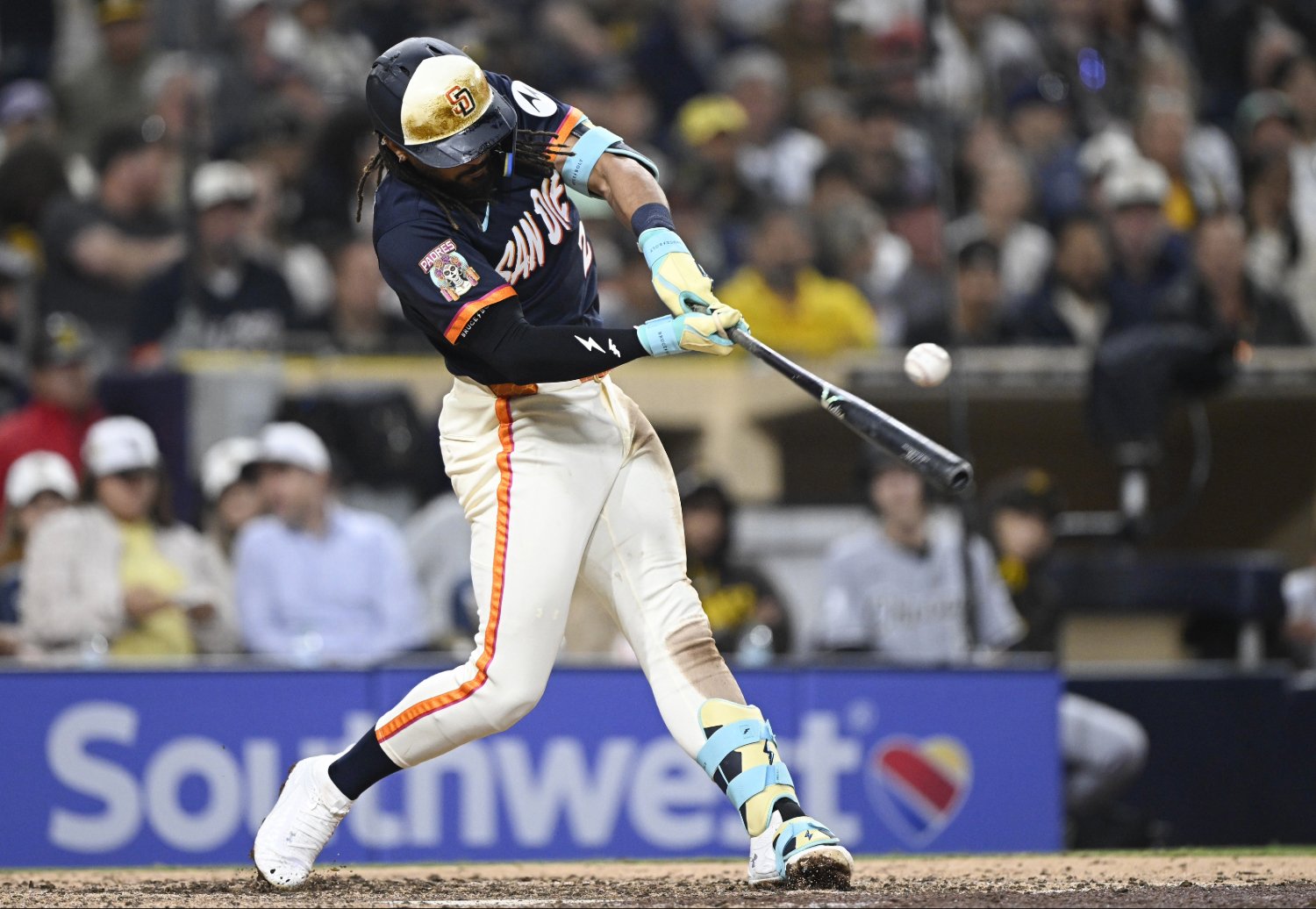 Despite a solid record for the first full month of the season, the San Diego Padres came into May sitting near the bottom of Major League Baseball in a number of offensive categories. As of the start of the Cardinals series, they're 23rd in runs scored (141), 26th in on-base percentage (.307), and 22nd in isolated power (.143). Not that this is surprising, of course, given the minimal turnover for a team that struggled to plate runs for much of 2025. That doesn't mean the lineup is operating in the same fashion, though. In fact, the lack of an offensive punch stands in contrast to what the lineup is attempting to do. The 2024 Padres — a team which featured five of the same regulars as this year's group — ranked 29th in average bat speed (70.5 MPH). They did, however, trade swing speed for efficiency in ranking atop the league in squared-up contact (28.0 percent of swings) and sitting 12th in blasts (10.7 percent). Despite a modest increase in swing speed the following season (71.3 MPH), the trend largely carried over into 2025. They were fourth in the league in squared-up swing rate (26.8 percent) and maintained the same blast rate. The trend here is creating quality contact despite a swing speed that sits behind many of their peers across the major-league landscape. With a new coaching staff in place this year, though, it appears that they've begun to deviate a bit from this philosophy in 2026. This year's Padres are up to 12th in the league in average swing speed (72.4 percent). Their collective fast swing rate (defined as over 75 MPH) has moved up to 26.9 percent. While the individual swing speeds vary in their increase (or decrease, in some cases), each of Fernando Tatis Jr., Jake Cronenworth, and Jackson Merrill have seen dramatic increases in their fast swing rate. When you factor in the subtraction of a notoriously-slow-swinging Luis Arráez and add in harder swingers like Ty France and Miguel Andujar, the collective increase isn't difficult to conceptualize. Are the Padres better for it, though? The below graphic shows last year's team, with their swing speeds sitting on the x-axis and their squared-up contact on the percentage of swings on the y-axis: Obviously the Arráez outlier obscures things, but you'll note where Padres hitters sit in proximity to the vertical red line indicating league average swing speed and the horizontal one indicating league average in matters of squared-up contact. Our interest is in the latter. These Padres lingered nicely around that line. Even if they weren't swinging particularly hard (outside of Tatis, Machado, and Sheets), they were creating quality contact in a way that yielded positive results in matters of batting average, on-base percentage, and strikeout avoidance. Squared-up contact doesn't necessarily indicate power outcomes, but it does serve to prop up an offense that may lack it. This year's Padres aren't looking in quite the same form: In 2025, even those that were not squaring up contact with league average regularity were at least approaching it. This year, there's very little keeping the Padres afloat. Outside of Tatis and Sheets, who are riding their swing speeds to really nice rates in this regard (and Bogaerts, who has gone the opposite direction), this is a group living well below where they were last year. So, while the Padres are near the top of the league in hard-hit rate (43.4 percent), it's much too infrequent to actually matter. It's also being driven by their hardest swingers. They're trading efficiency for speed, and, in doing so, have fallen to the middle of the pack in contact rate and experienced a subsequent rise in strikeouts. Squaring up baseballs in the eyes of Statcast is all about maximizing the exit velocity attainable on a pitch. The Padres aren't doing that in the midst of the paradoxical thinking bestowed by new hitting coach Steven Souza Jr., who is apparently driving them to do this. Given how things have transpired in recent games, in addition to how a handful of hitters have struggled all season, perhaps it's time for a bit of a reevaluation.
 -
There was a time when a first start of the season coming against the Chicago White Sox would've represented as soft a landing as possible. But with the San Diego Padres having dropped the first two of three against a Sox team that has been surging over the past week, Griffin Canning didn't quite get the calm welcome of a bad team standing opposed to him. Nevertheless, he managed. Sunday afternoon was Canning's first start in a Padres uniform after signing a one-year deal late in the offseason. After working through five rehab starts following last year's Achilles injury, it was an opportunity for the team to get someone else in the mix given the struggles of the Walker Buehler, Germán Márquez, Matt Waldron contingent in the latter portion of the starting five. If Canning's first start was any indication, some of that trio could be on the outs in fairly short order. Canning worked five innings (73 pitches), allowing three hits and three walks while striking out seven. He allowed one run on a Drew Romo solo homer, but did enough to leave with the lead (which was later surrendered by Adrian Morejon). Craig Stammen was intentional with how he used the deployed the newest Friars starter, limiting both his pitch count and his amount of turns through the order. Canning, for his money, was smart about usage, too. The changeup was his most frequently used pitched of the afternoon (40 percent) with the four-seam following it up at 34 percent (his slider/sweeper comprised the rest of his distribution). The first time through the order, though, Canning was heavy on the four-seamer (48 percent) before pivoting to the off-speed (47 percent) & breaking (26 percent) pitches more the second time through. Here is how things broke down for Canning in the start: The stuff played, to be sure. Canning was able to generate consistent whiffs with all three pitches and generated a fair bit of chase with the changeup and slider. The former was particularly effective given the volume of its usage and the raw number of whiffs he was able to garner with it. The location breakdown also offered reason for optimism surrounding his presence in the rotation: The fastball worked up, the changeup primarily worked down, and the slider moved around horizontally. For a starting pitcher making his first start of the season against a team on a bit of a run, it's not a bad looking distribution. If this is the version of Canning that the Padres are going to get moving forward, then he's absolutely someone who can offer the stability that the back end of the rotation has lacked. As easy as it may be to remember Canning as the starter who never realized his potential with the Los Angeles Angels, it's also easy to forget that he was beginning to break out with the New York Mets in 2025. In 16 starts, he'd posted a 3.77 ERA, a solid whiff rate, and an elite groundball rate. If he's going to simplify the arsenal so that his changeup and slider — pitches which have graded out as his best in his career by Stuff+ — are his primary offerings to play off the four-seam, then there's reason to think he could build on that small sample from Queens. At the same time, it's only one start. The Padres have had a tough time stabilizing their rotation with the volume approach. With Canning now in the mix and Lucas Giolito on the way, the former's first start is as good a reason as any in recent weeks for some optimism on that front. View full article
-
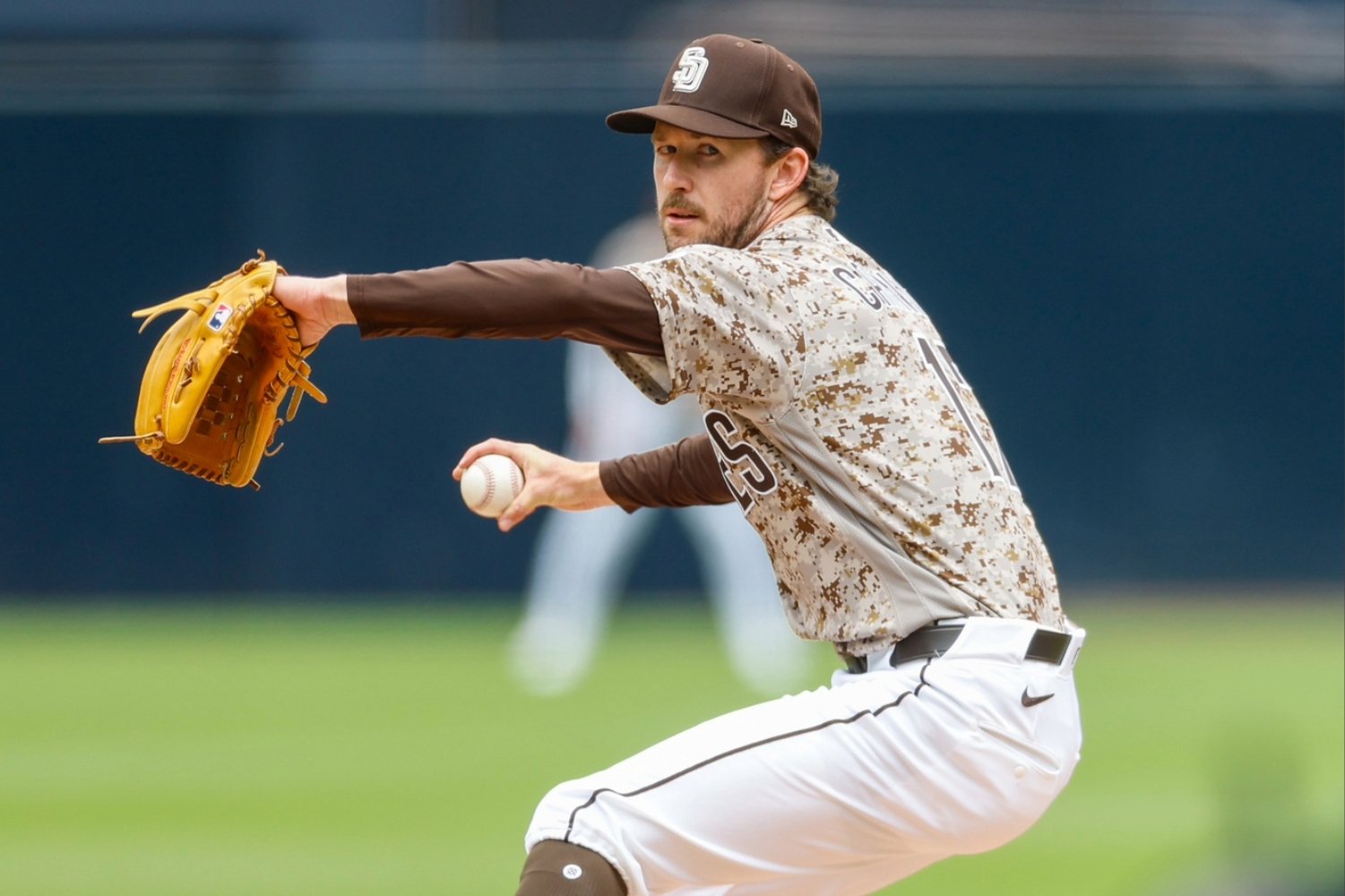 There was a time when a first start of the season coming against the Chicago White Sox would've represented as soft a landing as possible. But with the San Diego Padres having dropped the first two of three against a Sox team that has been surging over the past week, Griffin Canning didn't quite get the calm welcome of a bad team standing opposed to him. Nevertheless, he managed. Sunday afternoon was Canning's first start in a Padres uniform after signing a one-year deal late in the offseason. After working through five rehab starts following last year's Achilles injury, it was an opportunity for the team to get someone else in the mix given the struggles of the Walker Buehler, Germán Márquez, Matt Waldron contingent in the latter portion of the starting five. If Canning's first start was any indication, some of that trio could be on the outs in fairly short order. Canning worked five innings (73 pitches), allowing three hits and three walks while striking out seven. He allowed one run on a Drew Romo solo homer, but did enough to leave with the lead (which was later surrendered by Adrian Morejon). Craig Stammen was intentional with how he used the deployed the newest Friars starter, limiting both his pitch count and his amount of turns through the order. Canning, for his money, was smart about usage, too. The changeup was his most frequently used pitched of the afternoon (40 percent) with the four-seam following it up at 34 percent (his slider/sweeper comprised the rest of his distribution). The first time through the order, though, Canning was heavy on the four-seamer (48 percent) before pivoting to the off-speed (47 percent) & breaking (26 percent) pitches more the second time through. Here is how things broke down for Canning in the start: The stuff played, to be sure. Canning was able to generate consistent whiffs with all three pitches and generated a fair bit of chase with the changeup and slider. The former was particularly effective given the volume of its usage and the raw number of whiffs he was able to garner with it. The location breakdown also offered reason for optimism surrounding his presence in the rotation: The fastball worked up, the changeup primarily worked down, and the slider moved around horizontally. For a starting pitcher making his first start of the season against a team on a bit of a run, it's not a bad looking distribution. If this is the version of Canning that the Padres are going to get moving forward, then he's absolutely someone who can offer the stability that the back end of the rotation has lacked. As easy as it may be to remember Canning as the starter who never realized his potential with the Los Angeles Angels, it's also easy to forget that he was beginning to break out with the New York Mets in 2025. In 16 starts, he'd posted a 3.77 ERA, a solid whiff rate, and an elite groundball rate. If he's going to simplify the arsenal so that his changeup and slider — pitches which have graded out as his best in his career by Stuff+ — are his primary offerings to play off the four-seam, then there's reason to think he could build on that small sample from Queens. At the same time, it's only one start. The Padres have had a tough time stabilizing their rotation with the volume approach. With Canning now in the mix and Lucas Giolito on the way, the former's first start is as good a reason as any in recent weeks for some optimism on that front.
 -
As of the end of April, there was exactly one hitter in Major League Baseball hitting the ball hard at a higher rate than Fernando Tatis Jr. And even James Woods’ 64.8 Hard-Hit% just narrowly edges the 64.7 percent rate at which the San Diego Padres' right fielder is working with thus far. In the grand scheme of the stat sheet, it hasn’t seemed to matter, however. Despite the quality of contact being made, Tatis has yet to find the statistical backing that would typically accompany such an impressive hard contact rate. To close out the month, his slash read a mere .250/.323/.286 with a 77 wRC+. Not a single piece of that hard contact has found its way over an outfield wall to date, with Tatis sitting well over 200 days since his last home run. His slugging percentage is the third-worst on the team, with a .036 ISO that trails every position player currently on the roster. Of course, the why of his power outage isn’t a mystery; Tatis simply is not lifting the ball. His average launch angle is 3.2. His 6° average attack angle is a two-degree dip from last season and a four-degree decrease from 2024. Those are each a factor in an ideal attack angle rate of only 51.3 percent. That’s five percent lower than last season. Additionally, he’s working with a fly-ball rate that sits six points below his career average (28.6), which looks even worse to the pull side (PullAIR% of just 5.9). The plane of his swing is simply too flat to generate any impact. More lift juxtaposed against the type of contact Tatis is making would, undoubtedly, lead to a massive outburst of production. Whether there’s a way out of this kind of spiral in which he’s currently mired, however, is a much less certain concept. Don’t get it twisted, the swing path is the issue. The extreme shallow nature of it is a problem. Navigating any other causes almost feel fruitless given the extremes we're talking about. Nevertheless, there are a couple of other areas worth investigating to see if he could tap into some power in a different way. It’s possible that there’s something in his lower half that is stifling the power, too. This is his stance on a home run against the Arizona Diamondbacks in 2025: And here’s a swing from the team’s series against the Chicago Cubs this week: The result of the latter was a sharp single. One could perhaps make the argument that there’s more weight on his backside in the first swing that could yield more power than the one in the second. But it’s also not so severe that we’d expect that Tatis would feel compelled to evaluate the footwork components of his mechanics. Ultimately, the plane of the swing is going to come far more from the hands than anything the lower half might force it into. Maybe there’s an issue within his mastery of the zone? Even a long swing like the one Tatis utilizes might be susceptible to shallower contact if he’s being too aggressive on pitches in the lower portions of the zone that don’t lend themselves to fly-ball contact. Yet again, though, we’re faced with an absence of explanation beyond anything other than the preeminent conclusion: His approach to the zone is fine. The areas of the zone in which he’s been most active are those that should help to generate power. When he does expand the zone, it’s to the outer parts, which are closer to the barrel as part of his long (7.3 ft) swing. From a mechanical and from a zone standpoint, there isn’t anything outside of what we already know that reveals the root of the struggle. We may have one more idea, though. Tatis is swinging at more fastballs this season, reaching an equal rate with that of off-speed offerings (50.4 percent). Against those fastballs, he’s getting the ball in the air just 15.1 percent of the time. That’s a 10-point cut from 2025. His attack angle against fastballs is just 3°, with an ideal attack angle rate of only 40.9 percent. That’s nine percent lower than last season. There’s a compounding issue here. The plane of the bat is a problem on its own, but the fact that there’s an even larger exaggeration of woes there against fastballs — a pitch type against which he’s swinging at a higher rate than he did in 2025 — is indicative of something deeper. Despite the fact that Tatis is working with a fast swing speed, it feels as if he’s not in control at the plate. He’s swinging outside the zone more aggressively while also making less contact overall when he does. He’s getting quality contact because he’s hitting fastballs, but he’s doing so in a way that is more indicative of a player merely trying to put a ball in play rather than exert any impact in doing so. Does this mean there’s a psychological component at play that Tatis needs to get right before we can even begin to talk about the mechanical issues? It’s a situation that’s as fascinating as it is frustrating. The struggles of Fernando Tatis Jr. aren’t a mystery in matters of the box score. His swing is too flat. But it seems entirely possible that there are a host of other things happening that are less observable. Either way, the Padres are in need of sorting from their right fielder. As good as the offense has been at keeping them afloat in the early going, one can’t expect it to tread water for too long without their biggest driver contributing to the cause. View full article
-
Can Fernando Tatis Jr. Find A Way Out Of His Launch Angle Spiral?
Randy Holt posted an article in Padres
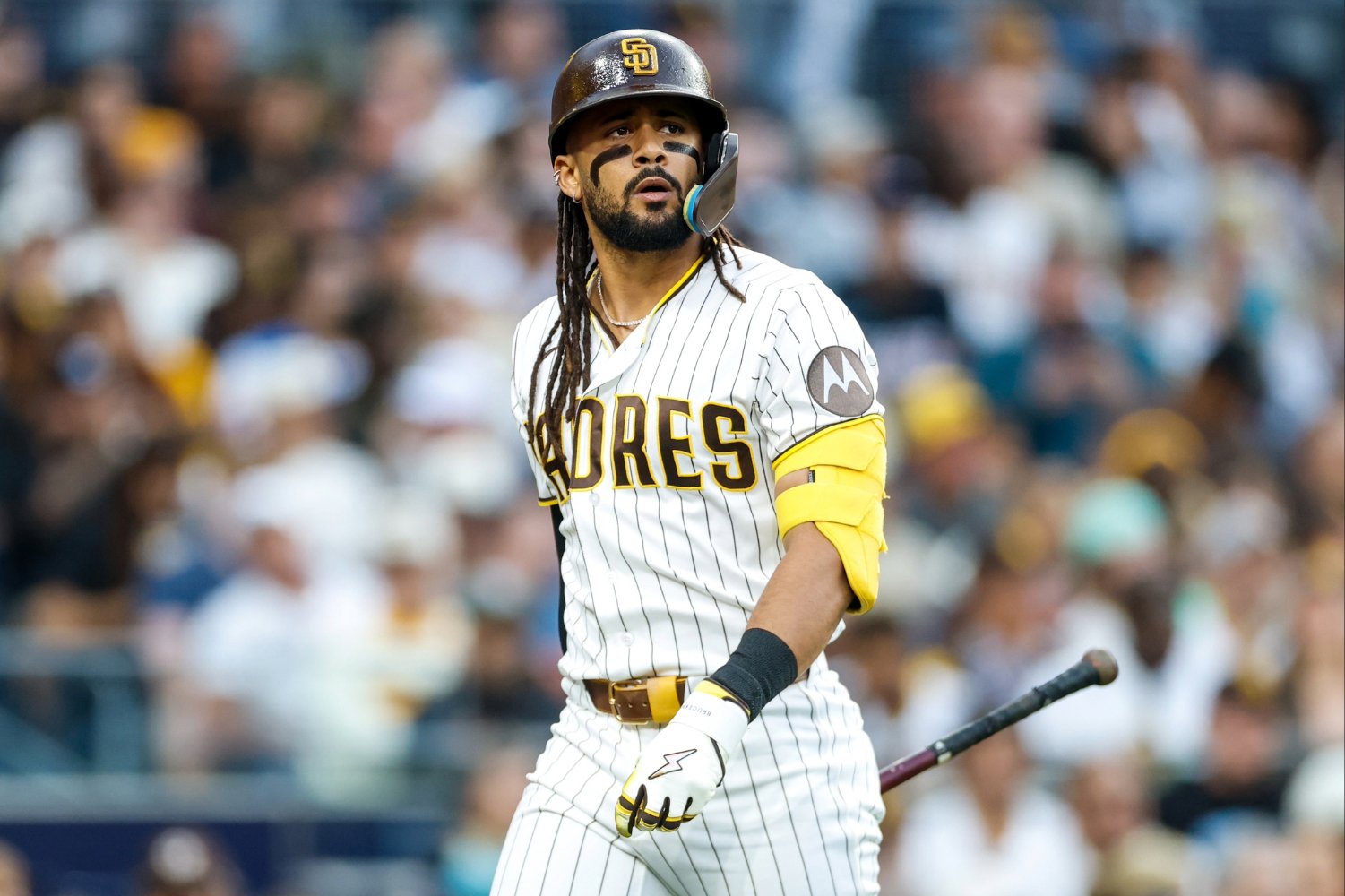 As of the end of April, there was exactly one hitter in Major League Baseball hitting the ball hard at a higher rate than Fernando Tatis Jr. And even James Woods’ 64.8 Hard-Hit% just narrowly edges the 64.7 percent rate at which the San Diego Padres' right fielder is working with thus far. In the grand scheme of the stat sheet, it hasn’t seemed to matter, however. Despite the quality of contact being made, Tatis has yet to find the statistical backing that would typically accompany such an impressive hard contact rate. To close out the month, his slash read a mere .250/.323/.286 with a 77 wRC+. Not a single piece of that hard contact has found its way over an outfield wall to date, with Tatis sitting well over 200 days since his last home run. His slugging percentage is the third-worst on the team, with a .036 ISO that trails every position player currently on the roster. Of course, the why of his power outage isn’t a mystery; Tatis simply is not lifting the ball. His average launch angle is 3.2. His 6° average attack angle is a two-degree dip from last season and a four-degree decrease from 2024. Those are each a factor in an ideal attack angle rate of only 51.3 percent. That’s five percent lower than last season. Additionally, he’s working with a fly-ball rate that sits six points below his career average (28.6), which looks even worse to the pull side (PullAIR% of just 5.9). The plane of his swing is simply too flat to generate any impact. More lift juxtaposed against the type of contact Tatis is making would, undoubtedly, lead to a massive outburst of production. Whether there’s a way out of this kind of spiral in which he’s currently mired, however, is a much less certain concept. Don’t get it twisted, the swing path is the issue. The extreme shallow nature of it is a problem. Navigating any other causes almost feel fruitless given the extremes we're talking about. Nevertheless, there are a couple of other areas worth investigating to see if he could tap into some power in a different way. It’s possible that there’s something in his lower half that is stifling the power, too. This is his stance on a home run against the Arizona Diamondbacks in 2025: And here’s a swing from the team’s series against the Chicago Cubs this week: The result of the latter was a sharp single. One could perhaps make the argument that there’s more weight on his backside in the first swing that could yield more power than the one in the second. But it’s also not so severe that we’d expect that Tatis would feel compelled to evaluate the footwork components of his mechanics. Ultimately, the plane of the swing is going to come far more from the hands than anything the lower half might force it into. Maybe there’s an issue within his mastery of the zone? Even a long swing like the one Tatis utilizes might be susceptible to shallower contact if he’s being too aggressive on pitches in the lower portions of the zone that don’t lend themselves to fly-ball contact. Yet again, though, we’re faced with an absence of explanation beyond anything other than the preeminent conclusion: His approach to the zone is fine. The areas of the zone in which he’s been most active are those that should help to generate power. When he does expand the zone, it’s to the outer parts, which are closer to the barrel as part of his long (7.3 ft) swing. From a mechanical and from a zone standpoint, there isn’t anything outside of what we already know that reveals the root of the struggle. We may have one more idea, though. Tatis is swinging at more fastballs this season, reaching an equal rate with that of off-speed offerings (50.4 percent). Against those fastballs, he’s getting the ball in the air just 15.1 percent of the time. That’s a 10-point cut from 2025. His attack angle against fastballs is just 3°, with an ideal attack angle rate of only 40.9 percent. That’s nine percent lower than last season. There’s a compounding issue here. The plane of the bat is a problem on its own, but the fact that there’s an even larger exaggeration of woes there against fastballs — a pitch type against which he’s swinging at a higher rate than he did in 2025 — is indicative of something deeper. Despite the fact that Tatis is working with a fast swing speed, it feels as if he’s not in control at the plate. He’s swinging outside the zone more aggressively while also making less contact overall when he does. He’s getting quality contact because he’s hitting fastballs, but he’s doing so in a way that is more indicative of a player merely trying to put a ball in play rather than exert any impact in doing so. Does this mean there’s a psychological component at play that Tatis needs to get right before we can even begin to talk about the mechanical issues? It’s a situation that’s as fascinating as it is frustrating. The struggles of Fernando Tatis Jr. aren’t a mystery in matters of the box score. His swing is too flat. But it seems entirely possible that there are a host of other things happening that are less observable. Either way, the Padres are in need of sorting from their right fielder. As good as the offense has been at keeping them afloat in the early going, one can’t expect it to tread water for too long without their biggest driver contributing to the cause.
 -
As expected, the San Diego Padres have one of the best corps of relief pitchers in Major League Baseball. Their 4.15 ERA ranks surprisingly in the middle of the road, but a strikeout rate (23.1 percent) that sits in 11th place and an 9.1 percent walk rate that serves as the 12th-best mark in the league is more indicative of their talent. Their 53.4 percent groundball rate tops the league, and their 27.1 percent hard-hit rate is also in the top three. But it hasn’t all been perfect. Particularly in the matters of one Adrian Morejon. One of the issues that this bullpen faces is some misfortune in the batted ball game. Their .308 BABIP allowed to opposing hitters is one of the seven highest averages in the league, leaving a strand rate (70.5 percent) that’s floating more around the middle of the pack rather than what many of the other underlying figures might peg them to be. Morejon has been a sort of microcosm of these trends. Morejon’s surface numbers look rough. Through 16 innings of work, he’s pitched to a 5.63 ERA and a 55.6 percent strand rate. His 16.7 percent homer rate is abnormally high, too. Only Ron Marinaccio’s ERA sits higher, and Jeremiah Estrada (and his minuscule sample) is the only pitcher with a lower LOB% than Morejon (40.0). For a member of the contingent that was supposed to be the late-inning bridge to Mason Miller – alongside Estrada, Jason Adam, and, to a lesser extent, David Morgan – the output thus far has not been what you want. An observer who lives off the box score rather than a realistic portrayal might begin to have doubts about Morejon’s standing in the bullpen. Even at this early stage, the ERA alone is cause for concern. At this point, however, we know that ERA doesn’t tell the whole story, especially for a reliever. Interestingly, nor do any of the other factors through which Morejon is apparently struggling at present. This is Morejon’s percentile distribution through his 16 innings of work thus far: The xERA alone is indicative of a pitcher who doesn’t particularly deserved the results he’s received to this point (for what it’s worth, he also has a 2.74 FIP). He’s always lived in something of a paradox where the stuff is excellent and the whiffs are high, but the strikeouts are not. Morejon has furthered those trends throughout his small 2026 sample. Each of the chase and whiff rates look strong, with barrel, hard hit, and walk rates that are indicative of a pitcher who is in command of his stuff. It’s been more a matter of misfortune than anything. That misfortune works against Morejon both in strict outcomes (.354 BABIP) but also in the sample. Fourteen appearances comprise those 16 innings. On April 7 in Pittsburgh, Morejon allowed four runs in just one-third of an inning, with another two allowed against Colorado on April 10. Since that point, Morejon hasn’t allowed a run in six of eight appearances. He’s also struck out 12 hitters, walked only three, and hasn’t allowed a hit in five of those appearances. Suffice it to say, the version of Morejon that exists in reality is the one that was expected to lock down the late innings ahead of Miller. A pitcher with a combination of upper-tier stuff that induces plenty of whiff and the gaudy 65.3 percent groundball rate he’s posted thus far is one that is a nightmare for opposing hitters. If all hope is abandoned as an opposing hitter when Miller steps to the mound in the ninth, it’s not as if much room for optimism exists an inning or two earlier. That was the expectation coming into the year, and it remains reality. Regardless of what the ERA or other surface-level data may indicate, Morejon has been every bit as good as expected. Once the sample size grows, the numbers should easily illustrate such without the need for all of this extra analysis. View full article
-
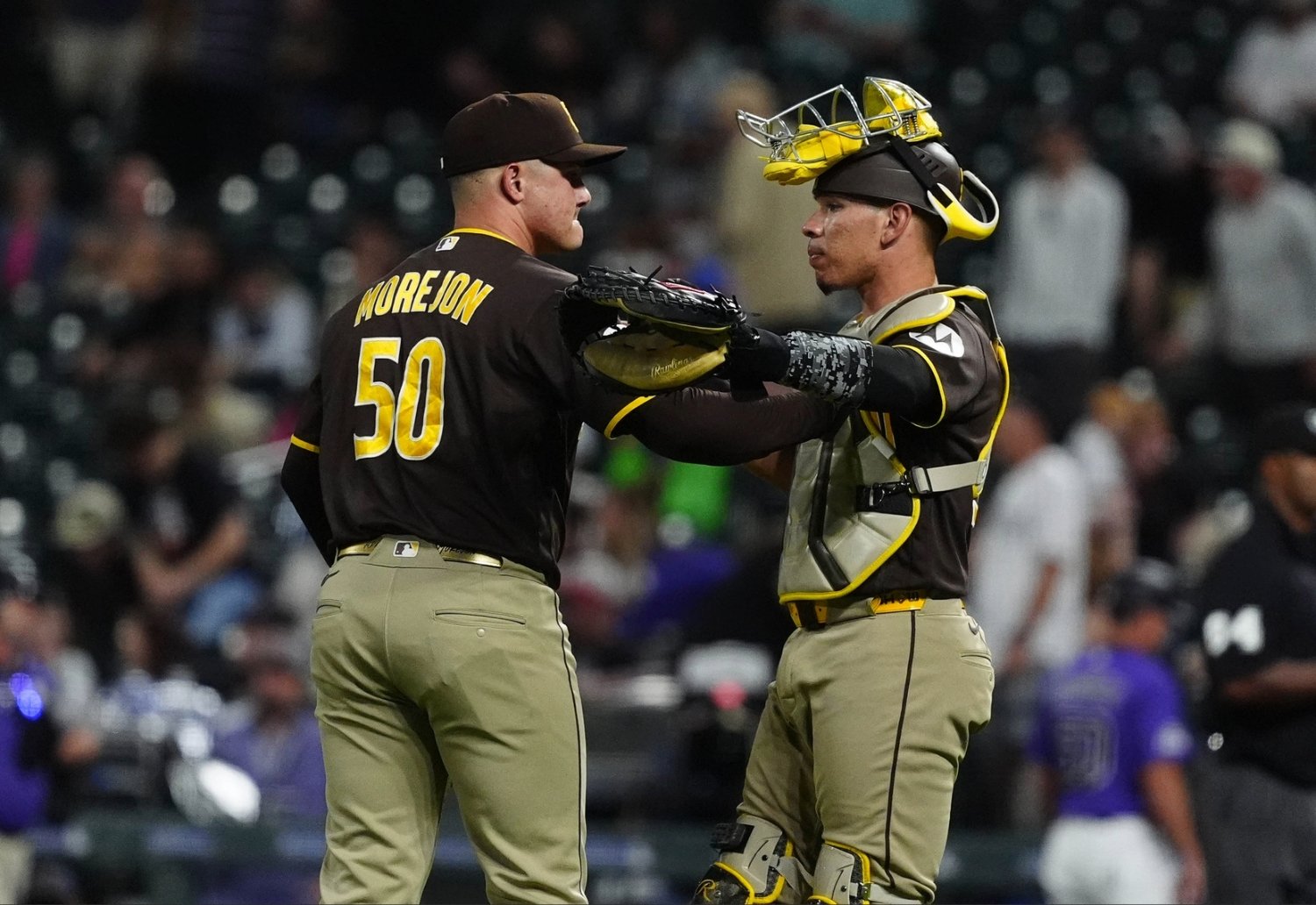 As expected, the San Diego Padres have one of the best corps of relief pitchers in Major League Baseball. Their 4.15 ERA ranks surprisingly in the middle of the road, but a strikeout rate (23.1 percent) that sits in 11th place and an 9.1 percent walk rate that serves as the 12th-best mark in the league is more indicative of their talent. Their 53.4 percent groundball rate tops the league, and their 27.1 percent hard-hit rate is also in the top three. But it hasn’t all been perfect. Particularly in the matters of one Adrian Morejon. One of the issues that this bullpen faces is some misfortune in the batted ball game. Their .308 BABIP allowed to opposing hitters is one of the seven highest averages in the league, leaving a strand rate (70.5 percent) that’s floating more around the middle of the pack rather than what many of the other underlying figures might peg them to be. Morejon has been a sort of microcosm of these trends. Morejon’s surface numbers look rough. Through 16 innings of work, he’s pitched to a 5.63 ERA and a 55.6 percent strand rate. His 16.7 percent homer rate is abnormally high, too. Only Ron Marinaccio’s ERA sits higher, and Jeremiah Estrada (and his minuscule sample) is the only pitcher with a lower LOB% than Morejon (40.0). For a member of the contingent that was supposed to be the late-inning bridge to Mason Miller – alongside Estrada, Jason Adam, and, to a lesser extent, David Morgan – the output thus far has not been what you want. An observer who lives off the box score rather than a realistic portrayal might begin to have doubts about Morejon’s standing in the bullpen. Even at this early stage, the ERA alone is cause for concern. At this point, however, we know that ERA doesn’t tell the whole story, especially for a reliever. Interestingly, nor do any of the other factors through which Morejon is apparently struggling at present. This is Morejon’s percentile distribution through his 16 innings of work thus far: The xERA alone is indicative of a pitcher who doesn’t particularly deserved the results he’s received to this point (for what it’s worth, he also has a 2.74 FIP). He’s always lived in something of a paradox where the stuff is excellent and the whiffs are high, but the strikeouts are not. Morejon has furthered those trends throughout his small 2026 sample. Each of the chase and whiff rates look strong, with barrel, hard hit, and walk rates that are indicative of a pitcher who is in command of his stuff. It’s been more a matter of misfortune than anything. That misfortune works against Morejon both in strict outcomes (.354 BABIP) but also in the sample. Fourteen appearances comprise those 16 innings. On April 7 in Pittsburgh, Morejon allowed four runs in just one-third of an inning, with another two allowed against Colorado on April 10. Since that point, Morejon hasn’t allowed a run in six of eight appearances. He’s also struck out 12 hitters, walked only three, and hasn’t allowed a hit in five of those appearances. Suffice it to say, the version of Morejon that exists in reality is the one that was expected to lock down the late innings ahead of Miller. A pitcher with a combination of upper-tier stuff that induces plenty of whiff and the gaudy 65.3 percent groundball rate he’s posted thus far is one that is a nightmare for opposing hitters. If all hope is abandoned as an opposing hitter when Miller steps to the mound in the ninth, it’s not as if much room for optimism exists an inning or two earlier. That was the expectation coming into the year, and it remains reality. Regardless of what the ERA or other surface-level data may indicate, Morejon has been every bit as good as expected. Once the sample size grows, the numbers should easily illustrate such without the need for all of this extra analysis.
 -
It isn’t a surprise that, as we approach the end of April, the San Diego Padres find themselves in contention in a tough National League West. As of April 23, they’re tied with the Los Angeles Dodgers atop the division and two games ahead of the third-place Arizona Diamondbacks. There was always a certain degree of upside that existed with this team, despite an offseason that was predicated around the volume of additions rather than the quality of them. What is surprising, however, is how the Padres have managed to navigate their early schedule. Because it isn’t happening on the strength of the offense, where the star power exists on the roster. It’s coming from everywhere else. The Padres rank 23rd in the league in runs scored (100). They rank 18th in the league in batting average (.229), 25th in on-base percentage (.306), and 22nd in isolated power (.134). The collective is a below-average unit by a wRC+ that sits 23rd. Among lineup regulars, only Ramón Laureano and Xander Bogaerts sit comfortably above average by that latter category (each at 116). Beyond those two, it’s a lineup that doesn’t strike out a lot, but doesn’t do a whole lot else to drum up offense. Instead, the strength of this team lies in the other two phases of the game. They’re seventh in the league in whole staff ERA (3.43), second in strikeout rate (25.2 percent), 10th in walk rate (8.9 percent), and second in hard-hit rate (35.4 percent). The relief corps has been as good as advertised (3.06 ERA) while the starting staff has been better than expected (3.76 ERA). Defensively, the team ranks sixth in Fielding Run Value (8) and 10th in Defensive Runs Saved (also 8), indicating a group that is also better than might’ve been expected. Pitching and defense will get you places over the course of a baseball season. But you also have to score some runs in support of those two performance areas. Given some of those massive offensive shortcomings, is there anything they’re actually doing well in order to get enough runs across the plate in support of their two areas of success? The unfortunate answer to that is: not really. Each of the runners-on or runners-in-scoring-position scenarios are illustrative of a team struggling to find its offensive footing. And while the team ranks ninth in steals, they’re also decidedly average (ranked 17th) in baserunning value. The little bit of extra they’re getting in the swipes game may certainly help, but it’s not as if there’s a particular split or element on the margins that’s allowing them to score runs. This is just a matter of a team scraping across just as much as they need. Luckily for them, the pitching and defense have each been more than good enough to compensate. If there’s good news for the Padres, it’s that they’re performing a bit better than the actual outcomes may indicate. Their disappointing 21st-ranked batting average on balls in play is furthered by expected statistics that show that they should be at least somewhat better. Their xBA (.251) is 22 points higher than the actual figure, with a xSLG (.411) that is 48 points higher and a xwOBA (.327) that 25 points higher. They should be better. The process indicates that. Despite the fact that they’re not overly patient – indicated by a mid-tier walk rate and below-average pitches per plate appearance (3.89) – they’re making quality contact. They’re third in the league in Hard-Hit% (45.1) and 12th in Barrel% (8.4). That all comes with quite a bit of groundball contact (44.7 percent), though, which is likely feeding into some of their trouble finding fortune on balls in play. Nevertheless, this is a team with visibly better offensive chops than we’ve seen to date. Which is encouraging, because there’s a very fine threading of a needle taking place. In recent years, we’ve seen the pitching and the offense not quite link up for this team. One would falter while the other would succeed. This year, the two are a bit more in sync and matching up their quality performances on a given night. That’s not the kind of trend that carries over a full season, however. It should also be noted that outside of the regular performers, this isn’t a team built to sustain long-term defensive success. Also considering the composition of the starting staff, one imagines that some of these areas of success are going to dry up at some point during the summer, if not sooner. Is there an increased patience necessary here as the team tries to create their own luck? Or is it a matter of hoping things even out more naturally as the season progresses? Either way, the Padres better hope that one or the other manifests and yields some sort of offensive ascent, because this isn’t a team constructed to exist on the margins, regardless of what their early success may try and tell us. View full article
-
 It isn’t a surprise that, as we approach the end of April, the San Diego Padres find themselves in contention in a tough National League West. As of April 23, they’re tied with the Los Angeles Dodgers atop the division and two games ahead of the third-place Arizona Diamondbacks. There was always a certain degree of upside that existed with this team, despite an offseason that was predicated around the volume of additions rather than the quality of them. What is surprising, however, is how the Padres have managed to navigate their early schedule. Because it isn’t happening on the strength of the offense, where the star power exists on the roster. It’s coming from everywhere else. The Padres rank 23rd in the league in runs scored (100). They rank 18th in the league in batting average (.229), 25th in on-base percentage (.306), and 22nd in isolated power (.134). The collective is a below-average unit by a wRC+ that sits 23rd. Among lineup regulars, only Ramón Laureano and Xander Bogaerts sit comfortably above average by that latter category (each at 116). Beyond those two, it’s a lineup that doesn’t strike out a lot, but doesn’t do a whole lot else to drum up offense. Instead, the strength of this team lies in the other two phases of the game. They’re seventh in the league in whole staff ERA (3.43), second in strikeout rate (25.2 percent), 10th in walk rate (8.9 percent), and second in hard-hit rate (35.4 percent). The relief corps has been as good as advertised (3.06 ERA) while the starting staff has been better than expected (3.76 ERA). Defensively, the team ranks sixth in Fielding Run Value (8) and 10th in Defensive Runs Saved (also 8), indicating a group that is also better than might’ve been expected. Pitching and defense will get you places over the course of a baseball season. But you also have to score some runs in support of those two performance areas. Given some of those massive offensive shortcomings, is there anything they’re actually doing well in order to get enough runs across the plate in support of their two areas of success? The unfortunate answer to that is: not really. Each of the runners-on or runners-in-scoring-position scenarios are illustrative of a team struggling to find its offensive footing. And while the team ranks ninth in steals, they’re also decidedly average (ranked 17th) in baserunning value. The little bit of extra they’re getting in the swipes game may certainly help, but it’s not as if there’s a particular split or element on the margins that’s allowing them to score runs. This is just a matter of a team scraping across just as much as they need. Luckily for them, the pitching and defense have each been more than good enough to compensate. If there’s good news for the Padres, it’s that they’re performing a bit better than the actual outcomes may indicate. Their disappointing 21st-ranked batting average on balls in play is furthered by expected statistics that show that they should be at least somewhat better. Their xBA (.251) is 22 points higher than the actual figure, with a xSLG (.411) that is 48 points higher and a xwOBA (.327) that 25 points higher. They should be better. The process indicates that. Despite the fact that they’re not overly patient – indicated by a mid-tier walk rate and below-average pitches per plate appearance (3.89) – they’re making quality contact. They’re third in the league in Hard-Hit% (45.1) and 12th in Barrel% (8.4). That all comes with quite a bit of groundball contact (44.7 percent), though, which is likely feeding into some of their trouble finding fortune on balls in play. Nevertheless, this is a team with visibly better offensive chops than we’ve seen to date. Which is encouraging, because there’s a very fine threading of a needle taking place. In recent years, we’ve seen the pitching and the offense not quite link up for this team. One would falter while the other would succeed. This year, the two are a bit more in sync and matching up their quality performances on a given night. That’s not the kind of trend that carries over a full season, however. It should also be noted that outside of the regular performers, this isn’t a team built to sustain long-term defensive success. Also considering the composition of the starting staff, one imagines that some of these areas of success are going to dry up at some point during the summer, if not sooner. Is there an increased patience necessary here as the team tries to create their own luck? Or is it a matter of hoping things even out more naturally as the season progresses? Either way, the Padres better hope that one or the other manifests and yields some sort of offensive ascent, because this isn’t a team constructed to exist on the margins, regardless of what their early success may try and tell us.
 -
The San Diego Padres made perhaps the only noteworthy transaction remaining in early 2026 (non-trade division) in agreeing to a one-year deal with starting pitcher Lucas Giolito on Wednesday. In a vacuum, such a deal should be a welcome addition. There's also reality to consider, however. The Padres began the season with something of a patchwork rotation that has only been further depleted by the absence of Nick Pivetta and repeated setbacks in Joe Musgrove's return from Tommy John surgery. They'd already been hoping for rebounds from Germán Márquez and Walker Buehler and received mixed results from each. Matt Waldron was called back into service prior to last weekend. Griffin Canning remains on rehab assignment ahead of what will be an eventual debut at some point in the near future. With so much abstract in the picture, the fact that Giolito is a solid veteran with a track record that reads even more so should help to provide something a little more certain. At the same time, certain factors leave one to wonder where the realistic expectations fall. It's been a while since Giolito was at his height. He bookended the COVID year of 2020 with exceptional seasons in 2019 (5.2 fWAR) and 2021 (4.0 fWAR). He struggled in 2022, pitched for three teams in 2023, and had a 2024 that was entirely lost to injury. There was something of a rebound across 26 starts with the Boston Red Sox last year (2.0 fWAR), but the strikeouts were down, the walks were up, and he didn't pitch in the postseason because of an elbow issue. As such, any optimism over Giolito's addition to the mix is going to come on paper. When he's at his best, he's able to deploy his four-seam-slider-change combination to run up a fair bit of strikeouts (24.6 percent for his career). He can also eat innings effectively, averaging 5.6 innings per start in each of his last two seasons. In general then, you're looking at an arm that isn't exactly going to mow down opposing hitters, but can work efficiently enough to keep you in games and work deep enough into them. That's what the projection models are considering, too. Steamer, for example, has him at a 4.68 ERA, 20.6 K%, and 9.6 BB%. ZiPs is only slightly better at a 4.58 ERA, the same strikeout rate, and an 8.9 percent walk rate. Back in 2021, Giolito had two pitches (slider and change-up) that ranked above average by Stuff+. Now, it's only the change-up. The name of the game is stability, though. If Giolito can provide the Friars with that, then the signing is worthwhile regardless how the stat sheet shakes out. As an innings-eater, Giolito's presence alone forced ZiPS' playoff projections to increase for San Diego by 10 percent in the wake of signing the veteran. That's easily more than any other team with which he could have signed, with the Chicago Cubs' 8.1 percent increase falling in second. Even if he's not going to bring the swing-and-miss upside he was flashing on the South Side of Chicago a handful of years ago, he should be able to help fortify a unit that sits in the bottom half of the league in innings pitched by their starting pitchers (and sits among the league's worst in that regard over the past week). Reality for the Padres is not knowing what the timeline looks like for Pivetta or Musgrove. Michael King doesn't have the cleanest of histories in his own right, and each of Márquez and Buehler have been start-to-start in their performance. Canning is a total wild card. So, while the rotation has probably performed better than expected, there's too much uncertainty lurking to let a pitcher who can raise the floor of the group sign elsewhere. Especially at an entirely reasonable price point. Giolito, even with a decline in his performance over the last handful of seasons, offers the team's best chance at stability at this early stage of the season. That's why you make a signing like this. You're not looking for the upside. You're in it for the innings and relatively consistent performance, considering the bullpen you can roll out as his reinforcements. Even the most grounded-in-reality type of thinker can understand the benefit of pursuing that kind of stability. View full article
-
Lucas Giolito Is the Best Answer the Padres Could Have Come Up With
Randy Holt posted an article in Padres
 The San Diego Padres made perhaps the only noteworthy transaction remaining in early 2026 (non-trade division) in agreeing to a one-year deal with starting pitcher Lucas Giolito on Wednesday. In a vacuum, such a deal should be a welcome addition. There's also reality to consider, however. The Padres began the season with something of a patchwork rotation that has only been further depleted by the absence of Nick Pivetta and repeated setbacks in Joe Musgrove's return from Tommy John surgery. They'd already been hoping for rebounds from Germán Márquez and Walker Buehler and received mixed results from each. Matt Waldron was called back into service prior to last weekend. Griffin Canning remains on rehab assignment ahead of what will be an eventual debut at some point in the near future. With so much abstract in the picture, the fact that Giolito is a solid veteran with a track record that reads even more so should help to provide something a little more certain. At the same time, certain factors leave one to wonder where the realistic expectations fall. It's been a while since Giolito was at his height. He bookended the COVID year of 2020 with exceptional seasons in 2019 (5.2 fWAR) and 2021 (4.0 fWAR). He struggled in 2022, pitched for three teams in 2023, and had a 2024 that was entirely lost to injury. There was something of a rebound across 26 starts with the Boston Red Sox last year (2.0 fWAR), but the strikeouts were down, the walks were up, and he didn't pitch in the postseason because of an elbow issue. As such, any optimism over Giolito's addition to the mix is going to come on paper. When he's at his best, he's able to deploy his four-seam-slider-change combination to run up a fair bit of strikeouts (24.6 percent for his career). He can also eat innings effectively, averaging 5.6 innings per start in each of his last two seasons. In general then, you're looking at an arm that isn't exactly going to mow down opposing hitters, but can work efficiently enough to keep you in games and work deep enough into them. That's what the projection models are considering, too. Steamer, for example, has him at a 4.68 ERA, 20.6 K%, and 9.6 BB%. ZiPs is only slightly better at a 4.58 ERA, the same strikeout rate, and an 8.9 percent walk rate. Back in 2021, Giolito had two pitches (slider and change-up) that ranked above average by Stuff+. Now, it's only the change-up. The name of the game is stability, though. If Giolito can provide the Friars with that, then the signing is worthwhile regardless how the stat sheet shakes out. As an innings-eater, Giolito's presence alone forced ZiPS' playoff projections to increase for San Diego by 10 percent in the wake of signing the veteran. That's easily more than any other team with which he could have signed, with the Chicago Cubs' 8.1 percent increase falling in second. Even if he's not going to bring the swing-and-miss upside he was flashing on the South Side of Chicago a handful of years ago, he should be able to help fortify a unit that sits in the bottom half of the league in innings pitched by their starting pitchers (and sits among the league's worst in that regard over the past week). Reality for the Padres is not knowing what the timeline looks like for Pivetta or Musgrove. Michael King doesn't have the cleanest of histories in his own right, and each of Márquez and Buehler have been start-to-start in their performance. Canning is a total wild card. So, while the rotation has probably performed better than expected, there's too much uncertainty lurking to let a pitcher who can raise the floor of the group sign elsewhere. Especially at an entirely reasonable price point. Giolito, even with a decline in his performance over the last handful of seasons, offers the team's best chance at stability at this early stage of the season. That's why you make a signing like this. You're not looking for the upside. You're in it for the innings and relatively consistent performance, considering the bullpen you can roll out as his reinforcements. Even the most grounded-in-reality type of thinker can understand the benefit of pursuing that kind of stability.
 -
With Nick Pivetta facing an extended absence with a flexor strain in his elbow, the San Diego Padres will need to deploy their starting pitching volume earlier than they might have anticipated. Each of Griffin Canning and Matt Waldron were already on rehab assignment, but it’s the latter that’ll get the first call in Pivetta’s stead. He’ll start on Friday against the Los Angeles Angels. It remains to be seen what the Padres will get out of Waldron. The runway may be short, though. Two years ago, Waldron looked like a viable candidate to fill out the back of the rotation. Armed with an effective knuckleball, he posted a 1.8 fWAR across nearly 150 innings in 2024. While the stuff didn’t play on the strikeout side (21.3 K%), he was effectively able to navigate hitters by minimizing baserunners (6.4 BB%) and avoiding hard contact (35.0 Hard-Hit%). He was unable to replicate those results in 2025, however. After an oblique strain set him back to start the year, Waldron made only one start at the top level for the Padres. He was unable to make it through five innings due to some heavy command struggles; he allowed six hits and six walks in that outing. The results weren’t much better in Triple-A. He pitched to a 6.67 ERA (4.99 FIP) and had a hard-hit rate that lingered around 40 percent. His 52.0 percent usage on the knuckleball represented easily his highest usage of that pitch, and while he was able to get decent results with it (24.1 Whiff%), none of his four-seam, sinker, or sweeper proved capable of providing sufficient results. His trio of rehab starts here in 2026 have yielded very different results, however. In 12 innings of work, Waldron has yet to allow a run. He has a slightly improved strikeout rate (30.8 percent) but has demonstrated top-tier command (2.6 percent walk rate). His groundball rate sits at an obscene 64.0 percent. What’s most interesting about this turnaround in performance, though, is that it appears to be wrought by a dramatic change in usage. Waldron has cut the knuckleball usage by more than half. Through those dozen innings, he’s only throwing it 25.6 percent of the time. That’s led to more of a three-pitch blend of the knuckle, the four-seamer (26.9 percent), and the sinker (23.7). The sweeper has come in roughly 17 percent of the time as a fourth offering, registering as his best pitch in the eyes of Stuff+ (100). He’s gotten chase regularly with the former three pitches and has been able to generate more frequent whiffs on the knuckle (27.3 percent), at least partially a byproduct of the more frequent incorporation of the other two. If that’s the version of Waldron the Padres get on Friday, then he can certainly help to stabilize the rotation in Pivetta’s absence. This is not a starting group in search of strikeouts; it’s about mitigating quality contact in the very way that Waldron has done thus far in El Paso. If the command is even close to as pinpoint as it’s been in Triple-A, his enhanced pitch mix should suit him (and the group) quite well. In truth, Waldron needs that to be the case. Even with Pivetta down for an extended period of time, the Padres are otherwise squared in their rotation at present. Each of Michael King and Randy Vásquez has been very good (the latter’s most recent start notwithstanding). Walker Buehler and Germán Márquez have produced varying results start-to-start but have more established big-league track records. With Griffin Canning also likely nearing the end of his own rehab and Joe Musgrove (presumably) returning eventually, there’s a certain onus on Matt Waldron to look good quickly. It’s not so much that he’s pitching for his job on Friday, but it’s not as if he has an extended runway either. There’s a needle in need of threading here, and Waldron will need that four-seam/sinker combination to work in conjunction with the knuckleball to drive his success or his out-of-options status could lead to some rather shaky ground in short order. View full article
-
Matt Waldron Can't Replace Nick Pivetta, But He Can Save His Padres Career
Randy Holt posted an article in Padres
 With Nick Pivetta facing an extended absence with a flexor strain in his elbow, the San Diego Padres will need to deploy their starting pitching volume earlier than they might have anticipated. Each of Griffin Canning and Matt Waldron were already on rehab assignment, but it’s the latter that’ll get the first call in Pivetta’s stead. He’ll start on Friday against the Los Angeles Angels. It remains to be seen what the Padres will get out of Waldron. The runway may be short, though. Two years ago, Waldron looked like a viable candidate to fill out the back of the rotation. Armed with an effective knuckleball, he posted a 1.8 fWAR across nearly 150 innings in 2024. While the stuff didn’t play on the strikeout side (21.3 K%), he was effectively able to navigate hitters by minimizing baserunners (6.4 BB%) and avoiding hard contact (35.0 Hard-Hit%). He was unable to replicate those results in 2025, however. After an oblique strain set him back to start the year, Waldron made only one start at the top level for the Padres. He was unable to make it through five innings due to some heavy command struggles; he allowed six hits and six walks in that outing. The results weren’t much better in Triple-A. He pitched to a 6.67 ERA (4.99 FIP) and had a hard-hit rate that lingered around 40 percent. His 52.0 percent usage on the knuckleball represented easily his highest usage of that pitch, and while he was able to get decent results with it (24.1 Whiff%), none of his four-seam, sinker, or sweeper proved capable of providing sufficient results. His trio of rehab starts here in 2026 have yielded very different results, however. In 12 innings of work, Waldron has yet to allow a run. He has a slightly improved strikeout rate (30.8 percent) but has demonstrated top-tier command (2.6 percent walk rate). His groundball rate sits at an obscene 64.0 percent. What’s most interesting about this turnaround in performance, though, is that it appears to be wrought by a dramatic change in usage. Waldron has cut the knuckleball usage by more than half. Through those dozen innings, he’s only throwing it 25.6 percent of the time. That’s led to more of a three-pitch blend of the knuckle, the four-seamer (26.9 percent), and the sinker (23.7). The sweeper has come in roughly 17 percent of the time as a fourth offering, registering as his best pitch in the eyes of Stuff+ (100). He’s gotten chase regularly with the former three pitches and has been able to generate more frequent whiffs on the knuckle (27.3 percent), at least partially a byproduct of the more frequent incorporation of the other two. If that’s the version of Waldron the Padres get on Friday, then he can certainly help to stabilize the rotation in Pivetta’s absence. This is not a starting group in search of strikeouts; it’s about mitigating quality contact in the very way that Waldron has done thus far in El Paso. If the command is even close to as pinpoint as it’s been in Triple-A, his enhanced pitch mix should suit him (and the group) quite well. In truth, Waldron needs that to be the case. Even with Pivetta down for an extended period of time, the Padres are otherwise squared in their rotation at present. Each of Michael King and Randy Vásquez has been very good (the latter’s most recent start notwithstanding). Walker Buehler and Germán Márquez have produced varying results start-to-start but have more established big-league track records. With Griffin Canning also likely nearing the end of his own rehab and Joe Musgrove (presumably) returning eventually, there’s a certain onus on Matt Waldron to look good quickly. It’s not so much that he’s pitching for his job on Friday, but it’s not as if he has an extended runway either. There’s a needle in need of threading here, and Waldron will need that four-seam/sinker combination to work in conjunction with the knuckleball to drive his success or his out-of-options status could lead to some rather shaky ground in short order.
 -
There was a brief moment over the weekend where it looked like San Diego Padres first baseman Gavin Sheets was shaking off the early season rust and morphing back into the excelling, change-of-scenery bat that he’d been for much of 2025. After a solo home run early in the game, Sheets sent a three-run homer into the seats in the bottom of the ninth for the second walk-off victory in as many days. Unfortunately, either side of that has been plagued with a rather downtrodden performance from Sheets. Worse yet is that it’s extended to both sides of the ball. We’re still operating within a small sample here in the middle of April, but Sheets has been below average by wRC+ standards (92). Through the roughly 50 plate appearances he’s logged as of the middle of the Mariners series, he’s at a .220/.250/.440 line. His strikeout rate, at 26.9 percent, is abnormally high even against the lower standards set forth when he was at the height of his struggles with the Chicago White Sox. He’s not compensating with deep counts either, as a 3.8 percent walk rate is less than half of what he turned in last season. One concerning trend is that Sheets has apparently lost all semblance of plate discipline. He’s chasing pitches at a 41.1 percent clip (a 10 percent leap from where he was last year) and swinging inside the zone at a slightly lower rate. His 49.7 percent swing rate would represent the highest of his career. There isn’t any discrimination in pitch type, either. He’s swinging at more fastballs than anything but is chasing just about anything regardless of pitch type. What’s even worse for Sheets is that there’s no compensating with the glove. He has been transitioning to full-time work at first base after spending the bulk of his time on the outfield grass last season. However, he’s also turned in -3 Outs Above Average thus far, which ranks 34 out of 35 qualifiers at the position. Only Bryce Harper’s -5 figure is worse. He has a 62 percent success rate against a 69 percent estimated success rate. He’s particularly struggling moving to his right, which is an area in which he’d been only slightly below average (-1) in his career prior to this year’s sample. Plays simply are not being made for a player who was awarded the heaviest run at the position on a roster loaded with first base archetypes. And that’s an important consideration within all of this. Sheets is struggling massively not only to put the ball in play but to help a delicate pitching staff record outs. This is the same roster that features a defending Gold Glove winner in Ty France in addition to Miguel Andujar and Nick Castellanos. Each of France and Andujar have looked strong at the plate while Castellanos’ results are not indicative of the more solid under-the-hood figures with which he’s working. Which means that despite what Sheets has working in his favor – namely the fact that the Padres are currently winning games after a slow start – the runway is going to begin to get shorter. Sometimes in the early season, you see a player (like Castellanos) who is executing solid process and running into bad luck. Others you see a player who gets outside of his general performance and needs to reign it back in before the outcomes begin to fall in line. Given the Padres’ roster construction, Sheets needs to be the latter. Otherwise, the depth chart has the ability to change rather quickly. Especially as Sung Mun Song gets closer to returning and thins out some of the available innings on the bench. View full article
