


Randy Holt
-
Posts
486 -
Joined
-
Last visited
-
Days Won
6
Content Type
Profiles
San Diego Padres Videos
2026 San Diego Padres Top Prospects Ranking
San Diego Padres Free Agent & Trade Rumors, Notes, & Tidbits
Guides & Resources
2025 San Diego Padres Draft Pick Tracker
News
2026 San Diego Padres Draft Tracker: Picks & Bonuses
Forums
Blogs
Events
Store
Downloads
Gallery
Everything posted by Randy Holt
-
The Case For and Against the Padres Trading Jake Cronenworth This Winter
Randy Holt posted an article in Padres
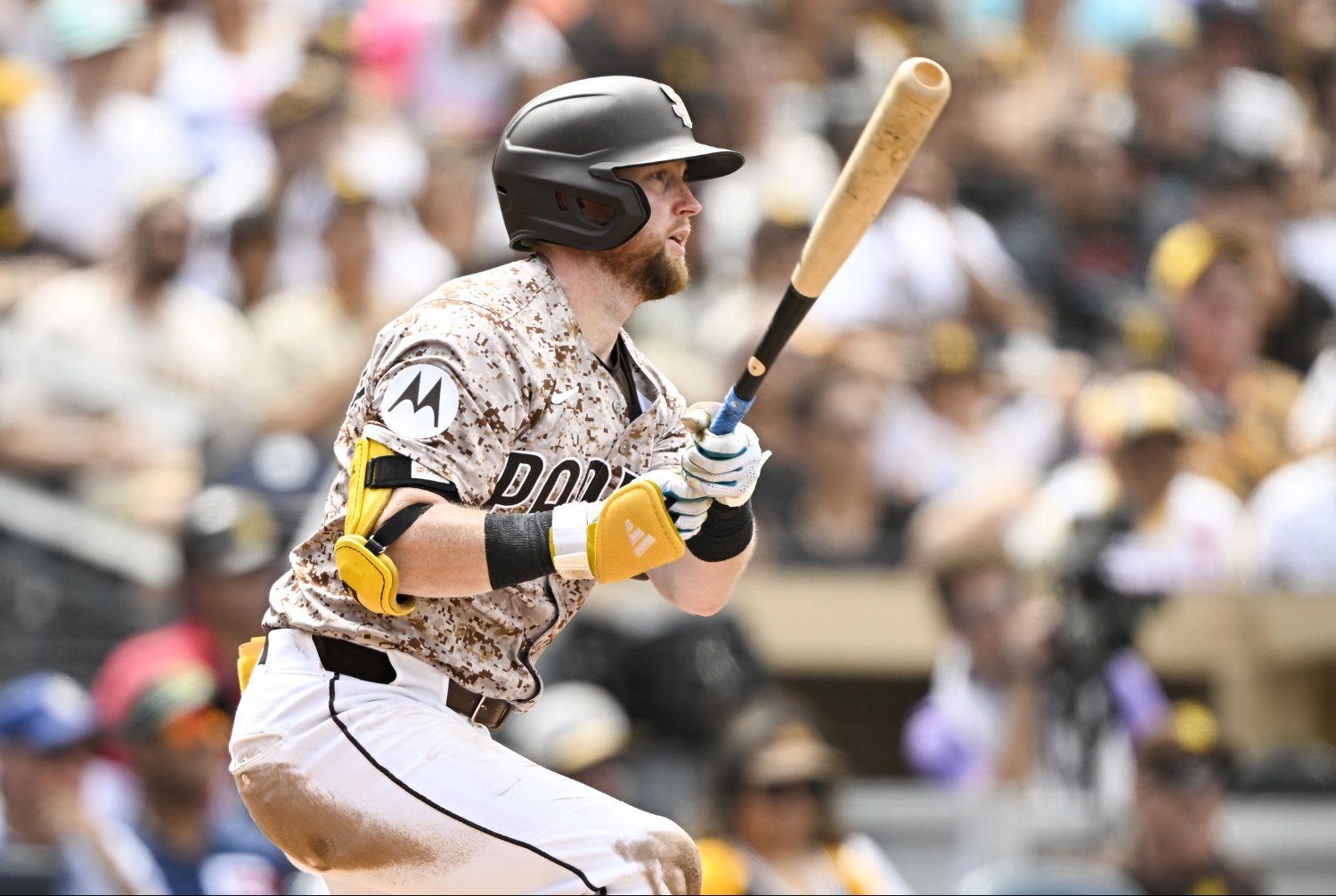 What was already set to be a complicated offseason for the San Diego Padres got even more so with news that the Seidler family was exploring a sale of the franchise. Despite what appeared to be a little bit of financial wiggle room upon some impending departures from the 2025 roster, everything is in flux now. Of course, we don't have any confirmation on that. But, even if the Padres did want to run a payroll in the neighborhood of where they ended 2025 (about $211 million), that only leaves them with about $20 million given a projected $190 million for the 40-man roster at present. Regardless of the financial particulars, it appears increasingly likely that the team could explore a deal for at least one of their long-term position players. It's an idea centered around position players because position players is where they have volume on the long-term side. Each of Fernando Tatis Jr., Manny Machado, Xander Bogaerts, Jackson Merrill, and Jake Cronenworth are under contract until at least 2030. The pitching staff doesn't have that kind of action, with just each of Nick Pivetta & Yu Darvish locked into deals through only 2028 (the latter of which doesn't even have a clear path to finishing out the deal). Of the position players on the roster, it's Jake Cronenworth that is most likely to be moved. There have been whispers about such a deal before to the extent that teams were reportedly asking about him prior to the 2025 trade deadline. He's also the most easily-moveable name given his relatively reasonable contract that isn't as intensely backloaded as some of his counterparts on the active roster. It's an idea that has some merit, but whether the financial savings would do enough to compensate for his departure from the roster is a separate conversation altogether. The Case For Trading Jake Cronenworth Cronenworth is going to cost a shade over $12 million against the payroll through the 2030 season. His original deal was a seven-year, $80 million pact agreed upon ahead of the 2023 campaign. It was deemed a bit of an overpay at the time considering Cronenworth was set to move to first base, a position which didn't entirely fit his skill set, especially considering the power he demonstrated in 2021 (.194 ISO) fell drastically in '22 and has continued to fall since. Instead, Cronenworth has had to drive his approach to bring about value at the plate. He was a below-average bat in '23 (91 wRC+) and just a shade over in '24 (105 wRC+) before riding a spike in his walk rate (13.4 BB%) to a 117 wRC+ in 2025, his highest since that 2021 season. The frustrating thing with Cronenworth is that he hasn't been able to parlay that patience into anything meaningful. His ISO bottomed out at .131 in 2025 despite that jump in free passes, without any encouraging signs in the contact trends to accompany it; his barrel rate and hard-hit rate remained fairly in-line with what we'd seen before. And it's not as if he's a top tier defensive player at the keystone. He ranked 67th in Fielding Run Value (-2) at the position after finishing at a -4 mark the previous season. At this point, you're paying for the approach, because the power isn't on its way back and the glove hasn't been there in a handful of years in its own right (though bouncing between positions over multiple years likely doesn't help). The Padres need more power. They were a top-10 team in on-base percentage that failed to supplement that presence on base with any kind of impact. Freeing up the $12 million owed to Cronenworth could allow them to reallocate that bit of money toward more of an impact bat that would compliment the lineup more effectively. Should the Padres seek to move him, it's hard to imagine too many teams shying away from his market. Enough teams might be willing to pay for that approach and versatility, even if the latter comes with some shortcomings on the defensive end. The Case Against Trading Jake Cronenworth Even for a team in financial peril, it's hard to sacrifice stability in the name of $12 million. And despite not regaining the form he showcased over the 2020 and 2021 seasons, Cronenworth has very much been a stable presence for a chaotic organization. For one, this is a reliable player. He's appeared in an average of 145 games over the last five seasons. The Padres have lost each of Tatis, Merrill, Bogaerts, and Machado for significant periods over the last few years. Even sans any notable power, the ability to remain in the lineup and bring that steady approach is something that the Padres can't necessarily afford to part with. It's hard to overstate the importance of that approach in itself. Sure, the Padres were a top-10 team in OBP, but they ranked only 15th in walk rate. Only Tatis comes anywhere near touching what Cronenworth has provided in terms of patience. On paper, the Padres are a team in possession of impact bats. If Cronenworth can bring that approach to the bottom of the order, the onus transitions to the players atop the lineup to make that matter. And, as long as we're considering things that shouldn't be overlooked, the instability wrought by a lack of a permanent defensive home is likely pinning down Cronenworth's ability to find success on the defensive side. One imagines that finding a longer term solution at first base and a suitable backup for the middle infield (beyond a spring training invitee making their way on the roster) would allow him to ply his trade effectively at second base in the way that he did back in 2022. At the end of the day, it's a $12 million price tag. That's not terribly cumbersome for most big league organizations, save the Pittsburghs or the Miamis of the world. Sacrificing the things Cronenworth does well to save a fairly minimal amount against the total payroll number doesn't seem like something that would actively work in favor of San Diego, especially given some of their shortcomings on the present roster. Otherwise, you're filling an entire side of the infield within the confines of the payroll, rather than just one spot. That's an entirely different ballgame.
 -
What was already set to be a complicated offseason for the San Diego Padres got even more so with news that the Seidler family was exploring a sale of the franchise. Despite what appeared to be a little bit of financial wiggle room upon some impending departures from the 2025 roster, everything is in flux now. Of course, we don't have any confirmation on that. But, even if the Padres did want to run a payroll in the neighborhood of where they ended 2025 (about $211 million), that only leaves them with about $20 million given a projected $190 million for the 40-man roster at present. Regardless of the financial particulars, it appears increasingly likely that the team could explore a deal for at least one of their long-term position players. It's an idea centered around position players because position players is where they have volume on the long-term side. Each of Fernando Tatis Jr., Manny Machado, Xander Bogaerts, Jackson Merrill, and Jake Cronenworth are under contract until at least 2030. The pitching staff doesn't have that kind of action, with just each of Nick Pivetta & Yu Darvish locked into deals through only 2028 (the latter of which doesn't even have a clear path to finishing out the deal). Of the position players on the roster, it's Jake Cronenworth that is most likely to be moved. There have been whispers about such a deal before to the extent that teams were reportedly asking about him prior to the 2025 trade deadline. He's also the most easily-moveable name given his relatively reasonable contract that isn't as intensely backloaded as some of his counterparts on the active roster. It's an idea that has some merit, but whether the financial savings would do enough to compensate for his departure from the roster is a separate conversation altogether. The Case For Trading Jake Cronenworth Cronenworth is going to cost a shade over $12 million against the payroll through the 2030 season. His original deal was a seven-year, $80 million pact agreed upon ahead of the 2023 campaign. It was deemed a bit of an overpay at the time considering Cronenworth was set to move to first base, a position which didn't entirely fit his skill set, especially considering the power he demonstrated in 2021 (.194 ISO) fell drastically in '22 and has continued to fall since. Instead, Cronenworth has had to drive his approach to bring about value at the plate. He was a below-average bat in '23 (91 wRC+) and just a shade over in '24 (105 wRC+) before riding a spike in his walk rate (13.4 BB%) to a 117 wRC+ in 2025, his highest since that 2021 season. The frustrating thing with Cronenworth is that he hasn't been able to parlay that patience into anything meaningful. His ISO bottomed out at .131 in 2025 despite that jump in free passes, without any encouraging signs in the contact trends to accompany it; his barrel rate and hard-hit rate remained fairly in-line with what we'd seen before. And it's not as if he's a top tier defensive player at the keystone. He ranked 67th in Fielding Run Value (-2) at the position after finishing at a -4 mark the previous season. At this point, you're paying for the approach, because the power isn't on its way back and the glove hasn't been there in a handful of years in its own right (though bouncing between positions over multiple years likely doesn't help). The Padres need more power. They were a top-10 team in on-base percentage that failed to supplement that presence on base with any kind of impact. Freeing up the $12 million owed to Cronenworth could allow them to reallocate that bit of money toward more of an impact bat that would compliment the lineup more effectively. Should the Padres seek to move him, it's hard to imagine too many teams shying away from his market. Enough teams might be willing to pay for that approach and versatility, even if the latter comes with some shortcomings on the defensive end. The Case Against Trading Jake Cronenworth Even for a team in financial peril, it's hard to sacrifice stability in the name of $12 million. And despite not regaining the form he showcased over the 2020 and 2021 seasons, Cronenworth has very much been a stable presence for a chaotic organization. For one, this is a reliable player. He's appeared in an average of 145 games over the last five seasons. The Padres have lost each of Tatis, Merrill, Bogaerts, and Machado for significant periods over the last few years. Even sans any notable power, the ability to remain in the lineup and bring that steady approach is something that the Padres can't necessarily afford to part with. It's hard to overstate the importance of that approach in itself. Sure, the Padres were a top-10 team in OBP, but they ranked only 15th in walk rate. Only Tatis comes anywhere near touching what Cronenworth has provided in terms of patience. On paper, the Padres are a team in possession of impact bats. If Cronenworth can bring that approach to the bottom of the order, the onus transitions to the players atop the lineup to make that matter. And, as long as we're considering things that shouldn't be overlooked, the instability wrought by a lack of a permanent defensive home is likely pinning down Cronenworth's ability to find success on the defensive side. One imagines that finding a longer term solution at first base and a suitable backup for the middle infield (beyond a spring training invitee making their way on the roster) would allow him to ply his trade effectively at second base in the way that he did back in 2022. At the end of the day, it's a $12 million price tag. That's not terribly cumbersome for most big league organizations, save the Pittsburghs or the Miamis of the world. Sacrificing the things Cronenworth does well to save a fairly minimal amount against the total payroll number doesn't seem like something that would actively work in favor of San Diego, especially given some of their shortcomings on the present roster. Otherwise, you're filling an entire side of the infield within the confines of the payroll, rather than just one spot. That's an entirely different ballgame. View full article
-
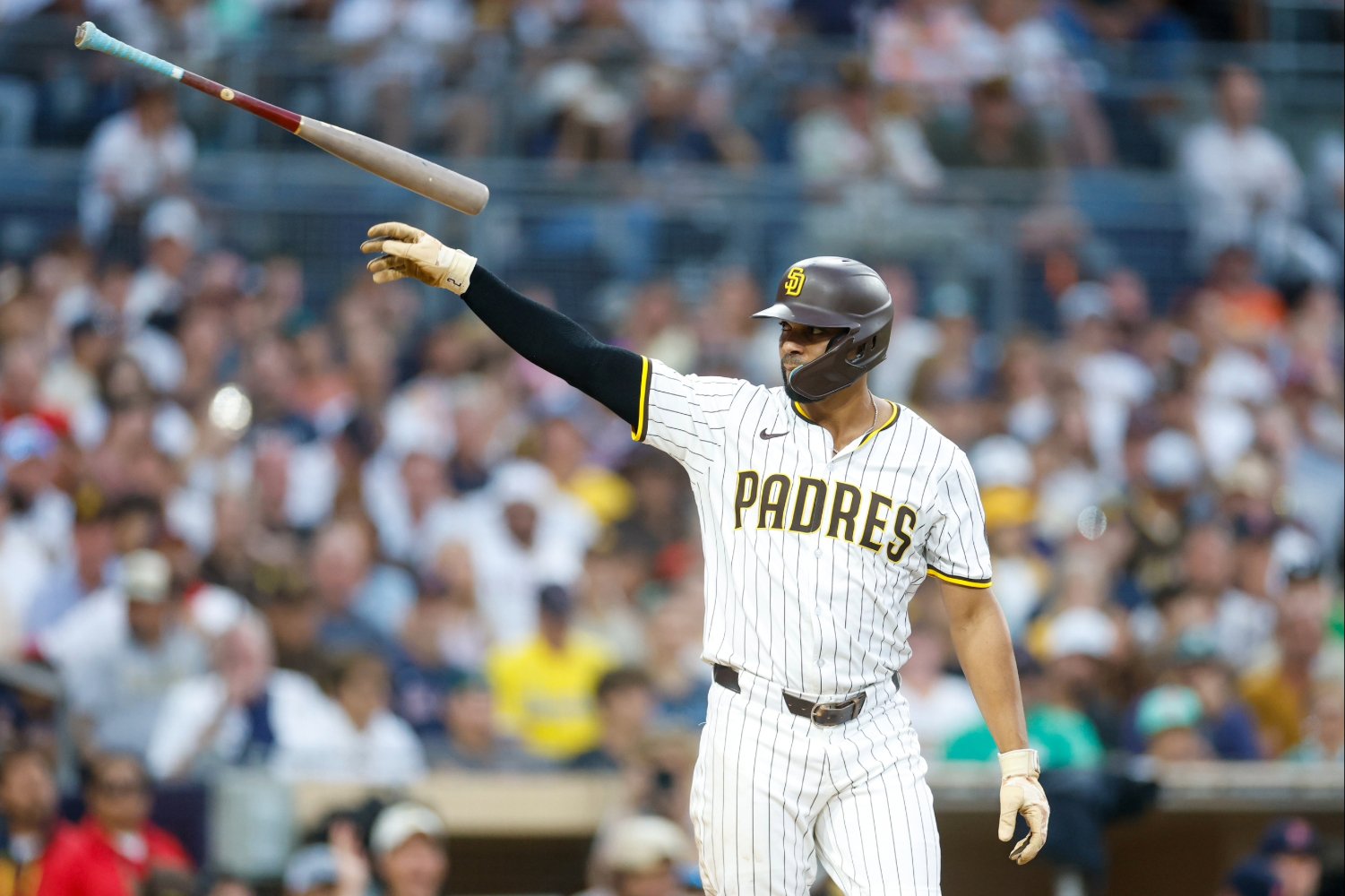 The San Diego Padres are in a weird place this winter. On one hand, this is a team that is on the cusp of title contention. They reached the National League Division Series in 2024 and won 90 games again in '25 on the strength of a really strong pitching staff. But with key arms set to depart (Dylan Cease, Michael King) or miss all of next year (Yu Darvish), a need for offense, and assumed budget constraints, it remains to be seen whether they can get over those final few steps toward championship realization. With that said, we can assume that at least some of their position players will have their names floating out in the trade ether. Whether that's in connection to filling a need or shedding additional dollars will add some complexity to the rumors, but given the number of (backloaded) long-term contracts on the books, it would probably make some degree of sense on paper to get the payroll sheet looking at least a little bit healthier. By now, you've probably seen some suggestion that Fernando Tatis Jr. could be among the names the Padres explore a trade of this offseason. He's under contract through 2034 on a deal that gets mighty pricey toward the tail-end. With his elite defense and an above-average bat (that has lost some power), one doesn't have to stretch to see the logic in moving him from a pure dollars perspective. But even with his power decline, Tatis still represents one of the most stable entities on this roster. His approach has improved while his quality of contact has remained as good as ever. As such, it's nearly impossible to imagine such a deal coming to fruition, both from a personnel and an optics standpoint. You're unraveling your pursuit of a title at that point with several ramifications to come after, including hurting franchise valuation (in case a sale actually happens). The same could be said of Manny Machado. On a contract that runs through 2033, we've seen Machado carry the offense for long stretches. Even if his defense has started to decline, the stability he provides in the lineup (even at a slight power decrease reflected in a .185 ISO in 2025) and in the clubhouse is something that the Padres aren't going to be terribly interested in moving. Beyond that duo, however, one imagines there's going to be some interest in the part of the Padres in exploring a move of one of their other two long-term position contracts: Xander Bogaerts and Jake Cronenworth. Bogaerts' contract is surely the one the Padres would love to move. His right-handed bat hasn't been a great fit at Petco Park, as reflected by a steep power decline since his arrival in San Diego (.123 ISO combined over the last two seasons). He was able to salvage some value after an abysmal start to the '25 season (104 wRC+) and has added improved baserunning and defense to his skill set. Teams could use that toolbox, in a vacuum. But — and as the Padres would probably realize by needing to replace him — it's a skillset that could be had for a lot cheaper. If a team were to take him on, it would require consumption of significant dollars on the part of San Diego. Such a deal would be a logistical nightmare, even if it would be the preferred move of the available candidates. Even for a team in need of help at shortstop that has a healthy financial outlook (think Detroit or, potentially, Toronto), it's not something that would come together with any sort of ease... and maybe not even any real financial benefit given the precarious spot in which the Padres are purported to be. Which is why Jake Cronenworth could be the likeliest to be moved of the longer-term position players on this roster. We'll explore the merits of a Cronenworth-specific move in the near future, but you've got a player whose original deal was for seven years and $80 million. He's never been the power bat that he appeared to be back in 2021, but he's a versatile player with a keen approach. His 13.4 percent walk rate was the 12th-best among qualifiers this season. Capable of playing either second or first, it's an affordable contract, even if it runs through 2030. Teams reportedly inquired on Cronenworth prior to the deadline, and if the Padres are looking to clear out some of their long-term obligations, then there's a certain logic to it. But that's the thing about moving any of these position players. Logic exists if you examine things from the Padre perspective. Clearing out money or term is in ownership's interest. But you leave a massive void in moving a Tatis or a Machado. Not to mention the brutal optics. You have to eat money to move Bogaerts. And you'd have to backfill the entire right side of the infield if you move Cronenworth, the most affordable of the bunch. It's quite a paradox which A.J. Preller will have to navigate this winter while simultaneously trying to build a starting staff from near-scratch and shore up the bullpen facing departures and potential transitions. It leaves a chance for a huge mess, though it does lend itself to plenty of intrigue, to say the least.
 -
The San Diego Padres are in a weird place this winter. On one hand, this is a team that is on the cusp of title contention. They reached the National League Division Series in 2024 and won 90 games again in '25 on the strength of a really strong pitching staff. But with key arms set to depart (Dylan Cease, Michael King) or miss all of next year (Yu Darvish), a need for offense, and assumed budget constraints, it remains to be seen whether they can get over those final few steps toward championship realization. With that said, we can assume that at least some of their position players will have their names floating out in the trade ether. Whether that's in connection to filling a need or shedding additional dollars will add some complexity to the rumors, but given the number of (backloaded) long-term contracts on the books, it would probably make some degree of sense on paper to get the payroll sheet looking at least a little bit healthier. By now, you've probably seen some suggestion that Fernando Tatis Jr. could be among the names the Padres explore a trade of this offseason. He's under contract through 2034 on a deal that gets mighty pricey toward the tail-end. With his elite defense and an above-average bat (that has lost some power), one doesn't have to stretch to see the logic in moving him from a pure dollars perspective. But even with his power decline, Tatis still represents one of the most stable entities on this roster. His approach has improved while his quality of contact has remained as good as ever. As such, it's nearly impossible to imagine such a deal coming to fruition, both from a personnel and an optics standpoint. You're unraveling your pursuit of a title at that point with several ramifications to come after, including hurting franchise valuation (in case a sale actually happens). The same could be said of Manny Machado. On a contract that runs through 2033, we've seen Machado carry the offense for long stretches. Even if his defense has started to decline, the stability he provides in the lineup (even at a slight power decrease reflected in a .185 ISO in 2025) and in the clubhouse is something that the Padres aren't going to be terribly interested in moving. Beyond that duo, however, one imagines there's going to be some interest in the part of the Padres in exploring a move of one of their other two long-term position contracts: Xander Bogaerts and Jake Cronenworth. Bogaerts' contract is surely the one the Padres would love to move. His right-handed bat hasn't been a great fit at Petco Park, as reflected by a steep power decline since his arrival in San Diego (.123 ISO combined over the last two seasons). He was able to salvage some value after an abysmal start to the '25 season (104 wRC+) and has added improved baserunning and defense to his skill set. Teams could use that toolbox, in a vacuum. But — and as the Padres would probably realize by needing to replace him — it's a skillset that could be had for a lot cheaper. If a team were to take him on, it would require consumption of significant dollars on the part of San Diego. Such a deal would be a logistical nightmare, even if it would be the preferred move of the available candidates. Even for a team in need of help at shortstop that has a healthy financial outlook (think Detroit or, potentially, Toronto), it's not something that would come together with any sort of ease... and maybe not even any real financial benefit given the precarious spot in which the Padres are purported to be. Which is why Jake Cronenworth could be the likeliest to be moved of the longer-term position players on this roster. We'll explore the merits of a Cronenworth-specific move in the near future, but you've got a player whose original deal was for seven years and $80 million. He's never been the power bat that he appeared to be back in 2021, but he's a versatile player with a keen approach. His 13.4 percent walk rate was the 12th-best among qualifiers this season. Capable of playing either second or first, it's an affordable contract, even if it runs through 2030. Teams reportedly inquired on Cronenworth prior to the deadline, and if the Padres are looking to clear out some of their long-term obligations, then there's a certain logic to it. But that's the thing about moving any of these position players. Logic exists if you examine things from the Padre perspective. Clearing out money or term is in ownership's interest. But you leave a massive void in moving a Tatis or a Machado. Not to mention the brutal optics. You have to eat money to move Bogaerts. And you'd have to backfill the entire right side of the infield if you move Cronenworth, the most affordable of the bunch. It's quite a paradox which A.J. Preller will have to navigate this winter while simultaneously trying to build a starting staff from near-scratch and shore up the bullpen facing departures and potential transitions. It leaves a chance for a huge mess, though it does lend itself to plenty of intrigue, to say the least. View full article
-
Fernando Tatis Jr. Has The Glove. Now, He Must Rediscover His Bat
Randy Holt posted an article in Padres
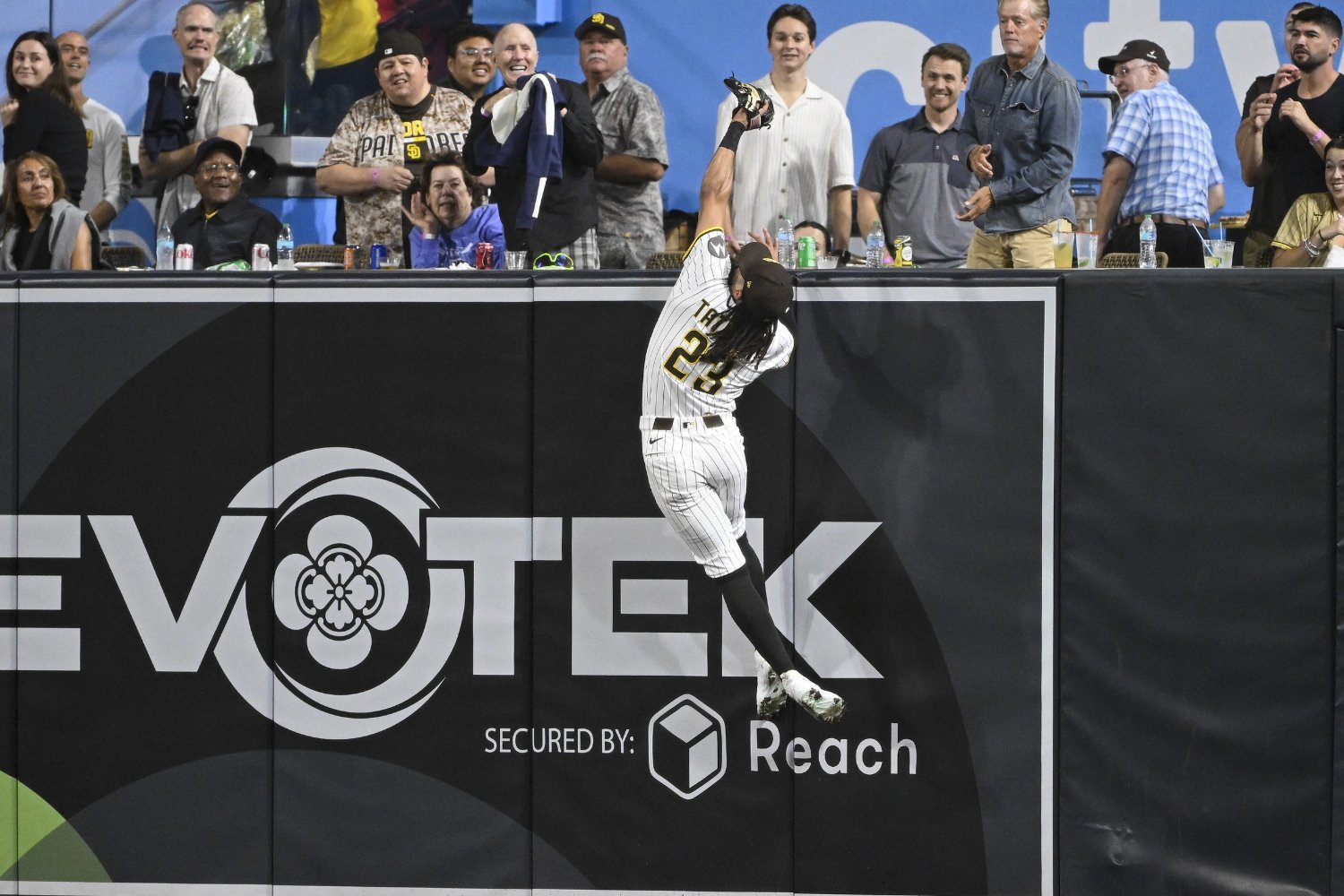 When the San Diego Padres made the decision to move Fernando Tatis Jr. off his native shortstop position and into right field, it's difficult to imagine they expected the kind of output he's provided on the outfield grass. A multi-time Gold Glove recipient, Tatis Jr is now a multi-time Platinum Glove Award winner after securing the league-wide award again in 2025, this time alongside Bobby Witt Jr. Even with the arbitrary nature of each award — the Gold Glove has its own host of issues in acknowledging metrics, and the Platinum Glove is determined through fan vote — there's something to be said for the amount of hardware of which Tatis is now in possession since the transition. Regardless of the award logistics, the numbers back it up. He posted an Outs Above Average figure of 10 in 2023 and eight in 2025. Fielding Run Value, which takes arm value into account, bumps those numbers up to 13 and nine, respectively. Between those two seasons, Tatis Jr also combined for 44 Defensive Runs Saved. Bookending a '24 where he was slowed by a stress fracture in his femur, we know at this point what Tatis is as a defender: elite. At the same time, this is a franchise-caliber player by reputation. And as good as Tatis has been with the glove, his offense has continued to be a point of contention in his overall value to the team. The following is where his wOBA numbers stand since his stellar start back in 2019: There's obviously quite a disparity on either end of his lost 2022 campaign. And even within that disparity, Tatis has still, technically, represented an above-average offensive player considering an average wOBA is considered to be around .320. But when you talk about impact, a trait generally illustrated by power output, the Padres aren't getting it from their franchise star in quite the same fashion. Even if he's cut down his overall strikeout rate, driven up his walk rate, and maintained a steady rate of contact quality, the impact has been lacking. Much like the wOBA figures, Tatis' power numbers on either side of the '22 season are indicative of an intense decline. His ISO numbers read a respective .272, .295, and .328 across nearly 1,200 plate appearances prior to that year. Even if you're looking at neither of 2019 or 2020 serving as a full season, it does seem noteworthy that his largest power output came in the one that actually was. In the three years since, however, his ISO has fallen to .191, .216, and .178. And it's hard to get too wrapped up in health issues considering his highest power output of these last three years came when he was working through the stress fracture. It's not as if his strength suddenly disappeared, as much as a certain narrative may want that to be the case. The underlying contact trends — primarily hard hit rate and average exit velocity — are not far off from where they were in the three seasons prior to 2022. Instead, there appears to be some issues mechanically and with pitch selection that are pinning down his ability to create impact. We've explored both of these ideas throughout the season, but a quick glance at the numbers indicates a shallower attack angle (eight degrees), a shorter swing (7.3 feet), and an uneven approach in terms of pitch selection. Regardless of how it's happened or how Fernando Tatis Jr. gets back to where he was (assuming that's at all possible), there's a clear need for the Padres to get the purest version of their star back into the mix. There have been mere flashes over the last trio of seasons, but nothing close to what he was pre-2022. With some of the shortcomings on that side of the ball dragging down the roster, the Padres need their superstar to find some semblance of balance ahead of 2026.
 -
When the San Diego Padres made the decision to move Fernando Tatis Jr. off his native shortstop position and into right field, it's difficult to imagine they expected the kind of output he's provided on the outfield grass. A multi-time Gold Glove recipient, Tatis Jr is now a multi-time Platinum Glove Award winner after securing the league-wide award again in 2025, this time alongside Bobby Witt Jr. Even with the arbitrary nature of each award — the Gold Glove has its own host of issues in acknowledging metrics, and the Platinum Glove is determined through fan vote — there's something to be said for the amount of hardware of which Tatis is now in possession since the transition. Regardless of the award logistics, the numbers back it up. He posted an Outs Above Average figure of 10 in 2023 and eight in 2025. Fielding Run Value, which takes arm value into account, bumps those numbers up to 13 and nine, respectively. Between those two seasons, Tatis Jr also combined for 44 Defensive Runs Saved. Bookending a '24 where he was slowed by a stress fracture in his femur, we know at this point what Tatis is as a defender: elite. At the same time, this is a franchise-caliber player by reputation. And as good as Tatis has been with the glove, his offense has continued to be a point of contention in his overall value to the team. The following is where his wOBA numbers stand since his stellar start back in 2019: There's obviously quite a disparity on either end of his lost 2022 campaign. And even within that disparity, Tatis has still, technically, represented an above-average offensive player considering an average wOBA is considered to be around .320. But when you talk about impact, a trait generally illustrated by power output, the Padres aren't getting it from their franchise star in quite the same fashion. Even if he's cut down his overall strikeout rate, driven up his walk rate, and maintained a steady rate of contact quality, the impact has been lacking. Much like the wOBA figures, Tatis' power numbers on either side of the '22 season are indicative of an intense decline. His ISO numbers read a respective .272, .295, and .328 across nearly 1,200 plate appearances prior to that year. Even if you're looking at neither of 2019 or 2020 serving as a full season, it does seem noteworthy that his largest power output came in the one that actually was. In the three years since, however, his ISO has fallen to .191, .216, and .178. And it's hard to get too wrapped up in health issues considering his highest power output of these last three years came when he was working through the stress fracture. It's not as if his strength suddenly disappeared, as much as a certain narrative may want that to be the case. The underlying contact trends — primarily hard hit rate and average exit velocity — are not far off from where they were in the three seasons prior to 2022. Instead, there appears to be some issues mechanically and with pitch selection that are pinning down his ability to create impact. We've explored both of these ideas throughout the season, but a quick glance at the numbers indicates a shallower attack angle (eight degrees), a shorter swing (7.3 feet), and an uneven approach in terms of pitch selection. Regardless of how it's happened or how Fernando Tatis Jr. gets back to where he was (assuming that's at all possible), there's a clear need for the Padres to get the purest version of their star back into the mix. There have been mere flashes over the last trio of seasons, but nothing close to what he was pre-2022. With some of the shortcomings on that side of the ball dragging down the roster, the Padres need their superstar to find some semblance of balance ahead of 2026. View full article
-
Replacing Dylan Cease, Michael King and Yu Darvish Is Harder Than It Looks
Randy Holt posted an article in Padres
 Considering some of the visible shortcomings on offense and defense, A.J. Preller and the San Diego Padres should be fairly busy fortifying their roster this winter. However, there is no area of the organization more in need at present than that of the starting pitching group. Heading into the offseason, it was an objective truth that the team would need to address the front end of their starting five. With Dylan Cease set to hit free agency and Michael King following suit via his declining of a mutual option, that left a void in the available upside in the rotation. The news that Yu Darvish would miss all of 2026 after undergoing elbow surgery only further exacerbated the need to add on that front. As of this writing, the Padres have only five starters on their 40-man roster (Darvish notwithstanding): Nick Pivetta, Joe Musgrove, JP Sears, Matt Waldron, and Randy Vásquez. Of that quintet of arms, only Pivetta appears to be a reliable entity ahead of the 2026 campaign. Musgrove may return early but is also coming back from Tommy John surgery, leaving not only his effectiveness but his volume in some question until he settles back into a usual groove. Each of Sears and Waldron struggled in a small sample for the Padres in '25, while Vásquez's issues with walks limit his upside to a No. 5 starter. It's not a terribly inspiring group and becomes even less so when you consider that Pivetta is due for at least some regression after a career season. With that, we know the Padres will be active in attempting to add to their rotation. But while it's difficult, if not entirely impossible, to overestimate someone with the aggression of A.J. Preller, the path toward making impactful addition seems rather difficult, even if the volume of options is abundant, On the free-agent market, you'll find names like Cease, King, Framber Valdez, Ranger Suárez, and Brandon Woodruff, among others. Those that have been mentioned as trade candidates (to varying degrees) include Tarik Skubal, Hunter Greene, Freddy Peralta, and now Kodai Senga. In short, there are a number of roads down which Preller and the Padres could travel in order to bolster the front portion of their rotation. But how feasible is each? The Padres will have money to spend given the impending offseason departures of Cease, King, Robert Suárez, and Luis Arráez. They're coming off a season in which they ran a roughly $211 million payroll, about $40 million more than they carried the previous year. Sans additions and arbitration raises, they're at about $190 million as a projected payroll figure for '26. So, there's some flexibility there considering where they've run payroll in previous seasons. But, when one considers the effort to get that payroll down in the first place, is ownership going to feel compelled to add one of the names on the free-agent market given the associated cost? The cheapest projected deal of the free agents listed above is Woodruff, at a three-year, $66 million contract. That's still a sizable addition to the payroll, and that's for a veteran pitcher with a laundry list of injury issues who is tied to the qualifying offer. It remains to be seen how willing ownership would be to invest too heavily in such a contact, even with some of the freed up cash from imminent departures. One has to imagine, though, that an impact addition remains more likely via that route than a trade. While there are some super intriguing names floating out in the rumor mill ether, we have to remember that the Padres are sporting a fairly barren farm system in comparison to practically all other teams. The last MLB Pipeline farm system rankings stuck the Padres dead last among the 30 teams, which is hardly a surprise given Preller's continued aggression. But with so many of the prospects even in their top 30 still at the lower levels of the minors, it's very much a system that lacks the juice to execute a move for the needed upside in this rotation. Starting pitching comes at a premium cost, after all. Even Preller might find it difficult to move on someone he wants considering the other teams in need of rotation help. With that in mind, it's hard to see a clear path toward such an acquisition this winter. Obviously, if ownership is willing to put forth the money to be active in free agency, then some optimism can begin to manifest. In the meantime, though, a more likely route looks to be a volume approach in which they pursue more mid-tier arms and hope Ruben Niebla can work his magic. Again, we can't underestimate the Preller factor in all of this. But confronting the size of the need, which is massive, with the on-paper likelihood of effectively addressing said need... it just isn't a terribly rosy prospect in San Diego at the moment.
-
- 1
-

-
- dylan cease
- aj preller
- (and 2 more)
-
Considering some of the visible shortcomings on offense and defense, A.J. Preller and the San Diego Padres should be fairly busy fortifying their roster this winter. However, there is no area of the organization more in need at present than that of the starting pitching group. Heading into the offseason, it was an objective truth that the team would need to address the front end of their starting five. With Dylan Cease set to hit free agency and Michael King following suit via his declining of a mutual option, that left a void in the available upside in the rotation. The news that Yu Darvish would miss all of 2026 after undergoing elbow surgery only further exacerbated the need to add on that front. As of this writing, the Padres have only five starters on their 40-man roster (Darvish notwithstanding): Nick Pivetta, Joe Musgrove, JP Sears, Matt Waldron, and Randy Vásquez. Of that quintet of arms, only Pivetta appears to be a reliable entity ahead of the 2026 campaign. Musgrove may return early but is also coming back from Tommy John surgery, leaving not only his effectiveness but his volume in some question until he settles back into a usual groove. Each of Sears and Waldron struggled in a small sample for the Padres in '25, while Vásquez's issues with walks limit his upside to a No. 5 starter. It's not a terribly inspiring group and becomes even less so when you consider that Pivetta is due for at least some regression after a career season. With that, we know the Padres will be active in attempting to add to their rotation. But while it's difficult, if not entirely impossible, to overestimate someone with the aggression of A.J. Preller, the path toward making impactful addition seems rather difficult, even if the volume of options is abundant, On the free-agent market, you'll find names like Cease, King, Framber Valdez, Ranger Suárez, and Brandon Woodruff, among others. Those that have been mentioned as trade candidates (to varying degrees) include Tarik Skubal, Hunter Greene, Freddy Peralta, and now Kodai Senga. In short, there are a number of roads down which Preller and the Padres could travel in order to bolster the front portion of their rotation. But how feasible is each? The Padres will have money to spend given the impending offseason departures of Cease, King, Robert Suárez, and Luis Arráez. They're coming off a season in which they ran a roughly $211 million payroll, about $40 million more than they carried the previous year. Sans additions and arbitration raises, they're at about $190 million as a projected payroll figure for '26. So, there's some flexibility there considering where they've run payroll in previous seasons. But, when one considers the effort to get that payroll down in the first place, is ownership going to feel compelled to add one of the names on the free-agent market given the associated cost? The cheapest projected deal of the free agents listed above is Woodruff, at a three-year, $66 million contract. That's still a sizable addition to the payroll, and that's for a veteran pitcher with a laundry list of injury issues who is tied to the qualifying offer. It remains to be seen how willing ownership would be to invest too heavily in such a contact, even with some of the freed up cash from imminent departures. One has to imagine, though, that an impact addition remains more likely via that route than a trade. While there are some super intriguing names floating out in the rumor mill ether, we have to remember that the Padres are sporting a fairly barren farm system in comparison to practically all other teams. The last MLB Pipeline farm system rankings stuck the Padres dead last among the 30 teams, which is hardly a surprise given Preller's continued aggression. But with so many of the prospects even in their top 30 still at the lower levels of the minors, it's very much a system that lacks the juice to execute a move for the needed upside in this rotation. Starting pitching comes at a premium cost, after all. Even Preller might find it difficult to move on someone he wants considering the other teams in need of rotation help. With that in mind, it's hard to see a clear path toward such an acquisition this winter. Obviously, if ownership is willing to put forth the money to be active in free agency, then some optimism can begin to manifest. In the meantime, though, a more likely route looks to be a volume approach in which they pursue more mid-tier arms and hope Ruben Niebla can work his magic. Again, we can't underestimate the Preller factor in all of this. But confronting the size of the need, which is massive, with the on-paper likelihood of effectively addressing said need... it just isn't a terribly rosy prospect in San Diego at the moment. View full article
-
Early November brought some news that was long-expected, as closer Robert Suárez opted out out of the remaining two years and $16 million on his contract. As such, the league leader in saves—who recorded 76 combined over the last two seasons—will handle ninth-inning duty for a new club in 2026. Fortunately for the San Diego Padres, they were prepared for this very scenario. The Padres ran as deep bullpen mix as anyone in 2025. Suárez combined with the likes of Jeremiah Estrada, Adrian Morejon, and Jason Adam to comprise an intensely dynamic group of relief arms. The addition of Mason Miller only added to the stability offered by their corps of relievers. Miller's addition, in conjunction with his extended team control, led many to believe that A.J. Preller was accounting for the eventual departure of Suárez two months before the decision was even set to be made. That means that while the team will now be without Suárez, they're well-suited to handle things in his absence. While it's impossible to say that the team has gotten better by losing one of the game's top ninth inning arms, neither of the team's already-existent depth and the financial flexibility restored by his opting out are factors that should be ignored in discussing what shape the group takes next season. The most intriguing discussion to emerge from this is what now happens to Miller and Morejon, specifically. Estrada and Adam (and, to an extent, David Morgan) are going to be in relief. There's an outside shot at regular ninth inning work for one of them, but the respective paths of each of Miller and Morejon are going to say a fascinating amount about how this pitching staff is constructed for next year. It's all theoretical at present, but worth musing about in an abstract sense given how much time there is between now and the spring exhibition season. Miller's name has been floated as a rotation candidate for 2026. It was something discussed in Sacramento prior to his trade and followed him to San Diego, after injury forced him into relief in 2023. With the Padres set to lose each of Michael King and Dylan Cease in free agency, there's not only a volume need in the rotation, but a need for high-end stuff. Miller's combination of a historically good fastball and slider is tantalizing toward such a purpose, even if it's a move that would require more of his seldom-used changeup. After seeing Garrett Crochet pull off such a volume jump to immediate success, it stands to reason that Miller could replicate it given his powerful arsenal. At the same time, you do worry about those durability concerns manifesting again. It's not a dissimilar situation from that of Adrian Morejon. A former starter from within the organization, Morejon has had his own health battles that forced him into a successful relief stint. He doesn't offer the same strikeout stuff of Miller, but deploys his upper-tier velocity in limiting quality contact (with a 99th percentile Hard-Hit% in 2025). What sets him apart from Miller is that his stuff would likely play as a starter more seamlessly; Morejon utilized at least five different pitches in '25, including three different shapes of fastball. Regardless of which pitcher may or may not be better-suited for a starting role, there are multiple considerations of which to take stock as this offseason wears on. Those considerations appear more in the form of questions, as we have to wonder if one of Miller or Morejon grabbing a rotation spot automatically means that the other would remain in relief. Specifically, does one step into a starting spot while the other slides into the role vacated by Robert Suárez? Or is there a world where both take on a role as a starter while high-leverage relief innings are left to the likes of Estrada, Adam, Morgan, and a lefty-to-be-named-later (in Morejon's stead)? Does the potential for one or both to move to the starting group even make the Padres better considering how much of a strength their relief corps was last year? Considering the upside, it's easy imagine the Padres would be happy to allow both in their rotation as their health and performance would allow. Relief additions are cheaper (and shorter term) than starters, after all. So, it's unlikely that this is a one-or-the-other scenario. Still, how the Padres answer those aforementioned questions could inform how they choose to approach the offseason in terms of additions to the pitching staff. As such, there's a chance that we, as outsiders, have a good idea as to what opportunities for such a transition would look like depending on who and what acquisitions occur over the course of this winter. View full article
-
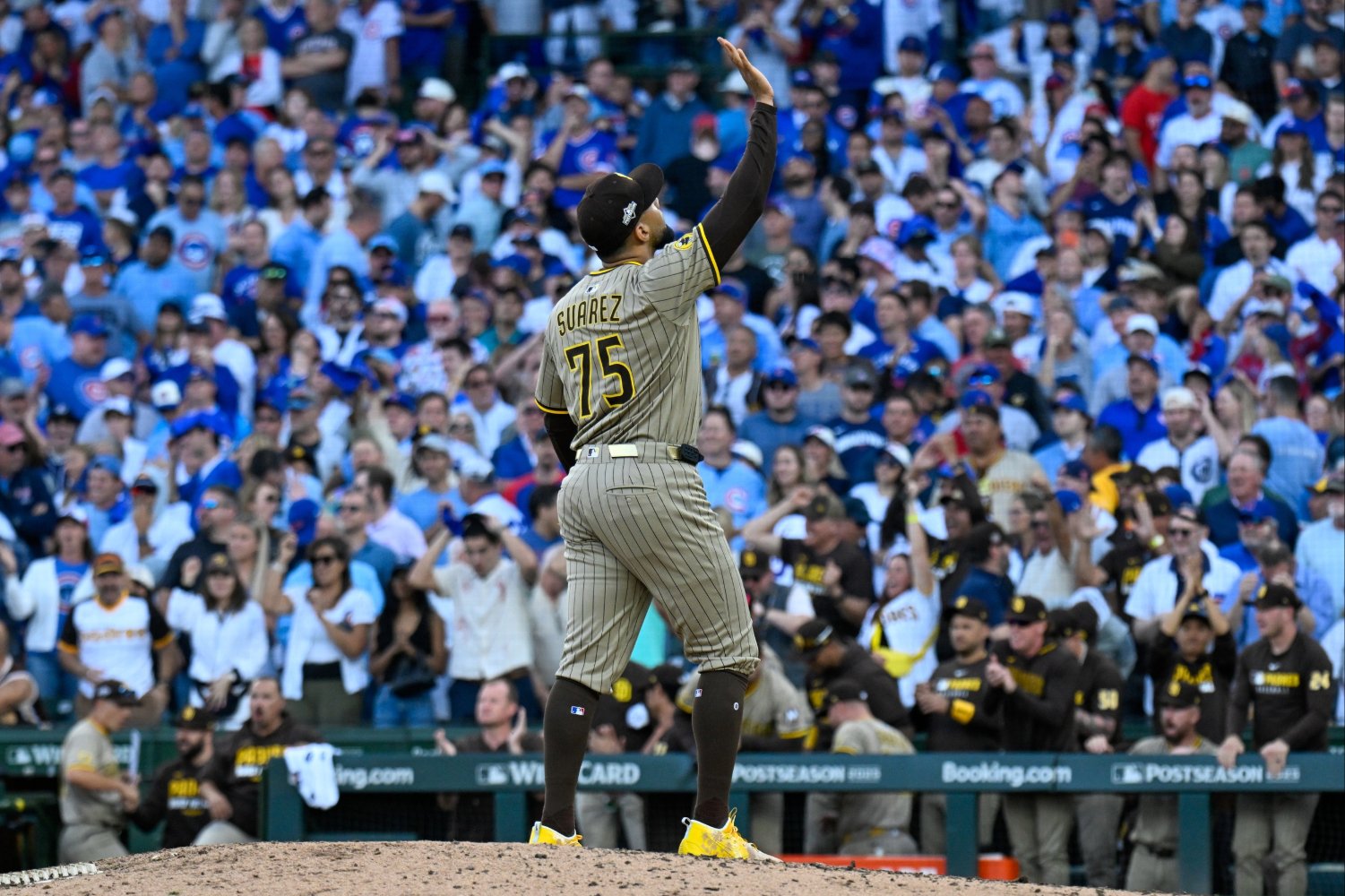 Early November brought some news that was long-expected, as closer Robert Suárez opted out out of the remaining two years and $16 million on his contract. As such, the league leader in saves—who recorded 76 combined over the last two seasons—will handle ninth-inning duty for a new club in 2026. Fortunately for the San Diego Padres, they were prepared for this very scenario. The Padres ran as deep bullpen mix as anyone in 2025. Suárez combined with the likes of Jeremiah Estrada, Adrian Morejon, and Jason Adam to comprise an intensely dynamic group of relief arms. The addition of Mason Miller only added to the stability offered by their corps of relievers. Miller's addition, in conjunction with his extended team control, led many to believe that A.J. Preller was accounting for the eventual departure of Suárez two months before the decision was even set to be made. That means that while the team will now be without Suárez, they're well-suited to handle things in his absence. While it's impossible to say that the team has gotten better by losing one of the game's top ninth inning arms, neither of the team's already-existent depth and the financial flexibility restored by his opting out are factors that should be ignored in discussing what shape the group takes next season. The most intriguing discussion to emerge from this is what now happens to Miller and Morejon, specifically. Estrada and Adam (and, to an extent, David Morgan) are going to be in relief. There's an outside shot at regular ninth inning work for one of them, but the respective paths of each of Miller and Morejon are going to say a fascinating amount about how this pitching staff is constructed for next year. It's all theoretical at present, but worth musing about in an abstract sense given how much time there is between now and the spring exhibition season. Miller's name has been floated as a rotation candidate for 2026. It was something discussed in Sacramento prior to his trade and followed him to San Diego, after injury forced him into relief in 2023. With the Padres set to lose each of Michael King and Dylan Cease in free agency, there's not only a volume need in the rotation, but a need for high-end stuff. Miller's combination of a historically good fastball and slider is tantalizing toward such a purpose, even if it's a move that would require more of his seldom-used changeup. After seeing Garrett Crochet pull off such a volume jump to immediate success, it stands to reason that Miller could replicate it given his powerful arsenal. At the same time, you do worry about those durability concerns manifesting again. It's not a dissimilar situation from that of Adrian Morejon. A former starter from within the organization, Morejon has had his own health battles that forced him into a successful relief stint. He doesn't offer the same strikeout stuff of Miller, but deploys his upper-tier velocity in limiting quality contact (with a 99th percentile Hard-Hit% in 2025). What sets him apart from Miller is that his stuff would likely play as a starter more seamlessly; Morejon utilized at least five different pitches in '25, including three different shapes of fastball. Regardless of which pitcher may or may not be better-suited for a starting role, there are multiple considerations of which to take stock as this offseason wears on. Those considerations appear more in the form of questions, as we have to wonder if one of Miller or Morejon grabbing a rotation spot automatically means that the other would remain in relief. Specifically, does one step into a starting spot while the other slides into the role vacated by Robert Suárez? Or is there a world where both take on a role as a starter while high-leverage relief innings are left to the likes of Estrada, Adam, Morgan, and a lefty-to-be-named-later (in Morejon's stead)? Does the potential for one or both to move to the starting group even make the Padres better considering how much of a strength their relief corps was last year? Considering the upside, it's easy imagine the Padres would be happy to allow both in their rotation as their health and performance would allow. Relief additions are cheaper (and shorter term) than starters, after all. So, it's unlikely that this is a one-or-the-other scenario. Still, how the Padres answer those aforementioned questions could inform how they choose to approach the offseason in terms of additions to the pitching staff. As such, there's a chance that we, as outsiders, have a good idea as to what opportunities for such a transition would look like depending on who and what acquisitions occur over the course of this winter.
 -
If you're looking at how the 2025 defensive awards shook out for the recently-completed Major League Baseball season, you're not going to find much representation for the San Diego Padres. In fact, Fernando Tatis Jr. was the list in both nominations and reception. The team's right fielder took home a nomination and subsequent victory for the Rawlings Gold Glove Award and was named the Fielding Bible Award winner for right field. There isn't any question that such recognition was deserved for Tatis Jr. His Fielding Run Value (nine) paced right fielders, while his Outs Above Average (eight) trailed only Arizona's Corbin Carroll (nine) among the group. His 15 Defensive Runs Saved were six more than any other National League right fielder. None of those represents a surprising output (given how much his defense buoyed his overall value in '25), but it's an impressive feat nonetheless. But, again, that shouldn't be the story here. Tatis Jr.'s defensive prowess should continue to earn him accolades for the foreseeable future; he already has a pair of Gold Gloves and a Platinum Glove to his name since moving to right field. Instead, the story should be about the absence of any other Padres among even the nominees, let alone the winners. The 2025 San Diego Padres were not a team built on the merits of their individual gloves. There wasn't a whole lot of turnover from a team that finished with a collective -15 FRV in '24 and were, again, constructed in such a way this past season to maximize their offensive output over defensive efficiency. There was improvement, at least, with a -1 FRV that stood 18th in the league in that regard. But it also seems noteworthy that the top FRV team in baseball was American League pennant winner Toronto (44), while the three teams directly behind them were also playing October baseball (mostly) for longer than San Diego (Chicago, Milwaukee, and Cleveland, respectively). That's not to say that defensive excellence is a prerequisite for overall success. But the Los Angeles Dodgers were, at least, average in FRV while sitting comfortably above average as far as other metrics go. As such, there's at least some semblance of improvement needed for the Padres on that side of the ball if they hope to keep pace with teams that made impressive runs this year. The issue, though, is where such improvement can actually take place in contrast for where such improvement is needed. You know you've got Tatis Jr. in right field. You also know you have Jackson Merrill, who posted a FRV of five and Xander Bogaerts (seven) under contract moving forward. That's, at least, three spots where the glove work is steady. Elsewhere, though, the picture is a bit murkier. Going around the infield, you're going to have Freddy Fermin behind the plate. Catching metrics are their own world within the realm of defensive statistics, but he's better than anyone the team had for the majority of '25. First base saw Luis Arráez post a FRV of -4 as a near-full-time player for most of the year. Jake Cronenworth filled into an overall -1 FRV and -2 mark at his primary spot at the keystone. Manny Machado, meanwhile, went for a -4 FRV at third base. Next to Merrill & Tatis on the grass, Gavin Sheets was worth -1 in left field and even worse with the eye test. That is, ultimately, four spots where you're a below-average team on the defensive side of the ball. Worse yet is that there's only one vacancy. First base is an easy area for the Padres to seek some defensive improvement. Arráez is unlikely to be back and the team isn't going to wade into the Pete Alonso waters that could bring an even lower defensive acumen to the cold corner. If the team sought an outside addition, old friend and free agent Josh Naylor lingered around average while trade candidate Willson Contreras was well above (four FRV). In house, Gavin Sheets was, technically, above average there across roughly 99 innings and could be a worthy plug-in given how he came on for much of the year with the bat. It stands to reason that you can rectify at least some infield issues with steadier play at first base. And that really should be a top-tier consideration here. Manny Machado isn't going anywhere. Nor is Xander Bogaerts and his lone defensive shortcoming, the 31st percentile arm strength. You can compensate for a lot by removing Arráez's glove from the equation and replacing it with one of a higher quality. The potential for an organic improvement wrought by one position isn't something that should be overlooked. That's especially because Cronenworth's issue lies in his range, and left field should be improved on the strength of the (assumedly) easy Ramón Laureano club option. First base isn't only the simplest means of improving the team's work on defense, but perhaps the most significant. Circling back to the premise at the top of these words, it isn't so much that the Padres are in need of more awards for their defense. There is a finite number of awards to be handed and 29 other teams across the league. Defensive awards are somewhat arbitrary in the first place. But that Tatis Jr. was the only player for which an argument could even be made speaks to the inefficiency this team demonstrated on that side of the ball in 2025. Considering some of the group's drawn-out offensive woes, you simply have to be better in order to support a pitching staff that can, at times, be forced into walking a tightrope. Luckily for the Padres, there's a clear path toward improvement. It resides at the first base bag. View full article
-
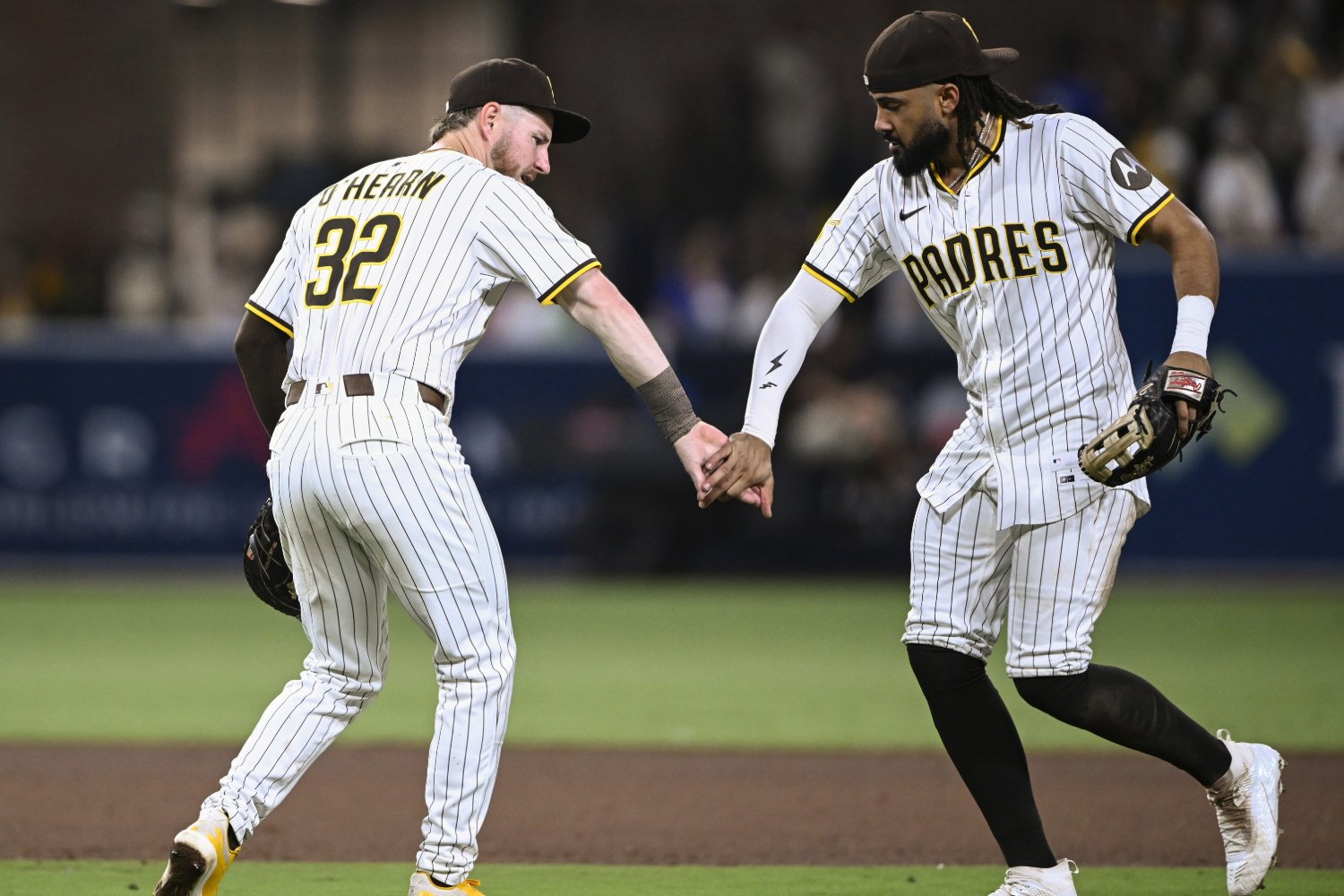 If you're looking at how the 2025 defensive awards shook out for the recently-completed Major League Baseball season, you're not going to find much representation for the San Diego Padres. In fact, Fernando Tatis Jr. was the list in both nominations and reception. The team's right fielder took home a nomination and subsequent victory for the Rawlings Gold Glove Award and was named the Fielding Bible Award winner for right field. There isn't any question that such recognition was deserved for Tatis Jr. His Fielding Run Value (nine) paced right fielders, while his Outs Above Average (eight) trailed only Arizona's Corbin Carroll (nine) among the group. His 15 Defensive Runs Saved were six more than any other National League right fielder. None of those represents a surprising output (given how much his defense buoyed his overall value in '25), but it's an impressive feat nonetheless. But, again, that shouldn't be the story here. Tatis Jr.'s defensive prowess should continue to earn him accolades for the foreseeable future; he already has a pair of Gold Gloves and a Platinum Glove to his name since moving to right field. Instead, the story should be about the absence of any other Padres among even the nominees, let alone the winners. The 2025 San Diego Padres were not a team built on the merits of their individual gloves. There wasn't a whole lot of turnover from a team that finished with a collective -15 FRV in '24 and were, again, constructed in such a way this past season to maximize their offensive output over defensive efficiency. There was improvement, at least, with a -1 FRV that stood 18th in the league in that regard. But it also seems noteworthy that the top FRV team in baseball was American League pennant winner Toronto (44), while the three teams directly behind them were also playing October baseball (mostly) for longer than San Diego (Chicago, Milwaukee, and Cleveland, respectively). That's not to say that defensive excellence is a prerequisite for overall success. But the Los Angeles Dodgers were, at least, average in FRV while sitting comfortably above average as far as other metrics go. As such, there's at least some semblance of improvement needed for the Padres on that side of the ball if they hope to keep pace with teams that made impressive runs this year. The issue, though, is where such improvement can actually take place in contrast for where such improvement is needed. You know you've got Tatis Jr. in right field. You also know you have Jackson Merrill, who posted a FRV of five and Xander Bogaerts (seven) under contract moving forward. That's, at least, three spots where the glove work is steady. Elsewhere, though, the picture is a bit murkier. Going around the infield, you're going to have Freddy Fermin behind the plate. Catching metrics are their own world within the realm of defensive statistics, but he's better than anyone the team had for the majority of '25. First base saw Luis Arráez post a FRV of -4 as a near-full-time player for most of the year. Jake Cronenworth filled into an overall -1 FRV and -2 mark at his primary spot at the keystone. Manny Machado, meanwhile, went for a -4 FRV at third base. Next to Merrill & Tatis on the grass, Gavin Sheets was worth -1 in left field and even worse with the eye test. That is, ultimately, four spots where you're a below-average team on the defensive side of the ball. Worse yet is that there's only one vacancy. First base is an easy area for the Padres to seek some defensive improvement. Arráez is unlikely to be back and the team isn't going to wade into the Pete Alonso waters that could bring an even lower defensive acumen to the cold corner. If the team sought an outside addition, old friend and free agent Josh Naylor lingered around average while trade candidate Willson Contreras was well above (four FRV). In house, Gavin Sheets was, technically, above average there across roughly 99 innings and could be a worthy plug-in given how he came on for much of the year with the bat. It stands to reason that you can rectify at least some infield issues with steadier play at first base. And that really should be a top-tier consideration here. Manny Machado isn't going anywhere. Nor is Xander Bogaerts and his lone defensive shortcoming, the 31st percentile arm strength. You can compensate for a lot by removing Arráez's glove from the equation and replacing it with one of a higher quality. The potential for an organic improvement wrought by one position isn't something that should be overlooked. That's especially because Cronenworth's issue lies in his range, and left field should be improved on the strength of the (assumedly) easy Ramón Laureano club option. First base isn't only the simplest means of improving the team's work on defense, but perhaps the most significant. Circling back to the premise at the top of these words, it isn't so much that the Padres are in need of more awards for their defense. There is a finite number of awards to be handed and 29 other teams across the league. Defensive awards are somewhat arbitrary in the first place. But that Tatis Jr. was the only player for which an argument could even be made speaks to the inefficiency this team demonstrated on that side of the ball in 2025. Considering some of the group's drawn-out offensive woes, you simply have to be better in order to support a pitching staff that can, at times, be forced into walking a tightrope. Luckily for the Padres, there's a clear path toward improvement. It resides at the first base bag.
 -
While the Major League Baseball offseason may not move at the exciting pace of some of its professional counterparts, the San Diego Padres stand to be active on multiple fronts early on. With option decisions to be made and a manager to be hired, there is plenty on the organization's plate from the jump. The 40-man roster will also have its place among the items of importance early on. When a player is placed on the 60-day Injured List, it removes said player from the 40-man roster. However, those players must be added back to the active roster following the conclusion of the World Series. It can be an effective roster maneuver in-season but not one teams are able to exploit over the winter. As such, the Padres will have some names added back into the mix within the next couple of days. At least on paper. Joe Musgrove is a name that immediately comes to mind as one that'll be added back to the 40-man roster. He missed all of 2025 following Tommy John Surgery late in the 2024 season. His timeline for next year remains a bit unclear, but it stands to reason that he'll be back early in the year, if not from the start. As such, his re-addition to the 40-man is something that the team would have to do fairly quickly to begin with. The same goes for Jason Adam, whose September surgery to repair a ruptured left quad carries a six-to-nine month recovery timeline. While we also don't know if he'll come in at the shorter end of that and potentially be back to start '26, it should be early on. Similar to Musgrove, he's a name the team would've had to prepare to have back in short order anyway. It's not as clear cut with Jhony Brito, however. He'll miss at least the first half of 2026 following an internal brace procedure for his UCL. The team certainly expects him back at some point during the year, but his inclusion on the 40-man is the type of thing that can complicate roster construction as A.J. Preller works his way through potential additions this winter. Ultimately, though, the Padres are in a decent position as far as the 40-man roster is concerned. Sure, they'll have to add those names back, but they're also gaining some flexibility via the impending departures of Dylan Cease, Michael King, Luis Arráez, and Ryan O'Hearn at a minimum. Robert Suárez, Elías Díaz, and Kyle Hart could be on their way out of town as well. Not that you want each of those names suiting up for a new squad in 2026. But it does make the re-addition requirement a bit more palatable than if the Padres had a logjam of bodies on their 40-man to navigate in (technically) activating their trio on the 60-day. This is, of course, the first step toward building up the 2026 roster for the San Diego Padres. It's a procedural move that won't garner much attention, but the impending returns of important names like Musgrove and Adam at least offers a bit of clarity as to how some areas of the roster could be assembled for next year. View full article
-
How the Padres' 40-Man Roster Stands to Change in the Very Near Future
Randy Holt posted an article in Padres
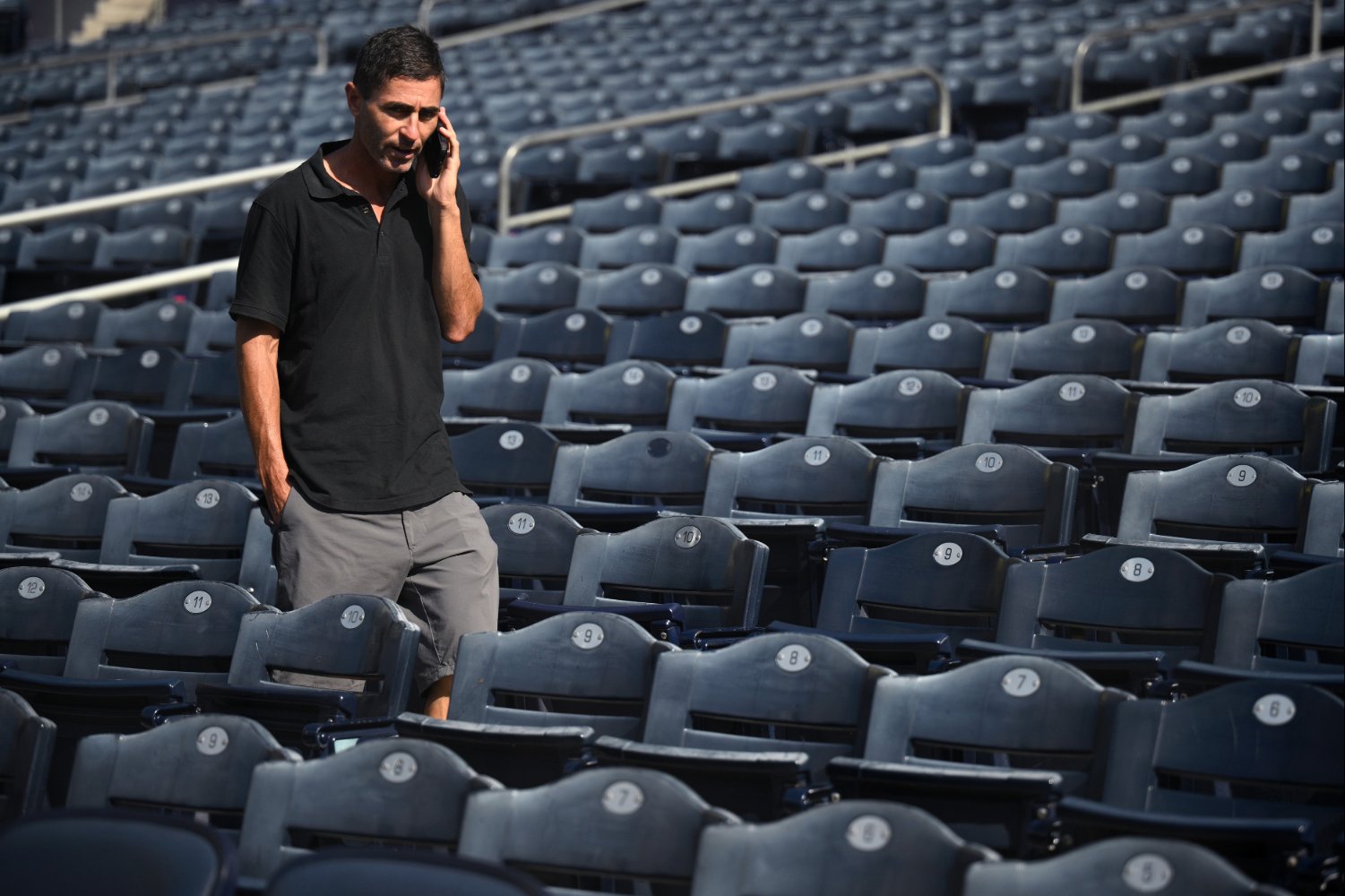 While the Major League Baseball offseason may not move at the exciting pace of some of its professional counterparts, the San Diego Padres stand to be active on multiple fronts early on. With option decisions to be made and a manager to be hired, there is plenty on the organization's plate from the jump. The 40-man roster will also have its place among the items of importance early on. When a player is placed on the 60-day Injured List, it removes said player from the 40-man roster. However, those players must be added back to the active roster following the conclusion of the World Series. It can be an effective roster maneuver in-season but not one teams are able to exploit over the winter. As such, the Padres will have some names added back into the mix within the next couple of days. At least on paper. Joe Musgrove is a name that immediately comes to mind as one that'll be added back to the 40-man roster. He missed all of 2025 following Tommy John Surgery late in the 2024 season. His timeline for next year remains a bit unclear, but it stands to reason that he'll be back early in the year, if not from the start. As such, his re-addition to the 40-man is something that the team would have to do fairly quickly to begin with. The same goes for Jason Adam, whose September surgery to repair a ruptured left quad carries a six-to-nine month recovery timeline. While we also don't know if he'll come in at the shorter end of that and potentially be back to start '26, it should be early on. Similar to Musgrove, he's a name the team would've had to prepare to have back in short order anyway. It's not as clear cut with Jhony Brito, however. He'll miss at least the first half of 2026 following an internal brace procedure for his UCL. The team certainly expects him back at some point during the year, but his inclusion on the 40-man is the type of thing that can complicate roster construction as A.J. Preller works his way through potential additions this winter. Ultimately, though, the Padres are in a decent position as far as the 40-man roster is concerned. Sure, they'll have to add those names back, but they're also gaining some flexibility via the impending departures of Dylan Cease, Michael King, Luis Arráez, and Ryan O'Hearn at a minimum. Robert Suárez, Elías Díaz, and Kyle Hart could be on their way out of town as well. Not that you want each of those names suiting up for a new squad in 2026. But it does make the re-addition requirement a bit more palatable than if the Padres had a logjam of bodies on their 40-man to navigate in (technically) activating their trio on the 60-day. This is, of course, the first step toward building up the 2026 roster for the San Diego Padres. It's a procedural move that won't garner much attention, but the impending returns of important names like Musgrove and Adam at least offers a bit of clarity as to how some areas of the roster could be assembled for next year.
 -
Even with an executive as busy as A.J. Preller, few elements of the San Diego Padres organization have seen more turnover over the last handful of years than the one behind the plate. In 2023, the team rolled out a group that consisted of, at various points, Gary Sánchez, Austin Nola, Luis Campusano, and Brett Sullivan. Their collective 1.4 fWAR ranked 19th in the league that year. The 2024 group took on a different shape, with each of Campusano and Sullivan holding over to an extent and Kyle Higashioka & Elías Díaz each joining the roster. That slate of backstops sat only 24th in the league in fWAR, with Higashioka's 1.6 figure buoying the group ahead of his departure in free agency. Negative value from the holdovers resulted in just a 1.1 fWAR overall. As such, the catching situation in 2025 was uninspiring from the jump. Priced out of Higashioka's market, the team turned again to Díaz and signed Martín Maldonado to a non-guaranteed contract ahead of the spring. The pair were brutal, presenting certain shortcomings on the defensive end and very little at the plate. Given that, it's no surprise that this group, even with trade deadline acquisition Freddy Fermin, ranked only 28th in the league with a 0.1 fWAR. At the deadline, Preller sent Stephen Kolek & Ryan Bergert to Kansas City in exchange for Fermin. It was a heftier-than-expected price to pay given the team's need for pitching depth, but Fermin was a crucial addition. Aside from the stability he provided down the stretch, his .388 wOBA across the three games against Chicago in the wild card series trailed only Jackson Merrill for the team lead. Arbitration-eligible through 2029, Fermin also brings the added benefit of certainty behind the plate for the foreseeable future. It's when we look behind Fermin that things start to get a little bit murky. Maldonado already announced his retirement. Díaz carries a $7 million mutual option that will almost certainly be declined from the Padres' end of things. Top prospect Ethan Salas is likely at least another year away. With a continued reluctance to give Campusano a shred of time behind the plate, they'll likely non-tender or look to move his two additional years of arbitration eligibility post-2026 given the upside he's shown with the bat in Triple-A. That leaves a complete vacancy behind Fermin going into next season. MLB Trade Rumors notes 16 catchers set to hit free agency this winter that accrued at least some major league time in '25. That list includes a pair of mutual options (Díaz & Milwaukee's Danny Jansen) and two club options (San Francisco's Tom Murphy & the Royals' Salvador Perez). Considering Díaz's imminent departure and the fact that Perez isn't likely to play for anyone outside of Kansas City, there's a couple of easy candidates to eliminate. Murphy's recent health woes (back & knee) could lead teams to remain clear of him, too. Jansen makes sense as a candidate if (and, likely, when) the Brewers decline his $12 million option, however. The remainder of the free agent class is a tough sell, even for a No. 2 catcher. No catcher had a lower fWAR than Jacob Stallings. J.T. Realmuto's price and starting status, even at 35 years old, likely keeps him out of any connection with San Diego. That's five names already off a list of 16. A case could be made for someone like Jansen, Matt Thaiss, or James McCann, at least. They offer some level of offensive competence in conjunction with defensive stability. If the team were willing to punt on offense entirely (as they appeared to do with the Díaz-Maldonado tandem in 2025), then names like José Herrera or Christian Vázquez could be brought into the fold. Should Preller find the free agent market unappealing, there are at least a couple of options available via trade. With Miguel Amaya poised to return, the Chicago Cubs could move Reese McGuire and his one remaining year of arbitration. He performed admirably in Amaya's stead as the backup to Carson Kelly. The Padres could also find catching help on the South Side of the same city given that the emergence of Kyle Teel & Edgar Quero has left Korey Lee at the bottom of the depth chart. The St. Louis Cardinals have also already received interest in their catching depth, which could include an upper-tier bat like Ivan Herrera, Pedro Pagés, or Yohel Pozo. While appealing options are limited in free agency, they do increase when you expand the scope to the trade market. The matter of addressing the backup catcher spot means looking for a stronger defensive profile and, perhaps, some mild competence at the plate. The trade market appears to offer more of the latter, but a blend of both can be found in at least a couple of names that cost only money over trading more prospects from an increasingly-thin system. The Padres are, fortunately, not in a position akin to last winter where they needed to address the position at large, though, thanks to the presence of Fermin. That should make the search an intriguing one, but not one to offer a spot in the corner of despair in which the combination Díaz & Maldonado left the Padres in last winter. View full article
-
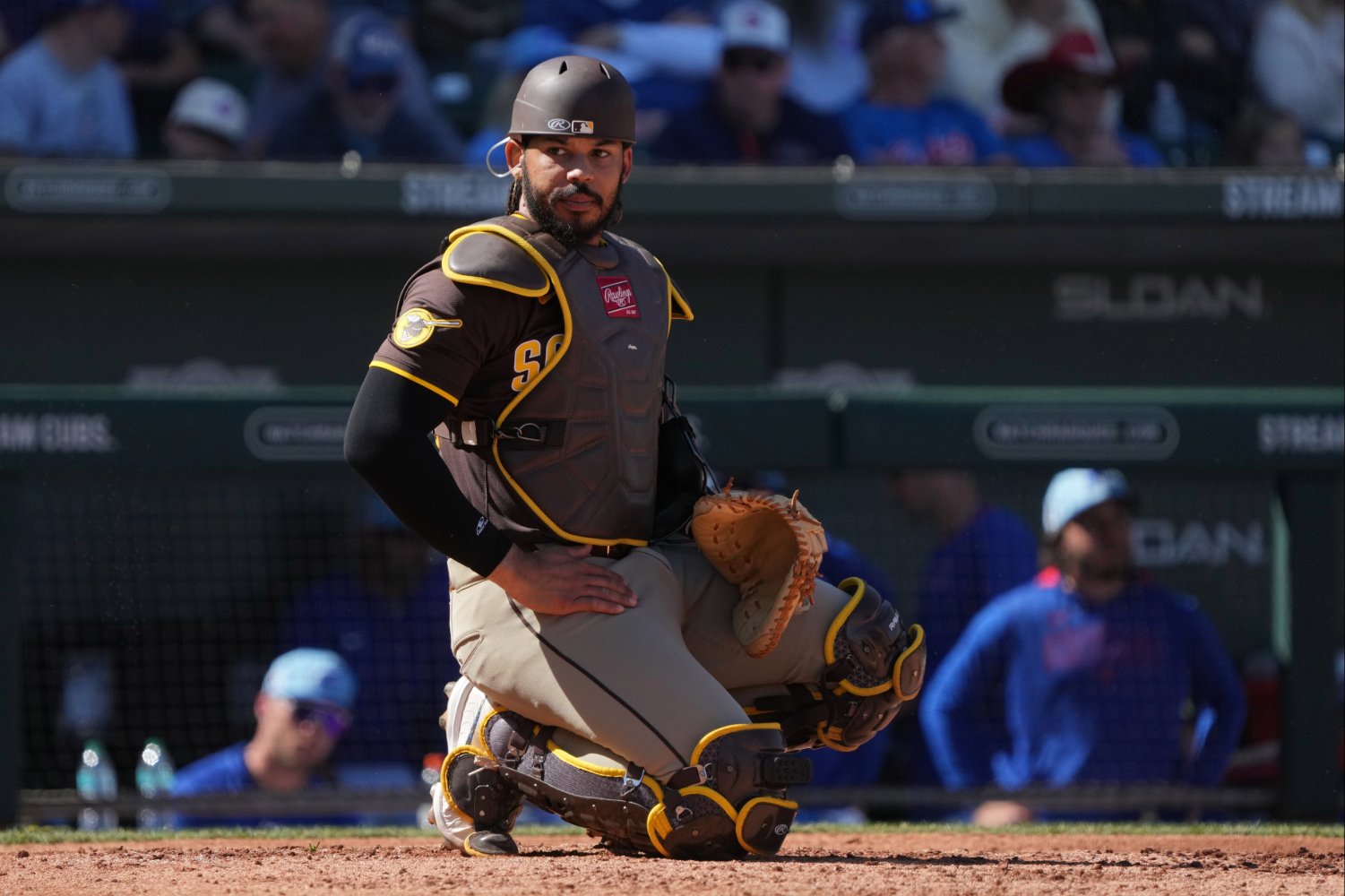 Even with an executive as busy as A.J. Preller, few elements of the San Diego Padres organization have seen more turnover over the last handful of years than the one behind the plate. In 2023, the team rolled out a group that consisted of, at various points, Gary Sánchez, Austin Nola, Luis Campusano, and Brett Sullivan. Their collective 1.4 fWAR ranked 19th in the league that year. The 2024 group took on a different shape, with each of Campusano and Sullivan holding over to an extent and Kyle Higashioka & Elías Díaz each joining the roster. That slate of backstops sat only 24th in the league in fWAR, with Higashioka's 1.6 figure buoying the group ahead of his departure in free agency. Negative value from the holdovers resulted in just a 1.1 fWAR overall. As such, the catching situation in 2025 was uninspiring from the jump. Priced out of Higashioka's market, the team turned again to Díaz and signed Martín Maldonado to a non-guaranteed contract ahead of the spring. The pair were brutal, presenting certain shortcomings on the defensive end and very little at the plate. Given that, it's no surprise that this group, even with trade deadline acquisition Freddy Fermin, ranked only 28th in the league with a 0.1 fWAR. At the deadline, Preller sent Stephen Kolek & Ryan Bergert to Kansas City in exchange for Fermin. It was a heftier-than-expected price to pay given the team's need for pitching depth, but Fermin was a crucial addition. Aside from the stability he provided down the stretch, his .388 wOBA across the three games against Chicago in the wild card series trailed only Jackson Merrill for the team lead. Arbitration-eligible through 2029, Fermin also brings the added benefit of certainty behind the plate for the foreseeable future. It's when we look behind Fermin that things start to get a little bit murky. Maldonado already announced his retirement. Díaz carries a $7 million mutual option that will almost certainly be declined from the Padres' end of things. Top prospect Ethan Salas is likely at least another year away. With a continued reluctance to give Campusano a shred of time behind the plate, they'll likely non-tender or look to move his two additional years of arbitration eligibility post-2026 given the upside he's shown with the bat in Triple-A. That leaves a complete vacancy behind Fermin going into next season. MLB Trade Rumors notes 16 catchers set to hit free agency this winter that accrued at least some major league time in '25. That list includes a pair of mutual options (Díaz & Milwaukee's Danny Jansen) and two club options (San Francisco's Tom Murphy & the Royals' Salvador Perez). Considering Díaz's imminent departure and the fact that Perez isn't likely to play for anyone outside of Kansas City, there's a couple of easy candidates to eliminate. Murphy's recent health woes (back & knee) could lead teams to remain clear of him, too. Jansen makes sense as a candidate if (and, likely, when) the Brewers decline his $12 million option, however. The remainder of the free agent class is a tough sell, even for a No. 2 catcher. No catcher had a lower fWAR than Jacob Stallings. J.T. Realmuto's price and starting status, even at 35 years old, likely keeps him out of any connection with San Diego. That's five names already off a list of 16. A case could be made for someone like Jansen, Matt Thaiss, or James McCann, at least. They offer some level of offensive competence in conjunction with defensive stability. If the team were willing to punt on offense entirely (as they appeared to do with the Díaz-Maldonado tandem in 2025), then names like José Herrera or Christian Vázquez could be brought into the fold. Should Preller find the free agent market unappealing, there are at least a couple of options available via trade. With Miguel Amaya poised to return, the Chicago Cubs could move Reese McGuire and his one remaining year of arbitration. He performed admirably in Amaya's stead as the backup to Carson Kelly. The Padres could also find catching help on the South Side of the same city given that the emergence of Kyle Teel & Edgar Quero has left Korey Lee at the bottom of the depth chart. The St. Louis Cardinals have also already received interest in their catching depth, which could include an upper-tier bat like Ivan Herrera, Pedro Pagés, or Yohel Pozo. While appealing options are limited in free agency, they do increase when you expand the scope to the trade market. The matter of addressing the backup catcher spot means looking for a stronger defensive profile and, perhaps, some mild competence at the plate. The trade market appears to offer more of the latter, but a blend of both can be found in at least a couple of names that cost only money over trading more prospects from an increasingly-thin system. The Padres are, fortunately, not in a position akin to last winter where they needed to address the position at large, though, thanks to the presence of Fermin. That should make the search an intriguing one, but not one to offer a spot in the corner of despair in which the combination Díaz & Maldonado left the Padres in last winter.
 -
In terms of the whole pitching staff, the San Diego Padres boasted one of the top groups of arms in all of Major League Baseball in 2025. They ranked 11th in fWAR (16.6), third in ERA (3.64), and fourth in strikeout rate (23.8 percent). The collective also allowed the fifth-lowest rate of hard contact (39.3 Hard-Hit%) among all big league staffs. Collective, however, is the operative word there. Because when we isolate things to San Diego's starting group, it starts to lose some of the shine. Taking into account only starting pitchers, the Padres were 22nd in the league in fWAR (8.9), 16th in ERA (4.07), and 13th in strikeout rate (22.4 percent). That ability to avoid hard contact did, at least, largely hold with the starting group, as they ranked seventh in Hard-Hit% allowed (40.5). Despite that, there was one looming issue the Friars couldn't avoid in 2025: volume. The Padres ranked only 21st in total innings and 18th in innings per start (5.09). Injuries abounded and compounded with inefficiency to create something that wasn't necessarily bad, but certainly didn't aid the Padres in their pursuit of a playoff spot. Which is how you end up with the numbers like the ones we see from their starting group. That doesn't mean that every starter that Mike Shildt deployed in '25 is part of that rather average equation. Nor does it take into account the work needed on the backend to piece together a rotation down the stretch sans traded arms Stephen Kolek and Ryan Bergert. Unlike the struggles of the lineup at various points throughout the year, which are a little more streamlined, the rotation's issues were much more nuanced given that injuries, trades, and lingering inefficiency all played a role, with the Padres' big league infrastructure helping them to remain afloat amid such intricate struggles. With all of that now spoken for, let's take a look at how each of the team's primary pitchers performed this season. Dylan Cease: C+ The 2025 iteration of Dylan Cease exists as something of a paradox. On one hand, he increased his whiffs (especially inside the strike zone), struck out more hitters overall, and cut his hard-hit rate from his 2024 numbers. On the other, he got fewer called strikes, surrendered more walks, and served up home runs on fly balls on a rate two percent higher than '24. When you combine those two ends of the spectrum, you get a guy who threw his lowest volume of innings (168.0) since 2021 despite making the same number of starts (32) than he's made in each year since, at minimum. Efficiency was perhaps Cease's biggest issue. Not only in terms of the troubles it created for the Padres navigating the middle of games in his starts, but in the way it warped the perception of his performance. In the end, he finished with 3.4 fWAR and a 3.56 FIP, neither of which are bad by any stretch. But, his issues with homers and working past the fifth inning could have an impact on the type of contract he's soon to receive on the free agent market. Nick Pivetta: A- When the Padres signed Pivetta to a four-year deal just before spring training began, it wasn't a move that warranted much buzz; floor-raising moves in the name of stability rarely are. But, 31 starts and surely a few down-ballot Cy Young votes later, he's set to be a massive piece of the 2026 Padres. In terms of pure outcomes, just about everything Pivetta did in '25 was a career best. His 2.87 ERA, 3.49 FIP, and 9.7 percent HR/FB rate were all the top marks of his career—by a wide margin. His strikeouts checked in slightly below his career average, but so did walks. And while he gave up a fair bit of hard contact, his willingness to work within the zone kept hitters off base to the tune of an in-zone swing rate four percent below his career average. Given the quality of contact generated and a .235 BABIP against, it's probably unreasonable to expect such impressive output from Pivetta in 2026. Nevertheless, he was perhaps the only stabilizing presence in a rotation that was dying for one. Michael King: B- It was something of an incomplete year for King, who made only 15 starts while dealing with multiple injuries (a nerve issue and knee inflammation, most notably) throughout the course of the year. When he was in the mix, the results were much more uneven than his strong 2024 had many believing would be in the cards. King struggled with similar efficiency issues that we saw from the rest of the starting group, as his 73 1/3 innings of work yielded less than five innings per start. His 3.44 ERA and 4.42 FIP were each several notches below his '24 output, even if still solid in a vacuum. Worse yet was that his strikeout rate fell three percent (24.7) while each of his swing and whiff rates fell against a rising contact rate. The outcomes certainly could have been worse, but the end result was just varying shades of fine for King in 2025. Of course, it's difficult to know how much to attribute the average output to either end of his injury woes, too. In the end, King was perfectly fine and probably did enough to comfortably decline his end of a mutual option this winter. even coming off the small sample. Randy Vásquez: C Considering some of the names that this organization employs, it might be something of a surprise to see Vásquez threw the third-most innings among Padres pitchers in 2025. That, of course, speaks to their lack of starting depth at the top level this season. But, there was also a certain level of stability Vásquez provided, even if it always seemed like he was walking a tightrope. That high-wire act isn't a bug but a feature in Vásquez's game. Early on, the most impressive thing about him was the strikeout-to-walk ratio favoring the latter so heavily but not entirely working against Vásquez. He walked five hitters on two occasions in his first eight starts and four in another. In total, that first group of starts included 18 strikeouts, 25 walks, and, amazingly, only 16 earned runs (six of which came in one start). There would be plenty of starts with a high volume of walks and some truly dreadful work in run prevention. But, in large part, Vásquez held it together primarily on the strength of his cutter, which became his primary offering in '25. There's still plenty of command work to be done, but upside as a steady, mid-to-backend starter exists if he can start to stabilize it. Yu Darvish: D+ There was one moment of brilliance from Yu Darvish in 2025. It came in his fifth start of the year, on July 30. Therein, he tossed seven innings and allowed just a pair of hits against seven strikeouts against the New York Mets. Of course, there are two problems there. The first is that Darvish's fifth start of the year was coming on July 30. The second is that after that brilliant outing, Darvish would fail to make it past the fifth inning in seven of his 10 remaining starts. Health and efficiency continued to be hurdles for Darvish in the '25 campaign; he made only 15 starts this year after taking the bump just 16 times in 2024. While his contact and plate discipline trends were largely fine (including a 95th percentile Hard-Hit% against), the stuff has diminished to the point where he's generating far fewer whiffs. Fewer whiffs ultimately means more contact and more traffic on the bases (the 79.0 percent contact rate and .244 average against were each the highest of Darvish's career). That's a lot of prolonged innings for a guy who likes to work finely on the edges of the zone. Given how it all transpired and resulted in a one-inning start against the Chicago Cubs in the Wild Card Round, it does leave us to wonder if we've seen the last of Yu Darvish on the mound in San Diego. Depth Options: D We knew from the jump that the Padres were going to have issues getting innings out of their starting group. Without Joe Musgrove, the extended absences of Darvish and King, and lots of turnover, there was simply a lot of innings to cover. Depth existed, but in name only. Covering the volume wasn't a like-for-like situation. Names like Kolek and Bergert provided some cover until they were each traded, though the results were somewhat mixed for each. Offseason signing Kyle Hart got a crack at a gig early but lost it courtesy of a 6.66 ERA and was eventually jettisoned to El Paso for much of the rest of the year. The Padres did make an attempt to fill in some of the depth at the trade deadline. Nestor Cortes Jr. was brought in and made a couple of decent starts before the home run issues that plagued him in Milwaukee manifested again—he allowed four big flies in his final start of the season and didn't appear again. JP Sears, acquired alongside Mason Miller, made only five starts to the tune of a 5.47 ERA and even worse FIP (6.18). Matt Waldron appeared only once. So getting an arm in there to start games wasn't so much the issue as it was keeping the arm. That stands to change in '26. There are a number of departures on the horizon, including Cease, King (mutual option), Cortes, and, maybe, Darvish. Between the need to add depth and the possibility of some transitions transpiring from the bullpen into the rotation, this is going to be a fascinating group on which to keep a steady eye this winter. View full article
-
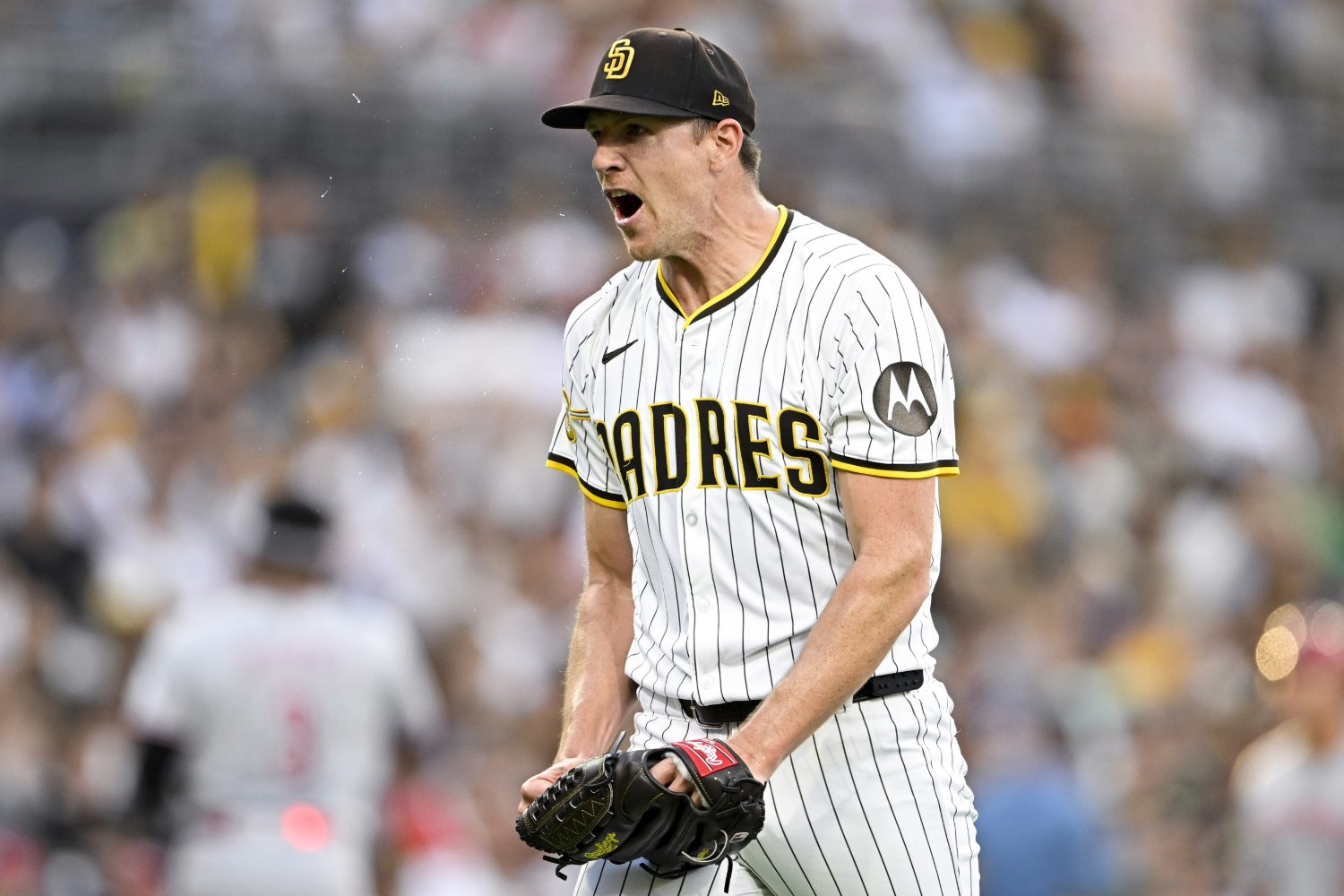 In terms of the whole pitching staff, the San Diego Padres boasted one of the top groups of arms in all of Major League Baseball in 2025. They ranked 11th in fWAR (16.6), third in ERA (3.64), and fourth in strikeout rate (23.8 percent). The collective also allowed the fifth-lowest rate of hard contact (39.3 Hard-Hit%) among all big league staffs. Collective, however, is the operative word there. Because when we isolate things to San Diego's starting group, it starts to lose some of the shine. Taking into account only starting pitchers, the Padres were 22nd in the league in fWAR (8.9), 16th in ERA (4.07), and 13th in strikeout rate (22.4 percent). That ability to avoid hard contact did, at least, largely hold with the starting group, as they ranked seventh in Hard-Hit% allowed (40.5). Despite that, there was one looming issue the Friars couldn't avoid in 2025: volume. The Padres ranked only 21st in total innings and 18th in innings per start (5.09). Injuries abounded and compounded with inefficiency to create something that wasn't necessarily bad, but certainly didn't aid the Padres in their pursuit of a playoff spot. Which is how you end up with the numbers like the ones we see from their starting group. That doesn't mean that every starter that Mike Shildt deployed in '25 is part of that rather average equation. Nor does it take into account the work needed on the backend to piece together a rotation down the stretch sans traded arms Stephen Kolek and Ryan Bergert. Unlike the struggles of the lineup at various points throughout the year, which are a little more streamlined, the rotation's issues were much more nuanced given that injuries, trades, and lingering inefficiency all played a role, with the Padres' big league infrastructure helping them to remain afloat amid such intricate struggles. With all of that now spoken for, let's take a look at how each of the team's primary pitchers performed this season. Dylan Cease: C+ The 2025 iteration of Dylan Cease exists as something of a paradox. On one hand, he increased his whiffs (especially inside the strike zone), struck out more hitters overall, and cut his hard-hit rate from his 2024 numbers. On the other, he got fewer called strikes, surrendered more walks, and served up home runs on fly balls on a rate two percent higher than '24. When you combine those two ends of the spectrum, you get a guy who threw his lowest volume of innings (168.0) since 2021 despite making the same number of starts (32) than he's made in each year since, at minimum. Efficiency was perhaps Cease's biggest issue. Not only in terms of the troubles it created for the Padres navigating the middle of games in his starts, but in the way it warped the perception of his performance. In the end, he finished with 3.4 fWAR and a 3.56 FIP, neither of which are bad by any stretch. But, his issues with homers and working past the fifth inning could have an impact on the type of contract he's soon to receive on the free agent market. Nick Pivetta: A- When the Padres signed Pivetta to a four-year deal just before spring training began, it wasn't a move that warranted much buzz; floor-raising moves in the name of stability rarely are. But, 31 starts and surely a few down-ballot Cy Young votes later, he's set to be a massive piece of the 2026 Padres. In terms of pure outcomes, just about everything Pivetta did in '25 was a career best. His 2.87 ERA, 3.49 FIP, and 9.7 percent HR/FB rate were all the top marks of his career—by a wide margin. His strikeouts checked in slightly below his career average, but so did walks. And while he gave up a fair bit of hard contact, his willingness to work within the zone kept hitters off base to the tune of an in-zone swing rate four percent below his career average. Given the quality of contact generated and a .235 BABIP against, it's probably unreasonable to expect such impressive output from Pivetta in 2026. Nevertheless, he was perhaps the only stabilizing presence in a rotation that was dying for one. Michael King: B- It was something of an incomplete year for King, who made only 15 starts while dealing with multiple injuries (a nerve issue and knee inflammation, most notably) throughout the course of the year. When he was in the mix, the results were much more uneven than his strong 2024 had many believing would be in the cards. King struggled with similar efficiency issues that we saw from the rest of the starting group, as his 73 1/3 innings of work yielded less than five innings per start. His 3.44 ERA and 4.42 FIP were each several notches below his '24 output, even if still solid in a vacuum. Worse yet was that his strikeout rate fell three percent (24.7) while each of his swing and whiff rates fell against a rising contact rate. The outcomes certainly could have been worse, but the end result was just varying shades of fine for King in 2025. Of course, it's difficult to know how much to attribute the average output to either end of his injury woes, too. In the end, King was perfectly fine and probably did enough to comfortably decline his end of a mutual option this winter. even coming off the small sample. Randy Vásquez: C Considering some of the names that this organization employs, it might be something of a surprise to see Vásquez threw the third-most innings among Padres pitchers in 2025. That, of course, speaks to their lack of starting depth at the top level this season. But, there was also a certain level of stability Vásquez provided, even if it always seemed like he was walking a tightrope. That high-wire act isn't a bug but a feature in Vásquez's game. Early on, the most impressive thing about him was the strikeout-to-walk ratio favoring the latter so heavily but not entirely working against Vásquez. He walked five hitters on two occasions in his first eight starts and four in another. In total, that first group of starts included 18 strikeouts, 25 walks, and, amazingly, only 16 earned runs (six of which came in one start). There would be plenty of starts with a high volume of walks and some truly dreadful work in run prevention. But, in large part, Vásquez held it together primarily on the strength of his cutter, which became his primary offering in '25. There's still plenty of command work to be done, but upside as a steady, mid-to-backend starter exists if he can start to stabilize it. Yu Darvish: D+ There was one moment of brilliance from Yu Darvish in 2025. It came in his fifth start of the year, on July 30. Therein, he tossed seven innings and allowed just a pair of hits against seven strikeouts against the New York Mets. Of course, there are two problems there. The first is that Darvish's fifth start of the year was coming on July 30. The second is that after that brilliant outing, Darvish would fail to make it past the fifth inning in seven of his 10 remaining starts. Health and efficiency continued to be hurdles for Darvish in the '25 campaign; he made only 15 starts this year after taking the bump just 16 times in 2024. While his contact and plate discipline trends were largely fine (including a 95th percentile Hard-Hit% against), the stuff has diminished to the point where he's generating far fewer whiffs. Fewer whiffs ultimately means more contact and more traffic on the bases (the 79.0 percent contact rate and .244 average against were each the highest of Darvish's career). That's a lot of prolonged innings for a guy who likes to work finely on the edges of the zone. Given how it all transpired and resulted in a one-inning start against the Chicago Cubs in the Wild Card Round, it does leave us to wonder if we've seen the last of Yu Darvish on the mound in San Diego. Depth Options: D We knew from the jump that the Padres were going to have issues getting innings out of their starting group. Without Joe Musgrove, the extended absences of Darvish and King, and lots of turnover, there was simply a lot of innings to cover. Depth existed, but in name only. Covering the volume wasn't a like-for-like situation. Names like Kolek and Bergert provided some cover until they were each traded, though the results were somewhat mixed for each. Offseason signing Kyle Hart got a crack at a gig early but lost it courtesy of a 6.66 ERA and was eventually jettisoned to El Paso for much of the rest of the year. The Padres did make an attempt to fill in some of the depth at the trade deadline. Nestor Cortes Jr. was brought in and made a couple of decent starts before the home run issues that plagued him in Milwaukee manifested again—he allowed four big flies in his final start of the season and didn't appear again. JP Sears, acquired alongside Mason Miller, made only five starts to the tune of a 5.47 ERA and even worse FIP (6.18). Matt Waldron appeared only once. So getting an arm in there to start games wasn't so much the issue as it was keeping the arm. That stands to change in '26. There are a number of departures on the horizon, including Cease, King (mutual option), Cortes, and, maybe, Darvish. Between the need to add depth and the possibility of some transitions transpiring from the bullpen into the rotation, this is going to be a fascinating group on which to keep a steady eye this winter.
 -
It's hard to know what to make of the San Diego Padres' group of outfielders in 2025. On one hand, it's a group that finished seventh in fWAR among outfield groups across the landscape of Major League Baseball. The team got a full season out of Fernando Tatis Jr., a breakout season out of Gavin Sheets, and better-late-than-never contributions from Jackson Merrill at the end of the campaign. But the day-to-day doesn't paint the rosiest of images, either. Tatis was heavily buoyed by an electric start to the year. Sheets' defense was woeful. Merrill, despite the finish, spent the bulk of the year battling various injuries. And while Ramón Laureano helped to stabilize things upon his arrival from Baltimore at the trade deadline, a broken finger held him out of their short postseason appearance. Despite some solid outputs as a collective, the power (like much of the rest of the roster) wasn't as much of a factor as you'd expect from this positional group, with a .160 ISO that ranked only 16th. Nevertheless, it's a group that stands to head into 2026 with minimal turnover. Each of Merrill & Tatis should resume their posts in center and right field, respectively. Laureano has a $6.5 million club option that should be a no-brainer to exercise. Sheets is still under team control. While the depth is also in need of improvement, we should see familiar faces occupying the grass at Petco Park next year. This is a legitimately good group among the various phases of this roster that needs to offer just a little more ahead of '26. In the meantime, though, let's see how each graded in 2025. Fernando Tatis Jr: B+ The surface numbers for Fernando Tatis Jr look excellent. His 6.1 fWAR was his highest since 2021 as he slashed .268/.368/.446 with a 131 wRC+ and eight Outs Above Average in right field. He cut his strikeout rate down to 18.7 percent, the best of his career, and bumped his walk rate to an also-career-best 12.9 percent. His start in March & April was absolutely blazing, as he turned in a 182 wRC+ and .257 ISO out of the gate. At the same time, he had stretches of play where he disappeared entirely. Despite his plate approach remaining intact, he followed up that gaudy wRC+ in the season's first month with one that sat at just 74 in May, before his power tailed off completely in June (.102 ISO). He picked the power back up to close the year (.256 ISO in September), but there was clearly something tamping down impact production in the middle months of the season. Had the Padres gotten more elsewhere in the lineup, you'd have been fine with Tatis' overall output sans power. Unfortunately, that didn't happen. The Padres simply needed more from their young superstar, especially as the postseason began, as his wRC+ was -28 across three games. The defense, though, remained excellent throughout, earning Tatis a spot as the team's only Gold Glove finalist. It was a fine year. A very good one, even. But as one of the catalysts of this lineup, he'll have to bring something more sustainable to the equation with the bat next year. Jackson Merrill: C+ Like his counterpart in right field, Merrill started the year strong. In his first 10 games, he slashed .378/.415/.676 (201 wRC+). He bumped the walk rate up early, too. Unfortunately, his first month ended early after a hamstring strain. When he came back in May, he was offering plenty of production, but his power was pinned down (.143 ISO). He went back to the injured list in June after a concussion sustained on a tag while sliding into second base against Arizona. From there, Merrill started to manifest as something more of an absence. His combined slash between June & July (172 plate appearances) checked in at just .217/.291/.321 with a 75 wRC+ and a 22.3 percent strikeout rate. He'd go on to hit the IL again in August with an ankle sprain, his third overall trip in 2025. Despite that, Merrill did finish the year strong, with a monster 160 wRC+ and .352 ISO in September. That Merrill still finished with 3.0 fWAR despite so many injury woes speaks to how he bookended the year. With that in mind, an offseason to get back to 100 percent should bode well for Merrill to take that next step toward stardom that we expected on the heels of a top-tier rookie campaign in 2024. However, given the volume of games missed and what the summer months looked like, it's hard to be too jazzed about what the Padres ultimately received from their sophomore centerfielder in hindsight. Gavin Sheets: B- Gavin Sheets was not supposed to be an outfield regular for the 2025 San Diego Padres. A rotational piece at first and designated hitter with perhaps the occasional spell in the outfield corners? Sure. Nearly 500 innings in left field, though? It's probably not what the team envisioned when they signed him to a minor league deal ahead of the season. Considering the deal and the fact that Sheets was coming off consecutive seasons of negative WAR with the Chicago White Sox, though, they have to be pleased with the production they got out of him. Just about everywhere you look, Sheets turned in a better year than his best work in prior years, most of which came in 179 PA in 2021. He finished with a .252/.317/.429 slash and a 111 wRC+, the latter of which is the first time he's ended a year on the positive side of that threshold since his rookie season. Like much of the rest of the lineup, however, he was prone to stretches of brutal production. His wRC+ sat at only 65 in July and 50 in August, and overall was 30 points higher against right-handed pitchers (119) than lefties (89). He also finished with -4 OAA in left field. The upside almost assures he'll be around as a rotating bench & designated hitter with occasional defensive time, but he's also someone you'd prefer to avoid in as high volume of a role as we saw in '25 given his shortcomings. Still, coming off what we saw in Chicago the last couple of years, it was an encouraging first year in San Diego for Sheets. Ramón Laureano: B+ Laureano appeared in only 50 games for the Padres following the trade with Baltimore, but he showed enough to get a crack at a regular gig with San Diego in 2026. His slash came in at .269/.323/.489 with a 127 wRC+ and 0.7 fWAR. Perhaps most importantly is the slugging number, where he provided the Padres with a rare source of power in the second half of the year. The steadiness he offered over that stretch was certainly missed in the wild card series. Laureano isn't the rangiest corner outfielder in the sport, as he finished the full season with a -9 OAA across all three outfield spots and a -3 mark in left field specifically. Where his value comes in, though, is in the arm. He finished 92nd percentile in arm value and 85th in arm strength. Carrying that $6.5 million club option, it should be a given that we see Laureano resume his post in left in 2026 after that finger heals up completely. A team that had to cycle in so many different players before getting to Sheets and, eventually, Laureano should have some stability for at least one more year after what we saw in August & September. The Bench: D- The following players saw time in the outfield (beyond the regulars) for the Padres in 2025: Tirso Ornelas, Trenton Brooks, Connor Joe, Jose Iglesias, Oscar González, Brandon Lockridge, Bryce Johnson, Jason Heyward, Tyler Wade, and Ryan O'Hearn. Johnson's 0.5 fWAR paced that group, with most of the rest out of the organization by the time the season was over. Most of the names presented there were only around for a handful of plate appearances, but such volume and turnover speaks to the depth the team lacked in their outfield. It's an area you don't necessarily think you need considering two of the three starters are Fernando Tatis Jr. and Jackson Merrill, but when the latter struggled to stay healthy and left field was a revolving door until the Sheets emergence and Laureano trade, the need becomes clear. While the team will have a solid trio to start the year and Sheets as a fourth option, it's a clear area of need at both the major league and Triple-A levels for next season. You never know when you'll need a just-in-case option, and one hopes that A.J. Preller will be better prepared for it ahead of 2026. View full article
-
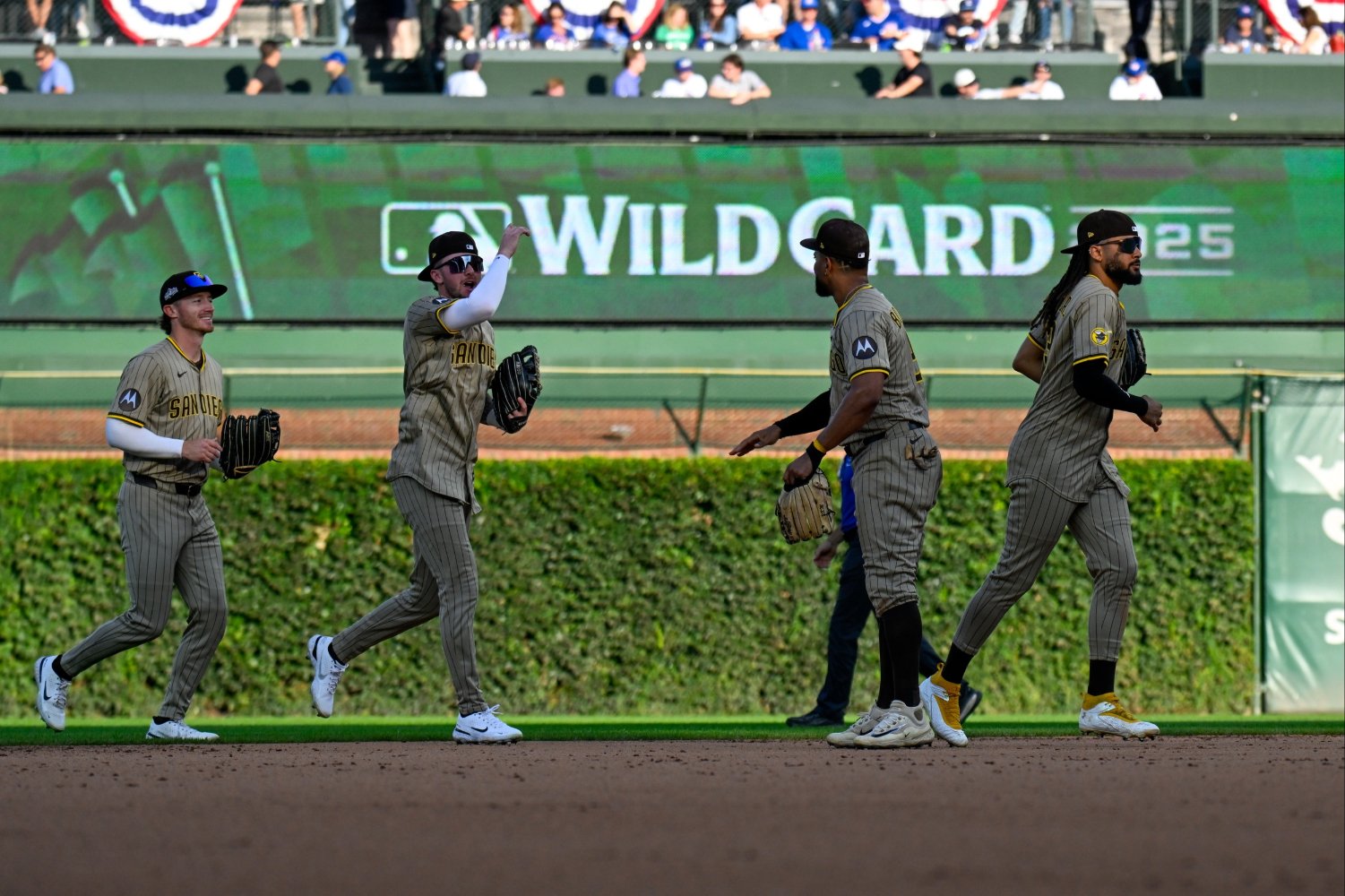 It's hard to know what to make of the San Diego Padres' group of outfielders in 2025. On one hand, it's a group that finished seventh in fWAR among outfield groups across the landscape of Major League Baseball. The team got a full season out of Fernando Tatis Jr., a breakout season out of Gavin Sheets, and better-late-than-never contributions from Jackson Merrill at the end of the campaign. But the day-to-day doesn't paint the rosiest of images, either. Tatis was heavily buoyed by an electric start to the year. Sheets' defense was woeful. Merrill, despite the finish, spent the bulk of the year battling various injuries. And while Ramón Laureano helped to stabilize things upon his arrival from Baltimore at the trade deadline, a broken finger held him out of their short postseason appearance. Despite some solid outputs as a collective, the power (like much of the rest of the roster) wasn't as much of a factor as you'd expect from this positional group, with a .160 ISO that ranked only 16th. Nevertheless, it's a group that stands to head into 2026 with minimal turnover. Each of Merrill & Tatis should resume their posts in center and right field, respectively. Laureano has a $6.5 million club option that should be a no-brainer to exercise. Sheets is still under team control. While the depth is also in need of improvement, we should see familiar faces occupying the grass at Petco Park next year. This is a legitimately good group among the various phases of this roster that needs to offer just a little more ahead of '26. In the meantime, though, let's see how each graded in 2025. Fernando Tatis Jr: B+ The surface numbers for Fernando Tatis Jr look excellent. His 6.1 fWAR was his highest since 2021 as he slashed .268/.368/.446 with a 131 wRC+ and eight Outs Above Average in right field. He cut his strikeout rate down to 18.7 percent, the best of his career, and bumped his walk rate to an also-career-best 12.9 percent. His start in March & April was absolutely blazing, as he turned in a 182 wRC+ and .257 ISO out of the gate. At the same time, he had stretches of play where he disappeared entirely. Despite his plate approach remaining intact, he followed up that gaudy wRC+ in the season's first month with one that sat at just 74 in May, before his power tailed off completely in June (.102 ISO). He picked the power back up to close the year (.256 ISO in September), but there was clearly something tamping down impact production in the middle months of the season. Had the Padres gotten more elsewhere in the lineup, you'd have been fine with Tatis' overall output sans power. Unfortunately, that didn't happen. The Padres simply needed more from their young superstar, especially as the postseason began, as his wRC+ was -28 across three games. The defense, though, remained excellent throughout, earning Tatis a spot as the team's only Gold Glove finalist. It was a fine year. A very good one, even. But as one of the catalysts of this lineup, he'll have to bring something more sustainable to the equation with the bat next year. Jackson Merrill: C+ Like his counterpart in right field, Merrill started the year strong. In his first 10 games, he slashed .378/.415/.676 (201 wRC+). He bumped the walk rate up early, too. Unfortunately, his first month ended early after a hamstring strain. When he came back in May, he was offering plenty of production, but his power was pinned down (.143 ISO). He went back to the injured list in June after a concussion sustained on a tag while sliding into second base against Arizona. From there, Merrill started to manifest as something more of an absence. His combined slash between June & July (172 plate appearances) checked in at just .217/.291/.321 with a 75 wRC+ and a 22.3 percent strikeout rate. He'd go on to hit the IL again in August with an ankle sprain, his third overall trip in 2025. Despite that, Merrill did finish the year strong, with a monster 160 wRC+ and .352 ISO in September. That Merrill still finished with 3.0 fWAR despite so many injury woes speaks to how he bookended the year. With that in mind, an offseason to get back to 100 percent should bode well for Merrill to take that next step toward stardom that we expected on the heels of a top-tier rookie campaign in 2024. However, given the volume of games missed and what the summer months looked like, it's hard to be too jazzed about what the Padres ultimately received from their sophomore centerfielder in hindsight. Gavin Sheets: B- Gavin Sheets was not supposed to be an outfield regular for the 2025 San Diego Padres. A rotational piece at first and designated hitter with perhaps the occasional spell in the outfield corners? Sure. Nearly 500 innings in left field, though? It's probably not what the team envisioned when they signed him to a minor league deal ahead of the season. Considering the deal and the fact that Sheets was coming off consecutive seasons of negative WAR with the Chicago White Sox, though, they have to be pleased with the production they got out of him. Just about everywhere you look, Sheets turned in a better year than his best work in prior years, most of which came in 179 PA in 2021. He finished with a .252/.317/.429 slash and a 111 wRC+, the latter of which is the first time he's ended a year on the positive side of that threshold since his rookie season. Like much of the rest of the lineup, however, he was prone to stretches of brutal production. His wRC+ sat at only 65 in July and 50 in August, and overall was 30 points higher against right-handed pitchers (119) than lefties (89). He also finished with -4 OAA in left field. The upside almost assures he'll be around as a rotating bench & designated hitter with occasional defensive time, but he's also someone you'd prefer to avoid in as high volume of a role as we saw in '25 given his shortcomings. Still, coming off what we saw in Chicago the last couple of years, it was an encouraging first year in San Diego for Sheets. Ramón Laureano: B+ Laureano appeared in only 50 games for the Padres following the trade with Baltimore, but he showed enough to get a crack at a regular gig with San Diego in 2026. His slash came in at .269/.323/.489 with a 127 wRC+ and 0.7 fWAR. Perhaps most importantly is the slugging number, where he provided the Padres with a rare source of power in the second half of the year. The steadiness he offered over that stretch was certainly missed in the wild card series. Laureano isn't the rangiest corner outfielder in the sport, as he finished the full season with a -9 OAA across all three outfield spots and a -3 mark in left field specifically. Where his value comes in, though, is in the arm. He finished 92nd percentile in arm value and 85th in arm strength. Carrying that $6.5 million club option, it should be a given that we see Laureano resume his post in left in 2026 after that finger heals up completely. A team that had to cycle in so many different players before getting to Sheets and, eventually, Laureano should have some stability for at least one more year after what we saw in August & September. The Bench: D- The following players saw time in the outfield (beyond the regulars) for the Padres in 2025: Tirso Ornelas, Trenton Brooks, Connor Joe, Jose Iglesias, Oscar González, Brandon Lockridge, Bryce Johnson, Jason Heyward, Tyler Wade, and Ryan O'Hearn. Johnson's 0.5 fWAR paced that group, with most of the rest out of the organization by the time the season was over. Most of the names presented there were only around for a handful of plate appearances, but such volume and turnover speaks to the depth the team lacked in their outfield. It's an area you don't necessarily think you need considering two of the three starters are Fernando Tatis Jr. and Jackson Merrill, but when the latter struggled to stay healthy and left field was a revolving door until the Sheets emergence and Laureano trade, the need becomes clear. While the team will have a solid trio to start the year and Sheets as a fourth option, it's a clear area of need at both the major league and Triple-A levels for next season. You never know when you'll need a just-in-case option, and one hopes that A.J. Preller will be better prepared for it ahead of 2026.
 -
The San Diego Padres have work to do in their starting rotation this winter. Dylan Cease is a free agent. So is Nestor Cortes Jr. (though his second-half dud of a tenure made a reunion pursuit unlikely, anyway). Michael King carries a mutual option, meaning he's a virtual certainty to opt out. While they will be getting Joe Musgrove back early in 2026, the Padres have, on paper, only Nick Pivetta, Randy Vásquez, Matt Waldron, and JP Sears set to return. And your mileage may vary on how much confidence the organization has in any or all of those arms. Further complicating the situation is the impending future of Yu Darvish. His name does, officially, belong on the list of starting-caliber arms the Padres have set to return for next season. His contract runs through 2028 at a fairly reasonable price point of $15 million. The likelihood of Darvish completing the duration of that contract, however, is a matter of conjecture at this point. Multiple reports, to say nothing of the words that have come directly from A.J. Preller's mouth, are indicative of a player unsure about his future in Major League Baseball. Preller noted that he'd talked to Darvish multiple times already this offseason and planned to continue doing so. Darvish himself was noncommittal about his future following his one-inning disaster of a start in the wild card series against the Chicago Cubs back on October 2. Therein, Darvish was unable to work through a second inning as he allowed four hits and left with the bases loaded. That type of struggle was, of course, somewhat familiar to Darvish in 2025. Once he returned to the mound, that is. Getting on the mound was a hurdle itself, as Darvish struggled with fatigue and elbow inflammation to start the year. He didn't make his debut until July and made 15 starts for the year. Across those 15 outings, he threw 72.0 innings to the tune of a 5.38 ERA and 4.82 FIP. While his walk rate sat at his best rate since 2022 (6.4 percent), his strikeout rate continued its steady decline, falling to a career-low 23.0 percent. Darvish did remain adept at limiting hard contact, including an average exit velocity that was in the 91st percentile (87.3 percent) and a hard-hit rate in the 95th (33.0 percent). In addition to his newfound inability to miss bats, longevity was also an issue for Darvish. He averaged only 4.8 innings a start, failing to work out of the fourth inning twice and out of the fifth inning on six occasions. That's not terribly surprising given the health setbacks, but it also added an extra burden to a bullpen that was already working against efficiency issues from other starters within the San Diego rotation. With all of that considered, it's unsurprising that Darvish might be considering stepping away from the game, especially when you factor in the fact that he'll be 40 years old in the second half of next year. And while it's difficult to describe him as a genuine asset to the starting five at this point considering the lack of whiff and lack of efficiency start-to-start, his departure would represent another gap in a rotation that the Padres were already going to have to work hard to fill this winter. Now, none of this is to say that we should be ready to declare the Padres rotation would be better sans Darvish. Starting pitching is difficult enough to find as it is. But there's an argument to be made, at least, that more upside exists elsewhere than in the right arm of Yu Darvish at present. Ideally, there's a resolution on this front in the not-too-distant future either way. Already needing to bring in a couple of fresh faces for the rotation (to say nothing of depth), A.J. Preller surely wants to have as much clarity around his needed direction as possible. View full article
-
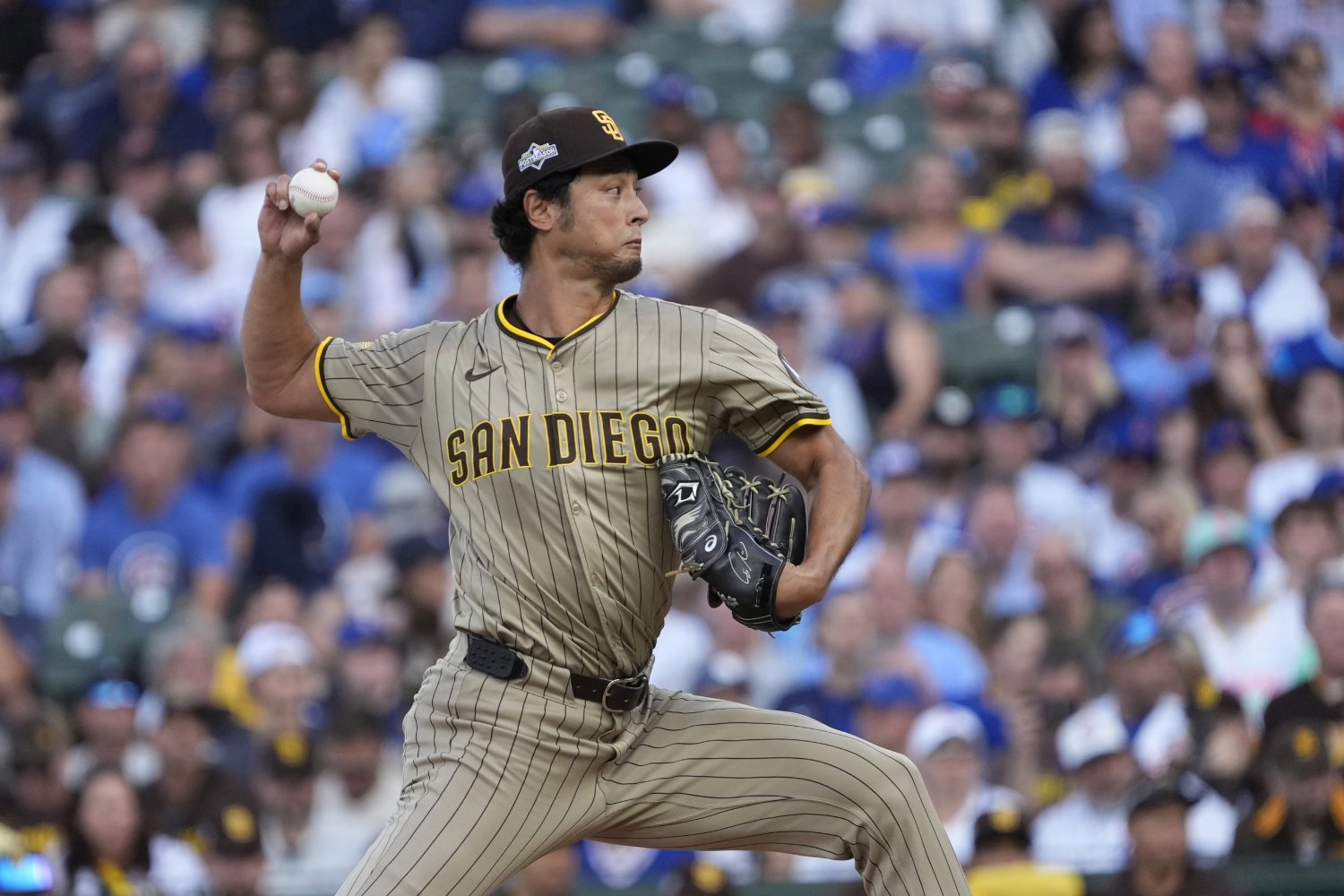 The San Diego Padres have work to do in their starting rotation this winter. Dylan Cease is a free agent. So is Nestor Cortes Jr. (though his second-half dud of a tenure made a reunion pursuit unlikely, anyway). Michael King carries a mutual option, meaning he's a virtual certainty to opt out. While they will be getting Joe Musgrove back early in 2026, the Padres have, on paper, only Nick Pivetta, Randy Vásquez, Matt Waldron, and JP Sears set to return. And your mileage may vary on how much confidence the organization has in any or all of those arms. Further complicating the situation is the impending future of Yu Darvish. His name does, officially, belong on the list of starting-caliber arms the Padres have set to return for next season. His contract runs through 2028 at a fairly reasonable price point of $15 million. The likelihood of Darvish completing the duration of that contract, however, is a matter of conjecture at this point. Multiple reports, to say nothing of the words that have come directly from A.J. Preller's mouth, are indicative of a player unsure about his future in Major League Baseball. Preller noted that he'd talked to Darvish multiple times already this offseason and planned to continue doing so. Darvish himself was noncommittal about his future following his one-inning disaster of a start in the wild card series against the Chicago Cubs back on October 2. Therein, Darvish was unable to work through a second inning as he allowed four hits and left with the bases loaded. That type of struggle was, of course, somewhat familiar to Darvish in 2025. Once he returned to the mound, that is. Getting on the mound was a hurdle itself, as Darvish struggled with fatigue and elbow inflammation to start the year. He didn't make his debut until July and made 15 starts for the year. Across those 15 outings, he threw 72.0 innings to the tune of a 5.38 ERA and 4.82 FIP. While his walk rate sat at his best rate since 2022 (6.4 percent), his strikeout rate continued its steady decline, falling to a career-low 23.0 percent. Darvish did remain adept at limiting hard contact, including an average exit velocity that was in the 91st percentile (87.3 percent) and a hard-hit rate in the 95th (33.0 percent). In addition to his newfound inability to miss bats, longevity was also an issue for Darvish. He averaged only 4.8 innings a start, failing to work out of the fourth inning twice and out of the fifth inning on six occasions. That's not terribly surprising given the health setbacks, but it also added an extra burden to a bullpen that was already working against efficiency issues from other starters within the San Diego rotation. With all of that considered, it's unsurprising that Darvish might be considering stepping away from the game, especially when you factor in the fact that he'll be 40 years old in the second half of next year. And while it's difficult to describe him as a genuine asset to the starting five at this point considering the lack of whiff and lack of efficiency start-to-start, his departure would represent another gap in a rotation that the Padres were already going to have to work hard to fill this winter. Now, none of this is to say that we should be ready to declare the Padres rotation would be better sans Darvish. Starting pitching is difficult enough to find as it is. But there's an argument to be made, at least, that more upside exists elsewhere than in the right arm of Yu Darvish at present. Ideally, there's a resolution on this front in the not-too-distant future either way. Already needing to bring in a couple of fresh faces for the rotation (to say nothing of depth), A.J. Preller surely wants to have as much clarity around his needed direction as possible.
 -
The San Diego Padres' rotation is going to look quite a bit different in 2026. Michael King is likely to decline his mutual option. Dylan Cease was already set to be a free agent, as is the case for Nestor Cortes Jr. None of that trio appears all that likely to return. Joe Musgrove, though, should be back early from Tommy John surgery, and how pre-arb arms like Randy Vásquez or Matt Waldron factor in is anyone's guess. Yu Darvish returned in the second half of the year, but there are certainly longevity concerns. That leaves Nick Pivetta as the lone true holdover, with JP Sears the only other name of note that drew at least on4 start in 2025. It's a plethora of uncertainty clouding the starting group in San Diego. A.J. Preller's approach to the trade deadline demonstrated a clear awareness of some heavy rotation turnover. In acquiring Mason Miller for an intense package of prospects that included Leo De Vries, Preller was able to also bring in Sears as part of the return. While not a particularly exciting arm, he's arbitration-eligible through 2028. Hence the appeal. That appeal, though, was put on hold with lackluster results in a small sample for Sears post-deadline. He turned in a 5.47 ERA in five starts with a 6.18 FIP suggesting he wasn't even that good at run prevention. Each of his K% (18.0), BB% (6.8), and HR% (6.3) were worse across his 24.2 innings with San Diego than his 111 innings with the A's. With all that said, however, it wasn't a total loss for Sears. There were, in fact, a couple of areas of improvement. Sears was able to limit hard contact in a way that he didn't in Sacramento, checking in at a 34.9 Hard-Hit% by Baseball Reference's measure (95 MPH or higher). He also had a groundball rate seven points higher (34.9 percent) than his time with the Athletics. Combine that with a .324 BABIP and there's enough there to suggest that while Sears' results weren't terrific, he was also something of a victim of circumstance. Luck played its role, primarily acting against Sears. Ultimately, those factors provide only some optimism. Sears' scouting report back in 2022 from MLB Pipeline reported the following: The first portion of that passage certainly tracks. Sears doesn't have overpowering stuff, averaging just 91.9 MPH on his fastball (15th percentile) with a sweeper that provides only modest results. It's a fine line to walk as a starting pitcher, when you're operating with two primary pitches that would qualify as "just okay" in what they provide. It's also something of which the Padres already have a decent volume among '26 rotation candidates when one considers what Vásquez or Waldron offer. So, while it's possible that Sears could have more to extract from his arsenal in a full offseason program within the Padres' pitching infrastructure, it's hard to deem him as too reliable a piece as they begin to build out the 2026 rotation. The results weren't encouraging (despite a few underlying positives) and speak to his already-limited upside. Not that he won't be in the mix, mind you. The Padres only have six starting pitchers set to remain under contract on their 40-man roster at present. But the acquisition of Sears, while important as a depth starter or length arm out of the bullpen, shouldn't preclude Preller from seeking additional help in the rotation. Not even a little bit. Getting anything out of him has to be treated as gravy; the bulk of the rotation still needs to be overhauled. View full article
-
JP Sears Can Only Answer A Few of the Padres' Many Rotation Questions
Randy Holt posted an article in Padres
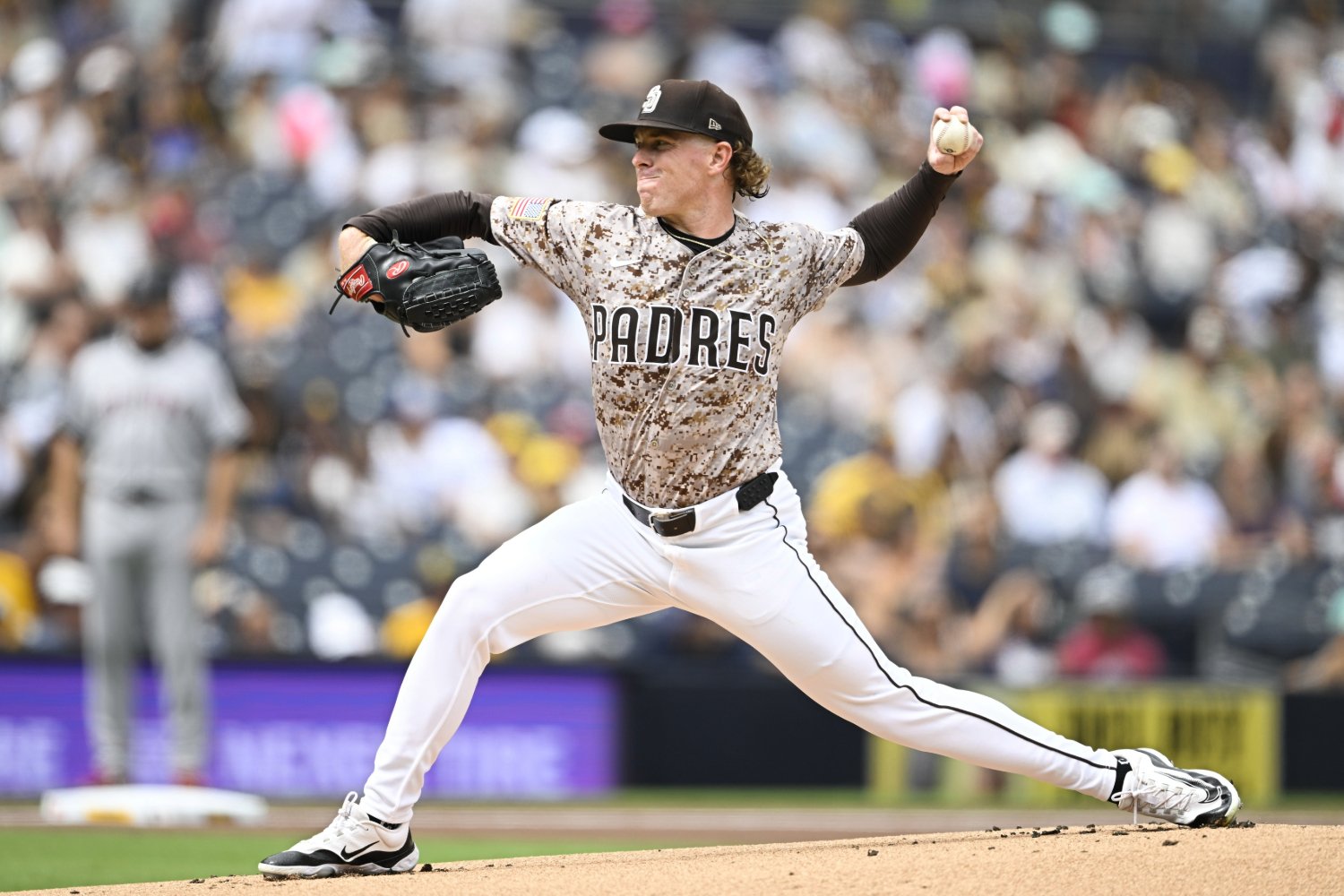 The San Diego Padres' rotation is going to look quite a bit different in 2026. Michael King is likely to decline his mutual option. Dylan Cease was already set to be a free agent, as is the case for Nestor Cortes Jr. None of that trio appears all that likely to return. Joe Musgrove, though, should be back early from Tommy John surgery, and how pre-arb arms like Randy Vásquez or Matt Waldron factor in is anyone's guess. Yu Darvish returned in the second half of the year, but there are certainly longevity concerns. That leaves Nick Pivetta as the lone true holdover, with JP Sears the only other name of note that drew at least on4 start in 2025. It's a plethora of uncertainty clouding the starting group in San Diego. A.J. Preller's approach to the trade deadline demonstrated a clear awareness of some heavy rotation turnover. In acquiring Mason Miller for an intense package of prospects that included Leo De Vries, Preller was able to also bring in Sears as part of the return. While not a particularly exciting arm, he's arbitration-eligible through 2028. Hence the appeal. That appeal, though, was put on hold with lackluster results in a small sample for Sears post-deadline. He turned in a 5.47 ERA in five starts with a 6.18 FIP suggesting he wasn't even that good at run prevention. Each of his K% (18.0), BB% (6.8), and HR% (6.3) were worse across his 24.2 innings with San Diego than his 111 innings with the A's. With all that said, however, it wasn't a total loss for Sears. There were, in fact, a couple of areas of improvement. Sears was able to limit hard contact in a way that he didn't in Sacramento, checking in at a 34.9 Hard-Hit% by Baseball Reference's measure (95 MPH or higher). He also had a groundball rate seven points higher (34.9 percent) than his time with the Athletics. Combine that with a .324 BABIP and there's enough there to suggest that while Sears' results weren't terrific, he was also something of a victim of circumstance. Luck played its role, primarily acting against Sears. Ultimately, those factors provide only some optimism. Sears' scouting report back in 2022 from MLB Pipeline reported the following: The first portion of that passage certainly tracks. Sears doesn't have overpowering stuff, averaging just 91.9 MPH on his fastball (15th percentile) with a sweeper that provides only modest results. It's a fine line to walk as a starting pitcher, when you're operating with two primary pitches that would qualify as "just okay" in what they provide. It's also something of which the Padres already have a decent volume among '26 rotation candidates when one considers what Vásquez or Waldron offer. So, while it's possible that Sears could have more to extract from his arsenal in a full offseason program within the Padres' pitching infrastructure, it's hard to deem him as too reliable a piece as they begin to build out the 2026 rotation. The results weren't encouraging (despite a few underlying positives) and speak to his already-limited upside. Not that he won't be in the mix, mind you. The Padres only have six starting pitchers set to remain under contract on their 40-man roster at present. But the acquisition of Sears, while important as a depth starter or length arm out of the bullpen, shouldn't preclude Preller from seeking additional help in the rotation. Not even a little bit. Getting anything out of him has to be treated as gravy; the bulk of the rotation still needs to be overhauled.
 -
There's a strange perception that exists around San Diego Padres relief pitcher Wandy Peralta in that he doesn't carry the discernible value of some of his relief corps counterparts. And while that may be valid to an extent, it also oversimplifies his role for the group. To say nothing of what his potential departure could mean to the staff at large. Similar to his bullpen comrade Robert Suárez, Peralta carries a player option in his contract ahead of the 2026 season. There's a somewhat unique structure, too, in that he's able to exercise said option to reach free agency before both next season and in 2027. Each opt-in carries a price tag of $4.45 million. But then you circle back to that perception. It's assumed that a Suárez exercise of his option would be a net negative for the Padres. He's been one of the more crucial closers in the sport, and it's somewhat assumed that if he were to remain in San Diego, that could allow the Padres to deploy Mason Miller as a starter rather than shifting him into a ninth-inning role. There's a certain level of complexity associated with what declining his option could mean for the team, whether that complexity is positive or negative. No such association exists with Peralta. But should it? Peralta is perceived as a mid-inning bullpen arm. The perception there is likely accurate given the leverage distribution. In high leverage situations, the innings pitched count in 2025 reads, in order, Suárez (29.2 IP), Jason Adam (21.2), Jeremiah Estrada (18.2), and Adrian Morejon (15.2). In fact, you'd have to work through at least two starting pitchers before you got to Peralta on the list, at just 6.2 high-leverage innings. So, yes, he's a mid-inning guy that you're not necessarily utilizing in the seventh, eighth, or ninth innings. However, that perception also fails to acknowledge the following: There's plenty to scoff at if you're making an argument as to the value that Peralta brings to the Padres' group of relievers. His fastball velocity is just okay, he doesn't strike out opposing hitters, and he's had his issues with walks. His expected metrics don't appear particularly impressive, despite a 3.14 ERA and 3.62 FIP, each of which is his second-best output since a career-best 1.0 fWAR in 2022 with the New York Yankees. But then you get into some of the contact metrics, and it starts to become a little bit more notable. Peralta can get a hitter to expand the zone, and he can generate some swing-and-miss. He was adept at limiting barrels and quality contact, too, with a ton of that contact finding its way onto the infield grass. His groundball rate was six percent better than Morejon's, who finished with the second-highest rate among bullpen regulars. And there's an interesting usage change that can likely take some credit for that: The usage is indicative of the type of results Peralta was able to get in '25. He generated a 52.5 percent groundball rate with the sinker and was up in the high 60s with his changeup, which took on the form of his most-utilized secondary offering rather than his primary pitch as it had been in the years prior. And while there wasn't much to speak of in the whiff game with that sinker, the changeup (36.9 percent) and slider (41.7 percent) did plenty of work on that side. If we're looking for an explanation of why the strikeout rate was low, considering the high rates of swing-and-miss, it's likely due to the fact that Peralta threw his sinker 36.8 percent of the time with two strikes. That's a 12 percent jump for that pitch in two-strike counts. So it's fairly clear that it's not about generating punchouts for Peralta but just getting outs as a reliever. And there's a lot of value in that. Leverage relievers are crucial to team success, especially in October. It's why the Padres were able to keep games close against the Chicago Cubs despite little contribution from their offense. But you also need a bridge to such relievers. We don't know what shape the rotation will take. We do know that Joe Musgrove, Yu Darvish, and, maybe, JP Sears will be involved in the rotation mix. So there's going to be a need for relief help in the middle innings. And what Peralta brings, in terms of skill set, isn't something easily duplicated, especially at that entirely reasonable price for each of the next two seasons. It's because of that that we could see Peralta explore a declining of the option in order to test the market and get a bit of a raise. The Padres, though, should be hoping that Peralta is in their bullpen rotation again next season, as he's a needed presence for exactly the type of situations in which we saw him in 2025. View full article
